Home Blog Page 17

EDC Under the Radar: Meet the Cold Steel Mini Wasp Tactical Dagger

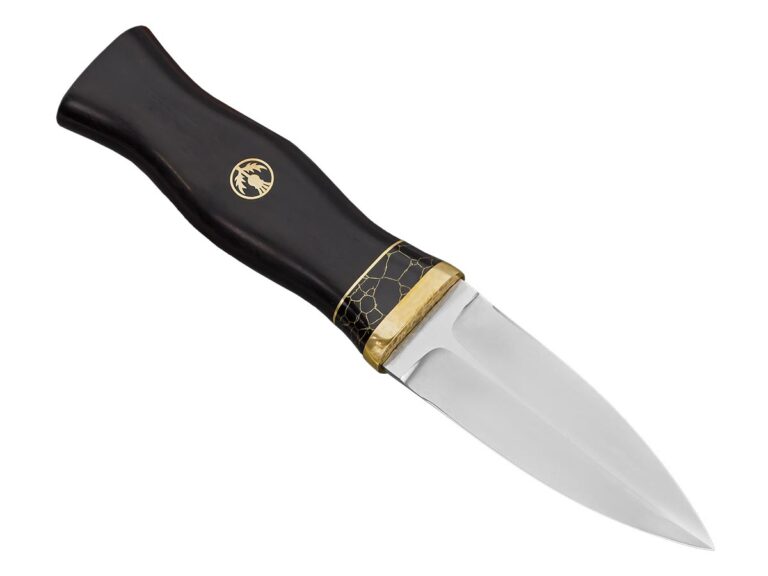
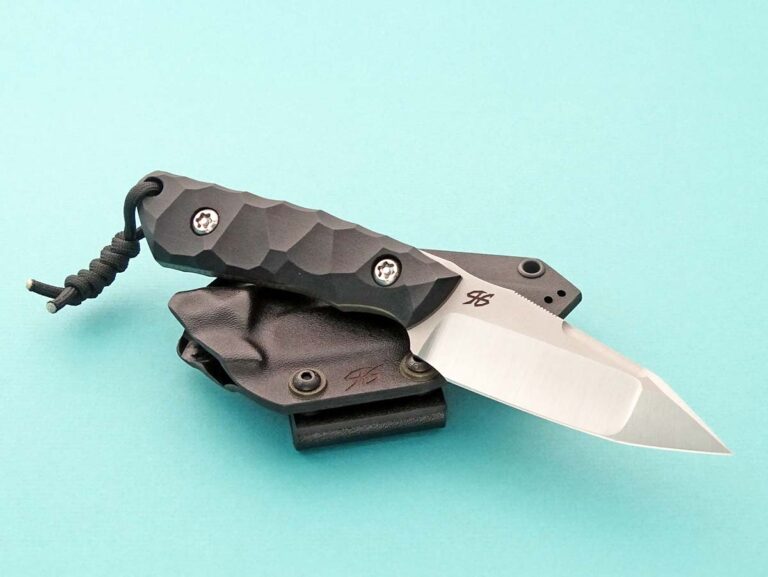
Discover the Cold Steel Mini Wasp Stinger. Get full cutting power in a compact, discreet EDC fixed blade forged from premium 52100 steel for ultimate reliability.

When you think of Cold Steel, you’re probably thinking about the gear trusted by professionals and enthusiasts who rely on their tools daily. They’re seriously recognized as a leader in the outdoor knife and tool industry, always pushing boundaries with performance and craftsmanship. But let’s talk about an EDC essential that packs a serious punch while keeping a low profile: the Drop Forged Mini Wasp Stinger.

Compact Carry, Full Power

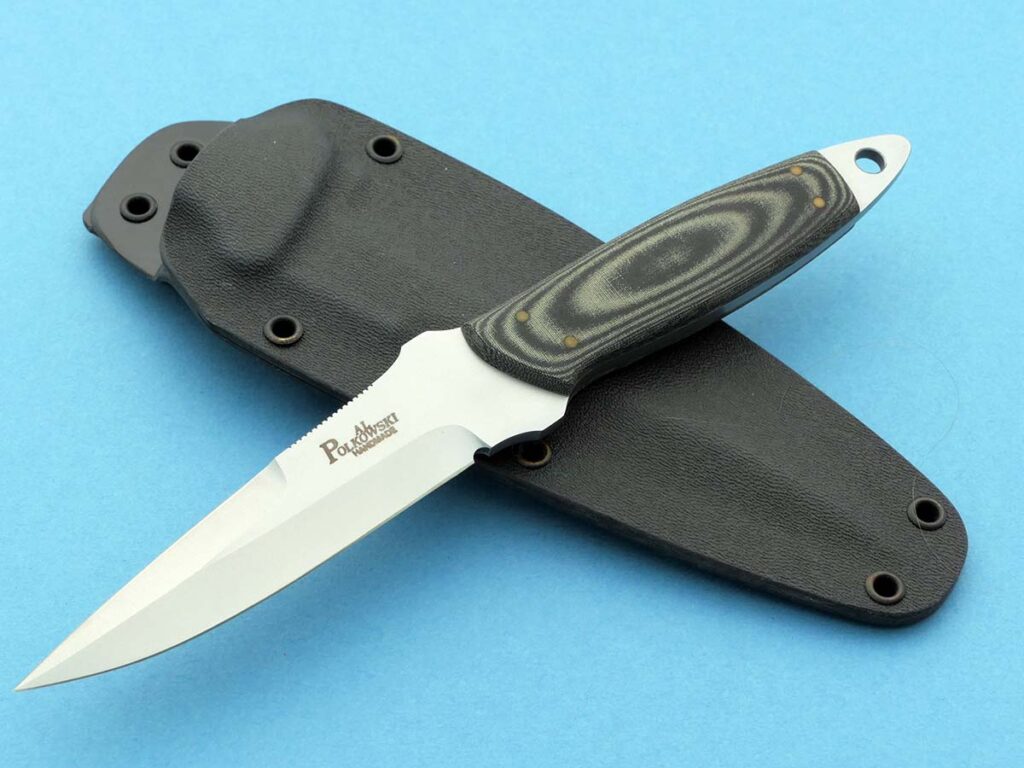
This isn’t your average pocket knife; it’s a masterful blend of compact design and unrelenting strength. The whole idea here is to give you full-sized precision and cutting power in a discreet package that “flies under the radar.” Seriously, weighing in at a mere 7.6 oz. and with a sleek 10.25-inch overall length, this fixed blade dagger is portable enough to ride unnoticed until you need it.

So, what makes it so tough?
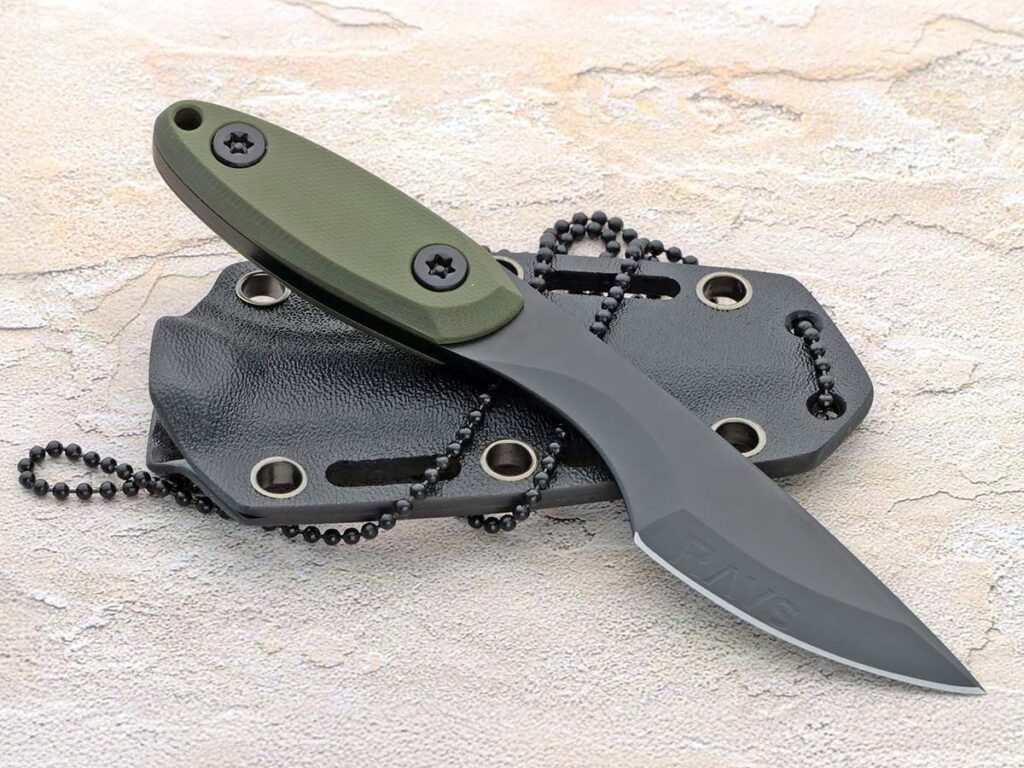
Cold Steel Mini Wasp

It’s drop-forged from premium 52100 high carbon steel. This material ensures the 4-inch dagger-style blade delivers both exceptional durability and razor-sharp performance. Plus, with a robust 6mm thickness, this thing is engineered to tackle even the toughest tasks without breaking a sweat.

Precision and Confidence in Your Hand

Beyond the blade, the design is all about control. The handle features Micarta handle scales that ensure a secure, comfortable grip and, most importantly, a slip-resistant one in any conditions. That’s a huge boost of confidence for all tasks.

To keep you ready for action, the Mini Wasp Stinger comes complete with a Secure-Ex® Sheath for safe, easy storage and quick access.

This tactical dagger is truly engineered for those who demand both precision and reliability. If you’re looking for an ideal companion for discreet carry without sacrificing an ounce of power, the Mini Wasp Stinger might just be the EDC that belongs in your collection.

Knife Reviews:

Bloodlines: Emerson Knives Is A Family Affair

The Emerson Family shares decades and generations in knives.

Through the years, the name Emerson Knives has come to represent outstanding craftsmanship, quality and overall excellence in the knife industry. And each member of the Emerson family has contributed in his and her own way.

“They grew up in the shop, both Megan and Rachael while my shop was at home, and Lucas was born after we opened our production factory,” Ernest Emerson remembered. “So we fenced off a corner in Mary’s office for him as a baby and a toddler. They have all worked in the company since the beginning, and today Mary is the overall manager, Megan is director of marketing, Rachael is operations director, and Lucas is engineering and is being groomed to run the shop. Me, I’m the government mule.”

For some it would be enough to say with pride that the family has built the Emerson Knives brand together, each contributing in his or her own way. But the Emersons have taken their commitment to excellence and the already incredible story of their enterprise to a new level. Each one of them has completed an Emerson original, a knife of their own from concept to finish, and Ernest has had the pleasure of watching the extraordinary conclusion of this labor of love and pure knifemaking joy.

“I didn’t know any of them would ever want to make a knife,” he confessed, “and with their personal lives being so busy outside of work I didn’t know if they would ever have time to do something else. Megan is busy raising a family and runs a working ranch in Colorado. Rachael is busy with Jiu Jitsu and finishing up her second degree in nutritional therapy. Lucas is hardcore into training and computer programming, and Mary runs our business, which by itself is a 24/7 job, and still manages to cook dinner, keep our house in order, and even fits in a round of golf when she can.”

(From left) Megan, Mary, Ernest and Lucas hold their knives at BLADE Show 2025. Megan, Mary, Lucas and Rachael all had their knives debut at the show. Rachael was unable to attend due to a special family event. (BLADE® image)

Still, with everything else that demands their most precious commodity—time—the Emersons have expressed themselves in the actual completion of the tool that has been the centerpiece of their lives as long as they can remember. It almost feels like destiny, like it had to happen. And despite the headwinds, it has.

Earliest Memories

Twenty-four now, Lucas started making knives officially in January 2023, though he has watched and learned since his earliest memories.

“I have always had a passion for making things, and with my dad as a mentor knifemaking has become second nature to me. For me, making knives was never a question of ‘why?’ but of ‘why not?’”

At BLADE Show 2025, Lucas chose to debut his newly designed MX-400 model. He wanted to produce a compact knife ideal for everyday carry.

“The MX-400 I had on display at the BLADE Show with pearl-handle scales will go into my personal collection,” he said. “I did bring three other MX-400s to the show, which I sold via lottery.”

Lucas makes knives part time and devotes plenty of energy first to the production company, Emerson Knives, Inc. At some point in the future, he may turn to knifemaking full time, but for now he manages the best of both endeavors. The most difficult part of the knifemaking process, he says, is grinding the blades.

Lucas Emerson debuted his MX-400, “a compact knife that is ideal for everyday carry,” at BLADE Show 2025. He put the one in mother-of-pearl scales he displayed at the show in his personal collection.

“This is the quickest way to make mistakes,” he advised, “and it tends to be quite time consuming. Luckily, I’m pretty consistent and at this point I’ve got nothing to do but improve. On the other hand, the easiest part of my knifemaking is the hand finishing. This is where I take my time making sure everything is clean, even and symmetrical. I would consider it foundational for the knives I intend to create.”

For his next knife, Lucas intends to design a fixed blade for his own everyday carry. “I want something that I can carry with me at all times,” he noted, “and which I can rely on for any situation that may arise. It will need to be versatile, easy to maintain and easy to conceal on my person.”

Stay tuned!

Iron Lotus

Rachael Emerson Hardin has been making knives for about 20 years now, much of her experience being directly engaged in the business.

“I started assembling knives when I was in high school,” she remembered. “I would leave school after lunch my junior and senior year, drive to work, and assemble until they turned the lights off. I’m still here making knives years later, so I guess you could say I enjoy it.”

For years, the idea of designing and finishing her own knife had been in the back of Rachael’s mind.

“I always had favorite designs of my dad’s and thought how cool it would be to make something like that but with my own flair,” she reflected. “It wasn’t until recently when Lucas began coming up with his own designs that it dawned on me—maybe I can try this too! I’ve been around this my whole life. I know what works and what doesn’t. It couldn’t hurt to try.”

Rachael took the knifemaking plunge with her own design that she calls Iron Lotus, and she is enthusiastic about more knives to come. To date, there are two prototypes. It is her first design, and the plan is for her to keep one and possibly sell the other.

So Rachael took the plunge with her own design that she calls Iron Lotus, and she is enthusiastic about more knives to come.

“It’s hard to say that this is my favorite yet,” she related. “My favorite knives aren’t because of the way they look on paper generally. It comes after the production process. Behind the scenes I experience all the hiccups and fallbacks firsthand. Some knives go together like peanut butter and jelly. Others need tweaking.”

As for her own creations, the 37-year-old Rachael is optimistic about the future.

“Heck yeah, I’m going to make more knives. I live, eat and breathe knives. It’s in my blood. Eventually, the Emerson kids will take over the business. Making knives is fun. There is something very freeing about it. And I have the best teacher in the world.”

To date, there are two prototypes of Rachael’s Iron Lotus. It is her first design, and the plan is to keep one of them and possibly sell the other.

“I’m not sure about carrying it because it is a little fancy,” she observed. “I have a few ideas that I’ve been brainstorming. Currently I’ve been diving deep into Japanese-style blades. I’m a big fan of the Japanese tanto. I love simple designs too, like the gentleman’s folder.”

Paying Tribute

With her completed knife, Megan Emerson Gomez, 41, fulfilled an ambition that had lingered for many years. She has also been captivated by Japanese-style blades and used that energy in her own creation.

“I have always been a big fan of the traditional tanto,” she commented, “so I thought I would design something with that look. My design is called the Shinobi or M-Shinobi [Ninja]. This was the first knife I have entirely designed, but I have been involved and making design suggestions for many years. The CQC-17 model blade design was my idea, and I am sure you can see the similarities in my latest design.”

Megan parlayed her long-time admiration for tantos into the Shinobi/M-Shinobi. Though she has been involved in making design suggestions for many years, it is the first knife she designed entirely by herself. As she noted, “The CQC-17 model blade design was my idea, and I am sure you can see the similarities in [the Shinobi].”

Megan was positive about the outcome of her completed project from the moment it began, and she looks back at the experience with quiet confidence.

“I never once doubted that I could finish it, but there was a moment where I had to decide if I was willing to push forward with a design that really didn’t look like a typical ‘Emerson.’”

Staying the course, she produced an exceptional piece and recalls that the most challenging aspect of the experience was paying tribute to history.

“The most difficult part was respecting the traditional tanto shape while still making it feel like mine. The style carries serious weight. It’s steeped in warrior culture, precision and intention. I wanted to channel that strength into something functional, modern and personal. Getting the balance right between tradition, aggression and clean design took the most time and thought. The easiest part then was handing it over to my dad. Once the design was dialed in, I knew exactly who should bring it to life.”

Mom’s Time

Each of the Emerson children accomplished an ambitious task that required a step up in devotion to the art and craft, the imagination and precision, that come together in a completed knife. Then, of course, Mom tried her hand as well, and the effort produced a beauty.

“I just started making knives about a year ago,” Mary remarked. “I have been around knives and knifemaking for years and years, so I kind of had a head start on things. I wanted to make a knife for a long time but it was hard to find the time. I’ve had lots of ideas and designs just sitting on the backburner for quite a few years.”

From left at right are Megan, Rachael, Mary with Lucas asleep in the baby carrier and Ernest. Among those in the front of the table at left are knife purveyors Bob and Linda Neal, Karen and Jay Sadow and BLADE Magazine Cutlery Hall-of-Fame® member Dan Delavan.

At long last, Mary’s time did come.

“I really have liked our CQC-15 and the Persian-esque blade styles, and I liked our Specwar handle,” she noted. “I like the curved and recurved blades, so my two designs, the Denali and the Falcon, reflect my likes in blade designs.

“Grinding the blade was the hardest part. It’s the dirtiest and most gritty part of the process. Getting one side ground the way I wanted it still left the other side to match up. The easiest part was the design. That was an easy day for me.”

During one grinding session, Mary toyed with the idea of halting the project—but only for a moment. “Ernie kept coming in and checking my grind lines. I told him to get out,” she smiled, “and I locked the grinding room door!”

Mary’s next knife adventure, though she will probably never be full time due to all her commitments to the business, is a fixed blade that is small enough to wear on her belt while riding her horse.

Next Mission

Along with Ernest, Mary looks at the body of work that surrounds the family, the business enterprise with so many facets and opportunities, the work of a lifetime, and the possibilities of the future. And yes, there is something else.

“Additionally,” she stated, “I’m very proud that my children are so interested in carrying on the family legacy. My next mission is to get the grandkids interested and involved. I’m very much looking forward to that.”

Mary’s partiality to curved and recurved blades is reflected in her two designs, the Denali and the Falcon, the latter here in two handle iterations. “Grinding the blade was the hardest part,” she noted. “Getting one side ground the way I wanted it still left the other side to match up.” During one grinding session, she considered halting the project—but only for a moment. “Ernie kept coming in and checking my grind lines. I told him to get out,” she smiled, “and I locked the grinding room door!”

Meanwhile, Ernie surveys the current scene with satisfaction and gratitude. He wanted to be surrounded by a family of knifemakers and that has actually come to pass. His quiet observation has made the situation even more satisfying.

“I never expected any of them to make knives, but deep down of course I wanted them to,” he reflected. “In any endeavor you undertake, if your heart is not in it you will never have the same enthusiasm and drive than when you are doing something you love and want to do. It is very satisfying because I never pushed any of them to pursue the craft. All of them chose to do it of their own accord, and that makes it even better.”

Just to put the experience in perspective, Megan, Rachael and Lucas validate their father’s approach. They confirm that he encouraged, advised and taught but never forced a single grind, pin or hand finish on them.

“I wanted to design a knife for as long as I can remember,” Megan said, “and I think my whole life he has been training me to make knives and run the business. I have been involved in the business since I was a little girl. I watched him grinding knives in our garage, and the ladies we hired assembled knives in our living room.”

Rachael offered, “My dad has always provided feedback to me over the years. His father and sister, my grandpa and aunt, were both teachers. So, it’s always been something he has done.”

Lucas was a hands-on learner.

“From a young age, I remember my dad allowing me to help him with his own custom knives,” he recalled. “This is where I spent most of my time learning, not only the craft but also the principles behind Emerson designs. I work on my own now, but if I ever have any questions my dad is there to provide the best answers he can. He is an excellent teacher in this regard and has always been my go-to person for advice.”

In a most rewarding way, the knife life of the Emerson family has come full circle. The generations have discovered and honored that common thread, one that binds them together like nothing else.

More On Knife Business:

GiantMouse Turns 10: A Bold Idea Becomes A Global Knife Brand

Built on collaboration, craftsmanship, and a no-compromise mindset, GiantMouse celebrates a decade of redefining what everyday carry can be.

GiantMouse Knives is hitting a major milestone in 2025—10 years of pushing the envelope in knife design, quality, and everyday adventure.

What started back in 2015 as a bold idea between a few passionate knife guys has grown into something much bigger. Over the past decade, GiantMouse has carved out a loyal following among collectors, adventurers, and EDC enthusiasts around the world—people who want tools that not only perform, but inspire.

From their iconic limited runs to reliable production models, GiantMouse has built its reputation on standout design, top-tier materials, and the kind of quality that makes a knife feel like it was made just for you.

GiantMouse Jubilee Anniversary

“This anniversary is really about the people who’ve been with us since day one,” the company shared in a statement. “GiantMouse is for folks who demand quality, chase adventure, and believe their gear should tell a story. Ten years in, and we’re just getting warmed up.”

To celebrate, GiantMouse will be rolling out a year’s worth of anniversary content in 2025—including exclusive behind-the-scenes features, community shoutouts, and a look back at some of their most legendary designs. If you’ve ever carried a GiantMouse blade (or thought about it), this is a celebration you’ll want to be part of.

Here’s to the first 10—and the next adventure.

More On Knife Business:

Knife Warranty Claims: The Good, Bad And Ugly

Some knife warranty claims stretch the limits, while others are just plain bizarre.

It’s an honorable option, a sensible aspect of a purchase contract, but can be the source of confusion, head scratching and plain ridiculousness.

The warranty is the buyer’s insurance policy. It’s the seller’s willingness to stake a reputation for quality on the performance of the product—in this case, a knife—or at least that’s what it’s meant to be. However, there are times when real life strains what is actually believable. So, when we explore the nature of the warranty with some of the finest knife companies in the world, a few of their warranty claims simply flirt with the edge of reason.

Wacky warranty claims, contentions from supposedly “dissatisfied” customers, are out there. Frankly, when some of these are brought to light, they are simply unbelievable. Give a nod to customer creativity, but then get real and consider what happens to a solid performing knife that is not simply put to good use, hard work and tough labor. Beating a knife with a hammer, soaking the handle and blade in corrosive liquid for an extended period, or shooting the defenseless edged tool with a gun are all beyond the pale. Follow such escapades with a dose of sheer audacity and what you get are warranty claims that would make a rational individual shake his or her head.

After an Army Special Forces soldier used his Chris Reeve Yarborough to cut a live electric cable during a mission, he sent in the damaged knife with $50 asking for repairs. The company sent the $50 back along with a new knife. Anne Reeve keeps the original knife, shown here, in her safe deposit box.

“A customer put a MagnaCut blade in a glass of saltwater for seven hours and claimed the rusting and pitting should be covered by our warranty!” recalled Anne Reeve of Chris Reeve Knives. “Another requested we replace the packaging of the parts he ordered because they smelled too strongly of perfume or lotion. A customer sent a knife in for a re-blade, and the original blade had an arrow and a smiley face welded onto it.”

Really? Try a few more from Chris Reeve Knives. A customer complained that the phosphor bronze washers of his Sebenza had stains on them and simply would not accept that it was normal patina. He also complained that the knife was not sharp and he had to sharpen it himself. He ground half the blade away and then said he should get a completely new knife. A customer shot his knife with a 9mm pistol and then sent the company a photo of the broken knife while requesting a new one under the standard warranty.

At Chris Reeve Knives, reputation is everything, and the company stands by its knives. But let’s sanity check. Warranties are not “get out of jail free cards” for new knives.

“We try to keep consistency in our warranty, but we do sometimes vary on case-by-case situations,” Anne explained. “Over the years we have tightened things up a bit because often we felt we would give an inch and the customer would take a mile.”

“Normal blade finish wear is not covered under warranty,” Daniel Winkler observed. “Working knives should look used.” The Winkler Hunter Axe LT shows some normal finish wear here. (Covert image)

Still, going out of their way to accommodate, the folks at Chris Reeve Knives have had some remarkable experiences.

“Mostly the customers who push back are simply rude,” Anne related. “Some just hang up or threaten to sell their knife. A customer informed us once that they had cut very acidic fruit multiple times and refused to clean the knife afterwards. They were furious we would not warranty their now rusted blade. Another customer took his brand new Umnumzaan and stabbed in into a tree. He then pried it 90 degrees to ‘tip test’ it. The tip snapped, and he claimed we should warranty the blade because what he did should not be considered misuse or abuse.”

Among unusual requests that Chris Reeve Knives went beyond the call of duty, or warranty, to make right, Anne has great memories. When a customer sent a 5.5-inch Green Beret in for recoating and it was lost in return shipping, the company made a custom iteration of the discontinued 5.5-inch knife from a 7-inch Green Beret blade blank. A sheath was available from the company archives and both were sent to the customer. When Reeve knives were abused by U.S. Customs officials, the company removed the scratches caused by bouncing around loose in transit, making the owner happy even though there was no warranty obligation. After an Army Special Forces soldier used his Yarborough to cut a live electric cable during a mission, he sent in the damaged knife with $50 asking for repairs. The company sent the $50 back along with a new knife.

Anne Reeve said a customer put the MagnaCut stainless steel blade of a Chris Reeve knife in a glass of saltwater for seven hours and claimed the rusting and pitting should be covered by the company’s warranty. Of course, like all stainless steels, MagnaCut stains less but is not stain proof. Quite understandably, the warranty request was denied.

“That original knife lives in my safe deposit box now,” Anne smiled. “On a few occasions we have older knives returned for sharpening and we can tell that the knife has been lovingly sharpened so many times that the blade is worn out. We have replaced the blades. When we made the One Piece Range, the paperwork specifically said that it was not a throwing knife and breakage from throwing would not be covered by warranty. A couple of times we had knives returned that were broken in two. The dings made it quite obvious that the knife had been thrown. Back then, we would replace the knife and give the customer a verbal slap on the wrist.”

Though Reeve, like other companies, has found it necessary to scrutinize warranty requests more closely in recent years, the dedicated effort to make the customer happy remains strong. At Chris Reeve Knives, the warranty is, as Anne puts it, “phenomenal.”

Judgment Calls

When did the rules change? Where does the line between normal expectation and radical knife recklessness blur?

A closeup of the blade and edge damage the Chris Reeve Knives Yarborough incurred after being used by the SF operative to cut a live electric cable is a tribute to the toughness of the company’s knives.

“We’ve had a few forgeries sent to us for repairs,” commented BLADE Magazine Cutlery Hall-of-Fame® member Daniel Winkler of Winkler Knives. “Reactions from customers can get hot when they learn they have been duped. Not many warranty requests are really ‘crazy’; normal sharpening or sometimes fixing a damaged tip. People also request a re-finish for worn blades. If a knife fails for any reason we will either fix it or replace it, and normal blade finish wear is not covered under warranty. Working knives should look used.”

Winkler is sensitive to certain situations and sees extraordinary conditions for what they are.

“On a few occasions we have sent replacement knives without receiving damaged ones back,” he remarked. “One was a military user that used his knife to destroy a communications location in a war zone. He fried the power supply, and it fused the knife in the connection. Another was a hiker who saved his dog in a rockslide. His knife fell to the bottom of a gorge, so we replaced it, too. A third was used in a home situation where a man used his Winkler knife to stab an intruder to save his family. His knife was held as evidence, so we sent him a new one.”

A tornado destroyed a home and carried away a safe full of knives, including several TOPS Knives models. Two to three years later, the safe was found. The knives were intact and basically undamaged. When TOPS was contacted for help with slight rust on the blade and engraving, the company obliged at no cost.

There lies the real judgment call in rendering the warranty verdict. Does the customer’s story pass the simple test of reasonableness? If so, most companies might feel a pang of compassion and try to resolve the request in the interest of good customer relations. Still, it’s a tough challenge sometimes. As much as a customer might feel slighted if a warranty request is dishonored, the maker might well feel used when the circumstances are not plausible or strain the normal standards that most people would accept.

“We go out of our way to promote positive customer relations,” Daniel added. “We have replaced or refunded knives and axes that we probably shouldn’t have due to how they were damaged in abuse, like prying or throwing. We will normally take the hit, but if it happens again we do not honor any warranty.”

Case-By-Case Decisions

At TOPS Knives, warranty requests are evaluated with the best outcome in mind. “Our philosophy on our warranty is that we have some things that will void a warranty or won’t be covered under warranty, but we still handle them all on a case-by-case basis,” remarked general manager Craig Powell. “The people that are honest and level with us are way more likely to get their issue handled under warranty—even if it shouldn’t be—than people that are rude or clearly lying to us.

“I always find it funny when someone says something happened to their knife and then the actual damage to the knife in no way matches their description,” Powell continued. “Like, maybe they think we don’t actually use or test our own gear and so we don’t know what would cause certain things to happen. But really, in the end very few people that contact us with an issue treat us poorly. So the vast majority get help under warranty.”

Back to the TOPS Tom Brown Tracker that was lost in the Iraqi IED incident: the local who originally found it after the explosion used it to split wood. The saw teeth had basically been mushroomed out of existence from the local beating on the knife with a piece of metal. Considering how the U.S. serviceman originally lost the knife, TOPS fulfilled the warranty.

Powell remembers certain circumstances that were somewhat unusual prior to a warranty request.

“When I had only been working here for a year or two, I took a call from a guy that was concerned about an issue with his Silent Hero. I talked to him for probably 15 minutes trying to figure out what was wrong. He kept saying that the knife was getting deformed and all he was doing was [batonning the blade spine to make] firewood. It probably took me longer than it should have, but I finally thought to ask what he was using as a baton. Turns out he was using the hammer side of a hatchet as his baton. So, a thick piece of metal is what he was using rather than a stick. I chuckled to myself and then we talked through the process of having a hatchet in your hand and choosing to use a knife to process firewood rather than the hatchet. He said ‘Oh!’ Then he basically apologized and said he understood. We didn’t end up fixing that knife for him, but that was because he realized what he had done and probably kept it as a reminder or trophy.”

On another occasion, a tornado destroyed a home and carried away a safe full of knives, including TOPS models. Some two to three years later, the safe was found. The knives were intact and basically undamaged. When TOPS was contacted for help with slight rust on the blade and engraving, the company obliged at no cost. Hikers have been known to lose TOPS knives on the trail and then miraculously find them months later. When the owner of one of these calls for warranty assistance, the TOPS folks fix the knives up, cleaning and refurbishing before sending them back in the context of a lesson learned: hold onto your valuables while out in the woods, especially your knife.

Extreme Situations

Military experiences have brought up several warranty requests, and these are sometimes caused by extreme situations. A Tom Brown Tracker was lost during the horrific explosion of an IED (improvised explosive device) in Iraq. The soldier involved was a chaplain, who returned some time later to the village where the explosion occurred. An old lady came forward with his knife after an interpreter and a $20 bill did some talking. The knife had been used in splitting wood.

“It was beat to hell,” Powell remembered. “The saw teeth had basically been mushroomed out of existence from this lady beating on it with a piece of metal. We swapped the soldier a new one and still have that knife [above] here today.”

A TOPS Knives Black Rhino was lost when a desert barracks burned to the ground. The scales were completely gone and the knife could not be repaired. TOPS sent the destroyed piece back to the serviceman along with a brand-new Black Rhino like this one.

A Black Rhino was lost when a desert barracks burned to the ground. The owner recovered the knife. Its scales were completely gone and the knife could not be repaired. TOPS sent the destroyed piece back to the serviceman along with a brand-new Black Rhino.

“While our policy isn’t a no-fault policy, we still cover most issues,” Craig said. “We know what we’re making is quality, and we strive for that on every knife. So anything that a customer’s knife should be able to do but doesn’t is going to get covered.”

In the broadest sense, the warranty works both ways. It protects buyer and seller and invokes the sense of quality and pride of craftsmanship, with reasonable performance expectation and use. There are outliers, but for the most part both knifemaker and knife user work together with warranties to achieve positive resolutions.

More On Knife Business:

Delaware Repeals Switchblade Ban; 22nd State to Legalize Automatic Knives

0

Learn how the new law, SB 108, updates knife regulations and what this means for knife owners.

Delaware became the 22nd state to repeal switchblade/automatic knife bans or restrictions with the signing July 30 of bipartisan SB 108 by Governor Matt Meyer.

According to the Knife Rights website, the bill not only removes restrictions on the sale or possession of automatics in Delaware, it also amends the “Deadly Weapons” exemption for “ordinary pocketknife” by deleting “folding” in order to cover all knife types. It also increases the legal blade length from 3 to 3.75 inches.

“SB 108 is a common-sense update, modernizing Delaware’s knife laws, so citizens gain the freedom to carry and use these tools responsibly without fear of legal penalty,” Meyer said.

In addition to Delaware, states repealing switchblade bans or restrictions include Alaska; Colorado; Hawaii; Illinois; Indiana; Kansas; Louisiana; Maine; Michigan; Missouri; Montana; Nevada; New Hampshire; Ohio; Oklahoma; Pennsylvania; Tennessee; Texas; Vermont; Virginia; and Wisconsin.

This leaves only three states where civilian possession of automatic knives remains banned: New Mexico, Minnesota and Washington. Knife Rights is challenging Minnesota’s ban in federal court. Washington is in the Ninth Circuit where KR’s federal lawsuit against California’s partial ban is proceeding on appeal. A win there would apply to Washington’s ban.

More On Knife Bans:

Hunting Knives: Field Fixed Blades Made For Grunt Work

Hunting knives should be workhorses and these options are ready to shoulder the load as you take to the field.

Fixed-blade hunting knives are the workhorses of your hunting gear. They handle a lot of the grunt work associated with cutting, including field dressing game after the take-down to various cutting tasks while hunting or in camp. As a result, it is important to choose a hunter that not only has the features and the materials you want but one that fits your budget as well.

Hogue Knives Extrak

Despite the thin nature of the Extrak’s handle, slightly expanded front and rear sections help form a guard of sorts to avoid gripping difficulties.

With its slender form, the Hogue Knives Extrak takes a minimalist approach to fixed hunters. Hogue President Jim Bruhns designed it to be lightweight and agile. Available in two sizes, the Extrak and its bigger brother, the Extrak XL, both tackle heavy field-dress work while offering comfortable carry minus the bulk of many fixed hunters.

The modified clip-point blade is 3.3 inches of high-performance CPM MagnaCut stainless steel in a stonewashed finish. The peel-ply orange G-10 scales are textured enough so the material is a bit grabby. The orange fits right in with the hunter theme. Despite the handle’s thin nature, slightly expanded front and rear sections help form a guard of sorts to avoid gripping difficulties. Overall length: 7.375 inches.

Thanks to the thin blade stock and full, flat primary grind, think of this knife as a scalpel. Scalpels have lean handles but the blades are thin enough to cut easily with very little applied force. Same thing with the Extrak. The blade bites into meat so easily that the slender handle doesn’t matter.

At first I was a bit apprehensive that the thin grip would affect the knife’s use. The more I cut with the Extrak, the more I saw that the thin blade is where the work takes place. It slices so cleanly and efficiently that you need not apply pressure on the handle to make the cut. After a while, the lean grip doesn’t matter because you are too busy admiring the knife for its extreme cutting power and efficiency. From sausages, steaks and veggies to cardboard and opening mail, the Extrak dispatches all with aplomb. It’s a great candidate for your next restaurant outing. It is a very low-profile design that won’t attract unwanted attention in public, even with its bright orange handle.

The Hogue Extrak might be a lightweight and thin fixed blade but don’t let that fool you. Cutting performance wise, this knife punches above its class. The thin blade cuts like a scalpel.

The Extrak also makes a great utility knife. However, shy away from rough use and any sort of cutting where you simultaneously twist the blade. MagnaCut is a tough steel but as thin as the knife is, you can damage the edge or break the tip if you use it too hard. It is a precise cutting tool. I rate the knife high on the list for an EDC fixed blade as well.

Due to the knife’s minimalist design, it might be possible to custom fabricate a Kydex neck sheath for it to wear under a shirt for more discreet carry. Don’t try it with the supplied slip cover as there isn’t enough tension to hold the blade securely for such neck carry. The molded ABS plastic sheath features an UltiClip fastener. The setup enables you to carry the knife clipped to the top of a pants pocket, much as you would a tactical folder. The knife rides securely in this manner, with the entire handle sticking out for easy deployment. The sheath is simple but works and is of pretty good quality. Country of origin: USA. MSRP: $199.95.

Spartan Blades Harsey Nessmuk

The skinner-like blade of the Spartan Harsey Nessmuk excels at slicing tasks.

The Spartan Blades Harsey Nessmuk is the largest knife of the test group. The classic Nessmuk design with its distinctive bulbous tip has proven to be a very effective outdoor knife that excels at many tasks, from field dressing to camp utility chores. The skinner-esque blade is a highly effective slicer. Do an internet search for George Washington Sears and the Nessmuk blade style. The history of how the design came about is a rather interesting read and gives some insight as to why the blade is shaped as it is.

In the Spartan entry, the Nessmuk blade is paired with the handle design of BLADE Magazine Cutlery Hall-of-Fame® member Bill Harsey. The Creswell, Oregon, knifemaker is widely known for his tough fixed-blade designs for the Special Forces and his work with Cutlery Hall of Famers Col. Rex Applegate and Al Mar. The Nessmuk is yet another Harsey design for Spartan that includes the pair’s tactical and other outdoor collaborations. It is part of Spartan’s Silver Line, aka Professional Line, a mid-priced/made-in-the-USA (KA-BAR factory in upstate New York) series that is less expensive than the company’s flagship Gold Line.

The Nessmuk blade is 5⅛ inches of flat-ground 1095 CRO-VAN carbon steel with a Rockwell hardness of 56-58 HRC. The 1095 offers a great balance of edge retention and ease of sharpening without the need of a complicated sharpener. At .1875-inch at the thickest and with a corrosion-resistant/low-glare black powder coat, the blade is well-equipped for high-performance outdoor work.

As the author noted, one of the hallmarks of a true Bill Harsey design is the handle. “His handle designs are among the best in the industry,” the author observed. “They are contoured to fit your hand like a glove, without any hot spots.” Handle features also prevent forward or backward sliding of the hand, while the 3D texturing adds enough grip to be secure but not aggressive.

The rugged, molded thermoplastic sheath has a fabric-fastener loop to attach to a wide range of belt sizes. A thumb-retention lock holds the knife in place and three slits vent water, making it ideal for wet environments.

The handle is Grivory, an impact and fluid-resistant material that can be molded with various contours and chamfers that aid in attaining a comfortable, secure grip. The durable/usable handle feels as if it were molded to your hand and has no hot spots. At 10.8 ounces and 10 inches overall, the Spartan Harsey Nessmuk is big yet lightweight enough to tackle most any hunting knife chore you throw its way. MSRP: $225.

Fallkniven F1L3GMM Next Generation

The convex-ground blade of the Fallkniven powers easily through most any medium. According to the author, “it is one of the sharpest cutting edges out there.”

The Fallkniven F1L3GMM Next Generation fixed blade was designed as a pilot survival knife but is also a knockout crossover fixed hunter. The blade boasts a laser etching of the JAS 39 Gripen Next Generation Swedish fighter jet, but don’t let that fool you. The Fallkniven entry actually has a hunting knife pedigree.

As the company website notes, the work of BLADE Magazine Cutlery Hall-of-Fame® member Bob Loveless was the inspiration for the F1L3GMM. You can almost see it in the knife’s lines. The 3.9-inch drop-point blade has plenty of belly to facilitate slicing chores. The maroon Micarta® handle is very elegant and sports the right contours to accommodate your hand, and is very comfortable to hold with no worry of hot spots. The nickel-silver guard fits the tang seamlessly and is a great anchor point to prevent your hand from sliding forward. The handle fastens to the tang with a pair of Corby bolts, and a gold medallion with three crowns decorates the grip’s center. At 8.2 inches overall, the F1L3GMM is sized just right for a hunter. The sewn black leather belt sheath sports quality construction, and the “F1”-stamped flap closure with button snap conceals the entire knife.

The Fallkniven entry is a hard-use beast. The blade slices very cleanly and expediently. If you’ve never used a knife with a full convex edge, you are definitely in for a treat. Fallkniven is known for convex edges that are both sharp and quite durable, not to mention easier to maintain due to the geometry. The convex edge bites in deep and hard, and you can use it a tad rough as well without fear of the edge chipping out. It is also very well suited for general use around camp or the kitchen. The blade is fairly thick but, due to the convex edge, dives into whatever is being cut and propels the rest of the blade through. Just because it’s thick doesn’t mean it cannot slice effectively. This is a knife of heirloom quality that also has plenty of horsepower for getting real work done.

Maroon Micarta® is the handle material of choice for the Fallkniven F1L3GMM fixed hunter. It is pinned to the tang using Corby rivets.

The handle is comfortable, rounded and contoured in the right places and devoid of hot spots during extended use. I have always been a big fan of Micarta® for both folder and fixed-blade handles. It’s pretty much the ultimate user material given its light weight, dimensional stability and imperviousness to most known liquids. Plus, it comes in a wide array of colors, and the maroon adds a nice splash of color without being overly flashy. You don’t see too many maroon-handled knives, so this one is a breath of fresh air.

Yes, it is on the pricey side for a production hunter but in return you get a very well-built cutter executed with the best materials. I don’t think you can find a better knife for the money. If you love European engineering and manufacturing, this is the hunter for you. Country of origin: Sweden. MSRP: $499.99.

Hunting Knives:

Custom Forged Hunting Knives: Full Spectrum Of Options

Discover the craftsmanship behind unique designs, from carbon steel to mosaic damascus, and learn what makes a perfect hunting knife.

The primary trend that has emerged in custom forged blades over the past 18 months is the growing popularity of the hunting and utility knife. The options seem limitless, from forged carbon steel and Micarta® to mosaic damascus and ivory.

The best seller among the group is the carbon steel hunter featuring a Micarta handle. An excellent example is from award-winning ABS master smith Josh Fisher—world-class craftsmanship at an affordable price. Designed for serious work, this knife will last, if properly maintained, for the owner’s lifetime and beyond.

One of my favorites is a hunter from Slovenian knifemaker Jan Hafinec featuring the unique hamon of his Bonfire Hunter. Jan’s hamon looks like flames streaking across the blade. He achieves the distinctive look by cleaning the grind and normalizing the blade. He then applies Satanite* clay to the blade in the desired shape for the hamon. After drying the clay, he puts the blade in his electric kiln. Upon removing it from the kiln, he plunges the blade into fast-quenching oil to give the hamon its fiery look.

Maker: Wess Barnhill
Model: Drop-point hunter
Blade Length: 5”
Blade Material: San-mai of 1075 carbon and 410 stainless steels
Guard and Buttcap: Stainless steel 
Handle Material: Sambar stag 
Overall Length: 9.75”
Sheath: Leather model custom made by Wess Barnhill
Knife to know: Wess is an ABS journeyman smith 
His price for a similar knife: $825
(Robertson’s Custom Cutlery image)

A steel construction that has been a favorite of collectors for several years now is san-mai. A hunter by ABS journeyman smith Wess Barnhill has a great example of a san-mai blade, featuring a carbon steel core sandwiched between outer layers of stainless steel. One of my favorite aspects of this type of laminated blade is that each one is unique, encouraging collectors to have more than one in their collection, if they so choose, as no two are the same. Barnhill’s blade material of choice is a 1075 carbon steel core sandwiched between two pieces of 410 stainless steel. He likes to zip-weld all the edges together, as this keeps out the oxygen while forge welding. He sets the temperature to 2,350 F° for 10 minutes to produce his san-mai blades.

Copper San-Mai

Maker: Dan Lewis
Model: Drop-point hunter
Blade Length: 4.5”
Blade Material: Forged san-mai w/a core of W-2 tool steel, an outer layer of damascus and a middle layer of copper
Guard Material: Bronze
Handle Material: Desert ironwood
Overall Length: 9”
Sheath: Leather model custom made by Dan Lewis
Knife to know: Dan is an ABS journeyman smith
His price for a similar knife: $550
(Robertson’s Custom Cutlery knife image)

Seeing the work of ABS journeyman smith Dan Lewis at the 2024 BLADE Show, I was immediately drawn to it. His unique copper damascus san-mai features carbon steel, damascus and copper. He also offers the same style of blade with nickel if you prefer. He explained that monosteel and damascus blades are forged to shape and taken through a precise heat treatment. Copper san-mai blades are a different story.

“Once I create the billet—layering high-carbon steel with pure nickel damascus and copper—I do very little forging beyond drawing out the tang. The rest is done through careful grinding,” he explained. “Precision is everything. The billet must be measured exactly to keep a consistent core of high-carbon steel, with even layers of damascus and copper on each side. Copper looks great but it doesn’t belong on the cutting edge. I always use a high-carbon core for strength and sharpness. When it comes to etching, combining pure nickel and copper allows me to use a stronger, proprietary acid. The result is a deep, dark etch in just seconds, creating a bold finish that highlights every layer.”

Dan combines the copper damascus san-mai with blued fittings and desert ironwood to create an eye-catching work of art at an affordable price.

Maker: Josh Fisher
Model: Drop-point hunter
Blade Length: 4.5”
Blade Material: 1084 carbon steel
Blade Finish: Satin 
Guard Material: Stainless steel 
Handle Material: Vintage Westinghouse Micarta®
Overall Length: 8.75”
Knife to know: Josh Fisher is an ABS master smith
Sheath: Leather model custom made by Josh
His price for a similar knife: $550
(Robertson’s Custom Cutlery image)

I saw ABS journeyman smith Bob Earhart’s knives on the internet while working on my checklist for the BLADE Show. I contacted him several months before the show to discuss his knives. In addition to his excellent knifemaking skills, the use of a blued guard and bronze spacer in conjunction with presentation-grade desert ironwood gives his hunter a stunning look. Instead of using a forge press die, Bob grinds a ladder pattern into his steel billet. Grinding toward the edge, he cuts deeper and then hammers out the grooves, creating a complete ladder pattern throughout the blade.

Additionally, Bob has the one skill that many knifemakers lack: effective communication. He encouraged me to provide my input and kept me informed about the knife build every step of the way. When I buy my first knife from a knifemaker, I really appreciate that.

Frame-Handle Jewel

Maker: Steve Randall 
Model: Frame-Handle Hunter
Blade Length: 4.75”
Blade Material: Feather-pattern damascus 
Guard and Frame: Feather-pattern damascus  
Handle Material: Mastodon ivory
Overall Length: 9.5”
Sheath: Leather model custom made by Steve Randall
Knife to know: Steve is an ABS master smith
His price for a similar knife: $1,400
(SharpByCoop image)

The frame-handle hunter is arguably one of the more difficult knives to build. Add mosaic damascus and ivory to the equation and it becomes even more challenging. Given the complex nature of ABS master smith Steve Randall’s frame-handle hunter, I asked him to explain his process for building the knife.

He starts by making a billet of a W’s-pattern damascus. The layer count and stack are personal preferences. The lower the count, the wider the pattern. Once the billet is formed to the preferred layer count, Steve cuts it into pieces, restacks the pieces, and forge welds them back together. He splits the resulting stack in half using a dull wedge and welds the two halves back together to create a feather damascus billet. The splitting process with the dull wedge is what drags the hot steel to make the feather design.

Steve pointed out that increasing the layers also increases the potential for flaws. Often, the flaws don’t reveal themselves until the blade is being ground. If flaws are discovered, the blade must be thrown away and all those work hours are lost. (Author’s note: Please understand that due to the increased degree of difficulty and risk of blade failure, any mosaic-type of damascus used in the knife’s construction will increase the price. All damascus is not equal!)

Steve said the most challenging part of a frame-handle knife is connecting the frame to the guard or ferrule so there are no gaps and the fit appears seamless. Also, how the handle is attached to the blade is key. There are various ways to attach that can add to the complicated nature of a frame, for example, hidden pins, hidden finial, external finial, etc.

Changing Conditions

Maker: Jan Hafinec 
Model: Bonfire Hunter
Blade Length: 5”
Blade Material: Forged C105 carbon steel w/double hamon
Guard Material: Bronze
Handle Material: Desert ironwood
Overall Length: 10 1/8”
Sheath: Leather model custom made by Jan Hafinec
His price for a similar knife: $600
(Robertson’s Custom Cutlery image)

In the March BLADE®, I wrote about the matrix I use to determine which knives to buy. Before that story was published, BLADE Editor Steve Shackleford asked me what conditions would cause me to adjust my matrix. One condition would be a change in the popularity of a market sector, such as custom fighters, gut hooks, stilettos, etc. With a current slowdown in damascus bowie sales, primarily due to the bowies’ price point, an alternative emerged, offering many of the same options at a more affordable price: the forged hunting knife.

One of the best aspects of attending a knife show is the ability to compare knives, apples to apples if you will. This year’s BLADE Show resulted in me updating my matrix with regard to custom hunting knives.

Before the show I provided a set of parameters to 10 ABS journeyman and master smiths, both domestic and international, to build a damascus hunting knife to my specifications Those parameters were: a 4.75-inch ladder-pattern damascus blade, damascus guard (no pattern specified), and a wood handle (no wood specified). The smiths’ quotes ranged in prices from $600 to $1,250 per knife.

Still think you don’t need your own matrix?

*CAUTION: When using Satanite hamon clay, “wear protective gloves, outfit, and face and eye protection. If on skin, wash with soap and eater. If on eyes, rinse with water for several minutes. If eye irritation persists, get medical attention.”

More Custom Knives:

Advertisement

Must Read Articles

Read this before you make a knife

Knifemaking 101 – Read This Before You Make a Knife

  by Wayne Goddard My experience has taught me that there's nothing like digging in and getting started. I've often said the hardest part of the...
how to forge damascus steel

How to Forge Damascus

Advertisement
Advertisement