In the December 2015 issue of BLADE®, Leon Kapp penned the first part of a two-part series on historic, iconic Japenese swords. He concludes the series in the January 2016 issue, which is hitting newsstands and subscribers’ doorsteps October 6th, 2015. In the first part, titled “The Sun Rises On Them Still,” Kapp begins:
It was seven long decades ago on Sept. 2, 1945, that the Japanese signed the agreement formalizing their surrender, for all intents and purposes officially marking the end of the Second World War. The ceremony aboard the deck of the USS Missouri in Tokyo Bay took all of 23 minutes to close the book on a conflict that extinguished more lives and destroyed more goods and property than any before or since.
While the world has changed much since then, one of the most iconic symbols that existed long before and throughout World War II—and continues to resonate today—is the Japanese sword. To read the rest, see the December 2015 and January 2016 issues of BLADE.
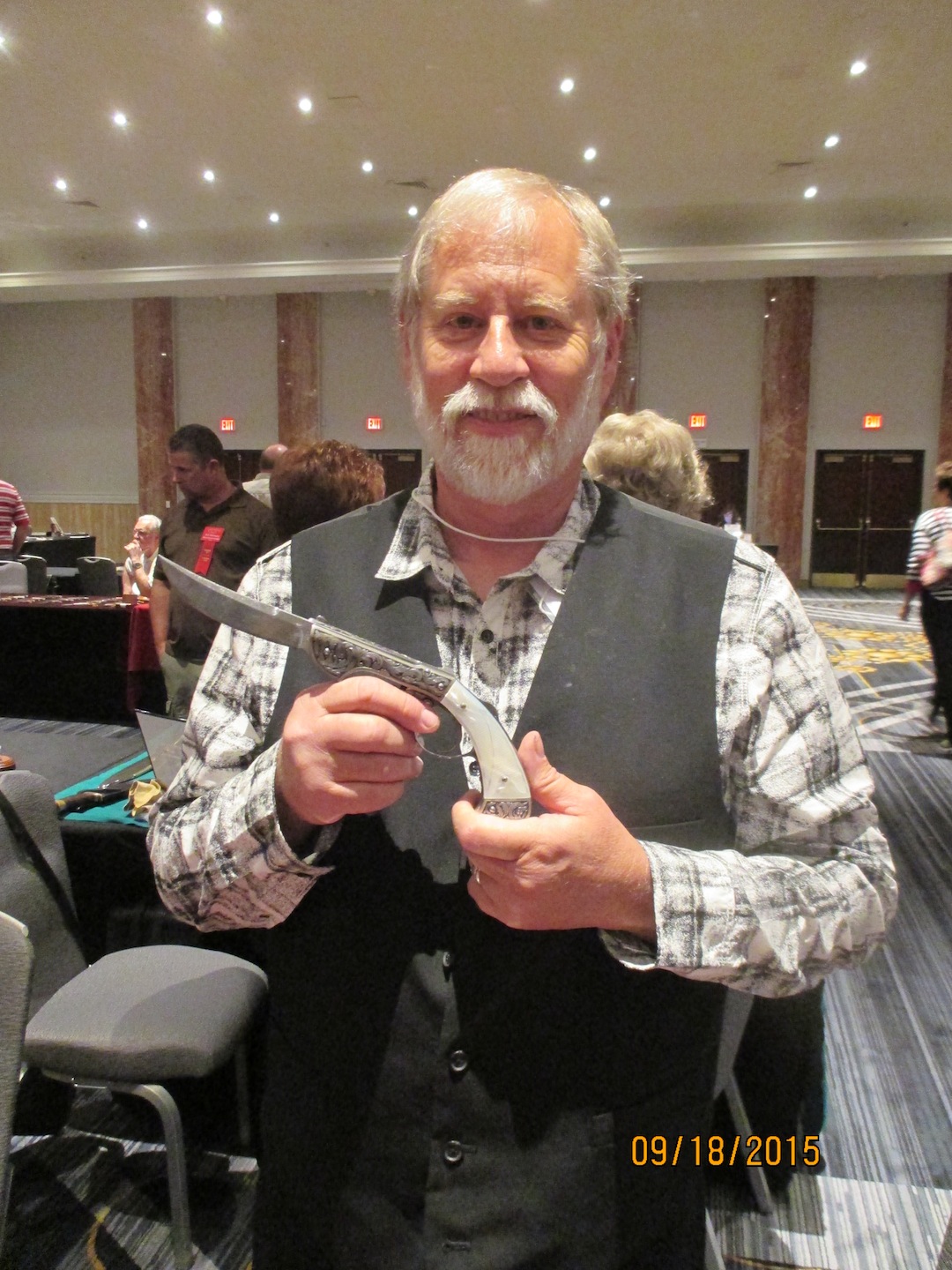
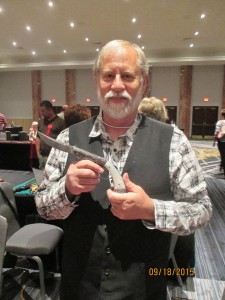
Bruce Bump won Best Of Show at the International Custom Cutlery Exposition for his cut ‘n shoot model.
Modern custom knife history was made this past weekend in the first-ever International Custom Cutlery Exposition (ICCE) held at the Marriott Downtown in Kansas City.
It was the first time the Knifemakers’ Guild and the American Bladesmith Society, the world’s two oldest and best-known knifemaker organizations, combined forces to hold a joint knife show.
And from all indications, things went about as smoothly as anyone could have hoped.
Over 120 makers exhibited their knives at the show. A number of exhibitors commented on how nice it was to see makers from both organizations displaying side-by-side and getting along so well. Of course, that was a far cry from the old days when the two groups competed openly and did not get along so well, to say the least. However, those days seemed to be forgotten over the weekend as both organizations came together and voted on the best knives of the show, with members of each group often voting for knives by makers in the other. Among the winners of the awards were Bruce Bump for Best In Show for his cut ‘n shoot knife, Paul LeBatard won an award for his stag hunter, Adam DesRosiers for Best Combat Knife and Best Hunter, Jerry Moen for Best Tactical Folder, Johnny Stout for Best Folder, Charles Vestal for Best Fighter, and J.W. Randall for Best Damascus. Other honors included Betty Dowell being presented with the Nate Posner Award and Dianna Casteel winning the Red Watson Award.
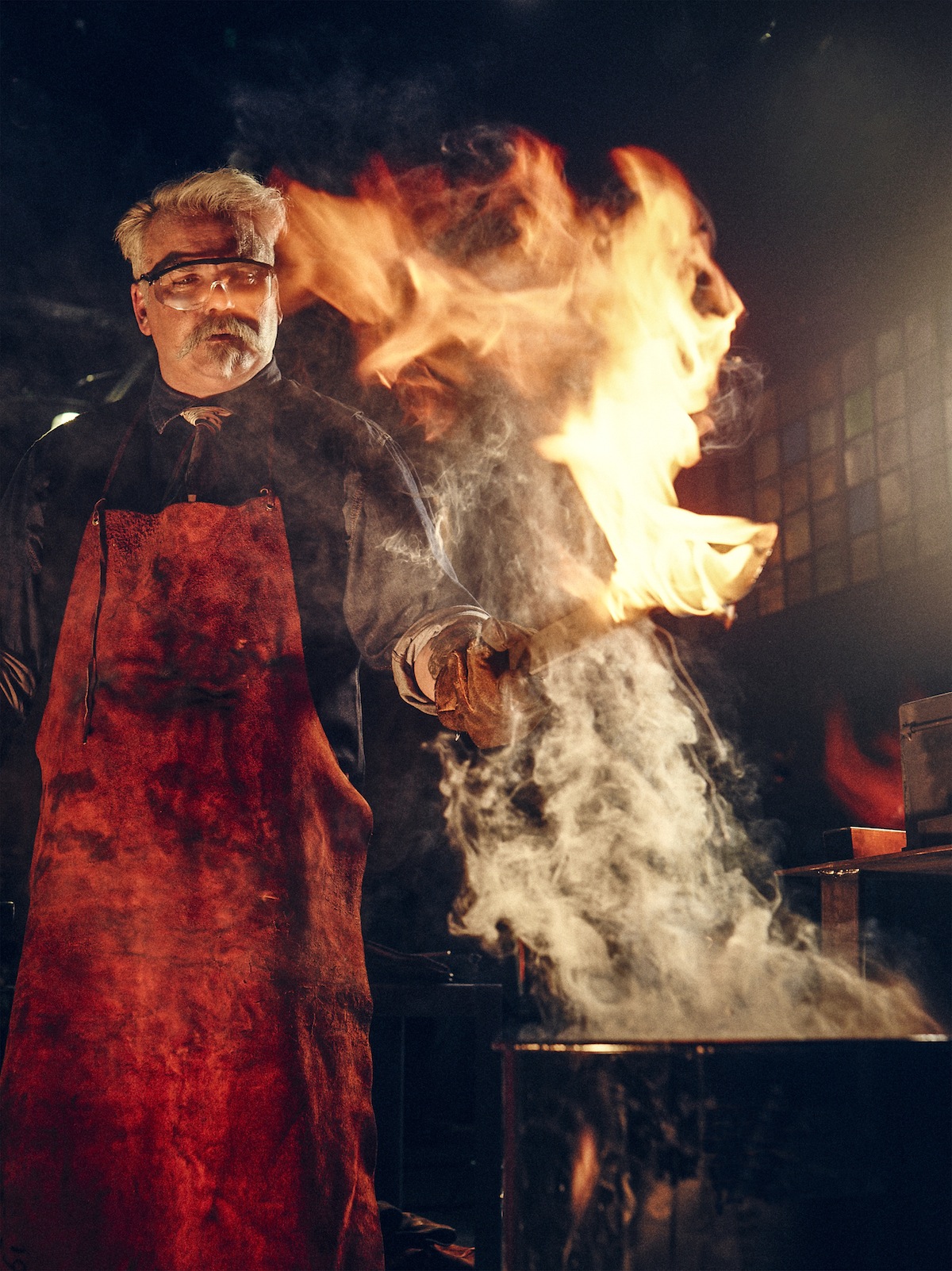
Forged In Fire has been renewed for a second season. (Miller Mobley/HISTORY)
Forged In Fire, The History Channel’s hit summer reality TV show featuring bladesmiths who compete to see who can forge the best knife, has been renewed for a second season, Cynopsis Media reports.
According to Cynopsis, “History’s Forged In Fire will be back for a sophomore season. The show, which averaged 1.6 total million viewers in Live+7 delivery, follows the most talented bladesmiths as they create weapons from the Japanese katana to the medieval broadsword.”
The stars of Forged In Fire include a panel of three judges—ABS master smith J. Neilson, ancient weapons authority David Baker and martial artist/knife user Doug Marcaida—and host Wil Willis, along with the many competing bladesmiths.
While the show had been sending out casting calls for bladesmiths for a new season, there had been no formal confirmation of its renewal until the official announcement by Cynopsis. Whether there will be any changes in the show’s format, when the new season will begin, etc., is unknown at this time.
In a nutshell, Forged In Fire consists of four bladesmiths—different ones each episode—who compete to see who can make the best knife. In the first round each smith has roughly three hours to design and make in the show’s shop/forge a rough-forged knife of his choice according to the specs and with materials determined by the judges. The three smiths of the four the judges deem to have made the best rough knives advance to the next round, in which they must make and attach the handles and finish their knives. Of the three remaining smiths, the two who make the best knives in the judges’ estimation advance to the finals, in which they have five days in their home forges to make a knife, sword, axe or other cutting tool in a design of the judges’ choosing. The smith who makes the best piece in the judges’ estimation wins $10,000.
For a behind-the-scenes look at the show, see the December BLADE®, on newsstands now, or subscribe.
Also Check Out:
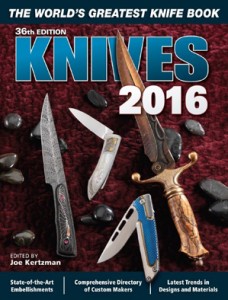
Knives 2016, 36th Edition
The trusted guide for knife collectors, enthusiasts, knifemakers, and dealers around the world, this knife book covers the latest and greatest from front to back. A collection of feature articles explores the latest developments, history, and transformation of knives, swords, and edges of various kinds. Get your copy
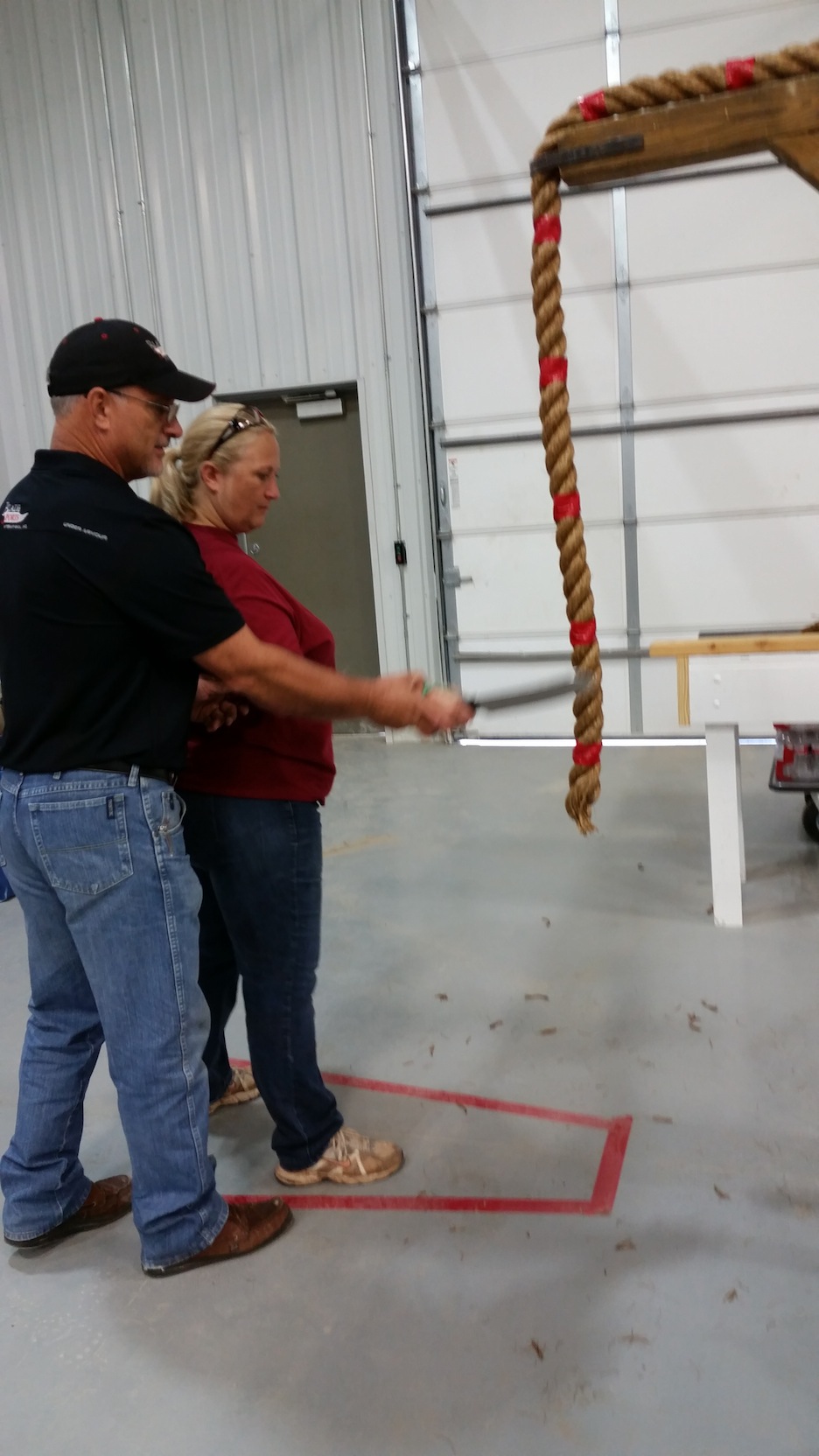
Jantz Supply’s Shanna Kemp receives instruction from two-time BLADE Show World Championship Cutting Competition titlist Gary Bond.
The first-ever women’s division in a BladeSports International Cutting Competition was conducted Saturday, Sept. 19, at Jantz Supply in Davis, Oklahoma.
“BladeSports has long talked about the possibility of a women’s division in our sport,” noted Donavon Phillips, executive director of BladeSports International (BSI). “We are past the possibility now. It has arrived.”
The BladeSports International (BSI)-sanctioned event, which ran from 10 a.m. to 4 p.m., also included a men’s competition. Competitors ran an obstacle course including cutting 2x4s, rope, water-filled plastic bottles, a straw lengthwise and slicing rolling tennis balls.
Though women have competed in the men’s division before—including the first-ever female qualifier for the BLADE Show World Championship, Jessica Elias, won for an unprecedented third straight time by Dan Keffeler this past June in Atlanta—the event marked the first time women have had a BSI division all to themselves.
“Knives have long been considered the tool of choice for men but more and more women are not only carrying knives regularly for protection and general use, but are now joining the ranks of men who compete in competitive knife events,” noted Ken Jantz, founder and CEO of Jantz Supply.
On Aug. 15, Jantz Supply hosted a training session in which four women and nine men became certified to compete in BSI events. A total of seven women have national BSI certification. The top competitors at both events earned points toward qualifying for next year’s national competition to be held in the spring in Dallas, Texas, and the BLADE Show World Championship in Atlanta June 4.
Jantz Supply has been in business for over 30 years and manufactures and supplies knife blanks, knifemaking components and tools. For more information visit www.knifemaking.com.
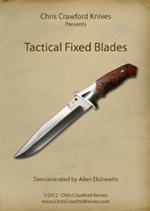
Learn both basic and advanced knife making techniques with expert instruction from Allen Alishewitz in Tactical Fixed Blades. Allen demonstrates how to craft a double-edged tactical fixed blade knife from start to finish, and creates two knives in order to fully illustrate the knife building process. You’ll learn:
– Profiling and Drilling the Knife
– Tang Tapering on a Grinder
– Tang Tapering on a Mill
– And more!
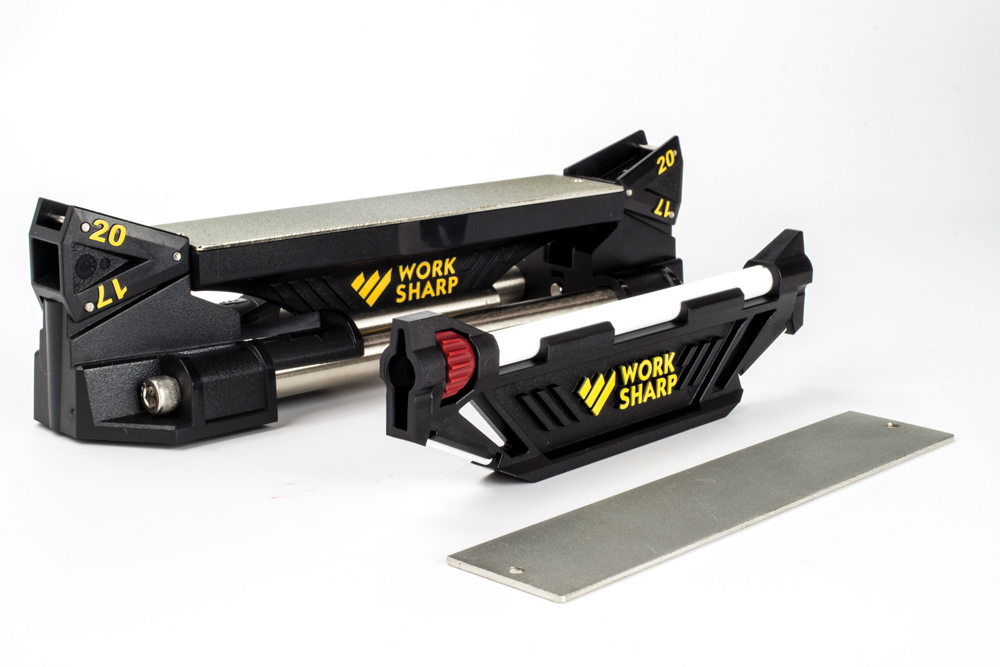
Keep your edge with the Work Sharp Guided Sharpening System.
Next to a knife on their wish list, knife owners and collectors are typically on the hunt for one thing — a superior sharpening system.
Finding the right solution to handle a wide spectrum of blade styles, grinds and material is more difficult than it sounds. As most knife aficionados know, what draws a sharp edge on one blade may struggle on another.
That’s what makes the Work Sharp Guided Sharpening System so exciting. This niffy and elegant sharpener has been designed to put a razor’s edge on every knife you own — from flat grinds to serrated blades.
At the heart of the sharpener is Work Sharp’s Pivot-Response system that allows the abrasive surface to follow the curve of the knife. This innovative feature permits the sharpening surface to tilt with the camber of the blade, thus allowing liner strokes to apply an edge. This takes much of the guesswork out of sharpening the entirety of a knife, making the process faster, easier and more precise.
The Pivot-Response, however, can be locked if a more traditional sharpening platform is desired. This makes the Guided Sharpening System ideal for novices and experts alike.
Making the system almost fool proof is the Angle-Guided Bench Sharpener. These guides — set at 17 and 20 degrees — are designed to ensure the proper angle is taken on each pass, thus guaranteeing a dynamite cutting edge.
Work Sharp Guided Sharpening System includes coarse and fine diamond plates, a three-position ceramic rod for honing, and two small diameter ceramic rods for serrations.
Work Sharp has also aimed to make this sharpener a life-long addition to your knife maintenance kit with a 42-year warranty.
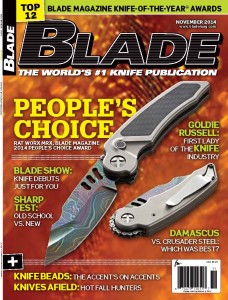
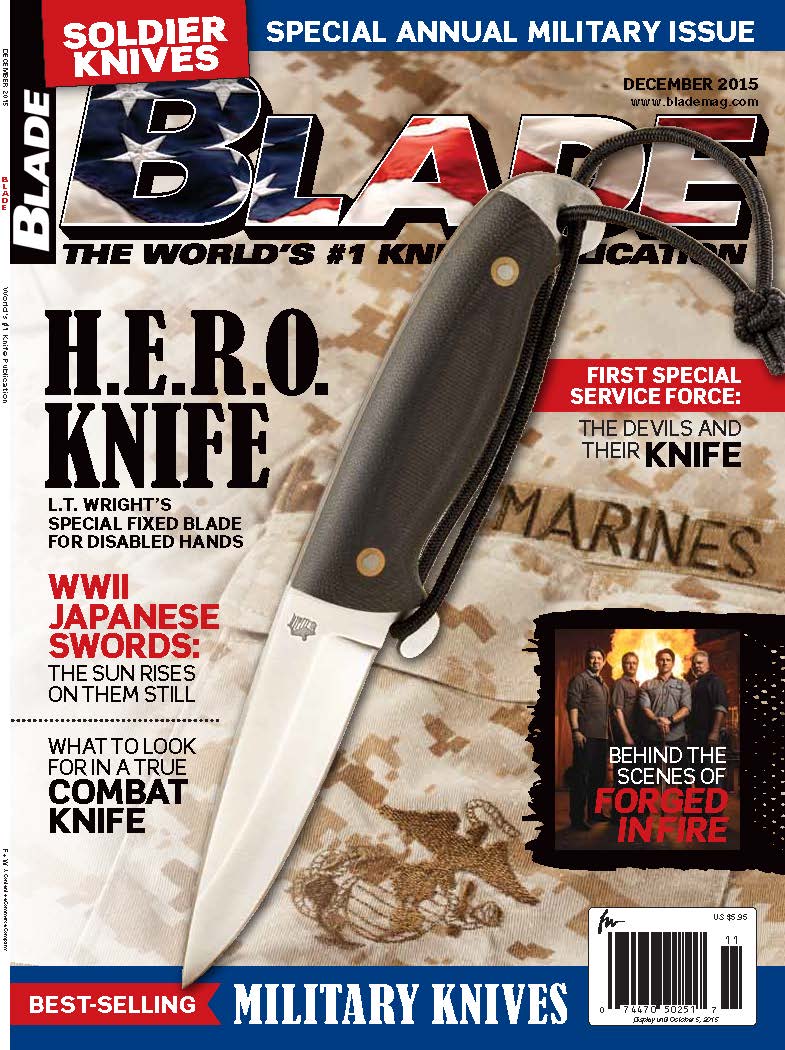
A knife for disabled vets is the cover knife for the latest BLADE®, on newsstands NOW!
A knife for disabled vets, behind the scenes of the hit TV show Forged In Fire, World War II Japanese swords and much more highlight the annual military issue of BLADE®, on newsstands NOW!
L.T. Wright’s H.E.R.O. (Helping Everyone Reach the Outdoors) knife is specially designed to accommodate people with finger and/or hand injuries. Join Abe Elias as he examines how the knife came about, how it’s designed, how it works and more in his story on page 12.
Forged In Fire has been one of The History Channel’s hottest shows in recent months and has brought the skill required to make a forged knife into full view of a wide-ranging television viewing audience. Go behind the scenes of this fascinating, action-packed show with our special story on page 84. In addition, on page 10, see if you agree that FIF may be the “Eureka moment” the knife industry has been waiting on for these many years.
The Japanese signed the formal World War II surrender on the U.S. battleship Missouri 70 years ago this month. But what of all those Japanese swords carried by those in the Japanese Army and Navy? Who made them and whatever became of them? Leon Kapp gives you the poop in part one of his “The Sun Rises On Them Still” on page 80.
There’s much more in the annual military issue, including a visit with two surviving 90-something members of the First Special Service Force that fought so well in World War II; three military veterans who are new to the knifemaking game in Pat Covert’s story on page 20; the best-selling military knives in the factory realm on page 36; a test of four military-style autos by James Morgan Ayres on page 44; “How To I.D. A True Combat Knife” by BLADE field editor Ed Fowler on page 52; the “Ultimate Survival Knives” of special-operations veterans Grady Powell and Jared Ogden, stars of National Geographic’s action TV series, Ultimate Survival Alaska; a test of two tomahawks by BLADE field editor/retired Green Beret Kim Breed on page 48; and much more in the latest issue.
Subscribe:
Stay abreast of the latest developments on this and many more knife rights issues with a subscription to BLADE.
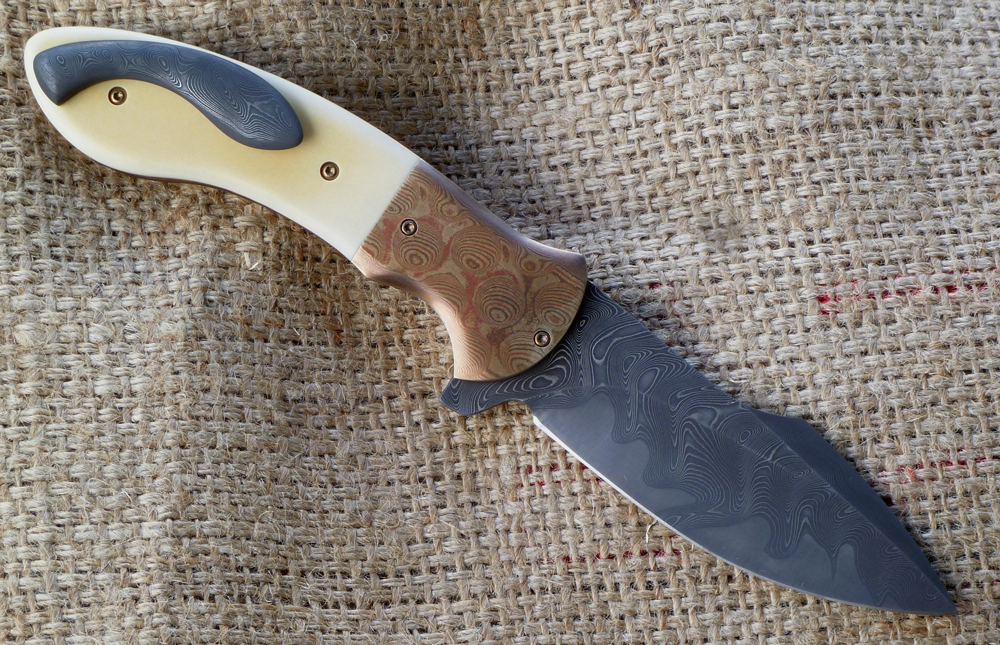
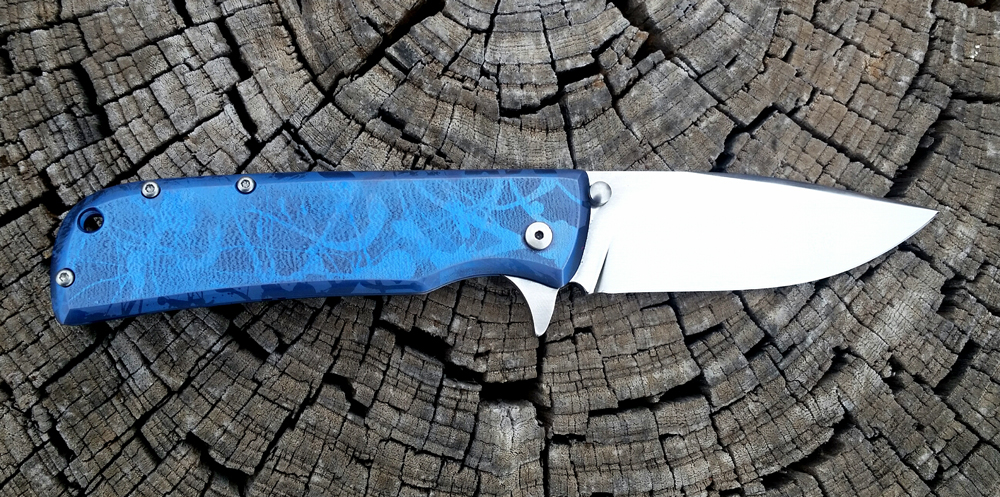
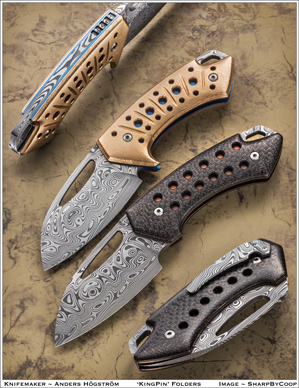
There’s a chapter in the new KNIVES 2016 book called “Some Class Tacts,” and it’s chock-full of color images of the finest handmade, high-end, dressed-up tactical folders in the world. Knifemaker Ken Onion uses the term “Genticals” for such knives (Gent’s Tacticals), but in this case, Class Tacts seemed to sum them up. Whatever you want to call them, whether “Sunday Go To Meetin'” knives, dress tacticals, Genticals or Class Tacts, today’s versions of tactical folders using high-end materials are gorgeous.
And it’s amazing how many different configurations can be made, different versions of dress tacticals. No wonder they remain so popular. It’s no trend, it’s a movement, and Class Tacts are here to stay.
Want to See More?
See them all in the brand-new KNIVES 2016 book, and enjoy!




 It was seven long decades ago on Sept. 2, 1945, that the Japanese signed the agreement formalizing their surrender, for all intents and purposes officially marking the end of the Second World War. The ceremony aboard the deck of the USS Missouri in Tokyo Bay took all of 23 minutes to close the book on a conflict that extinguished more lives and destroyed more goods and property than any before or since.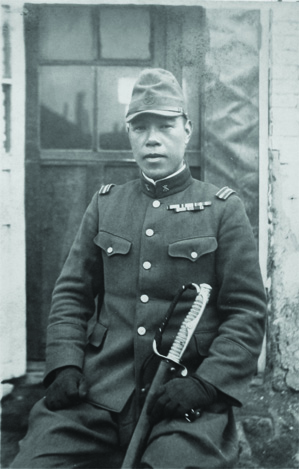
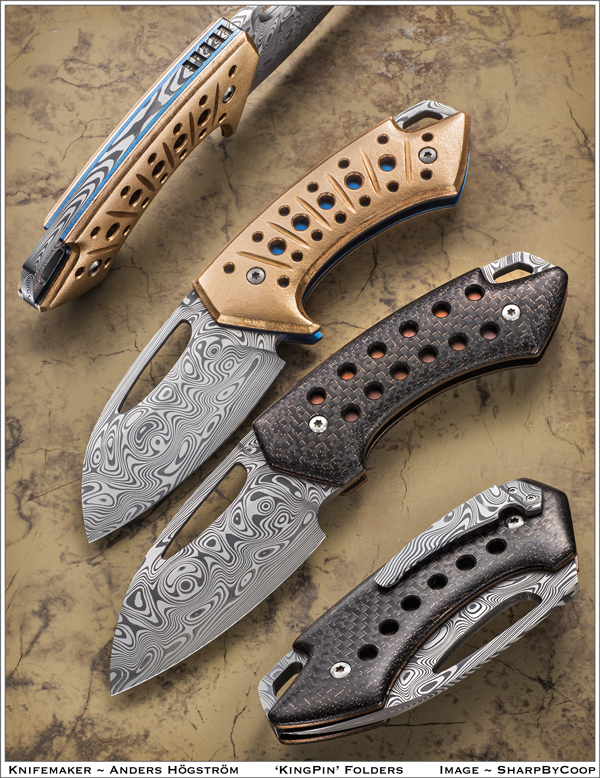
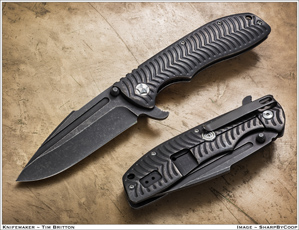 There’s a chapter in the new