See who took home top honors at the West Coast Flipping Championship.
The contestant known as @balisongnerd won the 6th Annual West Coast Flipping Championships October 11 at BLADE Show West in Salt Lake City.
Contestants @in8jo and @__hey.austin captured second and third place, respectively.
Hosted and conducted by Squid Industries before a crowd of engaged onlookers in the Salt Palace Convention Center, the event drew a large number of young contestants who competed against each other by displaying their balisong flipping talents in a round robin format.
Prizes included $1,000 for first place, along with a Poikilo Blade Nova, MachineWise Opus V2 Live Blade and Microtech Ultratech ZBP OTF Zero Forks from Blade HQ. Second place took home a $500 cash prize, a MachineWise Opus V2 Trainer and a Dessert Warrior Civivi Elementum II from Blade HQ. Third place earned $250, a MachineWise Opus V2 trainer and a CRKT Folts Minimalist Dessert Warrior from BladeHQ.
From maintaining symmetry to adding fullers, we break down the intricate process of making a dagger design into a physical knife.
A dagger is not a kitchen knife in disguise. It is a purpose-built instrument of thrust and that purpose demands precision at every stage of construction. Small errors that might pass unnoticed in a hunter or utility knife compound on the exacting canvas of the dagger. A centerline that begins drifting by a fraction at the ricasso becomes an off-center tip, an uncentered bevel a blade that twists, the result a thrust off target. The difference between success and failure is geometry, and nowhere does geometry matter more than in the making of a dagger.
The process begins with detailed design and planning. The execution begins with precise layout. The central axis is the spine on which the whole piece will rest, and without it symmetry is impossible—the whole blade will stand or fall on getting this right. There are some tricks that will help ensure success.
Dagger Half Template
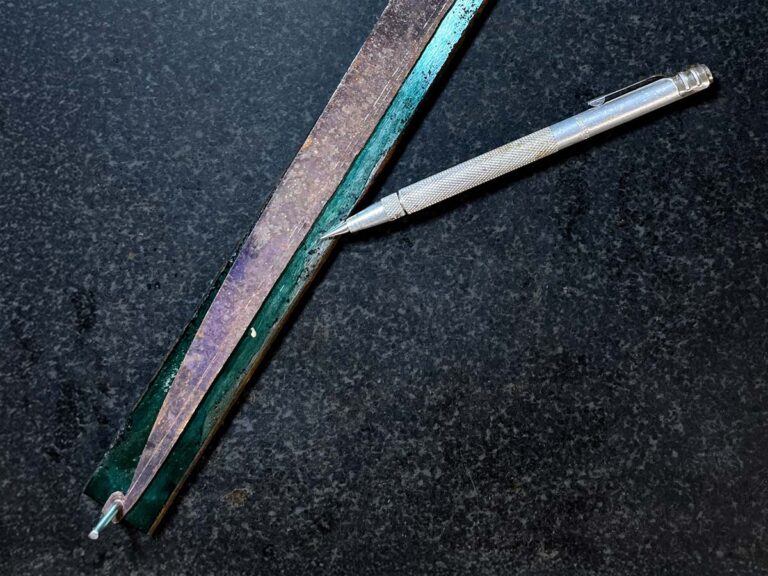
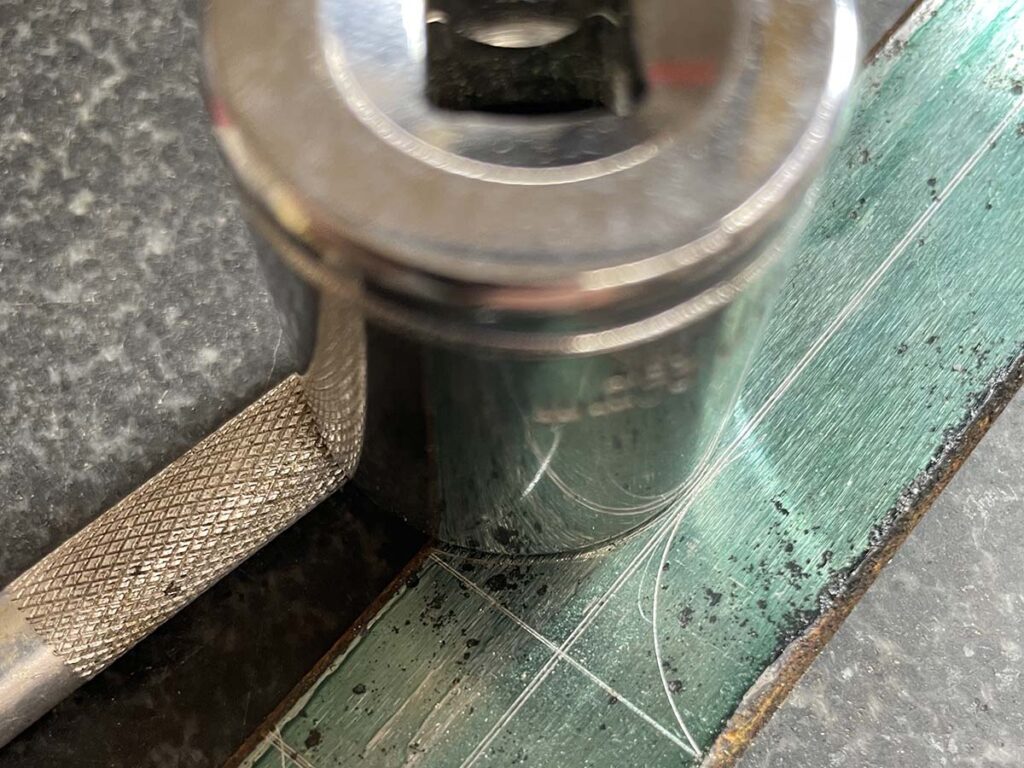
The Line That Rules Them All. A cleanly scribed centerline on both edge and flats sets the maker up for successful layout. A centering ruler can be a useful tool to check this.
Once you have determined the blade profile, preferably in some physical form like a drawing, make a template so it can be accurately transferred to steel. Here’s the thing, though: you only need half. A template representing only half of the blade profile will allow you to use it for each edge, ensuring perfect symmetry. Include the tang on your profile, not just the blade.
If you’re careful, your half template can be held on your blade stock aligned on a scribed center line and scribed on each side. If you’re less careful, oversize your blade stock and template so you can drill holes for alignment pins in the end of each that is outside the final profile. Using these holes to align the half template for marking each edge is the most precise way to lay out a symmetrical profile. If the stock is oversized, you’ll grind off the alignment holes when grinding the profile.
Planning Plunge Lines
Once you’ve accurately laid the profile out on the blade stock, take the time to scribe in the planned plunge lines on the blade flats and the edge. Sweeping, curved plunges are more visually appealing and careful layout will help ensure that your vision becomes reality. These lines are not decorative. They are the stops, targets if you will, that prevent the grind from slowly creeping toward the ricasso with each grinding pass.
Grinding the Plunges. Gradual, sweeping plunges are much more appealing to the eye than straight ones. Draw them in and grind to the drawing. This is more easily done on a wheel than with a flat platen but can be accomplished either way.
When it comes to grinding these sweeping plunges, hollow grinding on a wheel is easier than flat grinding on a platen—it’s easier to grind a curve with a curve—but by all means use a flat platen if that’s what you have. If you’re already grinding on a wheel, a 1-inch-wide wheel with a 1-inch belt will be an easier path to success than the standard 2-inch wheel and belt.
Sweeping plunges also will result in a thicker edge toward the ricasso. This is fine—you shouldn’t try to sharpen this part as doing so most likely will ruin all your careful design work. Will the unsharpened part of the edge impair the stabbing function? Perhaps, but only a little. Though it pains a serious knife person to admit it, most handmade modern daggers are for show. In most societies stabbing others is frowned on, and if you’re going to all this effort, choosing to focus on aesthetics is a good bet. However, if your dagger will be deployed in combat, ignore the aesthetics, grind sharper plunges and take the edge all the way to the ricasso.
Dagger Grinding And Stock Removal
Grinding and stock removal are the way to go for daggers. This is admittedly a hot take but in a game where winning is determined by symmetry, forging introduces unnecessary variables and distorts the base stock, making accurate layout more complicated—not impossible, just not as easy. There is little to gain by forging unless the steel itself or the situation requires it, or if you simply like doing it that way. If you want a damascus pattern to taper toward the tip, or if you’re making a dagger for American Bladesmith Society testing, by all means forge. It’s an impressive skill set. If you want to make the best dagger possible with an eye toward efficiency, and thereby your profit margins, grind it. Stock removal is the more predictable path, and predictability is the soul of symmetry. Every forged blade is a stock removal blade before it’s completed; don’t get hung up on this unless you have reason to.
Delicacy Of The Dagger Tip
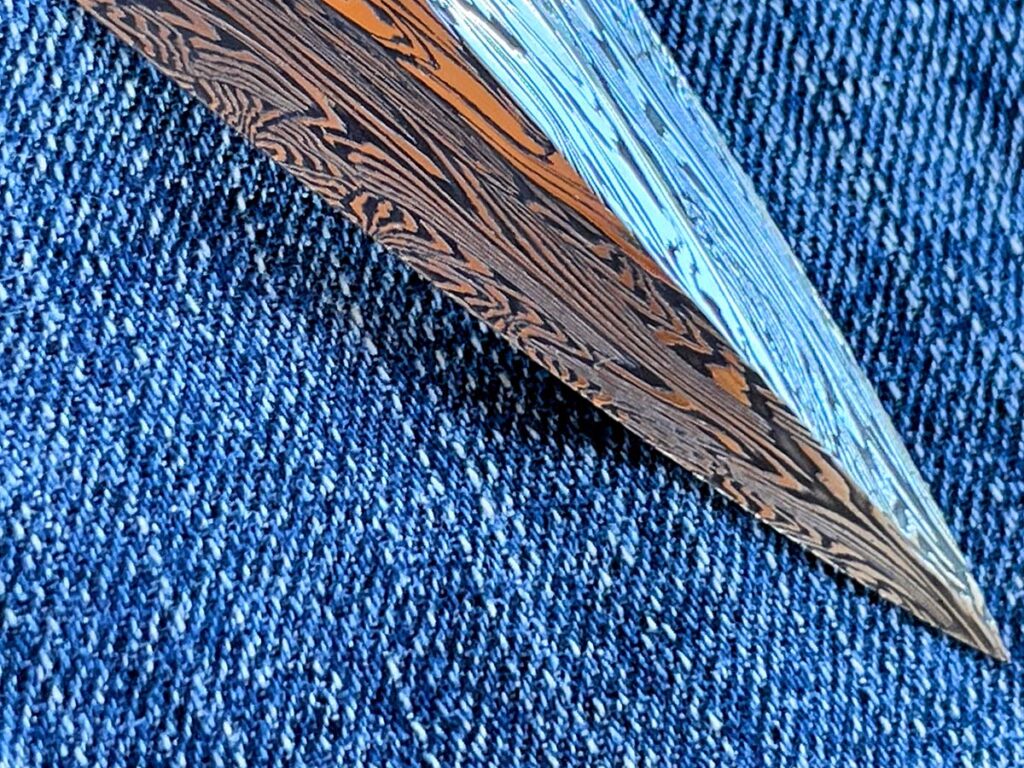
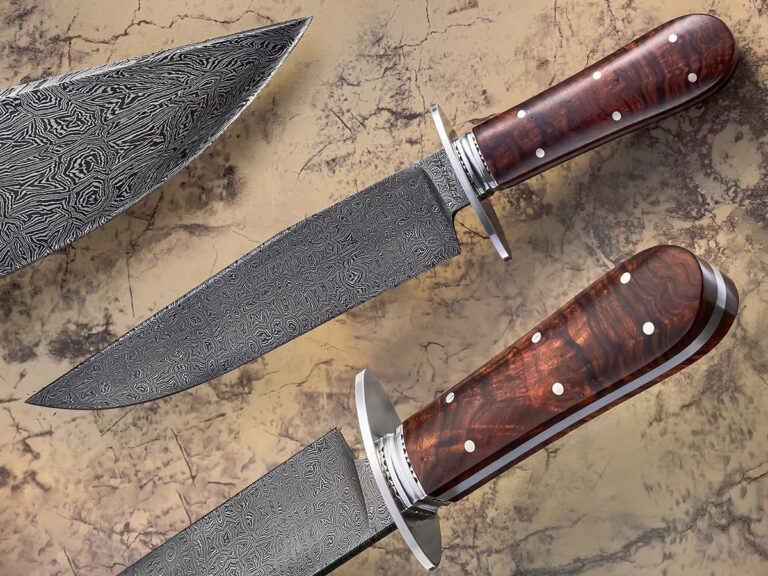
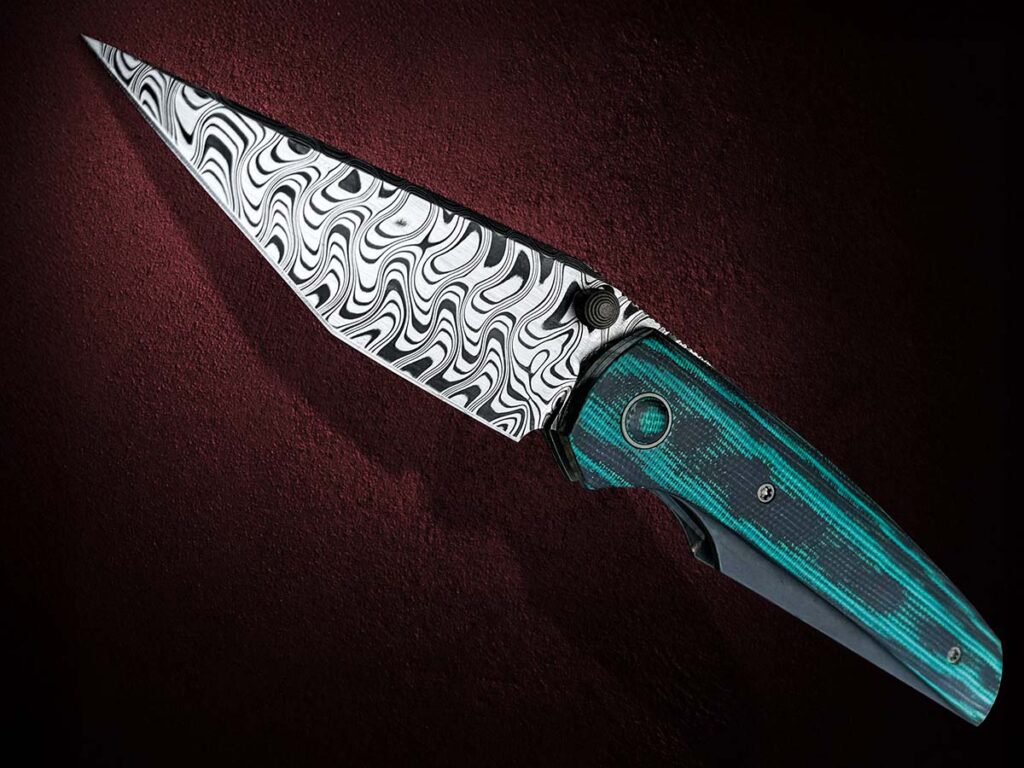
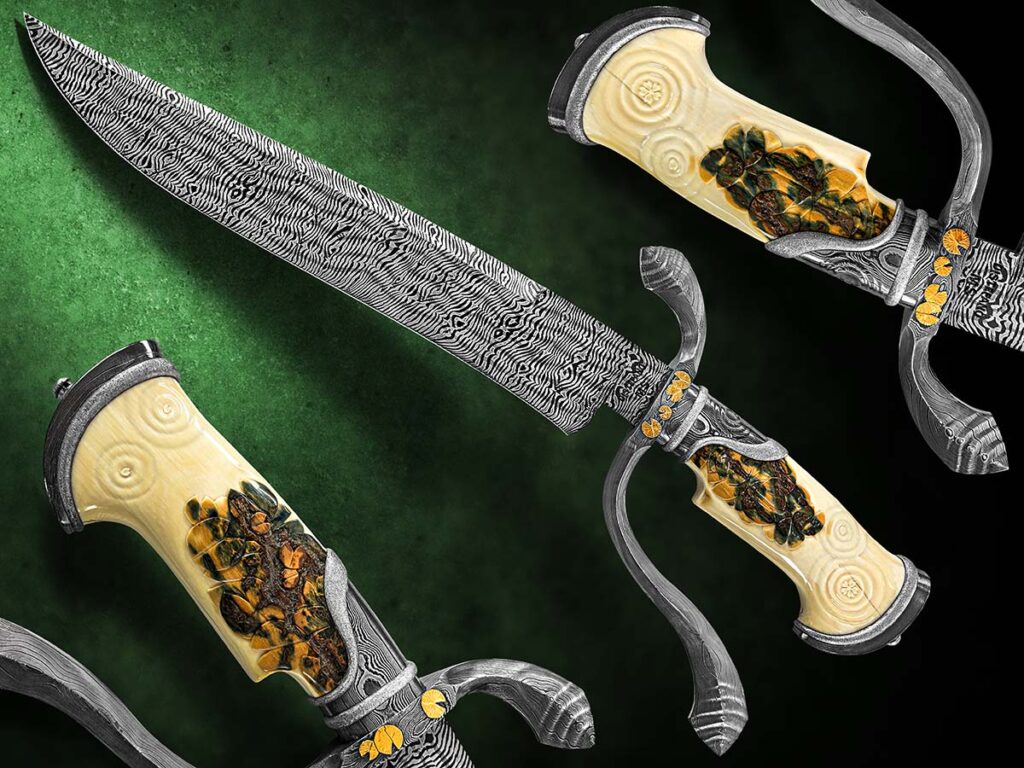
Forged for Continuity. An intricately patterned damascus dagger by Gregory Verizhnikov shows why sometimes forging is worth it—forging through the tip preserves the pattern’s flow.
Where the mass of the ricasso anchors the entire weapon and provides strength at the critical juncture of guard and tang, the tip, by contrast, demands delicacy. Once your profile is carefully ground to shape and you turn to grinding the bevels, grind the tip first. More specifically, grind it at a steeper angle than you plan for the main bevels, and try not to cross the centerline even at that obtuse degree, except at the very end. After that, leave it alone.
Grind the main bevels like you normally would, paying perhaps more attention than usual to your scribed lines, and try to avoid that last inch toward the tip until everything else is pretty much done. This seems a bit odd at first, but consider that the final inch must maintain its thickness in order to be strong enough to pierce effectively without deformation or fracture. If you do it right, you’ll end up with a bevel at the transition. Some makers polish the transition so it remains crisp, while others blend it smooth while polishing. Either way, it should be deliberate. Neglect this and the point will be too thin.
When To Add Fullers
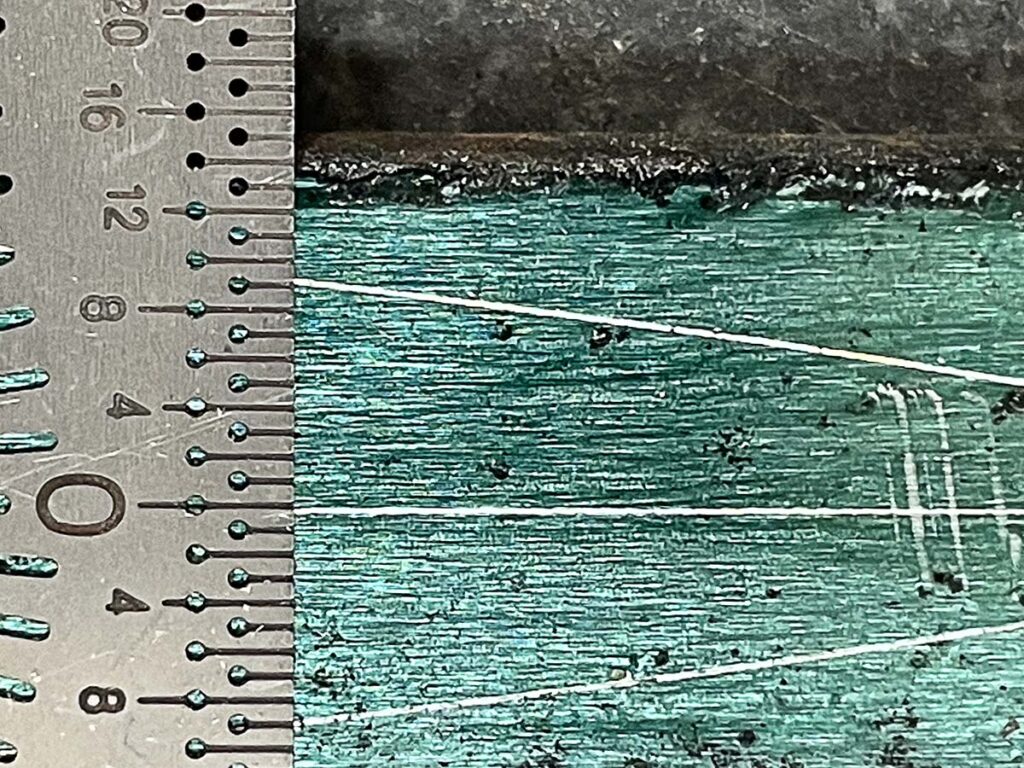
Lay Out Everything. Scribe curved plunge lines on the flats and edge mark exactly where each bevel begins and ends.
Fullers, if they are to be included, should be cut early while the blank still has parallel flats. Attempting them later invites misalignment, or at the least inserts a potentially unnecessary level of difficulty. Better machinists than this writer/dagger enthusiast will likely have little difficulty either way, but life has enough complications of its own without inviting them into play.
Dagger Balance
Balance matters as much as steel. A well-made dagger should balance at or just ahead of the guard, a neutral point where the hand feels neither burdened nor abandoned. This can be tested with nothing more elaborate than a rod beneath the mostly assembled knife, shifting it until it rests level. It’s really just as easy to adjust weight distribution by feel, removing or adding weight to the component parts until it feels right. Don’t forget to consider the added weight of your epoxy. When balance is right, the blade becomes an extension of the wrist, alive and responsive.
Tang & Spacers
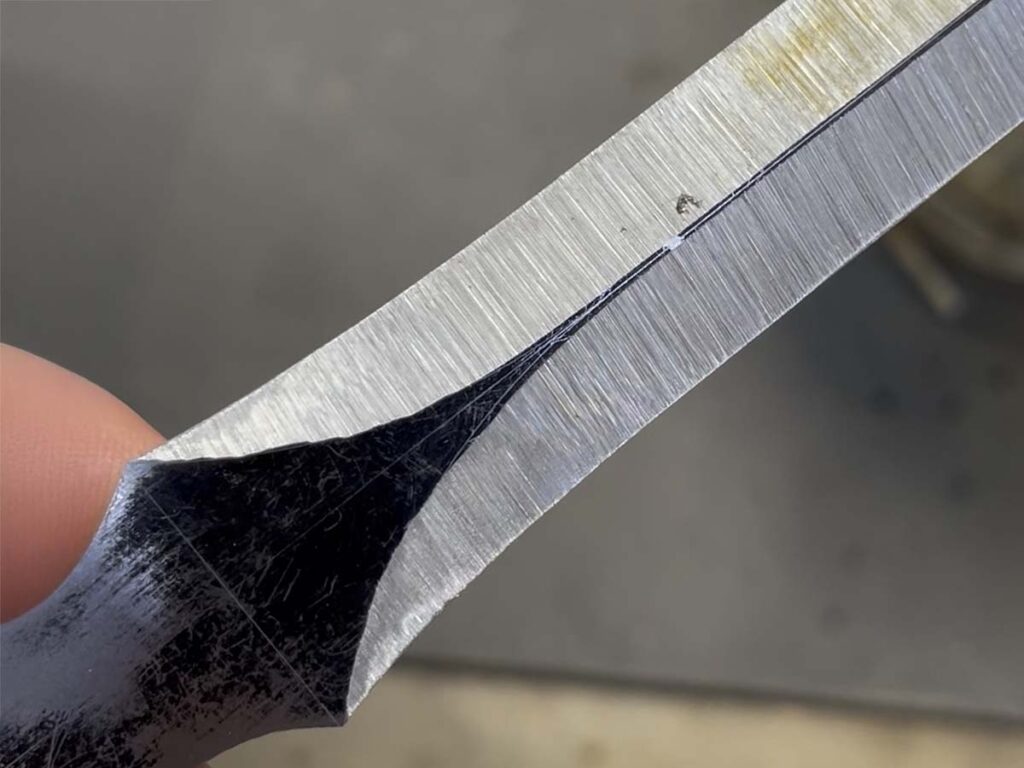
How Not to Do It. This dagger blade poorly ground by the author clearly demonstrates that the easy way out usually leads back in. Off-center bevels and an off-center tip are predictable results of poor initial layout.
Even the tang deserves forethought. When profiling the blade blank, leaving the tang longer than necessary provides room for correction and fitting, and a threaded end can serve as both a work-holding aid during construction and a permanent anchor if a pommel or nut will close the assembly.
Spacers, fitted between guard and handle and again between handle and pommel, make alignment easier and allow pins to register each component precisely during glue-up. They’re also relatively easy targets for weight adjustment when working on overall balance. These details are seldom glamorous but are what let the final assembly come together without struggle.
Embellishments
What results from this attention is not decoration but readiness. The embellishments will come later… the fluted handles and twisted wires and all the flourishes that mark the master’s hand. But none of that matters if the design is poor, the execution haphazard, the details unconsidered.
Tony Lewis knife honors the late ABS master smith and chairman.
American Bladesmith Society Master Smith/past ABS chairman Steve Dunn was admired by many in the knife community and died way too soon at 68 in 2024. ABS Journeyman Smith Tony Lewis never met Steve but is a fan of his work, including Steve’s damascus pattern known as Thorns and Thistles.
Tony was fortunate enough to buy Steve’s Riverside hydraulic press, a purchase that included several of Dunn’s die sets. Among the dies was a saddle die—maybe the very one Steve originally used to make the Thorns and Thistles pattern.
Tony Lewis
“Recreating the Thorns and Thistles pattern was both a challenge and a joy,” Tony wrote. “Forging triangles and combining them into a cohesive mosaic was a new technique for me, but after some trial and error I managed to pull it off. When I finally etched the billet and saw the intricate pattern revealed, I felt a deep sense of satisfaction—and connection.”
After studying Steve’s signature style, Tony chose a bowie that he believes “embodies the spirit of Steve’s work.” The result is a terrific tribute to a most talented man.
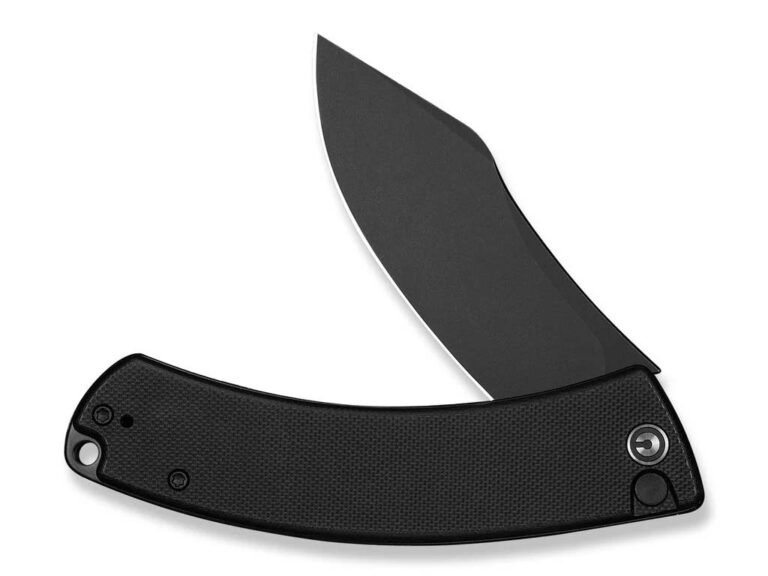
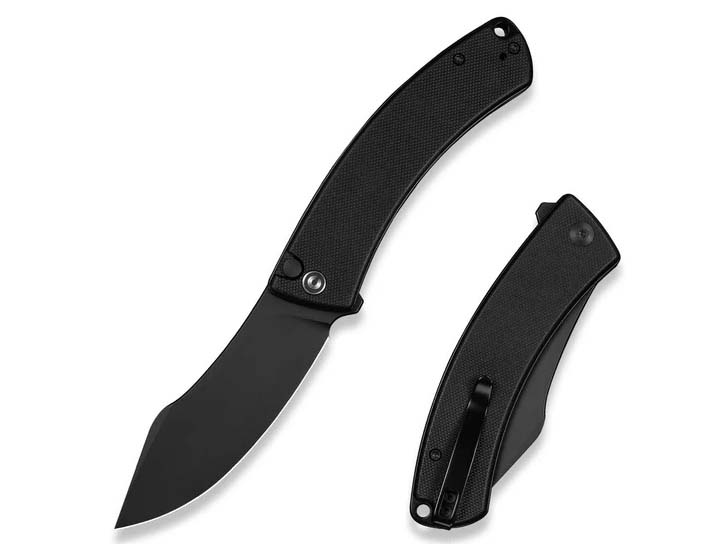
Explore the CIVIVI Outlaw Muk folder, a tactical EDC interpretation of the classic Nessmuk pattern featuring a smooth flipper and secure button lock.
The Nessmuk knives have deep roots in American outdoor history, instantly recognizable for their unique, sweeping blade profile. This knife style was championed by 19th-century writer and early ultralight camping pioneer George Washington Sears, who wrote under the pen name Nessmuk.
Traditionally, this design is a fixed blade—a dependable, do-it-all camp knife known for its pronounced hump on the spine and generous belly, perfect for tasks from skinning to food prep. Now, designer Trey Sprinkle, from the YouTube channel Last American Outlaw, has tackled the challenge of translating this timeless, fixed-blade archetype into a modern, pocket-friendly folder. The CIVIVI Outlaw Muk is Sprinkle’s first production collaboration and a striking reimagining of a legend, built with a distinct, tactical attitude setting it apart from its historical inspiration.
The design embodies a rugged, tactical aesthetic that aligns perfectly with Sprinkle’s online persona. The traditional Nessmuk shape is narrowed, given more of a dramatic sweep, and is accented with a harpoon swedge near the tip, lending it a formidable appearance. This aggressive yet refined profile takes the basic geometry of the original and infuses it with a contemporary, hard-use look.
The most significant design departure, however, is the inclusion of modern folder mechanics. The Outlaw Muk utilizes a highly secure button lock mechanism. The lock has been engineered with a specific spring tension under the button, providing just enough resistance to prevent accidental engagement, yet remaining easy to release for effortless one-handed retraction. This combination of speed and safety makes the knife practical for continuous daily use where quick access is essential.
Outlaw Muk Materials
This smooth operation is coupled with a highly responsive pivot system. The knife features caged ceramic ball bearings, ensuring that deployment via the subtle rear flipper is consistently smooth and fast, a hallmark of CIVIVI’s knives.
For performance, the Outlaw Muk offers a 3.47-inch blade crafted from 14C28N stainless steel. This Scandinavian steel is well-regarded in the mid-range category for its excellent balance of edge retention, corrosion resistance, and ease of sharpening. While the blade size is modest compared to a traditional fixed-blade Nessmuk, its full belly and acute tip provide plenty of capability for cutting smaller foods, slicing through twine, or efficiently opening boxes and stubborn clamshell packaging.
Outlaw Muk Design
The handle maintains a subtle, ergonomic curve, which provides a comfortable and secure grip. It is fitted with full G10 scales, which are durable, moisture-resistant, and lightweight, contributing to the knife’s overall carry weight of just 3.74 ounces.
CIVIVI offers the knife in several colorways, including solid options like dark green or black, but the most distinctive variant features a striking black and white split pattern that offers a more refined, geometric look. The knife also includes a reversible, tip-up pocket clip, making it easily adaptable for both left- and right-handed users.
From its roots in 19th-century woodcraft to its execution with a button lock and modern 14C28N steel, the CIVIVI Outlaw Muk is a successful and intriguing blend of history and hard-use utility. It provides a unique option for those seeking a highly functional EDC knife that carries the attitude of a legendary outdoor pattern.
Jesse Harber and Coy Baker forecast the hottest damascus steel for ’26.
There’s something about predicting the future that has intrigued humanity for ages. If you could just somehow know which stocks would turn a profit, which crypto would “go to the moon,” or which numbers were coming in the PowerBall, you like to imagine that you could really take advantage. Thus far the ability to accurately predict the future has been a challenge, which begs the question—what damascus steels and patterns will be hot for 2026?
Jesse Harber of Vegas Forge doesn’t hesitate to jump right in.
“Our Reptilian pattern stayed hot in 2025,” he observes, “and it should continue to do well.” Vegas most often uses a combination of AEB-L, 440C and 302 stainless steels for contrast in its stainless billets. It prefers the combination of O1 tool, 1075 carbon and nickel-alloy steels for its carbon varieties.
Jake McCoy used Baker’s Zeus stainless damascus for the blade of his folder.
Twenty-twenty-five was a fun year for Vegas Forge. It was able to continue making the steel it loves, the steel most knife enthusiasts all love to use—and it still managed to find time to innovate.
Makers have been using EDM cutouts in canisters to make unique figures and shapes for some time now. Over the past few years, a few have experimented with 3D-printed shapes inside canisters for truly limitless possibilities. Vegas has taken a different approach of using smaller cutouts within canisters that are then layered into “regular” damascus. There are obviously other critical details of the process not mentioned here, but the end result is small shapes or logos within the layers of the steel, not just as a shape like the other canister types you usually see.
Hammering Away At Baker Forge & Tool
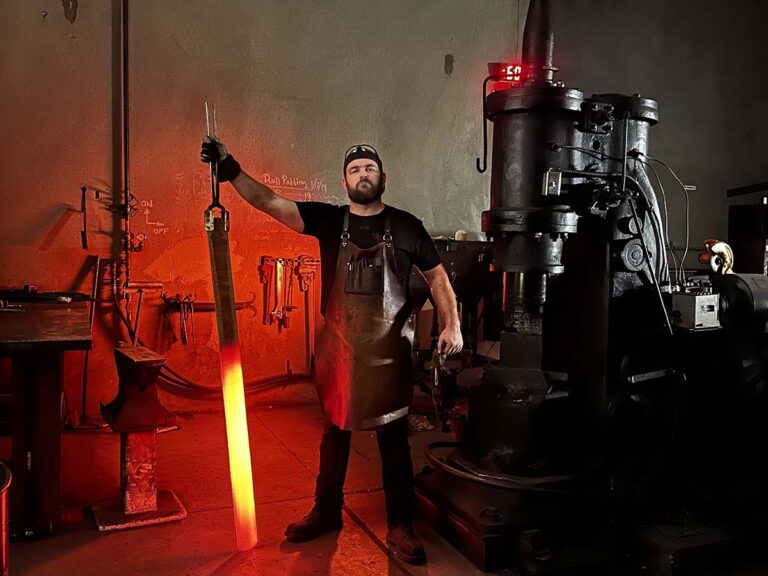
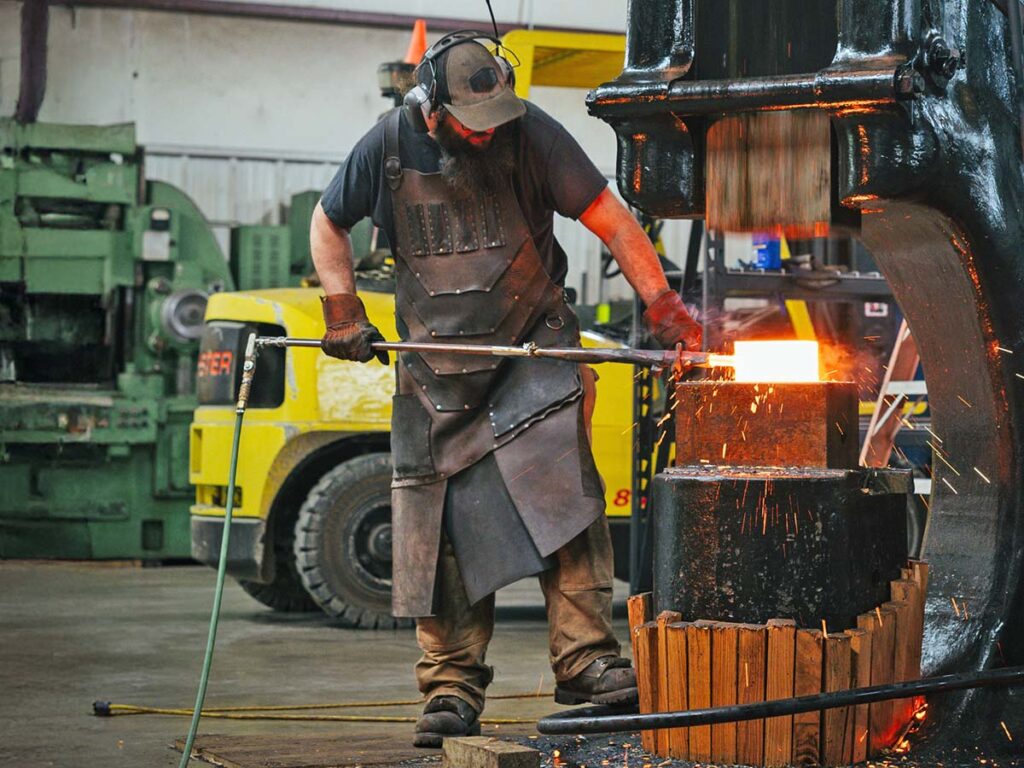
Coy Baker said Baker Forge & Tool is “really moving and shaking” for 2026, partly because of a new Chambersburg steam hammer converted to air. With a die surface of 6-by-14 inches and a 750-pound ram, the whole shop shakes when the hammer pounds on a giant billet. The hammer originally was used to make jib cranes for the Charlotte Railroad and runs on a 50-horsepower compressor with multiple 750-gallon air tanks. Coy stated he hasn’t pushed the hammer to its max, but said he thinks it can handle billets up to 35 pounds.
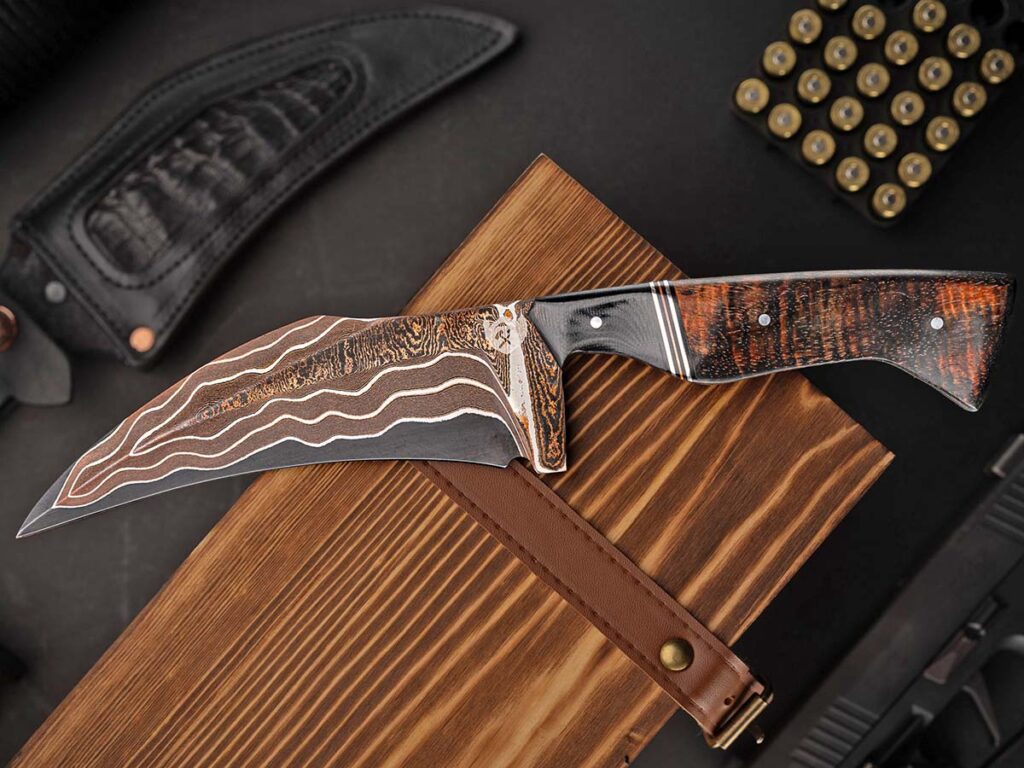
Baker’s Tsunami copper-mai steel is the material for the blade of a piece by Hans Molenkamp of Crimson Knife Co. (crimsonknives.com).
Why in the world would Baker Forge need such a giant hammer? Because the company, too, has been innovating and expanding into the production of stainless damascus. After two years of research and development and fine-tuning Baker’s processes for production, the prodigious pounder is finally up to speed. Baker prefers a combination of AEB-L and 154CM for its stainless damascus.
“The steel is really hard even when it’s hot,” Coy said. “Even with our 350-pound hammer it was like pounding on a rock.” The giant Chambersburg, on the other hand, moves a giant stainless billet with ease.
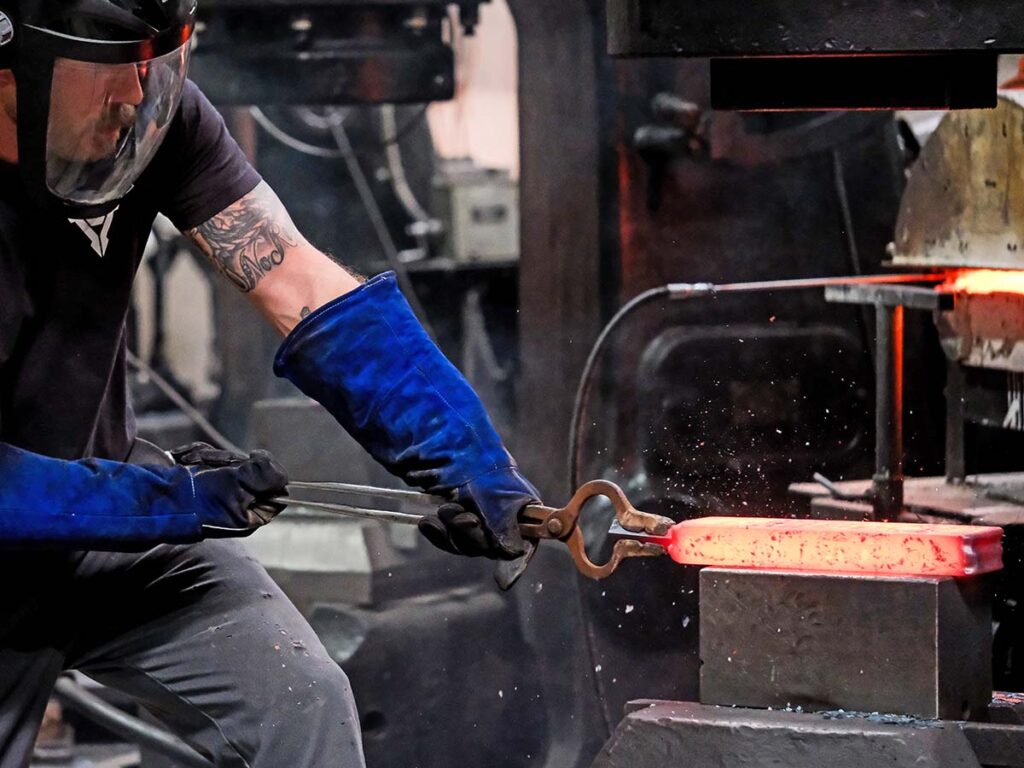
For those of you who don’t know, forging stainless damascus is quite a challenge, beyond the capability of many backyard smiths. Stainless steels contain high chromium, sometimes 12-to-15 percent, and chromium oxide doesn’t forge weld. Any oxygen at all in the forging environment and the welds simply will not stick. There are multiple ways to get around that, including inert gas purges and welding inside canisters. Add that to the fact that the stainless doesn’t like to move under the hammer and has only about a 100-degree-temperature window when you can safely work it, and you get a very difficult process.
Baker Forge & Tool’s Will Spears forges a billet of stainless damascus on the Chambersburg high-frame power hammer at Baker. Built in 1946, the power hammer has a 750-pound ram and weighs just shy of 11 tons. “It took us 14 months to install,” Coy Baker laughed. “The foundation for it is over 12 feet deep.”
Baker isn’t just producing stainless damascus in run-of-the-mill patterns, it is innovating. It has developed patterns it will use in its stainless steel exclusively, particularly one called Zeus.
Copper damascus has long been Baker’s hottest commodity, and it’s still producing it at high volume and quantity. The company is pushing the limits there as well and has developed a method to weld and manipulate copper on the end grain. While the technique is under wraps, the results will be broadcast far and wide: copper damascus in formerly unobtainable mosaic patterns. When clad over a monosteel or carbon damascus core, the patterns stretch the imagination of what’s possible.
Steel Industry Challenges
Both Baker and Harber mentioned challenges and areas for growth in the steel industry. Baker was the first to put BLADE® on the story about Buderus apparently closing its primary mill for 10xx series steels. Coupled with the recent closing of Crucible on the stainless side (see our article on Crucible Industries closing), both Baker and Harber have been exploring new steel options in case their mainstays become unavailable. Vegas in particular is moving toward more cores of Nitro-V and Elmax and moving away from MagnaCut and XHP.
Vegas Forge team member Franklin draws out a 40-pound canister of stainless Raindrop-pattern damascus on the company’s 5B Nazel hammer.
The hot new kid on the block is ProCut, the brainchild of a partnership between Larrin Thomas and Pop’s Knife Supply. Both Vegas and Baker are looking forward to pushing the limits of ProCut. As a high-alloy steel, when combined with Apex Ultra, the maker achieves high performance out of what looks like “ordinary” 1084/15N20 damascus. If you think of the difference in performance between 1084 and 52100 carbon steels, you’re on the right track. Baker Forge is currently in the lead on the ProCut “arms race” but Vegas Forge has steel in hand and is ready to go.
What fun new things can we expect in the world of damascus in 2026? Vegas Forge is entertaining a few recent orders that sound interesting. There’s a maker in Alaska using Vegas material to make high-end custom ice skates, and another customer using the company’s material to make stainless damascus computer keyboards. Who’d a thunk it? For those who enjoy a good picture show, Vegas has another top-secret project in the works. Think aliens with amazing damascus weapons and tools and you’re on the right track.
Take two leaders in the field like Baker and Vegas, factor in the demand for their top steels and add lots of innovation, and you get the makings of a really great year to come in the world of damascus.
The CRKT Xolotl OTF take the original fixed-blade design a step further.
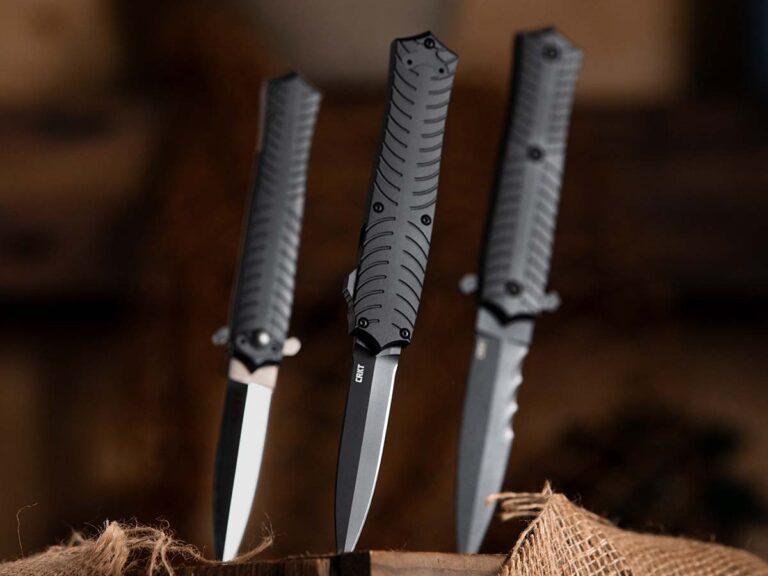
The CRKT Xolotl OTF automatic knife is the latest evolution of a design that shoots to blend ancient mythological inspiration with modern, high-performance tactical engineering. Named after the Aztec deity of fire, lightning and the guide of souls to the afterlife, the Xolotl is the creation of veteran and former Green Beret Michael Rodriguez.
Rodriguez’s accomplished background—which includes graduating at the top of the Irish Army Ranger Wing Sniper Course and serving as an advisor to President George W. Bush—lends a specific, mission-driven philosophy to his knife designs. This experience is the foundation of his participation in CRKT’s Forged by War program, which enlists real-life combat veterans to apply their knowledge to a line of specialty, mission-ready knives and tools.
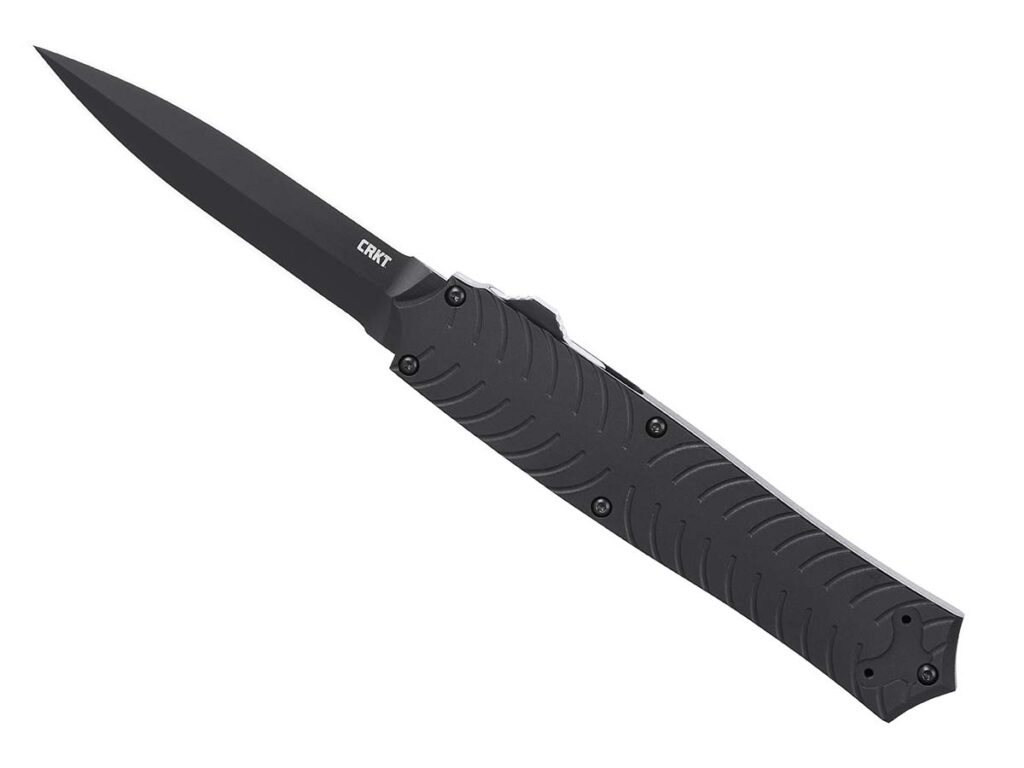
CRKT Xolotl OTF is a slick and functional auto that fits into the line well.
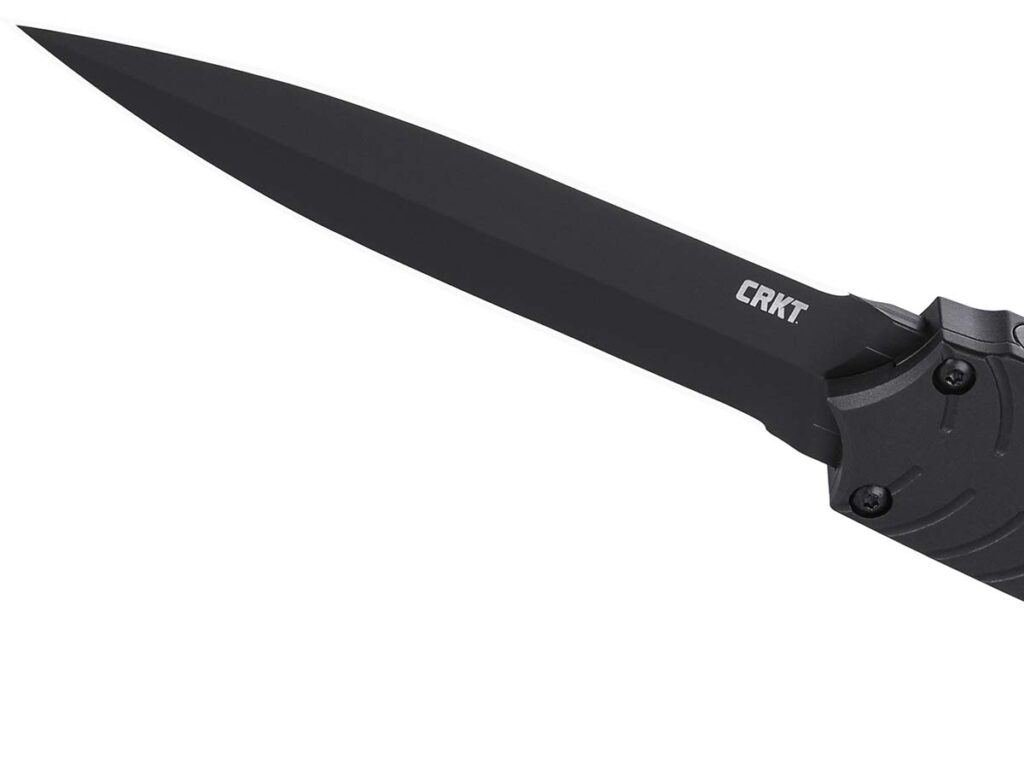
The Xolotl design originated as a fixed-blade knife, which established the pattern’s key features: a clean, stunning aesthetic featuring a spear-point blade with a double-edged dagger grind. The fixed-blade version was designed for durability and high-performance, featuring specialized Veff Serrations for powerful rope-cutting capability, and came with a versatile sheath that allowed for multiple mounting options.
This fixed-blade concept has now been translated into an out-the-front (OTF) automatic. The new Xolotl OTF maintains the high standard for materials and capability, engineered for the demands of today’s operator.
The knife is manufactured in the USA and utilizes a smooth, dual-action OTF mechanism for crisp, decisive deployment and retraction. It features a 3.5-inch spear-point blade ground on both edges for maximum cutting efficiency. The blade steel is MagnaCut, which was selected for its superior combination of edge retention, toughness, and corrosion resistance—qualities essential for a reliable modern tactical tool.
Made from Magnacut steel, the Xolotl blade keeps a good edge.
While the engineering is purely modern, the aesthetics carry the historical weight of the Xolotl deity. The aluminum handle is sculpted with skeletal details that reference the Aztec namesake. A deeply personal feature of the design is the 21 sculpted ribs along the grip, which were incorporated by Rodriguez to symbolize each of his years of military service. The handle’s ergonomics and theme are completed by a unique, sternum-shaped reversible pocket clip, ensuring the knife carries securely for both left- and right-handed users.
The Xolotl OTF, with an MSRP of $325, contributes to the larger mission of the Forged by War program. A portion of the profits from the knife is directed toward Michael Rodriguez’s charity of choice: the Global War on Terrorism Memorial Foundation. The final product—an 8.88-inch overall knife weighing just 3.2 ounces—is a successful fusion of myth, military experience, and high-quality construction.
Xolotl OTF Specs
BLADE LENGTH: 3.5” OVERALL LENGTH: 8.88” BLADE MATERIAL: MagnaCut HANDLE MATERIAL: Aluminum LOCK and/or OPERATING MECHANISM: Dual action out-the-front WEIGHT: 3.2 oz. SPECIAL FEATURES: Made in the USA; MagnaCut spear point blade with two sharpened edges; Double action OTF blade deploys and retracts quickly; Adjustable clip for left or righthand carry. MSRP: $325
Read our full report on what the Buderus closure means for knifemakers, Damascus production, and company inventory.
Once when he was ill, Mark Twain famously quipped that “rumors of my death have been greatly exaggerated.” October 2025 brought troubling rumors to the knife industry regarding the potential closing of a major steel mill owned by Buderus Edelstahl.
Based in Wetzlar, Germany, Buderus is a major producer of 10xx series steels, including 1075, 1084, 1095 and 15N20, that are purchased through various suppliers. The company was founded in March 1731 and began steel production in April 1920. It has changed ownership several times, including being purchased from Bohler-Uddeholm by Voestalpine. Voestalpine sold the company to the German investment company Mutares in 2025.
BLADE® reached out to knife industry steel authorities for comment.
Dr. Larrin Thomas reported that he had spoken directly to two different Buderus employees.
“We have been hearing conflicting reports about whether the [Buderus] hot and cold mills are being shut down,” he wrote in an e-mail. “Regardless, things are a bit too murky right now to say much definitively.”
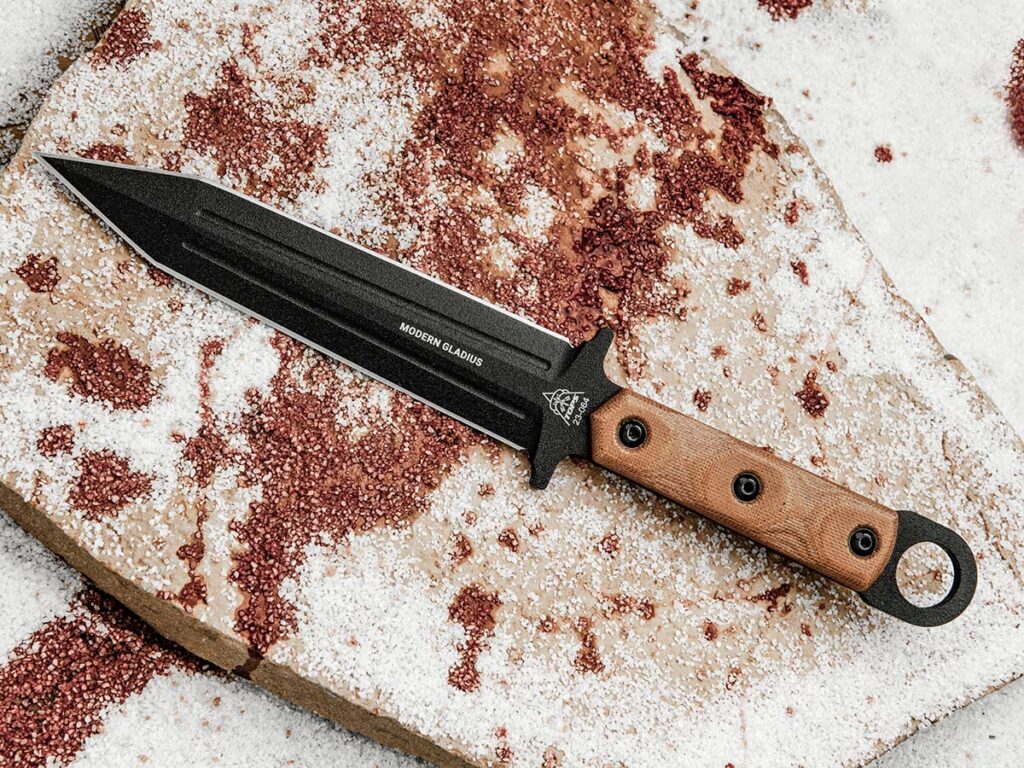
Carbon steel 1095 is the material of choice for the 6.5-inch blade of the Modern Gladius by TOPS knives.
If the rumors inside the Buderus workplace match the ones inside most large workplaces, there’s a good chance that conflicting perspectives and speculation are flying around everywhere. It could be difficult to get to the actual facts, even directly from mill employees. However, Larrin remained hopeful.
An email obtained from steel supplier New Jersey Steel Baron (NJSB) was less hopeful. This past October, NJSB officials notified their intermediaries that the Buderus mill was closing at the end of the month. The email stated, “We are writing to inform you that as of October 31, 2025, Buderus Edelstahl, one of our primary vendors, will be ceasing its rolling operations. This marks the end of a fifteen-year partnership for NJ Steel Baron, and we anticipate it will significantly impact the bladesmithing, blacksmithing, and cutlery industries. We have already begun to pivot our production to new vendors and source new alloys to ensure our inventory remains robust.”
A story on n-tv.de, an online news platform based in Germany, carried the headline “Buderus Edelstahl steel is broken up—hundreds of jobs affected.” The story reported that, “The company’s steel mill … is to be closed by the end of October, Mutares announced.”
NJSB’s Peter Bruno took the news hard, saying “I’m going to have to spend some time in the woods thinking about it.”
In the NJSB press release he stated, “This has been more than a vendor relationship; it’s been a cornerstone of our steel program. Buderus has consistently delivered high-performance German steel that’s fueled makers, machinists, manufacturers, and craftsmen throughout the world. Losing this supply chain is a hard hit, not just for us, but for the entire industry.”
Paul DiStefano opts for 1084 carbon and 15N20 nickel-alloy blade steels for the damascus pattern configured to appear as what an animal might see if looking at a stalking tiger through a bamboo forest. Overall length: 19 inches. (pauldistefanoknives.com) (Jocelyn Frasier image)
Beyond the pure shock of losing its main supplier, NJSB is developing a plan. It has a good amount of steel on hand and is buying all the remaining Buderus stock it can. NJSB also has reached out to its customers and is selling steel by the pallet to ensure customers have at least short-term reliable access to the steel they need for ongoing orders.
“While we’re actively working to develop new sources and mill partnerships, the shift won’t be immediate, and some grades may remain out of reach for a while. Some alloys may not return anytime soon, if at all,” Bruno noted. “Once supplies run out, that may be the end of the line in some cases.”
Company Responses
The 10xx series steels are used by several knife manufacturers and importers for their hunting, outdoor, tactical and other utility-type knives. Some of those companies include Condor Tool & Knife, ESEE, KA-BAR, Utica, the previously mentioned TOPS and White River Knife & Tool. Some of the foregoing deal with Buderus and some do not. The 10xx series steels are also widely used by custom knifemakers for damascus and straight carbon knives.
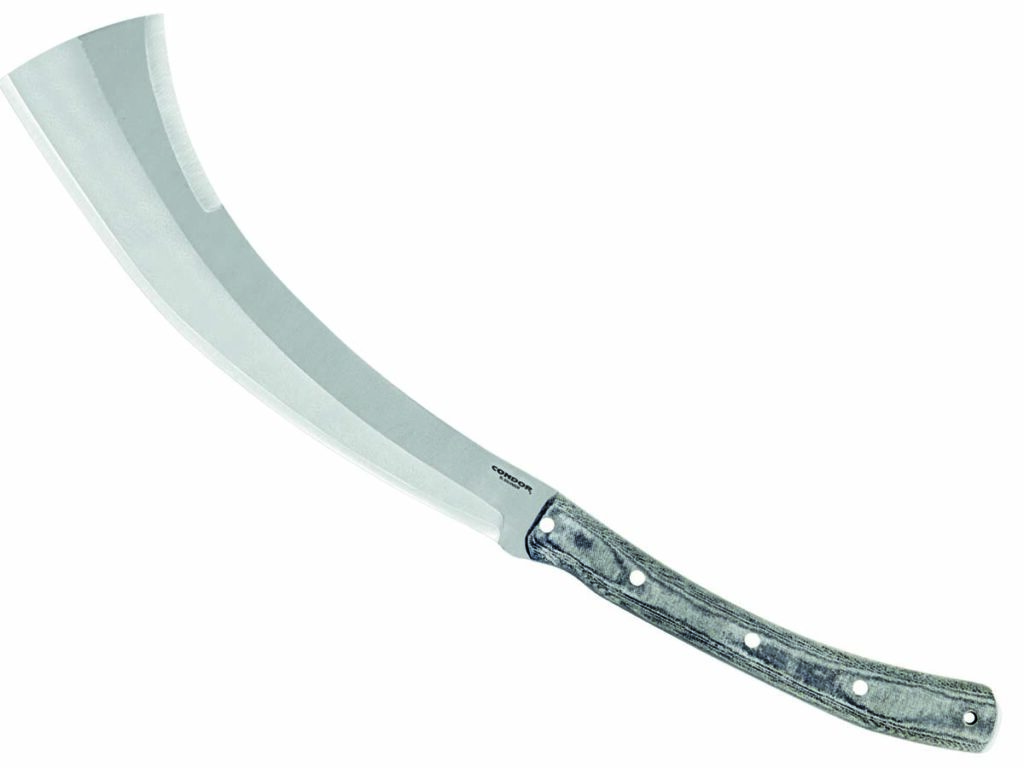
The K-Night Panabas from Condor Tool & Knife boasts a 14.29-inch blade of convex-ground 1075 carbon steel.
Mike Olen, director of sales at Condor Tool & Knife, said Condor was not sourcing any steel through Buderus.
“For the 1075 and 1095 steels, we get them from a variety of vendors, mostly Europe and Asia based,” he noted. “I’m not sure exactly, but I know a lot of our steels have been coming from German and South Korean companies lately. We do the heat treatment in house, so it opens up more options for us when sourcing the raw materials.”
“KA-BAR has had a long relationship with Buderus,” wrote KA-BAR’s director of sales and marketing, Joe Bradley, though he added any potential closure of the Buderus steelworks would not affect KA-BAR immediately.
Powell said TOPS gets its steel from a leading distributor, though it was unclear at press time whether that distributor used Buderus as a source or not. At press time, he said TOPS was fine in terms of its supply of 10xx series steels, though the company likely will start stockpiling the steels in case of any shortages.
Suppy Alternative
Jantz Supply is a leading source of 10xx series steels for custom knifemakers and others. Jantz’s Shanna Kemp indicated her company maintains various sources of the steels and as a result does not expect supply delays.
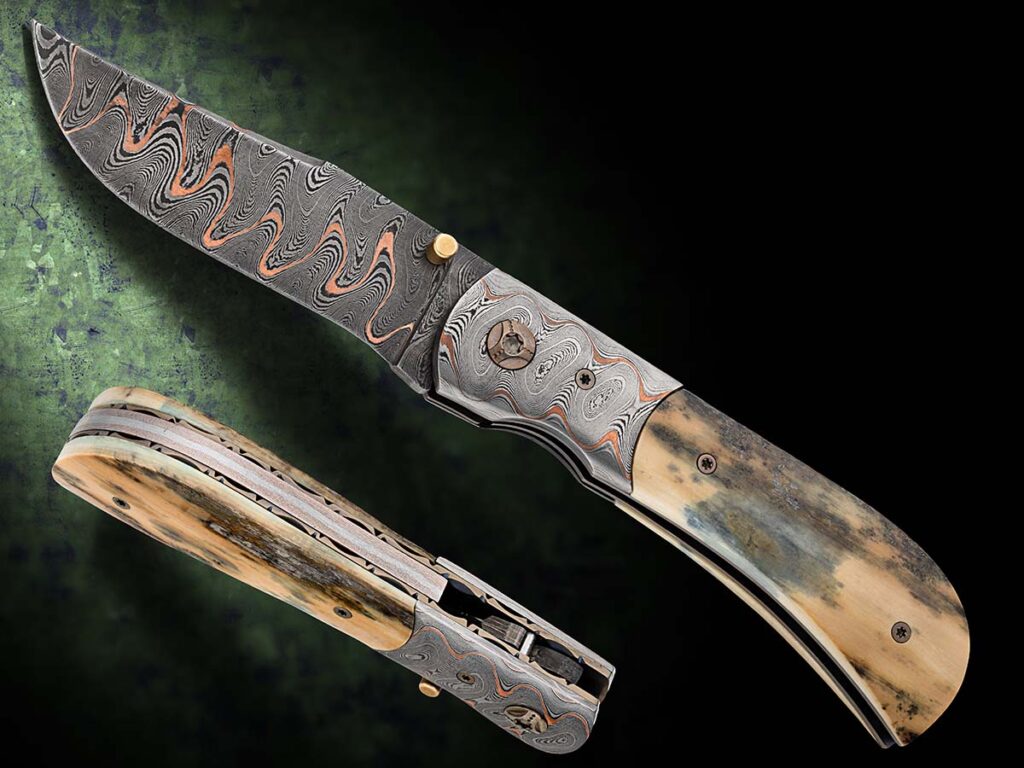
A damascus of 1084, 15N20 and copper forged by Baker Forge & Tool comprises the 3.25-inch blade of Stephen Roney’s linerlock folder. ([email protected]) (Jocelyn Frasier image)
“We don’t expect any disruption from the Buderus mill closure,” Shanna wrote. “Jantz has strong relationships with multiple mills, so makers can count on us for steady access to the high-carbon steels they rely on. Our commitment to providing reliable, high-quality materials for knifemakers will not change.
“We have long-standing relationships with multiple steel mills and distributors worldwide. The majority of our 10xx series high-carbon steels come from reputable suppliers in the United States and Germany. This diversified supply chain ensures consistent quality and availability for our customers.”
In fact, Shanna said Buderus is but one of a number of producers of 10xx series steels.
“I don’t know the exact quantity of 10xx series steels the Buderus mill produced. However, they were one of several manufacturers worldwide,” she noted. “The 10xx series is a widely produced grade family, and multiple mills continue to make these steels. While the Buderus mill was a respected supplier, their closure does not significantly impact global availability.
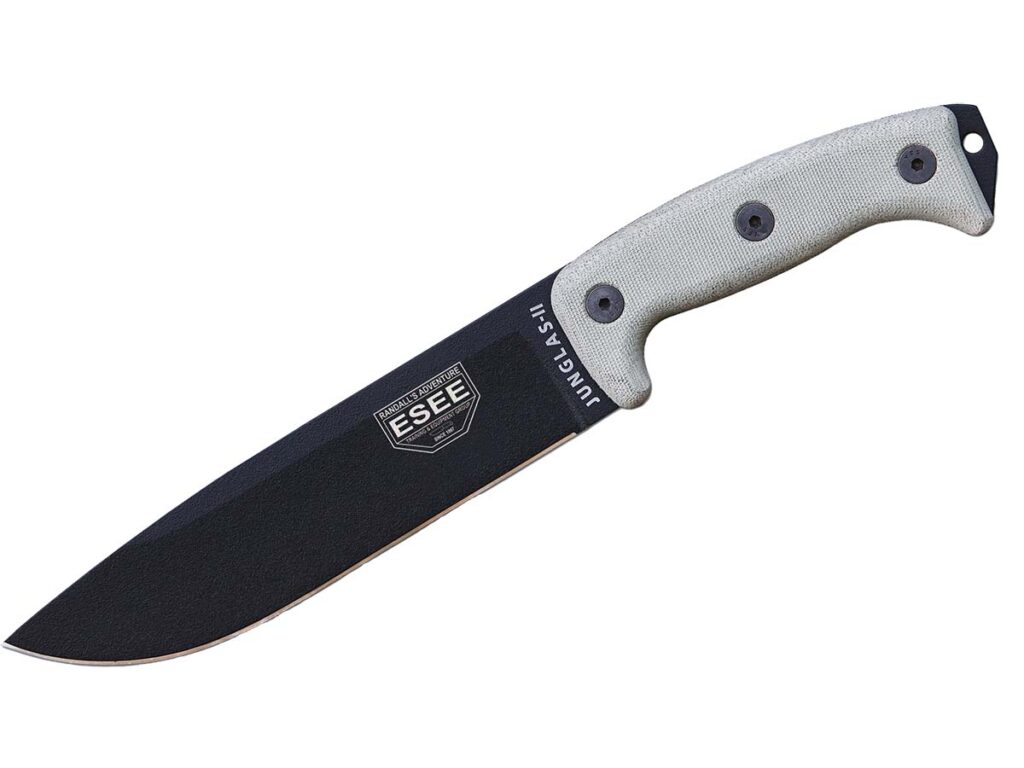
The Junglas ESEE checks in with an 8.38-inch blade of 1095 in a textured powder-coat finish.
“Several mills and processors around the world continue to produce 10xx series steels. While the Buderus mill was a respected manufacturer, these grades are not unique to any single producer. The market has ample capacity to absorb the change, and we don’t anticipate any long-term supply issues.”
Past Is Prologue
If all this sounds a bit familiar, Crucible Steel went through a similar process of bankruptcy and acquisition at the beginning of this year. Owners of the familiar CPM (Crucible Particle Metallurgy) trademarks for MagnaCut and others, Crucible was a major force in the knife industry. Eventually it restructured and cut its research and development division. Ultimately even the restructured company failed and was sold in parts to Erasteel of Europe and an American company, Lauter. Erasteel continues to produce steel of the same compositions with the same names, as it purchased Crucible’s intellectual property. Lauter owns the former Crucible factory and has begun hiring for its specialty business of manufacturing screws and fasteners.
The Crucible situation had some impact on the knife steel business. Dr. Larrin Thomas sat down with Bob Shabala of Niagara Specialty Metals in May for a conversation about the transition. Niagara is the primary rolling mill that served the knife industry in taking Crucible steels from 3,000-pound billets down to workable sizes. Bob explained that Crucible was one of Niagara’s biggest customers, but that it also was up front with its struggles. Consequently, Niagara was well stocked in CPM steels by the time Crucible folded.
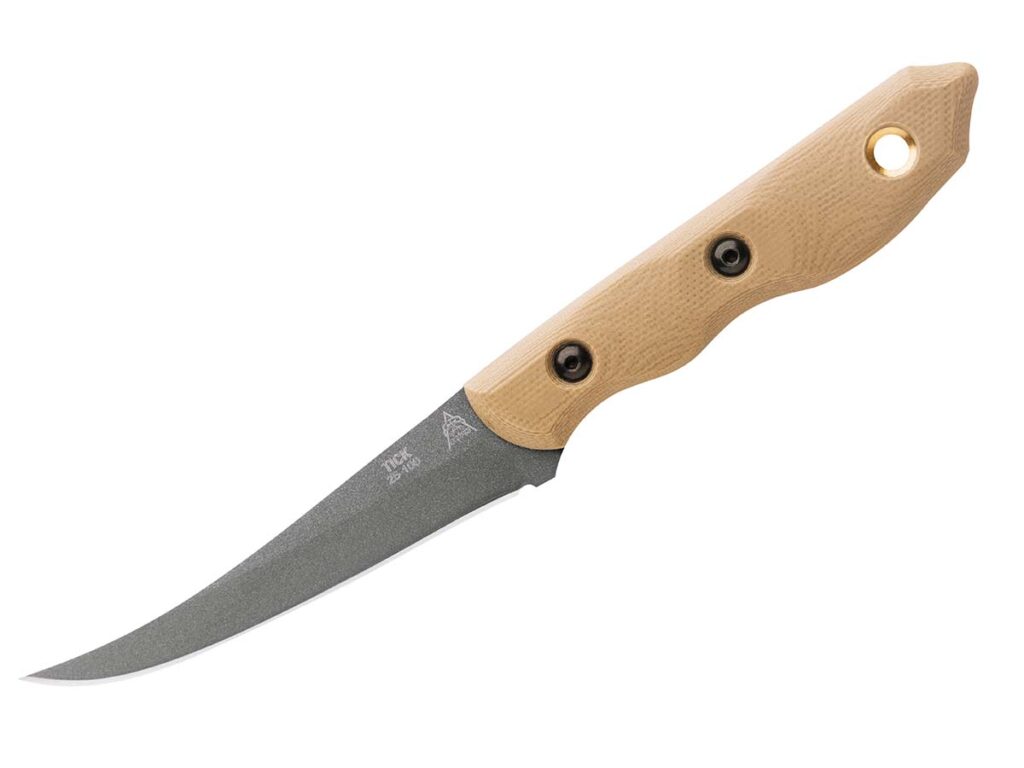
The Tick from TOPS Knives sports a 3-inch blade in 1095 carbon steel with a Tungsten Cerakote® finish.
Niagara also works with Erasteel and Carpenter, both of whom have the technology to produce steels of the same composition. Steel from Erasteel will retain the CPM trademarked names. Other versions of the same alloys rolled by Niagara will have new names for the steels the industry has used for years. Niagara officials predicted some disruptions because of panic buying as Crucible closed, but they also think business will return to “full speed ahead” for production of the knife steels in the former CPM formulations. Larrin indicated that Magna-Cut will survive and continue to be produced without disruption.
What’s Next
The steel industry has been challenged for many years, with more bankruptcies than start-up companies. To complicate things further, the steel the knife industry uses and needs is only a very small and specialized portion of a global steel industry that includes structural steel, automotive and more. With insatiable demand worldwide, the knife industry’s little corner of the market doesn’t get much attention. On top of that, steel production takes an enormous amount of energy, and with all the green and climate change talk of recent years, no one seems to be lining up to build anything but AI data centers at the moment.
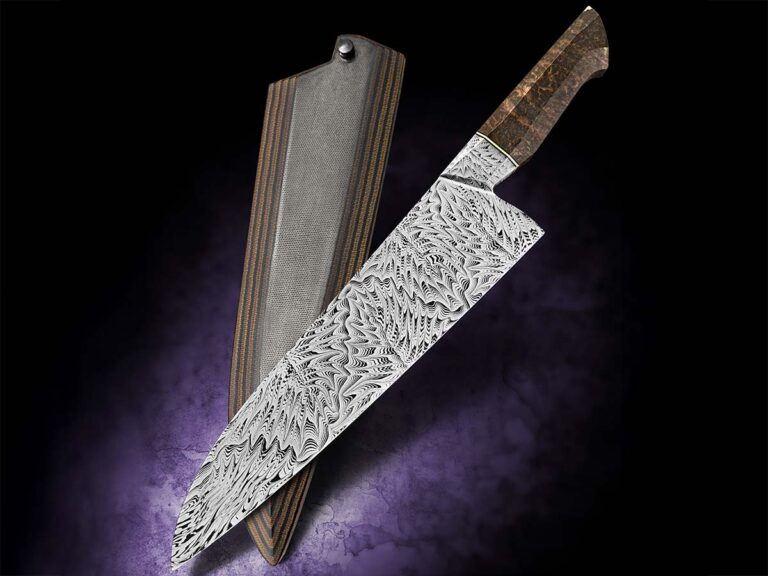
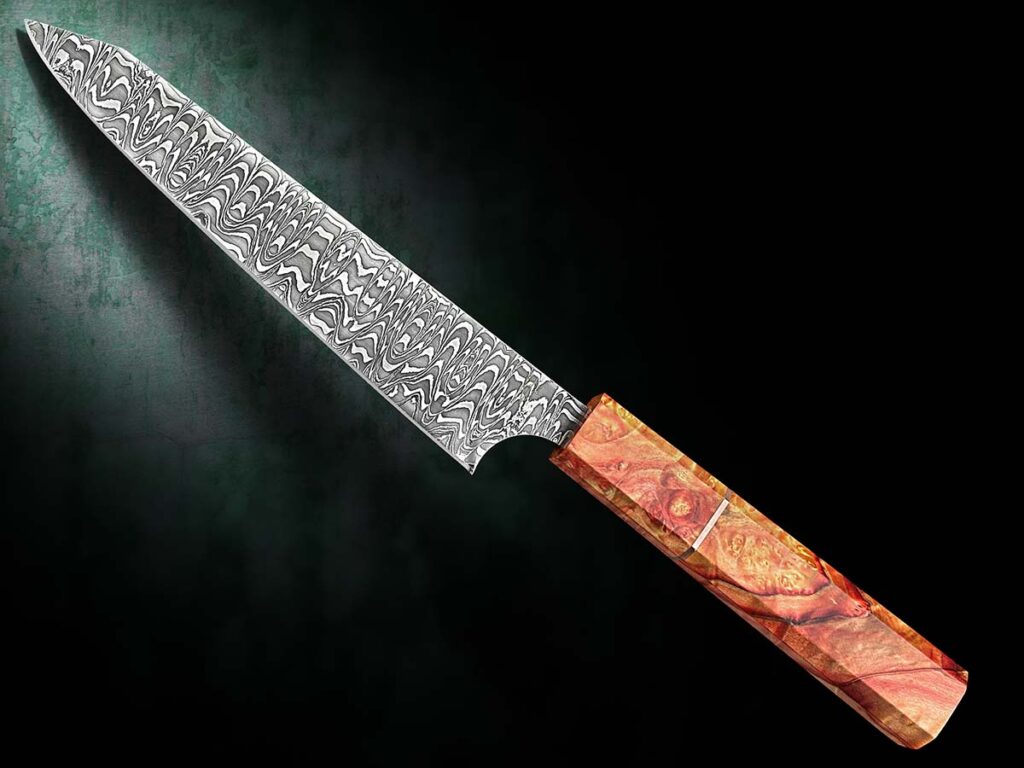
Chad Jefferson chose 1080 and 15N20 to forge into a ladder W’s pattern for the 7-inch blade of his gyuto. ([email protected]) (Jocelyn Frasier image)
Like the transition away from Crucible, the probable transition away from Buderus will no doubt cause some industry disruptions. For now, knifemakers can hope that rumors of the death of the Buderus mill remain greatly exaggerated—or at least, as with Crucible, its reincarnation is on the horizon. Will some other company buy the Buderus mill? Will, like Niagara, some other supplier step in the gap left by the closure? Will someone in the market feel the void and fill it? Time will tell, but for now, the best advice seems to be for knife companies and makers to buy the 10xx series steels while they can.
Editor’s Note:Blade Magazine Staff contributed to this report.