Home Blog Page 24

Best Skinner Knives: A Guide to Top-Rated Hunting Blades

Find the perfect hunting knife with our guide to the best skinners on the market. We review top models from respected makers.

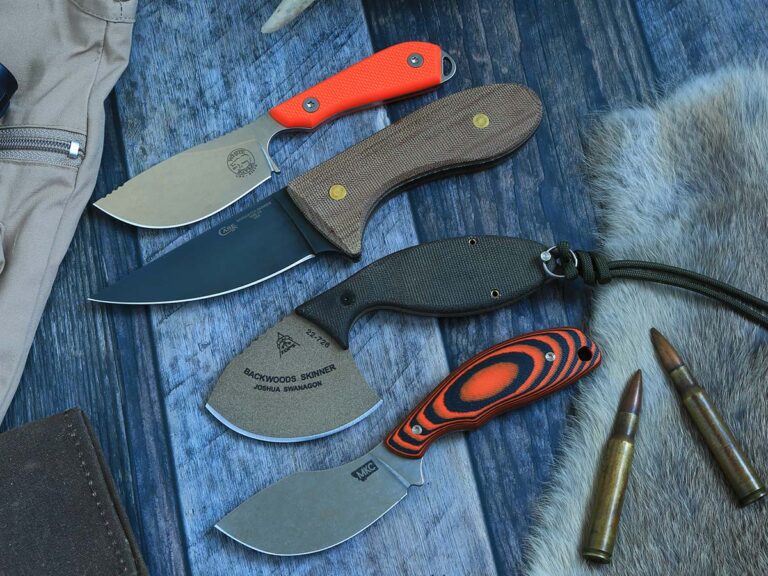
A skinner is a knife purpose-built for the delicate but necessary job of skinning game animals. Its singular mission: separate hide from muscle without causing a mess that makes a taxidermist weep.

Skinning knives serve specific purposes. Primarily, they glide beneath the hide with minimal resistance. This feature allows for a smoother cutting experience, making it easier to separate the skin from the meat.

Skinners also aim to minimize accidental punctures to the underlying meat or organs. This is crucial for preserving the quality of the meat and ensuring that it remains uncontaminated during the skinning process. Finally, skinners offer the control necessary for making fine cuts around joints, facial features and paws. This level of precision is essential for skilled processing, allowing for clean and efficient work.

Good Skinners and Bad

A good skinner slices smoothly without requiring brute force, retaining the cutting edge throughout the job. It cleans easily, especially around the scales, and feels intuitive in your hand, almost as if the knife knows your intentions before you do. Moreover, it keeps the hide intact, avoiding headaches caused by unwanted holes.

A bad skinner features an overly aggressive tip that punctures organs at the slightest touch, slippery scales that become a liability when blood is involved, and poor edge retention that necessitates awkward sharpening breaks. It may possess a clunky balance that makes it feel more like a garden tool than a precision instrument and hard-to-clean crevices that turn into breeding grounds for bacteria.

In short, an effective skinner collaborates with, rather than works against, you; it’s about finesse, not sheer strength, resembling a scalpel instead of a medieval cleaver.

Classic Design Skinners

Classic skinners are all about specific design features as opposed to gimmicks. They typically have a blade with a wide belly and sweeping curve for long, confident strokes that excel at slicing through hide. Most use a drop point or semi-rounded tip to prevent accidental stabbing when dealing with gut sacks.

A flat or convex grind offers a good balance between sharpness and strength, while hollow grinds, though sometimes sharper, can be fragile. Blade lengths usually range from 3 to 4 inches for maneuverability in tight areas like hooves or facial contours. Ergonomics is also crucial, with grippy materials like Micarta® or textured rubber preferred to prevent slippage.

Montana Knife Co. Packout Skinner
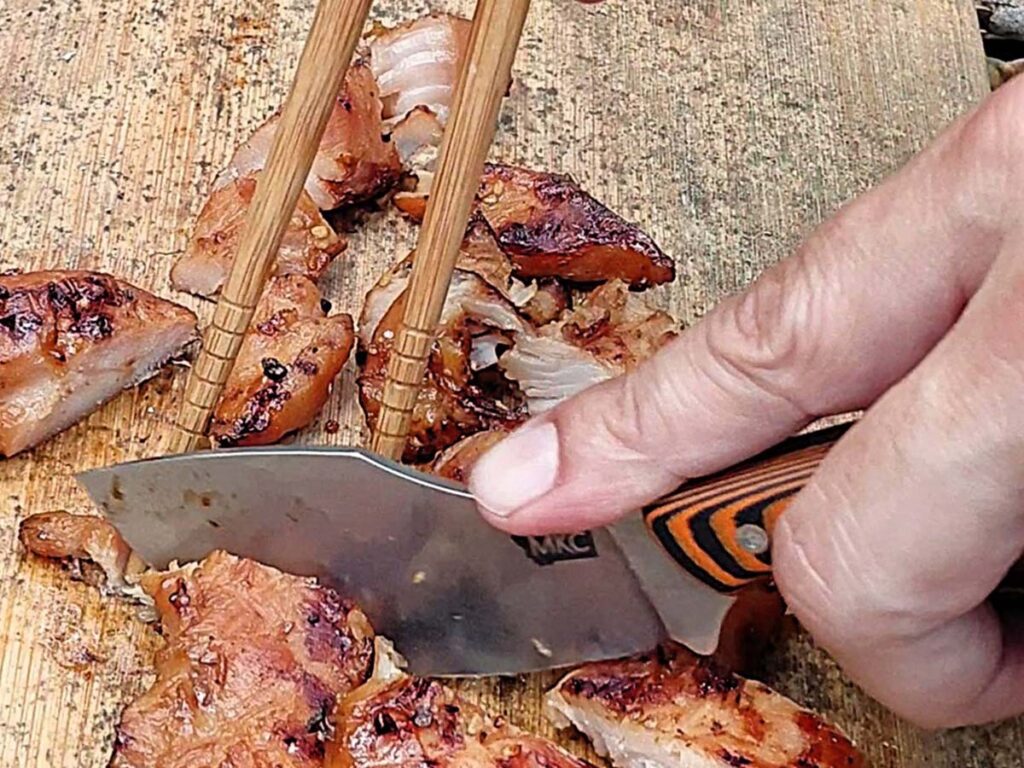
The author indicated the Packout Skinner would make Nessmuk proud. With a MagnaCut stainless steel blade and textured G-10 handle, it sliced through Teriyaki chicken like a champ.

Pros

  • Top-Tier Steel
  • Compact and Maneuverable
  • Ergonomic Grip

Cons

  • Expensive

Packout Skinner Specs
Blade Length: 3”
Blade @Thickest: .11”
Blade Steel: MagnaCut stainless
Blade Finish: Stonewash
Scales: G-10
Weight: 2.98 ozs.
Overall Length: 7”
Sheath: Kydex
Country of Origin: U.S.A.
MSRP: $300

The Montana Knife Co. (MKC) Packout Skinner is a compact powerhouse built for precision in the field. It packs a generous belly into a tight footprint—ideal for long, clean skinning strokes. The blade offers top-tier edge retention, corrosion resistance and toughness that thrives in backcountry conditions. Full-tang construction is paired with a milled handle shaped for a secure, glove-friendly grip that stays comfortable through extended use. The ergonomic palm swell and thoughtful finger ramp give you control whether you’re slicing hide or fleshing out detail work.

A custom-molded sheath complements the package, providing secure retention and versatile carry options: horizontal, vertical or pack-mounted. This knife doesn’t just show up, it works hard—just like the hunters it is built for.

A simple knife test I use is rustic meat cooking and slicing. In my eyes, and according to George Washington Sears, aka Nessmuk, an outdoor knife should be able to skin, butcher and slice. The Packout Skinner would make him proud. It does it all. I had a small summer barbecue with Teriyaki chicken and the skinner sliced it like a champ.

The sheath came in scout carry mode, so that’s how I used it. It carried comfortably. However, bending forward processing meat and camp must-haves made me remove it for a few minutes. On the plus side, it was easy to remove and attach without having to take it off my belt.

W.R. Case & Sons Laramy Miller Sasquatch Skinner
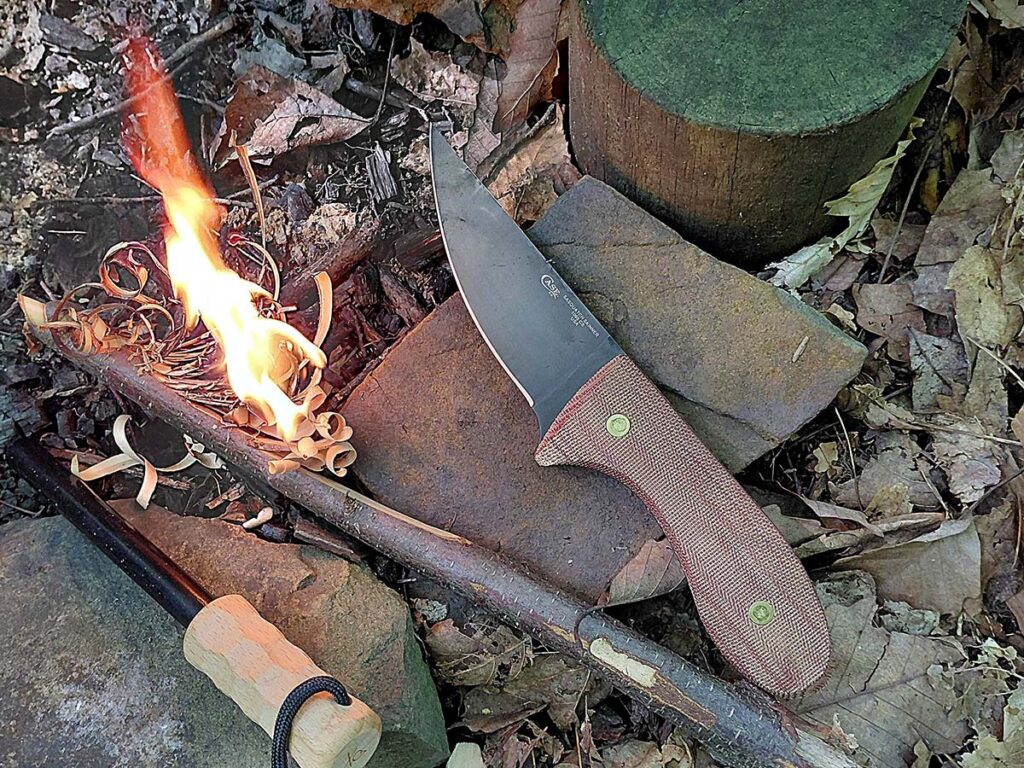
The Sasquatch easily feathered wood that took a spark from a stout ferro rod. The edge was sharp and the spine has a good 90-degree angle for fire starting.

Pros

  • Excellent Edge Retention and Durability
  • Hidden Utility
  • Ergonomic Handle

Cons

  • Heavy

Sasquatch Skinner Specs
Blade Length: 3.94”
Blade @Thickest: .125”
Blade Material: 1095 carbon steel
Blade Finish: Caswell™
Scales: Natural Micarta®
Weight: 8.38 ozs.
Overall Length: 8.75”
Sheath: Brown leather
Country of Origin: U.S.A.
MSRP: $196.99

The W.R. Case & Sons Laramy Miller Sasquatch Skinner is a rugged fixed blade fashioned for serious field work. It strikes a balance between reach and control, perfect for skinning game or tackling camp chores. The blade has excellent edge retention and a stealthy, corrosion-resistant surface.

The smooth handle offers a secure, scratch-resistant grip with a soft feel that stays comfortable through prolonged use. The full-tang construction adds durability, while the ergonomic shape keeps your hand locked in when things get messy.

A fitted sheath completes the package, offering classic protection and easy belt carry. This knife is built to perform and last.

The rugged Sasquatch Skinner feels like a survival knife meant for hard use and skinning. The first thing I did was make a fire. I feathered a dry birch stick and was impressed with the skinner’s edge geometry. I made curls that were thin enough to take a spark via my Uberleben ferro rod and the blade spine. I didn’t read any info on the spine having a 90-degree angle. However, it’s a hidden gem! The second half of the spine—middle to tip—is where it’s sharp.

I employed the Sasquatch to split poplar and maple via a baton with no worries. I found the handle a bit thin for gripping during specific crafts. Maybe that’s why it’s a skinner, not a survival knife.

The edge was sharp and stayed that way. I like the absence of gimping as I don’t use it. However, most knife folks would disagree, especially with a skinner. The knife seemed like a ramped-up skinner, slightly on the heavy side, but then think of survivalist/mountain man Laramy Miller—they don’t call him Sasquatch for nothing!

The sheath carries traditionally on the belt at a medium height. It’s not too much of a rib jabber, nor does it carry too low.

White River Knife & Tool Model 1 Skinner
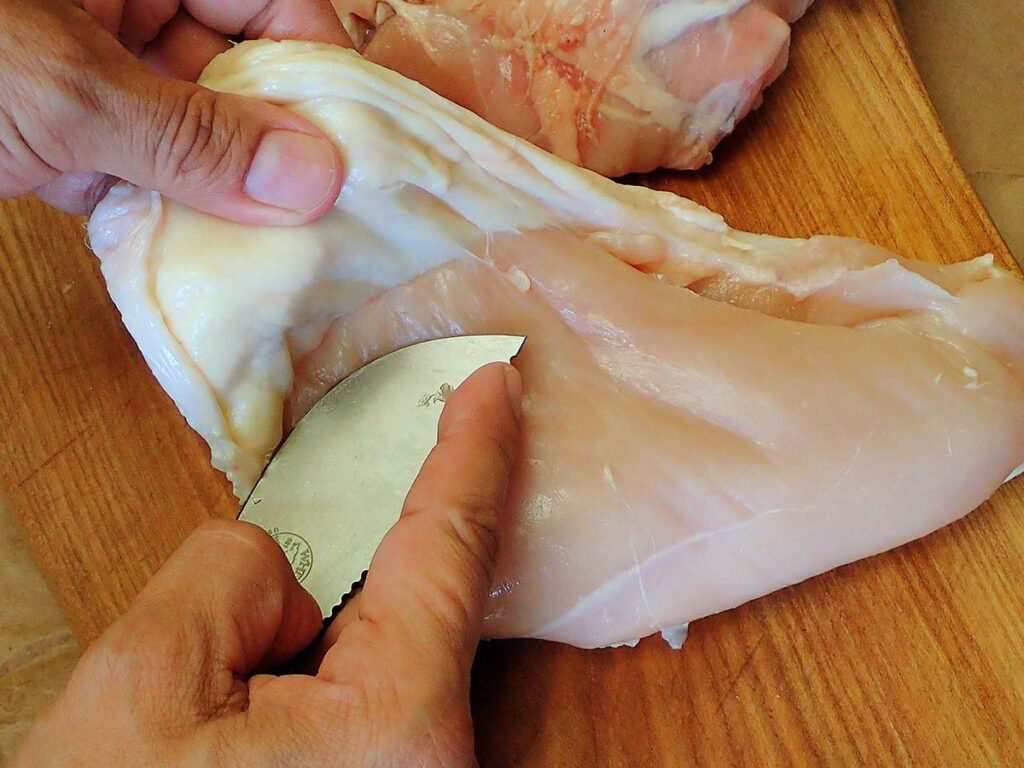
The grip on the Model 1 was secure and the spine’s forward gimping proved useful. After an hour of skinning and deboning, the author had no complaints. The thin grind made cutting effortless and the taper is outstanding.

Pros

  • Premium Materials
  • Lightweight and Compact
  • Controlable

Cons

  • Lower Blade Hardness

Model 1 Skinner Specs
Blade Length: 3”
Blade @Thickest: .13”
Blade Steel: CPM S35VN stainless
Rockwell Hardness: 58-60 HRC
Finish: Stonewash
Scales: Textured orange G-10
Weight: 3.5 ozs.
Overall Length: 7”
Sheath: Kydex
Country of Origin: U.S.A.
MSRP: $160

The White River Knife & Tool Model 1 Skinner is a target-constructed field knife that blends compact control with premium materials perfectly sized for precision work without sacrificing reach. The blade has excellent edge retention and corrosion resistance for repeated use in harsh conditions. The textured handle provides a secure, ergonomic grip—wet or gloved—while the large choil and gimping enhance control during delicate skinning tasks. A custom-molded sheath ensures safe carry and quick access, whether belt-mounted or pack-ready. Lightweight and razor sharp, the Model 1 is a reliable companion for hunters who demand performance without bulk.

While there wasn’t a running wild game season in my area of the Northeast when I wrote these words, I stuck with simplicity. One bird always in season is chicken. I buy skin-on, bone-in and prefer to do the preparation. The Model 1 makes for an excellent, nimble butcher knife. I used the little gem to debone split-chicken breasts and skinned them with ease. The grip was never in question and the forward spine gimping proved helpful. I used it for about one hour, skinning and deboning with no complaints. The thin grind glided through the meat with ease and the taper is excellent.

TOPS Knives Backwoods Skinner
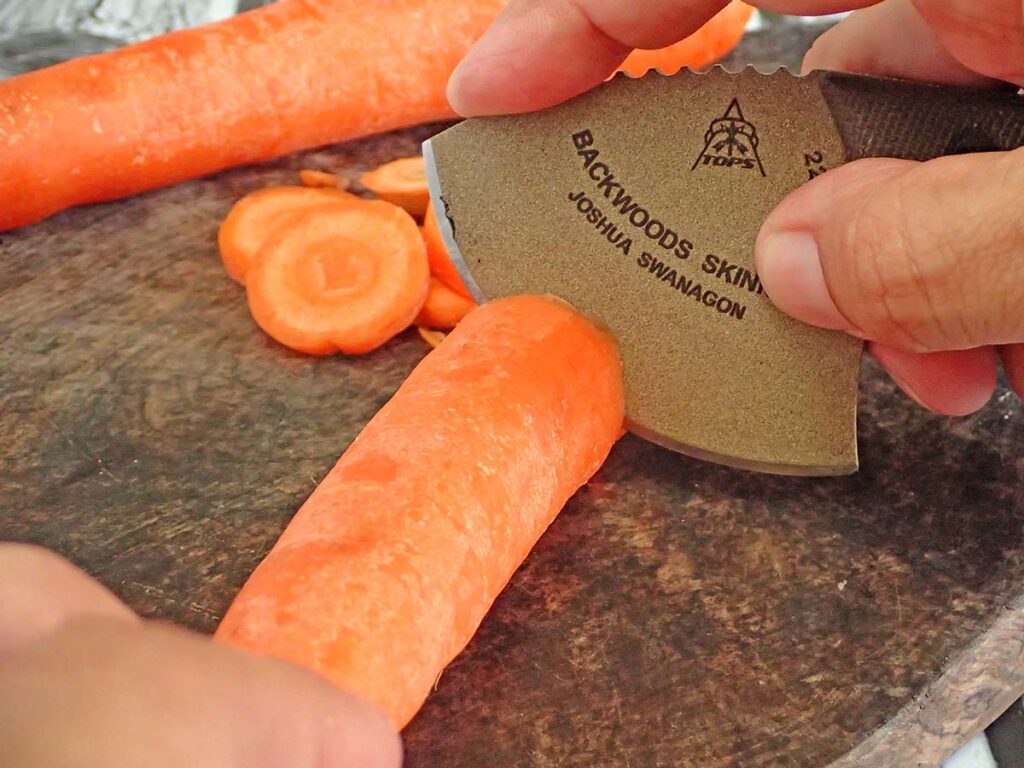
In ulu mode with the Backwoods Skinner, the author sliced raw carrots effortlessly. The edge geometry works for food and game prepping.

Pros

  • Versatile and Multi-Purpose
  • Unique and Secure Gut Hook
  • Excellent Ergonomics

Cons

  • Gut Hook Deployment

Backwoods Skinner Specs
Designer: Joshua Swanagon
Blade Length: 3”
Blade @Thickest: .16”
Blade Material: 1095 carbon steel
Blade Finish: Coyote tan coating
Scales: Green canvas Micarta®
Weight: 5.4 ozs.
Overall Length: 6.75”
Sheath: Black leather
Country of Origin: U.S.A.
MSRP: $270

The TOPS Knives Backwoods Skinner is a compact ulu-inspired knife built for precision and endurance. The deep-bellied blade is perfect for slicing through hide and tackling bushcraft tasks without flinching.

The gut hook nestled in the handle is excellent for hunting season. I used it as a cord cutter. The sharp hook is a standard fixture for search-and-rescue personnel to slice cord and rope and to free people from entanglements. Remove the grenade pin and carefully take out the gut hook. Reverse the hook and install it in the proper hole for security. Make sure to put the sheath on to prevent cuts. My gut hook took some working in with another object until it fit. I suggest using leather gloves to avoid cuts from the hook.

The handle features an ovulated grip and deep choil, offering fatigue-free control and a confident hold even in messy conditions. Hidden in the pommel is a clever gut hook, deployable when needed and safely tucked away when not. A sheath combining classic style with belt-loop-carry convenience augment the package. Designed by survival authority Joshua Swanagon, the knife is ready for big game, small game and everything in between.

I remember a video with designer Joshua Swanagon talking about the ulu-shaped blade. I saw the ulu pattern immediately when I first saw the knife. Luckily for me, carrots were in season. I used the Backwoods Skinner as I would an ulu, slicing and dicing. Carrots are more difficult to cut due to their hardness. A dull or too thickly beveled blade will wedge and split the vegetable. However, there was none of that. I used my forefinger on the drop portion of the blade tip as intended for controlled slices. I also used it like a regular kitchen knife, choking up in a chef’s pinch grip. Both worked perfectly fine and were comfortable.

Check Out More Outdoor Knives:

Iconic Spyderco Design Appears On New H.L. Dalis Exclusive

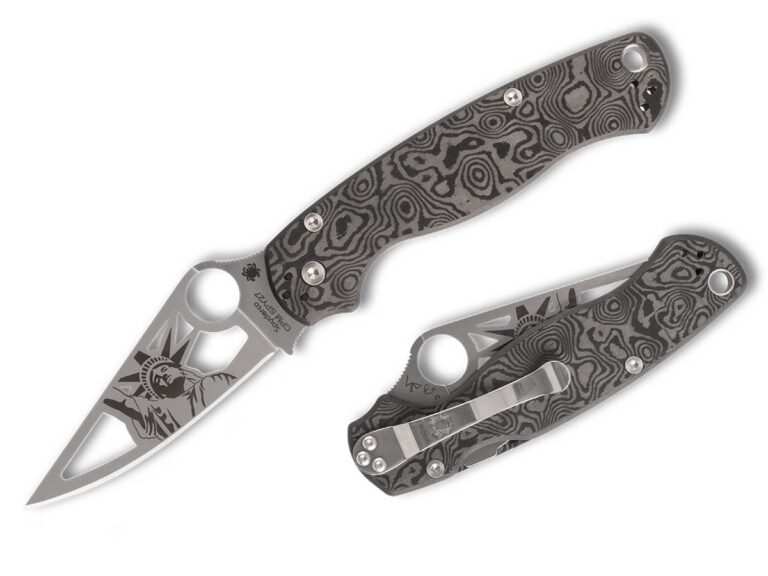
Spyderco unveils a limited-edition Para Military 2 with a cut-through Statue of Liberty blade to honor H.L. Dalis Inc.’s 100th anniversary. Just 1,200 knives available—collectors take note.

Spyderco has made its first “cut-through” blade design since its highly collectible Q, R and S series from roughly a quarter century ago to celebrate the 100th anniversary of H.L. Dalis Inc.

The cut-through graces the blade of a Para Military 2, including perforations both of and flanking an engraving of the Statue of Liberty. “As a New York company, we thought the Statue of Liberty cut through was appropriate,” stated Jon Blumenfeld, president of H.L. Dalis Inc., “as it is the most universal symbol of what the USA stands for.”

There will be 1,200 units in all, with delivery expected in the late third quarter of this year. As an added special feature, Spyderco has agreed to have its design team sign one box for every 50 units, and H.L. Dalis will include one signed boxed unit at standard volume cost with every 51 units—50 plus one signed boxed unit—ordered by its dealers.

Para Military 2 Specs
Blade length: 3.45”
Blade steel: SPY27 stainless
Blade grind: Full flat
Edge configuration: PlainEdge
Lock: Compression Lock
Hardware configuration: Stainless steel pocket clip, standoffs and liners
Weight: 3.8 ozs.
Closed length: 4.82”
Knife to know: Made in a limited edition of 1200
MSRPs: $340

Custom Knives:

Damascus Steel Quiz: Test Your Knowledge of the Legendary Blade Material

0

Test your knowledge of damascus steel with this 25-question quiz from BLADE Magazine. From ancient origins to modern master smiths, see how deep your damascus expertise runs.

Think you know your damascus steel? From ancient Persia to modern-day master smiths, the history of damascus is layered—just like the blades themselves. This quiz digs deep into the facts, myths, and makers behind one of the most iconic steels in knife history. Whether you’re a seasoned collector, a curious forger, or just a damascus fanboy, it’s time to put your knowledge to the test. Ready to slice through 25 questions on the steel for the ages? Let’s see what you’ve got.

Answers at the bottom of the page.

1) Canned steel/canister steel is a method for the making of:
a) maidenhair damascus
b) stainless damascus
c) mosaic damascus

2) The first recorded use of canned steel was in the making of high carbon steel from:
a) blister steel
b) wrought iron
c) shear steel

3) BLADE Magazine Cutlery Hall-of-Fame® member Steve Schwarzer made his first powder-metal mosaic damascus in 1990 with the help of:
a) Cutlery Hall-of-Famer Alfred Pendray
b) Joe Hytovick
c) Daryl Meier

4) When Cutlery Hall-of-Famer Bill Moran introduced the modern American custom knife industry to damascus steel blades at the 1973 Knifemakers’ Guild Show, how many damascus knives did he display on his table?:
a) seven
b) 11
c) eight

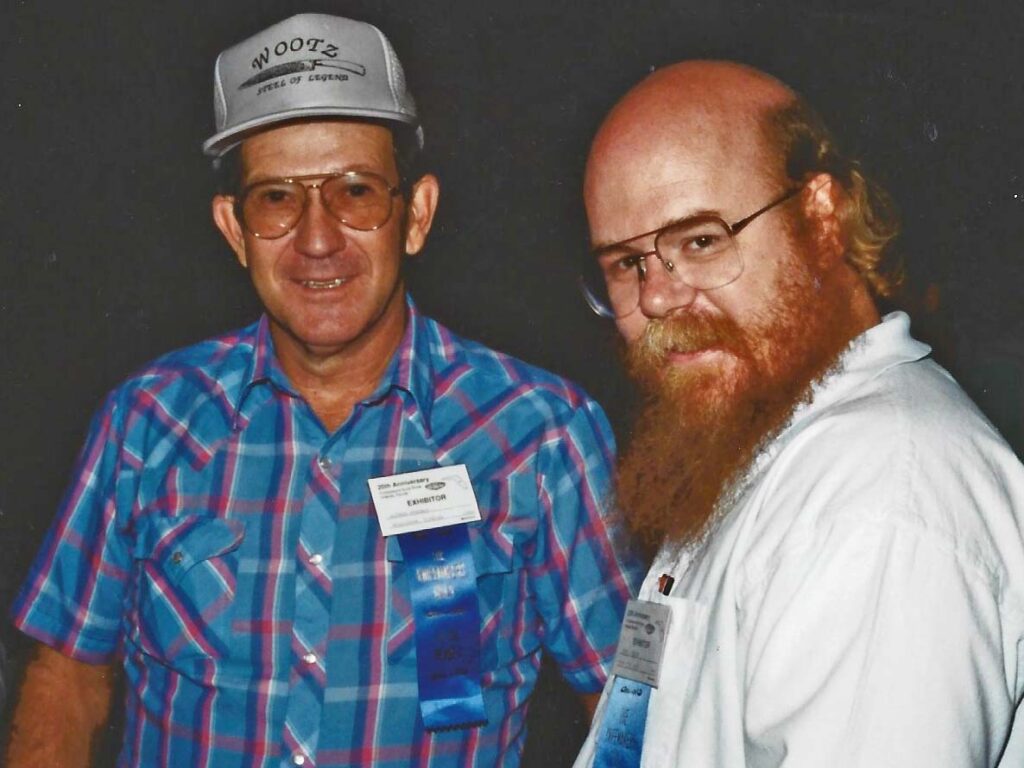
Al “The Wizard of Wootz” Pendray (left) and knifemaker John Salley at an early ’90s Guild Show.

5) Another name for damascus steel is:
a) Samarkind steel
b) pattern-welded steel
c) wood-grain steel

6) The art of forging damascus had developed into a highly developed industry in Damascus, Syria, by circa:
a) 1000 A.D.
b) 1200 A.D.
c) 1400 A.D.

7) According to Bill Moran, the first pattern-welded or damascus blades were made by the Merovingian Franks and Vikings at least as early as the:
a) 2nd century A.D.
b) 4th century A.D.
c) 8th century A.D

8) Damascus steel was named after Damascus, Syria, because:
a) the steel was forged there
b) the city was one of the most important centers of commerce for the steel
c) the name sounded a lot more romantic than calling it pattern-welded steel

9) In areas of Asia, damascus steel was called:
a) fulat
b) bulat
c) both a and b

Daryl Meier’s American Flag Knife featured images of 13 flags, each with 50 stars, running the length of the blade. Meier (right) presented the knife to President George H.W. Bush (left) in the White House Oval Office in 1991.

10) The Arab word damas means:
a) sharp
b) aqueous, water, flowing
c) super steel.

11) What resident of Essen, Germany, forged blades of damascus prior to World War II?:
a) Hans Gruber
b) Erwin Mueller
c) Fritz Schwigat

12) Also known as the master smith of the Third Reich, who made hunting knives and entire sets of cutlery with damascus blades for his friends and others—including members of the Nazi Party?:
a) Max Schultz
b) Paul Muller
c) Herman Rommel

13) Toward the end of the 1960s, what German maker/steel researcher forged a number of bowie knives of damascus steel?:
a) Manfred Sachse
b) Erich Von Stupp
c) Heinrich Boker.

14) ABS master smith/Cutlery Hall-of-Famer Wayne Goddard popularized blades of cable damascus in the mid-1980s. According to Wayne, up to that time knives of forge-welded wire cable had been made in Oregon for at least how long?:
a) 40 years
b) 60 years
c) 80 years.

Steve Schwarzer’s pioneering mosaic damascus knife, “The Hunter’s Dream.”

15) According to On Damascus Steel by Dr. Leo S. Figiel, steel made by a crucible process—that is, wootz steel—was made as early as:
a) 200 B.C.
b) 100 B.C.
c) 100 A.D

16) Also according to On Damascus Steel, the first damascus steel was made as early as:
a) the second century B.C.
b) the first century B.C.
c) the first century A.D

17) Western Europeans experienced the effectiveness of damascus swords used by defenders of the Muslim faith during the Crusades of the 11th, 12th and 13th centuries. The Westerners referred to the long blade used by their opponents as the:
a) Sword of Islam
b) Sword of Death
c) Sword of Destiny

18) Bill Moran once wrote the best and most beautiful damascus blades consisted of how many layers of steel?:
a) 256
b) 512
c) 1,024

19) With whom did Cutlery Hall-of-Famer Jim Parker collaborate to produce a series of factory damascus knives in the mid-1980s?:
a) Daryl Meier
b) Don Fogg
c) Fain Edwards.

Standing, from right: Don Fogg, Steve Schwarzer and Jim Batson during a class at a past Batson’s Bladesmithing Symposium.

20) One of the landmark damascus knives Bill Moran exhibited at the 1973 Knifemakers’ Guild Show was this European quillon dagger. Who bought it at that historic show?:
a) Peter Semon
b) Rita and Cutlery Hall-of-Famer Butch Winter
c) Paul Lansingh.

21) In his groundbreaking The Hunter’s Dream mosaic knife, Steve Schwarzer adapted some of the techniques of what process to avoid the distortions seen in most mosaic patterns up to that point in time?:
a) glass blowing
b) Venetian glass working
c) glass inversion

22) In the early ’90s, an ABS master smith forged a damascus pattern with images that looked like flames ascending from the edge toward the spine. Not surprisingly, he called it flame edge. His name:
a) Robbin Hudson
b) Larry Fuegen
c) Don Fogg

23) In ancient Persia, the pattern called Kirk Narduban is the pattern known today as:
a) random
b) mosaic
c) ladder

24) Al Dippold created a mosaic damascus method that included his surname appearing 11 times on each side of the blade. Al called the method:
a) Accordion
b) Jigsaw
c) What’s My Name?

25) According to Daryl Meier, letters or words first started appearing on pattern welds between the:
a) 5th and 8th centuries
b) 11th and 13th centuries
c) 15th and 16th centuries

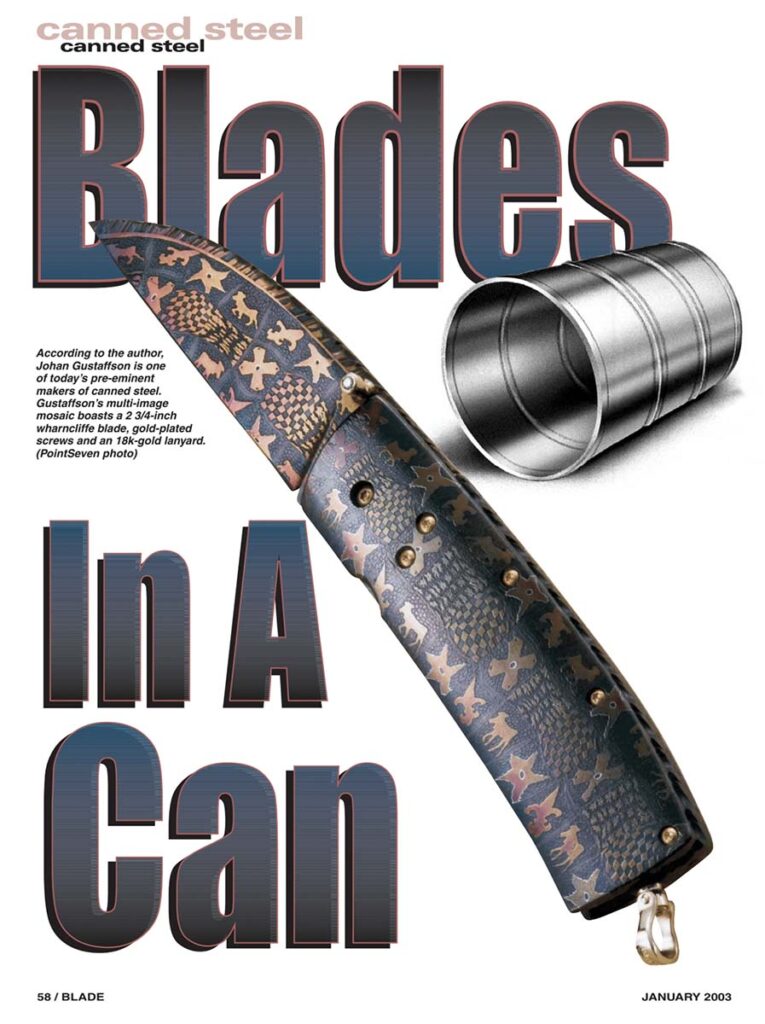
Steve Schwarzer was among the first to outline canned steel in detail and did so most astutely in his story in the January 2003 BLADE®.

Answers

1) c; 2) b; 3) b; 4) a; 5) b; 6) c; 7) a;
8) b; 9) c; 10) b; 11) c; 12) b; 13) a; 14) c; 15) a; 16) b; 17) a; 18) b; 19) c; 20) b; 21) b; 22) a;
23) c; 24) a; 25) a.

More On Damascus:

First Look: SOG Hidaka XR and FX Folding Knives

SOG and designer Kiku Matsuda launch the Hidaka XR folder and FX fixed blade—rugged, Japanese-inspired knives built for outdoor adventure.

SOG has never been afraid to push boundaries, and the brand’s latest collaboration with master Japanese designer Kiku Matsuda proves it once again. August 2025 marks the debut of two new additions to the Hidaka series—the Hidaka XR folding knife and the Hidaka FX fixed blade. Both builds reflect Matsuda’s trademark blend of Japanese tradition and Western practicality, creating tools that are as striking to look at as they are dependable in the field.

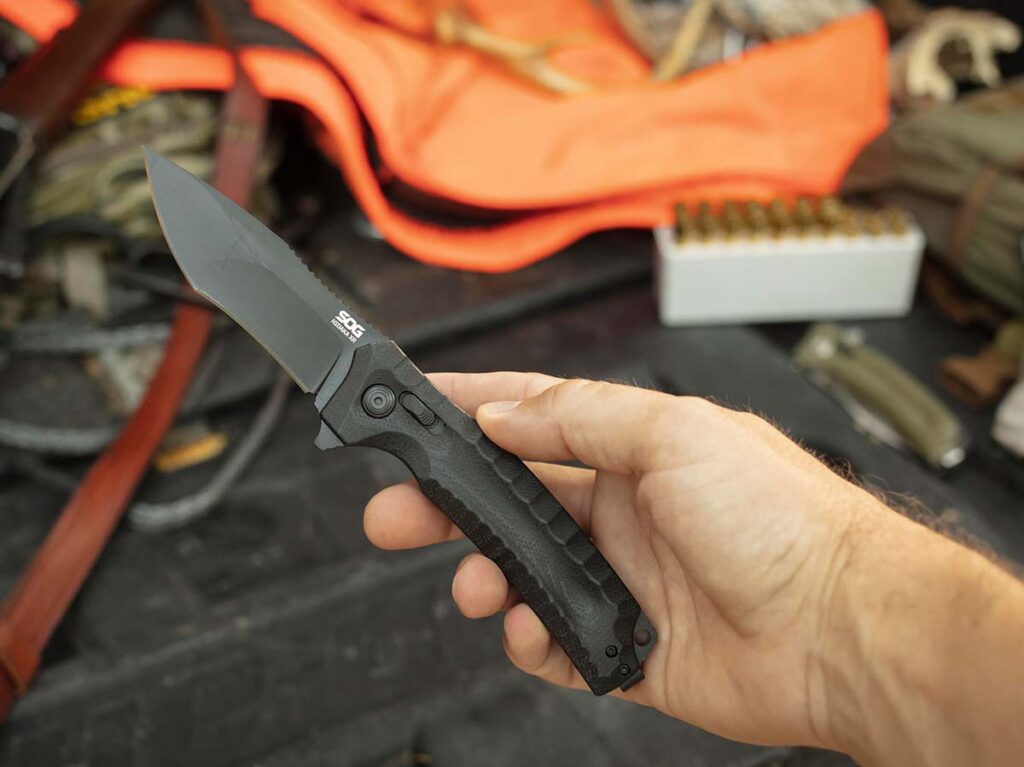
The Hidaka XR takes the foundation of the original folder and turns up the performance. This isn’t just a cosmetic refresh. SOG gave the XR a 4-inch modified tanto blade made from CPM 3V steel—steel that’s known for taking abuse and holding an edge long after lesser alloys give out. Designed with outdoor use in mind, the XR can chop, pry, and slice with equal confidence. The textured Micarta handle not only looks the part, it locks into the hand, even when wet, and the company’s XR lock system secures the blade under up to 1,500 pounds of force. In practice, it feels closer to a fixed blade than a folder, making it a smart option for anyone who needs a folding knife that can survive hard use.

SOG Hidaka XR
SOG Hidaka XR

Then there’s the Hidaka FX, a fixed blade that ticks all the boxes for serious outdoorsmen. Its 4.8-inch CRYO 3V steel blade, satin-finished for clean cuts, is built for durability and edge retention. A linen Micarta handle ensures a secure grip, while resisting heat, moisture, and impact. Add in the streamlined Kydex sheath, and the FX becomes an easy-carry knife ready for camp chores, trail tasks, or emergency situations.

Together, the Hidaka XR and FX show where SOG is headed—knives that merge artistry, ruggedness, and advanced engineering. With Matsuda’s design touch and SOG’s proven reputation for innovation since 1986, these new Hidakas aren’t just fresh models. They’re proof the brand is still redefining what a modern survival and outdoor knife can be.

More Knife Reviews:

Summer’s Finest: Custom Damascus Knives You Need to See

Explore 11 jaw-dropping custom knives featuring premium damascus steel blades, exotic handle materials, and master craftsmanship.

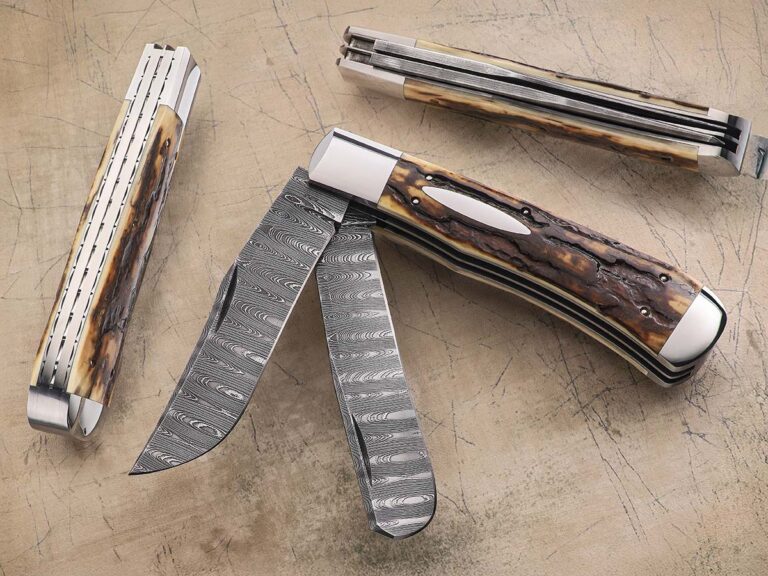
This summer’s crop of custom knives brings damascus front and center. From twisted and ladder patterns to stainless blends and copper-clad creations, each blade in this collection highlights not just the maker’s skill, but their artistry with steel. Whether forged for daily carry, culinary precision, or collector prestige, these knives turn heads with standout materials—think crystallized titanium, crosscut mammoth, and ringed Western Myall—paired with performance-driven designs. Featured makers range from journeyman smiths to Guild members, each offering a unique take on the timeless beauty and cutting power of damascus steel.

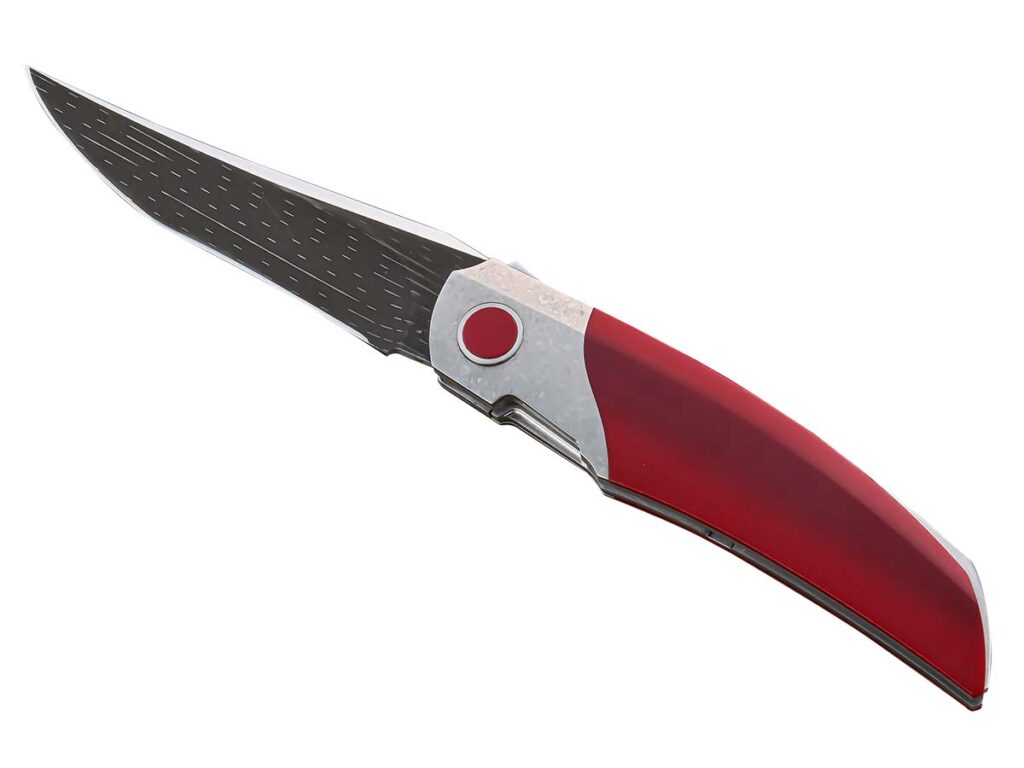
Carlos Queiros Thorn Persian TRS

Carlos Queiros Thorn Persian TRS

Knife type: Folder
Blade length: 3.35”
Blade material: Chad Nichols Starfire stainless damascus
Blade grind: Flat
Scales: Vintage bright red linen Micarta®
Bolsters: Crystalized titanium
Pocket clip: Yes
Closed length: 4.53”
Maker’s price for a similar knife: $4,700-$4,800 at press-time exchange rate
Maker: Carlos Queiros (SharpByCoop image)


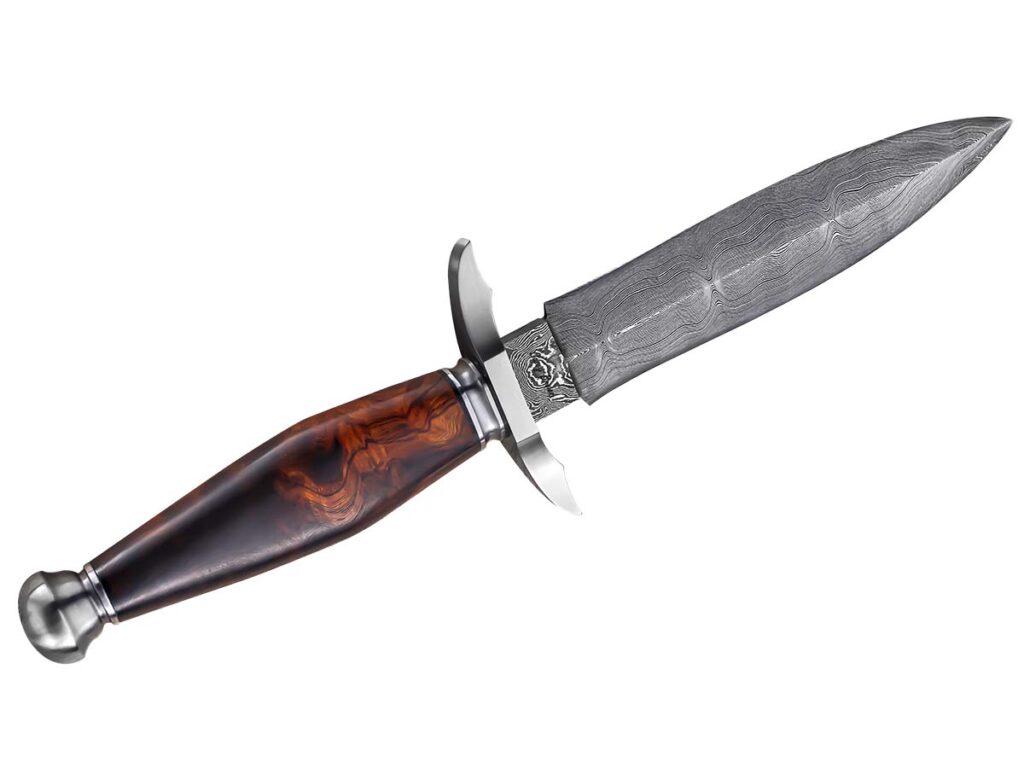
Casey Brown Dagger

Casey Brown Dagger

Blade length: 5.5”
Blade material: Ladder-pattern damascus
Blade grind: Flat
Scales: Desert ironwood
Guard/fittings: 416 stainless steel
Overall length: 10.25”
Maker’s price for a similar knife: $900
Knife to know: The maker is an ABS journeyman smith
Maker: Casey Brown (SharpByCoop image)


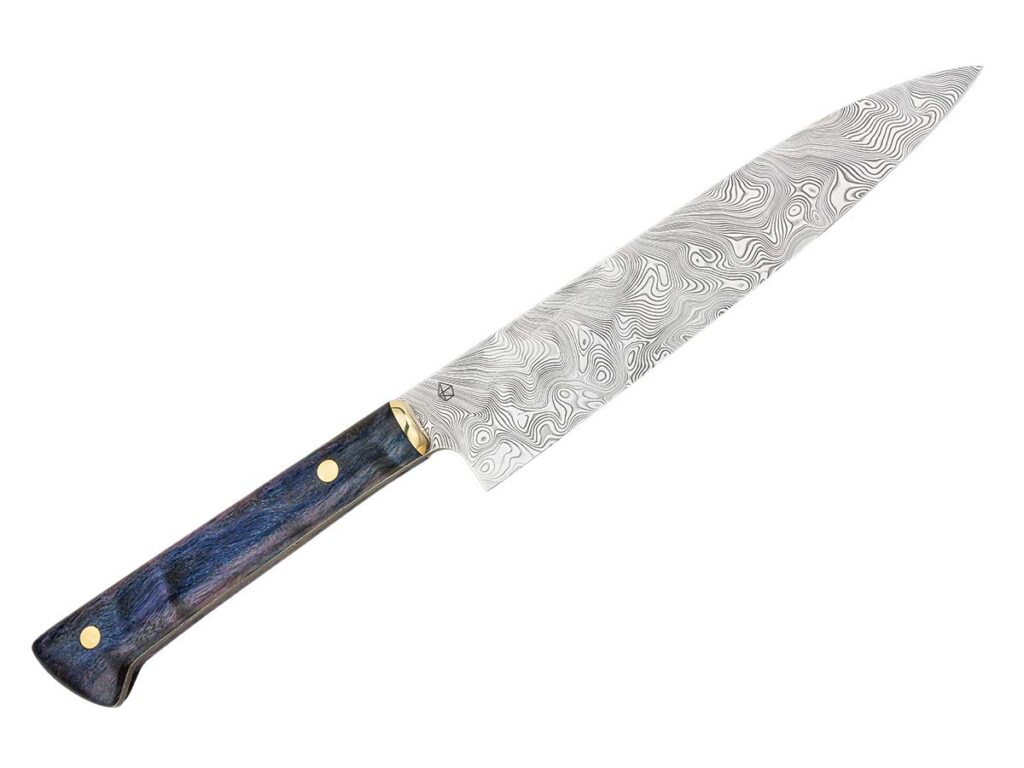
Luka Allen Petty Knife

Luka Allen Petty Knife

Blade length: 5 5/8”
Blade material: Bjorkman’s twist damascus by Damasteel
Blade grind: Flat
Scales: Cottonwood
Fittings: Brass
Overall length: 9.75”
Maker’s price for a similar knife: $450
Maker: Luka Allen, lukaallen.com (Jocelyn Frasier image)


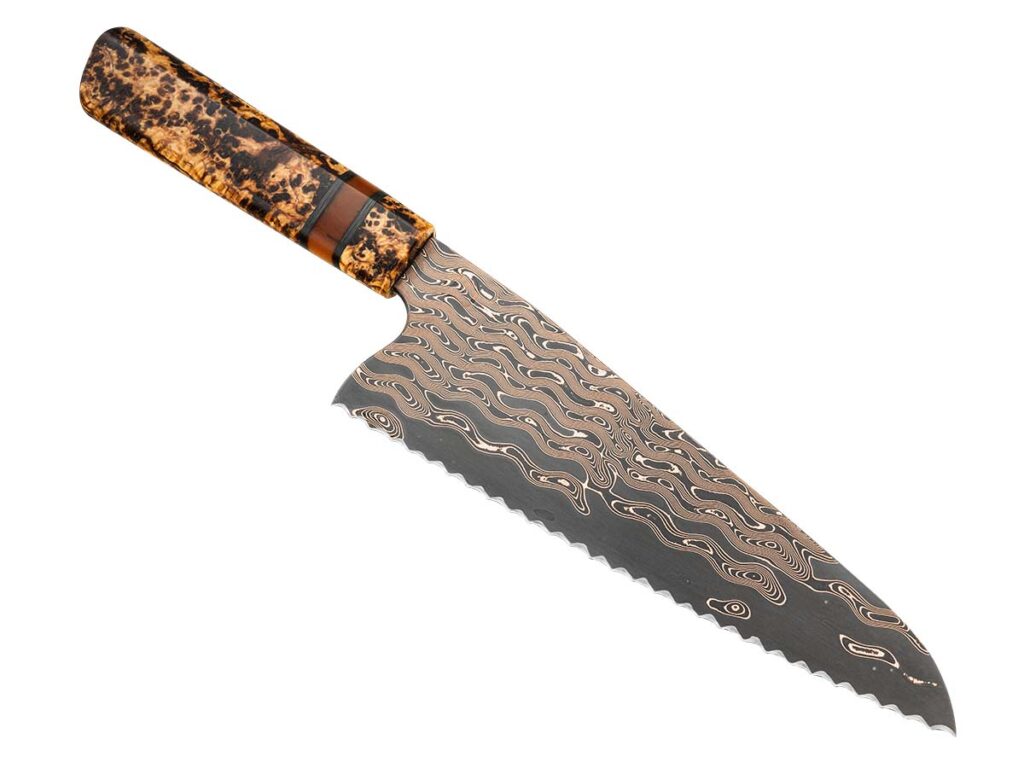
Micah Dunn Chef Bread Knife

Micah Dunn Chef Bread Knife

Blade length:7.5”
Blade material: Baker Forge & Tool copper-mai Surge pattern
Blade grind: Flat
Scales: Spalted chestnut burl and vintage Micarta®
Overall length: 12.25”
Maker’s price for a similar knife: $1,200
Maker: Micah Dunn, mdedgeworks.com (Jocelyn Frasier image)


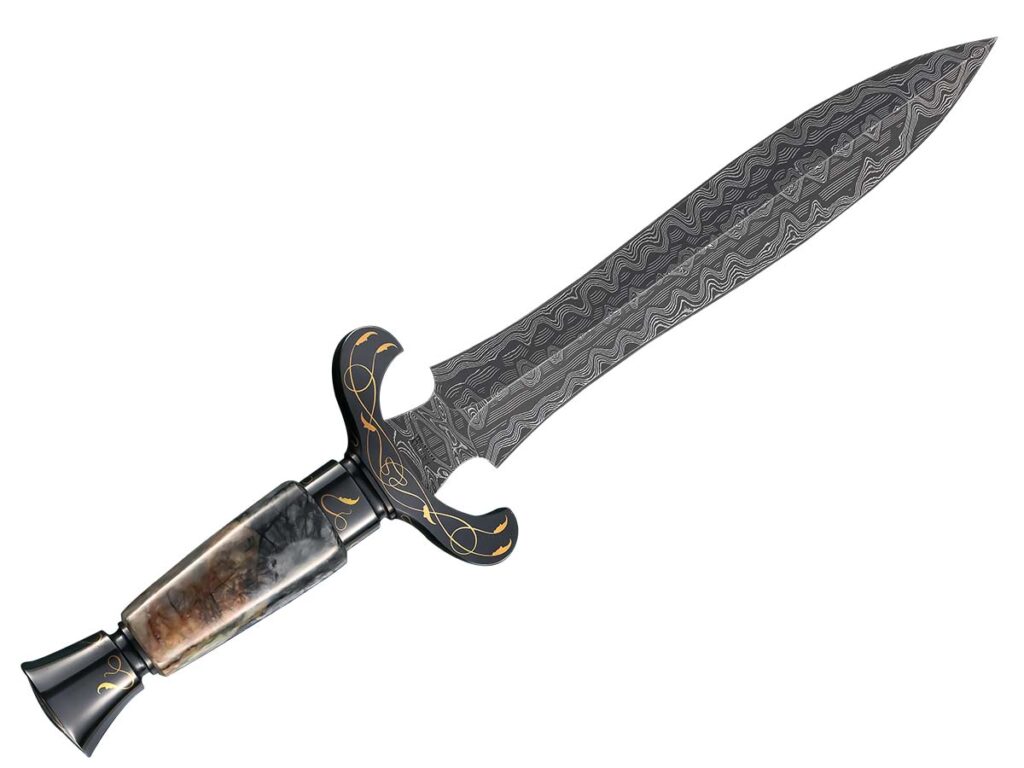
Dennis Friedly Art dagger

Dennis Friedly Art dagger

Blade length: 9”
Blade material: Mike Norris damascus
Blade grind: Hollow
Scales: Picasso marble
Fittings: Blued steel
Embellishment: 24k-gold inlay by Ray Cover Jr.
Maker’s price for a similar knife: $7,200
Knife to know: The maker is a voting member of The Knifemakers’ Guild
Maker: Dennis Friedly, friedlyknives.com (SharpByCoop image)


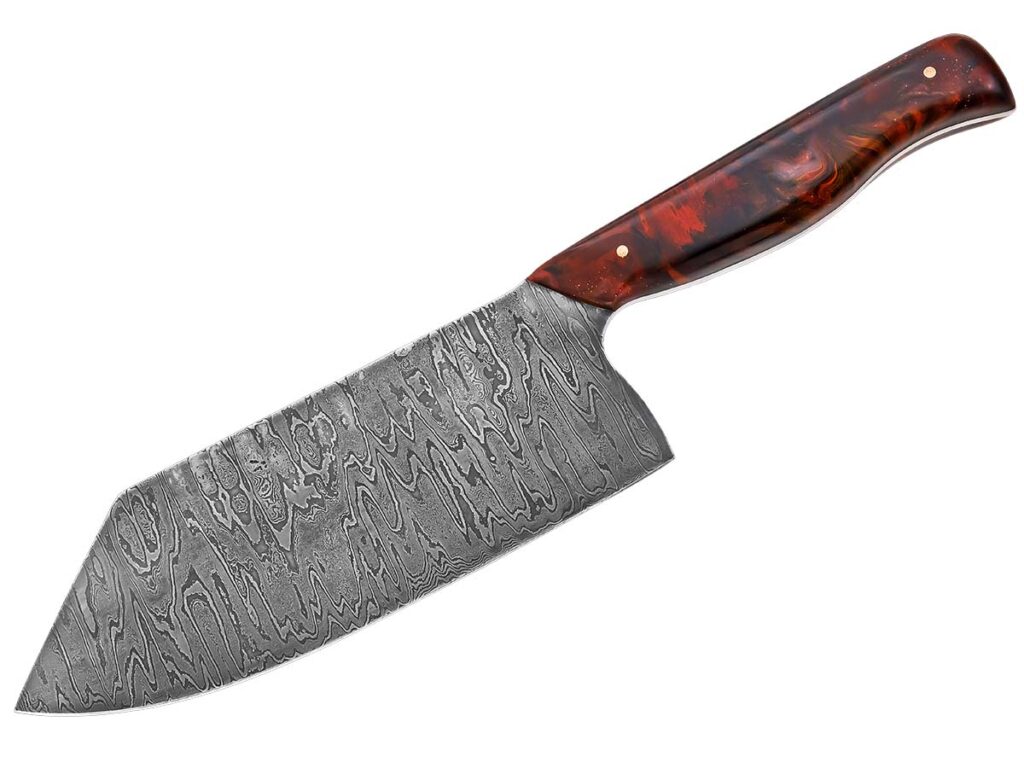
Dane Standen Cleaver

Dane Standen Cleaver

Blade length: 7.3”
Blade material: 243-layer textured damascus of 1084 carbon- and 15N20 nickel-alloy steels
Blade grind: Flat
Scales: Colored resin
Pins: Copper
Overall length: 12.2”
Maker’s price for a similar knife: Contact maker for info
Knife to know: The maker is a probationary member of the Australian Knifemakers Guild
Maker: Dane Standen (Rod Hoare image)


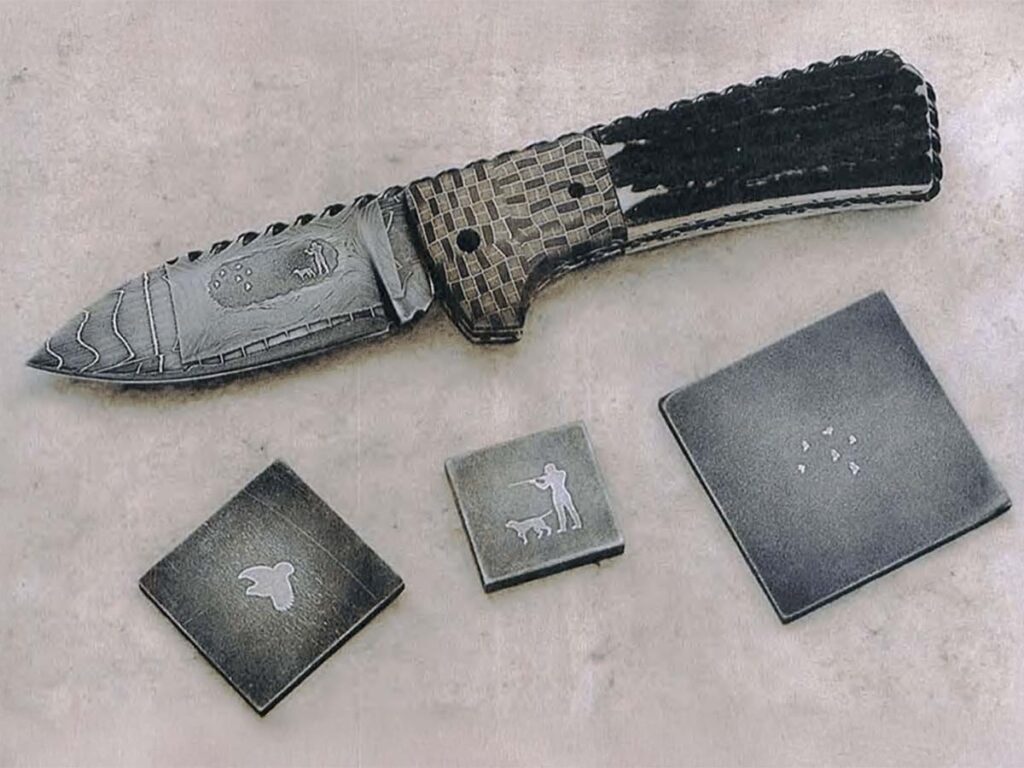
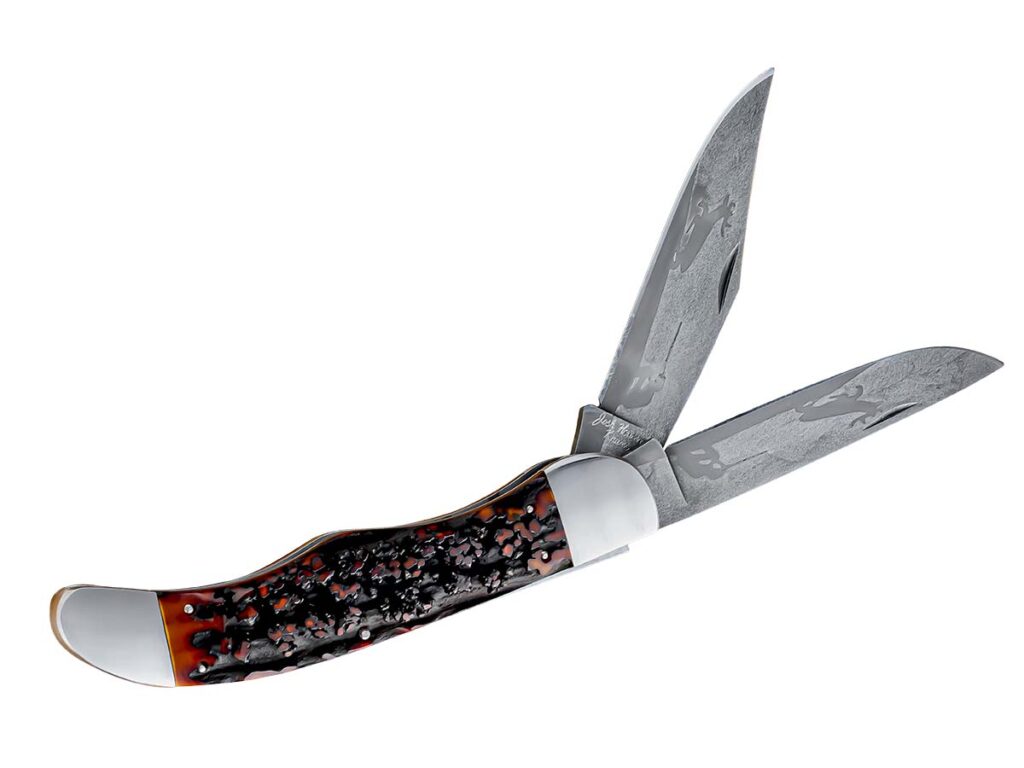
Josh Howard Folding Hunter

Josh Howard Folding Hunter

Action: Slipjoint
Blade length: 3.5”
Blade material: Pattern-welded deer hunting scene
Blade grind: Hollow
Scales: Amber stag
Handle frame & bolsters: Stainless steel
Closed length: 5.25”
Maker’s price for a similar knife: Contact the maker for info
Maker: Josh Howard, deerlickridgeforge.com (SharpByCoop image)


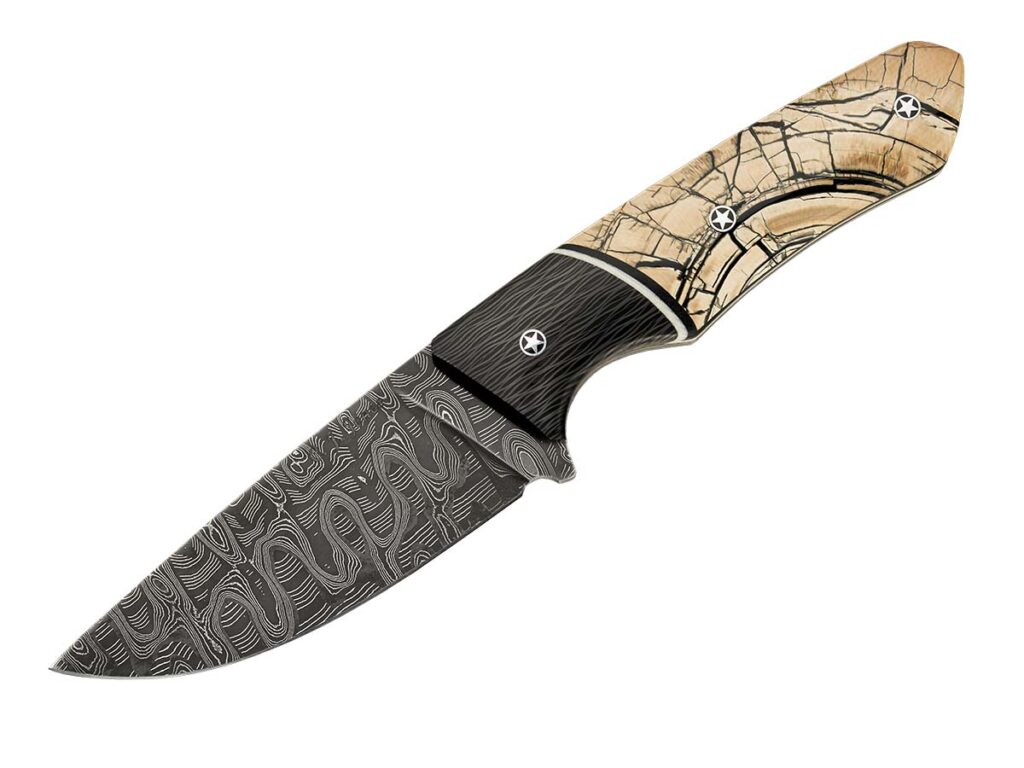
Chad J. Jones Hunter

Chad J. Jones Hunter

Blade length: 3.75”
Blade material: Mike Norris Hornet’s Nest stainless damascus
Blade grind: Flat
Scales: Crosscut mammoth tusk
Liners: Black and white G-10
Bolster: Zebra carbon fiber
Overall length: 8”
Maker’s price for a similar knife: $1,250
Maker: Chad J. Jones (Jocelyn Frasier image)


William Manning Hunter

William Manning Hunter

Blade length: 3.35”
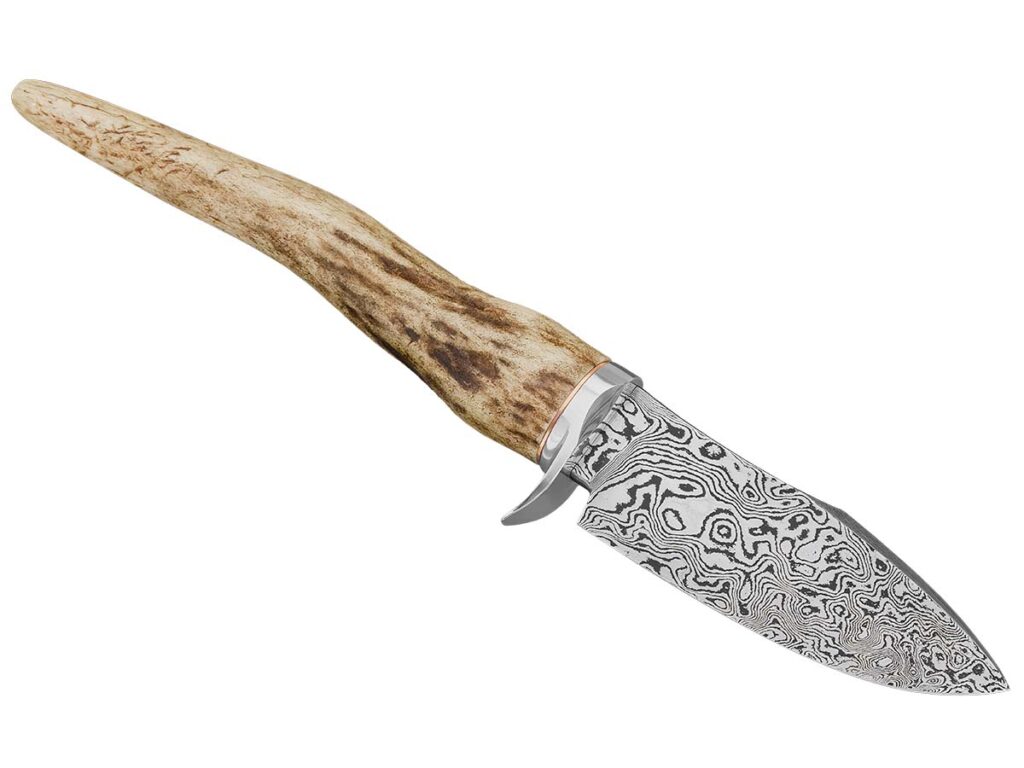
Blade material: Random-pattern damascus of 1084 carbon-and 15N20 nickel-alloy steels
Blade grind: Flat
Scales: Antler w/copper spacer
Guard: 416 stainless steel
Overall length: 8.27”
Maker’s price for a similar knife: Contact maker for info
Knife to know: The maker is a probationary member of the Australian Knifemakers Guild
Maker: William Manning, manningblades.com (Rod Hoare image)


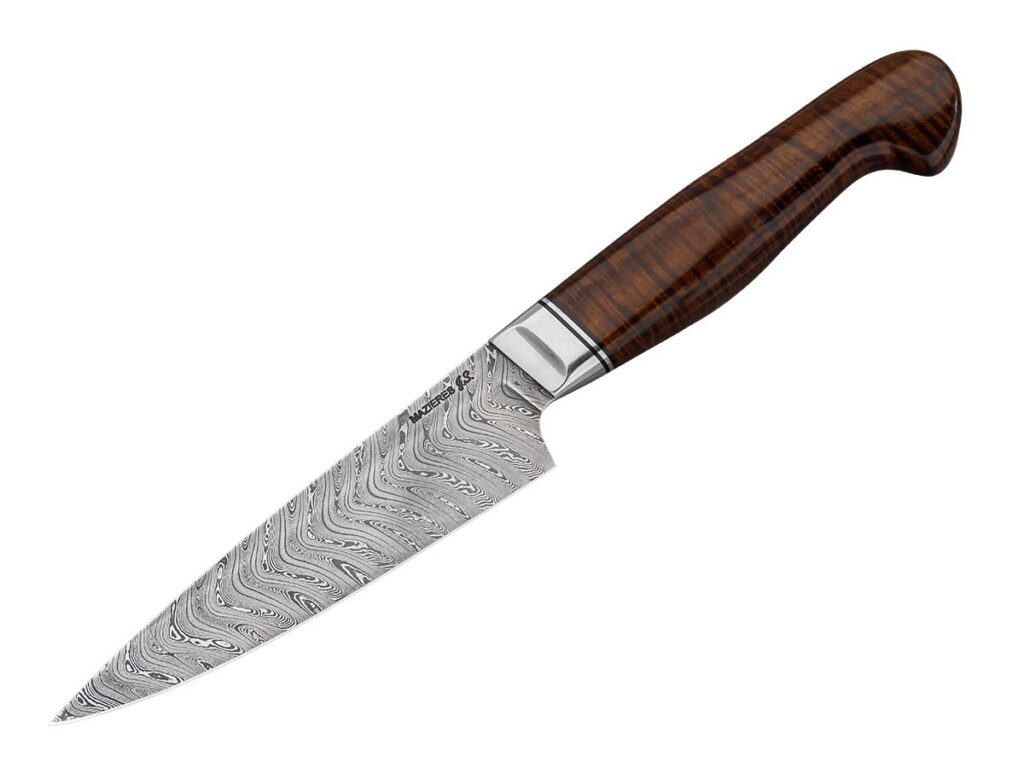
Francois Mazieres Medium Paring Knife

Francois Mazieres Medium Paring Knife

Blade length: 5”
Blade material: Pattern-welded damascus in 150 layers of 1084 and 1075 carbon- and 15N20 nickel-alloy steels embossed using
chevron dies for the final pattern
Blade grind: Flat
Scales: Stabilized South-Australian ringed Western Myall wood shaped in a composite Western/cowboy style
Spacers: G-10 and stainless steel
Bolsters: Scalloped, pinned and soldered 416 stainless steel
Construction: Hidden tang
Overall length: 10”
Maker’s price for a similar knife: $320.62 at press-time exchange rate
Knife to know: The maker is a member of the Australian Knifemakers Guild and a journeyman smith in the American Bladesmith Society
Maker: Francois Mazieres, Yandiwa.com.au (Rod Hoare image)


Nate “Tuna” Grant Utility Fixed Blade

Nate “Tuna” Grant Utility Fixed Blade

Blade length: 4”
Blade material: Rietveld Dragonskin damascus by Bertie Rietveld
Blade grind: Flat
Handle: Titanium, nickel silver, fiber liners, laser engraved
Overall length: 8”
Sheath: Guster leather; inlaid w/exotic animal skin; belt model with snap
Maker’s price for a similar knife: $5,000
Knife to know: The maker’s utility fixed blade won Best Utility at the 2024 Lost Pines Knife Show
Maker: Nate “Tuna” Grant, madebytuna.com (Jocelyn Frasier image)


Bryan Montalvo Basset

Bryan Montalvo Basset

Knife type: Folder
Blade length: 3.25”
Blade material: Grabak damascus by Damasteel
Blade grind: Hollow
Blade pivot: Skiff caged ceramic bearings
Handle: Same material as blade
Lock: Linerlock
Pocket clip: Same material as handle
Closed length: 3.5”
Maker’s price for a similar knife: $3,000 at press-time material costs
Maker: Bryan Montalvo, keanisonknives.com (Jocelyn Frasier image)


More Knife Reviews:

New Knives August 2025

Hot factory drops that made their debut at BLADE Show 2025.

From sexy folders to indispensable knife accessories, BLADE Show 2025 saw a ton of new drops. Nearly two months since the shindig, they’re still coming out. This is our last installment of the new show debuts for the summer and there’s definitely some lookers and doers in this crowd.


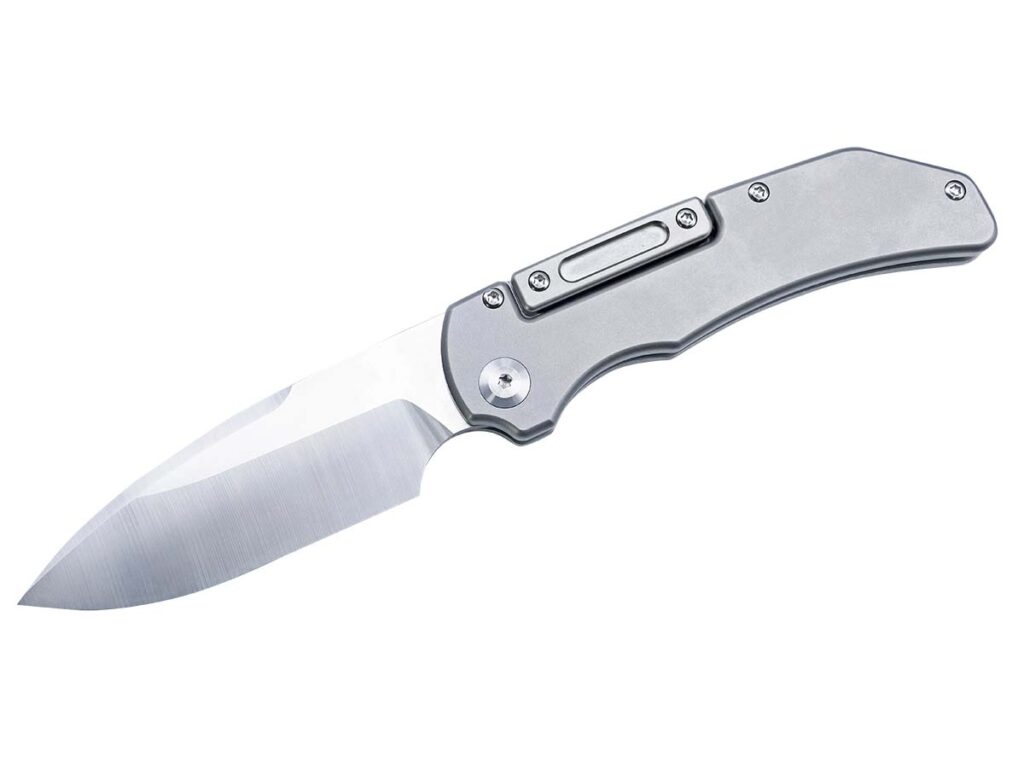
Kansept Hazard Bail Lock

Kansept Hazard Bail Lock

Knife type: Folder
Designer: Steven Dunnuck
Blade length: 3.67”
Blade steel: Stainless
Rockwell hardness: 58-60 HRC
Blade grind: Flat
Blade finish: Satin/blackwash
Handle material: Titanium
Lock: Friction-actuated swing cam lock (no springs)
Pocket clip: Tip-up, right-handed
Weight: 5.78 ozs.
Closed length: 4.54”
Country of origin: China
MSRP: To be announced
Available: August 2025


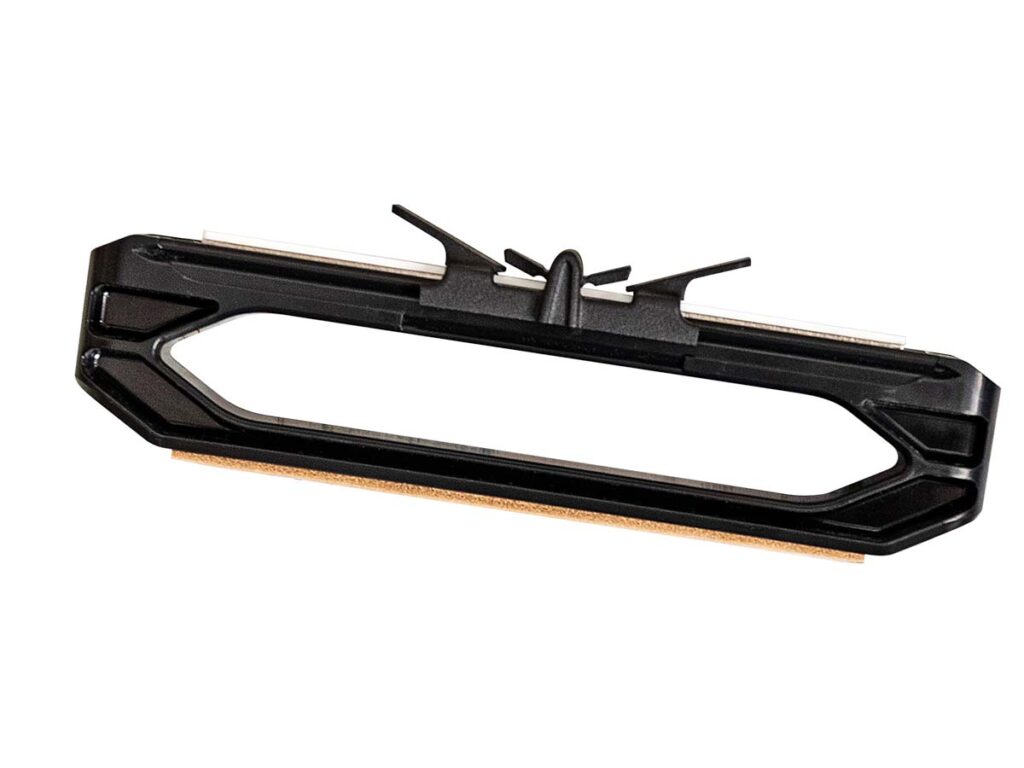
Wicked Edge Venture Portable Sharpener

Wicked Edge Venture Portable Sharpener

Sharpener type: Hand-held
Designer: Wicked Edge
Abrasive type(s): Diamond, ceramic, leather
Grit assortment: 500-grit diamond stone, fine ceramic
Angle option: 20 degrees
Edges sharpened: Plain
Dimensions: 7” x 1.5” x 1”
Construction materials: Recycled ABS plastic
Weight: 4 ozs.
Special features: 20-degree knife guide holds your knife steady as you go across the stone
Country of origin: USA
MSRP: $40
Available: Preorder now, full launch late summer


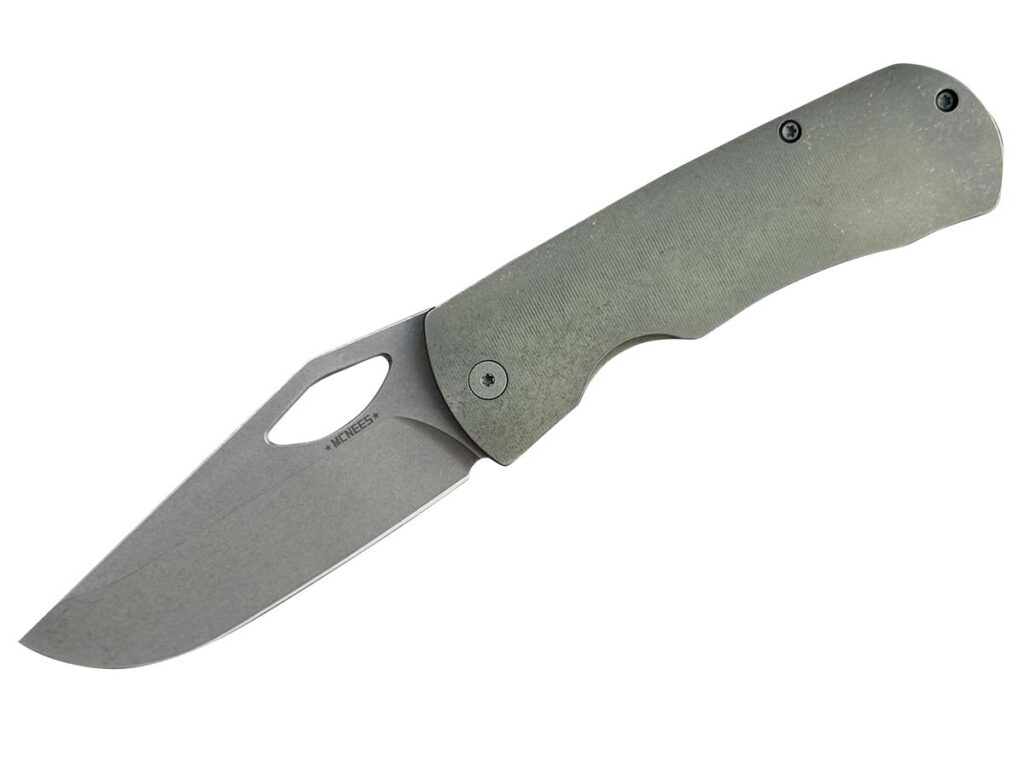
McNees Knives Dixon Folder

McNees Knives Dixon Folder

Designer: Jonathan McNees 
Blade length: 3.75”
Blade steel: MagnaCut stainless
Rockwell hardness: 63-64 HRC
Blade grind: Hollow
Blade pattern: Clip point 
Blade finish: Atomic Stonewashed 
Construction: Screw
Handle material: Titanium 
Lock: “Reeve/Walker Frame lock” 
Blade opener: Hole
Pivot: Ceramic ball bearings 
Pocket clip: Titanium, tip-up
Weight: .34 oz.
Closed length: 4.5”
Country of origin: USA
MSRP: $625
Available: NOW


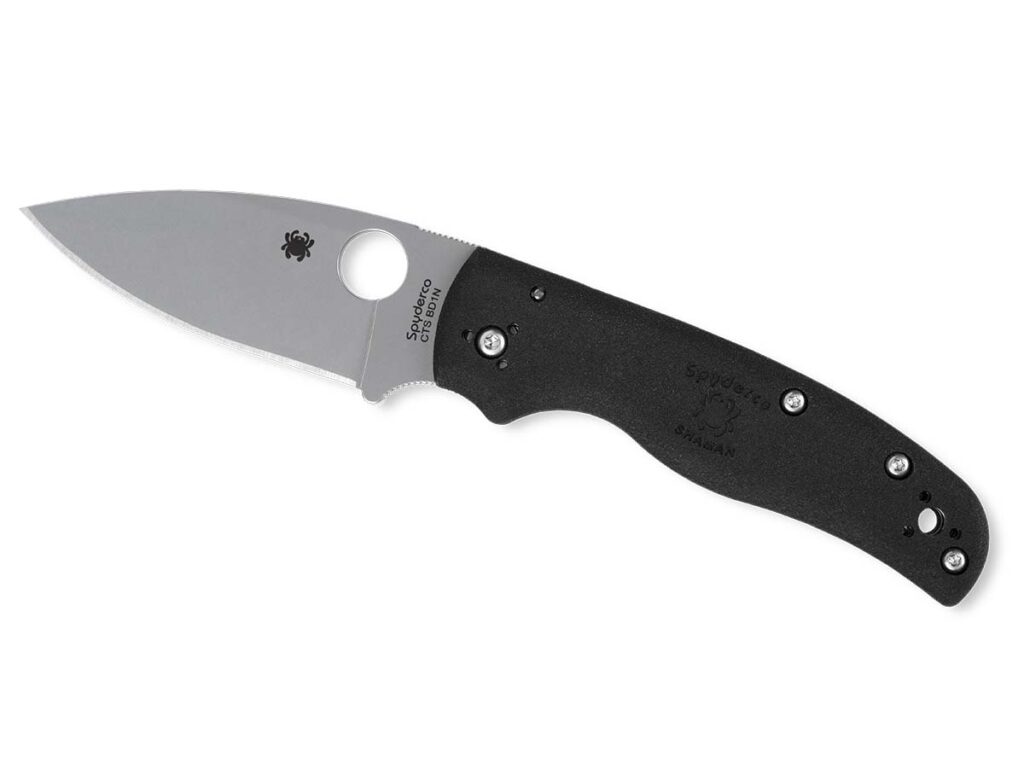
Spyderco Shaman Lightweight

Spyderco Shaman Lightweight

Knife type: Folder
Designer: BLADE Magazine Cutlery Hall-of-Fame® member Sal Glesser
Blade length: 3.58”
Blade steel: CTS® BD1N stainless
Blade grind: Full-flat
Blade pattern: Leaf shape
Blade finish: Satin 
Construction: Screw construction w/nested, skeletonized stainless steel liners
Handle material: FRN (fiberglass-reinforced nylon)
Lock: Compression Lock®
Opening mechanism: Manual one-hand open w/fully accessible Trademark Round Hole™
Pivot materials: Phosphor bronze washers 
Pocket clip: 4-position, stainless steel, tip-up/tip-down, left/right
Weight: 4.8 ozs.
Closed length: 4.7”
Special features:  Finger choil w/added gimping, pebbled textured FRN handles, a reduced weight of 9 percent from original Shaman, and available in both PlainEdge™ and SpyderEdge™
Country of origin: USA
MSRP: $230
Available: Fall


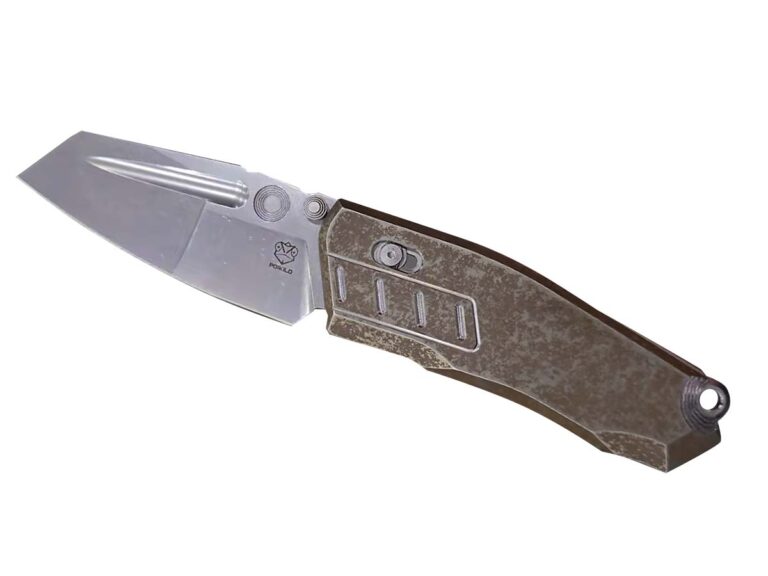
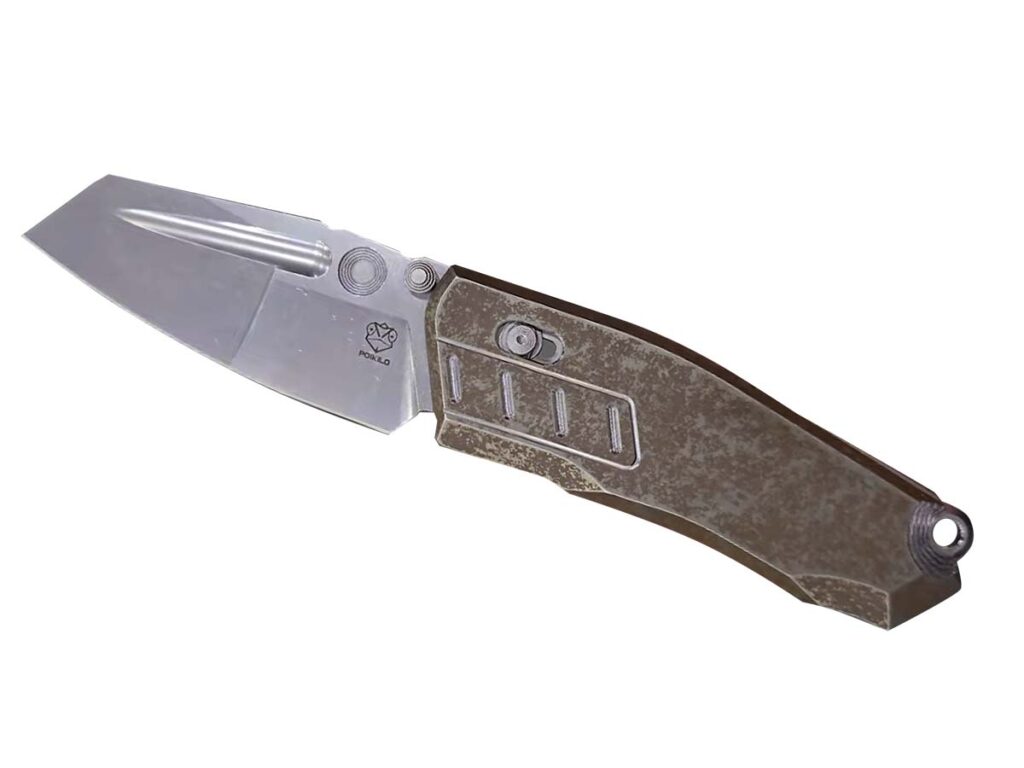
Poikilo Blade Vader

Poikilo Blade Vader

Knife type: Folder
Designer: TASKnives 
Blade length: 3”
Blade steel: M398 stainless
Rockwell hardness: 60-62 HRC
Blade grind: “V”
Blade pattern: Reverse tanto/modified sheepsfoot
Blade finish: Dark Stonewash
Construction: Sandwich
Handle material: A proprietary titanium
Lock: Axis
Blade openers: Thumb stud and thumb hole
Pivot materials: Bushing and phosphorous bronze washers
Pocket clip: Titanium, right-hand carry
Weight: 4.76 ozs.
Closed length: 4.3”
Special features: Screw-less design from PKB
Country of origin: China
MSRP: $420 (standard/base finish)
Available: September/October


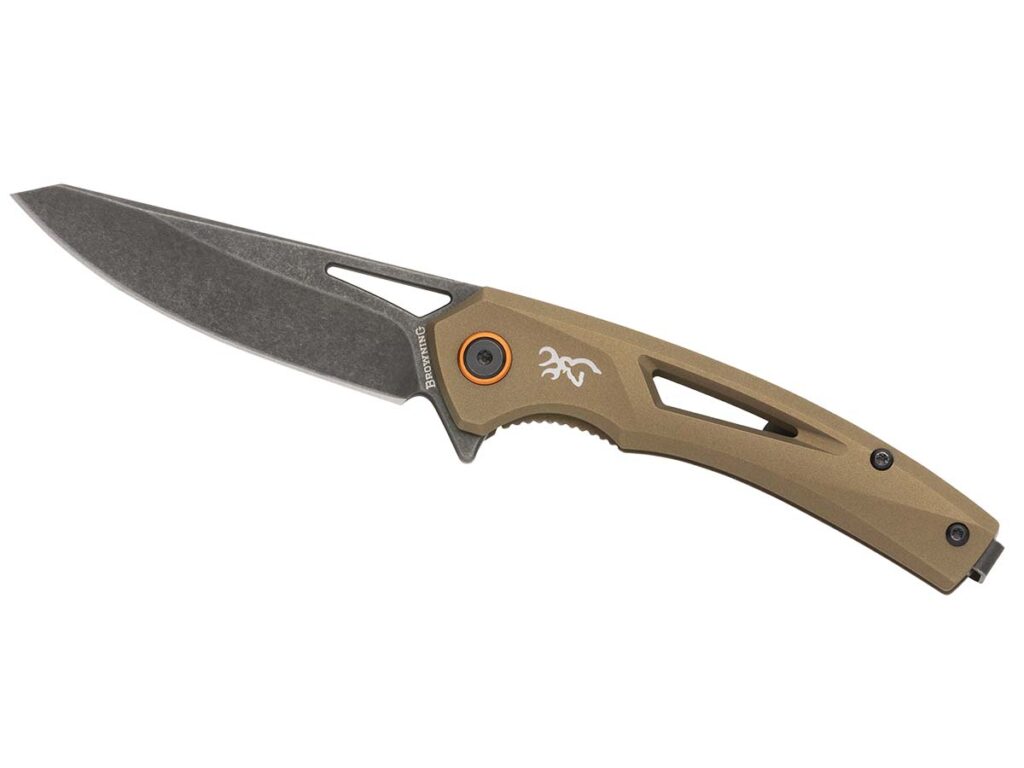
Browning South Slope

Browning South Slope

Blade length: 3”
Blade material: D2 tool steel
Rockwell hardness: 60-62 HRC
Blade finish: Black stonewash
Blade openers: Flipper and hole
Pivot: Ball bearing
Handle: Synthetic; burnt bronze; Cerakote® finish
Pocket clip: Ambidextrous, tip-up
Lock: Framelock
Closed length: 4”
Country of origin: Offshore
MSRP: $79.99
Available: NOW


More On BLADE Show 2025

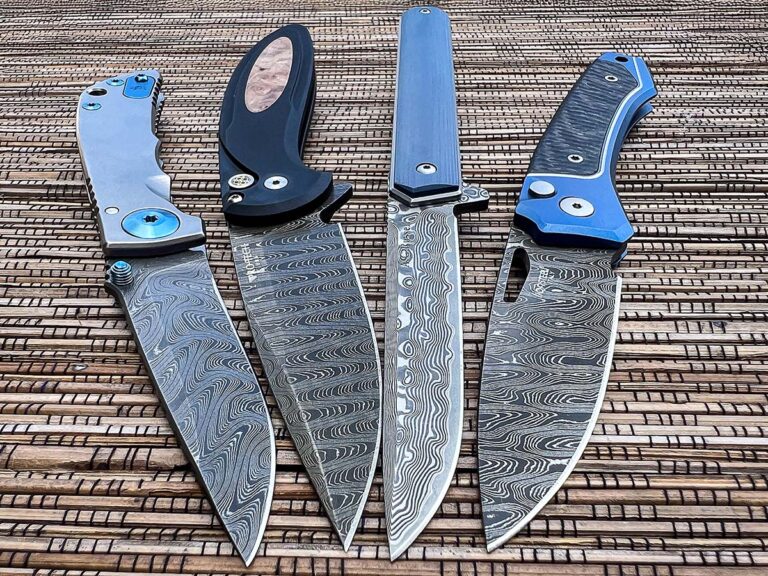
Damascus Folder: Top Options Straight From The Factory

We review four exquisite factory-made damascus folders that deliver the elegant look of custom work at a more affordable price.

Quality damascus knives have always been elegant. The steel, known for its unique surface appearance, defines “upscale” when it comes to high-end factory or custom knives. An increasing number of factory brands seem to be offering select models in damascus, bringing the knives to the masses at less than custom prices. For a nominal fee over the cost of a premium factory model—sometimes even less—you can have an exquisite damascus piece for your collection or daily carry rotation.

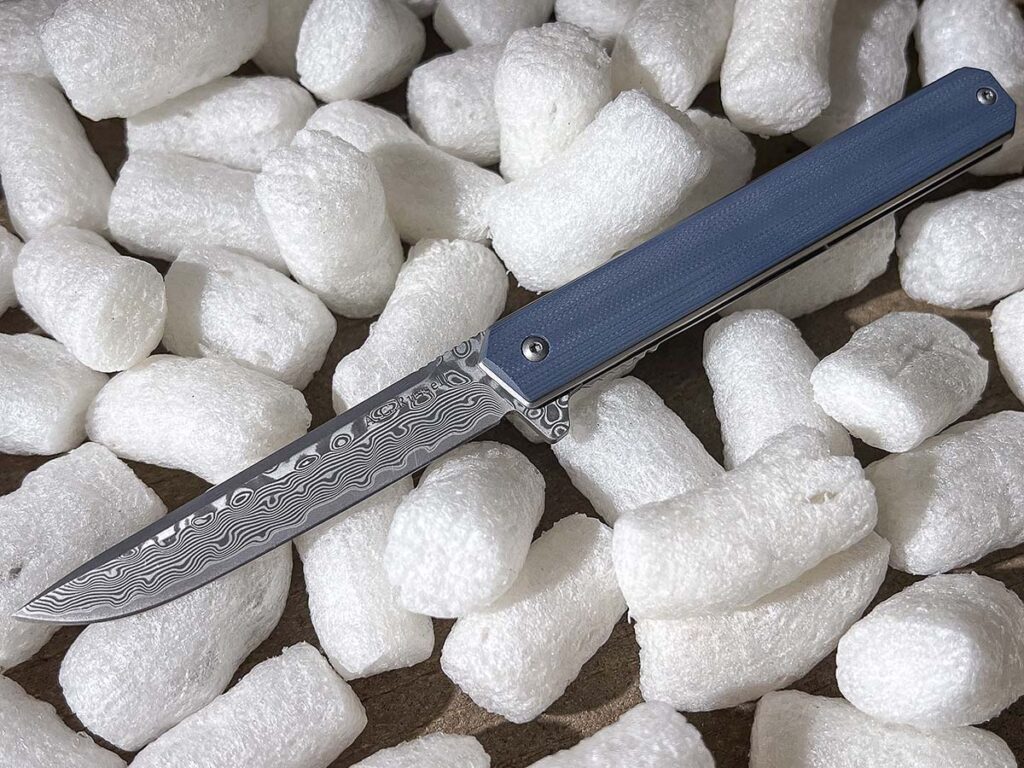
The A.G. Russell Knives Slim Damascus Folder

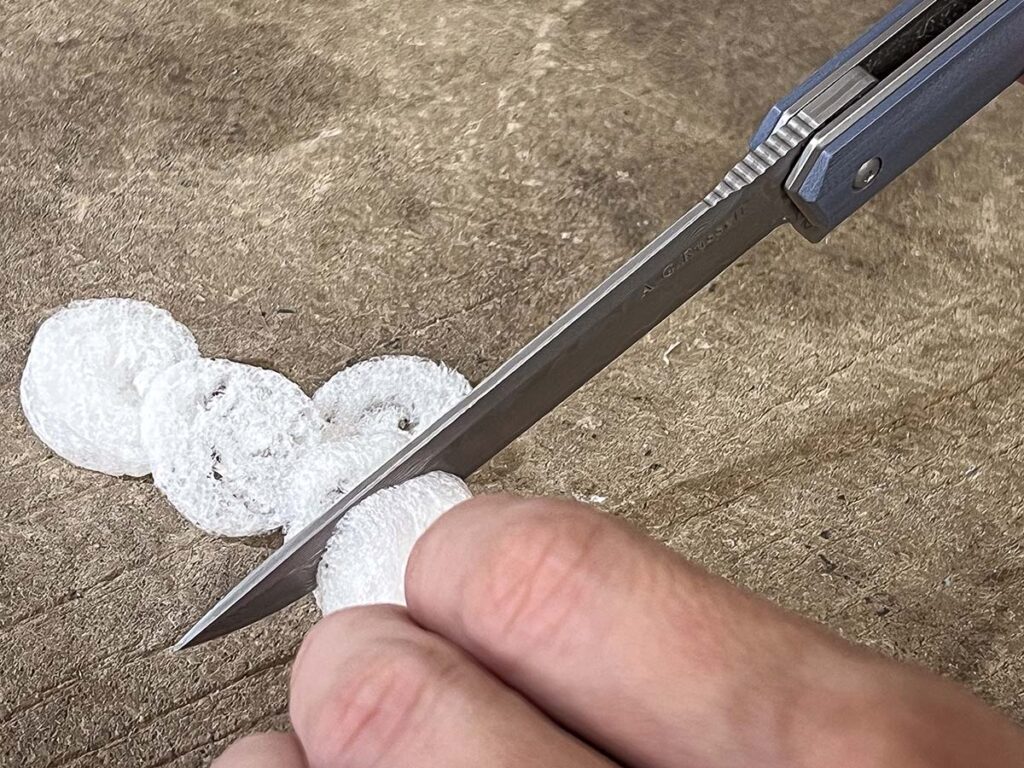
The A.G. Russell Knives Slim Damascus Folder is one of the better bangs for the buck in the genre. The 3⅝-inch drop-point blade is a damascus san-mai hybrid of sorts, featuring a core of 9Cr13MoV stainless steel clad with stainless damascus on either side. The construction allows the blade to be made for a more affordable price while also offering a distinctive appearance with the center core showing through near the cutting edge. 

The A.G. Russell’s 3-inch drop point blade is a damascus san-mai hybrid of sorts, featuring a core of 9Cr13MoV stainless steel clad with stainless damascus on either side.

The top of the thumb rest is notched for a non-slip grip, and the blade opens easily by a flipper tab. With the blade riding on a pair of caged bearings, the opening action is very smooth and sure. The 9Cr13MoV is a Chinese-made stainless that exhibits performance characteristics similar to the more familiar Japanese-made AUS-8 stainless.

The handle has stainless steel liners with beautiful chambray blue G-10 scales. The color is akin to a blueish gray that is less common for G-10. The double stainless liners are slightly oversized and chamfered for a refined appearance. A steel pocket clip carries the knife tip up. Overall construction is somewhat basic but executed extremely well.

Its overall slim form enables the folder to be carried comfortably in a variety of scenarios, from casual to full dress wear. As slender as it is, the handle remains a width that’s easy to grip and use. The smooth scales are slightly contoured to better fit the hand. The linerlock secures tight and safe, with zero blade play in any direction.

At about an eighth of an inch, the blade is moderately thick for such a slender folder. Add a shallow main grind bevel and there is a slight wedging effect when cutting cardboard, plastic foam and other materials, so you will have to apply a bit more force to get the blade through such media.

Cutting plastic foam into thin slices was a favorite edge tester of BLADE Magazine Cutlery Hall-of-Fame® member A.G. Russell, and the A.G. Russell Knives Slim Damascus Folder tackled the task with aplomb.

The handle is very straight, devoid of any features that prevent your hand from sliding forward or rearward. Combined with the blade grind, this doesn’t make the knife a good candidate for heavy/extended use. However, for casual and dress carry it’s perfect. It also makes a great folding steak knife. It’s low profile enough as not to catch unwanted attention in public. At a remarkably low manufacturer’s suggested retail price (MSRP) of $125, the knife represents a great value in a factory damascus folder. Made in China with the typical excellent manufacturing quality that is expected of such knives, the folder represents an excellent value. 

Lionsteel’s Twain

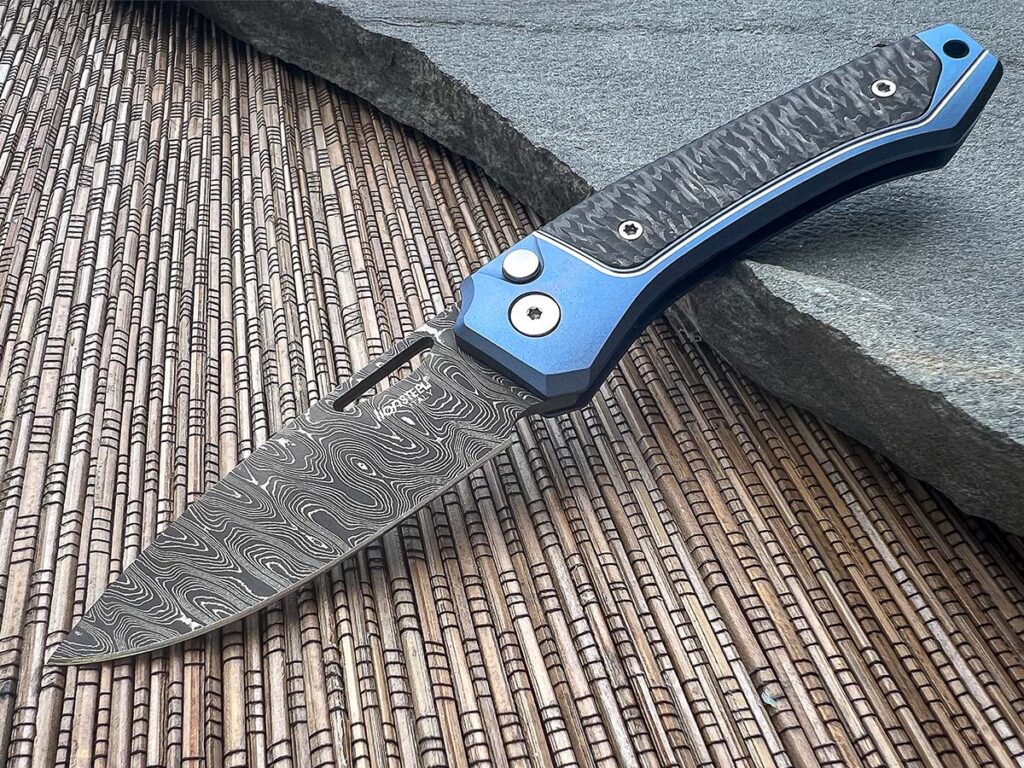
Lionsteel’s Twain damascus folder stands out in a crowd. Lionsteel calls it a double integral folder for its one-piece handle and one-piece scale. The handle is a solid piece of machined titanium—nothing new, though not too common, either.

Lionsteel calls the Twain a double integral folder for its one-piece machined titanium handle and one-piece carbon-fiber scale.

It isn’t exactly the easiest nor most cost-effective manner of making a knife handle, but it has loads of “wow factor.” It incorporates considerable CNC machining to arrive at the one-piece handle and one-piece scale. The resulting construction explains the knife’s high cost. It is an extremely strong design since the handle is a true integral as opposed to being composed of multiple parts. It is shaped so that it seats your hand comfortably, especially for prolonged use. The integral scale is 3D-machined carbon fiber and incorporates an integral spacer as well. The scale flows continuously around the spine for an appearance unseen on few if any other production folders.

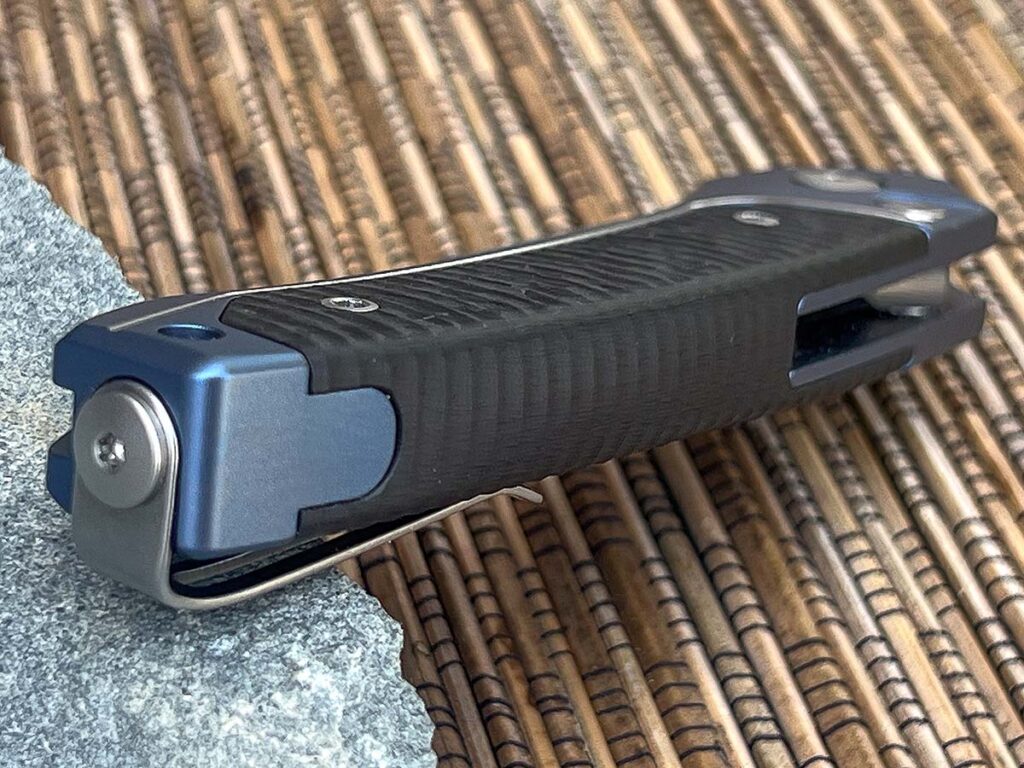
The knife carries very deep in a pocket, with the clip fastened to the handle butt. When the knife is in your pocket, all that’s visible is the clip. You practically do not feel a thing when carrying it. The weight of titanium and carbon fiber are at a minimum and do not bog you down at all.

The versatile, user-friendly drop-point blade is 3.15 inches of Chad Nichols stainless damascus. Called Scrambled, the pattern gets its name from its eye-catching radial shapes. The flat-ground blade features an oblong hole for easy opening with either hand. The blade spine is crowned, meaning there is a slight radius to it. This is a very nice touch that not all manufacturers offer. It also creates a comfortable surface for a finger rest.

The scale flows continuously around the spine of the Twain for an appearance unseen on few if any other production folders.

The Twain’s high-tech approach to design and manufacturing yields a folder that is both very stylish and functional.  The blade has a sweeping belly that makes it easy to tackle mundane daily cutting tasks with ease, such as opening mail and packages, and even cutting food in a restaurant. It’s also not shy about tackling heavier cutting jobs like breaking down cardboard boxes. It is a lighter weight folder but feels very solid in-hand because of the integral titanium frame and super-secure button lock. 

The MSRP of $542 gets you a high-end folder with top-flight materials made of the finest craftsmanship in Maniago, Italy.  

Pro-Tech Knives Cambria

Known widely for superior-quality automatics, Pro-Tech Knives also makes equally exceptional manual folders such as the Cambria 2 button-lock flipper. The company released the updated version of the Cambria flipper this year, tweaking the design a bit for aesthetics and ergonomics—thus the Cambria 2. It’s designed primarily as an upscale EDC folder that combines style and function into one easy-to-carry package that comes in either a base, working knife format or a highly impressive full-dress model sure to please the most discriminating knife enthusiast.

The Cambria 2’s 3.5-inch drop-point blade of a ladder-pattern stainless damascus forged by Chad Nichols is slender and opens fast via the flipper tab.

The 3.5-inch drop-point blade of ladder-pattern stainless damascus forged by Chad Nichols is slender and opens fast via the flipper tab. The ergonomic aluminum handle is anodized black and has an integral lower guard to help keep your grip in place. The back end is oval shaped to conform to your hand. The maple burl inlay adds an organic touch to a high-tech knife. Each Cambria 2 comes with a deep carry pocket clip that totes the closed folder tip up. To add an ever-so-slight dash of panache, the lock button is inlaid with a mosaic pin.

Deploying the blade is a pure pleasure as it rides on a pair of caged bearings for super smooth action. Out of the box, the edge is super sharp and ready for work. In the pocket, the Cambria 2 rides comfortably. Due to its overall slender form, it practically disappears in your pocket. There is absolutely no bulk associated with this knife. You almost forget you have it! I really like how it slices. The flat grind thins the blade out nicely and gives the edge plenty of bite. Overall fit and finish is what you expect from Pro-Tech—flawless in every way. Country of origin: USA. MSRP: $570. Pro-Tech turns out each damascus piece in low quantities, so if you want one, you’d better act quickly.

Spartan Blades Harsey

The Spartan Blades Harsey 3.25 folder is a scaled-down, EDC-size version of the Spartan Harsey Folder. The company had been receiving requests for a smaller size that’s easier to carry and less bulky while still retaining the heavy-duty build of the original. Enter the 3.25—and just like the larger Harsey Folder, Spartan also offers the 3.25 in a more-dressed-up version sporting a damascus blade paired with a handle of your choice of plain or a decorative machined titanium. The test knife is the former, a damascus blade with a bead-blasted titanium handle, simply stated but elegantly executed.  

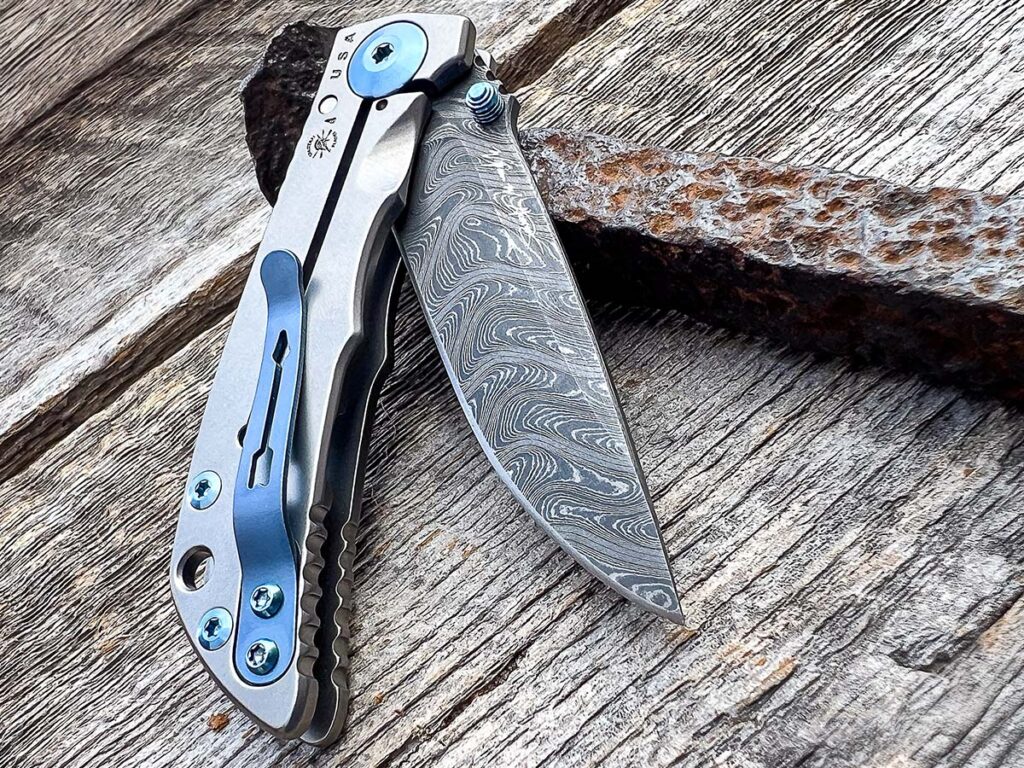
The bead-blast titanium handle of the 3.25 boasts titanium hardware anodized a light blue for an interesting pop of color. 

The drop-point blade is 3.25 (hence the name) inches of Chad Nichols stainless steel damascus in a raindrop pattern. Dual-machined titanium thumb studs provide ease of one-handed opening with either paw. The thumb rest on the spine has some traction notches for a nonslip grip and to apply more pressure to the blade. The bead-blast titanium handle boasts titanium hardware anodized a light blue for an interesting pop of color. The blade secures by a framelock, and a titanium pocket clip also anodized a light blue carries the closed knife tip up. It is a very handsome folder incorporating some heavy-duty elements that make it a great candidate for a user piece.

The 3.25 is a compact workhorse built to go the distance. The flat-ground blade can readily tackle most any daily cutting task: opening packages, breaking down cardboard boxes, slicing steak, or anything else that needs cutting, trimming or stripping. The blade opens smoothly with no play in any direction. It is very solid all around. Multiple finger grooves help seat your hand, providing no-slip control. All handle edges are chamfered to soften the grip and allow the knife to ride in your pocket comfortably. The blade is plenty sharp out of the box and ready for work.  Country of origin: USA. MSRP: $545.

More Knife Reviews:

Advertisement

Must Read Articles

Read this before you make a knife

Knifemaking 101 – Read This Before You Make a Knife

  by Wayne Goddard My experience has taught me that there's nothing like digging in and getting started. I've often said the hardest part of the...
how to forge damascus steel

How to Forge Damascus

Advertisement
Advertisement