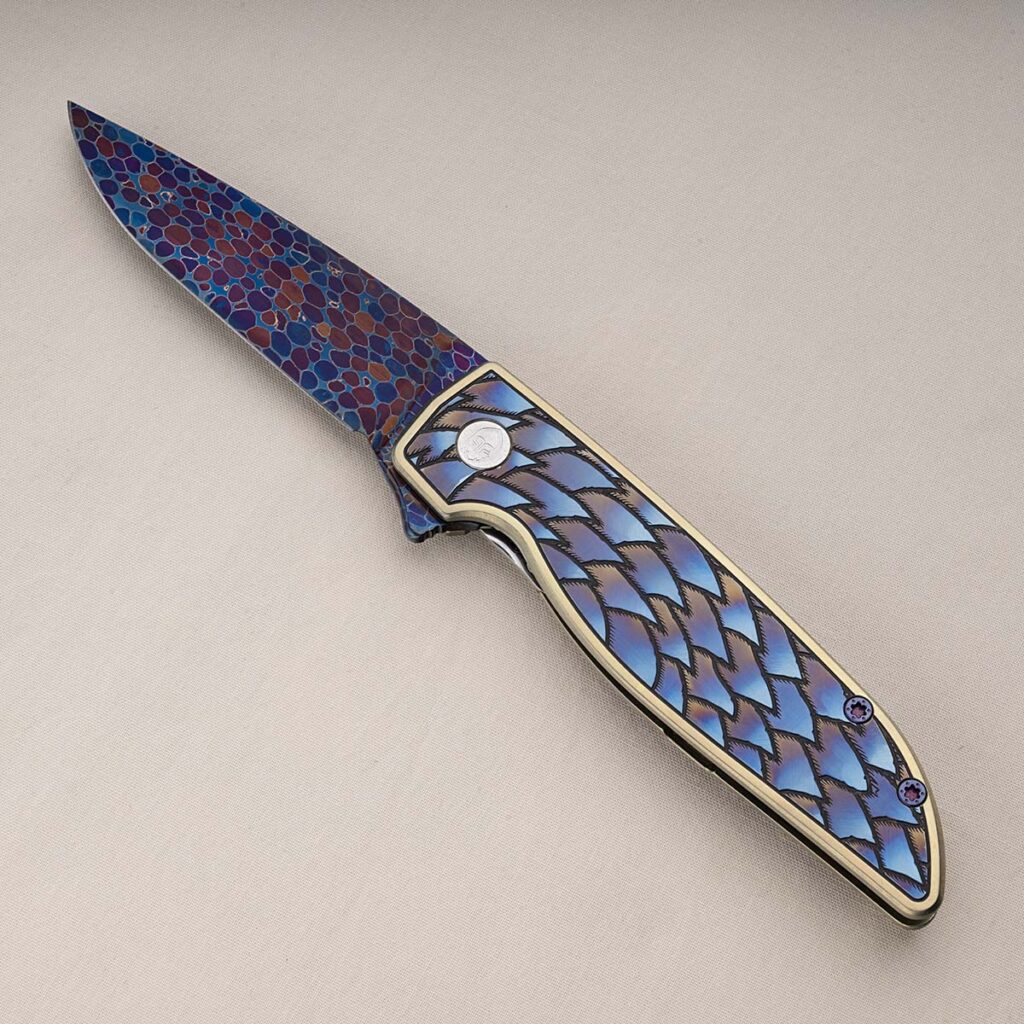
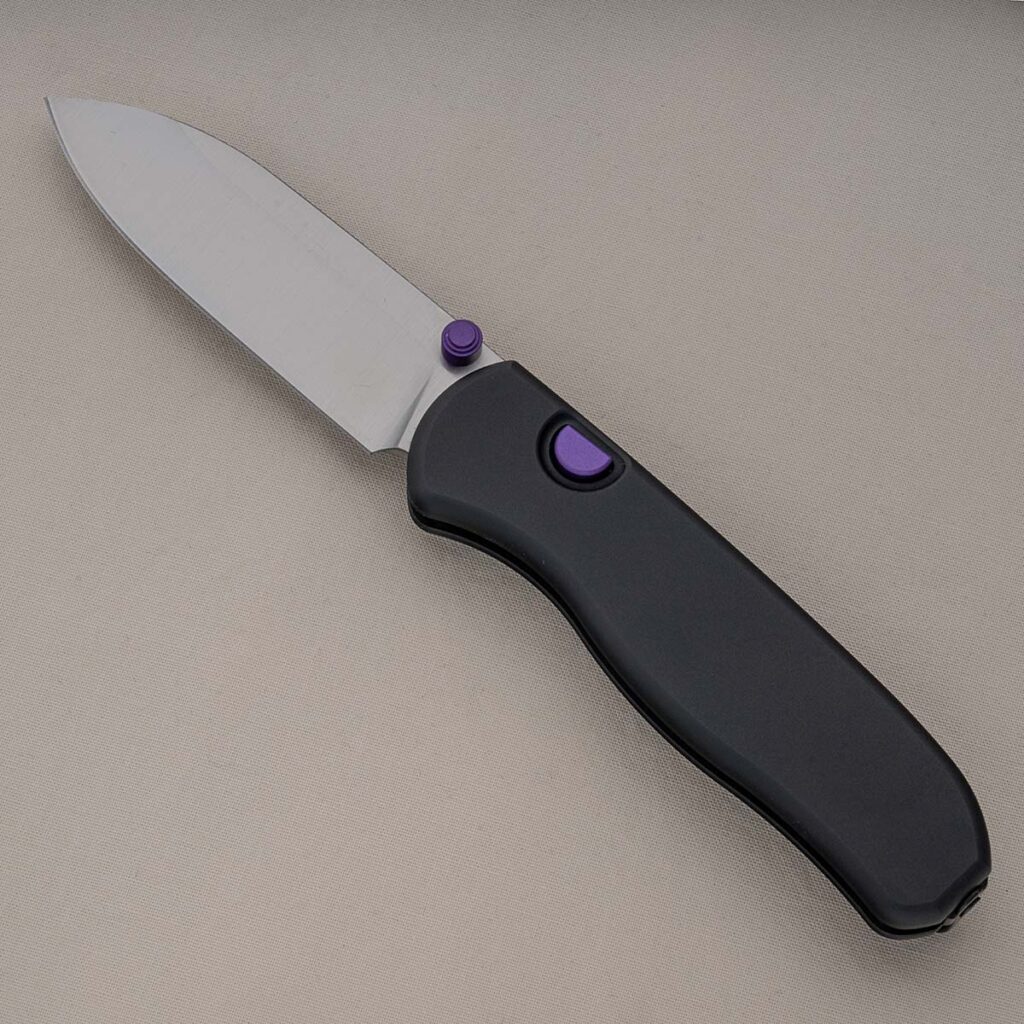
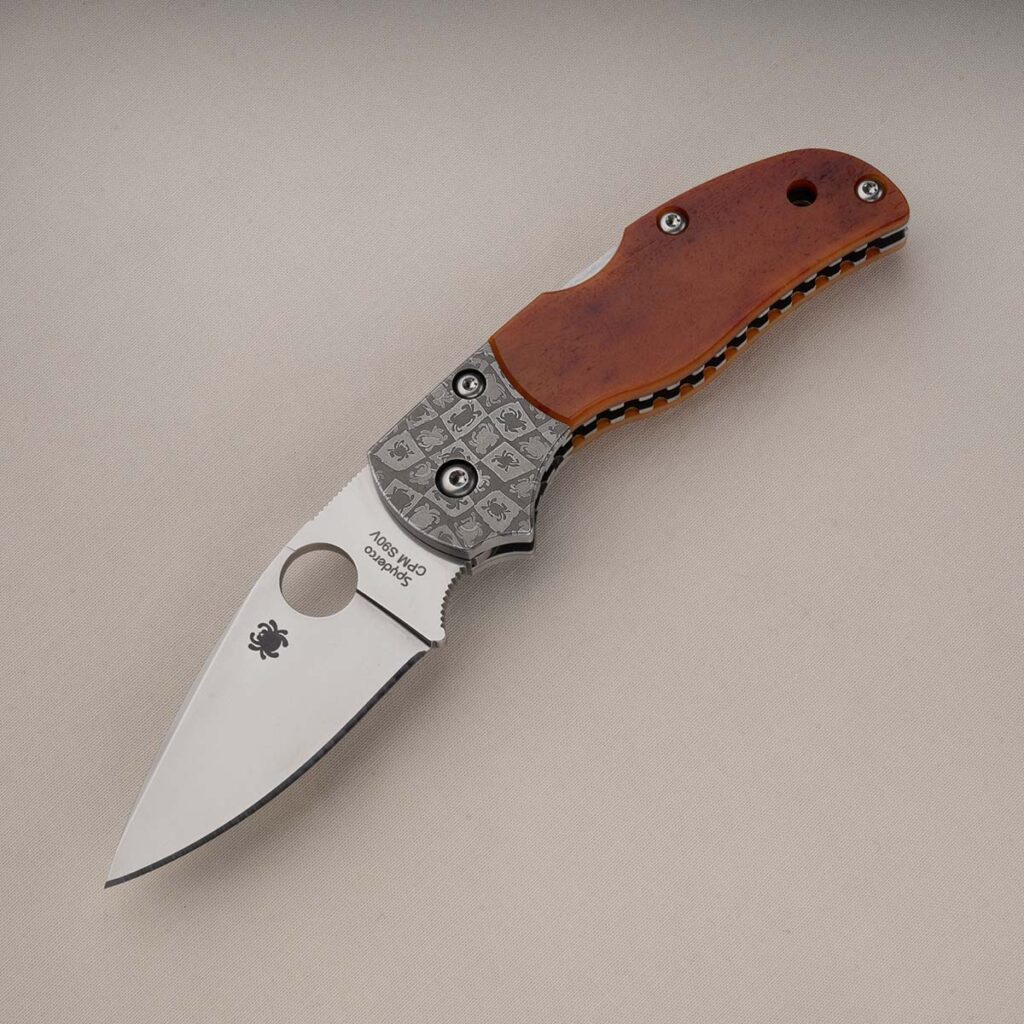
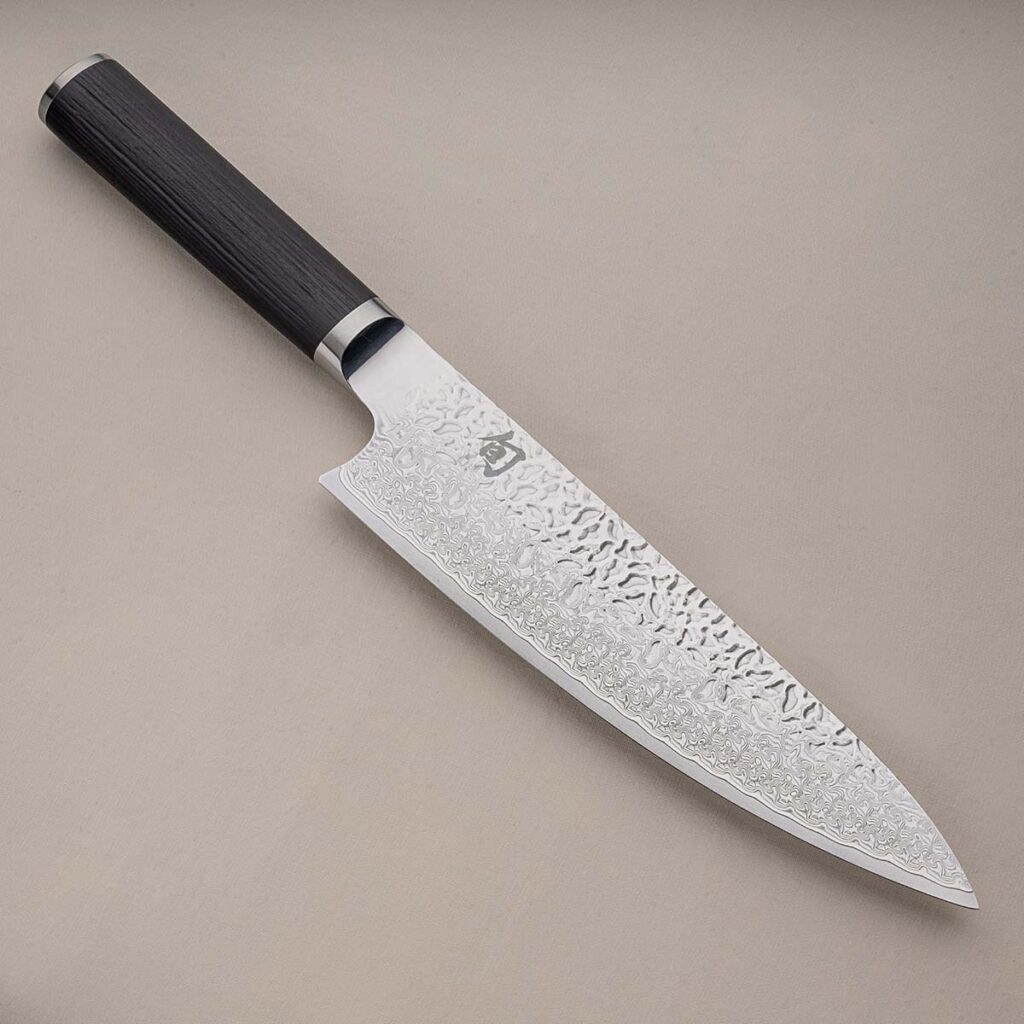
Jackass star and knife fanatic teams up with GiantMouse on tactical-style folder.
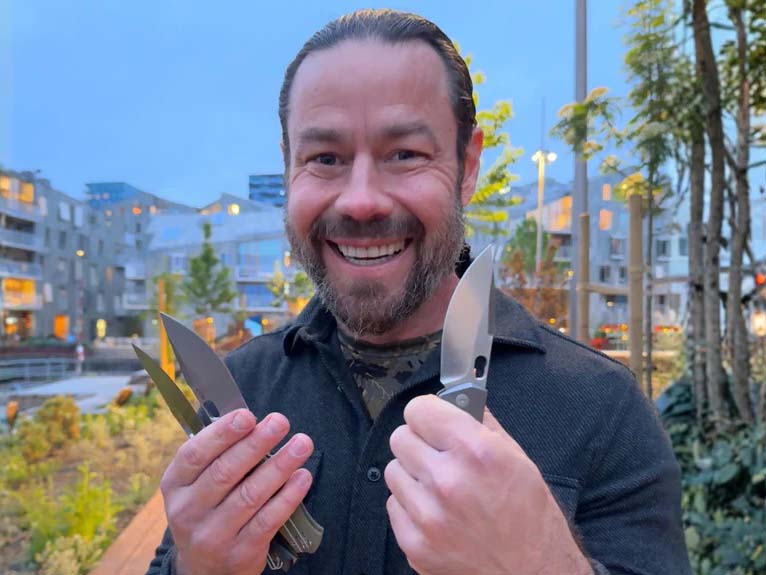
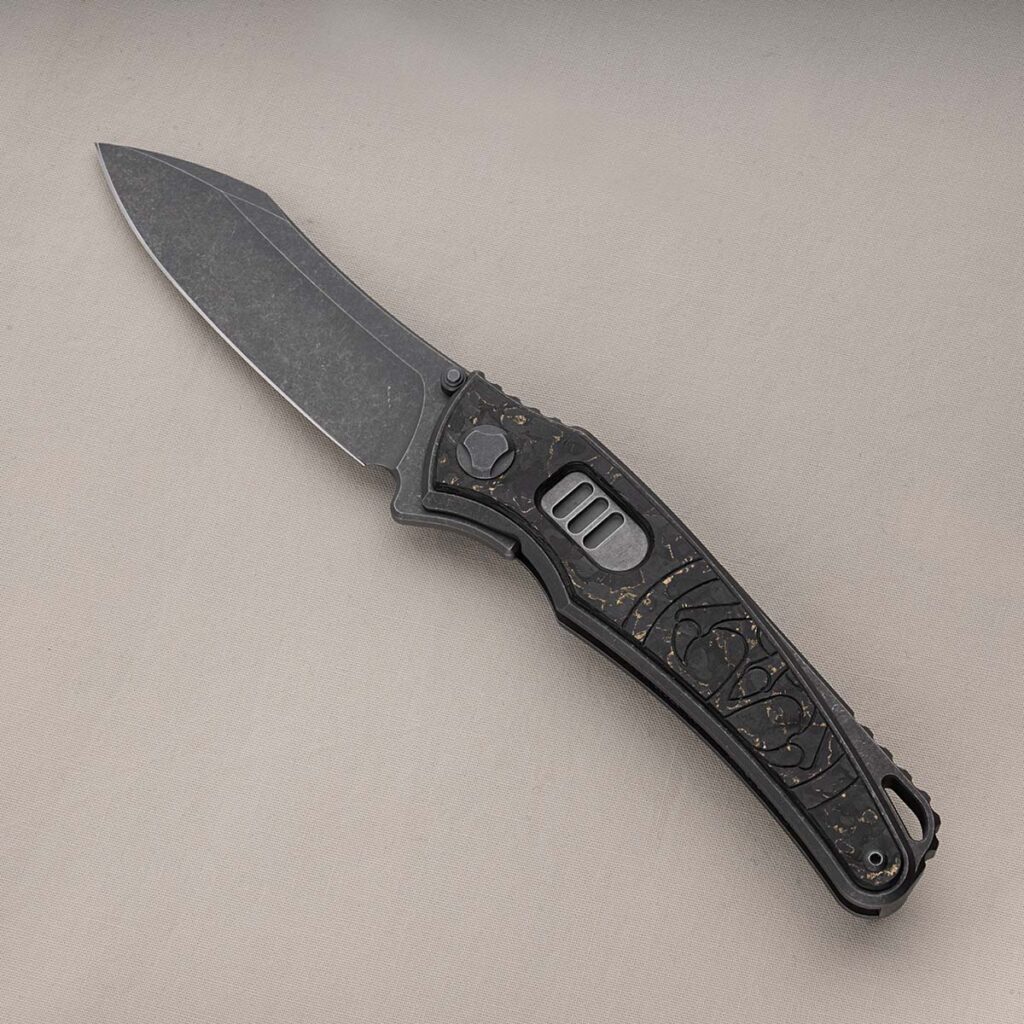
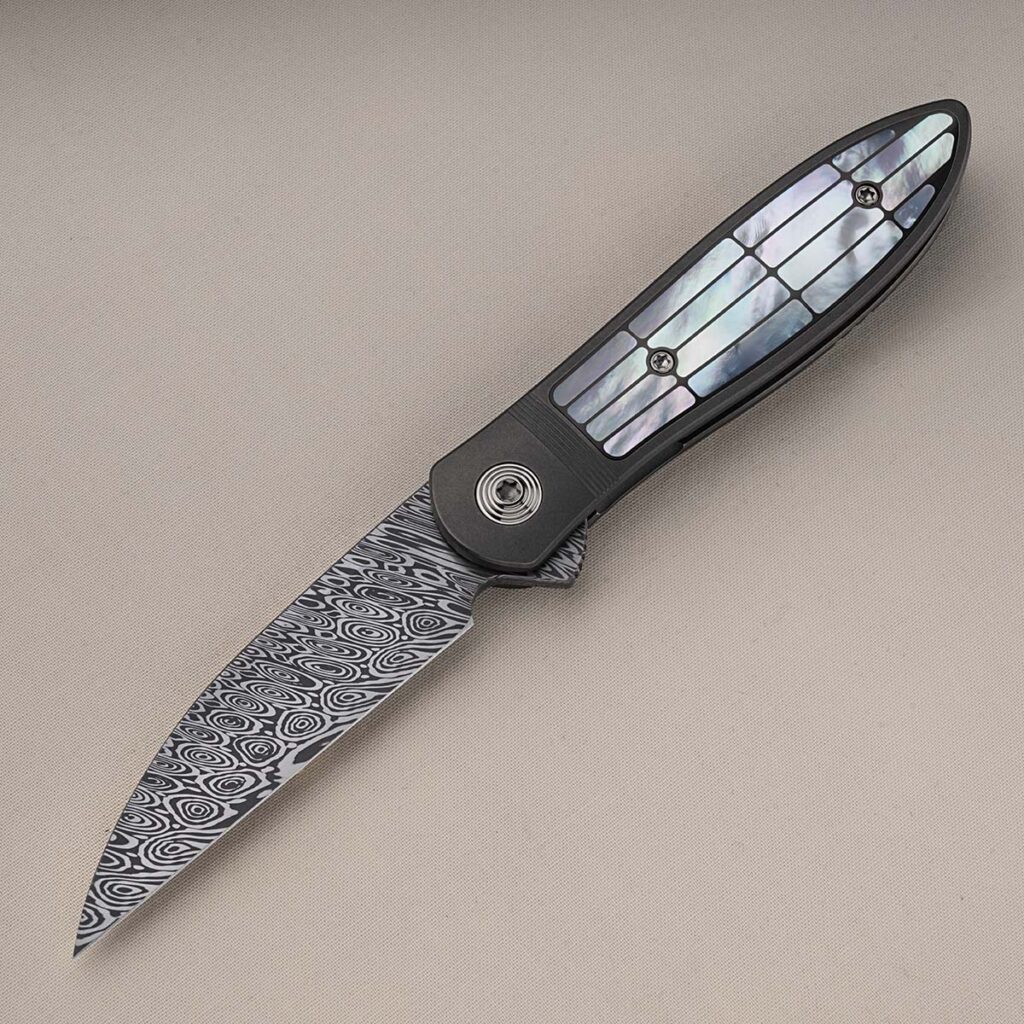
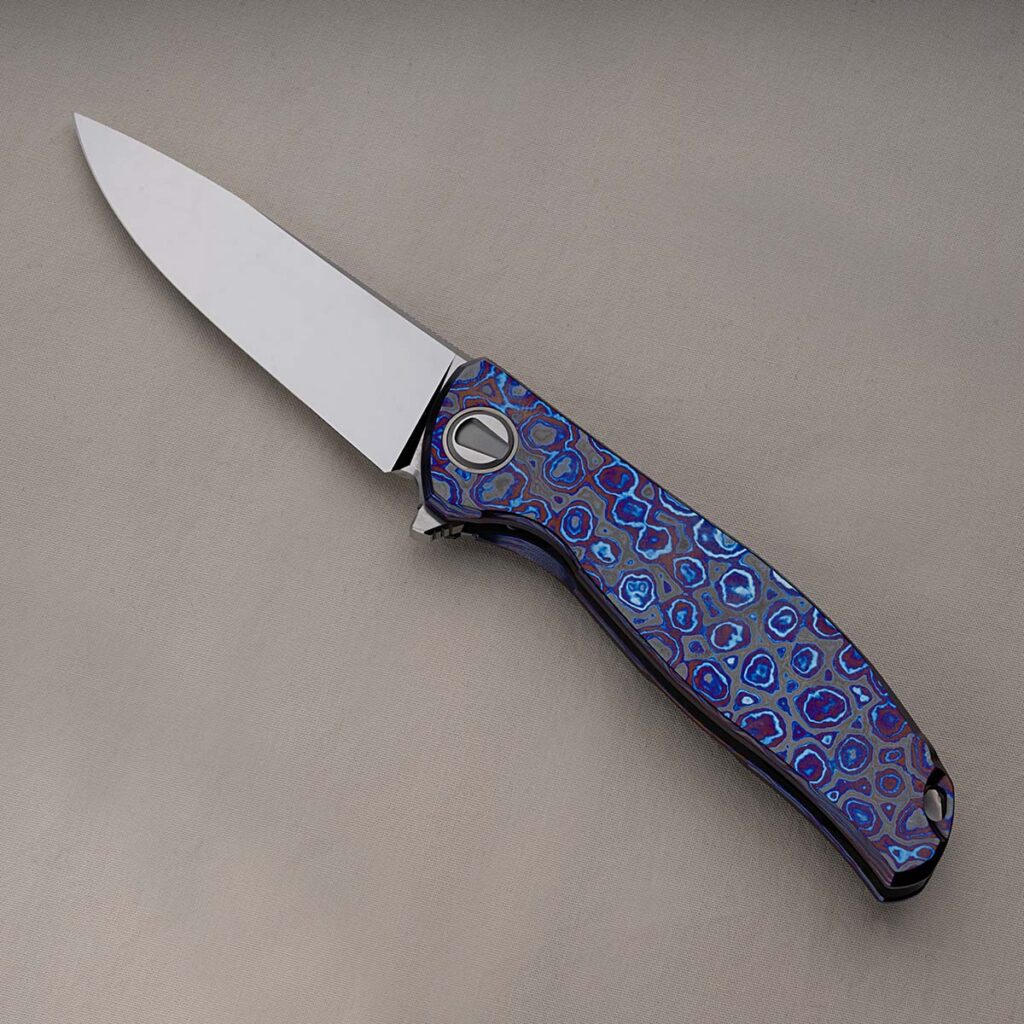
Chris Pontius is known for many things—his stunt work, crazy pranks, often appearing in little more than his underwear. With a collaboration with GiantMouse, it’s likely the former Jackass and Wildboyz star will be known for more. A life-long knife fanatic—he does a ton of knife content on his social media channels—Pontius teamed up with GiantMouse co-founder Jesper Voxnaes to create a fairly unique knife—the ACE Pontius. The project was two years in the making, as the Pontius and Voxnaes worked out the details of the knife. And the pair put some high design bars up for themselves.
In a blog post at GiantMouse, Pontius said rather than leaning into standard production aesthetics, he wanted a tool that mirrored the functional art of a musical instrument. He drew design cues from a vast array of historical and functional blade styles, weaving subtle elements of upswept hunters, classic skinners, Scandinavian puukkos, Nessmuks and harpoon-style blades into a single cohesive outline.
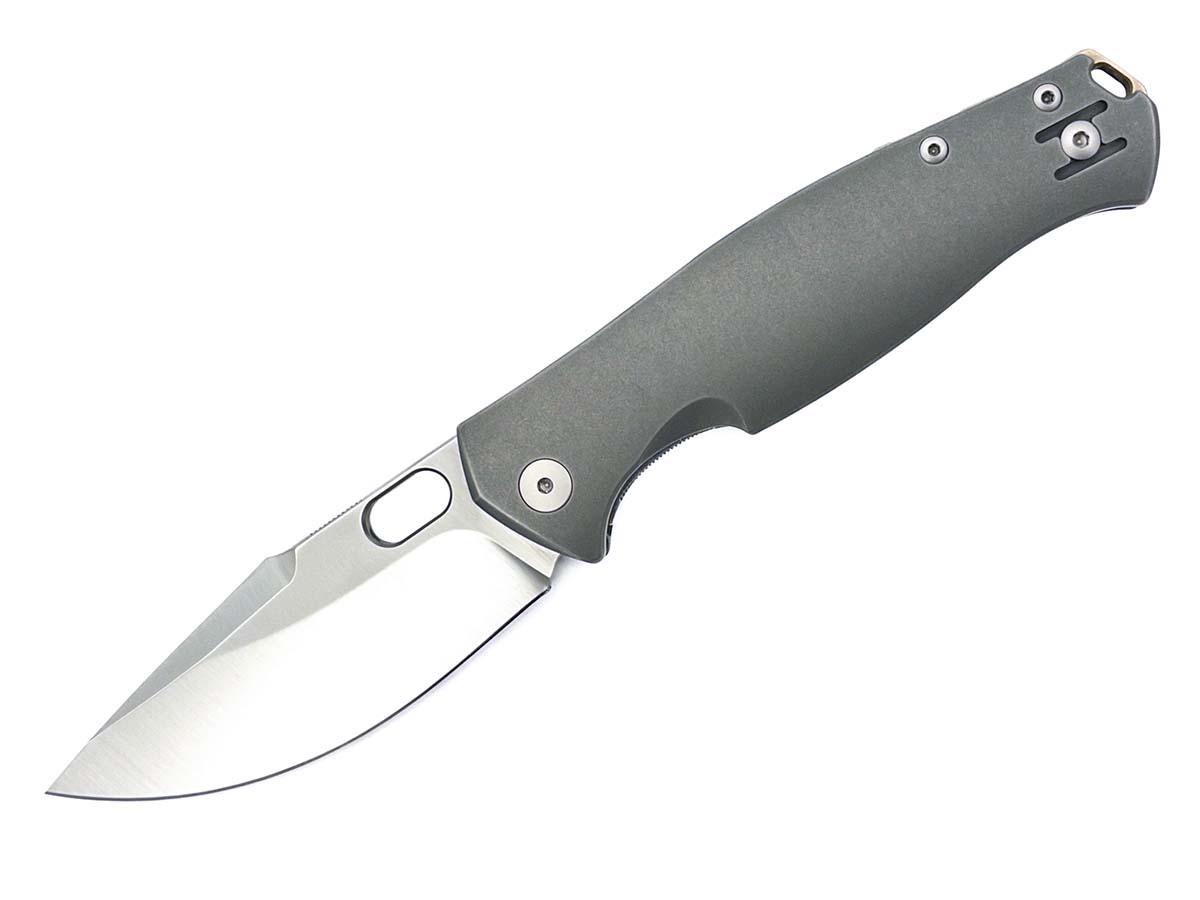
The result is a highly distinct silhouette that Voxnaes notes looks like something a futuristic space marine would carry into a culture that hasn’t happened yet. Built for everything from tactical applications to bushcraft, the blade features a strong piercing point matched with a generous, sweeping curved belly to maximize the usable cutting edge.
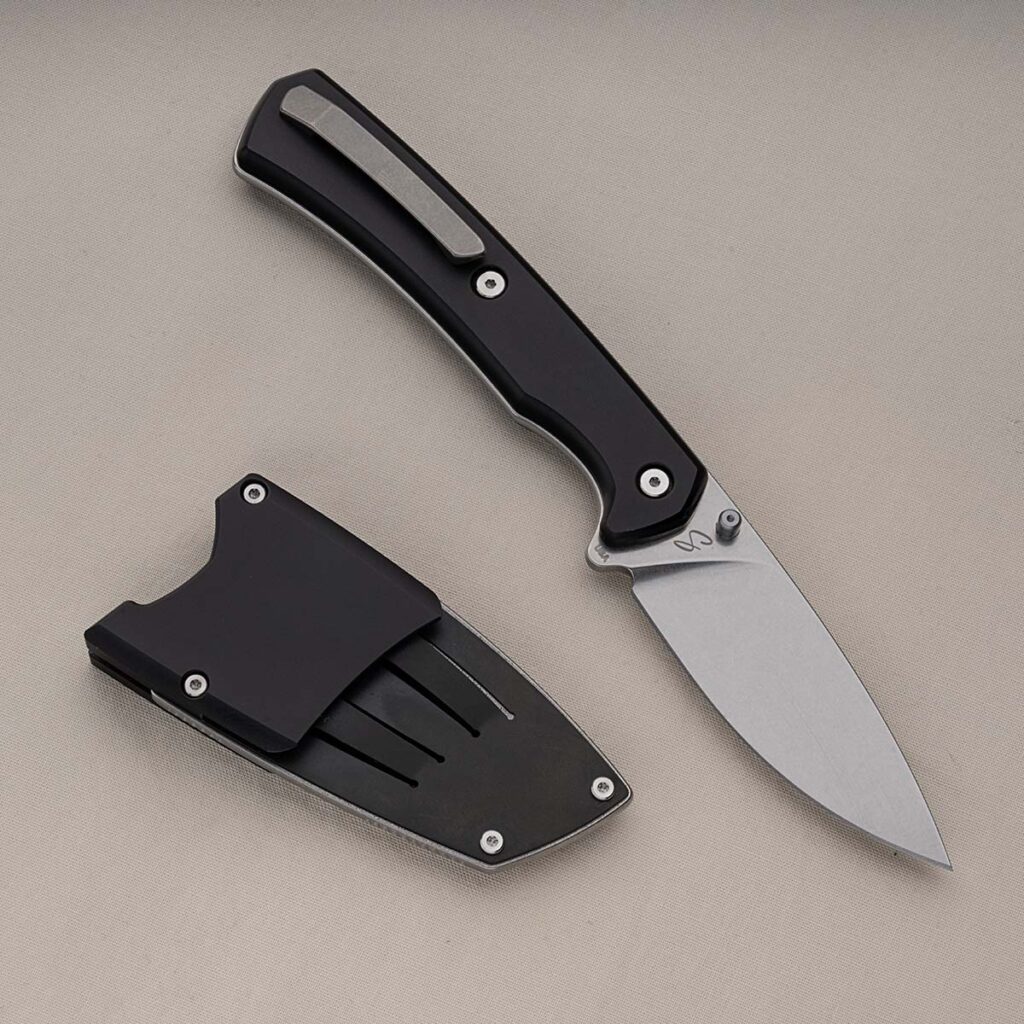
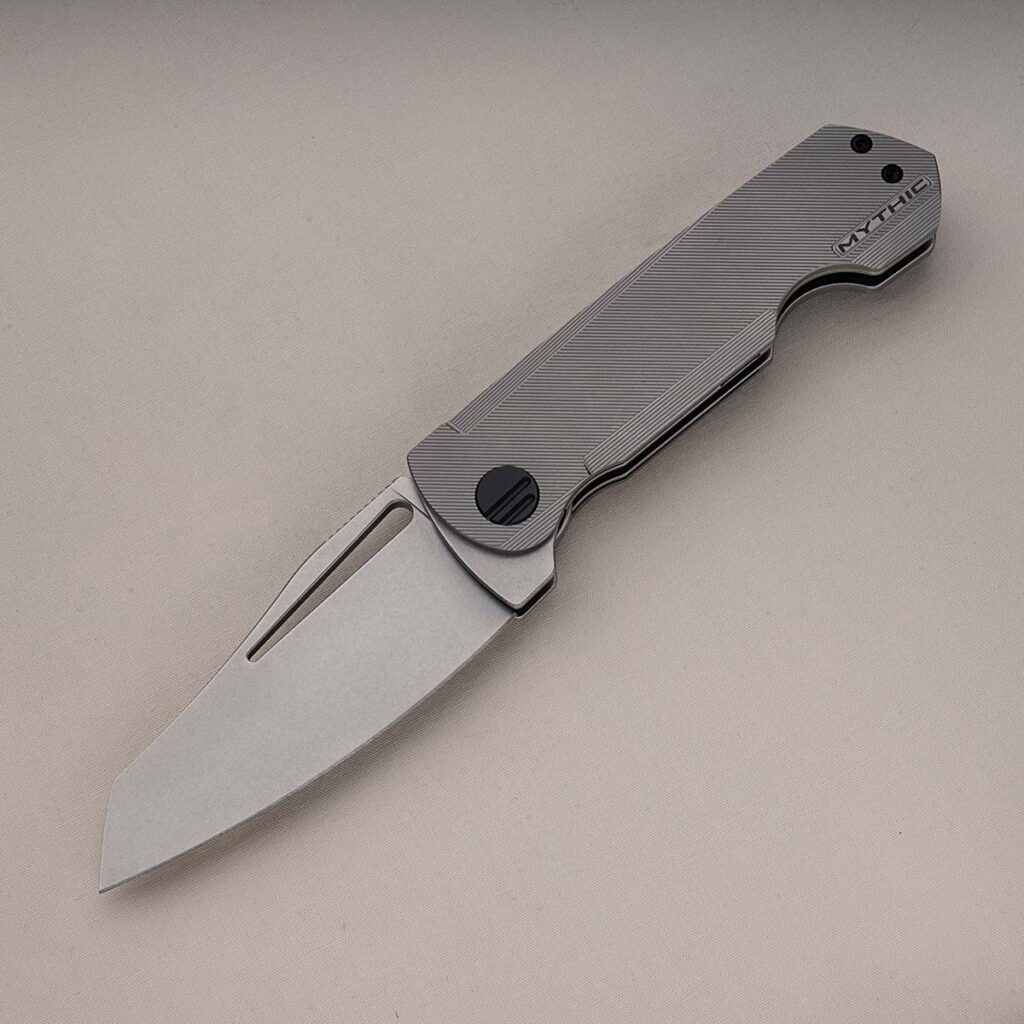
Mechanically, the folder is balanced for reliable utility, intentionally keeping the choil small to ensure the lines remain fluid when closed. The 3.2-inch Elmax steel blade is housed in an ergonomic 4.5-inch handle, making it highly pocketable for daily carry. It features a secure liner lock mechanism for solid lockup during heavy use, an ambidextrous reversible steel wire pocket clip and distinctive brass backspacers that add a splash of ornamentation to the build.
The knife is debuting in three specific material configurations to match different preferences. The premium titanium model (MSRP $335) pairs a sleek satin blade finish with full titanium handle scales, coming in at a solid 4.7 ounces. For those tracking a lighter pocket presence, the Green G10 version ($285) features OD green G10 scales, a rugged stonewash blade finish and weighs 4 ounces flat. Rounding out the trio is the Black Micarta model ($285), which matches a satin blade finish with black canvas Micarta scales for a classic tactile feel, tipping the scales at a nimble 3.7 ounces.
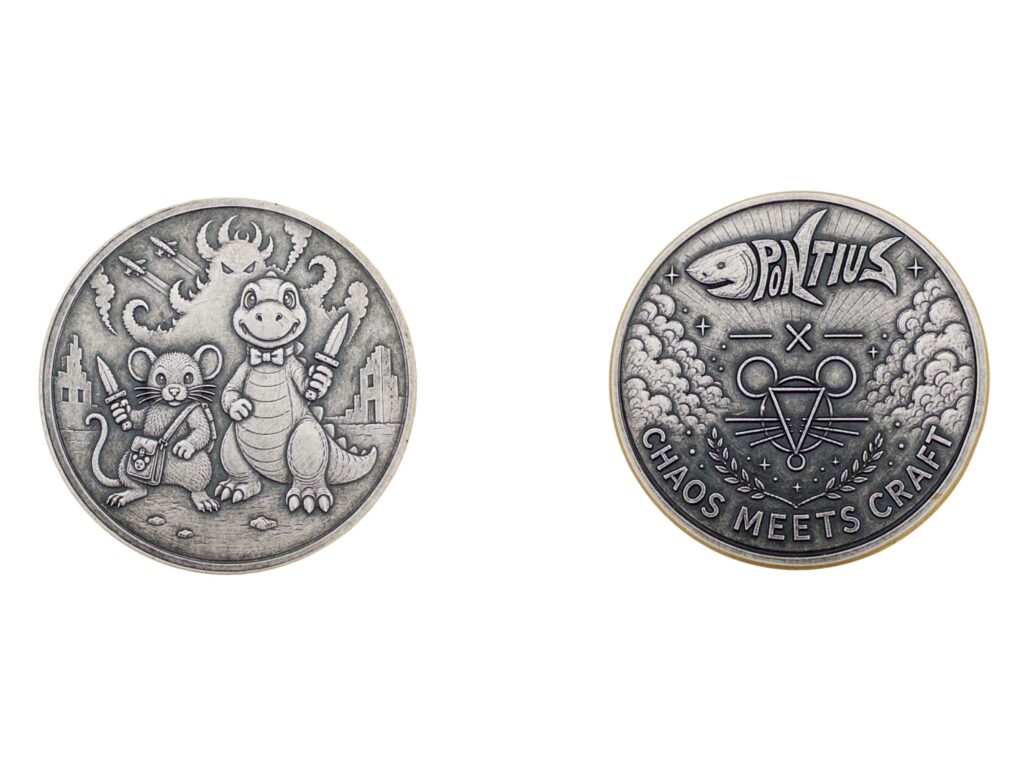
The ACE Pontius marks a significant operational shift for the company, launching exclusively through a Kickstarter campaign that coincided with the opening day of BLADE Show Atlanta. Fans who back the project early gain access to exclusive launch-day add-ons that ship alongside their orders later this year, plus a discount on final pricing. At time of writing, the campaign had 185 backers and had $57,729 of pledges.
The 2026 BLADE Magazine Knife of the Year® Awards proved tougher—and tighter—than ever.
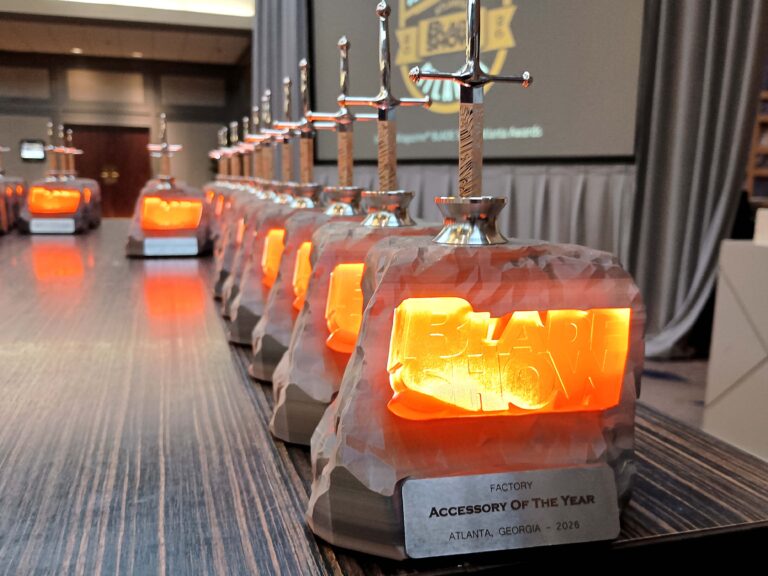
As the years go on the BLADE Magazine Knife Of The Year® Awards only get sharper. The 2026 chapter, held during the June 5-7 BLADE Show at the Cobb Convention Center, is a case in point. Hosting another massive field in the factory knife competition, the contest drew roughly the same number of entries as last year (350-400), with hundreds of blades vying for the title of “Best” in their respective categories. Add in the fact that production knives are reaching an unimaginable height in both design and manufacturing quality, and the event was as tight as ever. The winners were selected by a panel of four judges, experts drawn from different backgrounds in the knife industry. Below are their selections of knives that are more than worthy of being called Knife Of The Year®.
BLADE Magazine Overall Knife Of The Year® & PVK Best Automatic Of The Year
Craftsmanship Crowned: Winners of the 2026 Custom Knife Awards at BLADE Show.
The 2026 Custom Knife Of The Year® Awards once again took center stage at BLADE Show, held June 5–7 at the Cobb Convention Center in Atlanta. As always, the event drew some of the finest custom makers in the world, and this year’s field was especially fierce. Keeping pace with the massive momentum of last summer, the number of custom entries remained roughly the same as last year, ensuring a brutally competitive arena for the makers.
A panel of expert judges had the unenviable task of selecting standouts across a range of categories, recognizing the blades that best embodied design, innovation and craftsmanship. From elegant folders to bold fighters, here are this year’s winners—including the coveted Hugh Bartrug Best in Show.
The IPA will be available at “The Pit” during the show.
The ultimate combination of brews and blades is back. Gabe Fletcher’s officially sanctioned BLADE Show Beer will once again be flowing at the 2026 BLADE Show in Atlanta, ensuring attendees can toast to the world’s finest custom steel with a craft pour engineered specifically for the knife community.
Fletcher, the founder of the internationally acclaimed Anchorage Brewing Company and an ABS apprentice smith, has spent decades perfecting the art of fermentation. In recent years, he successfully merged his two passions by launching a series of high-profile knife and beer collaborations with master bladesmiths like Neil Kamimura, Mareko Maumasi and Salem Straub.
That cross-industry synergy naturally evolved into the official BLADE Show Beer. Specifically engineered for the marathon weekend at the Cobb Galleria, the custom brew is designed to be a highly crushable, smooth-drinking India Pale Ale. Sitting at an approachable 4.5 percent alcohol by volume, it delivers a crisp, floral profile that provides maximum flavor without weighing down your afternoon on the show floor.
In addition to running the internationally known Anchorage Brewing Company in Anchorage, Alaska, Gabe Fletcher is also an ABS apprentice smith.
For those heading to Atlanta, the custom IPA will be readily available at every bar across the exhibition floor. It will also be stocked heavily at the Renaissance Atlanta Waverly host hotel, making it the perfect refreshment for the legendary evening handle-swapping and storytelling sessions inside The Pit.
If you cannot make the trek to Georgia this year, you do not have to miss out on the celebration. Fletcher is partnering with craft beer delivery platform Tavour to ship a limited run of the official 2026 BLADE Show Beer directly to residences across 23 states. Whether you are buying custom steel in Atlanta or admiring your collection from home, grab a can and celebrate the intersection of top-tier brewing and elite bladesmithing.
BLADE Show’s home sharpens up for the event’s 45th Anniversary.
Longtime BLADE Show patrons, get ready for a brand-new venue. Calm your heart palpitations. The world’s largest knife show isn’t picking up stakes from Atlanta when it unsheathes its 45th iteration June 5-7. Simply put, the longtime home of our favorite edgy shindig is undergoing a massive $190 million facelift.
The Cobb Galleria Centre—now officially the Cobb Convention Center—is in the midst of a multi-year renovation to upgrade its facilities and amenities. While the project stretches into early 2027, it will be at its midway point when the BLADE Show doors open this June.
Diehard knifeaholics needn’t worry, the upgrade project won’t derail the aspects of the show you love. Factory knife debuts, the educational instruction of BLADE University (see sidebar) and action-packed demos still await show patrons. The BLADE Magazine 2025 Knife-Of-The-Year® Awards and the custom knife judging competition remain center stage. Furthermore, the American Bladesmith Society (ABS) will still name its latest master and journeyman smiths, and some of the best knives from the ABS, The Knifemakers’ Guild and unaffiliated makers will be on display in all their sharpest glory.
John Horrigan’s majestic fixed blade turned more than a few heads during the 2025 show. (Jocelyn Frasier image)
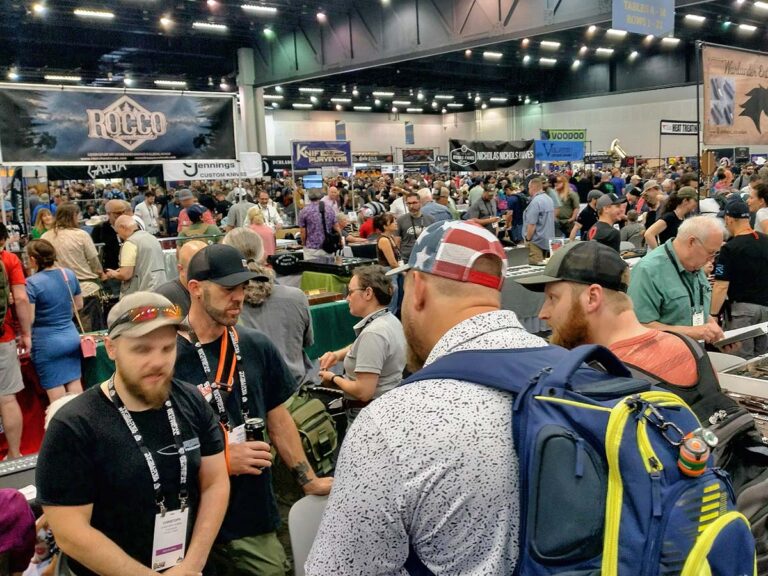
Additionally, the show floor welcomes more than 900 exhibitors from 35 countries, offering a global masterclass in modern cutlery. From the latest production folders and custom fixed blades to rare handle materials and high-tech shop equipment, the sheer volume of gear is staggering. All of this comes in the brand-new wrapper of the convention center, honing the BLADE Show to a razor’s edge.
The main exhibit hall and the ballroom—better known to the faithful as the Baller Room—are already complete. These renovations will immediately improve the show with new LED lighting, fixed concession outlets, renovated restrooms and an improved PA system. The Baller Room and lobby area also sport new wall coverings, chandeliers and carpet, while the rotunda has an entirely new look. While the show floor is unaffected, attendees will feel some impact. The renovation of the specialty shops and meeting rooms below and across from the main hall will run congruent to the show. This means BLADE University has a new campus. Look for classes in the newly constructed ballrooms just off the Renaissance Atlanta Waverly.
And for those who love the food, libation (lots of that), knife boasting and lie swapping of “The Pit”, that is slated to proceed unchecked. The sunken bar of the Waverly is untouched by hammers, saws or fresh sheetrock. Get your sleep so you can haunt it until cock’s crow.
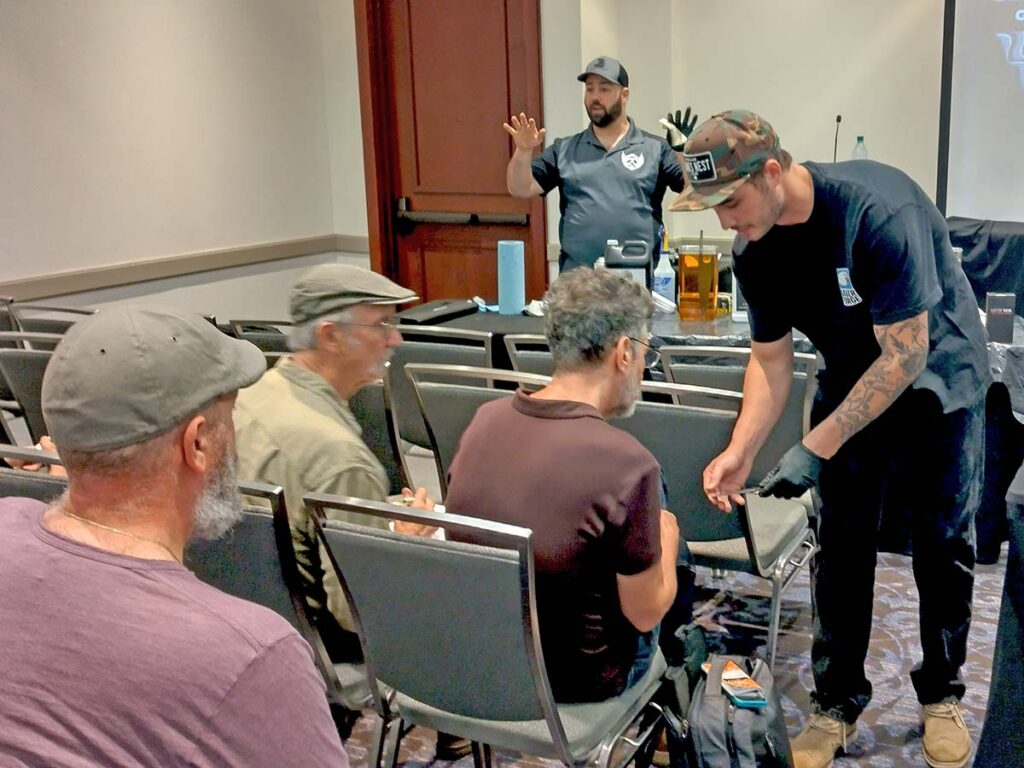
Jordan Berthelot discusses next-level damascus etching while Greyson Weltyk shows a student a result of the process during one of many BLADE University classes.
When the dust finally settles, the Cobb Convention Center will be a major boon. By 2027, showgoers can look forward to more than 50,000 square feet of new meeting rooms, event courtyards and indoor space. As the BLADE Show grows in global reach, its longtime home has the room to grow along with its marquee event.
Edge Of The World
Perhaps the most intriguing aspect of the BLADE Show in recent years is the global reach of the brothers and sisters of sharps. No one knife-specific event gathers more makers and companies from around the world—including the good ol’ U.S. of A—into one venue.
The outstanding international makers include: the CAS Brothers, Mauricio Daletzky and Javier Vogt (Argentina); Bertie Rietveld, Theuns Prinsloo, Henning Wilkinson and Neels van den Berg (South Africa); Franco de Souza, Rodrigo Sfreddo, Fabio Barros and Gus Cecchini (Brazil); Bruce Barnett (Australia); Kizer Cutlery, Reate and Ketuo (China); Koji Hara (Japan); Lionsteel, Alfredo Faccipieri, Fox Cutlery, Maniago Knife Makers (MKM) and Maserin (Italy); Damasteel (Sweden); Jens Anso (Denmark); Helle Knives (Norway); Jean-Louis Regel and Veronique Laurent (Belgium); Carlos Queiros (Portugal); Sergey Shirogorov (Russia); and Grace Horne (United Kingdom).
The Baller Room buzzed all three days of the show. The room comes with some notable improvements this year, including new carpet and wall coverings.
Some of the leading American exhibiting makers will be BLADE Magazine Cutlery Hall-Of-Fame® members Bill Ruple, Steve Schwarzer and Harvey Dean; ABS master smiths Mike Quesenberry, Shane Taylor, David Lisch, Jordan LaMothe, Josh and Karis Fisher, and Andrew Meers; slipjoint makers Stanley Buzek, Tom Ploppert, Luke Swenson and Tim Robertson; Allen Elishewitz; Les George; Walter Brend; Strider Knives; Hawk Knives; Vince Evans; factory companies Spyderco, Case, TOPS Knives, Chris Reeve Knives, Spartan Blades, Pro-Tech, Microtech, Kershaw, Squid Industries, KA-BAR and Heretic Knives; and many more.
Knives Of The Year
BLADE Magazine Knife-Of-The-Year® Awards is the factory knife industry’s highest honors, pitting the companies’ sharpest designs again each other. In an effort to keep the awards’ distinguished position and recognize the changing landscape of the industry, BLADE Show added a new category for this year.
New for the 2026 competition is the Best Slip Joint category, breaking off the traditional design from the Best Imported Folder and Best American Made Folder categories. This is the third new category added in as many years, with Best Of The Rest created in 2025 and the Automatic Knife Of The Year sponsored by PVK.com that debuted in 2024.
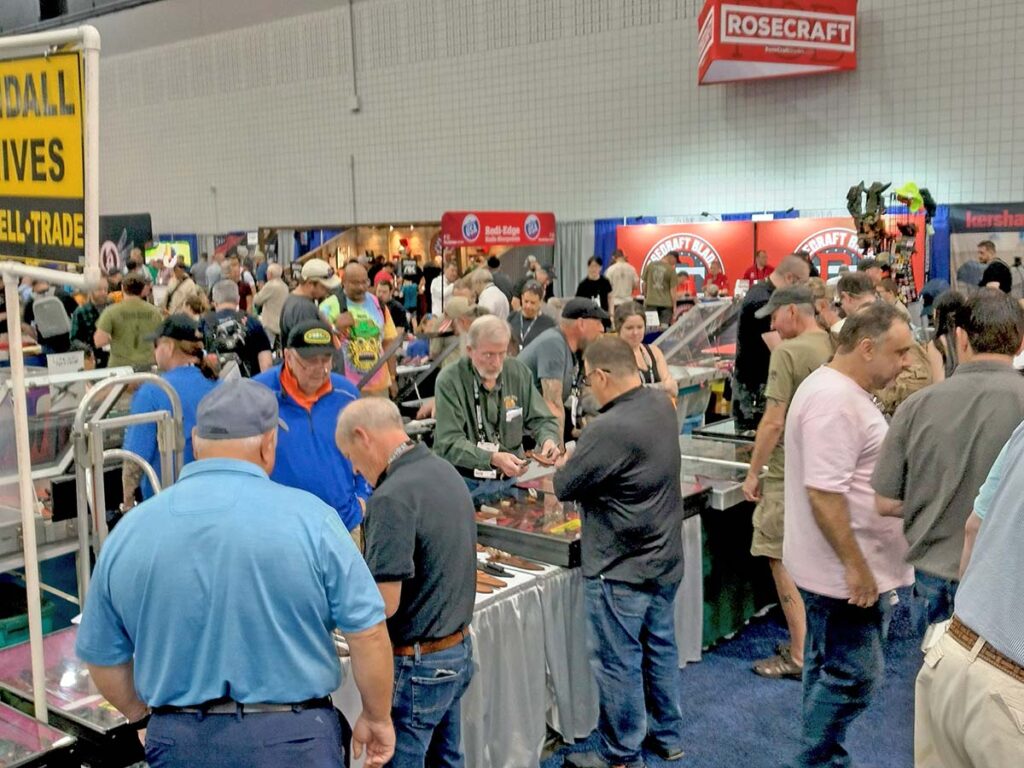
New knives aren’t the only draw in Atlanta. Antique Randall knives and their collectors were in abundance at the show.
As in the past, the entries are limited to BLADE Show factory booth exhibitors, all of whom received the rules well before the show outlining the new changes. Like last year, the winners will be announced and presented during the BLADE Magazine Awards Reception on Saturday at 8 p.m. in the room on the floor above The Pit. The winners will be listed on BLADE’s blademag.com website after the awards reception, and a list will be posted outside the show entrance Sunday morning.
BLADE University
Get current on the latest knifemaking techniques and other trending sharp subjects during the 13th Annual BLADE University on Thursday, Friday and Saturday. See the sidebar for a complete rundown of classes, days, times and instructors.
Sponsored by Work Sharp, BLADE University has the most extensive schedule of knife, knifemaking and other instruction held at any knife show. For enrollment and other information, visit https://bladeshow.com/show-info/classes.
Custom Knife Awards
Among the most testing custom knife competitions in the nation, the BLADE Show Custom Knife Awards is one of the most coveted honors in knifemaking. In a continuing effort to keep it the premier award in the handmade knives, the competition’s categories have been expanded. Best Slip Joint has been split into Best Single-Blade Slip Joint and Best Multi-Blade Slip Joint categories, allowing more subtlety in judging the nuanced class of knives.
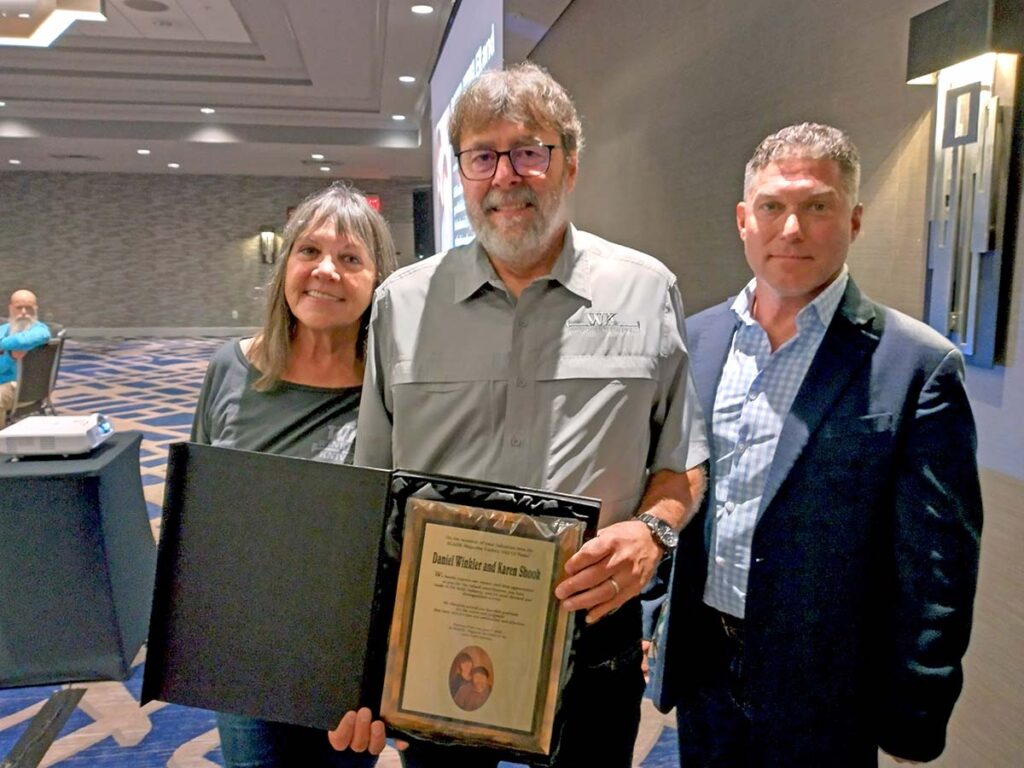
From left, Karen Shook and Daniel Winkler accept their Hall of Fame plaque after Kevin Holland (right) delivered their induction speech.
Leading industry authorities will pick the best custom knives by BLADE Show exhibitors in the annual knife judging competition, with the winners announced during the BLADE Magazine Awards Reception Saturday at 8 p.m.
The categories are: Best of Show; Best Art Knife; Best Bowie; Best Collaboration; Best Collaboration; Best Damascus; Best Fighter; Best Fixed Blade; Best Folder; Best Handle Design; Most Innovative Design; Best Kitchen Knife; Best M.A.C.K.; Best Miniature; Best New Maker; Best Single-Blade Slip Joint; Best Multi-Blade Slip Joint; Best Sword; Best Tactical Folder; Best Utility Hunter; Best of the Rest.
The competition is open to the show’s custom knife exhibitors only. The winners will be announced on BLADE’s blademag.com website after the awards ceremony, and a list will be posted outside the show entrance Sunday morning.
World Championship
The BLADE Show World Championship Cutting Competition will be conducted by BladeSports International (BSI) and held in The Courtyard, the parking lot of the host hotel, the Renaissance Atlanta Waverly, Saturday at 4:30 p.m. Attendance is free to BLADE Show ticketholders.
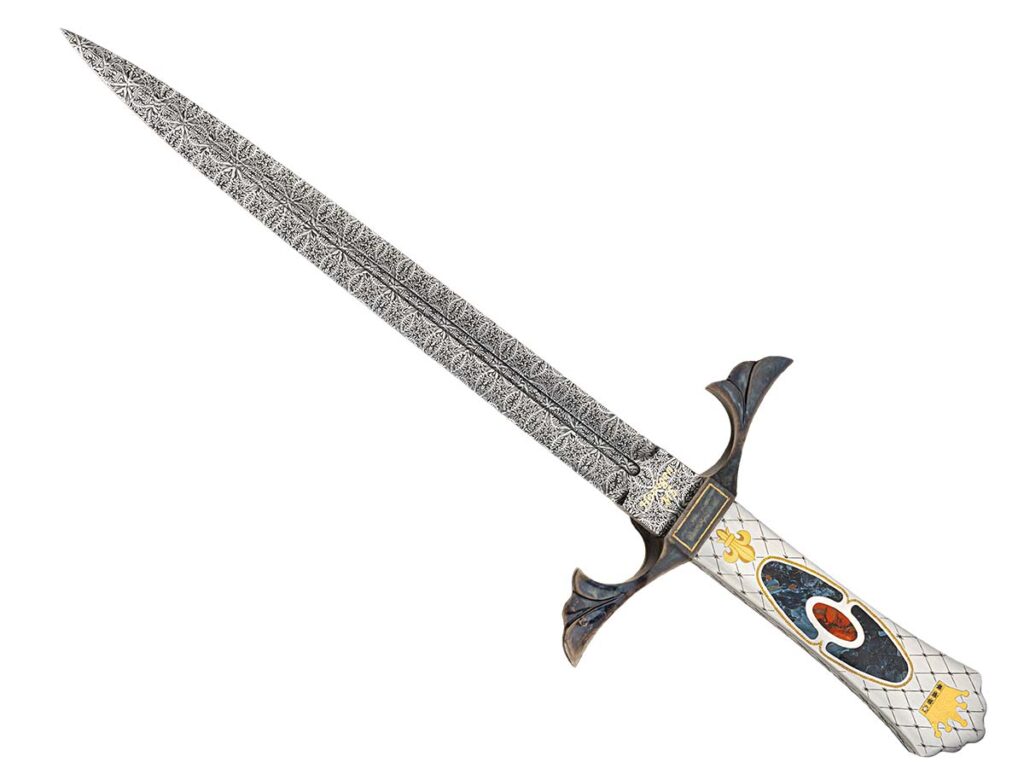
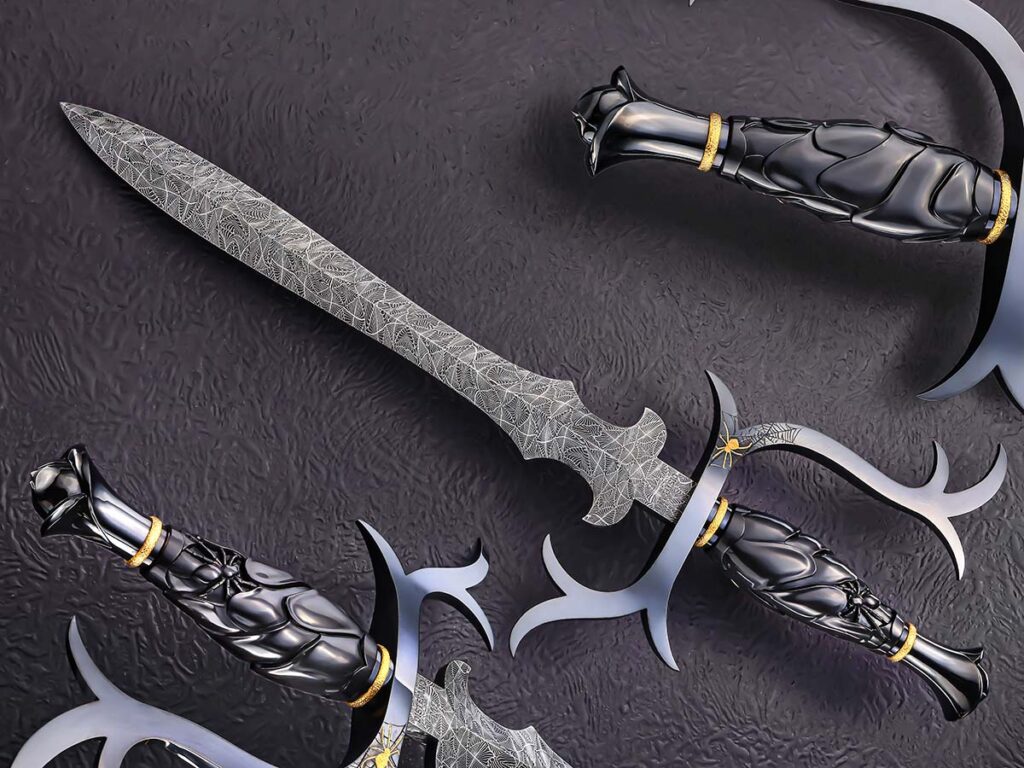
Paul DiStefano always produces stunning work, which certainly goes for his 14-inch spiderweb mosaic damascus-bladed dagger, which he brought to the BLADE Show. That’s a carved buffalo horn handle, by the way. (SharpByCoop image)
For a second year in a row the men’s and women’s divisions were won by a husband and wife: Mr. and Mrs. Ben and Sue Ann Propst. The championship results were as follows: Men’s Division: Ben Propst (Niagara Specialty Metals), world champion; 2nd: Donavon Phillips (Spyderco); 3rd: David Moore (Pops Knife Supplies); and 4th: James Clifton (Spyderco). Women’s Division: Sue Ann Propst (Niagara Specialty Metals), world champion; 2nd: Lauren Kalns; 3rd: Sara Maly (Pops Knife Supplies); and 4th: Jo Carothers (Carothers Performance Knives).
Bali Grand Master
Top balisong flippers will vie for the title of “Grand Master” in the 10th Annual Battle for Bali Champion sponsored and conducted by Blade HQ.
BLADE Show ticketholders are invited to watch the competition on the second floor above The Pit of the Renaissance Atlanta Waverly Hotel on show Saturday from 12:45 p.m. to 2 p.m. Competitors will start flipping knives at 1 p.m.
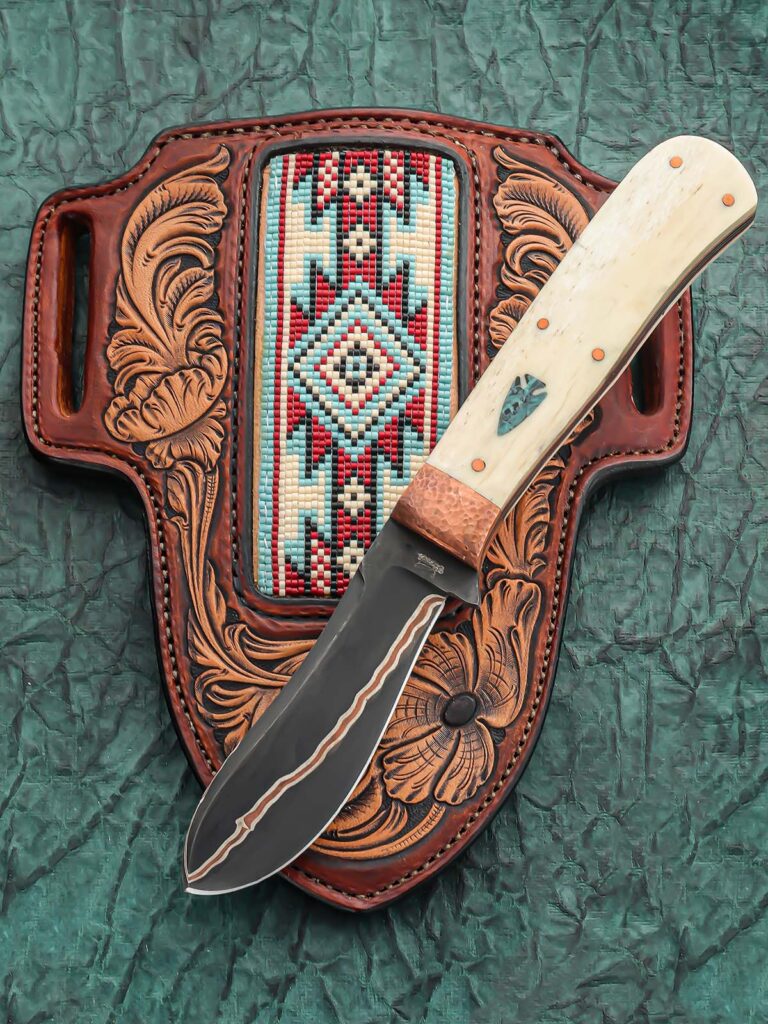
When it comes to slip joints, Bubba Crouch is a must-stop at BLADE Show. His skinner, with a 3 1/2-inch copper san mai blade, came complete with a sheath by Will Anderson, with beadwork done by Kelly Faulcorer. (SharpByCoop image)
The top three finishers will receive prizes and all participants will get swag bags. Brycen Nelson flipped his way to the top of the podium in the competition, Steve Ash placed second and Landon Morrison third.
Cutlery Hall Of Fame
The BLADE Magazine Cutlery Hall Of Fame® will formally induct its new members at 8 a.m. show Saturday in the Kennesaw Room of the Renaissance Atlanta Waverly Hotel. (At press time, the new members had not been determined. For updates, visit blademag.com.) Tickets are required ahead of time for the ceremony, which includes breakfast. Seating is limited. For ticket information, email [email protected].
What’s Next
The final BLADE Show-sponsored event for 2026 will be BLADE Show West, Oct. 9-10 at the Salt Palace Convention Center in Salt Lake City, Utah. For details, visit bladeshowwest.com. BLADE Show Texas 2027 will be March 12-13 at the Fort Worth Convention Center. Visit bladeshowtexas.com for more on it. And, of course, it’s never too late to start thinking about BLADE Show 2027 June 4-6 at the Cobb Convention Center in Atlanta. For details, visit bladeshow.com.
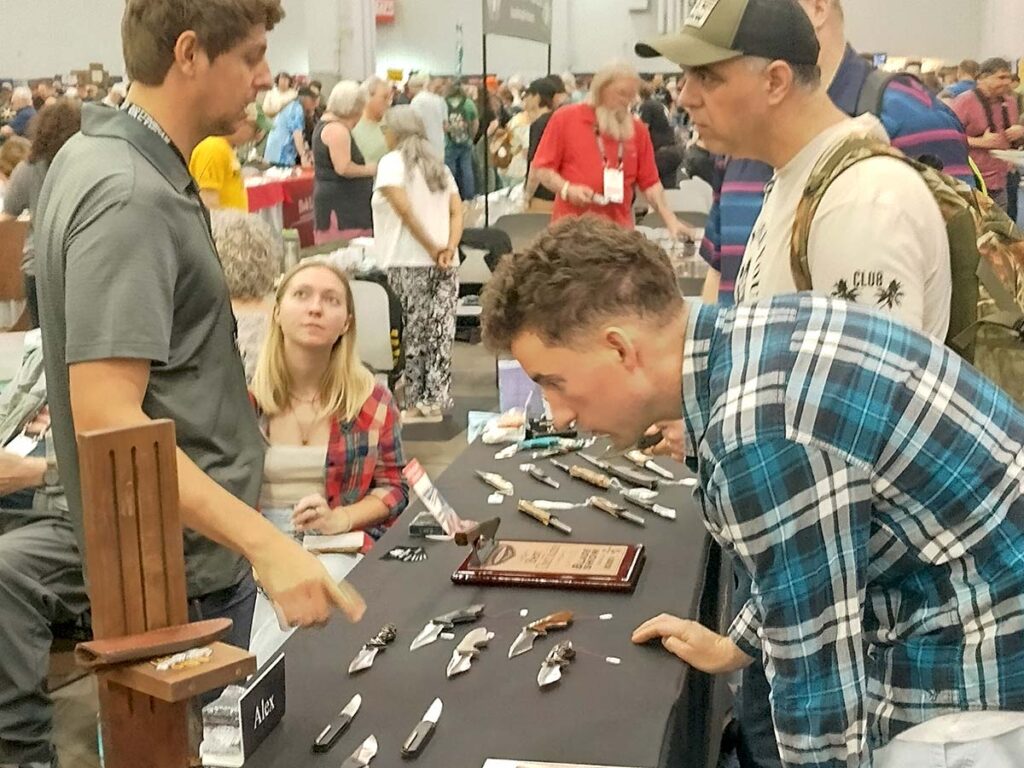
It’s easy to get mesmerized by knives at the BLADE Show, here at the table of Alex Hossom (left).
Editor’s note: Kizer Cutlery is The Pit sponsor. Work Sharp sponsors BLADE University. Nottingham Tactical is the lanyard sponsor. Hogue Knives is the housing sponsor. EKnives is the concessions sponsor. Vosteed is the Wi-Fi sponsor. The other sponsors are Heretic Knives, Reate Knives, Poikilo Blade, McNees Knives, Ketuo/Rike Knife, Artisan Cutlery/CJRB, Reate Knives and HORL Corporation.
Master smiths explore the symmetry, skill and survivalist roots of a classic.
It’s part adventure with a bit of notoriety and a dash of creativity. For the modern custom knifemaker, several styles are brought to life with history in mind. And the push dagger is one of them.
Maybe seldom seen, but always intriguing, push daggers trace their lineage to a bygone era when self-defense at the card table or on the street meant quick deployment from a vest pocket. For sure, that perspective spurs some custom makers to insert the push dagger into their repertoire while the stylized and subtle blend of blade and handle combine for a unique test of shop skill.
“They’re a backup tool,” explained ABS master smith and BLADE Magazine Cutlery Hall-of-Fame® member Steve Schwarzer. “They were typically carried in the 1700s and 1800s along with a one-shot pistol. After that shot, the push dagger was the next position. It’s been around for a long time as an extension of your arm with a blade, and it is hard to take away from somebody that is skilled in its use.”
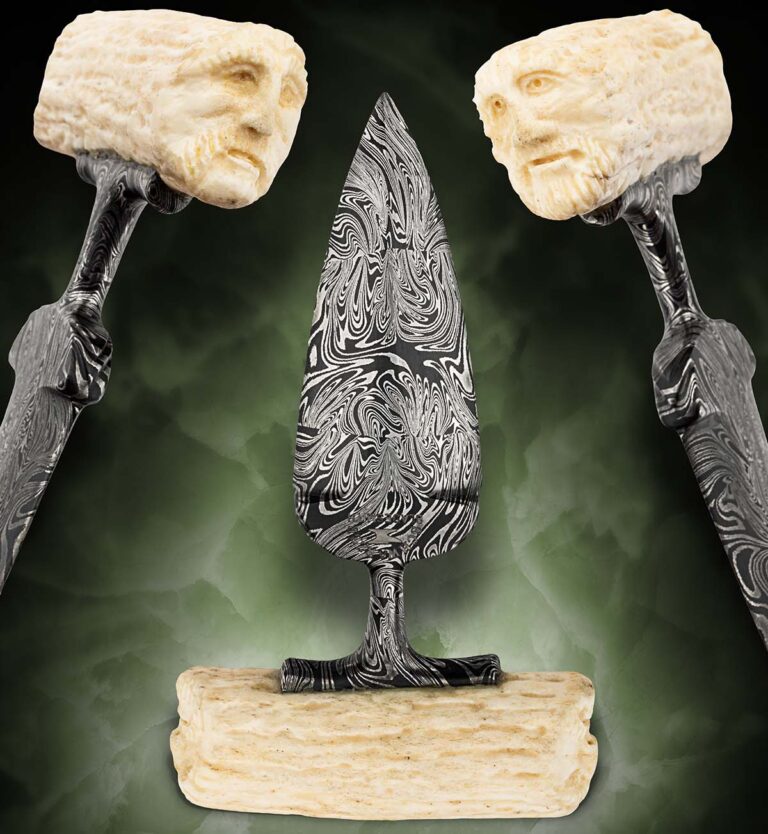
Schwarzer’s featured push dagger with stag handle and evocative faces carved on both ends is 5¾ inches long with a 3¾-inch blade of mosaic damascus steel. He has actually made two push daggers in this style and designed another for Benchmade about 20 years ago. “For me, they’re fun, and that’s why I like to make them,” he commented. “I’ve always had a fascination about them and adapted my martial arts background to training with them. The design traditionally is with a very short blade, and in martial arts, it has to do with the alignment of the hand and arm bones, along with the shape of the blade, which is double-edged traditionally. Everything in nature is curved for an effective cutting surface.”
Harvey Dean Tejas
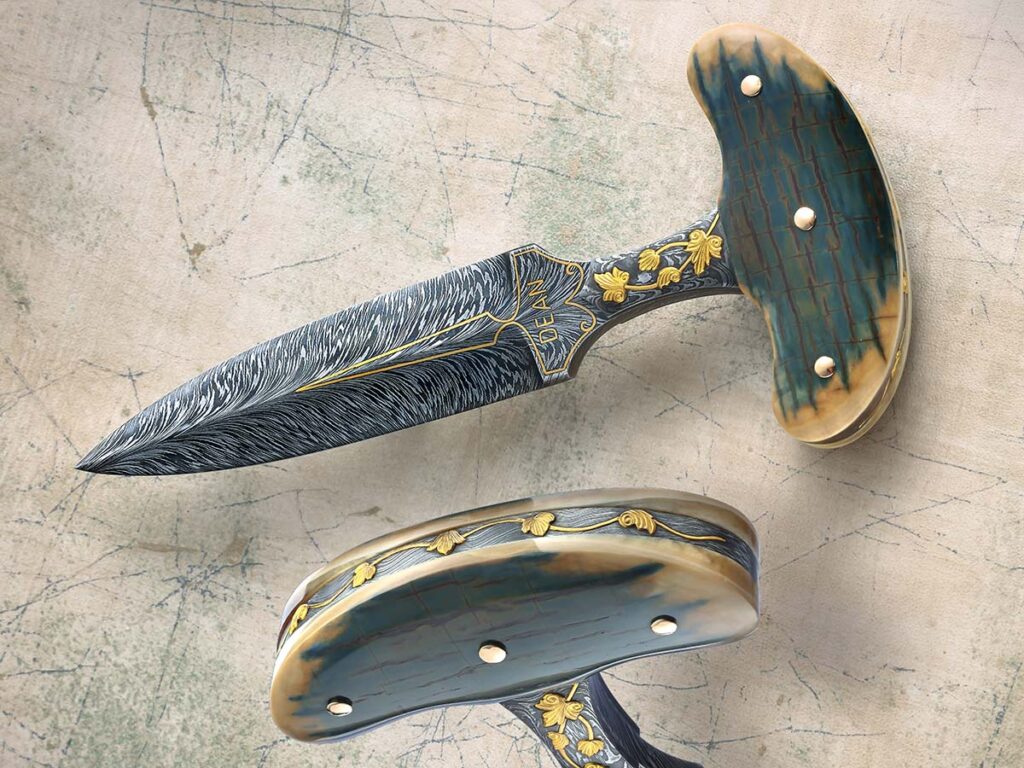
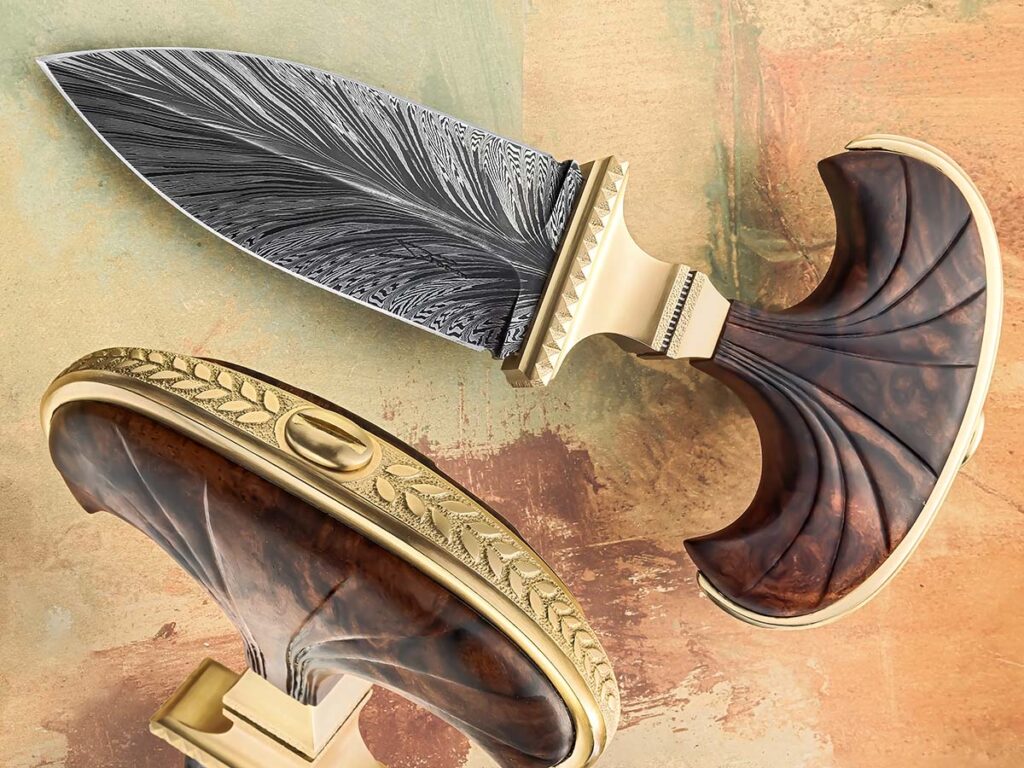
Why a push dagger? Harvy Dean (inset) puts it succinctly, “They’re just cool.” That certainly holds true for his Tajas push dagger, with an elegant feather damascus blade, 24k gold raised vine work and a fossilized walrus tusk handle. At 16 1/2 inchces in length, Dean gave himself plenty of knife to decorate. (SharpByCoop image)
Legendary master smith and Hall of Famer Harvey Dean enjoys the historical aspect as well. “They’re just cool,” he offered. “A lot of people made them back years ago, and there was the idea of concealing them in the vest. Some were made with nickel-silver scabbards and called lapel knives because they were pinned under the vest or coat lapel.”
Dean’s pictured Tejas push dagger is a departure from standard sizing, with an overall length of 16¼ inches, with an 11-inch ladder pattern damascus blade and handle of fossilized walrus ivory. But then, everything is bigger in Texas.
“I’ve always liked [master smith] Larry Fuegen’s push daggers, and his work has had a lot of influence on mine,” Harvey said. “You really make them like any other knife, and I usually do around two or three a year. I like to use ivory and damascus and a stag handle is next up. I don’t do many plain ones, and most of mine are with two-piece handles. As far as marketing is concerned, you’ve got to have that special person who likes them–but they do usually sell quick.”
Hawks Nest Custom Push Talon
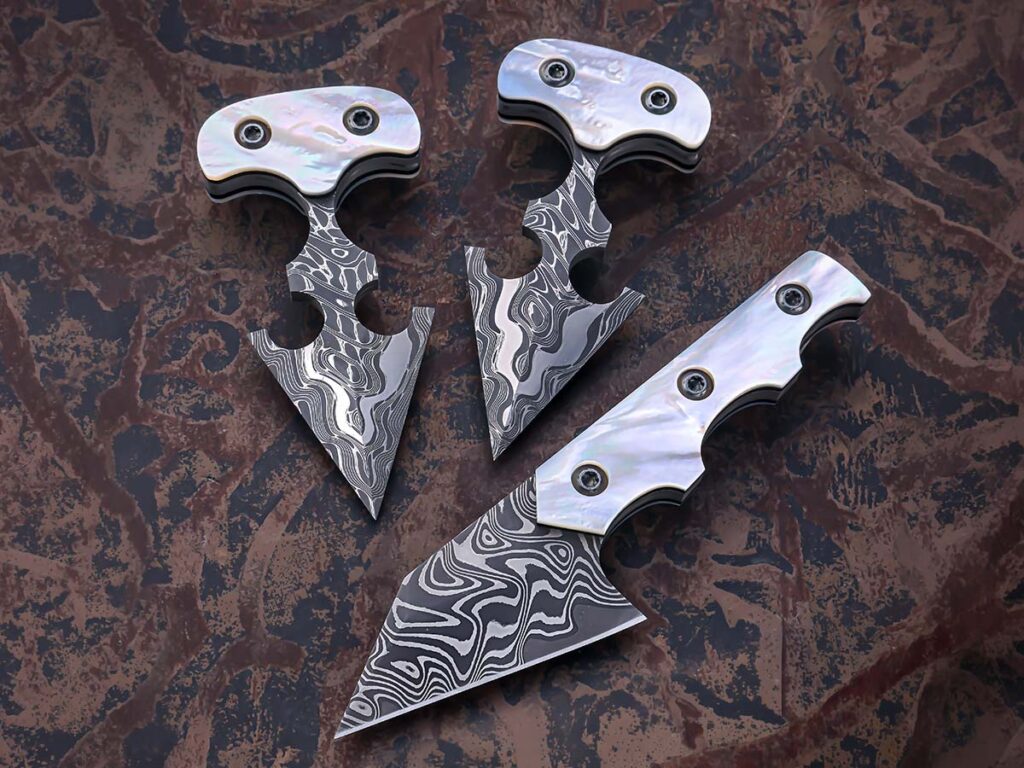
Matt Hunter (inset) has always had a thing for concealed carry knives, but admits his mother-of-pearl handled push daggers were his first crack at the style of knife. Angular and wickedly attractive, the Nichols Slither Armor Core stainless damascus daggers were designed as a matching set with his HawkWing knife, also pictured. (SharpByCoop image)
Damascus blade, mother-of-pearl handle and variations on the push dagger theme highlight Matt Hunter’s work at Hawks Nest Customs. He is a huge fan of concealed carry knives and started down the road with a boot dagger, neck knife and then his Push Talon.
“I think any dagger is challenging due to the symmetrical grinds that are required,” he noted. “You’ve really got to nail each and every one of them or the entire build needs to be scrapped. These push daggers are made with Nichols Slither Armor Core stainless damascus and mother-of-pearl on Westinghouse black canvas Micarta liners. “Believe it or not, these were my first push daggers,” Matt added. “These were originally made for a customer to match the HawkWing, which is also in this photo. I told him I was planning on doing a pair of matching push daggers, and he asked if we could do the mother of pearl to match his knife. So, I obliged.”
Zack Jonas Totem
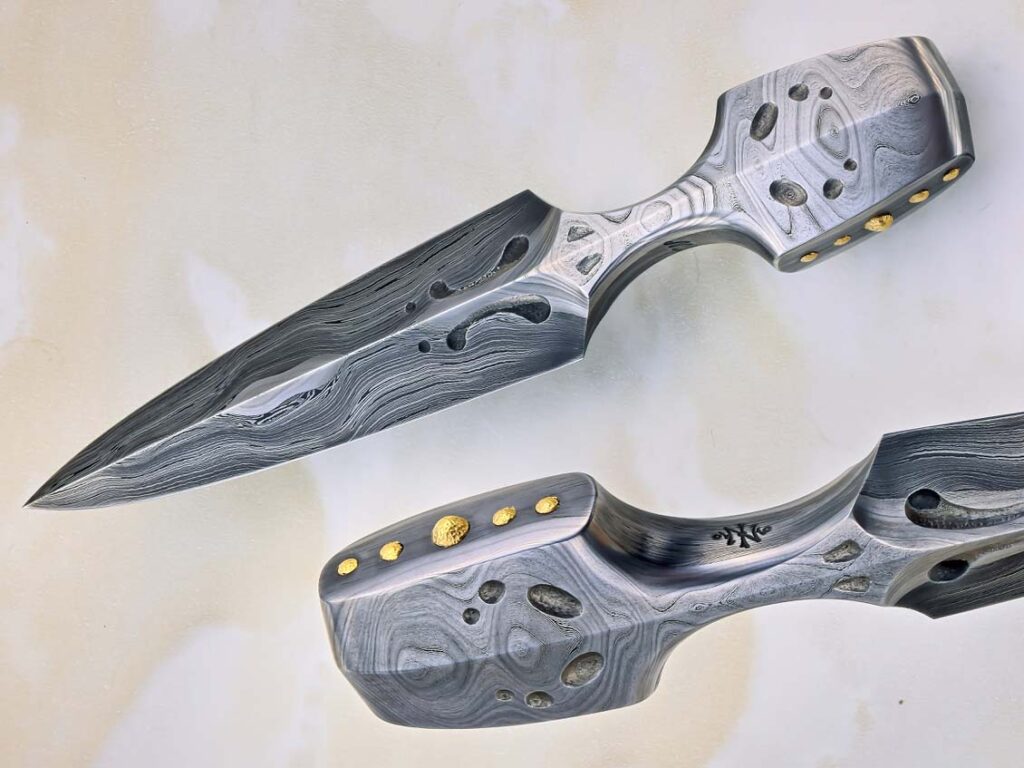
A study in starkness, Zack Jonas’ Totem push dagger grabs the eye with its clean lines and depth of damascus. That’s a san mai steel with laddered W’s and faces in a 1,000-layer laminate with pure nickel. Adding to its Spartan charm are its gold handle accents. (SharpByCoop image)
The Zack Jonas push dagger featured is his Totem model with a blade length of 4 inches and an overall length of 6½ inches. Its gold handle accents complement a san mai steel with laddered W’s and faces in a 1,000-layer laminate with pure nickel.
“The push dagger is one of the few knives that is actually designed to be folded into a tightly closed fist,” the master smith explained. “That means you have to make sure the handle comfortably conforms to the shape of the human hand in that unusual position. A push dagger is not a particularly functional tool outside the very limited frame of hand-to-hand combat; if you don’t have a secure grip when you need it, you’ve got a real problem.
“There are few makers that come to mind as design influences,” Jonas concluded. “[Master smith] J.D. Smith’s early influence on my career is never far from my hand or eye. I also think of Peter Johnsson’s work as I’m designing. He has never done a push dagger that I’m aware of, but I like to try and channel the way he conducts tension through his lines. Peter and [master smith] Kevin Cashen both come to mind when I think of the functionality in any dagger.”
Andrew Meers Rose Of Sharon
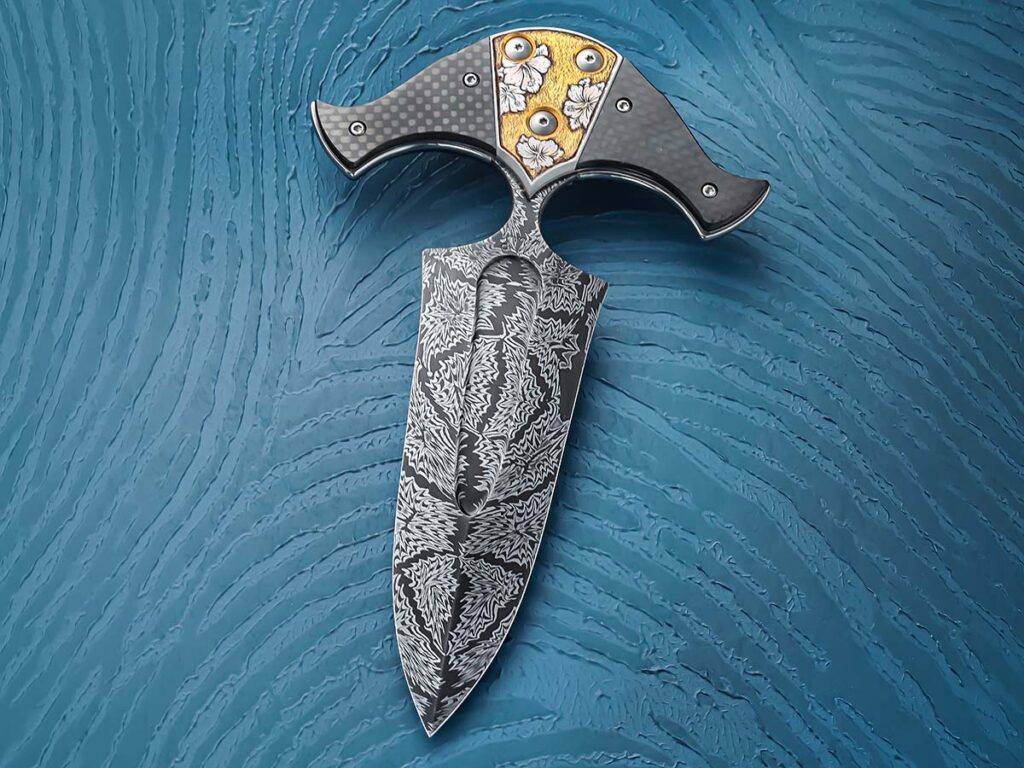
A bold mix of materials, Andrew Meers utilizes carbon fiber, stainless steel, gold and a splintered mosaic damascus to bring-together this 9-inch push dagger. The centerpiece of the knife is its elegant Rose of Sharron engraving with the gold backing. (SharpByCoop image)
Andrew Meers included a push dagger in his ABS master smith set, which was complete with forged trout iron texture engraved with pangolins. “Push daggers have a place in my childhood memory,” he related. “I remember seeing one at a museum and being fascinated. In retrospect, I think having mostly seen conventionally handled pieces in media and collections, the manner in which the hand engages the handle is what is attractive to me.”
Meers’ featured push dagger is his first with a carbon fiber handle and a groove in the blade. Its 7-inch damascus blade is framed in stainless steel, and the engraving depicts the Rose of Sharon with a gold-plated relief background. The entire push dagger is 9 inches long. Andrew produced his first push dagger in 2014 and has made several since. His longest measured between 23 and 24 inches.
Jean Potvin Romanesque
Since push daggers are illegal in Jean Pierre Potvin’s homeland of Canada, he had to come up with a clever trick to get his his Romanesque push dagger past airport security and to a buyer at a show in Las Vegas. His solution, remove the illicit handle and replace it with a toilet plunger handle. (SharpbyCoop image)
“This push dagger is Roman in style,” remarked Jean Pierre Potvin. “It came about quite by chance. I rarely design in advance when I create. I prefer to let my imagination run free and follow new ideas that present themselves during the making process. During the making, I saw that it had a somewhat Roman style, and I continued in that direction with this result.”
Potvin’s push dagger measures 8 inches overall with a 4½-inch blade of damascus in 15N20 and 1084 carbon steel. The handle is fashioned from stabilized walnut burl and brass furniture. He had previously made only one push dagger. That was in 2022, and it was much smaller. “I had a buyer at the Nashville knife show,” he remembered, “and I had packed it in my luggage to take there. But when I got to the Montreal airport, it was confiscated by airport security.”
Since push daggers are illegal in Canada, that experience inspired Jean Pierre to remove the actual handle and replace it with a toilet plunger handle the next time he traveled with a push dagger. He made it to Las Vegas that second time and reattached the original handle after arrival. “It’s really funny because it’s the same dagger, but having a cross handle makes it illegal,” he smiled. “Sometimes you have to use tricks to get what you want.”
Somehow, the push dagger and its adventurous history seem to fit right in with Potvin’s novel experience.
Check Out More Cool Customs:
Cool Custom: Tony Lewis’ Tribute Knife To Steve Dunn
Cool Customs: Rocco Nawrocki’s Knife For Sergeant Bunker
From the author’s experience, one folding knife has it all.
Most folks pick a folding knife the same way they pick a favorite coffee mug. They grab the one that feels right and doesn’t complicate life. I’ve handled everything from titanium frame-locks to flippers tuned like race cars, yet one knife keeps drifting back into my pocket. A Victorinox Swiss Army Knife (SAK) Camper.
It carries the friendliest profile in the knife world. TSA agents used to relax when they saw it. Camp kids and parents borrow it without hesitation. Neighbors assume you plan to fix something, not start trouble. That kind of energy matters when you choose a knife for real life. So, while hype is infinite, for me the best folding knife is the one that moves through life without causing friction—and that’s where the SAK shines.
Simplicity Succeeds
The Swiss Army Knife survived more trends than any other pocket tool. Bearings exploded onto the scene. Super steels rose and fell. Pocket clips multiplied. Through all of that noise, the SAK kept its shape, its purpose and its quiet confidence. It solves real problems without drama. It tightens screws, trims campfire sticks, opens packages and handles small woodworking tasks with steady control. It never alarms anyone. It never begs for maintenance. It shrugs off grit, pocket lint, and weather. It stays relevant because it never chases trends, delivering honest function through simple mechanics. That kind of timeless design sets up the story of its enduring legacy.
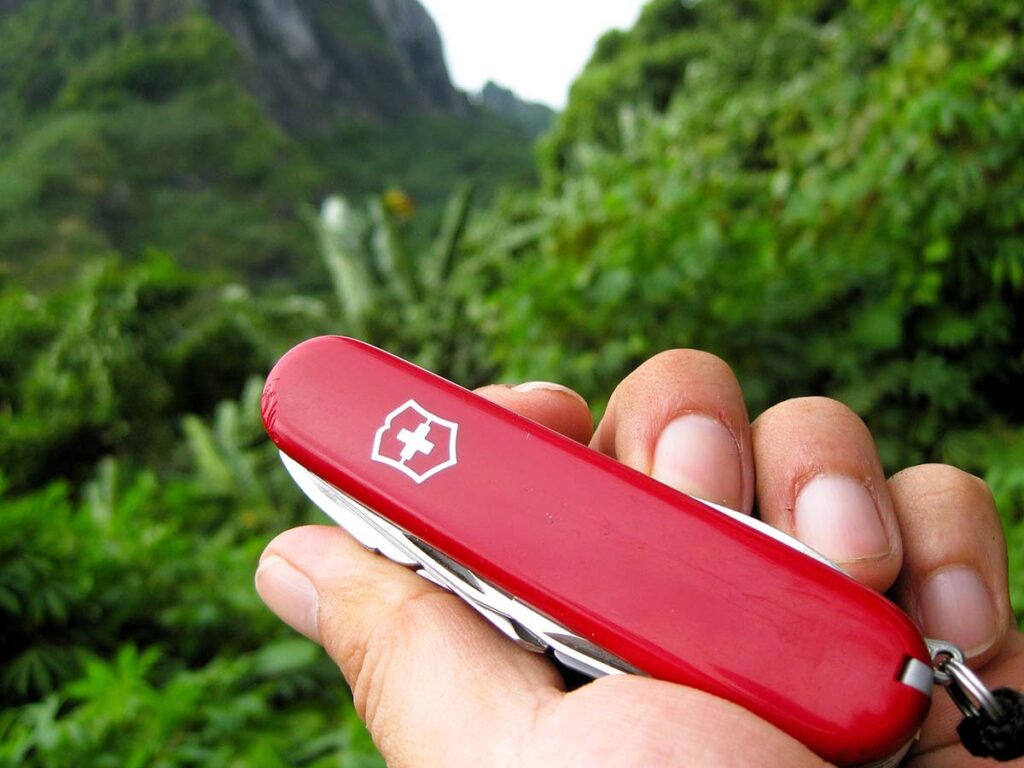
In Bora Bora’s jungle, the author navigated with a sturdy Swiss Camper, ideal for both hotels and outdoor adventures.
The history of the Swiss Army Knife and company can fill the entire pages of this issue. So, I’ll save it, as BLADE® Magazine has put out a wealth of useful SAK information over the years.
Always Prepared
It’s true, the Swiss Camp was my first love of the Victorinox collection. It served me well for three decades and was my consummate companion throughout the world in all environments.
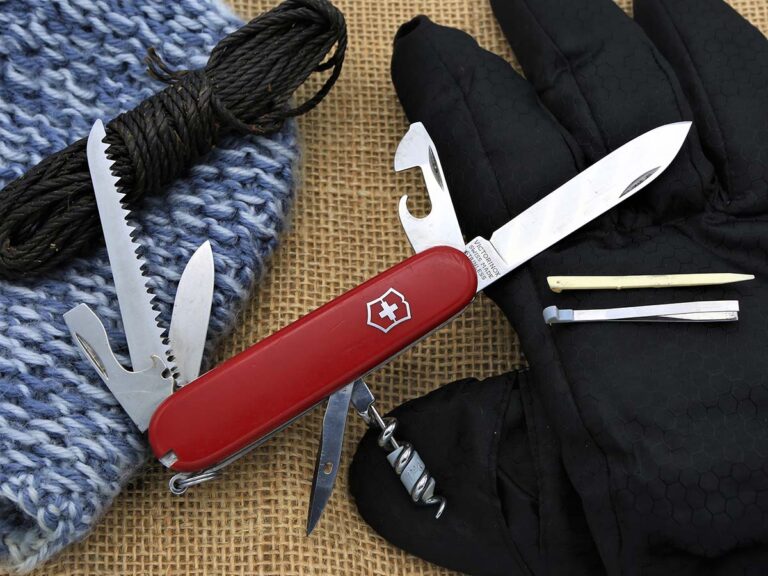
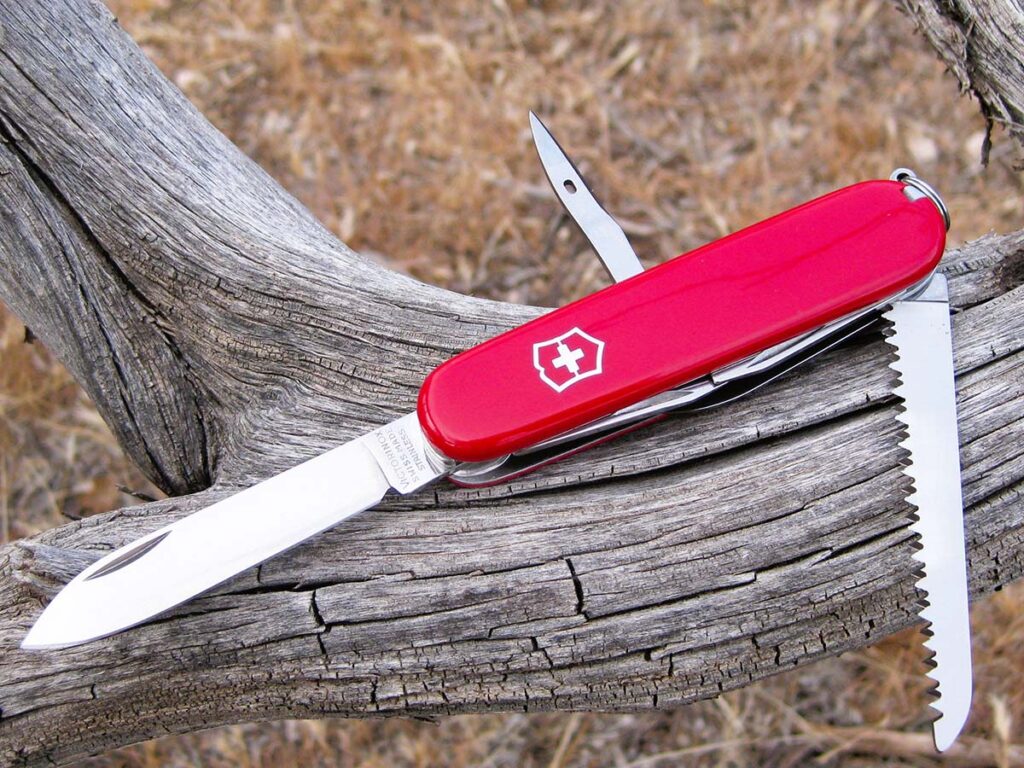
The Victorinox Camper packs a tight set of working parts into a pocket-friendly 3.5-inch frame. The large (2.75-inch) and small (1.398-inch) blades handle most cutting tasks with steady control. Meanwhile, the wood saw chews through branches far bigger than the knife’s size suggests. The can opener, bottle opener and built-in screwdrivers tackle camp, urban chores and quick fixes without hesitation. The reamer punches clean holes in leather and wood, and the corkscrew earns its keep on knots and party saving. The tweezers, toothpick and key ring round out the toolset, keeping the knife welcoming of everyday surprises!
The author relied solely on a Swiss Army Camper during his trip above 9,000 feet in the Eastern Sierra Mountains.
Knife For All Season
Consider how many knives you can take to a wedding, an office meeting or a fishing trip? How many might you present to overseas officials, use in a restaurant, take camping and fix the odds and ends in our lives? Maybe all. However, they wouldn’t be appropriately accepted. The SAK teeters on multi-tool territory. It is a knife-based multitool, yet a knife at heart.
The question, “Do I need something more tactical or bushcrafty for the woods?” is often raised in my head. Woodsy is the answer. When I need more grip, cutting power, and blade length, along with faster deployment, the One-Handed Trekker (known as the Trailfinder in Europe) is the answer.
Hidden Talents
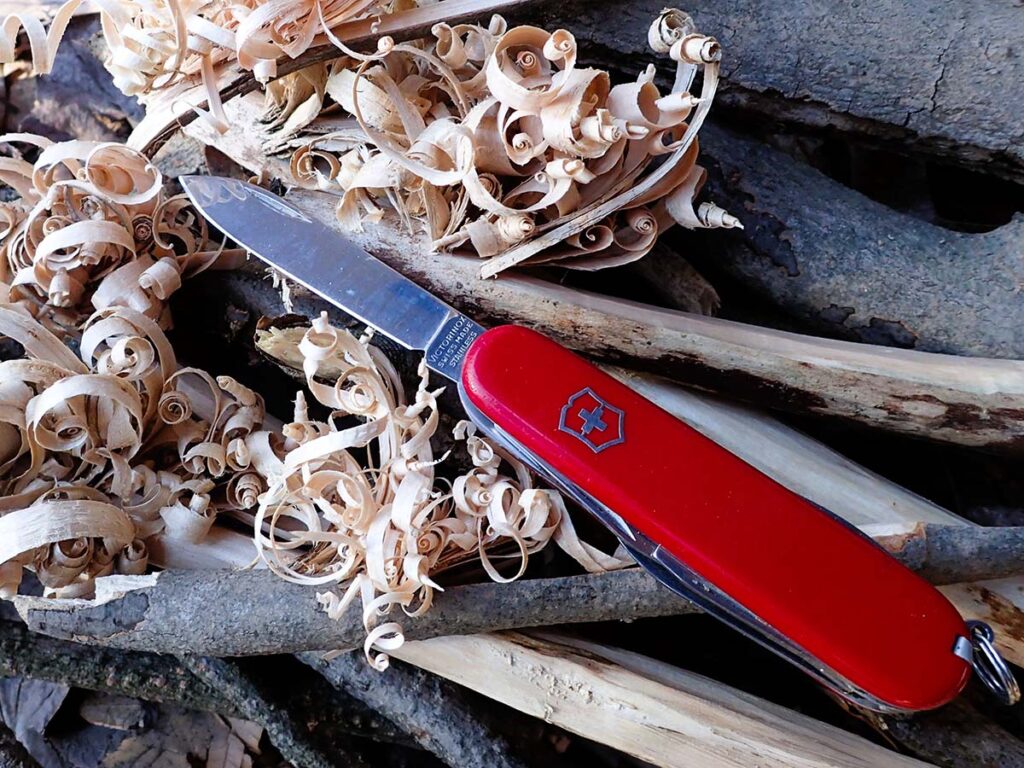
The Camper model’s main blade excels in crafting feather sticks for tinder and kindling, thanks to its thin V-grind edge.
I hate sticky blades, yet I get a lot of packages in the mail. Some have an alternative surface to slice through, but most use tape. The can opener opens boxes, as does the awl. Even the combo tool on other models that open cans and lift bottle lids will do an excellent job on packages. However, when it’s time to slice and slash through heavy nylon strapping, twine and cardboard, it’s hard to beat the sharp main blade.
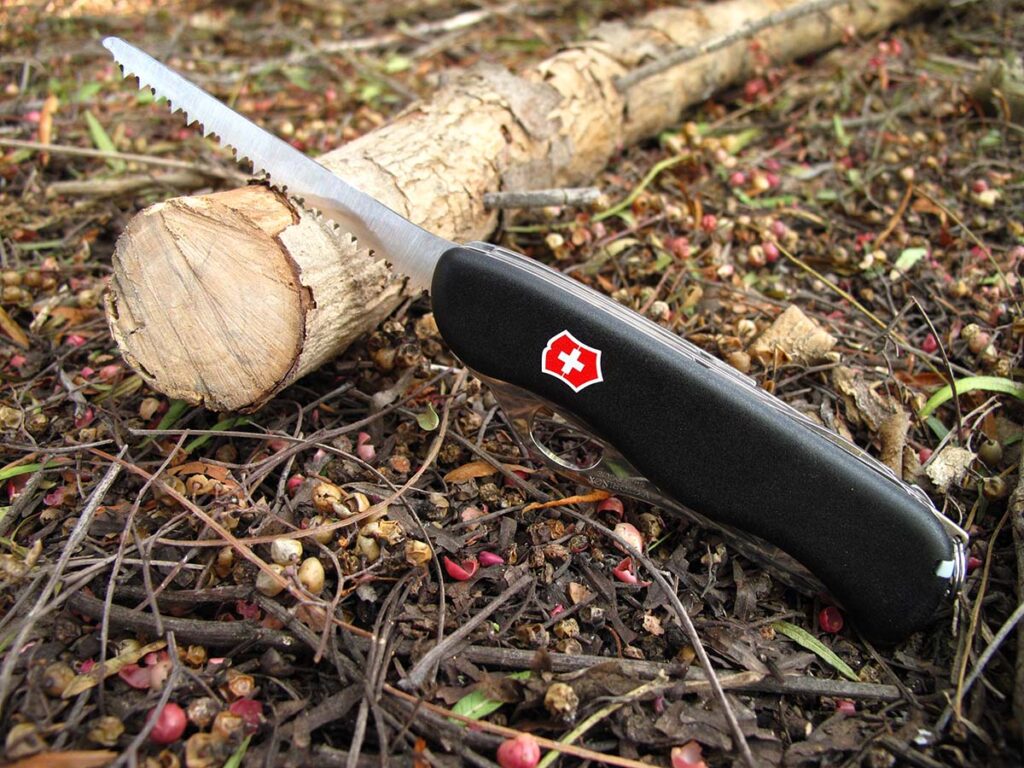
I always need a saw on a SAK that’s going into the woods for a day hike, bushcraft or any camping trip. It’s one of the best saws in business—sharp and tough. It does an excellent job on the obvious—sawing. I learned about 20 years ago that it excels at a ferro rod striker. The spine is a true 90-degree angle and shaves thin curls on fatwood, bamboo, rivercane and softer woods like poplar easily.
Slow But Steady
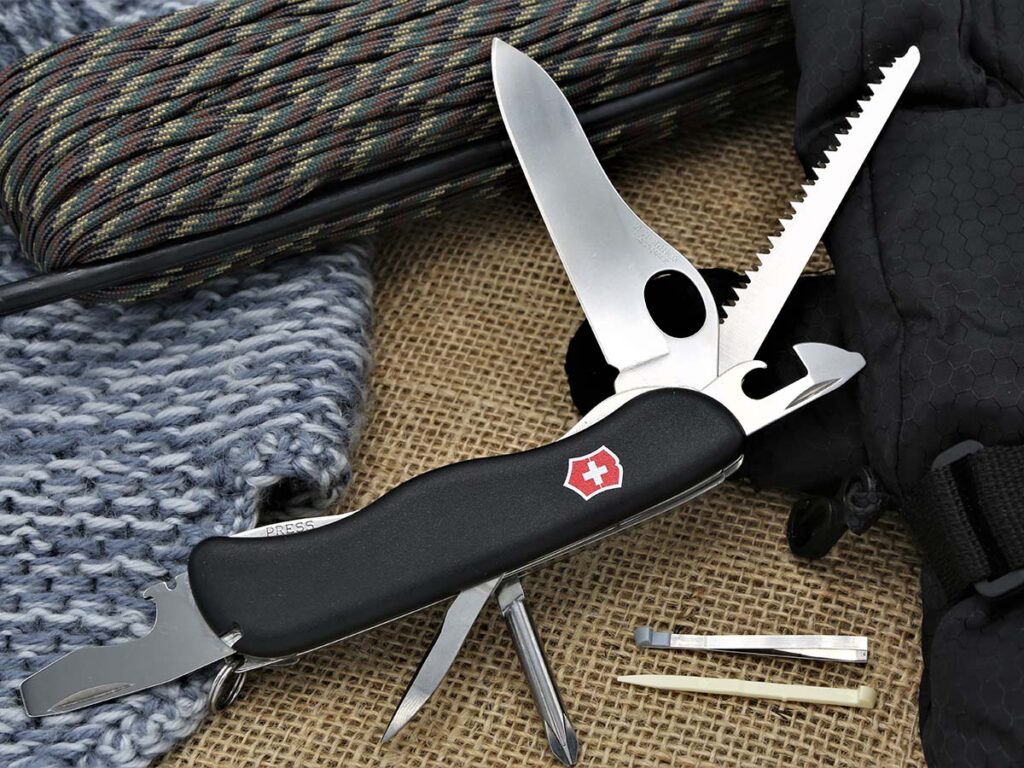
The One-Handed Trekker, utilized by the author on various Amazon Jungle and backpacking excursions, includes a locking screwdriver and blade.
I love me a good flipper. Fast, safer than a thumb stud and simpler. Let’s not forget the cool snap factor. That’s my opinion solely. However, the near maintenance-free action of the standard slip joint wins in my book. I understand it may not be a crowd favorite in the current high-tech, super-trendy EDC culture. But it suits me fine.
The deployment speed is slow—I’m not in a rush to slice much. I don’t work in an environment where I need super-slick deployment for attackers or emergencies. If so, I have a Trekker that has a smooth one-handed opening system. Although I like to sit and fondle a SAK like most do their high-speed folders, others may not think it has that cool factor. I do!
Metal Winner
The One-Handed Trekker SAK boasts an exceptional 3½-inch wood saw that serves as a fire steel striker on its spine.
I like simple steels. I’ve used enough teaching and working with various types. For me, it comes down to what’s easy to sharpen and to show students in a learning situation. Especially when there’s not a lot of time on a break to grind away on something too hard. Or better yet, when it’s time to build swamp beds in the jungle as the sun is setting fast. This is the reason why inexpensive tools from Moraskniv, Tramaontina and Victorinox are excellent performers.
MagnaCut won’t save you here. Getting the work done, sharpening it and going on with camp life is serious business on an extended expedition. Nothing against the super steel, it’s just better suited for a completely different situation. It makes sense to buy a MagnaCut steel knife if all you do is break down boxes or cut mundane materials. However, it’s overkill when something like a SAK has been doing that for decades without the hefty price tag. I’m a fan of what works!
Washers Vs. Bearings
In the desert, a hiker or camper needs just a blade, saw and awl for essential utility and crafting.
Knife people love pivot debates, but the truth stays simple enough for any reader. Bearings feel fast and slick. They open with a little thrill and shine in clean environments. They hate dirt, though. Sand and pocket debris grind them down and slow them.
Washers handle the rough stuff better. They tolerate grit, mud and long days outdoors. They deliver smooth, controlled movement under pressure and keep working after hard use. They win when conditions turn unpredictable. That’s why so many outdoor knives still rely on phosphor-bronze washers. It’s the same reason why the Swiss Army Knife’s friction-based slip joint still holds its own. Fewer moving parts mean fewer failure points and more consistency when I need it.
Conclusion
Readers don’t need a metallurgy seminar to pick a good folder. They need clarity. Blade shape guides the job. Lock type guides confidence. Steel choice guides edge life and ease of sharpening. Ergonomics guides comfort. Maintenance guides longevity. The rest comes from real use, not spec sheets. The Victorinox SAK Camper is a gentlemanly woods and EDC folder more in line with my everyday chores!