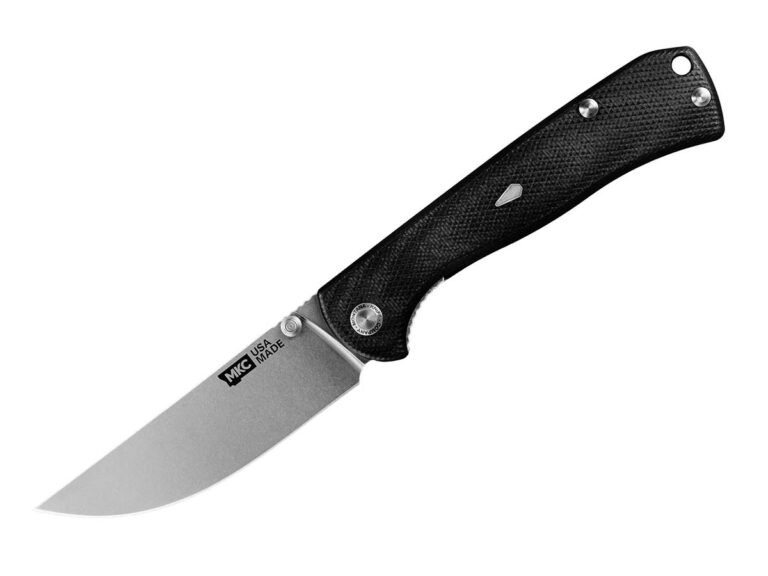
The Missoula-based brand brings its legendary ruggedness, MagnaCut steel, and precision engineering to the everyday carry market.
For nearly six years, Montana Knife Company has been synonymous with hard-use fixed blades. Master Bladesmith Josh Smith—who at one time was the youngest person to earn his master smith stamp from the American Bladesmith Society—started the company in a two-car garage with a single goal: build the best hunting knife on the market. It’s difficult to argue he’s done anything other than exactly that, and in the process has earned the absolute trust of the outdoor community.
While the Missoula-based brand is deeply rooted in its hunting heritage, it has steadily built a full slate of options for hard work and everyday carry. Now, MKC is bringing its uncompromising standards to the EDC world with its first-ever folding knife: The Montana.
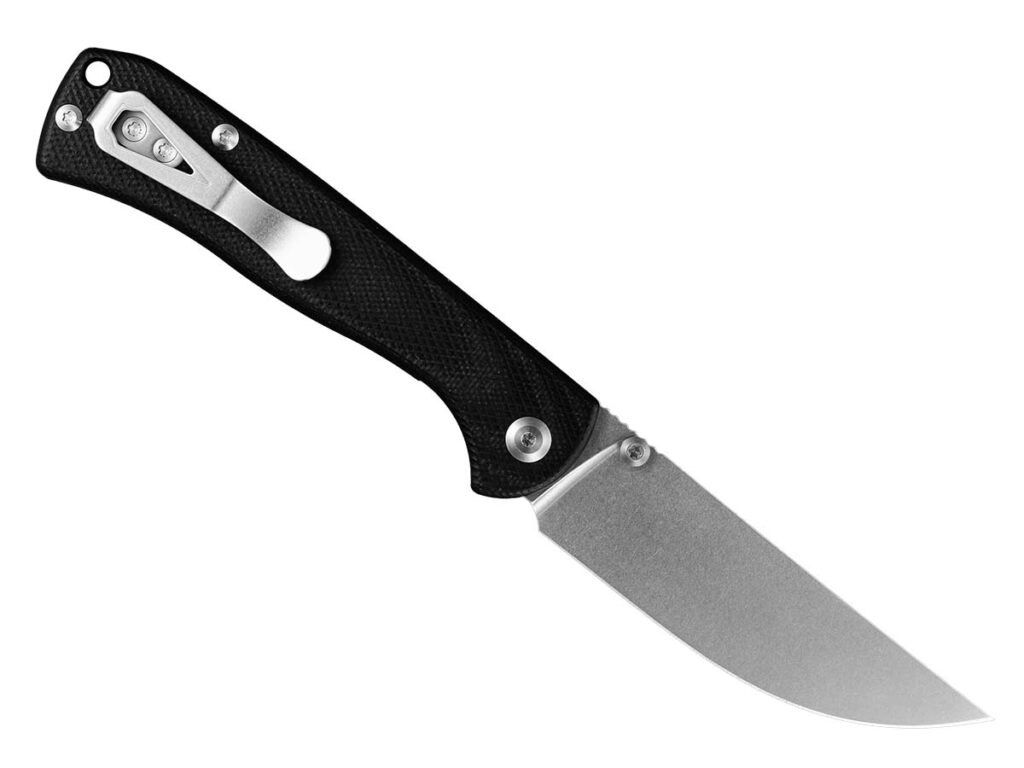
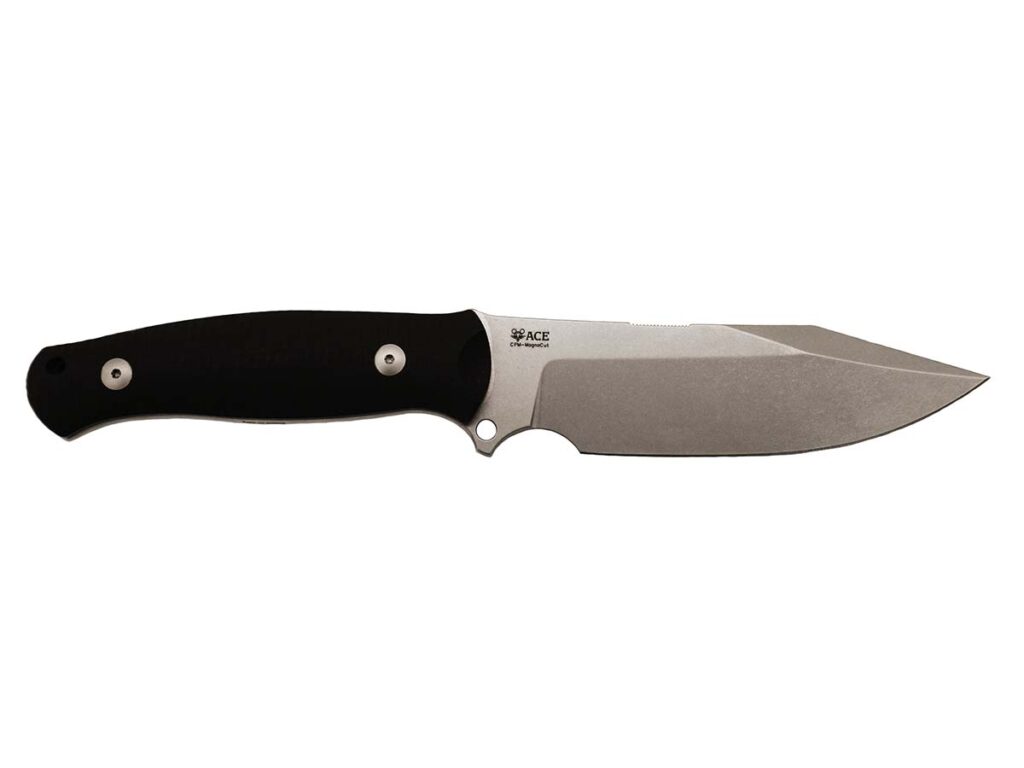
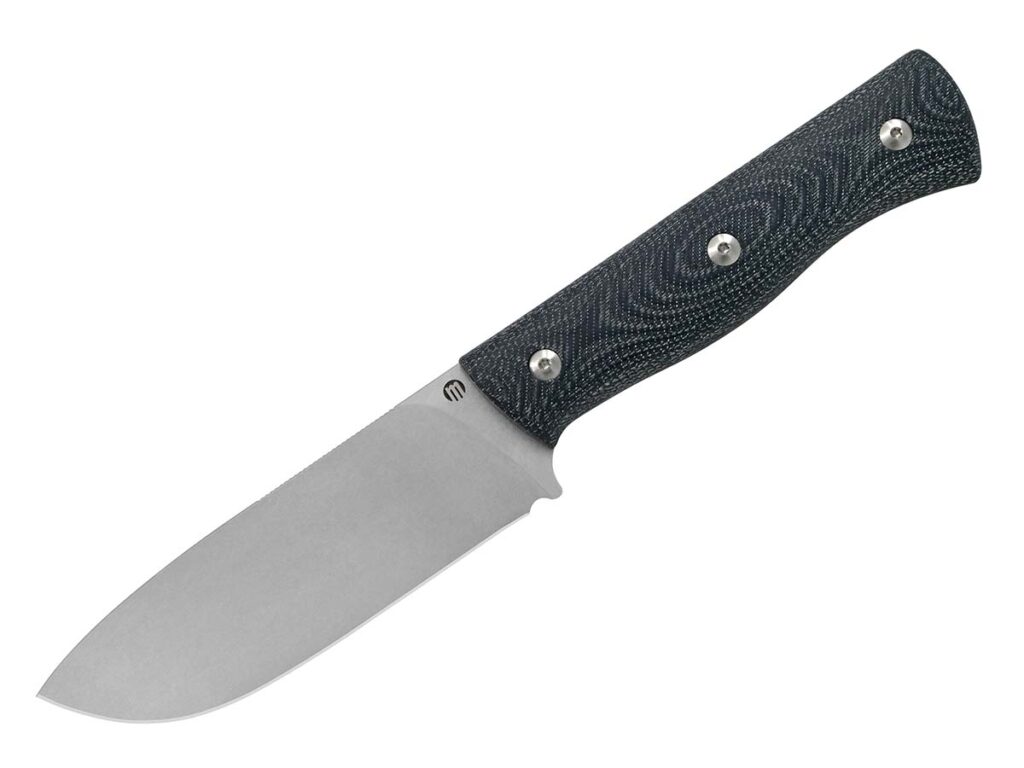
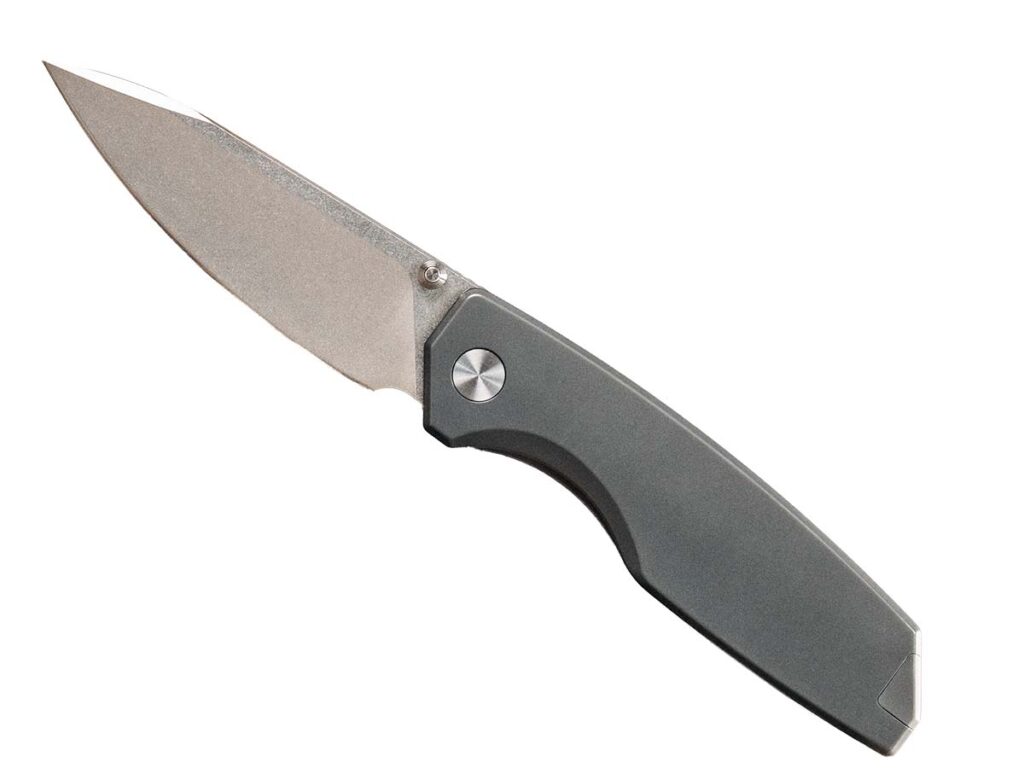
This highly versatile liner lock folder features a drop-point blade sized just right to handle everything from stripping wire on the job site to gutting a cutthroat trout at the creek.
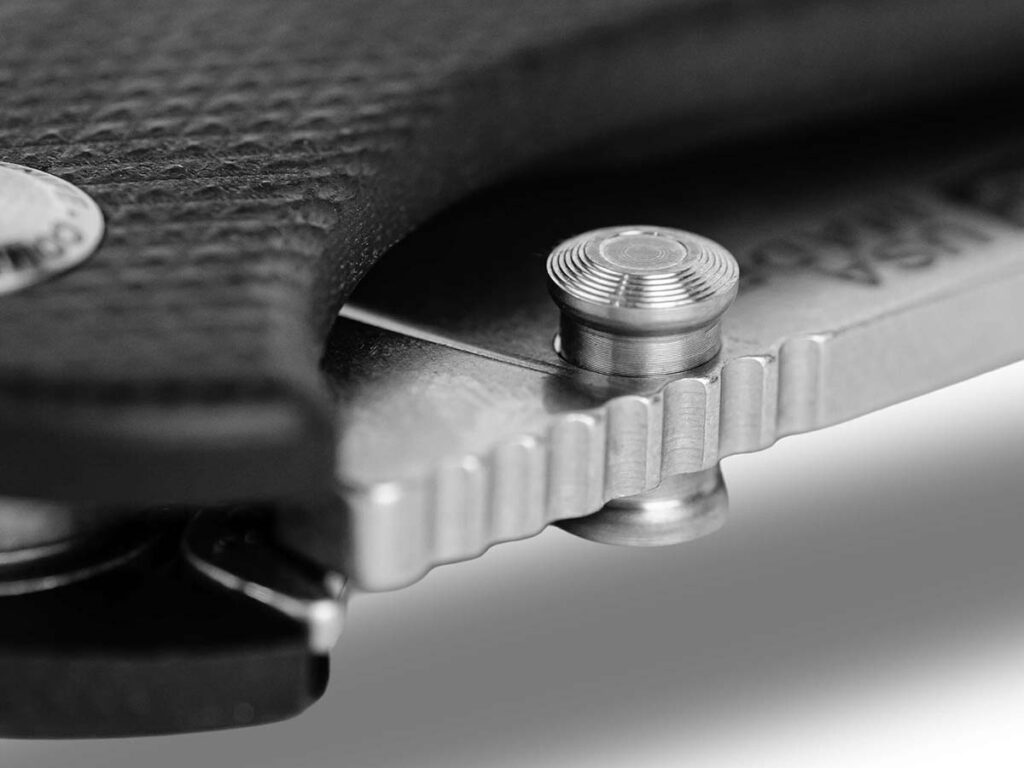
“Five years of scaling our manufacturing right here in Montana made our first folder possible,” Smith said. “People will see a liner lock knife that weighs less than three ounces and is engineered to a thousandth of an inch, built to fit in any pocket and operate without service for years. But what matters most is that The Montana is built to be used and handed down just like every other knife we make.”
True to the brand’s premium manufacturing ethos, the knife features a working stonewash MagnaCut blade and durable G10 handle scales. Weighing a nimble 2.84 ounces, it delivers workhorse capability in a pocket-friendly footprint.
The Montana drops exclusively on the company’s website on June 4 at 7 p.m. MDT. Quantities will be limited, so expect a fast sellout.
Celebrating its 30th birthday, the Kit Carson-designed M16 has an economical crossbar lock option.
It might seem surprising, but CRKT produced one of the most popular military knives of modern times. Here, we aren’t talking about issued blades, but working EDC options, typically purchased at a soldier’s local PX.
Aptly named, the M16 was the wire stripper, rope cutter, lid prier and snack slicer of choice for many a military man and woman from Kandahar to Kubal and Baghdad to Balad, and everywhere in between. And the unexpected warhorse is celebrating its 30th birthday this year.
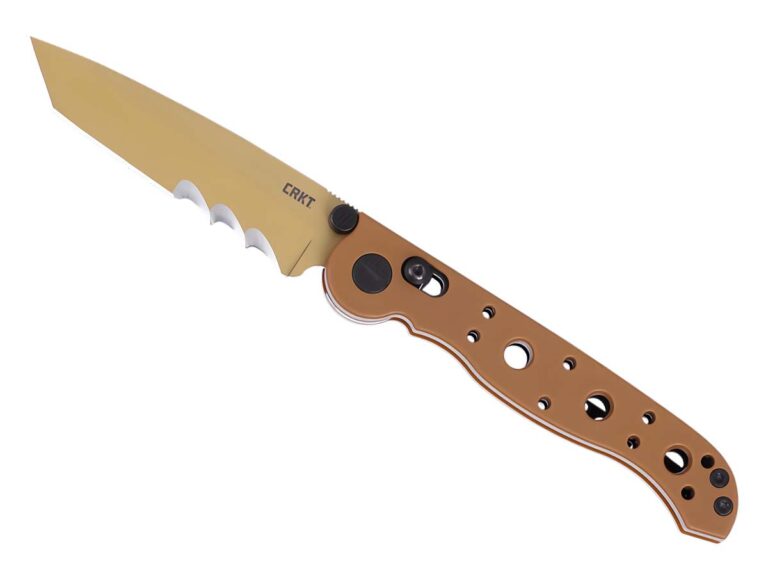
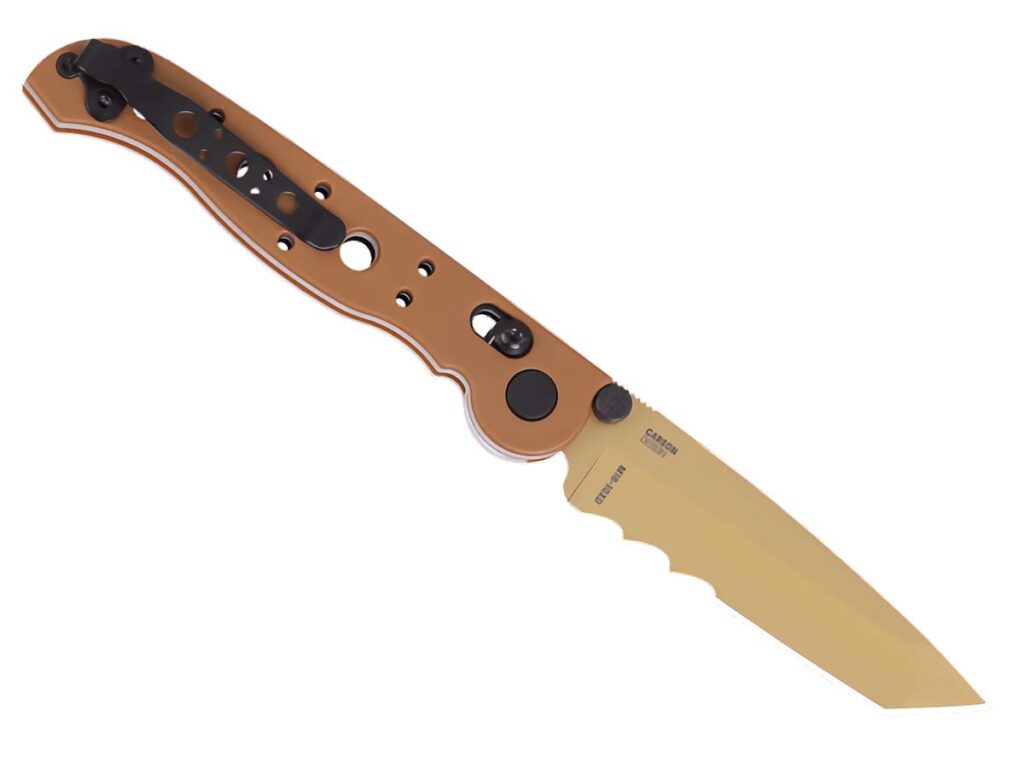
CRKT isn’t allowing this momentous occasion to slip by, with the Kit Carson-designed folder having a pair of new models added to the series. The black M16-10XK and tan M16-10XD hues aren’t the eye-catching aspect of the new knives, nor are the models’ crossbar lock—it’s available on a few other models. Instead, the M16 model’s price tag should get fans of the folder excited.
Both models come in with a very affordable $48 MSRP, making them among the most reasonably priced options in the family of knives. This is particularly true of the crossbar lock models, which start at $75.
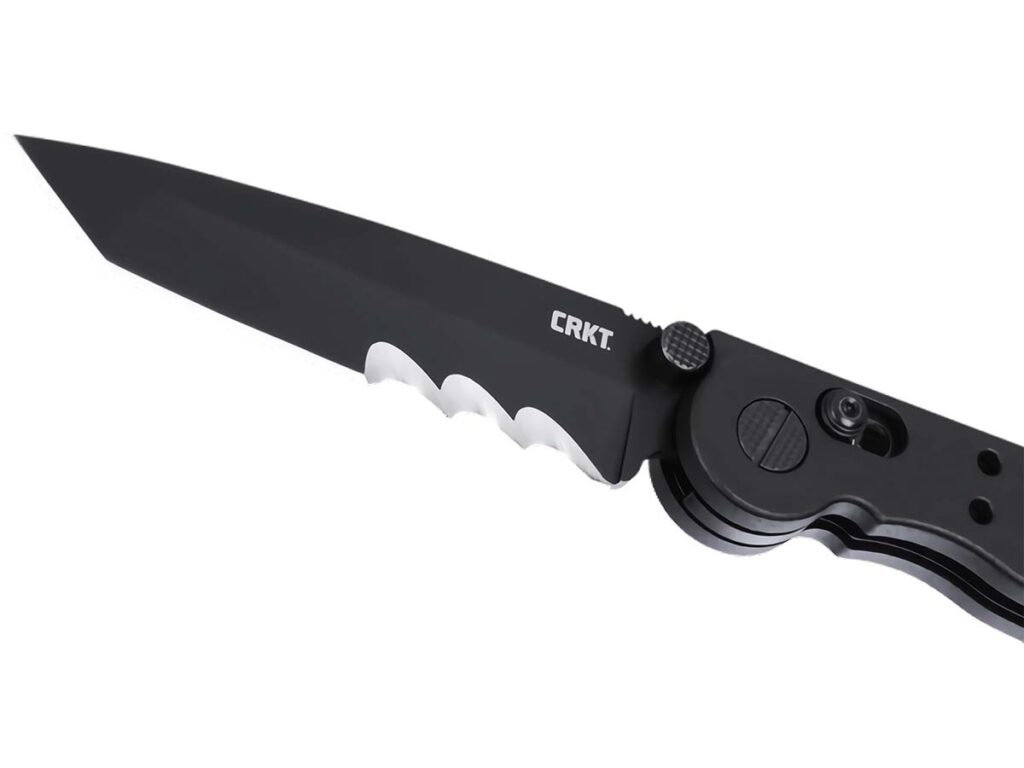
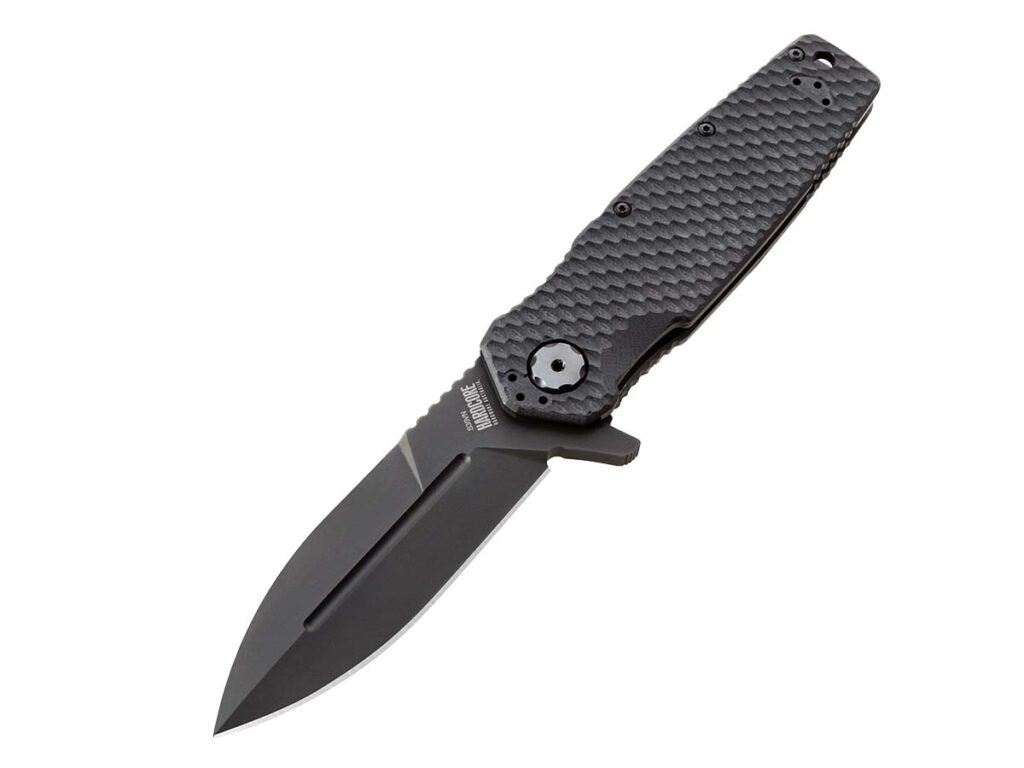
Enthusiasts or veterans looking to replace the blade they lost in the “sandbox” get a solid build out of the new M16s. Both models are outfitted with 3.03-inch 8Cr14MoV modified tanto blades, with titanium nitride finishes and sporting Veff serrations near the heel. The final aspect is wicked, giving the blade a highly aggressive cutting ability.
The blade deploys quickly, thanks to IKBS ball bearings and opens via thumbstuds or with a flick of the wrist, with the crossbar lock actuated. Note, the locking system is ambidextrous, rock solid and allows for single-handed manipulation. The handle is fiber-glass reinforced nylon, keeping the knife’s weight a very manageable 2.1 ounces.
CRKT has shown plenty of dedication to the M16 design and evolving it over the years. Early this year, the company dropped a balisong version of the knife, possibly the most unique riff of the time-tested design. In all, there are now 36 variations of the storied M16.
A couple of notes on the knife and its legacy. It was included on BLADE® Magazine’s top 10 tactical knives of the past decade in the early 2000s. Further, CRKT has created a video series on the knife’s design and military pedigree, with veterans and experts looking back on their time with the knife.
Forty-five shows in, the edge-travaganz’s remains the beating heart of the knife world.
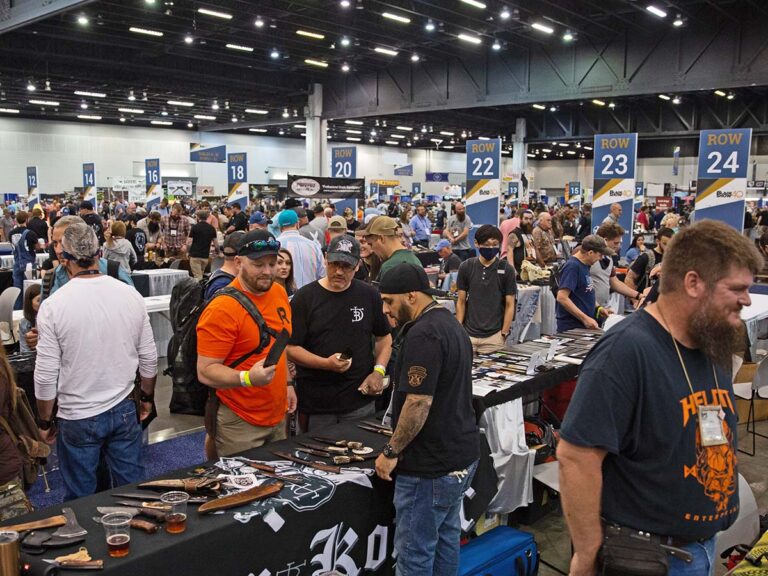
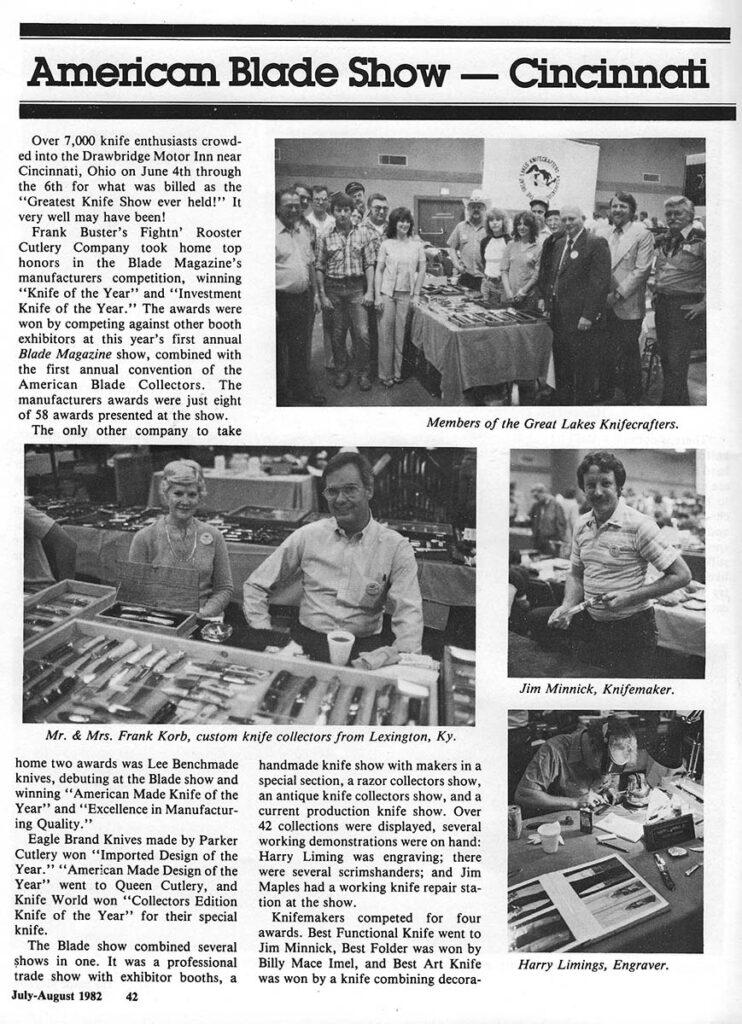
Each year, the BLADE Show draws thousands as the knife industry’s perennially premier event. Now celebrating its 45th anniversary, BLADE Show has grown from humble beginnings at the Drawbridge Motor Inn in Fort Mitchell, Kentucky, in 1982 to a hub that stirs enthusiasm, sparks lively discourse, facilitates buying and selling and energizes the world of cutlery like no other.
Knife enthusiasts and aficionados of all types, makers, purveyors, factory representatives and collectors have crowded the floor of the show regularly, from the greater Cincinnati, Ohio, area to the World Trade Center in Knoxville, Tennessee, to its present home in Atlanta. Memories have been made, deals struck and a rising tide has lifted all.
“We originally said we were going to do one show a year,” remembered Bruce Voyles, BLADE Magazine Cutlery Hall of Fame® member and longtime publisher of BLADE® Magazine. “The goal was to make it more than a show. We loved the original venue in the Cincinnati area, but we outgrew it in two years, moving to 70,000 square feet in Knoxville by 1985 or so, with 700 tables, and then to Atlanta, where there is an airline hub and more international people were able to attend.
From the right, Bob Loveless, J.W. Denton and Myra and Durvyn Howard enjoy a dinner after a day on the BLADE Show floor. The show is as much a social gathering as it is an industry event. (John Denton image)
“Nobody had gotten such an incredible group of people together in one room before, and from it some amazing things happened,” Voyles reflected. “Sal Glesser of Spyderco came up with the idea for collaborations, and that really began at the BLADE Show as manufacturing people wandered into the handmade area–and it happened! We built the show on borrowing ideas from others and adapted it for all we could, trying to minimize mistakes we had seen in other shows.”
Through the years, the BLADE Show has been characterized by its exchange of ideas, vigorous commerce, displays of remarkable collections, professional demonstrations, honors for the industry greats and much more. Voyles smiled, “It just went gangbusters!”
And so, while the BLADE Show is in its 45th year, many have made the annual pilgrimage time and again. They acknowledge the impact the event has had on the knife industry and reflect on their memories and its true significance. The show has evolved, experienced growing pains and reached new heights of influence–but its dynamic energy has never waned, even in these days of the internet and instant access to information.
Knife Family Reunion
From the start, BLADE Show was red hot. Documenting the first show at the Drawdridge Motor Inn near Cincinnati, Ohio, the article from the July/August 1982 American BLADE estimates more than 7,000 knife enthusiasts showed up.
“The early BLADE Shows were run by Bruce,” commented ABS master smith and custom purveyor Dave Ellis. “Over the years, ownership has changed and the crowds have grown. Now there are two rooms to hold all of the table holders. The lines to attend start days in advance and eager folks flood in to be first to their tables of choice. The seminars have grown, and celebrities, musicians and folks from all walks of life attend with the expectation of purchasing that special piece they have saved all year for.”
During his active days as a bladesmith, Ellis attended shows with greats like Hall of Fame legend Bill Moran and master smith Jerry Fisk. He remembers sitting in “the Pit” at Atlanta’s Waverly Hotel, where friendships were forged and discussion flourished.
Hall of Famers Daniel Winkler and Karen Shook were attendees in the 1980s, and their first impressions were lasting. “It was overwhelming to know there were that many people making knives and to see the diversity,” Karen recalled. “The most striking memory is the sense of community and camaraderie. We did not know who the legends were at the time, but when we got to know them, we learned of a group of great talents with great passion for knives and the knife community.”
Among the aspects that set BLADE Show apart from other knife shows is the inclusion of factory knives. This has become an important part of the industry, as companies vie for the coveted Knife Of The Year award. Spartan Blade nabbed the honor in 2024 with its wicked Clandestina.
Karen fondly remembers sitting in the Pit. “It was like a family reunion. Almost every face became familiar. The show and the promotion of the same have attracted interested parties and given makers the opportunity to meet people and educate attendees as to why custom knives cost more than your typical hardware store hunting knife.”
Magic Of Knives In Person
When UK-based custom scissor maker Grace Horn attended her first BLADE Show in 2003, she was expecting her second child. “That child was conceived with the knowledge that I had to attend and not be too pregnant to do the transatlantic flight,” she laughed. “I have been attending every year since, and the changes have been fascinating. The fluxes of the industry are so much easier to see in a microcosm at a show … a snapshot of the industry at a point in time. Even in this world of increased social media engagement, nothing replaces the actual interaction between people. I love the sense of community that comes with the BLADE Show.”
Collector Chris Schluter agrees. “These days, so much of knife collecting takes place via social media,” he said. “It’s been great for sure–online sales, frequent interaction with makers and collectors. There’s still not a substitute, though, for meeting people in person and handling knives in person. For collectors, this is seeing your favorite makers in person and also walking by that table with a maker you’ve never heard of and stopping because something caught your eye. It’s not just meeting people during the show. It’s also after hours in “The Pit” and nearby restaurants and bars where people have time to chat. The BLADE Show is always something I look forward to, and I think many makers and collectors see the show as a sort of annual ritual that they really try to go to each year.”
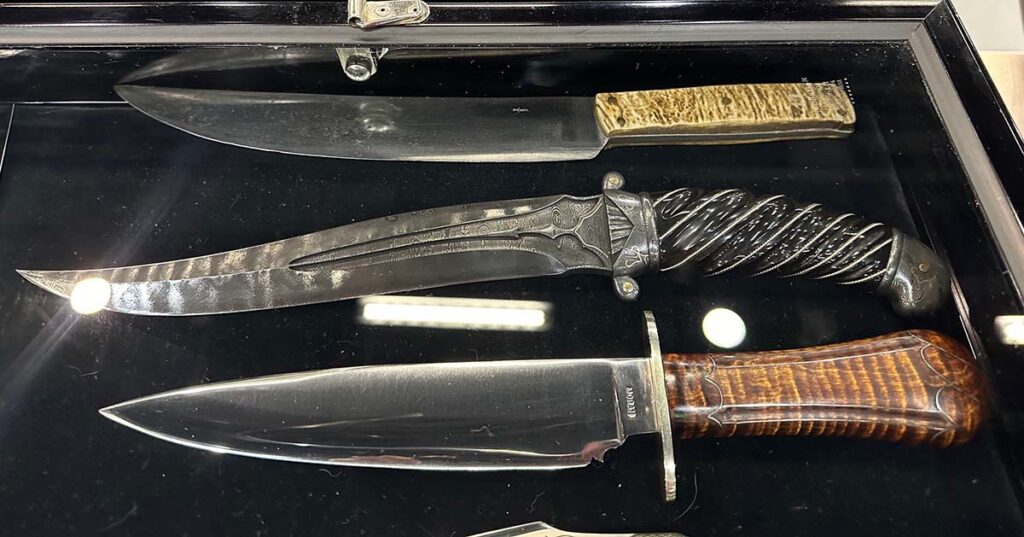
From top, knives from Hall of Famer Bill Scagel, CAS and Hall memeber Bill Moran. Imagine seeing so many great creations in one case. Through the years, it’s become commonplace at BLADE Show. (Dave Ellis image)
That pervasive energy, the smiles and the renewal of each acquaintance team up with the latest across the knife world to make the BLADE Show even more relevant in today’s environment. “The BLADE Show has made the careers of custom makers,” declared renowned knife innovator Ernest Emerson. “Before the internet, how could you find out about custom makers and their knives? BLADE Magazine was it, and the readers of BLADE Magazine would go to that show. Still, there is no motivation like seeing what the other guys are making.”
Emerson’s following is proof positive that the BLADE Show complements a career. The throng that gathers at each show to purchase his knives and those of other makers gave rise to the lotteries that are commonplace these days.
“The BLADE Show has pushed the knife world to outer space,” assessed Loveless knives expert and purveyor John Denton. “People keep coming back because it has something to do with the love of custom knives—one on one with makers, dealers, collectors—we all love the same thing. So, it is so much fun to see everyone. It feels like family. We all come back because we have all we need at the BLADE Show. The future is here, and now, so I just hope the magic stays.”
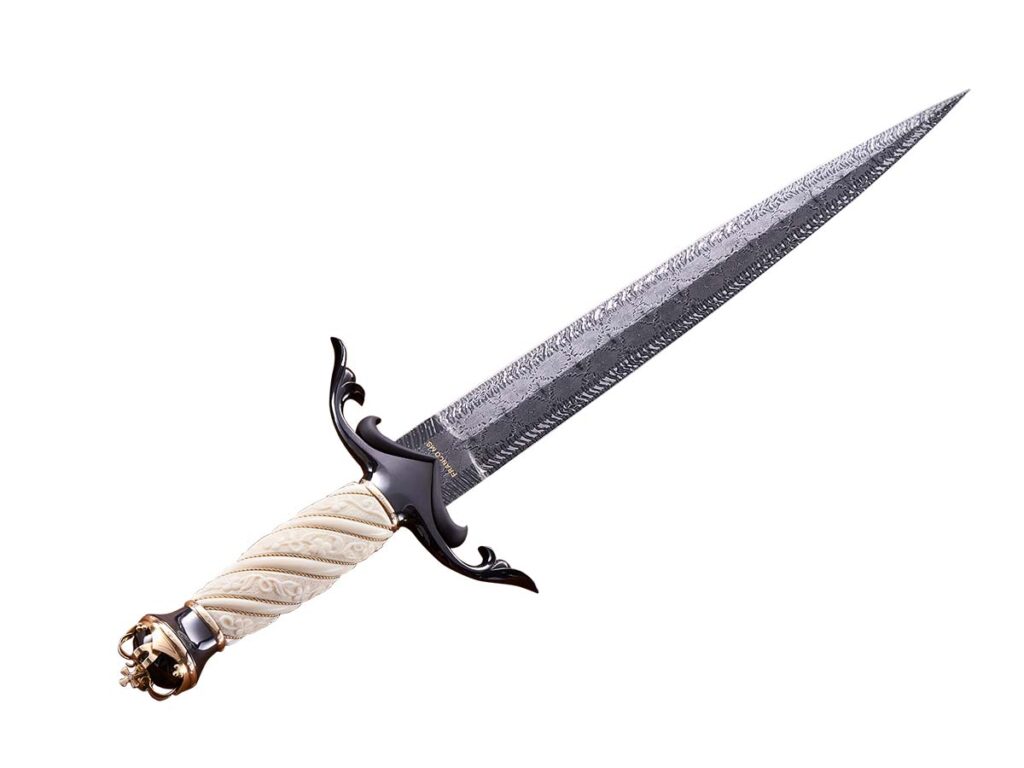
BLADE Show launched during the golden years of custom knives in the 1980s. But don’t think the best years are behind. Contemporary makers, such as Brazilian Dionatam Franco, continue to wow with creations like his 2023 Best of Show dagger.
That magic was indeed, at times, like catching lightning in a bottle. “It was things like [Hall of Famer] Bob Loveless staying with Wayne Clay, and once the show ended for the day, we all went out to eat,” Denton commented. “Then, at the hotel, you just looked around the room, and the knifemakers of the world were all pretty much in the same place. You could listen to Loveless and [Hall of Famer] A.G. Russell discussing things. Over on the couch was [Hall member] George Herron. Then you saw Bill Moran relaxed next to him. It was all bigger than life.”
From Show To Spectacle
Les George was a young knifemaker when he attended his first BLADE Show at age 25. “I don’t know if I can say it’s better now because it’s been amazing from the very first time,” he remarked. “On top of being a trade show for knives, it’s the number one social event for this business. I see some friends only at the BLADE Show, even though I’m in touch with them all the time. The BLADE Show is a huge fixture in my life, and the whole year pivots around the June trip to Atlanta.”
Of course, many others would say the same thing. Like the proverbial sun, the BLADE Show is the center of the knife community’s solar system. Its atmosphere sheds radiant light on the industry. Its gravitational pull is virtually irresistible. Its intensity is nothing short of “white hot”.
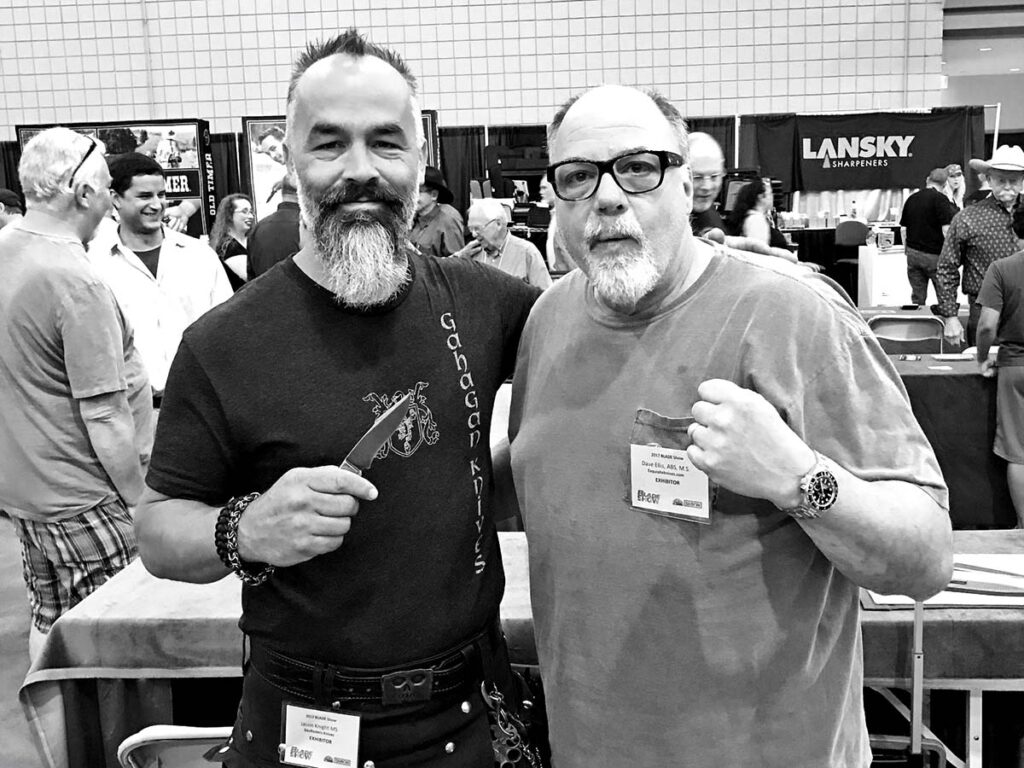
A couple of master smiths—Jason Knight (left) and Dave Ellis (right)—rub elbows at the BLADE Show. (Dave Ellis image)
Through change and reinvention, the BLADE Show remains a driving force in its 45th year. And even though the computer screen and cell phone add to the communication milieu, those who know what the BLADE Show is will accept no substitute. Here’s to 45 more years.
Women are leading the rise of knife throwing across the country and the world.
As an accessible and affordable hobby, knife throwing is seeing a surge in development and an astounding cultural impact. Since my first knife-throwing tournament over 30 years ago, the sport has steadily grown. One of the largest gatherings of knife throwers began in Berwyn, Pennsylvania, guided by knife designer and champion thrower Joseph “Brokenfeather” Darrah. Now known as Brokenfeatherpallooza, it has evolved into a top national event.
The Quaker State event isn’t alone in rallying throwers in the spirit of camaraderie and friendly competition. The Columbia City, Indiana-based Dangerfest—led by online knife-throwing sensation Brandon “Danger” Dillon—has become a mainstay on the throwing circuit.
It’s unsurprising these major events have taken root where they have, given throwing’s deep roots in the region. Michigan is among knife throwing’s historic epicenters, thanks in large part to BLADE Magazine Cutlery Hall of Fame® member Harry K. McEvoy. As a result, the state has long been home to devoted McEvoy and Tru Balance knife enthusiasts. During my time at the helm of the Tru Balance Knife Company, I met countless throwers—many of them members of a group known as the Michigan Blade Throwers. This group held frequent tournaments and became a driving force in the regional throwing community. From this large and passionate collective emerged a group of women who would soon redefine knife throwing in Michigan and beyond.
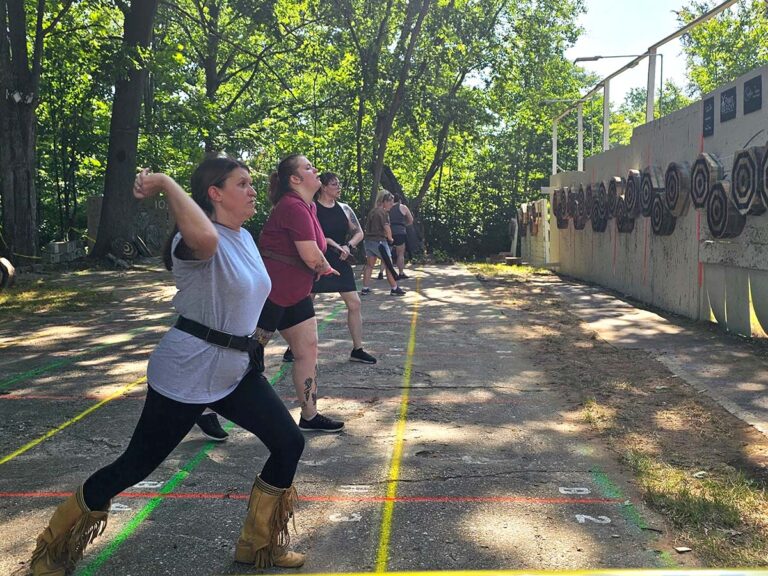
Among the attractions women have found in knife throwing is empowerment, stress relief and camaraderie, according to the author.
Birth Of A Movement
In 2015, Kelly Grove launched Women With Knives (WWK), igniting the world’s largest women-only knife-throwing league. What began as informal backyard sessions with her husband, Jeff, quickly evolved into a grassroots movement. Long before entering the competitive circuit in 2019, Kelly was already building the sport. In 2018, she organized her first league event, the Gung-Throw, which later became the now-iconic Battle of the Blade Maidens. Kelly’s influence extends even further. A founding member of the Michigan Blade Throwers, she helped establish the state’s first Throwstorm Tournament in 2020. Recognizing the importance of preserving and growing the community she had created, she converted WWK into a 501(c)(4) nonprofit organization in 2021.
Kelly officially retired from competitive throwing and league leadership in 2023 but continues to guide WWK as a member of its Board of Directors. Upon stepping down, Kelly appointed Dawn Solomon as Chair and Executive Director of WWK. Under Dawn’s leadership, WWK continues to set record-breaking benchmarks for women’s participation in competitive knife throwing.
Dawn, who entered the sport in 2019, is a dedicated competitor and a member of the Michigan Blade Throwers. Together with her husband, Tim, she operates MBT Range, the largest outdoor throwing range in Michigan. MBT has grown into a hub for seasoned athletes and newcomers alike.
Most women’s knife throwing organizations began as grassroots endeavors. The inspiration of WWK, for instance, came in founder Kelly Grove’s backyard in informal throwing sessions with her husband.
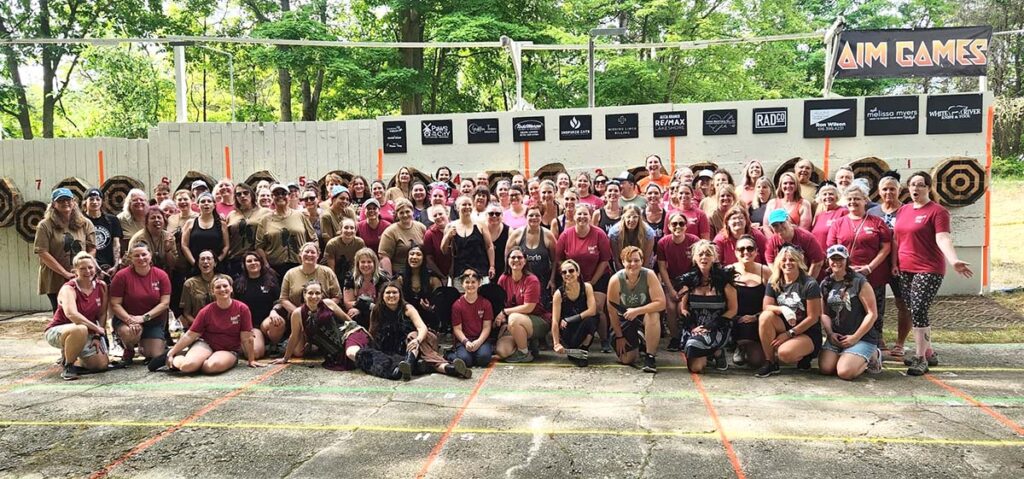
Membership in the WWK is diverse. Teachers, nurses, small business owners, corporate executives, stay-at-home moms, retirees and more fill its ranks. This includes throwers of all ages, ethnicities, fitness levels, abilities and disabilities. All find a place within the league.
The attraction of knife throwing is as distinct as WWK’s members. For some, it’s a release of daily stress; for others, a confidence booster. For practically all, slinging steel is a way to forge lasting friendships. Adding to the escapism knife throwing allows, each member adopts a unique alias. These are proudly displayed on league T-shirts—adding an element of fun, freedom and identity to the experience.
At its core, WWK empowers women by teaching the art of knife throwing while fostering strength, confidence and community. Whether members aspire to compete in sanctioned events or simply want to unleash their inner warrior in a supportive environment, the organization offers a place to belong.
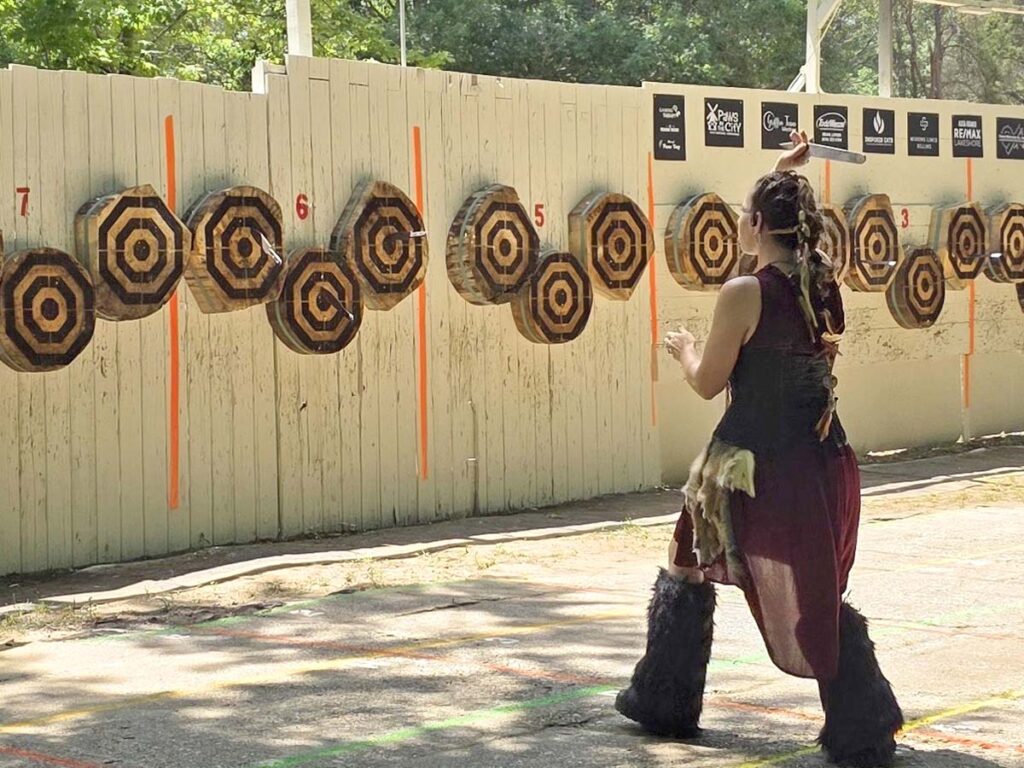
More than holding their own, women have become among the top competitors in all ranks of knife throwing competitions.
Today, WWK continues to thrive under the guidance of a dedicated Board of Directors and leadership team who share Kelly and Dawn’s mission. Together, they travel the country competing, coaching and championing the sport—ensuring knife throwing continues to grow and welcomes new women into the community.
Live Nationwide
Women have also stepped forward to lead major tournaments across the country. One such event is Blades Out Or Bust (BOOBS), founded by Jessica Gold McClain. A longtime supporter and advocate of the sport, Jessica—also known as “Goldi Lox”—sponsors at least two tournaments annually near her home in Bastrop, Texas.
For Jessica, the passion for knife throwing began in her teenage years. She spent countless hours honing her skills in a friend’s backyard before eventually setting up her own target at home. When she began competing, she was often the only or part of a handful of women at most events.
After a five-year hiatus from the sport, the seed was planted for what would become a powerful new community. In 2019, Jessica founded the Bladed Sisterhood with a bold vision: to unite women around the globe who share a passion for blades. This small idea has grown into a thriving international network where women connect, learn and celebrate knife, tomahawk and axe throwing.
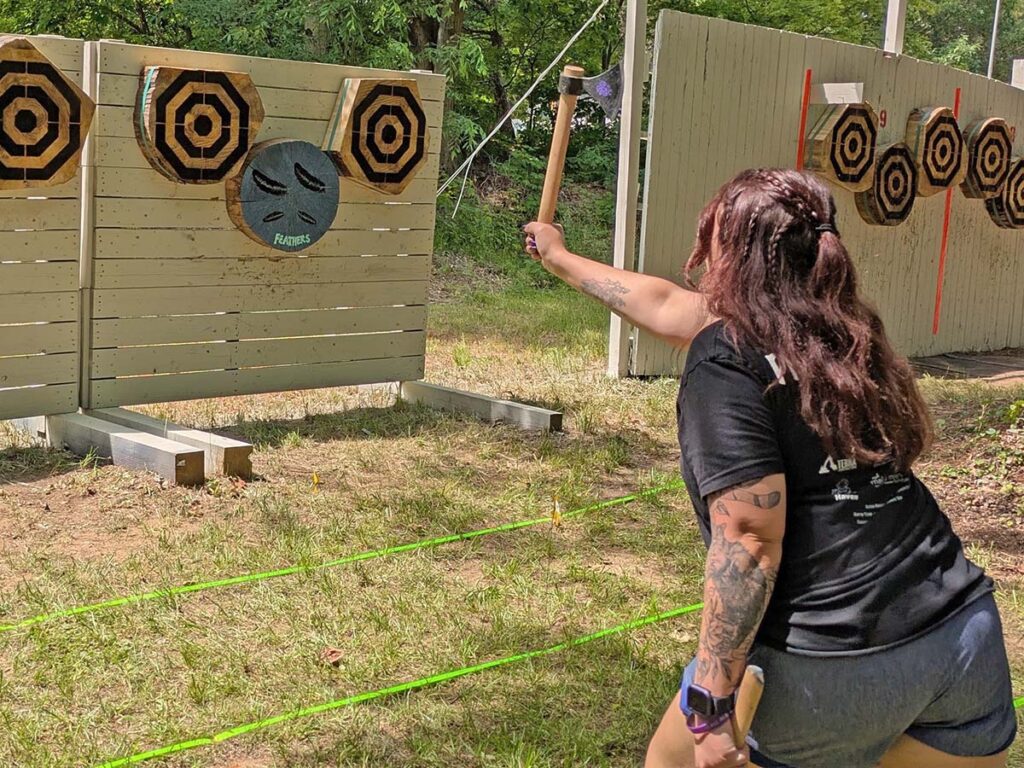
Michigan is among the knife throwing epicenters and, as the author points out, is the home to WWK and other women-focused knife throwing organizations. (Felicia Mulder image)
The organization’s dream is ambitious—to see these disciplines recognized worldwide, including as Olympic events. Until then, the Bladed Sisterhood continues building a community that inspires women, celebrates skill and honors tradition.
While women like Kelly and Jessica built strong foundations at home, others were already taking knife throwing onto the world stage.
Throwing Goes Global
One of those women is Melody Emel, a multi-award-winning champion with more than two decades of experience in the sport. After attending stunt school, Melody developed a deep interest in Western arts, which naturally led her to knife throwing.
Far from an American endeavor, knife throwing has become a global phenomenon and has seen a large influx of women throwers worldwide. (Dawn Soloman image)
Following multiple first- and second-place finishes in major tournaments, Melody founded Blade Aces in Las Vegas to serve and grow the local throwing community. In 2015, she traveled to Europe to compete in the Eurothrowers World Championships for the first time, marking a significant milestone in her international career.
Melody’s passion for both throwing and teaching continues to drive her involvement in events around the world. She actively supports competitions that empower women and raise funds for breast cancer awareness and other causes dedicated to uplifting women.
From backyard grassroots to the global stage of professional competition, women have redefined the sport. With a growing international network and a dedicated leadership, the future of female knife throwing is certain.
Remembering a dedicated craftsman of the Fujisaka lineage known for his tactical precision and collaborative artistry.
Keith Derrick Ouye, award-winning knifemaker of Honolulu, Hawaii, passed away on October 5. He was 80.
A stocky, happy guy well-liked by both knife enthusiasts and his knifemaking peers, Keith primarily made tactical knives, though he also built hunting knives to sell at local gun shows. In addition, he made fancy folders, often with fine engraving by Bruce Shaw, C.J. Cai or Lisa Tomlin. Keith exhibited his work at the BLADE Show and other top knife events over the years. Like many Hawaiian knifemakers, he was a student of BLADE Magazine Cutlery Hall-of-Fame® member Stanley Fujisaka.
Born in South Hilo, Hawaii, Keith lived in Hawaii Kai on the island of Oahu. “I spend most of my day working on my knives,” he wrote in his mini-bio on the Arizona Custom Knives website. “With assistance and guidance from Stan Fujisaka, I started to make fixed blades in early 2004. By the end of 2004, I also started making folders. I began making knives full-time in 2005.”
Keith was a big believer in sole authorship, noting “except for the screws, dowels, standoffs and pivots, I fabricate the rest of the knife myself.”
Remembering Others The Knife Industry Has Lost:
Betty Dowell, Driving Force Behind Knifemaker Ted Dowell, Passes
B. R. Hughes, Pioneering Writer And Bladesmithing Teacher, Passes Away
Get an edge on your cutting needs with the latest production knives.
The 2026 production knives are defined by an impressive range of styles and sizes, spanning from 1.5-inch neck knives to massive 12-inch folders. This year’s buyer’s guide highlights a sophisticated move toward premium materials, with CPM MagnaCut and M390 appearing across diverse price points, alongside traditional touches like India Stag Bone and Damascus. From task-specific hunter sets and tactical folders to “fidget-friendly” button locks and US-made fixed blades, these releases represent the cutting edge of modern manufacturing and designer collaboration.
GiantMouse The Redington
Knife Type: Fixed Blade Blade Length: 5.1″ Overall Length: 9.7″ Blade Grind: Stonewash Scale: Double Black Canvas Micarta Blade Material: CPM MagnaCut Sheath: Black Kydex Date Available: Now Inside Edge: Designed with input from the instructors at SERE East. Limited-Run of CPM MagnaCut. MSRP: $425
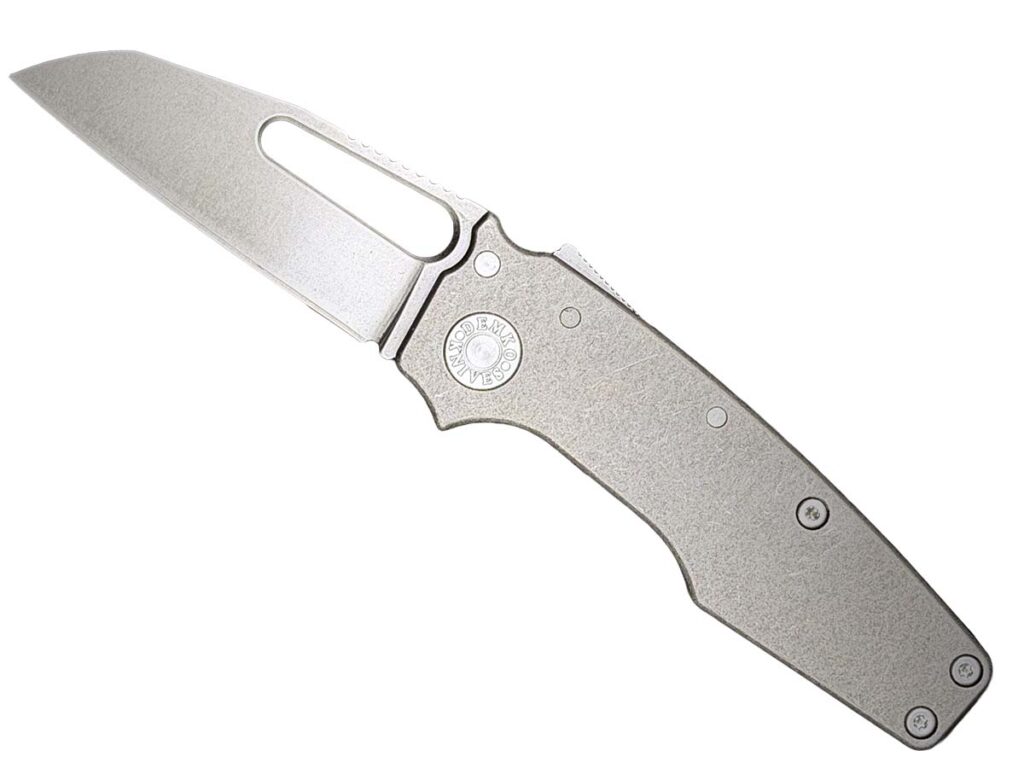
Demko Knives AD22
Knife Type: Folding Blade Length: 3.0″ Blade Shape: Shark Foot Overall Length: 7.5″ Weight: 5.4 oz. Scale: Titanium (Smooth or Milled) Blade Material: CPM MagnaCut Date Available: Currently and throughout 2026 Inside Edge: Made in the USA at Demkp headquarters in New Castle, PA. Also available with G10 scale in multiple colors. MSRP: $700
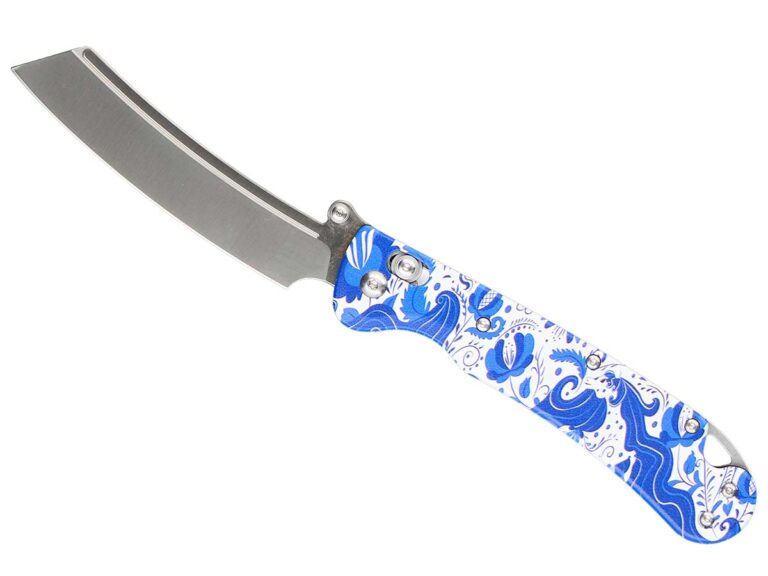
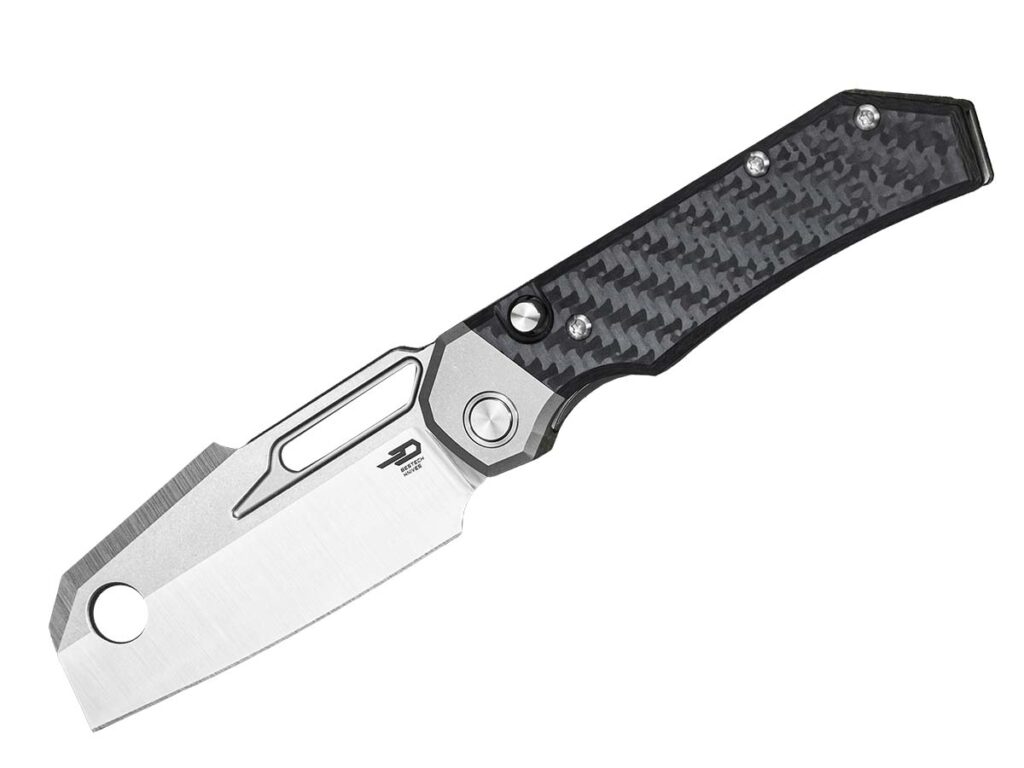
Pattern: Cleaver Designer: Fabian Hobbelen Lock Type: Button‑Operated Frame Lock Blade Length: 3.09” Overall Length: 7.04” Blade Grind: Hollow Scale: Titanium Blade Material: M390 Date Available: August Inside Edge: Designed by Fabian Hobbelen, the Nyrrdreki hides a small surprise in its blade. The hole allows the knife to be flipped open with the pinky finger, turning a traditional opening feature into a playful and highly addictive fidget action. MSRP: Approx. $350
Dagger Trading Begemot
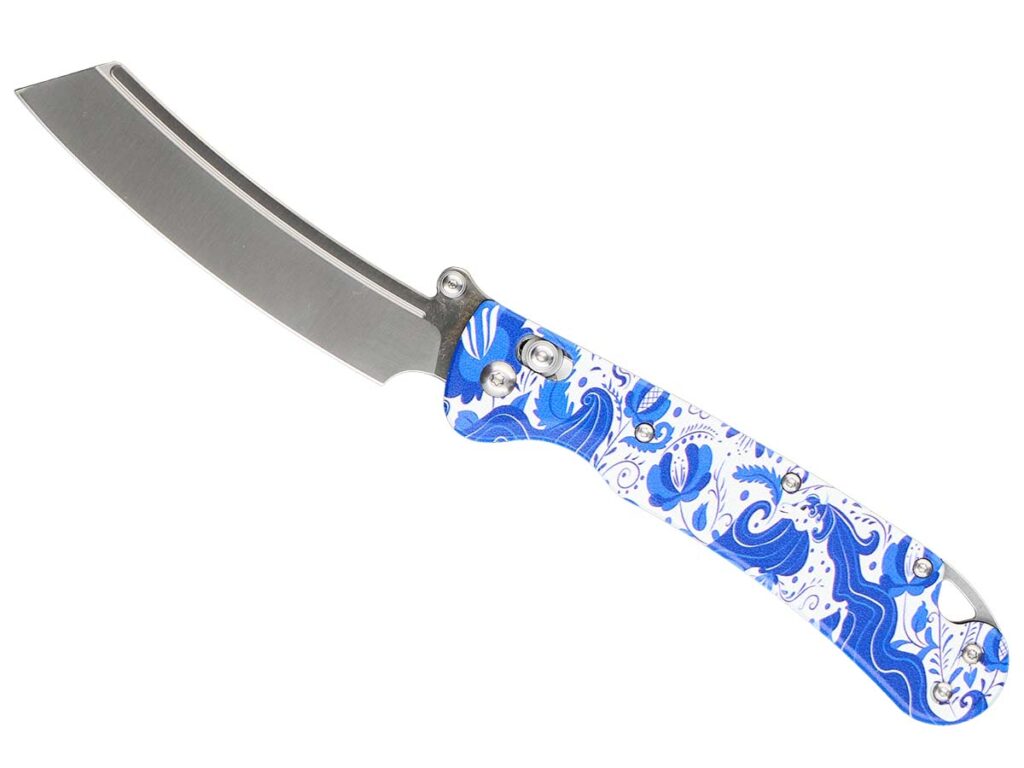
Pattern: Modified Cleaver Knife Type: Folding Blade Length: 3.88″ Overall Length: 8.625″ Liners: Steel Blade Grind: Flat Scale: G10 with 3D print Blade Material: VG10 Date Available: Now MSRP: $71
Vero Engineering Aura
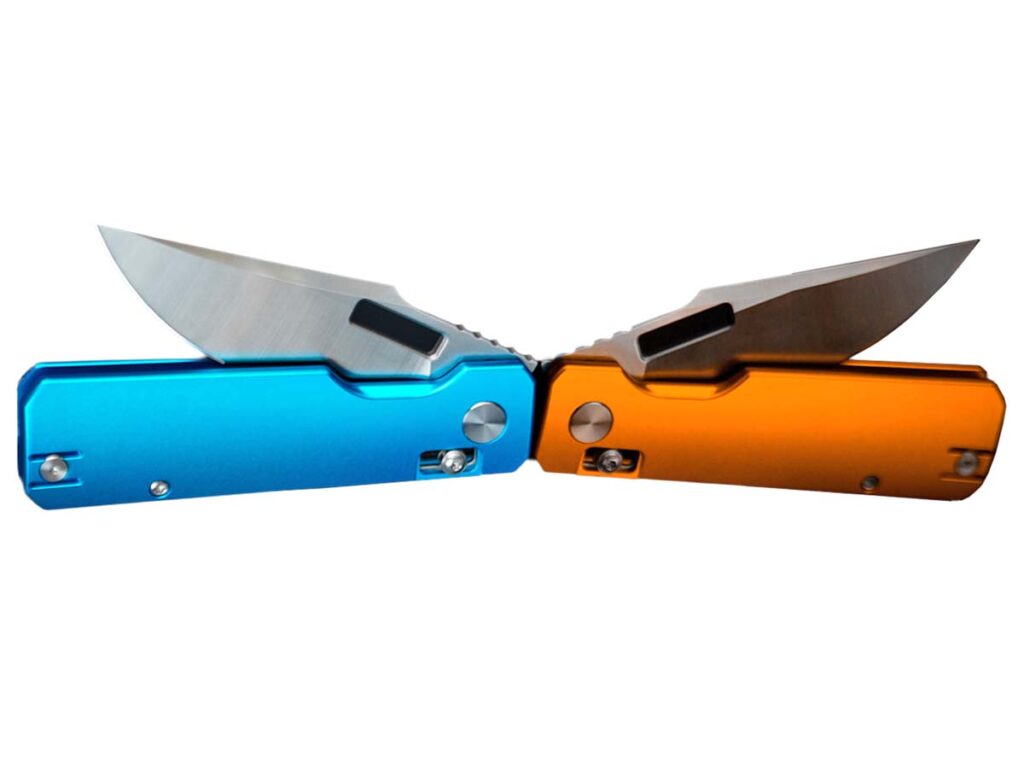
Knife Type: Folding Blade Length: 3.3” Overall Length: 7.7” Liners: Steel Blade Finish: Machine Belt Satin/Stonewash Scale: Aluminum Blade Material: 14C28N Date Available: Summer 2026 Inside Edge: The Aura has a reversible wire pocket clip. MSRP: Approx. $100
Bear & Son Cutlery Locking Farmhand w/clip
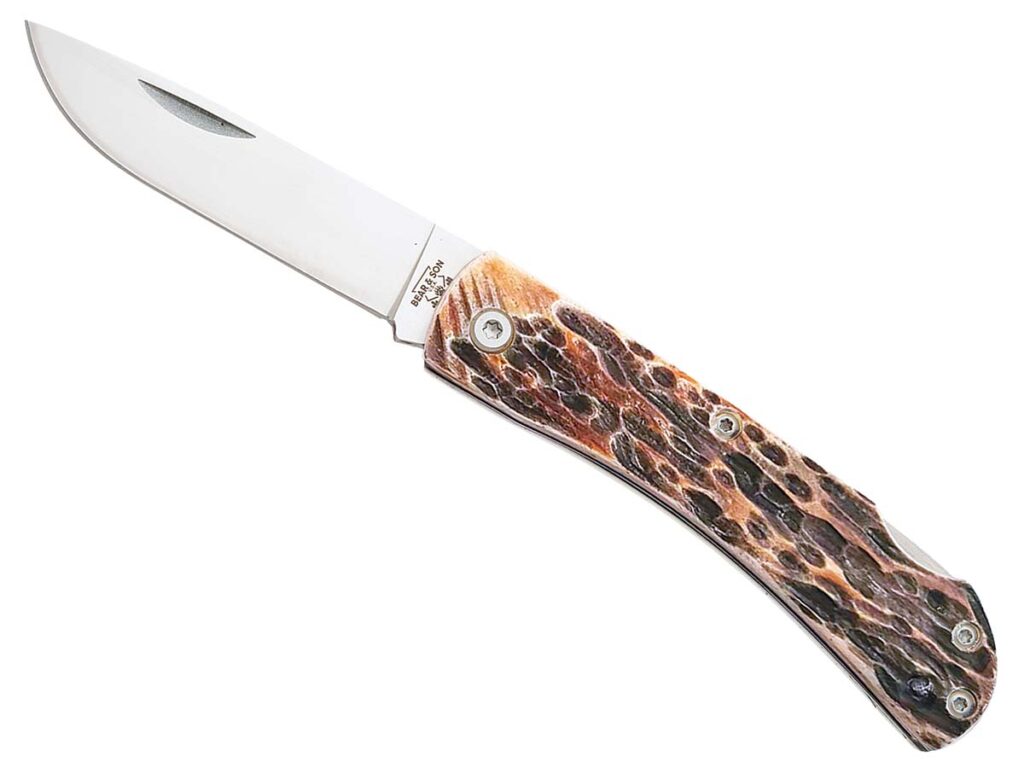
Pattern: Drop Point Knife Type: Pocketknife Blade Length: 2.75” Overall Length: 6.375” Closed Length: 3.625” Locking Mechanism: Lockback Handle: Genuine India Stag Bone Blade Material: High Carbon Stainless Steel Date Available: Now Inside Edge: Made in Alabama MSRP: $56
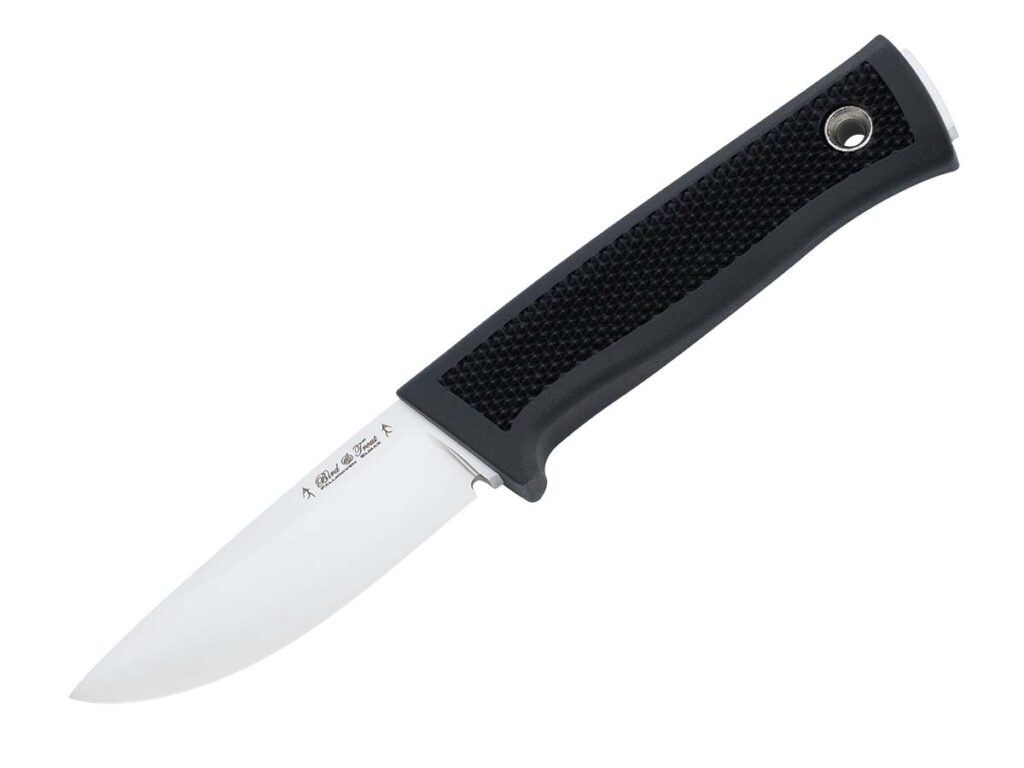
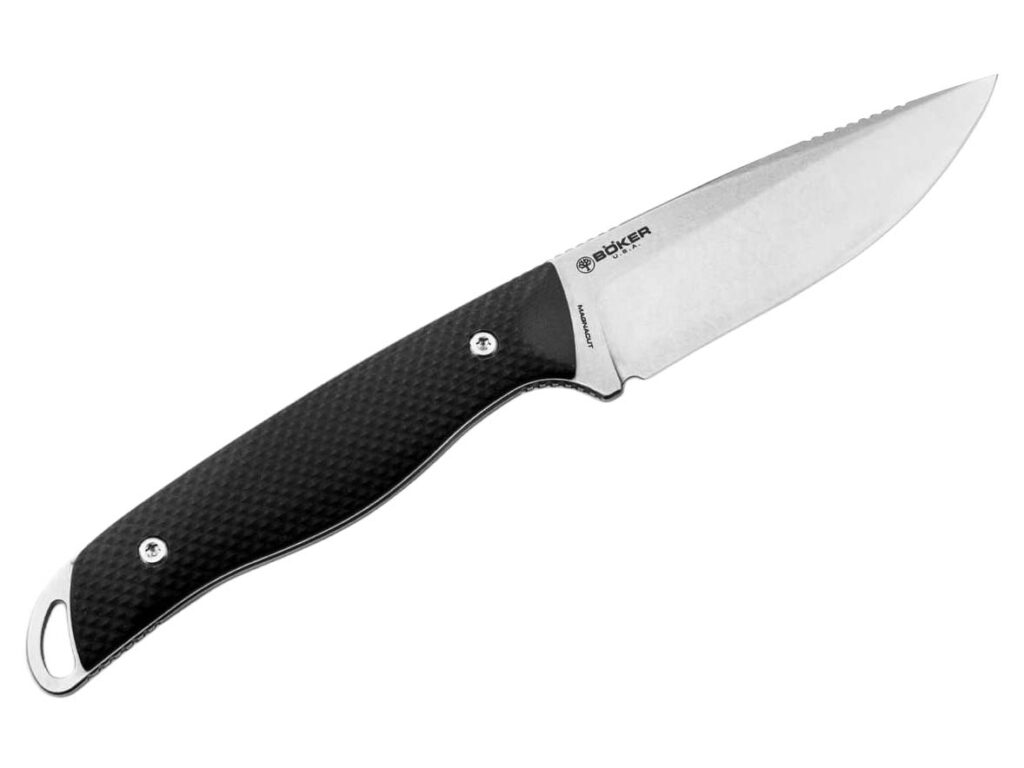
Knife Type: Fixed Blade Blade Length: 3.6″ Overall Length: 7.48″ Pattern: Drop Point Scale: Textured Black G10 Blade Material: 154CM Sheath: Black Custom-Fitted Kydex Date Available: Now Inside Edge: Handcrafted by Boker USA in Denver, Colorado. Perfect for bushcraft, hunting, survival, trekking, camping & EDC. Also available in a high-visibility orange G10, MagnaCut version. MSRP: $200
Maserin 917 Woodsman
Pattern: Bushcraft Knife Type: Fixed Blade Blade Length: 4.01” Overall Length: 9.21” Weight: 6.35 oz. Blade Grind: Flat Scale: Brown Paper Stone Micarta (Also Available In Green Jute Micarta and Black Denim Jeans Micarta) Blade Material: Nitro X7 Blade Finish: Stone Washed Sheath: Black Italian leather sheath with removable dual belt loop position and hook. Date Available: Now MSRP: $ 215
CRKT Orochi
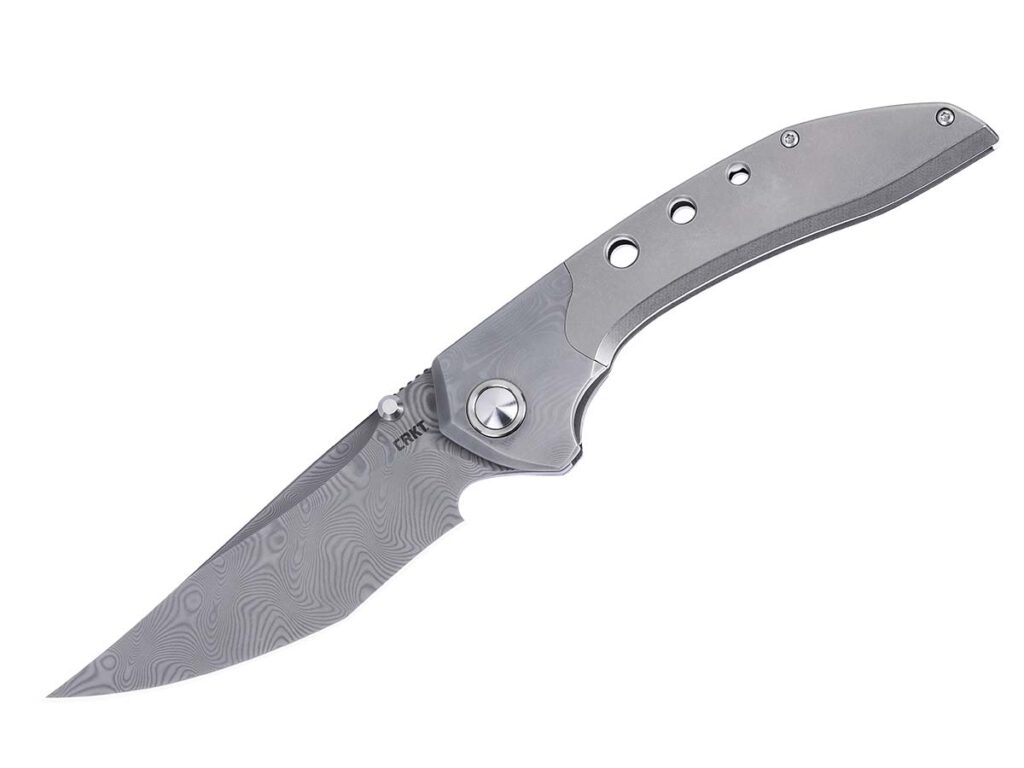
Knife Type: Folding Knife Lock Type: Frame Lock Blade: Clip Point Blade Length: 3.55″ Overall Length: 8.16″ Liners: Titanium Blade Grind: Flat Scale: Titanium With Damascus Bolster Blade Material: Damascus Date Available: Now Inside Edge: Named after the legendary Japanese serpent and its presence in anime, the Orochi features flowing lines, including a clip point, recurve blade, for balance and precise handling. The knife can be deployed either with discreet flipper tab, mirroring the custom knife its inspired by, or by its dual thumbstuds. MSRP: $200
Big Idea Design Ti Manu
Designer: Ken Onion Jr. Overall Length: 7.5” Blade Length: 3.25” Blade Steel: S90V Blade Shape: Modified Drop Point Handles: Grade 5 Titanium Opening: Dual Thumbstuds Date Available: August Inside Edge: All Big Idea Design knives only have 2 screws, The pivot and a screw in the back for the reversible pocket clips. The Ti Manu also was designed to work with both Phosphor bronze washers and bearings. Both options will be included so people can swap them out at will. The lock face is an integrated ceramic ball bearings in lieu of an insert, so it has a super smooth travel and lockup. MSRP: $250
Civivi Knives Kitefin
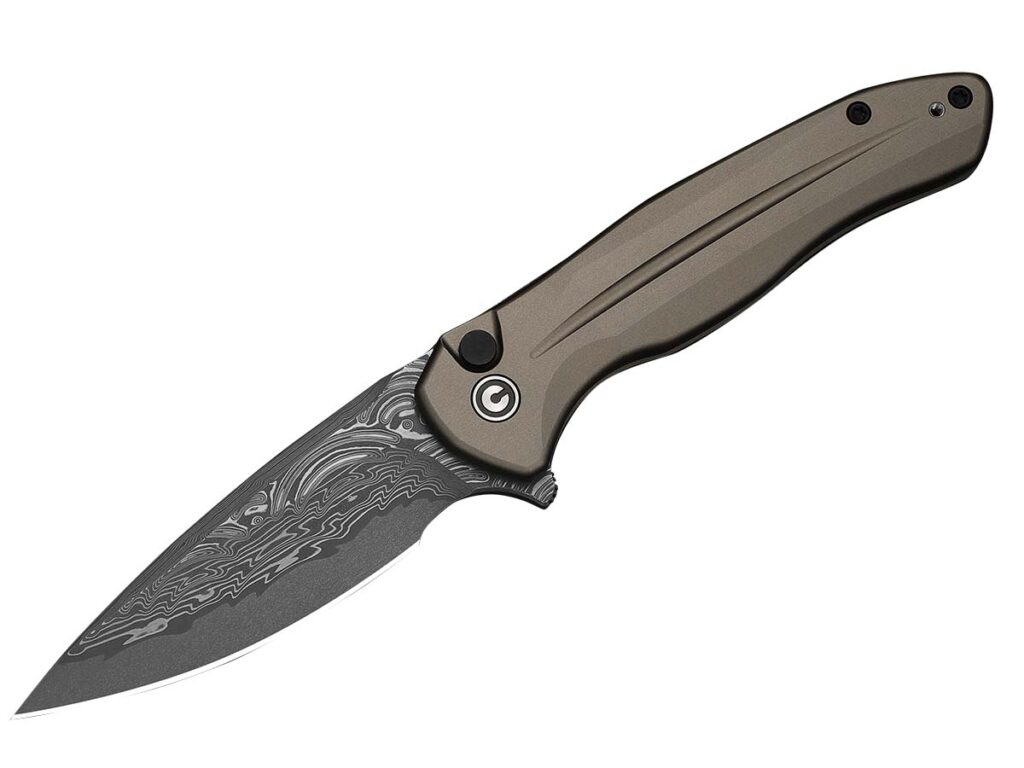
Knife Type: Folding Lock Type: Button Lock Blade Length: 3.22″ Overall Length: 7.52″ Blade Grind: Hollow Scale: Aluminum Blade Material: Damascus (14C28N option also available) Date Available: Now MSRP: $110
Halfbreed Blades MILF-05
Action: Flipper Folder Carry: Pocket Clip Designer: Jonathan Loftes Lock Type: Frame Lock Blade Steel: CPM S35VN Blade Grind: V Blade Edge: Plain Edge & Partially Serrated options Blade & Handle Finish: PVD Coated Blade Style: Spear Point Blade Length: 3.54″ Handle Material: 420J2 Stainless Steel frame, liner, spacers; G10 scale Washers: Phosphor Bronze Overall Length Open: 8.26″ Date Available: Now Inside Edge: The MILF-05 comes pre-set with a firm action; this can be adjusted for speed via the Torx head pivot point. MSRP: $240
Bear OPS Load Out
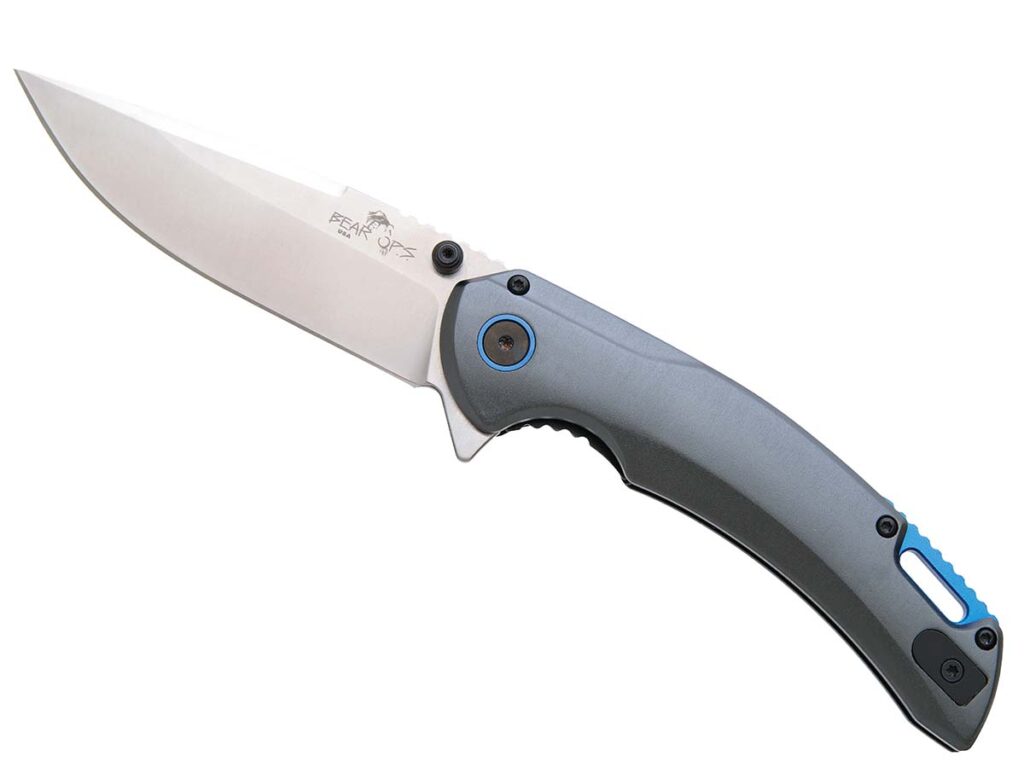
Pattern: Drop Point Knife Type: Folder Blade Length: 3.5” Overall Length: 8” Closed Length: 4.5” Lock Type: Liner Lock Handle: Aluminum Blade Material: 14C28N Sandvik Date Available: Now Inside Edge: Made in Alabama with assisted opening, reversible pocket clip and ball bearing washers. MSRP: $110
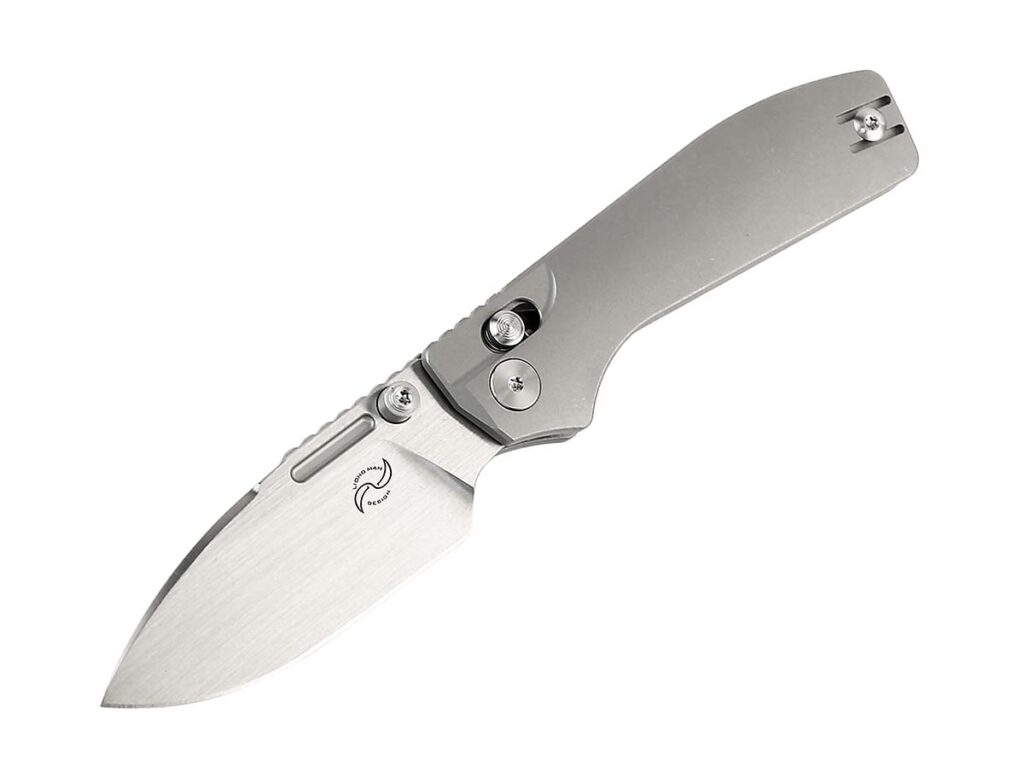
Liong Mah Design SFD-Small Field Duty
Pattern: Drop Point Knife Type: Folder Blade Length: 3” (2.6” cutting edge) Overall Length: 6.75” Liners: Steel Blade Grind: Flat Scale: Titanium Blade Material: CPM MagnaCut Date Available: August Inside Edge: Hand rubbed satin finish on the blade. MSRP: $278
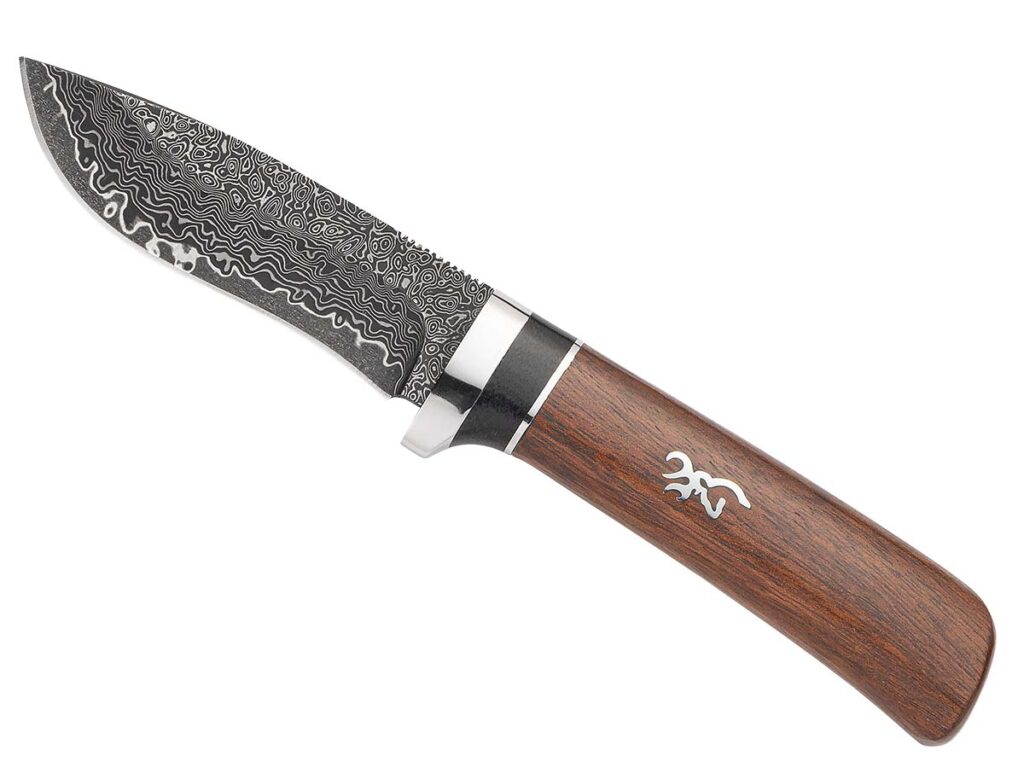
Browning Knives Stormy Pass Fixed Small
Pattern: Drop Point Knife Type: Fixed Blade Blade Length: 3.5” Overall Length: 7.75” Blade Grind: Hollow Scale: Hidden Tang Wood Blade Material: Damascus Sheath: Leather Date Available: Now Knife To Know: Stainless Guard with black Micarta spacer. MSRP: $140
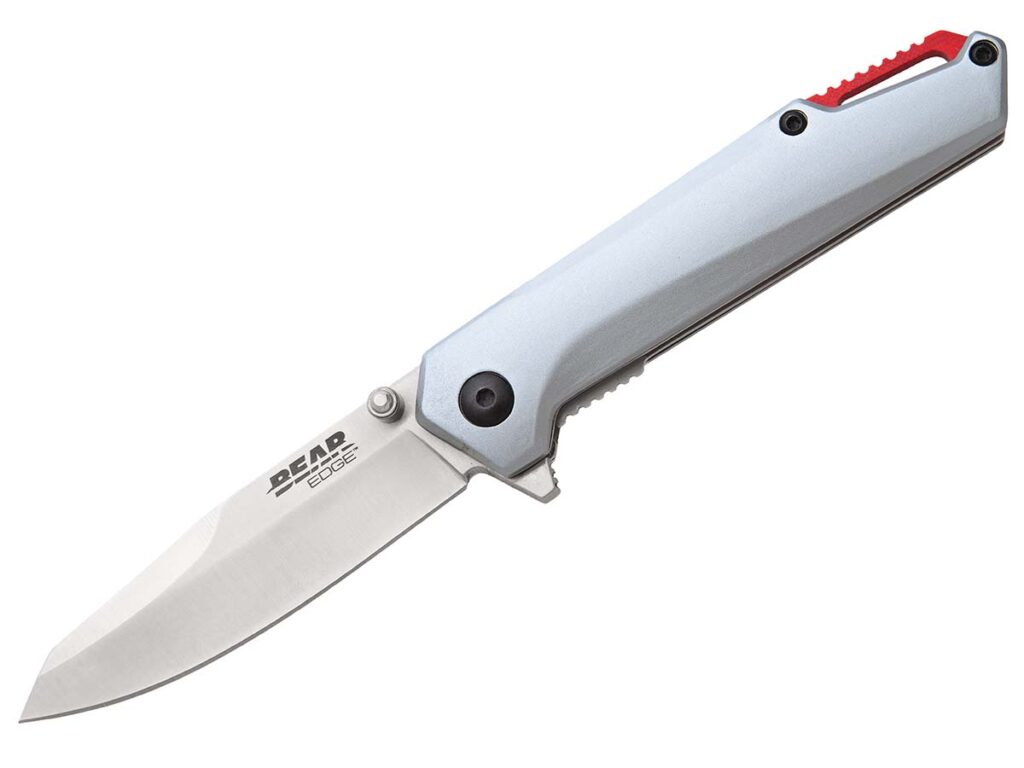
Bear Edge Light Grey Aluminum Folder
Pattern: Drop Point Knife Type: Folder Blade Length: 3” Overall Length: 7” Lock Type: Liner Lock Handle: Aluminum Blade Material: 440 Stainless Steel Weight: 3.2 oz. Date Available: Now MSRP: $43
Straightline EDC Ally
Knife Type: Fixed Blade Blade Length: 2.68” Overall Length: 5.98” Blade Grind: Flat Scale: 3D Milled Bronze Anodized Gr. 5 Titanium Blade Material: M390 Blade Finish: Black PVD + Stonewash Sheath: Black Leather Sheath With Magnets Inside Edge: Igor Bortolussi, founder of the company, named the knife after his daughter Allegra and its design is based on a drawing she made when she was 4 years old. She’s 9 now. Date Available: Now MSRP: $249
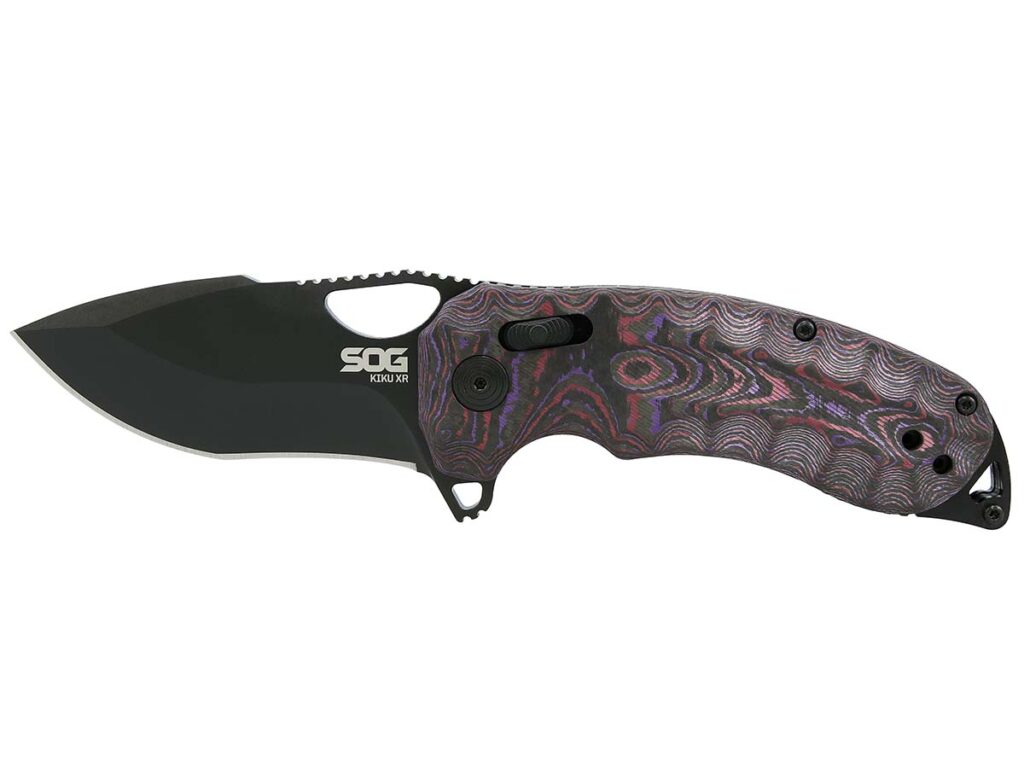
SOG Specialty Knife & Tool Kiku XR
Pattern: Tanto Knife Type: Folder Blade Length: 3.03” Closed Length: 4.30” Lock Type: XR Lock Handle: Fatcarbon Carbon Fiber Blade Material: CTS XHP Date Available: Now Inside Edge: Reversible low-carry belt clip with XR Lock, thumb hole, kick opening mechanism. MSRP: $400
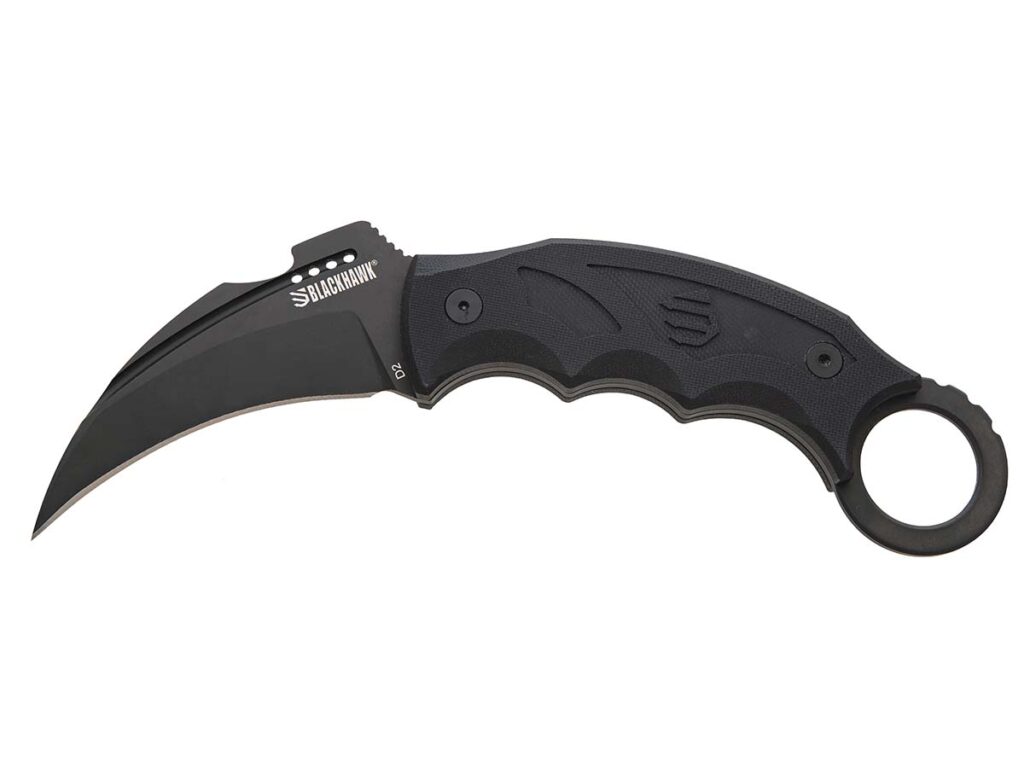
BLACKHAWK Garra Fixed Karambit
Pattern: Karambit Knife Type: Fixed-Blade Blade Length: 3.25” Overall Length: 8” Handle: Black Zytel Blade Material: D2 Tool Sheath: Kydex Date Available: Now Inside Edge: Comes with conceal carry holster, removable Kydex sheath. MSRP: $160
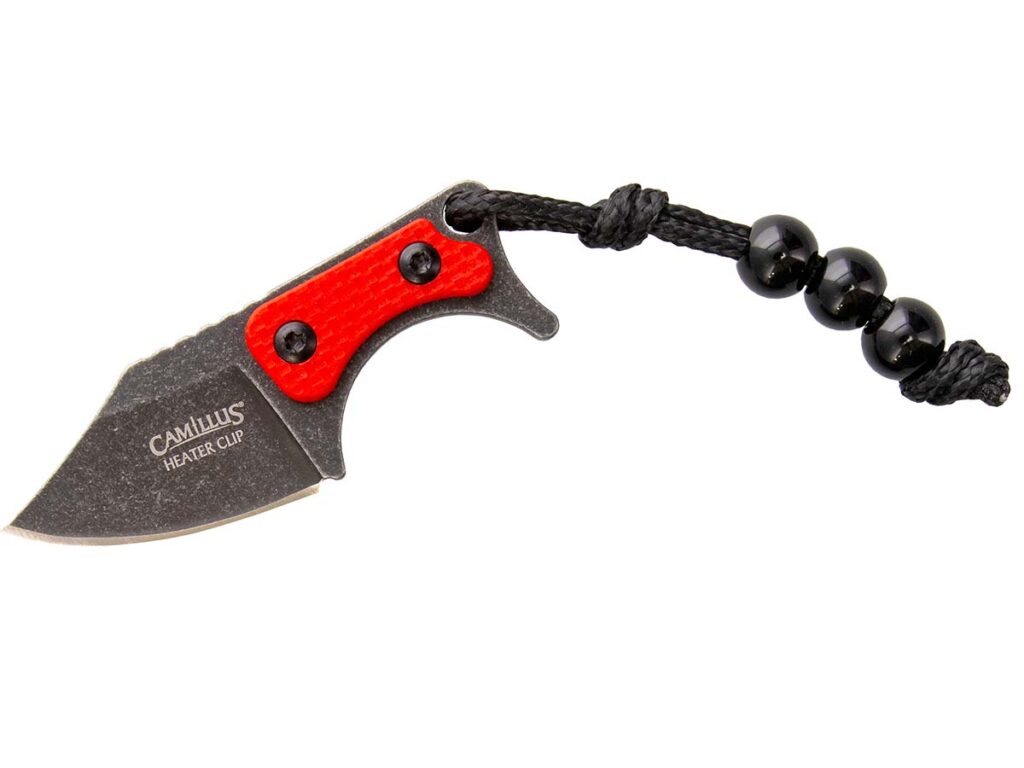
Camillus Knives Heater Mini
Pattern: Drop Point Knife Type: Neck Knife Blade Length: 1.5” Overall Length: 3” Blade Grind: Plain Handle: G10 Blade Material: 3CR13 Sheath: Kydex Date Available: Now MSRP: $19
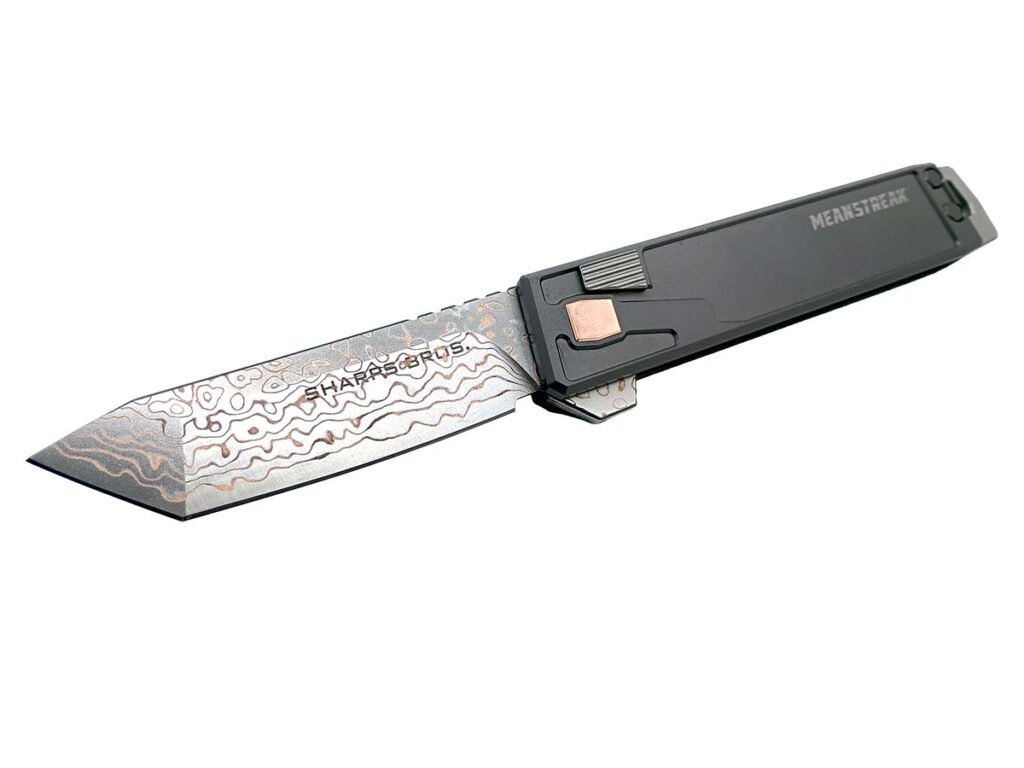
Pattern: American Tanto Lock Type: Button Lock Blade Length: 3.25″ Overall Length: 7.75″ Liners: Brass Bearing With Ceramic Ball Blade Grind: Flat Scale: Titanium Scales & Clip Blade Material: VG10/Copper Damascus, With Copper Pivot Date Available: Now MSRP: $170
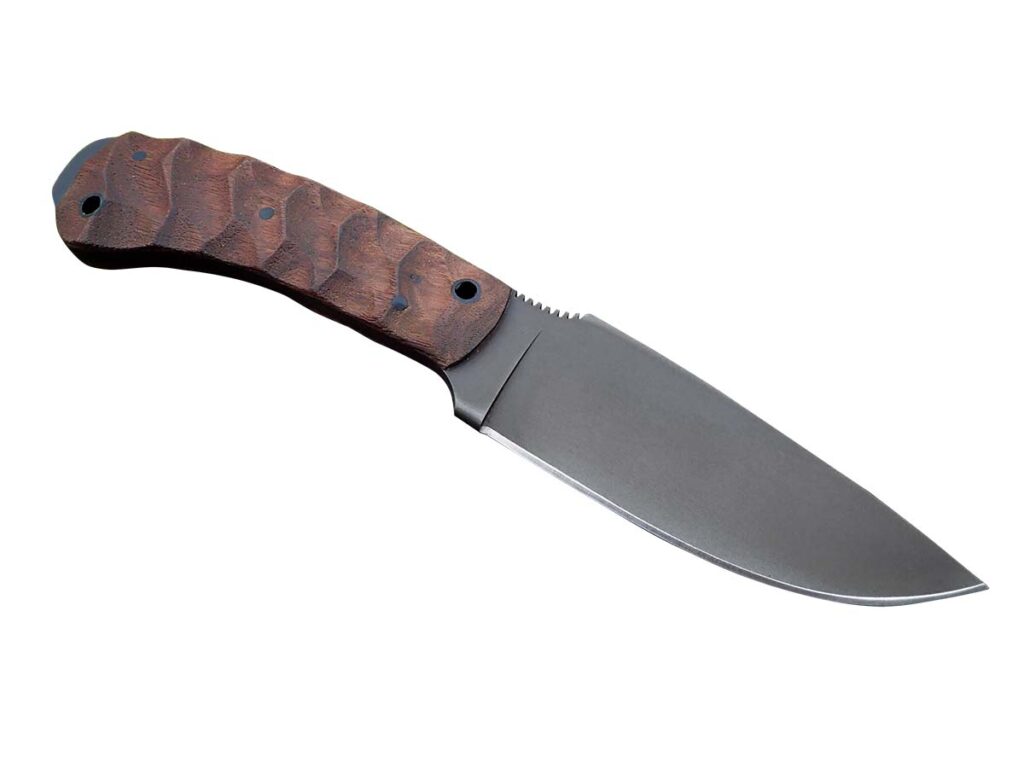
Winkler Knives Drop Point Hunter
Pattern: Drop Point Knife Type: Fixed Blade Blade Length: 4” Overall Length: 8.625” Blade Grind: Flat Scale: Walnut Blade Material: 80CrV2 Sheath: Lined Boltaron with leather cover Date Available: Limited Availability at BLADE Texas 2026 and BLADE Show Atlanta 2026. Publicly Available June. Inside Edge: This knife was designed by combining popular features from several models to create an all-in-one blade tough enough for the hardest tasks yet aesthetically appealing enough for everyday enjoyment. MSRP: $375
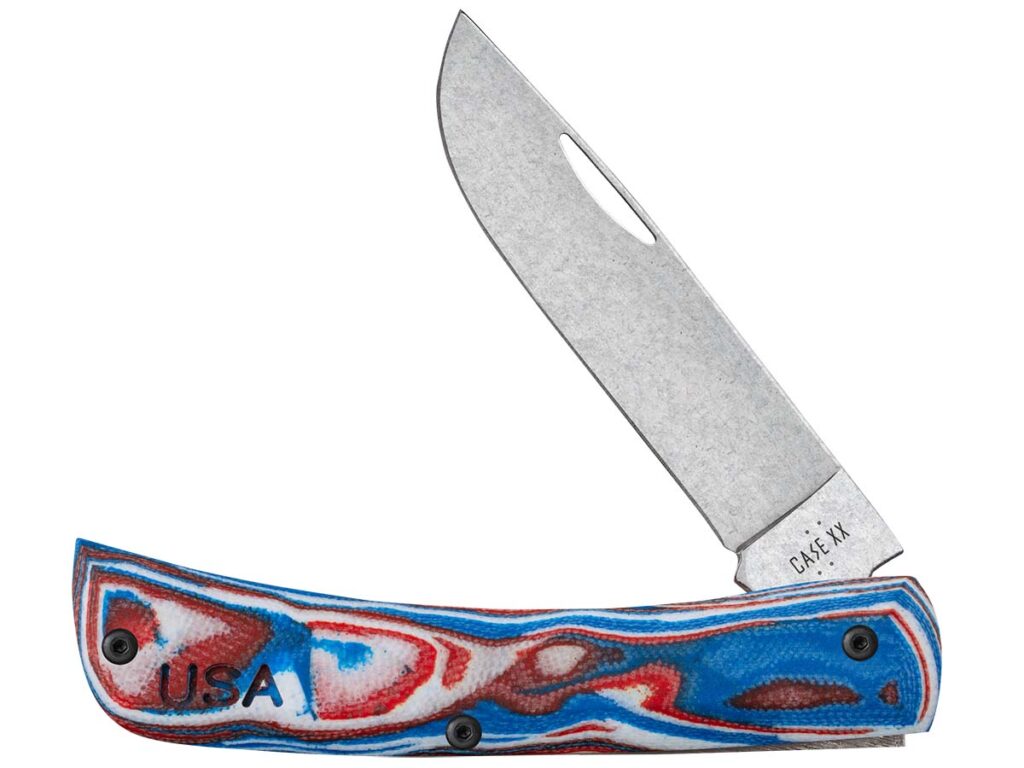
Case Knives XR Sod Buster Jr.
Knife Type: Slip-Joint Folder Blade Length: 2.8” Overall Length: 3.625” Weight: 2.1 oz. Blade Grind: Flat Blade Finish: Stonewash Satin Scale: Red, White & Blue Burl G-10 Blade Material: S35VN (Stainless) Inside Edge: This knife will be made in limited quantities. “USA” is lasered into the G-10 on one end. Date Available: Now MSRP: $125
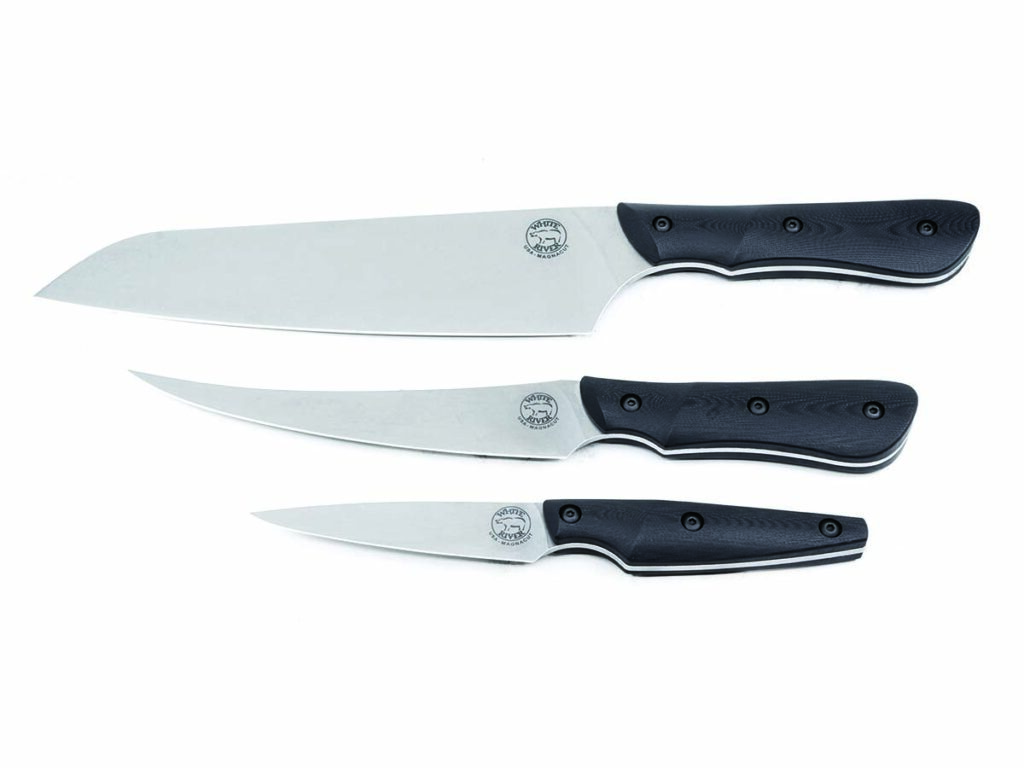
White River Knives S&S 3 Knife Chef Set
Pattern: Chef Set Knife Type: Chef, Boning, Paring set Designer: Smith & Sons Blade Length: 7.5″, 5.8″, 3.4″ Overall Length: 12.5″, 9.9″, 7.25″ Blade Grind: Flat Scale: G10 (Richlite) Blade Material: CMP MagnaCut Available: Now Inside Edge: Designed by Smith & Sons and crafted in the U.S.A. by White River Knives, this premium kitchen set includes three essential blades: a 7.5″ Chef Knife, a 5.8″ Boning Knife, and a 3.4″ Paring Knife. Together, they cover nearly every task in the kitchen—from precision prep work to heavier slicing and trimming. Each knife is built from ultra‑durable, highly corrosion‑resistant MagnaCut steel, heat-treated to a remarkable 63–64 HRC for exceptional edge retention and long‑lasting performance. MSRP: $600
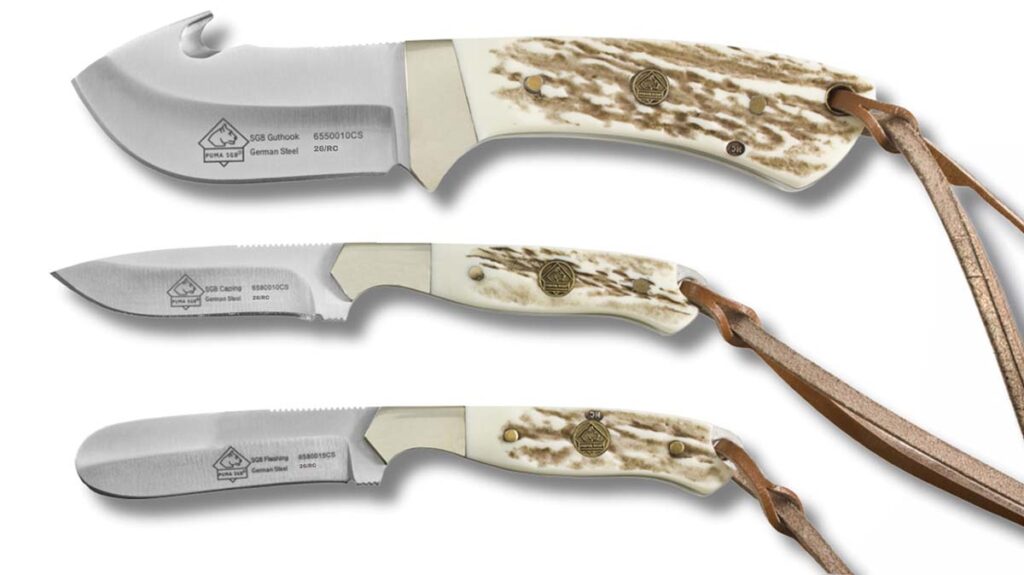
Puma Knife Trophy Car Set
Blade Length: 2.8″ (Gut Hook), 2.5” (Caping, Fleshing) Blade Grind: Hollow Ground, Satin Finished Scale: POM Commando Stag (Synthetic Material) Blade Material: 1.4116 German Cutlery Sheath: Rugged Leather Sheath (Holds All Three Knives) Date Available: Now Inside Edge: Purpose-built trophy care kit for hunters—includes a gut hook skinner, caping knife, and fleshing knife with a premium leather sheath to keep the full set organized. Designed to handle skinning, caping, and hide prep cleanly whether you’re in camp or at home, and ideal for getting a trophy ready for the taxidermist. MSRP: $175
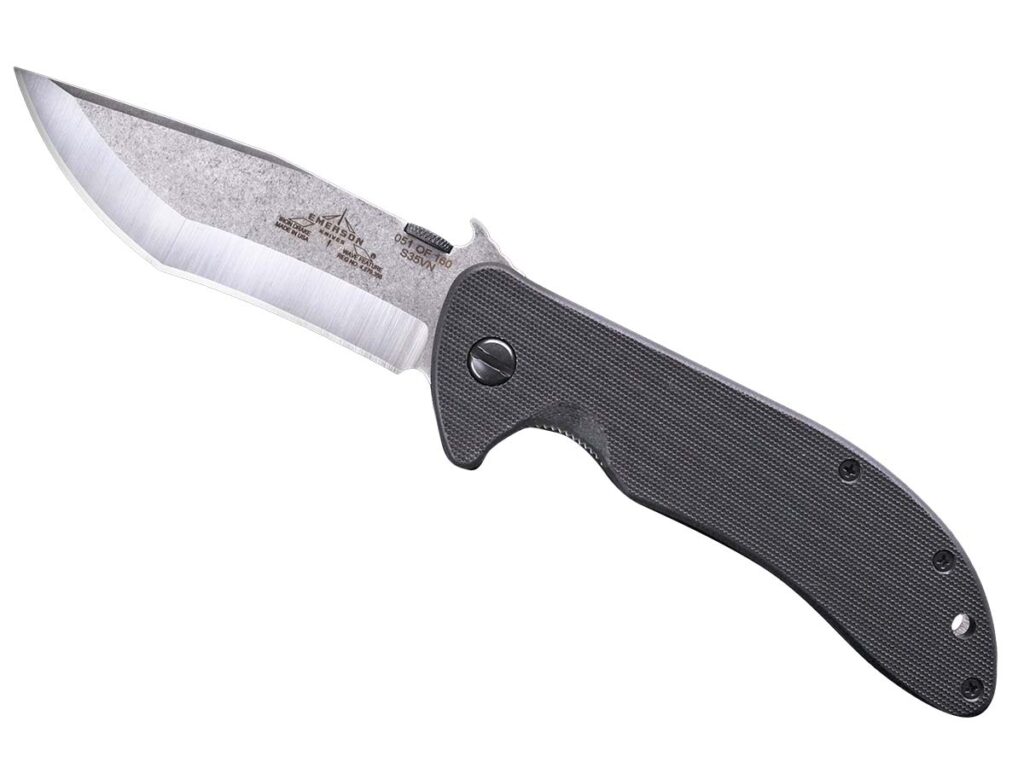
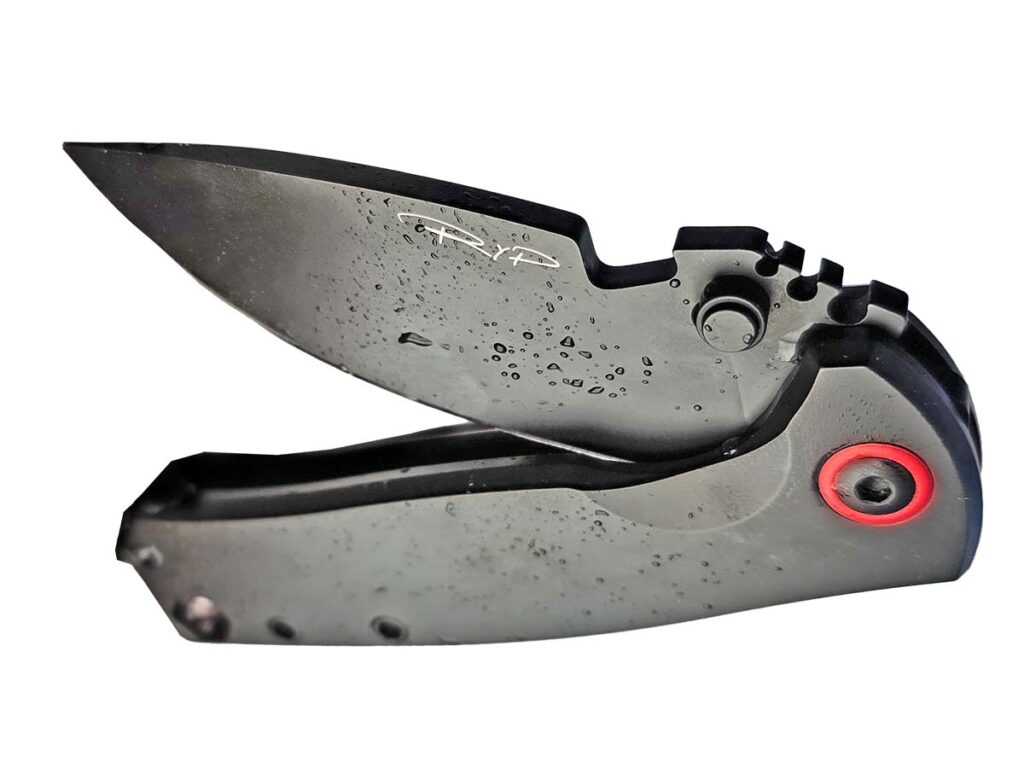
DPx HEST F Urban Ti Redeye
Knife Type: Folding Blade Length: 2.9” Overall Length: 6.7” Blade Grind: High Saber Scale: Titanium Blade Material: M390 Date Available: Now Inside Edge: Flipper with red aluminum pivot ring and red backspacer. MSRP: $425
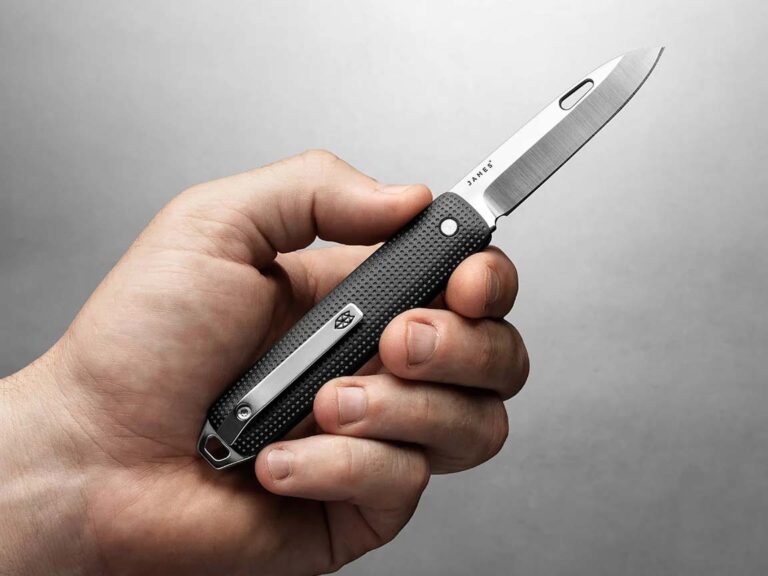
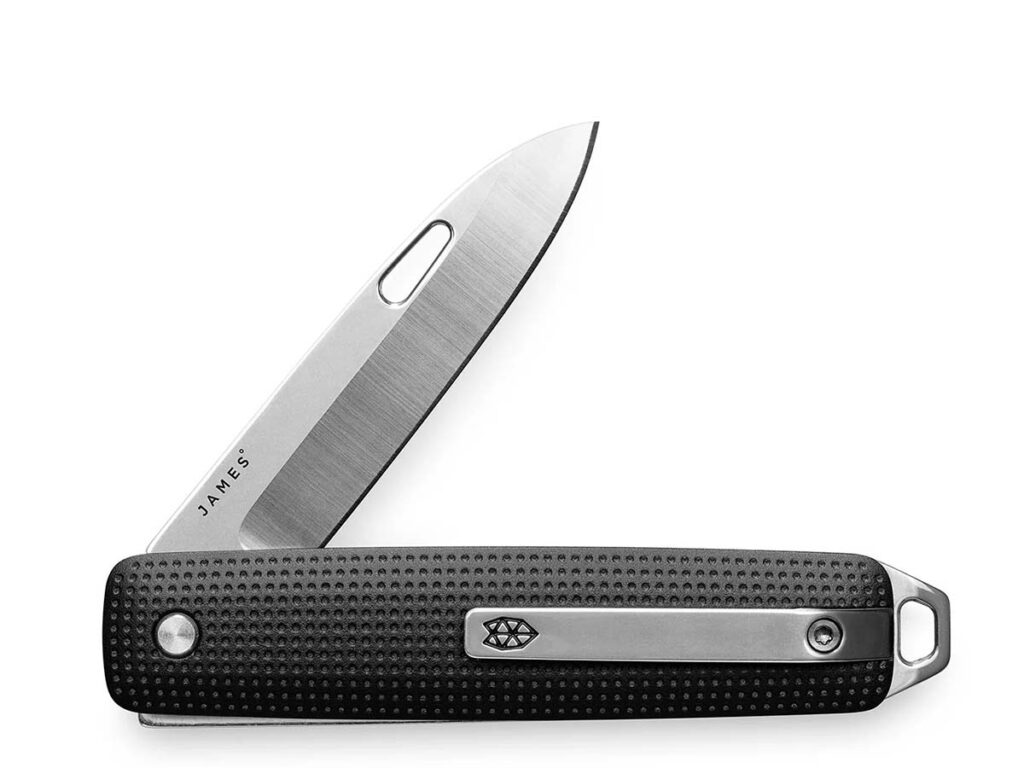
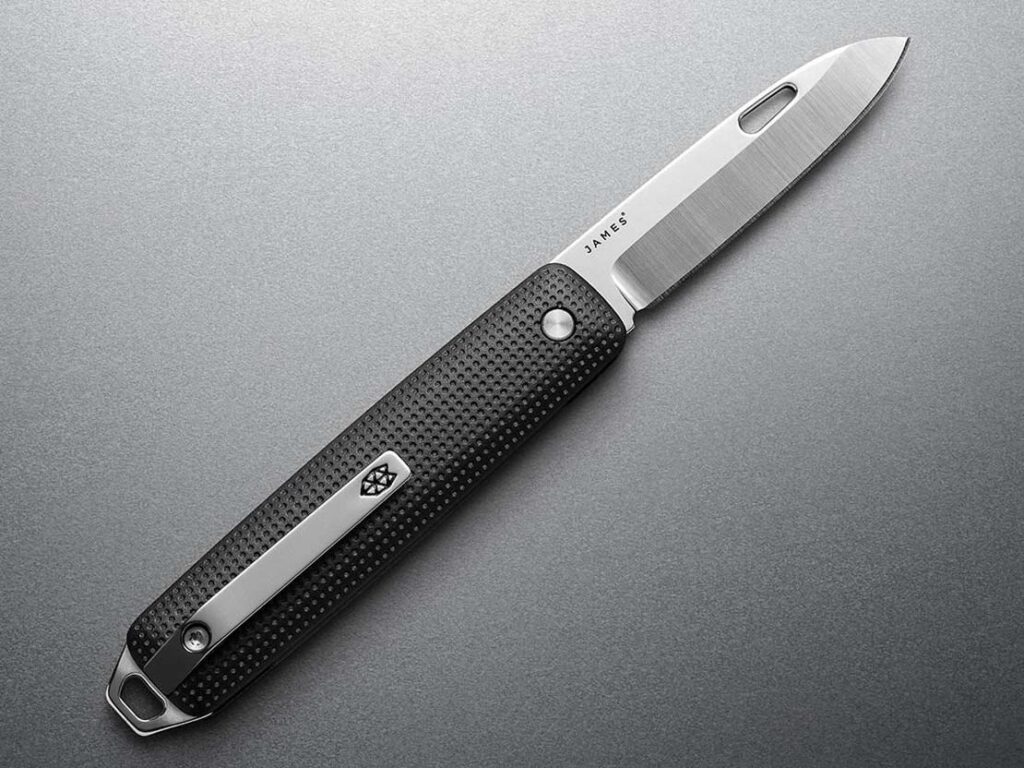
James Brand evolves the Ellis into an ultra-thin, minimalist slip joint multitool.
When The James Brand first introduced the Ellis, it occupied a specific niche: a knife for people who needed a bit more utility than a single blade provides, but who didn’t want the bulk of a traditional multi-tool. This latest iteration takes that minimalism to its logical conclusion. By rethinking the architecture of the handle and the clip, the Portland-based design team has produced their thinnest knife to date—a tool that literally measures in thinner than a standard pack of gum.
The core of the redesign centers on the handle and carry system. Moving to 6061 aircraft-grade aluminum scales has allowed for a sleeker, more ergonomic profile that maintains structural integrity while shedding unnecessary width. Perhaps the most significant change is the move to a pen-style pocket clip. This low-profile stainless steel clip mimics the deep-carry nature of a high-end writing instrument, allowing the 0.4-inch thick frame to disappear against the pocket seam.
Functionally, the Ellis remains a versatile companion for the modern EDC enthusiast. The 2.6-inch drop point blade is ground from Sandvik 12C27 stainless steel, a Swedish alloy prized for its corrosion resistance and ease of sharpening. Because it utilizes a non-locking slip joint mechanism and a machined nail slot for two-handed opening, it is a globally-friendly option, compliant with strict carry laws.
Beyond the primary edge, the Ellis features what the company calls its “All Things” pry bar and scraper integrated into the backspacer. This secondary tool is robust enough to handle the tasks that usually ruin a knife tip—turning screws, scraping labels or prying open a cold beverage at the end of the day. Riding on phosphor bronze washers, the deployment is smooth and deliberate, reinforcing the brand’s reputation for clean, intentional industrial design.