Home Blog Page 8

Dagger Design: Mastering Wire Wrapping The Handle

0

Wire wrapping the handle of a dagger is the finishing touch to the process, but requires a fine touch and patience.

Once the wire grooves and flutes are complete, the entire handle finished to its final state and the tang slot broached, insert the wires and lock them in tightly. As mentioned, 24-gauge wire looks good. If you want to use silver, Argentium or fine silver are both better choices than sterling, which tarnishes more quickly. Twenty-four-karat gold is terribly expensive but is the ultimate in luxury.

If you have Rolls-Royce taste but a Toyota budget, consider gold-filled wire as an alternative to pure gold. It’s brass at the core but at least 20 percent gold by thickness, and consequently much more durable than simple gold electroplate. It usually comes in 14k only. As a reference point, not long ago 12 feet of 24-gauge pure silver wire could be had for a little under $9. The same length of 24k gold in the same size was $1,050. The same length of gold fill was about $20. Save the 24k gold for times when you want to make a statement or your customer pays for the gold in advance.

With a hook chucked in a hand drill, hook the resulting large loop, pull it tight and turn on the drill. Keep the tension constant—as you twist the wire it will pull you toward the vise.

Buy your wire dead-soft from your favorite supplier. You need about 20 percent more wire than twice the combined length of your wire grooves.

To twist the wire evenly, you must twist all of it at the same time. Clamp the two ends together tightly in a vise. With a hook chucked in a hand drill, hook the resulting large loop, pull it tight and turn on your drill. Keep the tension constant—as you twist it the wire will pull you toward the vise. If it breaks off at the vise, just re-clamp it and continue twisting. There’s no rule about how tightly the wire should be twisted, but tighter twists look better. If you aren’t sure it’s tight enough, twist it some more.

Annealing The Wire

Drill diagonal holes inside your groove, starting halfway between the broached hole and the edge.

The next step isn’t required but will make things easier. Most metals, including gold and silver, work harden. After all of that twisting your wire will be hard and springy, and it’s much easier to install your wires if they’re dead soft.

To soften the wire back to its original state, you must anneal it. To do this, coil it tightly around a 2-inch piece of pipe or something similar, and tie up the coil. Using a propane torch, heat the coil evenly until it glows slightly. One trick to make sure you don’t melt it is to color your wire thoroughly with a Sharpie® marker. When the ink burns off, it’s time to stop.

Don’t forget your essential tools—including your Bob Ross Happy Little Tree Mints.

Pick up the coil and drop it in water to cool it rapidly. It’s now dead-soft again but is likely discolored from oxidation. To remove the discoloration, let the coil sit in warm pickle solution that is available from any jewelry supply vendor. If you don’t want to go to the trouble of pickling, you’re better off dealing with the trouble of work-hardened wire.

Wire Installation

To install the wires, a little bit more work on the handle is necessary. Starting from the end points of your wire grooves, cut new grooves into both ends of your handle for at least half the distance between the outside of the handle and the tang slot. A Dremel or Foredom tool is best for this, but you can use a file also. If you use a file, go ahead and groove all the way to the tang slot—it’ll be easier that way and invisible on the assembled knife. These grooves need to be equal in depth to the diameter of the wire so that the handle will fit tight against the guard or pommel when the wire is installed and the knife is fully assembled. Cutting the line at an angle rather than perpendicular to the circumference will help when you pull things tight later.

Drill diagonal holes inside your groove, starting halfway between the broached hole and the edge. Drill at an angle toward the center so that the hole for the wire exits into the tang slot about a quarter inch from the top and bottom of the handle, in line with the end of your groove. Make the holes slightly larger than your wire diameter.

After the handle is fully assembled and the glue is set up, perform a final finish check. The wires should be tight and fully seated in the grooves.

You’re almost to the fun part. Cut your wires at least an inch longer than the length of the groove to give yourself some extra to work with. To install the wire, thread one end through the hole you just drilled into the tang slot, grab the end with some small pliers, and bend the end back up toward the handle end, locking it in. Though not strictly necessary, you can pin the wire with a toothpick in the hole and a drop of CA Glue or 5-minute epoxy for extra security. This can be cut off and sanded flush later. Pull the wire tight, seating it in your groove, and repeat the process to lock in the other end. This method guarantees that your wires are as tight as they can possibly be. The wires and glue and toothpicks should lay flush with or below the surface of the ends of the handle. Cut off the excess wire inside the tang slot to ensure the wire doesn’t interfere with the final fit-up of your knife.

Finish Check

After the handle is fully assembled and the glue is set up, perform a final finish check. The wires should be tight and fully seated in the grooves. You can lightly buff the wires for extra shine but use a light touch to avoid unintended polishing of the handle. Tarnished wires can easily be brightened up with a Sunshine® Polishing Cloth. Don’t forget to give yourself a pat on the back.

That’s A Wrap

Silver wire wraps the rosewood grip of Duane Bomar’s dagger. The 10-inch blade is a damascus of 1084 carbon and 15N20 nickel-alloy steels. Overall length: 15 inches. (Jocelyn Frasier image)

Precision flutes and carefully inlaid twisted wires transform a utilitarian grip into a truly exemplary expression of craftsmanship. By selecting materials that balance luxury and performance, you anchor your design in both history and function. By following the instructions in this series, you’ll be able to master this exemplary style, and use the experience as foundation for future creativity.

Read More On Daggers:

First Look: Spyderco Retract Angles At EDC Kukri

Ed Schempp Reimagines the Classic Kukri Silhouette for Accessible Everyday Carry.

As Spyderco kicks off its 50th-anniversary celebrations, the brand has unleashed a wave of high-end releases featuring exotic steels and carbon fiber scales. However, among the titanium and super-steels, a more under-the-radar model is capturing the attention of enthusiasts who value historical design and practical ergonomics: the Spyderco Retract.

Designed by the renowned custom knifemaker and bladesmith Ed Schempp, the Retract is a study in leverage. Schempp is well-known for his ability to translate ancient blade shapes into modern folding platforms, and with this model, he has turned his focus toward the legendary Nepalese kukri.

Spyderco Retract Angle

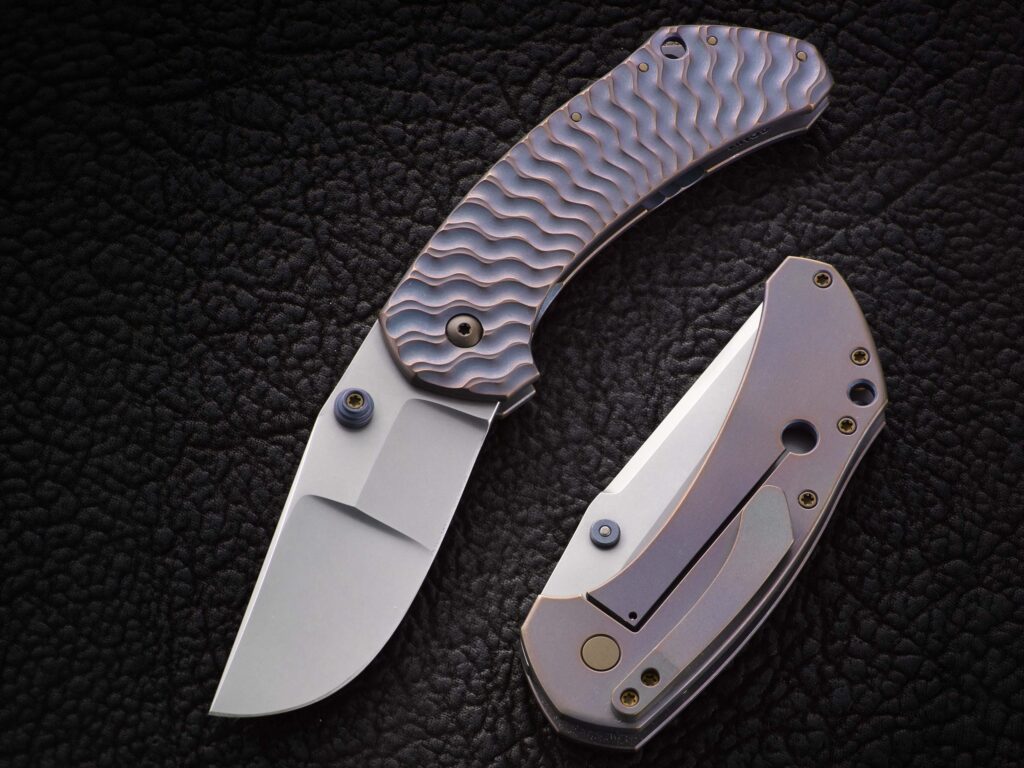
The most striking feature of the Retract is its dramatically curved, recurve blade. By utilizing a negative angle—where the blade cants forward relative to the handle—the design naturally enhances cutting leverage. This is particularly noticeable during draw cuts, where the geometry of the 3.4-inch blade does much of the work for you.

Spyderco Retract Profile

To keep the knife high-performing yet accessible, Spyderco opted for 9Cr18MoV stainless steel. While it sits on the more budget-friendly side of the spectrum, it is a capable steel that is famously easy to maintain and sharpen in the field. The blade features a full-flat grind and the iconic Trademark Round Hole for easy, ambidextrous deployment.

Retract Ergonomics

Despite its unusual silhouette, the Retract is surprisingly pocket-friendly. The handle is built on a foundation of skeletonized stainless steel liners, providing a rigid and reliable LinerLock mechanism. The lock is machined nearly flush to the scales, a thoughtful touch that prevents unintentional closure during heavy use.

Spyderco Retract Closed

The handle scales are crafted from peel-ply-textured G-10, offering a secure, non-slip grip that holds up in wet conditions. Combined with the jimping on the blade’s spine, the knife allows for a high degree of control and stability when exerting downward pressure.

Cost

Perhaps the biggest story surrounding the Retract is its price. In a market where high-end folders are climbing toward the mid-hundreds, Spyderco has positioned the Retract as a formidable entry-level tool. With an MSRP of $95—and street prices often dipping even lower—it offers a chance to own a Schempp-designed integral-style worker without a massive financial commitment.

To round out the package, the Retract includes a deep-pocket reversible wire clip for tip-up carry and a lined lanyard hole, ensuring it remains as discreet as it is capable.

Retract Specs
Overall Length: 7.79″
Closed Length: 4.49″
Blade Thickness: .116″
Tip Carry Position: Tip-Up
Blade Length: 3.4″
Edge Length: 3″
Handle Material: G-10
Lock Type: LinerLock
Origin: China
Steel: 9Cr18MoV
Knife Weight: 4.2 oz
Clip Position: Ambi
Grind: Full-Flat
MSRP: $95

Spyderco Retract Kukri Blade Knife

Spyderco Retract Kukri Blade Knife

$71.25
Prices accurate at time of publishing. Affiliate disclosure.

See More New Releases:

2026 BLADE Show Texas: Get Lone Star Sharp

BLADE Show Texas will kick off the ’26 show slate in style.

Knives and knifemakers planetwide and most everything else keen, utilitarian and covetable will inundate the 5th Annual BLADE Show Texas March 20-21 in the Fort Worth Convention Center.

The show will host over 400 exhibitors and thousands of knives from such countries as Australia, Austria, Belgium, Brazil, Canada, China, France, Germany, Italy, Russia, South Africa, Spain, Sweden and elsewhere, not to mention top American custom knifemakers, ABS master and journeyman smiths and knifemaking members of the Knifemakers’ Guild; the lion’s share of members of the South Texas Slipjoint Cartel; the BLADE Show Texas custom and factory knife judging awards; and some of the world’s leading factory knife companies, including current and past winners of BLADE Magazine Knife-Of-The-Year® Awards.

Get ready for some Texas steel set on sizzle.

The Fort Worth Convention Center will be crawling with cutters, with gobs of custom and factory knives—from low end to high end, stock removal to forged, fixed blade to folder—tomahawks, swords, sharpeners and more. And if the exhibiting makers don’t have what you want, the exhibiting custom knife purveyors and factory retailers probably will—and if they don’t, they can put you in touch with who does.

Get Your BLADE Show Texas Tickets Now!

For knife hobbyists and novice and veteran makers alike, the show’s comprehensive selection of knifemaking supplies and suppliers will have the materials, tools and equipment to make the knife of your dreams. From the latest steels, handle materials, hardware and sheath materials to most every knife part extant, the show’s suppliers should have it.

Knife Awards

Zero Tolerance will be among the top factory exhibitors featuring the sleekest folders and fixed blades. ZT’s ultra-lightweight (1.9 ounce) 0117 Duralock folder in CPM MagnaCut stainless 
steel and carbon fiber will be among them. 
Country of origin: USA. MSRP: $300.
Zero Tolerance will be among the top factory exhibitors featuring the sleekest folders and fixed blades. ZT’s ultra-lightweight (1.9 ounce) 0117 Duralock folder in CPM MagnaCut stainless steel and carbon fiber will be among them. Country of origin: USA. MSRP: $300.

The knife judging competitions will recognize the best of the show’s custom and factory knives that are entered. The custom award categories, with last year’s winners in parentheses: Best in Show (Dionatam Franco); Best Bowie (David Lisch); Best Fighter (Dionatam Franco); Best Damascus (Pedro Fornari); Best Hunting Knife (Josh Fisher); Best Folding Knife (Tom Overeynder); Best Kitchen Knife (a Luke Dellmyer/Richard Patterson collaboration); Best M.A.C.K. (Jared Oeser); Best EDC (Evan Nicolaides); Best Art Knife (Paul DiStefano); Best of the Rest (Josh Taylor); and Best Slipjoint (Evan Nicolaides).

The factory award categories, with last year’s winners in parentheses: Best in Show (Poikiloblade); Best EDC (Dauntless Manufacturing); Best American Made (Dauntless Manufacturing); Best Imported (Poikiloblade); Best Fixed Blade (QSP); Best Folder (a Pro-Tech/Vero Engineering collaboration); and Best of the Rest (Vero Engineering).
The custom and factory knife judging is reserved exclusively for show exhibitors, all of whom received packets with complete details on category descriptions, judging rules and more prior to checking into the show.

What’s Next

World-class South African knifemaker Bertie Rietveld (left) returns to help headline the international contingent of knifemakers.

BLADE Show Texas will be the first of three BLADE-Show-sponsored events for 2026, the other two being the grandaddy of them all, the 45th Annual BLADE Show June 5-7 at the newly named Cobb Convention Centre-Atlanta (formerly the Cobb Galleria Centre), and BLADE Show West 2026 at the Salt Palace Convention Center Oct. 9-10 in Salt Lake City, Utah.

More On The Blade Shows:

Bob Loveless’ Influence Still Touches Those Closest To Him

Robin Askew moves on, but her father remains there for her.

The constant, the heart and soul of BLADE Magazine Cutlery Hall-of-Fame® member Bob Loveless, was wrapped up in custom knives. There was little time for anything else and there were only rare occasions that he travelled. Bob and his wife, Yoshi, made a few trips to Japan or to Hawaii, on a rare occasion to Europe, but most often with some business purpose involved as well.

And over time, Robin Askew came to appreciate and understand the singular purpose, laser-like focus and personal intensity that drove her father. He was capable of kindness but often brutally frank. He was willing to entertain young knifemakers, share information and then criticize or dismiss flaws with stark, unvarnished perspective. With patience that was sometimes fleeting, he did not suffer fools gladly.

But then, his personality was a tapestry, like all of us, an amalgam of inherited traits and life experience. His mother and father had sent him to live on a farm with grandparents at a young age. According to Robin, he lived and worked with the hired hands, not as a grandchild. At just 15 years old, he joined the Merchant Marine when his mother told the white lie that he was of age.

In addition to the knife her dad made for her, Robin’s other favorite keepsake is a photo of him, a joyous grin radiating from his face, as a cluster of pigeons lands on his shoulders and arms during a visit to Rome many years ago. “It’s a beautiful picture,” Robin stated, “and I look at it every day.”

It wasn’t easy for Bob Loveless, right from the start. But he made something of his opportunities and his native talents, shared them in the way he knew how, paying the price along the way and leaving a body of work of insight into what is beauty and flow in a handmade knife, like no one else has. For the record, he never billed himself as the world’s best knifemaker. He wasn’t, and he freely acknowledged that others were much more deserving of applause for their skills. It was his eye, perspective and sense of beauty and design that thoroughly set him apart.

Four Careers

When Robin grew up, moved out and moved on, she carried the best and the most worrisome of life experiences with her. She made her own way and has come to understand and appreciate the journey.

“I’ve really had four careers,” she reflected. “I worked 11 years in the banking industry and 20 years as a correctional peace officer at Pelican Bay State Prison in Crescent City, California, with 12 years as a peace officer. Put that together with the work in Dad’s office and then when my husband, Jimmie Askew, and I had a restaurant in Crescent City, California.”
When she worked in banking, Robin went to Crescent City on business for her employer. While there she met the most eligible bachelor in town. “It was a 400-mile, eight-hour drive to Crescent City, and I was supposed to be there for a month,” she said. “It became one of those wonderful love stories. Jimmie and I were meant to be together.”

Bob Loveless photographed Robin’s son Nico during a regular visit while they were “out and about.” Nico was 9. The resemblance to his grandfather is striking. (Bob Loveless image)

Jimmie was an award-winning chef, and with Robin’s business background the couple put together a fine restaurant that served a variety of entrees.

“I met Jimmie in 1984,” she recalled wistfully. “We got married the next year, and he passed away 12 years later. He made prime rib, barbecue pork spareribs and fresh seafood. He would go out in the morning on his boat and catch 300 to 400 pounds of rock cod. He would clean the fish and then serve it that night. It was the best seafood in all of Crescent City—wonderful. We also had meat from our mesquite grill, chicken parmesan, grilled Italian sausage, vegetarian dishes and the deep-fried seafood platter.”

Nico

The couple had one son, Nico, who is now 36. When Robin speaks of those days, a tinge of heartache touches her words. But also during that time, she rediscovered the love and care that her father had always had for the family.

Nico and Robin
Nico and Robin

“Dad came up from Riverside to visit us a month before Jimmie died,” Robin recalled. He had been in touch by telephone continually and made himself the father figure that a 7-year-old boy needed during a tragic time.

“After Jimmie died, Dad would come up regularly,” Robin related. “He took Nico fishing four or five times a year. Grandpa was there for Nico. He taught him how to shoot a gun and would charter a boat on the Chetco River in Oregon and they would fish together. He came up to see Nico play soccer, baseball and football, and he stepped in to take care of my son.”

When Bob wasn’t physically present, he was always in touch with Robin and Nico. He worried that Robin worked in the toughest place at Pelican Bay State Prison. It was called the “shoe,” and he once told Robin how he worried for her safety. Her response was from deep inside, a manifestation of something she learned when her father made the introduction to that Japanese gentleman years earlier: “I told my dad, ‘I show them [the inmates] respect, and they show me respect. It’s really the safest place in the prison to work.’ I told him there were two officers for every inmate and that I really had no qualms about it.”

Bob took this picture when he visited Robin and Nico not long after Jimmie Askew passed away. Nico was 10.

That soft spot in Bob’s heart came through time and again as he cared for his daughter and grandson. “He would call us and say, ‘What’s Nico doing?’ He wrote a check to pay for Nico’s braces. He was there for both of us. Being a widow raising a young boy, I could call him anytime and we would talk. I also started to do that with my mother because I wanted to reach out and make sure that my contact with my family was really strong. Dad was so far away, but I talked to him at least once a week. He became the type of dad that my son needed.”

Traits & Quirks

All the while, the legend of Bob Loveless continued to grow. Tales were told. Knives were made and sold. Stories were swapped, and the maker slowly but surely grasped his own impact on the world of knives. At the same time, his various interests, personality traits and, yes, his quirks made him more than just a knifemaking phenomenon. They made him a marvel, a celebrity and an icon.

Bob always carried a gun. “Even when I was a little girl,” Robin laughed, “I remember that he would hang his gun on the towel rack in the bathroom.” For some time, he enjoyed rabbit hunting in the desert with friends. But then another fork in the road pointed a different direction when it came to outdoor activities.

It was his eye, perspective and sense of beauty and design that set Bob Loveless apart. Few if any of his knives capture these traits better than his Big Bear fighter in sheep horn and gold engraving by Dan Wilkerson. (from the John Denton collection; Eric Eggly/PointSeven image)

Robin commented, “They took a lot of hunting trips, and one day Dad decided to stop shooting animals with a gun. He started shooting pictures with a camera. He loved photography, and I have no idea how all that started—but, gosh, I remember when I was a young kid he would take me and Allison on the weekends to camera stores. He would go in and talk for a couple of hours, and we were bored out of our minds. He would take pictures like you wouldn’t believe.”

Adding to Bob’s repertoire of activities, he was also an accomplished gunsmith. If these endeavors sound like a lot to pack into a lifetime, then there is no hesitation in labeling Loveless a true “Renaissance Man.”

Nonetheless, he had pursued his passions, probably without seeking the fame that came along with them. “I do know he never liked living in fancy houses,” Robin remarked. “But he had sports cars, and his favorite car depended on his age bracket. He would drive the back roads to the Chinese restaurant in Riverside and hit 100 miles per hour. At one time, he had three cars and two airplanes. He was a pilot with a lot of camera equipment. He probably got his pilot’s license before he moved to Riverside. I forget what year he got rid of his planes. He had crashed and it was no fault of his own. It happened when a bigger plane was landing and he got banged up. He had a limp after that.”

Keepsakes

Writes Robin: “My handsome son Nico as he is today, shaggy beard and all. As a mother, I think his eyes and smile show what a kind and good man he is. I know his grandpa would agree with me and like this picture very much.”

Today, Robin’s heart is warmed by her memories, her strong Christian faith, and the knowledge that her dad truly became a father. His life was a mosaic of love and loss, turmoil and moments of calm, fiery and icy emotion, but always with a heart for the good and for his family. She clings to at least a couple of special items that symbolize the tie that binds.

He made a banana skinner for her when she graduated from high school. “It has a stag handle with intricate engraving that he had done by a silversmith,” Robin said, “and I think the handle is at least 6 inches long with the blade about 7 inches. It is absolutely beautiful.”

A few years ago, Steve Johnson cleaned the knife up and put an edge on it. Dave Ellis took photographs of the one-of-a-kind piece, and John Denton, likely the foremost authority on Loveless knives in the world today, offered powerful words and urged her to treasure it always.

His various interests, personality traits and quirks made Bob Loveless more than just a knifemaking phenomenon—they made him a marvel, a celebrity and an icon.

The other keepsake is a photo of Bob, a joyous grin radiating from his face, as a cluster of pigeons lands on his shoulders and arms during a visit to Rome many years ago. It captures a sliver of his enjoyment of life, a glimpse into the heart and soul of just who he was. He was the gruff guy that gave generously to the local animal shelter, the edgy and matter-of-fact curmudgeon who handed substantial financial support to the UPS driver who had served faithfully in the area for years when Bob found out the guy had fallen on hard times. He was simply their quiet benefactor.

“It’s a beautiful picture and I look at it every day,” Robin offered. She ponders exactly where his genius came from and concludes that he inherited it from his mother. She admits that the spark of “genius” has not emerged from any other family member and concludes, “It was meant to be. That kind of genius is created before birth. My father was extremely gifted, and I always knew that.”

True enough, he was gifted, and in some ways that only a relative few others were even aware of.

Growing up Loveless and living within the sphere of influence her famous father created has been an adventure for Robin Askew, a thrill ride that began so many years ago, one that continues well after her dad’s departure from this Earth.

Read More On Bob Loveless:

First Look: The James Brand Barnes Titanium & Damasteel

The high-end integral folder gets a premium edition.

The James Brand has always been a design-led company, but their latest iteration of The Barnes pushes the pattern into a different tier of cutlery. While The Barnes has been defined by its integral construction, this newest version represents the most premium execution of that platform to date. As an integral design, the handle is CNC-machined from a single, solid billet of 6AL-4V titanium. By eliminating the traditional backspacer and scales in favor of a one-piece construction, the knife offers fewer moving parts, less maintenance, and a level of structural integrity that standard folders simply cannot match.

While the engineering is complex, the aesthetic remains strictly minimalist. The dark stonewashed titanium handle provides a clean, tactile grip that feels incredibly solid in the hand. This premium version of The Barnes steps away from standard stainless options to feature Damasteel DS93X Hakkapella. This material is a favorite among collectors for its striking pattern-welded look, but it is no safe queen; Damasteel is known for delivering world-class performance and durability that holds up to serious use.

The Barnes has long been known for a perfectly dialed-in detent and an action that feels like glass. This is thanks to the blade running on a stainless steel pivot supported by ceramic bearings. Deployment is handled via dual-sided thumb studs, making it accessible for a variety of opening styles and maintaining the symmetrical, clean lines the brand is known for.

James Barnes Brand blade and thumb stud

The attention to detail extends to the carry system as well. The Barnes features a machined titanium pocket clip with a paint-filled Clovis detail and an integrated paracord lanyard. Despite its full-sized 3.5-inch drop point blade, the knife remains impressively light at just 4.6 ounces, making it an easy choice for a high-end daily carry.

Previous versions of The Barnes were already considered premium offerings at over $600, but this Damasteel integral version moves the needle significantly to $1,300. Designed in Portland, Ore., it represents the most technically advanced execution of their flagship folder—a style-conscious blend of high-end materials and architectural precision.

Barnes Titanium & Damasteel Specs
Blade Steel: Damasteel DS93X Hakkapella
Handle Material: One-piece Integral 6AL-4V Titanium
Lock Style: Integral frame-lock with hardened steel lockface insert
Blade Length: 3.5″
Overall Length: 7.8″
Weight: 4.6 oz
MSRP: $1,300

See More New Releases:

What Knife Would Jim Bowie Carry Today?

0

If he were in his prime today, Jim’s EDCs would run the gamut.

Jim Bowie is known for more than a few things, among others the Sandbar Fight, the Battle of the Alamo and the knife called by his surname for nearly 200 years. A member of the BLADE Magazine Cutlery Hall of Fame®, he was a businessman, soldier, pioneer and frontiersman, and a gentleman of means. While he gave his life at the Alamo 190 years ago this March 6, if he were as immortal as his namesake knife, what would be his EDC today?

BLADE® field editor Reuben Bolieu knows knives, the outdoors and bushcraft.

“If Jim Bowie were around today, he’d do as I’m sure he did back in his time—use the best materials on hand up to his standards,” Reuben observed. “I believe his everyday carry would reflect both tradition and modern utility. Two blades from Bear Forest Knives stand out: the GT-EDC and the Thunder. Each offers distinct advantages and together capture the essence of Bowie’s legacy.”

The GT-EDC belt knife is compact yet capable. At 8 inches overall with a 4-inch blade, it balances portability with cutting power. The eighth-inch thickness gives precise control and strength without excess weight, while 1095 carbon steel ensures durability in the field. A 90-degree spine adds fire-starting utility, and the full flat grind makes slicing efficient. Finished in a rock-tumbled acid wash, it carries a rugged look that matches its performance.

In ABS master smith Lin Rhea’s view, Jim Bowie would still be carrying a bowie knife, forged and differentially heat treated, with a few touches of class. A modern-styled knife with a hint of the Sandbar Fight like Lin’s Preacher (facing page) would fill Bowie’s bill. Kay Rhea made the sheath. (Jocelyn Frasier knife image)

The sheath is .080-inch-thick black Kydex, with a nylon cross-draw/scout belt loop. Though definitely not the typical way to carry a knife in Bowie’s days, in modern EDC terms it’s the Bowie spirit distilled into a pocket-sized package.

On the other hand, Bowie was known for carrying big steel. It was not just acceptable for him to carry a big knife, it was expected. That’s where the Thunder comes in. At 15 3/8 inches overall with a 10-inch blade, it commands respect the moment it clears leather. At 3/16-inch thick, the 52100 carbon steel blade is built for performance. The high-saber grind delivers power on every cut, while the 90-degree spine adds versatility. The rock-tumbled acid-wash finish speaks to hard use, not polish. Natural linen Micarta® scales lock into the hand, and the JRE Industries brown leather sheath completes the package.

The Thunder is more than a knife—it’s a frontier weapon, a tool and a statement. Bowie would carry it with pride, knowing size and steel would give him the edge on any foe.

Together, these knives show the evolution of Bowie’s legacy. The GT-EDC represents modern practicality—lightweight, efficient and discreet. The Thunder embodies the old-school bowie ethos—large, commanding and battle-ready.

“Bowie would carry something like one of the CAS knives,” purveyor/retired ABS master smith Dave Ellis said. “They’re perfectly executed with high-end materials and expert technique.” A Sobral Brothers/CAS bowie in mosaic damascus, S-guard, gold accents and stag handle applies. (Dave Ellis/Exquisiteknives.com image)

“If Jim Bowie lived today, I believe he’d carry both,” Bolieu stated. “The GT-EDC for daily utility, the Thunder for the moments when steel decides fate—both made in the USA. In either case, he’d have the edge on any foe.”

The Preacher

Few bladesmiths merge both historic and modern influences in their bowie knives as well as ABS master smith Lin Rhea. If anyone can predict how a contemporary Bowie would blend historic knife design with modern materials and flair, it’s Lin.

“I try to pay homage to the old craftsmen and their techniques,” Rhea observed of his bladesmithing approach. “That’s how I know how to do things: the old way.”

According to Lin, after the Sandbar Fight Bowie sought out James Black, who made the knife known as Bowie No. 1. Black lived in Washington, Arkansas, just down the road from where Rhea lives today.

With the pronounced clip-point blade, it’s easy to see the Bowie influence on the GT-EDC from Bear Forest Knives. Would a Bowie-inspired EDC be on Jim’s hip?

“I think for sure he’d go with some kind of S-guard bowie knife, with a sharpened clip and a stag handle. It would be both fancy and practical,” Lin opined. “Bowie went to James Black because his blades had a reputation for toughness as well as innovation, using silver in such a way as to render the handles waterproof.”

Compared to the knives of the time, the bowie was larger than usual and had a larger handle, too. Obviously, to Lin, Bowie would still be carrying a bowie knife, forged and differentially heat-treated, with a few touches of class. He’d still carry an innovative version of his old-faithful design. A modern-styled knife like Lin’s Preacher would fit the bill.

High End

Dave Ellis is a custom knife purveyor and a retired ABS master smith. He knows how to make a world-class knife and what it takes to buy and sell knives of the highest quality and price points.

“If we were just thinking about price points, Bowie could carry a Loveless Big Bear or a Bill Moran damascus ST-24,” Dave noted. “Both would be $60,000 to $80,000 in today’s dollars.” Vintage examples of those knives are so valuable because they were made by two iconic Cutlery Hall of Famers and are historic, nearly antique. Would Bowie carry such an expensive knife that’s several decades old? You be the judge.

Veteran EOD tech Rob Cude said Bowie would carry at least two knives. One might be like the knife Cude and Kit Carson designed that eventually became the Buck Knives Intrepid. The original design featured a special wedge-shaped tip, a sharpened spine area for cutting metal straps and an exposed tang for durability during hammering.

Dave and your intrepid reporter discussed jewel-encrusted daggers by Cutlery Hall-of-Famer Buster Warenski, engraved Warren Osborne autos and $100,000 Japanese katanas. We ultimately recognized that Bowie had a flair for the practical. While he may very well carry a knife that screams “I’m rich!” it would also have to do its basic job.

When it comes to the highest modern expressions of the bowie knife, the South Americans stand out. Whether by the Sobral Brothers/CAS Knives, ABS master smiths Dionatam Franco and Rodrigo Sfreddo or other top artisans, the merger of high quality and performance within the bowie genre is very evident.

“I’m thinking Bowie would carry something like one of the CAS knives,” Ellis said. “They’re perfectly executed with high-end materials and expert technique, and at a first glance are still immediately recognizable as bowie knives.”

Warfighter Knives

Serving his country with acts of valor as a first-class warfighter, veteran explosive ordnance demolition (EOD) tech Rob Cude spent his career in the shadows. Success in his job meant frustration for the bad guys and safety and silence for the good ones.

According to Rob Cude, something like the Spartan Ronin Shinto with a recurve blade, long edge and a bit of belly for utility jobs would be on Bowie’s hip. Blade steel and length: CPM MagnaCut stainless and 5 5/8 inches. Country of origin: USA. MSRP: $385-$420.

Rob’s background is in knife design for special forces, military and EOD. In the 1990s, he sought out Cutlery Hall-of-Fame maker Kit Carson to build exactly the knife that would suit his needs. The modern warfighter may jump out of a plane, swim from a boat or trek over land, none of which lend themselves to a wimpy knife.

In tandem with Kit, Rob designed the knife that would in 1998 become the Intrepid from Buck Knives. The original design featured a special wedge-shaped tip, a distinctive sharpened area on the spine for cutting metal straps, an exposed tang for durability during hammering, and a ceramic bead finish that was much more rust-resistant than a sandblasted one. Stainless 440C steel was the best game going at the time and had a suitable combination of hardness and toughness.

“If your knife edge rolls or the knife bends, you can fix it,” Rob advised, “but if it chips or breaks, you’re stuck.”

From Rob’s soldier perspective, Bowie would carry a gun and at least two knives. As technology has evolved, the tools of the soldier have evolved. Given how Bowie was responsible for the evolution of a knife style, it makes sense that his tastes would continue to evolve as well. A modern Bowie would carry one knife for work and another for self-defense.

“Something like the Spartan Ronin Shinto would be on Bowie’s hip,” Rob opined. “It has a recurve blade with a long cutting edge but also has a bit of belly that works well for utility tasks.

“Whether it’s cutting lines and straps or opening MREs, a fixed blade in the 5-to-6-inch range is on every modern fighter’s hip. He would also carry a backup knife for self-defense, and a pistol and rifle as well. Bowie was proficient in the tools of his time and that’s his real legacy. He’d carry that proficiency forward into the modern age, adapting to the tools of our time.”

In the end, of course, we’ll never know exactly what a modern Jim Bowie would carry if he could, but one thing’s for sure: you’d not want to meet him on a sandbar or battlefield to find out.

More Knife History:

Mike “Whiskers” Allen: Award-Winning Custom Knifemaker/Designer Passes

Remembering Mike “Whiskers” Allen, known for his innovative hidden bolster automatics and collaborations with Pro-Tech Knives.

Mike “Whiskers” Allen, affable award-winning custom knifemaker and knife designer, passed away on November 8 after a short illness.

Nicknamed for his full bushy beard, the Malakoff, Texas, cutler started making knives in 1984. He made folders mostly, specializing in automatics. He suffered a stroke in 2015 that affected his right side and eyesight, so he had to retire from knifemaking.  He designed a full line of autos for Pro-Tech Knives, including the BR1.7 LTD “Whiskers” Design, which opens via a nifty hidden bolster release and debuted at BLADE Show 2025.

Whiskers also made miniatures as well as swords. He was known all over the country for his reasonably priced, one-of-a-kind knives. He was a member of The Knifemakers’ Guild and the Professional Knifemakers Association (PKA) and carried Knifemaker’s Emeritus status in the Guild. He also served as PKA president during his last few years of making knives. He won at least one custom knife judging award at the BLADE Show, which he and his wife Denise attended on a regular basis.

Remembering Others The Knife Industry Has Lost:

Advertisement

Must Read Articles

Read this before you make a knife

Knifemaking 101 – Read This Before You Make a Knife

  by Wayne Goddard My experience has taught me that there's nothing like digging in and getting started. I've often said the hardest part of the...
how to forge damascus steel

How to Forge Damascus

Advertisement
Advertisement