New Limited Edition Swiss Army Knife Comes As A Result Of A Collaboration Between Off-White And Victorinox.
The Italian-based premium lifestyle brand Off-White has collaborated with venerable Swiss knifemaker Victorinox to make a Swiss Army knife for the brand’s Equipment project done with Korean brand Post Archive Faction.
The knife is gorgeous thanks to the white Corian scales with black silhouettes of the tools included in the knife. The Corian material is a composite of acrylic and a mix of natural materials, the majority of which are derived from bauxite. The piece is modeled after the story of Adam and Eve, and the silhouettes of the tools can be positioned to look like the collaboration’s design motif which is a fig leaf.
The knife itself is a gem, and only 3,000 are being made. There are both small and large blades, two sizes of screwdriver, and a bottle opener among many other tools you’d expect to see on a SAK of this size.
The whole construction is just 2.9 ounces in weight, and it is packed with features big and small. However, get ready to pay big for this knife due to its small production run.
Off-White ℅ Victorinox Knife Specs
Length: 3.7 inches
Height: .7 inches
Width: 1.6 inches
Weight: 2.9 ounces
Tools: Reamer, punch, and sewing awl, corkscrew, bottle opener, wood saw, large blade, 6mm screwdriver, can opener, wire stripper, 3mm screwdriver, small blade, key ring
Acclaimed, Talented Knifemaker Henning Wilkinson Is Making Beautiful Knives And Living A Life Worth Emulating.
I’ve been in the blade-making business right at 50 years. I’ve met and befriended hundreds of bladesmiths and knifemakers. I have a long history of designing and making knives and other edged tools in carbon steel and mosaic damascus. I have pioneered many of the modern techniques used in the production of these blades. The techniques are now in their third generation.
The newer smiths and makers — especially in the damascus end of the business — do things with steel and design that border on magical. Some of these modern magicians have been in the business only a few years. I feel very privileged to have met some of them and spent shop time with a few more. One is Henning Wilkinson.
I started following his social media posts a few years ago. Even then, the level of his work was nothing short of astounding. His blade designs and mosaic patterning are all well thought out and extraordinary. He and I began corresponding on social media and developed a friendship through our mutual interest in damascus blades.
His blade designs and fitting of all the design parts is in my opinion some of the best on the planet. As a result, I wanted to see his methods firsthand. Meanwhile, Henning also had great interest in my methods of forging and pattern development. So began the plan to spend time in the shop.
We agreed I should go to South Africa and teach a couple of classes. The trip coincided with the Knifemakers Guild of Southern Africa Show. It was great fun meeting new friends and visiting with many old ones half a world away. The classes were a great success and I learned much, including that braai* has no equal and biltong+ is better than jerky. (I had to throw that in for my South African friends).
Henning is a deeply religious man who lives his faith as best he can in all he does. His knifemaking skills are a showcase of that dedication. He is an advanced martial artist and very skilled with firearms. Some of his techniques and skills come from a trained gunsmith background, and are a lot of what drove me to fly halfway around the world to see those handwork skills with my own eyes. I was not disappointed. I asked Henning to send me his biography to help with this story.
Henning Wilkinson: In His Own Words
Damascus, ivory and gold engraving help highlight Henning’s dagger with a Renaissance flavor.
I was born Jan. 13, 1978, in the little town of Brakpan, South Africa. My dad was a blue-collar worker who started his working life at 16 doing an apprenticeship as a tool-and-die maker. He was always busy on weekends doing all sorts of jobs, from building concrete mixers to doing electrical work — pretty much anything you could think of. He now owns his own wood furnisher business.
Growing up, using machines and tools for whatever reason was never a problem for me. My father believed that to work with your hands from an early age would give you a head start and an advantage in life.
My mother was always busy with something to generate extra cash. I remember from a very early age her making clothing as a seamstress, from wedding dresses to underwear. Even my wife had the privilege of having her wedding dress made by her mother-in-law. My mom was always carting all the kids around from one sports event to another. Both my parents supported us however they could, and still do.
My first recollection of Christ was growing up in a home where He was loved and honored. I can remember as a young child walking into my parents’ room in the early hours of the morning and finding them both on their knees praying. This has remained my foundation for every decision and my way of living.
I joined the family business in woodworking where I learned a great deal in all different fields, from electrical to mechanical, as we did all our own repairs and maintenance on the machines in the factory. I started my apprenticeship as a gunsmith in 1998. I learned a lot about the fine finishing and fittings of different materials to one another.
I started making knives in 2000 while doing my gunsmithing apprenticeship. I fell in love with a knife called the Commander made by Ernest Emerson, which at that stage I couldn’t afford (it would have been three months’ salary for me back then). Having a father who taught me whatever you cannot afford you can make yourself, I jumped to the task not knowing what I was getting myself into.
During the process I met a good friend, Carel Smith, who guided and still guides me in everything knifemaking related. Carel invited me to the Knifemakers Guild of Southern Africa Show and my eyes were opened to the possibility of real knifemaking.
After I built a folder, Carel invited me to forge a blade and make some damascus. I was immediately hooked, captivated by the process of forging damascus, spending the first couple of years building and perfecting machines to make my own. In 2006 I was admitted into the Knifemakers Guild of Southern Africa, being only the second person to forge blades to be so honored.
Right from the start I attempted to make a better knife than the one before. I would not settle for anything other than my absolute best effort on every piece, from fit and finish to heat treatment and into the smallest detail, always trying to push my limit.
Then everything changed.
In 2012 I walked away from knifemaking as I believed I could not provide for my family the way the world told me to. I took on a job in the oil and petroleum trade as an underground utility surveyor. I thought I had it made. However, after a couple of years I was in a deeper hole than when I started—physically, emotionally and pretty much every way thinkable.
God slowly decided to drag me back into what I was made to do.
In late 2018 I decided to carry on as a full-time knifemaker. It was a leap of faith and the most rewarding decision of my life. Being able to do what you love can only be described as a massive blessing.
I am a Christian and I believe that God forms every piece through my hands, which is why I have a 9k-gold cross as a maker’s mark. My aim is to craft each piece in praise to God, and to make it so it will set itself apart and stand out as the best knife in any collection.
Picture In Steel
Henning (left) and Schwarzer (second from left) hammer hot steel while interested observers observe in the two friends’ forging class in South Africa.
On June 15, 2018, I did a Facebook video on how to grind a false edge. I received a comment from a gentleman whose work changed the way I looked at knifemaking. I used to think that because I could make damascus and drill a couple of holes, my knives were good. However, a “picture painted in steel” of a bird hunter with his rifle and his dog# made me realize that this could be far more—it could be an art that would leave people in awe of what can be done. The gentleman is Steve Schwarzer, whom I am now lucky enough to have as a close friend.
In 2019 I was able to exhibit at the BLADE Show, and was immediately accepted into the family of worldwide knifemakers. This has left me inspired to inspire those whom I see as my peers.
Shortly after BLADE Show 2019, Steve visited me in South Africa. We had the privilege of spending time together and learning from each other. It was a massive honor to stand shoulder-to-shoulder with him during a damascus course we hosted together.
During the visit I learned the definition of what a true master is. It is not a stamp on a knife or an award certificate. It is someone who never stops in striving to learn every intricacy of his or her art, perfecting every part no matter how big or small it might be, staying humble in the process and never assuming his or her own greatness.
Among a thousand lessons learned during Steve’s visit, for me this was the most important. The second lesson is that we will only have this journey called life once, and the decisions we make will be the determining outcome of that journey. I have never laughed as hard in my life during Steve’s two-week visit. His friendship and guidance are an invaluable blessing to me. It is an honor to call him my friend.
To me, knifemaking is a way of life, constantly trying to perfect and add new aspects to the knives I make. Through the fashioning of these pieces I continue to learn more about myself as God wants me to be. Knifemaking has given me the freedom to be a father to my two children and a husband to my four wives (my loving wife and the best three dogs ever).
One of the memories I will always cherish is one of my son as a small child standing on a tin in front of a lathe machining some steel. He has recently started making knives and this next journey together as father and son working in the shop together is another great blessing for me.
I specialize in art knives and high-end exclusive pieces, from folding knives to swords, using only the best end materials. Bringing 20 years of knifemaking experience and a lot of passion to each piece, I am proud to be a 100 % sole authorship maker. I am a member of the Knifemakers Guild of Southern Africa and the American Bladesmith Society. I hope you can see the passion in my work and will enjoy every moment you spend with it.
*Braai is South African barbecue
+Biltong is a form of dried, cured meat that originated in Southern African countries.
#The “picture painted in steel” was Steve Schwarzer’s groundbreaking scene of hunter with rifle and dog done in mosaic damascus in the early 1990s that set the world of knives on its ear.
A Father, With The Help Of His Uncle, Works To Make A One-Of-A-Kind Knife For His Son After Living The Life Of A Military Kid.
The hardest question for my son Zachary “Kaz” Kazmir to answer is “Where are you from?” His answer usually falls along the lines of, “Home is where the military takes your family.”
Zach’s answer is true for just about any token “military brat.” Military families often move every two to three years—that’s a rate of 10 times more than average civilian families. Living this kind of life for a child requires tremendous resilience, exceptional adaptability, and an uncommonly high maturity level. Zach would repeatedly get settled in a routine, a school, a friend group, and community activities, only to pick up, leave it all behind and start fresh again.
Oh, and the trials of life do not stop there. He persevered through my frequent deployments, earthquakes, accidents, and even a direct hit by one of the strongest tornadoes ever recorded while he was living in Moore, Oklahoma. Zach’s life led him on a journey spanning two countries, four states, and five schools.
Bobby Kazmir and his son Zach.
I wanted to give the young man something special on the occasion of his 21st birthday. Even with all the places he’s lived and the experiences he’s had, Zach’s fondest memories always gravitate to his time in Okinawa, Japan. The first memories of his life were created there. Okinawa will forever hold a special place in his heart. With that, I set out to have a knife crafted in hopes of capturing and honoring these priceless memories for him.
Uncle Stanley
I could think of no better place to turn for such a task than my uncle, Stanley Buzek. Uncle Stanley is a knifemaker from Caldwell, Texas, and is most certainly the right man for the job. There’s no one I know who puts as much heart into his craft as Uncle Stanley. He guided me through the many options, and I closed in on what would become the most meaningful and elegant 4.5-inch, two-blade Texas trapper I’ve ever seen.
My uncle crafted the frame and liners from raw bars of integral 416 stainless steel. As with each of his knives, he added a personal touch to the spine. This was truly amazing to witness. I’ve seen many of his finished knives over the years, but I hadn’t realized the level of precise craftsmanship he put into the pieces that non-makers like myself often take for granted. Most of us just naturally look to the business end of a blade.
In thinking of the knife for this gift, I aimed to give Zach a glimpse into his resiliency through my eyes. He has been stretched so thin that at times his only choice to keep from breaking was to fold over in the fetal position to regain his strength. He’s been heated, hammered, pressed to the edge of his capabilities, put back in the fire, crushed, bent beyond his limits, beaten down even more, and subjected to unrelenting pressures in different directions.
Nonetheless, he emerged from the fire stronger than ever before, with a character that can only be described as beautiful—just like the banding and mottling of damascus. The beautiful steel forged by Bill Poor couldn’t be more fitting for this knife. Bill transformed raw 1084 carbon and 15N20 nickel-alloy steels into an extra-fine River of Fire pattern with elaborate feathering that perfectly captures how I view Zach’s coming-of-age: indicative of many intense moments, but not scarred. Instead, radiating with a unique, luxurious magnificence that exemplifies resilience.
Making The Knife Handle
The next essential element on my mind was the scale material. (I called it the “side of the knife” but you know how knifemakers are about educating the ignorant.) The scales had to be more than just the perfect material, they had to be uniquely sourced. I wanted my son to have a literal piece of his childhood that he could hold in his hands whenever he wanted.
Scanning the beach for seashells while barefoot along the shoreline of Okinawa’s Devils Cove is no doubt among Zach’s favorite island memories.
I reached out to a military friend stationed in Okinawa to acquire a piece of one of the famed, colossal banyan trees from the island. With travel restrictions, import/export regulations on agricultural items, and COVID-related shipping delays, it proved much more difficult than we expected. However, my contact was able to come through! After nearly a year, a heavily worn, 5-by-10-inch piece of banyan tree finally arrived in the mail.
Uncle Stanley was reluctant to use banyan. He cautioned me not to get my hopes up because he knew how challenging it can be to properly stabilize such a soft wood. In addition, the sample was very weathered, extra-soft, and had several deep cracks inflicted in transit during shipping. In other words, there wasn’t a lot of room for error!
Uncle Stanley sent the wood to the very capable Terry Dunn of TNT Enterprises, and I was truly blown away by what he was able to do. Dunn not only stabilized the wood, he preserved its beautifully subtle grains and the small, intricate pitch pocket. The latter is a cavity in the wood where the tree suffered some sort of damage over its life, or a small knot of sorts if you will.
Stanley assembled the sleek trapper, affixed the scales, and presented me with a truly remarkable knife. Then he took it from my hands and said, “Now it’s time to go get it ‘scratched up.’”
Engraving The Knife
A slight fear came over me. I worried that an engraver could potentially damage this work of art. However, the worry left me as quick as it came when I learned the engraver was Alice B. Carter. I’ve seen her amazing work in the past. I knew she could add another layer of beauty to the piece.
To my surprise, Alice asked so much more than, “What would you like me to engrave?” She had an authentic interest in the story of the knife and its eventual recipient. I think she asked me more about Zach than she did about art that day. I shared with her the things Zach tends to reminisce about from his time in Okinawa, and we honed in on a few specifics.
One of the first memories of his life is enjoying the annual Cherry Blossom Festival in Okinawa’s capital city of Naha. The festival draws crowds of thousands each January to see the city streets completely encased in the vibrant blooms. Zach also speaks of how massive he remembers the banyan trees being there. If you’ve never seen a 200-year-old banyan, the behemoths appear to be as old as time and so wide they seem to fill the sky with a majestic, towering presence as if from a fantasy movie.
Alice’s smile grew wider and wider as we continued to talk through a few other details. She drew inspiration from our chat and created an absolute masterpiece. Engraving for more than 40 hours and inlaying more than six feet of 24k-gold wire, she created so much more than a scene or picture. Her art marvelously captured the emotions connected to the memories.
Reaching from corner to corner on the upper bolster of the facing side shines the island of Okinawa in pure, radiant gold. The shading effect seems to literally draw the island’s shape out from the knife. Carefully inlaid in the exact location of Kadena Air Base where Zach lived on the island, a one-millimeter copper marker memorializes his time there.
The lower bolsters hold a personal message from father to son: Ichi-go ichi-e. Emblazoned in bold Japanese Kanji, it is an idiom roughly translating to “for this time only.” Reaching from corner to corner on one side of the upper bolster shines the island of Okinawa engraved by Alice Carter in 24k gold. The knife’s oversized shield brilliantly gleams Zach’s nickname of “KAZ” in Japanese-styled English letters. (SharpByCoop image)
On the opposite side in exquisite detail is an ancient, powerful banyan tree spanning from edge to edge. In a beautiful complement to the gold inlay, the banyan’s leaves are adorned with Alice’s self-alloyed green gold. Zach can view the upper bolsters in remembrance of the land he once knew.
As is customary in the military, a servicemember’s last name becomes his or her first name. It’s the military way. Kazmir was shortened to “Kaz” almost immediately, and that nickname stuck for the entire two decades I served. As Zach approached adulthood, he began to go by this moniker as well. The knife’s oversized shield brilliantly gleams “KAZ” in Japanese-styled English letters—an embodiment of how I’ve passed on my name to my boy.
Finally, the lower bolsters hold a personal message from father to son: Ichi-go ichi-e. Emblazoned in bold Japanese Kanji, the message is an idiom roughly translating to “for this time only.” It means that Zach’s experience in Okinawa was truly a once-in-a-lifetime episode that can never be duplicated, and he should treasure it forever.
Alice brought all the components together by incorporating gorgeous cherry blossoms engraved with intricate detail resulting in what I see as the perfect gift. Zach received it as a Christmas present and shed some heavy tears as I explained each element. He and I are both still amazed at how everyone came together to help me make this one-of-a-kind knife happen.
Uncle Stanley once told me that nearly every knifemaker is an expert at something, but no knifemaker is an expert at everything. He described knifemaking as a network of experts who bring their talents together to make the impossible possible. In the military, we have a term for this—it’s called synergy. With this beautiful piece, I’m convinced the knifemaking community is synergy at its finest.
For more information about the knife, contact Stanley Buzek, Dept. BL8, P.O. Box 621, Caldwell, TX 77836 346-412-2532 [email protected], s.buzekknives.com.
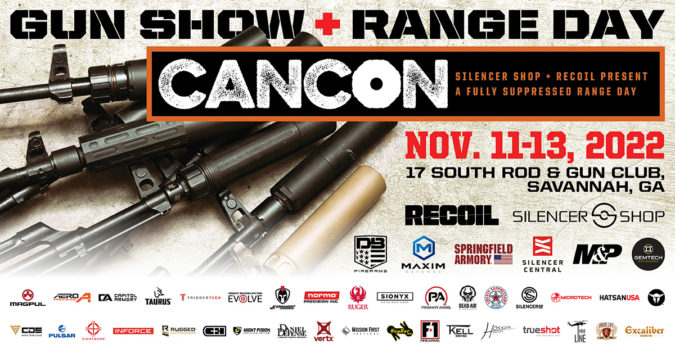
RECOIL magazine and Silencer Shop are excited to put on the first CANCON this Veteran’s Day weekend, November 11-13th, 2022, at the 17 South Rod and Gun Club near Savannah, in the great state of Georgia!
This is a big event with a lot to talk about, so we thought a guide to visiting might help some of you out.
WHAT, WHERE, AND WHEN IS CANCON?!
What:
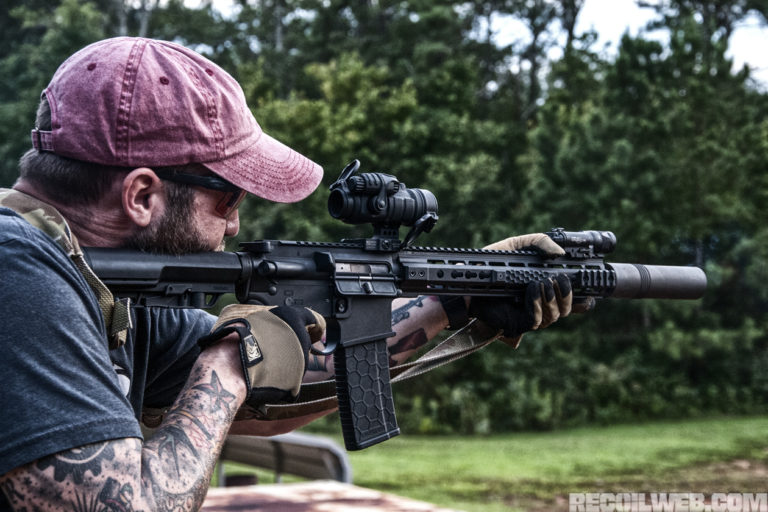
CANCON is a gun show and fully suppressed range day brought to you by RECOIL and Gun Digest Magazines.
With over two dozen sponsors we’ll have hundreds of guns, suppressors, and optics for you to try out hands-on and on the range!
Ammo will be provided, all you need to bring is your shooting finger.
It’s not very often people get access to this many suppressors, guns, and accessories all in one place to actually try themselves. Don’t settle for just looking at them through glass, get yourself to CANCON and shoot them!
With over 50 lanes and acres of space, 17 South Rod & Gun Club is a wonderful venue for this event. If you’re not from the area, Fleming is about 30 miles south of Savannah, GA.
When:
November Friday the 11th, Saturday the 12th, and Sunday the 13th! Tickets are day specific, but you’re welcome to get multiple tickets for multiple days!
Veterans get in FREE on Friday!
THINGS TO DO!
The highlight of the range day will be guns. Lots of guns.
There will be a ton of sponsors with truckloads of guns and suppressors to try out!
From new releases like the Springfield Armory HELLION to classics like a Heckler & Koch MP5, there is going to be a lot of cool stuff to get your hands on.
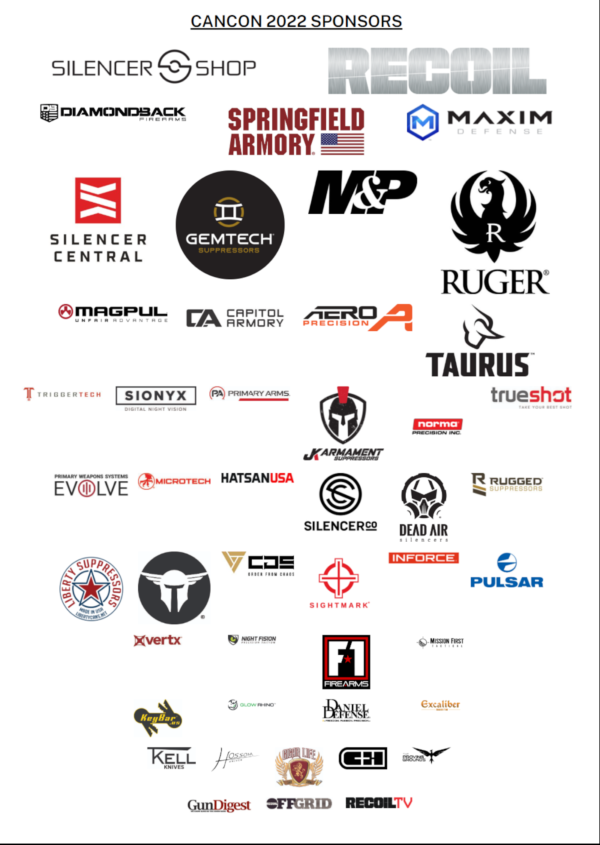
CANCON 2022 Sponsors!
THINGS TO BRING!
Ammo is provided and refreshments are available for purchase. We recommend bringing some water and other supplies for a warm day in the sun. Hat, sunscreen, etc. Your own eye and ear protection are recommended but will be available on-site.
Personally, I like to bring a pair of shooting gloves to events like this just in case. Guns can get hot!
Entry tickets for a specific day include a certain amount of Lane Tickets together in a package.
Entry-Only Tickets
Provide entry into the event only. Visitors with Entry-Only tickets will need to purchase Lane Tickets at the event if they wish to shoot at one of the lanes.
Lane Tickets
One Lane Ticket can be exchanged at a shooting lane for one test shooting experience at a shooting lane. The amount of ammunition per experience is determined by the lane operator. Visitors must queue at each lane to get a turn for their experience and surrender a Lane Ticket to the lane operator. Lane tickets or turns cannot be combined to increase the amount of ammunition per experience.
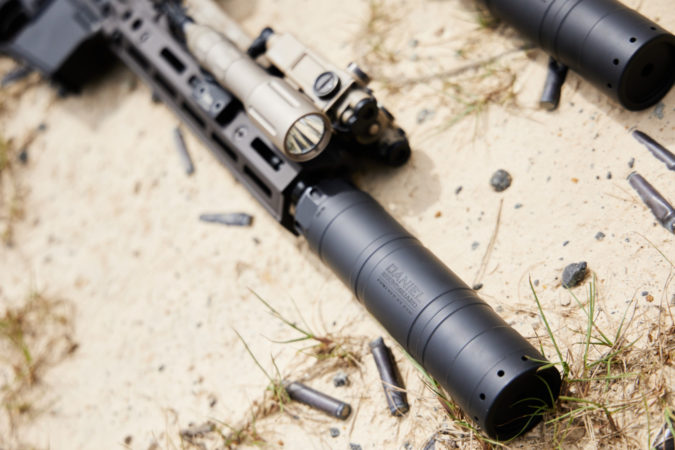
Daniel Defense will have their new SoundGuard line of suppressors at CANCON!
BRING THE FAMILY!
In addition to entry-only tickets for visiters who might not want to shoot, kids under age 12 get in FREE! Children are permitted to shoot with parental supervision, but tickets must be purchased for any children who would like to shoot. There will be kid activities available at the event!
COMING FROM OUT OF TOWN?
17 Rod & Gun Club is located in Flemming, GA but Richmond Hill is less than 10 miles away and a larger town with lots of accommodations. There are over 80 hotels with 20 miles of CANCON, so you have tons of options!
There Are Few Knives More Controversial Than The Stiletto Switchblade. This Automatic Knife Is Outlawed In Numerous States And Countries.
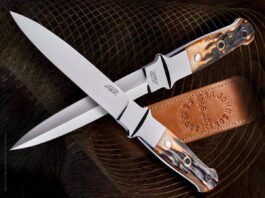
Certain knives get the interest of lawmakers and not for good reasons. The stiletto switchblade is extremely controversial because owning one is completely outlawed in seven states and heavily restricted in another eight.
The stiletto endures because of its use in movies and television and because it opens unlike other types of knives.
Why Is The Stiletto Switchblade Banned?
In the states where the knife is completely outlawed, a big reason is due to the way the blade deploys. The blade flips out due to a button, or other assisted means, much faster than most knives that open with a nail nick or a thumb stud. This has earned it a classification as a “dangerous knife” in many states, thus leading to its ban or restriction.
This short video shows how quickly a stiletto can be opened.
Remember though, the stiletto is only banned or restricted in 16 states and is legal in states from coast to coast, between the borders, and even in Alaska. It’s just important to check your local knife laws to make sure they are allowed to be owned and carried.
What Even Is A Stiletto Switchblade?
A stiletto is a long, narrow blade used historically in Italy and around Europe with a needle point. It GAINED POPULARITY IN THE 15th century and was used by knights and assassins alike throughout the Middle Ages as a fixed-blade knife.
Stilettos evolved throughout the ages into well-honed COMBAT knives used throughout the world. In the 1950s, large numbers of switchblades began to be imported to America from Italy that featured a stiletto blade, and the name “Stiletto Switchblade” stuck over the ensuing decades.
The knives are still made in Italy and in other countries as well.
Best Stiletto Switchblade To Buy
If you live in a state where it is legal to own a stiletto, there are many on the market today. HERE ARE A FEW NOTABLE EXAMPLES.
Timber Wolf Mosaic Damascus Stiletto
A beautiful and durable knife, this stiletto from Timber Wolf would be a great conversation starter with other knife lovers.
The blade and the handle are both made from damascus steel with inlaid wood and brass pins accenting the handle. The BLADE is four inches when deployed and nine inches in total length. The brass liners and stud contrast nicely with the rich, dark color of the blade material.
Just be careful when closing the KNIFE. The double-edge BLADE means there’s no dull spine to push the knife closed so it’s important to be diligent in closing so you don’t slice your hand.
Is this the most utilitarian stiletto? No. Is this a beautiful knife that you’ll want to show off to everyone you know? Absolutely.
MSRP: $61.99
PRO-TECH 720 Godson Auto Folder
This small, nimble knife won THE BLADE MAGAZINE 2014 Investor/Collector Knife Of The Year® and it’s easy to see why. PRO-TECH has made a versatile stiletto in the Godson that’s used by both military and civilian folks alike.
The stiletto-inspired blade is 3.15 INCHES OF 154CM STAINLESS STEEL ground to a spear point with a blasted finish. It OPENS via a push button from the 6061-T6 aluminum handle.
It deploys in a flash and is an excellent self-defense knife or just as your regular EDC. There are no bells and whistles on this knife; it’s just well-constructed and well thought out to be one of the best and easiest-OPENING switchblades on the market.
MSRP: $200
Kershaw Launch 8
From one of America’s biggest factory KNIFE COMPANIES, the Kershaw Launch 8 takes inspiration from the traditional stiletto and repackages it in a modern way.
The blade of CPM 154 STEEL is corrosion resistant and holds its edge. The push button release and lock ALLOW for lightning fast deployment and a secure lock that keeps everything firm when open. The button is low profile to help prevent accidental deployment while in your pocket. The pocket clip is ambidextrous and can also be fitted so the knife carries tip up in your pocket.
The anodized aluminum handle with carbon fiber insert is strong and light. The whole piece weighs just 2.4 ounces.
MSRP: $155.99
Viper-Tec VT Don Italian Stiletto OTF
This stiletto from Viper-Tec is the lone OTF (OUT-THE-FRONT) knife on the list and opens with a mechanism that both deploys the knife and brings it back into the handle.
The blade itself is made from a ridiculously sharp stainless steel that is 3.75 inches long with a flat grind. The satin finish gives the blade a classy, elegant look, and the handle is available in both wood and marble.
At 5.25 inches in length when closed, it sits easily in a pocket or a bag.
The Don Italian is a smart knife. Everything has been thought through to make an easy-to-use stiletto that can last you for years.
As Knife Technology Evolves, So Do Handle Materials. Whether Natural Or Synthetic, These Materials Are Helping Knife Aficionados Get A Grip.
From time to time, a new handle material—either natural or synthetic—surfaces. These days, a quartet of emerging options is making an impact, and several custom knifemakers have produced some excellent results with them.
Fat Carbon
“I think the popularity of fat carbon stems from the striking looks of the bright colors contrasting with carbon fiber,” noted knifemaker K.C. Gray. He uses Lava fat carbon fiber for the handle of his Queen Anne’s Revenge dress flipper folder. Closed length: 5.5 inches.
Those who have been around knives any time at all have heard the term carbon, but it’s usually associated with blade steel or well-known carbon fiber handle materials. In this case, however, carbon fiber has put on a little heft! The material known as fat carbon has found its way onto knife handles, and K.C. Gray is putting it to work.
“Fat carbon is a synthetic carbon fiber composite material with alternating layers of carbon fiber and a color layer,” he explained. “When ground or machined the contours reveal the different layers. It comes in a wide variety of colors and patterns: blues, purples, reds, oranges, and greens. I keep quite a bit of it on hand. It’s very popular with most of my customers, and I’m also quite fond of the knives I make for general sale.”
Gray usually brings his fat carbon in directly from a favorite supply house, and the demand for the material is brisk.
“I think the popularity of fat carbon stems from the striking looks of the bright colors contrasting with carbon fiber. It’s also very durable and quite strong, which doesn’t hurt either. Fat carbon is remarkably easy to work with. It has wonderful stability and as such, it cuts, grinds, machines, and polishes easily. It’s wise to employ a respirator when grinding or machining it. Carbon fiber is a health hazard if inhaled.”
K.C. says the introduction of fat carbon doesn’t pump up the cost of a knife, and the results make a foray into the fat worthwhile.
“The material is surprisingly inexpensive compared to a lot of other materials that have similar visual impact,” he related. “Combined with its ease of working, it doesn’t add much to the overall cost. I think it can be used in a wide variety of styles, from tactical folders to kitchen knives. Fat carbon has a color and pattern for just about anything.”
Westinghouse Micarta
As Chris Sharp noted, Westinghouse paper Micarta is an antique material. It can be found in many colors—here in white on Sharp’s single-blade trapper.
Gray also has produced knives with another synthetic handle material, antique Westinghouse paper Micarta®, as has Chris Sharp.
“A lot of this material comes from the electrical industry, old electrical boxes and transformers,” Sharp observed. “It’s a mix of materials. It was normally made from cotton, cork, fiberglass, and linen fabric with some sort of resin holding it together.”
Gray says antique Westinghouse paper Micarta is an old material. “When most people say ‘Westinghouse,’ they are referring to the vintage ivory paper Micarta. Through aging, it has developed a yellowish tone on the outside. Once contoured, it reveals the contrast between the creamy white interior and more yellow outer layer. There are, however, a great many other Westinghouse Micartas—brown, black, blue, red, and rag can be found.”
Sharp finds his Westinghouse paper Micarta readily available at knife shows and from suppliers, but he is always on the lookout because it can be found in some unusual places. The trick is to know where and what to look for.
“It is an antique material” Chris reiterated. “It was designed by George Westinghouse around 1910 to be used as an electrical insulator. It can be found in a lot of colors, but the old stuff was dependent on who made it and what material was available at the time. At the moment, what I’m getting from the local electrical company is a transparent green and brown. I always have some on hand, but I’m always trying to pick some up at every knife show. Also, there’s always somebody dropping some variation of this material off at my shop.”
The Westinghouse paper Micarta fills the bill on toughness, durability, and ease of working. “It’s pretty easy to work with and can be used on any knife design,” Sharp concluded. “I love working with it. The older stuff is in short supply, which can cause the price of the knife to go up—and people sometimes take advantage which, in turn, causes ridiculous pricing.”
TeroTuf
Matt Gregory sometimes uses TeroTuf in the core of both the knife handle and the sheath, overlaying carbon fiber cloth and then applying multiple layers of resin before smoothing and polishing. An example is with his CFST Battle Tanto in CPM 3V carbon blade steel. Overall length: 14.5 inches.
Another synthetic handle material gaining traction is TeroTuf, a composite of polyester resin and fabric. It is a relative of canvas Micarta but may hold some better characteristics. It has no phenolics and, compared to G-10, contains no glass fibers. What’s more, some users may find TeroTuf is more shock absorbent than the others.
“I use TeroTuf because it’s light, tough, waterproof, and easy to cut and shape,” custom maker Matt Gregory commented. “For the most part, I make a core out of it for stick-tang knives and sleeve the core with carbon fiber or similar material. I’m what you would call a hobbyist maker, I guess, although I’m awfully serious about how I build things. I’ve been making knives for 17 years but only make a handful per year.
“I love TeroTuf because it’s really easy to work with and machine, but it’s tough as nails and impervious to darn near anything you throw at it. Because it’s relatively lightweight, it makes a great core material. Much of what I make is neo-Japanese/American-styled stuff, and TeroTuf makes a fantastic tsuka, or handle core. I prefer it to wood. Many of my friends and fellow knifemakers have used it to great effect and have been influential in my explorations of the material, including Dan Keffeler, Ben Tendick, Nathan Carothers, and James Helm, to name a few.”
Matt sometimes uses TeroTuf in the core of both the knife handle and the sheath, overlaying carbon fiber cloth and then applying multiple layers of resin before smoothing and polishing.
Ringed Gidgee
From a shop standpoint, ringed gidgee is similar to desert ironwood but probably a bit less gummy. James Fleming uses it for the handle of his Frontier Gentleman’s Hunter. The 5-inch blade is Takefu Shiro2 core san-mai bar stock with multiple 22-layer laminations of Suminagashi Takefu steel.
On the natural side, ringed gidgee, a product of Australia, is making the rounds. James Fleming imports his ringed gidgee from @thetimberjoint on Instagram.
“It’s a natural hardwood in the acacia family of trees,” he said, “the same as koa. Ringed gidgee is a chatoyant brown and caramel color, and it can have some blond sapwood as well, much like desert ironwood.”
Keeping plenty of ringed gidgee in stock, Fleming considers it one of his go-to handle materials. It is user-friendly in any knife design.
“But it’s still wood, so I wouldn’t suggest it being used around salt water on a regular basis,” he advised. “It makes a great handle for outdoor knives, chef’s knives, hunting knives, and even folders.
“I think its popularity comes from the fact that it has everything a knifemaker looks for in a handle material,” James continued. “It has beautiful color that has a ton of depth because of the chatoyant nature of the deep curls. It’s rated as the third hardest wood in the world, which makes it extremely durable. Once the wood has properly dried, it is ready to be used, and there is no need for stabilizing due to its being a very dense hardwood.”
From a shop standpoint, ringed gidgee is similar to desert ironwood but probably a bit less gummy. According to Fleming, it cuts and drills easily but can be a bit of a challenge on a belt grinder.
“I suggest having a belt grinder with a VFD [variable frequency drive] to slow it down, and using a fresh belt,” he observed. “It polishes up extremely well during hand sanding and needs nothing more than a bit of beeswax and buff for the finish.”
From a cost standpoint, James acknowledges that ringed gidgee is classified as an exotic material, and that alone causes the price of a knife with it for the handle to escalate. However, it doesn’t approach the expense associated with the highest end of the exotic spectrum, such as mammoth ivory.
For a bit of an uncommon look and a potential conversation starter, these handle materials make the most of the opportunity. Chances are more will be seen of these up-and-comers.
The American Knife and Tool Institute (AKTI) is running an auction to raise awareness of their fight to remove legislation banning the carry of certain knives as well as clarifying knife laws around the country.
The auction will run from August 19-21 and is being sponsored by some of the biggest names in American knives. The sponsors include such brands as Buck, Benchmade, Cobratec, CRKT, and more.
You can learn more about the auction here as well as other ways you can support the Institute’s work.