With its first foray into knifemaking, Work Sharp cooks up a doozie–a knife that’s both a folder and an automatic.
Work Sharp has five decades of experience keeping the knife world as sharp as ever. At that time, the tool and knife sharpening implements company had never dipped its toe into knifemaking—until now.
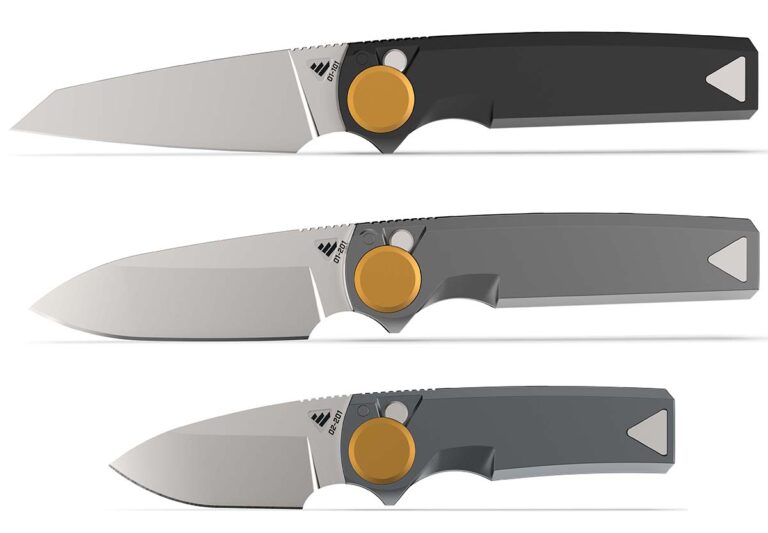
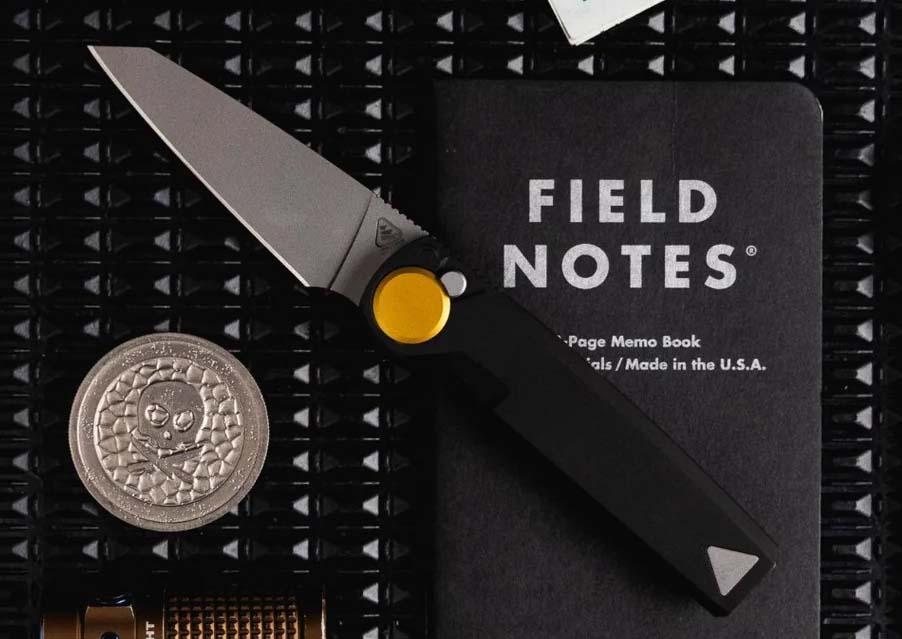
At the 2025 BLADE Show, the Ashland, Ore., company will debut its first foray into edged tools with the introduction of the RMX EDC-style knife. And while the pocket partner might seem like just another folder at first blush, the knife’s internals make it an innovative addition to nearly anyone’s collection. Work Sharp isn’t lying when it says the RMX is “Your knife. Your Way.”
Manual Or Auto
The groundbreaking aspect of the RMX (Replaceable Mechanism Exchange) is that the knife is both an auto and a manual action. And no, it’s not just manual by muscling open an auto or flicking open a manual.
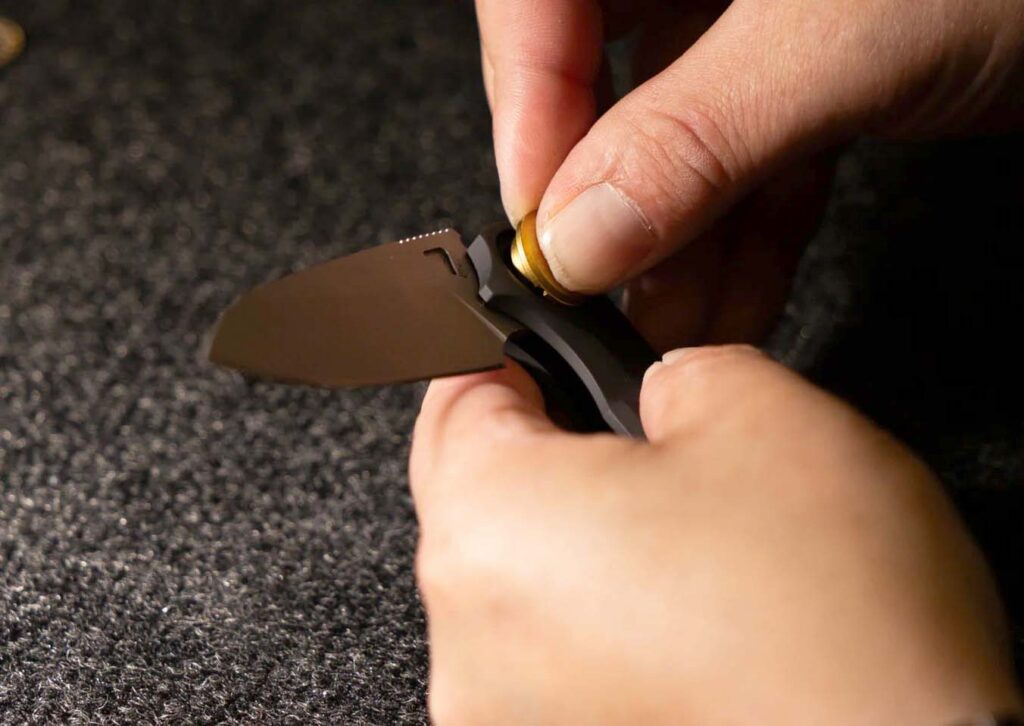
As its name suggests, the RMX utilizes what Work Sharp claims is the first-ever interchangeable pivot cartridge. Essentially, the knife comes with two pivots—one ball bearing (manual) and one spring-loaded (auto). Simply switch one out for the other via a 2mm hex head.
Furthermore, internally, the tension is adjustable thus, the deployment of the blade in both manual and auto configurations is tunable. It’s a slick system, not only because of the implications of having two knives in one, but also legally.
Theoretically, the RMX should make shipping the sometimes automatic knife all the simpler, while also giving users more control over exactly what they’re carrying. Not to mention, it’s a plain and simple concept.
As for deployment, a push-button near the pivot kicks the blade out as an auto and acts as the release as well.
RMX Blades
The Work Sharp RMX comes in two blade styles and three sizes. The one I’ve seen making the most headlines is the full-sized 3.2-inch Reverse Tanto profile—a wicked-looking blade with an ultra-thin edge and excellent slicing properties. The company is also offering a drop-point profile in two sizes, 3.2 inches and a compact 2.4-inch option. Both come with a saber grind.
As for blade material, Work Sharp utilized Crucible Industries’ CPM 3V steel. This is a solid choice, given the metal is known for its toughness, high wear resistance and ability to hold a very fine edge.
RMX Handle
Interestingly, especially for a knife with auto guts, the RMX is feather light, thanks mainly to its handle. Work Sharp opted for magnesium, keeping the knife between 2.24 ounces and 2.7 ounces, depending on its configuration. Additionally, the material imparts a good deal of stiffness to the knives and, with a gray Cerakote treatment, proves plenty durable, not to mention eye-catching.
Complete Package
Even for the sheer novelty, the Work Sharp RMX is an intriguing system made even more so due to an affordable price. The RMX compact has an MSRP of $130 and the full-sized version an MSRP of $140, making the line competitive in both the folder and auto markets—very competitive. Overall, the offering makes one wonder why it took Work Sharp so long to take a stab at knife manufacturing.
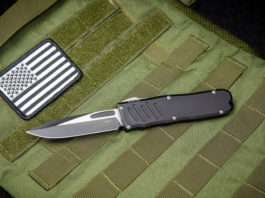
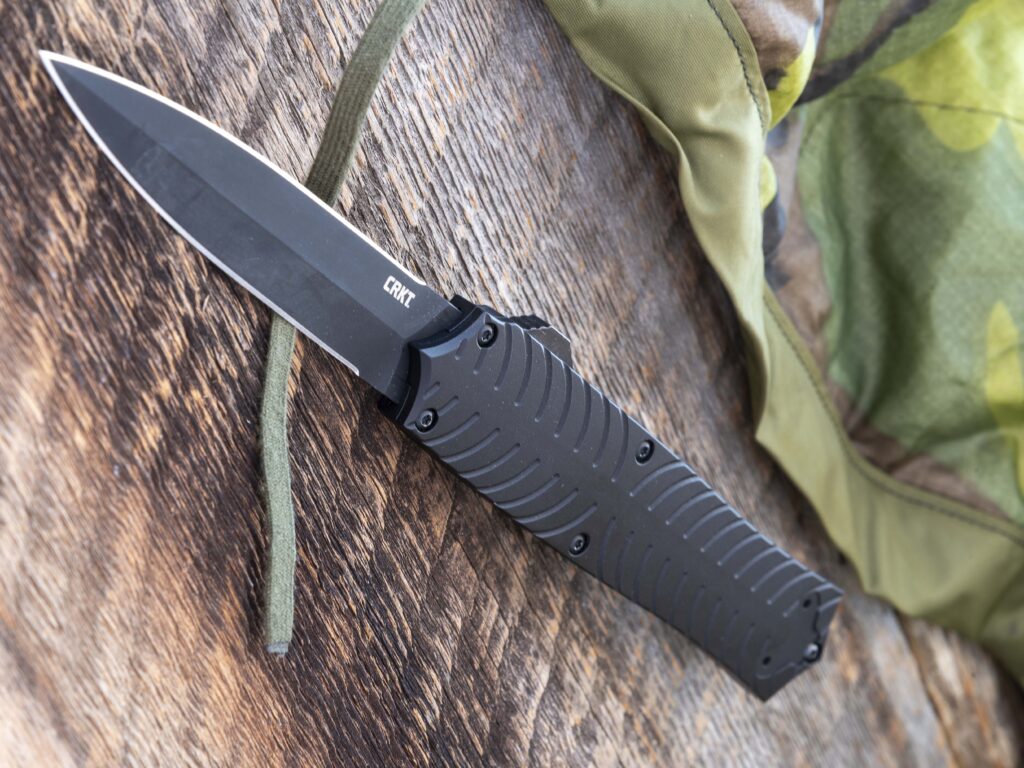
The CRKT Xolotl OTF take the original fixed-blade design a step further.
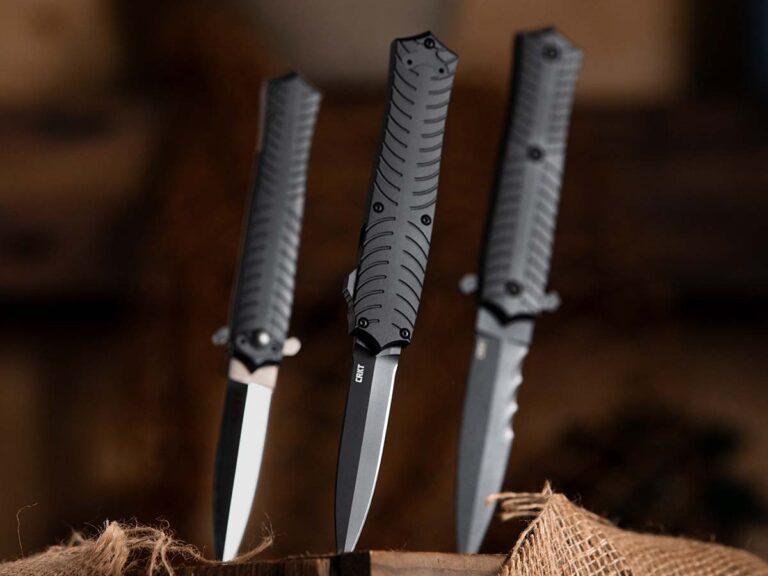
The CRKT Xolotl OTF automatic knife is the latest evolution of a design that shoots to blend ancient mythological inspiration with modern, high-performance tactical engineering. Named after the Aztec deity of fire, lightning and the guide of souls to the afterlife, the Xolotl is the creation of veteran and former Green Beret Michael Rodriguez.
Rodriguez’s accomplished background—which includes graduating at the top of the Irish Army Ranger Wing Sniper Course and serving as an advisor to President George W. Bush—lends a specific, mission-driven philosophy to his knife designs. This experience is the foundation of his participation in CRKT’s Forged by War program, which enlists real-life combat veterans to apply their knowledge to a line of specialty, mission-ready knives and tools.
CRKT Xolotl OTF is a slick and functional auto that fits into the line well.
The Xolotl design originated as a fixed-blade knife, which established the pattern’s key features: a clean, stunning aesthetic featuring a spear-point blade with a double-edged dagger grind. The fixed-blade version was designed for durability and high-performance, featuring specialized Veff Serrations for powerful rope-cutting capability, and came with a versatile sheath that allowed for multiple mounting options.
This fixed-blade concept has now been translated into an out-the-front (OTF) automatic. The new Xolotl OTF maintains the high standard for materials and capability, engineered for the demands of today’s operator.
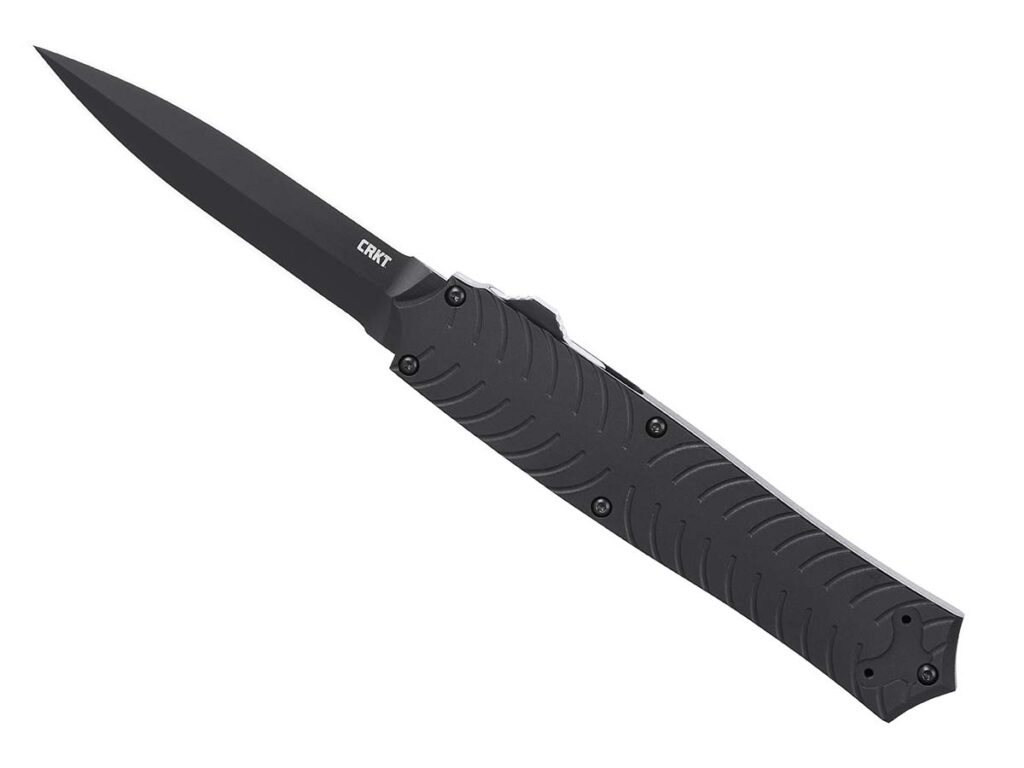
The knife is manufactured in the USA and utilizes a smooth, dual-action OTF mechanism for crisp, decisive deployment and retraction. It features a 3.5-inch spear-point blade ground on both edges for maximum cutting efficiency. The blade steel is MagnaCut, which was selected for its superior combination of edge retention, toughness, and corrosion resistance—qualities essential for a reliable modern tactical tool.
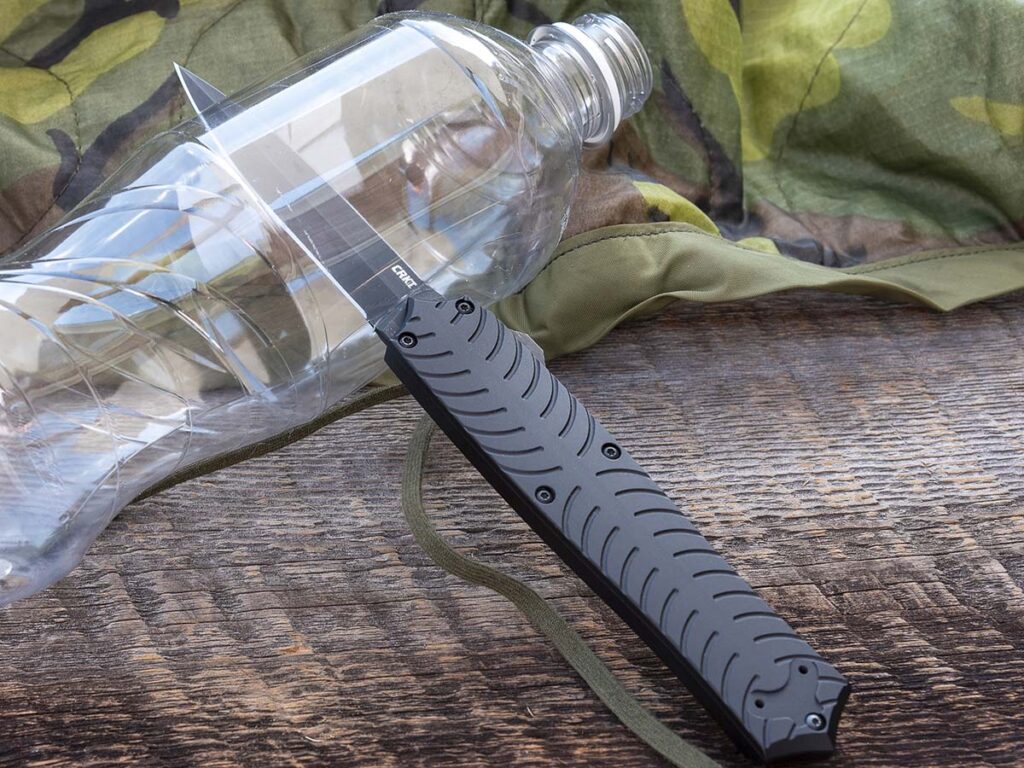
Made from Magnacut steel, the Xolotl blade keeps a good edge.
While the engineering is purely modern, the aesthetics carry the historical weight of the Xolotl deity. The aluminum handle is sculpted with skeletal details that reference the Aztec namesake. A deeply personal feature of the design is the 21 sculpted ribs along the grip, which were incorporated by Rodriguez to symbolize each of his years of military service. The handle’s ergonomics and theme are completed by a unique, sternum-shaped reversible pocket clip, ensuring the knife carries securely for both left- and right-handed users.
The Xolotl OTF, with an MSRP of $325, contributes to the larger mission of the Forged by War program. A portion of the profits from the knife is directed toward Michael Rodriguez’s charity of choice: the Global War on Terrorism Memorial Foundation. The final product—an 8.88-inch overall knife weighing just 3.2 ounces—is a successful fusion of myth, military experience, and high-quality construction.
Xolotl OTF Specs
BLADE LENGTH: 3.5” OVERALL LENGTH: 8.88” BLADE MATERIAL: MagnaCut HANDLE MATERIAL: Aluminum LOCK and/or OPERATING MECHANISM: Dual action out-the-front WEIGHT: 3.2 oz. SPECIAL FEATURES: Made in the USA; MagnaCut spear point blade with two sharpened edges; Double action OTF blade deploys and retracts quickly; Adjustable clip for left or righthand carry. MSRP: $325
Remembering Mike “Whiskers” Allen, known for his innovative hidden bolster automatics and collaborations with Pro-Tech Knives.
Mike “Whiskers” Allen, affable award-winning custom knifemaker and knife designer, passed away on November 8 after a short illness.
Nicknamed for his full bushy beard, the Malakoff, Texas, cutler started making knives in 1984. He made folders mostly, specializing in automatics. He suffered a stroke in 2015 that affected his right side and eyesight, so he had to retire from knifemaking. He designed a full line of autos for Pro-Tech Knives, including the BR1.7 LTD “Whiskers” Design, which opens via a nifty hidden bolster release and debuted at BLADE Show 2025.
Whiskers also made miniatures as well as swords. He was known all over the country for his reasonably priced, one-of-a-kind knives. He was a member of The Knifemakers’ Guild and the Professional Knifemakers Association (PKA) and carried Knifemaker’s Emeritus status in the Guild. He also served as PKA president during his last few years of making knives. He won at least one custom knife judging award at the BLADE Show, which he and his wife Denise attended on a regular basis.
Remembering Others The Knife Industry Has Lost:
Betty Dowell, Driving Force Behind Knifemaker Ted Dowell, Passes
B. R. Hughes, Pioneering Writer And Bladesmithing Teacher, Passes Away
These veteran-designed or manufactured knives are ready to serve.
A rare combination, military knives aren’t simply utilitarian tools; they stir something deep inside of us. Whether an inborn call of duty or a profound respect for those who served, edged implements meant for battle call to knife aficionados with a patriotic streak. Which, simply put, makes them wildly hot in the eyes of manufacturers and collectors alike.
Not all military knives are issued. Some of the most storied were picked up as “just in case” purchases at post PXs or sporting goods stores throughout the years. This doesn’t make them any less ready to serve. And, today, there are a slew of options engineered or built by veterans, meant for action—in the field of battle and for everyday protection and chores—and more than able to cut muster.
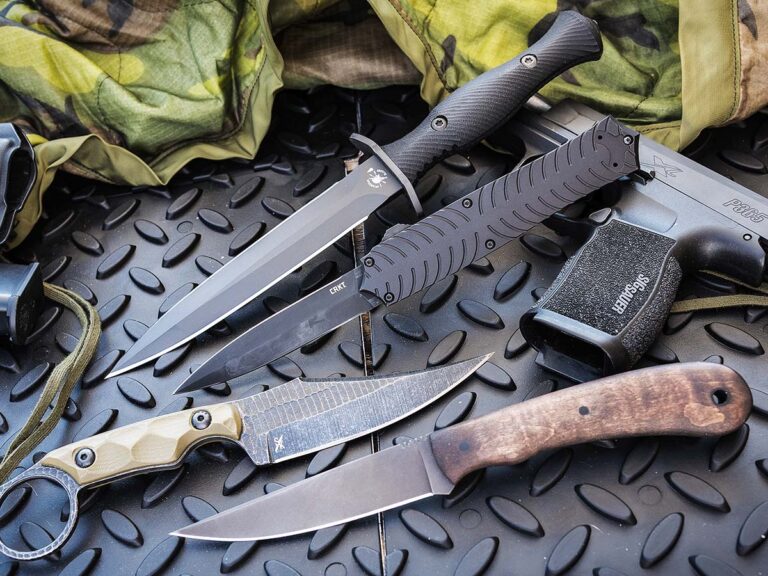
Winkler Knives Operator
At first glance, the Winkler Knives Operator seems like the average utility fixed blade or a larger bird and trout knife. Looks can be deceiving as the Operator functions both as a utility tool and weapon—important in the theater of battle.
Originally founded to produce specialized breaching tools at the request of the SOF community, Winkler Knives of Blowing Rock, North Carolina, is certainly no stranger to tactical knives. Their Operator series offers a unique design that is a crossover of sorts. Yes, it was designed as a tactical knife, yet has proven popular as both a camp, general outdoor and hunting knife.
Designed by former Navy SEAL Kevin Holland, the Operator features a 4⅛-inch-long clip-point blade made of 80CrV2 tool steel and given a black oxide coating for rust protection. This steel is an excellent choice for a multi-use knife as it is resistant to impact and holds an edge reasonably well. When it’s time to resharpen, most are pleasantly surprised by how quickly the edge comes back with basic manual sharpening equipment. Given that the blade tapers to a sharp point, it excels as both a weapon and a tool. It has excellent penetration qualities and the thick stock, combined with a flat grind, allows the blade to slice with little resistance.
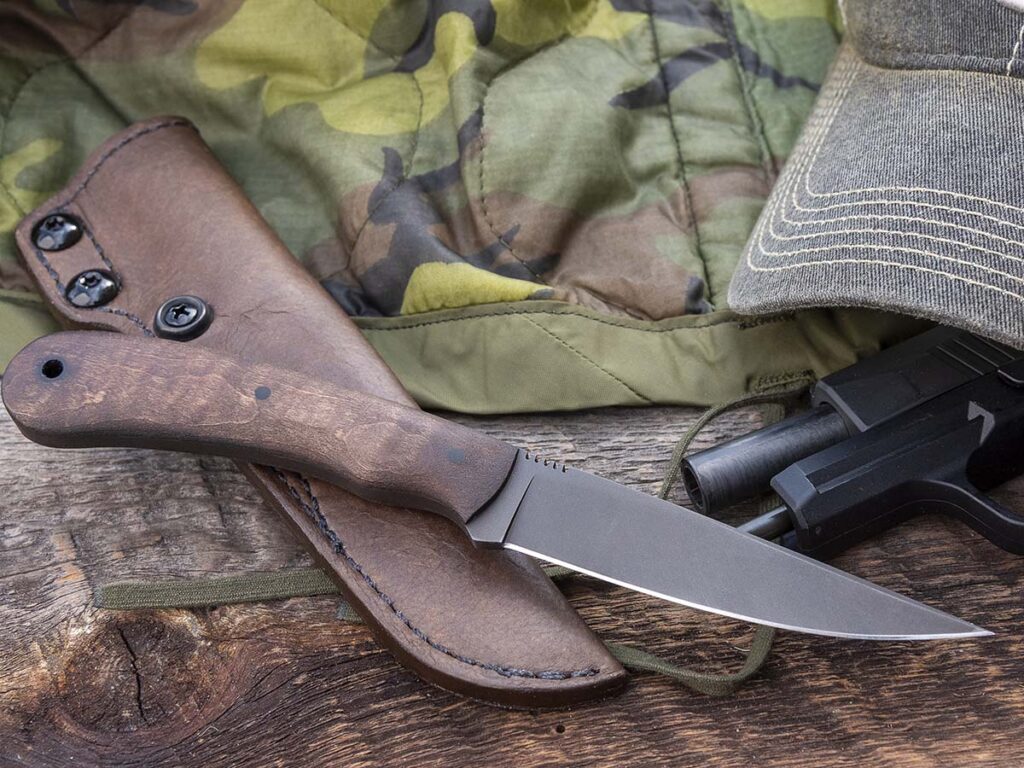
The Operator’s handle is very well designed, facilitating an excellent grip—a rarity on many compact fixed blades. A subtle finger groove helps index your grip and a flare at the butt and slight downward turn secures the hand from sliding backwards. All the edges on the grip are rounded for maximum comfort and the Operator certainly feels good in hand. I evaluated the antique maple-finished handle for this review. Other materials are available, including Micarta. As to the wood version, it feels warm in the hand, secure and the grain gives a nod to being like a fine furniture.
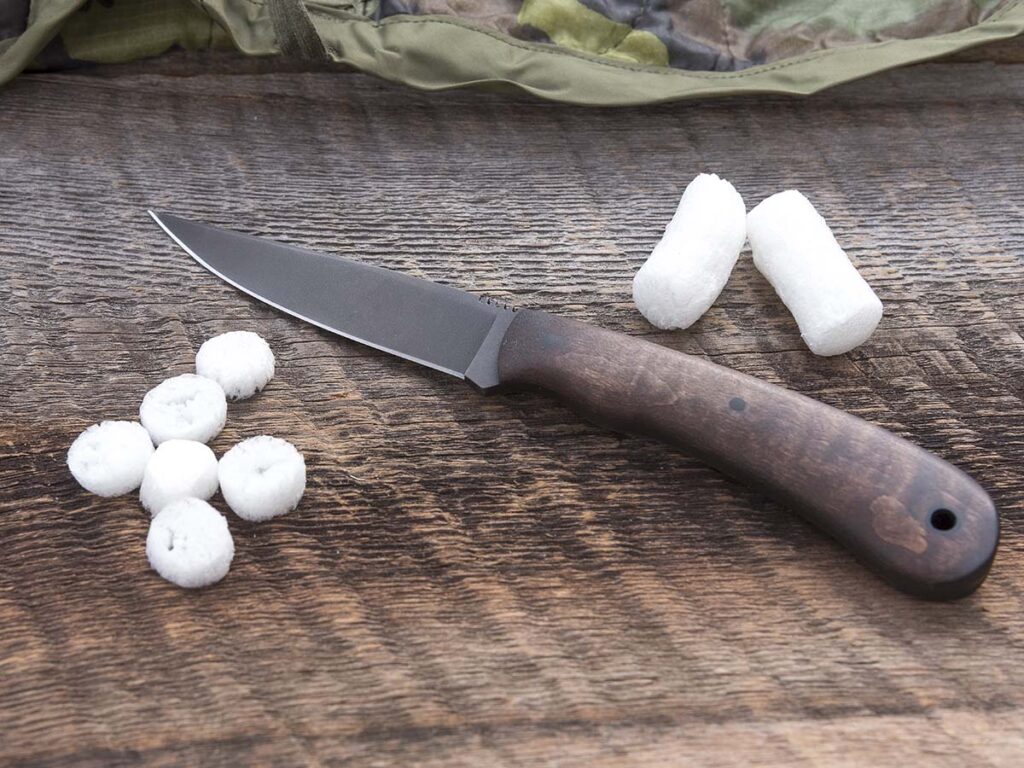
The Winkler Knives Operator isn’t afraid to tackle delicate cutting tasks. It easily sliced Styrofoam packing peanuts, a testament to how well the blade is engineered with its distal taper spine, full height flat grind and razor-sharp factory edge.
Standard with the Operator is a formed leather sheath, designed and made by DeSantis Gunhide, specially for Winkler Knives. It has a set screw to control the tension on the knife so you can customize the retention—a nice touch, not often offered. As for carry, there is a fold-over metal belt loop affixed with two screws, facilitating traditional outside-the-waistband and pocket carry. The latter leaves the handle sticking out for quick access.
Overall, I love how the handle feels in-hand with the contouring of the facets making it lie in your grip as if it were made for it. I found the Operator’s slender yet robust build allows it to tackle heavy cutting chores without the unnecessary bulk. It also carries well in the pocket or on the belt.
Operator Specs Blade Length: 4.125″ Overall Length: 9″ Blade Steel: 80CrV2 Blade Profile: Drop Point Handle: Maple Sheath: Leather-Covered Kydex MSRP: $350 Country of Origin: U.S.A.
Stroup Knives HM1
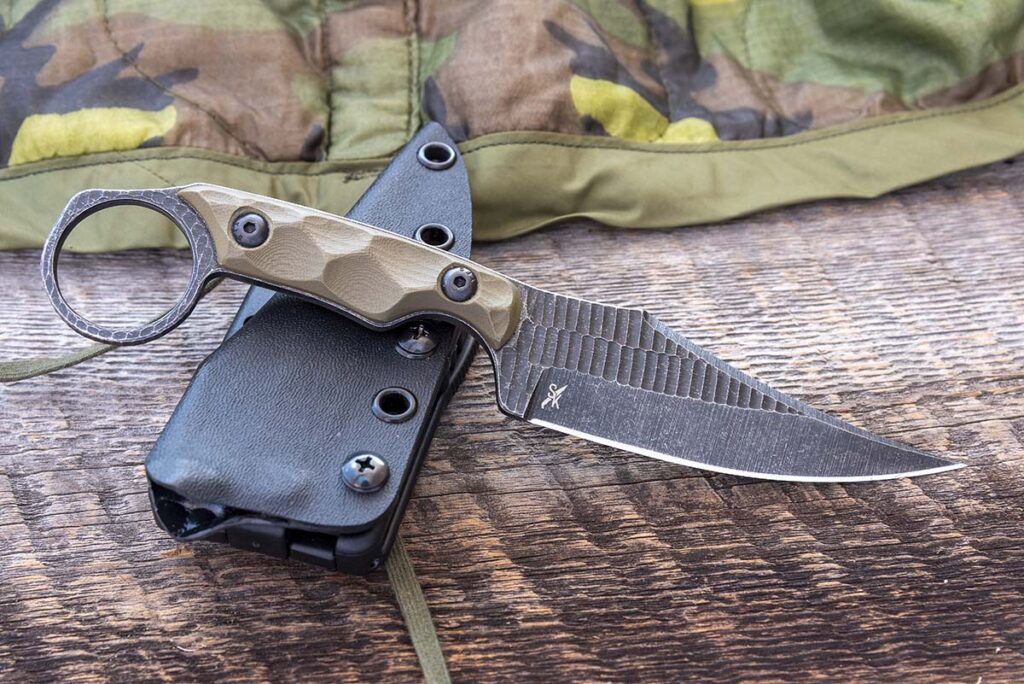
The HM1 from Stroup Knives showcases a prominent clip point blade and a sweeping cutting edge. Both help it excel in either defensive or conventional chores. As a bonus, the tip of the blade is so acute it tackles precise cutting chores with ease.
Based in Fayetteville, North Carolina, Stroup Knives specializes in tactical and utility fixed blades. Company founder Chris Stroup is an Army veteran with 11 years of service to our country. His final assignment was with a special missions unit based out of Fort Bragg. Medically discharged in 2020, Stroup Knives was born, and in 2022, Stroup made the decision to go full-time into knifemaking.
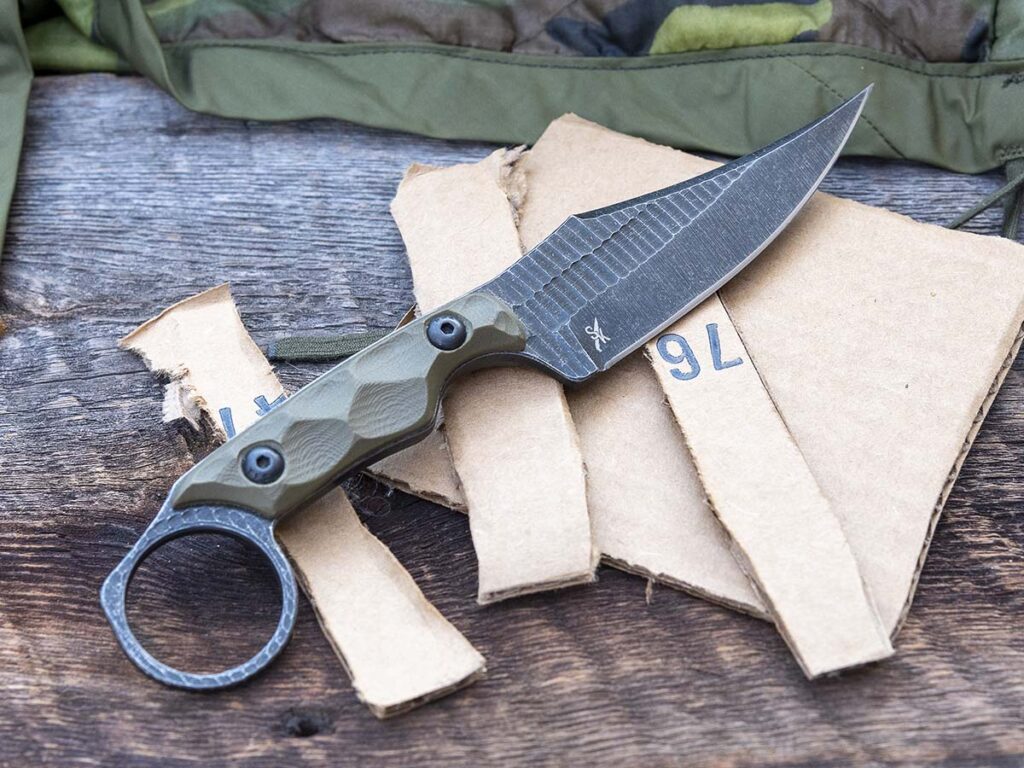
Stroup Knives’ latest knife, the HM1, represents a multi-use fixed blade for utility, tactical and outdoor use. The design’s focus is on retention, control and high utility. The blade of the HM1 is 4 inches in length and made of 1095 carbon steel with a black stonewashed finish. The clip-point shape gives the blade its distinct bowie-like profile. Honestly, the tip on this one is flat-out wicked! It’s pointy and will penetrate softer materials easily.
The knife sports a distinct machined texturing, making it easily recognizable as a Stroup; a lot of the company’s knives have this distinguishing pattern. Proportional to the blade, the handle also measures 4 inches and has several features making the HM1 noteworthy. Most prominent is the finger ring. The ring provides a measure of security and retention by allowing you to lock your grip in place through it with your pinky finger. Further, the feature makes dropping the knife, even by accident, difficult.
Stroup uses G-10 for the handle, and it sports a 3D-sculpted pattern to aid hand traction. Each HM1 comes with a fold-over Kydex sheath with Teklok attachment. The setup is Spartan, but hey, this style of sheath is widely used in the industry and it always works well. It locks the knife in place and there isn’t any rattling. The belt attachment is solid and is easy to put on and take off without removing your belt.
Made from 1095 carbon steel, the HM1’s blade is simple to maintain and take a wicked edge. Double-walled cardboard melted like butter under the knife’s edge.
The HM1 can function as both a backup weapon and a utility tool. The blade profile is not only excellent at puncturing, but also is fine enough at the tip for precise cutting or scoring tasks. The knife’s 1095 carbon steel is widely praised—it sharpens quickly and it is less expensive than all of the high-performance CPM stainless steels.
I appreciate the dual role the HM1 plays. The knife seems well thought out as an edged weapon and an EDC tool. The HM1 is available in two black acid wash blade finishes (one with black G-10 handles, the other with OD green G-10 handles) and two Cerakote blades (FDE and OD green G-10 and black with black G-10 handles).
HM1 Specs Blade Length: 3.75″ Overall Length: 8″ Blade Steel: 1095 Blade Profile: Clip Point Handle: G10 Sheath: Kydex MSRP: $270 Country of Origin: U.S.A.
Spartan Blades Spartan Harsey Dagger
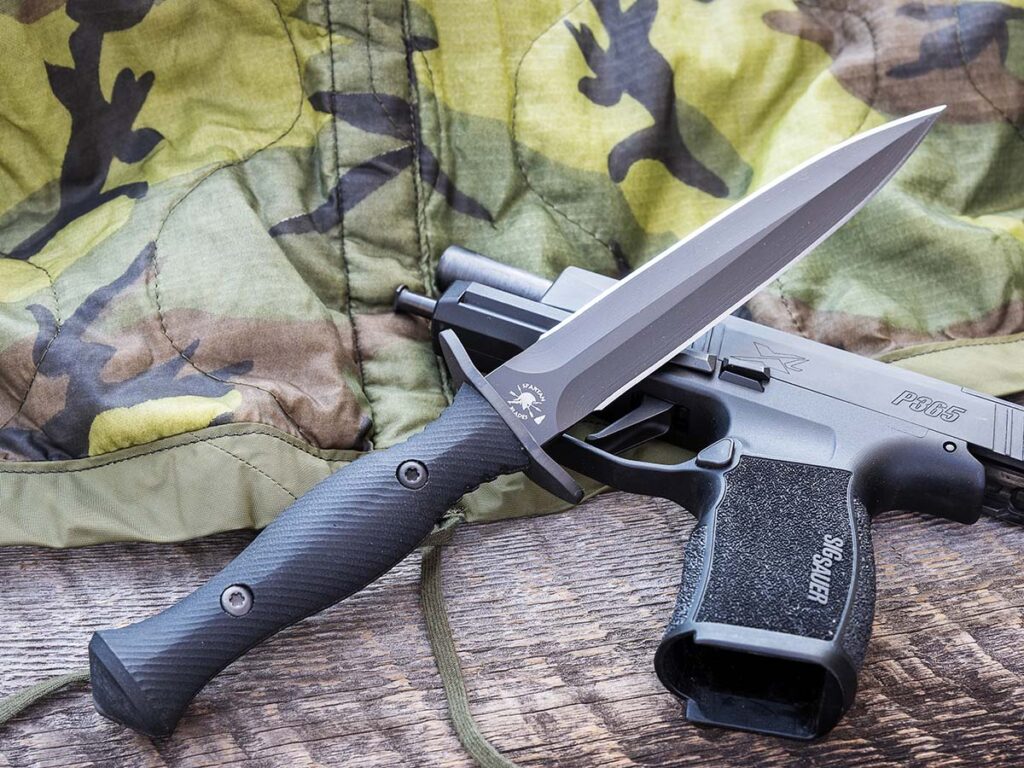
The Spartan Harsey Dagger’s handle has a lot going on with a distinctive oval profile that lies in the palm naturally and makes the edge easy to index—even in low-light environments.
Spartan Blades, founded by retired Green Berets Curtis Iovito and Mark Carey, has earned a strong reputation for high-end factory-made tactical fixed blades. Several of those knives were designed in collaboration with Bill Harsey, a well-known knifemaker who specializes in custom tactical fixed blades that are on the next level. Harsey’s impressive background includes knife work for the late legendary Col. Rex Applegate, prototyping the Applegate-Fairbairn fighting knife.
The Spartan Harsey Dagger takes what Harsey learned from working with Col. Applegate and applies it to modern-day production tactical fixed blades. It is a modernized version of the Fairbairn-Sykes, if you will. It has an upgraded handle design, upgraded materials and a beefier build overall, yet still retains the design hallmarks of the legendary F-S.
The dagger has a 6-inch-long double-edge blade, hollow ground from premium CPM MagnaCut steel. A black DLC coating is applied for low reflectivity, as well as boosting the corrosion-resistant properties of MagnaCut. The knife also has some notable features like a long, tapered flat section in the middle of the blade for lateral strength and the hollow ground bevels, thinning the edge for a sharper blade.
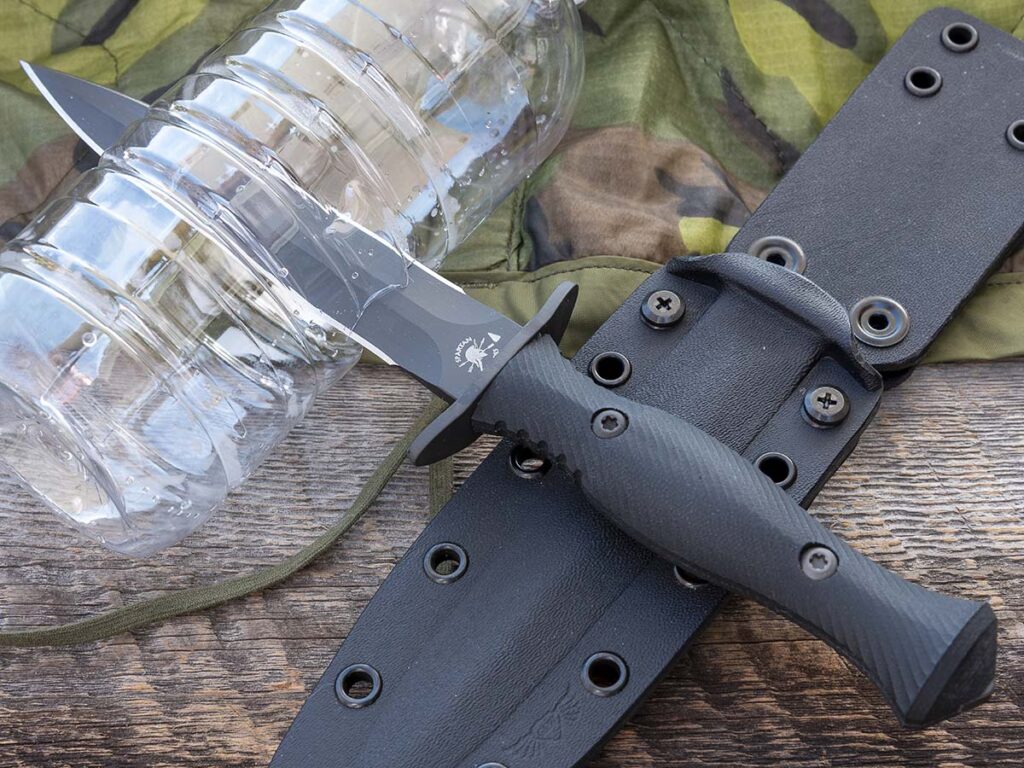
The handle is where the magic begins and what sets the Spartan Harsey Dagger apart from the rest. The finger recesses behind the guard help to index your grip and lock it in your hand. The recesses have traction notches in them, not only for a non-slip grip but also for tactile cutting edge orientation. The way the handle flares out toward the butt of the handle catches your pinky to prevent rearward sliding and aids in references a clean grip to clear the blade from its sheath. The Spartan Harsey Dagger has a hidden tang design with the Micarta scales fully encapsulating it. There is a bit exposed at the very end of the handle for use as a non-lethal striker. The double hand guard is angled away from the user a bit to provide a comfortable thumb rest.
The Spartan dagger is made from thicker stock, even so, the hollow-ground bevels and a needle point, the knife punches cleanly and quickly.
Each Spartan Harsey Dagger comes with a Kydex carry sheath with MOLLE-compatible straps. The sheath locks on the double guard and provides a very secure fit with zero rattle or any other movement.
Keep in mind a knife like the Harsey Dagger is not a box cutter or a utility knife. If you need a working knife, look elsewhere. It is likely best served, away from the military, as a backup weapon to a firearm. The blade is engineered to penetrate and it’s frightening how adept it is at its job.
One thing most folks agree upon, the Harsey oozes sexiness, with its curvaceous handle and no-nonsense blade. It is a looker for sure, but it can also perform when called upon. The Spartan Harsey Dagger comes in two colors—the black blade and black Micarta handle, as evaluated here, along with an FDE blade and black Micarta handle.
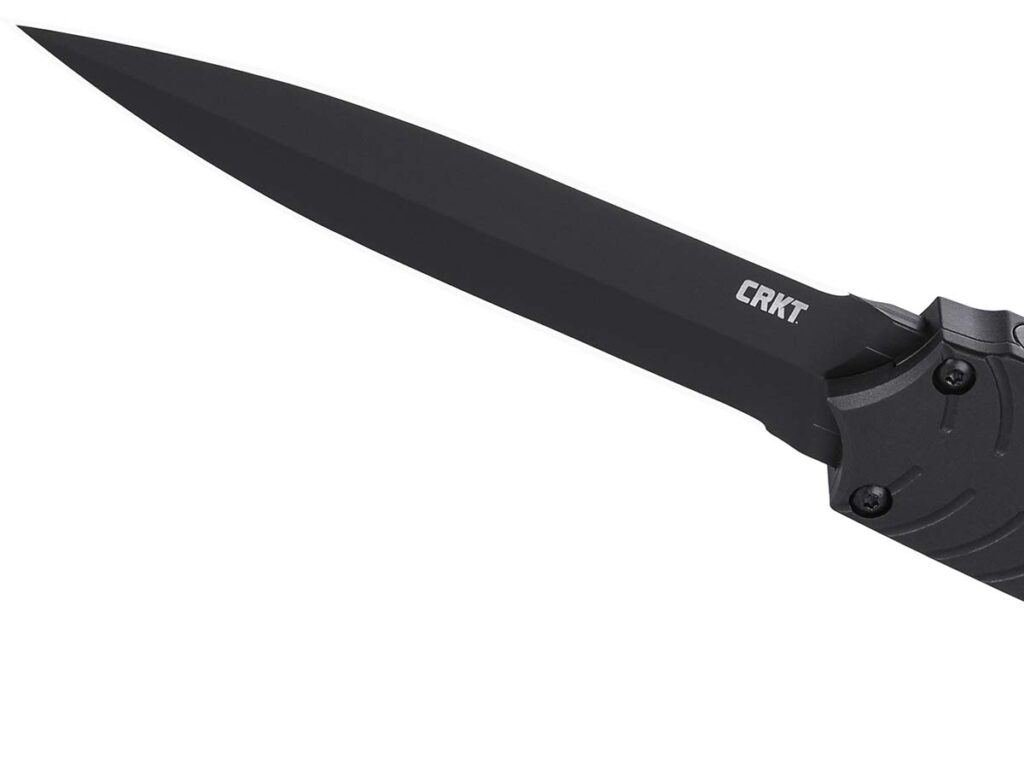
The points at the ends of the CRKT Xolotl OTF handle not only add visual style but also allow the knife to be used as a non-lethal defense striking tool when the blade is retracted into the handle.
The Xolotl (Show-low-tol) Automatic is CRKT’s second OTF auto in the company’s lineup. The double-action was designed by Michael Rodriguez, a former Green Beret and veteran. It is named for the Aztec god of lightning and fire.
The overall look of the Xolotl Automatic is symmetrical in both handle and blade shape. In turn, it is very pleasing to the eye. The blade is 3.5 inches and is a true dagger, sharpened on both sides. CRKT’s steel of choice is CPM MagnaCut—pretty much the perfect high-end blade material, if there ever was one.
The handle is machined from T6 6061 aluminum alloy, and its thickness is kept to a minimum so that the Xolotl carries well in the pocket. It also features circular machined grooves for enhanced grip retention. Interestingly, there are 21 grooves, one for each year of Rodriguez’s service. The handle ends up tapering to stylized points of sorts, adding intrigue to the overall look by possibly providing a non-lethal method of striking defense. A deep carry pocket clip rounds out the entire package, allowing the Xolotl to ride undercover. A sliding switch on the handle spine controls the blade’s movement, which is very swift and secure.
The thinner blade stock on the CRKT Xolotl OTF allows for great penetration. Additionally, its MagnaCut steel holds an edge like nobody’s business and is highly corrosion resistant.
Dagger blade OTF’s are very cool-looking, and they are fun to own. But they are limited in providing a full functional cutting tool. By this, I mean that given the material removed to form a dagger profile, it is more susceptible to damage by torque. Further, dual edges mean you can’t use a digit to exert more latitudinal force in a cut or more control. Yet, the dagger does have the advantage of two cutting edges, so if you damage one, you have the other.
All this being said, the Xolotl is a capable cutter, opening mail, packages, cutting up cardboard boxes and anything else that you need to slice. I would not subject the knife to hard use of any kind, given its thinner blade.
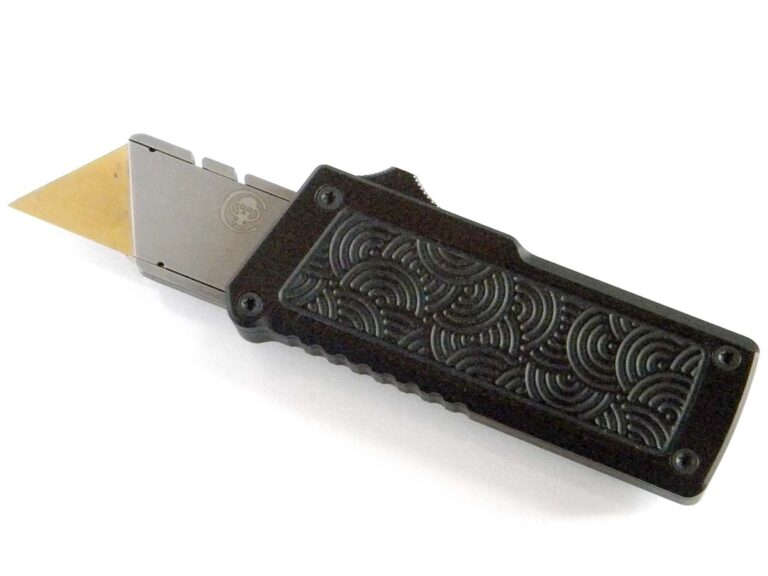
Whether you need a pristine edge for skinning game or a razor-sharp utility blade for daily EDC chores, it is easy to see why replaceable-blade knives have exploded in popularity. Chaves Knives takes this a step further.
The Pleasant Grove, Utah, manufacturer is known for thinking outside the box with its designs and this holds true for its CHUB. A very fast out-the-front (OTF) double-action small pocket utility knife ensures you never have a dull blade, can get it into action no matter what the circumstances,and is fun. Even so, the knife must perform, so let’s see if the CHUB cuts it.
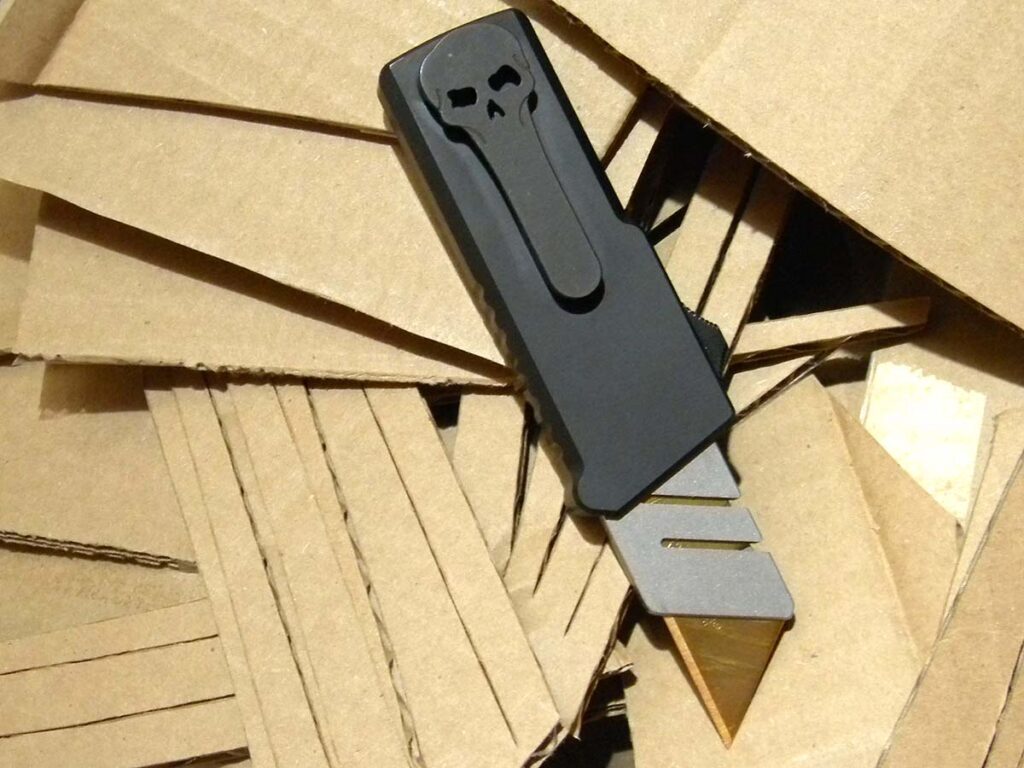
Expected from most utility knives, the Chaves model ate up cardboard in the course of testing. It was quick work, but for the author, somewhat challenging given the CHUB’s smaller handle.
I started with a standard paper slice to test the factory edge on the replaceable blade. I used graph paper and, as expected, the CHUB’s edge zipped through it quickly, producing clean slices and smooth cuts. The knife’s handle was comfortable, even though it was a tad short for my hand.
Onto single-walled cardboard, the CHUB burned through the medium. I could get used to this performance, as I break down cardboard daily. No folding or sliding, just an aggressive in and out through the material. The handle provided a positive grip, a plus on the more challenging cardboard. As a note, the knife rides very nicely in any pocket.
Slapping Leather
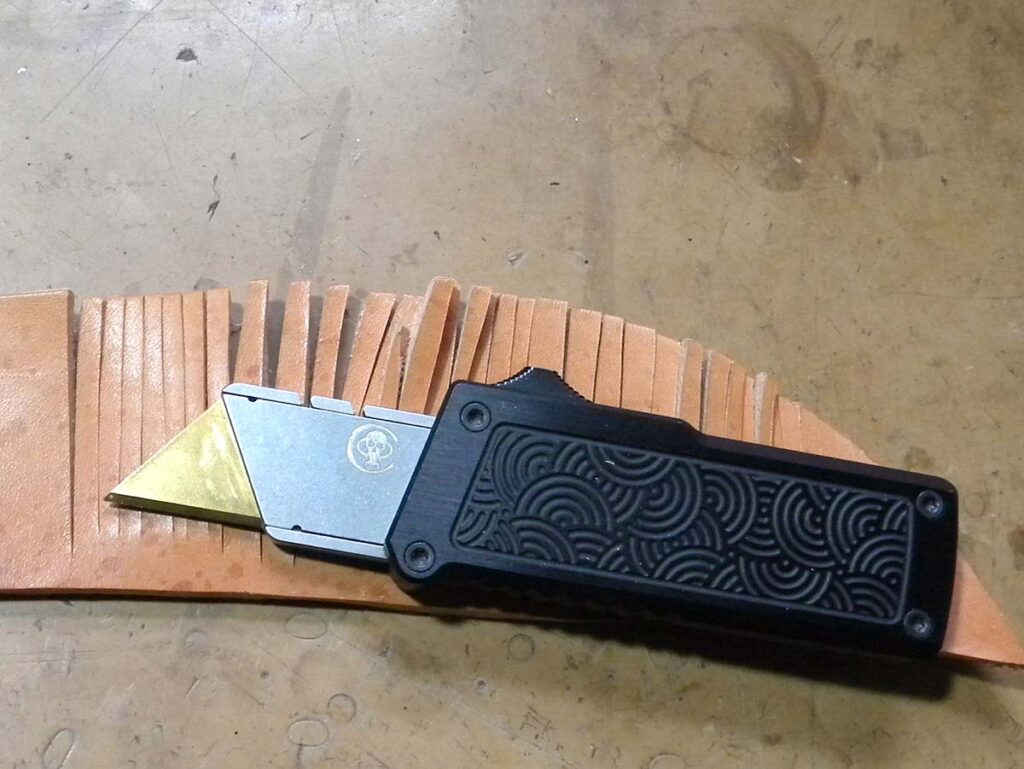
The author figures leatherworkers might find the knife very handy as it proved aggressive against leather. Given its fast deployment, it’d be very suitable in this role.
I grabbed a leftover piece of 8-ounce leather to shred. The CHUB was very aggressive on the hide. Vertical slices were fast and easy to control, and with the leather flat on the bench, it sliced through smoothly. If you happen to work with leather, it would be a great job for the CHUB.
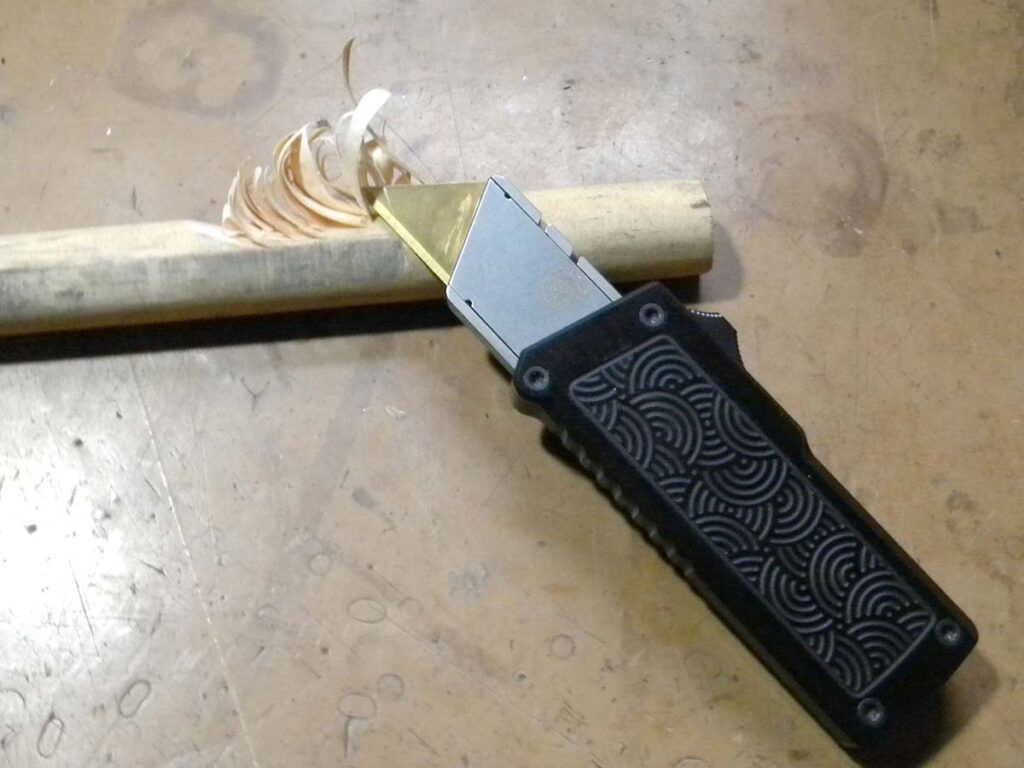
Pitting a blade against wood is always a must, so I moved on to some whittling. A ¾-inch dowel proved no problem for the CHUB. The replaceable blade shaved smooth curly cues, but deeper bites were harder on the hand because of the smaller handle. Still, it got the work done.
Pitted against a ¾-inch dowel proved no problem for the utility blade, wich shaved smooth curly cues and made deep bites into the wood.
Just to push the knife a little farther, I cut up some ½-inch sisal rope. The CHUB did 125 crunching cuts, which was impressive, given it was the same blade I started the test with. The action stayed tight and crisp, no play at all. Again, the handle size was challenging in a task that required stronger pressure. But overall, it was a fun challenge.
Lastly, I was back to the graph paper slices. I had a few snags at the bottom of the blade but the front half sliced smoothly. Not bad at all. Job well done by the Chaves Knife crew. I also still had a fresh edge, since all I had to do was push a tab over, flip the blade and close the tab. Pretty simple and fast.
Overall Take
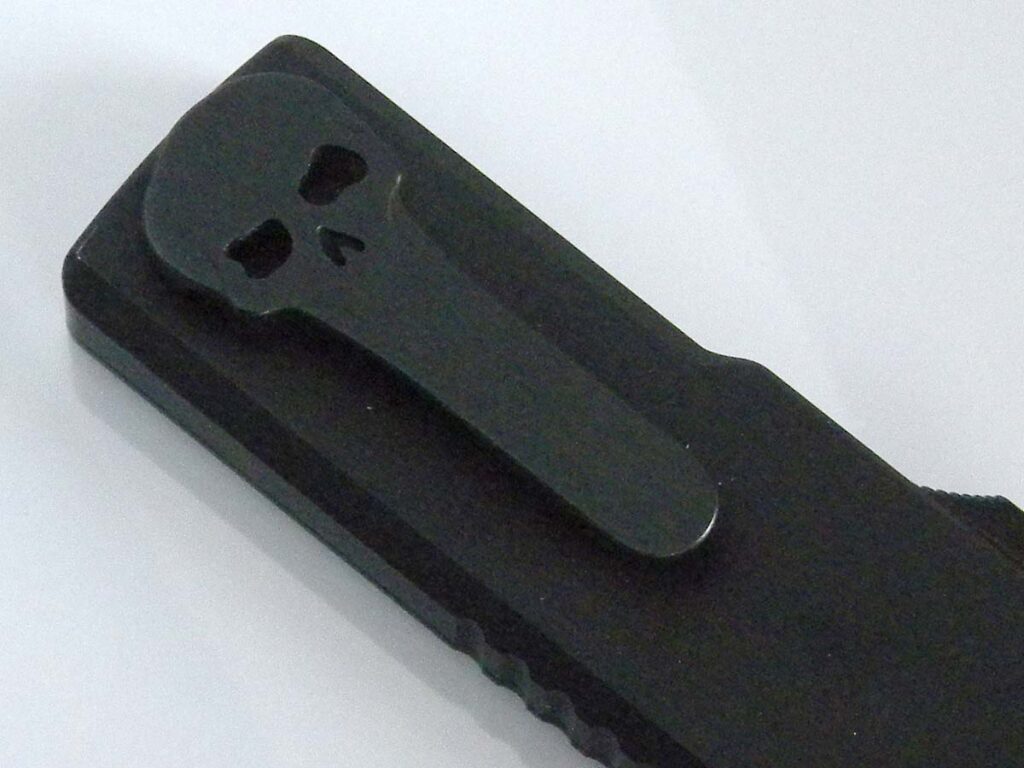
The CHUB rides comfortably in any pocket, according to the author. Helping with it in this task is a clip with Chaves’ trademark skull.
Some people might call it a fad, but the CHUB will cut. Now add in the cool factor of it being an OTF pocket utility knife, and you have a handy knife to use daily. The CHUB is designed to take standard Stanley and Lenox-style blades—2 7/16-inch long, ¾-inch wide—but off brands might not prove compatible.