Buyer's Guides

You’re looking for a new knife in a certain style – we’ve got recommendations on the best blades for every price point.

Best Sheepsfoot Blade Knives For Everyday Use

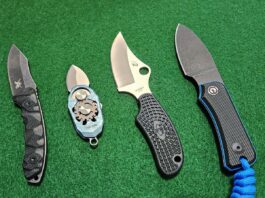
The Sheepsfoot Blade Isn’t The Most Popular Style, But It Is Certainly Quite Useful. This Quartet Of Knives Show Why You Should Try A Sheepsfoot.

I promise there will be no butchering graphics in this article. The sheepsfoot blade is one of many blade styles out there today, but it isn’t as popular as say the drop point or clip point. 

And that might be due to the shape of the blade. Instead of tapering down to a fine tip like a clip point, the sheepsfoot has a large belly and a smooth, usually curved, tip.

The name of the blade is a pretty literal one. It was named because it was made to trim the hooves of sheep. The shape of the blade looks nothing like a sheep’s foot. The use of the blade gave it its name, and it stuck.

Are Sheepsfoot Blades Only On Pocketknives?   

Yes, most sheepsfoot blades are on pocketknives and other EDC knives, but that’s not all. The popular Santoku knife features a sheepsfoot blade. The long dull spine that leads to the curved tip makes the knife great for slicing and chopping, and the wide belly allows it to act as an excellent scoop to get food off the board.

What Are Sheepsfoot Blades Good For?

Thanks to its long, flat edge, a sheepsfoot blade is perfect for slicing and chopping. Need to cut lengths of rope? Grab a sheepsfoot. Have to chop hard vegetables like carrots to drop in the pot over a campfire? Grab a sheepsfoot. 

Beyond slicing, a sheepsfoot is also great for tasks that involve longer knife strokes like opening boxes, slicing through sections of cardboard, and whittling wood. There’s countless uses for a sheepsfoot blade because it is such a basic, straightforward blade style. 

Why Might You Want To Pass On A Sheepsfoot?

The long, straight edge that makes a sheepsfoot perfect for slicing makes it a liability for things like piercing and. There is no fine point like a dagger or a clip point because the dull spine curves down to meet the cutting edge. This means that things like poking and puncturing are difficult with a sheepsfoot. Sure, you could angle it to puncture through a bag or a case, but it’s much harder than if you used something like a drop point.

Best Sheepsfoot Blades

This guide will stick with pocketknives as that is where the sheepsfoot is most widely seen. Classic EDC blades, keychain knives, the sheepsfoot appears across the knife landscape.

Benchmade Griptilian

griptilian

Benchmade makes excellent knives, that is without question, and the Griptilian is one of their best. The knife features a 3.45-inch CPM S20CV steel blade with a flat grind and treated to a 59-61 HRC. The satin finish looks great on it.

The gray G-10 handle scales look clean and provide a great grip. The AXIS lock keeps everything secure and is ambidextrous. Everything about the knife is class all the way down to the deep-carry pocket clip. This knife is a prime example of what a sheepsfoot blade can be.

MSRP: $149.95

Kershaw Copper Cinder Keychain Knife

copper cinder

A tiny sheepsfoot is still a sheepsfoot, and this fun multi-tool form Kershaw is a blast to use. The 3Cr13MoV blade has a 1.13-inch cutting edge with a hollow grind. It looks exotic with the machined copper handle, but this knife is all about practicality.

The small blade is sharp and can easily handle the simple day-to-day tasks that life can throw at you. The large keychain hole lets you easily pop it onto your chain with ease, and the integrated bottle opener will easily crack open your next beer. 

It’s not the biggest or the baddest, but the Copper Cinder performs exactly as advertised.

MSRP: $28.79

Kizer Vanguard Mini Sheepdog

kizer mini sheepdog

A compact, cleaver-style knife, the Vanguard Mini from Kizer is a great blade for someone who spends time camping. Yes, this is a strong EDC blade, and the 2.5-inch straight edge makes it ideal for cutting rope or slicing food to prepare over the campfire. Its versatility helps sell the knife in a major way.

The blade is a satin-finished 154CM stainless meted to a micarta handle. The flipper mechanism makes the knife a blast to use, and everything stays in place thanks to a liner lock. Functional, classy, enjoyable. That’s what the Vanguard Mini is all about.

MSRP: $99

Spyderco SpydieChef

This folder from Spyderco is another excellent model from the company. The SpydieChef is an EDC folder designed to have the ergonomics and feel of a chef’s knife. The titanium handle is light yet robust in the hand, and the LC200N stainless blade is highly corrosion-resistant. That’s to be expected from a blade steel developed by NASA. 

The SpydieChef is multiple things depending on how you look at it. Its size makes it firmly an EDC that is made from high-quality materials. However, the design philosophy makes it look more like the most company kitchen knife on the market. Regardless, it has a steep price but more than makes up for it with its construction.

MSRP: $348.50

Read More

Samurai Chef’s Knives

Few Knives Have Been As Heavily Influenced By Japanese Methods As The Chef’s Knife. These Four Quality Blades Show Off The Modern Meeting The Historic.

The Japanese influence on custom knives is everpresent in the marketplace, and, aside from the tanto, nowhere is its flair and focus felt more than with chef’s knives. 

These tools of the culinary trade are functional as much as they are eye-catching, especially in examples of some of the top makers in the genre today.

Honyaki Byuto Hybrid By Dmitriy Popov

Popov Gyuto hybrid
Dmitriy Popov aligned the tip with the spine on his wide-bevel Honyaki Gyuto Hybrid for enhanced control during jobs requiring precise use of the tip. (SharpByCoop knife image)

Dmitriy Popov has conjured up a masterpiece he calls the wide-bevel Honyaki Gyuto Hybrid, a new take on a recognized Japanese style. 

“It isn’t a traditional gyuto, as it has an upswept tip and the height of a nakiri,” he commented. “Having the tip aligned with the spine of the knife gives the user a feeling of control for precise tasks requiring use of the tip. Having the extra height in the heel allows me to create a knife that is super thin behind the edge while also having a significant amount of mass above it.”

Popov’s creation includes a near 9.5-inch blade of differentially heat treated W2 tool steel and a handle combination of desert ironwood and osage orange complemented by a carbon fiber liner. His prices for similar knives range from $900 to $2,500 based on size and materials.

“The hamon and ashi* I am able to get out of the W2 is mesmerizing,” Dimitriy added, “and I spend a large part of my life going deep down the hamon rabbit hole. Honyakis are part art and part science, and the failure rate is a lot higher than I would like it to be. I really like the minimalist wa handle style [see page 14], and rounding off the bottom facet does not alter the traditional design much, while making the handle more comfortable in the hand.”

Having made knives since 2011, Dmitriy looks back at the beginning in everyday carry, tactical and camp models. After three years, he gravitated toward chef’s knives, and since 2016 they have been his sole focus.

“Everyone cooks, and at some point most cooks or chefs will come to appreciate the benefits of a good quality knife,” he observed of a chef’s knife field that has become quite crowded. “There are way more prospective customers than there are makers, so to succeed as a maker all you need is a very small slither of the pie and a drive to evolve your craft each day.”

Santoku-Style Knife By Eric Hemker

Hemker santoku
The long, nearly flat cutting edge of the damascus santoku by Eric Hemker enables it to slice, dice, and mince vegetables much easier than a blade with a sweeping belly. (SharpByCoop knife image)

While Eric Hemker admits he is still learning some subtleties of making chef’s knives, he has found that the santoku style is excellent for use in final food preparation. 

His custom-ordered version sports an 8-inch blade of random-pattern damascus forged from 1084 carbon and 15N20 nickel-alloy steels. The overall length is 14 inches, and the handle is exotic blue-dyed curly mango. His price for a similar knife is $960.

“The lack of a pointed tip on the blade means it is not well suited for delicate carving work such as breaking down bony proteins,” Eric explained. “However, its long and nearly flat cutting edge allows it to slice, dice and mince vegetables and proteins much easier than a knife with a sweeping belly on the cutting edge.”

Translating literally from the Japanese, santoku means “three virtues, or three uses,” and so the slicing, dicing, and mincing description is spot on. 

“This blade is 144-layer random-pattern damascus, and it features a full flat grind with a convex edge. The flat grind is my usual go-to grind for most general-purpose cutting needs that are common in the kitchen or in hunting-type knives. I also add a slight convex grind that leads into the cutting edge to aid in food release.”

Eric chose a modified wa handle configuration and attributes the decision to keeping step with traditional Japanese appeal. 

“The top of the handle has the traditional wa-style octagonal facets,” he said. “But I wanted to spruce this handle up a little to challenge myself, so the bottom is curved to give it a shield-shaped cross-section. The handle has a 304 stainless steel bolster and an heirloom-fit black G-10 spacer. One of the only things the customer specified was a colorful handle, so this piece of wood was a perfect fit.”

For Eric, the entire package comes together nicely, blending the good looks and function that are inherent in Japanese-inspired chef’s knives. 

“All these materials will hold up well in kitchens,” he remarked. “G-10 is a synthetic material that also holds up very well in any harsh environment, and since the wood is stabilized it should also hold up well in water and getting dirty in general. Since the handle is wood, it would still need to be oiled occasionally, and it should go without saying that a custom piece like this with a carbon steel blade and a wood handle should never go in the dishwasher.”

Eric began making knives six years ago and still considers himself at the beginning of a promising journey. 

“Kitchen knives have been some of my favorite knives to make from the beginning because everyone uses one,” he noted, “so they are some of the easiest pieces to sell and get feedback on.”

Meanwhile, he welcomes the expanding number of makers and buyers in the chef’s knife arena. 

“I don’t believe the custom chef’s knife market is overly saturated by any means,” he commented. “I think the demand really drives the market for these custom pieces, and I believe there will almost always be customers at every price point. In the last decade or so, there really has been a resurgence of demand for well-crafted handmade goods in almost every category of consumer goods, and I don’t believe that trend is going to be dying out anytime soon. This may be especially true for culinary knives when food is such a big part of many people’s lives.”

Straight-Edge Kiritsuke By Dre Laborde

kiritsuke by Laborde
The straight-edge damascus kiritsuke by Dre Laborde is specifically made to slice fish and some softer meats. The handle is curly maple from Realeyezwoodz. The sheath is stabilized maple and a joint project between Dre and Realeyezwoods. (SharpByCoop knife image)

The straight-edge kiritsuke from Dre Laborde is specifically made to slice fish and some softer meats, he says, and doesn’t necessarily lend itself to chopping vegetables. 

“I’m no expert on Japanese knives as a whole,” he noted, “but from what I can find the kiritsuke seems to be a cross between the longer yanagiba and the stockier gyuto. The steel is X-pattern-ladder damascus that I purchased from MVH Damast based in the Netherlands. These steels have given me nothing but positive results and I can’t recommend them enough.”

The blade is 9.5 inches and the overall length is 14.5 inches. The handle is curly maple from

Realeyezwoodz, and the price of a similar knife would probably exceed the featured piece. 

“It sold for $760,” explained Dre, “but it was a semi-experimental project for me, so a future project of this scale would cost more. The design, like all my knives, was drawn on paper to scale first and then made with the freedom to change the design as I see fit.”

The choice of handle material and design contributed to the overall appeal of the knife and its performance in the kitchen. 

“The wood is stabilized, which means it was put under vacuum in a resin and hardened,” said Laborde. “This makes it resistant to water and to staining. The handle design is a slight variation on the common shape I do, made slightly longer to fit the length of the knife.”

Dre has been making knives for about three years and in that time hasn’t seen the chef’s knife market becoming overcrowded, though he has heard such comments. “Those willing to pay for a custom chef’s knife often have many and recognize the price tag that comes with them,” he added.

Haetori Honesuki By Tony Cetani

Haetori Honesuki by Tony Cetani
The Haetori Honesuki by Tony Cetani is an all-around kitchen utility knife design based on the santoku and honesuki, the latter a Japanese boning knife. Whereas a traditional honesuki’s main task is for deboning poultry, Tony made the Haetori Honesuki to handle multiple kitchen jobs.

When Tony Cetani built his Haetori Honesuki with a 5.5-inch blade of Chevron copper-mai steel and an 80CrV2 core from Baker Forge and Tool, he added a handle of spalted box elder to complete the package and priced it at $1,000.

“Haetori means ‘jumping spider’ in Japanese,” he related, “and following my love for spiders this knife is named for the Haetori Gumo, a very common spider in Japan. It’s an all-around kitchen utility knife, and I based the design on the santoku and honesuki. Whereas a traditional honesuki’s main task is for deboning poultry, I made this to handle multiple tasks around the kitchen.”

Tony has been making knives since 2017 and tried chef’s knives for the first time three years later. 

“Once I got a few kitchen knives under my belt, I fell in love,” he smiled. “I wanted to put kitchen cutlery on the market that was different and not your traditional kitchen-style knives.”

He succeeded with this effort and chose a slightly innovative handle style. 

“This is a newer style that I designed specifically for this knife,” he said. “Adding a clip at the butt of the tang gives the palm a comfortable spot to rest when working the knife. I chose natural spalted box elder because it went well with the copper in the steel, and you can’t ever go wrong with box elder!”

As for today’s chef’s knife market, Tony sees strong demand and the capacity to supply it. 

“There are a lot of makers out there putting out phenomenal chef’s knives. I think every maker has their style, and the style is what grabs the attention of a potential customer.”

*Ashi are various notches or details in hamons. To produce ashi, the maker applies thin strips of clay from the spine of the blade to the edge during the clay tempering process, which contributes to interesting variations in the resulting hamons.

Read More

Knife Deal: Pre-Black Friday, Black Friday And Cyber Monday

The holidays are around the corner and besides spending time with family and stuffing ourselves with excellent food it is a time to give gifts and celebrate those we love. For the knife lovers in your family, whether they prefer a folder or a rugged fixed blade, now is the time to take advantage of Black Friday and Cyber Monday deals. Below are BLADE’S top picks for the best knife deals this holiday season.

This article will be updated as more deals become available, so be sure to check back often.

Amazon

Of course, Amazon has a ton of deals and is worth a look daily—especially if you’re on the hunt for a knife deal.

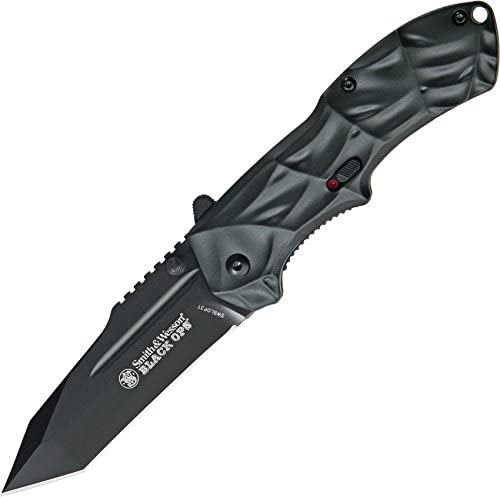
As for right now, Smith & Wesson’s Black Ops Assisted Opening Tanto for $27.41 makes a pretty good stocking stuffer.

Blade City

If the knife enthusiast in you life has more exotic tastes, Blade City will like scratch their itch. The site has its Christmas deals page up and running.

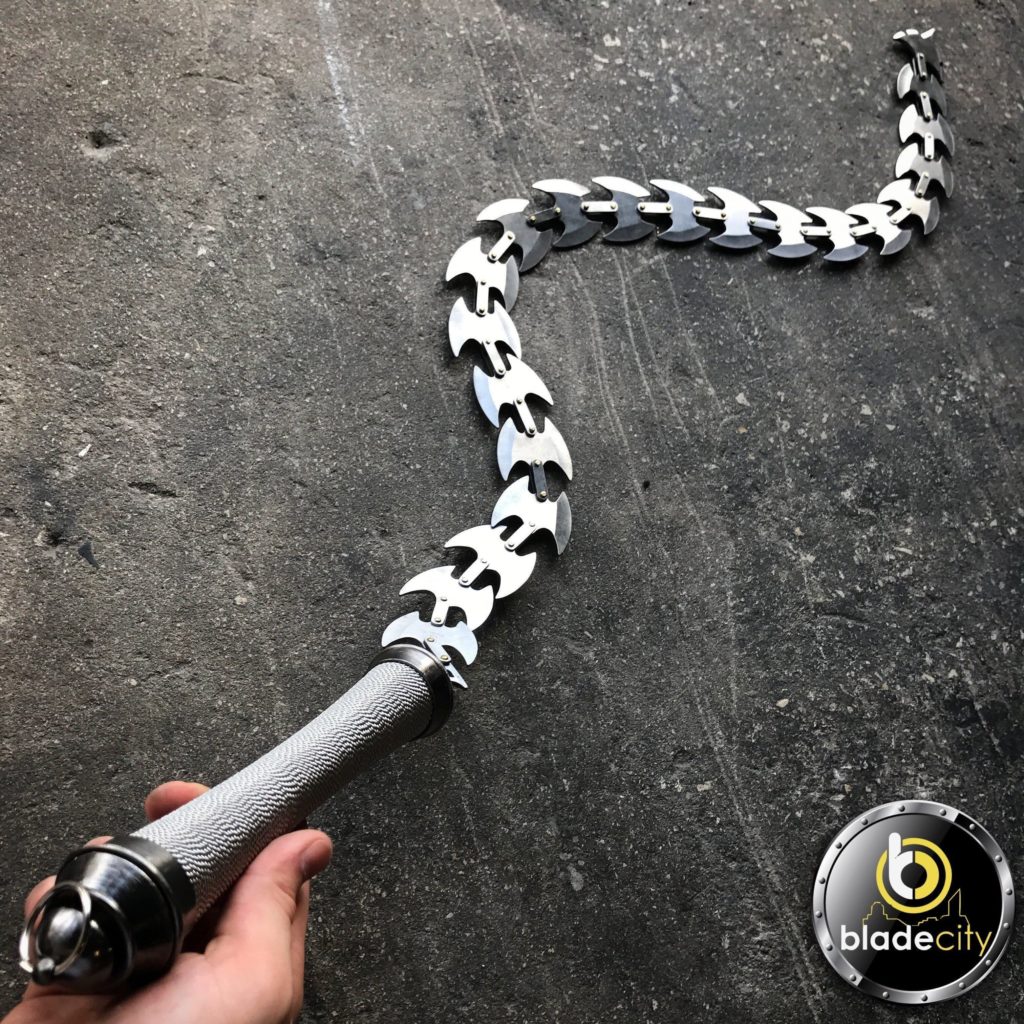
They has some unusual gems, such as Titanium Scorpion Whip … because, why not?

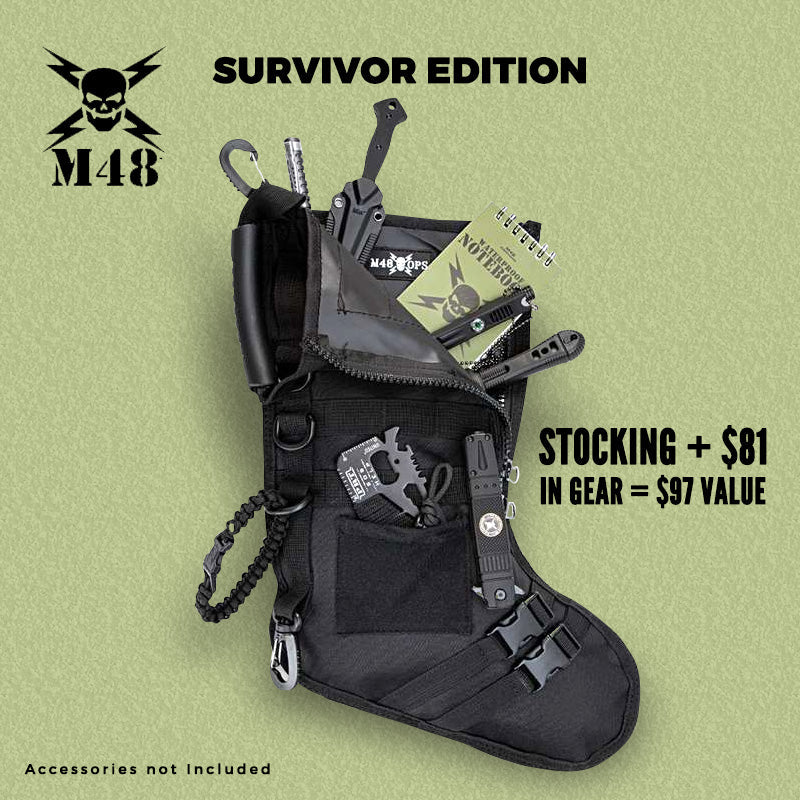
Also, their M48 Tactical Stuffed Stocking – Survivor Edition is packed full of all sorts of goodies.

Blade HQ

Blade HQ has a number of Christmas promotionals up and running. One of the more intriguing is laser engraving for an extra $9.99 on a purchase. Also, they’re giving away Winchester Shotgun Shell knives with a purchase over $75. Pretty Sweet.

The HQ also has a number of categories to shop their deals during the holidays:

Here are a couple that caught our eye.

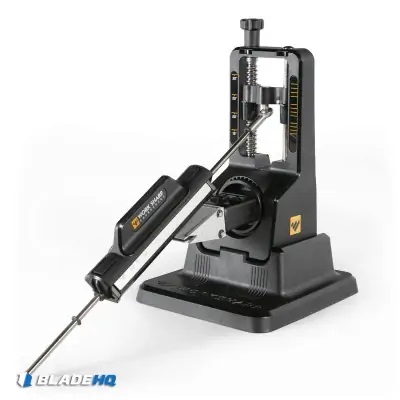
Any workshop—Santa’s or otherwise—is up graded with the Work Sharp Precision Adjust Angle Set Knife Sharpener, priced at $59.95

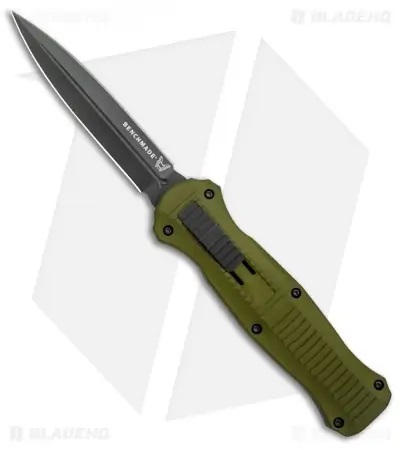
The very sexy Benchmade Infidel OTF Double Action Automatic going for just $385, more than $100 off MSRP.

Smokey Mountain Knife Works

SMKW is bursting at the seams with deals, with nine pages of site busters. You’re certain to find something for the knife lover in your life—even if that happens to be yourself.

A few we don’t think we could pass on include:

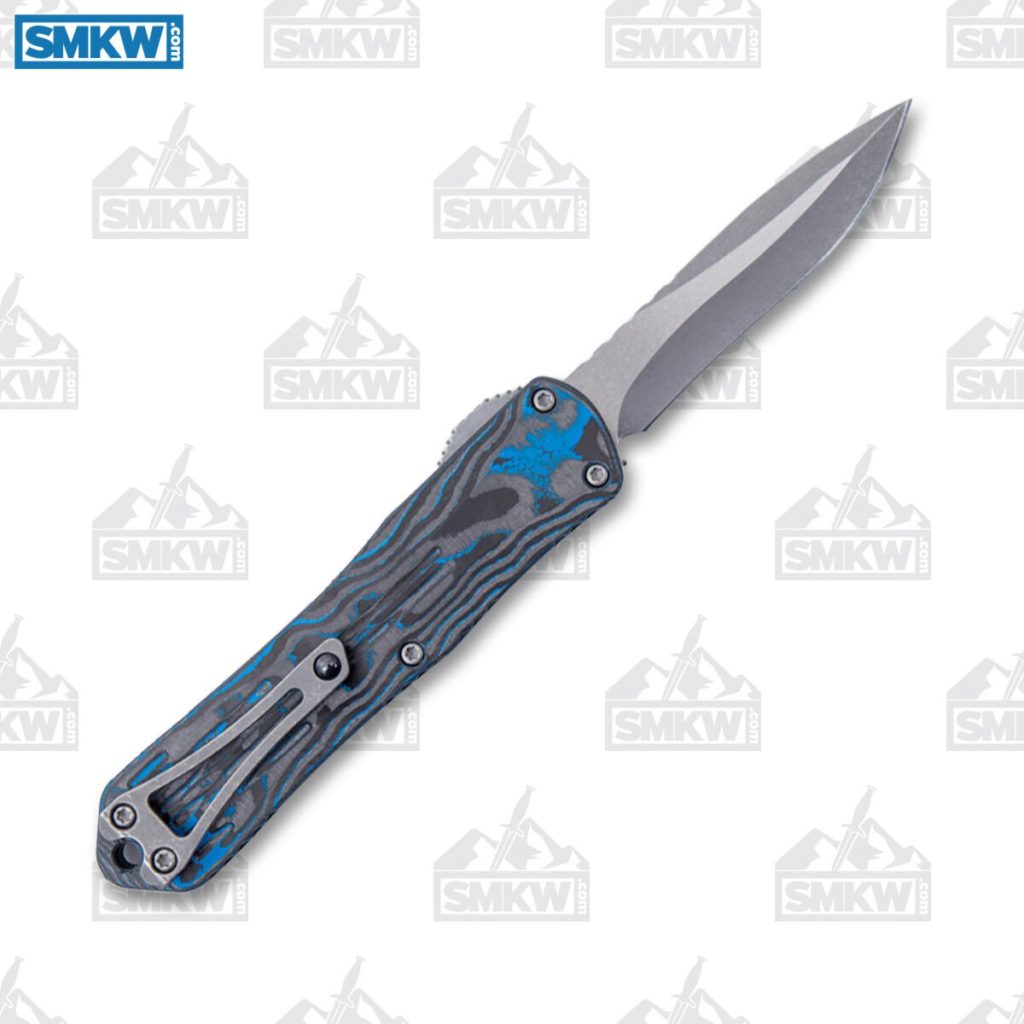
Heretic Manticore E Nightcrawler for $375

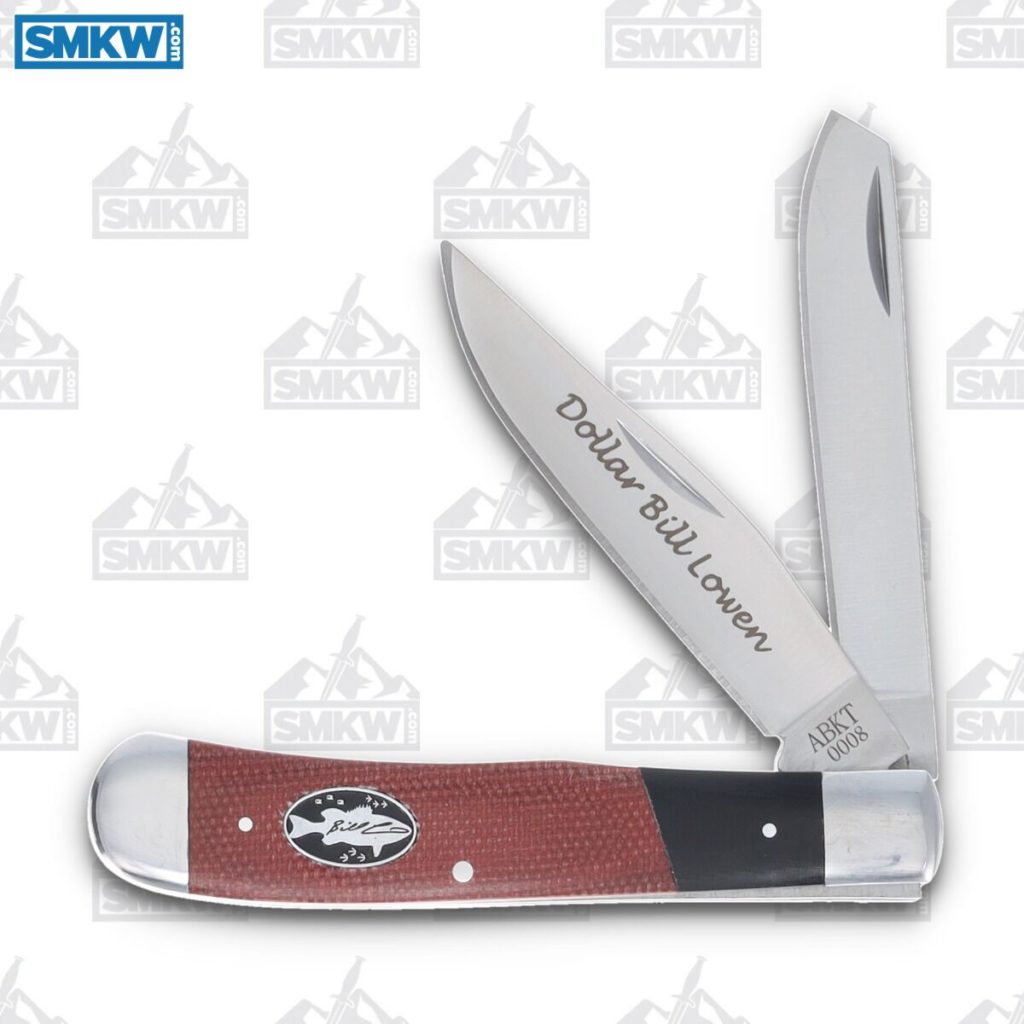
ABKT Bill Lown Trapper with Black and Read Micarta/G-10 handle for just $15.77

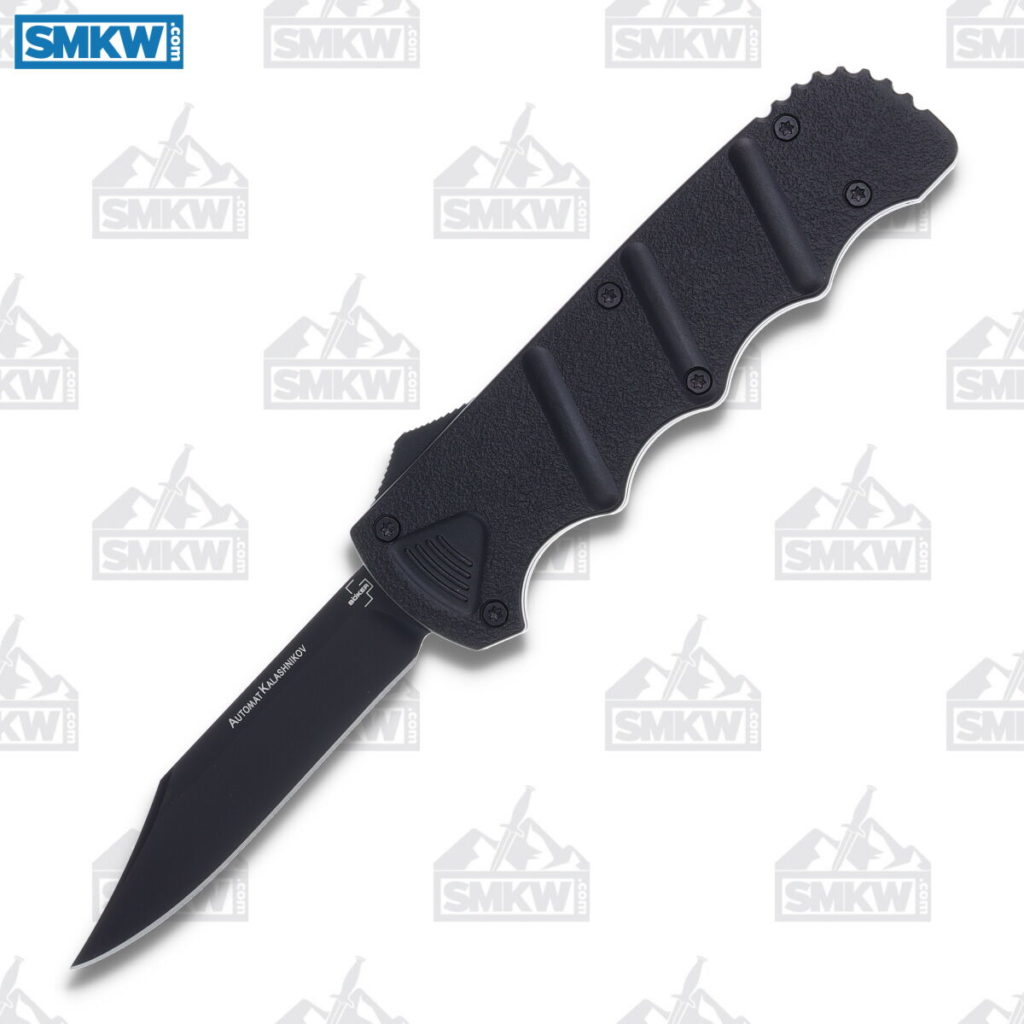
Boker-Kalashnikov OTF Blackout moving at $82.88

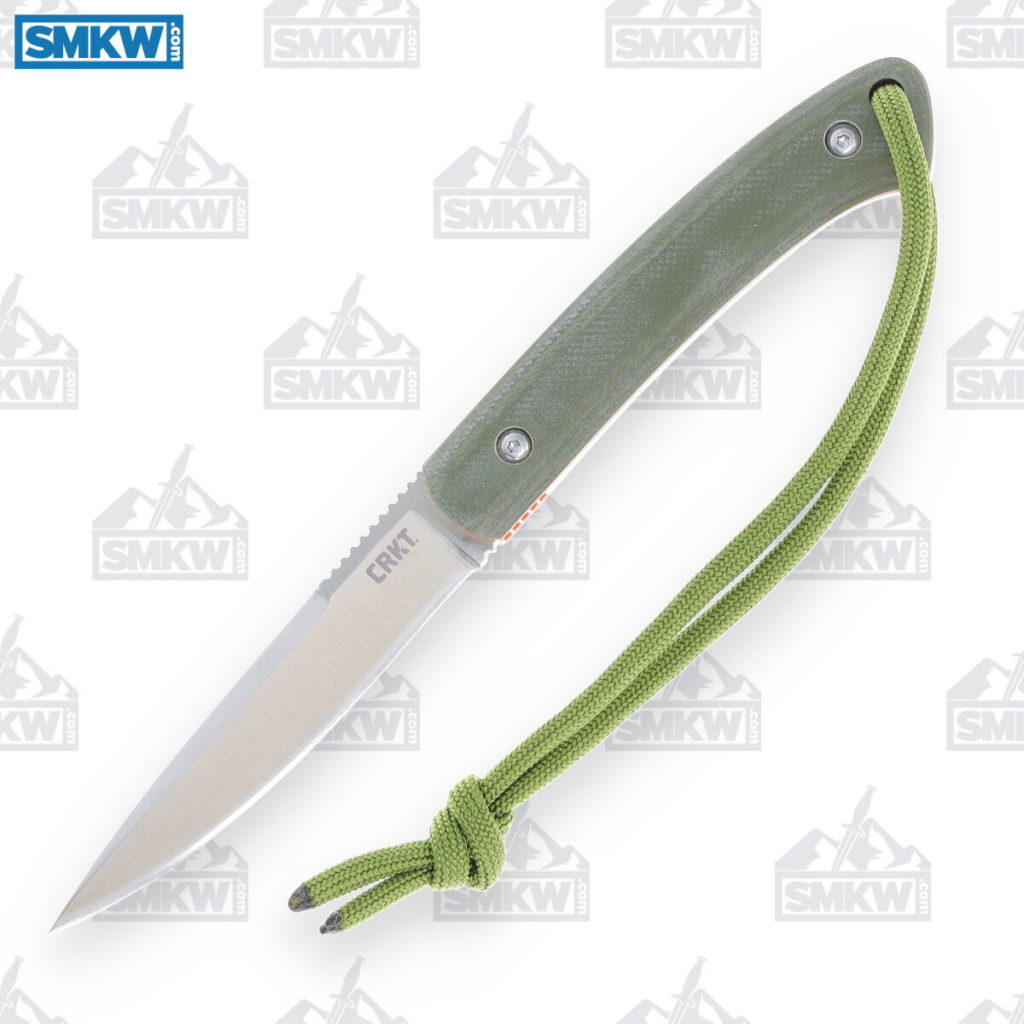
And the slick little CRKT BIWA in OD Green for only $29.99

The Navaja: A Spanish Gem
The Navaja Is A Sleek, Svelte Folder Originating From Spain Hundreds Of Years Ago. Today It Remains Popular In Both The Real And Digital Worlds.

The Navaja is one of the most interesting knives in the world. Its history can be pinpointed to the Andalusia region of southern Spain, and its growth and evolution since its creation more than 400 years ago has been well-documented. 

The History Of The Navaja

The first Navajas that resembled the modern version came to be in the 1600s. The name is derived from the Latin word “novacula” which means razor, and you can see the resemblance to a straight razor in its construction with the long, thin blade that folds away neatly into the handle.

The knife became popular during a period when, unless you were a nobleman, there were many restrictions on swords and other blades. This meant that the Navaja developed as a peasant’s knife and was used for all sorts of utility tasks. One thing that made using it a bit difficult was the fact that it didn’t lock when opened. Later Navajas would have locking mechanisms, but the first versions didn’t. Most notably the Navaja made a distinctive cracking/popping sound as the blade was opened, differentiating it from other knives.

Thanks to the steel innovations that allowed the knife to lock, the Navaja spread its wings and made its way out of Spain and to nearby countries like France. As the knife continued to evolve it was banned by rulers, then became a popular tool for rich and poor alike, and was used as a versatile combat knife. In fact, it became the knife of choice among muggers who would rob people in alleyways and other dark urban areas. Victims knew they were about to be robbed when they heard the unmistakable popping sound the Navaja made when a mugger opened it.

Roughly a century ago, the Navaja began to fall out of favor with knife lovers. However, it continues to endure thanks to a handful of makers crafting their versions, and, in an extremely modern twist, it has become a popular knife to use for players of the video game Counter-Strike: Global Offensive.

Kings County Tools Navaja-Style Knife

Navaja

A great modern representation of the Navaja is seen in this folder from Kings County Tools.

The blade is not just razor sharp but also razor thin. At three inches in length and just .25 inch wide, the stainless steel knife is excellent at precise, detailed tasks. The brass and steel handle is both handsome and provides an excellent grip while cutting.

Not quite a razor and not quite a penknife, this Navaja shows what the knife can be and how different it is from other folders on the market.

MSRP: $34.75

Castillo Knives Navaja

Castillo Navaja
Castillo Knives Navaja – Olive Wood Handle

A different interpretation of the Navaja comes from Spain-based Castillo Knives. Their Navaja is similar to contemporary lockback knives in many ways and is an all-rounder in every sense of the term. 

The blade is made from Sandvik 14C28N stainless steel and the handle comes in a variety of materials, from two types of Micarta® to four types of wood. Every version looks great, and the 3-inch straight-back blade has a small bit of deep jimping on the spine to aid in grip and force when cutting. Every knife comes with a leather pocket sheath and a 240-grit bonded ceramic sharpening stone.

All told, this 6.5-inch piece is a well-made gem.

MSRP: $109 (Micarta versions), $119 (wood versions)

Read More

Budget To Bang Combos: A Trio Of Great Hunting Knife Sets

When Hunting, One Knife Is Good But More Knives Are Better. These Knife Sets Can Help Make The Hunt Easier No Matter The Size Of The Game.

Each year hunting season rolls around there are experienced hunters and first-time hunters anxious to make their way into the field. Whether a bow hunter or a firearms hunter, one thing remains consistent between the two: They both need something to clean game and prepare it to be able to get it out of the field and home.

No one would argue that you don’t need a knife, but sure enough each hunter would back his choice of blade in a discussion led by the question “What do you use?”

This year, as usual, I found some likely candidates to add to the discussion of whose knife is better, though this time, instead of a single knife to tackle the project, let’s consider knife sets. They can’t get your game for you but we can put them through their paces to see if they can help make the most out of what you do get.

Gerber Moment

Gerber Moment
Here you get a good look at the size difference between the large Utility knife and small Finesse knife in the Gerber Moment. Sometimes a good picture is worth a thousand measurements. Blade and overall lengths: 3.625/3 and 8.625/7 inches. Blade and handle materials: 5Cr15MoV stainless and rubber overmold, glass-filled nylon

The Gerber Moment is a two-knife set. Of the test entries, this one is for the budget-minded hunters looking to spend the short dollar. It is made in China and the fit and finish is darn respectable considering each knife runs about $17.

The two knives were not hair-popping sharp out of the package, though it didn’t take long to up their edge games. Both the large utility knife and the small finesse model come with contoured rubber grips. 

The scales do not totally cover the full-tang handle design. A small perimeter of the tang is left exposed around the scales. At the rear of each tang are small oblong-shaped notches to serve as lanyard holes. They’re small holes at that, as you won’t get much more than paracord through them. As mentioned, the edges of the tang are proud of the scale but not so much as to cause any hot spots.

Both knives are drop-point designs, with the large knife being hollow ground and sporting a gut hook. The small Finesse is a full-flat-ground drop point. Texturing on the rubber grips helps provide a good, solid purchase. Of the two, as you would expect, the small detailing knife is pretty agile, though it isn’t like the large one is clumsy. To tote them both Gerber provides a dual-carry nylon belt sheath with plastic liner inserts.

Overall, the knives are quite well made. The design cleans up easy. After you do some work to bump up edge performance, you’ve got some users.

I have never been much for gut hooks. I remember when the Wyoming Knife was new and loads of hunters were sold for life on gut-hook knives. Even though I don’t use them, I can see how some hunters could like them. The gut hook on the Moment is pretty large.

I would have to give the set a thumbs up. It would be good for a hunter on a budget or one looking to try out different styles until finding one that suits him best.

MSRP: $34

Outdoor Edge Razor Guide Pak

razor guide pak
Some of the extra blades you get in the Outdoor Edge Guide Pak Razorbone include a selection of drop point, gut hook and boning/fillet patterns. All are neatly store in the waxed canvas roll. Blade steel: 420J2 stainless.

The Outdoor Edge Razor Guide Pak comes with two knives—the RazorBone and the RazorCape—along with a small bone saw. The knives take replaceable razor-blade-style inserts. Both are folders and come with multiple replacement blades. 

Outdoor Edge provides a boning/fillet-style blade along with a drop point and gutting blade for the RazorBone. For the RazorCape knife, you get two cape-blade inserts. Both have glass nylon and TPR rubber inlay handles.

A lockback system secures the blades in the open position. The handles don’t have a lot of cross-sectional contouring and the texturing on the rubber inserts provides some traction to your grip. There’s a thumb groove with jimping on the spine of the blade holder.

What worked well for me was the difference in thicknesses between the blade holder and the blade gave me a great lip to secure my handhold while executing a pinch grip. As I used the RazorBone in a butcher grip, the thin tip of the insert snaked through joints and kept me close to the bone so that I didn’t leave any of the good stuff behind. 

The RazorCape knife works well but has a large choil. I find such choils a waste of potential edge length. As if that isn’t bad enough on a hunting knife, they basically become a fur catcher. Both folders come with a pocket clip, though for me they are not pocket-carry-style knives. All the inserts come scalpel-sharp, so show them respect while handling them.

Lastly, the Flip n’ Zip saw works well but the anodized aluminum handle doesn’t do a lot for me. It makes a nice, thin package. A lockback system securely holds the blade in place. It’s just that the aluminum handle, even with CNC grooves, is thin and pretty slippery in my hands once things get wet. 

Also, the handle is so thin it makes it a bit difficult for my fat mitts to hold onto it. I would hate to try it with gloves on while the handle is covered in blood. The extra blades, all 420J2 stainless steel, are stored in a wax canvas roll. 

MSRP: $99

Knives Of Alaska Bobcat Combo

Alaska knives
Knives of Alaska includes a top-notch leather sheath with the Bobcat Combo. The sheath has the hallmarks of solid craftsmanship. (The author indicated he put the nick there.)

The set from Knives of Alaska (KOA) comes with the Alpha Wolf knife and the Bobcat Hatchet—hence, the Bobcat Combo. I’ve used the Alpha Wolf before. It’s a full-tang design made of D2 tool steel and a layered polymer handle. The handle contouring includes four finger grooves, with the index groove on the ricasso. It is a straightforward, fully flat-ground drop-point design.

The Alpha Wolf comes shaving sharp out of the box and has a general curve to the cutting edge. I have to say as a game knife it handles well and you can exert a great deal of control over the cutting edge with little effort. 

The design fits well in my meaty hand and the cuts get made where I need them without struggling. At the rear of the edge is a micro choil and, as usual, when the material being cut gets hung up there, it frustrates my workflow. I would say the only thing I would prefer is a bit of texturing to up the grip game.

As you can imagine, the Bobcat hatchet does things like splitting the sternum, cutting the pelvic bone and, if you want, it will bust out some of the tougher joints. It doesn’t have the heft of a full-size hatchet but as my buddy is fond of saying: if you put enough force behind anything you can make it fly. To me, it would be certainly neater than a chainsaw (don’t ask, it’s a drunken Canadian hunter thing). A gut hook is on the back.

A top-notch-made leather sheath carries the combo. I never reviewed a knife from KOA on which the leather wasn’t well executed. It’s a good combo and the Bobcat hatchet is such a neat tool I couldn’t resist using it in the kitchen as a small hand chopper. I know, somewhat sacrilegious, but it’s my kitchen. It’s a great set and as much of a trophy as the game you kill. 

MSRP: $209.99

There’s a wide range of knives here from budget to bang and represents only a small sampling of the tools available to hunters these days. If you’re going for the big game, don’t ruin the moment by struggling with a poorly crafted tool. Take the time to round out your kit with a good field-dressing knife set.

Read More

A Gentleman’s Game: 4 Classy Folding Hunting Knives

While Not As Plentiful As They Once Were, Quality Folding Hunters Can Still Be Had. These 4 Knives Meld The Robustness Of A Hunter With The Ease Of An EDC.

Folding knives have been used for hunting and skinning since they were first made. Today, the American knife industry has moved quite far in the direction of fixed blades for use in the field.

However, folding knives are seen in the pocket of just about every self-respecting individual these days and are still the top choice for daily use. Time and fashion being what they are, many pocket folders have become somewhat fragile and unsuitable for anything other than opening mail or packages. In short, they have lost their value as serious tools that can be used in the field as well as daily life. Nonetheless, luckily there are a number of very suitable hunting knives that fold and ride in the pocket.

The largest downside to folding hunters is they can be very difficult to clean and have the propensity to break under hard use. Folding knives promoted for hunting are, at least to me, a bit of an exaggeration in that they function but are much harder to get along with on big game. As a result, I try to limit my folders to small game where the weight of the animal has little bearing on blade stress.

Cleaning and maintaining a folding knife exposed to blood and other fluids is a challenge. The mechanical function of such knives can in many cases be impeded with fat, and likewise made dangerous if, for instance, a linerlock gets clogged up. 

Washing a folding hunter is easy in some respects, but the best method remains soaking it in hot water with dish soap to dissolve fats and blood. Rust and corrosion can easily occur internally, so you’ll need to oil the knife after soaking it to prevent corrosion.

Lastly, ergonomics and blade length create the most limits for the big game hunter. Because most folders are designed to lay flat against the body in the pocket, they tend to be thin in profile, which can fatigue the hand if you have a great deal of work to do. 

Since the blade fits in the handle, you’ll never really get as long a blade as you need for animals like deer without getting a handle that is proportionately as long. This makes for a degree of awkwardness in that you can only get more blade if you get more handle, and at that point a fixed blade is better.

Emerson Knives Market Skinner

Emerson Market Skinner

I have developed a great fondness for Emerson knives. In fact, as much as I love carrying fixed-blade Winklers, I have ended up going about much of my daily life with an Emerson in my pocket. Much of the utility for me comes down to how well it fits my hand. The Market Skinner is a well-balanced and very functional cutting/slashing knife that has a mixture of hunting and tactical features. 

The grip has a fine yet aggressive texture, and is easy to hold onto even when working with fatty meat. The blade has Emerson’s Wave Feature, thus allowing for instant opening coming out of the pocket.

I got to work in the kitchen on some small game and meat. The Market Skinner is designed to emulate the type of blade profiles used in old-world butcher shops to break down large cuts. Having spent the better part of my college years working for a high-end butcher shop, I had a good feel for what this type of knife could do.

For general use, the Emerson, above the others here, was probably the most functional for light-to-medium use. It was also by far the easiest to clean internally. Its open-handle design allows you to wash it easily. 

The added upward curve at the Wave on the spine allowed me to put a great amount of pressure on the blade to cut deeply. When covered in fat it was functional. However, the very fine handle material was hard to clean and pulled fiber from my rags. Not a huge deal, just something to be aware of.

While it is profiled as a hunting blade, the tactical features are there and the knife is easy to use thanks to how quick it opens. The clip is righthanded and very stiff. If you intend to carry it lefthanded, Emerson offers a service to drill and tap the other side for you.

MSRP: $267.95

Boker Hunter’s Knife Duo

Boker Knife Duo

Styled in the manner most favored by German and European sportsmen, the Boker Hunter’s Knife Duo is not just a functional piece of art but also a very rugged tool. It is so nice looking that you’ll want to make sure to keep it that way—meaning don’t toss it in your gear drawer after a hunt. 

Unlike the other test models, the Boker features two edged tools—one, a knife blade, the other a saw. In testing on a lamb rack, the saw performed extremely well and allowed me to make nice, even chops. The teeth are exceptionally aggressive, which is a positive for cutting bone, but they clog easily with fat and sinew.

The Hunter’s Knife Duo is made in Germany and the quality of each part is amazing. A notable feature is the real stag grip panels, a rarity on many production knives today. Care must be taken to not introduce this natural material to stress or harsh cleaning chemicals. Soap and water for cleanup is best, followed by a light coat of oil. In terms of mechanical function, this is a classic gentleman’s knife, slow to deploy and not designed with a day’s labor in mind. 

Equal parts showpiece and tool, the Boker is best on small-to-medium game. Since it has no pocket clip, it will likely ride in a belt pouch or simply in a pocket.

The only real problem is the shape and contour of the handle. If your hands have blood or fat on them, the grip tends to be slippery. This is a very slick knife and every metal part is as smooth as glass. Under such conditions sawing also can be slightly hazardous, as can cutting should your hands slip up onto the blade. That being said since a true gentleman is never in a hurry, the Boker is the perfect find for rabbits, pheasant, and turkey, preferably with a fine double gun in hand.

MSRP: $409

Case Kickstart Mid-Folding Hunter

The smallest of the test knives, the Case Kickstart Mid-Folding Hunter performed very well considering its size and blade length. This is in no way a knife you would want to have if you were trying to take down a deer; however, for small game, medium cuts like lamb or chicken, or out harvesting spices in the garden, the Case is perfectly capable. 

Like the Boker, it is a very, very slick knife—both visually and in terms of the limited amount of texture it has on the blade and grip. While it can be easy to work with, the knife is prone to slip or rotate in the hand.

In terms of cutting ability, it did just fine. The downward-swept blade lends itself to fine cuts, but very little else. The knife can be used and held like a pen. A full grip of the handle isn’t very safe. 

The lock mechanism is easy to use—a bit too easy. The blade can be unlocked and closed with almost no effort, which can present a dangerous situation if you aren’t careful. Of note is that the blade is assisted, and it opens incredibly fast. It also has a pocket clip for easy carry.

MSRP: $127.99

A.G. Russell Folding Gent’s Hunter II

A.G. Russell Folding Gent's Hunter II

In the vein of classic sport folders from the 1960s and ’70s, the A.G. Russell Folding Gent’s Hunter II is designed along clean lines and minimalist features. It came out of the box with a very sharp edge and a functional, ergonomic grip. Despite being a full-size knife, it is the lightest of the review folders, lighter even than the smaller Case.

Using and cleaning the A.G. Russell was about the same as the others. However, the wood panels required a coat of oil after I used soap on them to remove fat. The blade sliced meat very easily, and it was also rigid enough to approach some larger projects and game. While I’d probably take the Market Skinner if I knew I was working on an adult deer, the A.G. Russell would come in a close second, its only downside being that it got slippery when wet.

This knife is right on the money for a walking hunter going after rabbit or fowl. It’s very light and sharp and still maintains classic lines. Because it is so light, it seems to disappear in the pocket and, if carried daily, won’t draw any unwanted attention. It has “classy” written all over it.

MSRP: $85

Read More

Seven Excellent Drop Point Knives

The Drop Point Blade Is One Of The Most Utilitarian Blade Styles. From Outdoor Knives To EDC Folders, The Drop Point Is The Way To Go.

The drop-point blade is perhaps the most useful shape for outdoor knives. It’s an excellent cutting tool and the point makes it good at puncturing too. Whether it’s cleaning a kill or just opening up a gift box, the drop point is an excellent all-rounder that any knife lover should have.

Ka-Bar/Becker Knife & Tool BK16 Short Becker

Ka-Bar/Becker Knife & Tool BK16 Short Becker
The wide drop-point blade of the KA-BAR/Becker BK16 has the ideal edge geometry to handle precise tasks like whittling.

It is a midsize knife that is easy to carry, handle and use. The 4-inch blade of flat-ground 1095 Cro-Van steel can hold a respectable edge and sharpens quickly in the field. The black textured epoxy coating is non-glare and corrosion-resistant.

The Zytel handle is a typical Becker design—highly ergonomic with a palm swell that fills the hand nicely.  The handle edges are rounded to eliminate hot spots. Part of the tang is exposed for the lanyard hole. There’s also traction notches on the spine to choke up for added control. When you hold the BK16, notice how solid it feels. Even though one of the smaller knives in the line, it still feels capable of handling most cutting or camp tasks.

The sheath is a ballistic nylon with a rigid plastic liner. An accessory pouch holds a small lockblade folder or sharpener. The knife secures in the sheath via two button-snap nylon straps. The BK16 holds snugly inside the sheath with no rattling. Made in China, the sheath is of very good quality.

The BK16 is a workhorse. The drop-point shape is utility friendly and covers a broad range of general camp chores, from food prep to field dressing. The flat grind ensures optimum slicing.

The handle shape is classic Becker. A forward finger recess forms the lower guard and a palm swell mid-handle seats the hand comfortably. All edges are rounded for maximum comfort during prolonged use. The BK16 comes with two sets of scales: black Zytel and coyote tan. I opted for the tan. I love the contrast with the black blade.

I successfully batonned the knife through wood. The knife shrugged the task off and repeatedly came back for more. Whittling was easy. The ergonomic grip is comfortable and you’re able to use the exact pressure needed. The BK16 handles food prep with confidence.

If you need a compact fixed blade capable of tackling large tasks, the BK16 is it. Made in the USA, it has an MSRP of $132. 

Fallkniven F1 Pro

Fallkniven F1 Pro
The Fallkniven F1 Pro’s blade geometry makes baton work almost effortless.  

The Fallkniven F1 Pro features an extra-heavy-duty build and ELMAX high-performance stainless blade steel, which offers enhanced edge holding and toughness. With a 4-inch, convex-ground blade and 8.5-inch overall length, it is a formidable knife, weighing in at 6.1 ounces. 

The blade stock thickness is .19 inches, fairly thick for a knife this size. The full tang extends through the Thermorun rubber handle and is exposed on the butt for excellent torsional rigidity.

The handle sides feature a heavy checkering pattern for an excellent grip with wet or dry hands. The Thermorun material has a sort of a grip-you-back quality, similar to Kraton. The oblong handle shape rests in your grip comfortably so that you feel in control of the knife.

The sheath is well made of heavy-duty Zytel with a nylon webbing belt loop and button-snap retention strap. At first, the nylon webbing may seem a bit cheap but in reality it’s very smart. 

Why? The webbing allows the sheath to move freely at your side in case it gets snagged by branches, or to self-adjust when you are seated in a chair or a vehicle. Most rigid sheaths do not allow for this. Not to mention, the nylon webbing material is weather and moisture-resistant. 

The knife locks into the sheath via the guard as it engages a spring-loaded tab in the sheath’s side. This alone is enough to hold the knife inside, but securing the handle with the snap strap guarantees the knife stays put until you release it. The sheath’s bottom is open to allow moisture to escape and resist blade corrosion.

The F1 Pro and the BK16 are the heaviest-duty ones of the test bunch. The F1 Pro easily completed baton work. The thick blade stock and flat grind split wood like a wedge. For whittling, the convex edge has a ton of bite. It shaved off thick chunks of wood as I carved multiple stakes to a point. It made fast work of the task but, at the same time, was controllable and made precise cuts when needed. 

In some respects it worked as hard as a larger knife. In the kitchen, don’t dismiss the F1 Pro due to the thick blade. It slices vegetables with precision, proof this beast of a knife can handle delicate tasks as well.

There were no problems with the Thermorun handle. My hands got a bit sweaty during outdoor use and the handle never felt like it was going to slip in my hand. The checkered texturing is the right amount and not overly aggressive to your skin.

With an MSRP of $407.95, the F1 Pro ELMAX is one of the most expensive knives you will find in this class, but the chosen materials and highest quality of build offset the cost. You get what you pay for and this is a high-quality tool.

White River Knife & Tool Hunter

White River Knife & Tool Hunter
The blade of the White River Hunter is flat ground for optimal cutting performance, and the steel offers toughness and high edge-retention qualities. 

The White River Knife & Tool Hunter is a simple design, with a 3.5-inch drop-point blade paired with an ergonomic handle.  Blade steel is CPM S35VN high-performance stainless, and the handle comes in several material options. The 8.25-inch overall length is well-suited for field dressing and possible bushcraft use, too. 

The blade is flat ground for optimal cutting performance and the steel offers toughness and high edge-retention qualities. A polished finish makes the blade a snap to clean and also seals micropores, thus helping prevent rust. It’s kind of unusual to see a mirror polish on such a blade due to it being a labor-intensive finish; most such blades have either machine satin, stonewash, or even bead-blasted finishes.

A large finger recess helps index your grip, and a significant palm swell rests the knife in your hand comfortably. The butt has a bird’s beak pommel to prevent your hand from sliding backward.

As for handle material choices, they include three Micarta® flavors: natural burlap, black burlap, and black/OD green. Micarta is an excellent choice for an outdoor knife, as it is dimensionally stable and impervious to the elements and absorption of fluids. It also has a tactile feel that aids in grip retention in all conditions. 

We selected the natural burlap for the test, as it has a very organic appearance, almost a wood tone. The feel is akin to that of canvas Micarta. The sheath is formfitting Kydex, with a molded Kydex belt loop that accommodates belts up to 2 inches wide.

The cutting performance is superb. The knife is efficient and simple to maneuver. The flat-ground blade sails through meat and vegetables. Being a smaller fixed blade means it can be used for more delicate or intricate cutting.

I like the burlap Micarta. It’s very durable, looks great, and has a great in-hand feel. Burlap micarta isn’t common in production knives, so this is a bit rare—for now.

The shorter-length blade handles kitchen utility tasks well. Who knows—this knife might wind up in your kitchen pulling permanent duty when it’s not out with you in the woods. The White River Hunter retails for $180 for any of the handle material options. This is a really good price for a USA-made fixed blade with premium blade and handle materials. If you like refined fixed-blade hunters, the White River Hunter is for you.

Chris Reeve Knives Backpacker

Chris Reeve Backpacker
The Chris Reeve Backpacker handles like a dream. The knife is balanced perfectly and feels like an extension of your hand. It’s very predictable in use and is a slicer by nature. (Dexter Ewing image)

The newest fixed blade from Chris Reeve Knives, the Backpacker is for outdoorsmen and backpack hunters who want a fairly lightweight sheath knife that is quite usable with a smart design and high-end materials. 

It features a 4-inch drop-point blade hollow ground from CPM Magnacut, the latest of the high-performance stainless super steels. Magnacut reportedly has the best edge retention of any high-end blade steel. The Backpacker will go the distance with edge holding. A stonewash finish gives the blade a slight industrial look. Stonewash finishes do a good job of hiding scratches that occur during use.

The handle has a hollowed-out full tang, which helps keep weight to a minimum (3.8 ounces) and improves balance. The scales are canvas Micarta in black or natural. The Micarta is sculpted to provide placement of the hand and fingers, enhancing user comfort and blade control. 

Canvas Micarta has a grippy nature and seems to get better when your hands are wet, unlike other materials that may feel less tactile when wet. Two pairs of hex-head bolts secure the scales which are removable, resulting in a skeletonized fixed blade to further reduce weight and bulk. 

The integral guard formed by the blade’s height is a smart design I really like. It allows you to choke up on the handle for precise control, as well as keeping your hand in place.

The Backpacker comes with a Kydex sheath which locks around the lower portion of the exposed tang that forms the guard. It does not encompass the handle scales as most fixed-blade Kydex sheaths do. This is done on purpose so if you do decide to remove the scales and use the Backpacker skeletonized, the sheath will still work and lock on the knife for safe carry. 

A flat-head screw at the end allows you to fine-tune how tight the sheath locks onto the blade. Not many sheaths have this feature. The rivet spacing allows use of a large Tek-Lok belt fastener (the knife does not come with a provision for belt attachment, so it’s up to the buyer to supply such).

The Backpacker handles like a dream! The hollow grind slices easily. I used the knife to cut meats and vegetables. The cutting performance is predictable, efficient, and precise. It’s like driving a nice European sports car. 

Handle comfort is first class; I love the way the Micarta feels in-hand. It’s light as a feather for a fixed blade of its size, and no doubt the minimal weight does a lot to improve handling. When you choke-up on the handle with your thumb placed on the blade spine, you can feel how the ergonomics work to lock your grip on.

The Backpacker is a high-end, USA-made hunting/camping fixed blade. MSRP: $300. A CRK knife for $300 is a great price, actually, and you get a lot in return, including high-end materials and the company’s design and manufacturing/engineering expertise.

Buck 112 Ranger

Buck 112 Ranger
Buck 112 Ranger

Buck makes great knives, and this folder certainly is one of their best. The Ranger is a variation on the famous 110 Folding Hunter with a drop point instead of the original’s clip point.

The knife is beautiful with an ebony handle and ethically-sourced Crelicam ivory. While the handle is stunning, the star of the show is still the blade. Made from 420 HC stainless with a satin finish, the 3-inch blade is everything you would want in an EDC. With a thick belly and thick tip, the blade slices and punctures confidently.

The heat treat imbues the blade with excellent corrosion resistance and durability. It’s hardened to an HRC 58 so the knife can handle the wear and tear of everyday use with ease. This is a classy knife at a great price.

MSRP: $63.99

Benchmade Bugout

Benchmade BK-2
Benchmade BK-2

When it comes to drop point EDC knives the Benchmade Bugout is one of the most iconic. It was designed for outdoor use which makes it overpowered as an EDC for so many reasons.

There are many versions of the Bugout, and all are excellent, but for this piece we chose the BK-2 for its affordability in relation to other knives in the line.

The BK-2 is a fully blacked out version of the Bugout with a CF-Elite handled married to the CPM-S30V blade. The steel comes in a black Cerakote finish and is treated to a 58-60 HRC. The knife shines in large part thanks to its weight. At just 1.8 ounces, the BK-2 is so light and nimble in the air that it can feel like cutting with air.

It’s the Bugout. It’s great. It’s one of the highest-quality drop point knives on the market.

MSRP: $190

Kizer Drop Bear

Kizer Drop Bear

This knife was released over the summer and it is excellent. We have already written an in-depth review of the Drop Bear, and it’s worthy of a second mention.

The 154CM steel blade is meted to an aluminum handle. At 3.8 ounces it’s a substantial little knife that can handle the day-to-day tasks asked of it and can even be used as a kitchen knife in a pinch. 

The knife’s clutch lock, Kizer’s newly-adopted Axis-style lock, is fun to use and keeps the blade secure at all times. This is an excellent new addition to the world of drop point pocketknives.

MSRP: $158

Editor’s Note: Mike Abelson provided content for this piece.

Read More

Advertisement

Must Read Articles

Read this before you make a knife

Knifemaking 101 – Read This Before You Make a Knife

  by Wayne Goddard My experience has taught me that there's nothing like digging in and getting started. I've often said the hardest part of the...
how to forge damascus steel

How to Forge Damascus

Advertisement
Advertisement