Gerber Has Reinvented The Multi-Tool With The Dual-Force. Incredibly Strong And Versatile, The Dual-Force Is As Rugged As It Gets
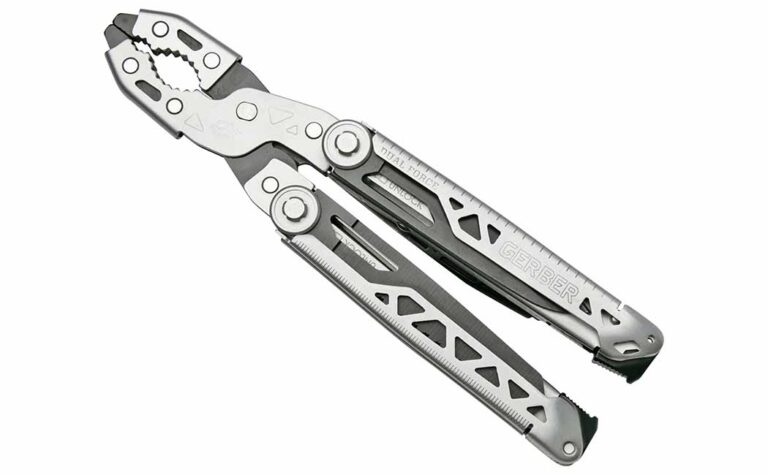
The multi-tool is beloved by many for its flexibility and ability to be useful in many situations. Gerber Gear has ripped up the book on the multi-tool and reinvented the genre with the 12-tool Dual-Force.
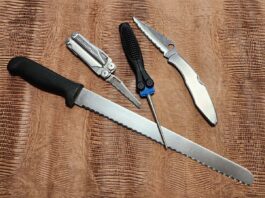
It is a monster. The Dual-Force is similar to other multi-tools in terms of the implements within it, but the strength level has been ratcheted up. The screwdriver and saw are beefier than in a Swiss Army knife. The driver is 3.25 inches and features Center-Drive tech so it feels and operates like a standard driver.
The Dual-Force has a dozen different tools.
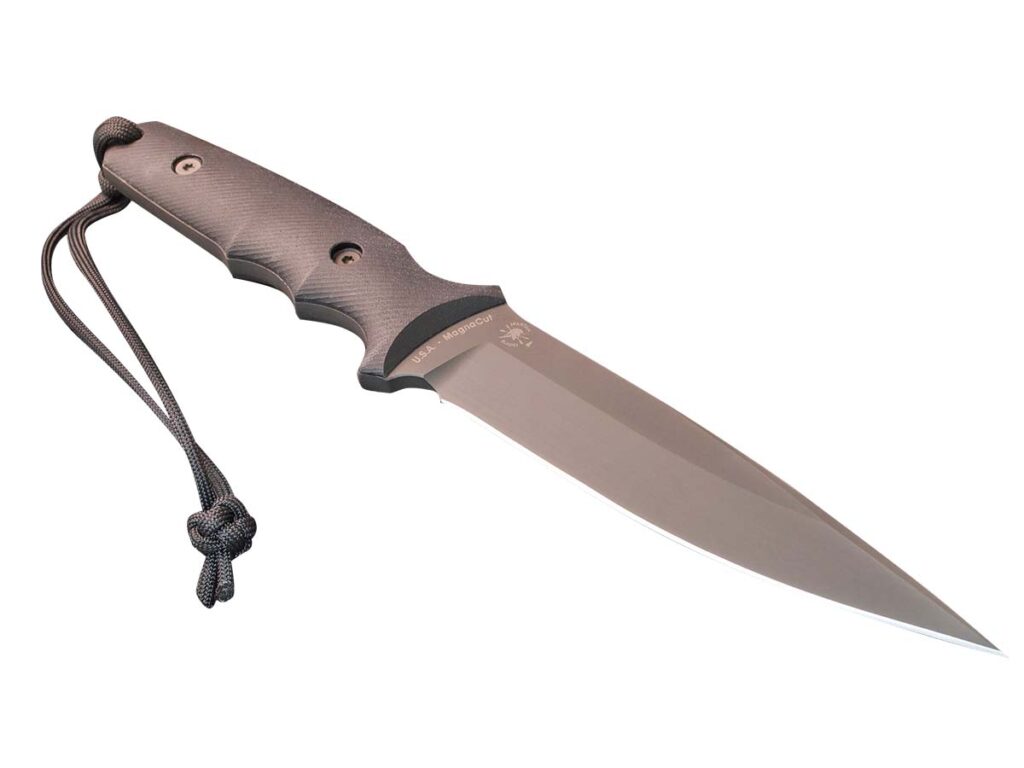
The tool also includes a 3.25-inch plain-edge blade, which rivals that of many standard pocketknives.
But the star of the show is the pliers. There are so needle-nose pliers here. The Dual-Force features a robust set of jaws with a twin-position dual-lock design and large teeth for more control. The jaws dwarf the pliers offered on most other multi-tools.
The Dual-Force brings the quality you expect from Gerber Gear and an innovative design that makes it stand apart from all the other choices on the market today. MSRP: $110.
Editor’s Note: This post was written by Mike Ableson.
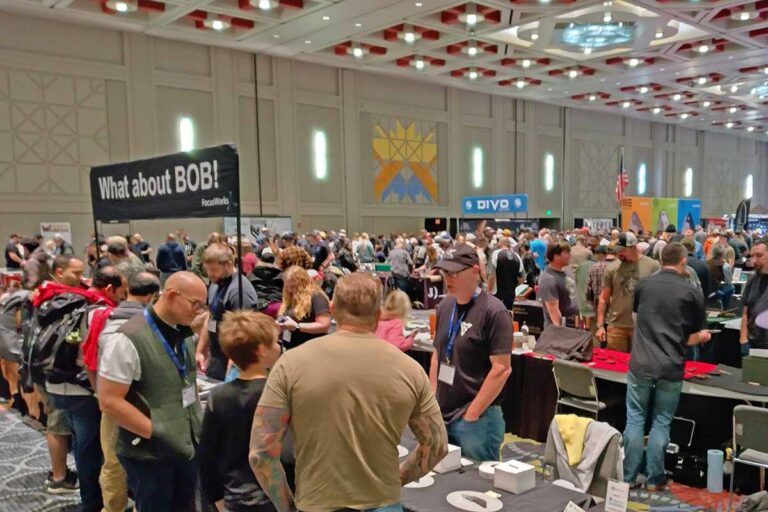
A larger show hall, more exhibitors, some of the world’s best makers and knives, entertaining seminars, awards and other sharp stuff beckon you to attend BLADE Show West Oct. 4-5 in the Salt Palace Convention Center in Salt Lake City, Utah.
A move to the Salt Palace’s exhibit hall No. 4 adds 15,000 square feet to this year’s show, and along with the added space come 30 more exhibitors to join the hundreds of knifemakers, bladesmiths, knife companies, knife suppliers and other knife professionals at the third annual rendition of the BLADE Show West held in Utah.
Among the top custom makers set to exhibit is an unbridled posse of South Texas Slipjoint Cartel members that includes BLADE Magazine Cutlery Hall-of-Fame® member Bill Ruple, award-winning makers Luke Swenson, Enrique Pena and Tim Robertson and others. An all-star list of ABS bladesmiths features Bill Burke, Shane Taylor, Steven Koster, Seth Lopez, Shayne Carter and Trevor Morgan, to name a few. Other top award-winning makers include Johnny Stout, Princeton Wong, Mick Strider, Duane Dwyer, Evan Nicolaides, Mike Tyre, Jared Oeser and Brian Nadeau. There are many more.
2024 BLADE Show West Classes And Demos
Let The Pro Critique Your Knife
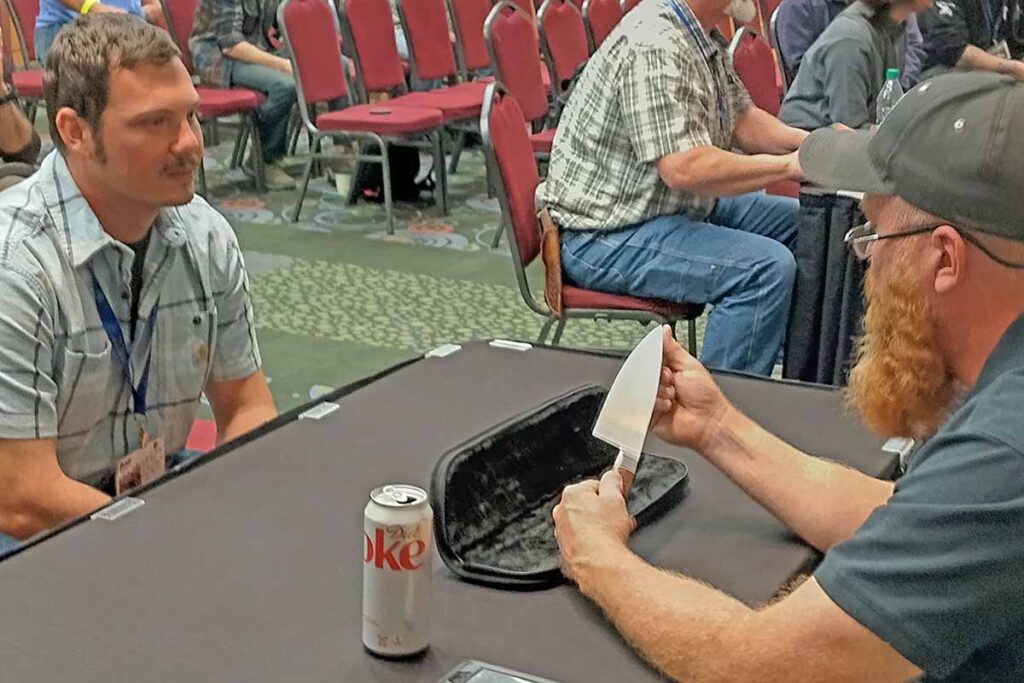
While the full seminar slate had not been set at press time, the popular Let the Pros Critique Your Knife session was set to return, with some of the leading custom maker show exhibitors expected to examine and critique knives made by assorted show attendees. As usual, it will be a limited-seating event and attendees can bring one knife only.
Select show attendees will have their knives examined by the world’s best custom makers in the popular “Let The Pros Critique Your Knife” seminar. Luke Swenson (right) inspects a patron’s knife at last year’s show. The makers participating in this year’s seminar were being assembled at press time. See the free BLADE Show West program at the show for more info.
Basecamp Essentials
Basecamp Essentials by Survival University will be a 30-to-45 minute demonstration designed to introduce essentials of wilderness living. “We will demo how to create various camp comforts such as benches, chairs, and other useful camp tools, using materials found in the natural environment,” a company spokesperson wrote. “This demo goes beyond the basics of survival, focusing on enhancing comfort and fostering a sense of community in the wilderness.”
West Coast Flipping Championships
Also set to return is the West Coast Flipping Championships hosted by Squid Industries. It will be the fifth annual version of the championships, with head-to-head/live balisong flipping matchups in an elimination/bracket-style competition. Awards and prizes will go to the top finishers. For the complete seminar schedule, see the free BLADE Show Program distributed at the show.
2024 BLADE Show West Awards
The show’s best custom and factory knives will be determined by a panel of judges assembled by the BLADE Show West staff. This year’s custom knife categories: Best in Show; Best Hunter; Best Kitchen Knife; Best Damascus; Best Slip Joint; Best Fixed Blade; Best Folder; Best M.A.C.K. (Machine Assisted Custom Knife); and Best of the Rest.
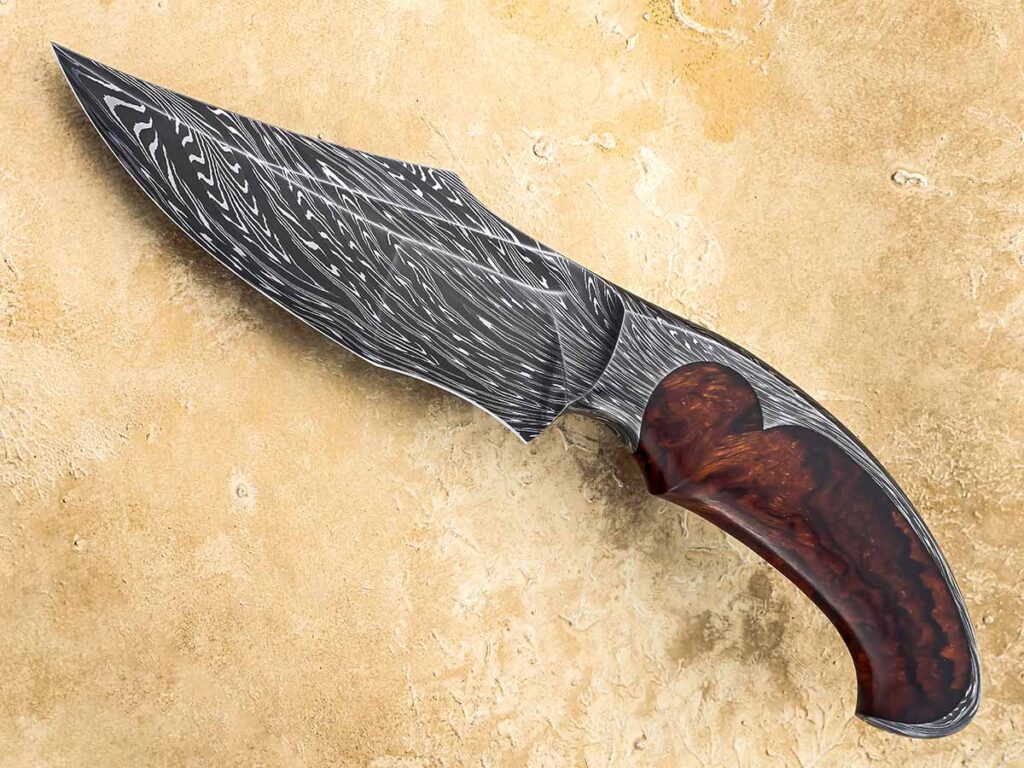
Winner of Best Fighter at BLADE Show 2024, bladesmith Seth Lopez will showcase his curvaceous creations. His recurve fighter boasts a compound-ground blade of a damascus of 1080 carbon and 15N20 carbon steels. Handle: desert ironwood burl. Overall length: 8.75 inches. (SharpByCoop image)
On the factory side, the award categories are Best American Made, Best Imported, Best EDC, Best Fixed Blade, Best Folder and Best in Show.
For the times and locations for the judging, signs and schedules will be prominently placed in and around the show hall. Also, see the free BLADE Show West Program distributed at the show for updates.
The winners will be announced and presented their awards in a special ceremony the Friday night of the show. See the free BLADE Show West Program for the time and venue.
2024 BLADE Show West Hidden Gems
The factory knife section is always a beehive of activity at BLADE Show West, and this year’s rendition promises more of the same. Leading exhibiting knife companies include CRKT; Emerson Knives, Inc.; Fox Knives; GiantMouse; Heretic; Hogue; Lionsteel; Pro-Tech; SOG; Spyderco; Squid Industries; McNees Knives; Suprlativ Knives; Tactile Knife Co.; TOPS Knives; WE Knife; White River Knife & Tool; and others. For the complete exhibitor list, visit bladeshowwest.com.
CRKT will host custom knifemaker/designer Richard Rogers and his wife Sally to answer questions about Richard’s latest CRKT designs. CRKT’s Doug Flagg (center) talks knives with Cutlery Shoppe’s Jeff Loffer (right) and two patrons at BLADE Show West 2023.
One of the hidden gems of the factory section is you never know who might show up, including custom makers who engage in collaborations with select companies. For example, the CRKT booth will feature award-winning custom knifemaker Richard Rogers, along with his wife Sally, to answer questions about Richard’s latest CRKT designs. Other CRKT maker/designers exhibiting at the show will be Eric Ochs, TJ Schwarz and Princeton Wong. Ochs will exhibit under Ochs Worx, Wong under Prince Customs and Schwarz under Schwarz Knives.
Danish knifemaker Jens Anso, along with fellow Danish maker Jesper Voxnaes the design team behind most if not all of GiantMouse knives, will be stationed at the GiantMouse booth. Knife designer Tony Sentmanat will be based at the WE Knives booth. WE maker/collaborators Ben Petersen and Zac Whitmore also will attend the show and may appear at the company’s booth at times.
While TOPS Knives won’t have any custom knifemaker designers on hand, it will have headman/head knife designer Leo Espinoza in attendance, as always. Case will continue showcasing its first Bill Ruple collaboration, and Bill will have a table at the show, too, so chances are he will make an appearance at the Case booth as well. There no doubt will be other company booths serving as the destination of custom makers/designers, custom makers in general, and more.
Forty-five shows in, the edge-travaganz’s remains the beating heart of the knife world.
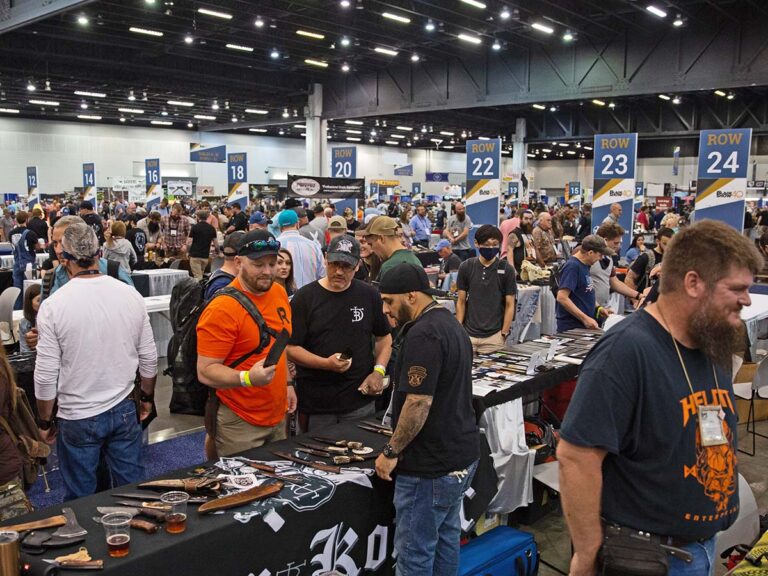
Each year, the BLADE Show draws thousands as the knife industry’s perennially premier event. Now celebrating its 45th anniversary, BLADE Show has grown from humble beginnings at the Drawbridge Motor Inn in Fort Mitchell, Kentucky, in 1982 to a hub that stirs enthusiasm, sparks lively discourse, facilitates buying and selling and energizes the world of cutlery like no other.
Knife enthusiasts and aficionados of all types, makers, purveyors, factory representatives and collectors have crowded the floor of the show regularly, from the greater Cincinnati, Ohio, area to the World Trade Center in Knoxville, Tennessee, to its present home in Atlanta. Memories have been made, deals struck and a rising tide has lifted all.
“We originally said we were going to do one show a year,” remembered Bruce Voyles, BLADE Magazine Cutlery Hall of Fame® member and longtime publisher of BLADE® Magazine. “The goal was to make it more than a show. We loved the original venue in the Cincinnati area, but we outgrew it in two years, moving to 70,000 square feet in Knoxville by 1985 or so, with 700 tables, and then to Atlanta, where there is an airline hub and more international people were able to attend.
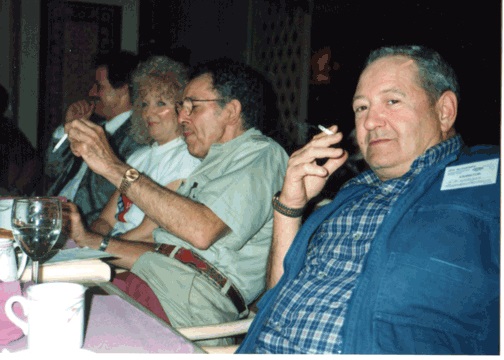
From the right, Bob Loveless, J.W. Denton and Myra and Durvyn Howard enjoy a dinner after a day on the BLADE Show floor. The show is as much a social gathering as it is an industry event. (John Denton image)
“Nobody had gotten such an incredible group of people together in one room before, and from it some amazing things happened,” Voyles reflected. “Sal Glesser of Spyderco came up with the idea for collaborations, and that really began at the BLADE Show as manufacturing people wandered into the handmade area–and it happened! We built the show on borrowing ideas from others and adapted it for all we could, trying to minimize mistakes we had seen in other shows.”
Through the years, the BLADE Show has been characterized by its exchange of ideas, vigorous commerce, displays of remarkable collections, professional demonstrations, honors for the industry greats and much more. Voyles smiled, “It just went gangbusters!”
And so, while the BLADE Show is in its 45th year, many have made the annual pilgrimage time and again. They acknowledge the impact the event has had on the knife industry and reflect on their memories and its true significance. The show has evolved, experienced growing pains and reached new heights of influence–but its dynamic energy has never waned, even in these days of the internet and instant access to information.
Knife Family Reunion
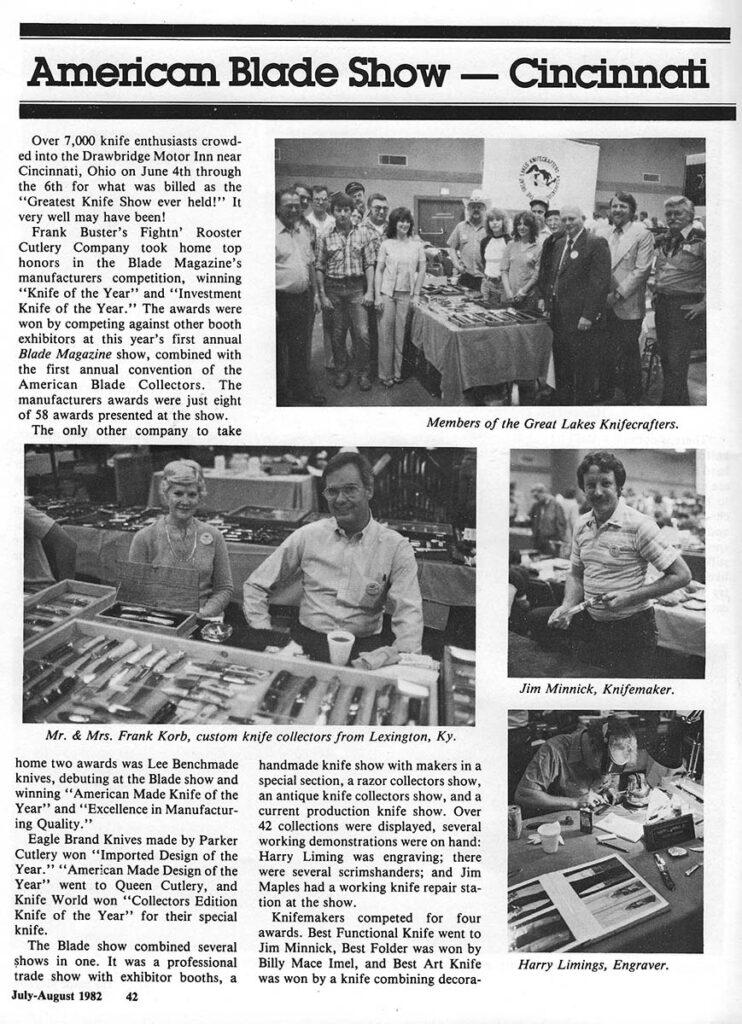
From the start, BLADE Show was red hot. Documenting the first show at the Drawdridge Motor Inn near Cincinnati, Ohio, the article from the July/August 1982 American BLADE estimates more than 7,000 knife enthusiasts showed up.
“The early BLADE Shows were run by Bruce,” commented ABS master smith and custom purveyor Dave Ellis. “Over the years, ownership has changed and the crowds have grown. Now there are two rooms to hold all of the table holders. The lines to attend start days in advance and eager folks flood in to be first to their tables of choice. The seminars have grown, and celebrities, musicians and folks from all walks of life attend with the expectation of purchasing that special piece they have saved all year for.”
During his active days as a bladesmith, Ellis attended shows with greats like Hall of Fame legend Bill Moran and master smith Jerry Fisk. He remembers sitting in “the Pit” at Atlanta’s Waverly Hotel, where friendships were forged and discussion flourished.
Hall of Famers Daniel Winkler and Karen Shook were attendees in the 1980s, and their first impressions were lasting. “It was overwhelming to know there were that many people making knives and to see the diversity,” Karen recalled. “The most striking memory is the sense of community and camaraderie. We did not know who the legends were at the time, but when we got to know them, we learned of a group of great talents with great passion for knives and the knife community.”
Among the aspects that set BLADE Show apart from other knife shows is the inclusion of factory knives. This has become an important part of the industry, as companies vie for the coveted Knife Of The Year award. Spartan Blade nabbed the honor in 2024 with its wicked Clandestina.
Karen fondly remembers sitting in the Pit. “It was like a family reunion. Almost every face became familiar. The show and the promotion of the same have attracted interested parties and given makers the opportunity to meet people and educate attendees as to why custom knives cost more than your typical hardware store hunting knife.”
Magic Of Knives In Person
When UK-based custom scissor maker Grace Horn attended her first BLADE Show in 2003, she was expecting her second child. “That child was conceived with the knowledge that I had to attend and not be too pregnant to do the transatlantic flight,” she laughed. “I have been attending every year since, and the changes have been fascinating. The fluxes of the industry are so much easier to see in a microcosm at a show … a snapshot of the industry at a point in time. Even in this world of increased social media engagement, nothing replaces the actual interaction between people. I love the sense of community that comes with the BLADE Show.”
Collector Chris Schluter agrees. “These days, so much of knife collecting takes place via social media,” he said. “It’s been great for sure–online sales, frequent interaction with makers and collectors. There’s still not a substitute, though, for meeting people in person and handling knives in person. For collectors, this is seeing your favorite makers in person and also walking by that table with a maker you’ve never heard of and stopping because something caught your eye. It’s not just meeting people during the show. It’s also after hours in “The Pit” and nearby restaurants and bars where people have time to chat. The BLADE Show is always something I look forward to, and I think many makers and collectors see the show as a sort of annual ritual that they really try to go to each year.”
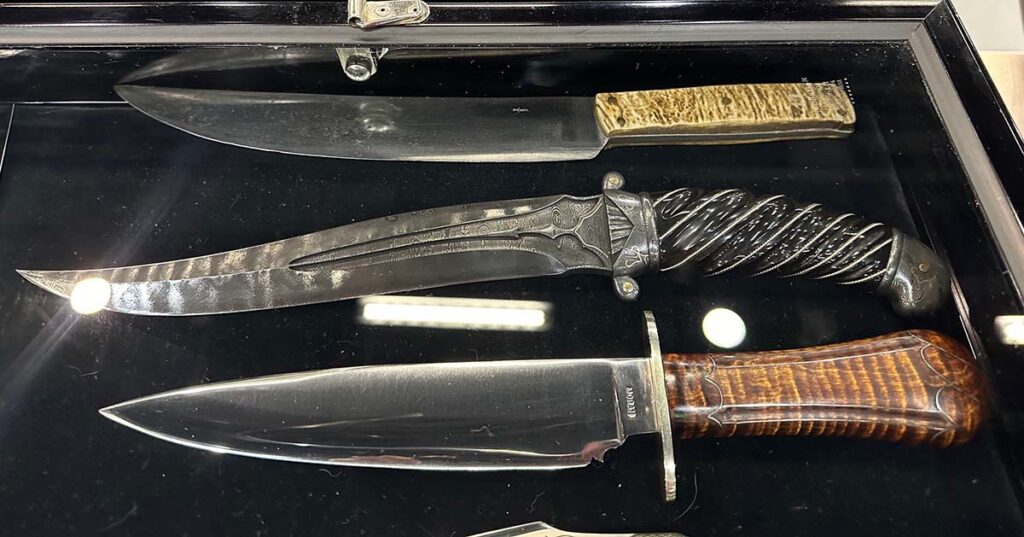
From top, knives from Hall of Famer Bill Scagel, CAS and Hall memeber Bill Moran. Imagine seeing so many great creations in one case. Through the years, it’s become commonplace at BLADE Show. (Dave Ellis image)
That pervasive energy, the smiles and the renewal of each acquaintance team up with the latest across the knife world to make the BLADE Show even more relevant in today’s environment. “The BLADE Show has made the careers of custom makers,” declared renowned knife innovator Ernest Emerson. “Before the internet, how could you find out about custom makers and their knives? BLADE Magazine was it, and the readers of BLADE Magazine would go to that show. Still, there is no motivation like seeing what the other guys are making.”
Emerson’s following is proof positive that the BLADE Show complements a career. The throng that gathers at each show to purchase his knives and those of other makers gave rise to the lotteries that are commonplace these days.
“The BLADE Show has pushed the knife world to outer space,” assessed Loveless knives expert and purveyor John Denton. “People keep coming back because it has something to do with the love of custom knives—one on one with makers, dealers, collectors—we all love the same thing. So, it is so much fun to see everyone. It feels like family. We all come back because we have all we need at the BLADE Show. The future is here, and now, so I just hope the magic stays.”
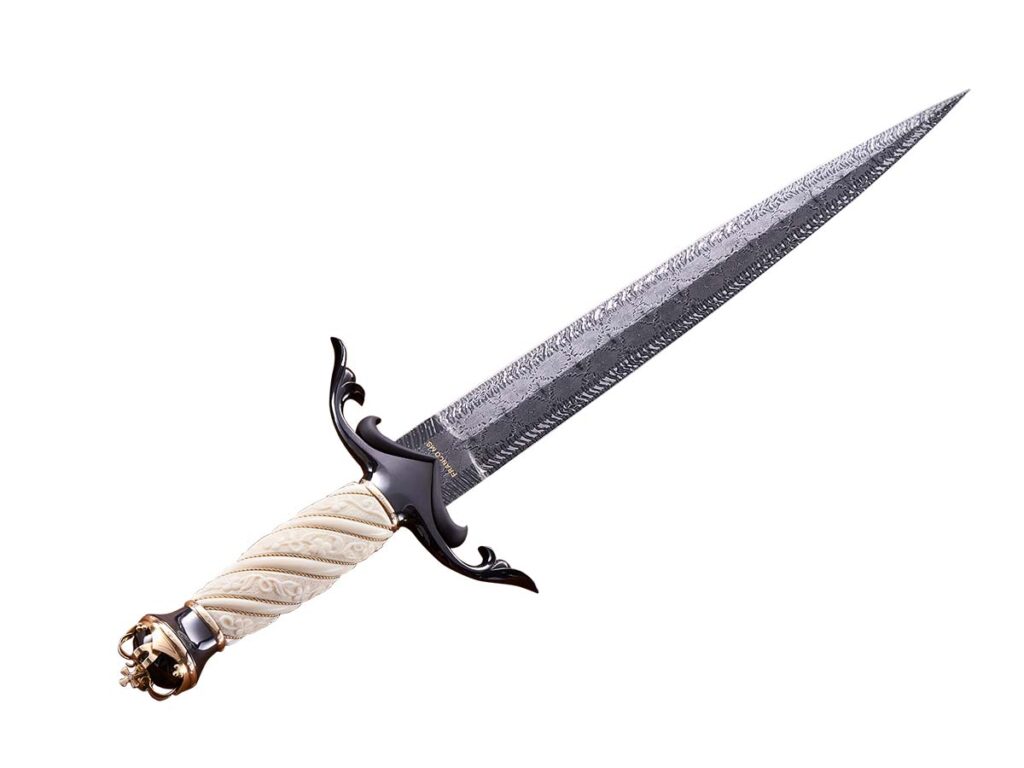
BLADE Show launched during the golden years of custom knives in the 1980s. But don’t think the best years are behind. Contemporary makers, such as Brazilian Dionatam Franco, continue to wow with creations like his 2023 Best of Show dagger.
That magic was indeed, at times, like catching lightning in a bottle. “It was things like [Hall of Famer] Bob Loveless staying with Wayne Clay, and once the show ended for the day, we all went out to eat,” Denton commented. “Then, at the hotel, you just looked around the room, and the knifemakers of the world were all pretty much in the same place. You could listen to Loveless and [Hall of Famer] A.G. Russell discussing things. Over on the couch was [Hall member] George Herron. Then you saw Bill Moran relaxed next to him. It was all bigger than life.”
From Show To Spectacle
Les George was a young knifemaker when he attended his first BLADE Show at age 25. “I don’t know if I can say it’s better now because it’s been amazing from the very first time,” he remarked. “On top of being a trade show for knives, it’s the number one social event for this business. I see some friends only at the BLADE Show, even though I’m in touch with them all the time. The BLADE Show is a huge fixture in my life, and the whole year pivots around the June trip to Atlanta.”
Of course, many others would say the same thing. Like the proverbial sun, the BLADE Show is the center of the knife community’s solar system. Its atmosphere sheds radiant light on the industry. Its gravitational pull is virtually irresistible. Its intensity is nothing short of “white hot”.
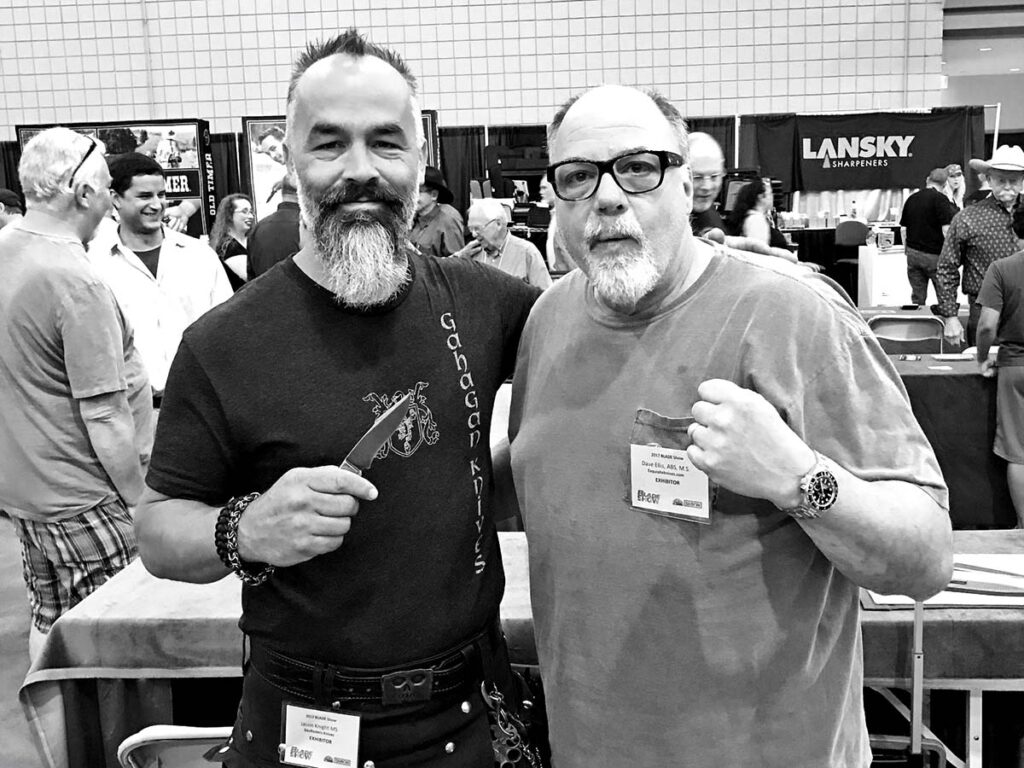
A couple of master smiths—Jason Knight (left) and Dave Ellis (right)—rub elbows at the BLADE Show. (Dave Ellis image)
Through change and reinvention, the BLADE Show remains a driving force in its 45th year. And even though the computer screen and cell phone add to the communication milieu, those who know what the BLADE Show is will accept no substitute. Here’s to 45 more years.
A study of Michael Price’s work, Nick Bachtel’s reproduction gentleman bowie has the looks to wow.
Bladesmith Nick Bachtel has parlayed his fascination with the knives of 19th-century great Michael Price into a faithful reproduction of a Price-style gentleman’s bowie.
Nick studied every Price knife and other like ones of the genre he could find online and elsewhere to help arrive at the way the 19th-century cutler constructed the gentleman’s bowie. However, it was when he saw a picture of a Price knife in BLADE Magazine Cutlery Hall-Of-Fame® member Bernard Levine’s book, Knifemakers Of Old San Francisco, that “a light went off.”
Nick noticed that the handle had three pins so the knife had to have a full tang, not a hidden tang as he had previously thought, so he forged the knife, heat treated it, fit up the guard and forged the tang wider.
“I call it a captured-guard full tang,” the 24-year-old said of the method that apparently originated among bladesmiths in Ireland, Price’s native country. “It’s such a weird, unique, almost comical way of making a knife—and difficult to do as well,” Nick observed, “but boy, did Price make it!”
Nick Bachtel (inset) calls the construction he used to make his reproduction of a Michael Price Gentleman’s Bowie “captured-guard full tang.” For the style to work, it must be forged, Nick stressed. He said another way to do it would be in a frame handle construction and a tapered tang, though a Price aficionado would be able to tell the difference. (SharpByCoop knife images)
The icing on the cake for Nick was ABS journeyman smith Jordan LaMothe’s story, “How to Make the Price Guard” in the December 2019 BLADE®. As Nick noted, “The Price style is the pinnacle of the traditional forged blade.” What better style is there for a young, up-and-coming bladesmith to explore?
Gentleman Bowie Spec Check Knife name: Michael Price Style: Gentleman’s Bowie Maker: Nick Bachtel Blade length: 5 7/8 inch Blade material: 52100 carbon steel Handle: Elk antler and nickel silver Overall length: 10¾ inch Sheath: Traditional center-seam vegetable-tanned cowhide w/frog stud Maker’s List Price For A Similar Knife: $1,100(includes sheath)
Maybe it’s a bit of a contradiction, but both elegance and simplicity are elements of African blackwood, a handle material with a rapidly rising profile in the custom knife industry.
The color of the material combined with properties that make it a pleasure to work with has resulted in an explosion of interest. Ranging in luster from a reddish to a deep black hue, the wood is the product of a flowering tree also known as granadilla or mpingo. A relatively small tree, it grows primarily in the forests of Senegal east to the horn of Africa and in some parts of South Africa. Long used in musical instruments and high-end furniture, African blackwood is protected in order to prevent overharvesting.
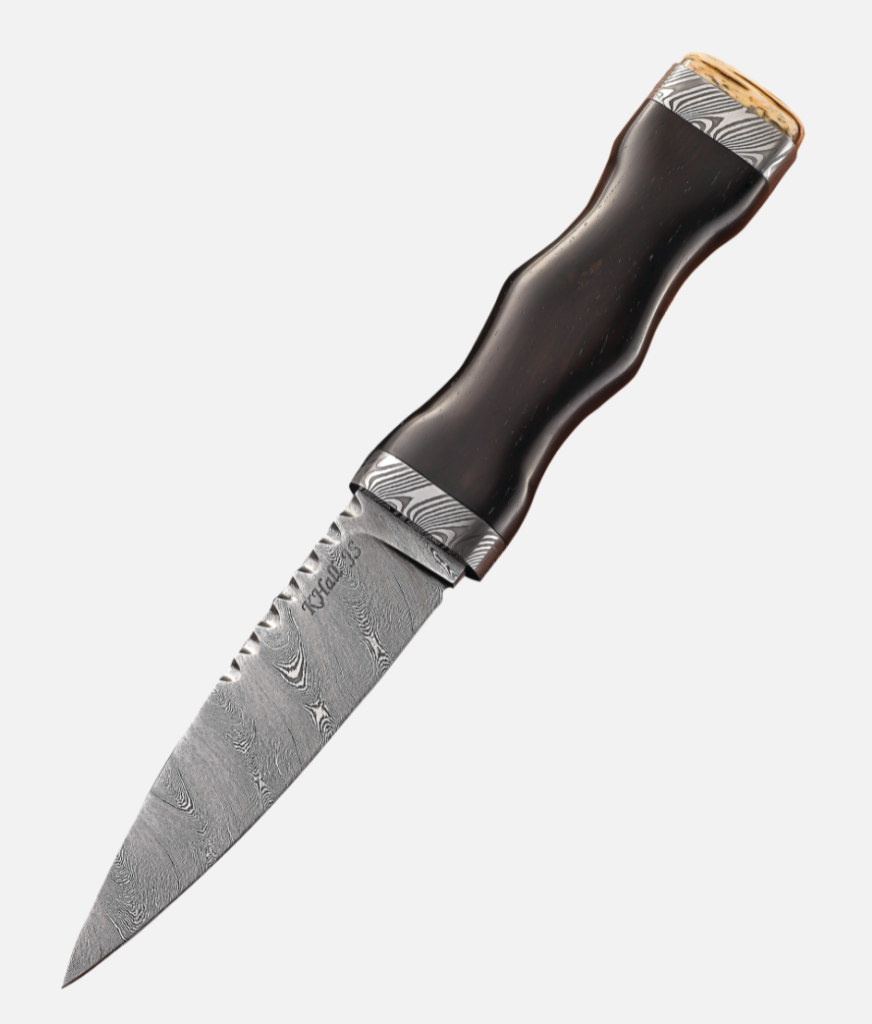
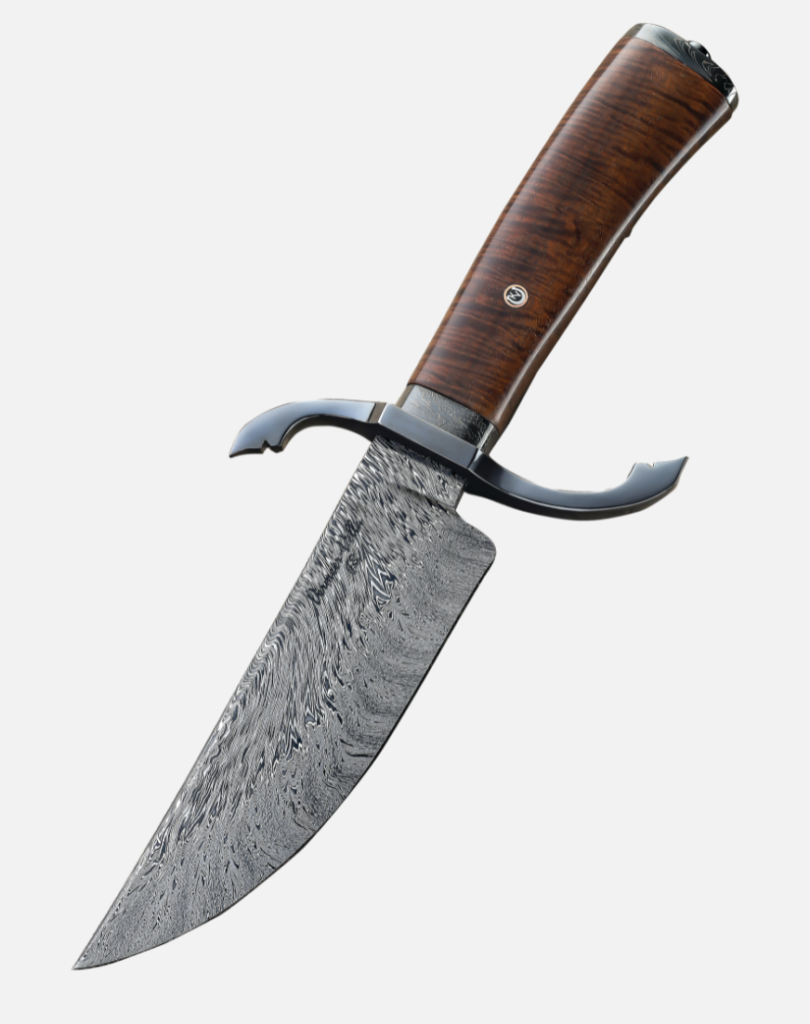
Ken Hall’s sgian dubh features a 4.25-inch blade of twist damascus in a blend of 1075 spring and 15N20 nickel alloy steels. The pommel is formed from stone and giraffe bone. The African blackwood handle not only is ideal for its carvability but also in keeping with the sgian dubh’s name, which is Scottish for black knife.
When the material finds its way to a knife handle, something dazzling happens, and the makers who use it sing its praises. “I’ve always loved black-handled knives, especially with brass,” related Abel Price of Fayetteville, Arkansas, a part-time maker who is completely self-taught. “The black and gold combo just pops and gives it a beautifully elegant Art Deco feel.”
In the mountains of western North Carolina, ABS master smith Andrew Meers finds African blackwood a pleasure to work with. “It’s a dense and stable wood with a consistent grain structure that is excellent for handle material. It is workable and carves well,” he noted. “It has a rich, dark color and finishes out beautifully when sanded, and I haven’t noticed any cracking, shrinking or expanding, especially compared to the cracking I’ve noticed at times in similar looking wood such as ebony. I think these qualities contribute to its growing popularity among makers.”
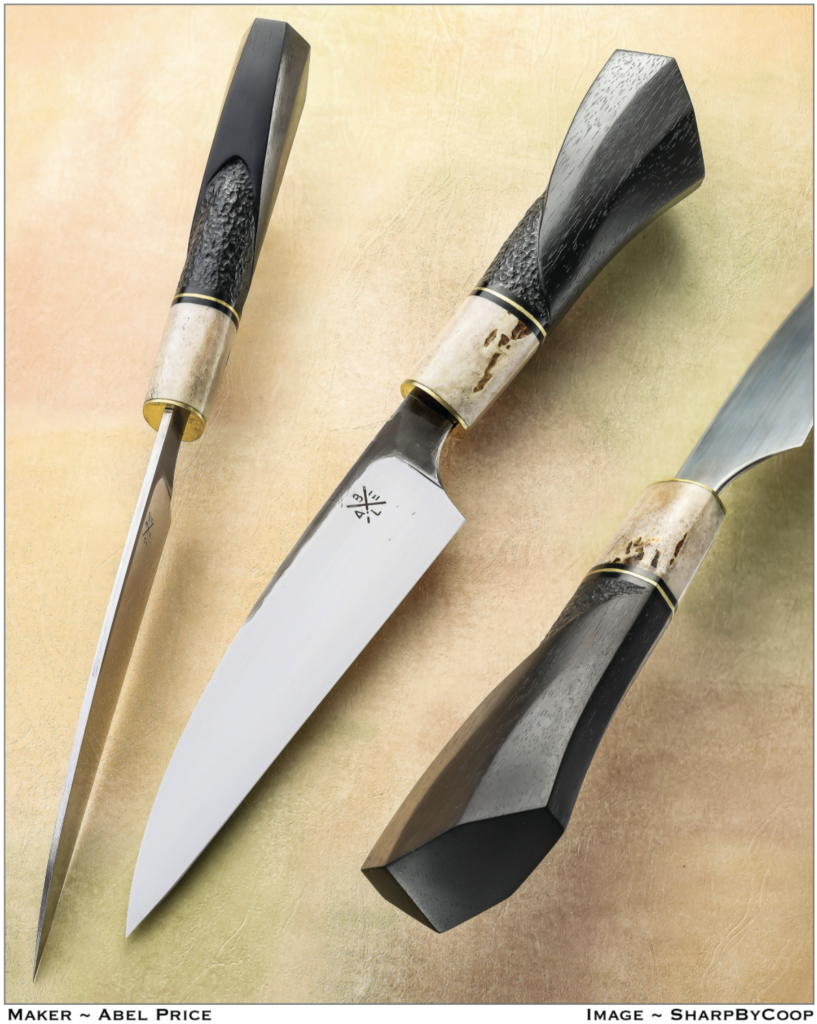
Abel Price used African blackwood for the handle of his Deco Petty kitchen knife. He said the handle “was sculpted to contain design elements of the Art Deco era while hitting several notes of contrast: smooth and stippled, round and flat, black and white, and straight and sweeping lines.”
Andrew uses rasps and files for shaping, a flex shaft for carving, and prefers to sand and buff to finish his handles of the material. Last of all, he applies a coat of Danish oil. So, the finished product is just what the maker wants, and getting there is most often a pleasurable journey rather than an arduous trek. African blackwood exhibits excellent stability and takes a shine quite well. Custom makers agree that the material is ideal for carving, though whether it carves easily or not is open to the interpretation of the individual maker.
“I think the main reason for its carving ability is that it is hard,” commented Pekka Tuominen, a 17-year maker from Keitele, Finland. “Wood has to be hard if you wish to carve it with sharp and tight curves, and also polish those curves. Let’s say it’s not easy to carve, but when wood is hard you can get a good finish. Of course, it’s popular, too,” he observed. “Everybody knows that if some famous knifemaker uses a material, then the rest of the makers at least want to test it.”
MORE ATTRIBUTES
Waynesville, North Carolina-based ABS journeyman smith Ken Hall appreciates additional attributes of African blackwood. “I like using it because it’s a very dense wood, doesn’t require stabilizing, is hard and does not crack easily,” he stated. “It has a tight grain structure, so you don’t have to fill voids, and it can be carved or shaped without difficulty and provides a dark contrast to a steel blade.”
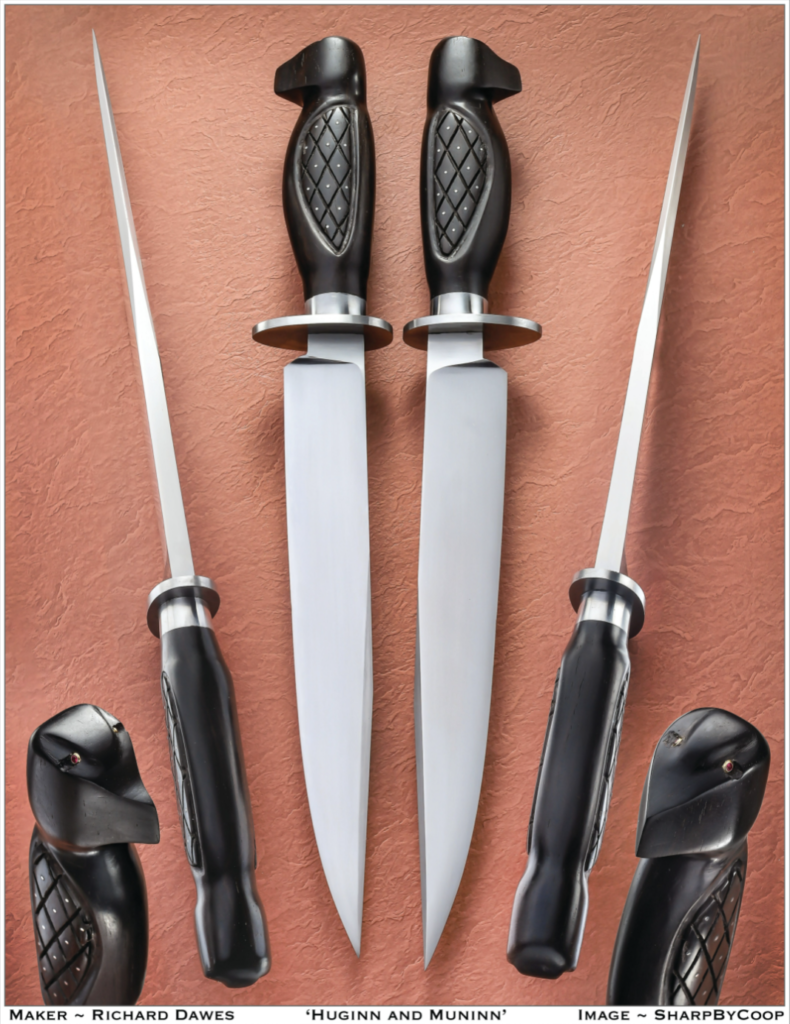
Huginn and Muninn are the names for two bowies by Richard Dawes. Huginn and Muninn are two mythical ravens that attend Odin. Dawes carved the African blackwood handles in a bird’s-head motif based on the style of bladesmith Bill Bagwell, one of the founders of the American Bladesmith Society.
Securing the handle to the blade most often involves a quality epoxy and a combination of pins, depending on the type of knife under construction. “I use rivets, pins and epoxy,” Pekka said, “but I don’t use African blackwood for full tangs. With hidden tangs sometimes just epoxy will keep the tang solid inside the handle.”
When Price went to work on his Deco Petty, a kitchen knife creation with a 6.5-inch blade of AEB-L stainless steel, overall length of 12 inches, and a handle of African blackwood, deer antler and a copper spacer, he knew just what he wanted to achieve. “The goal was to hit form and function,” he commented. “The ultra-thin cutting edge flexes with lateral pressure, and a Rockwell hardness of 61 [HRC] makes for a laser sharp tool in the kitchen. The handle was sculpted to contain design elements of the Art Deco era while hitting several notes of contrast: smooth and stippled, round and flat, black and white, and straight and sweeping lines. African blackwood does everything you want it to do with a perfect finish.”
Hall fashioned his sgian dubh as an interpretation of a historical Scottish knife. “African blackwood is the ideal wood for the sgian dubh because it can be carved and shaped to the hourglass design of the traditional sgian dubh handle,” he noted, “and provide an eye-catching contrast to the stainless steel bolster and pommel.” He added that blackwood is his preferred wood for a handle with a keyhole design because it can take the force applied to pressing the wood into the keyhole.
AESTHETICS & FUNCTION
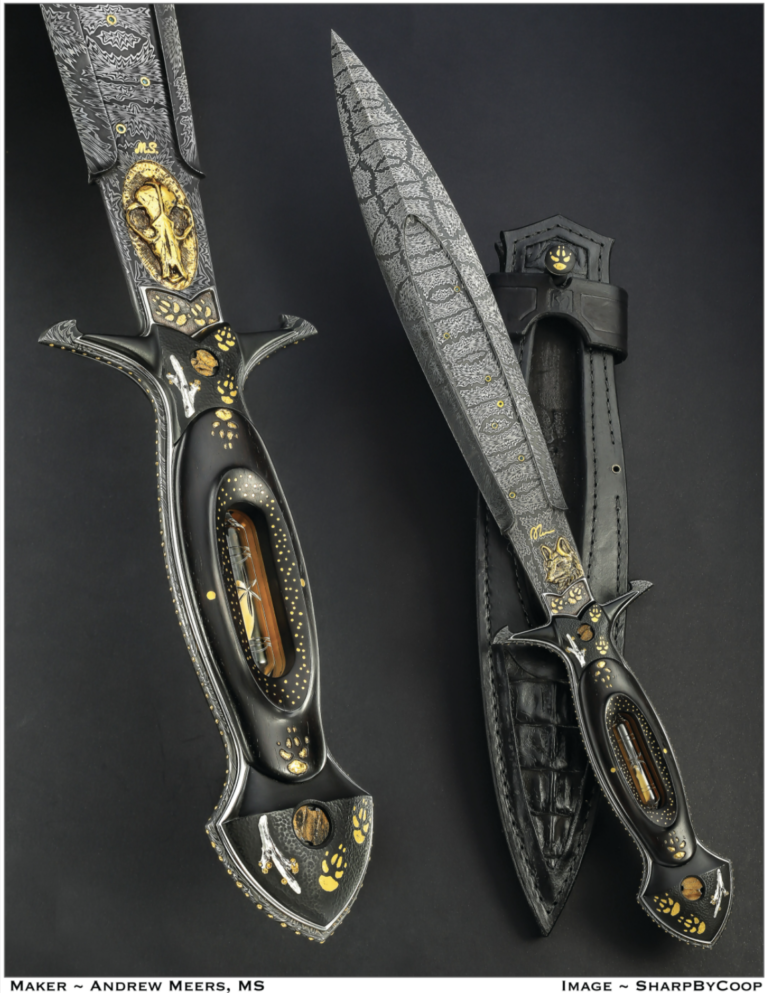
Meers made the striking Vulpecula with a 12-inch damascus blade of 1084 carbon and 15N20 nickel alloy steels. Meanwhile, something of a surprise is embedded in the African blackwood handle.
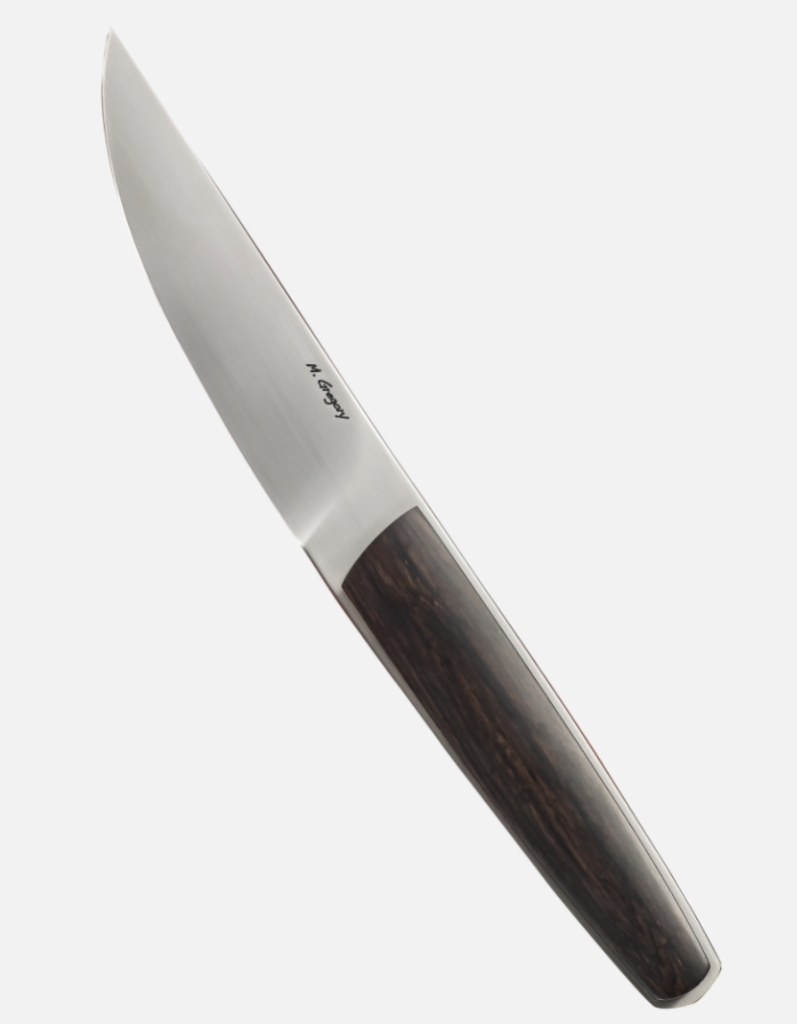
Matt Gregory’s LWT (Lum-Walton Tanto) is based on a design by Mike Walton inspired by the late Bob Lum. The African blackwood handle is polished to a mirror shine and tapers slightly in reverse of the tang, and has a delicate bulge in the center to provide for a subtle yet improved grip. The sheath (not shown) is by Jill Gregory.
“Vulpecula is a reliquary dagger,” Andrew explained. “It is inspired by the tradition of keeping objects, often hair or remains, in an embellished vessel. I found a fox tooth and had it sealed in a glass vial by a friend. I then built this dagger to house the vial as a reliquary.
“The blade fittings and handle are adorned with 24-karat gold inlay depicting a large fox, its skull and paw prints. The hardware is torch-cut steel plated with gold that is brushed back. Vulpecula, the ‘Little Fox’ constellation, is set into the blade with blue diamonds.
“It was a combination of aesthetic and functional choices that made me choose blackwood for this piece,” he concluded. “The wood machines and carves well, so for this handle it was the ideal choice. The blackwood’s depth serves as a rich contrast to the bright gold used in small inlays to represent a starry sky and the fox prints as well.”
Tuominen built his Protector, or Suojaleijee, dagger with a 5-inch welded damascus blade of 1080 and 80CrV2 carbon and 15N20 nickel-alloy steels, a guard of Nicorros (a copper/nickel alloy), African blackwood handle, and a handmade leather sheath with stainless clip. The blade is 7 inches and overall length is 12 inches. “It’s a custom order for an American collector,” he noted. “I used African blackwood because it’s black and more stable than other black-colored woods.”
SOURCES
While African blackwood remains protected, it can be found through various sources. However, Abel has a warning.
“I stocked up at a Rockler store a few years ago,” he remarked. “I’m not looking forward to finding another supplier. I believe the demand is outpacing the supply, and as conservation efforts increase, as they should, so will the price.”
Kelly Vermeer Vella em- ploys African blackwood and sterling silver for the handle of her dagger. The blade is a damascus of 1075 spring and 15N20 nickel-alloy steel.
Hall searches eBay for African blackwood and makes his selection based on what is available. Pricing, he says, runs $20 to $30 for a handle block or set of scales. While Pekka often sources his African blackwood from European knife shows, he also checks the internet for block-size pieces. Meers has had success with retail suppliers and finds a broad range of dimensions.
The custom knifemaker and the consumer alike have taken a new interest in African blackwood, and that fascination is not likely to fade in the near future.
Saturday, May 19, 2018, is Armed Forces Day. It’s a day to “participate in exercises expressive of our recognition of the skill, gallantry, and uncompromising devotion to duty characteristic of the Armed Forces in the carrying out of their missions,” as President Harry Truman put it in 1950.
BLADE is doing its part by taking a look back at the knives that accompanied those in uniform during World War II. When BLADE writes about lives depending on knives, it’s not only referring to the user. If a soldier depends on a knife, then citizens also depend on that knife.
Editor’s note: The following is by Richard D. White.
MARK 1
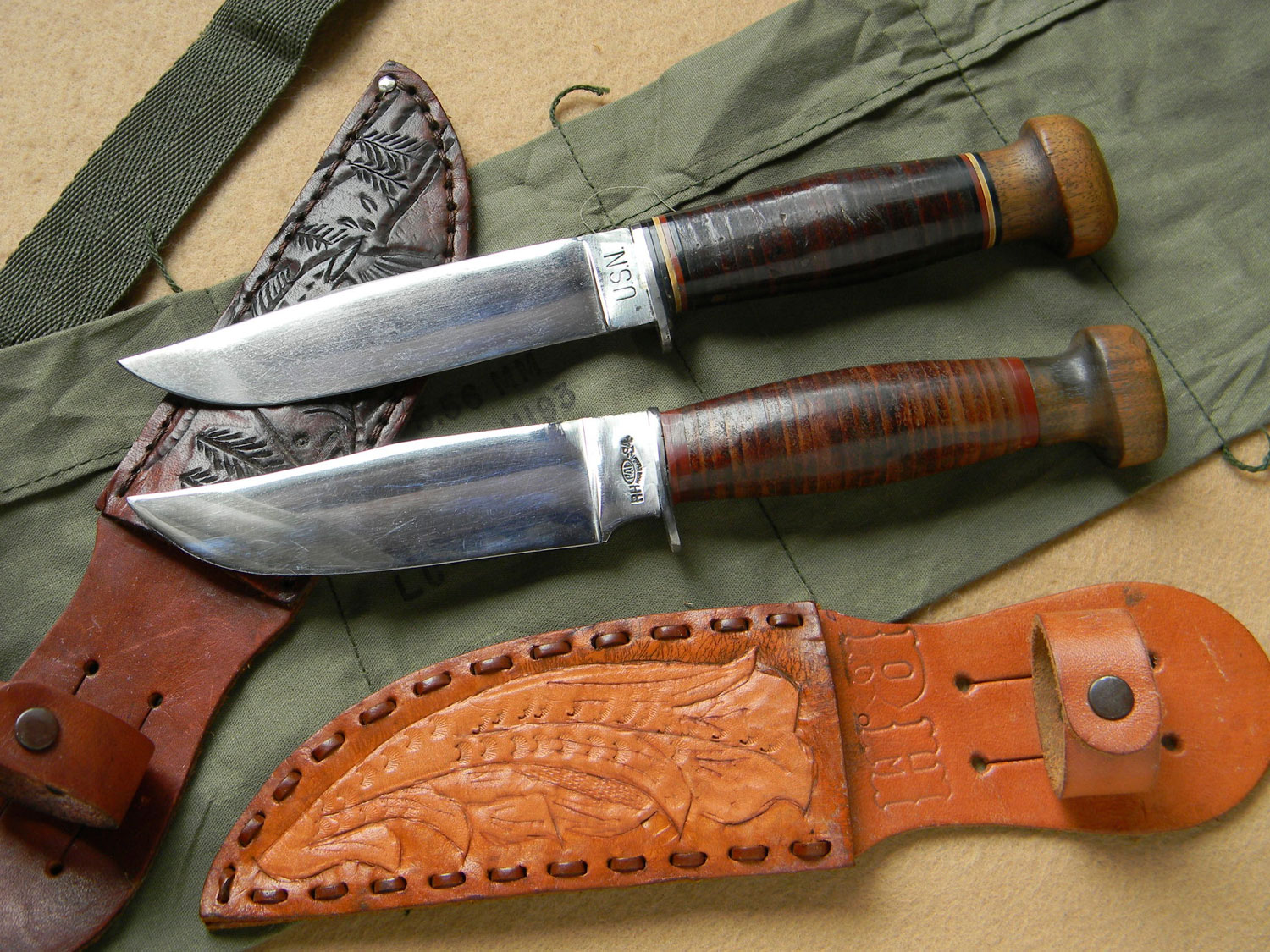
Pal (bottom) and Robeson made these Mark 1’s with wood pommels. Wood was used because of a shortage of aluminum during World War II. Both knives feature handmade sheaths, probably made on ships by servicemen. (All images by Richard D. White)
Featuring a 5-to-5.25-inch flat-ground blade, the Mark 1 utility knife was adopted by the Navy as a survival-type knife with sheath. Every sailor who worked “topside” was issued a fixed blade for cutting ropes/line.
The Mark I probably the World War II military knife encountered most in the marketplace. There are a significant number of different varieties—some historians say as many as 42. Camillus, Colonial, Geneva Forge, Pal, Robeson, KA-BAR, Boker and Kinfolks made them.
Blade finishes included polished, blued and Parkerized. Pommels were the traditional bird’s-beak design or flat of steel, plastic or wood. Handles generally were stacked leather—some with fiber spacers, some without. Mark 1’s by Colonial had injected plastic handles.
MARK 2
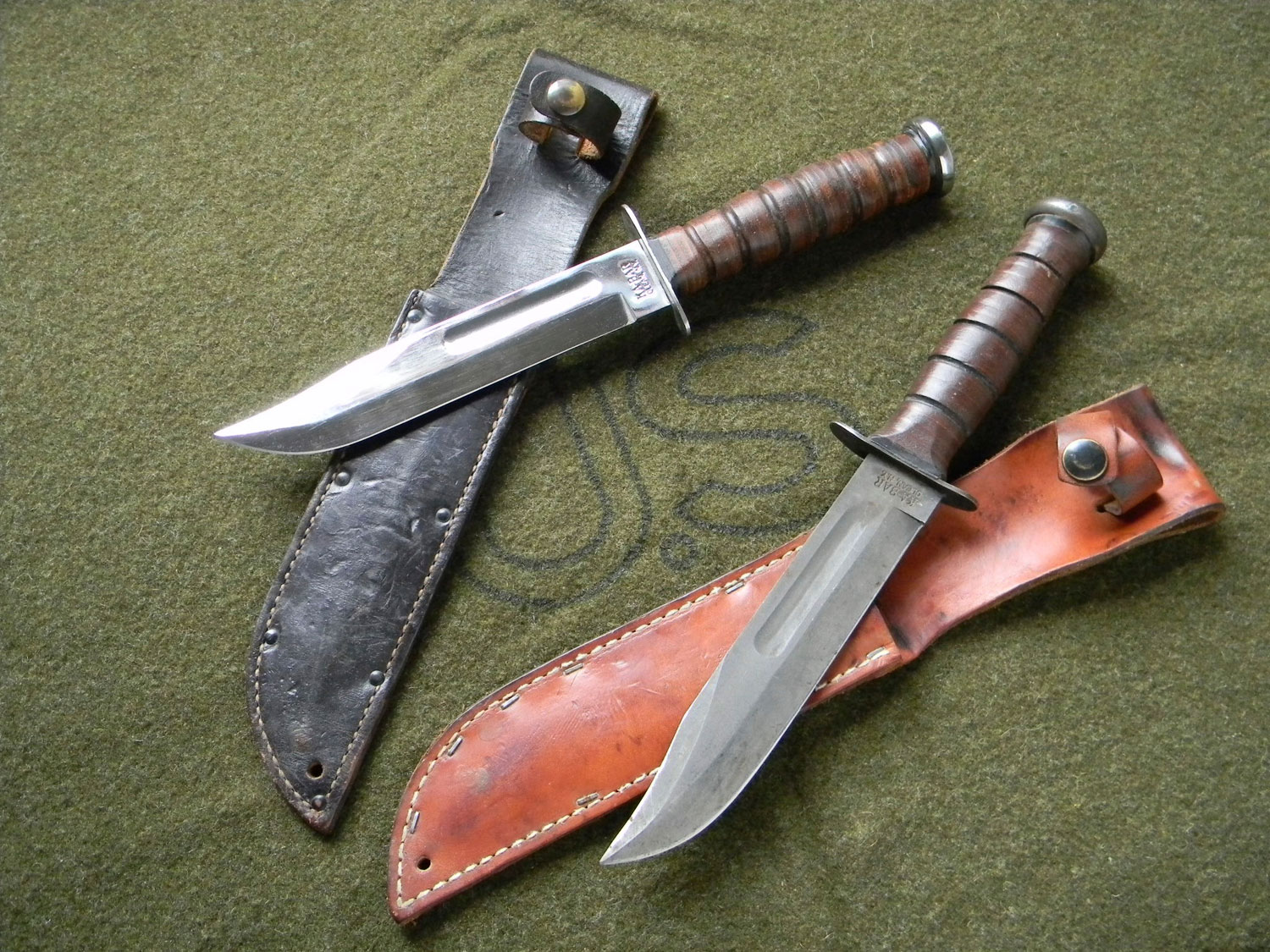
Two excellent Mark 2’s stamped “KA-BAR” are synonymous with World War II U.S. military combat knives. Union Cutlery Co. made approximately 1 million USMC-stamped KA-BAR knives for distribution in the South Pacific.
The Mark 2 was made available to combat soldiers in 1943. It was 12 inches long with a 7-inch blade. The handle was stacked leather, generally grooved. It was held in place with a steel washer pinned to the tang. Examples are plentiful and often were photographed hanging from the belts of soldiers who fought in the South Pacific Islands.
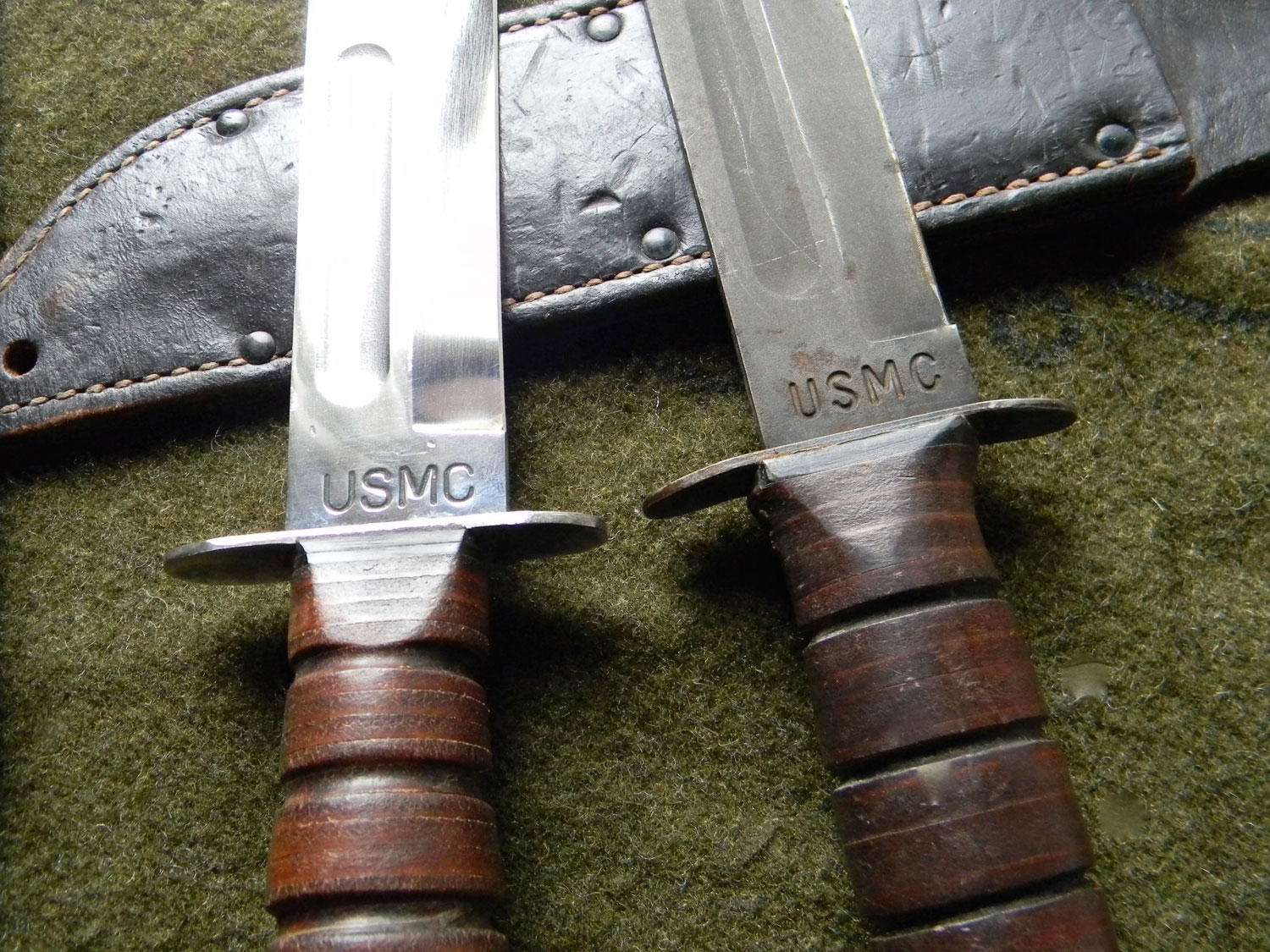
The backs of the KA-BAR Mark 2 tangs show the very deep, distinctive “USMC” stamping—a stated preference of the author’s—on the polished (left) and coated blades.
KA-BAR, Robeson, Pal, Utica, Ontario and Camillus were the major manufacturers of the Mark 2. Variations included different spacer colors, marks/stamps, pommel thicknesses and materials, piening vs. welding of the pommels, blue vs. polished blades, and smooth vs. grooved handles.
M3
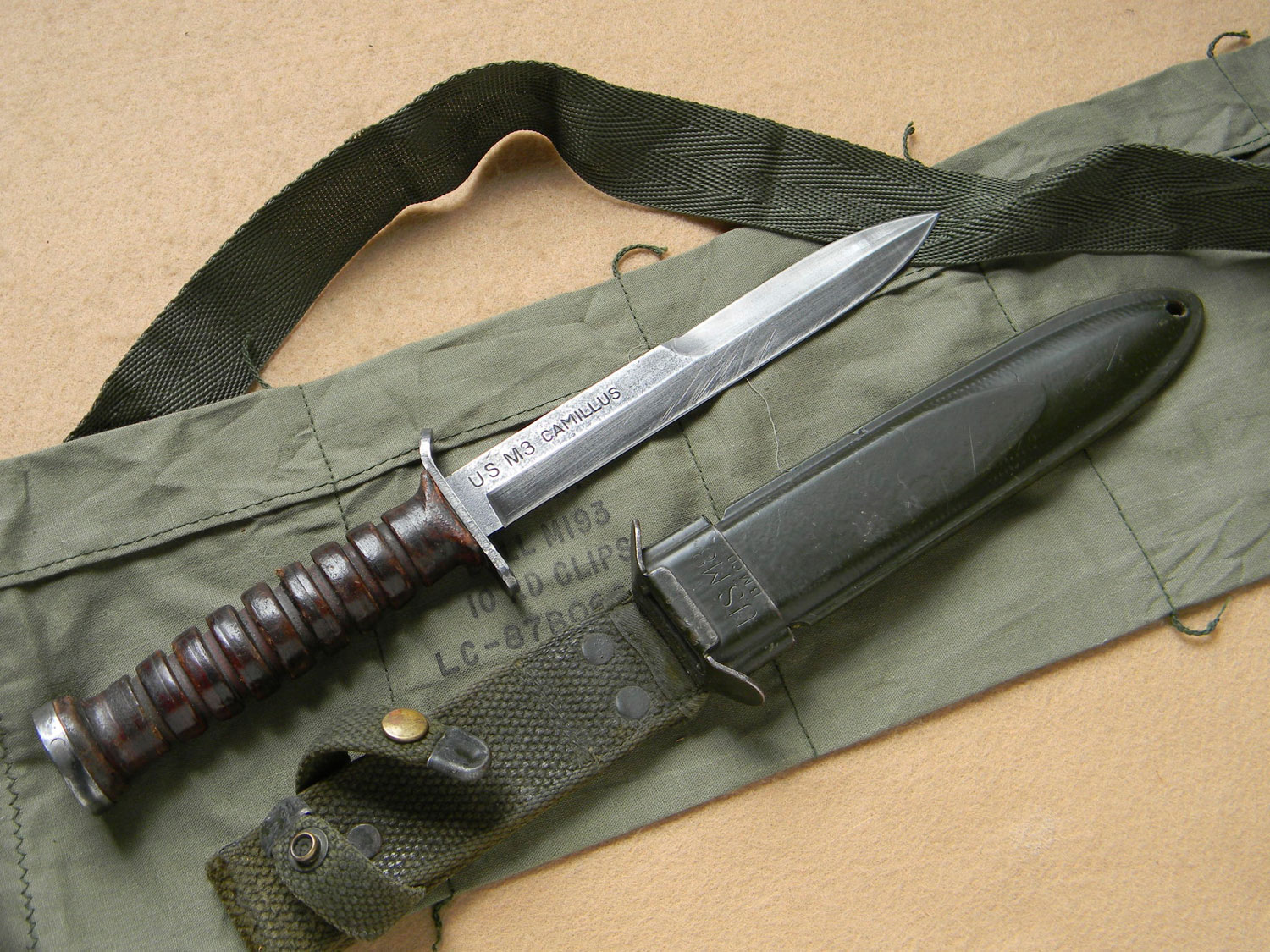
The M3—this one by Camillus—is one of the most desirable World War II combat knives because of its double-edge blade. Though over 2.5 million supposedly were produced during World War II, prices remain quite high for them. Boker, Kinfolks, Robeson, Utica, Imperial, Case, Aerial and Pal also made M3s.
The M3 was designed to meet a shortage of combat knives, especially in early 1942. According to Frank Trzaska, a military knife historian, the decision to design the M3 rather than continuing to produce the Mark 2 was based on a U.S. steel shortage.
The M3 was selected because it was easier to manufacture and had a thinner blade, which was 6.75 inches and sharpened the full length, excluding the stamped tang area. The top edge was sharpened about a third of the blade length. The guard was thick steel angled on top to form a thumb rest.
The handle was stacked leather with a series of cut grooves. Originally there were supposed to be eight grooves, but some companies generally used to six to seven. The grooves provided better purchase. The pommel was flat steel and pinned to the tang.
The M3 had many variations, including added spacers at the guard and pommel end, or piening the tang over to hold the pommel in place as opposed to pinning the pommel onto the tang.
GO WESTERN
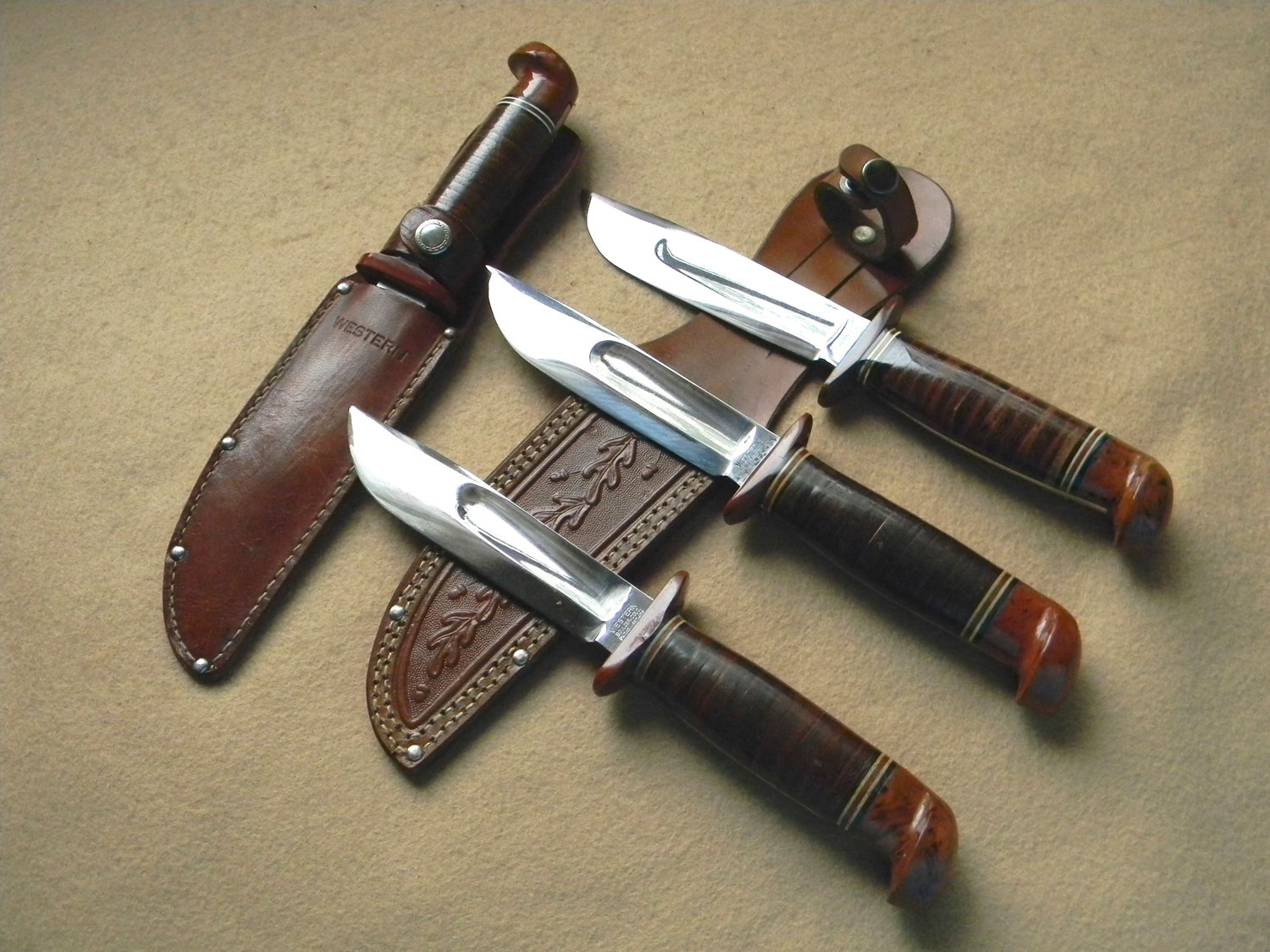
Because of the shortage of brass and aluminum during World War II, Western used plastic for the guards and pommels of its “Baby Shark” models.
Any review of World War II military fixed blades must include several examples of Western knives. While some are very rare, such as the L-76, L-77, “Bushman” and USMC parachutist knives, several examples are more ubiquitous.
One is the “Shark.” Western made two: one with a 6-inch blade, the G46-6, and one with a 5-inch blade, the G46-5. Both had huge blood grooves, stacked leather handles, and several different guards and pommels. Both came with flat steel, aluminum or mottled-brown-plastic pommels.
Guards were double steel, the very rare brass or plastic like the pommels. Many times the guards and pommels were mixed and matched. The smaller Sharks were issued to Navy and Army Air Corps pilots as a bailout knife. Blade finishes were blued and polished.
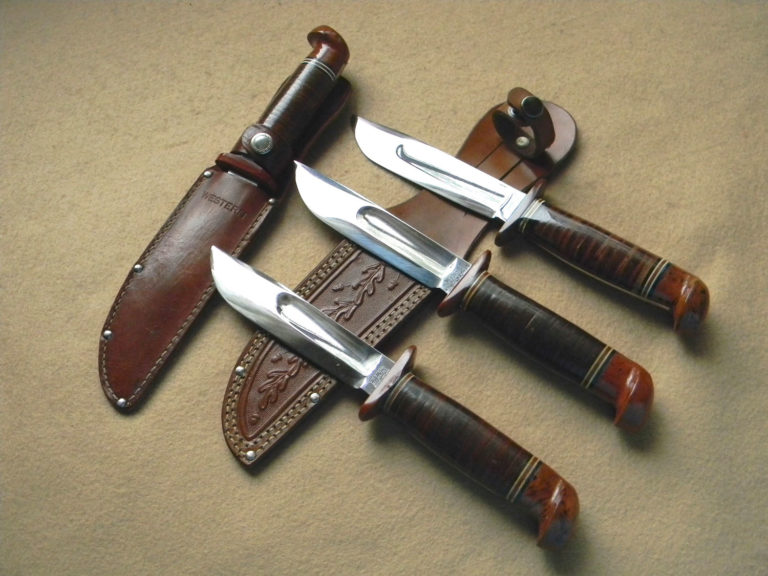
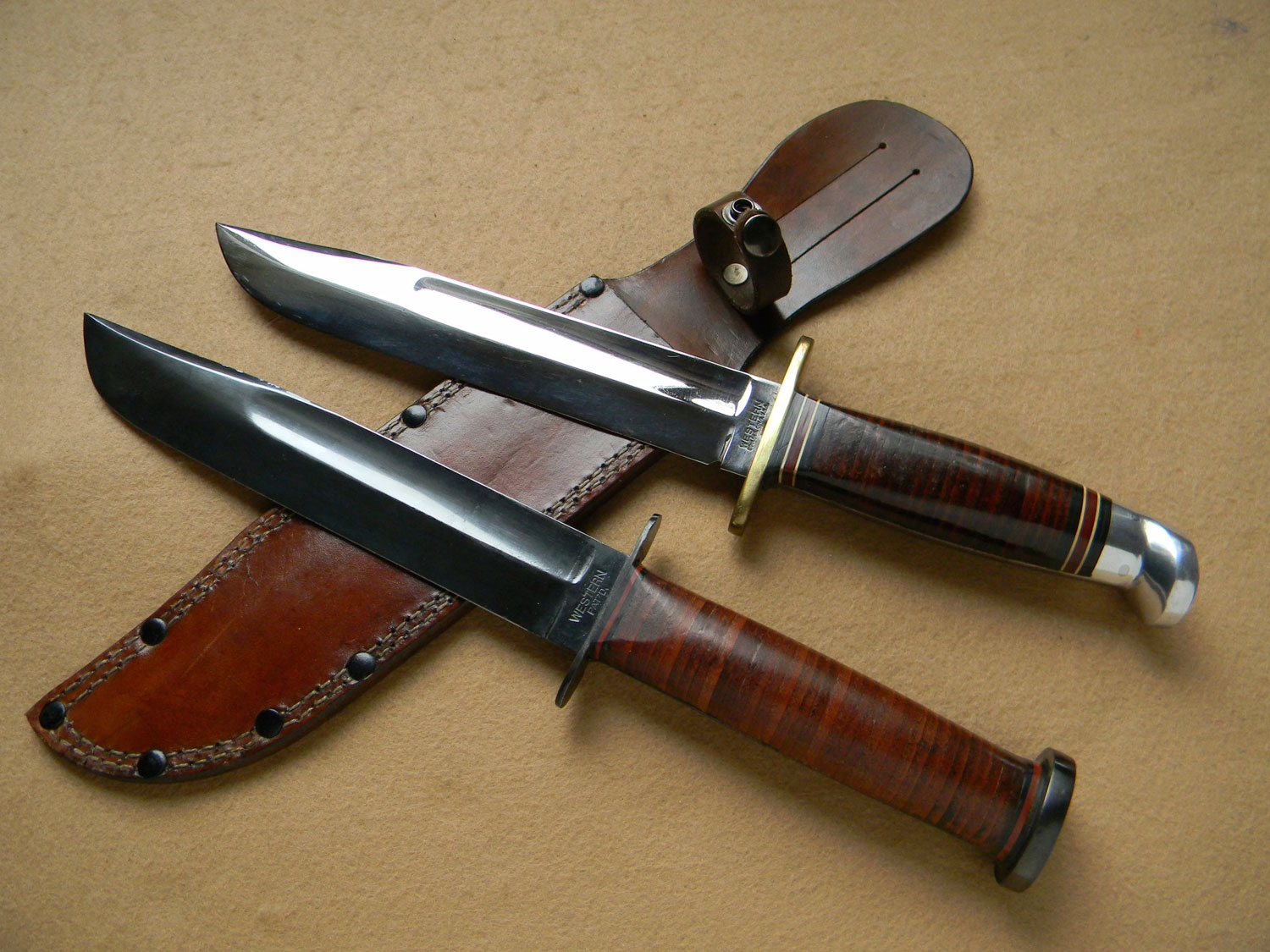
Of these two Western 46-8 combat knives, the more traditional World War II vintage is the bottom one, with flat steel pommel and blued blade. The top model is perhaps post-World War II because it features a brass guard. Because of the demand for brass for artillery shells and ammunition, few World War II military knives feature the material for guards.
Another Western World War II fixed blade was the 46-8, a huge, impressive combat knife with an 8-inch blade. It was officially known as the G46. The blade had a massive blood groove and upswept false edge on the spine. The knife featured stacked leather handles, double-sided steel guards, and flat steel pommels. Most had blued blades, though some were polished.
225-Q
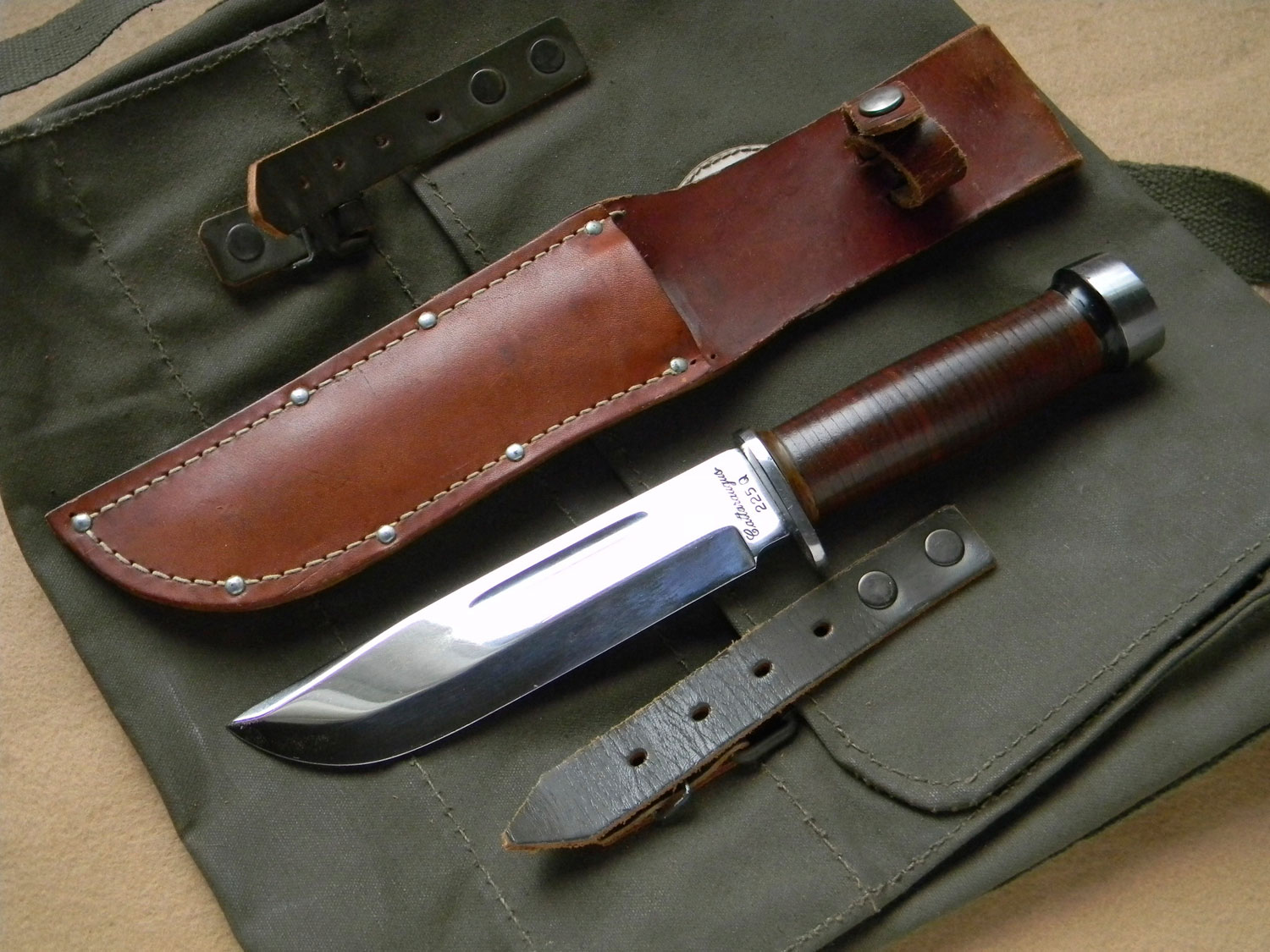
The Cattaraugus 225Q was favored by GIs because of its massive, thick blade and the three-part steel pommel. The sheath is in mint condition and was bought with the knife from a 95-year-old veteran of World War II. Most 225Q’s have a rough groove cut into the stacked leather handle for enhanced purchase.
The Cattaraugus 225-Q had one of the strongest blades of any World War II combat knife. Many observers say it was for quartermasters, with the “Q” standing for quartermaster. As the thinking goes, the rather stout blade was designed to open various wooden crates—an important part of the quartermaster’s job—and the triple steel pommel was used to nail the crates closed.
Still others say the knife was designed for and used by U.S. special operatives during World War II. As with any military knife, be careful not to fall victim to the opinions of so-called experts, especially when they attribute particular knives to units like the Devils’ Brigade, Commandos, OSS, Underwater Demolition Team, etc.
Some military knives—not just the 225Q—were stamped very lightly, while others were deeply stamped.
A fine example of a tool and weapon of war, the chute knife more than rose to fulfill the roles for which it was intended.
Harry Archer was a somewhat shadowy figure. At the height of the Vietnam War, he was engaged in nasty business—fighting a stealthy enemy in a steaming jungle, sometimes up close and all too personal.
Those who knew Archer acknowledged that some of his exploits were “larger than life.” They considered him an early non-movie version of author David Morrell’s fictional character of John Rambo*. Still, Archer was real, flesh and blood. And it seems altogether fitting that responding to his need for knives that “deliver” in a tight spot—survival, seconds along the fine line between life and death—he would come to know and rely on another legend.
According to John Denton, perhaps the world’s foremost authority on the knives of BLADE Magazine Cutlery Hall-Of-Fame® member Bob Loveless, Loveless and the man he came to describe as the “head of CIA operations in Vietnam” were introduced to one another by knife writer/Cutlery Hall-Of-Famer Ken Warner. It followed that Loveless made several knives for Archer’s use in the field, among them a fine sub-hilt and stag-handle example of his well-known Big Bear, along with several other Big Bears. Loveless’s close friend and fellow maker Steve Johnson was working in Bob’s shop at the time and participated in crafting these. A fighter in a tulip wood handle is another cold beauty.
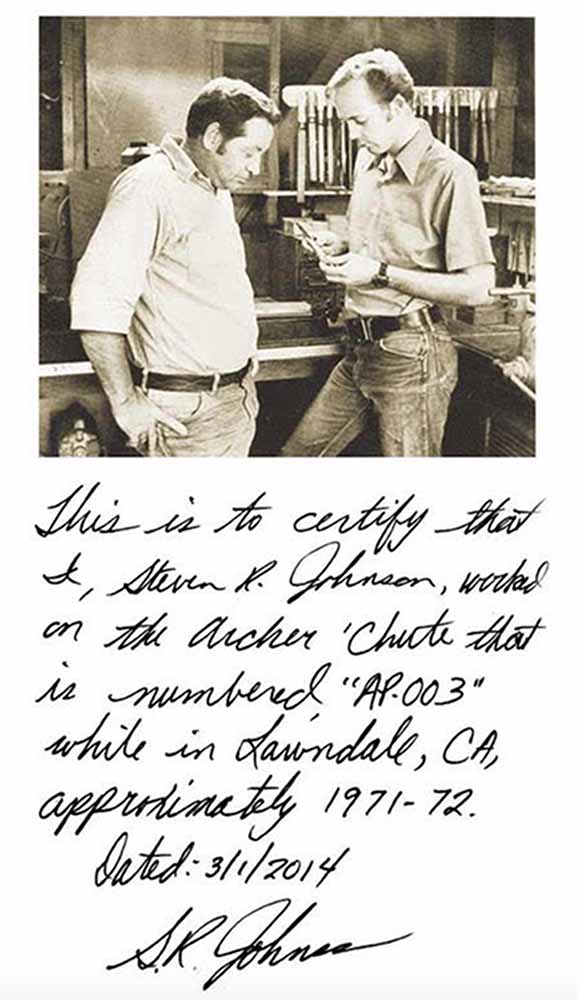
Johnson worked with Loveless from June 1971-October 1974 in the Lawndale and Riverside, California, shops. Steve had a hand in the production of the prototype chute knife in the earliest days, and 23 years later signed a photograph for John Denton attesting to his work on that piece of history. Steve’s inscription reads in part: “This is to certify that I, Steven R. Johnson, worked on the Archer ’chute that is numbered ‘AP-003’ while in Lawndale, CA, approximately 1971-72.” (images courtesy of John Denton)
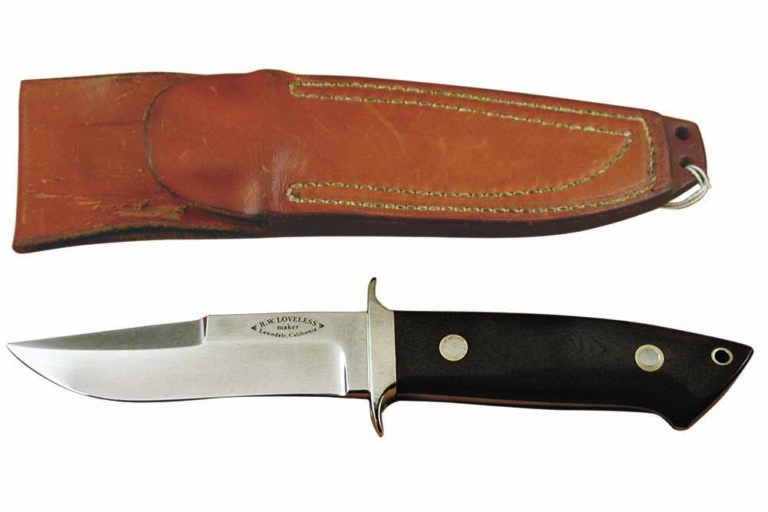
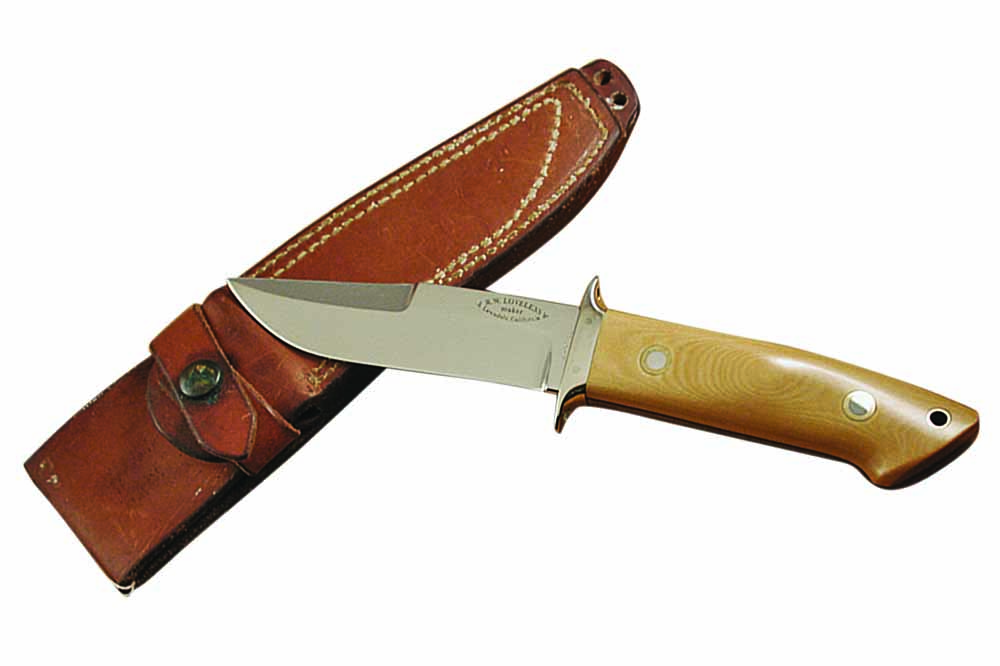
Then there is the well-known Harry Archer chute knife, a versatile fixed blade with good looks and the ability to travel light but cut paracord for a quick exit from a tangled parachute shroud, and with a stout spine for prying loose from the wreckage of a helicopter. The chute knife was made for the jungle. It was made for Harry Archer.
“It seems that Loveless had been left out of a book by Warner, and Loveless sent Ken some knives to review,” Denton recalled. “It just so happened that Archer was there with Warner. Harry saw the knives and bought them all.”
Johnson worked with Loveless from June 1971 to October 1974 in both the Lawndale and Riverside, California, shops. He had a hand in the production of the prototype chute knife in the earliest days and 23 years later signed a photograph for Denton attesting to his work on that piece of history. Steve’s inscription reads in part: “This is to certify that I, Steven R. Johnson, worked on the Archer ’chute that is numbered ‘AP-003’ while in Lawndale, CA, approximately 1971-72.”
Johnson explains that the chute knife is a fairly small, compact fighter and survival knife, short, light, double-edged and strong, but not made in stock thicker than 3/16 inch. Holes for thongs are placed in the rear of the handle and the guard for lashing the knife to a pole or limb to make an improvised spear. It rides into action atop a chest pack or secondary parachute for quick, easy access. Claims that Warner had a hand in the design are unconfirmed, but “the chute” simply looks the part of the warrior’s dependable asset.
“You’re able to cut both ways with the knife via the swipe of an arm or hand,” Johnson related. “Specifically, it’s for cutting parachute cord should it be tangled or caught in a tree. It’s a knife that a pilot, paratrooper or soldier should carry, and it would not be a burden but useful and available in every situation.”
HARRY ARCHER LORE
Stories of Archer’s combat prowess have been told and retold, but to raise awareness of the immediacy of a close-in fight, nothing is better than the harrowing tale that Denton remembers Loveless repeating. John points to a photo of a vintage Big Bear, identifies it as a knife that Archer took into combat, and says, “Harry and his men got into a hand-to-hand fight, and the tip of the blade was broken off inside the enemy. Harry took the knife back to Bob to fix, and Loveless said, ‘Where’s the tip?’ Harry replied, ‘It’s still in the rib cage of the Viet Cong soldier.’ So, Loveless fixed the blade.’”
Made in Bob Loveless’s Lawndale, California, shop about 1973-74, this chute knife in ivory Micarta® is stamped BR-003. It was made for the Brass Rail, a famous gun shop in Hollywood, California, where all the celebrity types hung out to see guns and knives. Note the holes in the guard for lashing the knife to a pole to make a spear. (images courtesy of John Denton)
Like the Big Bear and other Loveless creations, the chute knife has its place in the lore of Harry Archer. After he collaborated to produce the prototype, Johnson continued to work with Loveless on more of the chute knives. He remembers meeting Archer in the California shops.
“Loveless really admired Archer and his adventures in the Vietnam War era, working with USAID**, the CIA and different assignments in various parts of the world,” Steve commented. “[Harry and I] discussed life in camp in Vietnam, interactions with Vietnamese soldiers and personnel with whom he was serving. That was quite interesting.”
Steve calls the chute “one great knife” and remembers conversations in Lawndale when the veteran operative praised it as light and small enough to carry so that it could always come along on a mission. Johnson also made a chute knife for Archer and continues to produce his own model today.
“We worked together on Archer’s order for a ‘Johnson’ version of a chute knife on a bench in the rear of Bob Loveless’s shop, in his garage in the back of his house in Lawndale,” Steve smiled. “Archer asked me to make my version, which we—mostly he—designed in the early 1970s. He did a drawing for me. The 154CM blade was about 4.5 inches long, the handle slim and a bit longer than normal, and it had a large thong tube, three handle screws, a stag handle, and checkering on the top and bottom of the tang just behind the guard.”
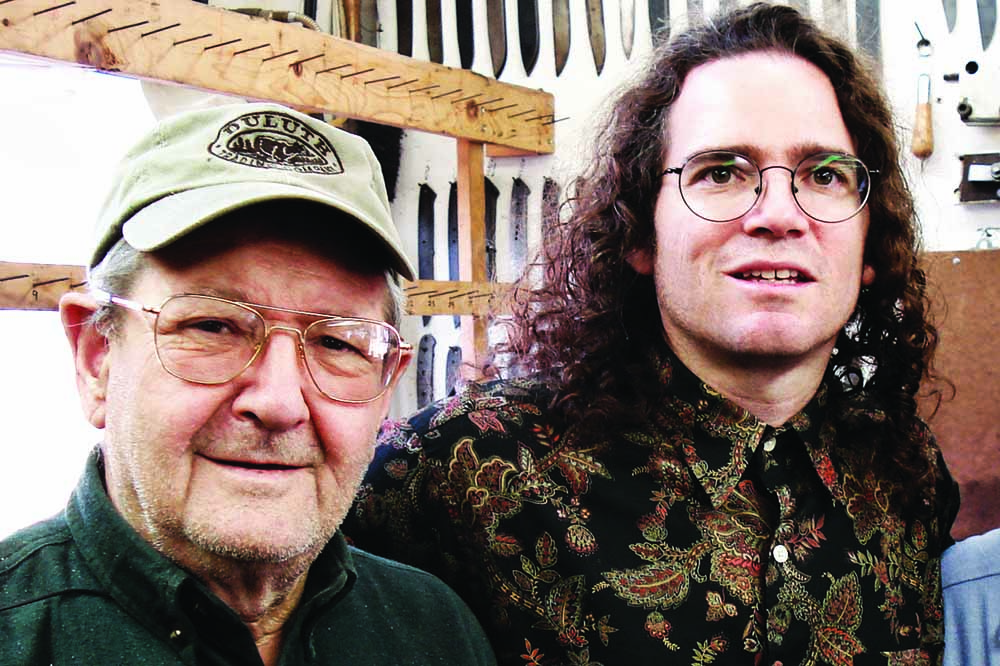
Bob Loveless (left) and John Denton (right)
For Johnson, working with Archer was a pleasure and a defining moment in his illustrious knifemaking career, which, after recovery from a serious accident, took him from Loveless’s shop to his own space in Manti, Utah, more than 40 years ago. “Harry Archer was a great guy who appreciated my work, as well as Bob’s,” Steve added, “and I made him a few knives after California. He was very easy to talk to, respected others, and he really was a man of intrigue and adventure. And Bob Loveless treated me like a son.
“I’m making a chute knife for Atlanta [Steve was interviewed prior to BLADE Show 2021] as we speak, with the blade polished so far, instead of the top grind being just the length of the clip,” Johnson concluded. “I use the pattern that Loveless gave me when I left his shop in Riverside in 1974 or 1975. This particular knife is going to have a stag handle and stainless steel fittings. I’ll make more when asked, and I still have a few on order in my books.”
Long-time maker and designer Bob Dozier was a friend of Loveless and went on to design a chute knife for Cutlery Hall-Of-Famer A.G. Russell. Though his only acquaintance with Harry Archer is through the recollections of A.G., who knew him, Bob says his version of the chute knife remains in demand for one simple reason: “It sells.”
Dozier turns out his chute knife with a 4.75-inch D2 tool steel blade and overall length of 9.75 inches. The handle is green canvas Micarta® “because Goldie [Russell] won’t let me put anything else on them. I’ve got some blades hanging right now, getting ready.”
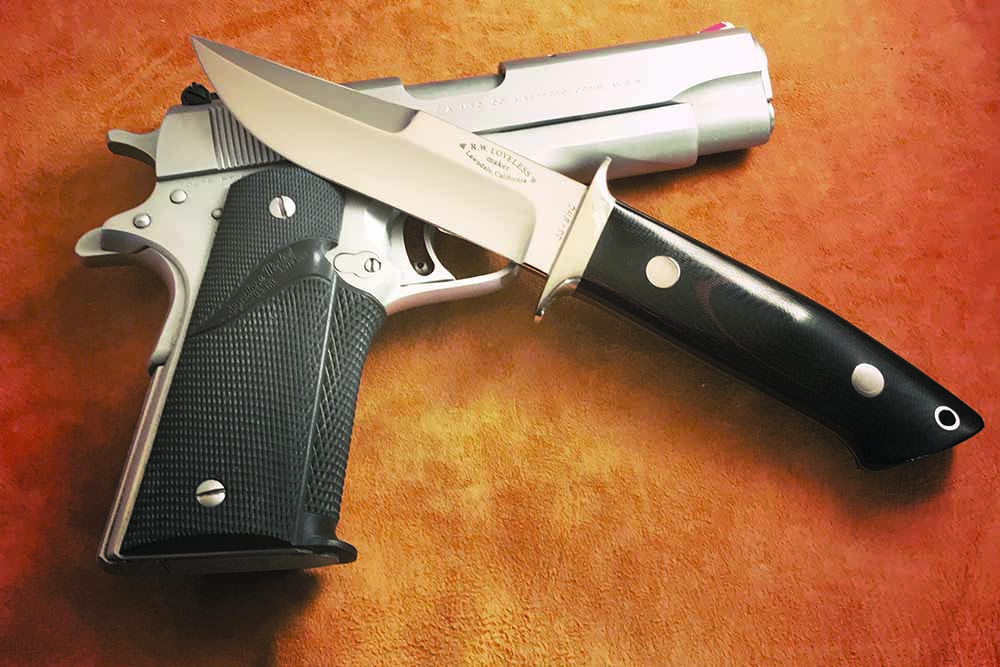
The “RR” on the guard of this Loveless chute indicates it was for the Ram Rod gun store in New Castle, Indiana. Early on Ram Rod sold knives by Loveless, Bill Moran, Ron Lake, W.W. Cronk and others. It appears here with a Smith & Wesson Model 41 modified by Loveless.
Dozier is familiar with the Loveless chute knife configuration but never had the Loveless pattern. He looked at the earlier chute knife profile and made some tweaks. “My handles are like the Loveless, but I don’t cut the butt off as square as he did. I leave more of a point on it than he did. Mine is still mostly like Bob’s, and he was one of the first to make a really good slab-handled knife. That’s one reason why most of us have copied him.” Dozier’s chute knife, designed and built for A.G. Russell Knives, has a manufacturer’s suggested retail price of $895.
SAGA of The CHUTE
The saga of the chute knife certainly has a human side. While Denton estimates that early Lawndale chute knives might fetch as much as $14,000 if found for sale today, and chute knives made in Riverside command up to $12,000 each, they are desirable on the collector market. Nonetheless, the greatest value of the chute knife lies in its lifesaving and protective capability in the hands of a dedicated professional such as Harry Archer.
Through those years of association, Loveless and Archer became friends, sharing a common bond of respect and admiration for the best in fighting and utilitarian knives.
“Loveless said that Harry would come by his shop after periods of being in the jungle for months at a time,” Denton remembered. “He used Bob’s place to unwind and try to become civilized again before heading home to Virginia. But Loveless also said, ‘Harry was like a wild animal when he came to the shop, trying to keep his head straight before he saw his family.’”
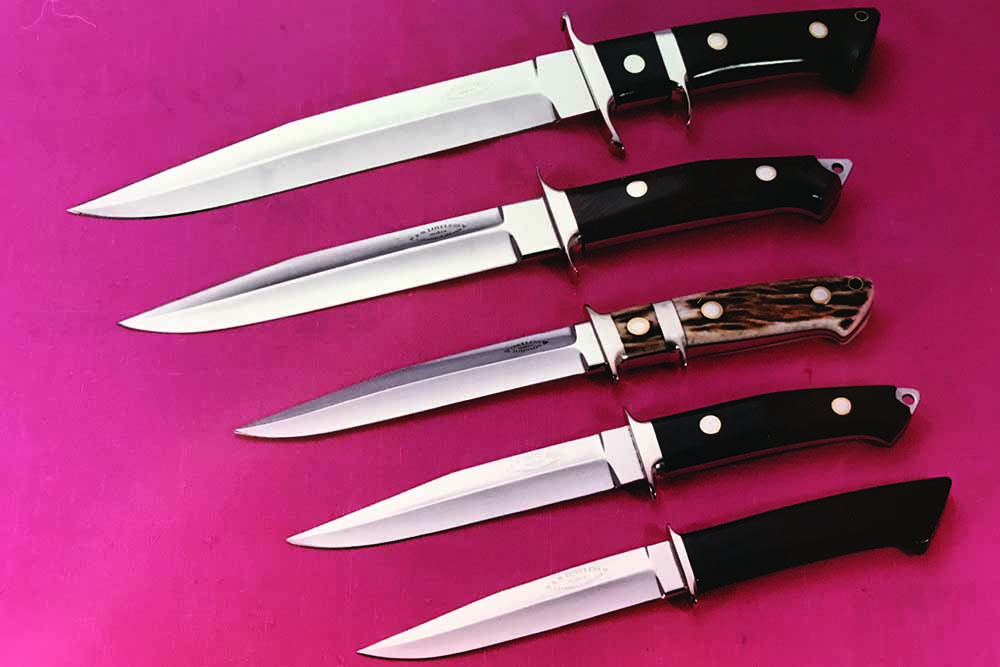
Whenever Harry Archer ordered several Big Bear fighters from Bob Loveless, Loveless said Archer told him to “send the bill to the Pentagon.” From top: the Big Bear Harry broke the tip off inside a Viet Cong soldier during the Vietnam War; tulipwood fighter with skull cracker; Loveless/Johnson sub-hilt with the initials HJA for Harry J. Archer; boot knife with skull cracker; and one Loveless called the Pig Sticker. (image courtesy of John Denton)
The chute knife is indeed a fine example of a tool and weapon of war rising to fulfill the roles for which it was intended. It remains a popular pattern because of its looks, quality and versatility. And for one other reason in particular: It helped men like Harry Archer survive the most desperate of situations and make it home.
*In actuality, Morrell based the Rambo character on Medal-Of-Honor recipient Audie Murphy.
**USAID is the acronym for United States Agency for International Development, with the inference here being that in this instance it functioned as a cover for the CIA.