



Analysis: London Murder Count Overtakes NYC for First Time

knife crime in uk vs nyc

It’s one for the record books, but it’s nothing to celebrate.

The murder totals in London for February and March tallied at 37. That’s two more than New York City’s 35 for the same time period. This marks the “first time in modern history” that London surpassed New York City for murders, according to the The Times.

This new precedent should resonate with the knife community. Both cities have similar population sizes, both have economies that rival that of entire developed countries and both take hard lines on possession of firearms and knives. However, London takes an even more restrictive approach to knives, conducting amnesty drives and prohibiting public possession without “good reason.”

Despite that, stabbings accounted for 31 of London’s murders, and knife crime in general is the driving factor for the increase. This would seem to indicate the ineffectiveness of London’s knife restrictions overall, as indicated by this tacit admission from MP Sarah Jones.

From the BBC, quoting Jones:

“We need a proper strategy that looks at all of the issues.

“Knife crime and violent crime acts like an epidemic, so you need to go in at the source to cut it off and then you need to inoculate the future young people against it.

“Going in at source means major intervention work with youth workers, inoculating means going into schools, changing the social norms, educating kids, teaching them what it is to be a man, teaching them how they don’t need to carry knives.”

This quote, also from the BBC, from the former superintendent of London’s Metropolitan Police, Leroy Logan, echoed those sentiments.

“Police can’t just arrest or stop and search their way out of this problem; it has to be done in partnership with the communities.”

This is in line what many in the knife community have argued for years. Knives aren’t why someone commits a violent act. There are other factors at play that influence behavior, and those should be identified and addressed.

Granted, banning certain items, such as knives (or firearms, a parallel discussion in the United States), may well prevent someone from committing a violent act with that item, but left unaddressed are the would-be aggressors’ motivations and circumstances. Until and unless that happens, the sliding scale of destructive tools will simply move on to the next item. Case in point: UK acid attacks are on the rise. That follows extensive prohibitions on firearms and knives.

Even The Guardian called into question the term “knife crime” as being misleading or overly simplified.

“Knife crime” is a construct. It does not simply mean, as one might reasonably expect, crimes committed with knives. It denotes a certain type of crime committed by a certain type of criminal in a certain kind of context.

Those “certain types” often single out particular groups of people, which makes “knife crime” as a concept even more insidious. From The Guardian again (emphasis is mine):

In 2007, then prime minister Tony Blair told an audience in Cardiff: “The black community – the vast majority of whom in these communities are decent, law-abiding people horrified at what is happening – need to be mobilised in denunciation of this gang culture that is killing innocent young black kids. But we won’t stop this by pretending it isn’t young black kids doing it.”

When politicians frame the issue in this way, the results can disproportionately impact communities of color via increased law enforcement scrutiny. It’s as if white majority populations are somehow exempt from the factors that lead to “knife crime.” Or, worse, that there is something inherent about people of color that predispose them to violent acts.

When white kids are killed, people opine about the state of youth today, the demise of the town in which they died, or the world in general. When black kids are killed, usually the assumption is that their race had something to do with it.

It comes full circle when comments come in following a murder involving a knife and a person of color.

And yet a few days after his death, a Conservative councillor in Dover, Bob Frost, posted a news story about Djodjo’s murder on Twitter with the message “#BlackKnivesMatter. The carnage continues into 2017. Any protest from the ‘community’? Thought not.”

This phenomenon is well-known to the knife community at large. For example, New York’s restrictions on “gravity knives,” enforced with enthusiasm in New York City, levy an oversized impact on minority groups

That this toxic stew of tunnel vision, racial bias and misleading terminology should finally express itself in a historic first for murders in London shouldn’t come as a surprise. It should come as a warning. If the root of “knife crime” isn’t dug out, London may, unfortunately, find itself positioned at the floor of a rising trend, not the ceiling.


Have a News Tip? Submit it Here

Have big news? Tell BLADE with this form.
    Check this box to prove you're not a bot

    First Look: Kershaw Lucha Carbon Fiber

    0

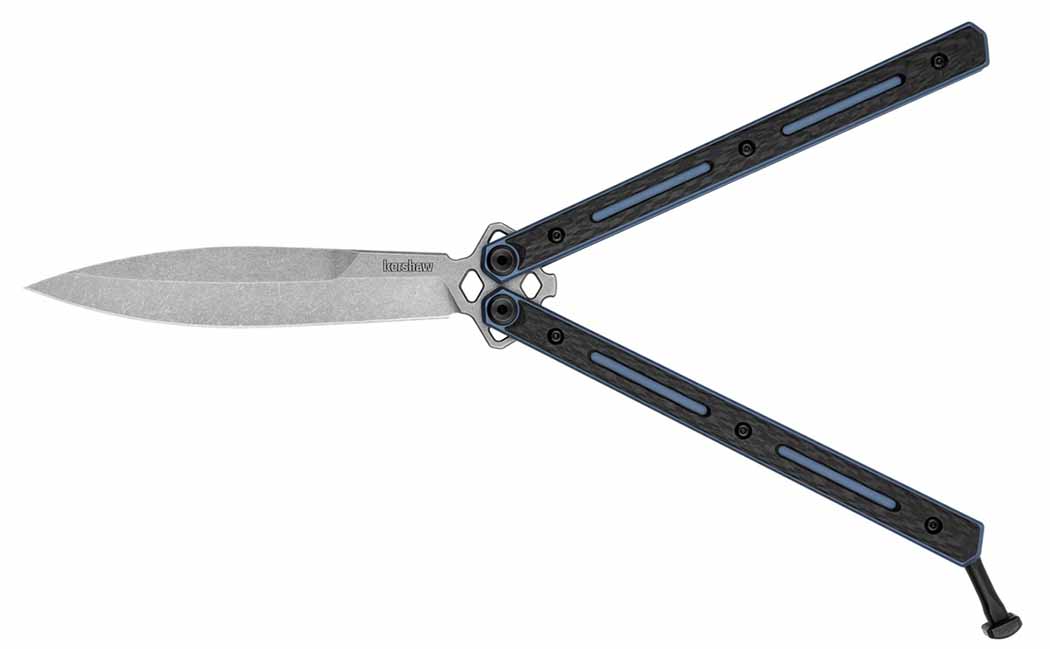
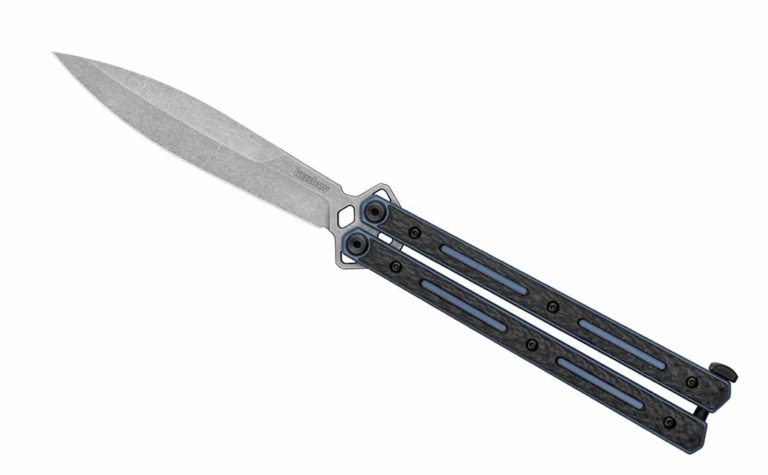
    Kershaw steps up its balisong game with the introduction of the lightweight Lucha Carbon Fiber.

    The original Kershaw Lucha made waves when it was released 2 years ago, and it’s only gotten better with a new twist on the design. Shake hands with the Kershaw Lucha – Carbon Fiber. Embracing cutting-edge materials, the Oregan company has cooked up a  more nimble variation, one perfect in the role of a unique EDC option or a top-end balisong competition blade.

    As its name suggests, Carbon Fiber is the belle of the ball in next-generation Lucha, with Kershaw applying it to the handle. Adding rigidity to the system, the company opted for a titanium skeleton, but offset the use of metal with weight-saving cutouts in the carbon-fiber exterior. The efforts paid off, the knife is a full ounce lighter than the original Lucha at a very svelt 4.9 ounces. Worth mentioning, the mix of carbon fiber and blue finished titanium gives the knife a dynamic look.

    Kershaw didn’t skimp on the other aspects of the Lucha Carbon Fiber. Dual KVT ball bearings make the knife’s action silk smooth and quick as lightning, making opening and manipulating the knife effortless and smooth. A wicked spear-point blade, constructed of corrosion-resistant CPM 20CV stainless steel, facilities faster opening and proves useful for both cutting and perforating tasks. And a Kershaw’s “Working” finish maintains the aesthetic integrity of the blade, hiding scratches and gulls better other finishes.

    While not the most expensive option on the market, the Lucha Carbon Fiber tilts to the expensive end of the balisong spectrum—$500 (expect around $300 retail). Yet, it’s difficult to argue the USA-made knife certainly offers plenty for the price.

    Initial Impression

    Describing the Lucha Carbon Fiber in one word is simple: streamlined. Building on the successful original, the new Carbon Fiber appears a more refined version in every way. From its single-edge spear point to its almost lighter-than-air titanium and carbon fiber handle, it should bring everything balisong fans appreciate to the next level.

    Carbon Fiber Specs
    Blade Length: 4.6 inches
    Blade Material: CPM 20CV
    Blade Finish/Coating: Working Finish
    Blade Thickness: .155 inches
    Closed length: 5.8 inches
    Handle material: Titanium, carbon fiber overlay
    Handle finish/coating: Blue anodized
    Handle thickness: .56 inches
    Overall length: 10.25 inches
    Weight: 4.9 ounces

    Bob Cargill Knifemaker, Company Founder And NKCA BOD President Passes

    0

    Cargill’s impacted the knife industry in nearly every facet.

    Bobby Lynn “Bob” Cargill, custom knifemaker, a president of the National Knife Collectors Association board of directors, and founder of Cargill Knives and Cripple Creek Cutlery, passed away January 3. Of Old Fort, Tennessee, he was 81.

    Using old car springs for material, Cargill made his first knife when he was 10. He went full time in his mid-30’s circa 1975 making knives via the stock removal method, including folders, some fancy, lockbacks and multi-blades. He used 440C, 154CM, D2 and other steels for blades, and mother-of-pearl, stag, bone, Micarta®, ivory and wood for handles.

    He joined the Guild in 1979. “What I enjoy most is the completed knife,” he was quoted as saying in Knifemakers: An Official Directory of the Knifemakers Guild, “because it is rewarding to see a design on paper developed … If I can’t deliver a knife that I’m proud of and make you a little bit happier and proud to collect my knives, then I don’t want your money.”

    Cargill had his right leg amputated below the knee as a result of a car accident. However, instead of letting it hold him back, he used it as inspiration for the name of Cripple Creek Cutlery. Founded in 1981 in Lockport, Illinois, Cripple Creek specialized in slipjoints in classic patterns and natural handle materials.

    Consisting mostly of slipjoints—they were called pocketknives back then—club knives were big in the late 1970s and throughout the ’80s, and Cripple Creek was among a number of companies that provided knives for knife clubs nationwide, companies that included Case, Queen, Hen & Rooster, A.G. Russell, Fight’n Rooster, KA-BAR, Boker, Schrade and others. Among the knife clubs Cripple Creek made club knives for included the Western Reserve Cutlery Association, Allegheny Mountain Knife Collectors Association, Central Kentucky Knife Club, Badger Knife Club, the Northeast Cutlery Collectors Association and others. He was active in the American Edge Collectors Association. Cripple Creek also made limited-edition slipjoints for Knife World in the early 1980s when BLADE Magazine Cutlery Hall-Of-Fame® member Houston Price owned the magazine. Knife World is now known as Knife Magazine. Bob also made club knives under the Cargill Knives mark for such knife clubs as the Soy Knife Collectors Club.

    Bob sold Cripple Creek in 1993 and it operated under Blackjack Knives in Effingham, Illinois, until 1995. He was on the Guild’s “knifemaker emeritus” list at the time of his passing. He is survived by his three children, nine grandchildren, several great grandchildren, two sisters and a brother.

    More About Custom Knives:

    Photos: 4 Butterfly Knives that Sting Like a Bee

    Butterfly knives (aka “balisongs”) have evolved into meticulously crafted pieces of cutlery. Many of the best capitalize on state-of-the-art blade and handle materials coupled with progressive and modern designs that advance the genre toward the close of the century’s second decade.

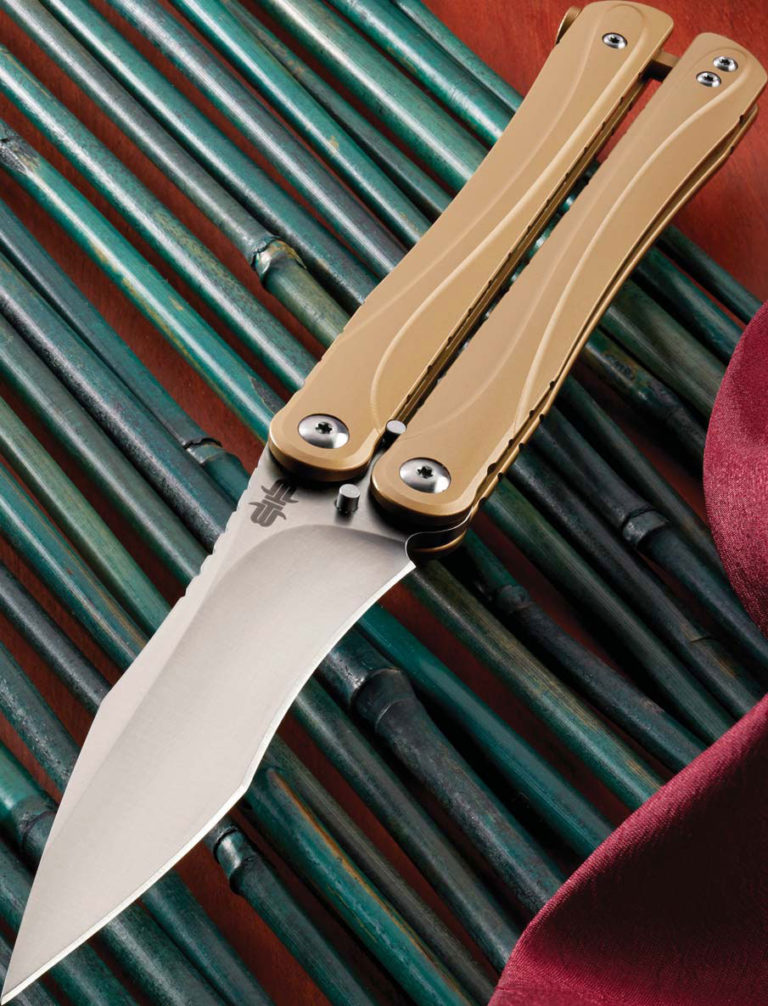
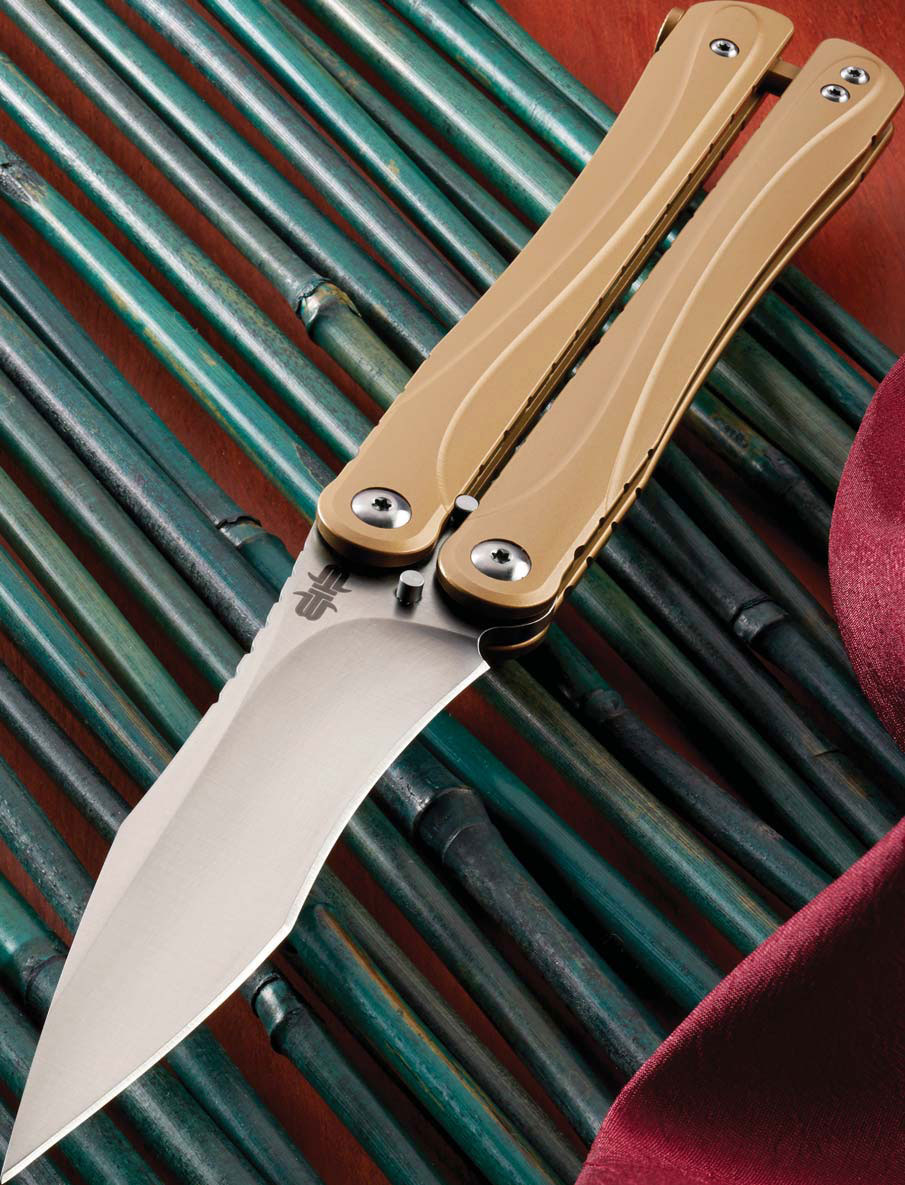
    Brous Blades B3

    new butterfly knives
    (All images by David Stanfield unless otherwise noted)

    Brous Blades balisong

    The B3 from Brous Blades is a modern butterfly knife with its stainless steel handles and D2 recurve tanto blade style. The handle interiors have cavities milled out to reduce weight. The knife has great action as a result, without the need to use bearings in the pivots. MSRP will vary depending on the finish, though this one is $320.


    Bear Ops Bear Song VI

    Bear Ops butterfly knife

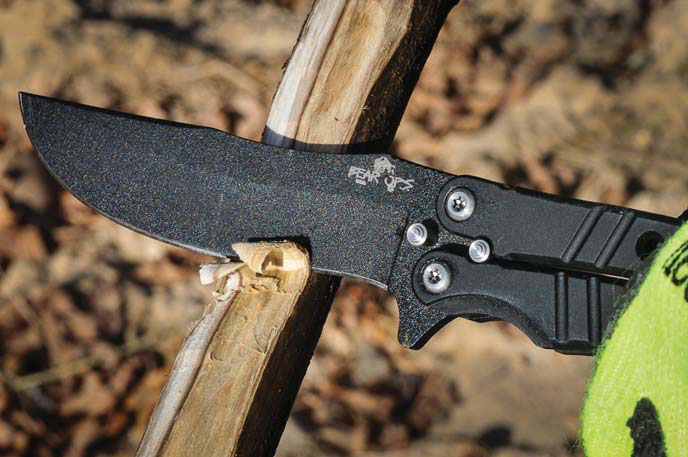
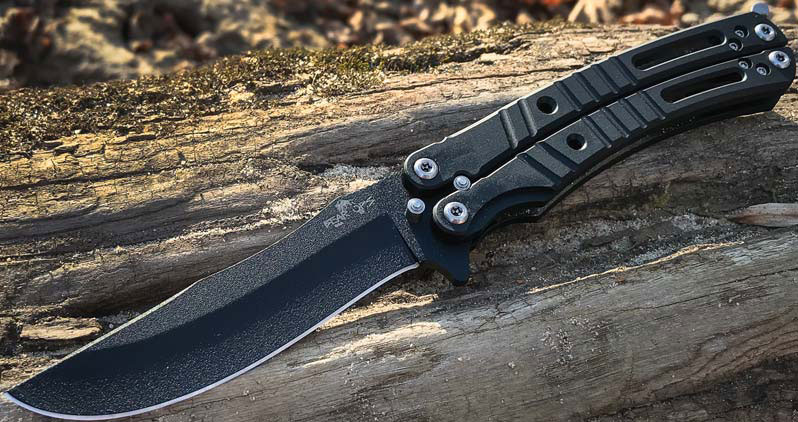
    Bear Song VI balisong

    The hollow-ground 1095 carbon steel blade of the Bear Ops Bear Song VI has great edge geometry for all your cutting chores. A textured black epoxy coating guards against corrosion. MSRP: $174.99.


    Mantis Knives Vuja De

    Mantis Knives butterfly knife

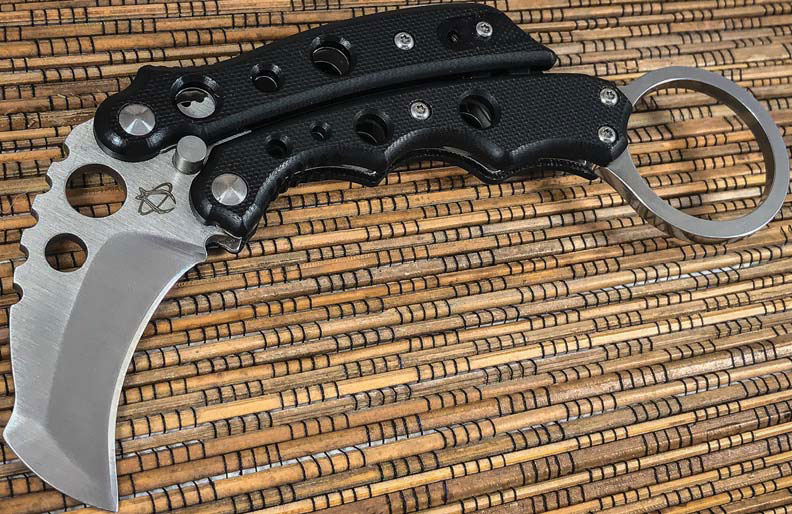
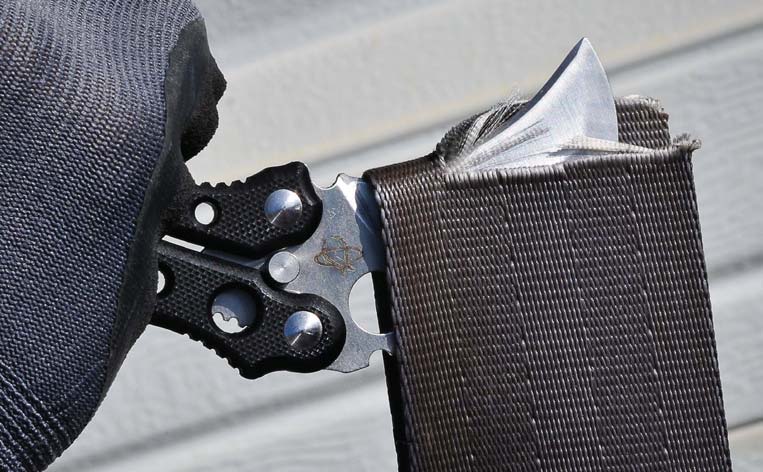
    Mantis butterfly knife

    The Vuja De from Mantis Knives marries the karambit’s large finger ring and hook-shaped blade with the free-swinging individual handles of a butterfly knife. The scales are textured black G-10 for both durability and grip quality. The blade is Mantis’ proprietary MV-1 stainless steel.


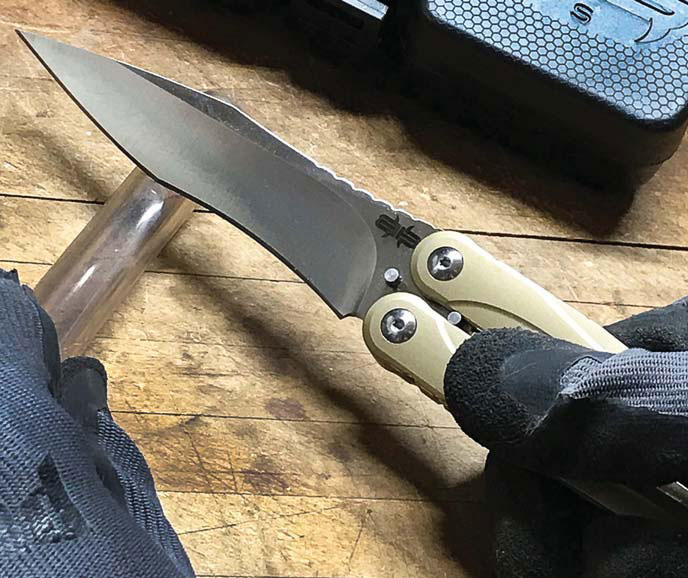
    Emerson Knives Bali Commander & CQC7

    Emerson Knives balisongs

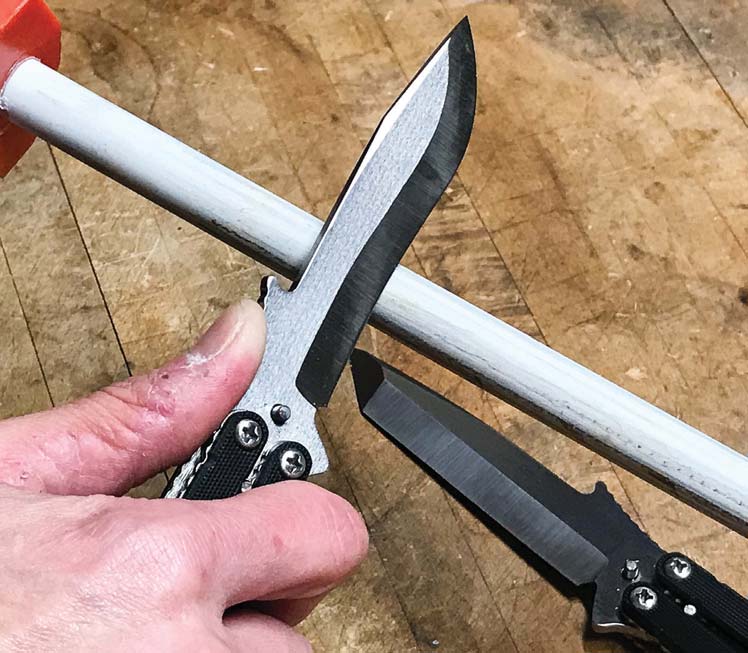
    The recurve clip-point blade of the Bali Commander (left) from Emerson Knives, Inc., is easily sharpened using a round profile sharpener to effectively capture the blade’s gentle sweeping curve.

    The Emerson Bali CQC7 (right) in the background sports the chisel-ground blade like that of the iconic Emerson CQC7 tactical folder.


    Attend a Flipping Competition at BLADE Show

    balisong knife contest
    Butterfly knives were a-fluttering during the balisong competition conducted by Blade HQ at last year’s BLADE Show.

    Among the many exciting events at BLADE Show 2018 this June in Atlanta, you’ll flip to know that there’s a balisong competition at this year’s show. It’s included with your admission. Buy tickets here.

    5 New Knives for the Outdoorsy Crowd

    For Those Willing to Wait (a Little): Realsteel Knives Relict

    Realsteel Knives Relict

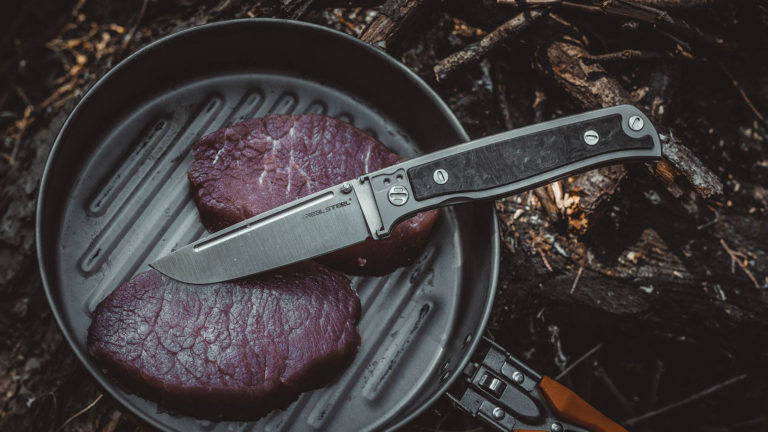
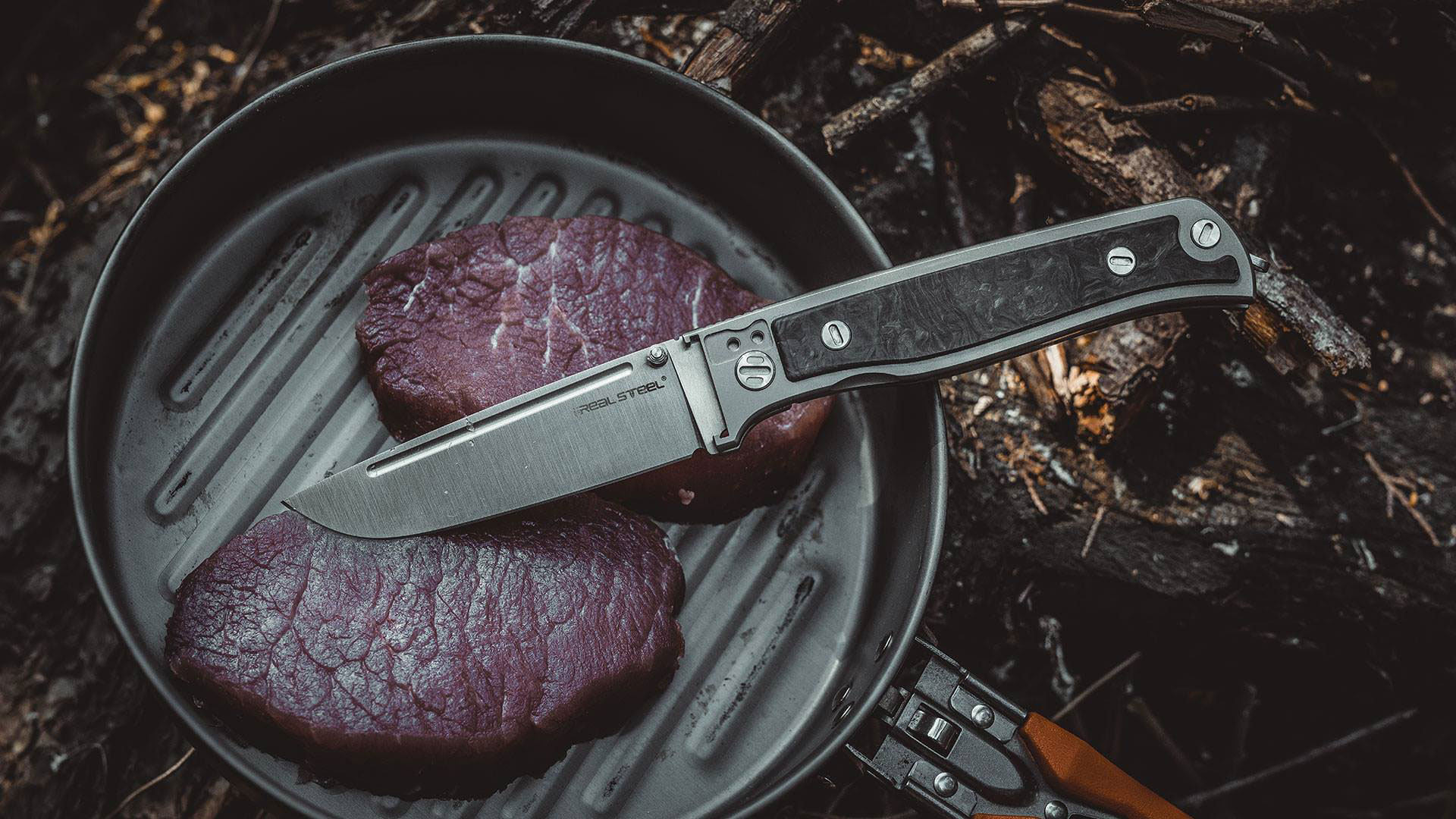
    The Relict, from Realsteel Knives, won’t be out until May 18, but it’s already catching some buzz. Full specs aren’t available yet, but the company did have this to say on its Facebook page:

    Named purposely after its design features, that include a bullet cartridge opener, extendable clip and splicingly sharp S35VN cutting edge, the Relict takes Eastern European designs of past and adds that extra bit of class to them.

    Because the Relict sits on the higher end of Realsteel’s catalog, expect it to go for a few hundred dollars when it hits shelves.

    More info


    For the Bushcrafter: Condor Tool & Knife Headstrong

    condor tool and knife headstrong

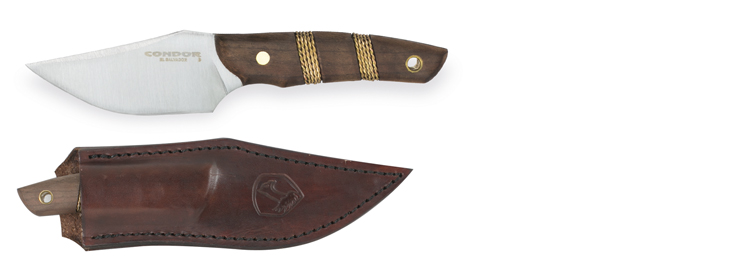
    The Headstrong, from Condor Tool & Knife, sports a 1095 blade, a choice steel for bushcrafters and survivalist types who enjoy versatility in their sharpening methods. That the blade is uncoated may speak to the aesthetic preference of its designer, Joe Flowers, but it’s worth noting because of how passionate bushcrafters are about their knives.

    More info


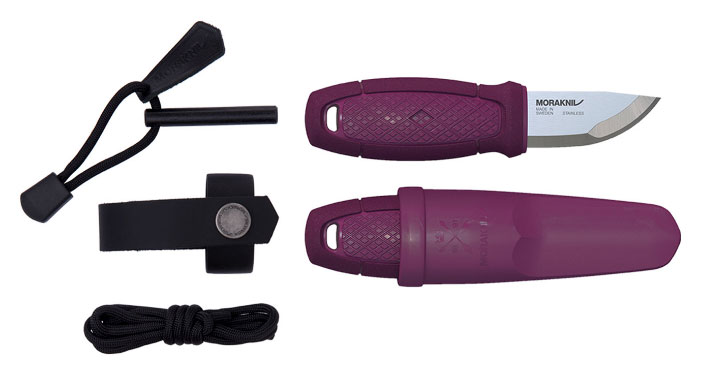
    For the Backpack: Eldris Limited Edition 2018

    Morakniv Eldris

    It’s small, it only comes in one color and it comes with a firesteel. It’s Morakniv’s Eldris Limited Edition 2018.

    In addition to its collectibility, the Eldris is basically a high-functioning fire-starting kit. A small fixed blade knife replaces an otherwise single-purpose striker. An aubergine handle and sheath (that’s a color similar to eggplant, not a material) suggests a female user, but there’s no reason to pigeonhole this kit in that way. If you need a fire in a pinch, the last thing on your mind will be aubergine. It’s too hard to spell anyway.

    More info


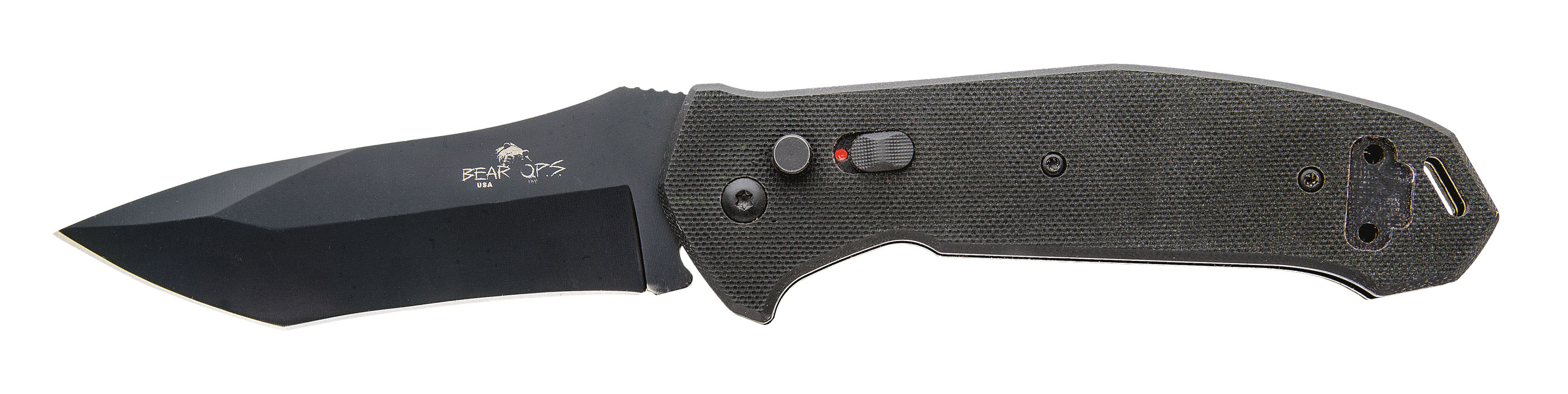
    For the Mil-Tac Crowd: Bear OPS New AC-551-B4-B Tactical Automatic Knife

    Bear OPS New AC-551-B4-B

    It won’t ship outside of Alabama, but maybe an authorized dealer can wrap your hands around the G10 on Bear OPS’s new AC-551-B4-B. That’s a mouthful to say, so Bear OPS gave it the “Bold Action V” name, too. 

    No matter what you call it, it continues Bear OPS’s line of autos at economical prices.

    • Blade Material: Sandvik 14C28N Stainless Steel
    • Handle Material: Black G10
    • Open Length: 8-3/4″
    • Closed Length: 5″
    • Blade Length: 3-3/4″
    • Weight: 5.4 oz.
    • Extras: Automatic Opening & Safety Lock & Reversible Pocket Clip
    • MSRP: $171.99

    More info


    For Collectors: Victorinox Deluxe Tinker Damast Limited Edition 2018

    Swiss army knife for collectors

    Part of the appeal of Swiss army knives (SAK) is their bang-for-buck factor. They’re affordable and offer loads of utility. But what about higher end SAKs for collectors interested in another kind of value?

    Collectors should take note of the Deluxe Tinker Damast Limited Edition 2018, from Victorinox. It offers the same multi-tool platform SAK fans expect, plus features that wouldn’t look out of place at a black-tie event. 

    From Victorinox:

    This year’s limited edition Damast Swiss Army Knife features the “Ladder” Damast pattern forged from an impressive 333 layers of steel and is complimented by plum wood scales with a metal inlay cross + shield. The 2018 model marks the first use of plum wood and the first Damast edition with combination pliers.

    • Swiss made pocket knife with 15 functions
    • Large Damast steel blade
    • Sequential numbering on every piece
    • Limited to 6,000 pieces worldwide
    • Plum wood handles
    • Weight: 4.3 oz
    • MSRP: $300

    More info


    Stay Up to Date with a Subscription to BLADE Magazine

    Get a great deal on subscriptions when you sign up at ShopBlade.com

    5 Best Electric Knife Sharpeners [2022]

    Whether It’s An Inexpensive Model Or One The Chefs Use, There’s An Electric Knife Sharpener Out There For You.

    There is no one-size-fits-all for electric knife sharpeners. Some specialize in sharpening certain steels or styles of knives. Some have multiple stages, and others are a basic, affordable option for a less discerning home cook. And some are made for pocket knives rather than kitchen knives.

    No matter your desire and needs, there is a sharpener out there for you. We’ve scoured the crowded marketplace to pick out five electric knife sharpeners we think will check the important boxes for you today and for years to come.

    Chef’s Choice Model Trizor 15XV 3-Stage Professional Electric Knife Sharpener, Platinum

    Chef’s Choice Model Trizor 15XV 3-Stage Professional Electric Knife Sharpener, Platinum

    Our list starts with what is, arguably, the baddest sharpener on the block. Highly-rated, and with a price to match, this sharpener from Chef’s Choice is called professional for a reason. With three different stages (sharpening, honing, and polishing), the device truly can do it all and revive your knives.

    The sharpener is engineered to the point of ridiculousness. The sharpening stage features proprietary diamond abrasives, and the polishing stage features patented stropping disks to give your knives a pristine finish. It can even convert a traditional 20-degree edge to a finer 15-degree edge.

    If there is a knock on the machine, it’s it isn’t rated to sharpen ceramic knives or scissors. Everything from a chef’s knife to pocket knives and yes, even serrated knives, can be brought back to life using the Trizor 15XV.

    In a test of nine different electric knife sharpeners, the 15XV was named the best by America’s Test Kitchen. You can take a look at their methodology and how they determined the winner below.

    The hefty MSRP of $179.99 is eye-popping to start, but there is no other sharpener like this on the market today.

    Presto EverSharp

    Presto EverSharp

    Maybe a three-stage, pro-level sharpener isn’t what you need, and you’d prefer something a bit more affordable. I’m right there with you. That’s where the Presto EverSharp comes in. 

    The EverSharp uses Sapphirite sharpening wheels — a synthetic material almost as hard as diamond — to sharpen your blades to a razor’s edge. The EverSharp comes with two stages, one for sharpening and the other for honing & polishing. Each stage features internal guides so your knife always is at the perfect angle every time you pull it through. There’s two slots on each stage, one for each side of the blade.

    It’s so easy to use you could probably do it with your eyes closed (but please keep them open so you don’t slice off a finger). The one drawback of the sharpener is it can’t sharpen serrated blades.

    Durable and affordable with an MSRP of $47.99, the EverSharp provides great bang for your buck.

    Wüsthof Easy Edge

    Wüsthof Easy Edge Electric Knife Sharpener

    From one of the legendary makers of kitchen knives, Wüsthof’s electric sharpener is robust and easy to use. 

    Unlike the previous sharpeners on this list, the Easy Edge is a belt-drive sharpener. No stones or grinding wheels in this one. The machine can sharpen, hone, and shape your straight-edge knives. It does this by varying the speed of its sharpening belt.

    While the device can’t sharpen serrated blades it can sharpen Asian-style knives, which typically are ground to a different angle than traditional German-style knives. 

    Made of professional quality materials, and coming in with an MSRP of $160, the Easy Edge is worth the price and can replace your whetstones, honing steels, and many other pieces of knife maintenance equipment.

    WorkSharp Combo Knife Sharpener

    WorkSharp Combo Knife Sharpener

    Unlike the other sharpeners on this list, which are made for kitchen knives, this sharpener from WorkSharp is made for pocket and EDC knives.

    Like the Wusthof sharpener, this one uses an abrasive belt to sharpen your knives and uses internal guides to guarantee that your knives are at the perfect angle every time.

    There’s also a ceramic honing rod built directly into the machine to help you polish and finish your flat-edge knives. The rod is also perfect for sharpening knives with small or large serrations. 

    It’s also relatively small. Some of these sharpeners are a bit bulky; WorkSharp has made a nimble sharpener that won’t take up much space on your workbench. You’ll love using this every day, and it’ll make your knives like new. At an MSRP of $59.95, it’s worth the price for the type of product it is.

    Smith Essentials Compact Electric Knife Sharpener

    compact knife sharpener
    Smith Essentials Compact Electric Knife Sharpener

    If you’re looking for an electric knife sharpener on a budget, or simply don’t need the heft of professional machines, Smith has you covered. Their compact sharpener features both electric and manual elements for the low MSRP of $29.99.

    The electric part of the machine features a synthetic sharpening wheel and built-in guides to keep your knives at the best angle. The ceramic rods on the manual side are there to hone and finish your blades.

    It can only be used on straight-edge Euro/American style knives though so you would need some other sharpening implement if you have serrated knives at home. However, for a sharpener under $30, you may not be able find much more out there today.

    Read More

    Steve Shackleford Wins Latest Nate Posner Award

    Blade Magazine‘s Editor-in-Chief reflects on why receiving the Posner Award proves so meaningful.

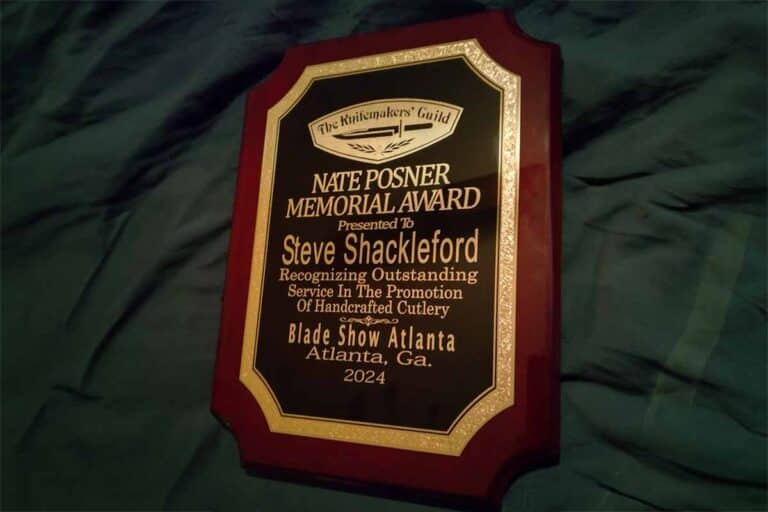
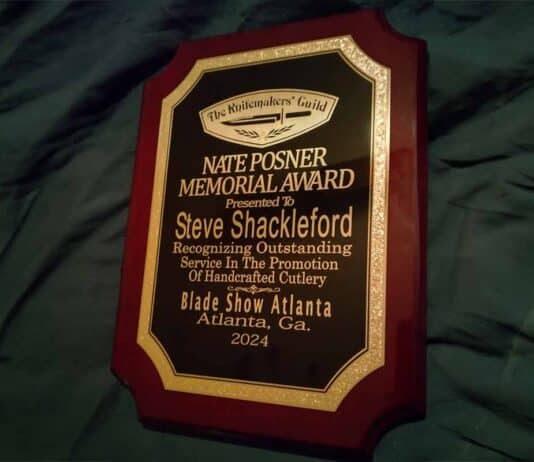
    I was talking to knifemaker Edmund Davidson at his table during the BLADE Show when he and Gary Langley handed me a white cardboard box and told me to open it. When I did so, I found it contained a most beautiful plaque. It was the Nate Posner Award, and on it in big letters was my name as the latest recipient.

    I must admit, I was equal parts astonished and delighted. Presented by The Knifemakers’ Guild, the Posner Award is one I’ve always wanted. The list of those who have won it is long and among others includes Mrs. Betty Dowell, Admiral Steel’s Terry Summers, photographer David Darom, KNIFE editor Mark Zalesky, knifemaker Bill Herndon, French knife writer Francis Anglade, BLADE Magazine Cutlery Hall-of-Fame® member Dan and Mrs. Pam Delavan, and Cutlery Hall-of-Famers Bruce Voyles and Edda and Aldo Lorenzi.

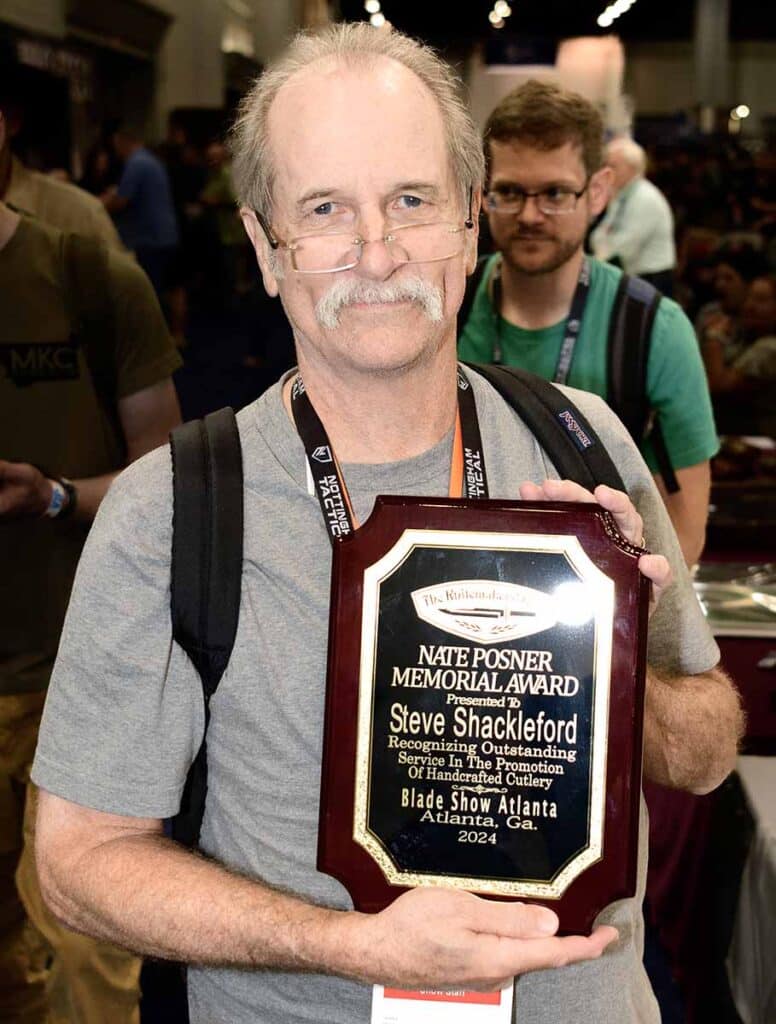
    Posner Award Steve Shacklefor
    Steve Shackleford proudly mugs with his Nate Posner Memorial Award at the 2024 BLADE Show in Atlanta. Photo: Gary Langley

    As the words on the plaque read, the award recognizes “outstanding service in the promotion of handcrafted cutlery.” And those words pretty much say it all in terms of why I’ve always wanted the Posner, because promoting handcrafted cutlery has been a monumental part of what I’ve been doing for BLADE® for almost four decades now.

    Who exactly was Nate Posner and why did the Guild name an award after him? If you reference the December 1981 American Blade, the original name of BLADE, you will find a most informative story by Cutlery Hall-of-Famer Bernard Levine about the San Francisco Gun Exchange and its proprietor, Nate Posner.

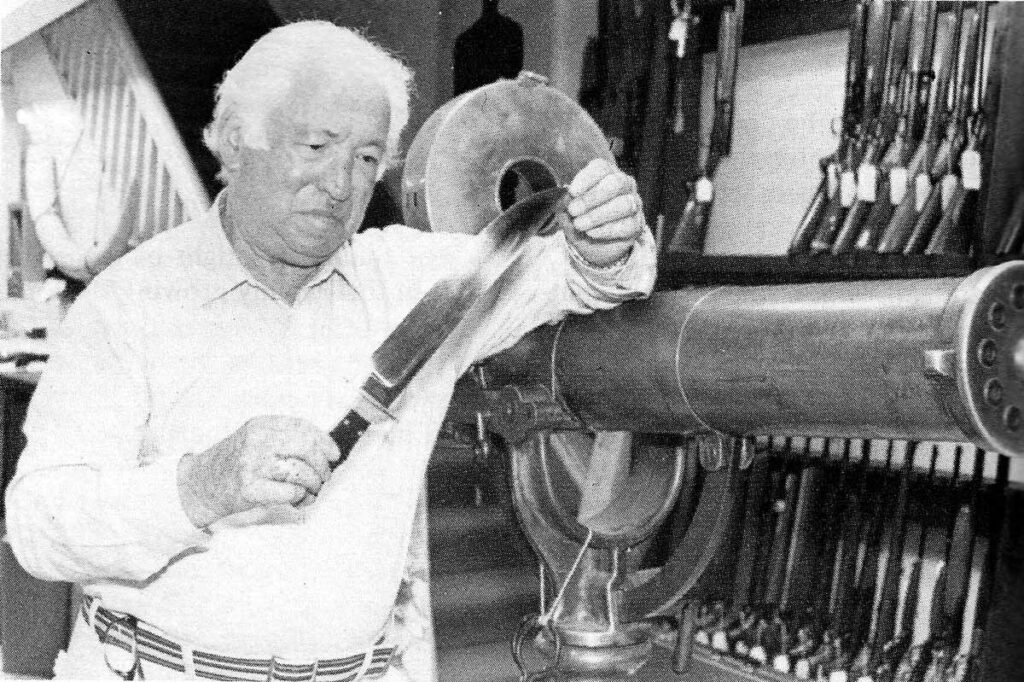
    Mr. Posner started his business in 1948. Through the years he built it into what he called the “Firearms Center of the West.” It had most everything firearm-related, including inexpensive rifles and shotguns, collector’s cartridges, reloading equipment, rare and unusual guns, a whole wall of de-activated submachine guns, posters, cartridge boards and more. He even had an authentic Gatling gun in the back of the store.

    As all-encompassing as his array of firearms and equipment was, it was his displays of knives, both factory and custom, that pertain here. At one time he had over 350 custom knives on display, with at least that many others in stock. (In subsequent years those numbers no doubt grew even more.) At first, in 1975 or ’76, he ordered knives from dozens of makers, most either active or past Guild members. Eventually he culled his list to about 25 or 30 makers, including one of his favorites, D. E. Henry, whom Posner reportedly called “the Van Gogh of knifemakers.” Others included Tommy Lee, Jess Horn, Herman Schneider, Corbet Sigman, the-then-team of Scott Sawby and Steve Mullin, and Cutlery Hall-of-Famers Frank Centofante, Jimmy Lile, Bob Loveless, George Herron, Bo Randall and more.

    Nate Posner in his San Francisco Gun Exchange circa 1980 leaning on his authentic Gatling gun and admiring a D. E. Henry bowie.
    Nate Posner in his San Francisco Gun Exchange circa 1980 leaning on his authentic Gatling gun and admiring a D. E. Henry bowie.

    Along with Dan Delavan at Plaza Cutlery, Bob Gaddis and Dave Harvey of Nordic Knives, and Cutlery Hall-of-Famer A.G. Russell, Posner was among the first custom knife purveyors. His approach was a most honest and forthright one. He was known for telling his customers that to get the best price, instead of buying custom knives from middlemen such as him, they should buy directly from the maker. Of course, if the customers wanted the custom knife in question immediately, they often had to buy it from Nate to avoid spending what might be months or even years on a maker’s waiting list.

    However, it was being up front that put Nate in good stead not only with his knife customers but the Guild, too—for both buying/selling the makers’ knives and treating what often were the makers’ customers/prospective customers in a professional manner. Add the high store profile he gave custom knives and knifemakers to knife buyers and gun buyers alike, and Nate became one of the most important custom knife promoters of his or any time—and thus the Guild award in his name.

    To be mentioned in the same breath as those who have won the award before me and, of course, Nate Posner himself, is a privilege and an honor. To any and all who were involved in my selection, I cannot thank you enough.

    And thanks to Nate Posner for setting a standard for all in the knife community to emulate.

    Read More On Cutlery Hall-Of-Fame Members:

    Advertisement

    Must Read Articles

    Read this before you make a knife

    Knifemaking 101 – Read This Before You Make a Knife

      by Wayne Goddard My experience has taught me that there's nothing like digging in and getting started. I've often said the hardest part of the...
    how to forge damascus steel

    How to Forge Damascus

    Advertisement
    Advertisement