Knife Collecting

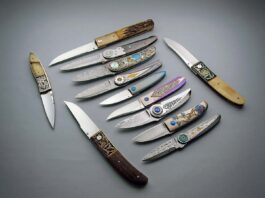
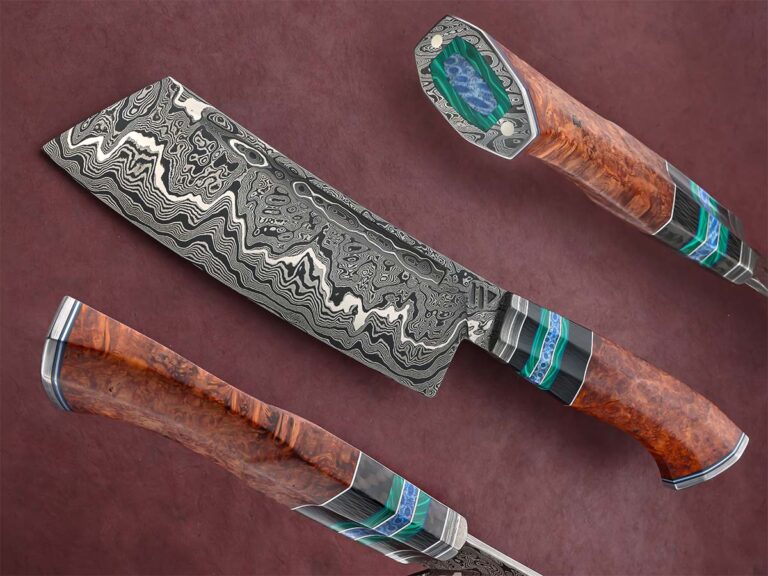
Knife collecting is an extremely rewarding experience for knife enthusiasts. There truly is a knife for everyone. Many increase or hold their value throughout the years, making collecting knives something to pass on to the next generation of knife collectors.

Knife Shows: Preparing For The Best

Tips and tricks to get the most out of attending a knife show.

Magazines, websites, and social media only give you a two-dimensional look at a knife. Nothing replaces the experience of handling a knife in person. While the internet is convenient, it cannot match the visceral sensation of holding a knife at a show.

There are many knife shows across America. Some are big, like the BLADE Show, while others are smaller, regional events. All shows have one thing in common: custom knives. Makers offer blades in many styles, materials and price ranges. No matter the show’s size, you can gain an advantage—and get the knife or knives you want—by research.

Today, even smaller shows have websites or social media pages listing exhibitors. The exhibitor list will help you identify who will be at the show. Before every show I attend or consider attending, I go through this list, looking for both familiar makers and those of whom I am unfamiliar. In particular, I look for makers from outside the U.S. From this, I create my own list.

For unfamiliar makers, I visit their websites or social media pages to explore their knives. This research allows me to refine my list and home in on those I’m truly interested in. Once my list is complete, I prioritize the makers whose knives I want to see and handle.

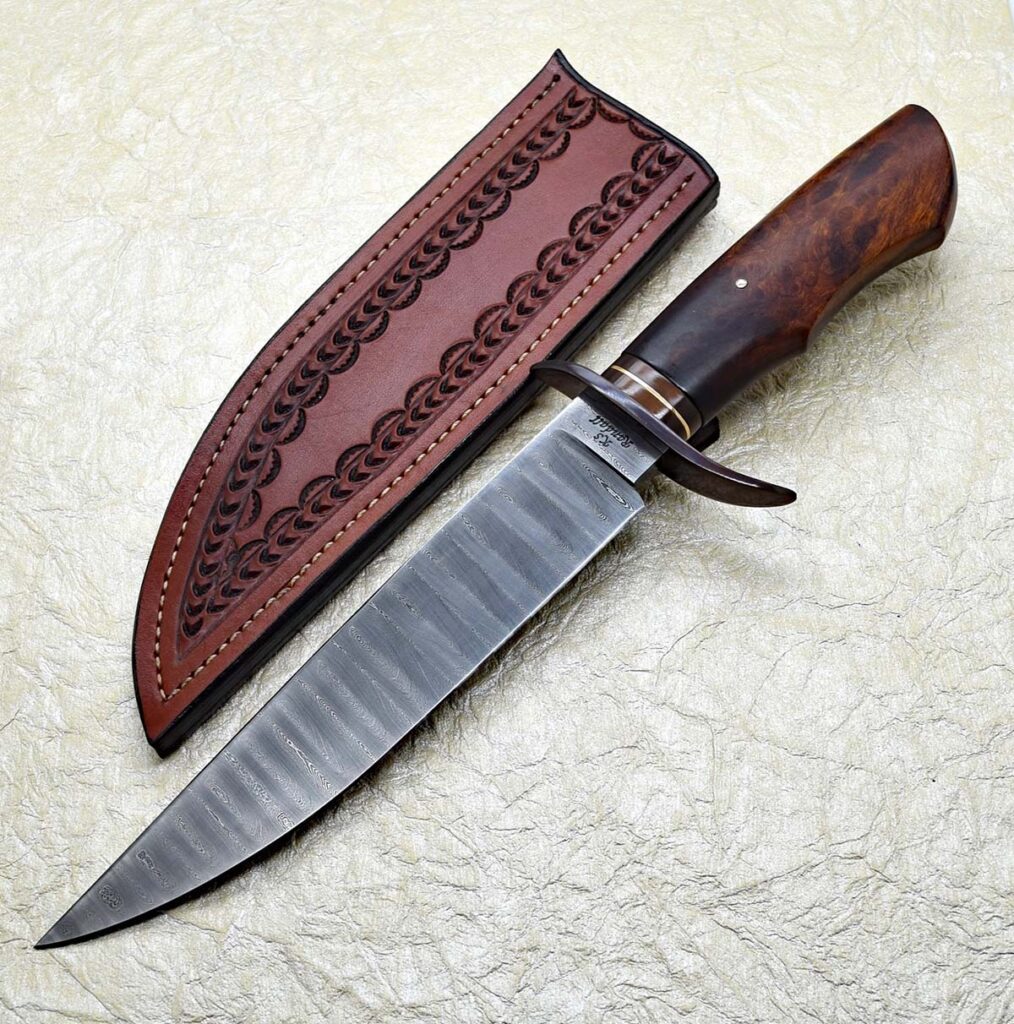
The ladder damascus on Steve Randall’s 8” bladed fighter hits the right balance between understated and complexity. (Alison Randall image)

The floor map is another invaluable tool for show planning. As its name implies, it is a map showing the location of each maker’s table or booth. The combination of the exhibitor list and the floorplan provides me with the first advantage of my show game plan—time management. The other aspect it helps with is money management; researching gives me an idea of how much a specific maker’s knives will cost. I adjust my priorities accordingly.

Bargain Hunting

Knowing who’s at a show out of the way, the next step is to use the various social media platforms again to discover what the makers are bringing to the show. Many show off the knives they are planning on displaying and selling well before the actual event. This helps me identify style, materials and prices of which I’m interested. Often, this information also further helps prioritize my list.  

Note, due to constraints imposed by some social media platforms, pricing is not always included in knife descriptions on these platforms. There’s an easy way around this, given that there is nothing wrong with sending the maker a message asking for the price. Realize, for many makers, pricing the knife can be as challenging as making the knife. But knowing the price allows you to compare other makers’ prices for similar work.

Becoming familiar with pricing across the spectrum of a particular knife sector—say, bowies, EDC or hunting knives—ultimately helps you get the best knife for your money. And the best value often is a new maker discovered during list research. I make it one of my goals to find a new maker whose work I am unfamiliar with at every show I attend. While I am not successful every time, many of the makers I work with today I found exactly through this method.

Personal Logistics

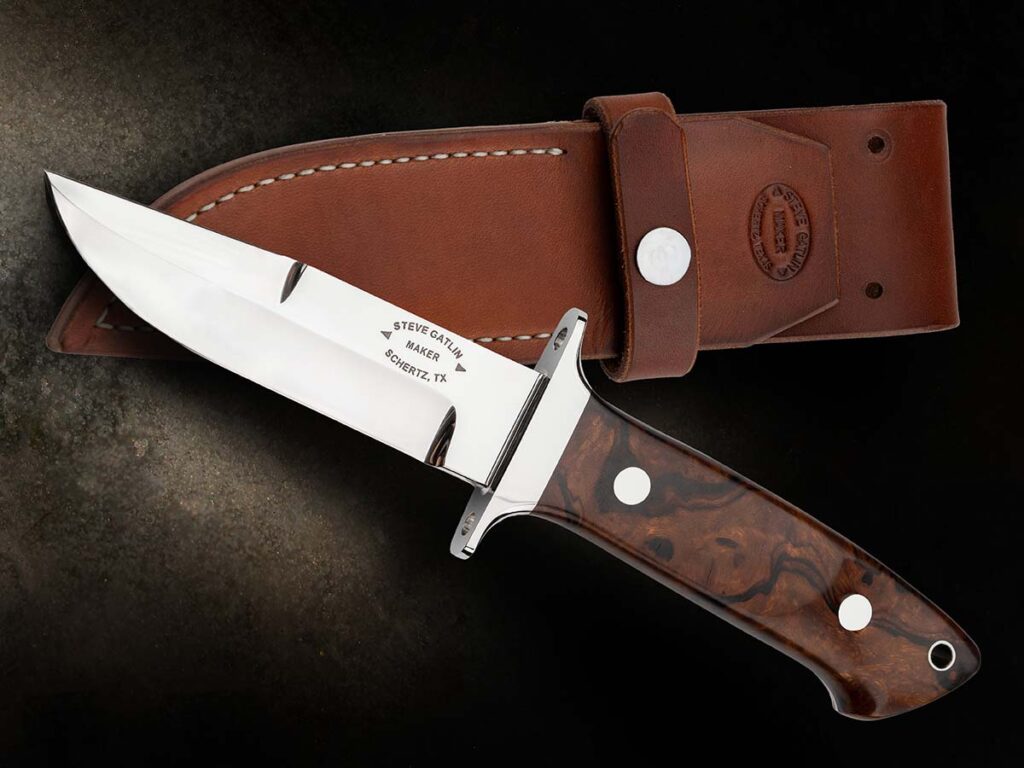
An homage to a classic design from BLADE Magazine Cutlery Hall Of Fame® member Bob Loveless. The author contends this is one of those knives you can only appreciate its lightness and quickness when it’s in your hand. (Karis Fisher image)

Research shouldn’t solely focus on the who and what at a show’s tables and booths. There is also a bevy of other factors to consider beforehand to make a show more pleasant.

It might sound obvious, but know where the show is located. Some smaller shows I have attended have been off the beaten path and difficult to find. I personally get frustrated having to hunt around for a venue, only to end up there after it’s already open.

Identifying the show hours is also crucial, as is understanding how most events organize their hours of operation. Most shows open earlier on the first day than on the second or third day. The inverse is generally true for closing—the last day usually ends earlier, especially for three-day shows.

It’s a good idea to also consider the restaurants you’ll eat at and the hotels you’ll stay in. The larger the show, the more crowded the restaurants and hotels. This is especially true with a large group; heading to a show with friends, plan on reservations for both room and board.

Don’t assume parking is right outside of the show’s location. That’s a recipe for trouble. Do your research and see if there is plenty of parking, where it’s located and, at some venues, how much it costs.

The final consideration is actually getting into the show—your tickets. If the show offers advance tickets, I recommend you purchase them before you arrive. You don’t want to be standing in line when the doors open.

Show Etiquette

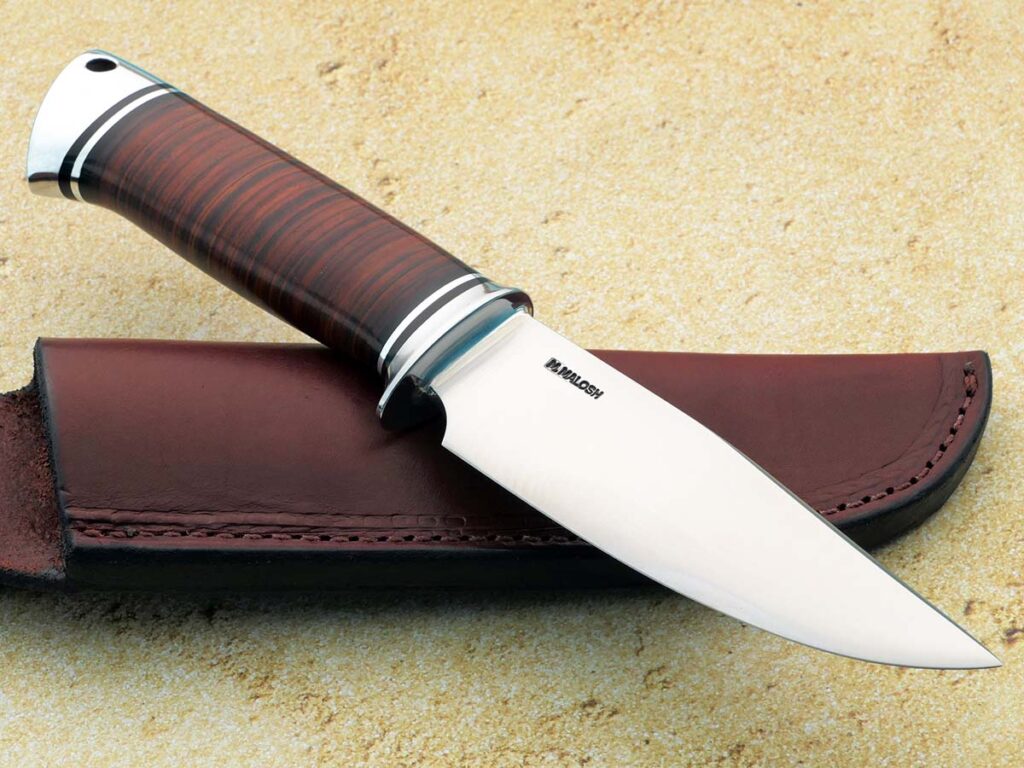
Beautifully spartan, Mike Malosh executes an extremely clean hunter that’s built for dead-serious work. (Robertson's Custom Cutlery image)
Beautifully spartan, Mike Malosh executes an extremely clean hunter that’s built for dead-serious work. (Robertson’s Custom Cutlery image)

It should come as no surprise that those attending a show are focused on the knives they came there to see. But don’t let your focus make you into a poor or even rude show attendee. Here are some recommendations to keep in mind while at the maker’s tables.

When in doubt, ask for permission to handle a knife. Makers want you to; they just want you to do so respectfully.

If you have children with you, watch their little hands. They want to grab the knives just like everyone else.

Replace the knife where you found it. Set the knife down and don’t just drop it on the table.

For those knife fighters out there, limit your moves at the table. Those knives are sharp!

Don’t put your drinks, backpacks, bags, etc., on the maker’s table. Accidents happen, and no one wants a knife scratched or damaged.

Wait for your turn. At a crowded table, more than one person has been cut trying to grab a knife.

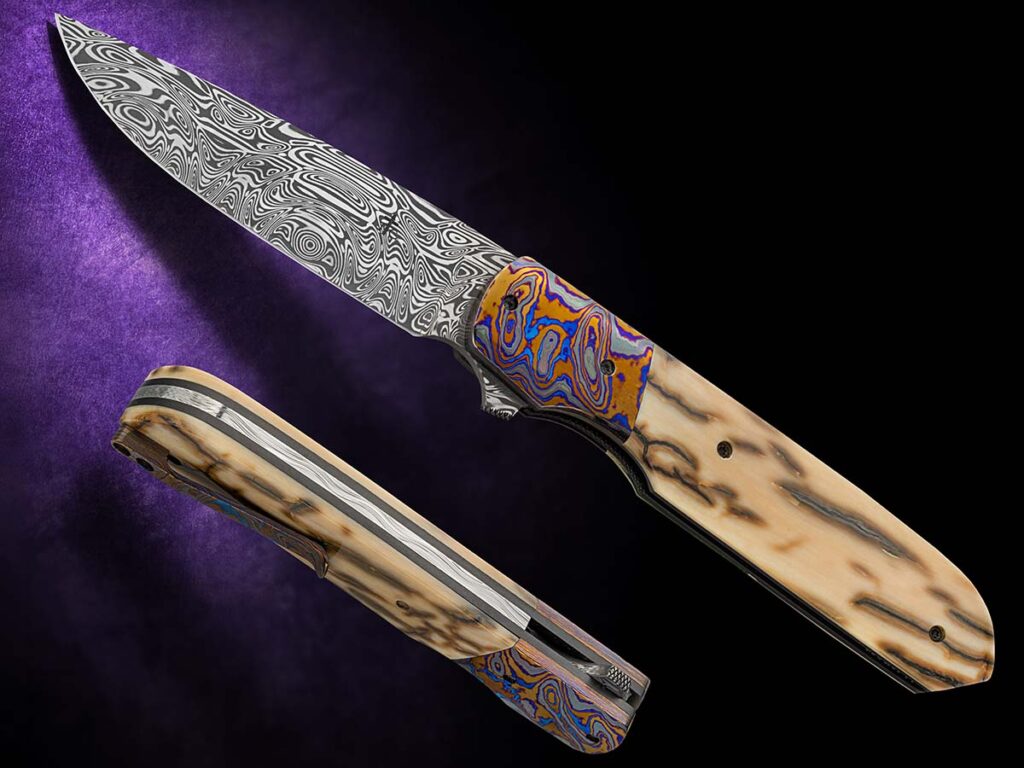
 Jason Clack has a lot going on with his liner lock, from it’s 3.5-inch damasteel blade to black Timascus bolster and mammoth ivory scale. (Jocelyn Frasier image)
Jason Clack has a lot going on with his liner lock, from it’s 3.5-inch damasteel blade to black Timascus bolster and mammoth ivory scale. (Jocelyn Frasier image)

Take your non-knife-related conversation away from the front of the table. Don’t block the table from potential customers.

Everyone loves a deal, but no one wants to be insulted by a lowball price. Makers may adjust their price, but ultimately, that is their decision. That said, cash can tip the negotiation in your favor.

Ask as many questions as you like. Education directly from the maker is part of your admission price.

Here’s The Deal

Like the makers, dealers range from brand new to very experienced. Also, like makers, many have specialties. Unlike makers, they deal in the aftermarket. The prices they ask for knives, and are willing to pay for knives, are based on current market prices. Like many collectibles, those prices fluctuate based on several factors.

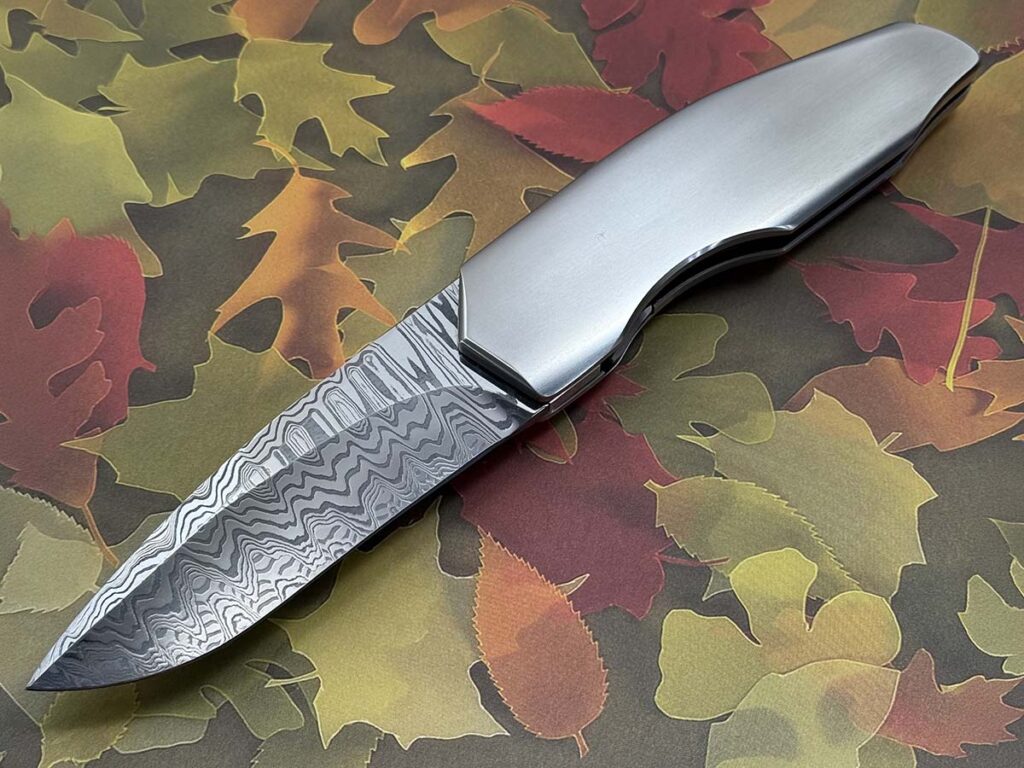
A stunner from GTC Enigma, the titanium-handled spring-loaded tab opener is lightning fast. Even at first blush, this pocket gem looks like it’s built for speed. (GTC Knives image)

Additionally, keep in mind that when trying to sell knives to a dealer, you walked up to their table. The price they offer you may not be what you were hoping for. There is no reason to swear at them, call them names or accuse them of low-balling you. I have turned down thousands of knives because I didn’t think I could resell them. It was as simple as that.

Plan For Success

Even with a three-day show like the BLADE Show, time quickly slips away. Having a plan to get into the event and to the makers, in turn, the knives you’re interested in ensures you’ll have a good experience. In essence, it comes down to time and money—be sure to get the most out of each!


Maker: Bob Earhart
Model: Frame Handle Fighter
Blade Length: 7.5”
Overall Length: 12.3”
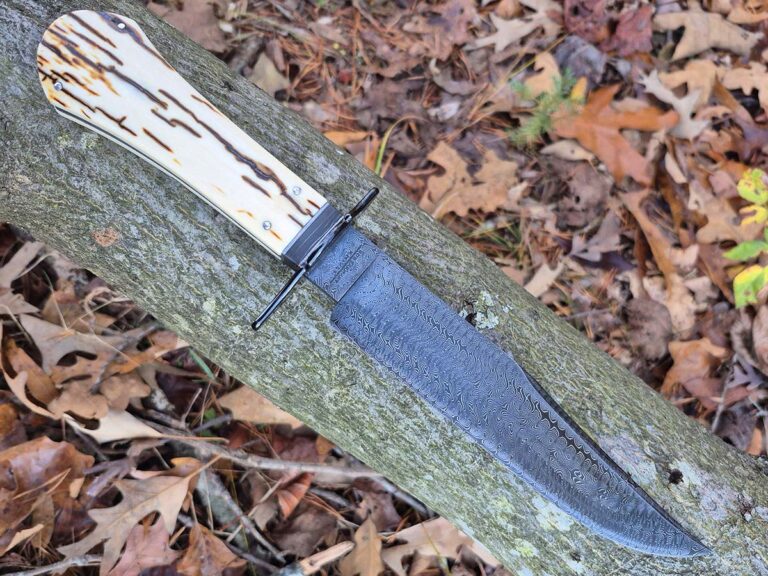
Blade Steel: 5-bar Turkish twist damascus
Guard Material: Blued 1018 Steel
Handle Material: Mammoth ivory
Leather Sheath: Custom-made by the maker
Comments: The knife has excellent balance and handle ergonomics. The frame handle is forged to shape, revealing the pattern. Bob is an ABS master smith. His BLADE Show Table Number is 19S.
Price: $1,700
Email Address: [email protected]

Maker: Steve Randall
Model: Damascus Fighter
Blade Length: 8”
Overall Length: 13”
Blade Steel: Ladder pattern Damascus
Guard Material: Browned carbon steel
Handle Material: Desert Ironwood
Leather Sheath: Custom-made by the maker.
Comments: Contoured guard and handle create a knife with excellent balance and comfort in the hand. Precise ladder pattern damascus, competent work from an ABS master smith. BLADE Show Table Number is 3R.
Price: $1,800
Email Address: [email protected]


Maker: Steve Gatlin
Model: Loveless Style Chute Knife
Blade Length: 4.5″
Overall Length: 9.25″
Blade Steel: CPM 154
Guard Material: Stainless steel
Handle Material: Exhibition-grade Desert Ironwood
Leather Sheath: Custom-made by the maker
Comments: Steve’s exceptional version of the classic Loveless Chute. Light and quick in the hand. BLADE Show Table Number is 7E.
Price: $1,400
Email Address: [email protected]

Maker: Mike Malosh
Model: Bear Hunter II
Blade Length: 4.5”
Overall Length: 9 1/8”
Blade Steel: W-2
Guard Material: Stainless steel
Handle Material: Leather
Leather Sheath: Custom-made by the maker
Comments: Excellent balance and handle ergonomics. Classic look. It is built for serious work. BLADE Show Table Number 6O.
Price: $425
Email Address: [email protected]


Maker: Jason Clark
Model: 77 Liner Lock
Blade Length: 3.5”
Overall Length: 8.12
Closed Length: 4.5”
Blade Steel: Damasteel
Bolster Material: Black Timascus
Handle Material: Mammoth Ivory
Opener: Flipper
Lock: Liner
Clip: Black Timascus tip up
Comments: Sleek and smooth. Great lock up! BLADE Show Table Number is 12E.
Price: $1,550
Email Address: [email protected]

Maker: GTC Knives
Model: Enigma
Blade Length: 4″
Overall Length: 9
Closed Length: 4.5″
Blade Steel: Stainless steel Damascus
Handle Material: Titanium
Opener: SLT (spring-loaded tab)
Lock: Inset liner
Clip: Titanium tip up
Comments: Slick and smooth. Next-level construction and precision. This knife features screwless and toolless construction. WOW. Blade Show Table Number 19A.
Price: $3,500
Email Address: [email protected]


BLADE Show Info:

Rare Bob Loveless Customized Guns Up For Auction

Three highly coveted firearms modified by the Cutlery Hall of Fame® legend—including his “de-fanged” Colt Commanders—head to Rock Island Auction.

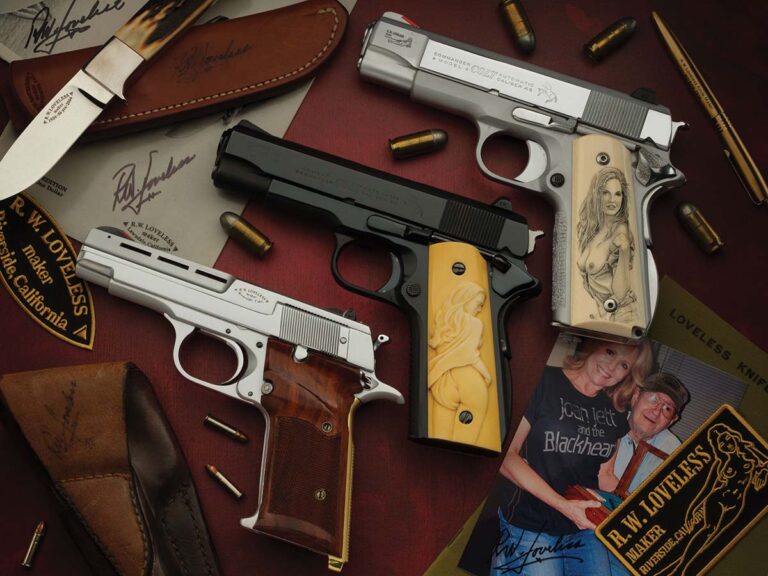
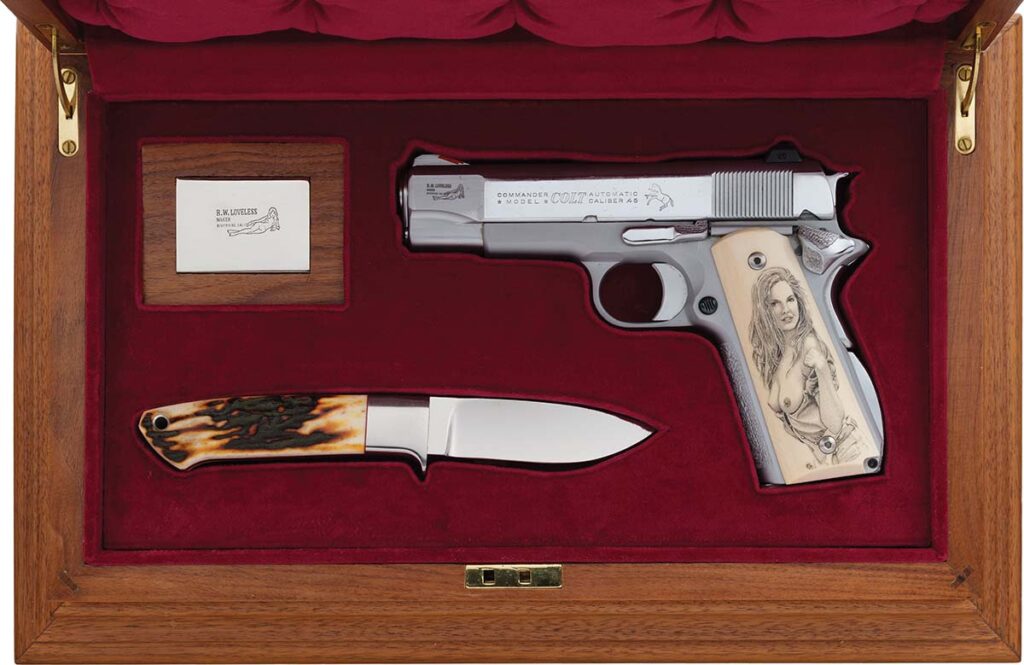
Bob Loveless Colt "Old Smoothie" Lightweight Commander semi-automatic pistol with scrimshawed ivory grips, drop-point Loveless Knife and sheath.
Bob Loveless Colt “Old Smoothie” Lightweight Commander semi-automatic pistol with scrimshawed ivory grips, drop-point Loveless Knife and sheath. Rock Island Auction image

While the late Bob Loveless secured his legacy as a titan of the cutlery world, the BLADE Magazine Cutlery Hall of Fame® member also brought his legendary eye for utility to the firearms world. His knives remain some of the most desirable, coveted custom creations on the planet, but a rare trio of his personal, customized handguns are now heading to the auction block at Rock Island Auction in the company’s June 27 American Sale (now live online). The selection highlights how the master craftsman applied his famous Bauhaus-inspired design ethos to custom gunsmithing.

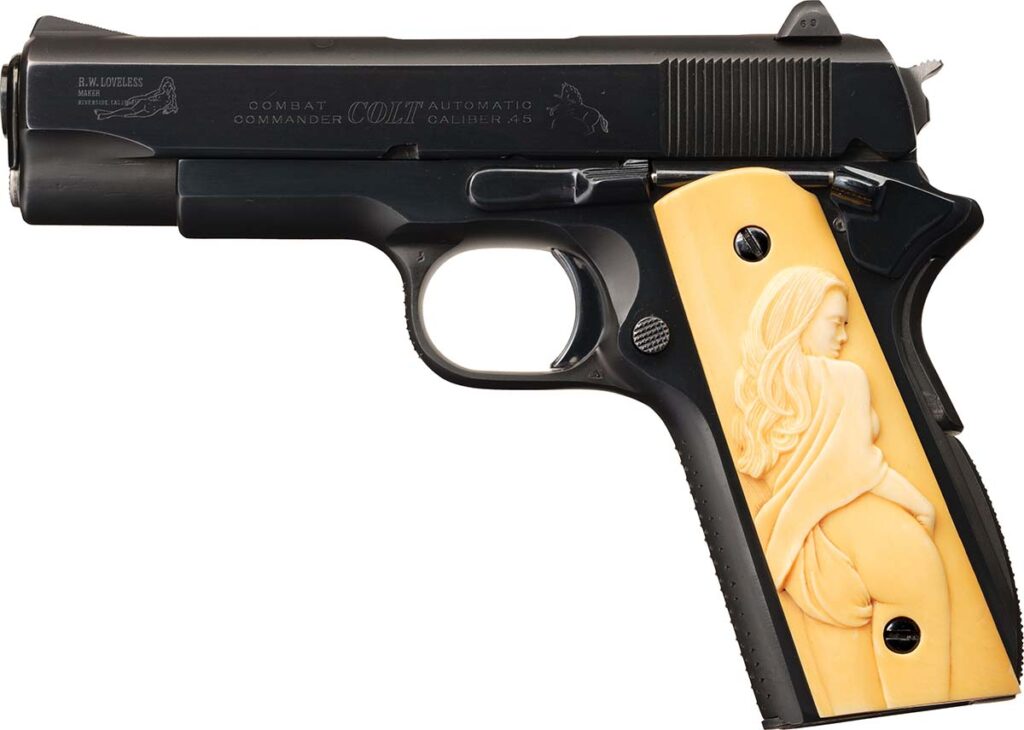
Bob Loveless Colt "Old Smoothie" Combat Commander semi-automatic pistol with relief carved ivory grips.
Bob Loveless Colt “Old Smoothie” Combat Commander semi-automatic pistol with relief carved ivory grips. Rock Island Auction image

The lineup features two Colt Commander pistols that Loveless thoroughly “de-fanged,” a signature modification process where he systematically bobbed the hammers, radiused the frames and smoothed away every sharp edge that could gouge a shooter’s hand. The first is a c. 1980 Lightweight Commander, featuring his electro-penciled initials, custom Browning cuts on the slide, and smooth ivory grips scrimshawed with nude artistry. This rare piece is housed in a custom hardwood case alongside a matching 2004 Loveless drop-point hunting knife. It is joined by a scarcer steel-framed Combat Commander variant, a platform Loveless rarely altered because he felt the extra weight defeated the purpose of a carry gun, making this particular build exceptionally rare.

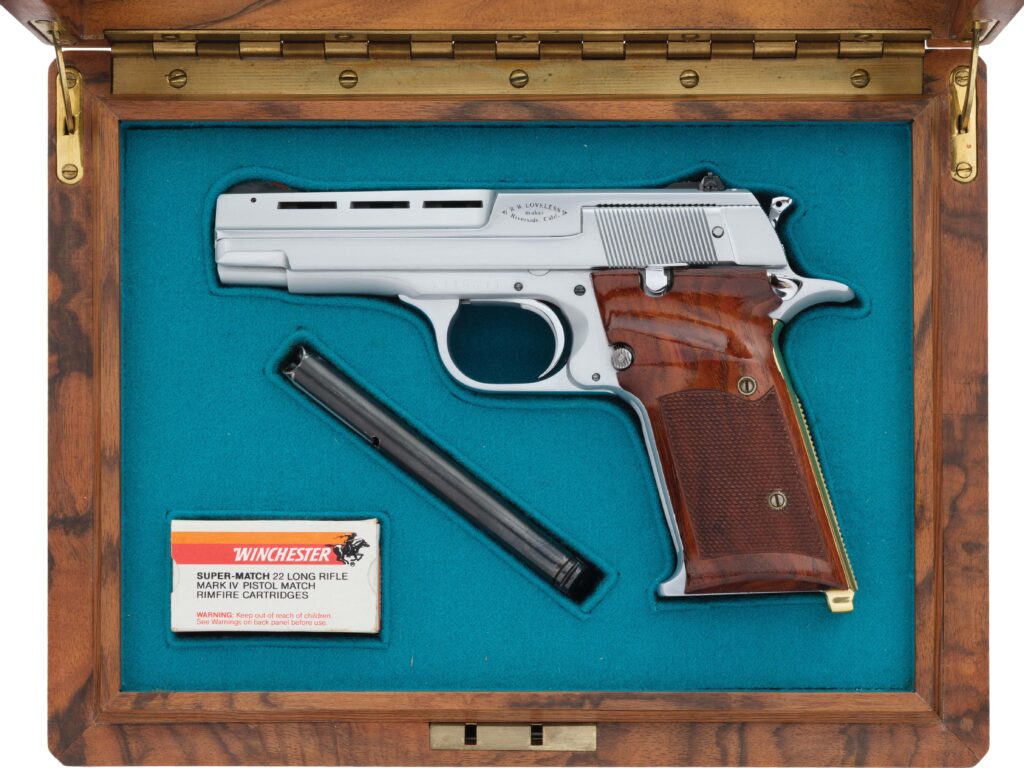
Bob Loveless Smith & Wesson Model 41 semi-automatic pistol with case and signed photographs.
Bob Loveless Smith & Wesson Model 41 semi-automatic pistol with case and signed photographs. Rock Island Auction image

Rounding out the trio is an extensively reworked Smith & Wesson Model 41 target pistol, believed to be one of only 70 ever built by Loveless. This highly modified rimfire pistol features a shortened barrel with a custom vented rib, an exposed hammer conversion, a checked gold-washed backstrap with a lanyard loop, and his personal initials electro-penciled on the slide. Complete with signed photographs of Loveless, a custom leather holster and a glass-topped display case, the group offers collectors a rare look at how one of the greatest knifemakers of all time refined factory firearms into high art.

Read More On Bob Loveless:

Cool Custom: Jesse Hu’s Thorfinn Daggers

Hu takes the Vinland Saga’s famous daggers from screen to steel.

Anime and knifemaking are seldom mentioned in the same sentence. However, with a pair of striking daggers, an online knifemaking sensation has skillfully forged together that creative gap in cold, hard steel.

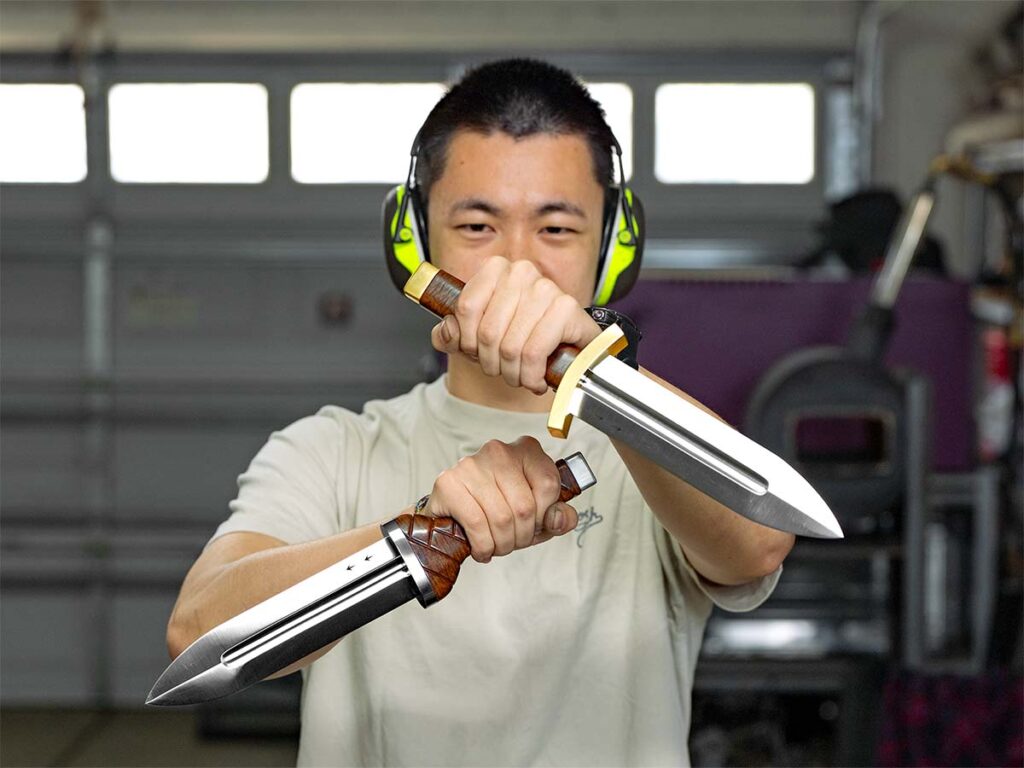
Jesse Hu is a multiple Forged in Fire champion and a prolific YouTube creator. When his online fans demanded a rendition of Thorfinn’s daggers from the popular animated Vinland Saga series, the adventuresome smith didn’t back down from the challenge. However, he set stringent goals for how he wanted the fictional blades to materialize.

“I have seen a lot of people make their own versions, but I haven’t seen any that truly captured their energy from the anime,” Hu said. “I felt it was possible for me to make a pair of daggers that fans would feel I directly pulled from the screen.”

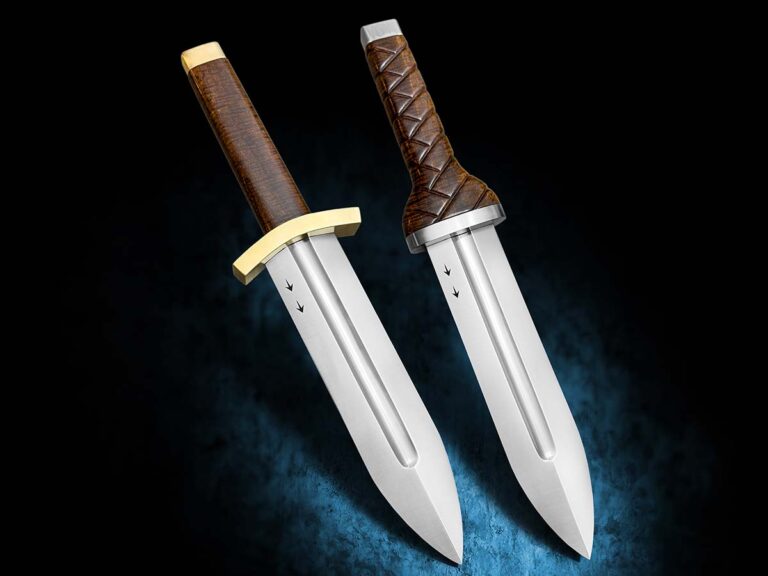
The results are a spot-on set of daggers boasting 81/2-inch blades of 80CrV2 steel with carved Ringed Gidgee handles and one with a 1/2-inch-thick brass guard. Hu’s carving emulates the animation’s leather-wrapped look. While there is little actual Viking in the daggers’ overall design, the maker’s choice of wood for the handles did inadvertently bring a touch of the historic accuracy to the fantasy knives.

“One thing I discovered from a friend was that there were a bunch of carved wooden handles on Viking-era blades,” Hu related. “But I only heard about this after I had finished the daggers.”

Hu estimates he put two weeks of work into his rendition of Thorfinn’s daggers. In the end, the project was a labor of love, with Hu compensating himself by keeping the daggers. (Jesse Hu image)

The greatest challenge in bringing the two-dimensional blades into the physical world came from the inconsistency of the source material. In the anime series, Thorfinn’s daggers can change from scene to scene, forcing Hu to hit a moving target.

“Some pictures made the handle look rectangular in cross section as opposed to ovular; some made the central fuller look really thin and others quite thick,” he said. “I had to pick and choose from all these images to create something that felt accurate to all of them.”

Studying frames from the series and interpreting how the ink daggers’ ratios translate to steel was a painstaking process. Hu estimates he invested two weeks bringing the anime knives to life. Given the dedicated following of Vinland Saga, he figured the time invested would have paid off—had he not decided to keep them for himself.

“A cool piece doesn’t always mean a smart business decision,” he quipped.

Check Out More Cool Customs:

Custom Flipper-Folders: Art Of The Flip

Aesthetically and mechanically challenging flipper designs that shine.

The flipper folder is one of those knife designs that continues to delight its makers and its owners with incredible vitality. Not only do the most recent flipper folders fill the traditional bill with great materials, mechanics and mesmerizing beauty, but they further garner high praise with an inherent level of energy.

Combining the attributes of excellence that set standards for custom knives with the sheer pleasure of smooth operation, the latest flipper folders hit the mark in quality and bring attention to their makers amid an ever-growing level of interest in the marketplace.

Scott Gallagher: Feather Damascus

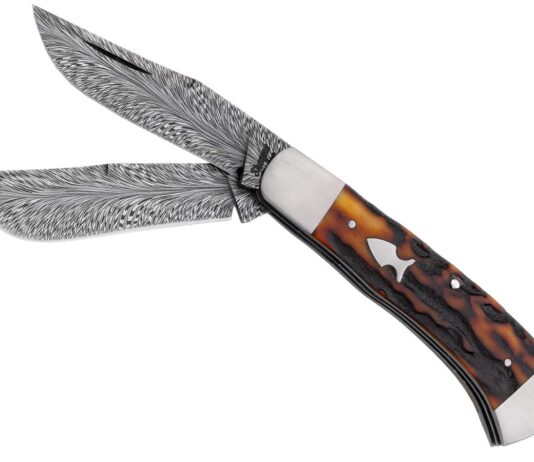
Scott Gallagher says he’s seen an upswing in the interest in flippers in recent years. It makes sense with works like his feather damascus flipper. The feather pattern defines both blade and bolster, and is complemented by a fossilized mammoth ivory handle. (Jocelyn Frasier image)

Scott Gallagher recently completed a beauty with a 3-inch feather damascus flat-ground blade complemented by a damascus bolster and fossil mammoth ivory handle. With an overall length of 7¼ inches, Scott’s flipper folder features an upswept curve for fantastic visuals and intricate filework along the spine.

“I am receiving more requests for flippers right now,” commented Scott. “They have become very popular. I think the reason why is because they’re fun to use, kind of like a widget—they’re functional, they can be embellished and they are easy to carry.”

The single attribute of fun helps set the flipper folder apart from other designs. Anything incorporating fun into the knife equation is sure to gain increased attention. Still, Scott makes his flipper folders with exacting specifications and attention to detail. “A quality flipper should have a blade steel that performs well—good fit, finish and symmetry,” he explained. “The blade should close in the center of the frame. It should be fast opening and close easily without a sticky lock.”

For Scott, achieving the proper mechanics involves a combination of precise construction with materials that work in concert with each other. “Making the flipper tab is a matter of incorporating it into the design of the knife in the design phase,” he related. “In the closed position, the tab has to sit higher than the frame so your index finger can access it. I use bearings on my flippers. They are ceramic and very fast. To avoid pinching the user’s hand, I use a small tab. It’s only exposed enough to open the blade. My flipper tab is hidden in the frame in the open position. I have finger grooves designed into the frame to avoid fingers slipping forward.”

Alan Hollerbach: Spectre

There’s something ominously attractive about what Alan Hollerbach achieves with this knife. Christened the Spectre—an homage to the nemesis organization of James Bond—the wasp-wasted flipper gets right to the point. Baker Forge TigerMai steel for the blade and Fatcarbon Dark Matter scales add to the knife’s dark good looks. (SharpByCoop image)

When customers consult with Alan Hollerbach on the attributes of a quality flipper folder, his response is straightforward. “Look for high-quality materials—hardened washers and bearings, a smooth action and a solid detent,” he offered. “I don’t take orders. I make knives I like and hope others do as well.”

The degree of knifemaker proficiency is tested somewhat further with the flipper folder in comparison to other designs. Alan welcomes the opportunity to put his skillset to the test. “It takes some more designing up front to get the layout and how it looks and the action correct,” he related. “The tab needs to be in a comfortable position for one-handed opening, tall enough to engage easily, but not too tall it looks out of place. It needs to have a strong detent to allow proper pressure to fire the blade and a smooth action with the bearings to allow the blade to open with minimum friction.”

Alan achieves his technical and aesthetic objectives in a handsome flipper folder model he has christened the Spectre, in reference to the James Bond feature film series. This example includes a 4-inch hollow ground blade of Baker Forge TigerMai Chevron damascus steel with jeweled and anodized titanium liners and Skiff bearings with hardened washers. Handle scales are Fatcarbon Dark Matter with 18 inlays in nine different sizes of Space Coral. The backspacer is also Fatcarbon Dark Matter, and the screws are black anodized titanium.

Rising interest in flipper folders is a matter of likes and style, as Alan sees the buying landscape these days. “I think it is a personal preference,” he commented. “I like the flippers for easy one-handed opening, but you can do the same with most other ways. It takes some more designing up front to get the layout and how it looks with the correct action. I like the lines as clean as I can make them, so tabs are just to open the knife, as I try to hide as much as I can when the knife is open, just for aesthetics.”

The addition of a hole in the Spectre blade gets attention as well. “You can open the knife with the hole, but it was designed for aesthetics mainly,” Alan noted. “I wanted to smooth the lines of the knife in the closed position and show with the curves of the cutout it was done on a pantograph by hand.”

Robert Champion: Dark Wind

Robert Champion spends plenty of time perfecting the placement of the deployment tab. On his Dark Wind, he employs a low-profile tab to avoid pinching when the blade is deployed. Also noteworthy on this knife, the knock-out engraving by Dale Bass that takes the work to another level. (SharpByCoop image)

Examining the locking mechanism is a must for those contemplating an investment in a quality flipper folder, a tip Robert Champion emphasizes. “A 3-point constraint is better than a 2-point constraint,” he said. “A 3-point will lock the knife more securely in the open position as well as in the closed position. The blade should lock solid, not be loose and never have a sticky lock.”

Robert’s Dark Wind model exemplifies his perspective on the flipper folder. Its 6-inch blade features hollow ground Dragonskin Damascus steel from Shaya Forge, while the furniture is in 416 stainless steel and the handle scales are fashioned from giraffe bone. Dale Bass’ engraving complements the piece in its entirety.

“I’m receiving more and more requests for flippers,” Robert remarked, “especially the more dressed and upscale models. Their popularity seems to be trending up. They’re easier to deploy and in regions where automatics are not permitted, the flipper is a great option. The flipper tab is an integral part of the tang design that is easily roughed in while profiling the blade. Thumb pegs and discs are separately fabricated components that require drilling, tapping and a turning process on a lathe. Then, they are attached to the blade. Tab location is important when designing a flipper. Placing it too far forward or too far back on the tang will cause inefficient deployment.”

Bringing all these components together in proper tolerance with respect to the look and feel of the finished product provides a worthy test for the makers of flipper folders. Like any folder, smooth deployment and ease of carry rise to the top. However, the flipper aspect brings another dimension to the requirements for optimal performance.

“Depending on the size of the knife, I use good-quality stainless or ceramic ball bearings,” Robert advised. “I tend to use stainless bearings on my smaller models, but that is just a personal preference. I also use dry slide oil lubricant. I design a low-profile tab to prevent pinching and currently make single-tab models. In the future, I plan to make flipper daggers that will have more of a guard-type tab.”

John Curran: Alpha 3

John Curran has focused much of his work on flipper folders and his experience in this design shows in his Alpha 3. Clean and complex, the knife pairs a titanium handle with an Elmax steel blade, featuring caged bearings for absolute, buttery-smooth deployment. (SharpByCoop image)

John Curran created a flipper folder in a model he calls Alpha 3 with a flat ground 3-inch blade of Elmax steel and an overall length of 7½ inches with a titanium handle and frame. The flipper design has been a mainstay of his work for some time.

“I’ve predominantly built flipper-style folders over the years, though I’ve done my share of thumb-stud and thumb-hole deployments as well,” he related. “In terms of trends, I haven’t noticed interest in one style rising or falling dramatically. What I have noticed is that customers are spending more carefully. People know what they want and they are choosing their purchases very intentionally.”

As John tries to fulfill his customers’ expectations, he watches the intricacies of the flipper folders he constructs carefully. “From my perspective, flippers don’t necessarily hold an advantage over other deployment methods,” he commented. “It really comes down to personal preference. Some customers want a classic flipper, others ask for a flipper paired with a thumb stud and some want a hole cut into the blade as an alternative opening method. There is no single best option, just what feels right in the user’s hand.

“The complexity of the build depends on the design more than the deployment style,” John continued. “I spend a lot of time sketching concepts only to discover during mock-ups certain ideas don’t translate well in hand. I typically prototype in G-10 or even wood to check ergonomics, mechanics and overall fit. That stage tells me a lot about whether the knife is going to meet my standards.”

John’s basic components include caged bearings and hardened stainless washers for smooth action. “If a customer wants to keep the cost down, I can build the knife without bearings and use phosphor bronze washers instead,” he advised. “Ceramic bearings undeniably offer the smoothest action, but bronze washers still perform well. It ultimately depends on what the customer values most. Milling pockets for the bearings adds time and labor and is reflected in the final price.”

Design concentrations on clean, reliable opening mechanisms and functional finger guards when the blade is deployed are hallmarks of John’s finished product. The challenge is always in the “tweaking” to solidify the geometry, but the result is worth the investment of time and effort.

The flipper folders emerging in the custom knife market today offer diverse profiles, materials and interpretations along with a wide range of price points. Each of these factors influences the consumer and makes the genre vibrant.

More On Flippers:

50 Years Ago In BLADE: Taylor, Bowie & Sheffield Knifemakers

The 12th president was and is a hot knife commodity.

Some examples from the article of “Old Zach” bowies that included the American general and president’s name, slogans or likeness. The lower bowies have his visage, the second from bottom a stamp motif on the ricasso of Taylor on horseback, the bottom a bust of the celebrated general.

Ever in tune with what’s popular at the moment, knifemakers have never been afraid to cash in on a hot trend. William R. Williamson documented one of the more peculiar vogues of the middle 19th century when Zachary Taylor and bowie knives were all the rage.

Fresh off his triumphs in the Mexican-American War, Taylor was the 1850’s version of a rock star—Americans just couldn’t get enough of him. And while not known to carry a bowie nor affiliate with the hero of the Alamo—Jim Bowie—the general and president’s likeness began to pop up on the most American of knives.

Funny thing is, as William’s points out in his article “Old Zach and the Bowie Knife,” from the March-April issue of The American Blade®, it wasn’t the Yanks cashing in. Instead, England Sheffield’s makers had the pulse of the USA and stamped Taylor’s visages on blades and bolsters.

Unfortunately, Old Rough and Ready’s short-lived presidency didn’t inspire the same outpouring of effigies. But modern collectors did and do find these unusual and patriotic blades desirable, as Williamson points out in his article.

More Knife History:

Bowie Knives: Lingering Legacy Of The All-American Design

Truly an American design, the bowie continues to inspire today’s makers.

While its roots may be from across the sea, ties to the makers of old Sheffield and elsewhere, the bowie is today distinctly American. And it has been for more than two centuries.

Made famous by BLADE Magazine Cutlery Hall-of-Fame® member Jim Bowie and the fabled Sandbar Fight, no doubt present at the Alamo where Americans fought and died for freedom, and seen in countless photos of soldiers going to war—posing with the burly bowie in a proud moment—the iconic knife was also immortalized on the silver screen with the classic The Iron Mistress and other films. There is no other style of knife that more clearly defines the American spirit.

“Bowies are the quintessential American knife, deeply steeped in the mythos of our collective history,” observed ABS journeyman smith Matt Parkinson of Dragon’s Breath Forge. Shawn Shropshire of SDS Knifeworks agrees. “The bowie is the most iconic or at least the most recognized of American knife designs,” he said. “At the time of the Sandbar Fight, there was no single pattern that was called a ‘bowie knife.’ It varied in size, blade shape and even materials. Cinema later created what most people now recognize as the bowie knife, something with a large blade, clip point usually, with a double guard.”

ABS master smith Lin Rhea commented, “I do indeed believe the bowie knife is America’s knife design. It was created to fill a need. The country was expanding and was very wild and without law and order. The average traveler in the lawless wilderness needed a reliable defense weapon that could be carried on their person, that never misfired and was less conspicuous than a sword. The fact that a large knife was used in self-defense by Jim Bowie in the infamous Sandbar Fight just boosted the design into the realm of legend.”

Wrapped up in fact, fiction, myth, legend and lore, the bowie is a constant in the theme of adventure and survival. Although it does exhibit common attributes—among them impressive size—across the design, there are variations on the theme. To this day, the bowie remains a favorite form of expression for custom knifemakers who tip their creative cap to the history of the design and imprint their own skill, expertise and perspective on this truly American blade.

Barbary Coast Bowie

Matt Parkinson’s California-style bowie is deadly dapper. He describes it as “graceful and sleek,” featuring his own wootz steel and sterling silver bolster, pommel and guard. (SharpByCoop image)

Parkinson chose the San Francisco theme to highlight his take on the classic bowie. Representative of the days of the Barbary Coast and the rough-and-ready youth of a nation stretching from sea to shining sea, the idea captivated him.

“I have long been intrigued with the California- or San Francisco-style bowie,” he remarked. “They are graceful and sleek in a way that many bowies are not. In designing this particular piece, I looked at as many examples of this style as I could, both originals and contemporary. I didn’t copy anything but tried to match the design cues I saw in the originals that made them so iconic.”

Matt’s San Francisco Bowie features a 6.25-inch blade, an overall length of 11.75 inches, a bone handle and generous applications of stylized silver in shell and pin. “The blade is forged from my own wootz steel,” he noted, “and the bolster in front of the guard was cast, as was the shell pommel, and the guard and frame are all fabricated from sterling silver.

“One of the things I most admire about the California style bowies is the uniquely American lineage. Much of the bowie styles we think of are influenced by the Sheffield and London makers …This isn’t the case with the California makers. The knife they made for the 49ers used local materials and was a show of wealth, as much jewelry as a weapon. I kept these ideas in mind in making this one. The cow bone was a logical choice and a nod to local materials, as was the choice of sterling silver over nickel.”

Antiques Actualized

Aiming for historical accuracy circa-1830 style, father-daughter makers Josh and Karis Fisher pull off this dynamic duo. Josh’s bowie (left) was inspired by an original Schively-Perkins piece, while Karis (right) crafted a rendition of the Daniel Searles bowie. (SharpByCoop image)

The father-daughter ABS master smith duo of Josh and Karis Fisher share their own interpretations of the bowie with a pair of stunning knives touching the past. Each took inspiration from circa 1830 bowie designs: Josh the Schively-Perkins and Karis a Daniel Searles.

“I kept my reproduction similar to the original and as close in size as I could, so it would look and feel like the real knife,” Karis said. “I was mostly working from photographs, which made studying overall design really important. I also made a few changes to incorporate my own style. I left off the original silver pins and did hand checkering instead. I also changed the ferrule and butt cap. I didn’t use silver wraps. Instead, I used a combination of liners and spacers to match the original while adding my own style.”

“A few techniques that I used on my bowie were hand-checkered African blackwood on the handle and the silver ferrule and butt cap that I had to silver solder together, which was a challenge. It’s definitely a functional knife,” Josh reported. “While it’s on the larger side, it’s very well balanced due to the silver wraps on the ferrule and pommel.”

Capturing the notion of the bowie’s place in Americana, Josh related that his work in 80CrV2 carbon steel and sterling silver is true to such spirit. “It is a reproduction of an actual antique bowie knife,” he stated. “In my opinion, a bowie is a large fixed-blade knife, at least 10 inches in blade length, that is on the thicker side. I think typically they should have a clip point, but there are some exceptions as you can see in mine and Karis’s bowies.”

Small & Spruce

James Fleming’s gentleman’s bowie is diminutive in comparison to others but no less representative of the style. The damascus blade is complemented by an ancient walrus ivory handle with a nickel silver spacer and Parkerized steel bolster. Overall length: 11.5 inches. (Jocelyn Frasier image)

Working at Wasteland Forge, ABS journeyman smith James Fleming has produced a gentleman’s bowie, diminutive in comparison to others but no less representative of the style. The 6.5-inch damascus blade is complemented by an ancient walrus ivory handle with a nickel silver spacer and Parkerized steel bolster for an overall length of 11.5 inches.

“I wanted to make a knife that capitalized on the mosaic damascus pattern,” James explained. “I think the gentleman’s vest bowie complements the pattern. The knife is pretty recognizable as a bowie. It’s not as large as a regular bowie but has the same look and purpose. It fits the term ‘vest bowie’ perfectly. It is small enough to be concealed but large enough for defense in any western saloon. This is the kind of knife you’d see stabbed into a poker table after accusing someone of cheating at cards!”

The damascus pattern came from Fleming’s experimentation with Mareko Maumasi’s pattern-making process. He named it “Nazar,” which translates from the original Turkish as “evil eye.” He added, “I was also inspired by Lin Rhea in the way he makes his fittings. The nickel spacer is domed around the guard and bottom spacer, and it’s hammer textured to give it a nice look and feel in the hand.”

Mammoth Achievement

Attracted to larger bowie designs, Gene Kimmi pulls it off with a giant gem. Featuring ladder-pattern damascus—fashioned from dies he made himself—the 15.25-inch behemoth is further bespoke with a crosscut mammoth tusk handle. (Jocelyn Frasier image)

Gene Kimmi was intentional with his contribution to the bowie’s visual discourse. “I have always had a liking for the larger bowie knives,” he remarked. “When I made some laddering dies for my press, I knew one of the first knives I would make out of ladder-pattern damascus would be a large bowie. This one has some clam-shell type filing on the guard that I haven’t done before. The handle is heirloom/museum fit to the guard also.”

Gene’s bowie features the ladder damascus in a 9 7/8-inch blade and crosscut mammoth tusk handle with G-10 black pinning for an overall length of 15.25 inches. “The design is easily recognizable,” he asserted. “Anyone who sees it instantly thinks bowie. The lightness and the fit to the hand are attributes that everyone who handles it comments on. The uniqueness of the mammoth tusk handle adds to the beauty of the damascus. When I think of a bowie knife, I see a straight-backed blade of at least 6 inches. Limits can be pushed on the style and attributes of a bowie, maybe because of the mystery of the bowie knife’s beginning.”

User-Friendly Fighter

Shawn Shropshire wanted a bowie that not only looked sharp but also worked with the user. What he cooked up was this stag-handled beauty. With a 7.5-inch blade of 1084 carbon steel and a user-friendly bronze guard, the knife is easy to carry and manipulate. (Jocelyn Frasier image)

The famed Randall Model 1 provided some context for Shropshire to fashion his bowie of a 7.5-inch, 1084 carbon steel blade and stag handle with bronze bolster and an overall length of 12 inches. The proprietor of SDS Knifeworks blended the pattern with a desired functionality.

“I love making the larger versions of the bowie knife that many people think of, but as much as I enjoy them, they just aren’t very practical,” he reasoned. “This size and style is much more useful and easier to carry. It’s still a classic-looking pattern and functional without being so large that it is cumbersome and difficult to carry. I love the classic-looking lines paired with the look and feel of natural stag.”

After perusing photos of historical blades and the work of other makers, along with hours using a sketch pad, Shawn was pleased with the result. “In my opinion, this particular blade would have been right at home during the mid-to-late 1800s and at any time considered a bowie knife,” he advised. “I think most people today might refer to it more as a fighter because our notions of what a bowie knife is have been heavily influenced by cinema. The movies usually represent bowie knives as larger than life. Some were but many were not. I do think this blade hints at the history of what an American bowie is with the overall shape and the stag grip without instantly screaming ‘bowie knife.’”

Throughout the creation of his bowie, Shropshire kept user friendliness front and center. Aside from visual appeal, he designed it for easy carry with shorter “legs” on the guard and a coined spacer to help break up the smooth lines it exhibited.

The Legend Continues

The bowie theme lives—in thought, folklore and tangible craftsmanship. Staying true to its American heritage, the style has gained lasting fame and a following the world over.

Read More:

Magical Decades: Custom Knives Of The 1980s And 1990s

Custom knives came of age as collectables in the ’80s and ’90s.

Custom knives from the 1980s-1990s have become especially collectable, not just because of nostalgia but for specific reasons. To understand why, a trip down memory lane is in order.

The ’80s and ’90s encompass a unique intersection of custom knife history, innovation, craftsmanship and scarcity. In the 1970s, custom knifemaking was mostly hobby-based and regional. The two leading knifemaker organizations were The Knifemakers’ Guild and the American Bladesmith Society (ABS), established in 1970 and 1976, respectively. The latter, in fact, celebrates its 50th anniversary this year. The two organizations helped move knifemaking from a predominantly hobbyist pursuit into the business realm. Custom knifemaking had become a viable full-time option for some custom makers.

Willie Rigney was known for his fighters and daggers, with the latter usually incorporating engraving by Ron Skaggs.

The Guild and ABS matured in the 1980s, and knife shows had become a separate venue from the previous gun-and-knife-show format. During the ’80s and ’90s, makers started to intentionally design knives with aesthetics, handle ergonomics and originality in mind. The concept of a custom knife being collectable began in earnest. For many, knifemaking became an art form. Knives were being made that looked like they should be behind glass in a museum and were displayed on tables at knife shows for patrons to observe and handle.

Many of the founding members of the knifemaker organizations were in their prime production years, developing signature styles, techniques and ideas that would influence future generations of makers. Almost all the knives were designed and built entirely by makers standing before machines in their shops. Blades, frames and scales were not laser cut or CNC’d as many are today. Blades were ground freehand. Each knife was individually fit, finished and, in the case of folders, “tuned up.” The tolerances, grinds and finishes required extreme skill and precision by the maker. Most custom makers were personally involved with every aspect of making the knife that came out of the shop.

Tech Boom

It is a natural progression in manufacturing to adopt technology to increase precision and create items that previously could not be made affordably. Some custom makers have adopted this technology and can produce exceptional work with precision that a human cannot replicate. This is especially true among custom folder makers.

Bob Loveless trained W.C. “Bill” Davis, and it shows in W.C.’s version of the Loveless Wilderness Fighter. 

This ever-evolving technology was a double-edged sword. The same technology has helped makers create the custom version of a knife, a semi-production version of the same knife, and, in some cases, to sell the design and program for collaboration with a factory.  This has allowed even more makers to go full-time.

However, in the ’90s it caused confusion for some buyers. Dealers/purveyors would list the names of five or six well-known makers only to discover the knives were the factory collaborations. The utilization of the technology also allows the maker to produce more knives. Today you can attend knife shows and see tables with 20 or 30 custom knives on them. In the ’80s and ’90s, it was a rare sight to see makers with that many knives on their tables. 

Unlike today, information was harder to come by. You had four main sources of information: print publications such as BLADE®, Knife World (today’s Knife Magazine), Knives Illustrated, Fighting Knives, Tactical Knives and, of course, the KNIVES annual.  Other sources were dealers/purveyors, fellow collectors and knife shows. It was the shows that provided the most information. You were able to see and handle the knives, compare knives in person and, equally important, talk with makers. Back then, it was face-to-face communication that really helped me to understand what I was buying and why.

Turning Point

Interframes dominated the custom folder world in the late ’80s, and Jack Busfield was among the pre-eminent makers of the style.

In the ’80s, the fixed-blade market was primarily hunting knives and presentation knives. The go-to stainless blade steels included 440C and the new steel, ATS-34. Their high chromium content allowed for an exceptional mirror finish. Coupled with premium wood, Sambar stag and elephant ivory, the fighters, bowies and daggers became works of art that, as a new buyer, I could not afford. As the ’80s ended, the CITES (Convention on International Trade in Endangered Species) treaty made elephant ivory no longer a desired handle material. Elephant ivory was replaced with the mammoth, mastodon and ancient walrus (the latter my favorite) ivories.

It was in the ’80s and ’90s that custom knives experienced a rapid rise in collectability, and several makers in particular benefited. Rod Chappel was one. His knives often bordered on fantasy. His huge stainless-steel guards and pommels, along with his deep double-hollow grinds, became popular with many makers. Schuyler Lovestrand was another maker whose work never disappointed. He too utilized the deep hollow grinds, while his fit and finish, especially on his sub-hilt fighters, was among the best ever!   

Like Rod Chappel, Schuyler Lovestrand was a fan of deep hollow blade grinds.

It was also during this time that many of the knife patterns and styles that were to become iconic were developed or refined. The design influence of BLADE Magazine Cutlery Hall-of-Fame® member Bob Loveless was becoming more common. Loveless trained W.C. “Bill” Davis and it shows in W.C.’s version of the Wilderness Fighter. Corbert Sigman was another maker who worked with Loveless designs. His version of the Loveless chute knife is clean and accurate.

Art knives featuring engraving, gold inlay and, on occasion, gemstones were popular among both fixed blades and folders, as was the case with many of the interframe folders from Jack Busfield. Interframes dominated the custom folder world in the late ’80s. Willie Rigney was known for his fighters and daggers, with the latter usually incorporating engraving by Ron Skaggs.

Meanwhile, the bladesmiths were refining the forging processes and developing new damascus patterns. Perhaps in the ’90s, the knife style that had the most significant influence was the tactical folder, different versions of which were turned out by many makers.

They’re Out There

Like many of you, I was fortunate to be involved in custom knives during the time in question. When many of today’s knifemaking legends were in their prime, they attended shows with knives on their tables for sale. Imagine being at a show and buying a knife from Rod Chappel or Cutlery Hall-of-Famers Bob Loveless, Bill Moran, Jimmy Lile, George Herron, Buster Warenski or Kit Carson. This writer was fortunate enough to do that. Back then, custom knives escaped the social media hype cycle. There were no bubble prices brought on by speculative flipping. Many of the knives were historically foundational, mechanically innovative and truly handmade.

Rod Chappel’s huge stainless-steel guards and pommels, along with his deep double-hollow grinds, became popular with many makers.

Unfortunately, too many of the makers from the “magical decades” have passed away or have retired. Fortunately, they left a legacy that is waiting for you to explore and learn about, and knives to obtain. These treasures are out there—enjoy the hunt!  
 

Replica Chute Specs
Maker: Corbet Sigman
Blade Length: 4.5”
Blade Steel: 440C stainless
Blade Finish: Mirror polish
Handle Material: Sambar stag
Guard Material: Stainless steel
Overall Length: 9.25”
Author’s comment: “Corbet made a wide variety of excellent knives.”

Integral Boot Dagger Specs
Maker: Willie Rigney
Blade Length: 4.75”
Blade Steel: 440C stainless
Blade Finish: Mirror polish
Handle Material: Ancient walrus ivory 
Engraving: Ron Skaggs
Overall Length: 8.75”
Author’s comments: “Willie was an incredibly talented knifemaker with limited output.”  

Wilderness Fighter Specs
Maker: W.C. “Bill” Davis
Blade Length: 6”
Blade Steel: 440C stainless
Blade Finish: Mirror polish
Handle Material: Black Micarta®
Guard Material: Stainless steel
Overall Length: 11”
Author’s comments: “Bill was one of the best at reproducing the Loveless style, as well as making one of the more affordable versions of this type of knife. Great guy, great maker.”

Interframe Folder Specs
Maker: Jack Busfield
Blade Length: 2.5”
Blade Steel: 440C stainless
Blade Finish: Mirror polish
Frame Material: Stainless steel
Scales: Jade 
Closed Length: 3.5”
Author’s comments: “This impressive folder features engraving and gold inlay by Dan Wilkerson. The knife was initially offered by the-then-premier dealer of interframe folders, Barrett-Smythe.”

F-2 Sub-Hilt Fighter Specs
Maker: Schuyler Lovestrand
Blade Length: 8.5”
Blade Steel: ATS-34 stainless
Blade Finish: Mirror polish
Handle Material: Sambar stag
Guard Material: Stainless steel
Overall Length: 13.5”
Author’s comments: “Schuyler made some of the finest custom knives ever. Clean, crisp lines, the epitome of fit, finish and flow.”

Hunting Leopard Bowie Specs
Maker: Rod Chappel 
Blade Length: 10”
Blade Steel: 440C stainless
Blade Finish: Mirror polish
Handle Material: Walrus ivory 
Guard Material: Stainless steel
Overall Length: 15”
Author’s comments: “This is Rod’s signature style and one of my favorite knives.”

Knife Reviews:

Advertisement

Must Read Articles

Read this before you make a knife

Knifemaking 101 – Read This Before You Make a Knife

  by Wayne Goddard My experience has taught me that there's nothing like digging in and getting started. I've often said the hardest part of the...
how to forge damascus steel

How to Forge Damascus

Advertisement
Advertisement