Knife collecting is an extremely rewarding experience for knife enthusiasts. There truly is a knife for everyone. Many increase or hold their value throughout the years, making collecting knives something to pass on to the next generation of knife collectors.
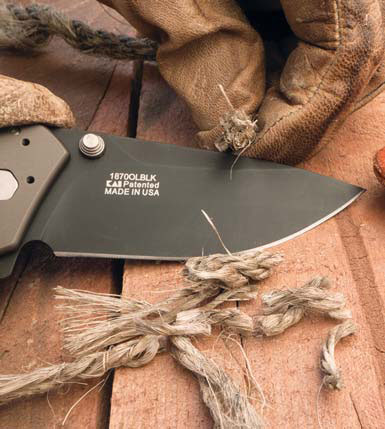
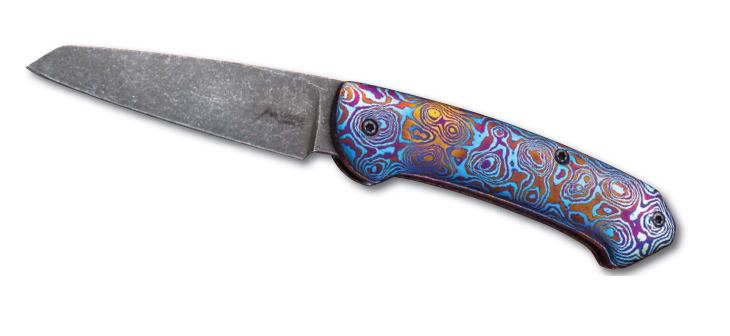
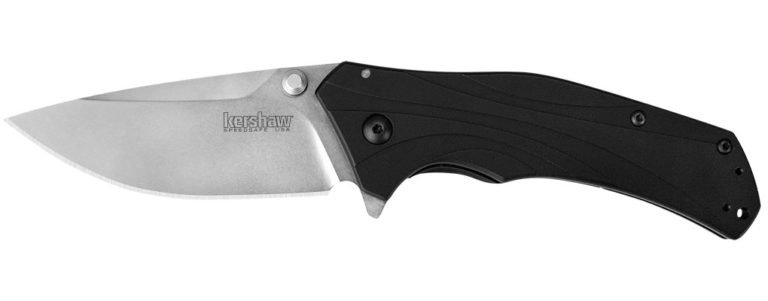
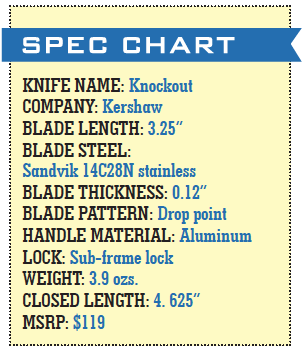
The Kershaw Knockout offers a bigger design than most EDC, but it’s still lightweight enough to stick in a pocket. (Kershaw photo)
An Eye-Catching EDC Knife
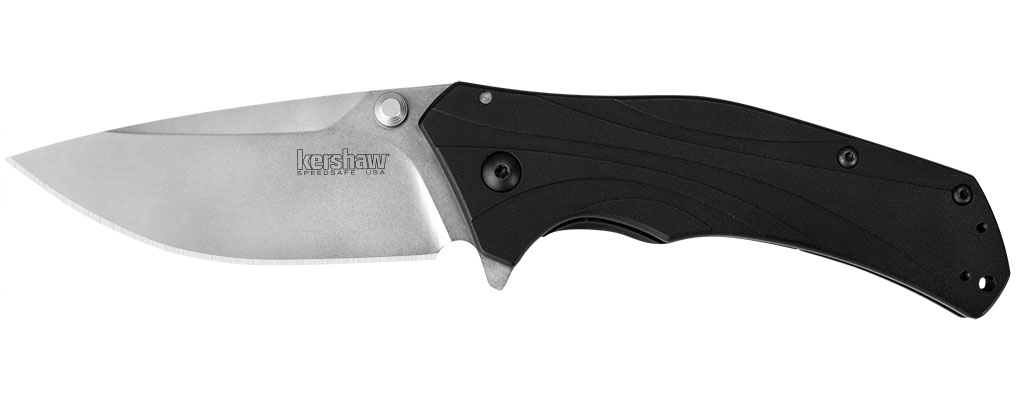
To my eye the Kershaw Knockout is in fact a knockout. The design is sleek, flowing and graceful, with all details blending into the whole—clearly a 21st century EDC folder.
The deep-bellied drop point blade emerges from the smoothly contoured handle easily and strongly but doesn’t threaten to jump from your hand.
The thin handle makes for a comfortable waistband carry. Though thin, the chamfered edges of the aluminum handle made for a surprisingly comfortable grip, even after extended cutting of rope and rubber tubing. It also balances right where it should at the index finger.
The deep belly sliced everything well. The frame lock was as solid as the proverbial bank vault door. The thumb stud is machined and polished and has no rough edges. In fact there are no rough edges anyplace on this little gem.
The clip is strong but not long enough or strong enough to prevent the knife from moving in the waistband of athletic pants, which I happen to wear a lot. Like most tip-down models, the positioning of the knife when carried requires a grip shift to get to a proper cutting position.
The deep belly of the Kershaw Knockout sliced everything well, including quarter-inch hemp.
The Verdict
This is such a handsome piece of work I’m almost tempted to put aside my preference and EDC this one.
In recognition of his military actions in Afghanistan on behalf of his fellow servicemen and his country that resulted in his receiving the Congressional Medal of Honor, U.S. Army Sgt. Dakota Meyer was presented with a custom knife made by Gene Baskett, a custom AR-15 rifle, and honorary membership in the Knifemakers’ Guild.
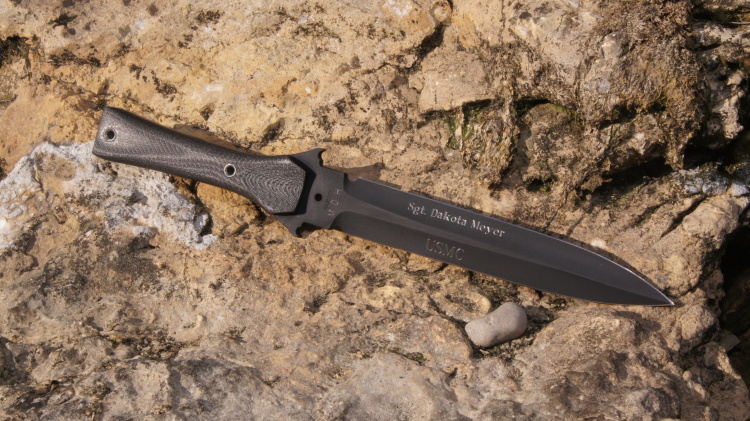
During a special ceremony this past December in Elizabethtown, Kentucky, Baskett, formerly of Elizabethtown and now of Eastview, Kentucky, presented Sgt. Meyer with a Baskett handmade knife, a custom fighter with a black Moly-Coated CPM-154 stainless blade and a black linen Micarta® handle. The knife is engraved “MOH, Sgt. Dakota Meyer, USMC” on the mark side and “8 September 2009, Kunar Province Afghanistan” on the flip side. The engraving is by Patrick Clark of Clark Jewelers, also of Elizabethtown. Richardson Gunsmithing did the Moly Coating.
In all, Baskett said he got to spend about three hours with Sgt. Meyer the day of the presentations. “He really loved the knife,” Baskett observed. “He was really appreciative and seemed very humbled by it all.”
J.J. Akins and Steve Sprowls of Elizabethtown’s Sporter Express gun shop presented Sgt. Meyer with the custom-engraved rifle. The gun is engraved “Rifle presented by the citizens of Hardin County, KY. Sergeant Dakota Meyer, USMC. 8 September 2009. Kunar Province Afghanistan. Congressional Medal of Honor,” and was donated by Sporter Express.
A member of the Guild’s board of directors, Baskett also presented Sgt. Meyer with a custom Guild honorary membership badge that includes the worlds “Medal of Honor Recipient” and the Marine Corps emblem.
ACTS OF HEROISM
Sgt. Meyer was born and raised in Columbia, Kentucky. He entered the Marine Corps after high school in 2006. On Sept. 8, 2009, Sgt. Meyer, then a corporal, was credited with numerous acts of heroism and saving the lives of several Marines in a battle near the village of Ganjgal in Afghanistan (see sidebar, page ???). As a result, Meyer was awarded the Medal of Honor in a ceremony at the White House on Sept. 15, 2011.
Sgt. Meyer spoke to a small crowd and the media during the ceremony in Elizabethtown, saying he does not consider himself a hero and that the Medal of Honor and what it represents is much bigger than him. His actions on “the worst day of my life” may have saved several fellow Marines, though he said he could not save four of his close friends in his unit. He wears a bracelet bearing their names.
The Americans who died in the ambush were: 1st Lt. Michael Johnson, 25, Virginia Beach, Virginia; Staff Sgt. Aaron Kenefick, 30, Roswell, Georgia; Hospital Corpsman Third Class James R. Layton, 22, Riverbank, California; and Gunnery Sergeant Edwin Wayne Johnson Jr., 31, Columbus, Georgia. A fifth soldier, Army Sgt. 1st Class Kenneth W. Westbrook, 41, Shiprock, New Mexico, later died from his wounds.
Sgt. Meyer received the Medal of Honor in a ceremony at the White House on Sept. 15, 2011. When a White House staffer contacted him to arrange the ceremony, Sgt. Meyer famously asked to “have a beer with the President.” Sgt. Meyer received an invitation to the White House the afternoon before the ceremony (see sidebar, page ???). He also requested that when he was honored, simultaneous services should be held at other applicable locations to honor the memory of his fellow service members who died or were mortally wounded during the ambush and his rescue attempts.
Sgt. Meyer is the third living recipient of the Medal of Honor since the Vietnam War, and the first living Marine in 38 years to be so honored. In addition to the Medal of Honor, he also received the Purple Heart, Navy Commendation Medal w/Combat V, the Navy Achievement Medal and the Combat Action Ribbon during his years of service from 2006-2010.
MILLION DOLLAR CHALLENGE
Sgt. Meyer uses his fame to raise money to provide college scholarships to the childen of those soldiers who did not survive the war. His goal is to raise $1 million for his “Million Dollar Challenge” (see sidebar, page ???). During the presentation ceremony, Sporter Express presented a check for $750 toward that goal.—BY MIKE CARTER
For more information on the Million Dollar Challenge, visit www.dakotameyer.com. For more on Gene Baskett knives, contact Gene Baskett, Dept. BL12, 427 Sutzer Ck. Rd., Eastview, KY 42732 270-862-5019 www.baskettknives.com.
It is not often a living U.S. Marine receives the Congressional Medal of Honor, and Sgt. Dakota Meyer is the first one to do so in 38 years. Neither is he one to rest on his laurels.
For instance, he has partnered with the Marine Corps Scholarship Foundation (MCSF) to raise money so the children of Marines can attend college. Sgt. Meyer said he realizes the importance of education and believes in the MCSF motto, “Honoring Marines by Educating Their Children.” The Dakota Meyer Scholarship Initiative was established and Sgt. Meyer committed to personally raising a million dollars to fund the effort. In fact, during the MCSF’s 50th anniversary celebration this past spring, it was announced that he had successfully reached his goal of raising a million dollars. The Challenge to America to match the million dollars Sgt. Meyer raised is ongoing. To learn more about it and to make a donation visit www.dakotameyer.com
He indicated he was honored President Obama accepted his invitation to have a beer the afternoon before the Medal of Honor ceremony. (As a side note, Sgt. Meyer said the White House brews its own beer, a honey ale, which he said both he and the president enjoyed.) He added he appreciated the opportunity to speak with and ask advice from the president. The president emphasized the importance of education, a priority Sgt. Meyer shares. In fact, Sgt. Meyer said he hopes to continue his education when his travel schedule slows down.
Meanwhile, he spends much of his time on the road, traveling all over America to share the story of his fallen brothers. He also advocates for veterans and has recently partnered with the U.S. Chamber of Commerce and Toyota on the Hiring Our Heroes campaign, which provides jobs fairs for veterans nationwide, as well as training veterans to successfully make the transition from military to civilian employment. At press time, Sgt. Meyer’s book Into the Fire was slated to be published this September.
Above and Beyond The Call
According to Dakota Meyer’s citation for the Medal of Honor, he was recognized, “For conspicuous gallantry and intrepidity at the repeated risk of his life above and beyond the call of duty as a member of Marine Embedded Training Team 2-8, Regional Corps Advisory Command 3-7, in Kunar Province, Afghanistan, on 8 September 2009.
“When the forward element of his combat team began to be hit by intense fire from roughly 50 Taliban insurgents dug in and concealed on the slopes above Ganjgal village, [then] Corporal Meyer mounted a gun-truck, enlisted a fellow Marine to drive, and raced to attack the ambushers and aid the trapped Marines and Afghan soldiers. During a six-hour firefight, Corporal Meyer single-handedly turned the tide of the battle, saved 36 Marines and soldiers and recovered the bodies of his fallen brothers.
“Four separate times he fought the kilometer up into the heart of a deadly U-shaped ambush. During the fight he killed at least eight Taliban, personally evacuated 12 friendly wounded, and provided cover for another 24 Marines and soldiers to escape likely death at the hands of a numerically superior and determined foe.
“On his first foray his lone vehicle drew machine gun, mortar, rocket grenade and small arms fire while he rescued five wounded soldiers. His second attack disrupted the enemy’s ambush and he evacuated four more wounded Marines. Switching to another gun-truck because his was too damaged, they again sped in for a third time, and as turret gunner he killed several Taliban attackers at point blank range and suppressed enemy fire so 24 Marines and soldiers could break out.
“Despite being wounded, he made a fourth attack with three others to search for missing team members. Nearly surrounded and under heavy fire, he dismounted the vehicle and searched house-to-house to recover the bodies of his fallen team members. By his extraordinary heroism, presence of mind amidst chaos and death, and unselfish devotion to his comrades in the face of great danger, Corporal Meyer reflected great credit upon himself and upheld the highest traditions of the Marine Corps and the United States Naval Service.”
TOP PHOTO AND SECOND PHOTO FROM TOP
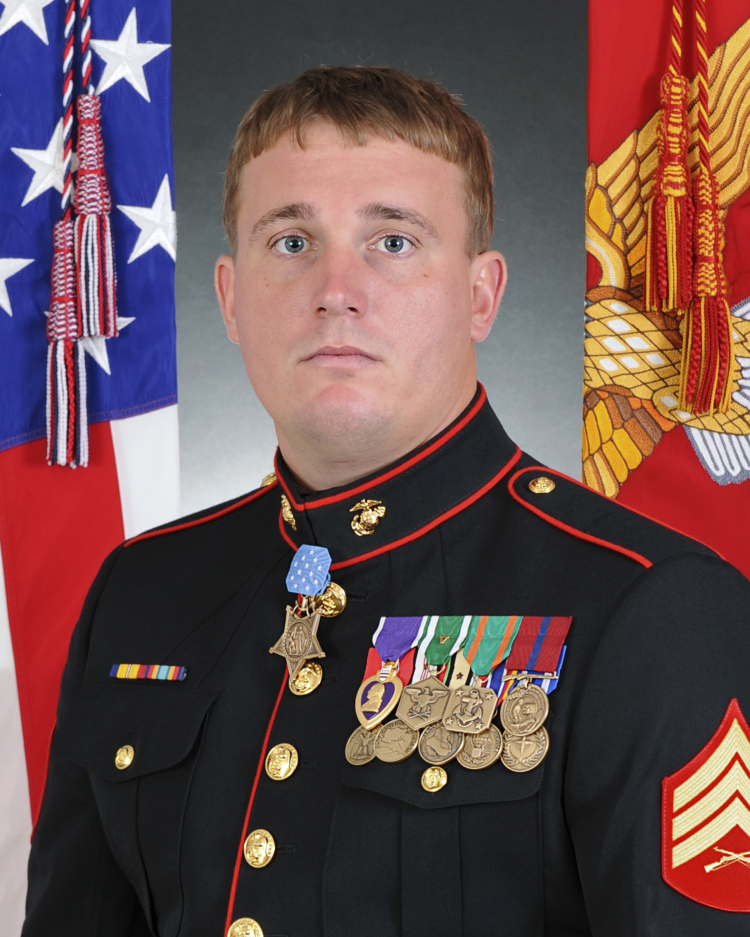
Congressional Medal-of-Honor recipient Sgt. Dakota L. Meyer recently was presented with a Gene Baskett handmade knife. The custom fighter has a black Moly-Coated CPM-154 stainless blade and a black linen Micarta® handle. The knife is engraved “MOH, Sgt. Dakota Meyer, USMC” on the mark side. The engraving is by Patrick Clark. Richardson Gunsmithing did the Moly Coat. (photo of Sgt. Meyer courtesy of the United States Marine Corps; knife photo by Mike Carter)
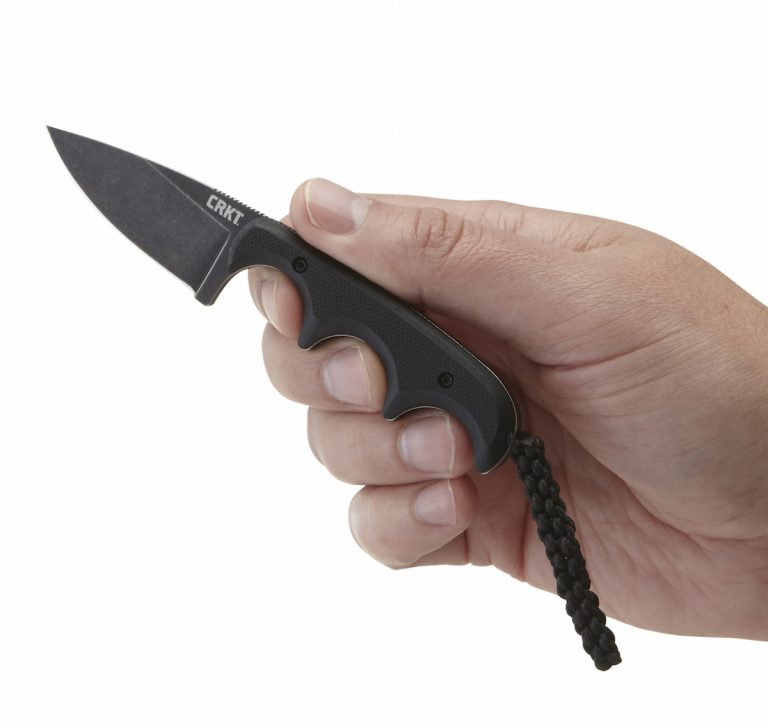
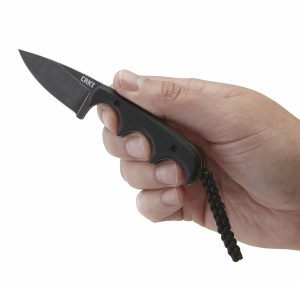
Your right to own and carry knives such as the CRKT Minimalist is at stake in the Nov. 8 presidential election.
How Hillary Clinton and Donald Trump stack up in terms of your right to own and carry your knives is an issue you should weigh carefully before voting Nov. 8.
According to Knife Rights Chairman Doug Ritter, Clinton’s anti-gun and anti-Second Amendment agenda is a major plank of her campaign. She advocates undermining the Second Amendment through legislation, executive actions and, more importantly, her appointment of justices to the Supreme Court. Over the years she has endorsed most proposals to limit gun ownership and destroy the Second Amendment through extreme taxes, regulations and executive orders.
“The loss of Second Amendment rights by way of her anti-gun agenda would be certain to disadvantage knife owners as we fight to oppose irrational restrictions on our knives,” Ritter noted. “As we have seen elsewhere, once firearms are outlawed, knife restrictions follow.”
Trump, meanwhile, is pro-Second Amendment and has been endorsed by the National Rifle Association and other Second Amendment organizations. His proposed nominees for the Supreme Court have a record of opposing efforts to weaken the Second Amendment.
As for the ivory issue, Ritter noted that the campaign against ivory owners in the USA, including owners of ivory-handle knives and raw ivory used by knifemakers and scrimshanders, was launched by the Clinton Foundation as part of its Clinton Global Initiative. “The Clinton Foundation and non-governmental organizations affiliated with it continue to advocate for the complete and total ban on all trade in ivory in any form,” Ritter wrote. “They are being assisted by the Fish and Wildlife Service. They are even pushing to ban sustainable use of wildlife in Africa, the core science behind the world’s most successful wildlife conservation efforts that have brought many species back from the brink of extinction.”
Clinton also likely would oppose the African Elephant Conservation and Legal Ivory Possession Act (AECLIPA), an act that would repeal the recent federal ivory ban, resetting the rules back to where they had been for decades, and would enhance elephant conservation efforts in Africa.
Conversely, Trump has never supported ivory bans or the end of sustainable use as a science-based conservation model. Trump would be far more likely to make executive appointments that would signal significant changes at the Interior Department and FIsh and Wildlife. If Congress passed the AECLIPA, he would likely sign it.
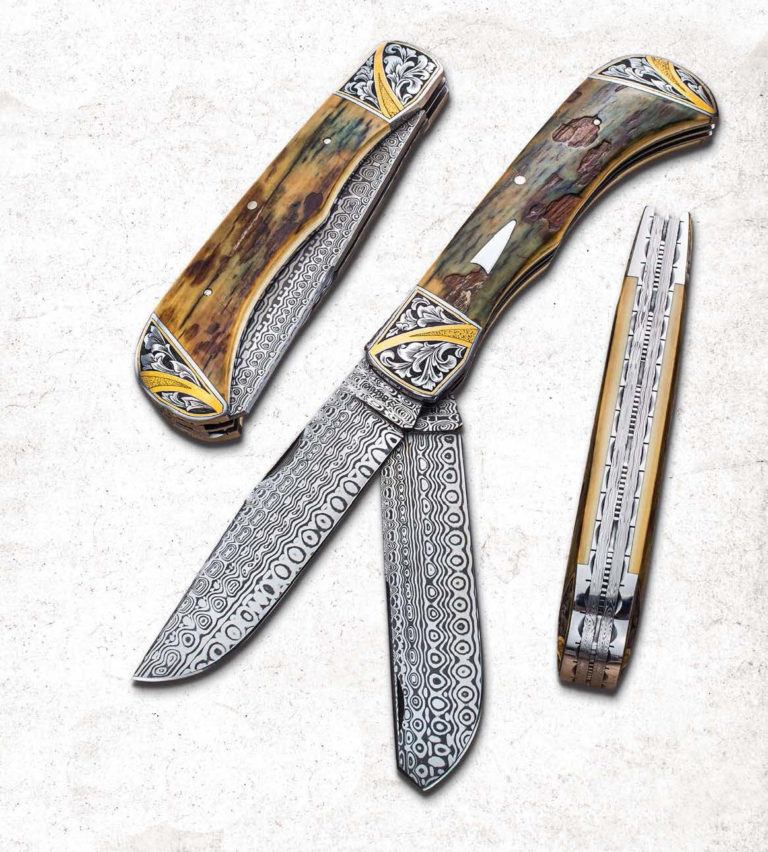
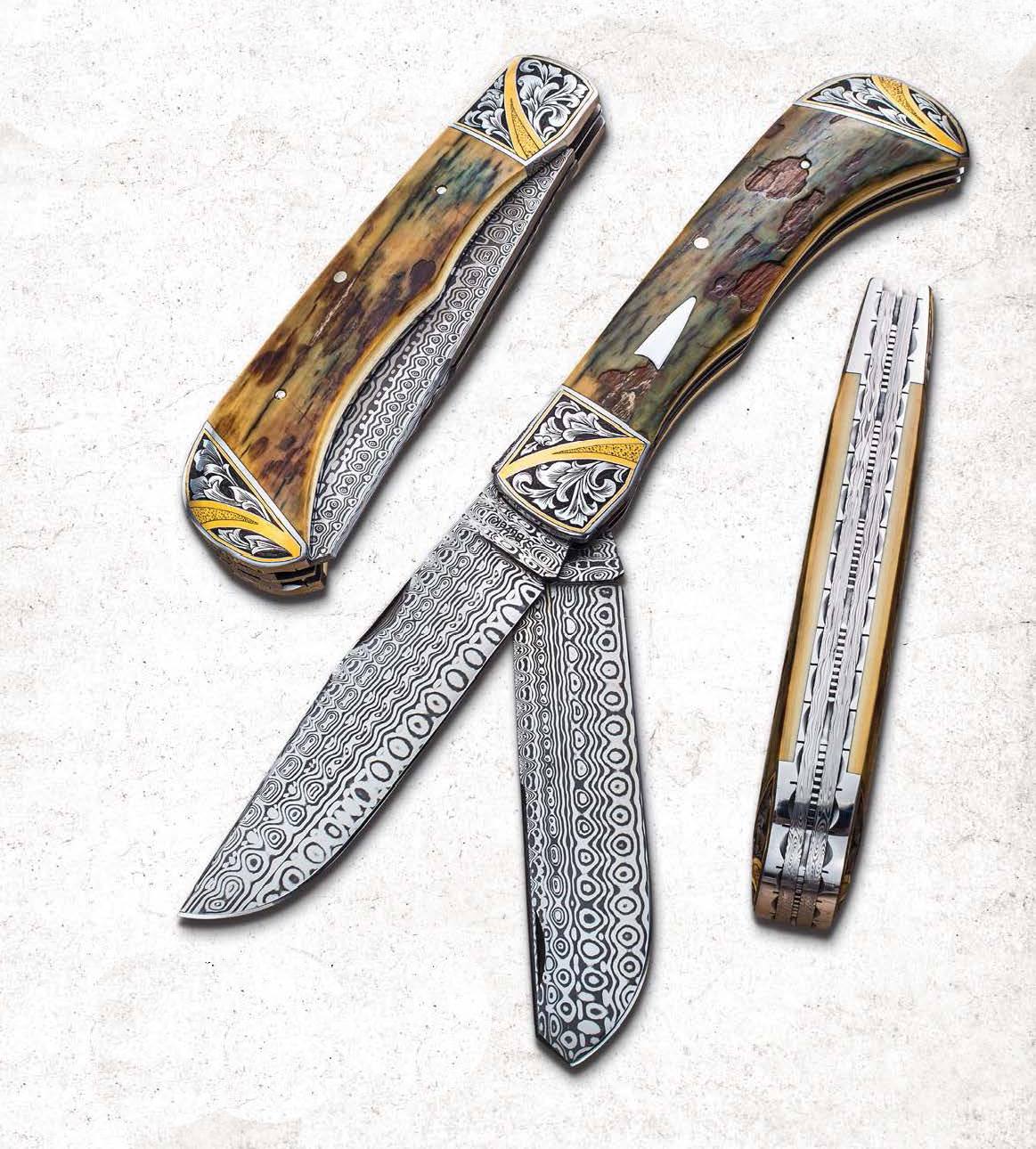
Stan Buzek based his slip joint on a Bill Ruple two-blade trapper. The hollow-ground blades are Damasteel damascus and 3.5 inches each. The fileworked liners are 416 stainless steel. Closed length: 4 3/8 inches. Buzek’s list price to make a similar piece: $1,950. (SharpByCoop photo)
Blade Counts Count
Custom slip joints are hot again and have been for a while. Why are they so hot and how long will their popularity run this time?
“I have seen a bit of an uptick in pocketknife sales in the last couple of years,” notes custom knifemaker Stan Buzek, whose turnaround time on orders is three to four months. “I think this is due to the fact you can have both multiple- and single-blade slip joints,” as opposed to the single blades of tactical and other locking folders (though lockbacks are experiencing somewhat of a surge in sales, too).
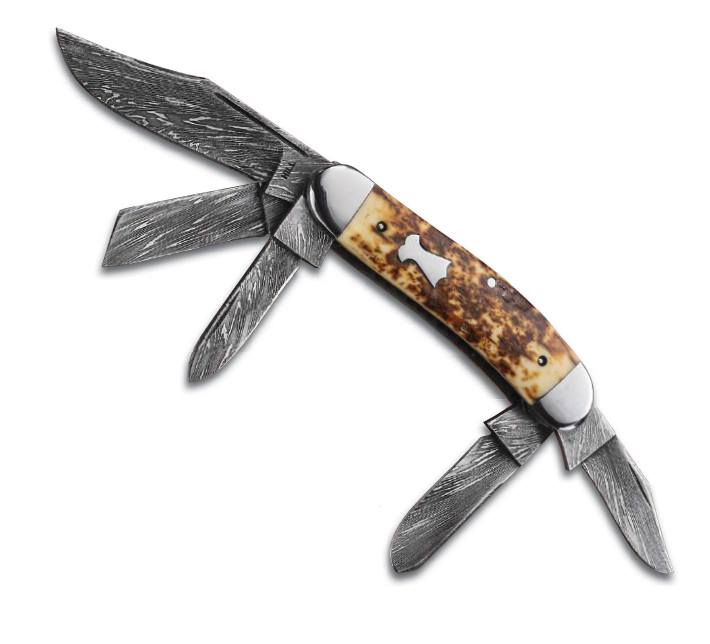
Tobin Hill’s five-blade sowbelly sports feather-pattern damascus blade steel in hollow grinds and a mammoth ivory handle. The maker’s list price for a similar piece: $1,200.
A Bright Future Ahead For Slip Joints
Adds Johnny Stout, who has a backlog of six to eight months, “From what I’m seeing at the shows and online in the past few years, pocketknives are alive and well. I see a bright future for slip joints.”
“I have seen slip-joint groups on Facebook grow by 300 percent in the last three years,” Tracy LaRock states. “I also have a group called ‘Making Slip Joints and Lockbacks’ that has grown a lot recently, with many new slip-joint makers.”
As for his sales, Tracy says, “My books are closed but I intend to open them in early 2020 when I retire from the military. In the meantime I list available pieces in my Facebook group and on Instagram.”
Tracy LaRock pushes the envelope of traditional slip-joint design with his Ethan Jack. The 3-inch blade is D2 tool steel and the handle and frame are Timascus™. Closed length: 4 inches. His list price to make a similar knife: $900. (SharpByCoop photo)
Pocketknife Sales Are Up In General
“I think there’s an upswing in pocketknife sales,” Tom Ploppert agrees. “Plus, a strong economy hasn’t hurt anything.”
Tom says he continues to take orders and has no idea how far behind he is.
“I will write an order down. I do not take deposits. I will call when it’s your turn. If you commit, then we will discuss price and I will start on building it,” he says matter-of-factly.
Turnaround time notwithstanding, the exquisite slip joints by Stout, Buzek, LaRock and Ploppert are well worth the wait—though you might want to get a leg up now. The more demand increases, the longer you’ll have to bide your time until you can get your hands on one of these gems.
In recognition of his military actions in Afghanistan on behalf of his fellow servicemen and his country that resulted in his receiving the Congressional Medal of Honor, U.S. Army Sgt. Dakota Meyer was presented with a custom knife made by Gene Baskett, a custom AR-15 rifle, and honorary membership in the Knifemakers’ Guild.
During a special ceremony this past December in Elizabethtown, Kentucky, Baskett, formerly of Elizabethtown and now of Eastview, Kentucky, presented Sgt. Meyer with a Baskett handmade knife, a custom fighter with a black Moly-Coated CPM-154 stainless blade and a black linen Micarta® handle. The knife is engraved “MOH, Sgt. Dakota Meyer, USMC” on the mark side and “8 September 2009, Kunar Province Afghanistan” on the flip side. The engraving is by Patrick Clark of Clark Jewelers, also of Elizabethtown. Richardson Gunsmithing did the Moly Coating.
In all, Baskett said he got to spend about three hours with Sgt. Meyer the day of the presentations. “He really loved the knife,” Baskett observed. “He was really appreciative and seemed very humbled by it all.”
J.J. Akins and Steve Sprowls of Elizabethtown’s Sporter Express gun shop presented Sgt. Meyer with the custom-engraved rifle. The gun is engraved “Rifle presented by the citizens of Hardin County, KY. Sergeant Dakota Meyer, USMC. 8 September 2009. Kunar Province Afghanistan. Congressional Medal of Honor,” and was donated by Sporter Express.
A member of the Guild’s board of directors, Baskett also presented Sgt. Meyer with a custom Guild honorary membership badge that includes the worlds “Medal of Honor Recipient” and the Marine Corps emblem.
ACTS OF HEROISM
Sgt. Meyer was born and raised in Columbia, Kentucky. He entered the Marine Corps after high school in 2006. On Sept. 8, 2009, Sgt. Meyer, then a corporal, was credited with numerous acts of heroism and saving the lives of several Marines in a battle near the village of Ganjgal in Afghanistan (see sidebar, page ???). As a result, Meyer was awarded the Medal of Honor in a ceremony at the White House on Sept. 15, 2011.
Sgt. Meyer spoke to a small crowd and the media during the ceremony in Elizabethtown, saying he does not consider himself a hero and that the Medal of Honor and what it represents is much bigger than him. His actions on “the worst day of my life” may have saved several fellow Marines, though he said he could not save four of his close friends in his unit. He wears a bracelet bearing their names.
The Americans who died in the ambush were: 1st Lt. Michael Johnson, 25, Virginia Beach, Virginia; Staff Sgt. Aaron Kenefick, 30, Roswell, Georgia; Hospital Corpsman Third Class James R. Layton, 22, Riverbank, California; and Gunnery Sergeant Edwin Wayne Johnson Jr., 31, Columbus, Georgia. A fifth soldier, Army Sgt. 1st Class Kenneth W. Westbrook, 41, Shiprock, New Mexico, later died from his wounds.
Sgt. Meyer received the Medal of Honor in a ceremony at the White House on Sept. 15, 2011. When a White House staffer contacted him to arrange the ceremony, Sgt. Meyer famously asked to “have a beer with the President.” Sgt. Meyer received an invitation to the White House the afternoon before the ceremony (see sidebar, page ???). He also requested that when he was honored, simultaneous services should be held at other applicable locations to honor the memory of his fellow service members who died or were mortally wounded during the ambush and his rescue attempts.
Sgt. Meyer is the third living recipient of the Medal of Honor since the Vietnam War, and the first living Marine in 38 years to be so honored. In addition to the Medal of Honor, he also received the Purple Heart, Navy Commendation Medal w/Combat V, the Navy Achievement Medal and the Combat Action Ribbon during his years of service from 2006-2010.
MILLION DOLLAR CHALLENGE
Sgt. Meyer uses his fame to raise money to provide college scholarships to the childen of those soldiers who did not survive the war. His goal is to raise $1 million for his “Million Dollar Challenge” (see sidebar, page ???). During the presentation ceremony, Sporter Express presented a check for $750 toward that goal.—BY MIKE CARTER
For more information on the Million Dollar Challenge, visit www.dakotameyer.com. For more on Gene Baskett knives, contact Gene Baskett, Dept. BL12, 427 Sutzer Ck. Rd., Eastview, KY 42732 270-862-5019 www.baskettknives.com.
It is not often a living U.S. Marine receives the Congressional Medal of Honor, and Sgt. Dakota Meyer is the first one to do so in 38 years. Neither is he one to rest on his laurels.
For instance, he has partnered with the Marine Corps Scholarship Foundation (MCSF) to raise money so the children of Marines can attend college. Sgt. Meyer said he realizes the importance of education and believes in the MCSF motto, “Honoring Marines by Educating Their Children.” The Dakota Meyer Scholarship Initiative was established and Sgt. Meyer committed to personally raising a million dollars to fund the effort. In fact, during the MCSF’s 50th anniversary celebration this past spring, it was announced that he had successfully reached his goal of raising a million dollars. The Challenge to America to match the million dollars Sgt. Meyer raised is ongoing. To learn more about it and to make a donation visit www.dakotameyer.com
He indicated he was honored President Obama accepted his invitation to have a beer the afternoon before the Medal of Honor ceremony. (As a side note, Sgt. Meyer said the White House brews its own beer, a honey ale, which he said both he and the president enjoyed.) He added he appreciated the opportunity to speak with and ask advice from the president. The president emphasized the importance of education, a priority Sgt. Meyer shares. In fact, Sgt. Meyer said he hopes to continue his education when his travel schedule slows down.
Meanwhile, he spends much of his time on the road, traveling all over America to share the story of his fallen brothers. He also advocates for veterans and has recently partnered with the U.S. Chamber of Commerce and Toyota on the Hiring Our Heroes campaign, which provides jobs fairs for veterans nationwide, as well as training veterans to successfully make the transition from military to civilian employment. At press time, Sgt. Meyer’s book Into the Fire was slated to be published this September.
Above and Beyond The Call
According to Dakota Meyer’s citation for the Medal of Honor, he was recognized, “For conspicuous gallantry and intrepidity at the repeated risk of his life above and beyond the call of duty as a member of Marine Embedded Training Team 2-8, Regional Corps Advisory Command 3-7, in Kunar Province, Afghanistan, on 8 September 2009.
“When the forward element of his combat team began to be hit by intense fire from roughly 50 Taliban insurgents dug in and concealed on the slopes above Ganjgal village, [then] Corporal Meyer mounted a gun-truck, enlisted a fellow Marine to drive, and raced to attack the ambushers and aid the trapped Marines and Afghan soldiers. During a six-hour firefight, Corporal Meyer single-handedly turned the tide of the battle, saved 36 Marines and soldiers and recovered the bodies of his fallen brothers.
“Four separate times he fought the kilometer up into the heart of a deadly U-shaped ambush. During the fight he killed at least eight Taliban, personally evacuated 12 friendly wounded, and provided cover for another 24 Marines and soldiers to escape likely death at the hands of a numerically superior and determined foe.
“On his first foray his lone vehicle drew machine gun, mortar, rocket grenade and small arms fire while he rescued five wounded soldiers. His second attack disrupted the enemy’s ambush and he evacuated four more wounded Marines. Switching to another gun-truck because his was too damaged, they again sped in for a third time, and as turret gunner he killed several Taliban attackers at point blank range and suppressed enemy fire so 24 Marines and soldiers could break out.
“Despite being wounded, he made a fourth attack with three others to search for missing team members. Nearly surrounded and under heavy fire, he dismounted the vehicle and searched house-to-house to recover the bodies of his fallen team members. By his extraordinary heroism, presence of mind amidst chaos and death, and unselfish devotion to his comrades in the face of great danger, Corporal Meyer reflected great credit upon himself and upheld the highest traditions of the Marine Corps and the United States Naval Service.”
TOP PHOTO AND SECOND PHOTO FROM TOP
Congressional Medal-of-Honor recipient Sgt. Dakota L. Meyer recently was presented with a Gene Baskett handmade knife. The custom fighter has a black Moly-Coated CPM-154 stainless blade and a black linen Micarta® handle. The knife is engraved “MOH, Sgt. Dakota Meyer, USMC” on the mark side. The engraving is by Patrick Clark. Richardson Gunsmithing did the Moly Coat. (photo of Sgt. Meyer courtesy of the United States Marine Corps; knife photo by Mike Carter)
There is plenty of lore surrounding traditional Japanese Swords, but do the master makers’ time-tested methods equal modern steel advancements?
Editor’s note: Long-time BLADE® subscriber and knife collector Rick Royster wrote us, wondering how the swords of the ancient Japanese samurai warriors would compare to today’s modern swords. Did all the steps the ancient Asian swordsmiths used really make a difference? “Employing special quenchants, some clay, some of this and that—is it science or mystical?” Rick asked. While we couldn’t test an ancient sword vs. one of today’s, we did go to the sources themselves for answers—some of today’s top swordsmiths.
The traditional Japanese sword blade is revered for its performance, perhaps even more than its beauty and ties to an uber-rich heritage in the world of cutlery. Combined, these elements make the classic Japanese sword something unforgettable, a work of art and poetry in motion—yet capable of delivering the decisive blow in combat.
Modern custom sword blades may not possess the allure of the centuries. They may not have a hamon—though many do—or the other attributes that make their vintage counterparts so revered. Nonetheless, they can claim respect and admiration when it comes to strength. If the comparison of relative strength is relevant and worthwhile, which is stronger—the ancient Japanese or the modern custom sword blade?
World-renowned Japanese swordsmith Yoshindo Yoshihara does yakire, the fast quenching of a sword, during one of his swordmaking demonstrations. (Aram Compeau image)
BLADE Magazine Cutlery Hall-of-Fame® member/ABS master smith Steve Schwarzer answers the question this way: “Modern steels are highly superior in almost every way except for visual structure. Traditional Japanese bladesmiths were all about taking inferior material, which was the best stuff on the planet at the time, and making it better. Modern steel is superior because it is a lot cleaner with alloys for specific jobs. Setting the structure up is what today’s American Bladesmith Society is all about: making steel better. It’s hard to compare the two, but modern steels are superior in edge holding and sharpness. Modern steel won’t bend like the old stuff because it is not designed to bend.
“Once you get the aesthetics out, the fancy hamons and stuff like that, ancient bladesmiths had a way to control the process in the old days from one portion of the blade to another. If you take a Japanese blade and quench and polish it, you have a big spring supporting the cutting edge, and that is why it would excel in battle.”
ABS master smith Zack Jonas sees the purpose as the primary differentiator in either case.
According to Steve Schwarzer, traditional Japanese bladesmiths took inferior material—the best stuff available at the time—and made it better. “Modern steel is superior because it is a lot cleaner with alloys for specific jobs,” he stated. He used modern steel and all the trimmings on his Japanese sword. (Eric Eggly/PointSeven sword image; image of Schwarzer by Chris Wellhausen)
“The strength of the traditional Japanese sword would have been measured in its ability to withstand the test of battle without breaking,” he began. “By this measure, they were marvels of engineering. Today’s technology is capable of producing swords with performance characteristics that vastly exceed the finest traditional blades. We have steel mills producing bespoke blade alloys from ultra-precise ratios of refined base elements.
“We have modern heat-treating methods capable of holding plus-or-minus a fraction of a degree indefinitely within a perfectly controlled atmosphere. We have modern quenching oils and molten salt pots and ovens for tempering, and we have analytical tools that allow us to refine how we approach our materials. Traditional swords were purpose-built for war, and they lived up to those demands for a thousand years and more. But modern science gives us greater capabilities on a purely quantitative level.”
The cutting of the tatami mat—done here by James Williams during one of his Japanese sword demos at a past BLADE Show—is said to be a good analogue for testing cuts against a human target.
Schwarzer agrees that modern steel is produced in quantity, while the traditional Japanese sword blade was produced singularly.
“It truly takes a master to get the most out of any steel,” he remarked, “but modern steels are more forgiving because they are designed around production, not one-offs.”
Traditional Sword Construction
Dave Goldberg has made traditional Japanese swords since the 1990s and learned from masters in their construction, as well as in the forging of damascus. He sees the functionality of the traditional Japanese blade and says, “The edge of the sword blade is about 60-70 on the Rockwell scale and you want that to be about one-third of the blade area. The middle is somewhat hard, and the back is not hard but flexible.”
According to Zack Jonas, modern smiths have access to modern materials and technology, but in many or even most cases, modern swords are not made with careful consideration for the practicalities of combat. Zack’s wakizashi features a 22-inch damascus blade with a shinogi zukuri grind. Overall length: 28 inches. (SharpByCoop sword image; image of Zack by B. R. Hughes)
According to Jonas, the hardening process was essential during ancient times. The warrior absolutely depended on it. Traditional swordsmithing techniques have been refined over the course of centuries through the familiar process of trial and error.
“Since ‘error’ would have been a matter of life and death,” Zack observed, “we can say with a degree of confidence that traditional methods worked extremely well. For example, it was essential to employ differential hardening—which traditional smiths did by applying an insulative clay to the spine—because given the properties of the steel they were working with, a fully hardened blade would have created a number of problems both for the smith and for the warrior. It can be tricky to retrospectively disentangle the mystical from the scientific. Mystical practices that offered no benefit would have been winnowed out in favor of those that did, and those that did offer benefit can be scientifically explained today.”
Years ago, Goldberg traveled to Japan to study traditional sword blades under the legendary Yoshindo Yoshihara, whose family has practiced the art for no fewer than 10 generations.
Zack Jonas said modern steels can get harder, tougher and sharper than traditional Japanese tamagahane steel, but it remains important to remember that tamagahane was strong enough for a thousand years of battles. This traditional tamahagane was made in a smelter, or tatara. (Yoshihara Yoshikazu image)
“He taught me a lot of things about sword making,” Dave remembered, “and in his smithy, he had on the wall behind where he forges a Japanese shrine with lightning bolts hanging and incense burners, and there was a little teapot in the smithy, too. He said it was just decoration, but with the Japanese guys even if you are friends, there are still secrets. So, I put paper lightning bolts in my shop too—to protect my spirit and so the blades will come out well and get through the quench.”
Bound up in tradition, the mysticism makes the Japanese way an art form that can never be completely separated from its origins. Even in a straight-up test of strength, whether one steel prevailed over the other, there would be no loser. Each would continue to hold its relative place in time and space and fact and imagination.
“In absolute quantitative terms, traditional materials mostly do not offer performance advantages over their modern counterparts,” Jonas said, echoing Schwarzer’s observation. “For example, modern steels can get harder, tougher and sharper than traditional Japanese tamagahane steel, but it is still important to remember that tamagahane was strong enough for a thousand years of battles. Likewise, performance isn’t everything. One of the signature features of tamahagane is its appearance. It has aesthetic characteristics that modern steels lack entirely.”
Japanese Sword Features
Eighty-two-year-old Yoshindo Yoshihara, author of this classic Japanese sword and saya (scabbard), is generally recognized as the greatest maker of Japanese-style swords of his generation. (Francesco Pachi images)
Among the most noteworthy features found in traditional Japanese sword blades is the hamon, which Zack describes as the literal demarcation point between the hardened edge of the blade and its softer spine. The hamon, he says, is a visible representation of the technique that must be used due to the material constraints and demands of tamahagane steel.
It is visible due to light diffusing off the mixture of hard and non-hardened crystalline structures, where the hardened edge transitions to the softer spine. He adds that over time, the production of the hamon stretched beyond the practical necessities of the steel and into the realm of aesthetics. Whether the shape of the hamon has any bearing on the blade’s performance is an open question.
“Any steel hardened and tempered to its best molecular composition is good steel,” Goldberg commented. “Modern 80CrV2 steel is harder than any Japanese steel. Japanese steel can take it in battle, and from sword to sword, it can be amazingly hard. It becomes its own shield when the warrior holds it above his head and can then come around and cut the other guy. Japanese steel is really hard, but modern technology is something else. I have never seen anything harder than the CrV stuff. Everything is purpose-driven.”
Matt Venier made what he calls Mattyhagane to recreate tamahagane for the blade of his katana. The tsuka (handle) consists of a wood core with full rayskin and braided wrap. The tsuba (guard) and habaki (collar) are copper. (SharpByCoop images)
Other attributes of the traditional Japanese sword, including the handle ornaments known as menuki, may contribute to performance as well. While some observers may see menuki as a sort of grip enhancement in functioning as a palm swell, allowing the user to index the sword better, others stress that they are primarily evidence of the maker’s desire to express his or her own identity and creativity. Menuki quite possibly can function on both levels.
Japanese Sword Folklore
Through the centuries, there have been claims that Japanese steel can perform certain tasks that modern sword steel cannot. Jonas says that many such contentions are simply folklore or myth and have been easily debunked.
“One popular example is the cutting of the tatami mat,” he related. “These straw mats, soaked in water and then rolled tightly together, are said to be a good analogue for testing cuts against a human target. It has been said that only the katana can do this well, but these days, videos can be found online showing a skilled swordsman cutting through a tatami with a blunted medieval-style longsword.
“The Japanese sword has been mythologized along with the warriors who made it famous. The samurai were incredible fighters who earned their reputation for fierce courage through feats in battle and cultural refinement. Their signature sword is a highly developed object with exceptional performance abilities, but traditional examples will not outperform their modern counterparts.”
Old & New Symbiosis
In the final analysis, the old and new steels co-exist, achieving a symbiosis, a sort of mutual respect. As Zack so aptly pointed out, the context of their comparison weighs in on the discourse.
“It is important to consider how this matter is discussed,” he noted. “Most of these topics bear on the question of superiority—what makes this sword better than that sword or vice versa—and while it is possible to give some answers in the absolute sense, there is a risk that these answers ignore important contextual factors.
“The traditional Japanese sword was designed for a particular form of combat and was designed with the constraints of the tools and materials available at the time,” he concluded. “Modern smiths have access to modern materials and technology, but in many or even most cases, modern swords are not made with careful consideration for the practicalities of combat. Modern smiths are unlikely to even be familiar with how a sword would need to behave in a fight.”
Times change, materials change, techniques and methods change. But through the ages, traditional icons endure, while new and emerging genres come to life and begin to build legacies of their own.


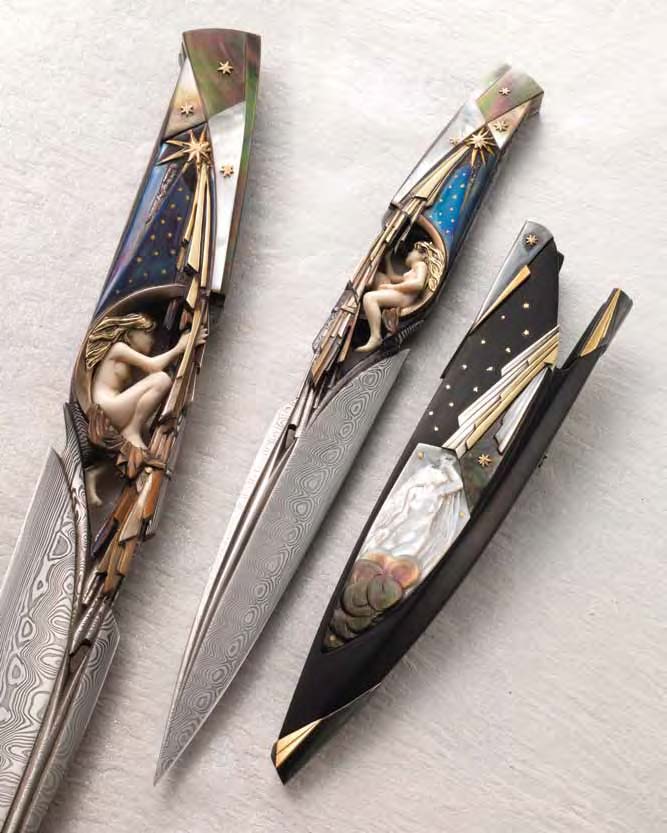

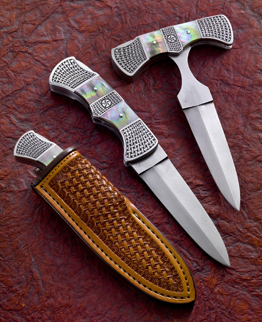
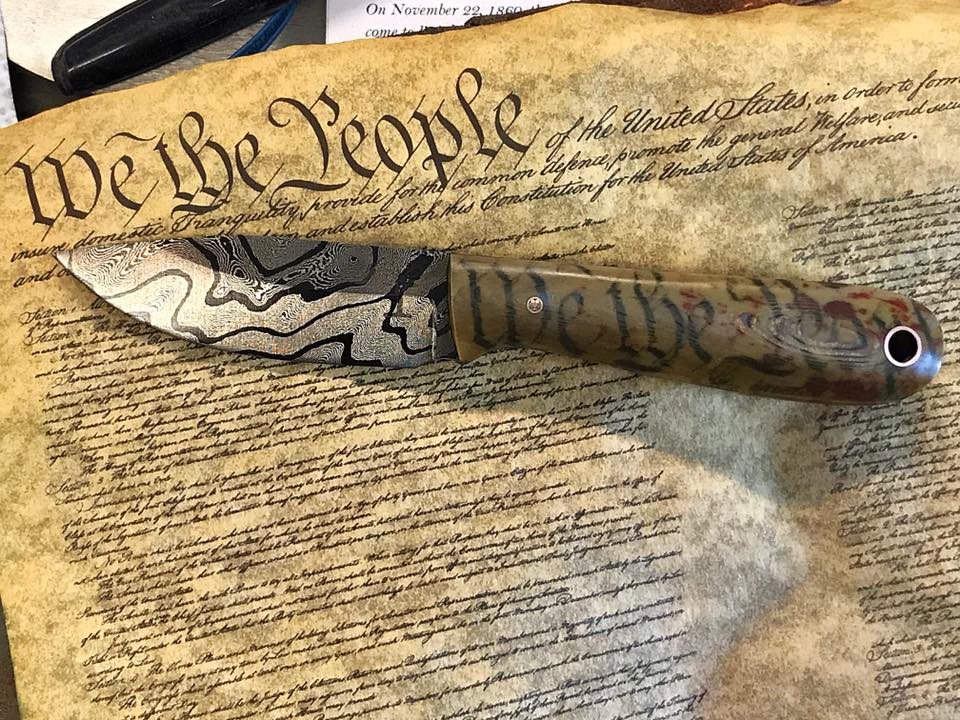
 To my eye the Kershaw Knockout is in fact a knockout. The design is sleek, flowing and graceful, with all details blending into the whole—clearly a 21st century EDC folder.