Knife collecting is an extremely rewarding experience for knife enthusiasts. There truly is a knife for everyone. Many increase or hold their value throughout the years, making collecting knives something to pass on to the next generation of knife collectors.
Honor 250 years of Marine Corps history! Discover the legendary KA-BAR/MK2 fighting knife and new anniversary blades from makers like Medford and Defiant 7.
The day before Veterans Day, November 10 is the 250th anniversary of some of the most storied combat fighters in world history—the United States Marines.
The Marines have a special aura that almost transcends their many exploits. And when it comes to American military exploits, the Battle of Iwo Jima is in the top two or three all time. The raising of the flag on Mount Suribachi is America personified, and the United States Marine Corps War Memorial across the Potomac River from Washington, D.C., celebrating the event is about the most awesome monument anywhere.
As for those in the knifemaking community, Marine veterans are well-represented and include two BLADE Magazine Cutlery Hall-of-Fame® members, Don Fogg and Joe Keeslar. Other Marine vets who make knives are Tim Britton; Matt Chase; Allen Elishewitz; Doug Esposito; Les George; Brad Jennings; Tim Kell; Jonathan McNees; Greg Medford; Jeff Moore; ABS Master Smith James Rodebaugh; Kevin Stack; and Connor Toor. There are no doubt many more, both present and past.
Then there’s the iconic Marine knife, variously known as the Mark 2/MK2, USMC fighting/utility, the Model 1219 or simply the generic kabar. Associated by many with having been made by KA-BAR Knives, the knife also was made by a number of other companies during World War II, including Camillus, Case, Colonial, Ontario, Pal, Queen, Robeson, etc., and is made by several of the foregoing that remain active today, as well as others. The 200th KA-BAR commemorative of the knife graced the cover of the November-December 1975 issue of The American Blade 50 years go in what may be the best BLADE® cover ever.
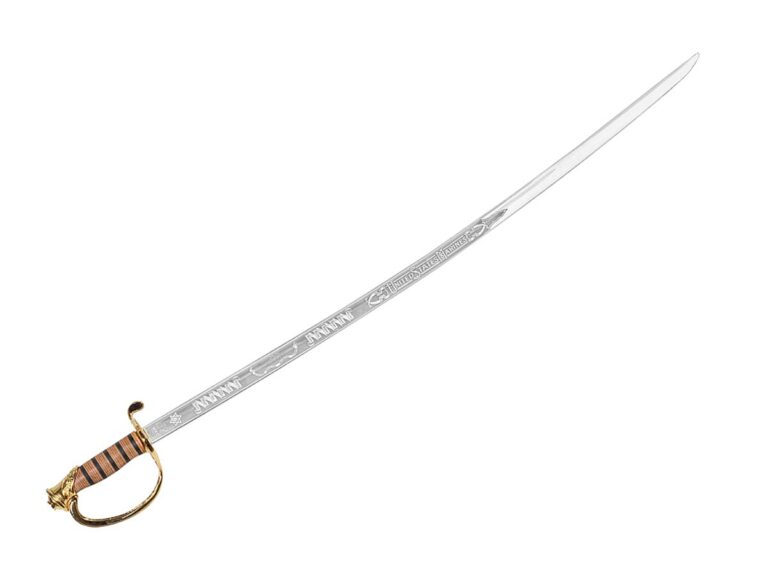
As for blades observing the 2025 anniversary, the 250th USMC Trench Knife by Medford Knife & Tool is available now. KA-BAR is making a dress sword in a limited edition of 250 pieces that at press time was slated to be out in early October. At Defiant 7, Allen Elishewitz and Les George are “reworking” the USMC MK2 in what will be called the M320. Among other features, it will include a 3V carbon steel blade and a stacked handle construction not unlike the original MK2 grip but in a polymer material and a more ergonomic shape. Ontario was reportedly working on a new kabar-inspired piece at press time, too.
Look for these and other anniversary-focused knives in future issues of BLADE. Choose one or more of them if you want a blade inspired by our incomparable Marines.
To America-loving Marines everywhere, Semper Fi! And to all U.S. military vets, Happy Veterans Day!
The best in blade and handle materials decorated some of the most creative folder designs anywhere at the recent New York Custom Knife Show. Enjoy seven of them in all their glory on this and the facing page.
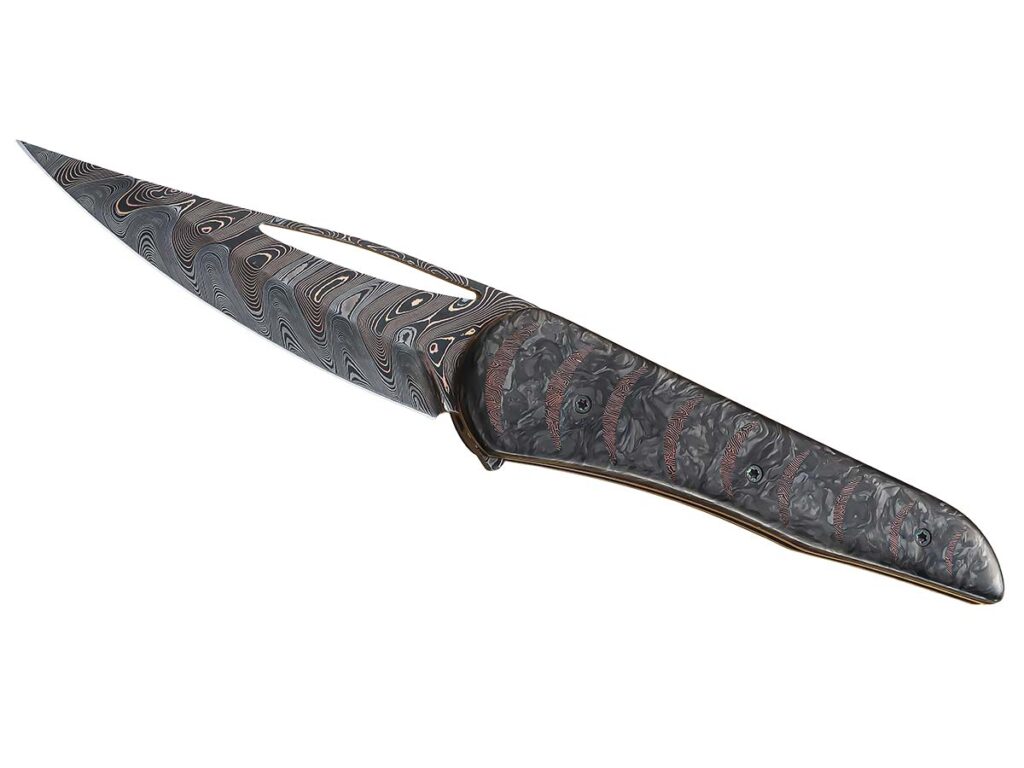
Alan Hollerbach Flipper Folder
Alan Hollerbach’s flipper folder has a 4-inch hollow-ground blade of damascus forged by Baker Forge & Tool, and scales of Fatcarbon carbon fiber and carbon fiber inlays. All hardware is titanium. Closed length: 4.5 inches.
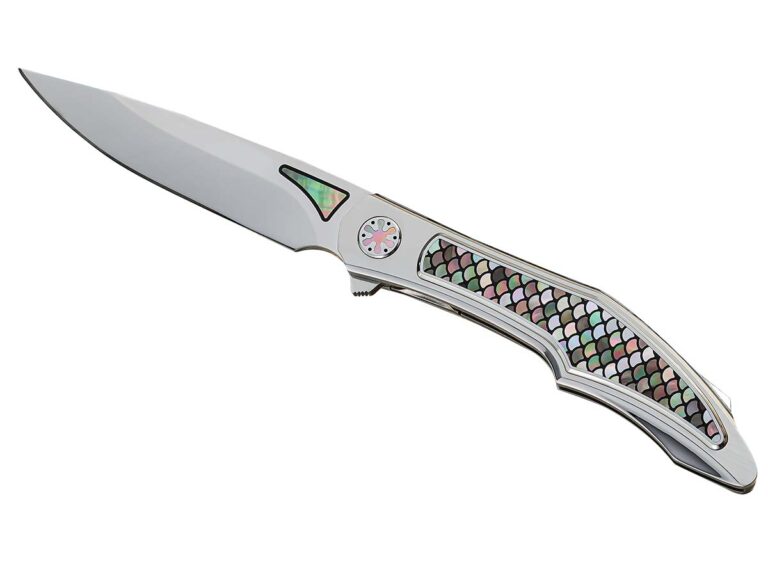
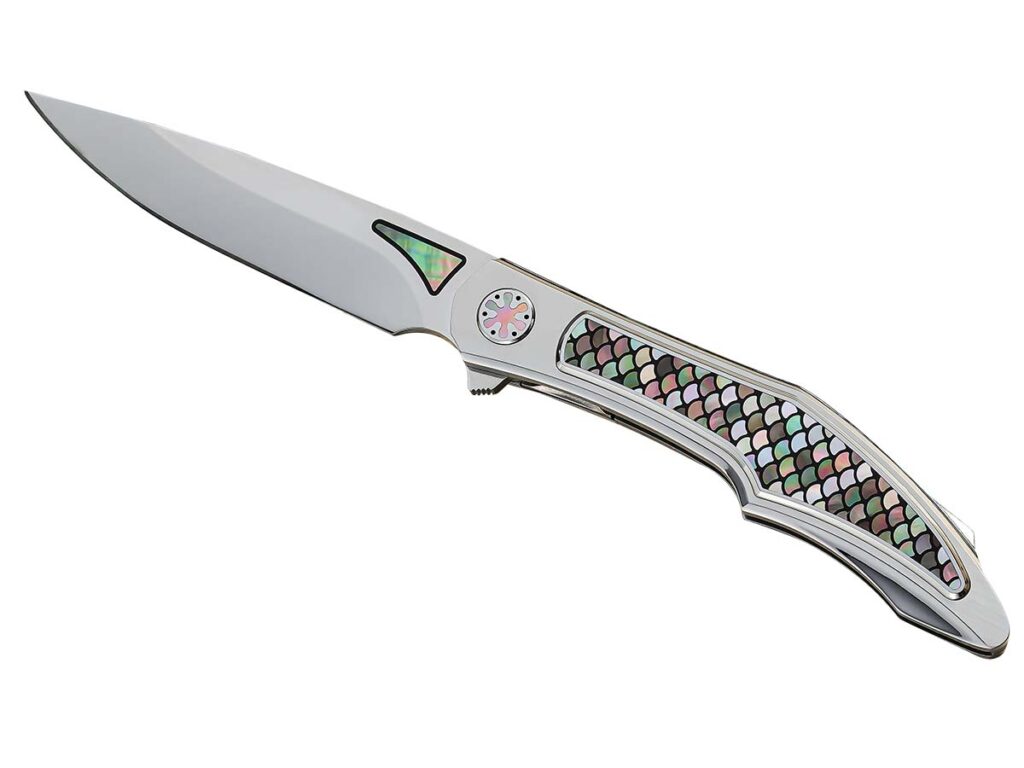
Eyal Landesman Mini Tritan Flipper
The Mini Tritan flipper folder by Eyal Landesman sports a 3.5-inch blade of mirror-polished RWL34 stainless steel. The mosaic “fish scale” inlay includes assorted “scales” of black-lip and white mother-of-pearl. Closed length: 4 inches.
Corrado Moro Vantage Framelock Flipper Folder
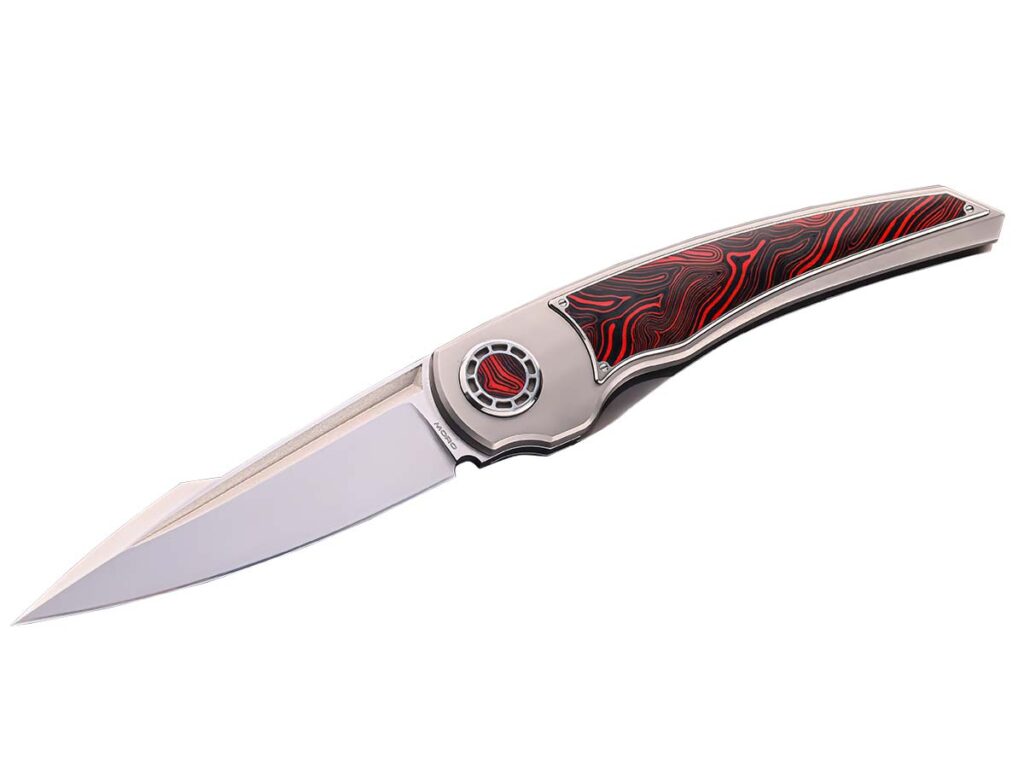
The Vantage framelock flipper folder by Corrado Moro features a 3.38-inch harpoon-pattern blade of RWL34 stainless steel with a tapered fuller in the flat. The frame and pocket clip are Grade 5 titanium and the handle and pivot inlays are a G-10 composite. Closed length: 4.62 inches.
Chris Richardson Lockback Folder
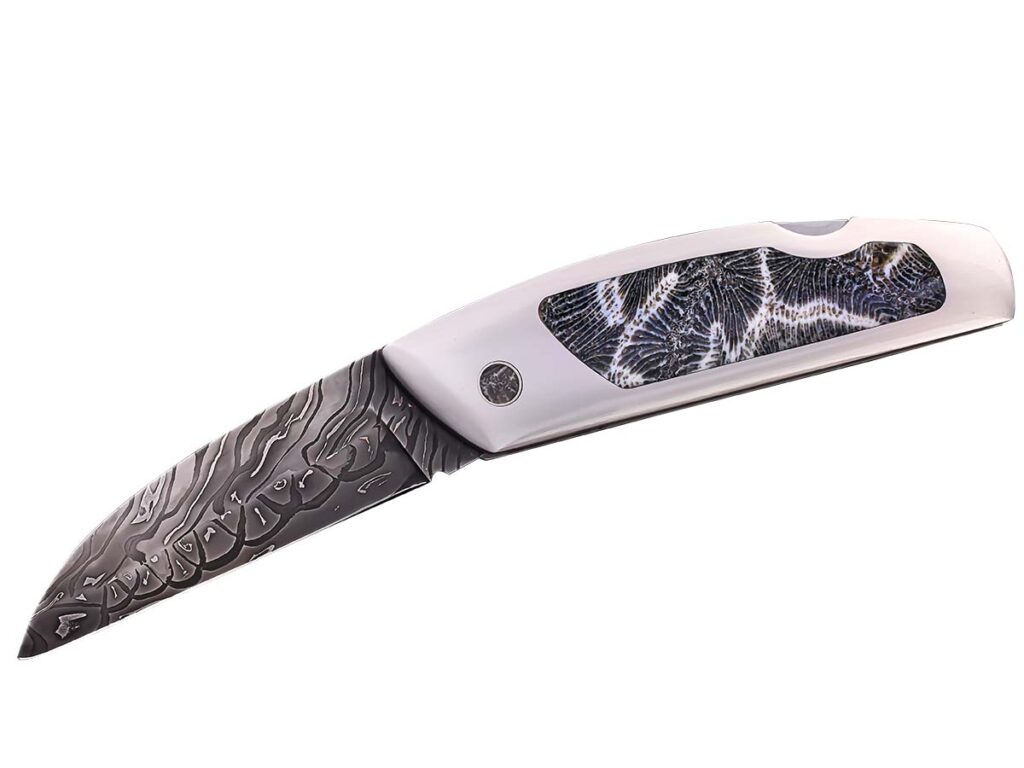
Panel and pivot inlays of fossilized coral and a 3.5-inch flat-ground blade of mosaic twist damascus top off Chris Richardson’s lockback folder. Frame: 416 stainless steel. Closed length: 4.5 inches.
Jeremy Krammes Helix Flipper Folder
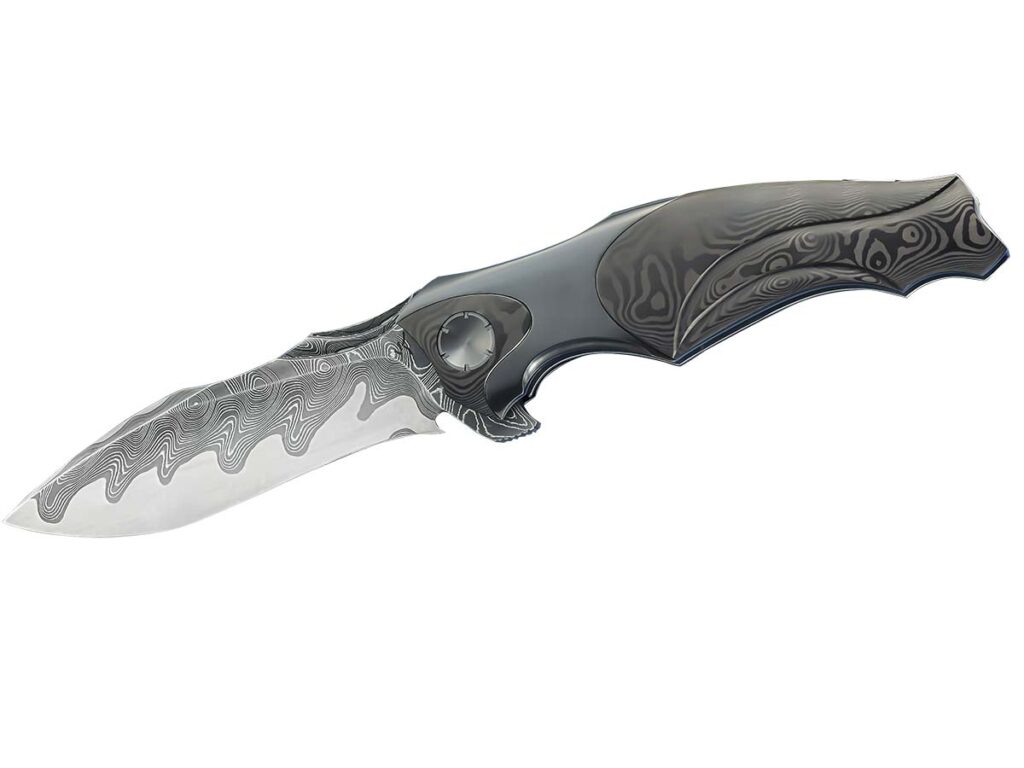
Jeremy Krammes helps celebrates his 20th year of knifemaking with his Helix flipper folder in Chad Nichols damascus blade steel, a titanium frame, carbon fiber scales and a zirconium bolster and pocket clip. The 3.5-inch recurve blade is hollow ground.
Edison Barajas Waka Folder
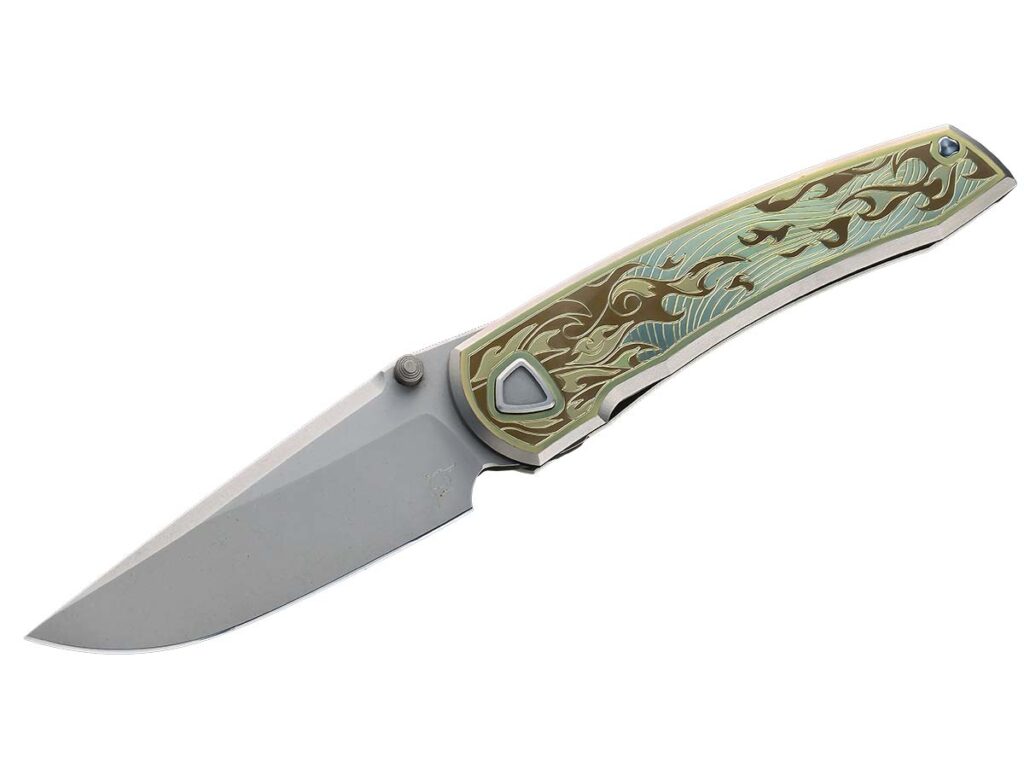
Edison Barajas combines new school with old on his Waka folder, using titanium for the scales engraved by Wilfred Valtakis II and a thumb stud to open the 3.25-inch blade of premium stainless steel. Closed length: 4.5 inches.
Stefano Compostella Stria XL
Stria XL by Italy’s Stefano Compostella sports a 5-inch wharncliffe blade of premium stainless steel. The linerlock flipper folder features Damasteel handle overlay and titanium liners.
Cool collaborations offer the best of both blade worlds.
Custom/factory collaboration knives have long been popular sellers. A custom knifemaker designs the knife and the company either makes or has it made, providing cutlery consumers with a knife at a lower price point and readier availability than almost always is the case when ordering a custom version directly from a custom maker.
KA-BAR Dozier Folding Hunter
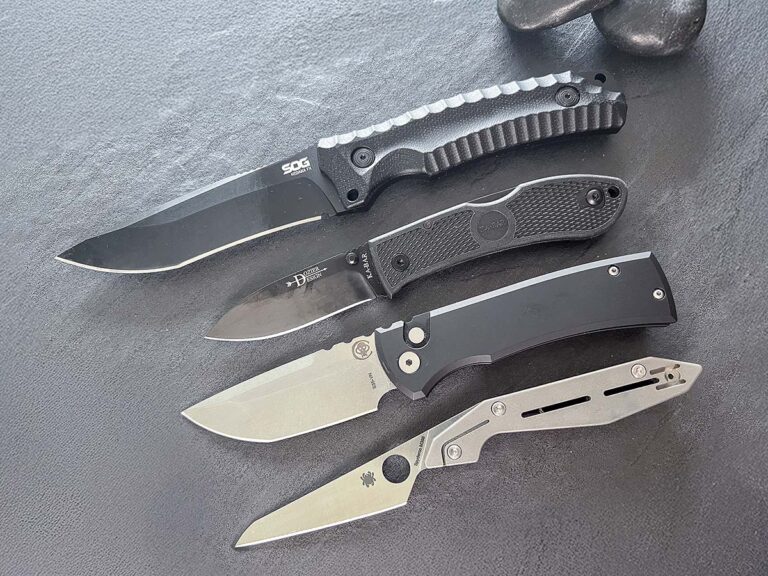
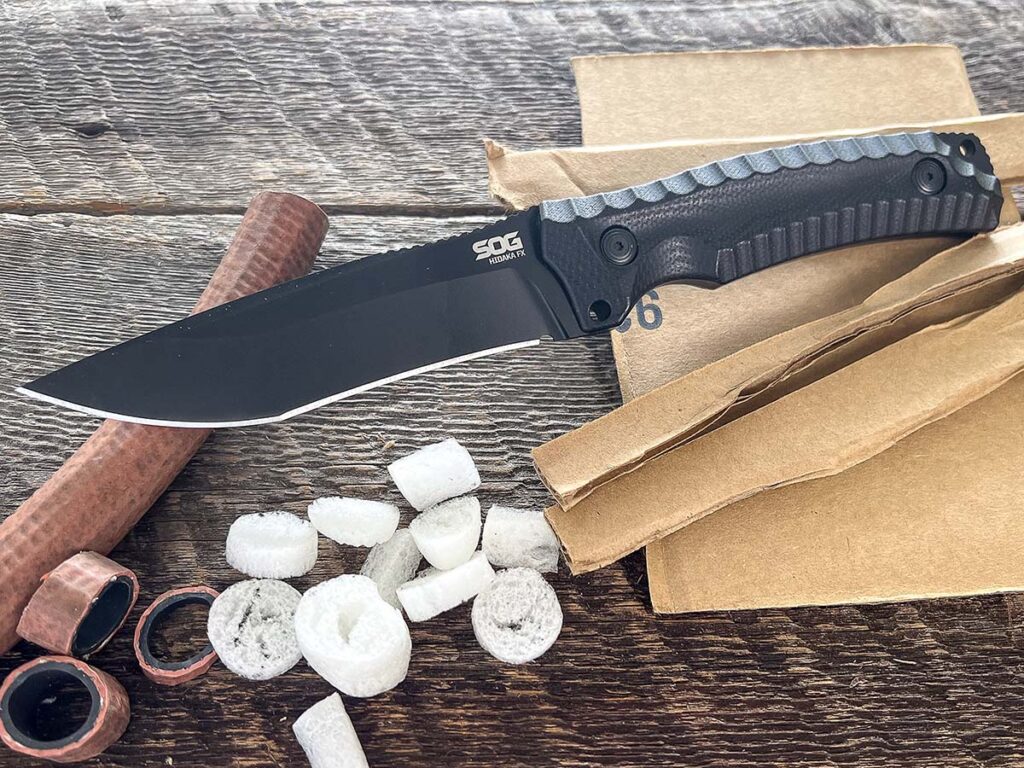
Thicker materials like cardboard and hose are no match for the blade of the SOG Hidaka FX 3V, a Kiku Matsuda design. A slight hint of a recurve to the main cutting edge no doubt helps cutting power. Overall length: 10 inches.
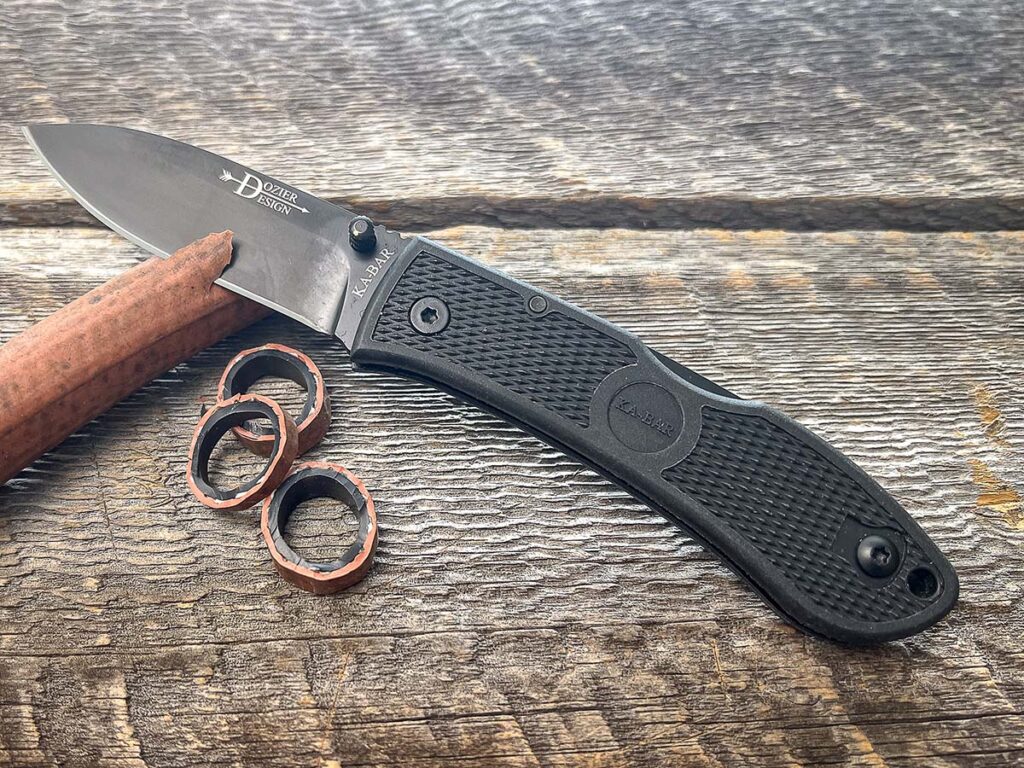
A long-time example of the genre is the collaborations between KA-BAR Knives and veteran knifemaker Bob Dozier. The original Dozier Folding Hunter series consists of mid-sized lockbacks with manufacturers’ suggested retail prices south of $50, offering plenty of bang for the buck. The knives provide ease of portability combined with the high utility of a drop-point blade.
The series proved such an excellent seller for KA-BAR that the company decided to also market it in a higher-grade steel to enhance performance and edge holding: CPM S35VN stainless. The standard KA-BAR Dozier Folding Hunter has D2, a very respectable, hard-wearing blade steel that’s tried and true in the industry. MSRP: $47.58. The S35VN iteration has an MSRP of $97.01 and like the D2 version is made in Taiwan.
While somewhat of a significant price increase, remember, you’re getting a high-end blade steel in return. S35VN behaves a lot like its predecessor, S30V, with a bit more edge-holding power. It’s also easier to resharpen than S30V. S35VN will go the distance, drastically increasing your intervals of sharpening over standard D2. This is especially important if you field dress game on a regular basis. Even though S35VN is stainless, the knife comes with a DLC-coated blade for low glare as well as added corrosion resistance.
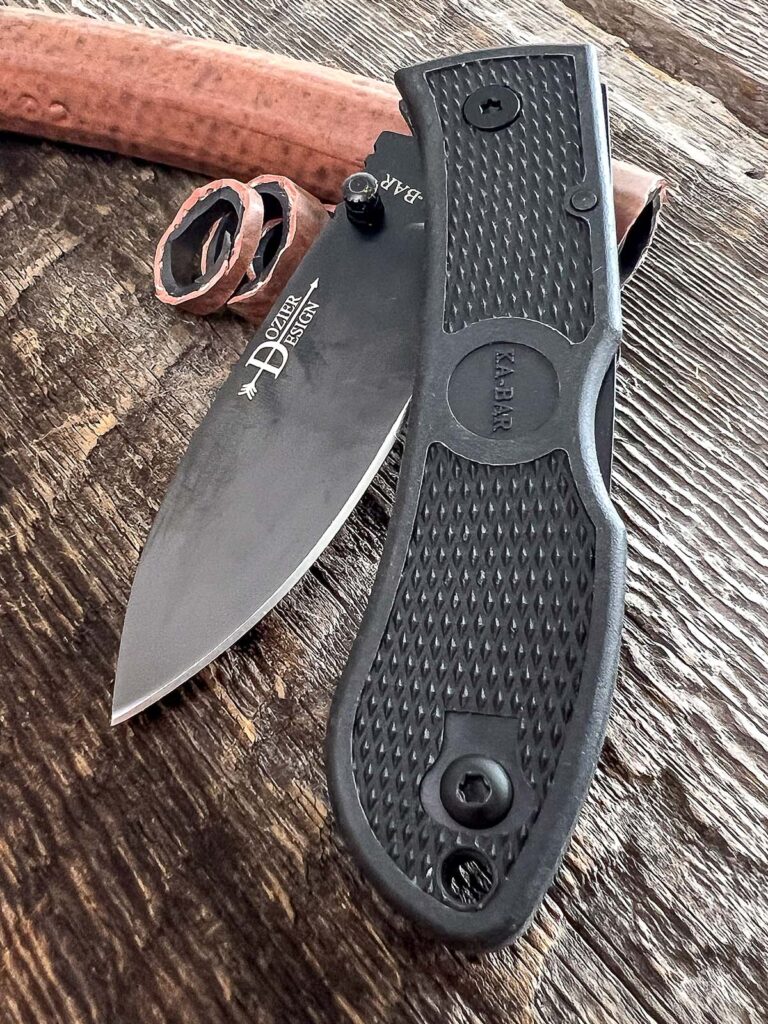
Even though S35VN is stainless, the Dozier comes with a DLC-coated blade for low glare as well as added corrosion resistance. Raised diamond texturing molded into the handle does a great job at keeping your hand in place even when wet. Country of origin: Taiwan. Closed length: 4.25 inches.
Out of the box the edge on the sample was good, but not quite there for my tastes. So, with a bit of work I got the blade hair-popping sharp. The 3-inch blade is a sweet spot length for EDC—big enough to tackle most cutting chores and small enough to carry comfortably without added bulk or length.
The handle’s slender nature also enhances EDC ability. It’s flat and doesn’t “print” in the pocket. Raised diamond texturing molded into the black, lightweight Zytel scales does a great job keeping your hand in place even when wet. It might not be the best-looking grip but it’s definitely geared for function, and that’s very important in a working folder. The pocket clip carries the knife blade tip up and is reversible to accommodate lefties.
The single thumb stud deploys the blade easily and the action is smooth. The knife is very controllable at all times, a testament to both its overall size and handle design/ergonomics. The lockback mechanism is swift and secure. I had no problems with it at all. For a nice, sturdy, compact lockback folder, the Dozier in S35VN is hard to beat.
Spyderco/Paul Alexander SLIPIT
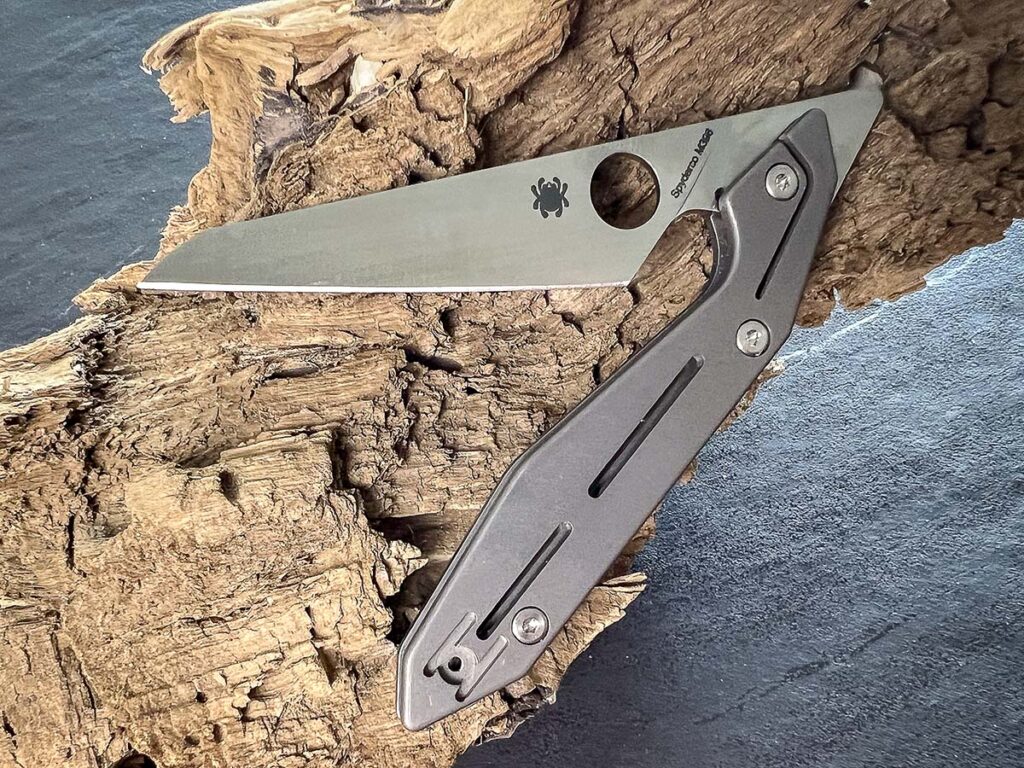
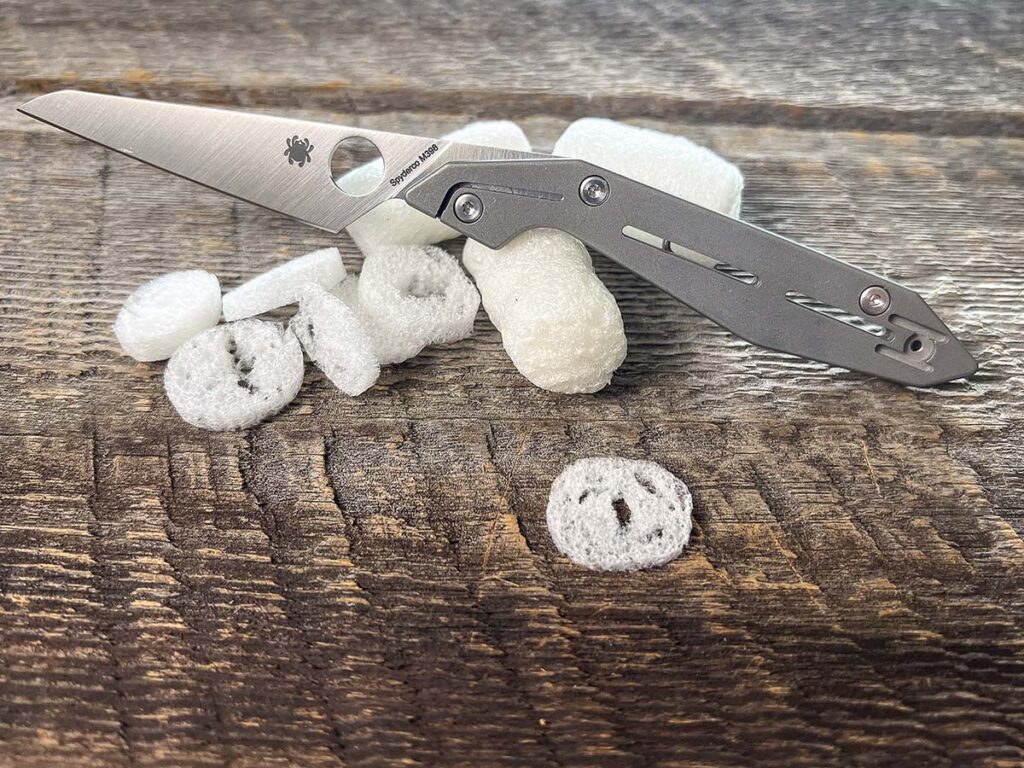
Designed by Paul Alexander, the Spyderco Nand and its angular handle theme carries over into the ergonomics, with finger recesses and a choil as well. Despite its angular appearance, the handle is quite comfortable. Closed length: 4.66 inches.
When it comes to collaborations, Spyderco has always been in the forefront of the genre. It also has some interesting folders in its SLIPIT family of non-locking folders. The Nand is an unusual, exciting example of both. Designed by Paul Alexander, an accomplished automotive mechanical engineer and a seasoned knife enthusiast, the Nand combines an angular approach to folding knife design with high-tech materials, all with the precise execution that Italian manufacturing offers. The result is sort of the Cybertruck of folders.
The 3.19-inch reverse tanto blade is fully flat ground from a new super stainless steel from Bohler called M398. Basically, Bohler took its M390 and increased the carbon and vanadium content for even more edge holding.
There are two methods of deploying the blade. The trademark Spyderco round hole is present as well as the extended blade spine that allows the Nand to be thumbed open similarly to a straight razor. The correct terminology for it is a front flipper.
Machined of titanium, the handle translates into an extremely lightweight knife and is where things get a bit interesting. The integral double-ball-bearing detent system not only holds the blade closed but also provides a positive detent when the blade is open. The “spring arms” for the detents are cut out of each handle half and, to create pressure, are bent in a similar manner to a framelock. Ceramic balls implanted on the ends of the spring arms create the open and close detents.
The wharncliffe blade has a full flat grind, which makes the Nand an excellent slicer. Out of the box, the knife cut plastic foam peanuts easily.
The handle’s angular features might make the knife look a bit awkward but don’t dismiss it until you put the Nand in your hand (see what I did there?). With the knife open, a kind of choil forms so you can choke up on the blade for an extra measure of control. Barring that, you can hold the knife a bit further back with your index finger resting inside the handle’s finger recess. Either grip brings your hand over the blade spine of the opened knife and helps secures the blade open as an added measure to prevent accidental closure. The minimalist wire clip is reversible to accommodate ambidextrous carry.
While the Nand may look a bit different, it’s easy to use and holds its own as an EDC folder. The reverse tanto blade has a highly effective tip that pierces easily. The straight-line cutting edge is simple to resharpen, has a lot of bite and slices through tough materials effortlessly. The knife feels very secure despite its slender nature. Choking up around the choil feels good and secure in-hand, rendering the Nand easily controllable.
SOG KNIVES Kiku Matsuda Hidaka FX 3V
Thicker materials like cardboard and hose are no match for the blade of the SOG Hidaka FX 3V, a Kiku Matsuda design. A slight hint of a recurve to the main cutting edge no doubt helps cutting power. Overall length: 10 inches.
The Hidaka FX 3V is a continuation of the exciting collaboration between SOG Knives and legendary Japanese knifemaker Kiku Matsuda. Known for their distinctive, flowing design style, intricately sculpted handles and hollow-to-flat compound-ground blades, Matsuda’s designs stand out.
His new SOG entry is an exciting tactical/outdoor fixed blade with a 4.8-inch tanto blade ground from ultra-tough CPM 3V carbon steel paired with a multi-faceted sculpted handle of black Micarta®. The blade’s angled tanto tip has a flat grind and the primary cutting edge is hollow ground. When you look at the blade in the light, you can see the grinds transition. Very cool—not too many factory knives have this feature and no doubt it’s much trickier to pull off than a standard tanto blade.
The flat-ground tip has a thicker cross section for greater penetration strength and general tip durability during hard use. The hollow-ground main bevel allows the blade to slice easily. Notches on the thumb-rest portion enhance control and a non-slip grip when bearing down on the blade. A black PVD coating helps with corrosion resistance and low-profile visibility.
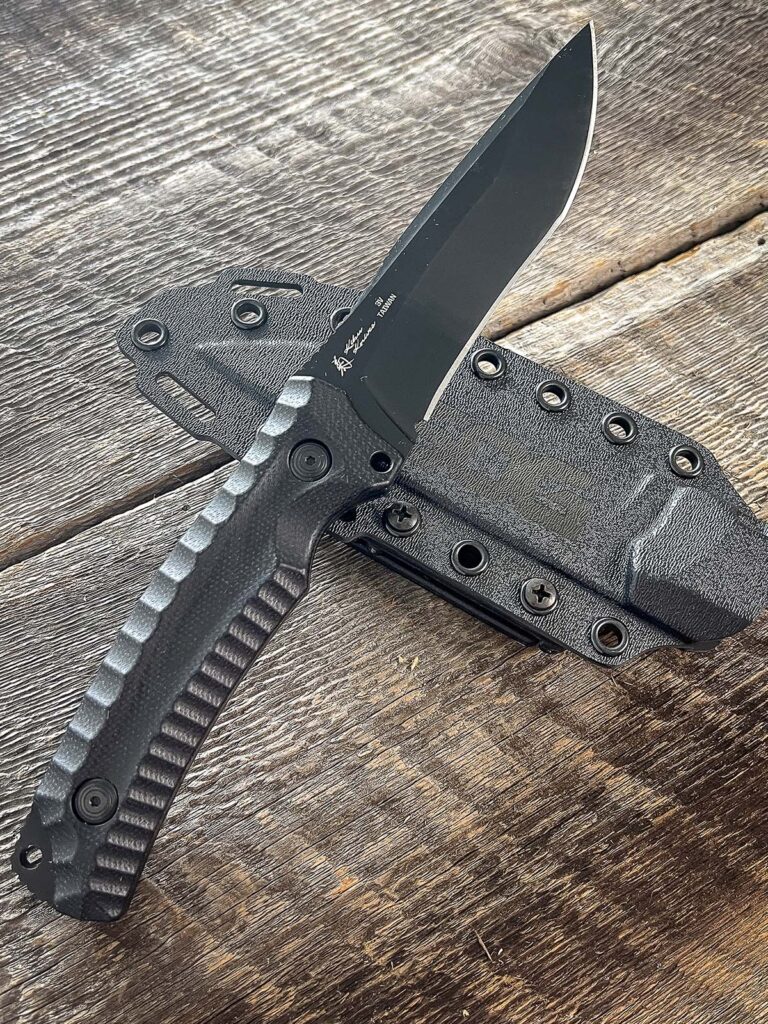
The handle is as interesting as the blade. The distinct, intricately sculpted grip features are a Matsuda trademark. The sculpting is not purely for looks but where form follows function. The middle of the handle is hollowed out on each side like one long groove. The handle edges sport a heavy chamfer and a series of scallops all the way around, the latter to enhance grip. A prominent groove helps seat the index finger and provide an anchor point. The total blacked-out look—handle screws included—gives a somewhat sinister tactical appearance. The exposed pommel also sports traction notches for a better thumb purchase.
The SOG’S handle edges sport a heavy chamfer and a series of scallops all the way around, the latter to enhance grip. A sturdy molded Kydex sheath holds the blade securely and an audible snap lets you know when the knife is fully seated.
Overall, the Hidaka FX 3V is just an interesting fixed blade. Not only does the compound-ground blade look cool but it is also very practical. Thicker materials like cardboard and hose are no match for it. A slight hint of a recurve to the main cutting edge no doubt helps cutting power.
The knife comes with a sturdy molded Kydex sheath. It holds the blade securely and an audible snap lets you know when the knife is seated. A hinged fastener affixes the sheath to your belt. The device is similar to the Blade-Tech Tek-Lok and operates similarly. The knife rides comfortably on a belt and the handle is easily accessible. Country of origin: Taiwan. MSRP: $309.95.
Pro-Tech Knives Ramon Chavez Redencion 229
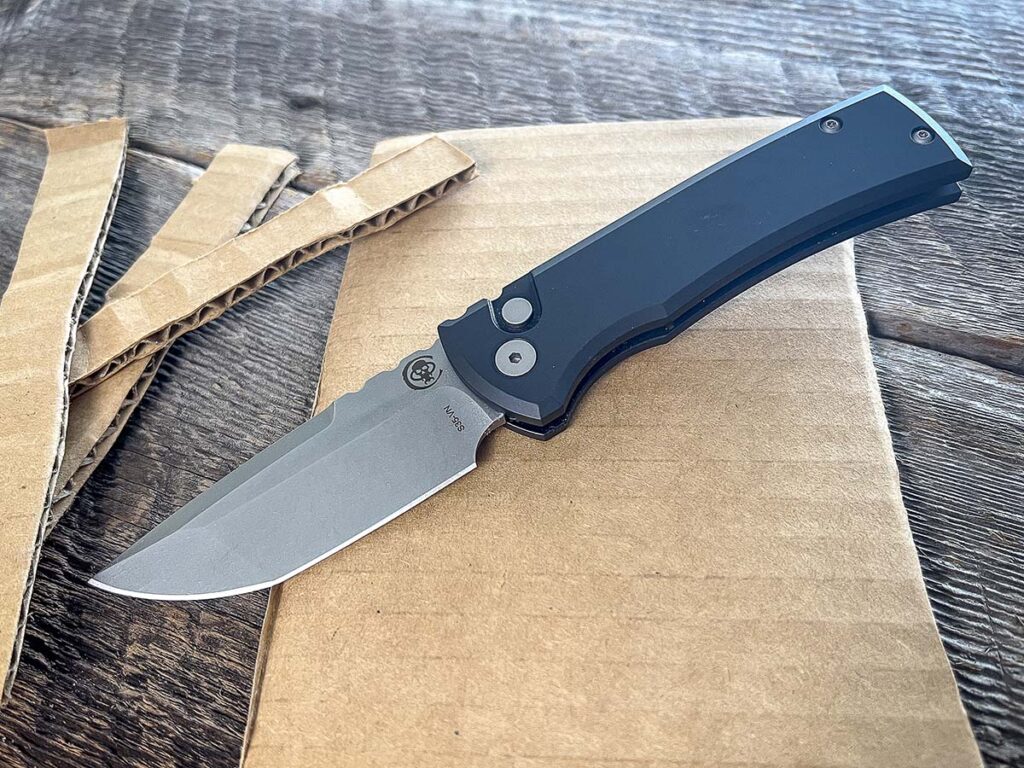
The Redencion 229 is a workhorse folder. The aluminum handle and S35VN steel blade denote that it’s in it for the long haul. Cardboard is no match.
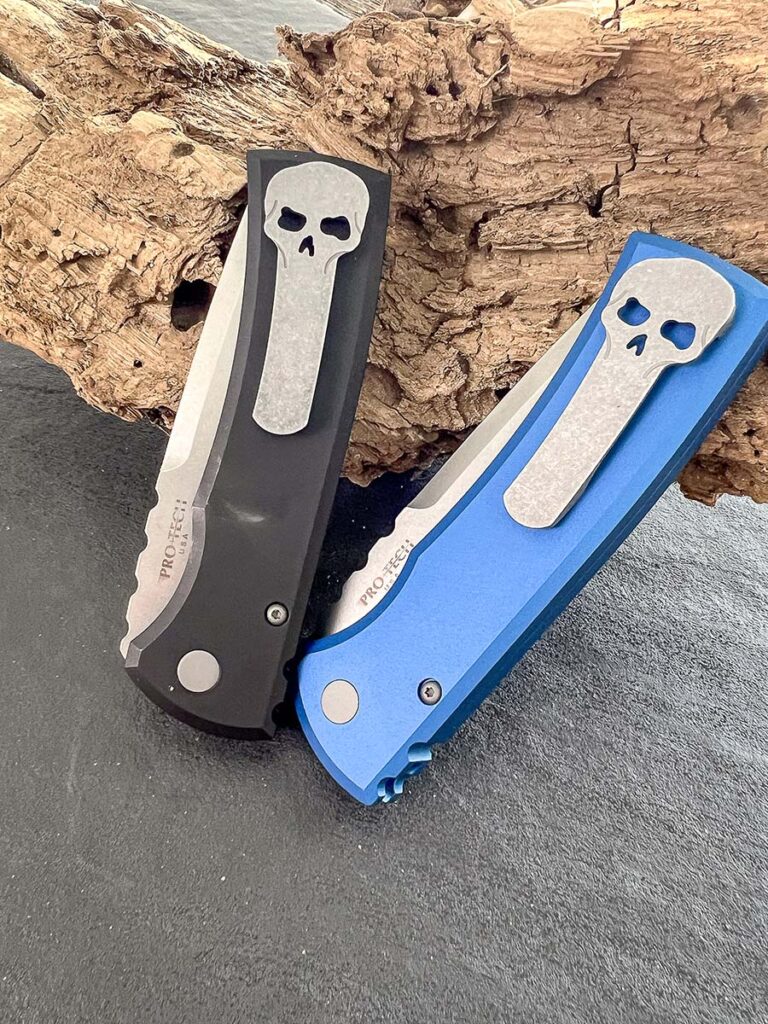
One of the most exciting factory automatics going is the Chaves Redencion 229 by Pro-Tech Knives. Designed by knifemaker Ramon Chavez, the auto combines his bold design style with Pro-Tech’s excellent manufacturing capabilities and automatic action. The 3.3-inch tanto blade is high-performance CPM S35VN. The handle is T6-6061 hard-anodized aluminum for light weight and strength. The Chavez signature skull pocket clip adds attitude to the hard-firing automatic. At 4.5 inches closed, the folder carries well and works hard.
With the press of a button, the blade flies with authority and hits hard when it locks. If you’ve played with Pro-Techs you know what I’m talking about. The blade is flat ground and comes with a very sharp cutting edge out of the box. It will easily handle most tough cutting chores. It goes through cardboard and hose easily.
Designed by Ramon Chavez, the Pro-Tech Redencion 229 and its skull pocket clip stand out. Given the clip’s width, it’s also highly functional and durable. You are not going to spring this clip from your pocket accidentally. Note that the clip screws are inserted from inside the handle for a cleaner look.
The blocky handle allows for a secure grip. I noticed no hotspots or any hand discomfort. The aluminum scales are solid and generally hold up to hard use. Some might be apprehensive about the pocket clip as I was at first. Its size and width makes it hard to feel in-hand. Another good thing is the width means it won’t accidentally disengage if caught on anything. It’s stout! It provides the right amount of tension when the knife is clipped to the pocket. Another neat thing is you see no clip mounting screws because the clip is screwed to the handle from the inside—a very cool extra touch.
The Redencion 229 is a great EDC automatic that has attitude and high utility all in one interesting folder. Made in the USA, the model with a stonewashed blade and black anodized handle has an MSRP of $300. Black blade iterations are also available, as well as a recently released drop-point version.
Lonnie Williams steampunk folder is one fast, loud auto.
As the eighth entry saluting my addiction to steampunk folders, Steam Hunk is a giant, 2-pound, all-damascus auto. It’s powered by a standard leaf spring as well as two coil helper springs. It’s fast and loud!
Of the 48 individual parts, 18 move. I just can’t do the glued-on gear thing. The blade fires by a palm-activated rocker lock with the safety switch at the left rear. Steam Hunk represents about 300 hours of work and 32 square inches of damascus.
The ultimate lineup of custom fighter knives—from integral designs and sub-hilts to exotic materials like copper damascus and mammoth tooth.
Fighters are some of the sexiest knives going. With many, even their curves have curves. Those less curvy make up for it with straight-line designs that look born to perform. If sex really does sell, fighters are the capitalists of cut.
Randy Caston
Randy Caston’s fighter features a 9 5/8-inch blade of 1084 carbon and 15N20 nickel-alloy steels. Scales: blackwood. The guard is mild steel. Overall length: 14.75 inche.(SharpByCoop image)
Adam Deville
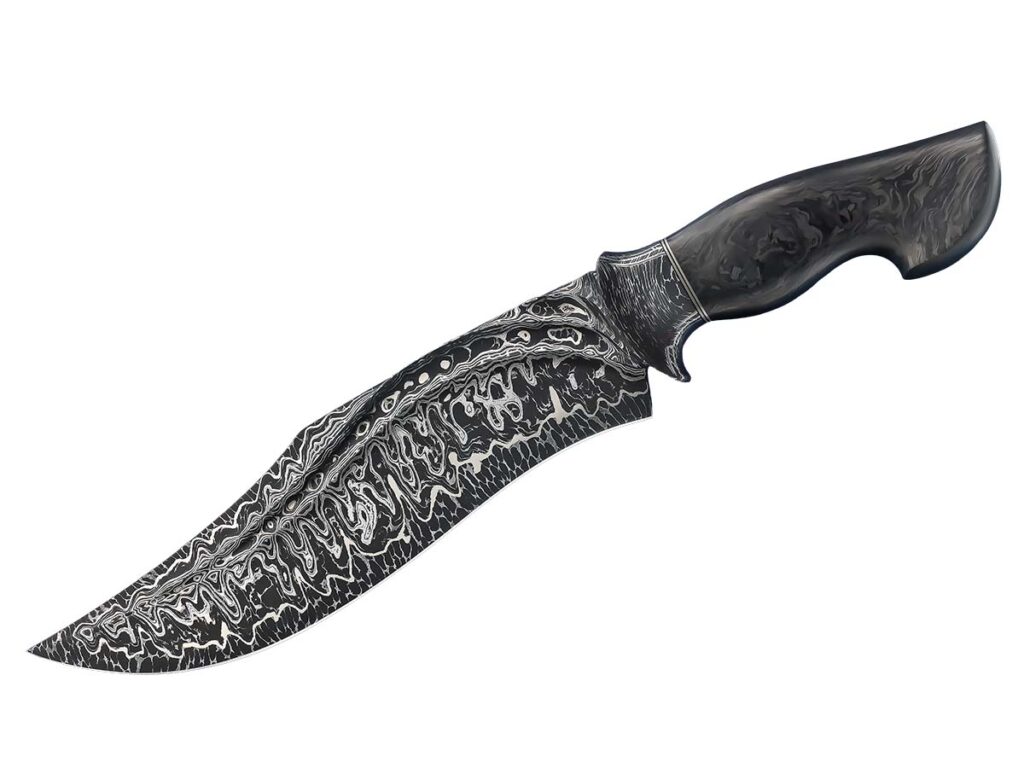
A nickel damascus with a Dragon Skin core forged by Adam Deville sporting a snakelike fuller completes the 10.5-inch recurve blade of Jordon Berthelot’s integral fighter. The scales are marbled carbon fiber. Overall length: 16.5 inches. (SharpByCoop image)
Dennis Friedly
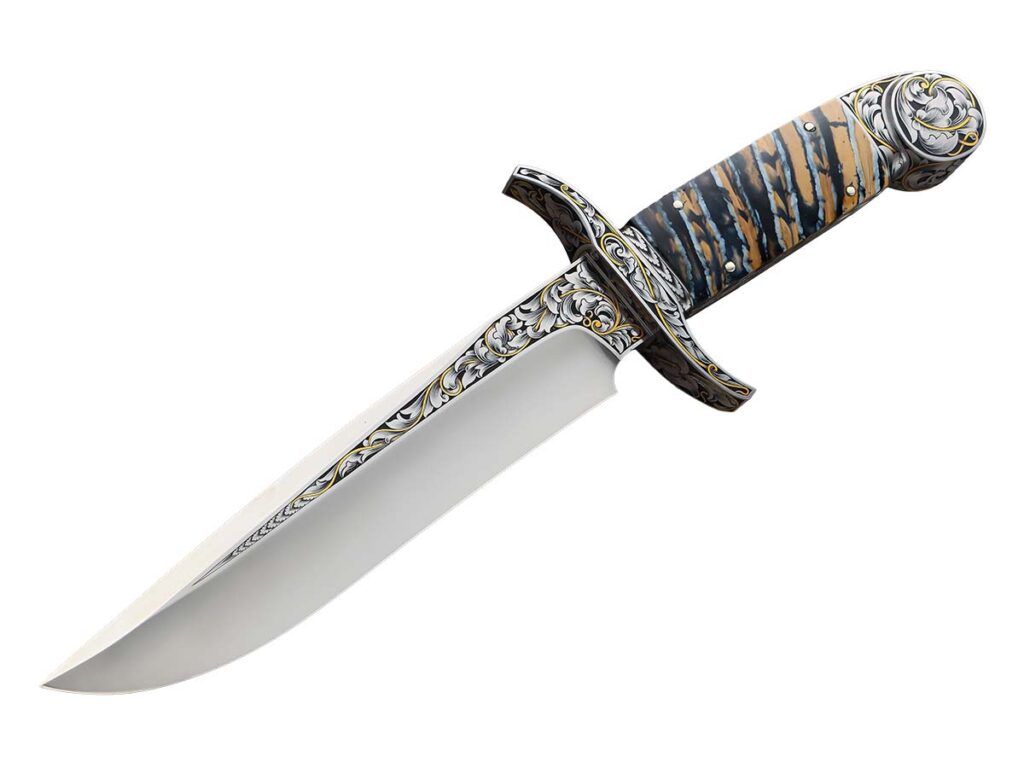
Dennis Friedly outfits his fighter-art knife in a 7.75-inch blade of hollow-ground CPM 154 stainless. The scales are mammoth tooth and the guard is 416 stainless. The engraving is by Ray Cover Jr. Overall length: 13 inches.(SharpByCoop image)
Patrick Harp
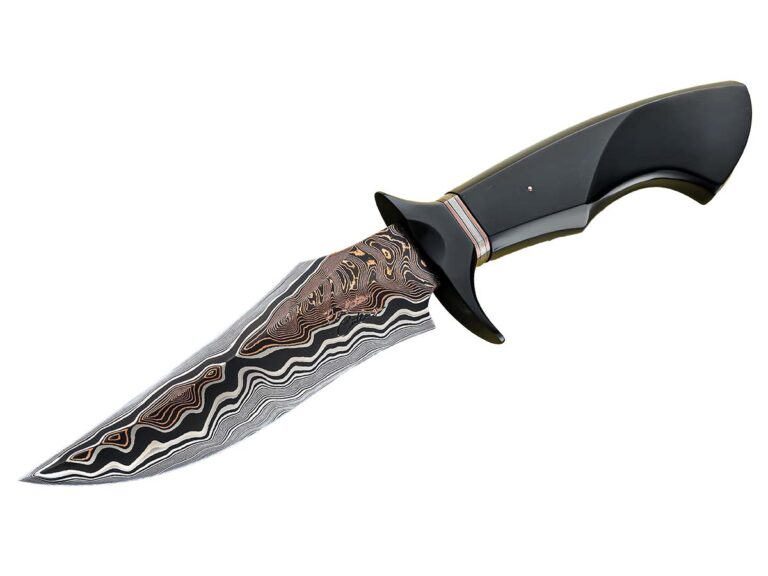
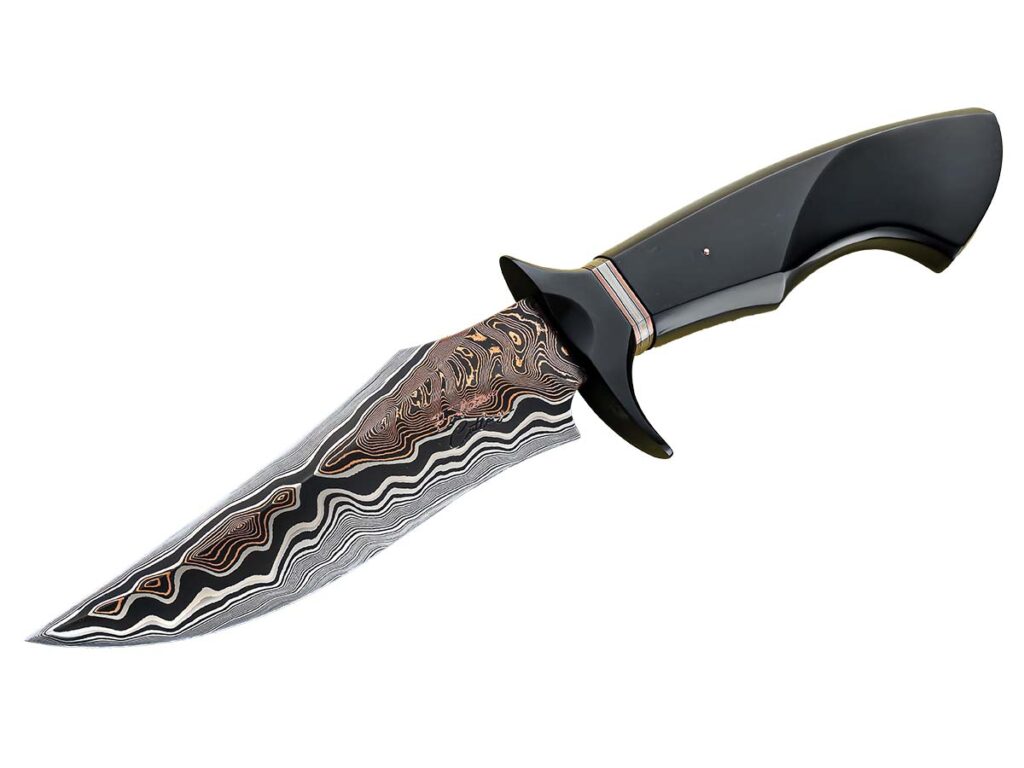
A 6-inch recurve blade in a full-flat-ground crushed W’s and copper damascus forged by Baker Forge & Tool top off a sub-hilt fighter by Patrick Harp of P. Harp Designs. The handle is basswood burl and the guard and sub hilt are wrought iron. Overall length: 11 inches. (SharpByCoop image)
Peyton Ramm
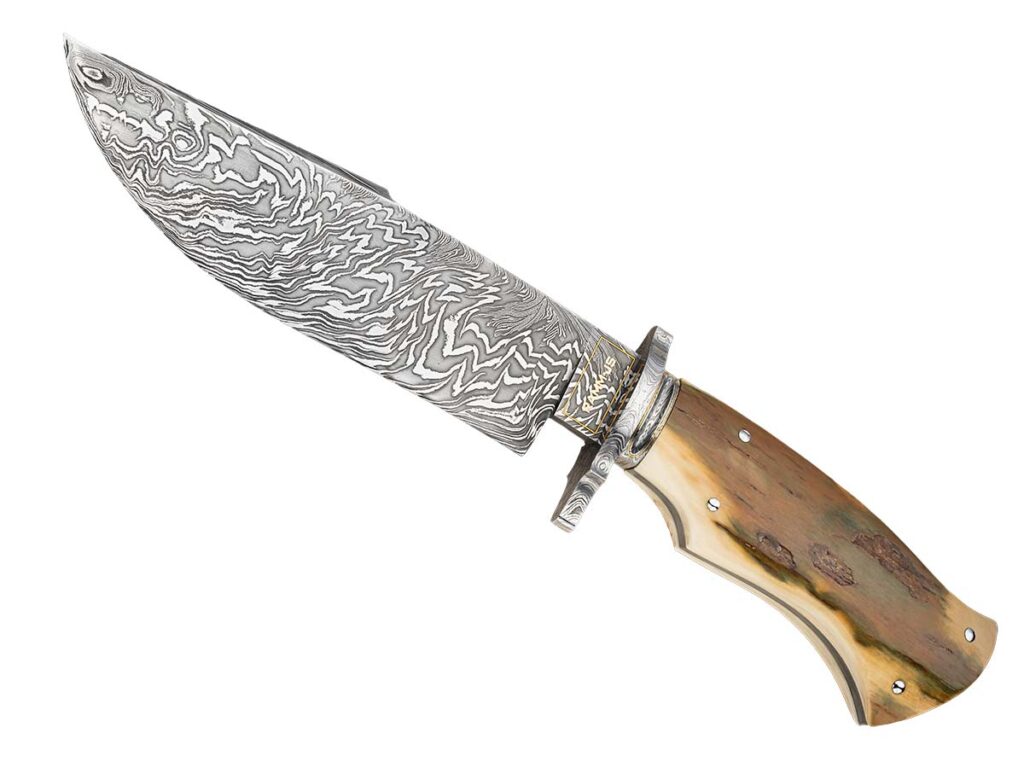
ABS journeyman smith Peyton Ramm opts for a 6 1/8-inch blade of a Transition damascus of 1084 carbon and 15N20 nickel alloy steels for his fighter. Handle frame: damascus. Scales: mammoth ivory. Guard: crushed W’s damascus. Fittings: same as guard but w/24k gold and silver inlays. Overall length: 10.75 inches. (Jocelyn Frasier image)
Steven Ramos
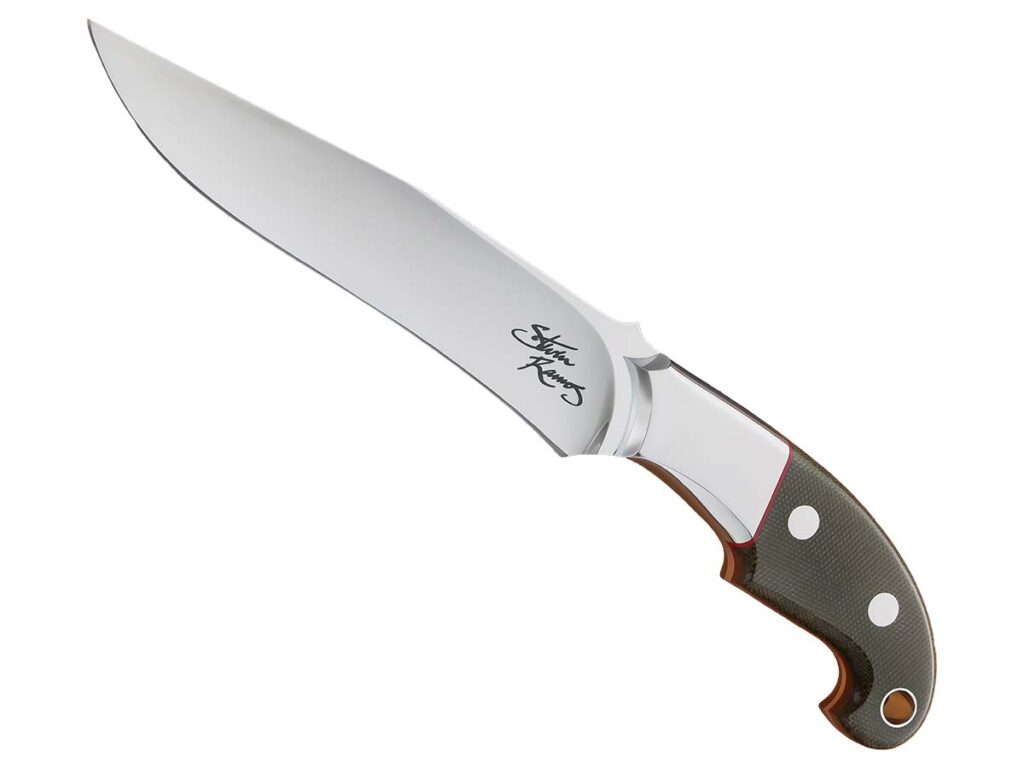
Peregrine by Steven Ramos offers up a 6-inch blade of hollow-ground RWL-34 stainless steel in a green canvas Micarta® handle with red fiber spacers. Bolster: 416 stainless steel. Overall length: 10.5 inches. (SharpByCoop image)
Dan Tompkins
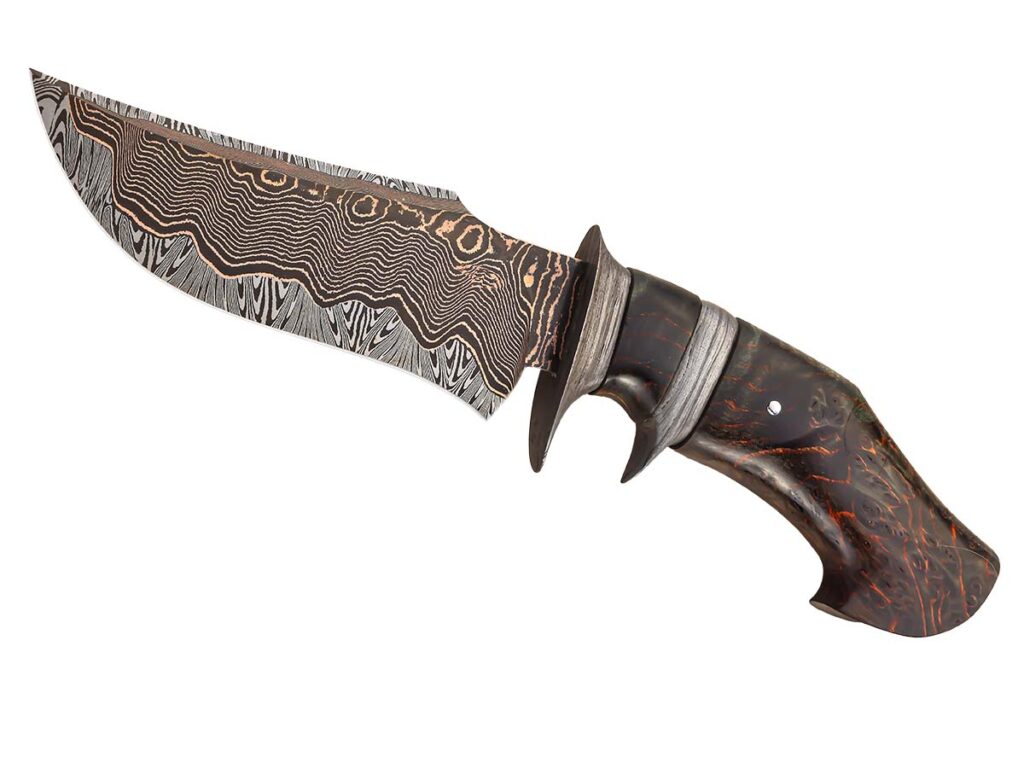
A 5.75-inch blade in convex-ground Riptide Ultra Coppermascus by Baker Forge & Tool and a black Richlite guard and handle comprise the double-edge fighter by Dan Tompkins of Evolution Cutlery. The copper spacers are also by Baker. Overall length: 11 inches.(SharpByCoop image)
Explore this collection of new hunting knives featuring custom blades forged with premium materials. Find your next heirloom fixed blade.
Step into the world of custom-crafted cutlery, where art and function meet in the field. This collection showcases the diverse and spectacular work of today’s finest knifemakers. We’re taking a look at a stunning array of new hunting knives, each forged with meticulous detail, featuring exotic materials like Sambar stag, ironwood, camel bone, and intricate Damascus steel.
Rocco Handmade Bear Creek Hunter
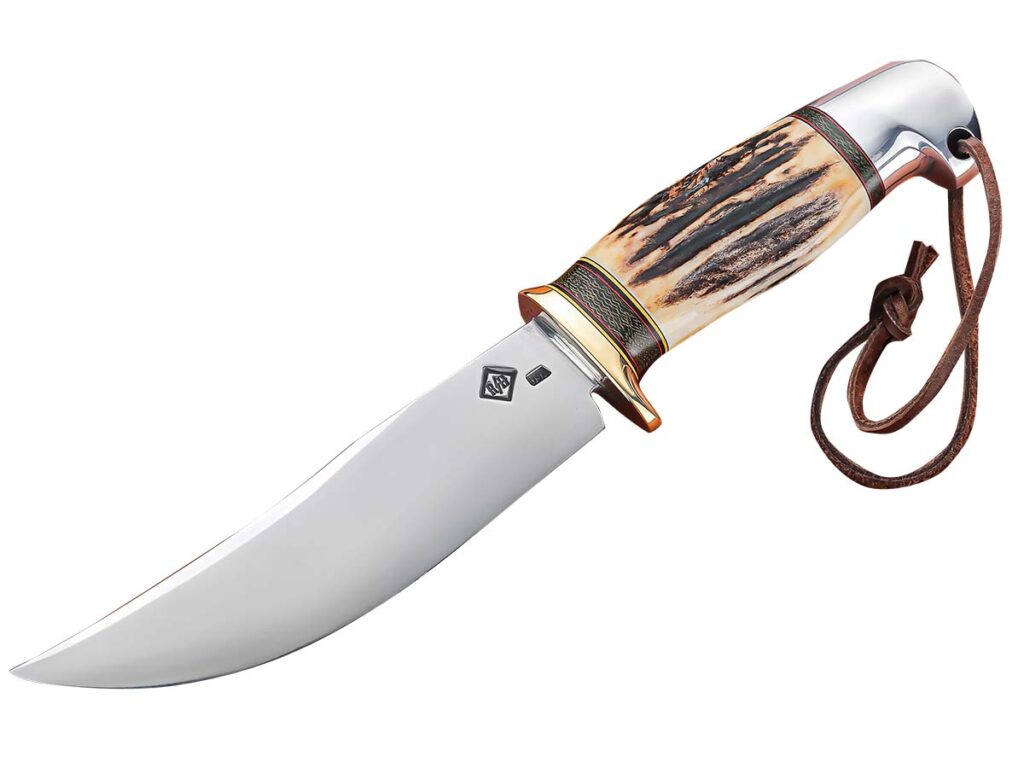
Blade length: 6” Blade material: 1095 carbon steel Blade grind: Convex Scales: Sambar stag Spacers: OD green canvas Micarta® and vintage tan, red and black fiber Pommel: Aluminum Guard: Soldered brass Overall length: 10.5” Sheath: Leather belt model w/snap strap Maker’s price for a similar knife and sheath: $495 Maker: Rocco Handmade (SharpByCoop image)
Rod Harris Antler Hunter
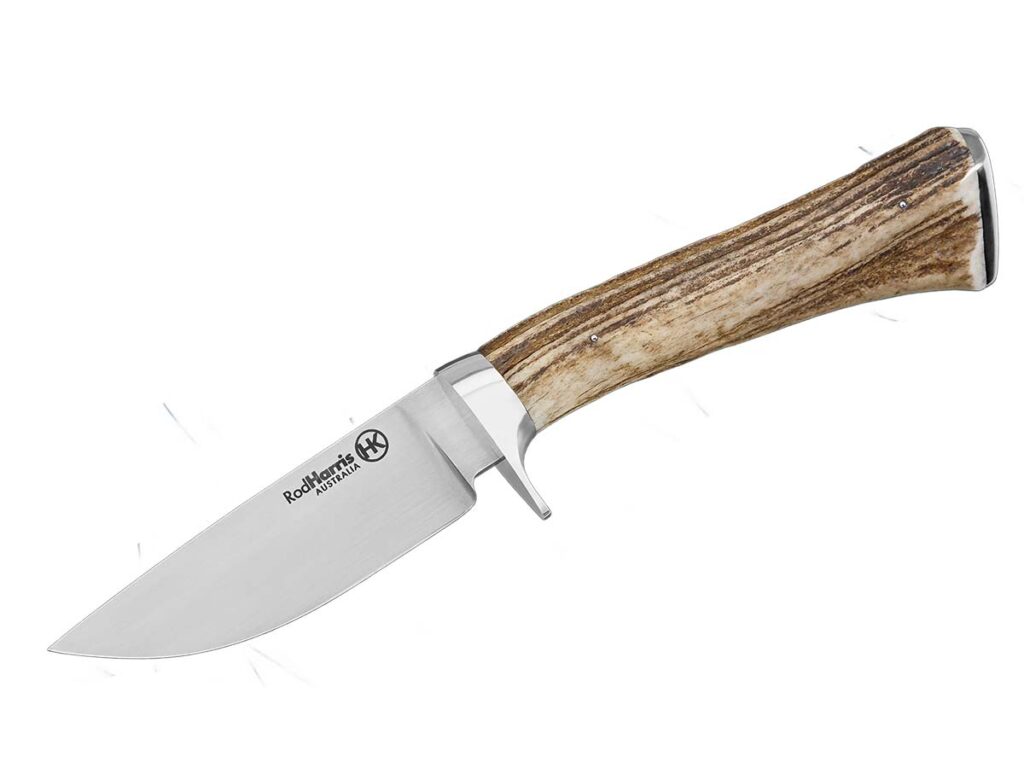
Blade length: 4” Blade steel: S35VN stainless Blade grind: Flat Scales: Sambar stag Guard: 416 stainless Overall length: 9.25” Knife to know: The stag is from the customer’s first deer kill; Rod Harris is a member of the Australian Knifemakers Guild Maker’s price for a similar knife: $650 at press-time exchange rate Knife to know: The Antler Hunter is the first time Rod Harris has both had one of his knives published and made a knife with a stag handle Maker: Rod Harris (Rod Hoare image)
Eland Green Huntin Buddy
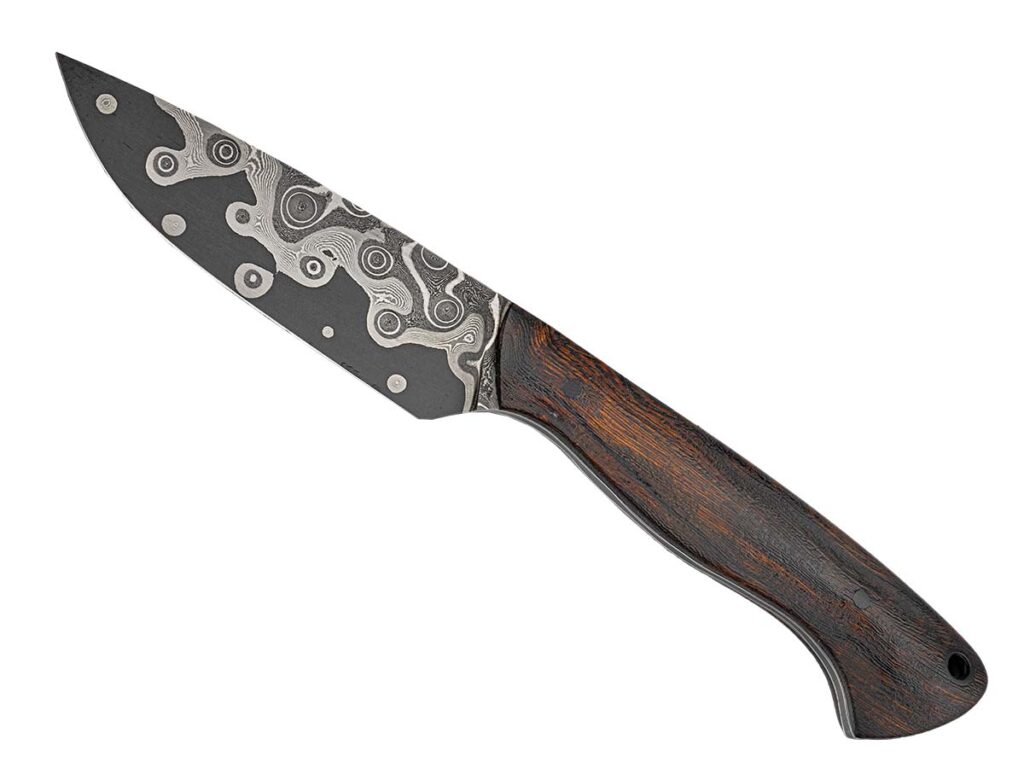
Knife type: Hunter Blade length: 3.5” Blade material: Bulldog damascus san-mai Blade grind: Flat Scales: Bead-blasted ironwood Overall length: 7.5” Sheath: Belt model, tooled black leather Maker’s price for a similar knife: $400 Maker: Eland Green, lostwoodknives.com (Jocelyn Frasier image)
Zane Dvorak Integral XL Hunter
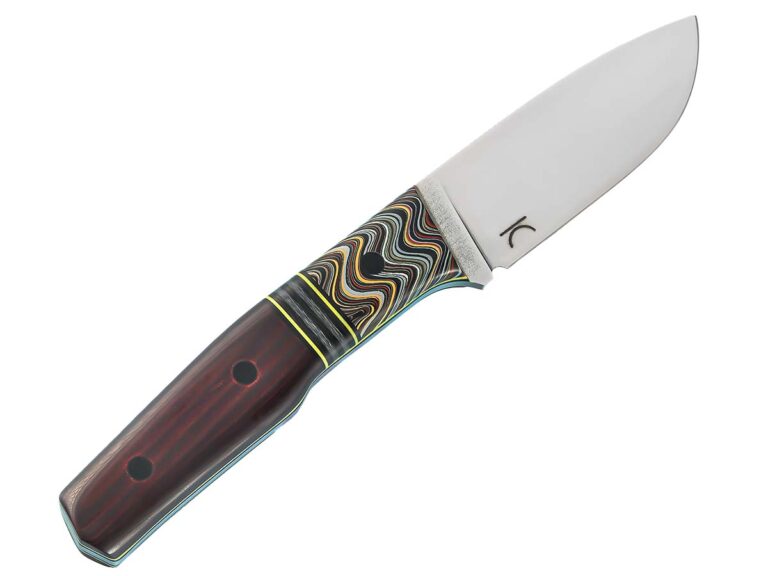
Knife name: Integral XL Hunter Blade length: 5.5” Blade material: Ghost-Fire Damascus of 1084 carbon and 15N20 nickel-alloy steels Blade grind: Convex Scales: Black G-10 Overall length: 10.5” Maker’s price for a similar knife: $2,500 Maker: Zane Dvorak, zdforge.com (Jocelyn Frasier image)
Shawn McIntyre Dress Hunter
Blade length: 3.75” Blade material: A twist W’s damascus of 1084 carbon and 15N20 nickel-alloy steels Blade grind: Flat w/convex edge Scales: Heirloom-fit camel bone Handle frame: 1065 carbon steel w/matte blue finish Guard: Same material as frame Overall length: 7.75” Maker’s price for a similar knife: Check w/maker for more info Knife to know: Best Hunter Award Winner, 2025 Australian Knifemakers Guild Melbourne Knife Show; inspired by the classic Jerry Fisk Sendero hunter; Shawn McIntyre is an ABS master smith Maker: Shawn McIntyre (Rod Hoare image)
Dauntless Clifft Bowie
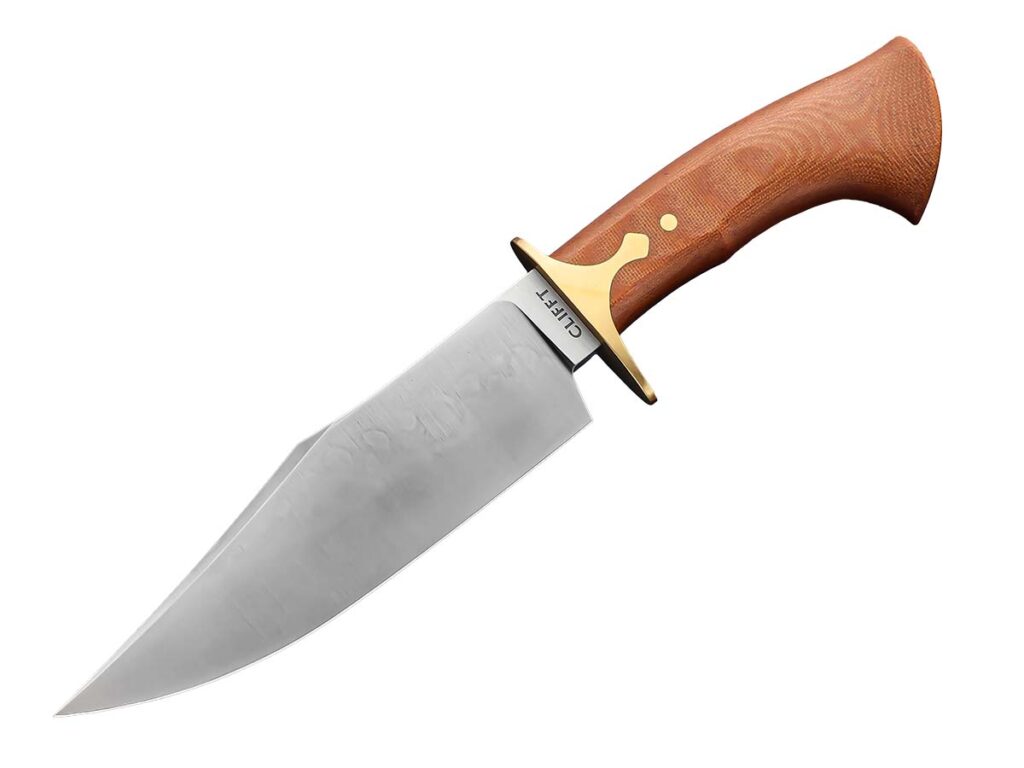
Knife name: Clifft Bowie Blade length: 7” Blade material: 125Cr1 carbon steel Blade @the thickest: .25” Blade pattern: Clip point (also comes in a harpoon point) Construction: Hidden tang Scales: Natural canvas Micarta® (also in black G-10) Overall length: 13” Country of origin: USA Sheath: Leather w/retention strap; ambidextrous carry; by Chattanooga Leather Works Knife to know: Won Best American-Made Knife at BLADE Show Texas 2025 MSRP: $575 Company: Dauntless, dauntlessmanufacturing.com (SharpByCoop image)
Charlie Lloyd Hunter
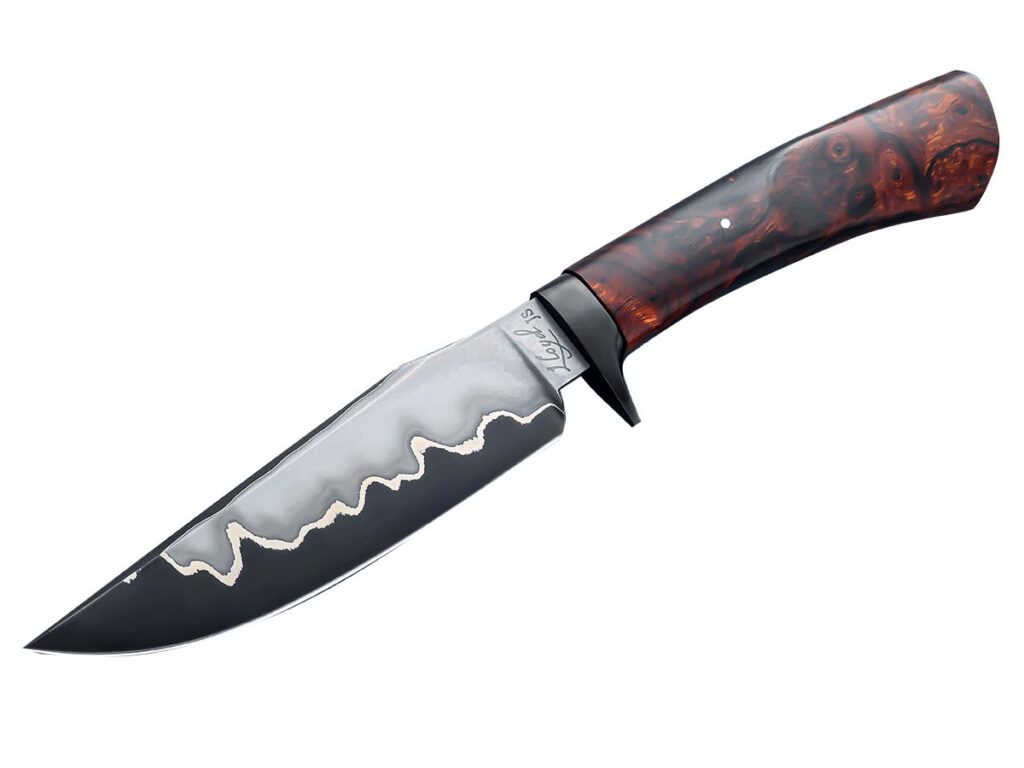
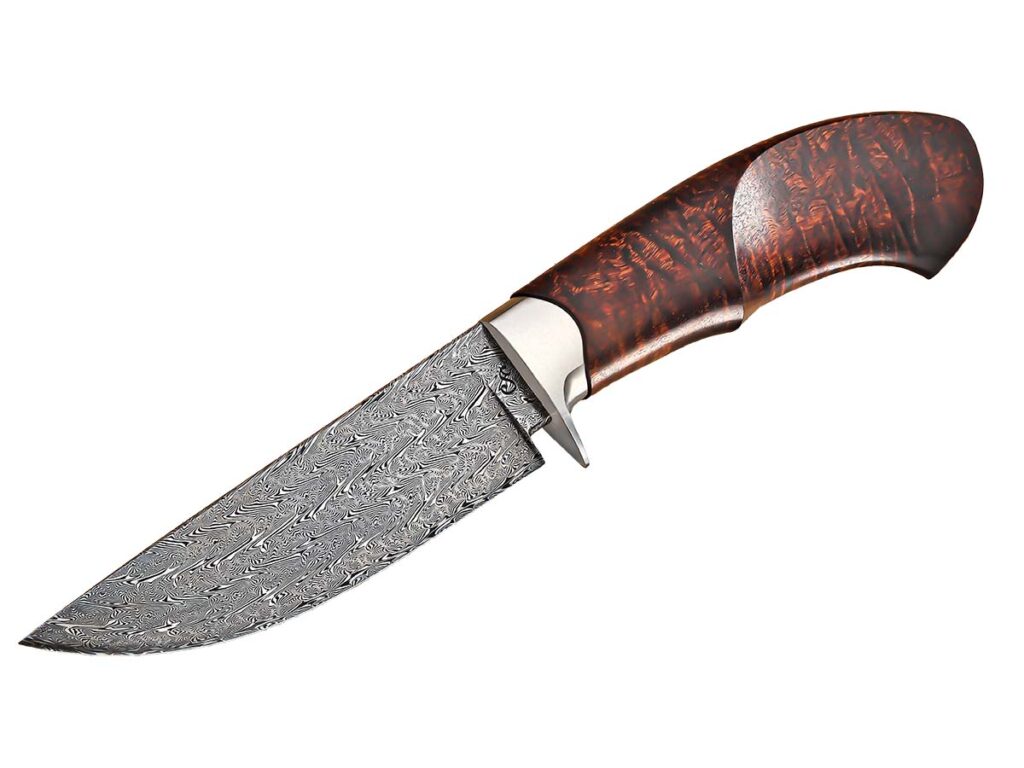
Blade length: 5.75” Blade material: Cu-mai Blade grind: Flat Scales: Ironwood Guard: Hot blued Overall length: 10.5” Knife to know: Charlie Lloyd is an ABS journeyman smith Maker’s price for a similar knife: $750 Maker: Charlie Lloyd (SharpByCoop image)
Camille Sennegon Hunter
Blade length: 4.5” Blade material: W’s multi-bar (6 bars) damascus of O2 carbon and 15N20 nickel-alloy steels Blade grind: Flat w/convex edge Scales: Curly gidgee Guard: 304 stainless steel Overall length: 9.25” Maker’s price for a similar knife: $1,300 Knife to know: Camille Sennegon is a journeyman smith in the ABS Maker: Camille Sennegon (SharpByCoop image)
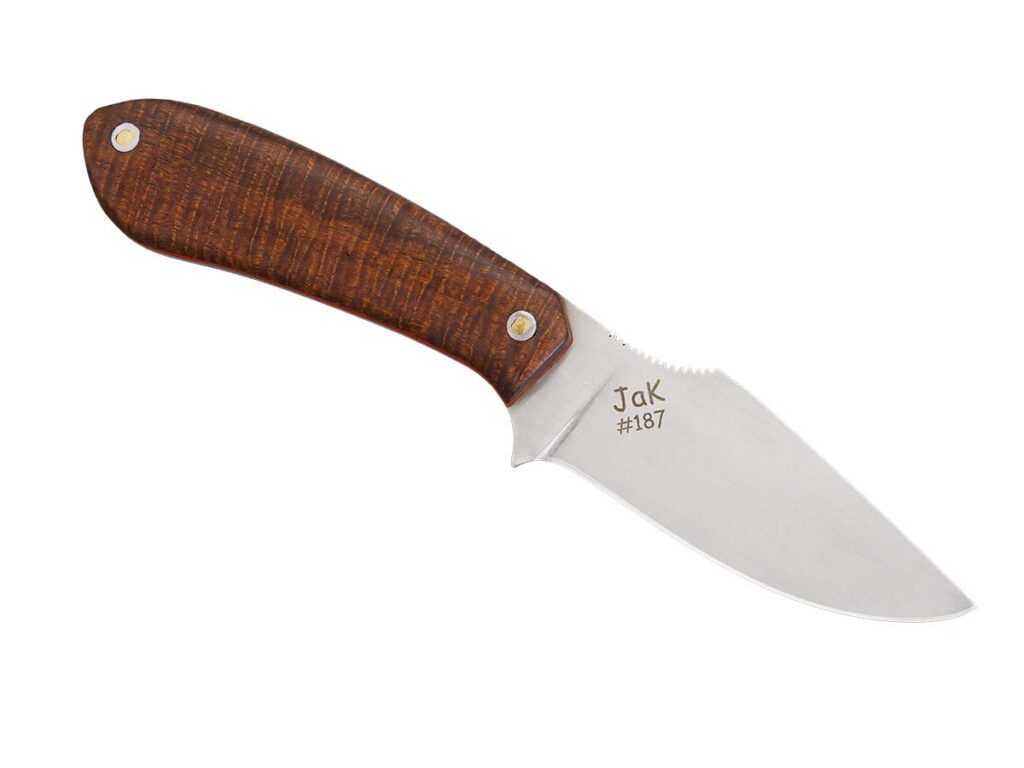
Jak Knives #187
Knife type: Hunter Blade length: 4.1” Blade steel: 14C28 stainless Blade thickness @ricasso: .118” Blade grind: Flat Blade pattern: Drop point Scales: A Western Australia desert hardwood called Minniritchie Liners: G-10 Overall length: 8.85” Sheath: Leather belt model Maker’s price for a similar knife and sheath: $300-$400 at press-time exchange rate Maker: Jak Knives (Rod Hoare image)
DB Blades Varis
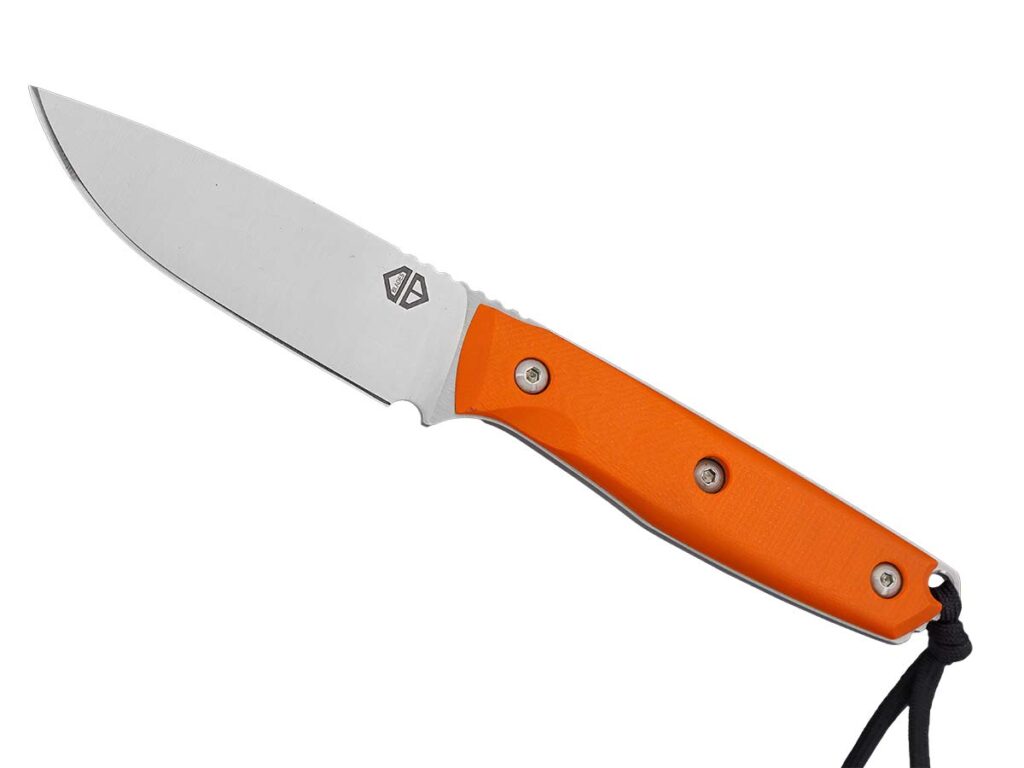
Blade length: 3.9” Blade steel: Nitro V stainless Blade grind: Flat Blade thickness @ricasso: .157” Scales: G-10 Overall length: 8.66” Sheath: Synthetic Knife to know: Varis won the Best Hunting Knife Award at the 2025 Queensland Knife Show; Dominic Binker is a member of the Australian Knifemakers Guild Maker: DB Blades (Rod Hoare image)
Under The Bridge Knife and Tool M.O.A.
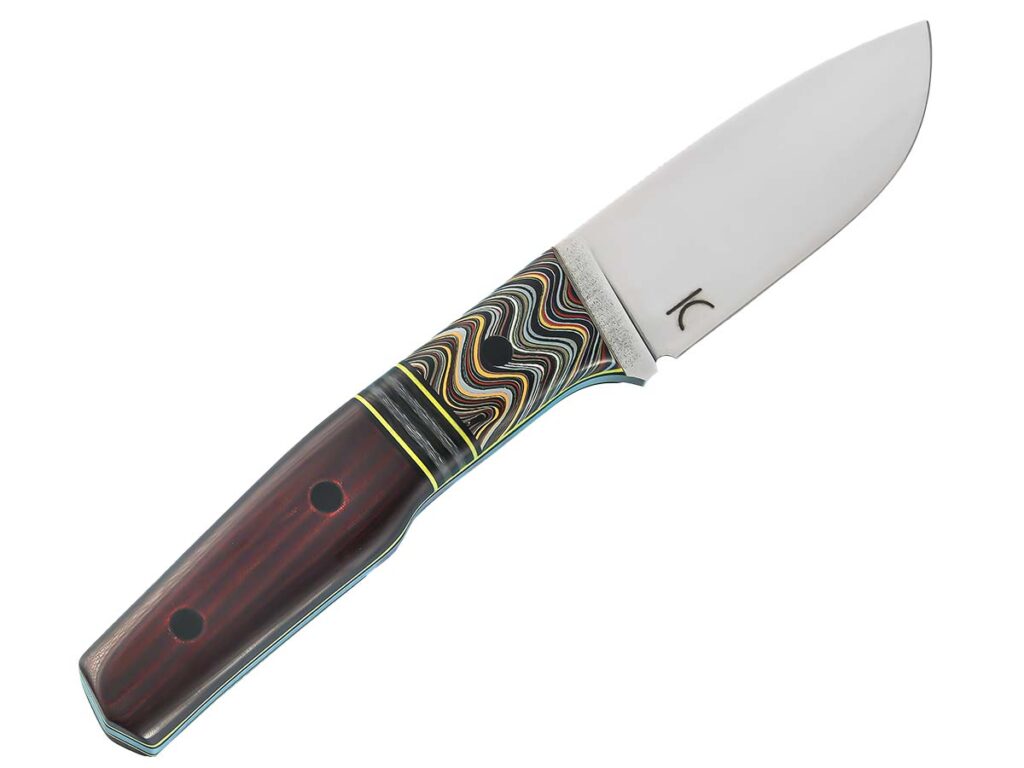
Knife type: Hunter Blade length: 2.75” Blade material: Cruwear carbon steel Blade grind: Full flat Handle material: Burgundy linen Micarta®, Fordite and silver metallic carbon fiber Overall length: 6.75” Maker’s price for a similar knife: $375 Maker: Under The Bridge Knife and Tool (SharpByCoop image)
Pcocks Customs Slug Life
Blade length: 3.54” Blade material: Mosaic damascus of 1084 carbon and 15N20 nickel-alloy steels Blade grind: Full flat Scales: Ringed gidgee Pins: Carbon fiber Knife to know: Tapered tang; Slug Life won the Best Hunter Award at the 2025 Perth Knife Show; Peter Cocks is a member of the Australian Knifemakers Guild Sheath: Belt model of Australian leather bearing Peter’s leather texturing stamp and finished w/a Barry King border stamp Maker’s price for a similar knife and sheath: $750 at press-time exchange rate Maker: Pcocks Customs (Rod Hoare image)
Form, function and purpose of daggers–the most stab-ready knives.
Few weapons are as simple in concept yet as demanding to design as the dagger. At first glance, it is merely a blade—sometimes short, sometimes long, usually but not always double edged—yet every aspect of its form has been refined over millennia for one purpose: stabbing. Unlike blades that balance cutting, slicing or chopping, a dagger’s geometry, materials and ergonomics allow no compromises in pursuit of its one purpose.
From early Bronze-Age thrusting knives to the stilettos of the Renaissance, every angle in any dimension maximizes straight-line penetration. Whether for combat or display, understanding this purpose is essential for anyone who wishes to design, craft or appreciate these edged weapons. Even the most ornate ceremonial dagger should appear “stab-ready” at a glance, communicating the implied threat of the utilitarian tool with a statement of status and opulence.
This modern cinquedea by Vince Evans has a blade with a broad, rigid base tapering to an unforgiving point. Fullers down the middle serve to make the blade both lighter and stiffer. Equal parts status symbol and lethal instrument, it embodies the dagger’s refusal to compromise between beauty and purpose.
Dagger Design Points
Every deadly stab starts with three critical design choices that define a dagger’s unwavering purpose. A dagger blade must have sufficient spine thickness and ricasso rigidity to resist excessive bending under thrust load; it should be tapered to an acute but robust point for minimal tip-entry resistance; and it requires flexibility balanced with rigidity so it can reach vital organs, often protected by armor, without breaking.
Early thrusting blades illustrate this principle as far back as the late Bronze Age. A broad base near the guard tapers rapidly to a narrow point, ensuring rigidity at the grip and sharpness at the tip. By the 1st century A.D., the Roman pugio perfected it. With a base often exceeding 5⁄16 inch in thickness and a central ridge tapering to a sharp apex, the pugio shed weight without losing stiffness. In practice, its point could pierce leather, flesh or weak links in chain mail, while its spine endured repeated jabs against shield bosses and bucklers.
Extreme ornament, unconventional design, and opulent materials cannot disguise lethal intent and pure stabbing functionality in Bertie Rietveld’s ornamental dagger.
Yet precision in stabbing demands more than brute strength, it requires avoiding gratuitous cutting‐oriented features in a thrusting design.
Serrations, upswept points, hooked tips, prying points and even bottle openers can be handy on a knife, depending on the task, but all of these undermine the straight-line force a dagger needs and disrupt smooth entry. If you ever find yourself in a situation where stabbing is required, by all means use whatever you’ve got—just don’t complain when your bottle-opener tip gets snagged in an assailant’s clothing. However, if you have the luxury of time and thought to design and make a dagger, strip away anything that doesn’t serve pure penetration. A dagger’s geometry remains laser-focused on stabbing effectiveness.
Lastly, a dagger must balance penetration depth with material limits. A tip too slender might break or bend against bone or metal, while a tip too blunt simply won’t enter. Ancient workers of bronze and iron didn’t have modern labs or spreadsheets, yet somehow found the Goldilocks Zone that balanced reach and resilience. A well-tempered tip is tough enough to survive bone contact without snapping, yet with correct geometry stays stiff enough to slip between armor plates. Only through precise taper and temper can a dagger achieve depth without sacrificing strength.
Even in this highly stylized dagger by Jordan Lamothe, the spine ridge provides the stiffness and rigidity required for uncompromising penetration.
Combat Daggers Vs Art Daggers
From the earliest times, daggers fell into two broad categories: weapons of combat and symbols of prestige.
The combat dagger was stripped to essentials—minimal ornamentation, maximum toughness—while the art or status dagger has always been free to bend the rules of pure function to satisfy aesthetic expression and make statements of personality and prestige. Nonetheless, even the most ornate display piece must exude “stab-readiness” at first glance, a silent promise inherited from its lethal lineage.
The complex damascus pattern and construction style of this dagger by Australia’s Jackson Rumble demonstrates that while he understands the essentials of a dagger, he’s not afraid to push the boundaries of expression without compromising either the stabbing function or his artistic vision.
Surviving examples of Roman pugios from army camps demonstrate the utilitarian design, but gilded pieces from the same era, with elaborate inlays and inscriptions, do not stray far from purpose despite the decoration. All share the same fundamental geometry: a stiff, thick base, reinforced spine and unwavering taper to a sharp, flat-ground point.
The ornamented variants—often gifted as symbols of rank or worn by the wealthy and powerful—could feature ivory grips or gilded fittings without diminishing their stabbing credibility. Regardless of personal status or the knife’s level of ornamentation, no one who saw a pugio drawn in malice would misunderstand the message or the danger. Combat heritage endows art daggers with an unmistakable threat that no amount of embellishment can conceal, though the pugios that did in Julius Caesar probably looked rather nice.
The complex damascus pattern and construction style of this dagger by Australia’s Jackson Rumble demonstrates that while he understands the essentials of a dagger, he’s not afraid to push the boundaries of expression without compromising either the stabbing function or his artistic vision.
Another example is the pesh-kabz, a Persian-born dagger later adopted and lavishly ornamented by Mughal weaponsmiths. Its single-edged blade featured a thick spine and acutely tapered point, designed to pierce heavy mail and laminated armor. As Mughal craftsmanship flourished in Agra and Delhi, artisans added damascened patterns, jeweled pommels and silk-wrapped grips. Yet even a fully jeweled pesh-kabz retained the same reinforced spine and narrow, forward-weighted geometry as its battlefield ancestors. Worn at court in gilded sheaths, these daggers exhibited status while making it clear that underneath the glamor was a blade as deadly as any used in war. Art and combat, then, remain entwined.
The junction of the handle, guard, and blade is where the true masters separate from the merely good—every element is a decision between comfort, control and ornament that fit together with no gaps. (Mike Quesenberry, Best of Show/Best Art Knife, 2011 OKCA Show)
This enduring marriage of lethality and ornamentation sets the stage for a deeper question: what separates an ordinary dagger from one that truly masters its intended purpose? The answer lies not just in history but in the details of profile, geometry, balance and structural refinement—each a mark of a dagger designed to do exactly what it must.