Knife Collecting

Knife collecting is an extremely rewarding experience for knife enthusiasts. There truly is a knife for everyone. Many increase or hold their value throughout the years, making collecting knives something to pass on to the next generation of knife collectors.

Tony Bose: The Legend’s Effect On Pocketknife Designs

How the iconic custom maker transformed pocketknives and the knife industry.

The story of the knife is one of evolution, with thousands upon thousands of steps along the way. When you boil it down, however, it’s really just the passing of knowledge gained from one individual to the next. One who earned an immortal slot in that incredibly long span of time is BLADE Magazine Cutlery Hall-of-Fame® member Tony “Old Dog” Bose.

Born of humble beginnings, Tony suffered the loss of an eye at an early age—a setback for anyone, though especially a craftsman—and grew up in Indiana far from any cutlery center. Nonetheless, what he did have was a job repairing knives, and that was all the springboard he needed to launch him into becoming a highly revered custom knifemaker.

Tony produced his first custom knife in 1975 and by 1990 was going full steam—this while the Gulf War was inspiring the modern tactical knife movement. But he had his own plans and continued to gain popularity with the traditional slipjoint crowd, a popularity that surged throughout his knifemaking career. He had a huge impact in his day, not only for the sheer quality of his work and innovative styling, but for his lasting contributions to both the custom and factory knife industries.

Tony Bose As Mentor
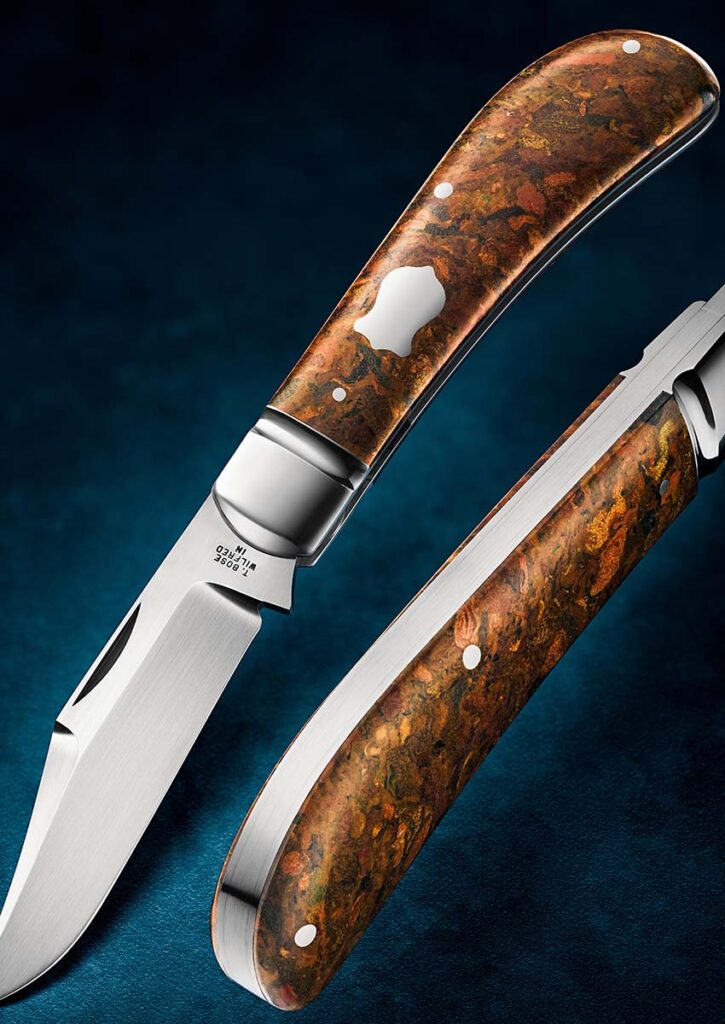
Another of Tony’s slipjoint standards is the Lanny’s Clip. “In 1989 I met a good ol’ boy named Lanny Shell,” Tony wrote. “He asked me to make him a knife between 3¾ and 4 inches closed for heavy work with a clip blade in it. I didn’t know what to call it, so I called it Lanny’s Clip.” (Caleb Royer image)

One way to judge a master craftsman is by the people he taught.

“I first met Tony at the Guild Show in Florida,” notes Cutlery Hall-of-Famer Bill Ruple, a knife legend in his own right. “I had just begun making knives and when I saw what he had on his table I was blown away! Before that I was making folders and a few fixed-blade knives. After seeing his work I focused on multi-blades. As time went on, we became great friends. One of my biggest regrets was not taking time to go and visit him. He invited me many times.

“Any time I had a problem, Tony was there to talk me through it. I’d always pick what I considered to be my best knife and have him critique it at the BLADE Show. He set the standard for all of us multi-blade makers. Reese [Tony’s eldest son] is continuing to set that standard today. I was just one of many who benefited from Tony’s generosity to share his knowledge.”

ABS master smith Harvey Dean, who makes top-notch slipjoints in addition to his award-winning fixed blades, has fond memories of Tony’s mentoring and friendship.

“I met him around 1993 at the New York Custom Knife Show,” Harvey recounts. “He had quite a few slipjoints for sale, and if I recall they did not last long [before they sold out]. I remember most of the people that bought them had memories of carrying his type of knives many years ago. Tony brought them back into popularity.

“Tony’s influence, I think, was his approach to making slipjoints. His grinds, swedges and the function of the knife were all spot on. His handle material was always exceptional. For me, Tony’s generosity in sharing his knowledge was the most important thing. I could call Tony anytime for help and he always helped me out. I still have, I think, three patterns Tony made for me, mailed them to me, and would not take any payment for them.”

Tony did the same for Ruple and ABS master smith Steve Dunn. “Tony sent me many patterns over the years and never charged me a penny,” related Dunn, who passed away last year. “He will go down in the books as the best slipjoint maker ever.”

At a BLADE Show circa 2010, Ruple told Tony his favorite knife ever was the Bose saddlehorn trapper.

“After the show I received a package from Tony,” Bill writes. “Inside were two different-sized saddlehorn trapper patterns. He had hand ground them! That’s the kind of guy Tony was. He was a kind, generous gentleman, always willing to share his vast knowledge of knives.”
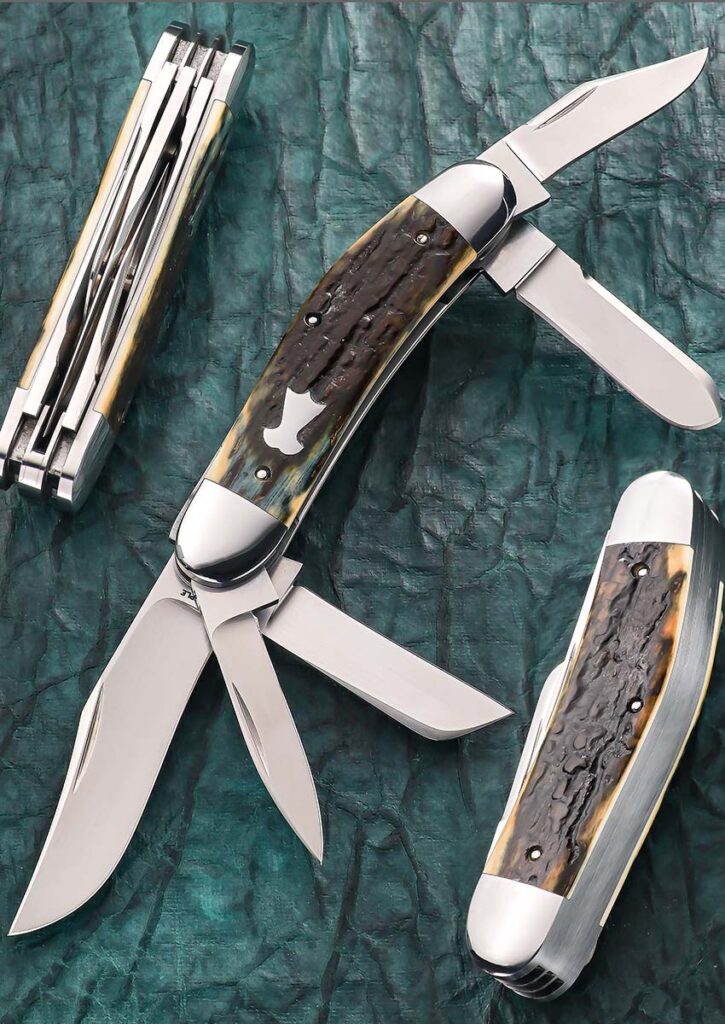
One look at Tony’s knives at a Knifemakers’ Guild Show and Cutlery Hall-of-Famer Bill Ruple started focusing on making multi-blades. The rest is history, including Bill’s five-blade sowbelly. (SharpByCoop knife image; image of Ruple by Chris Wellhausen)

One of Tony’s greatest achievements, in his own words, was teaching his son Reese to make folding knives. Tony commented on mentoring him in about as strong a statement as it gets.

“I have helped a lot of guys figure out how to make pocketknives,” he noted, “but Reese is the only one I have taught.” Today, Tony’s son is considered one of the world’s best slipjoint makers.

Reese has fond memories of his father.

“When I’m asked about Tony, a few things come to mind: generosity, influence and impact,” Reese says. “Tony’s generosity with his time and knowledge were truly something special. I can’t even begin to count the number of phone calls we had over the years. I do remember one of our first conversations when Tony told me, ‘Boy, you are gonna have to learn swedge work.’ He was always ready to give advice about knifemaking and even the day-to-day of running a knife business.

“Many makers went in and out of his doors with no money ever exchanging hands. It was this time spent sharing advice, knife patterns, and even loaning out vintage knives that illustrated the influence Tony will continue to have in the knifemaking world.”

Tony Bose & Case Knives

The knife collaborations Tony did with W.R. Case & Sons increased the awareness of and interest in the company to much higher levels, even during times when the cutlery world was consumed with tactical fare. His was also a constant presence at assorted Case collector events for knife enthusiasts of all ages, giving seminars, meeting and greeting all in attendance, etc.

His contributions were such that on July 14, 2023, he became the first person in over 20 years to be honored with a Wall-Of-Fame induction ceremony at the W.R. Case & Sons facility in Bradford, Pennsylvania. The induction included a plaque of Tony installed on the Wall Of Fame in the Zippo/Case Museum. Tony’s son Reese, Bill Ruple and others were on hand for the event.

Fred Feightner, Case director of marketing communications, remembers the early years in 1999 when Case hired Tony as a designer to elevate the company’s folding knives to a greater level of quality and relevance.

One of Tony’s greatest achievements, in his own words, was teaching his son Reese to make slipjoints. “I have helped a lot of guys figure out how to make pocketknives,” Tony noted, “but Reese is the only one I have taught.” From the looks of his son’s five-blade congress pattern, Tony taught Reese well. (Eric Eggly/PointSeven image)

“My first one-on-one interactions with Tony came nearly 20 years ago as a result of an assignment I was given by Tom Arrowsmith, our company president at the time,” Fred recalls. “I had only been with the company a couple of years, so I was pretty new to the knife industry with very little exposure to the world of custom knives. The assignment was to produce an eight-to-10-minute video about Tony to support the introduction of the swayback pattern, our latest online edition of our Case-Bose series.

“Naturally, I was excited to be traveling to meet this famous knifemaker. So, with stars in my eyes, off I went to Tony’s shop in Indiana. The address I was given took me to Tony’s house. Once there, I was surprised to learn this superstar was making his impeccable knives from inside his attached garage. Tony came out to meet me and took me inside, showed me around the shop a bit, and introduced me to his son Reese, who was situated in a far corner. Then Tony offered me a cup of ‘cowboy coffee,’ which turned out to be coffee boiled in a camp pot and kept warm over a hot plate that was within easy reach from his desk all day.

“Over the next two days I would be treated to the most in-depth knifemaking tutorial series one could only imagine,” Feightner exclaims. “Being an eyewitness to the painstaking care that Tony took in preparing even a single knife for one of his customers was truly awe inspiring. I still recall watching him hunched in his shop chair, sanding down knife parts by hand for hours until they fit to perform perfectly when assembled. He was such a patient teacher! It was never a problem for him to answer questions while he was working away. That visit really provided me with the foundation I needed to do my job better as a Case marketing communicator.”
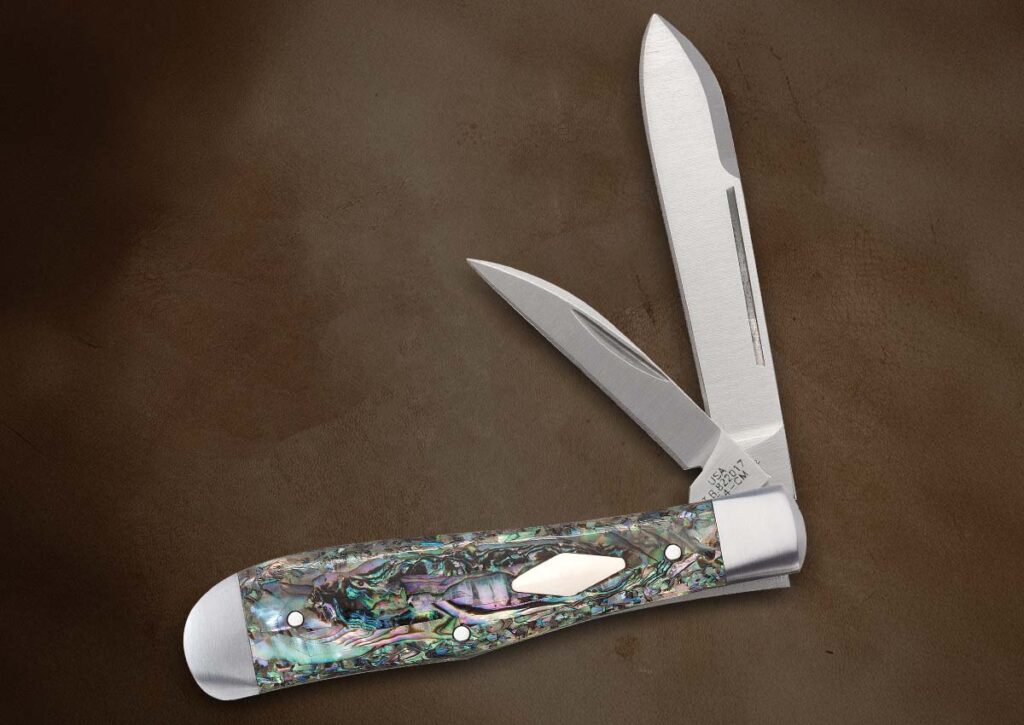
Tony collaborated on knives with Case for two decades, including this Eureka jack in abalone and 154CM stainless steel in 2017. (Case image)

Tony’s collaborations with Case worked like magic. His upscale Case XX limited editions, delivered in signed brown leather zipper pouches, are some of the finest pocketknives ever produced by the company—or any company for that matter—and his Bose-branded boxed knives are highly collectible.

His signature Lanny’s Clip, designed for a friend, has become legend among both custom folder makers and Case collectors alike. Tony passed away in 2020, only one year after being inducted into the Cutlery Hall of Fame, but his imprint on the cutlery industry will last as long as his knives walk and talk—which will be a long, long time.

More Pocketknife Info:

Cool Customs: Rocco Nawrocki’s Knife For Sergeant Bunker

Marine Corps hero feted with Nawrocki knife at The Battleship Ball.

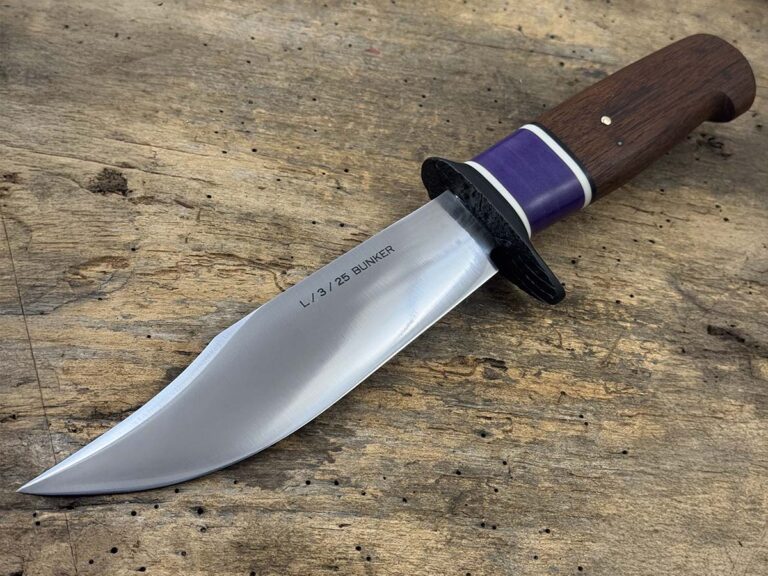
An unforgettable setting for a memorable event celebrating an American hero—all complemented by a beautiful knife by Brian “Rocco” Nawrocki—completed a tribute to USMC Sergeant Scott Bunker during last year’s 250th anniversary of the United States Marine Corps.

Assigned to Lima Company in 2005 during the Iraq War, Sergeant Bunker took multiple machine-gun rounds at point-blank range in house-to-house fighting, resulting in the loss of an eye, half a lung, several ribs and soft-tissue damage to his left arm. He was the guest of honor at The Battleship Ball 2025 on November 1, held on the deck of the vintage World War II Battleship USS North Carolina in Wilmington, North Carolina.

Event organizer/USMC veteran Dean Smith (left) congratulates Sgt. Scott Bunker after delivery of the Nawrocki tribute knife (in display case on the dais) during The Battleship Ball.

The handsome fixed blade Rocco made for Sergeant Bunker includes steel from the North Carolina for the blade and guard. The wood handle is teak from the battlewagon’s deck, along with purple heart ribbon spacers.

More Custom Knives:

Stag Handle: Custom Knives That Are Bad To The Bone

Rough as a mountain ridge and ready as razor-sharp edge, nothing beats stag handles—especially on these custom stunners.

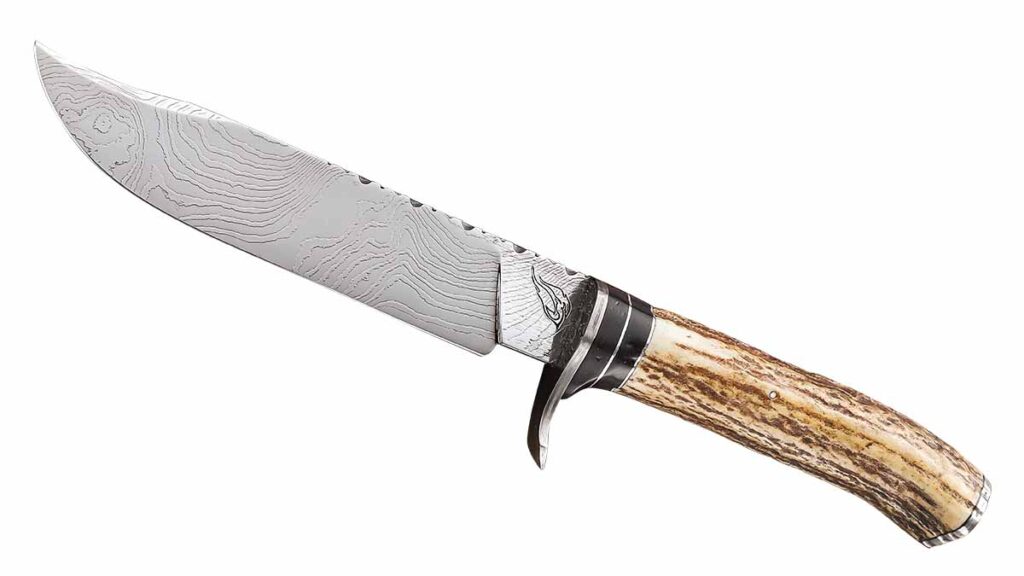
Stag is to knives what red is to rover, rock is to roll and John is to Wayne. It’s the total package in looks, feel and tradition. Sambar, axis, popcorn or whatever the type or style, when it comes to knife handles, stag has it all.


Stage Handle Yelle
Jeremy Yelle: Takedown pocket bowie

You can almost see and smell the popcorn popping on the popcorn stag of Jeremy Yelle’s takedown pocket bowie. The guard and fittings are 416 stainless steel fire-etched and textured black. Blade and overall lengths: 4.5 and 9 1/8 inches. (Joyce Frasier image edit)


Stage Handle Walle
Liam Walle: Full-tang fighter

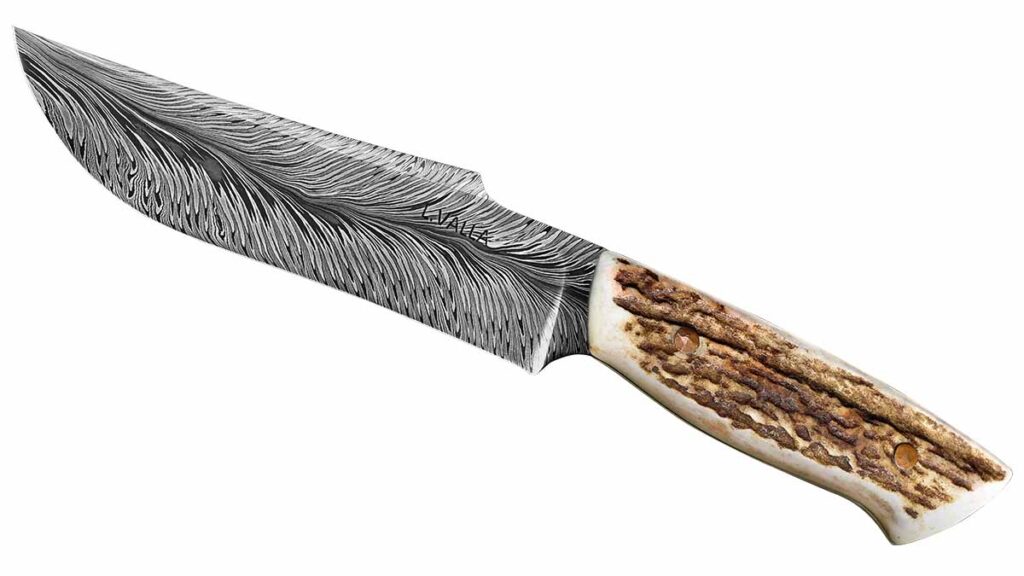
ABS apprentice smith Liam Walle opts for deer antler scales with copper pins for his full-tang fighter. The 5.7-inch harpoon blade is 2,340 layers of feather damascus in 1084 carbon and 15N20 nickel alloy steels. Overall length: 10.4 inches. (Jocelyn Frasier image edit)


Stage Handle Szymanski
Cowboy Szymanski: Bowie

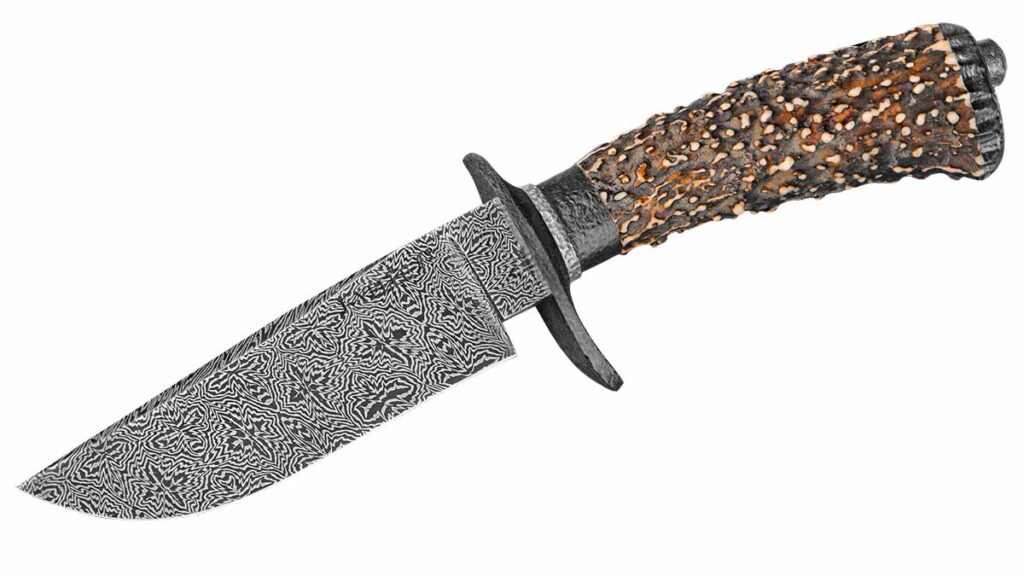
Axis stag and ebony spacers comprise the handle of a bowie by Cowboy Szymanski. Blade steel is an accordion twist damascus of 1095 carbon and 15N20 nickel-alloy steels. The bolster is raindrop pattern damascus. Overall length: 11.75 inches. (SharpByCoop image)


Stage Handle Rhea
Lin Rhea: D-guard bowie

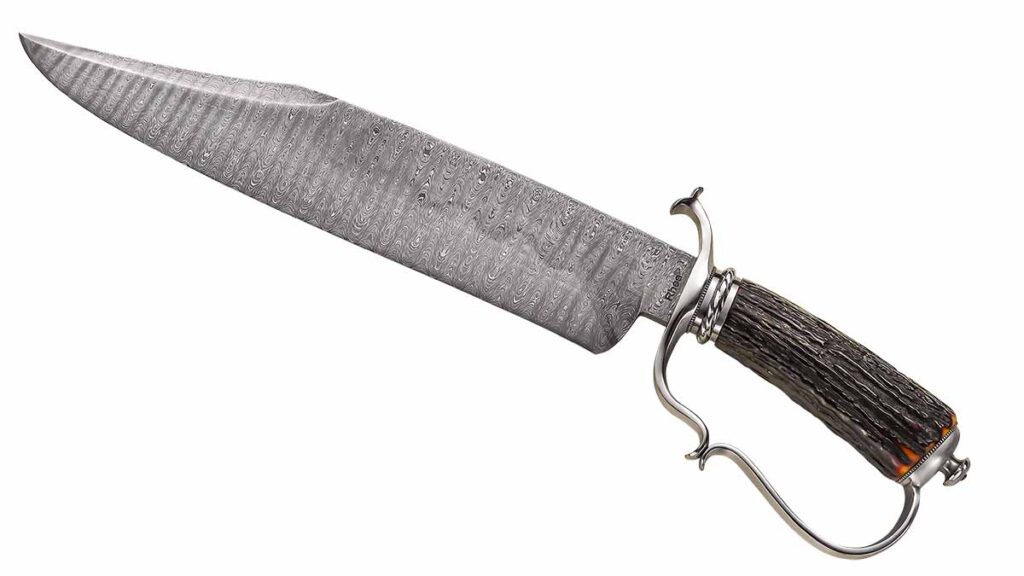
A stag handle and a blade of ladder-pattern damascus in 1084 carbon and 15N20 nickel alloy steels help complete ABS master smith Lin Rhea’s D-guard bowie. The sheath (not pictured) is by Cody Rowe. (SharpByCoop image)


Stage Handle McCright
Erik McCright’: Camp knife

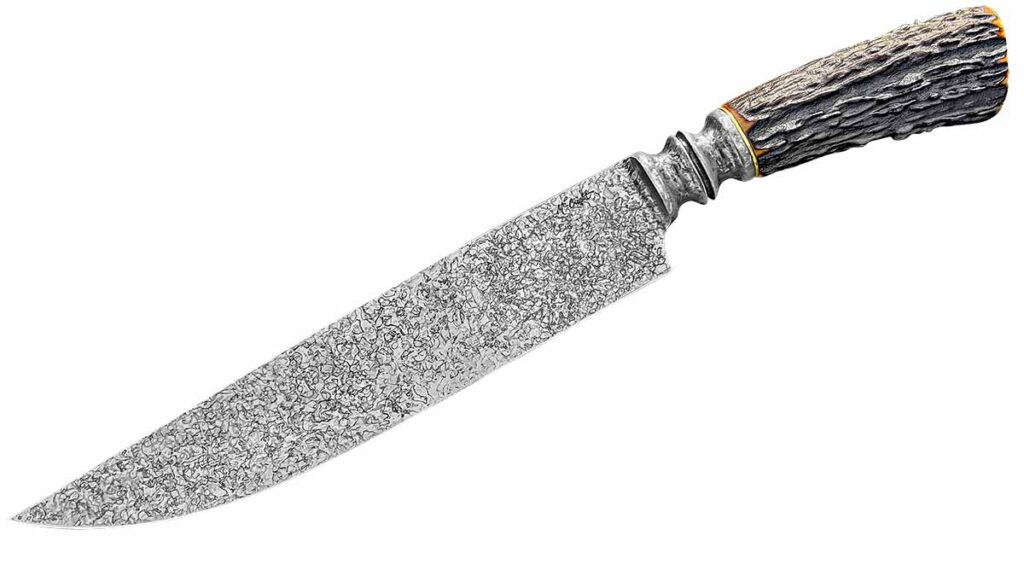
The dark Sambar stag—not to mention the fancy ferrule connection between handle and blade—of Erik McCright’s camp knife screams 19th-century Sheffield. The 8.75-inch blade is 52100 ball-bearing steel with a forced patina. (Jocelyn Frasier image edit)


Stag Handle DavisD
David R. Davis: Slipjoint

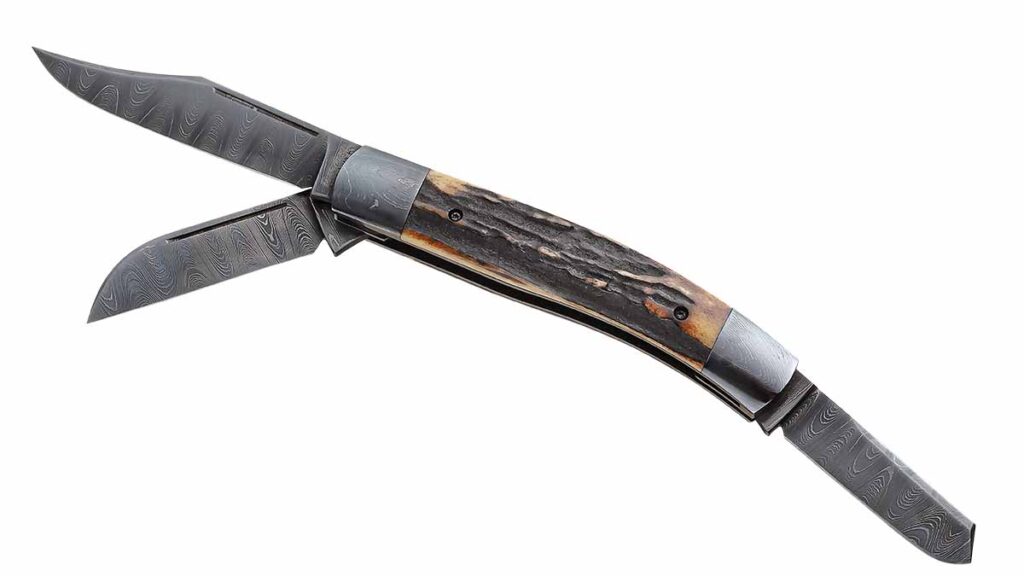
David R. Davis chose Sambar stag and pattern-welded blade steel from Alabama Damascus for his stockman. Blade lengths: 3, 2.25 and 2.5 inches. Blade grinds: flat. Closed length: 4.25 inches. His price for a similar knife: $1,100. (SharpByCoop image)


Stage Handle Mille
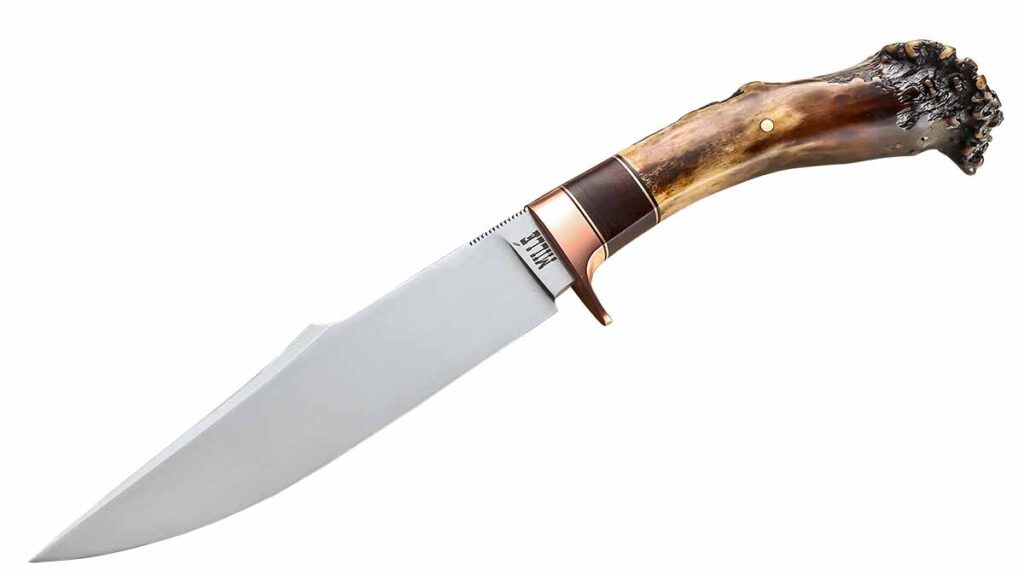
Adam Millé: Classic hunter

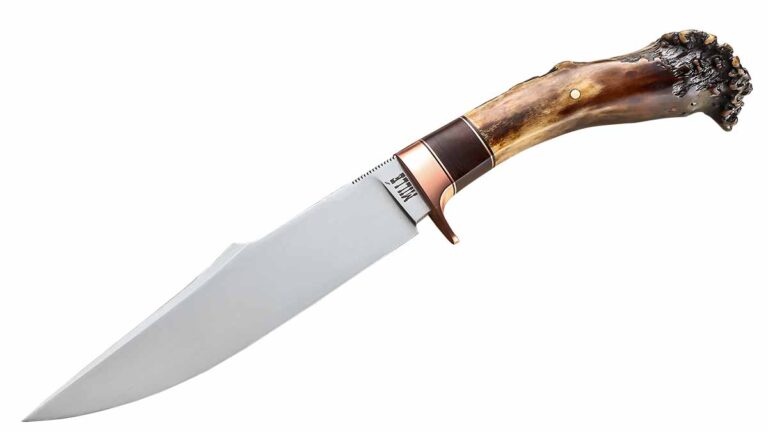
Crown stag and vintage Micarta® complete the handle of Adam Millé’s classic hunter. The bolster is copper. The 6-inch harpoon blade is W2 tool steel. Overall length: 11.25 inches. The handmade leather sheath (not shown) has python snakeskin inlay. (SharpByCoop image)


More On Custom Knives:

Cool Custom: Ryan Breuer’s Relic Dagger

Breuer’s Relic Dagger is Bronze Age solid gold.

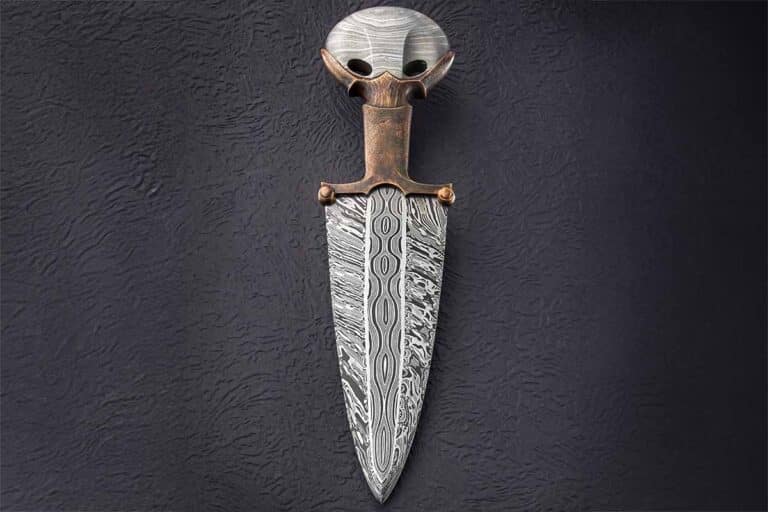
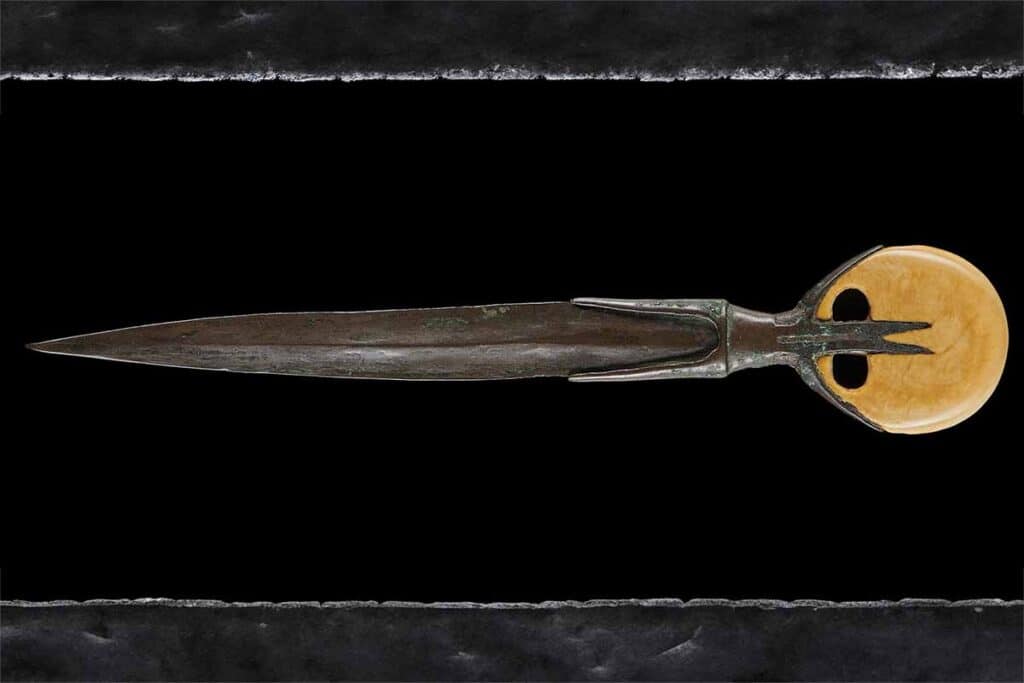
While it may appear to be an alien looking back at you, the Relic Dagger by ABS journeyman smith Ryan Breuer is inspired by Egyptian daggers from the Bronze Age that were made over 6,000 years ago.

The pommel on the originals are believed to have been made of hippo ivory.

“There’s such a striking shape to it,” Ryan said. “It very clearly looks like a human form in the handle holding up either a head or maybe the sun. It’s as if those who made the daggers thousands of years ago are looking back at me. It’s almost spooky.”

The damascus blade is a collaboration between Ryan and bladesmith Jason Morrissey, though Ryan gives Jason most of the credit for the steel. The blade is a composite mosaic damascus, with twisted mosaic edge bars of Jason’s steel and Ryan’s “eyes” mosaic in the core.

Ryan Breuer
Ryan Breuer

Ryan ground, heat treated and finished the blade. The hilt is cast bronze made with the lost-wax process. The pommel is pattern-welded wrought iron and pure nickel, manipulated to imitate layers of organic ivory. Ryan drilled the two holes for the “eyes.”

Breuer Relic Dagger Specs
Maker: Ryan Breuer
Blade length: 7.5”
Blade material: Composite mosaic damascus of 1084 carbon and 15N20 nickel alloy steels
Blade width @ base: 31/8”
Overall length: 12.75”
Maker’s price: $3,000

See More Custom Knives:

Cool Customs: Edmund Davidson’s Fighter 116th Regiment

Davidson’s integral salutes a unit that lost over 800 men on D-Day.

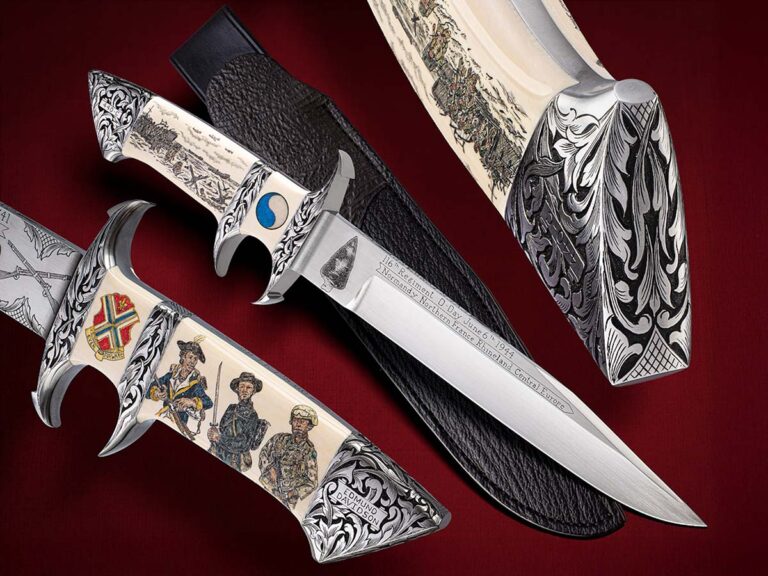
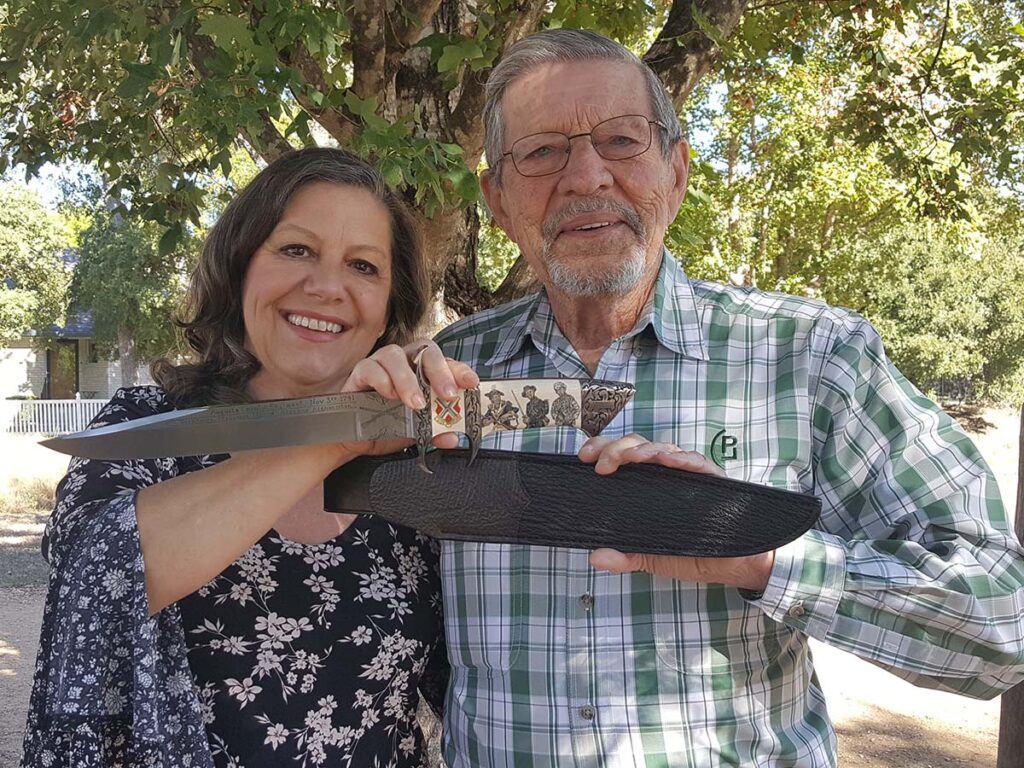
Made to support The 29th Division Museum in Verona, Virginia, Edmund Davidson’s integral subhilt fighter celebrates an American combat unit that’s served valiantly for almost 284 years.

The Augusta County Regiment formed on Nov. 3, 1741, in Staunton, Virginia, and fought in most every American war, including the American Revolution and the battle of Manassas in the Civil War. It became part of the U.S. Army’s 29th Division in World War I and adopted the theme of “Ever Forward.”

As the 116th Regiment it was in the first wave on Omaha Beach on D-Day, where it lost over 800 officers and men and was later cited by the War Department for extraordinary heroism and outstanding performance of duty. The regiment also saw action in the Iraq and Afghanistan Wars. Today, the 116th remains active as a National Guard Unit.

Scrimshander Linda Karst Stone (left) and sheath maker Paul Long (right) hold the completed project. (knife image by Whetstone Studio)

Linda Karst Stone scrimmed the Omaha Beach battle scene on one side of the handle and unit members from the American Revolution, Civil War and today’s 116th on the flip side. The copious scroll engraving on the butt and guard is by Jere Davidson. Paul Long made the shark-skin sheath.

More Custom Knives:

Rare Bob Loveless Customized Guns Up For Auction

Three highly coveted firearms modified by the Cutlery Hall of Fame® legend—including his “de-fanged” Colt Commanders—head to Rock Island Auction.

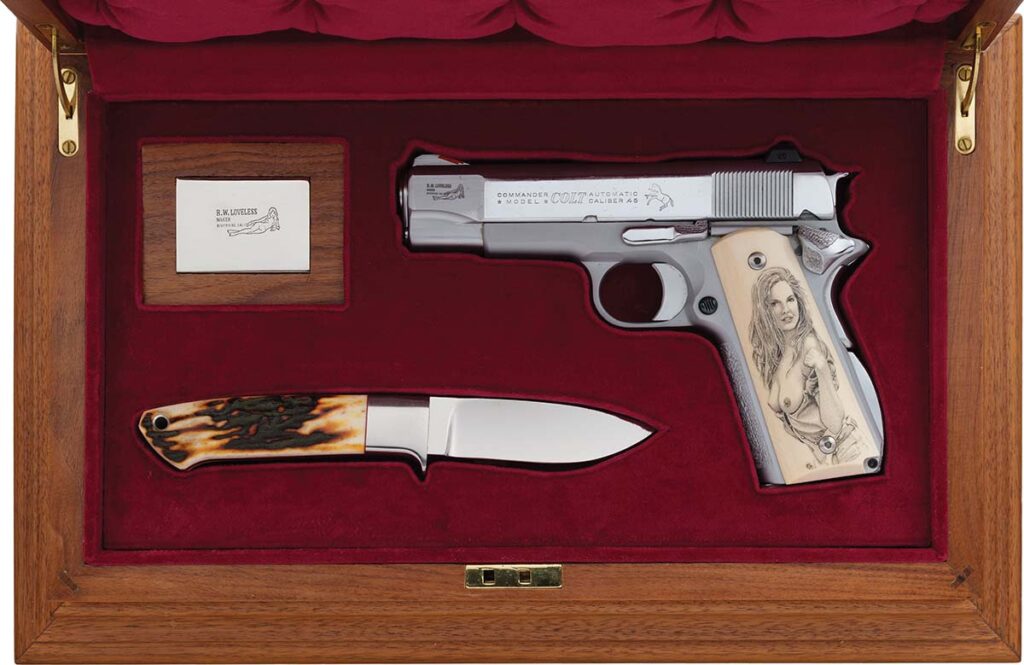
Bob Loveless Colt "Old Smoothie" Lightweight Commander semi-automatic pistol with scrimshawed ivory grips, drop-point Loveless Knife and sheath.
Bob Loveless Colt “Old Smoothie” Lightweight Commander semi-automatic pistol with scrimshawed ivory grips, drop-point Loveless Knife and sheath. Rock Island Auction image

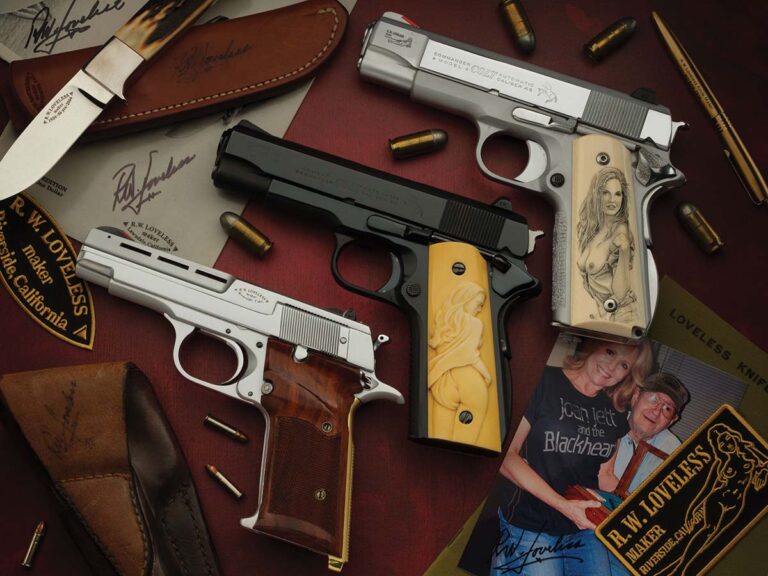
While the late Bob Loveless secured his legacy as a titan of the cutlery world, the BLADE Magazine Cutlery Hall of Fame® member also brought his legendary eye for utility to the firearms world. His knives remain some of the most desirable, coveted custom creations on the planet, but a rare trio of his personal, customized handguns are now heading to the auction block at Rock Island Auction in the company’s June 27 American Sale (now live online). The selection highlights how the master craftsman applied his famous Bauhaus-inspired design ethos to custom gunsmithing.

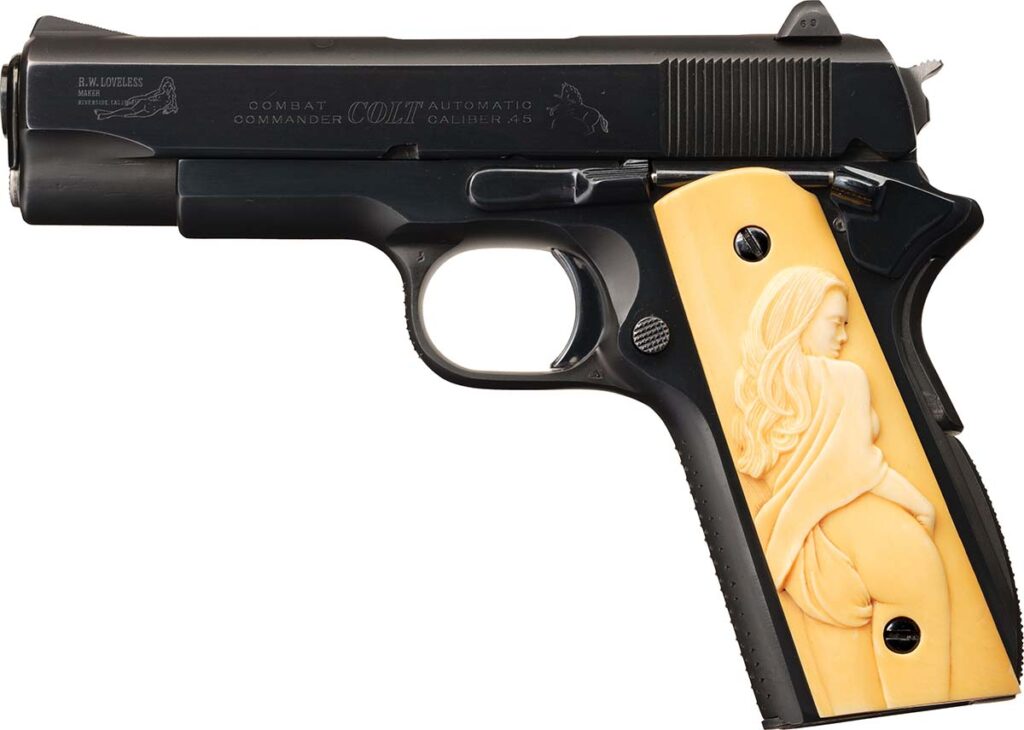
Bob Loveless Colt "Old Smoothie" Combat Commander semi-automatic pistol with relief carved ivory grips.
Bob Loveless Colt “Old Smoothie” Combat Commander semi-automatic pistol with relief carved ivory grips. Rock Island Auction image

The lineup features two Colt Commander pistols that Loveless thoroughly “de-fanged,” a signature modification process where he systematically bobbed the hammers, radiused the frames and smoothed away every sharp edge that could gouge a shooter’s hand. The first is a c. 1980 Lightweight Commander, featuring his electro-penciled initials, custom Browning cuts on the slide, and smooth ivory grips scrimshawed with nude artistry. This rare piece is housed in a custom hardwood case alongside a matching 2004 Loveless drop-point hunting knife. It is joined by a scarcer steel-framed Combat Commander variant, a platform Loveless rarely altered because he felt the extra weight defeated the purpose of a carry gun, making this particular build exceptionally rare.

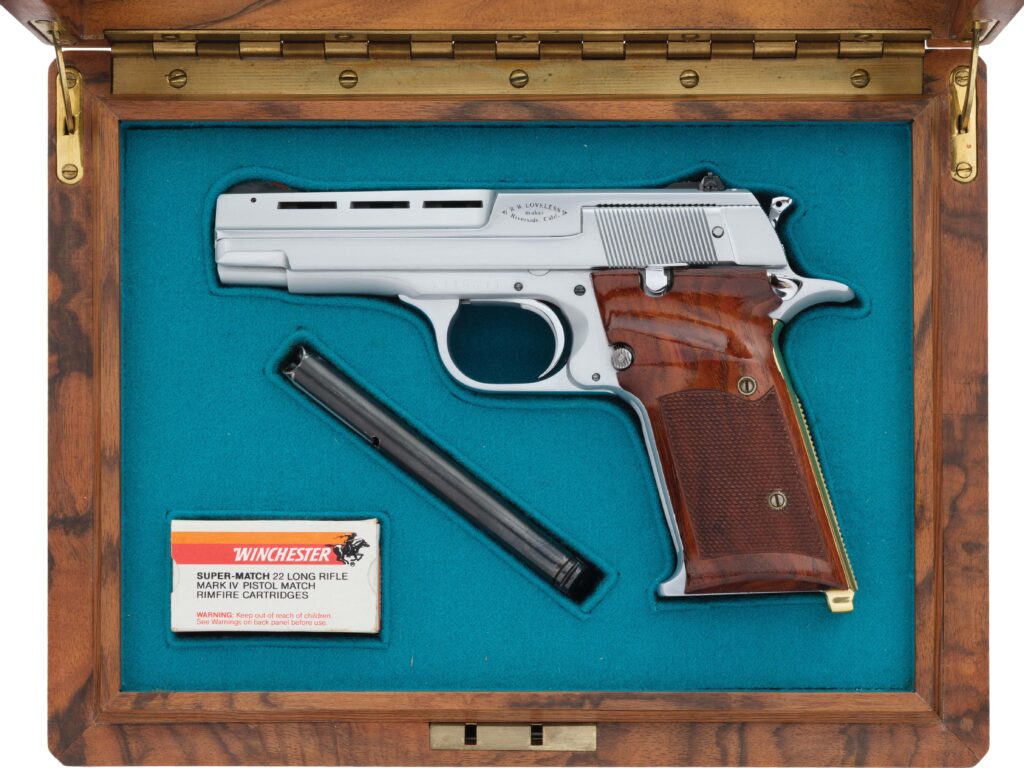
Bob Loveless Smith & Wesson Model 41 semi-automatic pistol with case and signed photographs.
Bob Loveless Smith & Wesson Model 41 semi-automatic pistol with case and signed photographs. Rock Island Auction image

Rounding out the trio is an extensively reworked Smith & Wesson Model 41 target pistol, believed to be one of only 70 ever built by Loveless. This highly modified rimfire pistol features a shortened barrel with a custom vented rib, an exposed hammer conversion, a checked gold-washed backstrap with a lanyard loop, and his personal initials electro-penciled on the slide. Complete with signed photographs of Loveless, a custom leather holster and a glass-topped display case, the group offers collectors a rare look at how one of the greatest knifemakers of all time refined factory firearms into high art.

Read More On Bob Loveless:

Cool Customs: Darriel Caston’s Impish Split Handle

0

Barry Wood’s split-handle folder inspires Darriel Caston’s clever keychain knife.

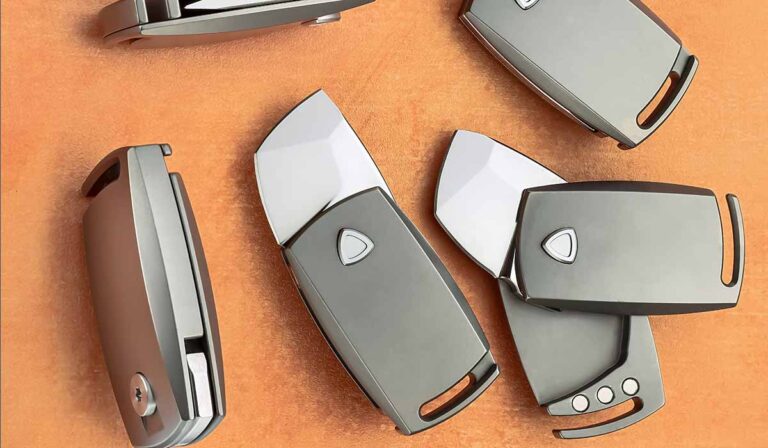
Inspired by the split-handle folding knife made famous by the late, great custom knifemaker Barry Wood, the Imp by Darriel Caston is a clever keychain knife ideal for EDC.

Like the Wood folder, the blade opens by pivoting one of the scales clockwise and closes by pivoting the same scale counterclockwise. At the same time, slots at the ends of the Imp’s scales accept a keychain when they’re open and form an enclosed elliptical oval to hold the keychain when they’re closed.

Darriel Caston

Instead of a ball detent affixed to the blade to help hold the knife open and closed, Darriel uses magnets affixed to the handle. Darriel and his daughter, Bella, were trying to come up with names for the knife when she observed that it was “a little booger,” and he said, “Yeah, like a little imp.”
And another knife name was born.

The Imp Specs
Blade length: .82”
Blade steel: M390 stainless
Blade grind: Modified compound tanto
Handle material: Titanium
Closed length: 1.75”
Maker’s price for a similar knife: In the $185-$200 range

Check Out More Cool Custom Knives:

Advertisement

Must Read Articles

Read this before you make a knife

Knifemaking 101 – Read This Before You Make a Knife

  by Wayne Goddard My experience has taught me that there's nothing like digging in and getting started. I've often said the hardest part of the...
how to forge damascus steel

How to Forge Damascus

Advertisement
Advertisement