Knife Collecting

Knife collecting is an extremely rewarding experience for knife enthusiasts. There truly is a knife for everyone. Many increase or hold their value throughout the years, making collecting knives something to pass on to the next generation of knife collectors.

Choosing The Right Knifemaker

0

Veteran collectors discuss what to look for in a top knifemaker.

When it comes to spending your hard-earned dollar, knowing what to look for in a knifemaker provides a perspective that can’t be achieved any other way. The knife itself offers a real, tangible opportunity to assess the workmanship, and a dialogue with the maker—or at least some knowledge of his or her career and standing in the knife community at large—allows for informed decision-making.

“The main thing I look for in a knifemaker is someone with an original design aesthetic,” observed longtime collector Jim Berkenfield. “I always tell up-and-coming makers that they want to create something that can be immediately identified as theirs if it is sitting on a table in the middle of 100 other knives.”

Meanwhile, being mentored by a leading maker is not something Jim looks for in a maker.

“I always tell up-and-coming makers that they want to create something that can be immediately identified as theirs if it is sitting on a table in the middle of 100 other knives,” collector Jim Berkenfield advised. Veteran maker Bertie Rietveld’s Makiti folder in composite dragonskin damascus and gold inlay meets that standard and then some. Closed length: 5 inches. (SharpByCoop image)

“I don’t necessarily think a maker needs to have some well-known mentor or instructor,” he opined. “These days, savvy and creative people can access all the information they need via social media or the internet to get them started down the road to knifemaking.”

The first impression is key to developing any relationship, and finding a maker with his or her own creative voice is an essential component for many.

“Firstly, and most obvious, I have to be drawn to the maker’s work, assuming I don’t really have any previous interaction with the maker,” collector Chris Schluter said. “I think these days social media is certainly an easy and quick way to get some information. There are countless knife groups on Facebook, for example. One could ask in these groups if anyone has had experience with a certain maker or knives. Of course, doing this in person at a show is an option as well.”

Personal Interaction With Knifemakers

Many think it very important for a new maker to attend knife shows. According to collector Chris Schluter, “A show is a great opportunity to get feedback on your knives and also check out other knives and speak to other makers for tips and inspiration.” Chris Losacco (right) of Elemental Forge shows one of his damascus fixed blades to customers at last year’s BLADE Show West.

Larry Hirsch, a veteran collector of Lloyd Hale’s work and that of other classic custom makers, sees the value in social media but also understands the benefits of personal interaction across the table at a show.

“I think it’s important for makers to attend knife shows,” he commented. “Meeting people, talking about their work, hobbies, family, ideas, networking and making friends is all part of a successful business. I’ve bought knives from makers that I’ve met at shows and become friends with. I’ve sold off knives from makers that were rude to me at shows.”

Consequently, there is more than just an exchange of cash for steel in the building of a mutually beneficial relationship between maker and customer. Even though it may sometimes be difficult for a maker to attend a show, there are still opportunities to interact.

“I don’t think it’s mandatory for makers to attend shows because knife shows are expensive,” Berkenfield said. “For new knifemakers in particular there is no guarantee that they’ll even sell anything. When a maker is exhibiting at a show, yes, I think it’s important that he engages with people as they walk by—without being pushy. I think the biggest reason knifemakers should try to attend shows is to gain inspiration from other work in the room, acquire materials, and just make some contacts in the industry.”

Larry Hirsch is an experienced collector of the knives of Lloyd Hale. Larry indicated before placing a custom order, ask the maker about the things that are important to you and be sure you get the answers you want. The example of Lloyd’s work is a spectacular sub-hilt in gold-lip and white mother-of-pearl, abalone and 440C stainless steel. (image of Larry Hirsch and Lloyd Hale courtesy of Hirsch; SharpByCoop knife image)

It’s entirely possible that young makers seeking to establish themselves could complement their use of social media such as Instagram with regular visits to shows. Visibility is a key in promoting a knifemaking career.

“It’s very important for a newer unknown knifemaker to attend shows,” Schluter advised. “A show is a great opportunity to get feedback on your knives and also check out other knives and speak to other makers for tips and inspiration. I think that this is probably best done in conjunction with a social media presence so any customers or followers know where they can handle some knives ‘live.’”

SPECIAL ORDERS
When a potential buyer wants a special order or the maker has a waiting list, it makes sense to weigh the dynamics of the situation, including whether the maker takes custom orders and whether he or she requires a deposit.

Schluter remarked, “Many say that a true custom knife is a knife made to a customer’s specifications with specific materials. Many makers will do this, of course. However, many makers, especially very ‘in-demand’ ones, will just make what they want and it will sell. And customers will be happy to get anything from that maker. As far as waiting lists and order books go, it’s really up to the maker and not the customer. Someone told me once long ago, ‘There’s real time and there’s knifemaker time.’”

“I think the biggest reason knifemakers should try to attend shows is to gain inspiration from other work in the room, acquire materials and just make some contacts in the industry,” collector Jim Berkenfield said. ABS master smith Kyle Royer (left) and BLADE Magazine Cutlery Hall-of-Fame® member Steve Schwarzer (right) admire the work of an exhibitor at a past BLADE Show. (Whetstone Studio image)

“If a maker says six months, don’t be surprised if it’s a lot longer,” Chris cautioned. “Many makers who are popular simply don’t take orders anymore, though it never hurts to ask nicely even though they state this. Others who do take orders will regularly have wait times in excess of a year. It’s not unheard of to wait several years! I generally don’t like deposits or paying in advance. A small deposit as a sign of good faith or for special materials is not out of the question, though.”

Hirsch doesn’t see a willingness to take custom orders as critical, but he does emphasize the need to manage expectations.

“I have talked to many knifemakers about this, and the ones that don’t take orders have valid reasons for not taking orders,” he explained. “I’ve had the pleasure of working with several knifemakers that do take custom orders and enjoyed the knives that they made for me. Before you ever place an order, you need to ask the maker about the things that are important to you and receive the answers that you want.

“The timeframe for receiving your knife should be reasonable based on the maker’s backlog,” Larry added. “I suggest that if you don’t have the patience to wait longer than expected, don’t custom order a knife. It almost always takes longer than promised or expected.

As noted collector Jim Berkenfield, deposits typically are not required on custom orders, though if the build has expensive materials such as mammoth ivory, he will often offer to pay for it in advance—or even provide the material himself. Schuyler Lovestrand’s curvaceous sub-hilt features a handle of mammoth ivory rich in golds and dark greens. (SharpByCoop image)

“Deciding on placing a deposit is a very personal decision. Sometimes everything goes perfectly and you’re happy about your decision. Sometimes life, sickness or death prevent a maker from starting or completing your project, and your deposit is lost. When you deal with an individual, it’s not like a factory. There’s no one to take over when the knifemaker is sick or gone, and there’s no company to call to complain or ask for a refund.”

Berkenfield says that depending on the knifemaker it isn’t uncommon to wait two years for a custom knife to be delivered, particularly if the maker is well known and has a following.

“When you’re collecting knives, you need to play the long game in terms of acquiring a piece from a specific maker,” he commented. “Typically, deposits are not required, although if the build has certain expensive materials, for example, mammoth ivory, I will often offer to pay for that in advance or even to provide it myself.”

Questions To Ask

A prospective buyer should not be afraid to ask a maker specific questions about the maker’s operation, a certain knife, or what the prospective buyer’s expectations should be as the proud owner of one of the maker’s pieces.

Does the maker supply a quality sheath with a fixed blade? Paul LeBatard does with his Field and Stream knife in D2 tool steel and amber stag scales. Overall length: 8.75 inches. (Jocelyn Frasier image)

“I think it’s always good to ask a maker you’re not familiar with but interested in how they got into knifemaking,” Schluter recommended. “How long have they been making knives? Why do they enjoy it? Most custom knives are not inexpensive, and I think it’s perfectly reasonable to want to know about the maker. As many have said, ‘You buy the maker, not the knife!’”

Knowledge is power and Hirsch suggests that prospective customers invest in some research of their own before contacting a maker who interests them.

“There’s typically a wealth of information available online,” he related. “Ask other collectors their opinions. Find out the knifemaker’s preferred method of communication and what hours they are available to communicate with you. Remember that when you are talking with them during working hours you are taking them away from making knives. Be respectful of their time.”

Communication is a two-way street, so what is appropriate in terms of responsiveness from the maker?

“When a maker is at a show, yes, I think it’s important that he engage with people as they walk by—without being pushy,” collector Jim Berkenfield observed. Toby Hill (left) talks knives with a customer at the 2024 BLADE Show Texas.

“Like any business, there is a customer service aspect,” Schluter acknowledged. “Someone who is unresponsive to a sales inquiry might also be unresponsive if there’s a problem with a knife in the future. Of course, there’s the whole ‘knifemaker time’ thing so don’t expect Nordstrom-like customer service, either. For a knifemaker, I generally like to hear back from them within a few days to a week.”

Other Tells Of Good Knifemakers

Other tells of a maker’s work and business conduct might include the existence of a dedicated website; the inclusion of a sheath in the purchase of a fixed blade; the potential cross-over of a knife from everyday carry and field use to the collector’s case, and vice versa; and the relative cost of the piece in comparison to the popularity of the man or woman who made it may all weigh proportionally on the eventual appeal of a maker to the buyer. Some conditions, after all, will always remain subjective.

In the end, a prospective customer and his or her maker of choice should be able to accommodate one another, striking a balance in mutual respect and appreciation for their common interest. Communication is an important part of any relationship or business transaction. When a healthy give and take is present, both parties will tend to be more satisfied with the outcome of a discussion and, hopefully, a satisfied buyer and seller.

More On Custom Knives:

New Knives September 2025

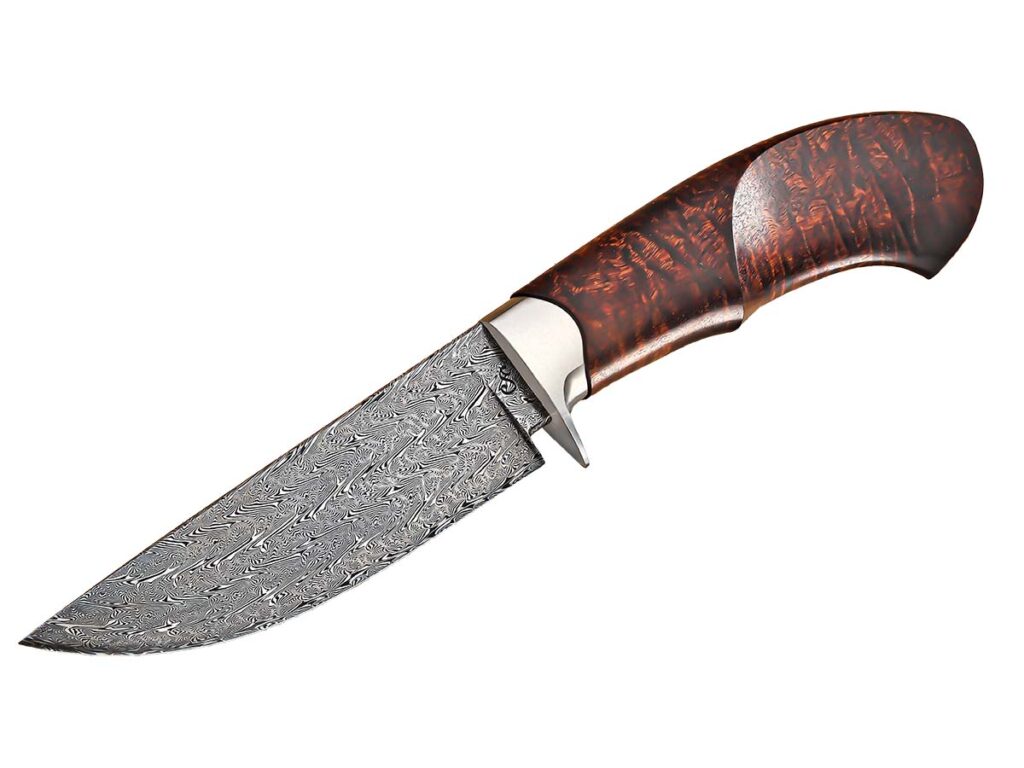
Explore this collection of new hunting knives featuring custom blades forged with premium materials. Find your next heirloom fixed blade.

Step into the world of custom-crafted cutlery, where art and function meet in the field. This collection showcases the diverse and spectacular work of today’s finest knifemakers. We’re taking a look at a stunning array of new hunting knives, each forged with meticulous detail, featuring exotic materials like Sambar stag, ironwood, camel bone, and intricate Damascus steel.

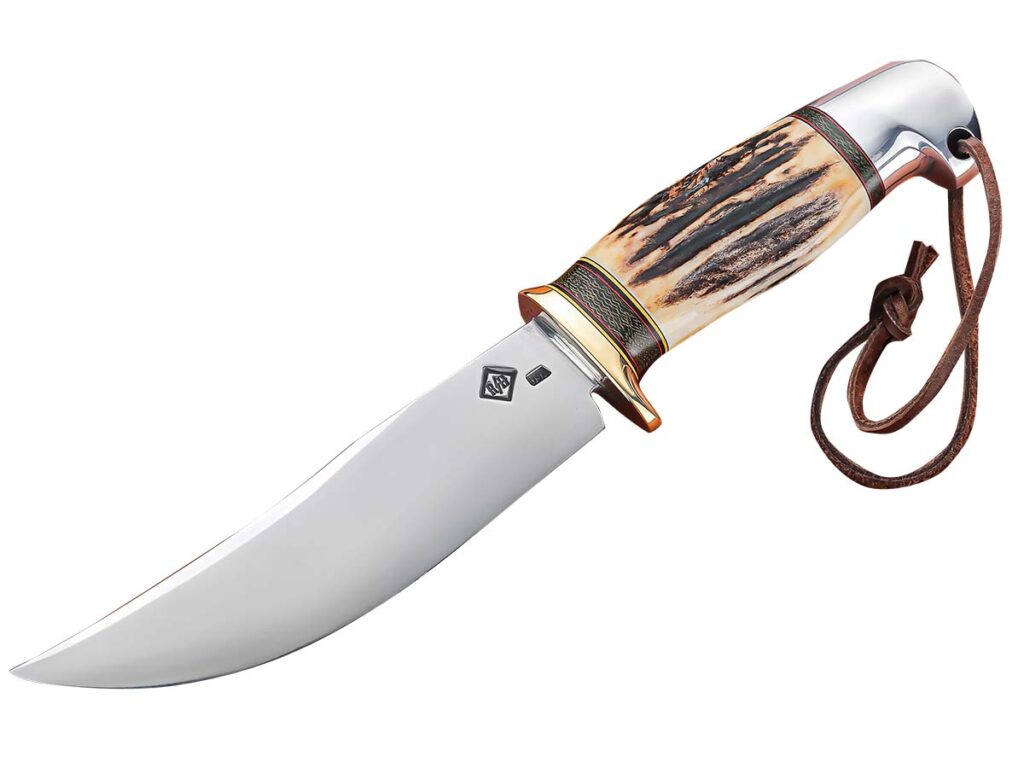
Rocco Handmade Bear Creek Hunter

Bear Creek Hunter

Blade length: 6”
Blade material: 1095 carbon steel
Blade grind: Convex
Scales: Sambar stag
Spacers: OD green canvas Micarta® and vintage tan, red and black fiber
Pommel: Aluminum
Guard: Soldered brass
Overall length: 10.5”
Sheath: Leather belt model w/snap strap
Maker’s price for a similar knife and sheath: $495
Maker: Rocco Handmade (SharpByCoop image)


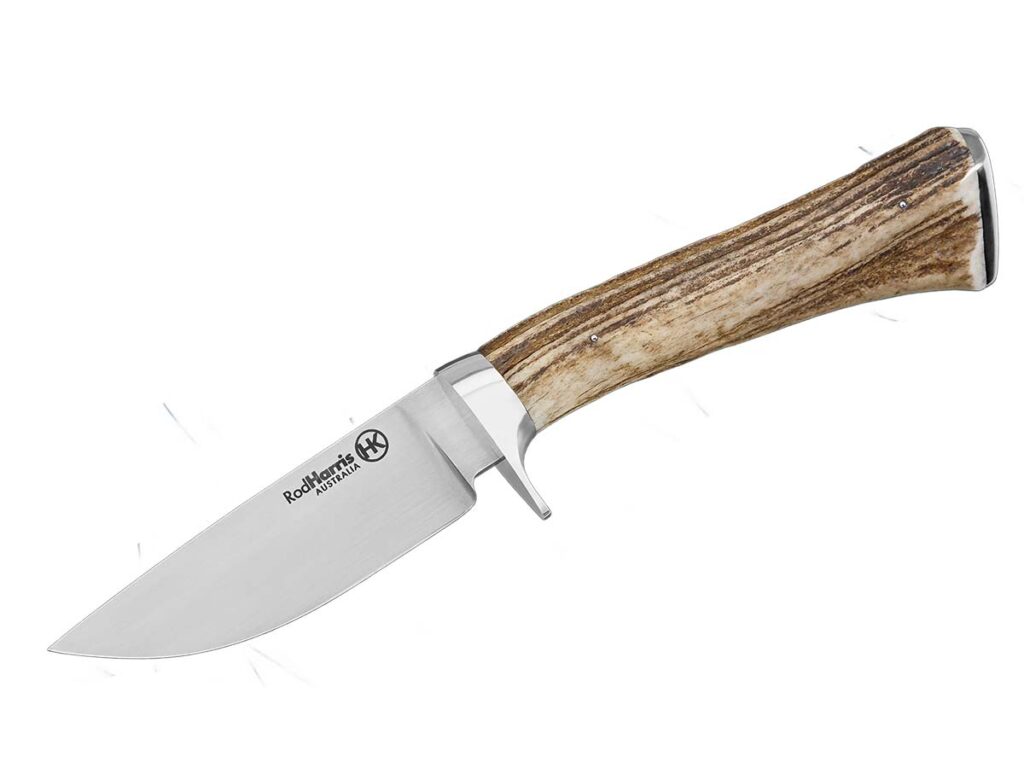
Rod Harris Antler Hunter

Antler Hunter

Blade length: 4”
Blade steel: S35VN stainless
Blade grind: Flat
Scales: Sambar stag
Guard: 416 stainless
Overall length: 9.25”
Knife to know: The stag is from the customer’s first deer kill; Rod Harris is a member of the Australian Knifemakers Guild
Maker’s price for a similar knife: $650 at press-time exchange rate
Knife to know: The Antler Hunter is the first time Rod Harris has both had one of his knives published and made a knife with a stag handle
Maker: Rod Harris (Rod Hoare image)


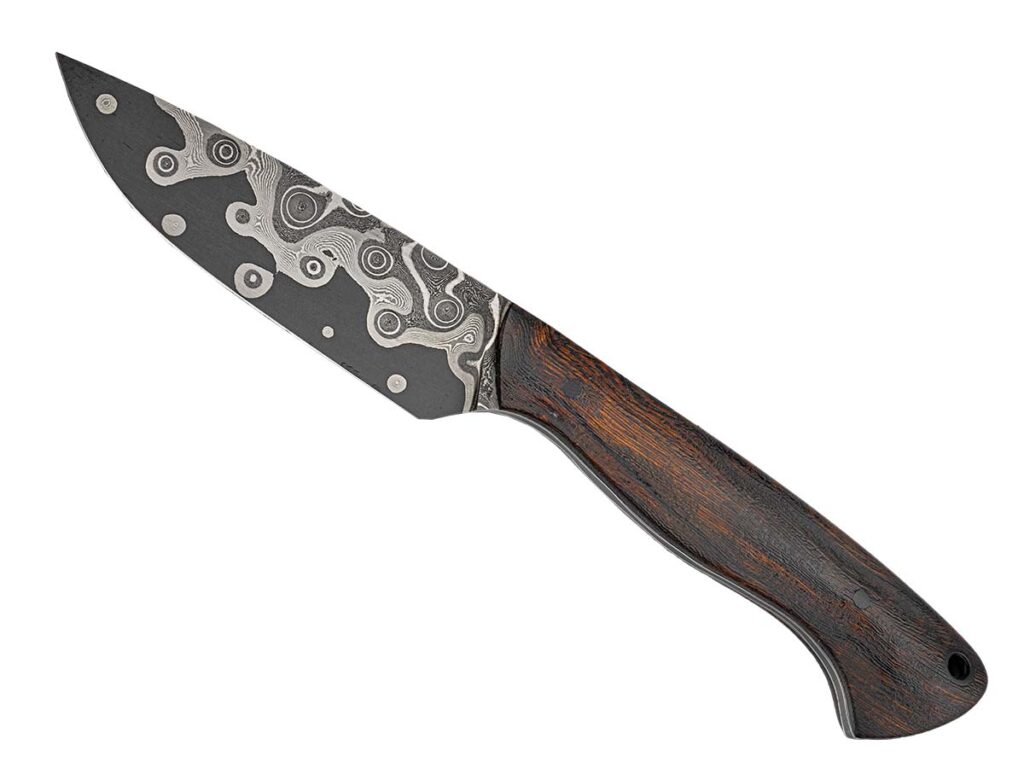
Eland Green Huntin Buddy

Huntin Buddy

Knife type: Hunter
Blade length: 3.5”
Blade material: Bulldog damascus san-mai
Blade grind: Flat
Scales: Bead-blasted ironwood
Overall length: 7.5”
Sheath: Belt model, tooled black leather
Maker’s price for a similar knife: $400
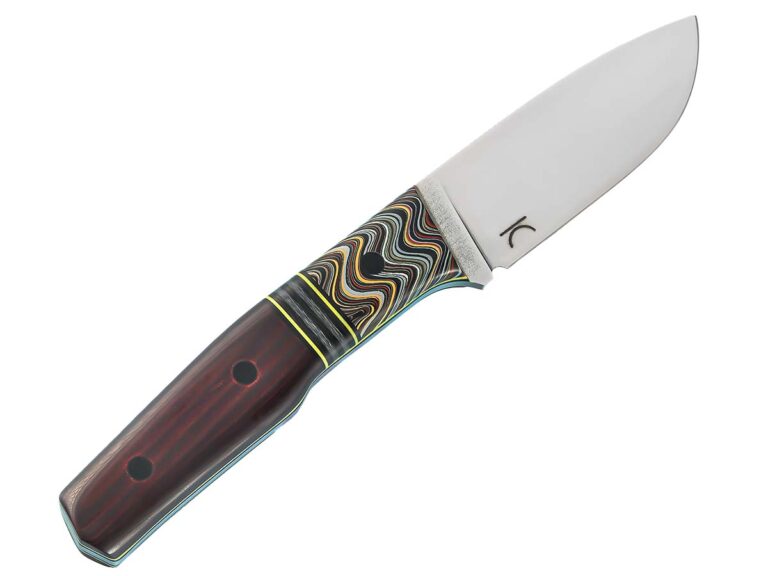
Maker: Eland Green, lostwoodknives.com (Jocelyn Frasier image)


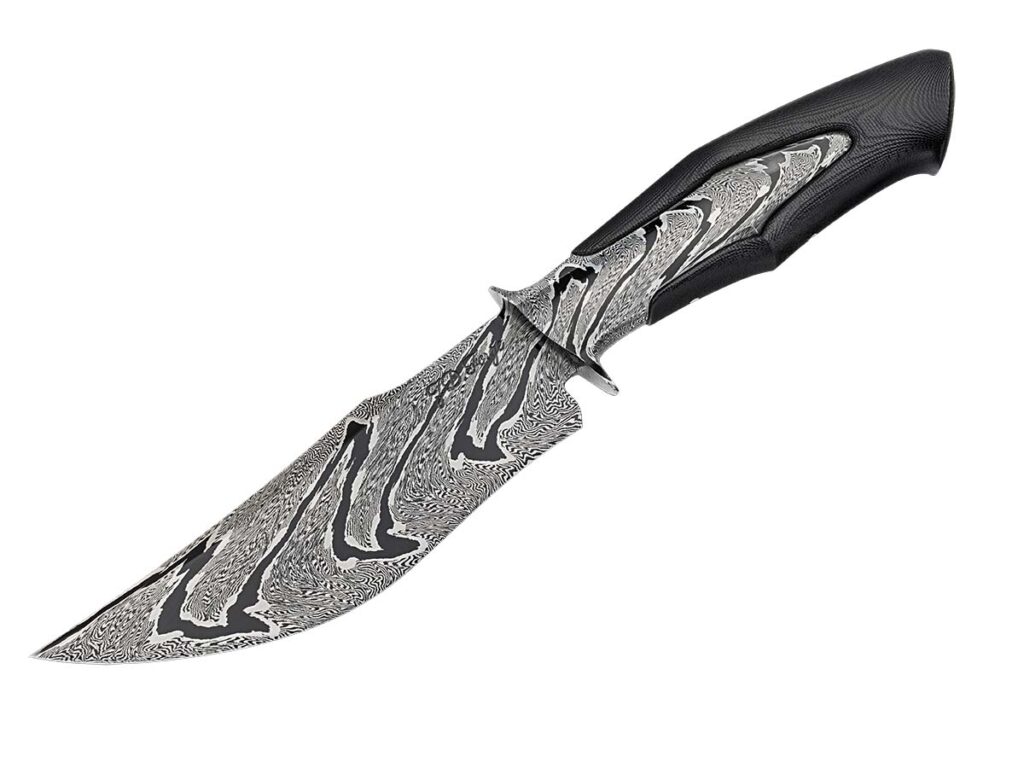
Zane Dvorak Integral XL Hunter

Integral XL Hunter

Knife name: Integral XL Hunter
Blade length: 5.5”
Blade material: Ghost-Fire Damascus of 1084 carbon and 15N20 nickel-alloy steels
Blade grind: Convex
Scales: Black G-10
Overall length: 10.5”
Maker’s price for a similar knife: $2,500
Maker: Zane Dvorak, zdforge.com (Jocelyn Frasier image)


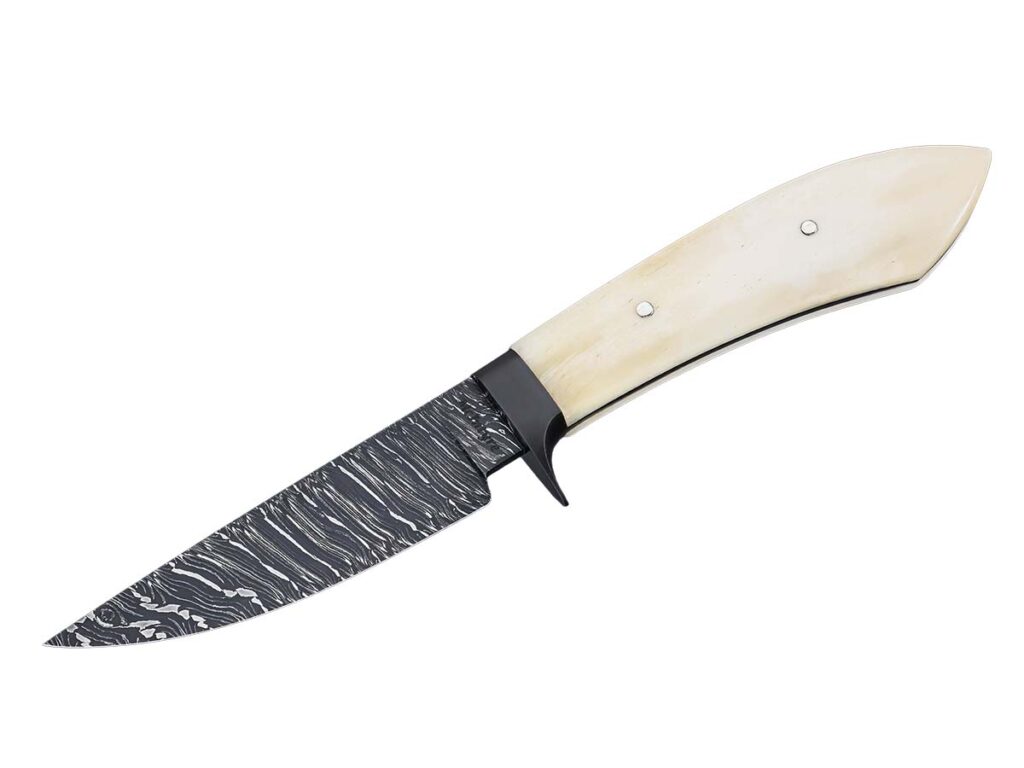
Shawn McIntyre Dress Hunter

Dress Hunter

Blade length: 3.75”
Blade material: A twist W’s damascus of 1084 carbon and 15N20 nickel-alloy steels
Blade grind: Flat w/convex edge
Scales: Heirloom-fit camel bone
Handle frame: 1065 carbon steel w/matte blue finish
Guard: Same material as frame
Overall length: 7.75”
Maker’s price for a similar knife: Check w/maker for more info
Knife to know: Best Hunter Award Winner, 2025 Australian Knifemakers Guild Melbourne Knife Show; inspired by the classic Jerry Fisk Sendero hunter; Shawn McIntyre is an ABS master smith
Maker: Shawn McIntyre (Rod Hoare image)


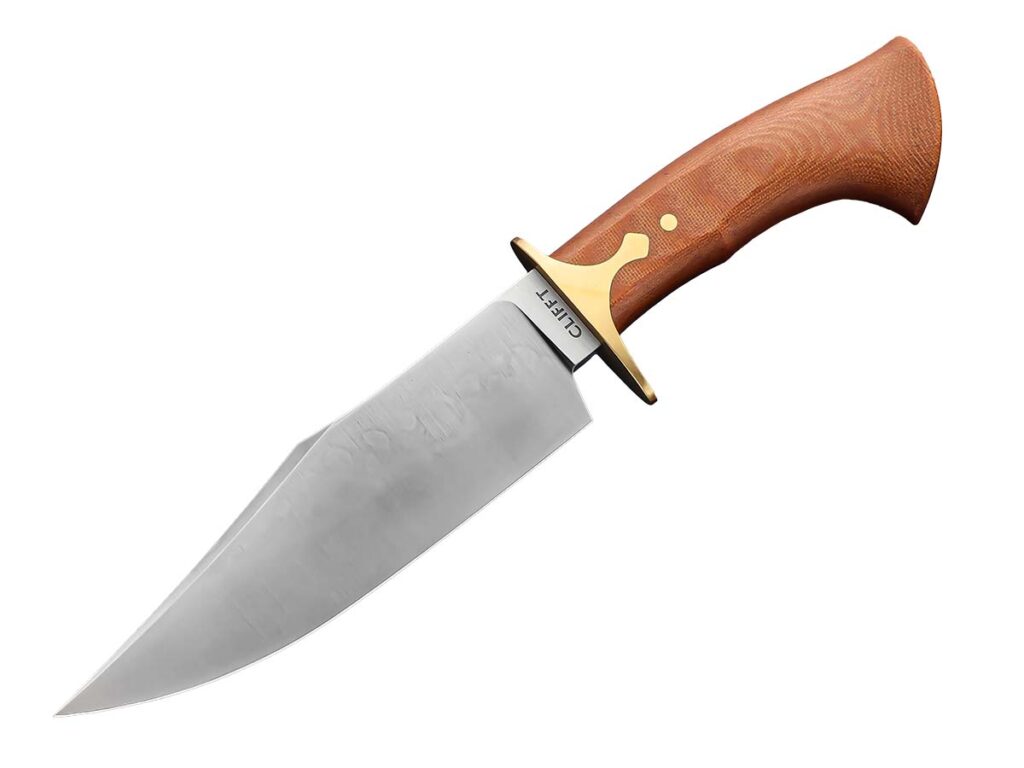
Dauntless Clifft Bowie

Clifft Bowie

Knife name: Clifft Bowie
Blade length: 7”
Blade material: 125Cr1 carbon steel
Blade @the thickest: .25”
Blade pattern: Clip point (also comes in a harpoon point)
Construction: Hidden tang
Scales: Natural canvas Micarta® (also in black G-10)
Overall length: 13”
Country of origin: USA
Sheath: Leather w/retention strap; ambidextrous carry; by Chattanooga Leather Works
Knife to know: Won Best American-Made Knife at BLADE Show Texas 2025
MSRP: $575
Company: Dauntless, dauntlessmanufacturing.com (SharpByCoop image)


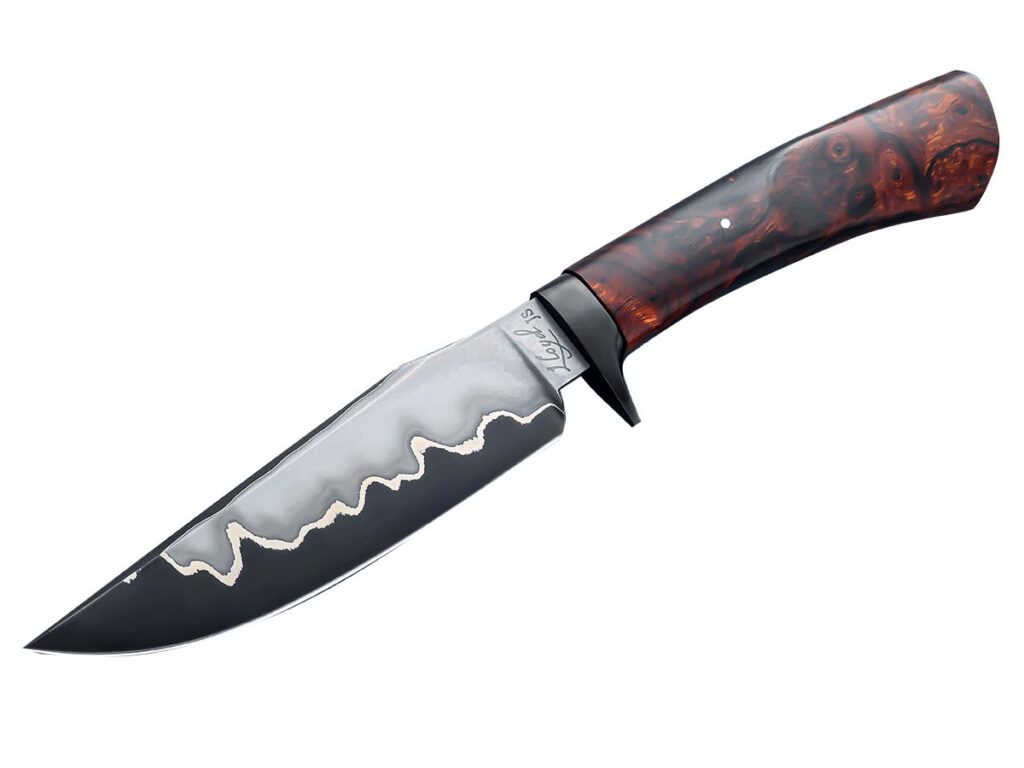
Charlie Lloyd Hunter

Hunter

Blade length: 5.75”
Blade material: Cu-mai
Blade grind: Flat
Scales: Ironwood
Guard: Hot blued
Overall length: 10.5”
Knife to know: Charlie Lloyd is an ABS journeyman smith
Maker’s price for a similar knife: $750
Maker: Charlie Lloyd (SharpByCoop image)


Camille Sennegon Hunter

Camille Sennegon Hunter

Blade length: 4.5”
Blade material: W’s multi-bar (6 bars) damascus of O2 carbon and 15N20 nickel-alloy steels
Blade grind: Flat w/convex edge
Scales: Curly gidgee
Guard: 304 stainless steel
Overall length: 9.25”
Maker’s price for a similar knife: $1,300
Knife to know: Camille Sennegon is a journeyman smith in the ABS
Maker: Camille Sennegon (SharpByCoop image)


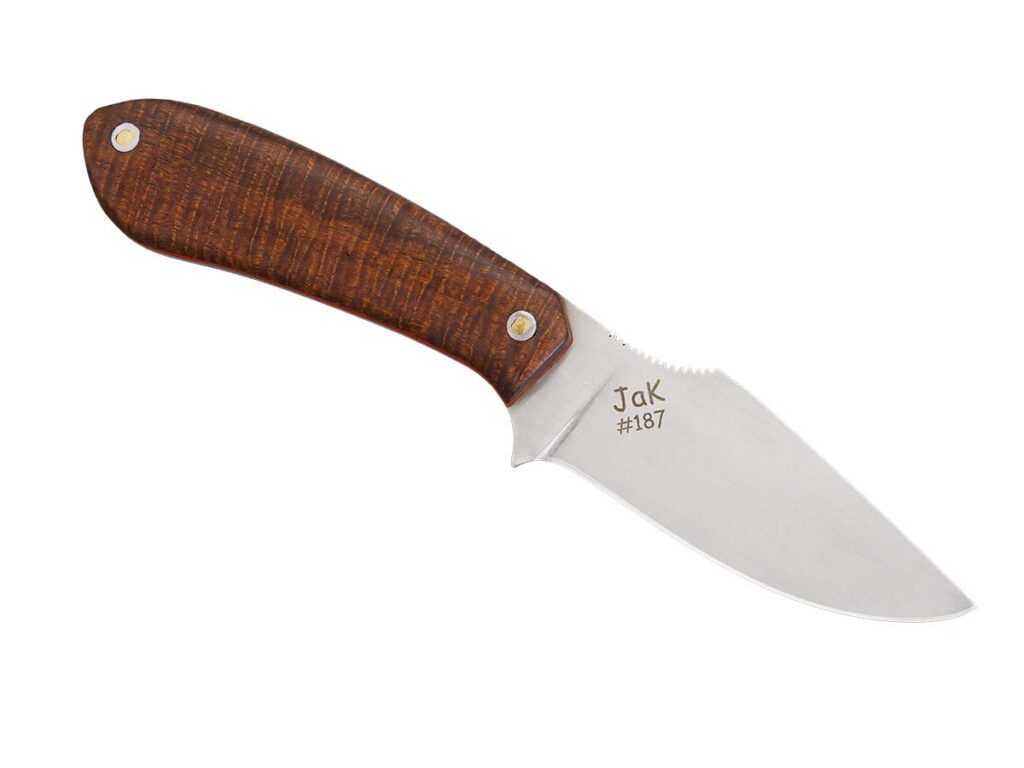
Jak Knives #187

#187

Knife type: Hunter
Blade length: 4.1”
Blade steel: 14C28 stainless
Blade thickness @ricasso: .118”
Blade grind: Flat
Blade pattern: Drop point
Scales: A Western Australia desert hardwood called Minniritchie
Liners: G-10
Overall length: 8.85”
Sheath: Leather belt model
Maker’s price for a similar knife and sheath: $300-$400 at press-time exchange rate
Maker: Jak Knives (Rod Hoare image)


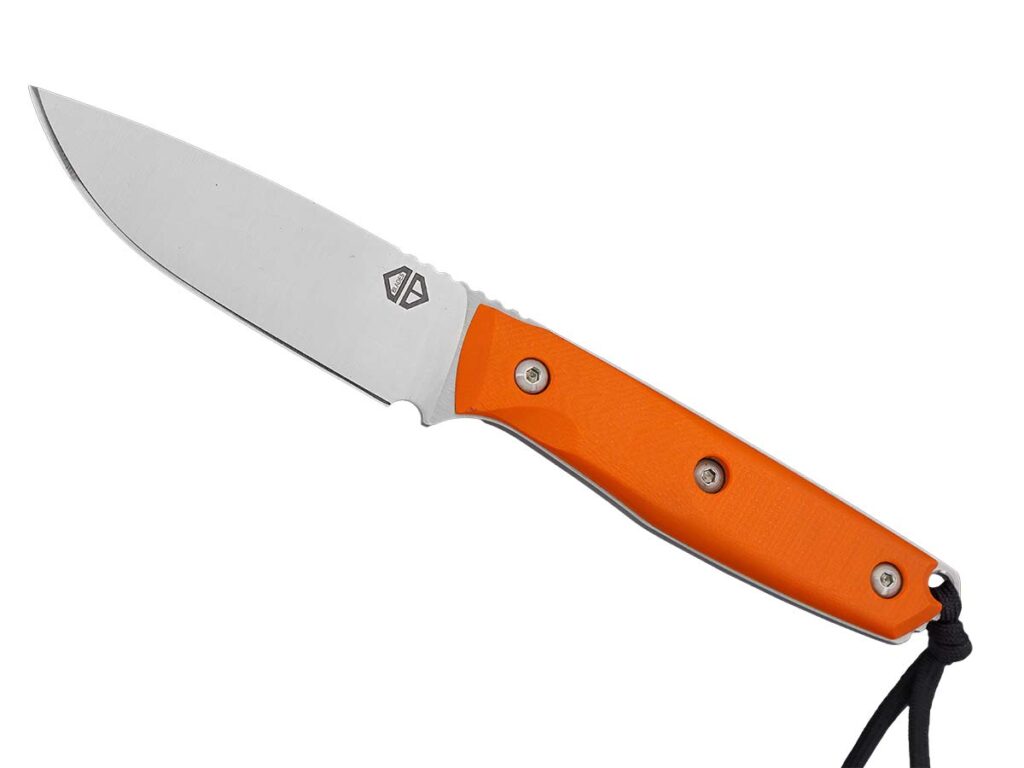
DB Blades Varis

Varis

Blade length: 3.9”
Blade steel: Nitro V stainless
Blade grind: Flat
Blade thickness @ricasso: .157”
Scales: G-10
Overall length: 8.66”
Sheath: Synthetic
Knife to know: Varis won the Best Hunting Knife Award at the 2025 Queensland Knife Show; Dominic Binker is a member of the Australian Knifemakers Guild
Maker: DB Blades (Rod Hoare image)

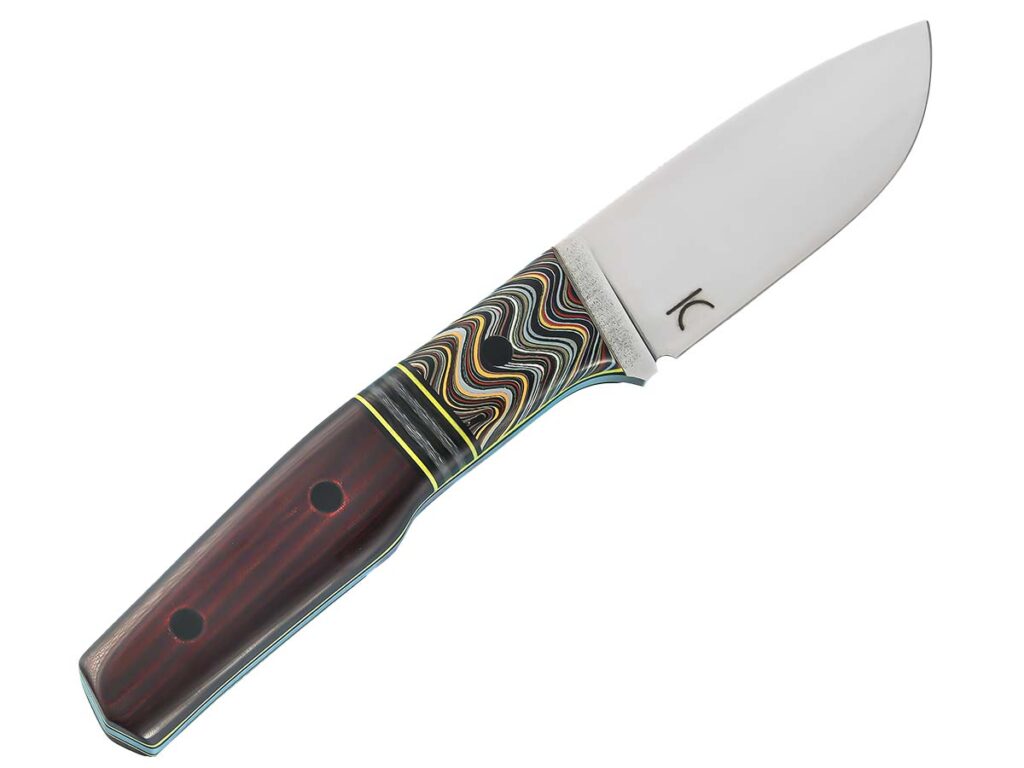
Under The Bridge Knife and Tool M.O.A.

M.O.A.

Knife type: Hunter
Blade length: 2.75”
Blade material: Cruwear carbon steel
Blade grind: Full flat
Handle material: Burgundy linen Micarta®, Fordite and silver metallic carbon fiber
Overall length: 6.75”
Maker’s price for a similar knife: $375
Maker: Under The Bridge Knife and Tool (SharpByCoop image)

Pcocks Customs Slug Life

Slug Life

Blade length: 3.54”
Blade material: Mosaic damascus of 1084 carbon and 15N20 nickel-alloy steels
Blade grind: Full flat
Scales: Ringed gidgee
Pins: Carbon fiber
Knife to know: Tapered tang; Slug Life won the Best Hunter Award at the 2025 Perth Knife Show; Peter Cocks is a member of the Australian Knifemakers Guild
Sheath: Belt model of Australian leather bearing Peter’s leather texturing stamp and finished w/a Barry King border stamp
Maker’s price for a similar knife and sheath: $750 at press-time exchange rate
Maker: Pcocks Customs (Rod Hoare image)

Check Out Other Months:

Legendary knives that gave the U.S. military its edge

These knives formed the tip of the U.S. Military’s spear.

The 20th and 21st centuries saw some of the most iconic of military knives. From the World War I trench knives with the imposing knuckle-duster D-guards to today’s modern folders and fixed blades, a few, in no particular order, stand out above the rest:

  • USN Mark II/USMC fighting-utility knife*: According to Army Special Forces veteran and Spartan Blades co-owner Curtis Iovito, “The KA-BAR fighting/utility knife is arguably the most recognizable American military knife ever produced. Introduced in 1942 for the U.S. Marine Corps during World War II, it solved a critical problem: troops needed a knife that could serve both as a weapon and a field utility tool.
    “Marines used it for everything from opening ammunition crates and cutting brush to close-quarters combat. Its design struck a near-perfect balance between fighting knife and utility blade, and it has influenced military knife design ever since.”
    “As an issue knife, the classic USN Mark II filled the same role as the Randall Model 1, but in a much more ‘democratized’ sense. Very few soldiers could get a Randall,” explained Army veteran and Spyderco Special Projects Coordinator Michael Janich, “but the Mark II/Ka-Bar was ubiquitous. Although it ultimately became best known as the Ka-Bar and most closely associated with the Marine Corps, it was manufactured by many other companies and widely issued. As a mass-produced item, it was—and still is—a very capable knife and continued to serve with distinction in many other wars after World War II.”
    “The USMC fighting knife has not always been made by KA-BAR, and KA-BAR didn’t even make them first, but they made it their own,” noted Marine Corps veteran/knifemaker Les George. “It’s the stereotypical military knife in the western hemisphere.” Added Army 5th Special Forces veteran/BLADE field editor/knifemaker Kim Breed, “It is a multi-use combat knife used in one form or fashion in all branches of the service.”
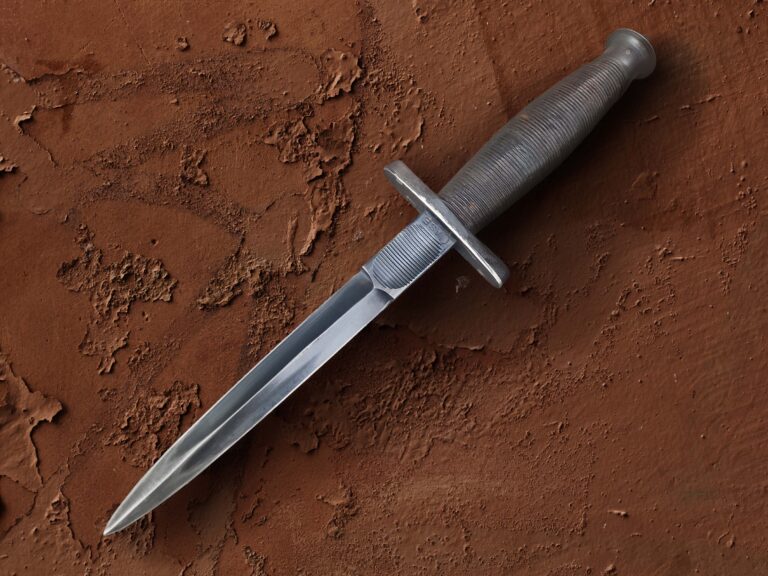
  • V-42: As Janich noted, “The V-42 is not only one of the sexiest fighting knife designs ever created, it also has perhaps the strongest pedigree since it was designed for and by the First Special Service Force, aka The Devil’s Brigade, of World War II fame. Its unique design and signature sheath reflect the original mission of that unit, which is regarded as the predecessor of current U.S. Army Special Forces units and Canada’s Joint Task Force 2. This iconic design is also immortalized in many U.S. military unit insignia, though it is often mistaken for the Fairbairn-Sykes dagger.”
  • Randall Model 1: “Randall has done more to influence modern knife design language than most,” George wrote. “The Model 1 is what I think of as peak Randall. Its influence ranges from World War II to the unit-made SOG knives in Vietnam to the modern SOG knife company.”
    “This iconic design epitomizes everything a military-style fighting knife should be,” Janich opined. “Its blade captures the spirit of the classic bowie knife, but in a leaner, more maneuverable form. The sharpened false edge allows it to back cut and penetrate with extreme authority, and its handle design allows for a grip that is both deft and secure. The fact that it continues to serve downrange in the same basic form to this day is a testament to the fact that it started out damned near perfect.”
  • Gerber Mark II: “The shortcomings of the original Fairbairn-Sykes and the many variations it inspired became very well-known both during and after World War II,” Janich wrote. “The Gerber Mark II addressed and corrected all of these to offer a superior fighting dagger design. Although it was a private-purchase item, like Randalls, it was much more accessible to servicemen and more widely carried. Its unique variations and its evolution over time also created its own rich history.” Janich added the fact it was the favored combat knife of Michael D. Echanis, decorated Vietnam veteran, accomplished martial artist and hand-to-hand combat knife writer and editor, enhanced its mystique and widespread appeal as well.

More Standouts

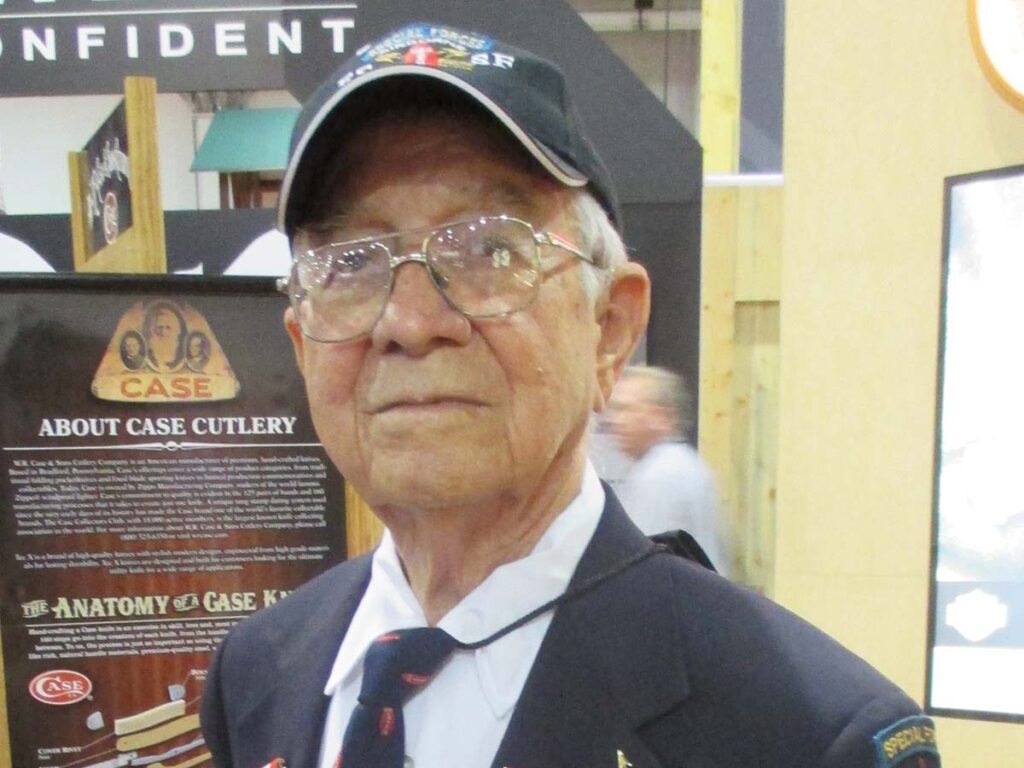
Gene Gutierrez
Gene Gutierrez

Any number of other U.S. military knives have stood out since the turn of the 20th century. Among them are the M3 trench knife, M1 bayonet, the Applegate-Fairbairn dagger and the Applegate-Fairbairn folder.

“The M3 was what the Army chose to issue in World War II,” George noted. “In purest terms, it also had a fairly short service life, but in real terms it is what became the M4 bayonet on down the line to the M7 bayonet that I used to run the assault course in boot camp in the ’90s. Its influence has been widespread.”

“The World War II-era M1 bayonet, designed for use with the M1 Garand rifle, played an important role in American infantry combat during World War II and beyond. I remember so many old World War II vets telling me stories about the bayonet,” Iovito recalled. “Shorter and more practical than earlier bayonets, the M1 reflected the changing nature of warfare where mobility and close-quarters fighting often occurred in tight environments. Many soldiers also carried the bayonet as a fighting and utility knife when not mounted on their rifles. Its durable construction and effective blade profile made it a reliable tool throughout several conflicts.”

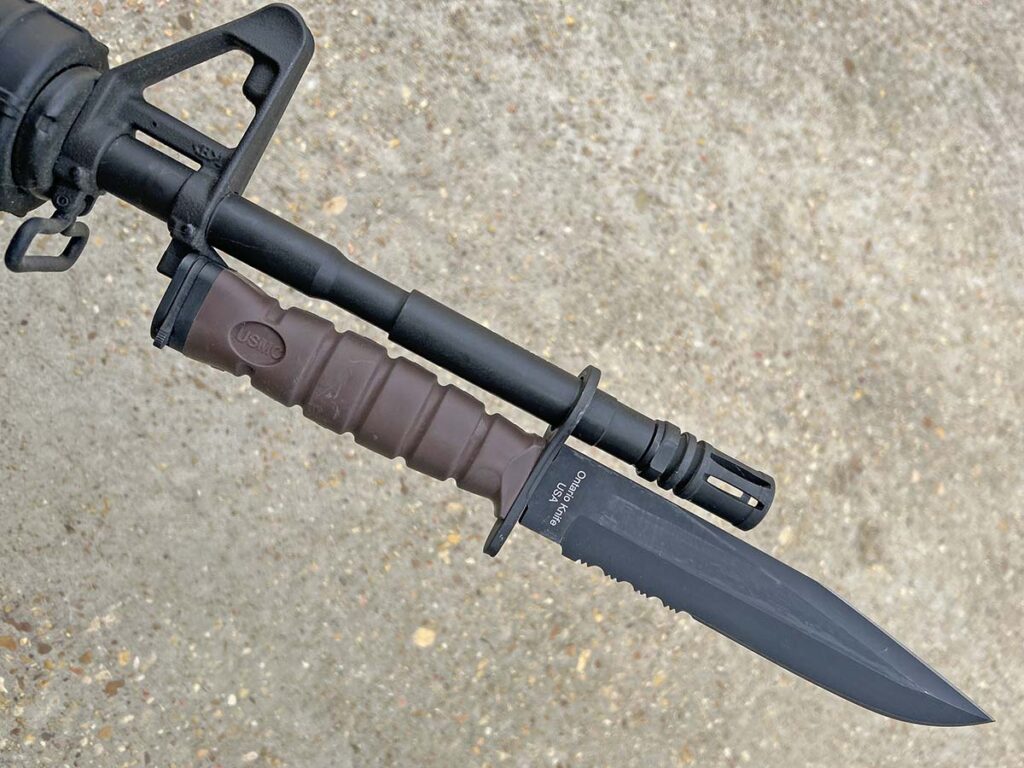
One of U.S. Marine Les George’s teammates mounted an Ontario OKC-3S similar to this one on an M4 to help quell a tense situation on the streets of Fallujah. (Les George image)

The Applegate-Fairbairn dagger and Gerber A-F folder were named after Cutlery Hall-of-Famer Col. Rex Applegate and W.E. Fairbairn
of Fairbairn-Sykes Commando Knife fame.

“Another design that corrected the flaws of the Fairbairn-Sykes dagger was the Applegate-Fairbairn dagger,” Janich observed. “Designed during World War II by Col. Applegate and W.E. Fairbairn, it never got beyond the prototype stage before the war ended. Decades later, it finally saw production by several major knife companies. Although very noteworthy on its own, it also inspired a scaled-down folding version that set a new and different standard in folding and fighting knife design. The original A-F Folder design was a collaboration between Col. Applegate and consummate custom knifemakers Bill Harsey and Butch Vallotton.” Added Harsey, a Cutlery Hall-of-Famer in his own right, “The Gerber version of the folding knife was a long-running project, and I was told by Gerber that the Army ordered 50,000 pieces at one time for the troops, which were delivered.”

Few knives enjoy legendary U.S. military status as much as the SOG Bowie, which served as the inspiration for the name of today’s SOG knife company. “The Special Forces SOG Bowie is one of the most iconic knives associated with American special operations forces,” Iovito wrote. “Inspired by the knife carried by members of the Military Assistance Command, Vietnam Studies and Observations Group during the Vietnam War, the SOG Bowie reflects a fusion of classic bowie knife design with modern military needs. Its lineage connects directly to clandestine operations carried out in Southeast Asia, where unconventional warfare units often relied on rugged equipment that could handle jungle conditions and extreme use.”

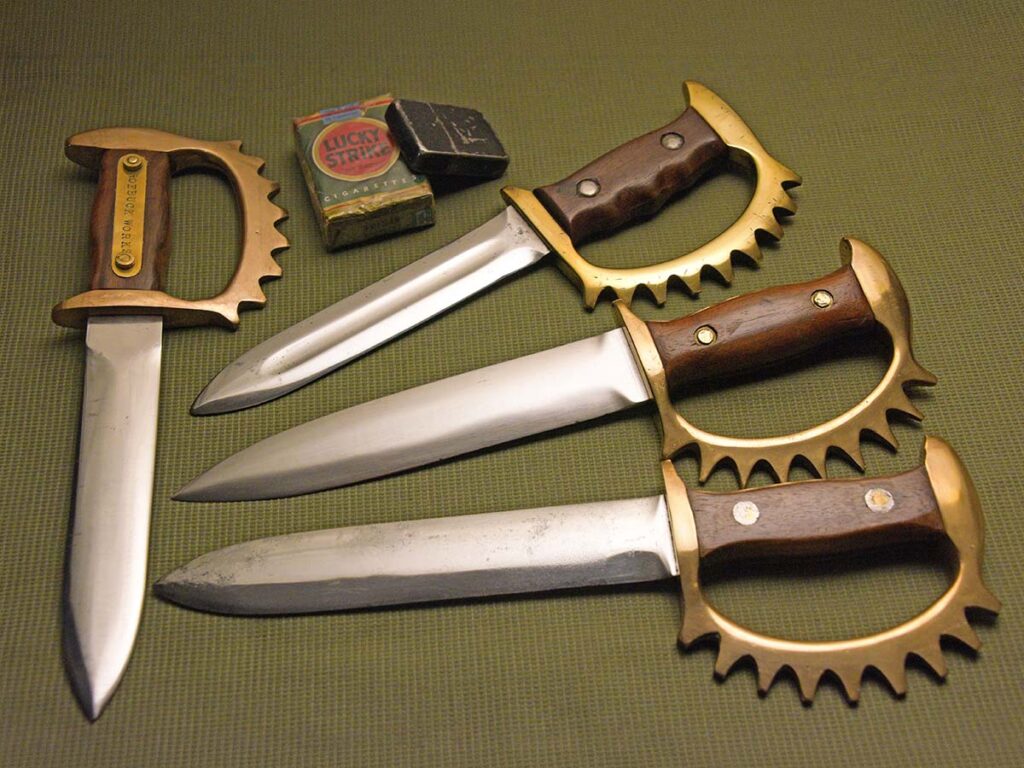
Howard Cole was famous for making knuckle knives such as these three rare nine-pointers and one eight-pointer. A paratrooper named Clyde McClelland carried the center nine-pointer during World War II. (Image courtesy of Louis Chow)

Folding knives have never been so popular in the U.S. military as they have in the past 40 years, and at or near the top of that list are the Al Mar SERE, CRKT M-16 and Spyderco Endura.

“While many earlier military knives were fixed blades, modern soldiers frequently rely on folding knives for everyday field use. One of the most influential examples is the Spyderco Endura,” Janich began. “For me, the knife carries a very personal meaning. During Operation Just Cause in Panama, I found myself tangled in my parachute harness after landing while under fire. I used my Spyderco Endura to cut myself free from the harness so I could move and get back into the fight. That moment left an indelible mark on me and reinforced the reality that sometimes the most important piece of equipment you carry is the knife in your pocket. The Endura is lightweight, corrosion resistant and extremely functional, and its opening hole allows rapid one-handed deployment, even with gloves. Its reliability and practicality have made it a favorite among soldiers who need a dependable cutting tool for daily field tasks.”

In the fall of 1984, Harsey helped Al Mar do a run of just over 50 large folders for Col. Nick Rowe, who had been tasked by the Army to run the SERE (Survival, Evasion, Resistance and Escape) School near Fort Bragg, North Carolina. “All modern Special Forces soldiers, aka Green Berets, and other high-risk military members including pilots undergo this training,” Harsey stated. “I finished my part of unmarked knives in time for Al Mar to get them on an airplane bound for Fort Bragg and into Col. Rowe’s hands for an important mission date. I never heard another thing about this project. Later this knife would become known as the AL Mar SERE folding knife.”

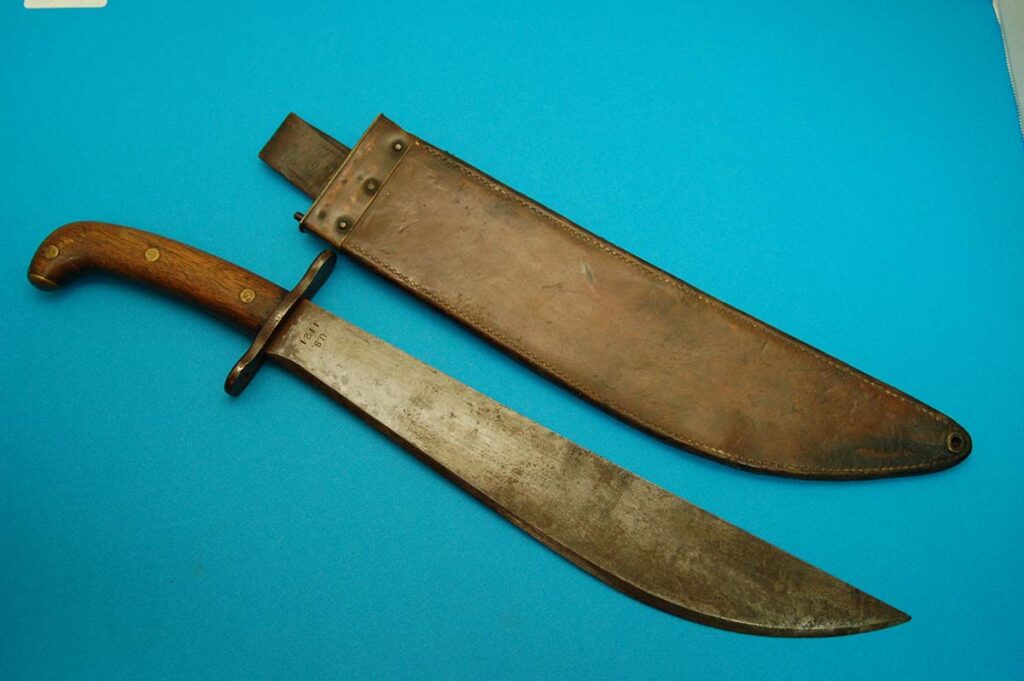
The Field Artillery Corps designed the Model of 1909 bolo for use by crew-served weapons during World War I. It was for clearing fields of fire to enable the limbers and horses to navigate the towed artillery into place. (Images courtesy of Frank Trzaska)

As for the CRKT M-16, its universality during the Iraq War guarantees its spot on the list. “I am not aware of this knife ever being issued but there was a time when you saw them everywhere,” George wrote. “Guys would buy them at the PX and clip them on the outside of their vests. They were everywhere, and they did everything!”

Standard Setters

The foregoing includes but a few of the knives that have served the USA and served it well over 250 years of saving the world from tyranny and oppression and setting the standard billions aspire to today. Other notable knives, in no particular order, include:

The M9, M11 and OKC-3S bayonets; Camillus Jet Pilot Survival Knife; Chris Reeve Yarborough; OSS Smatchet; Collins M1942 Machete; Swiss Army knife; Spartan Blades Ares, Difensa and Harsey Dagger; Randall Models 2 and 18; Gerber Silver Trident Knife and Mark I; G.I. four-bladed pocketknife; Schrade Mark II Paratrooper switchblade; G.I. Machete; Leatherman and Gerber multi-tools; and Western 49 Bowie.

According to Army Special Forces veteran Curtis Iovito, the Special Forces SOG Bowie reflects a fusion of classic bowie design with modern military needs. “Its lineage connects directly to clandestine operations carried out in Southeast Asia,” he wrote, “where unconventional warfare units often relied on rugged equipment that could handle jungle conditions and extreme use.” (Frank Trzaska’s knife and image)

Which ones are we omitting? Let us know. And while you celebrate the semiquincentennial of your favorite nation throughout the year, never forget: knives have played a monumental role in the success of the U.S. military and the building of the USA up to now and for the foreseeable future.

It doesn’t get much sharper than that.

*Though they are two different knives, the USN Mark II and USMC fighting/utility knife are grouped together for the purposes of this story because of their similarity in design and their across-the-board use by U.S. service personnel, especially during World War II. Also, the spelling of KA-BAR refers to the knife manufacturer that continues in operation, while Ka-Bar refers to the generic name service personnel gave the knife, a name that persists to this day.

Military Knives:

Warenski King Tut Dagger For Sale

Perhaps the most iconic handmade knife ever can be yours for the right price

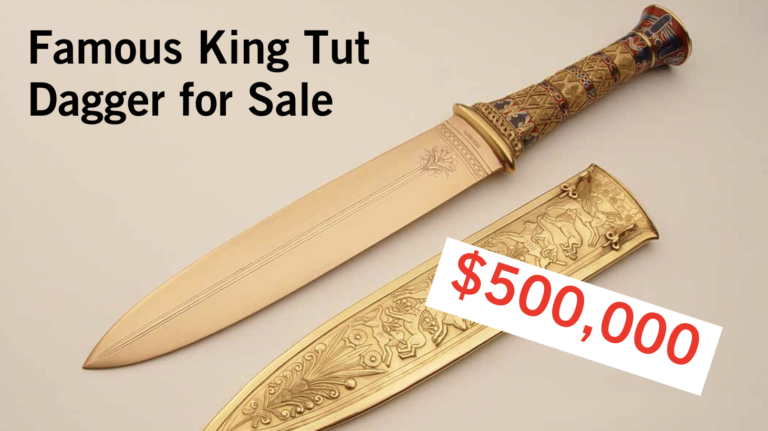
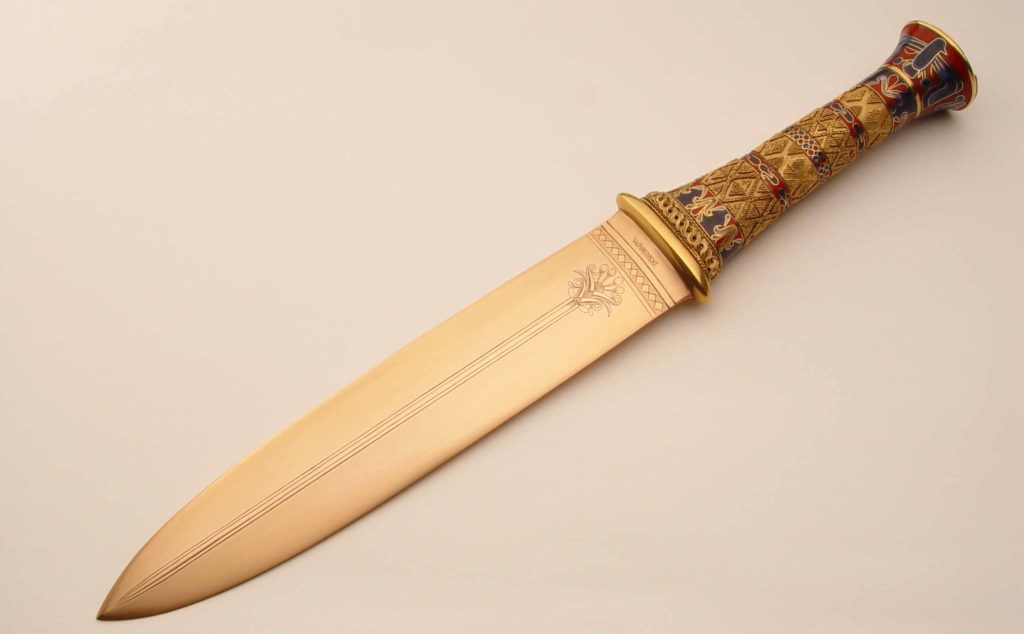
It may be the most iconic custom knife ever and it was made by perhaps the best knifemaker ever. The King Tut Dagger reproduction by BLADE Magazine Cutlery Hall-Of-Fame® member Buster Warenski is available for sale through Exquisite Knives.

Buster Warenski’s reproduction of the King Tut Dagger took over five years to complete and, including the sheath, contains over 32 ounces of gold. (SharpByCoop image)

Commissioned by Cutlery Hall-Of-Famer Phil Lobred in 1982, the knife took Warenski over five years to complete. A pioneering collector of custom knives and 19th-century dress bowies and founder/creator/coordinator of the Art Knife Invitational, Phil had kept the dagger in a safe ever since, displaying it on rare occasions at select knife shows or for private viewings. He passed away in 2016. On Aug. 1, his widow, Judy, contacted Dave Ellis of Exquisite Knives and asked him to handle the sale of the famous piece.

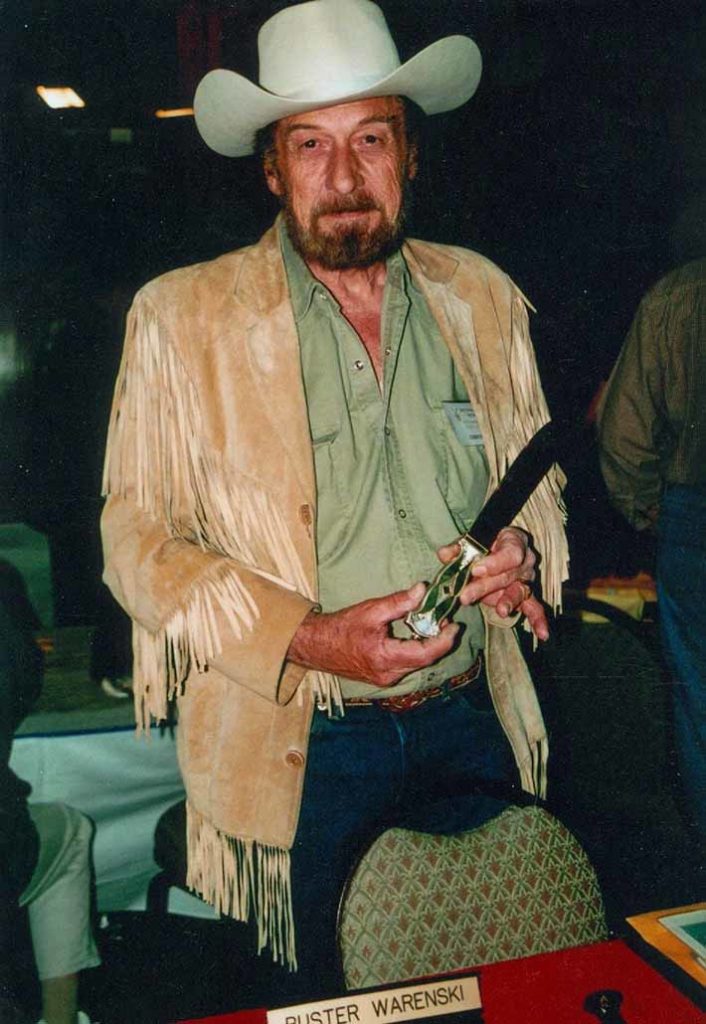
Buster Warenski is widely recognized as one of the best knifemakers if not the best ever. He passed away in 2005.

Once valued at over $1 million, “the most famous contemporary handmade knife ever,” according to Ellis, has an asking price of $500,000.

LEGACY IN STEEL

The first of Warenski’s three “Legacy Knives”—the other two being the Gem of the Orient and Fire and Ice—the King Tut Dagger is a reproduction of the knife from the tomb of the Egyptian boy king, Tutankhamun, uncovered by archaeologist Howard Carter in 1922. It contains over 32 ounces of gold and took Warenski, widely recognized as one of the best knifemakers if not the best ever, over half a decade to build.

During that span he suffered through the trial and challenges of recreating the iconic dagger. Among them was the cold forging and fullering of the knife’s gold blade, learning such ancient techniques as cloisonné—a highly technical enameling process—and the granulation of the handle. The solid gold scabbard rivals the knife in terms of beauty and the many hours it took to make. A special handmade display stand comes with the dagger, both of which are in mint condition.

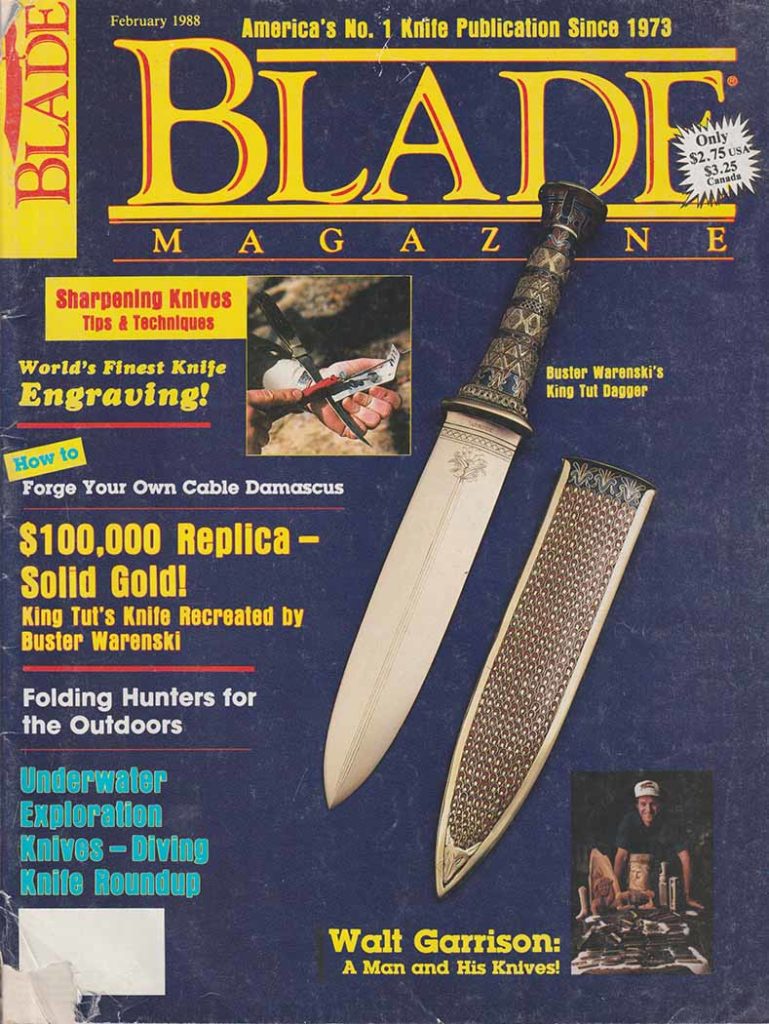
The King Tut Dagger repro was the cover for the February 1988 BLADE®.

PRICED TO SELL

The current sale will be the second time Ellis has had a go at moving the Tut dagger repro.

“A few years before he passed, Phil Lobred asked if I would find a buyer for the Tut. His asking price at the time was $1 million. I had a number of interested parties but Phil was set on his price and I could not swing the sale,” Dave wrote. “Now, over six years since Phil passed, Judy contacted me about selling the King Tut Dagger. After deciding on a more realistic price—not that a million was unreasonable but few if any contemporary knives have attained that lofty status—I am marketing the piece on my Instagram and Facebook pages and on my website.”

An ABS master smith now retired from bladesmithing, Dave is a top collector and dealer of fine custom knives. He stated that to be able to offer his clientele such a special piece is indeed an honor.

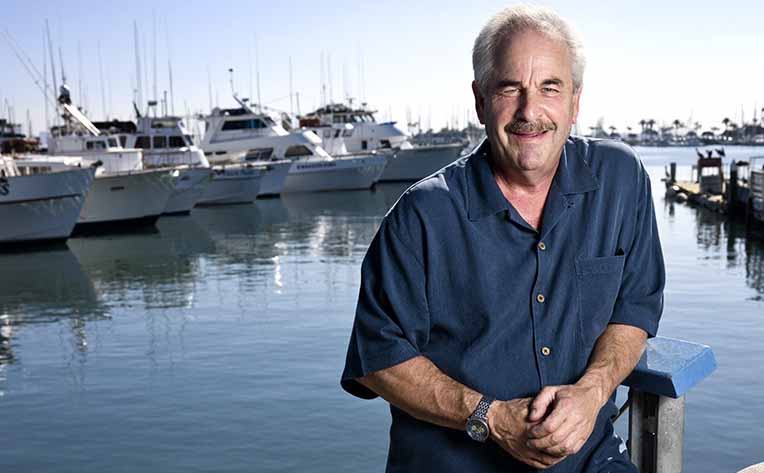
Phil Lobred commissioned Buster Warenski to make the King Tut dagger repro in 1982 and Buster completed it in 1987. Phil, here on a dock in San Diego, created/founded the Art Knife Invitational in 1983. He passed away in 2016.

Perhaps the only things better would be to a) sell it and b) own it.

For more information on the sale of the King Tut Dagger repro, visit exquisiteknives.com and click on ‘art knives’ on the home page.

Read More On Knife Collecting:

Cool Custom: Brian Brown’s Taka v2s

Not one of his everyday builds, the Taka v2s by Brian Brown features a notable blade, handle and lock.

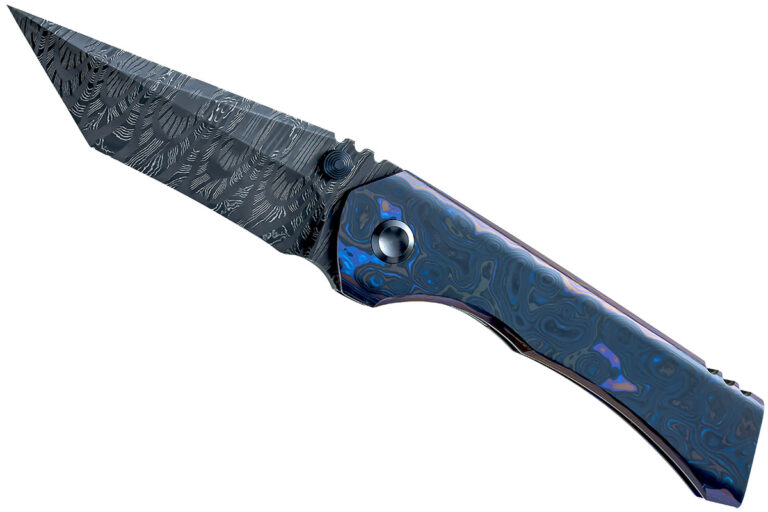
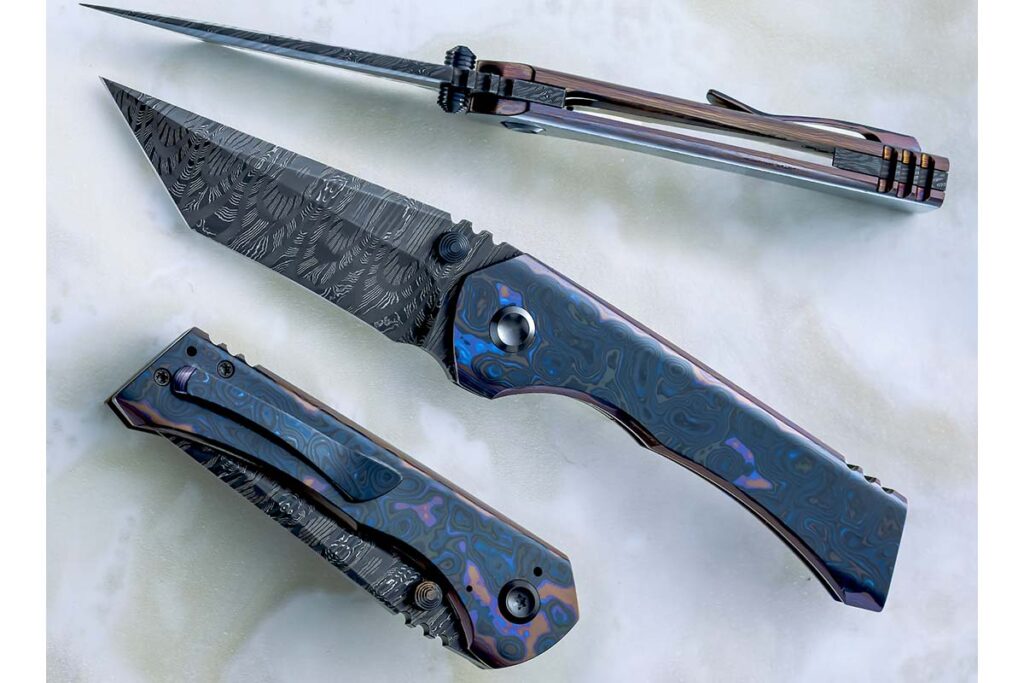
Brian Brown likes a good, pointy tanto.

“It’s kind of a straight hollow grind all the way from the choil to the tip in a climbing grind,” he explained of the blade on his Taka v2s dress tactical folder. Grinding it that way helped him keep the blade extremely thin from the recurve edge to the tip. “You’ve got to be really careful [at the edge] because that’s gonna be the lowest spot where it gets thinnest the fastest—and I’ve burned through them before,” he noted.

taka v2s
Brian Brown said he had to be careful grinding/removing the top layer of the Black Top Timascus™ handle material by Alpha Knife Supply or he would expose too much of the titanium and change the color—somewhat visible here on the spine. The 3.125-inch blade is FireClone 2 forged by Mike Norris, which Brian lauded as some of the best stainless damascus anywhere. Closed length: 4.375 inches. (SharpByCoop knife image)

Only the second one he’s done, the folder’s linerlock-like inset lock enabled him to use the fancy handle material paired with a straight, solid piece of Grade 5 titanium for the lockbar. There are several more steps involved but the upshot is the scales are symmetrical as with a linerlock—a symmetry Brian prefers to that of a framelock. Plus, the inset lock results in a thinner handle than with a linerlock because the lock side must be relieved to make room for the lockbar.

Check Out More Cool Custom Knives:

Suprlativ Knives: How Three Makers Blend Artistry and Innovation

A knifemaking trio with little to no ego keeps Suprlativ super.

If you’re going to carry a knife every day, then it should be functional and stylish, a joy to use and look at. Otherwise, what’s the point? That’s Enrique Peña’s design philosophy. In addition to owning Peña Knives, along with Jared Oeser and Javi Garcia he is one of three founding members of Suprlativ Knives. Suprlativ (pronounced like superlative) offers limited-edition folders in eye-catching designs, constructed with modern materials, artistic colorways and a machinist’s attention to mechanics—all at an affordable price.

How do three creatives run a knife company without conflict? Easy—no one’s ego is so tied to an idea that he can’t incorporate suggestions from the others. All three maintain their own companies, their homes for signature work, so when they come together to design for Suprlativ they can push boundaries. The diversification means there’s no stress when they work on collaborative projects.

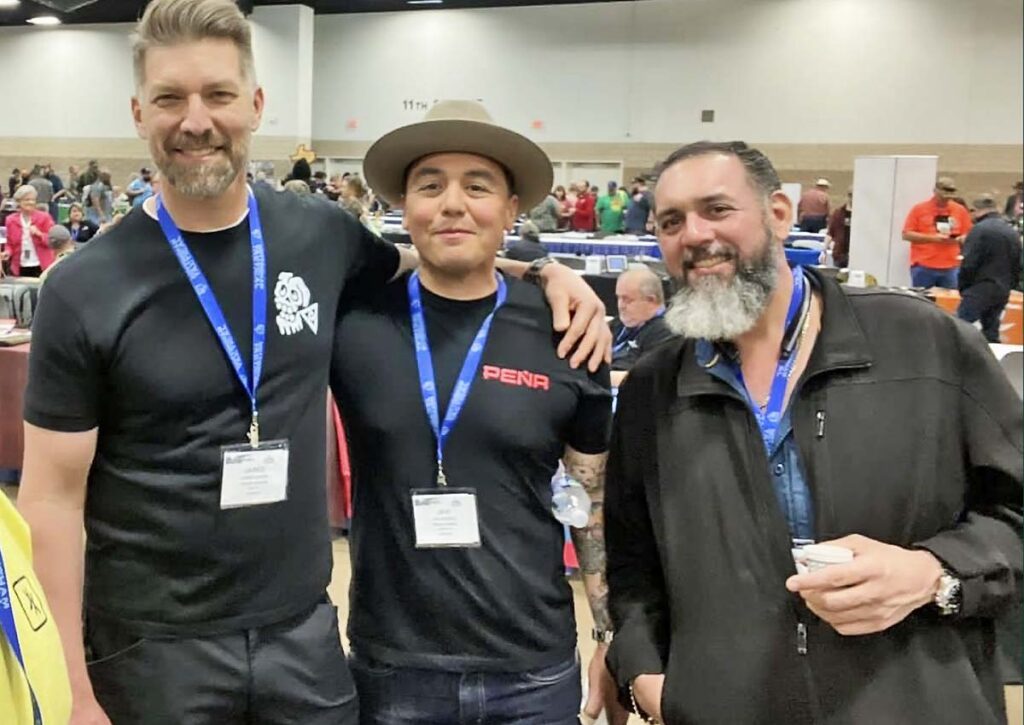
Suprlativ’s 3 Musketeers, from left: Jared Oeser, Javi Garcia and Enrique Peña.

As Garcia explained it, the mindset shifts to, “What can we make that would nurture the community?”

Enrique Peña

Peña is an associate of the South Texas Slipjoint Cartel. For the uninitiated, the cartel is a group of knifemakers that got together to honor BLADE Magazine Cutlery Hall-of-Fame® member Bill Ruple, each making a knife in the Ruple style. Bill, in turn, began sharing his knowledge with them, inviting them to his shop and answering questions by phone and email. He has been making knives since 1988 and is a master at multiblade slipjoints.

He sat on the board of the Texas Knifemakers and Collectors Association, the predecessor of the Texas Knifemakers Guild. Other Cartel members—all serious about preserving traditional knifemaking—include Bruce Barnett; Tanner Couch; Tommy “Bubba” Crouch; Burt Flanagan; Jeff Hawkins; Tobin “Toby” Hill; Bobby House; Matt Humphries; Phil Jacob; Tom Ploppert; Tim Robertson; Kendall Schorsch; Tyler Turner; Trae Gaenzel; Roan West; Rusty Preston; and Luke Swenson.

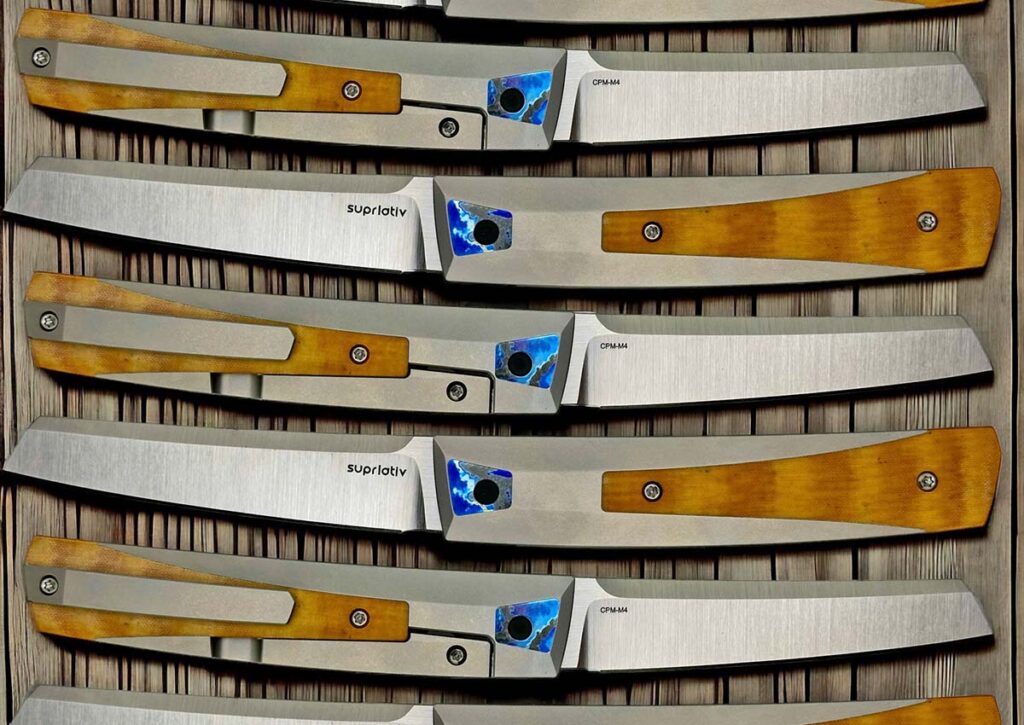
A swayback look complemented by a modified sheepsfoot blade highlights the Tirant. Blade length and material: 3 inches and CPM M4 carbon steel. Blade opener: Front flipper. Blade grind: Flat. Pivot: Ceramic caged bearings and detent. Frame: 6Al-4V Grade 5 titanium. Handle: Linen Micarta®. Weight: 3.4 ounces. Closed length: 4 3/8 inches. Country of origin: China. MSRP: $298.

In 2008, Peña was laid off from his job as a diesel mechanic and turned his knifemaking hobby into a full-time endeavor. He simply drove to Ruple’s house, knocked on the door and asked to learn knifemaking. Bill began mentoring Peña and credits him with being a quick learner. Ruple shared more than his craft; he guided Peña with business wisdom as well, which ensured the success of Peña Knives.

Peña’s X-Series offers the design and mechanical excellence of his custom knives in a more affordable production knife. Whether traditional or tactical, Peña’s fit and finish displays a respected exactitude. He maintains that clean, crisp, simple designs are harder to master because you can’t hide mistakes with bells and whistles. For example, to the experienced eye, grinder marks, or the lack of them, reveals something about the maker. Hand rubs take time. Peña, if you couldn’t tell, is a traditionalist.

Jared Oeser

Around three years after Peña took to knifemaking full time, Jared Oeser, owner of Oeser Knives, did the same. A building developer by trade and with little to do during the 2008 recession, he looked to his knifemaking hobby as a potential moneymaker. He said his wife can attest to the fact that his stress level plummeted during this time. Making knives provided an outlet for a creativity he had possessed since boyhood but couldn’t concentrate on as a profession except through designing houses.

Suprlativ’s 3 Musketeers, from left: Jared Oeser, Javi Garcia and Enrique Peña.

He asked his friend, fellow Salt Lake City resident and longtime knifemaker Dave Lang, to help him make knives. Lang swapped knifemaking ideas with the likes of Bob Loveless, Buster and Julie Warenski (now Warenski-Erickson) and Earl Black (Loveless and Buster are Cutlery Hall of Famers). Oeser’s father always carried a knife and brought his son up hunting, fishing and camping, traditions that Oeser passes on to his children.

Oeser’s first knives were bushcrafters. He couldn’t find exactly what he wanted—a bushcrafting knife that was both functional and good looking—so he made one. He and Peña communicated now and again, exchanging ideas and figuring out problems together. Now, though Oeser’s custom knives normally sell for around $1,000, some can go for over $10,000. In other words, he found his creative outlet and realized that the knife-art market still exists.

Prior to Suprlativ, he held a three-year contract with Benchmade, designing its Tengu and Tengu tool, so his design abilities have received praise from both collectors and industry giants.

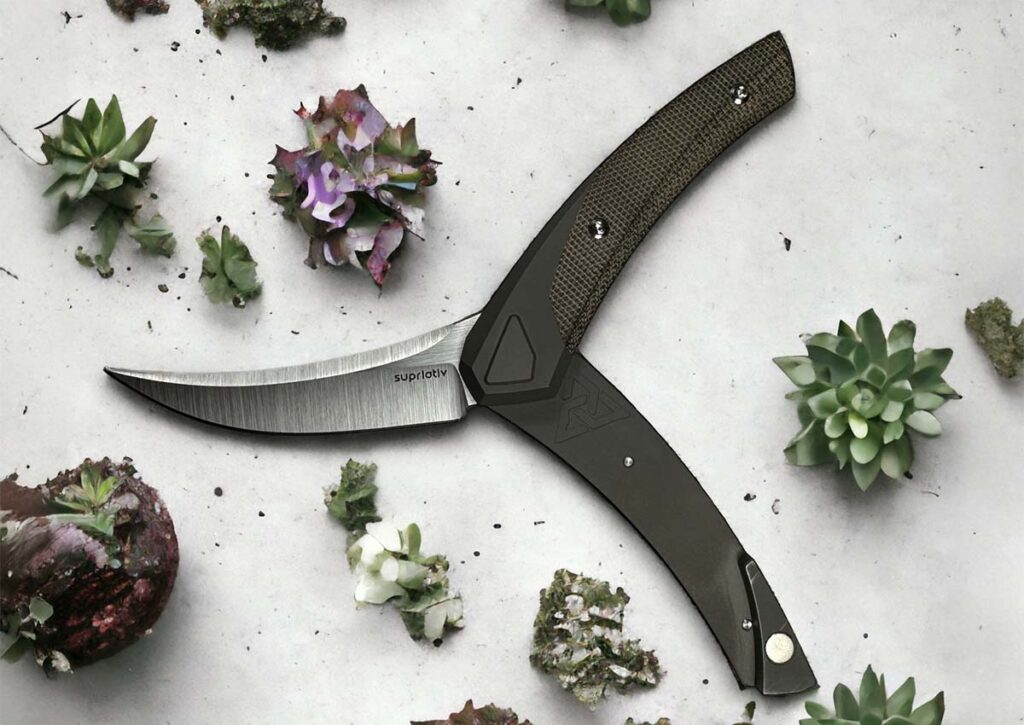
The fully serrated blade of the Piranha deploys via a Rare Earth Magnet Lock. Blade material: CPM M4 carbon steel. Pivot: Bronze washers. Frame: 6Al-4V Grade 5 titanium. Handle: Brown canvas Micarta®. Weight: 2.1 ounces. Closed length: 3.76 inches. MSRP: $284.

Though Peña lives in Laredo, Texas, and Oeser in Lehi just outside Salt Lake City, and Peña is a staunch traditionalist and Oeser blurs the lines between traditional mechanisms and modern frames and furniture, the two had a working relationship that grew into a friendship.

Javi Garcia

Enter Javi Garcia. Formerly of South Texas and now living in central Texas, Javi first was a Peña customer, then a potential hire, then a friend and mentee. The two socialized together with their families, compatible in their shared Mexican heritage. Even though Garcia’s design approach is decidedly modern, Peña could appreciate his style.

Javi knew that Enrique was a master of knife mechanics, taking Garcia’s ideas and showing how they could be brought to fruition. Garcia began to share ideas with Oeser, too. He found himself going between the two veteran makers and telling each how the other approached a design idea or challenge. During these exchanges, the idea developed that the three of them start a separate company. Peña credits Garcia with bringing the three together to form Suprlativ.

How Suprlative Operates

Javi Garcia’s last-minute decision to enter the Canibl Phantom Lock resulted in Suprlative taking home Best Custom Knife Collaboration at BLADE Show 2024. The 3 1/8-inch blade is hollow-ground CPM MagnaCut stainless steel. Closed length: 4 inches. (Jocelyn Frasier image)

The men knew they could bring knives to the market that got the job done expertly and looked really good doing it, knives of high quality, high tech and high precision. Garcia and Oeser are extremely creative, and Peña’s hands-on skillset is, well, superlative. Garcia says Peña is more creative than he thinks he is. And that’s the way it is with these three.

They are endlessly encouraging and positive with each other. In a situation where three chiefs and no Indians could seem problematic, Garcia explained that the collaboration works because they relate to each other with positivity, respect and warmth. They reserve their individual knifemaking styles for their independent work and let loose with ideas for Suprlativ.

Part of the contentedness and success is that Suprlativ designs come from all three knifemakers, including Peña. It’s an equal contribution of creativity. “The designs never start in the same place,” Garcia said. It’s fluid. Once the design is finalized, Peña initiates contact with what’s considered the fourth member of the group: Reate.

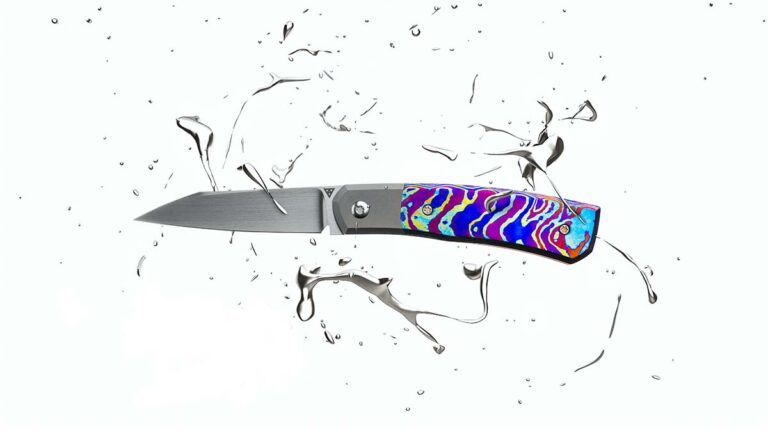
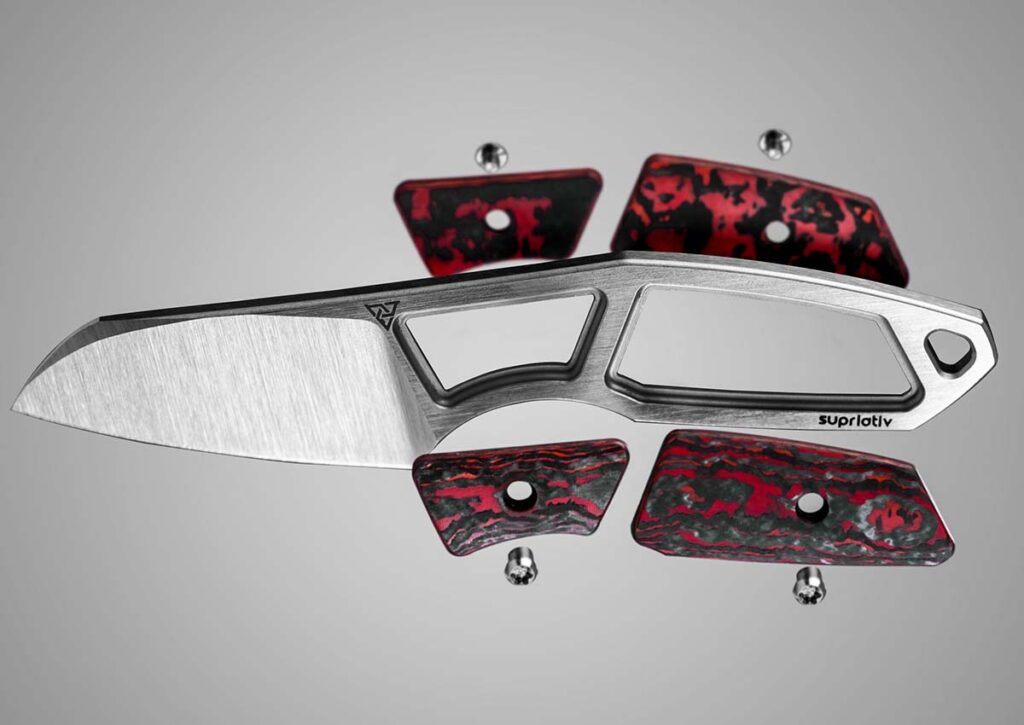
The home-page image for Suprlativ’s website, an exploded view of the Hella showcases one of its various inlay options—carbon fiber—and a 2.07-inch blade of flat-ground Böhler M390 Microclean stainless steel. Weight: 1.2 ounces. Frame: 6Al-4V Grade 5 titanium. Closed length: 2.88 inches. Sheath: Premium vegetable leather. Country of origin: China. MSRP: $194.

Peña already had a relationship with Reate Knives, the high-end Chinese original equipment manufacturing (OEM) operation that makes knives for other companies. Peña said that Reate offers the highest quality production and is also more costly, but not exorbitantly so. Plus, Reate officials never seem to say no, he noted. For its part, Reate considers any deviation from the norm as a way to learn how to incorporate new production procedures. The company reportedly considers Suprlativ’s vision to be unique.

Steel choices depend on what Reate can get in stock, but M390 and CPM 154 stainless and CPM M4 carbon steels all have been used in prior releases. The most recent order will be in CPM MagnaCut. Handle materials include a mixture of titanium, carbon fibers and Micarta® with shield inlays—a nod to tradition—and come in an artistic array of color patterns. Each run is different, never just a colorway change. Peña, Oeser and Garcia determined early not to chase steel or frame material fads since it can take upward of a year to receive an order.

At the last minute during BLADE Show 2024, Garcia decided to enter the Suprlativ Canibl Phantom Lock in the custom knife competition. Once the three determined the design, Oeser cut the parts, did the precision grinding, fit the locks—every type of lock is on the table at Suprlativ—did the surface grinding and ensured the knife was functional.

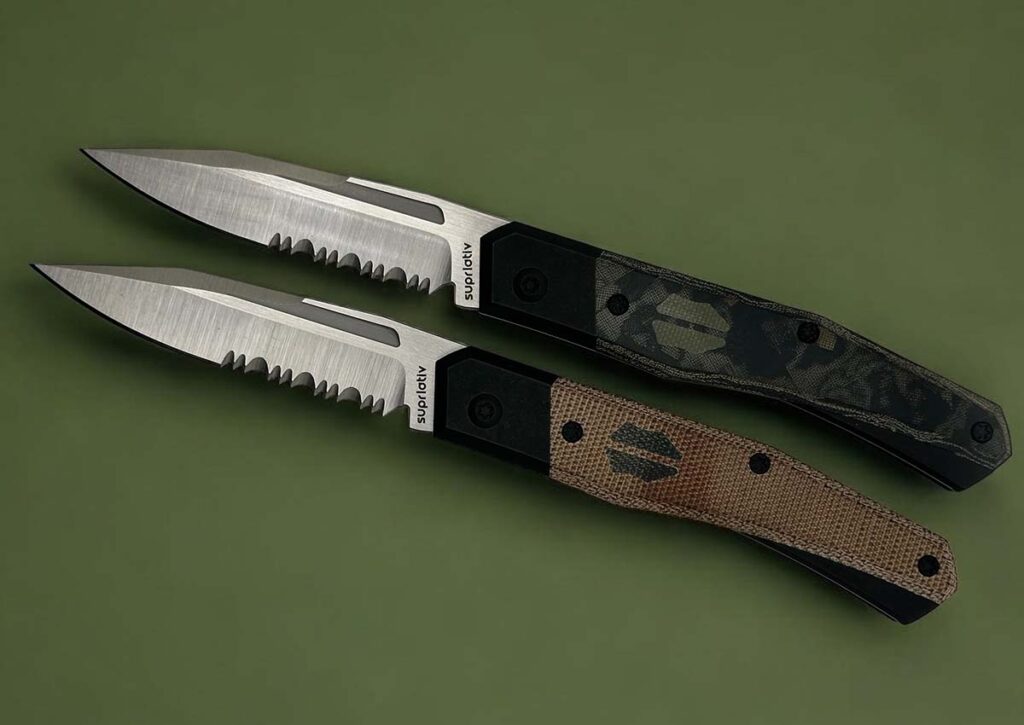
The Cruzador slipjoint has a 3.224-inch semi-serrated/nail-nick-fullered blade of flat-ground CPM M4 carbon steel and a 6Al-4V Grade 5 titanium frame. It also comes in a plain edge. Blade pattern: Clip point. Handle material: Jungle Wear Fatcarbon® ($274 (top) and brown canvas Micarta® (bottom). Weight: 3.3 ounces. Closed length: 4.25 inches. Country of origin: China. MSRPs: $274 each.

Garcia did the blade grinding; he’s the youngest and is humble enough to take on the difficult and time-consuming part of the job, which is just one more example of the goodwill dynamic between the three. Then the knife went to Peña for hand-rub finishing, shield inlay and blade edging. It was an equally shared labor of love.

The effort paid off. The Canibl Phantom Lock won Best Knife Collaboration. The men each expressed surprise, excitement and a sense of validation that what they set out to accomplish resonated within the community. Their collaboration, peaceable interactions and professionalism obviously generated increased creativity for them, loyalty from customers and now well-deserved notice and approval from knifemaking standard-bearers.

Read About Custom Knives:

Sub-Hilt Knives: Aesthetics And Aggression In Harmony

The sub-hilt is at once belligerent and beautiful, adding a strange allure to the knives that sport it.

There is no consensus as to the origin of the sub-hilt knife, though most agree the sub-hilt fighter was popularized by BLADE Magazine Cutlery Hall-of-Fame® member Bob Loveless in the 1970s, if not earlier. Some believe the sub-hilt design was for hunting, and that the main purpose for the added hilt was for greater leverage when a surer grip was needed. A few have even postulated the additional hilt was for use as a brace in pulling the knife out after being stabbed into bone or another hard material, a use that it would no doubt accommodate most effectively.

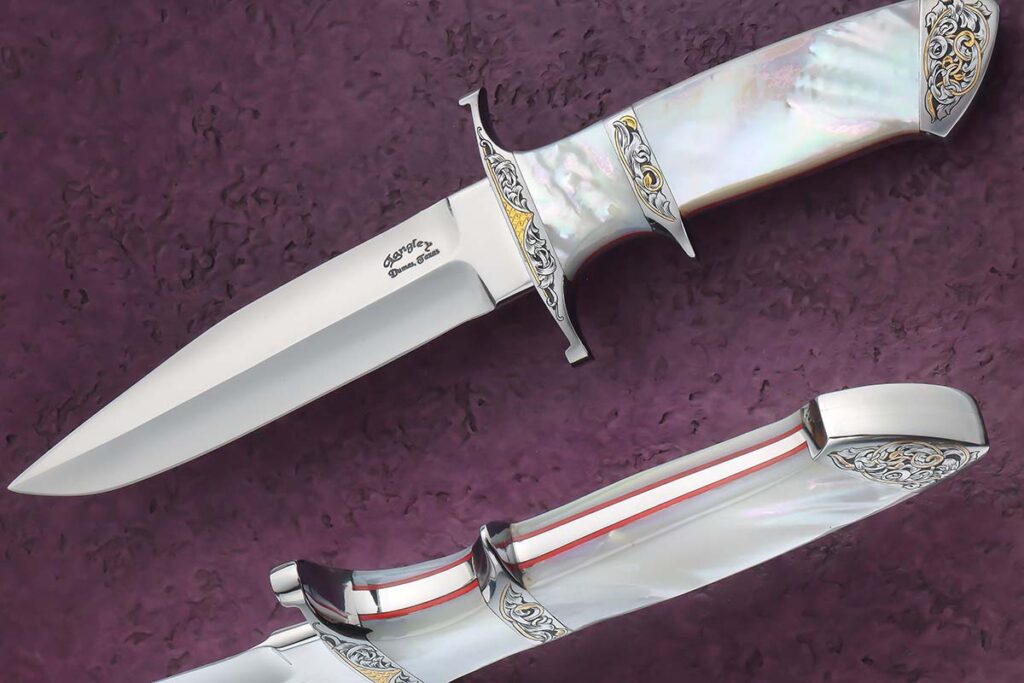
Gary Langley: Gentleman’s Fixed Blade

Custom maker Gary Langley’s sub-hilt fighter may be small at 9 inches overall but makes up for its size in sleek blade grinds, exquisite mother-of-pearl scales and gold inlay. Blade and overall lengths: 4.5 and 9 inches. Alice Carter did the engraving. (SharpByCoop knife image)

Many knife enthusiasts think of a sub-hilt fighter as being a heavier-edged companion—and in many cases it is—but custom knifemaker Gary Langley’s iteration is a little gem of a knife.

“The small Loveless-style sub-hilt fighter is 3/16-inch CPM 154 steel with a double hollow grind on a 3-inch wheel,” the Dumas, Texas, maker notes. “The heat treatment is by [Cutlery Hall-of-Famer] Paul Bos. I originally designed the knife without the rear bolster. I added it when I couldn’t source the mother-of-pearl scales long enough—and I believe it turned out even better.”

It has what might be called a 19th-century Michael Price San Francisco knife look that makes it a prime candidate for a true gentleman’s fixed blade.

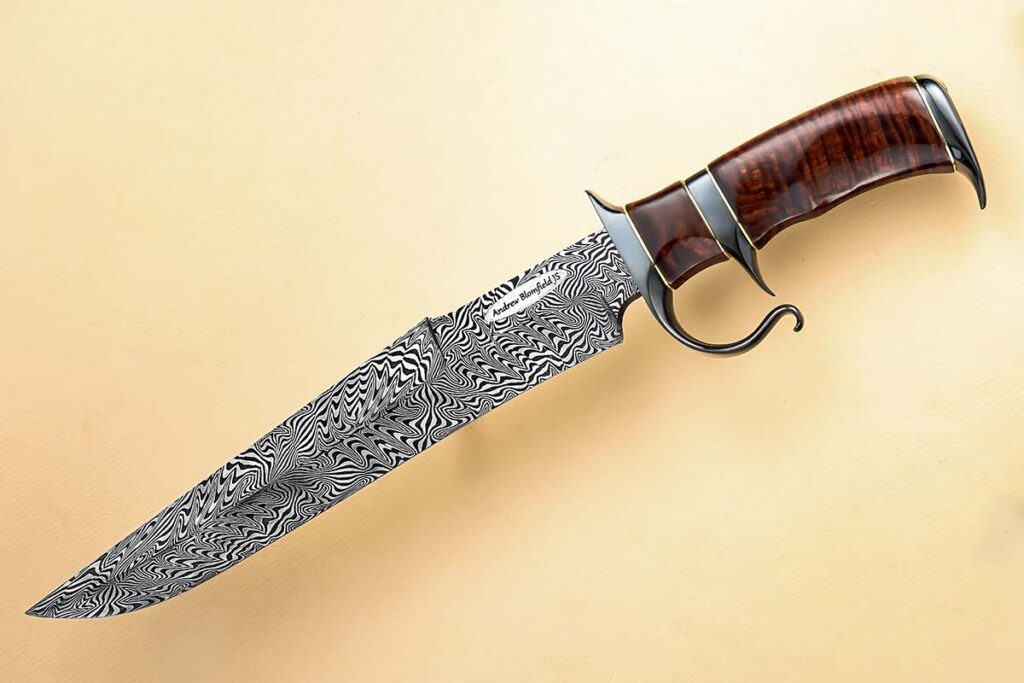
Andrew Blomfield: Sub-Hilt Bowie

ABS master smith Andrew Blomfield’s sub-hilt bowie is a tour de force of explosive mosaic damascus, salt-blackened steel, brass spacers, and exquisite Australian ringed gidgee wood. Blade and overall lengths: 11 and 16 inches. (SharpByCoop knife image)

An ABS master smith from New South Wales, Australia, Andrew Blomfield enjoys building large knives such as bowies and daggers. “The bigger the knife the better,” he states. An example is his sub-hilt bowie.

“I feel that this knife has great flow and balance,” he begins. “The blade is an explosion mosaic pattern damascus hardened to 59 HRC. The guards and pommel are salt-blackened steel with brass spacers and the handle is a beautiful piece of Australian ringed gidgee.”

The guard’s bottom quillon curves back toward the sub-hilt to partially enclose the user’s hand a la a D-guard, but also has hints of both a C- and an S-guard to it. Very unusual!

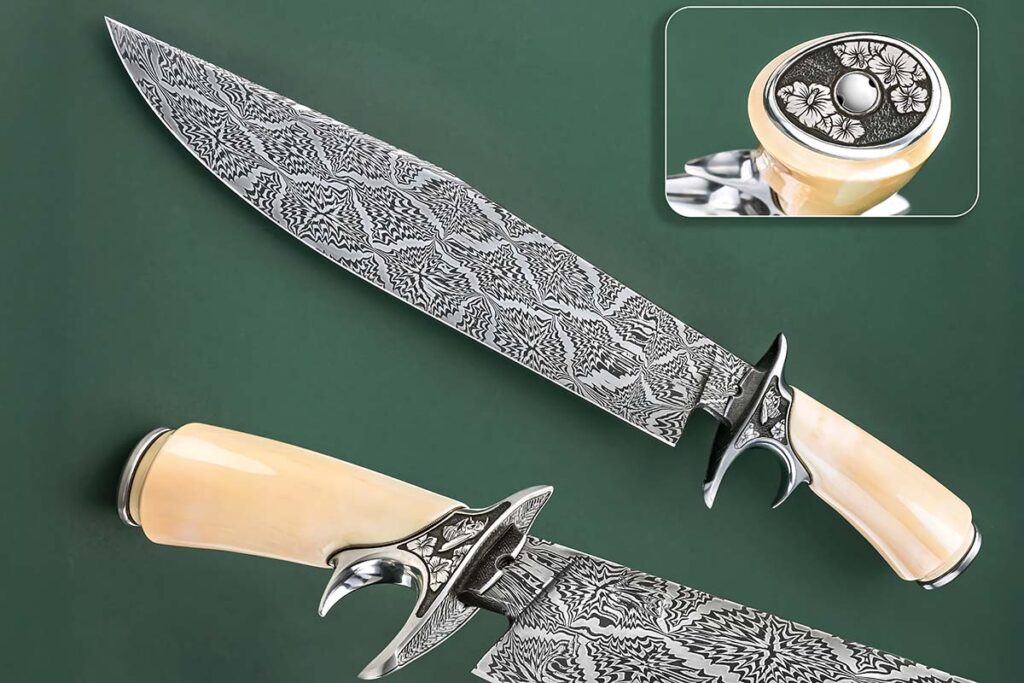
Andrew Meers: Rose of Sharon

ABS master smith Andrew Meers calls his 16.5-inch sub-hilt fighter Bees and Flowers, due in no small part to the Rose of Sharon and bees engraving. The 12-inch blade is a damascus of 1084 carbon and 15N20 nickel-alloy steels in a mosaic pattern. Guard and furniture are 416 stainless steel. Overall length: 16.5 inches. (SharpByCoop knife image)

ABS master smith Andrew Meers of Raleigh, North Carolina, says, “I started with the sub-hilt in mind, which is a departure for me.” To say his deviation from the norm worked out well is an understatement.

“I like to incorporate Japanese influences wherever I can, and I wound up adding an integral habaki into the guard design as well,” he explains. “I wanted a blade that was able to feature a mosaic pattern, so I chose a broader shape that expands towards the point rather than tapers. The handle is a simple design to contrast the visual complexity of the guard.”

The engraving theme is of the Rose of Sharon and bees.

“The client had requested a floral theme, and we worked on the rest of the design and layout from there,” Andrew says. “The engraving was meant to complement the layout of the guard and furniture.”

Justin Harrington: A-Team

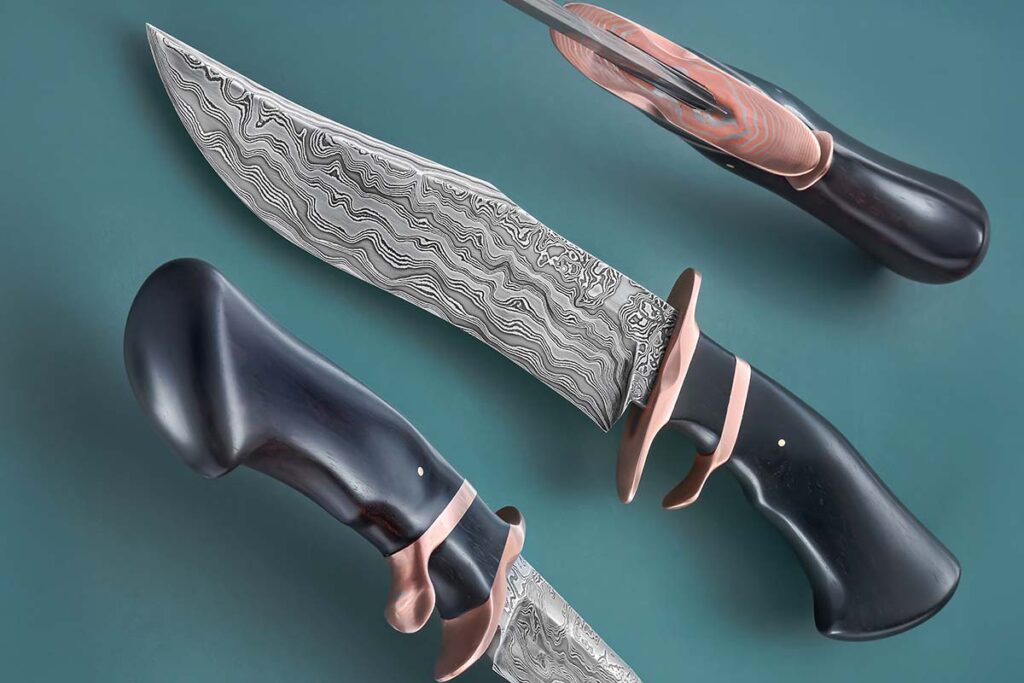
Built for an Army buddy, Justin Harrington’s superb sub-hilt fighter incorporates a masterful balance of random pattern damascus, mokumé gané and African blackwood. Blade and overall lengths: 8.5 and 13.5 inches. (SharpByCoop knife image)

Justin Harrington of Clemmons, North Carolina, began smithing 18 years ago and is the owner of Cyclops Forge. Of the sub-hilt he says, “It’s the racecar of fighting knives—weight, balance, curvature, tip control and placement all are important variables to be employed to reach a harmony which is felt right away when correctly done.

“This knife started its life as a phone call from an Army A-team member who wanted a special combat retirement gift for his buddy. The three of us got together and forged a damascus billet for the knife over three days in my shop. The 8-inch recurve blade is a random-pattern damascus of 1084 and 15N20 carbon steels. The guard and sub-hilt are made from a copper-and-nickel mokumé gané I make in my shop. The handle is around 5 inches of sculpted African blackwood with a bronze pin.”

The sub-hilt has a forward lean and spoon-cupped quillon that slants toward the guard to capture the user’s index finger. The result is a handle that seems to want to grab your hand.

Cool & Sexy

Whether fighter, bowie or what have you, the sub-hilt-knife genre may be more recognizably custom than any other. From the classic Loveless Big Bear fighter to the wide array of today’s renditions, top sub-hilts are cool, sexy and in harmony with the best custom knives extant.

Read More:

Advertisement

Must Read Articles

Read this before you make a knife

Knifemaking 101 – Read This Before You Make a Knife

  by Wayne Goddard My experience has taught me that there's nothing like digging in and getting started. I've often said the hardest part of the...
how to forge damascus steel

How to Forge Damascus

Advertisement
Advertisement