Knife Collecting

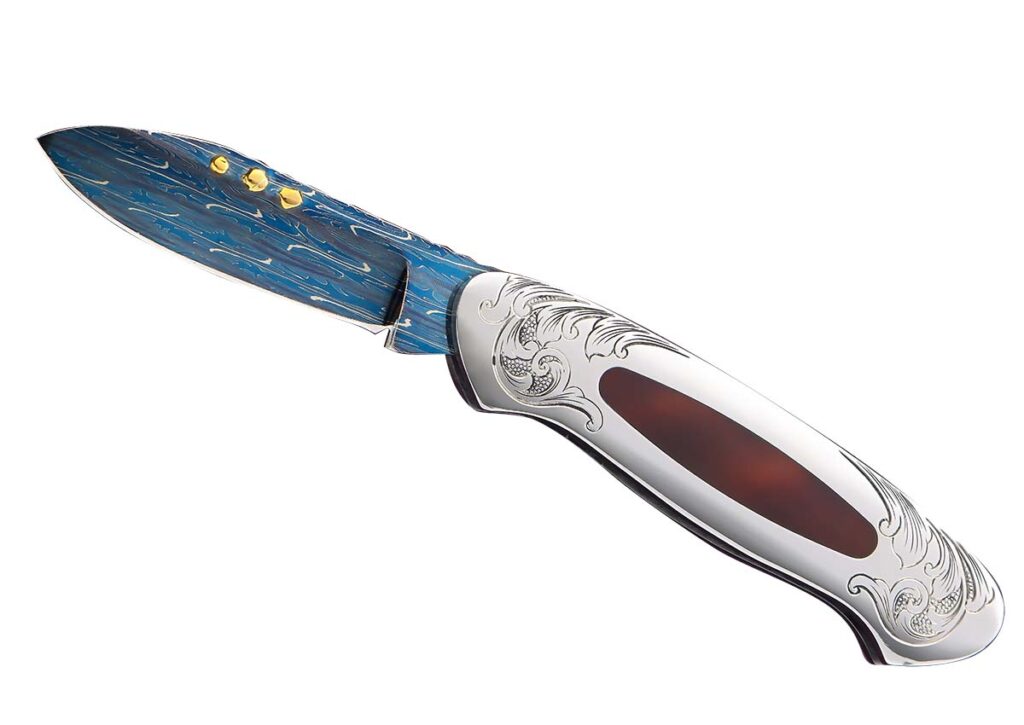
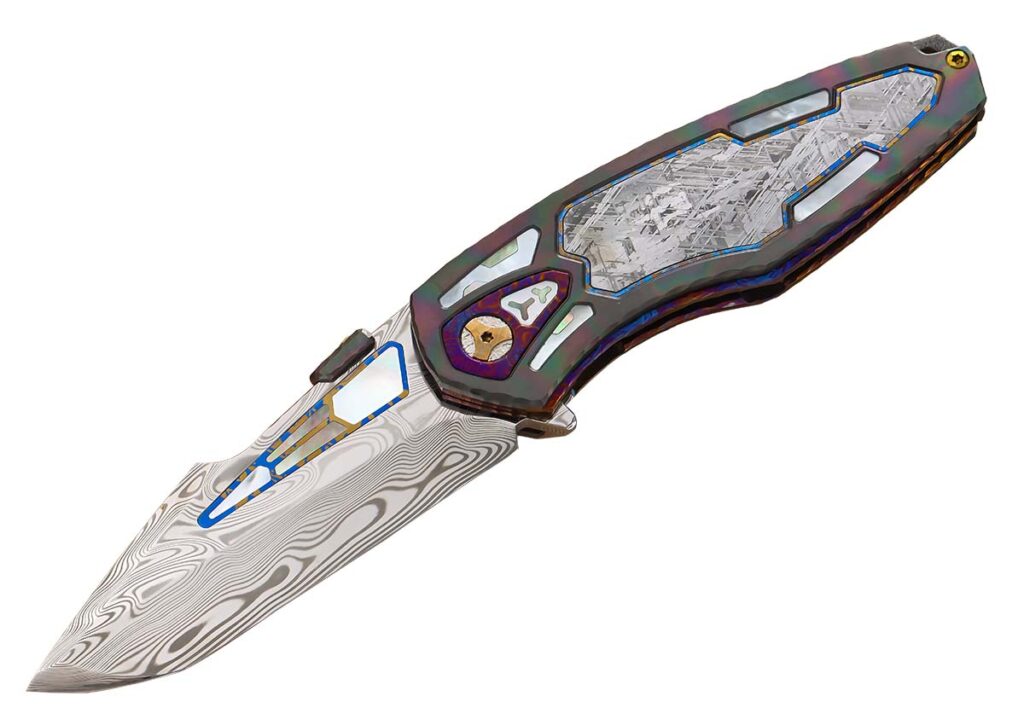
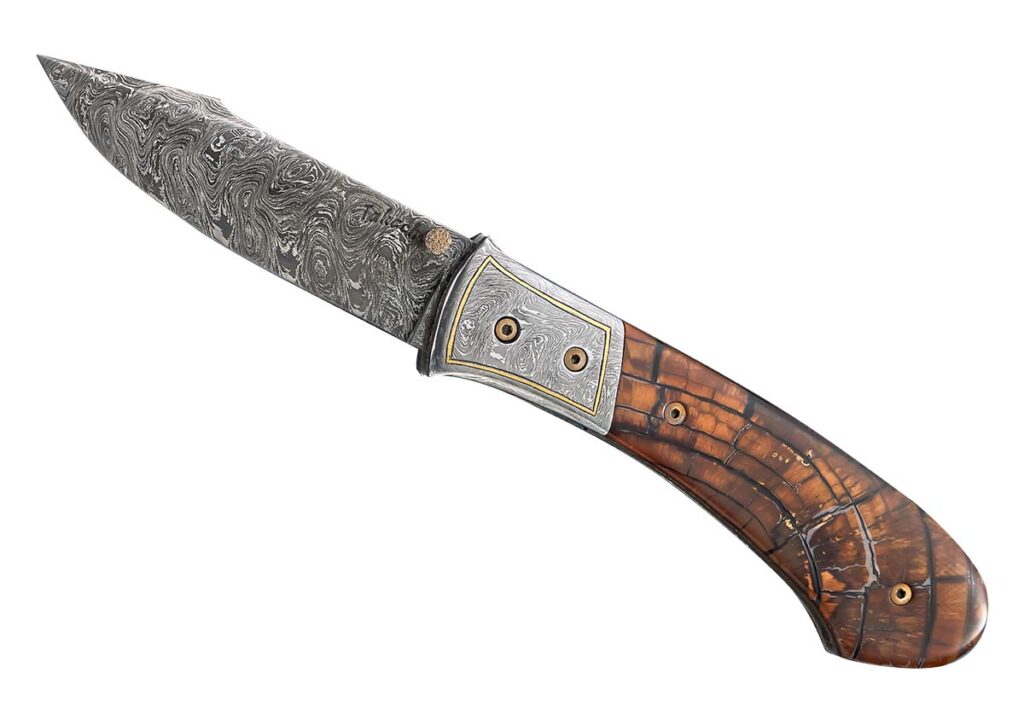
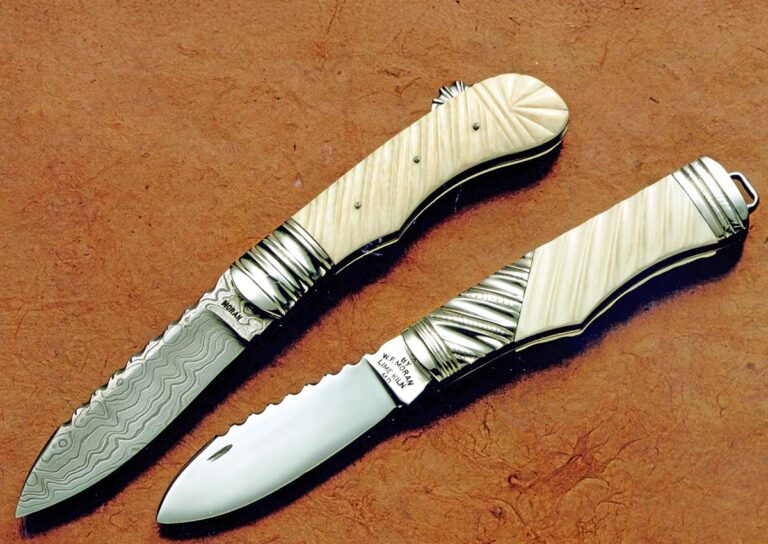
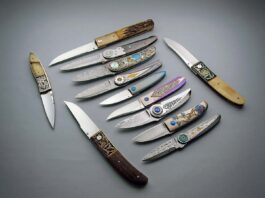
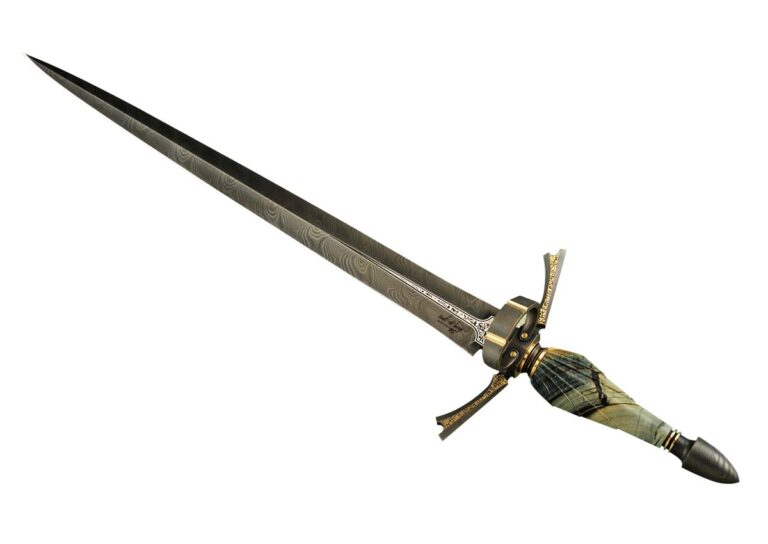
Knife collecting is an extremely rewarding experience for knife enthusiasts. There truly is a knife for everyone. Many increase or hold their value throughout the years, making collecting knives something to pass on to the next generation of knife collectors.

American Made Knives: New And Hot Options

Today’s American-made knives embody the latest in the state-of-the-art.

American knifemaking is alive, well and thriving. Certainly over the years the marketplace for cutlery has become more global, despite this native craftsmen and companies have held their ground and remained sharp as ever. Below is a good example. We’ve collected a throng of blades made in good ol’ U.S. of A. that showcase creative prowess of our countrymen.


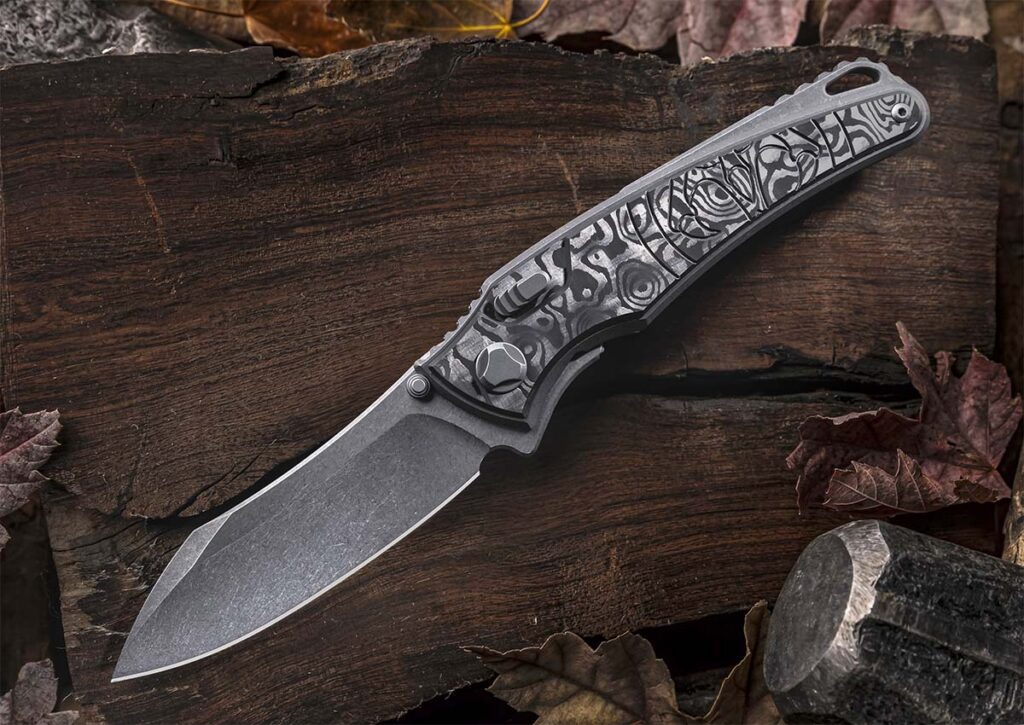
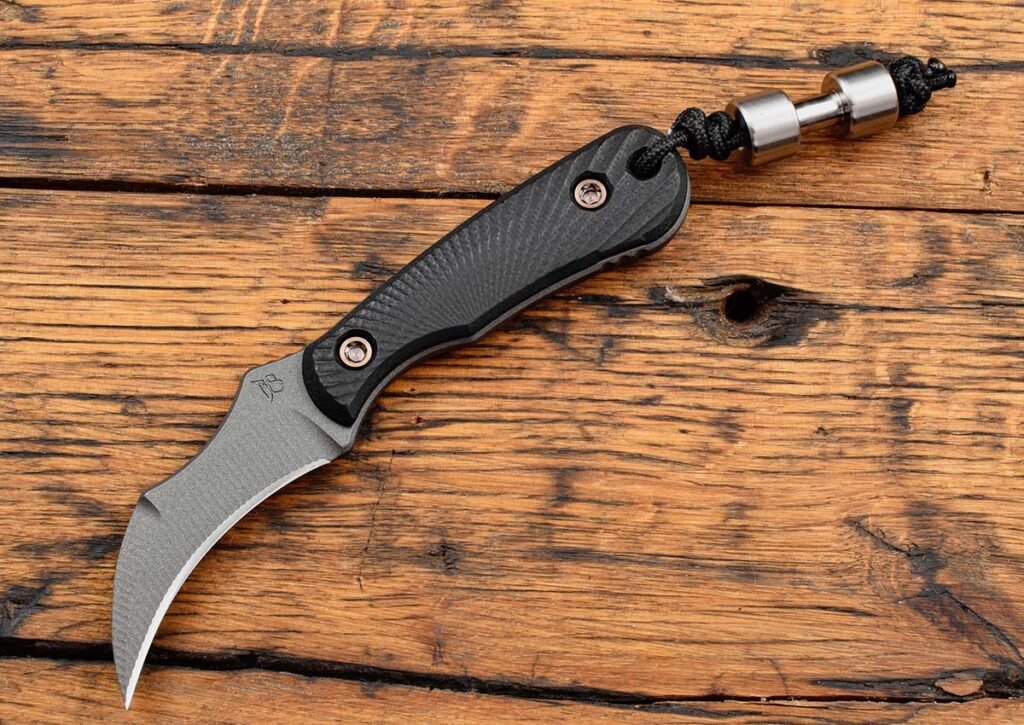
Talon / Hawk Knife Designs

Talon / Hawk Knife Designs

Knife type: Tactical/EDC
Designer: Gavin Hawk
Blade length: 3.5”
Blade steel: M390 stainless
Rockwell hardness: 63 HRC
Blade grind: Hollow
Blade pattern: Modified drop point
Blade finish: Tumbled
Scale material: Black Dunes (Fatcarbon®)
Frame material: Titanium
Furniture material: Titanium (button, clip, backspacer)
Lock: Hawk Lock, toggle detent
Pivot: Bearings
Weight: 4.4 ozs.
Closed length: 4.8”
MSRP: $2,000
Available: NOW


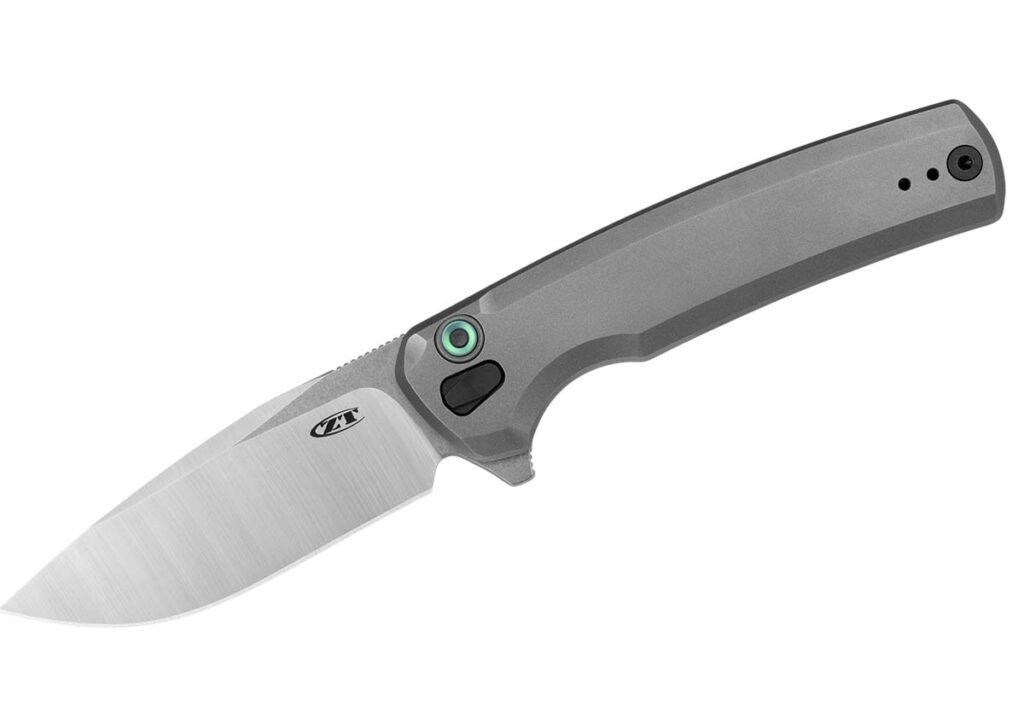
Zero Tolerance 0044

Zero Tolerance 0044

Knife type: EDC flipper folder
Designer: ZT original
Blade length: 3.2”
Blade steel: CPM S45VN stainless
Rockwell hardness: 59-61 HRC
Blade finish: Two-tone
Scale material: Titanium w/bead blast finish
Lock: Button lock
Pivot: Ceramic bearings
Weight: 3.4 ozs.
Closed length: 4.35”
MSRP: $425
Available: NOW


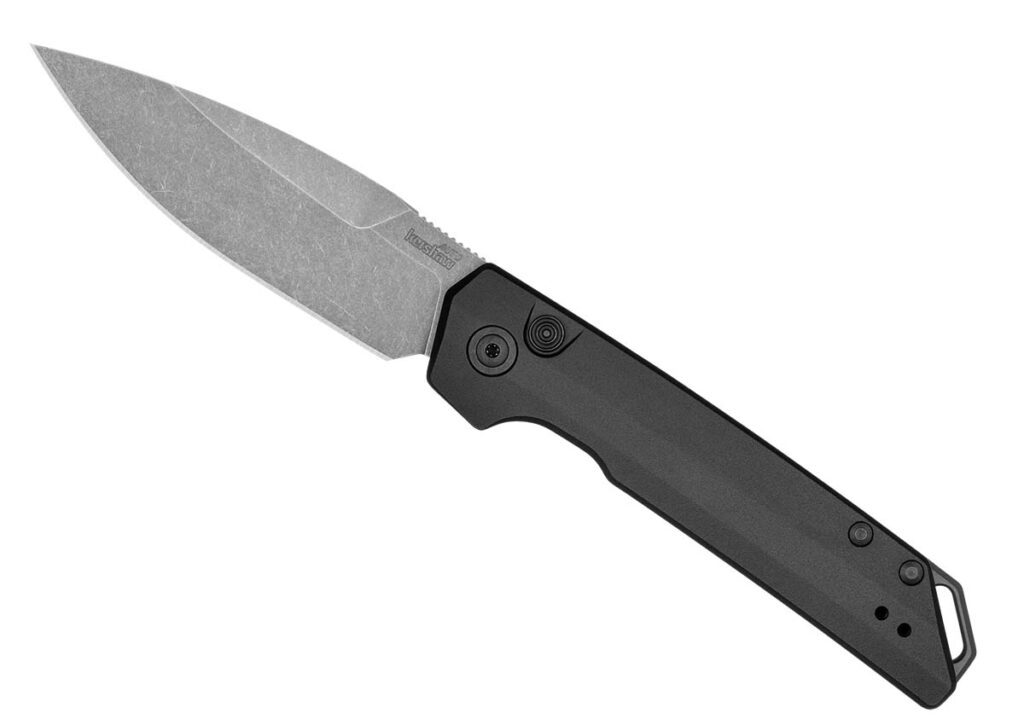
Kershaw Launch Iridium

Kershaw Launch Iridium

Knife type: Automatic
Designer: Kershaw original
Blade length: 3.45”
Blade steel: CPM MagnaCut stainless
Rockwell hardness: 62-64 HRC
Blade finish: Working finish
Scale material: Aluminum anodized black
Lock: Button lock
Pivot: Washers
Weight: 3.1 ozs.
Closed length: 4.55”
MSRP: $279.99
Available: NOW


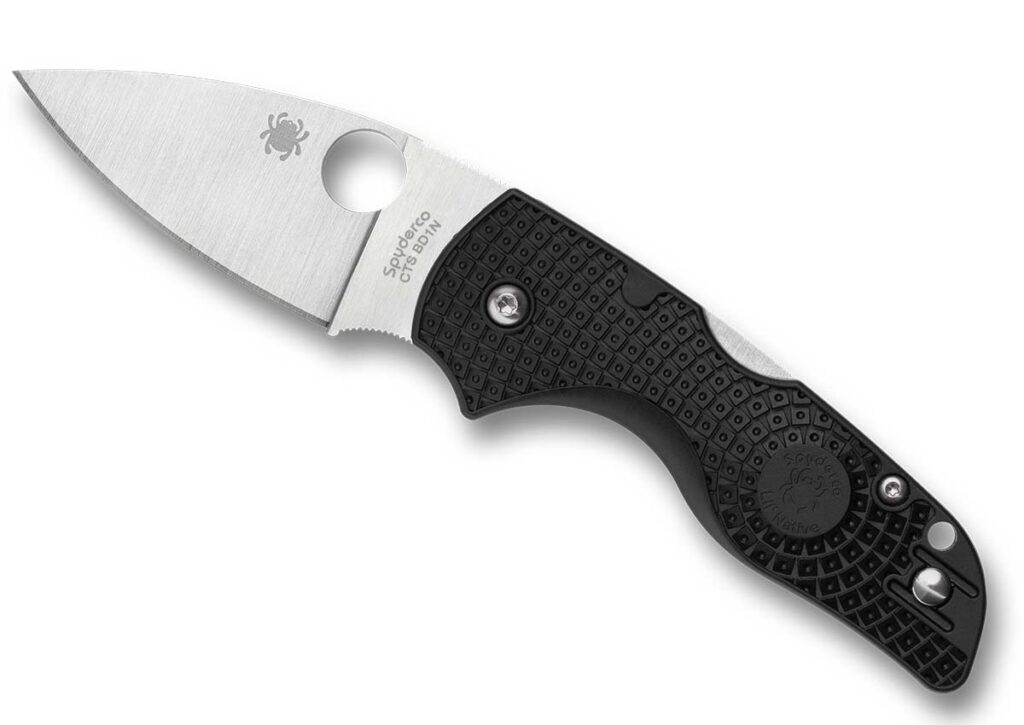
Spyderco Lil’ Native Lightweight

Spyderco Lil’ Native Lightweight

Designer: Eric Glesser
Blade length: 2.42”
Blade steel: CTS BD1N stainless
Blade grind: Full-flat
Blade finish: Satin
Scale material: FRN
Lock: Back Lock
Weight: 1.5 ozs.
Closed length: 3.74”
MSRP: $160
Knife to know: This folding knife takes the company’s Lil’ Native Back Lock platform and lightens it by 40 percent with fiberglass-reinforced-nylon scales.
Available: March


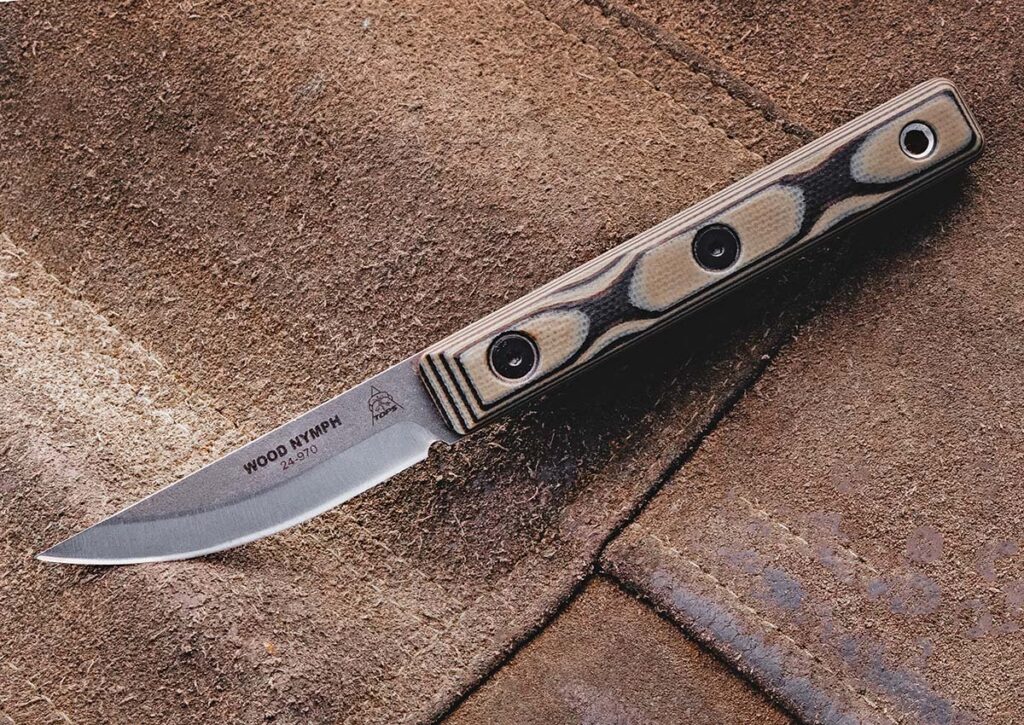
TOPS Knives Wood Nymph

TOPS Knives Wood Nymph

Knife type: EDC/bushcraft
Designer: Bushcraft Kelso
Blade length: 2.25”
Blade material: 1095 carbon steel
Rockwell hardness: 56-58 HRC
Blade grind: TOPS’ modified Scandi
Blade finish: Tumble
Scale material: Tan/black G-10
Weight: 1.8 ozs. (3.2 ozs. w/sheath)
Overall length: 5.75”
Sheath type and material: Brown leather
MSRP: $190
Knife to know: Thick for its size, the handle is well-rounded and longer than the blade for a solid grip. The blade shape is simple and classic. It’s sharp, pointy and a little thinner than most would expect from TOPS at 3/32-inch thick. A simple leather sheath makes this knife one of the easiest to carry. It’s a simple yet effective workingman’s tool.
Available: NOW


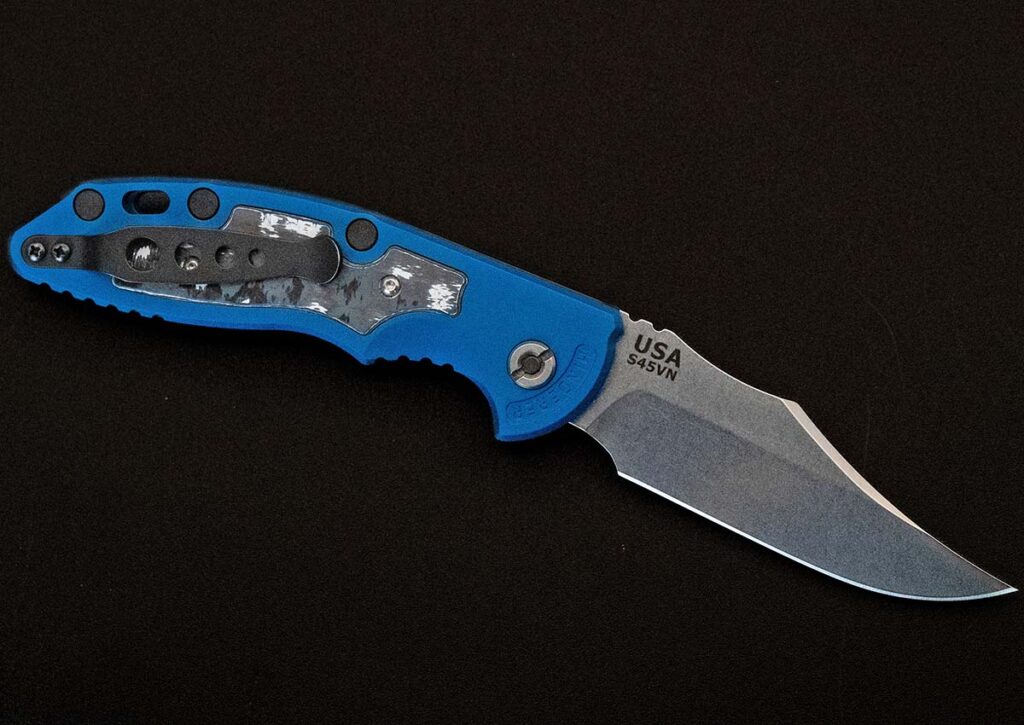
Rick Hinderer Knive XM-18 3.5” Bowie Automatic Aluminum

Rick Hinderer Knive XM-18 3.5” Bowie Automatic Aluminum

Knife type: EDC
Designer: Rick Hinderer
Blade length: 3.5”
Blade steel: CPM S45VN stainless
Rockwell hardness: 60-62 HRC
Blade pattern: Bowie
Blade finish: Stonewash
Liners: Patent pending titanium half liners
Scale material: Two options: anodized blue aluminum w/inlay and Arctic Storm w/FCF inlay
Frame material: Aluminum anodized blue
Furniture material: Stainless steel black nitride hardware (add on) and matte black Holey Clip (add on)
Lock: Button lock
Pivot: Phosphor bronze washers
Weight: 5.12 ozs.
Closed length: 4.75”
MSRP: $495
Knife to know: Featuring a lightweight yet durable aluminum handle with patent-pending titanium half liners, this knife offers enhanced strength and stability without compromising on weight. Designed with the EDC enthusiast in mind, it blends innovation, practicality and cutting performance, making it a trusted companion for any daily task or adventure.
Available: 2025


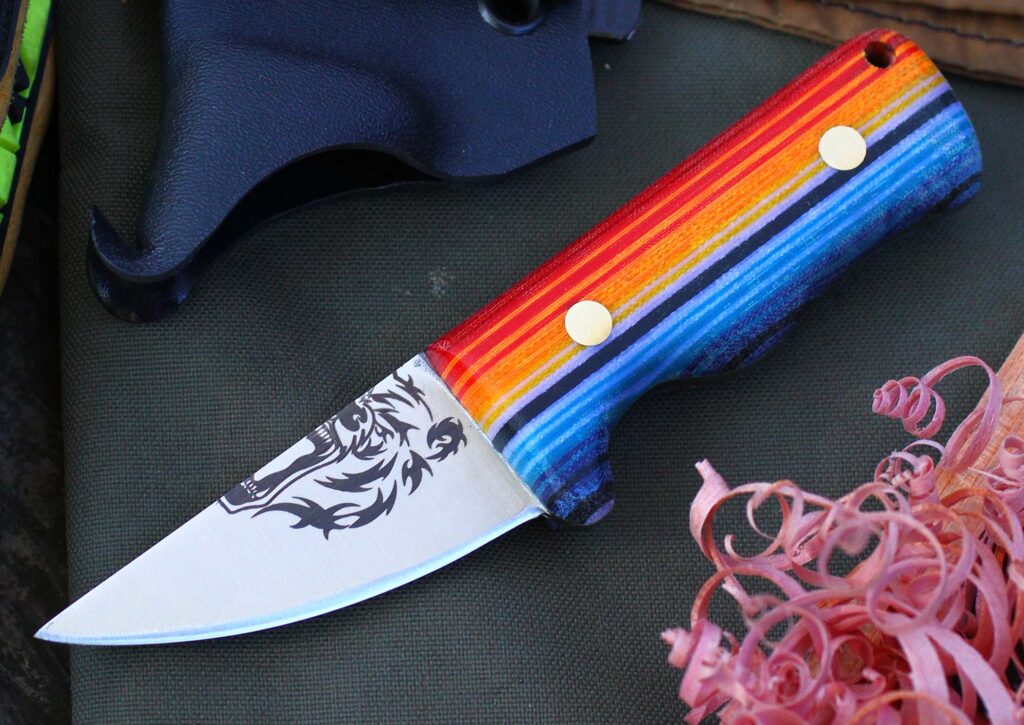
Bear Forest Knives Stumpy

Bear Forest Knives Stumpy

Blade length: 2 1/8”
Blade steel: Nitro V stainless
Blade thickness: 1/8” w/90-degree spine
Grind: Full flat
Finish: Raw matte 
Scale materials: Various Micarta®/wood/Bearcarta (check availability)
Overall Length: 5 7/8”
Sheath: Kydex® black (.08” thick)
MSRP: $239.99
Knife to know: The Stumpy checks all the boxes; it defines what is needed in a small utility fixed-blade knife while in the shop or outdoors. At the same time, you aren’t giving up comfort.
Available: NOW


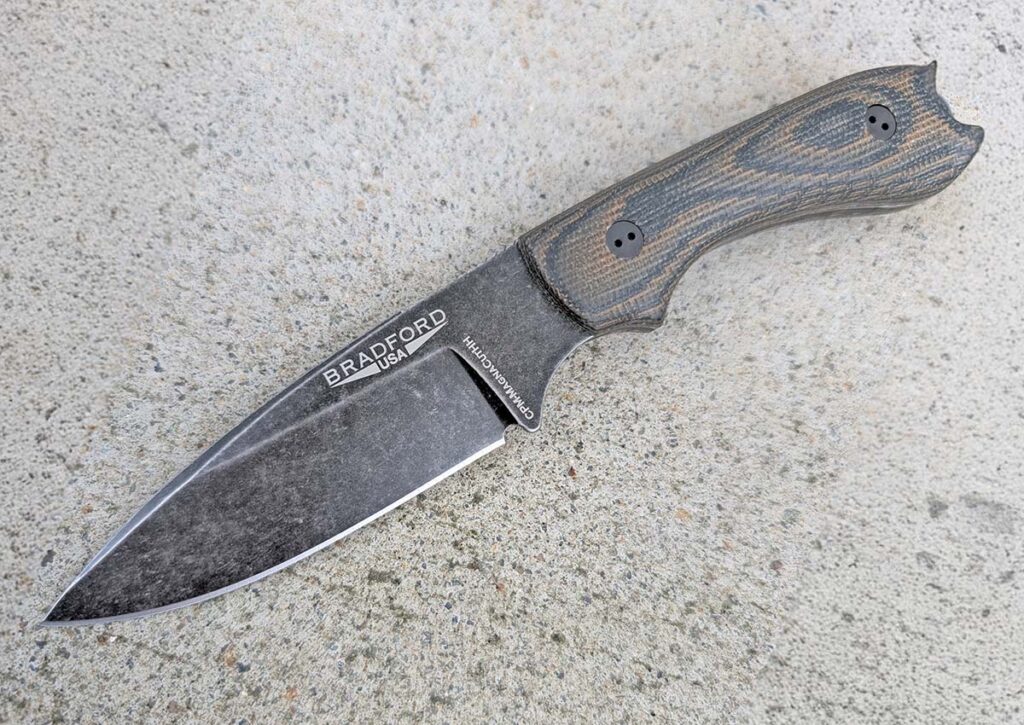
Bradford USA Guardian 3.2

Bradford USA Guardian 3.2

Knife type: Fixed-blade EDC
Blade length: 3.5”
Blade steel: CPM MagnaCut High Hardness stainless
Rockwell hardness: 63-64 HRC
Blade grind: Sabre, false edge, full height flat
Blade thickness: .14”
Scale options: Micarta®, G-10 and carbon fiber
Overall length: 7.125”
Sheath: Horizontal leather
MSRP: $229
Knife to know: Blade also available in a choice of ELMAX and M390 stainless steels
Available: NOW


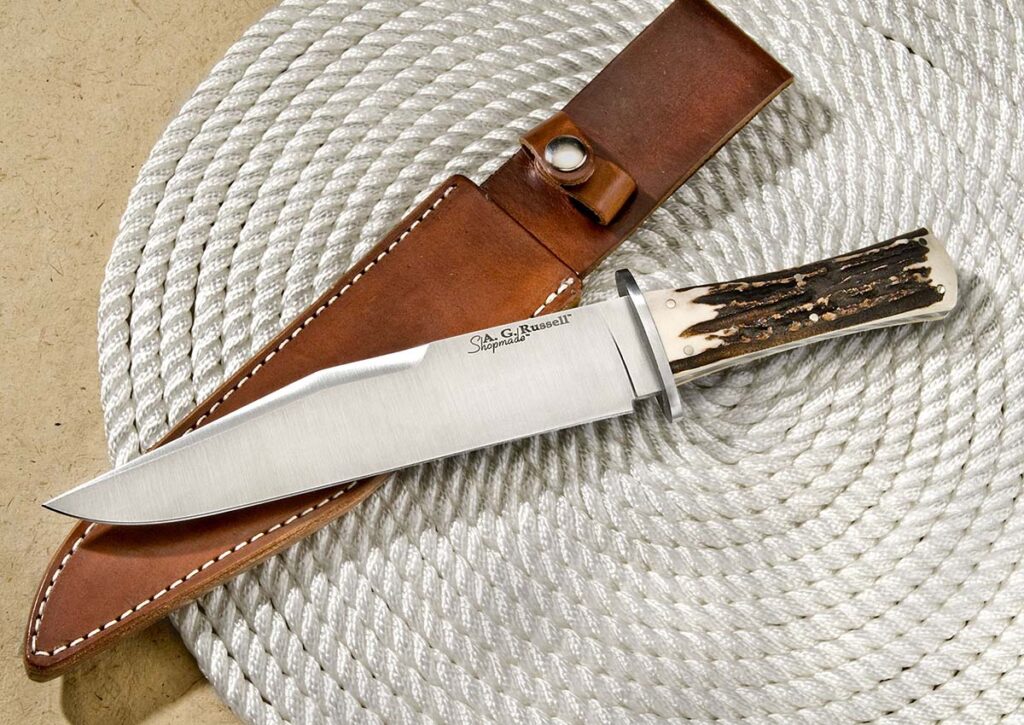
A.G. Russell Knives California Bowie Knife

A.G. Russell Knives California Bowie Knife

Designer: BLADE Magazine Cutlery Hall-of-Fame® member A.G. Russell
Blade length: 8.5”
Blade steel: 154CM stainless
Rockwell hardness: 59-61 HRC
Blade grind: Flat 
Blade finish: Satin
Scale material: Premium India stag
Furniture material: 410 stainless steel
Weight: 10.6 ozs.
Overall length: 13.25”
Sheath type and material: Handmade of leather
Special feature: Long California clip point blade
MSRP: $595
Available: NOW


RMJ Tactical Gym Rat

RMJ Tactical Gym Rat

Designer: Bryan Schellenger
Knife type: Fixed-blade EDC
Blade length: 2 3/8”
Blade thickness: 1/8”
Weight: 2.3 ozs.
Blade steel: Nitro V stainless
Rockwell hardness: 59-60 HRC
Blade finish: Tungsten Cerakote®
Scale material: Three G-10 options: black, dirty olive, hyena brown
Handle fasteners: Torx Grade 5 titanium anodized a bronze color
Barbell bead: Grade 5 titanium
Overall length: 5 1/8”
Sheath: Kydex w/ball chain & ambidextrous clip adapter suitable for pocket and outside the waistband carry
Knife to know: Designer Bryan Schellenger wanted to come up with a small, light but effective blade that could be easily concealed with minimal clothing, and that idea was spawned at the gym; also carries as a necker
MSRP: $185
Available: NOW


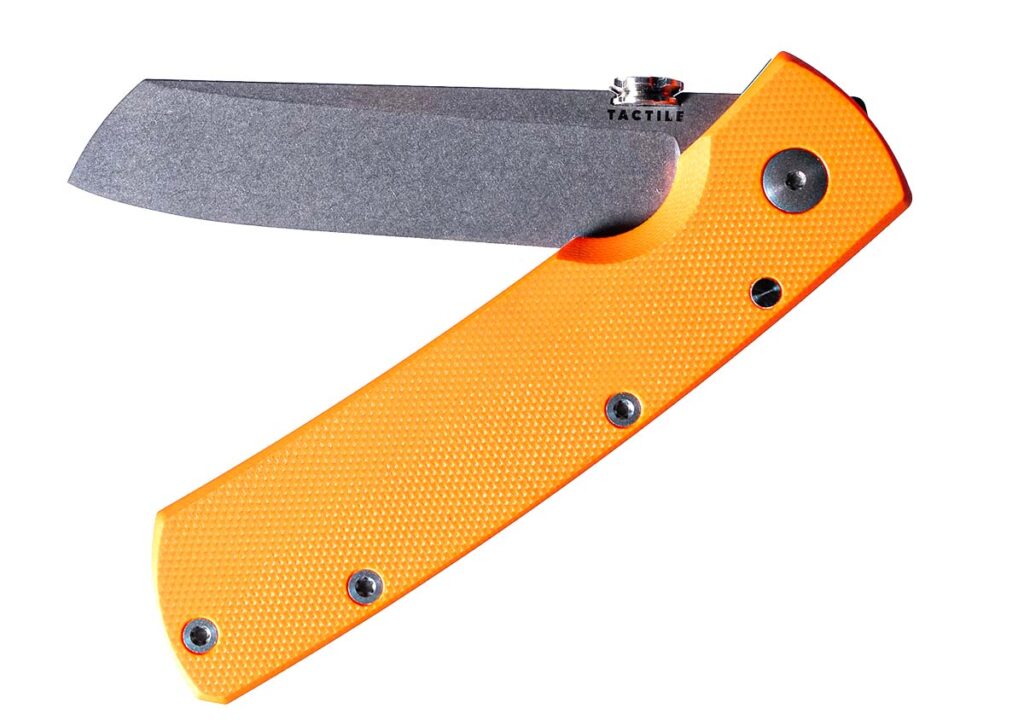
Tactile Knife Maraner 2

Tactile Knife Maraner 2

Knife type: EDC
Designer: BLADE Magazine Cutlery Hall-of-Fame® member Bob Terzuola
Blade length: 2.985”
Blade steel: CPM MagnaCut stainless
Rockwell hardness: 63-64 HRC
Blade pattern: Sheepsfoot
Blade finish: Tumbled
Liner material: Hardened stainless lock-bar insert
Scale material: Titanium & G-10
Furniture material: Titanium backspacer
Lock: Insert linerlock
Pivot: Ceramic bearings
Closed length: 4.175”
Knife to know: Designed in 1987; first production variant
MSRP: $399
Available: NOW


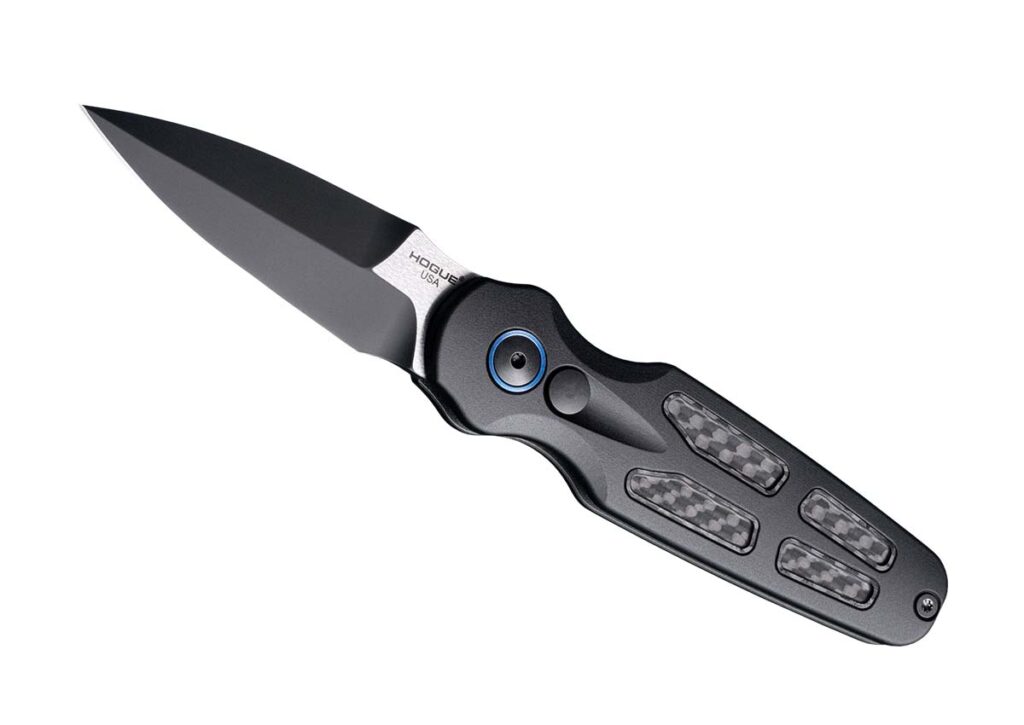
Hogue Knives Ballista II

Hogue Knives Ballista II

Knife type: EDC automatic
Designer: Scott Bruhns 
Blade length: 3.4”
Blade steel: CPM MagnaCut stainless
Rockwell hardness: 62-64 HRC
Blade grind: Flat
Blade finish: Two-tone: stone tumbled and black PVD
Scale material: Carbon fiber inserts
Frame material: Matte black 6061-T6 anodized aluminum
Pocket clip: Deep carry, right-hand carry
Weight: 2 ozs.
Closed length: 3.8”
Special features: Titanium accents anodized blue
MSRP: $239.95
Available: NOW


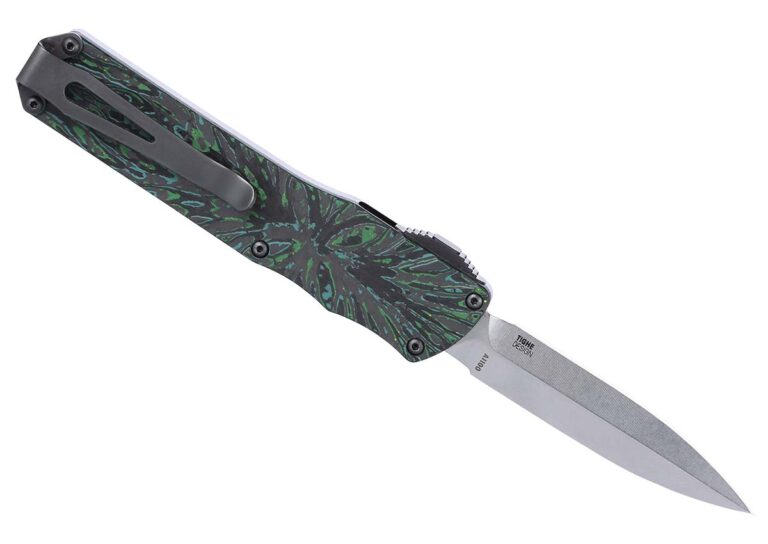
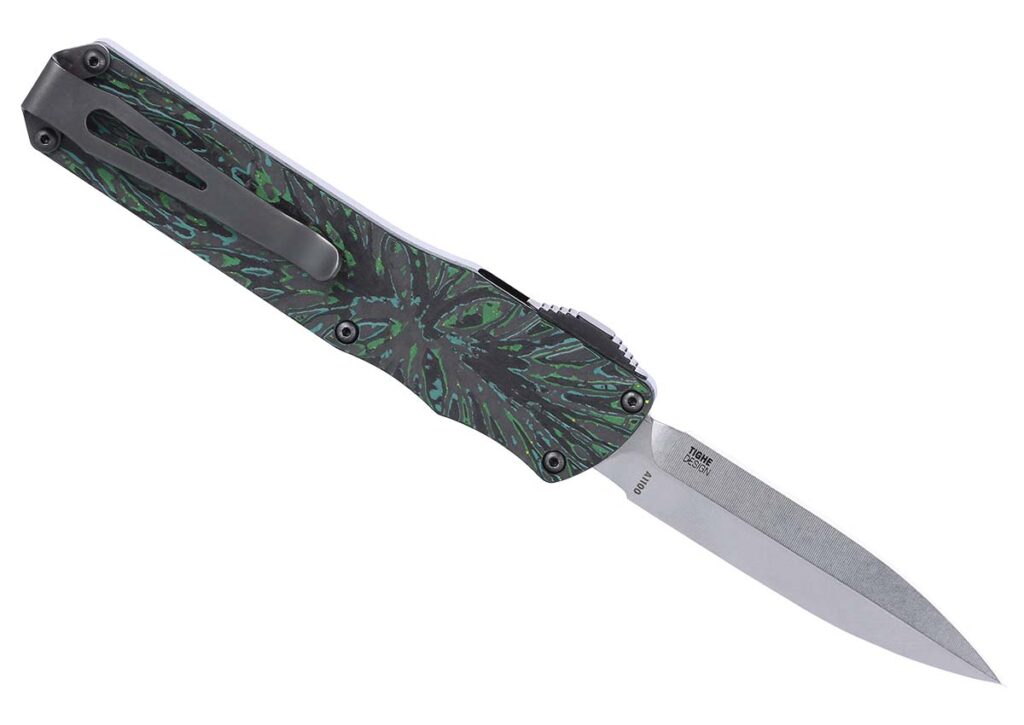
CRKT Twist Tighe Compact Automatic

CRKT Twist Tighe Compact Automatic

Designer: Brian Tighe
Knife type: EDC OTF automatic
Blade length: 2.69”
Blade steel: CPM MagnaCut stainless
Blade thickness: .09”
Blade finish: Stonewash
Scale material: Green carbon fiber
Weight: 1.6 ozs.
Closed length: 4.01”
MSRP: $300
Available: NOW


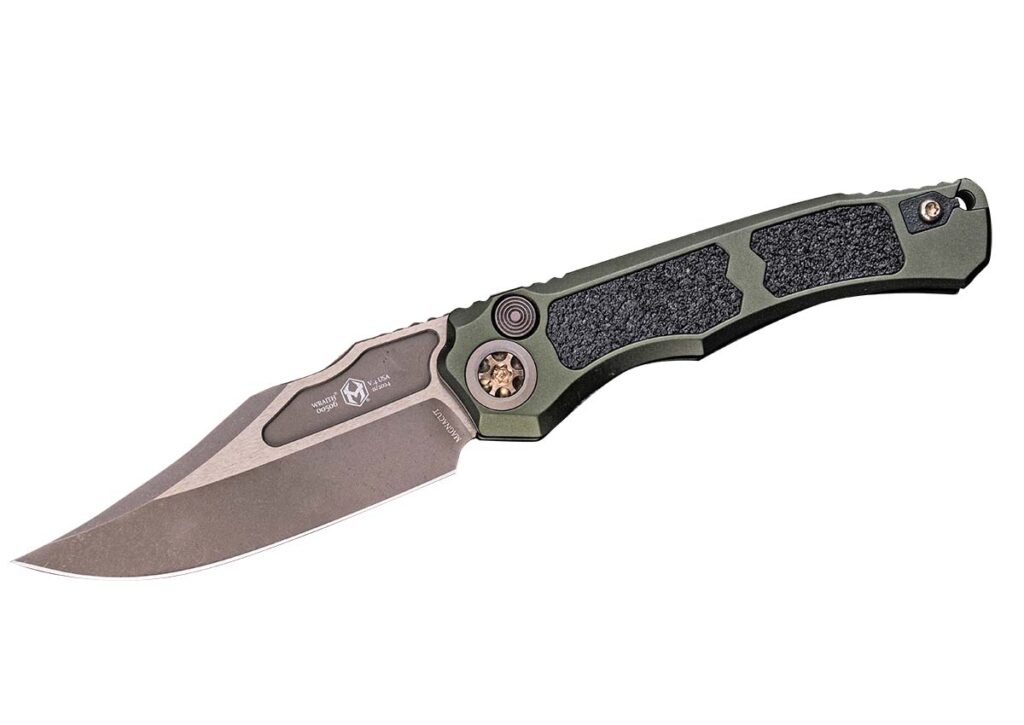
Heretic Knives Wraith Auto

Heretic Knives Wraith Auto

Designer: Anthony Marfione Jr.
Blade length: 3.62”
Blade steel: CPM MagnaCut stainless
Blade pattern: Bowie 
Blade finish: Bronze              
Scale material: 6061 aircraft aluminum
Furniture material: Stainless steel
Lock: Button lock
Pivot: Caged ceramic bearings
Weight: 6.07 ozs.
Closed length: 5.07”
Special features: Ambidextrous pocket clip, rubber inlays, snappy action
MSRP: $295
Available: NOW


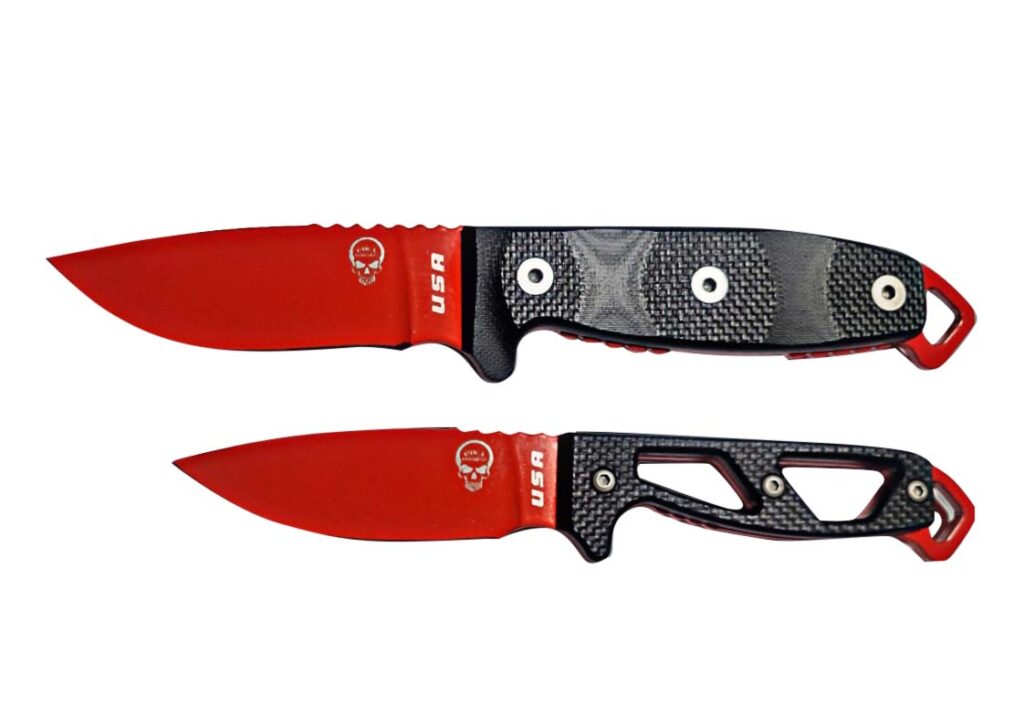
Utica Critical Hit I and II MagnaCut series

Utica Critical Hit I and II MagnaCut series

Knife type: Tactical, EDC, survival
Designers: Bill Harris, Stephen Schook and Utica team
Blade lengths: 3 and 2.5”
Blade steel: CPM MagnaCut stainless
Rockwell hardness: 61-62 HRC
Blade grind: Flat
Blade finish: Red powder coat
Scale material: Black textured Micarta®
Liner material: G-10
Overall lengths: 8 and 5.25”
Sheath type and material: Critical Hit I ABS sheath w/built-in sharpener and fire striker and reversible belt clip and paracord; Critical Hit II ABS sheath w/belt clip and paracord
MSRP: $170
Available: NOW


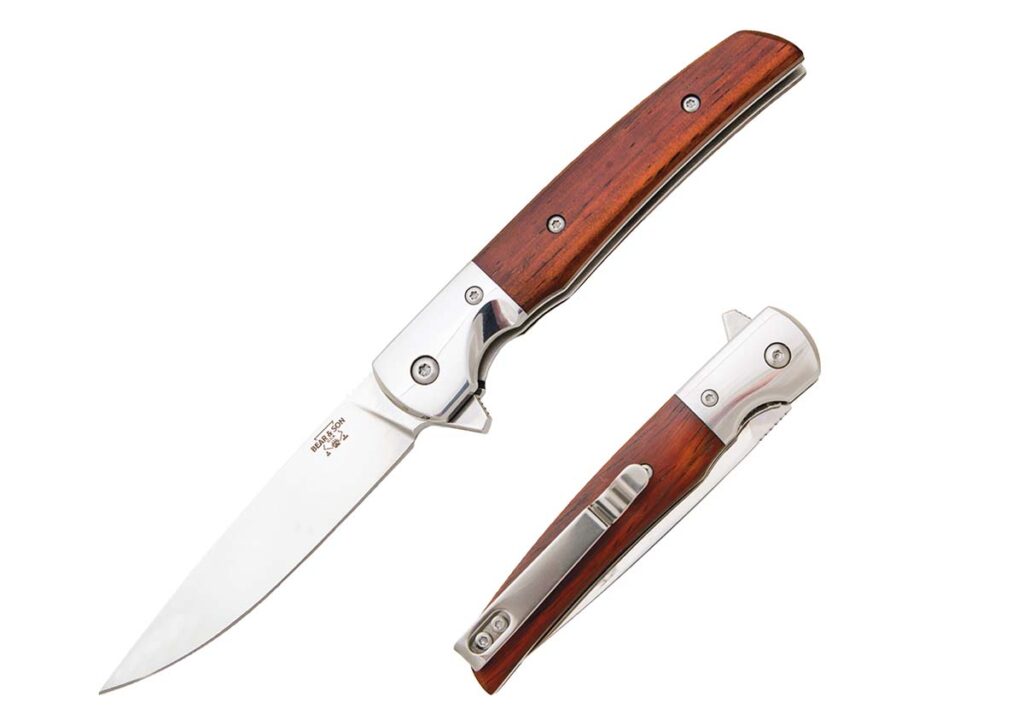
Bear & Son 4 ¼” Rancher Sideliner

Utica Critical Hit I and II MagnaCut series

Knife type: EDC
Designer: Bear & Son
Blade length: 3 3/8”
Blade material: D2 tool steel
Rockwell hardness: 59-61 HRC
Blade grind: Taper
Blade finish: High polished
Liner material: Stainless steel
Scale material: Cocobolo
Frame material: Stainless steel
Lock: Linerlock
Pivot: Ball bearing washers
Weight: 3 ozs.
Closed length: 4 ¼”
Overall length: 7 5/8”
MSRP: $95.99
Available: NOW


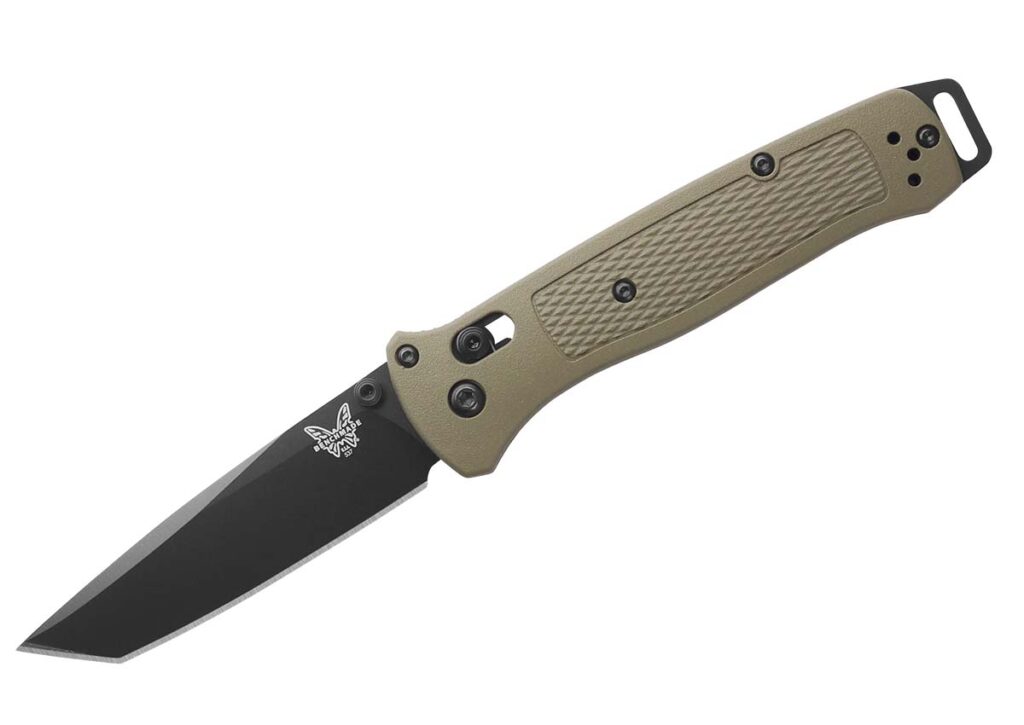
Benchmade Bailout

Benchmade Bailout

Knife type: Tactical folder
Blade length: 3.38”
Blade steel: CPM S30V stainless
Rockwell hardness: 58-60 HRC
Blade thickness: .09”
Blade pattern: Tanto
Blade finish: Graphite black Cerakote®
Scale material: Grivory® in ranger green
Handle thickness: .41”
Lock: AXIS®
Pommel lanyard: Anodized aluminum
Weight: 2.5 ozs.
Closed length: 4.72”
MSRP: $200
Knife to know: Maintaining its tactical hard-use prowess with a piercing tanto blade, this slim and easily pocketable folder features ultralight Grivory handle scales with highly textured grip zones and CPM S30V steel for superb edge qualities and corrosion resistance.
Available: February

More Buyer’s Guides:

Cool Customs: Pat Antuzzi’s Hand-Knapped Fixed Blade

When it comes to crafting a knife, Pat Antuzzi works one flake at a time.

“What I do is go back to the Stone Age,” Pat Antuzzi says of his knapped obsidian knives. He has been knapping blades for almost a quarter century.

In that time he has found the best of the best obsidian to be the royal Mexican variety from the state of Jalisco in Mexico, a variety that’s basically been mined out. He used the material for the blade of his straight-edged fixed blade, as well as Portoro marble from Italy for the handle. But it’s the royal Mexican obsidian itself and how it’s knapped that are the keys.

Pat Antuzzi

“Every indentation you see on the blade is one flake removal from [the obsidian], and if it’s done right, you’re going to see it one flake after the other, just like the ancients would’ve done it,” he explained. “It’s wicked sharp.”

Hand-Knapped Fixed Blade Specs
Maker: Pat Antuzzi
Blade length: Not quite 5”
Blade material: Mexican gold obsidian volcanic glass from Jalisco, Mexico
Handle material: Portoro marble from Italy
Overall length: 9.5”
Maker’s price for a similar knife: N/A

The Rise Of Tactical Fixed Blade

The author explains why tactical fixed blades will “come into focus” in 2025.

It’s 2025, and no doubt the new year will bring many changes. The same can be said for custom knives.

I was interviewed for a recent article in BLADE®. I was asked my opinion about several custom knife market sectors and how they would perform in the new year. As with any collectible market, interest in specific sectors ebb and flow with time.

The year past started to see a shift in the custom knife market. Specifically, it was because of inflation impacting most everyone’s daily lives. Multi-thousand-dollar knives, sales of which began to slow in 2023, almost came to a complete halt in ’24.

Vanguard Guardian by David Broadwell, tactical fixed blade
The Vanguard Guardian by David Broadwell has an 8-inch blade of CPM 154 stainless steel with a hand-rubbed satin finish and scales of black Micarta® with black canvas Micarta. Overall length: 13 inches. Leather sheath by Nita Broadwell. Author’s note: “This is the epitome of what a tactical sub-hilt fighter should be. This knife features a fuller to provide lateral strength to the blade. The integral guard and sub-hilt are titanium.” Maker’s price for a similar knife and sheath: $2,500.

The trend I saw was collectors were still buying custom knives—they just changed their strategy. The primary strategy I saw was to purchase high-quality, less expensive knives. In times like these, collectors will often look around to check out the work of makers they were previously unfamiliar with, or new makers. I have done this for the past 40 years and I highly recommend it.

No matter the custom knife sector, while it may seem to disappear, no sector ever disappears completely. When a sector heats up, other sectors cool off. It is only a matter of time before they all get their turn again. No matter how hot a market sector seems or how popular the style of knife or maker is, eventually they all cool off. The increased popularity brings an increased demand, which causes a rise in prices, which brings more makers into the market sector. And often all but a few makers will continue to maintain their popularity.

Why Tactical Fixed Blades Are On The Rise

Because I watch the custom knife market closer than most, I often become aware of trends before most custom knife buyers. In marketing terminology, this is referred to as being an early adopter. Early adopters are the ones who start the path that, months later, others will begin to walk down. The market sector of tactical fixed blades is once again coming into focus.

Nomad by Tomasz Dziubinski
The Nomad by Tomasz Dziubinski features a 10-inch blade of Sleipner stainless steel with a black Cerakote® finish, full-tang construction and a sculpted handle of OD green G-10. Overall length: 15 inches. Kydex sheath by the maker. Author’s note: “The quarter-inch stock, weight slightly forward, makes it perfect for chopping. Its razor edge gives it the ability to perform smaller knife chores around the camp. An excellent all-around knife.” Maker’s price for a similar knife and sheath: $395.

There are three reasons for this:

Diversity of styles: The word tactical is a marketing term that first appeared in the knife business circa 1995 (page 10). It was more about the look of a knife than its style or function. As the BLADE Show added best tactical knife awards to its custom knife judging competition, I was asked to help define the parameters for the category. It was straightforward. There were no parameters for style, length or materials, with one exception: the handle material had to be synthetic, not natural. Also, the blade and guard/bolster materials, if there were any of the latter, had to have a non-reflective finish. You would not believe the grief I have received over this simple definition.

With this definition in mind, most any variation of blade length, grind, single or double edge, double guard, single guard, no guard, integral guard, or bolster could be utilized in the design and subsequent build of the knife. The only stipulation was that the knife had to have a synthetic handle material. The variety of custom tactical knives was mind-blowing once this became a category. Finishes ranged from machine satin, bead blast, tumble and, finally, blackened.

Diversity of materials: In this instance, the materials are primarily those for blades and hardware. Tactical fixed blades and folders introduced an explosion of steel to the custom knife market. The knives featured a wide variety of steels not previously associated with custom knives. Such materials as Stellite®, Talonite® and powdered steel were utilized for blades, and these were introduced to the custom knife world through tactical knives.

The initial choices for tactical handle materials were limited to G-10, Micarta® and 550 para cord, though the options changed rapidly. G-11 was introduced as an alternative, as were various carbon fibers, including lightning strike and copper, and also Carbo Quartz, Fat Carbon, antique Micarta and others.

Phillip Patton's Vanguard Cheetah Sub-Hilt Fighter tactical fixed blade
Phillip Patton outfits his Vanguard Cheetah Sub-Hilt Fighter in an 8-inch blade of satin-finished W2 tool steel, stainless steel guard with an indexing radius cutout, a black Micarta® handle and a leather sheath by the maker. Overall length: 12.75 inches. Author’s note: “This knife features a full double hollow grind, exceptional balance and enhanced handle ergonomics.” Maker’s price for a similar knife and sheath: $825.

Price Point: The price of a custom knife was a significant consideration in 2024 and will be a major factor in 2025. Due to their diversity, tactical fixed blades will offer the collector numerous choices in the sweet spot of $300 to $800, which is in just about every serious custom knife buyer’s budget.

Tactical Fixed Blade Visual Appeal

As with most knives, the initial attraction to tactical knives is visual. Once a knife catches your eye, you impulsively want to handle it. Because most tactical knives are built to use, they often have more attention to detail toward that end than other knives. Consequently, a visceral reaction happens when you put the knife in your hand. The knife instantly becomes an extension of yourself. The knife’s symmetry, balance and handle ergonomics all combine to make the knife effortless to use.

Because of the variety of styles and materials, you can easily match up the tactical knife to meet your needs, whether a smaller utility knife for camping, bushcraft work or even an EDC. A knife like the Ridgeline by Rafal Kolakowski or the Trail Head EDC by Tomasz Dziubinksi can be used for many tasks in the field. Both combine light weight, excellent handle ergonomics and very durable materials.

Rafal Kolakowski’s Ridgeline
Rafal Kolakowski’s Ridgeline sports a 4-inch blade of Becut stainless steel in a black Cerakote® finish and a carbon fiber handle. Overall length: 8.75 inches. Kydex sheath by the maker. Author’s note: “Double hollow ground blade with fuller for added strength. Full tang, sculpted handle material for enhanced handle ergonomics. A small knife but built for hard work. Stainless steel tube lined thong hole.” Maker’s price for a similar knife and sheath: $350.

At the other end of the spectrum are the choppers. The large, heavy blades are designed to do what small knives can’t, including break trail, create firewood and assist in processing large game. The Piotr Gosciniak Tracker offers several options with its unique blade design. A straight primary edge is designed for baton work, the cleaver-style grind for chopping and slicing, and a distinctive grind on the top edge for cutting cord. Dziubinski’s Nomad is another example of a serious tactical to get things done.

Then there is the sexiest tactical knife: the sub-hilt fighter. It is my favorite knife style and my favorite maker of it is David Broadwell. Dave’s limited-edition Vanguard Guardian is highlighted by its unusual fuller and integral titanium guard and sub-hilt. Phillip Patton’s Vanguard Cheetah features a sexy recurve blade with a more traditional guard and sub-hilt.

This article wouldn’t be complete without a tactical knife showing off its military influence. For that, consider the Spektra dagger by Rafal Kolakowski. It’s sleek, compact and built for serious use.

Less Is More

Sleipner
A 3.5-inch blade of Sleipner stainless steel with a black Cerakote® finish and black G-10 handle highlight Tomasz Dziubinski’s Trailhead. Overall length: 8.25 inches. Kydex sheath by the maker. Author’s note: “Flat-ground, upswept utility-style blade. Full tang, excellent handle ergonomics. A small knife but built for hard work. Stainless steel tube lined thong hole.” Maker’s price for a similar knife and sheath: $325.

Please do your research. Understand what the knife can and cannot do. Try to get one with a guard or at least handle material over the guard. Integral guards with square edges will tear up your hands. Often, “Tacti-Cool” features—extra holes, extra serrations or saw teeth, etc.—may look cool but seldom, if ever, add anything to the knife except extra expense. With tactical knives, usually less is more. Balance and handle ergonomics are essential on a knife that will be used hard.

More Tactical Knives

Japanese Blades: Mystique Of The East

0

Japanese blades have enchanted and endured for centuries with no end in sight.

The lure of the Eastern style has captivated cutlery artisans for centuries, and interpretations of it remain alive and well, blending tradition seamlessly with modern techniques and materials while staying true to their roots in Japanese culture. While there is plenty of skill required and the artist’s eye lends its perspective, custom knifemakers continue to produce wonderful examples in fusions of blade, tsuka (handle) and furniture—and they are quick to explain the reasons why.

Denis Tyrell

Denis Tyrell’s aptly named Silver Moon katana features a 29-inch blade that is pure silver laminated: damascus over silver with an 80CrV2 carbon steel core. The traditionally wrapped tsuka (handle) has silver and mild steel fittings and silver inlay. The tsuba (guard) is mild steel. Overall length: 40 inches. Tyrell’s price for a similar sword: $9,500.
Quite a Japanese blade! Denis Tyrell’s aptly named Silver Moon katana features a 29-inch blade that is pure silver laminated: damascus over silver with an 80CrV2 carbon steel core. The traditionally wrapped tsuka (handle) has silver and mild steel fittings and silver inlay. The tsuba (guard) is mild steel. Overall length: 40 inches. Tyrell’s price for a similar sword: $9,500. (Jocelyn Frasier sword image)

“Japanese blades have both an elegance and a mystique to them,” said maker Denis Tyrell of Livermore, California. “They have subtle curves that really appeal to me. They are also very complex to build and get right—I’m still striving for a higher standard.”

Setting out on a creative path that brought modern and traditional methods together, Tyrell made great strides toward that standard in his Silver Moon katana. “I appreciate all the complex fittings on these swords, so I try to keep to that mix,” he noted. “The blade is where I step out a bit more into the modern, using damascus steel and other techniques to really show it off.”

The result of Tyrell’s effort succeeds in highlighting the 29-inch damascus blade and handle wrapped in faux leather. The fittings are silver, while the guard is mild steel with silver inlay. The blade presents something of a surprise with its damascus cladding over silver with a solid core of 80CrV2 carbon steel. To preserve the integrity of the damascus, the blade was not heat treated. The sword is 40 inches overall and the blade grind is convex.

“The melting point of silver is 1,763 degrees Fahrenheit,” Denis added, “so it’s challenging to forge that together with the damascus cladding and core without melting it. I also found getting the fittings perfect so a single pressure-fitted peg will hold it all together with no slack to be a challenge.” Denis said the Silver Moon sold for $9,500. The owner has invested in an authentic Japanese-style sword that not only exhibits great talent but also pays tribute to the historical appeal of those produced in the past.

Drew Lininger

A hollow-ground blade of AEB-L stainless steel and a jade-green G-10 handle highlight Drew Lininger’s Tanto Kwaiken. His price for a similar piece: $400.
A hollow-ground blade of AEB-L stainless steel and a jade-green G-10 handle highlight Drew Lininger’s Tanto Kwaiken. His price for a similar piece: $400. (Jocelyn Frasier knife image)

Drew Lininger of Belgrade, Montana, honed his knifemaking skills further with his Tanto Kwaiken, a stylized version of the small, single-edged dagger carried by the Samurai for close self-defense.

“I love slimmer, more streamlined knives, and the Japanese style really appeals to me with its simple lines that make for a complex knife,” he related. “I also like how you can scale the designs easily. You can basically make the same knife in multiple sizes without having to change anything but the dimensions.”

The Tanto Kwaiken has a 4-inch blade and 8.25-inch overall length. Drew decided on AEB-L stainless blade steel complemented with a handle of jade-colored G-10, its fibers presenting a pleasant textured look approaching the ricasso. The guard is Grade 5 titanium. The most difficult aspect of the knife’s production was succeeding with the precision required for the numerous angles and lines to meet at the same apex without variation on all sides of the handle.

One departure from tradition is the blade grind. “It is a 6-inch hollow grind,” Drew commented, “definitely not standard for traditional kwaikens. I had originally seen the full hollow grind on some folding knives and wanted to try it on a kwaiken.”

Jim Perkins

Jim Perkins’ wakizashi takes down by removal of the pin from the Japanese maple handle. The 19-inch blade is 1,724 layers of 1095 carbon and 15N20 nickel alloy steels. Overall length: 28.25 inches. Jim’s price for a similar piece and saya (scabbard) is around $2,500.
Jim Perkins’ wakizashi takes down by removal of the pin from the Japanese maple handle. The 19-inch blade is 1,724 layers of 1095 carbon and 15N20 nickel alloy steels. Overall length: 28.25 inches. Jim’s price for a similar piece and saya (scabbard) is around $2,500. (SharpByCoop knife image)

Jim Perkins of Garden City, Kansas, built a superb wakizashi at 28.25 inches overall with a 19-inch damascus blade consisting of 1,724 layers of 1095 carbon and 15N20 nickel alloy steels. The stunning blade is accented with copper habaki (collar), seppa (spacer) and tsuba (guard), and a handle of gleaming Japanese maple. Jim’s price for a similar sword would be around $2,500, and he likely would relish the opportunity to take another stab at such a piece.

“For me, the appeal of the Japanese style is in the history and the flow of the traditional blades,” he offered, “along with challenging myself to make the symmetry of mine as aesthetically pleasing to the eye as possible. If you look at traditional Japanese blades, you see a natural beauty that has been a tradition of the master smiths who have made them. It is hard not to be inspired by their work.”

Giving a nod to his preference for modern materials, Jim also takes advantage of some conveniences in the shop. “Since I’m a bit older, the hydraulic press is invaluable,” he explained. “It saves my shoulder from the abuse hammering out the steel would inflict. That said, while I am working the steel I try to keep in my mind’s eye the process the masters might have used, and attempt to honor their traditions the best I can using modern materials and methods. Examples of this would be that I ‘bed’ the tang in the handle and my milgraining treatment to the tsuba.”

Jim describes the wakizashi as full takedown with the removal of the handle pin. He fits the tang to each side of the handle using a saya nomi, Japanese for scabbard chisel, made by Walter Sorrells. Afterward, Jim glues the handle sides together for fitting to the tang, applies petroleum jelly to the fittings and the tang, and fills the handle cavity with epoxy, which he allows to cure for approximately three hours.

From there he removes the handle from the tang, cleans off the petroleum jelly, and resets the handle in the tang to allow final setup. Jim works the tsuba with a hammer from the center toward the edge, and hammers a design into the material with a small ball-pein hammer. In this particular case, he finalized a textured finish on the engraving bench with a milgrain tool.

“I allow the copper tsuba, seppa and habaki to patina naturally through handling as opposed to using a chemical application,” Jim said, “and I would be remiss not to mention the meticulous requirements of prepping the steel for each forging session. Keeping the steel as pristine as possible for the next forging session to eliminate any forge welding failures is tremendously important. The discipline required to do this increases as the layer count goes up, but it is an absolute necessity to avoid disappointment in myself or the final product.”

Kieren McNeilly

An 11-inch blade forged from W2 tool steel sporting a slanted choji (clover-tree flower) hamon and a raw stingray hide handle top off Kieren McNeilly’s traditional tanto. The stingray hide underwent no dying or tanning to keep it nice and hard. Overall length: 16.5 inches.
An 11-inch blade forged from W2 tool steel sporting a slanted choji (clover-tree flower) hamon and a raw stingray hide handle top off Kieren McNeilly’s traditional tanto. The stingray hide underwent no dying or tanning to keep it nice and hard. Overall length: 16.5 inches. (Rod Hoare knife image)

Capitalizing on available media such as books and YouTube videos while also talking with other makers, Kieren McNeilly of Warwick, Queensland, Australia, stepped into Japanese-style knifemaking with optimism. “I highly recommend anyone thinking about making one to just go out and do the same,” he smiled.

McNeilly’s work is a reflection of other aspects of his life. “My house has touches of Japanese art all around, from Samurai masks to antique tsuba and more things not related to knives,” he said. “Japanese knives are simple, well-thought-out designs, all built for a purpose. I’m also a big fan of a satin or polished finish on a blade with contrasting forged texture, which is another common thing you see in Japanese knives. Same for the swords. All parts of the katana serve a purpose, from differential heat treatment of the blade to the ray skin down to the mekugi [pin] that holds it all together.”

McNeilly’s traditional style tanto is 16.5 inches overall with an 11-inch blade forged from W2 tool steel. The saya (scabbard) is buffalo horn and the handle is raw stingray hide. The latter did not go through any dyeing or tanning process, which keeps the material hard and stiff.

“Three areas of this knife gave me issues,” he related. “The first was the heat treatment when the water quench failed. Luckily, I had no cracks. The blade didn’t fully harden, so as an easy fix I went back through my normalization cycles, clayed the blade again and then quenched it in oil.

“The second issue was the constant attention needed to get the width and diameter of the handle and saya to match as closely as possible when sheathed, with perfect fit-up and zero gaps. Lastly was working with the raw stingray hide. The calcium nodules are extremely hard and make cutting the material difficult. The hide also has to be soaked in water to take shape around the handle.”

To solve the problem of gaps developing as the raw stingray hide dried, McNeilly used masking tape to add mass to the handle and then removed the tape to allow the hide to shrink to the proper position. “It left just enough space for the hide to shrink that last little bit,” he remembered, “and this still took me a few attempts to get it right.”

Using a combination of Japanese and Western methods and materials, Kieren achieved magnificent results. “I have not used tamahagane, a precious bloomery steel, and if I were to, I would make a point to use all traditional materials and more traditional techniques,” he concluded. “Synthetic materials like G-10 and Micarta® work great as substitutes for more traditional materials like bone or horn, although I love how horn and bone can add a lot of character to a piece.”

More On Knife Collecting:

Custom Knives: Synthetic Handles That Turn Heads

0

We collected a group of custom creations that showcase the leaps in synthetic handles.

When you think synthetic handle materials, factory knives probably come to mind. However, synthetics play a larger role in custom knives all the time. Synthetic handles don’t swell or crack from the elements like some natural materials and are outstanding for use. As reflected by the pieces on this and the facing page, they look pretty good, too.


Darriel Caston Ultem

Darriel Caston Ultem

Ultem comprises the grip of Darriel Caston’s fixed utility model in CPM S35VN stainless steel. Blade and overall lengths: 4 and 9 inches. Sheath: Kydex. (SharpByCoop image)


Michael Jarvis Pocket Bowie XL

Michael Jarvis Pocket Bowie XL

A G-10 coffin handle steers the AEB-L stainless blade of the Pocket Bowie XL by Michael Jarvis. (Jocelyn Frasier image)


Dustin Driver WISC

Dustin Driver WISC

Dustin Driver opts for titanium for the handle and frame of his WISC folder. The 3.5-inch blade is hollow-ground CPM MagnaCut stainless steel. Closed length: 4.5 inches. (SharpByCoop image)


Kirby Lambert Phoenix

Kirby Lambert Phoenix

Kirby Lambert’s Phoenix folder sports a handle of Westinghouse Ivorite paper Micarta® with 6Al/4V titanium liners and a 3.25-inch blade of hollow-ground Reptilian damascus by Vegas Forge. Bolster: Timascus™. Closed length: 4.25 inches. (SharpByCoop image)


Maverick Murdock Dress Slip Joint

Maverick Murdock Dress Slip Joint

A handle of black paper Micarta® with straight twist damascus bolsters over a brass frame house a 3-inch blade of CPM 154 stainless on ABS apprentice smith Maverick Murdock’s dress slip joint. Hardware: titanium. Closed length: 4 inches. (SharpByCoop image)


Harold Parsons Skinner

Harold Parsons Skinner

Green Micarta® and G-10 liners highlight the handle of a skinner in 440C stainless steel by Harold Parsons, who also engraved the bolster. Blade and overall lengths: 4.25 and 9 inches. (Jocelyn Frasier image)


Erik Fritz Slip Joint

Erik Fritz Slip Joint

ABS journeyman smith Erik Fritz chose burlap Micarta® with 416 stainless steel liners and bolsters for what for him is a new direction: a slip joint. The 2.75-inch blade is flat-ground CPM 154 stainless. Closed length: 3.75 inches. His price for a similar knife: $500. (Jocelyn Frasier image)


More On Knife Collecting:

Choosing The Right Knifemaker

0

Veteran collectors discuss what to look for in a top knifemaker.

When it comes to spending your hard-earned dollar, knowing what to look for in a knifemaker provides a perspective that can’t be achieved any other way. The knife itself offers a real, tangible opportunity to assess the workmanship, and a dialogue with the maker—or at least some knowledge of his or her career and standing in the knife community at large—allows for informed decision-making.

“The main thing I look for in a knifemaker is someone with an original design aesthetic,” observed longtime collector Jim Berkenfield. “I always tell up-and-coming makers that they want to create something that can be immediately identified as theirs if it is sitting on a table in the middle of 100 other knives.”

Meanwhile, being mentored by a leading maker is not something Jim looks for in a maker.

“I always tell up-and-coming makers that they want to create something that can be immediately identified as theirs if it is sitting on a table in the middle of 100 other knives,” collector Jim Berkenfield advised. Veteran maker Bertie Rietveld’s Makiti folder in composite dragonskin damascus and gold inlay meets that standard and then some. Closed length: 5 inches. (SharpByCoop image)

“I don’t necessarily think a maker needs to have some well-known mentor or instructor,” he opined. “These days, savvy and creative people can access all the information they need via social media or the internet to get them started down the road to knifemaking.”

The first impression is key to developing any relationship, and finding a maker with his or her own creative voice is an essential component for many.

“Firstly, and most obvious, I have to be drawn to the maker’s work, assuming I don’t really have any previous interaction with the maker,” collector Chris Schluter said. “I think these days social media is certainly an easy and quick way to get some information. There are countless knife groups on Facebook, for example. One could ask in these groups if anyone has had experience with a certain maker or knives. Of course, doing this in person at a show is an option as well.”

Personal Interaction With Knifemakers

Many think it very important for a new maker to attend knife shows. According to collector Chris Schluter, “A show is a great opportunity to get feedback on your knives and also check out other knives and speak to other makers for tips and inspiration.” Chris Losacco (right) of Elemental Forge shows one of his damascus fixed blades to customers at last year’s BLADE Show West.

Larry Hirsch, a veteran collector of Lloyd Hale’s work and that of other classic custom makers, sees the value in social media but also understands the benefits of personal interaction across the table at a show.

“I think it’s important for makers to attend knife shows,” he commented. “Meeting people, talking about their work, hobbies, family, ideas, networking and making friends is all part of a successful business. I’ve bought knives from makers that I’ve met at shows and become friends with. I’ve sold off knives from makers that were rude to me at shows.”

Consequently, there is more than just an exchange of cash for steel in the building of a mutually beneficial relationship between maker and customer. Even though it may sometimes be difficult for a maker to attend a show, there are still opportunities to interact.

“I don’t think it’s mandatory for makers to attend shows because knife shows are expensive,” Berkenfield said. “For new knifemakers in particular there is no guarantee that they’ll even sell anything. When a maker is exhibiting at a show, yes, I think it’s important that he engages with people as they walk by—without being pushy. I think the biggest reason knifemakers should try to attend shows is to gain inspiration from other work in the room, acquire materials, and just make some contacts in the industry.”

Larry Hirsch is an experienced collector of the knives of Lloyd Hale. Larry indicated before placing a custom order, ask the maker about the things that are important to you and be sure you get the answers you want. The example of Lloyd’s work is a spectacular sub-hilt in gold-lip and white mother-of-pearl, abalone and 440C stainless steel. (image of Larry Hirsch and Lloyd Hale courtesy of Hirsch; SharpByCoop knife image)

It’s entirely possible that young makers seeking to establish themselves could complement their use of social media such as Instagram with regular visits to shows. Visibility is a key in promoting a knifemaking career.

“It’s very important for a newer unknown knifemaker to attend shows,” Schluter advised. “A show is a great opportunity to get feedback on your knives and also check out other knives and speak to other makers for tips and inspiration. I think that this is probably best done in conjunction with a social media presence so any customers or followers know where they can handle some knives ‘live.’”

SPECIAL ORDERS
When a potential buyer wants a special order or the maker has a waiting list, it makes sense to weigh the dynamics of the situation, including whether the maker takes custom orders and whether he or she requires a deposit.

Schluter remarked, “Many say that a true custom knife is a knife made to a customer’s specifications with specific materials. Many makers will do this, of course. However, many makers, especially very ‘in-demand’ ones, will just make what they want and it will sell. And customers will be happy to get anything from that maker. As far as waiting lists and order books go, it’s really up to the maker and not the customer. Someone told me once long ago, ‘There’s real time and there’s knifemaker time.’”

“I think the biggest reason knifemakers should try to attend shows is to gain inspiration from other work in the room, acquire materials and just make some contacts in the industry,” collector Jim Berkenfield said. ABS master smith Kyle Royer (left) and BLADE Magazine Cutlery Hall-of-Fame® member Steve Schwarzer (right) admire the work of an exhibitor at a past BLADE Show. (Whetstone Studio image)

“If a maker says six months, don’t be surprised if it’s a lot longer,” Chris cautioned. “Many makers who are popular simply don’t take orders anymore, though it never hurts to ask nicely even though they state this. Others who do take orders will regularly have wait times in excess of a year. It’s not unheard of to wait several years! I generally don’t like deposits or paying in advance. A small deposit as a sign of good faith or for special materials is not out of the question, though.”

Hirsch doesn’t see a willingness to take custom orders as critical, but he does emphasize the need to manage expectations.

“I have talked to many knifemakers about this, and the ones that don’t take orders have valid reasons for not taking orders,” he explained. “I’ve had the pleasure of working with several knifemakers that do take custom orders and enjoyed the knives that they made for me. Before you ever place an order, you need to ask the maker about the things that are important to you and receive the answers that you want.

“The timeframe for receiving your knife should be reasonable based on the maker’s backlog,” Larry added. “I suggest that if you don’t have the patience to wait longer than expected, don’t custom order a knife. It almost always takes longer than promised or expected.

As noted collector Jim Berkenfield, deposits typically are not required on custom orders, though if the build has expensive materials such as mammoth ivory, he will often offer to pay for it in advance—or even provide the material himself. Schuyler Lovestrand’s curvaceous sub-hilt features a handle of mammoth ivory rich in golds and dark greens. (SharpByCoop image)

“Deciding on placing a deposit is a very personal decision. Sometimes everything goes perfectly and you’re happy about your decision. Sometimes life, sickness or death prevent a maker from starting or completing your project, and your deposit is lost. When you deal with an individual, it’s not like a factory. There’s no one to take over when the knifemaker is sick or gone, and there’s no company to call to complain or ask for a refund.”

Berkenfield says that depending on the knifemaker it isn’t uncommon to wait two years for a custom knife to be delivered, particularly if the maker is well known and has a following.

“When you’re collecting knives, you need to play the long game in terms of acquiring a piece from a specific maker,” he commented. “Typically, deposits are not required, although if the build has certain expensive materials, for example, mammoth ivory, I will often offer to pay for that in advance or even to provide it myself.”

Questions To Ask

A prospective buyer should not be afraid to ask a maker specific questions about the maker’s operation, a certain knife, or what the prospective buyer’s expectations should be as the proud owner of one of the maker’s pieces.

Does the maker supply a quality sheath with a fixed blade? Paul LeBatard does with his Field and Stream knife in D2 tool steel and amber stag scales. Overall length: 8.75 inches. (Jocelyn Frasier image)

“I think it’s always good to ask a maker you’re not familiar with but interested in how they got into knifemaking,” Schluter recommended. “How long have they been making knives? Why do they enjoy it? Most custom knives are not inexpensive, and I think it’s perfectly reasonable to want to know about the maker. As many have said, ‘You buy the maker, not the knife!’”

Knowledge is power and Hirsch suggests that prospective customers invest in some research of their own before contacting a maker who interests them.

“There’s typically a wealth of information available online,” he related. “Ask other collectors their opinions. Find out the knifemaker’s preferred method of communication and what hours they are available to communicate with you. Remember that when you are talking with them during working hours you are taking them away from making knives. Be respectful of their time.”

Communication is a two-way street, so what is appropriate in terms of responsiveness from the maker?

“When a maker is at a show, yes, I think it’s important that he engage with people as they walk by—without being pushy,” collector Jim Berkenfield observed. Toby Hill (left) talks knives with a customer at the 2024 BLADE Show Texas.

“Like any business, there is a customer service aspect,” Schluter acknowledged. “Someone who is unresponsive to a sales inquiry might also be unresponsive if there’s a problem with a knife in the future. Of course, there’s the whole ‘knifemaker time’ thing so don’t expect Nordstrom-like customer service, either. For a knifemaker, I generally like to hear back from them within a few days to a week.”

Other Tells Of Good Knifemakers

Other tells of a maker’s work and business conduct might include the existence of a dedicated website; the inclusion of a sheath in the purchase of a fixed blade; the potential cross-over of a knife from everyday carry and field use to the collector’s case, and vice versa; and the relative cost of the piece in comparison to the popularity of the man or woman who made it may all weigh proportionally on the eventual appeal of a maker to the buyer. Some conditions, after all, will always remain subjective.

In the end, a prospective customer and his or her maker of choice should be able to accommodate one another, striking a balance in mutual respect and appreciation for their common interest. Communication is an important part of any relationship or business transaction. When a healthy give and take is present, both parties will tend to be more satisfied with the outcome of a discussion and, hopefully, a satisfied buyer and seller.

More On Custom Knives:

Who Made Your Knife?

The company name stamped on the blade isn’t always the manufacturer’s name.

Who doesn’t like solving a good mystery? Remember the mystery game Clue, with its colorful game board depicting an old mansion, a stack of character cards, various miniature weapons, a detective’s notebook, a set of dice, and clue cards? The object of the game is to determine who murdered the victim, where the crime took place, and which weapon was used. Each player assumes the role of one of six suspects and attempts to solve the whodunnit by strategically moving around the game board that represents rooms of the mansion and collecting clues about the circumstances of the murder from other players. Clue is cited in several Top 10 lists as the fifth highest-selling board game of all time, with over 200 million copies sold.

Mysteries regarding knife production abound because thousands of cutlery manufacturers exist in the United States. Collecting vintage or antique knives inevitably turns up many examples with mysterious or unknown tang stamps and origins, even for seasoned collectors. To many knife enthusiasts, determining which factories produced specific models is unimportant. However, for serious and curious collectors interested in researching some recent finds, tracking down the origins of unknown tang stamps is akin to solving a cutlery history mystery.

In most cases, the finders of these unknown specimens can reference highly regarded publications with lists of knife manufacturers, descriptions of tang stamps, production dates, countries of origin, and sometimes even desirability ratings or collectible rankings.

The same company made two original sheaths of widely different patterns. A page from Dean Case's Kinfolks Knives book shows the exact carved leather sheath and proves that the company made it.
The same company made two original sheaths of widely different patterns. A page from Dean Case’s Kinfolks Knives book shows the exact carved leather sheath and proves that the company made it.

Such books include those authored by John Goins and Bernard Levine. I use the references much like a history book since they are devoted explicitly to production knife history, perusing years, dates, details and fascinatingly unique information. Of course, there is also the Internet and its various search engines, which, if used correctly, can uncover published data on most little-known knife tang stamps. Keep in mind, however, that much of the Internet, especially forums, consists of a series of posts made by individuals, some experts, but many not. Most posts are simply an individual’s opinion and are not based on factual material such as military contracts or production knife company catalogs and ephemera.

Like detective work, looking for clues is the key to solving most knife mysteries. Many knives can reveal clues to their history if one knows where to research and what to look for. Unfortunately, just when you think you’ve traced a particular knife back to its manufacturing origins, you inevitably discover that thousands of models were not even manufactured by the company indicated on the tang stamp, but were, in fact, made on contract by different factories. Those factories derived a significant portion of their business taking orders. In other words, the stamping on the blade, which generally indicates a manufacturer and city of origin, may not be the factory or the city where the knife was made.

Production knife companies can be divided into two categories. The first manufactures blades bearing their own stampings and makes few, if any, knives for other businesses. Remington Cutlery appears to be one of those manufacturers that produces only knives bearing the company’s full name. Remington did have a couple of production lines, one with knives stamped in a straight-line “Remington,” but it only produced its own blades and did not work with outside contracts.

A gorgeous, red-handled hunting knife is stamped “Ideal” on the knife and sheath—the snaps on the top of the sheath hint at its origin.

The second are those that not only produced knives bearing the official company name but also accepted contracts to make models for any of several major retail outlets needing factory-fixed blades and folders. For many manufacturers in the second category, making knives for retailers or putting other companies’ brand names on tang stamps equated to a significant source of revenue.

Knives On Contract

Some production knife companies made blades on contract to spread their knives throughout the United States. This was particularly important for manufacturers like the Western States Cutlery of Boulder, Colorado, which had difficulty selling its knives east of the Great Plains. Other companies include industry giants like Camillus, Colonial, Western Cutlery and Kinfolks. Some outlets contracting with Western Cutlery to make knives for them included Sears, Montgomery Wards, Coast Hardware, Western Auto, Spiegel and Shapleigh Hardware.

Camillus is perhaps the best example of a production knife company known for copyrighting dozens of tang stamps, yet the manufacturer made all the blades. The list of those stampings takes up pages but includes Kingston, Clover, Sta-Sharp, Dunlap, Kwik-Kut, Streamline, OVB (Our Very Best), High Carbon Steel, Keen Kutter, Kent, Sword Brand, Tip Top and Buck. While most stampings are contract-made knives (like Keen Kutter and Buck), others are merely Camillus Cutlery’s sub-brands.

A closeup of a Kinfolks yellow-handle knife-axe combination set shows the snap-button sheath attachment style.

With the data well documented regarding the practice of knife manufacturers producing contract brands, a look at specific examples is in order. The origins of many of the tang stamps started as mysteries that were eventually solved through clues inherent to the knives.

Western Cutlery knives hold some specific clues, which, once recognized, can prove beyond a shadow of a doubt that they were made by the company even when stamped with another name. The first and most obvious clue lies in the aluminum pommels that Western used on its various hunting knives. Unlike the rounded, mushroom-shaped or ovoid pommels of other knife manufacturers, Western employed a bird’s-beak pommel.

The aluminum pommel extends smoothly from the last series of colorful handle spacers to form a bird’s beak and head. The top of the pommel is not flat, as most others, but slanted like a bird’s head, sloping down at an angle toward its back. Recognizing this obvious clue, it becomes easy to put a hunting knife stamped “Western” next to those stamped “Craftsman,” “Western Field,” and “Hawthorne” and recognize that Western Cutlery made them all, and those featuring alternative tang stamps were built under contract for Sears and Montgomery Ward.

A red-handle Ideal hunting knife, which snaps onto the Kinfolks hatchet set sheath. Notice the similarities of the leather sheath embossing style—a perfect match. Kinfolks made the “Ideal” knife.

A second clue to whether Western Cutlery manufactured specific knives is those stamped with a unique patent number, 1,967,479. The number refers to a patent by Harlow Platts described as a “novel and simple method of forming a handle for a tool which is durable, strong and which cannot be displaced or loosened.” The patent refers to Western’s double-tang handle configuration, which is two flattened steel rods that run from the blade to the pommel and between which fiber and leather spacers are stacked to form a handle that does not move.

Since only Western knives incorporated the patented handle design, it becomes a simple matter to look at a typical hunting knife from that era to see whether the steel tangs are visible on both sides of the handle, with the spacers lying between the two—Western most certainly made knives with this design feature.

Round Leather Spacers

Most other hunting knife handles from the time were made with a single round rod extending from the base of the blade to the pommel. Round leather handle spacers with holes in the middle are stacked tightly, with the rod running through them, for the length of the handle between the blade and pommel. Generally, the rod is threaded so that a round, usually brass nut can be tightened to sandwich and secure the handle spacers between the blade and pommel, making a durable handle. On these knives, the top ends of the aluminum pommels have round indentations where threaded nuts are seated. Marble’s knives are examples of this handle construction.

A closeup of the stag-handle hunter shows the WARD tang stamp and a patent number below it, giving an obvious hint as to the knife’s maker.

Over several months, I accumulated four hunting knives with a wide-blade style known as a “woodcraft” pattern popularized by the Marble Arms Company. The knives had four different tang stamps, one reading JEAN CASE CUT. CO., a second, BELNAP, LOUISVILLE, the third, HOLLINGER, and the fourth was stamped KINFOLKS, INC. I was already familiar with the Kinfolks stamp, as I have always favored this wide-blade style. I also knew Kinfolks had a knife factory built in the 1930s but did not realize that the manufacturer was potentially involved in contracts with other companies to produce their knives.

An examination of the four hunting knives laid side by side clearly showed that they were almost identical in blade length, had the same highly polished chrome-vanadium blades, and identical aluminum guards and pommels with brass centering nuts.

If I needed yet another piece of evidence to prove that Kinfolks made the four knives, the spacer pattern proved a strong clue. The knives had identical stacked leather handles ending near the guards with alternating black and white spacers—five black spacers separated by three white spacers. Finally, looking at the sheaths was the icing on the cake. Although all four hunting knives had sheaths of the same length and width, with identical rivet spacing, one was patterned differently from previously known Kinfolks examples. Wondering if this last leather sheath with a unique stamping was original to the knife and produced by Kinfolks, I turned to a book by Dean Elliot Case titled Kinfolks Knives, a History of Cutlery and Cousins.

Western was a significant producer of contract knives for Sears, Montgomery Ward, Western Auto and others. Here are four examples branded “The Coast Cutlery,” “Western Auto,” “Hunt Master” (Spiegel), and “Western Boulder.” Some enthusiasts specialize in collecting Western’s contract-branded knives.

Looking at the illustrations of various Kinfolks knives in the book, I came across a picture of a sheath identical to that which housed the Jean Case woodcraft knife. The mystery was solved, and all four hunting knives were made by Kinfolks, even though they had different stampings.

A unique hunting knife appeared recently in an Internet auction. Being attracted to colored hunting knife handles from days gone by, I bid on it. My winning bid soon arrived, and opening the package revealed a hunting knife and a leather sheath with the word “Ideal” embossed in script lettering. The blade tang was also etched “Ideal.” The mystery was in what production knife company made it. I noticed that, at the top of the leather sheath, were two snaps, one on each side of the pommel. Those snaps led me to rustle through my collection of hunting knives, explicitly looking for knife/axe combination sets. I found just the set, made by Kinfolks, with the same two snaps on the knife sheath and an identical set on the hatchet sheath. Taking the newly purchased Ideal hunting knife, I aligned the snaps on that sheath to the Kinfolks knife/axe combination set. “Snap, snap,” a perfect match.

Examining the leather embossing on the Ideal hunting knife sheath proved to be a perfect match to the Kinfolks sheath for the knife/axe combination set. My investigation solved which company made the Ideal hunting knife with red handle slabs. It was a part of a Kinfolks hunting knife set with an Ideal stamping. I am sure a matching hatchet with an Ideal stamp and a red handle is somewhere.

Different Handle Material

One of Western’s most interesting knife styles was a wide-bladed pattern with a different handle material from what it usually used. Western Cutlery was generally known for its stacked-leather knife handles. The H-shaped leather washers are stacked together with various patterns of fiber spacers along the company’s patented double-tang handle, all held in place by an aluminum pommel that is double-pinned to two steel tang sections.

Two hunting knives, one with a stag handle and the other featuring a sectioned “cracked ice” celluloid handle, have similar “bird’s beak” pommels, blade shapes and tang stampings.

The knives I acquired are stamped “West-Cut,” indicating Western’s less expensive line of knives, most of which incorporate stacked-leather handles. Each of these knives, however, enlists a thin aluminum guard and a shiny, molded handle, which narrows at the butt to form a quasi-shaped pommel. The handles are plastic, deep brown with specks and swirls of lighter browns.

Finding several other examples, which I assumed to be West-Cut’s as well, I was struck by the stamping on the blades, which included Shapleigh’s, Colonial, Providence, Viking, New York, and yet another with an arched line reading “The Coast Cutlery, Portland, Oregon.” The Viking example had an aluminum handle. The Colonial was bright orange, and the Coast Cutlery (not pictured) model featured a relatively thick aluminum guard with a red spacer between two aluminum pieces.

Once again, the mystery lies in which productive factory made the hunting knives. Colonial Cutlery of Providence, RI, was known for making thousands of knife styles with colored handle materials. Living in Colorado, I have located a half-dozen examples of these molded, brown-handled knives.

A closeup comparison of the two hunting knives shows the same patent number on both blade tangs. This patent number was awarded to Western Cutlery for “a simple method of forming a handle for the tool”—the double steel tang upon which H-shaped fiber spacers and washers could be stacked to form the handle. Western made the WARD hunting knife; thus, another mystery was solved.

Also, I know that Coast Cutlery of Portland, OR, had extensive contracts with Western for producing small red and white bird-and-trout knives, reinforcing Western’s status as the maker of the molded-handle knives. The “Shapleigh’s St. Louis” example is a monkey wrench in the works, as is the “Viking, New York.” Both are located quite far from Boulder, and Western Cutlery generally had few contracts to make knives east of the Mississippi River. Colonial Cutlery in Providence is even farther away.

Since Western has been out of business since 1992, and all company records are available to collectors and researchers, the idea that Western produced all these knives is up in the air. A letter to current Providence Cutlery owners was also a dead end. Who made these colored, molded-handle knives? That’s a mystery yet to be solved.

Solving cutlery’s history mysteries involves following the clues, comparing examples, looking at knife construction, examining the sheaths, reading company histories, talking to other collectors, and formulating educated guesses.

More On Knife Collecting:

Advertisement

Must Read Articles

Read this before you make a knife

Knifemaking 101 – Read This Before You Make a Knife

  by Wayne Goddard My experience has taught me that there's nothing like digging in and getting started. I've often said the hardest part of the...
how to forge damascus steel

How to Forge Damascus

Advertisement
Advertisement