Knifemaking

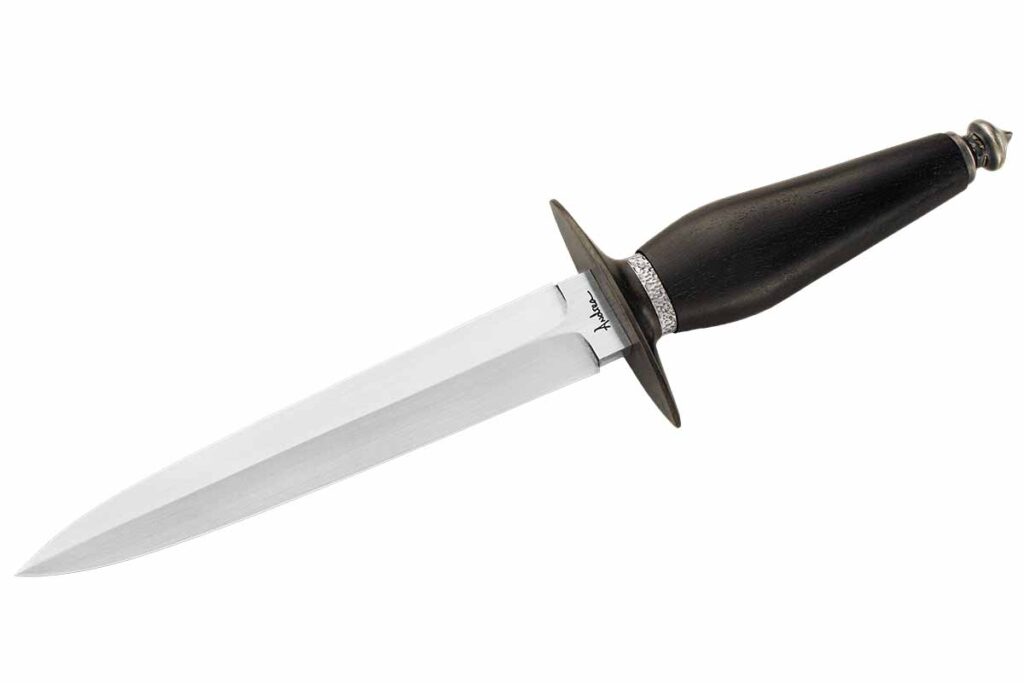
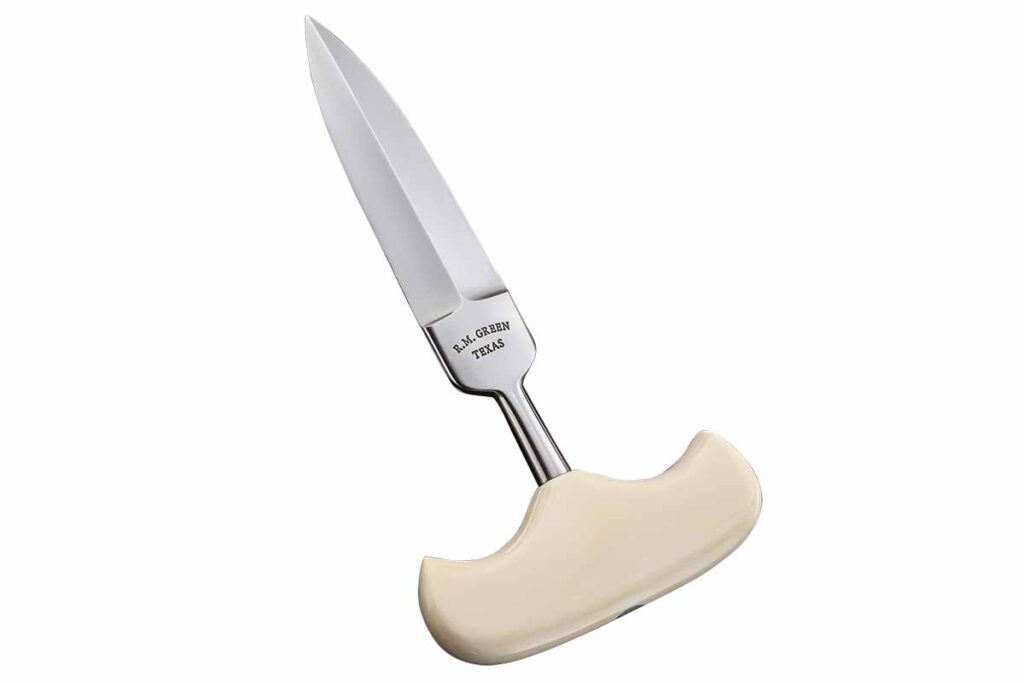
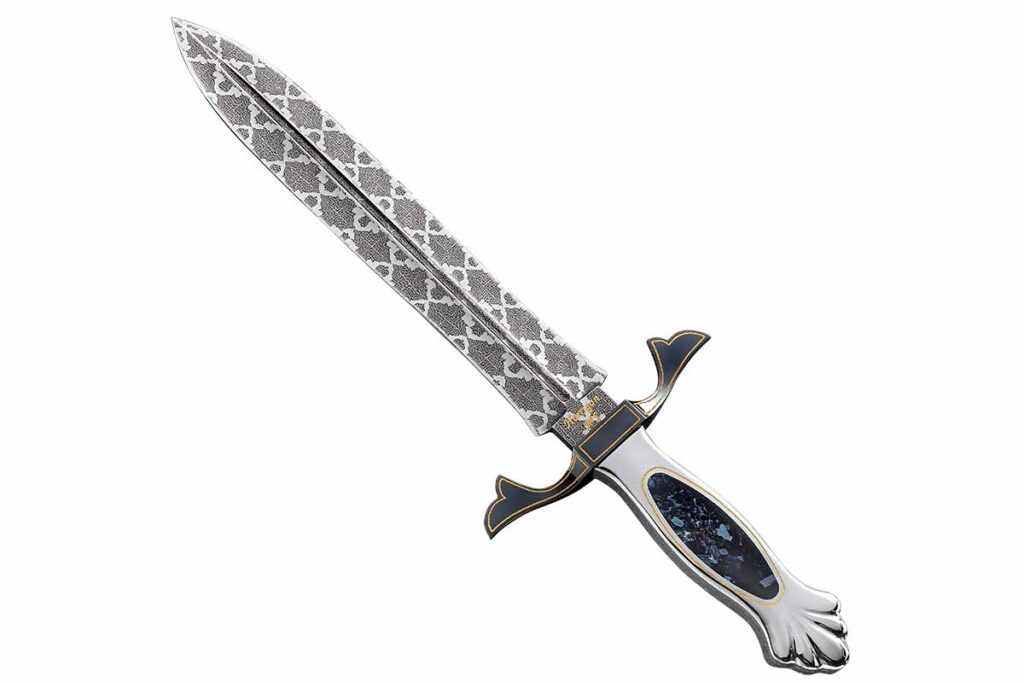
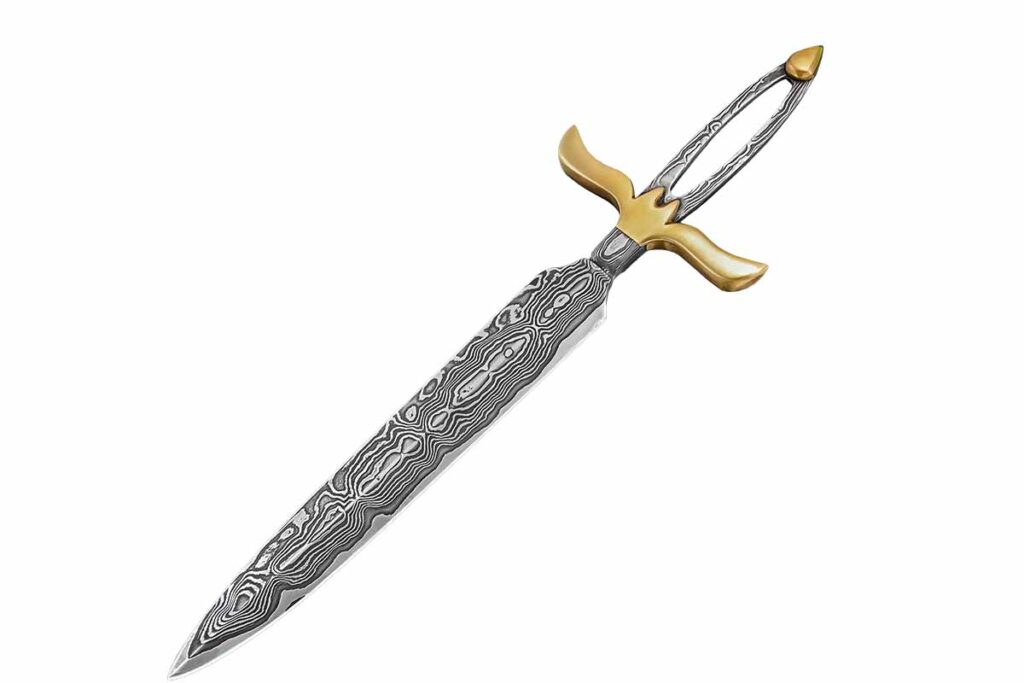
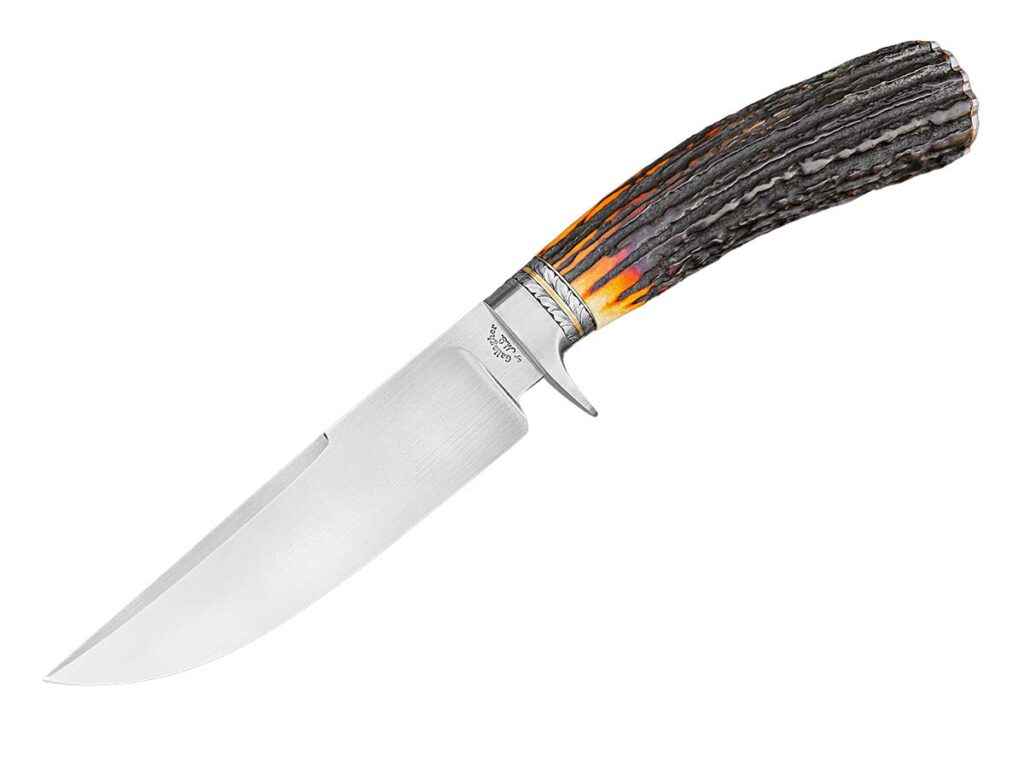
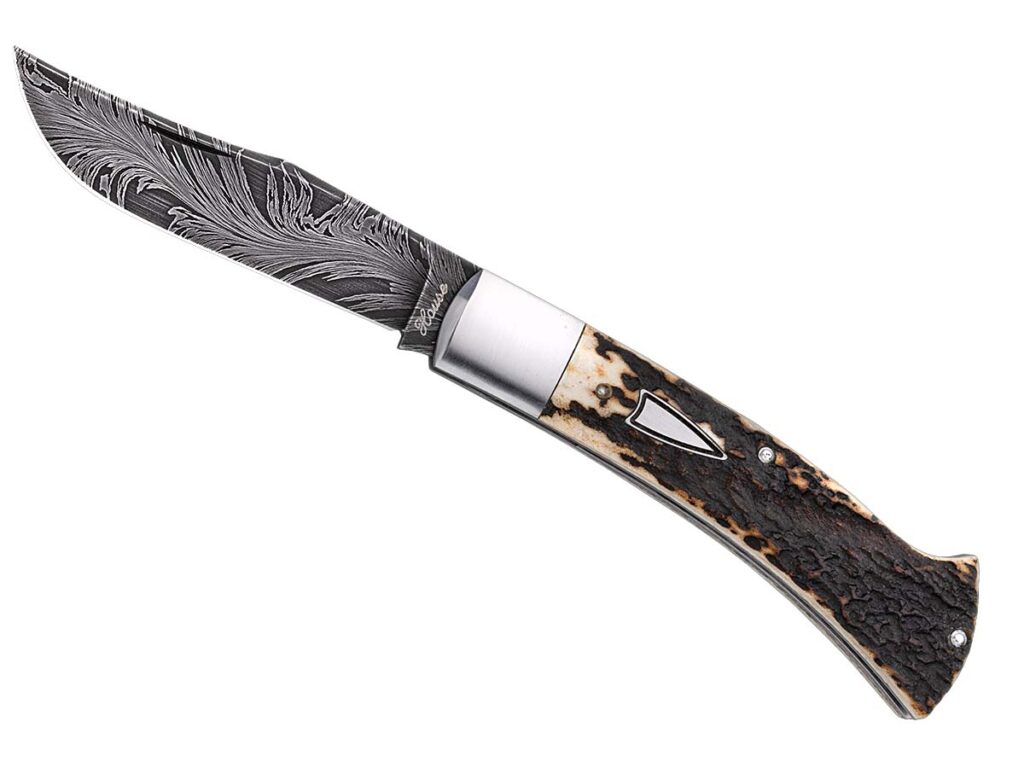
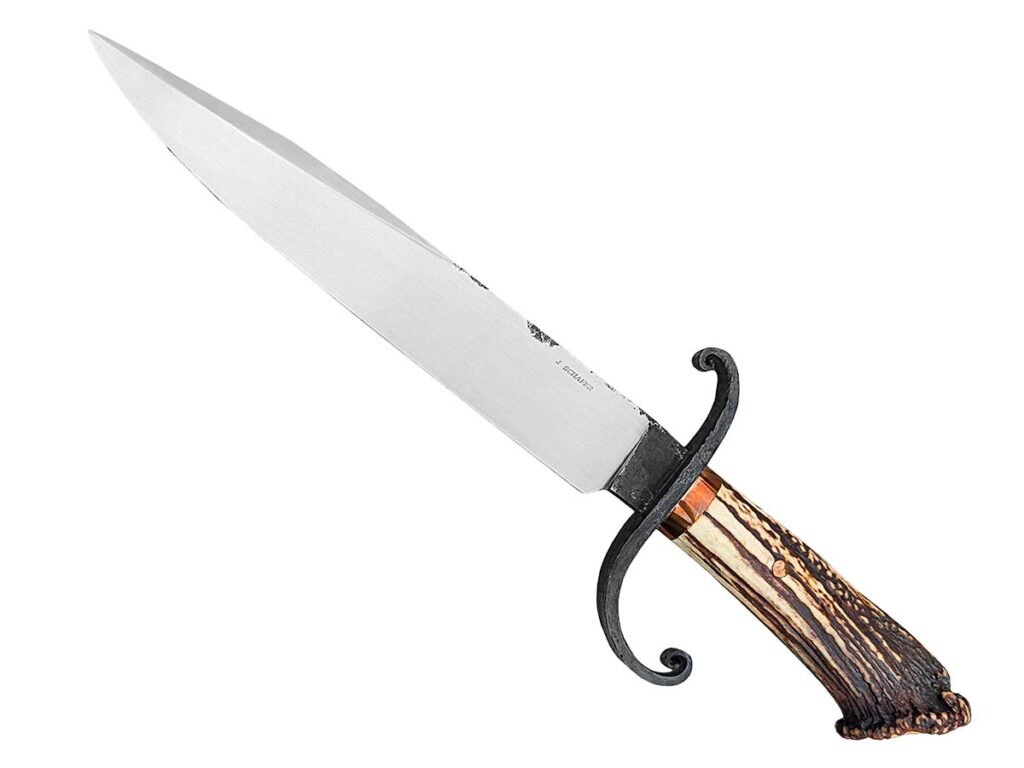
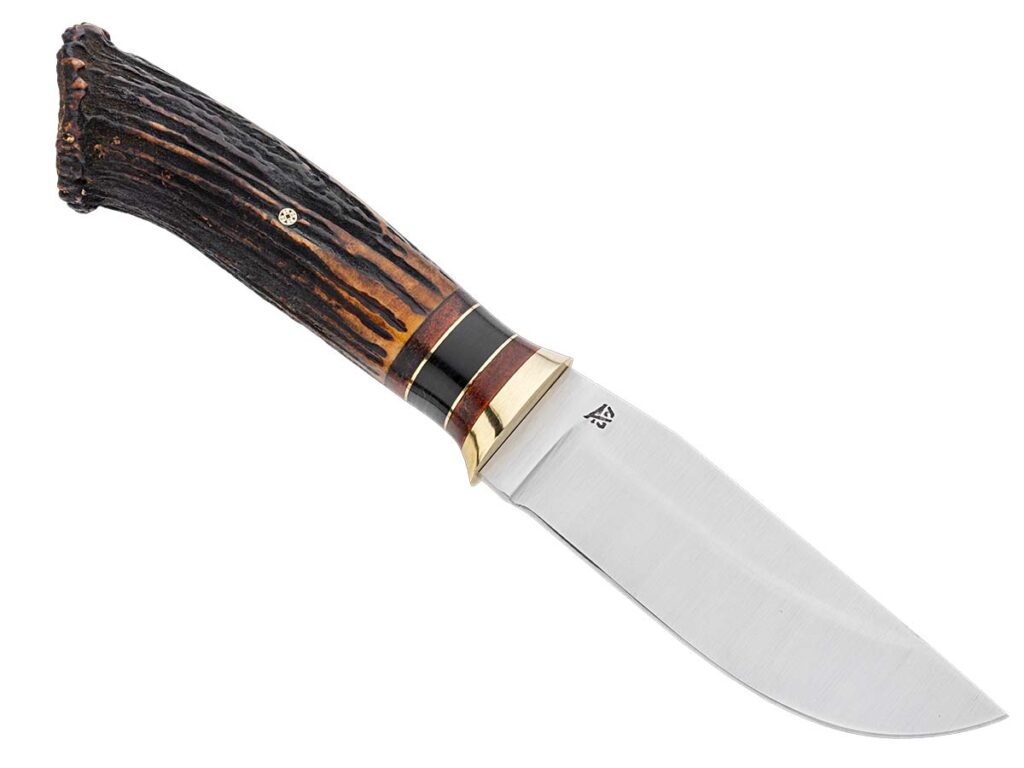
Knifemaking is the building of a knife, which includes the blade, handle and other accouterments. Blades are made by either removing metal from a steel blank via a grinder – known as stock removal – and the forging to shape of hot steel into a blade in the process known as bladesmithing. Other parts, including bolsters, guards, pommels, etc., are needed to complete the finished knife.

Featured Knives – – Knife Collecting – – Tactical Knives – – Survival Knives

50 Years Ago In BLADE: Buster Warenski

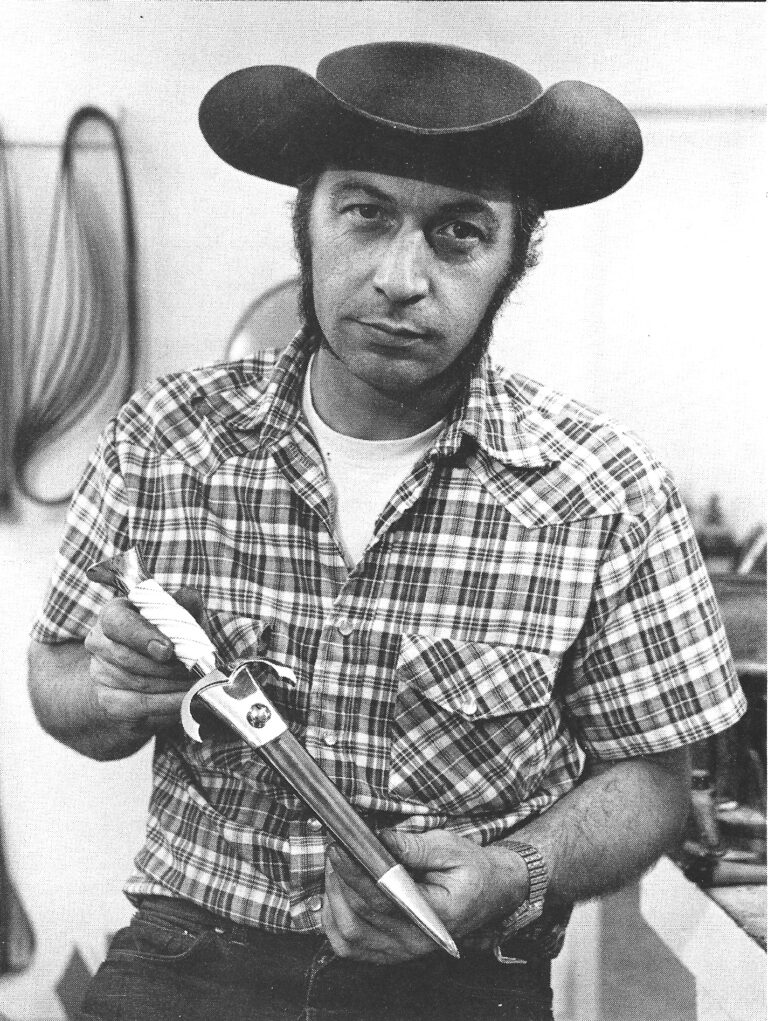
BLADE Magazine Cutlery Hall-of-Fame® member Buster Warenski was the subject of an extensive six-page profile a half century ago in the January/February 1976 issue of The American Blade. He was larger than life then and would get even larger in the years to come.

Unmistakable in the low-crowned Stetson and mutton-chop sideburns he wore back then, Buster was interviewed in his new Richfield, Utah, knife shop by then editor L.V. Baker. Richard Barney, co-author with Cutlery Hall-of-Famer Bob Loveless of the landmark How To Make Knives book, was along to take photos. The lead image of Buster holding one of his latest knives at the time is about as iconic as it gets.

Done about half a decade before Buster would go on to make his reproduction of the King Tut Dagger, the story and spread reflect how consequential Buster was to the handmade knife movement of the 1970s. It covers from his early influences, including Harvey Draper and Cutlery Hall-of-Famers Gil Hibben and Bo Randall, the first two knives Warenski ever sold, some invaluable magazine publicity from Cutlery Hall-of-Famer B. R. Hughes, Buster’s first Guild Show in 1973 and his position on the Guild Board of Directors at the time of the interview.

One of Buster’s best quotes: “I think the industry is going to get bigger and better, just as our customers and collectors are going to become better educated about the knives they buy and are going to demand a better product.”

Buster was right, of course—and would be among the vanguard of makers to supply the knives for which he predicted there would one day be such great demand.

More Knife History:

San-Mai: Steel Trinity

0

The Three-Layer Construction Of San-Mai Results In Sharp, Durable, Beautiful Blades

San-mai is an ancient blade construction technique that originated in Japan around 1300 A.D. Those who continue to use the technique harken back to those early days of craftsmanship and take pride in their finished product, a combination of the old and new that presents a dazzling aesthetic in three layers combining tensile strength and edge holding in a working knife blade.

“San-mai is a Japanese term describing a knife composed of three layers of steel that are forge welded together and ideally unite some different properties of the used steels within one knife,” explained Benjamin Kamon of Korneuberg, Austria. “Or, it serves another purpose as, for example, to ‘save up’ rare high-carbon steel used in the middle for the edge, which is what I believe started it originally.”

Jeremy Bartlett of Parkersburg, West Virginia, agrees. “Traditionally, two softer metal outer jackets and one high carbon core steel for the edge are used,” he said. “The main reason to use san-mai is so you have a soft steel jacket and a high-carbon core cutting edge. This will make the knife very durable with a great edge.”

The san-mai process is similar to the layering of damascus, a.k.a. pattern-welded steel, but retains a methodology all its own. In damascus, the layering and relayering of component steels typically result in numerous layers in the billet, while the object of damascus forging is often to create a pattern in the steel itself, along with the enhancement of blade performance.

“San-mai ends up taking much less time to make [than damascus],” added Noah Vachon of Mistissini, Quebec, Canada. “For one thing, you’re starting with fewer layers—three instead of 15 or 20 in my case. That’s fewer surfaces to grind clean when prepping the billet material. Also, unlike making pattern-welded steel, there’s no need to restack or further manipulate the billet. One thing that is a bit trickier is the core material has to be kept centered. I try to work a blade evenly from both sides when forging san-mai. With damascus, this is less of an issue.”

How To Make A Knife With The San-Mai Technique

Curt Zimmerman of Longview, Texas, uses two methods of san-mai construction. “I make it with a laminate billet and sandwich my core material between it, or I will use a canister. For the core I use 1084 because it is the most forgiving steel that I have been using as far as heat treating and workability. For the jacket or laminate billets I use 1080, 15N20 and pure nickel shim material because it is readily available and easy to work with. For the material in canister, anything from chainsaw chains to fishhooks, ball bearings, scrap damascus or other stuff lying around the shop will work. I like this because it’s great to experiment with.”

 The texture on the san-mai blade of Benjamin Kamon’s chef’s knife is what he calls denty. “The technical term would probably be tsuchime,” Benjamin noted. “The denty serves the purpose of benefiting food release as the texture in the blade will produce small air pockets between the blade and foods that like to stick.” (SharpByCoop image)

Zimmerman showcases his san-mai talent in a beautiful fixed-blade fighter with a ball-bearing san-mai blade and an ancient walrus ivory handle. With inch lengths of nine for the blade and 14.5 overall, the fighter flaunts contrast between light and dark. The san-mai blade’s distinctive pattern and the integrity of the cutting edge are well defined.

“The most visible sign of a well-made san-mai is the center core showing equally on both sides,” Zimmerman observed. “I’ve only been building knives for about a year, and it has become a true passion of mine.”

Vachon is familiar with 1084 and 1095 carbon steels for the core of his san-mai blades and intends to branch out to 26C3 and White Paper #1. “I try to choose materials that play well with each other,” he commented, “that is, that bond easily and move at comparable rates when worked.

“I’ve been using 410 stainless for the jacket. It stays bright when etched, which gives a nice visual contrast with the darker core, and the carbon migration that goes on where the layers meet can be very attractive. A stainless jacket with a carbon core is sort of the best of both worlds in terms of function. Antique wrought iron is also a fascinating and beautiful jacket material that tells a great story.”

When Noah completed a breathtaking chef’s knife with a 10.25-inch blade and overall length of 16.2 inches, he knew he had done something special—a tour de force in his cutlery journey. 

“This knife is the culmination of all the skills I’ve learned during my career as a maker, with a cherry on top,” he related, “everything I learned from cabinetmaking and lutherie*, as well as the years studying ergonomics as an industrial designer.” The knife combines the san-mai blade of antique wrought iron and 15N20 and 1095 core with a handle of stabilized redwood burl and denim. A copper Micarta® bolster completes the package.

“This knife was forged from my first- ever house-made billet of wrought-iron san-mai,” Vachon recalled. “The iron is from a piece I brought home from the New England School of Metalwork in Maine. The outer layer visible near the spine is the wrought iron. It’s full of impurities from the way it was manufactured over 100 years ago, and that gives it loads of character. The next layer that looks brighter than the rest is the 15N20. It has nickel in it and that prevents it from etching darkly. The layer at the edge is the core material. Having five layers would usually be referred to as go-mai I suppose, but it’s the same idea.”

Kamon identifies a departure from the time-honored in his san-mai construction. “The biggest difference to traditional san-mai is probably that my outside layers are made from stainless steel instead of mild steel, which is mostly used in traditional san-mai,” he noted. “The advantage of stainless steel is exactly that. It’s stainless but with that comes also the visual advantage of a strong contrast after etching the finished blade as the stainless steel stays silver, shining while the cutting layer gets very dark. The cutting layer is from a tungsten-alloyed high carbon steel called 1.2519 that is not stainless, and the reason for its etching quite strongly in an acid such as instant coffee or ferric chloride.”

Benjamin’s chef’s knife with a 10-inch blade of seven-layer stainless steel with the 1.2519 cutting edge presents a dazzling effect. At 15 inches overall, this issue’s cover knife features a handle of ringed gidgee wood and a bolster of dark gray titanium. 

“Behind the edge is the darkly etched cutting layer,” he related. “After that is the nickel layer that prevents carbon from diffusing into the outer jacket layers of the blade. After the nickel there is a thin layer of high-carbon manganese-alloyed steel. This steel only serves a visual purpose and produces a slightly cloudy and dark faded effect in the stainless steel jacket. Last but not least, there is the outer layer of stainless steel in a shiny silver color.

  “My years spent learning to forge and my countless failures have eventually led to this first—but not last—house-forged wrought iron san-mai blade,” noted maker Noah Vachon. “It’s long and tall, thick at the ricasso and thin at the tip, and feels just right. (Caleb Royer knife image)

“The texture on the blade is what I call denty, my brand for it. The technical term would probably be tsuchime. The denty serves the purpose of benefiting food release as the texture in the blade will produce small air pockets between the blade and foods that like to stick. It also makes a given blade lighter in weight compared to the same blade without texture.”

Delam Safeguards

One of the biggest challenges in constructing san-mai is the potential delamination of the steels—when the layers literally start separating from each other—during the forging process. Bartlett has devised techniques to help guard against that.

“When delamination happens, not only is the structure and durability of the blade compromised,” Jeremy reasoned, “but now you also have a void where contaminants can enter and cause the blade to rust from the inside out. The key to not having any delaminations in your san-mai billet is to take your time and make sure your mating surfaces are clean. Also, you need to make sure that you have no oxygen getting into your billet while heating in the forge. Check for small pin holes in your MIG welds all around the billet. I’ve tried using flux core to weld around the billet, but now I use only MIG wire with argon/CO2 gas. The last thing is to make sure that you don’t try and draw the billet out too much at one time. The jacket [sides] material and the core material will want to move at different rates because of the different makeup of the steels.”

Bartlett’s 15.25-inch fighter with a 9.25-inch blade of 416 stainless clad around a 1095 core, and a handle of curly koa wood with black G-10 spacer presents a highly contrasted look.

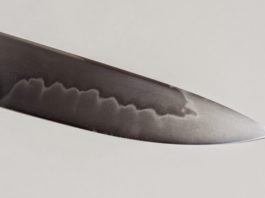
“You can see a total of three distinct areas on the blade,” he said. “The black area down to the edge is the core steel. Moving toward the spine, the next area will be the carbon migration area. This is where during the forging process some carbon leaves the core steel and migrates to the low carbon stainless jacket. This leaves a distinct crystal-like line between the two layers. The carbon leaving the core steel only affects the area where it meets with the stainless. No carbon is leaving the edge, where you need all of it for a good blade. The third area of the blade is the stainless jacket material. This area will be shiny and mostly free of any effect from the etching process. You will sometimes see, as in this case, a ghost hamon that will follow the peaks and valleys of the san-mai pattern in the blade.”

What Does San-Mai Look Like?

The look of high quality san-mai is readily apparent. The finest san-mai exhibits core steel that is centered in the billet along with the presence of the carbon migration line in the blade. In poorly made san-mai, the jacket steel approaches the edge of the blade too closely. After sharpening a few times, the soft jacket steel may run directly into the cutting edge, rendering the blade less than useful.

The watchful eye, the practiced hand and the awareness of control in each stage of construction will bring san-mai to life and perpetuate this centuries-old artistry of form and function beautifully.

*Lutherie is the construction and repair of stringed instruments that have a neck and a sound box.

Henning Wilkinson: Magician Of South Africa Knifemaking

Acclaimed, Talented Knifemaker Henning Wilkinson Is Making Beautiful Knives And Living A Life Worth Emulating.

I’ve been in the blade-making business right at 50 years. I’ve met and befriended hundreds of bladesmiths and knifemakers. I have a long history of designing and making knives and other edged tools in carbon steel and mosaic damascus. I have pioneered many of the modern techniques used in the production of these blades. The techniques are now in their third generation.

The newer smiths and makers — especially in the damascus end of the business — do things with steel and design that border on magical. Some of these modern magicians have been in the business only a few years. I feel very privileged to have met some of them and spent shop time with a few more. One is Henning Wilkinson.

I started following his social media posts a few years ago. Even then, the level of his work was nothing short of astounding. His blade designs and mosaic patterning are all well thought out and extraordinary. He and I began corresponding on social media and developed a friendship through our mutual interest in damascus blades. 

His blade designs and fitting of all the design parts is in my opinion some of the best on the planet. As a result, I wanted to see his methods firsthand. Meanwhile, Henning also had great interest in my methods of forging and pattern development. So began the plan to spend time in the shop.

We agreed I should go to South Africa and teach a couple of classes. The trip coincided with the Knifemakers Guild of Southern Africa Show. It was great fun meeting new friends and visiting with many old ones half a world away. The classes were a great success and I learned much, including that braai* has no equal and biltong+ is better than jerky. (I had to throw that in for my South African friends).

Henning is a deeply religious man who lives his faith as best he can in all he does. His knifemaking skills are a showcase of that dedication. He is an advanced martial artist and very skilled with firearms. Some of his techniques and skills come from a trained gunsmith background, and are a lot of what drove me to fly halfway around the world to see those handwork skills with my own eyes. I was not disappointed. I asked Henning to send me his biography to help with this story.

Henning Wilkinson: In His Own Words

wilkinson sword
Damascus, ivory and gold engraving help highlight Henning’s dagger with a Renaissance flavor.

I was born Jan. 13, 1978, in the little town of Brakpan, South Africa. My dad was a blue-collar worker who started his working life at 16 doing an apprenticeship as a tool-and-die maker. He was always busy on weekends doing all sorts of jobs, from building concrete mixers to doing electrical work — pretty much anything you could think of. He now owns his own wood furnisher business. 

Growing up, using machines and tools for whatever reason was never a problem for me. My father believed that to work with your hands from an early age would give you a head start and an advantage in life.

My mother was always busy with something to generate extra cash. I remember from a very early age her making clothing as a seamstress, from wedding dresses to underwear. Even my wife had the privilege of having her wedding dress made by her mother-in-law. My mom was always carting all the kids around from one sports event to another. Both my parents supported us however they could, and still do.

My first recollection of Christ was growing up in a home where He was loved and honored. I can remember as a young child walking into my parents’ room in the early hours of the morning and finding them both on their knees praying. This has remained my foundation for every decision and my way of living.

I joined the family business in woodworking where I learned a great deal in all different fields, from electrical to mechanical, as we did all our own repairs and maintenance on the machines in the factory. I started my apprenticeship as a gunsmith in 1998. I learned a lot about the fine finishing and fittings of different materials to one another.

I started making knives in 2000 while doing my gunsmithing apprenticeship. I fell in love with a knife called the Commander made by Ernest Emerson, which at that stage I couldn’t afford (it would have been three months’ salary for me back then). Having a father who taught me whatever you cannot afford you can make yourself, I jumped to the task not knowing what I was getting myself into.

During the process I met a good friend, Carel Smith, who guided and still guides me in everything knifemaking related. Carel invited me to the Knifemakers Guild of Southern Africa Show and my eyes were opened to the possibility of real knifemaking. 

After I built a folder, Carel invited me to forge a blade and make some damascus. I was immediately hooked, captivated by the process of forging damascus, spending the first couple of years building and perfecting machines to make my own. In 2006 I was admitted into the Knifemakers Guild of Southern Africa, being only the second person to forge blades to be so honored.

Right from the start I attempted to make a better knife than the one before. I would not settle for anything other than my absolute best effort on every piece, from fit and finish to heat treatment and into the smallest detail, always trying to push my limit.

Then everything changed.

In 2012 I walked away from knifemaking as I believed I could not provide for my family the way the world told me to. I took on a job in the oil and petroleum trade as an underground utility surveyor. I thought I had it made. However, after a couple of years I was in a deeper hole than when I started—physically, emotionally and pretty much every way thinkable.

God slowly decided to drag me back into what I was made to do.

In late 2018 I decided to carry on as a full-time knifemaker. It was a leap of faith and the most rewarding decision of my life. Being able to do what you love can only be described as a massive blessing.

I am a Christian and I believe that God forms every piece through my hands, which is why I have a 9k-gold cross as a maker’s mark. My aim is to craft each piece in praise to God, and to make it so it will set itself apart and stand out as the best knife in any collection.

Picture In Steel

Wilkinson forging
Henning (left) and Schwarzer (second from left) hammer hot steel while interested observers observe in the two friends’ forging class in South Africa.

On June 15, 2018, I did a Facebook video on how to grind a false edge. I received a comment from a gentleman whose work changed the way I looked at knifemaking. I used to think that because I could make damascus and drill a couple of holes, my knives were good. However, a “picture painted in steel” of a bird hunter with his rifle and his dog# made me realize that this could be far more—it could be an art that would leave people in awe of what can be done. The gentleman is Steve Schwarzer, whom I am now lucky enough to have as a close friend.

In 2019 I was able to exhibit at the BLADE Show, and was immediately accepted into the family of worldwide knifemakers. This has left me inspired to inspire those whom I see as my peers.

Shortly after BLADE Show 2019, Steve visited me in South Africa. We had the privilege of spending time together and learning from each other. It was a massive honor to stand shoulder-to-shoulder with him during a damascus course we hosted together.

During the visit I learned the definition of what a true master is. It is not a stamp on a knife or an award certificate. It is someone who never stops in striving to learn every intricacy of his or her art, perfecting every part no matter how big or small it might be, staying humble in the process and never assuming his or her own greatness. 

Among a thousand lessons learned during Steve’s visit, for me this was the most important. The second lesson is that we will only have this journey called life once, and the decisions we make will be the determining outcome of that journey. I have never laughed as hard in my life during Steve’s two-week visit. His friendship and guidance are an invaluable blessing to me. It is an honor to call him my friend.

To me, knifemaking is a way of life, constantly trying to perfect and add new aspects to the knives I make. Through the fashioning of these pieces I continue to learn more about myself as God wants me to be. Knifemaking has given me the freedom to be a father to my two children and a husband to my four wives (my loving wife and the best three dogs ever).

One of the memories I will always cherish is one of my son as a small child standing on a tin in front of a lathe machining some steel. He has recently started making knives and this next journey together as father and son working in the shop together is another great blessing for me.

I specialize in art knives and high-end exclusive pieces, from folding knives to swords, using only the best end materials. Bringing 20 years of knifemaking experience and a lot of passion to each piece, I am proud to be a 100 % sole authorship maker. I am a member of the Knifemakers Guild of Southern Africa and the American Bladesmith Society. I hope you can see the passion in my work and will enjoy every moment you spend with it.

*Braai is South African barbecue

+Biltong is a form of dried, cured meat that originated in Southern African countries.

#The “picture painted in steel” was Steve Schwarzer’s groundbreaking scene of hunter with rifle and dog done in mosaic damascus in the early 1990s that set the world of knives on its ear.

Read More

Eastern European Knife Makers Meeting Custom Market’s Value Demands

An overinflated market for forged blades at home caused the author to look elsewhere. Oftentimes this has been to Eastern European Knife Makers.

2024 Knives annual
This article originally appeared in the 2024 KNIVES Annual.

Since 2017, forged blades have taken the lead. Niche markets like chef’s knives, slip-joint folders, and tactical fixed blades retain enough interest to be powerful sub-markets. Price points and availability in primary and secondary markets lead to the demise of the front-runners. Popular market sectors inspire experienced and new makers to build that type of knife.

Two problems arise from this:

  • Makers will rapidly join a market sector, but collectors are slower to follow.
  • Pricing is primarily based on what other makers are getting for their work and not, for example, the quality of a maker’s knives, name recognition, status among the competition, etc.

Higher prices from less qualified knifemakers encourage the well-known makers to raise their prices, and the cycle continues until the knives become unaffordable. Currently, this is what is happening today in the forged blade market. I saw this trend emerging in 2020, and I started emphasizing makers who offer value for the money with their work.

Overpriced knives led me to increase my research for custom knives with good value in the United States and worldwide. Social media was a great help in this area. As I researched, I found myself saving photos of knives I was interested in. When I returned to re-look at the pictures I had saved, I found many of these makers were from Eastern Europe.

Csizmar Szilard tomahawk
In the spike tomahawk realm is this Csizmar Szilard model with a forged 5160 high-carbon steel head, a hickory haft, and a custom leather sheath. Szilard is a well-known maker in Romania. (Csizmar Szilard photo)

Much like in the United States, prices ranged from reasonable to what seemed extreme. I contacted well over a hundred makers asking questions about materials, construction techniques, pricing, and sheaths, and requested several additional photos. While there are other makers I plan to contact soon, the following are the seven makers I have already started working with.

Meet The Eastern European Makers

Maksim Tjulpin

Maksim Tjulpin has been making knives for 11 years in his home country of Latvia. His interest comes from the diversity of knives that can be made as well as the array of materials. Maksim builds knives utilizing both the stock-removal and forging methods of blade making. He favors forged blades as each has its own unique character.

He primarily uses stabilized wood for his handles, often combined with mammoth ivory spacers. I have found his craftsmanship to be impeccable. The knives feature excellent fit and finish as well as ideal balance and handle ergonomics.

Petr And Peter Dohnal

Petr Dohnal and his son, Peter, have been making knives for 21 years in their native country of the Czech Republic. Working as a computer graphic designer, Petr realized he wanted to build something with his hands. So, he chose to make custom knives. As with many makers, his favorite part is forging the blades, usually damascus. In addition to making his own steel, he uses Elmax, Vanadis 8, and M390, as well as other alloys. He understands that the knife’s intended purpose will often determine the most suitable steel. His handle materials of choice are stabilized wood and antler. I find Petr’s knives a joy to hold in my hand, being sleek, well-made, and exhibiting superior balance and handle ergonomics.

Eastern European Maker: Michal Komorovsky fighter
The sleek, stealthy, and sexy fighter by Eastern European knife maker Michal Komorovsky exhibits a 7.75-inch, black DLC-coated Elmax blade, a black canvas Micarta handle, and a leather sheath. The balance of the knife makes it deceptively quick, and a fuller reduces the weight while increasing blade strength. (Michal Komorovsky photo)

Michal Komorovsky

Michal Komorovsky started making knives, in 2011, in his home country, Slovakia, or officially, the Slovak Republic—doing so primarily because he wanted to try something different, and he never looked back. He favors Sleipner steel, which is a new-generation alloy like D-2, as well as M390. When time allows, he forges damascus for his knives, including a wide variety of fixed blades. Michal builds an array of knives, from hunting and tactical models to bowies and even an occasional art dagger.

Many of his tactical knives feature black DLC-coated blades, but he also offers sandblasted and bead-blasted steel, as well as satin- and mirror-polished finishes. Michal uses various handle materials, with desert ironwood being his favorite. I’ve taken a liking to his fighters that exhibit excellent fit and finish, have an outstanding balance, and feel great in the hand.

The Tactical Realm

Piotr Gosciniak

Piotr Gosciniak has been fashioning custom knives in his home country of Poland since 2017. Having a keen interest in the military, Piotr decided to focus his talent on making tactical knives. He occasionally uses high-carbon steel such as 80CrV, but most of his knives are built using quality stainless steels such as Elmax or Sleipner.

Piotr prefers synthetic handle materials like Micarta, G-10, and carbon fiber. He also offers Cerakote coating for his knives. As a former infantry officer, I appreciate the crisp, clean lines of Piotr’s knives. His designs are purpose-driven; these are tools meant to be used. The blade fullers, textured handle material, and thumb serrations add to each knife’s capability.

Petr Dohnal forged a damascus camp knife
Petr Dohnal forged a damascus camp knife, including the guard, adding a stabilized Karelian birch handle and fossil walrus ivory spacer. It comes with a custom leather sheath. (Petr Dohnal photo)

Jacek Hnatow

Also from Poland, Jacek Hnatow has been building knives for eight years. He started as a collector, then decided he didn’t want to buy knives anymore; he wanted to make them. As an avid outdoorsman, it should come as no surprise that Jacek’s specialties are survival and bushcraft blades. He prefers working with Bohler N690 and Elmax, as well as high-carbon alloys and san mai steel. Jacek’s handle material offerings include synthetics such as G-10 and Micarta, as well as stabilized wood at the customer’s request. His knives, many of which can be huge, are well-balanced with great handle ergonomics. His bushcraft blades are a perfect size to carry in the field, and all of Jacek’s knives are well thought out for the tasks at hand.

Csizmar Szilard

Romanian Csizmar Szilard has been a full-time knifemaker since 2007. When he was younger, he enjoyed video games and one of them allowed players to forge their weapons virtually. So, Csizmar decided to make that a reality. Forging is his favorite part of fashioning knives, hatchets, and axes. He prefers 5160 high-carbon steel for its simplicity and ease of forging. Handle materials are all-natural, with wood and antler being his favorites. Csizmar’s work is clean and balanced, precisely what you would expect from a maker who builds tools that are meant to be used.

Szymek Szlagor

A native of Poland, Szymek Szlagor has been making knives since 2017. Building a knife for himself led to making them for friends and eventually becoming a full-time knifemaker. He enjoys forging and machining carbon steel and damascus. He gravitates toward 5160 high-carbon steel and combines K720 and 15N20 to make damascus. His handle material preferences are natural materials such as stabilized wood and antlers. For his everyday carry (EDC) knives, he prefers to use Micarta. Szymek feels making knives is a beautiful job that involves taking a piece of steel, giving it shape, and improving on it until the blade becomes a tool that will be used and passed down from generation to generation. Having handled his work, he has accomplished his goal.

Working With Eastern European Makers

Language: There are several languages throughout Europe. While it is true that many Europeans speak English, it is equally noteworthy that they do not read and write the universal language well. This is important to know as, more than likely, collectors will be contacting the makers via email or social media. When writing, I often rely on an online translator for help. Understand that such online translating programs could be better. I always let the maker know upfront I am using a translator.

Eastern European Maker: Maksim Tjulpin’s camp knife
Eastern European knife maker Maksim Tjulpin’s camp knife features a 7.1-inch san mai damascus blade, a stainless guard, a black G-10 spacer, and a mammoth tooth and desert ironwood handle. It comes with a custom leather sheath. (Maksim Tjulpin photo)

When emailing or writing to makers, try not to use slang or acronyms, as these usually translate into something that might not have the intended meaning. Remember to be patient with this process, as both collector and maker must understand exactly what each is expecting.

Payments: The preferred method for knife transactions is PayPal. As with most makers worldwide, many are not set up to take credit cards. Those who have traveled to Europe know there are additional fees for using U.S. bank credit cards. Although wire transfers can be made, it is best to check with your bank to find out what the fee for an international wire transfer will be.

Lastly, Western Union is an option that usually comes with an $8 fee. Some buyers might find the process of paying upfront and then having to wait up to a month difficult. However, I have been buying knives regularly from Eastern Europe for the last three years and have never had a package go missing.

Shipping: The maker will generally ship the knife through his or her country’s postal service. Most countries work with the U.S. Postal Service, and once a package is accepted, you can track it coming from Europe. The delivery time frame will average between two and four weeks. While FedEx can be an option, the cost associated will generally eliminate this service from the ideal options.

Szymek Szlagor camp knife
The 13-inch camp knife from Szymek Szlagor showcases a forged Bohler K720 blade with hamon (temper line), a stainless guard and sambar stag handle scales. (Robertson’s Custom Cutlery photo)

Measurements: Europe uses the metric system. As foreign as the metric system is to you, the same is true for the imperial system the United States uses to makers in Europe. Fortunately, there are conversion programs on the internet. In conversing with European makers, please pay attention and differentiate between when they use centimeters (cm) or millimeters (mm), as 1 centimeter equals 10 millimeters, and when it comes to a knife, that could be a huge difference.

Forged In Fire Influence

Most of the makers in this article offer forged blades as part of the repertoire. However, Piotr Gosciniak is the exception, as he specializes in stainless and some high-carbon steel tactical knives. The U.S. market will see a resurgence of this category of knives in 2023-’24. For now, forged blades are the most significant market sector in the United States, partly due to increased interest in forging knives due to the TV show “Forged in Fire.” The interest created by this show was partly responsible for 38 makers earning their American Bladesmith Society (ABS) journeyman smith ratings at the 2022 BLADE Show.

Talking with several ABS master smiths, I was told they saw an increase in the number of makers taking their journeyman smith performance test before the 2023 BLADE Show as well. As a result, I anticipate the final numbers to show a record number of candidates testing for their journeyman smith stamps in 2023. With an increase in knife shows across the United States, hammer-ins, and the accessibility of in-person training and videos on social media, the number of forged blade makers will continue to increase over the next several years.

As these new makers enter the custom knife market, their pricing will be based more on what their peers charge for knives as opposed to a position in the market that their work has earned. In the short term, collectors will be the ones subsidizing too many who are bound to have short careers as custom knifemakers. Long term, the aftermarket will sort out the winners and losers. Therefore, it is incumbent on buyers to understand value pricing and that they should not buy a custom knife that will lose value.

Eastern European Maker: Jacek Hnatow tactical fixed blade
Eastern European knife maker Jacek Hnatow offers the “Wicher” tactical fixed blade in Bohler N690 stainless steel, a black G-10 handle and a custom Kydex sheath. Of full-tang construction, the contoured handle provides excellent grip even when hands are wet. (Robertson’s Custom Cutlery photo)

Over the last 37 years, I have bought and sold knives on every continent except Antarctica. Today, it is easy to find exceptional makers in Eastern Europe and worldwide. I understand that ordering from makers outside the United States can be a leap of faith.

My hints regarding purchasing knives from Eastern Europe should help you with your concerns. The styles, materials, and craftsmanship of makers worldwide have never been better. This is why I suggest you give the makers in this article and others around the world consideration to become part of your collection.

Editor’s Note: This article is from the 2024 KNIVES annual, available at ShopBlade.com

More Custom Knives:

What Makes A Good Hamon?

Know the visual tells of whether a hamon is done properly or not.

For centuries, the hamon has served as a mark of excellence in the forging of blades.

Conspicuous by its picturesque line generally dissecting the midsection of a differentially heat-treated blade, it demonstrates a skill set highly valued among top bladesmiths and swordsmiths. Moreover, the difference between a good hamon and one that doesn’t hit the mark can help the maker, owner and user in understanding the prospective performance of the blade itself.

Basically, think of a hamon as the equator between the hard and softer or more malleable areas of the blade. Everything above the hamon is softer, which translates as making the back of the blade malleable and thus tougher. In other words, the blade will bend but not break. Meanwhile, everything below the hamon is harder, which is better for holding an edge.

Francesco Piccinin and Denis Mura provide hamon on their bowie collaboration.
Emiliano Carrillo indicated a hamon should be continuous, with no areas falling off the edge of the blade. Francesco Piccinin and Denis Mura provide such a hamon on their bowie collaboration. Blade material is C130 carbon steel, according to Eurotechni (eurotechni.com) a grade that makes it possible to obtain “pretty hamons.” Overall length: 13 inches. (Jocelyn Frasier image)

“There are several things that make the edge pattern successful,” explained bladesmith Emiliano Carrillo of Sun and Stars Forge. “The first two are practical.

The hamon should be continuous; there should be no areas of it that fall off the edge of the blade. It should be high enough that the knife can support a lifetime of sharpening and removal of edge material without biting into soft material. For kitchen knives this can be somewhat low to the edge, as the geometry will have to be adjusted if a large amount of edge material is removed.

“The rest are my own opinion and are purely subjective. I’m a bladesmith who works in the historical tradition and therefore my work draws on traditional Japanese metalwork when it comes to hamon aesthetic and technique.

“I think a good hamon should be active and rippling, showcasing your imagination and artistic vision,” Emiliano continued. “It should have good undulations and look like it’s been drawn on the blade with an ink brush. There should be ashi [legs], which are areas of hardening within the hamon that drip down towards the edge. Sometimes a repeating motif, like sanbonsugi [three cedars] or choji [clove] can be utilized to guide the way you want to design the hamon.”

ABS master smith Mike Quesenberry agrees that there are hallmarks to a good hamon that are readily discernable.

“First and foremost, a good hamon will not come down to the cutting edge,” he remarked. “That is a no-no because it is bringing down soft steel where you want hard steel. I want a bigger transition area, and you can credit the Japanese for starting it. As the technology evolved over hundreds of years, they found bits and pieces coming down from the hamon, giving strength to the edge.”

ABS master smith Brion Tomberlin adds that the proper hamon is visible to the eye even when the maker is finishing the grinding process at 120 grit.

“The Japanese have many terms for effects you see and want to see in a nice hamon,” he commented. “And you can spend years studying these. For our purposes, you want it to be very visible and make a very visible demarcation from the hardened area to the softer area. Additional effects such as ashi, which are wispy cloud-like formations hanging down from the main line, are nice and show control.”

Steel Selection

Brion Tomberlin stated that low-alloy carbon steels such as W2, W1, 1095 and 1075 yield the greatest success in producing good hamons.
Brion Tomberlin stated that low-alloy carbon steels such as W2, W1, 1095 and 1075 yield the greatest success in producing good hamons. ABS apprentice smith Jesse Hu forged the 8.5-inch blade of his classic integral chef’s knife from W1. Overall length: 14 inches. (Jocelyn Frasier image)

Success or frustration in the hamon process begins with the proper steel, and BLADE Magazine Cutlery Hall-of-Fame® member/ABS master smith Steve Schwarzer emphasizes that point.

“Steel selection is critical,” he observed. “You want a simple carbon steel with .70 to 1 percent carbon, and guys are doing ‘gee whiz’ work using a formula with W2 steel, which is a very simple steel. The time-temperature-transformation curve is important, and alloy widens the curve. Too much alloy in the steel won’t transform fast enough to achieve the hamon pattern you want.”

Tomberlin added that low-alloy carbon steels yield the greatest success, and these include W2, W1, 1095 and 1075.

“The maker should look at the certifications for the steel to see the composition,” he recommended. “You want a steel low in manganese, as manganese promotes deep hardening instead of shallow hardening, which we want. We want the transformation of austenite to martensite to be fast upon quenching in order to achieve a hamon, and shallow hardening steels are what is needed. Can you achieve hamons with other steels? Yes, in some cases where the manganese is lower, but they usually do not have the activity or effects you would like to see. My go-to steel is W2.”

Creating A Hamon

Eliott Robinson provides ashi in ample supply on the 5-inch blade of his fighter.
Ashi, which Brion Tomberlin describes as “wispy cloud-like formations hanging down from the main line [of the hamon], are nice and show control.” Eliott Robinson provides ashi in ample supply on the 5-inch blade of his fighter. Blade material: U10A carbon steel. (SharpByCoop image)

After the heat treating and hardening process develops the desired hamon, bringing out the robust visual aesthetic is a process in itself that, according to Carrillo, varies from bladesmith to bladesmith.

“All makers have different ways of polishing out their hamon, and these methods evolve over time or to suit a particular project or aesthetic need,” he observed. “My technique has evolved over time but works for 90 percent of the work I do, and is a good way to practice bringing out all the activity you want to see in the steel.”

For his technique, Carrillo grinds the blade to 220 grit; polishes it to 800 grit using a hard backer for the sandpaper; cleans the blade completely using acetone, dish soap or rottenstone while making sure water does not bead up on it; etches it in ferric chloride; removes oxides completely using fine grit sandpaper; assembles; and then oils.

Quesenberry follows a similar protocol.

“I have a blade in front of me and I’m going to a hammer-in this weekend. I will take it up to 800-grit finish and dip it in ferric chloride,” he said, “and then I’ll wait until it turns black depending on the strength of the ferric. Once it’s black I neutralize it with Windex and then pull with a gray 3M polishing cloth in nice, even and straight lines, removing the black to get the white for the ashi to pop.”

Faux Hamons

Emiliano Carrillo outfitted the blade of his K-Tip Gyuto with a clayed hamon.
Emiliano Carrillo outfitted the blade of his K-Tip Gyuto with a clayed hamon. The handle is bird’s-eye maple, as is the saya (sheath), which includes a black walnut liner and a bamboo menugi (ornament) to keep the blade in place. (SharpByCoop image)

To dispel one common question, bladesmiths confirm that all knives do not have hamons. As Carrillo says, “There may be areas of decarb on the blade that may be mistaken for a hamon, but it is only surface level.”

At the same time, some factory-produced blades may have a fake hamon etched onto the blade to make the piece more attractive to the potential buyer.

“If a hamon has been etched on, a perfectly clean line is generally seen,” he added. “It doesn’t have any of the cloudiness or desired fuzziness seen in the line on a real hamon. The fake ones are generally very white and too regular to be a metallurgical effect.”

Kyle Hanson demonstrates a hamon here on his no-nonsense hunting knife.
The blades even of smaller knives such as folders and hunters provide a solid canvas for a hamon, as Kyle Hanson demonstrates here on his no-nonsense hunting knife. (SharpByCoop image)

Tomberlin has seen a false hamon from time to time and says the technique to achieve one is quite different from the genuine article.

“This is usually done by selective etching or different polishing techniques,” he advised. “It is hard to explain how to tell, but if you see one versus a true hamon it stands out immediately, usually as too regular with no effects at all. Also, there is usually a very sharp demarcation line from highly polished to etched, and this is especially prevalent in some pieces from overseas.”

What Makes A Good And Bad Hamon

Separating the good hamon from the bad hamon may require practice. In some cases the differences are obvious but in others, they are more subtle. The professionals have seen it all.

“The biggest issues of a poorly done hamon are things like fading away in some areas or, yes, going off the edge of the blade,” Tomberlin related. “If the hamon fades off the edge that means your edge is not hard in that area, which is not good. The main causes of this are clay coating being too thick and improper heating of the blade when bringing it up to quench temperature. The main issue I have seen is the hamon going off the edge. As long as you have the edge hard you have a hamon.

Will Newham achieved a hamon on his Best Chef’s Knife winner from the 2023 Sydney Knife Show.
According to Emiliano Carrillo, a hamon should be high enough that the knife can support a lifetime of sharpening and removal of edge material without biting into the soft material above it. Will Newham achieved such a hamon on his Best Chef’s Knife winner from the 2023 Sydney Knife Show. (SharpByCoop image)

“Poorly done polishing will show up also. A well done hamon takes time both before and after quenching. Trying to cut corners on polishing will definitely show. As for a lack of activity in the hamon, such as being straight instead of having hills and valleys, someone told me a number of years ago that one of the hardest things to do well is a simple straight hamon called a suguha.”

Schwarzer sees crispness in the boundaries of a good hamon and acknowledges that heat treating and polishing techniques are critical in bringing that out.

“In the early ABS [American Bladesmith Society] we used an edge quench to get a hamon, and that is the mainstay of the ABS today,” he said. “In testing now you rarely see a hamon because you don’t see as much polishing as necessary to get you through the test. You can’t bring it out with a buffer. It’s almost like a metallurgical polish so you can see the grain in the steel.”

The well done hamon represents an art form in itself, and Quesenberry is impressed with the current wave of artistic impression.

ABS apprentice smith Aidan Garrity outfits the hamon of the 10.5-inch blade of his V-44 repro with hints of ashi
ABS apprentice smith Aidan Garrity outfits the hamon of the 10.5-inch blade of his V-44 repro with hints of ashi. Blade material: W2 tool steel. Handle: carbon fiber. Overall length: 15.5 inches. (SharpByCoop image)

“People have ‘Americanized’ it I guess you could say, and I can do a decent hamon. But some guys out there have absolutely nailed it,” he smiled. “They can paint pictures with theirs using the clay and the heat treating process. You have to be careful not to over-refine the steel grain structure, especially in W2 shallow hardening steel, or you won’t get good results. There is a dance to it.”

The perfection of the hamon process, start to finish, steel and clay, temperature to quench and harden, has fascinated the bladesmith and the admirer of the finished product for centuries. Looking down the road, the possibilities are infinite.

Yet being aware of the good versus the inferior product adds even further to real appreciation of the process.

More On Hamons:

Cool Custom: Robert Burns’ Ancient Iron Bowie

Explore the classic clip-point bowie knife from apprentice smith Robert Burns of Wilderness Ironworks.

ABS apprentice smith Robert Burns of Wilderness Ironworks wanted a project that would take him back to the roots of being a bladesmith, and appears to have satisfied that desire through his classic clip-point bowie.

“My goal was to combine the ancient and the contemporary,” he wrote.

For the ancient, he started with iron ore from Minnesota and iron sand from Connecticut. He smelted the two into bloom steel, which he then refined, “my goal being to make a steel fine enough that it could potentially pass for modern damascus”—thus the “contemporary.”

Robert Burns of Pittsburgh, Pennsylvania, used ancient materials such as iron ore and iron sand for the blade and a historic mix for the fittings of his sole-authorship bowie.

To augment the “ancient,” he used a “historic mix from the Bronze Age” for the bronze for the fittings.

As Robert noted, the knife is true sole authorship, from starting ore to the finished sheath.

More Custom Knives:

The X-Rhea Experience: A Journey Of Craftsmanship And Connection

Follow the journey of Iranian bladesmith Masoud Hashemabadi, AKA Apurak, as he masters the art of the X-Rhea knife.

In February 2020, after months of contemplation and with the support of my wife, Maryam, I embarked on my journey in bladesmithing here in Iran. And I finally answered a long-standing urge within me—to delve into the world of forging and knifemaking. I was drawn not simply to the act of shaping steel but to the intricate, multifaceted craft of bladesmithing. Bladesmithing demands a convergence of skills: precise forging, material management, heat treatment, bevel grinding, understanding edge geometry, honing razor-sharp edges and more. Handmade knives, though ancient tools, continue to captivate enthusiasts today, representing a connection to human history.

Each of my works bears the mark Apurak, also my handle on Instagram where I go by apurak.co. The word translates to “The Maker” in Pahlavi or the Middle Persian language—an ancient language.

I began forging with basic tools: a steel block as an anvil, a simple hammer, a homemade coal forge, an angle grinder, a hand drill and a welding machine. I spent six months making additional tools and immersed myself in every piece of content I could find on forging. My first knives were rudimentary—simple full-tang and hidden-tang fixed blades. They were decent, but they didn’t fully satisfy me. During this time, I experimented with different designs, including the old blacksmith’s knife (sometimes known as the Viking knife). None of them quite captured my imagination.

Masoud (left) began his blade smithing journey in 2020 after much contemplation and the support of his wife, Maryam (right). The desire to endeavor upon the multi-skilled craft of making knives had been longstanding in Masoud, he recounts.

Then, about a year into my journey, I came across ABS master smith Lin Rhea’s X-Rhea design on his Instagram account. This design—seamless, balanced and powerful—struck a deep chord within me. I knew I had to learn to forge this knife, so I respectfully reached out to Lin for permission. I watched his videos, analyzed every detail and eventually began my own attempts at creating an X-Rhea. This journey marked a new chapter in my life.

From Inspiration To Learning

No one can create a truly unique knife design early in their career. We all start by holding onto something, following established paths until we understand our own direction in the field. For me, the X-Rhea was this guidepost. My early attempts were crude and far from perfect—out of proportion and visibly flawed. But I was thrilled to make progress. With each X-Rhea, I learned more, not only about the design but about the fundamental techniques of forging. This process fulfilled me in ways I hadn’t anticipated.

Regular feedback from Lin himself was invaluable. We communicated frequently through Whats-App and Instagram, discussing various approaches to forging, hammer techniques, and the finer points of knife-making. Lin became more than a mentor; he became a friend, generously sharing his knowledge and guiding me through my early missteps.

X-Rhea Process

Masoud Hashemabadi maker's mark, Apurak. The word is from Middle Persian and means "The Maker." The numbering, seen on the spine of his work, is the year it was created according to the Cyrus Imperial Calendar.
Masoud Hashemabadi maker’s mark, Apurak. The word is from Middle Persian and means “The Maker.” The numbering, seen on the spine of his work, is the year it was created according to the Cyrus Imperial Calendar.

The X-Rhea has a unique shape, but the process of creating it is what makes it truly special. Unlike most designs, which often involve templates or precise measurements to envision the final product, the X-Rhea requires a different approach. You start with a rough sketch and rely on imagination, skill and a sense of flow to bring the knife to life. Each hammer strike must be deliberate and you visualize the end result throughout. This approach makes the final product feel like a true reward, a direct extension of the maker’s vision and hand.

For me, the X-Rhea became more than a knife—it became a pathway toward mastering my craft. Unlike conventional knives, which can incorporate multiple materials like wood, Micarta or stag, the X-Rhea is a single piece of steel. This simplicity, however, does not mean it’s easy to make. Achieving a knife that is functional, strong, ergonomic and aesthetically pleasing in a single piece requires foresight, skill and an understanding of the material’s properties.

Lin and I often spoke about this unique forging process. He explained how the X-Rhea or one-piece concept demands a cohesive flow of thought, a continuity that aligns with the uninterrupted structure of the knife itself. “There’s no breaking point,” he said. His words perfectly captured what I was experiencing in practice. This concept aligned with my personal philosophy: as makers, we should focus more on our skills and presence than on the tools themselves.

X-Rhea Of Tradition

A look at Masoud's tools he made in his early journey into knifemaking, including (top from the left) a bench vise, coal forge, (below going clockwise) belt grinder, clamps and a heat-treating oven.
A look at Masoud’s tools he made in his early journey into knifemaking, including (top from the left) a bench vise, coal forge, (below going clockwise) belt grinder, clamps and a heat-treating oven.

Throughout history, craftsmen have created extraordinary works with simple tools. When we look at the objects in museums, we see artifacts made with skills and techniques that, even today, seem nearly impossible to replicate. These craftsmen weren’t limited by the tools of their time. They relied on their presence, creativity and mastery, developing techniques that allowed them to reach incredible levels of precision and artistry. With the X-Rhea, I felt a connection to this tradition. Using only the most essential tools, I was able to engage deeply with each piece I crafted.

In today’s world, technology allows us to create faster and with greater efficiency, but it also risks overshadowing the maker’s role. Many makers, when faced with limited tools, may consider certain tasks impossible. Yet through my experience with X-Rhea knives, I found that fewer tools could offer a sense of creative freedom, encouraging me to explore what’s possible with technique alone. Each knife became a unique testament to the skill, discipline and power of traditional craftsmanship.

Working with Lin, I learned to view knifemaking through a different lens. He encouraged me to see the X-Rhea as an art form that goes beyond simple functionality. In his words, this process is like “a physical manifestation of a simple musical tune.” It became a flowing, intuitive rhythm rather than a rigid sequence of steps.

Editor’s Note: This is the first part of a two-part article. The second part of the article will be added to this story once it runs in the May 2026 issue of BLADE Magazine.

Read More:

Advertisement

Must Read Articles

Read this before you make a knife

Knifemaking 101 – Read This Before You Make a Knife

  by Wayne Goddard My experience has taught me that there's nothing like digging in and getting started. I've often said the hardest part of the...
how to forge damascus steel

How to Forge Damascus

Advertisement
Advertisement