Home Blog Page 23

Puukko Knives: Top Blades Of The Finn Folk

0

Today’s puukkos are knives you can trust in the great outdoors.

It’s a crisp, early winter morning. You wake and need to start a fire to get breakfast underway. As you exit your hut, your warm breath clouds the air. While you gather wood, you gaze out over your reindeer herd.

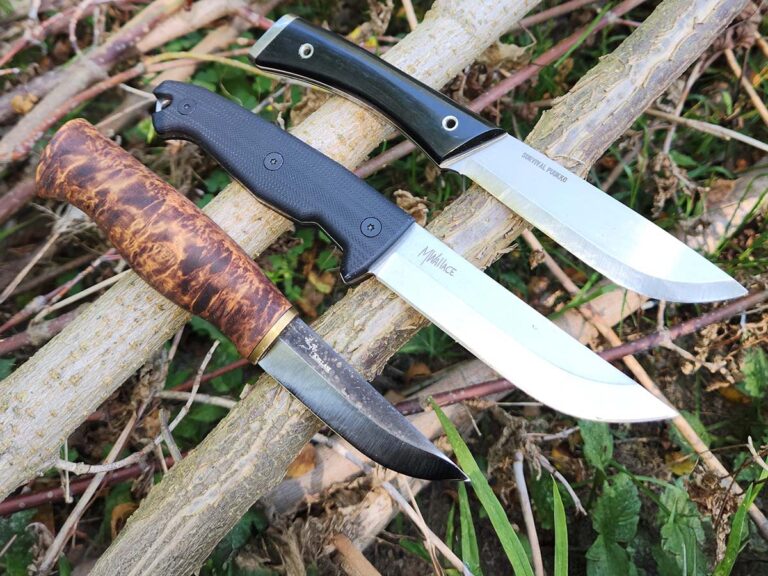
At least this story would be yours if you were a Sami, a traditional reindeer herder of Finland’s Lapland region. And a traditional Sami tool is the Finnish puukko-style knife, three versions of which are our test subjects this time.

Puukko Specs Comparison

Kellam HawkAPOC Wallace Large PuukkoCondor Tool & Knife Survival Puukko
Overall length (inches)7.5″9.25″8.5″
Blade length (inches)3″4.25″3.9″
Blade materialCarbon steel7Cr15MoV stainless1095 carbon
Handle materialQuilted birch burlG-10Black paper Micarta®
SheathLeatherLeatherKydex
MSRP$106.88$123.53$79
FinlandChinaEl Salvador

Condor Tool & Knife Survival Puukko

The Condor is a capable cutter but the stout grind tends to make creating thin slivers difficult.

Though called a puukko, the blade profile of the Condor Tool & Knife Survival Puukko follows more the pattern of a leuku, a bigger Scandinavian chopper. The grind is a stout Scandi and it arrived work ready right out of the box. While it cut very well, I would have liked to see it come with a bit more of a traditional higher grind.

An interesting feature is that the steel pommel is attached to the tang. I would say that would come from a Mors Kochanski* influence as he promoted such a design aspect as a striker plate. The blade is 1095 carbon steel, which will hold an edge well when heat treated properly. The scales are polished black paper Micarta® accented with white liners.

The Condor’s pommel is connected to the tang, which allows you to use the pommel as a striking plate. The white liners set off the black paper Micarta® scales. “Some say they don’t care if a knife is pretty just as long as it works,” the author observed. “Well, if it works it doesn't hurt if it’s pretty, too.”
The Condor’s pommel is connected to the tang, which allows you to use the pommel as a striking plate. The white liners set off the black paper Micarta® scales. “Some say they don’t care if a knife is pretty just as long as it works,” the author observed. “Well, if it works it doesn’t hurt if it’s pretty, too.”

I found the handle a bit small for my bear paw hands. The grip’s inward curved profile tends to bunch my fingers together. Add a smallish handle and it started crowding my grip, causing discomfort. (Keep in mind, my hand is over 4.5 inches wide.) Two stainless steel pins affix the scales to the tang, with the lanyard hole a bit too small for a paracord. The full leather pouch sheath is well made.

Designed by Joe Flowers, the Survival Puukko is a good, serviceable cutting tool. It is a clean knife design with tight fit and finish. One thing: before you buy it, be sure it fits your hand.

APOC Wallace Large Puukko
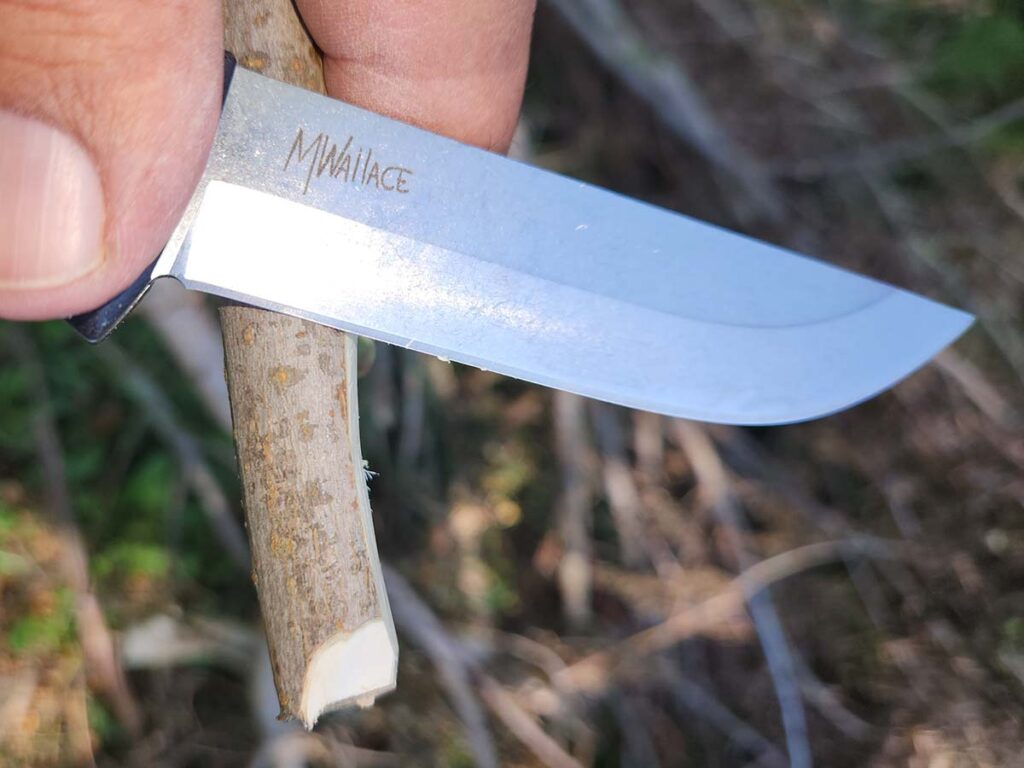
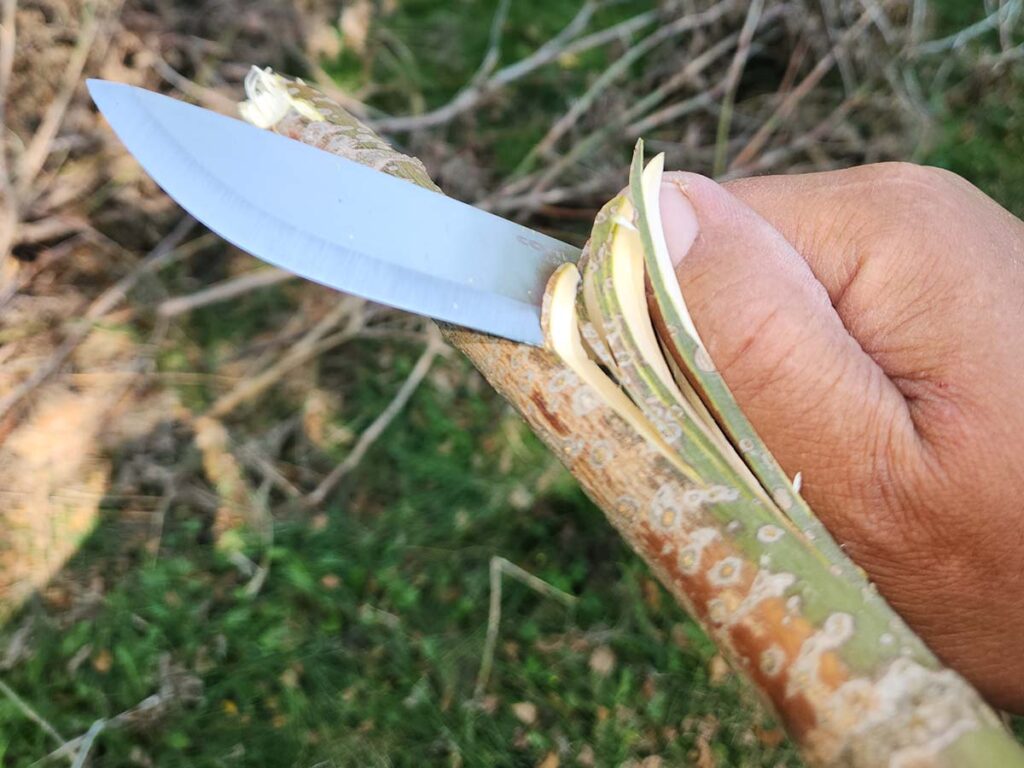
From this point, you can see the secondary bevel on the APOC. It’s not a Scandi grind but is still a good cutter.

Right out of the gate, I must say you get a lot for the price with the APOC Wallace Large Puukko. I would have expected a higher MSRP on this package. Having said that, let me roll out the high points.

Designed by Mike Wallace, the knife is a good size for bushcraft. Handle ergonomics aren’t amazing but are pretty darn good. The textured black scales are trim so it’s a nice, nimble cutter. As profiles go, it is a dead-on use of the puukko. On the grind end of things, it is not a Scandi. The blade actually has a secondary bevel. However, since it has a high grind it remains an effective cutter.
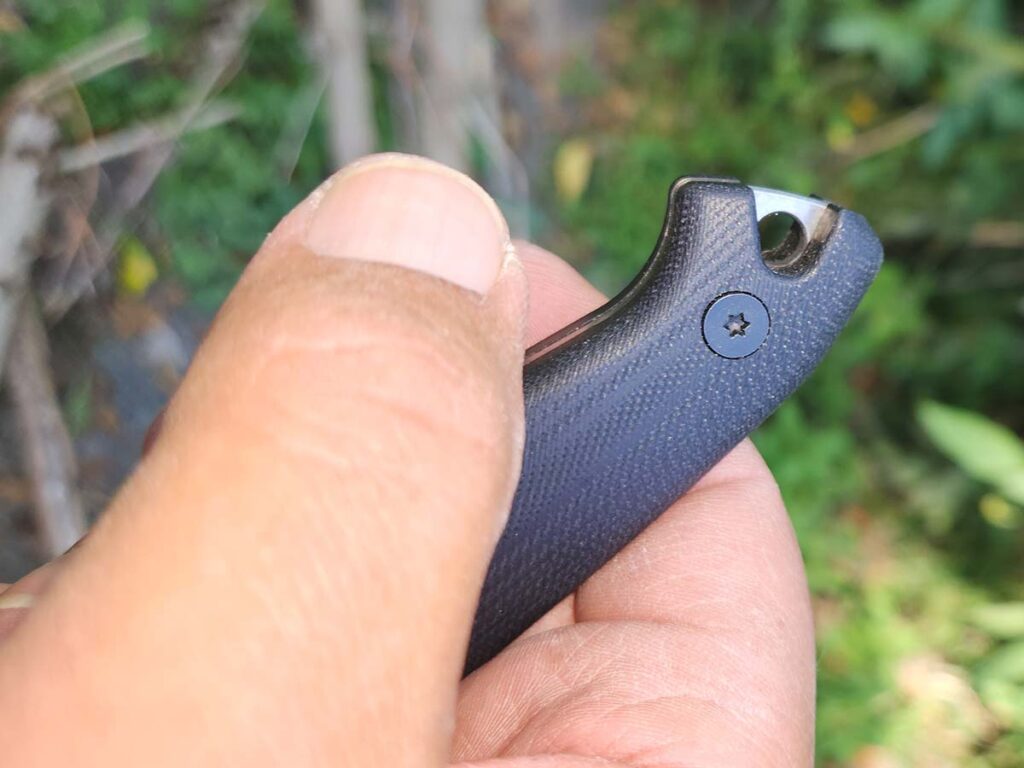
The tang of the APOC is exposed at the lanyard hole, which allows the lanyard to nest into the handle material and stay out from underneath your grip.

The sheath is molded Kydex and then some, including a fire steel and a striking plate on the side. In testing the striking plate I found the belt clip gets in the way, and I could get sparks just fine using the blade spine. You have the choice of horizontal or vertical carry with the G-style belt clip.

If I had to pick a downside, I would go with the belt clip. For a bushcraft knife, you want more mobility and accommodation from your sheath if you’re wearing a backpack, getting in and out of a canoe or kayak, even something as simple as bending over. In the vertical position, I find the knife rides too high. To make carrying it easier I would add a belt loop or even a dangler, allowing the knife to ride lower.

As a cutting tool, it works and works well. I would have no problem putting the Wallace Large Puukko on my side for a walk into the woods.

Kellam Hawk Puukko
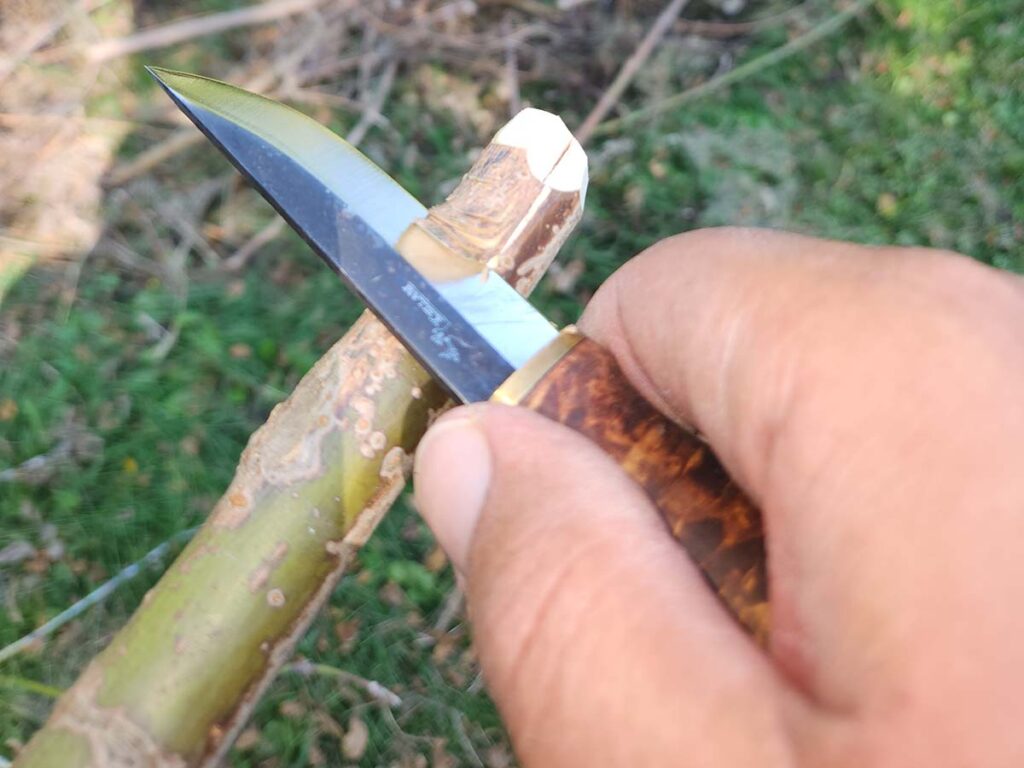
The high grind on the Kellam allows for great control, letting you hog off lots of material or make fine slivers.

The Kellam Hawk is a perfect example of the traditional puukko design. A full leather pouch sheath with dangler loop makes it easy to carry. Scales are a quilted birch burl that has a dark stain to it. The handle is not polished, which leaves a nice textured matte finish that adds to the knife’s value. Because the Hawk is a stick-tang design, Kellam could shape the handle to perfection, and it did. As I write these words, I can’t resist just holding the knife for the feel of the handle. Then again, stick and hidden tangs are advantageous in that they are constructions that make it easier to fully sculpt a handle.

The blade is a carbon steel with a forged finish on the flats and a Scandi grind. Performance wise it is a capable cutter. Scandi edges excel at cutting wood but can have issues with other tasks. Cleaning an animal is one. If you bump a piece of bone with a Scandi edge, chances are the edge will chip.
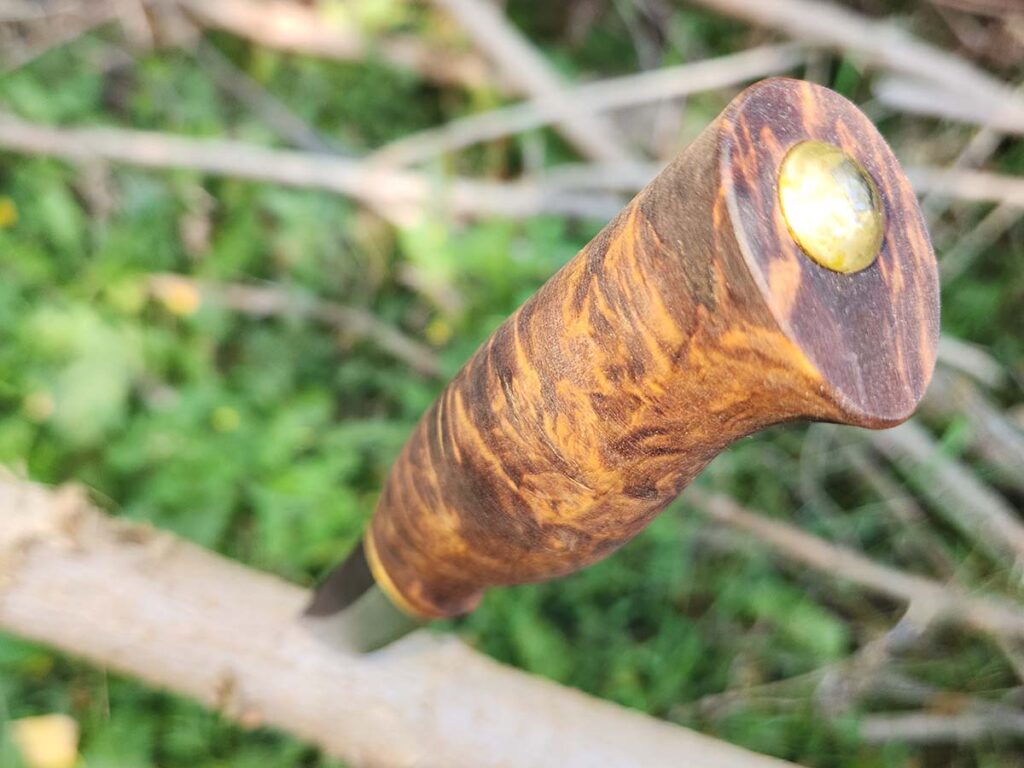
A look along the contour of the Kellam’s grip shows how smoothly a handle’s lines can flow when using a hidden tang.

Light and quick, the Hawk will help you craft many things around the camp, making your time in the woods easier. Over my 23 years of writing reviews for knife magazines, I have never met a Kellam I didn’t like.

*An international bushcraft legend, Mors Kochanski (1940-2019) was an outdoor educator and survival instructor for almost half a century and is recognized by many as the godfather of modern bushcraft.

Check Out More Outdoor Knives:

Was This The Best BLADE Cover?

0

The American Blade Cover saluted the Marines’ bicentennial in grand fashion.

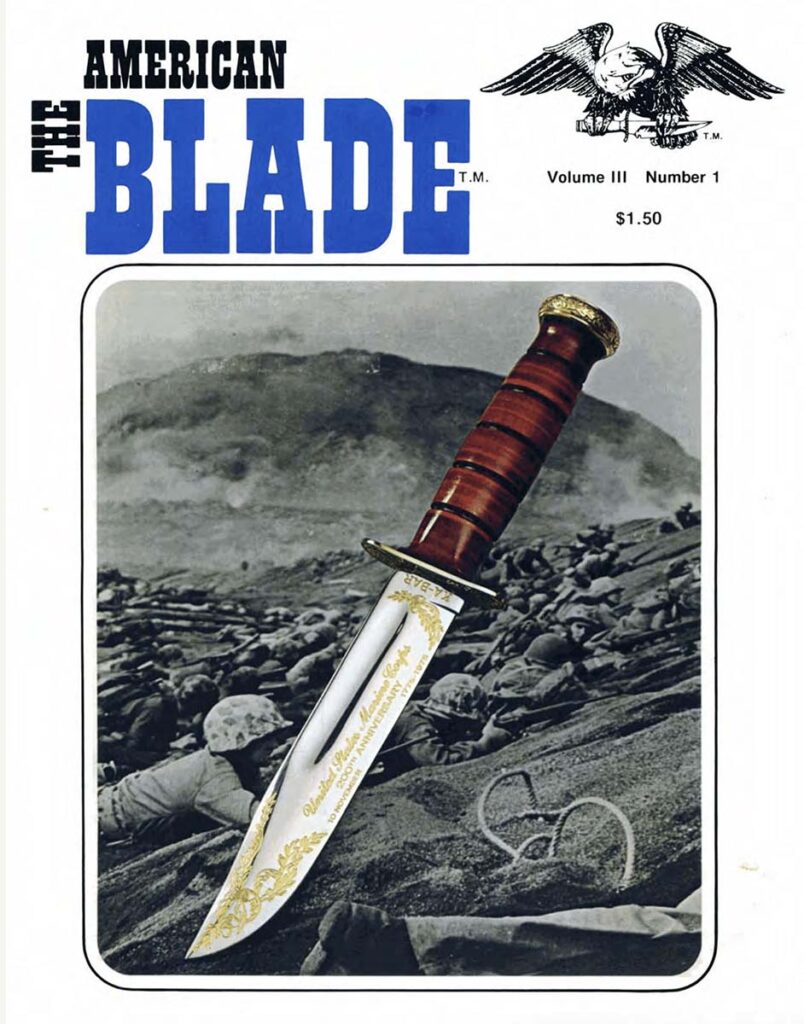
A half-century ago, the November-December issue of The American Blade recognized the 200th birthday of the United States Marine Corps with a special commemorative KA-BAR U.S.M.C. fighting/utility knife on the cover.

The cover of the November-December 1975 issue of The American Blade featured the 200th anniversary “Commemorative U.S.M.C. Fighting Knife” by KA-BAR Knives. The Corps celebrates its 250th anniversary this year.

Paired with the iconic image of U.S. Marines inching their way up the beaches of Iwo Jima during the titanic struggle to take the island from the Japanese during World War II, the cover knife featured a blade with “gold accents” that included the Corps’ founding date of 10 November and 1775-1975, oak leaf patterns and 200th Anniversary under United States Marine Corps in script.

The commemorative’s “top quality leather handle” was an exact duplicate of the handle on the original 1941-45 issue knife. The commemoratives were made in a limited edition of 2,500 with individual MSRPs of $300 for knives serial numbered two through 49, $200 for serial numbers 50 to 99, $150 for serial numbers 100-199, and $100 for serial numbers 200 and up.

More Knife History:

Dagger Design: Point For Perfecting Blade Performance

0

In this look at dagger design, we move beyond history and symbolism to the structural realities of geometry and construction. From the curve of the edge to the presence—or deliberate absence—of a fuller, each feature serves the dagger’s singular purpose: to deliver a clean, decisive thrust and to endure long enough to do so again.

Dagger Profile & Point Geometry

A single, shallow fuller lightens the blade without compromising stiffness—proof that subtle geometry changes transform handling. Kelly Vermeer-Vella and Bruce Bump do the honors here.

A dagger’s profile is its outline when viewed from the flat side; its point geometry is the shape of its cross-section near the tip. Mastery in dagger design comes when the two elements merge into a seamless conduit for force, guiding energy from the wielder’s hand into the target.

One guiding principle is to avoid parallel edges along the portion of the blade intended for penetration. On utility knives, parallel edges are excellent for long, slicing cuts, but in a dagger they can create excessive suction and drag during withdrawal. They also represent a missed opportunity to enlarge the wound. A blade with gently convex curves tends to create a wound tract that widens as it penetrates, then releases more easily on the way out. The effect is twofold: the strike inflicts substantial damage on entry, and the blade slips back out with minimal resistance. In a fight where fractions of a second matter, ease of withdrawal could determine whether the wielder stays alive.

The balance point rests just forward of the guard, lending a stab-ready steadiness that rewards control. The author made this balanced dagger.

Cross-sectional design reinforces how a dagger behaves in the hand. The Roman pugio often carried a pronounced central ridge that gave it a triangular cross-section, lending the blade excellent stiffness. Later European daggers frequently adopted a diamond-shaped section that struck a balance between rigidity and lighter mass. In practice, triangular sections feel solid and grounded, with the ridge channeling force straight to the point. Diamond sections distribute the force across four bevels, trimming weight just enough to make the blade a touch quicker, though sometimes at the cost of absolute stiffness.

Experimental archaeology adds nuance to this comparison. Triangular sections resist torsional stress more effectively, while diamond sections tend to slip more cleanly into soft targets. Renaissance arms rooms often contained both forms, chosen with intent: defense versus assassination, battlefield versus court intrigue.

Dagger Ergonomics & Balance

Careful placement of a ricasso notch ensures consistent hand alignment, turning technique into muscle memory. Note the refined handle and ricasso detail on Cutlery Hall-of-Famer Billy Mace Imel’s piece.

Even the finest blade geometry falters without a grip that enables control. Here, ergonomics and balance determine the dagger’s effectiveness.

Early medieval daggers often featured grips as short as 3-to-4 inches. This compact length forced the hand into a firm grasp close to the guard, a practical safety measure when blood, rain or sweat made surfaces treacherous. Fourteenth-century Germanic examples show how a modest flared guard and compact handle could prevent slippage while preserving agility.

Balance points were just as carefully managed. In many 16th-century Italian stilettos, the center of gravity sits just ahead of the guard, giving the weapon a stab-ready steadiness. The narrow, edgeless blade minimizes rotational drag. Highland dirks, by contrast, often used teardrop pommels to counterweight the blade, shifting balance closer to the hand and allowing forceful thrusts whether on horseback or on foot.

A weighted pommel counters blade weight, shifting balance back toward the hand and straightening the thrust on a Renaissance-influenced dagger by the author.

Makers sometimes introduced subtle refinements. A ricasso notch carved two or three centimeters from the guard ensured that the user’s thumb returned to the same anchor point every time. A shallow fuller reduced forward weight, so that an 8-inch stiletto might balance almost identically to a heavier 10-inch combat dagger. These small calibrations transformed the blade from a piece of steel into an extension of muscle and bone.

Dagger Strength Features

There are no gimmicks on Joe Syverson’s minimalist dagger with clean taper—just clear profile, rigid spine and reliable balance. The design reflects simplicity that serves performance.

The dagger’s tip, however slender, must withstand resistance from mail, bone or even poorly placed strikes. European smiths between the 14th and 17th centuries developed several overlapping solutions that remain relevant today. Fuller placement was one of the most important: a carefully cut longitudinal groove reduced weight while preserving stiffness, as seen in 16th-century Venetian stilettos where the fuller often ran from just below the guard almost to the point.

Ricasso thickness was another safeguard. A blade too thin at the base was liable to flex and buckle under pressure, and even worse, a weak ricasso translated into a fragile point once the final bevels were ground. By keeping this area stout, smiths not only gave the blade strength but also provided a tactile zone of unsharpened steel where the thumb or index finger could anchor securely.

Even with an ornate sculpted handle and dramatic damascus, the blade remains an unbroken taper from guard to tip on Henning Wilkinson’s art dagger. Note the lavish surface detail.

Hardening practices added a third layer of reliability. Most European daggers were quenched and tempered uniformly to a Rockwell hardness in the neighborhood of 48-to-52 HRC. A few Italian masters appear to have experimented with clay tempering to leave the ricasso slightly softer, but this might also have been accidental. In any case, the visible temper lines familiar in Japanese blades were rare. What mattered was consistency: a uniform temper that balanced edge retention with toughness made it so the dagger could survive repeated thrusts against armor and bone alike.

Avoid Feature Creep

Next-generation work in this forward-looking piece by Jean-Pierre Potvin proves the old lessons endure: blade geometry is still central even if the rest of the dagger is fantastical.

Through all the refinement, one lesson emerged repeatedly: every extra feature risked undermining the dagger’s true purpose. Serrations, pry tips and decorative piercings might look clever but each introduced problems. Serrations can snag on clothing and tear rather than pierce. Pry tips disrupt the straight thrusting line. Even ornate cut-outs, while attractive, create weak points that could split under stress.

Historical makers knew better. Even the most extravagant Renaissance daggers—with gilded hilts, inlaid gems or etched scrollwork—maintained an unbroken distal taper from guard to tip. Embellishment was typically reserved for the surfaces, not the structure. However adorned, the dagger kept faith with its defining role: the straight, unyielding line of the thrust.

Conclusion

Inventive cross-sections and flawless transitions demonstrate that modern makers can push design without breaking the rules. Elizabeth Loerchner captures the concept in the strong geometry of her experimental modern dagger.

From the Roman pugio to the Renaissance stiletto, the dagger’s identity rests not in ornament but in discipline: geometry over gimmicks, strength over flourish, function over feature creep. Clear profiles, rigid spines and balanced grips remain the hallmarks of a true dagger. These principles are as relevant to the modern craftsman as they were to the smiths of Venice, Florence or Solingen. A dagger’s promise, after all, is measured not by extravagance but by the sharp integrity of its point.

More On Daggers:

Kitchen Utility Knives: Cutters Fit For All Culinary Endeavors

Utility knives are among the most essential of kitchen cutters.

Food is life, and cooking is a vital part of your daily routine. Having the right tools can transform your kitchen experience, and kitchen utility knives are among the most essential. With the right one, even the toughest tasks can become a breeze.

Kitchen Utility Knives Defined

A kitchen utility knife is a versatile tool designed for a variety of food preparation tasks. Typically, it features a blade ranging from 4 to 7 inches, making it larger than a paring knife but smaller than a chef’s knife. It’s ideal for slicing, dicing and chopping a wide range of foods, such as vegetables, fruits and meats. The utility strikes a balance between precision and strength, allowing it to handle chores that require both detail and some heft. It’s a great all-around option for anyone looking to tackle everyday kitchen jobs efficiently.

Vero Engineering Utility 5

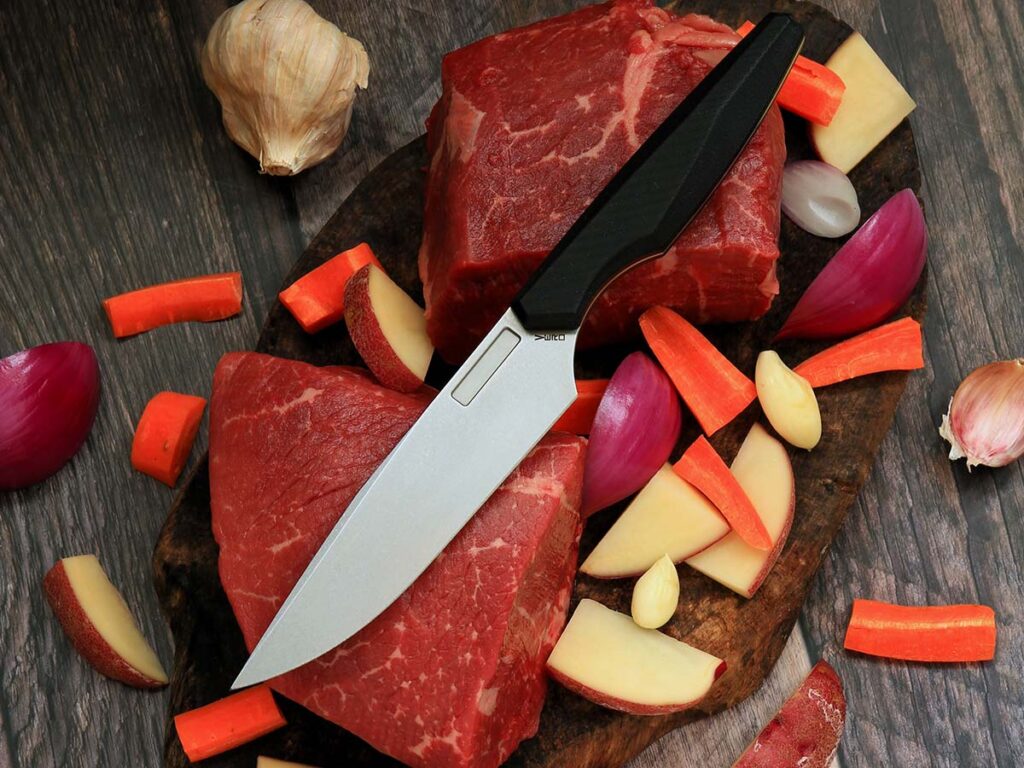
The author prepped a hearty meal of beef pot roast and veggies using the Vero Utility 5. The knife was equally effective cutting meat, root vegetables and herbs, all with finesse.

Utility 5 Specs
Blade Length: 5.27”
Blade Steel: Nitro-V stainless
Blade Grind: Full flat
Blade @ Thickest: .138”
Blade Finish: Stonewashed
Handle Material: G-10 black
Overall Length: 10.08”
Knife to know: Multiple options in blade finishes and handle materials
Country of Origin: China
MSRP: $174

The Vero Engineering Utility 5 doesn’t just show up—it sharpens your kitchen game with precision and style. The fixed-blade slicer offers excellent corrosion resistance and edge retention, making it a reliable workhorse for a wide range of tasks, from citrus to sirloin. The drop-point pattern and full flat grind give it slicing versatility, while a milled pocket on the blade adds grip and control for those who favor the pinch-grip life. At just 4.75 ounces it’s light in the hand but heavy on performance.

The handle options—black G-10, ebony or marbled carbon fiber—aren’t just aesthetic choices, they are also ergonomic, moisture resistant and designed for comfort across various grip styles. Blade finishes include stonewashed, belt satin and hand satin, allowing you to match your knife to your mood or your cutting board. Whether for preppers or perfectionists, the Utility 5 slices with purpose and looks good doing it.

At first, the Vero resembles a combat knife. And if you call slicing roast beef, potatoes, onions, garlic and carrots combat, then this blade is your trusty weapon of choice. It is designed to transform simple ingredients into a champion-worthy feast with accuracy and panache.

I sliced a hefty cut of beef roast and all the fixings. Root veggies are hard, so sharpness is key. The test knife had an excellent grind and an ultra-sharp blade, which puts less stress on the hand when cutting. It truly was a meat-and-potatoes meal, with carrots, onions and garlic. The handle remained slip-proof despite exposure to blood and vegetable juices. The steel never stained and at press time I had yet needed to sharpen this culinary champion.

Bradford 6-inch Utility Knife

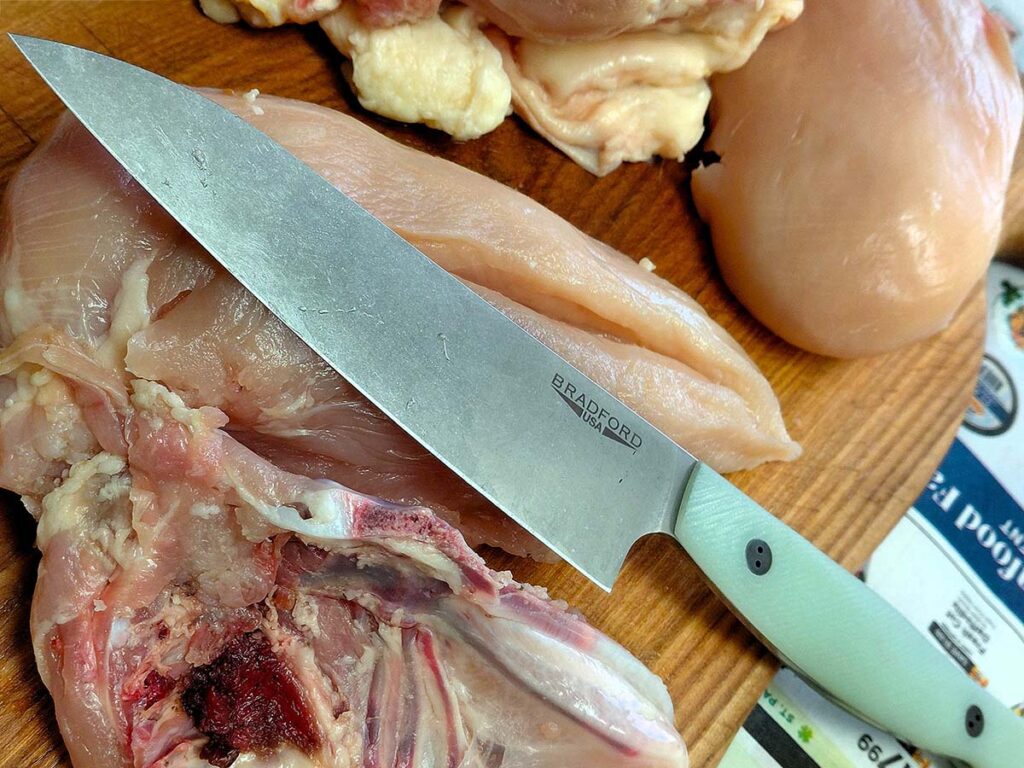
The Bradford deboned chicken and cut a variety of veggies with ease.

6” Utility Knife Specs
Blade Length: 6”
Blade Steel: MagnaCut stainless
Blade Grind: Full flat
Blade @ Thickest: .10”; distal tapered
Blade Finish: Satin stonewash
Handle Material: 3D microtextured
Overall Length: 11”
Country of Origin: USA
MSRP: $209

Bradford’s 6-inch Utility Knife slices through kitchen monotony with surgical precision and unapologetic style. Its CPM MagnaCut stainless steel blade has a Rockwell hardness of 61-to-63 HRC and delivers top-tier edge retention, corrosion resistance and toughness—ideal for everything from delicate herbs to dense proteins. The blade features a stonewash finish that hides scuffs like a pro, keeping your knife looking fresh even after a week of hard prep. Weighing just 5 ounces, it strikes the perfect balance between nimble and substantial and will fit in most kitchen blocks.

The ghost (light blue) handle is ergonomic, moisture-resistant and built to withstand heat, wear and long prep sessions without losing grip or comfort. Thin, full-tang construction keeps the profile sleek and strength solid. Meanwhile, the design makes it a welcome tool for lefties and righties alike.

This fixed-blade kitchen essential is proudly made in the USA and designed to feel like an extension of your hand—whether you’re dicing vegetables or breaking down wild game. It’s not just a knife, it’s a daily driver for the serious slicer.

I spend a lot of time in the kitchen, a big part of it prepping and freezing foodstuffs for later dates. Chicken and veggies get the most attention. I received the Bradford 6-inch Utility Knife at the right time. I had a large quantity of split bone-in chicken breasts that needed deboning and freezing. The idea of a utility knife is to be versatile. I stick to the rule of whatever’s on the cutting board gets used for everything. Hence, the Bradford was now a deboning knife.

The blade was nimble and the low 5-ounce weight glided through the protein with ease. I felt what the handle was all about and liked it. I trimmed the fat and extra unsavory bits using a variety of grips, mostly modified chef’s pinch grips. The wharncliffe-style blade was a huge help when drawing back for pinpoint slices.

The Bradford definitely fits the bill for a kitchen utility knife. From handle comfort, grind and overall design, this is your utility cutter for several occasions.

White River Knife & Tool Liong Mah

Garnish requires precision, and the White River/Liong Mah Utility Knife excelled at it.

Liong Mah Utility Specs
Designer: Liong Mah
Blade Length: 4.75”
Blade Steel: MagnaCut stainless
Blade Grind: Full flat
Blade @ Thickest: .095”
Blade Finish: Satin
Handle Material: Maple Richlite
Overall Length: 9.12”
Country of Origin: USA
MSRP: $200 ($475 for it and the Liong Mah Chef Knife in a set)

The White River Knife & Tool Liong Mah series isn’t just household cutlery—it’s a chef’s dream set in MagnaCut. Designed by Liong Mah, a former New York City chef turned knife architect, these blades blend culinary intuition with precision engineering.

The smaller 3.8-ounce Utility Knife offers nimble control while the larger 6.2-ounce Chef Knife addresses the bigger stuff. Both blades feature MagnaCut at a Rockwell hardness of 62-to-63 HRC, delivering elite edge retention, corrosion resistance and toughness that scoffs at daily abuse. The modern handle tapers toward the blade for a natural, comfortable grip—ideal for vertical chopping and pivoting like a pro. Whether dicing shallots or tackling a brisket, these USA-made tools feel like an extension of your hand, packed in a custom wooden box that says, “Yes, I take prep seriously.” No sheath, no nonsense—just pure slicing satisfaction.

For small tasks like slicing cheese, limes and herbs, it doesn’t get any better than the Liong Mah Utility Knife. Brie cheese is soft, while garlic mincing takes precision and sharpness. However, fret not using the White River entry. For small kitchen tasks and the ability to share a cutting board with other food and garnish, it’s excellent. Hors d’oeuvres, anyone?

The Liong Mah Chef Knife was my pick for long sweeping slices for butterflying chicken breasts. I wanted the full length of a chef’s knife and was delighted with my pick for the task. It sliced with authority and made clean cuts.

CRKT Onion Utility Kitchen Knife

Root vegetables such as potatoes and carrots were no match for the CRKT Onion Utility Knife.

Onion Utility Kitchen Knife Specs
Designer: BLADE Magazine Cutlery Hall-of-Fame® member Ken Onion
Blade Length: 5.5”
Blade Steel: Damasteel damascus
Blade Grind: Full flat
Blade @ Thickest: .10”
Blade Finish: Acid etch
Handle Material: FatCarbon Dark Matter carbon fiber
Bolster: Titanium
Overall Length: 10.19”
Country of Origin: Italy
MSRP: $850

The CRKT Onion Utility Kitchen Knife in Damasteel® damascus isn’t just a kitchen tool, it’s a precision instrument dressed for a gala. Built in Italy, the fixed-blade beauty features a Damacore® Hugin-pattern blade with a finish that highlights the layered steel like a fingerprint of craftsmanship. It’s slim enough for finesse work but long enough to handle serious slicing. The synthetic handle and bolster help keep the weight featherlight at 3.3 ounces so it won’t tire your hand during marathon prep sessions. The construction resists thermal stress, meaning it won’t warp when the kitchen heats up.

Packaged in a laser-engraved walnut box because even your kitchen drawer deserves a little class, it’s a limited-edition blend of performance and polish that says, “Yes, I julienne with style.” The knife isn’t just a pretty face, it’s a high-performance hybrid that bridges the gap between a chef’s knife and a paring knife, ideal for tasks that demand both precision and power.

I make a lot of soups and braised meat dishes, especially when it’s cold outside. Carrots are a no-brainer for such meals. Beef roasts and chicken soup all require onions, celery and carrots. The Onion Utility looks too classy to use. However, it’s purpose-built for hard kitchen work. BLADE Magazine Cutlery Hall-of-Fame® member Ken Onion designed the handle to be stable in the hand when the kitchen heats up, and the grip withstood the heat and then some.

Slicing carrots was a breeze with the super thin blade, and not one piece split or wedged apart as can happen with thick-beveled knives. I sectioned long carrots for freezing and julienned them for stir fry and noodle dishes. The handle comfort and edge retention are stellar. There’s a lot going on in Ken’s design. The best thing I can say is, pick one up and try it.

More Kitchen Knives:

2025 BLADE Show West Custom Knife Award Winners

Discover the winners of the 2025 BLADE Show West Custom Knife Awards—nine categories of world-class craftsmanship.

Salt Lake City once again became the hub of the knife world as the 2025 BLADE Show West took over the Salt Palace Convention Center October 10-11. Now in its fourthyear in Utah, the event drew an impressive mix of custom knifemakers, manufacturers, and collectors from across the country and abroad.

At the heart of the weekend stood the Custom Knife Awards—always one of the most anticipated moments of the show. Makers went head-to-head across nine categories, putting their best work forward for consideration. Judged by a panel of anonymous experts, the entries were measured on design, originality, choice of materials, functionality, and overall execution.

The results reflected the diversity and skill of today’s custom knife community. With a crowded field and no shortage of standout pieces, the 2025 competition underscored why BLADE Show West continues to be a must-attend event for knife enthusiasts everywhere.


Best Custom Hunting Knife And Overall Best In Show: James Rodebaugh

Best Custom Hunting Knife And Overall Best In Show: James Rodebaugh
Photo: JFrasier

Best Custom Damascus: Trevor Morgan

Best Custom Damascus: Trevor Morgan
Photo: JFrasier

Best Custom Fixed Blade: Christopher Moss

Best Custom Fixed Blade: Christopher Moss
Photo: JFrasier

Best Custom Folder: Javi Garcia

Best Custom Folder: Javi Garcia
Photo: JFrasier

Best Custom Kitchen Knife: Kelly Frasier

Best Custom Kitchen Knife: Kelly Frasier
Photo: JFrasier

Best Custom Slip Joint: Bill Ruple

Best Custom Slip Joint: Bill Ruple
Photo: JFrasier

Best M.A.C.K.: Tom Krein

Best M.A.C.K.: Tom Krein
Photo: JFrasier

Best Of The Rest: Kelly Frasier

Best Of The Rest: Kelly Frasier
Photo: JFrasier

See More Award Winners:

2025 BLADE Show West Factory Knife Award Winners

Discover the winners of the 2025 BLADE Show West Factory Knife Awards. See which knives earned top honors at the premier blade event.

The Factory Knife Awards at BLADE Show West have quickly built a reputation for fierce competition, and the 2025 edition raised the stakes yet again.

Staged October 10-11 inside the Salt Palace Convention Center in Salt Lake City, this year’s contest saw one of the largest turnouts to date. Makers and manufacturers from across the globe rolled in with their finest designs, all chasing the coveted BLADE Show West trophies. With six categories to judge and no shortage of stellar entries, the panel of anonymous judges faced an uphill battle narrowing down the winners.

In the end, the awards highlighted the very best production knives on the market today. Here’s a look at the blades that rose to the top and earned recognition at the final BLADE Show of the year.


Best Factory Folder And Overall Best In Show: Mr. Mr. Designs Titan

Best Factory Folder And Overall Best In Show: Mr. Mr. Designs Titan
Photo: JFrasier

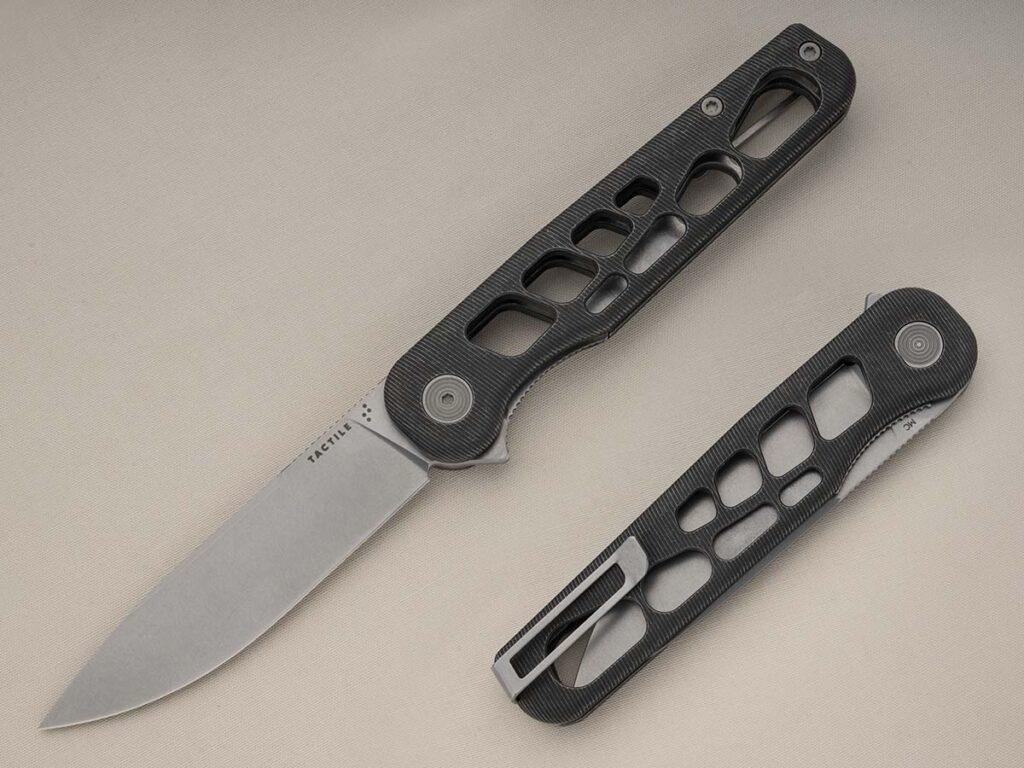
Best American Made Factory Knife: Tactile Knife Co. Skeletonized Rockwall

Best American Made Factory Knife: Tactile Knife Co. Skeltonized Rockwall
Photo: JFrasier

Best Imported Factory Knife: Mr. Mr. Designs Zero

Best Imported Factory Knife: Mr. Mr. Designs Zero
Photo: JFrasier

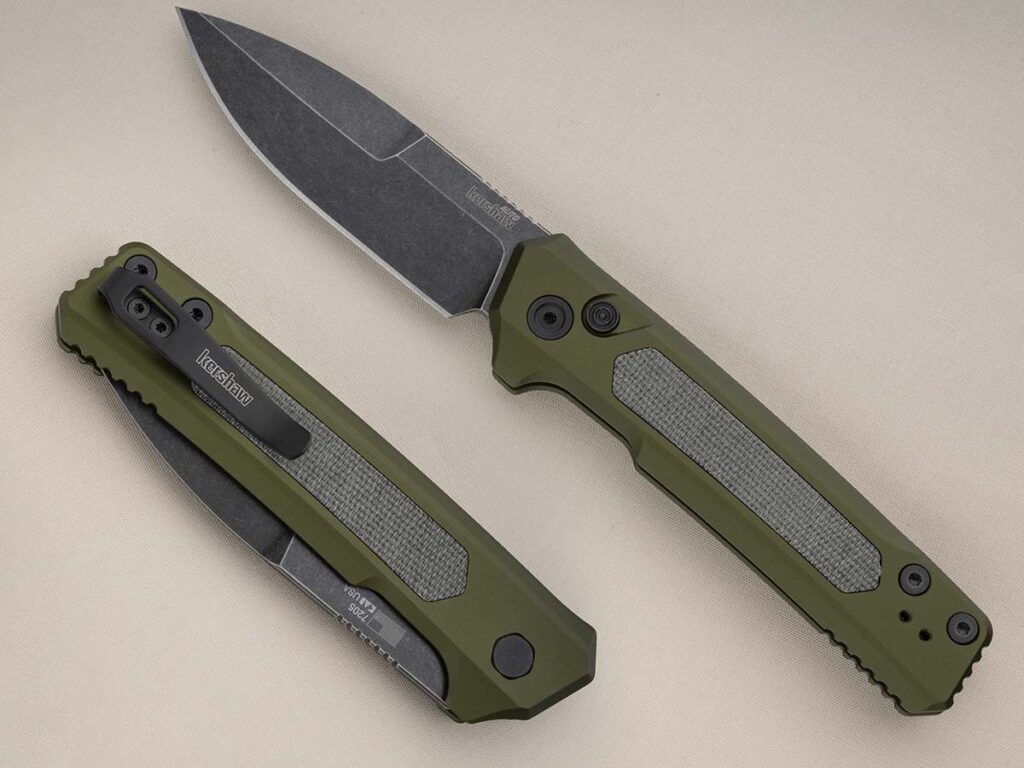
Best Factory EDC: Kershaw Knives Launch 22

Best Factory EDC: Kershaw Knives Launch 22
Photo: JFrasier

Best Factory Fixed Blade: Zero Tolerance ZT 0004

Best Factory Fixed Blade: Zero Tolerance ZT 0004
Photo: JFrasier

See More Award Winners:

Affordable Chef’s Knives: Options That Are A Cut Above The Rest

Consider four large kitchen knives, all under $80 each.

As you get older and entertain bigger gatherings, do you find yourself wanting to improve your culinary chops?

A little more blade may be just what you need to sharpen your prep time so you can spend more time enjoying your food than getting it to the table. Larger and more focused kitchen tools can indeed improve your efficiency and your proficiency as a gourmet chef as well.

The focus here is on large and/or specialized kitchen knives, specifically the different types and what they can do to make your job easier and your cooking better, each for under $80. Large cooking knives vary widely and we’re going to show you four variations. Keep in mind, most kitchen knives aren’t just for cutting meat but are for preparing fruit, vegetables and other items such as breading or crusts, too.

Utica Meat Dad Chef’s Knife

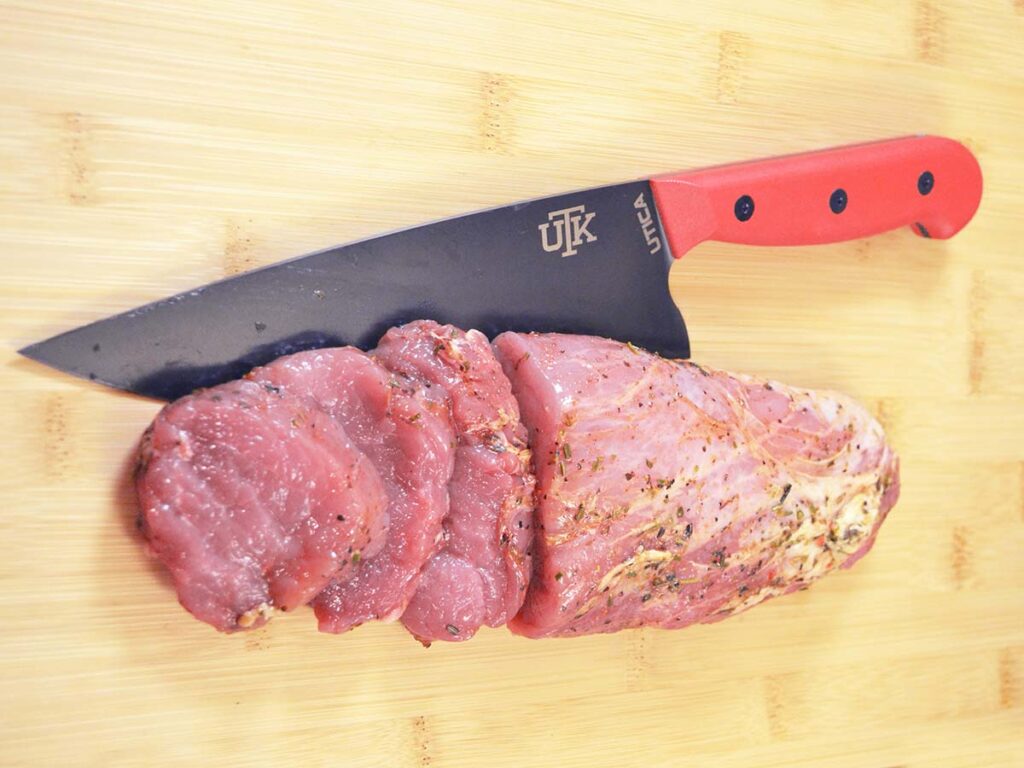
The Utica Meat Dad Chef’s Knife is for large cuts of meat, fruits and vegetables. It took half-inch medallions off a plump pork tenderloin for the sauté pan.

Meat Dad Chef’s Knife Specs
Blade length: 7.54”
Blade steel: 440C stainless
Blade finish: Food Safe Black PVD
Handle material: Orange G-10
Weight: 17”
Overall length: 12.5”
Country of origin: USA
MSRP: $74.99

The Utica Meat Dad Chef’s Knife is a whopper with a blade belly 2.25 inches deep for carving the big stuff when needed and everyday slicing and dicing as well. The beefy orange G-10 handle helps maintain control on the wieldy blade for it all.

Though the test’s two chef’s knives—the Fox Knives Meat Slicer being the other—have meat in their names, they facilitate a much wider variety of meal prep tasks, including the slicing, dicing and mincing of a wide range of vegetables and other fare.

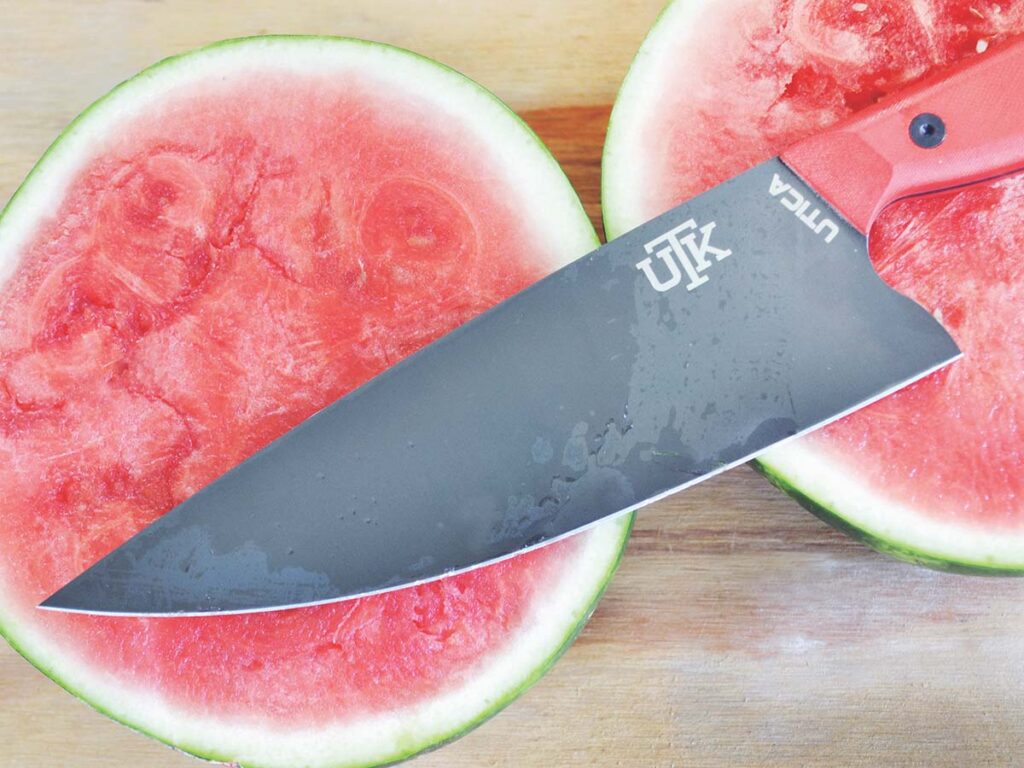
The Meat Dad is large enough to tackle a watermelon in a straight cut.

The Utica is large for a chef’s knife so we tested it on some heathy chores, such as cutting a nice, plump pork tenderloin into fat medallions for a tasty sauté. We also tried the Meat Dad out on a watermelon and, thanks to the stout blade, sliced it straight as an arrow from top to bottom. Sometimes you just need a large knife and the Utica tackles those requirements quite well.

Fox Meat Slicer Knife

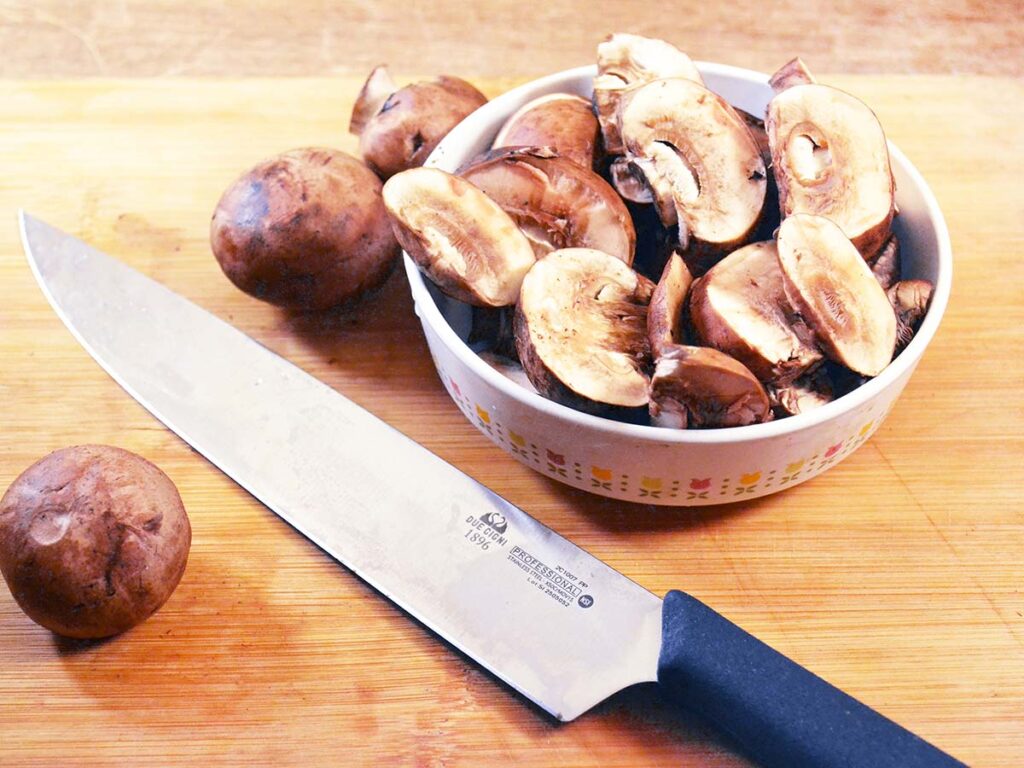
Like many typical chef’s knives, the Fox Meat Slicer is capable of many functions. Wrote the author: “I used the knife for slicing small brown portobello mushrooms to add to an omelet. Note the sharp, crisp cuts—a sign the mushrooms were not prepared by an ordinary kitchen knife.”

Meat Slicer Specs
Blade length: 7.8”
Blade steel: UNI X59CrMoV15 stainless
Blade finish: Fine satin
Handle material: Black PP synthetic
Weight: 3.75 ozs.
Overall length: 12.4”
Country of origin: Italy
MSRP: $36.94

All chef’s knives are relatively long but not all have blades that can be tiring to use. The Fox Meat Slicer Knife is a much trimmer, more svelte example. A large Italian cutlery company with an impressive presence in the USA, Fox offers a strong group of knives in its Due Cigni Coltellerie line.

One of the group is the Meat Slicer, a long chef’s knife with a slim profile sporting an extended, slender drop-point blade only .12-inch thick. It comes with a gently curved handle that has just enough drop at the base to protect your fingers during use.

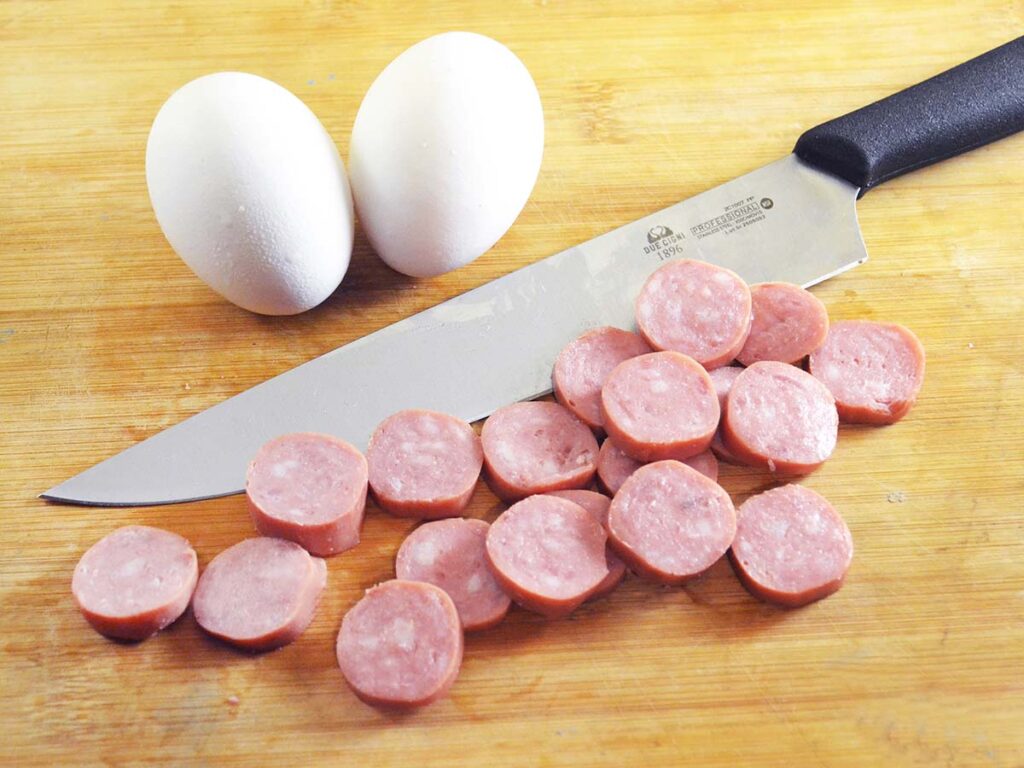
The Meat Slicer is more adept at less cumbersome tasks of both the meat and vegetable variety. We first used it on a couple of smoked sausage links, cutting roughly 3/16-inch slices down the length of each for an omelet. The knife performed quickly and with ease.

The Fox Meat Slicer is excellent for most meals that don’t require cutting thick slabs of meat or large fruit and vegetables. It made quick work prepping smoked sausage.

To add a little flavor, we turned to some portobello mushrooms. Taking a handful, I trimmed the stems off and sliced them up one by one in a jiffy. The German steel performed very well and the handle was the most comfortable of the test lot.

A.G. Russell 6-inch Boning Knife

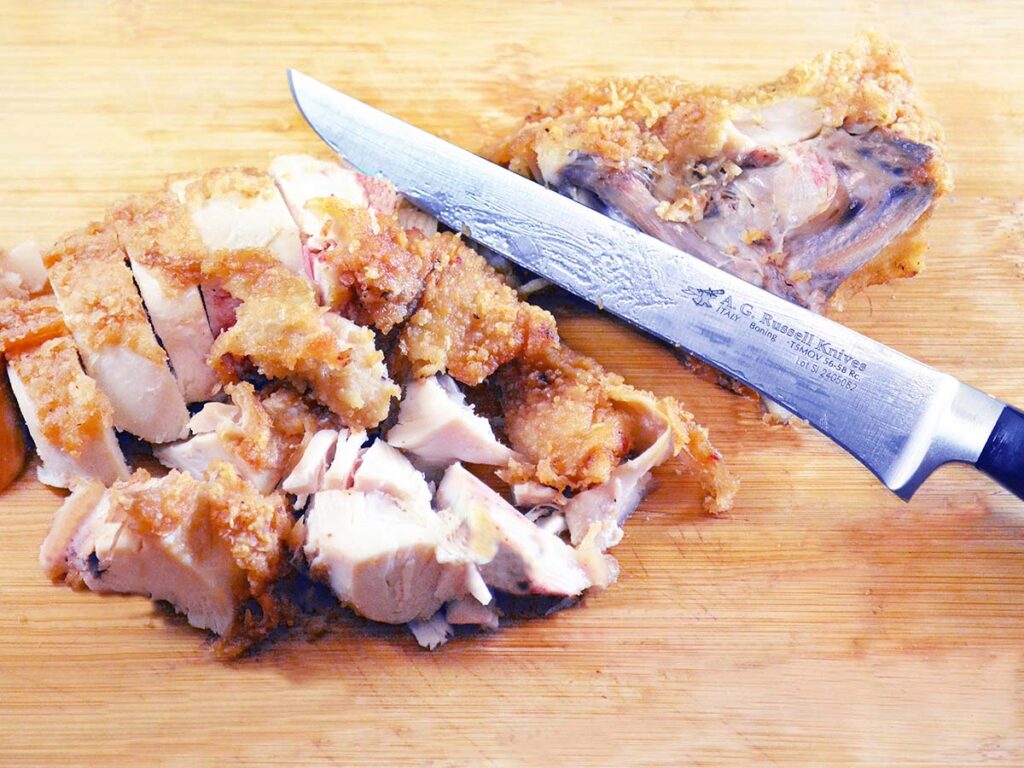
The A.G. Russell relieved the chicken breast of its hard-shell-bone understructure pronto. “Fowl such as chickens retain their juices and flavor much better when cooked on the bone,” the author noted. “Here the chicken breast is removed, sliced and ready to eat.”

Boning Knife Specs
Blade length: 6”
Blade steel: Molybdenum-vanadium stainless
Handle material: Fiberglass-reinforced polypropylene
Bolsters: Stainless steel
Weight: 3.8 ozs.
Overall length: 10.6”
Country of origin: Italy
MSRP: $42.95

The A.G. Russell 6-inch Boning Knife just might be your go-to counter slicer for a myriad of kitchen duties. While its name is designated for separating meat from bones, the A.G. Russell can perform a myriad of duties such as trimming, slicing and dicing both meat and veggies. Some even clean their afternoon catch with it as it is closely related to a fish knife. The blade is super thin and the piece is very lightweight.

The A.G. Russell got the most tedious work out of the foursome due to the nature of the beast. Fortunately, chickens go through extensive steps of processing before average folk ever set eyes on them. Whether fried, barbecued or roasted, the best way to keep a chicken breast moist is with the skin, breast meat and bone structure cooked together.

After cooking the bird, use the sharp cutting tip to cut the area around the breast skin so it can be removed with the meat. Next, peel the skin back and slowly work the blade between meat and bone structure and slowly use the fingers of your other hand to peel the entire breast off with the skin on. Slice and eat!

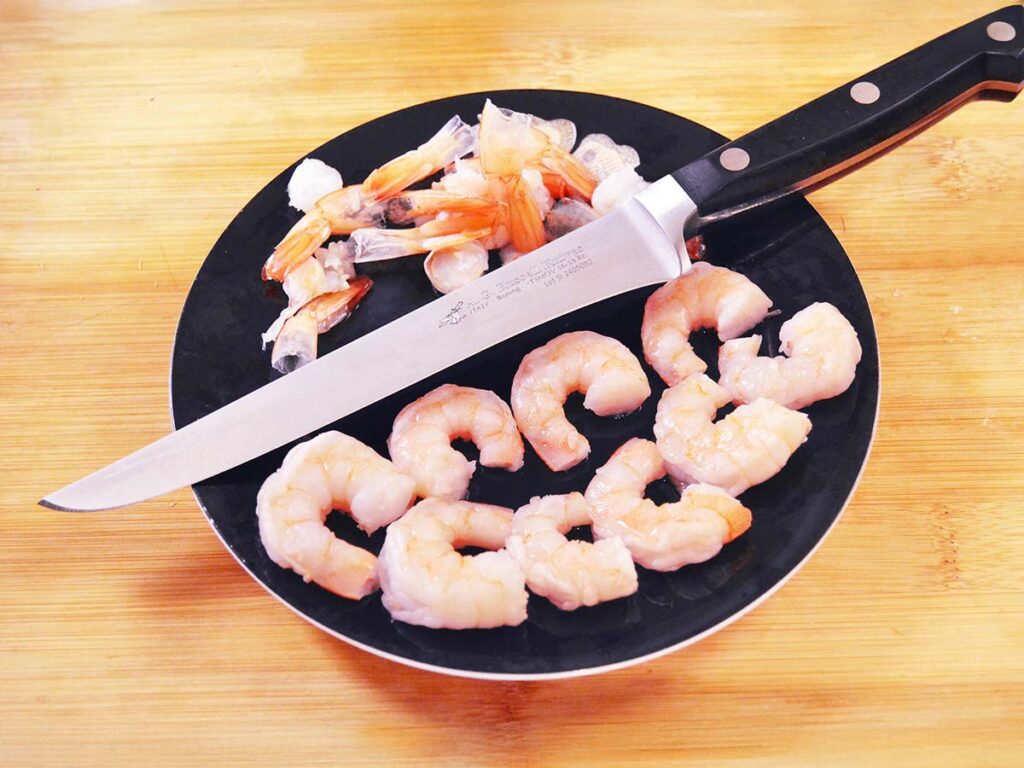
The A.G. Russell Boning Knife has a thin, sharp blade very much akin to a fish knife and can be used for other types of work around the kitchen. The author used the razor-sharp blade to cut off the tails of shrimp for a cocktail.

The Boning Knife, like the others, is handy in other ways as well. You can slice small veggies and fruits, trim fat and do all sorts of clean-up chores to make food more presentable.

Ontario Old Hickory 76 7-inch Cleaver

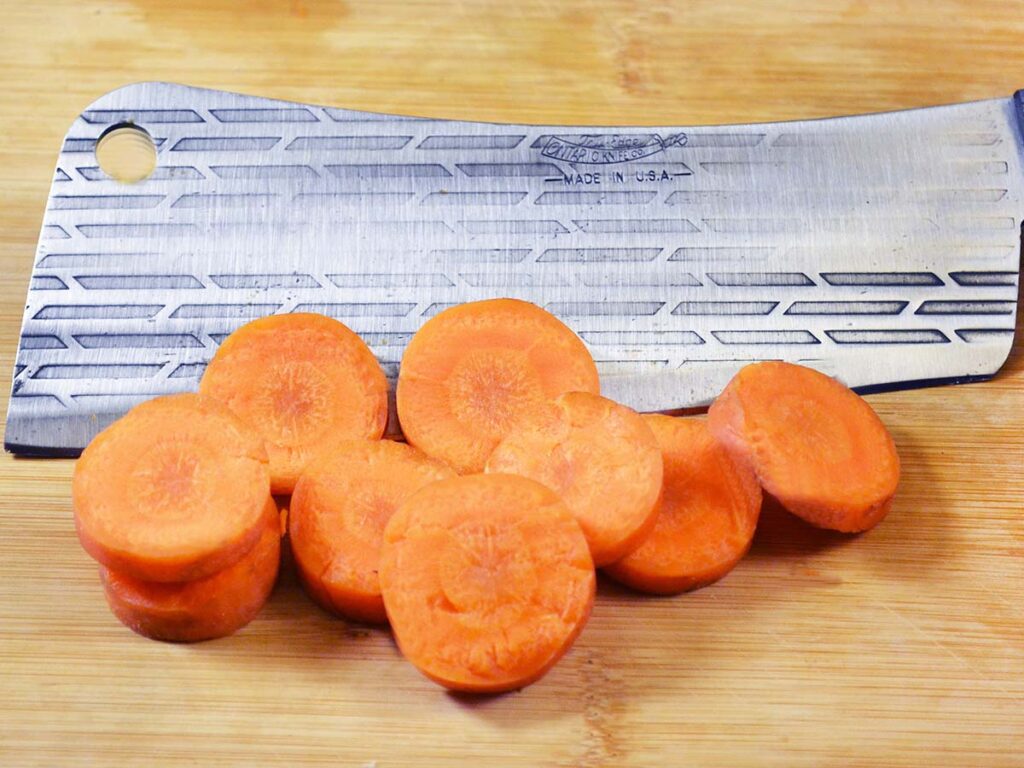
Cutting thick carrots across the grain can be tough on many kitchen knives but was easy for the Ontario Old Hickory 76 Cleaver.

Old Hickory 76 Cleaver Specs
Blade length: 7.5”
Blade material: 1075 carbon steel
Blade grind: Flat bevel
Blade finish: Brushed
Handle material: Wood
Weight: 10 ozs.
Overall length: 12”
Country of origin: USA
MSRP: $30.50

We’ve saved the big gun for last: the Ontario Old Hickory 76 7-inch Cleaver. There’s something to be said for the simple, matter-of-fact Old Hickory edged tools. Maybe it’s the “If it ain’t broke, don’t fix it” attitude—and I like it! The blade has a horizontal pattern pressed into it, a hole for hanging in the upper lead edge, and an Ontario Knife Co., Tru Edge, Made In U.S.A., sword logo stamp in the top center. The blade climbs upward toward the tip at its spine and the cutting edge has a gentle curve to it.

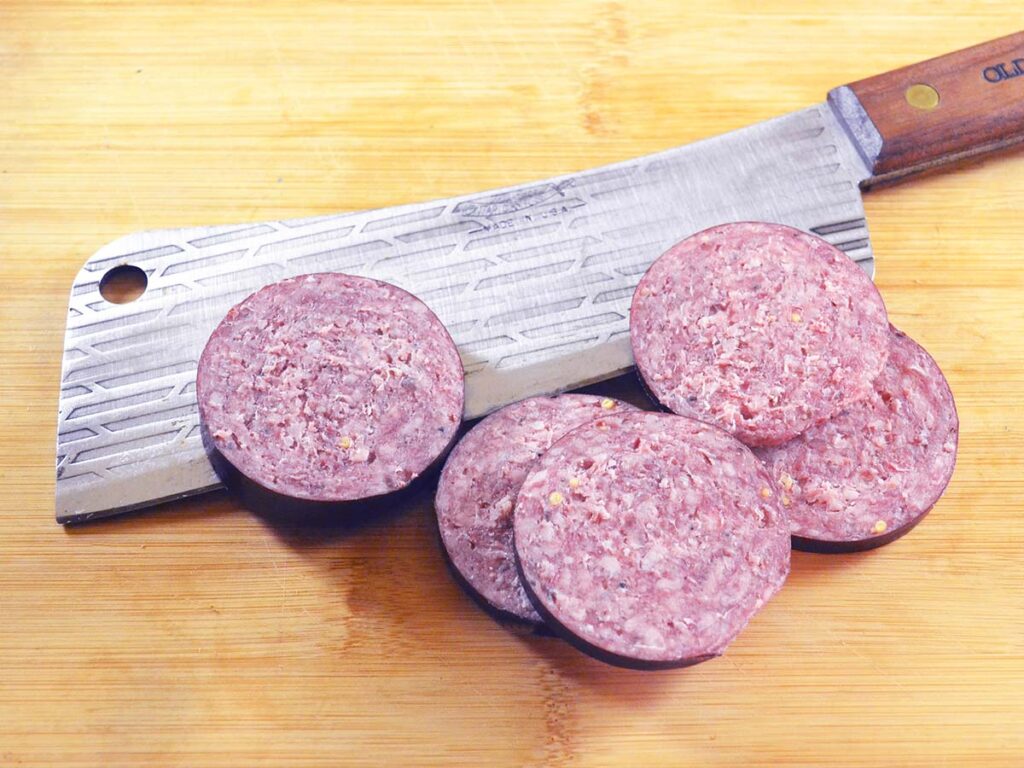
When you need a heavy hand and finesse is no object, the cleaver will get the job done. We used it for cutting some tough-as-nails carrots with no problem. The same went for hard sausage. There’s no sense in dulling a sharp knife blade on hard, tough foods when a cleaver can cut them with haste and look for its next challenge.

Chubs of hard summer sausage are what the Old Hickory 76 lives for.

Old Hickory blades are the kind of “git ’er done” kitchen knives and tools that take your tough challenges on their back and never cry uncle. My family grew up with Old Hickory blades and I recommend keeping them around the kitchen when tough times call for tough tools.

Final Cut

There you have it—four different ways to make your kitchen more useful without breaking the bank. If you’re ready to expand your culinary universe, look no further than these useful, able kitchen helpers.

More Kitchen Knives:

Advertisement

Must Read Articles

Read this before you make a knife

Knifemaking 101 – Read This Before You Make a Knife

  by Wayne Goddard My experience has taught me that there's nothing like digging in and getting started. I've often said the hardest part of the...
how to forge damascus steel

How to Forge Damascus

Advertisement
Advertisement