Home Blog Page 37

Robertson’s Maker Market Matrix: An Explainer

The author’s system is designed to help you accurately price custom knives.

After I wrote a recent BLADE® article on custom knife pricing, editor Steve Shackleford suggested I write a follow-up on the system I use to price custom knives—Robertson’s Maker Market Matrix or RM3. I wrote it to provide a basic guide for each collector or maker on how to do their own pricing. You can find many examples of weighted score tables with a quick Internet search.

A collection or business is a very individual thing. The research required to create a successful Matrix for either one depends on the individual doing it. Let’s dive in.

Market Position

A maker’s position in a market is not always apparent. While in graduate school, I wrote a paper on the impact of pricing and how it can apply to products. As a custom knife dealer, I was looking for a business advantage. I applied the findings in my paper to my business.

I opened my copy of KNIVES ’92 and, using a weighted score table, started to compare makers I found in the book’s index. Initially, I placed the knives in recognized categories, for example, hunters, fighters, bowies, tactical folders, etc. I wanted to compare similar knives/apples to apples. Each category had several hundred entrants.

My goal was to create a top-third, middle-third and bottom-third strata. This is where the weighted aspect of the table comes in. I developed essential criteria, such as quality of work, demand in the primary market, demand in the aftermarket, materials used, delivery time, awards and other gauges. Once I established the criteria, I gave each criterion an importance weight.   
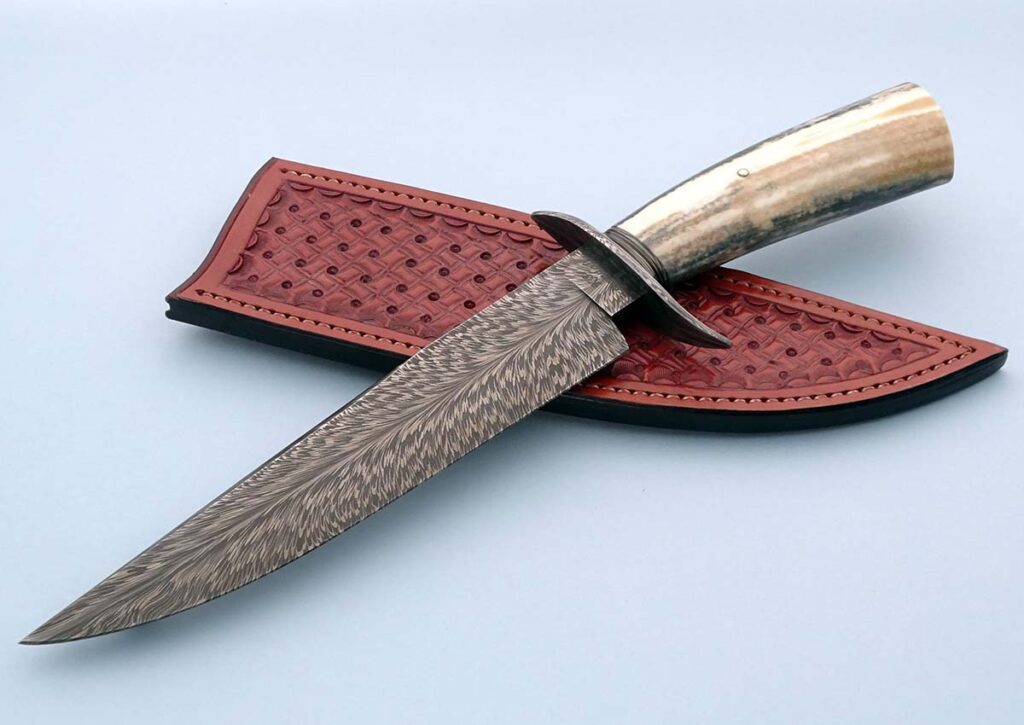

Custom Randall-Orig-Forged-Dam-Fighter-lg

Maker: Steve Randall  
Model: Feather Damascus Fighter  
Blade Length: 8”
Overall Length: 14”
Blade Steel: Feather Pattern Damascus 
Guard Material: Feather Pattern Damascus  
Handle Material: Ancient Walrus Ivory  
Author’s Comments: “Steve is the quintessential ABS master smith. He is versatile, inquisitive, loves a challenge and always strives for perfection in every aspect of his knifemaking.” (Robertson’s Custom Cutlery image)


After the Matrix determined the maker’s position in the strata, the ultimate goal of the RM3 took shape in determining which makers’ prices accurately reflected their position in a particular market sector. My research showed that hundreds of makers’ prices were above their position in the market. In other words, many of these makers who were in the second strata were asking first-strata prices. The same was true for third-strata makers asking second-strata prices. The main reason for this is that the makers asked their knifemaking friends to price their knives.

Knifemakers are not knife buyers and, as such, generally do not have a real sense of what knives should sell for. This is especially true if they don’t know their market position. Additionally, asking your competitors/fellow makers to price your knives is not a recommended business strategy.

Among other things, one aspect of the RM3 I was surprised to find is that it identified makers who offered value pricing. At first glance, many people mistakenly think this means the least expensive price. Instead, given the maker’s position in the market, a value price provides the buyer value regardless of the price tag. The makers who came to my attention were those pricing their knives commensurate with the pricing in lower strata, e.g., a first-strata maker asking for a second-strata price.

Blade Game

When knife shows or knife sales are slow, the blame game begins. The reasons for the slowdowns usually center around the show promoter not doing the job. The economy is a favorite reason, along with the weather, lighting and position in the room. A maker once told me his sales were slow because he was facing a wall. Note that we were in a square room; everyone was facing a wall. What seldom, if ever, is brought up as a reason for slow sales is the maker’s prices.
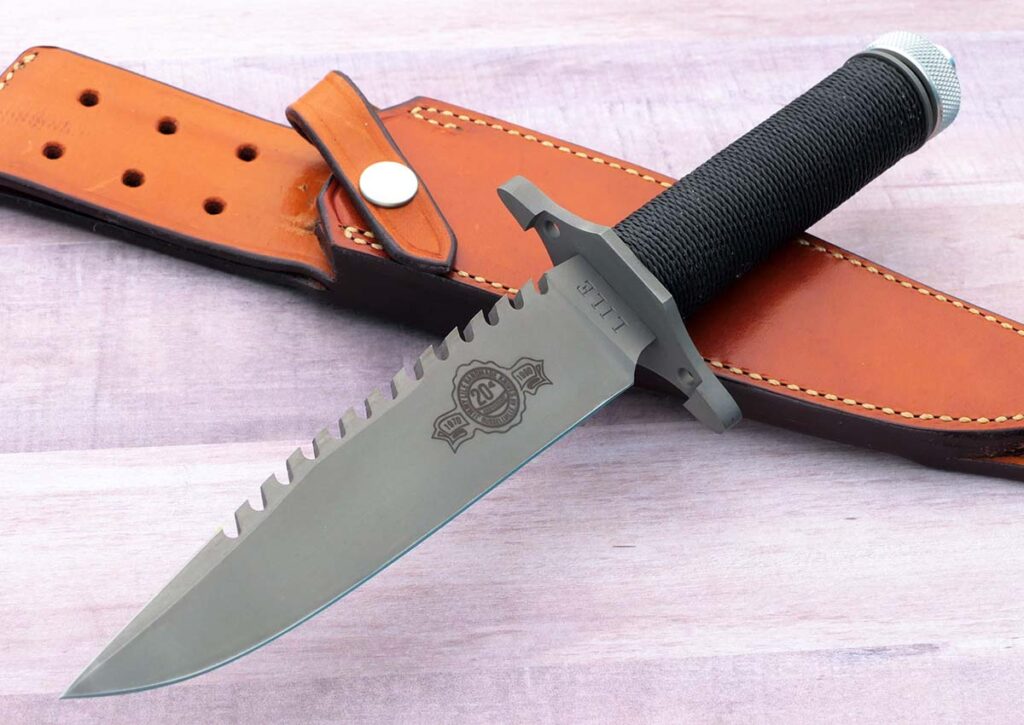

Custom Lile-20-Anniv-Sly-II-Tactical-Fighter-Blade

Maker: Jimmy Lile 
Model: 20th Anniversary SLY II Fighter 
Blade Length: 6”
Overall Length: 10.5”
Blade Steel: 440C stainless
Blade Finish: Bead blast 
Guard Material: Stainless steel 
Handle Material: Aluminum tube w/cord wrapping 
Author’s comments: “A BLADE Magazine Cutlery Hall-of-Fame® member, Jimmy did more to introduce the knife world to the tactical fixed blade than any other custom knifemaker. This young infantry lieutenant saw a Rambo movie and it changed my world.” (Robertson’s Custom Cutlery image)


Very few people will tell makers their prices are too high, as makers can be touchy about their pricing. At the same time, few makers ask collectors or buyers what they think of their knives. This interaction is a prime opportunity for a maker to work on his or her Matrix. Further, this is an opportunity to educate the collector on why the maker’s knives are priced the way they are, and to give the collector a chance to work on his or her Matrix.

I cannot overstate how vital this flow of information is for both the maker and the collector. For the past 30+ years, at every show I have attended I have heard, “Les, come and look at my knives and tell me what you think.” I have the utmost respect for the makers who ask me to do that. It can be daunting for a maker to ask someone to critique the maker’s knives and prices. A quick “good job” may be nice for the maker’s ego, but a critical examination of the work and pricing will ultimately improve the maker’s knives and bottom line. 

Hype Cycle

The Hype Cycle occurs when a custom knife market sector takes center stage. In 1988, interframe folders were all the rage—many sold for over $10,000 each. In 2001, I bought one of the same knives for $600 at an auction. The original sale price was $14,000. What happened? Answer: the Hype Cycle. The hype drove up the prices, and when the hype went away, the prices crashed. The Hype Cycle is a Matrix killer as prices become skewed to the point that they are unsustainable. 

Whether you’re a collector or a maker, the Matrix can benefit you. Identifying the maker’s position in the market aids in an appropriate price, thus increasing sales for the maker. At the same time, it gives the collector a chance to sell or trade a knife at a fair price in the aftermarket, as it is in the aftermarket where collectors pay to go to school. 

Custom knife markets are small cycles inside of larger cycles. New criteria will always enter a Matrix. Consequently, both makers and collectors must be sensitive to the ever-changing markets. Retirements, new materials, awards, bad reviews and other factors can all impact pricing.

R&T

Reading this, some may think the RM3 is a quick and easy solution for pricing knives. I assure you, it is not. The amount of research and time you put into your Matrix will directly affect your ability as a collector or as a maker to identify the maker’s position in his or her market. It also will give valuable insight as to whether the maker is offering value pricing. Makers will gain useful knowledge on how to price their knives correctly for their position in the market, helping them eliminate the blame game.
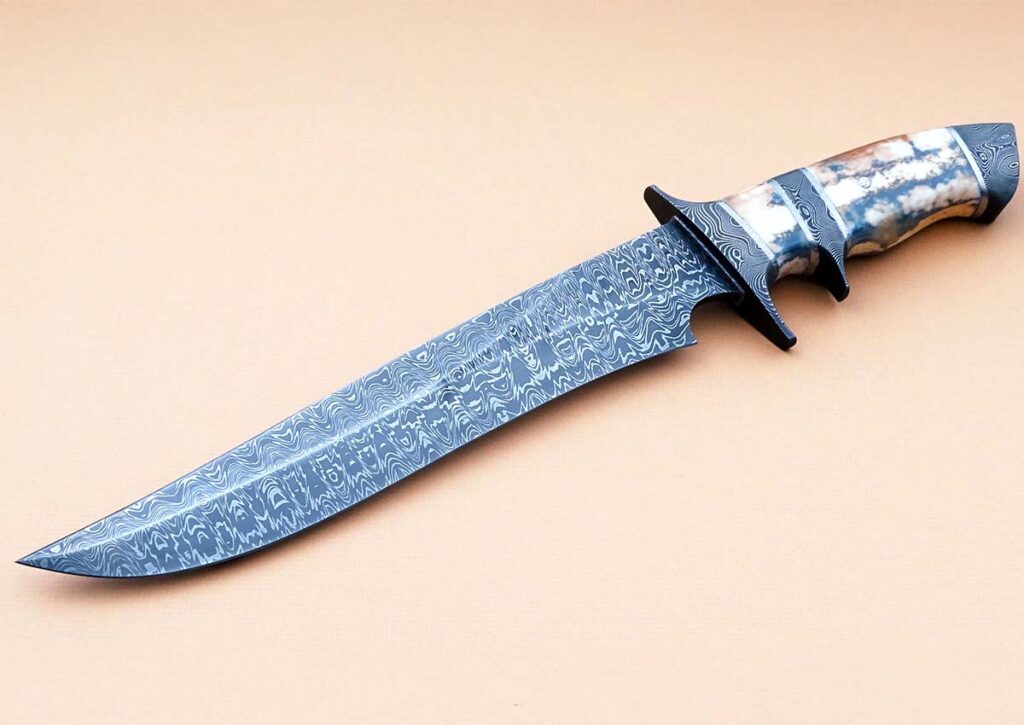

Custom Broadwell-Damascus-SubHilt-Ivory-Blade-Article

Maker: David Broadwell   
Model: MLR Sub-Hilt Fighter 
Blade Length: 8”
Overall Length: 14”
Blade Steel: Wolf’s Tooth Pattern Damascus Guard, Sub-Hilt and Pommel Material: Wolf’s Tooth Pattern Damascus
Handle Material: Ancient Walrus Ivory  
Author’s Comments: “Dave has been making some of the finest sub-hilt fighters for over 40 years. His knives are the epitome of the 4 F’s; Fit, Finish, Form and Function.” (Robertson’s Custom Cutlery image)


More On the Robertson Matrix

How do you give what you call an “importance weight” to each criterion in a Matrix? What makes specific criteria more important than others?
ROBERTSON: One criterion that has moved up my list and now carries more weight is customer service. We deal in so much poor customer service in our everyday lives. We don’t need this in our hobby. I am still amazed at the number of clients who tell me they have emailed or called a maker, often several times, with no response. Everyone is busy but it takes literally 60 seconds to respond to an email acknowledging receipt and indicating a response will be forthcoming asap. Those makers who don’t respond in a timely manner are telling you it is about them and not you. If they are making it difficult for you to give them your money, don’t. 

What makes the ratings for your criteria change?
ROBERTSON: Actually, it is the ratings of knife organizations that have caused me to change the weight the ratings carry in my criteria. When I first started in custom knives, to be a Knifemakers’ Guild voting member carried a lot of weight in the knifemaking community. Today the Guild is more of a club, though still a good idea that provides insight and help for makers. For me, at least, if a maker tells me he or she is a Guild voting member, that mostly tells me the maker is serious and has shown improvement in his or her knifemaking skills over the years, but it does not carry the weight in my criteria it once did.

How often do you update the ratings, and why?
ROBERTSON: The custom knife market is never static and is always evolving.  This evolution demands that weight associated with each criterion evolve as well. The weight I associate with a particular maker changes with the maker’s ability to incorporate the changes the collectors want, be it materials or design elements.

How often do you change the criteria themselves, and why?
LES ROBERTSON: I’m generally one-to-two years ahead of where a market sector that interests me is going. Given this extended lead time, I often have to account for new information and tweaking of the weight within a particular criterion or the criterion itself. Perhaps the most difficult aspect of this is to not put too much weight into a criterion due to my personal biases. In other words, just because a particular style of knife is my favorite does not mean the majority of other collectors feel the same way. I try to take my feelings out of the equation and I am not always successful. The Matrix is not an exact science.
More On Knife Collecting:

Kronos Knives Gung Ho! Line Designed By Ken Onion

Big, Brutish and ready for action.

In ancient Greek myth, Kronos (or Cronos) was king of the Titans—the first generation of gods who ruled the cosmos. It’s a pretty weighty title to hang on a knife company, but one the new(ish) upstart affiliated with gunmaker Palmetto State Armory has done a solid job of filling. Since its founding in 2024, Kronos Knives has left its mark on the industry and recently developed a line likely to further solidify its position.

Shake hands with the Gung Ho! line designed by Ken Onion.

Always a head-turner among knife buyers in the know, Onion designs have proved sought after. However, the Kronos knives are a far cry from many of the BLADE Cutlery Hall of Fame member’s recent entries. The four knives comprising the collection are big, brutish and ready for backwoods or tactical action. Honestly, it was more than what Mike Probyn expected when he initially talked with Onion about creating the line.

“I told Ken he had free reign to do whatever he wanted,” the President of Kronos said. “When I saw what he came up with, I told him there wasn’t a thing that needed to be changed.

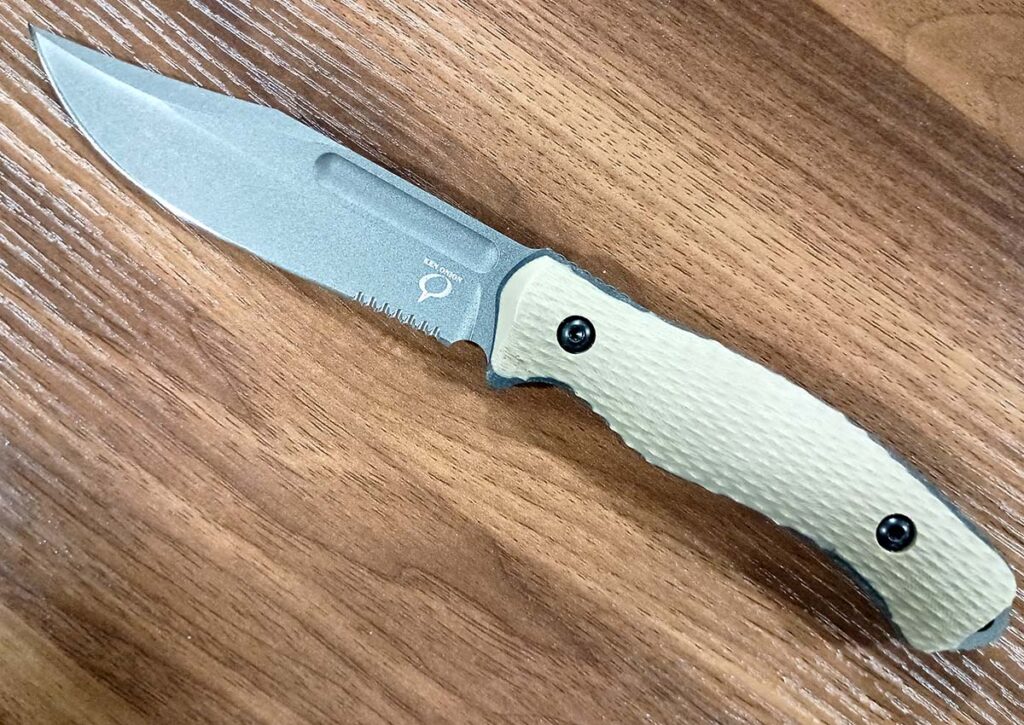
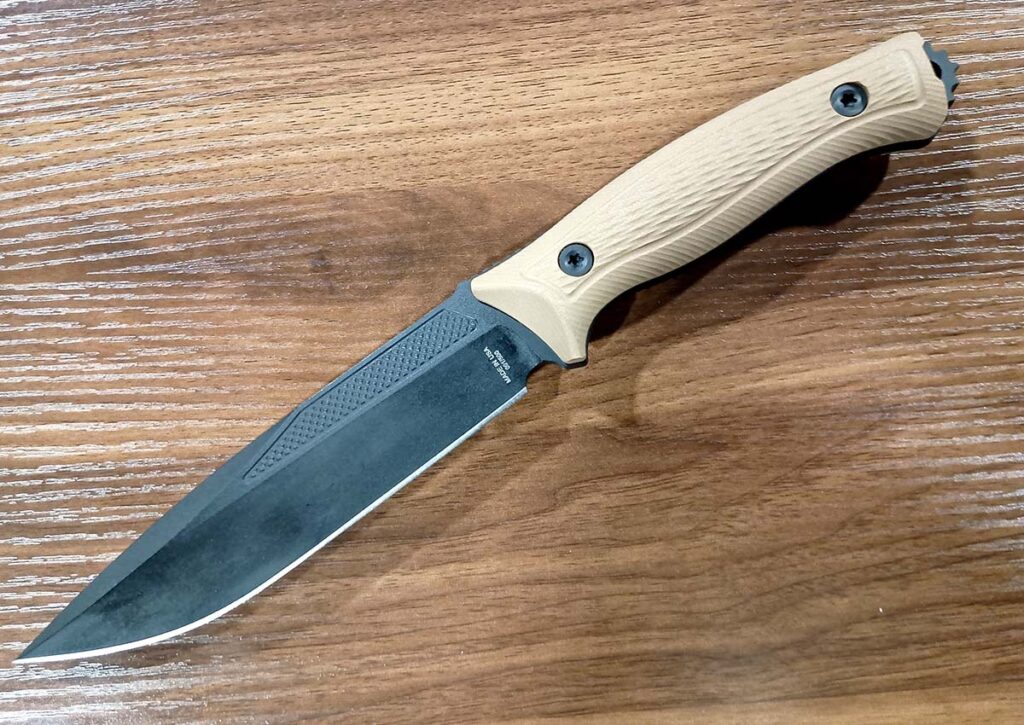
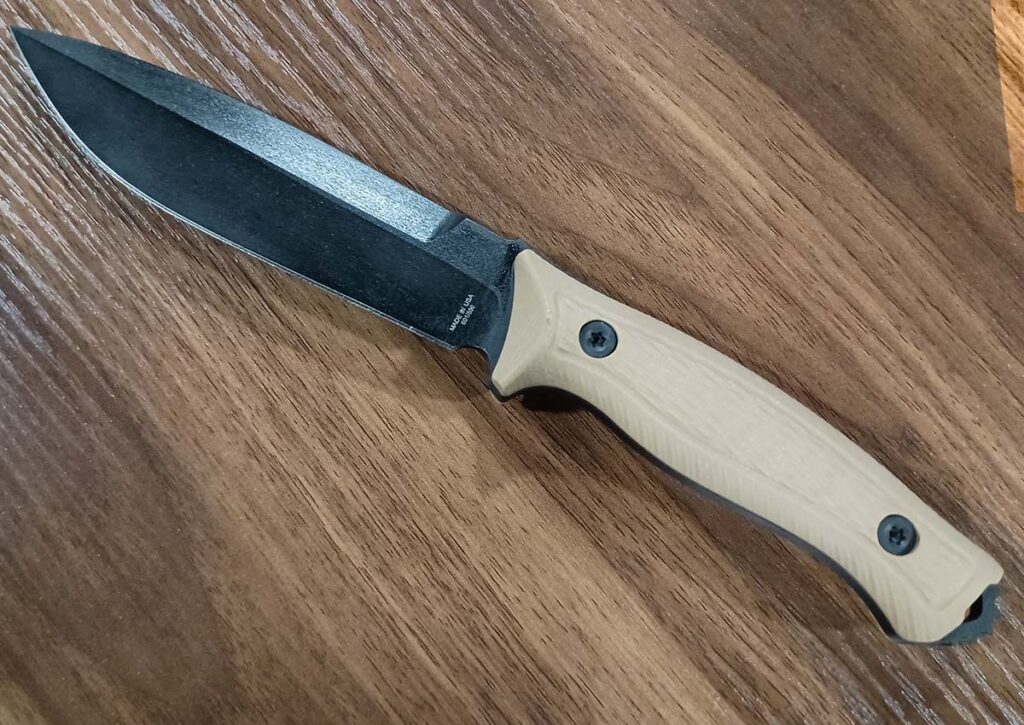
We’ll look a little closer at each model of the Gung Ho! line in a second, but for the sake of expediency, let’s cover the knives’ commonalities first. Each of the knives is a full-tang fixed blade constructed out of 1095 steel and boasts G10 handles. The scale is held in place by oversized torx screws and the butt of the knife has a lanyard hole. Finally, all the Gung Ho! knives are American-made.

Kronos Truedefender

Truedefender

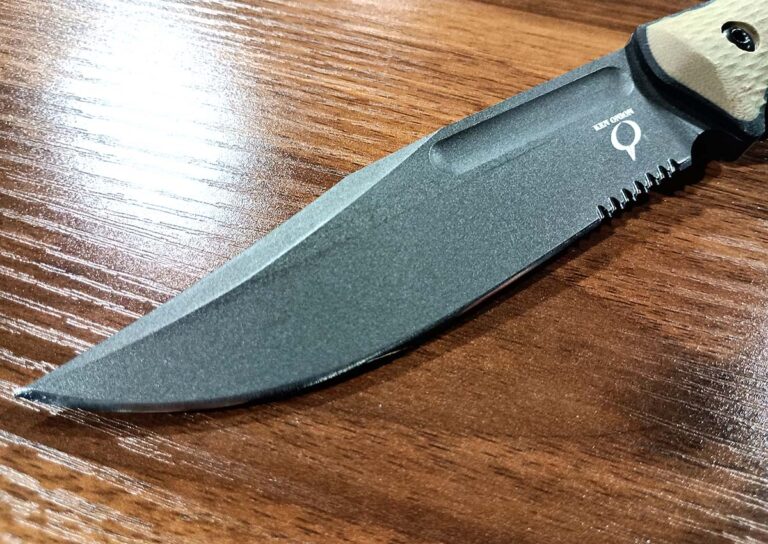
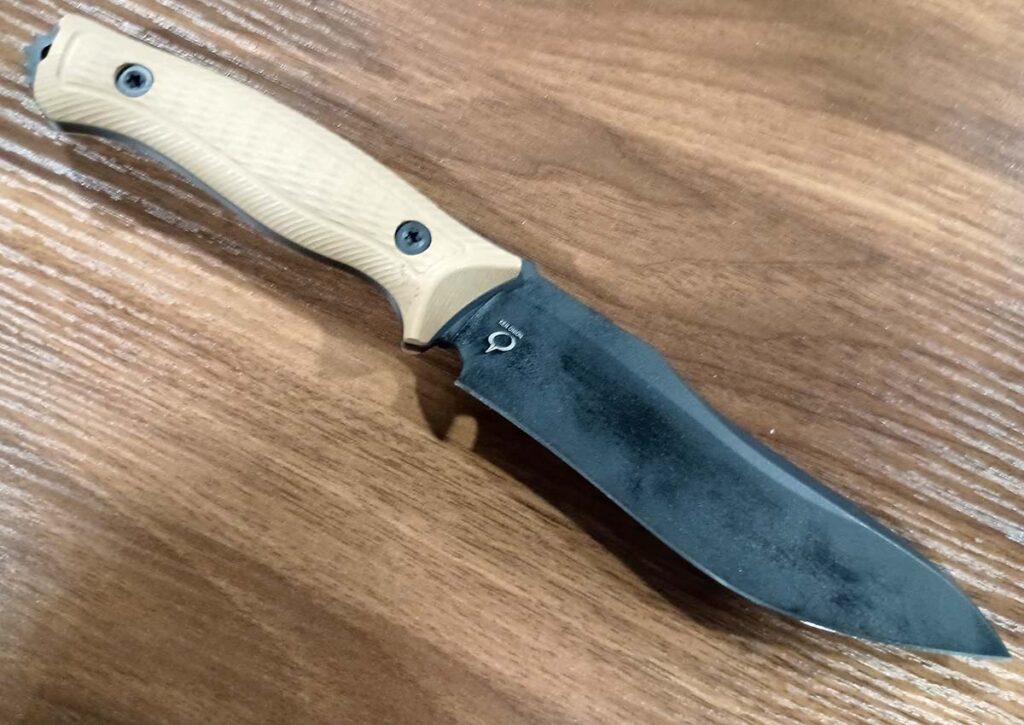
The knife has perhaps the most unique lines of the collection, boasting a wide belly on the blade and a modified drop-point profile. The knife has a sight rake at the grip, giving the blade an aggressive edge-forward posture when in the hand. While not pegged to any one particular role, the Truedefender certainly would excel as a bushcrafter or fall into any tactical task with ease. MSRP: $228

Kronos Maxhunter

Kronos Maxhunter

Living up to its name, the Maxhunter is a traditional hunting knife profile, with a long clip-point blade. The knife has somewhat of a dual personality. A thick spine towards the rear ensures it’s stout enough for tough chores, such as chopping or battoning. The tip comes to a sender finish, making it deft at more delicate tasks, like skinning. MSRP: $228

Kronos Elitesurvival

Elitesurvival

Aimed at bushcrafting, the Elitesurvival provides a very rugged design for those who thrive in the backwoods looking for. The drop-point blade is meaty and hardy enough to take the abuse commonly doled out in camp and survival tasks. A nice touch, the tapered grind on the spine—near the tip—provides a good striking surface for firecraft. MSRP: $256

Kronos Stiffneck

Kronos Stiffneck

Maybe the wickedest looking one of the bunch, the Stiffneck offers up a dagger profile with a single edge. The false edge on the blade, however, comes down thin enough that it would likely be no issue to grind an actual one onto it—if it’s legal in your neck of the woods. Though, it doesn’t hold like a dagger as the handle is not asymmetrical, with an aggressive rake similar to the Truedefender. MSRP: $220

Check Out More Buyer’s Guides:

American Made Knives: New And Hot Options

Today’s American-made knives embody the latest in the state-of-the-art.

American knifemaking is alive, well and thriving. Certainly over the years the marketplace for cutlery has become more global, despite this native craftsmen and companies have held their ground and remained sharp as ever. Below is a good example. We’ve collected a throng of blades made in good ol’ U.S. of A. that showcase creative prowess of our countrymen.


Talon / Hawk Knife Designs

Talon / Hawk Knife Designs

Knife type: Tactical/EDC
Designer: Gavin Hawk
Blade length: 3.5”
Blade steel: M390 stainless
Rockwell hardness: 63 HRC
Blade grind: Hollow
Blade pattern: Modified drop point
Blade finish: Tumbled
Scale material: Black Dunes (Fatcarbon®)
Frame material: Titanium
Furniture material: Titanium (button, clip, backspacer)
Lock: Hawk Lock, toggle detent
Pivot: Bearings
Weight: 4.4 ozs.
Closed length: 4.8”
MSRP: $2,000
Available: NOW


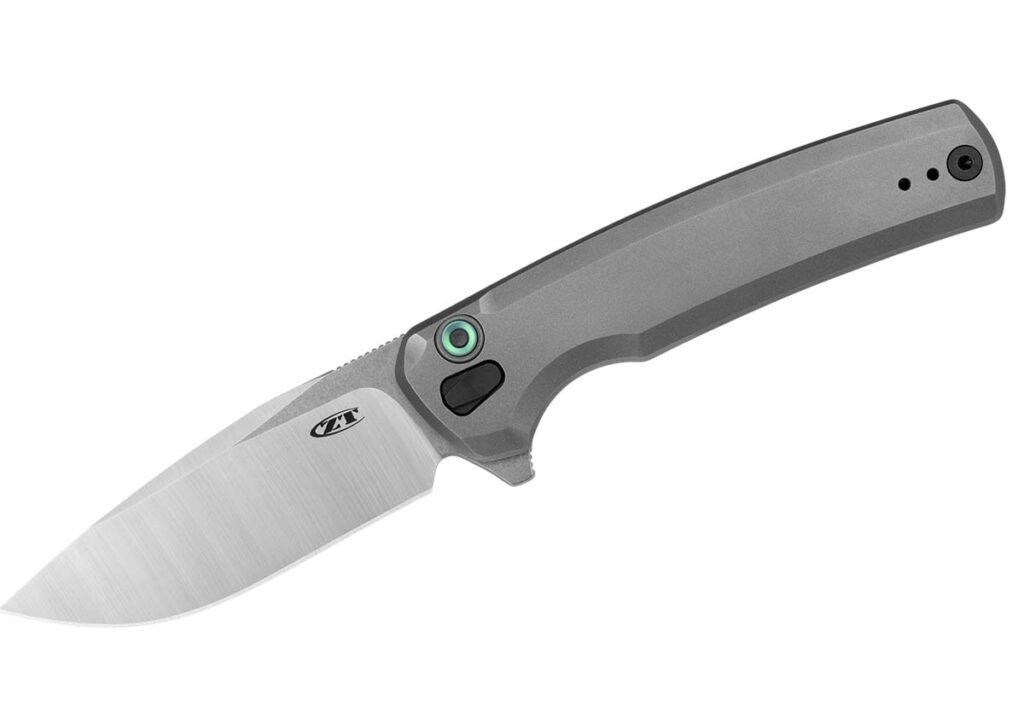
Zero Tolerance 0044

Zero Tolerance 0044

Knife type: EDC flipper folder
Designer: ZT original
Blade length: 3.2”
Blade steel: CPM S45VN stainless
Rockwell hardness: 59-61 HRC
Blade finish: Two-tone
Scale material: Titanium w/bead blast finish
Lock: Button lock
Pivot: Ceramic bearings
Weight: 3.4 ozs.
Closed length: 4.35”
MSRP: $425
Available: NOW


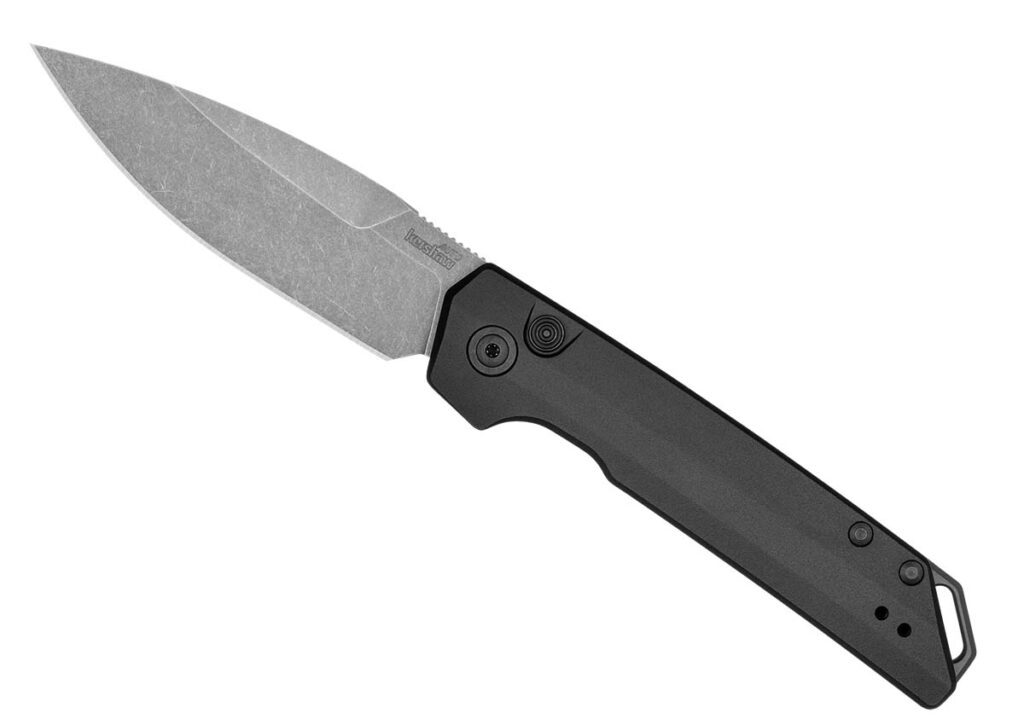
Kershaw Launch Iridium

Kershaw Launch Iridium

Knife type: Automatic
Designer: Kershaw original
Blade length: 3.45”
Blade steel: CPM MagnaCut stainless
Rockwell hardness: 62-64 HRC
Blade finish: Working finish
Scale material: Aluminum anodized black
Lock: Button lock
Pivot: Washers
Weight: 3.1 ozs.
Closed length: 4.55”
MSRP: $279.99
Available: NOW


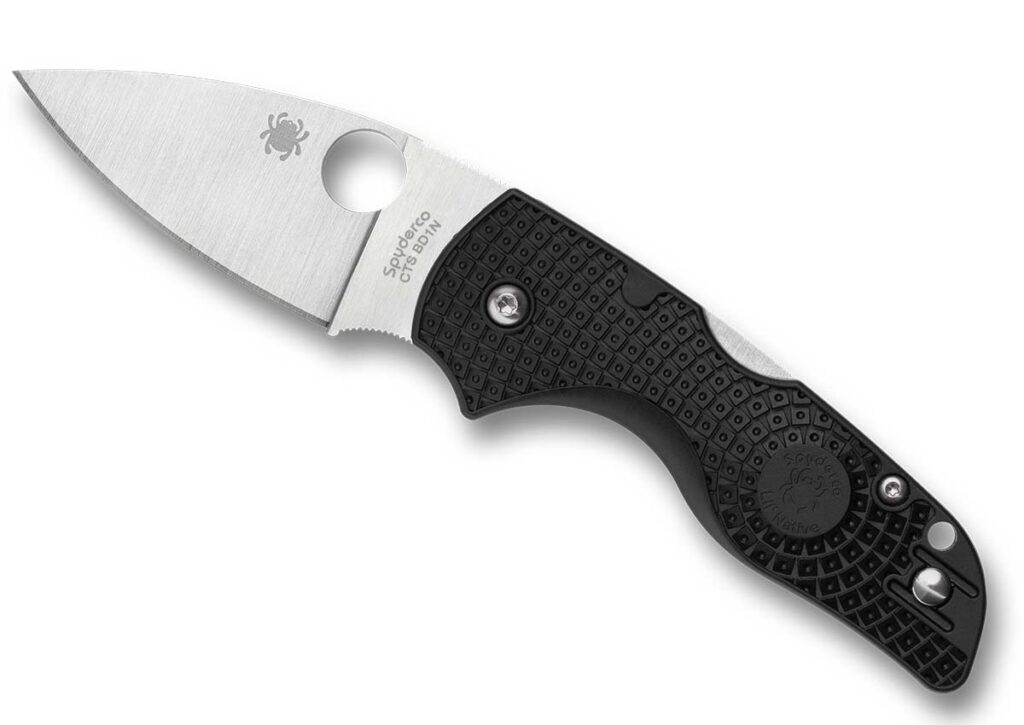
Spyderco Lil’ Native Lightweight

Spyderco Lil’ Native Lightweight

Designer: Eric Glesser
Blade length: 2.42”
Blade steel: CTS BD1N stainless
Blade grind: Full-flat
Blade finish: Satin
Scale material: FRN
Lock: Back Lock
Weight: 1.5 ozs.
Closed length: 3.74”
MSRP: $160
Knife to know: This folding knife takes the company’s Lil’ Native Back Lock platform and lightens it by 40 percent with fiberglass-reinforced-nylon scales.
Available: March


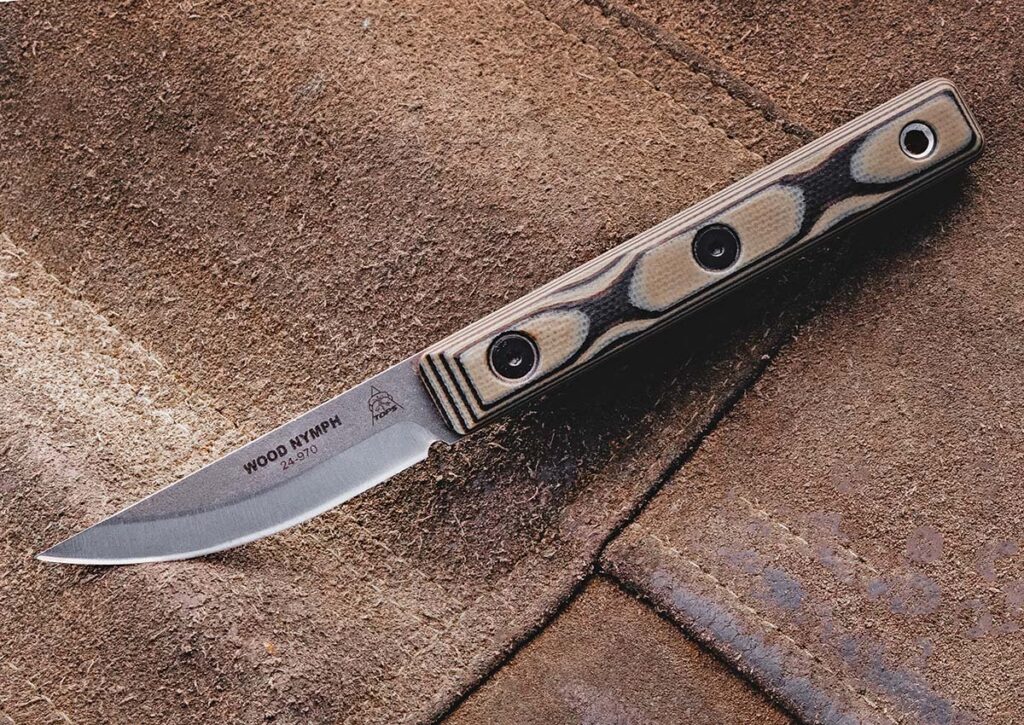
TOPS Knives Wood Nymph

TOPS Knives Wood Nymph

Knife type: EDC/bushcraft
Designer: Bushcraft Kelso
Blade length: 2.25”
Blade material: 1095 carbon steel
Rockwell hardness: 56-58 HRC
Blade grind: TOPS’ modified Scandi
Blade finish: Tumble
Scale material: Tan/black G-10
Weight: 1.8 ozs. (3.2 ozs. w/sheath)
Overall length: 5.75”
Sheath type and material: Brown leather
MSRP: $190
Knife to know: Thick for its size, the handle is well-rounded and longer than the blade for a solid grip. The blade shape is simple and classic. It’s sharp, pointy and a little thinner than most would expect from TOPS at 3/32-inch thick. A simple leather sheath makes this knife one of the easiest to carry. It’s a simple yet effective workingman’s tool.
Available: NOW


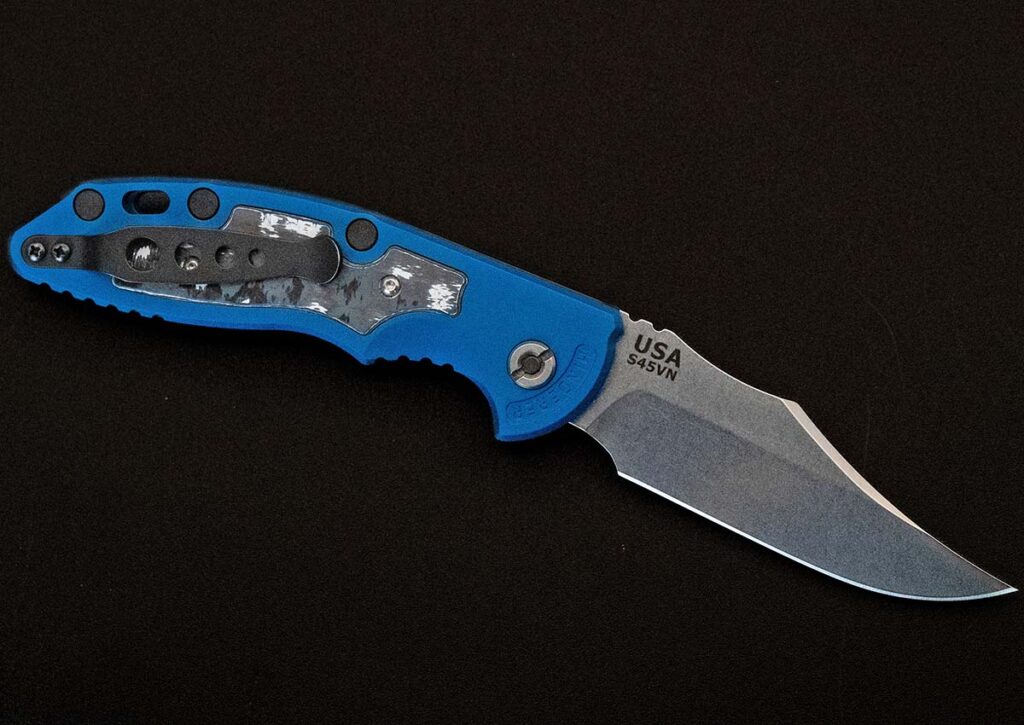
Rick Hinderer Knive XM-18 3.5” Bowie Automatic Aluminum

Rick Hinderer Knive XM-18 3.5” Bowie Automatic Aluminum

Knife type: EDC
Designer: Rick Hinderer
Blade length: 3.5”
Blade steel: CPM S45VN stainless
Rockwell hardness: 60-62 HRC
Blade pattern: Bowie
Blade finish: Stonewash
Liners: Patent pending titanium half liners
Scale material: Two options: anodized blue aluminum w/inlay and Arctic Storm w/FCF inlay
Frame material: Aluminum anodized blue
Furniture material: Stainless steel black nitride hardware (add on) and matte black Holey Clip (add on)
Lock: Button lock
Pivot: Phosphor bronze washers
Weight: 5.12 ozs.
Closed length: 4.75”
MSRP: $495
Knife to know: Featuring a lightweight yet durable aluminum handle with patent-pending titanium half liners, this knife offers enhanced strength and stability without compromising on weight. Designed with the EDC enthusiast in mind, it blends innovation, practicality and cutting performance, making it a trusted companion for any daily task or adventure.
Available: 2025


Bear Forest Knives Stumpy

Bear Forest Knives Stumpy

Blade length: 2 1/8”
Blade steel: Nitro V stainless
Blade thickness: 1/8” w/90-degree spine
Grind: Full flat
Finish: Raw matte 
Scale materials: Various Micarta®/wood/Bearcarta (check availability)
Overall Length: 5 7/8”
Sheath: Kydex® black (.08” thick)
MSRP: $239.99
Knife to know: The Stumpy checks all the boxes; it defines what is needed in a small utility fixed-blade knife while in the shop or outdoors. At the same time, you aren’t giving up comfort.
Available: NOW


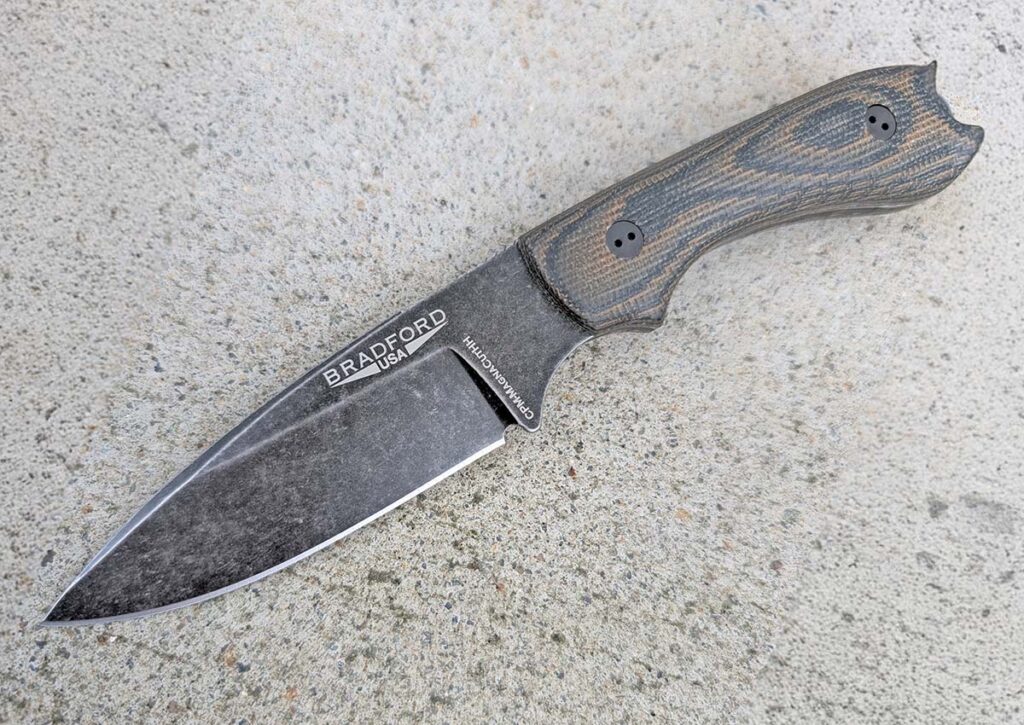
Bradford USA Guardian 3.2

Bradford USA Guardian 3.2

Knife type: Fixed-blade EDC
Blade length: 3.5”
Blade steel: CPM MagnaCut High Hardness stainless
Rockwell hardness: 63-64 HRC
Blade grind: Sabre, false edge, full height flat
Blade thickness: .14”
Scale options: Micarta®, G-10 and carbon fiber
Overall length: 7.125”
Sheath: Horizontal leather
MSRP: $229
Knife to know: Blade also available in a choice of ELMAX and M390 stainless steels
Available: NOW


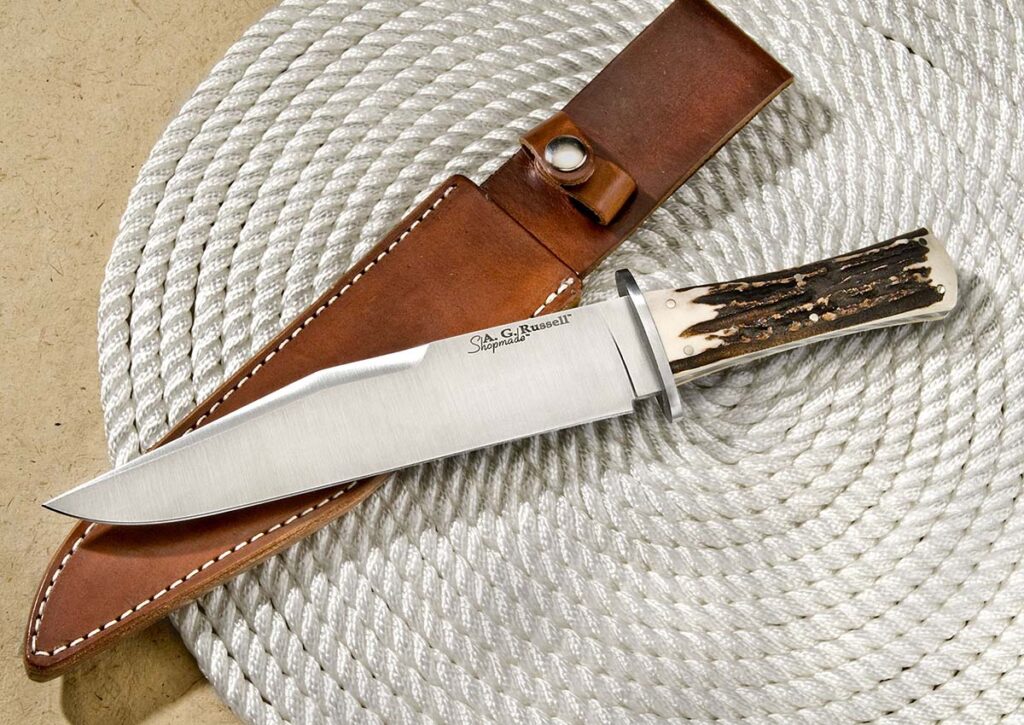
A.G. Russell Knives California Bowie Knife

A.G. Russell Knives California Bowie Knife

Designer: BLADE Magazine Cutlery Hall-of-Fame® member A.G. Russell
Blade length: 8.5”
Blade steel: 154CM stainless
Rockwell hardness: 59-61 HRC
Blade grind: Flat 
Blade finish: Satin
Scale material: Premium India stag
Furniture material: 410 stainless steel
Weight: 10.6 ozs.
Overall length: 13.25”
Sheath type and material: Handmade of leather
Special feature: Long California clip point blade
MSRP: $595
Available: NOW


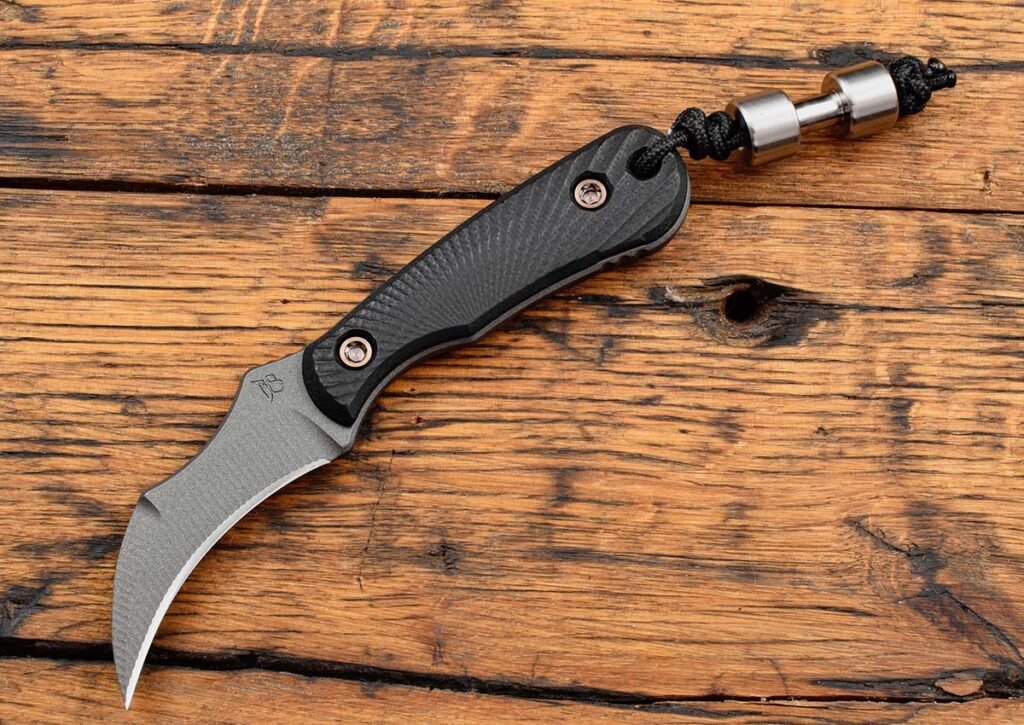
RMJ Tactical Gym Rat

RMJ Tactical Gym Rat

Designer: Bryan Schellenger
Knife type: Fixed-blade EDC
Blade length: 2 3/8”
Blade thickness: 1/8”
Weight: 2.3 ozs.
Blade steel: Nitro V stainless
Rockwell hardness: 59-60 HRC
Blade finish: Tungsten Cerakote®
Scale material: Three G-10 options: black, dirty olive, hyena brown
Handle fasteners: Torx Grade 5 titanium anodized a bronze color
Barbell bead: Grade 5 titanium
Overall length: 5 1/8”
Sheath: Kydex w/ball chain & ambidextrous clip adapter suitable for pocket and outside the waistband carry
Knife to know: Designer Bryan Schellenger wanted to come up with a small, light but effective blade that could be easily concealed with minimal clothing, and that idea was spawned at the gym; also carries as a necker
MSRP: $185
Available: NOW


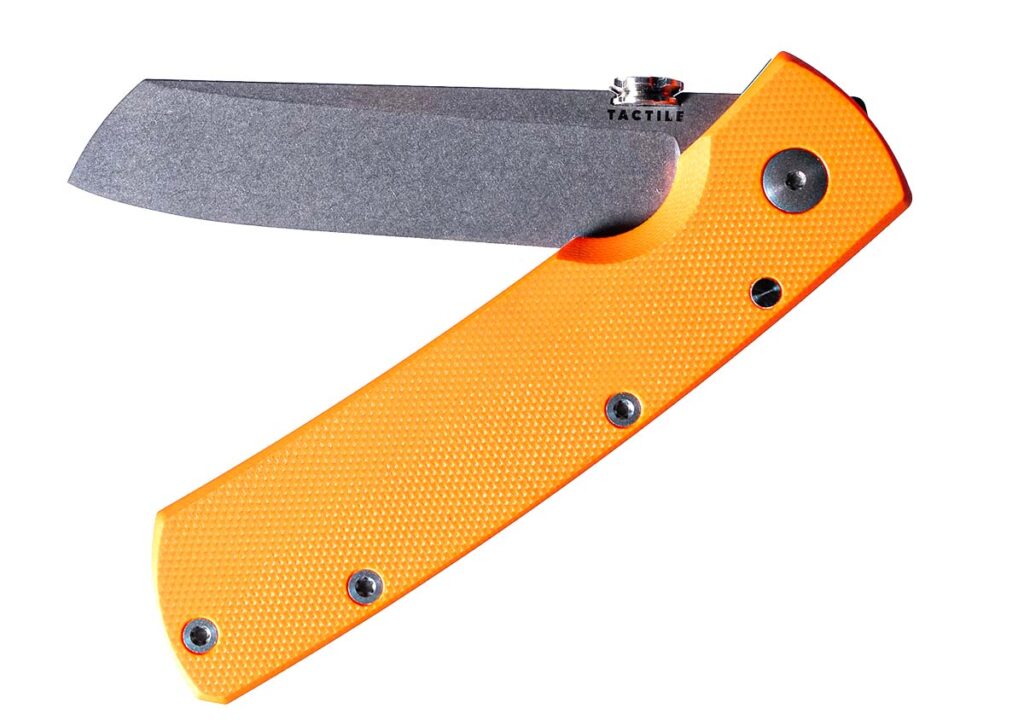
Tactile Knife Maraner 2

Tactile Knife Maraner 2

Knife type: EDC
Designer: BLADE Magazine Cutlery Hall-of-Fame® member Bob Terzuola
Blade length: 2.985”
Blade steel: CPM MagnaCut stainless
Rockwell hardness: 63-64 HRC
Blade pattern: Sheepsfoot
Blade finish: Tumbled
Liner material: Hardened stainless lock-bar insert
Scale material: Titanium & G-10
Furniture material: Titanium backspacer
Lock: Insert linerlock
Pivot: Ceramic bearings
Closed length: 4.175”
Knife to know: Designed in 1987; first production variant
MSRP: $399
Available: NOW


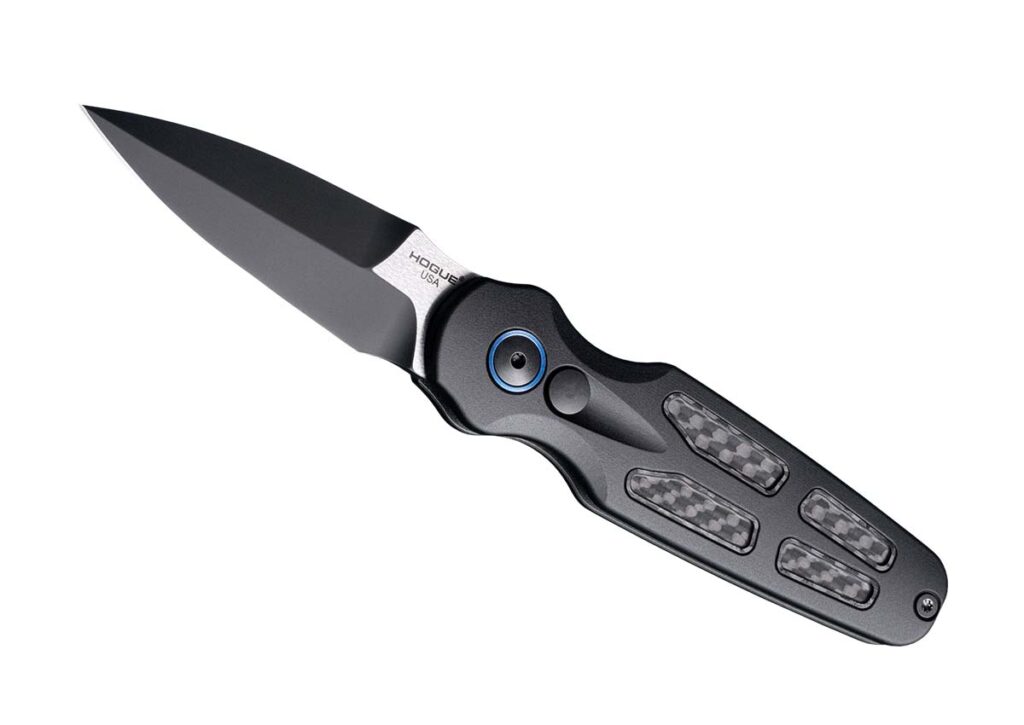
Hogue Knives Ballista II

Hogue Knives Ballista II

Knife type: EDC automatic
Designer: Scott Bruhns 
Blade length: 3.4”
Blade steel: CPM MagnaCut stainless
Rockwell hardness: 62-64 HRC
Blade grind: Flat
Blade finish: Two-tone: stone tumbled and black PVD
Scale material: Carbon fiber inserts
Frame material: Matte black 6061-T6 anodized aluminum
Pocket clip: Deep carry, right-hand carry
Weight: 2 ozs.
Closed length: 3.8”
Special features: Titanium accents anodized blue
MSRP: $239.95
Available: NOW


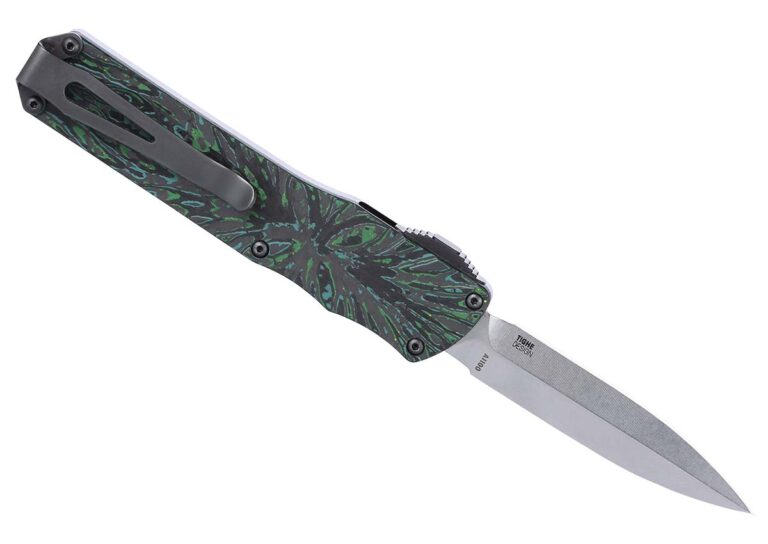
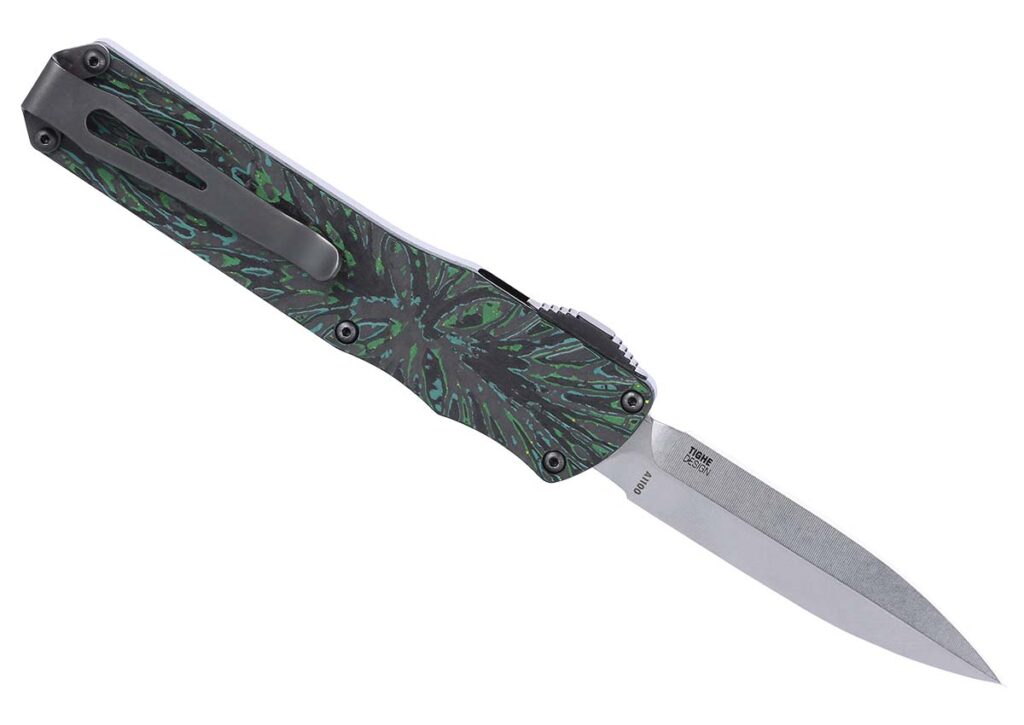
CRKT Twist Tighe Compact Automatic

CRKT Twist Tighe Compact Automatic

Designer: Brian Tighe
Knife type: EDC OTF automatic
Blade length: 2.69”
Blade steel: CPM MagnaCut stainless
Blade thickness: .09”
Blade finish: Stonewash
Scale material: Green carbon fiber
Weight: 1.6 ozs.
Closed length: 4.01”
MSRP: $300
Available: NOW


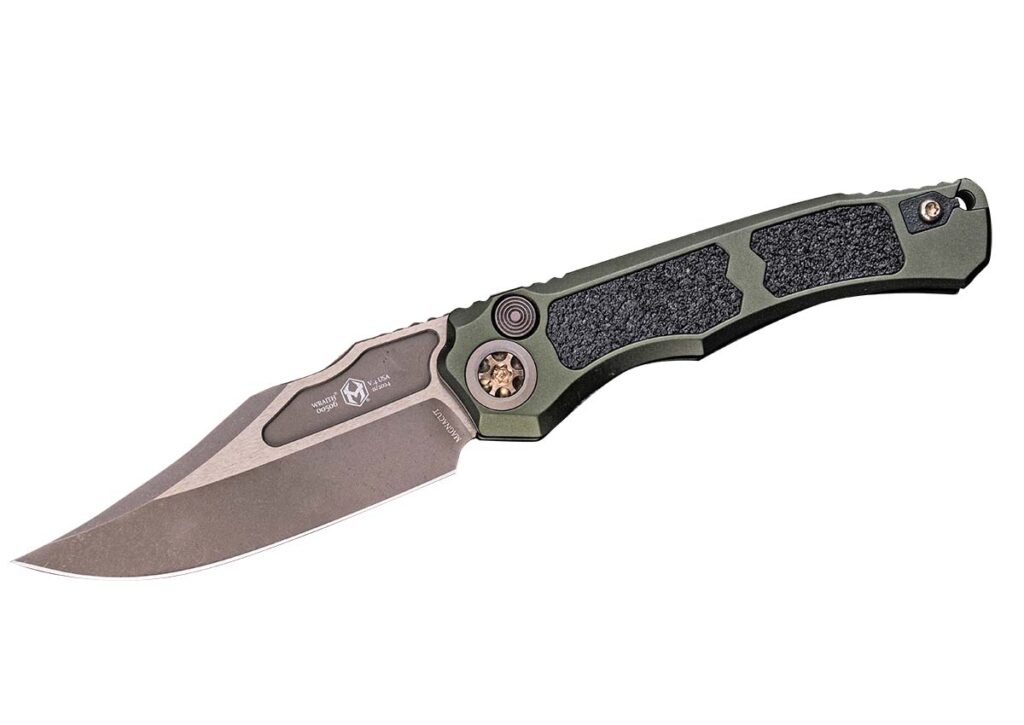
Heretic Knives Wraith Auto

Heretic Knives Wraith Auto

Designer: Anthony Marfione Jr.
Blade length: 3.62”
Blade steel: CPM MagnaCut stainless
Blade pattern: Bowie 
Blade finish: Bronze              
Scale material: 6061 aircraft aluminum
Furniture material: Stainless steel
Lock: Button lock
Pivot: Caged ceramic bearings
Weight: 6.07 ozs.
Closed length: 5.07”
Special features: Ambidextrous pocket clip, rubber inlays, snappy action
MSRP: $295
Available: NOW


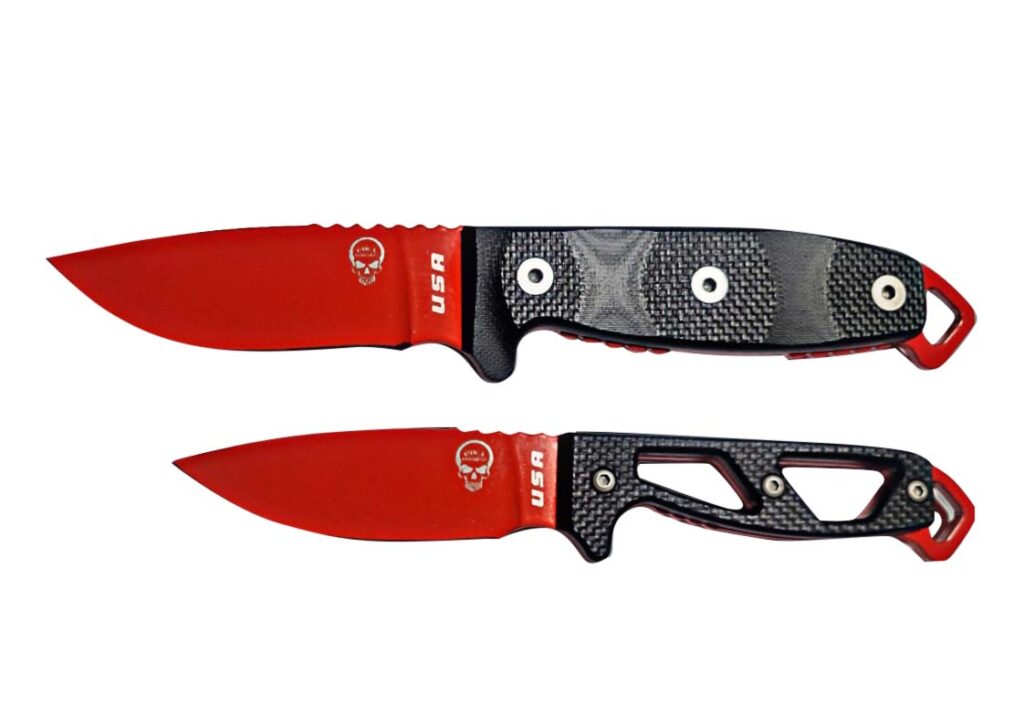
Utica Critical Hit I and II MagnaCut series

Utica Critical Hit I and II MagnaCut series

Knife type: Tactical, EDC, survival
Designers: Bill Harris, Stephen Schook and Utica team
Blade lengths: 3 and 2.5”
Blade steel: CPM MagnaCut stainless
Rockwell hardness: 61-62 HRC
Blade grind: Flat
Blade finish: Red powder coat
Scale material: Black textured Micarta®
Liner material: G-10
Overall lengths: 8 and 5.25”
Sheath type and material: Critical Hit I ABS sheath w/built-in sharpener and fire striker and reversible belt clip and paracord; Critical Hit II ABS sheath w/belt clip and paracord
MSRP: $170
Available: NOW


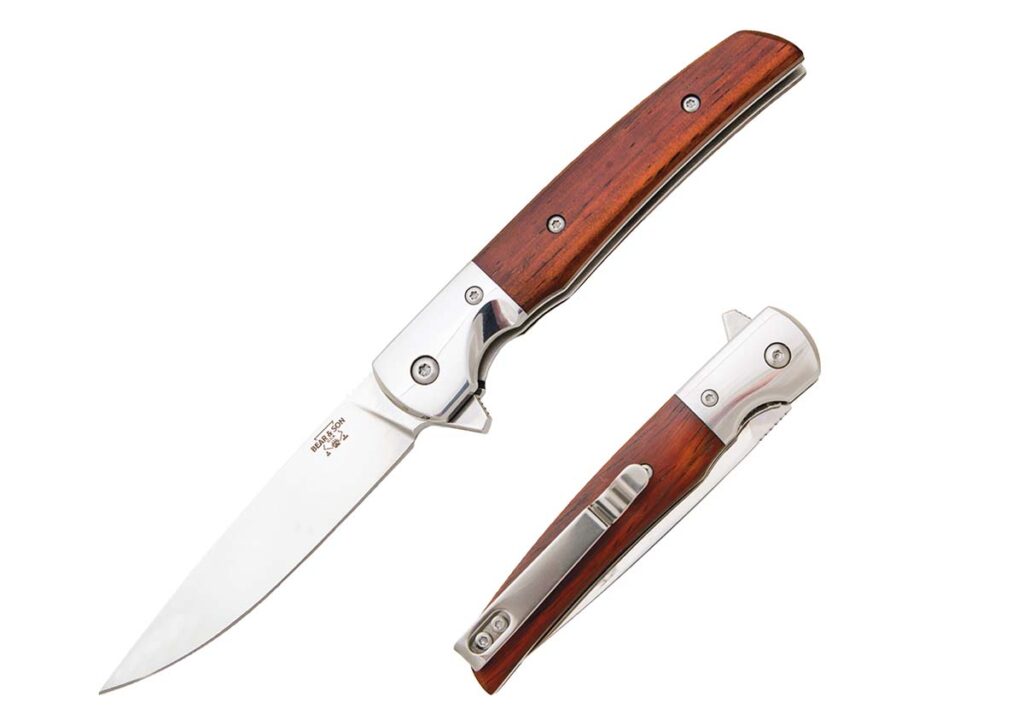
Bear & Son 4 ¼” Rancher Sideliner

Utica Critical Hit I and II MagnaCut series

Knife type: EDC
Designer: Bear & Son
Blade length: 3 3/8”
Blade material: D2 tool steel
Rockwell hardness: 59-61 HRC
Blade grind: Taper
Blade finish: High polished
Liner material: Stainless steel
Scale material: Cocobolo
Frame material: Stainless steel
Lock: Linerlock
Pivot: Ball bearing washers
Weight: 3 ozs.
Closed length: 4 ¼”
Overall length: 7 5/8”
MSRP: $95.99
Available: NOW


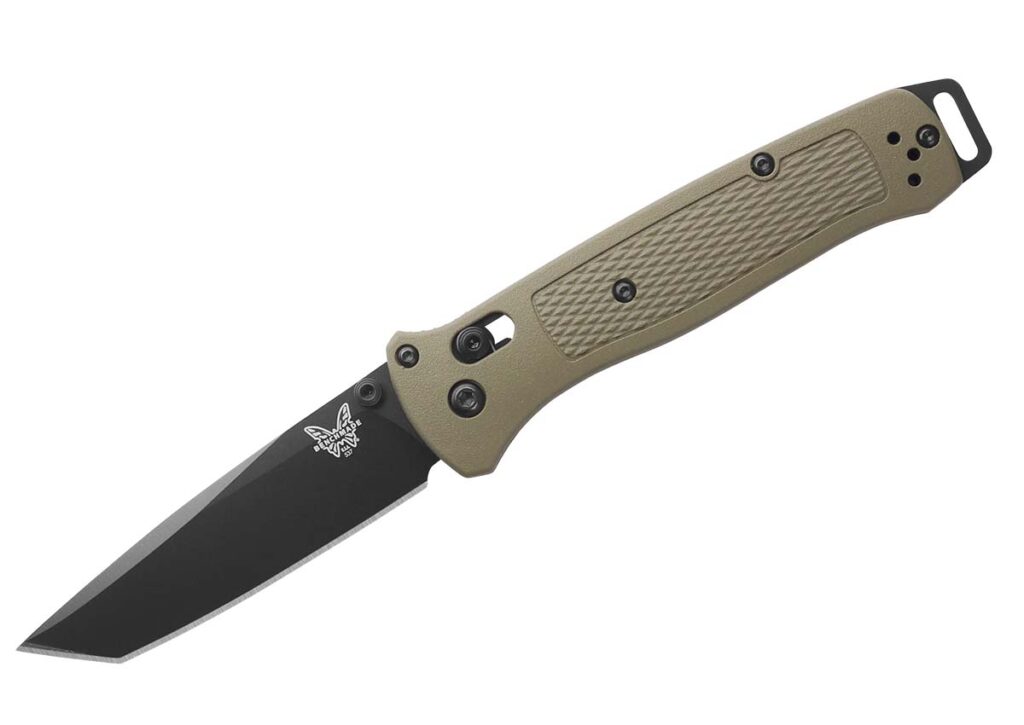
Benchmade Bailout

Benchmade Bailout

Knife type: Tactical folder
Blade length: 3.38”
Blade steel: CPM S30V stainless
Rockwell hardness: 58-60 HRC
Blade thickness: .09”
Blade pattern: Tanto
Blade finish: Graphite black Cerakote®
Scale material: Grivory® in ranger green
Handle thickness: .41”
Lock: AXIS®
Pommel lanyard: Anodized aluminum
Weight: 2.5 ozs.
Closed length: 4.72”
MSRP: $200
Knife to know: Maintaining its tactical hard-use prowess with a piercing tanto blade, this slim and easily pocketable folder features ultralight Grivory handle scales with highly textured grip zones and CPM S30V steel for superb edge qualities and corrosion resistance.
Available: February

More Buyer’s Guides:

New Auto Knives: Three Standouts Of The Boom

0

Three new models are but a smattering of the boom in factory-made automatics.

When it comes to a truly original American knife, it’s hard to top the auto.

Unfairly maligned over the decades as the “weapon of street gangs” and other inaccurate smears, the knife still known to many as the switchblade is enjoying a renaissance in popularity due to the reversals of many statewide auto bans spearheaded in large part by the two leading pro-knife legislative action groups: Knife Rights and the American Knife & Tool Institute.

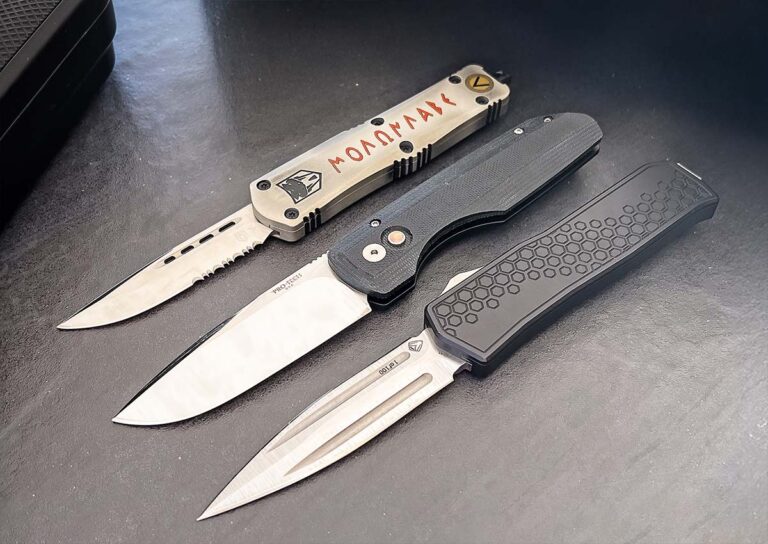
With autos now legal to many thousands of enthusiasts in dozens of states, one of the results has been a boom in factory-made autos by a growing number of knife companies.

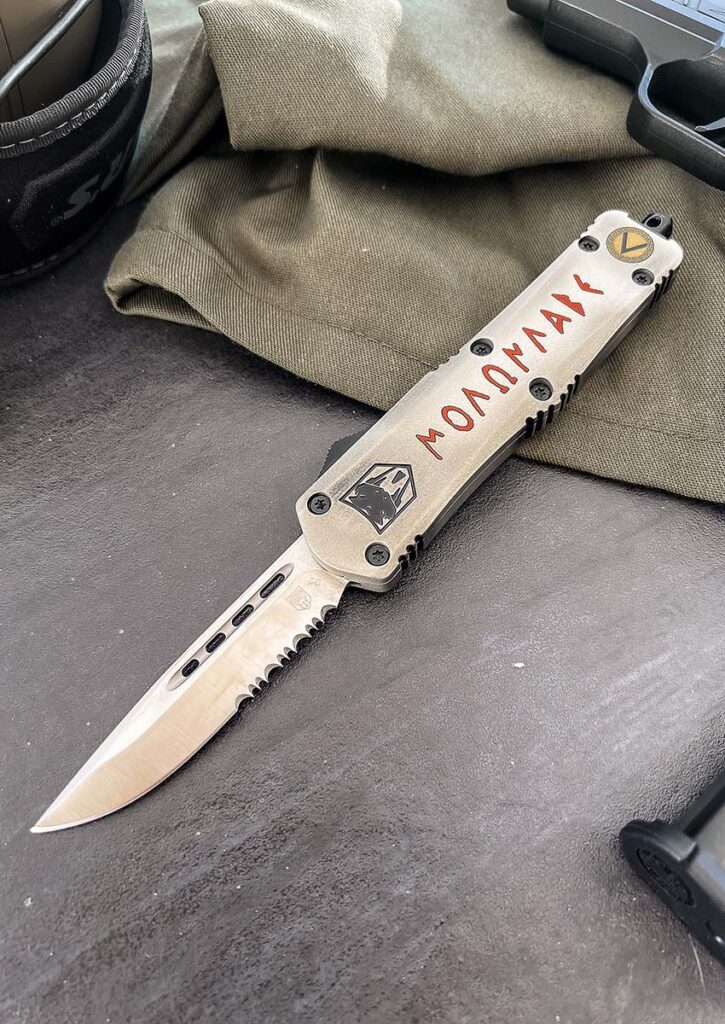
CobraTec FS-3 Molon Labe

The handle of the CobraTec OTF has a Cerakote® finish and graphics with the Molon Labe—Latin for “come and take it”—text.  A ramped thumb slide switch actuates the blade, which deploys and retracts with quick, crisp action.

FS-3 Molon Labe Specs
Overall Length: 8″
Blade Length: 3″
Weight: 6.3 oz.
Blade Steel: D2
MSRP: $160

Pros

  • Durable D2 Tool Steel Blade
  • Smooth and Reliable OTF Deployment
  • Relatively Affordable

Cons

  • D2 Requires Maintenance

If you’re into OTF (Out The Front) autos, Texas-based CobraTec Knives should be of interest. The small, family-owned operation offers entry-level, midgrade and high-end automatic and manual opening knives, as well as fixed blades. 

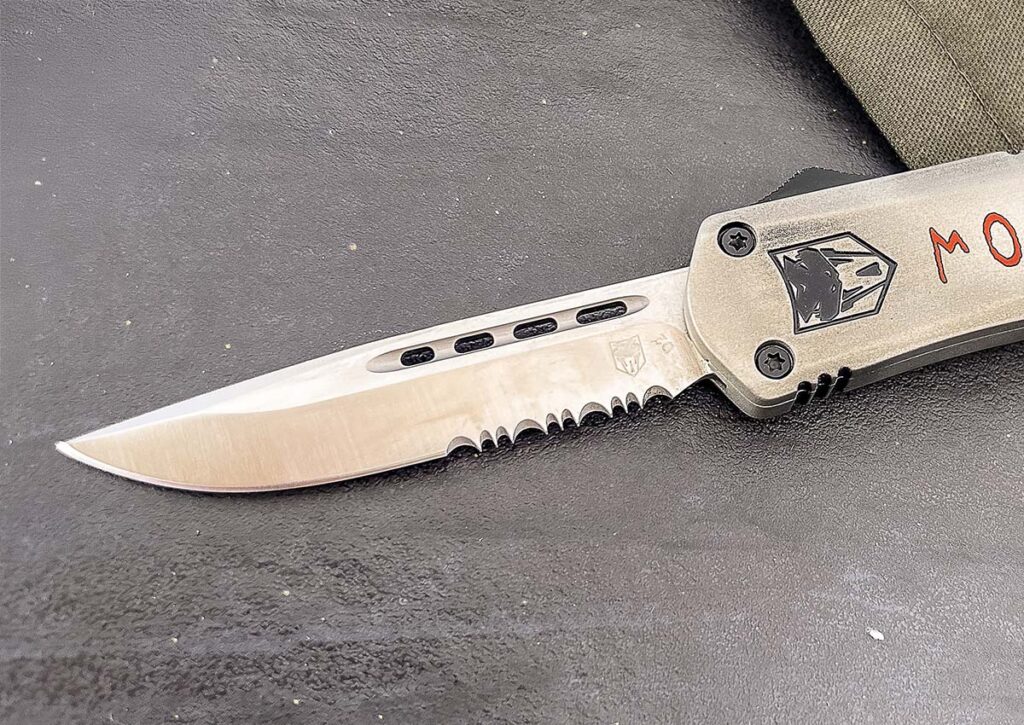
Its OTFs* are a great bang for the buck. The medium FS-3 Molon Labe edition features a 3-inch clip-point blade of satin-finished D2 tool steel paired with a 4.5-inch aluminum handle. Available in either a plain or partially serrated edge, the test model is the latter. The serrations give extra cutting power through thick or fibrous materials. 

The knife is sized just right to handle most cutting tasks and still be compact enough for comfortable carry. The handle has a Cerakote® finish and graphics with the Molon Labe—Ancient Greek for “come and take it”—text. A deep carry, reversible/ambidextrous pocket clip held by a large screw doubles as a glass breaker. A ramped thumb slide switch actuates the blade, which deploys and retracts with quick, crisp action.

A ramped thumb slide switch actuates the blade, which deploys and retracts with quick, crisp action.

D2 is known for toughness, edge holding and ease of resharpening. It’s been a popular choice for custom knifemakers for years and has become widely adopted in the production industry as an alternative to low-grade stainless steel, offering the enhanced edge retention at a nominal price increase, if any.  The belly of the modified clip point blade has excellent slicing abilities. 

Medford Knife & Tool MERC-1

The MERC-1 has a symmetrical dagger-style blade of CPM S45VN stainless for enhanced edge holding. 

MERC-1 Specs
Overall Length: 8.75″
Blade Length: 3.75″
Weight: 4.5 oz.
Blade Steel: S45VN
MSRP: $600

Pros

  • Premium Blade Steel
  • Innovative No-Screw Handle Design
  • Secure and Intentional OTF Deployment

Cons

  • Expensive

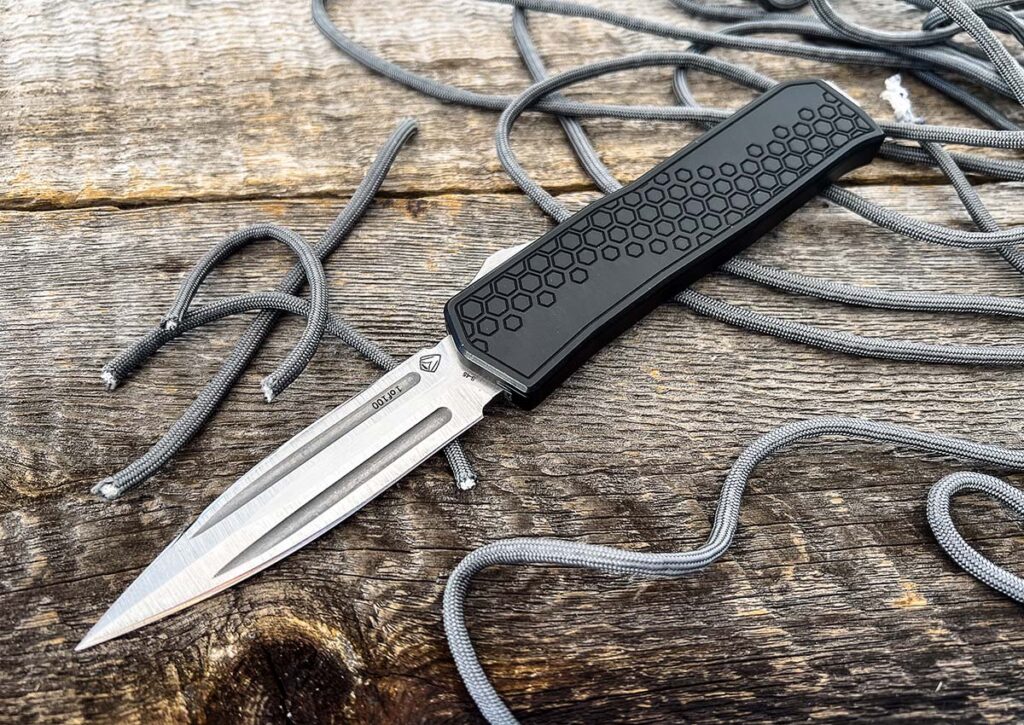
If you think the Medford Knife & Tool MERC-1 is like all the other OTFs on the market, you’re wrong. The 3.75-inch blade comes in either a double-edge dagger style or Medford’s single-edge Praetorian-style drop point, each in CPM S45VN stainless.

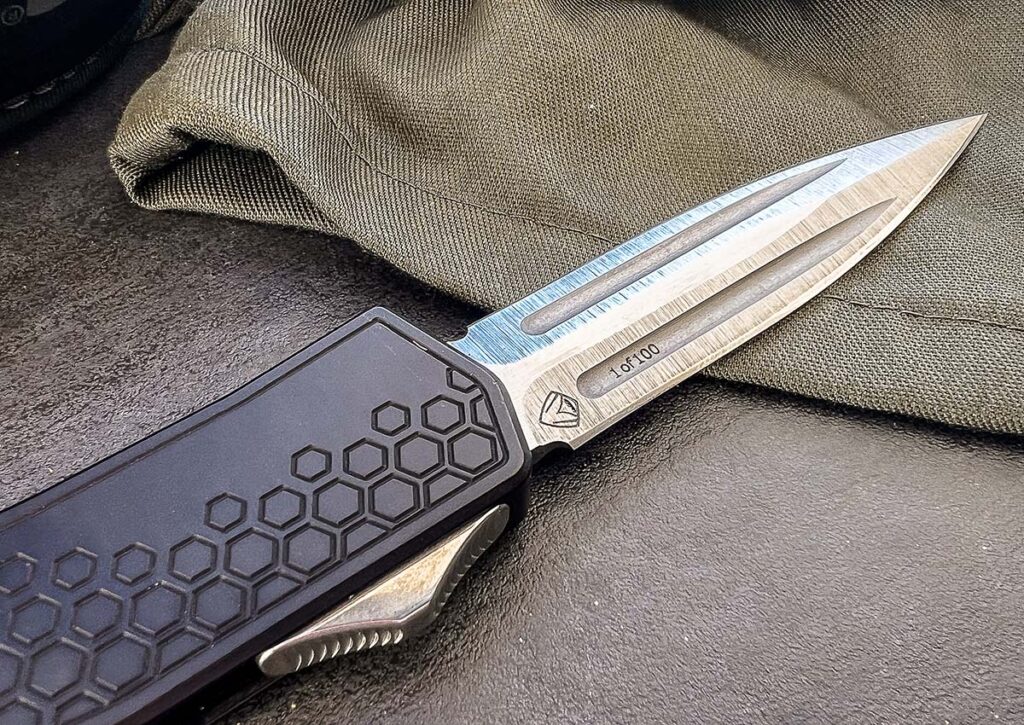
Sporting two sets of fullers, the dagger test blade is loaded with attitude. The 5-inch handle is hard anodized aluminum. A sturdy, wide, deep-carry pocket clip is affixed to the end of the handle by a large screw and has a glassbreaker point.

One of the more interesting facts about the MERC-1 is there are no handle assembly screws. How is this done? The top handle cover slides onto the body via a tongue and channel system. The large clip screw fastens the two together, preventing unwanted movement of the top cover. The no-screws approach provides a visually streamlined, cleaner look than most.

Note the MERC-1 blade’s dual fullers (page 44), reducing weight as well as giving the knife a double dose of attitude.   

The MERC-1 is a solid performer. Blade deployment and retraction are quick with a solid feel. The sliding button requires some force to push and pull but once you get used to it, it’s no problem. This is done by design to prevent inadvertent blade movement.

The knife does well at general cutting but needs a bit of pushing to get through some tasks. Dagger blades are more for thrusting and penetration. One thing is certain, the MERC-1’s is definitely cool looking! (Author’s note: the knife for this review is an earlier version with a hex-bolt machining pattern on the handle. The pattern has been changed to a series of chevron lines and an engraving of a crossbow.) The MERC-1 is Medford’s first attempt at an OTF and an excellent one at that.

Vero Engineering/Pro-Tech Synapse

The Synapse handle is a half-and-half hybrid construction style, with a black Micarta® presentation side and the opposite side (right) hard-coat-anodized T6-6061 aluminum alloy for strength, light weight and minimal mass. A stylish milled titanium pocket clip carries the closed knife blade tip up in the pocket. 

Synapse Specs
Overall Length: 7.3″
Blade Length: 3.2″
Weight: 3.4 oz.
Blade Steel: CPM MagnaCut
MSRP: $400

Pros

  • Ultra-Snappy Opening
  • Premium Blade Steel
  • Recessed Firing Button

Cons

  • Tip-Up Carry Only

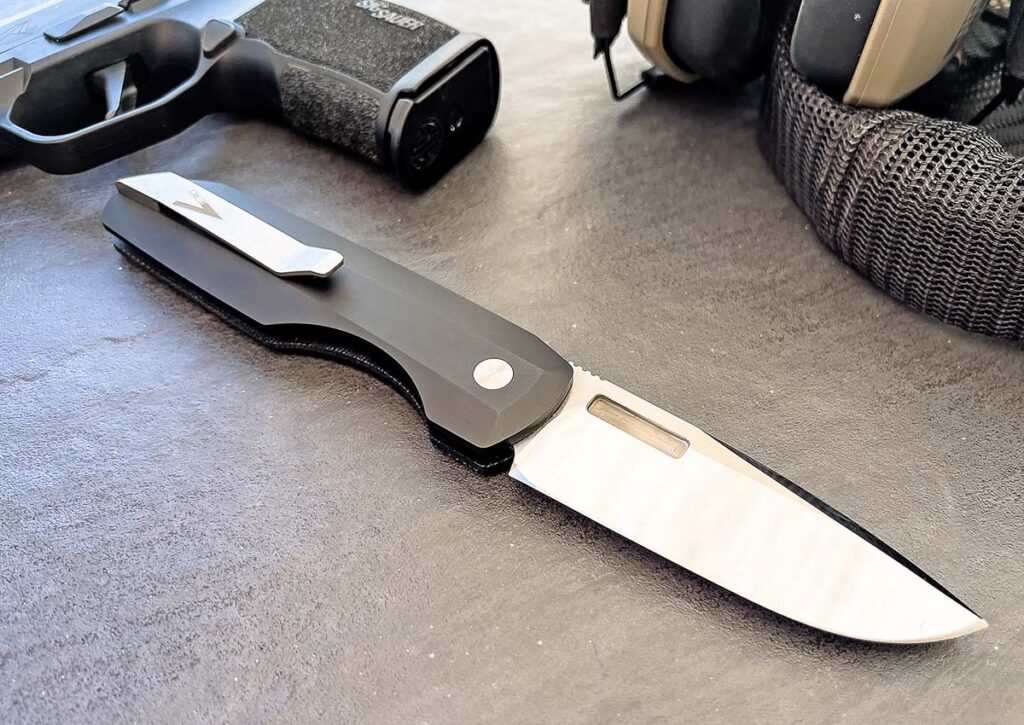
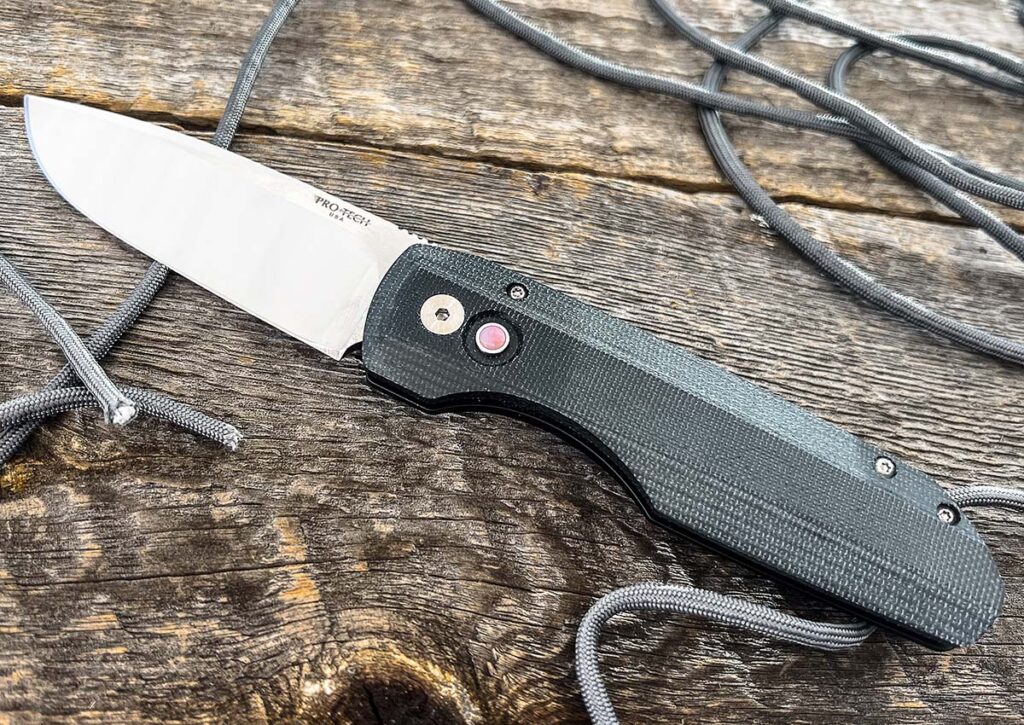
Pro-Tech Knives has teamed with Vero Engineering to produce a collaborative auto: the Pro-Tech Synapse. The framelock design features all advanced materials in a no-nonsense folder ideal for EDC. It’s especially notable for the infusion of Pro-Tech’s trademark ultra-snappy automatic opening action. 

The 3.2-inch drop-point blade is flat-ground CPM MagnaCut stainless steel, which is known for its edge holding and corrosion resistance. The drop point shape provides plenty of blade belly. 
The handle is a half-and-half hybrid construction style, with a black Micarta presentation side and the opposite side hard-coat-anodized T6-6061 aluminum alloy for strength, light weight and minimal mass. A stylish milled titanium pocket clip carries the closed knife tip up in the pocket. Another nice touch is the firing button, which sits inside a milled cavity to help prevent accidental blade deployment.

The Synapse’s drop-point blade of CPM MagnaCut stainless is conducive to a wide range of tasks. The blade action is quick and snappy as with all Pro-Tech autos.

With a closed length of 4.1 inches, the Synapse is neither too big nor too small. The large finger groove helps lock your grip onto the handle effectively, allowing a more secure grip with or without gloves.

The blade has an aggressive bite to it and the curve of the belly makes slicing almost effortless. The Synapse is a great working folder.

*Editor’s Note: According to CobraTec, its OTFs have a built-in safety feature that prevents the blade from fully deploying if anything is obstructing its path. Once in “safety mode” the blade must be reset by pulling it all the way into its locked position, making it fully functional again.

Check Out More Buyer’s Guides:

Leap Of Faith Knifemakers: From Home Shop To Factory

0

How two U.S. knifemakers successfully transitioned from home shop to factory.

Ever wonder why some custom knifemakers decide to take the leap from the rarified air of being a sole artisan to the crowded arena of factory fare? Sometimes the answer is easy. For instance, in 1999, BLADE Magazine Cutlery Hall-of-Fame® member Chris Reeve switched his custom shop over to a micro-manufacturing outfit in Boise, Idaho, simply because he couldn’t supply enough of his popular Sebenzas to a thirsty knife-buying public. That one move catapulted Chris Reeve Knives (page 26) into a successful American manufacturer of folders and fixed blades.

We thought the practice of switching from shop-to-factory, and the reasoning behind such a move, to be an interesting one, so we sought out a couple of like-minded makers from two different genres to bring you an inside look at such a move.
Long Road Of American Knife Manufacturing

Daniel Winkler never planned on producing factory knives, but when a government contract to aid the troops fighting in the Middle East came along, his love of country won out. He had, however, made a name for himself long before that. Winkler built his first knife in high school shop class and still has it among the knives he has archived. In the ensuing years he began gaining popularity among members of the black-powder and knifemaking communities. In the late 1980s he teamed up with partner Karen Shook, whose sheaths greatly complement his custom period knives to this day. In 1992 he forged blades for the hit movie The Last of the Mohicans starring Daniel Day-Lewis, which enhanced Winkler’s popularity even more.
Daniel Winkler went from a one-man knifemaking shop he used from 1992-2006 in Blowing Rock, North Carolina, to the 35,000-square-foot facility he and partner Karen Shook operate in Blowing Rock today.

Simply stated, Daniel Winkler is more than a knifemaker, he’s an institution. But it was a long road with a lot of steps along the way. “My first shop was in the hall of my house. I would clamp knives to the stairs and file them to shape,” he recalls. “I graduated to a garage and bought a 1-by-42-inch belt sander. My first forge was made from a truck wheel and a vacuum cleaner. I used charcoal and a piece of railroad rail for an anvil. I still have that anvil, too.” Winkler says his biggest challenge during those early days was “a lack of time, as I had to work a full-time job—and mostly a lack of practical knowledge.” As his popularity grew so did his equipment and capabilities as a master forger, but that would bring change as well.

“I never really wanted to make factory knives,” Winkler opines. “Back in the mid-2000s I was contacted by members of a Special Operations group. They were not happy with the edged equipment they were getting and asked if I would help them get better designed and higher functioning equipment. Initially, I was going to help with the design and development and contract another manufacturer to make the tools. What I found was other people wanted to do things their way and not adapt their manufacturing methods to how I wanted operations done.

“Karen and I discussed the situation and decided whether we were going to be involved with making edged equipment that could very realistically mean life or death based on the performance of the equipment. We decided that no compromise was worth accepting, so we started our own limited production company. We called it Winkler Knives II since we were still making our hand-forged pieces. We successfully made the requested equipment, and [Winkler Knives II] started growing by word of mouth in the military community. As we grew in professional circles, the public with an interest in Tier-1-level military uses found us. Our involvement was verified in a book written by a Navy SEAL and the Sunday edition of The New York Times. Business took a big leap after that.”

Making The Leap Into Knife Manufacturing

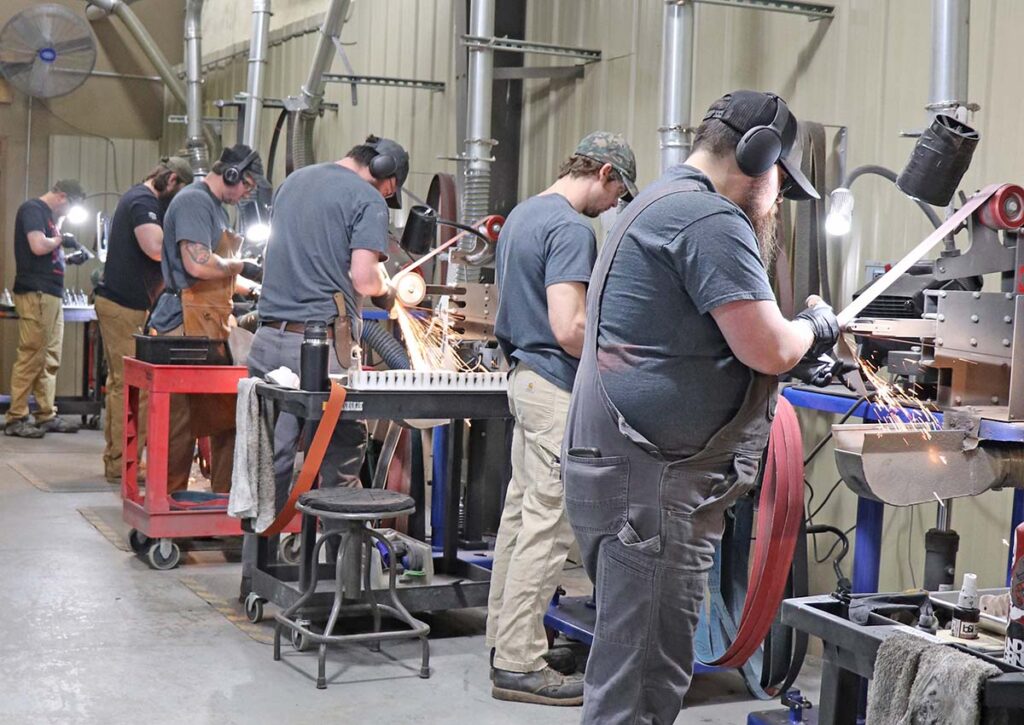
Sparks fly on the grinding line in Winkler’s Blowing Rock, North Carolina, facility. The company employs one part-time and 28 full-time employees.

“My first shop was my one-man forging/grinding shop. I hired two part-time staff to assist in handling it. It was a very tight space,” Daniel notes. “From here I added additional grinders and rented a small space in a warehouse. I did the steel grinding and heat treating while Karen worked on finishing. The first models were two Combat/Breaching Hatchets—one for Naval Special Warfare and another for Army Special Operations. That was in 2004-2005.”

Today Winkler Knives has exploded in size to a 35,000-square-foot facility with one part-time and 28 full-time employees. Daniel credits buying a water jet to cut production costs, hiring the right people, and creating an environment for lasting and satisfying jobs.

“I have a rule we adhere to,” he observes. “Any changes we make must make the product better in performance and/or quality, and make the operation safer for our employees.” It is a dictate that continues to make Winkler Knives a mainstay in the business of all that cuts.

Paying Dues

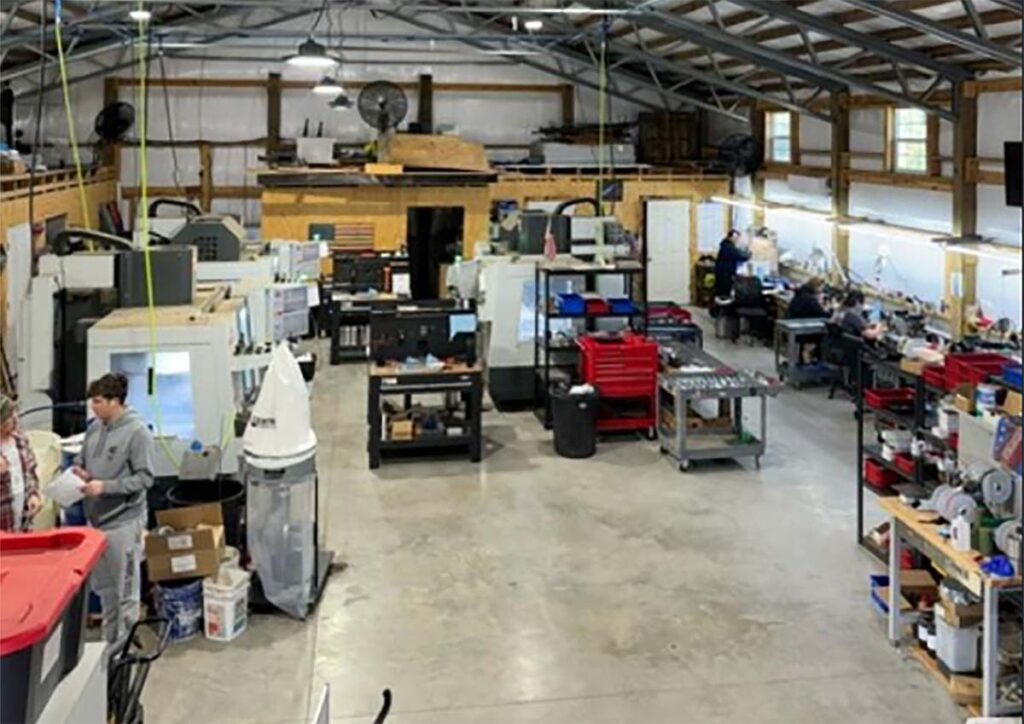
In 2019 McNees Knives went from a 400-square-foot shop to today’s 3,500-square-foot factory. Among the hot sellers for McNees are the MAC2 integral-lock folders.

United States Marine Corps veteran and devoted outdoorsman Jonathan McNees of Vernon, Alabama, has always been a knife fan, and when he got drawn into the world of custom knifemaking on the internet he was hooked for good. “I started making knives in 2008 after discovering online forums where people were discussing making knives in their personal garages and the like. Before that,” he remembers, “I really had no idea people were doing that—not at that level, at least.” Finding some brands he’d never seen before, like Strider Knives, led him to locating the forums, he added.

“My first shop was a 400-square-foot pole barn in my backyard that started with an extension cord run from the house to power it,” McNees reveals. “I cobbled together my first 2-by-72 grinder using some ‘no weld’ grinder plans I picked up. It was the epitome of a ‘Frankengrinder’—a bench grinder for a motor and a plastic lawnmower wheel as a drive wheel, but it got the job done. I ground hundreds of knives on it before I bought a real grinder. The most difficult thing in the early days, aside from learning the hand-to-eye coordination on the technical stuff, was getting my name out there and building a reputation. I had to be aware of my place in the food chain and pay my dues.

“My breakthrough moment to switch to factory knives came from looking at my work from a business perspective. I always tried to work fast but no matter how fast I got, the business was never going to scale with me building customs by myself. I realized I not only wanted to be a craftsman but I also wanted to build a business. I went to production in 2019. I realized I couldn’t make the kind of impact in the industry I wanted to by just flying solo doing customs. I was probably putting out between 200-to-300 knives a year as a custom knifemaker.

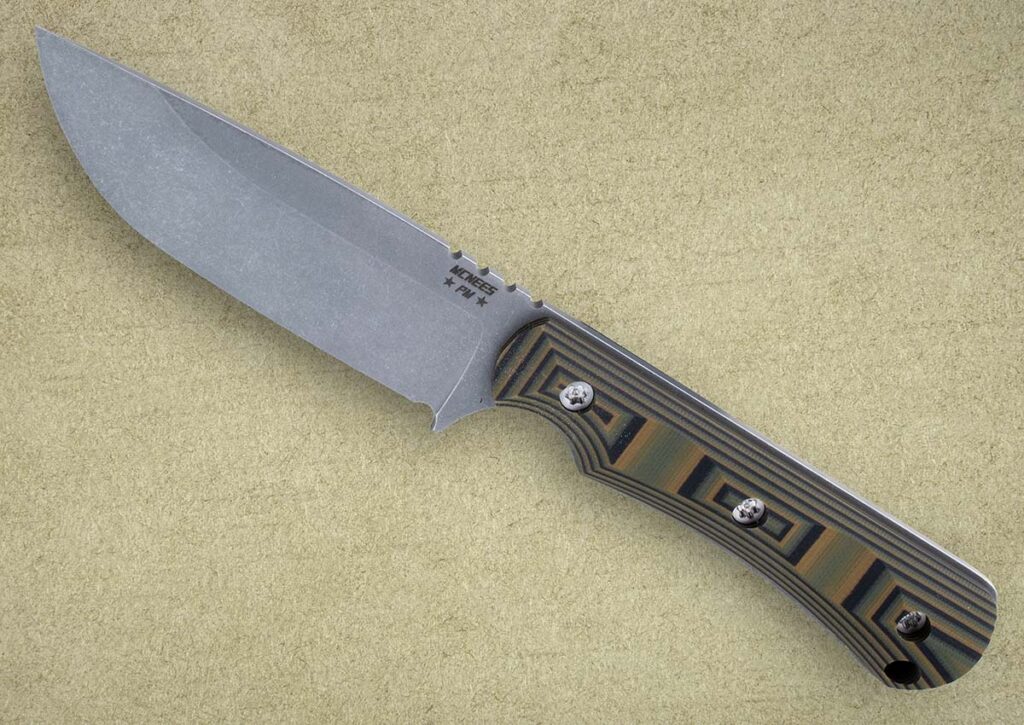
The McNees Knives Ridge Runner won the BLADE Magazine 2024 Fixed Blade Knife Of The Year® Award at last year’s BLADE Show. The 3.7-inch blade is CPM 3V carbon steel and the handle is G-10. MSRP: $312. (Jocelyn Frasier image)

“The first step into production was using U.S. OEM shops to do all the machining and grinding work,” he continues. “I hired two people—one primarily ran our laser, which we did non-knife projects with to help with cash flow, and the other I taught to do all the hand fitting and assembly. I helped where needed on the production but mostly continued to make customs during this phase.” All this continued to be done in the 400-square-foot shop.

“One big step forward came in 2021 when we moved and built a 3,500-square-foot shop and bought our first CNC mill,” Jonathan states. “Since then, we’re up to seven full-time employees plus myself, and my wife has come to work full time in the business for a total of nine. Our bread and butter is our framelock tactical folders, but we also have a good start on a fixed-blade line with three new models added this year.

“We should finish with 3,000-to-4,000 knives produced this year, but our biggest recent accomplishment is a great increase in production numbers thanks to getting a lot of processes dialed in and getting a really solid team in place,” he observes. “We have a new folder coming out next year that is based off one of my most popular custom designs, so we’re really excited about that. We plan to continue to scale and grow as much as we can. We love this industry and want to provide a positive influence.”

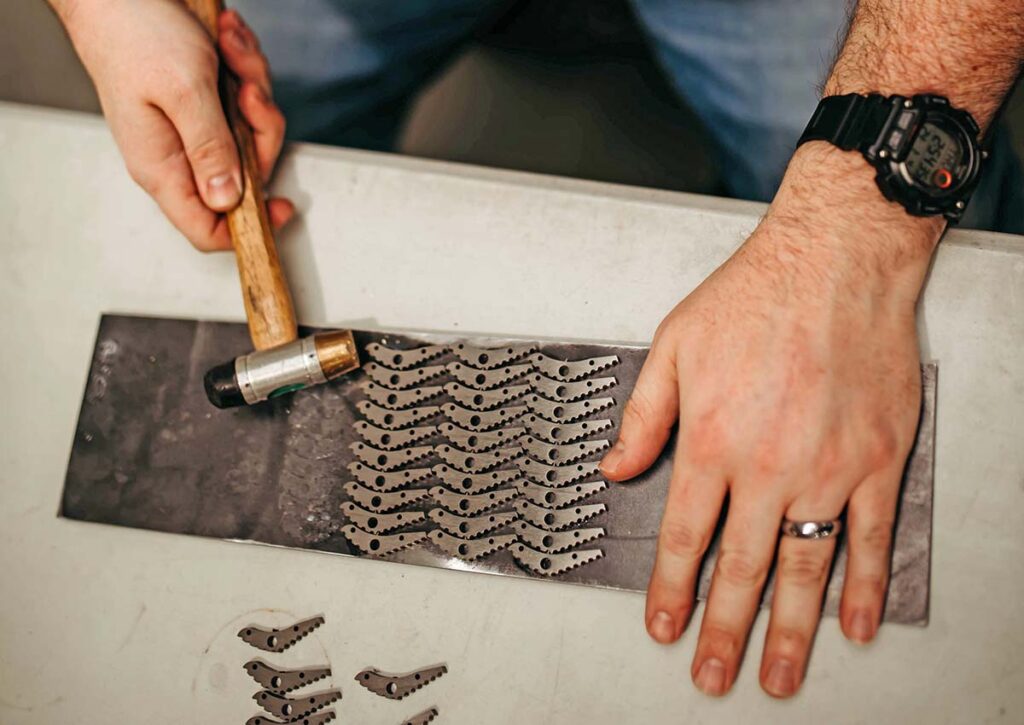
Parts for a McNees Knives folder are removed from the plate used to surface grind them, a far cry from the days when they were done by hand.

Daniel and Jonathan are two custom knifemakers who made the leap to factory production for two different yet legitimate reasons, but both share the common commitment of making knives. They reflect the American dream in action and have done themselves proud.

More On Knifemaking:

Winkler Knives Overcoming Hurricane Helene

0

The Tar Heel Hurricane turned lives upside down, but North Carolina knifemaker Winkler Knives has proven resilient.

Hurricane Helene devastated parts of Western North Carolina, East Tennessee and other states this past fall. Among those damaged was the Winkler Knives shop in Blowing Rock, North Carolina.

Daniel Winkler estimated the monetary loss to his business from $500,000 to $600,000, though the biggest setback was the death of one of the company’s long-time employees, Steve Limbacher.

“He could not handle the stress and his heart just gave out,” Winkler wrote. “Steve is missed every day at Winkler Knives.”

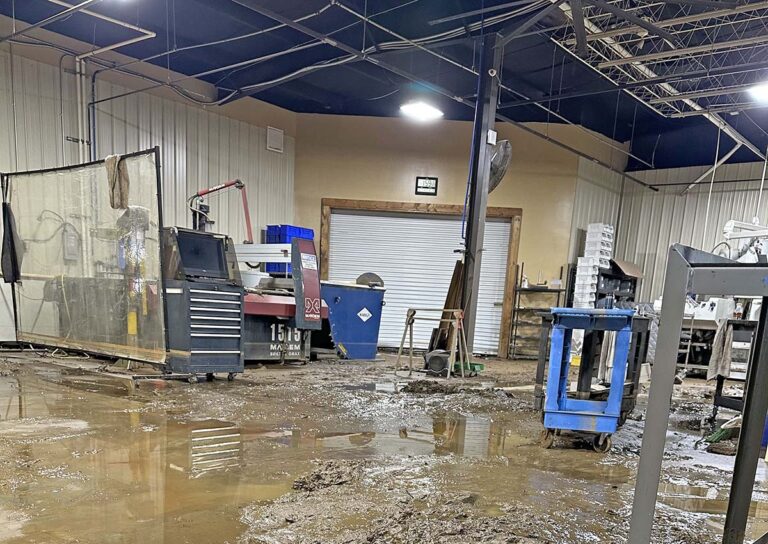
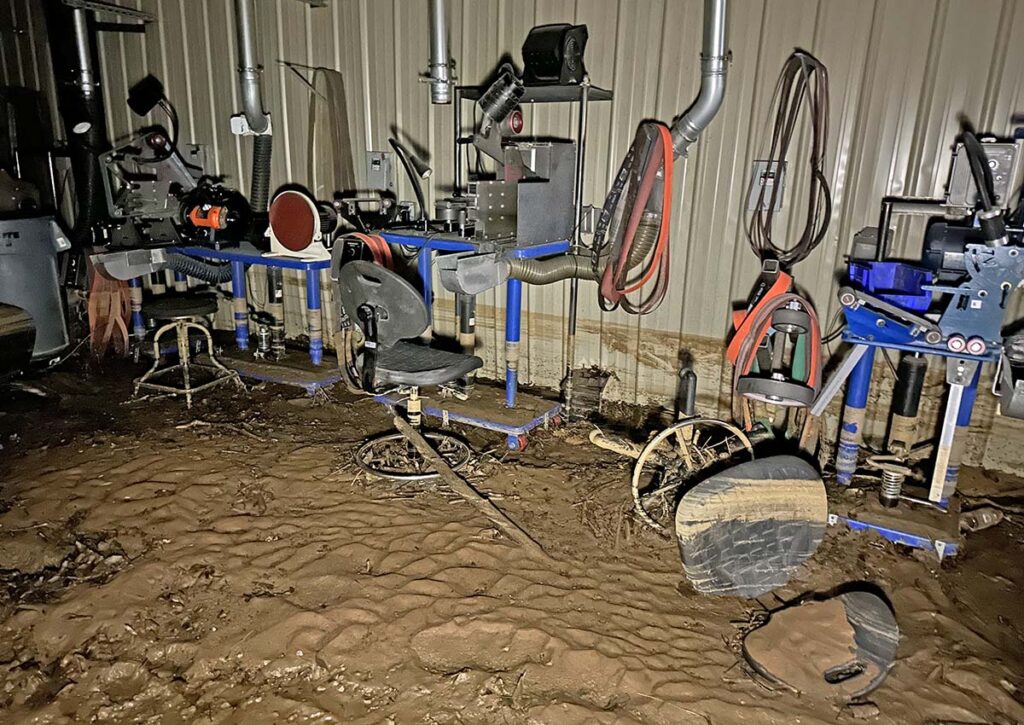
Up to 15 inches of water flowed through the Winkler shop from a creek adjacent to the structure, leaving behind one to 6 inches of mud. The company lost several machines, computers, printers, cabinets and shelves, carts and other daily use tools. Materials for handles, sheaths and other shop supplies were destroyed. Four large garage doors were damaged, as was all the flooring in the office and breakroom. All the office doors were lost.

Winkler Knives
One to 6 inches of mud were left at Winkler Knives factory requiring a extensive cleanup process.

For cleanup the Winklers bought a track hoe, dump truck and small skid steer, and also numerous hoses, pressure washers, wet vacuums, mops and scrubbers. In all, it took the full staff 2 ½ weeks to clean up the mess.
“However, compared to others in our area, we were just inconvenienced,” Daniel noted.

“Many others were devastated with lost buildings, vehicles and many lives. We are truly blessed.”

To aid those in one of the most severely damaged areas in North Carolina, through its fundraising efforts Winkler Knives presented a check for $13,018.75 to the Mitchelle County Development Foundation. The company also raised money for its own recovery efforts via tent sales of Winkler knives, tomahawks, axes and sheaths at Winkler Knives Actual on Nov. 30 and Dec. 2.

More On Winkler Knives:

Roadblocks to U.S. Knife Manufacture

2

Leading domestic factory companies outline barriers to producing knives in America.

The slogan “Made in the USA” carries a specific meaning across the globe. American knife manufacturers tout that aspect of their operations with justifiable pride. Still, they face challenges in the arena of worldwide competition, constantly seeking methods and management that offer the best opportunities for success.

In addition to the inherent competition related to the actual quality of their finished products—the attributes that compel the buyer to choose their knives over that of a competitor—American cutlery manufacturers often find themselves up against a foreign-government-subsidized or bankrolled competitor. Trade barriers may prevent their products from reaching a broader customer base, and the shifting costs of labor, materials and production demand attention.

Export Hurdles

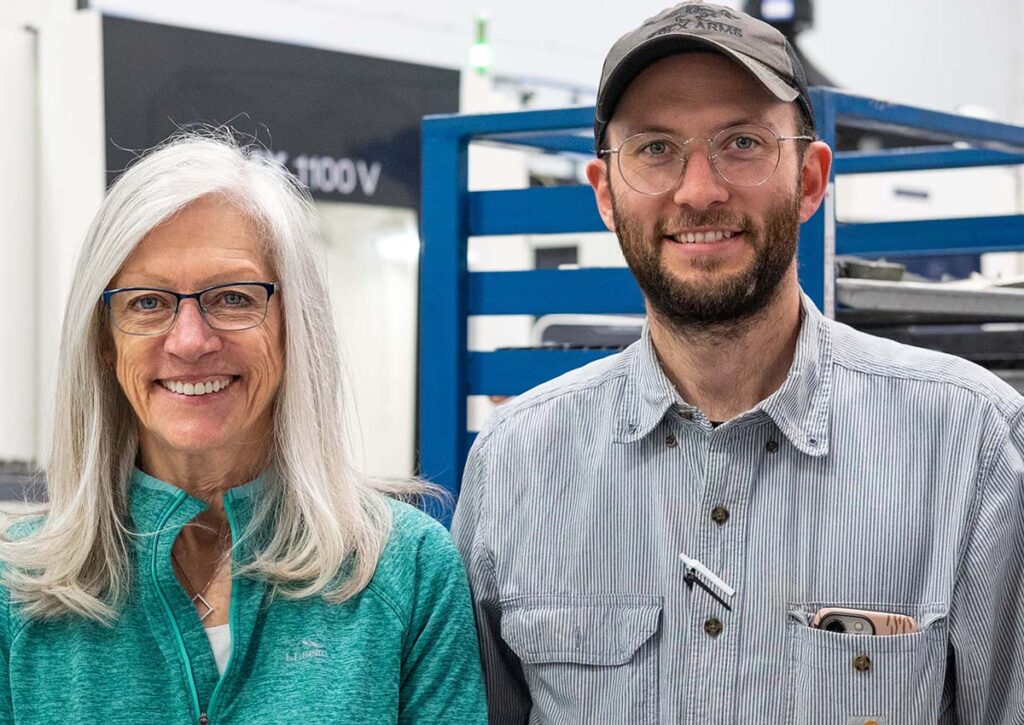
To remain successful in today’s competitive knife marketplace, Anne (left) and Tim (right) Reeve of Chris Reeve Knives focus on consistency in the company’s brand and models, as well as uncompromising quality in materials, designs, workmanship and customer service.

“One major challenge is the cost of distributing products overseas, particularly to the European Union,” related Curtis Iovito of North Carolina-based Spartan Blades. “The combined impact of Value Added Tax [VAT] and customs duty can exceed 21 percent, and in some countries it is even higher. These additional costs ultimately get passed on to the consumer, making it harder to remain competitive.”

The Spartan experience is not unique, and in order to address the issue American knife manufacturers naturally gravitate toward the domestic consumer.

“One of our strategies is to focus on the American market,” Curtis advised, “where consumers value high-quality products and excellent customer service. We optimize our manufacturing processes for maximum efficiency, allowing us to control costs as effectively as possible.”

Such an inward perspective is driven both by access to markets and by an acknowledgement of the barriers that exist in global trade.

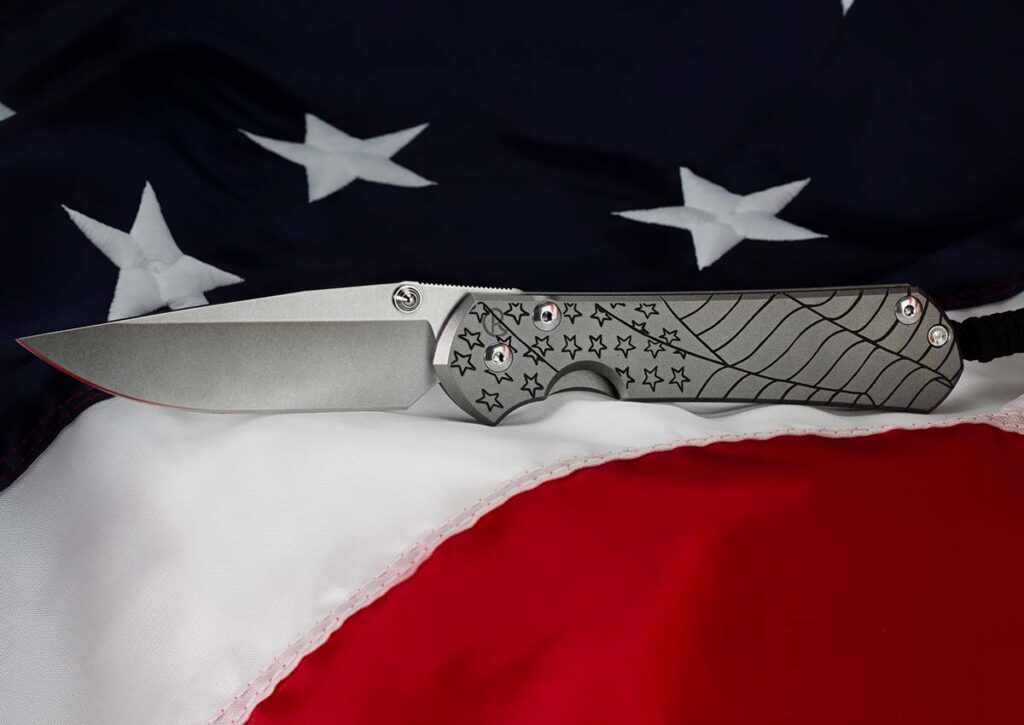
Illustrative of Chris Reeves Knives' approach to the market is the most American-looking of the U.S.-based manufacturer’s knives: the Sebenza 31 CGG Forever Flag Drop Point. MSRP: $550.
Illustrative of Chris Reeves Knives’ approach to the market is the most American-looking of the U.S.-based manufacturer’s knives: the Sebenza 31 CGG Forever Flag Drop Point. MSRP: $550.

“In regard to stuff abroad, we source everything in the U.S., period,” asserted Ernest Emerson of Emerson Knives, Inc., located in the Los Angeles, California, area. “We don’t get steel screws or handle materials except from U.S. suppliers at this point, so availability of materials doesn’t affect us. Also, 99 percent of our product is sold domestically, so we don’t have any dealers set up in Europe, although there is a tremendous fan base for us there.”

The benefits of an established brand and loyal following are hallmarks of the success story at Chris Reeve Knives, located in Boise, Idaho, as well.

“We are in the very fortunate position of having established a legacy brand many years ago and are supported by an incredibly loyal customer base,” explained Anne and Tim Reeve. “The market has changed considerably in recent years, but we have remained stable. To keep competitive, we focus on consistency in our brand and our models and uncompromising quality in materials, designs, workmanship and customer service.”

Dangers Abroad

Domestic competition is welcomed among American knife companies. Consumers are invited to question, evaluate and commit with their dollar at home. However, in the wider world there are obvious signs that the playing field is far from level when it comes to price points.

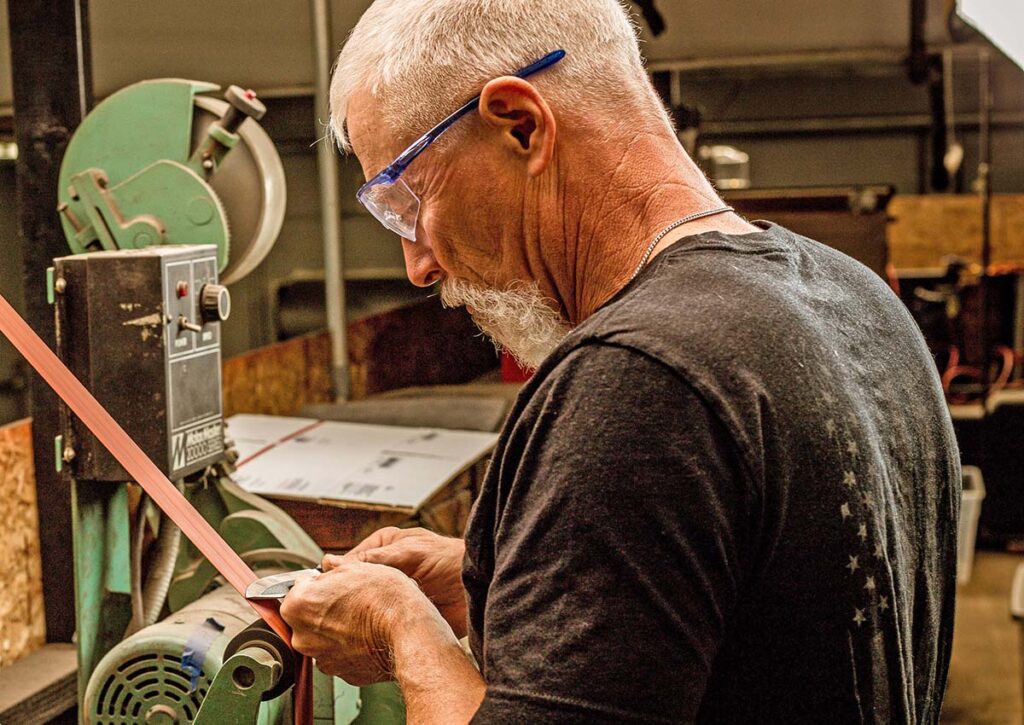
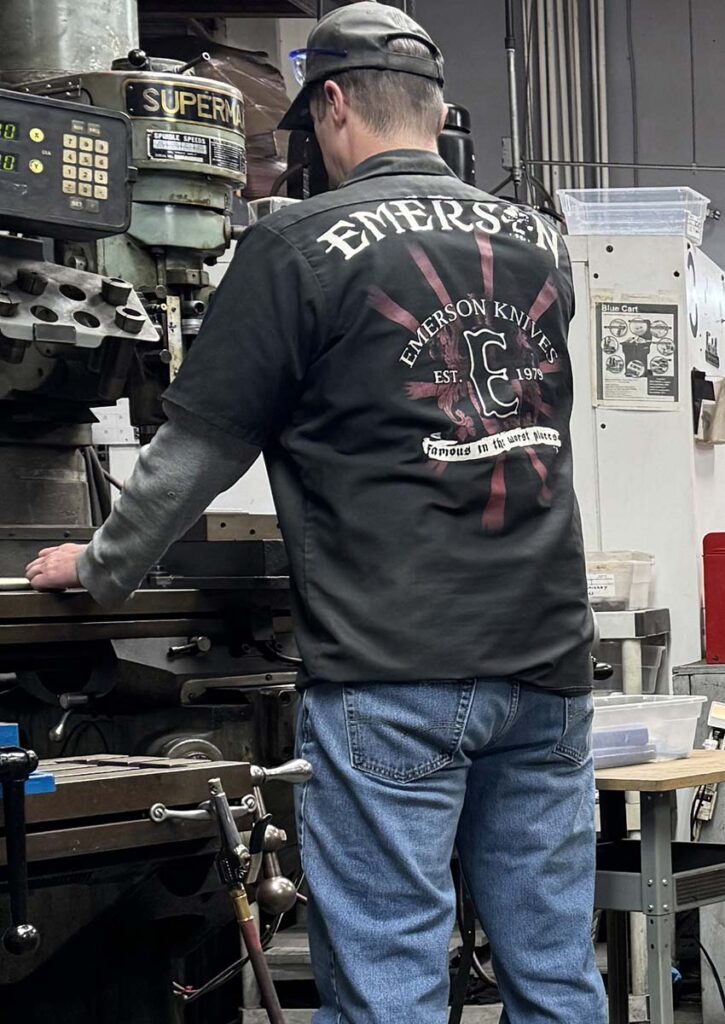
Known worldwide for his custom as well as his factory knives, Ernest Emerson—putting blade to grinding belt here—said he finds Chinese knife companies and their advantages a real danger to the knife industry overall. “They are ruthless,” he opined, “and their endeavors inside our industry are the same exact game plan as the Chinese government is using across all U.S. industries—break them down, undercut them, put them out of business.”

Further, the encroachment of foreign knife companies into the American market with the economic power and financial backing of their government’s bankroll is troubling—and among these foreign companies no others stand out more prominently than those headquartered in the People’s Republic of China.

“A very real danger to our industry is the Chinese knife companies,” Emerson declared. “They are ruthless, and their endeavors inside our industry are the same exact game plan as the Chinese government is using across all U.S. industries—break them down, undercut them, put them out of business. They are funded by the Chinese Communist Party, and don’t get me wrong, the product is good. But what happens is they come in at prices just under [Emerson], Buck or Spyderco. So, in the consumer’s mind they may reason that the Civivi or WE knife is $50 cheaper and buy that knife. It’s a shame because we have seen companies that have been in business for years go out of business. If you take an 18-to-25 percent hit to the bottom line, it affects you like crazy. That’s millions in revenue.”

Iovito adds to that perspective.

“There are two main disadvantages,” he said. “Increased competition from Chinese-made products and rising concerns about counterfeiting. The lower labor costs and government funding available to manufacturers in China create a significant competitive gap. Additionally, counterfeits have become harder to distinguish from genuine American-made knives, especially as platforms like Alibaba make it easier for counterfeiters to distribute their products. The situation is compounded by foreign-government-backed knife companies with substantial marketing budgets, which make it difficult for smaller U.S. companies to compete at sub-$150 price points. We’re also seeing foreign interests penetrate U.S. industry organizations through donations and sponsorships aimed at market expansion.”

At Chris Reeve Knives, the owners acknowledge the market conditions that drive profitability.

In terms of state and local taxes and restrictions, the Chris Reeve Knives business environment in Idaho seems to be better off overall than some other domestic knife manufacturers. “We are fortunate that Idaho is a good place to do business,” Anne Reeve noted, “and there are no particularly difficult restrictions.”

“It is becoming more and more expensive to produce knives or anything else in the USA, but we are grateful that we established ourselves as much USA-made as is possible many years ago,” Anne commented. “Labor costs have skyrocketed and all materials have increased. We monitor costs closely and negotiate as much as feasible with our suppliers. We focus on innovative manufacturing processes, employee training and scrap reduction without compromising quality.”

Hence, keeping costs contained in light of wage pressure, materials availability driven by demand, and other factors that are basic for any business—including utility costs, equipment maintenance, upkeep and upgrades, and the retention of skilled and even unskilled workers—is always a priority. The companies who manage such challenges best are those that survive and prosper.

Trade Protection

However, where is the pressure point or the point of relief when it comes to foreign competition? How does the American knife manufacturer remain competitive and keep each of these critical components in fragile balance? Perspectives on trade protection are somewhat varied but they may well have a purpose in the overall economic scheme of things.

“We see an average Total Import Tax of about 22.4 percent on folding knives and 23.6 percent on fixed blades,” Iovito related. “Often it is much higher. There aren’t many solutions to this issue other than competitive tariffs and trade agreements. The VAT and tax outlay by our dealers can almost double the price of our knives in the European Union. Additionally, the dealer doesn’t receive a refund on the VAT until the knives are sold. This effectively disincentivizes the stocking of American knife brands.

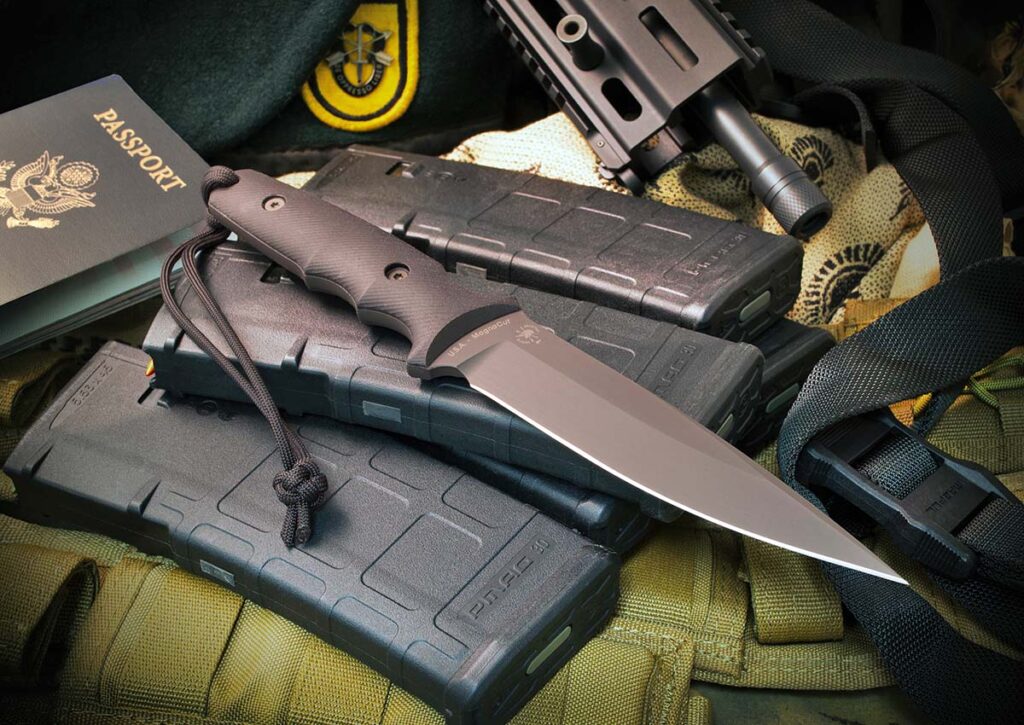
Spartan Blades won its first-ever BLADE Magazine Overall Knife-of-the-Year® Award last year for the full-tang Clandestina fighter designed by BLADE Magazine Cutlery Hall-of-Fame® member Bill Harsey. The 5.5-inch blade is flat-ground CPM MagnaCut stainless steel. It is also available in a flat-dark blade finish and canvas Micarta® handle. MSRP: $360.

“I believe in maintaining ‘Most Favored Nation Status’ with our allies,” Curtis added, “but tariffs could still be adjusted to ensure fair competition. Ideally, tariffs should be leveled in a way that provides an advantage to U.S. manufacturers, helping to balance the playing field. For those countries that are international trade competitors, I feel their products should be taxed at an equal rate or in a manner that places them at a competitive disadvantage.”

Fair is fair, say Anne and Tim.

“Tariffs hurt the international dealers and, as a result, the end users. The dealers often work on reduced profit margins simply to sell the product at an affordable price. We are fortunate to be an accepted luxury brand and, without sounding arrogant, our international end users generally have higher disposable incomes. There is little that we can offer by way of incentives or discounts to combat tariffs.

“First reaction [to U.S.-imposed tariffs] would say that reciprocity would be fair,” the Reeves concluded. “We should charge as they [other nations] charge us. However, the reality is that high tariffs on incoming knives hurt our industry by making everything more expensive. Tariffs are such a political thing, and a general rise in tariffs is not a good answer to the problem.”

Domestic Taxes & Restrictions

“The Los Angeles council passed a law that the minimum wage will be $30 per hour by 2028,” Ernest Emerson noted. “They are sneaky in that they apply this only to groups like ‘hospitality workers,’ but the truth is that any worker can look at what they are currently doing and say, ‘I can fold bedsheets for $30 an hour instead of doing this.’”

In addition to foreign competition, there are restrictions right here at home that challenge the knife manufacturer on a daily basis. That situation is particularly true for Emerson Knives, Inc. Ernest says the continual pinch of California’s local and state taxes, restrictions and legislation impede his company’s performance. But don’t jump to the conclusion that simply relocating to another state holds the answer. Emerson is committed to his employees, many of whom have been with him for more than 25 years. They have families and deep roots in California and can’t relocate to a more business-friendly state.

Still, Ernest bristles at the simple fact that taxes are levied against every piece of equipment on his facility’s floor. He must follow rigorous guidelines on disposal of byproducts, pay fees for parking, comply with building restrictions, and fork over a fee for a license to operate his laser machines. All the while, he is aware that other companies operate under the radar, ignoring these state-imposed requirements.

“The Los Angeles council passed a law that the minimum wage will be $30 per hour by 2028,” Ernest noted. “They are sneaky in that they apply this only to groups like ‘hospitality workers,’ but the truth is that any worker can look at what they are currently doing and say, ‘I can fold bedsheets for $30 an hour instead of doing this.’ That means that everybody has to pay $30 an hour to retain their workers. Imagine what the cost of a Big Mac will be when fast food workers at McDonald’s are paid $30 an hour.”

In contrast, the Chris Reeve Knives business environment in Idaho is apparently better overall.

“We are fortunate that Idaho is a good place to do business, and there are no particularly difficult restrictions,” Anne remarked. “One of the biggest issues for small businesses is high rates of taxation. I understand that taxes are necessary, but I would rather invest in my employees and equipment than see my tax dollars spent unwisely. The American drive to make high quality goods is still very much alive! We are fortunate to have employees who are proud to work for an ‘all American’ company and strive to make the very best. Most of our market is in the USA and our customers appreciate the fact that we are so doggedly ‘Made in Idaho!’”

Anti-Knife Laws

For years, the issues surrounding restrictive knife laws have influenced American knife manufacturers, from the types of knives they make domestically to their ability to import or export. These days, some softening has been experienced, particularly due to the efforts of groups like Knife Rights and the American Knife & Tool Institute (AKTI), which have challenged some laws in court or successfully lobbied to keep others from reaching the books at the federal or state level.

“Our knives don’t gain too much attention in anti-knife legislation,” Anne said. “The one-hand-opening issue that caused so much concern some years ago has subsided. AKTI and Knife Rights have done yeoman’s work in overturning dated and irrational legislation, and we are happy to support them.”

Interstate commerce remains solid for Emerson as restrictive knife laws appear to be on the wane.

“Knife restrictions state to state don’t really affect us,” he commented. “I’m not aware of any state that we can’t ship to. Thank goodness for AKTI and Knife Rights fighting the good fight for us. I’ve always told everybody that we have to fight for the 2nd Amendment whether you are a gun person or a knife person. No matter what, where guns go, knives are soon to follow.”

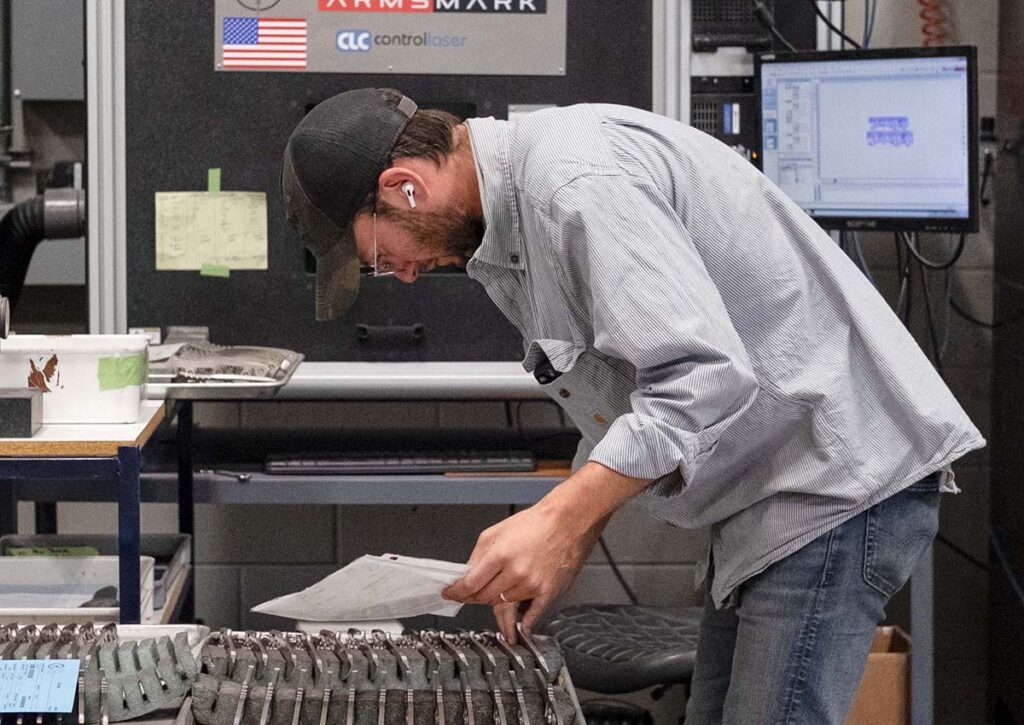
When it comes to tariffs, Anne and Tim Reeve recommend reciprocity. The USA should charge other nations as those nations charge the USA, the Reeves stated, though noting that “high tariffs on incoming knives hurt our industry by making everything more expensive.” Here Tim inspects a tray of folders in the Chris Reeve Knives manufacturing facility.

Iovito added a positive point of view.

“In the U.S., legal restrictions on knives are often based on a mistrust of citizens or as a way for a politician to appear tough on crime instead of addressing the root cause of crime in his district. However, I’m seeing positive change as lawmakers and the public recognize that most people carry knives as tools rather than weapons. As knife laws in the U.S. evolve, I’m optimistic about their eventual liberalization. While I won’t comment on laws in other countries, most of these laws tend to be reactive responses to broader societal issues.”

American Resilience

Considering the challenges of modern business and the complications presented, American knife companies have proven remarkably adaptable and resilient.

“The thing that has kept Emerson Knives, Inc., afloat,” Ernest explained, “is being the right size to be super flexible. We are small and every operation is done in-house, and I have worked with companies over the years to make smaller amounts of knives to fill orders. That way we don’t sit on ‘XYZ number’ of knives and wonder what we’re gonna do. Small businesses and shop owners really drive the average Joe in the U.S., and I’m proud to be a part of it.”

Read About Custom Knives:

Advertisement

Must Read Articles

Read this before you make a knife

Knifemaking 101 – Read This Before You Make a Knife

  by Wayne Goddard My experience has taught me that there's nothing like digging in and getting started. I've often said the hardest part of the...
how to forge damascus steel

How to Forge Damascus

Advertisement
Advertisement