The Story Behind Arnold Schwarzenegger’s Knives in “Commando”

commando knife arnold schwarzenegger
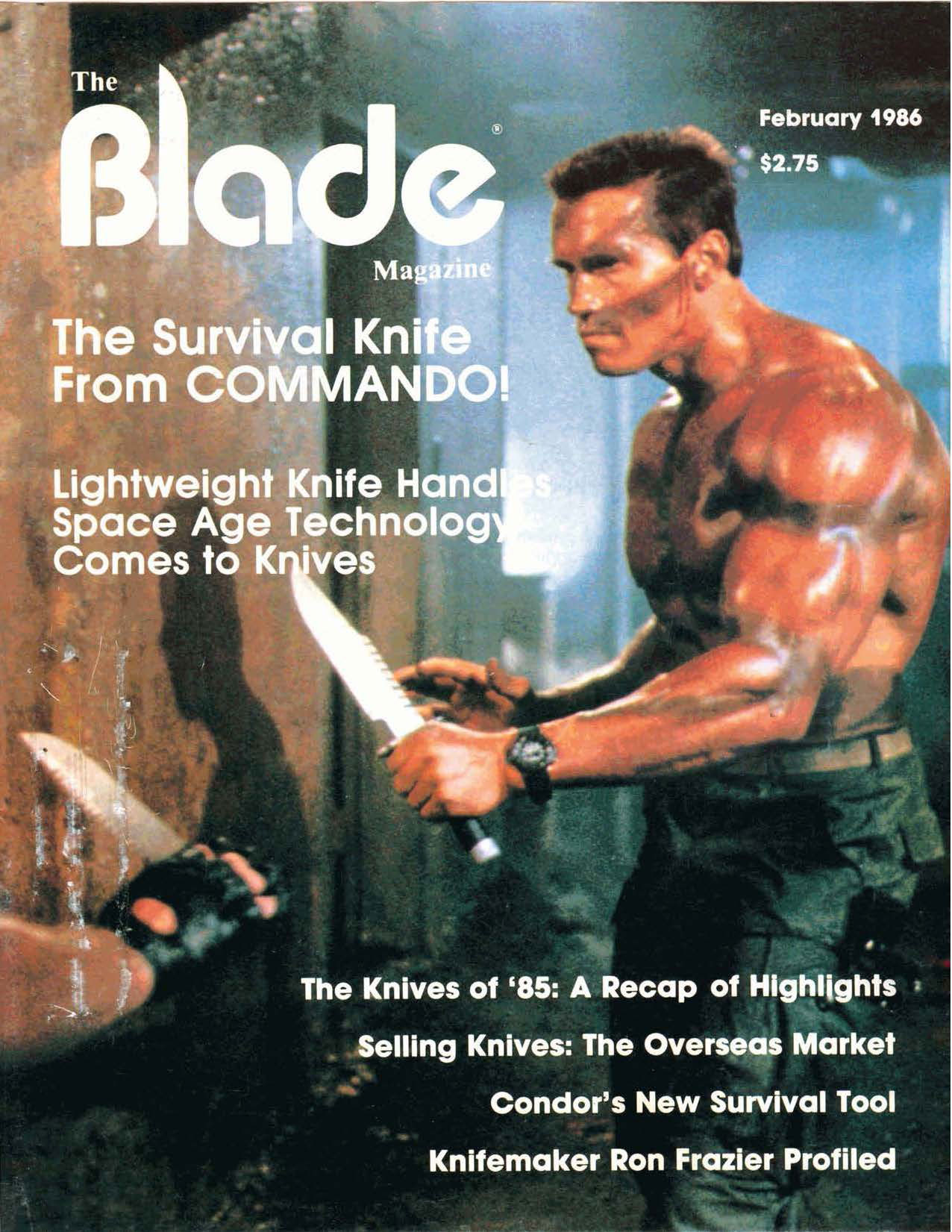
The cover of the February 1986 issue of BLADE magazine.

custom knives action moviesEditor’s note: The following originally appeared in the February 1986 issue of BLADE magazine. Read more from BLADE‘s archives in this collection.

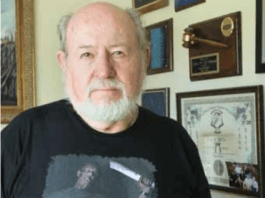
Jack Crain passed away in September 2016 at the age of 70. He’s best remembered for the knives he supplied for many Hollywood movies, including Commando, Predator, Road House, Predator 2, Demolition Man and Executive Decision.

However, it was Commando that solidified Crain’s reputation as a knifemaker to Hollywood. Here is the complete article about his work for that action film.

Hollywood Loves Custom Knives

Hollywood is sold on the custom knife, and knifemaker Jack W. Crain of Weatherford, Texas, has reason to be pleased.

Why? Because one of Crain’s knives has recently “co-starred” in a Hollywood production. The knife, a model Crain calls the “Life Support System I,” was recently featured in the popular motion picture Commando starring Arnold Schwarzenegger.

The knife also appeared in the Airwolf television series, and later this season it will appear in an episode of The Fall Guy.

Knives on Silver Screens Inspire Knifemakers
jack crain knifemaker
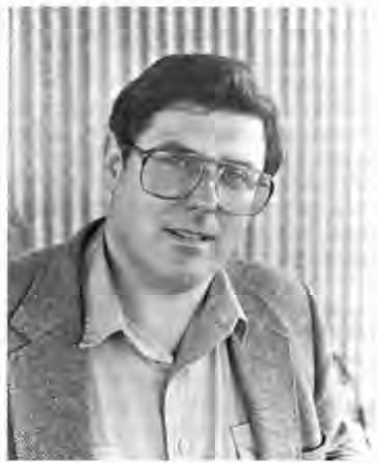
Jack Crain, as photographed in 1986.

Indirectly, explains Crain, the relationship between Hollywood and the custom knife began about three decades ago with the motion picture The Iron Mistress. That film, a romanticized biography of James Bowie starring Alan Ladd, had a tremendous impact on the early custom knife industry. Knife collecting became more popular, and several of today’s prominent makers readily concede that their careers were launched by that movie.

Crain was building knives before he ever saw the film.

“I can’t remember a time when I wasn’t making knives,” he states. But he admits to having watched The Iron Mistress “several hundred times.”

And since he prefers to make Bowie knives over all other styles, he assumes that the movie influenced his career as well.

Occasionally a knife will surface which purports to be the Bowie knife used by Alan Ladd in The Iron Mistress. Of course, it will be accompanied by a formidable price tag. Crain admonishes would-be investors that these knives are almost certainly fakes.

All of the Bowies from The Iron Mistress are in a private collection, and they are not likely to be sold in that collector’s lifetime.

The Renaissance

Handmade knives flourished in the years following The Iron Mistress and Jack Crain was part of the ensuing Renaissance of custom cutlery. He sold his first knife in 1969. A decade later he became a full-time maker and joined the Knifemakers Guild.

Initially, Crain forged his blades. Later, he adopted the stock-removal method. He occasionally returns to the forge to make a damascus blade.

He has produced folders and hunters and fancy daggers, but Bowie knives remain Crain’s primary interest. His fellow knifemakers have cautioned him that the popularity of the Bowie is waning.

“Perhaps they can’t sell Bowie knives, and perhaps I couldn’t sell the kinds of knives they are making,” declares Crain, “but I’m having no difficulty selling my Bowies.”

Limited edition commemorative Bowie knives have become Crain’s specialty, because they allow him to merge his talent for knifemaking with his passion for Texas history. In 1982, he introduced a 13-piece set in which each knife represented one of the 13 days of the heroic siege of the Alamo.

Then came a 20-piece series commemorating Isaac Millsap, one of the Alamo defenders. The Bowies for both sets were loosely patterned after the Bart Moore knife, which allegedly belonged to Jim Bowie.

A Bowie knife found on the San Jacinto battlefield (and currently on display at the Texas Ranger Hall of Fame in Waco) provided the design for the Captain Jack Hays series of 20 knives. Hays was a legendary Texas Ranger during the period when Texas was a Republic.

Another series commemorated Noah Smithwick, a blacksmith who fought in the Texas Revolution (and left a detailed account of his exploits). Smithwick actually made Bowie knives-Jim Bowie bought the first one-and the knives in this set replicated the only known Smithwick Bowie in existence.

Survival Knives Get Hot

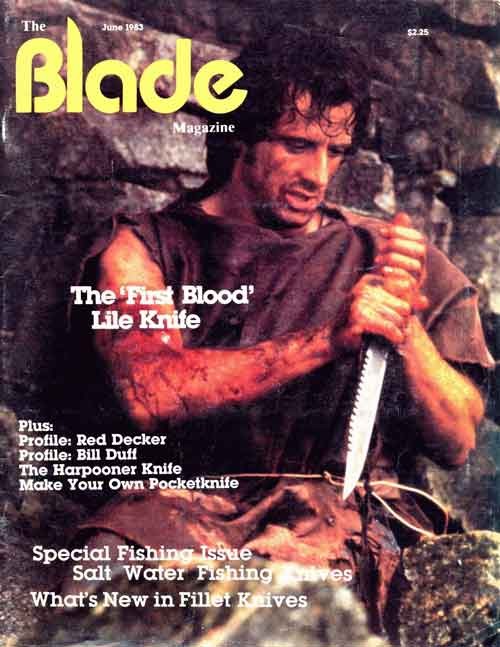
In 1982, Hollywood released a motion picture whose impact on the custom knife industry rivaled, or surpassed, that of The Iron Mistress. That film was First Blood, and it showcased a handmade survival knife built by James B. Lile. Suddenly the market was flooded with both factory and custom knives featuring sawteeth and hollow handles.

Crain also felt the movie’s impact. He received numerous requests to produce his own version of a survival knife. Since such knives are essentially modified Bowies, the task would appear simple for a Bowie knifemaker. But Crain perceived some inherent challenges in those modifications. He would not replicate Lile’s design or any other pattern. Rather, he would incorporate his own notions of what a combat-survival knife should be.

The LS-1 is Born
Jack Crain knives
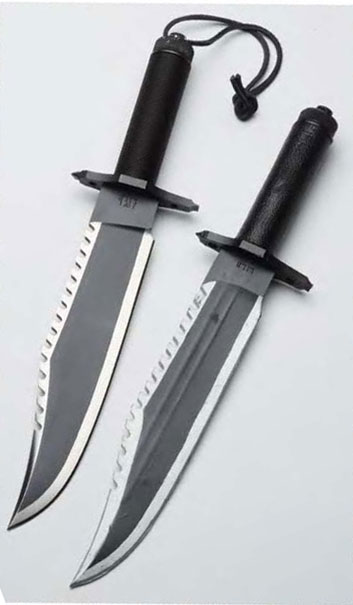
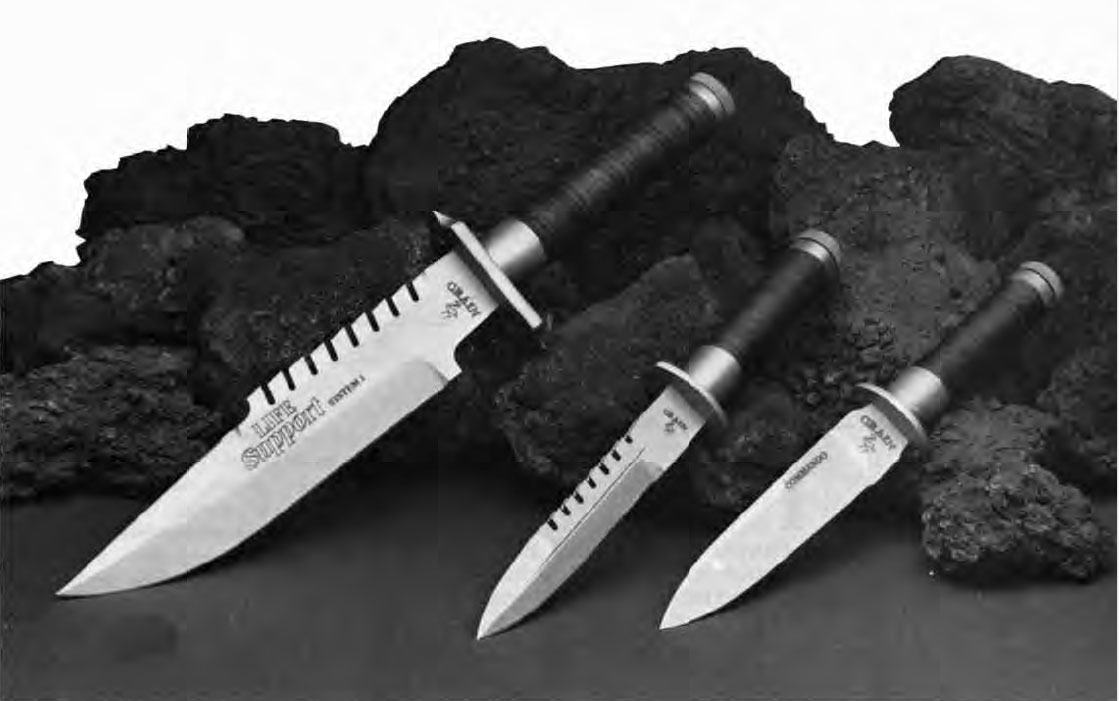
The LS-1, Scorpion and Commando are pictured from left to right, respectively.

The end result was the Life Support System I, which featured a nine-inch by two-inch by 1/4-inch blade, flatground for strength. When this knife was introduced in 1982, Crain offered it with either a 440-C blade in a matte finish or a 1095 spring steel blade with a black finish.

However, Crain became dissatisfied with the quality of the 1095 and later substituted 01 steel on the black-finished knives. He has also added D-2 as an alternative steel for the knives with a matte finish.

A single row of sawteeth is standard on the LS-1. Crain says that, in general, a single row of teeth cuts better and binds less. However, he offers a double row of teeth as an option. The knife is also available with either a square or sharpened back instead of the sawteeth.

Another distinctive feature of the LS-1 is the cut-out at the choil. This indentation accommodates the index finger. This grip provides the knife’s user with better balance for close-up work or more leverage for difficult tasks. It also affords room for a two-handed grip.

In designing the LS-1, Crain recognized that a critical area was the junction of the blade to the handle. On many survival knives, the tang is a short, thin rattail which is merely epoxied or bolted into the handle. Thus, these knives are liable to break at the guard. Crain attempted to correct this problem by strengthening the tang and then welding it into the handle.

Quality Control

However, during strenuous testing he discovered that his blades were still vulnerable at the junction. Through his research, he learned that the airhardened 440 steel had actually been weakened by welding the blade after it had been heat-treated. He successfully resolved the problem by welding the blade into the handle first and then heat-treating the steel.

When Crain discovered the internal flaw, he had already sold a number of his Life Support knives. None of them had been broken and returned. However, he assumed the responsibility of recalling and replacing every knife he could locate. Some knives had changed hands and were lost; a few collectors had prototype knives and refused to return them.

The hollow handle of the LS-1 provided other problems. At first, Crain experimented with the same kind of tubing used on other survival knives. But he determined that the wall thickness of the tubing was too thin. He also discarded the notion of casting the handles (or any other parts of the knife). The alternative was to fabricate the handle out of a solid block of steel.

Because Crain does not possess a lathe or milling machine, he found it necessary to subcontract the production of the handles. They are manufactured to his exacting specifications. Otherwise, Crain performs all of the construction: from free-hand grinding of the blade, to hand-cutting of the sawteeth, to hand-fitting of the guard and handle.

The LS-1 Reaches Arnold Schwarzenegger and the Commando Movie
commando movie knife
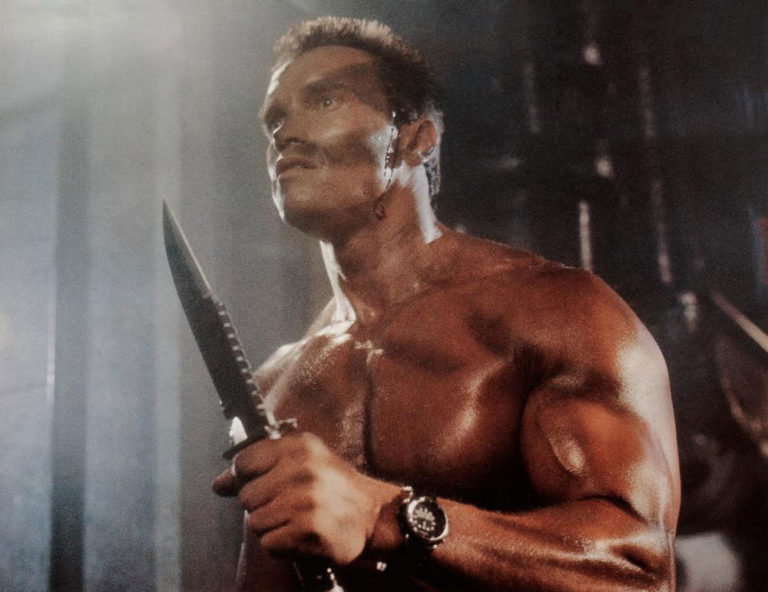
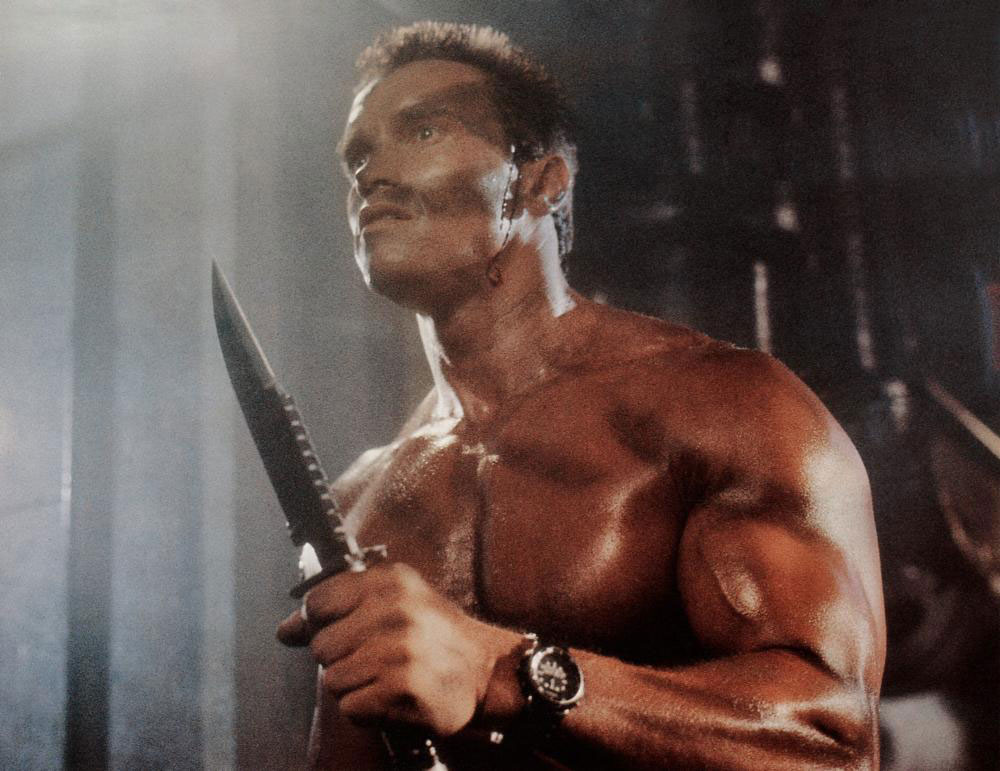
Arnold Schwarzenegger as Col. John Matrix squeezes Jack Crain ‘s LS-1 in Commando. According to Commando propmaster Tom Shaw, Schwarzenegger liked the LS-I so much that he wanted it included in the movie. (image via imdb.com)

Crain’s agent took several Life Support knives to California. It was a model with a black finish that was “discovered” by Hollywood and featured in the Airwolf series.

In January of 1985, Crain’s agent was contacted by Tom Shaw, the propmaster of a soon-to-be-made motion picture which would be called Commando. The movie would star Arnold Schwarzenegger, who had used custom swords made by Jody Sampson in the Conan films. Shaw reported that Schwarzenegger had seen a Life Support knife. He liked it and wanted to include it in the movie.

“The thing that impressed me,” remembers Crain, “was that these people were trying to get actual working guns and knives-no dummy props.”

Crain was asked to supply three matte-finished Life Support knives and six scabbards for the production. (Schwarzenegger’s character, Col. John Matrix, only carries one LS-I; the extra knives and scabbards were required as back-up.) Then the movie folks requested that Crain design a “small and concealable stiletto-type” knife for Matrix to carry.

Crain complied by developing the Commando model. The single-edged, spear-point blade is flat-ground and measures six inches by one and one-quarter inches by three-sixteenths of an inch. It is affixed to a hollow handle by the same sturdy method as the LS-1.

Three Commando knives were sent to California. The film producers were delighted with the model, but they decided that Col. Matrix would carry two small knives instead of one, and they asked Crain for yet another pattern. Within the movie’s limited production schedule, there was simply no time for Crain to design and construct another new knife. However, he had previously been commissioned by a private company to develop a limited edition of 50 small “all-around survival knives” to be called Scorpion.

These knives featured a six-inch by one-inch by three-sixteenths-inch blade with a sharpened top edge and a double row of sawteeth. Crain secured permission for the Scorpion to be used in the movie, and serial numbers eight and nine were shipped to Hollywood.

Key Scenes from Commando

In the released version of the film, the Commando and Scorpion knives appear very briefly. Matrix jerks them from his scabbard and flings them simultaneously into two attacking “bad guys.”

The LS-1 is displayed much more prominently. Matrix carries it on the front of his combat vest throughout the second half of the movie and utilizes it in the final confrontation with his arch-nemesis, Bennett (portrayed by Vernon Wells).

Contrary to the film’s publicity, Crain did not make the D-guard combat knife carried by Bennett in the movie. That knife, explains Crain, was composed of a factory blade attached to the handle of a 1918 trench knife.

Crain’s Rules for Knives in Movies
read knife magazine
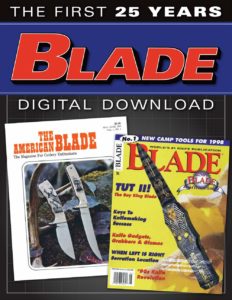
Read more articles from BLADE’s archives with this collection of 25 years of back issues.

In fact, Crain will not permit one of his knives to be used by the villain in a film.

“Knives have a bad enough reputation,” he states. “People associate them with street gangs and psychopathic killers in the ‘slasher’ movies. I don’t want to see my knives doing that sort of thing.”

He stresses that knives are sometimes favored by the “good guys,” too.

Crain has another rule which applies whenever he is asked to design a knife for a movie. He requires creative input from the filmmakers, either the producer or director or the actor who will carry the knife.

“I had several pleasant conversations with the producer of Commando, Joel Silver,” states Crain.

“They treated us real well,” he recalls. “It was quite enjoyable working with them.” Crain adds that Twentieth-Century-Fox provided him with the movie’s press kits and forwarded all inquiries about the knives directly to him.

Crain thoroughly enjoyed watching Commando, noting that it was “fast-paced and fun.” However, he does not recommend that his customers try to emulate Matrix by throwing their Scorpion and Commando knives.

“Blades that are tempered hard enough to take a good edge are generally too brittle for throwing,” he observes.

Limited Supplies

He also notes that it would be extremely unlikely for anyone to find one of his LS-1 knives in an army surplus store, as Matrix did in the movie (above). To date, only about 80 have been made. None of Crain’s knives are mass produced.

He has no employees other than his wife, Toni, who answers the phone so her husband can get some work done in the shop.

“We’re not trying to make a whole lot of knives,” he explains, “just a few good ones.” (Crain also states, with justifiable pride, that Toni is rapidly developing into a talented engraver).

“Actually, the movie has slowed my production,” Crain reports. More people are writing and calling. Some of them want to come to his shop and select a knife from his stock. Crain politely informs them that he has no stock. Every knife is custom ordered and shipped upon completion.

Crain is pleased that Commando was a commercial success and that it has generated more interest in his work. However, he regrets the film’s timing.

“It would have been more convenient if the movie had come out last year-or next year,” he states.

He will have less time to devote to his survival knives in 1986, the year of the Texas Sesquicentennial, and Crain has been commissioned to make commemorative Bowies honoring several Texas cities, including Dallas, Fort Worth, and Houston.

Collecting Jack Crain Knives

The fact that Crain’s knives have become “movie stars” has not affected their price. The Life Support System I still costs $450 (in 1986 prices). The Commando sells for $300.00 (in 1986 prices).

However, Crain has introduced a special limited edition set containing both the LS-1 and the Commando. The series, restricted to 50 numbered sets, sells for $1,500. Sets have been presented to Arnold Schwarzenegger and producer Joel Silver.

Crain also makes the Life Support System 11, a scaled-down version of the LS-I with a seven-and-three-quarter-inch by one-and-three-quarter-inch by one-quarter-inch-blade. Although it has not yet appeared in any movies, Crain reports that the LS-2 has been more popular than its big sister with campers and backpackers and others who actually want a using knife.

Will there be more Jack Crain knives “starring” in future motion pictures? Crain thinks so.

There may be a sequel to Commando he states, adding, “We’ve been approached to make some knives for other movies. We’re considering it.”
Let’s Identify the Knife in “The Commuter” Movie

Not to be confused with the Gerber Commuter, Liam Neeson’s latest action movie, Taken 4 The Commuter (in theaters Jan. 12) features at least one knife that this BLADE writer can spot. One early review made note of its use in scenes involving, “stabbing with knives.”

Here’s the trailer:

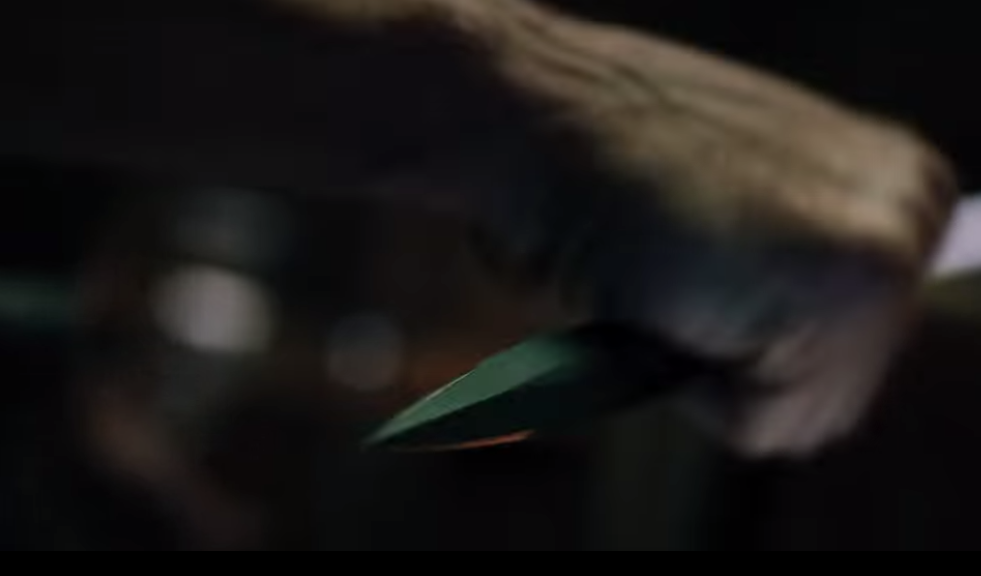
And here’s a still of the knife in question:

the commuter movie liam neeson knife

Identifying the knife is tricky given how brief it appears in the trailer. It sports two edges and a spear point, so it’s most likely a dagger. The position of the hand and the obscurity of the handle suggests a push dagger.

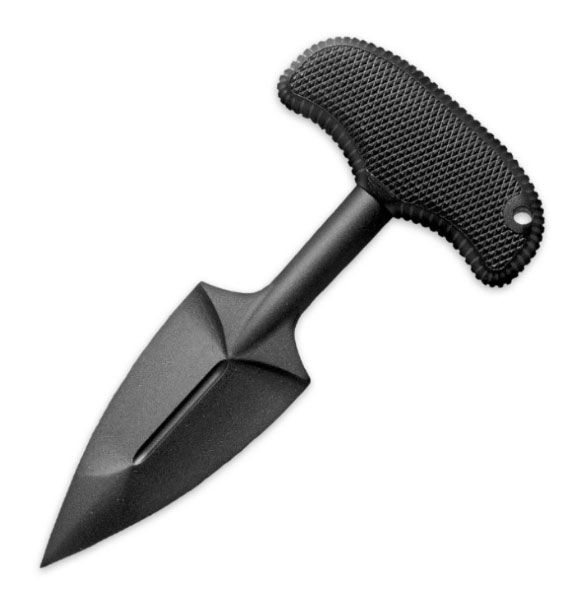
It brings to mind the Cold Steel FGX Blade II:

Cold Steel FGX Blade II Push Dagger

It wouldn’t be the first time Cold Steel knives made an appearance in a movie, but this is only a guess. The keychain hole in the handle certainly lines up with the commuting theme. The FGX sports a plastic-fiberglass polymer (Grivory) blade, although it’s unclear if that’s relevant.

However, the blade in the movie still looks longer than the FGX’s 2.5 inches. The FGX’s fuller (aka “blood groove”) isn’t visible in the clip, either.

Regardless, I’m going with some sort of small dagger similar to what Cold Steel produces. It just as well could be a product of the prop department, but I’d like to think studios use the real deal. Maybe a trip to the theater is in order. This looks like a good popcorn flick for a cold, wintery day.

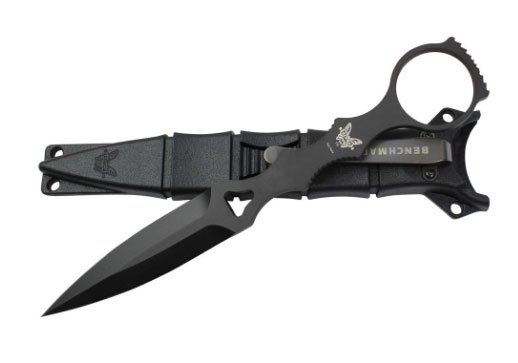
5/4/18 UPDATE: The Knife is a Benchmade SOCP 176

SOCP dagger

Thanks to some sharp-eyed BLADE readers, this knife was identified as a Benchmade SOCP 176. Thanks to everyone who got in touch!

See More Notable Knivesmovie knives used in the commuter

BLADE put together a roster of the best factory knives of its first 40 years in print. Download it now from ShopBlade.com.

The Knife of “Jumanji: Welcome to the Jungle”

Steve Auvenshine movie knives
The knife Steve Auvenshine created for “Jumanji: Welcome to the Jungle.” (knife images courtesy of Steve Auvenshine)

Jumanji: Welcome to the Jungle, released around Christmas 2017, might’ve slipped under the radar for film-savvy knife enthusiasts. However, the movie marks yet another contribution by Kentucky knifemaker Steve Auvenshine to the prop departments of Hollywood.

Dwayne “The Rock” Johnson, portraying Dr. Smolder Bravestone, carries a fixed blade in a sheath on his right hip throughout the movie.

Knife used in Jumanji movie
Dwayne Johnson, second from left, wears the knife in the a sheath on his right hip throughout the new Jumanji movie. (Image via imdb.com)
knives used in the jumanji movie
A closer look. (Image via imdb.com)

Auvenshine, who also made knives for the Jurassic World movies, noted how the actor’s size warped the perception of the knife on screen.

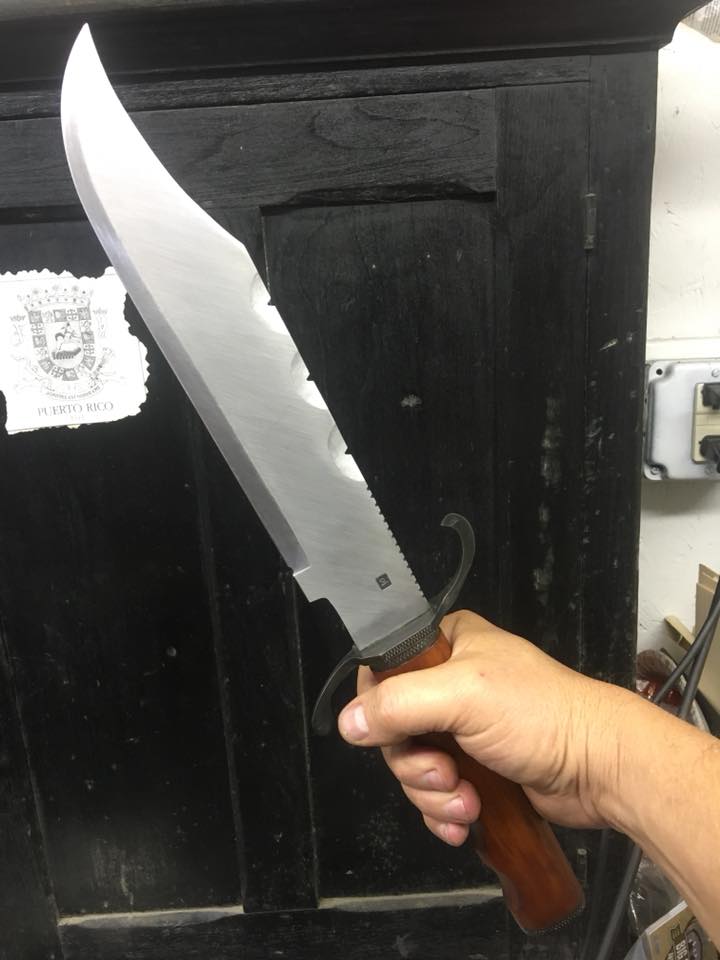
“It’s a beast. Weighs almost two pounds. About 20 inches OAL. Dwayne Johnson, ‘The Rock,’ makes it look pretty normal!” Auvenshine wrote on his Facebook page.

Jumanji knife
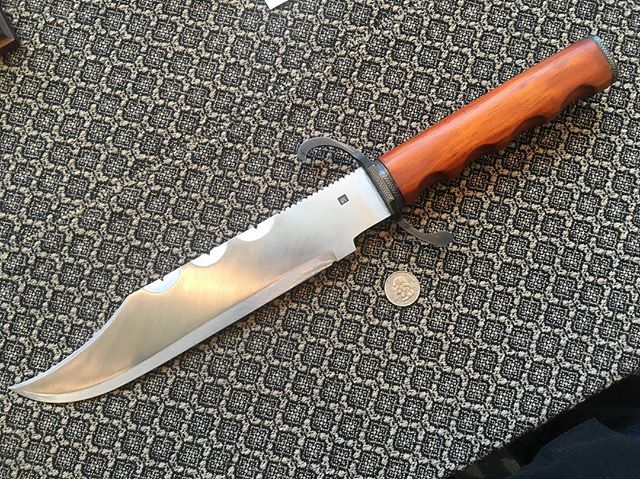
The knife next to a quarter, for reference.

Specs

The measured specs are as follows:

  • Weight: 30 ounces
  • Overall length: 18 inches
  • Handle length: 6.5 inches
  • Blade length: 11.5 inches
  • Blade steel: 1075/80

Here are some closer views from Auvenshine’s shop:


Jumanji knife

Four Things You Didn’t Know About Rambo

“First Blood” is a Dueling Term

David Morrell, author of the novel First Blood, based the book’s title on an old dueling term.

“I thought of it as a kind of duel between the characters, and there’s a dueling term about drawing first blood,” he explained. “In some duels the person who drew first blood would be the victor, so there was a kind of irony here of who drew first blood and who was going to win in this harrowing conflict.”

Rambo is More Canadian than American

first-blood-forest-knife
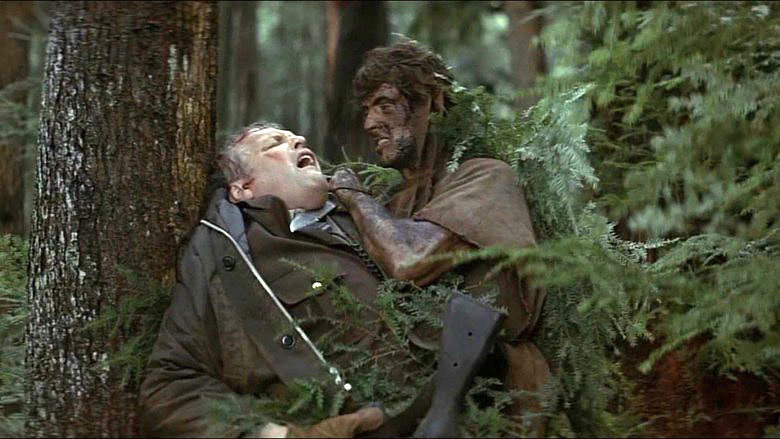
Though set in Kentucky in the novel First Blood, the movie’s locale was supposedly in the American Pacific Northwest. Actual filming was done in British Columbia. (image via imdb.com)

Born in Kitchener, Ontario, Canada, Morrell today is an American citizen.

The setting he chose for the novel, First Blood, was a wilderness area in Kentucky called the Grand Canyon of the East. However, Carolco, the production company that made the First Blood movie, wanted to do the flick in British Columbia, partly for financial reasons.

Meanwhile, for the purposes of the film, the locale would be identified as the American Pacific Northwest.

“It’s ironic that a Canadian created one of the most recognizable American icons,” Morrell noted. “It’s doubly ironic that the movie adaptation of First Blood was filmed in Canada’s British Columbia, even though my novel is set in Kentucky.”

Uncle Sam Makes an Appearance

Rambo Uncle Sam
The First Blood character of Col. Sam Troutman, played by Richard Crenna in the movie, was inspired by an American icon. Can you guess which one? (image via imdb.com)

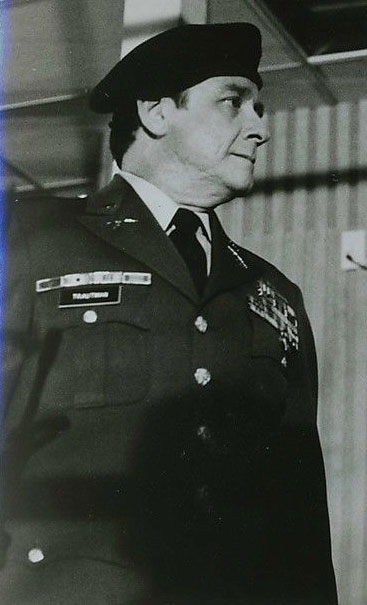
Morrell gave Col. Sam Troutman, played by Richard Crenna, the name Sam because he represents Uncle Sam. As Morrell noted, “I saw him as the system that had created Rambo.”

You Only Got Half the Story

cover of rambo book first blood
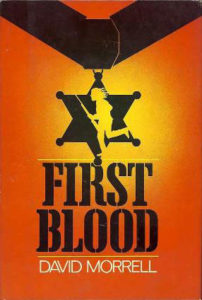
The original cover for “First Blood.”

Originally, First Blood was about 600 pages long. Morrell didn’t like it and so went back and started reading it again. He found a chapter he didn’t like and deleted it. He read the book again and found it moved faster as a result of the deletion.

“I had digressions for one of the deputies, and the man who flew the helicopter and so many different viewpoints in it that I began cutting this chapter and that chapter and found that all I had to do was have the alternating sections between Rambo and the police chief,” he said. “So I probably lost about 300 pages doing this. It was like sculpting, knocking bits of granite off to create a statue. I had written and written so much that I learned that by cutting back I got an intensity that I hadn’t expected. So it was a big lesson for me.”

The Lost Rambo Knife You Never Knew About

If there’s such a thing as the “lost knife of Rambo” it’s the model known as the “Rescue Mission Knife” from Rambo III.

“I think the Rescue knife is important not only because it was a mistake/blooper, but because it has been a topic among die-hard Rambo knife collectors for almost 30 years,” noted Linda Hibben, wife of the knife’s maker, BLADE Magazine Cutlery Hall-Of-Fame© member Gil Hibben. “Even David Morrell [author of the original Rambo book, First Blood] has been intrigued by the appearance and story behind how this knife designed and made by Gil on a moment’s notice ‘accidentally’ appeared in the film.”

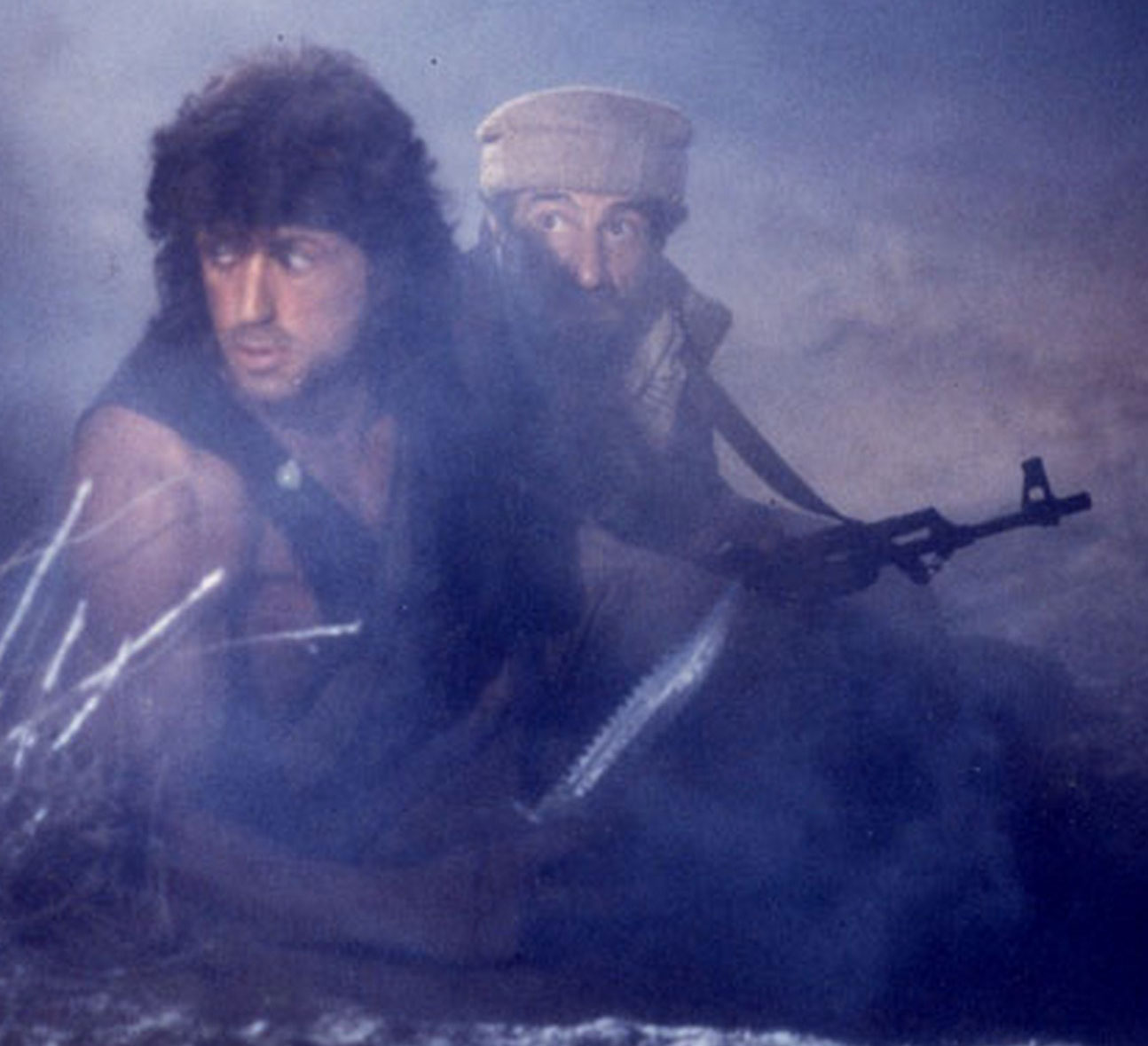
Rambo 3 Minefield scene
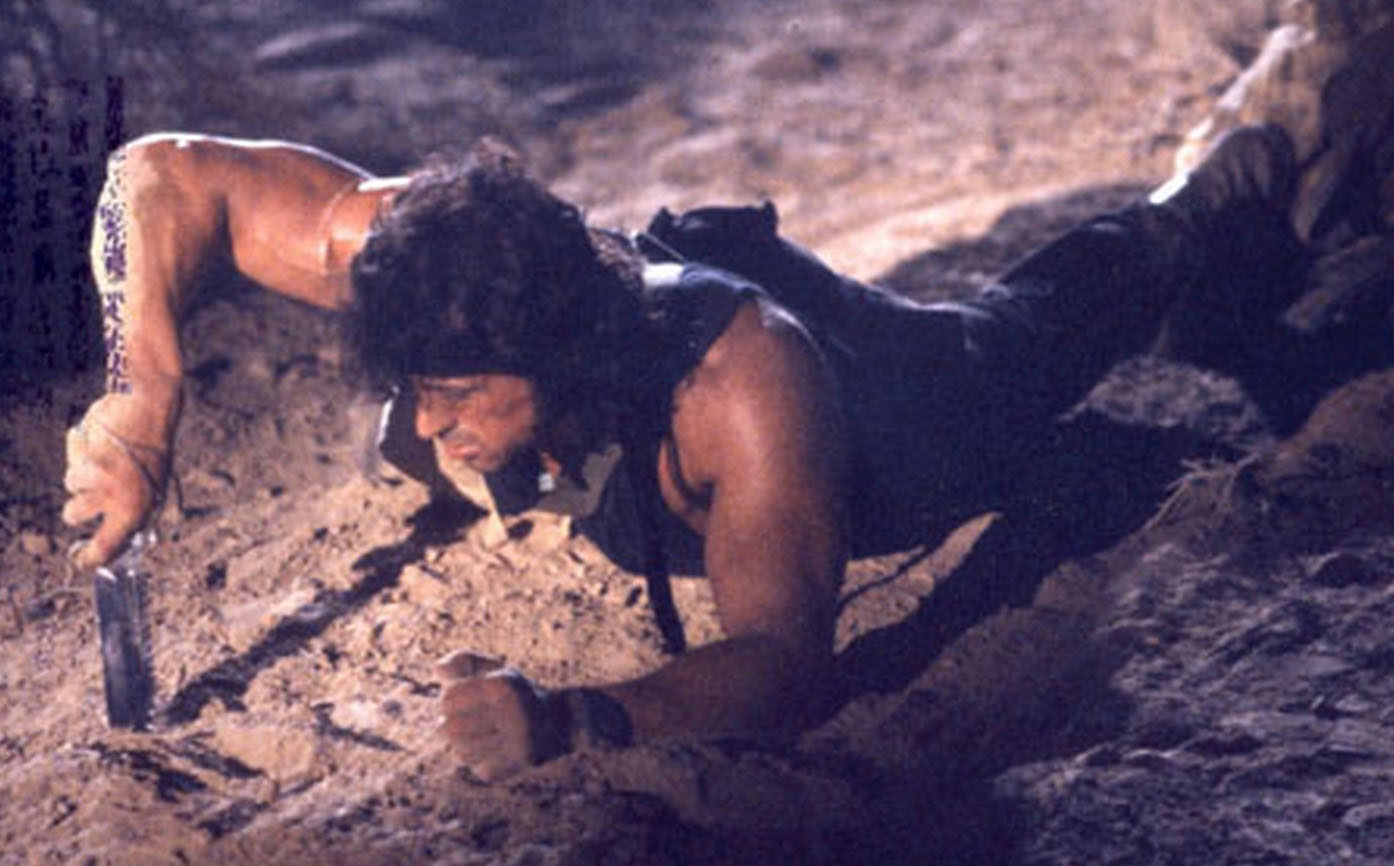
The minefield scene for Rambo III already had been filmed with Gil Hibben’s Rescue Mission Knife before Stallone decided to go with Hibben’s Rambo III bowie as the movie’s featured knife instead. (©1987 Carolco All Rights Reserved)
Rare Rambo knife
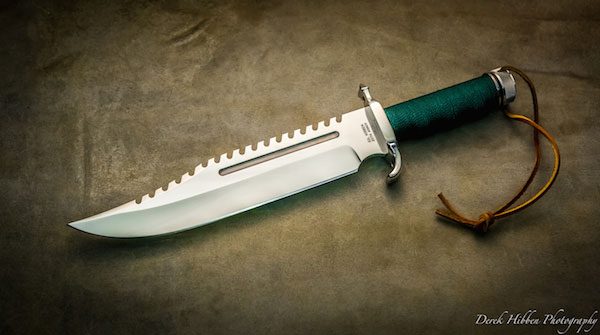
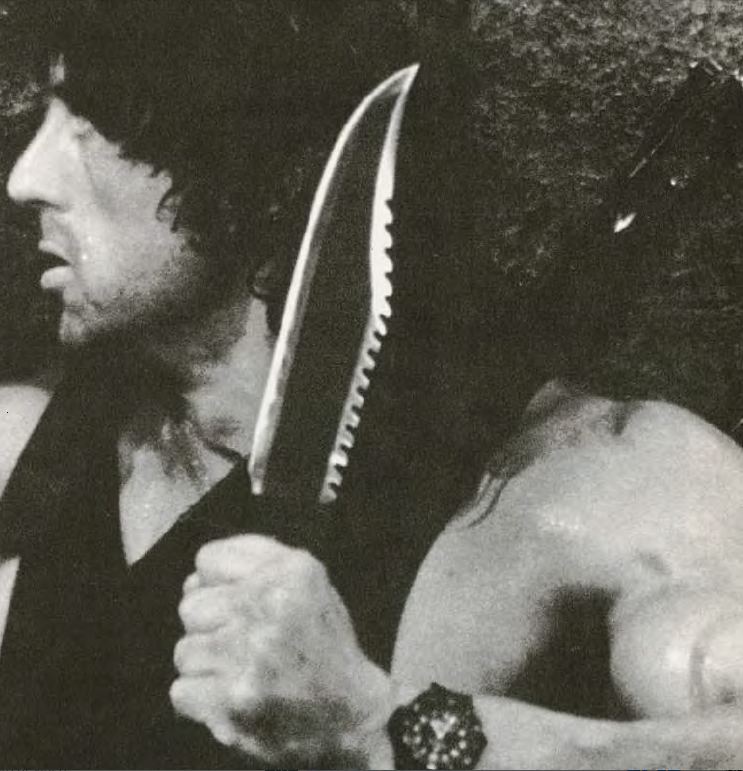
The Rescue Mission Knife had sawteeth on the spine and a hollow handle a la Jimmy Lile’s original Rambo knife from First Blood. (©1987 Carolco All Rights Reserved)

Rambo III was the first Rambo movie for which Gil Hibben made knives, taking over from Cutlery Hall-Of-Famer Jimmy Lile, who made the knives for the first two Rambo films. When Stallone contacted Hibben about doing the knife for the third film, Hibben made a prototype hollow-handle survival knife with sawteeth on the spine.

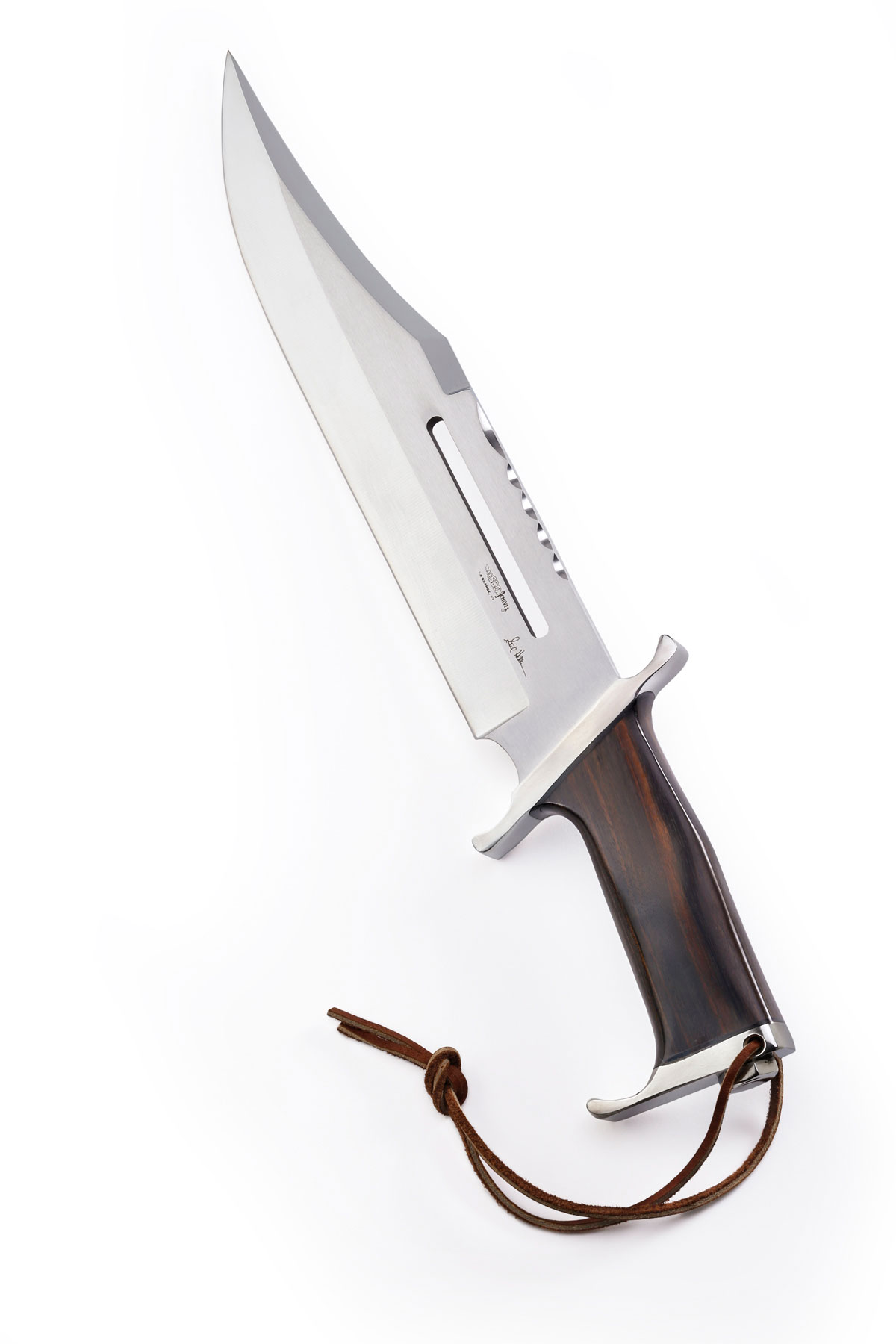
However, Stallone decided he wanted something different and opted for another of Hibben’s designs, the now famous Rambo III bowie. However, the minefield scenes for the third movie already had been filmed with Stallone using the first design, the knife known as the Rescue Mission Knife.

On the 25th anniversary of Rambo III, Hibben teamed with award-winning knifemaker Vaughn Neeley to fashion a limited edition of 100 specially marked, mirror-polished and serial-numbered 25th anniversary Rescue Mission knives. Go here for more information.

Gil Hibben Rambo Mission Knife
Instead of the Rescue Mission Knife, Stallone opted for Gil Hibben’s Rambo III bowie (shown here) as the featured knife for the third film. Stallone had more input on the design of the bowie, including the long cutout in the blade. (Kris Kandler image)

Make Your Mark in Knife History


Best books about making knives and knifemaking

The Knives of the Rambo Movies: Behind the Scenes with Sylvester Stallone

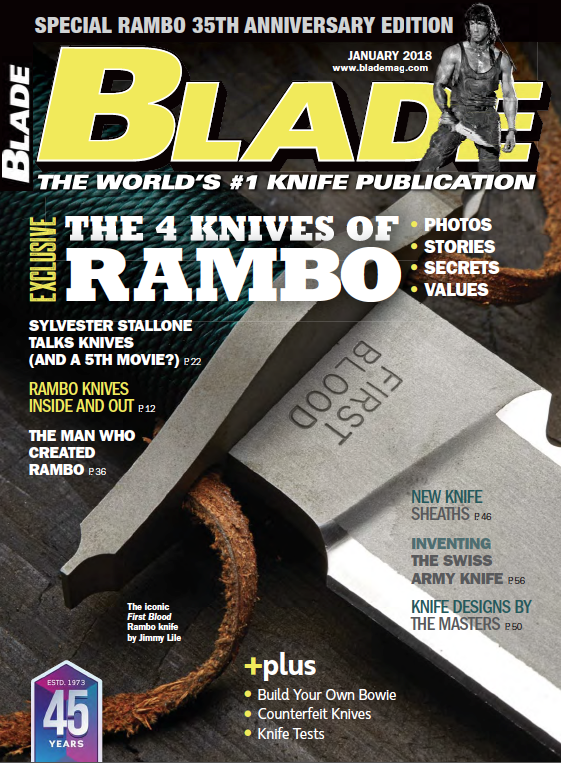
Editor’s Note: This article is part of Rambo Week here on blademag.com. Download the Rambo-themed issue of BLADE magazine here.

The impact of the Rambo movies and Rambo knives on both modern culture and the knife industry has been monumental over the past three-and-a-half decades.

In this, the 35th anniversary year of the original Rambo movie, First Blood, BLADE® asked me to do a story on Sylvester Stallone and what has become the worldwide phenomenon of Rambo.

“Make the Knife Into a Character Itself”

There is no knife in David Morrell’s novel, First Blood. It was Stallone’s idea to give Rambo one.

“I love knives and I wanted the character to have one,” Stallone wrote, “almost to make the knife into a character itself.”

A knife collector in his own right, Stallone wanted Rambo to have a great survival knife that looked good on film.

The Making of the First Knife

Most influential applies to Jimmy Lile's Rambo in spades. (Jack Lucarelli photo)
Jimmy Lile’s Rambo knife is one of the most influential knives of the past half century. (Jack Lucarelli photo)

The selection of BLADE Magazine Cutlery Hall-Of-Fame© member Jimmy Lile as the maker of the knife came about when Stallone was shopping and ran across Pony Express, a sports/hunting store in Los Angeles. While there he discussed the Rambo project with storeowner Joe Ellithorpe, telling Ellithorpehe wanted Rambo to have a survival knife, “something unique that had never been seen before.”

Ellithorpe recommended Lile and Stallone contacted the Arkansas maker.

“[Lile] understood the vision,” Stallone observed. “He was the real deal and I wanted a real knife for the film, not just another prop.”

The Knives of First Blood and Rambo: First Blood, Part Two

Knife used in Rambo First Blood Part II
The Lile Mission Raven 1 of 1 (left) and a custom-made-for-production resin-molded version of it (right) screen used in the second Rambo movie. (from the Randy Rousseau collection)

Stallone stated he told Lile what was in the script rewrites for what would be required of the knife, and Jimmy took care of the rest. Lile gave the first six First Blood knives he made to Stallone, all of which survived the standard amount of wear and tear from the movie’s many takes.

Lile made the first two knives for the Rambo movie franchise, including Rambo 2: The Mission, which Stallone called “the fans’ favorite” and which is why he used it in a boat scene in Rambo IV (DVD extra deleted).

The Knife of Rambo III

Knife used in Rambo III 3 movie
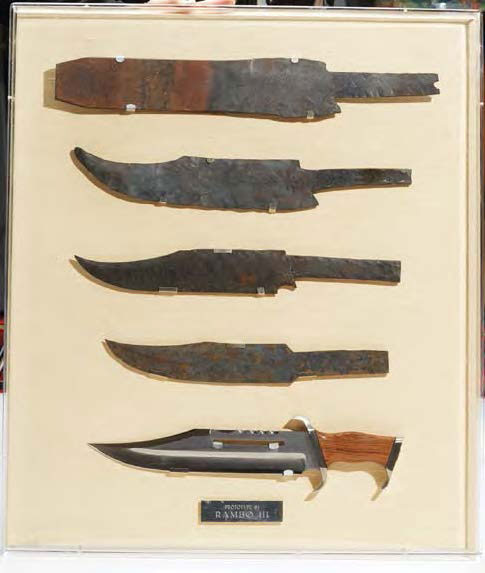
A display (above) from Stallone’s office of the original Rambo III Hibben movie knife shows the progression of the forging process. (from the Randy Rousseau collection)

For Rambo III, though, Stallone wanted to go in a different direction, that is, more of a fantasy look.

Enter Cutlery Hall-Of-Famer Gil Hibben. “I had collected some of his fantasy blades,” Stallone noted, “and then I met him at [the California Custom Knife Show] in Anaheim.”

Unlike with the Lile knives, Stallone had a lot of input on the Rambo III model.

“I drew several versions out on paper and cardboard cutouts,” Stallone wrote. “Once I decided on a design, I told Gil my plan was to make this knife the most famous knife in the world! I believe it’s still selling very well today, along with the other film versions.”

In fact, according to Mrs. Linda Hibben, the Rambo III knife is the most popular knife Gil has ever made.

The Knife of Rambo IV

Knife used in Rambo IV movie
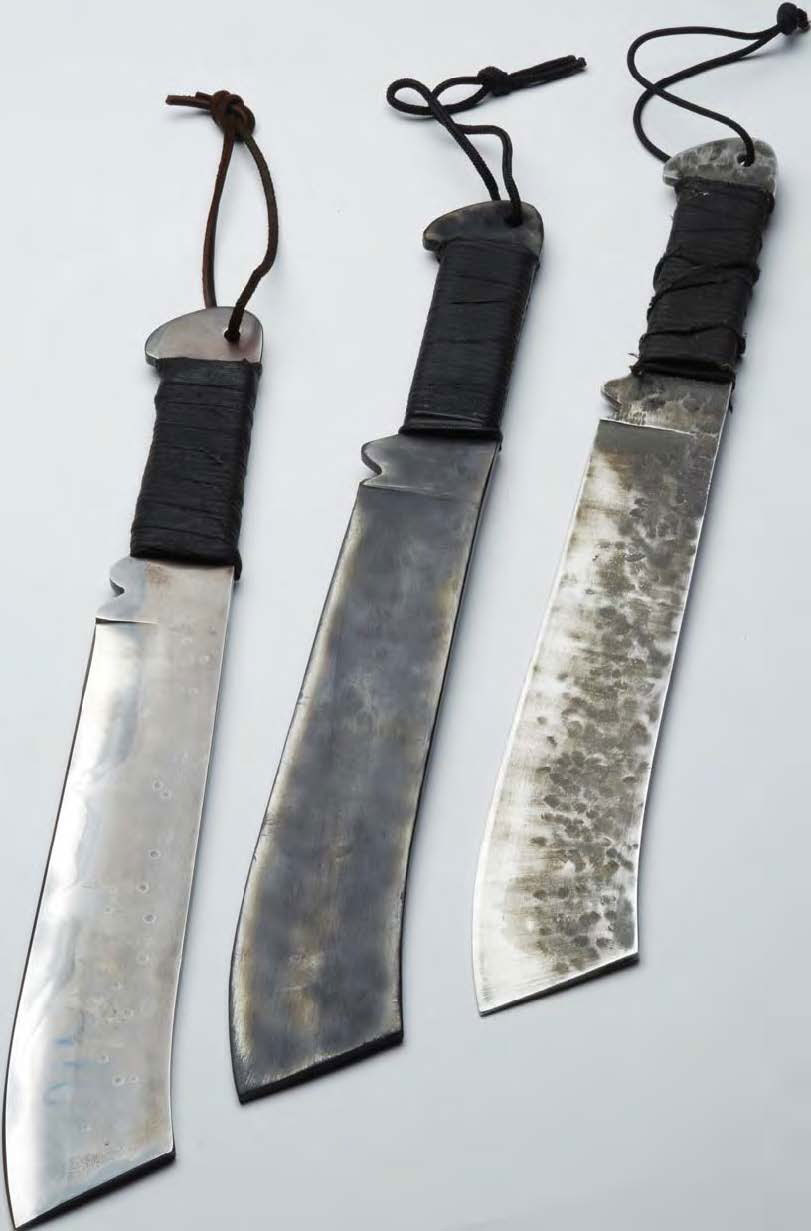
Rambo IV Gil Hibben movie knife (left) with Stallone’s custom-made rubber prop knife (center) and custom-made aluminum prop knife (right)—the latter two both screen used in the fourth movie. (from the Randy Rousseau collection)

Stallone also had input on the Rambo IV Hibben knife, stating, “More than the previous films I wanted something that looked like Rambo could have made in one evening, something crude.”

To prepare for the role of Rambo, Stallone received some training in knife use, “a little from ex-military folks,” he noted. He also studied real stories of those with experience in using the type of survival knives in the movie.

Prop Knives vs. the Real Thing

If the knives look real in First Blood, that’s because they are. However, in the second film molded resin versions of Lile’s handmade knives were made to help protect the actors during live takes. In Rambo III, unsharpened aluminum prop knives were used along with the real Hibben knives. Rubber stunt, aluminum and steel versions of the knives all were used in the fourth film.

“Most were destroyed on set but a very few still exist today,” Stallone wrote. Those include a Rambo II resin version prop knife, a Rambo III aluminum knife that looks great and is very lightweight, and all types from Rambo IV—rubber, aluminum and steel.

“They all look good. You can’t really tell them [from the real thing] just by looking—you have to pick them up,” he stated.

Will There Be a Rambo 5 Knife?

He still has a few of the original knives from each film and keeps them “proudly on display.” He does not clean them and keeps them in the same condition as they were after each movie.

According to some reports, Stallone has indicated he will never do another Rambo movie.

When I asked him if that was his final word or could something happen to change his mind, he simply said, “Never say never.”

Can’t Get Enough Rambo?

knives used in the rambo movies

Download this special issue of BLADE that’s all about these iconic movies. 

The Knives of the Die Hard Movies

1
Knives used in the Die Hard movies
IMDB.com

For those ground into a nub by Frosty and Rudolph, the Die Hard movies provide a welcome respite without leaving the Christmas movie genre. And yes, they are Christmas movies. While the series’ armory mostly centers around firearms, there are a few exceptions for the knife enthusiast.

Knives of Die Hard (1988) and Die Hard 2: Die Harder (1990)

Jack Crain designed two fighters that make brief appearances in the first two Die Hard films.

From his website, where replicas are still for sale:

One scene in Die Hard 2: Die Harder also involves what appears to be a prop automatic, although it’s hard to tell from this short clip:

Knives of Die Hard With a Vengeance (1995)

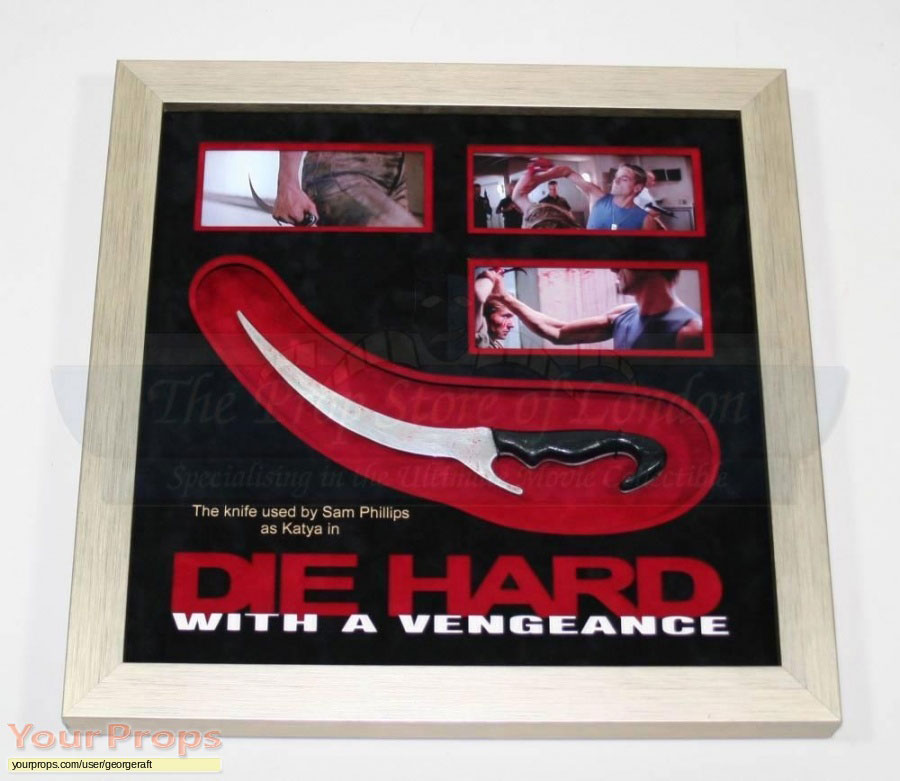
The third film contains what’s probably the most memorable knife scene in the franchise. This one involves a karambit. Despite it being a product of the prop department, it’s worth noting due to the rarity of karambits in Hollywood movies.

Here’s the scene:

Here’s a closer look, from YourProps.com:

Die Hard with a Vengeance knife
YourProps.com

No, it’s not a pretty knife. Maybe that’s why movie studios tap custom knifemakers when the blade gets more screen time. In fast-moving action scenes, it’s likely more economical to let the prop department turn out something passable.

Knives of Live Free or Die Hard (2007)

This is the one movie in the franchise with a giant question mark on the knives used. Information is either hard to come by or doesn’t exist, and there are no notable knife scenes.

Knives of A Good Day to Die Hard (2013)

Busse Knives played a part in the most recent Die Hard movie in many ways. It provided knives and sponsored screenings for U.S. military members stationed overseas. From its official statement:

Nearly 50 Busse Combat knives were purchased by the production company and delivered to Russia for either inclusion in the movie or gifting.

An Arsenal RS-1, a “knifegun” that also fires .22 cartridges, makes an appearance. It’s similar to the one featured in this video:

In the end, what would’ve been a dramatic knife fight didn’t make the film’s final cut. It still managed to make its way onto YouTube, though.

Anything Missing? Leave a Note in the Comments

If something didn’t make the list, be sure to let BLADE know in the comments.

Keep Learning About Knives Used in Movies

BLADE magazine often covers the knives used in new movie releases. The best way to stay on top is with a subscription

Advertisement

Must Read Articles

Read this before you make a knife

Knifemaking 101 – Read This Before You Make a Knife

  by Wayne Goddard My experience has taught me that there's nothing like digging in and getting started. I've often said the hardest part of the...
how to forge damascus steel

How to Forge Damascus

Advertisement
Advertisement