
Buyer's Guides

You’re looking for a new knife in a certain style – we’ve got recommendations on the best blades for every price point.

Game Shears: Affordable Options To Cut Bones And More Down To Size

1

Affordable game shears that offer cut, power, features, size and more…

When you think of processing game, a skinner is typically the first knife that comes to mind—and rightfully so. At the same time, game shears provide a viable role in the processing equation, particularly with small game like squirrels, rabbits, fowl and fish. A good pair of shears made for small game processing can cut through bone, slice hide, remove unwanted viscera and, in the case of fish, remove heads and fins. Many shears have extras thrown in, technically making them multi-tools, though that’s a bit of a stretch.

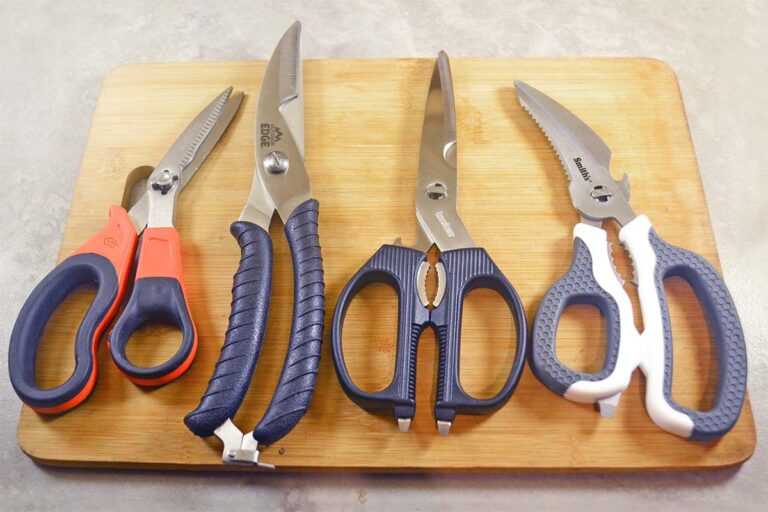
My team tested four current game shears to see how they perform and what they offer in the way of goodies. Just so we don’t get repetitive, it should be noted that all our candidates have take-apart pivots that allow the main blade/handle sections to separate for easy cleaning.

Gerber Vital Take-A-Part Shears
Gerber Vital Take-A-Part Shears
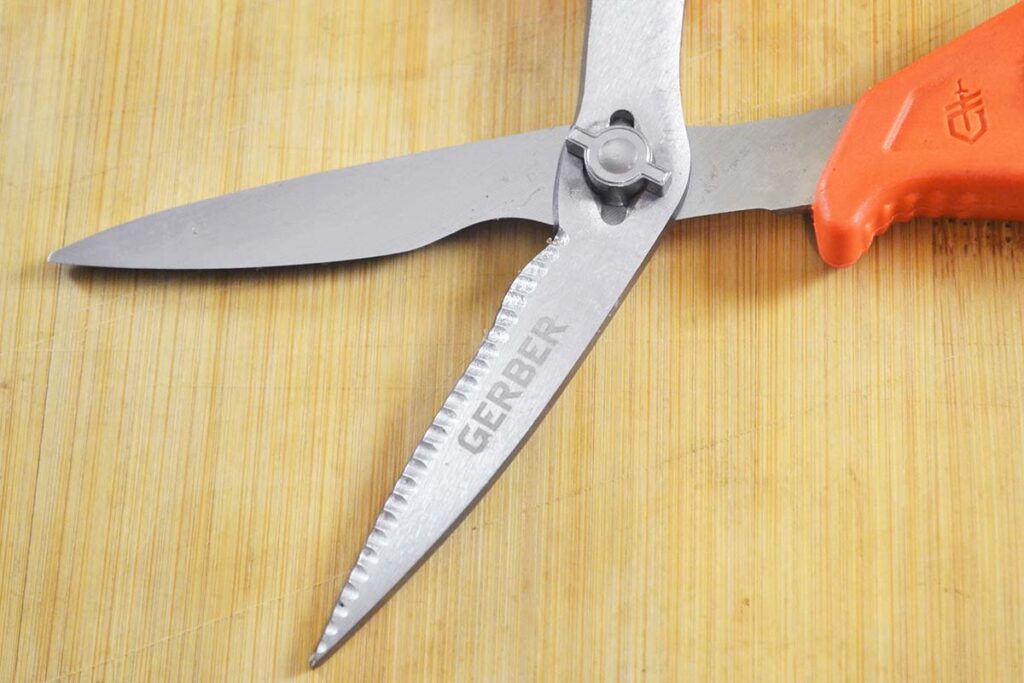
The Gerber has a humped portion of the serrated blade on the bone notch area that enables the blades to continue cutting the full length of the blade rather than bogging down at the notch. It is the only test shears with the feature.

The simplest and smallest of the test group is the Gerber Vital Take-A-Part Shears. The spear-shaped blades are 2.5 inches of 420J2 stainless steel. Overall length: 8 inches. The handles have a hard thermoplastic frame sporting rubbery Kraton™ overlays with an ovate hole for the fingers and a round one for the thumb. One blade is plain with a bone notch and the opposing one is fully serrated. A two-color nylon sheath matches the handle. Weight: 5 ounces. Country of origin: China. MSRP: $20.

Kershaw Taskmaster Shears
Kershaw Taskmaster Shears
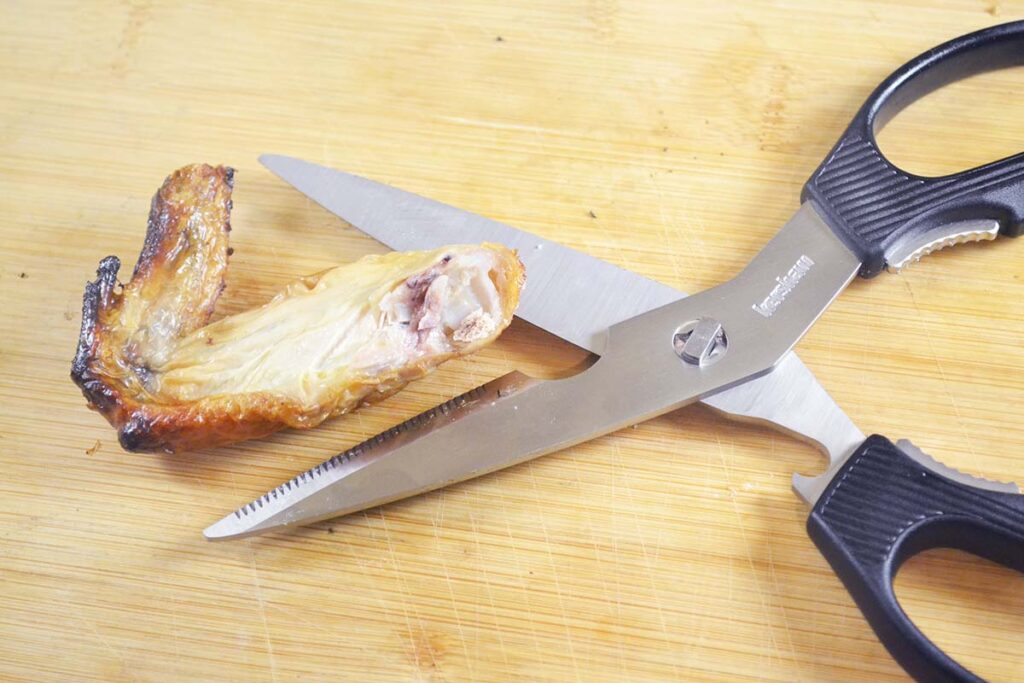
The Kershaw takes the end of a wing at the joint in fine fashion. The blade section did the handiwork, zipping through the cartilage and muscle at the convergence of two main wing sections.

The Kershaw Taskmaster Shears is a straight-blade design with a nice assortment of built-in goodies. The 3.5-inch blades are stainless steel. The spear-point patterns include one plain edge and the other partially serrated with a bone notch. The grips are finger-loop style and overlaid in black Kraton. Additional features include a lid lifter, bottle opener, screwdriver, nutcracker and jar opener. Weight: 5.1 ounces. Overall length: 8.875 inches. Country of origin: China. MSRP: $26.73.

Smith’s Edgesport Bait & Game Shears
Outdoor Edge Game Shears
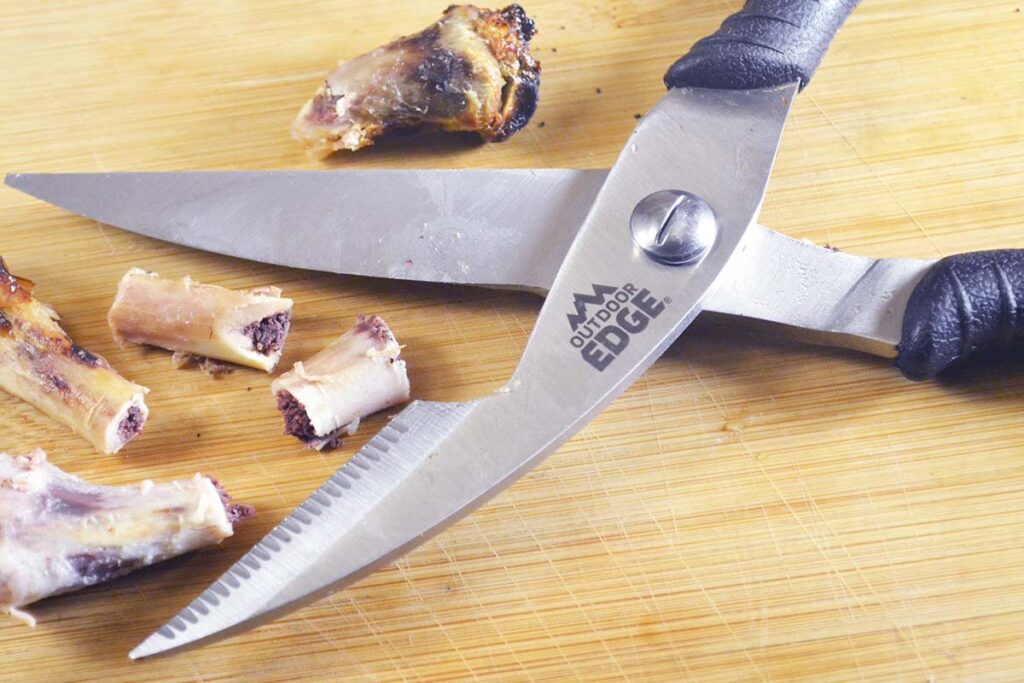
The Outdoor Edge is the largest of the test group. At 10.5 inches overall, it was the only model that could tackle the larger chicken bones. Note the hefty bone notch just below the serrations.

The Smith’s Edgesport Bait & Game Shears is the most elaborate of the group we tested. The curved blades are 3 inches each of stainless steel. One’s a plain edge and the other is serrated, but what really sets them apart is the curved fish scaler on the underside of the plain blade. The handles have a thumb hole and opposing finger hole with black Kraton over a white thermoplastic main frame. Additional functions include a nutcracker, screwdriver, bone notch and cap lifter. There is no pouch. Weight: 5.25 ounces. Overall length: 8.5 inches. Country of origin: China. MSRP: $28.99.

Outdoor Edge Game Shears
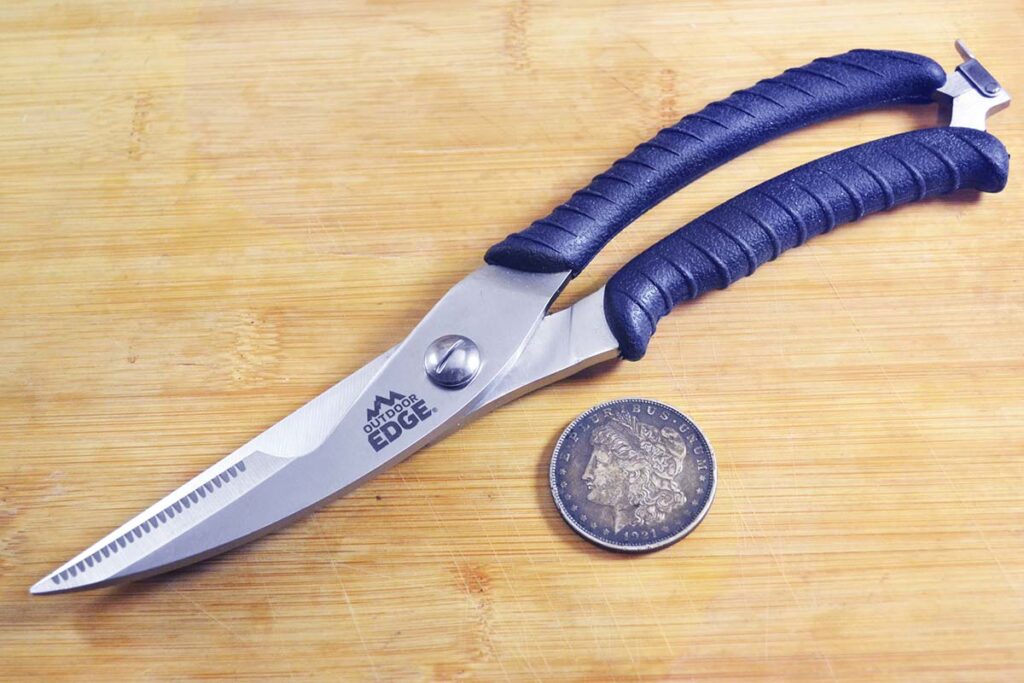
Outdoor Edge's shears are spring loaded
The Outdoor Edge shears is the only one tested that is spring-loaded—that is, no finger holes are required to open and close it. Note the catch at the base for keeping the handles closed while not in use.

The Outdoor Edge Game Shears is the juggernaut of the bunch. What it lacks in features it makes up for in size. Respective blade and overall lengths: 3.75 and 10.5 inches. Another distinguishing feature is it’s spring-loaded with a swing lock at the base. This negates the need for manually opening the blades after making a cut—the spring does it for you. The wharncliffe blades are a plain edge and the other partially serrated with a healthy bone notch. Handles are ribbed Kraton. Weight: 10.5 ounces. A pouch is included. Country of origin: China. MSRP: $49.95.

Testing Shears

I focused on the main job of shearing first. I started with some basic straight cutting exercises of suede leather to simulate animal hide. All the candidates performed the scissor cuts well with the exception of the Outdoor Edge shears, which are just too big for such small detail tasks. As you’ll see later, the Outdoor Edge more than makes up for this deficiency in other areas. The Gerber cut best because it is the only test shears that has a humped serrated blade opposite the bone notch. It just keeps on cutting like a standard scissors whereas the others bog down when they hit the notch.
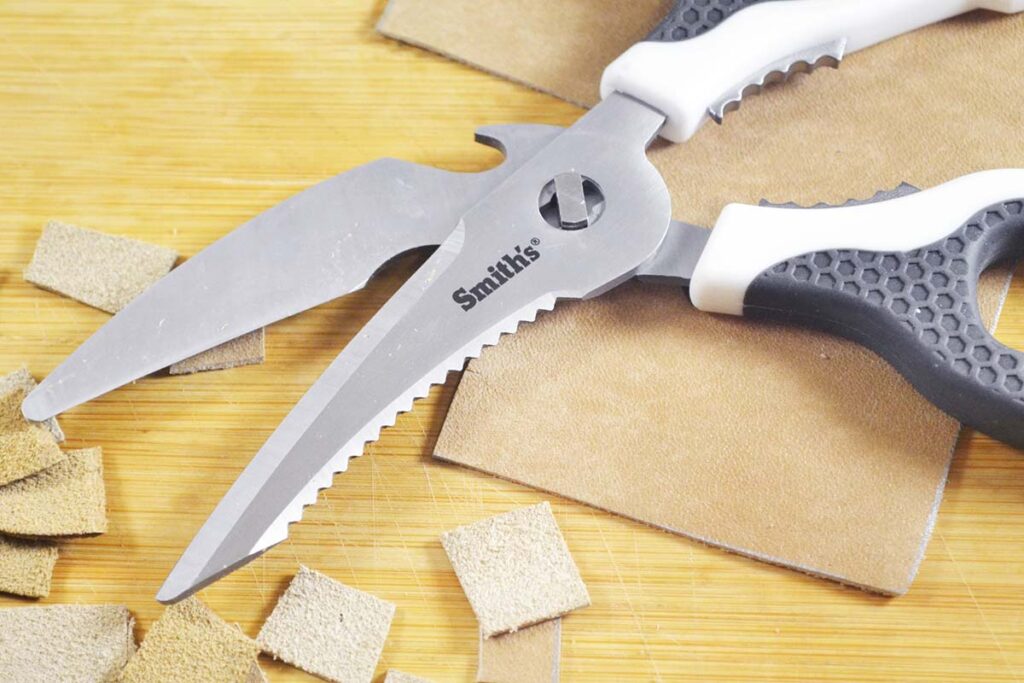
Smith’s Edgesport Bait & Game Shears
All the blades on the smaller shears were adept at such detail work as cutting suede, and the Smith’s cutter was no exception. Note the pivot piece that rotates to take the two sections apart.

Next I tested each model’s bone notch, a great feature I’ve only seen on game shears that is worth its weight in gold. I used the shears on chicken bones as they were the easiest to get in the 15-to-25°F cold snaps we were experiencing at test time. The humerus and femur are the largest “rounded” bones in a chicken skeleton, offering the best way to gauge cutting power. This is where the Outdoor Edge shears excelled. It munched its way through the larger bones with ease while the smaller shears had a hard time opening up wide enough to be able to grip them. All the review shears performed well on smaller bones, as well as cutting through the cartilage and viscera around the joints.

Hightlighting Features
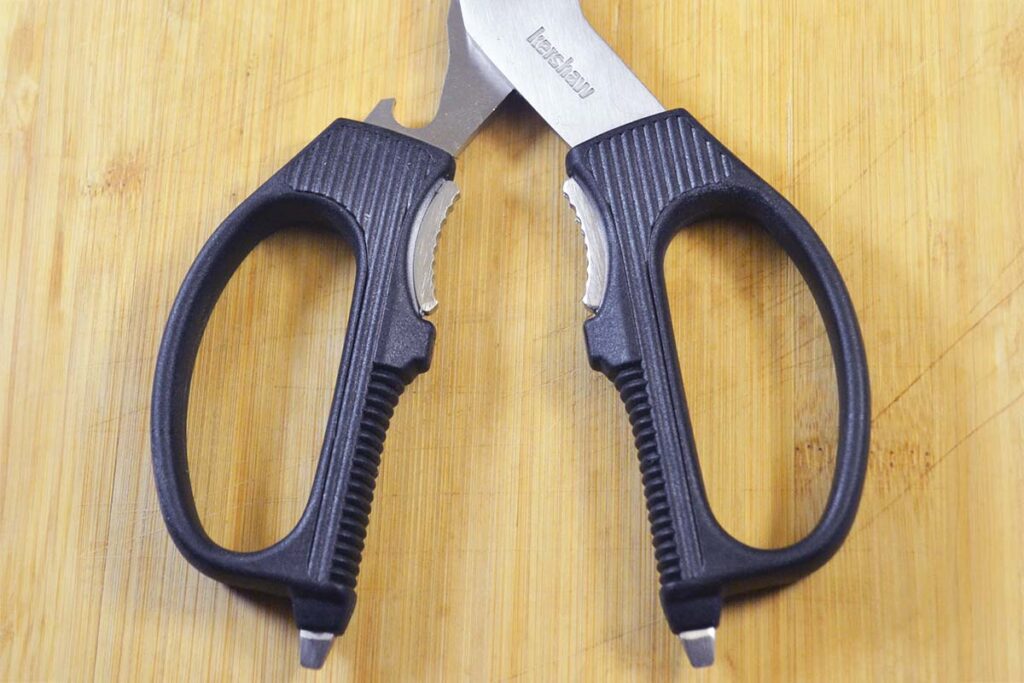
Kershaw did a nice job of organizing the additional functions on its shears.
Kershaw did a nice job of organizing the additional functions on its shears. Look closely and you’ll see a bottle opener, nutcracker, lid lifter, screwdriver and jar opener built into the design.

The Gerber and Outdoor Edge Shears are sparing in the multi-implement category. The Kershaw and Smith’s, on the other hand, offer a wide range of added features. Most impressive on the Kershaw is the way the lid lifter, bottle opener, screwdriver, nutcracker and jar opener are incorporated into the design. You don’t really notice the various little helpers, but you’ll be darn glad they’re there when you need them. What’s more, the fish scaler on the Smith’s shears could be a real game changer for the outdoorsman who enjoys fishing as much as hunting, or is solely into angling.

Final Cut

The good news for game shears users is choices abound in this small sliver of the overall cutlery industry. For starters, pricewise none of the test shears are going to break the bank. The small Gerber and large Outdoor Edge will please those who could care less about the extras. For them, a sharp shears with a bone notch is all they need. For those who like bonus functions on their shears, the well-organized Kershaw will perform a myriad of chores. Finally, the gamesman who prefers a loaded shears with a little something extra will appreciate the fish scaler on the Smith’s entry. Between the four choices there’s bound to be a game shears ready to work for you.

Check Out More Outdoor Knives:

Work Sharp Ken Onion Elite Mk2 Review [Hands On]

0

Has Work Sharp improved on its legendary tool?

The Work Sharp Ken Onion Elite has been the standard for powered abrasive belt sharpening for about a decade. And it’s more than earned its place in knife enthusiasts’ sharpening stations. Yet, Onion and Work Sharp were just getting warmed up.

Unveiled at the beginning of 2024, the Ken Onion Elite Mk2 (KOE Mk2) aims to outdo the original in about every way. But does it?

That’s what I aimed to find out when I pulled out a bevy of knives and put the unit through its paces. Is the sharpener more user-friendly? Does it offer more functionality? Can it unseat the legendary Work Sharp Ken Onion Elite?

Let’s find out.

Work Sharp Ken Onion Elite Mk2 Grinding Attachment

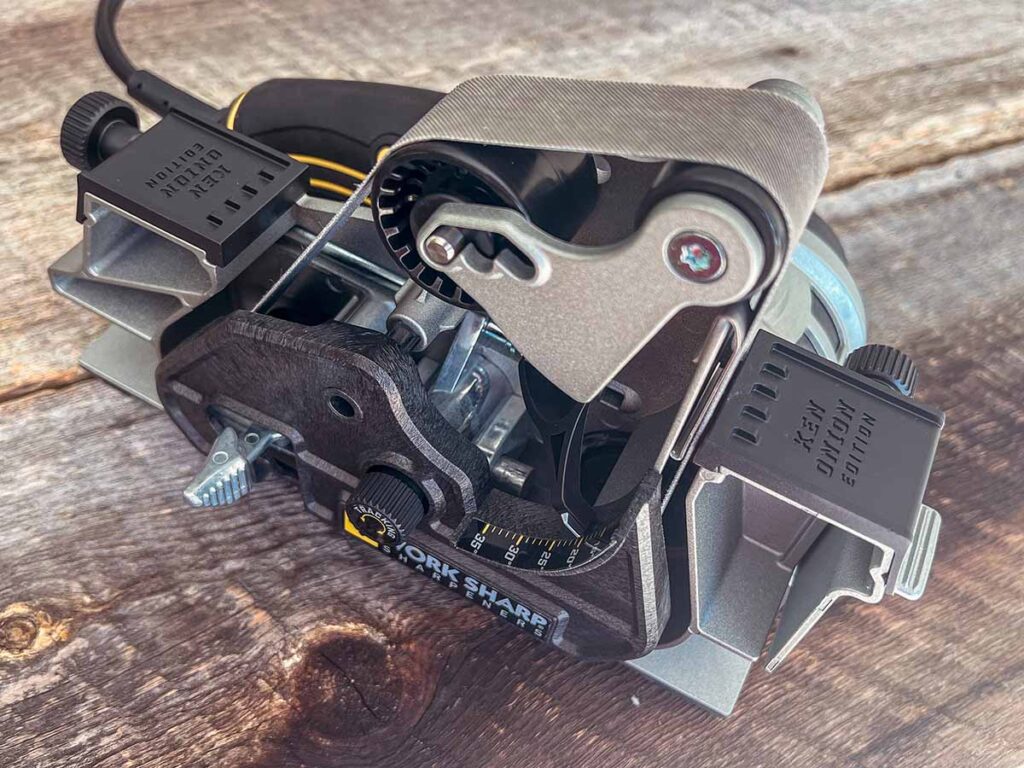
Ken Onion WorkSharp MK.2 with grinding head

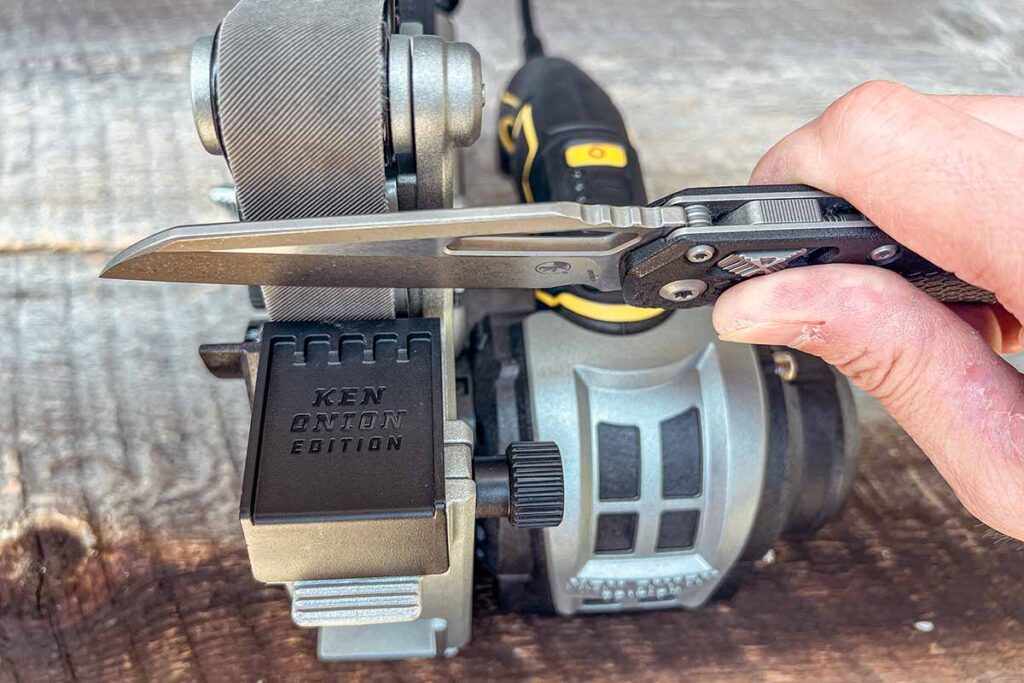
Work Sharp didn’t veer away from the basic functionality of the Work Sharp Ken Onion Elite in the Mk2. For example, blade grinding attachment still uses the same 1”x18” belts as the original and pretty much functions the same.

Onion and the company, however, have enhanced the operation of the attachment in several ways.

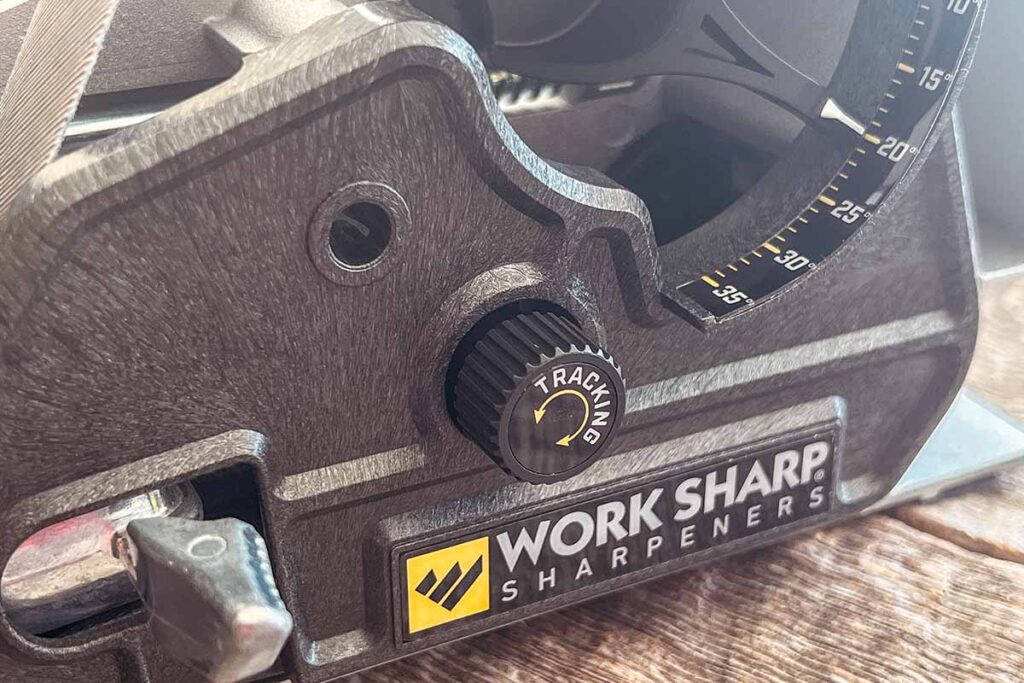
The angle adjustments on the grinding attachment now can be made on the fly and without de-tensioning the belt or even turning the unit off. This is done through a round nob under the plate controls, which raises and lowers the idler wheel. A built-in angle indicator allows you to dial in the exact edge.

The aforementioned idler wheel is also new to the system and can be set for three edge types: conventional V, low-angle convex, and high-angle convex. A major plus, this is achieved without tools or even de-tensioning the belt—though, the power must be off.

Ken Onion WorkSharp MK.2 grinder adjustment

Work sharp has included a belt guard on the new model, gone are the days of the original’s open face. The guard has a port hole that you can place the hub fastener into (so you won’t lose it!) whenever you convert this unit to the standard three-pulley cassette.

Finally, the Mk2 has an adjustable height reference plate on the platen end of the grinding attachment. Quite simply, this allows for finer adjustments at the platen end.

Overall the build, of the new BGA is more substantial than the original, as there is now more weight to it.

Work Sharp Ken Onion Elite Mk2 Sharpening Head

Ken Onion WorkSharp MK.2 Sharpening Head

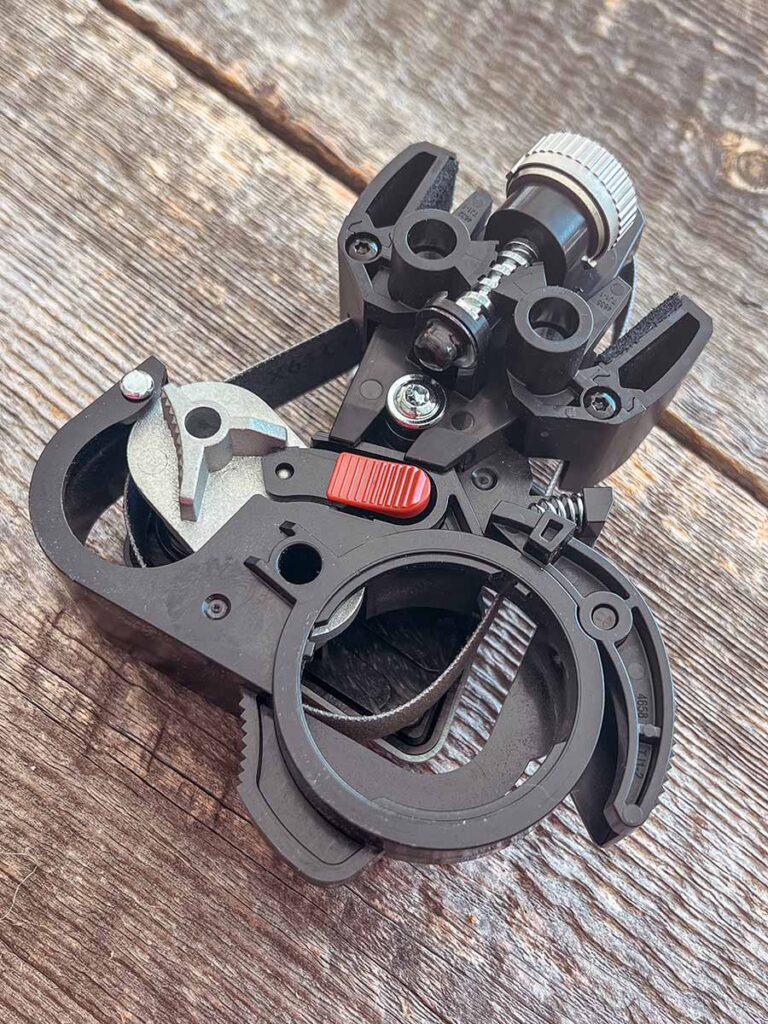
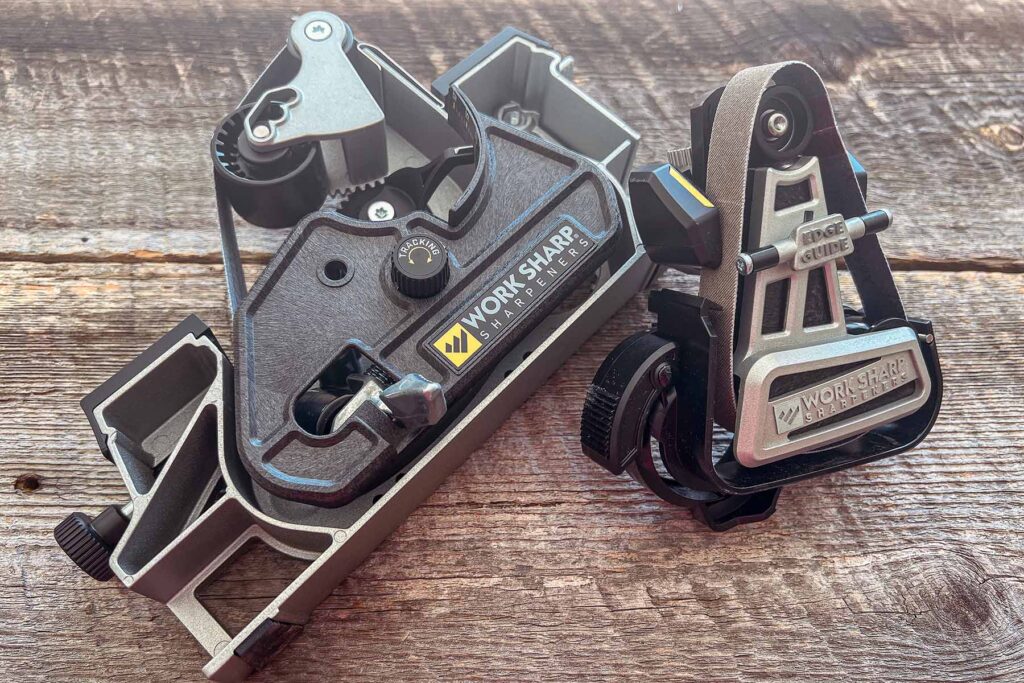
If you prefer to use the standard three-pulley cassette instead of the Blade Grinding Attachment, you can physically swap out the two easily. The power head attaches to either using a simple twist lock connection at the motor housing at the drive shaft.

A nice aspect of the cassette is it includes a scissor guide in addition to a knife guide, which is set at a 65-degree angle. For knives, you use the pull-through method, resting the blade on one of the leather-lined blade rests and pulling the blade through along the belt.

Selecting your edge angle is as easy as turning a dial, similar to the blade grinding attachment. Rotate the knob to the desired edge angle and both blade rests will move in or out simultaneously.

There’s also an included blade rest with plastic rollers that allow you to steady the blade as you pull it through. If you wish to not use these, they simply rotate out of the way and lock into the stowed position.

However, with the cassette, there is no option to adjust for different edge types (standard V, low convex, or high convex). You just get a regular convex edge only, but still razor sharp.

Work Sharp Ken Onion Elite Mk2 Power Head

As for the power head end of things, there are several improvements here. You’ll notice the larger motor housing and inside is a more powerful motor with electronic torque management. The motor senses the load placed on the belt and compensates for it, making this sharpener almost impossible to bog down in use.

The pushbutton speed control with LED light scale shows you at a glance how fast the belt is running. And slowing down or speeding up the belt is as easy as pushing a button.

The Mk2 has a constant on setting—you just squeeze the power trigger and press a button to lock in the setting. Shutting it off is a matter of hitting the stop button or squeezing the power trigger.

The body of the Mk2 has a cast metal overlay that adds rigidity as well as boosts the rough and tumble looks of the tool. Furthermore, the metal overlay makes the unit quieter and dampens vibrations.

Work Sharp Ken Onion Elite Mk2 Testing

Putting the Ken Onion Elite Mk2 to use is a pleasure. However, I’d say, that to step up to a tool of this nature you need to know your manual sharpening skills inside and out—especially when using the grinding attachment. If you don’t know what you’re doing you risk damaging blades or simply spinning your wheels with a sub-par sharpening. Given the guides, the cassette is more forgiving.

I have ten solid years of experience with the original Ken Onion Elite and know the limits of the machine. With this being said, the functionality of the Mk2 is identical to the original and the improvements mentioned make it more user-friendly, improving the overall experience.

Ken Onion WorkSharp MK.2 sharpening with grinding head

I also found the Mk2 is easier to set up and dial in, as well as change angles instantly with the machine powered on. The ability to dial in the edge type (standard V, low convex, and high convex) allows you to tailor the edge format to your specific task for the knife.

Personally, I prefer the high convex, which allows you to cut the edge angle back 2-3 degrees more for enhanced edge sharpness. At the same time, it still retains enough “meat” in the center for lateral strength.

Final Cut

As it goes, the Work Sharp Ken Onion Elite Mk2 doesn’t come cheap with an MSRP of $300. It’s a bit steep for a sharpener. But when you look at what you get, it’s easy to see why it’s still valuable.

While this was primarily designed as a sharpening machine, it’s also a miniature variable speed belt sander that will work on metal, PVC, plastic, and wood. In turn, you receive two machines in one, plus it can handle knives and scissors as well as assist you with projects in your garage or shop. How can you beat that?

Honestly, if you want to take your sharpening game to the next level and beyond, invest in the Ken Onion Elite Mk2 from Work Sharp.

More On Sharpening:

Locking Folders Knives: Options That Unlock EDC Ease

Four new entries help show why locking folders rule the pocketknife world.

Locking folders are the most popular pocketknives—perhaps even the most popular sporting knives of all. Slipjoints have the romance and tradition, vintage style, natural materials and many other things that make knives coveted by so many users and collectors, but locking folders are a lock in terms of being the king of pocketknife sales.

For one thing, while slipjoints can have anywhere from one to multiple blades, they are basically limited to one non-locking mechanism, that being the slipjoint mechanism itself. Locking folders, on the other hand, come in a wealth of locks, including the lockback, linerlock, Integral Lock/framelock, Benchmade AXIS Lock/crosslock, ring lock, button lock, Spyderco Compression Lock and others. Not only that but since they lock they’re much less likely to close accidentally than slipjoints.

Meanwhile, since the explosion in lockbacks after the introduction of the Buck 110 folding hunter in 1964 and the introduction of the linerlock by BLADE Magazine Cutlery Hall-of-Fame® member Michael Walker in 1981—that by the end of the decade was catching on with custom and factory makers far and wide—locking folders have experienced booms in types and runaway sales that continue to this day.

As Matt Salazar, general manager of House of Blades retail knife store in Fort Worth, Texas, noted in “2025 Trends and Takeaways” of the Spring 2025 BLADE Complete Knife Guide, “While slipjoint collectors are diehards, they’re a drop in the bucket compared to those into locking folders.”

All of which brings us to the subject at hand: a sampling of a few of today’s top factory pocketknives that lock.

KA-BAR State & Union F01OD

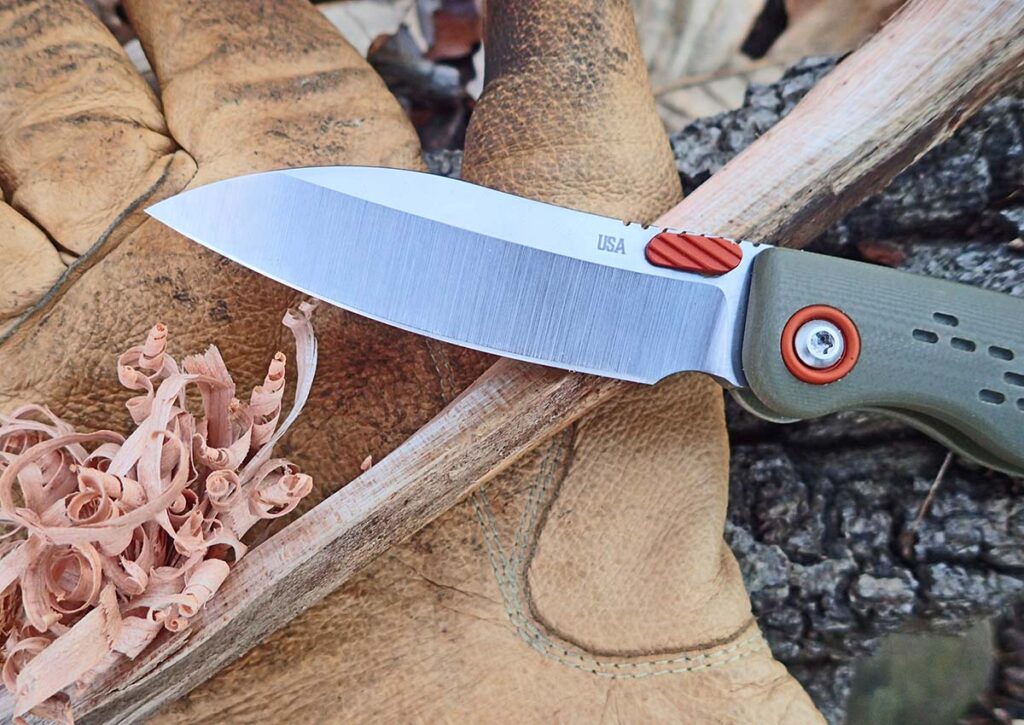
The KA-BAR State & Union F01OD was with the author in the woods and carved a beautiful feather stick able to take a spark.

State & Union F01OD Specs
Lock Type: Lockback
Blade Length: 3.25”
Blade Steel: CPM S35VN stainless
Blade Grind: Hollow
Blade @Thickest: .16”
Blade Finish: Satin
Handle Material: Olive drab G-10
Closed Length: 4.1”
Country of Origin: USA
MSRP: $175

The KA-BAR State & Union F01OD is the first all-USA-made folding knife by KA-BAR in over 50 years. The sleek, reliable edged tool features a sharp drop-point blade. The handle provides a solid grip and is complemented by eye-catching anodized orange hardware.

Designed for everyday carry, the F01OD has a reversible wire clip, ensuring it stays securely in your pocket. Checking in at a lightweight 3.2 ounces, the knife is suited for most any cutting adventure—whether in the field or around the house. Available in several colors, it also looks good while doing it.

Spyderco Alcyone

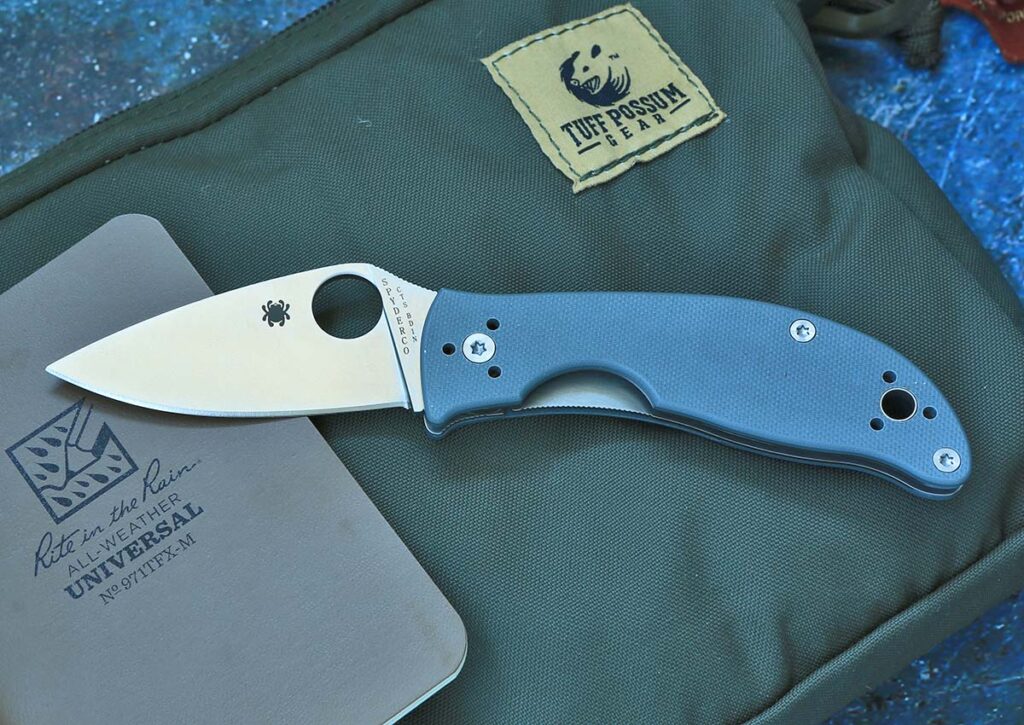
The leaf-shaped blade of the Alcyone has a sharp PlainEdge and the familiar Spyderco hole for ambidextrous opening.

Alcyone Specs
Lock Type: Linerlock
Blade Length: 2.91”
Blade Steel: CTS BD1N stainless
Blade Grind: Flat
Blade @Thickest: .11”
Blade Finish: Shiny satin
Handle Material: G-10
Closed Length: 4.08”
Country of Origin: China
MSRP: $115

The Spyderco Alcyone is named after a multi-star system in the constellation Taurus. The locking folder combines high performance with classic Spyderco design at an affordable price, featuring premium U.S.-made blade steel. The leaf-shaped blade has a sharp PlainEdge and a Spyderco trademark round hole for ambidextrous opening.

Thanks to its open-backed construction and full skeletonized stainless steel liners, the ergonomic handle is lightweight and easy to clean. The rugged gray scales provide a secure grip with a non-slip peel-ply texture for sure handling. The four-position pocket clip provides left/right side, tip-up/tip-down carry. A generous-sized lined lanyard hole completes the handle package.

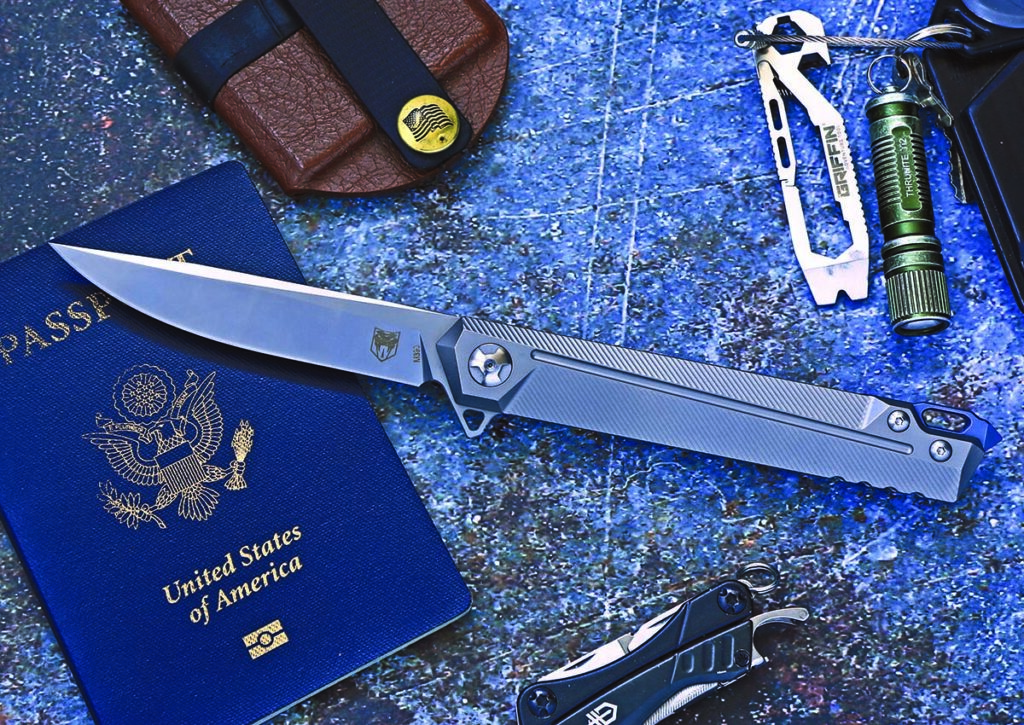
CobraTec Olympian

The modified drop-point blade of the Olympian flipper folder is tailored for precision cutting and slicing. The ball-bearing pivot system provides smooth, swift deployment. A robust glass breaker and lanyard loop enhance versatility.

Olympian Flipper Specs
Lock Type: Framelock
Blade Length: 3.5”
Blade Steel: M390 stainless
Blade Grind: Flat
Blade @Thickest: .13”
Blade Finish: Satin
Handle Material: Titanium
Closed Length: 5.375”
Country of Origin: China
MSRP: $279.99

The CobraTec Olympian flipper folder is a marvel of precision engineering, seamlessly blending high-quality materials with an elegant, ergonomic design. A lightweight yet exceptionally durable titanium grip ensures effortless handling and superior strength. The right-hand carry clip provides convenient accessibility.

The modified drop-point blade is tailored for precision cutting and slicing. The ball-bearing pivot system provides smooth, swift deployment. A robust glass breaker and lanyard loop enhance versatility.

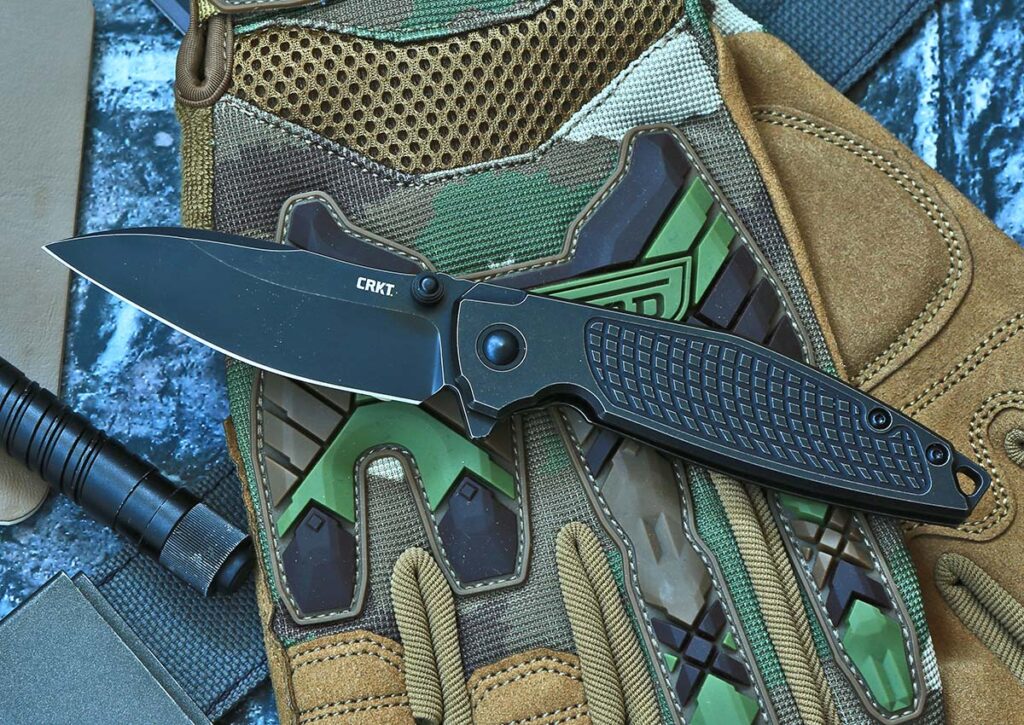
CRKT Ibis

Designed by Lucas Burnley, the CRKT Ibis features a drop-point blade with a prominent belly great for slicing, while the black finish complements the titanium handle.

Ibis Specs
Lock Type: Framelock
Blade Length: 3.08”
Blade Steel: CPM S35VN stainless
Blade Grind: Saber
Blade @Thickest: .13”
Blade Finish: Stonewash
Handle Material: Titanium
Closed Length: 4.14”
Country of Origin: China
MSRP: $200

Designed by Lucas Burnley, the CRKT Ibis is named after a graceful wading bird. For a distinctive look, the blade features a sleek curve along the spine. The drop-point blade boasts a prominent belly great for slicing, while the black finish complements the titanium handle. As Burnley notes, “It just looks good.”

With fast flipper deployment, the Ibis opens smoothly thanks to the Ikoma Korth Bearing System (IKBS)/ball bearing pivot. A low-profile pocket clip keeps the 2.9-ounce knife securely by your side.

Carrying

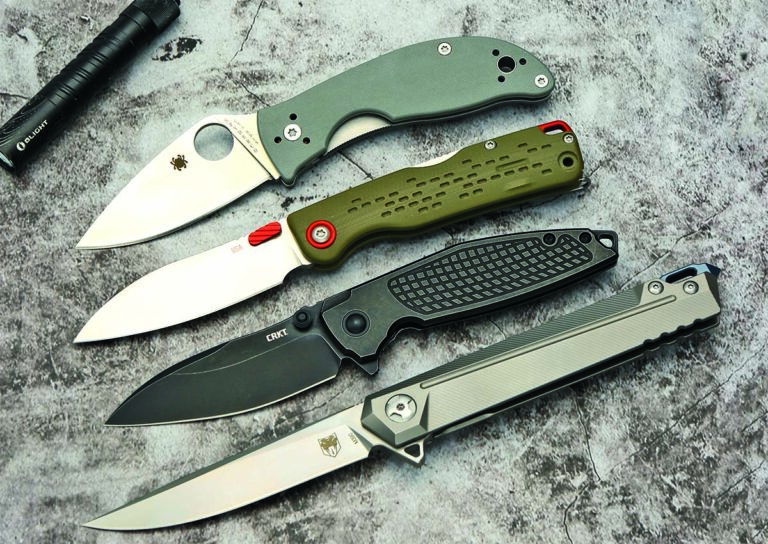
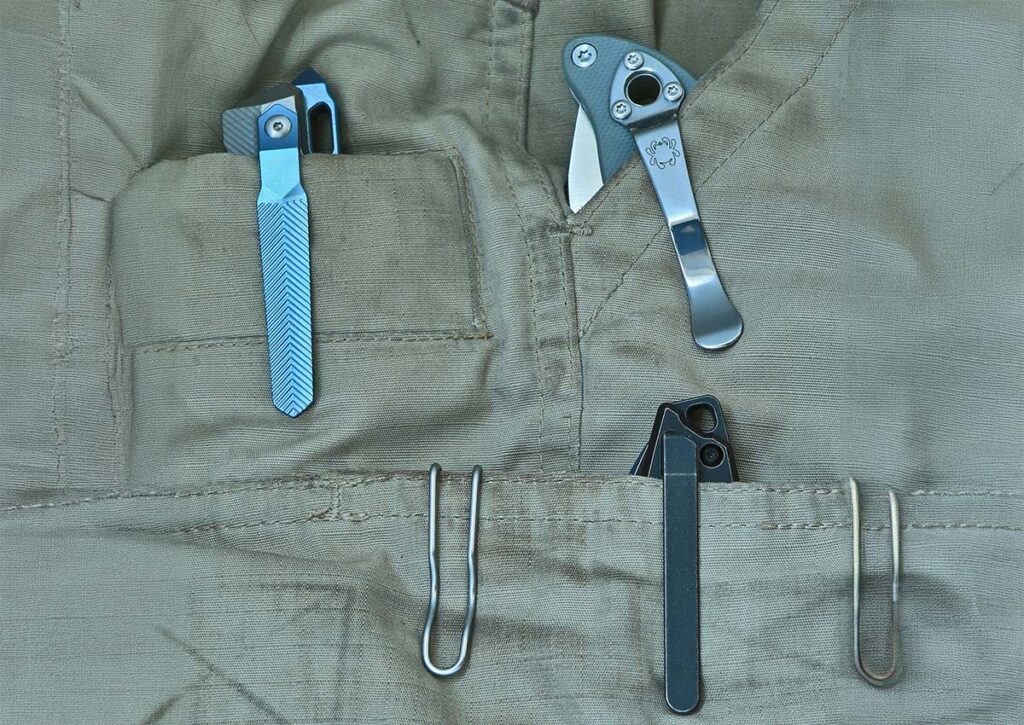
The way a knife is carried is essential. The sleek Olympian (top left) and discreet Ibis (bottom right) are great gentleman's knives, while the bulkier Alcyone (top right) is more noticeable. The State & Union (bottom left) is the least noticeable of all.
The way a knife is carried is essential. The sleek Olympian (top left) and discreet Ibis (bottom right) are great gentleman’s knives, while the bulkier Alcyone (top right) is more noticeable. The State & Union (bottom left) is the least noticeable of all.

How a knife rides in your pocket is essential. The Olympian carried deep with enough handle to grab onto. The sleek diameter, closed and open, never felt bulky.

The Ibis also carried deep and was easy to retrieve. It came in second to the Olympian for sleekness. The black color also made it the most subdued of the gang, attracting less attention.

The Alcyone carried bulky and a lot more exposed. The protrusion makes it easier to get at but screams, “I have a knife!” If that bugs you, you can always opt for a different folder.

The State & Union carried exactly how I like—deep and almost invisible. It has the right amount of pocket capacity to let me know it was still there. It and the Olympian were my favorite pocket carry folders of the test bunch.

All the knives come with a lanyard hole.

Opening

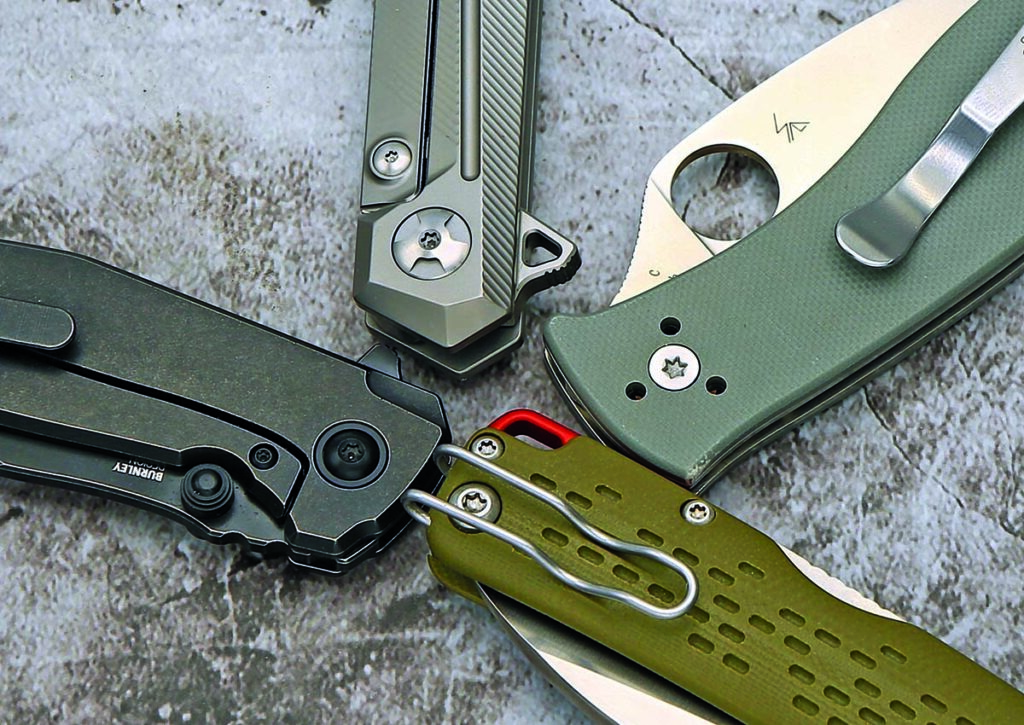
The test knives are studies in differing approaches to colors, locks, blade openers, pocket clips, lanyard holes, bulk, dimensions and more.

The Olympian has a flipper-style opener—and it was smooth and sleek. The Ibis has two ways of opening. Despite how smoothly the flipper operated, the thumb studs were another animal. CRKT should remove the thumb studs altogether. I’ve handled hundreds of one-handed openers. I could not open this one, no matter how hard I tried. All the king’s horses couldn’t open it using the thumb studs.

The Alcyone, on the other hand, has the eternally trusty large opening hole. I could open the blade in an inverted position, using my middle finger to lightly disengage the blade and let a wrist flick do the rest. That’s a Spyderco. It doesn’t vary in quality from any other Spyderco. The State & Union has an undeniable thumb stud for easy access. It opened smoothly, and the sound of the lockback engaging gave a sense of confidence. Solid as can be—it’s a KA-BAR!

Ergonomics

An easy winner in hand comfort was the State & Union. I had it the longest and exposed it to more use than every other test model. Second was the Olympian, though it was close. After all, I spent more time with the S&U. The Alcyone earned a third place yet was very solid. The Ibis wasn’t uncomfortable but would show hot spots as a long-cutting task knife.

Final Cut

Packaging peanuts, leather, light phone cords, 550 paracord, cardboard and nylon webbing are all part of my test gauntlet for folding knives.

The State & Union made feather sticks in the forest for a winter fire with ease. I found some stray nylon rope in the woods and tried slicing it with the S&U. It did not slice through. The task may have dulled the edge. During the gauntlet test, the knife faltered on packaging peanuts, nylon webbing, leather and 550 paracord. It made it through phone cord and cardboard but was a step behind the others.

The Olympian deploys with a fierce snap and displays a ready-to-go attitude—and means it. It slices well and can easily fit the role of a gentleman’s carry knife. The Ibis deployed almost as smoothly as the Olympian. It sliced all materials with authority. It ranked second among the review bunch in knife tasks. However, the Alcyone absolutely smashed it—maybe I should say slashed it. It was the best slicer across the board. Winner, winner, chicken dinner!

More Pocketknife Info:

Pepperwool Merino MM Review [Field Tested]

With solid steel, bold styling, and a pocket-friendly profile, the Merino MM proves that great things really do come in small blades.

A lesson quickly learned in hunting, dressing game doesn’t require a big knife. Funny thing is, the same holds for most EDC chores for your EDC knife.

Certainly, a Crocodile-Dundee sized bowie raises eyebrows and wows crowds. What it doesn’t do is a better job of breaking down boxes and managing everyday emergencies than just the right amount of steel.

Size does matter and with a well-thought-out design and good looks to boot, Pepperwool’s Merino MM proves that more blade isn’t necessarily more better.

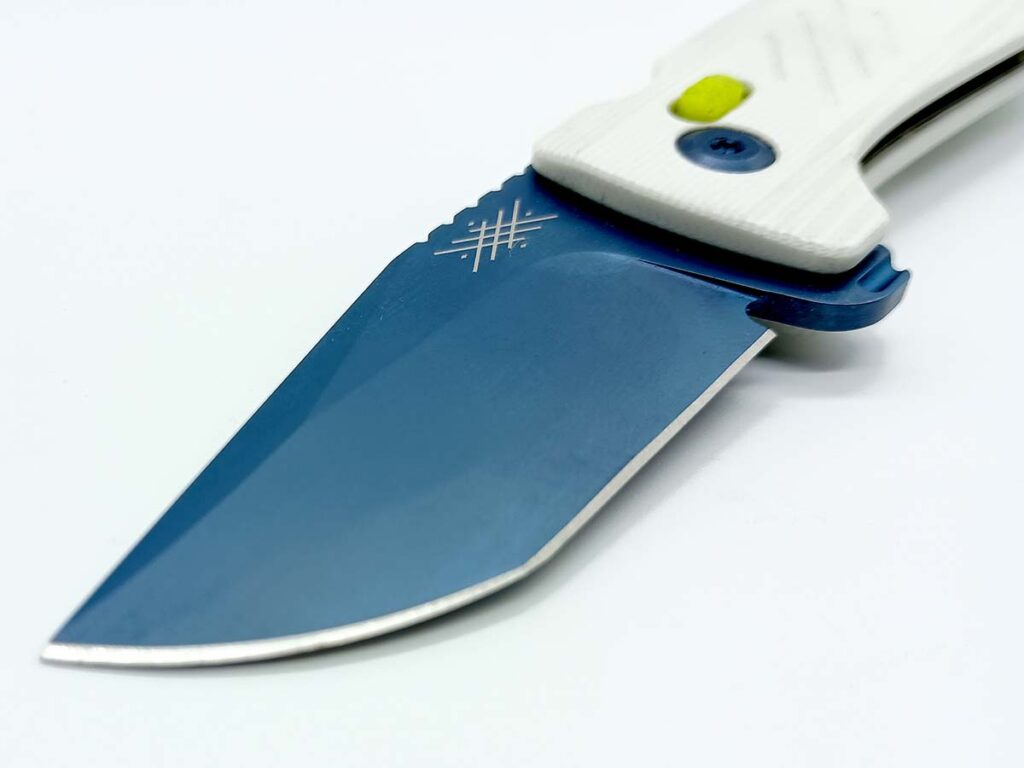
Merino MM Specs

Overall Length: 5.25″
Blade Length: 2.25″
Cutting Edge: 2.125″
Blade Width: 0.96″
Blade Thickness: 0.11″
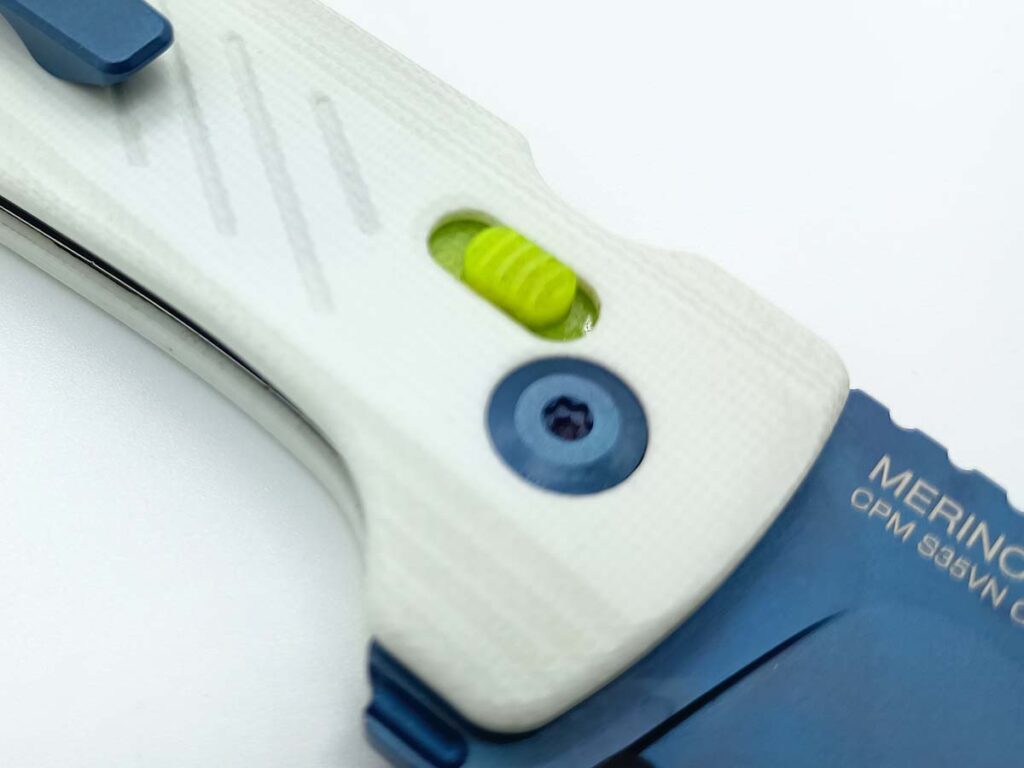
Blade Material: CPM S35VN
Blade Style: Clip point
Finish: Blue
Edge Type: Plain
Handle Length: 3.00″
Handle Thickness: 0.35″
Handle Material: G-10
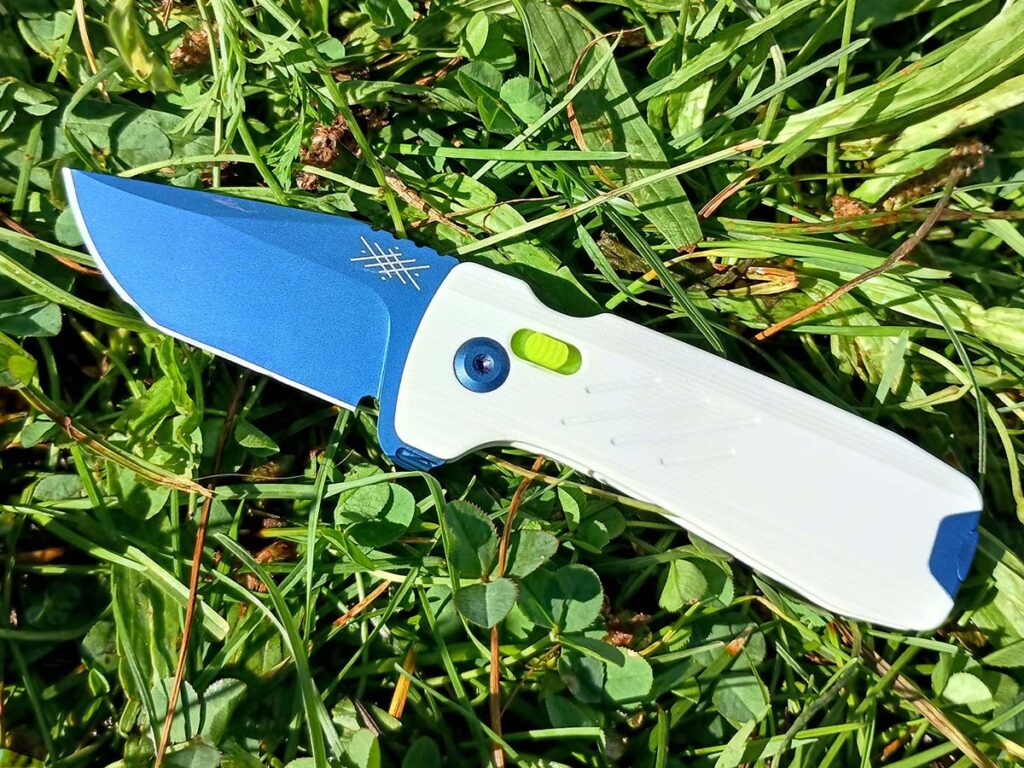
Color: White
Weight: 1.60 oz.
Pocket Clip: Tip-Up
Lock Type: Axis
Country of Origin: China
MSRP: $130

Pros

  • Ultra-Lightweight
  • Smart Blade Geometry
  • Ambidextrous

Cons

  • Handle May Be Too Small for Larger Hands

Merino MM Concept

The Merino's blade is terse, but punch well above its weight in most tasks.
The Merino’s blade is terse, but punch well above its weight in most tasks.

The brainchild of Pepperwool founder Beren McKay, the Merino MM takes a hack at a high-functioning micro-EDC knife.

McKay’s thought process is petite beats beastly when it offers many of the same assets and is something you never second-guess throwing in your pocket. You won’t do that because the axis-lock flipper is about as convenient as your local 7-11.

By the tape, the initial offer from the relatively new company measures in at 3-inches closed, 5.25-inches open and .35-inches thick. At 1.6 ounces, it’s about like throwing a Zippo lighter in your pocket—and as easy to forget on your person.

Merino MM Blade Steel

As is obvious as the dawn, a knife is only as good as its blade and a blade is only as good as its steel. Pepperwool has succeeded here with the cryo-treated S35VN. The steel itself is well-rounded, with good hardness and edge retention when heat-treated properly.

The former is likely the more important factor here, given the wispy thickness of the blade. Despite being as thin as a shadow, the blade is stiff enough to punch above its weight on demanding cutting and prying jobs.

Merino MM Blade Profile

An axis lock, the Merino is ambidextrous and quick to deploy.

Here’s where I really like the Merino, and not simply because I’m a sucker for a clip point blade. And Pepperwool has included a dandy version on the knife with a generous upper blade a belly.

Given that the knife is natural to choke up onto the blade, it arms users with a very controllable slicing edge for very fine tasks. Still, if you need a straight edge for push or pull cuts, the Merino’s lower edge has a surprising amount of real estate.

Worth noting, Pepperwool finishes the blade with titanium nitride for an extra level of corrosion and wear resistance. As a bonus, the ceramic is a very attractive cobalt blue for added panache.

Merino MM Handle

It’s tough to go wrong with G10 for a knife handle—the stuff just seems made for the job. And it’s welcome on the Merino.

Since there isn’t a lot of knife to grip onto, the well-textured material gives the user a strong purchase on the tool. Furthermore, it’s slightly off-white, which matches up well with the blue blade—simply in the looks department.

Chamfered, the G10 also ensures there are no hotspots when the knife is in hand. This surprised me a bit, given the grip is boxy in geometry, which usually spells at least one edge that bites into your hand.

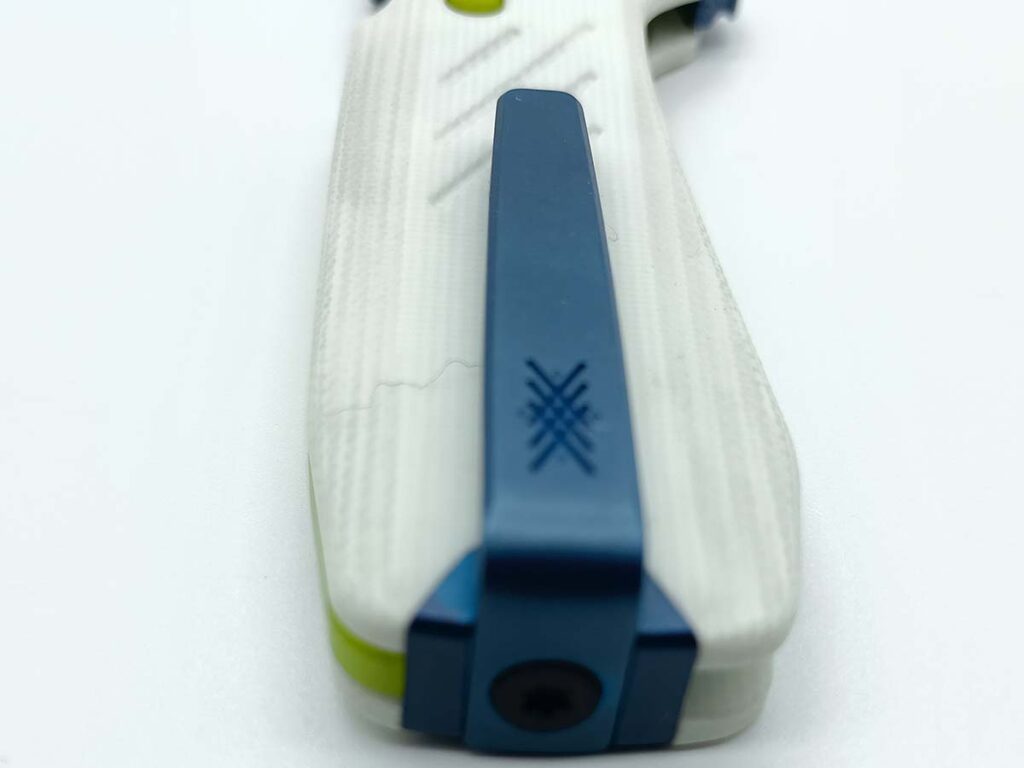
Topping everything off is a very sturdy pocket clip, also finished in dark blue. It sits level with the butt of the Marino, but is designed to sink the entire knife into your pocket, sight unseen. By the way, it is reversible from a single set screw, but the knife is strictly a tip-up carry affair.

Merino MM Lock

The pocket clip is very attractive. Good thing, because in the pocket it the only thing you'll see on the knife.
The pocket clip is very attractive. Good thing, because in the pocket it the only thing you’ll see on the knife.

This might be the belle of the ball on the knife, at least from a practicality standpoint. The axis lock isn’t anything new, but the convenience of the lock is ideal for an EDC knife. First off, it offers a quick opening and closing system to get the blade in or out of play. But more importantly, the lock makes the knife truly ambidextrous—a boon for lefties.

Testing The Merino MM

I didn’t set a challenge course of tasks for the Merino to accomplish in putting it through the wringer. Instead, for roughly two months of this summer, it was my go-to hiking and fishing knife—roles I’m certain Pepperwool figured it’d fill.

In this time, I used the knife for everything from cutting nylon cord and fishing line to prying open a paint can and, on one occasion, shaving feather sticks. On all counts, the knife proved its mettle.

The knife came sharp and until the latter part of the second month, only required the lightest touch-up to hone its edge. The blade was especially adept at finer tasks—such as trimming tags on hair rigs.

Admittedly, the handle is terse—my pinky hangs off—but with a nice tapper toward the guard, I always felt I had full control of the blade. And the action on deployment is effortless, but limited. For me, it’s always an index-finger affair; the one time I attempted with my thumb, it poked into my ring finger, due to the knife’s small size.

The knife is a solid choice for most outdoor adventures, particularly where weight might be an issue.

The best aspect of the knife, from my time with it, is that it’s absolutely a second thought to carry. Tucked away in the hip pocket, the Merino is easy to forget about given its size, and I did on more than one occasion.

The Merino MM certainly isn’t a first choice for more heavy-duty endeavors—it isn’t a bushcrafter by any stretch of the imagination. But as a piece of lightweight kit, exactly what I used it for—hiking, fishing, camping—it definitely has an edge.

Is there anything I dislike about the knife? Yes, I don’t care for the fluorescent green on the lock and liner, but that’s an eye-of-the-beholder deal. And it’s not a make-or-break feature of the knife.

Final Cut

Pepperwool’s aim was a knife you have no second thoughts about carrying. With style, function and convenience, the Merino MM scores on all points. And, I’d say it’s scored big enough that it’d make many question if it’s time to go small on their EDC.

Check Out More Outdoor Knives:

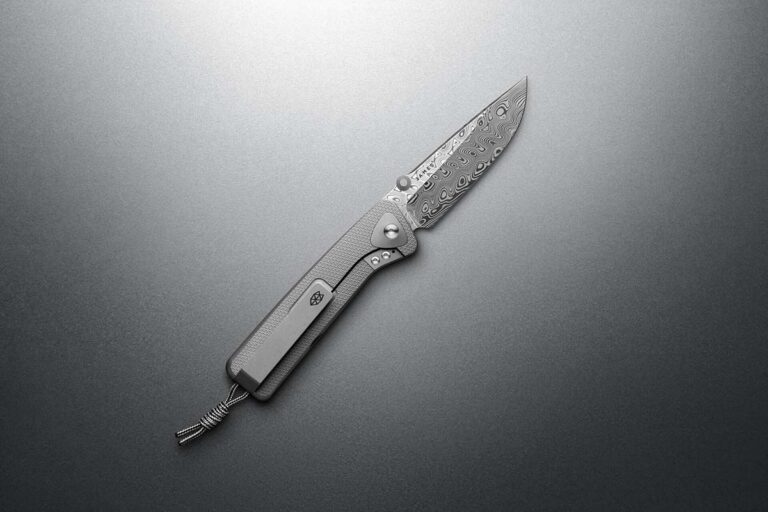
First Look: The James Brand Barnes Titanium & Damasteel

The high-end integral folder gets a premium edition.

The James Brand has always been a design-led company, but their latest iteration of The Barnes pushes the pattern into a different tier of cutlery. While The Barnes has been defined by its integral construction, this newest version represents the most premium execution of that platform to date. As an integral design, the handle is CNC-machined from a single, solid billet of 6AL-4V titanium. By eliminating the traditional backspacer and scales in favor of a one-piece construction, the knife offers fewer moving parts, less maintenance, and a level of structural integrity that standard folders simply cannot match.

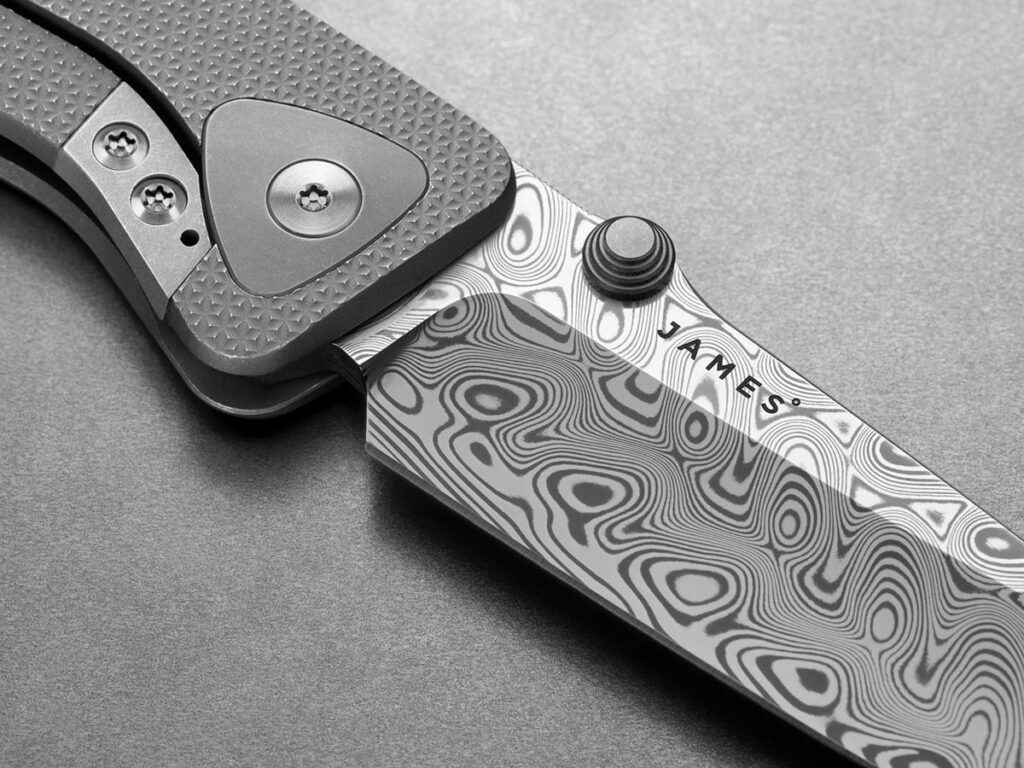
While the engineering is complex, the aesthetic remains strictly minimalist. The dark stonewashed titanium handle provides a clean, tactile grip that feels incredibly solid in the hand. This premium version of The Barnes steps away from standard stainless options to feature Damasteel DS93X Hakkapella. This material is a favorite among collectors for its striking pattern-welded look, but it is no safe queen; Damasteel is known for delivering world-class performance and durability that holds up to serious use.

The Barnes has long been known for a perfectly dialed-in detent and an action that feels like glass. This is thanks to the blade running on a stainless steel pivot supported by ceramic bearings. Deployment is handled via dual-sided thumb studs, making it accessible for a variety of opening styles and maintaining the symmetrical, clean lines the brand is known for.

James Barnes Brand blade and thumb stud

The attention to detail extends to the carry system as well. The Barnes features a machined titanium pocket clip with a paint-filled Clovis detail and an integrated paracord lanyard. Despite its full-sized 3.5-inch drop point blade, the knife remains impressively light at just 4.6 ounces, making it an easy choice for a high-end daily carry.

Previous versions of The Barnes were already considered premium offerings at over $600, but this Damasteel integral version moves the needle significantly to $1,300. Designed in Portland, Ore., it represents the most technically advanced execution of their flagship folder—a style-conscious blend of high-end materials and architectural precision.

Barnes Titanium & Damasteel Specs
Blade Steel: Damasteel DS93X Hakkapella
Handle Material: One-piece Integral 6AL-4V Titanium
Lock Style: Integral frame-lock with hardened steel lockface insert
Blade Length: 3.5″
Overall Length: 7.8″
Weight: 4.6 oz
MSRP: $1,300

See More New Releases:

First Look: Field-Ready Böker Naturensöhne MK II NXT

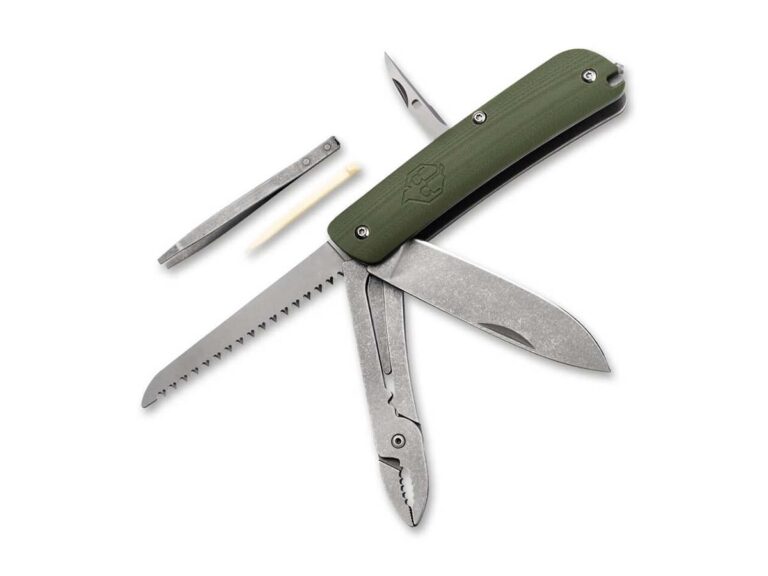
The multi-tool market has long been divided between heavy-duty plier platforms and traditional red-scaled pocketknives. Böker bridges that gap with the Naturensöhne MK II NXT, a fresh take on the classic multi-functional folder built specifically for outdoor utility.

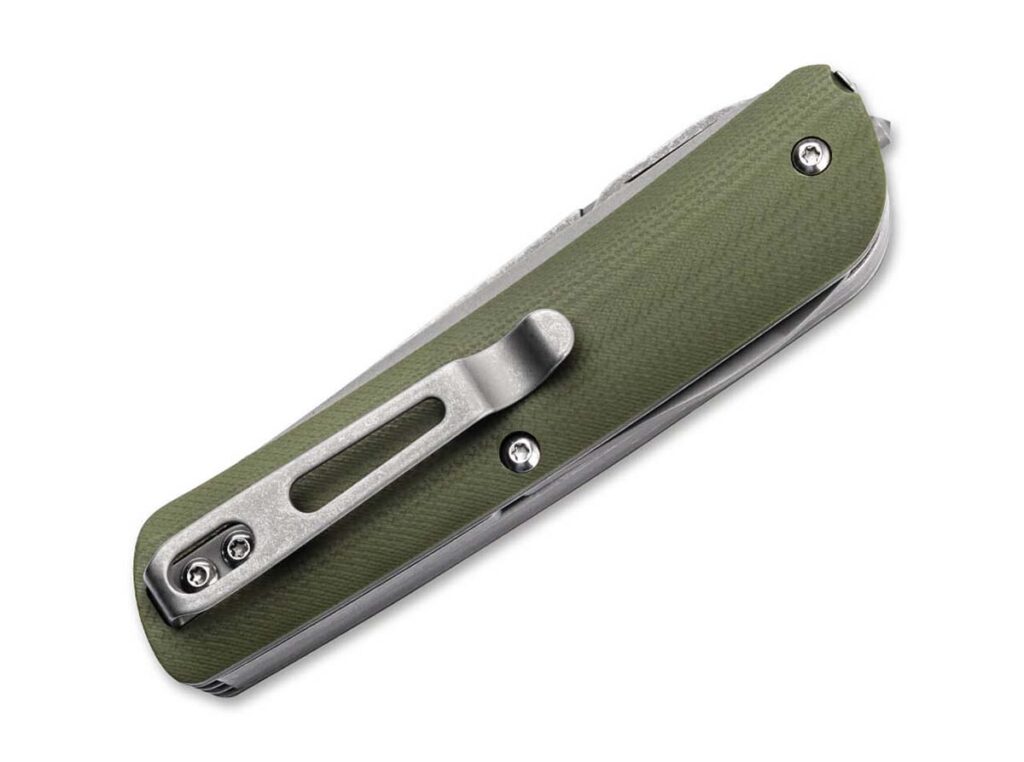
Created in collaboration with Die Naturensöhne, the popular German YouTube duo known for their bushcraft challenges, this tool ditches shiny plastic for field-ready ergonomics. The handles feature textured forest-green G10 scales that offer a solid, slip-resistant grip when working in wet conditions.

At the core of the tool is a 2.8-inch drop-point blade made from Sandvik 12C27 stainless steel. Finished in a muted grey stonewash, the blade relies on a traditional nail nick and non-locking slipjoint mechanism. That two-handed opening makes it a legal-friendly option in regions with strict lock-knife regulations.

naturensoehne-mk-ii-nxt-2

Instead of clogging the frame with rarely used gimmicks, Böker packed in targeted outdoor implements:

  • A wood saw for clearing branches or notch-cutting
  • Mini combination pliers for light bending tasks and quick repairs
  • A reamer and awl for punching leather, wood, or gear
  • Fine tweezers and a scale-mounted toothpick
  • A dedicated glass breaker located at the pommel

Weighing in at 4.23 ounces and measuring 6.57 inches overall, the MK II NXT carries like a standard pocketknife thanks to an integrated tip-down pocket clip. For campers, bushcrafters, and daily carry enthusiasts looking for multi-tool versatility without the bulk of a full plier chassis, Böker’s latest collaboration delivers a slick, highly functional compromise.

Naturensöhne MK II NXT Specs
Overall Length: 6.57″
Blade Length: 2.80″
Blade Thickness: .09″
Weight: 4.23 oz
Blade Material: 12C27
Handle Material: G10
Opener: Nail Nick
Opening: Manual
Country Of Origin: Asia
Color: Green
Blade Color: Gray
MSRP: $129

Knife Reviews:

5 Best Meat Cleaver Options [2022]

The Meat Cleaver Is The Heavyweight Of Kitchen Tools And Can Cut Things As Hard As Bone. These Five Are Among Some Of Today’s Top Models.

Today we’re talking cleavers, specifically meat cleavers. Industry folks prefer the shorter form when referring to the cutting implement, but we’re going with the longer, common man vernacular for this piece.

Why? Because cleaver abound nowadays, but we’re specifically talking about the type meant to cut meat. And with the way folks find stuff online, going long is likely to get the right person to the right information. Sorry if that bends any noses out of place.

What Is A Cleaver?

The cleaver is a fascinating tool that has existed in some form for millennia. Tools described as cleavers date as far back as the Acheulean period more than 1.5 million years ago, and probably date back even further. It’s a stout, heavy piece that differs from the standard kitchen knife in numerous ways.

The most obvious difference is the shape. A cleaver doesn’t taper to a point but is usually rectangular in shape. It may have a curve along the spine, but the basic shape of any cleaver will be a rectangle. 

Many cleavers, and almost every one on our list, have a large hole in the corner opposite the handle. This is because many butchers prefer to hang their cleavers on a hook rather than leave them on a flat surface to avoid potentially damaging the blade.

Five Top Cleavers Available Today

The best meat cleavers all have one thing in common: toughness. They’re all able to stand up to the abuse of the job. These five are among the top cleavers available today at a variety of price points.

Wusthof Classic 6-Inch Cleaver

Wusthof Classic 6-Inch Cleaver

When it comes to kitchen knives there are few companies with more history than Wusthof, and they have once again made a leader in the field with their Classic 6-inch Cleaver. Forged in Germany, the Classic looks like the archetype of what you expect a cleaver to be.

The blade is 6.3 inches long and 2.8 inches wide, which allows you to do things like crush garlic and ginger or use it like a bench scraper to scoop up ingredients. It comes with a triple-riveted handle that is easy to grip and feels good in your hand.

It’s a bit pricey, with an MSRP of $300, but this is a cleaver that should last you years.

Messermeister Four Seasons Heavy Cleaver

Messermeister Four Seasons Heavy Meat Cleaver, 6-Inch

If you’re looking for a quality cleaver at an affordable price, Messermeister has you covered. The Four Seasons (no connection to the hotel chain) is stamped from a single piece of 1.4116 stainless steel with a 56-57 HRC and features a molded polypropylene handle.

The fact that it is stamped, rather than forged, keeps the costs down tremendously, and it comes in two versions: a 6-inch and a 7-inch. It’s a good tool. It might not have the fanciest steel or hand-carved wood handle, but if you’re looking for a tough cleaver at a fair price, this is the one for you.

The MSRP of the 6-inch is $47.95, and the 7-inch costs $59.95

Zhen VG-10 67-Layer Damascus Large Cleaver, 8-Inch

Zhen VG-10 67-Layer Damascus Large Cleaver, 8-Inch

This one is beautiful. The Damascus Large Cleaver from Zhen Premium Knives is visually stunning and one heck of a cutter. The blade was made with VG-10 stainless steel (60-62 HRC) and features a Pakkawood handle. 

The damascus pattern waves and curls across the blade to give it a dynamic, kinetic energy. That’s not even discussing the caliber of the cleaver, which is professional grade and comes with a lifetime warranty against defects.

Four inches wide, this cleaver is large in terms of overall area and is a phenomenal multi-use tool in the kitchen. At an MSRP of just $135, it’s actually a bargain for a professional-quality model of this caliber.

Dalstrong Obliterator Cleaver 9-Inch With Stand

Dalstrong Obliterator Meat Cleaver 9-Inch

From Dalstrong’s Gladiator series comes the Obliterator, a massive cleaver built to withstand anything you can throw at it in the kitchen. The massive blade is made from heat-treated 7Cr17MoV steel with a 60 HRC. It weighs 2.9 pounds and is .236-inch thick. It truly lives up to its name. 

The handle is made of thick G-10, which is great to withstand the forces of cutting up a rack of ribs or spatchcocking a turkey. 

The Obliterator also comes with an acacia wood stand so you can proudly show off your chopper. With an MSRP of $120, the Obliterator won’t obliterate your wallet.

Henckels Classic 6-Inch Cleaver

Henckels Classic 6-Inch Meat Cleaver

Forged from German stainless steel, the Henckels Classic is a quintessential cleaver. Not as girthy as the Obliterator, the Classic is well constructed and designed to be used every day. The blade isn’t as hard as most of the others on this list, with a 55-58 HRC, but this is still an excellent tool.

The satin-finished blade is sharpened and honed to stay sharper longer, and the full-tang, triple-riveted handle gives the cleaver balance in your hand. You’ll feel confident using this one each and every time

It’s a lightweight piece, at just around 12 ounces, and is about 10.5 inches in overall length. MSRP: $64.99.

Read More

Advertisement

Must Read Articles

Read this before you make a knife

Knifemaking 101 – Read This Before You Make a Knife

  by Wayne Goddard My experience has taught me that there's nothing like digging in and getting started. I've often said the hardest part of the...
how to forge damascus steel

How to Forge Damascus

Advertisement
Advertisement