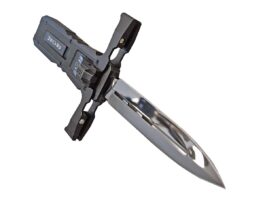
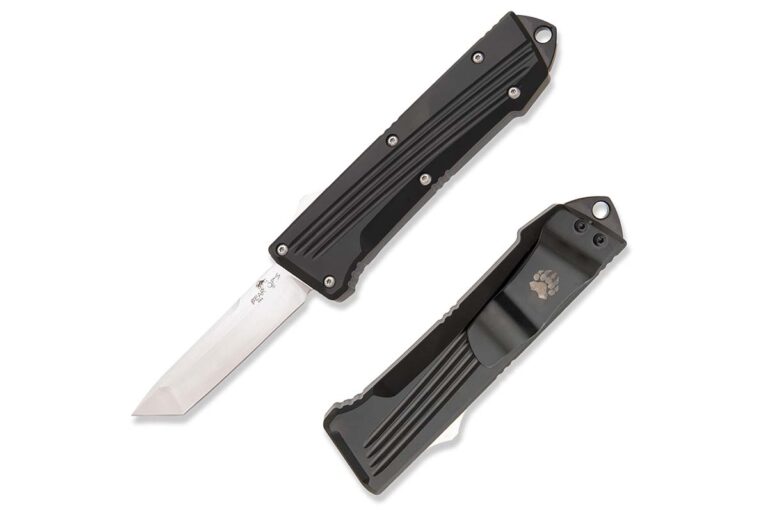
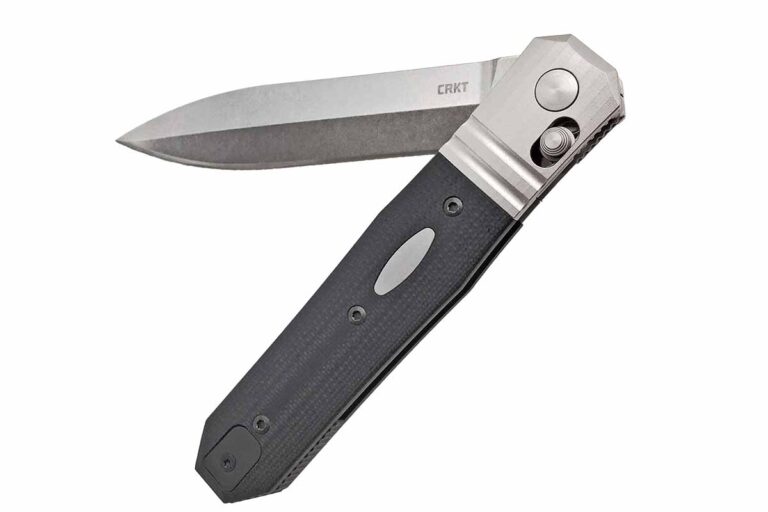
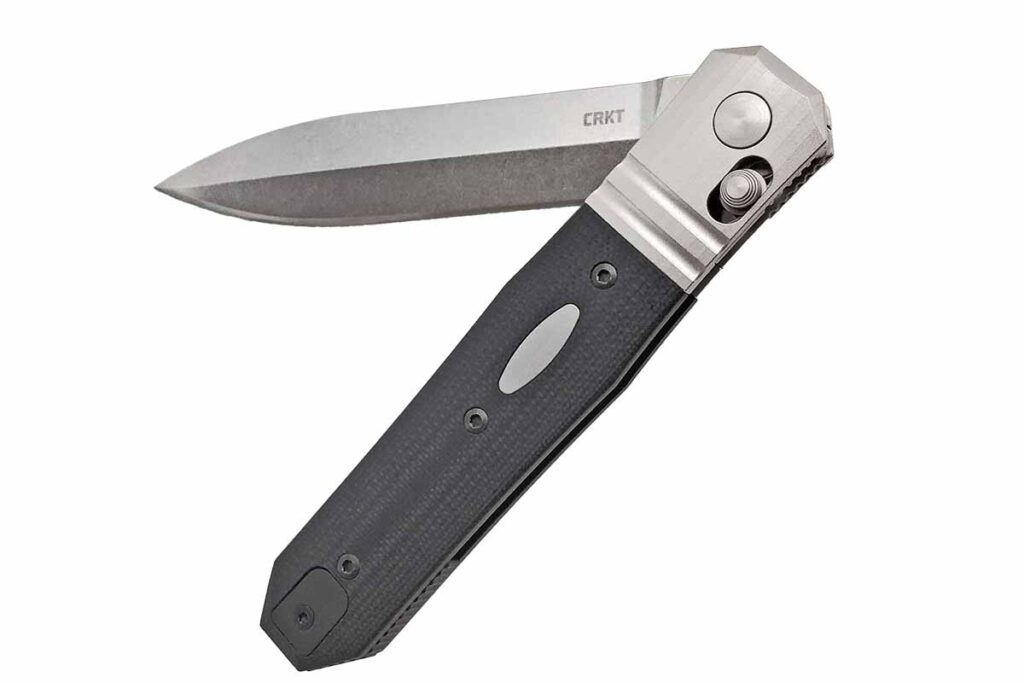
Bear OPS introduces the 4 ½” Double Clutch IV. An out-the-front automatic engineered to meet the demands of EDC carry.
Bear OPS has been on a roll in 2024 with a couple of drops early this year. However, its most recent introduction is perhaps its most intriguing, if for no other reason than it’s an automatic—and those are always interesting. Especially when it’s a pocket-friendly OTF, such as the Double Clutch IV, priced right to make it a viable EDC option you won’t be afraid to scratch the paint on.
Don’t get me wrong, the $290 price tag is still steep for many, but measured against the rest of the out-the-front market the knife comes in competitively priced. And Bear OPS hasn’t skimped in making a fairly rough-and-tumble option. Particularly opting for good ol’ D2 steel for the Double Clutch IV’s 2.5-inch blade and aircraft-grade aluminum for the handle. For those not in the know, D2 is a long-used knife material—a high-carbon tool steel, with both good wear resistance and toughness, as well as respectable corrosion resistance. Arguably there are new options with better qualities, but D2 still holds its place.
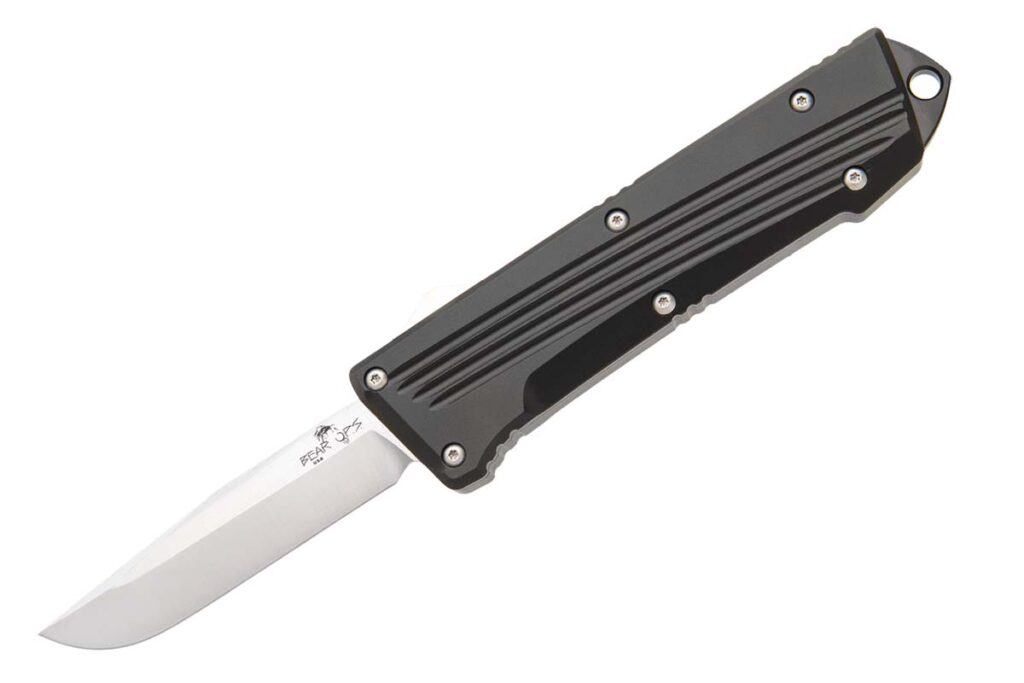
As to the blade profile, Bear OPS offers two options, tanto and drop point. In both cases, the blades are straight-edged but have some nice points that accentuate each design. The drop point boasts a wide belly, giving it plenty of slicing surface. While the tanto has a fairly sharp, but abbreviated tip, which should make it a puncturing pro.
The Double Clutch IV’s action has a crisp deployment, facilitated by an understated—yet functional—thumb slide. It’s just about the right size for the small knife, not protruding so much as to cause an errant fire, but prominent enough that you won’t fumble to get the knife into action.
The knife boasts aluminum milled handles that not only enhance its toughness but also contribute to its ergonomic design. With grip ridges for added traction, these handles provide a comfortable and secure grip in any situation, ensuring optimal control even when wearing gloves.
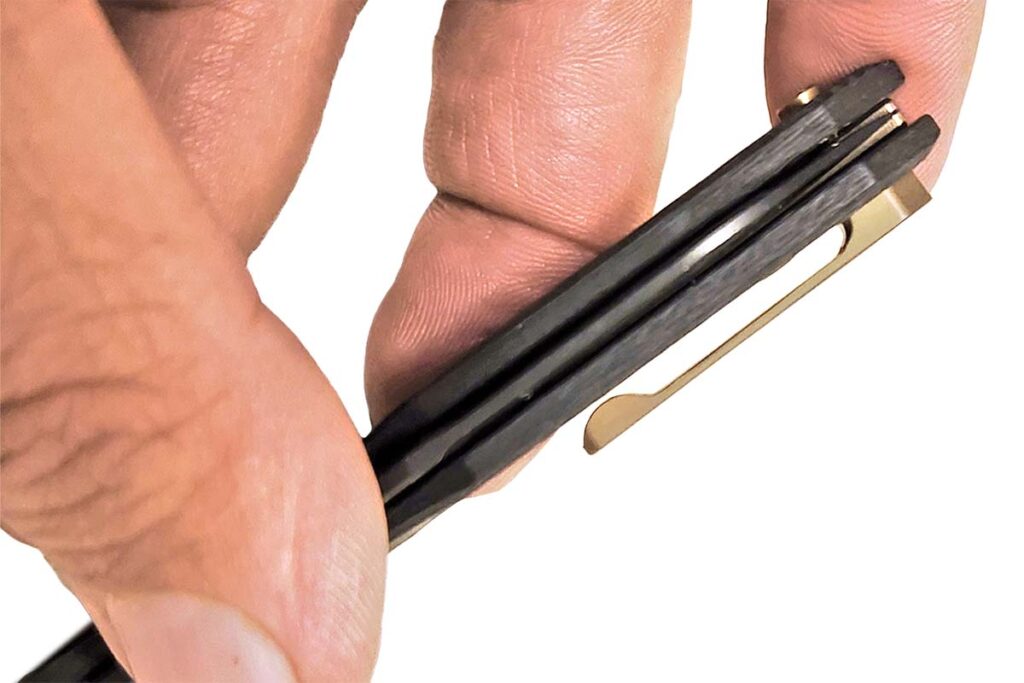
Despite its robust construction, the Double Clutch IV remains remarkably concealable, seamlessly integrating into your everyday carry apparel. Whether tucked away in a pocket, duty belt, or plate carrier, this knife remains discreet yet readily accessible, ready to defend and protect at a moment’s notice. And at a scant 3.3 ounces, it won’t bog you down.
Oh yeah, it also comes outfitted with a pocket clip for tip-down carry and a lanyard hole, a slick feature that might help get the knife into the fray.
Double Clutch IV Specs Blade Styles: Tanto, Drop Point Blade Material: D2 Tool Steel Handle Material: Aircraft Aluminum w/grip ridges Rockwell: 59-61 Closed Length: 4 1/2″ Edge: 2-1/2″ Weight: 3.3 oz. Extras: Automatic, Pocket Clip provides for Tip-Down Carry, Lanyard Hole MSRP: $290
Tradition meshes with modern in today’s new-age factory slip joint knives.
Like all tools, slip-joint pocketknives have seen their own evolutionary journey. In the olden days there were quality tools and then there were ones produced to be a bit more affordable, yet they still had their utility. These days many people buy knives for their utility, and I would say a number buy them for what I call the “Gucci factor.” As times change what’s considered attractive changes too, and, of course, makers leave their marks with their own innovations.
This time we’re not only going to test the latest in factory slip joints but also examine how companies and designers are innovating the age-old design to ensure it’s useful enough for the user and pretty enough for the collector. I took them all for a spin by shoehorning them into my everyday carry (EDC) rotation. The results are revealing.
CRKT Forebear
CRKT Forebear
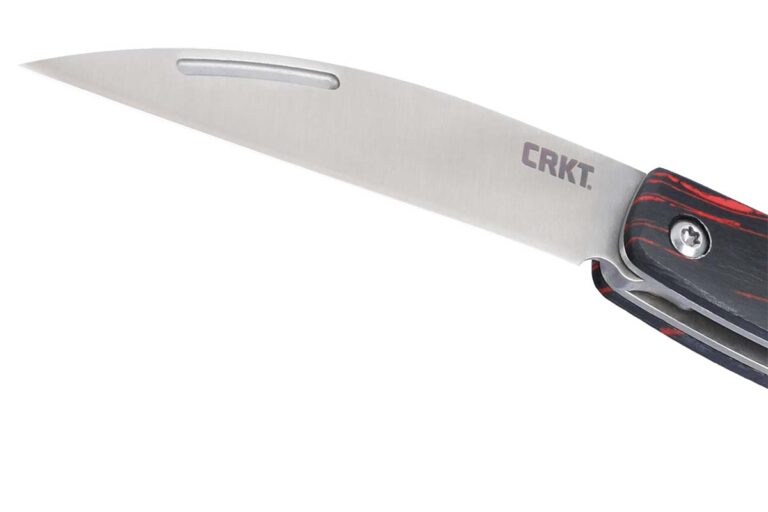
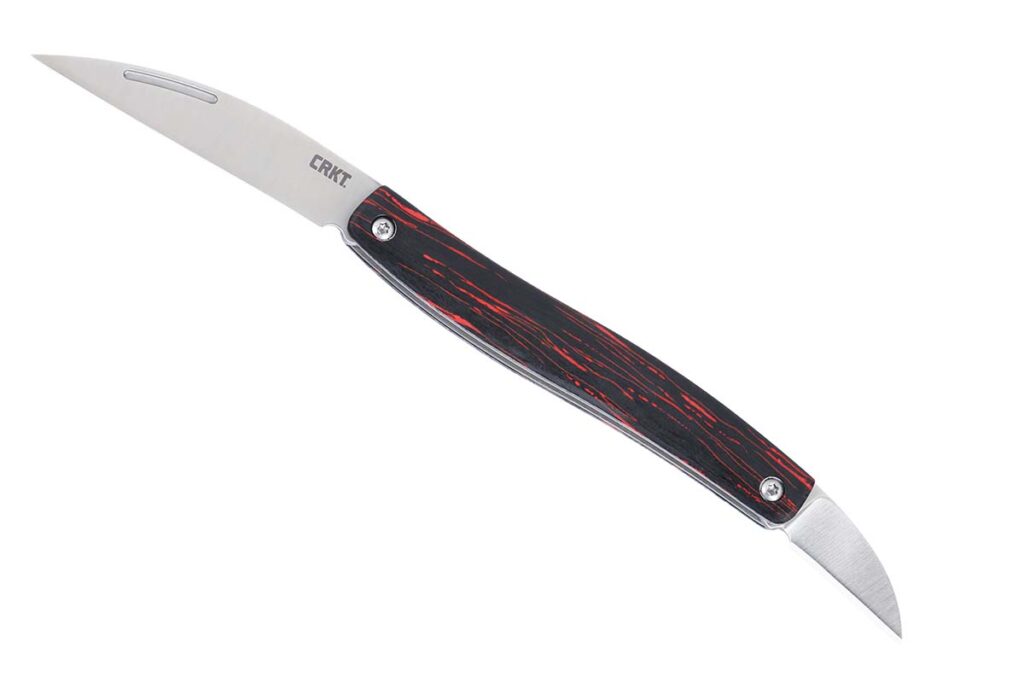
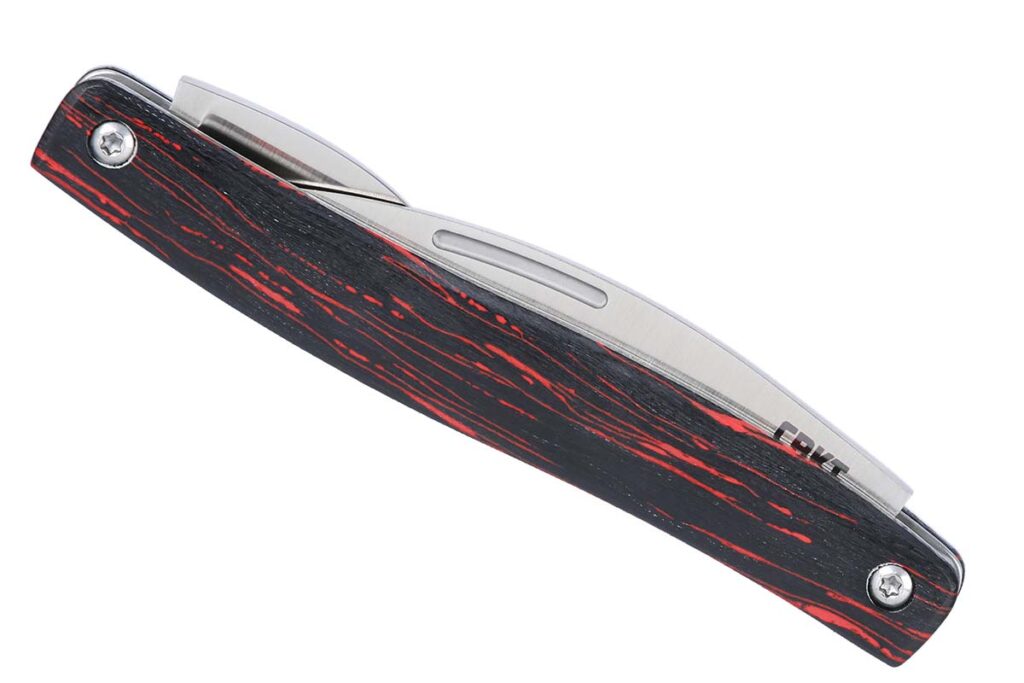
A couple of things update the CRKT Forebear. The first is the modified wharncliffe blades of 12C27 stainless steel. They’re not too big of a departure from the traditional style but still enough to make you notice. They are streamlined with an aggressive tip. Second is the use of a streaked-red-and-black G-10 handle. Unlike using texture to add dimension like, say, in a jigged material such as bone, the handle has two contrasting colors instead.
The knife is in a two-blade configuration—small and large wharncliffes—designed by custom maker Darriel Caston. The blades remind me of those on German chip-carving knives. Such blades are excellent for detail work and chores at which utility-style blades excel. They are flat ground and have long nail nicks that follow the spine.
I must say I was disappointed with the out-of-the-box finished edges on the blades. They were very uneven. One side had a larger micro bevel than the other. Machines do the great majority of the work creating the parts of a factory knife. In the end, though, the final edge is most often applied by hand. Before getting full use out of the knife I had to even out the bevels.
A handle closeup gives you a good idea of the depth the two-colored G-10 scales bring to the Forebear. At 3.43 inches closed, it’s a nice size for the watch pocket on your jeans.
Again, fit and finish was a bit of a disappointment, especially coming from CRKT. I have come to expect great value from the finishes on the company’s knives. Both scales exhibited shaping flaws and were left unpolished in spots, leaving an uneven appearance.
I actually like the design. It has great potential for everyday use with the two wharncliffes. It needs some work as mentioned on the edges. With a user knife it’s easier to overlook some fit-and-finish errors. After all, knives become better looking with familiarity as enthusiasts grow attached to their EDCs. As for the edge, it’s very fixable but it should come ready to use out of the box.
Boker Plus Koteyka
The file-style work on the spine of the Koteyka breaks up the profile and gives the blade some character.
The Boker Plus Koteyka is a stylized clip-point-blade folder. The handle is jigged black G-10. The blade is flat-ground D2 tool steel and opens via a nail nick. Closed length: 3.5 inches. I really like that Boker Plus sends the Koteyka in a box wrapped in wax paper like the old-time knives. On the back of the blade is some machining that resembles filework.
Out of the box it cut very well after I stropped it to bring it to the crazy sharp level. The finish on the G-10 has machining marks for a rustic look. One day I will end up hitting it on a buffing wheel. With a high luster polish I think it would be killer. Granted, the MSRP is only $69, so I’m just expressing my own thoughts on its presentation. Texture wise it can be a little rough on your hand, so that is another reason why I will buff it. The blade action and spring tension are good. It is a great little pocketknife update. I look forward to using it further.
Lionsteel Bestman
Lionsteel Bestman
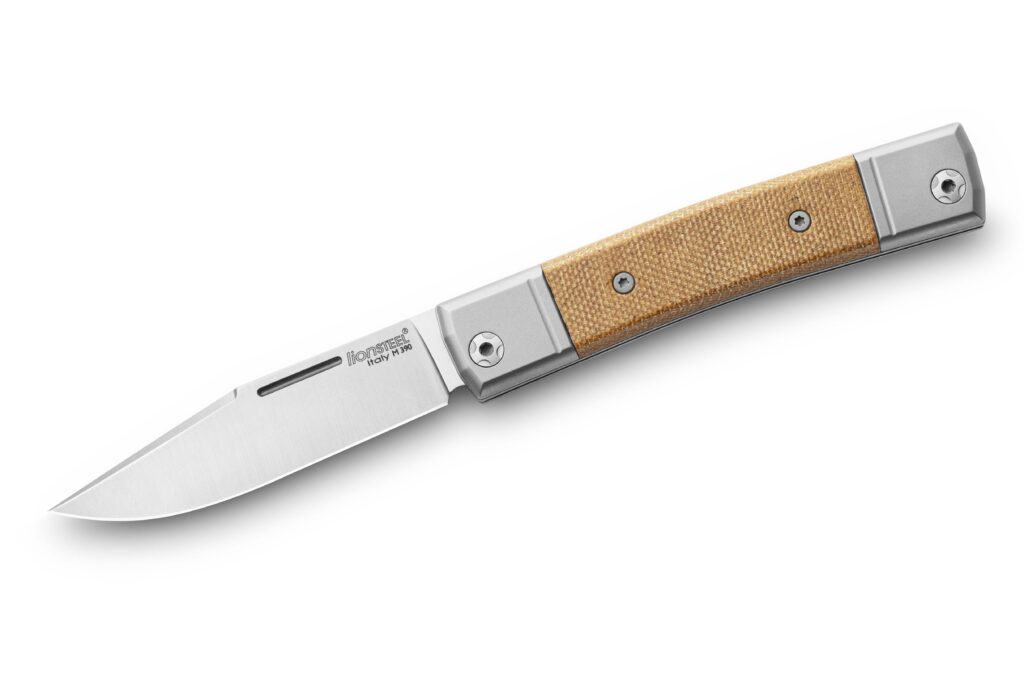
In the Bestman, Lionsteel offers a pocketknife with all the traditional elements, though it’s the presentation and materials that give it the updated look. The folder has three choices of blade configuration: clip and spear points and a combination two-blade set up of clip point and wharncliffe. I received the clip point for the test. Blade steel: M390 stainless. Closed length: 3.75 inches.
The Bestman features two sets of bolsters with a decorative groove. Handle materials come in an array of natural or synthetic materials, from olive wood to carbon fiber. I chose the canvas Micarta® for the rugged look. Lionsteel kept the design blocky while smoothing over the edges to avoid hot spots. None of the metal on the knife is polished. It has a satin finish, as did some of the older high-end brands in which one side of the blade would be polished and the other side hand rubbed. In place of pins are Torx fasteners. Even the execution of the grind on the clip point departs from the traditional by keeping all the lines crisp.
The blade opens via a nail nick. The blade action is smooth yet has a definite half stop. The spring tension is dead on. I must say I am impressed and like it. It came right out of the box ready for work. The materials and design will last a lifetime of chores.
Heretic Jinn
Heretic JInn
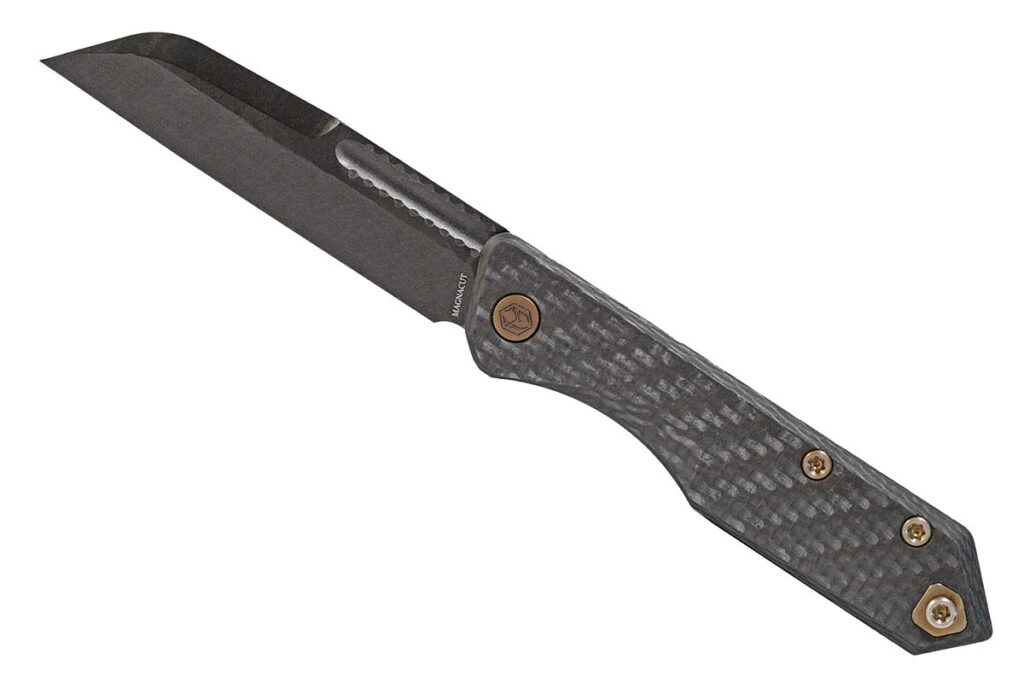
At first, adding the Jinn by Heretic Knives to the review was iffy at best for me. I saw it on the company’s website and I somewhat reluctantly included it. To me, a pocketknife design from Heretic is akin to having a thrasher band perform Simon & Garfunkel. Nothing personal, I just thought Heretic couldn’t pull it off. In the end, though, I am the fool standing there clapping after the rest of the audience has stopped.
The sheepsfoot blade of CPM MagnaCut stainless with a combination serrated/plain edge has great application for EDC use. It can cut everything from soup to nuts. For style Heretic includes a false grind. The knife opens via a long nail nick at the blade’s back half. If I had one criticism it would be the position of the nail nick. There would be a greater advantage in opening the blade if the nick were farther away from the pivot point. Just pinching the blade closer to the tip allows for a smoother pull-on opening.
The Jinn is the only slip joint reviewed with a pocket clip.
A half stop enhances user safety and the knife is finished off in carbon fiber scales with a trim, low-profile pocket clip. The clip is my next issue. It is too tight to easily clip onto floppy and thick pocket rims. The design is such that you really don’t want to bend the clip, either.
All else considered, the Jinn really surprised me. It is a great worker. Overall, its looks fit right in with any modern one-hand-opening pocketknife. Closed length: 3.8 inches.
A CERTAIN ROMANCE Slip joints have a certain romance to them. On a base level the designs have tons of utility, and updating their appearances helps keep consumers interested. Of course, there will always be the ongoing love affair with the traditional designs. Many wouldn’t have it any other way.
The OKNIFE Beagle emerges from testing as one well-bred blade.
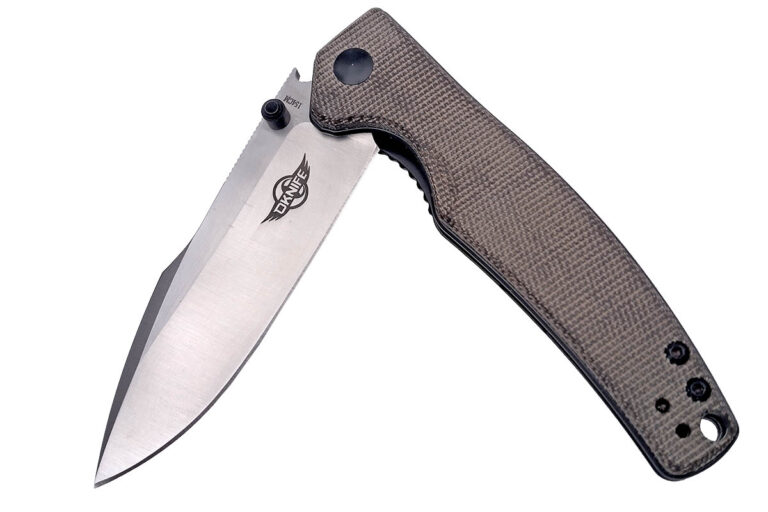
The Beagle by OKNIFE is a mid-sized folder that rides great in a pocket—big enough to handle most cutting chores but small enough to be comfortable to carry every day. As a heavy knife user, I always carry. It has to ride comfortable and perform or I won’t consider it. The Beagle was on my side for 30 days with no carry issues. Check the first block. Now for the performance side.
The Beagle was very sharp out of the box. A quick paper slice with 20-pound bond copy paper proved it. Via a push cut it sliced quite smoothly with no snags or tears. The handle shape made for easy control of the width of slices.
Next up: single-walled cardboard. The Beagle made zipping noises during the push cuts. Again, it was very controllable on the slice widths, nice and aggressive on every pass, with no snags or tears.
A scrap piece of 8-ounce leather was next. I sliced it similarly to the cardboard to see if I could get the same zipping noises. The Beagle didn’t disappoint. It zipped and crunched during every cut. I really liked the forcefulness in the leather cutting.
The knife made thin, even slices in the 8-ounce leather. The handle shape aided in controlling the thickness of each cut.
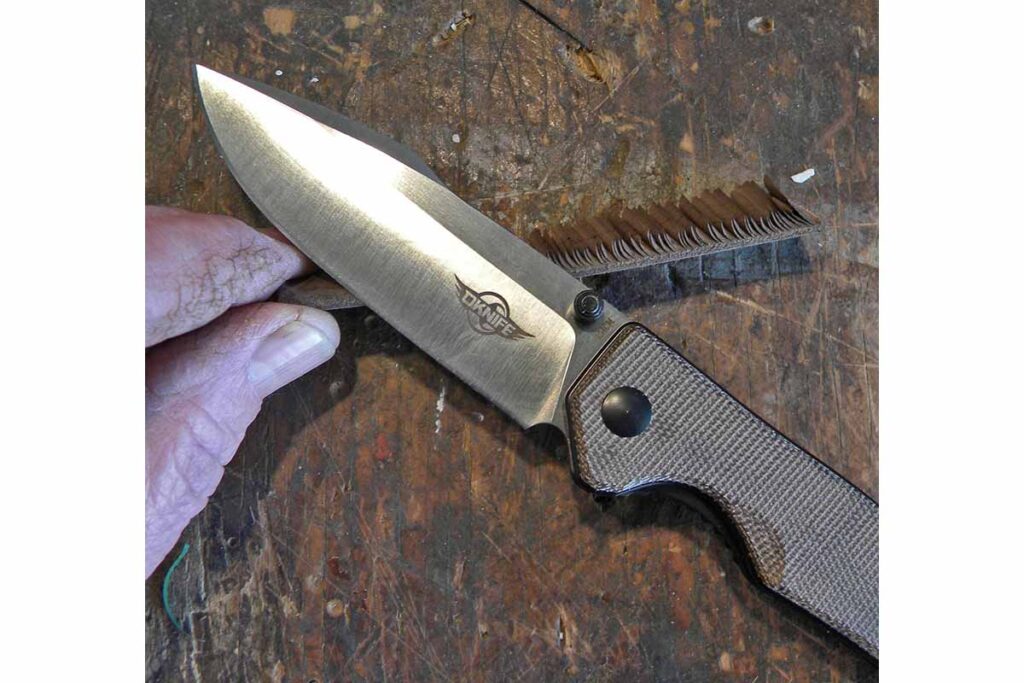
Using another piece of leather, I did some skiving. The knife made thin, even cuts. As noted, the shape of the handle really aids in controlling the thickness of the cuts. The blade was smooth and uncompromising on each slice.
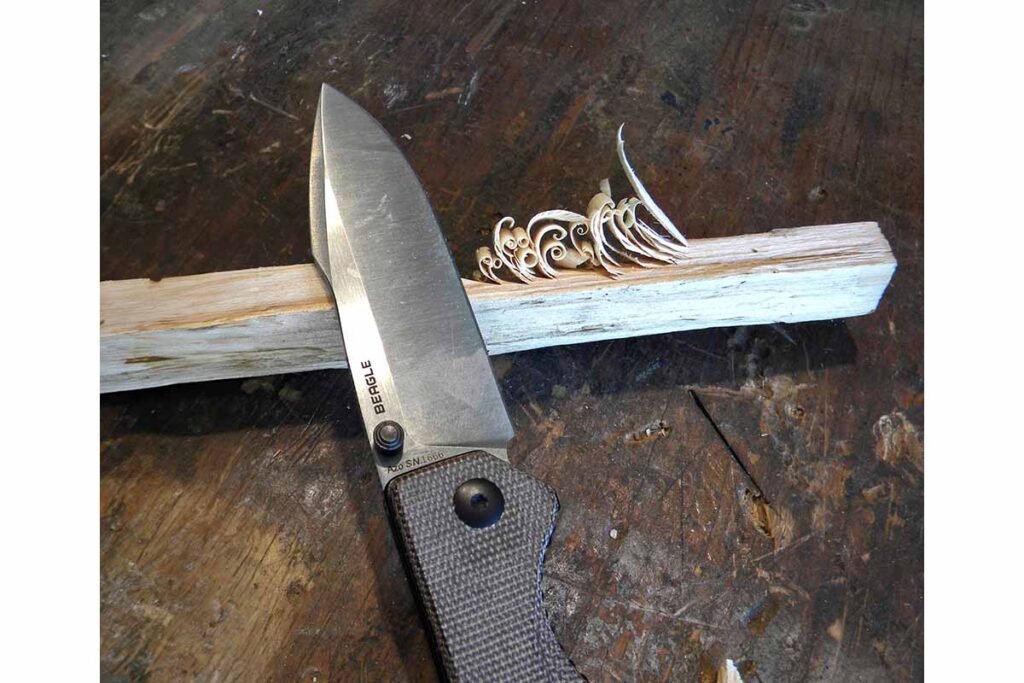
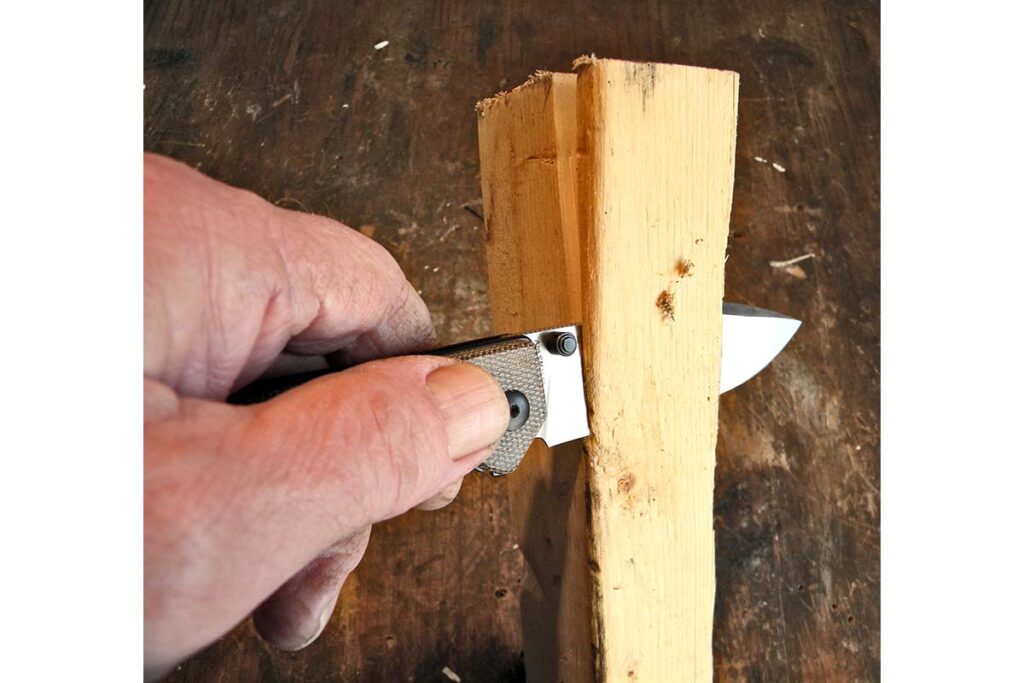
I grabbed some scrap pine and whittled a bit. The Beagle produced excellent curlicues, taking deep bites. The notches on the blade spine are just grabby enough to keep your thumb in place without abrading it. There were no hot spots on the handle.
The Beagle took deep bites in producing excellent curlicues. The notches on the blade spine are just grabby enough to keep your thumb in place without abrading it.
STRENGTH TEST
Baton cutting with a linerlock folder is not recommended but I did it anyway. On the other hand, it is a serious strength test for the lockup and liner. After several whacks there were pine pieces all over the work bench. The lockup stayed at 100 percent on every whack. The handle was comfortable throughout.
Baton cutting with a linerlock folder is not recommended but the author did it anyway. On the other hand, it is a serious strength test for the lockup and liner. After several whacks the lockup stayed at 100 percent, though the spring does appear to engage the tang too far to the right (inset). Upon later examination, however, the spring had returned more toward the left, possibly due to repeated opening/closing of the knife.
It was time to break out the half-inch sisal. The Beagle made 192 crunching cuts in the rope. I was surprised at how comfortable the handle was during cutting—not a single hot spot, warm spot or liner pinch. I’m very pleased OKNIFE paid attention to this detail. Job well done!
The Beagle made 192 crunching cuts in the half-inch sisal rope. The handle was comfortable throughout—not a single hot spot, warm spot or liner pinch.
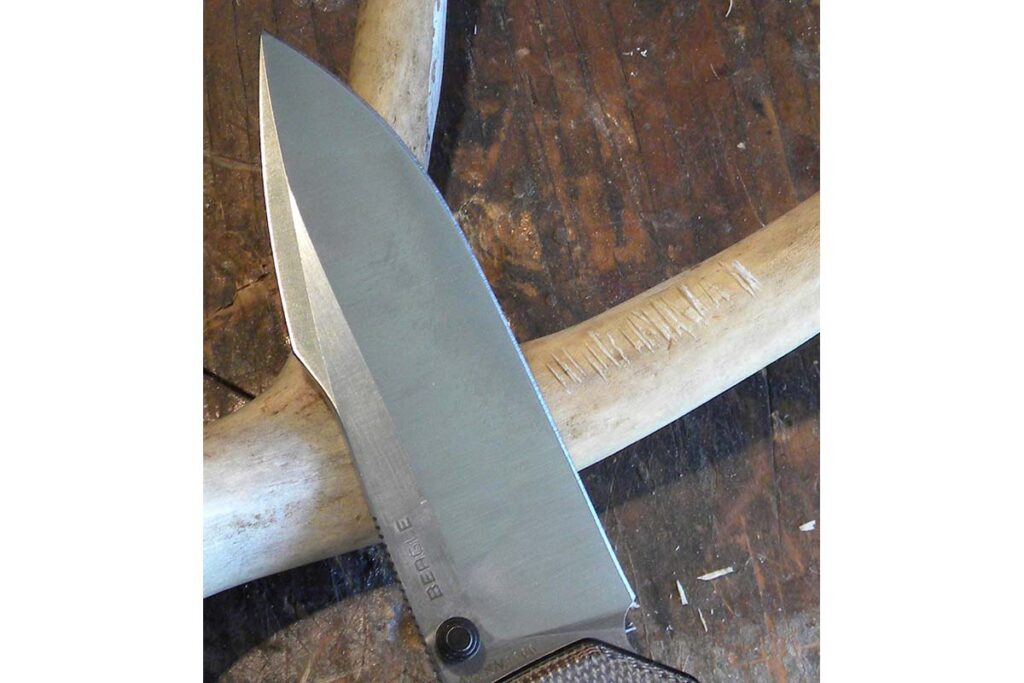
The last test for the edge and lock was chopping into a whitetail deer antler. Thirty hard whacks later and the edge had no damage. The lock was just as tight as when I started—100 percent.
In the final test, the Beagle chopped the antler 30 times with no edge damage. Verdict: heat treat spot on!
CHANGES
Maybe a few grooves in the handle for added grip?
BLADE GRADE
With its comfortable handle and sharp blade, the Beagle is a great folder for everyday carry.
OKNIFE BEAGLE Specs
Blade length: 33/8” Blade steel: 154cm stainless Blade grind: Flat Blade finish: Satin Blade pattern: Harpoon Blade opener: Thumb stud Handle: Green canvas Micarta® Lock: Linerlock Liners: Stainless Pocket clip: Yes Weight: 4 oz. Closed length: 4.25” Country of origin: China MSRP: $79.95
Have a hankering to extend your wish list with a little something new? Look no further as we’ve gathered up a slew of new custom and factory blades fresh on the market and ready to please. This collection has a definite tactical and outdoor tilt to it, with plenty of fixed blades. But, we’ve snuck a few worthy folders in just to keep the balance.
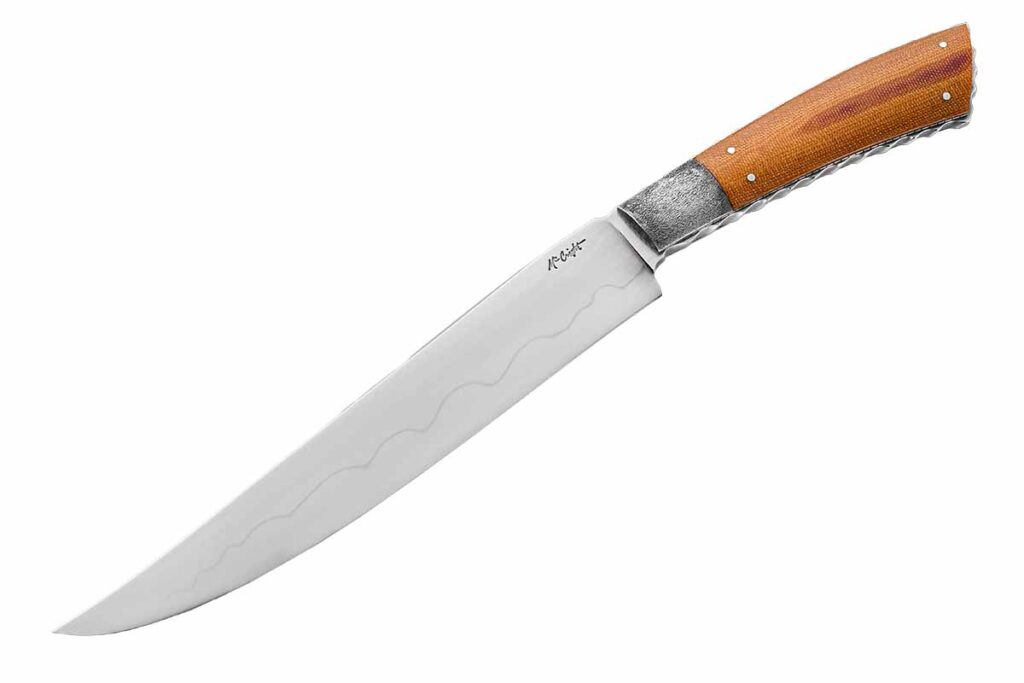
Erik McCright Fighter
Fighter Specs Blade length: 7.5” Blade material: Old W2 tool steel w/hamon Handle material: Vintage Micarta® w/a fileworked frame Bolster: Textured mild steel Overall length: 12” Knife to know: Erik McCright is an ABS journeyman smith Maker: Erik McCright (Jocelyn Frasier image)
Simone Milanesi Lacantina Indy
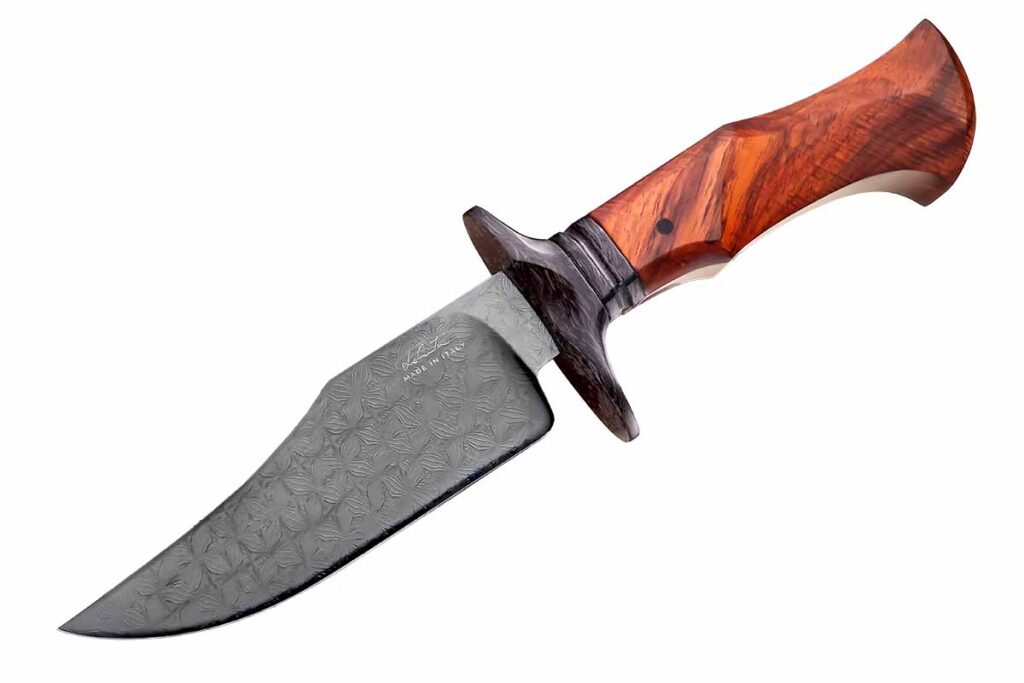
Indy Specs Pattern: Bowie Blade length: 6.29” Blade material: Mosaic damascus of K720 tool and 15n20 nickel-alloy steels forged by Spina Gianluca Blade grind: Full flat Blade finish: DLC (diamond-like carbon) Handle material: Rosewood w/carbon pin Guard & fittings: Fat Carbon Overall length: 11.6” Maker’s price for a similar knife: $2,000 Knife to know: Simone Milanesi Lacantina’s Indy won The Knifemakers’ Guild Best Bowie Award at BLADE Show 2023 Maker: Simone Milanesi Lacantin (SharpByCoop image)
Paul LeBatard Recurve Bowie
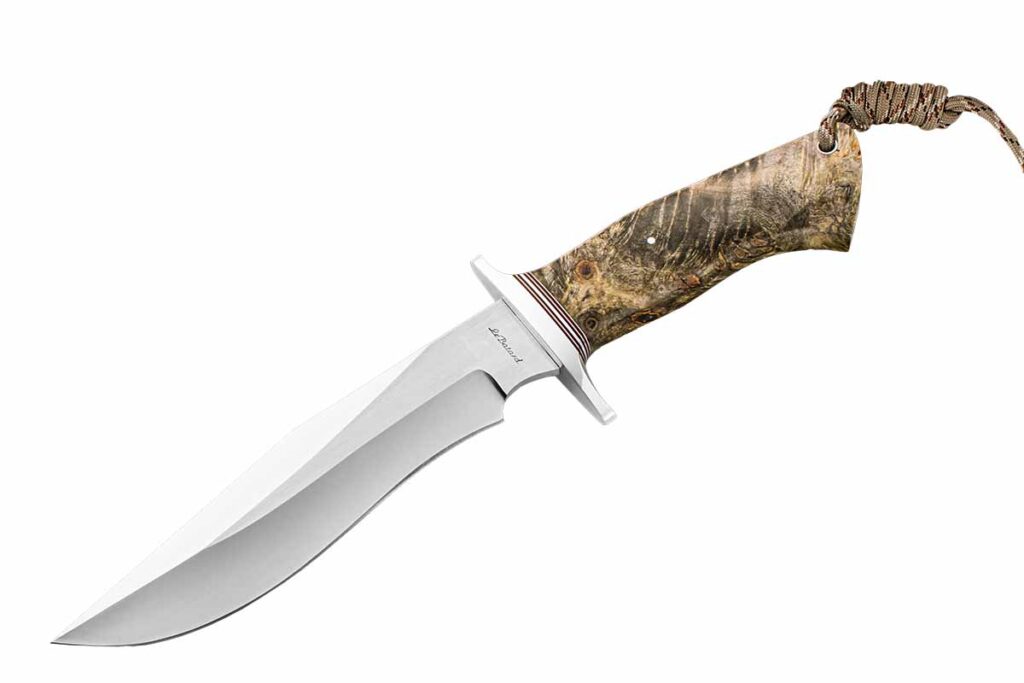
Recurve Bowie Specs Blade length: 7” Blade steel: CPM 154 stainless Rockwell hardness: 61 HRC Blade grind: The top false edge and primary bevels are hollow ground on a 10” contact wheel and satin polished; the flats are hand finished to 800 grit Blade @ thickest: 3/16” Handle material: California buckeye burl Lanyard material: Desert camo 550 paracord Double guard: 7075-T6 aluminum Overall length: 12” Maker’s price for a similar knife: $750 Maker: Paul LeBatard (Jocelyn Frasier image)
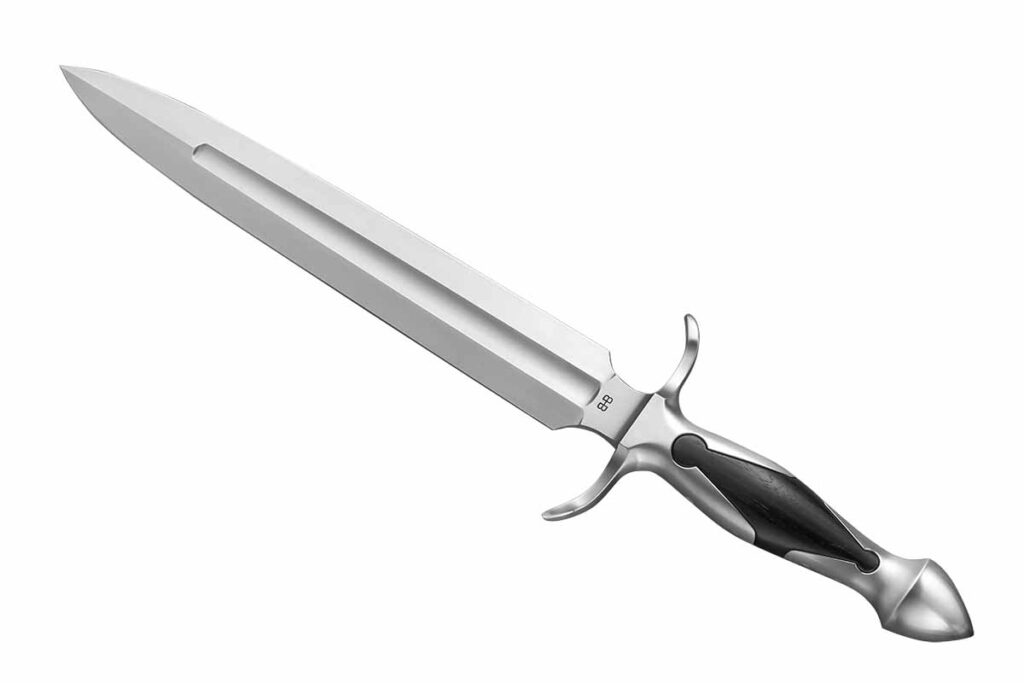
Jim Poling Dagger
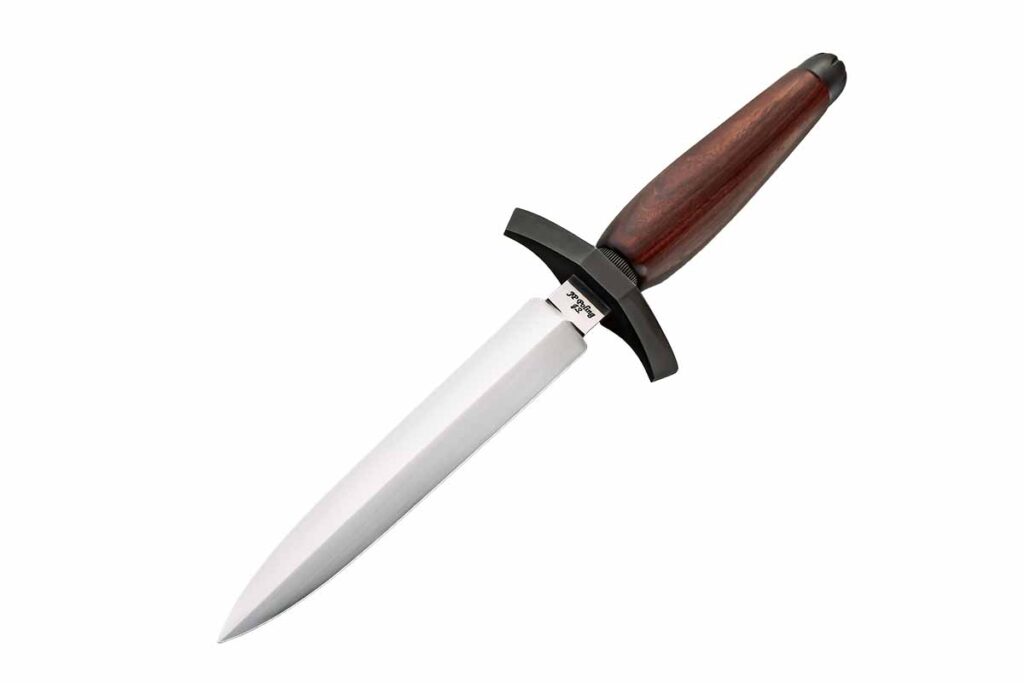
Dagger Specs Blade length: 6.5” Blade material: 5160 carbon steel Blade grind: Flat/convex Handle material: Rosewood Fittings: Mild steel Overall length: 12” Maker’s price for a similar knife: $600 Maker: Jim Poling (SharpByCoop image)
A.G. Russell Knives Power Ball C2
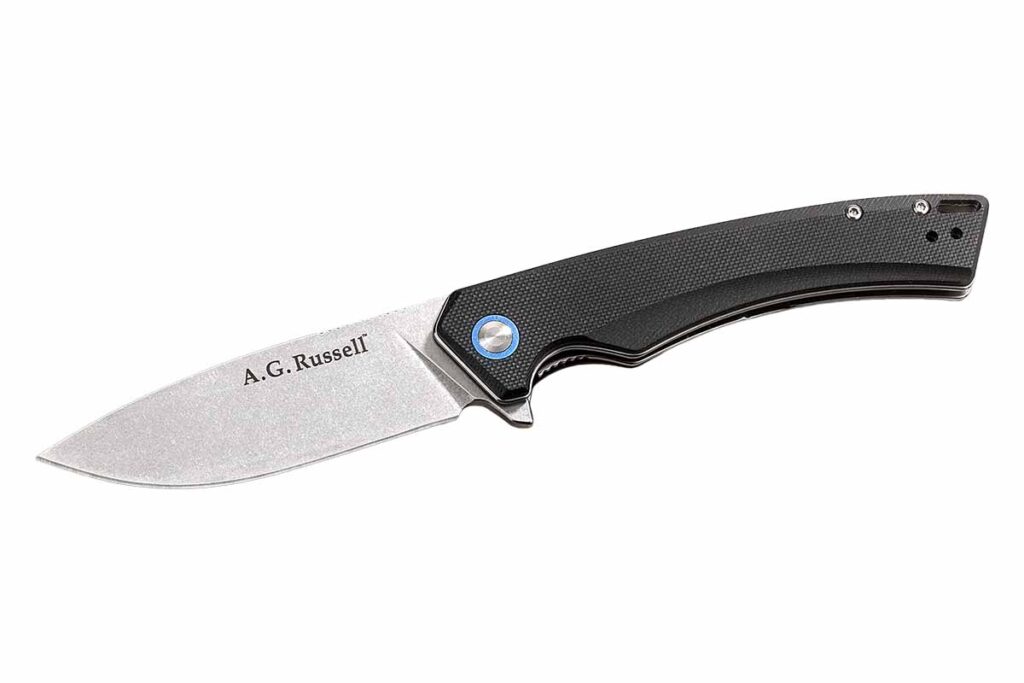
Power Ball C2 Specs Knife type: EDC Blade length: 33/8” Blade material: D2 tool steel Rockwell hardness: 59-60 HRC Blade finish: Stonewash Blade pattern: Drop point Handle: Black G-10 w/blue pivot accent ring Pocket clip: Reversible, deep carry Lock: Linerlock Weight: 3.7 ozs. Closed length: 4.75” Knife to know: Also available in a green handle w/orange pivot accent ring Country of origin: China MSRP: $67.95 Company: A.G. Russell Knives
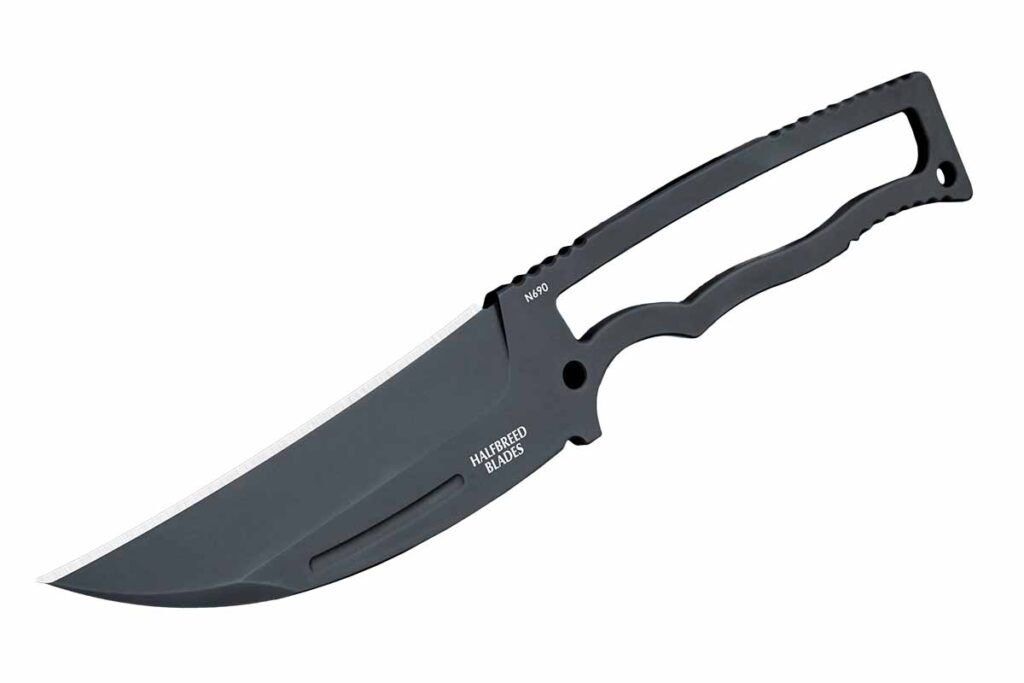
Halfbreed Blades CFK-02 (Compact Field Knife)
CFK-02 (Compact Field Knife) Specs Knife type: Fixed blade Blade length: 4.01” Blade steel: N690 stainless Rockwell hardness: 59-60 HRC Blade @ thickest: .16” Blade finish: PVD coated and stonewash options Blade pattern: Pikal Handle steel: VG-10 stainless Weight: 4.87 ozs. Overall length: 8.07” Sheath: Injection-molded plastic Mounting: Ulticlip and DOTS Belt Countries of origin: Australia and Taiwan MSRP: $275 Company: Halfbreed Blades
CRKT Redemption
Redemption Specs Designer: BLADE Magazine Cutlery Hall-Of-Fame® member Ken Onion Blade length: 4.06” Blade steel: MagnaCut stainless Blade @ thickest: .15” Blade finish: Stonewash Handle material: G-10 Bolster: Stainless steel Lock: Crossbar Weight: 4.9 ozs. Closed length: 5.1” Knife to know: The Redemption is based on Onion’s Deadman’s Hand custom knife named after the aces-and-eights hand Wild Bill Hickok purportedly held at the time of his death Country of origin: Made in the USA in collaboration w/Hogue Knives MSRP: $225 Company: CRKT
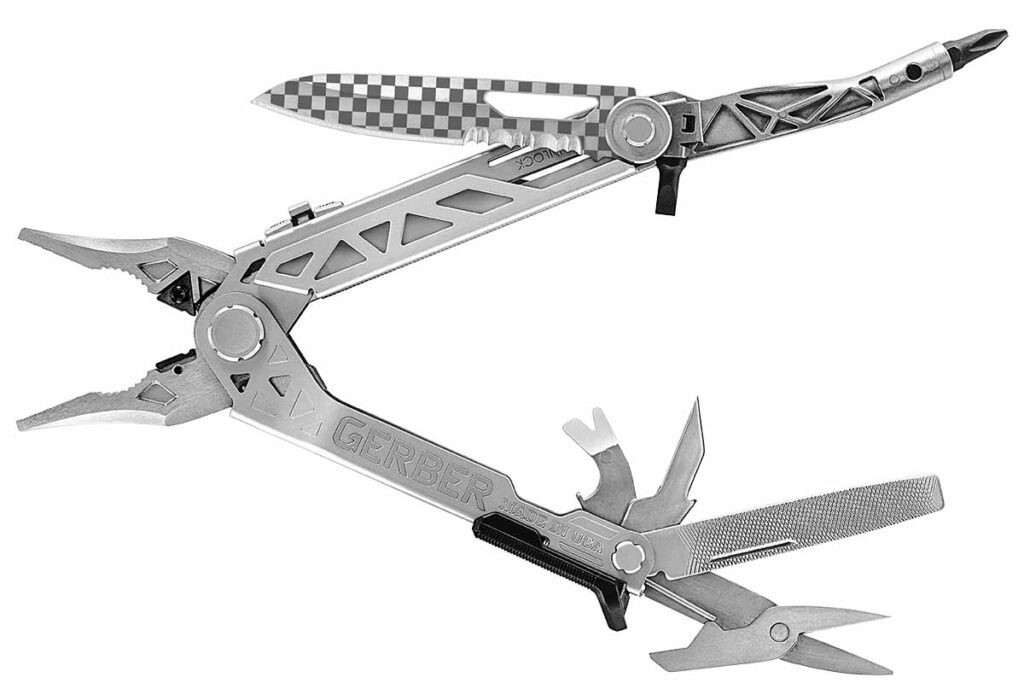
Gerber Center Drive
Center Drive Specs Knife type: Multi-tool Blade length: 3.25” Blade steel: 420HC stainless Implements: Serrated blade, file, awl, pry tool w/nail puller & bottle opener, scissors, fine- & coarse-sided file, pliers, rotatable carbide wire cutters & strippers; magnetic flathead and Phillips bits; in/cm ruler Weight: 9.5 ozs. Closed length: 4.7” Sheath: Fabric Knife to know: One-thumb opening system; the pliers are spring-loaded; magnetic 3.2” Center-Axis bit driver; tool lock Country of origin: USA (sheath made in China) MSRP: $130-$145 Company: Gerber
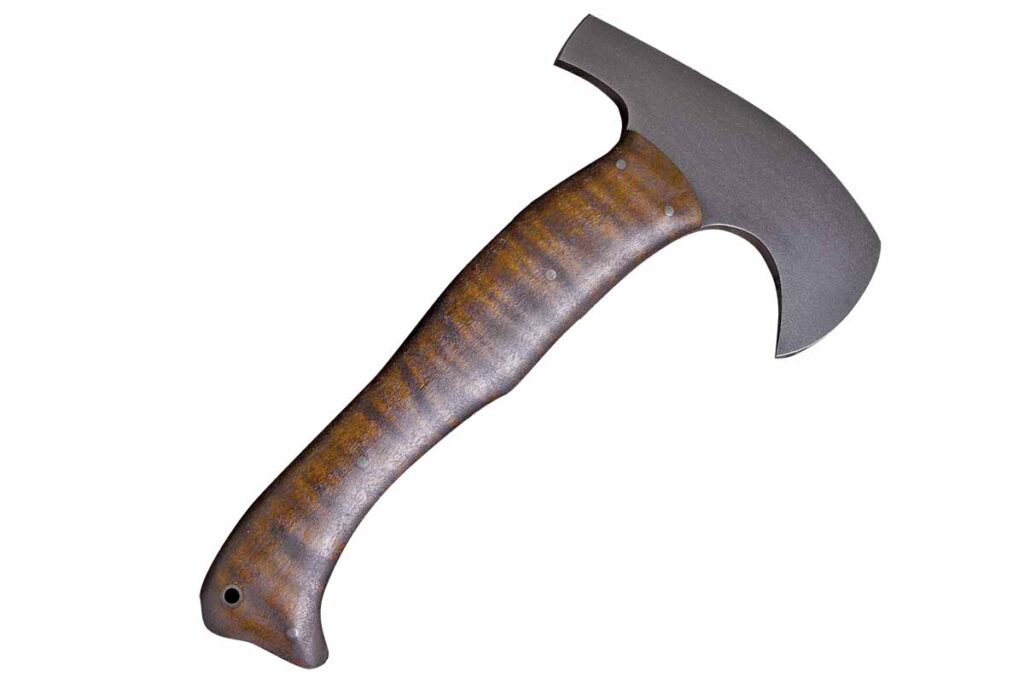
Winkler Knives WK Hunter Axe LT
New LeBatard Head length: 4.75” Axe material: 80CrV2 carbon steel Blade @ thickest: .25” Blade finish: No-glare black oxide Handle: A wide variety of natural and synthetic options; contact maker for info Construction: Skeletonized full tang Overall length: 9” Sheath: Fast-draw carrier, lined Boltaron®, HD shockcord quick-release retention system, nylon belt straps, multi-carry options Country of origin: USA MSRP: $450 Company: Winkler Knives
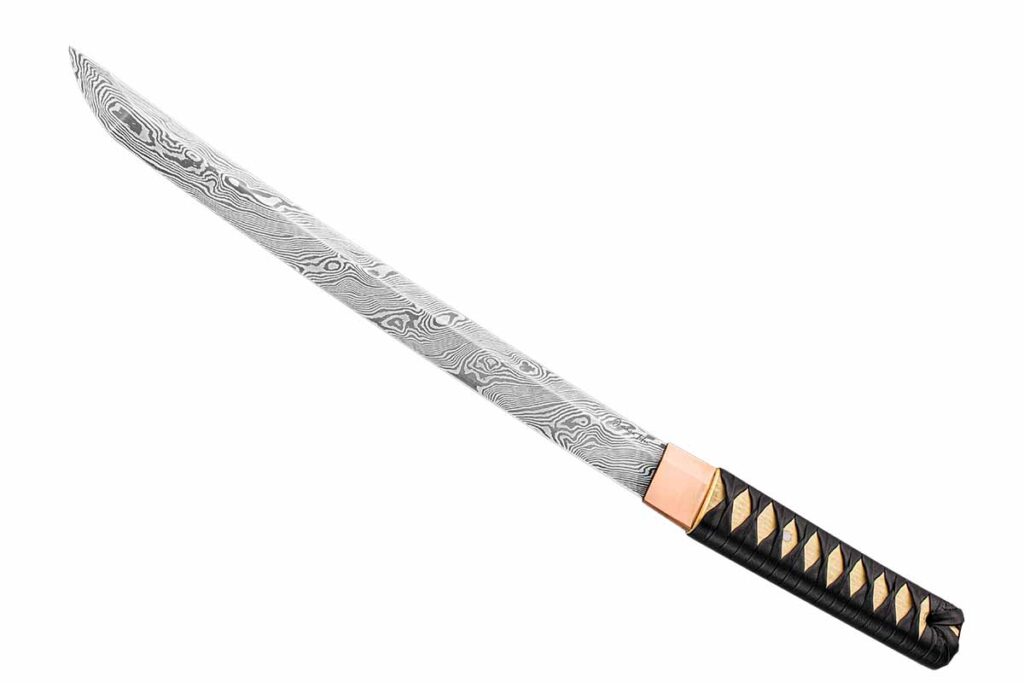
Jesse Hu Tanto
Tanto Specs Blade length: 12” Blade material: Twist Damascus of 1084 carbon and 15N20 nickel-alloy steels Blade grind: Traditionally ground w/a shinogi-zukuri geometry Handle material: Poplar and leather w/brass spacer Habaki (collar): Copper Overall length: 17.5” Maker’s price for a similar knife: $3,000-$4,000 Knife to know: The maker is an ABS apprentice smith Maker: Jesse Hu (Jocelyn Frasier image)
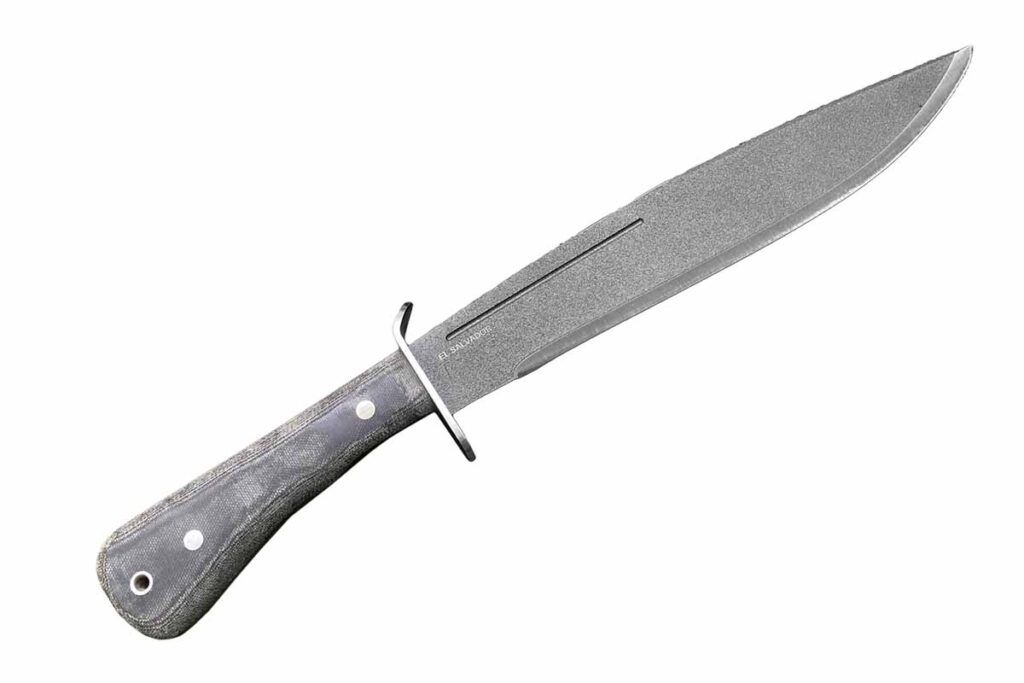
Pearson Industries MOST
MOST Specs Knife type: Fixed blade Blade length: 11.375” Blade material: 1075 carbon steel Blade finish: Black Traction powder coat Blade @ thickest: .196” Handle material: Black canvas Micarta® Construction: Full tang Weight: 24 ozs. Overall length: 17.125” Sheath: Kydex Country of origin: El Salvador MSRP: $279.95 Company: Pearson Industries
CRKT is releasing three Alan Folts designs–all folders–in anticipation of the Ft. Worth Knife Show.
CRKT, never one to rest on its laurels, has three new knife drops in anticipation of the Feb. 23-24, 2024 Blade Show Texas in Fort Worth. Alan Folts takes centerstage with this release, with all three of the designs emanating from the Florida-based custom knife maker. Interestingly, Folts made his mark as a fixed-blade man, but the two versions of the Ritual and brand-new Obverse mark somewhat of a new calling in the realm of folders.
“Alan Folts is a master craftsman and an acclaimed designer with over two dozen CRKT models to his credit in his time working with us,” said Doug Flagg, CRKT VP of Marketing and Innovation. “This latest collection represents Alan’s wide-ranging inspirations, innovative approach to knifemaking and the commitment to excellence that we both share.”
As a side note, the new premium knives from CRKT are listed as “coming soon” on CRKT.com but will be available for sale as BLADE Show Texas kicks off on Friday, February 23rd. For consumers in the Fort Worth area, the company also extends an invitation to its booth at the event, where they can meet the Folts in person.
CRKT Ritual Compact
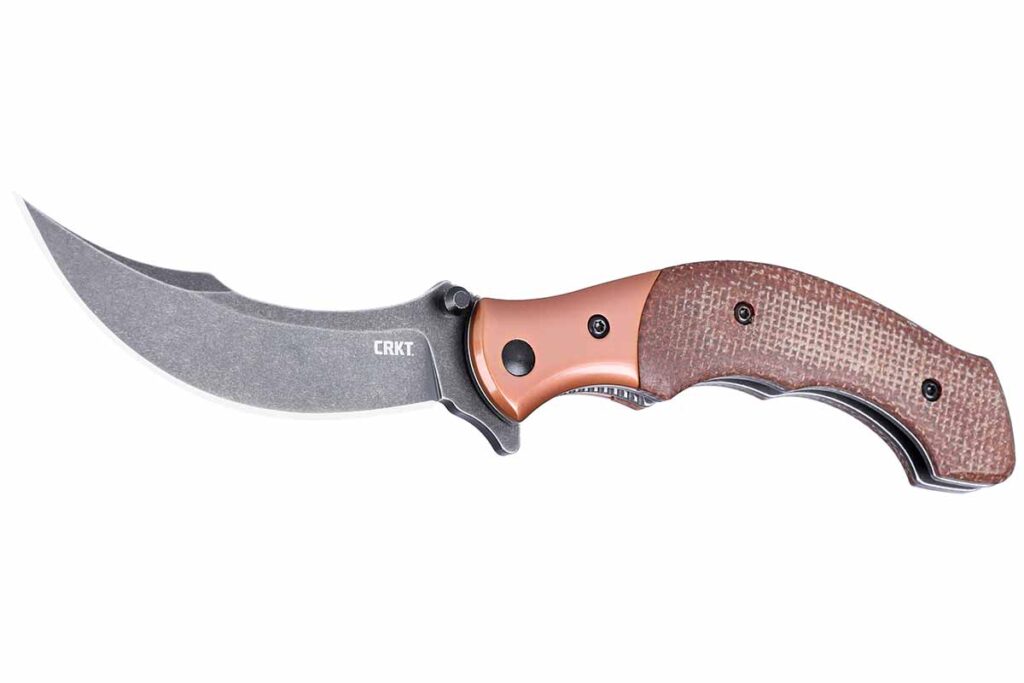
Designed for daily use, the Ritual Compact is an assisted folding knife inspired by old-world Persian fixed blades. The knife features a just over-three-inch 12C27 steel blade, ensuring excellent edge retention. With Assisted Opening technology and IKBS bearings, the knife guarantees quick and easy deployment and closure. The micarta handle with a stainless-steel bolster adds strength and striking aesthetics. The Ritual™ Compact is priced at an MSRP of $125.
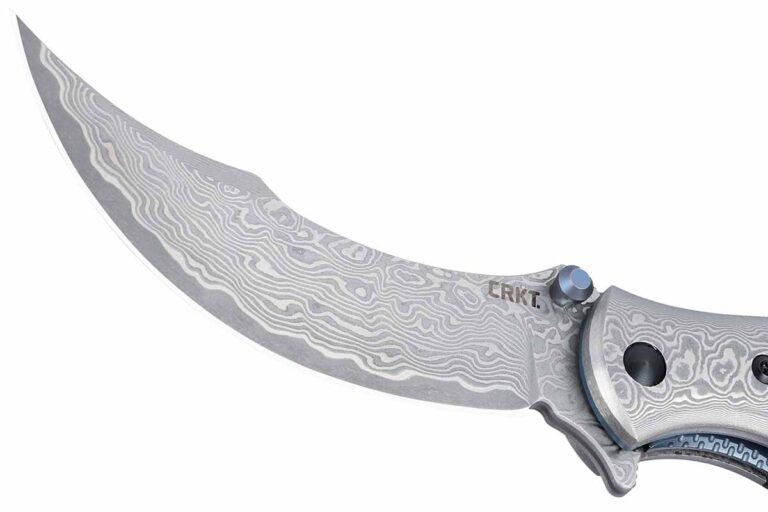
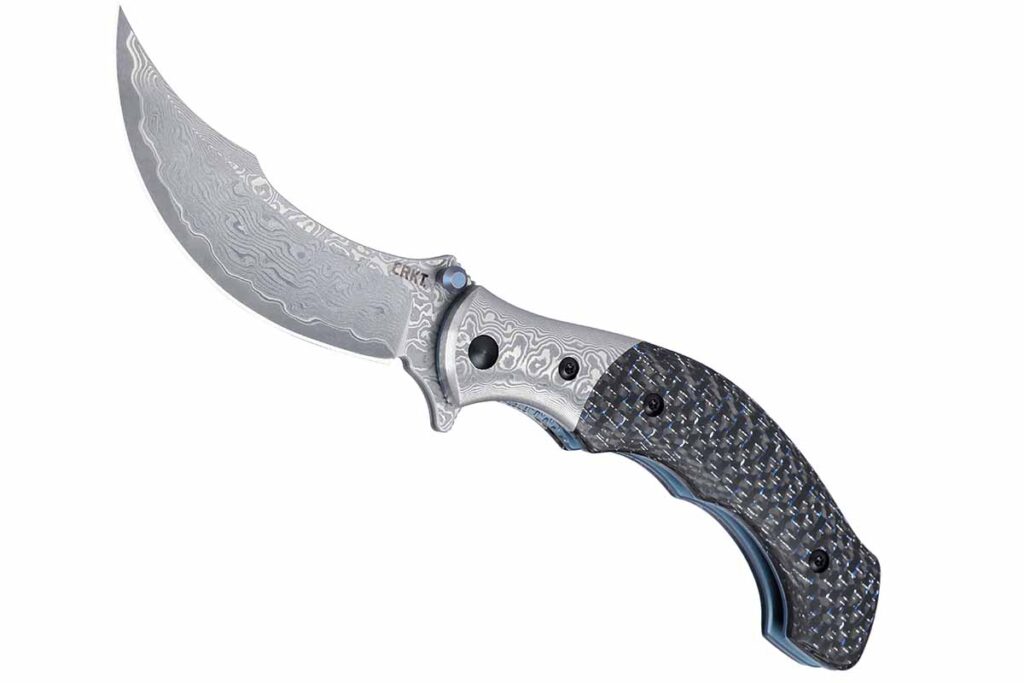
The high-end addition to the family, this Ritual Compact boasts a Damascus steel blade for superior cutting performance. The knife is adorned with a carbon fiber handle, an acid-etched Damascus bolster, a blue anodized titanium back spacer, and a pocket clip, making it a stunning addition to any collection. The Ritual™ Compact is priced at an MSRP of $275.
CRKT Obverse
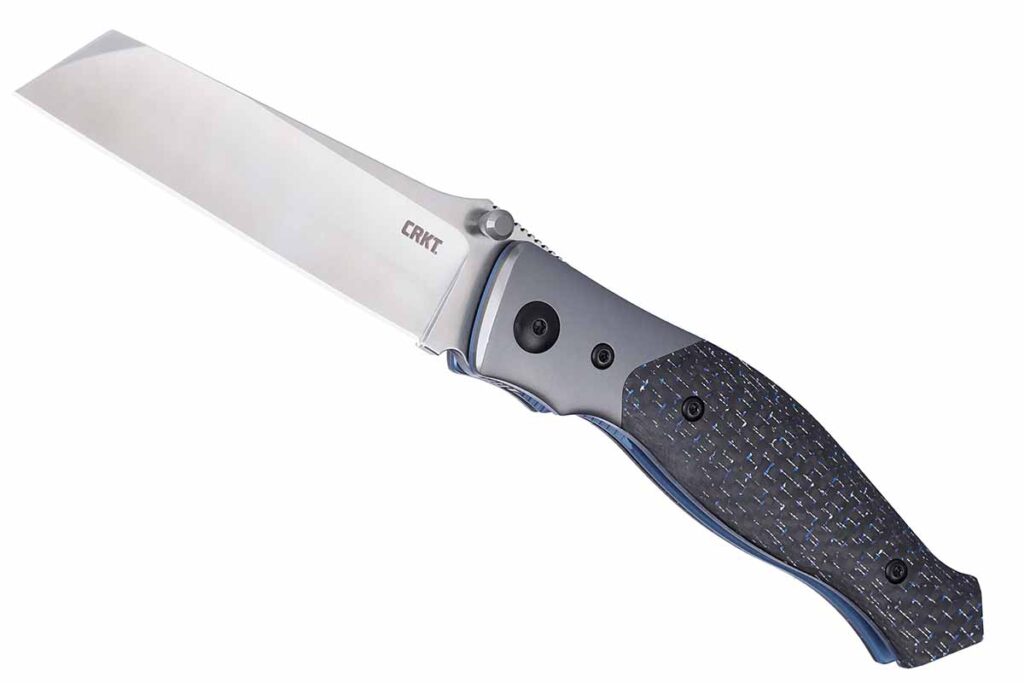
The Obverse is a distinguished folding knife made with premium M390 steel. The satin-finish, sheepsfoot blade is both sleek and durable, complemented by a carbon fiber handle with blue anodized titanium detailing. The silky smooth IKBS™ ball bearing pivot system ensures effortless deployment, while the secure liner lock allows for easy one-handed closing. The Obverse is priced at an MSRP of $275.
To be competitive, today’s balisongs must excel at flipping as well as cutting.
It’s a focus of versatility. From the style of opening to the enthusiasts who perform a variety of maneuvers with it, blade exposed, the balisong/butterfly knife is an object of curiosity and fascination.
The original term for the subject knife, balisong, is a favorite of Lucas Cao, founder and president of Squid Industries, which produces the popular Tsunami balisong. “Butterfly is a great slang name that describes the mechanism,” he remarked, “but the word balisong has a rich cultural history behind it.”
Flipping competitions have played a key role in the resurgence of the popularity of balisongs, especially among young enthusiasts. James Hill is an example of the latter. He won first prize of $1,000 at the West Coast Flipping Championship during BLADE Show West in Salt Lake City this past October.
With that observation in mind, the Tsunami is true to the Squid concepts of user accommodation. “Each knife we’ve created is on the basis of more variety while still offering a premium flipper experience no matter the price point,” Cao explained. “At the top of our ladder is the Tsunami, which we designed to embody peak performance and build quality.”
Squid Industries Tsunami
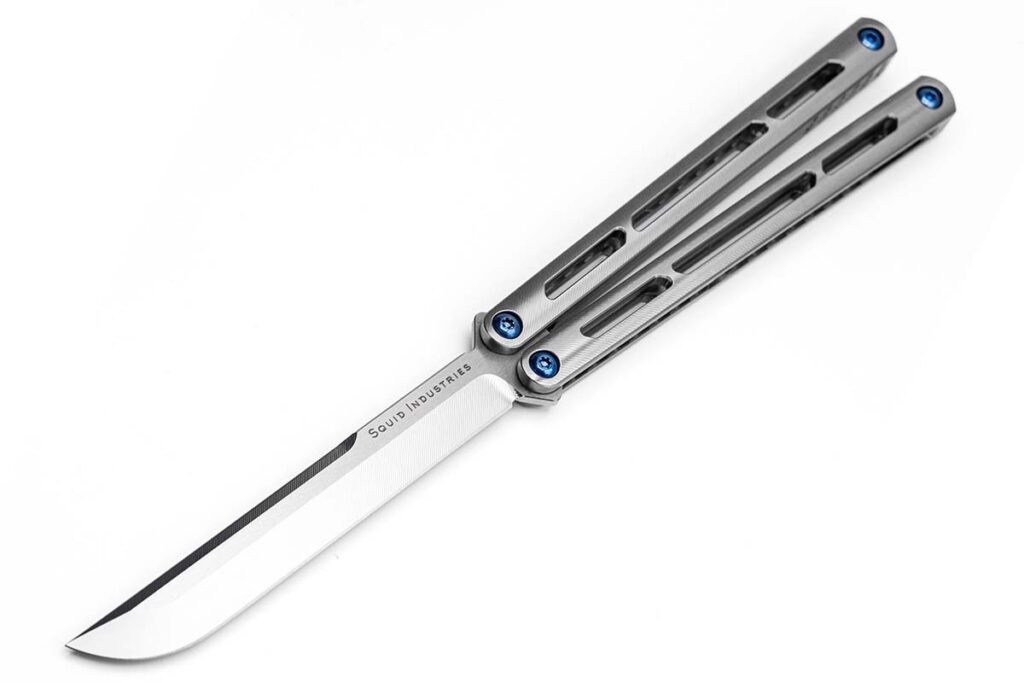
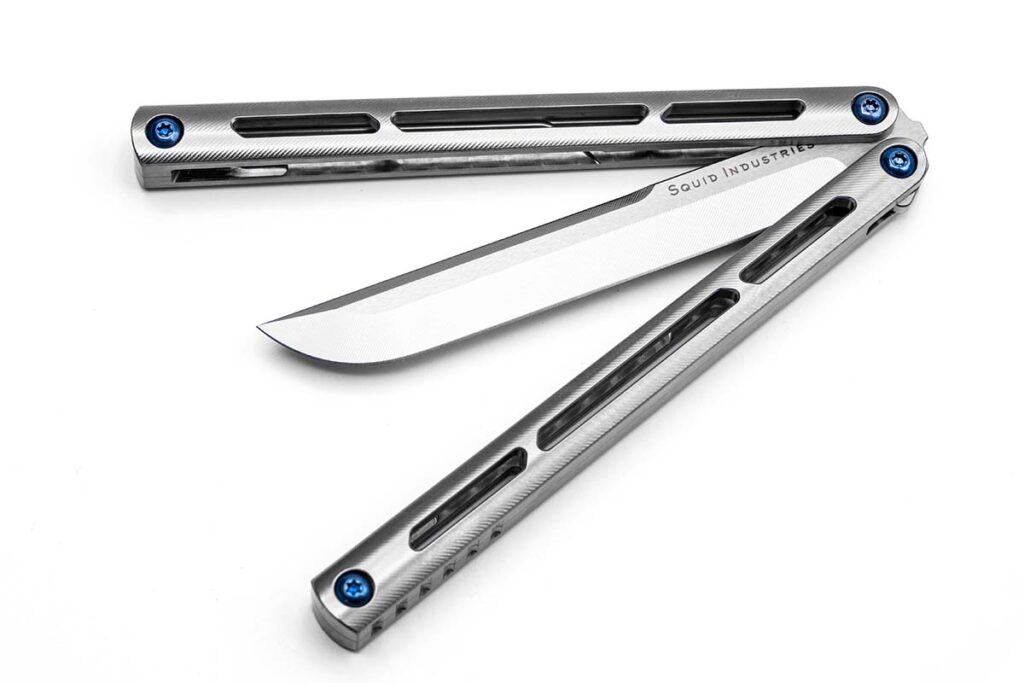
The Tsunami features a traditional Japanese-style tanto blade in a straight-back clip point and flat-ground CPM S35VN stainless steel.
The Tsunami features a traditional Japanese-style tanto blade in a straight-back clip point and flat ground CPM S35VN stainless steel intended to perform well across the spectrum of cutting requirements. However, the knife’s main constituency is the flipper community. “We serve a variety of customers with different requirements,” Lucas said, “but a majority of our customers are focused on the flipping aspect. If I had to estimate the customer desirability, I would say approximately 99 percent flipping and 1 percent cutting.”
The Tsunami employs a combination of bushings and phosphorous bronze washers in its mechanism, ensuring smooth deployment. “This is critical to flipping because it allows the user to consistently and reliably manipulate the knife,” he added. “Bearings aren’t used in our products and many other competitive balisongs from other brands because they produce a flipping experience that’s usually too smooth. Bushings are the preferred style because they offer a specific amount of smoothness and speed.”
The Tsunami reflects Squid Industries’ goal of offering balisongs that exhibit both variety and flipping fun, no matter the price. “At the top of our ladder is the Tsunami,” Squid’s Lucas Cao noted, “which we designed to embody peak performance and build quality.”
The Tsunami design is referred to as a “chainwich,” as its 6Al-4V titanium handles come together to mimic an integral grip. The handles themselves are designed with two specific tapers, one along the width and the other along the thickness. This dual taper design in combination with the rounding on the top create a comfortable and controllable feel in the hand, according to Cao.
Squid Industries Tsunami Specs Blade Length: 4.5” Blade Steel: CPM S35VN stainless Blade Grind: Flat Handle Material: 6Al-4V titanium Latch: N/A Pivot: Bushings and phosphorous bronze washers Weight: 4 ozs. Closed Length: 5.6” Country of Origin: USA MSRP: $775
Kershaw Lucha Carbon Fiber
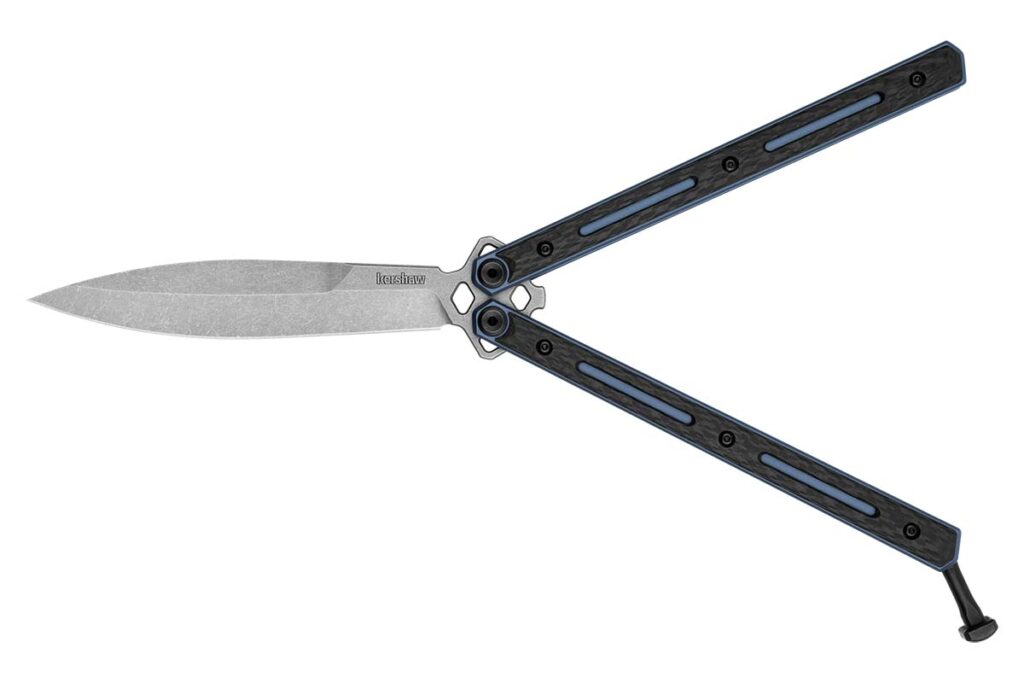
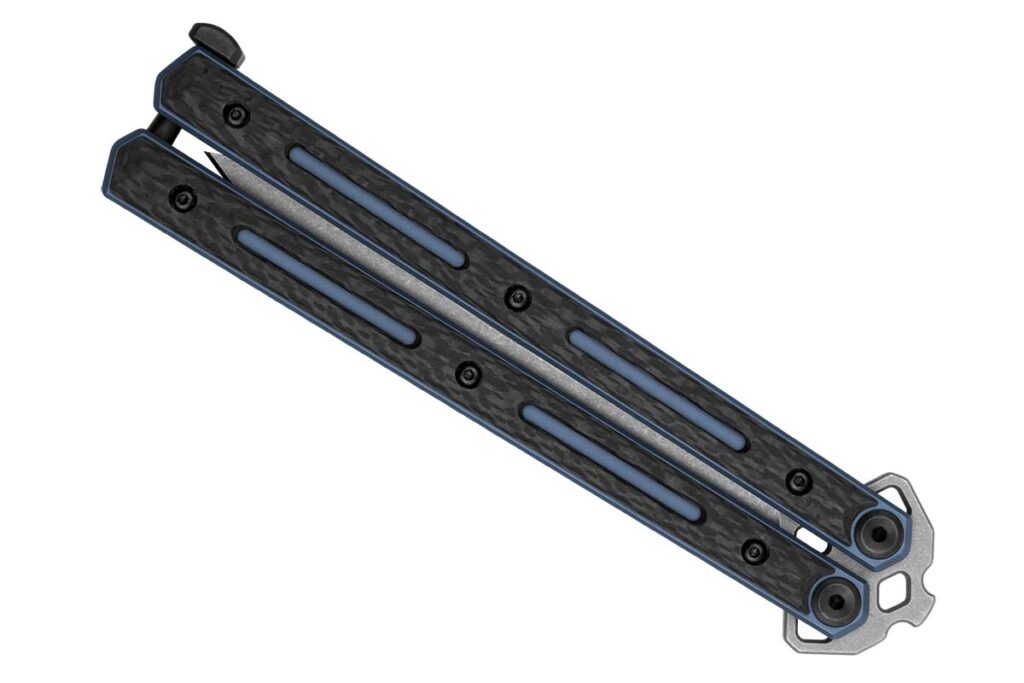
Kershaw’s Lucha Carbon Fiber is a premium edition of the company’s standard Lucha, including such high-end materials as CPM 20CV stainless blade steel and titanium handles with carbon fiber overlays.
The Kershaw Lucha Carbon Fiber’s spear-point blade of premium CPM 20CV stainless blade steel is ideal for piercing and slicing, while the “working” finish hides scratches from hard use. Company spokesperson Dominic Aiello related, “Our goal at Kershaw is to offer something for everyone, whether that be a budget-friendly knife you can abuse and lose all the way to a premium USA-made automatic. With that said, when we brought the original Lucha to the market, our goal was to offer a value packed, affordable, high-quality butterfly knife. It has been a huge hit and as a result we decided to release a premium version.”
Though the original emphasis on the practical use of the Lucha remains with cutting ability front and center, the knife illustrates the versatility inherent in the balisong style. “Of course, cutting is a critical component for any knife,” Aiello reasoned, “but with butterfly knives the flip ability, balance, and comfort are equally as important, if not more important. A lot of customers enjoy the Lucha for the fun and challenge of flipping, but there is also a segment of users that carry it as an EDC.”
The handles of the Lucha Carbon Fiber are titanium anodized blue overlaid with machined carbon fiber. The handles and carbon fiber are contoured for a rounded profile and ease of use.
The Lucha combines good looks with smooth mechanics and easy maintenance. “Each pivot uses two KVT ball bearings, four total,” Dominic commented. “The ball bearings provide an extremely fast and smooth action for easy flipping. The handles are blue anodized titanium with machined carbon fiber overlays. The handles and carbon fiber have been contoured for a rounded profile and ease of use.”
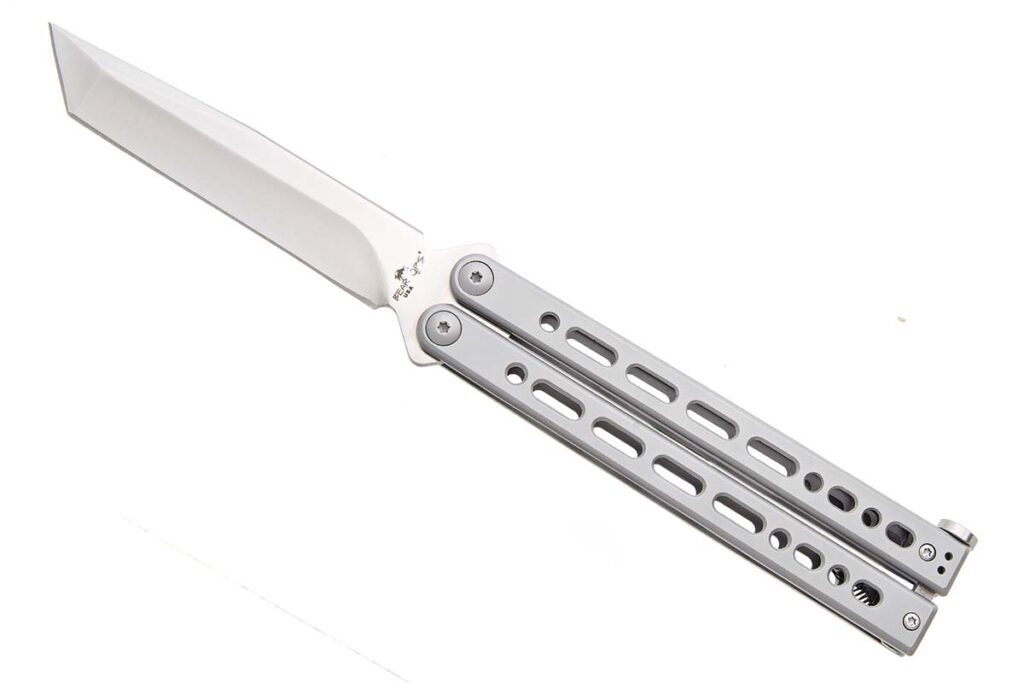
The Bear Song VIII includes a tanto-style blade in flat-ground 154CM stainless steel ideal for detailed cutting and general use.
Matt Griffey of Bear & Son Cutlery says the company has referred to the balisong as the “butterfly knife” since 1986. To that end, the company has continued to develop the famed flippers. With the release of the Bear Song VIII, the company’s design eye was fixed on a knife “being symmetrical and balanced, the most important design elements to start,” Griffey explained.
The Bear Song VIII includes a tanto-style blade in 154CM stainless steel, flat ground and ideal for fine cutting and general use. According to Griffey, the knife’s aptitude is 80 percent flipping and 20 percent cutting.
“A butterfly knife is the strongest folding knife, and as long as you are holding both handles it is as close to a fixed blade as possible for a folding knife,” Matt reasoned. “If the knife is maintained and tight there is almost no chance of lock failure. Maintenance should be just keeping it clean and oiled and checking it periodically to make sure it is not getting loose anywhere on the knife. If you find anything loose, remove the screw, and use Loctite® to replace the screw to the correct tension and let it set for at least twice as long as the thread locker recommends. We find they always give a time that is the bare minimum for the thread lock to work.”
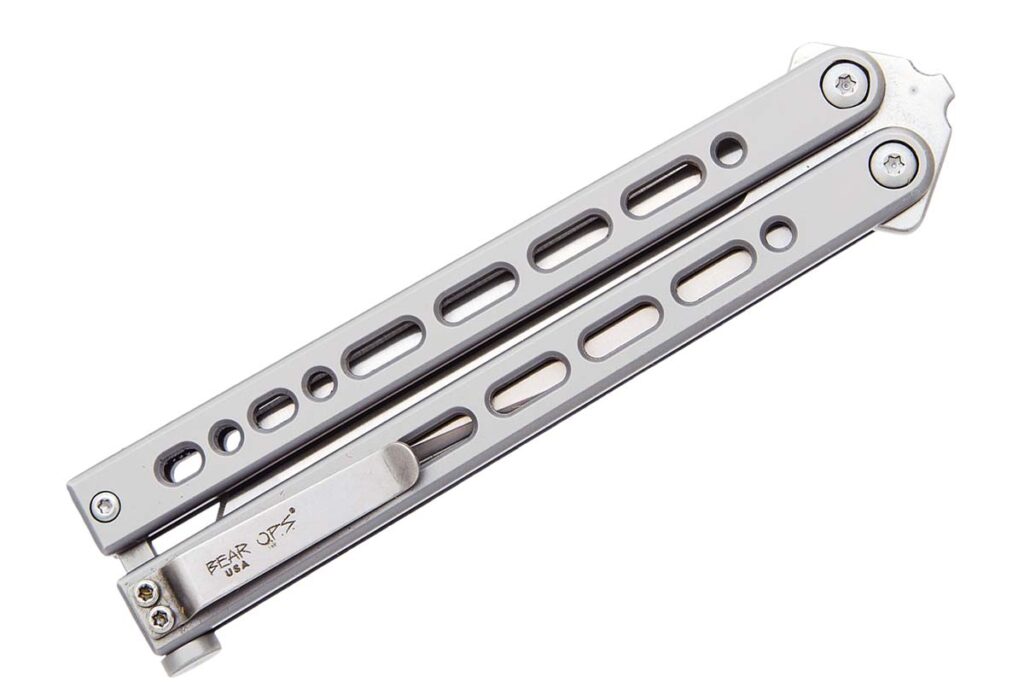
The Bear Song VIII sports stainless steel handles, rounded edges, and milled stepped holes and slots for user comfort. A spring-loaded locking latch and a stainless-steel pocket clip in a short design for easy carry and that can be removed if the user chooses completes the package.
In light of simple maintenance, the Bear Song VIII features an encased bearing design that is easily lubricated, while stainless steel handles, rounded edges, and milled stepped holes and slots provide user comfort. A spring-loaded locking latch makes operation a pleasure. A stainless-steel clip is in a short design for easy carry and can be removed if the user chooses.
“The Bear Song VIII has all the modern features with the timeless classic look,” noted Griffey, who sees the recent legislation regarding butterfly knives as positive (see sidebar). “Butterflies are far slower to open than a modern knife with a flipper on the blade that doesn’t have any spring mechanism. So anyone wasting time in their legislation to target this is just trying to fill time so they don’t have to do any work that might help the people they were elected to serve.”
Bear & Son Bear Song VIII Specs Blade Length: 4” Blade Steel: 154CM stainless Blade Grind: Flat Handle Material: Stainless steel w/Cerakote® finish Latch: Spring loaded Pivot: Ball-bearing washers Weight: 5.1 ozs. Closed Length: 5.25” Country of Origin: USA MSRP: $182.99
Butterfly Knife History
Butterfly knives, also known as balisongs, are one of the most popular knife styles today. They consist of a blade with two handles that rotate around a pivot and wrap around the blade in the closed position. That much is agreed upon. The origin of butterfly knives is still up for debate.
Where Were Butterfly Knives Invented?
Butterfly knives have a rich history, though much of it has been left up to speculation. Walk up to a knife enthusiast and ask, “Where did butterfly knives originate?” and you may get two very different answers.
Fuzzy historical records and well worn legends are to blame. The two main countries of focus are France and the Philippines. Each has evidence and supporters.
One Version: Butterfly Knives Came from the Philippines
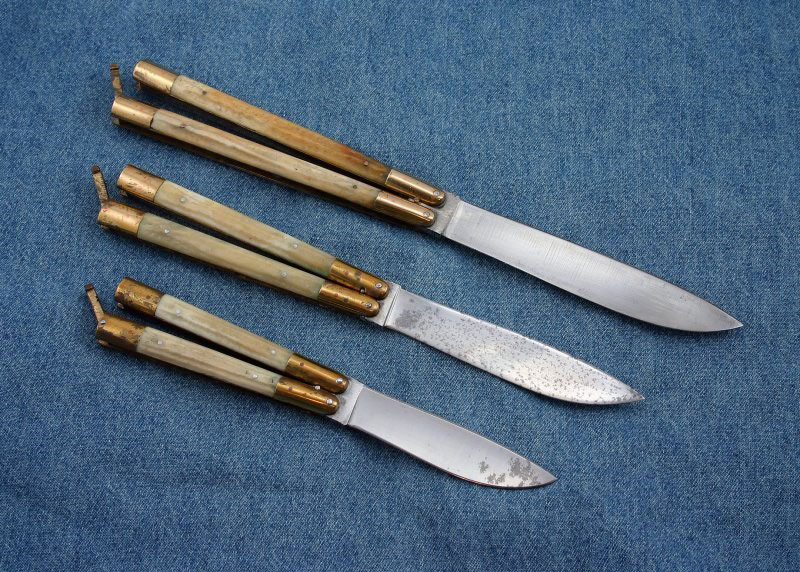
Authentic Filipino balisongs (Image from Balislinger on bladeforums.com)
The Philippines is often cited as the birthplace of butterfly knives, where “balisong” is a more appropriate term. Legend has it that the balisong knife has roots that go back to around 800 AD. This style of knife could be opened quickly with one hand and easily used as a weapon. It proved a common choice for self-defense and utility uses.
A rich balisong tradition has been present in the Philippines for more than a century. Countless stands and stores sell handmade butterfly knives today, and Filipino province of Batangas and the area of Balisong in Taal are known for the blades.
At the very least, the word “balisong” is widely recognized to have come from there. That said, the lack of physical evidence to support a Filipino origin fuels the argument.
Another Version: Butterfly Knives Came from France
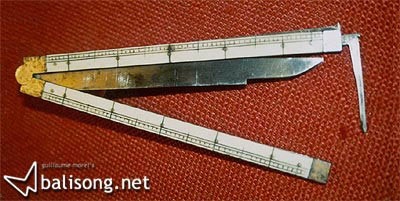
A vintage example of the Pied Du Roi. (Image from balisong.net)
Another claim is that the butterfly knife was invented in France between 1500 and 1700. The reason for this is the “Pied Du Roi,” which means “foot of the king” and is a French measurement tool that dates to the 1700s. The “Pied Du Roi” greatly resembles a butterfly knife. This tool has been pictured with measurement handles and a blade that folds out on one end. It looks like a butterfly knife, but could it be considered the first one ever made?
Proponents of the French origin argue that Spain, allied with France at the time, adopted the butterfly knife in their tasks and eventually took it to the Philippines as sailors sailed to different countries. Sounds reasonable, but hasn’t been proven.
Another supporting argument for the French is that these knives comes from Germany and England, where some butterflies can trace back to prior to 1900. I recently came across a collector’s piece online made in England with markings dating to 1873. This rules out the butterfly knife originating in the early 1900s in the Philippines, but like I said earlier, it has also been claimed to be influenced from similar Filipino knife models as early as 800 AD.
So Where Did Butterfly Knives Actually Come From?
Due to the popularity of balisongs in the Philippines, it isn’t surprising to suspect it started there. The lore passed down from generation to generation also support this idea.
On the other hand, France has pictures and documentation of a measurement device that resembles a butterfly knife and dates back hundreds of years. However, that measurement device likely wasn’t used for self-defense, flipping, or other tasks common to butterfly knives today. Could it be considered the same thing? Hard to tell.
Both sides have great arguments. More information is needed to finally determine this unsolved piece of butterfly knife history.
Butterfly Knives Today
Regardless of history, butterfly knives are rising in popularity due to the fun of “flipping.” Flipping involves tossing butterfly knives open to perform all kinds of tricks. Whether it’s the danger of it, the community, the collectible appeal, or anything else, there’s no doubt flippers are mesmerizing to watch.
Editor’s Note: Mike Haskew and Trevor Brown contributed to this article.
Case Knives is celebrating its 135th year with some top-notch new knives.
Creeping up on a century and a half of knifemaking, Case seems to feel its oats still. Or, that’s the way it seemed from the prolific 135-year-old Pennsylvania manufacturer’s recent releases at the 2024 SHOT Show, held in January in Las Vegas. The company had a full-court press of drops at the gun and outdoor gear hoedown, with a bevy of new lines, releases, collabs and model iterations. This should prove sweet music to the army of the brand’s collectors.
There isn’t space enough to cover every whipstitch of what Case is bringing to the table in 2024, but we’ll take a gander at some of the company’s weightier introductions for the coming year. There’s a little bit of everything for case fans out there, from classic patterns with new twists to brand-new knives that strike original ground.
Bridgeline Series
Not wandering too far off the beaten path, Case’s newest series of knives offers some nice updates for users seeking a modern knife. At the vanguard of the line are the Highbanks and Longhouse, both of which should prove excellent everyday carry options with the chops to handle most tasks thrown in front of them. Each features aluminum frames and bolsters, screw construction, ball bearing pivots, deep-carry pocket clips and CPM-20CV steel blades.
Case isn’t shying from the use of powdered steel for its blades, and the choice in these knives offers up a premium option used in a number of higher-end production knives. It’s similar to D2 and other tool steels—respectable toughnesss and edge retention—but with the added benefit of improved corrosion resistance.
Highbanks
Certainly a break from the tried and true, the Highbanks veers to the more traditional in the Bridgeline Series. Namely, because the knife is a non-locking folder bosting a nail nick and a Wharncliffe blade. Still, with the high-performance blade steel and the choice of Micartia or hardwood grips, this certainly isn’t your granddad’s jackknife. I particularly like the handle ergonomics of the Highbanks, tapering nicely to the blade and fitting the hand just right. Spoiler… so does the Longhouse.
Longhouse
Here we see Case move its design a bit more forward with the flipper Longhouse. The liner lock boasts plenty of blade, a clip-point profile with a beef spine that should help the knife stand up to any job put in front of it. However, the hand mimics the Highbanks, giving the knife a timeless look I’d wager many Case fans will appreciate.
Chris Taylor Hunters
Teaming up with renowned custom knifemaker Chris Taylor, Case has cooked up an intriguing hunting-knife collection. This year, the partnership unveils three unique fixed blades, each a fairly unique take on the must-have outdoor implement.
CT1
Crafted to exude rugged dependability, the CT1 showcases a top-tier Nitro V steel Clip-point blade. Known for its outstanding edge retention, corrosion resistance, and easy maintenance, Nitro V steel ensures that your knife remains ready and reliable whenever and wherever you require it. Case gives the knife an OD green burlap Micara handle, a plus for a hard-use knife that will likely be used in inclement weather. The CT1 also boasts aggressive jimping on its spine, so you have a solid contact point on more forceful cuts.
CT2
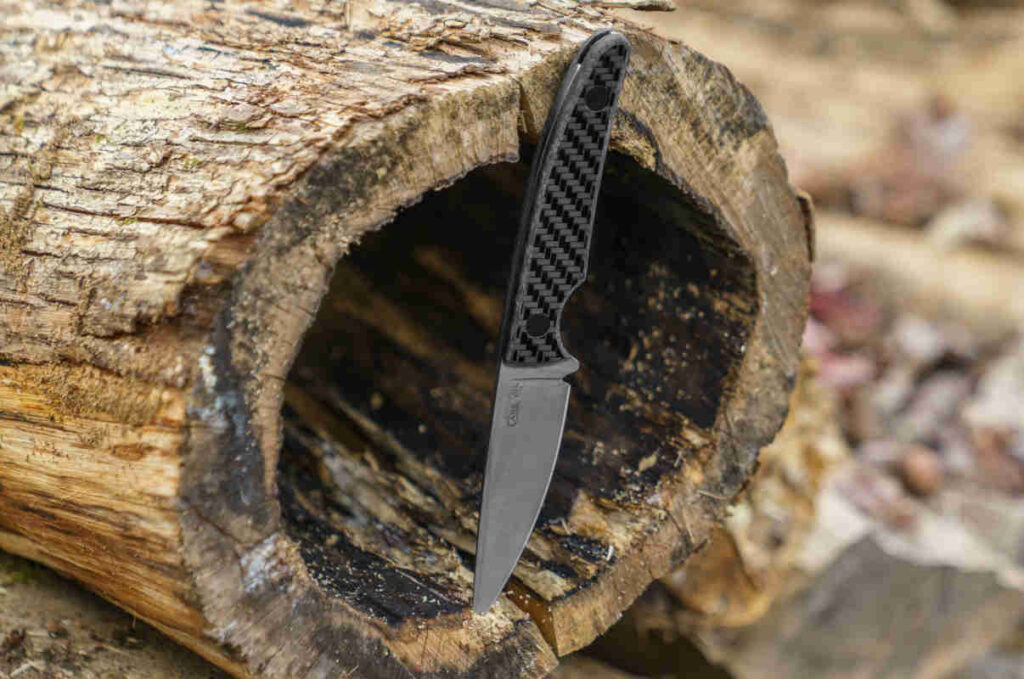
Cutting a much sleeker profile, the CT2 has the most modern feel among the CT hunters. Built around a resilient S35VN steel drop point blade, the knife doesn’t offer as much belly as the others in the line. But with a defined point, should prove at pro at perforation. The carbon-fiber handle is a nice touch, adding to the CT2’s modern looks, and proves very ergonomic and nimble in the hand.
CT3
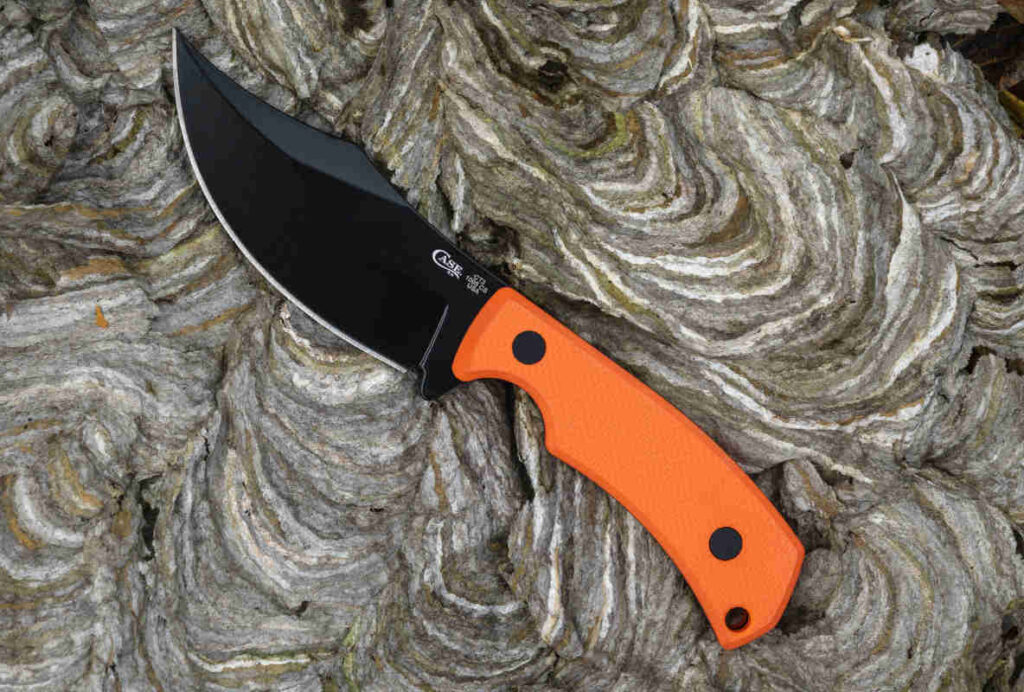
Tailored for the wilderness, the CT3 has more of a traditional hunter profile. Constructed from premium 1095 carbon steel, its specialized coated skinner blade boasts razor-sharpness, facilitating precision cuts and providing a sharpening advantage compared to many other steels. Outfitted with a hunter orange handle, the nice part about the CT3 is it will be difficult to lose in the woods.
Razor
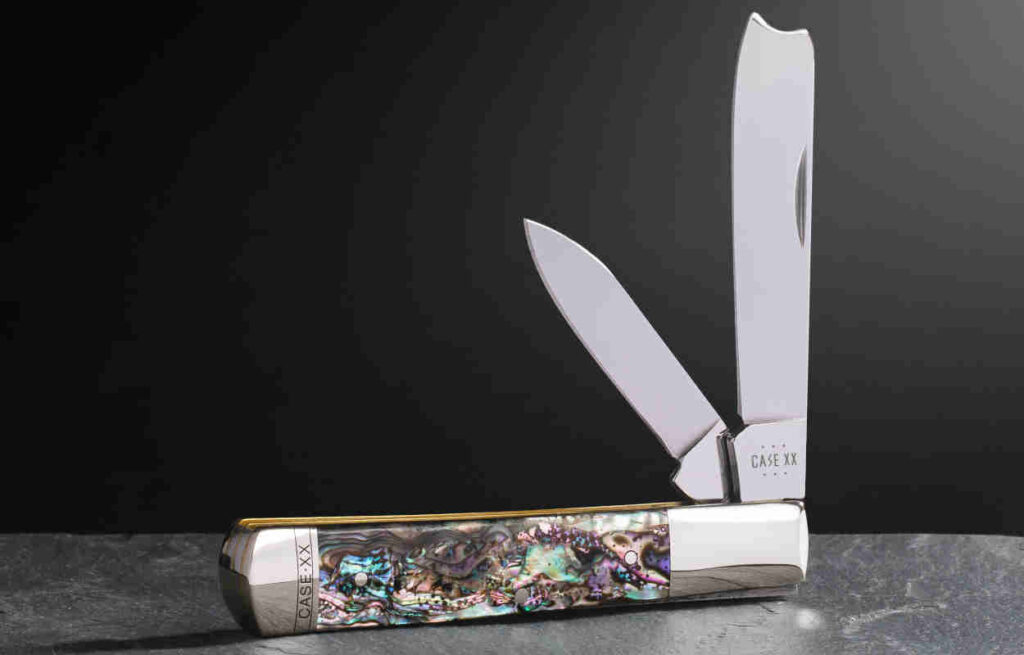
Case is commemorating its 135-year legacy by dusting off a real classic eye-catcher—the Razor. Reintroduced from the Case XX Vault, the knife is available in two patterns: a single-bladed version featuring a broad Clip blade with a distinctively curved tip, and a two-bladed variant with an additional Pen blade. Available in over a dozen handle styles, such as Smooth Abalone, Micarta, Smooth Brown Maple Burl Wood, and Sawcut Jig Caribbean Blue Bone, the Razor is a great Case throwback and a fantastic knife for the company to pay homage to its rich history.