Buyer's Guides

You’re looking for a new knife in a certain style – we’ve got recommendations on the best blades for every price point.

Vosteed Mayhem: The Compression Lock Rides Again

A top-end offering, the Vosteed Mayhem takes a run at proven, yet challenging locking mechanism.

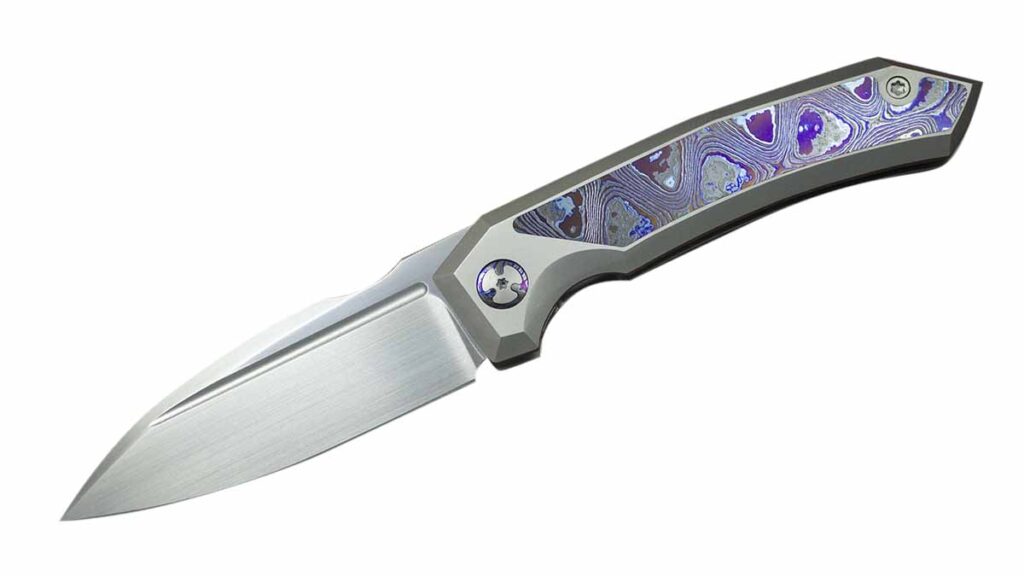
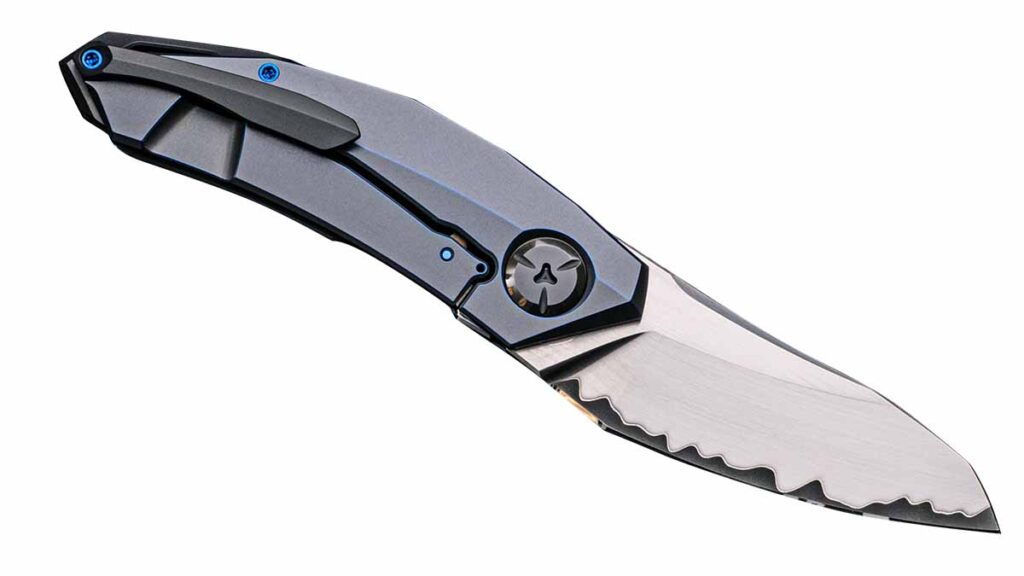
Prolific in its offerings, they must not sleep much over at Vosteed Knives. Yet, the company’s productivity has generally been knife buyer’s gain—at least those attracted to mid-priced fidgety options that by and large have fairly decent lines. Though, one of its latest releases should turn heads if only to see if Vosteed indeed has been able to pull off what few other companies have dared.

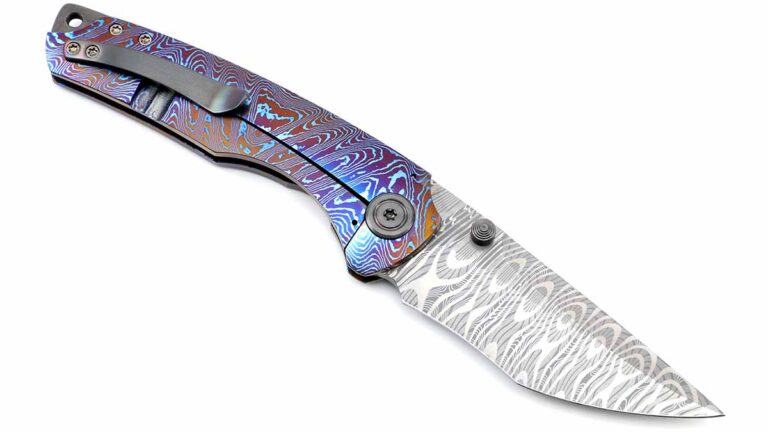
Christened the Mayhem (a prototype was showcased at their table at the 2023 BLADE Show), the collaboration with Rob Saniscalchi of R.S. Knifeworks boasts what the firm defines as a hybrid frame/compression lock. Some might recognize the latter aspect of the system as the same mechanism developed and used to great effect by Spyderco. The Colorado company’s patent on the mechanism ran out a few years ago, making it fair game and clone fodder. But given the tight tolerance required for the lock to operate properly, few companies have given it a run.

The Sypderco system is operated by a leaf spring wedging laterally between a ramp on the tang and a stop pin. The system was smooth and easy to operate, as well as strong as the dickens—given pressure is exerted directly down on the spring’s vertical surface, preventing potential bowing. Vosteed appears to operate almost identically, though a bit of the geometry on the blade’s lock elements differ. At arm’s length, Vosteed’s attempt appears on track, but only time and plenty of fiddling by owners will prove if the company truly got it right.

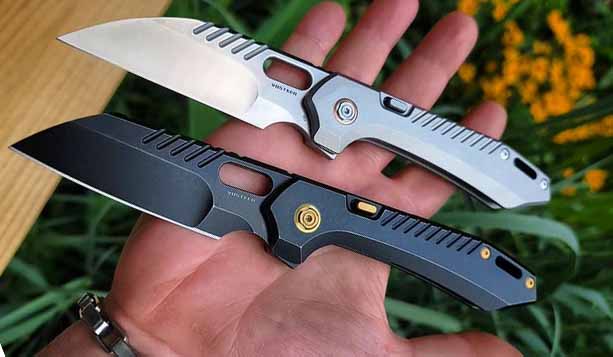
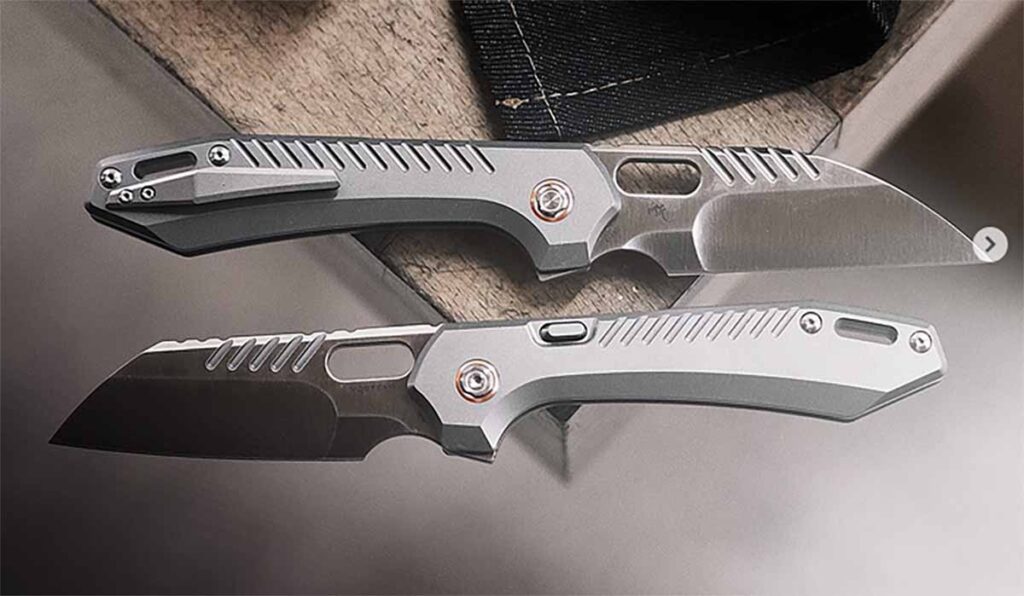
Vosteed Mayhem black and gray finishes
Photo: Instagram

As to its operation, the lock is actuated by a push button on the spine. The system allows for wrist opening, but as has been Vosteed’s OM for some time, it outfitted the Mayhem with multiple deployment options. In this case, both a thumb hole and a kicker; a pair of caged ceramic ball bearings aid in a smooth and fast deployment.

Vosteed offers the Mayhem with a couple of different options. Perhaps the imperative one is the choice between a Wharncliff or sheepsfoot blade, each coming in a 3.3-inch in length and constructed from the highly desirable M390 steel. Each blade has a compound grind, but this appears a play at aesthetics, given the thicker rear grind seems too small for practicality. The blades also feature a choil, so you can choke up, even though the titanium scale is ample enough to land all five fingers of a large hand. The scale itself is clean, with a closed rear and texturing across its back, not to mention a nice taper up to the blade to allow for a firm grip.

The other choice buyers have to make on the Mayhem is finish, with a stonewashed black PVD coating and gray satin options on the menu. The gray version is gray from top to bottom—outside a gold pivot collar—accentuating the knife’s tidy design, while the black iteration is a bit more boisterous boasting gold hardware. Note, the knife offers tip-up carry with a non-reversible titanium clip.

Vosteed Mayhem gray
Photo: Instagram

The Vosteed Mayhem is a break from what most have come to expect from the company, which has made its bones at the affordable end of the market. The new knife—no matter options—runs $250. However, if it proves well executed, most likely will find this money well spent.

Check Out More Buyer’s Guides:

Bearded Axe: Best Bashers From Here To Valhalla (2023)

0

Hot bearded axes go beyond just chopping.

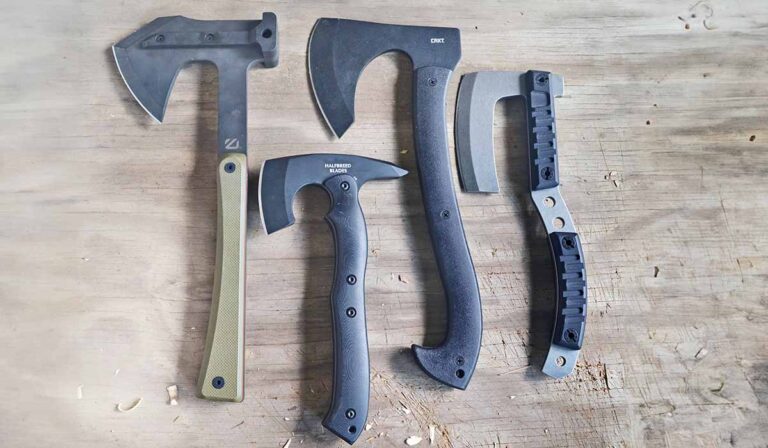
All axe heads have an edge, of course, but did you know some can give you an edge over others? The bearded axe chops just like any axe, but its beard can serve field duty beyond the norm.

The bearded axe was first used by the Scandinavian Norse people (Norsemen) in the Middle Ages and was called a skeggox—skegg for beard and ox for axe. Its distinctive shape allows you to grasp the handle at the base of the head and use the edge for woodworking chores.

It’s sometimes called a carving axe for its propensity for de-barking, shaving and notching wood, and other chores like slicing cord and rope—even serving as an ulu to prepare food. Not all bearded axes are made specifically for carving wood, however, as you’re about to find out.

CRKT James Williams Skeggox

Bearded Axe CRKT
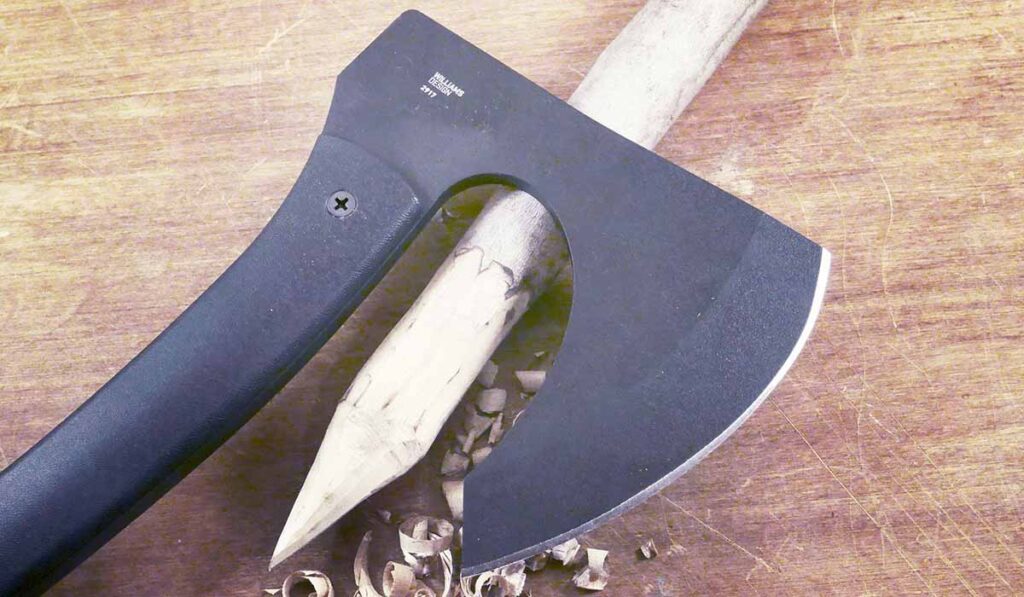
The CRKT Skeggox shaved bark and rendered nice shavings while debarking and pointing the tip of a hardwood stake. The SK5 carbon steel bit into the hardwood quite well and the handle scales offered a comfortable grip.

Columbia River Knife & Tool and martial artist/Japanese sword guru James Williams dipped back in time and chose the original Norse namesake for his design. The CRKT Skeggox is one of the larger two test axes.

The drop in the beard from the top of the inner curve to the bottom edge is 3.25 inches. The 11-inch handle has a lanyard loop at the base. The sheath features a black nylon keeper strap with a thermoplastic buckle to prevent slippage from the sheath. CRKT includes additional hardware for belt or MOLLE carry.

The SK5 carbon steel of the axe head has been compared to U.S.-produced 1084 and 1095 carbon steels, which typically fare well-working wood in the wild. I tested it for carving and immediately liked the deep drop and the “50 miles of elbow room” between the handle and the rear of the beard. I de-barked and pointed a fat hardwood tent peg, and the more I used the bearded blade the better my control got for taking off long shavings. This was in part due to the low profile of the quarter-inch steel and the nice bite of the high carbon alloy.

The Skeggox is also a good all-around chopper for firewood and clearing small trees. The sheath is economical and the option of belt or MOLLE carry is welcome. Better yet, it is the most affordable of the review axes and money well spent.

James Williams Skeggox Specs
Head Width: 4.874”
Blade Edge: 5”
Blade Material: SK-5 carbon steel (Japan)
Blade Thickness: .25”
Blade Finish: Black powder coat
Handle Material: Black FRN polymer
Weight: 26 ozs.
Overall Length: 13”
Sheath: Black thermoplastic
Country of Origin: Taiwan
MSRP: $113

Doublestar/Outlier Kodiak Camp Axe

Bearded Axe Kodiak
The author removed the splitter attachment from the Outlier Kodiak Camp Axe to clear the way for using the blade for debarking and shaving wood. He used the longer, lower portion of the double-edged blade and was impressed with the performance of the 52100 carbon steel.

The Outlier (formerly Doublestar) Kodiak Camp Axe is the second of the larger test axes and comes with a twist. The axe head has a removable steel splitter attachment installed, specifically made for cleaving wood. It is also notable in that the blade edge has two grinds.

The beard drop is 2.5 inches. The handle scales are sumptuous at a half-inch thick each. The sheath covers the axe head and splitter until it reaches the widened rear of the splitter used for hammering. The front has a nylon belly strap with a thermoplastic buckle to secure the axe head.

The splitter increases weight, blocks access to the beard for slicing and shaving, and is too unwieldy for my tastes for finesse work. I removed it, reducing axe weight by 8 ounces and making the Kodiak much easier to manipulate. I thought the two angles of edge might make a difference in cutting surface—and I’m sure they would—but the longer, lower edge turned out to be all I needed for de-barking and shaving long slivers. The 52100 carbon steel cut like a house afire, slicing wood and ¾-inch rappelling rope with ease.

It was a different axe altogether without the splitter and more in line with the other text axes. The only recommendation I’d have is that Outlier offer the same axe with a full, single-edged head to increase the coverage of the edge. Other than that, it’s a beast.

Kodiak Camp Axe Specs
Head Width: 5.25”
Blade Edge: Varied
Blade Material: 52100 carbon steel
Blade Thickness: .25”
Blade Finish: Parkerized black
Handle Material: Green G-10 composite w/orange liners
Special Features: Splitter attachment
Weight: 40 ozs. (including splitter)
Overall Length: 13.125”
Sheath: Black thermoplastic
Country of Origin: U.S.A.
MSRP: $319

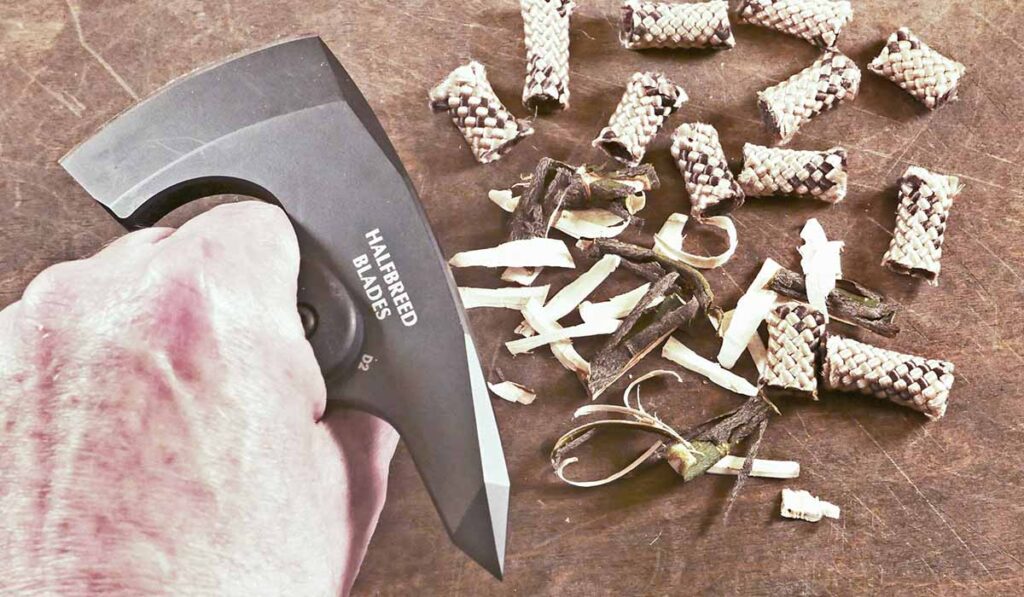
Halfbreed Compact Rescue Axe

Bearded Axe Halfbreed
The Halfbreed Compact Rescue Axe shaved wood and sliced rappelling rope with flying colors. The axe head steel is the thickest of the test group.

The Halfbreed Compact Rescue Axe is the smallest of our bearded array yet is also the most overbuilt. It makes up for its smaller size with the thick axe head steel. There’s a nice palm swell at the lower grip area and a big finger groove at the top of the handle.

It has a beard drop of 1.5 inches. Out back is a 2-inch spike. The rear spine has gimping to enhance grip. The sheath offers full coverage and a keeper loop rolls under the bit to further secure the axe head. It has a mounted MOLLE-compatible plate, or you can swap it out with an optional DOTS Tek-Lok style attachment for belt carry.

While testing the Halfbreed I had to remind myself it is indeed a compact rescue axe. While all the other review subjects are geared for outdoor use, this small overbuilt wonder is more for city work. That said, the large finger groove at the top of the handle is custom-made for carving and slicing just as bearded axes were intended. I tested the little axe and it shaved bark, took off shavings, and sliced rappelling rope just fine, but its thick steel and superior weight-for-size ratio really shine when hacking and bashing. I have no doubt it would earn its stars as a close-quarters hawk.

I gave the spike a run on a pane of 3/16-inch door glass and it obliged, shattering it with gusto. The ample grip, with its added gimping, makes for excellent purchase, and the sheath—overbuilt like the axe—is the most comprehensive of the lot. In a nutshell, the Halfbreed is a handy axe—and a bulldog at that!

Compact Rescue Axe Specs
Head Width: 4.5”
Blade Edge: 2.55”
Blade Material: Bohler K110 (D2) tool steel
Blade Thickness: .31”
Blade Finish: Black Teflon coating
Handle Material: Black G-10 composite
Special Features: Faceted spike, gimping
Weight: 25.07 ozs.
Overall Length: 9.52”
Sheath: Black Kydex, MOLLE compatible
Country of Origin: Australia
MSRP: $310

Maserin Knives Mantis

Bearded Axe Mantis
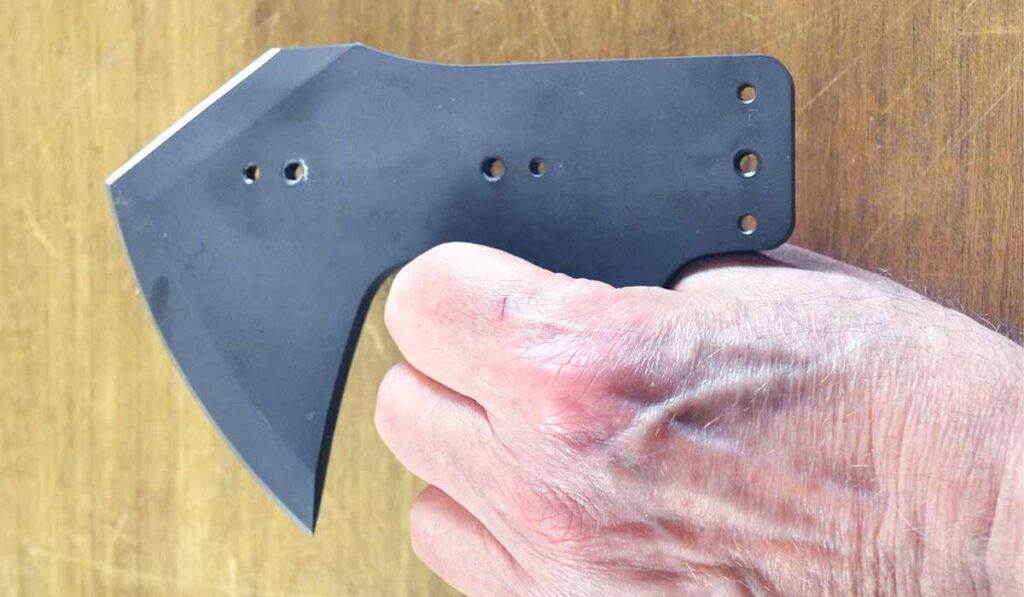
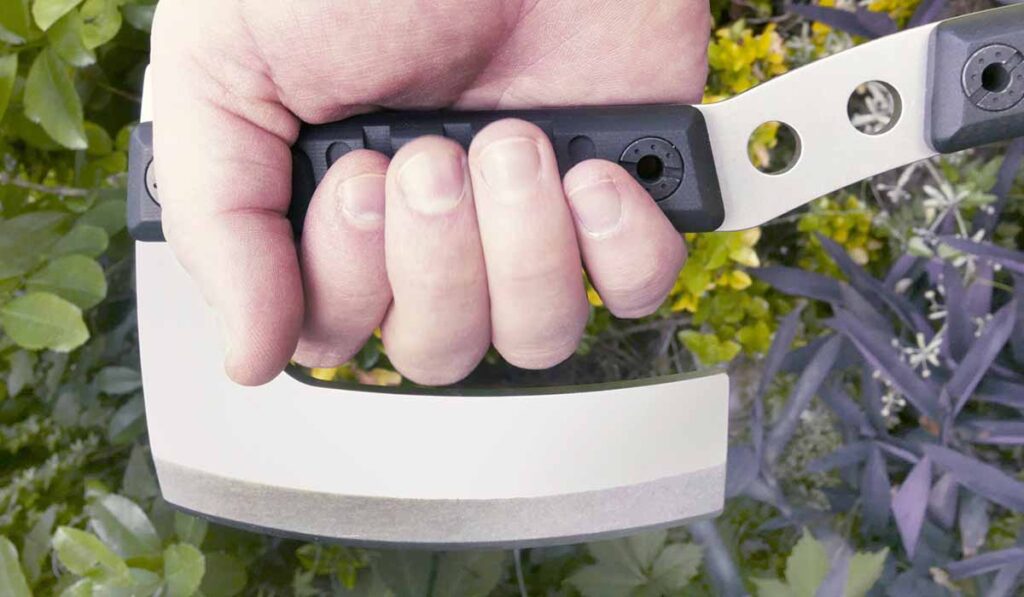
The unusual axe head of the Maserin Mantis offers full knuckle protection and then some. Note that the Mantis has a pair of upper scales just for the purpose of using the axe for shaving and slicing.

Maserin Knives may be giving us a glimpse into the future with its new, strikingly stylish Mantis. It is a small axe and you’ll notice the steep tool steel blade is quite lengthy for its size. In fact, the blade exceeds the width of the axe head—a bit unusual in a working axe.

“But wait, there’s more!” as the TV guy says. The Mantis has four (two sets) of scales: one at the top for carving comfort and the other on the lower portion of the handle for grip. At the base of the straight top scale the direction of the handle switches to an outward curve, and the exposed part on the handle has three lightening holes—plus there’s a lanyard hole and a spike on the base. The sheath fits the axe head only and butts against the top scale, and there’s a belt loop stitched to the back. It’s minimalism at its finest.

The Mantis has the longest beard drop of all the test axes at 3.75 inches and is the only one that offers full hand protection. The blade curve stands apart in that it is virtually symmetrical from end to end. It’s shape and full knuckle protection begged me to try it as an ulu for slicing, so I laid down some 3/8-inch rappelling rope and went at it. The Mantis sliced just like an ulu, taking off clean sections of rope. It performed even better when I reversed the grip with the handle facing away from me so it didn’t hit me in the belly. Voila! Instant ulu.

The Mantis shaved bark and carved off curls quite well and the full finger protection was welcome. It’s the lightest of the axes reviewed, which could put it at a disadvantage to the others when weight is a factor. You won’t be batonning this axe either because the top scales would block it from going past the front portion of the head. That said, there’s plenty to like about the Mantis’s utility value and its forward-thinking styling!

Mantis Specs
Head Width: 3.75”
Blade Edge: 4.527”
Blade Material: D2 tool steel
Blade Finish: Stonewashed
Blade Thickness: .326”
Handle Material: Black G-10 composite
Special Feature: Futuristic design
Weight: 20.23 ozs.
Overall Length: 11.02”
Sheath: Black Kydex
Country of Origin: Italy
MSRP: $216

More Axes, Hatchets And Tomahawks:

  • Best Hatchets For Survival And Camping
  • Best Tomahawks: Our Top Hawks For Backwoods To Battlefields
  • Wicked Breacher: Ben Seward’s SWAT Axe
  • Awesome Axes for Chopping Wood Like a True Lumberjack

Best Sharpening Stones To Keep Your Edge

Delve into the art of honing perfect cutting edges with our comprehensive guide on some of the best sharpening stones available today.

Even the most expensive, well-made knife is only as good as its edge. You can have a blade made from an alloy of adamantium, vibranium, and uru (aka, the stuff in Wolverine’s claws, Captain America’s shield, and Thor’s hammer respectively) and it still won’t matter if it isn’t sharp.

And while a hardware store pull-through sharpener can get the job done in a pinch, especially if you don’t particularly care about the longevity of your knife, the best way to sharpen any blade is with a proper sharpening stone.

Which is what we’re going to talk about today.

We’re going to go over everything you need to know about sharpening stones, including all the different varieties (oil, water, diamond, and ceramic/glass), as well as how to choose based on your sharpening experience, and what type of knife or other sharp things you’re trying to make sharper.

We’ll also discuss things like grit size, and then we’ll dive into some reviews of the best sharpening stones on the market right now. Let’s start with the basics.

Types of Sharpening Stone

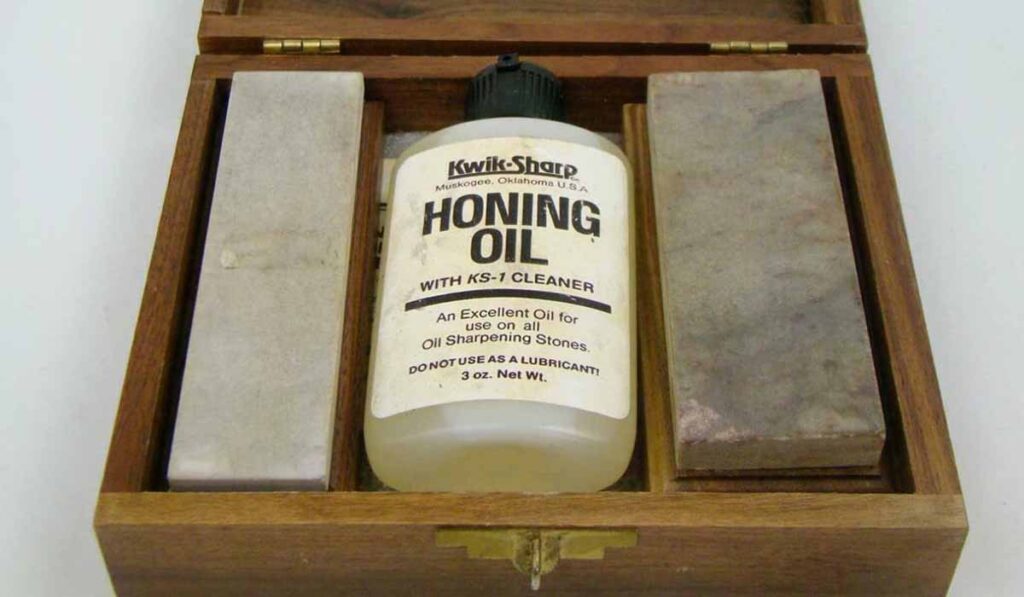
Oil Stones

Sharpening Stone Oil Stone 3

Oil stones are some of the cheapest sharpening stones out there, and they do alright for softer steels, particularly for lower-end EDC knives, multi-tool blades, and other similar blades. They’re called oil stones because, as you probably guessed, you use oil with them.

This keeps the blade from catching on anything as you sharpen and helps keep the removed bits of nearly-microscopic metal from clogging too badly on the stone as you move the blade across it.

Available grits are a little limited with oil stones and tend to be a bit more coarse because the stones are made from aluminum oxide or silicon carbide. This means they aren’t great for knives with a highly polished finish, or for very tough knives made of modern “super steels”.

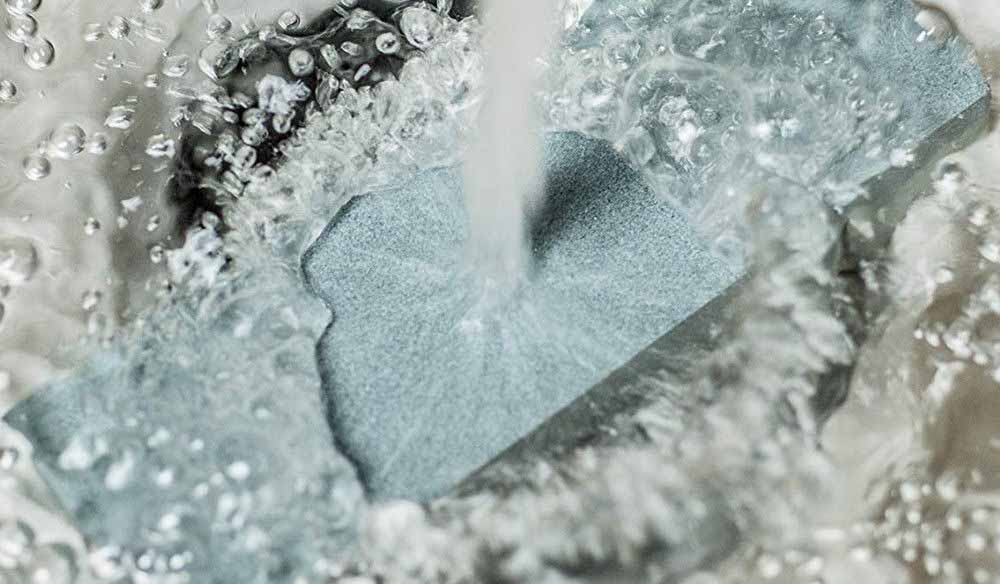
Water Stones

Sharpening Stone Water stone

Water stones are another popular option that many people turn to to get a great edge on a blade, particularly kitchen knives, hunting/butcher knives, and other hard-use knives that require a sharp edge.

They’re called water stones because, as you probably guessed, they need to be wet in order to sharpen properly.

There are both natural and synthetic options available, with most natural water stones coming from central Europe or Japan, with the latter commanding a fairly high price due to its scarcity. These natural stones come in a range of grits, so there’s one for basically every need.

Synthetic water stones are more common (and less expensive) than their natural counterparts and are what you’ll find in most budget-friendly sets. Many of these stones will be dual-grit, with a coarse and fine side to make them a little more versatile.

Synthetic stones are generally very quick to use compared to their natural counterparts, but will occasionally need to be flattened with a special lapping plate in order to maintain a level top surface. This isn’t a difficult undertaking by any means, but it is worth keeping in mind.

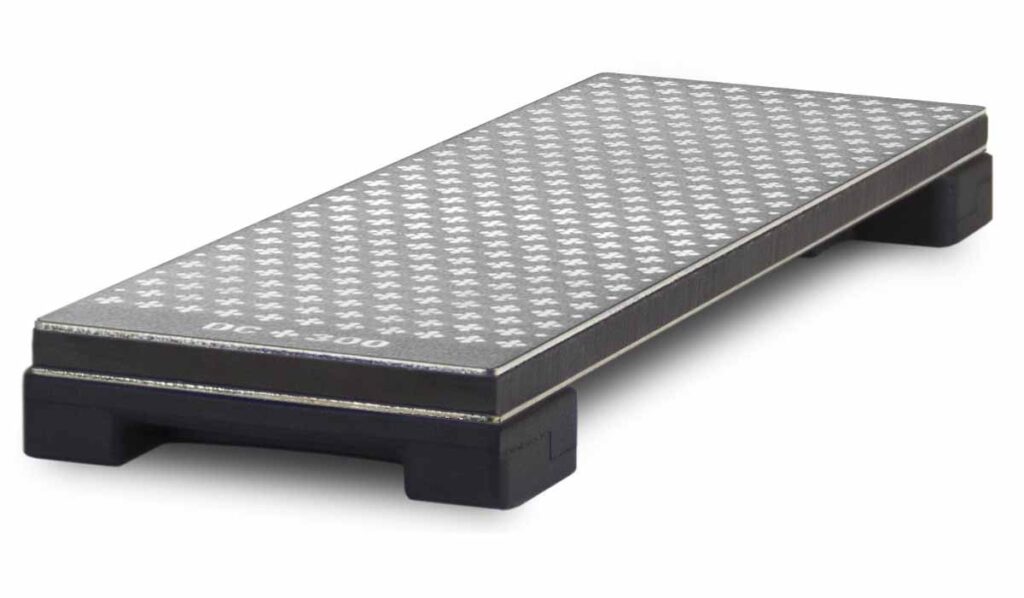
Diamond Plates

Sharpening Stone Diamond stone

Diamond sharpeners, also known as diamond plates or diamond stones, are fast becoming one of the more popular options for sharpening among blade-wielding professionals and anyone who demands a high-quality edge without a lot of fussing with a sharpening stone.

Diamond plates utilize a conductive nickel base with synthetic diamonds electroplated onto the surface. This leaves us with an incredibly durable sharpening surface that is unlikely to wear out in anything other than daily professional use.

If you’re a butcher, you might wear out a couple of these plates in your lifetime.

This durability is matched by their effectiveness, as most diamond plates work very quickly, can sharpen everything from very tough high-carbon steels to cheap stainless, and will even work well on tungsten and ceramic blades.

They’re relatively affordable given how long they last, with most high-quality options coming in under $75.

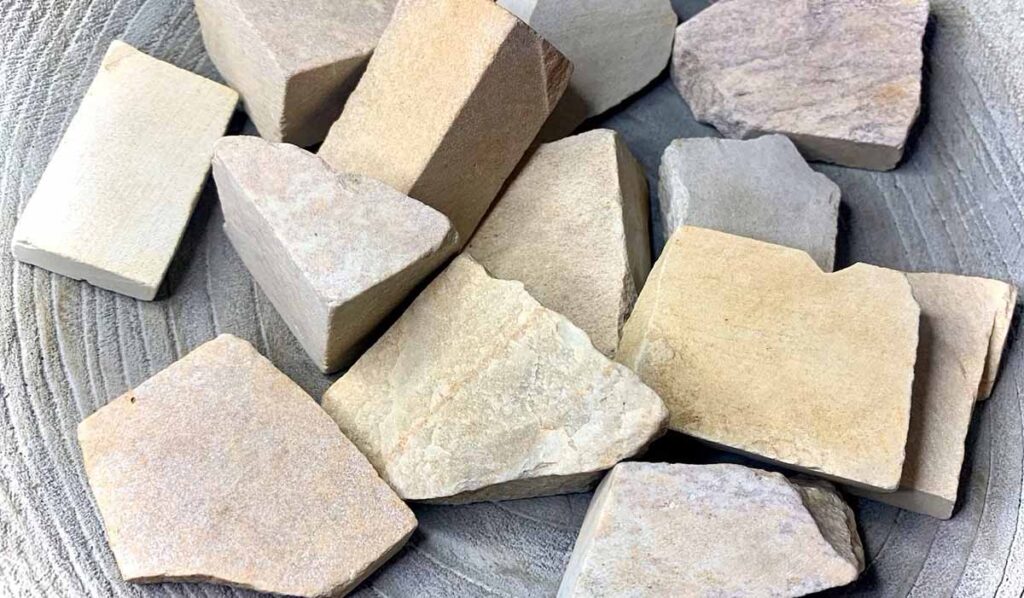
Arkansas Stones

Sharpening Stone Arkansas Stones

Lastly, Arkansas stones are worth mentioning because they’re often listed separately on many websites and they have some specific terms to know if you’re in the market for a sharpening stone.

As you might expect, Arkansas stones are a natural whetstone that is quarried in Arkansas (as well as Texas and Oklahoma) in the United States. This natural stone has been used since at least the 1800s as a sharpening stone and is also known as Novaculite, which comes from the Latin word for sharp knife or dagger.

Novaculite has also been quarried in Syria, Lebanon, Israel, and Japan, though these stones have a slightly different makeup and aren’t produced in great quantities anymore.

Many native peoples used the stone for arrowheads and other tools because of its hardness and density, and today it is a popular choice for natural whetstones. It has a long history in the US, and the first usage of the word “whetstone” was actually in reference to an Arkansas stone.

All that having been said, Arkansas stones are a great option but are really just a natural type of stone that can be used with oil or water.

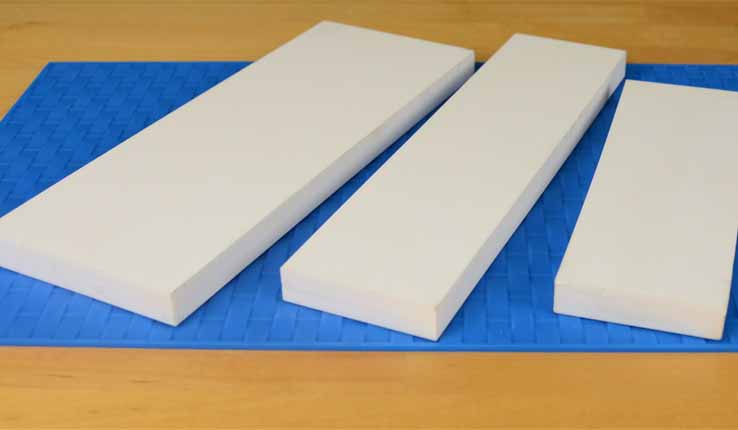
Ceramic Sharpening Stones

Sharpening Stone Ceramic Sharpening Stones

Ceramic sharpening stones are synthetic stones made of very accurately-sized grit particles bonded together to create one contiguous block. These stones, being man-made, are incredibly precise and durable, almost on par with diamond stones, but tend to be more expensive than natural stones.

Usually, these stones are made with corundum, which is an aluminum oxide that is commonly used in sandpaper, emery boards, and industrial abrasive applications. This makes the surface very hard indeed (a 9 on the Mohs scale, where a diamond is a 10) and thus great for sharpening.

Many ultra-fine grit stones will be some kind of ceramic-based product.

Grit Size: Bigger Really Isn’t Always Better

Grit Size

The first consideration, after you’ve chosen the type of sharpening stone (and we’re including diamond plates and synthetic ceramics in that) is going to be grit size.

The basic thing to remember is the lower the number associated with grit size the coarser the stone. We’re going to be using the JIS standard as that is what most folks in the US and Asia will be used to (sorry for our European readers, you may have to do some conversions).

The numbering system in the JIS system comes from the number of grit particles that will fit in a certain size square, so the smaller the number, the larger the individual grit particles will be.

These grits are then organized into ranges, typically Coarse, Medium, Fine, and Extra Fine or Finishing/Polishing stones.

  • Coarse is anything under 1000 grit
  • Medium is 1000 to 3000 grit
  • Fine is 3000 to 5000
  • Extra Fine is anything above 5000

This is just a general way to look at things though, and will vary from manufacturer to manufacturer. Some may call a 4,000-grit stone fine, and some may call it an extra fine, etc.

What you need to keep in mind is that the lower the grit, the more material you remove, so if you have a chip, rolled edge, or broken tip, then a grit of 1000 or below is appropriate. If you really need to restore an edge, pick up a coarse stone. Be careful though, as it’s easy to overdo it with these.

Most people find that a 1000- to 3000-grit stone (or dual-sided 1000 and 3000-grit combo stone) is a perfect option for keeping an edge on a pocket knife or other general sharpening tasks.

For the kitchen, I personally find that a 5000 grit is great for cleavers and butcher knives, and a 6000-8000 is great for knives with duties such as thinly slicing soft vegetables. I have a 1000/6000 grit combo stone that I find very useful for quickly restoring an edge and getting it back to where I want it.

For my woodworking chisels, I typically go from 4000 to 8000, but for finer work, I can definitely see the need to go to 10,000 and beyond for a truly polished edge, especially if you’re a better woodworker than I am (which is a low bar).

Make Sure Your Sharpening Stone is Big Enough

Most sharpening stones are standardized at around 7-inches long, and 3-inches wide which is perfect for most kitchen knives and pocket knives, but make sure you check the face dimensions so you know what you’re getting.

If you’re going to be sharpening something like a carving knife, machete, or sword, a lot of times you’ll want something a bit larger just so you can get more of the edge at once.

Well-Dressed Stones Last Longer

No, we’re not talking about putting your whetstones in a little suit. Dressing a stone refers to flattening the top surface out so that it makes even contact with the edge that you’re sharpening. Sharpening stones wear more towards the middle part of the face, which is known as “dishing”.

To correct this, stones need to be “dressed” or flattened so that they have a nice, even surface for sharpening. This is especially an issue if you use your stones a lot, or use them on lots of fairly short knives.

To fix this, a dressing plate is used to correct the issue and resurface the top of the stone. This can help your stone last much longer, and give you much more even results.

Buyer’s Guide: Best Sharpening Stones on the Market Today

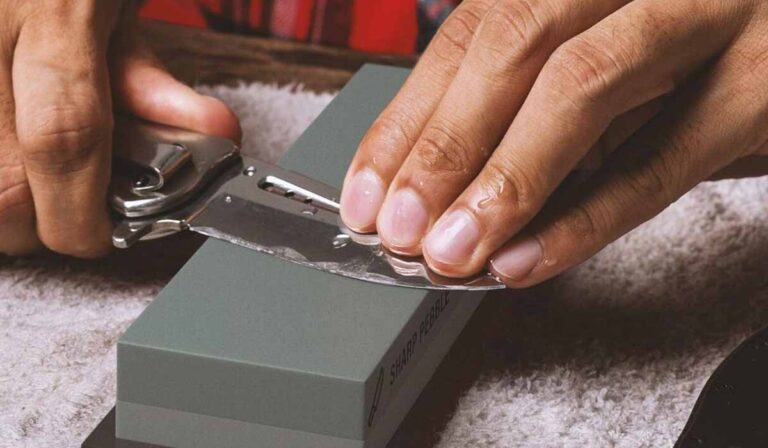
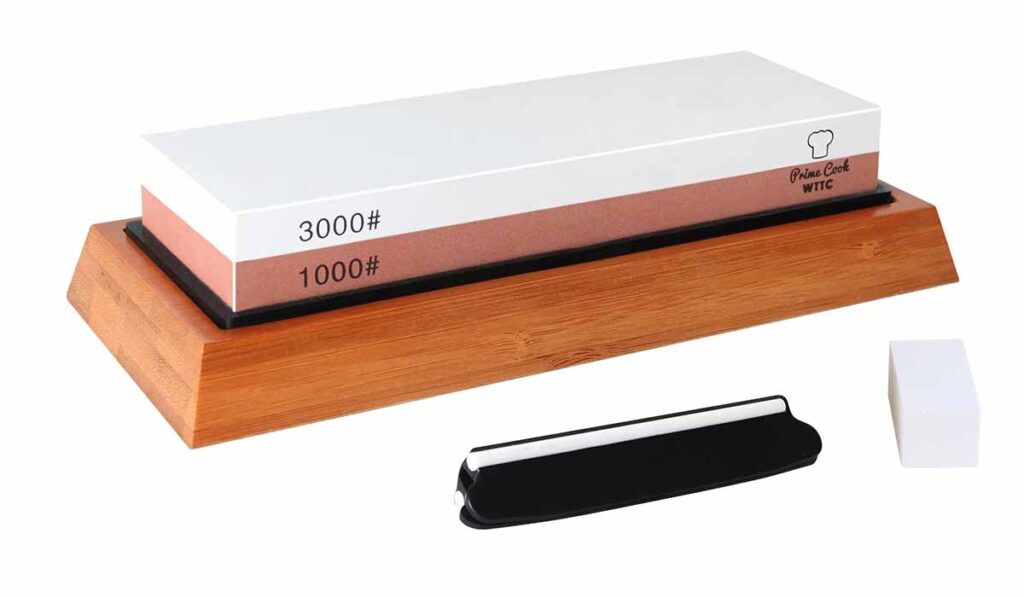
Sharp Pebble Premium Whetstone

Sharp Pebble Premium Whetstone

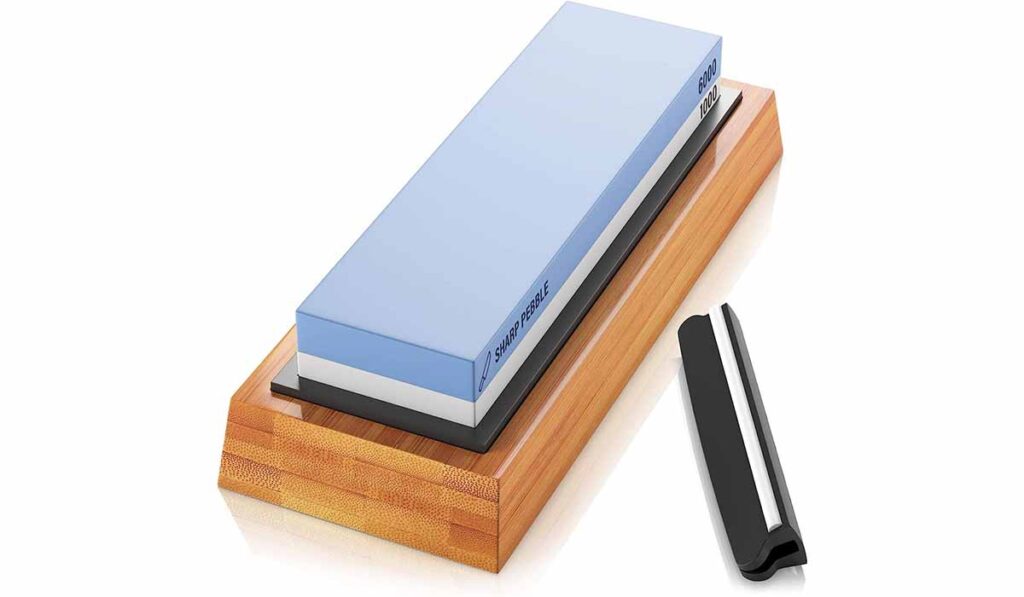
First up, we have one of my go-to sharpening stones, the Sharp Pebble Premium Whetstone, in particular this 1000/6000 combo stone. Sharp Pebble does a great job sourcing all its stones, and if you’re just looking to keep your kitchen knives in the right condition, this is where I’d start.

This is an aluminum oxide-based stone that offers a course and fine edge so you can quickly get a decent edge back, then polish up the edge to get something that can easily handle everything from butchering a deer to shaving depending on how much time you spend with the 6000 grit side.

It comes with a bamboo base with a non-slip bottom and a silicone—gasket? holder? grippy thing?—for the stone that keeps it from sliding around or messing up the nice bamboo base. It also includes a 20-degree angle guide to help you get the angle right.

The fact that you get two very useful grits in one stone, plus the base and angle guide makes this a great option for anyone who is making the jump to sharpening with a whetstone instead of a pull-through sharpener. If you’re looking to learn, this is a great place to start.

This, plus a strop could easily be all you ever really need if you’re just looking to keep a good edge on your EDC or home kitchen knives.

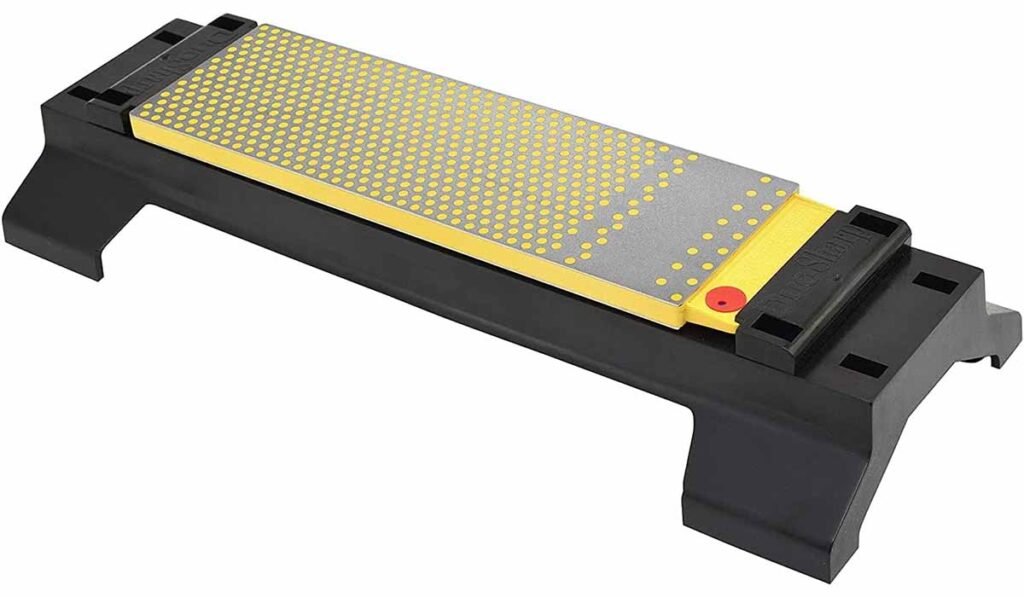
Diamond Machining Technology 8-inch DuoSharp

Diamond Machining Technology 8-inch DuoSharp

Stepping up a little bit, we have the DMT DuoSharp, which is a large, dual-grit diamond plate that is great for everything from pocket knives to chisels, and will likely last through a decade or more of regular use.

Because this is a diamond surface, it won’t wear away towards the middle or “dish” like an actual stone will, and it will work well without oil, allowing you to sharpen dry or with water if you prefer.

The size makes it a great option for a workshop bench, and I’ve personally used mine on everything from a rusty machete left in the bottom of a sailboat, to my chisels and other woodworking tools that required a touched up.

You can definitely use this for kitchen and pocket knives as well, and the coarse/fine stone will work well for most people. If you’re restoring old tools or putting an edge on a splitting maul or something, the extra coarse/coarse stone might be a better option for removing lots of material quickly.

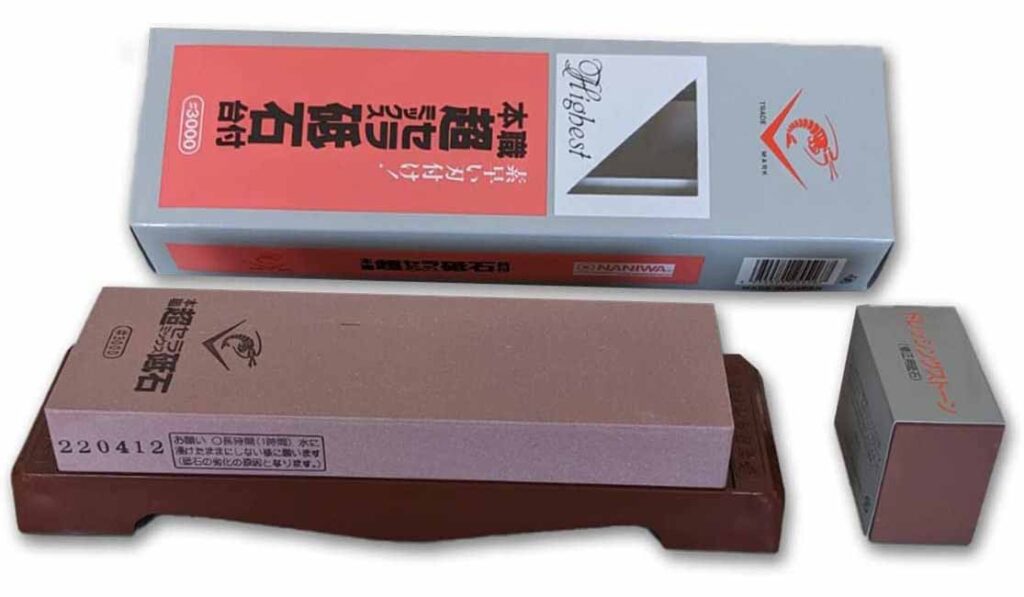
Naniwa Abrasive 3,000 Grit Stone

Naniwa Abrasive 3,000 Grit Stone

Now we step into the world of natural sharpening stones with a Japanese stone that is a little on the expensive side, but worth every penny if you want a long-lasting stone that will be easy to use and put a great edge on any blade.

Naniwa Abrasive is a major name in natural sharpening stones, and their standard 3,000 grit stone is a great starting point for anyone looking to upgrade their sharpening game a little bit. I got one of these years ago when I wanted a good medium grit stone for my kitchen knives, and it has been a great performer.

If you’re like me and don’t really let your knives get super dull to the point where you need a 1000-grit stone, and also don’t often spend hours sharpening to a mirror finish, this is a great option for a usable, functional edge on most any knife, especially one that you actually plan to use.

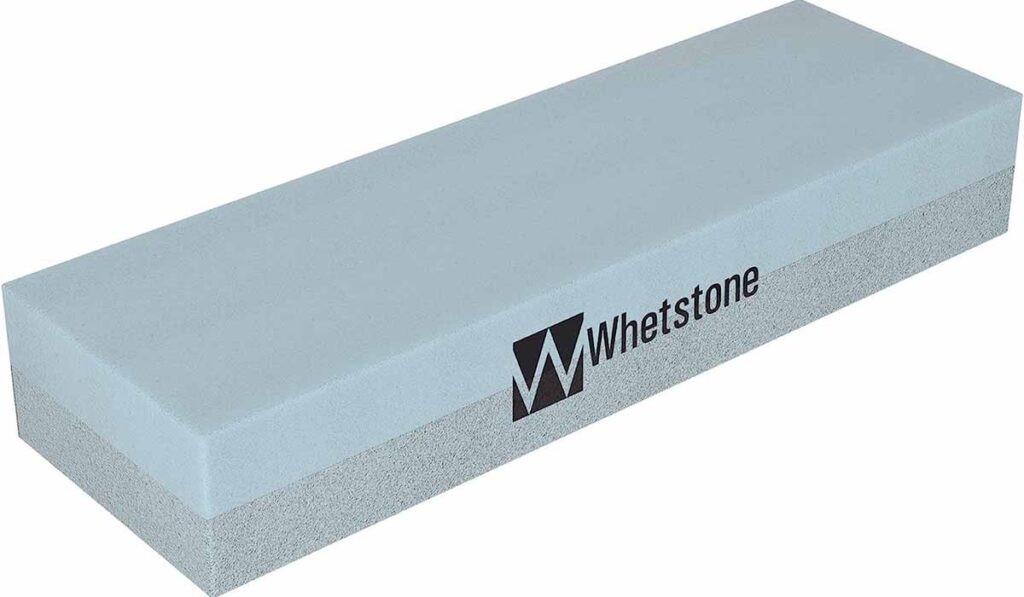
Whetstone Cutlery 400/1000 Wet Block

Whetstone Cutlery

If the blade you’re sharpening is less “master-forged Nippon steel katana” and more “machete that’s been sitting out in the woods” then you’re probably going to want a very coarse stone to get it back to a decent starting point.

For that, we like this very simple and affordable 400/1000 stone from Whetstone Cutlery. It’s cheap and cheerful, and more than capable of getting an edge back on even the dullest of knives.

The 400-grit side will remove rust and take out nicks and chips in an edge, and then the 1000-grit side will help you bring it back to something resembling a real blade edge before you start working on it with higher grits.

Unless you’re restoring old tools, you might not ever need such an aggressive stone, but having one on hand for getting that rusty plane back in working order isn’t a bad idea. And it’s cheap enough that even if you only break it out a couple of times a year, you’ll get your money’s worth.

I really enjoy restoring old Case and Victorinox knives that have been used and abused for years, and this is the perfect stone for repairing those flea market finds, even if someone has snapped the tip of the blade off while trying to use it as a screwdriver or something.

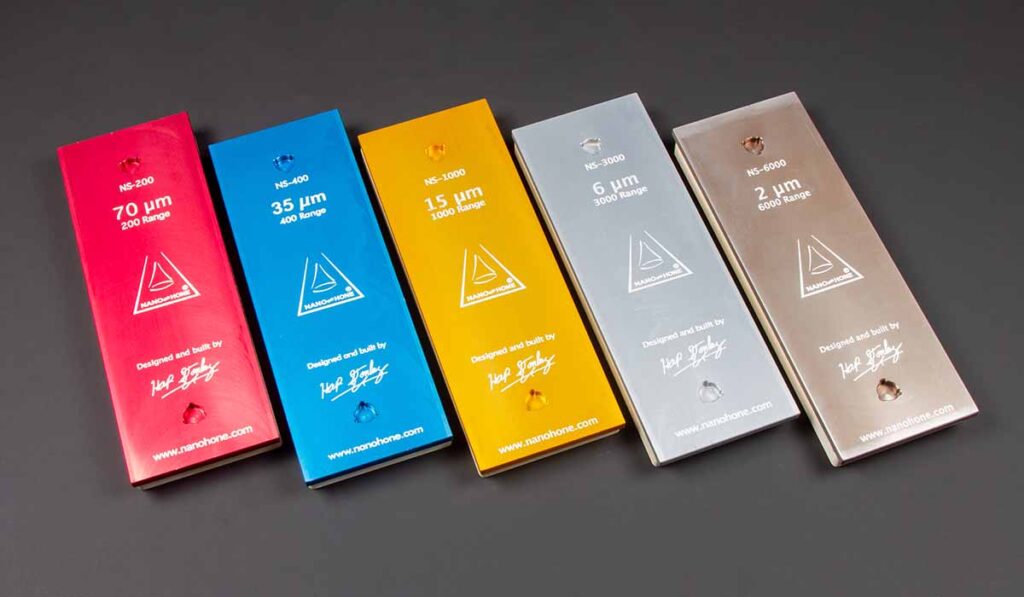
Nanohone Superbite Whetstones

Nanohone Superbite Whetstones

Nanohone’s Superbite “Splash and Go” stones are incredibly high-quality, non-porous ceramic sharpening stones that are simple and quick to use.

They’re also incredibly expensive for a whole set of seven, with individual stones costing around $70.

Still, if you’re looking for a high-end sharpening stone set that will work on everything from your beat-up old pocket knife to your fancy Japanese kitchen knives, this is a great option. The stones themselves come in every grit from 70 microns (200 grit) to 1 micron (10,000 grit) so there’s something for every sharpening and polishing need here.

The stage and sharpening ponds are sold separately, so you can mix and match stones and get exactly what you need without spending too much money. If you enjoy sharpening itself as a hobby and want a kit that can grow as you grow your skills, this is a great option.

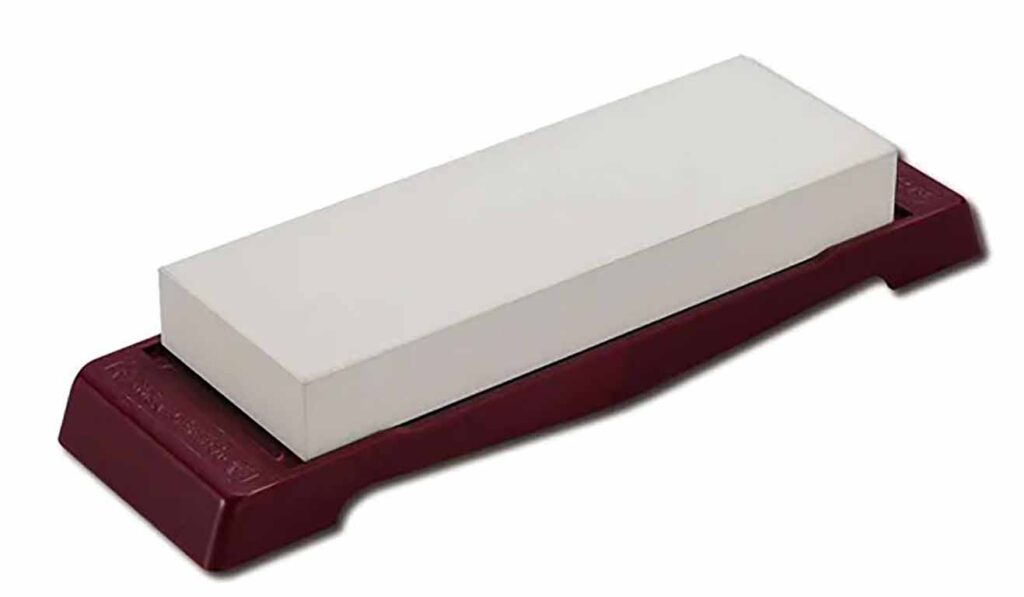
Tojiro Pro Finishing Whetstone

 Tojiro Pro Finishing Whetstone

Lastly, we have this high-grit ceramic stone from the Japanese maker Tojiro. These are laser-sintered ceramic, which is great for any ultra-fine applications where you need to get a razor edge.

If you treat sharpening as part of your craft and need professional-grade tools, this is a great option whether you’re a chef, barber, woodworker, or you’re just passionate about having incredibly sharp knives.

Tojiro is primarily a maker of incredibly nice kitchen knives, so you’d probably expect them to know what they’re doing when it comes to sharpening. Their Pro line was originally made for their in-house artisans, and now they’ve made them available to the public as well.

If you want to get a great edge on any knife, particularly high-end, super steel knives, then this is a great option if you have the money to spend.

Final Thoughts on Sharpening Stones

A knife truly is only as good as its ability to cut, which makes a good quality sharpening stone (or stones) a key tool in any blade aficionado’s arsenal. Whether you carry a simple pocket knife, are passionate about cooking, or work with edged tools like chisels, planes, and axes, you need a way to achieve a good edge.

With these sharpening stones, you can get the performance out of your EDC knife you’ve always wanted, get those paper-thin slices of tomato when you’re in the kitchen, and get just the right edge on those tools at work.

Just remember to go slowly, especially at first, choose the right stone with the right grit, and you’ll have razor-sharp edges in no time.

More Sharpening Articles:

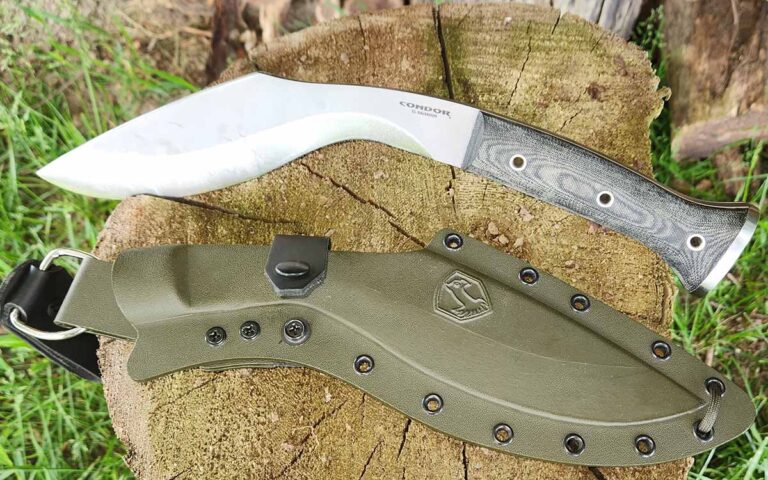
Condor K-Tact Kukri Review: New Old School

1

With the K-Tact Kukri, Condor goes both old school and modern.

As with all knives, the steel is only as strong as the hand that wields it—and perhaps with no knife is this so true as the kukri.
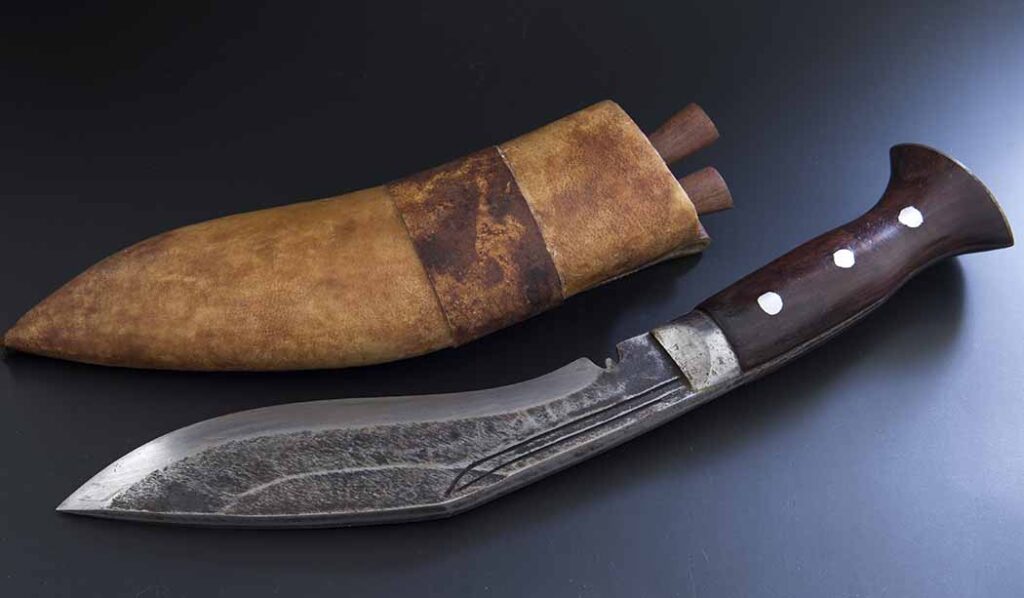
The kukri—aka khukuri—has a reputation so legendary that even some non-knife enthusiasts recognize the knife when they see one. To understand how the kukri got its reputation, let’s examine the people who used it and help grow the legend.

Kukri History

You can’t mention the kukri without mentioning the hand behind the blade: the Gurkhas. The history of the Gurkhas dates back several centuries to the small mountainous kingdom of Gorkha, located in what is now central Nepal. In the early 19th century, the British East India Company was expanding through the Indian subcontinent and faced challenges from local rulers and neighboring powers. The Gurkhas had a reputation for being a substantial military force in the region. So, the company began recruiting Gurkhas into its own army. The first Gurkha units were formed in 1815 and they quickly gained a reputation for bravery and loyalty.

Gurkha with Kukris
Gurkhas not only were fearsome warriors with their kukris, they also used them for daily chores. This sketch shows Gurkhas catching fish with their kukris in India’s Bazar Valley circa 1900. (Istockphoto.com image)

Since the first Gurkha units were formed, they played a pivotal role in many conflicts and to this day remain an important part of the British Army. The Gurkhas fought for the British during the two World Wars, with Gurkha soldiers serving in various theaters of operations, including the Western Front, North Africa and Southeast Asia. About 200,000—virtually an entire male population—enlisted to fight in World War I. About 250,000 fought in World War II. In the two wars, 30,000 Gurkha troops were killed.

Continuing to serve with the British, they participated in the Falklands War in 1982, and have been involved in recent conflicts in Malaya, Borneo, Bosnia, Iraq—including the Gulf War—and Afghanistan. Soldiers that have served alongside the Gurkhas regard them with respect. The spine-chilling cry of “Ayo Gurkhali!”—“The Gurkhas are coming!”—has terrified countless enemies. The Gurkhas’ bravery and determination in battle earned them numerous honors and awards. In the two World Wars alone, they won nearly 5,000 medals for gallantry.
traditional kukri
The traditional kukri includes a natural handle material and the double-notched choil. Note the extra small knife and a sharpening steel—their handles protrude from the sheath here—that ride in the sheath. (Istockphoto.com image)

After the second World War, the British started to pull back from their colonial interests, allowing their various colonies to practice more independent self-governance. Even so, the British Army continued including the Gurkhas as an important part of their operations. Meanwhile, the kukri legend had no choice but to grow as it was made famous by the Gurkhas’ outstanding reputation for bravery and loyalty.

K-Tact Kukri Updates

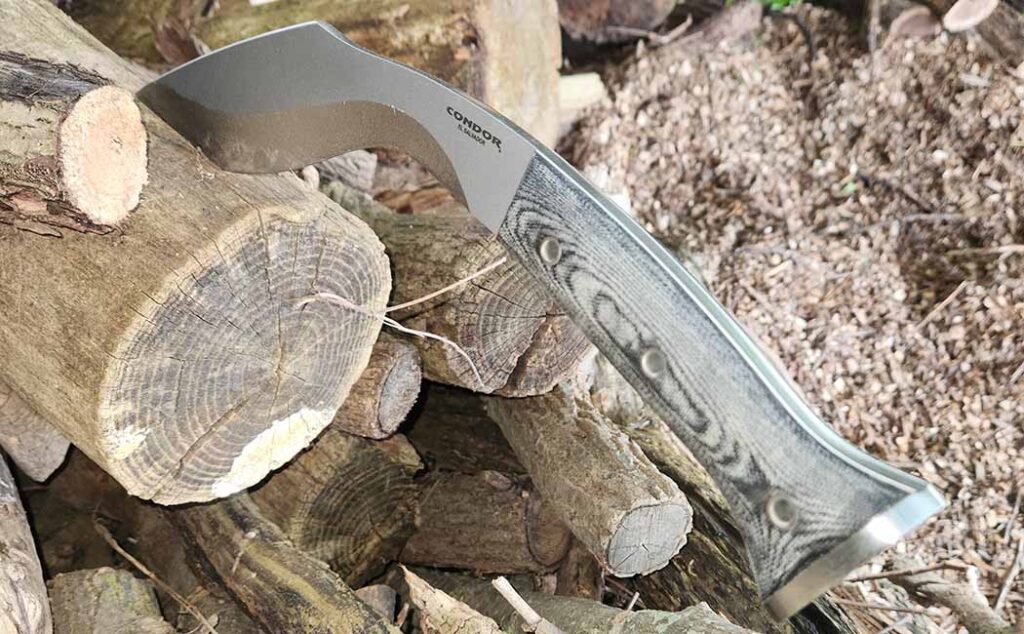
The traditionally made kukri is a coveted piece in anyone’s collection. Condor Tool & Knife has updated the design with the use of modern materials to bring about a new tool with a pedigree. With the K-Tact Kukri Knife Army Green designed by Joe Flowers, the company remains loyal to the original shape but modified some materials and proportions.

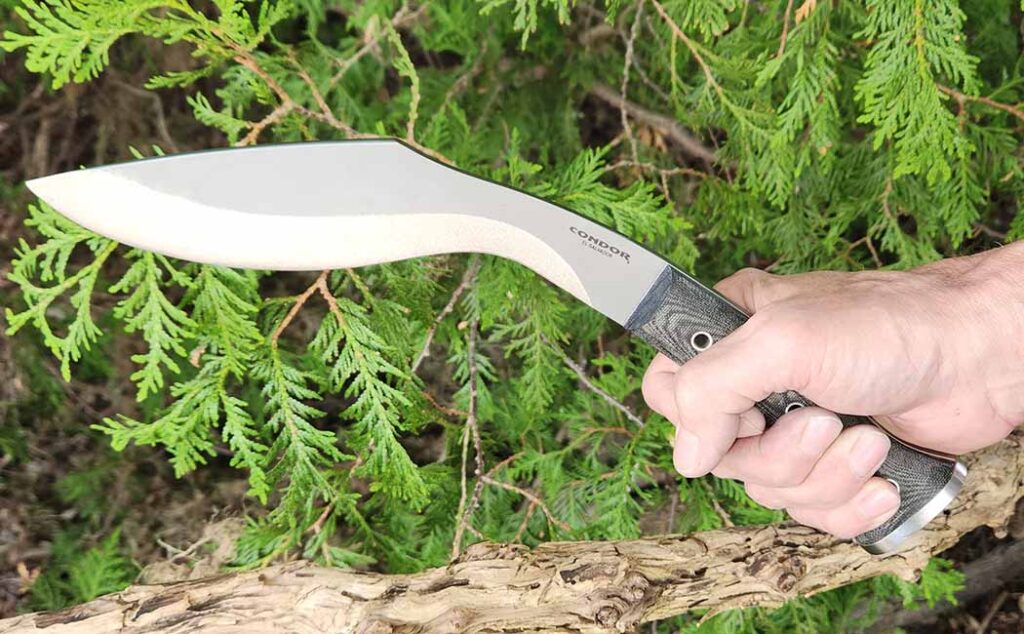
K-Tact Kukri in hand
The overall profile of the Condor Tool & Knife K-Tact Kukri forms somewhat of a pistol grip. The grip angle serves well during chopping and carving. In less peaceful times, it accommodates thrusting without the need for a guard. Blade and overall lengths: 10 and 14.5 inches.

Instead of using the wide variety of natural handle materials seen on kukris over the years, Condor opted for a green Micarta®. Micarta is much more stable, and for better grip Condor gives it a textured bead-blasted finish.

You may have heard how the blades of the originals were made from truck leaf springs. Truck leaf springs were made from such carbon steels as 5160 or 1095, or reasonable facsimiles. I often wonder about the truck leaf spring story. If you think about it, seeing as how the kukri also was used by villagers along with other patterns of knives to get work done, that means a lot of trucks would be losing their springs. Condor uses 1075 carbon steel with a bead-blasted finish for the K-Tact, which is named after Alan Kay, season one winner of History Channel’s Alone reality survival show.

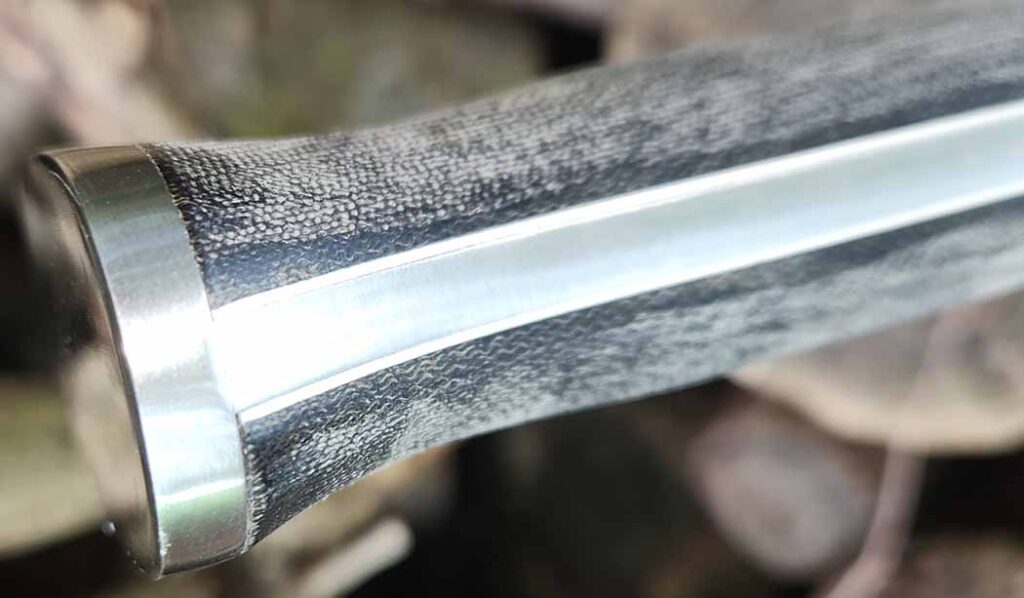
K-Tact pommel
The pommel helps balance the knife and serves as a hammer. According to the author, the synthetic Micarta® deals with any vibration from hammering and chopping better than natural materials.

Traditional kukris have a convex edge and are finished in a high polish. Condor convexes the K-Tact only part way up the blade and then leaves it flat. Blade thickness is .2 inch, thinner than most traditional models.

The average Nepalese villager’s kukri was made differently than the official Gurkha model. Possibly due to the time needed to make them and the lack of available steel, villager kukris had stick tangs. The Gurkha models have always been full tang and so is the K-Tact. Because of the thinner stock and the fact Condor took some weight off the blade with a stylized dip in the spine, the knife is livelier in the hand and feels more balanced.

Any of the traditional kukris I have held have had forward-heavy blades. They have a thick pommel plate the same thickness as that of the blade material. Having a thick pommel gives you a convenient hammer when needed and also enhances the knife’s balance.

K-Tact Kukri Versatility

One of the big keys to the kukri design is that it’s a great maker’s tool. It is not used for combat only. Among the recognized attributes of the Gurkha fighting units is their resourcefulness, and a large part of that is that the kukri lends itself to being a maker’s tool. Just the overall shape allows you to do many chores. It can act as a small draw knife due to the arched shape.

Chopping with K-Tact Kukri
The author is not a big fan of batonning. “If you are going to do so,” he observed, “the rule of thumb is baton through nothing larger than one third the length of the knife. Following that rule allows you to keep leverage on the cut.”

For the sheath, instead of the traditional water-buffalo-covered wood, Condor uses a molded Kydex with a drop-leg leather strap and a retention strap. Despite being a huge traditionalist at times, I have to say the modern sheath is a huge improvement. The fit is spot on and you get none of the Kydex-rattling syndrome.

If I had to voice a disappointment in the K-Tact, to be fair it would be more of a “I want my cake and eat it, too” complaint. On a traditional kukri you get an extra small knife and a steel that ride behind the blade next to your body in the same sheath. Though I don’t have much use for the sharpening steel—I carry other sharpeners—a secondary small blade is a key part to the maker’s aspect of the knife.

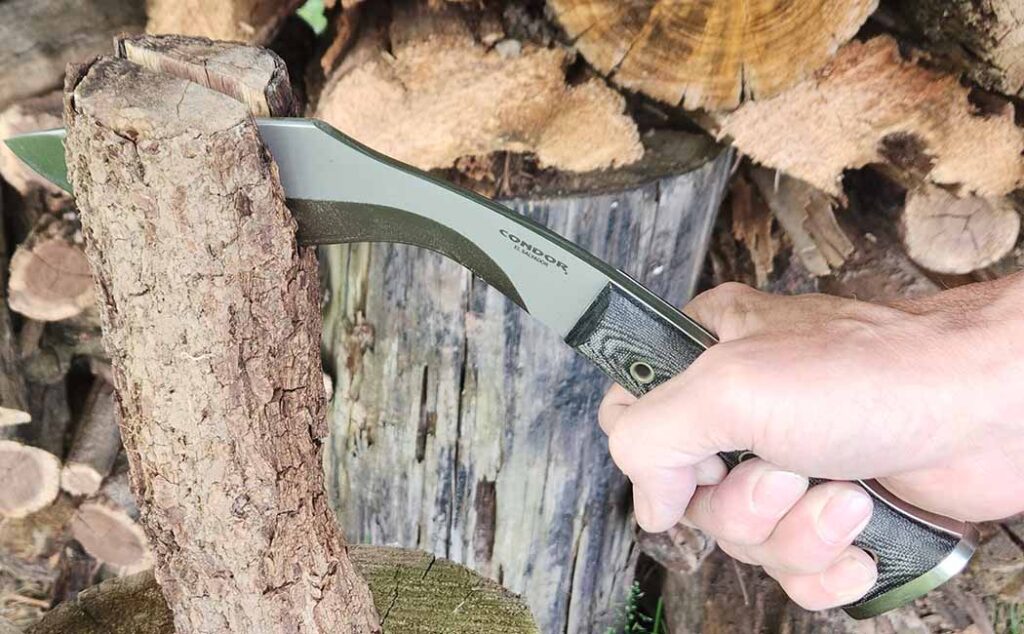
K-Tact Kukri chopping
Due to the profile of the kukri, the sweet spot for chopping is at the belly a bit farther back from the tip than on a number of other chopper designs.

Yes, I know, I can carry another smaller knife, hence the “cake and eat it, too.” Having said that, there is still something about the knife presenting as a kit all in one housing. Keep in mind I am a father-and-son-knife-set collector. All I’m saying is, it would have been nice to have a matching small blade with it.

Use Before Buying

I must say I have enjoyed playing with this knife. It works well. Kukri-style knives aren’t for everyone, so do try and use one before you buy. Each knife style has its own little ins and outs. If all knives worked the same, what reason would enthusiasts have to collect multiples?

As a final thought, the K-Tact is a good, solid, dependable piece of kit and in the right hands can take you far. Who knows? You might discover that you just want a modern version of a legendary style. Made in El Salvador, it has an MSRP of $162.84.

Check Out More Buyer’s Guides:

Non-Metallic Knives: Stealthy Stash Blades

1

Super affordable and lightweight, these stash knives are cool.

Since some knife fans long have been obsessed with what steel blades are made from, maybe it’s time to talk about blades that aren’t made of steel at all. I’m referring to the covert type built from materials designed to be less detectable, the kind you might want to keep as a backup.

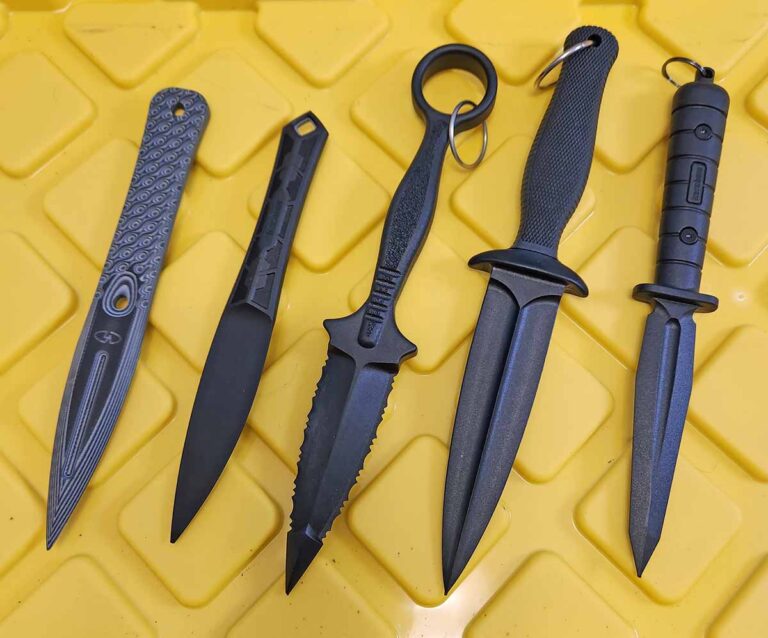
There are knives made with just such materials. Five are the VZ Grips Executive Hydra Black Gray, Cold Steel FGX Ring Dagger and FGX Boot Blade, and the Kershaw Interval and Arise. The list is by no means exhaustive, though I am covering more knives than I usually do in my BLADE® stories. It also doesn’t include ceramic, obsidian, flint and other non-metal models. My goal was to test knives less likely to show up by scanning methods such as X-ray and metal detection.

According to Doug Ritter of Knife Rights, there are restrictions in some states concerning non-metallic knives. For the legal status of non-metallics in your state, visit LegalBlade.org for links to Knife Rights’ free Legal Blade knife law app for state-by-state information on laws concerning undetectable knives.

There is a move to ban knives of the non-metallic type. Knives are covered by the Second Amendment, so to keep legislatures from infringing on your rights, remain vigilant. To both stay informed and for how you can help protect your 2A rights, visit the respective sites of Knife Rights and the American Knife & Tool Institute.

Versatile: VZ Grips Executive Gen 2 Hydra

In all my years of collecting, I’d never held a knife with a G-10 blade—until the test model from VZ Grips. Such knives have been around a long time but until now I really hadn’t given them much thought. When I saw the VZ Grips Executive Gen 2 Hydra Black and Grey during a search for pistol grips, I made note of it for just such an occasion. Out of the knives reviewed, it has the most versatility in presentation options. As you can imagine, with pistol grips being VZ’s primary business, the variety of G-10 materials it offers is practically endless. The company has other non-metallic knives as well.

Non-Metallic Knife VZ Executive
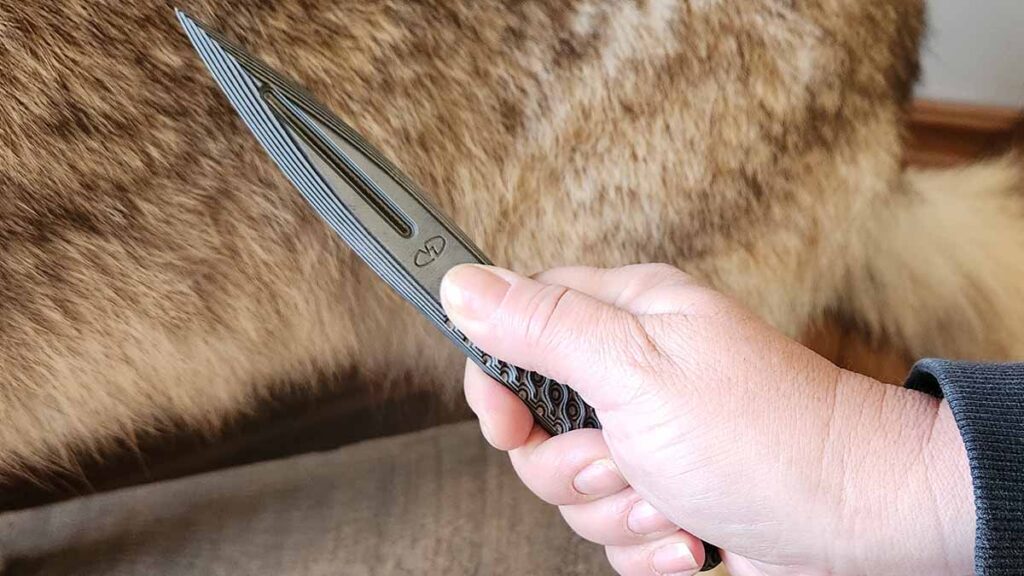
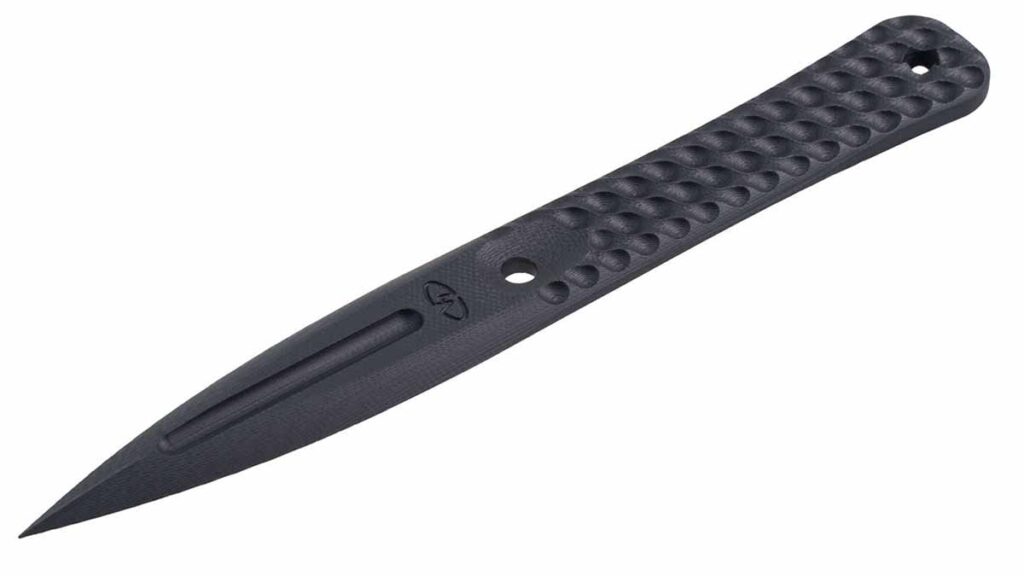
The VZ Executive is a palm-style knife with an indentation in the handle just before the blade. Thin and sleek, it has a profile made for punching holes.

G-10 blades aren’t particularly useful for EDC work. You can do things like open some packages with them all right. They also make great letter openers. If you live in an area where you need a backup tool for self-protection and weight is a concern, these knives tuck away nicely. I carried the Executive inside my waistline at the 4 o’clock position for a few days. It comes with a sheath that has a belt loop, which tucked behind my belt. After a short while it didn’t feel as if I were carrying a knife at all.

It is in a sleek double-edge dagger style but because the edges aren’t sharp, it doesn’t count as a double-edged knife. It is a palm-held piece because it lacks a guard, and the tip is more than sharp enough for use. To enhance grip there’s a thumb depression where the handle meets the blade. Overall, it is a great little package and will find a place in my gear somewhere.

Budget Friendly: Cold Steel’s FGX Boot Blade And FGX Ring Dagger

Cold Steel non-metallic knife
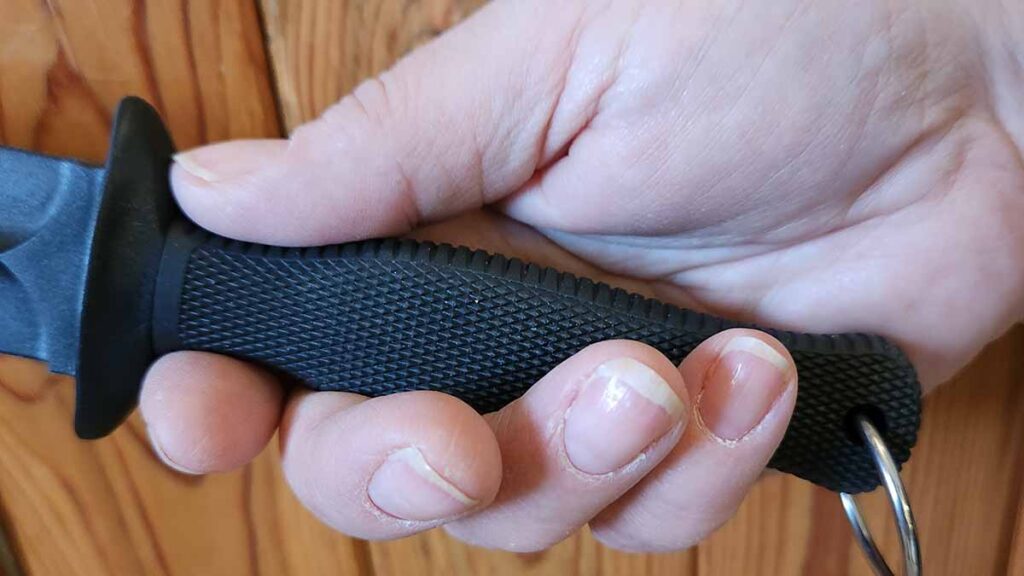
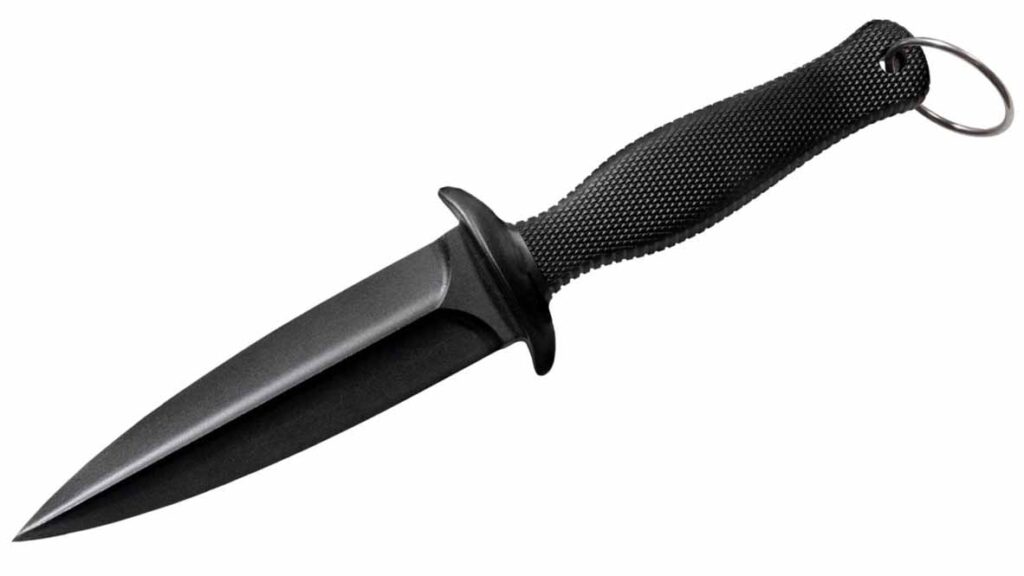
Cold Steel uses a checkered-pattern Kray-Ex overmold rubber on the handle of the FGX Boot Dagger. The checkering isn’t very aggressive but still provides solid purchase.

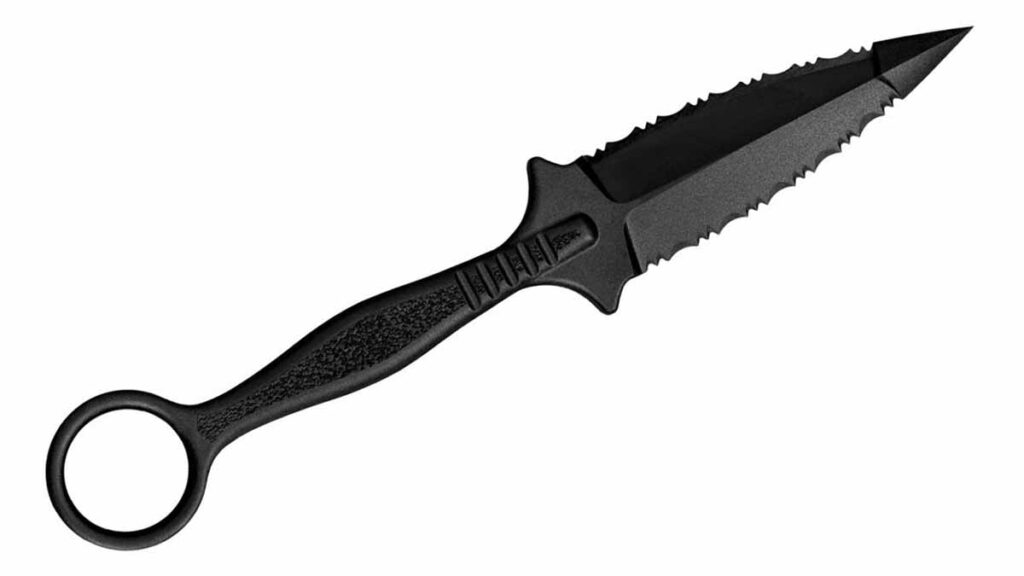
At manufacturer’s suggested retail prices (MSRPs) of only $8.99 each, Cold Steel’s FGX Boot Blade and FGX Ring Dagger are the most economical of the test bunch. If this knife genre interests you, these two are but a smattering of Cold Steel’s non-metallic blade offerings. The company reproduces a number of its steel models in the non-metallic material Griv-Ex. I chose these two because they are among the styles that represent a traditional-looking boot dagger. Both knives come with a metal ring through the handle and no sheath. The Boot Blade has a Kray-Ex grip. Both have guards that encourage a hammer grip.

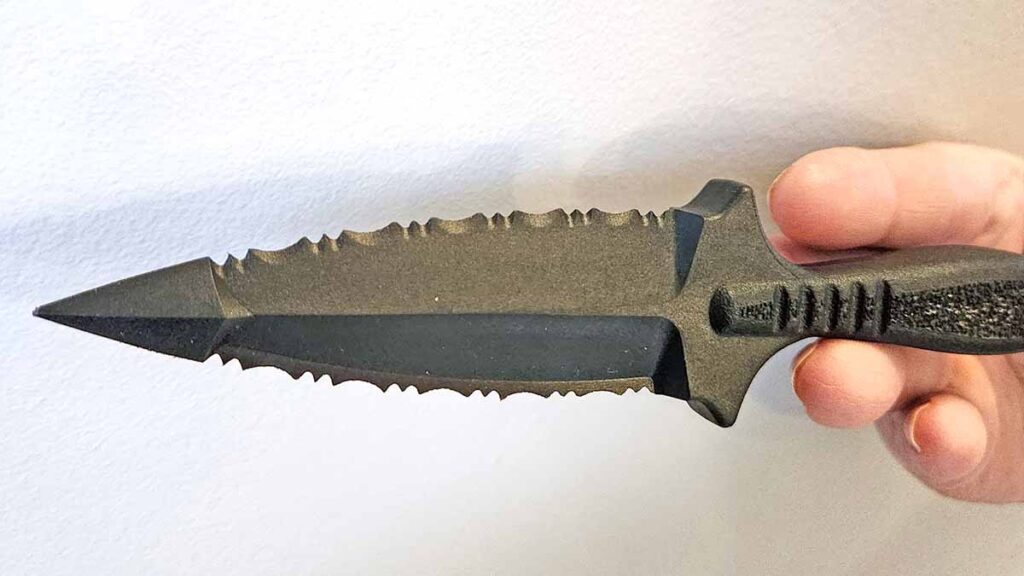
Two interesting features on the Ring Dagger are a reinforced tip and serrated edges. During the penetration tests when I stabbed a bunch of cardboard, the reinforced tip helped the Ring Dagger a lot. As for the serrated edge it did well cutting several things, though of course not as well as a steel edge. I put it up against cardboard, plastic packaging and packing bands. The edge will help in a pinch but I would not count on it as an everyday user.

Cold Steel Ring Dagger
The combination of the Cold Steel Ring Dagger’s reinforced tip and dual serrated edge make it a very aggressive blade for soft materials.

For the money the knives are an outstanding deal. Without sheaths, though, just finding a way to carry them might end up costing you more than the knives themselves. The tips are sharp enough to pierce some clothes, so stashing them in a bag might be problematic.

Concealable: Kershaw Interval And Arise

At press time, the Interval and Arise were Kershaw’s lone offerings in the genre. As you may or may not know, I like to comment on knife names. In this case and with the cutlery market so flooded these days, it seems Kershaw might have just opened a dictionary and pointed. Conversely, names have little to do with quality.

Kershaw Interval
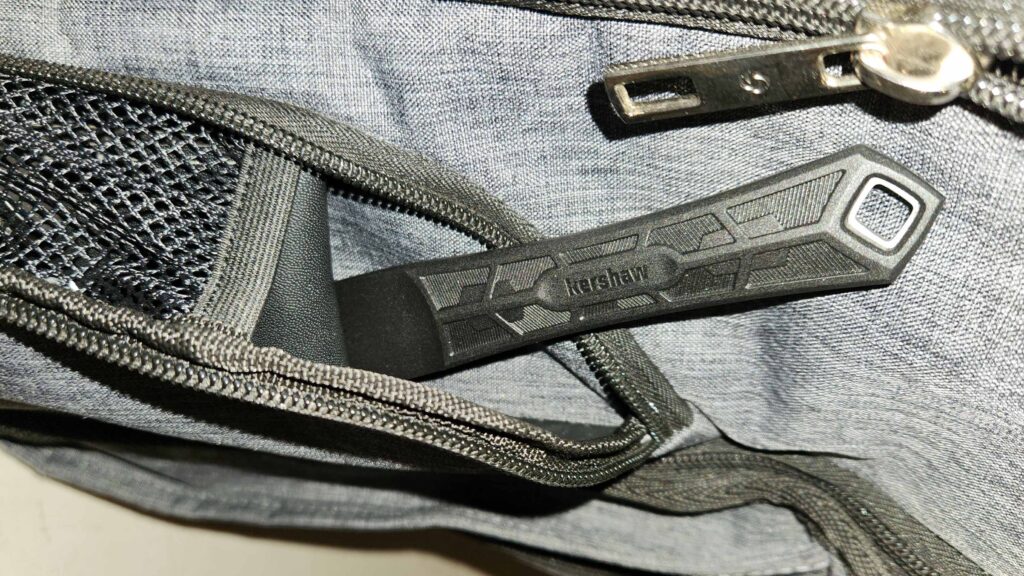
Kershaw’s Interval is so slim it tucks in perfectly into the tight spaces in your EDC gear and clothing.

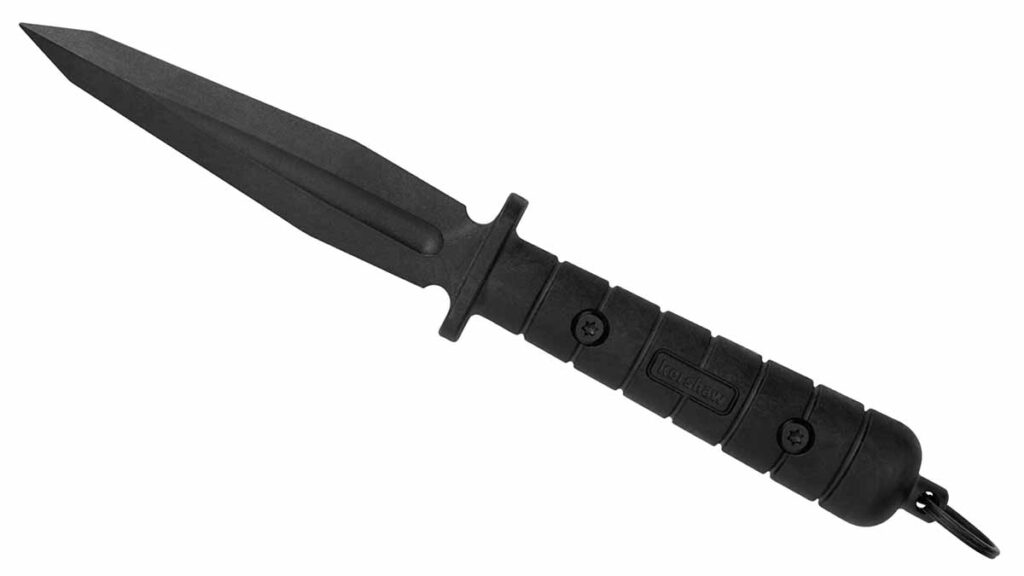
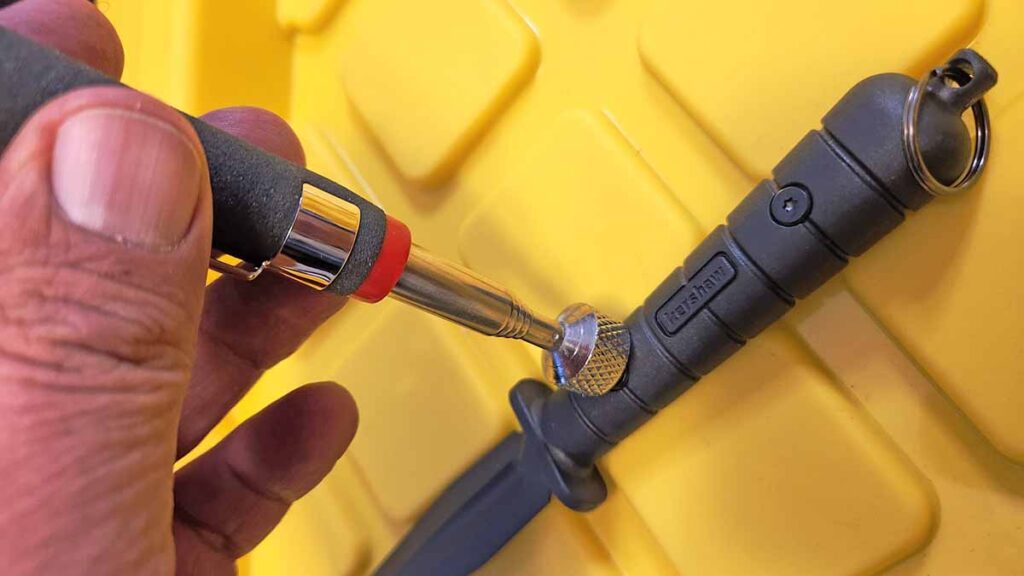
Both knives are made from a PA-66 glass fiber. A traditional dagger design bests describes the Arise. For whatever reason Kershaw decided to install four Torx® screws in the handle. The presence of screws obviously makes the knife detectable by metal detectors. As a traditional dagger design it has a guard to prevent your hand from slipping forward. As with the VZ knife the edges aren’t sharp so it should be legal in states that restrict double-edge knives. The blade shape is somewhat difficult to describe since Kershaw takes an angular approach. For sturdiness the blade has a fuller. A simple ribbed design provides handle texture.

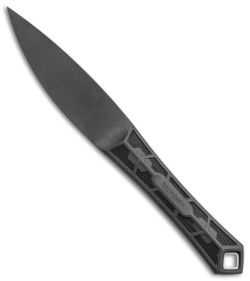
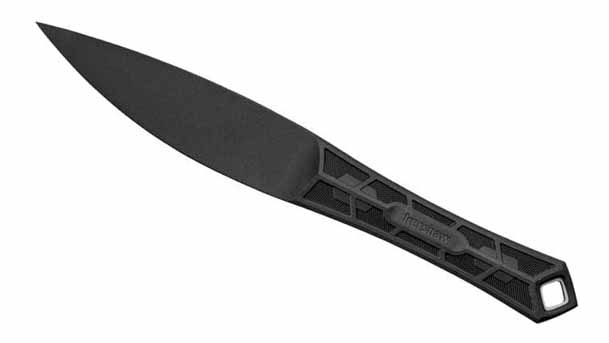
The Interval is a palm-style knife with no guard. It’s very lightweight and for whatever reason there’s a metal insert on the inside of the diamond-shaped lanyard hole, which makes the knife detectable by a metal detector as well. A geometric-style surface design provides handle texture. I like the knife very much. It is the easiest to stash of the review pieces so I can see getting more examples as backups and putting them in my kit. The tip is sharp but the main edge isn’t.

Kershaw Interval Fixed Blade GFN 1399

Kershaw Interval Fixed Blade GFN 1399

$12.95
Prices accurate at time of publishing. Affiliate disclosure.
Kershaw torex screw
Steel Torx® bolts in the handle make the Kershaw Arise detectable by metal scanners. If you want, you can remove the bolts.

Both knives come without a sheath but due to the sharp tips I would still prefer a sheath for carry. Given the knives’ size (7.4-inch overall lengths) sheaths would be nothing to make. You want to keep stash blades tucked away and undetectable. As one who has dug through many EDC bags looking for stuff stowed properly, one of these knives would be hard to find for a person who didn’t know it was there, say at the bottom of a pocket or in a small fold. My only beef is the inclusion of the metal lanyard ring/insert or these knives would be practically invisible. Both models did well in cutting tests and would make good stash blades.


VZ Executive Gen 2

Non-Metallic Knife VZ

Blade Material: G-10
Overall Length: 7.75″
Blade Length: 3.25″
Metal Parts: None
MSRP: $79.99
Country of Origin: USA


Kershaw Interval

Non-Metallic Knife Kershaw Interval

Blade Material: PA-66 glass fiber
Overall Length: 7.4″
Blade Length: 3.5″
Metal Parts: Yes
MSRP: $11.99
Country of Origin: China


Cold Steel FGX Ring Dagger

Non-Metallic Knife FGX

Blade Material: Griv-Ex/Kray-Ex
Overall Length: 9.1875″
Blade Length: 3.5″
Metal Parts: Yes
MSRP: $8.99
Country of Origin: Offshore


Cold Steel FGX Boot Blade

Non-Metallic Knife Cold Steel

Blade Material: Griv-Ex/Kray-Ex
Overall Length: 9.5″
Blade Length: 4.875″
Metal Parts: Yes
MSRP: $8.99
Country of Origin: Offshore


Kershaw Arise

Non-Metallic Knife Kershaw Arise

Blade Material: PA-66 glass fiber
Overall Length: 8.4″
Blade Length: 4.2″
Metal Parts: Yes
MSRP: $14.39
Country of Origin: China

Check Out More Buyer’s Guides:

Spectacular Custom EDC Knives Unveiled

Feel the burn of the hottest makers’ hottest Custom EDC Knives—both folded and fixed.

Tommy Gann: Coke Bottle Slip Joint

Custom EDC Gann

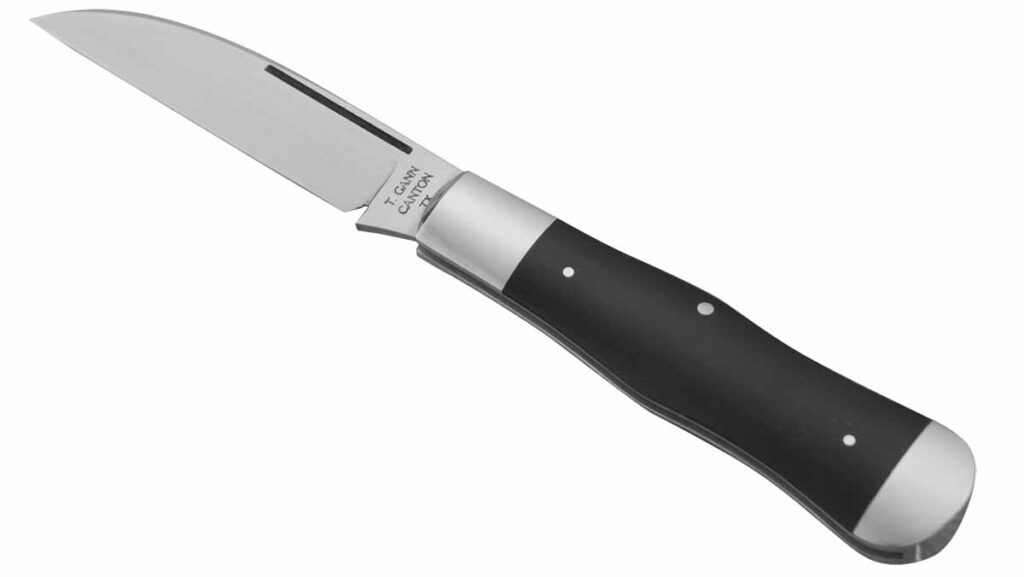
As Daniel O’Malley of BladeGallery.com noted, “ABS master smith Tommy Gann makes an exceptional knife. The 52100 carbon steel wharncliffe blade of his Coke Bottle Slip Joint has a handrubbed satin finish, smooth, consistent action, a firm half stop and easily opens with a light pull.” Blade and closed lengths: 2.9 and 3.9”. Bolsters: 416 stainless steel. BladeGallery.com’s price: $550. (BladeGallery.com image)


Willem Steenkamp: Raider Flipper Folder

Custom EDC Steenkamp

The 3.5-inch blade of hollow-ground CTS XHP stainless steel on Willem Steenkamp’s Raider flipper folder pivots on an Ikoma Korth Bearing System. Handle: Silver-strike carbon fiber. Pivot collar: stainless damascus. Pocket clip: 3D-machined titanium anodized blue, configured for right-side, blade-tip-up carry. Lock: linerlock. Weight: 3.2 ozs. Closed length: 3.83”. BladeGallery.com’s price: $680. (BladeGallery.com image)


David Breniere: Mini Inglorious Slip Joint

Custom EDC Breniere

“The Mini Inglorious slip joint by David Breniere offers a handrubbed Elmax stainless steel blade with David’s W’s pattern damascus bolster and Sambar stag scales,” stated Dave Stark of Steel Addiction Custom Knives. “The knife just melts into the hand. Truly topper fit and finish.” Blade and closed lengths: 2 7/8 and 3.25”. Weight: 3.2 ozs. Retail price: $2,000. (Steel Addiction Custom Knives image)


Brian Efros: Elder Tactical Folder

Custom EDC Efros

The Elder tactical folder by Brian Efros has a drop-point recurve blade with dual bead-blasted thumb studs. Blade length and steel: 3” and CTS XHP stainless. Handle: carbon fiber with Chad Nichols Dark-Ti damascus bolsters and backspacer, and zirconium pivot collars. The Dark-Ti pocket clip provides blade-tip-up carry. Lock: linerlock. According to Arizona Custom Knives (AZCK), the Elder has “very nice action, detent and blade seating.” Weight: 5.2 ozs. Closed length: 4.25”. AZCK’s price: $3,295. (AZCK image)


Jacek Hnatow: Bushcraft 1

Custom EDC Hnatow

The Bushcraft 1 by Jacek Hnatow boasts full-tang construction and excellent balance and handle ergonomics. “Though designed for bushcraft, the knife makes an outstanding all-around utility tool,” observed Les Robertson of Robertson’s Custom Cutlery. Blade length, style and steel: 5.5”, drop point and Bohler N690 stainless. Handle width and material: 3.75” and textured black G-10. Overall length: 14.5”. Sheath: custom made of leather by the maker. Maker’s price for a similar knife and sheath: $325. (ImpressByDesign image)


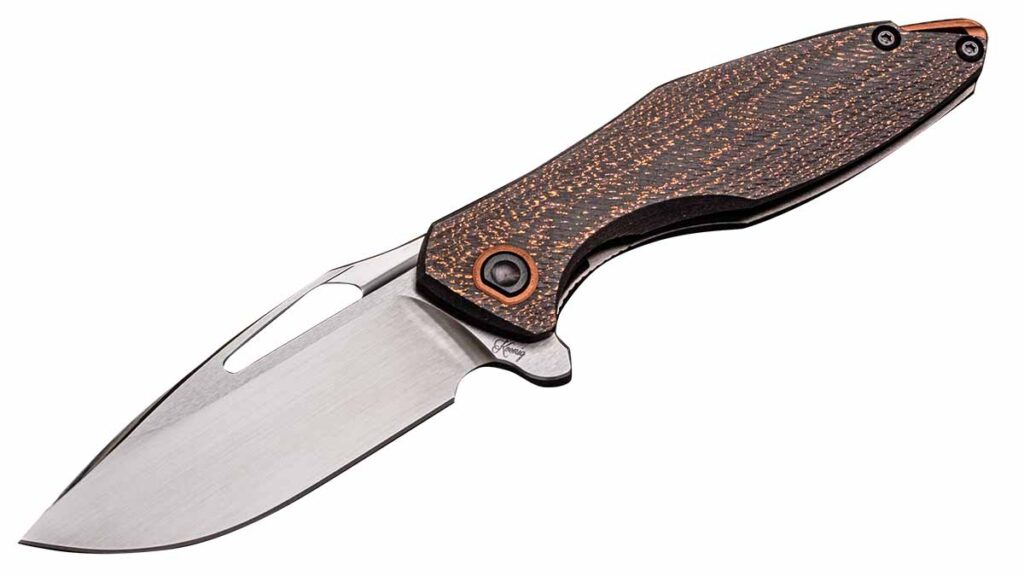
Bill Koenig: Arius Flipper Folder

Custom EDC Koenig

Bill Koenig’s Custom Arius flipper folder has a 3.5-inch blade of CPM 20CV stainless steel with a handrubbed satin finish and mirror-washed accents. The handle on the custom EDC knife is copper-dust carbon fiber on the front side and titanium with C-pattern milling on the framelock side. Hardware and screws: zirconium. Pocket clip: handrubbed titanium configured to carry the knife blade tip up. Closed length: 5”. Maker’s price for a similar knife: $3,510. Recon 1 sold price: $6,500. (Recon 1 image)


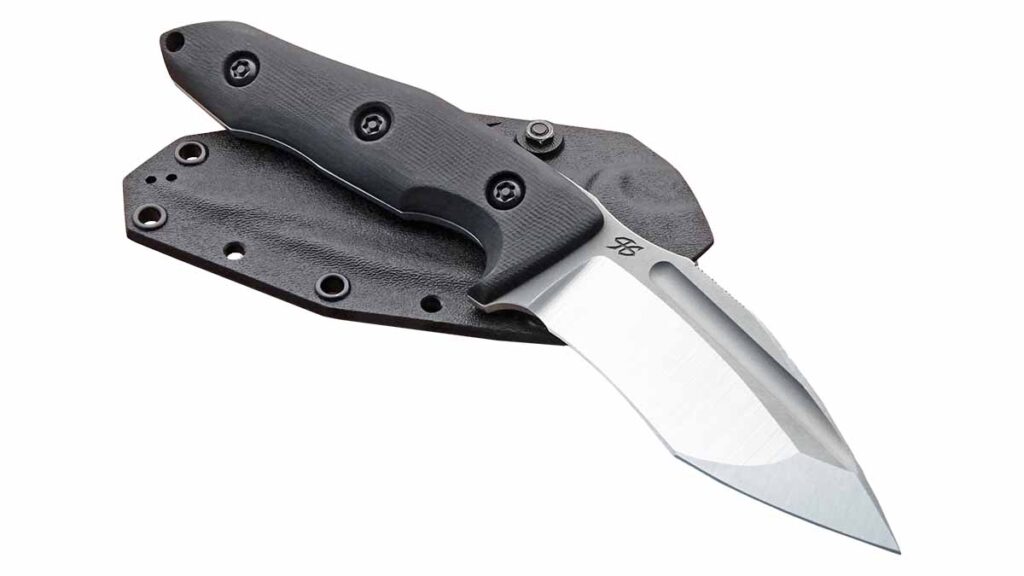
Piotr Gosciniak: Breaker Tanto

Custom EDC Gosciniak

Of Piotr Gosciniak’s Breaker Les Robertson writes, “The compound grind provides the penetration of a tanto-style blade and slicing ability of a recurve blade. The texture of the black Micarta® handle gives additional grip, particularly in a wet environment.” Blade length, steel and finish: 4.7”, Elmax stainless and satin. Overall length: 10”. Sheath: custom made of Kydex® by the maker. Maker’s price for a similar knife and sheath: $415. (ImpressByDesign image)


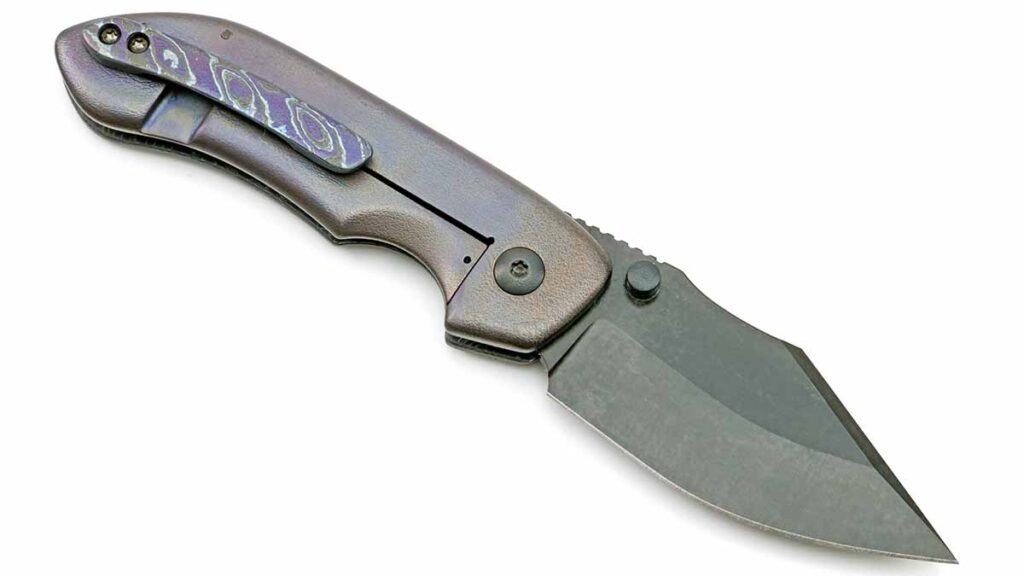
Sean Kendrick: Ruiner Tactical Folder

Custom EDC Kendrick

Sean Kendrick’s Ruiner is a framelock tactical folder with a 3.125-inch black blade of an “unknown material,” zirconium thumb studs and a notched thumb rest. Handle: dark Timascus™ front scale, backspacer and blade-tip-up pocket clip, and an orange-peel-finished and anodized titanium lockside. Pivot: zirconium. Weight: 6.1 ozs. Closed length: 4.5”. Sean names Mike Franklin of Hawg Knives as one of his top mentors. AZCK’s price: $5,995. (AZCK image)


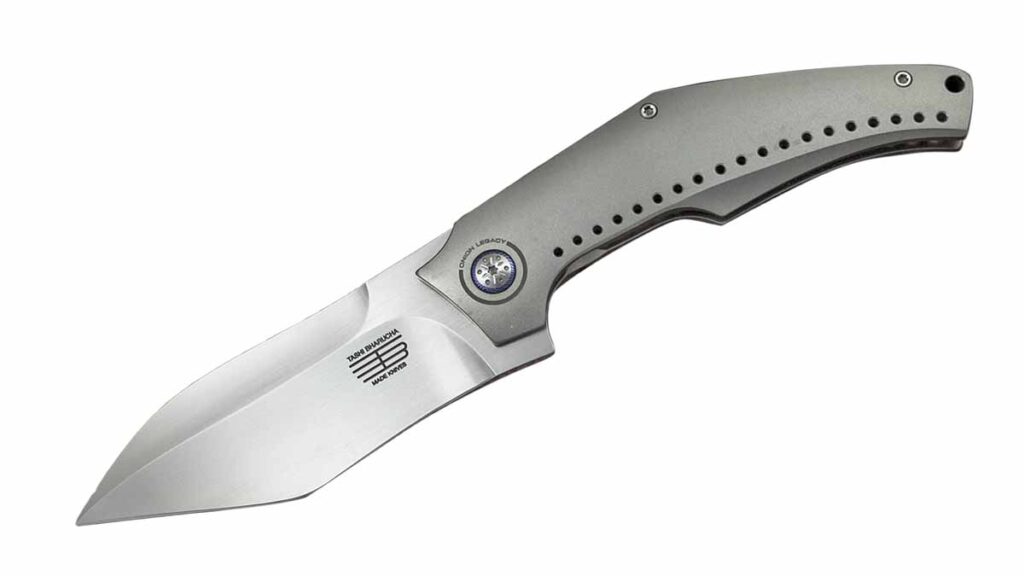
Tashi Bharucha: Onion LegacyFliper Folder

Custom EDC Legacy

“The Legacy project is Tashi Bharucha’s way of paying homage to the icons of the knife world that have influenced him,” Dave Stark observed. “The Onion Legacy, his tribute to Ken Onion, was limited to nine pieces featuring a handrubbed RWL-34 stainless steel blade running on caged bearings. The frames are stonewashed and bead-blasted titanium with laser etching, accented by a custom-heat-colored Mokuti clip and pivot rings.” Weight and blade and closed lengths: 6.2 ozs., 4 and 4.75”. Retail price: $1,875. (Steel Addiction Custom Knives image)


Matthew Christensen: Full Dress Dreadeye

Custom EDC Christensen

The Full Dress Dreadeye by Matthew Christensen sports a 3.375-inch high-satin-finished blade of Mike Norris Fire Clone damascus and dual zirconium thumb studs. Handle: Zirblast-finished Ant Farm Mokuti scales, and zirconium pivot collars, backspacer and blade-tip-up pocket clip. Weight: 4.9 ozs. Closed length: 4.625”. One of Matthew’s leading mentors is Dave Curtiss of Curtiss Knives. AZCK’s price: $3,595. (AZCK image)


Riann Manser: H4 Flipper Folder

Custom EDC Manser

South African Riann Manser’s H4 custom EDC knife has a 3.7-inch blade of satin-finished M390 stainless steel that runs on caged bearings. “It is perfectly centered, has silky-smooth action” and opens easily via a flipper tab, Daniel O’Malley noted. Handle: black G-10 with gold snakeskin FatCarbon inlaid into each side. Backspacer: black G-10. Liners: bead-blasted Gr6 titanium. Lock: linerlock. Pocket clip: bead-blasted titanium, configured for right-side, blade-tip-up carry. Closed length: 4.8”. BladeGallery.com’s price: $695. (BladeGallery.com image)


Sergey Shirogorov: Mini Quantum Flipper Folder

Custom EDC Shirogrov

The Mini Quantum flipper folder by Sergey Shirogorov is highlighted by a rotating titanium pocket clip that carries the knife blade tip up. Blade length and steel: 3.5” and Mike Norris damascus. Handle: titanium. Closed length: 4.5”. Maker’s price: varies depending on what the knife brings at the various auctions where it is sold. Recon 1’s price: $10,000. (Recon 1 image)


RJ Martin: Q36 Flipper Folder

Custom EDC Martin

Custom knife purveyor Les Robertson has been buying Q36s since RJ Martin started making them. According to Les, “RJ never ceases to amaze me how he incrementally improves this knife: serrated thumb ramp, extremely lightweight, hypersonic flipper opener and bank-vault lockup.” Blade length and steel: 4” and MagnaCut stainless. Frame: grooved titanium. Closed length: 4 7/8”. RJ’s price for a similar knife: $3,200. (ImpressByDesign image)


Thomas Gony: Speartac Front Flipper

Custom EDC Gony

Frenchman Thomas Gony’s Speartac front flipper has a 3 3/8-inch blade of handrubbed RWL-34 stainless steel. The titanium handle features Zircuti inlays, pivot rings and pocket clip (blade tip up). Weight: 4.8 ozs. Closed length: 4.5”. Retail: $2,600. According to Dave Stark, there is such a huge demand for Gony’s work that Thomas can no longer take custom orders. (Steel Addiction Custom Knives image)


Dmitry Sinkevich: Skiving Tanto

Custom EDC Sinkevich

A 3.125-inch tanto blade of K110-core san-mai and a titanium handle help complete the Skiving Tanto prototype by Dmitry Sinkevich. The pivot and blade-tip-up pocket clip are zirconium on this custom EDC knife, and the body screws are titanium. Closed length: 4”. Maker’s price: varies depending on what the knife brings at the various auctions where it is sold. Recon 1’s price: $10,000. (Recon 1 image)

Check Out More Buyer’s Guides:

Finding The Best Spearpoint Blade Knife

There’s a reason why spearpoint blade knives are common as bluegrass.

Spearpoint blades are very common blade shape that is used primarily with folding knives but also found on some varieties of fixed blades. This blade shape can either be long and slender or short and on the fat side. 

What defines a spearpoint blade is the upsweep that forms the belly of the cutting edge and the equidistant spine that meet at the centerline of the blade’s width. Much as its name suggests, the profile mimics the shape of a spear.

Spearpoint Blade Uses

The spearpoint blade is a handy profile, as it’s very adaptable to any cutting task at hand. There’s enough blade belly present to do slicing work and enough of a point to do scoring and piercing tasks.  

Common Spearpoint Blade Knives

Along with the standard single grind spearpoint blade shape, there are a couple of variants of such that you might also be familiar with as well.

Dagger: The dagger is a popular option in fixed-blade tactical knives and are commonly spearpoint blades. The big difference between it and the more common spearpoints, daggers have a double grind. These begin at the centerline of the blade and taper down to the cutting edge, forming two cutting edges instead of just one.

The dagger’s design lends it to penetrating tasks, as well as giving it a certain sexiness due to its symmetry. However, laws are very restrictive when it comes to dagger blades. Additionally, the dagger is not well suited for working tasks due to the relative fragileness of the blade shape thanks to its grinds.

Pen Blade: These are commonly found as a smaller secondary blade on many multi-blade slip joint folding pocketknives. The pen blade is good for just general, mundane cutting tasks like opening mail and packages, or light-duty scraping.  

Pedestrian as the role may seem, these spearpoints see a lot of action in day-to-day tasks. It’s safe to say, the world’s fingernails would likely prove much dirtier without this little workhorse.

Spearpoint Blade Knife Buyer’s Guide

We’ve gone through the effort to compile a listing of some of the more popular spearpoint knives on the market. These knives have the spearpoint shape as the primary blade. But please keep in mind that there are more than just these, as the profile is among the most popular in use today. Furthermore, keep an eye open and be sure to do your research carefully to select the best knife to fit both your needs and budget.  

FIXED BLADES

Condor Tool & Knife CTK247 Kephart

Spear Point Blade Condor Kephart

Designed by noted survival expert Joe Flowers, the Kephart is a good general-use survival knife that is ready to tackle the chores on your camping or hiking trip. The 4 ½-inch long blade is made of 1075 carbon steel for low cost and easy resharpening out in the field and sports a flat grind for cutting efficiency. The handle is made of walnut and features a rounded profile for easy use. Condor uses rivets in the tang to prevent the handle from loosening even under very hard use. Made in El Salvador, the Kephart comes with a sewn leather belt sheath to round out the package.  

MSRP: $72, Made In El Salvador

ESEE KNIVES LASER STRIKE 

Spear Point Esse Laser Strike

The Laser Strike has a 5-inch blade ground from 1095 carbon steel and sports an ultra-tough black epoxy coating. The coating is a nice extra, protecting the steel from the elements, as well as furnishing a nice low profile with no reflective appearance. A series of traction notches are cut into the blade spine at the thumb rest area, providing a nonslip resting place for your thumb or index finger for extra pressure and more control or power. The handle scales are green canvas micarta, which does an excellent job of being a dimensionally stable and providing a great grip quality. A thoughtful feature, a finger choil at the tang for when you need to choke up on the blade for extra control. Each Laser Strike comes with a form-fitting Kydex belt sheath for easy portability in all conditions.

MSRP: $200, Made In The USA

TOPS KNIVES COVERT ANTITERRORISM (CAT)

Spear Point Blade Tops CAT

With its skeletonized structure, the TOPS Covert Antiterrorism (CAT) is an easy-to-carry, medium-sized, heavy-use fixed blade. Its 3 ¼-inch blade is made from 1095 carbon steel and boasts a flat grind. A pronounced thumb rest allows for more pressure and control while not allowing any slippage at all. The skeletonized handle is outfitted with multiple finger grooves that help seat your hand securely. Multiple oblong cutouts reduce the overall weight further. With an overall length of 7 ¼ inches, the CAT is carried via a multi-carry Kydex sheath so you have the knife with you at all times. This knife here can withstand some hard use for its size.

MSRP: $130, Made In The USA

HALFBREED BLADES MEDIUM CLEARANCE 

Spear Point HALFBREED BLADES MEDIUM CLEARANCE

Australia’s Halfbreed Blades offers up its Medium Clearance MCK-01 model as both a tool and a backup weapon. The blade is beautifully constructed out of Austrian-origin Bohler K110 tool steel that is similar in performance to D2. The blade appears to be a double edge, but in reality, it is only a single, however, it has a more aggressive dagger grind to it. At 4 ½-inches long, the blade is a good size for carry as well as getting your cutting tasks done in short order. 

A pronounced guard keeps your hand from sliding up onto the blade. To protect the blade from the elements, a flat dark earth Teflon coating is applied. As a bonus, this also allows easy clean up. The handle is G-10 and sports a milled texturing pattern which works well with both bare and gloves hands. The extended blade tang at the rear of the handle can be used as a glass breaker as well as a blunt strike option as well. The MCK-01 comes with a Kydex sheath that is both belt and MOLLE-compatible attachment.

MSRP: $240, Made In Australia

CRKT MINIMALIST SPEARPOINT

Spear Point CRKT MINIMALIST SPEARPOINT

An extension of CRKT’s wildly popular Minimalist fixed blades, the spearpoint iteration is the more general use profile of the line. Starting with the 2.1-inch blade, it is ground from 8Cr13MoV stainless steel for enhanced edge retention. As an added visual touch, there is a fuller (blood groove) cut into the blade. Typically, this is something found on larger knives. The handle sports a series of deep finger grooves that help to seat the Minimalist Spearpoint in your hand safely. The handle material is “resin-infused fiber” which sounds a lot like micarta and even feels similar. Whatever it is, it does a great job of providing traction. Each Minimalist comes with a molded ABS plastic sheath for ease of carry. The sheath can be worn either on the belt or set up for neck knife carry with the included ball chain necklace. So the carry options here are really good!

MSRP: $50, Made In China

FOLDING KNIVES

VICTORINOX PIONEER X

Spear Point Blade VICTORINOX PIONEER X

Everybody loves a Swiss Army Knife! The Victorinox brand has a zillion configurations and sizes of this popular multiblade multitool knife. It has a universal appeal that extends way beyond the knife enthusiast. The Pioneer X model is a popular model amongst the Alox (aluminum handle) options. Essentially, the company took its long-standing Pioneer Alox and inserted a pair of scissors, hence the “X”. The Pioneer X has a 2 ½-inch long spearpoint stainless blade, an awl, a combination flathead screwdriver and bottle cap opener, a can opener, and the aforementioned scissors. The checkered textured Alox handle is available in standard silver Alox, and colored versions may be purchased at various Victorinox dealers as exclusives to those outfits. One of the reasons why Alox models prove poplar is they feel very solid and the checkered aluminum has a nice hand traction.

The overall quality of manufacture for the Pioneer X is perfect. The blades and tools have a nice polished finish which not only looks good but also makes them easier to clean up. The spearpoint blade on this one is a real cutter. The full flat grind tapers the cross section down to a precise thin edge. One thing about all Swiss Army Knives is that they are easily sharpened. The scissors are simply the best small scissors I have used on any pocketknife. This is just a very handy pocketknife and you will find that it will go with you wherever you go, quite easily. Boasting an excellent price, it is not only quite handy but affordable as well. Plus, you can guaranteed every Victorinox comes perfect from the factory. Don’t be afraid to purchase sight unseen with confidence.  

MSRP: $69, Made In Switzerland

KERSHAW KNIVES LAUNCH 4

Spear Point KERSHAW KNIVES LAUNCH 4

Kershaw Knives’ highly successful Launch series of USA-made automatic opening knives have been a great success. The cutting-edge automatics are made with premium materials, but come in at a comfortable price. The 7500BLK Launch 4 is the smallest of the line, with a California-friendly 1.9-inch blade. CPM154 stainless steel is used for the blade, offering enhanced edge retention and corrosion resistance. It is the particle steel equivalent of 154CM, which is used widely in the cutlery industry and lower-tier premium steel. The blade sports a DLC black coating for the ultimate in corrosion resistance and low reflectivity. The handle is machined from T6 6061 aluminum alloy for light weight and strength. It is anodized black and features matching black hardware. A steel pocket clip carries the Launch 4 in the tip-up configuration in the pocket. With an overall length of a bit over 5 inches, this compact cutter carries easily and also doubles as a money clip. Pressing on the lock button causes the blade to rocket out of the handle, snapping open with authority. The same button serves as the blade’s lock release from the open position. The Launch 4 is a fun little automatic opener that proves a great value.  

MSRP: $165, Made In The USA

KABAR DOZIER FOLDING HUNTER

Spear Point blade KABAR DOZIER FOLDING HUNTER

Bob Dozier is a respected name in the knife industry. He is an accomplished custom knifemaker whose creations are aimed at the outdoor market with hunters and campers in mind. He has partnered with Kabar Knives to produce his Folding Hunter design. The 3-inch blade is ground from AUS-8 stainless steel and features a hollow grind. A single thumb stud allows you to deploy the blade quickly and easily. The handle is molded from lightweight Zytel to keep the overall weight of the knife to a minimum (2.2 oz) for comfortable carry.  A pocket clip carries the Folding Hunter tip up and can be swapped to the opposite side of the handle for lefties. Don’t let the name fool you, this knife excels at daily carry, for those who relish the bang-for-the-buck factor. Made in Taiwan, it is one of the best values for a custom-designed folding hunter. The Kabar Bob Dozier Folding Hunter comes in an array of handle colors to suit your preference.  

MSRP: $35, Made In Taiwan

EMERSON KNIVES MINI SHEEPDOG 

Spear Point EMERSON KNIVES MINI SHEEPDOG

The Mini Sheepdog is a downsized version of Emerson Knives’ Sheepdog flipper folder. Featuring a 3-inch long spearpoint blade, its 154CM stainless steel is the material of choice for going the distance with work tasks. The blade incorporates three methods of opening: a thumb disk, Emerson’s Wave Remote Pocket Opener, and a flipper. The blade has two options for finishes—satin-finished or black-coated. The blade rides on bearings for the ultimate smoothness in blade action. The handle is ergonomically shaped to seat the hand comfortably. The expanded sections on the front and back of the handle help prevent forward and rearward sliding. Textured black G-10 composite provides a non-slip grip.  There is a pocket clip that carries the Mini Sheepdog in the tip-up configuration in the pocket. Emerson Knives is a trusted leader in the production of tactical knives.  

MSRP: $240, Made In The USA

HOGUE X5 

Spear Point Blade HOGUE X5

Designed by custom knifemaker Allen Elishewitz, the X5 represents the latest in tactical folder technology. It does so by offering a flipper opening, button lock in a premium handle and excellent blade materials. The X5 is offered in two blade styles and two sizes within. There is a modified Wharncliffe and a spearpoint, in both 3 ½-inch and 4-inch blade lengths. CPM154 stainless steel is the material of choice for the blade, offering enhanced edge retention. The spearpoint features a harpoon-style swedge, adding an aggressive stylistic note to the appearance. And the high flat grind of the blade bevels make the X5 spearpoint a cutting machine. The handle is highly ergonomic, incorporating chamfers, a prominent finger groove, and an integrated handle spacer for ultimate strength. The X5 comes in your choice of several hard anodized handle finishes: black, OD green, blue, and tan. Certain models also feature textured G-10 inlay for grip enhancement and a styling note. A button lock secures the blade solidly in the open position and also is easy to release and close the blade one-handed. Each X5 comes with a steel deep carry pocket clip—tip up—and an extra clip for lefties.

MSRP: $210, Made In The USA.  

Check Out More Buyer’s Guides:

Advertisement

Must Read Articles

Read this before you make a knife

Knifemaking 101 – Read This Before You Make a Knife

  by Wayne Goddard My experience has taught me that there's nothing like digging in and getting started. I've often said the hardest part of the...
how to forge damascus steel

How to Forge Damascus

Advertisement
Advertisement