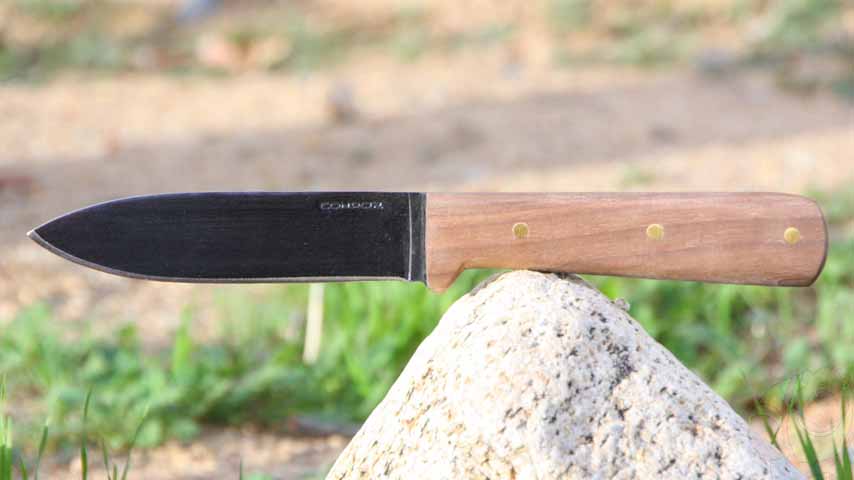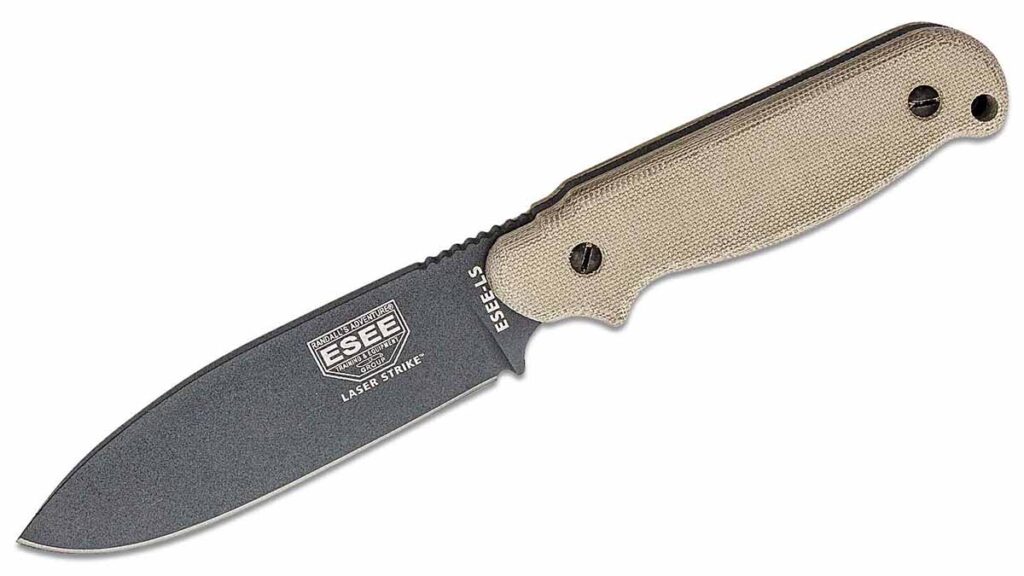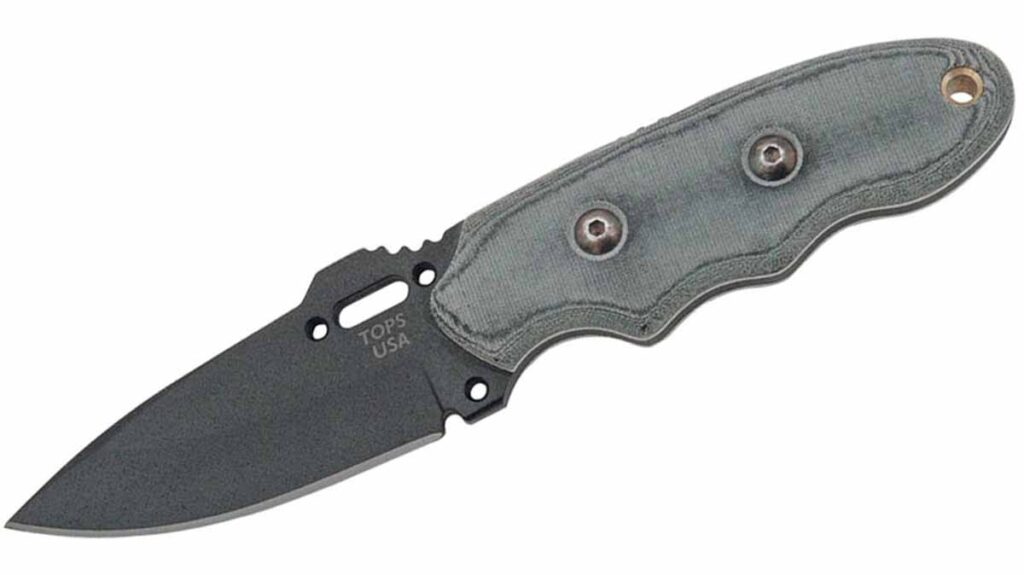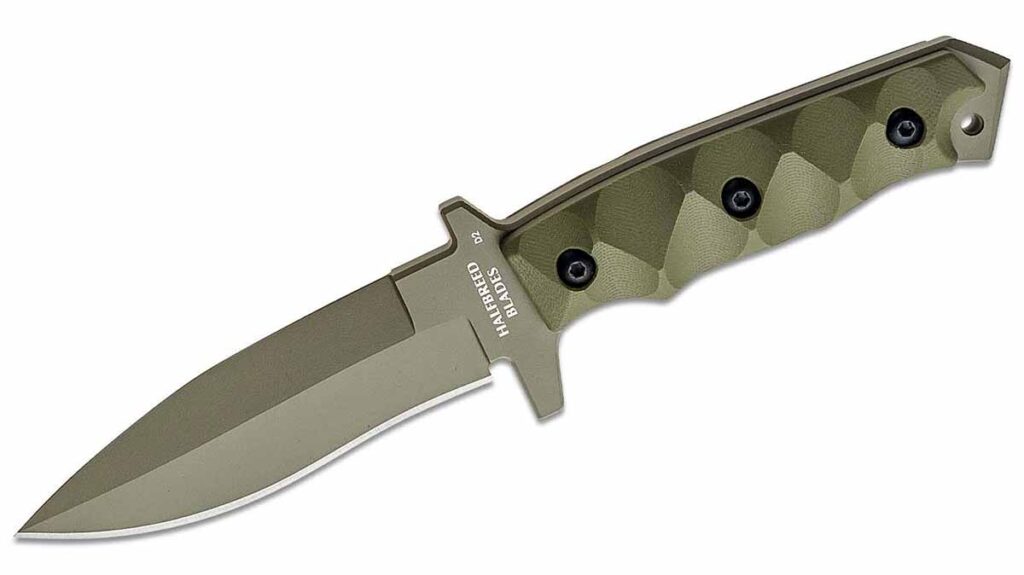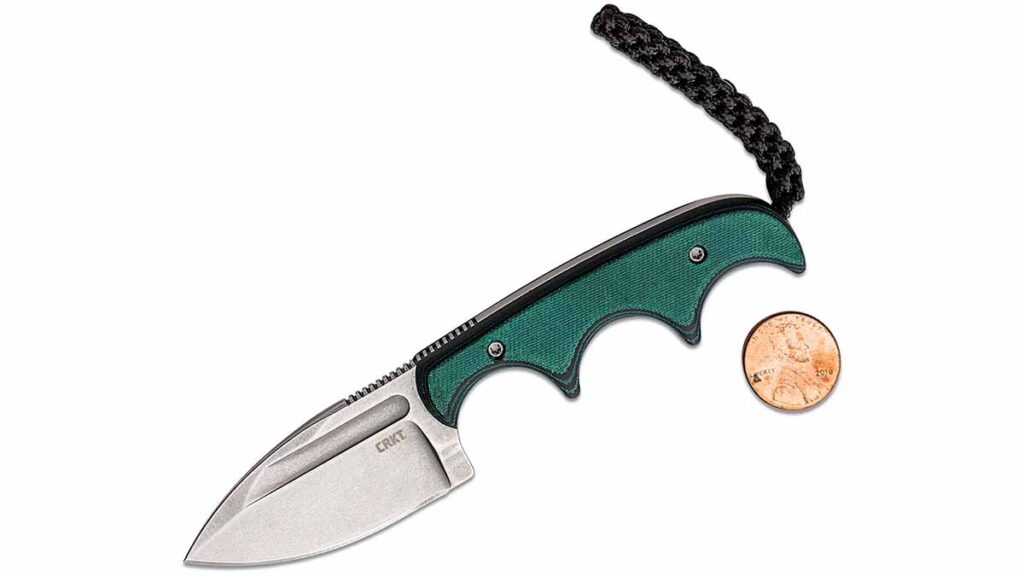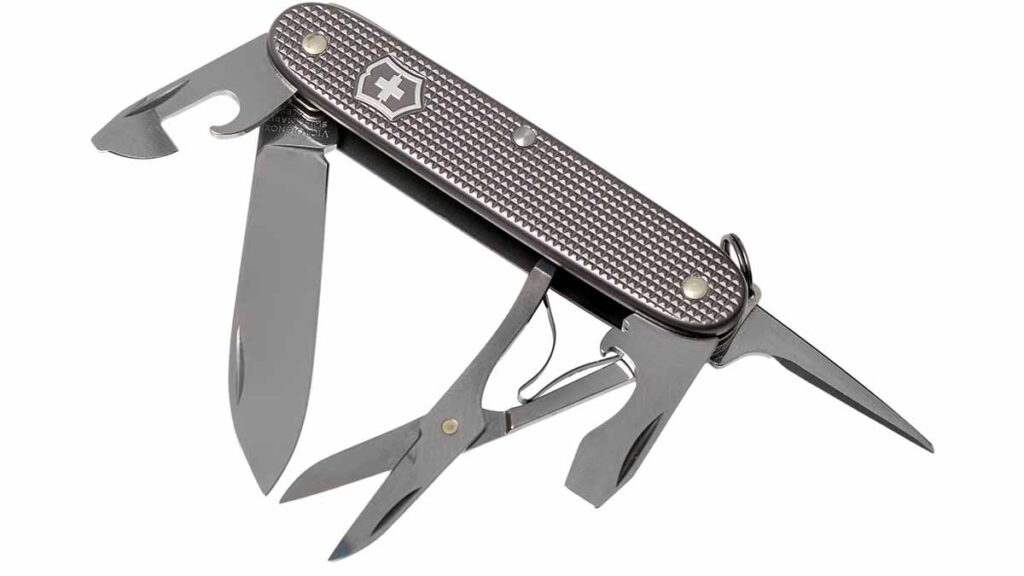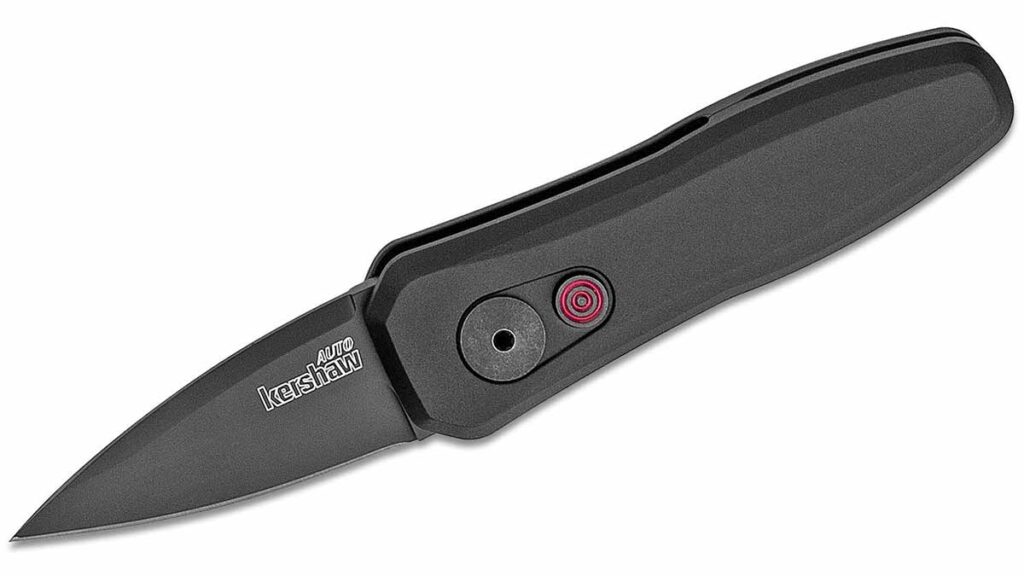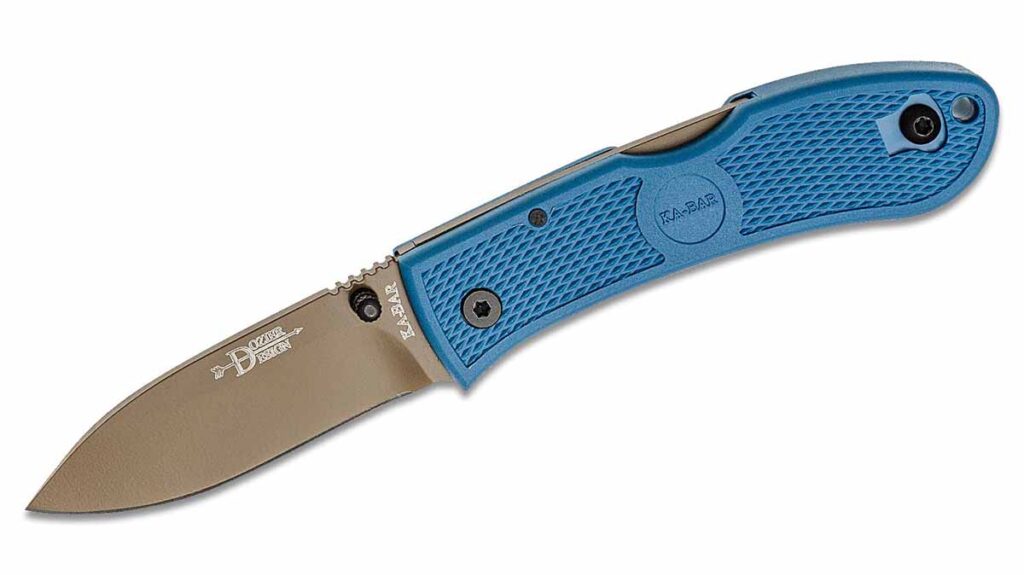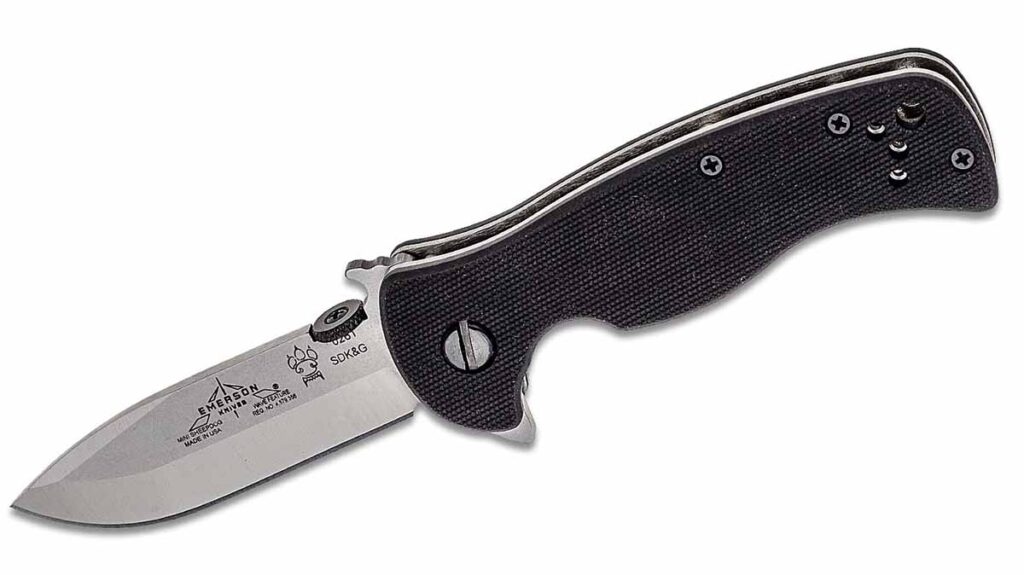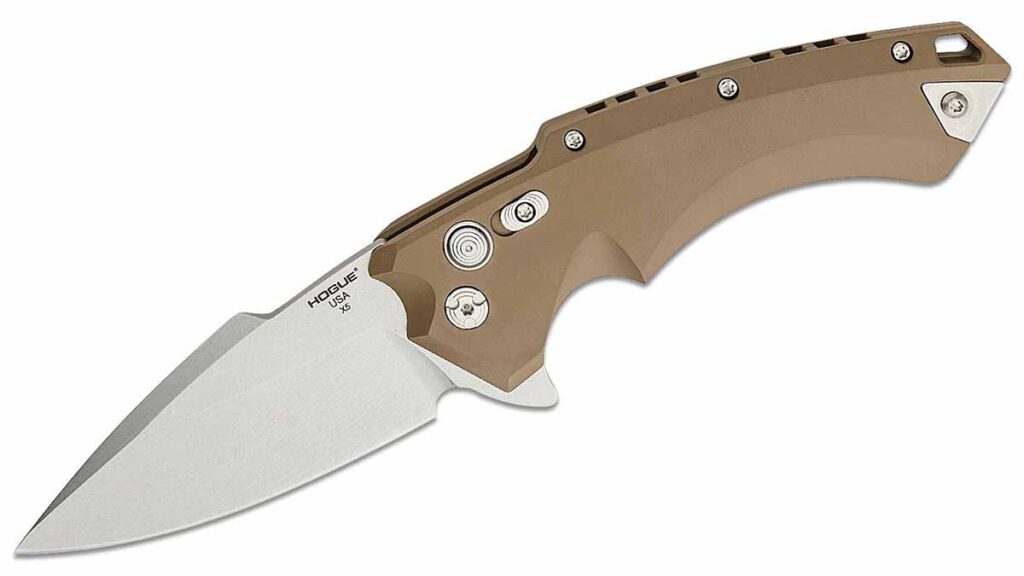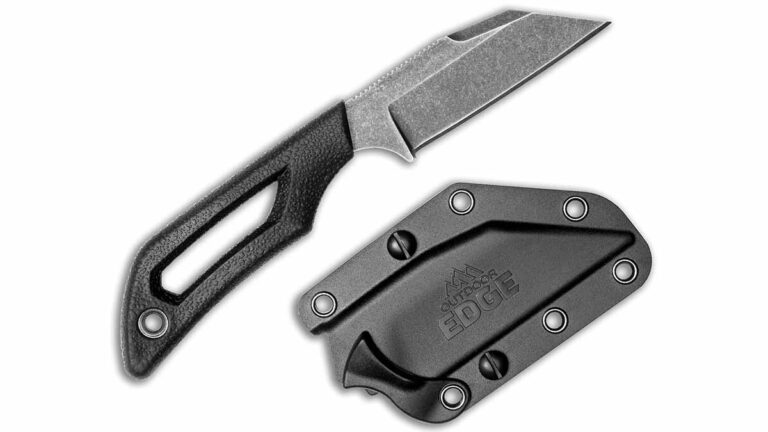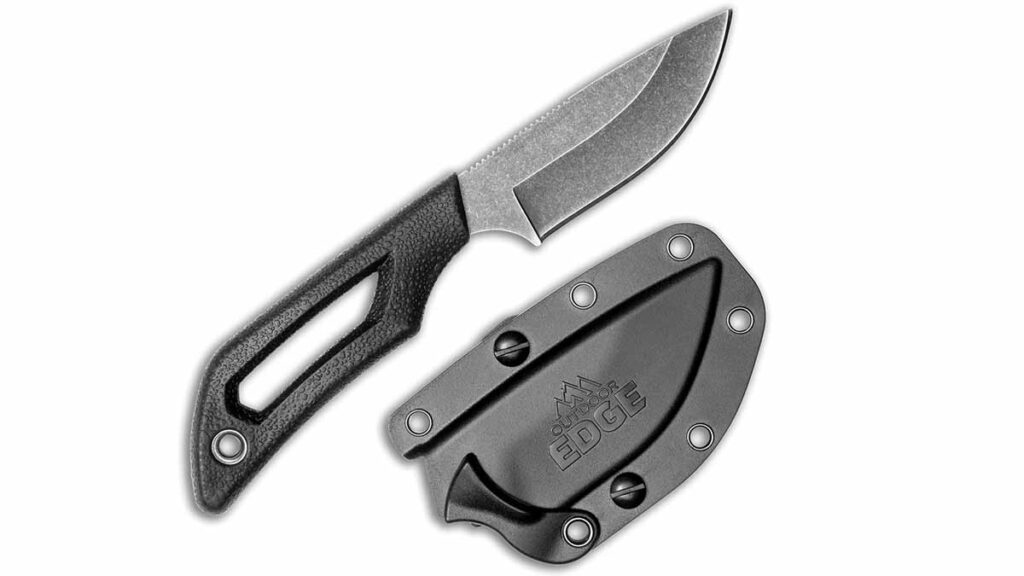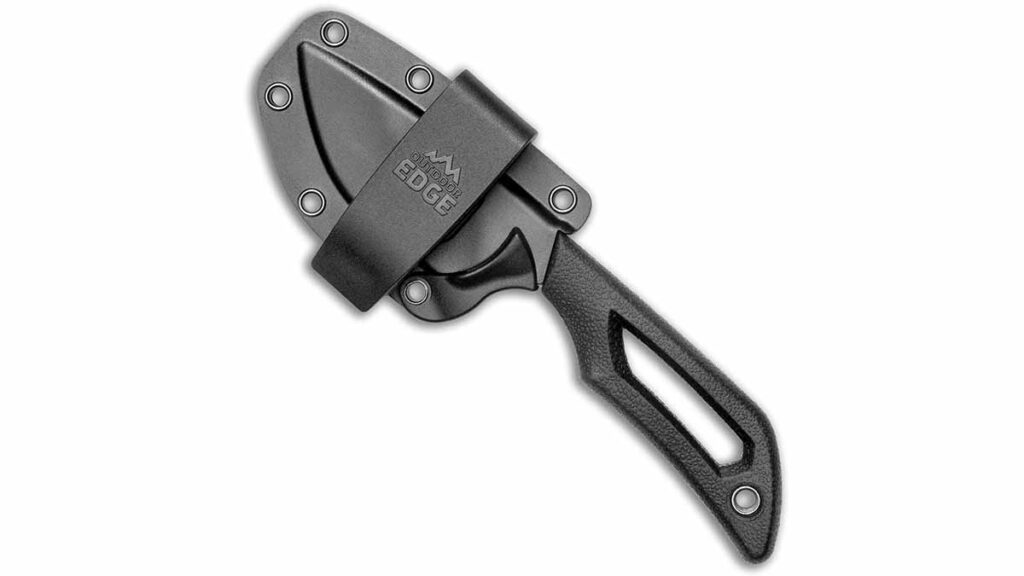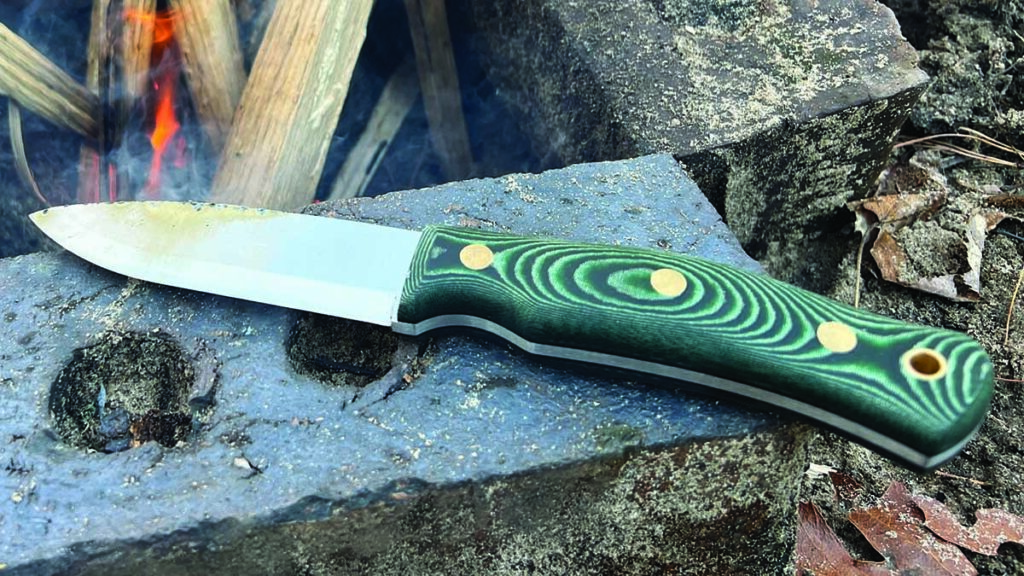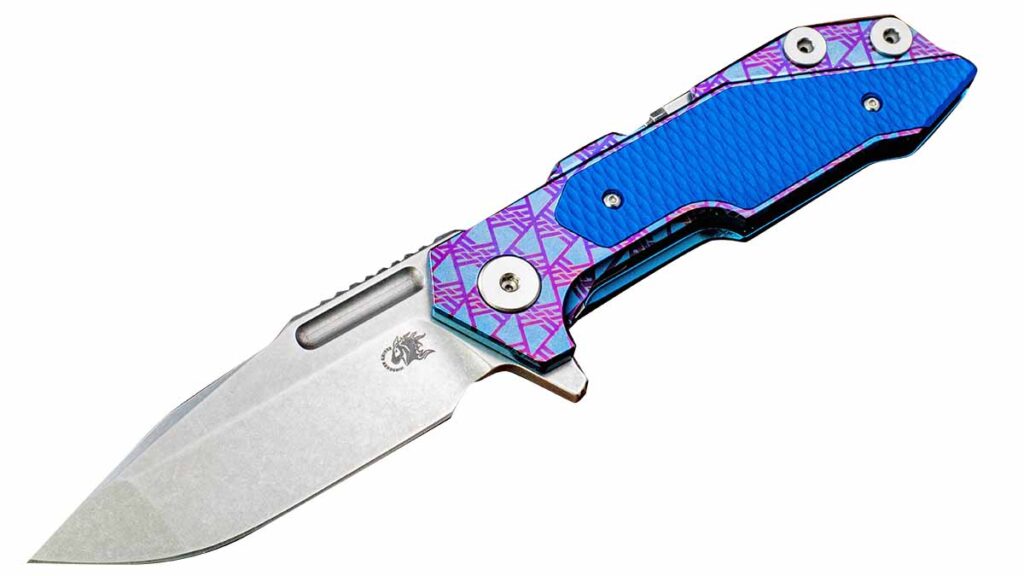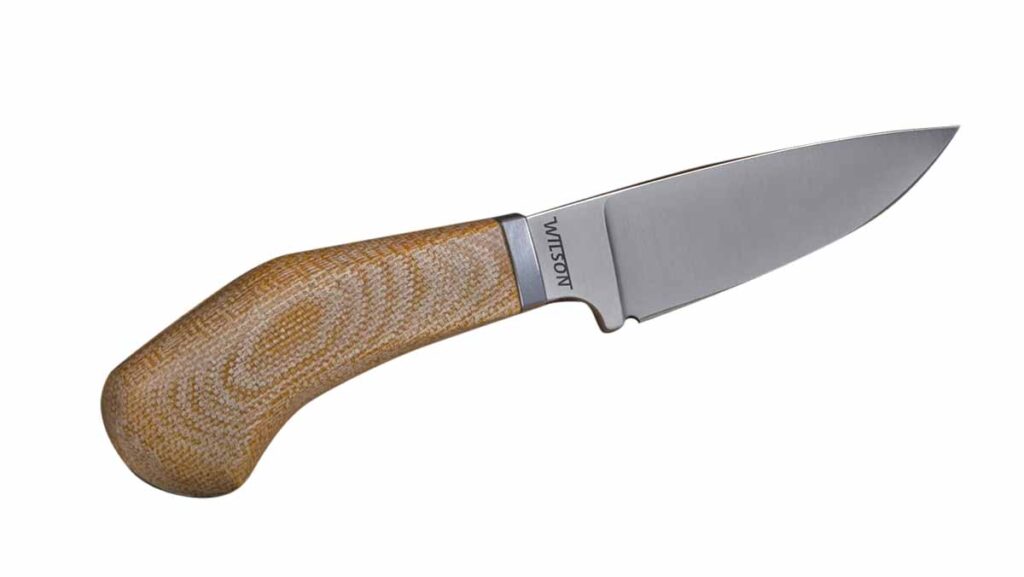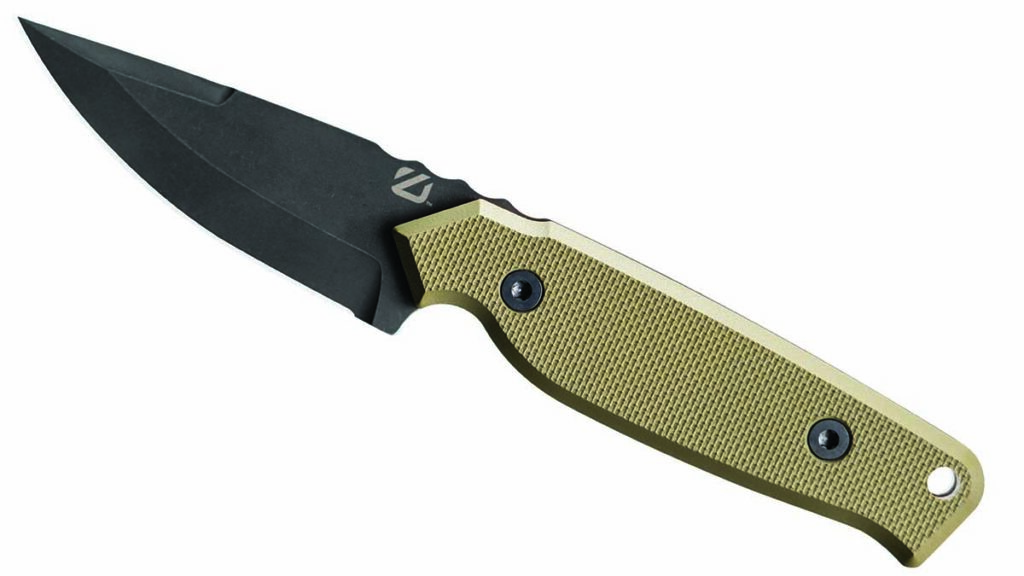
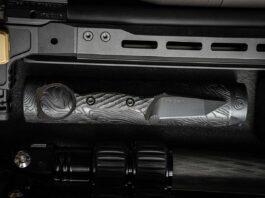
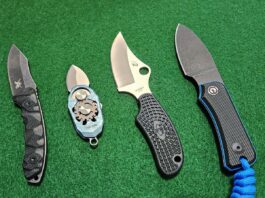
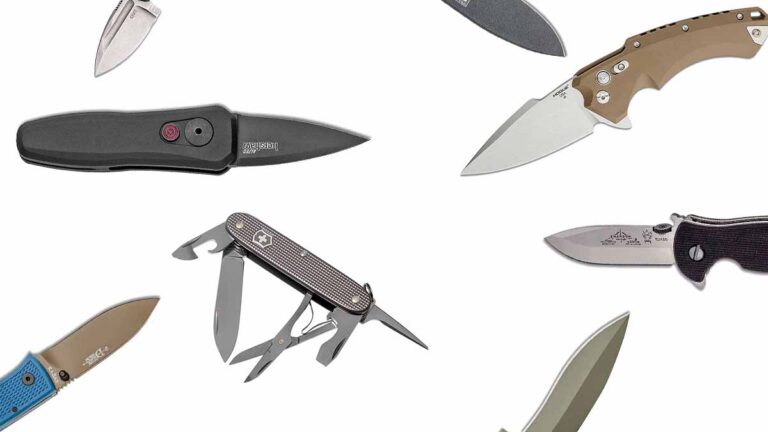
Oh, the Outdoor Edge Pivot is a budget option, but not one without its charms.
Traditionally outdoor focused—hence the name—Outdoor Edge has crept into other knife niches. Perhaps it’s a directive from the powers on high at Revo Brand Group (think Real Avid), who acquired the knife company in 2022. Or perhaps it’s because you can only make so many gut hooks and replaceable-blade caping knives. In either case, the company has come out with some intriguing EDC designs that are definitely budget options, but ones that get the job done.
Its most recent unveiling is the lightweight, skeletonized handled Pivot. For most knife enthusiasts, it’s difficult not to like what Outdoor Edge has offered up in the redesign of the company’s Le Hawk and Le Duck knives —particularly its price. A cool $30 ($29.99) puts the fixed blade on your beltline, giving you an edged tool you can treat like a rented mule and not shed any tears if a rough task delivers a coup de gras. Everybody needs one of those to pry away at rusty latches and strip spools of copper wire.
Pivot’s Steel
Constructed from 8Cr13Mov stainless steel, the knife was likely birthed in China—it’s one of the country’s budget stainless options. While inexpensive, the steel generally acquits itself well in wear and corrosion resistance but maybe doesn’t earn top honors in hardness (57 HRC) and edge retention. Though, 8Cr13Mov is known to be pretty forgiving in sharpening, so its edge is quickly regained. Outdoor Edge gives the Pivot’s blade an extra barrier to environmental factors with what it calls its Blackstone Coating, which also gives the knife a dark appeal.
Blade Profiles
The company offers two blade styles on the model, a drop-point and Wharncliffe both virtually the same length. The drop-point measures in at 2.5 inches, and the Wharncliffe is another .1-inch longer. In either case, married to a roughly 4-inch handle, the blade should prove fairly nimble and quite deft at most everyday tasks around the home, ranch or worksite. As mentioned, the handle is skeletonized, which cuts the Pivot’s weight down to a svelte 3.2 ounces. And Outdoor Edge applies a rubberized coat to it, giving the knife a fairly positive grip even if wet.
Where Exactly Does It Pivot?
Now we get to the name of the knife—the Pivot—which seem much more apt for a folder than a fixed blade. But there’s a method in Outdoor Edge’s madness, with it referring to the carrying system. The polypropylene sheath comes with a quick-release locking latch and a removable 360-degree rotating clip (there’s the pivot point) for easy attachment to a belt or MOLLE webbing. It’s a nice system, allowing the user to adjust the cant to their carry style, putting the blade at quick access no matter where it’s carried.
Most would agree the Outdoor Edge Pivot isn’t the Superman of EDC knives, nor the one somebody pulls out for bragging rights. But for a blade to use and abuse on your day’s dirtiest jobs, well it pretty well fits the bill.
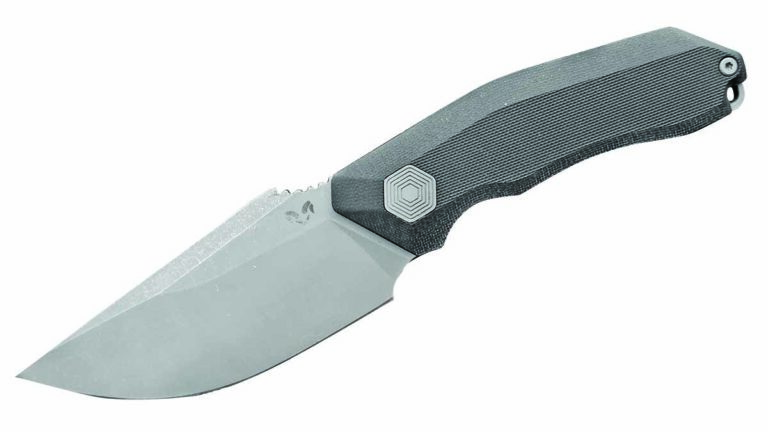
The Basilisk is a lightweight fixed blade that cuts well above its weight class.
I’m really liking the wider blade of the Basilisk* by Damned Designs. The full flat grind combined with the blade’s ample width makes for almost perfect edge geometry—a thin edge for slicing with enough meat behind it for added strength. The thinner blade stops any binding while slicing thicker material like cardboard.
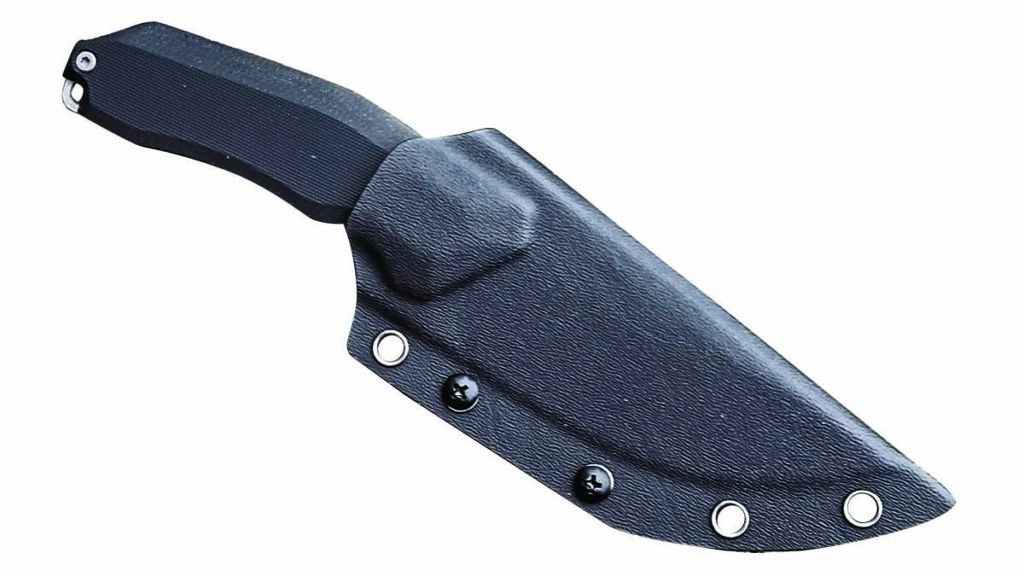
The fold-over Kydex sheath is first class.
The G-10 slabs have enough texture for a good grip. The Basilisk is a solid EDC knife. It uses Sandvik 14C28N stainless for blade material, a great using steel.
But how well does it cut?
Basilisk Sharpness Test
A baseline edge check using 20-pound bond copy paper went fast. The blade was very sharp from the factory. I’m glad I have calluses on my fingers as the Basilisk nicked them twice because I was slow getting them out of the way.
Light Cutting Duty
Single-walled cardboard was the second test medium. The blade sliced very smoothly and was aggressive its entire length. The cut strips laid straight due to the flat grind, so no binding on this one. I slowed the slicing down to save my fingers and all went well.
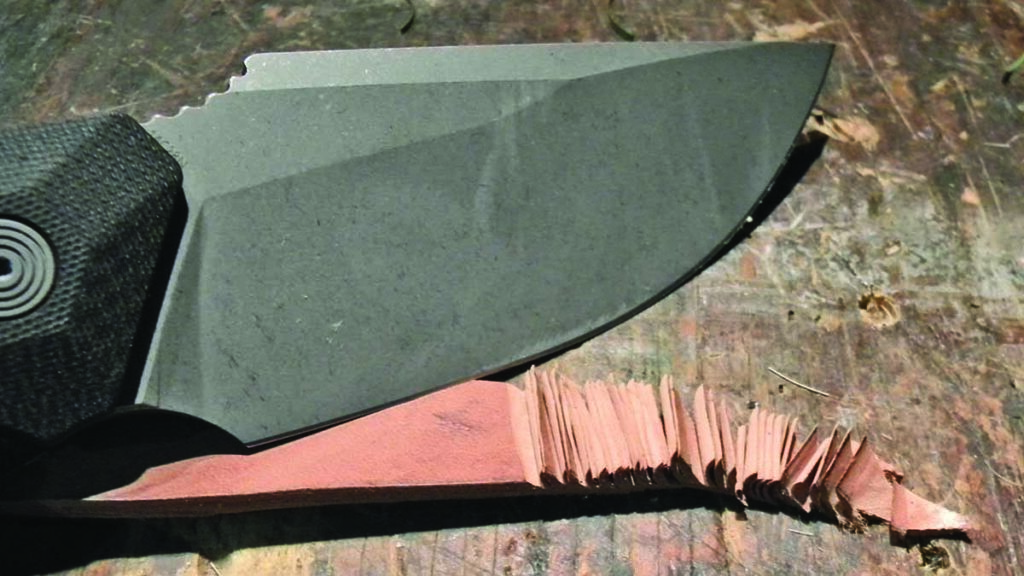
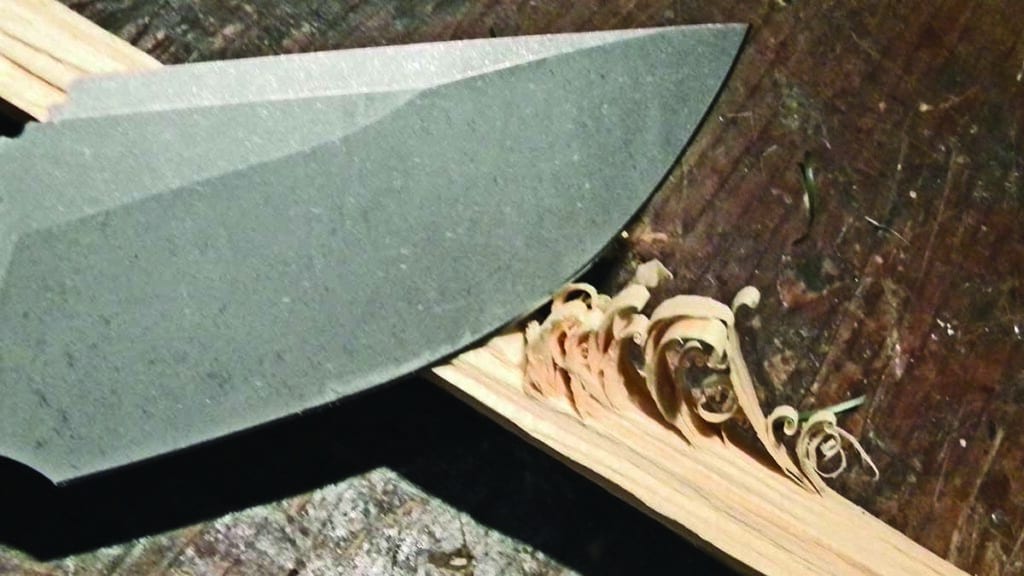
The thin edge and flat grind produced excellent curlicues for a firestick.
Eight-ounce leather was next. The Basilisk was very aggressive cutting animal skin. I could hear it slice its way through. The handle shape made it easy to control each cut’s width while also being comfortable. I also did some skiving. The Basilisk skived very quickly and evenly. Man, this knife is sharp!
Heavy Duty Cutting
Time for making some firesticks by whittling curlicues. The thin flat grind produced excellent wood curls. The thickness of the curlicues was eminently controllable. However, when I went in for deep cuts the edges of the G-10 handle were a bit hard on my hand.
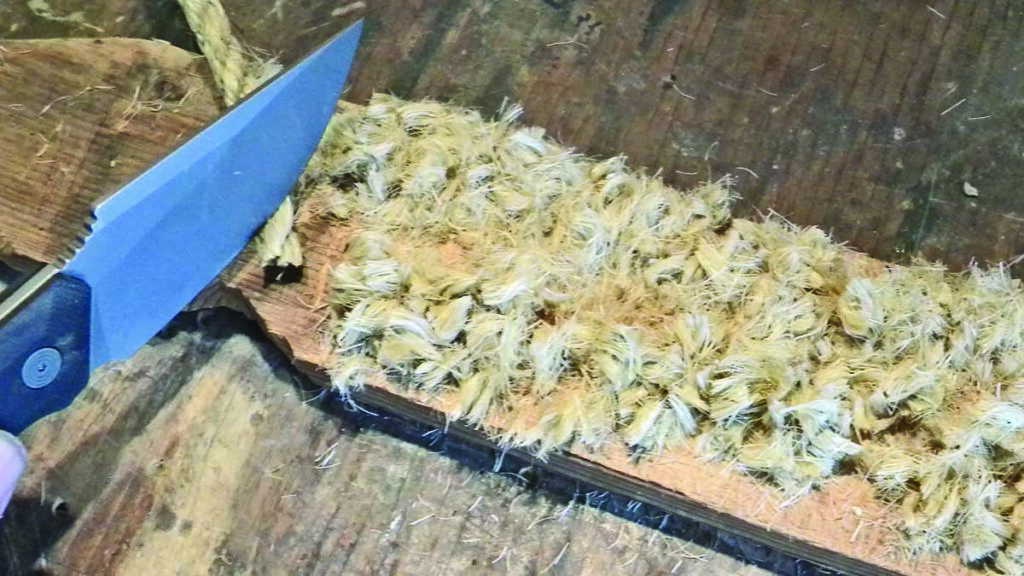
A total of 225 crunching cuts made mincemeat of the half-inch sisal rope.
Next up: half-inch sisal rope. The Basilisk made 100 crunching cuts before I had to don a glove to cover a hot spot. The knife dished out another 125 crunching cuts before I stopped. The edge showed no signs of slowing down. Total: 225 crunching cuts.
Toughness Tests
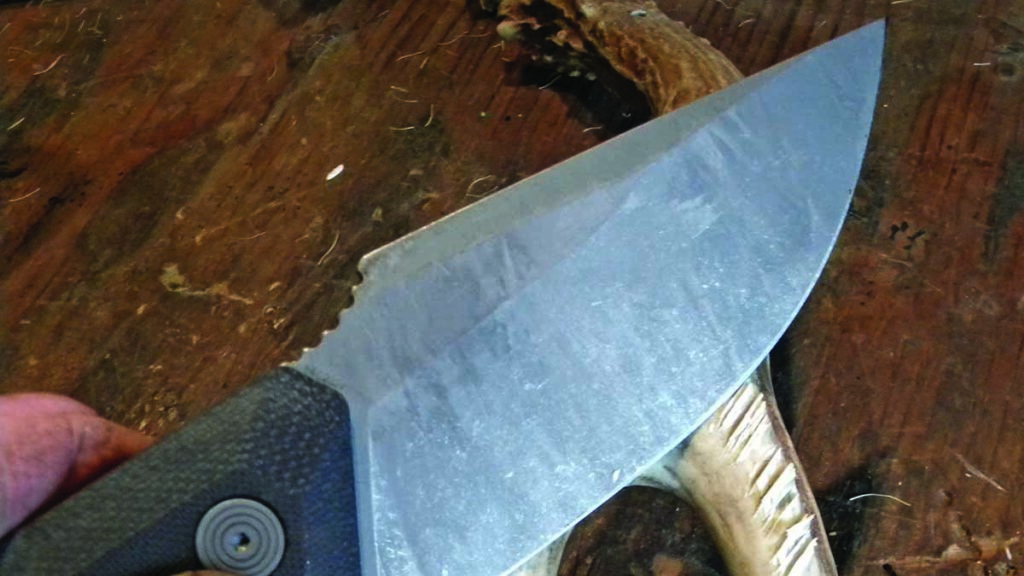
I batonned the Basilisk through some aged hackberry, a tough wood when dried. I whacked the rear, middle and tip of the blade spine for four complete splits. It worked excellent, with no damage to the edge or knife overall other than some wood smears on the stonewashed finish.
The thin edge and flat grind produced excellent curlicues for a firestick.
To really push the edge/heat treatment, I grabbed an old whitetail deer antler. After 30 hard whacks on it I checked the edge for chipping. There was none to be found. Heat treat is on the money for sure. Excellent job.
Edge Retention
Time to check the final edge with the 20-pound bond paper. The Basilisk still sliced smoothly even though the paper was getting damp from it raining all day. There were a few tears in the paper from the dampness.
Suggest Changes To The Basilisk
I would soften the handle edges a bit more.
After 30 hard whacks on the deer antler, the author checked the edge for any chipping. There was none to be found. The heat treat is on the money.
Final Cut
The Basilisk is a very nice knife, excellent for EDC or camp. It’s definitely a top pick on my list.
Fire-starter knives make sparks when you need them most.
Bushcraft skills have grown immensely in popularity in the past few years. It could be the slew of TV shows promoting survival situations or just perhaps an interest in self-sufficiency. What is true is that the knife industry is playing catch-up to the bushcrafting market, and many new products pop up that have features dedicated to keeping you alive and warm in the woods.
Fire Starting Knives
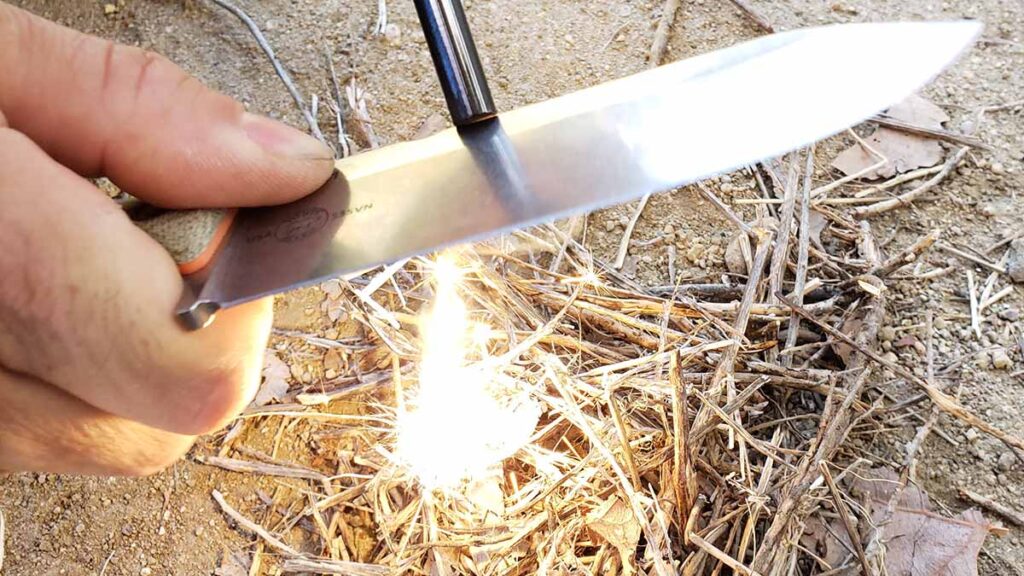
Recent years have seen an influx of knife features deemed ideal for use with another essential tool—the ferro rod striker. Ferro rods are made of ferrocerium, an alloy consisting of several base metals and magnesium. Magnesium is highly reactive and generates showers of sparks as it is scraped against steel. Think of it as a more modern version of flint. Ideally, the ferro rod is struck against a sharp, acute surface. Many people use the blade’s edge for this, though this is not recommended as dull spots can emerge quickly.
As time passed, people began sharpening the blade spines to 90 degrees, making a hard, sharp angle that is not on the cutting edge. Still, others find this feature annoying, as it is fully possible to injure your hand on a squared spine. I know because I’ve done it.
As a remedy, people started cutting in little semi-circular cutouts into the spine that still retain a square shoulder, thus allowing for safer handling when striking. Both a fully sharpened spine and the sharpened cutout are valid features; it depends on what style you prefer.
Strike the rod against the sharp corner of the blade spine to create sparks and ignite the tinder. (Mary Lou Ayres image)
The smaller cutout is really just a striking feature but the fully sharpened spine can be used for a number of other ends, most notably an easy and effective means of peeling carrots, potatoes and other root vegetables for the camp kitchen. Many top fire-making knives have sharp-angled spines and cutouts ideal for striking.
Bowdrill Divits
Some bushcraft knives have bow drill divots in the grips. No less than 10 knives I’ve tested in the past year have the feature and I’ve yet to master its use.
A bow drill is a very primitive means of starting a fire with friction. It takes about forever and even then is not a guaranteed success. In terms of time management and the amount of calories used in a survival situation, I really don’t think it is worthwhile, though it’s nice that the feature is there.
The bow drill is basically a stick you press down on while at the same time you spin it with a bow (a stick with string wrapped around it) to create an ember. The idea behind a knife with a divot on the handle is it allows you to make kindling and all the tools you need to make a basic fire. You can use the knife to make the string (plant fiber), the drilling board (piece of dry wood) and bow/drill (stick).
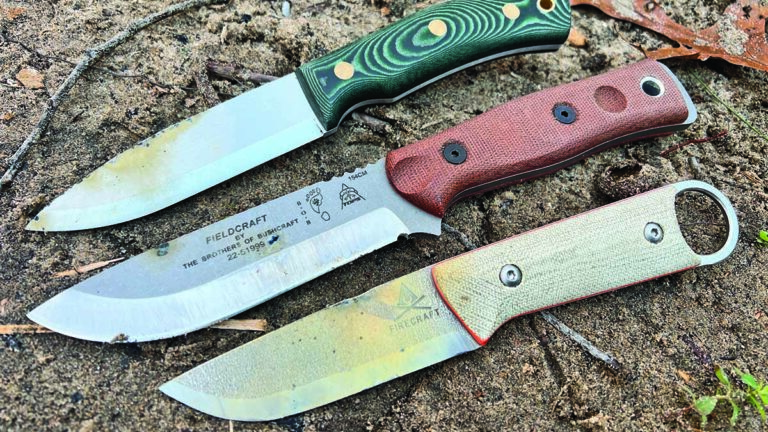
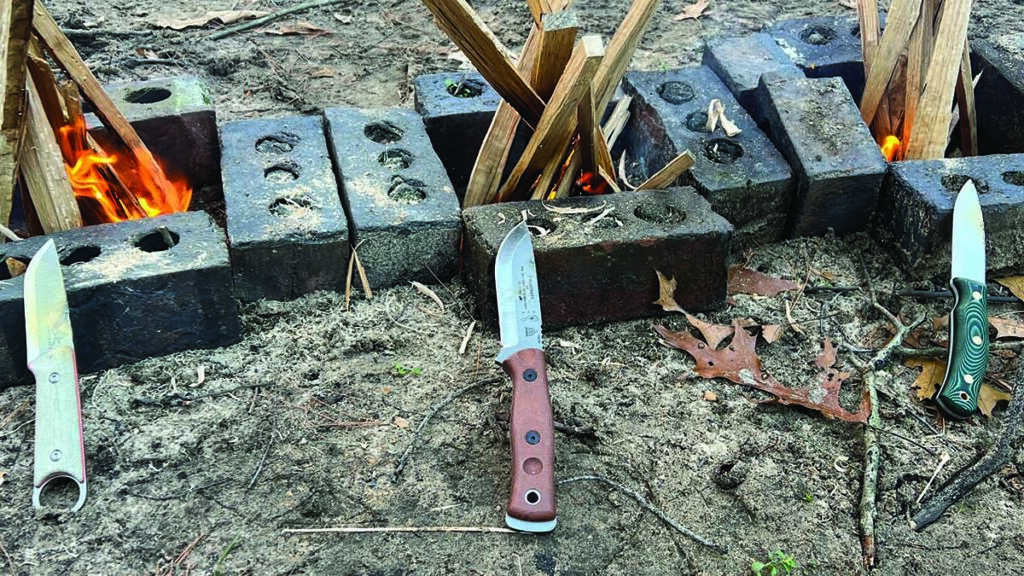
All three knives were tested side-by-side in equal conditions to see how well they performed in making a fire. All succeeded.
BLADE® Editor Steve Shackleford asked me to test the knives in this capacity as long as it didn’t detract from the other standard knife testing. “Skip it if it’s too much,” he stated. “I don’t want to wear you out.” However, in the spirit of making the story as detailed as possible inside the 1,500-word limit, I tried the TOPS and White River knives with the handle divots to see if I could, in fact, start a fire using the bow drill.
I was unsuccessful with both but did end up getting a fire going with a cheap bow drill kit from Amazon. No matter how you slice it, using a bow drill is just a huge pain in the keister and I’d rather stick a standard lighter in every pocket of my gear and an extra one in my boot than have to resign myself to using a bow drill.
A large reason why I really didn’t like using the divot features was that they really require you to keep the knife in the sheath. Otherwise, you’re just sitting there putting pressure on a knife with the edge floating out in space. It is easy to get into a trance while using a bow drill, and I found myself not paying attention at several points—not a safe situation.
Holding the knives in their sheaths is not very comfortable as they are hard Kydex. There was no real comfortable way to put pressure on the drill while gripping the sheath. Eventually, I gave up and decided if I ever did have to use a bow drill, I’d just find another piece of wood and carve a divot with the knife instead.
White River Knife & Tool FC-PKO
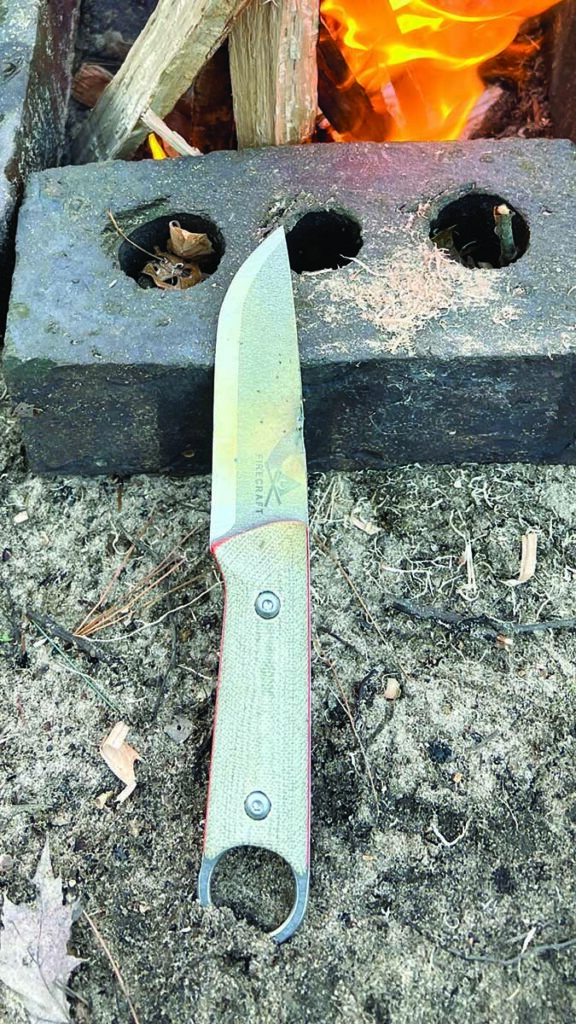
The White River FC-PKO is an end-stage tool in that it can readily start fires, the author noted, but lacks the strength and blade thickness to take down anything more than sticks.
White River Knife & Tool makes excellent knives. In fact, they are some of the most well-laid out and functional I’ve tested in my time with BLADE®. I have used the company’s larger FC7 as my main deer hunting knife in camp and have, between myself and my friends, packed out no less than 50 deer with it. I was happy to review the smaller FC-PKO, sort of a little brother to the FC7.
The FC-PKO is a modified puukko style with a Scandi grind and a ring pommel. The Kydex sheath is low profile. My initial impressions were that the knife is small, thin and razor sharp. I immediately thought it would be a perfect knife for pheasant or duck. I found it a champion at cutting tinder and kindling, but not up to larger work. The knife is an end-stage tool in that it can readily start fires, but lacks the strength and blade thickness to take down anything more than sticks. You’ll need a larger tool to actually prepare the wood prior to using the FC-PKO.
As far as fire-making ability, it is a solid performer. The knife has a small notch on the spine that ignites the ferro rod easily. The edge can trim extremely fine curls of tinder. Where I ran into problems was the ring pommel. I have large hands and long fingers, so this may not be an issue to everyone, but I found my pinky largely just floating in space. I couldn’t get comfortable with the ring. That said, it is overall a great knife that will ultimately see years of service on my belt.
White River Knife & Tool FC-PKO Specs Knife Type: Modified puukko Blade Length: 3.7” Blade Steel: CPM S35VN stainless Blade Grind: Scandi Blade at Thickest: .125” Handle Material: Micarta® w/orange liners and bow-drill divot Weight: 4.6 ozs. Overall Length: 8.1” Sheath: Black Kydex w/striker loop Striker: Included, basic rubber grip Country of Origin: U.S.A. MSRP: $200
TOPS Knives Fieldcraft
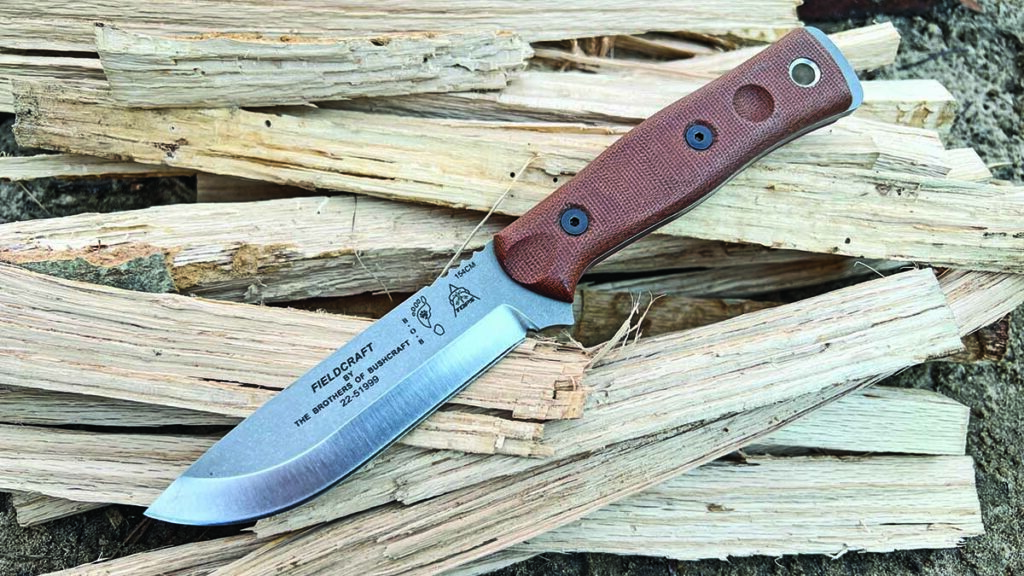
The author described the Fieldcraft as “a beast of a knife that weighs nearly a pound and is built like a tank.”
The TOPS Knives Fieldcraft by Brothers of Bushcraft is a beast of a knife that weighs nearly a pound and is built like a tank. The edge is razor sharp despite the steep grind and can split medium-size firewood easily. The handle is thick and robust and you can really get a grip on it. I find large knives like this almost too much for regular use, but this one fits into the niche of being large enough for constant use and not too big to be a burden.
The knife has a striker cut in the pommel as opposed to the blade spine. That said, you can order it with a sharpened spine if you wish. I wanted to test the base model to get an idea of what the average owner would experience. If I want to add a sharp spine, I can do so on my grinder or have TOPS do it. The pommel striker is not easy to get used to—you have to find a safe direction to point the blade, which can be difficult. That said, you can leave it in the sheath for this part—just be careful not to launch it out while striking. The cutout is effective once you get used to it.
TOPS Knives Fieldcraft Specs Knife Type: Full-size bushcrafter Blade Length: 4.75” Blade Steel: 154CM stainless Blade Grind: Modified Scandi Blade at Thickest: .19” Handle Material: Tan canvas Micarta® w/red liners and bow-drill divot Weight: 14 ozs. Overall Length: 10” Sheath: Black Kydex w/striker loop Striker: Included, basic aluminum grip Knife to Know: There are numerous other Fieldcraft models available in different materials and colors Country of Origin: U.S.A. MSRP: $295
Casström No. 10 Swedish Forest Knife
According to the author, the Casström “has everything I like and nothing I didn’t—not too big, not too small and pleasant to look at.”
The classic-looking Casström No. 10 Swedish Forest Knife is reminiscent of such Scandinavian knives as the puukko. It is not a traditional puukko but rather a somewhat modern take on the longstanding Nordic tradition of general-use fixed blades. Many American knives in the bushcraft world have a somewhat gritty, tactical feel and a somewhat industrial appearance. The No. 10 is not terribly exciting in looks but hides its function under a gentle exterior. It was my favorite knife in the review, which may surprise you. It has everything I like and nothing I didn’t—not too big, not too small and pleasant to look at.
The knife has a smooth grip—be careful if you’re not wearing gloves, it can get a tad slippery—and a plain, graceful blade. The angle of the spine is sharpened but not so aggressively that it would risk injury. It is not a particularly thick blade but can handle some medium-to-small splitting work if you’re careful, and makes kindling and scrapes tinder well. The knife strikes easily anywhere on the spine and offers a great deal of control. Of note, the sheath is leather and has a ferro rod with a matching green/black Micarta® grip. As a set the knife and rod look very nice together. The rod was also the easiest to hold onto thanks to it having the largest grip area.
Casström No. 10 Swedish Forest Knife Specs Knife Type: General-purpose Scandi Blade Length: 3.75” Blade Steel: Sandvik 14C28N stainless Blade Grind: Full flat Blade at Thickest: .13” Handle Material: Green/black Micarta® w/black liners Weight: 5.75 ozs. Overall Length: 8.6” Sheath: Black leather w/striker loop Striker: Included, matching green/black Micarta handle Knife to Know: According to the author, the knife has the most user-friendly sheath of the test bunch Country of Origin: Sweden MSRP: Approximately $200
Fire Starter Knife Final Cut
Starting a fire can be a challenge, especially in adverse conditions. Considering just how cheap common lighters and survival matches are, knives like the ones in this article should probably not be your primary means of starting a fire in an emergency. These knives are capable tools that provide a level of redundancy to your kit in some very good, non-obtrusive ways. The base-level skills needed to start a fire can be obtained with each of these knives with relative ease, but you will still need to make sure to have the skills necessary to maintain a fire in the wilderness.
Always be sure that you are not making a bad situation worse with fire, and make sure you’re not using a knife under less-than-ideal conditions. If you have a lighter or matches, use them first, especially in the dark.
With a simple finger flick or even in promo art, today’s flipper knives fly.
Early flipper folders were used in conjunction with assisted-opening mechanisms as a means for initiating movement, allowing the spring or torsion assists to open the blades the rest of the way. A few years later, folder pivots incorporated ball bearings, nearly negating the need for assisted-opening mechanisms on flippers.
This reduced friction simplified folder construction and provided glassy smooth blade rotation. Although a few companies still offer assisted-opening flipper folders, most production versions rely on ball bearings.
Flipper Folders: Function Flows From Form
A flipper tab and ball bearings don’t necessarily equate a folder with quick action and secure deployment. A flipper mechanism will not work properly without a well-designed detent.
Imperative is the detent’s power to secure and hold the blade shut. When placing pressure on the flipper tab with an index finger, the user should be able to feel the grab of the detent. With more pressure on the flipper, the inertia of the blade overrides the pressure of the detent, and kinetic energy swings the blade into the fully open and locked position.
An imprecise detent results in either sloppy action or a flipper mechanism that requires too much pressure against the narrow tab. Optimally, with pressure on the flipper tab, the detent holds its load for a second before letting the blade go with enough energy to snap it open.
Finding Fun In The Fidget Factor
It’s the flipper action that is so satisfying. It imbues a “fidget factor” that causes knife users to snap open their folders while watching TV, talking on the phone, lying in bed or practicing any number of mundane daily routines.
The latest flipper folders not only offer pleasing aesthetics but stay true to the ideals of their predecessors. With premium materials, designs that make use a pleasure and looks that astound, they epitomize some of the coolest knives around.
Best Flipper Knives
Kershaw Inception
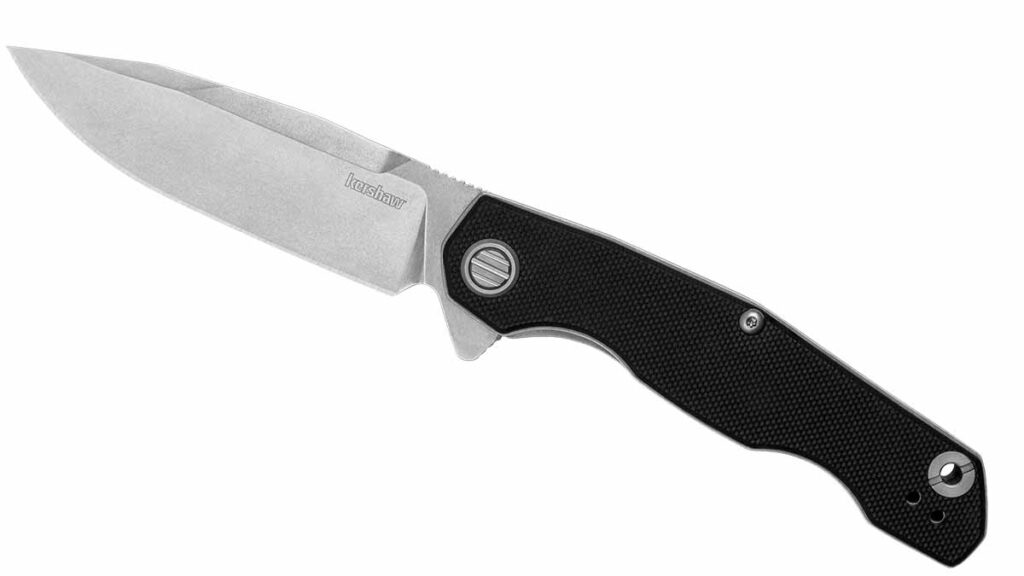
The stonewashed blade of the Kershaw Inception pivots on KVT ball bearings. The custom pivot collar adds a touch of class.
At Kershaw, the Inception is looking good with performance to match. “I love the clean, stylish look,” related Kershaw Marketing Manager Dominic Aiello, “but the satisfyingly smooth action is what really makes the Inception a top-notch manual everyday carry.”
The flipper tab was not designed with the intention of acting as a single guard, Aiello says, but rather in combination with the textured handle overlays to help prevent the user’s hand from slipping. Along with that, the D2 tool steel blade .11-inch at the thickest provides enough heft to balance durability and ease of slicing. The clip is reversible and deep carry with flush screws that won’t snag in the pocket or impede quick deployment.
Kershaw Inception Specs Company: Kershaw Blade Length: 3.25 inches Blade Material: D2 tool steel Handle Material: G-10 Lock: Linerlock Weight: 3.1 ounces Pocket Clip: Ambidextrous/reversible, deep carry, tip up Closed Length: 4 inches Country Of Origin: China MSRP: $99.99
Medford Knife & Tool USMC Fighter Flipper
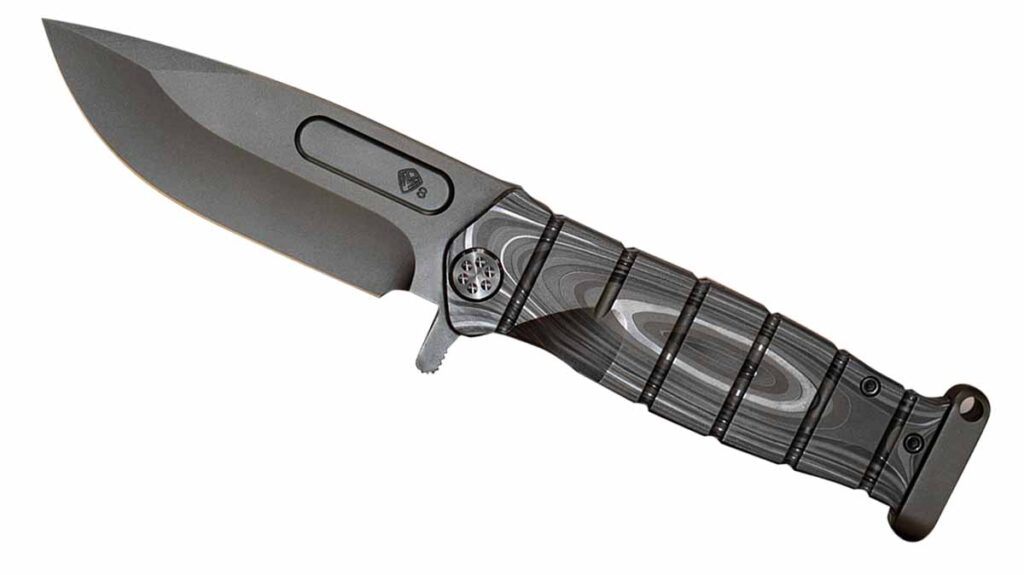
The CPM S35VN stainless blade of the Medford Fighter Flipper is 3/16-inch thick at the thickest and has a Rockwell hardness of 58 HRC.
The USMC Fighter Flipper from Medford Knife & Tool boasts an iconic name and incorporates titanium along with other highly durable components. “Where to start?” commented Medford representative Geoff Oprandy. “First, the USMC Fighter Flipper has superior design, engineering and aesthetics. When Greg Medford was inspired to make this knife, it didn’t take long for initial sketches to appear. He wanted a worthy companion piece for our top-selling Fixed Fighter, which has been a category king for quite some time.”
Oprandy describes the USMC Fighter Flipper as “a unique mixture of titanium components with the best CPM S35VN blade steel. This is a big, manly knife that’s as comfortable working as it is cruising around in your pocket. There is so much going on with it that it’s hard to take in, from the retro milling on the handles, drop-point blade, and integral Ti pommel to the bearing pressed into the one-of-a-kind pocket clip. The tab is designed to be a tad longer and has a unique radius with a knurled feature. For being a large knife [it provides] great purchase, and the flipper tab combined with the finger-indexing groove enable a great grip. The knife runs on phosphor-bronze washers custom made to meet our specs.”
According to Geoff, the knife has a special connection with the United States Marines Corps. As designer Greg Medford related, “When you hold it in your hand, almost 250 years of Marines speak to your soul.”
The design is intended to feel at home with users who prefer the “connection” made with a large folder, Oprandy says. “When people position the knife correctly and begin to use it,” he stated, “the energy transfer seems balanced, natural and confidence inspiring.”
USMC Fighter Flipper Specs Company: Medford Knife & Tool Designer: Greg Medford Blade Length: 4.25 inches Blade Steel: CPM S35VN stainless Handle Material: Titanium Pivot Action: Phosphor-bronze washers Weight: 9.8 ounces Pocket Clip: Titanium; standard carry Closed Length: 5.25 inches Country Of Origin: U.S.A. MSRP: $840 and up
Rick Hinderer Knives Full Track Spearpoint “Nuked”
The Full Track Spearpoint “Nuked” has a removable tool seated in the spine for disassembly/assembly of the knife. The scale on the show side is removable to store spare washers and spacers.
Sam Santa Rita, general manager of Rick Hinderer Knives, says the Full Track Spearpoint “Nuked” is a bigger version of the company’s “very popular Half Track model. It is one of our larger folders at 3.75 inches and has titanium handles with G-10 inserts. The Full Track features a removable tool seated in the spine of the folder that is capable of complete disassembly of the knife.” The folder also utilizes a G-10 insert cover on its show side that hides a pocket for the storage of steel inserts and washers for the Rick Hinderer Knives Tri-Way Pivot System. This allows the user to easily swap from bearings to washers or vice versa depending on the situation.
“Its size and durability coupled with the ease of maintenance and ‘customizability’ makes the knife a perfect hard-use folder capable in any environment,” Sam added. The Full Track is available in stainless blade steel options of CPM S35VN, CPM 20CV and M390. Another blade steel option will be released later this year.
The Full Track flipper tab doubles as a single guard, while the blade pivots on caged thrust bearings. Meanwhile, the Tri-Way Pivot System allows for the aforementioned use of Teflon™ and phosphor-bronze washers as well, which come standard with the knife.
Full Track Spearpoint “Nuked” Specs Company: Rick Hinderer Knives Designer: Rick Hinderer Blade Length: 3.75 inches Blade Steel: CPM 20CV stainless Handle Material: G-10 Lock: Framelock Pocket Clip: Yes Weight: 6.9 ounces Closed Length: 5.125 inches Country Of Origin: U.S.A. MSRP: $820
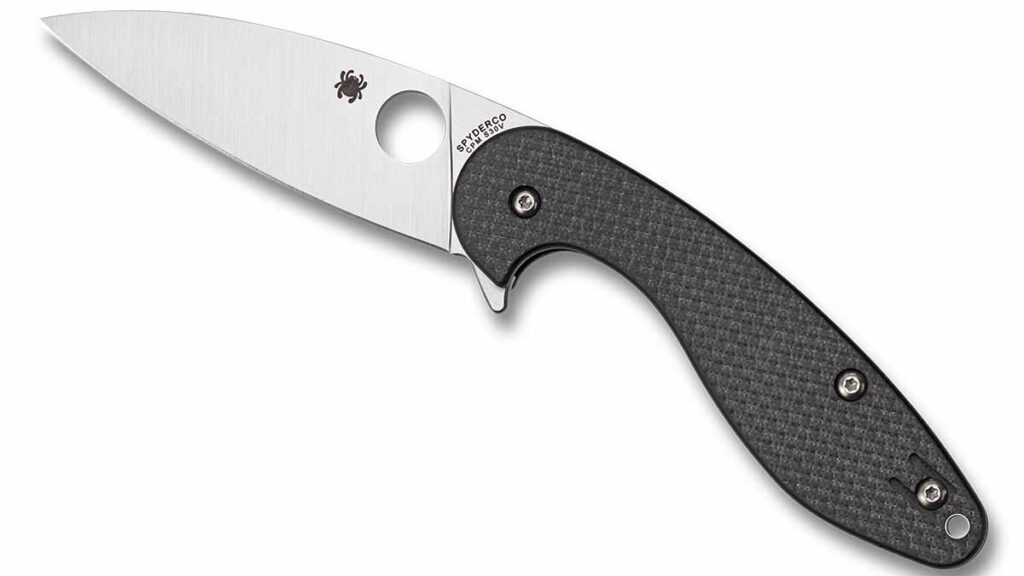
Spyderco Sliverax
The Sliverax is the first factory folder to combine Spyderco’s Compression Lock® with a flipper-style opener. Blade thickness and grind: .138 inch at the thickest and full flat.
The Sliverax is a bit of a departure for Spyderco. “It’s a flipper design, which is not common among Spydercos,” explained Joyce Laituri, company marketing manager. “The designer, Paul Alexander, is a different type of cutlery designer we have worked with in the past. He holds a doctorate in industrial design and mechanical engineering, and is a leading researcher for a company in the automotive industry.”
The Sliverax brings a shape with seamless flow and a slightly negative blade angle to enhance leverage, placing the point on the knife’s centerline for utility and control. “The negative angle also shortens the opening arc combined with the round hole and flipper mechanism for a full spectrum of positive, high-speed one-hand-opening options,” Joyce commented.
“The flipper tab doubles as a guard,” she continued, “and it’s easy to see and feel when the knife is held. There is a large, deep finger choil already, and the flipper mechanism in the open position extends the choil, creating a comfortable and deep guard for the index finger, or pinky if held in a reverse grip.”
Laituri describes the opening experience with the Sliverax as “slick as a Slip & Slide.” The mechanism features a phosphor-bronze bushing with ball bearings and a nested liner for structural strength. The CPM S30V stainless blade is exceptional in its combination of toughness, wear resistance and corrosion resistance as well, while the ergonomics of the handle are derived directly from its innovative shape, super-thin choil and expansion at the butt to fill the hand.
Spyderco Sliverax Specs Company: Spyderco Designer: Paul Alexander Blade Length: 3.48 inches Blade Steel: CPM S30V stainless Handle Material: Carbon fiber/G-10 laminate Lock: Compression Lock® Weight: 3.3 ounces Pocket Clip: Deep pocket, wire, ambidextrous, tip up Closed Length: 4.52 inches Country Of Origin: Taiwan MSRP: $306
Editor’s Note: Mike Haskew and Dexter Ewing contributed to this post.
Eyeball a few factory knives that will debut at the BLADE Show.
For the knife event where more cutlery companies introduce more of their new knives, the BLADE Show takes a backseat to none—which figures since the BLADE Show is the sharpest shindig of them all.
On this and the accompanying pages are samples of some of the factory knives that either debuted at the BLADE Show or had their consumer show introductions there.*
We didn’t have room for all the debut knives of every exhibiting company, so do some legwork and you’ll probably find new/debut knives you like even better than these.
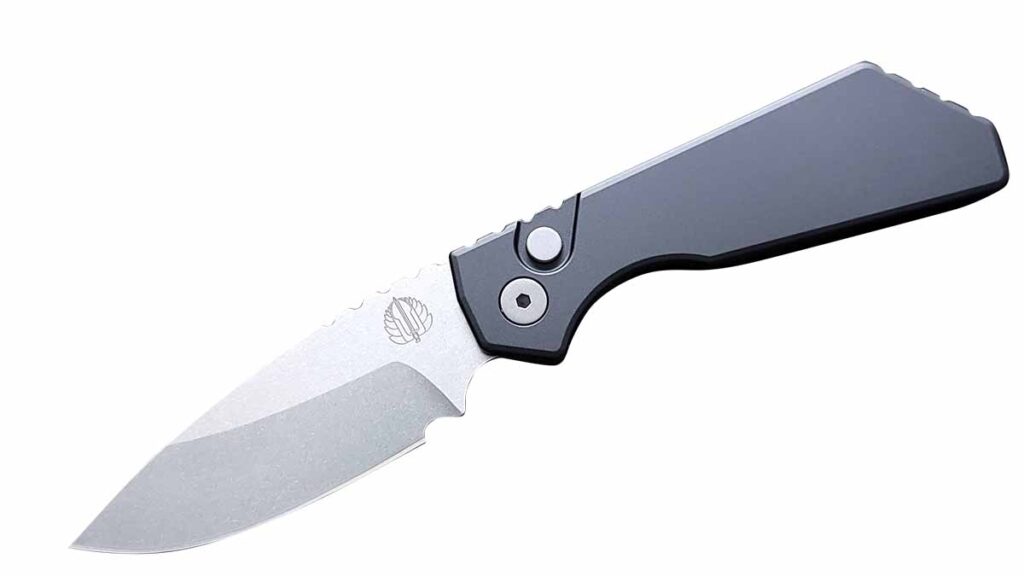
STRIDER PT+ AUTO/PRO-TECH
Knife type: EDC folder/automatic Blade length: 3.14” Blade material: MAGNACUT stainless steel Blade grind: Flat Handle material: Lightweight anodized aluminum Lock/opening mechanism: Push-button auto Pocket clip: DLC-coated mini deep carry Special Features: Strider’s signature design and compact form have been updated to a slightly larger size; the spring has been upgraded to snap the blade open with authority Weight: 3.21 ozs. Closed length: 3.96” Country of origin: USA MSRP: $300 AVAILABLE FOR SALE TO THE PUBLIC: NOW; through the year additional colors and variations will be available (image by Derek Lawrence)
SHADOW/KETUO
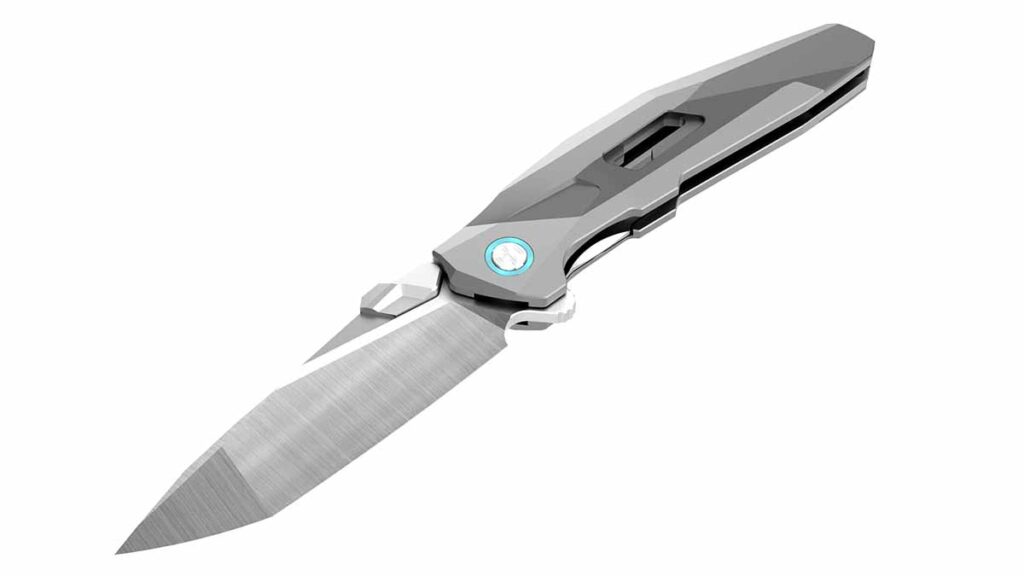
Knife type: Flipper folder Blade length: 3.78” Blade material: Bohler M390 stainless steel Blade grind: Flat Handle material: 6Al4V titanium Lock mechanism: Flipper Lock Pocket clip: 6Al4V titanium Weight: 5.29 ozs. Closed length: 4.96’” Country of origin: China MSRP: $380-$420 AVAILABLE FOR SALE TO THE PUBLIC: June
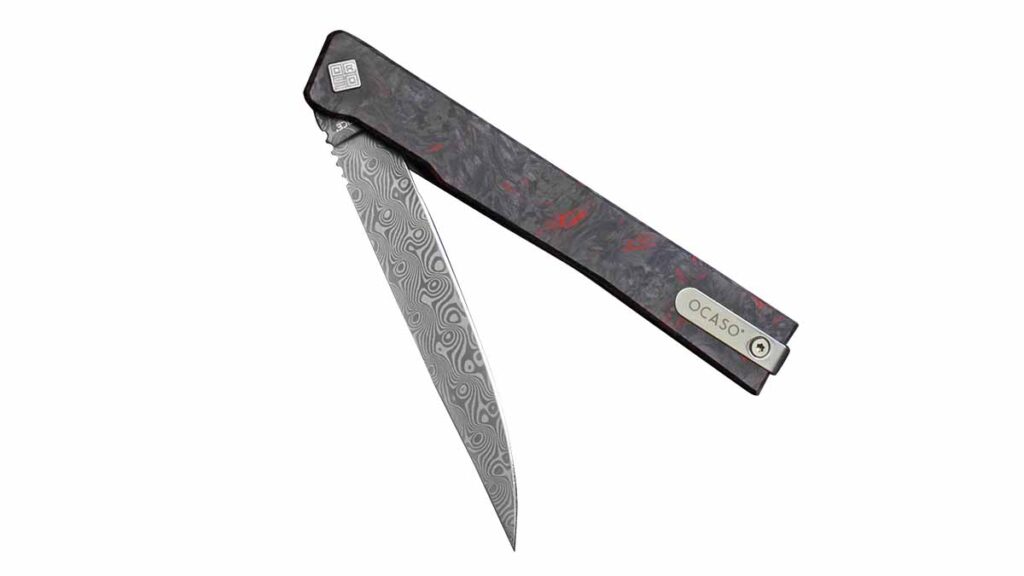
GENTLEMAN’S FOLDER/OCASO
Knife pattern: Gentleman’s folder Designer: Andrew Demko Blade length: 3.5” Blade material: Choice of CPM S35VN stainless steel or German damascus Blade grind: Full flat Handle material: Carbon fiber, titanium or fat carbon Lock/opening mechanism: Flipper w/linerlock or framelock Pocket clip: Ambidextrous stainless steel in a Demko signature fold-over deep-carry design Action: Stainless-steel caged bearings Weight: 1.7 ozs. (carbon fiber) or 2.5 ozs. (titanium) Closed length: 4.26” Country of origin: Taiwan or Italy MSRP: $209.99-$399.99 AVAILABLE FOR SALE TO THE PUBLIC: NOW
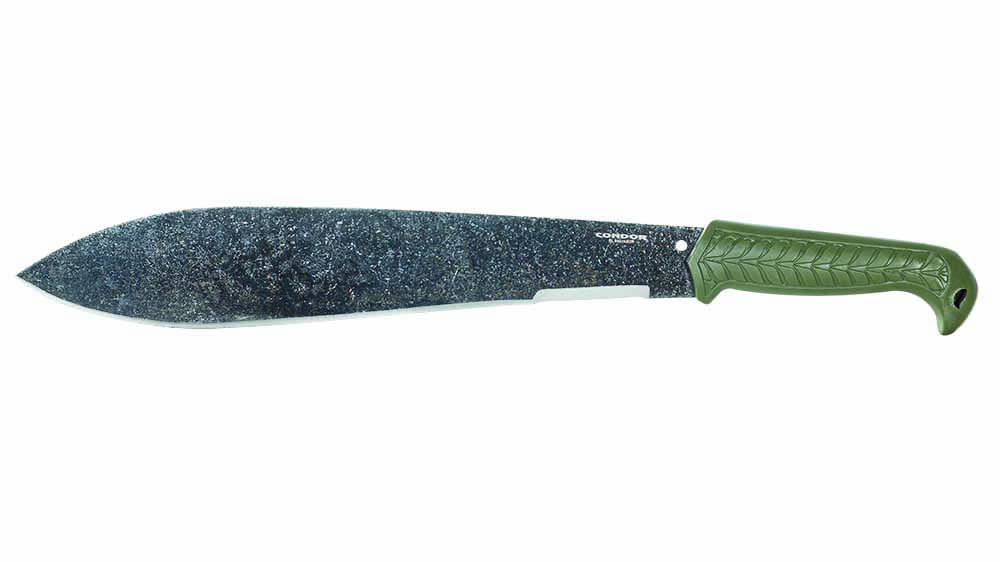
TERRACHETTE/CONDOR TOOL & KNIFE
Knife type: Bushcraft machete Blade length: 14.6” Blade material: 1075 carbon steel Blade grind: Convex Handle material: High/impact polypropylene Special features: Near the handle the edge is designed for more controlled carving; extended pommel Weight: 25.4 ozs. Overall length: 20.72” Country of origin: El Salvador MSRP: $69.69 AVAILABLE FOR SALE TO THE PUBLIC: Most everywhere by BLADE Show
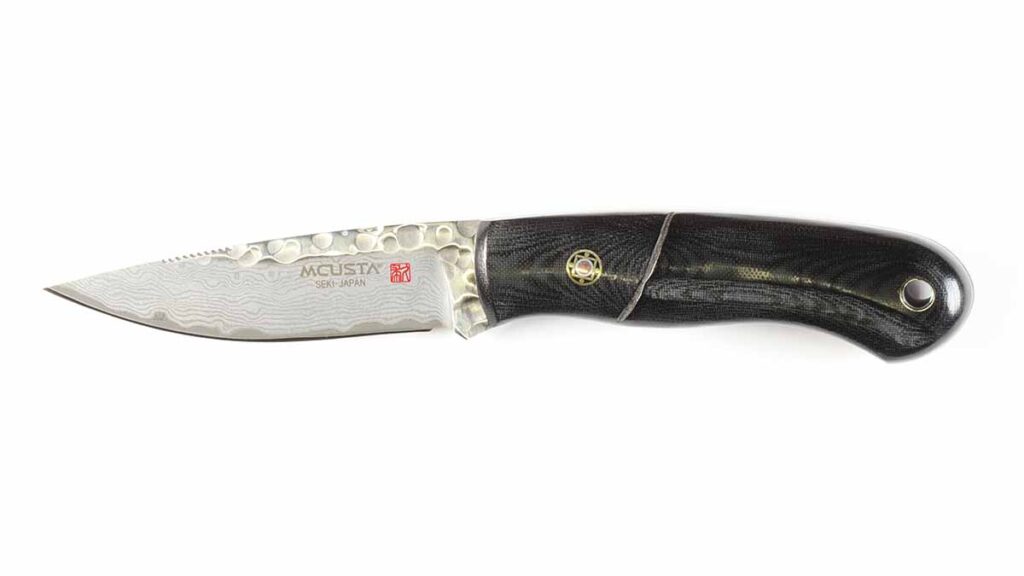
RIE COLLABORATION SPORT 100/MCUSTA
Designer: Mike Irie Knife pattern: Hunter Blade length: 3” Blade material: VG-10-core damascus Blade grind: Hollow Handle material: Micarta® Special features: Tsuchime-finished blade Weight: 3.4 ozs. Overall length: 6.5” Country of origin: Japan MSRP: $300 Available for sale to the public: Summer ’23
WILLY/LIONSTEEL
Model type: Fixed-blade EDC Blade length: 2.55” Blade material: M390 stainless steel Blade grind: V flat Handle material: Choice of canvas Micarta®, woods, carbon fiber Special features: Titanium guard Weight: 2.04 ozs. Country of origin: Italy MSRP: $201.70 (at press time rate of exchange) Available for sale to the public: June
VICEROY/MEDFORD KNIFE & TOOL
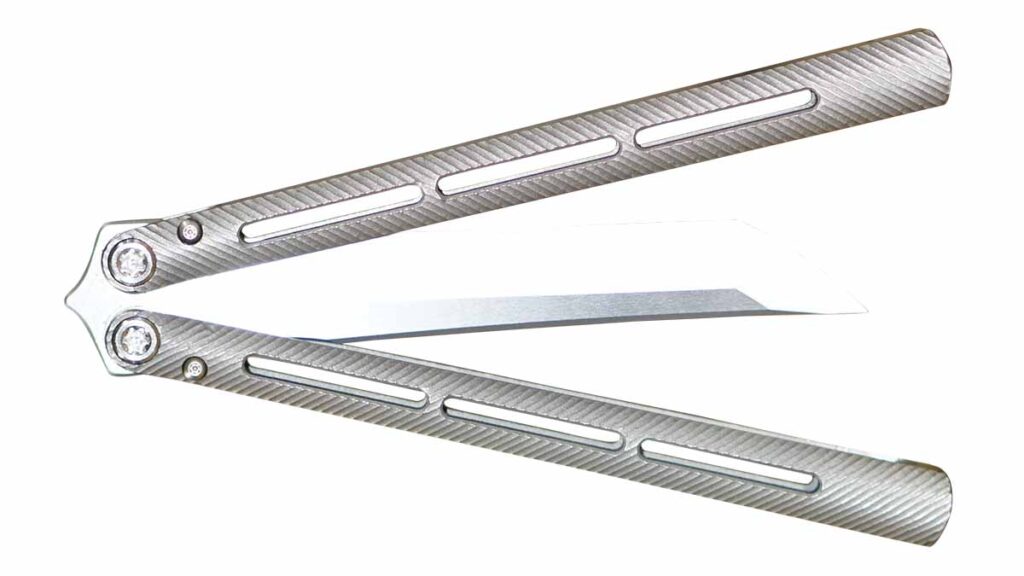
Knife pattern: Balisong Blade length: 4.5” Blade material: CPM S45VN stainless steel Blade patterns: Choice of drop point, tanto, dagger, seax and wharncliffe Handle material: Titanium Handle lock: Latchless Pocket clip: None Special features: Integral solid channel, zen pin, custom bushings, rounded handles, Chaplin groove, machined handle texture, hand-ground blades Weight: 4.3 ozs. Closed length: 5.7” Country of origin: USA MSRP: $750 AVAILABLE FOR SALE TO THE PUBLIC: At BLADE Show ’23
VULPIS/FOX
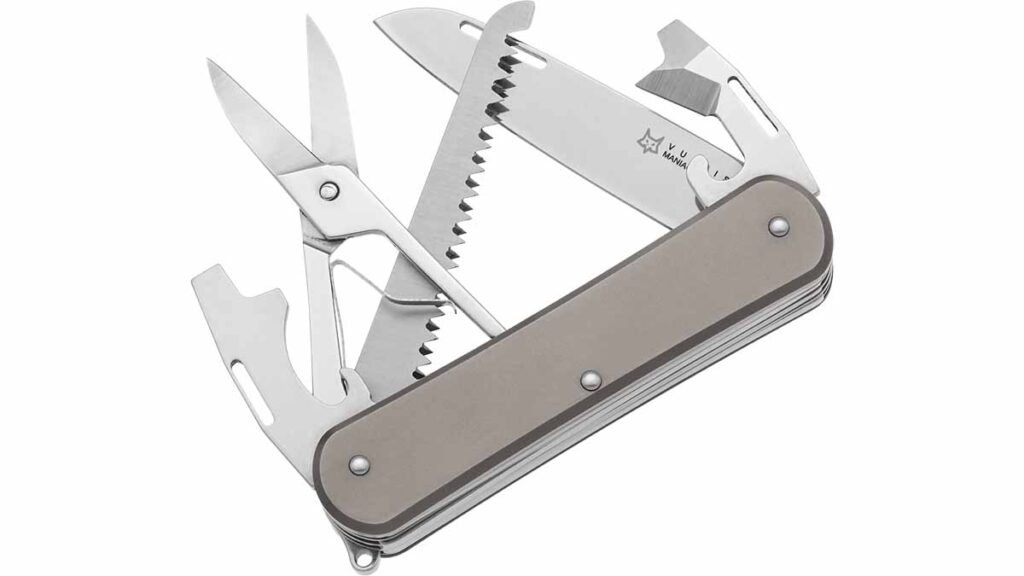
Model type: Multi-purpose multi-blade Main blade length: 5.31” Blade material: M390 stainless steel Blade grind: Flat Handle material: Bead-blasted titanium w/lanyard hole Lock/opening mechanism: Slip joint Special features: Bottle opener, can opener, flat-head screwdriver, hacksaw and scissors Weight: 2.25 ozs. Closed length: 2.94” Country of origin: Italy MSRP: $119 AVAILABLE FOR SALE TO THE PUBLIC: May
STOK BOWIE/SPYDERCO
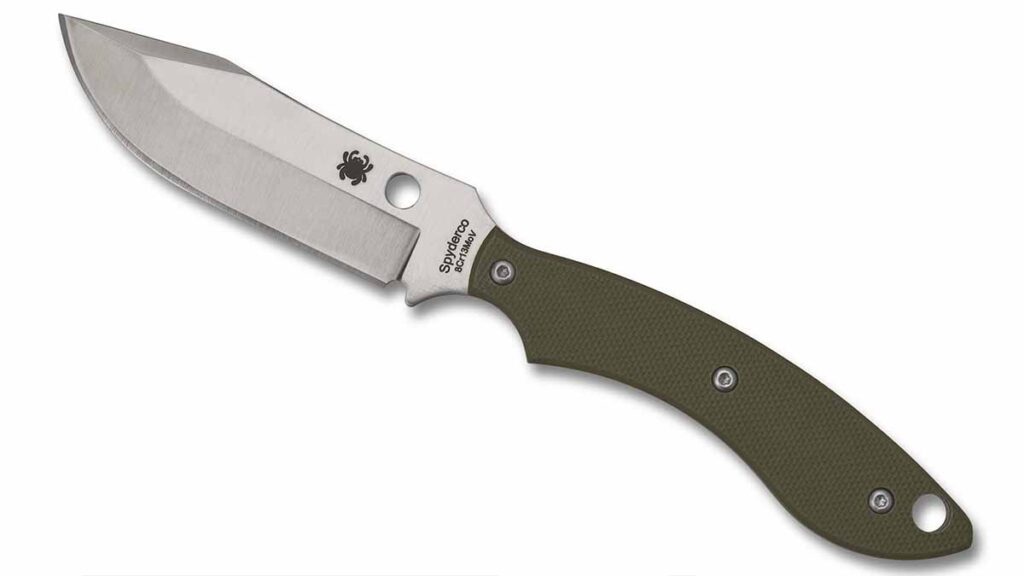
Model type: Fixed blade Blade length: 2.95” Blade material: 8Cr13MoV stainless steel Blade grind: Saber Handle material: OD green G-10 Knife to know: Designed as an urban EDC fixed blade Weight: 2.1 ozs. Overall length: 6.45” Sheath: Boltaron® w/G-Clip™ attachment for adjustable belt and inside-the-waistband carry Country of origin: China MSRP: $100. AVAILABLE FOR SALE TO THE PUBLIC: NOW
SPARTAN-KA-BAR/SPARTAN BLADES
Designer: KA-BAR Knives Overall length: 12” Blade length: 7” Blade at thickest: .165” Blade material: CPM MagnaCut stainless Rockwell hardness: 60-62 HRC Blade pattern: Clip point Blade grind: Flat saber Blade finish: Choice of PVD-tungsten DLC (flat black) or ZrN (flat dark earth) Handle Material: Kraton G® Buttcap/guard: 301 stainless steel w/PVD-tungsten DLC (flat black) coat Weight: 10.78 ozs. Sheath: Leather Country of origin: USA MSRP: Starts at $325 Available for sale to the public: NOW
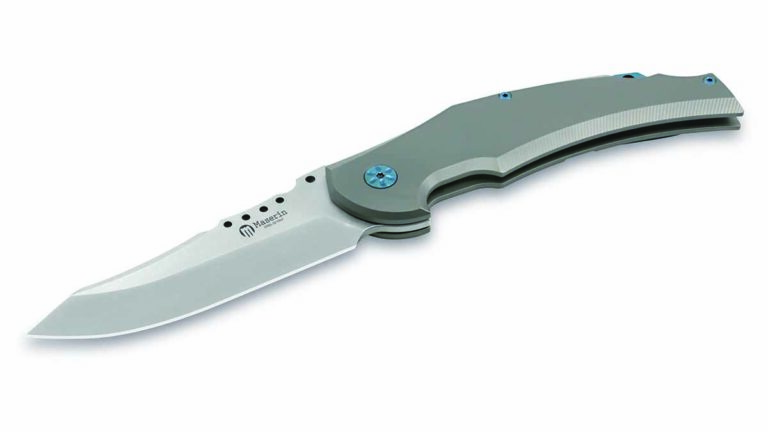
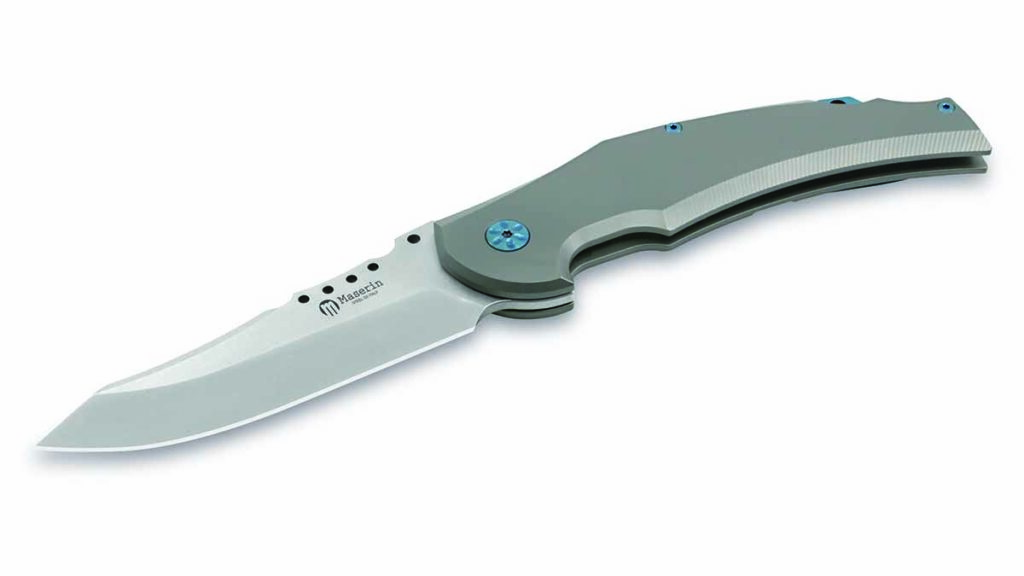
ENERGY/MASERIN
Model type: EDC flipper folder Blade length: 4.133” Blade material: D2 tool steel Blade grind: Flat Handle material: Titanium Pocket clip: Titanium Weight: 5.926 ozs. Closed length: 5.23” Country of origin: Italy MSRP: $328 Available for sale to the public: May
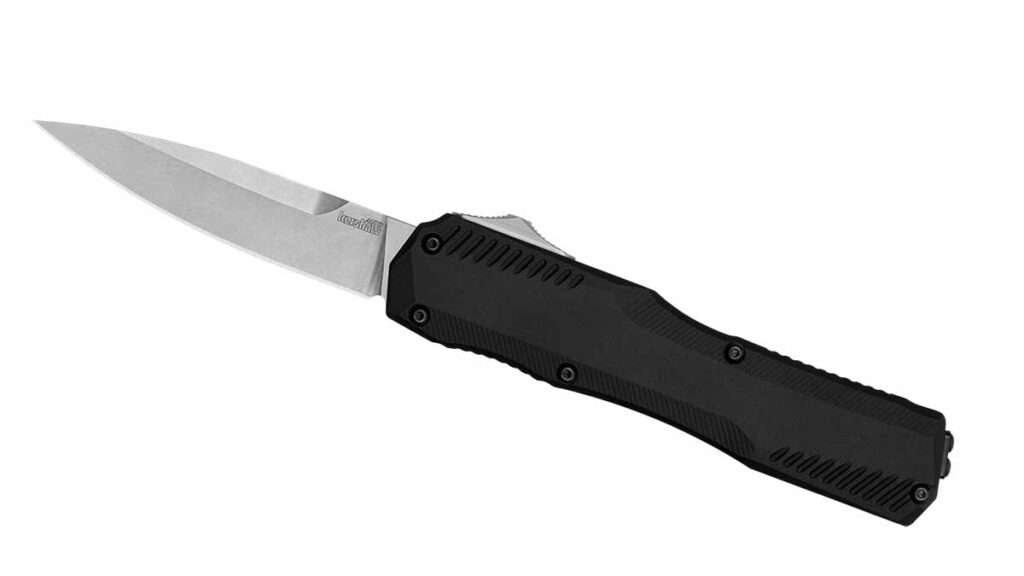
LIVEWIRE/KERSHAW
Model type: Out-the-front auto Blade length: 3.3” Blade material: CPM 20CV stainless steel Blade grind: Flat Handle material: Aluminum Pocket clip: Reversible deep-carry, steel Special features: Lightweight button Weight: 3 ozs. Closed length: 4.8” Country of origin: USA MSRP: $380 AVAILABLE FOR SALE TO THE PUBLIC: NOW
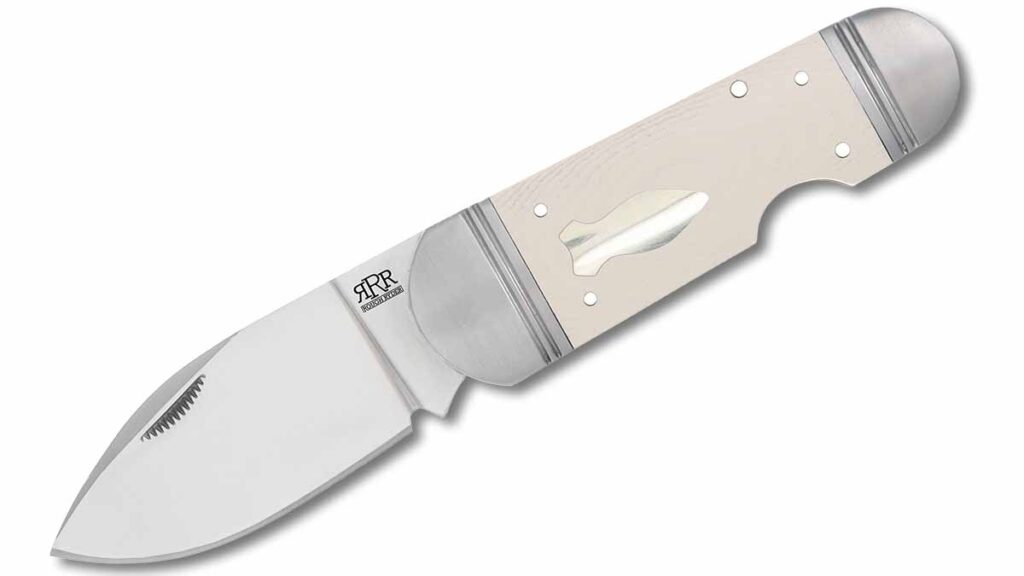
GHOSTFISH/ROUGH RYDER RESERVE
Designer: Brian Wilhoite Model type: EZ-Open sunfish Blade length: 2 7/8” Blade material: D2 tool steel Handle material: White Micarta® Lock/opening mechanism: Slip joint w/half stop Weight: 5.5 ozs. Closed length: 3 7/8” Country of origin: China MSRP: $84.95 AVAILABLE FOR SALE TO THE PUBLIC: Late fall
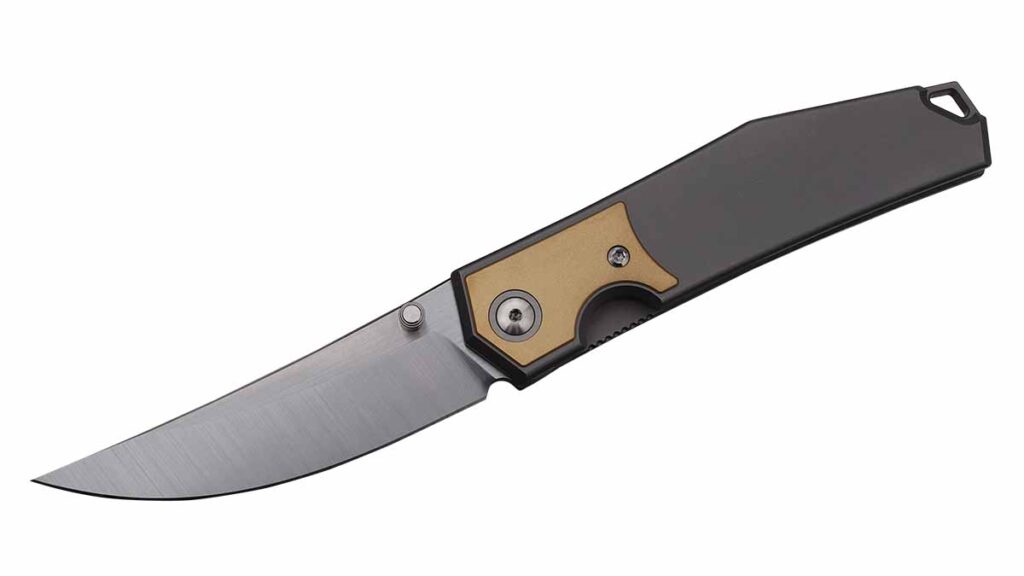
GMX/GIANTMOUSE
Model type: EDC /outdoor folder Blade length: 3.25” Blade material: CPM S90V stainless steel Blade grind: High flat saber Handle material: Titanium w/brass inlaid bolster Lock: Framelock Pocket clip: 3D-machined titanium Special features: Integral titanium handle Weight: 3.8 ozs. Closed length: 4.3” Country of origin: China; manufactured by Reate MSRP: $445 AVAILABLE FOR SALE TO THE PUBLIC: NOW
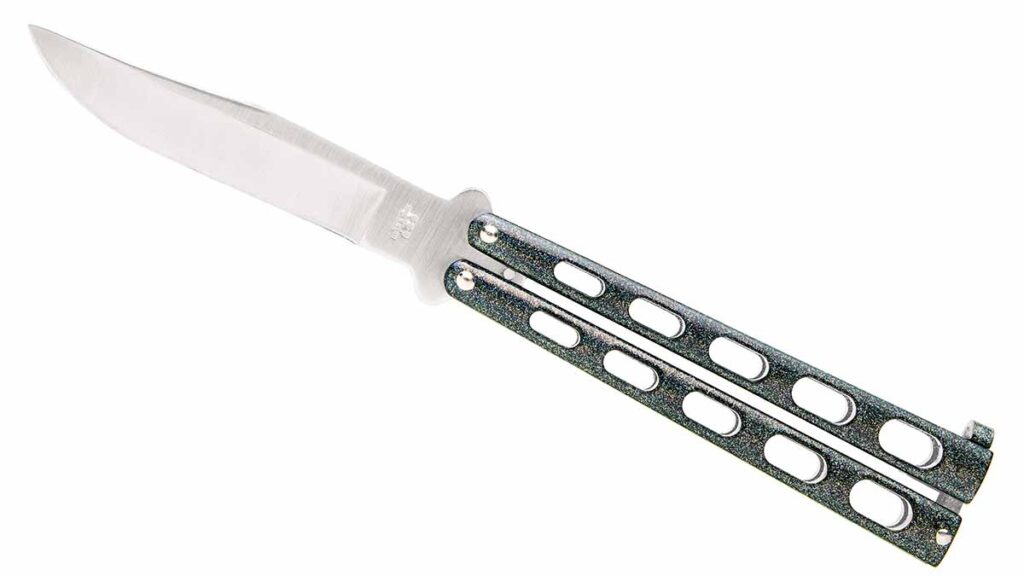
5” GALAXY BUTTERFLY/BEAR & SON
Model type: EDC balisong Blade length: 3 5/8” Blade material: 440 stainless steel Blade grind: Hollow Handle material: Zinc w/Galaxy finish Lock: Latch Weight: 5 ozs. Closed length: 5” Country of origin: USA MSRP: $68.99 AVAILABLE FOR SALE TO THE PUBLIC: NOW
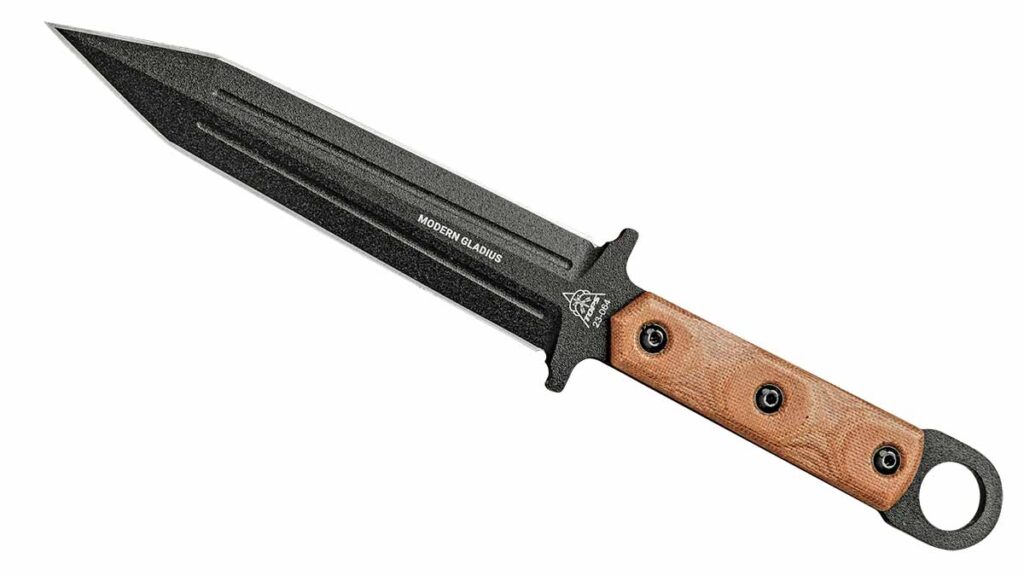
MODERN GLADIUS/TOPS KNIVES
Knife type: Tactical Blade length: 6.5” Blade material: 1095 high carbon steel Blade grind: Dagger/flat Handle material: Tan canvas Micarta® Knife to know: Blade has a double edge Weight: 8.3 ozs. Overall length: 11.5” Country of origin: USA MSRP: TBD AVAILABLE FOR SALE TO THE PUBLIC: TBD
YUUKI/LATAMA x VICTORIAM
Model type: EDC flipper folder Blade length: 3.5” Blade material: CPM 20CV stainless steel Blade grind: Kissaki-unokubi-zukuri compound; hollow belly and convex tip Handle material: Grade 5 titanium Lock: Button lock Pocket clip: Titanium Weight: 4.59 ozs. Closed length: 4 5/8” Country of origin: China MSRP: $200 (estimated) Available for sale to the public: May
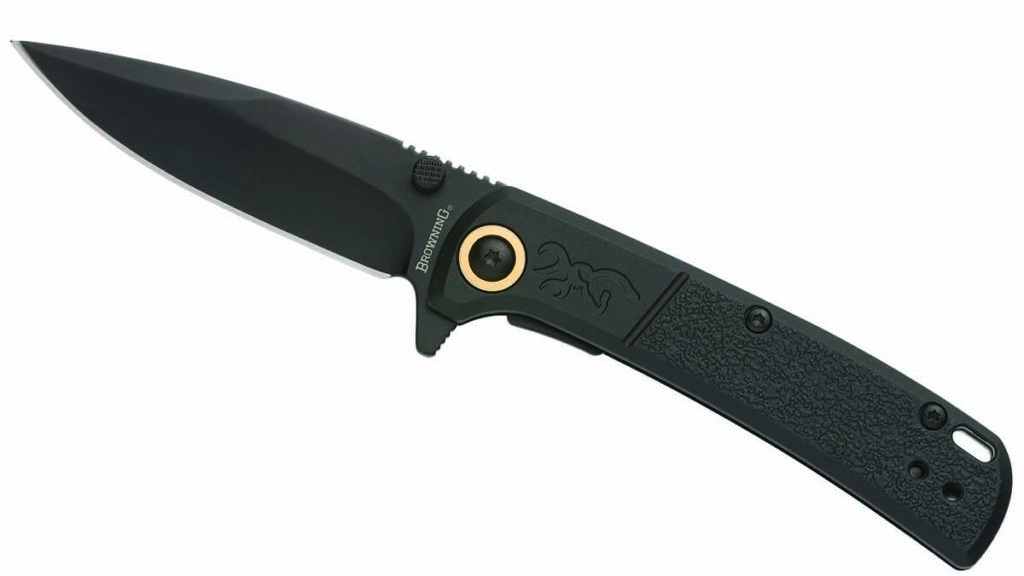
BUCKMARK SLIM/BROWNING
Knife type: Flipper folder Blade length: 2.75” Blade material: D2 tool steel Rockwell hardness: 56-60 HRC Blade pattern: Drop point Opening mechanism: Assisted Pivot action: Ball bearings Handle: Polymer Bolster: Stainless steel Pocket clip: Adjustable Lock: Linerlock Closed length: 3.75” Country of origin: China MSRP: $29.99 Available for sale to the public: NOW
LULBEGRUD/OUTLIER
Designer: Craig Caudill Category: EDC/outdoors/self-defense Blade Length: 3.68” Blade material: 52100 carbon steel Blade at thickest: 1/8” Blade finish: Parkerized and tumbled Blade pattern: Drop point Blade grind: Flat Edge sharpening angle: 18 degrees Handle: Coarse-textured, layered G-10 Weight: 6.84 ozs. Sheath: .08”-thick thermoplastic Overall length: 8.62” Sheathed weight: 8.26 ozs. Country of origin: USA MSRP: Approximately $200 AVAILABLE FOR SALE TO THE PUBLIC: At BLADE Show ’23
*Some of the knives shown for the first time at the show won’t be available for sale to the general public until later in the year. Check each individual knife’s spec box for details.
Classic and competent, no wonder why the clip-point knife remains among the most popular designs.
Clip-point blades are one of the most common profiles you will see throughout custom and production knives. You likely know the style, the familiar drop-off of the blade spine to a curved or linear transition that terminates at the blade tip.
The earliest noted clip-point blade style dates back to the Macedonian era. Flint-knapped stone blades in a clip-point shape were discovered from this time period. Today, clip points are found across a lot of knife genres from tactical to EDC to pocket knives to fixed blades.
Pros Of Clip Points
Due to its highly streamlined and optimized blade tip, the clip point has excellent puncturing capabilities. There is more of a true point that helps to penetrate thicker materials with ease. It is more aerodynamic than a drop point and even a spear point. Think of an arrowhead and how it penetrates, and you will get the idea. Clip points are also favored among the tactical crowd because of this characteristic.
The defined point also makes great scoring cuts because placing pressure on the blade tip results in the tip cutting through aggressively on the first cut. So, this blade shape is also one that is favored among those who use their knives for the trades, where having a good knife is imperative to the work at hand.
Cons Of The Clip Point
Conversely, the blade tip being tapered also results in a blade design that has a weaker tip. You cannot have everything, I guess! With a smaller clip-point blade like those found on pocket knives, refrain from any sort of prying with the tip because it will bend or break off entirely.
Clip-Point Styles
It’s interesting to note that there are different variants of the clip point blade. Two of the most recognizable are the California clip point and Turkish clip point.
California: Exhibits a long taper, which originates almost to the blade tang and gradually and progressively tapers down to the blade tip.
Turkish: It has a long taper as well (but not as dramatic as the California style) but also incorporates a little bit of a blade belly as well. The Turkish clip looks very stylish and eye-catching when done right.
You’ll see other variants like a saber ground clip point with a pronounced swedge, and even some fixed fighters with sharpened clip sections for added bite and powerful penetration.
Jack-Of-All-Trades
For general-purpose use, nothing beats a clip point for its versatility. You cannot go wrong by selecting a knife with this blade shape. Chances are high that if you are reading this, you already own a few knives that have a clip-point shape. If you don’t have any yet, here’s a rundown of 10 clip point blades knives that you should be on the lookout for and add one (or more) to your collection.
Among The Best Clip-Point Fixed Blade Knives Available Now
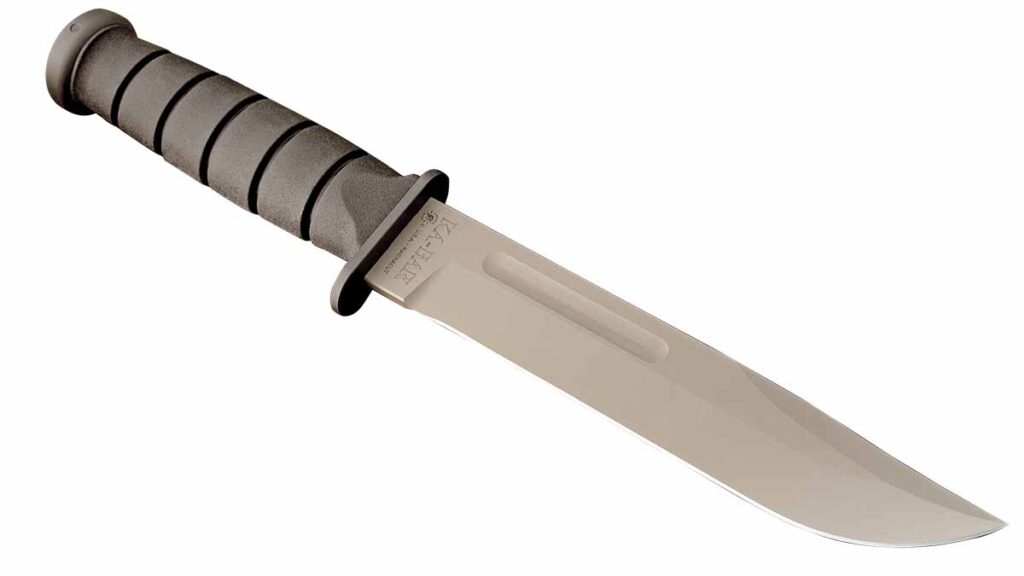
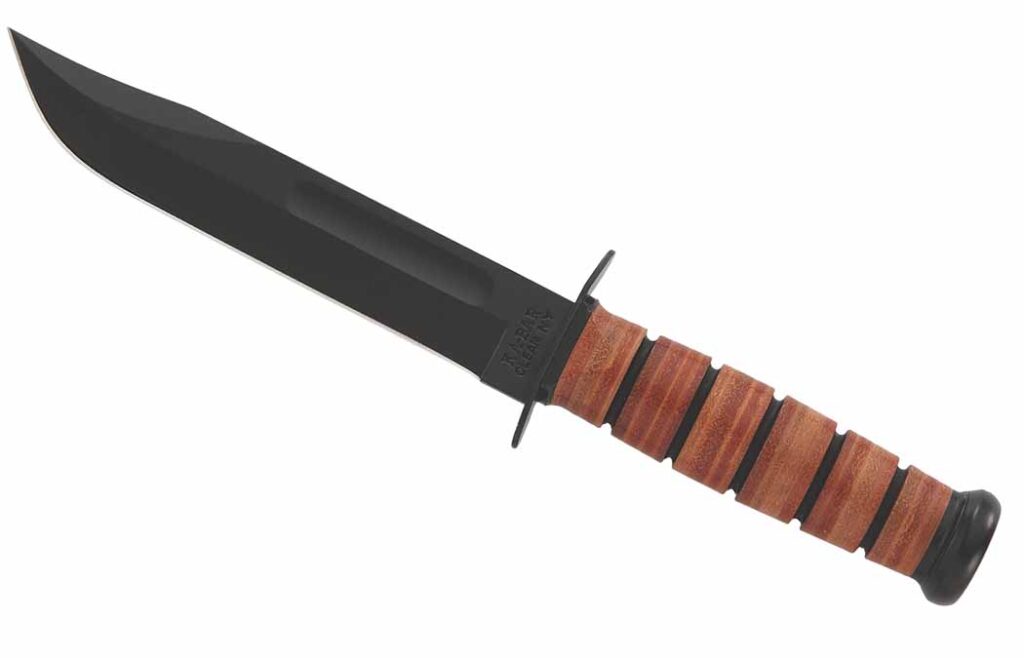
Kabar USMC Fighting Knife
This iconic fixed blade has seen action on battlefields the world over. This knife first saw action during WWII and it still is going to this day.
The 7-inch long blade is made from 1095 carbon steel, making it easy to maintain in the field. It’s fuller adds style and strength to the blade. The iconic stacked leather washer handle is both handsome as well as very practical with its deep grooves that enhance grip and the flat metal pommel which is useful for light hammering and crushing tasks. The double guard prevents your hand from sliding up on the blade. As a bonus, each USMC Fighting Knife comes with a leather sheath.
MSRP: $135 Origin: USA
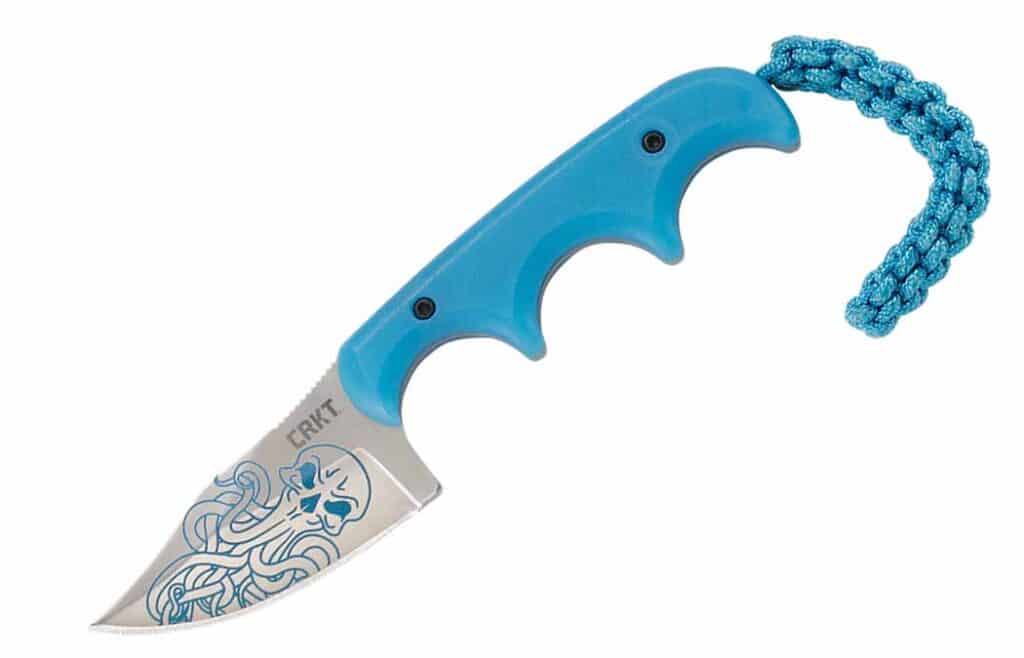
CRKT Minimalist Bowie
Designed by custom knifemaker Alan Folts, the Minimalist Bowie is one of Folts’ best-selling custom knives. It is available to the masses in the form of the CRKT version which sports a 2.1-inch long Bowie-style clip-point blade, made from 5Cr15MoV stainless steel.
Its prominent swedge adds style with function, permitting the blade easily penetrate most materials. The deep finger grooved handle has resin-infused fiber scales for light weight and strength. The entire knife is super comfortable to hold and it feels like the knife melts in your hand and remains very secure. It’s a small fixed blade without the bulk.
MSRP: $45 Origin: China
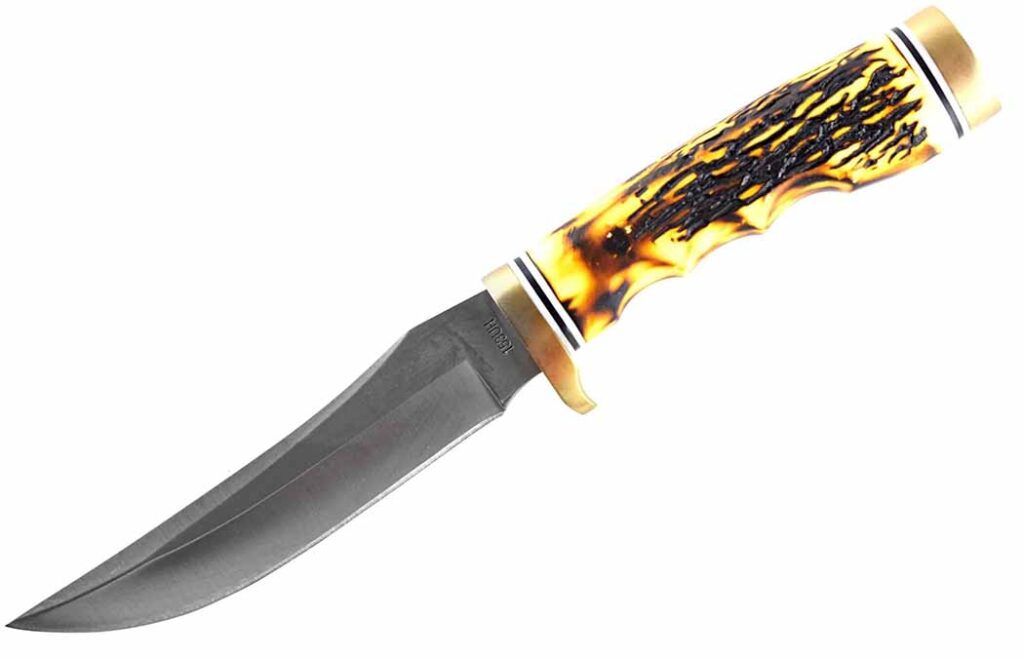
Schrade Uncle Henry Golden Spike
This one is an older design still manufactured today.
Its 5-inch 7Cr17MoV stainless steel clip point blade is a good example of what we call a California clip point, with its long taper to the blade tip. The handle is faux stag in Delrin, with finger grooves for security and control.
It is capped off at both ends with a brass guard and pommel to offset the overall appearance. This knife will fit the fill of an outdoor knife perfectly and not blow the budget. Each Golden Spike comes shipped with a leather sheath for easy portability.
MSRP: $46 Origin: China.
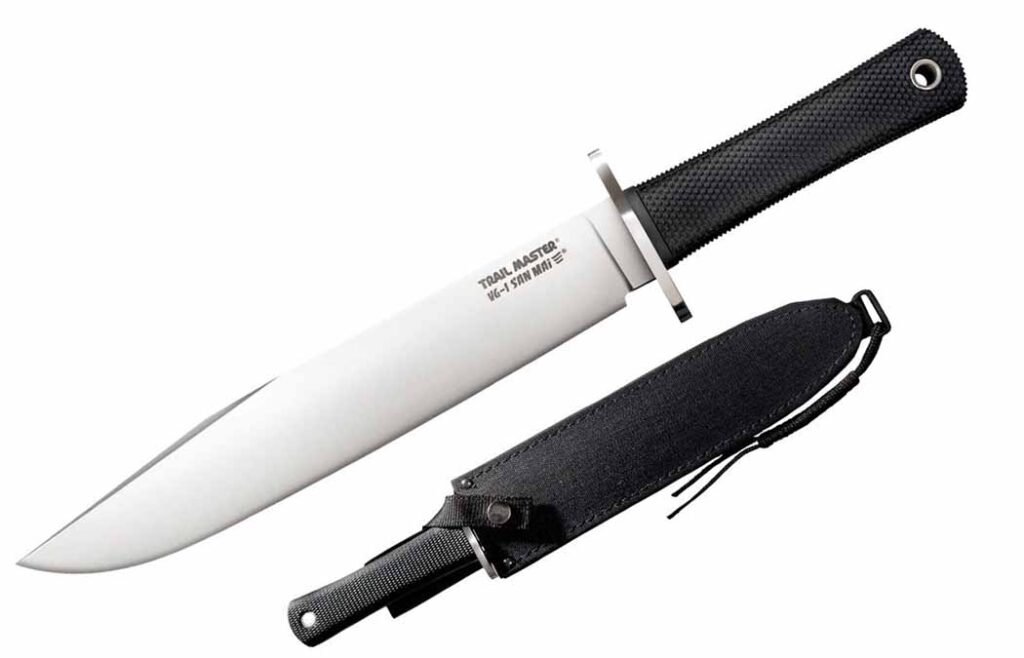
Cold Steel Trailmaster Bowie
This knife commands attention with its sheer size and heavy-duty build.
The Trailmaster Bowie is one of Cold Steel’s most recognizable fixed blades. The impressive 9 ½ inch long clip point blade is made of CPM 3V tool steel for toughness and edge holding. The unsharpened swedge gives the knife its attitude, and a full flat grind allows the Trailmaster to be an effective slicer and chopper as well.
The textured Kray-Ex rubber handle helps the Trailmaster remain in your grip and a double guard up front keeps your hand in place during use. The Trailmaster is adept at chopping and other hard-use outdoor tasks for the campsite.
It is the knife to have with you and instills user confidence when tackling tough cutting and chopping chores.
MSRP: $540 Origin: Taiwan
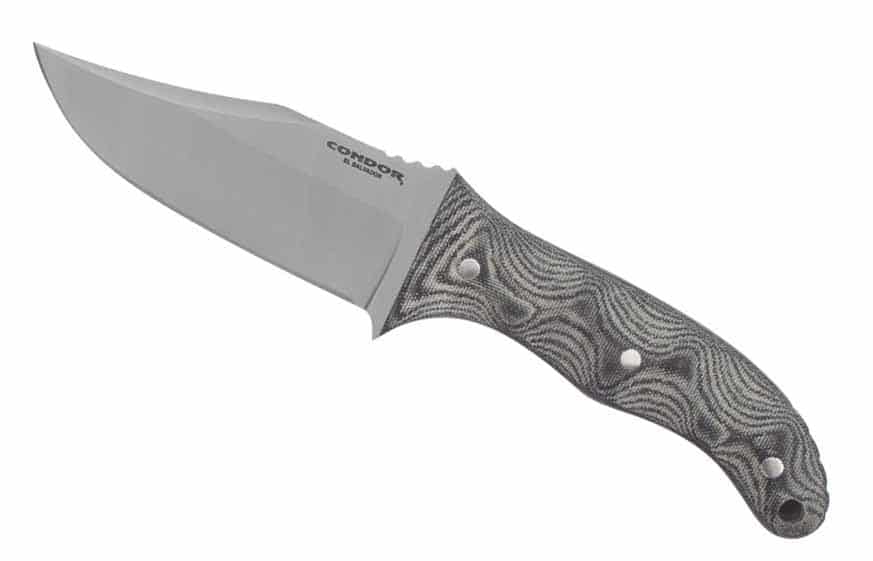
Condor Tool & Knife Little Bowie
Little knife…big attitude! That’s exactly what you get with the Condor Tool & Knife Little Bowie.
The 4.6-inch long blade makes it compact enough to carry comfortably on the belt. Overall length is just over 9.5 inches, making this knife about as long as some of the higher-end tactical folders when open. 1075 carbon steel was selected for the blade, making this knife both tough and easy to maintain. The bead-blasted finish adds a subdued finish for low reflectivity.
The ergonomic-shaped handle has black Micarta scales for a comfortable, all-weather grip. If you like Bowie fixed blades but don’t want to carry a full-size Bowie on the belt, the Condor Little Bowie fits the bill nicely. Each knife is shipped with a sewn leather belt sheath to keep the knife close at hand.
MSRP: $123 Origin: El Salvador.
Among The Best Clip-Point Folders Available Now
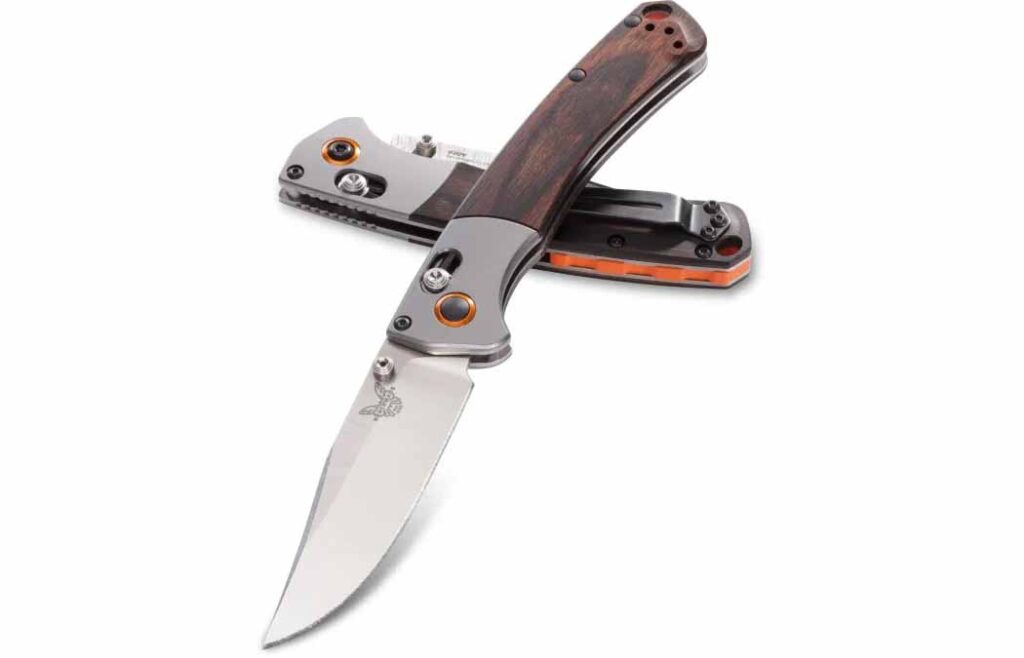
Benchmade Crooked River
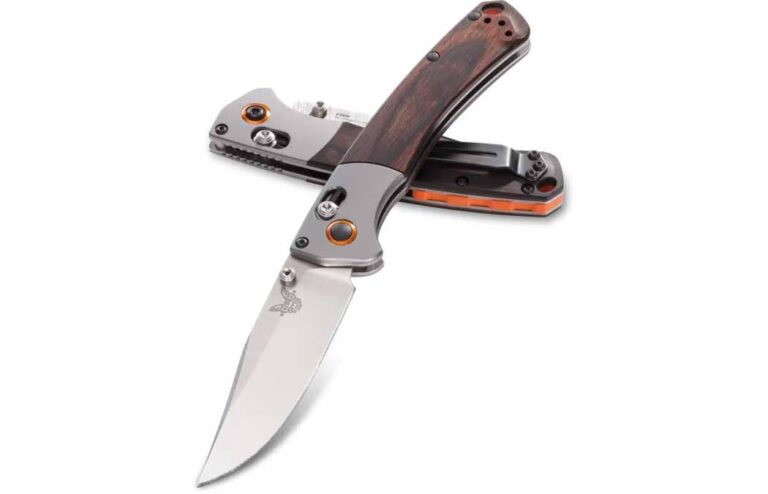
The flagship of their outdoor folding knife line, the Benchmade Crooked River is built tough for the outdoors, with a 4-inch clip point S30V stainless steel blade, anodized aluminum bolsters, and Dymondwood handle scales. The handle has a slight contour to it, making it lay in your grip that much easier.
The knife also features Benchmade’s own Axis Lock crossbar lock system for a safe and secure lockup. The Axis Lock is a Benchmade innovation that allows the blade to rotate smoothly and locks up tight, with very little blade play.
At over 9 inches overall, the Crooked River is a formidable folder that is ready to help tackle your field dressing or camp utility tasks. A steel pocket clip allows for easy carry. A Mini Crooked River is also available, scaling down the Crooked River model to a 3.4-inch blade length, and making it more EDC-friendly.
MSRP: $380 Origin: USA
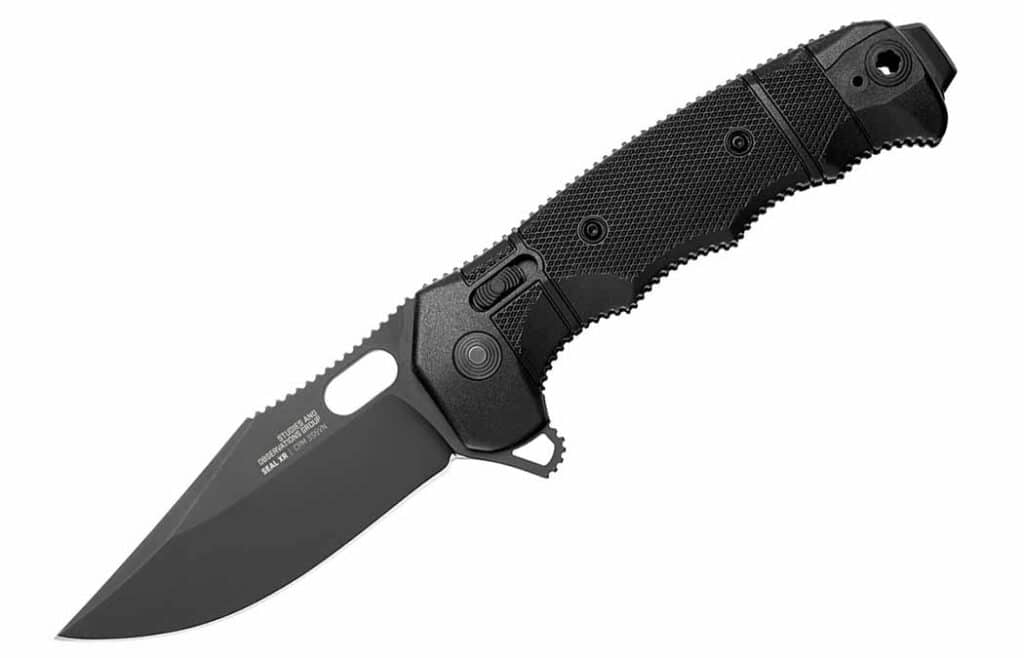
SOG SEAL XR
You want big and brawny? You got it with the SOG SEAL XR! Its 3.9-inch long Bowie style clip point blade is flat ground from premium CPM S45VN high-performance stainless steel. A blade hole and a flipper tab are present to offer two distinct methods of one-handed opening. The handle design is very similar to that of the SOG SEAL fixed blade. The build of the handle is definitely robust and heavy-duty, there’s weight to this knife that you notice when you pick it up.
Weighing in at a healthy 8.2 ounces, the handle has two steel liners, a steel handle spacer with an integrated extension that can be used as a blunt strike tool, and grooved, textured, and traction notches all around. The handle design is made to keep your hand in place. There is an integrated lower hand guard that prevents your hand from sliding forward. The blade lock is SOG’s own XR crossbar lock that offers true ambidextrous operation.
A beefy, wide steel pocket clip rounds out the SOG SEAL XR package. The clip won’t be sprung for sure, even with rough carry. This is by far an EDC folder due to the size and weight but if you need a knife for rough use and outdoor use, the SOG SEAL XR is it.
MSRP: $224.95 Origin: USA
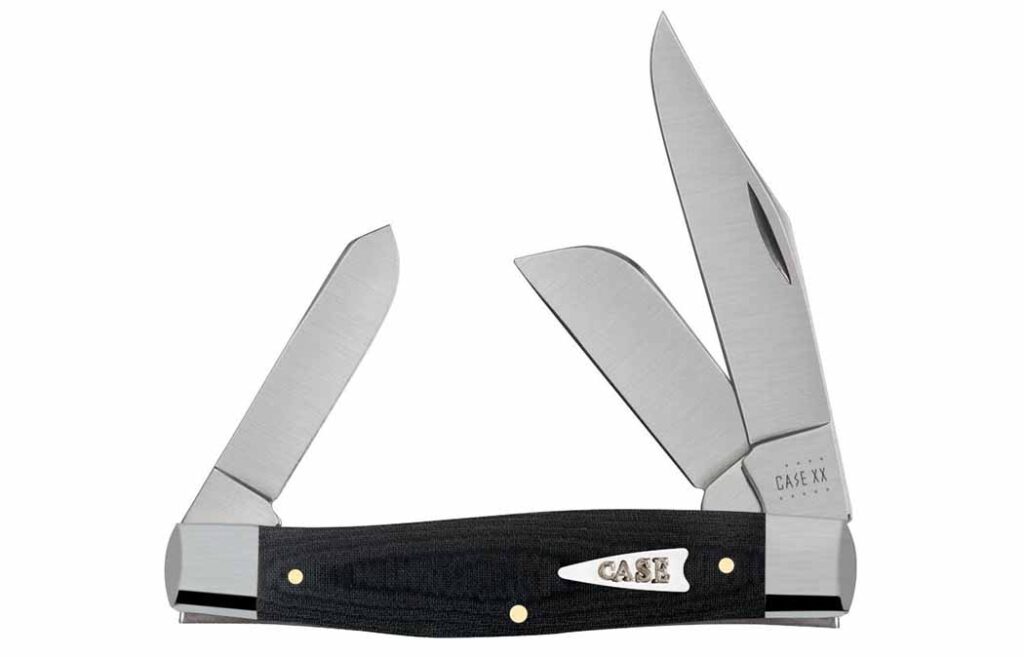
Case Large Stockman 10375
Clip points are found on many different patterns of multi-blade slipjoint knives, such as this Case Large Stockman pattern, model 10375. The main blade is a 3.3-inch long clip point, and two smaller blades – a 2.3-inch long sheepsfoot blade as well as a 2.2-inch spey blade. The blades are ground from Case’s proprietary Tru-Sharp surgical steel, and the handles are of black and green canvas micarta phenolic synthetic for long-lasting durability.
The beauty of knives like these is they are handy to have with you at all times as they sit in the pocket perfectly and they are low profile enough that using them in public won’t raise any eyebrows. These knives are used by everyone from farmers, ranchers, plumbers, electricians, carpenters, warehouse workers, and countless individuals who just want a good solid pocketknife. The main blade does well with opening packages, mail, cutting tape, stripping wire, cutting up cardboard, and any sort of utility or mundane cutting task that tend to pop up in daily life.
The clip point blade is ground fairly thin so it has really good performance characteristics and easily cuts whatever you need to. The Tru Sharp stainless sharpens up quickly and holds an edge fairly well. The stockman pattern is very handy due to the three distinct blade shapes, it’s the perfect pattern to have if you use a pocketknife frequently.
MSRP: $96 (Micarta Handle) Origin: USA
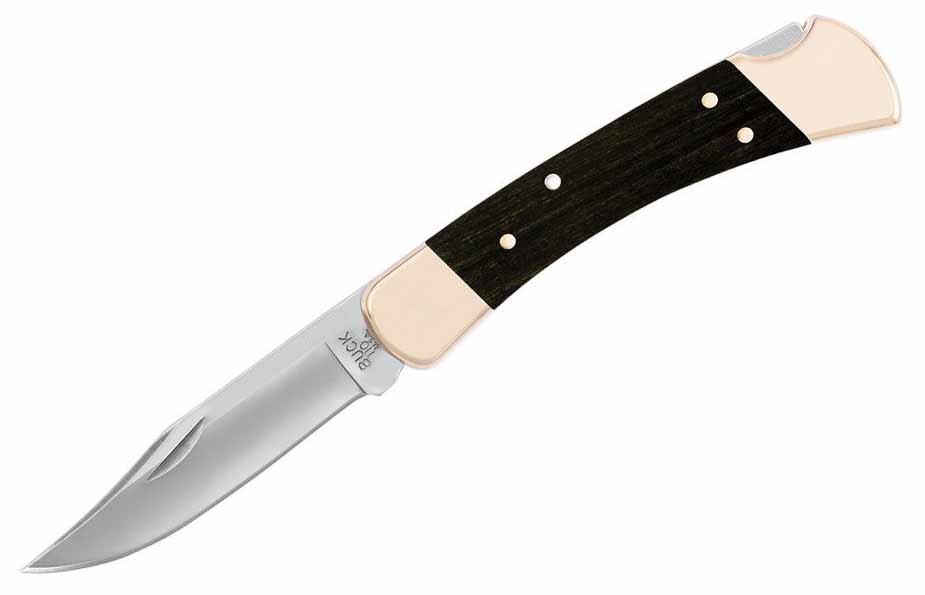
Buck 110 Folding Hunter
This knife perhaps is the signature clip-point bladed folder. Its design was innovative back in 1963 when it was released, and its quality and build have withstood the test of time.
Even today, the 110 Folding Hunter is still made and enjoyed by many. The 3.75-inch long blade is of a Bowie shape and is hollow ground from 420HC stainless steel. The handle is of a robust build, with double brass bolsters and a Crelicam ebony, stabilized hardwood handle. The handle definitely has weight to it, and it’s this exact heavy-duty build that has allowed the 110 Folding Hunter to withstand hard use over time, and still hold up beautifully. The lockback design secures the blade in the open position with a satisfying audible click.
The clip-point blade is ideal for field dressing as well as general cutting tasks. The 110 Folding Hunter originally was designed for hunters as an alternative to a fixed-blade hunting knife. But the knife also found favor with those who are in agriculture, the military, law enforcement, and countless knife enthusiasts as well. For all intents and purposes, it was the predecessor to what we know now as the modern tactical folder.
Still produced to this day in the Buck Knives product line, the 110 Folding Hunter has a few variants including a lightweight budget version, a pro-grade modern version with high-end blade steel and handle material, an automatic opening version, as well as countless collector variants available through the years from Buck as well as select Buck Knives retailers as exclusives.
MSRP: $88 (original 110) Origin: USA
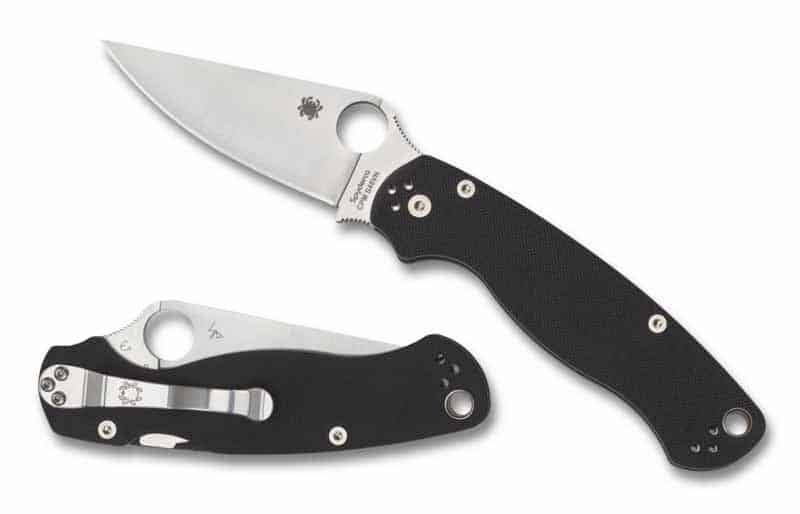
Spyderco C81GP2 Paramilitary 2
Spyderco’s Paramilitary 2 folder – better known simply as the Para2 – is a downsized version of the company’s popular C36 Military folder.
The Para2 offers the same cutting prowess of the full-size Military model with its full flat grind clip-point blade but in a more compact, pocket-friendlier form factor. The Para2’s blade measures 3.4 inches long and is ground out of premium CPM S45VN blade steel that is known for its enhanced edge-holding capabilities. The handle is textured black G-10 and mimics the ergonomics found on the C36 folder that make this one of the most comfortable and handy midsize folding knives on the market.
With an overall length of 8.2 inches, the Para2 is still large enough to tackle sizable cutting tasks. The blade is secured open by Spyderco’s own Compression Lock system, which permits easy one-hand opening and closing. It also allows the blade to have such smooth, silky-like action. The Para2 is a slender knife and carries well in the pocket.
The large blade hole allows for easy one-hand opening with either hand, even while wearing work gloves.
Performance-wise, this is one of the best in high-end folders as the flat grind clip-point blade sails through thick and tough materials easily. Spyderco engineers its blades to be some of the most efficient cutting tools on that market by paying attention to blade shape and blade grinds and optimizing both to create a cutting tool that is unmatched in both performance and value.
Don’t let its throwback good looks fool you, Rothman’s Gentleman’s Trapper has serious EDC chops.
The original EDC knife is a pocketknife. It used to be a right of passage when you were allowed to have a hand-me-down knife in your front pocket. I received mine at the ripe old age of 5. I used it to sharpen pencils and crayons and for whittling.
After a few years and a few cuts on my fingers, I progressed to skinning and cleaning fish. The knife never left my front pocket. I carried it to school for daily uses. It also made quite a few trips in the washing machine and dryer. My mom would have a fit every time she heard it thumping in the dryer. Of course, the laws have changed now and the younger generation has found other things to entertain themselves. For me, my old pocketknife is retired.
Mike Rothman’s Gentleman’s Trapper would make a great pocket filler. It walks and talks perfectly. But how well does it cut? Let’s see.
Gentleman’s Trapper Sharpness Test
Twenty-pound bond copy paper provided the first test. The slip joint sliced it cleanly and effortlessly. The edge is very fine, so control was easy. It’s a nasty-sharp knife for sure—I could hear the blade slicing aggressively.
Light Duty Cutting With The Gentleman’s Trapper
After dispatching single-walled cardboard with the Rothman knife, the author only had to use a tad more pressure on the push cut to zip through double-walled cardboard.
On to single-walled cardboard. The Gentleman’s Trapper made short work of it. In fact, it was very addictive slicing the cardboard. The blade made smooth, straight cuts with no deflection of the material. Very sharp indeed!
Next I found a piece of double-walled cardboard to try. I only had to use a tad more pressure on the push cut to zip through it. I could hear every cut again. The knife is a very forceful cardboard cutter.
The thin blade made skiving leather simple, producing super thin slices repeatedly.
It was time for the leather slice and skiving. The trapper zipped through the leather quickly, so I had to use my knuckles as a stop to keep the piece together so it wouldn’t turn into a pile of pieces. The thin blade made skiving simple, producing super thin slices repeatedly. The stag handle worked perfectly providing a positive grip cutting the leather.
Heavy-Duty Cutting Duty
Whittling was up next. The thin blade produced some of the finest curly-cues I’ve seen. I changed the angle of cut for a deeper bite. I could see and feel the blade flex as deeper bites ensued. It was a very weird sensation, to say the least. I just moved the contact surface closer to the bolsters.
In the whittling test, the author changed the angle of cut for a deeper bite. He could see and feel the edge flex as deeper bites ensued.
Half-inch sisal rope beckoned. I was looking forward to this one. Dang, this trapper performs—273 crunching cuts and the edge was barely sliding! It was easy to cut with and the handle was comfortable with a tight grip. The insides of the liners are a bit sharp but there were no hot spots. Wow!
I returned to the 20-pound bond paper to see if the edge was affected by all the testing. Nope—same clean slices in the material, a sign of great heat treatment.
The author whacked the blade 30 times into the antler with no edge damage at all. The edge would still pull hair and the knife was as tight as when the author started, still walking and talking.
I was compelled to do a warranty-breaking test just to see how tough the Gentleman’s Trapper is. Where was the deer antler? I whacked the blade 30 times into the antler expecting to see some minor edge damage. There was no damage at all! The edge would still pull hair and the knife was as tight as when I started, still walking and talking.
Overall Impression Of Rothman’s Work
I was impressed with the performance of the blade considering how thin it is. Excellent workmanship!
Does Anything Need To Change?
Soften the exposed inside edges of the liners. That’s all, folks!
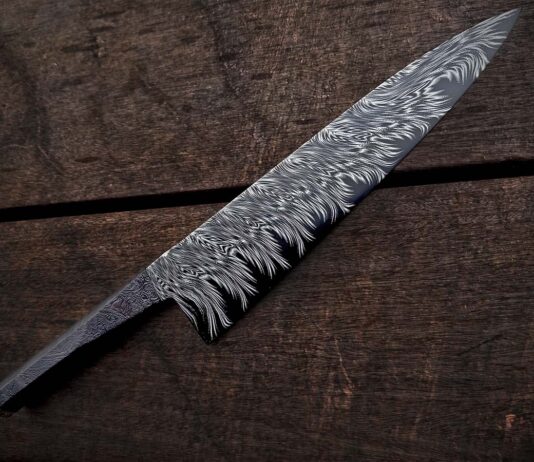
Gentleman’s Trapper Specs: Knife Type: Slip joint/pocketknife Maker: Mike Rothman Blade Length: 3” Blade Steel: Damasteel damascus in an Ægir pattern Blade Grind: Hollow Blade Pattern: Clip point Blade Thickness: Tapers on the spine from 1/8” above the ricasso to .039” at the tip; the edge is even thinner than the latter Handle: Sambar stag w/shield of same material as the blade Handle at the Thickest: .5” Liners: Fileworked of 410 stainless steel Bolsters: 416 stainless steel Backspring: CPM 154 stainless steel Weight: 3.5 ozs. Closed Length: 4” Knife to know: There is a seamless fit of blade to backspring in the open position Extras: Comes in black zippered pouch w/Rothman’s company name over shape of the state of New York Maker’s price: $750