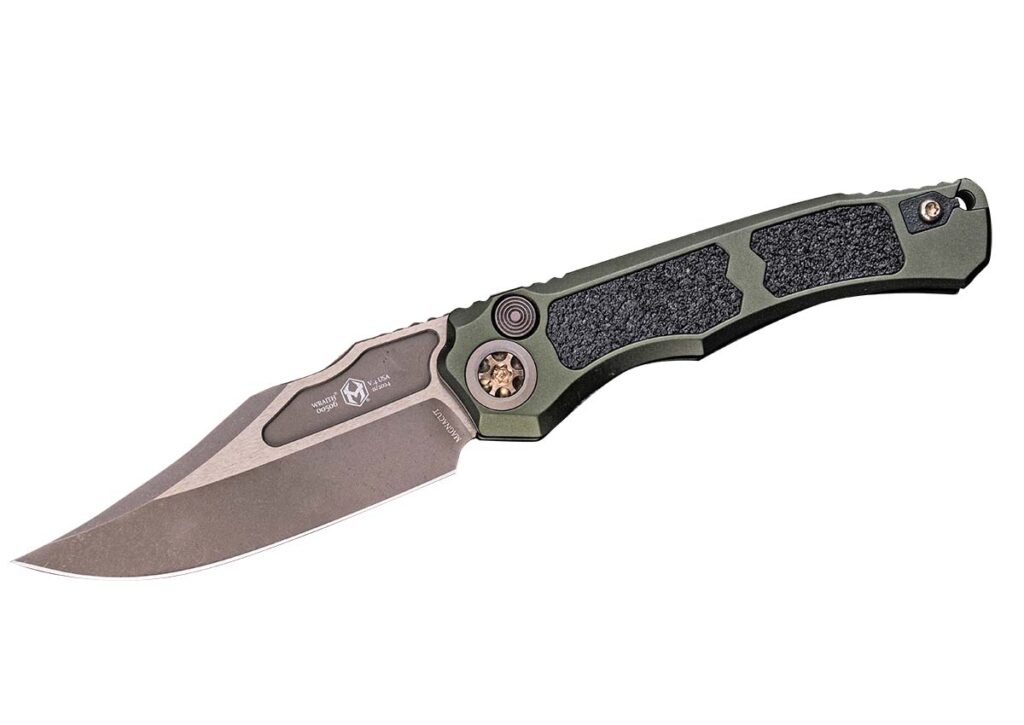
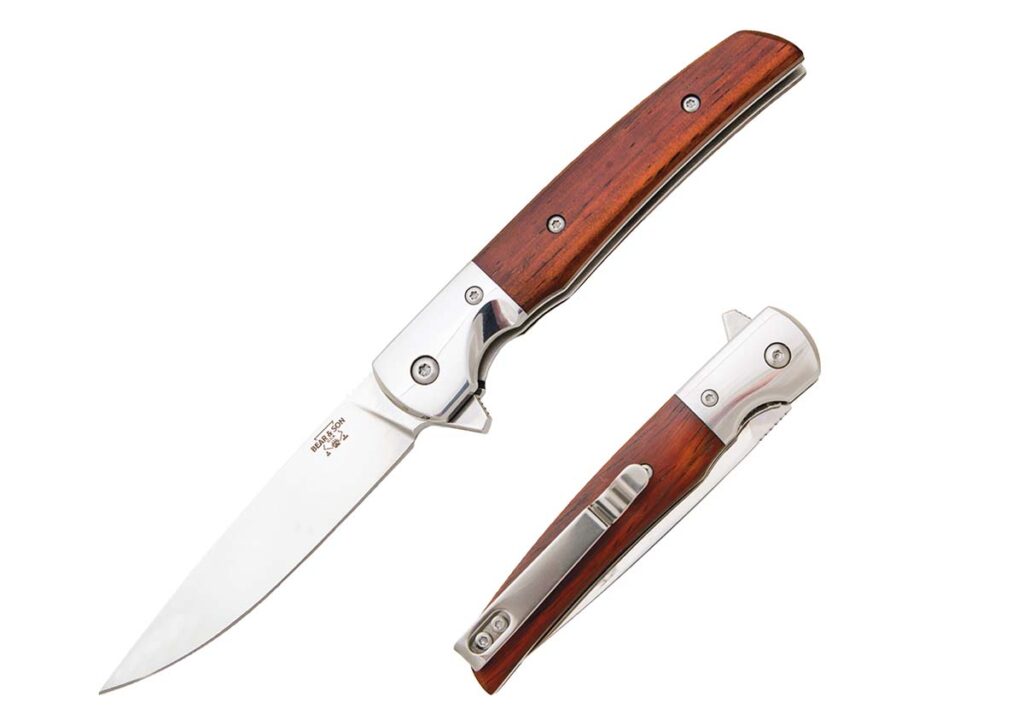
The gun maintenance equipment company tackles knives.
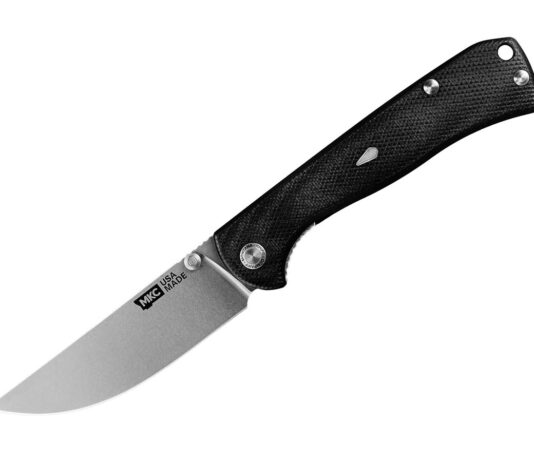
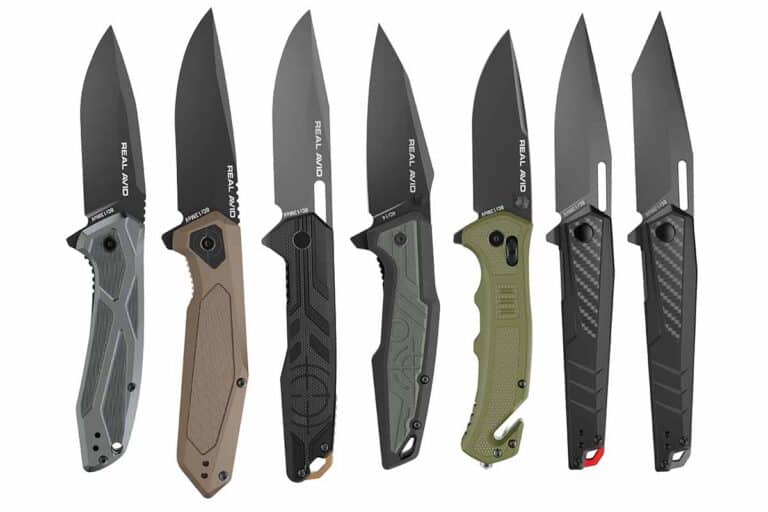
Any of you who tinker around with guns should be familiar with the name Real Avid. The company offers up some fairly innovative gun maintenance gear at a pretty decent price. But now the Minnesota concern is dipping its toe into the knife world with the release of what it calls its RAV series.
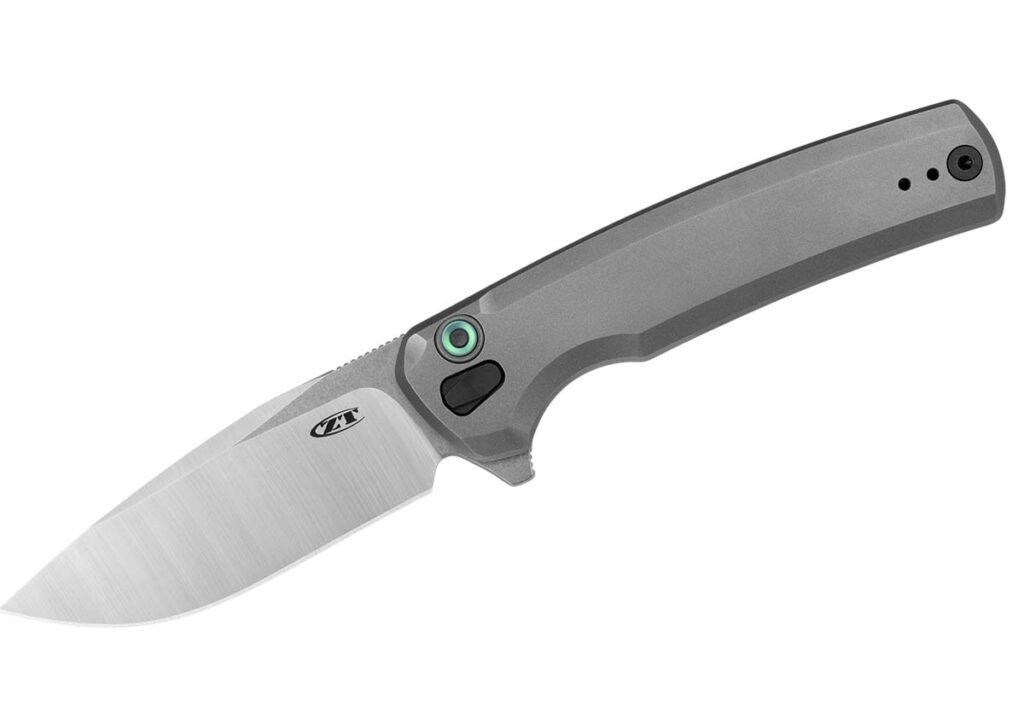
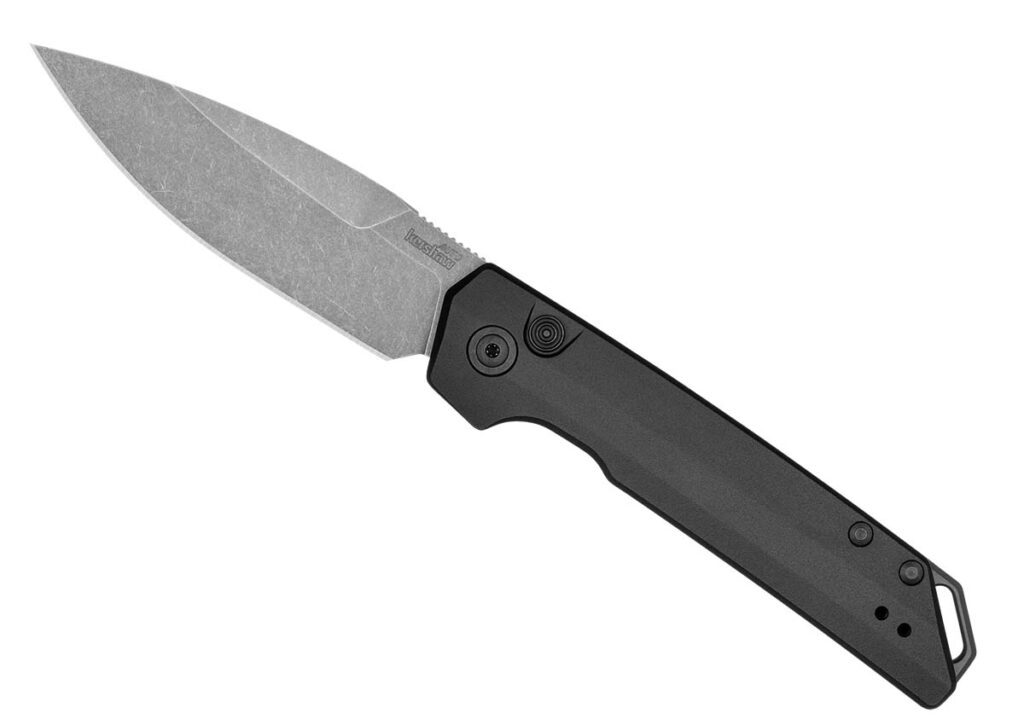
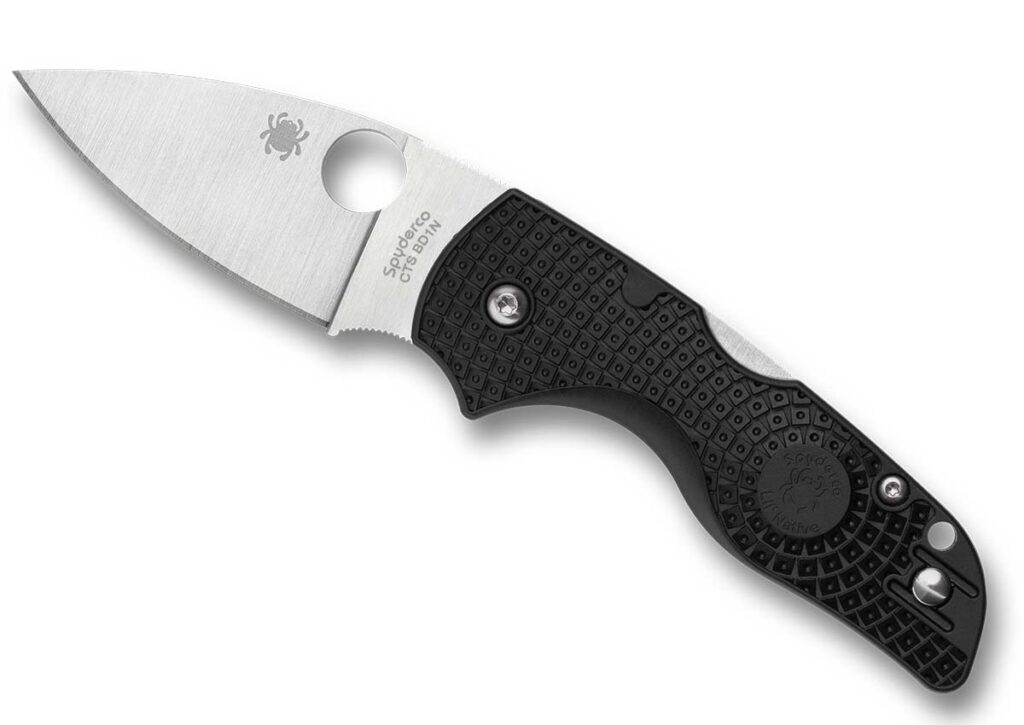
In all, the line folders comprise seven knives—all of them well falling into the budget end of the market. The offerings range from $29.99 to $49.99, making them ready for rough use and if need be worry-free replacement if your chores prove too taxing. Nearly across the board Real Avid 8Cr13MoV for the blade steel, except for the RAV-1—the most budget-conscious model—which has a 4cr14 blade. Overall, the steels sharpen well, but you’ll likely have to hone their edges plenty as retention in these stainless steels is marginal.
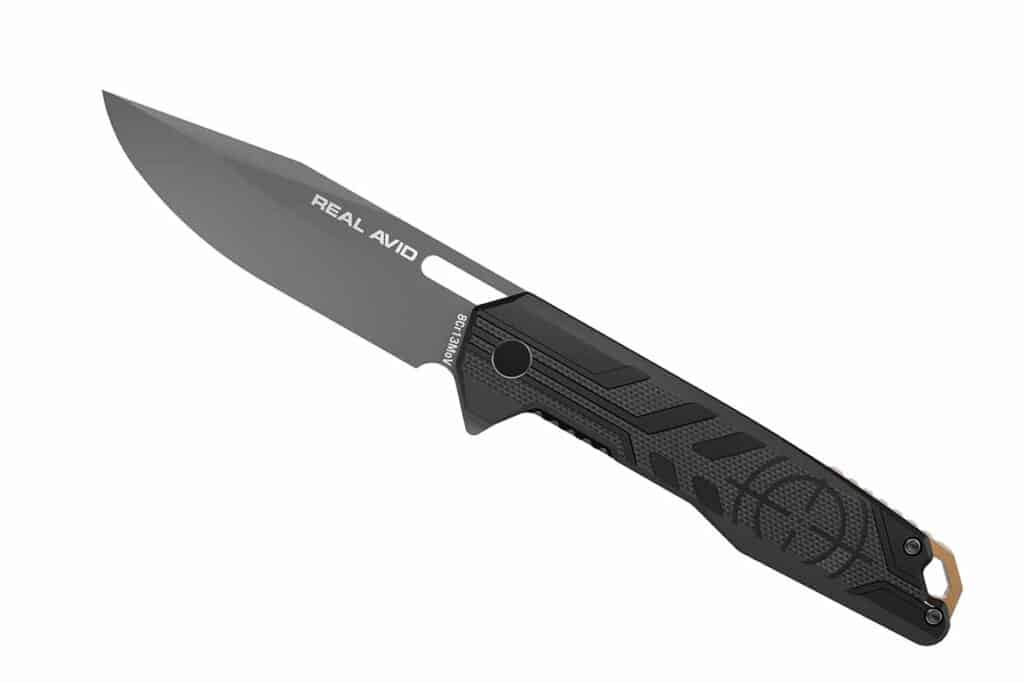
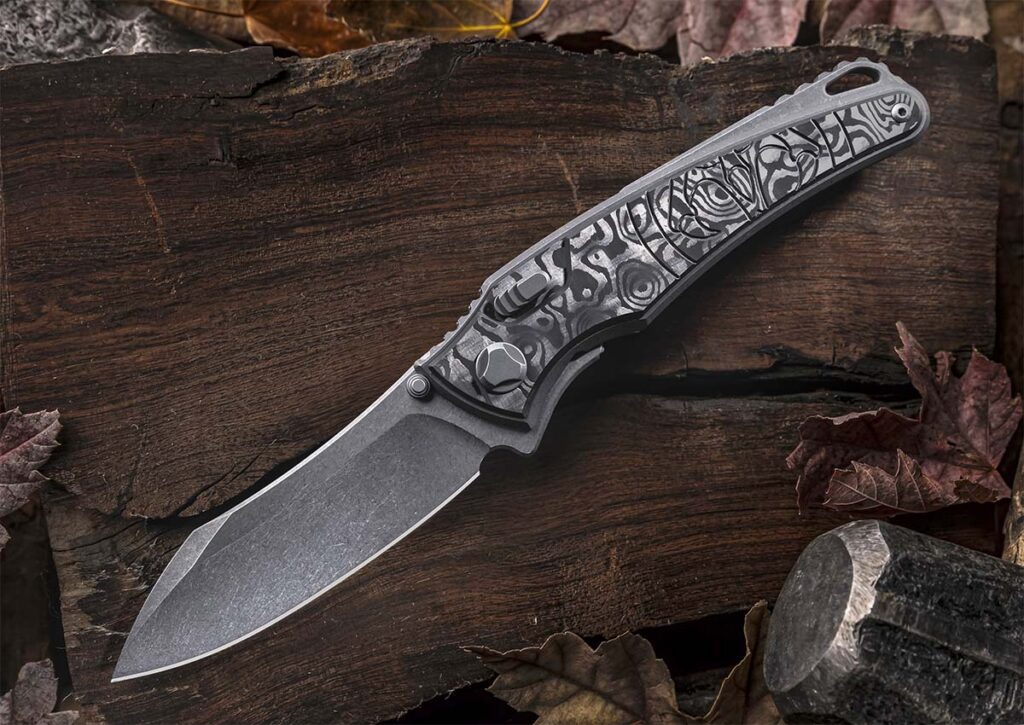
Real Avid RAV 7 with the bullseye pattern in it’s G-10 handle.
Almost every one of the RAVs has a drop or clip point of some style, except the 6, which stands as the lone tanto in the bunch. As for the handles, nylon, aluminum and stainless steel are pretty much the order of the day. However, the tonier RAV-7 does boast a G-10 handle with some nice texturing and a bullseye pattern in the middle. All of them are flippers, though a few models have been outfitted with thumbholes to offer multiple deployment options.
For the most part, these knives fit into Real Avid’s MO as a gun accessories company. Certainly, the blades aren’t going to knock the socks off your blade-aficionado friends. But for something to carry in a range bag, pry out stuck cartridges, unseal a can of ammo, or any other such thing, they’re right in line.
Swords with a Scottish pedigree get two impressive reproductions.
People tend to look at the past quite romantically, and, in no uncertain terms, seem to have a love for those who died while living passionately, even if it meant the end of their way of life. This type of Shakespearean melodrama played out across the world over the centuries, especially when one industrialized nation defeated and subjugated people with a decentralized clan system. The scenario transpired time and again in Europe, America, the Orient and more. The idea of what might have been in a traditional, seemingly carefree society is something many cling to today as progress inevitably marches on toward an unknown, uncharted destination.
For the traditional Scottish clans, the quest for self-determination ended on April 16, 1746, in the Battle of Culloden. A significant reason for their defeat came not just from their tactics but also the weapons that were used. Meanwhile, along with their defeat went their widespread ownership of swords and guns.
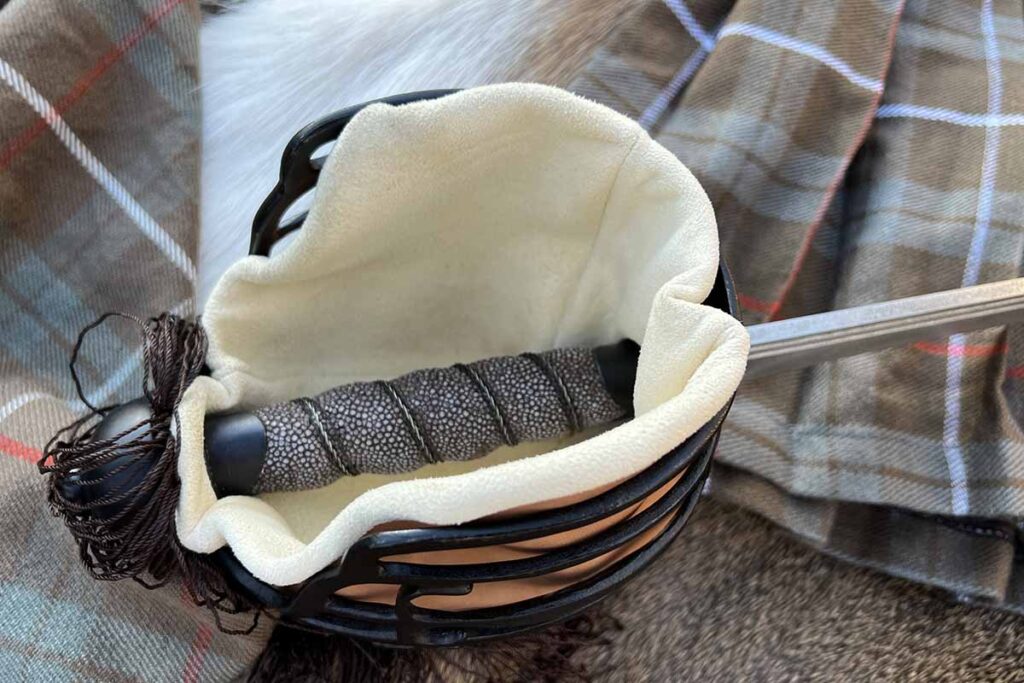
According to the author, the CAS Iberia sword has an incredibly comfortable grip assembly.
The Scots, especially the Highlanders, were tartan-clad savages capable of easily overwhelming and annihilating the British by use of ambush at extremely close range. In particular, the Highlanders were adept at destroying British formations using a tactic called the Highland Charge. The tactic involved what is essentially a human wave attack with sword and shield wherein the Highlanders charged at full sprint directly into the enemy, often before the latter could fire a shot. When attacked with such speed, the British soldiers were at best able to get one, maybe two shots out of their muskets before they were completely overcome and cut down. Knowing this, the British commander, the Duke of Cumberland, trained his soldiers to repel this devastating attack.
Traditionally, the Scottish warrior carried a sword and a targe. A small shield held in the weak hand, the targe was used to deflect bayonets and swords while the Highlander brought his blade down on his enemy’s exposed neck and head. This was an incredibly effective tactic; it rendered the musket nearly useless and prevented the British soldier from being able to fight by simple bayonet thrust. The British commander instructed his men to not fight the Highlander directly in front of them, as they would surely be cut down in a heartbeat. Instead, he had each British soldier focus on one Highlander over; when the Highlander raised his targe to deflect a bayonet, the soldier would stab the Highlander’s exposed under arm. The simple change in tactics resulted in a devastating loss for the Highlanders, who, for decades, had fought proudly with their bold method. The resulting battle would see thousands of clansmen dead and a complete British victory.
Scottish EDC
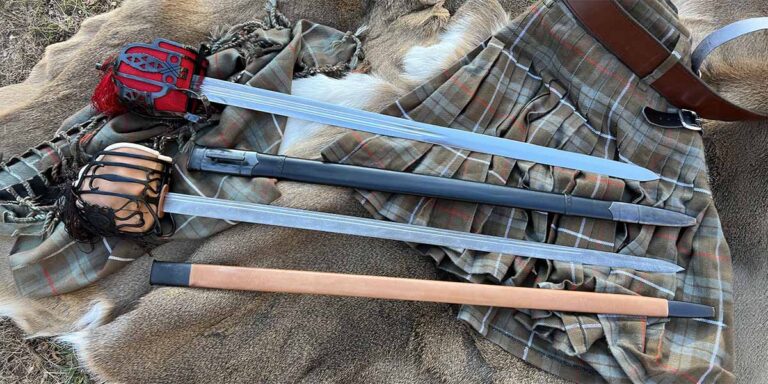
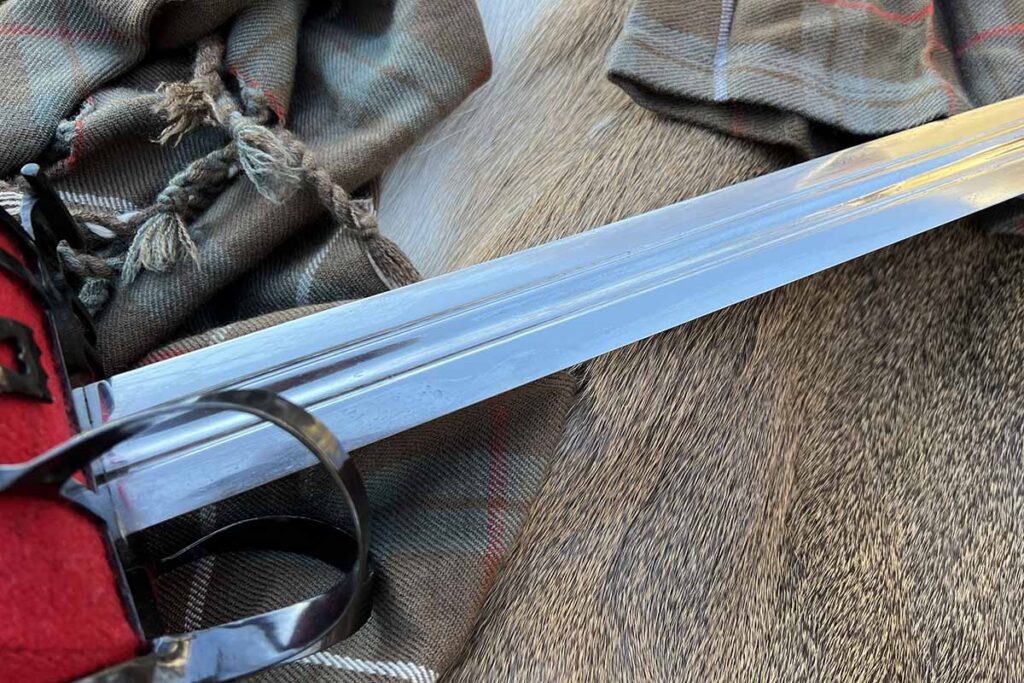
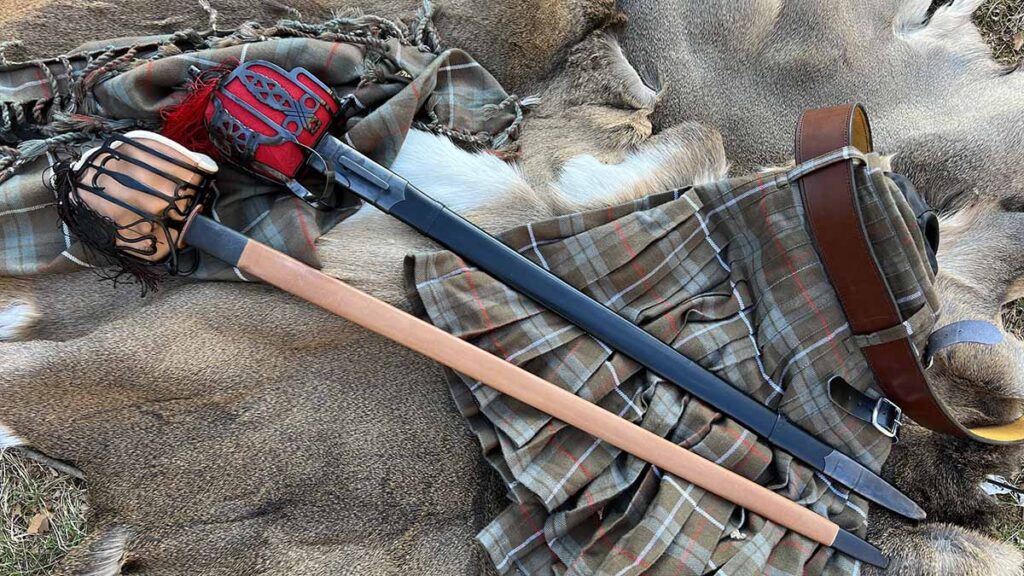
The two blades sport different finishes: the Cold Steel (on bottom) has a mirror polished surface while the CAS Iberia (on top) has an etched, antiqued finish. The author indicated the latter is a bit less functional in that it has a slightly rough texture. On the other hand, some may prefer the low-glare look.
The Scots revered the steel and often swore their oath on it. Like many traditional cultures, the Scottish clans held their swords as sacred and a substantial majority of men carried them every day. Unlike the Japanese and their feudal system, where only samurai could carry swords, the average Scot could carry one if he could afford it. It was not a small purchase, and to have a sword was a display of wealth. The swords were often passed down, though it should be noted that at the time of the Battle of Culloden, there was a significant number of in-fashion designs that existed among the Highlanders, meaning that new blades were being purchased regularly.
Among these was the backsword, a fashionable sword that featured a triangular cross-section with a single-edge blade. This type of blade was common throughout Europe and saw favor among the Highlanders, as it was a weight reduction over the double-edge broadsword. The double-edge broadsword could accomplish virtually all its tasks with its tip and lower edge; its upper edge was something of an accessory in that it was not typically used for reverse cuts. The broadsword’s hilt was completely engulfed by a protective basket. Upward swings with this type of sword are awkward and do not lend themselves to significant leverage. The backsword remedied this by shaving over a pound off the sword’s weight while reducing none of its function on the battlefield.
Culloden Types
The author stated he’d like to see the baskethilt of the Cold Steel slightly lighter in construction and the grip a half to 3/4 of an inch shorter.
The two featured reproductions of Scottish swords, one from Cold Steel and the other from CAS Iberia, are exceptionally well-constructed, functional swords made of modern materials and blade steels. There are, of course, custom swords out there, but expect to pay well into the thousands to get one from a top maker. They are not easy swords to make, and the fact the two companies sell them for the stated price points is a great deal—if nothing else, a steal.
The two are variations of swords that would have been present at Culloden. Cold Steel’s is reminiscent of the traditional double-edge Scottish broadsword. The CAS Iberia repro is of a single-edge backsword, something quite common for the time, and arguably the last evolution of the combat sword before guns took over. These are functional repros; they arrive sharp and the blades are very capable of delivering cuts and slashes. As with any real sword, they aren’t meant for chopping lumber or taking down brush. They are fine conversation pieces and, at worst, attractive wall hangers.
The Cold Steel blade features a triple fuller that helps reduce weight.
Being versed in some swordplay, I put the swords through their paces. For cutting ability, the Cold Steel version is an absolute beast. The blade is tough and can chop and stab through cloth, leather and even light metal. A wide range of objects were cut, from heavy cardboard tubes to deer carcasses. The Cold Steel showed no edge deformation and the finish was hardly scuffed. The only downside is that the hilt and basket area are very large, and I have large hands at that. Ideally, a baskethilt will contain the hand while not allowing a great degree of front-to-back play; this heavy-bladed piece wants to pull out of the hand on hard strokes. I’d like to see the basket be slightly lighter in construction and the grip a half to 3/4 of an inch shorter.
The CAS Iberia backsword has an antiqued etched finish and, at least for my purposes, just about the most perfect grip size possible. The Cold Steel sword is impressive and powerful but lacks some refinement. The CAS Iberia sword is elegant, light and supremely easy to wield. It’s not as sharp or heavy as the Cold Steel but capable of lightning-fast slashes and deep stabs. The top of the tip has a false edge that could easily be sharpened, and the narrow, diamond-shaped cross-section allows for effortless punctures through most materials. It is hard to even feel it go through most materials, from fabric to flesh. The downside is the blade finish. While it is interesting and adds character, it is also a trap for moisture and needs to be kept well-oiled.
Both swords come with very nice leather scabbards. They match the swords’ fixtures and should be compatible with a wide range of hangers or sword belts.
Both swords come with very nice leather scabbards. They match the swords’ fixtures and should be compatible with a wide range of hangers or sword belts. The scabbards are also very close to how the originals were made, though like most things today there are some liberties taken with internal construction.
Duly Impressed
Overall, I’m extremely impressed with the featured swords. If it were up to me, I’d take the blade from the Cold Steel and fit it to the basket and grip of the CAS Iberia, making a sword fit to my hand that can deal hard, deep strokes.
For what it’s worth, you can’t really go wrong with either sword. They are cool and should make conversation starters at your next viewing of Rob Roy, Outlander or any other applicable Scottish-themed flick.
SCOTTISH BASKETHILT SWORDSPECS STYLE: 18th-century Scottish baskethilt broadsword COMPANY: Cold Steel BLADE LENGTH: 30.5” BLADE MATERIAL: 1055 carbon steel HANDLE MATERIAL: Blued-steel baskethilt; handle is wood wrapped in rayskin and wire. WEIGHT: 53 ozs. OVERALL LENGTH: 37.75” SCABBARD: Black leather w/blued fittings COUNTRY OF ORIGIN: India MSRP: $299.99 AUTHOR’S NOTES: An authentic, functional replica; a bit heavy overall, but solid and well-constructed
SCOTTISH BASKETHILT BACKSWORDSPECS STYLE: 18th-century Scottish baskethilt backsword COMPANY: CAS Iberia BLADE LENGTH: 33” BLADE MATERIAL: 65Mn carbon spring steel BLADE FINISH: Antique HANDLE MATERIAL: Blackened steel baskethilt with “beastie” plaques; handle wrapped in rayskin and wire WEIGHT: 50 ozs. OVERALL LENGTH: 39.5” SCABBARD: Tan leather w/blackened steel fittings COUNTRY OF ORIGIN: China MSRP: $565 AUTHOR’S NOTES: Period correct to the Battle of Culloden and based on a sword in the United Kingdom’s Royal Armouries. While more costly than the featured Cold Steel repro, it has the feel of a more balanced and elegant sword.
Today’s American-made knives embody the latest in the state-of-the-art.
American knifemaking is alive, well and thriving. Certainly over the years the marketplace for cutlery has become more global, despite this native craftsmen and companies have held their ground and remained sharp as ever. Below is a good example. We’ve collected a throng of blades made in good ol’ U.S. of A. that showcase creative prowess of our countrymen.
Designer: Eric Glesser Blade length: 2.42” Blade steel: CTS BD1N stainless Blade grind: Full-flat Blade finish: Satin Scale material: FRN Lock: Back Lock Weight: 1.5 ozs. Closed length: 3.74” MSRP: $160 Knife to know: This folding knife takes the company’s Lil’ Native Back Lock platform and lightens it by 40 percent with fiberglass-reinforced-nylon scales. Available: March
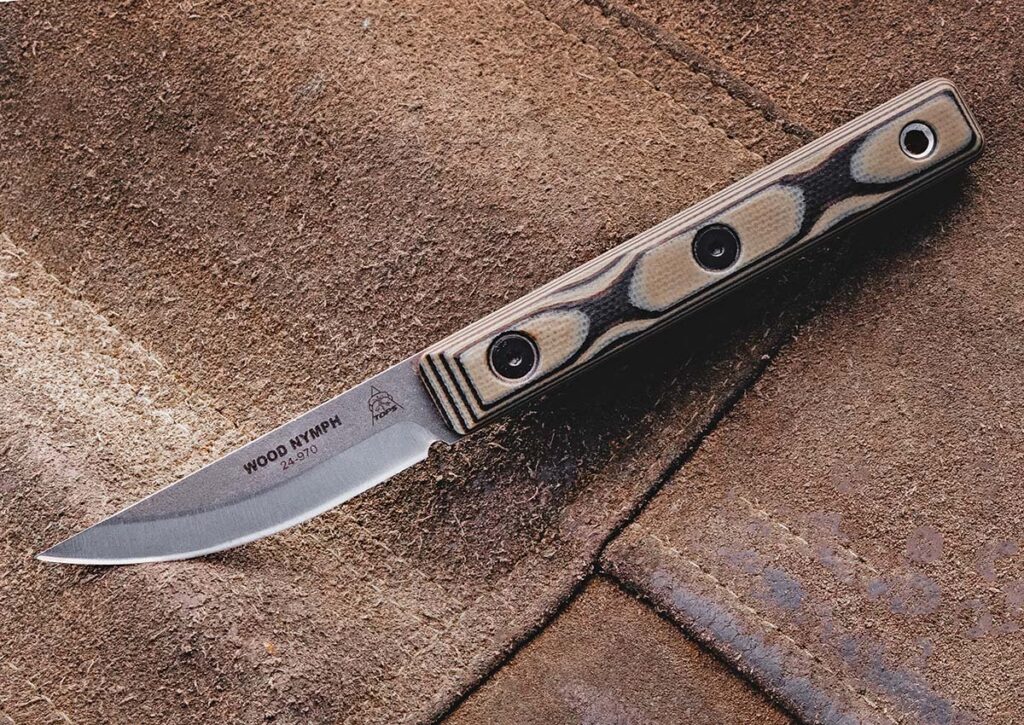
TOPS Knives Wood Nymph
Knife type: EDC/bushcraft Designer: Bushcraft Kelso Blade length: 2.25” Blade material: 1095 carbon steel Rockwell hardness: 56-58 HRC Blade grind: TOPS’ modified Scandi Blade finish: Tumble Scale material: Tan/black G-10 Weight: 1.8 ozs. (3.2 ozs. w/sheath) Overall length: 5.75” Sheath type and material: Brown leather MSRP: $190 Knife to know: Thick for its size, the handle is well-rounded and longer than the blade for a solid grip. The blade shape is simple and classic. It’s sharp, pointy and a little thinner than most would expect from TOPS at 3/32-inch thick. A simple leather sheath makes this knife one of the easiest to carry. It’s a simple yet effective workingman’s tool. Available: NOW
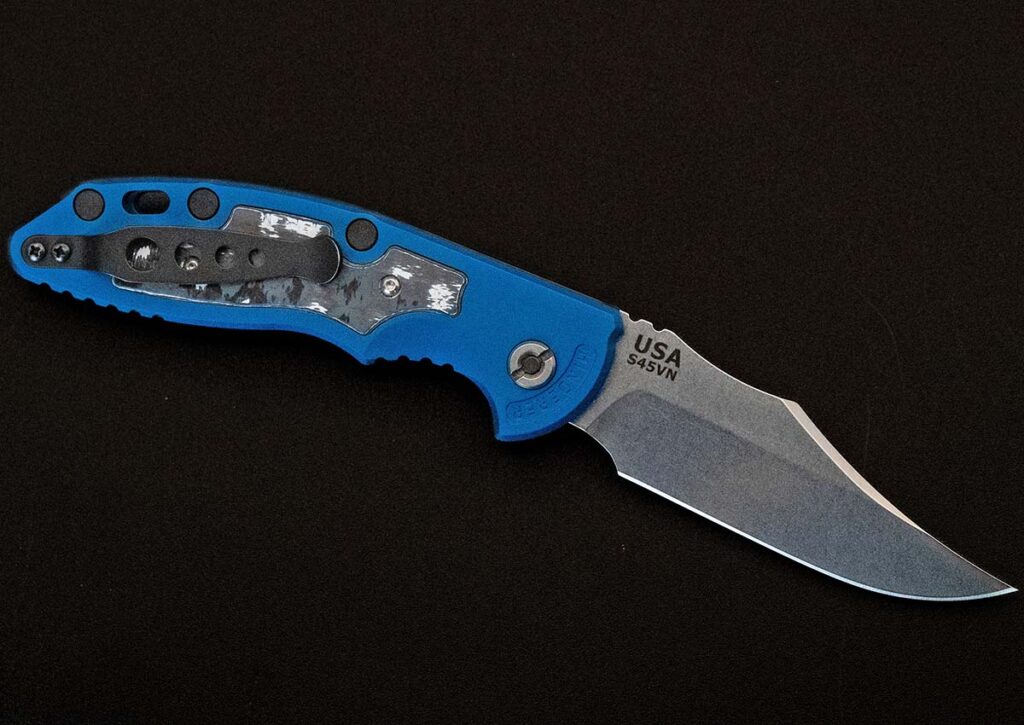
Rick Hinderer Knive XM-18 3.5” Bowie Automatic Aluminum
Knife type: EDC Designer: Rick Hinderer Blade length: 3.5” Blade steel: CPM S45VN stainless Rockwell hardness: 60-62 HRC Blade pattern: Bowie Blade finish: Stonewash Liners: Patent pending titanium half liners Scale material: Two options: anodized blue aluminum w/inlay and Arctic Storm w/FCF inlay Frame material: Aluminum anodized blue Furniture material: Stainless steel black nitride hardware (add on) and matte black Holey Clip (add on) Lock: Button lock Pivot: Phosphor bronze washers Weight: 5.12 ozs. Closed length: 4.75” MSRP: $495 Knife to know: Featuring a lightweight yet durable aluminum handle with patent-pending titanium half liners, this knife offers enhanced strength and stability without compromising on weight. Designed with the EDC enthusiast in mind, it blends innovation, practicality and cutting performance, making it a trusted companion for any daily task or adventure. Available: 2025
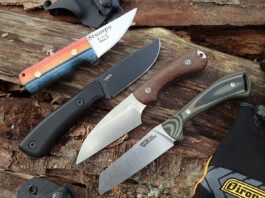
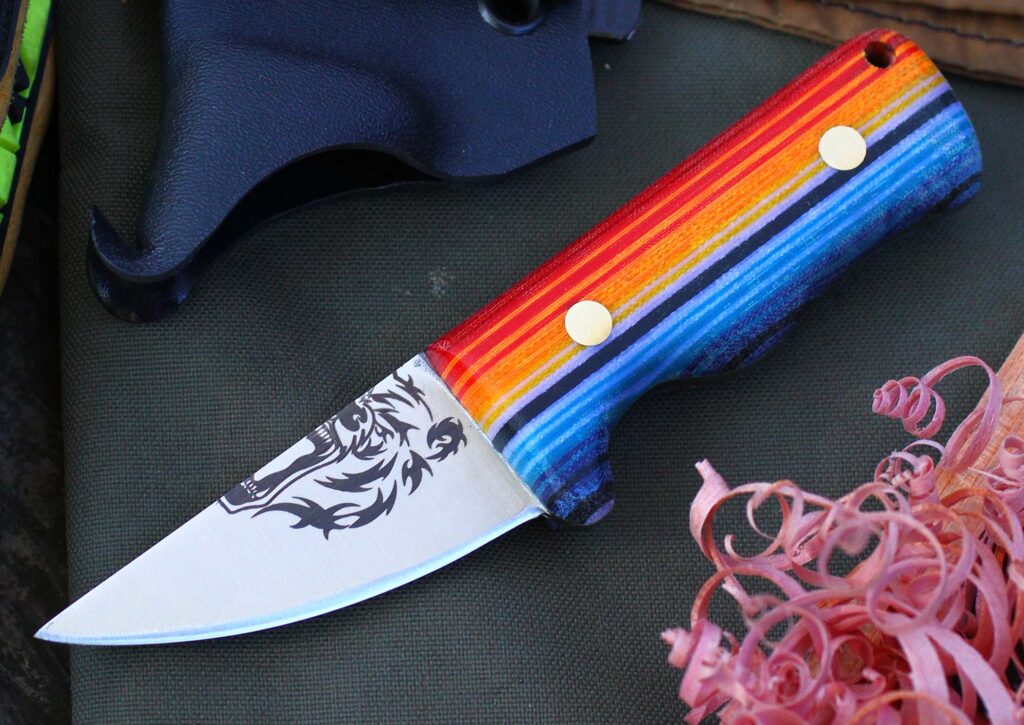
Bear Forest Knives Stumpy
Blade length: 2 1/8” Blade steel: Nitro V stainless Blade thickness: 1/8” w/90-degree spine Grind: Full flat Finish: Raw matte Scale materials: Various Micarta®/wood/Bearcarta (check availability) Overall Length: 5 7/8” Sheath: Kydex® black (.08” thick) MSRP: $239.99 Knife to know: The Stumpy checks all the boxes; it defines what is needed in a small utility fixed-blade knife while in the shop or outdoors. At the same time, you aren’t giving up comfort. Available: NOW
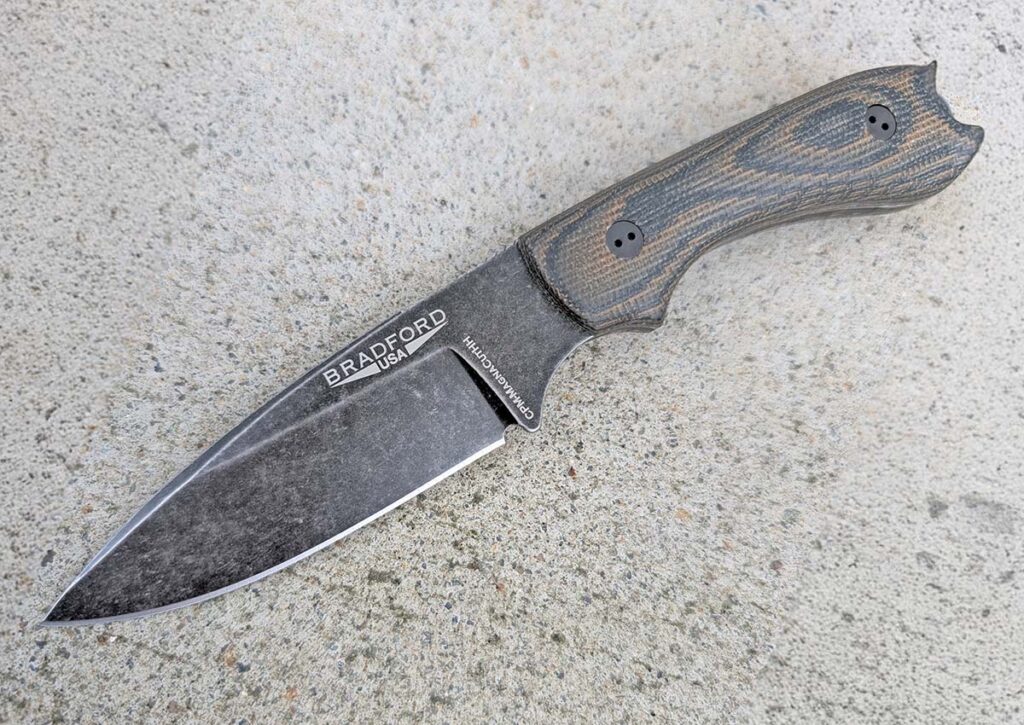
Bradford USA Guardian 3.2
Knife type: Fixed-blade EDC Blade length: 3.5” Blade steel: CPM MagnaCut High Hardness stainless Rockwell hardness: 63-64 HRC Blade grind: Sabre, false edge, full height flat Blade thickness: .14” Scale options: Micarta®, G-10 and carbon fiber Overall length: 7.125” Sheath: Horizontal leather MSRP: $229 Knife to know: Blade also available in a choice of ELMAX and M390 stainless steels Available: NOW
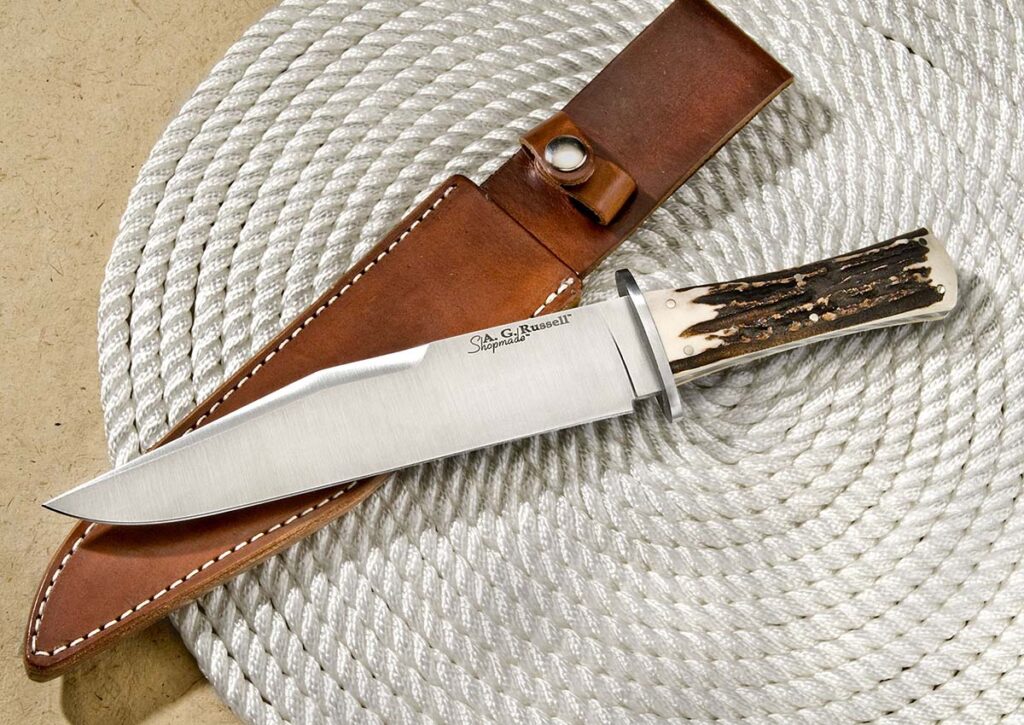
A.G. Russell Knives California Bowie Knife
Designer: BLADE Magazine Cutlery Hall-of-Fame® member A.G. Russell Blade length: 8.5” Blade steel: 154CM stainless Rockwell hardness: 59-61 HRC Blade grind: Flat Blade finish: Satin Scale material: Premium India stag Furniture material: 410 stainless steel Weight: 10.6 ozs. Overall length: 13.25” Sheath type and material: Handmade of leather Special feature: Long California clip point blade MSRP: $595 Available: NOW
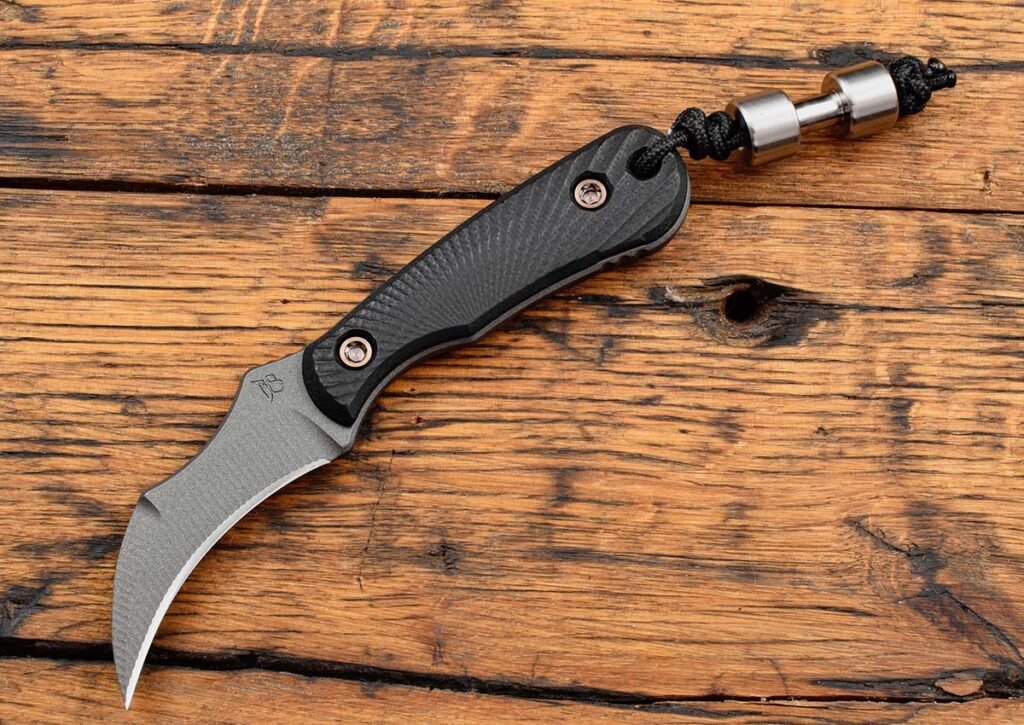
RMJ Tactical Gym Rat
Designer: Bryan Schellenger Knife type: Fixed-blade EDC Blade length: 2 3/8” Blade thickness: 1/8” Weight: 2.3 ozs. Blade steel: Nitro V stainless Rockwell hardness: 59-60 HRC Blade finish: Tungsten Cerakote® Scale material: Three G-10 options: black, dirty olive, hyena brown Handle fasteners: Torx Grade 5 titanium anodized a bronze color Barbell bead: Grade 5 titanium Overall length: 5 1/8” Sheath: Kydex w/ball chain & ambidextrous clip adapter suitable for pocket and outside the waistband carry Knife to know: Designer Bryan Schellenger wanted to come up with a small, light but effective blade that could be easily concealed with minimal clothing, and that idea was spawned at the gym; also carries as a necker MSRP: $185 Available: NOW
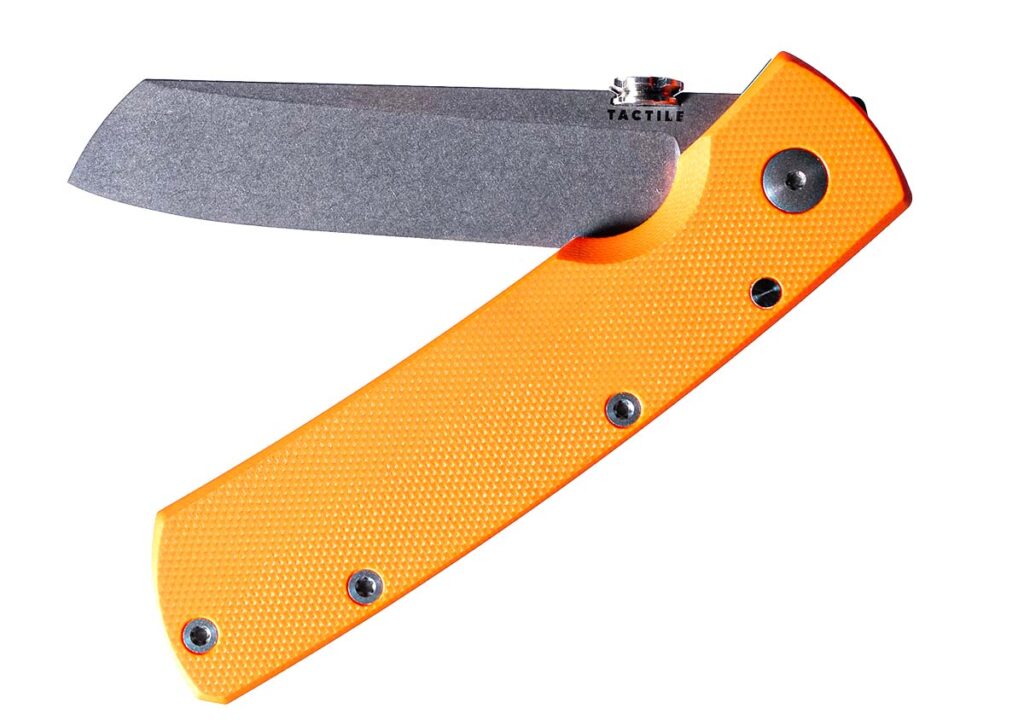
Tactile Knife Maraner 2
Knife type: EDC Designer: BLADE Magazine Cutlery Hall-of-Fame® member Bob Terzuola Blade length: 2.985” Blade steel: CPM MagnaCut stainless Rockwell hardness: 63-64 HRC Blade pattern: Sheepsfoot Blade finish: Tumbled Liner material: Hardened stainless lock-bar insert Scale material: Titanium & G-10 Furniture material: Titanium backspacer Lock: Insert linerlock Pivot: Ceramic bearings Closed length: 4.175” Knife to know: Designed in 1987; first production variant MSRP: $399 Available: NOW
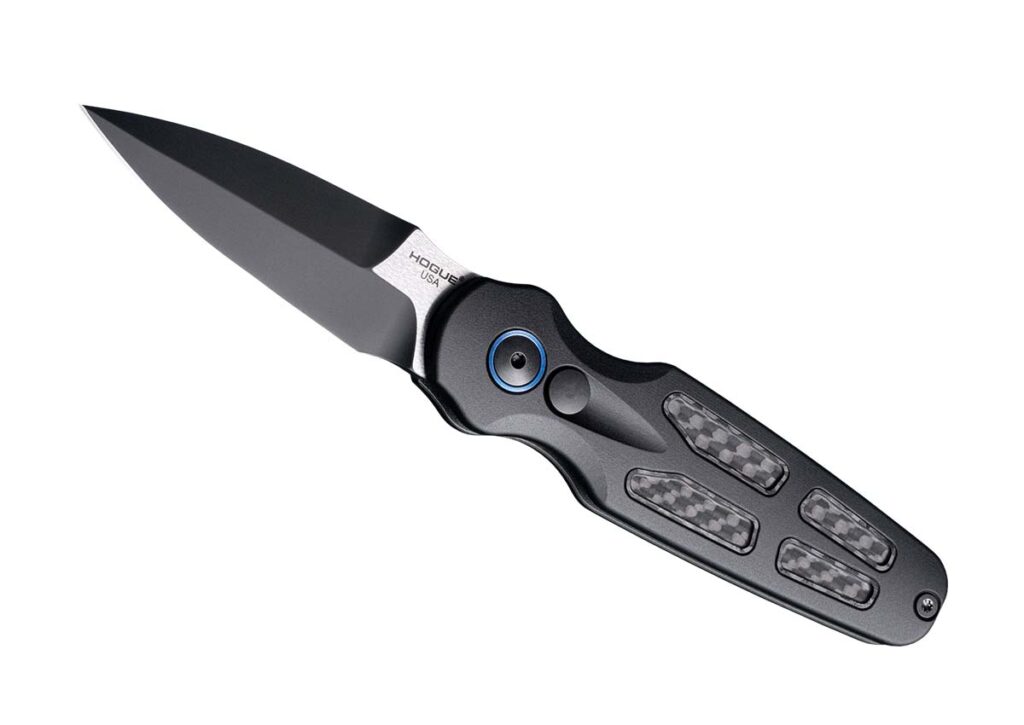
Hogue Knives Ballista II
Knife type: EDC automatic Designer: Scott Bruhns Blade length: 3.4” Blade steel: CPM MagnaCut stainless Rockwell hardness: 62-64 HRC Blade grind: Flat Blade finish: Two-tone: stone tumbled and black PVD Scale material: Carbon fiber inserts Frame material: Matte black 6061-T6 anodized aluminum Pocket clip: Deep carry, right-hand carry Weight: 2 ozs. Closed length: 3.8” Special features: Titanium accents anodized blue MSRP: $239.95 Available: NOW
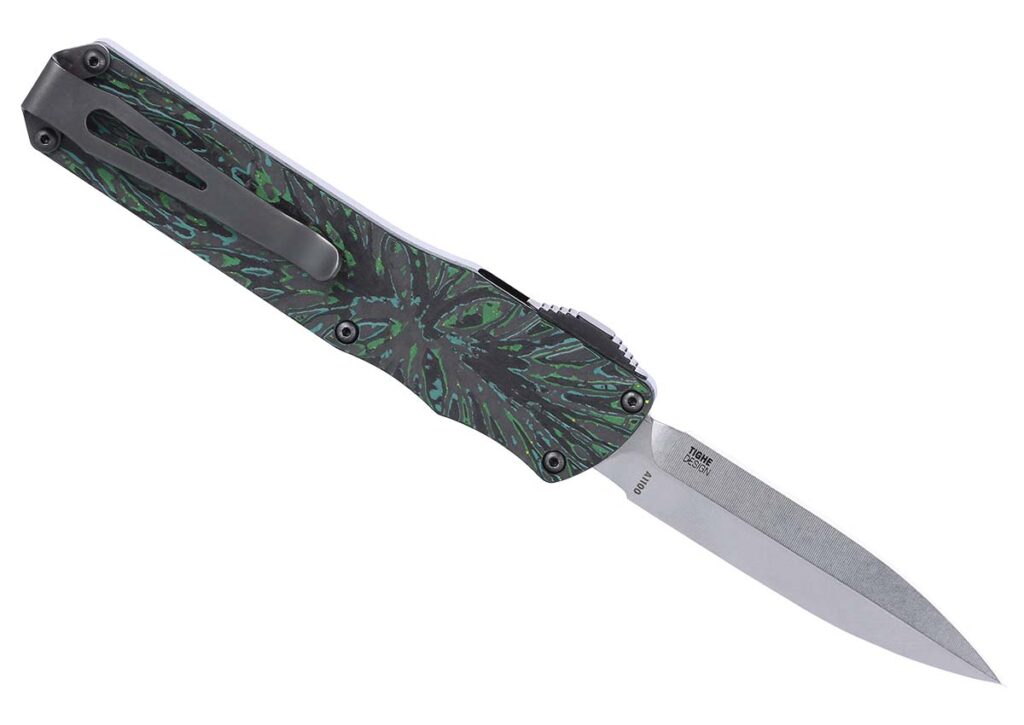
CRKT Twist Tighe Compact Automatic
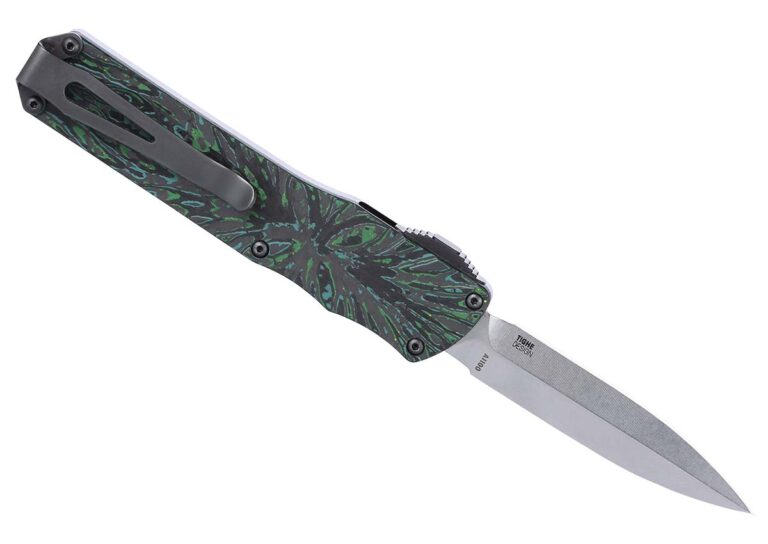
Designer: Brian Tighe Knife type: EDC OTF automatic Blade length: 2.69” Blade steel: CPM MagnaCut stainless Blade thickness: .09” Blade finish: Stonewash Scale material: Green carbon fiber Weight: 1.6 ozs. Closed length: 4.01” MSRP: $300 Available: NOW
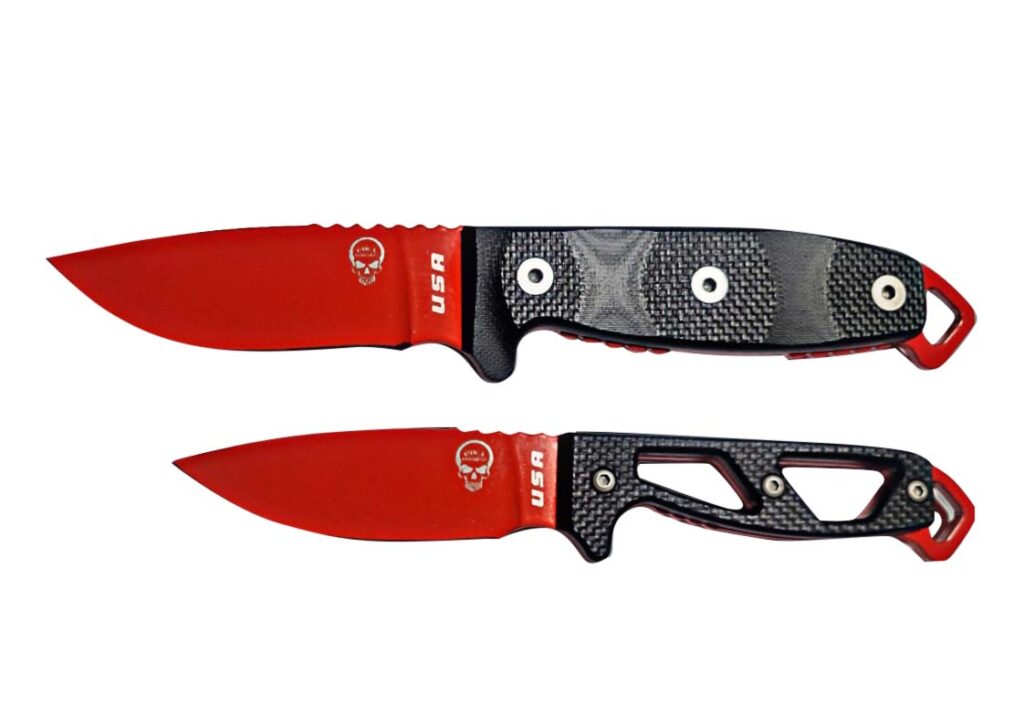
Knife type: Tactical, EDC, survival Designers: Bill Harris, Stephen Schook and Utica team Blade lengths: 3 and 2.5” Blade steel: CPM MagnaCut stainless Rockwell hardness: 61-62 HRC Blade grind: Flat Blade finish: Red powder coat Scale material: Black textured Micarta® Liner material: G-10 Overall lengths: 8 and 5.25” Sheath type and material: Critical Hit I ABS sheath w/built-in sharpener and fire striker and reversible belt clip and paracord; Critical Hit II ABS sheath w/belt clip and paracord MSRP: $170 Available: NOW
Ethan Becker and Dan Eastland collaborate on a sharp tool for the kitchen.
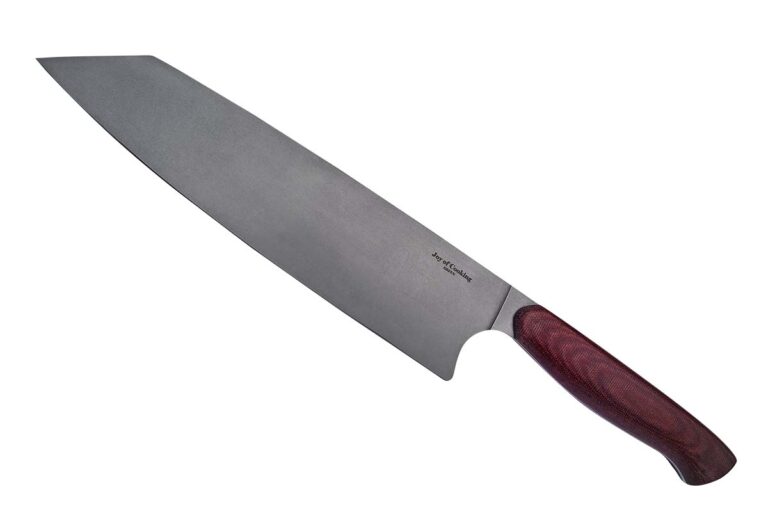
Long-time knife designer Ethan Becker and Dan Eastland of Dogwood Custom Knives have collaborated on a chef’s knife that combines each of the principals’ vision of exactly what such a knife should be.
Introduced at BLADE Show 2024, the Joy of Cooking 8-inch K-tip chef’s knife is a mix of Japanese and Western styles and premium stainless steel and synthetic handle materials.
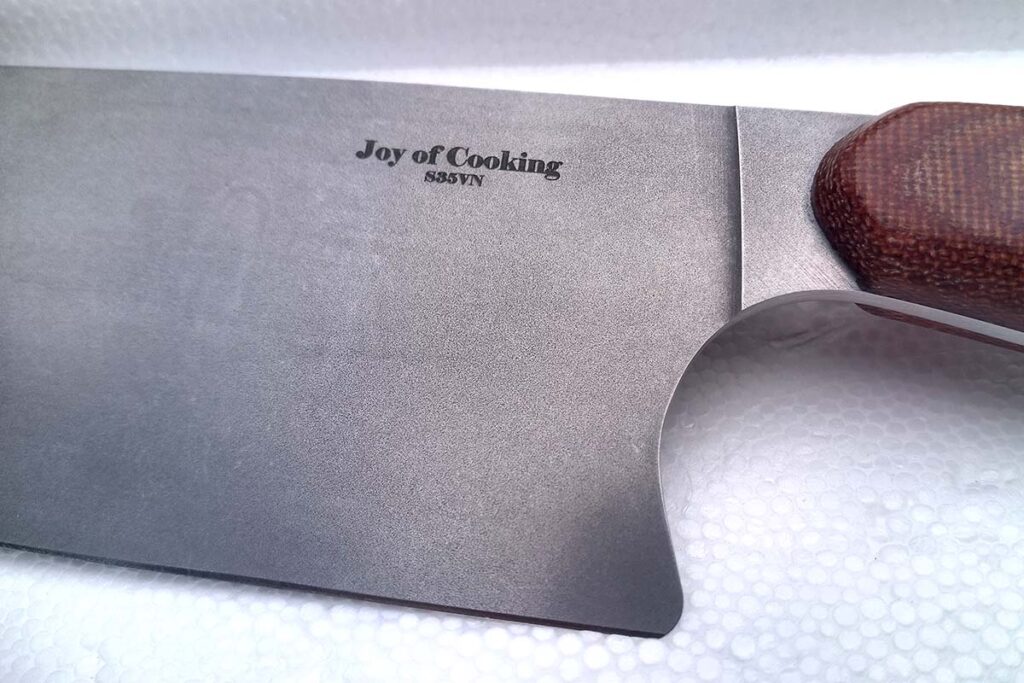
It also has the iconic Joy of Cookinglogo on the blade, Joy of Cooking the internationally renowned cookbook originally written by Becker’s mother, Irma Rombauer, and edited in some subsequent editions by Ethan. He handed those duties off and today the book is co-edited most ably by his son, John, and Megan Scott.
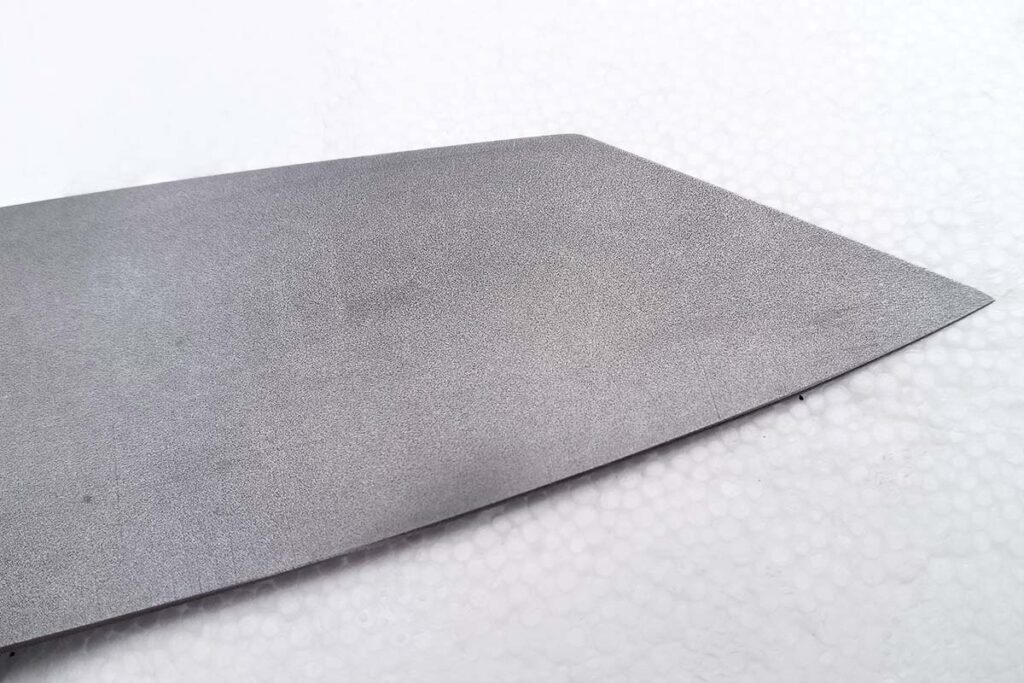
The heel of the blade curves toward the rear and sits flat on the surface for controlled cutting.
With extensive experience as both a knifemaker and a cook, Eastland brings the kind of know-how to the project that gives it edged gravitas.
“Dan is pretty much the perfect person to do this because he’s been in a commercial kitchen and knows his way around that,” Ethan said.
Dan also spent a number of years as an apprentice maker to Georgia Knife Makers Guild member Andy Roy of Fiddleback Forge in North Georgia, and now builds knives at Dogwood Custom Knives in Greenville, South Carolina.
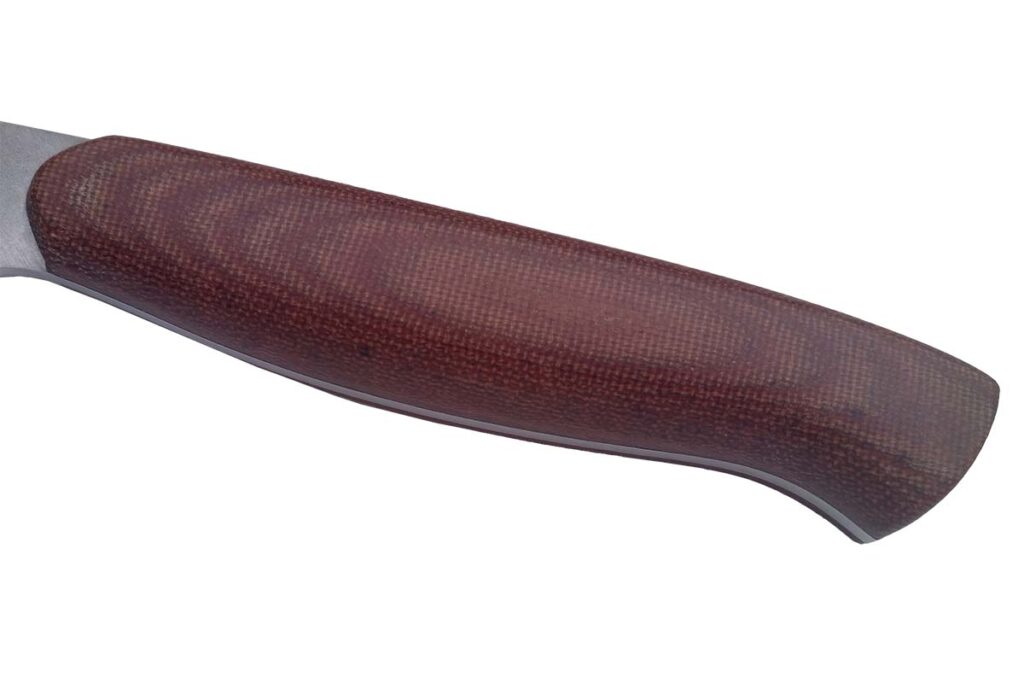
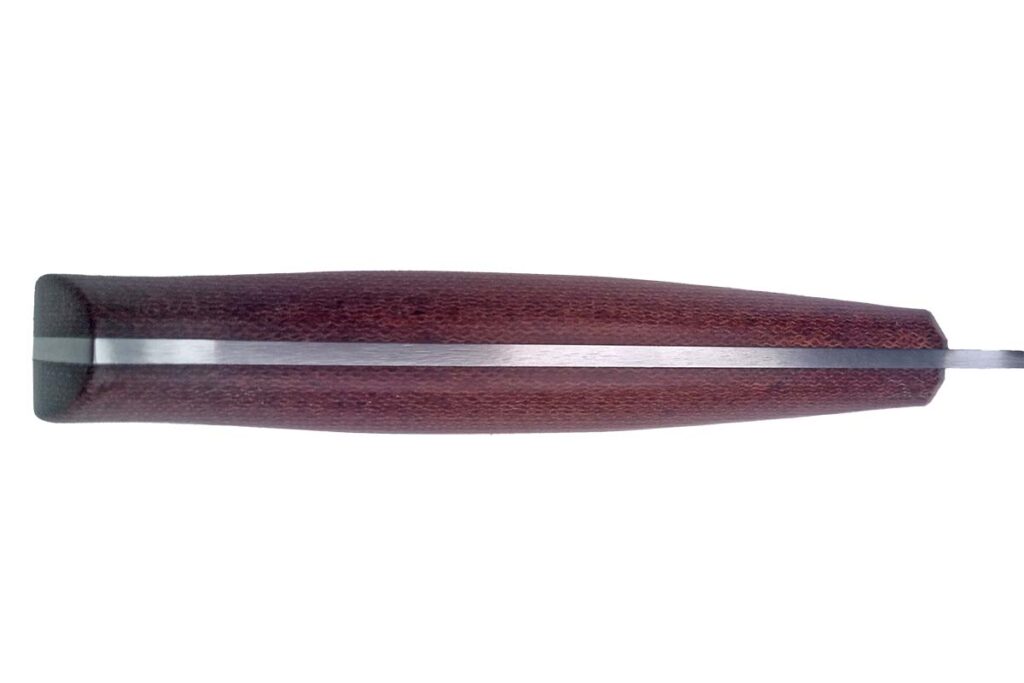
Handle materials come in a choice of natural (shown here; note the texture and grain) and black Micarta® and blue, red or black G-10.
As for the Joy of Cooking knife and its features, Dan approaches it all from the maker/cook perspective.
“The blade has a Japanese influence. I always liked Japanese blade geometry and balance, but I didn’t like their handles. Ethan and I both like a little palm swell,” he noted, “so we wanted more of a Western-style handle.”
In Joy of Cooking, Ethan writes about a grip for home cooks that’s comfortable, Dan said, so the handle has rounded corners to eliminate hot spots and an overall design that helps promote a pinch grip. The blade is weighted toward the front for balance and has the K tip for precise tip work.
The K tip gives the knife a piercing feature lacking in such Japanese designs as the santoku.
Ethan said he’s a big fan of the santoku style and has designed santokus and used them in the kitchen almost exclusively for 20 years.
“The one problem with the santoku is it really doesn’t have a good piercer,” he noted. “You can get by without a piercer if you keep the knife really sharp but guess what—most people don’t keep their knives sharp enough. But for such jobs as taking off the top of a tomato, for instance, the K tip works pretty good.”
Dan lauded the utility of the K tip for other tasks as well, adding, “My grandmother opened all the packaging with the tip of a kitchen knife. No matter what knife you gave her, she sliced the top of the package open with the tip and went to work.” The K tip is tailor made for such chores, as well as others.
The collaborators prefer a Western-style handle and gave the Joy of Cooking Knife grip a palm swell as a result.
The edge has a nice curvature for rock chopping and push cutting meats and vegetables. The heel of the blade also curves toward the rear and sits flat on the surface for controlled cutting.
“The neat thing is when the blade comes down [at the heel during a rocking cut or chop], it stops,” Ethan explained. “It’s also good for a push cut,” Dan added, “so it’s good for both a rock chop and push cut. And having that heel down a little bit it will bottom out, so you cut all the way through something and don’t wind up with little partially cut bits at the end.”
Joy Of Cooking Knife Details
The 8-inch blade is CPM S35VN stainless steel. The Rockwell hardness is 60 HRC and the blade is 3/32-inch thick at the thickest. Along with the contoured handle the knife weighs in at a scant 5.5 ounces.
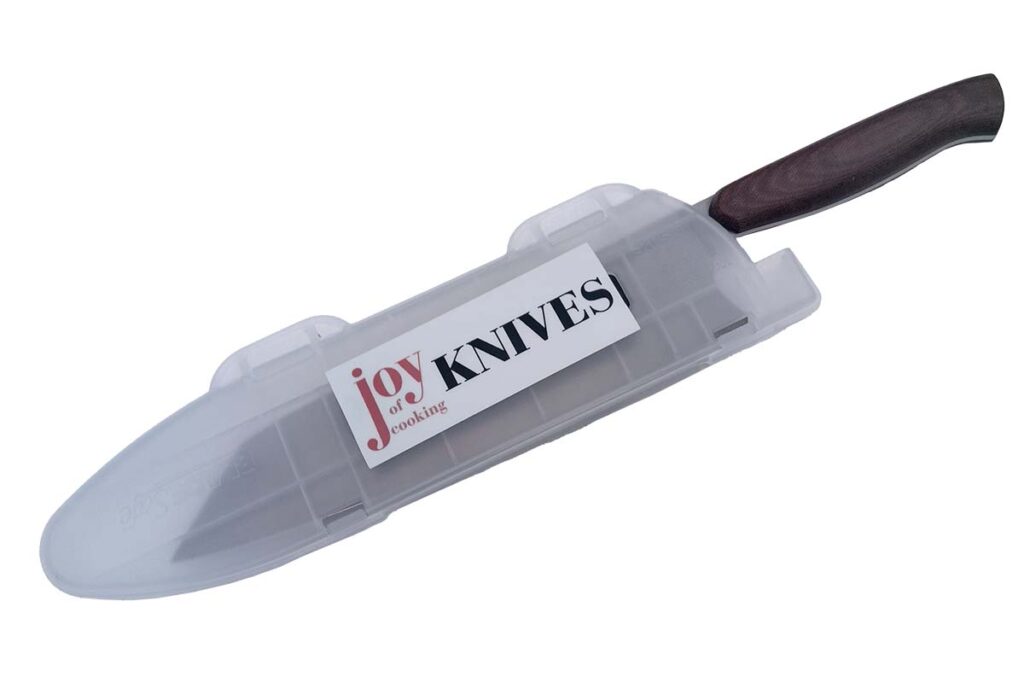
A hard plastic cover with plastic snaps contains and protects the knife.
“I’m of the opinion the Greeks told us everything we need to know about a double-inclined plane—the longer the plane and the lower the angle, the more efficient it is,” Dan said. “A knife blade is a double-inclined plane, and I wanted to make this knife as light as possible.”
He returned to his grandmother’s experience.
“And again, my grandmother used to complain that Henckels and Wusthof, she loved the knives, but they weighed almost as much as she did. By using the S35VN we’ve been able to thin it out and get a mechanically better cutting blade, but also a lighter blade.”
Ethan agreed that most kitchen knives are too heavy.
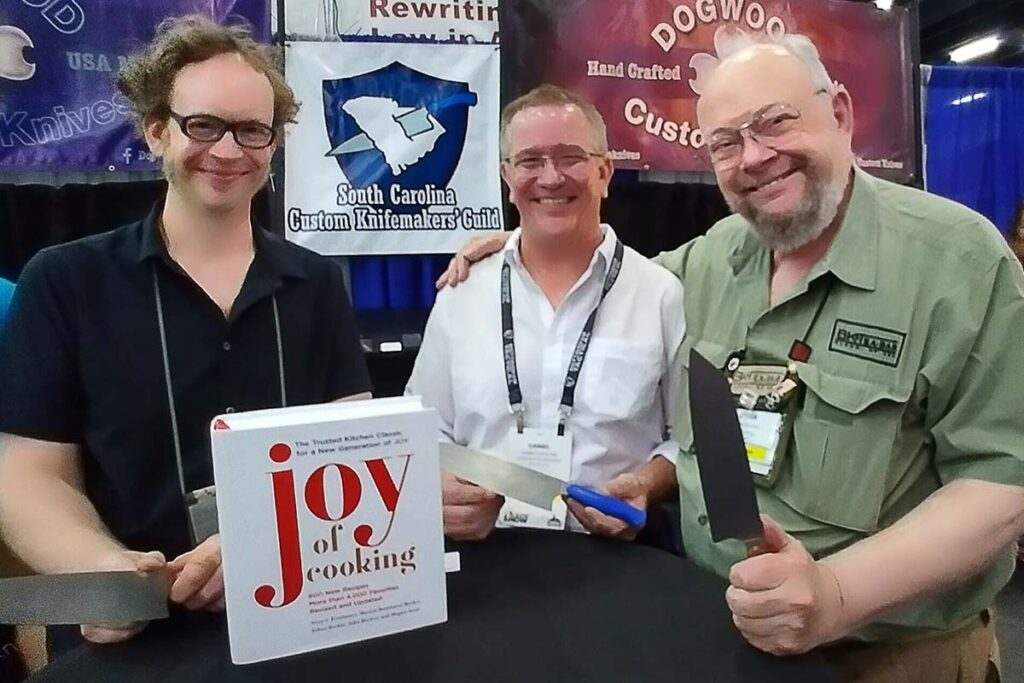
From left at BLADE Show 2024: John Becker, co-editor of Joy of Cooking, Dan Eastland of Dogwood Custom Knives and long-time knife designer Ethan Becker.
“The wrist gets tired easy and to be able to not have very much weight that you’re working with, hey, what’s wrong with that?” he observed. “Most traditional kitchen blades were thick because they were forged before they were ground … The cutlers in Europe were very, very concerned that the housewives would use the blades for things they weren’t supposed to, so they used soft steel so it wouldn’t nick and if they opened bottles with it it wouldn’t hurt it. The result was blades that didn’t hold an edge worth a damn and were not terribly efficient.”
Dan said the S35VN has good corrosion resistance and the edge retention is phenomenal.
“We tested the knife extensively in an industrial kitchen to ensure edge retention and durability, and I like S35VN because it’s a good balance of durability and edge retention. And we can get that 60 Rockwell so it can take a nice, keen edge and we don’t have to worry about it chipping out.”
As noted, Dan and Ethan wanted a Western-style handle with a palm swell and offer it in a choice of G-10 and Micarta®. The Micarta is available in black and natural versions, both with texture and grain for purchase. The G-10 comes in red, black and blue.
“Those colors will always be the same over time as we introduce other knives in the lineup, so you can buy a knife that will match whichever color knife you previously bought,” Dan said. The intent is for there to be a complete set of Joy of Cooking knives, though nothing was set in stone in that regard at press time.
Pros
Collaborative Expertise
Versatile Blade Design
Premium Blade Material
Cons
Higher Price Point
Plastic Snap Cover
Joy Of Cooking 8” Chef’s Knife Specs Designers: Ethan Becker and Dan Eastland Company: Dogwood Custom Knives Blade Length: 8” Blade Steel: CPM S35VN stainless Rockwell Hardness: 60 HRC Blade @Thickest: 3/32” Handle: Black and natural Micarta® and blue, red and black G-10 options Overall Length: 13” Carry: Plastic snap cover Knife to Know: K tip blade; lightweight design; hidden handle pins Country of Origin: USA MSRP: $200
Mike Bradshaw’s Large Hunter smokes the author’s test regimen.
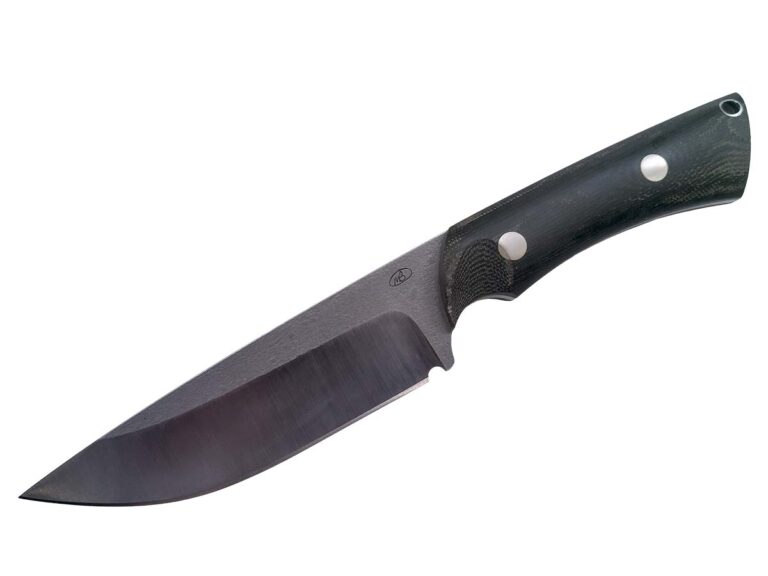
I came across Mike Bradshaw’s knives thanks to a recommendation by a knifemaker friend, R.W. Fred. The knifemaking community always helps other knifemakers—call it the “Brotherhood of the Blade.” After visiting his social media account for a quick look, I messaged Mike and he sent me his Large Hunter to test.
Bradshaw’s Large Hunter Specs
Knife: Large Hunter Maker: Mike Bradshaw Blade length: 4.5” Blade steel: CPM MagnaCut stainless Rockwell hardness: 63.5 HRC Blade @the widest: 1.375” Blade @the thickest: .13” Blade grind: Hollow on a 12” wheel Scales: OD green G-carta by GL Hanson Fittings: Nickel silver Overall length: 9.125” Sheath: Black Kydex Maker’s price for a similar knife: $200
Light Cutting Tasks
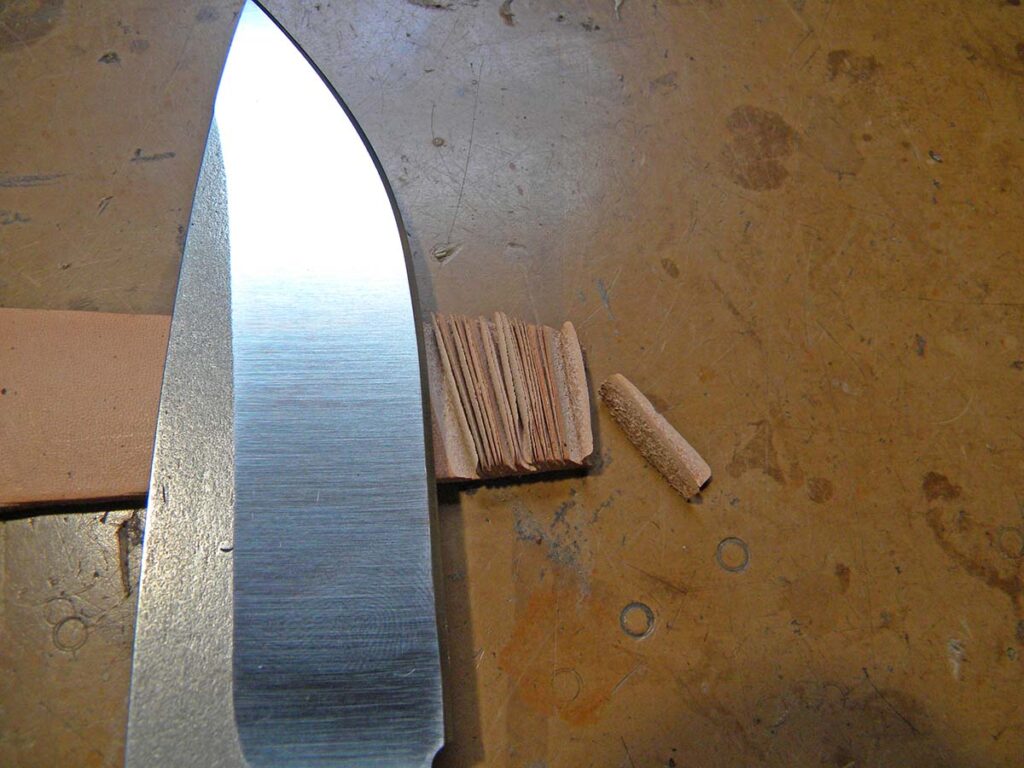
The author indicated the Large Hunter produced some of the thinnest slices he has ever made skiving 8-ounce leather.
Up first: the paper slice to check the original edge. This is the best way to show slicing in the still-image format of publications. The Large Hunter zipped through drafting paper in a jiffy, making a nice zipping sound on each cut. The edges of the slices were smooth with no tears. I had a hard time keeping my fingers out of the way, nicking one fingernail in the process.
Skiving 8-ounce leather was next on the agenda, and the Large Hunter produced some of the thinnest slices I have ever cut. It crunched the leather very smoothly in even slices that were controllable. The hardest part was moving my fingers out of the way fast enough. In addition to skiving the leather, I also sliced it. Again, the cuts were straight with no tearing.
Medium-Duty Cutting Tasks
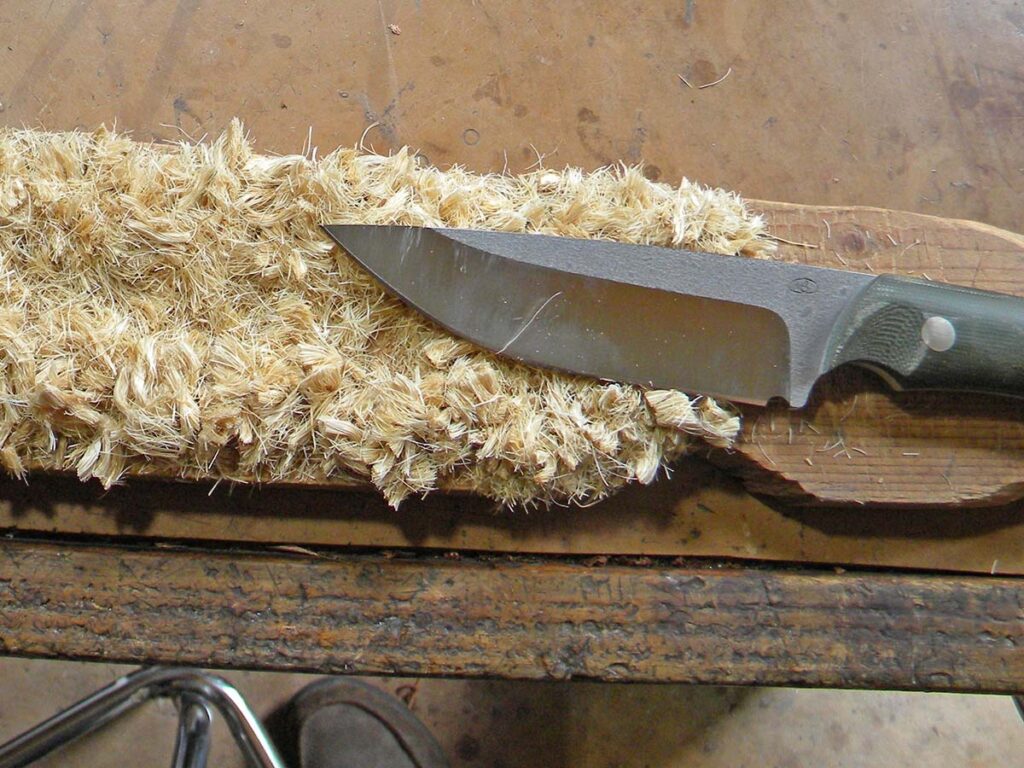
Mike Bradshaw’s knife crunched its way to 200 clean cuts in half-inch sisal rope.
It was time to whittle a firestick from seasoned cedar. The Large Hunter came through in flying colors, producing perfect curlicues with clean cuts. It was easy to control cutting depth but the handle was a tad sharp in the choil area. The unwanted sharp spot showed up again when I applied more pressure for deep cuts. A little touch up with sandpaper would fix the problem.
Batonning the Large Hunter through a cedar block was next. Four whacks and the cedar was split. I split it four times then split those four pieces four more times for kindling. The knife batonned great, with good balance between blade and handle. There was no damage to the edge.
Heavy Cutting Tasks
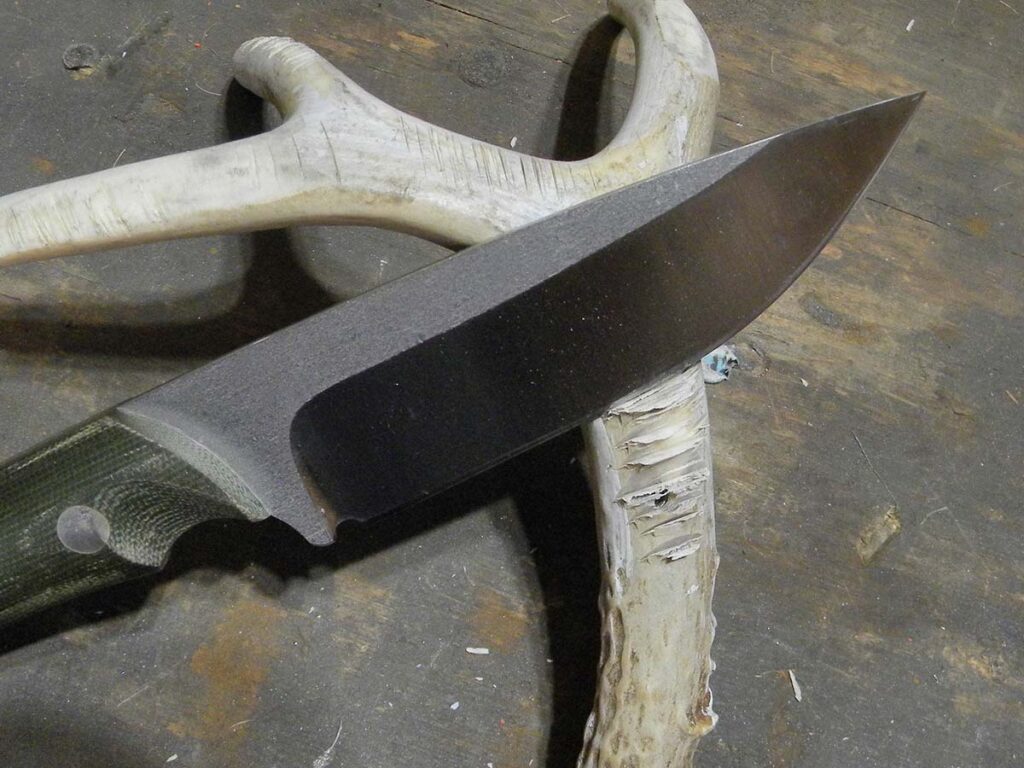
After being whacked into the antler 30 times, the edge emerged (far left) with no chips or rolling—a sign of excellent heat treatment.
From there, half-inch sisal rope was on the slicing block. The Large Hunter crunched its way to 200 clean cuts pronto. This knife is extremely sharp and holds an edge perfectly. The handle had a few hot spots that could be corrected fast with a piece of 220-grit sandpaper. If you’re wearing gloves, it’s no problem.
To push the edge further, I gave it 30 hard whacks into a whitetail deer antler. All that did was scatter antler chips all over my workbench—it didn’t do a thing to the edge. Excellent heat treatment, Mike!
As a final gauge of the edge, it was back to the paper slice to see if the edge picked up any damage or dulled at all. Nope, still sharp and smooth cutting. Great job, Mike.
Final Cut
Soften the edges of the handle more to relieve the hot spots. Easy fix. The Large Hunter can tackle a lot more than field processing big game. It has a super sharp edge for slicing and a bite for the larger chores.
Check Out More Outdoor Knives:
BEST TOMAHAWKS: OUR TOP HAWKS FOR BACKWOODS TO BATTLEFIELDS
Hot factory drops that made their debut at BLADE Show 2025.
From sexy folders to indispensable knife accessories, BLADE Show 2025 saw a ton of new drops. Nearly two months since the shindig, they’re still coming out. This is our last installment of the new show debuts for the summer and there’s definitely some lookers and doers in this crowd.
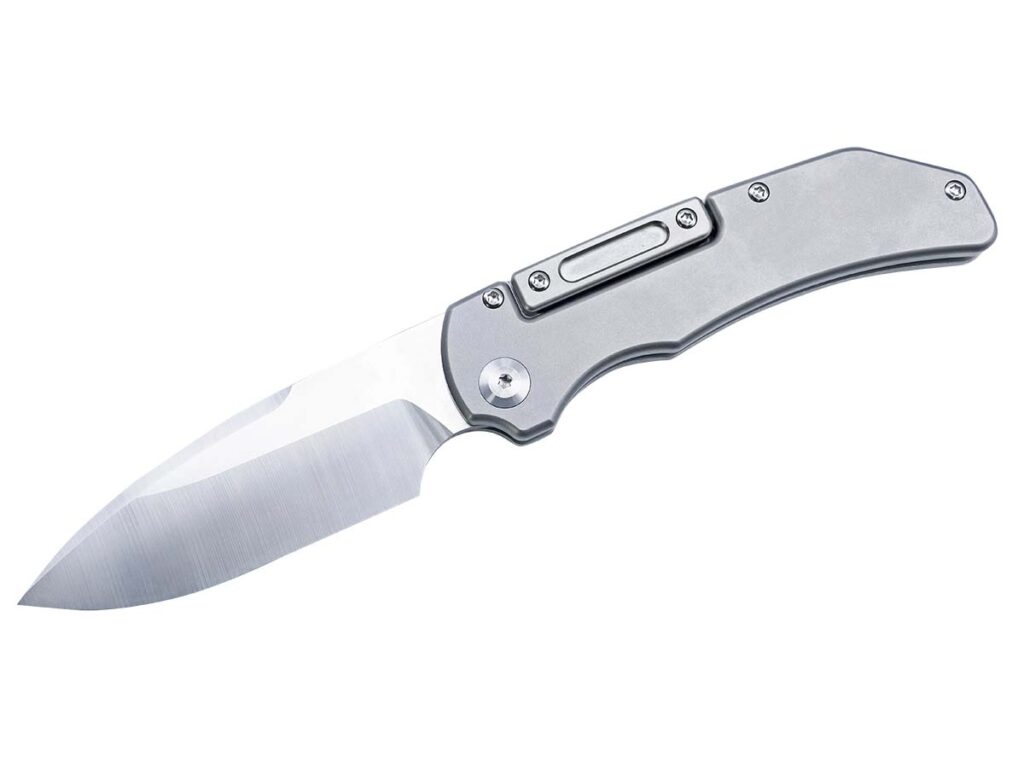
Kansept Hazard Bail Lock
Knife type: Folder Designer: Steven Dunnuck Blade length: 3.67” Blade steel: Stainless Rockwell hardness: 58-60 HRC Blade grind: Flat Blade finish: Satin/blackwash Handle material: Titanium Lock: Friction-actuated swing cam lock (no springs) Pocket clip: Tip-up, right-handed Weight: 5.78 ozs. Closed length: 4.54” Country of origin: China MSRP: To be announced Available: August 2025
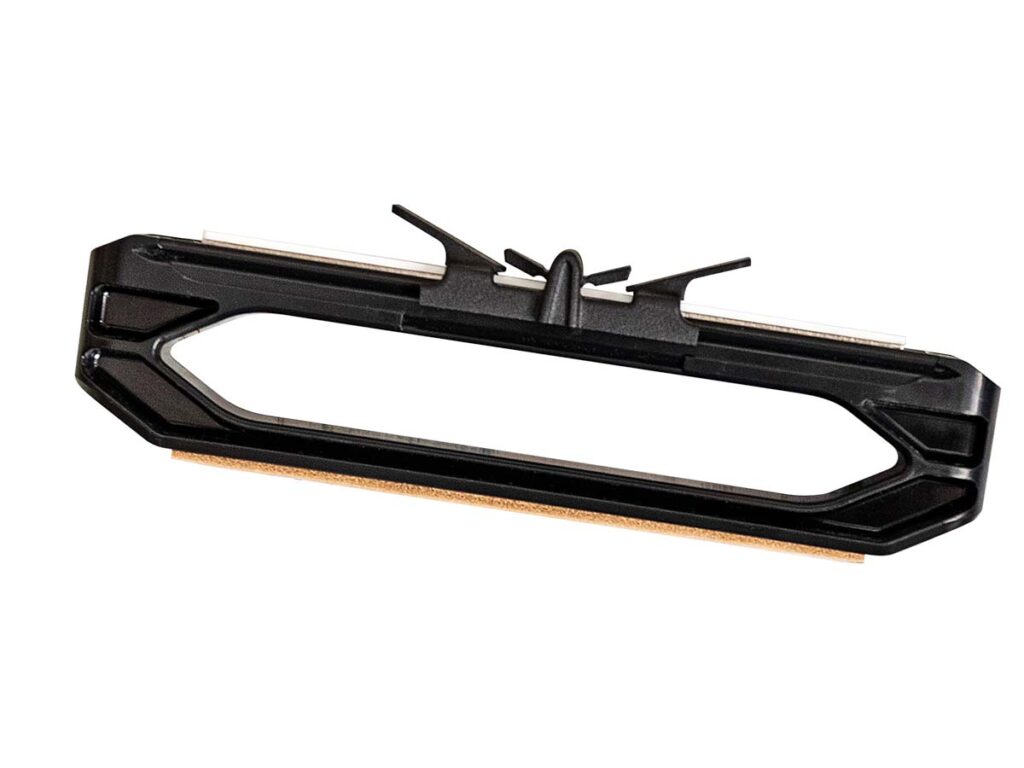
Wicked Edge Venture Portable Sharpener
Sharpener type: Hand-held Designer: Wicked Edge Abrasive type(s): Diamond, ceramic, leather Grit assortment: 500-grit diamond stone, fine ceramic Angle option: 20 degrees Edges sharpened: Plain Dimensions: 7” x 1.5” x 1” Construction materials: Recycled ABS plastic Weight: 4 ozs. Special features: 20-degree knife guide holds your knife steady as you go across the stone Country of origin: USA MSRP: $40 Available: Preorder now, full launch late summer
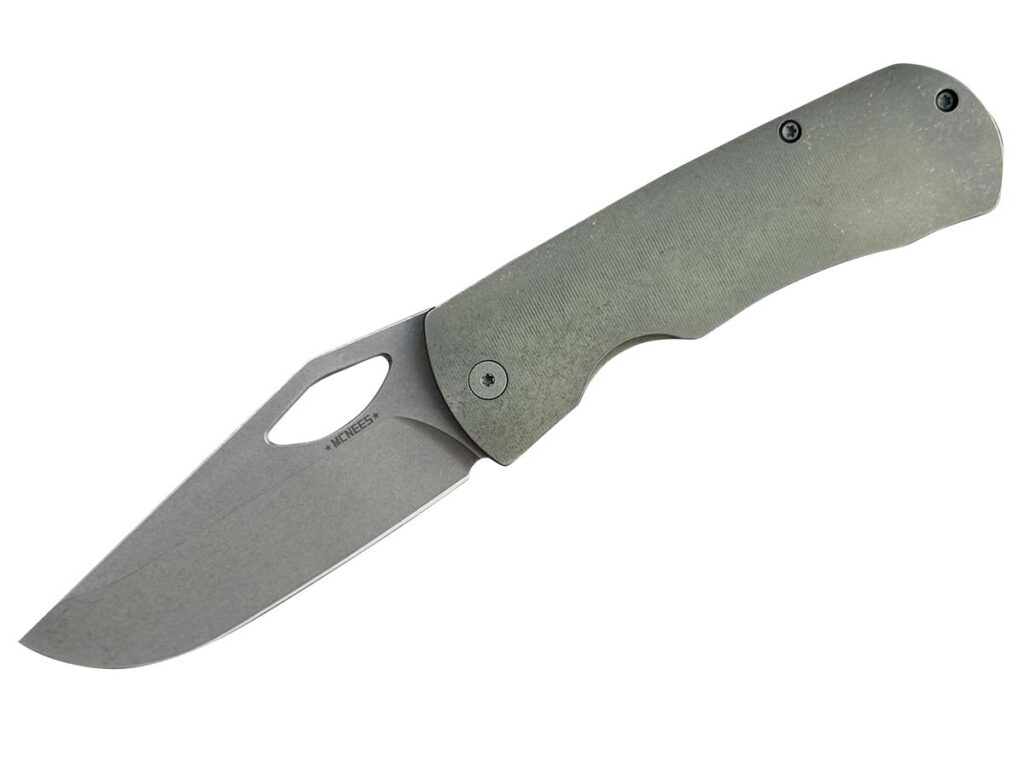
McNees Knives Dixon Folder
Designer: Jonathan McNees Blade length: 3.75” Blade steel: MagnaCut stainless Rockwell hardness: 63-64 HRC Blade grind: Hollow Blade pattern: Clip point Blade finish: Atomic Stonewashed Construction: Screw Handle material: Titanium Lock: “Reeve/Walker Frame lock” Blade opener: Hole Pivot: Ceramic ball bearings Pocket clip: Titanium, tip-up Weight: .34 oz. Closed length: 4.5” Country of origin: USA MSRP: $625 Available: NOW
Spyderco Shaman Lightweight
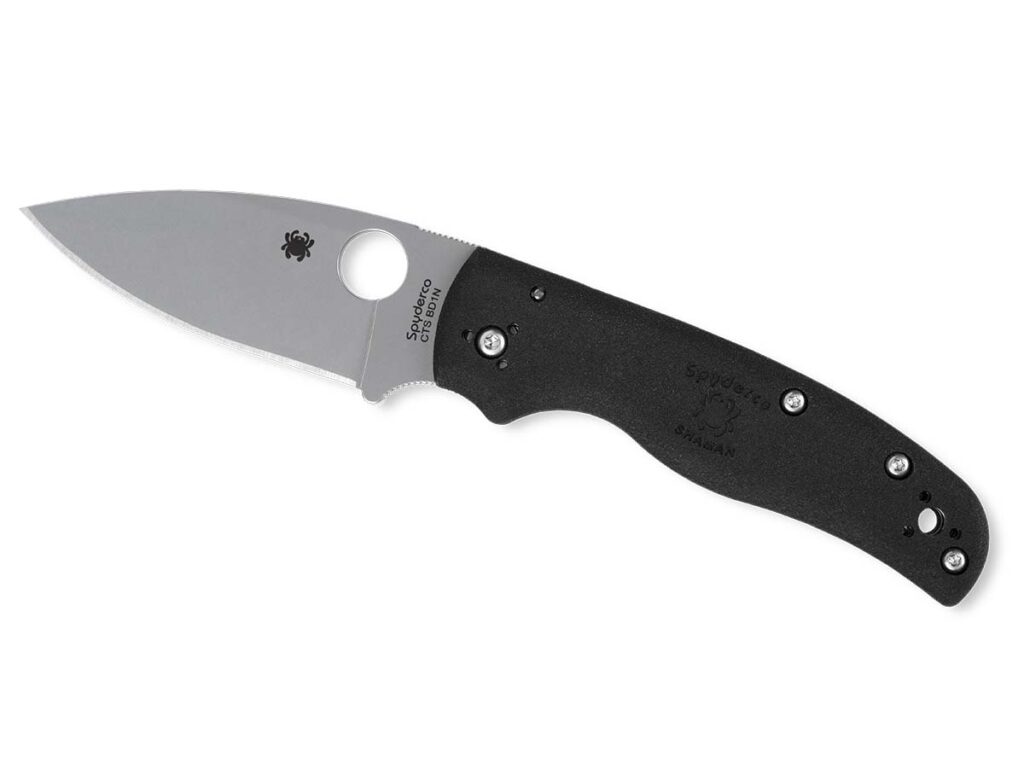
Knife type: Folder Designer: BLADE Magazine Cutlery Hall-of-Fame® member Sal Glesser Blade length: 3.58” Blade steel: CTS® BD1N stainless Blade grind: Full-flat Blade pattern: Leaf shape Blade finish: Satin Construction: Screw construction w/nested, skeletonized stainless steel liners Handle material: FRN (fiberglass-reinforced nylon) Lock: Compression Lock® Opening mechanism: Manual one-hand open w/fully accessible Trademark Round Hole™ Pivot materials: Phosphor bronze washers Pocket clip: 4-position, stainless steel, tip-up/tip-down, left/right Weight: 4.8 ozs. Closed length: 4.7” Special features: Finger choil w/added gimping, pebbled textured FRN handles, a reduced weight of 9 percent from original Shaman, and available in both PlainEdge™ and SpyderEdge™ Country of origin: USA MSRP: $230 Available: Fall
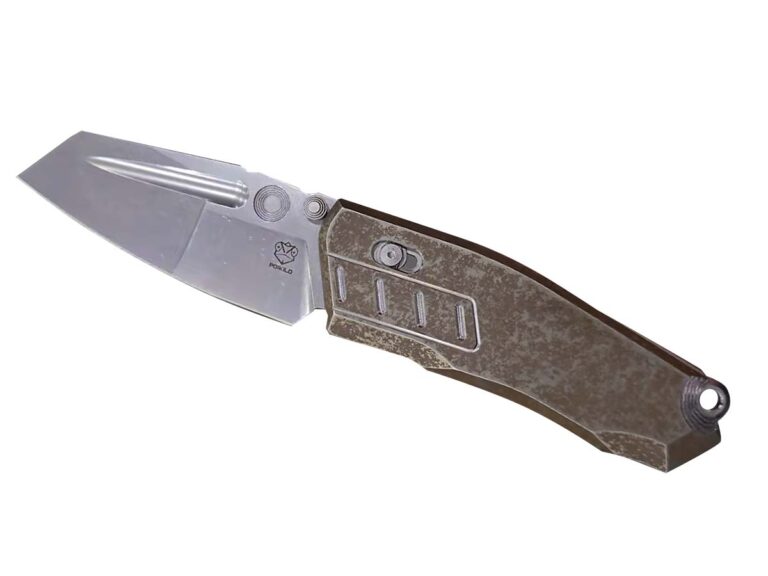
Poikilo Blade Vader
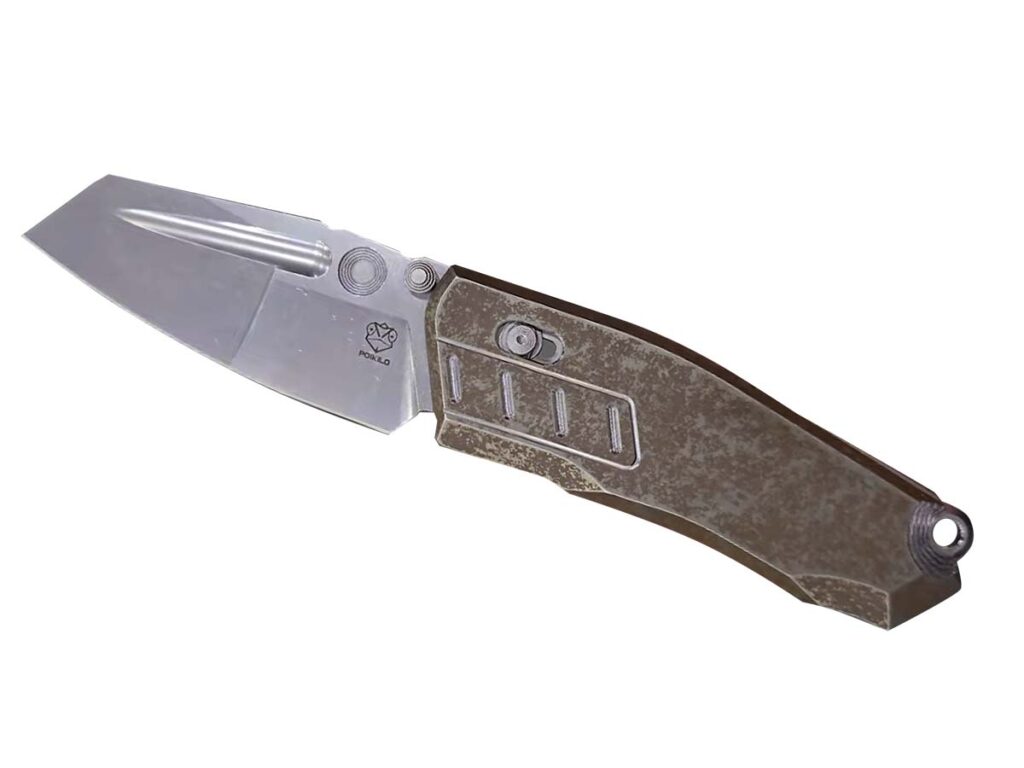
Knife type: Folder Designer: TASKnives Blade length: 3” Blade steel: M398 stainless Rockwell hardness: 60-62 HRC Blade grind: “V” Blade pattern: Reverse tanto/modified sheepsfoot Blade finish: Dark Stonewash Construction: Sandwich Handle material: A proprietary titanium Lock: Axis Blade openers: Thumb stud and thumb hole Pivot materials: Bushing and phosphorous bronze washers Pocket clip: Titanium, right-hand carry Weight: 4.76 ozs. Closed length: 4.3” Special features: Screw-less design from PKB Country of origin: China MSRP: $420 (standard/base finish) Available: September/October
Browning South Slope
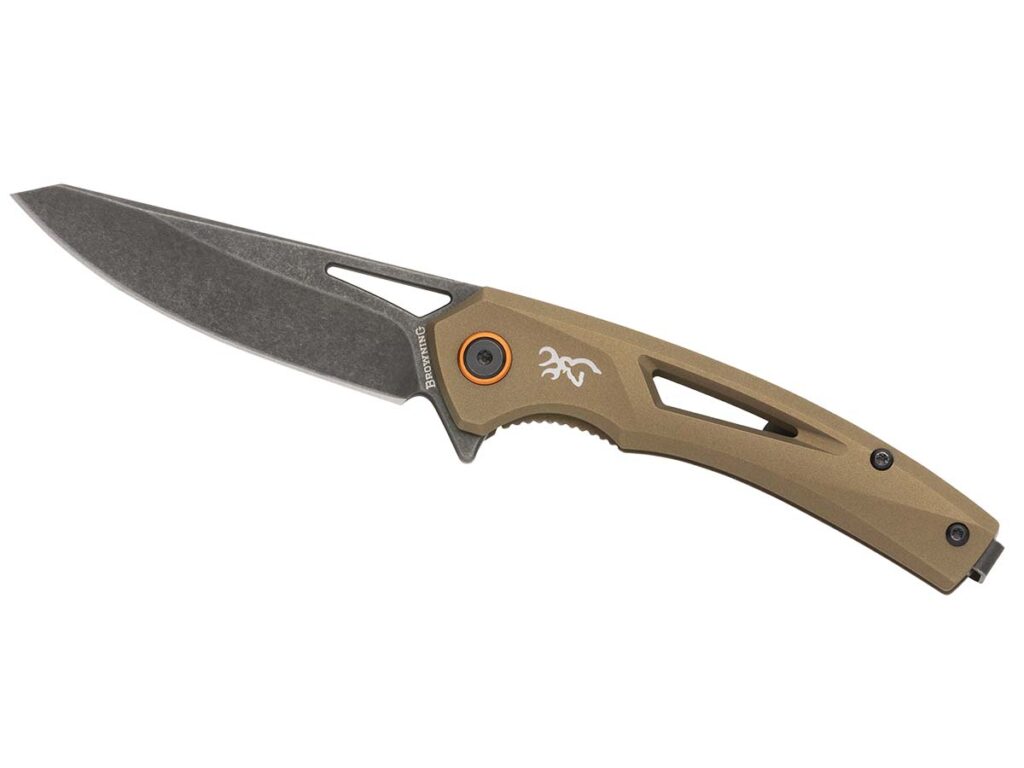
Blade length: 3” Blade material: D2 tool steel Rockwell hardness: 60-62 HRC Blade finish: Black stonewash Blade openers: Flipper and hole Pivot: Ball bearing Handle: Synthetic; burnt bronze; Cerakote® finish Pocket clip: Ambidextrous, tip-up Lock: Framelock Closed length: 4” Country of origin: Offshore MSRP: $79.99 Available: NOW
Bear & Son Cutlery’s new White Smooth Bone Professional Fillet Knife delivers precision, durability and American craftsmanship for serious anglers.
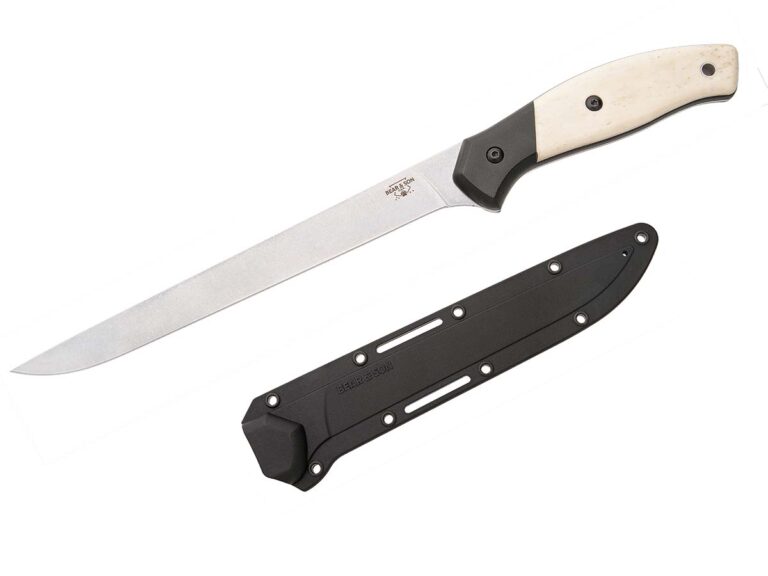
Summer fishing season just got a serious upgrade. Bear & Son Cutlery has introduced the new 11 7/8-inch White Smooth Bone Professional Fillet Knife, a purpose-built tool for anglers who demand precision from dock to dinner table.
Crafted in Alabama by a company known for keeping every step of production in-house, the WSB66 combines classic styling with modern steel performance. Bear & Son Cutlery’s fully self-contained factory handles everything—from blanking dies and heat treating to grinding, assembly, and hand-finishing—ensuring consistent quality and genuine American craftsmanship in every knife.
At the core of the Professional Fillet Knife is a 7-inch Sandvik 14C28N stainless steel blade, engineered for razor-sharp cuts, long-lasting edge retention and resistance to corrosion, even in saltwater environments. Whether trimming trout in the mountains or breaking down snapper on the coast, the blade delivers clean, efficient slices with ease.
Weighing just 4.9 ounces, the knife offers balance and control that make quick work of everything from panfish to redfish. Its White Smooth Bone handle provides a secure, comfortable grip while adding a touch of traditional character. A protective plastic blade guard ensures safe transport and storage, whether stowed in a tackle box or kitchen drawer.
True to Bear & Son’s mission of building affordable, American-made knives, the Professional Fillet Knife is designed for anglers of all levels—weekend fishermen, seasoned guides and anyone who values a dependable blade at camp or on the water.
White Smooth Bone Professional Fillet Knife Specs Blade Material: Sandvik 14C28N Stainless Steel Handle Material: White Smooth Bone Overall Length: 11 7/8″ Blade Length: 7″ Features: Protective Plastic Blade Guard Weight: 4.9 oz. Origin: Jacksonville, Alabama MSRP: $140