
Buyer's Guides

You’re looking for a new knife in a certain style – we’ve got recommendations on the best blades for every price point.

Plain Vs Serrated Knives: Which Is Best For Who

2

School yourself on which edge is best for you and your knife.

Coffee or tea? Pizza or hamburger? Ice cream or cake? Truck or car? Having choices in life is a good thing. You base the choices on such criteria as what you’re in the mood for to eat, how much you can afford for a nice vehicle and more. Likewise, you have tons of choices in knives, including plain, serrated or partially serrated/combo edges.

Most choose plain edges because plain edges provide the most versatile cutting format, regardless of task. They’re also the easiest to sharpen. Some have rougher slicing tasks to do, like cutting rope, cardboard, or webbing or plastic straps. If you undertake such tasks more frequently, a knife with a serrated edge will power through tough and fibrous materials with ease. 

Knowing the intended use for your knife will help you select the proper edge format, so let’s explore the possibilities for plain, serrated and partially serrated edges. Showing typical uses for all three should help you decide which edge format is for you.

CRKT Bugsy
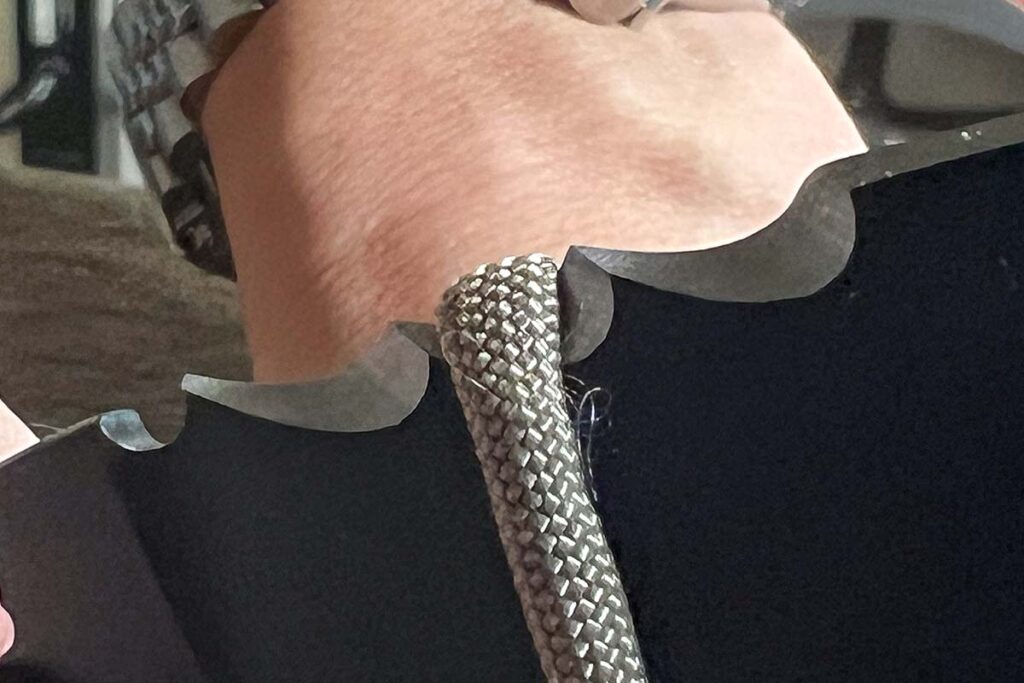
Bugsy’s Veff serrated teeth
Rest whatever you’re cutting inside one of the Bugsy’s Veff serrated teeth and it will help hold the material as well as cut it. 

Kaila Cumings, the three-time contestant on Discovery Channel’s Naked and Afraid reality TV show, designed the CRKT Bugsy. Kaila grew up hunting, fishing and camping with her father, thus starting her lifelong interest in survival skills and tools, including knives. She designed the Bugsy as a compact fixed blade with high utility characteristics and superior ergonomics. 

The 3.7-inch blade enables the knife to execute a variety of tasks related to camping/survival. The modified clip point shape with a defined tip is ideal for scoring, and the gentle sweep of the main bevel gives plenty of belly to facilitate slicing chores such as food prep. The 1095-blade steel provides good edge holding and ease of resharpening in the field. As a result, it is a favorite carbon steel of knife users. The handle’s finger grooves help lock in your grip, and their rounded edges melt into your hand.
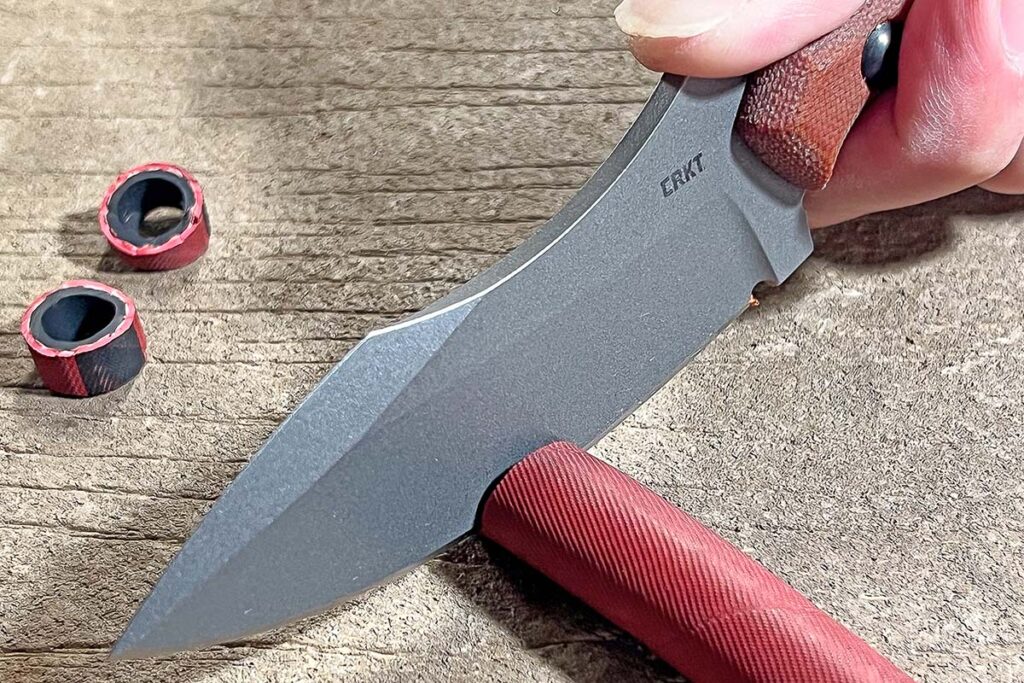
Plain edge Bugsy cutting hose
The plain edge Bugsy works well with utility chores such as cutting rubber hose. The curve of the edge makes for great slicing action.

There are two versions of the Bugsy: a plain edge blade in a gray Cerakote® finish, a tan Micarta® handle and a leather belt sheath, and a partly serrated blade in a black Cerakote finish, a black G-10 handle and a molded Kydex sheath.  The former is outdoor/hunting themed, the latter tactical—same design, two different personalities.

Performance-wise, the Bugsy is an ideal fixed-blade companion in either flavor. It’s just shy of 7.5 inches overall, making it very comfortable for everyday carry. It’s compact enough to carry well yet there is enough blade length to handle most cutting jobs. Both versions have an MSRP of $170 and are made in the USA for CRKT by TOPS Knives.

Spyderco Paramilitary 2
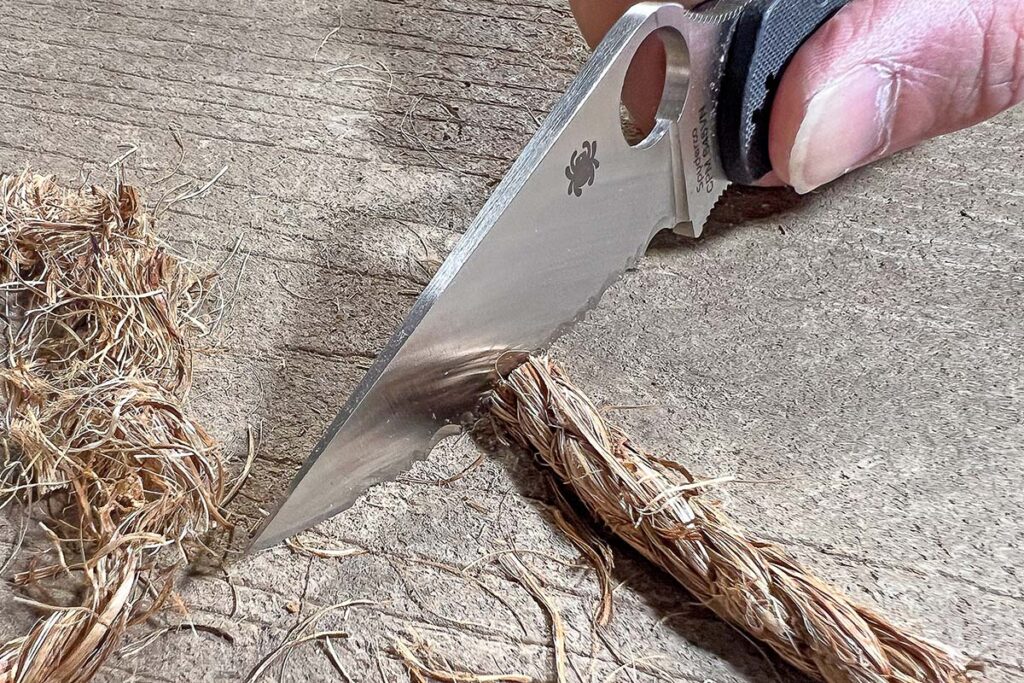
Spyderco Para2 cutting rope
This is where the fully serrated Spyderco Para2 shines. Manila rope is tough to cut and the Para2 handles it without any effort exerted. “If you cut rope regularly,” the author noted, “fully serrated is the way to go.”

The Paramilitary 2, aka Para2, is one of Spyderco’s hottest-selling folders. Taking what works for the company’s full-size Military model and making it a bit more compact and pocketable, the Para2’s design and performance lineage is undeniable. It has a full-flat-ground blade that makes the Military a lean, mean cutting machine. 

There’s also the ultra-strong Compression Lock that secures the blade open, yet is easy to manipulate and close one-handed. The ergonomically shaped G-10 handle sports a nice peel-ply texture that aids in grip retention. The Para2 is built for serious EDC use. The 3.4-inch clip point blade is CPM S45VN high-performance stainless steel for enhanced edge holding. 

The reasons for the Para2’s superior cutting performance are both the full flat grind and the distal taper from tang to blade tip. The resulting progressively thinning down of the blade allows it to sail effortlessly through whatever you’re cutting. The thumb rest and finger choil boast deep traction notches for a nonslip grip, allowing a choke-up grip when more control or pressure is required.
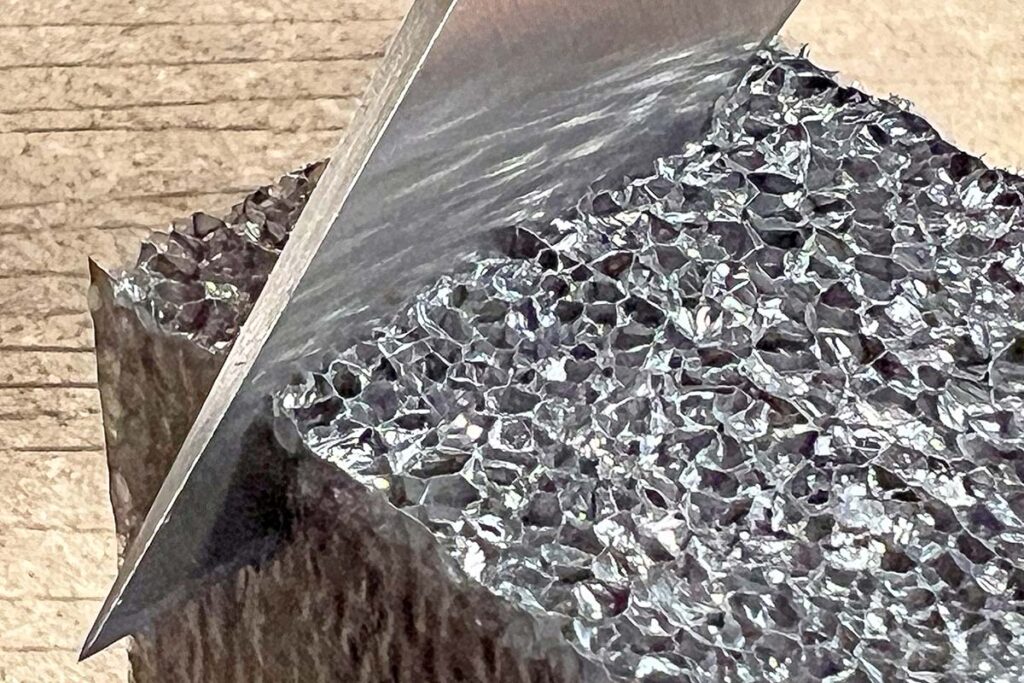
Plain edge Para2 has a slight distal taper
The full-flat-ground blade of the plain edge Para2 has a slight distal taper from tang to tip, which makes it bite hard and sink into the cutting media. It goes through foam block like a laser.

The edges of the G-10 are chamfered to prevent hot spots. An hourglass-shaped steel pocket clip mounts in one of four ways conducive for lefties and righties, as well as blade tip up or tip down. The Para2 carries well in whatever mode you select, making it a popular choice among Spyderco enthusiasts as well as those who fancy a well-made working folder.

Spyderco long has been known for its handle shapes, blending ergonomics with smart, practical design, resulting in a knife comfortable to use for extended periods. The Para2 handle has an integral guard just behind the finger choil. There’s also a generous swell in the grip area to accommodate your fingers comfortably. The butt swells just enough to prevent your hand from sliding rearward. 

With the Para2 you have a choice of a plain or fully serrated edge. Spyderco has long been known for its fully serrated blades, with its serration pattern regarded by many as the best in the industry. The tooth pattern cuts aggressively while still having a smooth action. MSRP for the plain or serrated Para 2 is $265. Country of origin: USA.  

Plain Vs Serrated Knives
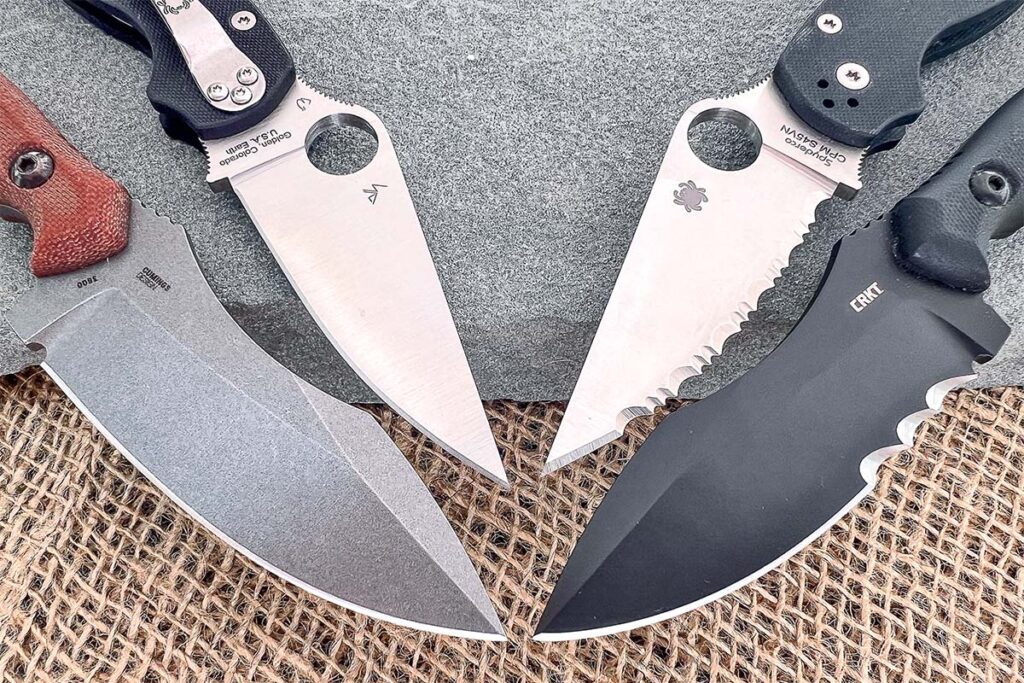
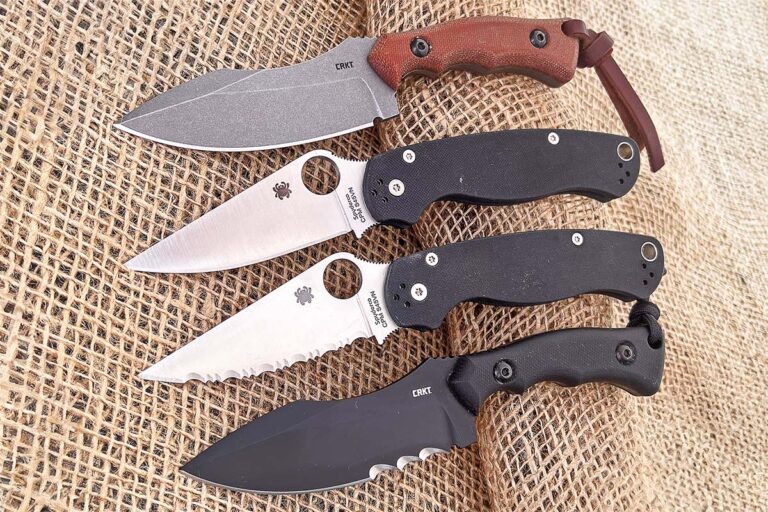
Plain and serrated or partly serrated edge versions of the same knife model, clockwise from bottom left: CRKT Bugsy plain, Spyderco Para2 plain, Para 2 fully serrated and Bugsy partially serrated.

Choose your edge format carefully to best suit most of your cutting needs. Most opt for a plain edge for the previously mentioned reasons. A plain edge does well in a variety of settings, from opening packages to stripping wire, doing light-duty scraping tasks, and even food prep. Ninety percent of cutting tasks are suited to plain edges while roughly 10 percent or so require more muscle.

Plain edge blades are easy to sharpen as well—just be sure to select your sharpener carefully based on steel type. Harder, more-wear-resistant steels like the CPM varieties require diamond sharpeners due to how aggressively diamond abrasives cut. Steels not as hard as the CPM varieties can be addressed with diamonds too, but other types of sharpeners like ceramic are very effective as well. A properly sharpened plain edge blade is all you need for most cutting jobs, big and small.

Remember that if you can reprofile the edge angle, you can decrease it by one or two degrees to get a sharper edge. For instance, most factory edge angles are 22 degrees, average. If you cut the angle back by just two degrees, you will be surprised at how much sharper the edge will be and therefore have more bite.

You need a sharpener specifically designed to address serrations. One is the Spyderco Sharpmaker 204. Set the 204 up to where the “points” of its triangular-shaped hones contact the serrated cutting edge. The points get inside each tooth as well as sharpen the tips of the serrations. There are others out there that address serrations but the best I have found is the 204. Some say serrations are difficult to sharpen but they aren’t if you use the correct sharpener.

Again, choose your edge format carefully to match the intended uses for your knife. You don’t want to cut open boxes or prep food with a serrated blade. You can do such tasks with a serrated blade if it’s the only blade you have, but, if given a choice, such tasks are better suited for a plain edge due to the smoothness of how it cuts.

Plain Vs Serrated Knife Analysis

The plain-edge versions of the Bugsy and Para2 work exceptionally well. The Bugsy’s blade belly makes slicing effortless and has plenty of bite. The Para2’s full flat grind with distal taper allows the blade to effortlessly cleave through tough materials. The excellent edge geometry enables the blade to bite in deep. In fact, the Para2’s blade makes cutting tasks easy and fun to complete, taking the work out of work.

The serrated versions of each knife have their own pluses and minuses. With the partially serrated Bugsy, the Veff serrations are ground at an angle, cutting most effectively on the pull rather than the push cut. The large scalloped teeth also help in cutting paracord, string for weed trimmers, twine, threads and zip tie ends. Just rest whatever you are cutting inside one of the teeth and that will help to hold the material as well as cut it. 

The serrations perform great but I felt that they were ineffective for some cutting work due to their limited length. You must saw back and forth with the blade to make effective use of the serrations, and sometimes that is just not feasible. A fully serrated blade would be nicer to allow for more edge real estate to apply the serrations and make full use of them. However, for what the Veff serrations are, they work well and are aggressive. I would not rely on them a whole lot but, as they say, they’re better than nothing.

There is a reason why Spyderco makes some of the best fully serrated blades on the market. The Para2 fully serrated version is a solid, proven performer. It’s pretty much an ultra-compact folding buzzsaw in your pocket. The two-step serration pattern typical of Spyderco is aggressive in bite and smooth in action. You need not even apply an excessive amount of pressure to make the cut as the serrations enable the blade to power itself through. 

Cutting manila rope is something that is tough on edges. The edge must be very sharp to do it. When I cut rope with the fully serrated Para2, I could immediately feel the edge bite in deep and effectively power its way through. Same for cardboard. The action is a bit rough but still, it gets the job done quickly.

The fully serrated Para2 also does a surprisingly good job cutting vegetables. You would think a plain edge blade would excel with the task and while you’re certainly not wrong in your thinking, you’ll be pleasantly surprised that a fully serrated blade can handle more delicate cutting tasks well, in addition to the tougher ones that require more horsepower.

More Knife Buyer’s Guides:

Best Hunting Knife Kits: Process Your Game With Ease

Whether Large Or Small Game, A Good Hunting Knife Kit Is A Must

Skinning knives. Gut hooks. Fillet knives. There are so many different tools for a hunter to use when dressing their kill. However, having just one of those knives could make the process incredibly difficult. That’s where hunting knife kits come in.

These kits feature multiple knives and other tools to help make the process of, well, processing much easier. 

Why Should I Buy A Hunting Knife Set?

One word: convenience.

Sure, you could try to skin, dress, and clean a whole buck or fillet a fish with just a caping knife, but good luck with that. A quality hunting knife kit should cover all the bases and give you the confidence of knowing that your needs will be met on a hunt.

What Do I Need In A Hunting Knife Kit?

Your specific needs may differ depending on the types of animals you’re hunting. However, regardless of the species there’s a few items you will definitely want in your hunting knife set.

Skinning Knife

Your list should start here. Any land animal, whether it’s a 10-point buck or a small rabbit, will need to be skinned as one of the first steps of processing. Having a nimble skinning knife in your kit will make your life far easier than trying to brute force it with a pocketknife or something much larger like a kukri.

Caping Knife

A capable caping knife is necessary to get into the little nooks to get all off the meat off the carcass. Small and nimble, a good caping knife is worth its weight in gold and absolutely necessary for hunters of all types.

Boning/Fillet Knife

This is a must especially if you’re fishing. The boning and fillet knife will allow you to remove the flesh from the skin and cut through smaller, more finicky, bones. 

Bone Saw/Cleaver

While both are vastly different from each other, they both accomplish the same thing: breaking through large bones. A boning knife won’t be able to easily cut through something like the sternum or hip bones. A bone saw or a cleaver is the way to go. The cleaver, though, is more versatile as you can also prep the meat for cooking with it.

Gut Hook

The gut hook, at least a good gut hook, should open up the belly of a kill like a zipper and allow you to easily pull the guts and innards out. There are many high-end gut hook/skinning knife combo tools available so look for those as they’ll do both the jobs while also saving room in your pack. Standalone gut hooks are available as well.

5 Best Hunting Knife Kits

Gerber Myth Field Dress Kit

Gerber Myth Field Dress Kit

This is a perfect mix of rugged tools and true portability. This kit from Gerber only has two knives, but they’re both of the highest quality. A 7.25-inch caping knife and an 8.5-inch gut hook are both strong enough to process big game thanks to the stainless blades. The rubber handles provide an excellent grip while also being moisture resistant.

The piggyback sheath is just as important here, too. Both knives easily fit into the sheath, which is paracord friendly if not fully MOLLE compatible, and the built-in carbide sharpener will keep your blades slicing true when in the field. 

The only knock on this set is that there is no saw included, but the quality of the tools here is more than enough to dress deer, rabbit, quail, and a whole lot more.

MSRP: $75

Ruko 131

Ruko 131
Ruko 131

The last kit came in a sheath. This one comes in a briefcase. The 131 set from Ruko comes with eight different tools. The list includes a caping knife, skinning knife, bone saw, fillet knife, game shears, gut hook knife, standalone gut hook, and a cleaver. Yes, two gut hooks.


All of these tools come with an easy-to-see orange handle and are contained in a black polypropylene case. It truly is a one-size-fits-all set for hunters.

The tradeoff is in blade quality. All of the tools are made from 420HC stainless which, yes has good corrosion resistance but isn’t the top-quality steel of some other sets on this list. Regardless, if you’re looking for a high-volume, fairly-priced hunting knife kit, Ruko has you covered.

MSRP: $59.99

Victorinox Fish Fillet Kit

Victorinox Fish Fillet Kit

The first animal-specific set on our list is from Victorinox, the maker of the iconic Swiss Army knife. The company’s high quality and attention to detail is on display in this kit just like it is their famous red multi-tools.

This set includes a 3.25-inch paring knife, 6-inch boning knife, 8-inch fillet knife, and 10-inch breaking knife. There’s also a handheld sharpener and an included 8-slot knife roll. The high-carbon stainless steel blades are made in Switzerland and are just as at home at the campsite as they are in the kitchen.

While made for fish and smaller game like rabbits, especially the three smaller knives, the beefy breaking knife can also be used when processing larger kills. 

MSRP: $172.99

Outdoor Edge ButcherLite Game Processing Kit

Outdoor Edge ButcherLite Game Processing Kit

This eight-piece hunting kit from Outdoor Edge is designed to process game all the way from field to freezer. The set includes a gut hook skinner, caping knife, boning/fillet knife, bone saw, rib cage spreader, game cleaning gloves, and a tungsten carbide sharpener so you can reset your knives’ edge when out in the field. 

The blades are made from 420J2 high-carbon stainless steel that provides quality edge protection and the full-tang construction, along with rubberized handles, provide a well-balanced knife that’s easy to grip. 

All of the tools tuck neatly away into the included nylon roll pack that converts to a belt scabbard for easy access when processing the animal. And, at just 2.4 pounds, this hunting knife set is light enough to easily tuck away in your pack. 

MSRP: $64.95

Smith And Wesson Campfire Set

Smith And Wesson Campfire Set

This three-knife set features beefy blades and a straight-to-the-point ethos. With a caping knife, gut hook skinner, and cleaver, Smith and Wesson has made a no-nonsense set of knives that’s easy to pack away and versatile enough to break down your kills.

Made from 3Cr13 stainless, these blades come sharp and can handle the abuse you’ll most certainly throw at them. The included all-in-one sheath allows you to neatly pack away your knives for easy carry and transport.

There is no fillet knife so processing fish might be difficult, but the cleaver in place of a bone saw provides added flexibility. The cleaver can chop through most bones while also helping to prep food around a campfire.

MSRP: $45.66

Read More

Iconic Spyderco Design Appears On New H.L. Dalis Exclusive

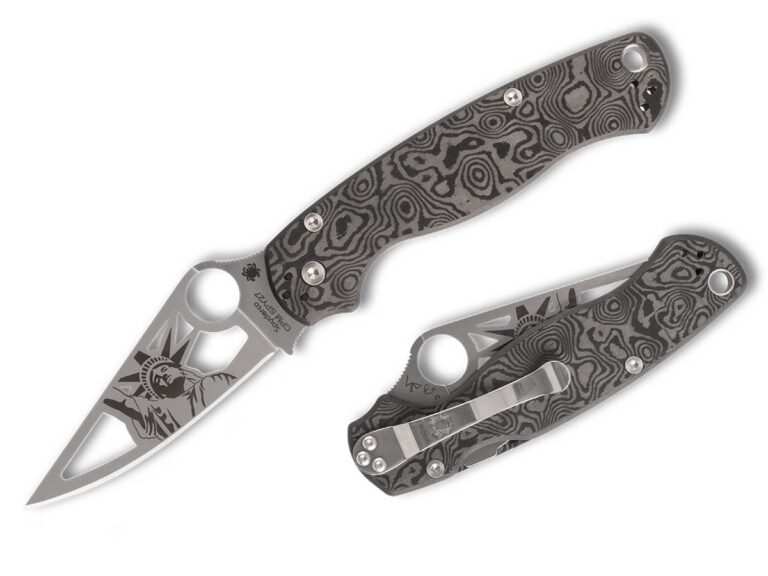
Spyderco unveils a limited-edition Para Military 2 with a cut-through Statue of Liberty blade to honor H.L. Dalis Inc.’s 100th anniversary. Just 1,200 knives available—collectors take note.

Spyderco has made its first “cut-through” blade design since its highly collectible Q, R and S series from roughly a quarter century ago to celebrate the 100th anniversary of H.L. Dalis Inc.

The cut-through graces the blade of a Para Military 2, including perforations both of and flanking an engraving of the Statue of Liberty. “As a New York company, we thought the Statue of Liberty cut through was appropriate,” stated Jon Blumenfeld, president of H.L. Dalis Inc., “as it is the most universal symbol of what the USA stands for.”

There will be 1,200 units in all, with delivery expected in the late third quarter of this year. As an added special feature, Spyderco has agreed to have its design team sign one box for every 50 units, and H.L. Dalis will include one signed boxed unit at standard volume cost with every 51 units—50 plus one signed boxed unit—ordered by its dealers.

Para Military 2 Specs
Blade length: 3.45”
Blade steel: SPY27 stainless
Blade grind: Full flat
Edge configuration: PlainEdge
Lock: Compression Lock
Hardware configuration: Stainless steel pocket clip, standoffs and liners
Weight: 3.8 ozs.
Closed length: 4.82”
Knife to know: Made in a limited edition of 1200
MSRPs: $340

Custom Knives:

The Cutlass: From The Sea To The Screen

The Cutlass Is A Short Sword Used For Centuries. Today, It Is Mostly A Ceremonial Blade, But One That Continues To Inspire

A sword can be more than just a weapon of war, the cutlass is an excellent example. For centuries, the cutlass was used by fighting forces throughout Europe as a short, one-handed stabbing and slashing weapon. 

For many, the cutlass is best known as the sword of the pirates in the Atlantic Ocean during the 17th and 18th centuries. In a lesser-known role, it also was regularly used in agriculture throughout the Caribbean like the machete is today. In English-speaking Caribbean countries, the word “cutlass” is used to mean a machete. 

In the modern era, the cutlass has left behind its fighting phase and is almost used exclusively as a ceremonial sword by several navies. However, its popularity endures among collectors and history buffs alike, thanks to its extensive use during the pirate era and the Age of The Sail.

What Is A Cutlass?

A cutlass drill on the HMS Wolverine , 1882 (Public Domain)

The cutlass is a one-handed, single-edged sword used for close-quarters fighting that was the evolution of naval sabers into a more compact, nimble short sword. While the edge does come to a fine point, the cutlass was designed for slashing and swinging at your enemies when fighting hand-to-hand. 

This is why the sword was a popular seafaring weapon. With a slightly-curved blade, usually between 28-32 inches, the cutlass is adept in the close confines of a ship. The straight handle and clipped guards of most cutlasses protected your hand when in battle. Additionally, the cutlass was robust enough to tackle general maritime tasks like slicing through heavy rope or thick fabric like canvas or even wood. And its size made it the perfect weapon for the type of in-your-face fighting that would happen on the high seas.

On land, the cutlass wasn’t as dashing, mostly used to chop sugarcane and clear tracts of land in the rainforest in the New World. Though, the same qualities that made it a great fighting implement made it adept on the farm. The short, swooping blade allowed a great deal of force to transfer from the arm to the material with every swing. 

Who Uses The Cutlass Today?

Today, the cutlass is used almost exclusively as a ceremonial sword. While it was at its most popular centuries ago, the cutlass was still a standard issue sword until around World War 2 before it became wholly ceremonial.

The British transitioned the sword to ceremonial duty in 1936, and the United States followed suit in 1949. Both countries incorporate the sword into military ceremonies today. The Brits issue cutlasses to naval chief petty officers. The United States also offers chief petty officers the ability to wear a cutlass with their formal dress for ceremonies and the like.

Can I Buy A Cutlass?

Absolutely. There are many companies making cutlasses today. While they may not be as pristine as the ones issued by the military, there are numerous companies making these types of blades. 

Factory Cutlass Options

Cutlasses are still made today, but, in general, they aren’t built to the same combat standard as in centuries past. The vast majority of these swords are showpieces meant to be hung on the wall and start conversations. However, if you are a true lover of the Age of Sail, these swords more than fit the bill.

Windlass English Cutlass

This 30.5-inch sword from Windlass is an elegant modern Cutlass, and, for a fee, can be sharpened into a real, proper sword. As is, the high-carbon steel blade is hand forged and mated to a solid brass guard. You’ll really feel like Blackbeard with it in your hand.

The sword comes with a leather scabbard adorned with a brass tip and throat to up the visual appeal of the piece. All told, this is a high-quality replica of the cutlass that will get people talking at your next party and look great in your office or hanging on the wall.

MSRP: $190

Condor Naval Cutlass

The Naval Cutlass from Condor Tool & Knife is a more modern take on the classic blade. The first thing you notice about it is the black epoxy powder finish to the blade. We’re pretty sure pirates of the 18th century didn’t have powder-coating technology, but would have loved to have had the extra corrosion resistance on the high seas.

The blade checks in at 24 inches in length and is made from 1075 steel ground to a razor’s edge. Yes, this sword comes sharpened right out of the box for no extra fees. The smooth hardwood handle is triple riveted, and a powder-coated guard keeps your hand protected when holding the sword. A black welted leather scabbard fits snugly around the blade and keeps everything protected even if dropped.

While it certainly doesn’t look like a sword from the movies, it’s designed to be a true, proper modern cutlass.

MSRP: $148.49

Kult Of Athena Pirate Sword

Complete with a skull and crossbones etched into the scabbard’s throat, the Pirate Sword from Kult of Athena looks like it could have been taken from the set of any swashbuckling movie set.

The 22-inch blade is made from stainless steel and comes, according to KoA, moderately sharp out of the box. That means it might need a more refined sharpening at home if you’re looking for a razor’s edge. However, the blade itself is .16 inches thick, thin enough to slice well but thick enough to hold up to some wear if used for more robust cutting tasks. But be aware, the sword is classed as “decorative”, or for display only, so keep that in mind before playing out your high seas fantasies. 

The cast metal handle is surrounded by a bronze-plated cup guard which features a pirate ship design. The black leather scabbard has a cast tip and throat to complete the look.

MSRP: $49

Kingston Arms Atrim Cutlass

The Kingston Arms Atrim Cutlass shows that not all collectible blades need to be centuries old. Made in the style of a naval cutlass, the Atrim utilizes modern materials and methods to make a truly remarkable sword.

The 9260 spring field falchion-style blade is hand forged and comes in a satin finish. At 25.75 inches it’s a bit smaller than some other cutlasses, letting it move more fluidly in your hand and taking up a smaller display space. The full-tang construction terminated with a stainless steel guard and pommel around a brown leather handle that provides a strong grip.

This is the most expensive sword of all the cutlasses showcased in this piece, and it’s worth every penny for the discerning, high-end collector.

MSRP: $432.95

Cold Steel 1917 Cutlass Sword

When it comes to collector pieces outside of auctions, Cold Steel’s 1917 Cutlass Sword is a prime example of what’s being made today. While it is designed for display and collection, the 1055 steel blade does come with a serviceable edge out of the box. 

In terms of size, it’s exactly what you’d expect a cutlass to be. At just under 30 inches long and 37.6 ounces, it’s a nimble sword that will feel good to hold and wield when showing off all of its intricacies. The wood handle and blued steel hand guard complete the look, and the included leather scabbard keeps the sword looking classy even when put away.

MSRP: $289.99

APOC Survival Cutlass

This option is rated for proper use rather than display. That’s abundantly clear considering it comes with a MOLLE-compatible Kydex scabbard. That doesn’t come with swords meant to be hung on the wall.

The APOC is a tactical sword that has a 21.5-inch black oxide blade made from 9260 spring steel. The black G-10 handles complete the monochromatic look and provide excellent grip in myriad conditions.

At just under 2 pounds, this is a lightweight cutlass meant to be used as a survival tool out on the trail or in more intense outdoor situations. The blade is meant to slice, of course, and the edge comes to a fine point, making this a puncturing tool as well. Versatility is the name of the game in survival equipment, and, while a machete or shorter knife might be a better option, the APOC cutlass is built for the outdoors and to handle the elements.

MSRP: $169.95

Custom Cutlass Options

There are numerous people making custom cutlasses and other swords. Whether it is for the private use and display of an individual or to be used as props in movies, at renaissance fairs, or in other forms of entertainment, there are makers and smiths crafting modern versions of the centuries-old blade.

Even the popular YouTube Series Man At Arms: Reforged did an episode about the cutlass and showed multiple ways to craft them.

Tony Swatton

Swatton runs Sword & Stone in Burbank, CA and makes arms and armor for film and television. He, and his shop, were the star of the original Man at Arms series nearly a decade ago. He’s self-educated and has been making armor since he was 17.

The first movie his work appeared in was Hook in 1991, and since then his weapons have been seen on screen in more than 300 movies including massively popular films such as Pirates of the Caribbean, Batman, and Thor. He also designed the cutlass used in Assassin’s Creed 4.

David Lisch

Lisch makes custom knives and swords exclusively from damascus steel. His 26 years of experience in the field are seen in the intricacy of his mosaic patterns and one-of-a-kind blade designs. He’s made landscapes and sunrise designs on his blades.

An example of David Lisch’s damascus work.

His knives have won awards and he teaches classes in blacksmithing and knifemaking with his wife Andrea at their school in Yelm, Washington, about an hour south of Seattle.

Collecting Cutlasses

The cutlass is collected by all sorts: sword lovers, pirate aficionados and history buffs. Specialty dealers help these collectors find the pieces they are looking for, and it helps keep the cutlass alive and in public consciousness.

Additionally, cutlasses have made it to auction houses around the world, sometimes fetching as much as $10,000 before the hammer falls at auction houses like Morphy’s, Sotheby’s, and Rock Island. 

In late 2022, the 1860 naval cutlass belonging to John H. Ferrell, a Congressional Medal of Honor recipient, went to auction at Morphy’s and sold for $14,760. The sale showed how, even today, the popularity of the cutlass continues to endure in a big way.

Read More

The Navaja: A Spanish Gem

The Navaja Is A Sleek, Svelte Folder Originating From Spain Hundreds Of Years Ago. Today It Remains Popular In Both The Real And Digital Worlds.

The Navaja is one of the most interesting knives in the world. Its history can be pinpointed to the Andalusia region of southern Spain, and its growth and evolution since its creation more than 400 years ago has been well-documented. 

The History Of The Navaja

The first Navajas that resembled the modern version came to be in the 1600s. The name is derived from the Latin word “novacula” which means razor, and you can see the resemblance to a straight razor in its construction with the long, thin blade that folds away neatly into the handle.

The knife became popular during a period when, unless you were a nobleman, there were many restrictions on swords and other blades. This meant that the Navaja developed as a peasant’s knife and was used for all sorts of utility tasks. One thing that made using it a bit difficult was the fact that it didn’t lock when opened. Later Navajas would have locking mechanisms, but the first versions didn’t. Most notably the Navaja made a distinctive cracking/popping sound as the blade was opened, differentiating it from other knives.

Thanks to the steel innovations that allowed the knife to lock, the Navaja spread its wings and made its way out of Spain and to nearby countries like France. As the knife continued to evolve it was banned by rulers, then became a popular tool for rich and poor alike, and was used as a versatile combat knife. In fact, it became the knife of choice among muggers who would rob people in alleyways and other dark urban areas. Victims knew they were about to be robbed when they heard the unmistakable popping sound the Navaja made when a mugger opened it.

Roughly a century ago, the Navaja began to fall out of favor with knife lovers. However, it continues to endure thanks to a handful of makers crafting their versions, and, in an extremely modern twist, it has become a popular knife to use for players of the video game Counter-Strike: Global Offensive.

Kings County Tools Navaja-Style Knife

Navaja

A great modern representation of the Navaja is seen in this folder from Kings County Tools.

The blade is not just razor sharp but also razor thin. At three inches in length and just .25 inch wide, the stainless steel knife is excellent at precise, detailed tasks. The brass and steel handle is both handsome and provides an excellent grip while cutting.

Not quite a razor and not quite a penknife, this Navaja shows what the knife can be and how different it is from other folders on the market.

MSRP: $34.75

Castillo Knives Navaja

Castillo Navaja
Castillo Knives Navaja – Olive Wood Handle

A different interpretation of the Navaja comes from Spain-based Castillo Knives. Their Navaja is similar to contemporary lockback knives in many ways and is an all-rounder in every sense of the term. 

The blade is made from Sandvik 14C28N stainless steel and the handle comes in a variety of materials, from two types of Micarta® to four types of wood. Every version looks great, and the 3-inch straight-back blade has a small bit of deep jimping on the spine to aid in grip and force when cutting. Every knife comes with a leather pocket sheath and a 240-grit bonded ceramic sharpening stone.

All told, this 6.5-inch piece is a well-made gem.

MSRP: $109 (Micarta versions), $119 (wood versions)

Read More

Bradford USA Guardian Review: Cutting Performance At Hand

Bradford Guardian 3.2 in MagnaCut is a rope-eating animal.

EDC fixed blades are very popular, small enough to avoid unwanted attention yet able to do most jobs. They often range from 2-to-4-inch blade lengths and 3-to-4-inch handles. Usually carried in a cross draw or pocket sheath, in a pinch they can be used for self-protection (if you have training).

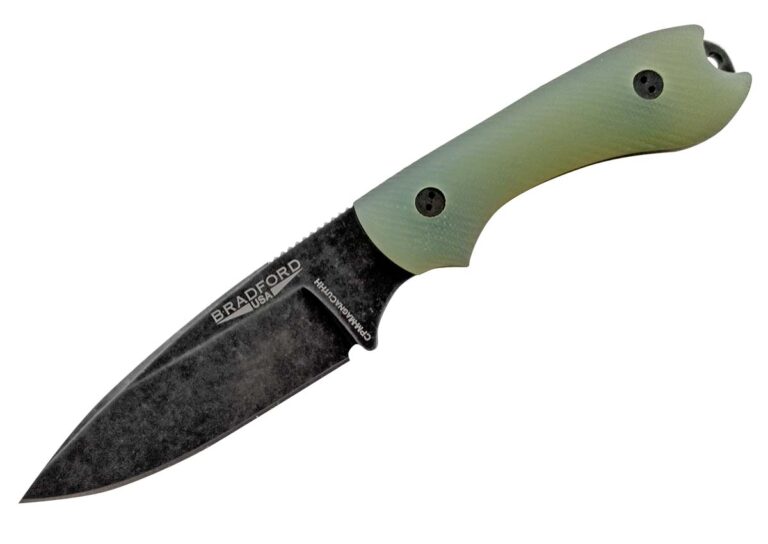
In general, it is a very useful tool that is always on you. I carry one constantly. The Guardian 3.2 in CPM MagnaCut stainless blade steel from Bradford USA definitely fits the bill. As to how well it works, let’s see if it holds up to everyday carry uses.

Guardian Light-Duty Cutting

I started with a 20-pound bond paper slice to check the fresh edge. The Guardian 3.2 was scary sharp. I nicked my fingernail three times by being slow. The blade made smooth, forceful slices with very little pressure. I did all push cuts with nary a snag or rolling of the paper.

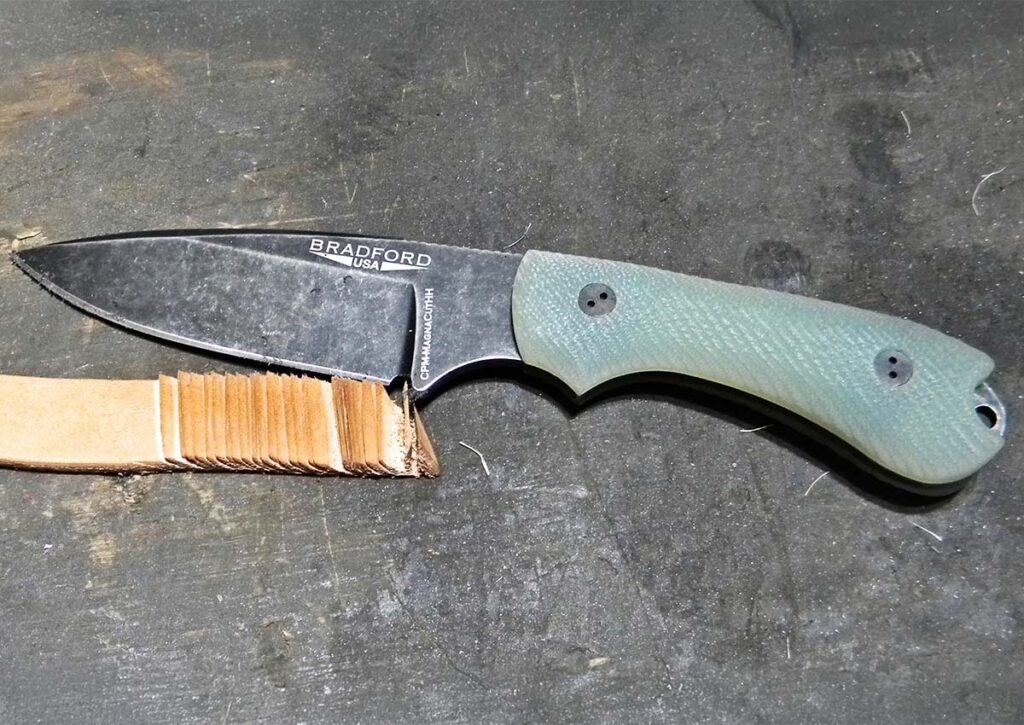
Very aggressive slicing into the 8-ounce leather resulted in nice crunching noises.

Single-walled cardboard was next on the menu. The results weren’t much different from the bond paper, though there was a slight drag when the thicker part of the blade encountered the cardboard. That didn’t stop the Guardian 3.2 from doing its job. It sliced the cardboard as fast as I could move my fingers out of the way.

Guardian Medium-Duty Cutting

It was time to skive 8-ounce leather. Very aggressive slicing into the leather resulted in nice crunching noises. The handle provided positive control of blade depth and angle during the skiving. I even did some end-grain slicing to keep the crunching going. This is a very sharp knife indeed.

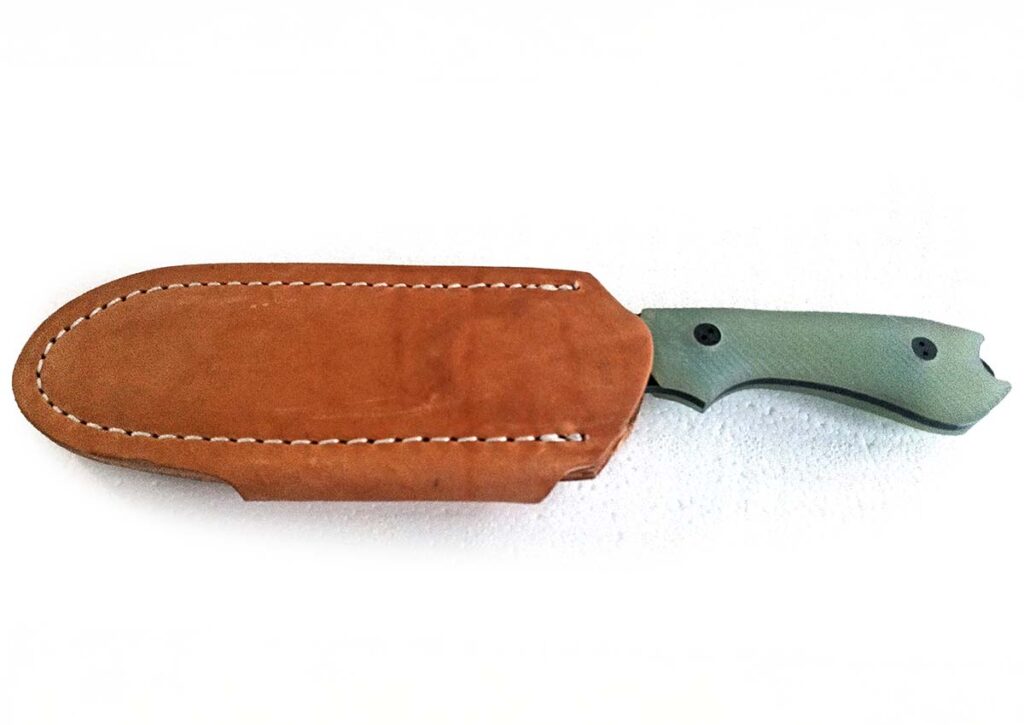
The pouch sheath of 6-to-7-ounce leather holds the knife securely. (BLADE® staff image)

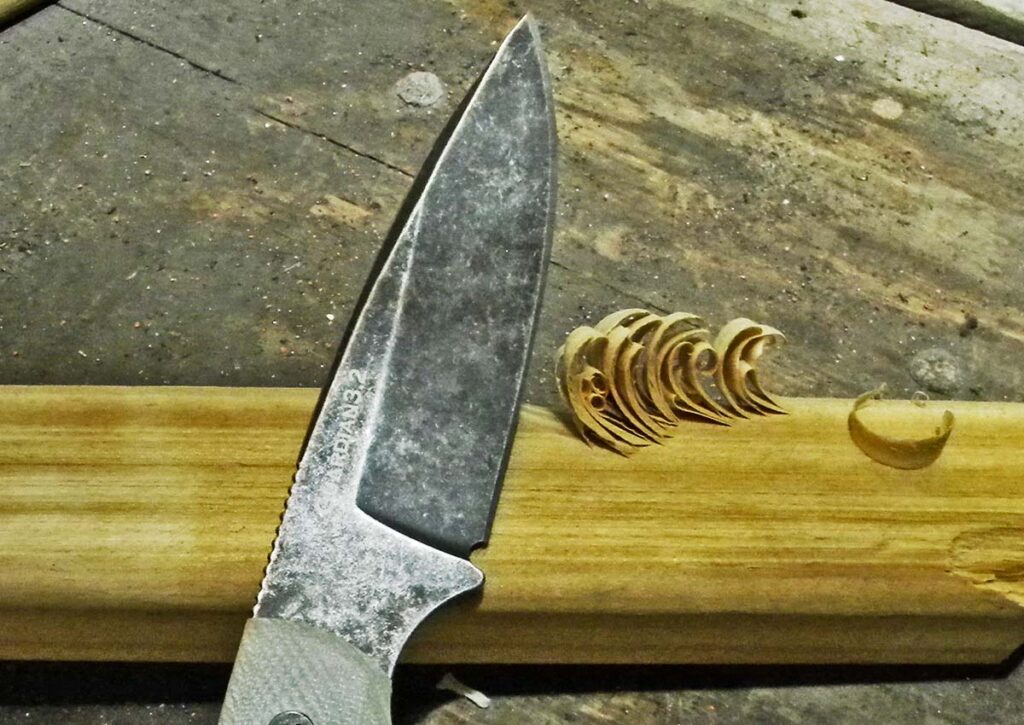
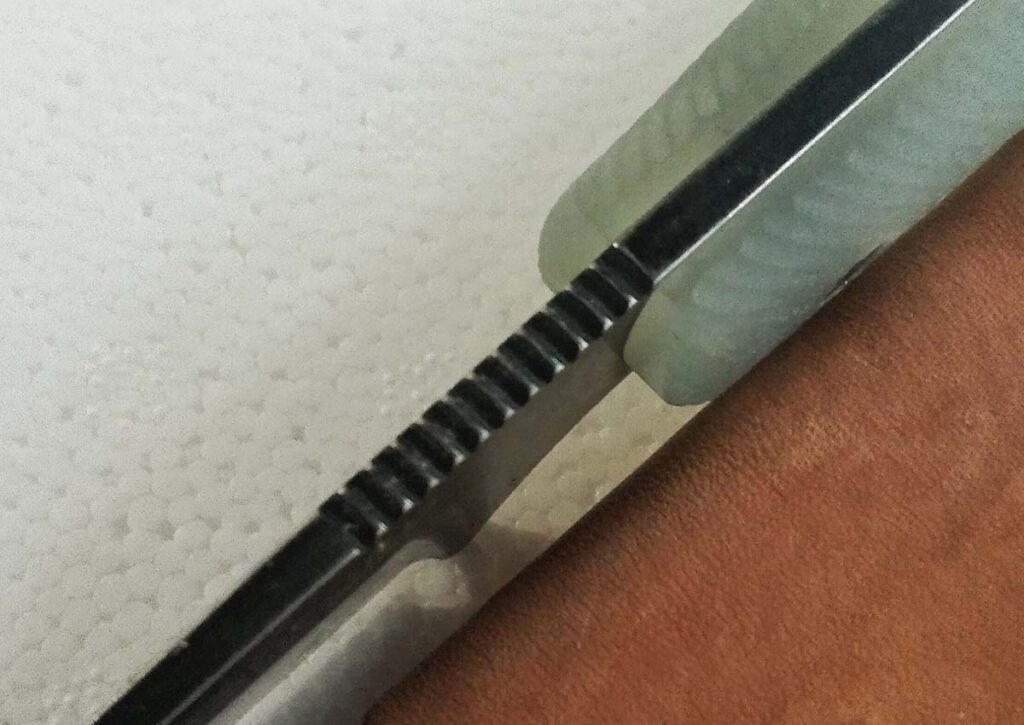
Springtime means camping so I needed to whittle lots of fire sticks. Using leftover pine, I whittled a bunch of excellent curlicues. The Guardian cut very smoothly. The thumb notches on the spine aided in control of cutting depth. Deep cuts or fine cuts, it can do both.

I used the Guardian to baton cut and it split the pine nicely, providing a nice pile of kindling. The handle felt comfortable. There was just one small point by the lanyard hole that was sharp when I rotated my grip. The knife does excellent wood work.

Guardian Heavy-Duty Cutting

As expected, after 30 hard whacks, the MagnaCut blade had a couple of very small nicks along the edge. It would be no big deal to work out the nicks with a very fine diamond hone.

Using leftover pine, the author whittled a bunch of excellent curlicues. The Guardian cut quite smoothly.

To show that the small nicks are not that big of a deal, I went back to the 20-pound bond paper slice. There was only one snag when I tried to start a cut on the edge nick. Otherwise, the edge sailed through the paper without tearing. I was impressed the edge didn’t have more issues.

Final Cut

The thumb notches on the spine aided in control of cutting depth. (BLADE® staff image)

Some softening at the back of the handle is in order. This knife is designed for slicing every day. The Guardian 3.2 is an impressive fixed-blade EDC.

Guardian 3.2 Specs
Company: Bradford USA
Blade length: 3 1/8”
Blade steel: CPM MagnaCut stainless
Rockwell hardness: 63-64 HRC
Blade finish: Stonewashed black
Blade grind: Saber
Blade pattern: Drop point
Scales: Jade-green G-10
Construction: Full tang
Weight: 4.5 ozs.
Overall length: 7 1/8”
Sheath: Pouch type in 6-to-7-oz. leather
Country of origin: USA
MSRP: $229

More Knife Reviews:

New Knives September 2025

Explore this collection of new hunting knives featuring custom blades forged with premium materials. Find your next heirloom fixed blade.

Step into the world of custom-crafted cutlery, where art and function meet in the field. This collection showcases the diverse and spectacular work of today’s finest knifemakers. We’re taking a look at a stunning array of new hunting knives, each forged with meticulous detail, featuring exotic materials like Sambar stag, ironwood, camel bone, and intricate Damascus steel.

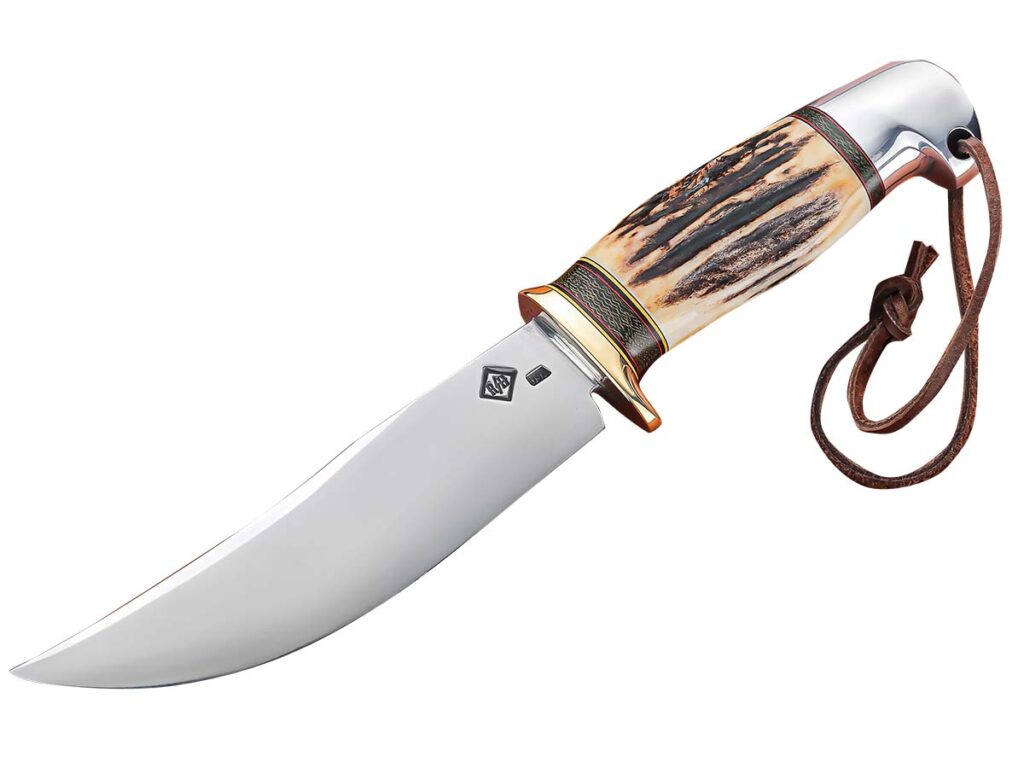
Rocco Handmade Bear Creek Hunter

Bear Creek Hunter

Blade length: 6”
Blade material: 1095 carbon steel
Blade grind: Convex
Scales: Sambar stag
Spacers: OD green canvas Micarta® and vintage tan, red and black fiber
Pommel: Aluminum
Guard: Soldered brass
Overall length: 10.5”
Sheath: Leather belt model w/snap strap
Maker’s price for a similar knife and sheath: $495
Maker: Rocco Handmade (SharpByCoop image)


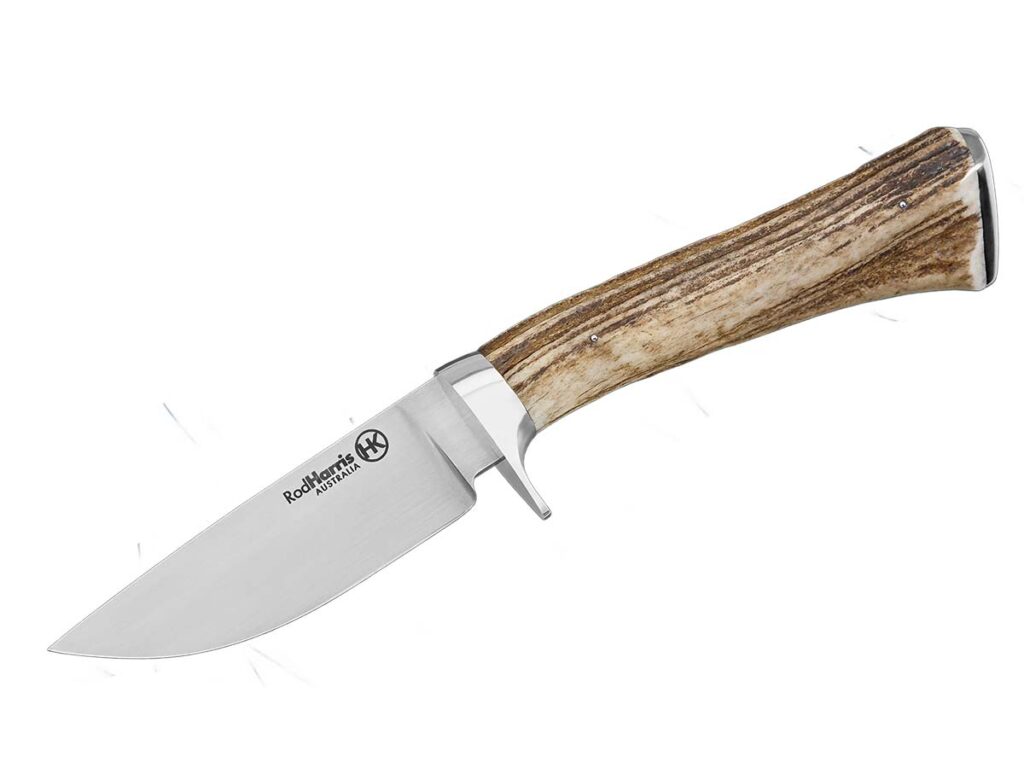
Rod Harris Antler Hunter

Antler Hunter

Blade length: 4”
Blade steel: S35VN stainless
Blade grind: Flat
Scales: Sambar stag
Guard: 416 stainless
Overall length: 9.25”
Knife to know: The stag is from the customer’s first deer kill; Rod Harris is a member of the Australian Knifemakers Guild
Maker’s price for a similar knife: $650 at press-time exchange rate
Knife to know: The Antler Hunter is the first time Rod Harris has both had one of his knives published and made a knife with a stag handle
Maker: Rod Harris (Rod Hoare image)


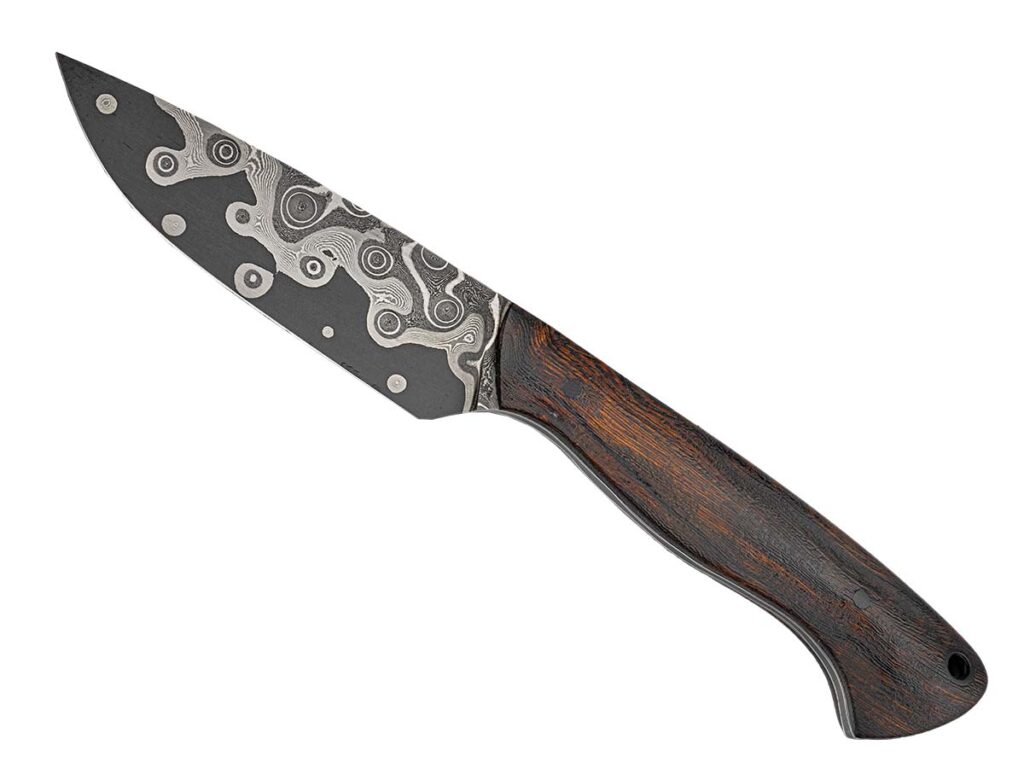
Eland Green Huntin Buddy

Huntin Buddy

Knife type: Hunter
Blade length: 3.5”
Blade material: Bulldog damascus san-mai
Blade grind: Flat
Scales: Bead-blasted ironwood
Overall length: 7.5”
Sheath: Belt model, tooled black leather
Maker’s price for a similar knife: $400
Maker: Eland Green, lostwoodknives.com (Jocelyn Frasier image)


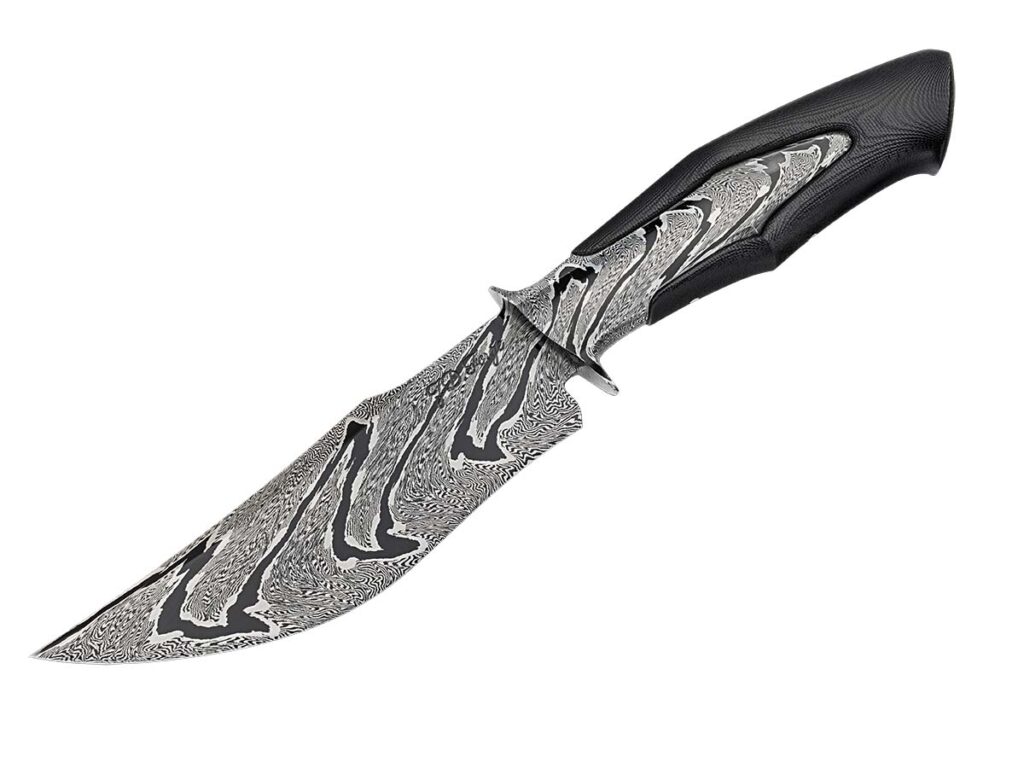
Zane Dvorak Integral XL Hunter

Integral XL Hunter

Knife name: Integral XL Hunter
Blade length: 5.5”
Blade material: Ghost-Fire Damascus of 1084 carbon and 15N20 nickel-alloy steels
Blade grind: Convex
Scales: Black G-10
Overall length: 10.5”
Maker’s price for a similar knife: $2,500
Maker: Zane Dvorak, zdforge.com (Jocelyn Frasier image)


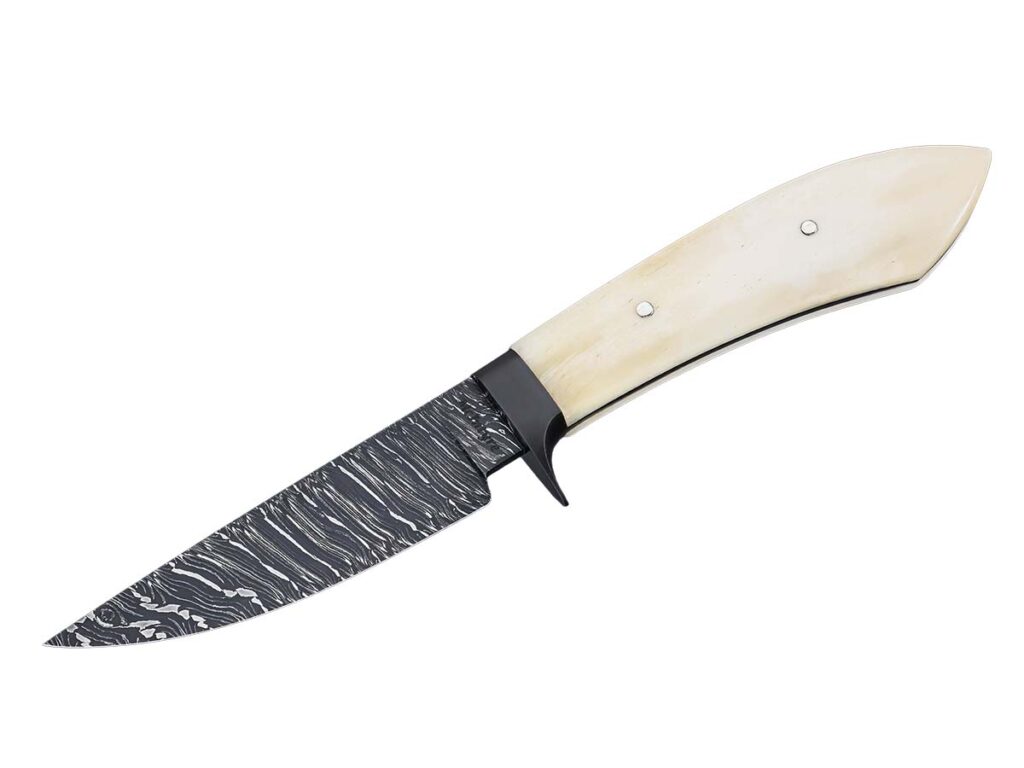
Shawn McIntyre Dress Hunter

Dress Hunter

Blade length: 3.75”
Blade material: A twist W’s damascus of 1084 carbon and 15N20 nickel-alloy steels
Blade grind: Flat w/convex edge
Scales: Heirloom-fit camel bone
Handle frame: 1065 carbon steel w/matte blue finish
Guard: Same material as frame
Overall length: 7.75”
Maker’s price for a similar knife: Check w/maker for more info
Knife to know: Best Hunter Award Winner, 2025 Australian Knifemakers Guild Melbourne Knife Show; inspired by the classic Jerry Fisk Sendero hunter; Shawn McIntyre is an ABS master smith
Maker: Shawn McIntyre (Rod Hoare image)


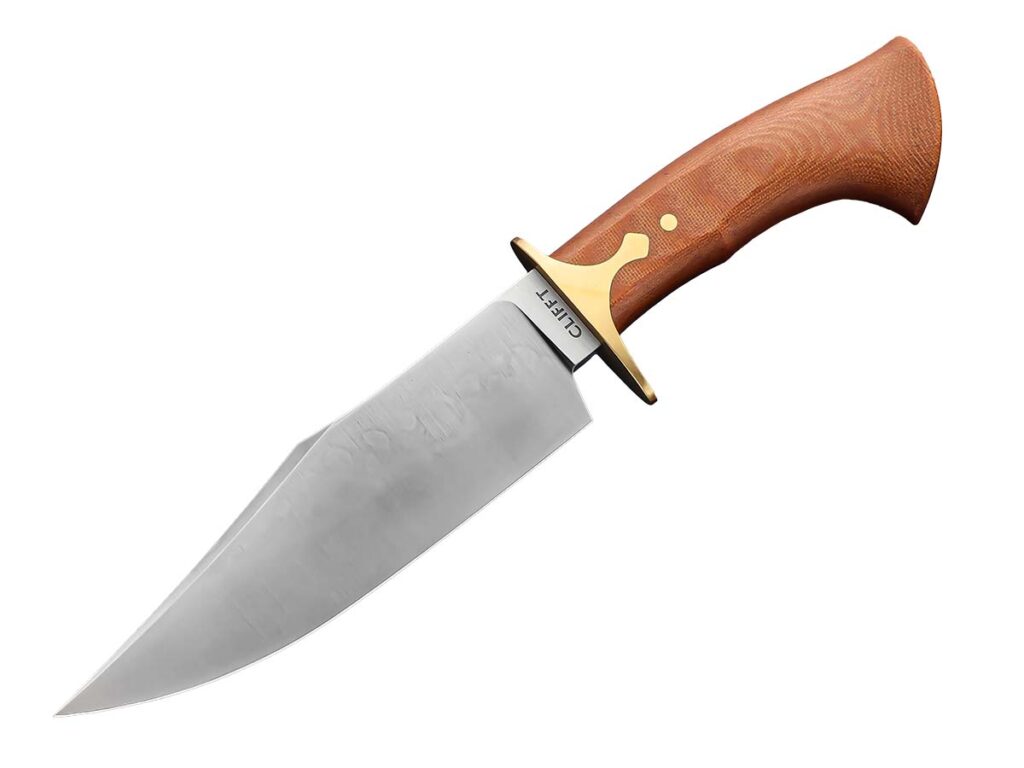
Dauntless Clifft Bowie

Clifft Bowie

Knife name: Clifft Bowie
Blade length: 7”
Blade material: 125Cr1 carbon steel
Blade @the thickest: .25”
Blade pattern: Clip point (also comes in a harpoon point)
Construction: Hidden tang
Scales: Natural canvas Micarta® (also in black G-10)
Overall length: 13”
Country of origin: USA
Sheath: Leather w/retention strap; ambidextrous carry; by Chattanooga Leather Works
Knife to know: Won Best American-Made Knife at BLADE Show Texas 2025
MSRP: $575
Company: Dauntless, dauntlessmanufacturing.com (SharpByCoop image)


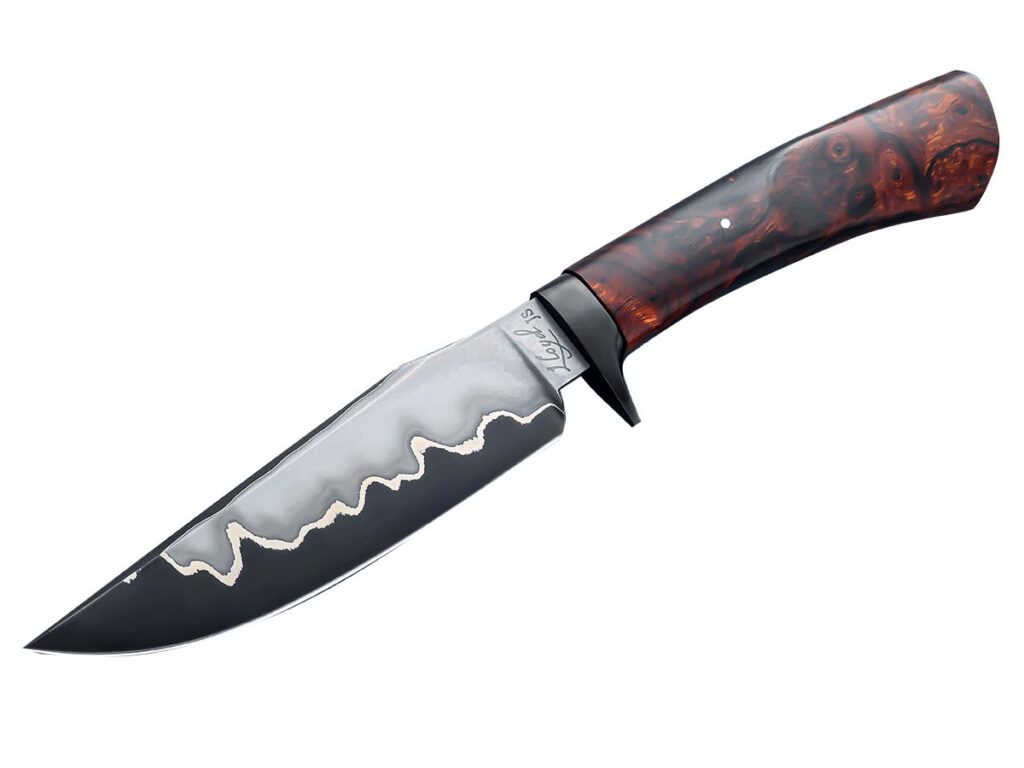
Charlie Lloyd Hunter

Hunter

Blade length: 5.75”
Blade material: Cu-mai
Blade grind: Flat
Scales: Ironwood
Guard: Hot blued
Overall length: 10.5”
Knife to know: Charlie Lloyd is an ABS journeyman smith
Maker’s price for a similar knife: $750
Maker: Charlie Lloyd (SharpByCoop image)


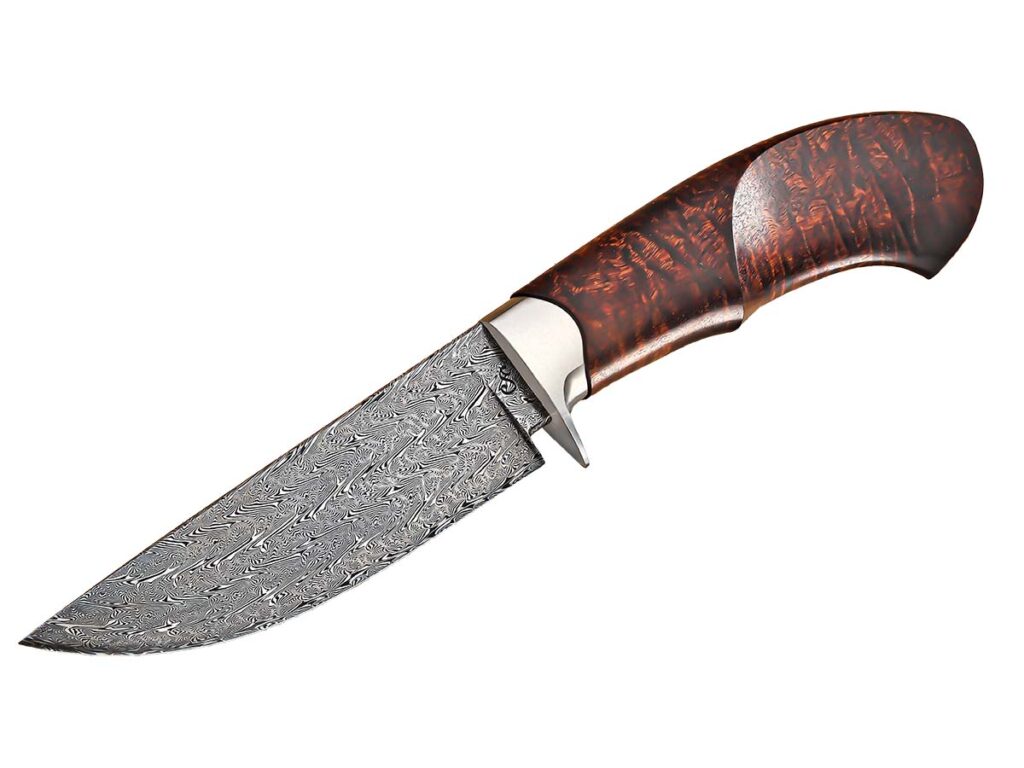
Camille Sennegon Hunter

Camille Sennegon Hunter

Blade length: 4.5”
Blade material: W’s multi-bar (6 bars) damascus of O2 carbon and 15N20 nickel-alloy steels
Blade grind: Flat w/convex edge
Scales: Curly gidgee
Guard: 304 stainless steel
Overall length: 9.25”
Maker’s price for a similar knife: $1,300
Knife to know: Camille Sennegon is a journeyman smith in the ABS
Maker: Camille Sennegon (SharpByCoop image)


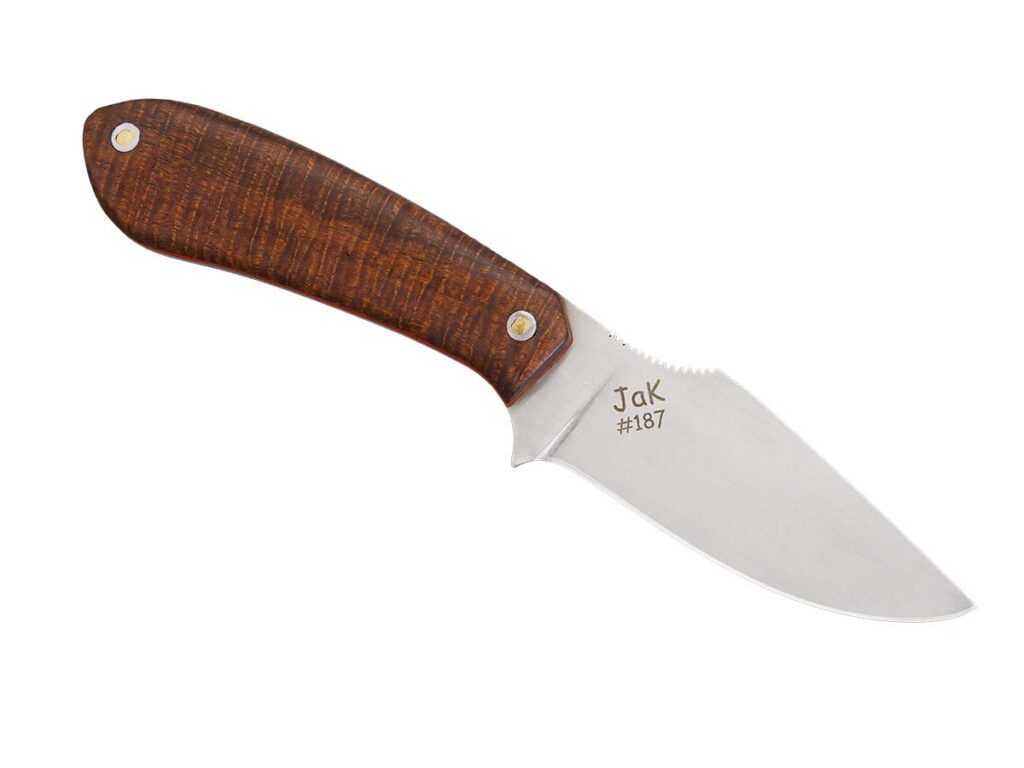
Jak Knives #187

#187

Knife type: Hunter
Blade length: 4.1”
Blade steel: 14C28 stainless
Blade thickness @ricasso: .118”
Blade grind: Flat
Blade pattern: Drop point
Scales: A Western Australia desert hardwood called Minniritchie
Liners: G-10
Overall length: 8.85”
Sheath: Leather belt model
Maker’s price for a similar knife and sheath: $300-$400 at press-time exchange rate
Maker: Jak Knives (Rod Hoare image)


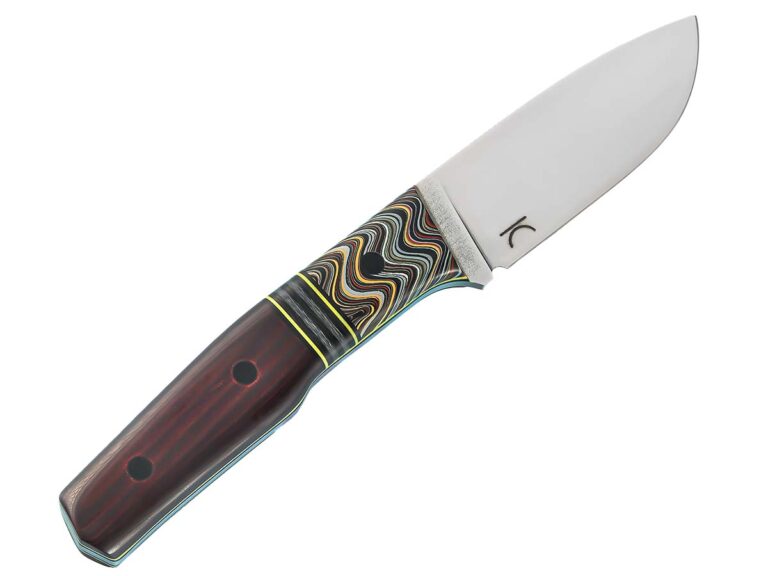
DB Blades Varis

Varis

Blade length: 3.9”
Blade steel: Nitro V stainless
Blade grind: Flat
Blade thickness @ricasso: .157”
Scales: G-10
Overall length: 8.66”
Sheath: Synthetic
Knife to know: Varis won the Best Hunting Knife Award at the 2025 Queensland Knife Show; Dominic Binker is a member of the Australian Knifemakers Guild
Maker: DB Blades (Rod Hoare image)

Under The Bridge Knife and Tool M.O.A.

M.O.A.

Knife type: Hunter
Blade length: 2.75”
Blade material: Cruwear carbon steel
Blade grind: Full flat
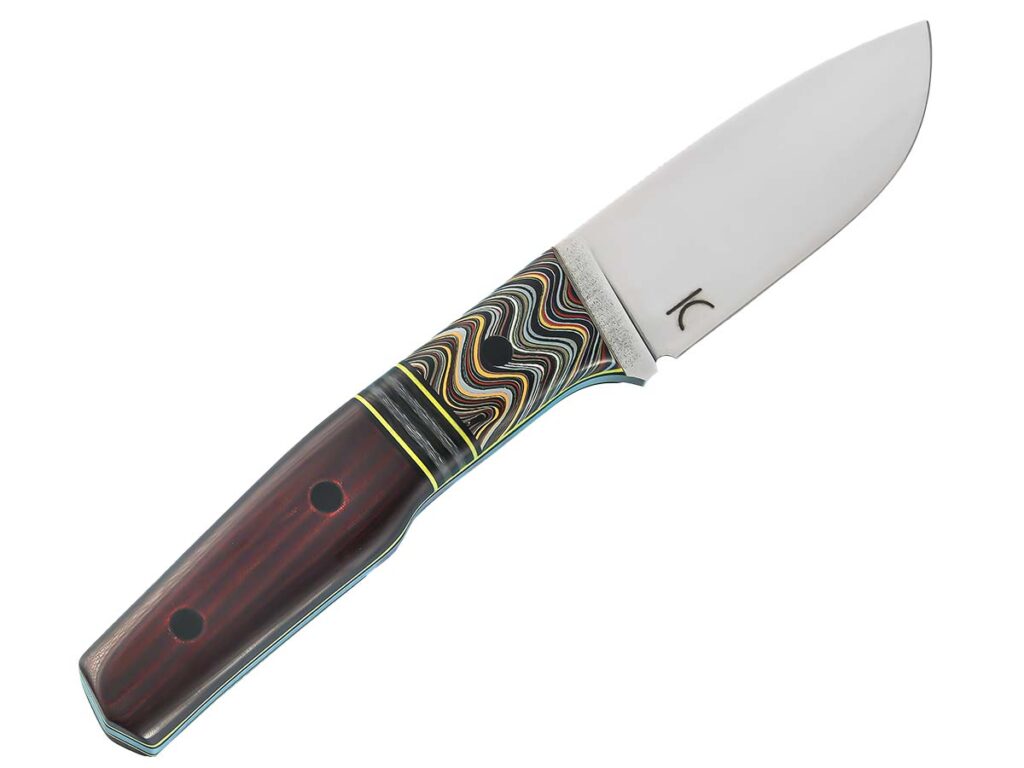
Handle material: Burgundy linen Micarta®, Fordite and silver metallic carbon fiber
Overall length: 6.75”
Maker’s price for a similar knife: $375
Maker: Under The Bridge Knife and Tool (SharpByCoop image)

Pcocks Customs Slug Life

Slug Life

Blade length: 3.54”
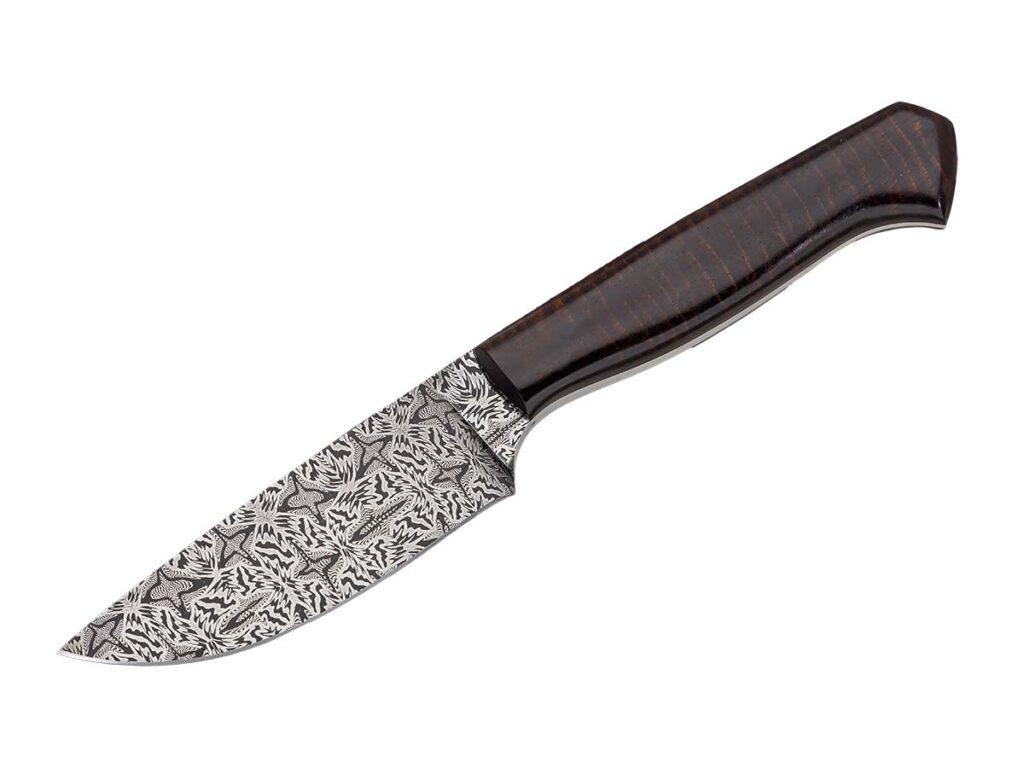
Blade material: Mosaic damascus of 1084 carbon and 15N20 nickel-alloy steels
Blade grind: Full flat
Scales: Ringed gidgee
Pins: Carbon fiber
Knife to know: Tapered tang; Slug Life won the Best Hunter Award at the 2025 Perth Knife Show; Peter Cocks is a member of the Australian Knifemakers Guild
Sheath: Belt model of Australian leather bearing Peter’s leather texturing stamp and finished w/a Barry King border stamp
Maker’s price for a similar knife and sheath: $750 at press-time exchange rate
Maker: Pcocks Customs (Rod Hoare image)

Check Out Other Months:

Advertisement

Must Read Articles

Read this before you make a knife

Knifemaking 101 – Read This Before You Make a Knife

  by Wayne Goddard My experience has taught me that there's nothing like digging in and getting started. I've often said the hardest part of the...
how to forge damascus steel

How to Forge Damascus

Advertisement
Advertisement