Buyer's Guides

You’re looking for a new knife in a certain style – we’ve got recommendations on the best blades for every price point.

BEST SURVIVAL KNIFE: These 10 Blades Could Save Your Skin

Survival Knives Need To Be Versatile, Durable, And Strong. These 10 Blades Are Everything You Could Ask For When In A Sticky Situation

A survival knife is most often a heavy-duty fixed blade built to withstand hard use in multiple roles, generally in the wilderness. It must be able to whittle, carve, chop, slice, and maybe dig. It also holds down the regular duties of a knife and assists in all cutting chores. Additionally, if your back is up against a proverbial wall, it should have the chops to serve as a weapon. 

Survival Knife Features

When looking for a quality survival knife there are four key things you need to look for: the quality of the steel, handle material, the robustness of the guard, and the caliber of the sheath.

Steel

As with all knives, it all starts with the blade steel. Carbon steel and stainless steel are both used with survival knives, both have their pros and cons.

Carbon steel requires a bit more diligence to maintain and keep from rusting but offers ease of in-field sharpening. Stainless steels are more resistant to the elements and, if you spend the money, the higher grades offer enhanced edge-holding capabilities. 

Handle

Next, you want to look for a knife that has a comfortable handle. This is key, given you’ll use the knife for extended periods of time.

What you need to consider is:

  • How is the handle contoured?
  • Does it feel good in your hand?
  • Is it made of synthetic or natural handle materials?

Personally,  I would stay away from leather because of its nature to soak up moisture. I would look to some sort of synthetic like G-10, micarta, or reinforced thermoplastic.  These synthetic materials are dimensionally stable and are not affected by changes in temperature, humidity, and exposure to UV. 

Guard

The guard keeps your hand in place by preventing any forward movement while the knife is in use. You might be able to wrap a finger around the guard to further choke up on the handle for extra control during cutting or whittling. 

Given survival knives are tasked with a number of rough-and-tumble duties, it’s wise to consider an ample guard—at least for the sake of safety.

Sheaths

Not as sexy, sheaths are equally as important as the knife itself. Essentially, the accessory helps protect the knife when not in use, as well as provides a means of portability. Most attach to a belt or MOLLY field, in the case of a backpack. 

Materials such as Kydex provide the best options. Why? The thermoplastic is light, form-fitted to the knife blade, and impervious to the elements. What more could you ask for?

You might also notice some sheaths are made of ballistic nylon with a hard plastic liner inside to prevent the knife from destroying the sheath. These are also a good alternative and are more cost-effective along with being fairly weather resistant. 

Leather and other natural materials on the other hand, generally ware out quickly with active use. Worse yet, they retain moisture, which can be hell on a blade—especially a carbon-steel blade.

What To Avoid When Buying A Survival Knife

Yes, survival knives come with a host of features but there are some that are useless or worse. These three features aren’t worth the price.

Spine Serrations

Ugh … serrations on the blade spine. Admittedly, some like having serrations as a cutting option for certain materials. However, generally blade spine serrations offer limited use at best and are more of a hazard because of how close they are to your hand.

Honestly, if you need serrations, bring along a serrated folding knife like a Spyderco Delica or Endura. Problem solved.

Blade Holes

Alright, these serve no function at all, except they make the knife look cool. That might be alright for a collection novelty, but not a wise course when in the wilds.

Worst of all, the holes in the blade do nothing but weaken it. Stay away from them. 

Odd Blade Designs

Like blade holes, they may look cool but rarely do they enhance the function of a survival knife. We’re striving for utility here, not unique looks.

Stick with the traditional blade styles—spear point, clip point, and drop point. These are proven and do the job perfectly.

10 Best Survival Knives

There are countless makers producing dozens of different survival knives. These 10 stand out from the pack for either their features, their toughness, or their price.

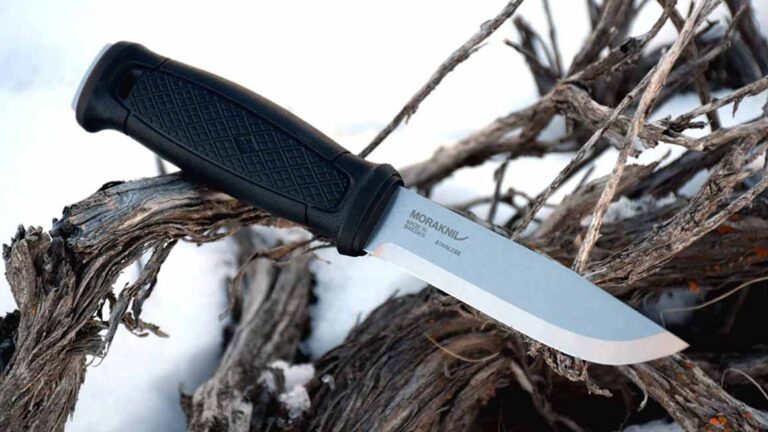
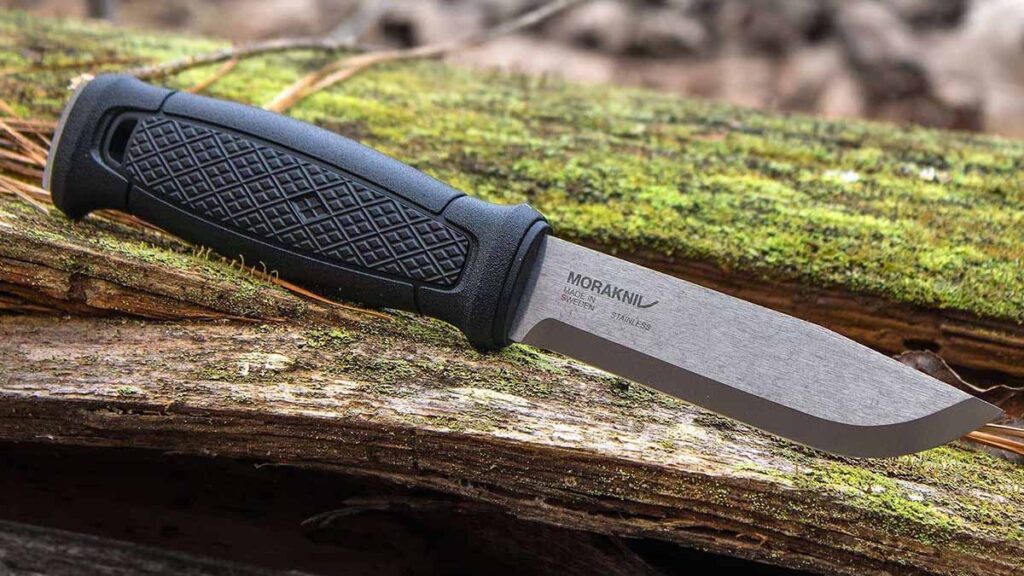
Mora Garberg

Survival Knife Mora

Mora is the king of value when it comes to inexpensive survival knives. Most come in at less than $50, but you are hardly compromising in quality.

I personally favor the Garberg, which has a 4.3-inch carbon-steel blade with a Scandi grind and a full tang through the handle. 

The blade spine is at 90-degree, designed specifically for use with a ferrocerium fire starting rod. The dual-molded handle is made from weather-resistant polyamide. Its unique Multi-Mount sheath is included and fastens the Garberg to an ATV or snowmobile, as well as a belt.

It’s a tough too, so you are getting a lot of knife for your money.  It’s made in Sweden and sold worldwide.

MSRP: $111.99 

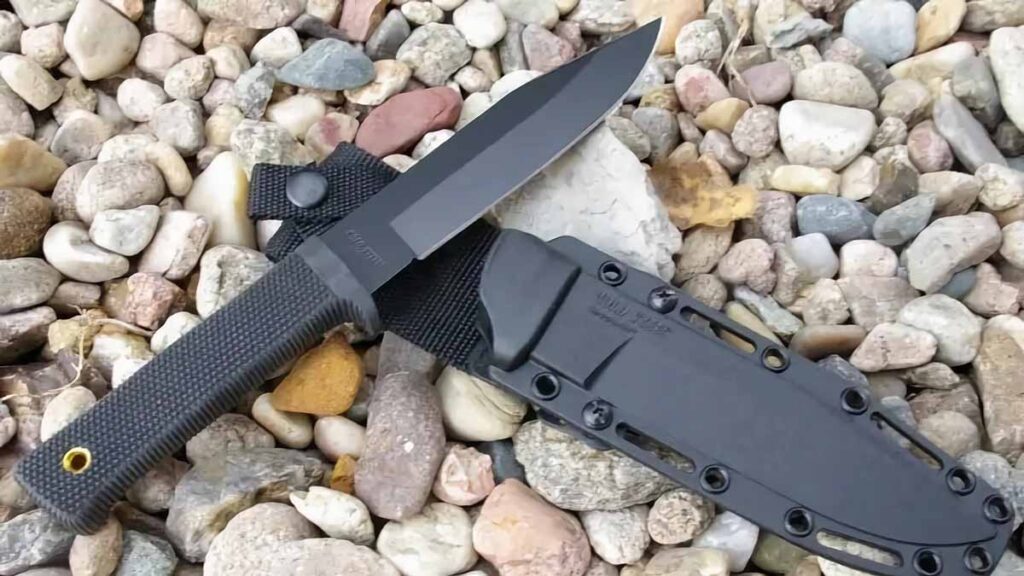
Cold Steel 49LCK-DTBK SRK Survival Rescue Knife

Survival Knife Cold Steel

A long time classic of the Cold Steel product line, this knife is a proven, solid performer in the outdoors. Its 6-inch clip point blade is made of SK-5 carbon steel and attached to a textured desert tan Kray-Ex rubber-like handle that is textured for a great all-weather grip. 

The blade has a black, epoxy-coat for low visibility and high weather resistance. And its single lower handle guard indexes to the grip.

The SRK is suitable as a hunting knife, survival knife, or even a fixed blade for military use. It’s a very handy design that excels at camp utility and food prep.

MSRP: $61.95

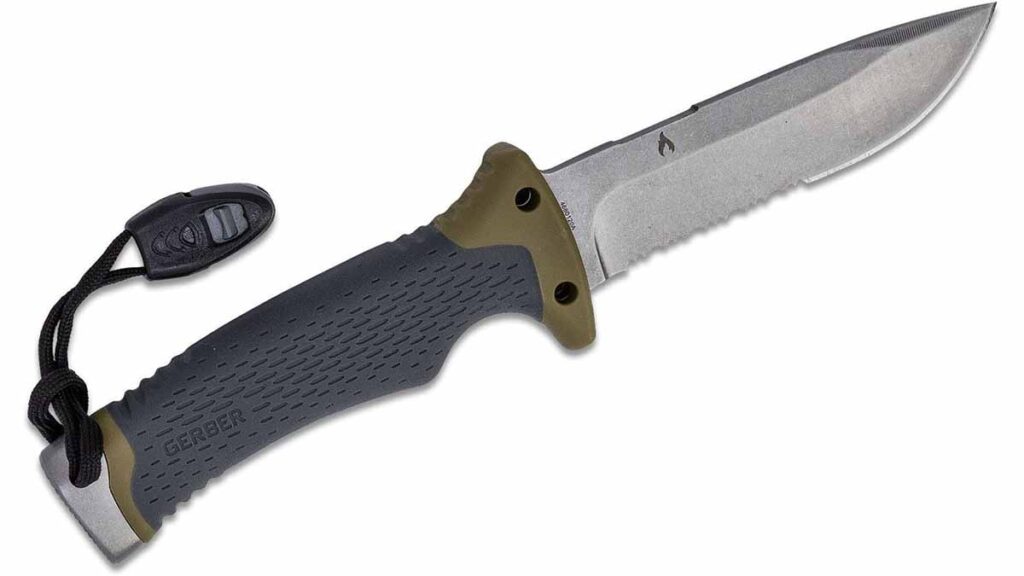
Gerber Ultimate Survival

Gerber Ultimate Survival

This is an all-business design from Gerber Gear.

The stainless-steel blade provides ample resistance to the elements and holds an edge well. Its drop point design has plenty of belly for slicing and the partial run of serrations adds a bit more utility to the knife. 

The handle material is rubber for an excellent non-slip grip. The large finger recess indexes your grip and allows for maximum user comfort. The butt cap of the handle is steel and can be used as a light-duty hammer when needed. 

The hybrid nylon webbing and molded plastic sheath is durable and includes a fire starter and blade sharpener.

Superior handle ergonomics paired with a useful blade shape and partial serrations are what makes this one a winner. 

MSRP: $62

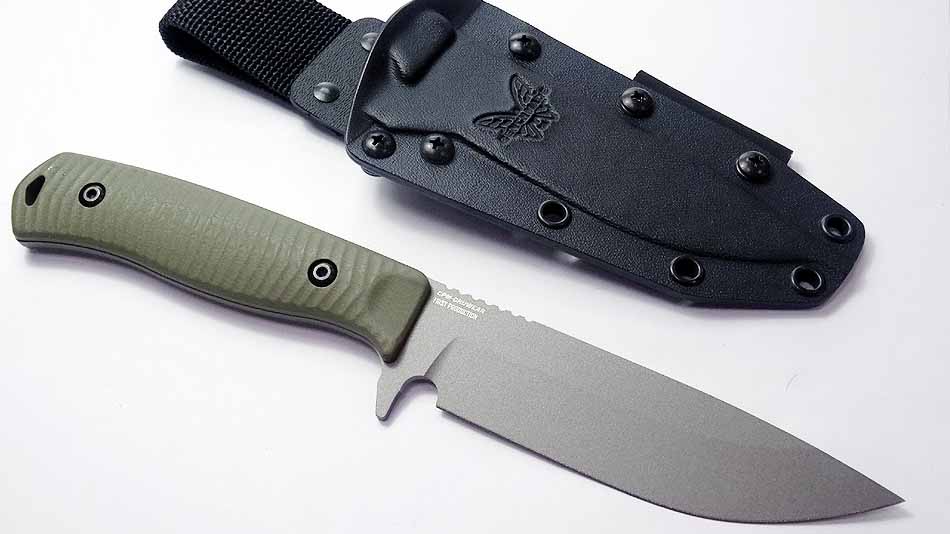
Benchmade Anonimus 539GY

Benchmade Anonimus 539GY

This is Benchmade‘s new high-end fixed blade, with some excellent features. First and foremost, high-end CPM CRUWEAR tool steel, which provides ultimate wear resistance and edge retention. 

The flat ground, 5-inch long drop point blade offers plenty of belly for effective slicing and cutting. Notches on the blade spine provide a secure non-slip grip for your thumb or index finger, and the single, lower guard keeps your hand in place. 

The Anonimus is secured by a molded Boltaron belt sheath very similar to Kydex. The G-10 handle sports machined-in texturing for a non-slip grip. 

MSRP: $290

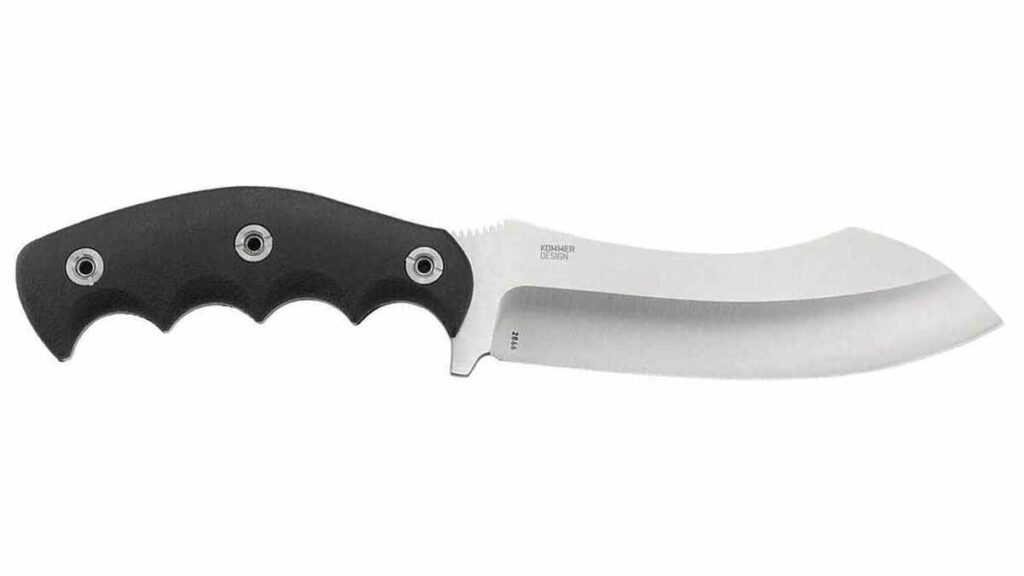
CRKT Catchall

CRKT Catchall

Designed by custom knifemaker Russ Kommer, the Catchall by CRKT is on the heavy-duty side of things.

This broad chopper-style blade measures 5.5 inches in length and has a sheepsfoot-style blade. The blade is made from 8Cr13MoV stainless steel, which holds a decent edge and provides excellent corrosion resistance.

The ergonomic handle features finger grooves for a secure hold, and the handle material is rubberized glass-reinforced nylon. The Catchall might not be the type of knife for lighter cutting jobs but rather more intense tasks, such as chopping and baton work for splitting kindling for firewood. 

The Catchall would be great paired with a lighter duty survival knife dedicated to finer chores. The sheath is a glass-reinforced nylon variation with ballistic nylon webbing belt loops. A single webbing strap with button snap holds the knife inside the sheath securely

MSRP: $79.99

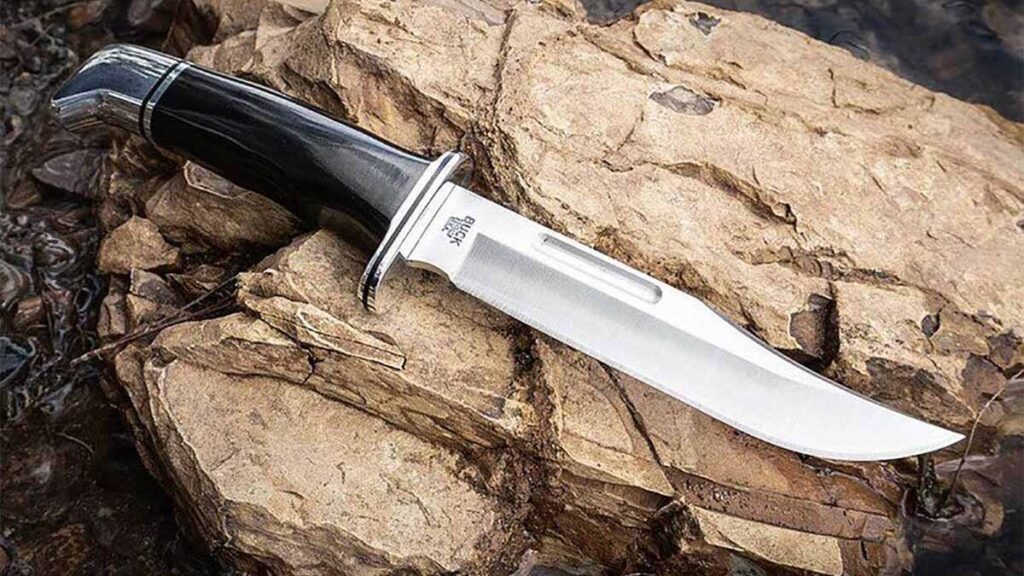
Buck Knives 119 Special

Buck Knives 119 Special

This is one of Buck‘s signature fixed blades. Sporting a 6-inch-long Bowie-style clip point blade made from 420HC stainless steel, the 119 Special has found its home in the outdoors with hunters and outdoorsmen alike. 

The handle is a black phenolic resin, which is durable and highly weather resistant. And the knife comes with a black leather sheath. The handle butt cap and double guard are made from aluminum. The 119 Special is capable of handling both camp utility chores like whittling and baton work. The piece is also balanced enough to handle food prep.

MSRP: $96

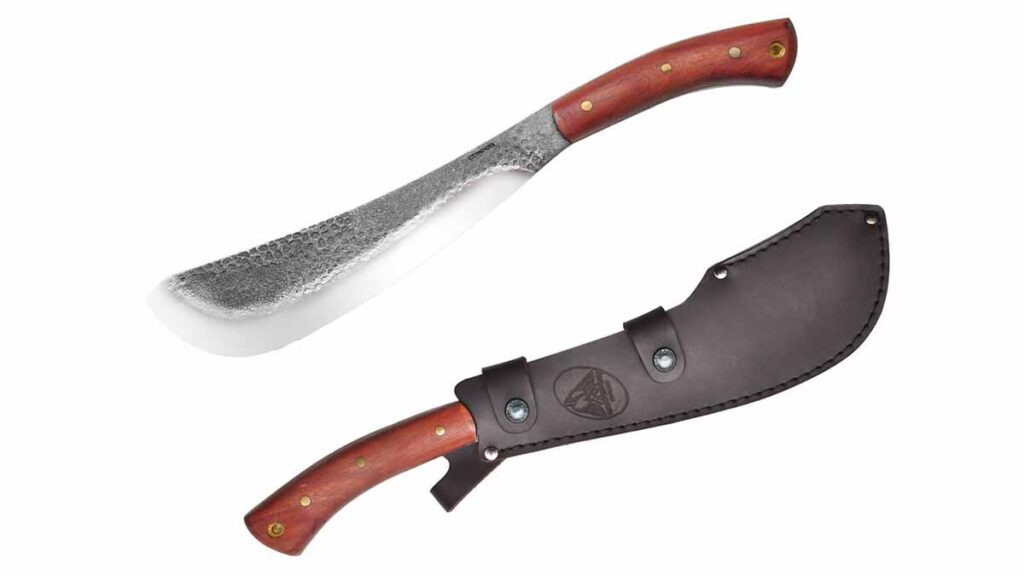
Condor Knife and Tool Pack Golok

Condor Knife and Tool Pack Golok

The Pack Golok from Condor Tool And Knife is a devastatingly effective chopping tool, with its 11-inch long, convex-ground 1075 carbon-steel blade attached to a rounded walnut wood handle that adds tons of user comfort and control. 

The upswept blade profile adds forward weight to the balance, which is key to the performance of this knife. It can take down saplings with ease and slay its way through weedy growth like a machete. It also handles baton work like a champ.

The Pack Golok is much more than just a machete and more useful than one, and it comes with a leather sheath and swivel belt loop for portability. 

MSRP: $101

White River Knives’ Firecraft FC3.5 Pro

Survival Knife White River Knives' Firecraft FC3.5 Pro

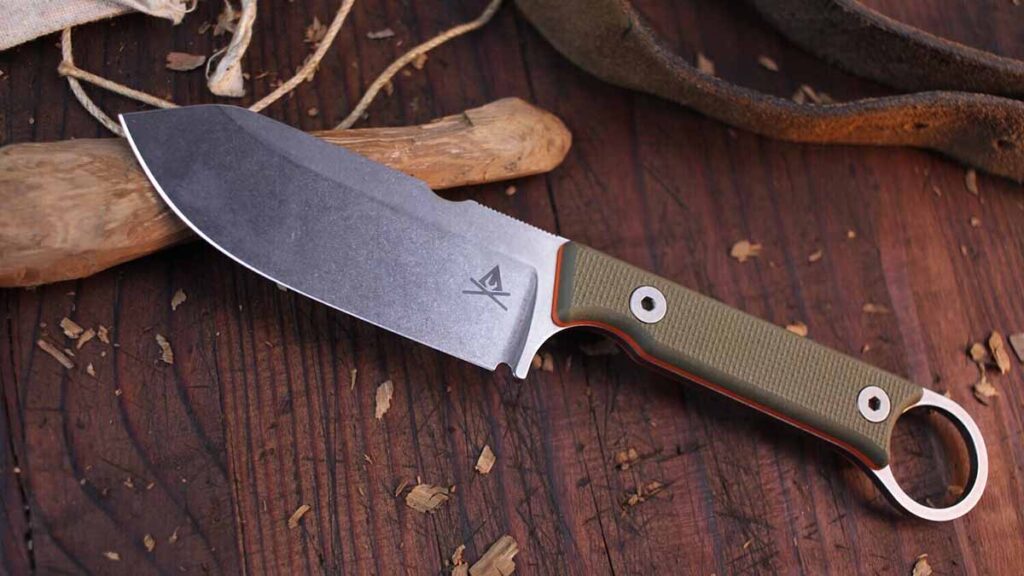
The Firecraft FC3.5 Pro from White River Knives has a 3.5-inch-long spear point blade ground from high end CPM S35VN stainless steel. The handle is coarse-textured G-10 and comes in a choice of orange, black, or OD green. 

Regardless of which handle color you choose, you are getting a no-nonsense fixed blade able to handle a wide variety of  tasks at the campsite or out in the wilderness. 

The notch in the blade spine allows for easy use with a ferrocerium fire starter rod. The wide blade can handle food prep chores and camp utility tasks. The finger ring allows you to dangle the knife from the pinky finger, keeping it close at hand, while retaining the ability to use your hand to grab or hold items. 

The S35VN steel holds an edge well and is able to power through tough cutting. Each knife comes with a molded Kydex belt sheath.

MSRP: $160

RMJ Tactical Combat Africa

Survival Knife RMJ Tactical

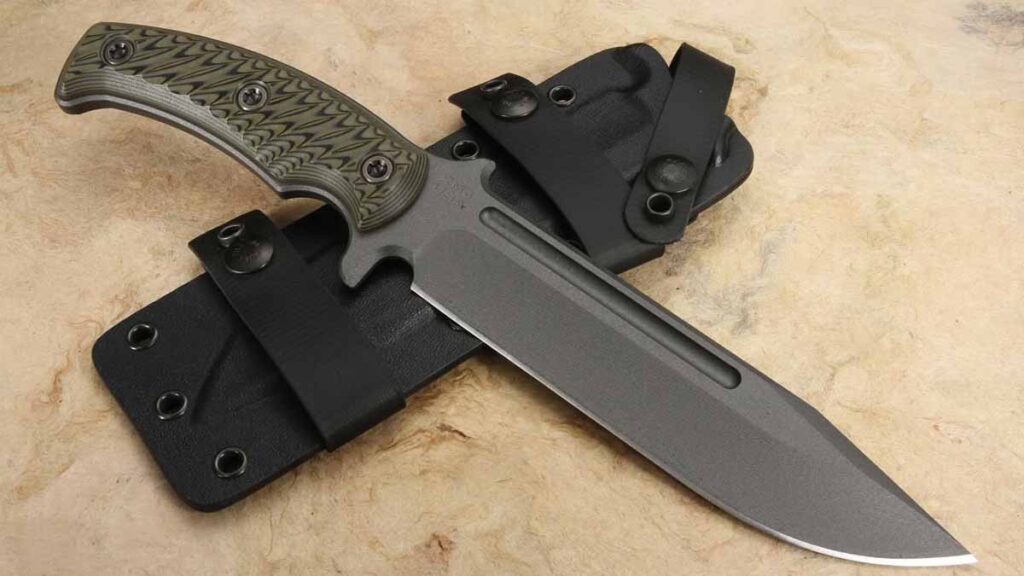
The RMJ Tactical Combat Africa is one serious piece of bladeware that can serve as a survival or military knife. It’s 7-inch-long blade is made from 80CRV2 tool steel. The .25-inch thick stock means this knife can withstand some serious use and some prying as well. 

The clip point shape allows for optimal penetration, with some belly for slicing applications. The 3D machined G-10 handle has diagonal flutes, adding hand traction and channeling water away for a comfortable grip. 

Furthermore, the lower hand guard and blade spine thumb ramp help to keep your hand safe from sliding forward. The knife is capable of chopping, prying, batoning, and slicing.

The knife is a bit on the steep side when it come to price. But in return you receive the superior engineering and craftsmanship for which RMJ Tactical is known. 

MSRP: $395

TOPS Brakimo

Survival Knife TOPS

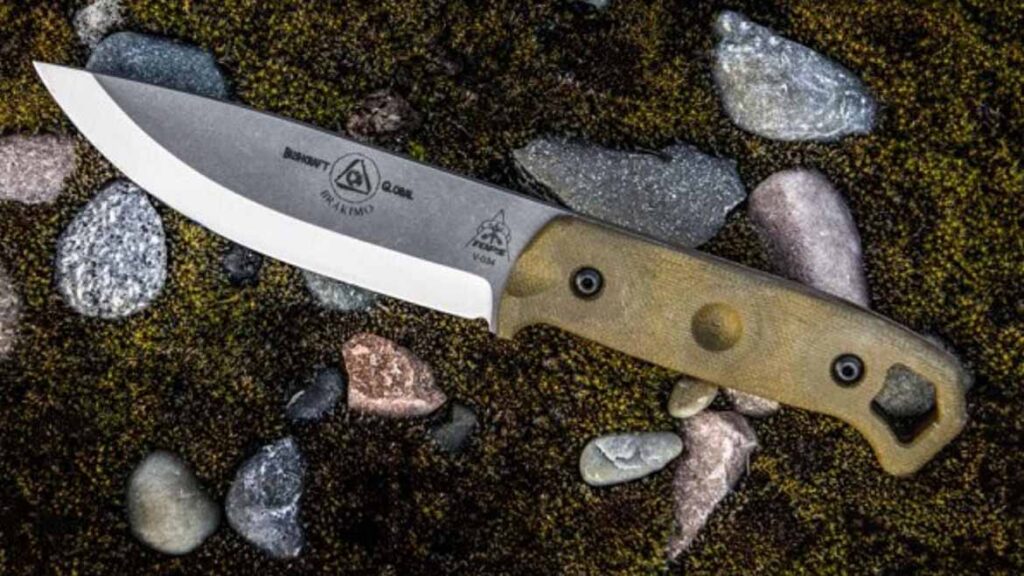
The TOPS Brakimo was designed by noted survival expert Joe Flowers, who owns and runs Bushcraft Global, a  renowned survival school.

Flowers designed this knife to be a backup to a machete or a main camp knife. The 5.25-inch drop point blade is made from 1095 carbon steel. It is wide and sports a Scandi grind for optimal edge geometry for camp tasks. As a bonus, the carbon steel is easy to sharpen in the field. 

The knife is rather weighty for its size at 9.4 ounces. The sculpted handle is made from OD green canvas micarta for a comfortable and nonslip grip. The handle’s downward turn at the butt allows you to choke up at the end of the handle during chopping. Each Brakimo comes with a molded Kydex belt sheath with large metal clip for easy belt attachment. 

MSRP: $224.95

Read More

Unzip ‘Em: Best Gut Hook Hunting Knives

The Gut Hook Is One Of The Most Important Hunting Knives. Finding One That Works For You Can Save Hours On A Hunt

What Is a Gut Hook?

A gut hook on a knife blade is a highly specialized feature designed to open the belly of a downed deer, elk, or other critters; the notion being the gut hook will make the single purpose easier. After opening the belly the hunter would then use the primary edge to dress out the animal.

Best gut hook knives for hunting
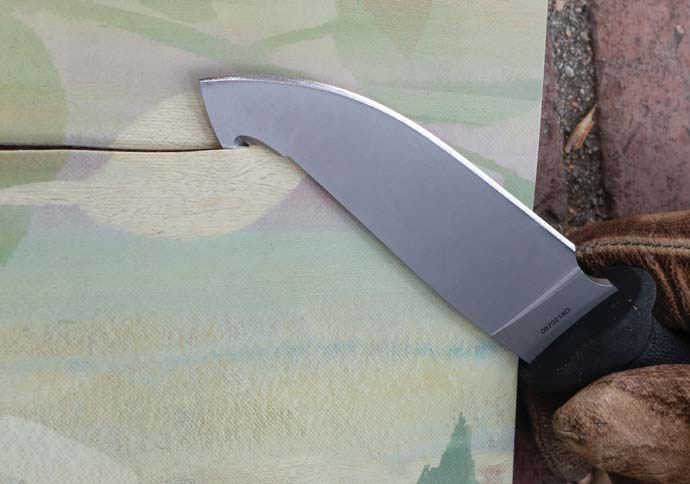
The Gerber Myth’s 3.75-inch flat-ground blade of 7Cr17MoV stainless zips through a plastic sheet.

During more than a half-century of hunting on three continents, I have taken more deer, elk, and other large game than I can count—often with a bow or other primitive weapon. I have dressed my game with whatever knife I had at the time, folder or fixed blade, and sometimes with flint or obsidian blades. I have never used a gut hook. When I was assigned to review four knives with gut hooks I thought of it as a learning experience.

4 Best Gut Hook Knives

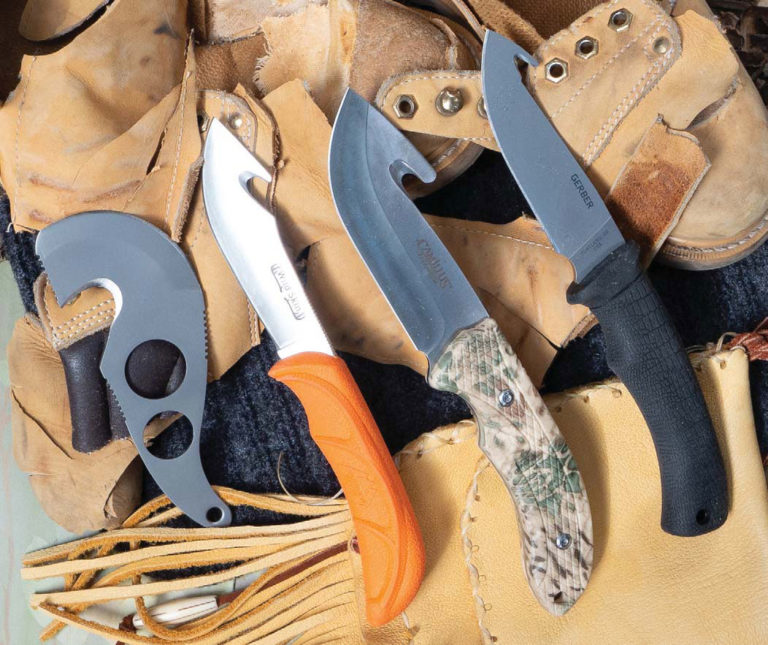
The four knives are the Camillus Prym1 Veil, Gerber Myth Fixed Blade Pro Gut Hook, the Fremont Knives Hide Glider, and the Outdoor Edge Wild Skin.

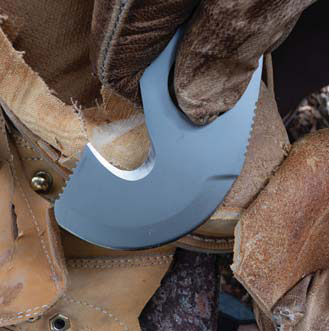
The Camillus, Gerber and Outdoor Edge are familiar hunting knives with the gut hook on the spine. The Fremont is a wild card, the blade having no point and a semicircular edge similar to the ulu, an all-purpose knife traditionally used by Inuit and Aleut women to skin and clean animals, cut food, and trim blocks of snow and ice to build an igloo.

Gut hooks
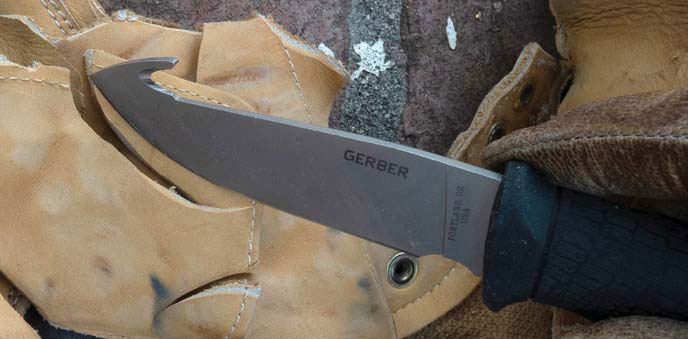
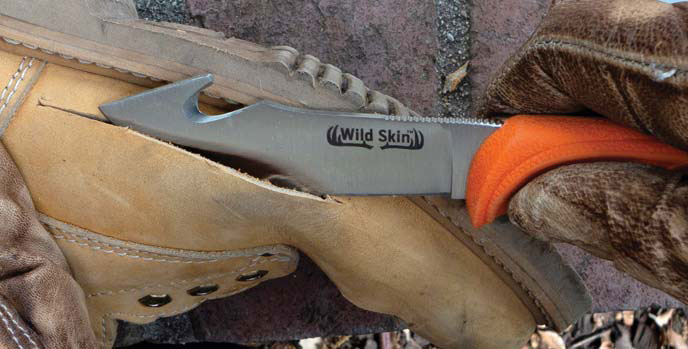
The primary edge of the Gerber Myth slices boot leather with aplomb. Handle: textured rubber. Overall length: 8.5 inches.

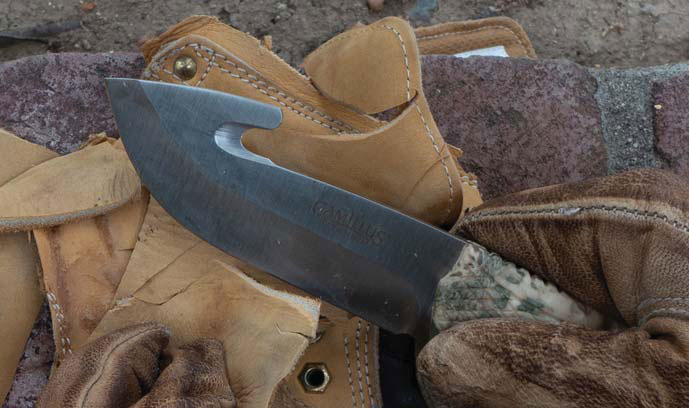
Nothing was in season at the time of the assignment. Taking suggestions from my editor and others I assembled a group of materials that would more or less replicate the hide of a freshly killed deer: an old pair of boots with leather about as thick as elk hide, floor mats, plastic sheeting (a bit of a stretch), and scraps of tanned deerskin I obtained from my brother-in-law who uses two or three deerskins a month to make bags and pouches in the Native American style. As an aside, one of his pouches can be seen in the accompanying photos.

None of the gut hooks made the slightest cut into the boot leather. All of the primary edges easily cut into the boot. After having a slit to start with, I inserted each of the gut hooks in turn and attempted to cut the leather—without much success.

Only by exerting considerable effort was I able to get any of the gut hooks to cut the boot leather. I reverted to the primary edges of the four knives to do most of the cutting and found that they sliced boot leather like it was sushi.

Gut hooks for deer hunting
The Fremont Knives Hide Glider primary
edge slices boot leather. Blade length and
steel: 3.375 inches and 4Cr15 stainless.

Next, I tried cutting the floor mats with each gut hook in turn. None would cut the floor mat. All the primary edges cut the floor mats with ease. Then I went at the plastic sheeting, which I had included because it was quite thin but resistant. All four gut hooks sliced the plastic with little effort.

Thinking about the geometry of the gut hooks and wondering if they would perform better on actual deerskin, which is thinner than elk hide or boot leather, I attempted to cut the deerskin scraps my brother-in-law had given me. With much difficulty, I was able to cut deerskin with each of the gut hooks. Again, the primary edges easily cut the material.

History of Gut Hooks

Gut hook knife
The boot leather succumbs to the primary edge of the Camillus Prym1 Veil. Blade length and steel: 4 inches and 420 stainless. Blade finish: Titanium Bonded.

Many hunters use gut hooks. They must be efficient at their designated job or no one would buy them. What was I doing wrong?

Merle Seguine, a custom knifemaker who popularized the gut hook back in the 1960s, reportedly designed it to pick up a coffee pot or small pot by the ladle from the cook fire, and in fact designed some blades for that exact purpose. He later refined the hook and sharpened it for removing animal hides.

I didn’t have a campfire handy or a pot with a bail, but it’s easy to see the Outdoor Edge, Gerber, or Camillus would serve that function. As for the Fremont Knives Hide Glider, being all one piece of steel with no handle, not so much.

And here’s the MSRP for all the blades that were reviewed from least expensive to most:

  1. Outdoor Edge Wild Skin – $18.95
  2. Camillus Prym1 Veil – $30.64
  3. Fremont Knives Hide Glider – $34.99
  4. Gerber Myth Fixed Blade Pro Gut Hook – $54

Hunting Knife Review: The Gut Hook Results, Ranked

The flat-ground Gerber was the best all-around cutter, the flat-ground Outdoor Edge a close second and the hollow-ground Camillus third. The edge of the Fremont was quite sharp and though it placed last in all-around cutting, I suspect that with more experience on my part it would make a good slicer. The Fremont is also an intriguing design and being flat should easily fit into any kit bag.

Sharpening the gut hook would be an exercise in patience. A small, round sharpening tool should serve to get into the tight space.

Are Gut Hooks Necessary?

Gut hooks for skinning game
The Outdoor Edge Wild Skin deconstructs leather boot with the primary edge. Handle material: Rubber TPR. Overall length: 8.5 inches.

I have never found opening the belly of a critter to be especially difficult, though there is some technique required.

The hardest part of opening an elk’s belly is getting the huge critter—elk often weigh 500 to 600 pounds—on its back. Deer, of course, even “mulies,” which can reach 300 pounds, are much easier to manage.

I’m very much old school, as my sons remind me, and have a great deal of experience, so I’ll continue to dress game with whatever knife I have at hand. But if you’re new to dressing game the gut hook can likely do a better job for you.

If you dress out a great deal of game, say as a hunting guide, the gut hook will make your job easier and faster.

Three More Gut Hook Knives Worth A Look

This trio of gut hooks may not have gotten a hands-on review, but they are more than capable of serving you well when dressing a deer.

SharpWorld Beautiful Damascus Gut Hook

SharpWorld Beautiful Damascus Gut Hook

This knife lives up to the name and then some. The full-tang blade is made from a spectacular damascus alloy that looks even better with the ram horn handle. At eight inches in length it’s long enough to get under the hide without being too big to become cumbersome.

MSRP: $49.99

Buck Zipper

Buck Zipper
Buck Zipper

When it comes to outdoors knives there are few companies better than Buck. And their gut hook, the Zipper, is named based on what it’s designed to do: open animals like a zipper. The drop point is made from 420HC stainless with a Heritage Walnut DymaLux handle and comes with an included leather sheath.

The current CEO and President, CJ Buck, personally helped design the knife after seeing a glut of subpar gut hooks on the market in the early 1990s.

MSRP: $122.99

Case Lightweight Hunter Gut Hook

Case Lightweight Hunter Gut Hook

Case has made an incredibly light and strong gut hook that’s just over four ounces in weight as part of the brand’s Lightweight Hunter line of knives.

The gut hook has a sabre concave grind on the Tru-Sharp surgical stainless steel blade. The steel itself is a high-carbon variety designed to hold an edge longer than more conventional steels. The handle is a ballistic nylon material that increases strength without adding unnecessary weight.

MSRP: $78.99

Editor’s Note: Michael Abelson contributed to this piece.

Read More

Best Skinning Knives: When You Dress The Kill

When Brown Is Down You Need A Trustworthy Blade. These Skinning Knives Have The Chops To Make Quick Work Of A Dirty Job.

You can have the fanciest camo and the best rifle money can buy, but if your skinning knife is dull and beat up it’s not going to amount to much after the moment of truth.

A good skinning knife is a key component of any hunter’s kit and unlike its name suggests, most are used for more than simply caping your kill. Generally speaking, the best skinners are typically do-all hunters–as quick through a deer’s pelvic bone as it is removing hide.

True enough, there are some specialty blades out there (we hit a few of those) and if they fit into your system then they’re the perfect addition. But no matter what style knife you choose, all skinners will share the same basic asset–the ability to maintain an edge, for obvious reasons.

Why Sharpness Matters

Picture this, you put an elk down right as the sun dips below the horizon. Your breath is visible as you set to dress it and already thick flakes are falling from the sky. Do you want a knife you’ll sharpen every third cut?

In these circumstances, expediency demands a sharp blade. But so does safety. As most likely know–but always bears repeating–there’s a greater chance of cutting yourself with a dull knife than with a sharp one. Given you’ll make awkward cuts a challenging angles when dressing game, main times under the dim glow of a headlamp, it’s a good idea to have a tool that won’t endanger you. Unless you like the trill of working on your tourniquet skills miles from a medical facility.

Styles Of Skinning Knives

Given it has its own moniker, there are dedicated skinning knives in this world. Generally speaking, most makers outfit them with an accentuated belly and a fine edge, allowing the blade to work naturally with the user’s cutting motion. Additionally, the tip is positioned out of the way or is less prominent, ensuring you don’t end up with a nasty mistake, such as a gut puncture.

All that said, any knife is potentially a skinner if it’s sharp and you know how to use it. However, in most cases, hunters will find a few general aspects most good skinning knives share in common:

  • Highly Controllable: Cleaning and skinning require controlled cuts, lest you butcher the meat or perforate the cape. Controllable can mean different things to different people, but in many cases, it equates to a smaller blade with a skinner.
  • Fine Blade: Yeah, a serrate blade might aid in getting through bone, but it will make a mess of meat and connective tissue.
  • Easy Maintenance: Cleaning and skinning is a dirty, wet and sticky job–it’s not for a knife that must be handled with kid gloves.
  • Stays Sharp: As pointed out previously this is a safety and time aspect because you want to get back to camp ASAP with all your digits and all your blood.

Bear & Son Cutlery 7.25-Inch Stag Delrin Upswept Skinner

Bear & Son Cutlery 7.25-Inch Stag Delrin Upswept Skinner

Our list starts with an offset fixed blade from Bear & Son Cutlery. The Stag Delrin is a tough, sweeping steel that is wider near the bolster before tapering toward the tip. This allows for the bulk of the skinning to happen by the ample belly, and the offset Stag Delrin handle provides an easy way to nimbly move the knife.

The 3.13-inch blade is made from 440 stainless with a hollow grind. The leather sheath keeps the knife protected. And the whole outfit is just 3.3 ounces, making it a lightweight option. The only downside for some, it’s a bit longer than many might require.

MSRP: $50.99

Gerber Gator Clip Point

Gerber Gator Clip Point

The Gerber Gator looks mean, feels tough, and is strong enough to help you process your hunt with ease. The 420 HC stainless steel blade features a deep clip point that is excellent for doing fine knifework to get the last bit of skin off of the carcass. 

The blade is connected to a glass-filled nylon handle with a Gator Grip overmold that provides excellent grip even when bloody or wet. The lockback mechanism will keep the blade secure when in use, and the ballistic nylon sheath is just as tough and rugged as the knife itself.

When it comes to skinning knives the Gator is among the best and will serve you well for years.

MSRP: $62

Havalon Piranta-Z

Havalon Piranta-Z
Havalon Piranta-Z

The Piranta-Z from Havalon stands out from the rest of our list because of its changeable blades. It comes with a dozen 60A steel blades that easily clip into the sleek black polymer handle. The knife opens thanks to ambidextrous thumb stubs, handy for those times you only have one free hand. 

All of the additional blades are a huge advantage compared to some other knives. Accidentally clip a blade? Replace it with a new one in seconds. A blade goes dull midway through dressing? Remove it and change it in a snap. 

Maintenance is a breeze too. The back of the knife opens for easy cleaning, and the removable holster clip allows you to keep the knife secure while on a hunt. The one issue here is that if you have to cut any bone you’ll need another tool.

MSRP: $54.99

Argali Serac 

Argali Serac
Argali Serac 

Argali thought of almost everything with the Serac. At just 2.1 ounces it is insanely light, and the skeletonized handle allows for easy movement and adjustments when butchering a kill. The blade is made from S35VN stainless steel that holds an excellent edge and is durable enough to get into the guts and bones of a carcass.

This American-made blade is an excellent skinner but is just as good as an all-around hunting knife that can process an entire animal. The G10 scales provide an excellent grip that’s easy to maintain even when wet. The included Kydex sheath is just as robust as the knife itself.

MSRP: $209.99

Ka-Bar Becker Companion

Ka-Bar Becker Companion

Our list rounds out with a knife designed by legendary maker Ethan Becker. The Ka-Bar Becker Companion is a heavyweight in the world of skinning knives. It’s so tough it can handle splitting kindling for the fire as well as skinning a 10-point. 

The fixed blade is made from 1095 Cro-Van steel married to an Ultramid handle. Unlike many of the other knives on our list that come in weighing just a few ounces, the Becker Companion is 10.5 inches long and weighs one pound. The trade-off is that it’s beefier than the other knives and is able to cut through sturdier material, but it may not be the best for finite skinning and knife work.

Regardless, this all-around hunting knife is more than capable of skinning your next kill and even butchering it so you can sear it over the campfire before the sun goes down.

MSRP: $146.03

Read More

Best Multi-Tools: Multitasker Marvels

A Good Multi-Tool Can Help You In A Pinch In Numerous Ways. This Quartet Of Tools Are Up To The Task Of Getting You Out Of A Bind.

Right off the bat, anyone who needs a multi-tool on a daily basis will face one huge question when making a purchase: How much multi-tool do I need? Options abound on the multi-faceted workhorses. Blades, pliers, shears, screwdrivers, wrenches, wire strippers/snips, files, cap lifters, can openers and the like are great to have when you need them. 

The dilemma is weeding out what you do and don’t need, plus what size multi-tool you’re willing to carry. Alternatively, if you just need a multi-tool for the tool or glove box, the world is your oyster. Let’s test four diverse multi-tools that offer a wide variety of talents to help make your choice easier.

Boker Plus Specialist II

Boker Plus Specialist II

The Boker Plus Specialist II is a full-blown multi-tool with a load of tools. Like many of its type, it centers the workload around a beefy set of pliers. At the pliers’ base are a wire stripper and cutter. Tucked in the butterfly handles are a host of other tools including a knife, hex wrenches, bit driver with storage, glass breaker, file, ruler, wood saw, can opener, and bottle opener. At 10.13 ounces it’s the heaviest of the review multis, but then it also has the most extensive tool kit.

The Specialist II has a full-size pair of spring-loaded pliers with special cutting blades built into the base of the jaws—a sign that it’s serious about cutting wire and cord. I honed in on this feature by giving the cutters a go on some multi-strand computer cable, snipping off half-inch lengths. 

The blades handled cutting the cable with ease as if it were an afterthought. The assortment of tools is admirable, especially the knife and saw blades that are large enough to do some serious work, a trait not always found on multis. The nylon belt sheath is a must-have on a multi-tool of the Specialist II’s weight. Kudos to Boker for including it.

MSRP: $89.95

Paul Chen Professional Multi-Tool

Paul Chen Professional Multi-Tool

The Paul Chen Professional Multi-Tool from CAS Iberia is a large multi that, unlike many, centers around a stout pair of spring-loaded carbon steel shears that slide out on rails by pressing locking buttons on each side of the handle. 

Once the shears are out the handles separate, giving easy access to the Professional’s other tools: knife and saw blades, fold-out pliers, small flat-head screwdriver/can opener combo, Phillips head screwdriver, and removable sharpening file. There’s a pocket clip on the back side.

The Professional surprised me with how stout it is considering its low price tag. The main feature is shears that have 1.5-inch blades of carbon steel. I gave these a run through various materials such as canvas and cardboard and they cut like a walk in the park, so I upped the ante with some quarter-inch lasso rope. 

This is a very stiff, wax-impregnated rope that some blades aren’t particularly fond of. The hungry shears took off nice, clean lengths with little effort. This multi-tool is limited in scope with its tool selection—not surprising at its cost—but there are enough implements to get you by. The knife blade opens via a thumb stud and a linerlock secures it open. At 15 bucks you could buy several of these and sprinkle them in such places as the glovebox, tool drawer, and/or backpack.

MSRP: $15

CRKT Septimo

CRKT Septimo
CRKT Septimo

CRKT has never followed the pack with its multi-tool designs and the Septimo is no different. Based on a flat, compact 4.84 x 1.25 x .4-inch somewhat rectangular platform and at 4.4 ounces, the black-oxide-coated Septimo is roughly half the load of the larger test multis. 

Notable is an adjustable wrench for tightening and loosening nuts and bolts. The tanto blade has a deep Veff serration at the base and secures open via a linerlock. Other tools include Phillips and flat-head screwdrivers, a glass breaker, and a bottle opener. It has a pocket clip for easy carry.

The Septimo is a very pocketable multi-tool with an inch of its total length dedicated to the adjustable wrench/glass breaker on one end. Though the Septimo’s handle is not as comfortable as that of a typical knife, the multi’s blade did the trick slicing two-layer corrugated cardboard, paracord, and even 3/8-inch rappelling rope. 

I would have chosen a more utilitarian blade pattern like a sheepsfoot or drop point, but that’s me, and the tanto did more than enough to impress. The adjustable wrench can accept up to a half-inch bolt head. I gave it a twirl tightening and loosening a 3/8-inch bolt on a rock clamp I use doing lapidary work. The wrench did an excellent job. All in all, you’ll like the unorthodox yet effective Septimo.

MSRP: $56

SOG Flash MT

SOG Flash MT
SOG Flash MT

The SOG Flash MT multi-tool is a great companion to your SOG Flash AT folder, but don’t let that stop you should you prefer a different knife.

The Flash MT is a barebones seven-tool multi with an assisted-opening clip-point blade, full-size pliers, a wire cutter and stripper, a large combo flat-head screwdriver/bottle opener, and a small double-ended Phillips/flat-head screwdriver with a bit drive in the base. It is the only test multi-tool in which the main body is designed specifically as a conventional knife handle.

The Flash MT has an asymmetrical handle design in that one half of the butterfly grip is slim, holding only the small bits in a foldout cyan holder, while the other grip is packed with tools. The blade did a good job cutting paracord and rappelling rope. 

The wire cutter/stripper handled its chores well—not a surprise as SOG is well known for making some serious multi-tools. Using the main body of the handle with just the blade for cutting was very comfortable, with only the pocket clip feeling a tad out of place if you’re right-handed like me. 

That said, the back-side clip is right at home; in fact, it’s no different from carrying a mid-sized EDC folder. This is a well-designed multi that deserves your consideration.

MSRP: $69.95

The review multi-tools provide many choices in size and tool selection. You can go big with the Boker Plus and Paul Chen multis or lighten the load with the CRKT and SOG models. Pick prudently and you’ll have a workmate worthy of your daily workload.

Read More

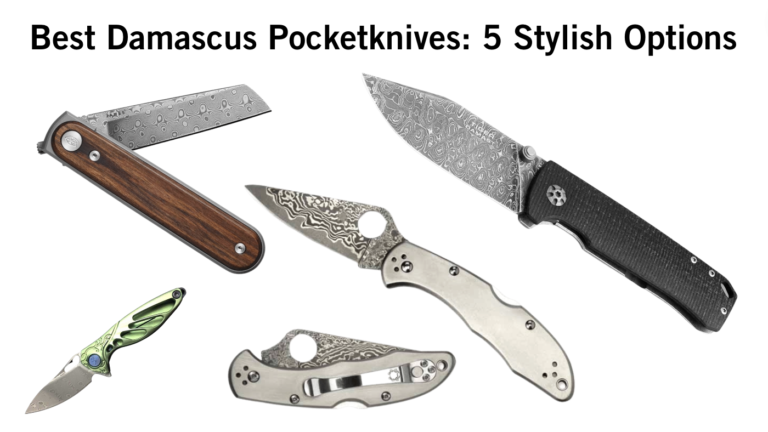
Best Damascus Pocketknives: 5 Stylish Factory Options

Damascus Pocketknives That Wow From Around The World.

Yes, some steels are of higher quality than others, but nothing is as eye-catching as a well-made damascus knife. And now, thanks to contemporary forging techniques, there are just as many high-quality damascus pocketknives as there are kitchen knives, daggers, and swords.

What Is Damascus Steel

Also called pattern-welded steel, damascus steel is made from forging multiple types of steel together. This can create different kinds of patterns in the finished product once the construction is complete.

Traditionally, damascus steel was created to imbue a sword with a desired blend of toughness and hardness. While cutlery is still forged this way for that purpose, today many damascus blades are made for the cosmetic look that comes from the acid etching or polishing done when the blade is complete.

You’ll see many damascus knives today constructed from the core of one type of steel and multiple layers of different steels on either side of it.

While the actual origin of the term “damascus steel” is unknown, many have connected it to the Syrian capital of Damascus and swords made or sold in the city in ancient times. Another theory is that the term is derived from the Arabic word “damas” which means watered, which describes the wave-like pattern that many blades can have. 

Best Damascus Pocketknives

Boker Tiger-Damast

You know what you’re getting when you purchase a knife from Boker. Its legendary maker for a reason, and the Tiger lives up to its lofty standard. An elite collector’s knife, the Tiger is made from German tank parts from a tank destroyed in a battle in Latvia in 1944. 

The non-stainless blade is made in the intrepid pattern by maker Chad Nichols. The handle scales are a burlap micarta design to echo the look of German armored vehicles of the era. This is the dream of any knife lover interested in military history.

MSRP: $719

Spyderco Delica 4

A damascus version of one of Spyderco’s most famous blades, the Delica 4 is a beauty. The damascus blade/titanium handle combo gives the piece a futuristic look and feel.

The blade itself is made from a VG-10 stainless core with 15 layers of forged-welded damascus on either side. The machined titanium handle gives the whole piece a ridiculous amount of strength and durability. Spyderco is a beloved brand for a reason, and this version of the Delica 4 keeps the good times rolling.

MSRP: $304.50

The James Brand Duval

The Duval is the first front-flipped knife from The James Brand, an Oregon-based company founded in 2012. The frame lock makes for easy opening and sturdy use of the Damasteel Rose DS93X blade.

The material is made of 100 total layers of a pair of different types of steel. It becomes stainless once heat treated and has excellent corrosion resistance and edge retention.

This modified sheepsfoot blade is married to a handle made from Rosewood, and the whole thing weighs just 2 ounces. The hardware is all stainless and the ball bearings are ceramic. This piece is built to last and last a long time.

For a company’s first foray into front-flipping knives, James Brand has knocked it out of the park.

MSRP: $399

Kansept Knives Convict

This knife from Kansept Knives, a Chinese maker, stands out in numerous ways. For starters, it features a sheepsfoot blade, a less common blade types. Designed by Chris Conaway and Sheepdog Knives, the Convict is a light, nimble knife that can easily handle the job of an EDC.

The titanium handle is as light and strong as you would expect, and the stonewashed finish lets the damascus pattern shine through. While it may not be sexy, the ceramic ball bearings not only let the knife flip open smoothly and will never rust so it’ll open smoothly for decades.

MSRP: $203

Rike Knife Humminging Mini Flipper

The smallest knife on our list is from Rike, but it packs a wallop of a punch. 

The Hummingbird Mini is just 3.75 inches in total length and has a 1.5-inch blade. The Damasteel drop point flips open easily, and the titanium handle helps keep the whole construction to just .6 ounces.

This is an excellent keychain or neck knife. It even comes with a Kydex sheath designed to be worn on a lanyard for this purpose. Sure, it’s the smallest and least-expensive knife on our list, but it does everything you would want from an EDC. The fact that it won’t break the bank is another feather in the cap for this knife from the Chinese maker.

MSRP: $129.95

Read More
Best Japanese Pocketknives: 5 Excellent Examples

There Is A Robust Market Of Japanese Pocketknife Makers. These Blades Stand Out As Some Of The Best.

Japanese knifemakers are among some of the best on the planet. With traditions dating back to the days of the samurai, makers in Japan have long known what it takes to make high-quality blades.

As the tastes of blade lovers have changed throughout the years, so too have the pieces made in Japan. Today, with pocketknives being one of the dominant styles, makers are creating EDC knives that wow. 

What Sets Japanese Pocketknives Apart From Western Blades?

There is a traditional style of Japanese pocketknife that many modern models are still based on. The higonokami was first developed in the city of Miki in Hyogo prefecture in 1896. These knives operate as friction folders with no lock that open by the friction of the swivel or by using the thumb lever, known as the chikiri.

The blades of the knives set themselves apart from many Western-style knives due to their flat grind without a secondary bevel. 

The name higonokami was trademarked by a guild in Miki so now only one maker, Nagao KameKoma, can officially use the name when marketing their knives. But many makers throughout the country still make knives in the style but simply call them “higo” knives or “made in the higonokami style.”

Best Five Japanese Pocketknives

As you’ll see, not all Japanese pocketknives are higonokami. But many high-quality blades are as they blend traditional design with modern construction.

KATSU Damascus Steel Higonokami Japanese Razor Knife

KATSU Damascus Steel Higonokami Japanese Razor Knife

First up is this knife from Katsu. A contemporary take on the higonokami, the Razor Knife is a beautiful piece that shows why the higonokami style endures and the skill of the makers at Katsu. 

The three-inch damascus reverse tanto blade is married to a damascus bolster and snakewood handle. The chikiri is damascus as well. Fully closed, the knife is 7.5 inches long and weighs just under four ounces. It’s a lovely piece to look at and use.

MSRP: $73.99

Moki Kronos Lockback

Moki Kronos Lockback

This folder from Moki looks like it wouldn’t be out of place in the catalog of many American companies and is an excellent representation of how the Japanese pocketknife market has evolved over the years.

The Kronos has a handle made of amber stag horn and a polished satin VG-10 blade. The drop point features a flat grind and is 2.75 inches in length. The knife opens with a nail nick and comes with an included leather-lined sheath. The Kronos has an august, regal look to it.

Moki has been making knives for over a century in Seki, the epicenter of Japanese knifemaking. The Kronos blends the old with the new in an elegant yet rugged construction.

MSRP: $189.95

Mcusta Tsuchi Large Pocket Knife

Mcusta Tsuchi Large Pocket Knife

A stunning, modern knife, Mcusta’s large pocket knife is an eye-catcher. The hammered-patterned steel gives the handle a wonderful textured feel and the damascus stainless blade looks as good as it cuts.

Made with a VG-10 core, the drop point blade is laser cut so there are no mistakes in construction. Each Mcusta knife is assembled and finished by hand which means you’re getting what you pay for with this blade in the best possible way.

The pivot pin washer system allows the blade to move like a hot knife through butter, which this knife could cut through with ease even when ice cold. When it comes to factory Japanese pocketknives on the, please forgive the pun, cutting edge of style and tech, this piece from Mcusta is high on that list.

MSRP: $176.40

Albatross EDC Mini

Albatross EDC Mini

Sometimes you want a small knife that packs a big punch. Look no further than the mini from Albatross. This 2-inch damascus blade is composed of 71 layers of steel around a VG10 core and hardened to a 58-60 HRC. The ergonomic ebony handle sits well in the hand and allows for easy, flowing movement with the blade.

Great for camping and the home, the Mini has a lanyard for easy carry and arrives in a lovely box, making it great to give as a gift. Yes, it’s a small blade, but when you’re camping you’ll probably be cutting mainly in tight quarters, making this knife the perfect choice for the job.

Oh, and it’s under $50, and you can never go wrong with a good knife at that price.

MSRP: $45.50

Nagao-Kanekoma MN-20B Original Higonokami

Nagao-Kanekoma MN-20B Original Higonokami

Our list concludes with an official higonokami from Nagao-Kanekoma. This small knife is incredibly strong. The Aogami damascus is hardened to a 60-61 HRC which gives the blade a rugged, durable edge that can handle far tougher use than you might expect from a knife weighing just under 2.5 ounces. The blade is connected to a sleek black-coated brass handle. 

This feels like a time machine to some of the first Japanese pocketknives. You can see the craftsmanship in every inch of the knife and can feel the maker’s skill when you hold it. It’s smack in the middle of our list in terms of price so you won’t have to break the bank to have a piece of living history.

MSRP: $134

Read More

D2 Tool Steel Knives: Four That Make The Cut

D2 Delivers In Edge Holding, Overall Performance, And Affordability. These Four D2 Knives Are Emblematic Of The Toughness Of The Material

Even if you haven’t used a knife of D2 tool steel, you’re no stranger to it if you have been into knives for any length of time. Many knife manufacturers use D2, as have numerous custom knifemakers.

Why is D2 so popular? Two reasons are it offers the best bang for the buck in terms of edge holding and overall performance. D2 is regarded as a step up from basic, low-grade stainless steel and is often found in entry-level to mid-grade production knives. One drawback: D2 is not a stainless steel so it will require a bit more care. Still, the performance advantages outweigh that drawback and you get a knife with enhanced edge-holding power that handles tough cutting chores. 

D2 comes from the metalworking industry. There it is primarily used to make steel cutting dies, so that tells you all you need to know: It basically is a steel used to cut steel. Think about that for a minute. D2’s chemistry in percentages is 1.4 to 1.6 carbon, .7 to 1.2 molybdenum, 11 to 13 chromium, and 1.1 vanadium. It can be hardened past 60-61 HRC on the Rockwell scale without being brittle. BLADE Magazine Cutlery Hall-Of-Fame® members Jimmy Lile and Wayne Goddard used D2 a lot in their knives, as does Bob “Dr. D2” Dozier extensively in his outdoor models. Top production knife companies such as CRKT, Kershaw, SOG, A.G. Russell Knives, Ontario and KA-BAR are but a few that have multiple offerings using D2.

CRKT Fawkes

 The CRKT Fawkes is an excellent choice for a stylish EDC folder, featuring flipper operation and IKBS pivot bearings for smooth opening and closing.

Maker Alan Folts designed the CRKT Fawkes to be a stylish, colorful EDC linerlock folder. The knife’s name is derived from the Harry Potter movie franchise, specifically the phoenix that appears in the series. 

With a closed length of just 3.76 inches the Fawkes carries comfortably, and the blade deploys fast and easy thanks to the IKBS-ball-bearing pivot and assisted-opening spring. The two work in conjunction to provide swift, smooth deployment, and the assist helps detent the blade in the closed position.

The multi-layer orange G-10 handle generates visual excitement and a splash of color. The ergonomic design provides a comfy grip for cutting tasks. The 2.74-inch, clip-point blade is flat ground and sports a swedge as well as a milled-in fuller, which creates a bit of attitude. A flipper tab helps initiate blade deployment. The knife carries securely thanks to a deep carry, fold-over-style clip that holds the closed Fawkes blade tip up and as low as possible in a pocket.

The handle shape is striking. A pronounced finger groove near the pivot helps index your grip, while chamfering eliminates harsh edges and hot spots. The matching orange G-10 handle spacer sports a series of large notches that help seat the knife in your grip. Blade action is quick and authoritative. The linerlock engages the tang with zero movement. CRKT will make the Fawkes a regular production knife model this year, with the only change being a switch to 1.4116 stainless for blade steel. 

Made in Taiwan, the MSRP for the Fawkes is $89.99.

Kershaw Endgame

The high flat grind of the Kershaw Endgame makes it a great choice for a working utility knife.

Kershaw‘s Endgame flipper folder features a highly usable modified drop-point blade, along with an ergonomic handle featuring modern design elements, all translating into a classy EDC that opens easily via the flipper tab.

The 3.25-inch flat-ground blade incorporates a distinctive humpbacked swedge for an aggressive look. A notched rest on the spine allows comfortable thumb placement for greater blade control. A stonewashed finish seals the tiny pores of the steel’s surface to fight corrosion as well as give the blade an industrial look. It also hides scratches from use pretty well and reduces glare.

A stainless steel framelock ensures solid lockup. The large finger recess at the pivot end helps index your grip. The handle curves aid in secure purchase every time.

The handle’s aesthetics are interesting. There’s bronze PVD (physical-vapor-deposition)-coated steel accents, textured FRN (fiberglass-reinforced-nylon) scales and a window cutout. The multi-layered visual adds more subtle color to the otherwise gray blade and handle. I do not care for it—it seems too busy. I don’t mind one type of overlay or even some machined-in grooves on the handle surface—both achieve function along with a sensible appearance. A deep carry pocket clip positions the closed Endgame nice and low in the pocket away from probing eyes.

While ergonomic and comfortable, the handle is a bit lacking in the midsection. For extended use, I would not recommend this knife. My hand grips the handle tighter to make up for the lack of bulk in the midsection. The answer is to redesign the handle and give it more mass. However, for tasks requiring choking up on the blade and handle for extra control, such as wire stripping, the Endgame is ideal. I felt in full control of the blade and was able to make precise cuts easily. If you do a lot of detail cutting, this might be the knife for you, or even if you need a folder for mundane slicing tasks. It’s got a great blade shape that is stylish. 

Made in China, the Endgame has an MSRP of $107.99.

Medford Knife & Tool 187DP

At 5 5/8 inches closed, the biggest knife of the test bunch is the Medford Knife & Tool 187DP. Its hollow-ground drop-point blade makes short work of most any cutting task. The half-titanium/half-G-10 handle is equipped with a framelock.  

Medford Knife & Tool specializes in manufacturing hard-use knives in the USA. These are not safe queens—they are engineered to hold up in real-world survival situations. The 187DP heavy-duty framelock folder is a representative example. The hollow-ground blade is 3.75 inches and comes in a utilitarian drop-point pattern. Closed length: 55/8 inches. An oblong hole facilitates easy one-hand opening. Dual thumb studs function as the blade stop in the fully open and closed positions.

The blade is 3/16-inch thick. Make no mistake, the 187DP is quite a chunk! The grip is ⅝-inch thick, and you will know when it’s in your pocket. A milled titanium clip carries the closed knife blade tip up but is not reversible. Any company using milled clips gets bonus points in my book. Regular stamped steel clips do a very good job at holding your knife at the top of the pocket for easy access, but, in my opinion, are not much on style points. Milled clips look more stylish and also hold the knife securely to the pocket lip.

If you are a rough user and use your knives outdoors or just plain beat them up, the 187DP is for you. Its rock solid build and bulk stand up to the heaviest use. I like the way the handle tapers toward the butt end, enabling you to get a secure hold. A series of traction notches machined close to the butt further assist in obtaining a solid no-slip handhold. It feels fixed in your hand and instills confidence in controlling the large blade. The steady grip allows you to bear down on the blade to power it through cuts.

Many who favor tactical folders will tell you a framelock is best for hard use. The 187DP’s framelock engages quite securely and disengages with a firm push. A milled-out section on the lockbar accommodates a thumb to disengage the lock—nice touch by the Medford crew. The blade cuts aggressively and dispatches most any material and food with aplomb.

Out of the box I really liked the factory edge. The ultra-strong lockup makes the knife feel like a fixed blade. Consequently, user confidence is high and you don’t have any reservations about putting it through the toughest jobs. While a large tactical folder, it can easily be tamed for precise cutting by making use of the choil to choke up on the blade and handle. 

There’s also about an inch-and-a-half-long run of traction notches on the spine just above the blade hole. Your thumb rests comfortably there and you can execute controlled cuts easily—a very nice touch and positive attribute.

The only complaint I have about the 187DP is the size and, therefore, the weight, both of which exceed the limit for what I consider an EDC folder. You can feel its bulk and presence in the pocket, especially when you bend over. 

MSRP: $475.

SOG Stout FLK

The SOG Stout FLK is definitely stout! Don’t let this compact folder fool you—it’s built for heavy work. It can get down to precise work as well, such as stripping wire.

The SOG Stout FLK is configured in collaboration with Danish maker Mikkel Willumsen. In appearance, the framelock folder lives up to its name and has a 2.62-inch drop-point blade. Closed length: 3.38 inches.

If you’re looking for an inexpensive work knife, the Stout FLK is it. It’s big enough to handle most cutting chores but not too big to be in the way or too cumbersome to carry. With its flat grind and short swedge, the blade shape is utility friendly. An oblong hole permits you to thumb the blade open as you would any one-hand folder, or you can use the flipper tab instead. 

A pronounced choil enables choking up on the blade for more exact control and works with the large finger recess in the handle as well. Spyderco does this sort of thing, too. It’s a way to make smaller knives feel large in the hand and provide more blade control.

The handle is in the familiar half-and-half framelock construction, using textured G-10 on the presentation side. This saves weight as opposed to having an all-metal handle and also adds traction for sure handling. A matching steel spacer provides balance as well as structural rigidity. 

The deep-carry pocket clip is ambidextrous and holds the Stout FLK low in the pocket while keeping it easily accessible. The clip is attached to the butt end and comes over the side. SOG calls it a bayonet-style clip, a style used quite a bit in the company’s line. 

Made in China, the MSRP for the Stout FLK is $54.95. Finally, SOG will release the knife as a slip joint this year.

Read More

Advertisement

Must Read Articles

Read this before you make a knife

Knifemaking 101 – Read This Before You Make a Knife

  by Wayne Goddard My experience has taught me that there's nothing like digging in and getting started. I've often said the hardest part of the...
how to forge damascus steel

How to Forge Damascus

Advertisement
Advertisement