Everything You Wanted To Know About Arkansas Sharpening Stones

Novaculite still rocks knife sharpening!

Timeless and iconic, it remains practical and complementary to other options today.

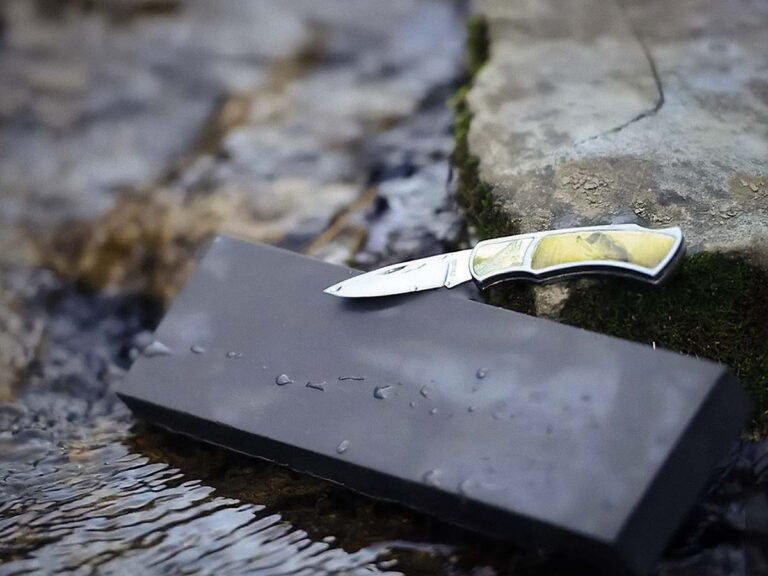
The novaculite sharpening stone is a wonder of nature. Almost pure microcrystalline quartz in content, this dense, fine-grained rock was formed from 318 to 416 million years ago during the Devonian and Mississippian periods in ancient seabeds and later pushed toward the surface with the peaks of the Ouachita Mountains of western and central Arkansas. Massive sedimentary layers ranging from 250 to 900 feet thick produced the stone, which takes its name from the Latin novacula, meaning “sharp knife” or “razor.”

From there, the stone was destined for a rendezvous with the knife blade, rendering a sharp edge that gets the job done and holding a place in working knife history dating back centuries.
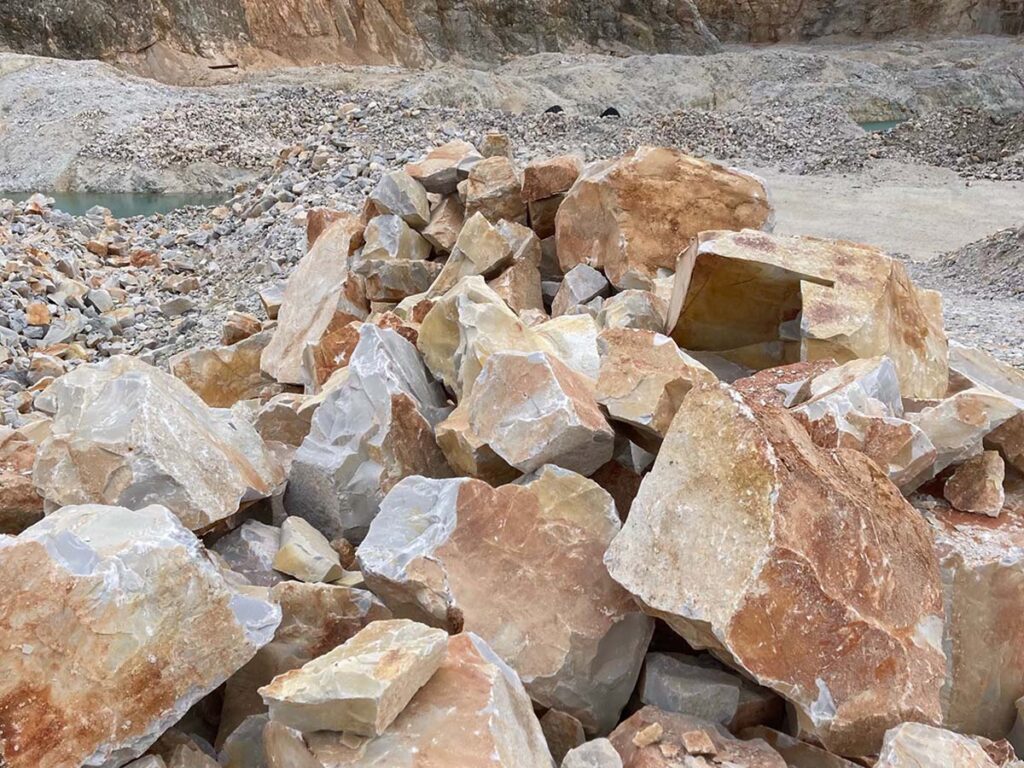
The novaculite deposits in Arkansas were formed 318 to 416 million years ago and it takes plenty of mechanical muscle to push around the material. The deposits run from 200- to 900-feet thick, in turn the operations are substantial. And while the weathered novaculite is somewhat bland to the eye, once broken up the beauty of the natural material shines through. (Images courtesy of Chis Stillian)

Today, however, there is a bit of … well … friction as some may claim modern synthetic stones are eclipsing or at least competing with novaculite for some nebulous title of “best.” Synthetic stones often offer faster sharpening and convenience, while novaculite is valued for its refined finish and traditional appeal. Truth is that each has its place, and novaculite was and is a key participant in the knife-sharpening exercise.

“It gives a razor-sharp, polished edge with smooth feedback that many prefer over synthetics,” explained Chris Stillian, owner of Natural Whetstone, LLC. The company was founded by close friend David Davenport two decades ago, and when David passed away during the COVID-19 pandemic, Chris and his father, Shawn, kept the central Arkansas company going.

“The stones wear very slowly,” Chris continued. “Some last decades because they’re 99 percent plus pure quartz with no fillers. They’re natural, made in the USA and work great for chefs, woodworkers and knife users.”

Danny Kirschman founded Dan’s Whetstone Company, Inc., in Pearcy, Arkansas, in 1976, and his son Steve is currently CEO of the family venture. His roots in novaculite are long and deep. “The erosion-resistant quartz formations of the Ouachitas produced the finest and rarest natural abrasive in the world,” he offered. “Danny Kirschman’s opinion and what we share with others is that the one thing that sets novaculite products apart from other sharpeners is their unique crystalline structure. The novaculite stones wear less aggressively than most manmade abrasives due to the natural bonding of the crystals.”

Best Steel For Novaculite
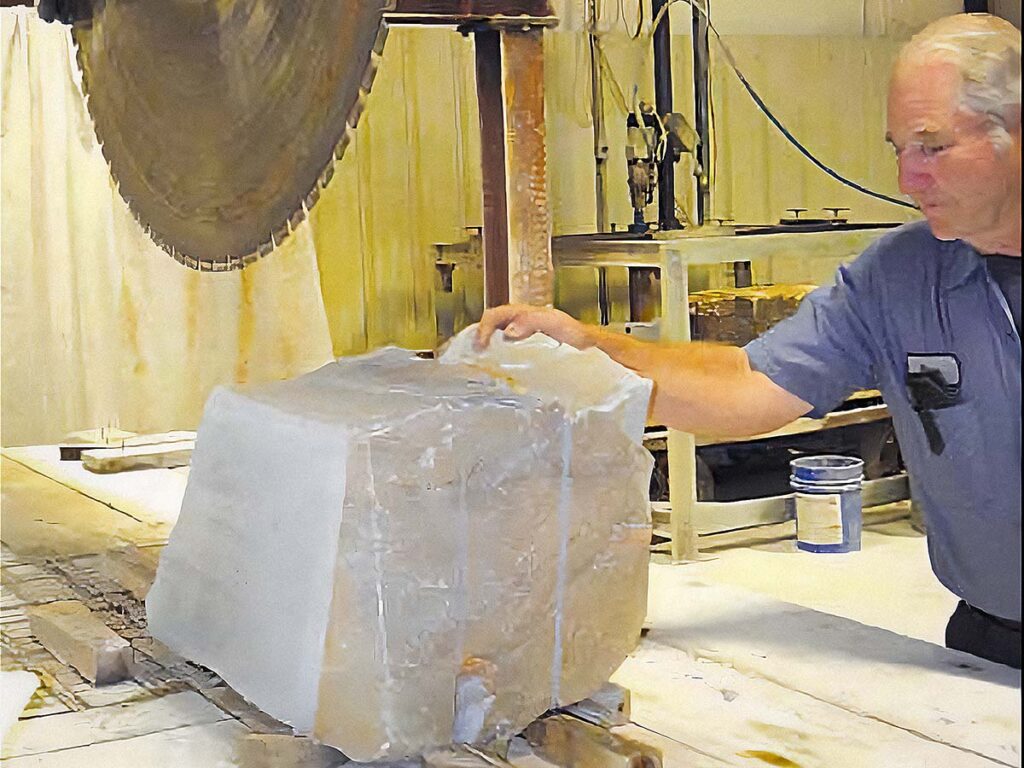
Dan Kirschman, by the company’s largest saw, spent his formative years as a mining engineer, until his hobby of cutting and polishing novaculite developed into a full-time business. Dan’s Whetstones now has a 500-acre quarry and manufactures more than 300 different products from the stone. (Images courtesy of Dan’s Whetstone)

Both Stillian and Kirschman agree that the disadvantages of novaculite usage lie in cutting speed and other aspects. Chris commented, “It cuts slower than diamond or water stones, so it’s better for refining edges than heavy profiling. It needs oil instead of water, can glaze if not cleaned and doesn’t bite hard on modern super steels. Top grades cost more because the dense material is rare.”

Steve added, “The most common complaint is their low abrasion rate. Because the stones are exceptionally hard and dense, they remove material much more slowly than synthetic stones. They are best suited for maintaining an already sharp edge rather than ‘hogging off’ metal to repair chips or reprofile a blade. There is no truly coarse Arkansas stone. Even the soft Arkansas is relatively fine compared to a coarse synthetic stone. Novaculite is composed of quartz, which has a Mohs hardness of around 7. While this is harder than standard carbon steel, it is softer than the vanadium and chromium carbides found in modern, high-alloy super steels.”

Further, since Arkansas stone is a natural product, every stone is unique and may exhibit internal flaws, cracks or variable grit. Oil is required to keep metal particles, or swarf, from clogging the pores, which leads to a bit more cleanup. Lubrication keeps the stone from “loading” with metal, which can reduce its effectiveness.
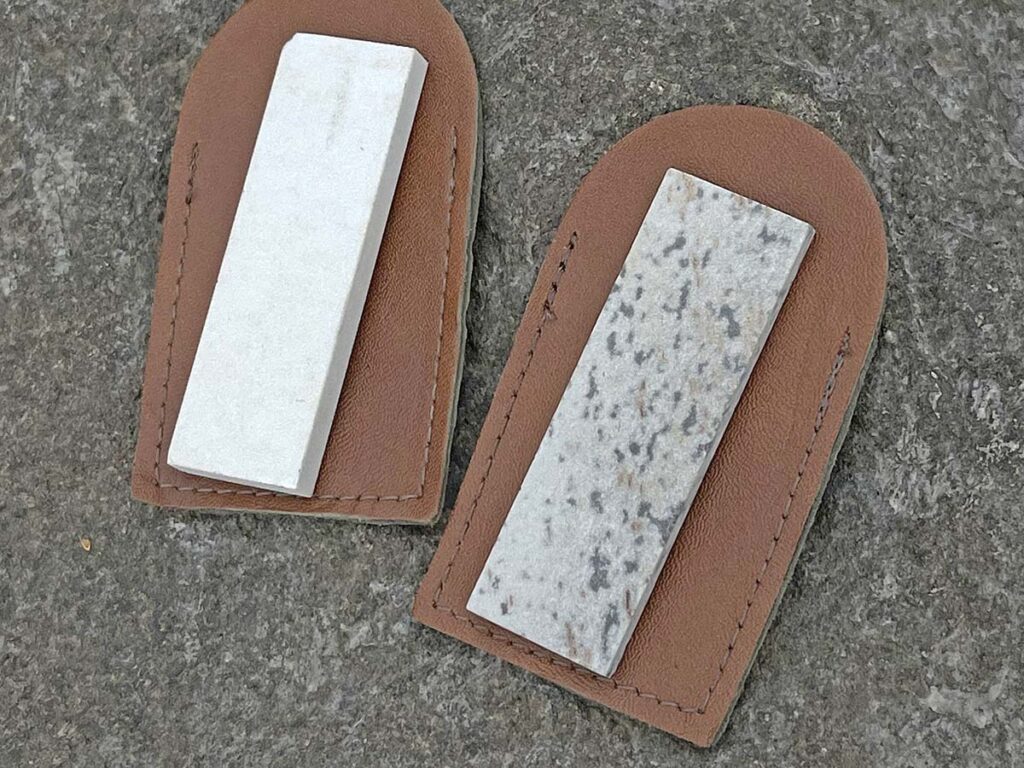
Similar to many sharpening systems, Arkansas stones of different grit sizes are used in conjunction. On the right is a soft stone with a courser grit, good for raising a burr and initial honing. On the left is hard stone, used for final edge polishing and day-to-day maintenance. (Image courtesy of Chris Stillian)

Novaculite works best with simple carbon and low-alloy stainless steels like 1095, O-1, 440C and A2. Since such steels are commonly found on hunting, working, kitchen, bushcraft/survival and everyday slipjoint and fixed-blade knives, a broad area of application exists. High vanadium super steels such as S35VN, M390, CPM-3V and others—often seen in premium chefs’ knives and high-end custom knives—are best served with diamond stones, for example, because their carbides are harder than the quartz in novaculite.

Reviving Arkansas Rock

Even the casual observer can, therefore, discern the proper employment of the novaculite sharpening stone with the blade steel that will produce the best results. One giant of the knife industry recognized the value of the Arkansas stone years ago and built a catalog empire on its sturdy reputation.

The late BLADE Magazine Cutlery Hall of Fame® member A.G. Russell began selling Arkansas sharpening stones in the mid-1960s after moving his family back home to northwest Arkansas from Marin County, California. During the move, he discovered that his whetstones had gotten lost in transit.
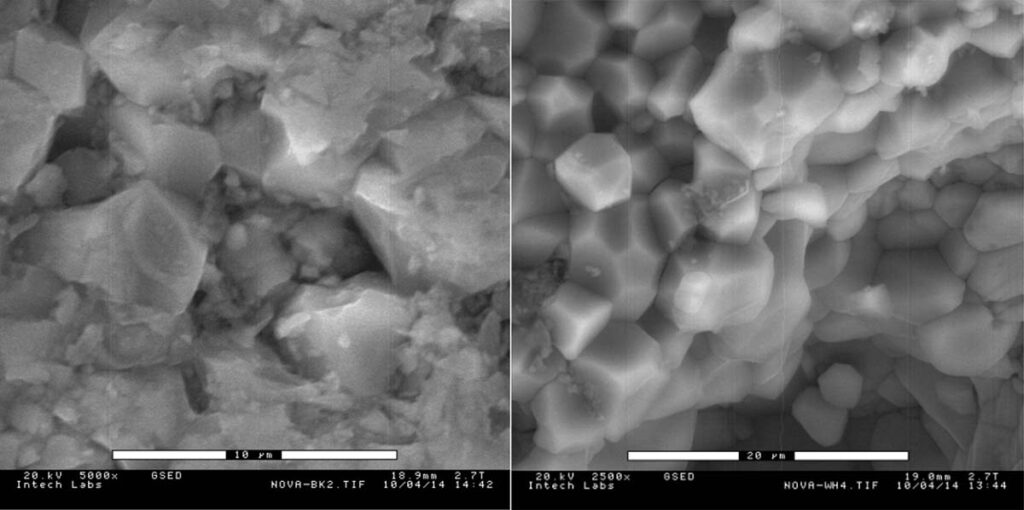
Novaculite is microcrystalline quartz in structure and while it can seem extremely smooth to the naked eye, at the microscopic level the formation’s cutting properties become evident. On the left is ultra-fine black stone at 5000x magnification and the right hard Arkansas stone at 2500x magnification. (Image courtesy of Dan’s Whetstones)

“He tried to buy replacements in local hardware stores, but none stocked them,” remembered A.G.’s wife and fellow hall-of-famer Goldie Russell, who runs the company today. “Having lived in Hot Springs, Arkansas, for a while when he was a teenager, A.G. knew that the only deposit of novaculite was in that area. A.G. went to Hot Springs and found someone who was cutting stones. He purchased stones and began selling them to local hardware stores.”

From there, A.G. bought ads in magazines, particularly Guns & Ammo and The American Rifleman. Soon enough, he became a supplier to Brownells, a major gun retailer, capitalizing on the mutual affinity of gun enthusiasts for knives. Together with the magazine effort and his own sales acumen, Russell re-energized the popularity of the Arkansas stone.

“The frequency of A.G.’s ad in magazines and then the offering of these stones in the A.G. Russell Catalog of Knives was very important in making these stones readily available nationwide through the late 1960s and the 1970s,” observed Goldie. “There is still a large quantity of the small stones that he had cut during those years in our inventory. That is how he started what became A.G. Russell Knives.”
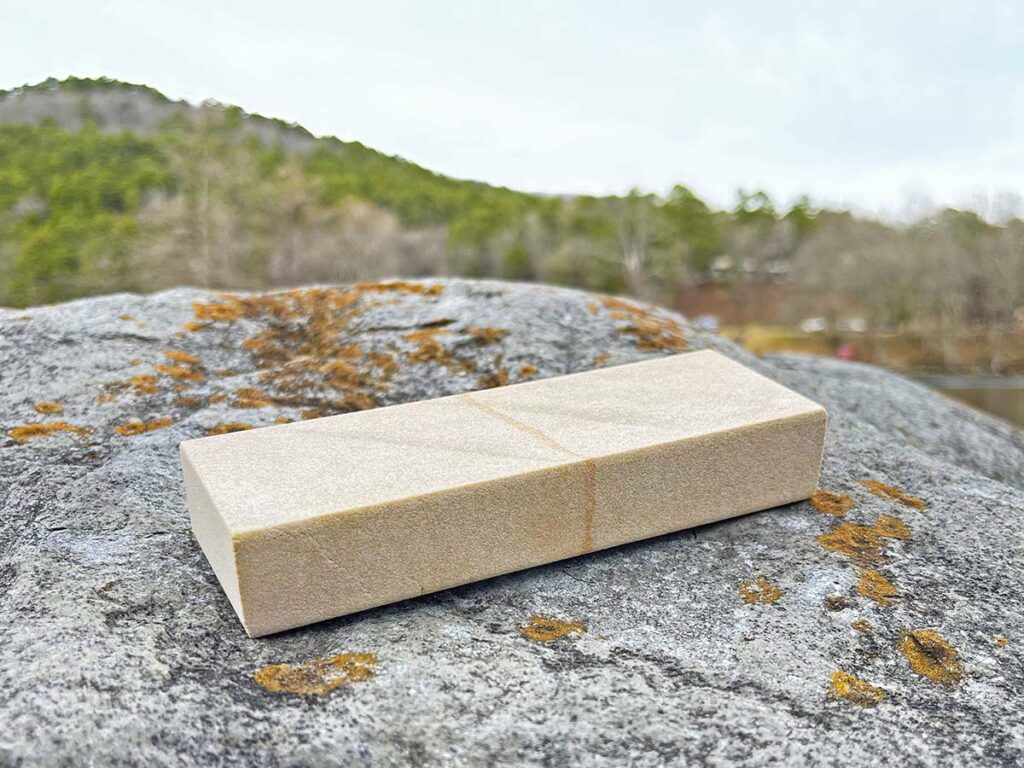
It’s a misnomer Arkansas stone’s hardness corresponds to its color. Similar colors can be noted in different grades, as the coloration is purely a matter of trace mineralization in the stones. (Image courtesy of Chris Stillian)

Novaculite stones, therefore, maintain their place in the practical and the historical aspects of the knife industry, and their relevance is not likely to fade. Those who are familiar with their capabilities remain loyal. They appreciate the investment of time and effort required to bring out that razor-sharp edge, and there is something timeless and reaffirming in the process.

Novaculite Grades

The stones themselves are available in four major grades. “Users should be aware that color is not the determining factor in grading novaculite,” explained Kirschman. “Some users have been defining whetstone grades by color, but the same colors may be seen in more than one grade. Color is caused by trace minerals that are dispersed through the rock during sedimentary formation more than 350 million years ago and subsequent geological activity.”

The major grades of novaculite include the following:

  • Soft Arkansas: The most popular all-purpose stone often used by wood carvers, sportsmen, butchers, commercial knife sharpeners and even housewives who desire keen, polished edge in a minimum of time.
  • Hard Arkansas: A fine grit stone good for everyday maintenance and popular among woodcrafters and the dental industry.
  • Translucent and True Hard Arkansas: An extra fine stone with a glassy feel and used in industrial applications requiring an extremely fine polish. It appears in a variety of colors.
  • Black Arkansas: Sometimes referred to as “surgical black” stone, the finest grade abrasive available today, delivering a mirror polish.     
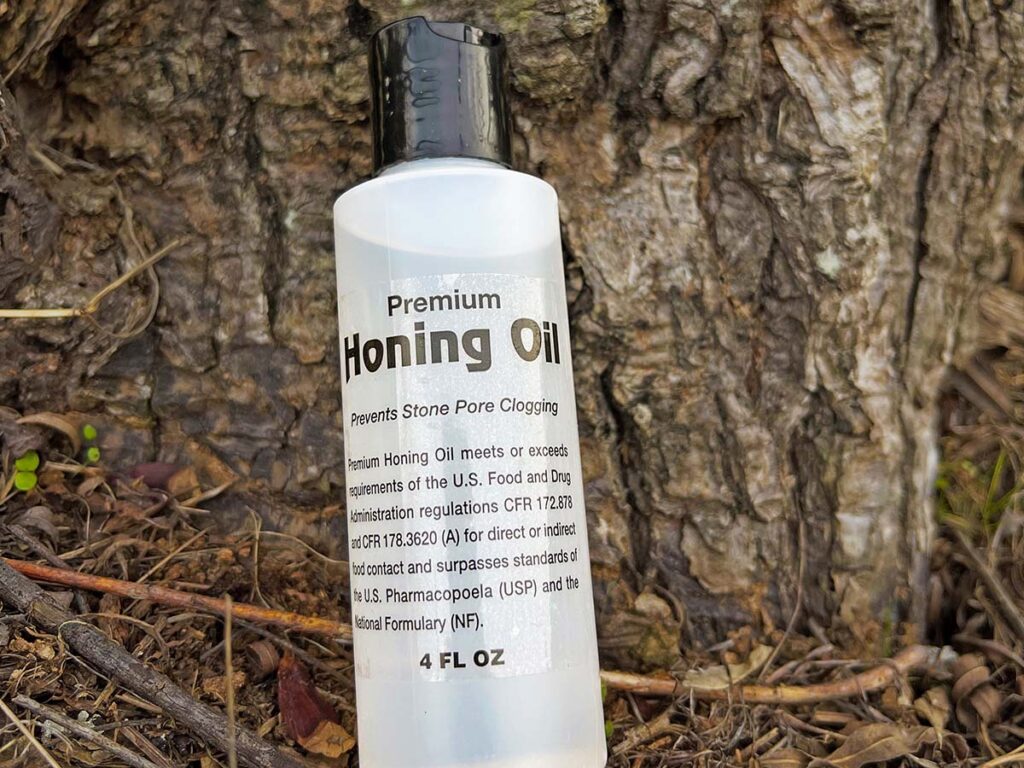
Among the most critical factors of using natural stones to sharpen knives is using honing oil. Oil keeps metal particles, or swarf, from clogging the stone’s natural pores, thus reducing its effectiveness. (Image courtesy of Chris Stillian)
The proper method of sharpening with a novaculite stone involves preparation and practice. “It’s an oil stone, so put a few drops of honing oil on it,” advised Stillian. “Hold a consistent angle, 15 to 20 degrees for most knives, use light to moderate pressure, and take smooth strokes. Start on soft or hard if the edge is dull, and finish on black or translucent. Raise a burr, then lighten pressure. Clean with soap or solvent to avoid glazing. Strop afterward for extra keenness, if you like.”

Those About To Rock

According to Chris, consistent purchasers and users include enthusiasts, woodworkers and chefs who “keep buying them for the feel, longevity and heritage. Synthetics rule high-volume work, but real Arkansas novaculite—especially the rare translucent and black grades—still sell at a premium to people who want the genuine article.”

Steve sees emerging interest as well. “The rising D.I.Y. (do it yourself) sharpening culture is a major driver,” he commented, “with the hobbyist segment now accounting for nearly 35 percent of total whetstone sales worldwide. Online tutorials and a deeper appreciation for craftsmanship have fueled this demand. Sustainability is a driver, as well. Modern consumers increasingly view natural stones as a “green” alternative to synthetics.

“Niche premium positioning, even while high-end market saturation is slowing growth in North America to about 4 percent, means natural stones remain a staple for professional chefs who prefer them for maintaining blade integrity,” Steve concluded. “And technological integration means that manufacturers are now developing beginner-friendly kits and instructional digital content to tap into 62 percent of home users who are interested in traditional sharpening but lack confidence in the technique.”

The future presents an atmosphere of coexistence among the Novaculite and synthetic options. The global whetstone market topped $457 million in value in 2024 and is expected to reach $677 million within eight years. Natural stone demand should stay steady, supported by its faithful and traditional users while welcoming explorers to these Ouachita wonders.

More On Sharpening:

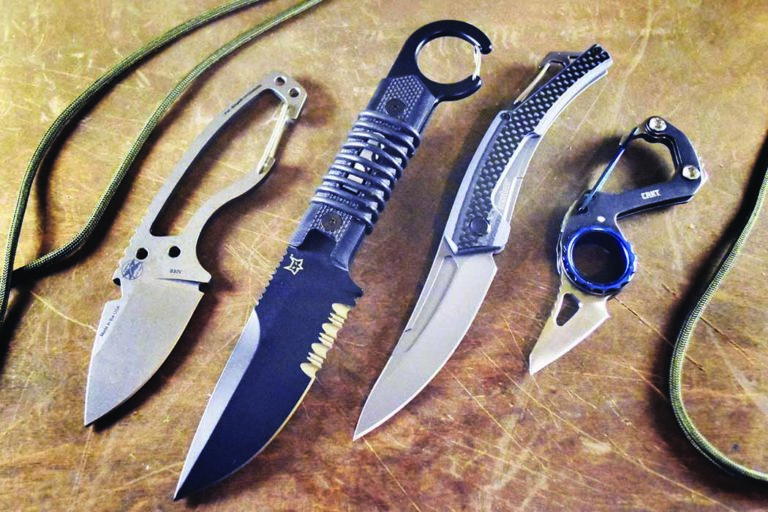
Best Carabiner Knife: Options That Hang Tough

The Carabiners Knife Offers A Cool, Handy Way To Carry Your Everyday Knife.

The carabiner is most often associated with mountain climbing and rooted on the German word karabiner-haken, which roughly translates in English as “spring hook.” Spyderco brought the concept of adding a carabiner to a knife to prominence with its first Snap-It folder, the BLADE Magazine 1993 Overall Knife of the Year®.

In the years since, the carabiner knife concept has popped its head out of the foxhole from time-to-time, with Spyderco adding models to its line and other manufacturers following suit.

Simply stated, adding a carabiner to a knife offers an alternative way of carry. It’s a great way for a climber, camper or hiker to keep a knife handy, but what about the average everyday user? Is there a place for a carabiner cutter in your endeavors?

CRKT Compano Sheepsfoot

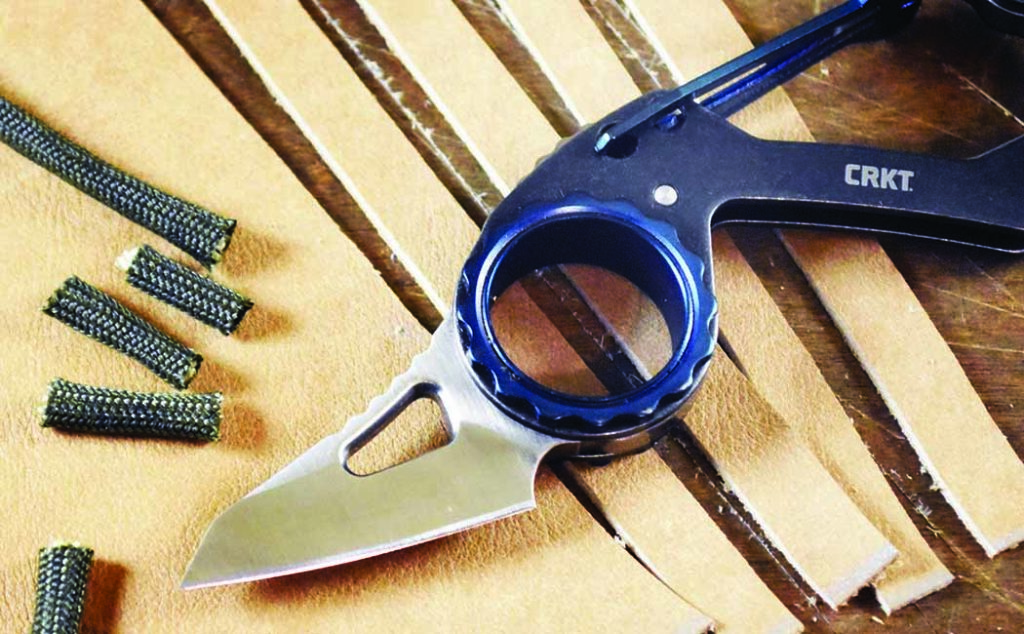
The Compano Sheepsfoot has a wicked-sharp blade that whipped through suede and paracord like butter. CRKT also offers the Compano in a drop-point version should you prefer a deeper-bellied blade.

The CRKT Compano Sheepsfoot is a sibling to the standard Compano drop-point model. Designed by Mike Bond of Honolulu, Hawaii, the Compano companions are designed as keychain knives with an edge. The folder’s cylindrical pivot is 1 inch in diameter—3/4 inch inside—with synthetic blue gear-like caps mounted to a stonewashed stainless-steel frame. The folder’s wicked little 1.44-inch blade opens by way of an oblong cutout and, interestingly, has a half-stop along the way. The handle has a generous-sized carabiner with a spring-loaded gate for capturing your key ring.

The svelte Compano Sheepsfoot can be clipped to a belt loop with no problem. The whole assemblage—Compano and keys, all on a keyring—can be carried loose in the pocket, too. I like the Compano not as a keychain knife but as a back-up, hideaway piece that can be clipped not just to a belt loop or toted loose in the pocket, but corded and worn as a neck knife as well.

Tests with the sheepsfoot blade were conclusive—the little rascal can cut! I laid out a flat of 4-inch suede and the blade sliced through it effortlessly. It liked paracord as well. In a self-defense situation with your index finger in the knife’s large pivot hole, the knife would be very difficult for a foe to dislodge. Regardless of how you plan to use this little mighty mite, I believe it would be money well spent.

CRKT COMPANO SHEEPSFOOT
Blade length: 1.44 inches
Blade steel: CPM S30V stainless
Blade pattern: Sheepsfoot
Handle material: Stonewashed stainless steel
Lock: Non-locking slip joint
Carry: Carabiner or in pocket
Special features: Large finger-hole pivot
Weight: 2.2 ounces
Closed length: 3.25 inches
Country of origin: China
MSRP: $44

Kershaw Reverb XL

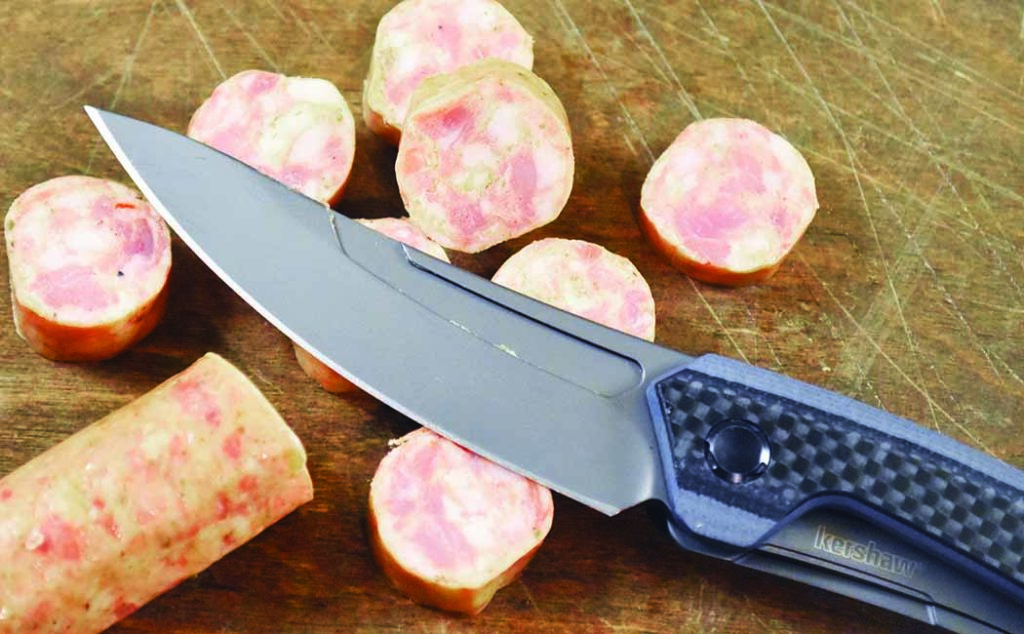
The Kershaw Reverb XL has a trailing-point blade the author found ideally geared for slicing. Notice there is no thumb stub or flipper tab for opening, with Kershaw opting instead for a finger groove to keep the Reverb snag-proof.

Kershaw makes no bones about the Reverb XL—it is made for the great outdoors. The slim 1-inch carabiner on the spine of the handle butt attaches to gear or a belt loop. A 1.5-inch pocket clip on the back handle slab can be used alternately. The Reverb XL has a sweeping trailing point or Persian-style blade with a gray finish. The blade thumbs open via a groove that follows the spine on both sides—no thumb studs or a flipper tab make it snag proof. The front slab is an attractive composite of black carbon fiber and blue G-10; the back slab is gray stainless with an interesting framelock cut completely inside the slab itself. The lock is accessed from the front slab via a cutout that exposes the lock spring.
The XL’s lock spring takes a little getting used to, but, once you get it, you get it. The knife’s extremely lightweight and won’t be a burden on any hiker, camper or climber. This is not a workhorse knife per se, rather an assistant for things like light meal prep and cutting rope or paracord. I tested it cutting sausage, paracord and 3/8-inch rappelling rope, all on a flat wood surface. The thin blade slices very well. Tough projects will leave you wanting more blade, but that’s not this knife’s design purpose. Keep it in its lane and it will serve you well.
KERSHAW REVERB XL
Blade steel: 8Cr13MoV stainless
Blade length: 3 inches
Blade pattern: Trailing point
Handle material: Carbon fiber, G-10, stainless steel
Lock: Framelock
Carry: Carabiner or blade-tip-up pocket clip
Special features: Framelock, groove blade opener
Weight: 2.31 ounces
Closed length: 4.25 inches
Country of origin: China
MSRP: $53.95

DPx HEAT Hiker Stonewashed

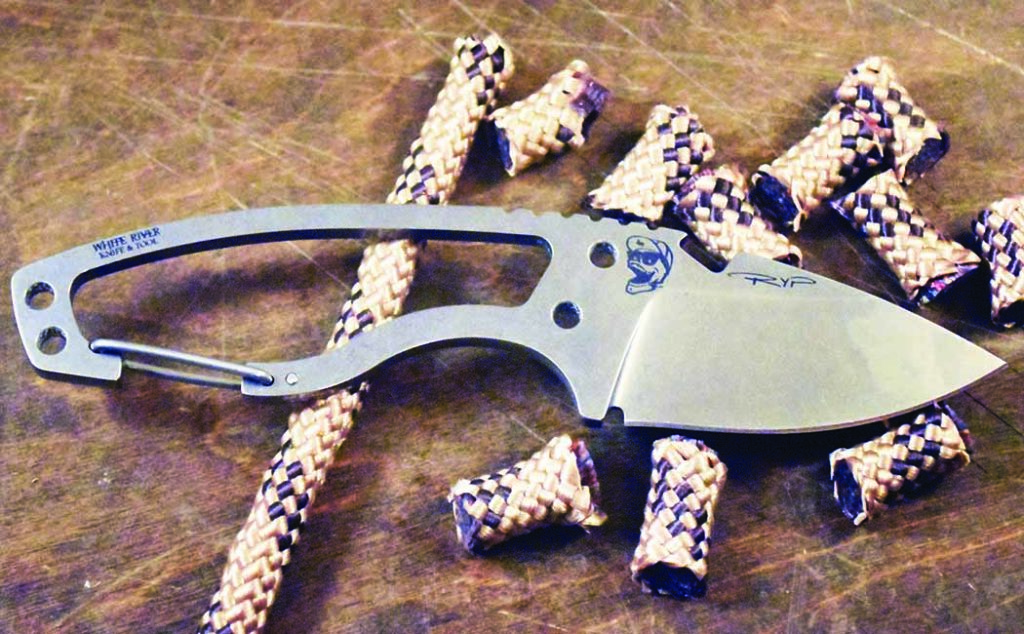
The author found the DPx Gear HEAT Hiker brutish in both looks and action, whipping through this 3/8-inch rappelling rope with nice, clean cuts from the CPM S30V stainless steel blade. The HEAT Hiker has by far the largest, most accommodating carabiner of the review knives.

The DPx HEAT Hiker Stonewashed is an upscale version of the original DPx versions released in 2014. With White River Knife & Tool handling the manufacturing chores, DPx Gear ordered these up with premium CPM S30V stainless steel blades in a stonewashed finish. Other than that, all the knife’s popular trademark features—skeletonized carabiner handle, cap lifter on the lower blade spine and nifty Kydex breakaway neck sheath—are preserved for HEAT Hiker fans to enjoy. The Hiker blade is built on 0.16-inch-thick steel so you can bet it’s plenty stout, while still lightweight enough to make it a breeze to carry.

The curves on the integral handle fit the hand well, and cutting through 3/8-inch rappelling rope was as easy as eating puffed wheat for breakfast. The knife’s short blade will shave wood for fire starter and is limited only by its length. An area the Hiker truly excels in is its carry options. The gaping carabiner allows it to easily hook onto belt loops or gear, and its thin cross-section allows it to lay flat against the chest when worn as a neck knife. Can you say EDC? Designed by adventurist/journalist Robert Young Pelton, aka RYP, you can tell the HEAT Hiker had a lot of thought and experience behind its development.

DPx HEAT HIKER
Blade steel: CPM S30V stainless
Blade length: 2.5 inches
Blade type: Drop point
Handle material: Skeletonized steel
Carry: Carabiner or Kydex neck sheath
Special features: Bottle opener/breakaway sheath
Weight: 2.15 ounces
Overall length: 6.25 inches
Country of origin: USA
MSRP: $125

Fox Knives Ferox

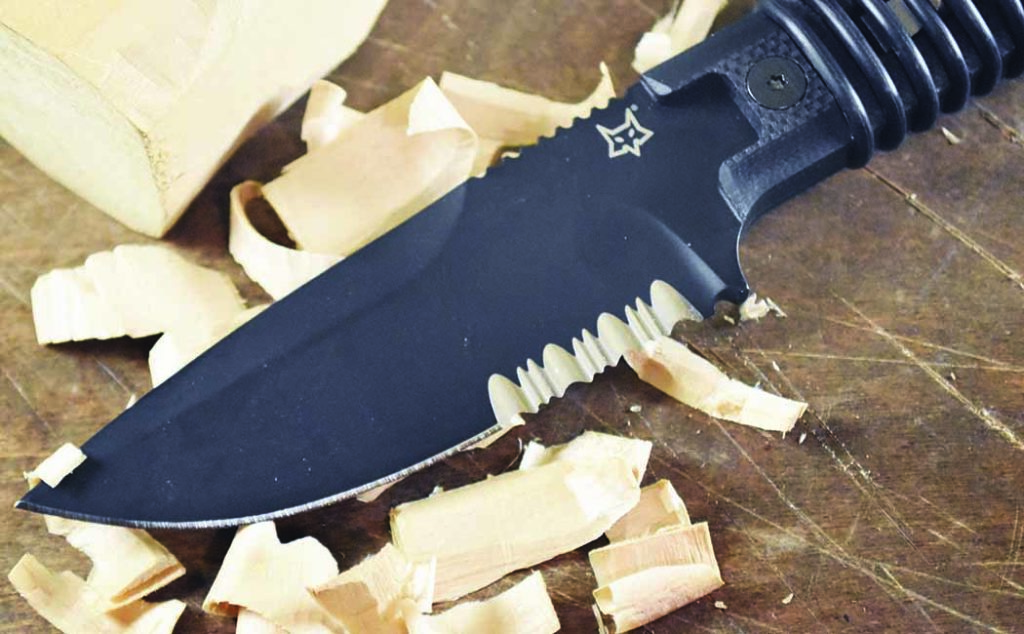
Using the plain-edge portion, the 3.54-inch Bohler N690 stainless steel blade of the Fox Knives Ferox serves up some nice shavings from a block of wood.

The Fox Knives Ferox carabiner knife brings a couple of extra tools to the table, namely a set of Phillips and flat-head bit drivers along with a 2-inch extension. Designer Tommaso Rumici saw a need to add the two components because knife users often get caught flat-footed by not having screwdrivers on hand and end up using the tips of their knife blades—which is not only hazardous to the knife but can cause harm to the user as well.

The Ferox is a black-coated, mid-sized integral straight knife with a blade available in either a plain or partially serrated edge. The handle butt houses a round finger-sized carabiner 1 inch in inside diameter with a .5-inch spring gate. The scales are black G-10, grooved in the middle to house the Phillips and flat-head bits on either side. There are eight O-rings on the handle that serve to trap the bits until ready to use, and also to add purchase. The Ferox includes a black Kydex sheath with a Tek-Lok belt attachment.

There’s a lot to unpack here. The Ferox and its sheath weigh 9 ounces, which, in my opinion, is a little too much for hanging off a belt loop, though ideal for gear with a decent size strap or metal ring. The knife is very well made, and the blade sliced through 3/8-inch rappelling rope and took off firewood shavings from a wood block effortlessly. This is a heavy-duty knife for its size and the blade steel is praiseworthy.

The bit driver is an interesting addition. The drive extension must be kept track of separately as there is no place for it to attach to the sheath. While I think the bit driver is a handy addition—and it does work—I like the knife more for its other characteristics: it’s built like a tank, has excellent steel and cuts like a house afire. I’d opt for the plain-edge version to get even more slice out of the superb blade.

FOX KNIVES FEROX
Designer: Tommaso Rumici
Blade steel: Bohler N690 stainless
Blade pattern: Drop point
Blade length: 3.54 inches
Handle material: Black G-10
Carry: Carabiner or sheath
Special features: Integral design, flat-head and Phillips driver bits
Weight: 5.29 ounces
Overall length: 7.27 inches
Country of origin: Italy
MSRP: $299

Check out More of Our Buyer’s Guides

2024 BLADE Show West Custom Knife Award Winners

See Who Took Top Honors In Salt Lake City For The 2024 BLADE Show West Custom Knife Awards.

The 2024 BLADE Show West, held October 4-5, once again brought the knife community together at the Salt Palace Convention Center in Salt Lake City. Now in its third year in Utah, the show attracted custom makers, manufacturers, and collectors from across the U.S. and beyond.

One of the highlights was the Custom Knife Awards, where makers competed in nine categories. A panel of anonymous industry experts carefully judged each entry, evaluating factors like design, creativity, materials, utility, and craftsmanship. The competition was fierce, showcasing a wide range of impressive talent and innovation.


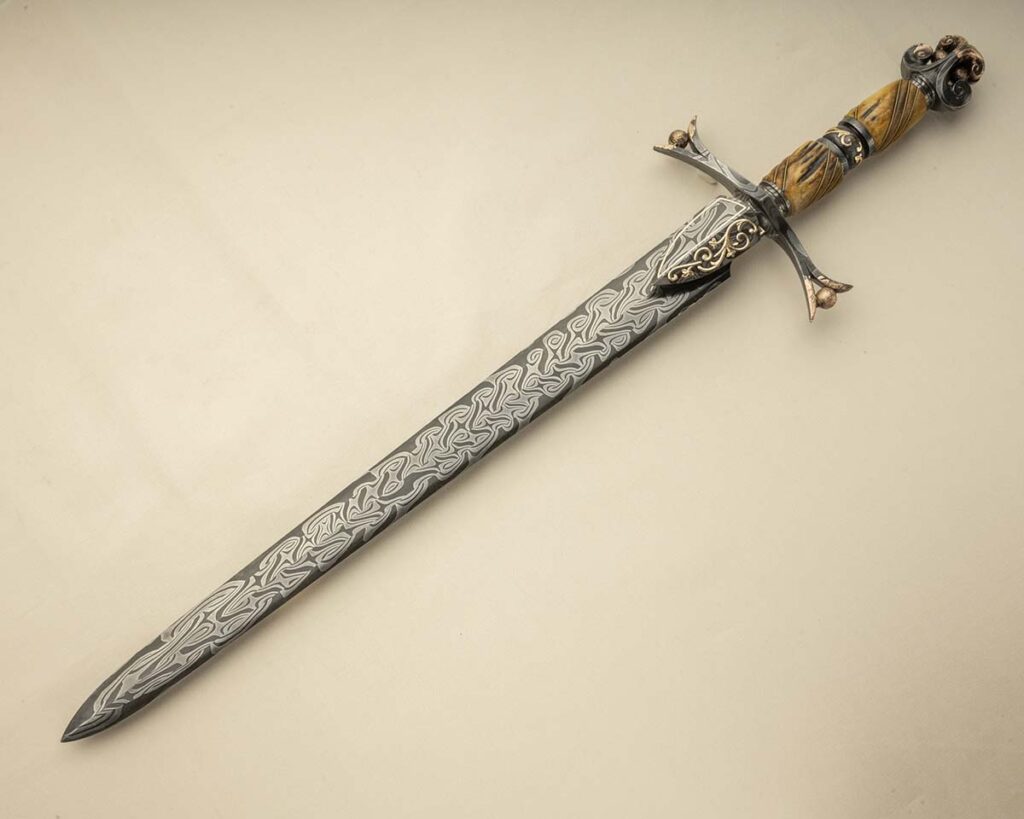
Best Fixed Blade And Best In Show: Pearce Richardson

Best Fixed Blade And Best In Show: Pearce Richardson
Photo: J. Frasier Photography

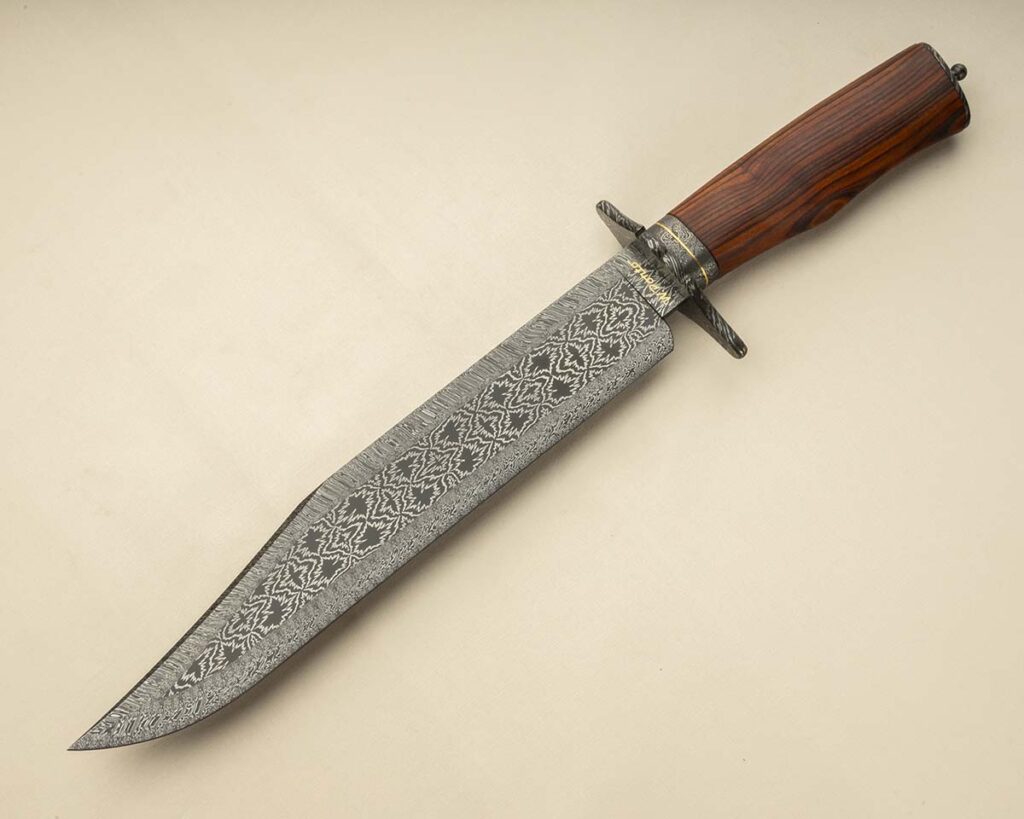
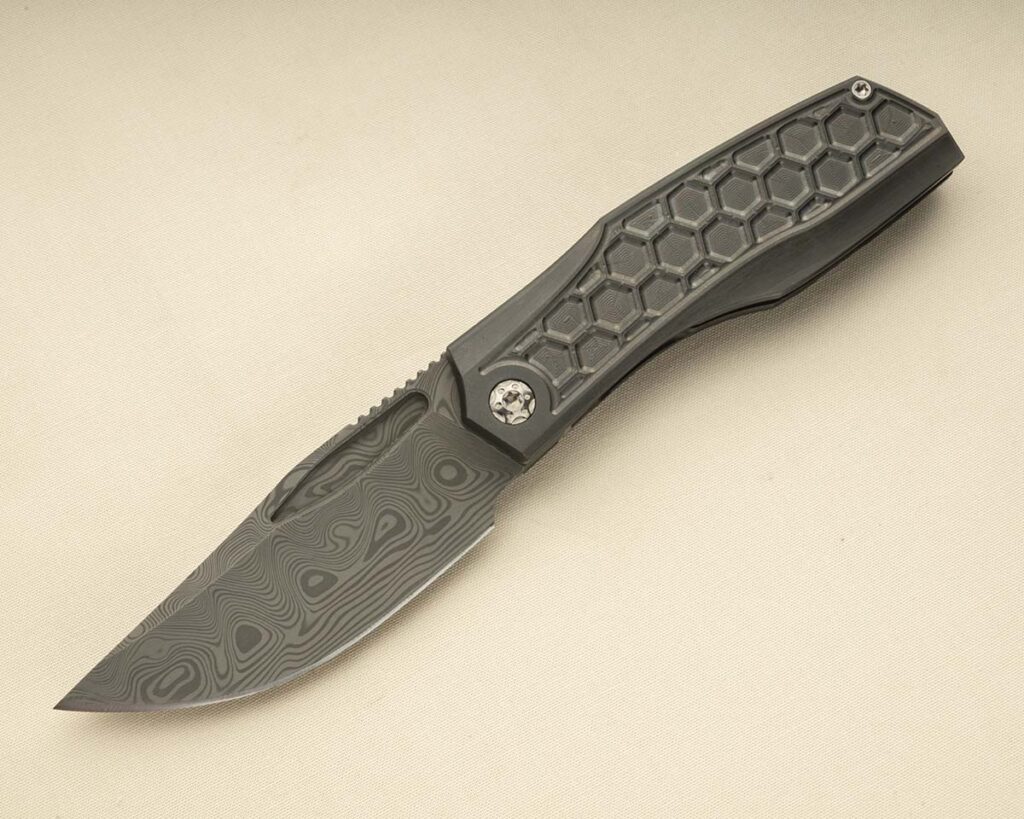
Best Damascus: William Porto

Best Damascus: William Porto
Photo: J. Frasier Photography

Best Folder: Evan Nicolaides

Best Folder: Evan Nicolaides
Photo: J. Frasier Photography

Best Hunter: James Rodebaugh

Best Hunter: James Rodebaugh
Photo: J. Frasier Photography

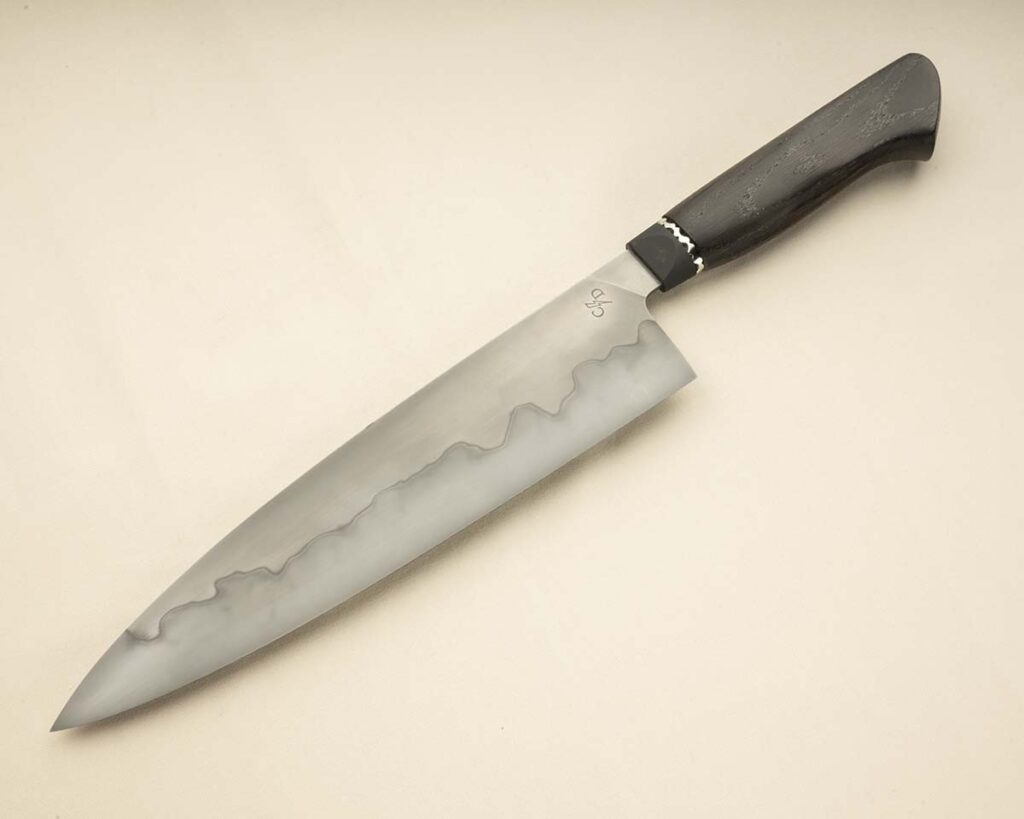
Best Kitchen Knife: Corey Dunlap

Best Kitchen Knife: Corey Dunlap
Photo: J. Frasier Photography

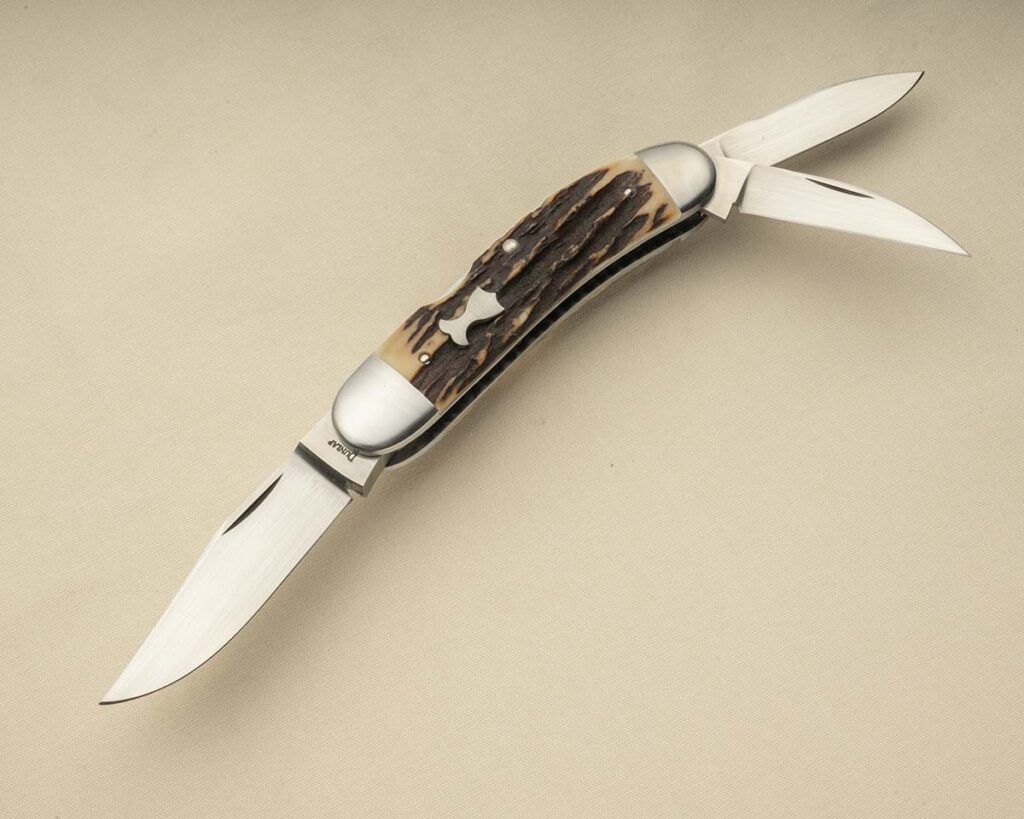
Best Slip Joint: Jim Dunlap

Best Slip Joint: Jim Dunlap
Photo: J. Frasier Photography

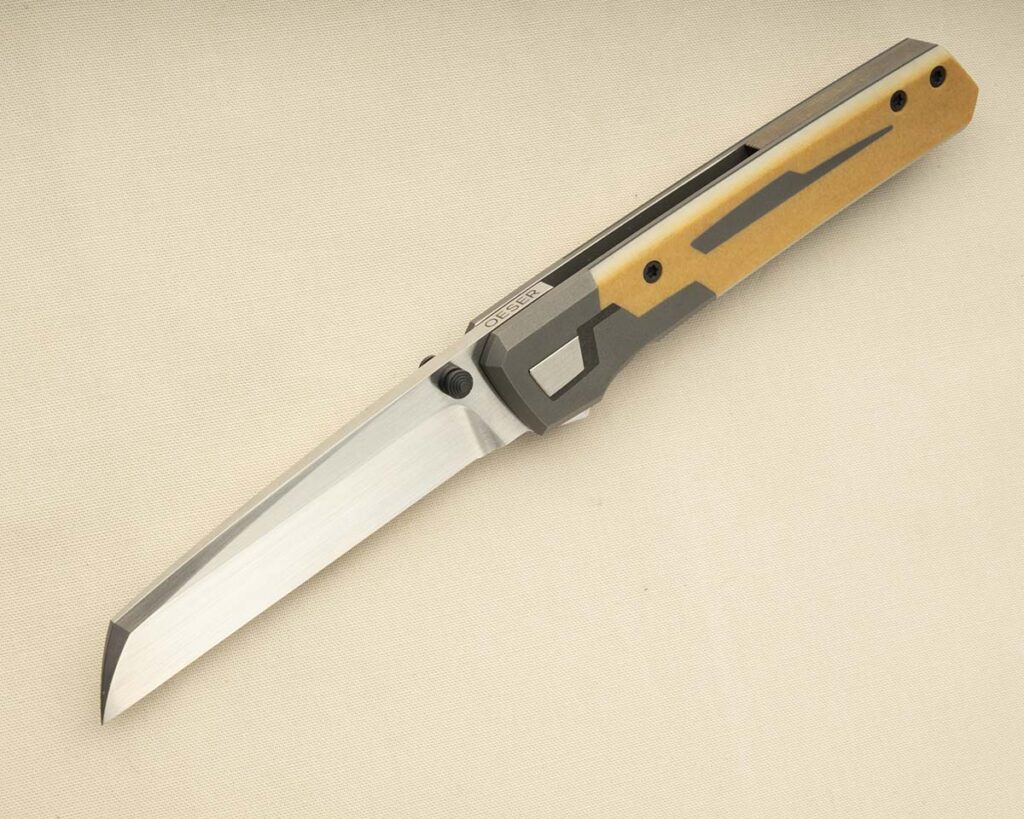
Best M.A.C.K. Contender: Jared Oeser

Best M.A.C.K. Contender: Jared Oeser
Photo: J. Frasier Photography

Best M.A.C.K.: Princeton Wong

Best M.A.C.K.: Princeton Wong
Photo: J. Frasier Photography

Best Of The Rest: Seth Lopez

Best Of The Rest: Seth Lopez
Photo: J. Frasier Photography

Past Custom Knife Award Winners:

Steve Shackleford: It’s Been a Whole Buncha Fun!

After more than 40 years at the helm, “Mr. Blade” hangs it up.

It had to happen sometime and that time is now. After over 40 years of writing for and editing BLADE® Magazine, it’s time for me to hang it up as BLADE editor.

If you had told me when BLADE Magazine Cutlery Hall-of-Fame® member Bruce Voyles hired me in 1985 that BLADE would be the focus of my work life for the following four decades, I might’ve said, “Yeah, and Donald Trump will be president one day, too.” However, working for BLADE has been a blessing to my family and me, and I am most thankful for the privilege of having done so.

Why retire now? Last July, it hit me; at 72 I need to spend more time with my beautiful wife Susan and others who I love before I start leaking oil. So, my boss, Caribou Group Media Publisher Jim Schlender, and the rest of the BLADE brain trust started planning for the future of the World’s No. 1 Knife Publication. The result: Elwood “Woody” Shelton, who has been doing a standout job as our online editor, will be my replacement as BLADE editor—and we think he will be a most accomplished one.

For the past several years Woody also has coordinated the BLADE Magazine Knife-of-the-Year® judging at the BLADE Show, as well as the factory knife judging at BLADE Show Texas and BLADE Show West. In the process and along with his online duties, he has become well-acquainted with the knife industry and those who drive it. Besides, he is captivated by knives like the rest of us.

As for me, I will continue as a consultant for BLADE and chairman of the Cutlery Hall of Fame, coordinating the nomination and selection process of new inductees and serving as emcee at the annual Hall of Fame induction ceremony during the BLADE Show, this year June 5-7 at the newly named Cobb Convention Center-Atlanta (formerly the Cobb Galleria Centre). As a result, I hope to see some of y’all there. I also hope to write on occasion for BLADE, as well as participate in other related projects.

What will I miss? Much more than I can cover here but the simple pleasure of opening each issue of BLADE I edited after it hits my mailbox will be one. Others will be all the great knives I have handled and written about and the thousands of fascinating folks I have met over the decades. Included among the latter are those knifemakers and their knives that I’ve helped shed light on by publicizing them in BLADE.

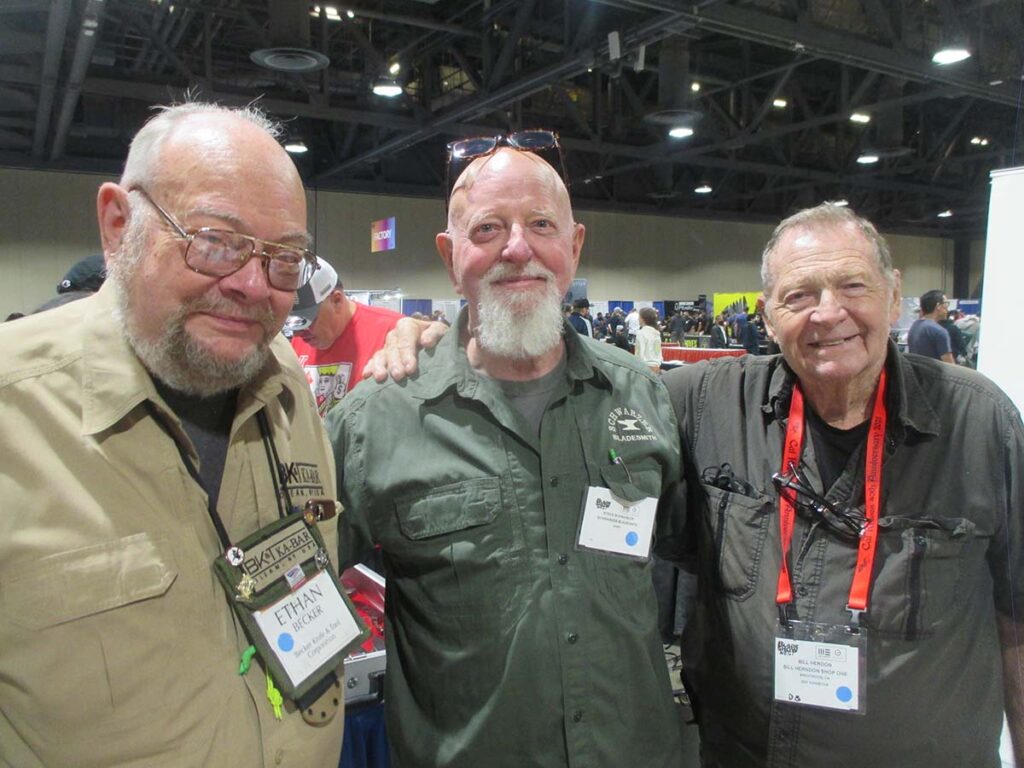
  Among many knife VIPs the author has been privileged to know over the years include, from left, Ethan Becker of Becker Knife & Tool, BLADE Magazine Cutlery Hall-of-Fame® member Steve Schwarzer and custom knifemaker Bill Herndon.
Among many knife VIPs the author has been privileged to know over the years include, from left, Ethan Becker of Becker Knife & Tool, BLADE Magazine Cutlery Hall-of-Fame® member Steve Schwarzer and custom knifemaker Bill Herndon.

The highlights for me have been many. A few include visiting the Boker manufactory in Solingen, Germany, and seeing the wonders of nearby Cologne with Ziggy Felix, wife of Boker’s Ernst Felix, as my tour guide; exploring the Alamo with Cutlery Hall of Famers B. R. Hughes and Jim Batson; spending hours interviewing Cutlery Hall of Famer Bob Loveless in his Riverside shop; and my inductions into both the ABS and BLADE Magazine Cutlery Halls of Fame.

In addition to Batson, Hughes and Loveless, four other unforgettable Hall of Famers who molded the industry by the sheer power of their work ethic and personalities and who were my privilege to know include: A.G. Russell, who influenced the collecting community and custom and factory knife industries like no other; Bill Moran, the father of modern damascus and the ABS—some resumé, eh?; Wayne Goddard and his ability to explain details about knives, how to make them, steels and more so that even I could understand them; Frank Centofante guiding the Guild so successfully while simultaneously providing a constant stream of one-liners; the list goes on. Oh, and Ed Fowler, his sheep-horn handles, lifelong search for Excalibur, his dogs and pet rattlesnakes, etc. Need I say more?

I will miss them and many more, including having the lasting honor and satisfaction of helping in providing you with the world’s best knife magazine for so many years. See you down the road and, in the immortal words of the Reverend Captain Samuel Clayton (Ward Bond) in The Searchers, “Watch that knife!”

More About And By Steve Shackleford:

Review: Bare Bones Buffalo Skinner

Bob Dozier’s Bare Bones Buffalo Skinner is sharp—and comfy, too!

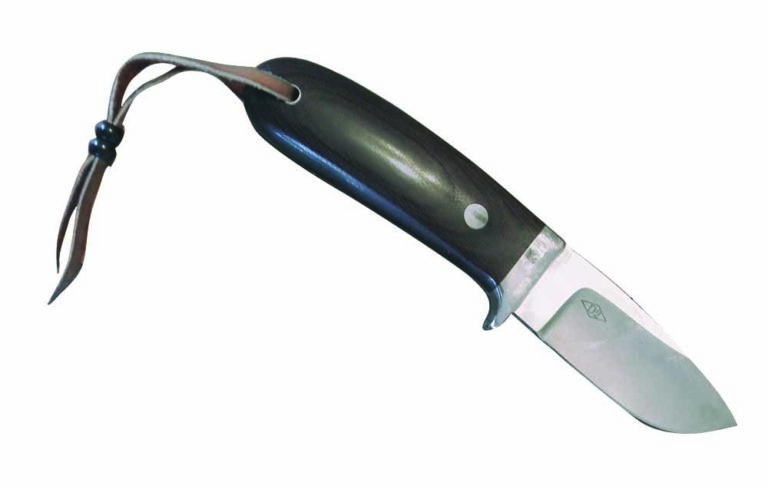
There’s nothing quite like holding a great-feeling knife that makes you want to cut something. Bob Dozier has been making custom knives to be used for over half a century and understands the importance of two major things: comfortable handles and sharp blades. They still have to cut and perform to be carried daily.

Let’s start cutting with the Bare Bones Buffalo Skinner.

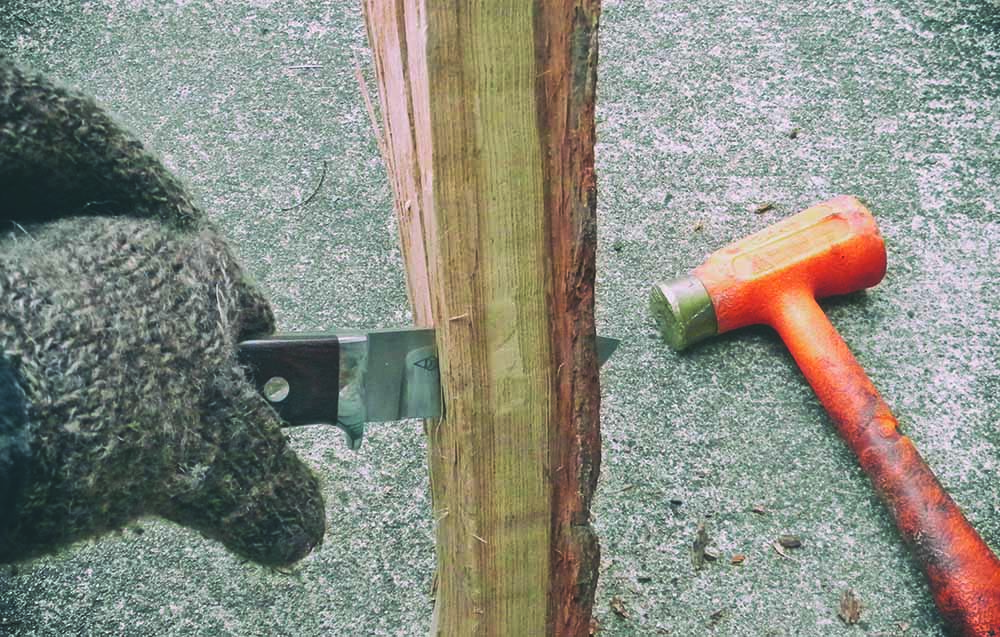
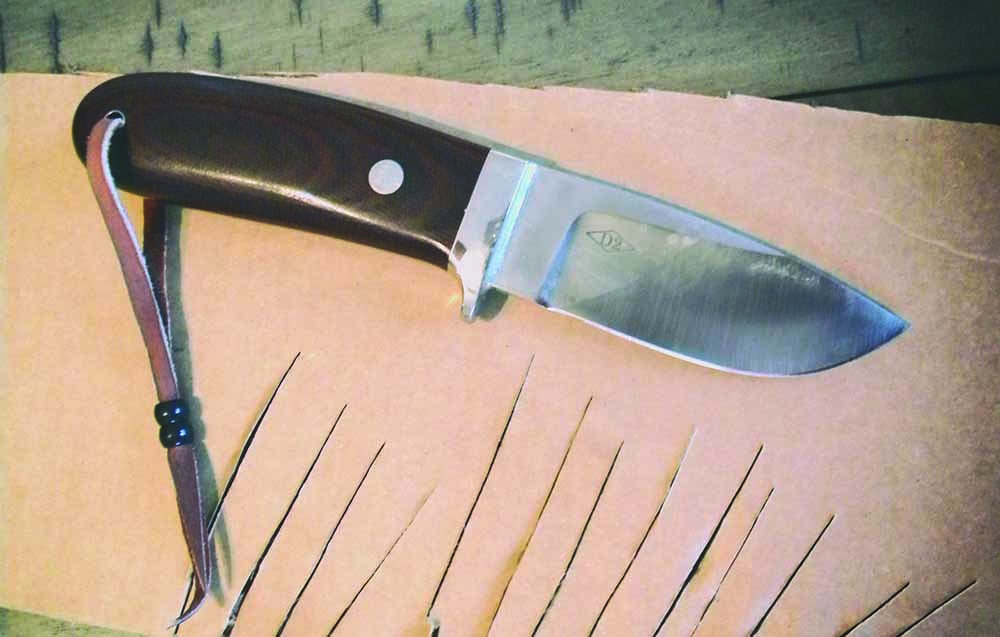
Using a dead-blow hammer, the author batonned the skinner into and through thin kindling. The knife proved a solid splitter. No damage occurred to the edge.

The quickest check to see if the knife has a sharp edge is to slice paper. You probably know by now that I use 20-pound bond copy paper for the job. The Bare Bones aggressively sliced into the paper using the knife’s own weight. The skinner is very controllable in use. The high hollow grind slid through the paper.

Moving on to single-walled cardboard for slicing, the aggressiveness continued. You could hear every cut made—the Bare Bones is a very loud slicer. I didn’t have any hang-ups during the test, just full, noisy cuts. The handle shape made controlling the cuts easy.

The knife performed aggressively in slicing single-walled cardboard. The handle shape made controlling cuts easy.

Next up: 8-ounce leather. This is where the Bare Bones was sweet. It zipped through the leather like it was cutting the 20-pound bond paper—just louder. It was super aggressive in slicing the medium, with hardly any resistance. I would love trying the Bare Bones on field dressing whitetail deer. Maybe come fall …

OLD-SCHOOL KINDLE

On to harder material. It was February, and I like to keep a supply of kindling and fire sticks to light a blaze faster. The Bare Bones made tight curlicues in the old pine. The wide blade and high grind worked out great for curling the wood. The handle shape excelled at controlling depth of cut. The single guard protected my fingers from getting splinters. Dozier’s knife embodies top-notch work.

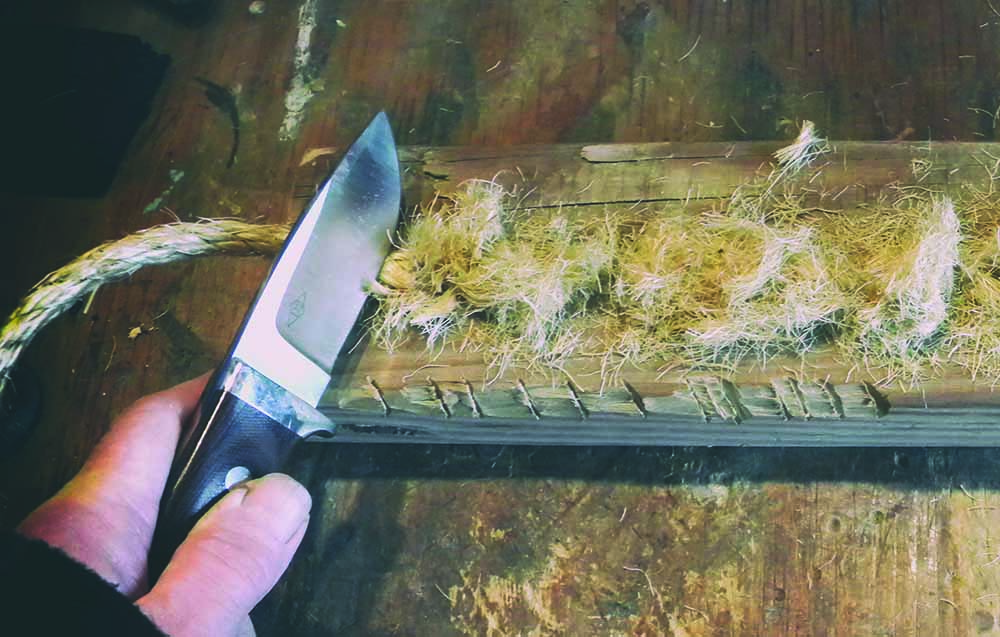
The Bare Bones crunched to 225 cuts. The author stopped at 225, as he didn’t want to risk slicing a finger.

It was time to make some thin kindling. Using a dead-blow hammer, I batonned the skinner into and through the wood. The knife’s solid overall construction prevented vibrations to my hand. The skinner proved a solid splitter. No damage occurred to the edge.

I had to warm up my fingers for the rope cutting. With no heat in my garage and the temperature at 17 degrees, I separated the test into 25 cuts per warm up. The Bare Bones crunched to 225 cuts. As I used the push method, it kept cutting. I stopped at 225, as I didn’t want to risk slicing a finger.

CHANGES

I might add some grooves to enhance grip.

OVERALL

This knife is a beast in the cutting arena. The comfortable handle made control easy. This knife is excellently made and perfect for the outdoors or hunting.

Bare bones Buffalo Skinner
Maker: Bob Dozier
Cutting edge length: 3.25”
Blade material: D2 tool steel
Blade grind: High hollow
Blade thickness (at the thickest): .25″
Scales: Brown canvas Micarta®
Guard: 416 stainless steel
Extras: Tapered tang; thong
Weight: 8 ozs. (123/8 ozs. w/sheath)
Overall length: 8”
Sheath: 8-ounce leather, pouch style
Maker’s list price: $477

Best Nakiri Knife: What To Know About This Japanese Kitchen Classic

Have vegetables that need knocked down to size? Get chopping with the Nakiri.

The Japanese people have historically produced excellent knives specialized for dedicated tasks. The culture of the region did not put a heavy emphasis on speed and slop, but rather precision and the utmost perfection of a given craft. Following this ethos came a specialized knife dedicated to culinary artistry.

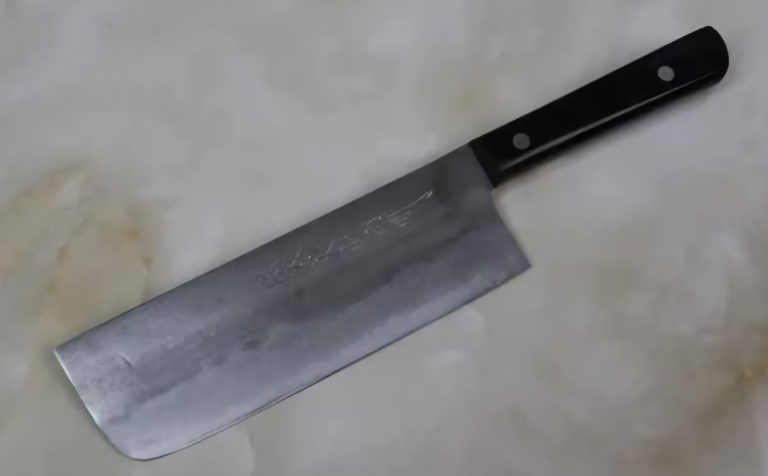
The Nakiri (also Nakiri Bōchō) was developed specially for cutting vegetable and not much of anything else. The blades on these knives are thin, sharp and, surprisingly, not as ancient as we understand many Japanese blades.

In this article, we’ll explore the history of this dedicated tool, its modern uses and look as some of the best nakiri available. So, chop, chop… let’s get cooking.

History Of The Nakiri

Many blade styles we associate with Feudal Japan came into use after Western contact was established. The Nakiri was one such product and it came at a time of significant modernization in the country.

Traditional feudal culture in Japan would come to an end over the course of the 1800s, culminating in a tremendous shift from a medieval society to a completely industrialized nation. These culinary tools became a feature of Japanese blade makers, and eventually, they arrived at a point of heavy specialization.

The Nakiri is a vegetable knife, plain and simple, in fact, the name translates to ‘knife for cutting greens’. It was made over time to excel at this one task. As a result, it isn’t ideal for much else.

Despite its round, tipless shape it is not a cleaver. The blades on these knives are very thin, sometimes to the point of being fragile. They should not be used against bone or even used on meat for the most part. The entire concept is that the Nakiri makes clean cuts in veggies, as opposed to the more coarse, crushing cuts found on chef knives.

Nakiri Vs Western Chef’s Knife

Looking at the Nakiri next to common Western chef knives isn’t exactly a fair comparison. The chef knife is meant as a multipurpose blade that cuts virtually anything in a kitchen without missing a beat.

Most Western chef knives are derived from our own historical camp knives, seax blades, and Central European ‘messer’ knives. These are structurally far more robust and usually taper down to a fine tip with a thicker spine at the handle. Not so with the Nakiri.

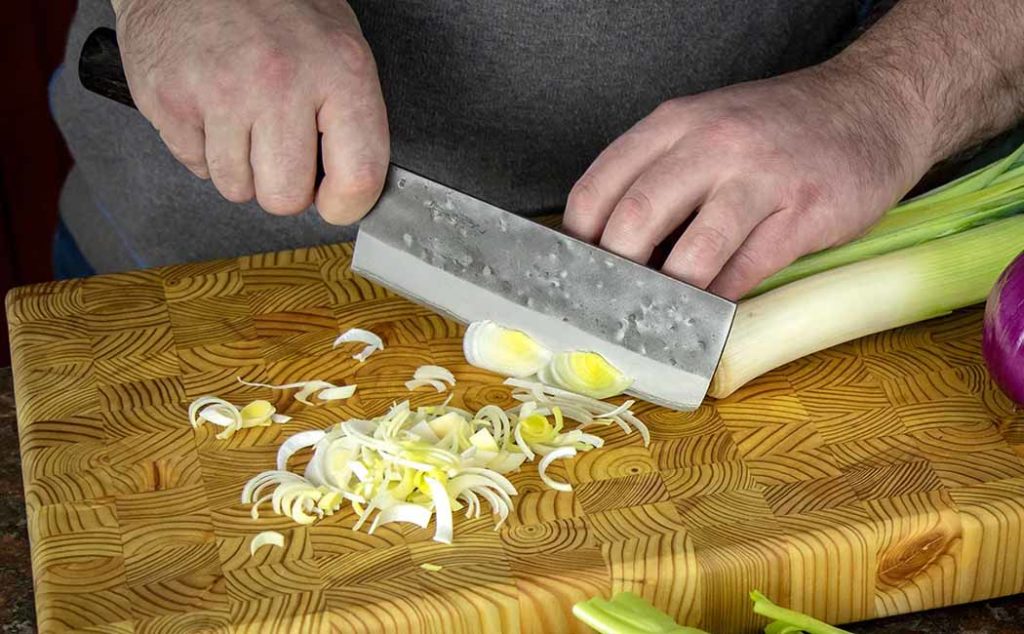
Its shape is slim and has a straight edge, meaning in one motion it can be made flat against the cutting board. The height of the blade from the spine to the edge is also greater, enabling the hand to come to rest above the cutting surface. Contrast this to the Western chef knife, which works in a back-and-forth rocking motion. The Western chef knife is in theory not as efficient for motion, but how much this matters is subjective to the user.

The Nakiri Edge

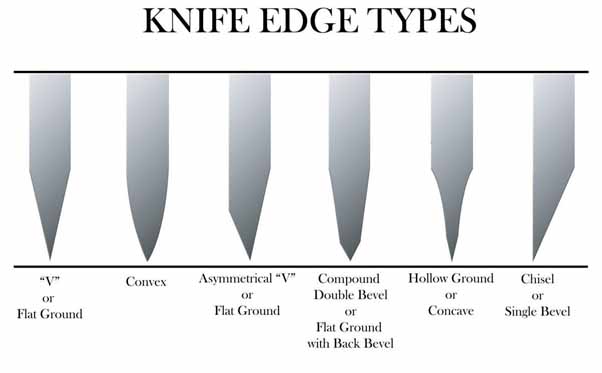
While the knife is commonly available on the commercial market with a standard, double-beveled edge, many traditional Nakiri boast a chisel-beveled. In short, as previously mentioned, one side of the blade is completely flat. Depending on if you are right- or left-handed determines which side your blade is beveled. Advanced users can take advantage of this feature for enhanced cosmetic presentation of food, such as spiral peeling, ornamental julienned strips, and more.

Advantages Of The Nakiri

Honestly, one-on-one against a standard chef knife in your own kitchen you may not notice the difference at of an Nakiri. The exception being, in the overall style of your food presentation. Furthermore, if cooking is part of your livelihood, you will like the shape, style, and ease of use of the Nakiri. It is a tool that can be used to step up the cosmetic end of delicacies

In short, if you spend time with this knife style in a professional setting, where aesthetics are equal to edibility, you might find the Nakiri an excellent companion. Home chef’s, on the other hand, might discover there cuisine doesn’t gain much with one at hand.

Disadvantages Of The Nakiri

The elephant in the room, you need more knives to accomplish a given task if you use a Nakiri for its intended role. This doesn’t jib with many pro or amateur chefs in the west.

Most Western cooks appreciate the flexibility and ease of the Western-style chef’s knife, a dedicated vegetable chopper seems redundant. In turn, it’s a great leap to investing in a specialized tool such as a Nakiri.

Best Nakiri Options At Every Price Point

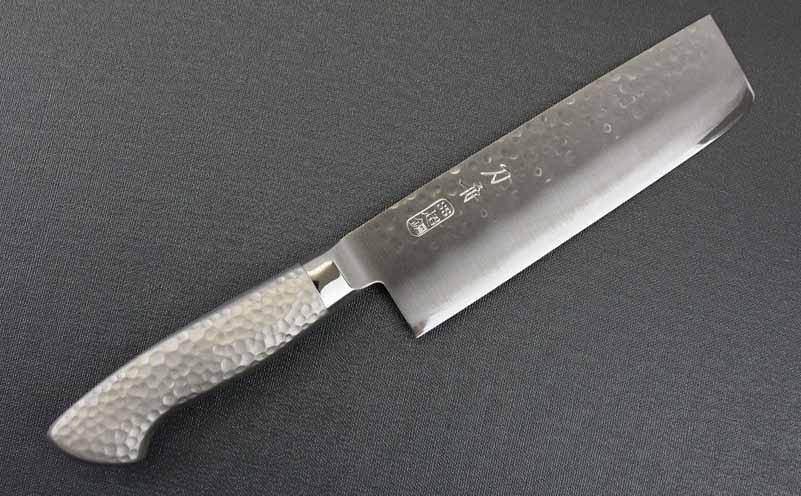
Toshu Hammer Finished

Toshu Hammer Forged

Made in Japan, the Toshu knife is made to work without compromise. The knife is not traditionally constructed, rather it is made of all stainless steel and is dishwasher safe. This is an important consideration for the home chef short on time. The knife features the beveled “Edo-Togi” grind, meaning that it isn’t double-beveled like most Western knives. It is very easy to keep clean, and sharp choice for everyday vegetable chopping vegetables duty.

MSRP: $213

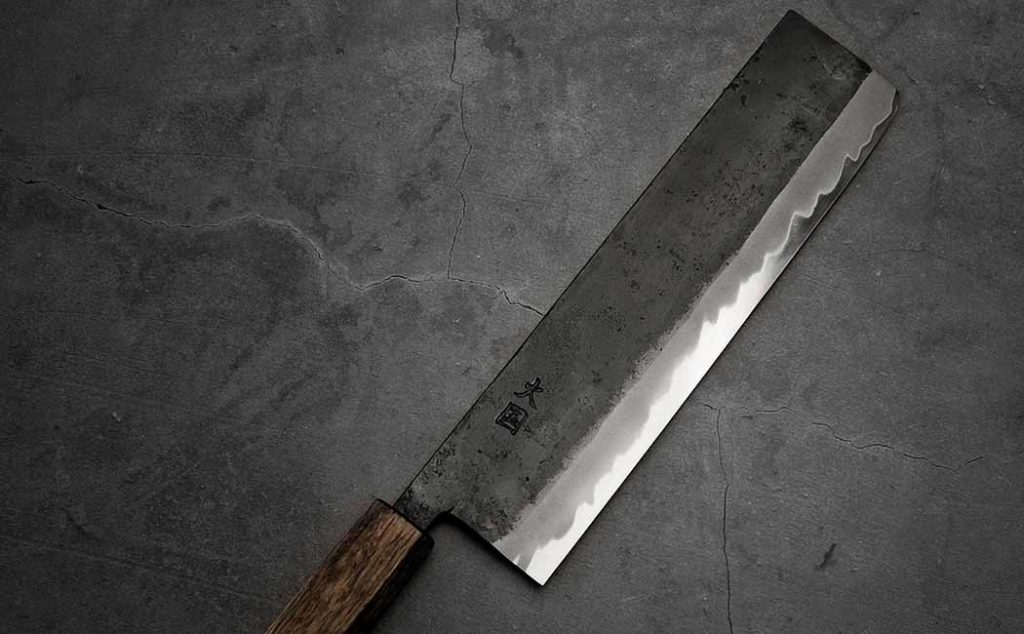
Hinokuni Shirogami #1 Tall

Hinokuni Shirogami #1 Tall

A custom Nakiri from a smaller maker, the Tall Nakiri might be the perfect large-format vegetable knife. If you are making salads, working on squash or melons, or trying to dice up a large quantity of veggies, this knife will knock them down to size. The knife is a labor of love, the maker of this brand is a young blacksmith that is well-versed in traditional methods. Interestingly, the knife is made of an uncommon (in America) type of carbon steel, Shirogami #1. This is a blade steel favored by the best Japanese smiths. However, neglected it can easily corrode. Like many traditional items, regular care is necessary to maintained it, but do so and the blade should last a lifetime.

MSRP: $180

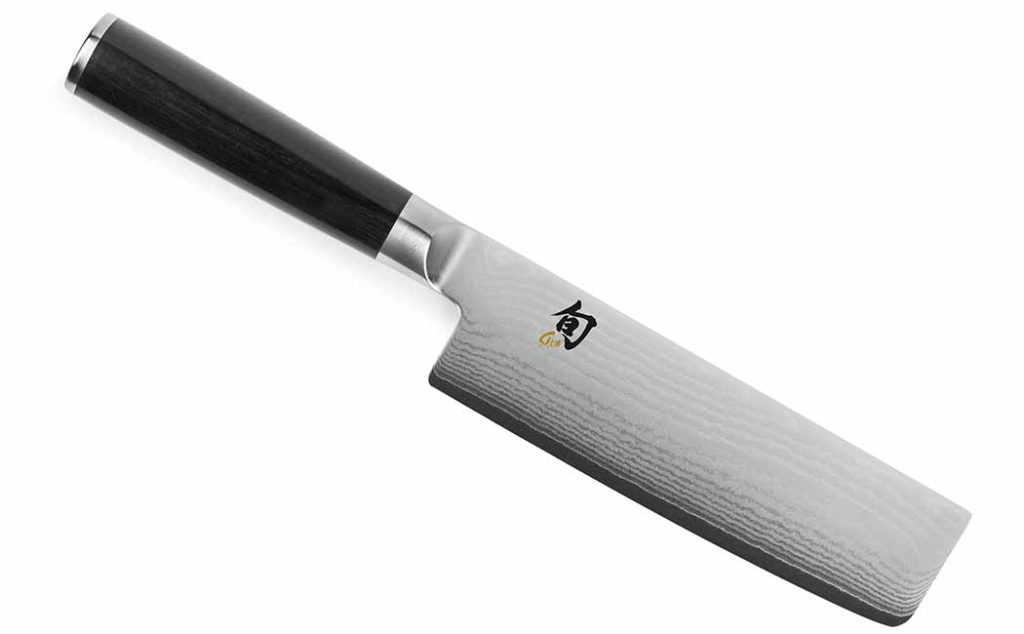
Shun Cutlery Classic

Shun Cutlery Classic

This Japanese knife is popular, well-constructed, and made in… China? No surprise, the broad Western market sees just about everything made in China these days. While not exactly up to the quality or authenticity of a true Japanese Nakiri, Shun Cutlery does a great job with this knife for the price. Chef among these assets includs using a novel layering method. The blade itself is not entirely Damascus, rather it is a stainless core sandwiched in layer of Damascus. It is a great starting point for getting into Nakiri but is priced in such a way that it may be your only one for years.

MSRP: $170

Kai Seki Magoroku Watakake

Kai Seki Magoroku Watakake

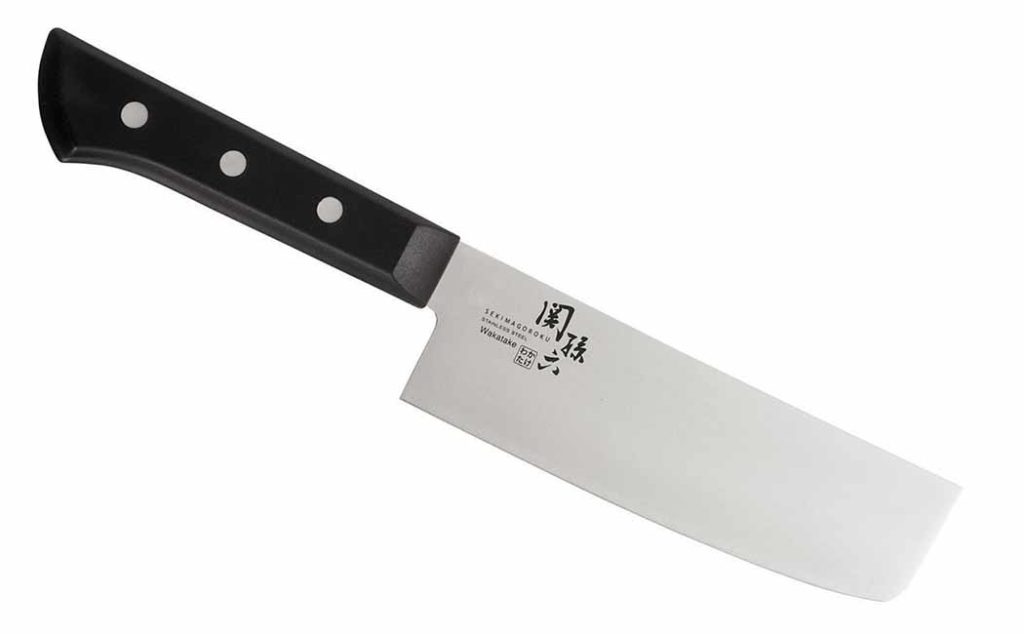
This Kai knife is a genuine Japanese-made Nakiri, fully sized in every way but price. Retailing at under $20, this is a great knife to add to your drawer if you want the function of a Nakiri but don’t do enough dedicated veggie chopping to warrant a several hundred-dollar in expense. Many people are just casual cooks and can certainly appreciate the utility a Nakiri brings, though just not enough to make a hobby of fleshing out an entire Japanese kitchen set. This knife is not of the same quality as the others on this list in terms of the overall construction but is certainly capable of most uses. Considering chopping veggies are the end use, you should do just fine, except perhaps in some of the most advanced techniques that require the features of a custom knife.

MSRP: $20

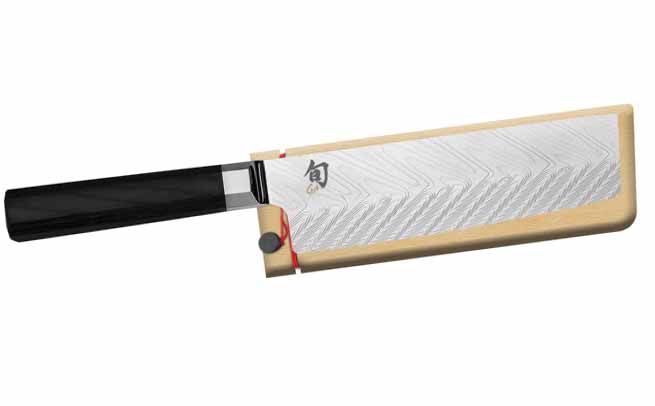
Shun Cutlery Dual Core

Shun Cutlery Dual Core

Another great product from Shun, the Dual Core Nakiri is a dull Damascus blade of 72 layers of VG10 and VG2 steels. As far as production Nakiri knives go, this is probably as good as it gets before you start to look at custom options. The knife here is priced higher, more than double that of the other Shun listing in this article. The manufacturing process results in a blade holds its edge longer and remain in service for extended periods of time, especially in a high-production restaurant setting. As a production knife, this product is great for showy use in a hibachi, but also easily replaced should it become damaged. The styling on this knife isn’t quite traditional Japanese, though patrons and guests will likely not notice that minor detail.

MSRP: $330

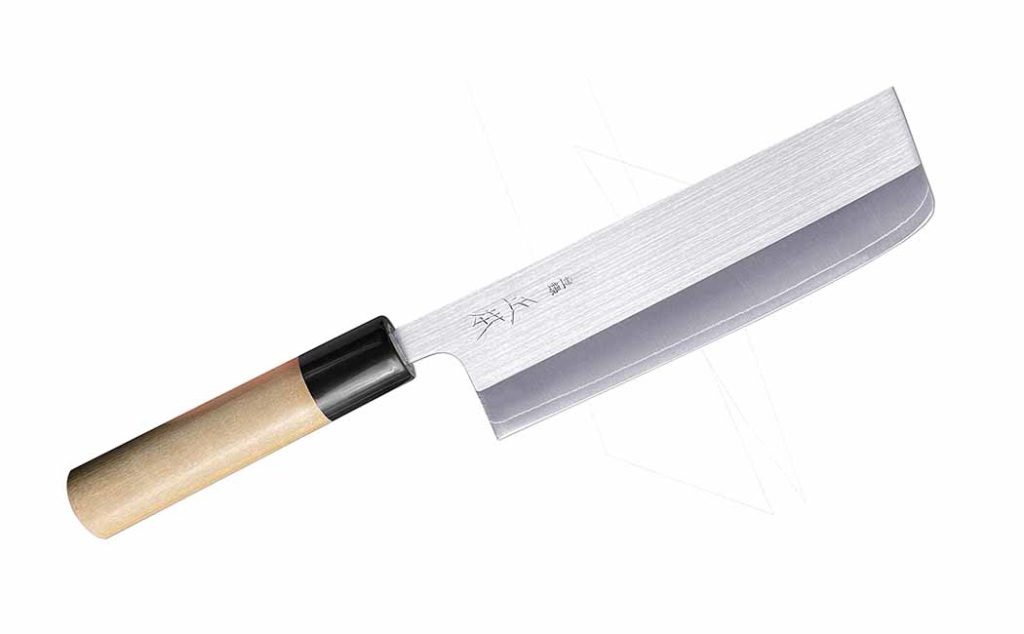
Masamoto FH Japanese

Masamoto FH Japanese

Masamoto’s product is a reasonably priced, high-performance traditional Nakiri made in Japan. This knife is just about as good as it gets from the standpoint of function and traditional appearance. Made of modern steel and reasonably corrosion-resistant, it’s a forgiving knife. But you still need to care for it after every use. The handle is made in traditional style out of buffalo horn and magnolia wood, both of which add to its already incredible appearance. It is not the most costly Nakiri here by far, though when combined with the extra maintenance needed to keep it ship-shape, isn’t for someone who will just throw it in the dishwasher.

MSRP: $229

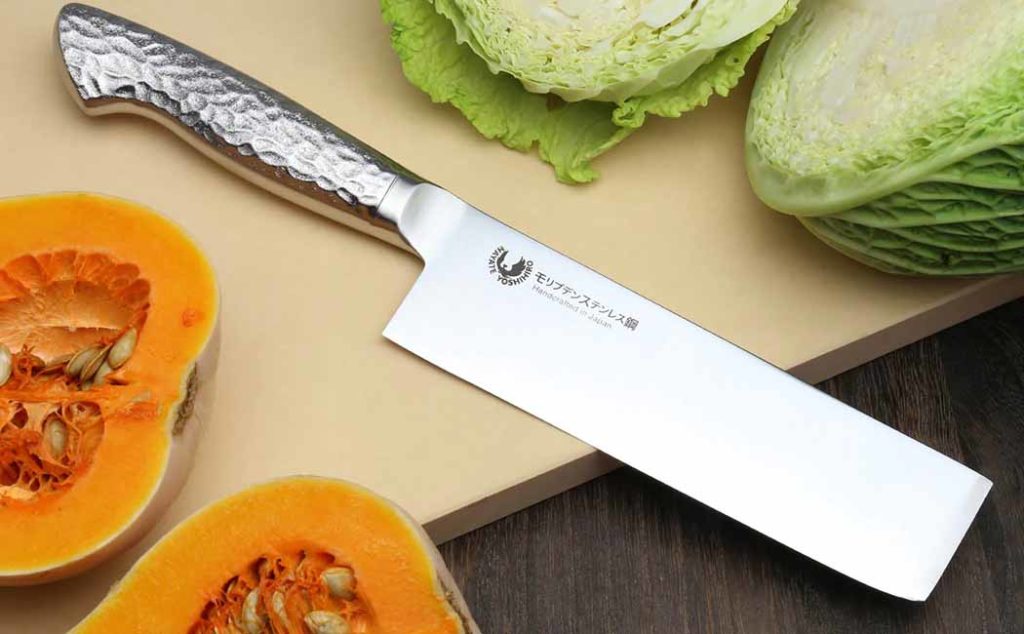
Yoshihiro Hayate

Yoshihiro Hayate

Last on this list is certainly not the least. The Yoshihiro Hayate is a handcrafted, high-end Nakiri that is for use by the most discerning culinary aficionado. The knife is made of extremely hard and difficult-to-work with ZDP-189 steel. Not only is it beautiful, but the knife is also NSF-approved for use in commercial kitchens, making it one of the most expensive single-use products in a restaurant. However, thanks to its superior steel and impressive edge retention, the knife will ultimately save the chef effort on high-volume cutting and other laborious tasks. This Nakiri is made with excellent materials in the handle as well, including premium ebony with a sterling silver ring. Completing this knife is a lacquered cover for storage. Of note, this knife is double-beveled, making it great for use with both hands as opposed to specializing to left or right. If you decided to spend the money on something like this, you will never need to seek out a replacement. Short of a completely custom knife made to your hand and style of cutting, this is as good as it gets.

MSRP: $700

More Kitchen Knives:

Collaboration Knives: How Do They Come Together?

Top makers explain how they collaborate with knife companies.

The old cliché of the win-win holds a real grain of truth. Any successful partnership must be mutually beneficial, and in the knife industry the phenomenon of the collaboration has come to exemplify the upside of working together.

Years ago, a veteran custom knifemaker described his relationship with a major manufacturer as serving as the company’s research and development department. Such a description is accurate in that the manufacturer often relies on the custom maker for new design inspiration, from good looks to materials and mechanics. The collaboration has emerged in the last 35 years or so as an outstanding means of bringing innovation to the public and putting first-rate knives in the hands of the mass market.

The ins and outs, nuts and bolts, and give and take of the collaboration process raise questions for makers interested in striking deals of their own. A few comments from makers who have achieved great success on the collaboration frontier offer helpful insights.

“It goes both ways,” observed BLADE Magazine Cutlery Hall-of-Fame® member Bob Terzuola, who indicated he completed his firstfactory collaboration with fellow Cutlery Hall-of-Famer Sal Glesser and the design team at Spyderco in 1989. “You can go to the company or the company can come to you depending on your notoriety. If you are just starting out, you probably have to go to the company.”

On the business side of the ledger, Suzi Terzuola takes the lead and has demonstrated proficiency in making the deal work for everyone involved. Her flair for negotiation and finding the right blend of maker-manufacturer cooperation has been demonstrated through the years as Bob has worked not only with Spyderco but also the old Camillus, Boker, Fox, Pro-Tech, Tactile Knife Co. and others.

BLADE Magazine Cutlery Hall-of-Fame® member Bob Terzuola has done collaborations with many companies, including the Bob Terzuola ATCF Auto Ultimate from Pro-Tech, the BLADE Magazine 2022 Investor/Collector Knife Of The Year®. (Eric Eggly/PointSeven knife image)

“I was raised by parents with their own successful businesses,” Suzi observed, “and I saw Bob receiving passive income from Spyderco and Camillus, and of course passive income is how you survive after having only so many years to make knives. I began looking at the knife designs Bob had and tried to match the design to the company. Bob has patents lining the walls, and when he lends his name to a knife he should receive a signing bonus and a bonus against the royalties.”

In return for his design skill and the use of his name in promotions, Bob has certainly established himself as a leader among successful custom collaborators. His contribution to a company’s success has enhanced his reputation of excellence across the industry, while Suzi has forged a business posture that results in security for the future.

Knife Collaboration Contracts

The contract is the key component of a collaborative deal, and depending on the circumstances everything is negotiable. Although early agreements made among friends were sometimes done on a handshake, it has become a “best practice” to hammer out the terms of the collaboration on paper, invest in an attorney’s review, and formally memorialize the discussions. Standard royalties run roughly 5 percent of the price at which the company sells the knife.

The Terzuolas include a period of time in which the company is allowed to produce the knife; the period may be extended at maturity with the agreement of both parties. Further, there may be a requirement that the company produces a certain number of knives in a given time period, also renewable. Restrictions on wholesale pricing or discounts that affect royalties may also be negotiated.

For those considering a foray into collaborations, Bob and Suzi offer some advice: “If you’re a new maker, you shouldn’t just walk up to [the company’s] booth at a show. Make an appointment to see them because they are at the show to deal with customers. Approach a company with one or more finished designs. They want a package presented to them, a prototype or existing model, something they can hold in their hands, and in the case of a prototype it’s good to have as many innovations and design creations as you can—anything that will set the knife apart from other potential deals out there.”

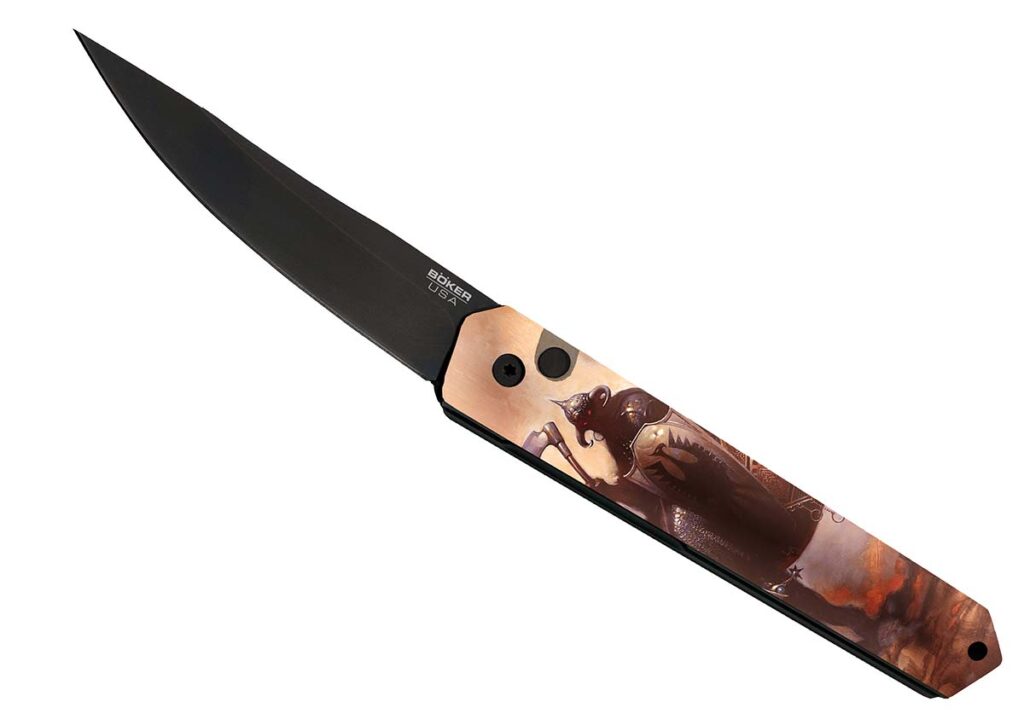
Lucas Burnley has designed several iterations of his Kwaiken for Boker, including the Kwaiken Auto Frazetta.

Suzi added that a higher profile in the industry can drive success.

“We are the R&D for a knife company,” she noted, “and when you approach them for a collaboration your social media resumé is very important.”

Making custom knives since 1994, Darriel Caston has concluded collaborations with numerous companies, including CRKT, Spyderco, Boker, V Nives, Kansept Knives and more.

“I’m prolific when it comes to designs,” he affirmed. “There are probably about 300 that I will never get to making. I’m an engineer by trade and my 3D drawings are almost ready for production, and that helps with the deals. They ask for STEP files [standardized 3D model data files for CAD and 3D printing] that can go right into machining. Sometimes we work with a prototype, and sometimes we work with a knife that I have been doing for quite a while.”

According to Darriel, one significant element of the collaboration is the retention of the rights to the design.

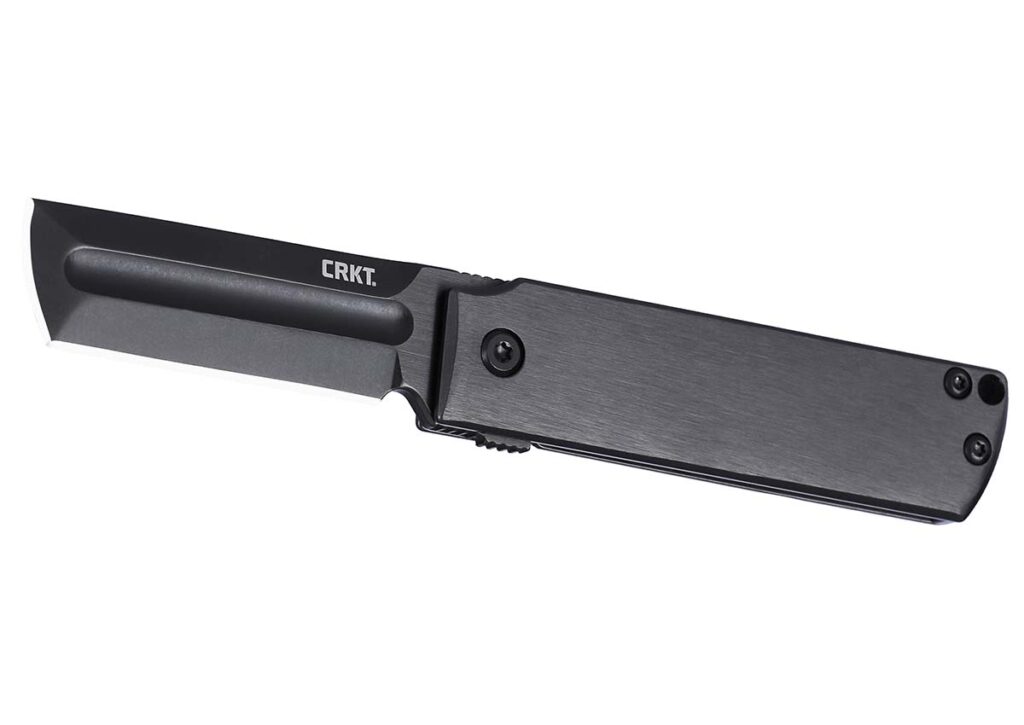
“Anybody who wants to do a collaboration must put footprints in the sand, get their work out there and show a story,” custom knifemaker Darriel Caston observed. One of his latest designs for CRKT is the blacked-out MinimalX framelock folder, an evolution of a knife originally made for SpaceX to commemorate a rocket launch.

“You never want to give up your design,” he warned. “I would license the design to the company usually up to four or five years, and the average is three years. After that, you can discuss if you want to continue if the relationship has been good for both parties. License the design and never sell it. If a company buys the design, then they own it forever. If it became their best seller, I could never make the knife again, and I would have to stay away from anything that looks like it.”

For Caston, every deal starts with a friendly conversation. As progress is made, attorneys draw up the contract. He sees the process as straightforward, whether dealing with an American manufacturer or a company headquartered in a foreign country.

“I find the knife community for the most part to be very honorable,” he commented. “I haven’t run into any bad juju. When you want to do a collaboration, I tell people they need to have a name and a track record of good designs with people following them on social media and stuff.”

Since his first collaboration—with Spyderco in 2015—Darriel can speak with confidence regarding the potential for success.

“It would be rare for someone to take a design to a company without a history or a footprint there. They look for your story,” he noted. “Anybody who wants to do a collaboration must put footprints in the sand, get their work out there and show a story. Then it becomes easier.”

Getting A Collab Off The Ground

Darriel Caston has concluded collaborations with several companies. “I’m prolific when it comes to designs,” he affirmed. “There are probably about 300 that I will never get to making.” Now discontinued, the Squarehead was one of his early collaborations with Spyderco.

Custom maker/U.S. Marine Corps veteran Les George found early collaboration success at the SHOT Show some years back. He approached Pro-Tech a decade ago, and the association has continued since then.

“I had just finished my first batch of VECP [Value Engineering Change Proposal] mid-tech knives,” he remembered, “and I thought it would be cool to see Pro-Tech make the knife in an automatic. So, I did the CAD work to change the knife to an automatic and walked up to their booth at the SHOT Show. I asked to speak to the owner, and Dave Wattenberg came over and shook my hand. I drew a big breath and told him, ‘My name is Les George and I am a knifemaker and I have a design I think would be a great knife for you to make as an auto and I already have the CAD done would you like to see it?’ I said that all as one sentence in one breath!”

Still, a pragmatic view of the collaboration landscape demands preparation and planning. A so-called “cold call” may not meet with success.

“It depends on the company whether a direct approach will work or not,” George conceded. “Don’t walk up to a company at the BLADE Show and tell them you’re a hot maker and they should pay you to make one of your designs. Instead, walk up, introduce yourself, and show them with CAD pictures, a 3D printed model, or a real knife, and tell them why you think it would be awesome to work with them on a production project.”

When it comes to her husband Bob’s collaborations, Suzi Terzuola takes the lead and has demonstrated proficiency in making the deal work for everyone involved. An example of several overseas Terzuola collaborations is the Clap from Italy’s Maniago Knife Makers.

Les sees the components of a particular collaboration deal varying. Of course, some of the structure depends on the negotiating skills of the parties. Commonly, the compensation may revolve around a percentage of dealer or distributor pricing on each unit, and particular deals may extend as long as each party is pleased with the progress.

“Collaborations should run as long as they are profitable,” Les remarked. “Companies don’t generally kill a successful project unless there is a capacity constraint issue or something else outside hindering it. Both parties can end the deal at any time with some allowances for production to finish with the things they have in progress already. Every contract I have ever seen gives one company the rights to exclusively make a particular model. My contracts have a provision that I can make as many customs of my models as I want. In the end, it would be counterproductive to license the same model to multiple companies. The maker would be competing with himself at that point, and it’s not helping the companies.”

Priming The Pump

Award-winning maker Lucas Burnley appreciates the help of friends in establishing a firm footing for collaboration.

“In general, I’m a big fan of pulling on my network,” he said. “If you have someone you can reach out to for an introduction, that’s always a strong move. If you don’t have someone to make an introduction, you might be able to ask around and at least figure out who you need to talk to. Regardless of how you get your foot in the door, I highly recommend going to a knife show and trying to set up a meeting in person.

“A design is only one part of a collaboration,” he continued, “so bring your ‘A’ game and think about what other value you can provide for the company. I was introduced to Boker by Jens Anso and Jesper Voxnaes, and Ken Onion put in a good word for me with Columbia River Knife & Tool. I’ll be forever grateful for those introductions and the relationships behind them. I’ve been able to pay it forward a few times, and hopefully I’ll be able to do it many more times in the years to come.”

Les George’s V14 dagger design for Spartan Blades was the BLADE Magazine 2014 Investor/Collector Knife Of The Year®.

In Burnley’s experience, contracts provide compensation most often in the form of monthly or quarterly royalties based on a percentage of sales. One-time lump sum payments are also seen; however, the income generated depends on the goals of the two parties involved.

“I want my designs to run until my grandkids are old enough to thank me for my good decisions,” he laughed. “If a model is selling, I want it to keep selling. On the flip side, I will routinely ask what models we can kill if they aren’t pulling their weight.

“One caveat here is that if a design is still in production, I want to get paid for it,” he concluded. “Some companies will offer a contract for a set period of time but have the option of continuing to produce the model. I view this as somewhat akin to a one-time payout. If it works for you great; just make sure you are paying attention.”

George specifically limits the number of companies he works with in order to give the relationships the priority he believes they deserve. Consistency, he says, is huge. Real, solid collaborations are not “get-rich-quick schemes.” He remembers getting his first collaboration check in 2014 totaling a whopping $6.

 “A design is only one part of a collaboration,” Lucas Burnley observed, “so bring your ‘A’ game and think about what other value you can provide for the company.” His Tuna Compact framelock design for CRKT is one of his latest collaborations.
“A design is only one part of a collaboration,” Lucas Burnley observed, “so bring your ‘A’ game and think about what other value you can provide for the company.” His Tuna Compact framelock design for CRKT is one of his latest collaborations. “A design is only one part of a collaboration,” Lucas Burnley observed, “so bring your ‘A’ game and think about what other value you can provide for the company.” His Tuna Compact framelock design for CRKT is one of his latest collaborations.

Times change—and checks change with good business practices, commitment, follow through, and most of all a process from contract to design and product that proves profitable for everyone.

More On Knife Collecting:

Advertisement

Must Read Articles

Read this before you make a knife

Knifemaking 101 – Read This Before You Make a Knife

  by Wayne Goddard My experience has taught me that there's nothing like digging in and getting started. I've often said the hardest part of the...
how to forge damascus steel

How to Forge Damascus

Advertisement
Advertisement