
Competitive Knife Throwing: Girl Power On The Fly

1

Women are leading the rise of knife throwing across the country and the world.

As an accessible and affordable hobby, knife throwing is seeing a surge in development and an astounding cultural impact. Since my first knife-throwing tournament over 30 years ago, the sport has steadily grown. One of the largest gatherings of knife throwers began in Berwyn, Pennsylvania, guided by knife designer and champion thrower Joseph “Brokenfeather” Darrah. Now known as Brokenfeatherpallooza, it has evolved into a top national event.

The Quaker State event isn’t alone in rallying throwers in the spirit of camaraderie and friendly competition. The Columbia City, Indiana-based Dangerfest—led by online knife-throwing sensation Brandon “Danger” Dillon—has become a mainstay on the throwing circuit.

It’s unsurprising these major events have taken root where they have, given throwing’s deep roots in the region. Michigan is among knife throwing’s historic epicenters, thanks in large part to BLADE Magazine Cutlery Hall of Fame® member Harry K. McEvoy. As a result, the state has long been home to devoted McEvoy and Tru Balance knife enthusiasts.
During my time at the helm of the Tru Balance Knife Company, I met countless throwers—many of them members of a group known as the Michigan Blade Throwers. This group held frequent tournaments and became a driving force in the regional throwing community. From this large and passionate collective emerged a group of women who would soon redefine knife throwing in Michigan and beyond.
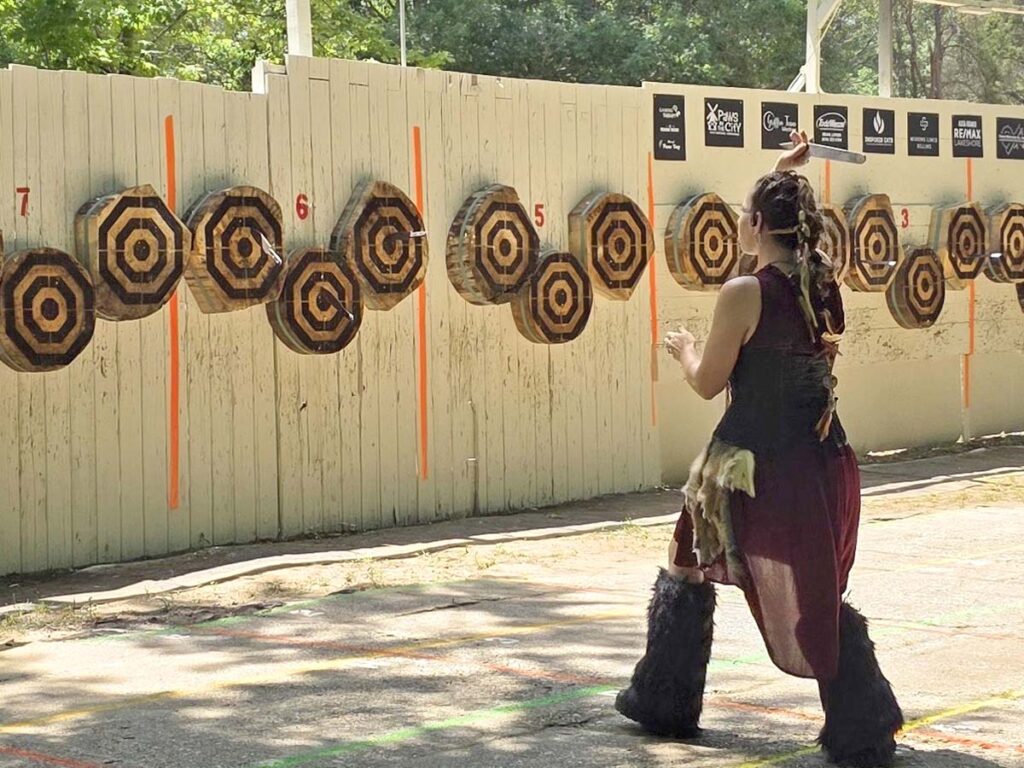
Among the attractions women have found in knife throwing is empowerment, stress relief and camaraderie, according to the author.

Birth Of A Movement

In 2015, Kelly Grove launched Women With Knives (WWK), igniting the world’s largest women-only knife-throwing league. What began as informal backyard sessions with her husband, Jeff, quickly evolved into a grassroots movement. Long before entering the competitive circuit in 2019, Kelly was already building the sport. In 2018, she organized her first league event, the Gung-Throw, which later became the now-iconic Battle of the Blade Maidens. Kelly’s influence extends even further. A founding member of the Michigan Blade Throwers, she helped establish the state’s first Throwstorm Tournament in 2020. Recognizing the importance of preserving and growing the community she had created, she converted WWK into a 501(c)(4) nonprofit organization in 2021.

Kelly officially retired from competitive throwing and league leadership in 2023 but continues to guide WWK as a member of its Board of Directors. Upon stepping down, Kelly appointed Dawn Solomon as Chair and Executive Director of WWK. Under Dawn’s leadership, WWK continues to set record-breaking benchmarks for women’s participation in competitive knife throwing.

Dawn, who entered the sport in 2019, is a dedicated competitor and a member of the Michigan Blade Throwers. Together with her husband, Tim, she operates MBT Range, the largest outdoor throwing range in Michigan. MBT has grown into a hub for seasoned athletes and newcomers alike.
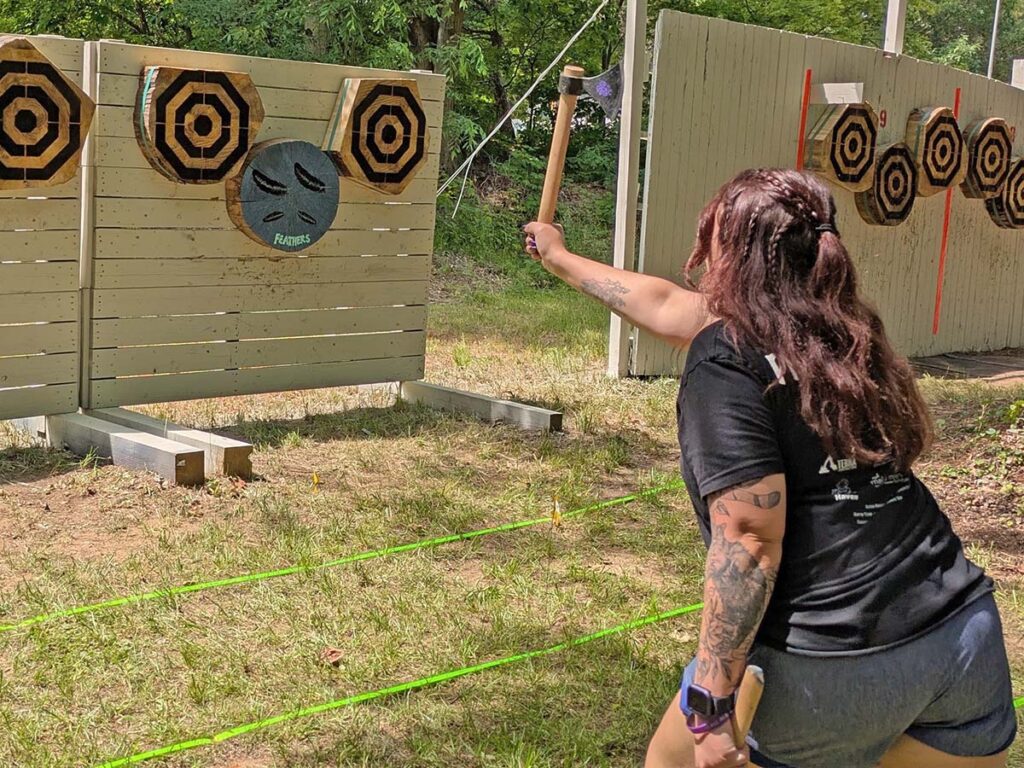
Most women’s knife throwing organizations began as grassroots endeavors. The inspiration of WWK, for instance, came in founder Kelly Grove’s backyard in informal throwing sessions with her husband.

Membership in the WWK is diverse. Teachers, nurses, small business owners, corporate executives, stay-at-home moms, retirees and more fill its ranks. This includes throwers of all ages, ethnicities, fitness levels, abilities and disabilities. All find a place within the league.

The attraction of knife throwing is as distinct as WWK’s members. For some, it’s a release of daily stress; for others, a confidence booster. For practically all, slinging steel is a way to forge lasting friendships. Adding to the escapism knife throwing allows, each member adopts a unique alias. These are proudly displayed on league T-shirts—adding an element of fun, freedom and identity to the experience.

At its core, WWK empowers women by teaching the art of knife throwing while fostering strength, confidence and community. Whether members aspire to compete in sanctioned events or simply want to unleash their inner warrior in a supportive environment, the organization offers a place to belong.

More than holding their own, women have become among the top competitors in all ranks of knife throwing competitions.

Today, WWK continues to thrive under the guidance of a dedicated Board of Directors and leadership team who share Kelly and Dawn’s mission. Together, they travel the country competing, coaching and championing the sport—ensuring knife throwing continues to grow and welcomes new women into the community.

Live Nationwide

Women have also stepped forward to lead major tournaments across the country. One such event is Blades Out Or Bust (BOOBS), founded by Jessica Gold McClain. A longtime supporter and advocate of the sport, Jessica—also known as “Goldi Lox”—sponsors at least two tournaments annually near her home in Bastrop, Texas.

For Jessica, the passion for knife throwing began in her teenage years. She spent countless hours honing her skills in a friend’s backyard before eventually setting up her own target at home. When she began competing, she was often the only or part of a handful of women at most events.

After a five-year hiatus from the sport, the seed was planted for what would become a powerful new community. In 2019, Jessica founded the Bladed Sisterhood with a bold vision: to unite women around the globe who share a passion for blades. This small idea has grown into a thriving international network where women connect, learn and
celebrate knife, tomahawk and axe throwing.
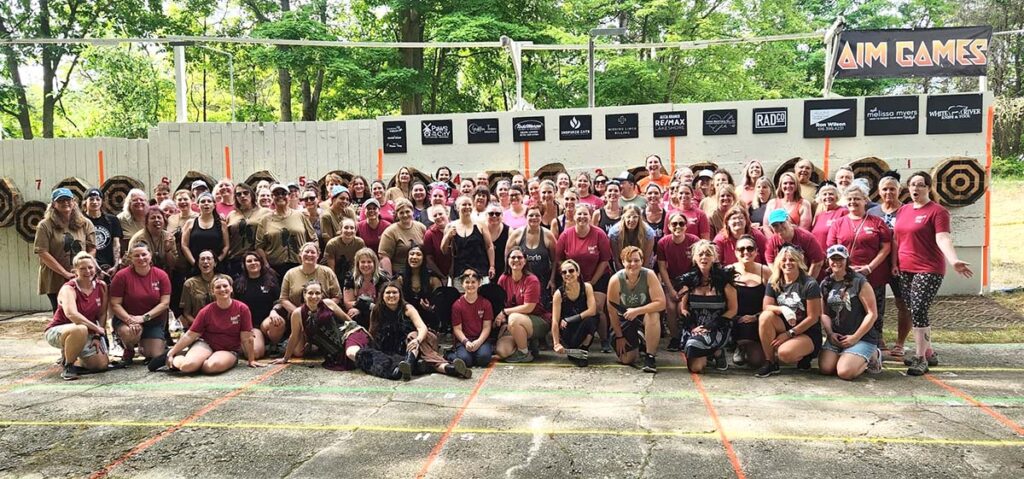
Michigan is among the knife throwing epicenters and, as the author points out, is the home to WWK and other women-focused knife throwing organizations. (Felicia Mulder image)

The organization’s dream is ambitious—to see these disciplines recognized worldwide, including as Olympic events. Until then, the Bladed Sisterhood continues building a community that inspires women, celebrates skill and honors tradition.

While women like Kelly and Jessica built strong foundations at home, others were already taking knife throwing onto the world stage.

Throwing Goes Global

One of those women is Melody Emel, a multi-award-winning champion with more than two decades of experience in the sport. After attending stunt school, Melody developed a deep interest in Western arts, which naturally led her to knife throwing.

Far from an American endeavor, knife throwing has become a global phenomenon and has seen a large influx of women throwers worldwide. (Dawn Soloman image)

Following multiple first- and second-place finishes in major tournaments, Melody founded Blade Aces in Las Vegas to serve and grow the local throwing community. In 2015, she traveled to Europe to compete in the Eurothrowers World Championships for the first time, marking a significant milestone in her international career.

Melody’s passion for both throwing and teaching continues to drive her involvement in events around the world. She actively supports competitions that empower women and raise funds for breast cancer awareness and other causes dedicated to uplifting women.

From backyard grassroots to the global stage of professional competition, women have redefined the sport. With a growing international network and a dedicated leadership, the future of female knife throwing is certain.

More Knife Throwing:

First Look: Kershaw Parley

0

Kershaw’s New Parley Is A Unique EDC Knife That Is Fun To Use And Built To Last. The Cleaver Blade Makes It Stand Out From The Crowd.

Kershaw has once again made a fantastic folding knife that is beautiful, functional, and exciting. The new Parley features Kershaw’s non-locking, slipjoint design and a cleaver-style blade made of 7Cr17MoV stainless with a satin polish. It opens with a nail nick and features a lanyard hole for excellent portability.

Kershaw Parley in the closed position

While the polished black Micarta handle is smooth to hold and feels good in the hand, the star of the show is the blade. The 3.1-inch cleaver is inspired by the hulking kitchen meat cleaver. It can handle kitchen tasks but is far more nimble than its bigger brothers.

As a folder, the cleaver blade works great handling small tasks outside and anything in and around the house. The plain edge cuts true and gracefully and is easy to sharpen and maintain. With an MSRP of just $39.99, it’s a bargain that should absolutely be snatched up.

Editor’s Note: This article was written by Mike Ableson.

Read More

Latin America’s Elite Knife Crafters: Custom Blades and Their Makers

0

The knifemakers of Argentina and Brazil have revolutionized the world of cut.

The language of custom knifemaking and bladesmithing is universal, so, logically, the appeal of the industry would have global reach. Through the years, such has been proven in the work of gifted artisans around the world, and those from Latin America have gained increasing attention. The quality of their forged steel, the fine lines of their folders and fixed blades, and the attention to detail in their finished work have created a buzz.

The impact of Brazil and Argentina especially has been noticeable at the BLADE Show and elsewhere in recent years. Argentine winners in the BLADE Show custom knife competition include Claudio, Ariel and Marcelo Sobral, Mauricio Daletzky and Javier Vogt, while Brazilian winners include Fabio Barros, Gustavo “Gus” Cecchini and Franco de Souza, the latter whom recently copped multiple knife judging awards at this year’s BLADE Show Texas. Cecchini, meanwhile, pulled a rare double at last year’s BLADE Show, winning for Most Innovative Design in the custom knife competition and the BLADE Magazine 2023 Knife Collaboration of the Year® with WE Knife for the Solid folder.

Like their European, Asian and North American counterparts, bladesmiths and knifemakers from Latin America are acknowledged by manufacturers, purveyors and the buying public as among the best in the world. Their stories validate their commitment and emerging success.

Ricardo Vilar

Ricardo Vilar hunter
Now living in Arkansas, ABS journeyman smith Ricardo Vilar of Brazil won Best Hunting Knife at this year’s Texas Select Custom Cutlery Event for his hunter in a damascus of 1084 carbon and 15N20 nickel-alloy steels and a stag handle. Overall length: 9.25 inches. His price for a similar knife: $2,500. (SharpByCoop knife image)

One catalyst for the growth and resulting excellence among Latin American artisans is ABS journeyman smith Ricardo Vilar, a native of Brazil who relocated with his family to Arkansas several years ago. Vilar wanted to be the best, and so he sought out the counsel and advice of the best. He was so thoroughly committed to bringing award-winning bladesmith Jerry Fisk to Brazil for some learning and instruction that he was willing to sell his car to make it happen.

“It was in 2000 that I started exchanging messages with Jerry because I had come to the BLADE Show with one of my friends and talked to him about doing a hammer-in in Brazil,” Ricardo remembered. “Jerry came to Brazil in 2001 and had a meeting with 14 knifemakers and bladesmiths at my shop. We had nine dates with Jerry at my shop, and then after that the knowledge began to spread.”

Vilar and Fisk developed a close friendship along the way, and Ricardo has made the most of his innate talent and the skills he has sharpened with help from Jerry. Living within an easy drive of one another, Ricardo and Jerry are regularly in touch. In 2020, Ricardo won first place on an episode of Forged in Fire as a television audience witnessed his prowess. He also became involved with a Latin American version of FIF titled A Challenge Under Fire. In 2021, the two also embarked on a joint venture called FAV (Fisk and Vilar) to produce a limited number of collaborative pieces, up to 25 annually, for the collector market.

“After Jerry came to Brazil, we started sharing information and that sharing is very important,” Ricardo added. “We have had guys from Argentina come to meetings as well, and we like to ‘walk together’ in getting better.”

When Fisk arrived in Brazil for the first time, he informed the gathering that they would be better served using a gas forge. When the attendees were skeptical, still using coal and charcoal, he told them to have open minds.

Fabio Barros of Brazil won Best New Maker at BLADE Show 2022
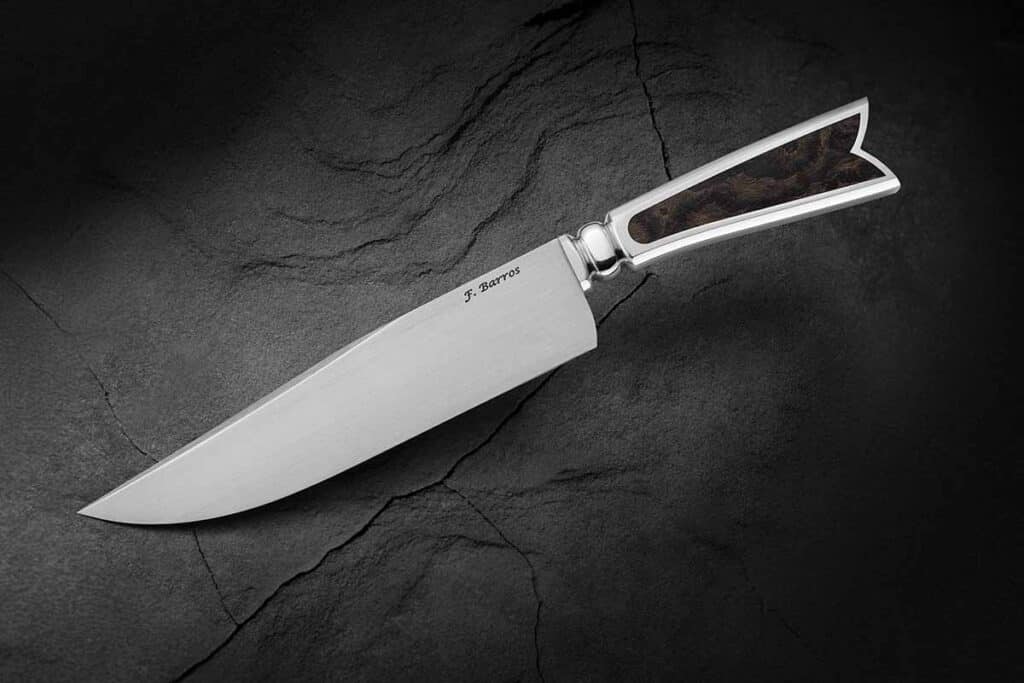
ABS journeyman smith Fabio Barros of Brazil won Best New Maker at BLADE Show 2022 for this beauty. He also won the show’s award for Best Handle with another knife, and Best Handle at BLADE Show ’23 for one of his integral fighters. (Andre Maino knife image)

“Ricardo and I went down to a junkyard and got what we needed,” Jerry recalled. “We set up the forge and made damascus and opened up everybody’s eyes. I also found out that bladesmiths from the different states in Brazil did not really share information with one another. When they told me that, I started to pack my bag. When they asked what I was doing, I told them that if they didn’t share information I was going home. ‘If you won’t share with each other, then why should I share with you?’”

The message was heard loud and clear. From there, the Brazilian bladesmiths and knifemakers made steady, significant progress, right along with others from neighboring countries in Latin America. “The intent was to show the rest of the world what they were capable of doing,” Jerry said. “I went there for a few years to teach them and show them a few things, but then there has to be a line where you are no longer teaching but cheerleading. I would cheerlead with them when they asked a question and say, ‘Yes! Yes! You’re doing it the right way!’”

Ricardo looks back at the investment of time and money that really helped bladesmithing and custom knifemaking to take off in Latin America. “I was willing to sell my car to buy Jerry’s plane ticket,” he laughed, “and I started telling other knifemakers that he was coming to Brazil and that they should come to my shop to see him work. He is my mentor, and I am still inspired by his work.”

For Fisk, teaching and cheerleading come naturally and fulfill an obligation to help others.

“Some of them call me the father of modern knifemaking down there,” he commented, “but what it amounts to is that my first students have had students, and it has just multiplied, so in a way I have multiple grandchildren and great grandchildren in bladesmithing and knifemaking.

“I remember telling them that if they wanted to show their knives in the U.S., they had to go above and beyond what others might do. I said, ‘Others will assume that your work is not as good as what they have been seeing. So if their knives cut through two 2x4s, make yours cut through 10. Make your knives cut more ropes than theirs. Dig deeper and go further!’”

Rodrigo Sfreddo of Brazil is the first accredited ABS master smith from Latin America
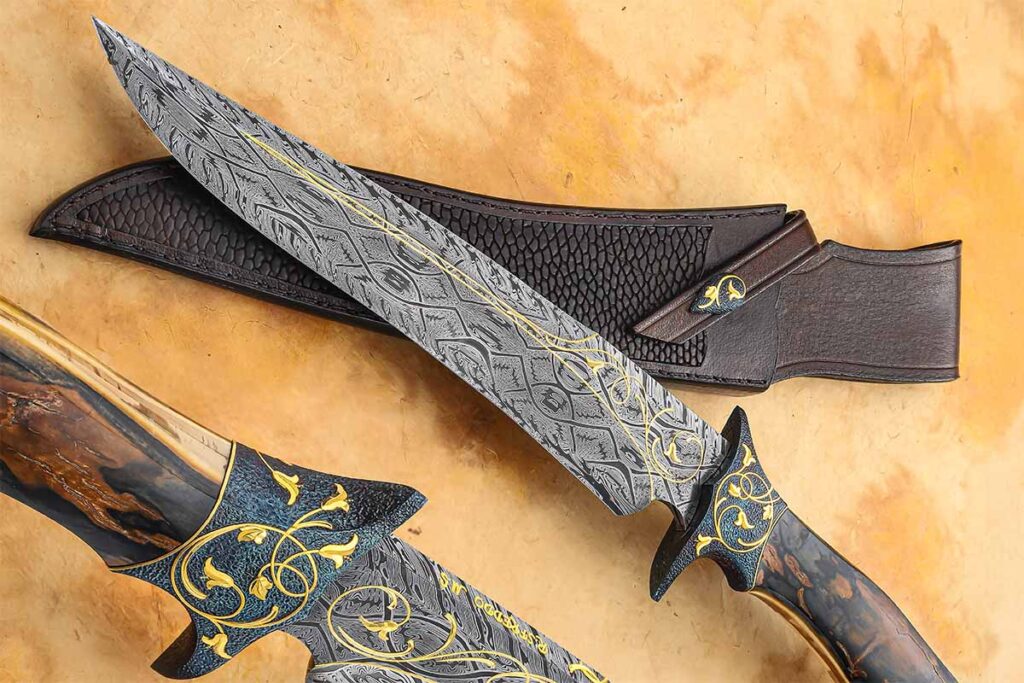
Rodrigo Sfreddo of Brazil is the first accredited ABS master smith from Latin America and forges some of the most spectacular damascus fixed blades of any hemisphere. (SharpByCoop knife image)

Jerry also singles out the work of ABS journeyman bladesmith Facundo Montenegro of Argentina and Brazilian Rodrigo Sfreddo, the latter the first Latin American accredited ABS master smith. Fisk sees an enthusiasm, a drive that helps set the Brazilians apart. “It’s their hustle,” he asserted.

“One of the reasons they hustle so hard goes back to the fact that you can’t get stuff quite as easily down there, and they have had to rely on innovation. When I first went to Brazil, Ricardo asked me what I needed, what kind of anvil or grinder, and I told him it didn’t matter. We would make knives with whatever they had. It’s not always what equipment is in the shop, but what is in the head, eye and hands.

“Still, years back if you wanted to buy an anvil, you had to buy it here in the United States and ship it there. That was true with grinders and other supplies, too. And you would pay heavy taxes as well. Now, we have businesses making supplies there in Brazil, and that has been encouraging.”

Flavio Ikoma

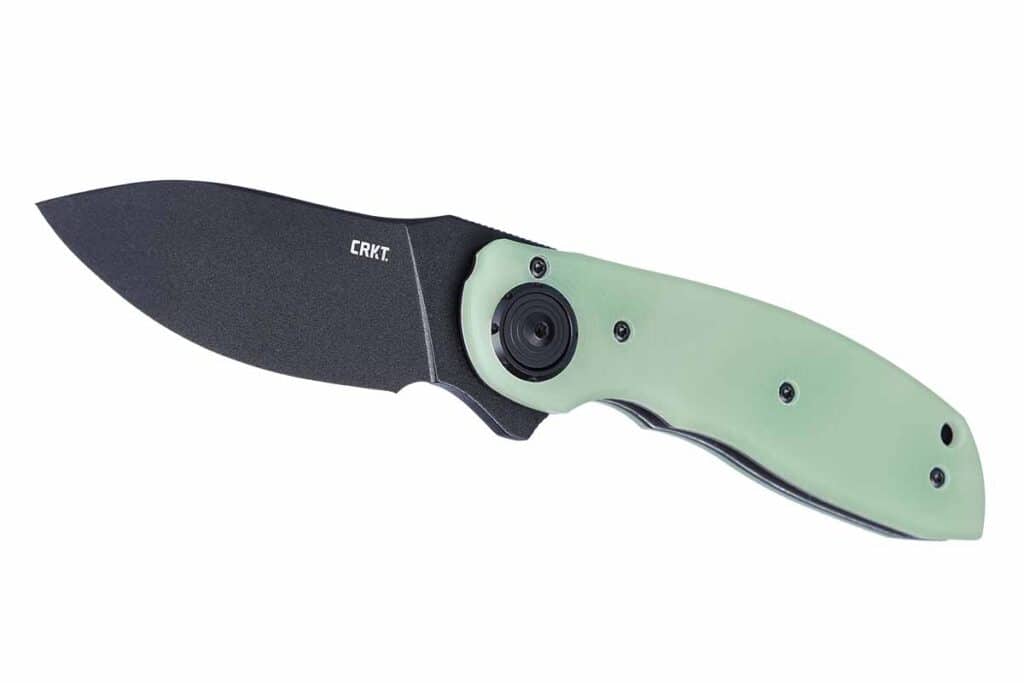
Brazilian Flavio Ikoma helped designed the Ikoma Korth Bearing System (IKBS), a ball-bearing pivot system used by custom and factory knifemakers worldwide.
Brazilian Flavio Ikoma helped designed the Ikoma Korth Bearing System (IKBS), a ball-bearing pivot system used by custom and factory knifemakers worldwide. As great a maker and knife designer as Flavio is, it is the IKBS among his contributions that has had the most impact on the folding knife industry. The IKBS as well as Flavio’s Deadbolt lock system help highlight one of the latest CRKT/Flavio collaborations, the Bot.

On the factory side, Brazilian Flavio Ikoma has developed a collaborative relationship with Columbia River Knife and Tool, while his apprentice, Pedro Buzetti (page 24), has also come into his own. The Ikoma Korth Bearing System (IKBS), which Flavio helped design along with Ricardo and Paulo Lala, and his Deadbolt locking system are major contributors to the popularity of his CRKT designs. The IKBS, in fact, has revolutionized both custom and factory folders alike.

“Every design of Flavio’s we have uses the IKBS,” remarked CRKT representative Doug Flagg. “His most famous model is the Fossil, and Walmart has sold it for the last seven or eight years. It is amazing because IKBS allows the knife to be opened super fast and the action is incredibly smooth. [Another Flavio] design, the Attaboy, incorporates IKBS. Fitting the bearings in along with Flavio’s patented Deadbolt lock took a herculean effort!”

Flagg and CRKT began their association with Flavio after a tip from BLADE Magazine Cutlery Hall-Of-Fame® member Ken Onion. When Onion mentioned Flavio’s use of bearings in the pivot, he encouraged Flagg to make a phone call to the Brazilian.

“All Flavio wanted was recognition that we would be using IKBS,” Doug commented, “so we agreed and started using IKBS on [the Ripple, another Onion design for CRKT]. IKBS worked great but was hard to mass produce. The original system was individual ball bearings in a milled-out track, and we eventually evolved to caged bearings. Flavio said he would have used caged bearings if they had been available in Brazil. CRKT and most of the industry credit Flavio with putting bearings in the pivot of knives. Also, the Deadbolt is super easy to use and really, really strong. It’s easy to clean out as well. Just unscrew the button and the Deadbolt comes out. Then use compressed air to blow out the crud and reassemble.”

Mauricio Daletzky won Best Art Knife at BLADE Show 2021 for Creole in ladder pattern damascus
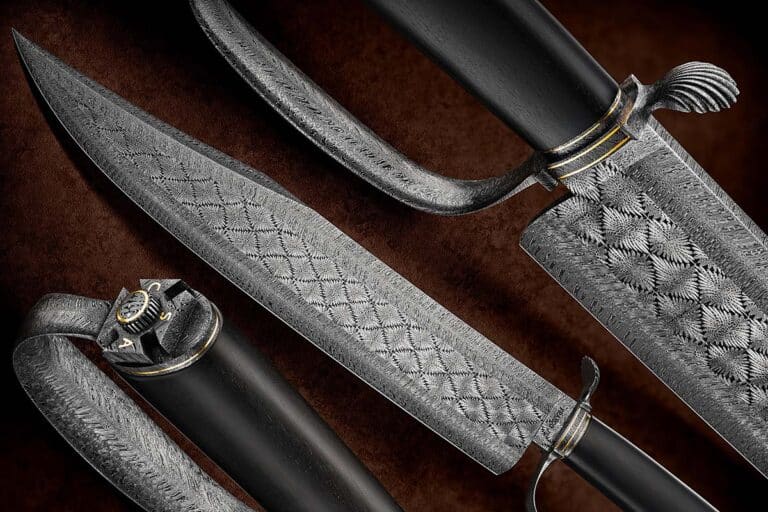
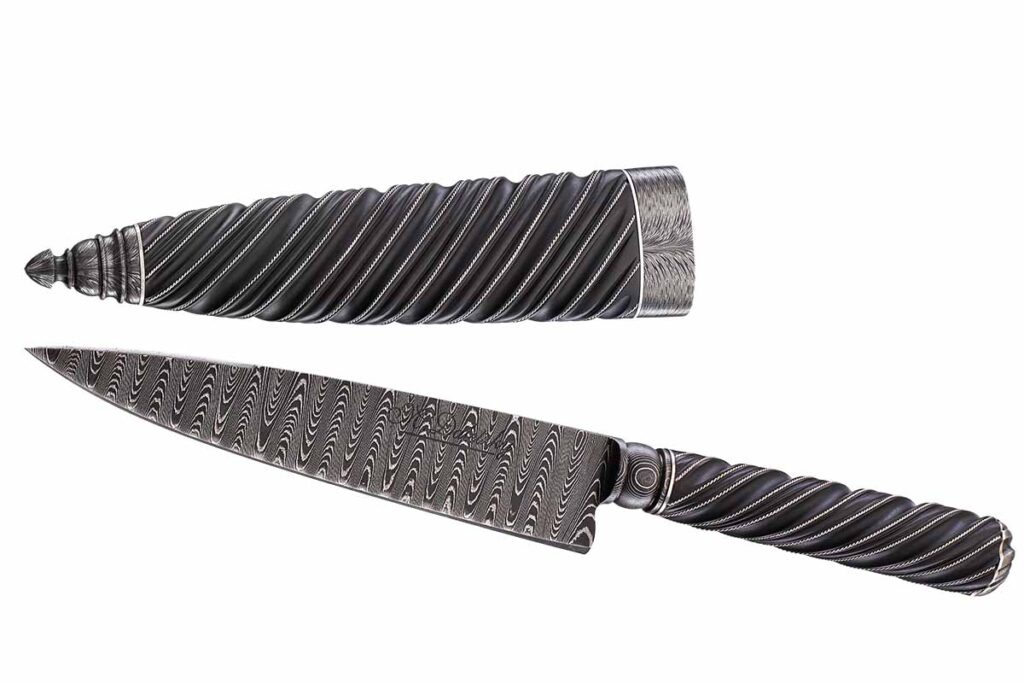
Argentine Mauricio Daletzky won Best Art Knife at BLADE Show 2021 for Creole in ladder pattern damascus and a wire wrapped ebony handle with matching sheath. Overall length: 12.2 inches. He won the same award at BLADE Show ’23 for The Gaucho Knife in damascus and mother-of-pearl. (Whetstone Studio knife image)

Flavio’s contribution is further evidence of the innovation and skill present in knifemakers and designers from Brazil. “I think they are so good because they have to try harder to penetrate the USA custom knife market,” Flagg reasoned. “They don’t really have a market for high-end custom knives in Brazil, although it is starting to become a thing. Therefore, they have to work really hard and make incredible designs to catch the attention of foreign knife collectors.”

CRKT is working with Pedro to produce current and future offerings. “We have a couple of models in the works with Pedro for 2024,” related Flagg. “As Flavio’s apprentice, he has taken up his own love for knives, and Flavio is now helping him to make custom knives. I expect Pedro to be one of the top makers in the coming years. He is young and absorbing all the knowledge that took Flavio years to acquire. Rick Lala has great designs also. I typically look forward to seeing his knives at the custom knife shows.”

Sobral Brothers

Sobral Brothers Ranger Bowie
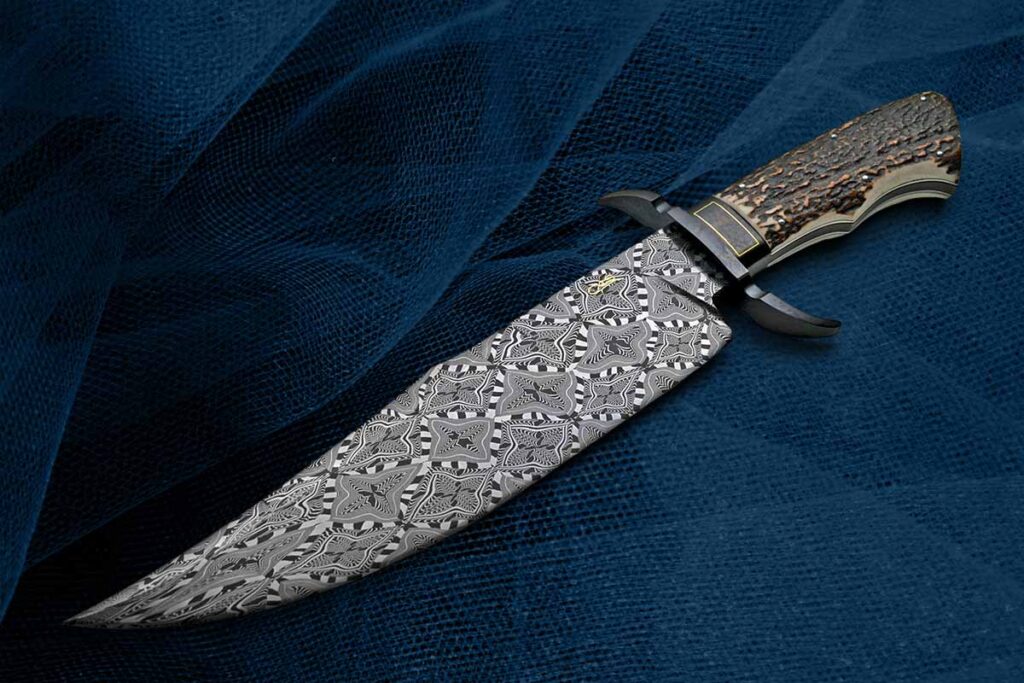
The Sobral Brothers—Argentines Claudio, Ariel and Marcelo—and awards go together like gauchos and knives. Their Ranger Bowie has a 10.5-inch mosaic damascus blade, blued fittings, a frame handle and stag scales with piened pins. Exquisiteknives.com’s price: $6,000. The Sobrals’ most recent BLADE Show winner was last year for Best Damascus. (Exquisiteknives.com knife image)

Through Exquisite Knives, custom knife purveyor and retired ABS master smith Dave Ellis has put high-end custom knives in the hands of collectors for many years. He praises the work of the Sobral Brothers, Claudio, Ariel and Marcelo (CAS), of Buenos Aires, Argentina, for setting a standard in bladesmithing excellence.

“At first it was their san-mai blades that seemed to attract my clientele,” Ellis explained. “Gradually, as their work progressed, their damascus steel, gun-blued fittings and their stunning designs really put them at the front of the pack. Organic materials are typically utilized for their handles, and Marcelo’s leatherwork has really become a complement to their amazing knives. Bold, dark damascus, as well as intricate mosaic damascus steel draws the eye, and once you hold a knife made by CAS it all comes together!
“They seem to work together seamlessly and produce singular works of art. With three of them working together you can sense the symbiosis that exists and once you meet them, their warmth and enthusiasm are refreshing as well as contagious.”

From wherever it emanates, quality work always speaks for itself. The Latin American bladesmiths and knifemakers have continually enhanced their quality work, and in turn to attract the attention of buyers around the globe.

Check Out More Cool Custom Knives:

Coffee With An Edge: Well-Known Knifemakers Forging Coffee Brands

Knife companies offer their own brands of hot Joe and perk up consumers in the process.

For Ernest Emerson, it’s as strong as… well, a cup of dark roast. He’s a firm believer in the expansion of his marquis knife manufacturing company into other lines of business. The idea behind that expansion is the diversity of different sources of revenue while complementing the Emerson core business.

“We’ve owned our own coffee company since 2019,” Ernest related. “I’m friends with Evan Hafer, the founder of Black Rifle Coffee, and our conversations probably go back to 2016 when we were first to co-brand with Black Rifle. Evan carried our CQC-7 on his military deployments, and he knew who we were. We worked it out with him to package coffee and do labeling. That worked for a while, and then my wife [Mary] and I talked it over and decided we wanted to have our own brand of coffee.”

For Emerson, taking the coffee plunge complemented the other activities that go hand in hand with offering top quality knives. Barriers to entry were few.

“I talked to Evan, and he said there was plenty of room,” Ernest explained. “We started Emerson Coffee Roasters Company, and I know we were first and started that trend, just like the trend in knife company whiskeys that is going on now.

“We get coffee from a source in South America and have it roasted and package everything under our own ownership,” he added. “Some other companies do collaborations and have their coffee packaged up, but we do everything from start to finish. The way I look at it, everything is a backup for a backup for a backup. What if somebody in Washington can make knives illegal with the stroke of a pen? All our other companies are there as a family-run group of businesses from coffee to apparel, whiskey, fighting systems and others. We’ve built those companies so the family will have support, and then we are at the helm and decide what roasts we want and everything.”

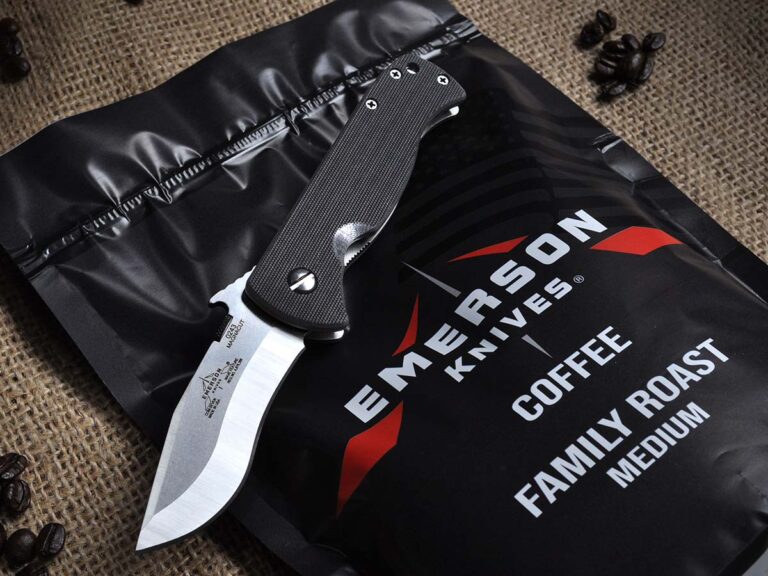
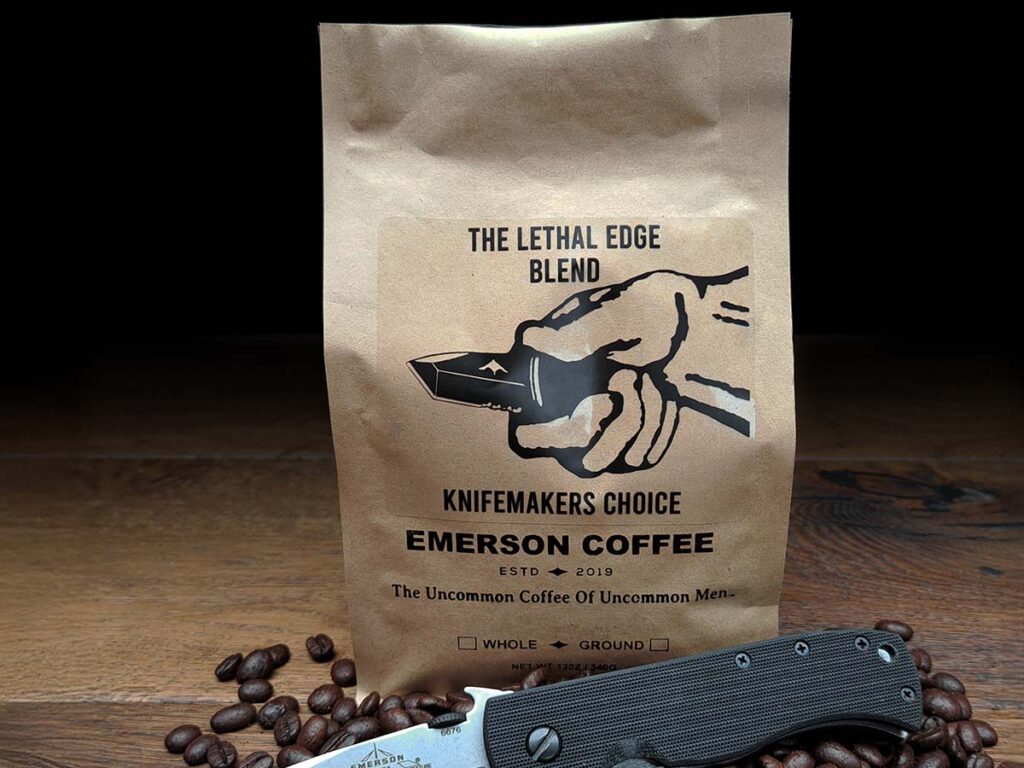
Emerson Coffee has three blends: Renegade Roast, which is the Emerson family’s favorite. Family Roast is the medium blend and Lethal Edge is the dark offering. The knife is the Emerson CQC-7BL-SF.

The future for Emerson and coffee may include some bundles of brew and whiskey or special flavorings for the coffee itself. Ernest sees flexibility and responsiveness always in the mix—a bourbon-flavored coffee when the time is right or a Christmas blend for the holiday season. Right now, the idea is simplicity with three blends: Renegade Roast is the Emerson family’s choice, Farmer’s Roast is the medium and Lethal Edge is the dark offering.

“It’s been a great thing to expand into coffee,” Ernest observed. “Our coffee is delicious, and people say they can’t drink any other coffee after trying it. Besides, we are a lifestyle brand and other than water more coffee is consumed around the world than any other beverage. I would bet that everybody who has ever bought a knife from us drinks coffee. So, if you buy or use knives, chances are you would drink our coffee and whiskey and wear our clothing.”

So, Ernest Emerson, the savvy businessman, finds another niche with coffee, one that complements the tried-and-true knife business and broadens the appeal of his entire spectrum of products. Seeing the big picture is expected to pay big dividends. Ernest points to recent history to back up his market perspective.

“No other knife entity on earth had a show in Las Vegas that revolved 100 percent around its brand like Emerson Knives,” Ernest concluded. “And the Usual Suspects Network was started for Emerson Knives. People tattoo our name on their body, and we say, ‘Show us your ink!’

Forbes Magazine said that there is only one other brand that loyal people tattoo on their bodies, and that is Harley-Davidson. The Forbes people actually told me that. We don’t know all the reasons for it, but again it is partly because people identify with who we are—American made by American workers with American grit and self-reliance. If people buy a $300 or $400 knife from us, then they buy other stuff that the company represents. Emerson truly is a lifestyle brand.”

And what says lifestyle better than a fine cup of brew?

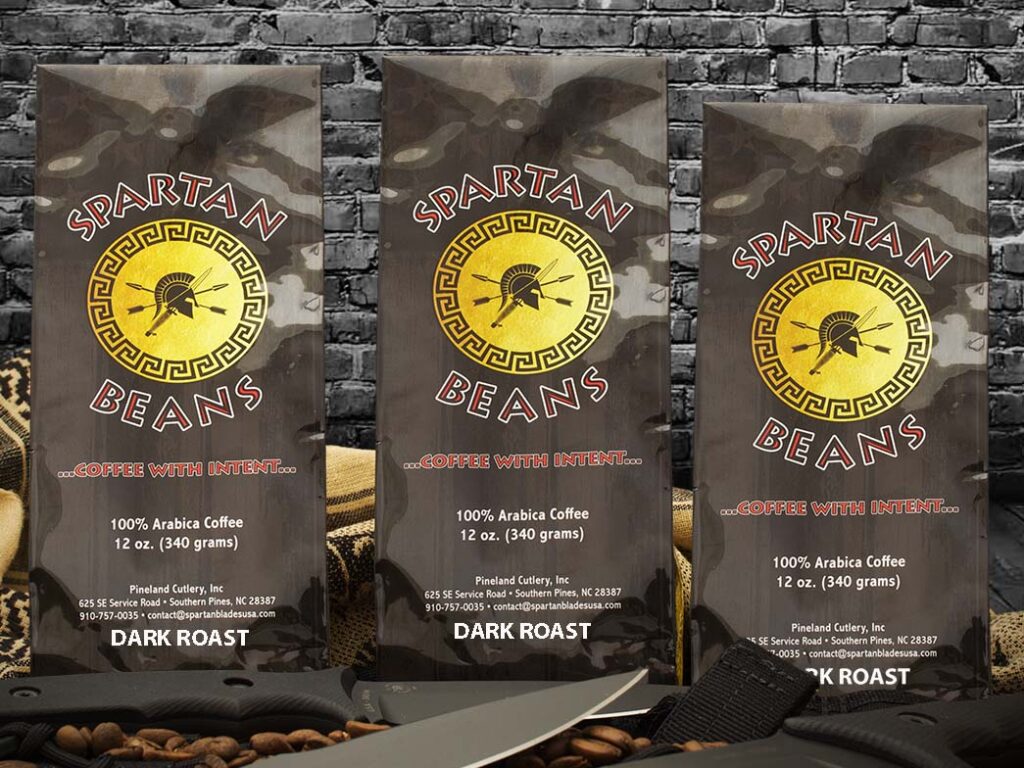
Spartan Blades Tactical Beans

Spartan Beans is sold in 100 percent Arabica regular roast and dark roast, single or three pack. There is also a sturdy mug available to top off the experience.

At Spartan Blades, company co-founder Curtis Iovito says offering a special coffee collaboration with Black Rifle is just fun. Fresh-roasted Spartan Beans fuels the consumption of a couple of gallons of brew per day around the office. The concept started when Curtis was chatting with a good friend who owns a roaster and has evolved into offerings consisting of 100 percent Arabica beans.

“Spartan Beans has been around for about three years now,” Curtis remarked, “and it has gone surprisingly well. Sometimes we will throw in some of our coffee when we ship a knife order to a dealer. The roaster is right up the street, so the coffee is about as fresh as you can get. We may look at doing an auto-ship program as demand increases, too!”

Spartan Beans is offered in 100 percent Arabica regular roast and dark roast, single or three pack, and there is also a sturdy mug available to top off the entire experience.

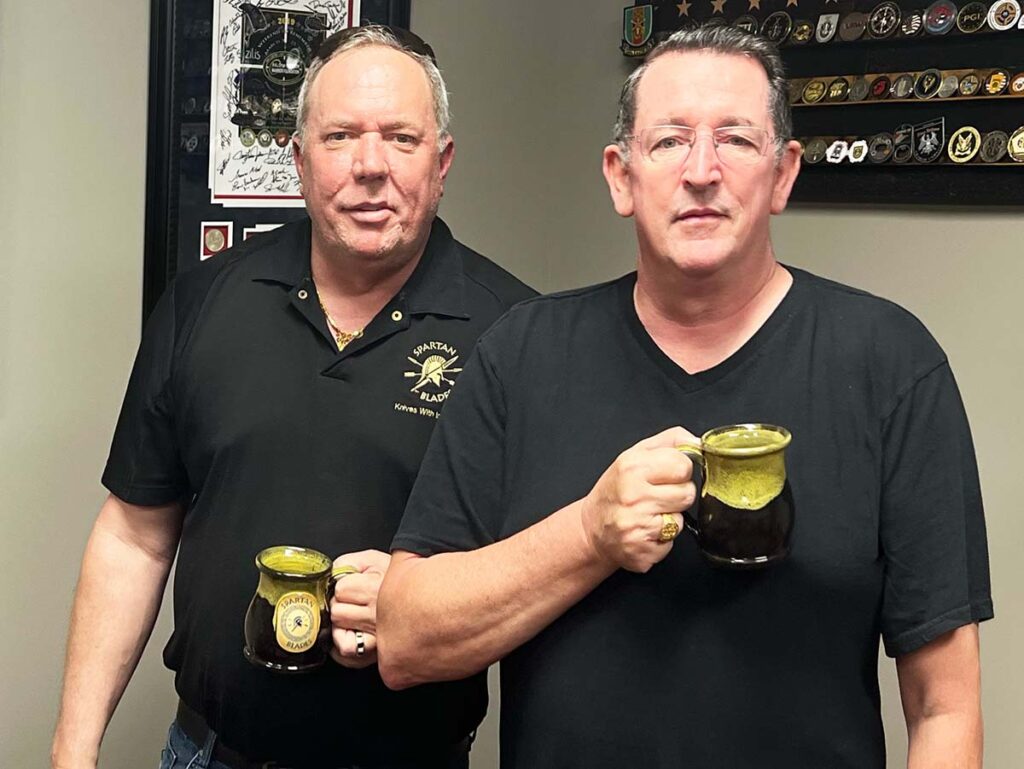
Spartan Blades co-founders Mark Carey (left) and Curtis Iovito (right) have traveled the globe for years, teaching counterterrorism and assisting with operations related to the use of knives in the field. When time permits, they search for the finest coffee from exotic locations for their Spartan Beans blends.

Through the years Curtis and fellow company co-founder Mark Carey have spent years traveling around the globe, teaching counter-terrorism and assisting with operations related to the use of knives in the field. And when time has permitted, they have searched for the finest cup of java available, whether in Malaysia or some other exotic location. The Spartan Beans blend includes the best from Colombia, Costa Rica, Africa and Sumatra.

“It’s like the United Nations of coffee, just more fun,” laughed Curtis.

Montana Knife Co. Backcountry Brew

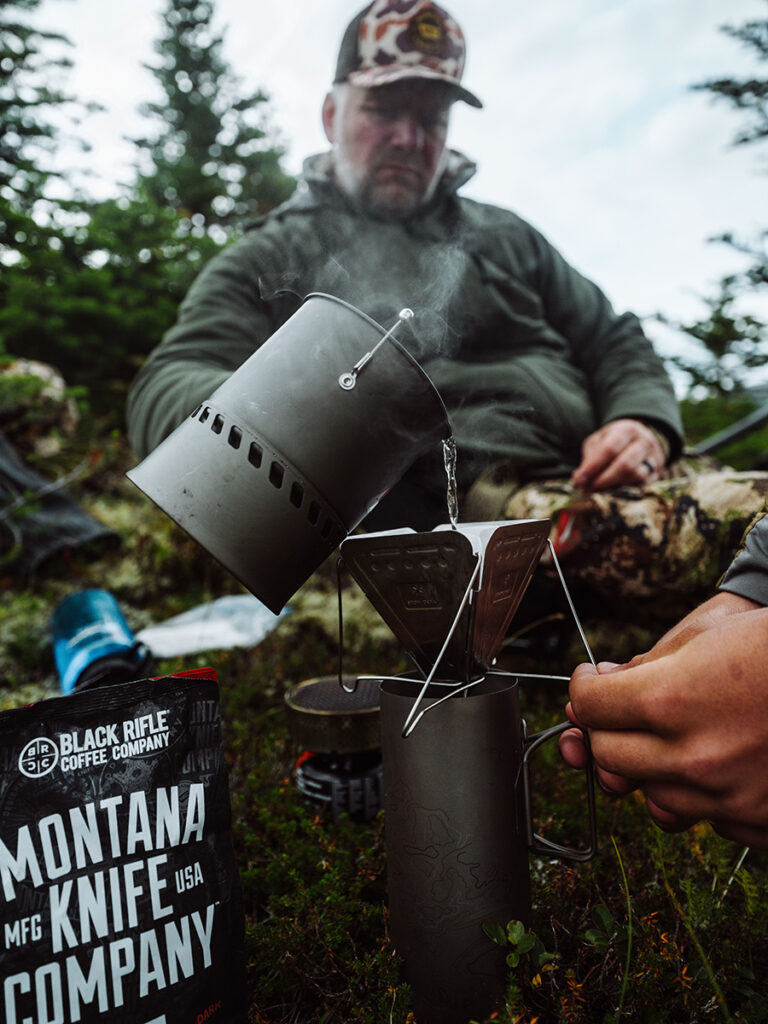
Noted Josh Smith of Montana Knife Co., “Hot, steaming coffee while freezing on a hunt tastes so good!” Montana offers its MKC X Black Rifle Coffee Signature Dark Roast in whole bean and ground 12-ounce bags.

A more recent entry into the coffee arena, Montana Knife Co. (MKC) entered into a partnership with Black Rifle in the fall of 2024. The packaging tells customers, “Fresh from the forge, this dark roast offers notes of dark chocolate with an aroma of spice topped off with a smoky finish. American brewed and crafted to perfection.”

Josh Smith, founder, president and ABS master smith at MKC, has found the kinship between knives and coffee to be compelling.

“Over the years, I became friendly with the owners of Black Rifle Coffee Co.,” he said. “We share many of the same beliefs around love of our country and support of our active-duty soldiers and veterans. For the past few years, we have worked with them on some marketing-related promotions, but this was our first launch of coffee with Black Rifle.

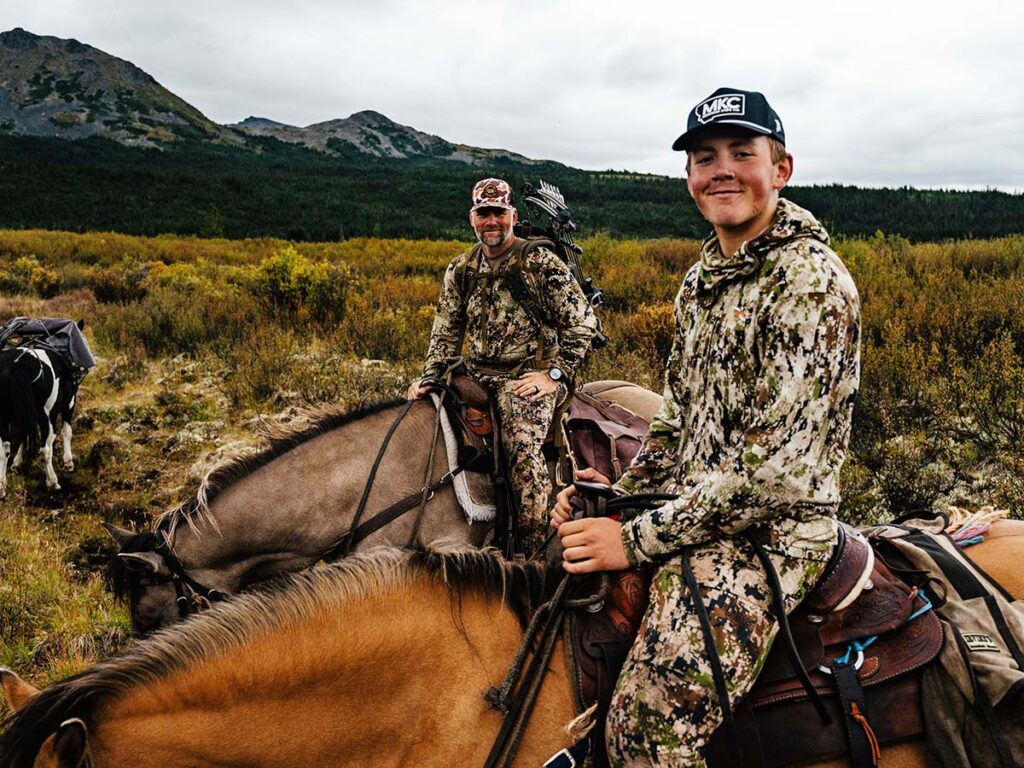
“Personally, I love coffee,” Josh emphasized. “For me, coffee and knives seem to be loved by so many blue-collar workers. Clearly, white-collar people drink coffee too. But I think back to my grandpa or my dad, and they always started the day with a cup of coffee before going off to work the ranch or in a backhoe. That same guy always had a knife in his pocket. The best place I’ve had Montana Knife Co. coffee is in northern British Columbia on a horseback moose hunt with my son [Hank]. For 10 days, it was rainy and cold. But each time we sat down to rest we made coffee with our jet boil. Hot, steaming coffee while freezing on a hunt tastes so good!”

Josh Smith (left) said the best place he’s had MKC coffee is in northern British Columbia on a horseback moose hunt with his son Hank (right). “For 10 days, it was rainy and cold,” he recalled. “But each time we sat down to rest we made coffee with our jet boil.”

Montana Knife Company offers its MKC X Black Rifle Coffee Signature Dark Roast in whole bean and ground 12-ounce bags.

For many consumers, the blend of the knife and the good cup of coffee just comes natural. Now, it’s easier than ever. Exploring the best in cutlery and coffee simply enriches the experience with both.

More On Knife Business:

Portable Knife Sharpeners: Sharps On The Go

Three options to stay keen when you’re out and about.

Active lifestyles often need specialized tools. Out hiking, camping or hunting, a workbench instrument is out of place. This is especially true for one of the most vital pieces of knife kit—sharpeners.

In recent years, the market has trended toward larger bench-mounted sharpeners that, while dynamite at extracting a precise edge, are all but impractical in the field. Out and about, a solid portable sharpener is more than worth its weight in gold. Even better, for those who take a more minimalist approach to edge-maintenance equipment, most mobile sharpeners are more than capable of serving as primary tools for bringing a knife back to life.

Given this isn’t the time of Charlemagne, this class of sharpeners should have an angle guide integral to their design, eliminating guesswork. And since they’re less elaborate, portable sharpeners should be cost-effective, as well. You do not want to spend a ton on something that might be lost. Most of all, these options should prove easy to tote around, be it in a pocket, tool pouch, vehicle glove compartment, backpack or anywhere else you want to cram one.

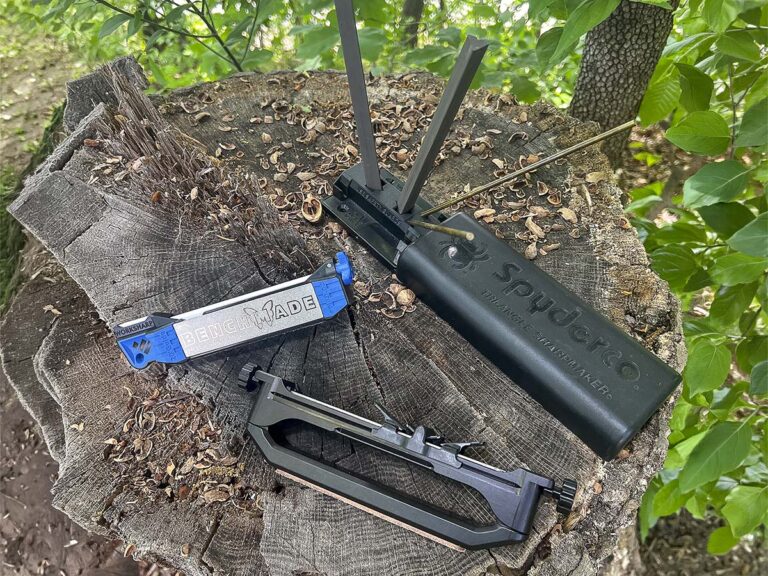
There are plenty of portable sharpeners available today, but in our trials, we found the following a cut above the rest.

Wicked Edge Venture Pro WE26

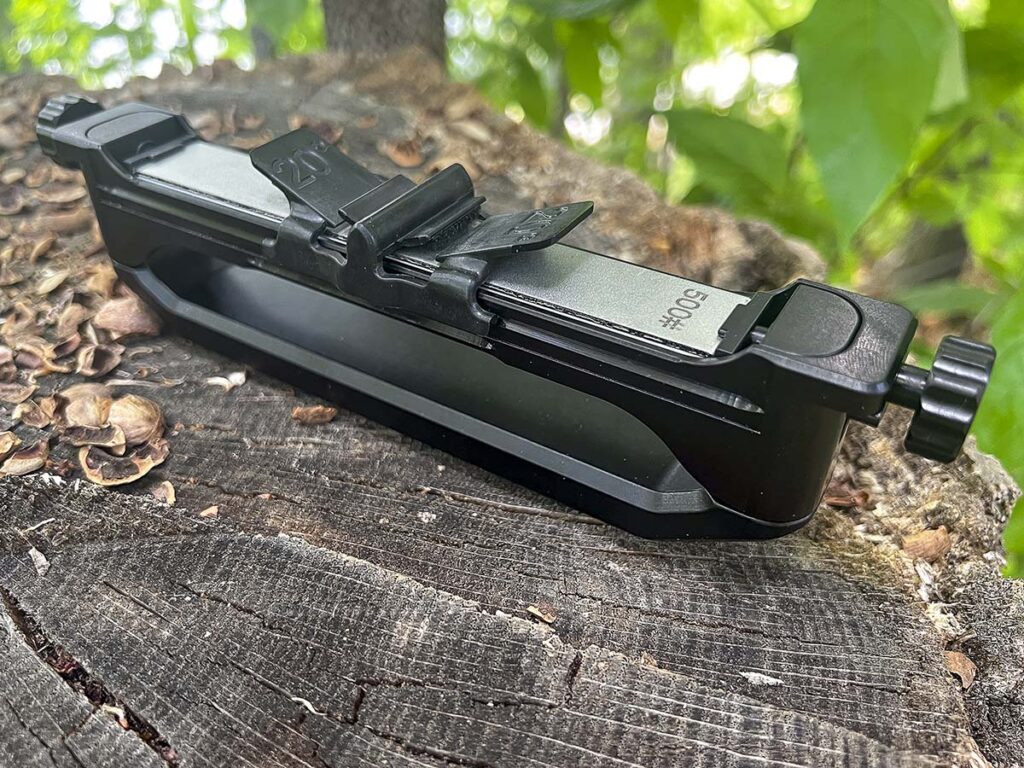
The Wicked Edge Venture Pro features a movable 20-degree angle guide that helps to keep your angle consistent, so that even beginners can achieve desirable results. And while not quite pocket sized, the until is perfectly proportioned for sharpening on the go.

Wicked Edge, primarily known for its high-end guide-honing systems, has recently turned its discerning eye to mobile sharpening. The result is the Venture Pro WE26. While more compact than most everything else the company offers, it is no less effective.

Starting with the build quality, Wicked Edge has constructed a system built to last. The Venture Pro’s frame is sturdy T6-6061 aluminum alloy, keeping the unit relatively light, yet extremely durable. The company holds the system together with stainless steel screws and a tension spring. And the honing surface is a double-sided diamond-coated steel plate—if you drop one, you don’t have to sweat it shattering. A cam system holds it in place and allows a painless switch between sides and grit size—500-grit diamond and a fine-grit ceramic. A plus. Yet this is only part of the sharpener’s selling points.

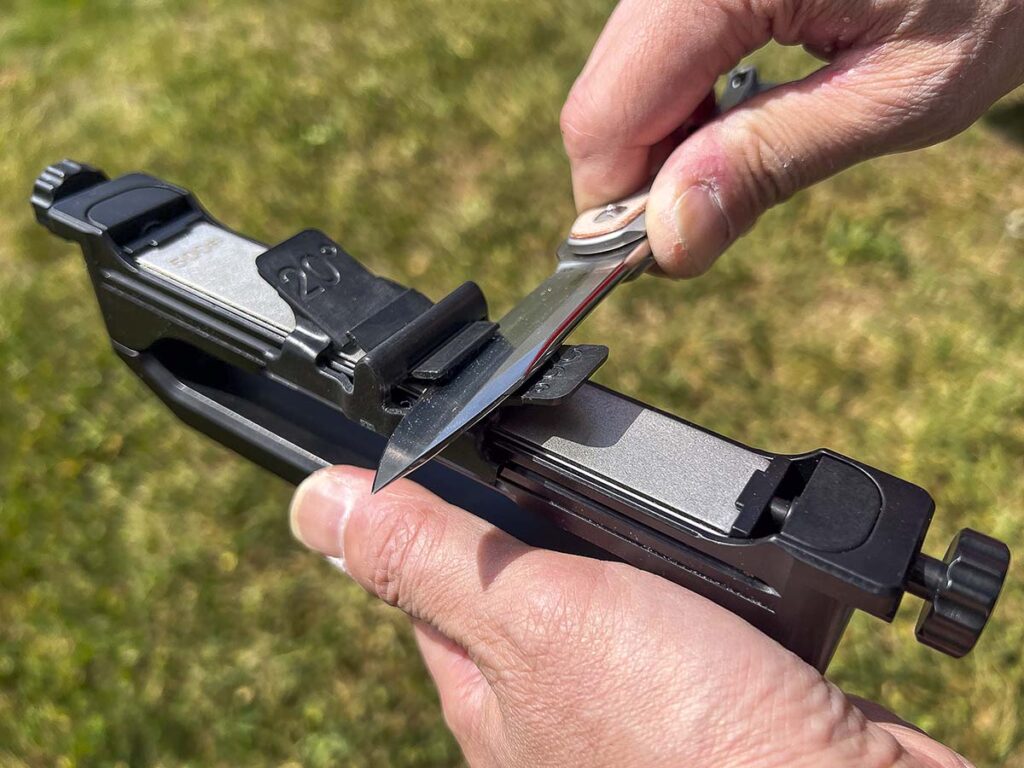
What really grabs attention is that the Venture Pro is a railed angle guide. The system is slick, essentially allowing you to pull your knife through, while the guide maintains a consistent 20-degree angle over the entirety of the sharpening surface. This element of the system deserves mention in and of itself. It is molded from a thermoplastic blend of POM (Delrin) and PTFE (Teflon), the result is a slick surface that all but guarantees a smooth stroke on each pass. The guide is removable and has a storage position on the rear of the sharpener for easy storage in a more compact configuration. The final perk, the unit includes a leather strop and a built-in guide on the rear side, so you can hone a blade to a mirror finish.

The Venture Pro features both 500-grit diamond stone and ceramic honing surface, as well as a leather strop. Wicked Edge sells other grits and different angled guides, to tailor the system to your knives.

The Venture Pro definitely isn’t pocket-sized, but it is small enough to be considered portable. Its size is a plus in this respect; it’s large enough to tackle a wide range of knife types and sizes. I found the system easy to master over the course of several sharpening sessions with pocketknives, tactical folders, kitchen knives and even scissors. The routine is simple: place the blade into the guide as far up to the tang as possible, draw the knife through while moving forward and repeat on the other side. The angle guide slides so easily across the frame of the sharpener that it almost feels like it’s not even there.
 
Given that the 500-grit side is diamond, I did not have to apply a ton of pressure to achieve the desired results. And, if you’re sure of your freehand skills, the guide can be removed to speed up the process.

At home, at camp or anywhere, the Venture Pro works every time to provide you with a guaranteed sharp edge. As a bonus, several other plates with different grit sizes are available as well as different angle guides (15, 17 and 25 degrees), in case you have a particular system you want to adhere to. No matter what, this made-in-the-U.S.A. sharpener has an edge.

Venture Pro Specs
Frame Material: T6-6061 Aluminum Alloy
Sharpening Material: 500-grit diamond stone, ceramic hone and leather strop
Weight: 10 oz.
Sharpening Surface: 8.25”
Features: Continuous 20-degree angle guide, integral handle
Country Of Origin: U.S.A.
MSRP: $189

Spyderco Sharpmaker

Absolutely time tested, the Sharpmaker has been a honing mainstay for a spell—namely because it works so well. Very simple in design, the portable sharpener features course and fine grain sharpening rods that can be set for a 20-degree edge and simply requires a downward stroke to do their business.

Spyderco’s model 204 Sharpmaker is a versatile, made in the U.S.A. sharpener and could be a primary sharpener on its own. But it’s how it breaks down, with all its hones nestled in the base, and the cover snaps over all of it, fully encasing the stowed sharpener that makes it a top choice for a portable sharpener.  

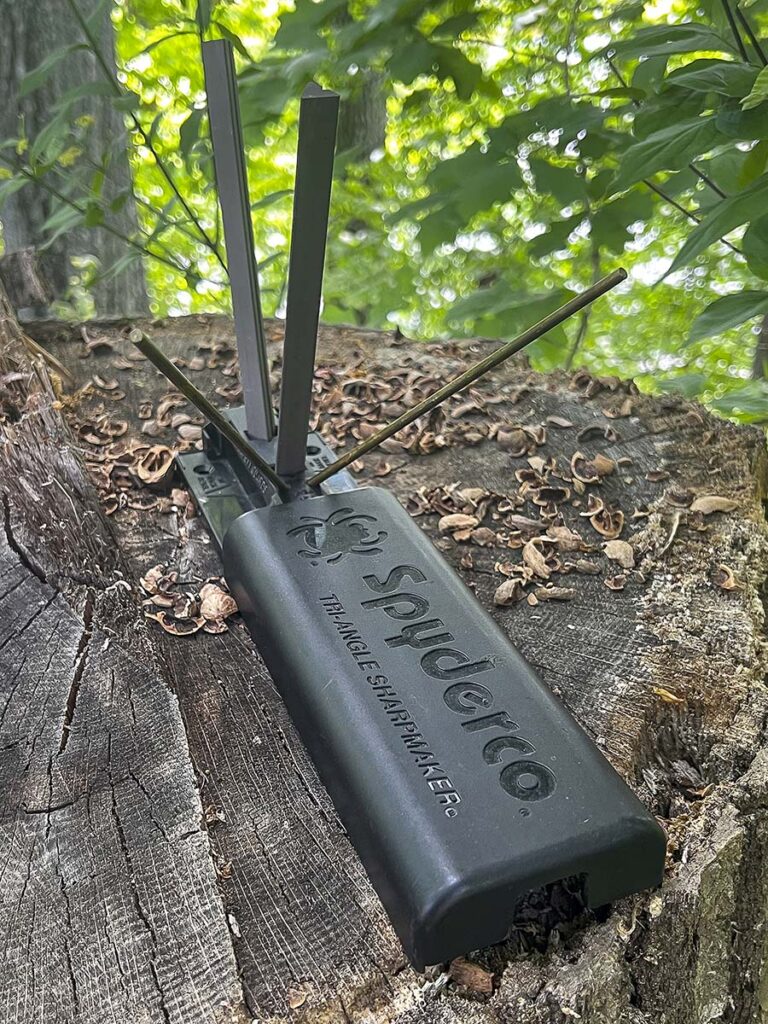
The Sharpmaker utilizes two pairs of alumina ceramic rods—medium grit (brown) and fine grit (white)—held in the plastic base at a 20-degree angle, forming a “V” shape. The proper way to use this is to hold your knife to where the blade is perpendicular to the tabletop and then, starting at the blade tang end, place the blade onto the home and, in one motion, travel down the hone and at the same time pull the blade toward you. Gentle pressure is generally all that is required to achieve a sharp edge. As an added safety precaution, Spyderco includes two brass protection rods that prevent cutting your hand while holding the base.

The Sharpmaker’s design allows you to sharpen on any flat surface—tabletop, workbench, desk or even the tailgate of a pickup truck. Making the tool extremely convenient, the alumina ceramic rods do not require lubrication with oil or water. Though they do require occasional cleaning. The rods darken over time due to swarf collecting on the surface. Scotch-Brite pads and powder sink cleaner make quick work of this fouling and restore the sharpening surface. Another cool feature of the Sharpmaker is the two grooves on the bottom of the base. This allows you to set any two matching hones into the base, with their flat sides up for a makeshift bench stone.  

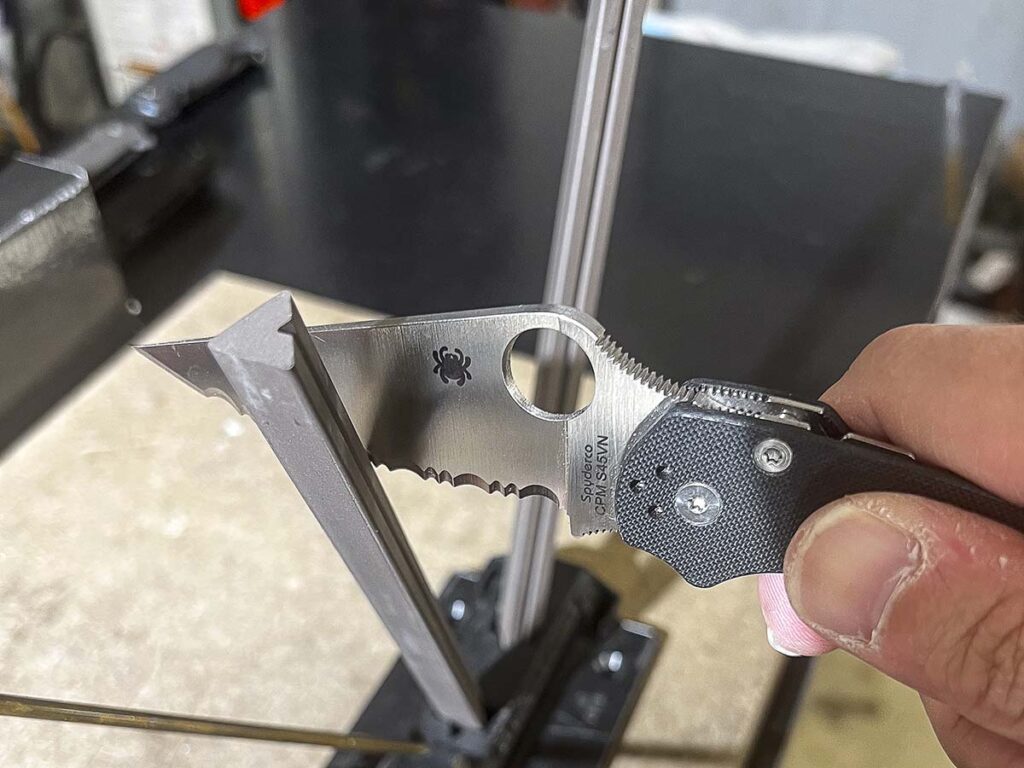
The Spyderco Sharpmaker 204 is the best sharpener to use with serrated knives, as it is easy to set up, easy to use and doesn't use oil or water for lubrication. The points of the triangular-shaped hones capture each tooth in the serration pattern effectively.
The Spyderco Sharpmaker 204 is the best sharpener to use with serrated knives, as it is easy to set up, easy to use and doesn’t use oil or water for lubrication. The points of the triangular-shaped hones capture each tooth in the serration pattern effectively.

The triangular shape of the hones was done on purpose and is a brilliant design. When you set up the honing where the flat sides face each other, the Sharpmaker effectively sharpens plain-edge blades. Rotate the hones so that the points face each other, and the Sharpmaker easily addresses serrated knives.

How well does the Sharpmaker work? Simply put—very well. It’s a must-have if you own any serrated knives, but as I said earlier, it will work just as well on plain-edge blades.  The sharpener is easy to set up and easy to use. There’s no mess since you don’t use fluid for lubrication, and it breaks down into an ultra-compact form factor that stows easily.  

Sharpmaker Specs
Frame Material: ABS plastic base
Sharpening Material: Alumina ceramic stones
Weight: 1.4 lbs.
Sharpening Surface: 7”
Features: Plain edge and serrated sharpening surfaces
Country Of Origin: U.S.A.
MSRP: $127

Benchmade Guided Field Sharpener

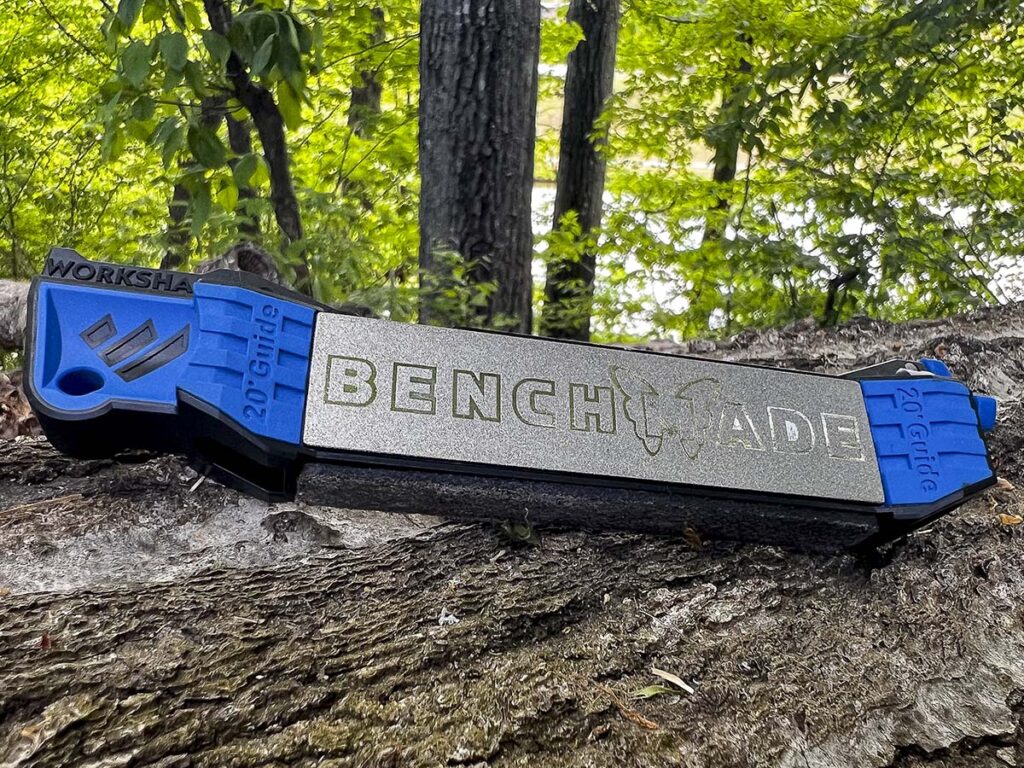
The Benchmade Guided Field Sharpener packs a lot into a small and affordable system. In addition to an integral angle guide, the system includes a diamond-infused sharpening plate, ceramic honing rods and a leather strop.

The Benchmade Guided Field Sharpener is the ultimate compact sharpener that is packed with so many features that you must use it to believe it. The unit is manufactured for Benchmade by Work Sharp, so it comes with a pedigree of a company that knows a thing or two about sharp cutting edges.

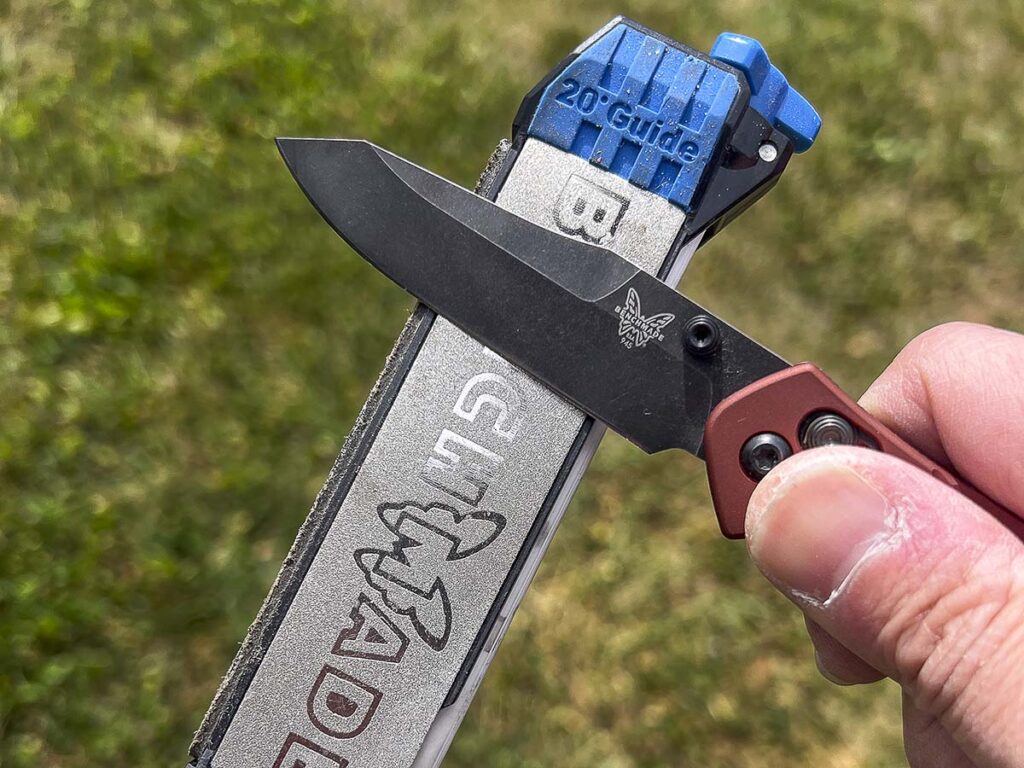
What you get with the Guided Field Sharpener (GFS) are coarse and fine diamond-coated sharpening plates held onto the body using rare-earth magnets. You also get a fine-grit ceramic rod for quick touch-ups. This rod has two sharpening surfaces—regular and ribbed, which are for more aggressive honing. You also get a smaller diameter ceramic rod, which addresses serrations. On top of all this, the unit has two sets of integral angle guides set permanently at 20 degrees. Finally, at one end of the sharpener frame is a leather strip for the final polishing of your edge. Folks, what you have right here is a comprehensive sharpening system in a pocket-sized form factor.  

While the Guided Field Sharpener works very well on folding hunters, tactical folders, multi-bladed pocketknives and some smaller fixed blades, it also handles larger blades, such as kitchen knives, as well. You must be mindful when working with a larger blade on a smaller sharpener and move the blade more efficiently to cover the entire cutting edge in one stroke.

The Benchmade Guided Field Sharpener is made by Work Sharp and was designed as a comprehensive compact sharpener to take with everywhere. Aside from its accoutrements, one of the more desirable features of the tool is its lightweight, coming in at less than 5 ounces.

Using GFS is simple, you lay your blade onto the angle guide, then hold the handle steady and move the blade across the surface of the plate. You do need to remain conscious of your angle, as the guide only starts you at the right incline. Generally, you’ll start with the diamond hone to establish the edge, followed by the fine grit to define it. Finally, a few swipes on the ceramic rod, along with a finish on the leather strip, result in a hair-popping sharp edge.

Overall, the Benchmade sharpener is sized perfectly for everything from a rucksack to a coat pocket. It’s a powerful tool in a compact package, and a value. To this, it’s worth noting that the GFS is assembled in the U.S.A. from foreign and domestic components.

Guided Field Sharpener Specs
Frame Material: Polymer
Sharpening Material: Diamond plates, ceramic rods and leather strop
Weight: 4.7 oz.
Sharpening Surface: 6.87”
Features: Integral 20-degree angle guide
Country Of Origin: Assembled in U.S.A. from domestic and foreign components
MSRP: $50

More On Sharpening:

Finding The Best Penknife For Practical Modern Use

While no longer required to keep lines of communication open, the utilitarian penknife continues to prove its EDC cred.

The penknife is a tool that has grown to fit our needs for centuries. It used to be an item that was in the pocket or purse of just about every individual alive, but today is easily confused with multi-tools and ‘Swiss Army’ knives.

The penknife is the ancient great-granddaddy of EDC knives, it was not just an EDC knife like we understand today in our assist-open or fixed blade defines knives, rather it was an edged tool that accomplished all daily chore-cutting, from maintaining writing utensils to working on small game.

History Of The Penknife

The original penknives were created to help maintain quill pens, the kind you see in movies made from feathers. These were called dip-pens, as they were dipped into ink to write with. The tips of these pens were shaped with penknives. As the quill lost its integrity from use, the tip was reshaped until it was depleted.

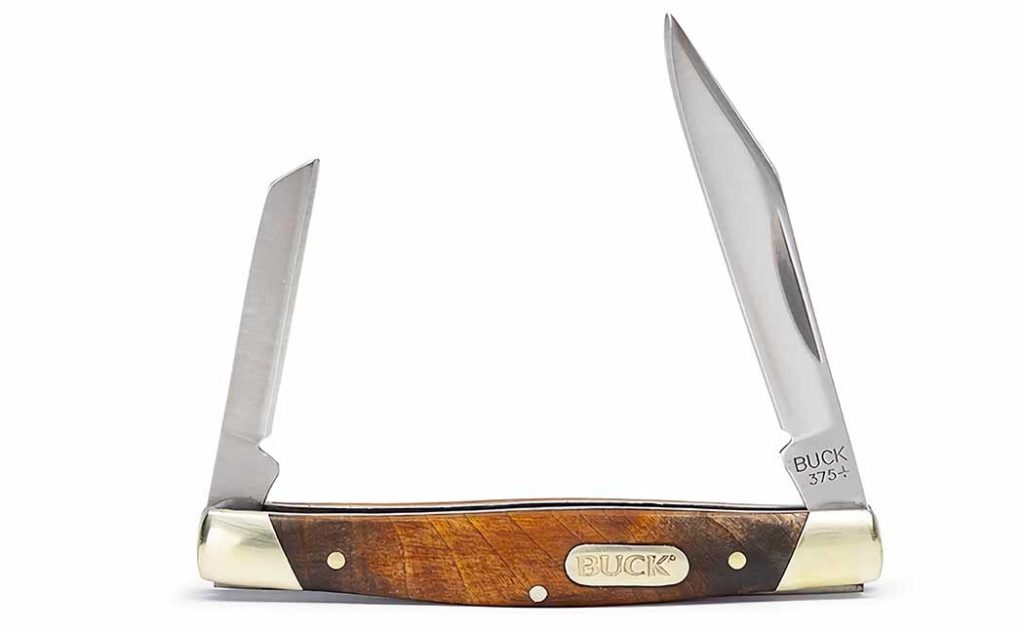
Buck 375
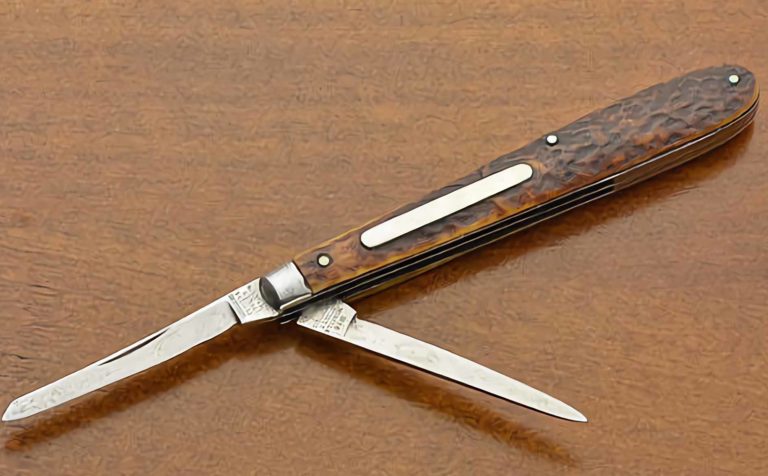
Though fairly modern, the Buck 375 Deuce closely resembles what most think of when it comes to a penknife. On one end a small pen blade (in this case a coping blade) and the other a clip point.

The penknife was small, usually only a few inches long with a fixed blade. They remained in their original form for much of history until the 1700s saw some variation as pencils began to appear on the scene, though in limited numbers. Interestingly, the knives excelled as the maintenance tool of the newer writing implement. Through World War 2 the penknife was considered the most functional and least wasteful means to sharpen a pencil. The British famously banned the use of mechanical pencil sharpeners in the war due to how quickly they consumed graphite and wood.

The last major leap forward in design changes came in the mid-1800s when penknives commonly become folders, where they remain today as a standard design element. These knives rarely had any kind of locking mechanism, and even today many are simply opened with a nail nick and held open with a slipjoint design. The pen blades were later combined with larger blades, usually, clip-points and the utility was expanded beyond simple maintenance functions.

Traditional Penknife Design Points

The penknife in its double-blade form became standardized into one of two categories, those being knives with blades mounted at each end of the grip and those with two blades mounted on one end. The latter is referred to commonly as a ‘trapper’ style, itself a design that has a following even today.

The penknife reached something of a crossroads in the modern era. Knives have always been used for regular tasks, however, as pocket knives changed they diverged from multi-tools. Penknives can fall into either category depending on who you ask, some consider any small, sub-3-inch folder to be a penknife, while others would happily call a Leatherman tool a glorified penknife.

The tool aspect is something that blurs the line today, the original utility was as a tool, but in adding more tools to create more function, it moves into a new category…or does it? As we are about to discuss, the penknife isn’t one particular thing. It is what we need it to be.

Practicality Of The Modern Penknife

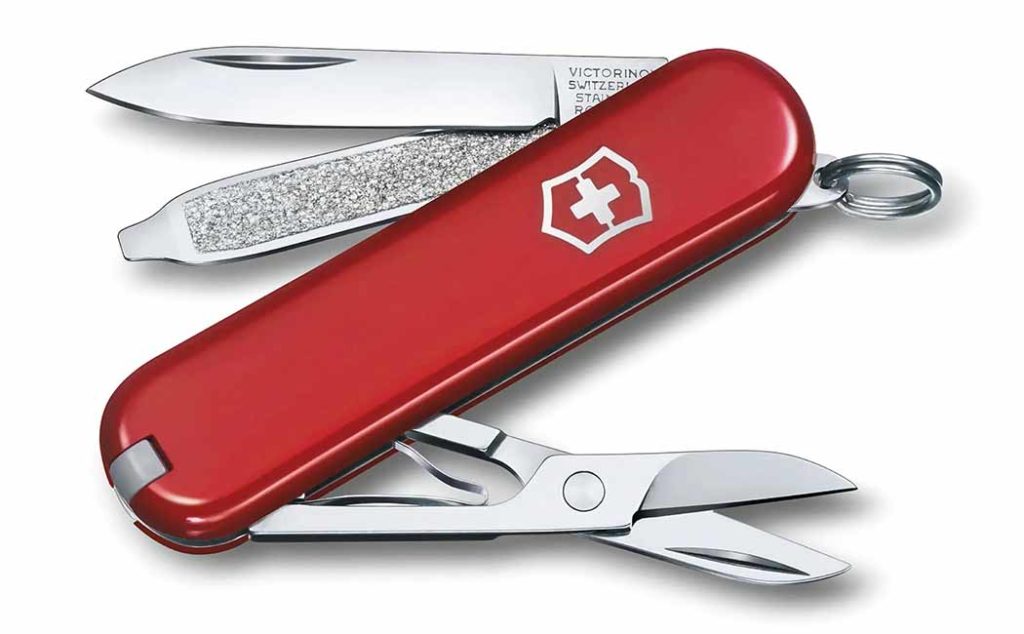
Victorinox and its classic SD model set up the penknife as a multi-function tool as opposed to a task-oriented specialty item. Some would argue that a true penknife is simply that, a penknife and any added function beyond maintaining quills or pencils move it from this category. That is not something that has legs to stand on in the author’s opinion, as the entire original premise of the penknife has been thoroughly antiquated as quill pens fell out of use.

Victorinox Classic SD
The Victorinox Classic SD is likely what comes to mind when talking modern penknives. Though, does the extra utility of the knife cross the line from pen to pocketknife?

The pen blade was functional for general use, but then again so was the larger blade. So what to keep? Many of these multi-function knives still carry two blades of different styles and lengths, however, nobody but perhaps a few dozen individuals worldwide are using modern penknives to maintain quill pens. The inclusion of pen blades on these knives is, as of 2023, purely ceremonial or simply a callback to what many see as a necessary feature. Adding things like scissors or a file was the first step in making these small knives functional for regular life, which was of course their original intent, but life changed beyond their utility.

As materials have evolved, so have the strength and utility of these small blades. Despite this,  penknives are not for heavy lifting. It is beyond its role to pry, baton, or otherwise abuse these small knives, but it should be your expectation it hold up to regular use in a light-duty setting.

The penknife today should be thought of as a companion tool and that very much depends on what you do with your life. If you don’t want scissors in yours, they make a variety without. If you need a bottle opener, you’re covered. Hell, if you need a can opener, Boker makes a great replica Japanese version that includes one.

The penknife is the knife for your life, and even if you aren’t trimming feathers, you will certainly benefit from one of these clever little knives.

Traditional Style Penknife Options To Write Home About

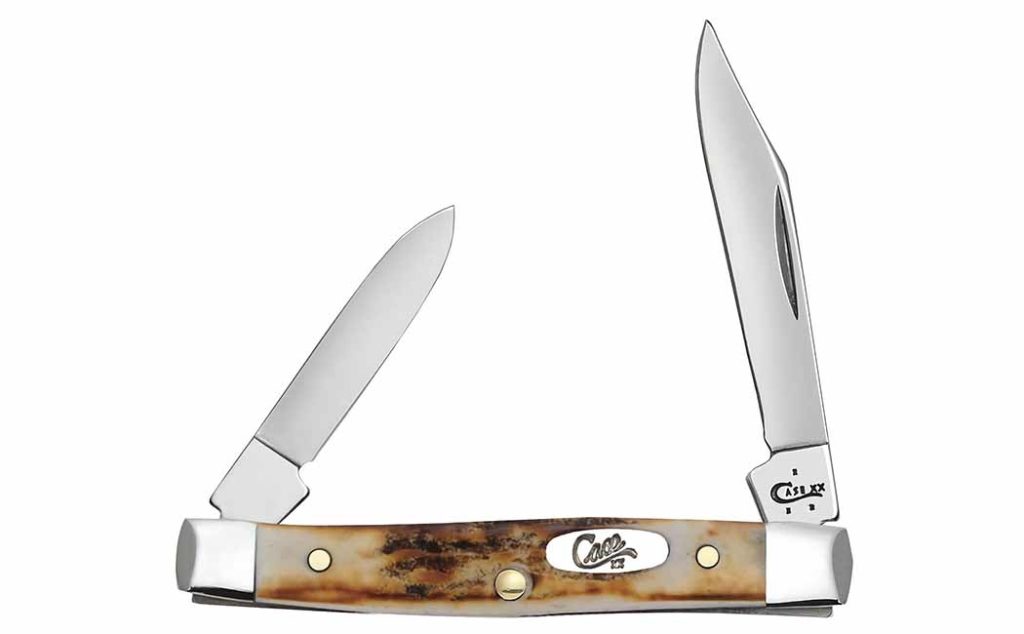
Case & Sons Small Pen w/Stag Grip

Case Penknife

Case has been making pen knives since time started. Well, probably not that long, but they have been the leader in the category for decades. Just about every hardware store across the country has a Case display hosting the company’s various small pocket knives, among them their famous penknives.

The knives are available in a variety of styles, however, the standout example of a penknife is their Small Pen with stag scales. The knife features two blades, one at each end, and it is just about as classic as you can imagine. It has one pen blade and the other a functionally designed clip point. Despite being a rather benign presentation compared to today’s advanced materials, you’ll never want for function with this old-school setup. For all light tasks you are covered, and to make it better, chances are your granddad carried this exact knife… or at least one very close to it.

MSRP: $106

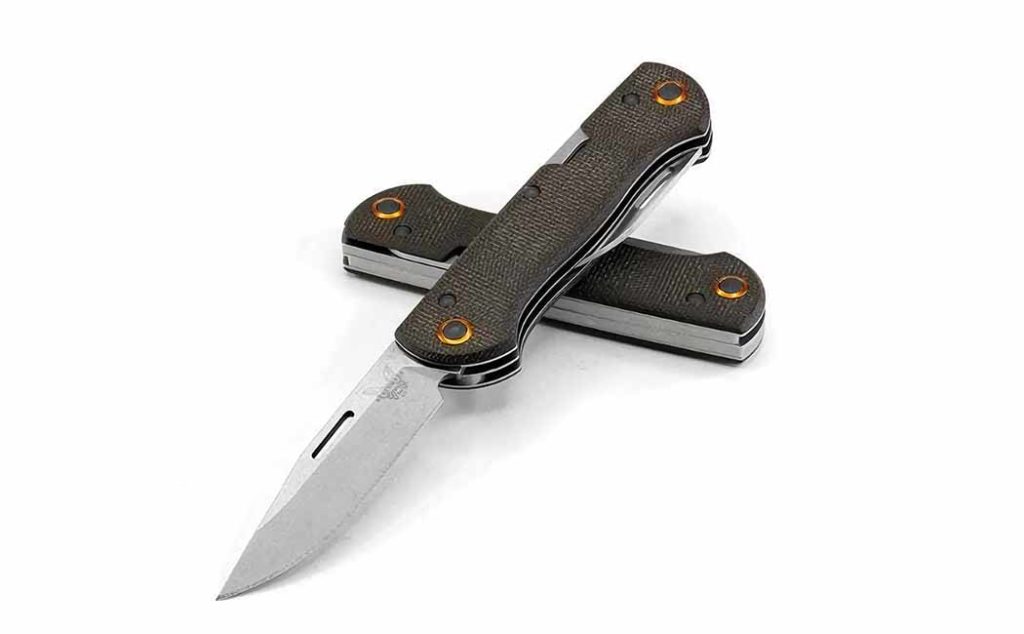
Benchmade 317-1 Weekender

Benchmade Weekender

Benchmade manufactures a dizzying number of knives, however, each is very well thought out and of extremely high quality. While not exactly a penknife in the strictest sense, this modern twist has a bit of added function and pizzazz. The Weekender is designed as the perfect weekend companion and has features that make it great for light tasks. It is great for work on small fish or small game and is also equipped with a bottle opener, because let’s face it, you’re probably going to be killing beers more often than you’re going to be killing game.

The knife is finished in green micarta and bears flashy copper-colored accents. It has just the right amount of flair to match the rest of your daily gear but isn’t made of easily damaged materials. Think of this little guy as the ultimate modern penknife. It is the most expensive option listed here, but it is arguably the strongest and sharpest of the bunch. For what it’s worth, these are advantages of a small knife where cutting ability is limited and strength is lacking.

MSRP: $275

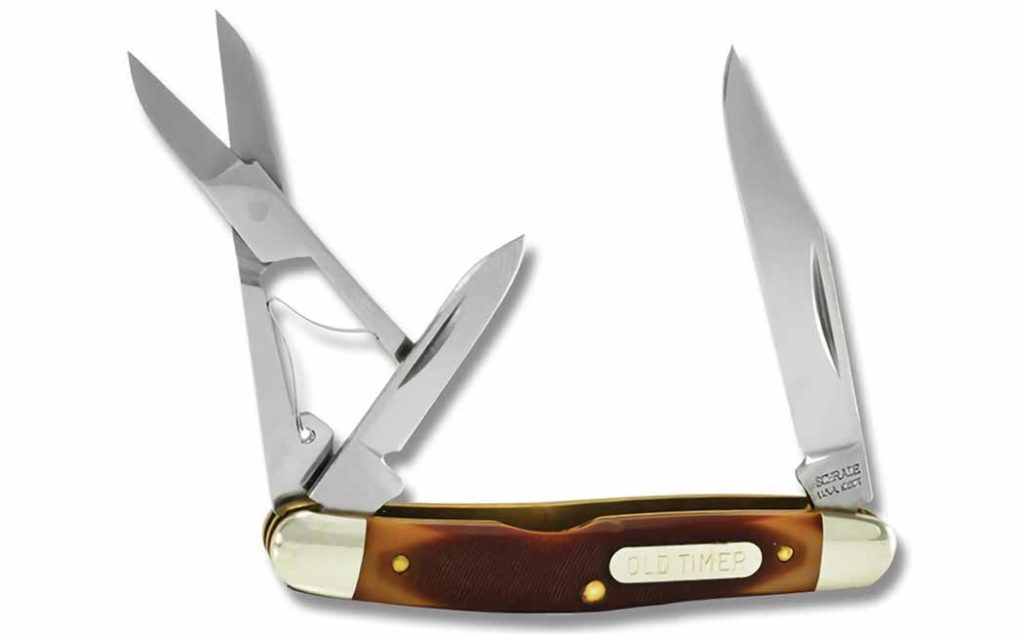
Schrade Old Timer

Schrade Old Timer

In the world of penknives, there is little room for variation except in price. These small knives are not designed for the strength of heavy work, and in some cases, they are made to a standard that more closely resembles their class in terms of cost.

The Shrade knife here retails at under $20, making it a fraction of the price of some on this list. It has a clip-point blade as well as a pen blade and a pair of small scissors. For the duty of a penknife, you don’t need to spend more and this will last you years if used accordingly. Light duty is something that needs to be stressed here, but at this low cost, you won’t be out much if you do break it. Shrade priced this right to be bought and used, and it makes a great gift or stocking stuffer for that hard-to-buy-for person in your life.

MSRP: $19

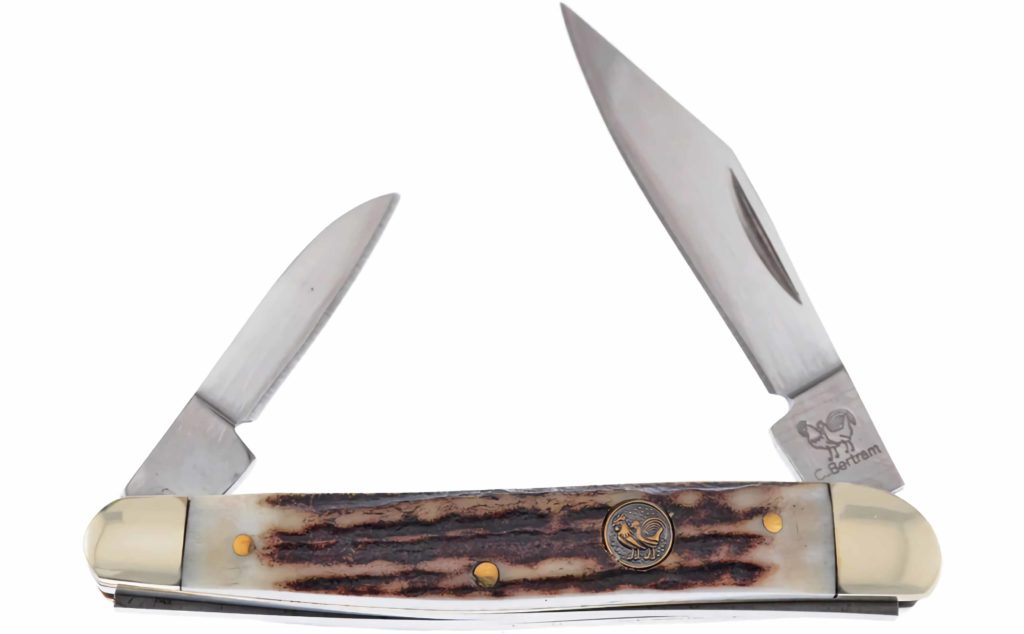
Hen & Rooster Stag Penknife

Hen & Rooster Stag Penknife

Hen & Rooster knives are great, medium-cost alternatives to Case or other penknife brands. The company is not as well known as the others on this list, but they make a great product that rivals all in quality and appearance.

Its stag-griped penknife is extremely simple and priced right for someone looking to have a nice knife with real materials as opposed to lookalikes or plastic stand-ins for antler. The knife features both clip point and pen blades and is exactly how you figure a penknife should look. Stag isn’t the only material offered for grips, and the company has a tremendous number of models and variants available.

MSRP: $45

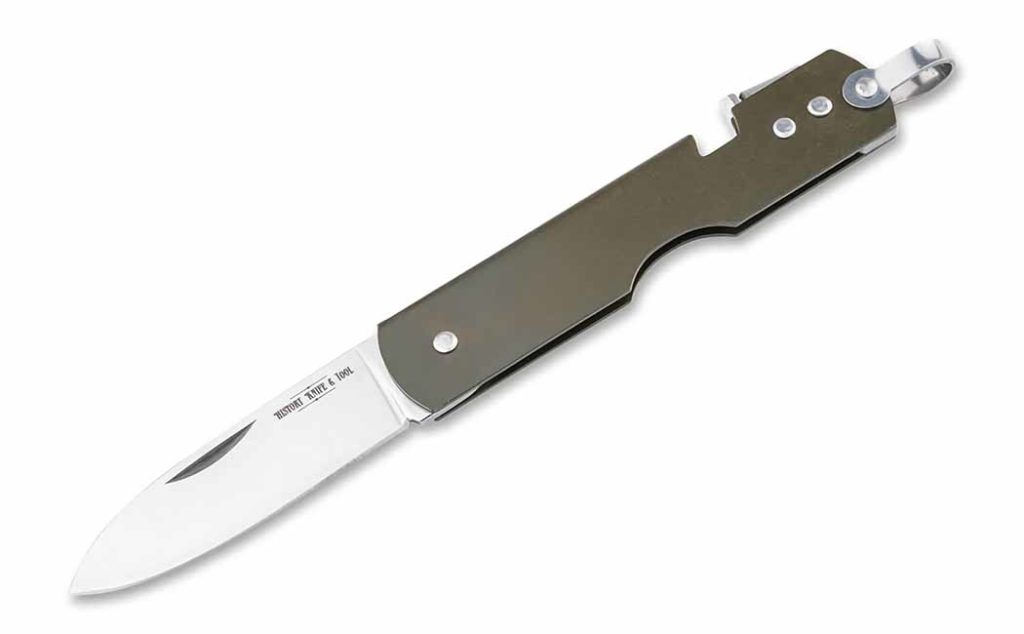
Boker Historical Japanese Army Penknife

Boker Japanese Army Penknife

There is a long history of small utility knives integrated with other tools to make them just a bit more functional. This offering by Boker is a replica of a Japanese army penknife that has an integrated bottle and can opener. This penknife served to open rations and prepare food in the field and it is good for just about anything minor.

It is an exceedingly slim knife in all proportions, the single blade being just 2 inches. The blade folds into the steel frame, itself just slightly wider than the blade itself. History buffs may not be aware of this little tool, but they sure will love it when they open it. Boker has a winner here, and to boot, they also have a Japanese multitool and other historical knives should you want to start collecting modern replicas you can use in your daily life.

MSRP: $30

Check out More of Our Buyer’s Guides

Knife Maintenance: The Pros Share Their Tips

0

Know how the pros keep their knives and sheaths in tip-top working order.

Tricks of the trade, the go-to products, and the techniques that stand the test of time and use are beneficial for those of us who put our knives to work around the house, at the office, on the farm and in the field. Keeping the knife in top-notch working order eliminates frustration and failure when it’s time to get a job done.

Fighting Corrosion

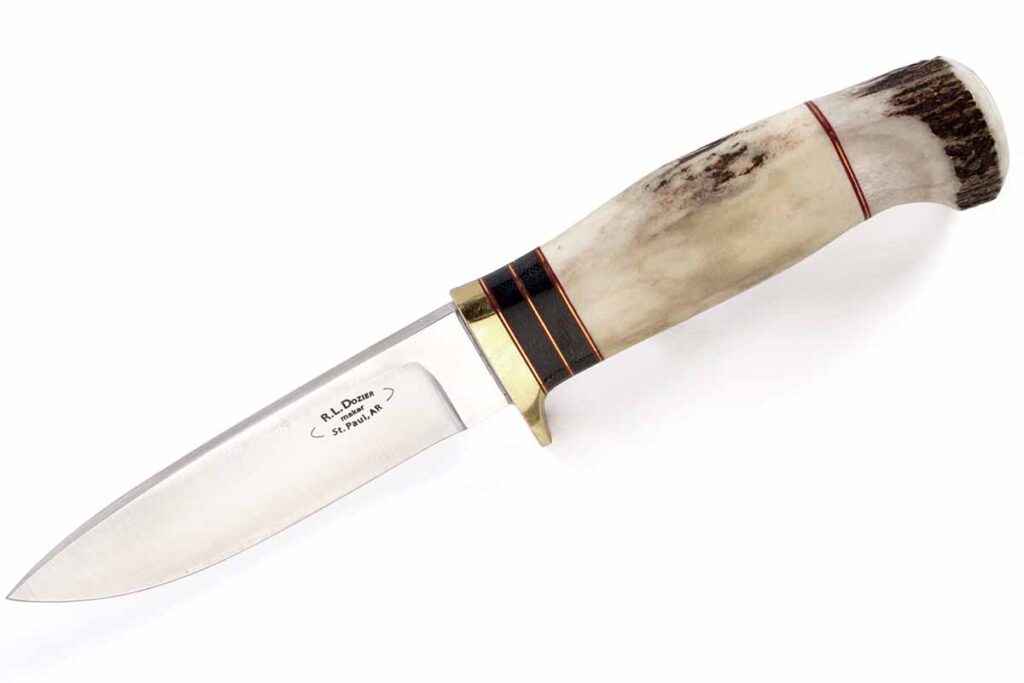
Fighting the battle against rust is ongoing with carbon steel. Long-time custom knifemaker Bob Dozier said, “Wipe the blade off. I’ve carried a folder since 2014 and use it every day. A lot of it depends on how the maker heat treats the blade.

“I established my reputation with D2 steel,” Bob continued, “and there are a lot of steels that hold an edge a little better, some that are more corrosion resistant, and some that are tougher, but just keep it clean and it won’t rust—the chrome on the outside is a few atoms thick. D2 is bright at first but will take a little bit of a dull look. Don’t worry about that in a using knife.”

BLADE Magazine Cutlery Hall-of-Fame® member Bill Harsey says oil the blade as well as part of routine knife maintenance.

“The one oil I use on folding knives is Kano Aerokroil,” he noted. “It’s a true oil and does not evaporate. Clean the knife and put it away dry after using it.”

 Bob Dozier's D2 Steel
As Bob Dozier noted, he established his reputation with D2 steel. “Keep it clean and it won’t rust—the chrome on the outside is a few atoms thick,” he explained. “D2 is bright at first but will take a little bit of a dull look. Don’t worry about that in a using knife.” The blade of Bob’s Sisu has a D2 core laminated with sides of 410 stainless steel.

If that troublesome tinge of rust does show up, Bill Claussen of Northwest Knives and Collectibles reaches for a polishing cloth and paste. In more extreme situations, steel wool or wet/dry sandpaper can get the job done.

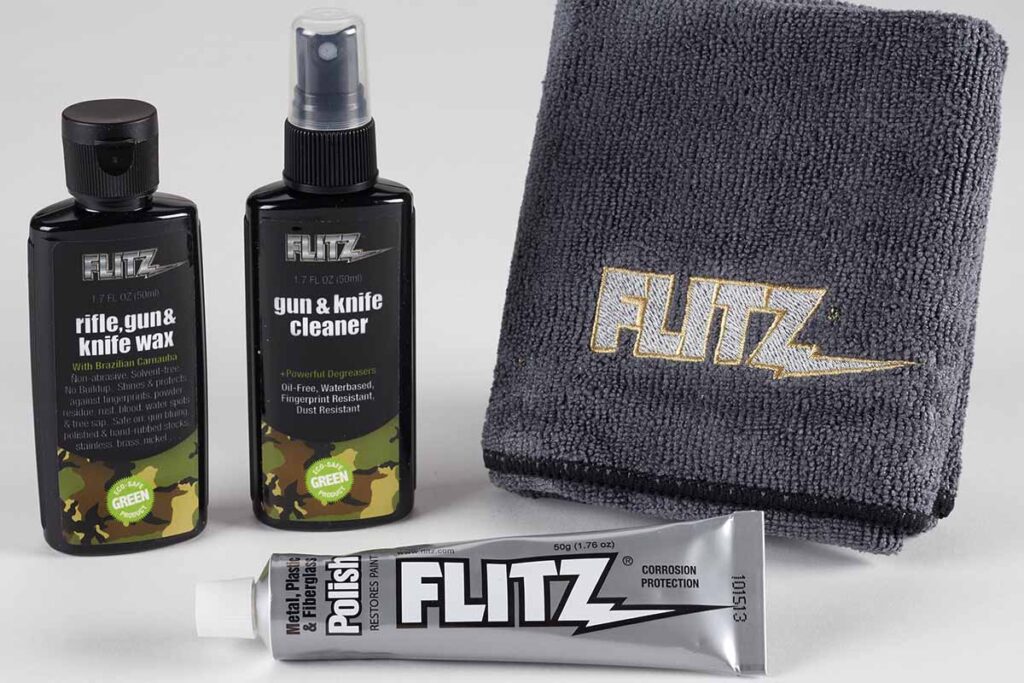
“We use Case’s Paste Metal Polish or Flitz Polish as a metal paste and corrosion protectant,” he remarked.

Other techniques and favorite products to prevent or remove rust include the careful use of steel wool when necessary, a preventive application of 3-in-One Multi-Purpose Oil, the combination of oil and Renaissance Wax, Wicked Wax, and even regrinding and repolishing in an extreme situation when pitting is present.

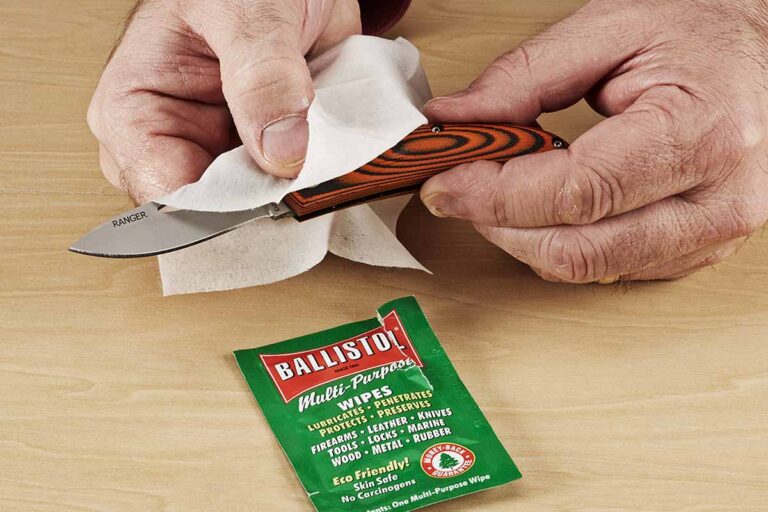
“I like 3M pads to remove rust on our malnourished edges out in the bush,” related bushcraft pro/knife designer Joe Flowers, “along with rust erasers for those fine knives some clients bring out with them. Ballistol makes good stuff including multipurpose oil in small single use packages that can be handy during hunting season when I also have firearms.”

Screw And Bolts

Loosening a bolt or screw that has frozen is a frustrating situation, but there are a few products that ease the task and a trick or two to employ when necessary. Cutlery Hall-of-Famer Dan Delavan of Plaza Cutlery offered, “I use WD-40 and chase it with an oil if needed, such as Formula 23 knife oil.”

Cutlery Hall-of-Famer Steve Schwarzer added a proviso.

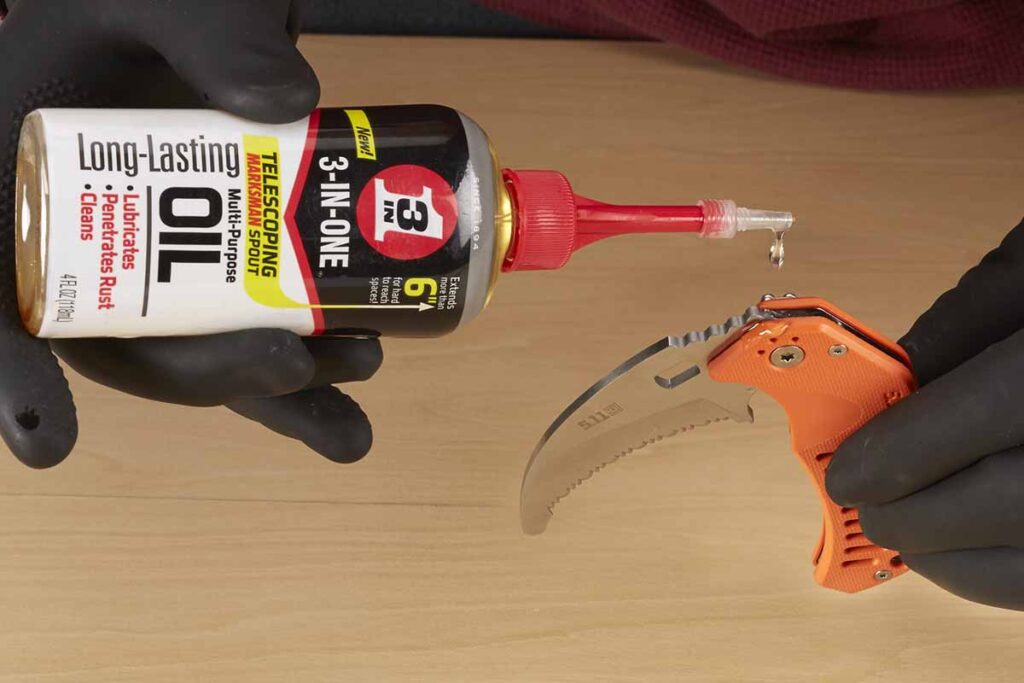
3-in-One Multi-Purpose Oil lubricating a knife.
Keeping folder pivots operating smoothly is just one application of 3-in-One Multi-Purpose Oil during knife maintenance. Applied to the blade and other steel parts, it also serves as a rust preventative.

“Normally that would mean using a penetrating oil, but the other thing you can do is set up a carbide drill fixture a little smaller than the diameter of the stuck screw and drill out the screw,” he wrote. “You can also use an induction heater and stick the knife in there to help spit the screw out. Heat will break down epoxy but don’t get it over 300 degrees. Unless you’re skilled I wouldn’t advise it, but it beats pressing the handle off and can save the material if you’re careful.”

For loosening blades or screws that have seized up, other noteworthy products include AutoBright, Kroil Penetrant, CRC Electrical Silicone lubricant and Marble Oil. “The Marble Oil is [inexpensive],” ABS master smith Harvey Dean observed.

“It works well to get something unfrozen and I used it on a pocketknife a while back. Anyway, if you put a drop of oil on the blade or joint once in a while it sure does help.”

Harsey has a great tip for loosening troublesome screws or bolts.

“I go right to the Kano Aerokroil to start the rehabilitation,” he commented. “A lot of people take folders apart when they don’t have to do that. Get a box of cotton swabs with paper stems and hammer their cotton heads flat to fit inside the small spaces of a folding knife. You can do that to oil the knife up or to clear gunk out of it. The cotton swab will show you what you’ve got without disassembly.”

Edge Maintenance

Keeping a working edge sharp is a never-ending knife maintenance job, and Harsey has spent years making knives, designing them for many prominent companies, and putting them to work in the field.

“I like to use an EZE-Lap stick diamond sharpener or honing stone with a plastic handle,” he advised. “Hold the knife still in one hand and scrub on the blade with a good angle on the sharpening bevel, then turn it over and do the other side. The result is a remarkable working edge that will do in the field.”

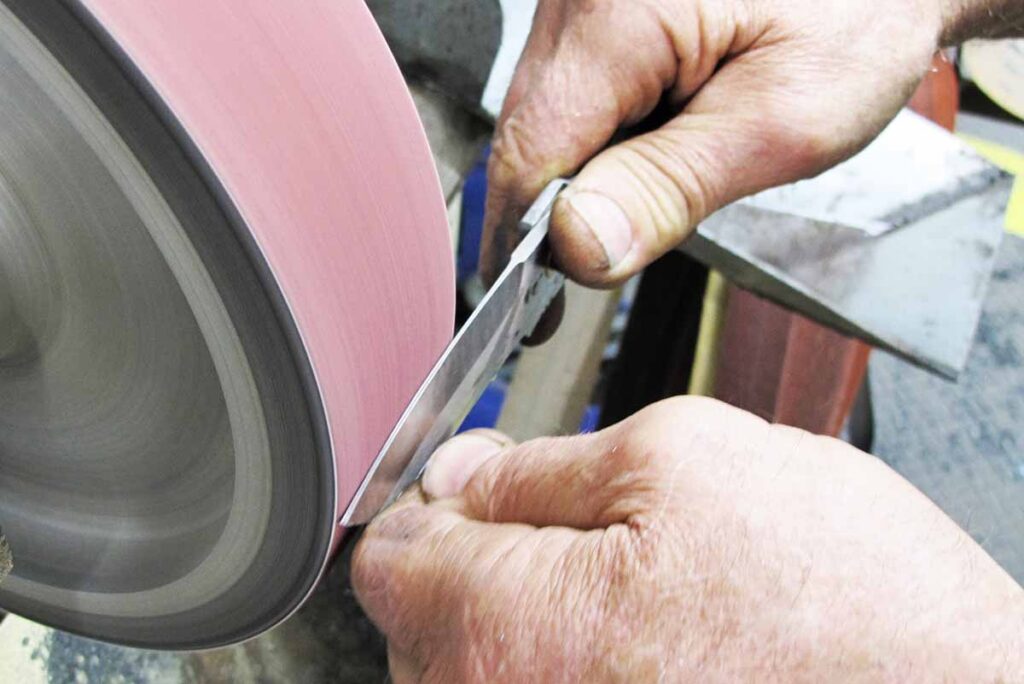
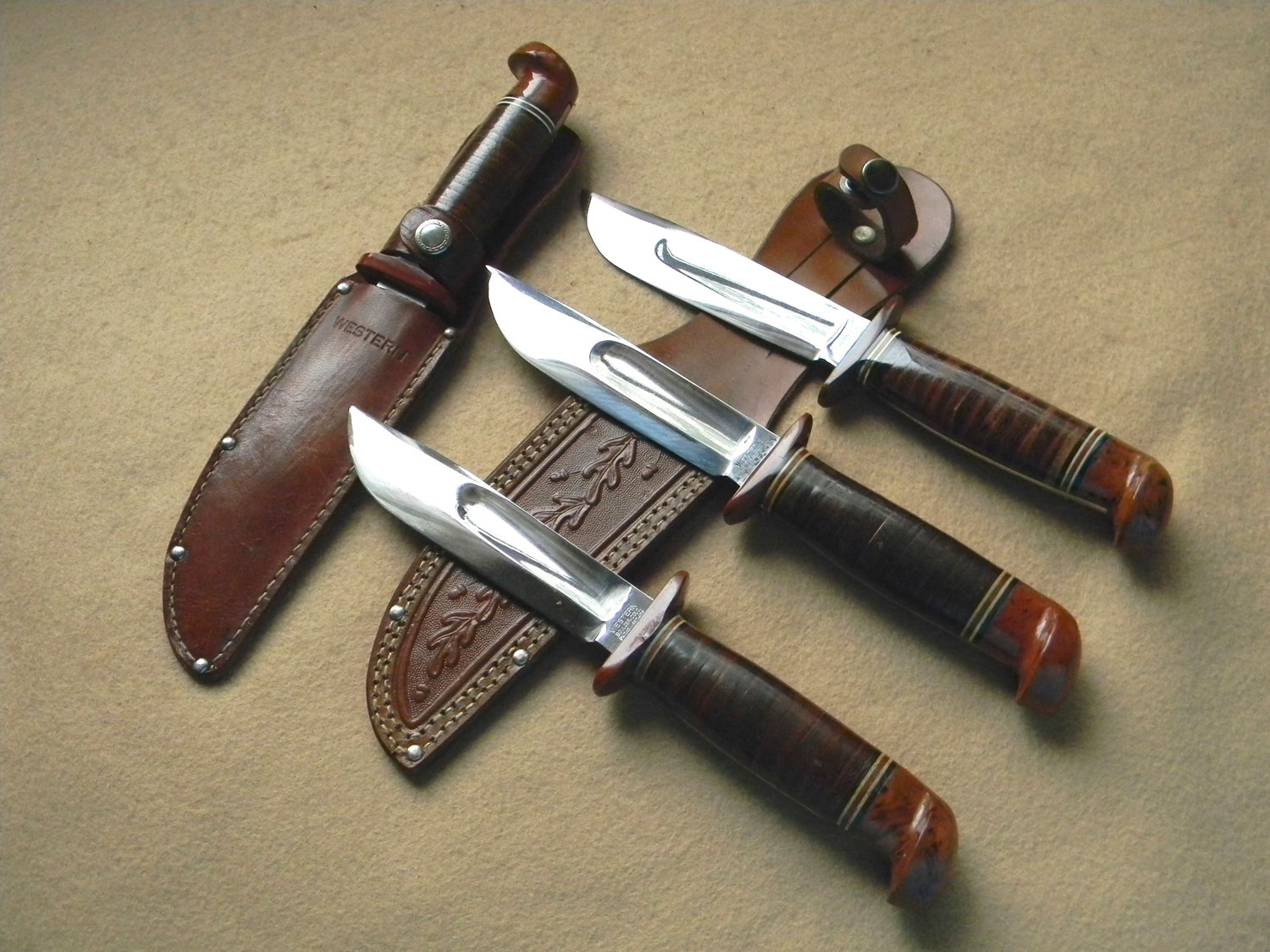
Regrinding and repolishing a knife
Regrinding and repolishing may be required in extreme knife maintenance when pitting is present. Bob Dozier does the honors here.

Harsey also likes the Norton fine India sharpening stone.

“When we go out in the field, I have never traveled without one,” he commented. “I use a rubber drawer liner mat that I can unroll and put the stone on so it won’t slide around on a truck tailgate. That becomes my workbench, and I’m the sharpener for half a dozen guys out there. At other times, I might finish with some stropping with a little WD-40 and cream buffing compound in the leather.”

Sheath Maintenance

Schwarzer is a big fan of hot wax in both knives and sheaths.

“I hot wax everything,” he said. “I have posted it online a bunch. Paraffin wax in a turkey roaster is best, and when I make my knives I put them all in there and then wipe off the excess. It also turns any leather sheath into a form of Kydex. Put it in there for a couple of minutes at 300 degrees, wipe off the excess and form the sheath with your hand. It won’t scratch your blade like Kydex will.”

Dozier has a simple approach to sheath maintenance.

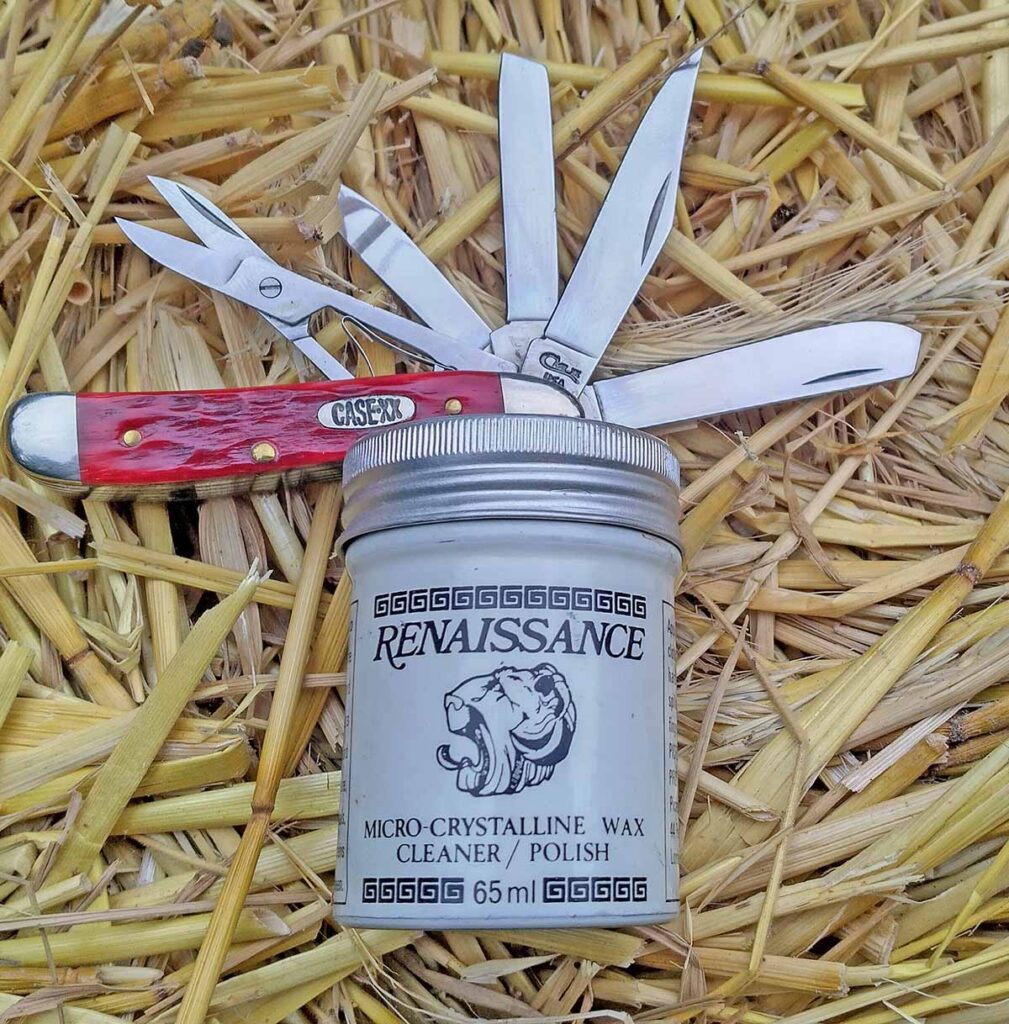
Renaissance Wax works polishing blades and prevents rust
Renaissance Wax works not only for polishing blades and handle materials but also for helping prevent rust and protecting leather. It’s good to have in your knife maintenance kit.

“Wipe off the sheath,” he noted, “and then put a tiny little bit of WD-40 on a cloth and wipe it down. You can also use neatsfoot oil. A little bit on a cloth will keep the dirt off. You can spray a little bit of WD-40 into a bottle cap and leave it on a shelf for four to five months and you have nothing more than cosmoline or grease that works for protection, too.”

Dean likes to protect his sheaths as well.

“I always put some kind of coating with wax or a spray aerosol finish on them,” he remarked. “I don’t recommend storing a knife in the sheath. I use American tanned leather, but some of the other leathers out there use salt in the tanning process, and that can cause problems with a blade.”

Harsey follows steps to make a leather sheath “knife friendly” so that one does no harm to the other. “When I hand build a leather sheath, the leather is always 10-ounce and tanned in vegetable oil,” he said. “It’s a straight, clean piece of heavy leather, and the preservative is either neatsfoot oil or a combination of one-third neatsfoot oil, one-third bees wax and one-third paraffin. That’s heated to 150 degrees, and I’m darn sure not to go any hotter or you could wreck your sheath. I preheat the mixture, paint some on, and put it back in the oven and repeat several times. Then wipe it off and let it dry. If I’m in the field and it takes more than just wiping the sheath off, something has gone wrong.”

Climate Control

Natural handle materials are always in need of some protection. Climate can cause expansion and contraction, while extreme heat and cold are detrimental, too.

“If it’s a wood handle, keep it dry and clean,” Dozier offered. “Don’t throw it in a bucket of water. Ivory needs to be dry too, and a little Navy oil or mineral oil or even a little oil off the end of your nose will help keep it from drying out too much.”

Dean adds a little advice for the owner/user who wants to maximize the longevity of their knives.

Flitz Polish as a metal paste and corrosion protectant
Bill Claussen of Northwest Knives and Collectibles uses Case’s Paste Metal Polish or Flitz Polish as a metal paste and corrosion protectant during his routine knife maintenance.

“People a lot of times just don’t take care of their knives,” he said. “I got a good damascus hunting knife back from a guy who said he had forgotten about it. He left it on the floor of his Jeep and never cleaned it. The thing was basically ruined. I made him a new knife, charged him, of course, and kept that other one myself. I had to regrind and rework it, but it wasn’t the knife it used to be.

“The main thing,” Harvey concluded, “is to take a little time with them.

Wash a knife off in hot water, the blade anyway, and don’t put them in the dishwasher! A lot of times, people take knives on hunting trips and leave them in the sheath or on the dashboard of their truck all day with the sun shining on them. Don’t do that! It’s bad. Natural handles can shrink and crack, and a windshield is like a magnifying glass.”

Try these tips. Test these products. And see for yourself how the pros actually make the best of owning and maintaining a knife in tip-top condition through the years.

For the knife and sheath maintenance items in the story, contact any of the knife suppliers who advertise in BLADE®. If that doesn’t work, enter the name of each applicable product in your internet search engine—all or almost all are offered by a wide variety of outlets.

More On Maintenance:

Advertisement

Must Read Articles

Read this before you make a knife

Knifemaking 101 – Read This Before You Make a Knife

  by Wayne Goddard My experience has taught me that there's nothing like digging in and getting started. I've often said the hardest part of the...
how to forge damascus steel

How to Forge Damascus

Advertisement
Advertisement