
What To Know To Get The Best Dive Knife

A vital safety tool for underwater adventure, a solid dive knife is a must-have for your dive kit. Here’s what you need to know to get the best one.

Dive knives are specialized edged tool that is made for people who spend time in the water. This seems like a wide definition, but water sports are a huge series of pastimes as well as a profession for millions of people across the world.

Diving, be it scuba or free diving, is inherently dangerous and rife with hazards, including the gear you may have on your person. The dive knife varies in profile and material, but in the end, it is a tool that can be relied on to remove yourself or another from a tangle of floating netting, a strap caught on an underwater branch, or to evacuate a struggling diver from their tank.

The dive knife is more than a rescue tool, though. In the alien environment that exists underwater it is a lifeline to the surface and a last resort in the worst situations.

Dive Knife Construction

In the course of use, most real-world knives are going to get wet, however, but are not meant to stay wet for extended periods. Getting caught in a rainstorm or left outside by the fire are things that happen, but being submerged in saltwater for weeks on end would destroy most knives as well as erode and damage handles and sheaths. Leather is not found on serious dive knives, nor is wood or carbon steel. These materials are simply eaten away by salt water and are also easily damaged in fresh water.
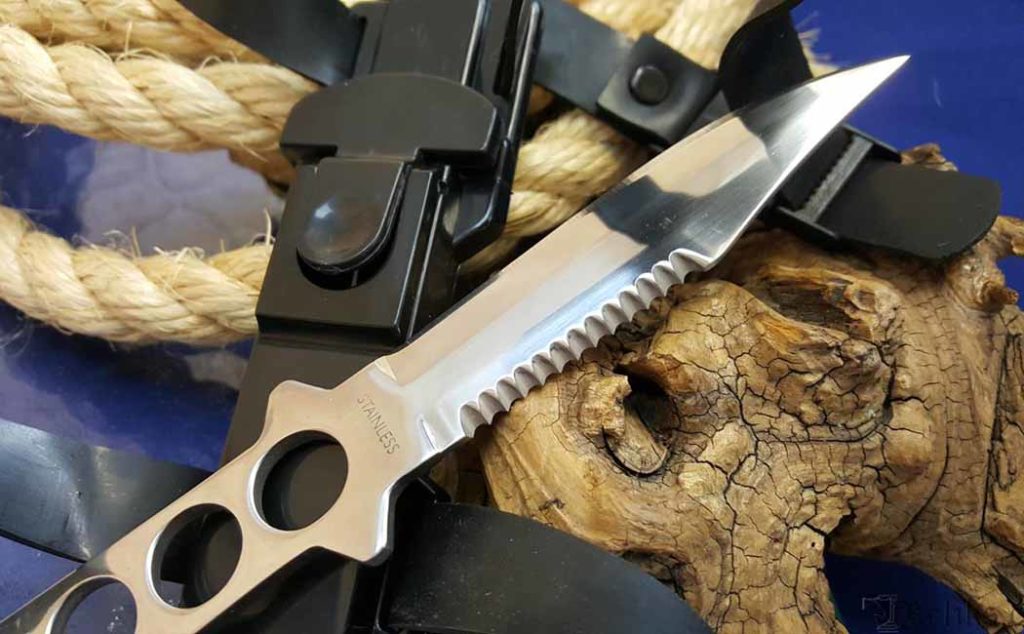
A safety tool, a dive knife is a worthy addition to many adventurer's underwater kit.

Dive knives are typically constructed using corrosion-resistant materials and have handles molded directly to them. The idea is to reduce the number of areas where water can enter, making the knives last longer. Very few materials are absolutely corrosion-proof, but they can be made resistant to the point where they won’t degrade for years or decades, sometimes even the lifetime of the owner.

Dive knives are also less rugged for on-land work. Most of the blades of dive knives are thin, sitting in the .12- to .16-inch range, making them unsuitable for heavy use on wood or for camp work. In the water, you’re likely not going to baton logs, so the thickness of the stock is unimportant except for its ability to cut through materials.

Nylon and plastic are the main prey of dive knives, it is the main material for everything from rope to fishing nets and is the basis of most straps on a diver’s gear. It is not that there is only one used in this sense, rather it is that the vast majority of materials a dive knife needs to cut are man-made and are of a relatively normative quality.

Dive Knife Features

When looking at the must-have features on dive knives, one finds that there is no specific answer.

As noted above, the general concept of a dive knife is to cut through maritime-related cordage. The secondary functions are almost irrelevant to this, self-defense isn’t even a tertiary topic considering that shark attacks are exceedingly rare. Natural obstacles like kelp can hang a diver up, and this is perhaps the only naturally occurring material dive knives are commonly used on.

A Sharp edge is the knife’s the main feature and is simply a must—no questions asked. Serration is very ideal on a whole edge and is truly better for cutting rope or nets over a plain edge. A plain edge is great as well, but for cuts that don’t necessitate a sawing motion. Glass breakers in the pommel, paracord wraps, and other features aren’t necessary and may even get in the way. Simplicity is paramount in a dive knife, you should never have to guess where your edges are when working in poor lighting conditions with limited oxygen.

Dive Knife Designs

Popular profiles vary, usually by tip profile. Some divers prefer a Bowie style with a sharp, aggressive tip. This is nice for fine work, especially on primary knives that may be used for harvesting oysters and other such tasks.
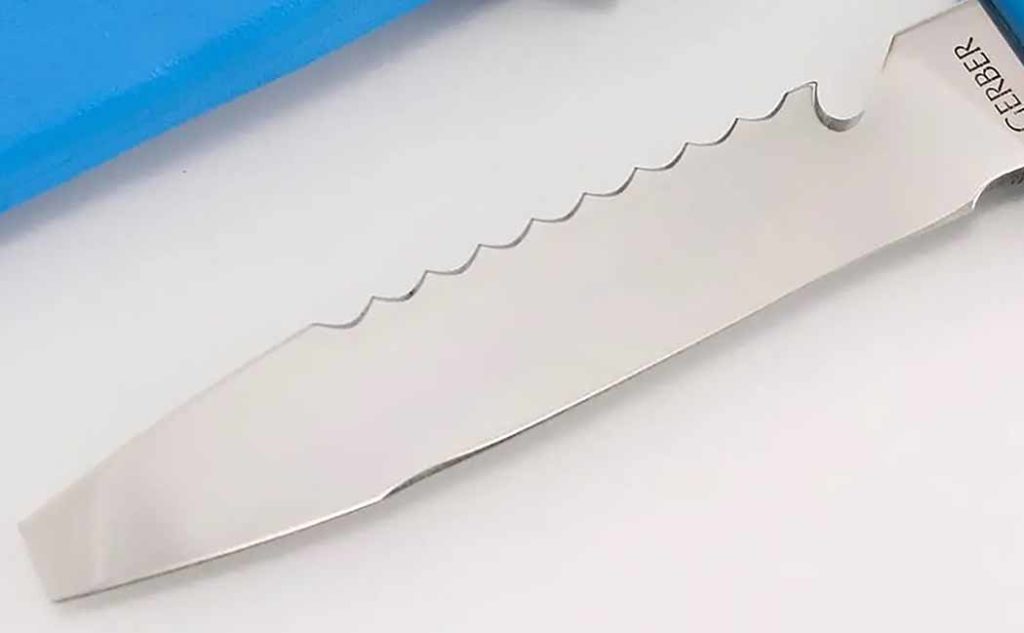
A flat tip can prove a safety feature for some on dive knives.

The other main category is blunted or flat-tip knives. These have a tip similar to pry knives in that they have an abbreviated, square-edged tip. They can also be used for various purposes, but their main advantage is that they can be slipped under straps on a diver’s body safely without risking stabbing or lacerating them. Injuries can still occur, but the serious risk is reduced.

Best Dive Knife Size

There is a general limit to the effectiveness of a knife used underwater. Thrusts and slashes are slowed down by the resistance of the water itself, and you tire much easier than on land. As a result, there is certainly too big of a knife, with the lower limit being around 3 inches, or just enough to get under most straps and tie-downs.

The handle should not be too small, however. Many of these designs have a dagger-like overall profile, though, a good scuba or dive knife should not have a dagger handle. You need to know where the edge is by indexing the handle. As a result, a beefy handle and 3- to 5-inch blade are what you want to look for a dive knife.

Steel Vs Titanium Dive Knives

Titanium is hands-down the better material for use on dive knives from a corrosion perspective. Titanium, however, doesn’t hold an edge as well as steel, but when sharp it cuts maritime materials just as well. Sharpness is a main benefit of steel, though even the best steel can experience corrosion over extended saltwater exposure.
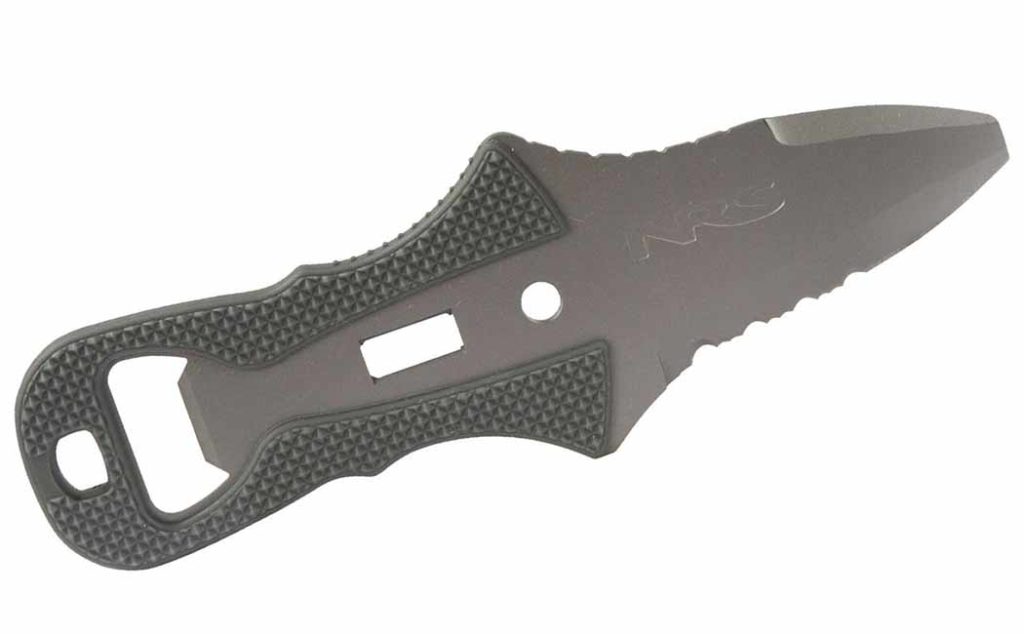
Steel or titanium (such as the one pictured), is an eternal debate over dive knife blade material.

Some divers swear by steel, others by titanium, and this seems to be an ongoing debate. Steel coatings are better and better these days, and some steel knives are available with a titanium coating. Again, the benefits are largely subjective, most users won’t notice a difference with regular maintenance. Like all hobbies, the vast majority of conjecture takes place in the 1-percent of professional or constant participants.

Best Dive Knives At All Price Points

Benchmade H20 Fixed Dive Knife
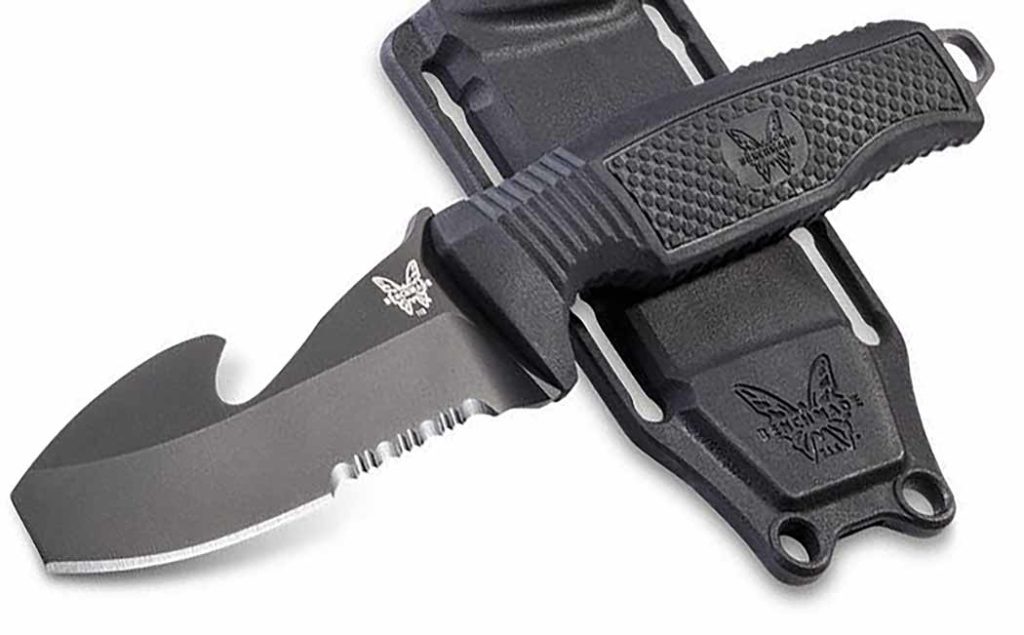
Benchmade H20 Fixed Dive Knife

Benchmade is well known for some incredible and durable products. The H2O fixed dive knife is an example of this.

Designed for military use, the knife carries a national stocking number (NSN) and is exceptionally well laid out for its purpose. Interestingly, this knife has features that are not necessarily in line with what many of the experts say are best.

For starters, it has a relatively simple grip that lacks the excessive texturing found on many other dive knives. The blade is also made of steel, which stands in the face of those that say titanium is a must-have for saltwater exposure. This is not to say that it is the end-all, be-all knife for use in the water.

While the military has picked some good products in the past, it can’t be said that they are correct every time. This knife is a great starting point at a medium price, you get a blunted tip, strap cutter and serration, as well as a generous lanyard loop. The sheath, while relatively basic, can be adapted to many types of carry depending on what you’re doing in the water.

MSRP: $170

Hogue Knives EX-FO2 Dive Knife
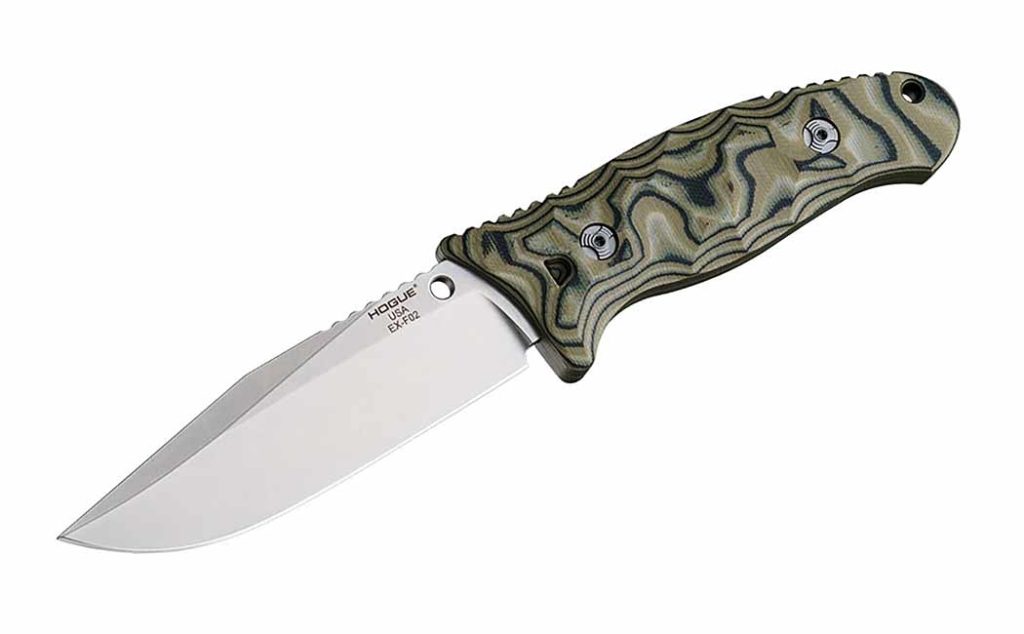
Hogue Knives EX-FO2 Dive Knife

As a general purpose outdoor knife, Hogue has a winner in the EX-FO2. This knife is right in the “perfect size” range for a dive knife, however, it has some features that make it both spot-on and a bit questionable at the same time.

Looking at the positive angle first, this knife is very well laid out and has a nicely shaped handle that has positive reviews for water use. The sheath setup is also excellent, it comes ready for attachment to your arm or leg with a padded backer. This is a knife that has multiple end uses. It is sort of a hybrid of a fishing knife and bushcrafter in that it has a stout blade that can be great for filleting but strong enough for general use.

This knife is available as listed with only a tanto point or clip point. For general use this is fine, however, it can be a liability diving. A completely sharp tip is a negative to some, the risk of puncture or personal injury is potentially much higher as opposed to a blunted point.

MSRP: $159

Fox Knives Tenko Military II Dive Knife
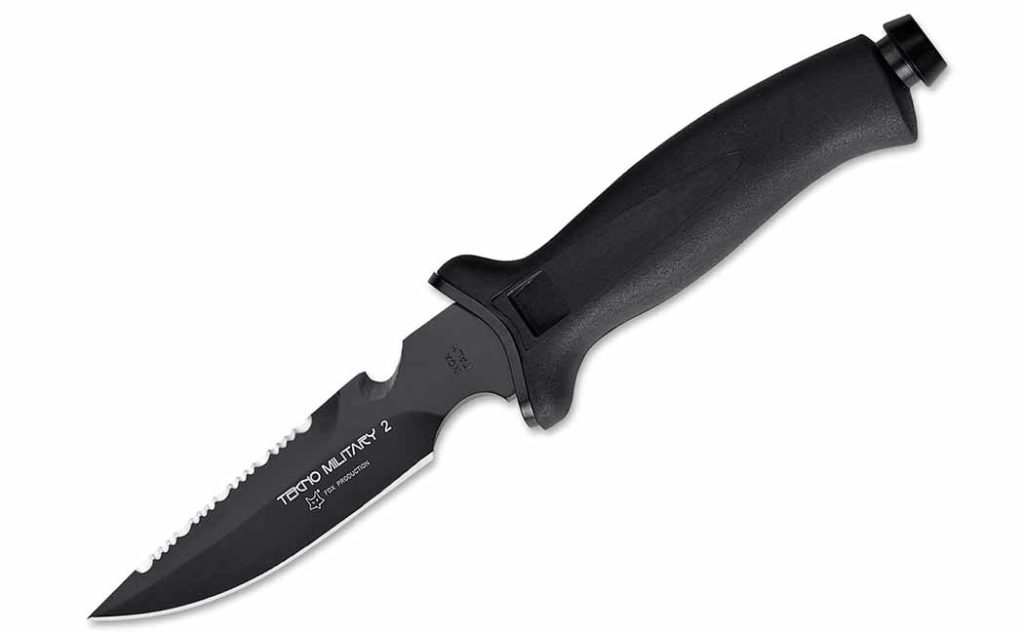
Fox Knives Tenko Military II Dive Knife

Fox Knives is an Italian company that makes high-quality products at reasonable prices. The author has used Fox products for quite some time, and all of them have held up very well.

Their dive knife is feature-rich, almost to a fault. The knife is double-edged, one serrated and the other clean. The rear part of the spine has a cord hook directly behind the separation. Unlike the others on this list, the Fox knife has a full cross guard that allows you to choke up on the blade for high-impact puncturing or slashing. This knife has a very fine tip, and while it is military-themed, this tip is a bit too aggressive for rescue work or freeing even yourself from a tangle. A bonus of this knife is that it has a full rubber handle as opposed to textured plastic.

MSRP: $117

Spyderco Salt Fish Hunter
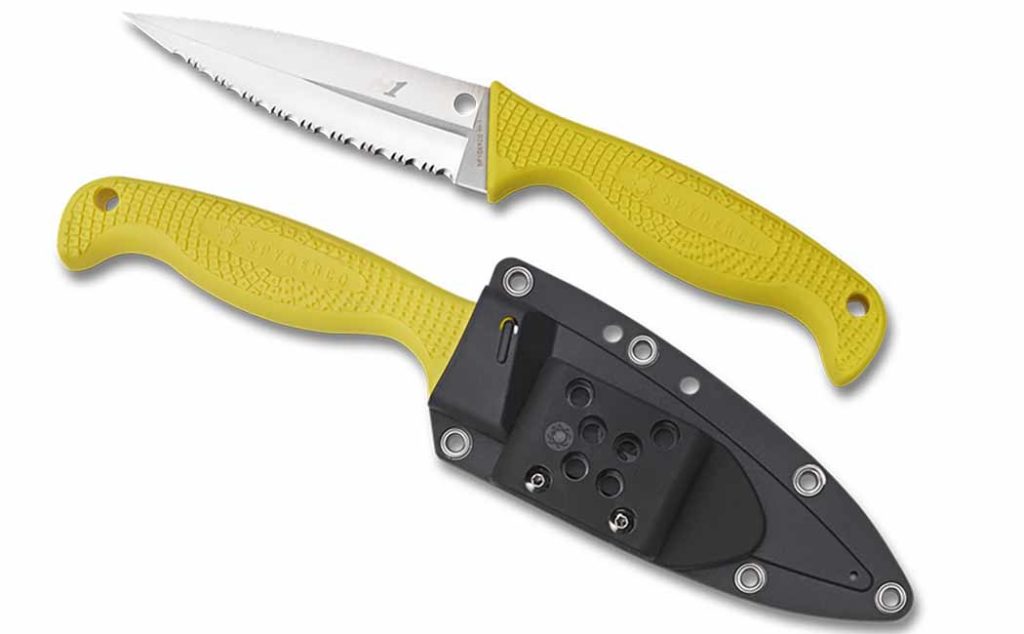
Spyderco Salt Fish Hunter

Unlike the rest of the names on this list, the Fish Hunter is exactly that, a hunting knife. While many of these knives can be used for fishing in general, Spyderco’s product here is expressly made with the intent to be used as a companion for spearfishing and adventurous free divers. This is a specially designed product, and shouldn’t be confused with other dive knives or dedicated scuba knives.

The blade is hollow ground and comes to a very aggressive tip. Serration starts just after the tip and continues to the handle. Many fish are surprisingly thick-skinned and are quite difficult to kill, this knife makes it relatively effortless and the serration allows for quick cuts through even the thickest scales.

While this knife of course can be used to aid in an emergency, it would likely be best to bring a dedicated, blunted rescue tool as well. Spyderco designed their Salt line to fit this bill, and you can find products that are geared towards rescue and escape as well in their lineup.

MSRP: $196

Extrema Ratio Ultramarine
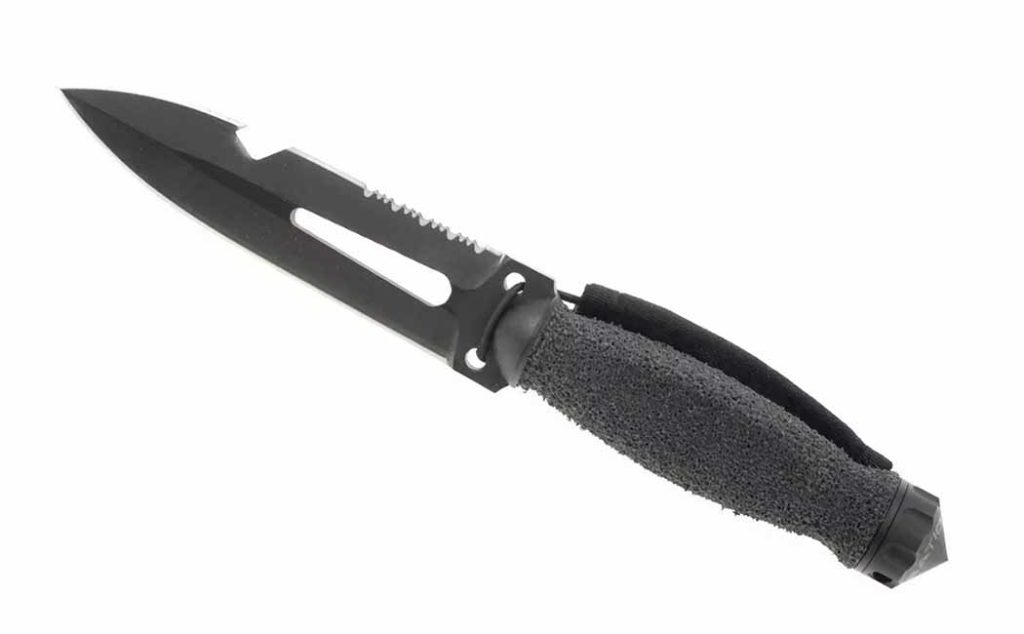
Extrema Ratio Ultramarine

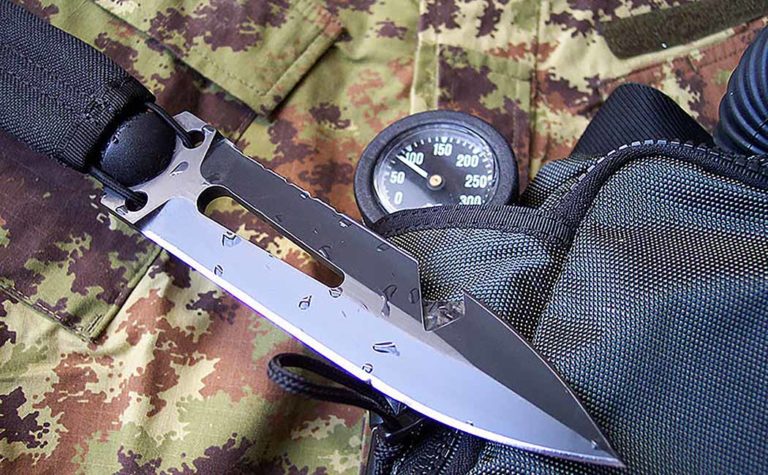
By far the most expensive dive knife on this list, and perhaps the production market, the Italian-made Extrema Ratio Ultramarine is a purpose-built, do-all dive knife. Curiously, for being so costly, it is not made of titanium or another material less subject to corrosion.

Much like the Benchmade H2O, it is a steel knife. The Ultramarine is double-edged, one clean, and one serrated, and it includes a strap cutter and wrapped handle for a very sure grip underwater. The covering is removable. The knife comes with a functional sheath and case.

You may ask yourself just what you get in terms of the extra hundreds of dollars and, well, that is something only you can know. The possibility of losing such an investment in the deep is not something many people want to stomach considering that many dedicated dive knives are less than $100. This is one serious knife for perhaps the most serious users.

MSRP: $792

Aqua Lung Argonaut Blunt-Tip Titanium
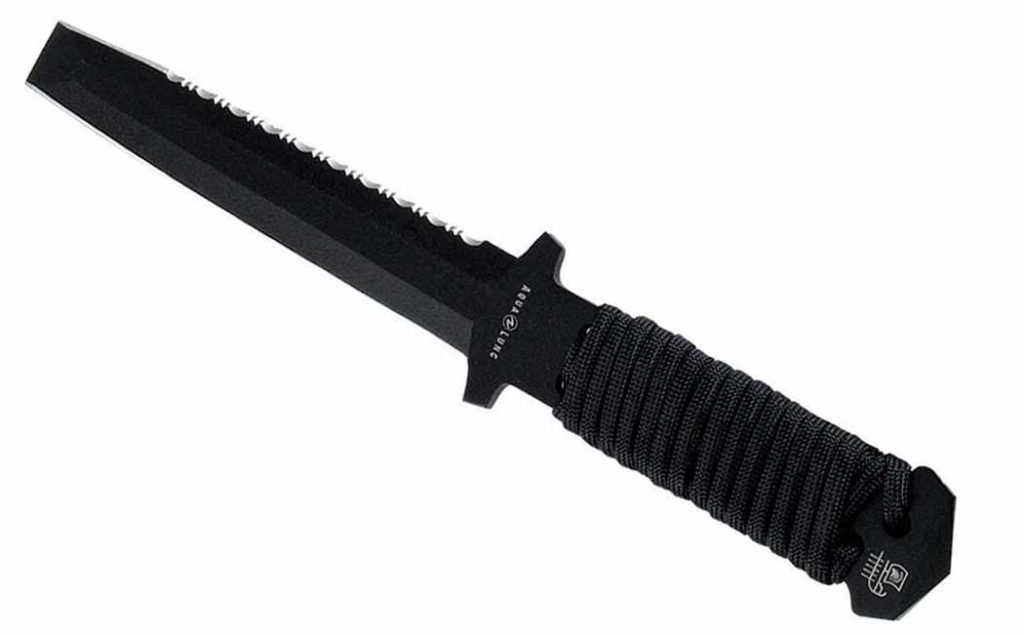
Aqua Lung Argonaut Blunt-Tip Titanium

Aqua Lung has a real winner here with the Argonaut. This knife is available as a blunt tip, as well as what they call a Spartan tip, which has a leaf-shaped, pointed profile. For our purposes, here, the blunt-tip version is the knife that we are going to be looking at.

As a scuba knife, it is perfectly suited for the task. The squared, blunt tip profile allows it to easily get underneath any strap, and, depending on what you need to cut, it has a sharp plain edge and a serrated edge. The knife is made of titanium, which is a choice for many people that spend time in the water. This material is far less vulnerable to corrosion and is also quite light. It is relatively thin for its end use at .15 inch, so prying is not on the menu.

This knife comes with a dedicated leg or arm sheath and is moderately affordable at around $200 retail. The handle is simply wrapped in cord, which somebody finds to be a detriment over a high texture Nylon handle.

MSRP: $195

Promate Snorkel SCUBA Knife Titanium
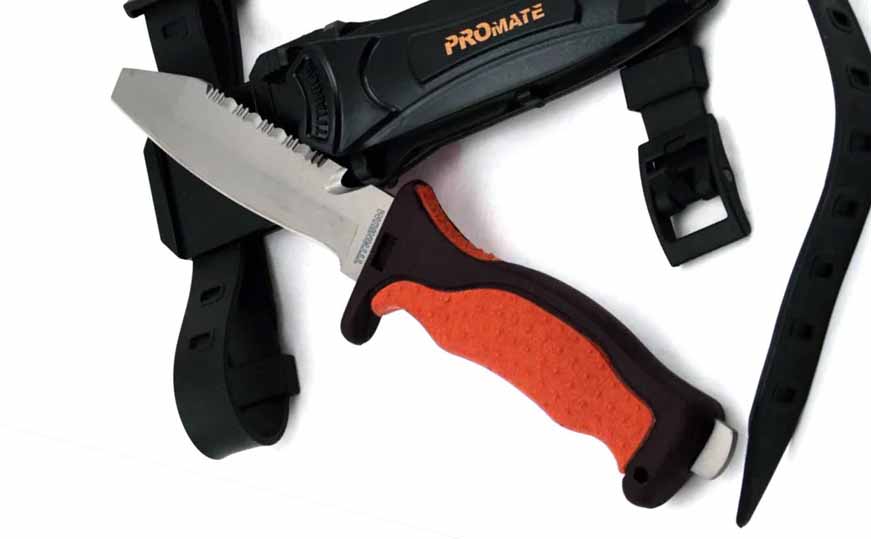
Promate Snorkel SCUBA Knife Titanium

The Snorkel is an affordable, multi-function, titanium knife that is very well thought out. It has a plain main edge and a serrated spine with a cord cutter. While it is substantially less expensive than the others on this list, it boasts very high reviews across the board and is by all accounts the standard, by which all scuba knives are judged. If it does not perform as well as this affordable model, it probably is not going to perform at all.

The Snorkel is available as a blunt tip, as well as a very aggressive Bowie profile. Depending on what you’re going to do with it, the former is more functional for general use, while the latter is going to give you an advantage if you are spearfishing or free diving. Because they are half the price or less than almost everything on this list, you can get one of each and still have cash in hand. These knives are available in different colors to suit your interest and come with a functional sheath setup for use in the water.

MSRP: $75

Check Out More Buyer’s Guides:

10 Knifemaking Questions with Naked & Afraid’s Laura Zerra

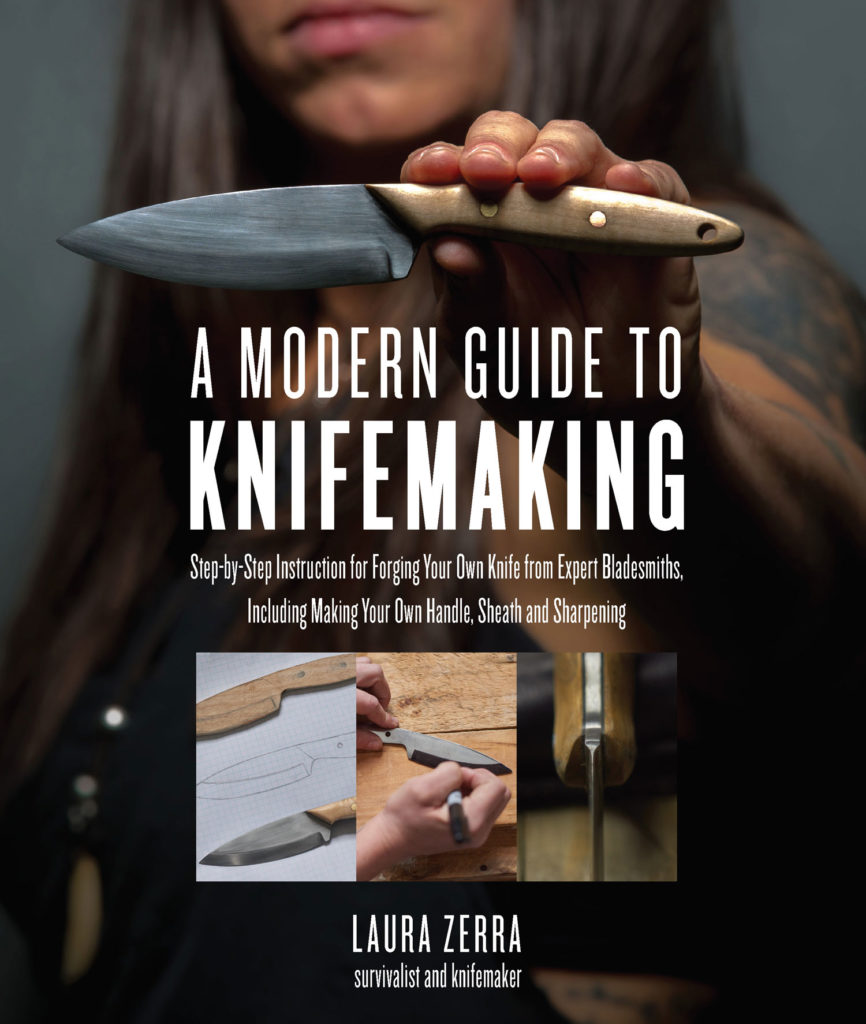
You may know Laura Zerra from her appearances on the Discovery Channel program, Naked & Afraid, or at BLADE Show. What you might not know is that she’s also an accomplished knifemaker with a book coming out July 3, 2018, titled, A Modern Guide to KnifemakingNo less than BLADE Magazine Cutlery-Hall-of-Fame® member Ken Onion, Kaila Cumings, and Mike Jones contributed to the tome.

Fresh from an extended stay in the wilderness, Zerra talked with BLADE about knifemaking, survival knives and the biggest mistake people new to knifemaking make.


BLADE: Most people know of you through Naked & Afraid. Did you get into knifemaking after appearing on that show or was this something you were always practicing?

LZ: I used to be a farrier, so I got my first introduction to knifemaking through blacksmithing. I used to mess around with steel in the forge, and that led to trying my hand at making knives. As a survivalist and outdoors person, I’ve always had a love for knives, and starting to make my own was a natural progression.

What spurred you to write your new book, A Modern Guide to Knifemaking?

I was working on outlining a survival book, and my editor saw that I’d just been at BLADE Show. We talked about the possibility of me writing a book on knifemaking. I’ve always loved knives, and have been in numerous situations where my life literally depended on my blade. I’ve also been humbled by all the legendary knifemakers I know, and I don’t have the expansive years of experience and talent that a lot of them do.

The thought of writing a book on knifemaking was really intimidating at first, but I realized that my perspective would allow to me to write a book that could really break it down for a beginner, and that my relationship with knives as a survivalist could offer some unique insight. Knifemaking is one of those skills that everyone does a little bit differently, so I wanted to interview some experts in the field and have them offer their two cents, as well.

How to make survival knives

Can someone with little knifemaking experience pick this up and go at it?

I wrote the book that I wish I’d had when I first started knifemaking. I wanted someone with absolutely no experience to be able to pick up my book and be able to make their first knife, from start to finish. While I do talk about what has worked for me in my experience, I think knifemaking is personal. I really wanted to encourage the reader to experiment with different processes as well as designs to develop their own style and find what works for them.

What’s your philosophy when it comes to knifemaking?

As a survivalist, first and foremost, my knives have to be functional and durable. A knife has to be able to complete the tasks I need it to, and I don’t want to have to worry about it breaking or losing an edge quickly when I’m depending on it for my survival. That being said, I don’t think that means it has to be unattractive; I think a functional knife can still be beautiful, and a skilled knifemaker can complete both these objectives.

Laura Zerra knives
Zerra says she prefers working with 1095.

What are your favorite steels to work with?

I like working with 1095 steel. I find it easy to move with a hammer, and it holds a great edge with a good heat treat. But I have to admit, I’m a sucker for damascus carbon steel. Well-made damascus really does well with that balance of function and beauty. I just love the moment of pulling it out of the etch and seeing how the pattern has played out on the steel.

What’s the biggest mistake people make when first starting out making knives?

I think the biggest mistake people make is not getting started at all. I’ve talked to so many people who have told me, “I’ve always wanted to make a knife!” but have never actually done it. Getting started can be intimidating for people, and that can be enough to prevent them from ever getting out there and doing it.

If I could tell people one thing, it would be to commit to doing it; not in a year, not when you have time, but right now. And don’t be scared of making mistakes. Mistakes are a natural part of getting into any new skill, and are an important part of the learning process; but you have to actually get out in the shop to start making them!

Laura Zerra knifemaker
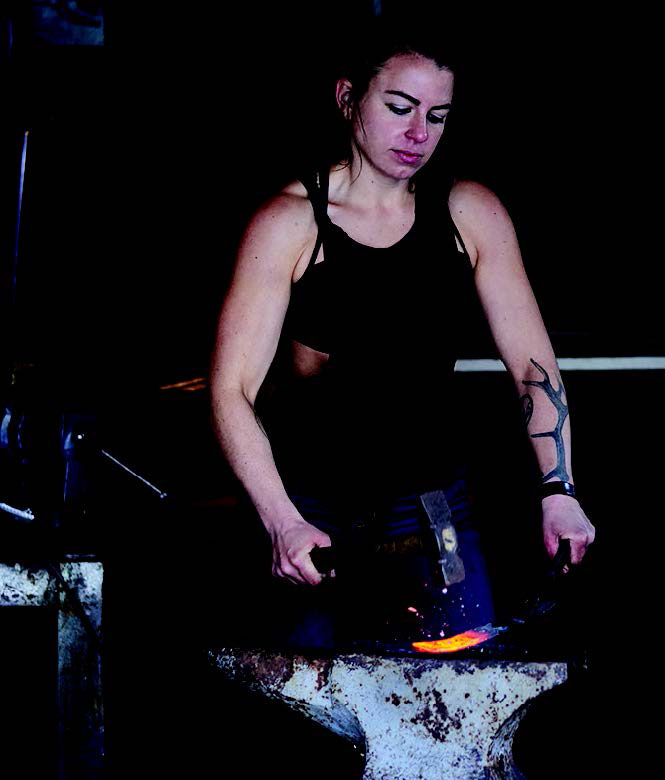
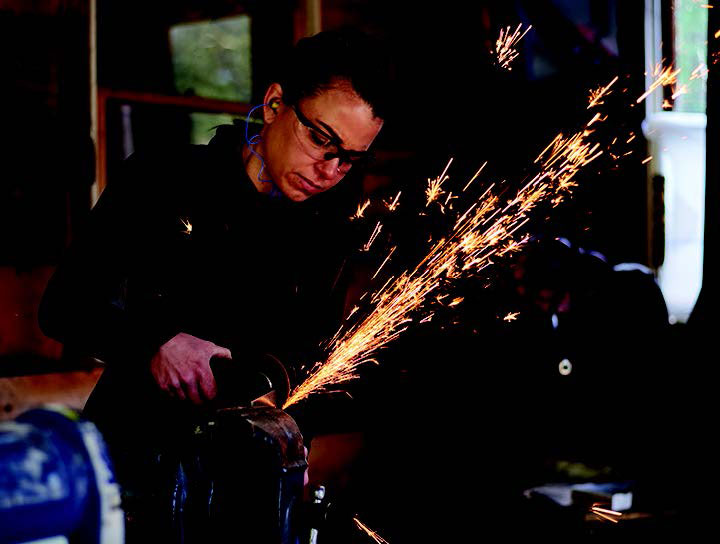
Laura Zerra, star of TV’s “Naked & Afraid,” at work in her shop. (all shop images provided by Laura Zerra)

Is there such a thing as a “survival knife” or are there only knives used for survival purposes?

I think the term “survival” is too broad to describe a specific type of knife. Where am I surviving? What’s the environment like? What tasks will I need my knife to perform?

Different circumstances will be best met with different qualities in a knife, from overall size and shape to steel choice to blade geometry. To try to make a “One Size Fits All” blade that will be the best tool for every survival situation seems like an impossible task.

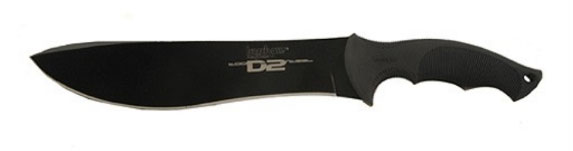
In seasons 1 and 2 of Naked & Afraid, you brought with you a Kershaw Outcast and a Diving Sparrow Mako Shark, respectively. Both of those sport big blades (10 inches and 11.25 inches). Is it safe to say that machetes are better than knives with smaller blades for survival purposes?


Kershaw Outcast
Kershaw Outcast

Mako Shark knife
Mako Shark

I brought those knives based on my location in the tropics. Both of those knives made easy work of cutting through a massive amount of palm leaves and opening coconuts. It’s a bit more difficult to carve trap parts or butcher meat, but it can still be done.

A machete can be used to complete more delicate tasks by changing the way you use the cutting edge; for example, when gutting small game, I hold the machete between my feet and move the animal across the blade instead of trying to move the big knife across the much smaller animal.

For jungle survival, I absolutely recommend a big blade because the of amount of material you’ll be chopping though. Put me in a desert or a deciduous forest, however, and I’m likely to bring a smaller blade; it just depends.

What’s your take on survival knives versus survival multi-tools (those 31-in-1 sorts of things)? Are those multi-tools any better than a knife that’s just a knife?

I prefer a simple knife. A multi-tool has its place in urban survival and everyday use, but I find all those extra tools and edges can limit the use of your blade and get in the way. As a primitive survivalist, I’m used to improvising with what I have so maybe that’s part of it. I know people who love multi-tools, so I guess it’s personal preference.

Laura Zerra knifemaker
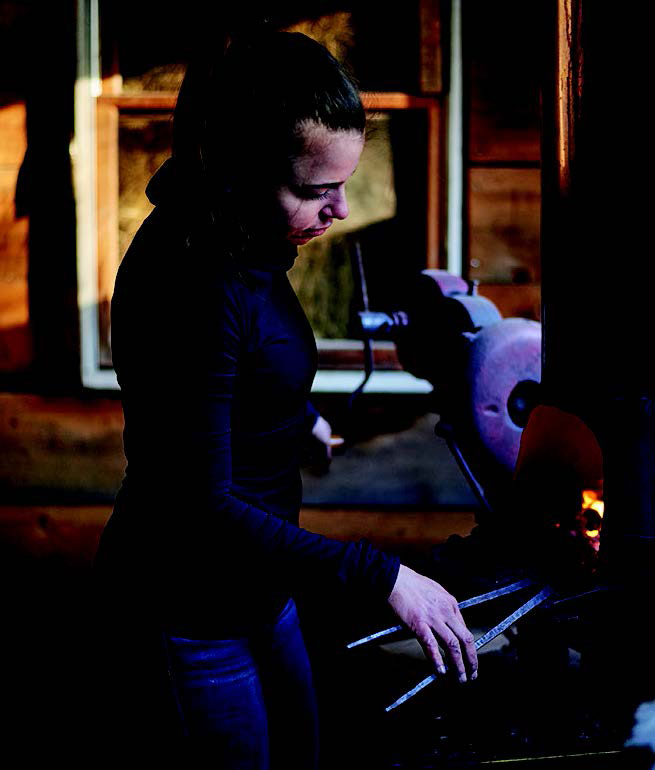
Careful around the grinder, warns Zerra.

In the name of safety, we run a series on blademag.com about knifemakers’ worst accidents in the shop (so that no one else repeats the same mistakes). Have you ever had an accident in the shop? What did you do differently the next time around?

Yup! When I first started using the grinder, I ground a big notch out of one of my fingers. It took a minute to start bleeding, but then it gushed for quite awhile. I had to quit for the day, because my hands were so slippery from my own blood that I couldn’t hold the blade anymore.

It definitely gave me respect for the grinder, and I was more aware of the fact that the belt removes flesh much faster than steel. I also had a shirt catch on fire from hot steel dust gathering in a fold. I’d love to tell you that I wear a leather apron now but I’d be lying.

Keep up with Laura Zerra on Twitter, Instagram, Facebook and her website.


You Never Know Who You’ll Meet at BLADE Show

Laura Zerra is just one of the celebrities who have attended BLADE Show. The 2018 version takes place June 1 to 3 in Atlanta. Buy tickets and find information here.

How to Price Custom Knives

custom knife pricing
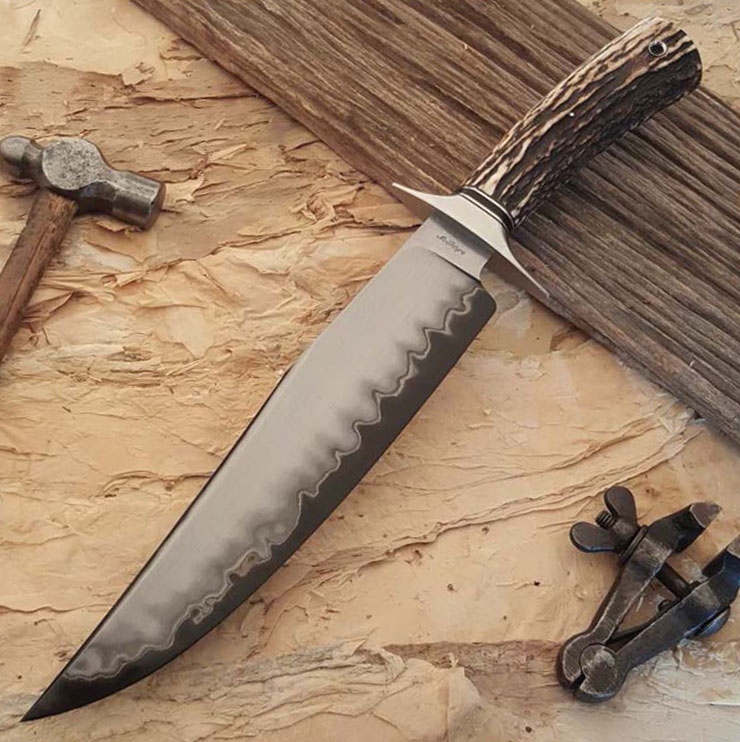
The author stated that Australian ABS master smith Shawn McIntyre “has created his following by offering exceptional quality at a value price.” McIntyre’s “San Mai Bowie” features a 10-inch blade in a san-mai construction, a sambar stag handle and a leather sheath. The author’s price: $1,575. (Shawn McIntyre image)

Editor’s note: This article is from the knifemaker’s point of view, but it could also be used by collectors to better understand price.

Make the Equation

what is the cost of a custom knife

Most manufactured products, whether factory or custom made, have similarities. For those of you unfamiliar with cost accounting, one of the similarities is basically what the costs for building a particular item are.

In the case of custom knives, such costs include those for the machines, belts, drill bits, saw blades, propane, tongs, hammers, etc.—in other words, anything in the shop used to produce the knife.

Other items not necessarily taken into account are those such as the cost of electricity, machine wear and tear, etc. Obviously, materials are easy to account for.

Then there is the amount of money you want—want being the operative word—to make selling your knives, followed by the amount of profit you want to make. The resulting equation is:

Shop time + material costs + maker’s pay (labor) + net profit = the actual cost (or price) of the knife

(Editor’s note: for collectors, the wiggle room on negotiation could be found in the net profit part of that equation.)

When the Price is Too High

RJ Martin custom knives
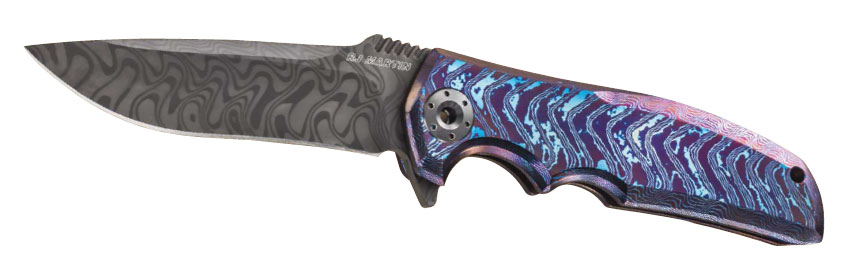
Of RJ Martin the author noted, he “has secured his position as one of the best and most sought after tactical folder makers in the world, due in part to the value pricing he has utilized over the last 30 years.” Martin’s Illudium boasts a 4-inch blade of Chad Nichols Boomerang stainless damascus and a handle of Nichols’ Moku-Ti. The tip-up clip is zirconium. Approximate closed length: 5 inches. The author’s price: $6,000. (Sharp By Coop image)

Again, you’re a knifemaker. Are your knives too expensive? The short answer is “probably.” Over the past 32 years of asking knifemakers the question, the two most prevalent answers I get are:

1) My knives are priced on the advice of another knifemaker;

2) My knives are priced based on what others are asking for similar knives.

While makers who incorporate such pricing strategies can justify them, both approaches incorporate what I call lazy pricing. While you may not realize it, other knifemakers are your competitors.

While they may mean well, their advice for your knives is misplaced. First and foremost they are knifemakers, not knife buyers. What they know are their knives, their market and their clients. This may or may not have any impact on your knives, or, more importantly, the selling of your knives.

In some cases other makers may understand that you are a competitor and suggest you raise your prices, giving their knives more perceived value.

While attending the 1989 Knifemakers’ Guild Show, I was standing at the table of a very well-known knifemaker and checking out his knives. A new maker approached the veteran maker and asked him to critique his knives. The veteran maker asked him how long he had been making knives and for his price for one of them.

The new maker replied, “I have been making knives for two years and this knife is $250.”

The veteran maker said, “You are doing good work. I would raise the price of this knife to $325!”

As you can imagine the new maker thanked the veteran maker, smiled and returned to his table.

In the next few minutes a potential buyer was questioning the veteran maker about the $375 price tag on a particular knife. The veteran maker was quick to point down the aisle, saying, “See that maker right there? He has only been making knives for two years and is asking $325 for one of his knives. Quite frankly, my price is a bargain.”

Whose interest did the veteran maker have in mind while recommending pricing to a fellow maker who sought his advice? To date I have never had a maker using this strategy tell me the veteran maker suggested that the maker lower his or her prices. I found this to be a real eye opener, and it changed the way I looked at custom knife pricing.

When the Price is Too Low

Steve Randall custom knifemaker
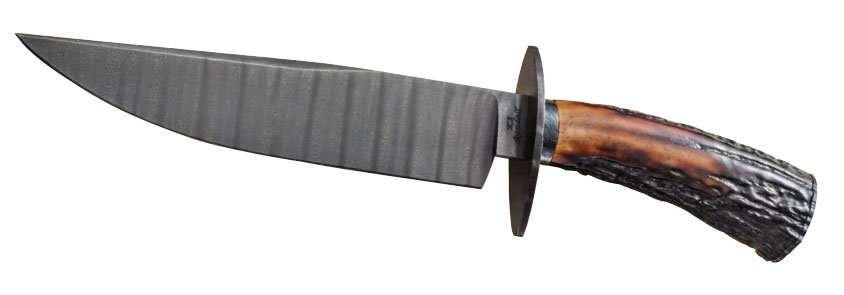
ABS master smith Steve Randall outfits his straight knife in a 7.5-inch blade of ladder-pattern damascus and an amber stag handle. The author’s list price: $1,650. “Steve’s work continues to impress,” the author observed. “Since the inception of his making custom knives, he has always incorporated
value pricing into them.” (Sharp By Coop image)

If you are a knifemaker, remember that, early on, people are paying for you to learn your knifemaking skills—a sort of scholarship program, if you will. The object of the exercise is to get as many of your knives into the hands of buyers as possible. You can do this by utilizing value pricing. Your market position will indicate to you what the price should be.

As your knifemaking skills and following develop, your pricing, because of your rising position in the market, will continue to increase. At this point your pricing will be determined not by a friend or another maker’s similar work, but through your understanding of your position in the market and how you got there.

Ask the Author More About Pricing at BLADE Show 2018

atlanta blade show

BLADE® field editor/custom knife purveyor Les Robertson of Robertson’s Custom Cutlery will instruct two classes on knife collecting during the 5th Annual BLADE University.

Conducted the day before and the Friday and Saturday of the BLADE Show June 1-3 at the Cobb Galleria Centre in Atlanta, BLADE University is the most comprehensive array of classes on the subject of knives and knifemaking of any knife show.

From 9:45 to 10:45 a.m. on Saturday, June 2, Robertson will conduct the class “Knife Collecting for Beginners” and discuss what you need to know before you start buying custom knives.

For more information on these classes and others in BLADE U., visit bladeshow.com.

Bob Cargill Knifemaker, Company Founder And NKCA BOD President Passes

0

Cargill’s impacted the knife industry in nearly every facet.

Bobby Lynn “Bob” Cargill, custom knifemaker, a president of the National Knife Collectors Association board of directors, and founder of Cargill Knives and Cripple Creek Cutlery, passed away January 3. Of Old Fort, Tennessee, he was 81.

Using old car springs for material, Cargill made his first knife when he was 10. He went full time in his mid-30’s circa 1975 making knives via the stock removal method, including folders, some fancy, lockbacks and multi-blades. He used 440C, 154CM, D2 and other steels for blades, and mother-of-pearl, stag, bone, Micarta®, ivory and wood for handles.

He joined the Guild in 1979. “What I enjoy most is the completed knife,” he was quoted as saying in Knifemakers: An Official Directory of the Knifemakers Guild, “because it is rewarding to see a design on paper developed … If I can’t deliver a knife that I’m proud of and make you a little bit happier and proud to collect my knives, then I don’t want your money.”

Cargill had his right leg amputated below the knee as a result of a car accident. However, instead of letting it hold him back, he used it as inspiration for the name of Cripple Creek Cutlery. Founded in 1981 in Lockport, Illinois, Cripple Creek specialized in slipjoints in classic patterns and natural handle materials.

Consisting mostly of slipjoints—they were called pocketknives back then—club knives were big in the late 1970s and throughout the ’80s, and Cripple Creek was among a number of companies that provided knives for knife clubs nationwide, companies that included Case, Queen, Hen & Rooster, A.G. Russell, Fight’n Rooster, KA-BAR, Boker, Schrade and others. Among the knife clubs Cripple Creek made club knives for included the Western Reserve Cutlery Association, Allegheny Mountain Knife Collectors Association, Central Kentucky Knife Club, Badger Knife Club, the Northeast Cutlery Collectors Association and others. He was active in the American Edge Collectors Association. Cripple Creek also made limited-edition slipjoints for Knife World in the early 1980s when BLADE Magazine Cutlery Hall-Of-Fame® member Houston Price owned the magazine. Knife World is now known as Knife Magazine. Bob also made club knives under the Cargill Knives mark for such knife clubs as the Soy Knife Collectors Club.

Bob sold Cripple Creek in 1993 and it operated under Blackjack Knives in Effingham, Illinois, until 1995. He was on the Guild’s “knifemaker emeritus” list at the time of his passing. He is survived by his three children, nine grandchildren, several great grandchildren, two sisters and a brother.

More About Custom Knives:

Sharps Makers: New Knife Sharpeners & Maintenance Gear

0

Tools and accessories to keep your edge.

As with so many tools, knives require other tools to keep them up to snuff. A vicious cycle, to be sure, but one in the modern day has been simplified with innovation. Modern knife maintenance equipment is leaps and bounds beyond what it was a few short years ago. In turn, there is little excuse to pocket a dull blade or carry around a knife whose action is choked with lint and fouling. While the concept remains the same—a sharp and functional knife—we’ve gathered up some of the latest maintenance equipment designed to keep your blades edgy and acute.


Horl Rolling Sharpener

Horl Sharpener

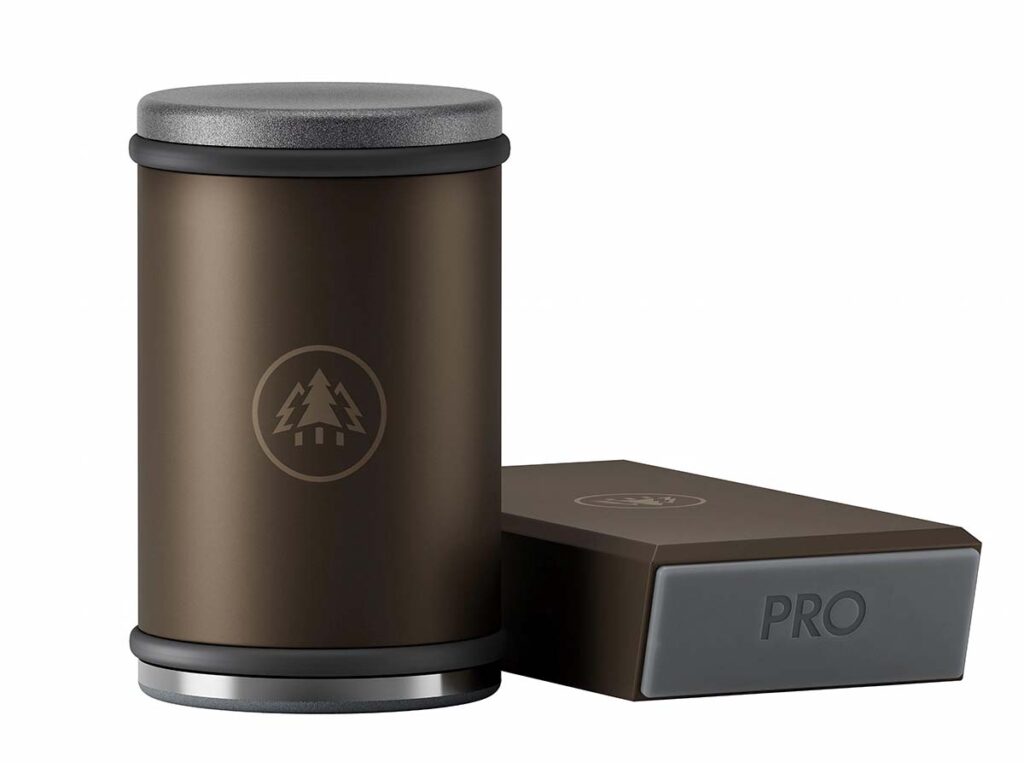
ROLLING DEEP—Horl is shifting its popular rolling sharpener system up a gear with its most recent iteration. Underneath the hood, the Horl3 Pro features a planetary gear system, increasing the sharpening head’s rotation. Geared 1:3, the sharpener hones at a much faster rate than the company’s previous versions, cutting work time down. Further, the Pro is also more versatile, offering six sharpening angles—10, 13, 15, 20, 22 and 25 degrees—so you precisely match its acuteness to the knife you’re sharpening. The new Horl still has all the features that made the system all the rage in the first place, including quick-change heads, diamond sharpening disk, ceramic honing disk and magnetic angled holding pad. MSRP: $399


Hapstone Bench Stone

Hapstone Benchstone

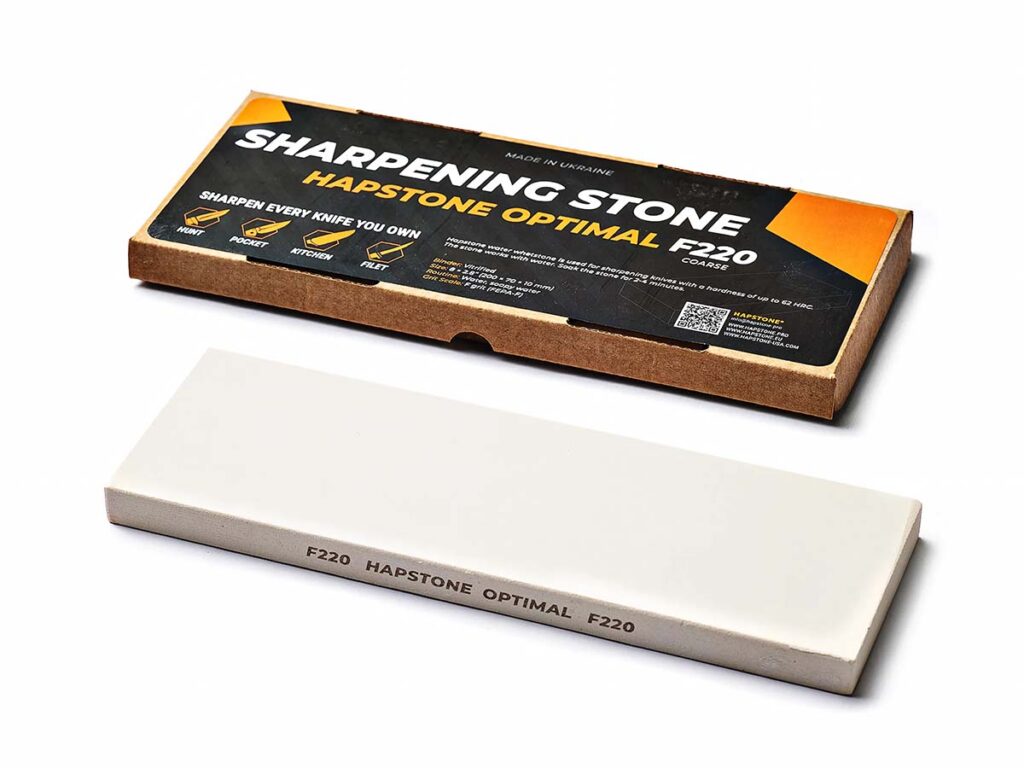
STONE COLD—Freehand sharpening is an art, one that requires the right tools. Hapstone delivers with affordable and effective bench stones in its Optimal line. Made in the Ukraine, the stones are designed to hone steel with hardnesses up to 62 HRC, which covers most of the modern super steels. The 8×2.8-inch stones use aluminum oxide as the cutting medium and a vitrified binder, and the company pre-laps the stones to ensure a smooth working surface. Hapstone offers five grit sizes—220, 400, 500, 1000 and 1200—giving sharpeners the full course to re-form, sharpen and hone their edges. MSRP: $36-$44, depending on grit size


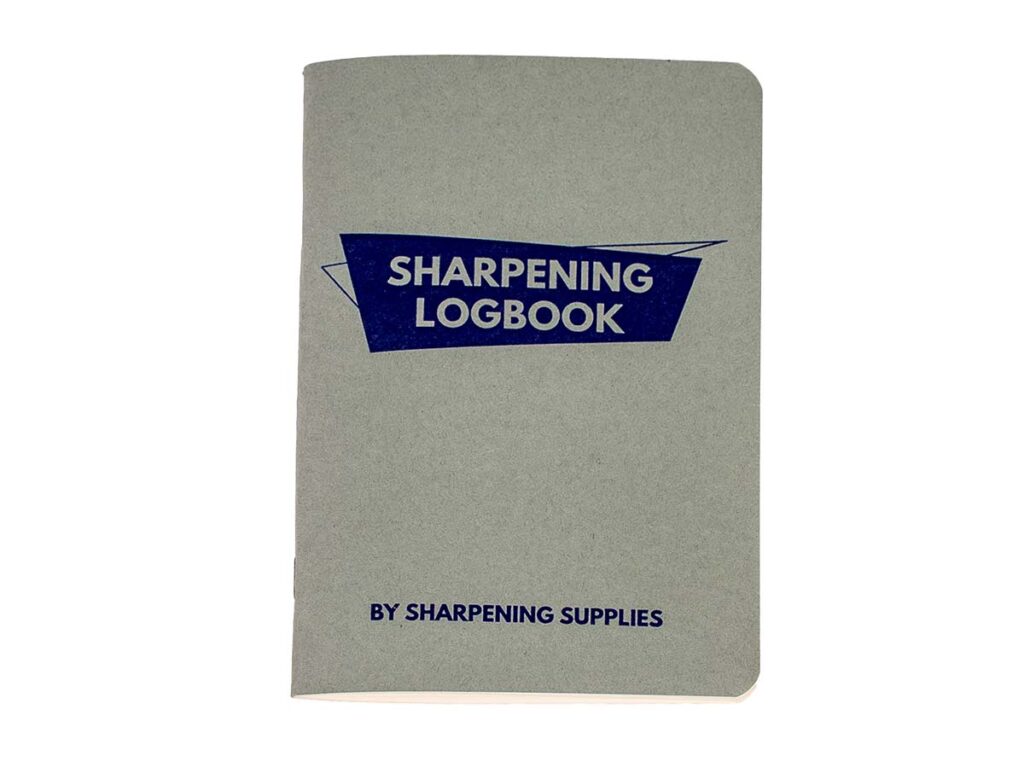
SharpeningSupplies.com Logbook

SharpeningSupplies.com Logbook

KEEPING TABS—If you’re serious about your knives and their upkeep, SharpeningSupplies.com cooked up an absolute must-have maintenance tool. Low-tech as it comes, the online retailer’s Sharpening Logbook helps you keep track of a ton of useful data on your sharpening sessions. Designed to document each knife’s session, there’s room to record knife and date specs, grits used, sharpening angle, edge condition, faults, sharpness before and after, personal notes and more. Additionally, the back of the book has some very useful guidance on sharpening in general. For those who are resolute about achieving and maintaining a pristine edge, this is the type of sharpening D.O.P.E. that proves vital. MSRP: $10


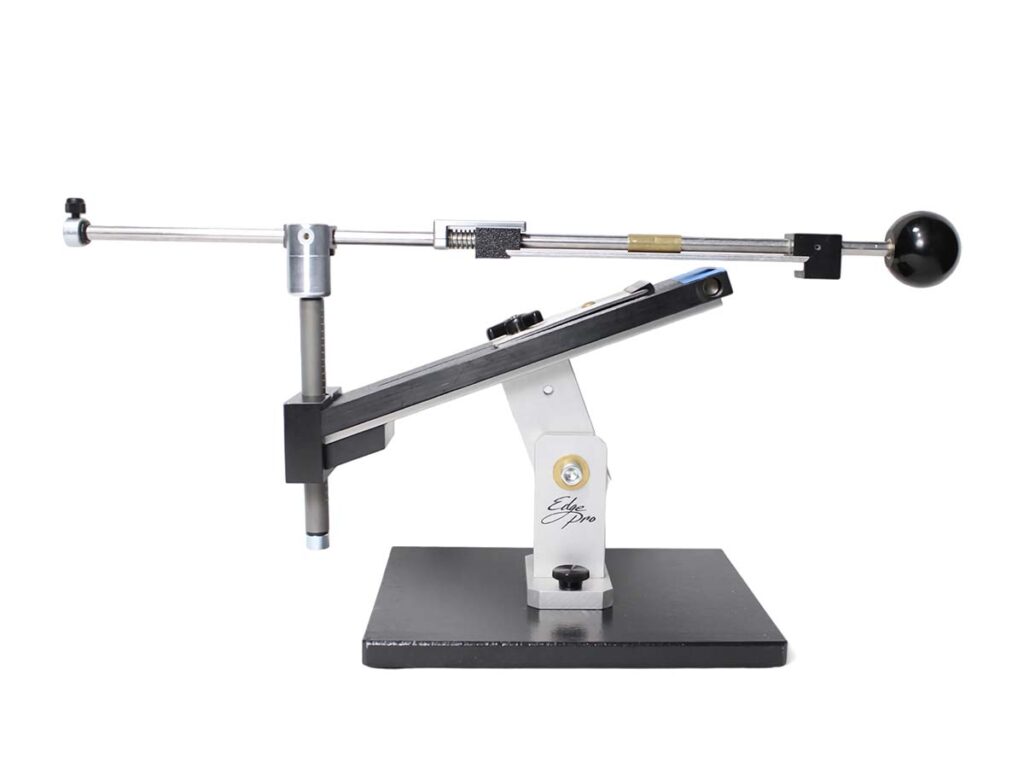
Edge Pro BevelTech

Edge Pro BevelTech

PROFESSIONAL DEGREE—Perhaps you run a sharpening business or maybe you simply take a professional approach to your sharpening projects. Either way, Edge Pro’s BevelTech system is tailored to the most exacting hone hounds in the knife world. Designed for installation in a workspace (though there are less-permanent mounting options), the all-metal angle-adjustable sharpener is designed for precision projects or high-volume honing. Features that should intrigue those undertaking either are an adjustable tilting retention surface, oversized ball grip on the sharpening arm, angle-gauge attachment point on the arm, laser-engraved angle-adjustment graduation and quick-attachment stone holders. Edge Pro offers four different tiers of its system, with more sharpening stones as you go up. But each is built around the base precision sharpener. MSRP: Starting at $435


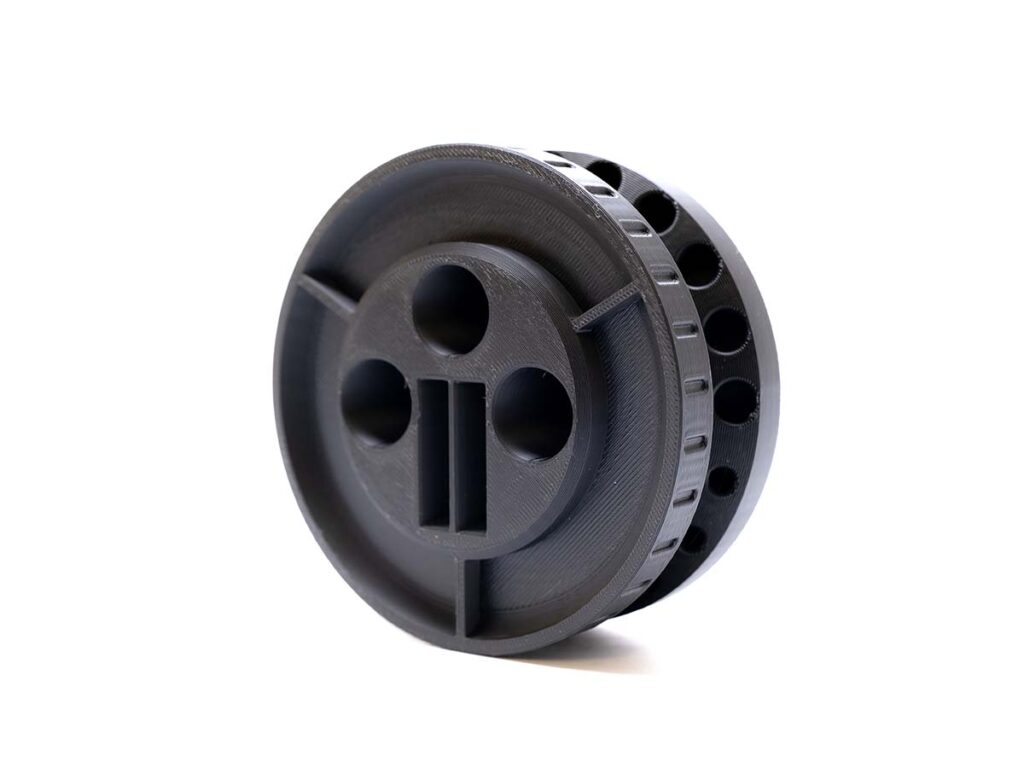
Knafs Launchpad

Knafs Launchpad

TO THE MOON—Since we talked about Knafs’ Bit Driver Grande in a bit, we’ll pitch an accessory for it that is well worth add to the cart with it—the Launchpad. Simply put, it’s a holding system for the driver, giving you an easy and organized place to hold the tool and a whole array of bits. Here’s the great thing about the 3D-printed accessory: you can spend a little coin and buy one from Knafs or—if you have a 3D printer—the company offers the files for free to print one at home. MSRP: $9


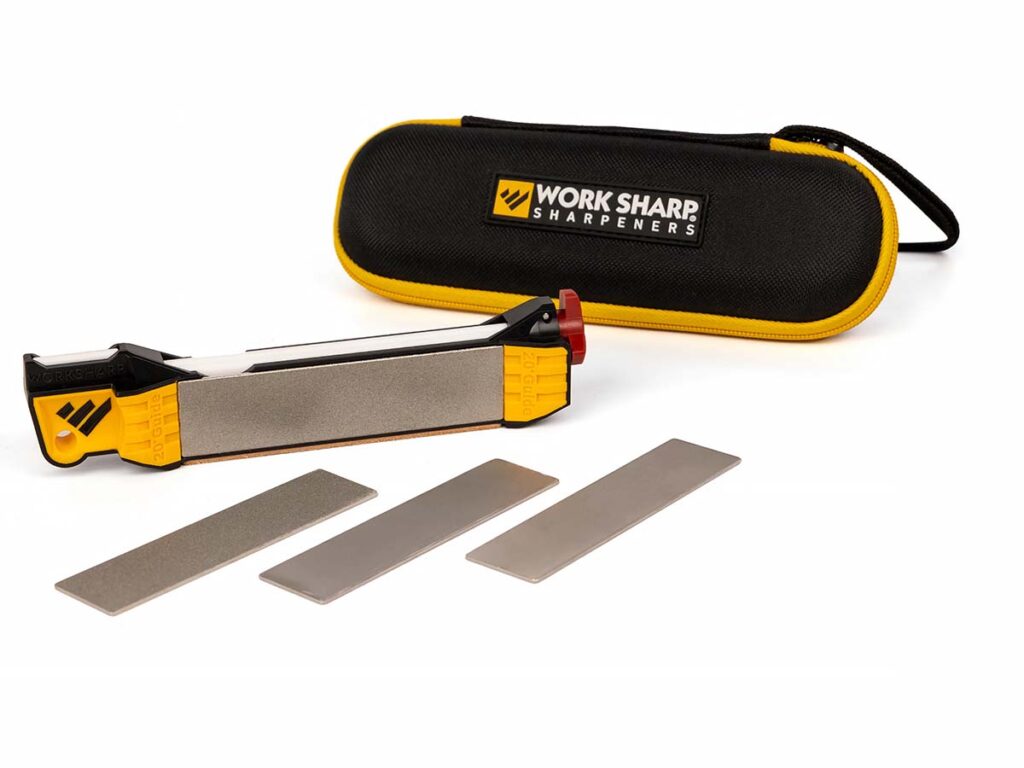
Work Sharp Guided Field Sharpener

Work Sharp Guided Field Sharpener

EDGY ANYWHERE—Anyone who aims at recapturing a knife’s edge is likely familiar with Work Sharp’s standby Guided Field Sharpener. It’s been around for a hot minute, but never in what’s being offered now. The Guided Field Sharpener Elite offers complete angle-guided edge maintenance in a system that delivers it anywhere. Where Work Sharp has kicked it up a notch is the sharpening surfaces it includes in the kit, with the Elite coming with 220-, 400-, 600- and 800-grit diamond plates. That takes users from course to extra-fine and covers nearly every sharpening necessity you’re likely to encounter. Plus, Work Sharp throws in a handy zippered carrying case to keep everything organized. MSRP: $75


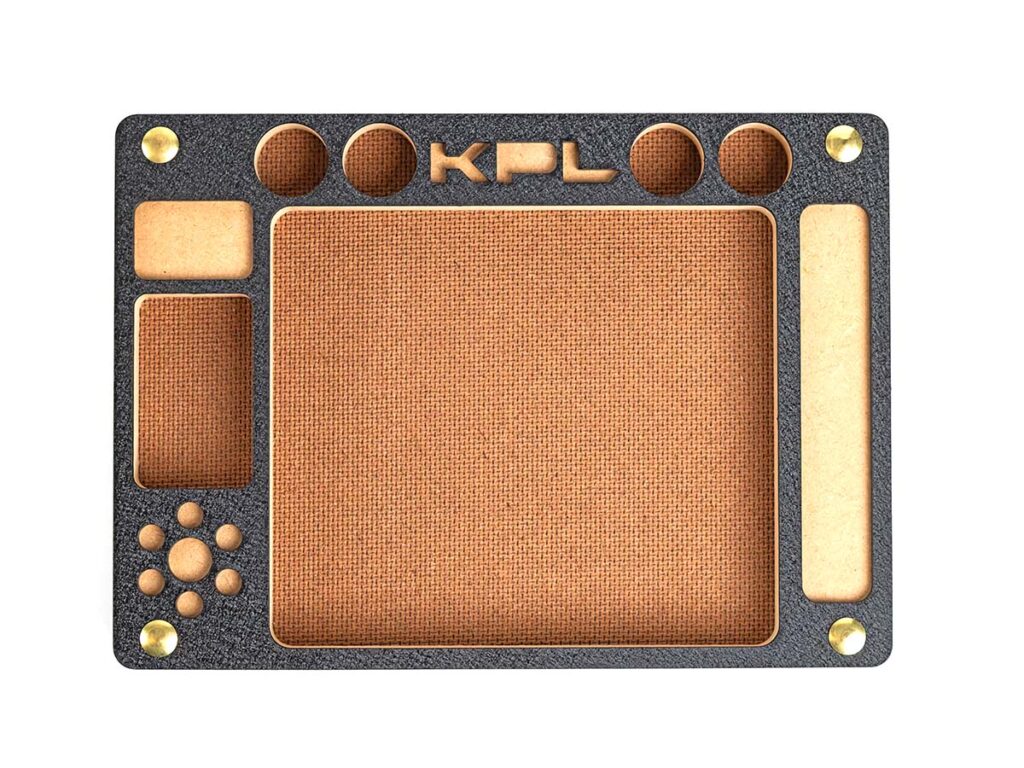
JRW + KPL Knife Maintenance Tray

JRW + KPL Knife Maintenance Tray

TRAY CHIC—Keeping your workbench organized during a teardown is half the battle, and KPL has teamed up with the pocket-art wizards at JRW Gear to deliver a dedicated workspace solution. The JRW + KPL Knife Maintenance Tray is a premium, multi-layered, riveted storage platform precision-machined to house your entire maintenance arsenal. Designed with custom-bored pockets, it features dedicated slots for your lubes, detailing swabs, hardware and loose knife parts. It even includes a custom cutout perfectly sized for an oil-resistant JRW dump tray to catch small screws before they roll away. Finished with silicone rubber non-slip feet to keep the station securely anchored while you work, you have a steady place to get jobs done. MSRP: $135


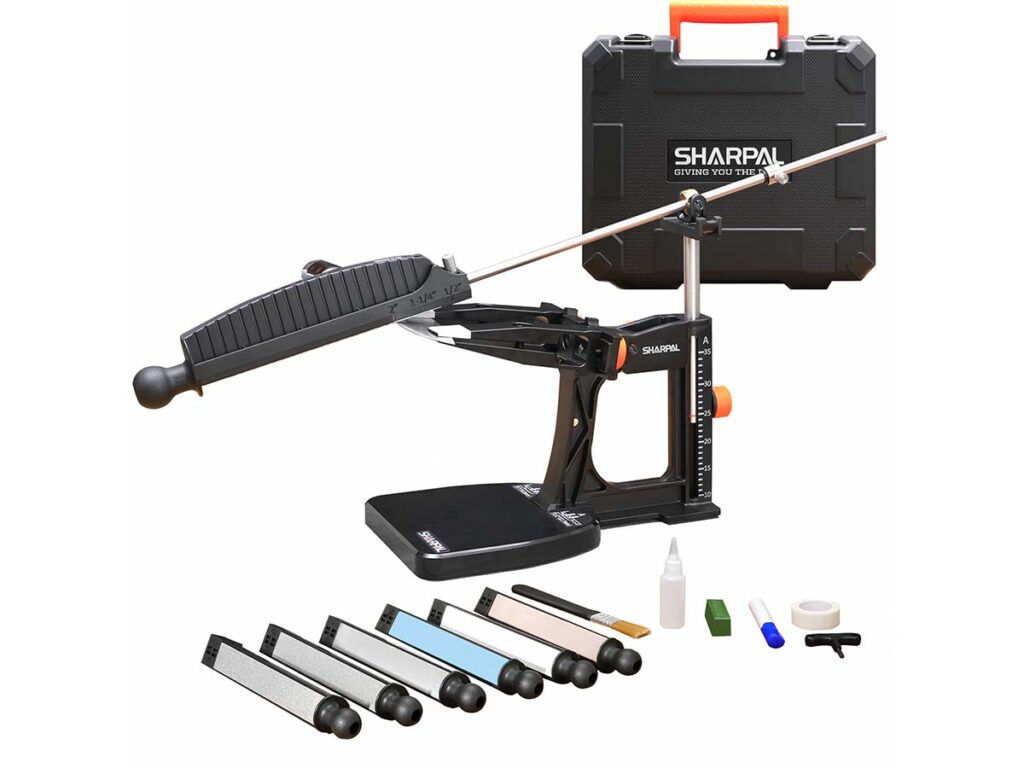
Sharpal 202H Adjustable Angle Sharpening System

Sharpal 202H Adjustable Angle Sharpening System

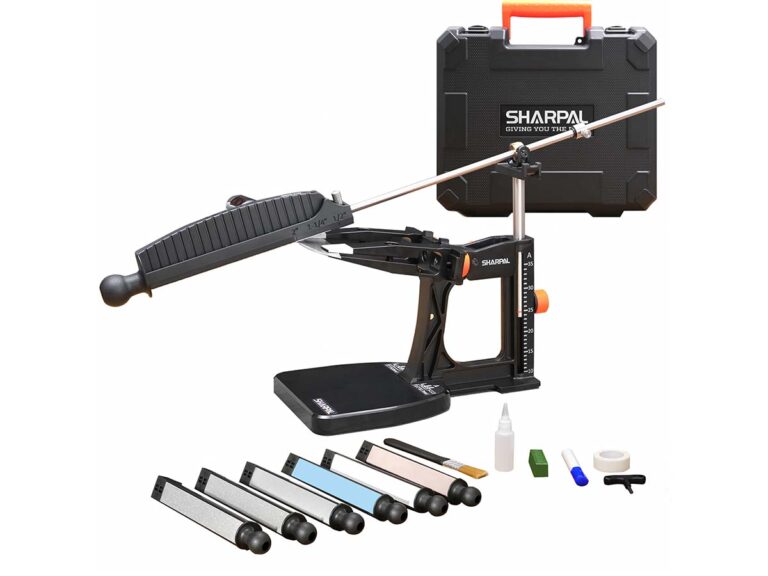
ALL IN ONE—If you want a single setup that handles everything from total edge repair to a mirror polish, Sharpal has a comprehensive solution. The 202H Adjustable Angle Sharpening System is a seven-in-one kit built around a heavy-duty metal chassis and an anti-slip base. The heart of the system is its smooth angle adjustment, delivering a wide 10-to-35-degree range with precise 0.2-degree granularity. To guide your progress, the kit includes seven different 1×6-inch abrasive plates, starting with 220-, 325-, 600- and 1000-grit diamond surfaces. From there, 3000- and 6000-grit whetstones smooth out burrs before you finish on a leather strop with green compound. A reliable flip mechanism lets you work both sides evenly without losing your exact angle. MSRP: $180


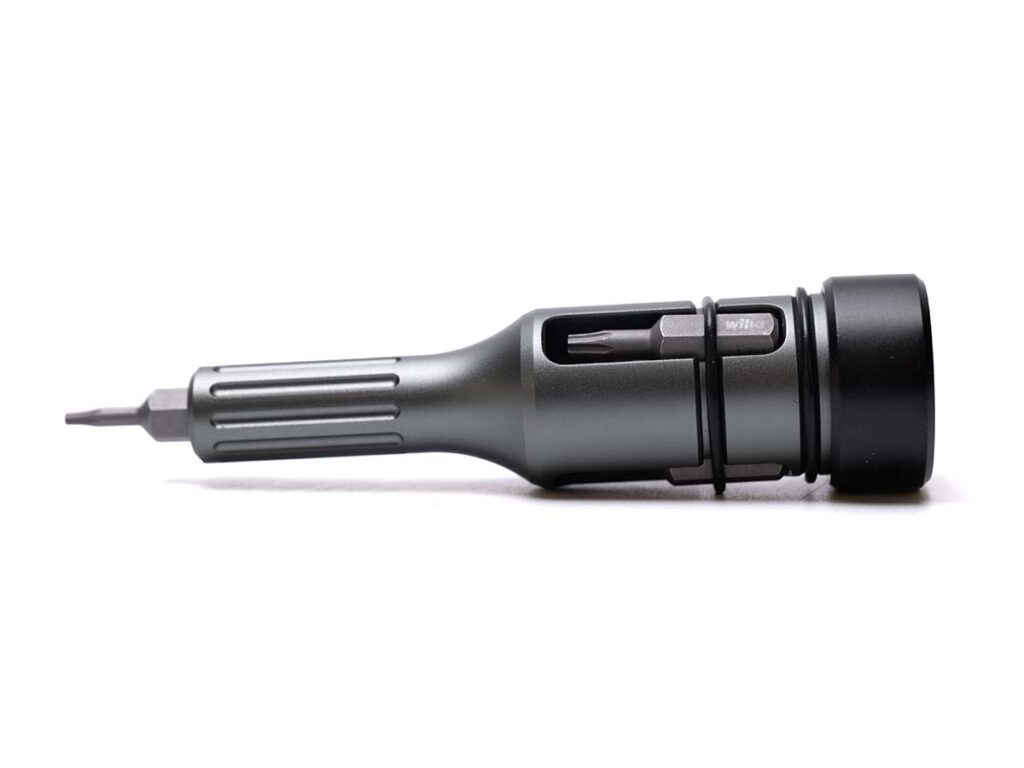
Knafs Bit Driver Grande

Knafs’ Bit Driver Grande

DRIVER’S SEAT—Man does not live by sharp edges alone. Sometimes there are screws to tighten and liners to swab clean. In these situations, a bit driver is the hero of the story and Knafs has a solid—not to mention manageable—option in its Grande. What’s to like about this self-contained system is that it’s the larger brother to its original driver, which, in turn, fits into the palm better to deliver more torque. At the same tick, it has an elongated neck, perfect for more control in precise operations. The tool comes with three Wiha Torx bits (T6, T8 and T10), has a spinning cap run on ceramic bearings and a body of durable, yet light, aluminum. MSRP: $38


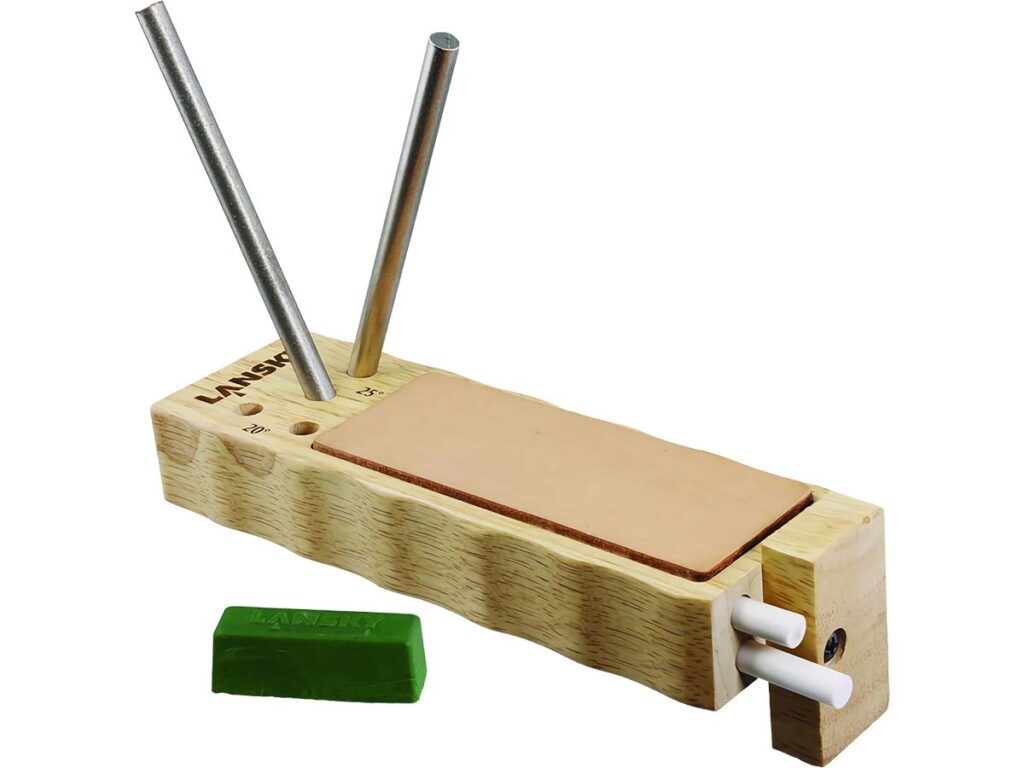
Lansky 4-Rod Diamond/Ceramic TurnBox Crock Stick

Lansky 4-Rod Diamond/Ceramic TurnBox Crock Stick

TURNING HEADS—Lansky is updating its classic V-rod format by packing an extra refinement stage into a highly portable layout. The latest 4-Rod Diamond/Ceramic TurnBox Crock Stick system features a compact hardwood block with integrated internal storage for the rods inside the base. Perfect for a kitchen drawer or a hunting pack, the system utilizes preset 20- and 25-degree angles to keep your bevel geometry completely consistent. The two-stage sharpening process leverages two 5-inch medium 400-grit diamond rods for rapid steel removal, followed by two 5-inch fine 1000-grit ceramic rods for daily touch-ups. Lansky then takes the system a step further by including a dedicated leather strop and polishing compound to deliver a true factory-level mirror edge. MSRP: $65


More On Sharpening:

Photos: 5 New Knives for Tough Spots and Sticky Situations

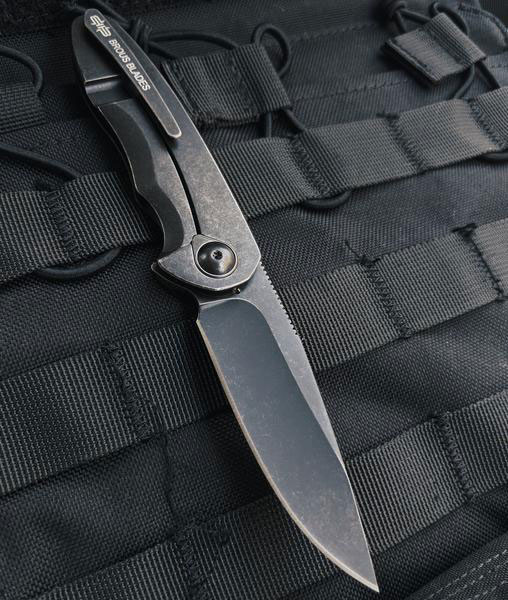
Brous Blades The Specter

Brous Blade specter

  • KNIFE NAME: The Specter
  • PATTERN: Flipper folder
  • BLADE LENGTH: 3”
  • BLADE MATERIAL: D2 tool steel
  • BLADE FINISH: Blackout
  • BLADE LOCK: Framelock
  • HANDLE: G-10 and stainless steel
  • WEIGHT: 3 oz.
  • CLOSED LENGTH: 4”
  • MSRP: $169
  • COMPANY: Brous Blades, brousblades.com

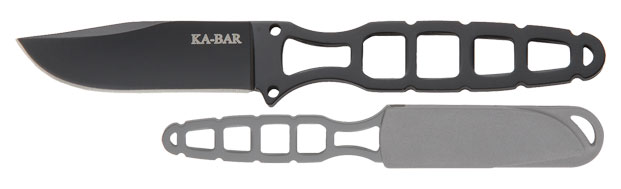
KA-BAR Skeleton

ka bar skeleton

  • KNIFE NAME: Skeleton
  • PATTERN: Utility fixed blade
  • BLADE LENGTH: 2.5”
  • BLADE STEEL: 5Cr15 stainless
  • ROCKWELL HARDNESS: 57-59 HRC
  • BLADE GRIND: Hollow
  • WEIGHT: 1.6 ozs.
  • OVERALL LENGTH: 6.125”
  • SHEATH: Hard plastic
  • MSRP: $11.59
  • COMPANY: KA-BAR, www.ka-bar.com

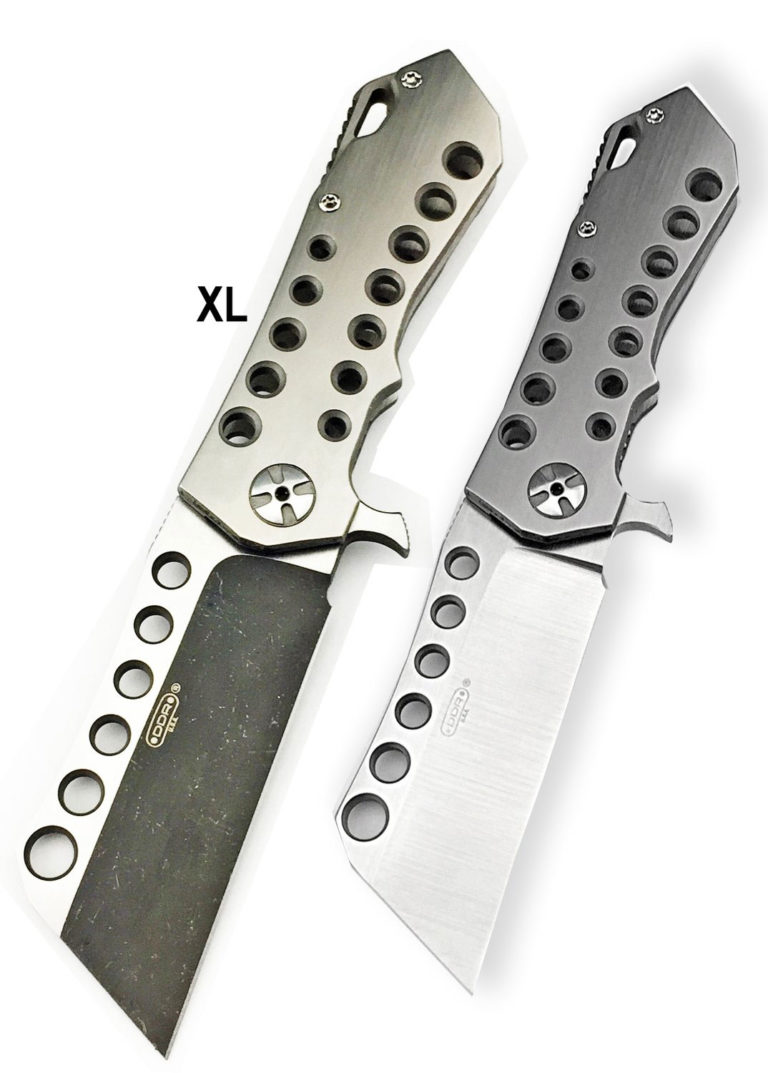
Darrel Ralph Designs Hacker

Darrel Ralph Designs Hacker 

  • KNIFE NAME: Hacker
  • PATTERN: Flipper folder
  • BLADE LENGTH: 3.5”
  • BLADE STEEL: CPM 154 stainless
  • BLADE PATTERN: Wharncliffe
  • FRAME: Titanium w/satin finish
  • LOCK: Framelock
  • POCKET CLIP: Titanium
  • PIVOT: Maxx Glide caged pivot bearing system w/aggressive detent
  • WEIGHT: 6 ozs.
  • CLOSED LENGTH: 4.5”
  • MSRP: $780
  • COMPANY: DDR-Darrel Ralph Designs, Darrelralph.com

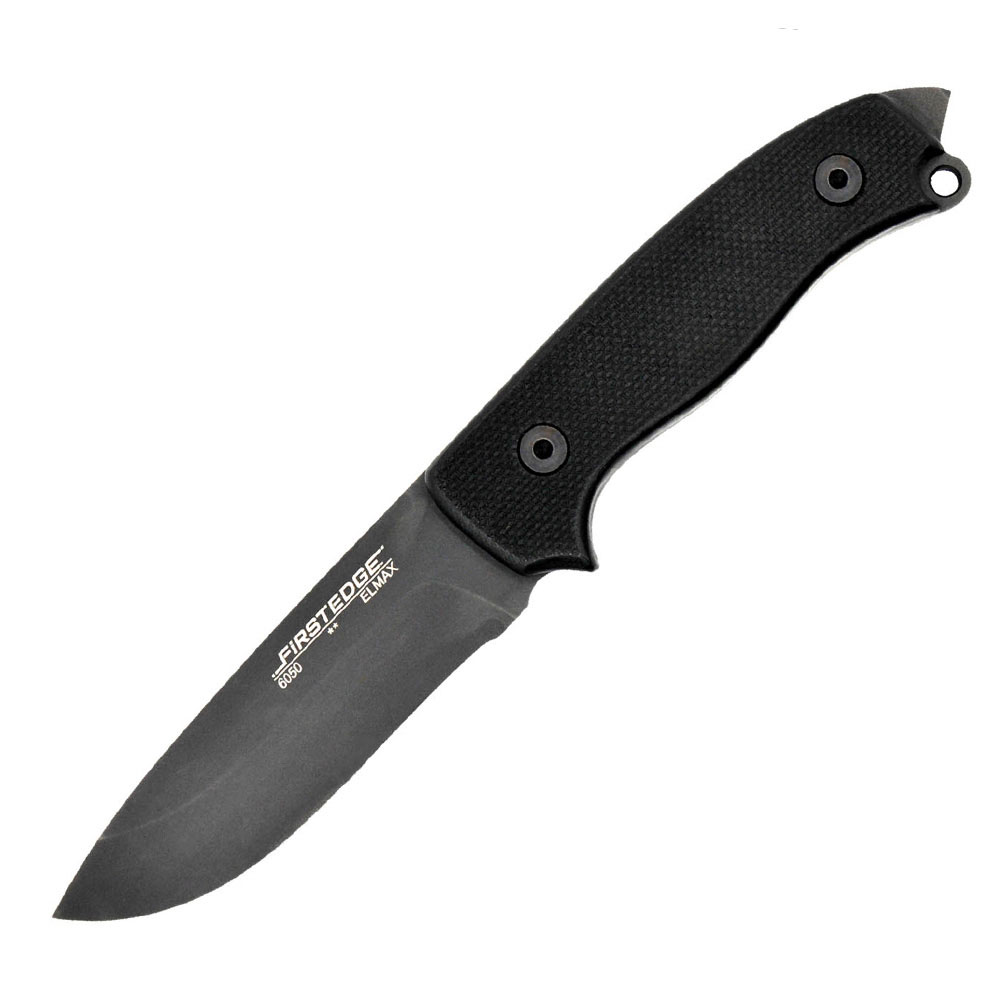
FirstEdge Tactical Skinner

FIRSTEDGE® 6050-6055 TACTICAL SKINNER HUNTING & SURVIVAL KNIFE

  • KNIFE NAME: Tactical Skinner
  • BLADE LENGTH: 4.375”
  • BLADE STEEL: ELMAX Swedish stainless
  • ROCKWELL HARDNESS: 60-61 HRC
  • BLADE PATTERN: Drop point
  • HANDLE: G-10
  • KNIFE CONSTRUCTION: Full tang
  • OVERALL LENGTH: 9.375”
  • SHEATH: Tri-Composite System Kydex w/3” nylon webbing, Box X stitching, stainless hex fasteners and liners; locks blade in; MOLLE system sheath also available
  • MSRP: $199.99
  • COMPANY: FirstEdge, firstedgeusa.com

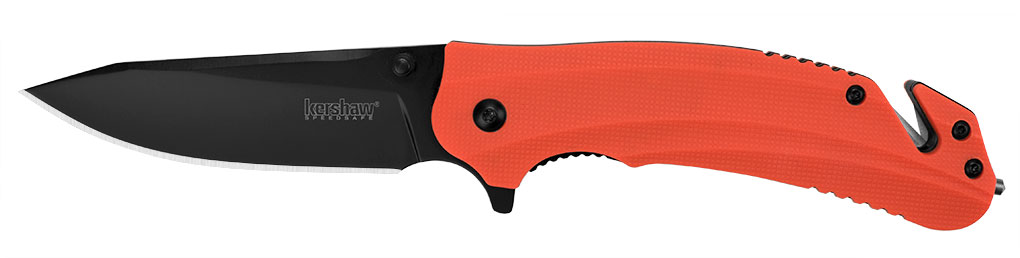
Kershaw Barricade

Kershaw Barricade survival rescue knife

  • KNIFE NAME: Barricade
  • PATTERN: Rescue knife
  • BLADE LENGTH: 3.5”
  • BLADE STEEL: 8Cr13MoV stainless
  • BLADE FINISH: Black-oxide coating
  • BLADE PATTERN: Clip point
  • ACTION: SpeedSafe assisted opening w/flipper
  • HANDLE: Orange glass-filled nylon w/built-in cord cutter and carbide glassbreaker
  • POCKET CLIP: Deep-carry design
  • LOCK: Linerlock
  • WEIGHT: 4.5 oz.
  • CLOSED LENGTH: 5”
  • MSRP: $39.99
  • COMPANY: Kershaw, kershawknives.com

Bachtel’s Bowie With A Pedigreed Background

A study of Michael Price’s work, Nick Bachtel’s reproduction gentleman bowie has the looks to wow.

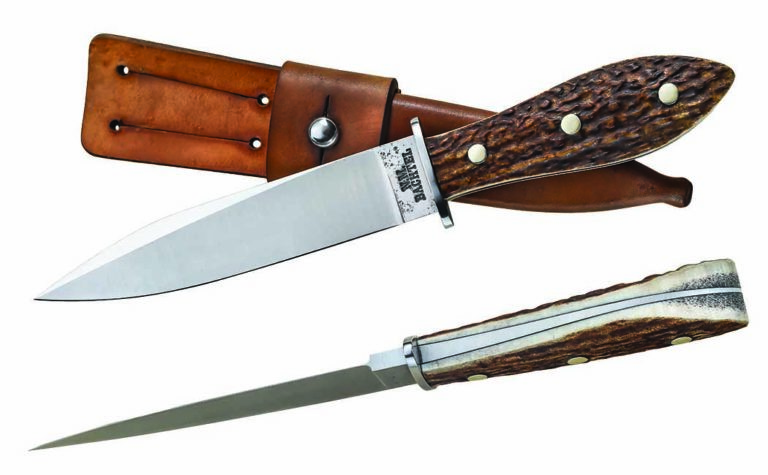
Bladesmith Nick Bachtel has parlayed his fascination with the knives of 19th-century great Michael Price into a faithful reproduction of a Price-style gentleman’s bowie.

Nick studied every Price knife and other like ones of the genre he could find online and elsewhere to help arrive at the way the 19th-century cutler constructed the gentleman’s bowie. However, it was when he saw a picture of a Price knife in BLADE Magazine Cutlery Hall-Of-Fame® member Bernard Levine’s book, Knifemakers Of Old San Francisco, that “a light went off.”

Nick noticed that the handle had three pins so the knife had to have a full tang, not a hidden tang as he had previously thought, so he forged the knife, heat treated it, fit up the guard and forged the tang wider.

“I call it a captured-guard full tang,” the 24-year-old said of the method that apparently originated among bladesmiths in Ireland, Price’s native country. “It’s such a weird, unique, almost comical way of making a knife—and difficult to do as well,” Nick observed, “but boy, did Price make it!”

Nick Bachtel calls the construction he used to make his reproduction of a Michael Price Gentleman’s Bowie “captured-guard full tang.” For the style to work, it must be forged, Nick stressed. He said another way to do it would be in a frame handle construction and a tapered tang, though a Price aficionado would be able to tell the difference. (SharpByCoop knife images)
Nick Bachtel (inset) calls the construction he used to make his reproduction of a Michael Price Gentleman’s Bowie “captured-guard full tang.” For the style to work, it must be forged, Nick stressed. He said another way to do it would be in a frame handle construction and a tapered tang, though a Price aficionado would be able to tell the difference. (SharpByCoop knife images)

The icing on the cake for Nick was ABS journeyman smith Jordan LaMothe’s story, “How to Make the Price Guard” in the December 2019 BLADE®. As Nick noted, “The Price style is the pinnacle of the traditional forged blade.” What better style is there for a young, up-and-coming bladesmith to explore?

For more information contact N.M. Bachtel Forging Co., attn: Bachtelforgingcompany.com.

Gentleman Bowie Spec Check
Knife name: Michael Price
Style: Gentleman’s Bowie
Maker: Nick Bachtel
Blade length: 5 7/8 inch
Blade material: 52100 carbon steel
Handle: Elk antler and nickel silver
Overall length: 10¾ inch
Sheath: Traditional center-seam vegetable-tanned cowhide w/frog stud
Maker’s List Price For A Similar Knife: $1,100(includes sheath)

More Knife Collecting And Custom Knives

Advertisement

Must Read Articles

Read this before you make a knife

Knifemaking 101 – Read This Before You Make a Knife

  by Wayne Goddard My experience has taught me that there's nothing like digging in and getting started. I've often said the hardest part of the...
how to forge damascus steel

How to Forge Damascus

Advertisement
Advertisement