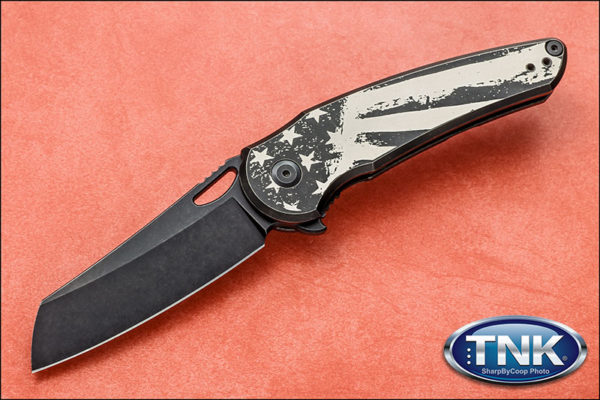
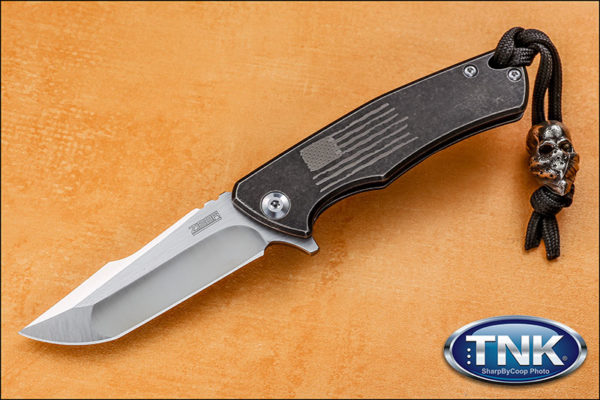
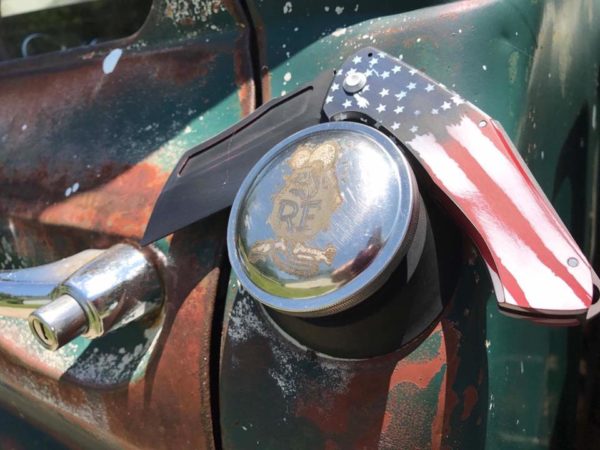
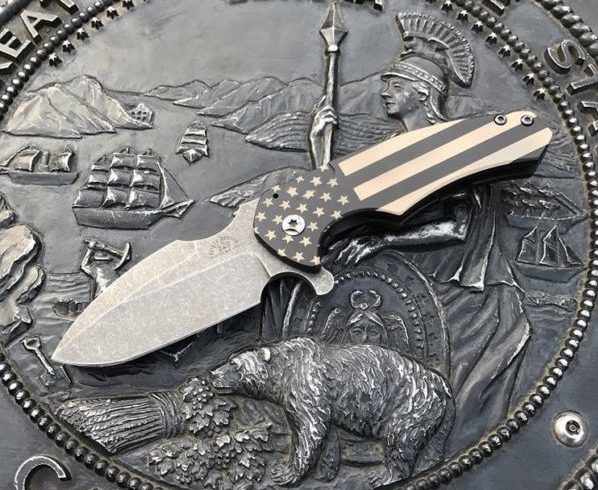
You need a knife. Everyone needs a knife. You know those plastic zip ties that you can’t get the scissor blade under that are lashing down the new grill spatula? Yeah, those. You need a knife for that. You know how it aggravates your sense of order when you’re forced to tear into the plastic shrink-wrapped to your case of water bottles? A nice slit down the center keeps the bottles upright without any unsightly stretches or ragged openings. You know how you try to open impossible-to-open snack bags with your teeth, because who carries scissors, and the seem causes a vertical tear? Yeah, that. You need a knife for that. But what we all need right now are some star-spangled, flag-waving knives that cut great!
6 Selections From True North Knives’ Freedom Collection
We’ll start with six selections from the Freedom Collection assembled by True North Knives. Often these models are available with different options, and of course they’re made right here in the USA. Maker warranties cover defects, but not abuse, so remember, it’s a knife, not a hammer or a pry bar.
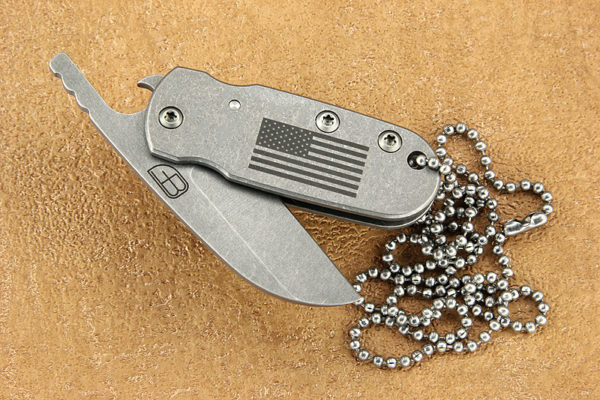
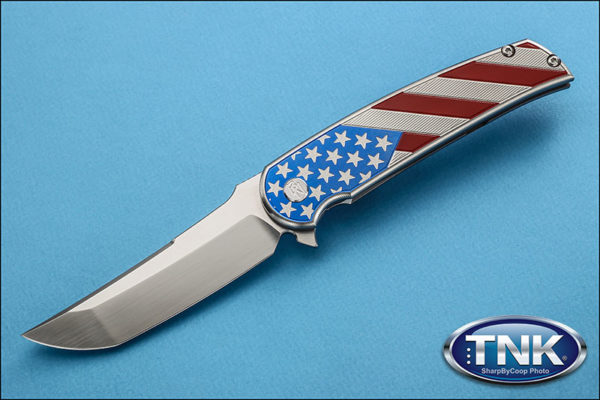
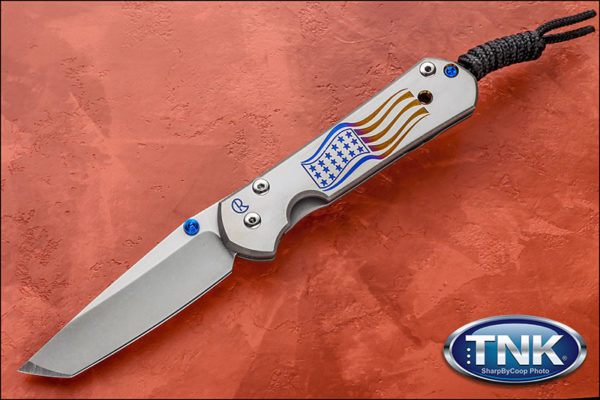
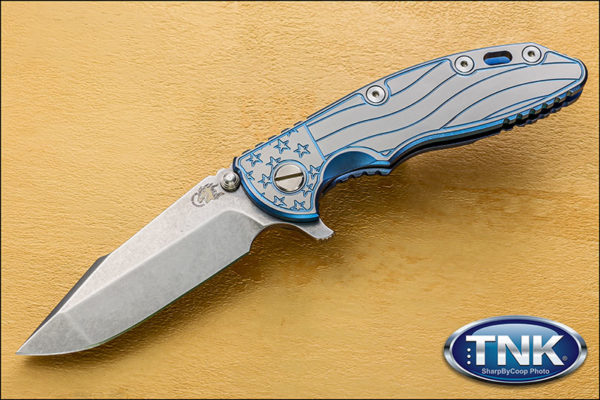
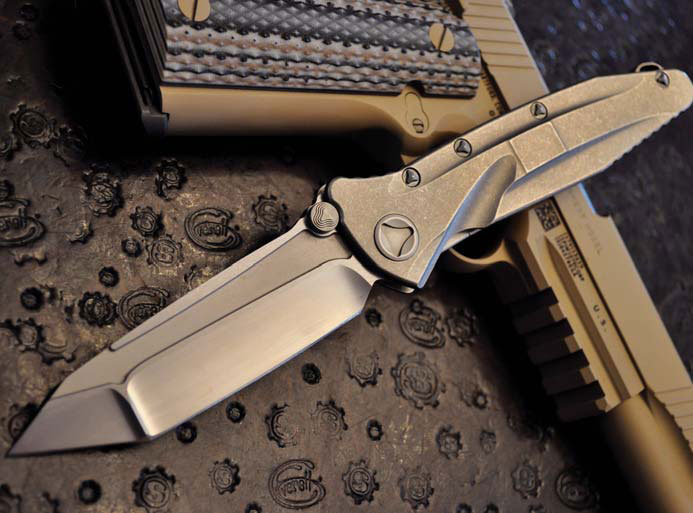
Brian Fellhoelter’s Freedom Frikkie has a 1 3/4-inch blade of stone-washed CPM 154 steel. The frame is stone-washed titanium. Overall length is 4 1/8-inch, overall weight, 1.27 ounces. Maker’s list price: $180. Contact: www.truenorthknives.com.Three-time recipient of the BLADE Show Knife of the Year Custom Best Folder, Brain Nadeau adds the Freedom Hurricane Flipper to True North Knives’ Freedom Collection. 9 1/8 inches overall, it has a 4-inch blade made of hand-rubbed CPM S35VN. The handle is titanium. Maker’s list price: $1250. Contact: True North Knives.Chris Reeve’s contribution to the True North Knives Freedom Collection is the Flag 21 version of the Sebenza 21. The 3-inch blade is made with CPM S35VN stainless steel in a tanto design. The polished titanium frame sports an anodized flag pattern. Makers list price: $425. Contact: True North Knives.Rich Hinderer’s XM-18 Flipper is another knife in the True North Knives’ Freedom Collection. The CPM 20CV blade is done in Hinderer’s Harpoon Spanto design and measures 3.5 inches. The frame is titanium and measures 8.25 inches. Maker’s list price: $650. Contact: True North Knives.True North Knives’ Freedom Collection includes Jake Hoback’s Freedom OSF (Open Source Folder). The 3.5-inch blade is made out of CPM S35VN stainless steel in a modified sheepfoot design. Overall length is 8.75 inches, overall weight, 6.4 ounces. Frame is titanium. Maker’s list price: $550. Contact: True North Knives.We round out the True North Knive’s Freedom Collection with Michael Zieba’s S1 Mini. The 2 5/8-inch blade is made with M390 super stainless steel. Overall it measures 6 inches and weights 2.288 ounces. The frame is titanium. Maker’s list price: $395. Contact: True North Knives.
21 Patriotic Cutters From Custom Makers Across The USA
These custom cutters may take longer to receive, but that’s because they’re all made one at a time in the shops of hard-grinding knifemakers who sometimes have day jobs. They’re worth the wait and will have you hitting every note of “The Star Spangled Banner” when you see how they cut.
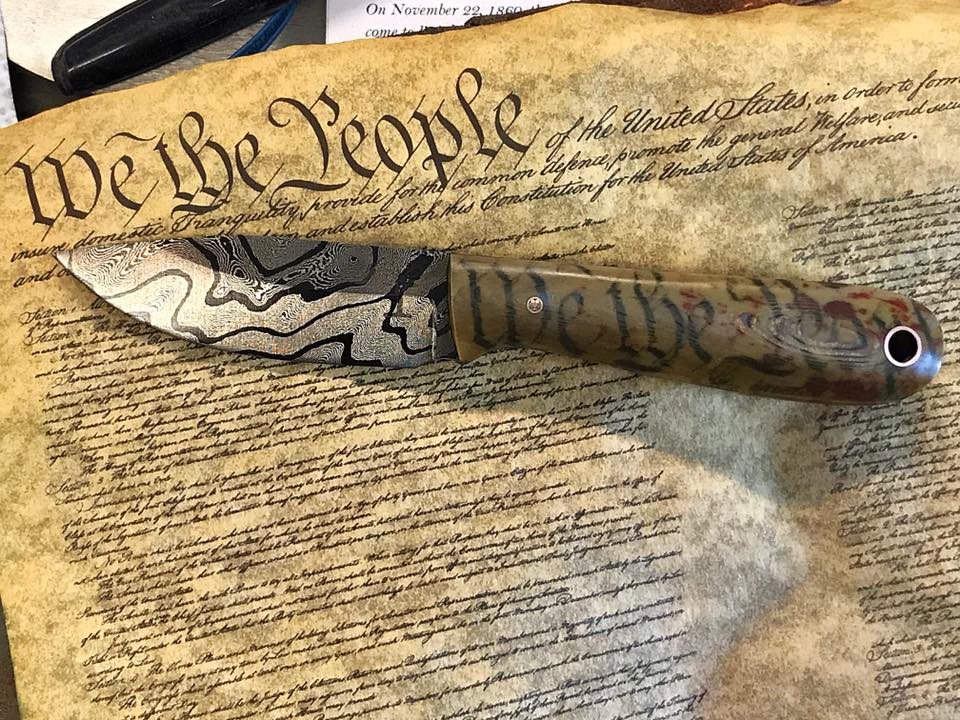
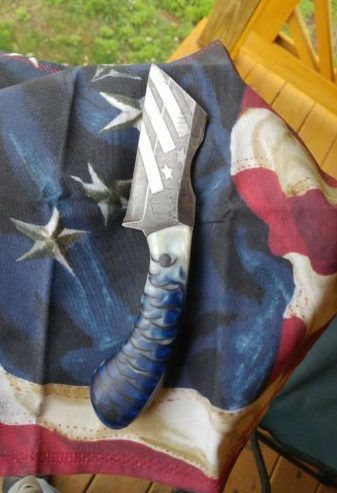
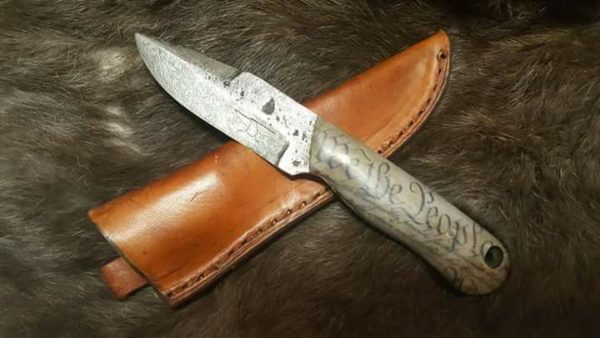
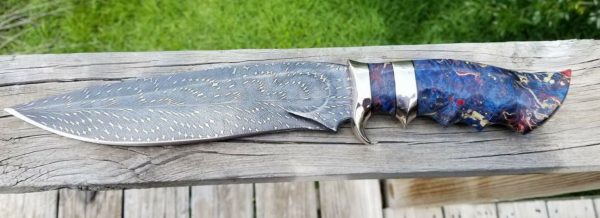
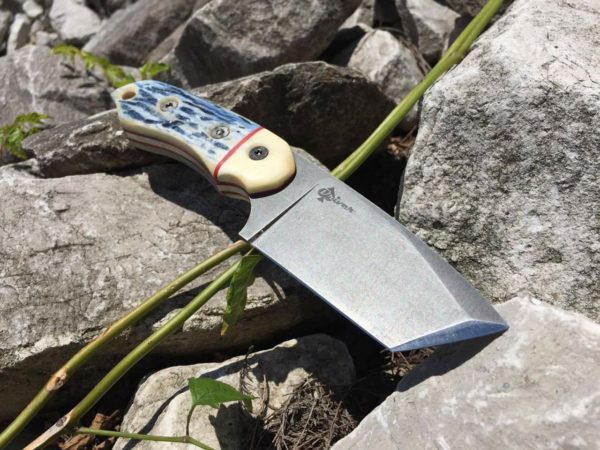
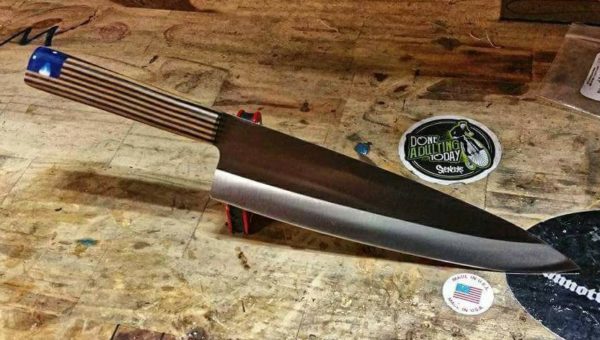
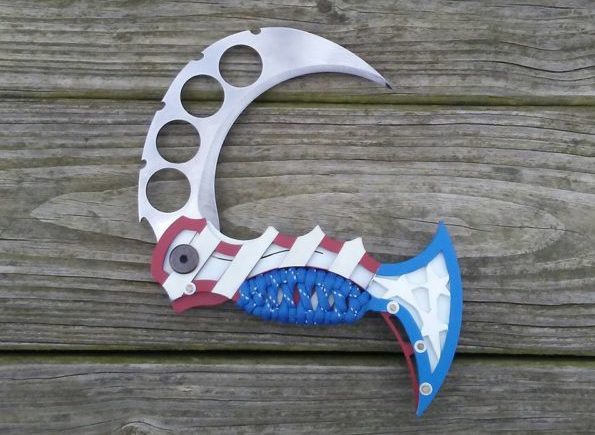
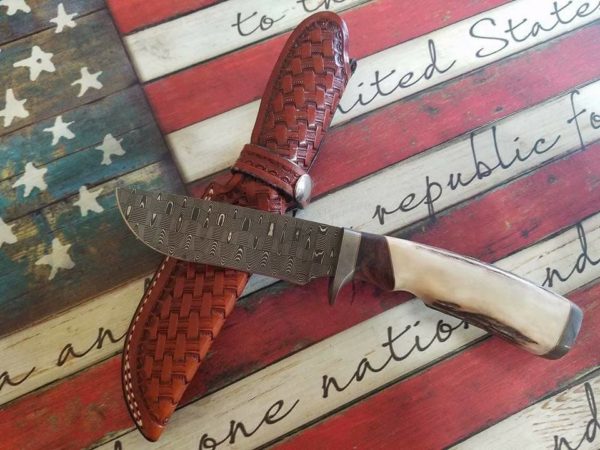
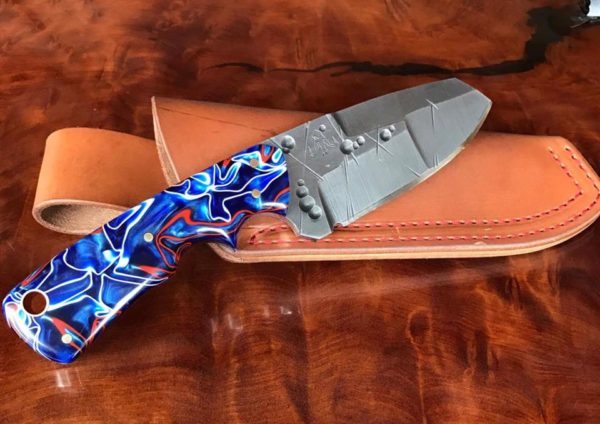
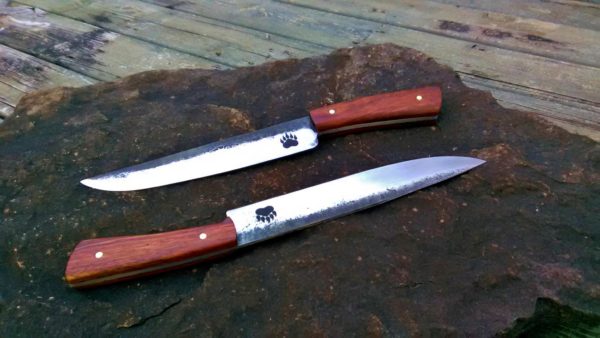
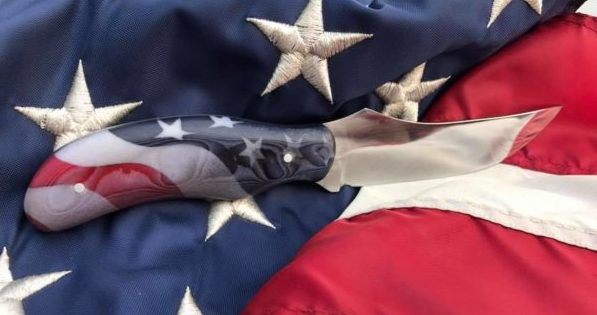
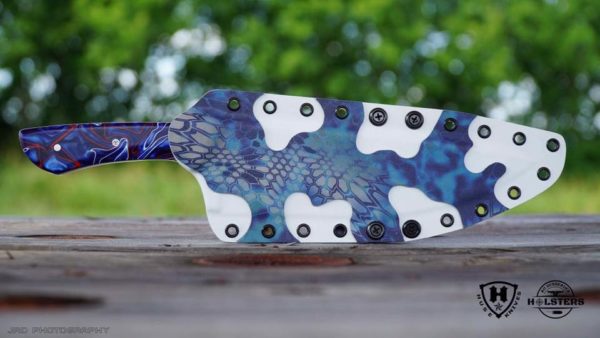
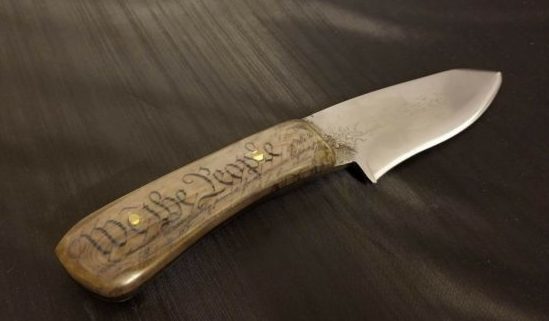
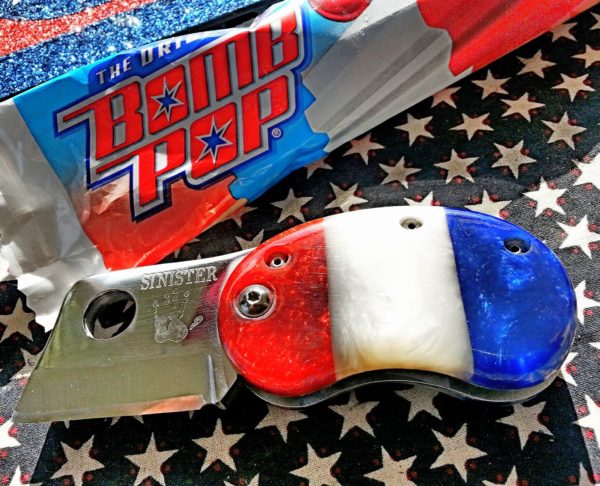
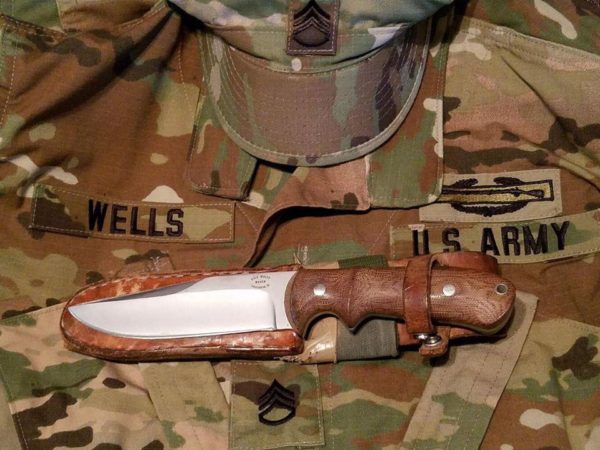
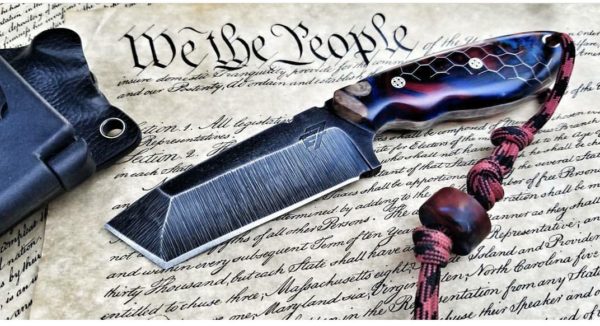
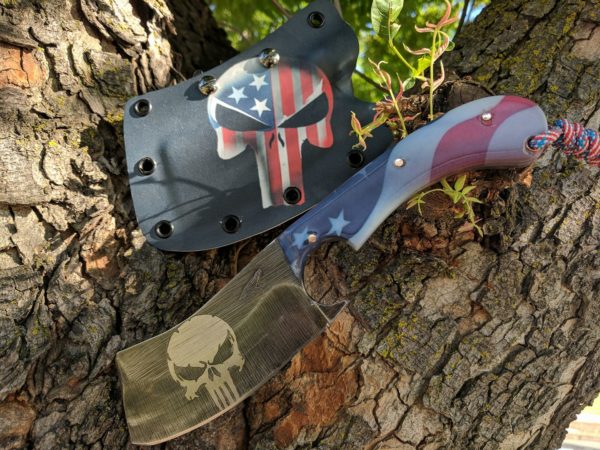
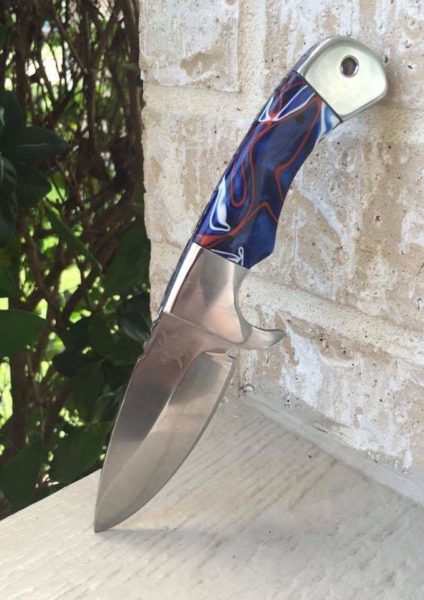
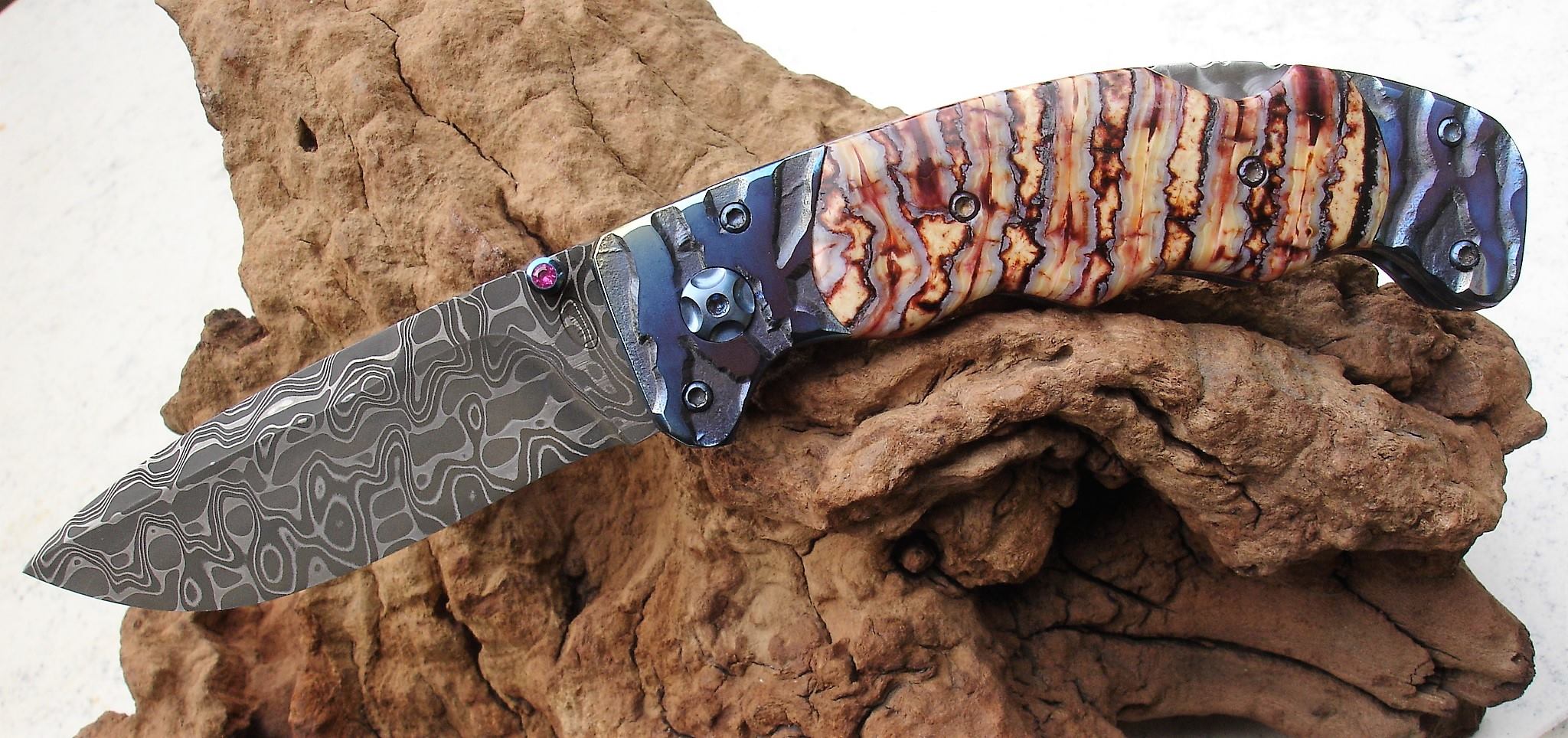
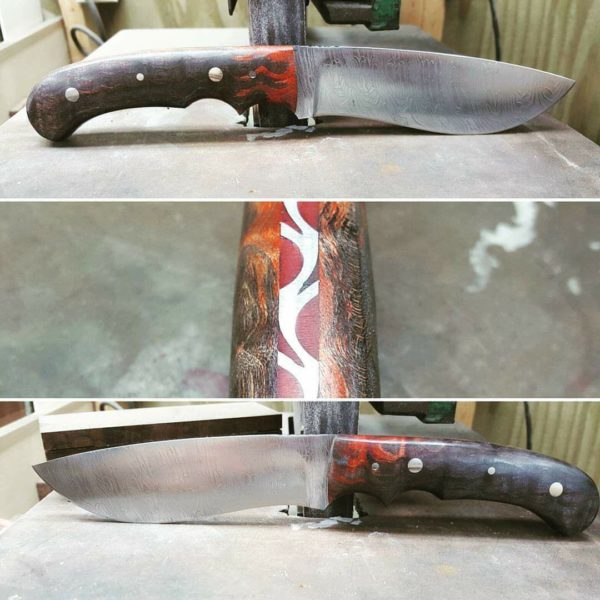
The Warnaught by Eric Luther has a S35VN blade, full titanium frames, clip and backspacer, and ceramic detent and bearings. The custom Cerakote is by Warlock Custom. Maker’s list price: $700. Contact: [email protected] or join Eric Luther Knives on Facebook.Brent Chumbley of Triple Deuces Knives made this Regulator with a 3-inch blade made of Bohler N690 steel. The titantium framelock handle’s custom Cerakote job is by Chad Waldow. Overall length is 7 1/4 inches. Maker’s list price: $510. Contact Brent Chumbley on Facebook at Triple Deuces Knives and on Instagram at triple_deuces_knives.The Beaver Tooth by Matthew Nolan of Angry Beaver Knives, has a Scandi V-ground 3 1/2-inch blade made out of W2 steel and acid etched with a flag design. The handle is a Rob Carper Innovations patriot red pine cone in white and blue resin. Maker’s list price: $275 with Kydex sheath, $325 with leather. Contact: Matthew A. Nolan, [email protected], 518-791-2551 or on Facebook at Angry Beaver Knives.Cody Wheeler of Mill Creek Knives calls this his Steel Bridge Camp model. The steel is a Nicholson American file with CARVex “We the people” scales by VP5. The 3-inch blade has a flat grind. Maker’s list price: $225. Contact Cody Wheeler at [email protected], on Facebook at Mill Creek Knives and on Instgram @millcreek_knives.Spencer Aplin of STA Custom Knives made the 9-inch blade for this American Glory out of star feather-pattern steel from HHH Damascus and Knives. The fittings are nickel silver and the handle material is stabilized and double-dyed California buckeye burl. Maker’s list price: $2000. Contact Spencer Aplin at www.stacustomknives.com.The Driver Defense Toxin has a 3.5-inch tanto blade made out of S35VN. The knife is 7.5 inches overall with jigged and dyed blue bone scales with bone bolster and red G10 liner and spacer. Maker’s list price: $250. Contact Dustin Driver at Driver Defense on Facebook.This 13-inch chef knife by Jack Keith of Dunnottar Forge Knifeworks has an partially flat-ground 8-inch blade made out of CPM 154 that is finished with a hollow grind and satin finish. The handle is stacked maple and walnut veneer with a cast blue acrylic with white stars. Maker’s list price: $350. Contact Jack Keith at www.dunnottarforge.com.The Karma by Jase White at Kastaway Custom Living was inspired by a real-world self-defense situation. The knuckles are in the CPM S30V blade rather than the handle, which is made of 1095 carbon steel. Maker’s list price: $50. Contact: Jase White at 423-453-9793, [email protected] or message at Kastaway Custom Living on Facebook.Rich Richardson made this for a retired navy commander. The blade is a mix of Devin Thomas Damascus steel in basket weave pattern and steel from the battleship USS Texas. (Authentication was provided.) Overall length is 9 inches. Handle is stag with a mesquite spacer. Maker’s list price: $800. Contact Rich Richardson at [email protected] or message him on Facebook.Jason Karl Glover of Mammoth Creek Knives made this 5 1/2-inch cleaver with triple grinds out of 1095 steel. The handle is Kirinite Patriot scales. Overall length is 11 inches. Maker’s list price: $375. Contact Jason Karl Glover at [email protected], call 801-540-7023 or message him on Facebook at Mammoth Creek Knives.JD Edwards hand-forged and hammer-finished this pair of fighters in 1095 carbon steel. The knives are 16 inches overall with an 11-inch cutting edge. The handle is made of bubinga wood and fitted with brass pins. The knives were commissioned by a family member of two brothers who are combat veterans of Iraq and Afghanistan. Maker’s list price: $250 each. Contact: JD Edwards at [email protected] or message him on Facebook at JD Edwards.Bobby Toerck made this trailing-point skinner with a 4.5-inch 1095 carbon steel blade, polished to a mirror finish. The overall length is 9 1/2 inches. The scales are fashioned with Wavy American Flag by Robert Belcher of Mental Co. Maker’s list price: $350. Contact Bobby Toerck at 903-812-1173 or message him on Facebook at T4 Custom Knives.Tom, short for Thomas, Jefferson of No Surrender Holsters made this sheath with a slide-out beverage opener on the backside to accompany “Forged In Fire” winner James Huse’s BBQ knife below. Contact Tom Jefferson on Facebook at No Surrender Holsters.James Huse, “Forged In Fire” champion made this knife using patterned steel from Alabama Damascus Steel. The blade is 9.5 inches, 14.5 overall. The handle is made from Patriot Kirinite. Maker’s list price: $700. Contact James Huse on Facebook at Huse Knives.Adam Rose of The Bearded Blade made this 4-inch blade from 1075 steel for a veteran who recently returned from Afghanistan. The handle is made from We the People CARVex scales. Overall length is 9 inches. Maker’s list price: $150. Contact Adam at [email protected], on Facebook at The Bearded Blade or on Instagram @thebeardedblade.Clay Smith of Sinister Knives calls this model the Battle Bean. The everyday carry is a friction folder knife/ bottle opener, perfect as a BBQ buddy! The 2-inch hollow-ground blade is made with W2 steel. The hardware and pivot pin are stainless and the liner and backspacer are aluminum. The handle scales are by Voodoo Resins. Maker’s list price: $150. Contact: Clay Smith at Sinister Knives on Facebook @bud809 on Instagram or email him at [email protected].Dale White of White Made Knives in Sweetwater, Texas, made this 10-inch knife for a soldier. Both the staff sergeant and the knife did two tours in Iraq. The blade is hollow-ground made out of 440C steel. The handle is sand-blasted canvas Micarta. Maker’s list price: $350. Contact Dale White at [email protected] or on Facebook at White Made Knives.John Waltz of Edge7 Custom Knives made this everyday carry tanto out of CPM3V. The hollow-ground blade is 3 inches and the knife is 7 inches overall. The scales are from J Hue Customs. Maker’s list price: $275. Contact John Waltz through www.edge7customknives.com.Jr. Madan of Patriot Horde Knives calls this model DaCleava. The 4-inch blade is made out of 1095 steel with a flat grind. Overall length is 9 inches. The handle is fashioned with CARVex Wavy Flag scales, fitted with brass pins and lanyard tube. Maker’s list price: $250 with Kydex sheath. Contact Jr Maden or Patriot Horde Knives on Facebook.Denny Furey of Furey’s Urban Combat Knives Unlimited uses high carbon 1095 steel to make the Americana. The knife is 7.5 inches overall with a 3.25-inch blade with mild hamon. There is file work on the spine, and the bolster and pommels are 410 stainless steel. The handle is fashioned from Patriot Kirinite scales. Maker’s list price: $300 shipped with Kydex sheath with hardware and embossed makers mark. Contact Denny Fury at [email protected], 405-642-2198 or at Furey’s Urban Combat Knives – Unlimited on Facebook.Tim Lambkin of Chops Knives hand makes everything on The Patriot Folding Lockback. The overall length is 8 1/8 inches. The 3 1/4-inch blade is made with pattern-welded stainless steel by Chad Nichols. The handle scales are mammoth tooth with anodized titanium bolsters and pommels. Filework everywhere, inside and out, is done by Tim. Maker’s list price: $1950. Contact Tim Lambkin at [email protected] or on Facebook at Tim Lambkin (Chops Knives).Shane Barefoot of Barefoot Custom Knives offers the Competition Chopper model in 3/4 size. Overall length is 13 inches. The flat-ground blade is made with 52100 steel. The handle is made with blue-and-red-dyed maple burl. Barefoot Custom Knives big-vine filework is filled with red resin. Maker’s list price: $450. Contact Shane Barefoot at 864-444-7410 or visit www.barefootcustomknives.com.
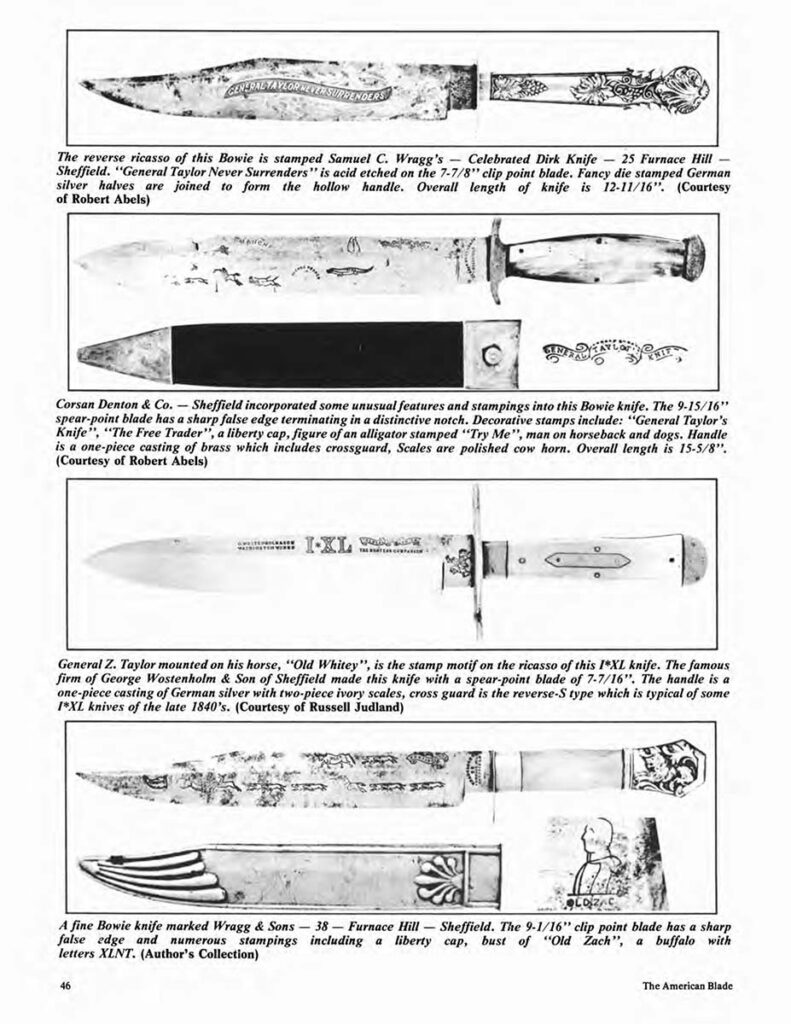
The 12th president was and is a hot knife commodity.
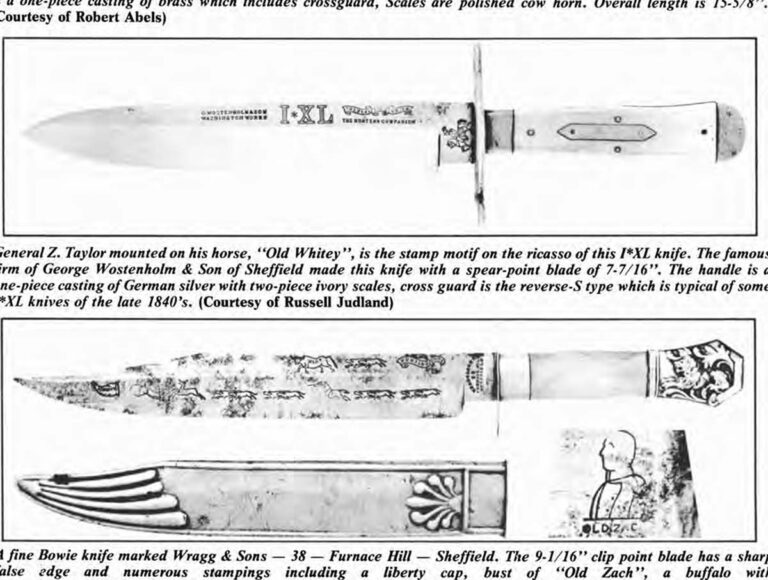
Some examples from the article of “Old Zach” bowies that included the American general and president’s name, slogans or likeness. The lower bowies have his visage, the second from bottom a stamp motif on the ricasso of Taylor on horseback, the bottom a bust of the celebrated general.
Ever in tune with what’s popular at the moment, knifemakers have never been afraid to cash in on a hot trend. William R. Williamson documented one of the more peculiar vogues of the middle 19th century when Zachary Taylor and bowie knives were all the rage.
Fresh off his triumphs in the Mexican-American War, Taylor was the 1850’s version of a rock star—Americans just couldn’t get enough of him. And while not known to carry a bowie nor affiliate with the hero of the Alamo—Jim Bowie—the general and president’s likeness began to pop up on the most American of knives.
Funny thing is, as William’s points out in his article “Old Zach and the Bowie Knife,” from the March-April issue of The American Blade®, it wasn’t the Yanks cashing in. Instead, England Sheffield’s makers had the pulse of the USA and stamped Taylor’s visages on blades and bolsters.
Unfortunately, Old Rough and Ready’s short-lived presidency didn’t inspire the same outpouring of effigies. But modern collectors did and do find these unusual and patriotic blades desirable, as Williamson points out in his article.
Timeless and iconic, it remains practical and complementary to other options today.
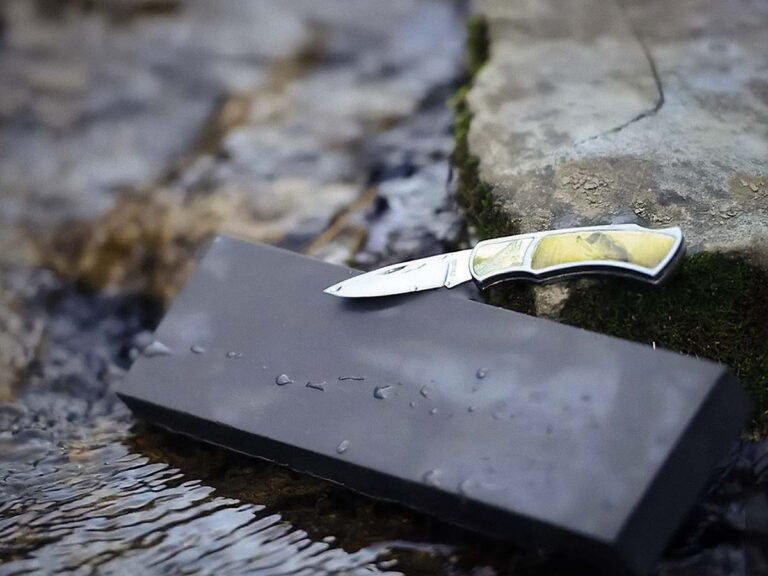
The novaculite sharpening stone is a wonder of nature. Almost pure microcrystalline quartz in content, this dense, fine-grained rock was formed from 318 to 416 million years ago during the Devonian and Mississippian periods in ancient seabeds and later pushed toward the surface with the peaks of the Ouachita Mountains of western and central Arkansas. Massive sedimentary layers ranging from 250 to 900 feet thick produced the stone, which takes its name from the Latin novacula, meaning “sharp knife” or “razor.”
From there, the stone was destined for a rendezvous with the knife blade, rendering a sharp edge that gets the job done and holding a place in working knife history dating back centuries.
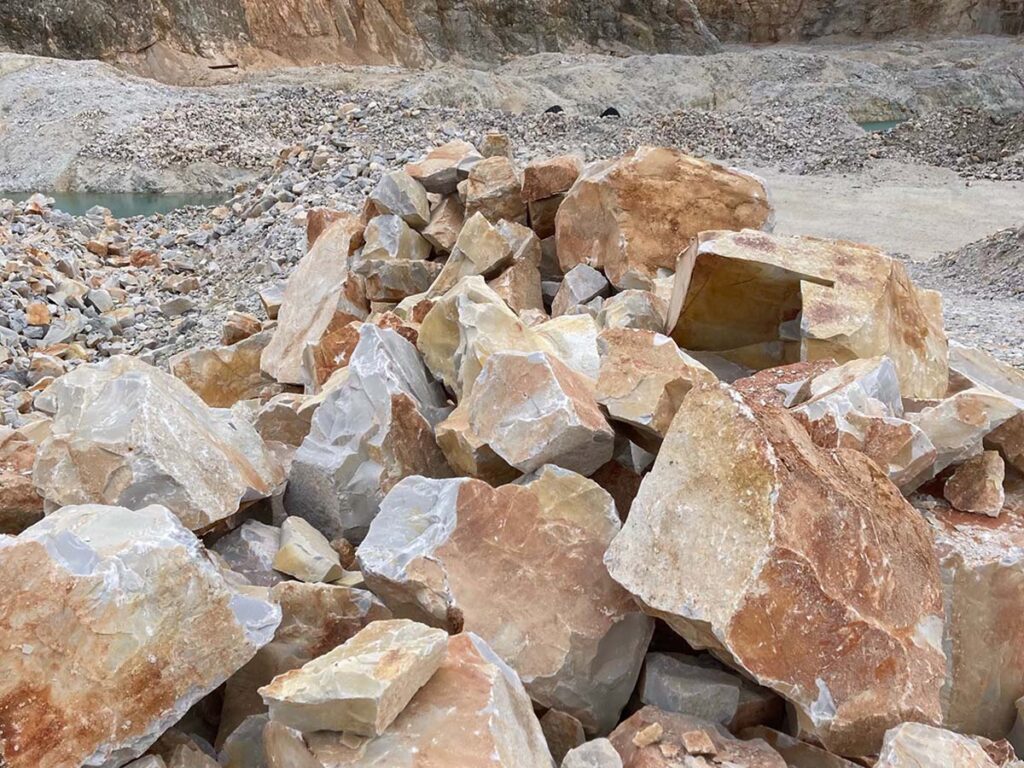
The novaculite deposits in Arkansas were formed 318 to 416 million years ago and it takes plenty of mechanical muscle to push around the material. The deposits run from 200- to 900-feet thick, in turn the operations are substantial. And while the weathered novaculite is somewhat bland to the eye, once broken up the beauty of the natural material shines through. (Images courtesy of Chis Stillian)
Today, however, there is a bit of … well … friction as some may claim modern synthetic stones are eclipsing or at least competing with novaculite for some nebulous title of “best.” Synthetic stones often offer faster sharpening and convenience, while novaculite is valued for its refined finish and traditional appeal. Truth is that each has its place, and novaculite was and is a key participant in the knife-sharpening exercise.
“It gives a razor-sharp, polished edge with smooth feedback that many prefer over synthetics,” explained Chris Stillian, owner of Natural Whetstone, LLC. The company was founded by close friend David Davenport two decades ago, and when David passed away during the COVID-19 pandemic, Chris and his father, Shawn, kept the central Arkansas company going.
“The stones wear very slowly,” Chris continued. “Some last decades because they’re 99 percent plus pure quartz with no fillers. They’re natural, made in the USA and work great for chefs, woodworkers and knife users.”
Danny Kirschman founded Dan’s Whetstone Company, Inc., in Pearcy, Arkansas, in 1976, and his son Steve is currently CEO of the family venture. His roots in novaculite are long and deep. “The erosion-resistant quartz formations of the Ouachitas produced the finest and rarest natural abrasive in the world,” he offered. “Danny Kirschman’s opinion and what we share with others is that the one thing that sets novaculite products apart from other sharpeners is their unique crystalline structure. The novaculite stones wear less aggressively than most manmade abrasives due to the natural bonding of the crystals.”
Best Steel For Novaculite
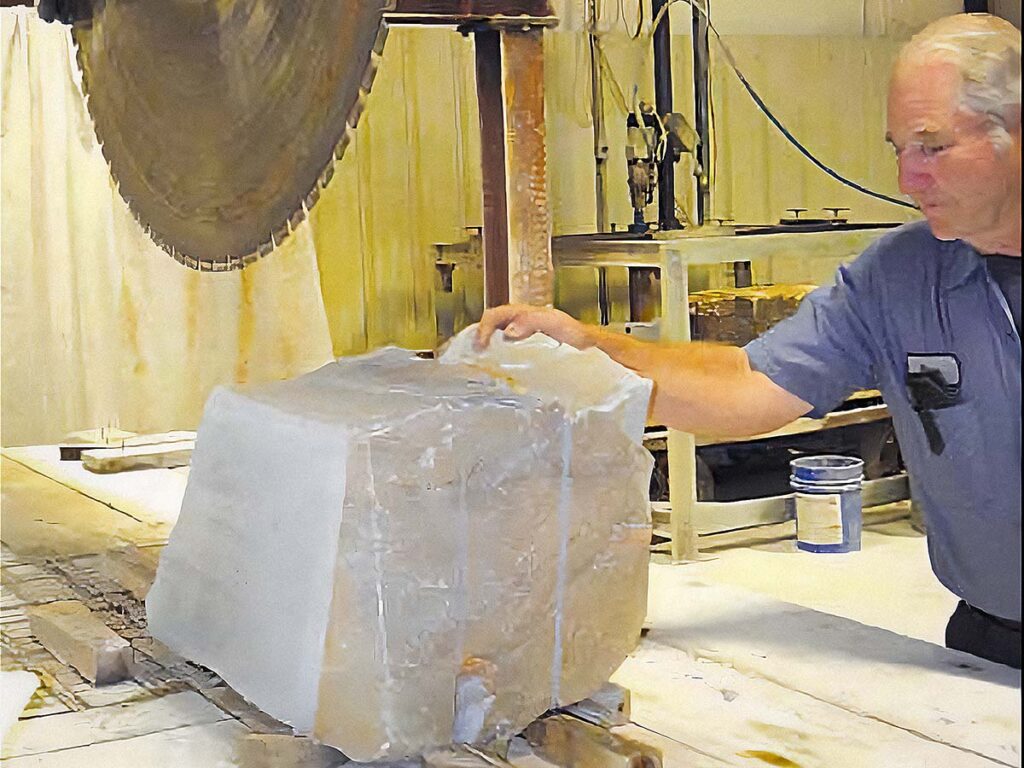
Dan Kirschman, by the company’s largest saw, spent his formative years as a mining engineer, until his hobby of cutting and polishing novaculite developed into a full-time business. Dan’s Whetstones now has a 500-acre quarry and manufactures more than 300 different products from the stone. (Images courtesy of Dan’s Whetstone)
Both Stillian and Kirschman agree that the disadvantages of novaculite usage lie in cutting speed and other aspects. Chris commented, “It cuts slower than diamond or water stones, so it’s better for refining edges than heavy profiling. It needs oil instead of water, can glaze if not cleaned and doesn’t bite hard on modern super steels. Top grades cost more because the dense material is rare.”
Steve added, “The most common complaint is their low abrasion rate. Because the stones are exceptionally hard and dense, they remove material much more slowly than synthetic stones. They are best suited for maintaining an already sharp edge rather than ‘hogging off’ metal to repair chips or reprofile a blade. There is no truly coarse Arkansas stone. Even the soft Arkansas is relatively fine compared to a coarse synthetic stone. Novaculite is composed of quartz, which has a Mohs hardness of around 7. While this is harder than standard carbon steel, it is softer than the vanadium and chromium carbides found in modern, high-alloy super steels.”
Further, since Arkansas stone is a natural product, every stone is unique and may exhibit internal flaws, cracks or variable grit. Oil is required to keep metal particles, or swarf, from clogging the pores, which leads to a bit more cleanup. Lubrication keeps the stone from “loading” with metal, which can reduce its effectiveness.
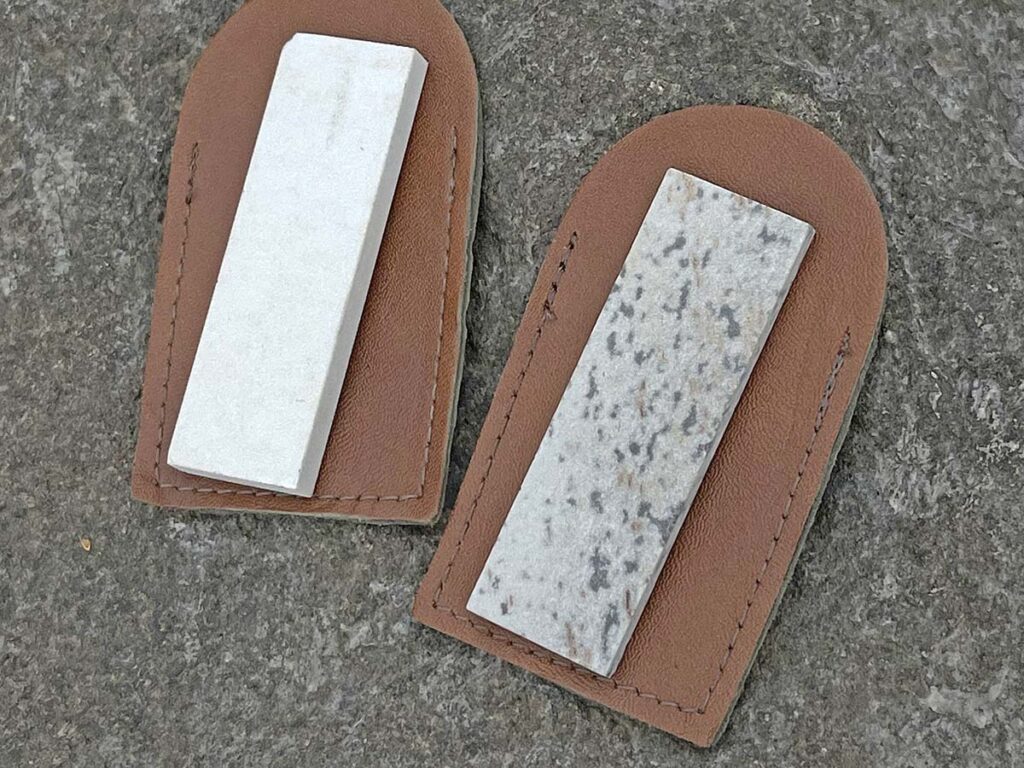
Similar to many sharpening systems, Arkansas stones of different grit sizes are used in conjunction. On the right is a soft stone with a courser grit, good for raising a burr and initial honing. On the left is hard stone, used for final edge polishing and day-to-day maintenance. (Image courtesy of Chris Stillian)
Novaculite works best with simple carbon and low-alloy stainless steels like 1095, O-1, 440C and A2. Since such steels are commonly found on hunting, working, kitchen, bushcraft/survival and everyday slipjoint and fixed-blade knives, a broad area of application exists. High vanadium super steels such as S35VN, M390, CPM-3V and others—often seen in premium chefs’ knives and high-end custom knives—are best served with diamond stones, for example, because their carbides are harder than the quartz in novaculite.
Reviving Arkansas Rock
Even the casual observer can, therefore, discern the proper employment of the novaculite sharpening stone with the blade steel that will produce the best results. One giant of the knife industry recognized the value of the Arkansas stone years ago and built a catalog empire on its sturdy reputation.
The late BLADE Magazine Cutlery Hall of Fame® member A.G. Russell began selling Arkansas sharpening stones in the mid-1960s after moving his family back home to northwest Arkansas from Marin County, California. During the move, he discovered that his whetstones had gotten lost in transit.
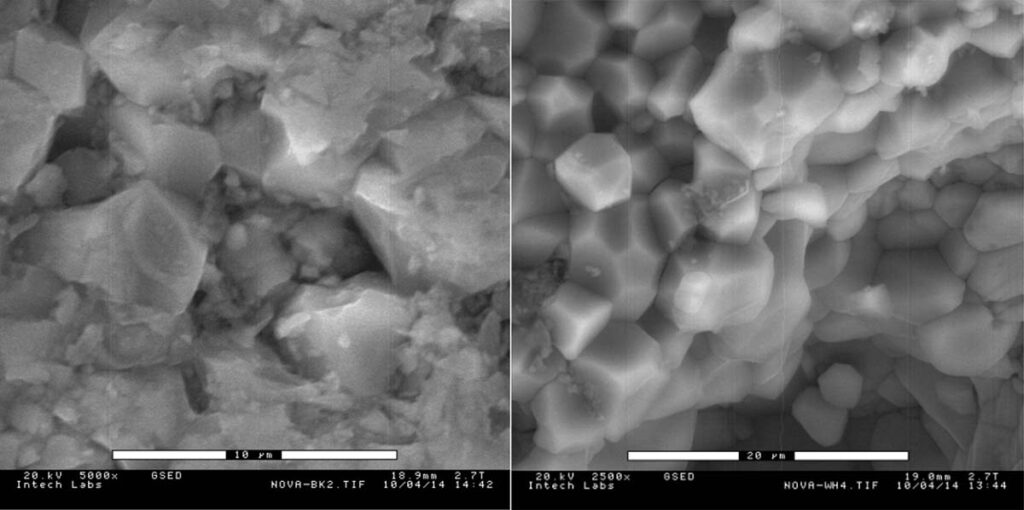
Novaculite is microcrystalline quartz in structure and while it can seem extremely smooth to the naked eye, at the microscopic level the formation’s cutting properties become evident. On the left is ultra-fine black stone at 5000x magnification and the right hard Arkansas stone at 2500x magnification. (Image courtesy of Dan’s Whetstones)
“He tried to buy replacements in local hardware stores, but none stocked them,” remembered A.G.’s wife and fellow hall-of-famer Goldie Russell, who runs the company today. “Having lived in Hot Springs, Arkansas, for a while when he was a teenager, A.G. knew that the only deposit of novaculite was in that area. A.G. went to Hot Springs and found someone who was cutting stones. He purchased stones and began selling them to local hardware stores.”
From there, A.G. bought ads in magazines, particularly Guns & Ammo and The American Rifleman. Soon enough, he became a supplier to Brownells, a major gun retailer, capitalizing on the mutual affinity of gun enthusiasts for knives. Together with the magazine effort and his own sales acumen, Russell re-energized the popularity of the Arkansas stone.
“The frequency of A.G.’s ad in magazines and then the offering of these stones in the A.G. Russell Catalog of Knives was very important in making these stones readily available nationwide through the late 1960s and the 1970s,” observed Goldie. “There is still a large quantity of the small stones that he had cut during those years in our inventory. That is how he started what became A.G. Russell Knives.”
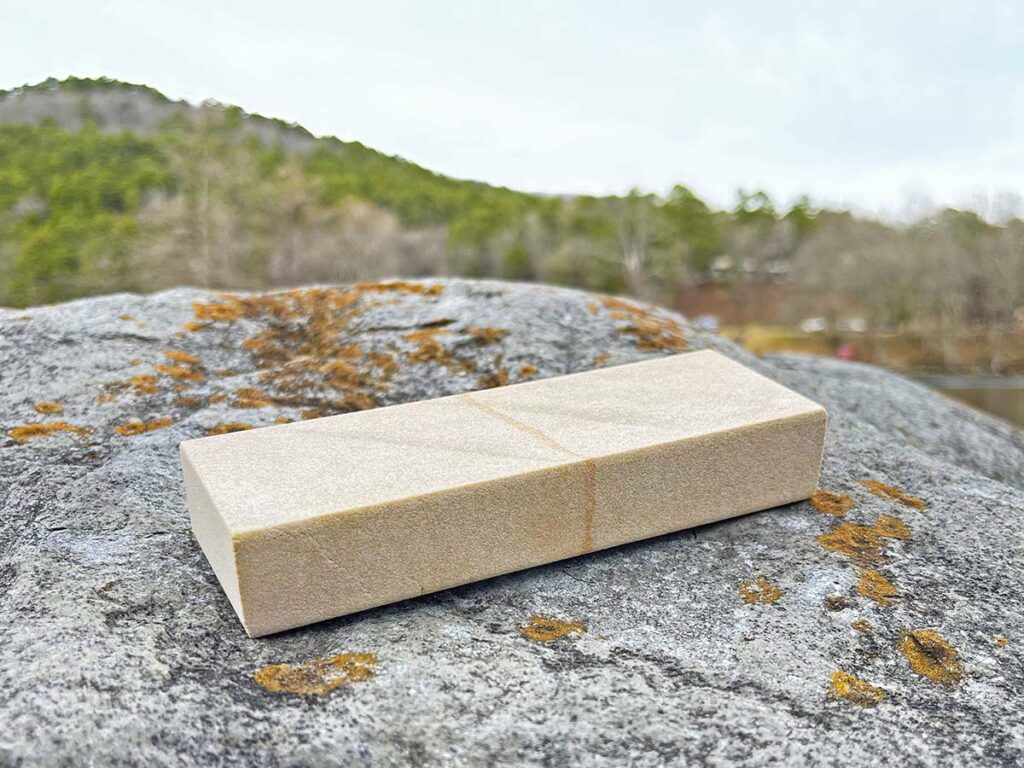
It’s a misnomer Arkansas stone’s hardness corresponds to its color. Similar colors can be noted in different grades, as the coloration is purely a matter of trace mineralization in the stones. (Image courtesy of Chris Stillian)
Novaculite stones, therefore, maintain their place in the practical and the historical aspects of the knife industry, and their relevance is not likely to fade. Those who are familiar with their capabilities remain loyal. They appreciate the investment of time and effort required to bring out that razor-sharp edge, and there is something timeless and reaffirming in the process.
Novaculite Grades
The stones themselves are available in four major grades. “Users should be aware that color is not the determining factor in grading novaculite,” explained Kirschman. “Some users have been defining whetstone grades by color, but the same colors may be seen in more than one grade. Color is caused by trace minerals that are dispersed through the rock during sedimentary formation more than 350 million years ago and subsequent geological activity.”
The major grades of novaculite include the following:
Soft Arkansas: The most popular all-purpose stone often used by wood carvers, sportsmen, butchers, commercial knife sharpeners and even housewives who desire keen, polished edge in a minimum of time.
Hard Arkansas: A fine grit stone good for everyday maintenance and popular among woodcrafters and the dental industry.
Translucent and True Hard Arkansas: An extra fine stone with a glassy feel and used in industrial applications requiring an extremely fine polish. It appears in a variety of colors.
Black Arkansas: Sometimes referred to as “surgical black” stone, the finest grade abrasive available today, delivering a mirror polish.
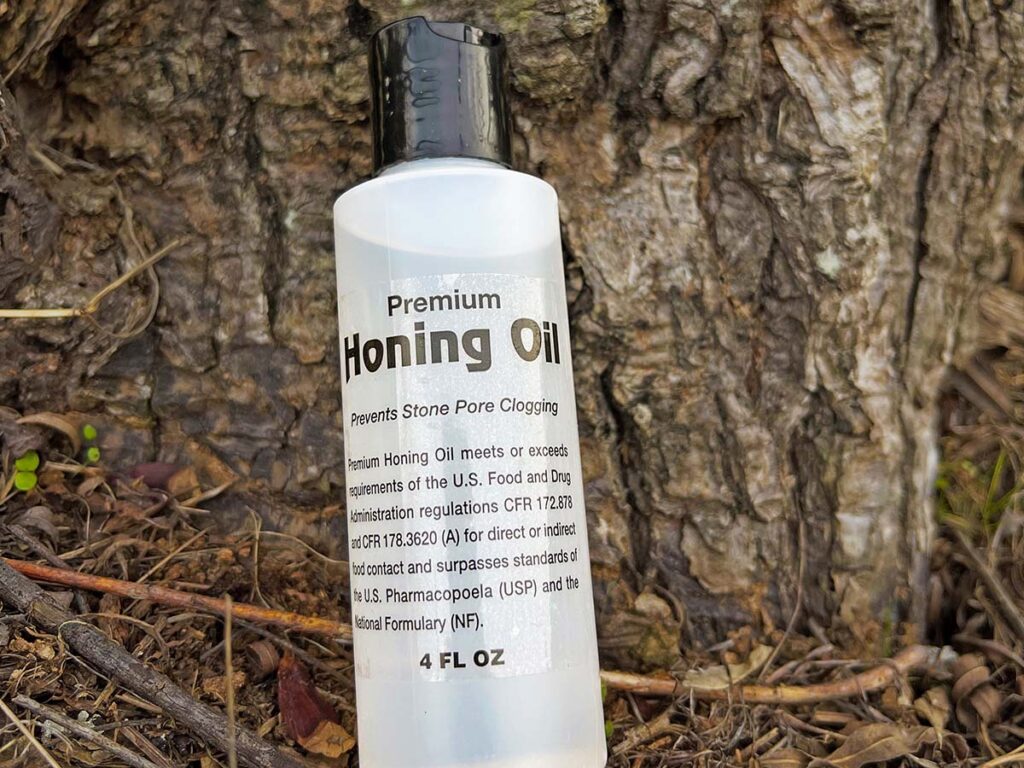
Among the most critical factors of using natural stones to sharpen knives is using honing oil. Oil keeps metal particles, or swarf, from clogging the stone’s natural pores, thus reducing its effectiveness. (Image courtesy of Chris Stillian)
The proper method of sharpening with a novaculite stone involves preparation and practice. “It’s an oil stone, so put a few drops of honing oil on it,” advised Stillian. “Hold a consistent angle, 15 to 20 degrees for most knives, use light to moderate pressure, and take smooth strokes. Start on soft or hard if the edge is dull, and finish on black or translucent. Raise a burr, then lighten pressure. Clean with soap or solvent to avoid glazing. Strop afterward for extra keenness, if you like.”
Those About To Rock
According to Chris, consistent purchasers and users include enthusiasts, woodworkers and chefs who “keep buying them for the feel, longevity and heritage. Synthetics rule high-volume work, but real Arkansas novaculite—especially the rare translucent and black grades—still sell at a premium to people who want the genuine article.”
Steve sees emerging interest as well. “The rising D.I.Y. (do it yourself) sharpening culture is a major driver,” he commented, “with the hobbyist segment now accounting for nearly 35 percent of total whetstone sales worldwide. Online tutorials and a deeper appreciation for craftsmanship have fueled this demand. Sustainability is a driver, as well. Modern consumers increasingly view natural stones as a “green” alternative to synthetics.
“Niche premium positioning, even while high-end market saturation is slowing growth in North America to about 4 percent, means natural stones remain a staple for professional chefs who prefer them for maintaining blade integrity,” Steve concluded. “And technological integration means that manufacturers are now developing beginner-friendly kits and instructional digital content to tap into 62 percent of home users who are interested in traditional sharpening but lack confidence in the technique.”
The future presents an atmosphere of coexistence among the Novaculite and synthetic options. The global whetstone market topped $457 million in value in 2024 and is expected to reach $677 million within eight years. Natural stone demand should stay steady, supported by its faithful and traditional users while welcoming explorers to these Ouachita wonders.
Cutlery Hall-of-Famer’s book showcases the most unique, historic and outlandish blades to enter their treasury.
Probably the most important international buyers of modern American custom knives ever, BLADE Magazine Cutlery Hall-of-Fame® members Aldo and Edda Lorenzi bought and then sold those knives and many other edged items in their iconic G. Lorenzi retail cutlery store in Milan, Italy.
Located on the Via Montenapoleone in the heart of Milan’s elegant retail sales district, and under Aldo and Edda’s direction, G. Lorenzi sold the finest knives, scissors, razors, table cutlery and assorted other edged wonders from 1959 to 2014, serving customers from every corner of the globe.
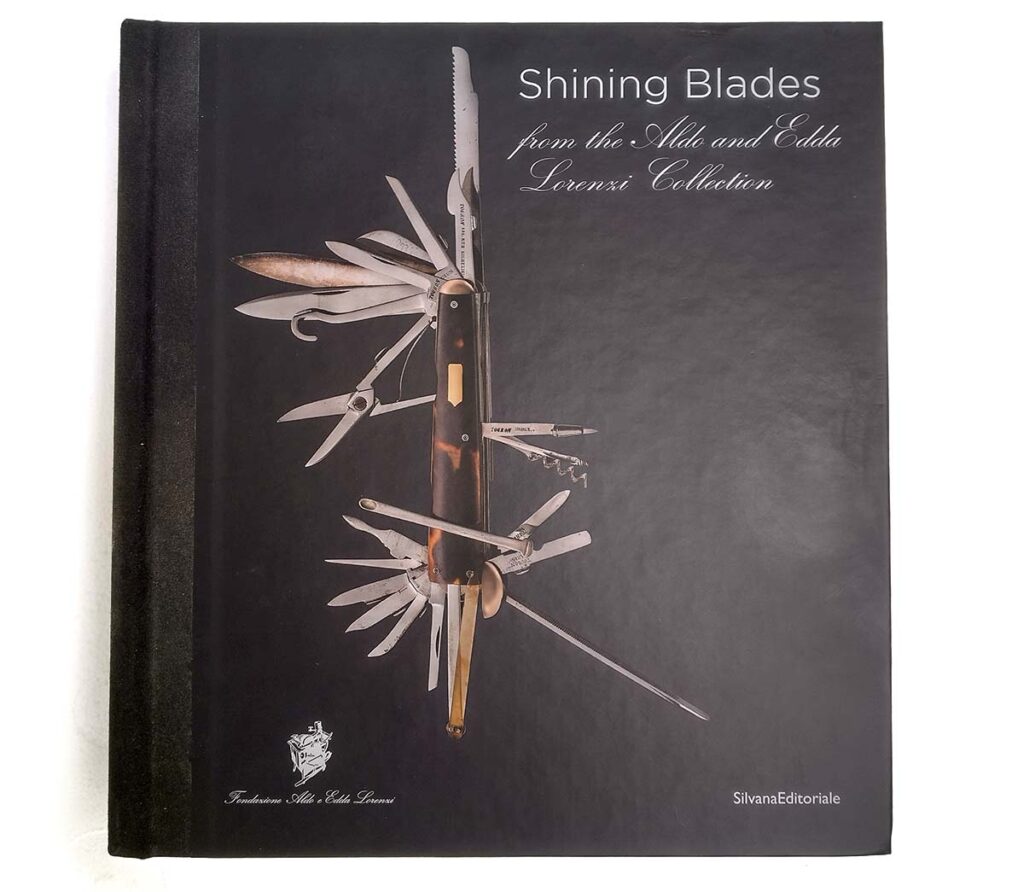
If you read BLADE® regularly, you know of the Lorenzis—but mostly only through the eyes of BLADE. In their new book, Shining Blades from the Aldo and Edda Lorenzi Collection, the Lorenzis recall their journeys far and wide in their lifelong search for the finest blades as only they can tell it, from the age of Elvis and crewcuts to the internet era.
Intrepidly scouring Europe, America and elsewhere for cutting tools of all kinds, the Lorenzis chronicle their travels in Shining Blades. From Aldo doubling Edda on their Guzzi Galletto motorbike through the snow and rain in the Alps on their first working trip to Fance in the early 1960s, to their early visits to the knifemaking shops of John Nelson Cooper, Cutlery Hall-of-Famer Bob Loveless and many other of the most famous American makers and beyond, the Lorenzis share their incredible story.
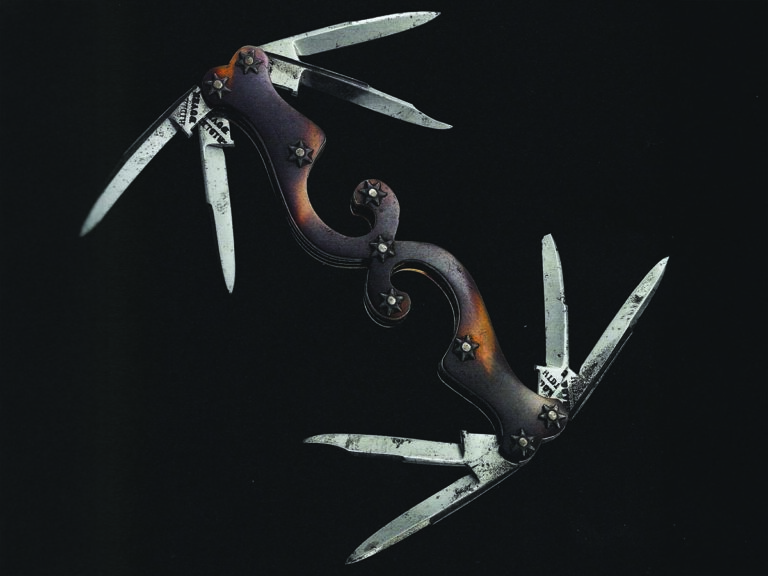
Shining through it all are full-page color images of some of the most spellbinding edged implements you will ever see. In addition to buying them the Lorenzis collected the vintage edged implements along the way. Bronze-Age spoons, folding forks and unbelievable folding knives of the 17th century forward are just some of the visual feasts of the edged art that populate the book’s pages.
For instance, if you think you’ve seen all there is to see in scissors, think again. The images of vintage scissors alone are enough to fill an encyclopedia on the subject. Spectacularly ornate and mystifying in construction, the scissors the Lorenzis amassed over the decades alone will take your breath away.
The preceding simply scratches the surface of what the book is all about. Most of what is illustrated and much more can be seen in the state-of-the-art Aldo and Edda Lorenzi Foundation museum in Milan.
The book also delves into some of the oldest knives known, from the 5,000-year-old knife of Otzi the Iceman discovered in 1991 on the Austrian-Italian border, the finest in European custom knives and knifemakers, ancient books on all things cutlery, notes on damascus steel and much more.
It’s all contained in a top-quality, 9 x 9.75-inch hardbound book with 344 pages that will provide you enjoyment for years to come. It’s a unique history with an MSRP of only $50—a ridiculously low price for such a landmark publication. However, as Edda Lorenzi noted, it’s not about the money so much as the education of worldwide edged tool enthusiasts and the recognition of those who authored some of the most fascinating edged tools extant.
“The book cost us about double its sales price [to produce], more or less,” she began. “Keeping the price low was our choice. It is a choice in line with our Nate Posner Award—to honor the artisans who created the works we loved most and whose names we would like to be known by as many people as possible, and to encourage new generations of artisans who, unlike collectors, certainly do not have large sums of money to invest in expensive books. To achieve this, this choice had to be made!”
If most anyone else had written the preceding paragraph I might be going, “Yeah, right.” But with the Lorenzis, you can rest assured it’s true. If you don’t believe me, ask members of the old guard at knife shows who know of them. If anything, my assessment of Aldo and Edda isn’t laudatory enough.
SHEATH: Tri-Composite System Kydex w/3” nylon webbing, Box X stitching, stainless hex fasteners and liners; locks blade in; MOLLE system sheath also available
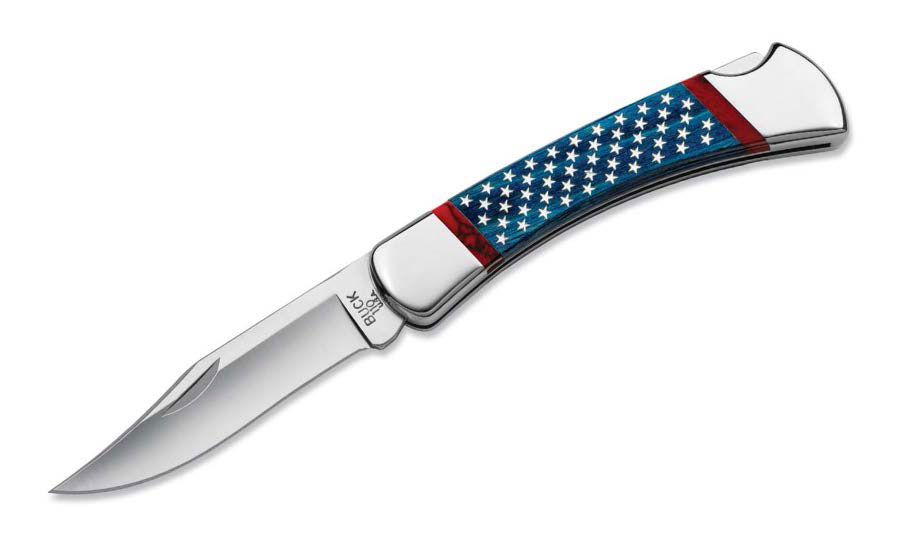
No knife says American made quite like the Stars and Stripes 50th anniversary edition of the Buck 110.
Editor’s note: All images are courtesy of their respective manufacturers.
Today’s sporting cutlery market is flooded with some very good foreign-made knives, and it may seem USA-made models are threatened in terms of quality, but nothing could be further from the truth. The American knife industry is still the leader of the pack.
USA all the Way, Even When It Gets Tough
Emerson Knives, Inc., and president/founder/custom knifemaker Ernest Emerson are unabashedly pro-American made. Emerson founded the company in 1997 on the principle of designing and building the best USA-made production tactical knives anywhere.
Along with his wife Mary, Ernest has consistently grown the company by listening to what consumers want. Emerson knives are 100 percent made in the USA, right down to the screws. Emerson is an ardent supporter of the military, law enforcement and other first responders, another good reason why it’s so important that the company’s knives be made entirely in the USA.
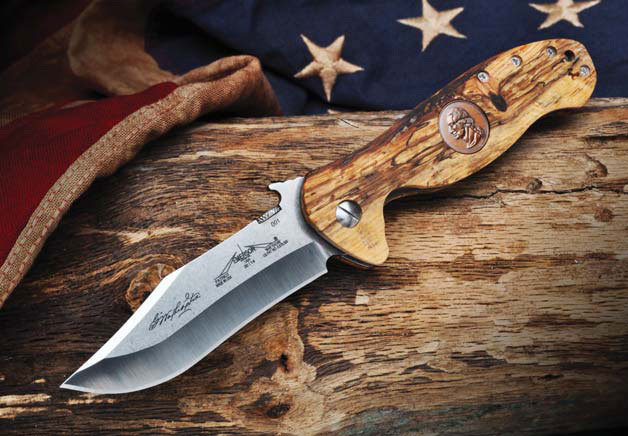
Sporting handle wood of an old oak tree from Mount Vernon inlaid with a die-struck coin of Washington’s likeness, the Patriot from Emerson Knives, Inc., is an example of the many great knives made in America.
Nonetheless, there are downsides.
“There are very few advantages in building a manufacturing operation in America,” Emerson says, citing state and federal taxes and ever-increasing regulations. It’s actually tough for a business to remain competitive here. However, I believe it’s worth the effort, restrictions and extra burden because I will do anything for America. I know my business is putting Americans to work with American wages who can earn a living in this country.”
He adds that the taxes he and his employees pay go directly to supporting the country and the U.S. military and its infrastructure.
“We have to manage our business smarter, more efficiently and more strategically to ensure a profitable and viable existence,” he stresses.
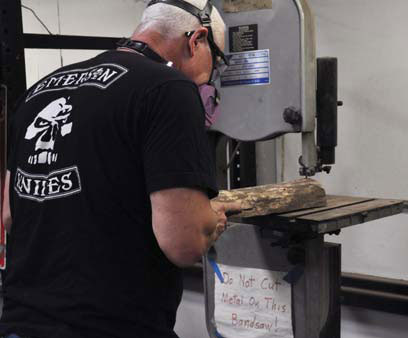
Ernest Emerson cuts a piece of historic wood at the company shop.
It’s the same attitude that makes the Commander and CQC7 models the company’s best sellers. The CQC7 is durable and comes in three sizes and two distinct blade shapes. A sexy piece with its ergonomic handle paired with a recurved clip-point blade, the Commander is a formidable cutting tool that comes in five iterations, each varying in size. Maintaining the popularity of these knives down the road is important to Emerson.
â”In order to stay viable,” he notes, “I believe the future lies in the industry’s ability to design and build knives that the consumer really wants.”
Consistency Counts
CJ Buck, president of Buck Knives, says a major advantage to having knives made in the USA is owning the integrity of the manufacturing processes.
“Consistent processes create consistently performing products,” he begins. “It also ensures product quality improvements are held as processes evolve.”
Another advantage is heightened flexibility and responsiveness.
“We can fix a design or quality issue quickly or adjust to spikes in our forecast since the partnerships between our factory and our USA vendors can be aligned immediately,” he explains.
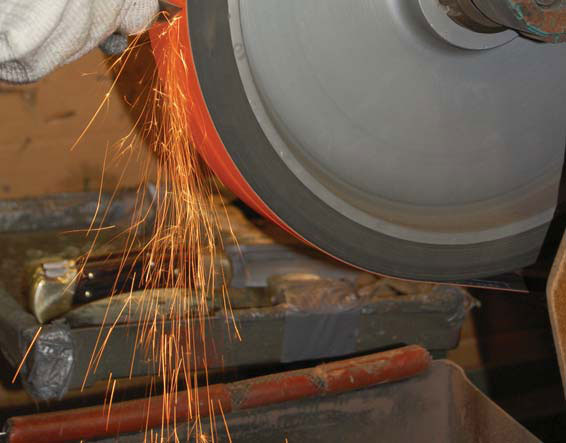
A Buck 110 has the final edge applied at the Buck Knives plant in Post Falls, Idaho.
On the other hand, domestic production carries its own set of challenges.
“When importing, if you need to add capacity you simply contract with another factory or, on the other side, cut a factory off,” he explains. Stateside you have to invest in more equipment, people and buildings. Consequently, as Buck laments, “If you are forced to reduce your output, the pain and loss of investment is in laying workers off.”
As for the future of American knife manufacturing, Buck is optimistic.
“The United States continues to lead in innovation,” he states. “Our culture and national character give us a substantial, sustainable advantage in that area.”
“Made in the USA” Means Better Quality Control
The Socom Delta is the flagship knife for Microtech’s USA-made folders and remains one of, if not the, signature model for the company. The 3.75-inch blade is Bohler ELMAX stainless steel.
Microtech Knives built a solid reputation in the 1990s on designing and making some of the market’s most progressive production tactical folders, and continues to push the envelope. Why manufacture in the USA?
“So we are able to keep flaws to a minimum and catch mistakes early on,” reasons Hank Greenberg, the company’s custom shop manager, adding that if a company offers a solid made-in-the-USA knife with quality materials, then consumers will have no problem paying a fair price for it.
Americans build Microtech’s knives, such as the Ultratech out-the-front (OTF) auto and Socom Delta tactical folder.
Taking Care of Fellow Americans
HTM Knives is based in Forney, Texas. An acronym for Hand Tech Made, HTM was founded by knifemaker Darrel Ralph as a result of an ever-growing demand for his custom models. HTM allowed him to offer his designs to more people at a lower price and accelerated delivery times.
According to Ralph, HTM makes its knives in the USA “to take care of Americans and to take care of the people who take care of us. By having our knives made in the USA, we have total control on quality.”
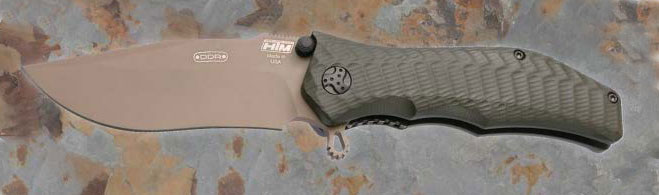
The HTM Gun Hammer includes an OD green handle of Cerakote™-coated aluminum and a “flat natural earth” blade of CPM S30V stainless. The folder comes in either an assisted opening version or with the Maxx Glide pivot bearing system.
Ralph says the Gun Hammer and Mad Maxx are HTM’s best-selling knives. Both began as full customs, so it made sense to produce them under the HTM banner. For the Gun Hammer alone, HTM offers several iterations in varying blade shapes, finishes, steels and coats.
“The military likes both knives and guns made in the USA,” Ralph notes. He says his Gun Hammer and 18 X-Ray automatic are among HTM’s best sellers with military customers. The company also offers designs by such makers as Kirby Lambert and Greg Lightfoot.
Ralph indicates there is a 23 percent scrap rate for knives made overseas.
“You have to figure in for that rate,” he says of foreign-made knives. By having their knives made in the USA, he reasoned, the HTM brain trust has total control over the processes, and can rectify any production issues that might arise before they become a problem.
When it comes to the advantages of knives made in America, Ralph says U.S. companies have access to the best steel and high-end materials.
It should come as no surprise then that Ralph says there is a huge upswing in companies manufacturing knives stateside. He specifically cited Buck Knives, who has been returning some models to “made-in-USA” status after previously being off shore produced. He also noted a growing trend of custom makers offering mid-tech/semi-production knives.
“They are growing the American market instead of stealing from it,” he observes. “That’s what we need in the knife industry.”
Celebrate American Craftsmanship with This Essential Book
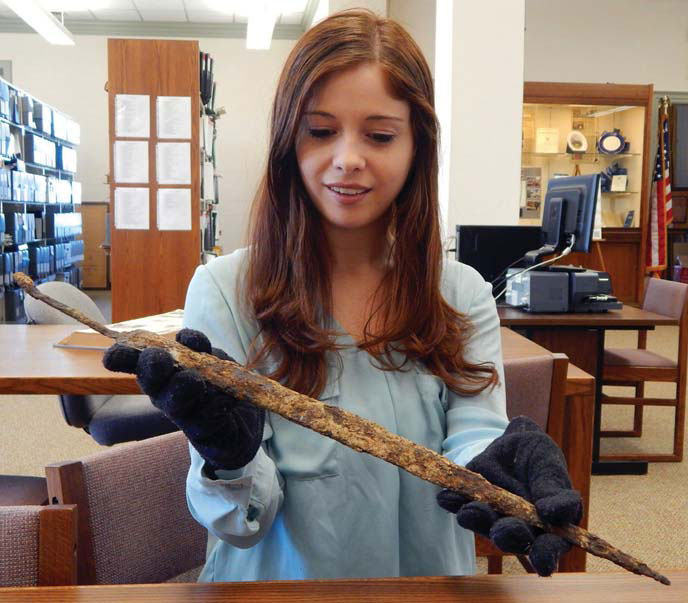
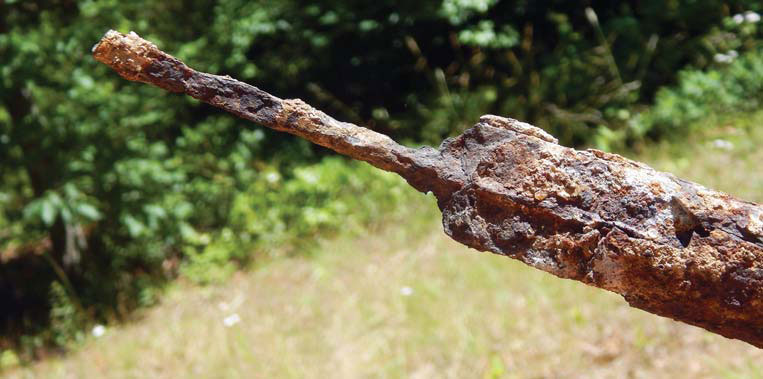
The sword is 2,100 years old. Click for a larger view.
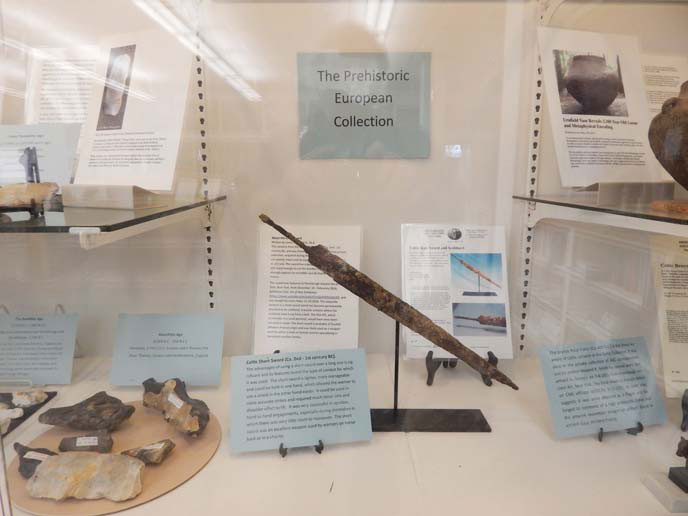
A rare Roman cavalry short sword made before the time of Christ that has been preserved in its entirety and still cuts is one of several recent highlights of the Celtic Collection Program in Milner, Georgia.
The ancient short sword is from the La Tène III (circa 2nd to the 1st century B.C.) timeline. It was in the H. Liebert private collection, Cologne, Germany, and was acquired during the 1960s and ’70s.
The iron sword is completely intact and is 20.5 inches long. Over time it has become permanently attached to its iron scabbard, and the buckle remains from where it once hung from a belt. Its thin hilt, which terminates in a small pommel, would have once been encased in wood.
According to a spokesperson, the sword has a double-edged blade still sharp enough to cut.
Though the ancient sword is believed to be from Gaul (modern France), Peter Connolly reports comparable swords in his book, Greece and Rome at War.
Similar swords reportedly have been recovered from Switzerland, France, the Thames in London, and Embleton, England.
The sword belonged to either a male or female warrior specializing in close combat tactics, a spokesperson stated.
Jamesan Stuckey, director of the Thomaston-Upson Archives, examines the Roman short sword relic. (Lewis Hales image)
The sword’s thin hilt, which terminates in a small pommel, would have once been encased in wood. Part of the sword’s edge, which has remained sharp all these centuries, is exposed above the guard. (Lewis Hale image)
The buckle remains from where it once hung from a belt. (Lewis Hales image)
The sword relic as contained in the Prehistoric European Collection at the Thomaston-Upson Archives. (Lewis Hales image)
Learn More About Knife History
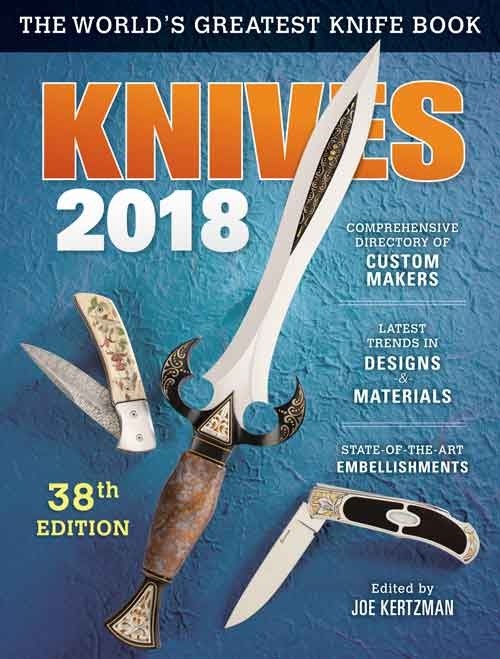
BLADE gathered 14 years of Knives annual books into a single collection. Get it here.