SOG Knives Refreshes in 2020

THE AWARD-WINNING FACTORY KNIFE COMPANY UNDERGOES A BRAND REFRESH IN 2020

The year was 1986. The Soviet Union hosted its first Goodwill Games. Halley’s Comet was visible from Earth for the first time in 76 years. Up to 6.5 million people participated in a charity event called Hands Across America. Phantom of the Opera premiered in London’s West End. And SOG Specialty Knives—aka SOG—made its debut.

The first SOG-brand knife was a reproduction of the original SOG Bowie in tribute to the Studies and Observations Group* of Vietnam War fame. Eventually, the SOG Specialty Knives line grew to include knives mass produced with attention to detail and quality. Today, the company has grown into an innovative, major player whose products are among the leading choices of Navy SEALs and other military, law enforcement, fire and rescue, tradesmen and everyday knife users the world over. Folders, fixed blades, flashlights, multi-tools and gear— SOG has you covered.

Over the years, it’s only natural that a knife company keeps growing in size and product offerings, constantly evolving itself and its knives. SOG has kept moving forward, and 2020 marks a significant milestone in the company’s evolution: a prominent revamp of sales and marketing strategies, a refresh of existing models and an engineering of new ones to further meet the demands of those who serve and keep us safe, as well as the needs of everyday knife consumers.
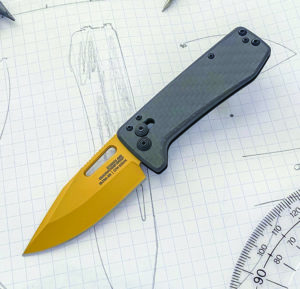
With its slender form factor, XR lock, carbon fiber handle and CTS XHP stainless blade, the Ultra XR defines classy high tech. The super-slim folder carries well and also doubles as a money clip. The gold-titanium-nitride coating adds a bit of bling. The blade also is available in a more subdued black-titanium-nitride coat.

The architect for the brand refresh is Jonathan Wegner, company brand vice president. “We’ve taken the best things from the last three decades, and doubled down on the things that we feel are most relevant to our end users today and into the future,” he explains, “and are focused on delivering solutions that are authentic to the brand.”

Why the transformation? According to Wegner, consumers reported that the company’s more recent focus and quality were not there. Many stated their idea of SOG was from an era that is now past, when the company brought some innovative ideas to market and was driven to produce the best knives and tools for tactical and other consumers. “So, by first studying and observing ourselves, we were able to determine that a significant change was needed,” Wegner notes. “Most of this led to our reposition and future focus.”
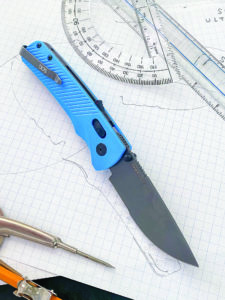
The Flash AT is designed for daily carry with a drop-point blade of D2 tool steel and a handle of molded glass-reinforced nylon in multiple color options.

SOG founder and president Spencer Frazer was the primary driving force behind the company and many of its product designs, from its inception until a couple of years ago when Joe McSwiney was hired to lead the outfit.

“Spencer was involved throughout the brand refresh process, and a lot of what we have done with the brand hearkens back to his original vision,” Wegner states. “Therefore, it was vital that he was involved throughout every aspect of it.” Even back then, Frazer was seriously considering stepping down from overseeing daily operations and returning to his passion of developing innovative products. “So, once the brand refresh and new products strategy were in place,” Wegner says, “he felt comfortable stepping back.”

SOG has been Spencer’s baby since day one, so stepping back at any time or putting just anyone in charge isn’t what he wanted. “SOG’s future is pushing into an even greater extension of the original intent when it was founded,” Spencer notes. “I cannot be prouder of what the company has grown into.”

RELENTLESS by DESIGN

The new company slogan is “Relentless by Design.” This encompasses SOG’s past while embracing the future. Being a major player in the tactical market for many years has pushed the company to continuously innovate and bring new models to market. Starting this fall, SOG will double down on the pushing and debut some intriguing models.

With Frazer retired and the right people in place, the company is poised to embark on a fresh, new and exciting chapter where its knives and other products will be more focused and specifically aimed at three target groups: Professional, Outdoor and Daily. More on them later. Meanwhile, by the time the new vision was in place, many of SOG’s lower-end knives and other products already had been discontinued. “We felt those items didn’t truly represent the types of items we want to be [offering],” Wegner says.
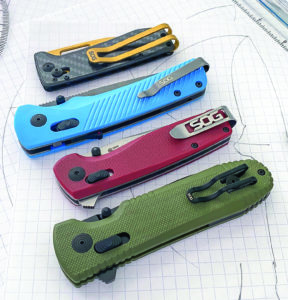
SOG has gone to some stylish pocket clips this year, model examples from top: the Ultra XR and its extra-wide/long clip (it doubles as a money clip), Flash AT, Terminus XR and Pentagon XR.

Along with this, Walmart, which previously sold some of the now- discontinued, lower-end SOG items, was removed as a retailer. Most everyone else who had sold SOG knives will remain, including many knife-specific retailers on the Internet and elsewhere.

Beginning in the fall, the first phase of the brand refresh will officially go live, and, as of press time, some of the new knives already had been released. All of the new product classes are designed to function at peak levels, engineered with intent and built with the best materials for each specific price point.

As part of the new SOG’s knives fall into the three aforementioned categories: Professional (law enforcement, EMT, fire and military); Outdoor (hunters, hikers, campers, fishermen, etc.); and Daily (trades, office workers, warehouse workers and such). All three incorporate what the SOG brain trust calls a visual brand language. This means each category incorporates a specific geometric shape that is a motif for the designs that populate it.

For example, the knives in the Professional category have trapezoidal design elements. Outdoor employs a circular design motif. Finally, Daily employs triangular design elements. The purpose of the visual brand language is so you can readily identify each knife’s purpose.

In addition to the visual brand language, SOG is using new “naming conventions” as well. The standardized approach allows you to easily identify the primary technologies the knives use. For example, XR denotes the knife uses SOG’s XR lock (SEAL XR), AT denotes Assisted Technology (Flash AT), and FX indicates the knife is a fixed blade (SEAL FX). There are a few other designations but these are the most commonly used.
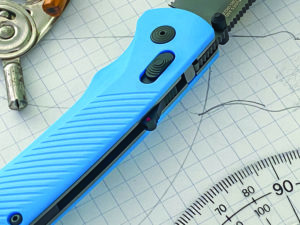
With the assisted- opening AT-XR lock, the Flash AT combines rapid deployment with lock security. Pulling back on the ambidextrous release disengages the lock. Note the lock safety on the handle spine. The red dot indicates the blade is ready to open.

Also new is a color-coded accent stripe on the packaging. Yellow is for Daily, light blue for Professional and gray for Outdoor. Topping it off is new packaging in which you can actually see the product inside and read about its key highlights on the partial flap of the box. The packaging is bold, forward looking and helps usher in the new SOG era.

The blade mark also has changed. The previous SOG logo is now STUDIES AND OBSERVATIONS GROUP—a nod to the past while looking to the future.

FALL KNIFE DEBUTS


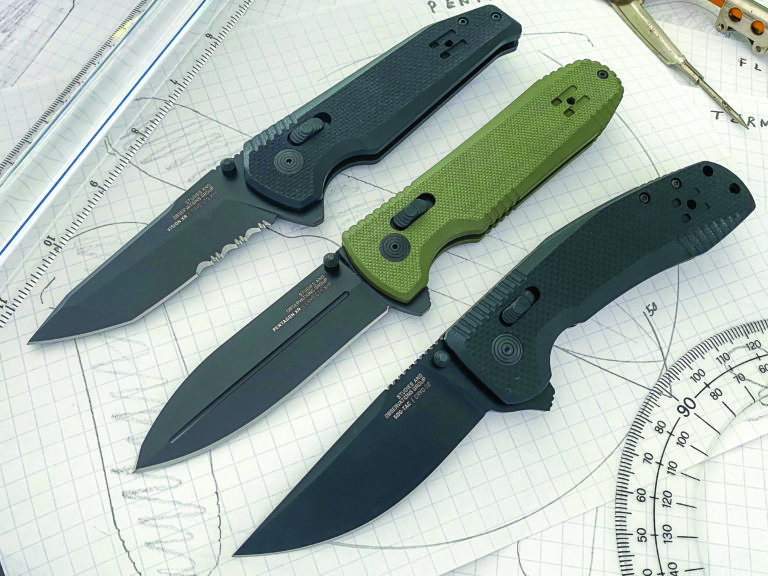
First up for the new fall line is the SOG- TAC XR, a Professional class tactical folder using the XR lock, a 3.5-inch drop-point blade of D2 tool steel, flipper opening and a textured G-10 handle. The ergonomic handle integrates a guard, dual nested steel liners, and a deep-carry pocket clip. Handle colors come in black or OD green. Another Professional class piece is the Pentagon XR. Building on the legacy of the Pentagon series of folders and fixed blades, it takes the dagger-ish styling and adds the XR lock, textured G-10 handle, dual nested steel liners, flipper opening and a 3.5-inch spearpoint blade of CTS XHP stainless steel. Handle colors are black, FDE and OD green. The Vision XR flipper folder brings some aggressiveness to the Professional series, with bold styling and a 3.5-inch double- ground tanto blade of CTS XHP, and a textured black G-10 handle with dual nested liners.
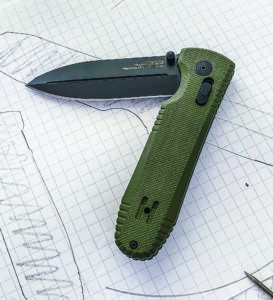
The revamped Pentagon XR tactical folder has multiple choices of G-10 handle colors, and a fullered spear- point blade of CTS XHP stainless steel. The knife features flipper-tab and ambidextrous thumb-stud opening options.

In the Daily category is the Ultra XR, an ultra-thin, ultra-lightweight gentleman’s folder with a linerless carbon fiber handle and a 3-inch clip-point blade of CPM S35VN stainless. An extra-large, fold-over pocket clip doubles as a money clip. The blade is available in gold titanium nitride or black coating options. Another Daily category entry, the Flash AT features a 3.5- inch drop-point blade in D2 powered by SOG’s Assisted Opening Technology. The molded Zytel handle is available in a choice of red, cyan, yellow and black. The new folders use pivot bearings for ultra- smooth blade action.

SOG long has been a viable player in the production knife market and the new refresh elevates the company even further. Expect more good things to come.
10 New Custom Knives Too Cool for Summer

Summer might be hot, but these custom knives stay cool with innovative designs, expert craftsmanship, and cutting-edge materials.

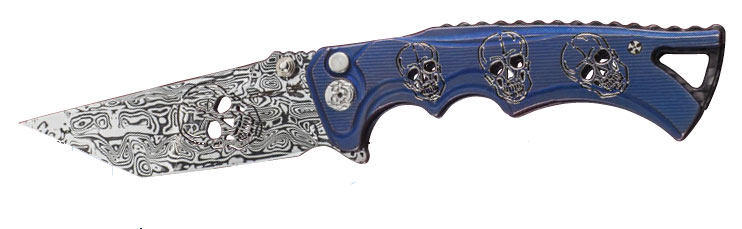
Tighe Fighter (Brian Tighe)

Brian Tighe fighter knife

  • BLADE LENGTH: 3 7/8”
  • BLADE MATERIAL: Damasteel damascus
  • HANDLE MATERIAL: Titanium
  • LOCK: Button-lock flipper
  • CLOSED LENGTH: 5 1/16”
  • SKULL STUFF: Pierces Skull Design waterjet cut with a .015-inch-diameter stream; titanium engraved over the piercing to enhance detail
  • MAKER’S LIST PRICE FOR A SIMILAR KNIFE: $1,500

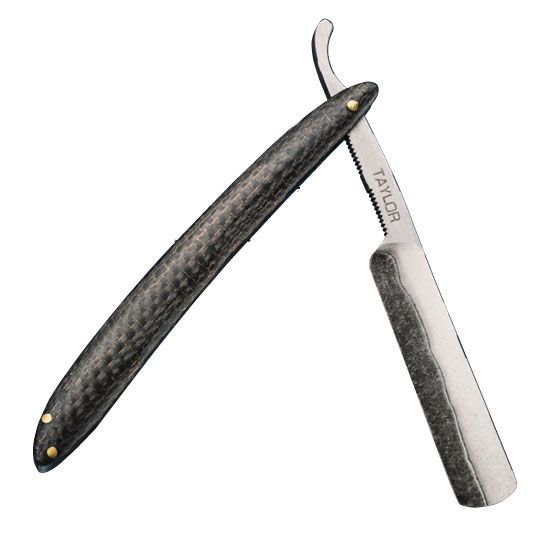
Straight Razor (Chris Taylor)

Chris Taylor custom razor

  • BLADE MATERIAL: Stainless steel and 410 over 1084 carbon steel core in a san-mai construction by Randy Haas of HHH Knives
  • BLADE GRIND: Hollow
  • HANDLE: Bronze lightning-strike carbon fiber
  • PINS: Bronze

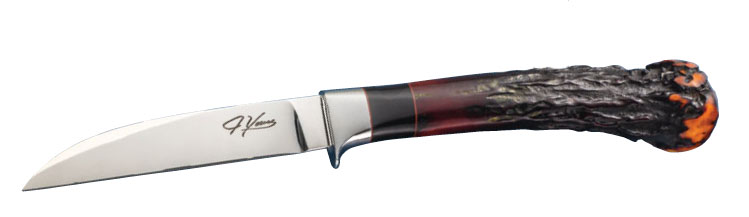
Desk Knife (John Young)

John Young Desk Knife

  • KNIFE TYPE: Fixed utility
  • BLADE STEEL: RWL-34 stainless
  • HANDLE: Sambar stag
  • BOLSTER: 416 stainless steel
  • MAKER’S LIST PRICE FOR A SIMILAR KNIFE: $650

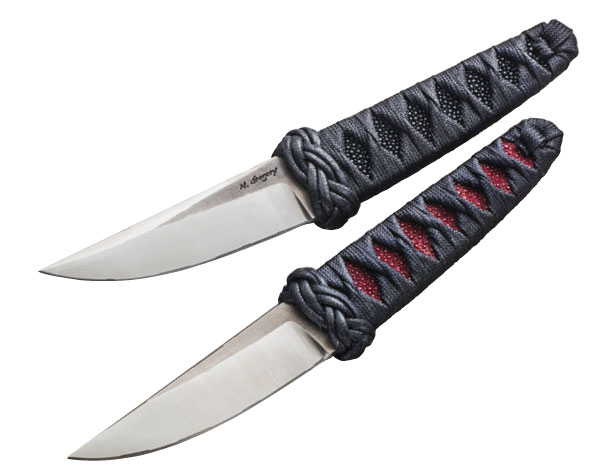
Kwaiken (Mike Walton, Matt Gregory)

Custom Kwaiken knife

  • KNIFE TYPE: Fixed fighter
  • BLADE LENGTHS: 4”
  • BLADE STEEL: CPM S60V stainless
  • HANDLE MATERIALS: Stingray and tsukaito
  • INSIDE SCOOP: Made as a matched pair

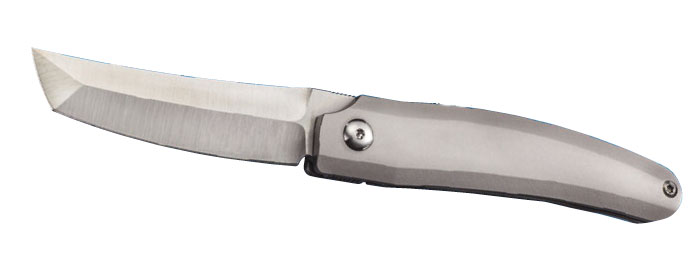
AbOhlone (D Rocket Squared Collaboration)

AbOhlone (D Rocket Squared Collaboration)

  • KNIFE TYPE: Dress locking folder
  • BLADE LENGTH: 2.75”
  • BLADE STEEL: CTS-XHP stainless
  • HANDLE & FRAME: Titanium
  • APPROXIMATE CLOSED LENGTH: 3.5”
  • MAKER’S LIST PRICE FOR A SIMILAR KNIFE: $850

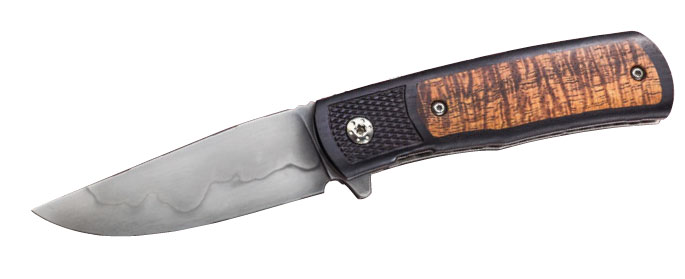
Dress Locking Folder (John Doyle)

John Doyle dress locking folder

  • BLADE LENGTH: 3 1/8”
  • BLADE STEEL: W2 tool
  • HANDLE: Blackwood w/koa inlays
  • FRAME: Titanium
  • BOLSTER: Checkered blackwood
  • SPECIAL STUFF: Jeweled titanium liners, bronze fileworked backspacer
  • CLOSED LENGTH: 4”
  • MAKER’S LIST PRICE FOR A SIMILAR KNIFE: $1,350

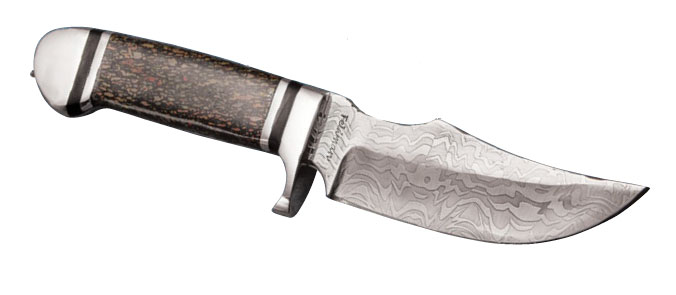
The Gambler (Andrew A. Griggs)

Andrew Griggs custom knife

  • KNIFE PATTERN: Fixed hunter
  • BLADE LENGTH: 4.25”
  • BLADE MATERIAL: Damasteel AB Munin pattern
  • HANDLE: Desert ironwood
  • OVERALL LENGTH: 9”
  • SHEATH: Leather by CC Leathers
  • MAKER’S LIST PRICE FOR A SIMILAR KNIFE: $600+

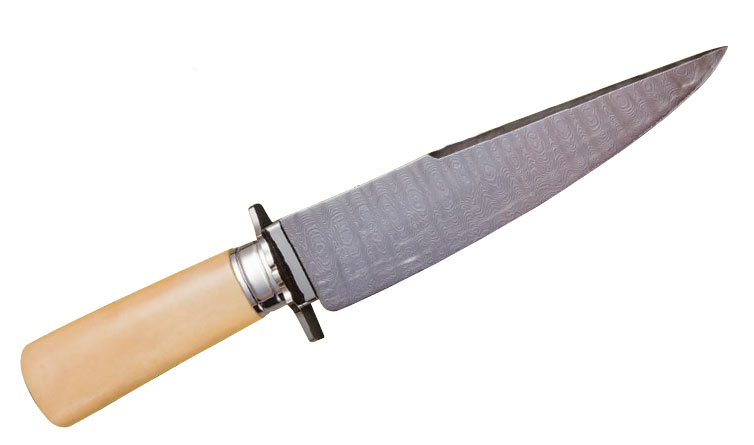
Bowie (Wade Colter)

Wade Colter custom knife

  • BLADE LENGTH: 7.75”
  • BLADE MATERIAL: Damascus
  • HANDLE MATERIAL: Ancient walrus ivory
  • FITTINGS: Nickel silver
  • OVERALL LENGTH: 12.5” 

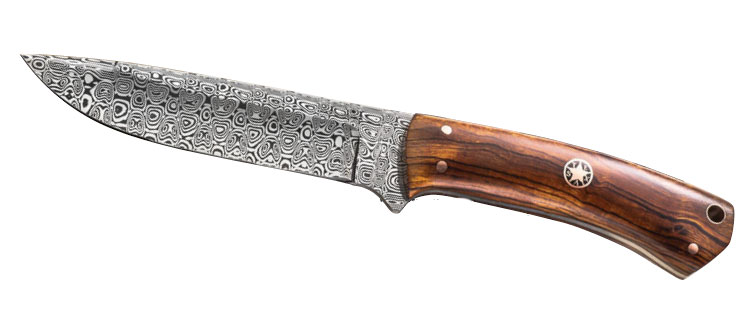
Hunter (Feldman Custom Knives)

Feldman Custom Knives

  • BLADE LENGTH: 4 5/8”
  • BLADE MATERIAL: Damascus
  • HANDLE MATERIAL: Dinosaur bone
  • FITTINGS: Stainless steel

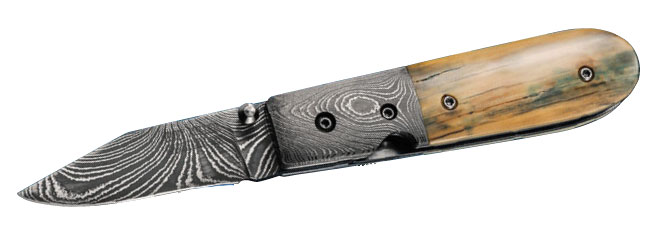
Linerlock Folder (Tony Miller)

Tony Miller Custom Knives

  • BLADE MATERIAL: Devin Thomas twist pattern stainless damascus
  • HANDLE MATERIAL: Mammoth ivory
  • BOLSTERS & BACKSPACER: Same as blade
  • LINERS: .045-inch-thick titanium
  • FITTINGS: Stainless steel
  • MAKER’S LIST PRICE FOR A SIMILAR KNIFE: $545

3 Awesome Axes for Chopping Wood Like a True Lumberjack

THREE FACTORY AXES TAKE THE CHOP, LIMB, TRIM, SHAVE AND STRIP TEST

BY JAMES MORGAN AYRES

We got snowed in one New Year’s in a rented cabin in the mountains. When I expressed concern about relying on electric heat in a remote cabin, the rental agent assured me that the electricity never went out. In any event, she said, “There was plenty of firewood for the fireplace and an axe. You’re an experienced outdoorsman. I’m sure you can cope.”

Of course, the electricity went out. I found about a cord of unsplit logs, each log 6-to-8 inches in diameter and 3 feet long. No split wood. No kindling. No axe. I batonned my ever-present Randall Model 1 around the edges of the logs to make kindling, and split enough wood to keep the fire going until the electricity came back on. Three days. I coped but every time I went to the wood pile, I wished I had an axe. Any of the axes in this field review would have been welcome.
Almost anything will chop softwood such as pine. For a proper challenge, we spent a day clearing madrone and oak at a friend’s property. Oak is a hardwood. Madrone is more fibrous and even tougher. We also split seasoned oak logs for our friend’s fireplace.

HIKING HACKER: The Fox Trekking Axe

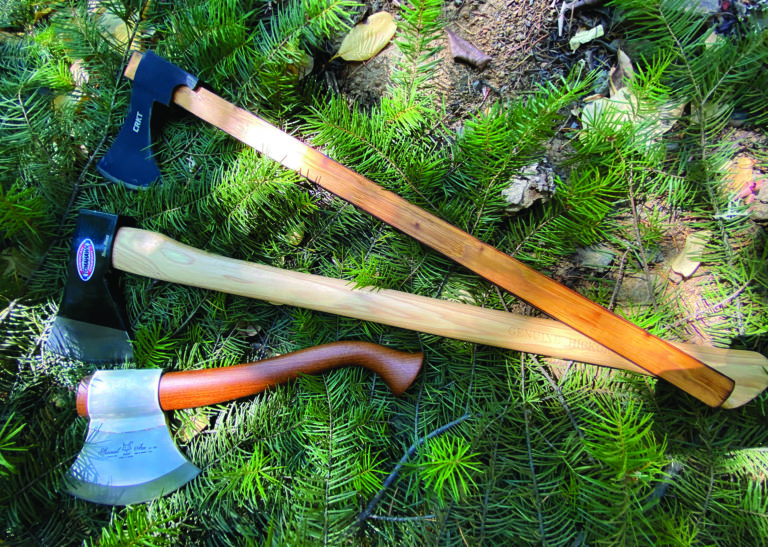
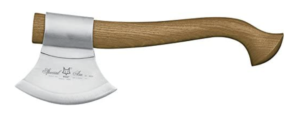
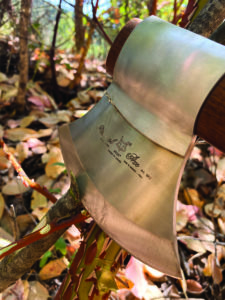
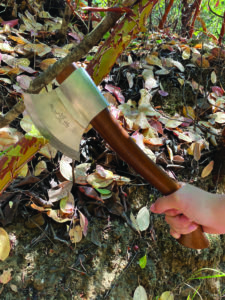
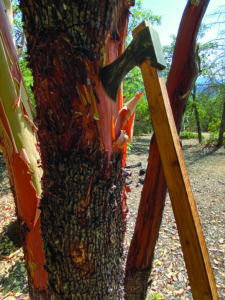
The Fox Trekking Axe is a terrific chopper for the backpacker, hunter or woods wanderer. Reminiscent of a medieval design, it’s light enough to keep in a rucksack and very well made.

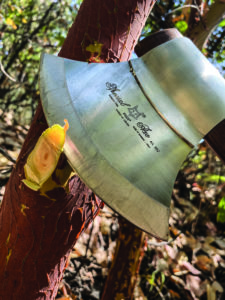
The thin blade came sharp enough to cut paper and kept its edge during a day’s work. Its good edge geometry and balance, comfortable and ergonomic handle—well, really, its overall efficient configuration, which I suspect was inspired by an old, well-proven design—enabled painless hours of chopping, limbing and trimming. The long edge worked well for stripping and shaving bark to make bare poles. I have no doubt that the Trekking Axe would serve to quickly erect a shelter against an incoming mountain snowstorm, or dress out and break down an elk carcass. With its long, almost knife-like edge, it could also skin out the elk.

The thin blade, so efficient at taking down saplings and other work, tended to bind when chopped into the center of the seasoned oak logs. That’s a matter of geometry—the blade is not wedge shaped and won’t serve as a splitting maul, which is outside of its design envelope. A change in method overcame that limitation. By working around the edges and splitting off sections an inch or 3 thick, we were able to reduce logs to kindling.

Overall it’s a well-designed, well-made tool that I wouldn’t hesitate to take to the deep woods.

Good edge geometry and balance and a comfortable, ergonomic handle enabled painless hours of chopping, limbing and trimming with the Fox Trekking Axe. Here it chops the Ma- drone sapling with aplomb.

SPECS: FOX TREKKING AXE
CUTTING EDGE:
5.625”
BLADE STEEL: 12C27 Swedish stainless
HEAD WIDTH: 4.7”
HEAD THICKNESS: .22”
HEAD FINISH: Satin
HANDLE MATERIAL: Sassafras (wood)
WEIGHT: 13.8 ozs.
OVERALL LENGTH: 13.8”
COUNTRY OF ORIGIN: Italy
MSRP: $104.95

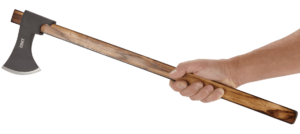
THAT’S AN AXE: Cold Steel Trail Boss

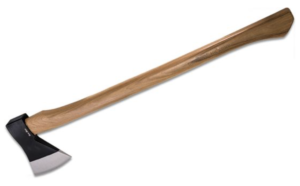
Photo from KnifeCenter.com

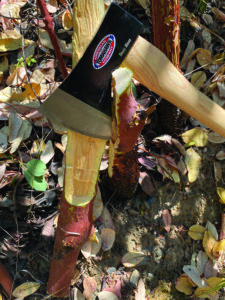
I hefted the Cold Steel Trail Boss, chopped through a 3-inch madrone sapling with one swing and paraphrased Crocodile Dundee’s line: “That’s an axe.”

About the size of a traditional cruiser axe, the Trail Boss has a smooth, comfortable haft/handle in-between axe and tomahawk length. The long edge came sharp and stayed sharp. The head has good wedge-shaped geometry that made splitting the seasoned oak logs a breeze. Unlike a splitting axe, it was not too thick for general work. One whack to the center of the log and there were two split sections on the ground. It’s not a splitting maul or splitting axe but almost as efficient. While it has enough heft to split oak, it’s also light enough and balanced so that downing saplings could be done with full control and no danger of cutting through and swinging too far.

When limbing, it was easy to control for precise cuts, even when limbing with one hand. The haft is not as long as that of a full-sized axe, nor is the head as heavy. However, the head’s well-designed geometry, the smooth, comfortable handle and overall good balance enabled it to perform almost as well as one.

This is a good, all-around chopping tool—actually, an excellent all-around chopping tool.

SPECS: COLD STEEL TRAIL BOSS
CUTTING EDGE:
4.5”
BLADE MATERIAL: 1055 spring steel
HEAD WIDTH: 6.5”
FINISH: Black
HANDLE MATERIAL: Hickory
WEIGHT: 2 lbs., 9.5 ozs.
OVERALL LENGTH: 27”
SHEATH: Not Included
COUNTRY OF ORIGIN: Taiwan
MSRP: $49.99

FRANKISHLY SPEAKING: CRKT Cimbri

Photo from CRKTknives.com

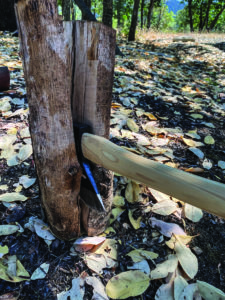
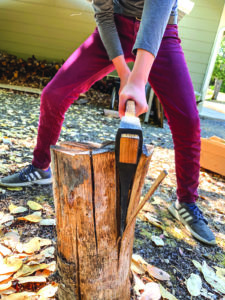
The CRKT Cimbri is an interesting design that, in my opinion, needs a bit of work to fulfill its potential. Modeled on a classic Frankish axe, with a nicely shaped head and a long handle, it is well balanced.

With a nicely shaped head and a long handle, the CRKT Cimbri is well balanced for such tasks as splitting oak logs.

Unfortunately, the edge wasn’t sharp out of the box and we test all knives, axes, tomahawks, swords, etc., as they come, so there’s a level playing field for all. The lack of a truly sharp edge required more force to chop through the saplings and impeded its penetration when splitting. Also, the thick coating on the carbon steel head caused it to drag in a cut. Even more unfortunate, and for some reason I do not understand, the haft is squared rather than oval or round. The acute edges of the haft/ handle not only were uncomfortable, they dug into our hands, producing blisters—in one instance breaking the skin of one of our testers’ palms.

The author stated he would round off the edges of the CRKT Cimbri’s squared-off haft.

Tuning up the edge would be a simple job, a matter of 20 or 30 minutes with a good stone. Reprofiling the haft wouldn’t be difficult, but I cannot understand why anyone would put a squared handle on an axe. Historical authenticity, perhaps?

SPECS: CRKT CIMBRI
BLADE LENGTH:
4.09”
BLADE MATERIAL: 1055 spring steel
HEAD THICKNESS: 1.26”
FINISH: Manganese phosphate coating
HANDLE MATERIAL: Tennessee hickory
WEIGHT: 2 lbs., .8 oz.
OVERALL LENGTH: 25.75”
DESIGNER: Elmer Roush
COUNTRY OF ORIGIN: Taiwan
MSRP: $69.99

AUTHOR’S CHOICES

Which of the three would I choose if I were again snowed in and had only a stack of logs to burn? If I hiked in, the Trekking Axe would be my choice, no question. I’m too old to hump anything heavier in a rucksack filled with camping gear, food and ammunition. If I arrived by car or truck, the Trail Boss would be it. If I had only the Cimbri, I would use my belt knife as a draw knife to take off the corners of the handle and smooth it. That done, 20 minutes with a sharpening stone and I’d head for the wood pile.


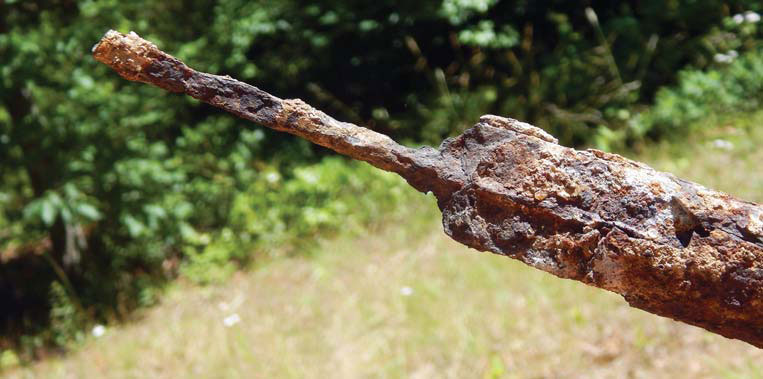
Photos: Ancient Roman Cavalry Sword Still Cuts

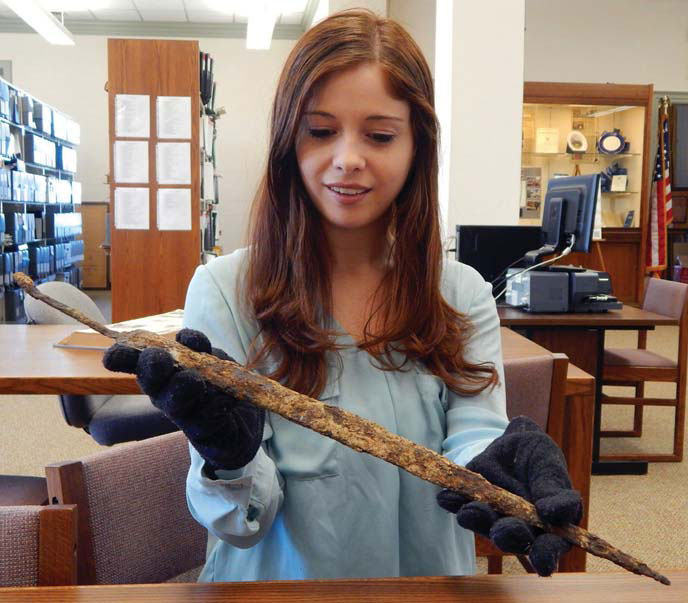
Roman short sword
The sword is 2,100 years old. Click for a larger view.

A rare Roman cavalry short sword made before the time of Christ that has been preserved in its entirety and still cuts is one of several recent highlights of the Celtic Collection Program in Milner, Georgia.

The ancient short sword is from the La Tène III (circa 2nd to the 1st century B.C.) timeline. It was in the H. Liebert private collection, Cologne, Germany, and was acquired during the 1960s and ’70s.

The iron sword is completely intact and is 20.5 inches long. Over time it has become permanently attached to its iron scabbard, and the buckle remains from where it once hung from a belt. Its thin hilt, which terminates in a small pommel, would have once been encased in wood.

According to a spokesperson, the sword has a double-edged blade still sharp enough to cut.
Though the ancient sword is believed to be from Gaul (modern France), Peter Connolly reports comparable swords in his book, Greece and Rome at War.

Similar swords reportedly have been recovered from Switzerland, France, the Thames in London, and Embleton, England.

The sword belonged to either a male or female warrior specializing in close combat tactics, a spokesperson stated.

Roman short sword museum
Jamesan Stuckey, director of the Thomaston-Upson Archives, examines the Roman short sword relic. (Lewis
Hales image)
Roman short sword hilt
The sword’s thin hilt, which terminates in a small pommel, would have once been encased in wood. Part of the sword’s edge, which has remained sharp all these centuries, is exposed above the guard. (Lewis Hale image)
Ancient Roman sword
The buckle remains from where it once hung from a belt. (Lewis Hales image)
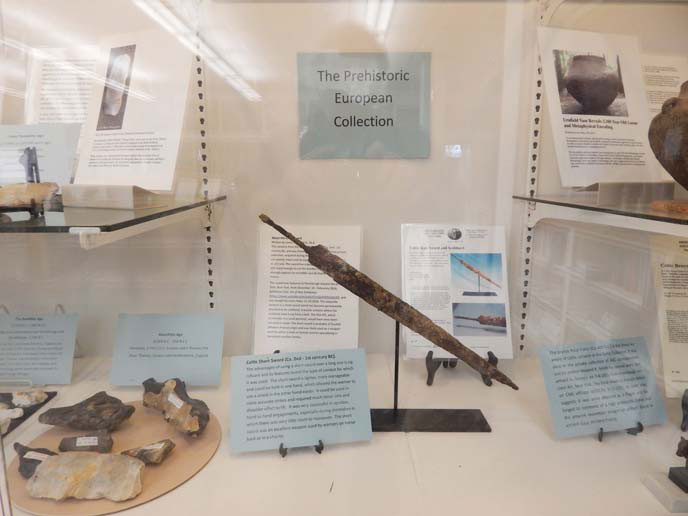
Museum Roman sword
The sword relic as contained in the Prehistoric European Collection at the Thomaston-Upson
Archives. (Lewis Hales image)

Learn More About Knife History

BLADE gathered 14 years of Knives annual books into a single collection. Get it here.

Knife history book collection

Three Blades with an East Asian Design Flair

Three blades with an Eastern design flair are zesty cutters

For many decades Asian knives, tools and swords languished in the cutlery industry, remembered most for blades brought back by U.S. service personnel who fought in the Pacific during World War II. Times have certainly changed, thanks in no small part to a highly accomplished custom knifemaker named Bob Lum.

Of Asian descent, Lum introduced the custom knife world to his “American” version of the Japanese tanto and leaf-shaped blades circa 1980. Through the balance of the ’80s, and later in the ’90s, Lum’s tanto design was rabidly embraced by a budding modern tactical knife crowd. The tanto has been a mainstay ever since. Other Asian blade styles, such as the bolo and kukri, have been embraced as well. My team and I look at three modern takes on the “Asian Equation” here and put these intriguing cutters through the paces.

CHAMP CHOPPER: Spyderco Lum Darn Dao

source: knifecenter.com

Designed by Lum before he passed away way too early in 2007, the Spyderco Lum Darn Dao is a full-tang Chinese dao-style knife. Overall length: 16.27 inches. The 10.63-inch blade is CPM 154 stainless steel with a flared tip and a swedge grind terminating at the clip on the spine. The 5.64-inch handle has a flared base and the black G-10 scales are ample, fully sculpted and highly polished. A handcrafted dark brown leather sheath with a thumb-break retention loop comes standard. Weight (minus the sheath): 17.89 ounces. MSRP: $649.95. This is a limited edition of one production run only.

The first thing we noticed about the Lum Darn Dao is that it’s not as cumbersome as it initially looks, and then we realized it’s just shy of 18 ounces, which is not that unwieldy as large knives go. The handle is an exercise in comfort—well sculpted all the way around.

The Lum Darn Dao has a deep V-grind, making it an excellent slicer. Sisal rope was a piece of cake. Full grinds like that of the Darn Dao slice and chop well, as the edge doesn’t encounter the hump of a ricasso when it goes about its work.

One inch seemed to be the Darn Dao’s magic number. Employing a basic hammer grip, we used the blade to cut through 1-inch sisal rope like it was butter. When we challenged it on an old phone book (remember those?) with diagonal full-force chops, it repeatedly sunk in an inch deep. For long-term use we’d opt for a rougher finish or texture on the G-10 grip, but all in all the Darn Dao chopped like a champ. 

Specs: SPYDERCO LUM DARN DAO
Blade length: 10.63 inches
Blade steel: CPM 154 stainless
Handle length: 5.64 inches
Handle material: Sculpted G-10
Sheath: Leather belt carry
Weight: 17.89 ounces
Overall length: 16.27 inches
Country of origin: Taiwan
MSRP: $649.95

SHORT, WIDE HYBRID: SOG’s Kiku XR Blackout

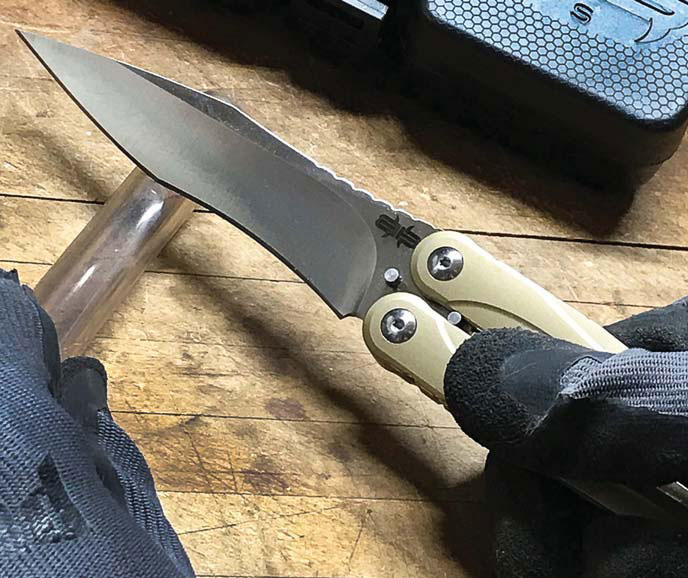
SOG’s Kiku XR Blackout is a mid-size folder 7.375 inches open and 4.3 inches closed. Designed by custom knifemaker Kiku Matsuda of Japan, the 3-inch black-coated blade of CTS-XHP stainless steel is a hybrid of the tanto style with some interesting twists. The main grind is recurved and there is a swedge grind on the spine that ends in a harpoon dip. The blade opens via a kidney-shaped hole in the blade or by an optional gimped flipper. The black handle has sculpted G-10 scales over black stainless steel liners, and SOG’s XR pull-down slide release unlocks the blade. On the rear is a blade-tip-up pocket clip. Weight: 5.19 ounces. MSRP: $189.95.


SOG’s Kiku XR Blackout has a hybrid version of the American tanto blade. The recurved portion of the main grind does a great job trapping leather and rope, and the tip finishes the job as it is pulled through.

The Kiku XR Blackout’s blade is shorter and wider than the traditional tanto pattern. We tested it first on 1.5-inch-wide harness leather, executing straight cuts and pull-throughs. The modified edge cut very well, though we almost ran out of blade while pulling upward through the leather strip.

Rope was much easier. The recurve of the blade trapped the rope, and the secondary grind from the dividing line—or yokoke—to the tip finished the job. It should be noted not all tantos have a yokoke; some simply sweep through upward to the tip. The cuts on 3/8-inch rappelling rope were clean as a whistle, while the edge tended to shred thicker 1-inch sisal. The handle was plenty comfortable and added to our cutting pleasure.

SPECS: SOG KIKU XR BLACKOUT
Blade length: 3 inches
Blade steel: CTS XHP stainless
Blade type: Hybrid American tanto
Handle material: Sculpted G-10
Special features: Multiple blade grinds
Carry: Pocket clip, blade tip upWeight: 5.19 ounces
Closed length: 4.375 inches
Country of origin: Taiwan
MSRP: $210.95

2-HAND HOSS: The TOPS CUMA Kage

photo source: knifecenter.com

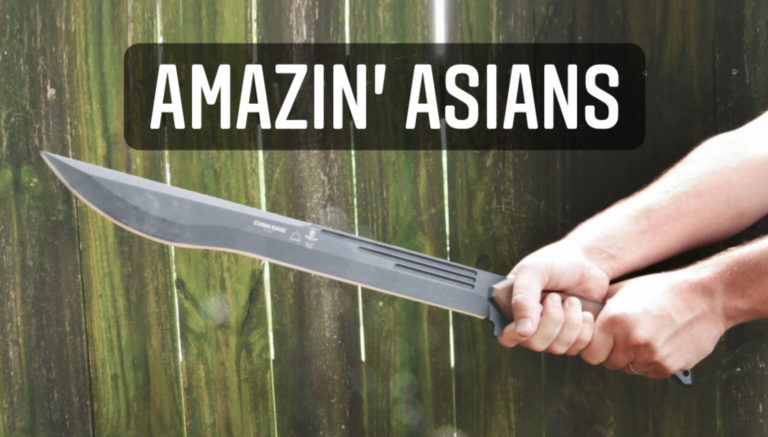
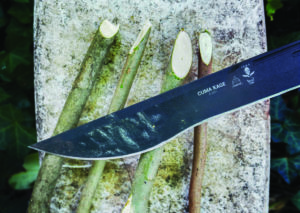
The TOPS CUMA Kage is a tour de force by martial arts guru Sijo Wayson Johnny Tsai. Overall length: 23.75 inches. The 15.5-inch blade of 1095 high carbon steel sports TOPS’ Black Traction Coating. The lengthy handle is 8.25 inches with Micarta scales sized for two-handed delivery. The blade is a hybrid straight sword pattern blended with 7 inches of kukri bulge at the tip to give it a bit of utility to go with its, ahem, badassery. It includes a full-length black Kydex sheath with a dangler/attachment ring. Weight: 31.5 ounces. MSRP: $360.

Using one hand or two, the author found the CUMA Kage cut brush equally well. However, as you might expect, you can take on much heavier tasks with it by using both hands.

To test the CUMA Kage for its utility billing, we took it outside for brush-clearing duty. We’ve always admired the kukri and have cleared an acre or two over the years with one, so this long send-up of the chopper intrigued me. We found out quickly we could use the CUMA Kage with one hand or two, which gives it a big leg up on its smaller cousin. The Micarta handle is well filled out and plenty grippy. One-handed we were able to easily whack through half-inch-thick green hardwood stalks and branches. Two-handed we sliced through stalks three-quarter of an inch with ease, and 1 inch as long as we had clearance to pull back for a full stroke. Though not the CUMA Kage’s original intent, it does have formidable utility.
 

Specs: TOPS CUMA KAGE
Blade length: 15.5 inches
Blade material: 1095 carbon steel
Blade finish: Black Traction Coating
Handle length: 8.25 inches
Handle material: Micarta
Special features: Kukri blade tip 
Sheath: Kydex w/leather dangler
Weight: 31.5 ounces
Overall length: 23.75 inches
Country of origin: USA
MSRP: $360

MELONIOUS ASSAULT

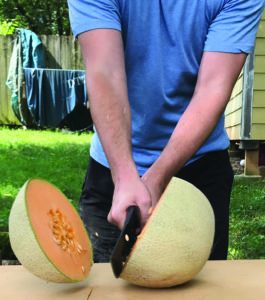
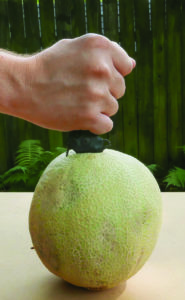
After testing the blades on a variety of fare, just for fun we took to the backyard to let them each have a go at a cantaloupe. Leading off with a reverse grip on the SOG Kiku XR, we stabbed the forlorn melon to the hilt. As stubby a version of the tanto as the Kiku XR’s blade may be, the cantaloupe’s pithy skin gave into the knife’s wishes quite easily.

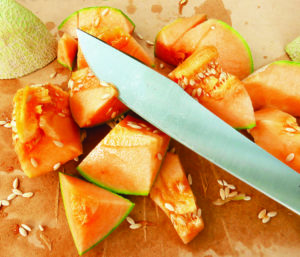
Next up the TOPS CUMA Kage tried the task of halving the cantaloupe in one fell swoop, which we captured in burst mode on my neighbor’s IPhone. Mission accomplished. Finally, we used the Lum Darn Dao to “prepare the meal” by using the blade in quick, rapid-fire chops. The sword’s deep V-grind—not unlike that of a chef’s knife—performed admirably.

Like an oversized chef’s knife, the Lum Darn Dao deftly whacked the cantaloupe into chunks with speed and style.

BEASTS of the EAST

While we often think of knives and swords of an Asian design in the context of combat and martial arts, it’s easy to forget that many Eastern blades were used for everyday utility as well. The tanto was an everyday carry by the Samurai class in Japan, and men and women alike carried a smaller version, the kaiken, aka kwaiken. The chisel grind was not typical on tantos as we see on some of them today, but on knives for culinary purposes. The Japanese kiridashi, which is rapidly gaining a toehold in the cutlery world, was also chisel ground and used for wood carving and marking.

The wicked Indian/Nepalese Kukri was employed in combat, but is primarily a tool for clearing land and is used widely for bush whacking today. Even the Indonesian karambit was considered a working knife by its users. If nothing else, the distinctiveness of Asian cutlery design has added richly to our knowledge base of cutlery and given us a plethora of modern-day knives to explore.

Photos: 4 Butterfly Knives that Sting Like a Bee

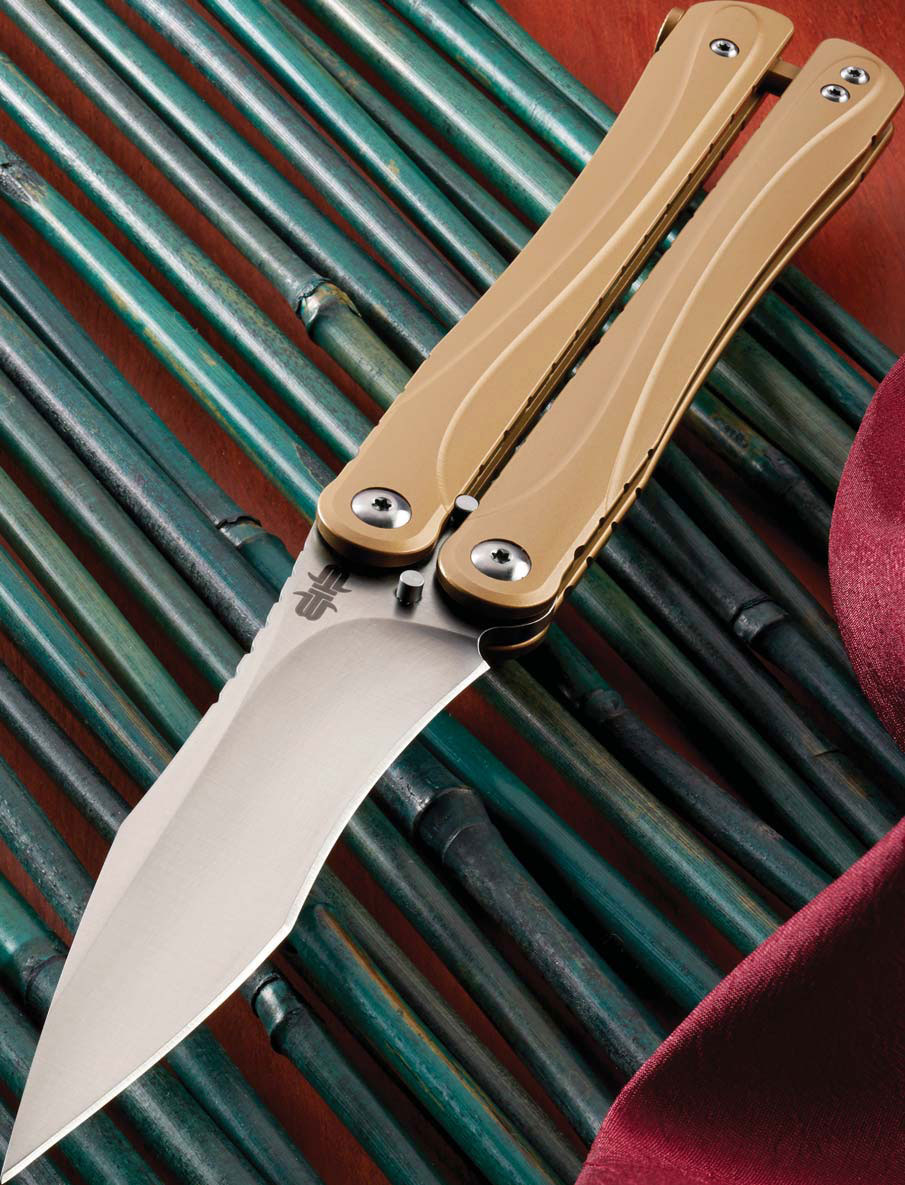
Butterfly knives (aka “balisongs”) have evolved into meticulously crafted pieces of cutlery. Many of the best capitalize on state-of-the-art blade and handle materials coupled with progressive and modern designs that advance the genre toward the close of the century’s second decade.

Brous Blades B3

new butterfly knives
(All images by David Stanfield unless otherwise noted)

Brous Blades balisong

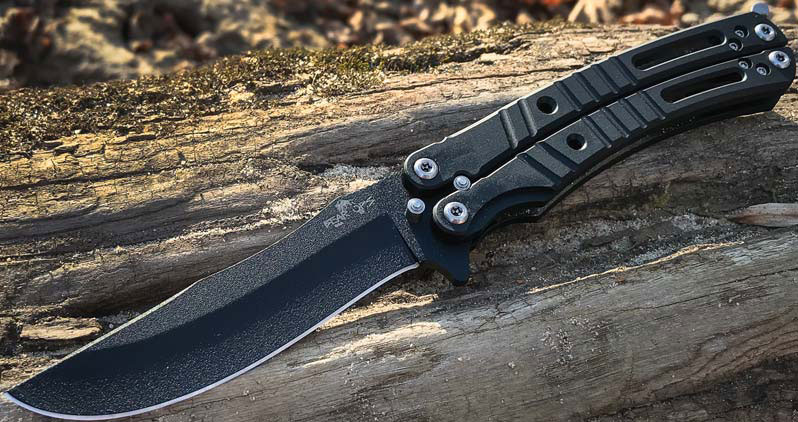
The B3 from Brous Blades is a modern butterfly knife with its stainless steel handles and D2 recurve tanto blade style. The handle interiors have cavities milled out to reduce weight. The knife has great action as a result, without the need to use bearings in the pivots. MSRP will vary depending on the finish, though this one is $320.


Bear Ops Bear Song VI

Bear Ops butterfly knife

Bear Song VI balisong

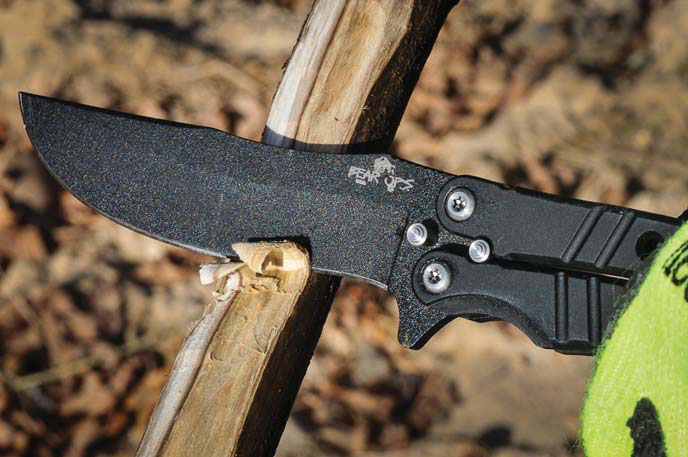
The hollow-ground 1095 carbon steel blade of the Bear Ops Bear Song VI has great edge geometry for all your cutting chores. A textured black epoxy coating guards against corrosion. MSRP: $174.99.


Mantis Knives Vuja De

Mantis Knives butterfly knife

Mantis butterfly knife

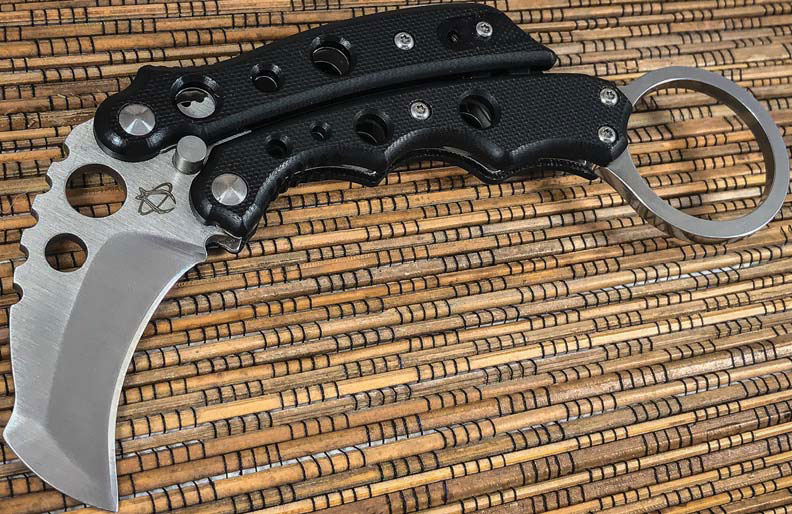
The Vuja De from Mantis Knives marries the karambit’s large finger ring and hook-shaped blade with the free-swinging individual handles of a butterfly knife. The scales are textured black G-10 for both durability and grip quality. The blade is Mantis’ proprietary MV-1 stainless steel.


Emerson Knives Bali Commander & CQC7

Emerson Knives balisongs

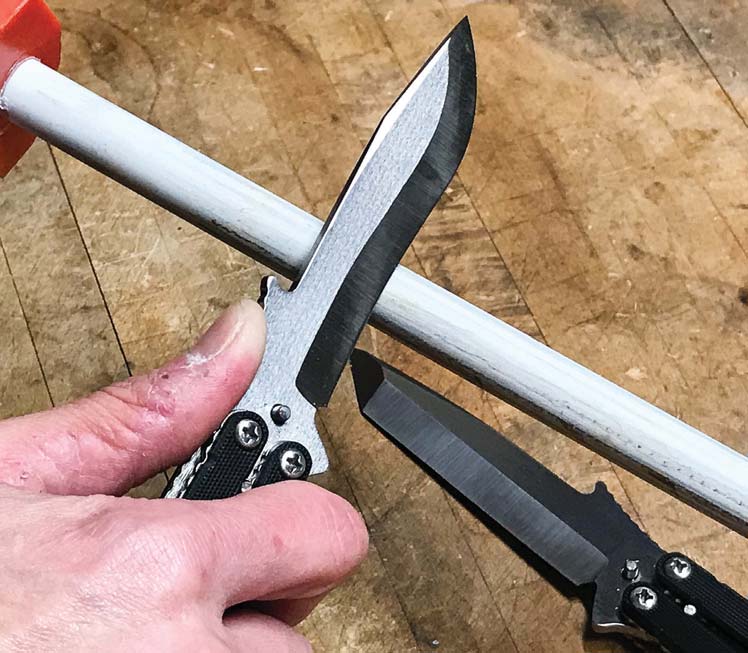
The recurve clip-point blade of the Bali Commander (left) from Emerson Knives, Inc., is easily sharpened using a round profile sharpener to effectively capture the blade’s gentle sweeping curve.

The Emerson Bali CQC7 (right) in the background sports the chisel-ground blade like that of the iconic Emerson CQC7 tactical folder.


Attend a Flipping Competition at BLADE Show

balisong knife contest
Butterfly knives were a-fluttering during the balisong competition conducted by Blade HQ at last year’s BLADE Show.

Among the many exciting events at BLADE Show 2018 this June in Atlanta, you’ll flip to know that there’s a balisong competition at this year’s show. It’s included with your admission. Buy tickets here.

Canadian Knife Retailer on Import Ban: Who Are We Protecting?

canada knife ban
The author is the owner of a store that sells knives, often to first responders. Restrictions on the importation of the folding knives those customers often use hurts not only her business, but also the ability of first responders to do their important work. (Image via LethbridgeTacticalSupply.com)

Editor’s note: Sarah Jorgensen is the owner of Lethbridge Tactical Supply, a knife retailer in Lethbridge, Alberta, Canada. Read BLADE‘s previous articles about prohibitions on the import of folding knives into Canada here.

More Questions Than Answers

lethbridge tactical supply
Sarah Jorgensen

A recent decision by the International Trade Tribunal (ITT) has only added more questions than answers when it comes to the tools Canadians can and cannot use for self-defense, emergencies and everyday tasks. After a seizure by the Canadian Border Services Agency (CBSA), the ITT announced in January 2018 that it is restricting the import of knives that “have a blade that opens by centrifugal force,” and that “includes knives that require some preliminary or simultaneous minimal manipulation of either a flipper or other non-edged parts of the blade.”

So what are our rights? What are we allowed to use to protect ourselves? Will we get in trouble if we hurt someone with a particular kind of knife while acting in self-defense? And most importantly, are we risking our safety by asking these questions in an emergency instead of acting?

Section 84(1) of the Criminal Code of Canada states that a prohibited knife “has a blade that opens automatically by gravity or centrifugal force or by hand pressure applied to a button, spring or other device in or attached to the handle of the knife.”

Wait a minute. How did we go from a device on the handle, to a device on the blade? The Criminal Code has not changed, but the CBSA’s interpretation has. This means that Federal, Provincial and local law enforcement agencies do not consider flippers on the blade of a knife as prohibited, but the CBSA does.

It Doesn’t Add Up

canada knife import ban

As a retailer, I can still purchase and sell these knives with no restrictions. However, if I can’t import them, how can I sell them? There are very, very few knives made in Canada, certainly not enough to keep up with the demand of our customers. Some knife manufacturers are now refusing to ship any folding knives at all into Canada because they are not sure which knives the CBSA is going to consider prohibited and seize.

So, why would the CBSA and International Trade Tribunal come to this decision? Are they keeping Canadians safer? Has there been an increase in attacks with knives that have assisted openings? The answer to both of those questions is no. I can still import fixed-blade knives, machetes, axes and batons. Are those items any more or less dangerous than an assisted-opening knife?

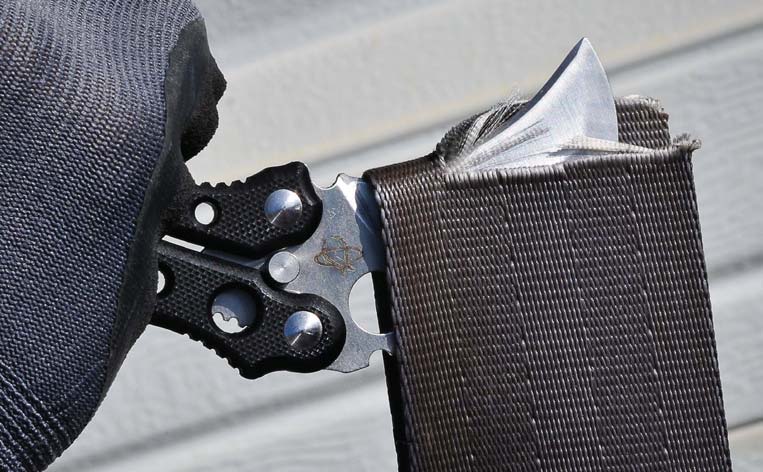
And who uses these assisted-opening knives that are so dangerous that the CBSA must override the Criminal Code to protect Canadians? Well, the majority of my customers are first responders (including CBSA agents) and they use these knives. They use them to gain access to vehicles and cut seat belts from people involved in car accidents. They use them as a last line of defense. They use them while on camping trips with their families. Most commonly, they use them to open packages and boxes. I sell these knives to knife enthusiasts and collectors, avid outdoorspeople and, yes, I sell them to people looking for a way to protect themselves in an emergency.

So, the question I have for the CBSA is this: How are you going to explain why your agents are seizing the same knives they use at work?

Advertisement

Must Read Articles

Read this before you make a knife

Knifemaking 101 – Read This Before You Make a Knife

  by Wayne Goddard My experience has taught me that there's nothing like digging in and getting started. I've often said the hardest part of the...
how to forge damascus steel

How to Forge Damascus

Advertisement
Advertisement