Remembering a dedicated craftsman of the Fujisaka lineage known for his tactical precision and collaborative artistry.
Keith Derrick Ouye, award-winning knifemaker of Honolulu, Hawaii, passed away on October 5. He was 80.
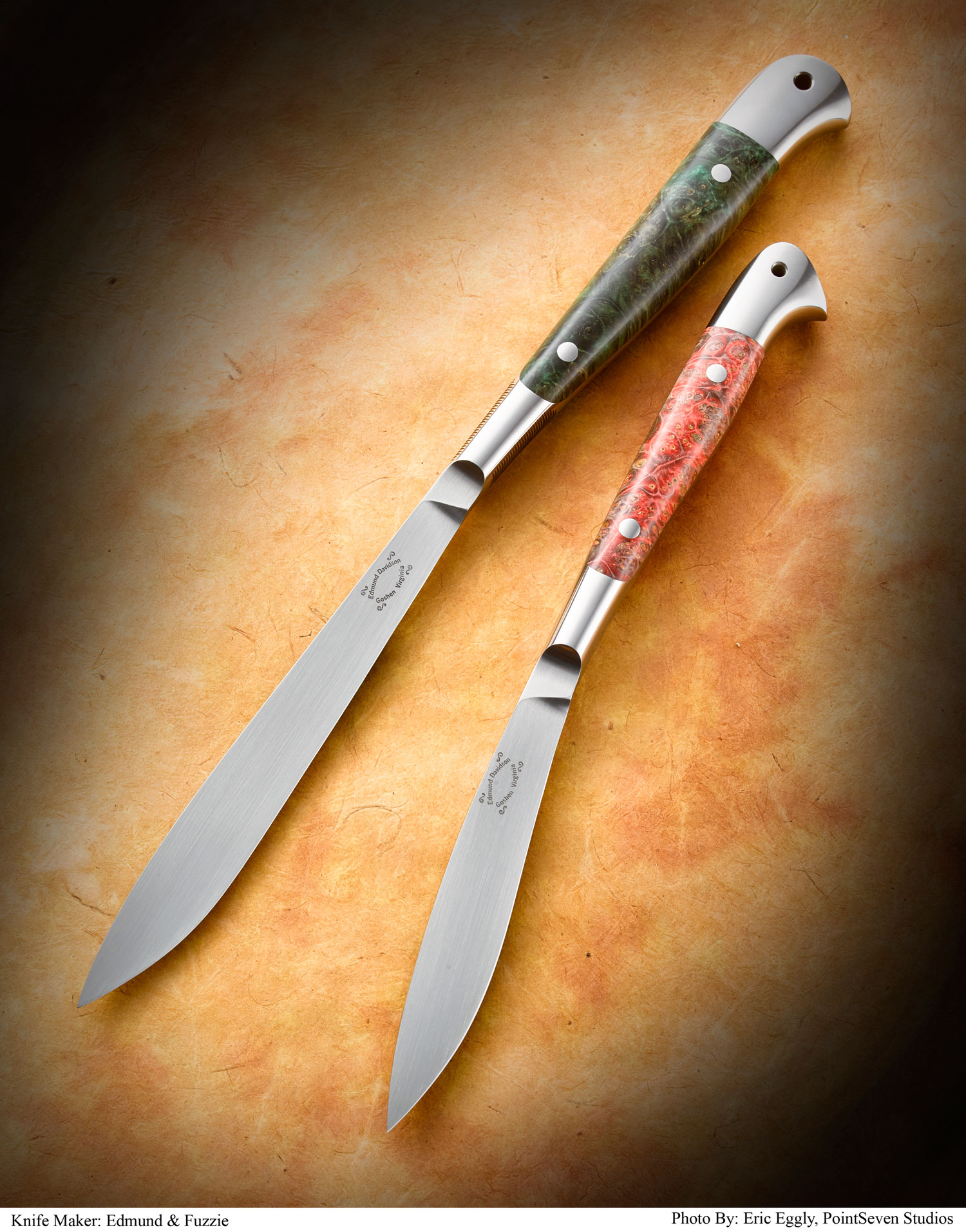
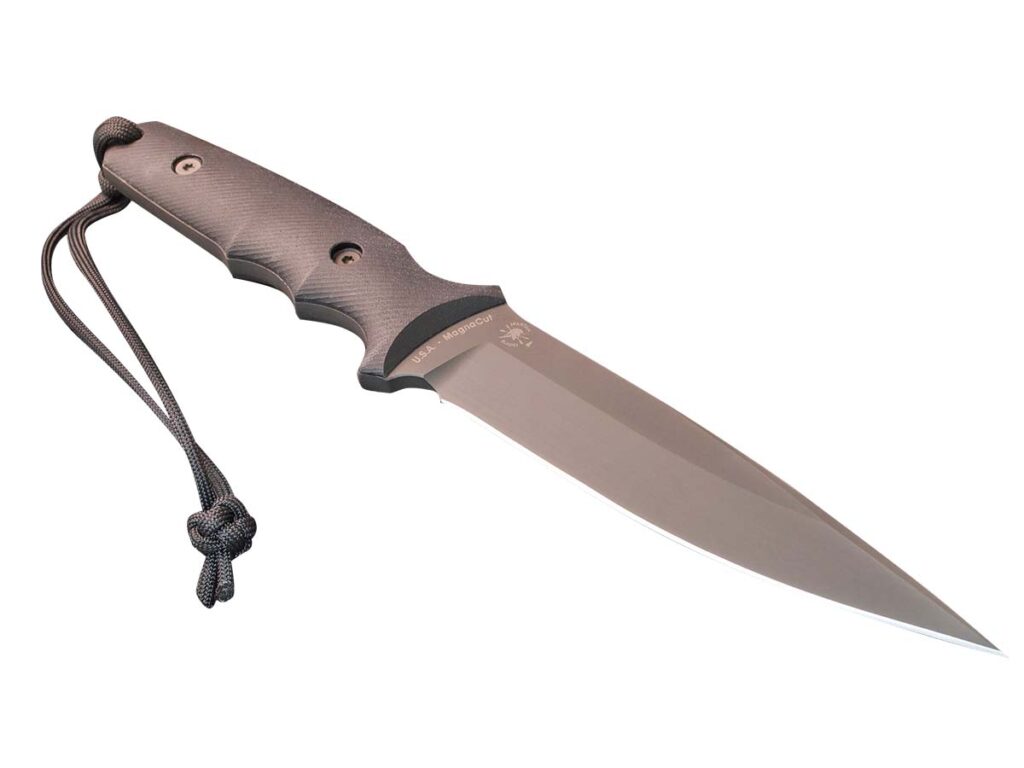
A stocky, happy guy well-liked by both knife enthusiasts and his knifemaking peers, Keith primarily made tactical knives, though he also built hunting knives to sell at local gun shows. In addition, he made fancy folders, often with fine engraving by Bruce Shaw, C.J. Cai or Lisa Tomlin. Keith exhibited his work at the BLADE Show and other top knife events over the years. Like many Hawaiian knifemakers, he was a student of BLADE Magazine Cutlery Hall-of-Fame® member Stanley Fujisaka.
Born in South Hilo, Hawaii, Keith lived in Hawaii Kai on the island of Oahu. “I spend most of my day working on my knives,” he wrote in his mini-bio on the Arizona Custom Knives website. “With assistance and guidance from Stan Fujisaka, I started to make fixed blades in early 2004. By the end of 2004, I also started making folders. I began making knives full-time in 2005.”
Keith was a big believer in sole authorship, noting “except for the screws, dowels, standoffs and pivots, I fabricate the rest of the knife myself.”
Remembering Others The Knife Industry Has Lost:
Betty Dowell, Driving Force Behind Knifemaker Ted Dowell, Passes
B. R. Hughes, Pioneering Writer And Bladesmithing Teacher, Passes Away
We give you the tips to avoid mistakes when buying a custom knives.
Of course, every rule or principle has its exceptions and counter-principles. You do get what you pay for, but only when you have an honest and informed assessment. Is that micarta real Westinghouse Micarta? Is the fit and finish and reputation of the maker in line with the price? Did the maker grind the knife themselves, or is this a production knife?
You’ll have to do some homework if you want to get “good deals.” One of the oldest tricks in the book is for the seller to exaggerate demand and conceal supply. “This is the last one, and they’ve been buying them fast all day!” may be true or may be a dishonest sales pitch.
The warning is “buyer beware” more often than “seller beware” after all. Many a “bad deal” comes not from mutual disagreement, but from one side taking advantage or being dishonest.
Economic generalities aside, let’s look specifically at the knife market.
Lesson 1: Don’t Buy The Hype
Some people want the latest and greatest thing. They get great enjoyment out of buying what is the ultimate “grail” knife of a given season, often hyped up on social media, on online forums, by word of mouth, in magazines and at events. For these buyers, the thrill is in the hunt and in the showing of the trophy.
If you want to be that kind of buyer, buy what you want and enjoy the heck out of it! Keep in mind that demand will be lower for last year’s hot thing, and so will the resale price. I won’t go so far as to say don’t buy the hot knife. Many of us spend money on experiences (what do you gain long term from a concert or a trip to the movies?) or on depreciating possessions like cars or boats. In some ways, if you enjoy it, it doesn’t matter if you lose some money on a knife or it’s not a good “investment.”
Many of us “regular” folks have to be a little more careful with our funds. If you chase what’s hot, you’ll end up buying at times of peak demand, which means you’ll pay a higher price. By the time you get tired of that knife or want to sell, everyone else just might be tired of it as well, as the knife world will have moved on to the next hot thing. If you’re one of the folks for whom a sour ending ruins the whole experience, don’t buy hot. If you have an eye toward appreciation of values and want to “make money” on your knife collecting hobby, don’t buy hot.
For some people, the thrill is in finding the next hot one, before it gets hot. Wouldn’t we all have loved to have purchased a bunch of Microsoft stock in 1993? If we were better at predicting the future, we’d make better knife picks for our collection, just like we’d make better choices in our stock portfolio. Still, if you “hit” one once in a while—buy the maker’s work right before he hits the big time and make lots of money—it can be quite a thrill and keep you buying knives on a regular basis.
Another point of caution when it comes to hype has to do with the “flash in the pan” types who grow smoking hot quickly, beyond their market position or ability to produce. It has happened in the knife world before and will happen again. Someone may be better at marketing than knifemaking, or better at Instagram videos than filling knife orders. If the hype of a particular maker turns you off or looks suspicious, trust your gut and hold off on purchasing. Sometimes makers flame out as spectacularly as they rose to fame.
Lesson 2: Don’t Overspend At The Beginning
“Walk before you run” is good advice. Knife collecting is about finding joy in knives, and at the beginning, small mistakes hurt less. If you start with $500 and buy five quality production knives at $100 each, you may enjoy them a long time. If you start with the same $500 and buy a custom at a show from an overhyped maker who quickly fades away, you may sour to collecting altogether. When you gamble more, the losses cost more.
The opposite is somewhat true as well, however. If you spend your $500 on 50 $10 gas station knives, you’ll have a great big pile of crappy knives when you’re done. The trick is finding a good balance between price and quality. Finding that balance takes time to learn.
As you learn more about the market segment you’re interested in, don’t be afraid to invest more as you grow. You may reach a point where you don’t want the Chinese ones, but rather the American ones. Or maybe you don’t want production, you want midtech. Or maybe you won’t want the midtech one with the maker’s name on it, you may want the custom one made by the maker himself.
Hopefully, your budget will grow to accommodate your growing expertise and preferences.
Lesson 3: It’s Not Just The Knife You’re Buying
When you invest in Amazon stock, you are making a rich man richer. You’re buying a piece of paper or an electronic data point that says you “own” a tiny piece of the company, and you expect a mathematically increasing return for your investment.
When you buy a knife, odds are good your money won’t go to that knifemaker’s yacht payment or summer home fund. When you buy a knife from an individual knifemaker, you’re more likely sending his kids to daycare or piano lessons, paying for his electricity and buying his wife new shoes. If you buy at a knife show, you probably bought the maker’s dinner. When you invest in a knife, you support a specific person, not “the man behind the curtain.”
Even if you find joy by investing in a person by buying their product, you still owe it to yourself to invest wisely. Of course, you should buy a knife you like, that you find useful or that may make you a decent return on your money. At the same time, you should be looking for people to help, individual makers whose lives you will improve by your relationship and the purchases you make over time. You may be making friends, not just money, which can add another degree of magnitude to your enjoyment of knife collecting.
Lesson 4: Buy What You Know
The more you know, the fewer expensive mistakes you’re likely to make and the more deals you’re likely to find. The less you know, the more likely it is that you’ll get a bad deal, purchase a knife you’ll be dissatisfied with or a knife you later regret. The more you know, the better. This seems to be a universal principle of life and economics, and it applies to knives as well.
First off, buy knives from brands or people you know have a good market position. Many times, a well-known brand is successful for good reasons. A classic brand like Case or Spyderco may be a great place to start, or a well-known Knifemakers’ Guild member or somebody from the “Slipjoint Cartel.” When you have the chance to know the maker or seller personally, that knowledge makes your purchases more likely to bring you joy or a good return on your investment.
Second, buy knives from reputable dealers or purveyors. While you may get a “great deal” from a pawn shop or somebody’s cousin who is a knife collector, there is some measure of protection in buying from well-known retailers such as Blade HQ, AG Russell, Arizona Custom Knives and others. Until you become familiar enough with the market to know exactly what you’re looking at, it’s wise to stick with the major dealers.
As another example, consider buying from the folks who advertise in the knife magazines, such as BLADE. If their business is legitimate enough to afford the expense of advertising in print, they’re more likely to be honest and stick around.
Third, buy the knives you’re familiar with. You may get joy out of buying a knife the first time you’ve ever seen or heard of it. On the other hand, you’re even likelier to enjoy a knife that you know in your heart is a great one, because you’ve studied it, chased it, pursued it, and finally purchased after careful consideration. Sometimes the journey is as fun as the destination, and the pursuit of the grail is worth as much as the grail itself.
You may get in a rut and feel like you’re buying the same knife over and over. That’s no good either. Balance your knowledge with both width and depth. You may dive deep into one model, one maker or one brand, or you may spread your collection broadly by buying one knife from as many different people and places as possible. Either way, you’ll get familiar with the knives that you like, and you’ll end up going as deep or as broad in your collection as you like.
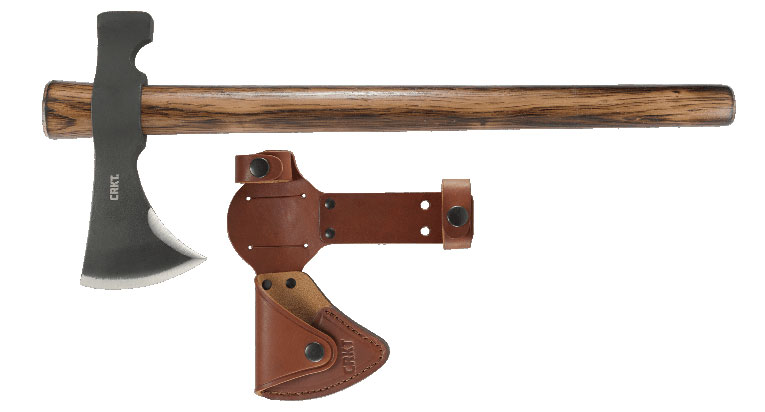
Designer Ryan Johnson’s latest tomahawk, a new spin on the Woods Chogan T-Hawk released in 2014, will only be available through CRKT.com. This new version sports a “black magnesium phosphate coating on the head for corrosion resistance and an aesthetically cool firewood-burned handle,” per CRKT.
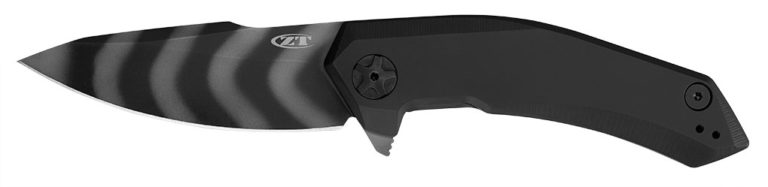
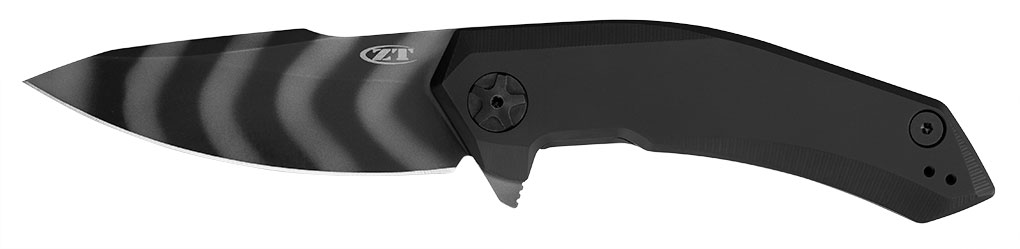
Zero Tolerance’s new 0095TS offers a step up from its 0095 with premium steel and tactical aesthetics. The “TS” in the model name comes from the tiger stripes design on the blade.
Cargill’s impacted the knife industry in nearly every facet.
Bobby Lynn “Bob” Cargill, custom knifemaker, a president of the National Knife Collectors Association board of directors, and founder of Cargill Knives and Cripple Creek Cutlery, passed away January 3. Of Old Fort, Tennessee, he was 81.
Using old car springs for material, Cargill made his first knife when he was 10. He went full time in his mid-30’s circa 1975 making knives via the stock removal method, including folders, some fancy, lockbacks and multi-blades. He used 440C, 154CM, D2 and other steels for blades, and mother-of-pearl, stag, bone, Micarta®, ivory and wood for handles.
He joined the Guild in 1979. “What I enjoy most is the completed knife,” he was quoted as saying in Knifemakers: An Official Directory of the Knifemakers Guild, “because it is rewarding to see a design on paper developed … If I can’t deliver a knife that I’m proud of and make you a little bit happier and proud to collect my knives, then I don’t want your money.”
Cargill had his right leg amputated below the knee as a result of a car accident. However, instead of letting it hold him back, he used it as inspiration for the name of Cripple Creek Cutlery. Founded in 1981 in Lockport, Illinois, Cripple Creek specialized in slipjoints in classic patterns and natural handle materials.
Consisting mostly of slipjoints—they were called pocketknives back then—club knives were big in the late 1970s and throughout the ’80s, and Cripple Creek was among a number of companies that provided knives for knife clubs nationwide, companies that included Case, Queen, Hen & Rooster, A.G. Russell, Fight’n Rooster, KA-BAR, Boker, Schrade and others. Among the knife clubs Cripple Creek made club knives for included the Western Reserve Cutlery Association, Allegheny Mountain Knife Collectors Association, Central Kentucky Knife Club, Badger Knife Club, the Northeast Cutlery Collectors Association and others. He was active in the American Edge Collectors Association. Cripple Creek also made limited-edition slipjoints for Knife World in the early 1980s when BLADE Magazine Cutlery Hall-Of-Fame® member Houston Price owned the magazine. Knife World is now known as Knife Magazine. Bob also made club knives under the Cargill Knives mark for such knife clubs as the Soy Knife Collectors Club.
Bob sold Cripple Creek in 1993 and it operated under Blackjack Knives in Effingham, Illinois, until 1995. He was on the Guild’s “knifemaker emeritus” list at the time of his passing. He is survived by his three children, nine grandchildren, several great grandchildren, two sisters and a brother.
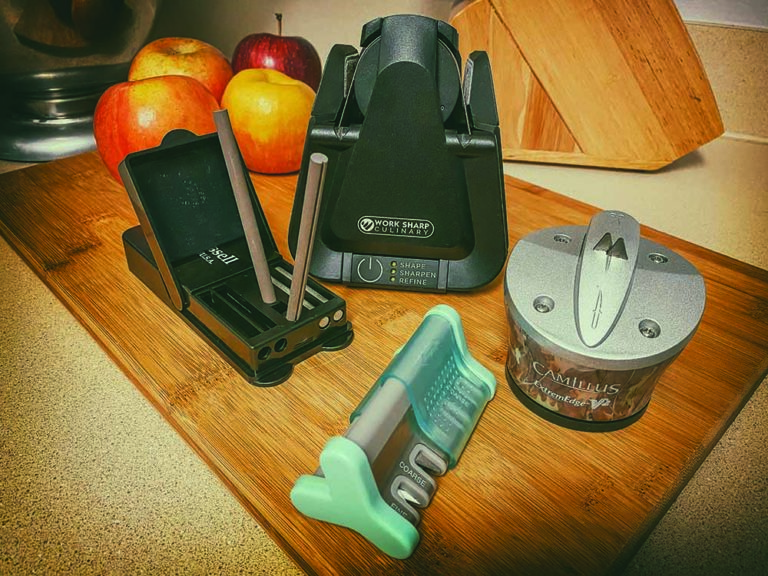
Correct sharpener selection is imperative for keen household cutlery. With that, here are four kitchen knife sharpeners that make the cut.
Dull kitchen knives not only make meal preparation more difficult, they also can slip and cut you when you least expect it. As a result, it’s imperative to keep them sharp. If you sharpen them yourself, correct sharpener selection is key.
A kitchen knife sharpeners can be as simple or complicated as you want. No matter your skill level, there is a sharpener for you. For those with little-to-no sharpening experience are the cost-effective pull-through sharpeners. These are as simple as simple can get. Often they are plastic-bodied devices with one or two slots. Inside the slots are the sharpening media. The media are permanently affixed at pre-set angles The most common media for the two-slotters are carbide and a fine-grit ceramic. The carbide quickly restores damaged and worn edges, while the fine-grit ceramic polishes and hones the edge to razor sharpness. Anyone can achieve a sharp edge with a pull-through.
Smith’s Products Slide Sharp Edge Grip
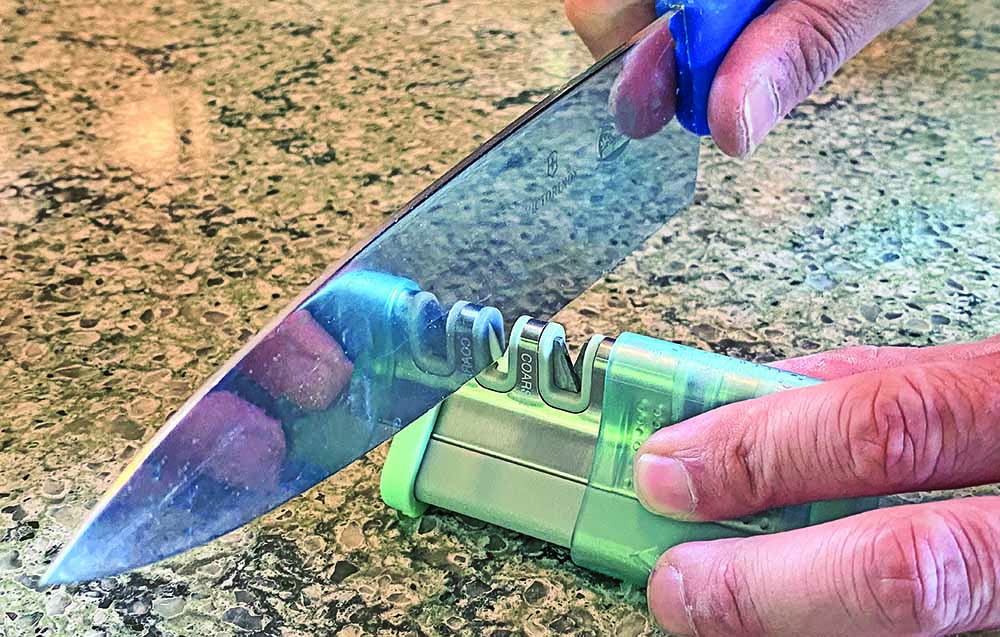
Smith’s Slide Sharp has two pairs of pull-through slots to address both standard and Asian-style kitchen knives.
One such kitchen knife sharpener is the Smith’s Products Slide Sharp Edge Grip. It has two sets of slots. One pair addresses standard kitchen knives at a pre-set 20-degree angle, and the other addresses Asian-style knives at a 15-degree angle. The standard slots have carbide for a coarse grit abrasive and ceramic for fine grit. The Asian-style slots have diamond rods for coarse grit and ceramic for fine.
The Slide Sharp’s indexed sliding grip is textured for a non-slip purchase to allow for secure sharpening. Depending on which slot set you use, the other set is covered by a sliding cover, which is how the sharpener is stabilized—by placing your hand over the sliding cover.
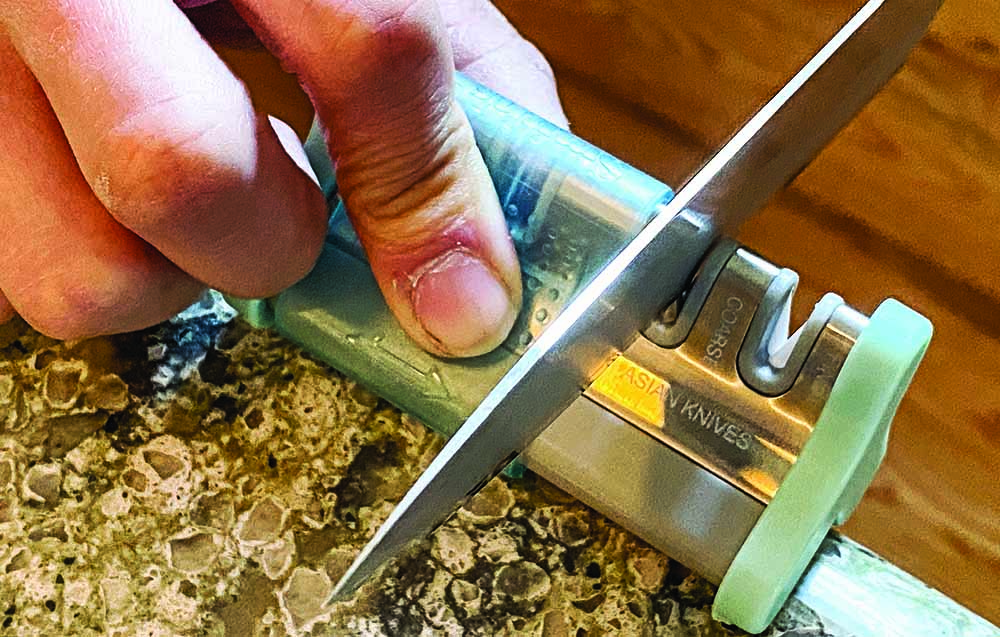
The cross-section of the sharpener resembles an upside-down “Y,” with the arched base held in place on the edge of a table or counter. This gives you another option for stable sharpener operation. Consequently, you have two ways to secure the sharpener during use. Few pull throughs provide such an option.
The Slide Sharp is effective and works as advertised. To use it on a countertop or tabletop, take one hand and stabilize it on the flat work surface. To use it on the edge of a kitchen counter, sit it on the counter edge via the “Y” legs and, while holding it with one hand, pull the blade through and down with the other. You have a better line of sight
to the sharpener this way and it’s very safe, too.
Designed with an upside down “Y” frame, the Smith’s Slide Sharp sits securely while held to the edge of a countertop. This puts the sharpening slots at an angle for better viewing while in use.
If you must use a pull-through, I highly recommend the Slide Sharp. I also recommend using the lightest pressure as possible to sharpen, as pull-throughs can remove too much metal, more so than ceramic, diamond or powered abrasive belt sharpeners. Removing too much metal can prematurely deform the cutting edge.
The Slide Sharp is a little over 1.5 inches tall and a bit under 3.5 inches long. Its compact nature enables convenient drawer storage. The manufacturer’s suggested retail price (MSRP) of $11.99 makes it incredibly affordable and provides no excuse for anyone to have dull kitchen knives. MSRP: $11.99
Camillus Extreme Edge V2 Knife & Shear Sharpener
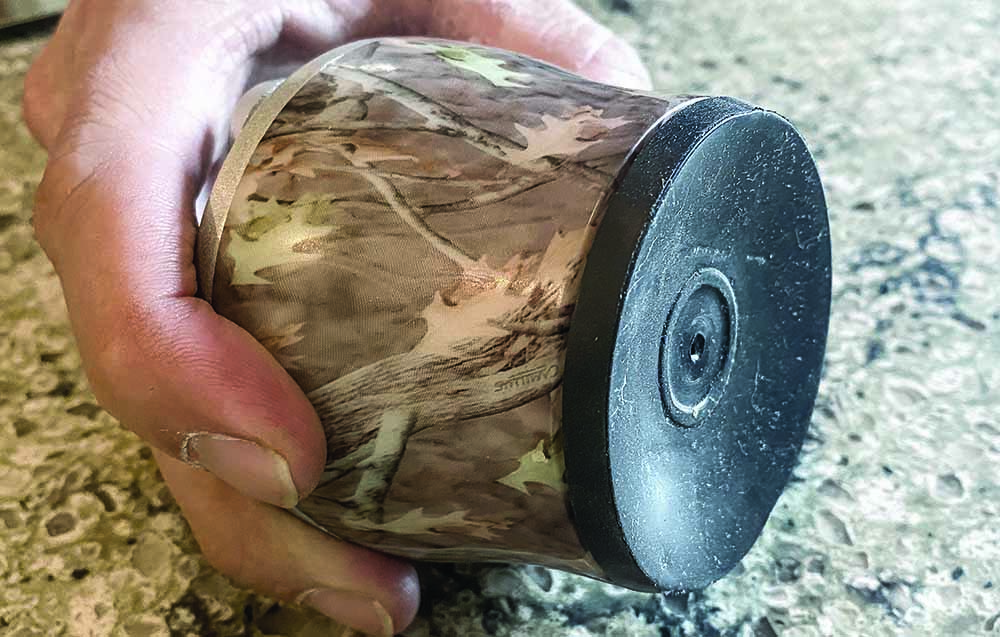
The Camillus Extreme Edge V2 Knife & Shear Sharpener features a pull-through design with carbide media for kitchen knives and fine ceramic for shears to establish edges in quick fashion.
The Extreme Edge V2 Knife & Tool pull-through from Camillus is a two-for-one deal. A set of carbide abrasives addresses plain edge and kitchen knives. It also features a built-in shears sharpener.
The cylindrical body is around 3 inches in diameter. The top is cast metal and houses the carbides, while the fine-grit-ceramic shears sharpener is in the unit’s rear. The plastic body has an outdoorsy camo theme appearance. For safe operation, a suction cup at the base activates by pressing down and rotating the unit to firmly grip the tabletop surface. For scenarios where the suction cup feature isn’t feasible, it acts as a standard non-skid base.
The sharpener works OK, though I didn’t feel the carbides to be as aggressive as with other pull-throughs I’ve used. The edge it produced was sharp though not surgical sharp. At least the V2 provides a functional sharp edge, which is better than having no sharpener and a dull edge.
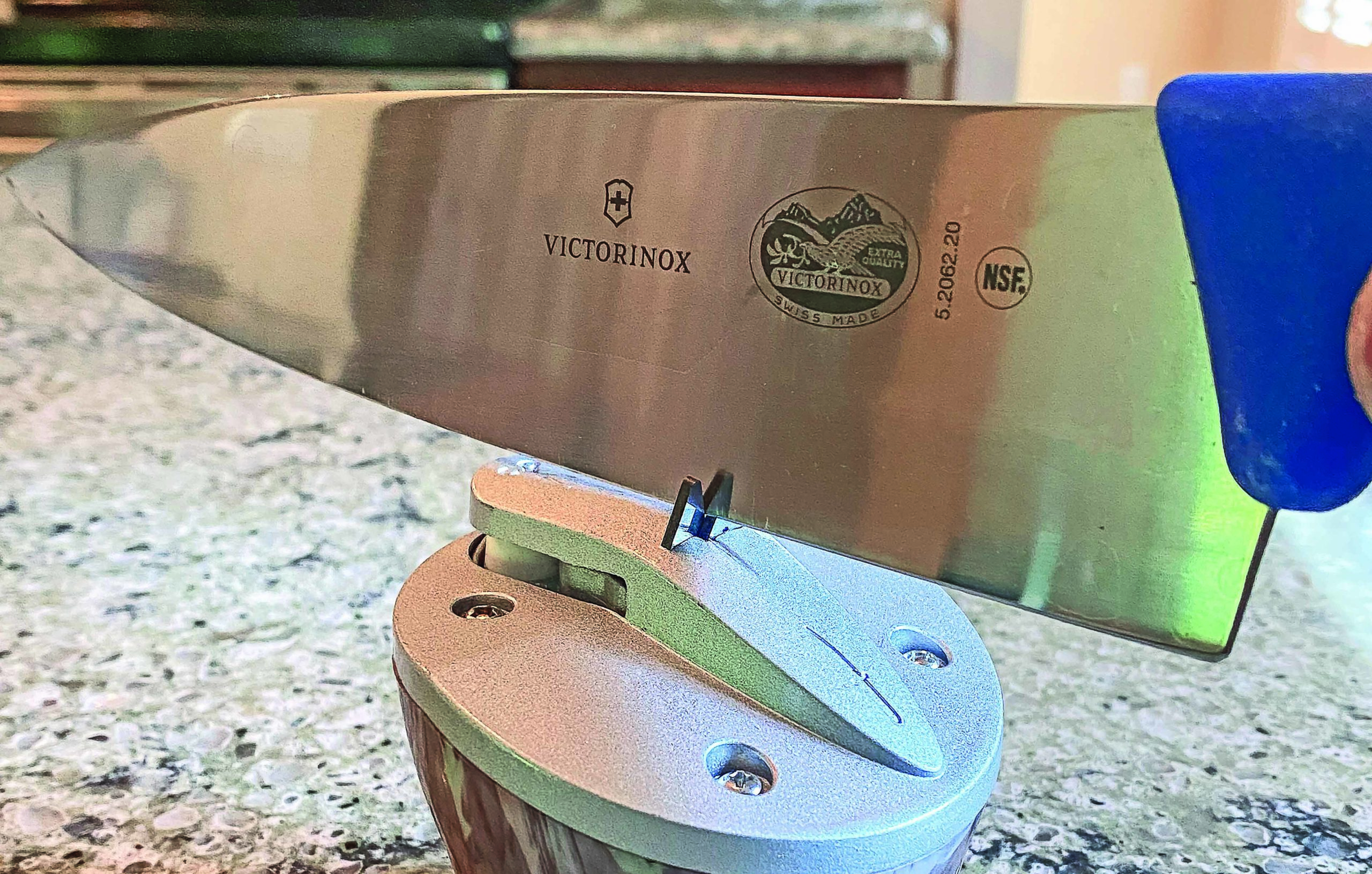
The suction cup base of the Camillus Extreme Edge V2 is designed to stick to a slick surface for stable sharpening.
The suction cup base was a disappointment. I could not get it to cling to the slick worktop of my toolbox most of the time. You must really press down on the sharpener and twist it to get it to stick, but it kept loosening repeatedly. However, you can still use the sharpener safely and effectively by employing the suction cup as a non-skid rubber base. Oh, and one of the carbide teeth loosened up after the first few uses, which is unacceptable. MSRP: $19.98.
A.G. Russell Knives Field Sharpener
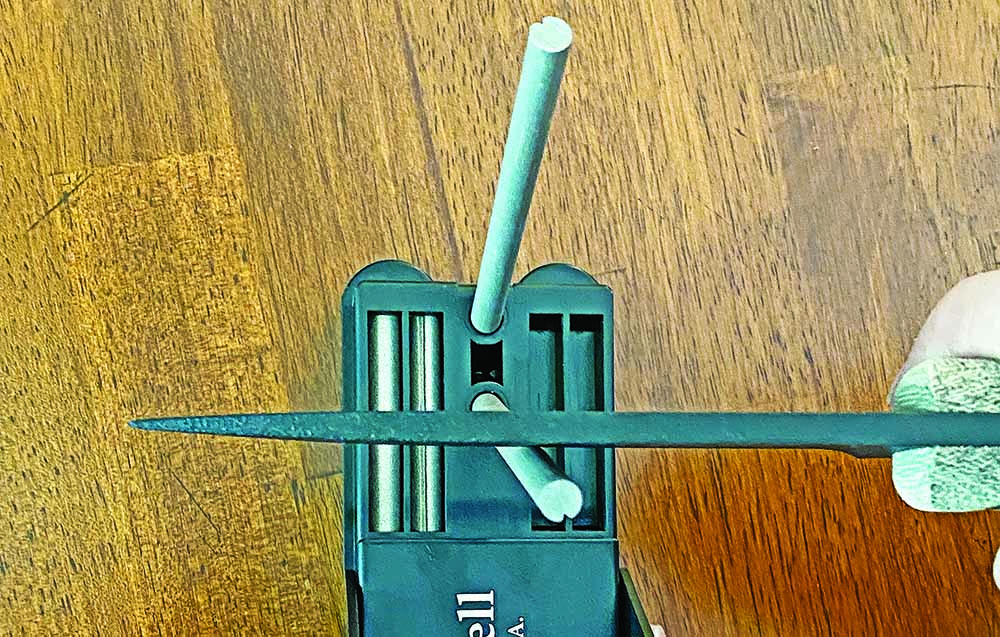
You can see the diamond-grit hones stored in slots in the base of the A.G. Russell Field Sharpener. This is a completely functional, self-contained guided sharpening system that goes anywhere you do.
The A.G. Russell Knives Field Sharpener is probably the most versatile of the test bunch of kitchen knife sharpeners. Not only does it sharpen kitchen knives but also pocket knives, hunting knives and tactical knives. Such value and versatility is a hard combo to top no matter how you slice it.
The Field Sharpener has a molded plastic base and hinged cover. You insert a pair of included 4-inch sharpening rods into two holes at a preset angle of 15 degrees. There’s a set of coarse diamond-grit rods to quickly repair a worn edge or rehab a damaged one. A set of medium-grit ceramic rods further sharpens and dials in edges to razor sharpness. The unit measures 5-by-2 inches and is compact enough for stowing in a toolbox, tacklebox, backpack or even a jacket pocket.
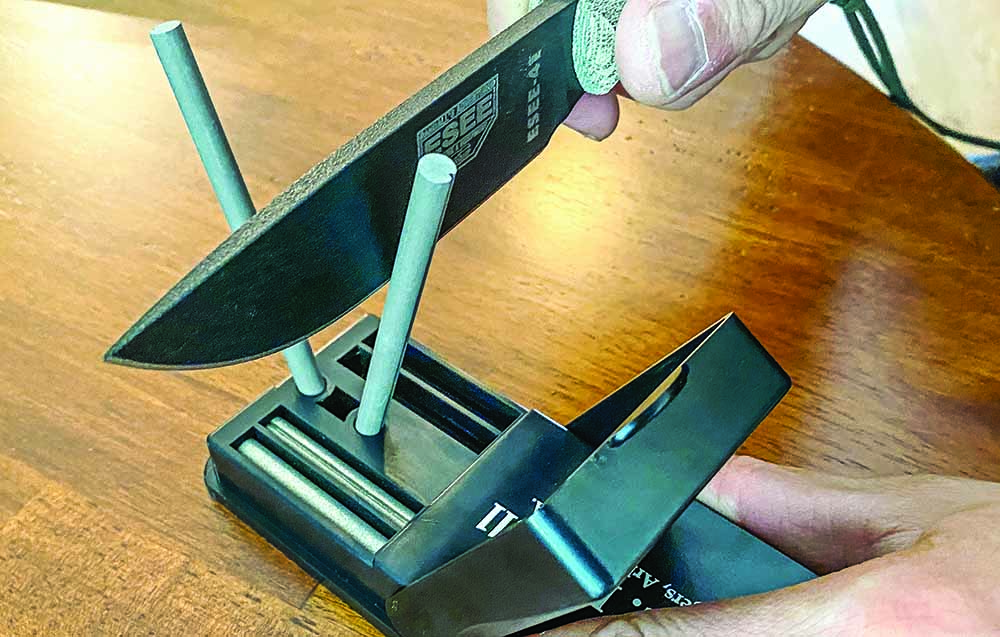
Place the sharpener on a flat work surface. Select the set of rods you wish to use and insert into the holes in the base. The flip-up cover secures the rods when they are tucked inside the base; when open, the cover forms a convenient guard to prevent the blade from coming down on your hand. Place one hand on the base to secure the sharpener. With your other hand, take the knife and move the blade down the rods, while pulling it across from tang to tip—two motions at once. Don’t use a lot of pressure; allow the weight of the blade to rest on the rods and move it down. Keep the blade positioned perpendicular to the tabletop surface; holding it straight up and down allows you to sharpen at the proper angle of 30 degrees inclusive.
The Field Sharpener’s flip-up cover secures the rods when they are tucked inside the base. When open, the cover forms a guard to prevent the blade from coming down on your hand.
The Field Sharpener is very effective. If you’ve used Crock Sticks or a Spyderco Tri-Angle Sharpmaker, you will take to this one easily. It requires the same motions. Unlike the Sharpmaker or Crock Sticks, it’s portable enough to take on outdoor adventures. It’s great for camping, especially if you use a variety of knives.
Given the longer length of many kitchen knives and the 4-inch rods, you must pull the blade across the rods with a bit of expediency to be able to capture the entire blade length in one downward pass. Just be mindful that this technique is more pronounced with longer blades. With shorter blades you won’t notice it as much. The round profile means the contact area of the rod to the blade is smaller and more effective at removing steel. It’s easy to use and highly effective. MSRP: $39.95.
Work Sharp E5 Kitchen Knife Sharpener
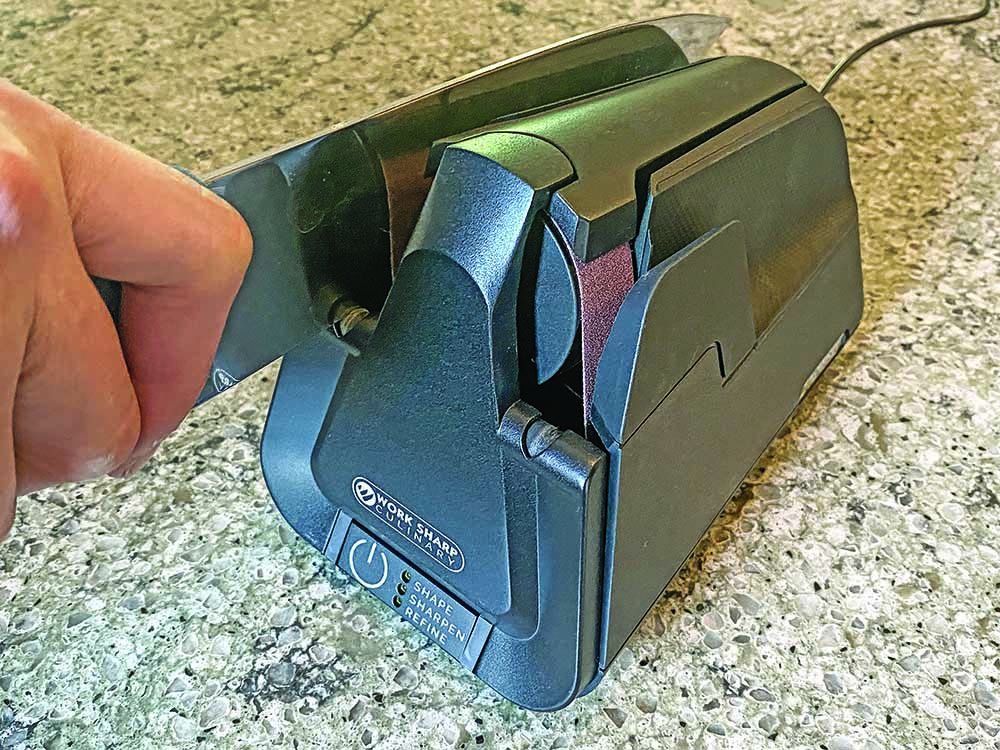
The Work Sharp Culinary E5 uses the same flexible abrasive belt technology as used on the company’s Ken Onion Edition sharpener. Three pre-programmed sharpening modes eliminate the guesswork of obtaining a professional edge.
The Work Sharp E5 Kitchen Knife Sharpener is a top-of-the-line powered kitchen knife sharpener, offering multiple modes, speeds, and the latest technology in providing consistent high-quality sharpening knife after knife. The E5 was designed from the ground up as a powered sharpener that can sit on a counter full time, blending in with other appliances with a minimal footprint. Like Work Sharp’s other powered knife sharpeners, the E5 uses flexible, long-wearing abrasive belts to create an ultra-durable convex edge.
Place the blade inside each slot and the abrasives do the work. Select from one of three sharpening modes via the one-touch programming feature. The Shape mode—three rapid clicks on the power button—starts at a high speed for fast cutting and repair of worn edges, then drops down to the Refine mode—one click—at low speed for the final touch up. The Sharpen mode—two rapid clicks—runs the belt at medium speed for routine edge maintenance, followed by the Refine mode for fast touch-ups.
Select the desired mode then alternate placing the blade in each of the slots. Watch the lights on the power panel. Whichever mode you select, a light shines next to it. Ten seconds before the machine changes modes, the light will begin flashing to warn of the upcoming transition to the next mode, or, depending on the mode, stop completely. Simply draw the blade through. The machine does all the work.
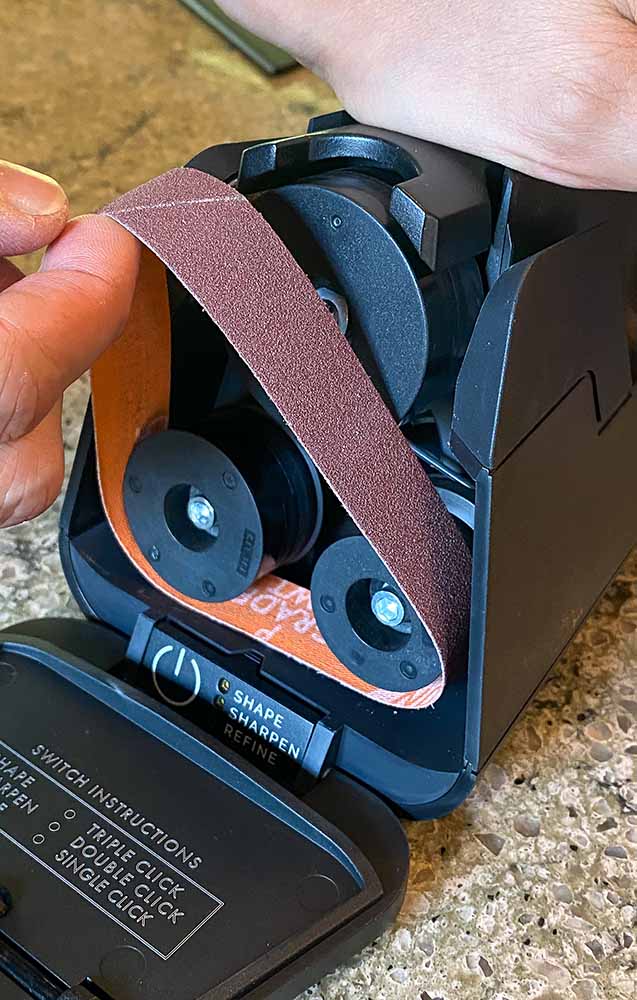
Changing belts on the Work Sharp Culinary E5 is easy. Flip down the faceplate. Press down on top of the machine with one hand to release belt tension, and, with the other hand, remove the belt. The new belt goes on in reverse order.
The first time you use the E5, you will be reprofiling your blades to the set 17-degree angle, which can take some time. At extra cost is an upgrade kit that includes more coarse belts, and 15- and 20-degree angle guides for enhanced versatility and quicker sharpening. MSRP: $59.95.
The E5 works well and produces the convex edge, which is very sharp and durable. The sharpener is quiet and easy to operate, something novices appreciate. If you are serious about cooking, it is essential to have not only high-quality knives but also a high-quality sharpener. The E5 is it. MSRP: $149.95.
Other Kitchen Sharpener Options
Shenzen Knives Electric Diamond Knife Sharpener
Shenzen Knives Electric Diamond Knife Sharpener
Diamonds aren’t just a girl’s best friend. This sharpener from Shenzen Knives features an electric diamond grinding wheel with two settings designed to sharpen both steel and ceramic knives.
Its powerful motor can remove chips as large as 1mm off of ceramic knives, and it easily comes apart for cleaning. An added plus is the universal knife guide slot, which is designed to keep your knives at the perfect angle for the best possible edge on both the fine and coarse settings. Specifically for kitchen knives, this machine is not meant to sharpen scissors, hunting knives, or any other types of blades.
MSRP: $49.99
Sharp Pebble Premium 1000/6000 Whetstone
Sharp Pebble Premium Whetstone Knife Sharpening Stone 2 Side Grit 1000/6000 Waterstone- Whetstone Knife Sharpener
The whetstone, and other sharpening stones, are a much more finite and meditative way to sharpen your knives. Coming in a variety of grit sizes, whetstones work by being submerged in a liquid, usually water, which enhances the stone’s ability to sharpen a blade while also allowing the chips and scrapes to wash away. Sharp Pebble offers a variety of whetstones in different grits and at different price points. (The 1000/6000 stone is a perfect stone for home sharpeners, and is the method I’ve used to sharpen my kitchen knives for the last several years. I enjoy the process of using the stone and feel it provides a quality edge whether it’s my chef knife or my paring knife.)
The majority of the stones come with an angle guide to help you get the best sharpening angle for your knife. These stones can also be used to sharpen other implements from razors to scissors to chisels.
MSRP: $40.99
Messermeister Fine Grit Honing Steel
Messermeister Fine Grit Honing Steel
Sometimes your knife needs honing rather than sharpening. That’s where honing steel, or a honing rod, comes to the rescue. Over time and normal use, the edge of your knives will bend and warp at a microscopic level. Honing steel works to massage the edge back into the proper position without removing as much material as sharpening would. (I hone my knives daily while sharpening them 2-4 times a year. By honing I’m able to maintain a sharp edge longer and maintain better control over my knives while I cook.)
Messermeister offers a variety of honing rods ranging from steel and ceramic to diamond. Their fine-grit rod is made of high-carbon tool steel and can be used to hone knives made from any material. It’s designed to never wear over its lifespan and should be able to hone your knives’ edges for decades.
For a fair price, you can’t go wrong with this rod, and your knives will thank you for it.
MSRP: $24.95 (10-inch), $29.95 (12-inch)
Worksharp Electric Kitchen Knife Sharpener
Worksharp Electric Kitchen Knife Sharpener
For a quality all-rounder, look no further than Worksharp’s newest electric sharpener. Roughly the size of a softball, the sharpener effortlessly sharpens anything you can throw at it in the kitchen including scissors and serrated knives.
Its sharpening slots feature built-in 20-degree angle guides so each edge comes out at a perfect angle. Beyond just sharpening, the device features a ceramic honing wheel as well that allows you to maintain your edge every day.
MSRP: $59.95
Editor’s Note:Mike Abelson contributed to this story
Forty-five shows in, the edge-travaganz’s remains the beating heart of the knife world.
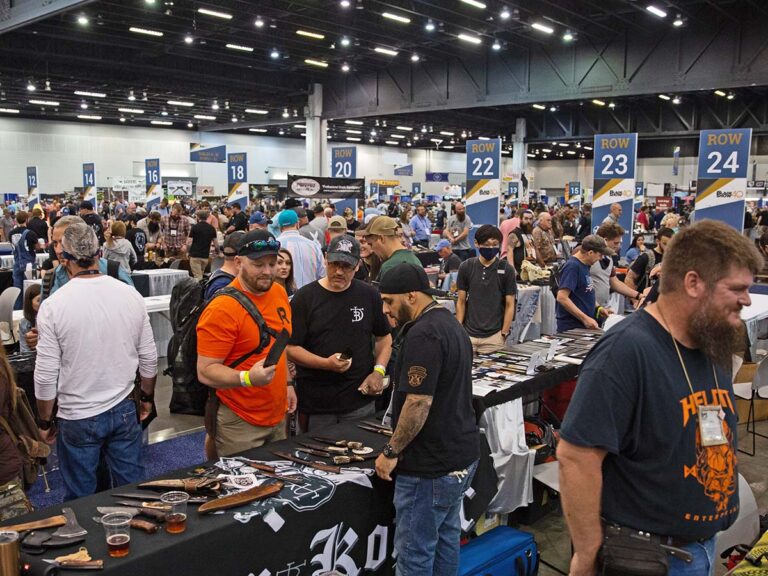
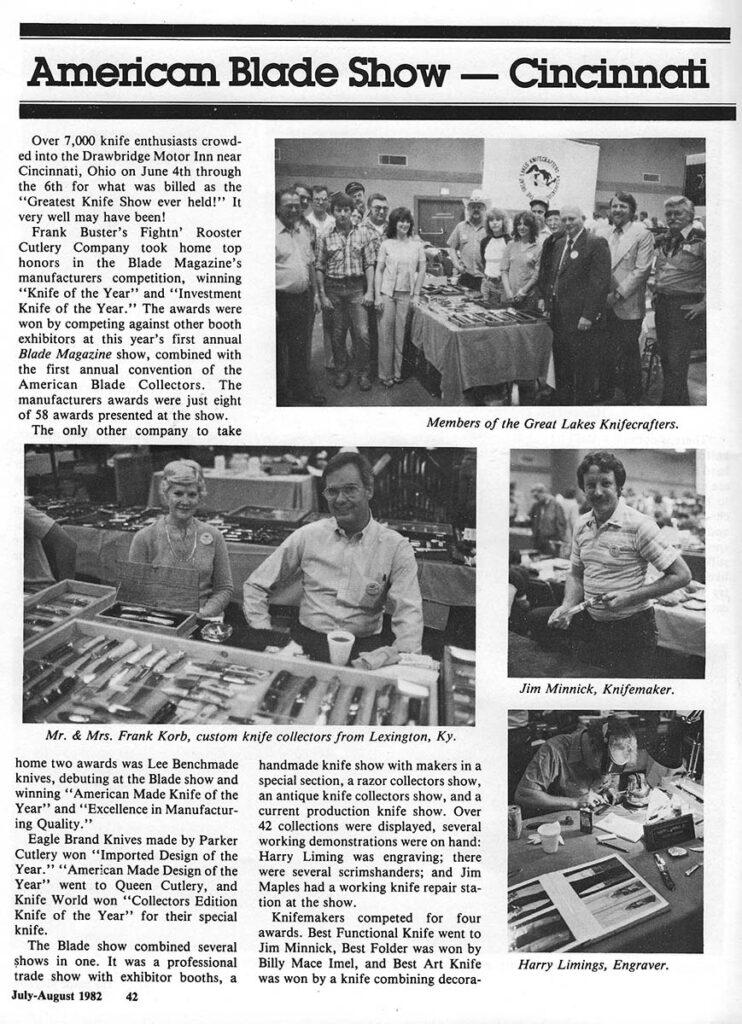
Each year, the BLADE Show draws thousands as the knife industry’s perennially premier event. Now celebrating its 45th anniversary, BLADE Show has grown from humble beginnings at the Drawbridge Motor Inn in Fort Mitchell, Kentucky, in 1982 to a hub that stirs enthusiasm, sparks lively discourse, facilitates buying and selling and energizes the world of cutlery like no other.
Knife enthusiasts and aficionados of all types, makers, purveyors, factory representatives and collectors have crowded the floor of the show regularly, from the greater Cincinnati, Ohio, area to the World Trade Center in Knoxville, Tennessee, to its present home in Atlanta. Memories have been made, deals struck and a rising tide has lifted all.
“We originally said we were going to do one show a year,” remembered Bruce Voyles, BLADE Magazine Cutlery Hall of Fame® member and longtime publisher of BLADE® Magazine. “The goal was to make it more than a show. We loved the original venue in the Cincinnati area, but we outgrew it in two years, moving to 70,000 square feet in Knoxville by 1985 or so, with 700 tables, and then to Atlanta, where there is an airline hub and more international people were able to attend.
From the right, Bob Loveless, J.W. Denton and Myra and Durvyn Howard enjoy a dinner after a day on the BLADE Show floor. The show is as much a social gathering as it is an industry event. (John Denton image)
“Nobody had gotten such an incredible group of people together in one room before, and from it some amazing things happened,” Voyles reflected. “Sal Glesser of Spyderco came up with the idea for collaborations, and that really began at the BLADE Show as manufacturing people wandered into the handmade area–and it happened! We built the show on borrowing ideas from others and adapted it for all we could, trying to minimize mistakes we had seen in other shows.”
Through the years, the BLADE Show has been characterized by its exchange of ideas, vigorous commerce, displays of remarkable collections, professional demonstrations, honors for the industry greats and much more. Voyles smiled, “It just went gangbusters!”
And so, while the BLADE Show is in its 45th year, many have made the annual pilgrimage time and again. They acknowledge the impact the event has had on the knife industry and reflect on their memories and its true significance. The show has evolved, experienced growing pains and reached new heights of influence–but its dynamic energy has never waned, even in these days of the internet and instant access to information.
Knife Family Reunion
From the start, BLADE Show was red hot. Documenting the first show at the Drawdridge Motor Inn near Cincinnati, Ohio, the article from the July/August 1982 American BLADE estimates more than 7,000 knife enthusiasts showed up.
“The early BLADE Shows were run by Bruce,” commented ABS master smith and custom purveyor Dave Ellis. “Over the years, ownership has changed and the crowds have grown. Now there are two rooms to hold all of the table holders. The lines to attend start days in advance and eager folks flood in to be first to their tables of choice. The seminars have grown, and celebrities, musicians and folks from all walks of life attend with the expectation of purchasing that special piece they have saved all year for.”
During his active days as a bladesmith, Ellis attended shows with greats like Hall of Fame legend Bill Moran and master smith Jerry Fisk. He remembers sitting in “the Pit” at Atlanta’s Waverly Hotel, where friendships were forged and discussion flourished.
Hall of Famers Daniel Winkler and Karen Shook were attendees in the 1980s, and their first impressions were lasting. “It was overwhelming to know there were that many people making knives and to see the diversity,” Karen recalled. “The most striking memory is the sense of community and camaraderie. We did not know who the legends were at the time, but when we got to know them, we learned of a group of great talents with great passion for knives and the knife community.”
Among the aspects that set BLADE Show apart from other knife shows is the inclusion of factory knives. This has become an important part of the industry, as companies vie for the coveted Knife Of The Year award. Spartan Blade nabbed the honor in 2024 with its wicked Clandestina.
Karen fondly remembers sitting in the Pit. “It was like a family reunion. Almost every face became familiar. The show and the promotion of the same have attracted interested parties and given makers the opportunity to meet people and educate attendees as to why custom knives cost more than your typical hardware store hunting knife.”
Magic Of Knives In Person
When UK-based custom scissor maker Grace Horn attended her first BLADE Show in 2003, she was expecting her second child. “That child was conceived with the knowledge that I had to attend and not be too pregnant to do the transatlantic flight,” she laughed. “I have been attending every year since, and the changes have been fascinating. The fluxes of the industry are so much easier to see in a microcosm at a show … a snapshot of the industry at a point in time. Even in this world of increased social media engagement, nothing replaces the actual interaction between people. I love the sense of community that comes with the BLADE Show.”
Collector Chris Schluter agrees. “These days, so much of knife collecting takes place via social media,” he said. “It’s been great for sure–online sales, frequent interaction with makers and collectors. There’s still not a substitute, though, for meeting people in person and handling knives in person. For collectors, this is seeing your favorite makers in person and also walking by that table with a maker you’ve never heard of and stopping because something caught your eye. It’s not just meeting people during the show. It’s also after hours in “The Pit” and nearby restaurants and bars where people have time to chat. The BLADE Show is always something I look forward to, and I think many makers and collectors see the show as a sort of annual ritual that they really try to go to each year.”
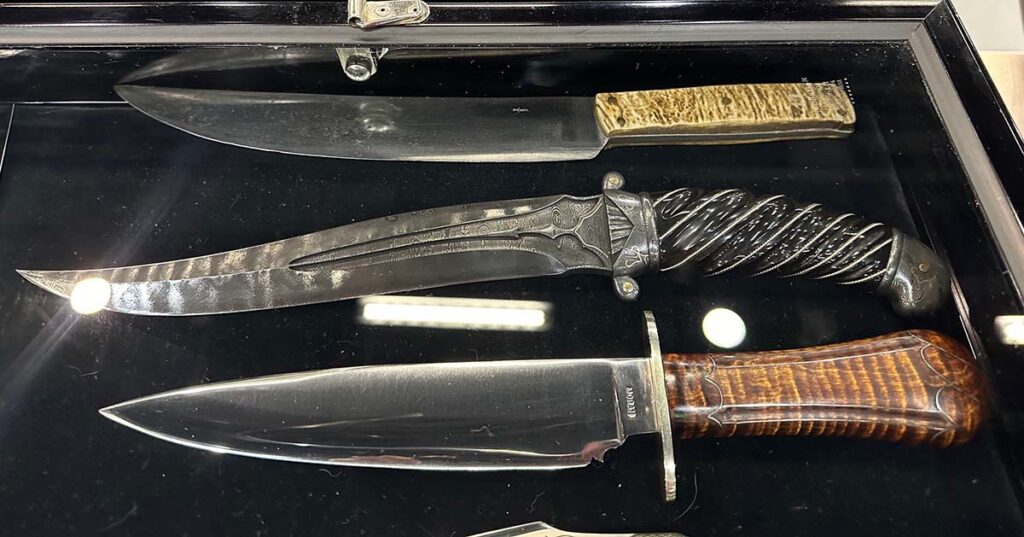
From top, knives from Hall of Famer Bill Scagel, CAS and Hall memeber Bill Moran. Imagine seeing so many great creations in one case. Through the years, it’s become commonplace at BLADE Show. (Dave Ellis image)
That pervasive energy, the smiles and the renewal of each acquaintance team up with the latest across the knife world to make the BLADE Show even more relevant in today’s environment. “The BLADE Show has made the careers of custom makers,” declared renowned knife innovator Ernest Emerson. “Before the internet, how could you find out about custom makers and their knives? BLADE Magazine was it, and the readers of BLADE Magazine would go to that show. Still, there is no motivation like seeing what the other guys are making.”
Emerson’s following is proof positive that the BLADE Show complements a career. The throng that gathers at each show to purchase his knives and those of other makers gave rise to the lotteries that are commonplace these days.
“The BLADE Show has pushed the knife world to outer space,” assessed Loveless knives expert and purveyor John Denton. “People keep coming back because it has something to do with the love of custom knives—one on one with makers, dealers, collectors—we all love the same thing. So, it is so much fun to see everyone. It feels like family. We all come back because we have all we need at the BLADE Show. The future is here, and now, so I just hope the magic stays.”
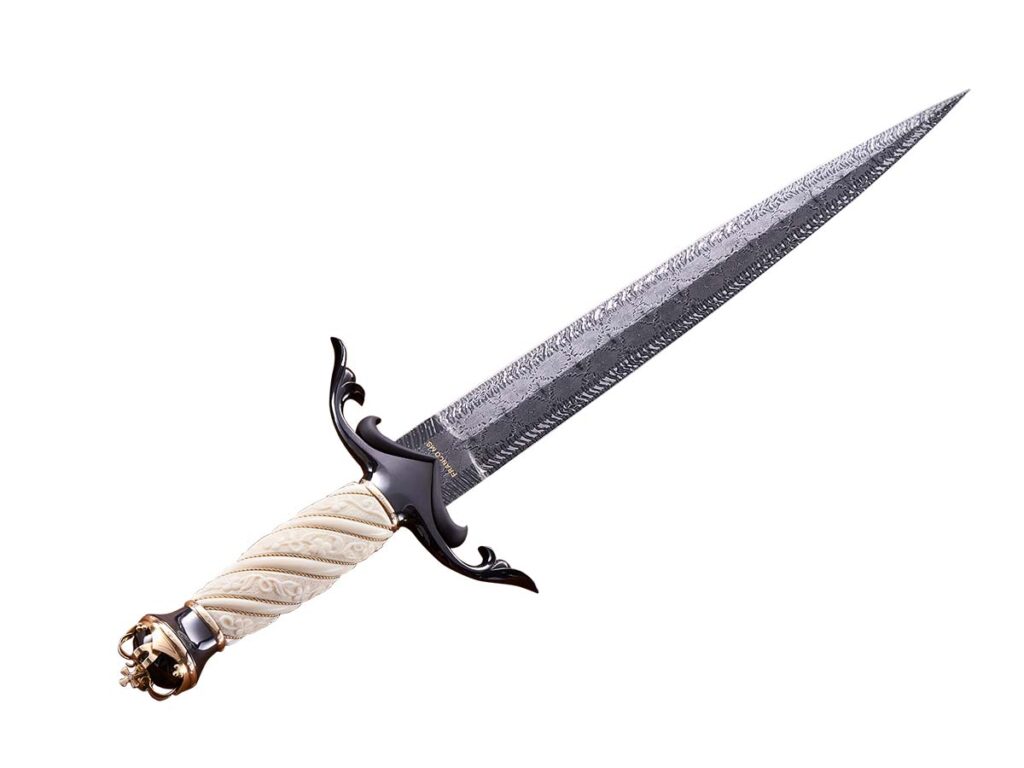
BLADE Show launched during the golden years of custom knives in the 1980s. But don’t think the best years are behind. Contemporary makers, such as Brazilian Dionatam Franco, continue to wow with creations like his 2023 Best of Show dagger.
That magic was indeed, at times, like catching lightning in a bottle. “It was things like [Hall of Famer] Bob Loveless staying with Wayne Clay, and once the show ended for the day, we all went out to eat,” Denton commented. “Then, at the hotel, you just looked around the room, and the knifemakers of the world were all pretty much in the same place. You could listen to Loveless and [Hall of Famer] A.G. Russell discussing things. Over on the couch was [Hall member] George Herron. Then you saw Bill Moran relaxed next to him. It was all bigger than life.”
From Show To Spectacle
Les George was a young knifemaker when he attended his first BLADE Show at age 25. “I don’t know if I can say it’s better now because it’s been amazing from the very first time,” he remarked. “On top of being a trade show for knives, it’s the number one social event for this business. I see some friends only at the BLADE Show, even though I’m in touch with them all the time. The BLADE Show is a huge fixture in my life, and the whole year pivots around the June trip to Atlanta.”
Of course, many others would say the same thing. Like the proverbial sun, the BLADE Show is the center of the knife community’s solar system. Its atmosphere sheds radiant light on the industry. Its gravitational pull is virtually irresistible. Its intensity is nothing short of “white hot”.
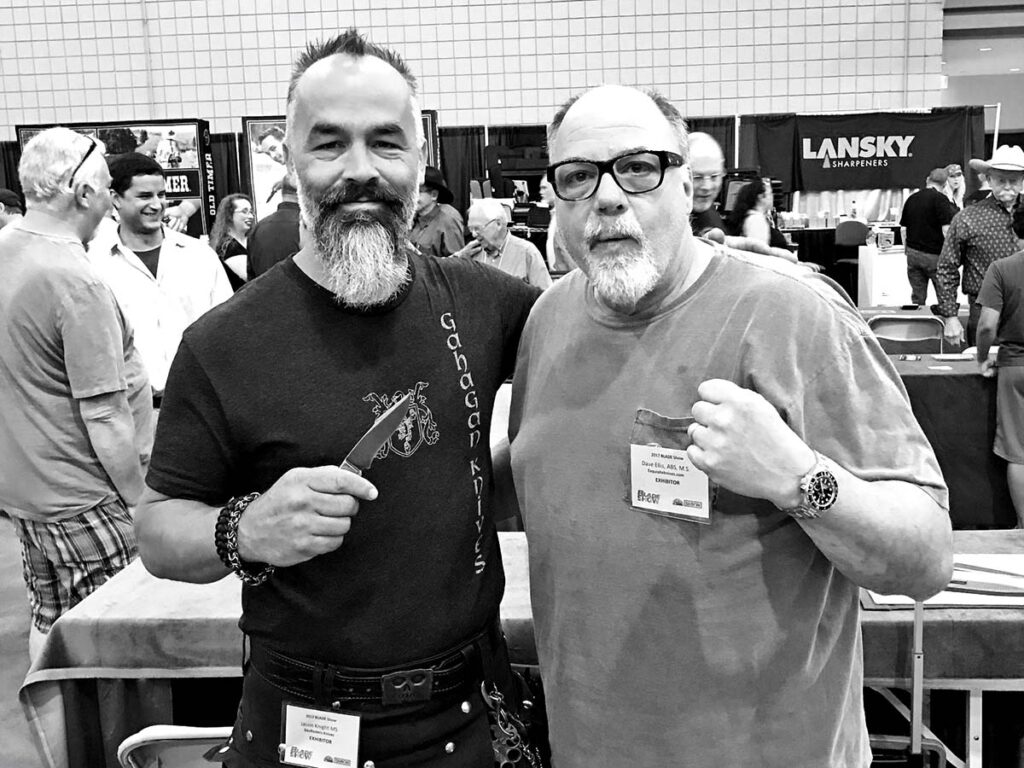
A couple of master smiths—Jason Knight (left) and Dave Ellis (right)—rub elbows at the BLADE Show. (Dave Ellis image)
Through change and reinvention, the BLADE Show remains a driving force in its 45th year. And even though the computer screen and cell phone add to the communication milieu, those who know what the BLADE Show is will accept no substitute. Here’s to 45 more years.
THE AWARD-WINNING FACTORY KNIFE COMPANY UNDERGOES A BRAND REFRESH IN 2020
The year was 1986. The Soviet Union hosted its first Goodwill Games. Halley’s Comet was visible from Earth for the first time in 76 years. Up to 6.5 million people participated in a charity event called Hands Across America. Phantom of the Opera premiered in London’s West End. And SOG Specialty Knives—aka SOG—made its debut.
The first SOG-brand knife was a reproduction of the original SOG Bowie in tribute to the Studies and Observations Group* of Vietnam War fame. Eventually, the SOG Specialty Knives line grew to include knives mass produced with attention to detail and quality. Today, the company has grown into an innovative, major player whose products are among the leading choices of Navy SEALs and other military, law enforcement, fire and rescue, tradesmen and everyday knife users the world over. Folders, fixed blades, flashlights, multi-tools and gear— SOG has you covered.
Over the years, it’s only natural that a knife company keeps growing in size and product offerings, constantly evolving itself and its knives. SOG has kept moving forward, and 2020 marks a significant milestone in the company’s evolution: a prominent revamp of sales and marketing strategies, a refresh of existing models and an engineering of new ones to further meet the demands of those who serve and keep us safe, as well as the needs of everyday knife consumers.
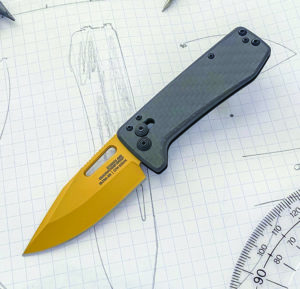
With its slender form factor, XR lock, carbon fiber handle and CTS XHP stainless blade, the Ultra XR defines classy high tech. The super-slim folder carries well and also doubles as a money clip. The gold-titanium-nitride coating adds a bit of bling. The blade also is available in a more subdued black-titanium-nitride coat.
The architect for the brand refresh is Jonathan Wegner, company brand vice president. “We’ve taken the best things from the last three decades, and doubled down on the things that we feel are most relevant to our end users today and into the future,” he explains, “and are focused on delivering solutions that are authentic to the brand.”
Why the transformation? According to Wegner, consumers reported that the company’s more recent focus and quality were not there. Many stated their idea of SOG was from an era that is now past, when the company brought some innovative ideas to market and was driven to produce the best knives and tools for tactical and other consumers. “So, by first studying and observing ourselves, we were able to determine that a significant change was needed,” Wegner notes. “Most of this led to our reposition and future focus.”
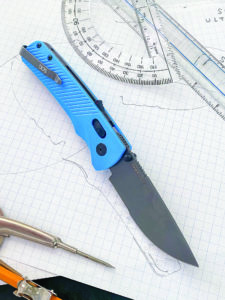
The Flash AT is designed for daily carry with a drop-point blade of D2 tool steel and a handle of molded glass-reinforced nylon in multiple color options.
SOG founder and president Spencer Frazer was the primary driving force behind the company and many of its product designs, from its inception until a couple of years ago when Joe McSwiney was hired to lead the outfit.
Spencer Frazer, SOG founder
Instead of the old SOG mark, the company refresh will include blades marked STUDIES AND OBSERVATIONS GROUP.
“Spencer was involved throughout the brand refresh process, and a lot of what we have done with the brand hearkens back to his original vision,” Wegner states. “Therefore, it was vital that he was involved throughout every aspect of it.” Even back then, Frazer was seriously considering stepping down from overseeing daily operations and returning to his passion of developing innovative products. “So, once the brand refresh and new products strategy were in place,” Wegner says, “he felt comfortable stepping back.”
SOG has been Spencer’s baby since day one, so stepping back at any time or putting just anyone in charge isn’t what he wanted. “SOG’s future is pushing into an even greater extension of the original intent when it was founded,” Spencer notes. “I cannot be prouder of what the company has grown into.”
RELENTLESS by DESIGN
The new company slogan is “Relentless by Design.” This encompasses SOG’s past while embracing the future. Being a major player in the tactical market for many years has pushed the company to continuously innovate and bring new models to market. Starting this fall, SOG will double down on the pushing and debut some intriguing models.
With Frazer retired and the right people in place, the company is poised to embark on a fresh, new and exciting chapter where its knives and other products will be more focused and specifically aimed at three target groups: Professional, Outdoor and Daily. More on them later. Meanwhile, by the time the new vision was in place, many of SOG’s lower-end knives and other products already had been discontinued. “We felt those items didn’t truly represent the types of items we want to be [offering],” Wegner says.
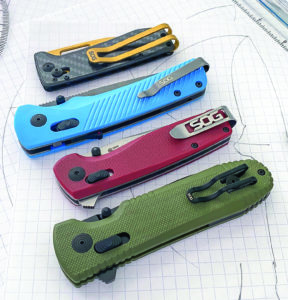
SOG has gone to some stylish pocket clips this year, model examples from top: the Ultra XR and its extra-wide/long clip (it doubles as a money clip), Flash AT, Terminus XR and Pentagon XR.
Along with this, Walmart, which previously sold some of the now- discontinued, lower-end SOG items, was removed as a retailer. Most everyone else who had sold SOG knives will remain, including many knife-specific retailers on the Internet and elsewhere.
Beginning in the fall, the first phase of the brand refresh will officially go live, and, as of press time, some of the new knives already had been released. All of the new product classes are designed to function at peak levels, engineered with intent and built with the best materials for each specific price point.
As part of the new SOG’s knives fall into the three aforementioned categories: Professional (law enforcement, EMT, fire and military); Outdoor (hunters, hikers, campers, fishermen, etc.); and Daily (trades, office workers, warehouse workers and such). All three incorporate what the SOG brain trust calls a visual brand language. This means each category incorporates a specific geometric shape that is a motif for the designs that populate it.
For example, the knives in the Professional category have trapezoidal design elements. Outdoor employs a circular design motif. Finally, Daily employs triangular design elements. The purpose of the visual brand language is so you can readily identify each knife’s purpose.
In addition to the visual brand language, SOG is using new “naming conventions” as well. The standardized approach allows you to easily identify the primary technologies the knives use. For example, XR denotes the knife uses SOG’s XR lock (SEAL XR), AT denotes Assisted Technology (Flash AT), and FX indicates the knife is a fixed blade (SEAL FX). There are a few other designations but these are the most commonly used.
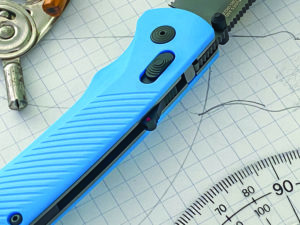
With the assisted- opening AT-XR lock, the Flash AT combines rapid deployment with lock security. Pulling back on the ambidextrous release disengages the lock. Note the lock safety on the handle spine. The red dot indicates the blade is ready to open.
Also new is a color-coded accent stripe on the packaging. Yellow is for Daily, light blue for Professional and gray for Outdoor. Topping it off is new packaging in which you can actually see the product inside and read about its key highlights on the partial flap of the box. The packaging is bold, forward looking and helps usher in the new SOG era.
The blade mark also has changed. The previous SOG logo is now STUDIES AND OBSERVATIONS GROUP—a nod to the past while looking to the future.
FALL KNIFE DEBUTS
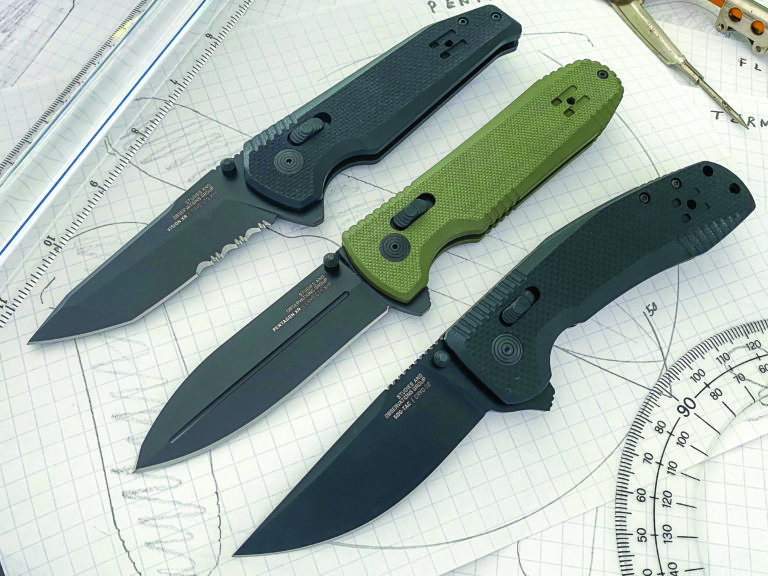
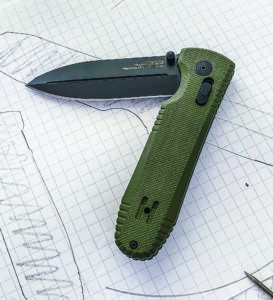
First up for the new fall line is the SOG- TAC XR, a Professional class tactical folder using the XR lock, a 3.5-inch drop-point blade of D2 tool steel, flipper opening and a textured G-10 handle. The ergonomic handle integrates a guard, dual nested steel liners, and a deep-carry pocket clip. Handle colors come in black or OD green. Another Professional class piece is the Pentagon XR. Building on the legacy of the Pentagon series of folders and fixed blades, it takes the dagger-ish styling and adds the XR lock, textured G-10 handle, dual nested steel liners, flipper opening and a 3.5-inch spearpoint blade of CTS XHP stainless steel. Handle colors are black, FDE and OD green. The Vision XR flipper folder brings some aggressiveness to the Professional series, with bold styling and a 3.5-inch double- ground tanto blade of CTS XHP, and a textured black G-10 handle with dual nested liners.
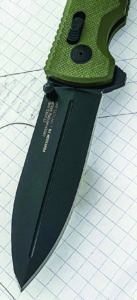
The revamped Pentagon XR tactical folder has multiple choices of G-10 handle colors, and a fullered spear- point blade of CTS XHP stainless steel. The knife features flipper-tab and ambidextrous thumb-stud opening options.
In the Daily category is the Ultra XR, an ultra-thin, ultra-lightweight gentleman’s folder with a linerless carbon fiber handle and a 3-inch clip-point blade of CPM S35VN stainless. An extra-large, fold-over pocket clip doubles as a money clip. The blade is available in gold titanium nitride or black coating options. Another Daily category entry, the Flash AT features a 3.5- inch drop-point blade in D2 powered by SOG’s Assisted Opening Technology. The molded Zytel handle is available in a choice of red, cyan, yellow and black. The new folders use pivot bearings for ultra- smooth blade action.
SOG long has been a viable player in the production knife market and the new refresh elevates the company even further. Expect more good things to come.