
Buying Custom Knives: Four Lessons To Get A Deal

We give you the tips to avoid mistakes when buying a custom knives.

Of course, every rule or principle has its exceptions and counter-principles. You do get what you pay for, but only when you have an honest and informed assessment. Is that micarta real Westinghouse Micarta? Is the fit and finish and reputation of the maker in line with the price? Did the maker grind the knife themselves, or is this a production knife?

You’ll have to do some homework if you want to get “good deals.” One of the oldest tricks in the book is for the seller to exaggerate demand and conceal supply. “This is the last one, and they’ve been buying them fast all day!” may be true or may be a dishonest sales pitch.

The warning is “buyer beware” more often than “seller beware” after all. Many a “bad deal” comes not from mutual disagreement, but from one side taking advantage or being dishonest.

Economic generalities aside, let’s look specifically at the knife market.

Lesson 1: Don’t Buy The Hype

Some people want the latest and greatest thing. They get great enjoyment out of buying what is the ultimate “grail” knife of a given season, often hyped up on social media, on online forums, by word of mouth, in magazines and at events. For these buyers, the thrill is in the hunt and in the showing of the trophy.

If you want to be that kind of buyer, buy what you want and enjoy the heck out of it! Keep in mind that demand will be lower for last year’s hot thing, and so will the resale price. I won’t go so far as to say don’t buy the hot knife. Many of us spend money on experiences (what do you gain long term from a concert or a trip to the movies?) or on depreciating possessions like cars or boats. In some ways, if you enjoy it, it doesn’t matter if you lose some money on a knife or it’s not a good “investment.”

Many of us “regular” folks have to be a little more careful with our funds. If you chase what’s hot, you’ll end up buying at times of peak demand, which means you’ll pay a higher price. By the time you get tired of that knife or want to sell, everyone else just might be tired of it as well, as the knife world will have moved on to the next hot thing. If you’re one of the folks for whom a sour ending ruins the whole experience, don’t buy hot. If you have an eye toward appreciation of values and want to “make money” on your knife collecting hobby, don’t buy hot.
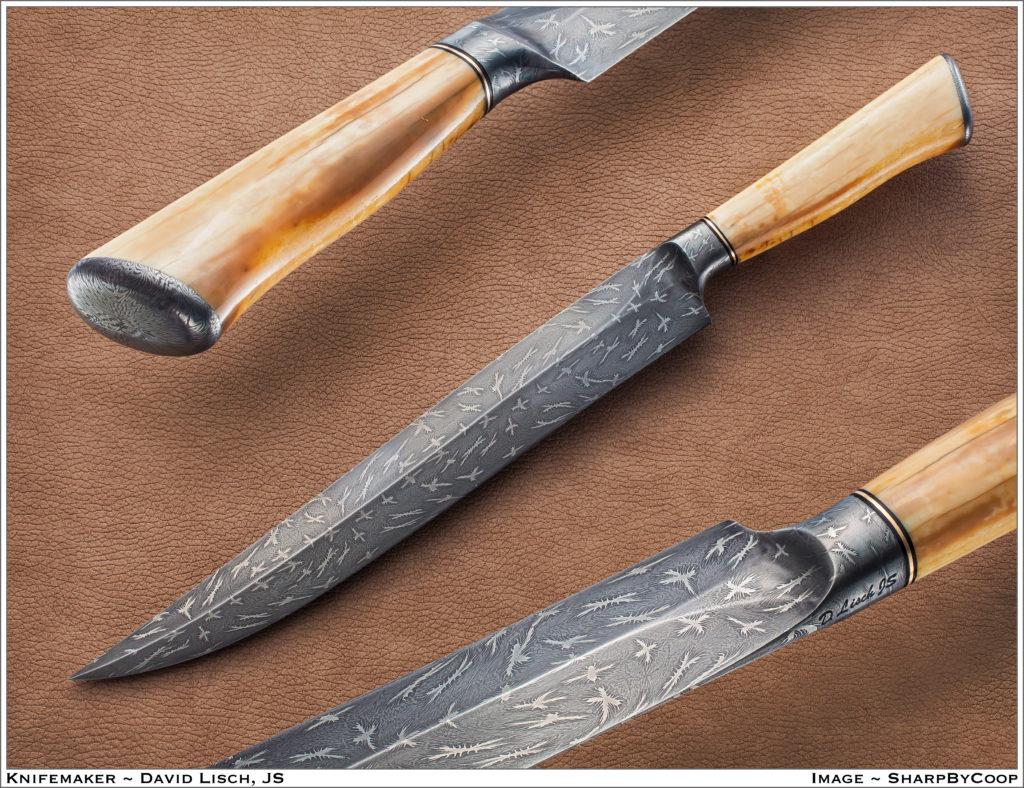
For some people, the thrill is in finding the next hot one, before it gets hot. Wouldn’t we all have loved to have purchased a bunch of Microsoft stock in 1993? If we were better at predicting the future, we’d make better knife picks for our collection, just like we’d make better choices in our stock portfolio. Still, if you “hit” one once in a while—buy the maker’s work right before he hits the big time and make lots of money—it can be quite a thrill and keep you buying knives on a regular basis.

Another point of caution when it comes to hype has to do with the “flash in the pan” types who grow smoking hot quickly, beyond their market position or ability to produce. It has happened in the knife world before and will happen again. Someone may be better at marketing than knifemaking, or better at Instagram videos than filling knife orders. If the hype of a particular maker turns you off or looks suspicious, trust your gut and hold off on purchasing. Sometimes makers flame out as spectacularly as they rose to fame.

Lesson 2: Don’t Overspend At The Beginning

“Walk before you run” is good advice. Knife collecting is about finding joy in knives, and at the beginning, small mistakes hurt less. If you start with $500 and buy five quality production knives at $100 each, you may enjoy them a long time. If you start with the same $500 and buy a custom at a show from an overhyped maker who quickly fades away, you may sour to collecting altogether. When you gamble more, the losses cost more.

The opposite is somewhat true as well, however. If you spend your $500 on 50 $10 gas station knives, you’ll have a great big pile of crappy knives when you’re done. The trick is finding a good balance between price and quality. Finding that balance takes time to learn.

As you learn more about the market segment you’re interested in, don’t be afraid to invest more as you grow. You may reach a point where you don’t want the Chinese ones, but rather the American ones. Or maybe you don’t want production, you want midtech. Or maybe you won’t want the midtech one with the maker’s name on it, you may want the custom one made by the maker himself.

Hopefully, your budget will grow to accommodate your growing expertise and preferences.

Lesson 3: It’s Not Just The Knife You’re Buying

When you invest in Amazon stock, you are making a rich man richer. You’re buying a piece of paper or an electronic data point that says you “own” a tiny piece of the company, and you expect a mathematically increasing return for your investment.

When you buy a knife, odds are good your money won’t go to that knifemaker’s yacht payment or summer home fund. When you buy a knife from an individual knifemaker, you’re more likely sending his kids to daycare or piano lessons, paying for his electricity and buying his wife new shoes. If you buy at a knife show, you probably bought the maker’s dinner. When you invest in a knife, you support a specific person, not “the man behind the curtain.”
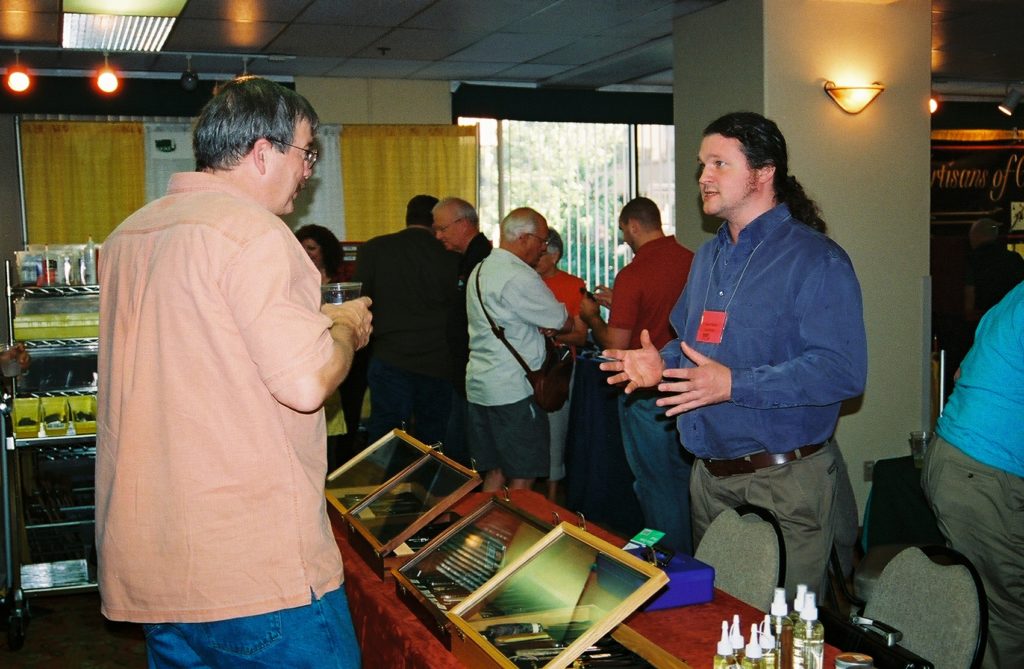
Even if you find joy by investing in a person by buying their product, you still owe it to yourself to invest wisely. Of course, you should buy a knife you like, that you find useful or that may make you a decent return on your money. At the same time, you should be looking for people to help, individual makers whose lives you will improve by your relationship and the purchases you make over time. You may be making friends, not just money, which can add another degree of magnitude to your enjoyment of knife collecting.

Lesson 4: Buy What You Know

The more you know, the fewer expensive mistakes you’re likely to make and the more deals you’re likely to find. The less you know, the more likely it is that you’ll get a bad deal, purchase a knife you’ll be dissatisfied with or a knife you later regret. The more you know, the better. This seems to be a universal principle of life and economics, and it applies to knives as well.

First off, buy knives from brands or people you know have a good market position. Many times, a well-known brand is successful for good reasons. A classic brand like Case or Spyderco may be a great place to start, or a well-known Knifemakers’ Guild member or somebody from the “Slipjoint Cartel.” When you have the chance to know the maker or seller personally, that knowledge makes your purchases more likely to bring you joy or a good return on your investment.

Second, buy knives from reputable dealers or purveyors. While you may get a “great deal” from a pawn shop or somebody’s cousin who is a knife collector, there is some measure of protection in buying from well-known retailers such as Blade HQ, AG Russell, Arizona Custom Knives and others. Until you become familiar enough with the market to know exactly what you’re looking at, it’s wise to stick with the major dealers.

As another example, consider buying from the folks who advertise in the knife magazines, such as BLADE. If their business is legitimate enough to afford the expense of advertising in print, they’re more likely to be honest and stick around.

Third, buy the knives you’re familiar with. You may get joy out of buying a knife the first time you’ve ever seen or heard of it. On the other hand, you’re even likelier to enjoy a knife that you know in your heart is a great one, because you’ve studied it, chased it, pursued it, and finally purchased after careful consideration. Sometimes the journey is as fun as the destination, and the pursuit of the grail is worth as much as the grail itself.

You may get in a rut and feel like you’re buying the same knife over and over. That’s no good either. Balance your knowledge with both width and depth. You may dive deep into one model, one maker or one brand, or you may spread your collection broadly by buying one knife from as many different people and places as possible. Either way, you’ll get familiar with the knives that you like, and you’ll end up going as deep or as broad in your collection as you like.

Check Out More Cool Custom Knives:

Winkler Knives Special Sale To Rebound From Hurricane Helene

3

The company’s shop was extensively damaged in the natural disaster.

Hurricane Helene affected a vast swath of the country and the knife community was not immune. Several knifemakers call North Carolina home, the state that took the brunt of the devastating hurricane that tore across Appalachia in September. One of the harder hit was Winkler Knives, based out of Boone.

The tactical- and outdoor-focused maker thankfully did not lose any of its employees in what turned out to be among the worst natural disasters in recent history. The company’s shop, however, incurred substantial damage from the torrential downpours flooding much of North Carolina’s countryside. In a brief estimate on a YouTube video, Winkler’s founder and owner Daniel Winkler when he returned to his shop there was 15 inches of standing water throughout. Even more troublesome, the workspace was swamped with hundreds, if not thousands of pounds of mud.

Needless to say, this halted the company’s production and put many orders on hold, with much of its machinery reportedly damaged or destroyed. In finished products, Winkler estimates it lost two weeks of work.

Living up to the rugged persona of its knives and axes, Winkler is attempting to make the best out of a rough situation. The company is staging a special sales day on Nov. 30, to raise funds to—as the company puts it—build back. The company will stage a meet-and-greet before the actual sale, then offer those who register, early-bird entry before its store opens proper to the public. And Winkler has quite a selection of special knives up for sale at the event.

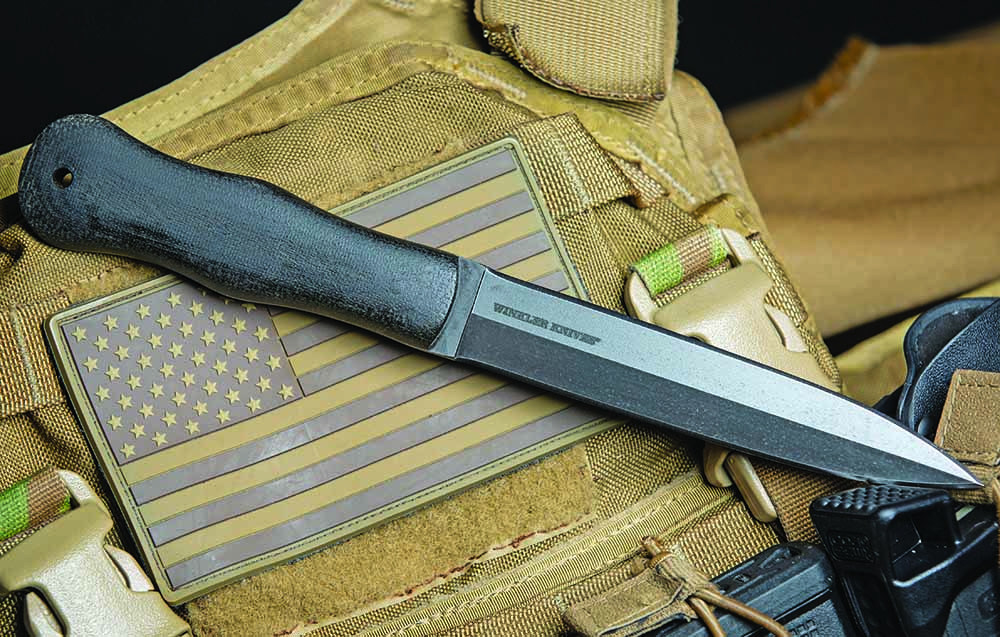
Made in Boone, North Carolina, the Winkler Knives Tactical Dagger in a black Micarta® handle has the same specs as the WASP-pattern model pictured elsewhere herein. “The handle shape does not hang on clothing as a lot of cross-guard knives do,” Daniel Winkler noted. MSRP: $400.
Made in Boone, North Carolina, the Winkler Knives Tactical Dagger in a black Micarta® handle has the same specs as the WASP-pattern model.

Among the many special offerings will be Winkler Knives standard models made by Daniel Winkler (DW Made), Winkler Knives Traditions by Daniel Winkler and Karen Shook, and even a couple of one-of-a-kind hand Forged knives by Master Bladesmith Daniel Winkler, accompanied by the leather craft of Karen Shook. There will also be special editions produced by Winkler Knives Artisans.

This is a special affair and only registered customers will be allowed in during the early-bird portion of the event. The company will not conduct phone sales for the event, only in-person sales. However, Winkler will set aside special editions from the sales event for those unable to travel to Boone. Those products will become available on Winkler Knives’ website on December 2, under the “Currently Available” tab.

If you are interested in attending the Winkler sales event, time is of the essence. The deadline to register is Nov. 18. To register, email [email protected] with the subject Register. The company will email an invitation or a notification the event is full in response.

Winkler Knives Sales Event

Nov. 30, 2024
520 Church Road
Boone, NC 28607

Sales Event Schedule

8 am Meet-And-Greet The Winkler Team
9 am Product Preview
9:30 Early-Bird Sales

More On Winkler Knives:

BLADE Tactical Recap: A Peek At What You Missed In South Carolina

We take a gander at some of the knives that showed up at the first BLADE Tactical at CANCON Carolina.

Sun, guns and a whole bunch of knives—BLADE Tactical was a whole new twist on BLADE Show. And a heck of a marriage between it and one of our sister events, CANCON Carolina.

Held Nov. 7-8 at South Carolina’s Clinton House Plantation range, the inaugural BLADE Tactical brought together some 25 knifemakers to show and sell their wares, all of the blades with a definite tactical bent. The knife show ran the first day, on the periphery of the shooting events. It had a different feel than any of our legacy shows, given it was outdoors and had the constant report of suppressed gunfire as background noise. But it wasn’t too far off our big three with some knife enthusiasts spending the night in the parking lot so they could be the first to the BLADE Tactical pavilion.

With that sort of enthusiasm, we’ll chalk the event down as a success.

For those who were unable to make the BLADE Tactical show or have their interest piqued, we’ve put together a recap of some of the knives that made their way to central South Carolina. Take a gander at what was up for sale and start planning now for next year’s B-Tact extravaganza. For anyone looking to pick up a hot new knife and burn some powder at the range—consider the gathering your Valhalla!

Krein Knives

Krein Knives

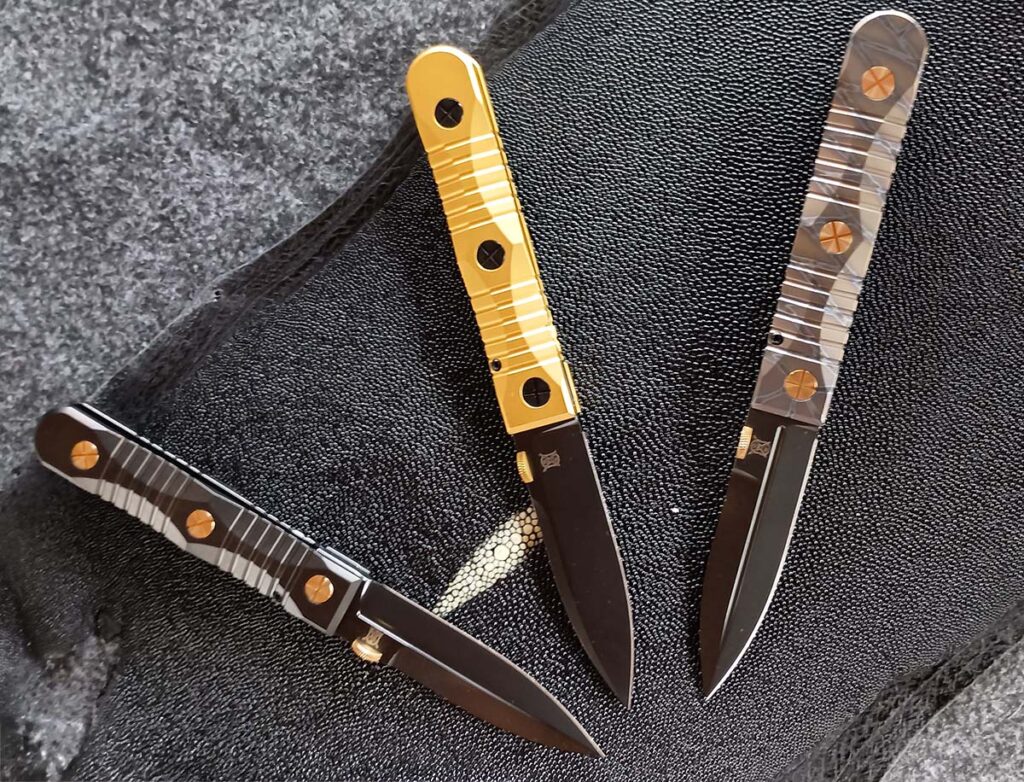
Tactical doesn’t preclude good looks, which is certainly the case with this Krein Knives Alpha. The blue thumb studs add a nice flare to this top-end framelock.

Carver Knives

Carver Waif and brass knuckles

Carver Knives‘ Waif has it going on. Up front is a titanium handled-model, in the back a dark Ti handle. Both are thin as a minute, particularly when measured up the knucks in the middle.

Pro Tech Knives

Pro-Tech Godfather

Pro-Tech came to BLADE Tactical with an offer you couldn’t refuse, like a number of these thin and wicked Godfather autos.

Pro-Tech Blaze Orange Inset

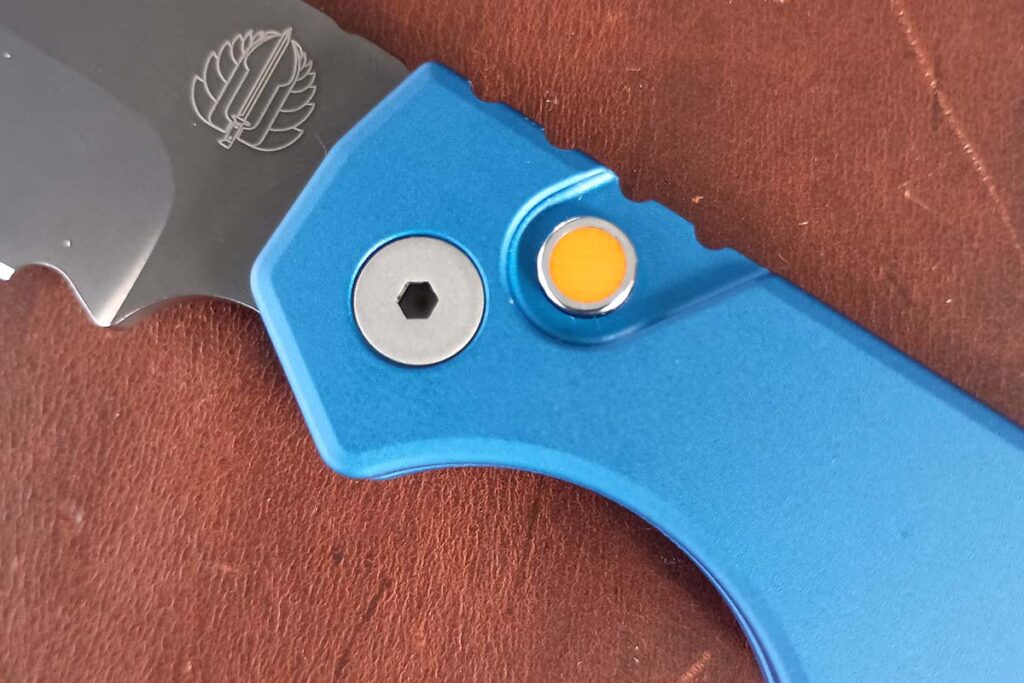
The company also offered a nice bit of custom bling for the show, a CANCON blaze orange G-10 insert on several of it’s knives buttons.

Elishewitz Custom Creations

Elishewitz Custom Creations Ek Intergral

With the Ek Integral, Elishewitz Custom Creations combined class and performance in a light and functional package. A nice dagger-style blade deploys in the wink of an eye via a thumb stud.

McNees Knives

Agent and Stalker

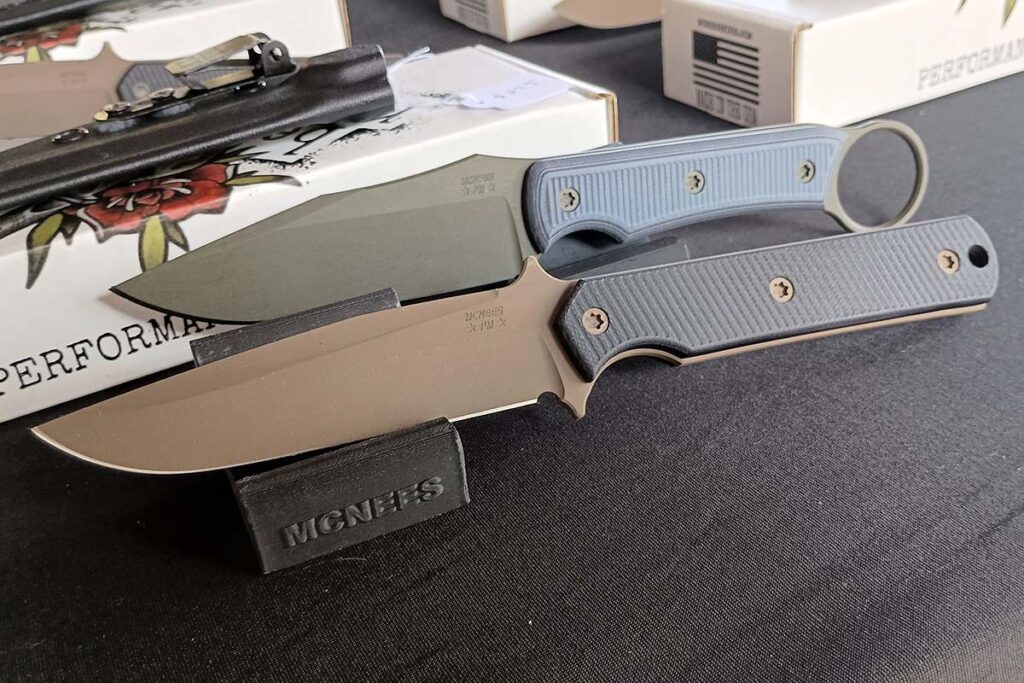
Some hefty debuts from McNees Knives at BLADE Tactical. In the rear, is the Ringed Agent and up front the Stalker. Par usual for McNees, both feel like their built to beat the world.

McNees Truck

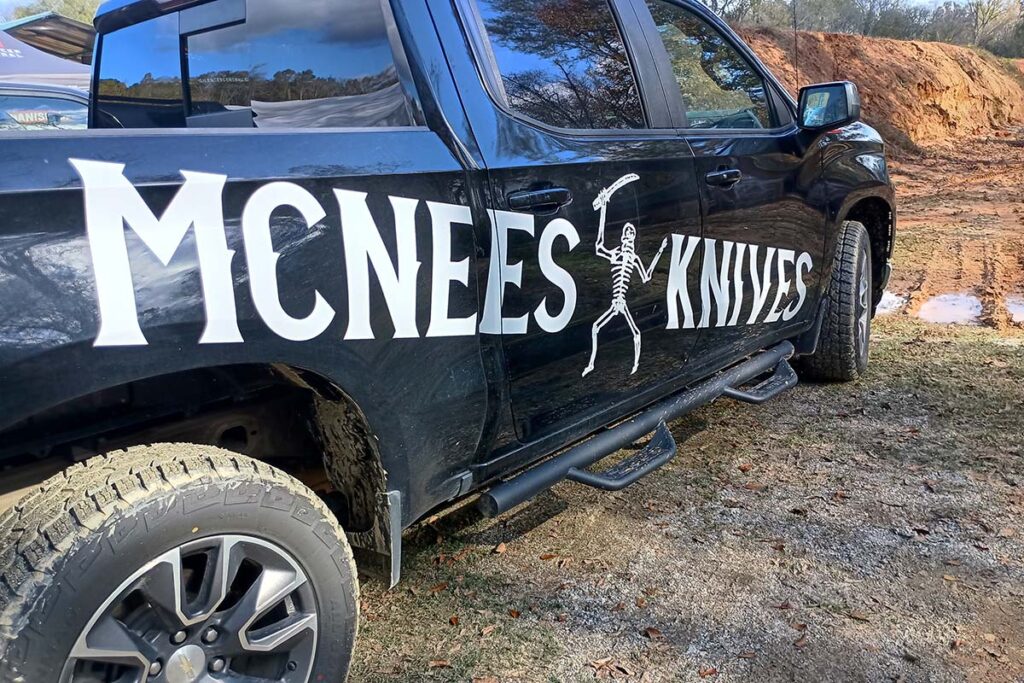
Somewhat from the neighborhood (Alabama), the McNees crew drove to BLADE Tactical. Needless to say, they did so in style… nice wheels.

Nicholas Nichols Knives

Certainly, the Guppy is no small fry. Nichols Knives drop point has plenty of size to get nearly any job done, but stays light in the pocket thanks to a titanium handle.

Spartan Blades

Spartan Blades was right at home at BLADE Tactical—no surprise there. But the belle of the ball was the company’s Ronin-Torii, a traditional tanto, which few would want to find themselves on the wrong end of.

Nottingham Tactical

Notingham Tactical Carbon-Fiber Pen

Believe it or not, you’re looking at six-years of development. Nottingham Tactical was game for a carbon-fiber model, but it took a ton of work to get it to come together, from finding the carbon-fiber up to the abuse to getting the right adhesives to get the metal parts to stay.

Vero Engineering

Joseph Vero

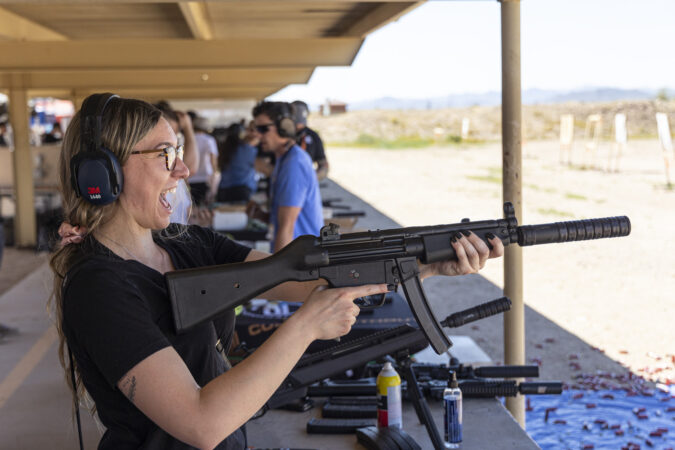
It wasn’t all fixed blades and folders for the knife side of the show. After BLADE Tactical closed, the knifemakers hit the range at CANCON for some therapeutic trigger time. Here’s Joseph Vero of Vero Engineering getting on one of Maxim Defense’s shorties.

CANCON Video Recap

If your interest has been piqued, check out upcoming BLADE Tactical and CANCON events.

Check Out More BLADE Shows:

CANCON Carolinas & BLADE Tactical NEXT WEEK! Get Tickets NOW!

1

NEW LOCATION, MORE CANCON!

Welcome to CANCON A Fully Suppressed Range Day! The World’s Favorite Suppressed Shooting Festival moves to the Carolinas!

We can’t wait to welcome you to the new home of CANCON on the East Coast: Clinton, South Carolina. Join us on November 8th & 9th, 2024 for an action-packed weekend of fully suppressed shooting!

BUY TICKETS IN ADVANCE HERE

With a new BIGGER venue to host CANCON there will be MORE sponsors, more bays, more guns, more suppressors, and more fun!

The Clinton House Plantation Shooting Complex is a massive venue and gives CANCON the room we need to expand! Located just 45 minutes south of Greenville, South Carolina, 1 hour north of Columbia, and 2 hours south-west of Charlotte, NC.

More space means more shooting lanes and more sponsors! Find more guns to shoot, more suppressors to test, all for the same low price of $50 per day.

New this year will be a 1,000-yard AND 1-mile shooting range! Get to test high-performance rifles AND high-performance suppressors and see how far you can reach out.

Friday only stop by the Blade Magazine Tactical area and shop custom tactical knives!

Clinton House has tons of FREE onsite parking! Shooting all that free ammo will make you hungry so stop by the concessions to refuel!

General admission is available Friday and Saturday, Nov 8 & 9th, $50 per day, or save money and get the entire weekend at a discount!

More information and ticket pre-sales are now available at the CANCON WEBSITE!

PROS Vs. JOES, SHIRTS, AND MORE

Returning to CANCON is PROS Vs. JOES! We select a random participant from the crowd to go head-to-head against a seasoned pro shooter. Can an everyday Joe outshoot a Recoil Pro in a high-stakes shooting competition? If they do, they win BIG!

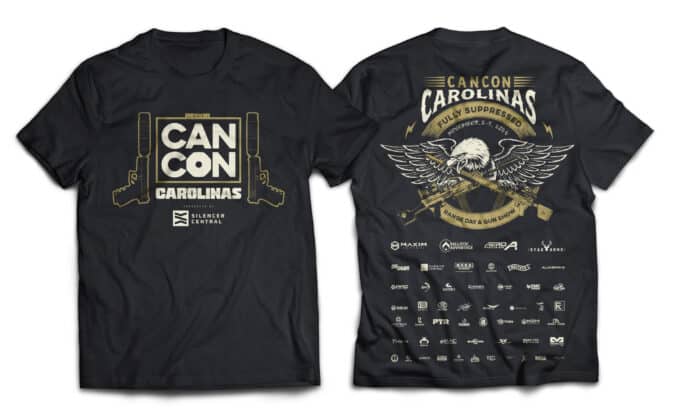
CANCON T-shirts will be available for pre-order and at CANCON! These are high-quality shirts that feel great and look awesome.

Filmed on location is a RECOILtv original, Run N Gun! Watch your favorite Sponsor as they run through our Run N Gun course of fire.

Subscribe to the CANCON Event Newsletter

Give us your email below and click the button to be the first to learn about updates and developments!

CANCON SC 2024 SPONSORS

CANCON Carolinas Hurricane Helene Relief: FREE Tickets For CANCON!

0

We at CANCON are deeply saddened by the devastation and loss of life caused by Hurricane Helene.

In partnership with Silencer Central, we are making a limited amount of Friday, November 8th tickets to the areas hit hardest by Helene completely free for a limited amount of eligible attendees.

People with a government-issued ID card showing they live in the following zipcodes are eligible:

  • 27830
  • 28801
  • 28720
  • 28735
  • 28778

A government-issued identification card that states that you live in one of the following zipcodes. Bring your ID to the festival, as it will be checked at the gate to confirm your residence. Note: CANCON is only accepting ID cards, and will not accept utility bills or other proof of residence.

Eligible people can unlock their free ticket by going to the CANCON CAROLINAS tickets page or visit Universe.com, clicking on the ‘Have an access key’ link, and entering HELENERELIEF into the box.

If you’re on Universe, you will have to click the GET TICKETS button.

Click the link and enter the code HELENERELIEF into the box that appears. Click the UNLOCK button. A free Hurricane Helene ticket for Friday, November 8th should now be available to you.

Change the dropdown next to the Hurricane Helene ticket from 0 to 1.

Check out. You will receive an email with your ticket. REMEMBER, every free ticket holder will need to bring a Government-issued ID showing that you live in one of the Zipcodes above in order to gain entry with a Helene relief Ticket.

Only one free ticket is allowed per visitor. Once they check out on the site, they will need to bring their digital free ticket, along with their ID card showing their residence to CANCON in Clinton, South Carolina.

Knife Maintenance: The Pros Share Their Tips

0

Know how the pros keep their knives and sheaths in tip-top working order.

Tricks of the trade, the go-to products, and the techniques that stand the test of time and use are beneficial for those of us who put our knives to work around the house, at the office, on the farm and in the field. Keeping the knife in top-notch working order eliminates frustration and failure when it’s time to get a job done.

Fighting Corrosion

Fighting the battle against rust is ongoing with carbon steel. Long-time custom knifemaker Bob Dozier said, “Wipe the blade off. I’ve carried a folder since 2014 and use it every day. A lot of it depends on how the maker heat treats the blade.

“I established my reputation with D2 steel,” Bob continued, “and there are a lot of steels that hold an edge a little better, some that are more corrosion resistant, and some that are tougher, but just keep it clean and it won’t rust—the chrome on the outside is a few atoms thick. D2 is bright at first but will take a little bit of a dull look. Don’t worry about that in a using knife.”

BLADE Magazine Cutlery Hall-of-Fame® member Bill Harsey says oil the blade as well as part of routine knife maintenance.

“The one oil I use on folding knives is Kano Aerokroil,” he noted. “It’s a true oil and does not evaporate. Clean the knife and put it away dry after using it.”

 Bob Dozier's D2 Steel
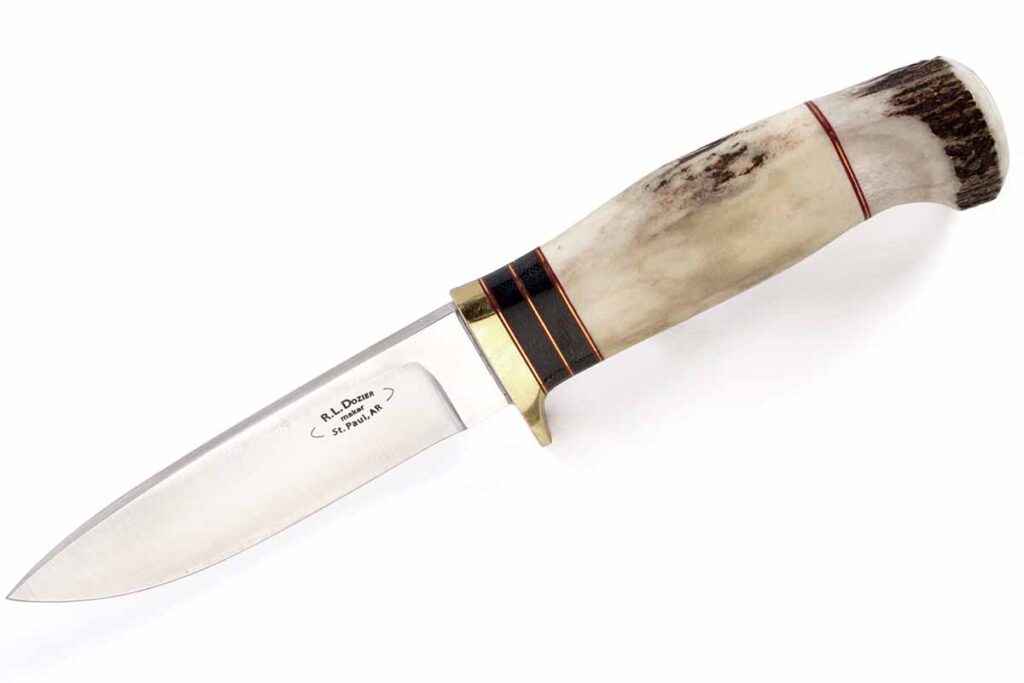
As Bob Dozier noted, he established his reputation with D2 steel. “Keep it clean and it won’t rust—the chrome on the outside is a few atoms thick,” he explained. “D2 is bright at first but will take a little bit of a dull look. Don’t worry about that in a using knife.” The blade of Bob’s Sisu has a D2 core laminated with sides of 410 stainless steel.

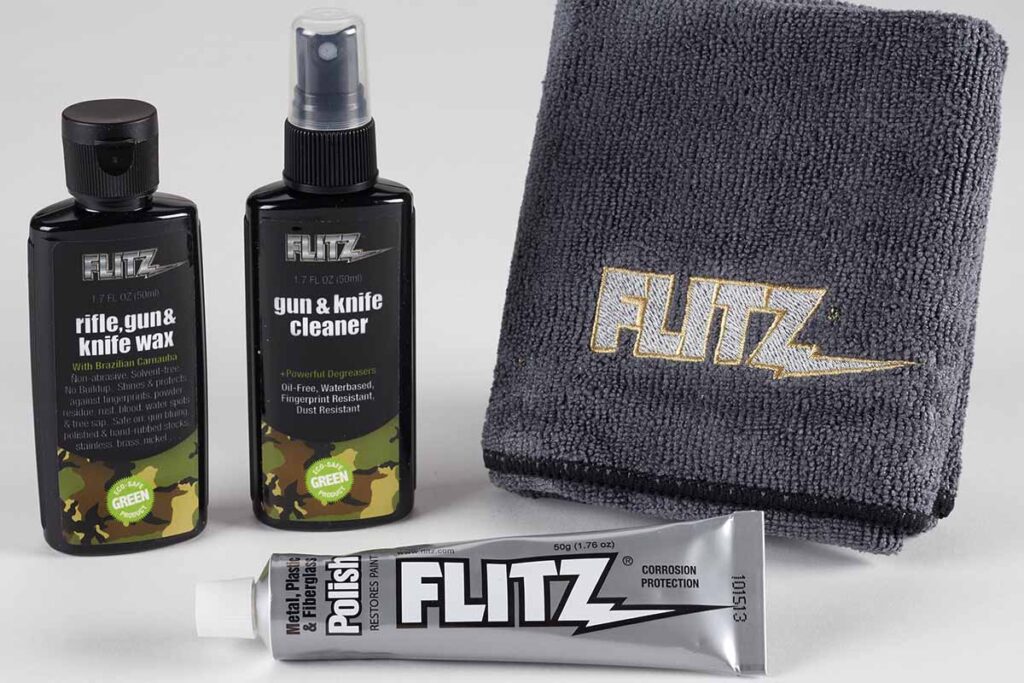
If that troublesome tinge of rust does show up, Bill Claussen of Northwest Knives and Collectibles reaches for a polishing cloth and paste. In more extreme situations, steel wool or wet/dry sandpaper can get the job done.

“We use Case’s Paste Metal Polish or Flitz Polish as a metal paste and corrosion protectant,” he remarked.

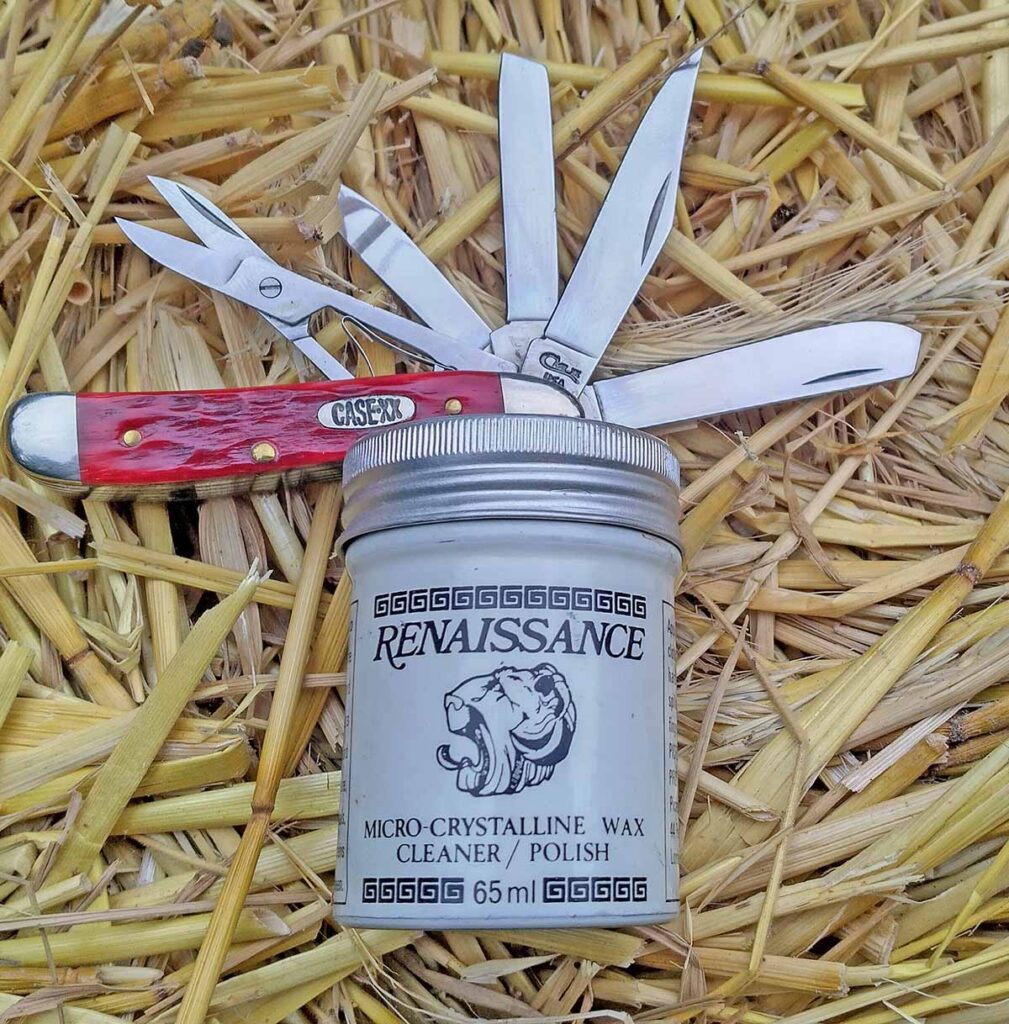
Other techniques and favorite products to prevent or remove rust include the careful use of steel wool when necessary, a preventive application of 3-in-One Multi-Purpose Oil, the combination of oil and Renaissance Wax, Wicked Wax, and even regrinding and repolishing in an extreme situation when pitting is present.

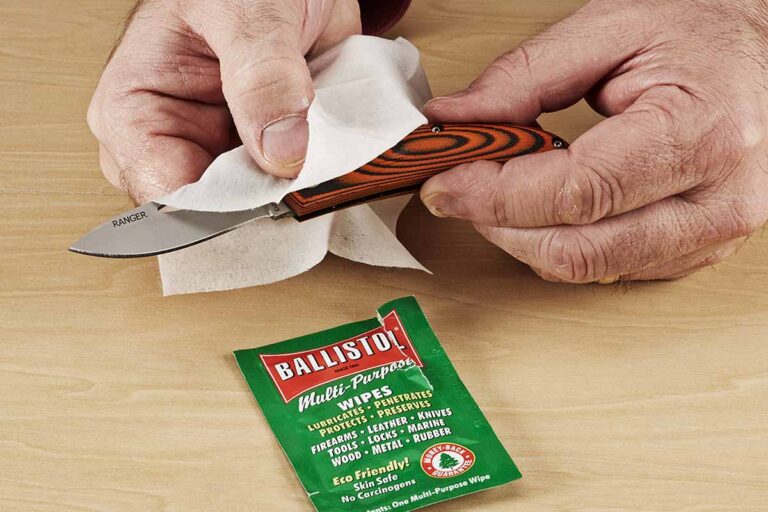
“I like 3M pads to remove rust on our malnourished edges out in the bush,” related bushcraft pro/knife designer Joe Flowers, “along with rust erasers for those fine knives some clients bring out with them. Ballistol makes good stuff including multipurpose oil in small single use packages that can be handy during hunting season when I also have firearms.”

Screw And Bolts

Loosening a bolt or screw that has frozen is a frustrating situation, but there are a few products that ease the task and a trick or two to employ when necessary. Cutlery Hall-of-Famer Dan Delavan of Plaza Cutlery offered, “I use WD-40 and chase it with an oil if needed, such as Formula 23 knife oil.”

Cutlery Hall-of-Famer Steve Schwarzer added a proviso.

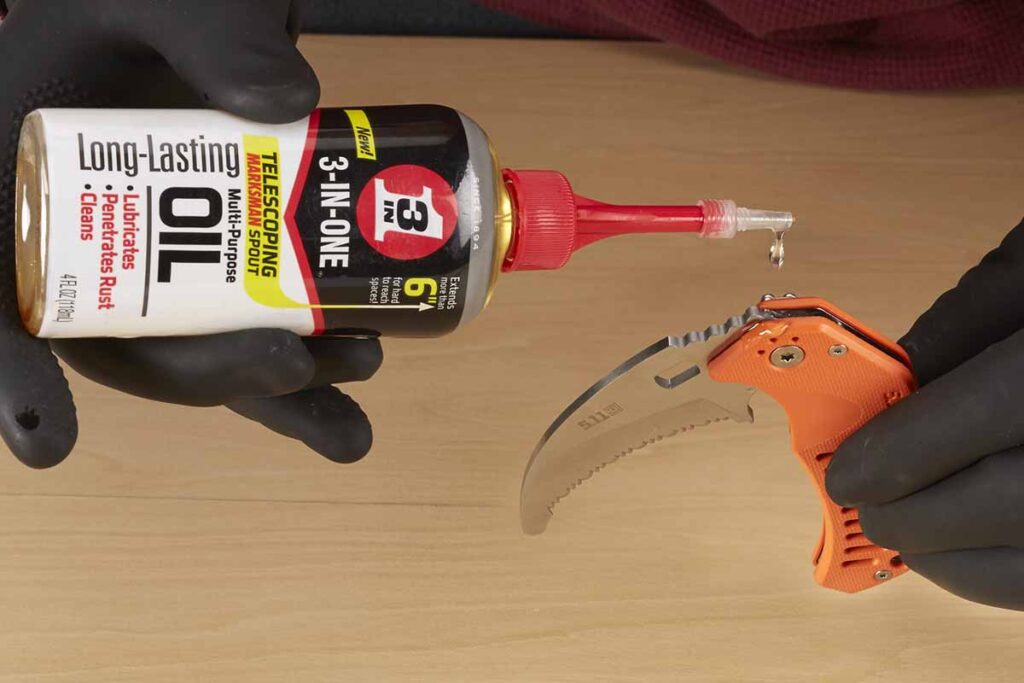
3-in-One Multi-Purpose Oil lubricating a knife.
Keeping folder pivots operating smoothly is just one application of 3-in-One Multi-Purpose Oil during knife maintenance. Applied to the blade and other steel parts, it also serves as a rust preventative.

“Normally that would mean using a penetrating oil, but the other thing you can do is set up a carbide drill fixture a little smaller than the diameter of the stuck screw and drill out the screw,” he wrote. “You can also use an induction heater and stick the knife in there to help spit the screw out. Heat will break down epoxy but don’t get it over 300 degrees. Unless you’re skilled I wouldn’t advise it, but it beats pressing the handle off and can save the material if you’re careful.”

For loosening blades or screws that have seized up, other noteworthy products include AutoBright, Kroil Penetrant, CRC Electrical Silicone lubricant and Marble Oil. “The Marble Oil is [inexpensive],” ABS master smith Harvey Dean observed.

“It works well to get something unfrozen and I used it on a pocketknife a while back. Anyway, if you put a drop of oil on the blade or joint once in a while it sure does help.”

Harsey has a great tip for loosening troublesome screws or bolts.

“I go right to the Kano Aerokroil to start the rehabilitation,” he commented. “A lot of people take folders apart when they don’t have to do that. Get a box of cotton swabs with paper stems and hammer their cotton heads flat to fit inside the small spaces of a folding knife. You can do that to oil the knife up or to clear gunk out of it. The cotton swab will show you what you’ve got without disassembly.”

Edge Maintenance

Keeping a working edge sharp is a never-ending knife maintenance job, and Harsey has spent years making knives, designing them for many prominent companies, and putting them to work in the field.

“I like to use an EZE-Lap stick diamond sharpener or honing stone with a plastic handle,” he advised. “Hold the knife still in one hand and scrub on the blade with a good angle on the sharpening bevel, then turn it over and do the other side. The result is a remarkable working edge that will do in the field.”

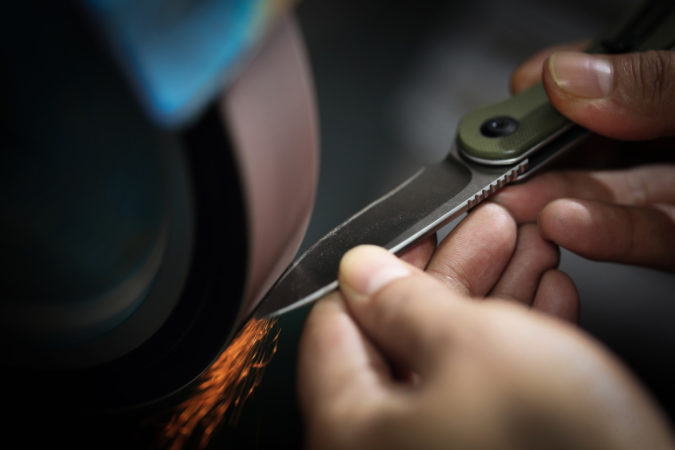
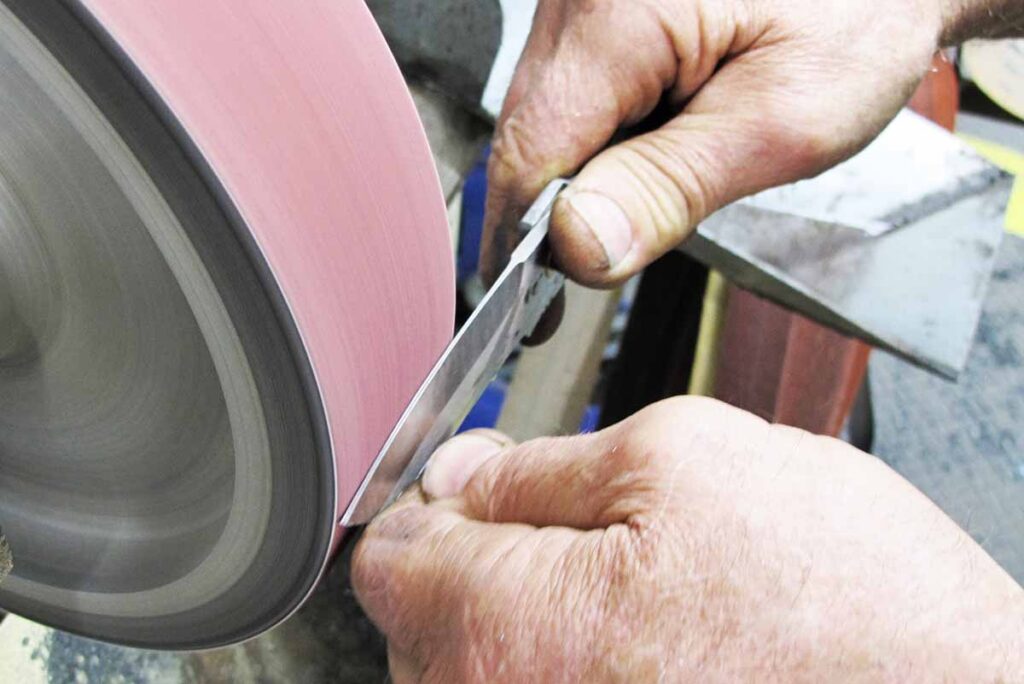
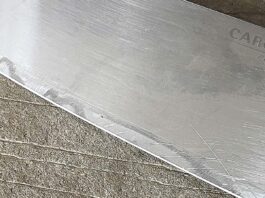
Regrinding and repolishing a knife
Regrinding and repolishing may be required in extreme knife maintenance when pitting is present. Bob Dozier does the honors here.

Harsey also likes the Norton fine India sharpening stone.

“When we go out in the field, I have never traveled without one,” he commented. “I use a rubber drawer liner mat that I can unroll and put the stone on so it won’t slide around on a truck tailgate. That becomes my workbench, and I’m the sharpener for half a dozen guys out there. At other times, I might finish with some stropping with a little WD-40 and cream buffing compound in the leather.”

Sheath Maintenance

Schwarzer is a big fan of hot wax in both knives and sheaths.

“I hot wax everything,” he said. “I have posted it online a bunch. Paraffin wax in a turkey roaster is best, and when I make my knives I put them all in there and then wipe off the excess. It also turns any leather sheath into a form of Kydex. Put it in there for a couple of minutes at 300 degrees, wipe off the excess and form the sheath with your hand. It won’t scratch your blade like Kydex will.”

Dozier has a simple approach to sheath maintenance.

Renaissance Wax works polishing blades and prevents rust
Renaissance Wax works not only for polishing blades and handle materials but also for helping prevent rust and protecting leather. It’s good to have in your knife maintenance kit.

“Wipe off the sheath,” he noted, “and then put a tiny little bit of WD-40 on a cloth and wipe it down. You can also use neatsfoot oil. A little bit on a cloth will keep the dirt off. You can spray a little bit of WD-40 into a bottle cap and leave it on a shelf for four to five months and you have nothing more than cosmoline or grease that works for protection, too.”

Dean likes to protect his sheaths as well.

“I always put some kind of coating with wax or a spray aerosol finish on them,” he remarked. “I don’t recommend storing a knife in the sheath. I use American tanned leather, but some of the other leathers out there use salt in the tanning process, and that can cause problems with a blade.”

Harsey follows steps to make a leather sheath “knife friendly” so that one does no harm to the other. “When I hand build a leather sheath, the leather is always 10-ounce and tanned in vegetable oil,” he said. “It’s a straight, clean piece of heavy leather, and the preservative is either neatsfoot oil or a combination of one-third neatsfoot oil, one-third bees wax and one-third paraffin. That’s heated to 150 degrees, and I’m darn sure not to go any hotter or you could wreck your sheath. I preheat the mixture, paint some on, and put it back in the oven and repeat several times. Then wipe it off and let it dry. If I’m in the field and it takes more than just wiping the sheath off, something has gone wrong.”

Climate Control

Natural handle materials are always in need of some protection. Climate can cause expansion and contraction, while extreme heat and cold are detrimental, too.

“If it’s a wood handle, keep it dry and clean,” Dozier offered. “Don’t throw it in a bucket of water. Ivory needs to be dry too, and a little Navy oil or mineral oil or even a little oil off the end of your nose will help keep it from drying out too much.”

Dean adds a little advice for the owner/user who wants to maximize the longevity of their knives.

Flitz Polish as a metal paste and corrosion protectant
Bill Claussen of Northwest Knives and Collectibles uses Case’s Paste Metal Polish or Flitz Polish as a metal paste and corrosion protectant during his routine knife maintenance.

“People a lot of times just don’t take care of their knives,” he said. “I got a good damascus hunting knife back from a guy who said he had forgotten about it. He left it on the floor of his Jeep and never cleaned it. The thing was basically ruined. I made him a new knife, charged him, of course, and kept that other one myself. I had to regrind and rework it, but it wasn’t the knife it used to be.

“The main thing,” Harvey concluded, “is to take a little time with them.

Wash a knife off in hot water, the blade anyway, and don’t put them in the dishwasher! A lot of times, people take knives on hunting trips and leave them in the sheath or on the dashboard of their truck all day with the sun shining on them. Don’t do that! It’s bad. Natural handles can shrink and crack, and a windshield is like a magnifying glass.”

Try these tips. Test these products. And see for yourself how the pros actually make the best of owning and maintaining a knife in tip-top condition through the years.

For the knife and sheath maintenance items in the story, contact any of the knife suppliers who advertise in BLADE®. If that doesn’t work, enter the name of each applicable product in your internet search engine—all or almost all are offered by a wide variety of outlets.

More On Maintenance:

Knife Buying Don’ts: How To Avoid Cutting Pitfalls

Knife buying–particularly custom–can prove daunting. We gathered industry pros to give the top mistakes to avoid.

When it comes to acquiring knives, the informed buyer is most often the satisfied buyer when the transaction is complete. So in the spirit of friendly advice, BLADE® has enlisted the help of several knife industry pros to offer a few words on making the most of the knife-buying experience—or to put it another way, 11 mistakes to avoid when buying a knife.

Don’t Deal With Questionable Sellers

“A lot of it revolves around reputation,” said custom knife purveyor and collector Paul Farina of Farina Fine Arts. “Human beings can be different, but 80 to 90 percent of the people you meet out there are great. In the knife world, many of them will give you a refund if you aren’t happy.”

Dave Harvey of Nordic Knives echoed that sentiment. “Honest sellers are not hard to find, thankfully,” he said. “Look for those with years of experience. Generally speaking, dishonest sellers will not be in the business very long.”

Along the same lines, Daniel O’Malley of bladegallery.com cautions folks interested in buying online. “If purchasing online, make sure you are buying from a company that has been around a while,” he offered. “There are a lot of fraudulent websites out there these days—often ones that are trying to appear to be a well-known website. One dead giveaway that you may be on a fake purveyor website is if the prices are too good to be true. Unfortunately, you are unlikely to find a legitimate site selling knives for half the price of other legitimate sites.”

Don’t Buy Knives On Pictures Alone

“In most cases today, knives will be purchased online, and therefore you may have to judge the knife by photographs and listed descriptions,” O’Malley advised. “Since the value of the knife is greatly affected by small scuffs and scratches, it is important that the photos are clear enough that any imperfections will be noticeable.”

Along the same track, Harvey noted, “Pictures are great, but they never fully substitute for being able to see and hold a knife in person. Make sure you buy from someone or a dealer with a 100-percent-return guarantee. If you are not satisfied with your purchase, you should be able to return it in a reasonable period of time.”

Don’t Buy Knives On Steel Only

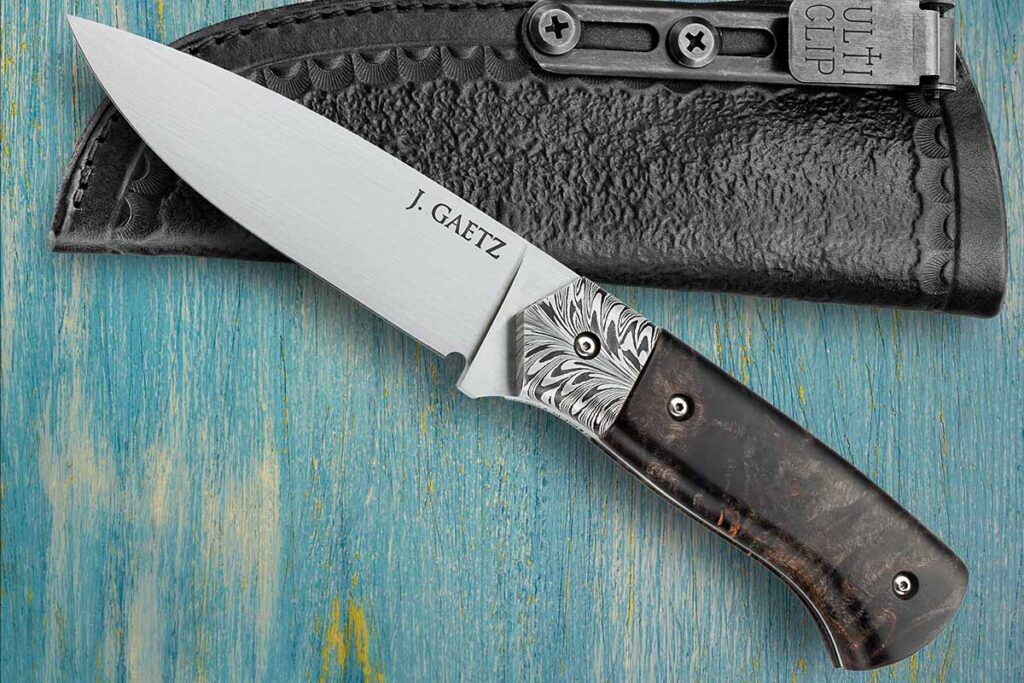
Jacob Gaetz forged the 4-inch blade of his fancy hunter
Daniel O’Malley advised that each year new miracle steels appear but often lose popularity after a year or two because they may not pan out. Conversely, tried and tested steels like CPM S35VN, Takefu SG2, 52100 and more are great benchmarks to test against. Jacob Gaetz forged the 4-inch blade of his fancy hunter from 52100. (Jocelyn Frasier image)

“I never talk to people too much about a particular blade steel,” commented Dave Ellis of Exquisite Knives. “I usually discuss with clients how the complete knife was made, how it was fashioned, and that is more important, I think. Someone may be enamored with a certain type of steel, but that is rare with my clientele and only a consideration in talking about the whole knife.”

Harvey reckons that few knife buyers take the “blade-steel-first” approach. “At least I would hope not,” he asserted. Farina added, “There are a few exotic blade steels out there right now, and these may be sought after just because they’re exotic. Also, some steels have been discontinued and knives with those steels may be selling because of the rarity.”

Taking the entire knife into account is the best way to reinforce a purchasing decision, according to O’Malley. “Knowing the stats on the knife is important,” he reasoned. “We want to know where it was made, who made it, in what country it was made, and what materials they used. That said, judging a knife by just the blade materials used ignores fit and finish as well as heat treatment quality. In some cases the identical steel at the identical Rockwell hardness can still have tremendously different edge holding. In fact, over the years I have found that the quality of heat treatment is perhaps even more important than the steel used.”

Don’t Buy Knives On The Handle Comfort

Lee Lerman, a custom knife judge
Daniel O’Malley said that even if it’s the best knife in the world, if you don’t like the way it feels it isn’t the best knife for you. Lee Lerman, a custom knife judge at BLADE Show 2024, checks the handle of one of the knives entered. In the background are observer Henry Wu (right) of the BLADE Show and judge Rodrigo Sfreddo (center).

“Getting a knife in hand and seeing what it feels like is ideal, though sometimes not possible if you are purchasing from far away,” O’Malley related. “I often advise potential buyers that even if they are holding the best knife in the world, if they don’t like the way it feels it isn’t the best knife for them. That said, some buyers feel a knife is comfortable just because it is familiar—similar to their last knife. They may have gotten used to the last knife and like the way it feels, but a different feel might actually be better, that is, a more ergonomic handle or lighter design. Sometimes it takes using the knife for a while before you know how you really feel about it.”

Don’t Adopt A Herd Mentality

“There are trends out there, but because I’m older and been around the art knife world so long, I’ve thought about the places to put my money,” Farina commented. “If you’re looking at an up-and-comer in knifemaking, check their quality, find out who taught them. That is how I get introduced to them. If they have been taught by an experienced maker, you can tell the quality, and the price may reflect in less money with younger guys.”

From the perspective of “hot styles,” Harvey remarked, “I don’t object to those who want to buy the ‘hot’ knives as long as they are styles and makers that they enjoy and collect. Buyers should always beware of ‘hot’ knife prices and not fall for overpricing.”

“What’s currently ‘hot’ isn’t always best,” O’Malley commented. “The knife industry develops relatively slowly and though each year we see new miracle steels come out, they often lose popularity after a year or two because they may not have panned out. Tried and tested steels like S35VN, Takefu SG2, 52100 and more are great benchmarks to test against.”

Don’t Overlook Makers By Name

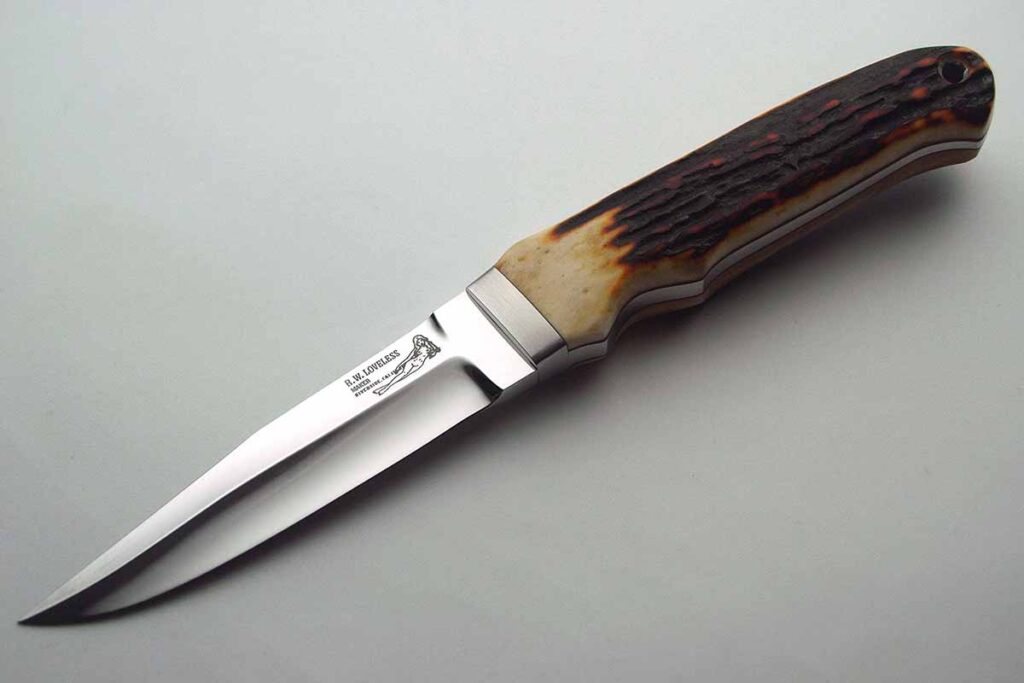
Loveless hideout model in stag
Dave Ellis said that instead of buying 10 knives you can afford, save up and buy one made by Bob Loveless. A Loveless hideout model in stag and with the iconic Naked Lady logo would be a good place to start. (Exquisiteknives.com image)

Ellis looks long-term and sees intrinsic value in the known commodities. “I recommend the blue-chip makers,” he declared. “Instead of buying 10 knives you can afford, save up and buy that one Loveless. This year I’ve sold 14 Lovelesses and the pricing has not gone crazy. So, an entry level $5,000 knife is not so ‘out there’ for someone.”

According to Harvey, most big-name makers have an established collector following, which typically relates to a lasting market for their knives down the road. However, O’Malley points out the benefits of considering numerous makers.

“The knife industry is full of tiny workshops that are doing the best work in the industry,” he noted. “While there are also some great big-name makers, these smaller shops are more likely to provide more bang for your buck. Additionally, in many cases, small workshops may be putting more attention toward quality of heat treatment, which can result in much higher performance.”

Don’t Overrate The Investment Factor

“Buying for investment is something I love because of the fact I can make money on knives,” Farina explained, “but this is not a blue-chip investment stock. So do it for the passion and love of the product. However, if the goal is only for investment, then be very structured. Listen to an adviser. I had a customer come to me after spending a lot of money in four years. He wanted to sell and make 20 percent profit on all the knives [he had bought]. Maybe that would happen on some stuff, but it is a bit unrealistic.”

O’Malley added, “Knives can be a great investment. Over the years, I have seen many knives increase dramatically in price, though certainly there are some that hold their price and even some that go down. Picking the right knives for investment does take a time commitment. You need to research and know the maker and their work. How does the knife fit in the range of knives that maker creates? Will the materials hold up over time? Where is the maker in his or her career? Taking all this into account, it is possible to collect knives as a great investment, though keep in mind that even with the best research not every investment will work out.”

For Harvey, the investment path requires some preparation. “Smart buyers can and do successfully invest in certain knives,” he said. “This does require a lot of knowledge and patience, as you generally won’t see significant increases in value in the short term. For most buyers, I suggest buying what you like and enjoy for your collection, not expecting a large return for it upon sale.”

Don’t Exceed Your Knife Buying Budget

Jurgen Steinau fixed-blade knife
Dave Ellis recommended setting a price limit at auctions and don’t exceed it or you will find yourself paying a lot more than necessary. “I remember a particular Jurgen Steinau fixed-blade knife a few years ago when an overseas bidder and a guy from the Bay Area were in there. The knife went for $110,000,” Dave noted. “People were in there butting heads and then it became an ego thing.” Steinau’s unique style is reflected here in his Folding Knife LBS. (Eric Eggly/PointSeven image)

Ellis provides sound wisdom on auction bidding. “Set a price at the auction and don’t go over the limit and find yourself suddenly paying a lot more than you wanted to pay. I remember a particular Jurgen Steinau fixed-blade knife a few years ago when an overseas bidder and a guy from the Bay Area were in there. The knife went for $110,000,” he noted. “People were in there butting heads and then it became an ego thing. Also, don’t buy with an eye toward flipping the knife. Avoid bid ups like the plague.”

“Auction sites tend to have horrible photos, making it impossible to ascertain what a knife is really like—and what it is worth. Since fit and finish as well as condition are so important to value, figuring out what to bid can be near impossible. Additionally,” O’Malley opined, “auctions can be a way to end up paying much higher than a direct-from-maker price.”

Don’t Discount Second Opinions

“Second opinions are nice and not too hard to get on many knives,” Harvey pointed out. “There are online forums and other social media outlets where collectors share information on many makers and knives.” Take advantage, then, of the availability of information but consider the source always.

“Knives are pretty personal,” O’Malley observed. “What works for you might not work for your buddy. It’s always fun to walk around a show with someone so that you can bounce ideas off each other, but at the end of the day, buying what you like is probably most important.”

Don’t Buy Knives Under Duress

Never feel pressured to make a knife purchase. Don’t always accept the line that the knife you are considering could be gone in the next few minutes. Take a deep breath and make the most informed decision possible in the current environment. If you don’t feel totally positive, walk away.

“Many knives are literally one in the world,” O’Malley said. “This means that if you don’t buy it, there is a chance that it will be gone. Over the years, I’ve found a good way to evaluate is to ask yourself, ‘If this knife sells to someone else, in three to five weeks will I be frustrated and still want to purchase it?’ If the answer is no, you probably didn’t need to purchase the knife. There will always be others. There are, however, a few knives that I didn’t buy that even years later I wish I had purchased. Figuring out if this is one of those knives lets you know to buy it before someone else does. Any big collector has had a few knives they didn’t purchase quickly enough that they still regret not purchasing today.”

Don’t Always Discount Deposits

heat treatment of knives
Over the years of buying and selling knives, Daniel O’Malley said he found that the quality of heat treatment is perhaps even more important than the steel used.

“If a maker requires a deposit, he or she must be a good accountant,” Farina related. “Some are not businessmen. They are artists and machinists. So, it’s about reputation and feeling good about the maker you are working with.”

Trust is a big factor across the board. “Paying for a knife before it is completed can be complicated,” O’Malley maintained. “A well-regarded maker once summed up the problem: ‘It’s very hard to work on a knife that’s already paid for.’ That said, collectors often commit to a purchase, have a knife made, and don’t complete the purchase or just ghost [stop communicating with] the seller. For this reason, I feel it is reasonable to pay a relatively minimal deposit, 10 to 20 percent of the cost of the knife, when purchasing directly from the maker. If working through a purveyor and having a knife made, it isn’t unusual to have to pay the full amount up front since the purveyor is committing to the purchase for you.”

Stay Informed

Advice is free, for sure, but it comes from the voices of experience. When buying a knife, it pays to listen to those already engaging in the process. Of course, every situation is a bit different. There are always additional considerations. The bottom line is to approach a knife purchase on an informed basis. That translates into a confident buy!

More On Custom Knives:

Advertisement

Must Read Articles

Read this before you make a knife

Knifemaking 101 – Read This Before You Make a Knife

  by Wayne Goddard My experience has taught me that there's nothing like digging in and getting started. I've often said the hardest part of the...
how to forge damascus steel

How to Forge Damascus

Advertisement
Advertisement