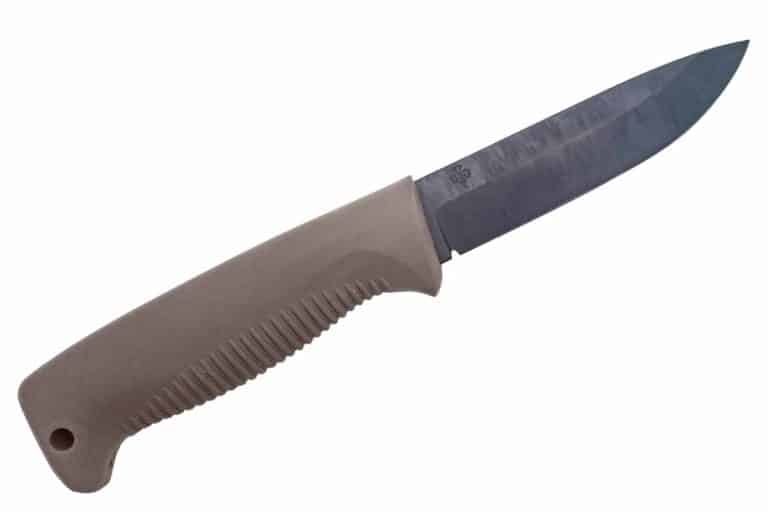
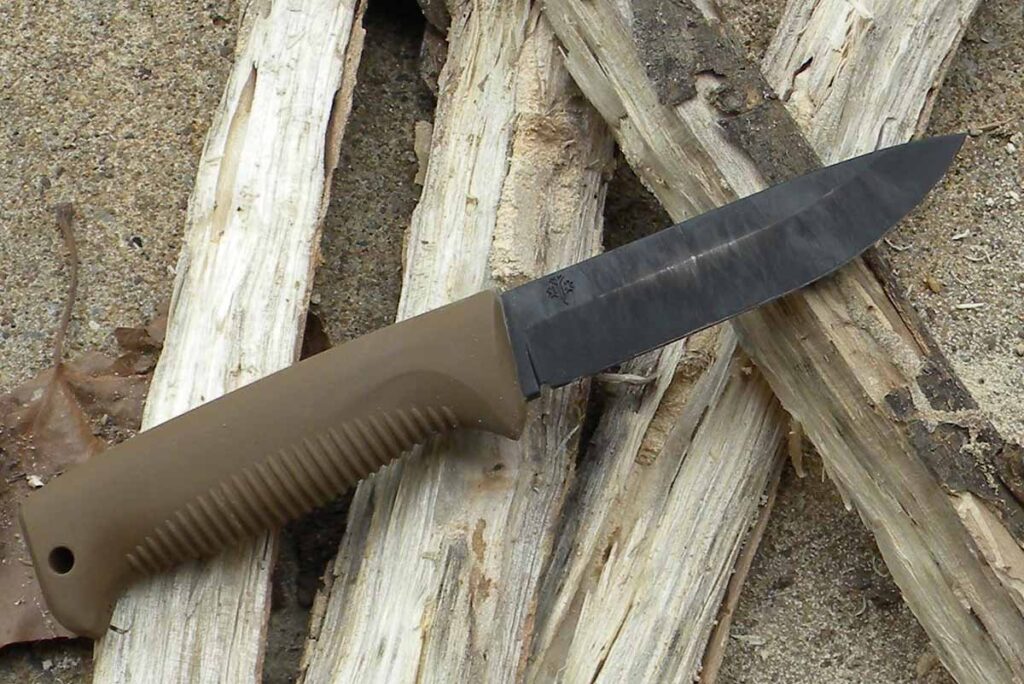
Peltonen M07 Ranger Puukko makes the author’s all-time-best test list.
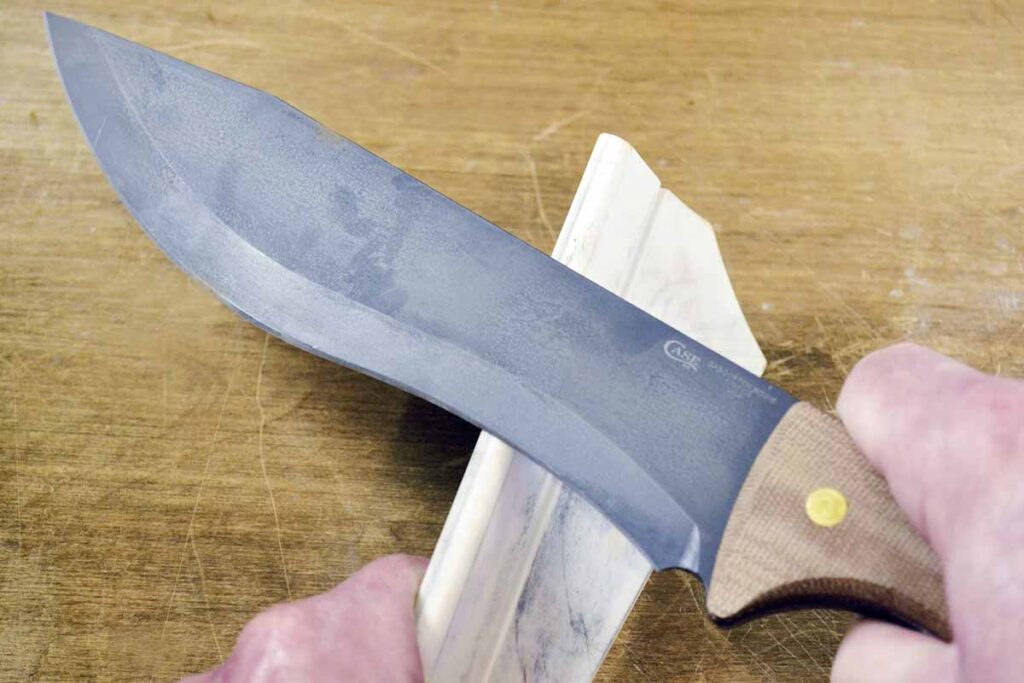
When I received the M07 Ranger Puukko from Peltonen Knives, I was really surprised to find that the Finnish company was using my favorite carbon steel, 80CRV2, my go-to blade material for the knives I make. It has suburb edge retention and a toughness equal to 5160 carbon steel. The TPV handle is firm but provides a great non-slip grip. However, the knife still has to come together as a comfortable cutter. Let’s get to the fun stuff.
M07 Ranger Sharpness
As I do with my blades to check for sharpness, the hair on my arm has to pop off. The M07 did not disappoint. It was hair popping from the start. For those who prefer the paper-slice sharpness test, using the weight of the knife only, I found the M07 very aggressive slicing the medium. You could hear every slice. The handle gave me great control.
Medium-Duty Cutting Tests
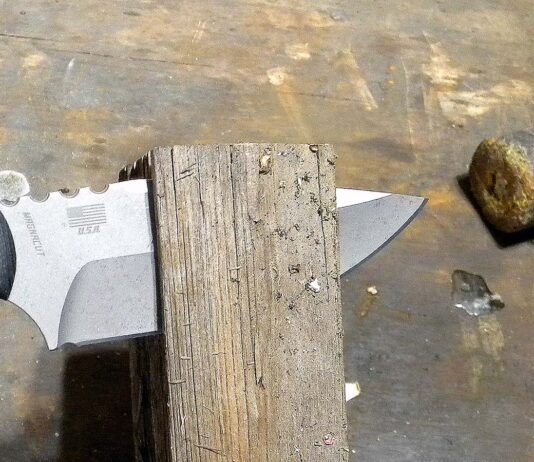
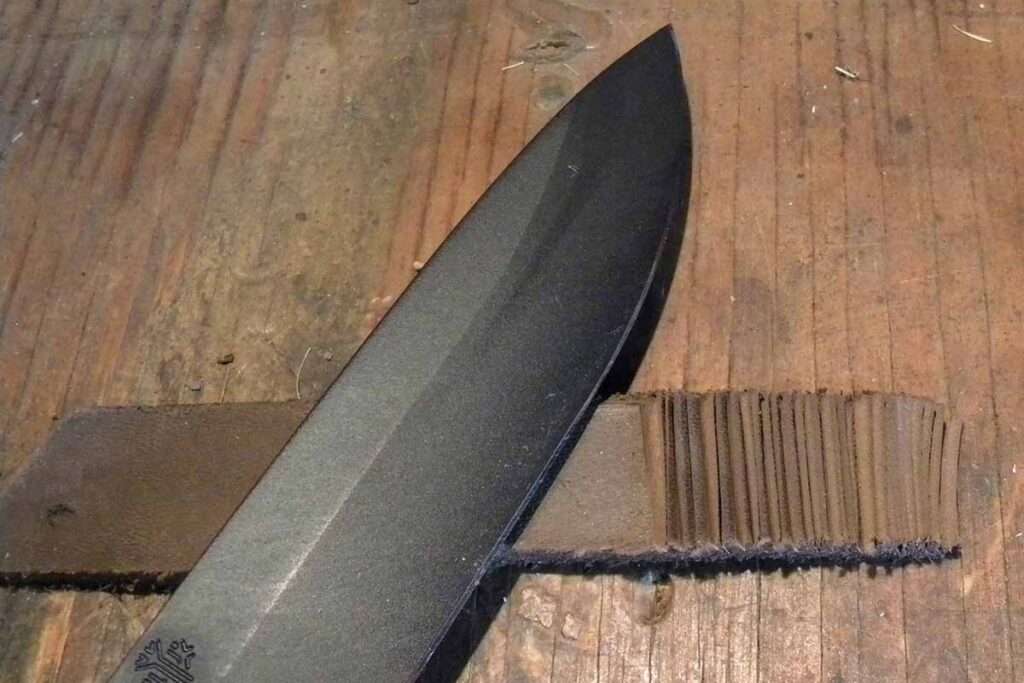
The author really had to control the cut of the 8-ounce leather with just a quick touch; any pushing and the knife was clear through the material.
I grabbed some heavy double-walled cardboard and continued slicing. The M07 parted the material quickly with no snagging. I could feel it biting into the cardboard. I had to be careful not to nick my finger. The knife is that scary sharp.
When I started skiving 8-ounce leather, the M07 sliced all the way through as soon as I laid the edge on the medium. I really had to control the cut with just a quick touch; any pushing and the knife was clear through the leather.
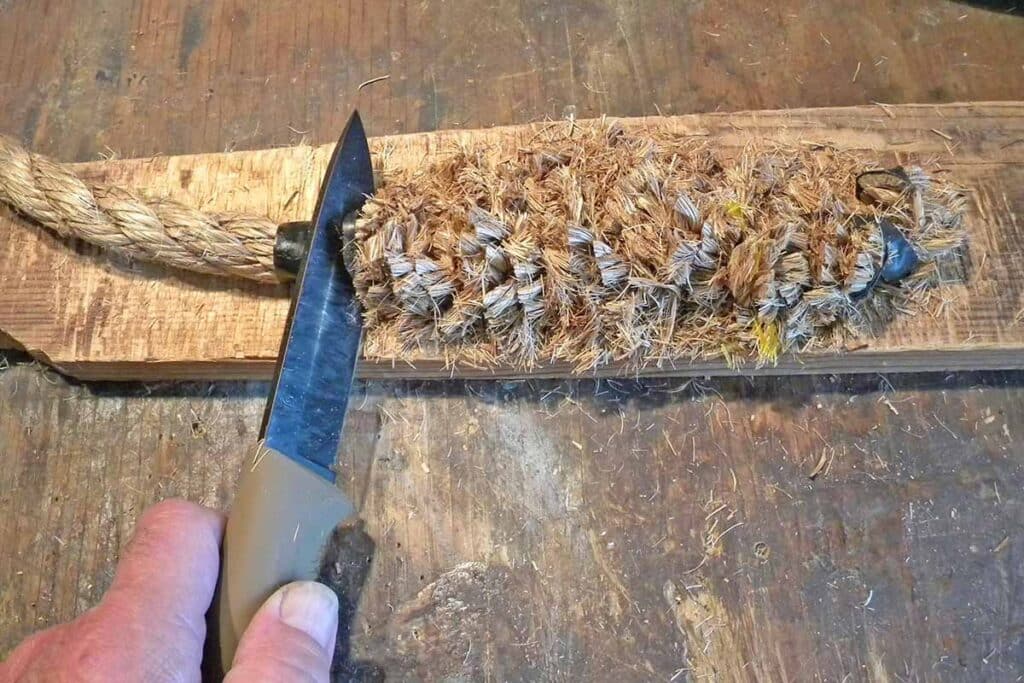
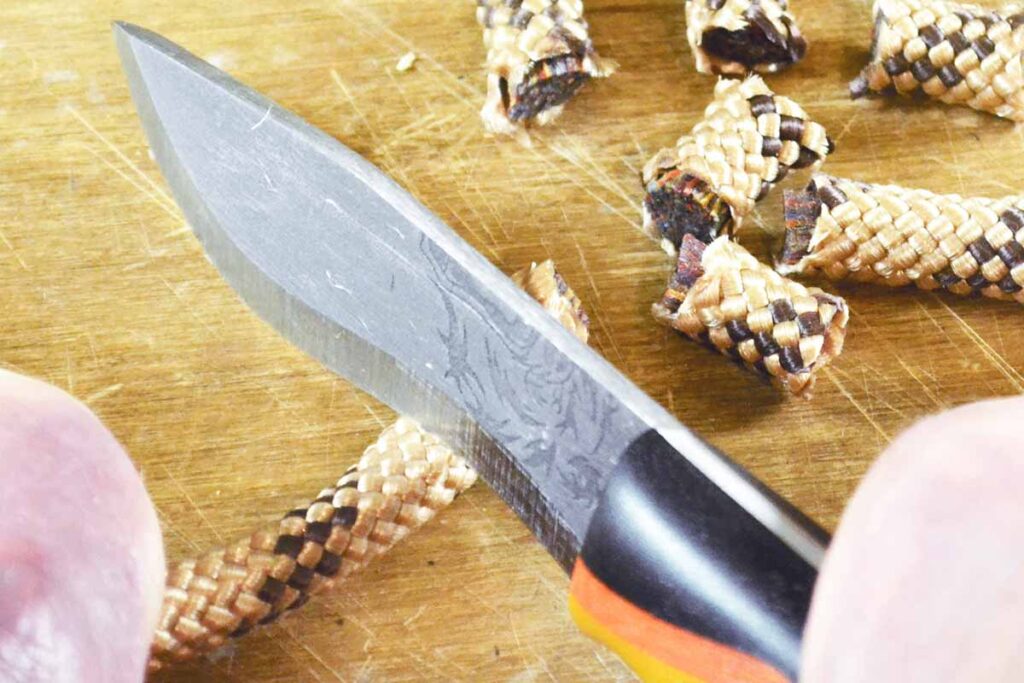
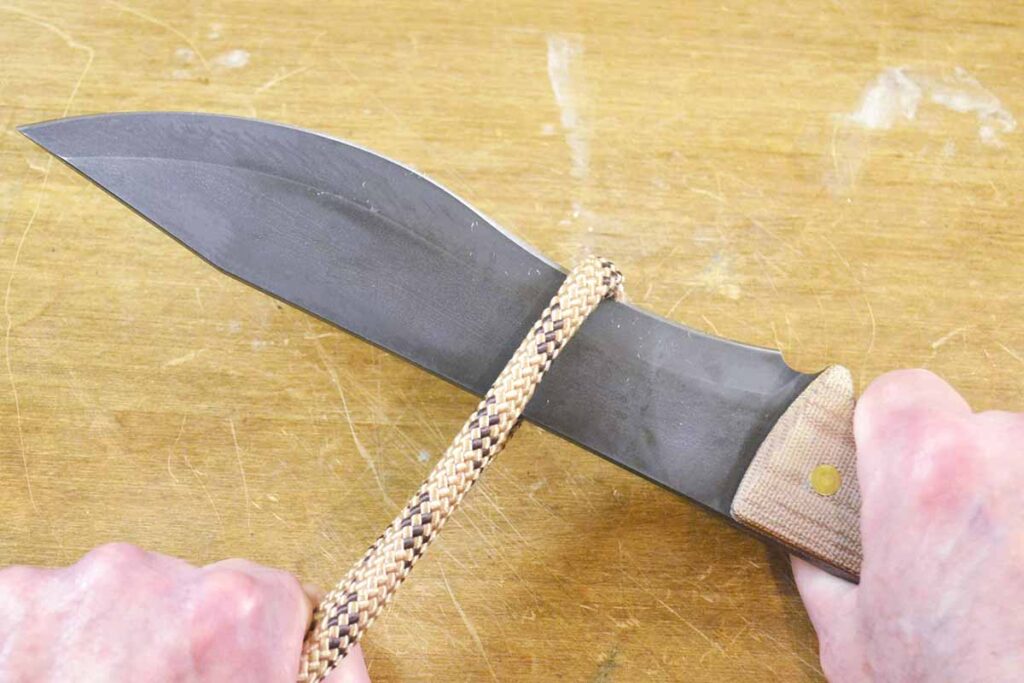
Seventy crunching cuts of the 1-inch manila rope and there was no sign of slowing down. The knife is perfectly formed for heavy cutting chores.
I had enough half-inch sisal rope for the M07 to crunch to 200 cuts with no problem. So, I grabbed my last piece of 1-inch manila rope. It was no challenge for the M07. Seventy crunching cuts later and there was no sign of slowing down. The knife is perfectly formed for heavy cutting chores.
Heavy-Duty Cutting Tests
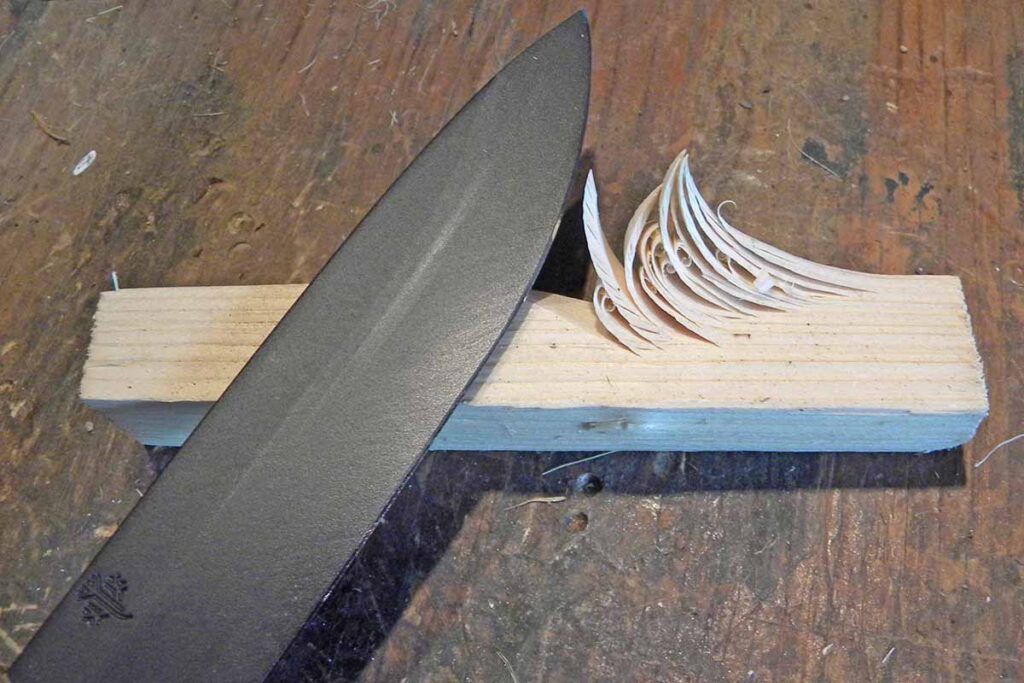
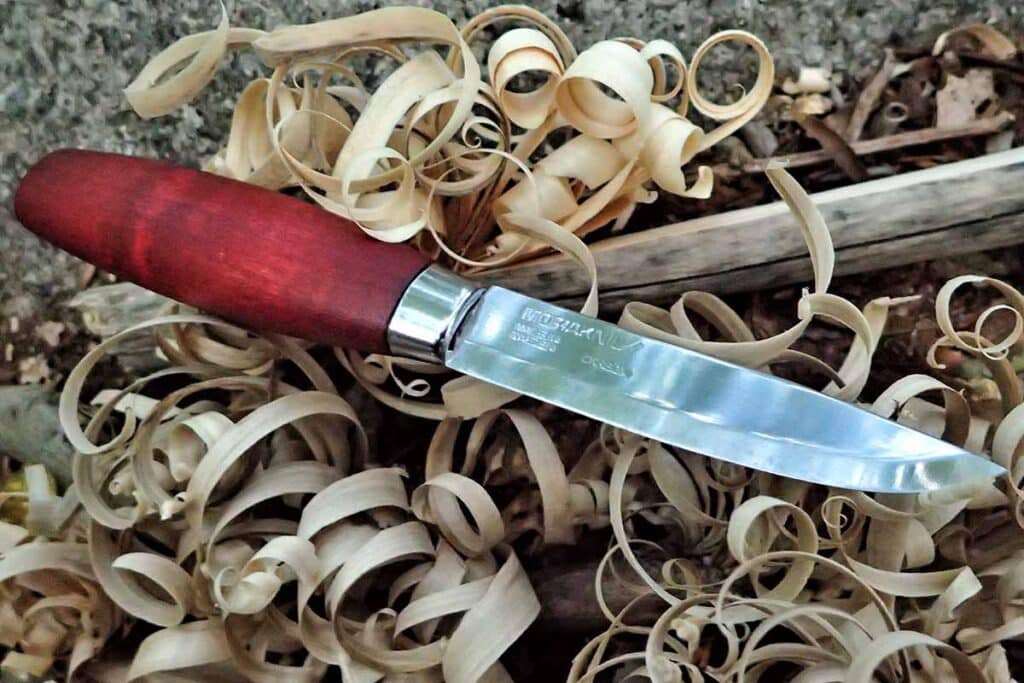
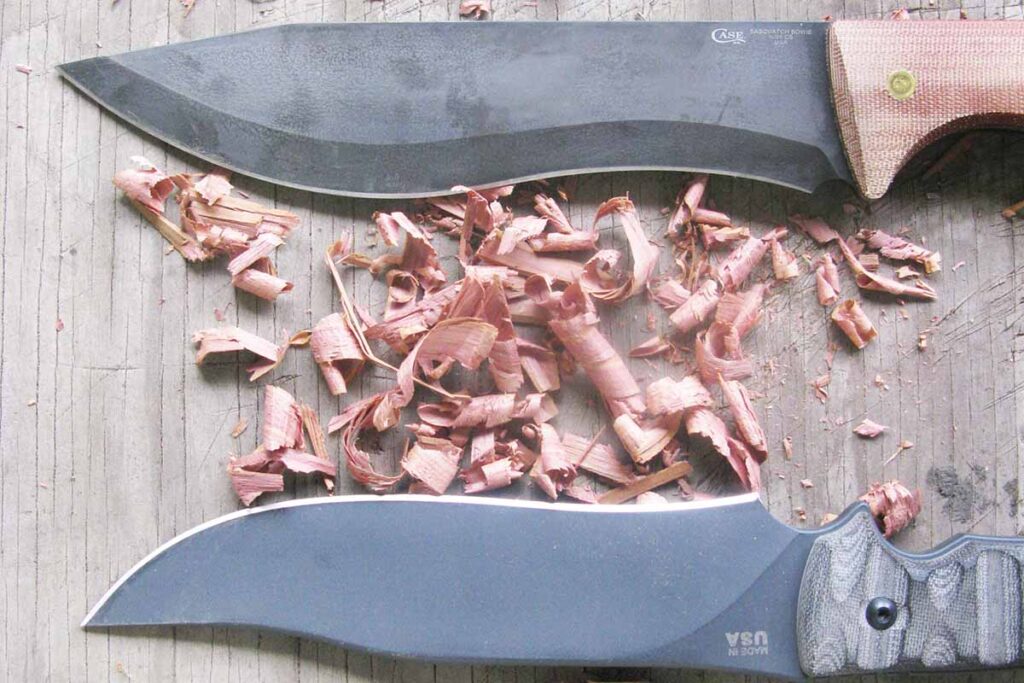
It did not matter if it took a small bite or a deeper one, the M07 produced nice curlicues.
It did not matter if it took a small bite or a deeper one, the M07 produced nice curlicues. I could hear the knife cut the wood. The soft handle made controlling the sharp blade easy. Again, the cutting was quite aggressive.
It was time to hack some seasoned hackberry. Using a dead blow hammer, I pounded the M07 through the log. The handle absorbed all the shock from the blows, making the baton job a comfortable experience. The blade bit deep with each blow. In less than 30 seconds I had the log quartered. There were wood smears on the blade and some of the coating at the top of the grind showed a little wear. The edge was still extremely sharp. Great job, Peltonen.
The M07 made short baton work of the hackberry log.
It was back to the paper slice for the final test. There were two snags due to catching my thumbnail with the edge. The knife zipped through the rest of it.
Final Cut
The only change I’d make is to bring the grind line up closer to the blade spine. Otherwise, the M07 has to be in the top 1 percent of the sharpest knives I’ve tested in the past 30 years, and also the most comfortable handle. You could use this knife all day long and not get a sore spot. And the heat treating is excellent.
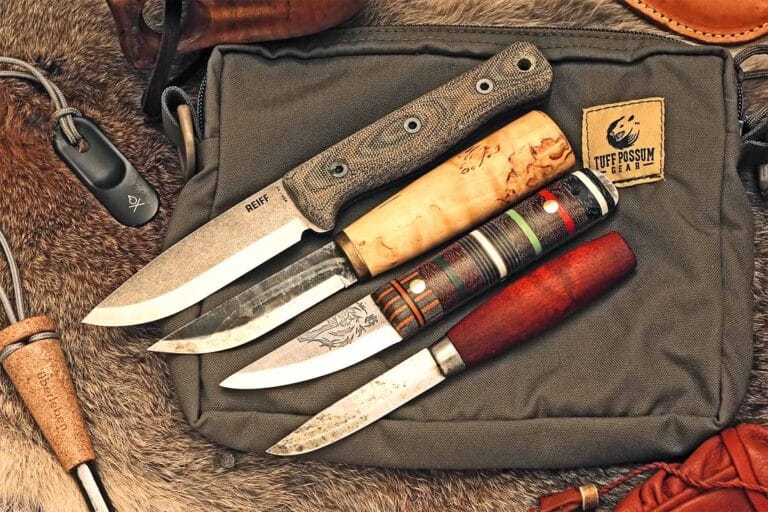
See how well four hot Scandi-ground puukkos cut and handle.
A multifunction knife, the puukko is integral to Nordic life, revered by scouts and symbolizing adulthood in Finland. The design—a palm-sized blade with a single edge and flat back—facilitates various tasks. It is ideal for carving and cleaning but lacks a guard because it’s crafted for slicing, not stabbing, with some models featuring finger grooves for wet conditions.
While men’s and women’s puukkos differ slightly in size and are ornately sheathed, both are equally esteemed. The puukko’s deep-carry sheath, easily attached to a belt or around the neck, makes it a practical tool for everyday use.
Puukko Grinds
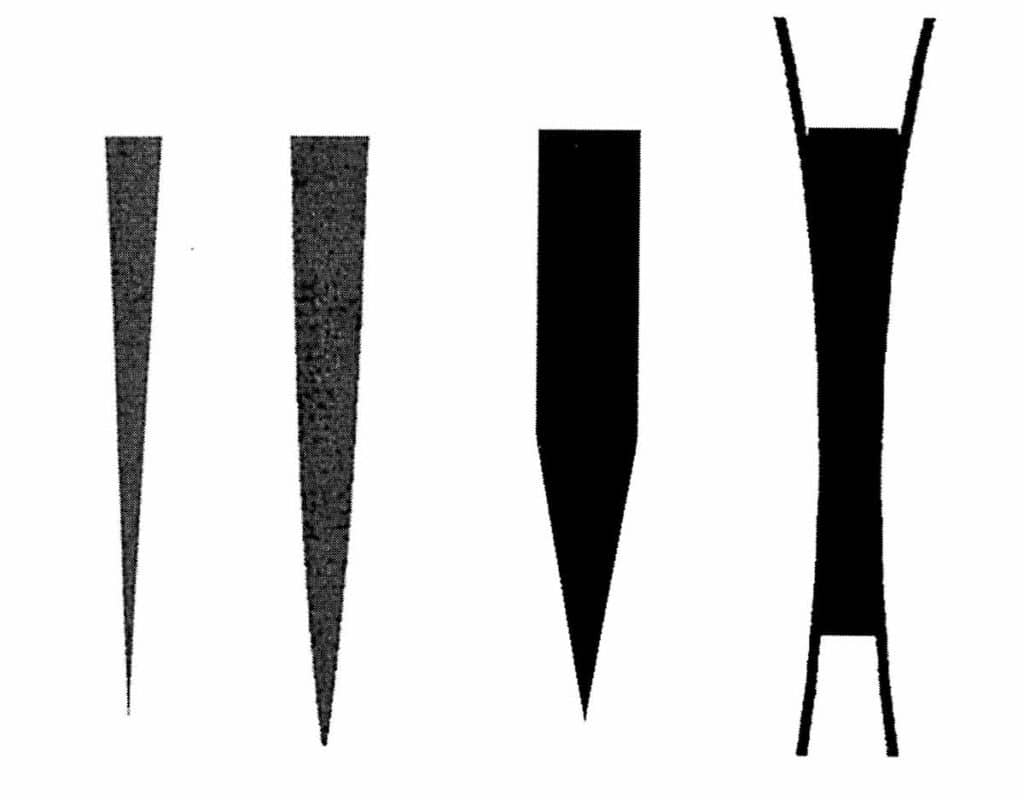
Assorted grinds, from left: flat, convex, Scandi and hollow. (from the BLADE® files)
Scandinavian knives are renowned for the unique grind that sets them apart from other knives with flat, hollow, saber and other grinds. Most knives have primary and secondary bevels that meet at the cutting edge. However, Scandinavian or Scandi grinds feature just one bevel that starts near the blade center and tapers to the edge. The design creates an acute angle that produces a razor-sharp edge, making it incredibly easy to slice through even the most rigid materials. Additionally, sharpening Scandi knives is a breeze, as you don’t have to worry about getting the correct angle. Simply lay the blade on the stone with the edge against the honing surface, and voila!—you automatically get the perfect angle.
Marttiini Arctic Bush Knife
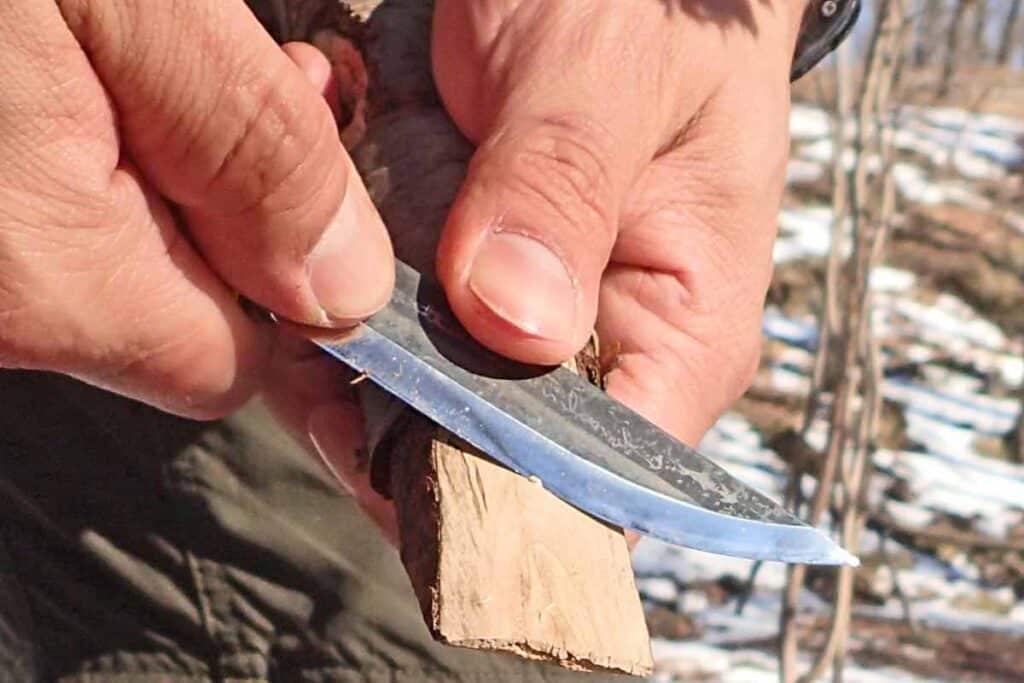
Fine-tuning a wooden wedge using the chest-lever grip with the Marttiini Arctic Bush Knife (ABK) is effortless for precise and challenging cutting tasks.
Marttiini knives are Nordic puukkos crafted in the Arctic Circle using generations of craftsmanship and modern technology. Founded in 1928 by blacksmith Janne Marttiini, the company produces high-quality utility knives made of natural materials like leather, curly birch and reindeer antlers, along with ultra-sharp blades of carbon steel. The knives are designed for use in harsh conditions.
Also known as Kiehinen in Finland, the Marttiini Arctic Bush Knife (ABK) is a beautiful, traditional stick-tang-style knife with a 3.5-inch blade. Made of stunningly grained curly birch, the handle is handsome and incredibly comfortable, a characteristic common to all top puukkos.
The ABK is an excellent choice for those who prefer a blade under 4 inches and have other tools for chopping or sawing. It is easy to use in winter conditions, even when wearing wool mittens or leather work gloves. The deep pocket carry sheath ensures the knife is easy to grip and deploy. Overall, it is an excellent choice for anyone looking for a traditional yet functional knife that offers both comfort and aesthetics.
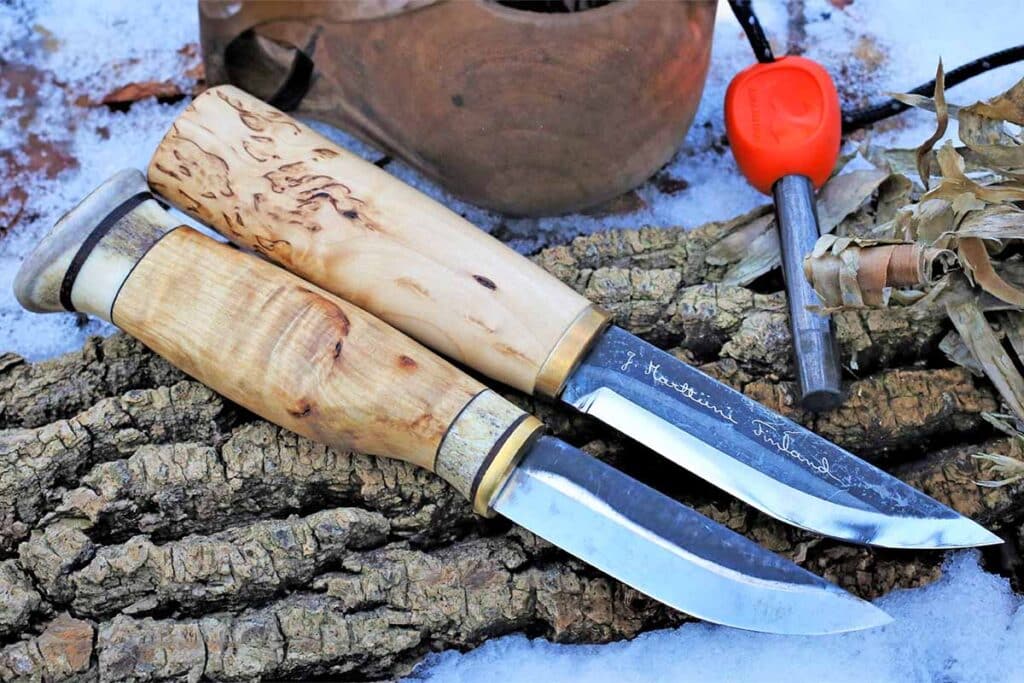
Finland is known for crafting high-quality puukkos that can withstand harsh conditions. It is the world’s largest producer of puukkos. Two of the most popular brands are Marttiini (top) and Wood Jewel (bottom).
This past winter I had to carve hardwood wedges for splitting logs in camp. While axes (page 48) are the traditional tools for the task, I decided to use the ABK instead. It features an oval, tapered grip designed to provide a secure hold during challenging cutting tasks. The Scandi edge sliced through the dry maple with ease, even when encountering knots.
I was pleasantly surprised at how comfortable the knife was in a chest-lever grip for fine carving. I wanted to tackle the task while the knife was still sharp before moving to more knife-suitable camp craft such as making stakes out of beech and maple. In addition to carving wedges, I usually try to turn out about six good fuzz sticks before leaving camp for the next fire—sort of an early set-up. The ABK excels at the task as much as any Scandi blade would, making it a valuable addition to my gear.
Morakniv Classic
The Classic No. 1/0 has a 3-inch blade designed for carving feather sticks and whittling, making it great for fire preparation.
Morakniv knives are made exclusively in Mora, Sweden, where the company has been for centuries. Combining the benefits of handforged blades with industrial manufacturing, Morakniv is known for quality, consistent, sharp knives. They are recognized as a national symbol of Sweden and have been granted a Royal Warrant of Appointment by the King*.
The Morakniv Classic knives are a popular choice among outdoor enthusiasts and professionals alike. The blades are carbon steel and the distinct barrel-shaped handles are red-stained birch. The Classic knives have been around for nearly a century, and while some changes have been made over the years, the basic design has remained essentially unchanged.
In 2020, Morakniv updated the Classic series. The edge angles and blade shapes remain the same but all the knives have rattail tangs. The new polymer sheath is sleek and polished and features the Swedish Coat of Arms. The belt strap is Swedish vegetable-tanned leather designed to last generations.
The Morakniv Classic No. 1/0 has been renamed and upgraded from the Classic No. 2/0, with slight differences in handle width and blade thickness. The blade is .078 inch at the thickest. I like the trim blade. It is a hair longer than the 2/0 at 3 inches.
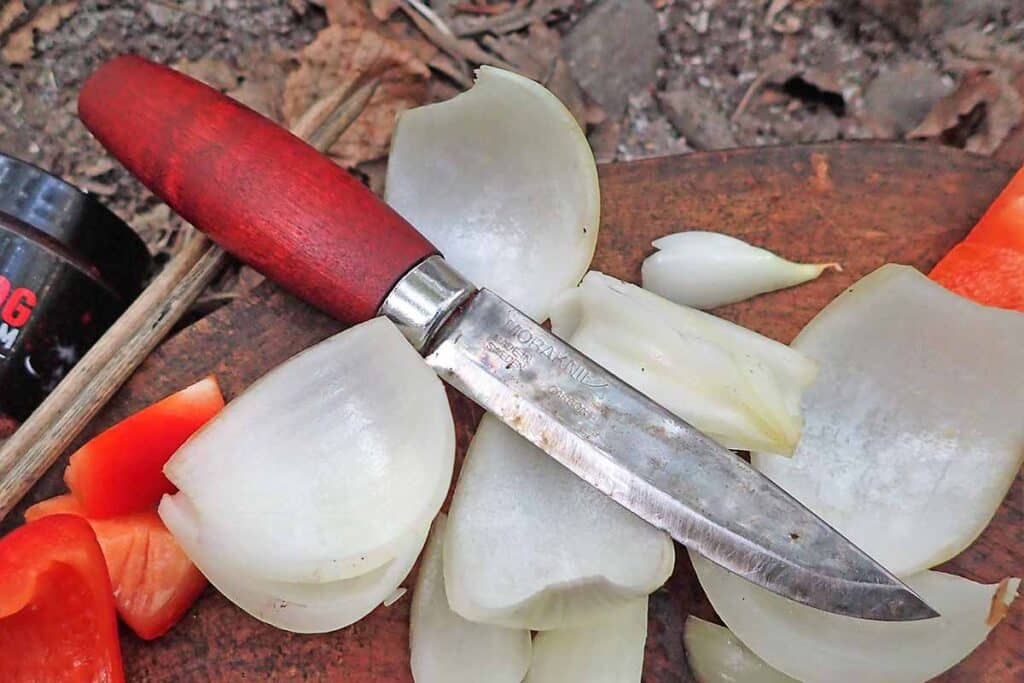
The Morakniv Classic No. 1/0 has a thin .078-inch blade useful for slicing onions, peppers, mushrooms and tomatoes.
I carried the bite-sized knife on a small carabiner hooked to my belt loop. I used it on dry poplar, hickory and maple to make feather sticks. It performed precisely as a Morakniv Classic should, slicing and curling wood with every stroke. Sitting by the fire, whittling and filling up my tinder/kindling coffee can with shavings was my nighttime routine with the 1/0.
The small, very able cutter regularly sliced peppers, onions and mushrooms for camp kabobs or morning omelets. Due to its kitchen knife-like thinness, the blade sliced food exceptionally well for a Scandi grind.
Bear Forest Knives Simple 3
The author used the Bear Forest Knives Simple 3 to carve a seven-notch try stick from semi-dry wood. The sharp zero grind excels on green and dry wood.
Based in the USA, Bear Forest Knives is keeping the puukko knife alive and thriving. The company recently released its latest addition to the Simple series, the Simple 3.
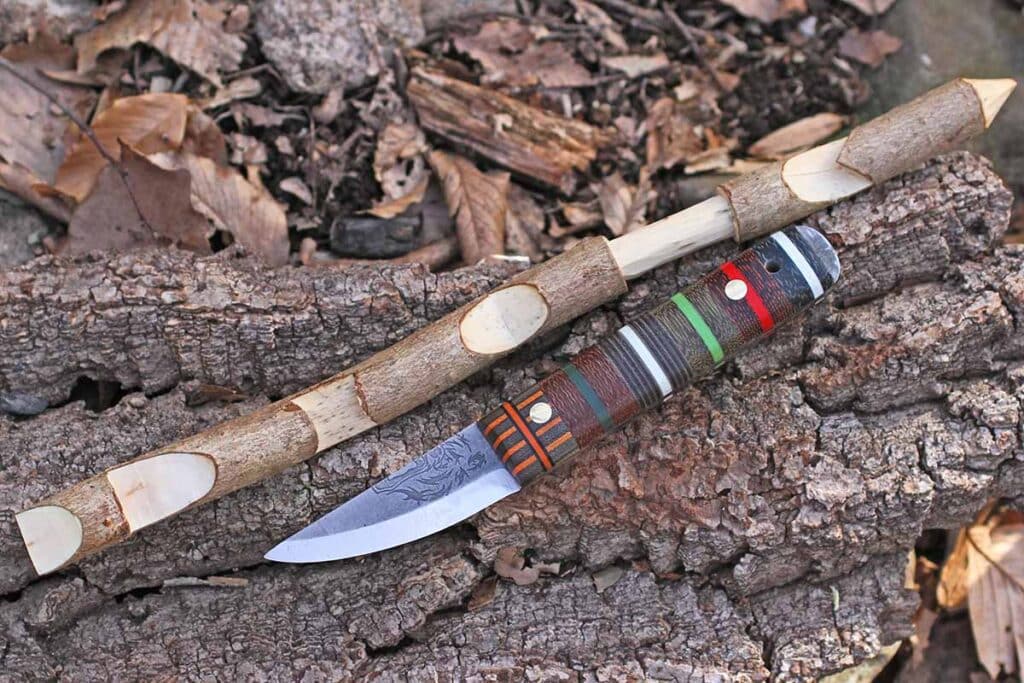
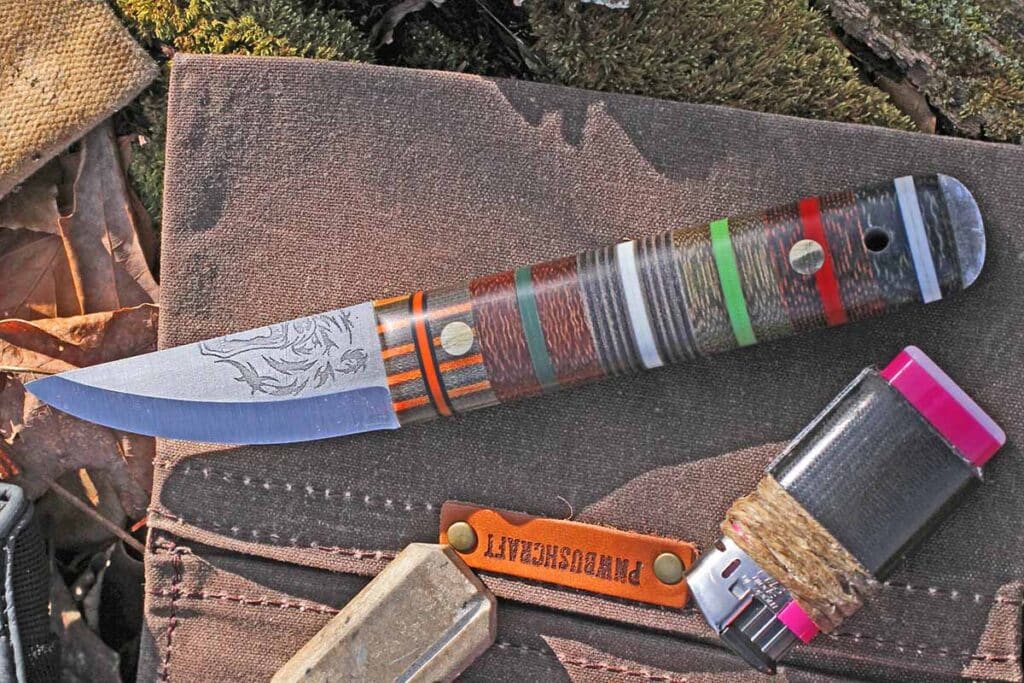
The full-tang Finnish puukko-style knife packs a compact and convenient 3-inch blade of 8670 carbon steel. Its straight-back 90-degree spine and zero Scandi grind ensure remarkable control and precision, making it ideal for intricate tasks. The Simple 3 features an exposed pommel perfect for light hammering tasks, which wasn’t an option on previous knives in the series. The 8670 is typically found in large circular saw blades, much like old-timey puukkos made in Scandinavia. The Simple 3’s compact size makes it highly versatile for various woods tasks.
The Simple 3 is a versatile puukko for camping, bushcrafting or hunting. The 3-inch 8670 carbon steel blade has a straight back, 90-degree spine and zero Scandi grind for control and precision.
Using the knife, I created a mini try stick and enjoyed some woodcarving. The handle was comfortable and filling, while the zero Scandi was perfect for removing a lot of material. I used semi-dry wood, which the Scandi grind works better on than a flat or saber grind. I continued crafting tent stakes and making fuzz sticks, which a puukko excels at most. Additionally, the super sharp spine was exceptionally helpful, as it helped me to ignite the nicely feathered shavings for fire using my ferro rod.
Reiff Knives F4 Scandi Bushcraft
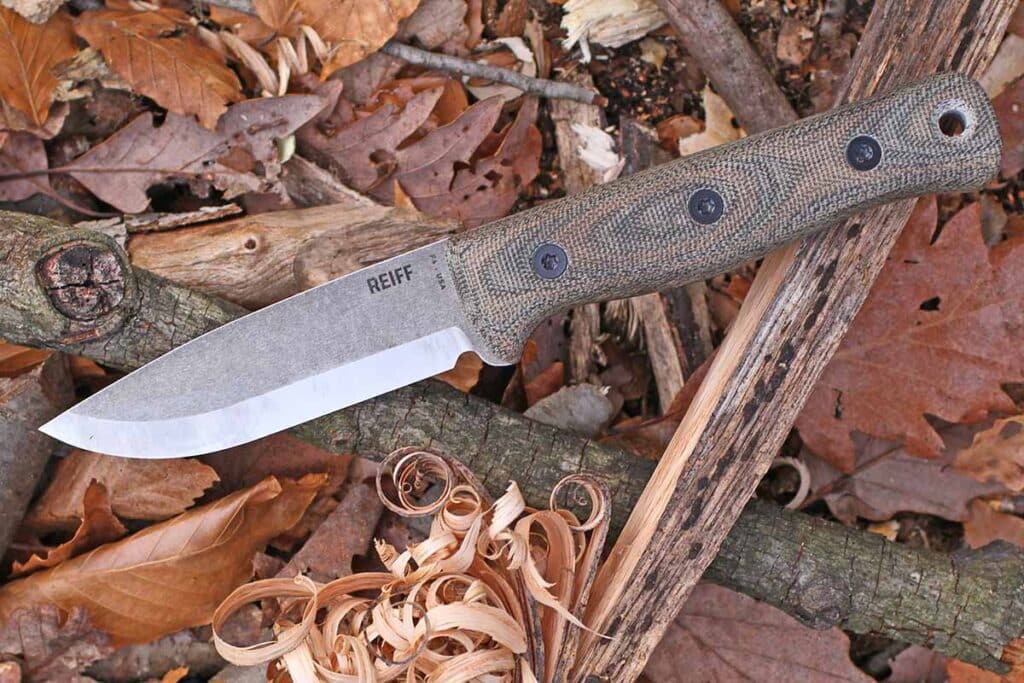
The Reiff F4 Scandi Bushcraft made feathering wood a breeze. The large handle helped ease the blade through hard oak to make thin, curly feathers.
The F4 Scandi Bushcraft is the latest homage to the puukko from Reiff Knives. The company keeps the contemporary rendition of the famed knife alive with modern craftsmanship and materials in a full-tang construction.
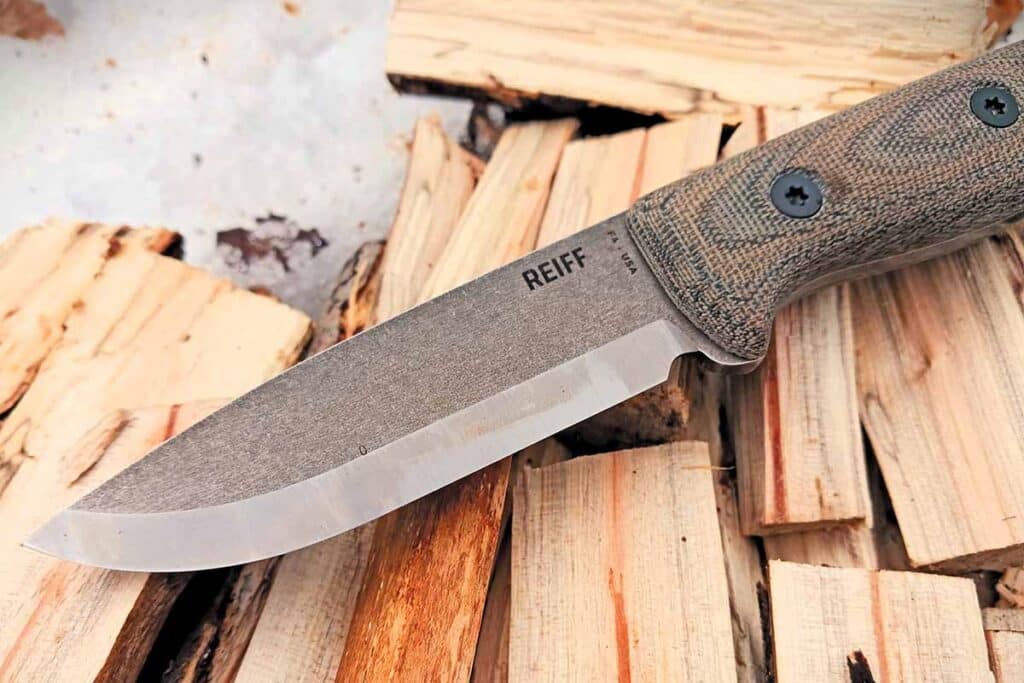
A knife with a Scandi-ground blade is a must-have for bushcraft enthusiasts. The F4 blade is CPM 3V carbon steel 5/32 inch thick at the thickest with a steep grind angle of 12.5 degrees per side. Its ability to effortlessly slice through wood, animal hides and food is remarkable. The textured canvas Micarta® scales are available in four colors.
The F4 Scandi is a new breed of knife that, thanks to the tough CPM 3V carbon blade steel, had no problem batonning through frozen wood in the winter.
The robust F4 Scandi helped split several chunks of maple, oak and poplar with a baton for my winter cookouts. It also kept an Uberleben wood stove and one cold hiker well-fed. The Scandi edge was not damaged when used on frozen wood in freezing weather. After heavy splitting—not usually recommended for a Scandi blade—it was time for tinder shavings. I made several fuzz sticks and marveled at how comfortably the 5-inch handle navigated the edge, elegantly feathering the wood. Reiff has it going on!
*Royal warrants of appointment have been issued for centuries by royal families of assorted European countries to tradespeople who supply goods or services to a royal court or certain royal personages. The royal warrant enables the suppliers to advertise the fact that they supply to the issuer of the royal warrant, thus lending prestige to the suppliers.
Check Out More Outdoor Knives:
BEST TOMAHAWKS: OUR TOP HAWKS FOR BACKWOODS TO BATTLEFIELDS
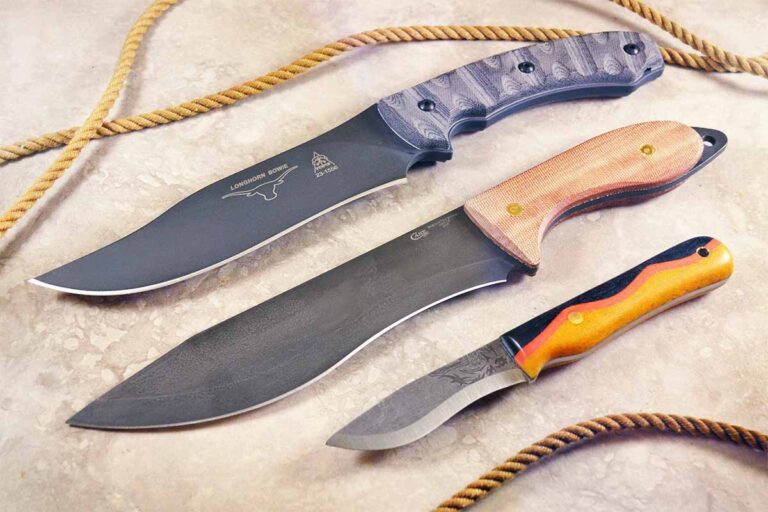
The sexy shape of three U.S.-made recurve blades addresses both performance and aesthetics.
As blade patterns go, the recurve is right up there in the “flair department.”
Just as the curves of a Ferrari add irresistible styling to the classic sports car’s appearance*, so does the curvature of a blade’s edge add to that of the look of the knife. It also changes the geometry of a blade—sometimes radically—in some ways better and other ways not so much. That’s the beauty of blade design and why there are so many different styles from which to choose.
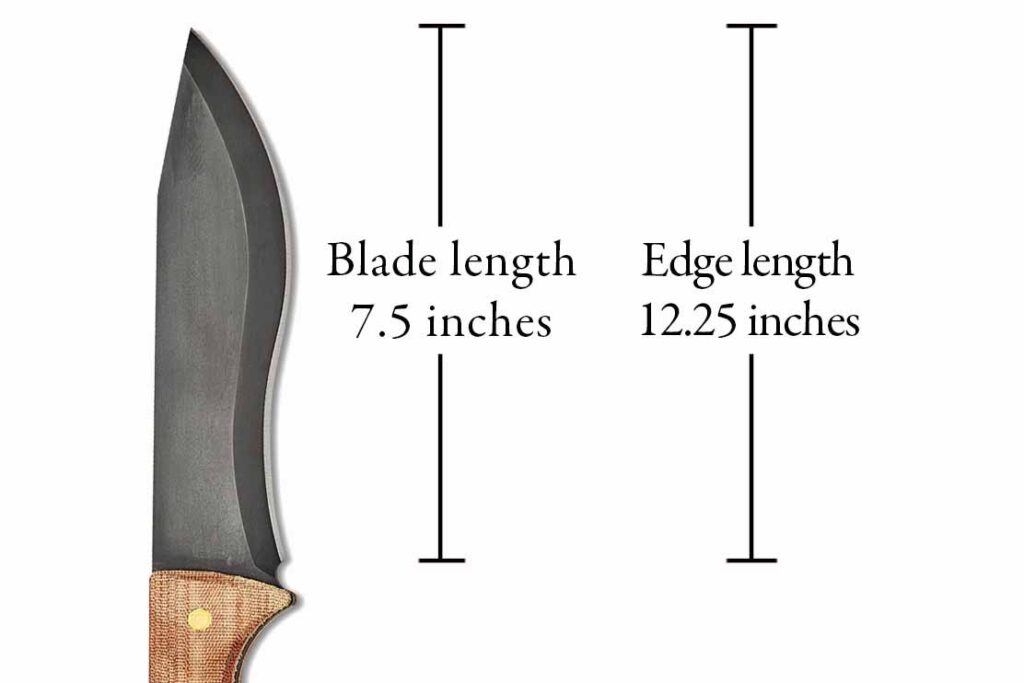
How much length does a recurve add to the edge of a blade? This chart compares the length of the ’Squatch blade to the length of the actual sharpened edge. The curved top edge blade of a straight blade might add 2-to-3 inches to the edge. The Sasquatch’s recurved edge stretches the increase to 4.75 inches.
The waisted recurve design shifts the weight of the blade toward the tip, which while excellent for chopping also reduces the blade’s effective chopping length. The recessed area on the lower part of the recurved blade adds the benefit of being able to trap or gather in its subject when performing chores like debarking and taking slivers from wood, but it also makes sharpening more difficult with flat-surfaced media such as whetstones.
Sharpening A Recurve
Like any blade design, there are trade-offs. To get an idea of how radically the recurve lengthens the edge of a blade, see the accompanying chart of the Case Sasquatch bowie. The height of the sharpened portion of the blade is 7.5 inches, but when the length of the curvature is factored in the number swells to 12.25 inches!
Recurve blades require a rounded or ovate sharpening medium to properly hone the curvaceous edge. Hand-held sharpeners similar to those used by chefs or the common V-sharpeners work well on curved edges, as do stones with curved edges such as the Spyderco Golden Stone ceramic.
When sharpening these blades the concave lower curve does not conform to a flat plane, so an ovate or rounded surface grit is required for sharpening. Fortunately, there are plenty of these to choose from, such as handheld sharpeners similar to those used by chefs or the common V-sharpeners that use alternating rods set at opposing angles in a base. The Spyderco Golden Stone and/or Webfoot works as well. Now, on to the recurves!
Bear Forest Knives Custom Recurve
The Bear Forest Knives Custom Recurve is a small fixed blade built like a tank, owing much to the 3/16-inch thickness of its acid-dipped 52100 carbon steel blade. At 7.75 inches overall, the knife is geared toward light-to-medium camp chores and could conceivably be used as an EDC. The full-tang handle boasts colorful scales of a wavy sandwich of black, orange and natural cross-cut canvas Micarta®. Weight is a hefty-for-its-size 5 ounces. Bear Forest provides a black Kydex sheath with a nifty black coated 2.25-inch spring steel belt clip.
Bear Forest Knives Custom Recurve Specs Blade length: 3.25” Blade material: 52100 carbon steel Handle material: Crosscut canvas Micarta® Gripping feature: Tri-color Micarta handle material Sheath: Black Kydex w/belt clip Weight: 5 ozs. Overall length: 7.75” Country of origin: USA MSRP: $249
Recurves shine when performing shaving tasks. Both the TOPS (left) and Case (right) did a nice job rendering cedar curls for fire starter.
Case Laramy Miller Sasquatch Bowie
The Case Laramy Miller Sasquatch Bowie is a study in understated good taste. The large 13-inch Jim Bowie namesake flows from stem to stern, from the break in its flat-ground 1095 carbon steel blade to its rounded combo lanyard hole and pommel. The matte-black Caswell finish gives the bowie a rustic look. The bag-style handle is topped with natural canvas Micarta scales affixed with 5/16-inch brass pins. Case provides a double-stitched natural leather belt sheath that matches the knife in clean styling.
Case Laramy Miller Sasquatch Bowie Specs Blade length: 7.75” Blade material: 1095 carbon steel Handle material: Natural canvas Micarta® Cutter keys: Clip-point blade, Caswell finish Sheath: Natural leather belt model Weight: 14.5 ozs. Overall length: 13” Country of origin: USA MSRP: $219.99
TOPS Longhorn Bowie
The TOPS Longhorn Bowie is a thoroughly modern recurve with such classic touches as its upswept clip-point blade—always welcome on a bowie. The flat-ground 1095 blade is coated in dark sniper gray Cerakote®, matching the gray/black layered linen Micarta scales nicely. The black nylon MOLLE-compatible sheath carries on a belt or a pack and other gear. It includes a front pouch for stowing a sharpener or fire-starting accessories.
The TOPS Longhorn and Case Sasquatch bowies begged to be reviewed together because they are exactly the same length and share the same 1095 blade steel, yet are two very different knives. The TOPS blade has a more casual recurve while the Case is full tilt. The handles couldn’t be more different as well, with the Case opting for a clean, traditional bag-style grip while TOPS chose a modern tactical design a full inch longer than its counterpart, resulting in a slightly shorter blade. Let the fun begin!
The Bear Forest Custom Recurve is small compared to the two larger test knives, though the same blade geometry applies. Note how the upper curve of the edge ensnares the rappelling rope as it slices through it.
I started with some basic chopping on a 5-inch diameter oak log. The Sasquatch brought the hammer down with its weighted fore-end but the Longhorn had the advantage of more working area on the blade for chopping. Both manufacturers chose 1095 and have loads of experience at maximizing the steel’s benefits. I found both knives excelled in the pure blade bite and performed well chopping. The Sasquatch weighted front end is an advantage for sheer power but the Longhorn is 3.6 ounces heavier, so it closes the gap significantly.
I did some shaving doing push cuts on 1×3 cedar planks. As expected, the concave edge of the Case excelled at trapping the wood through the straight cuts. Advantage Sasquatch. However, the TOPS has a grip a full 1-inch longer than the ’Squatch and is textured as well, offering superb purchase. Advantage TOPS. Bottom line, both recurve bowies performed very well. The choice is yours.
It’s a trap! The lower concave area of the Case blade traps the rappelling rope during a pull-through. The deeper the concave curve, the better it performs this function.
The sheaths for both are well done. The Case belt model is natural leather designed in a simple, tasteful manner. The TOPS is unabashedly rock ’em, sock ’em tactical all the way.
The Bear Forest Custom Recurve punches up in its size class thanks to thick 3/16-inch blade steel and a healthy handle length, a trait often missing on smaller fixed blades. I tested the blade for its ability to capture 3/8-inch rappelling rope in its concave maw. Thanks to its overbuilt steel, the blade never wavered while producing slice after slice. It also took off nice, healthy curls of cedar just like the big boys. The curves of the cross-cut canvas Micarta scales made for excellent purchase and are attractive to boot. I also did some bark skinning on seasoned oak, took slices off other kinds of rope, and batonned fatwood pine fire starter.
Bear Forest provides a nifty Kydex sheath. It has a 1.5-inch spring clip on the back that not only mounts on the belt for vertical and cross-draw carry/deployment, but doubles as a pocket clip on either side, something seen more and more from the fixed-blade EDC crowd lately. All in all, I was impressed with the whole package.
Final Cut
The recurve isn’t just for whacking stuff. It requires a little more finesse and is typical of blades that don’t walk the straight and narrow. However, the benefits of recurves will reward you dearly when kept in their lane. All three of the test candidates performed admirably and are well worth your consideration.
*Editor’s note: Long-time custom knife purveyor J. W. Denton, who was a champion racecar driver in his younger days, was fond of comparing the knives of Steve Johnson, BLADE Magazine Cutlery Hall-of-Fame member Bob Loveless and others to curvaceous sports cars. J. W.’s comparison, however, was largely between the handle butts of the knives and the rear ends of the cars. However, both comparisons are accurate.
Bear Forest Knives Custom Recurve Blade length: 3.25” Blade material: 52100 carbon steel Handle material: Crosscut canvas Micarta® Gripping feature: Tri-color Micarta handle material Sheath: Black Kydex w/belt clip Weight: 5 ozs. Overall length: 7.75” Country of origin: USA MSRP: $249
Check Out More Outdoor Knives:
BEST TOMAHAWKS: OUR TOP HAWKS FOR BACKWOODS TO BATTLEFIELDS
Folder or fixed blade, EDC or kitchen and more, one of these will fill the bill.
In the wake of BLADE Show 2024 there is a slew of new knives hitting the custom and factory markets. We scoured both to bring you some of the latest and greatest handmade and production gems. Keep your eyes peeled for these fantastic options hitting dealers’ shelves soon.
Triple C Knives Model #3
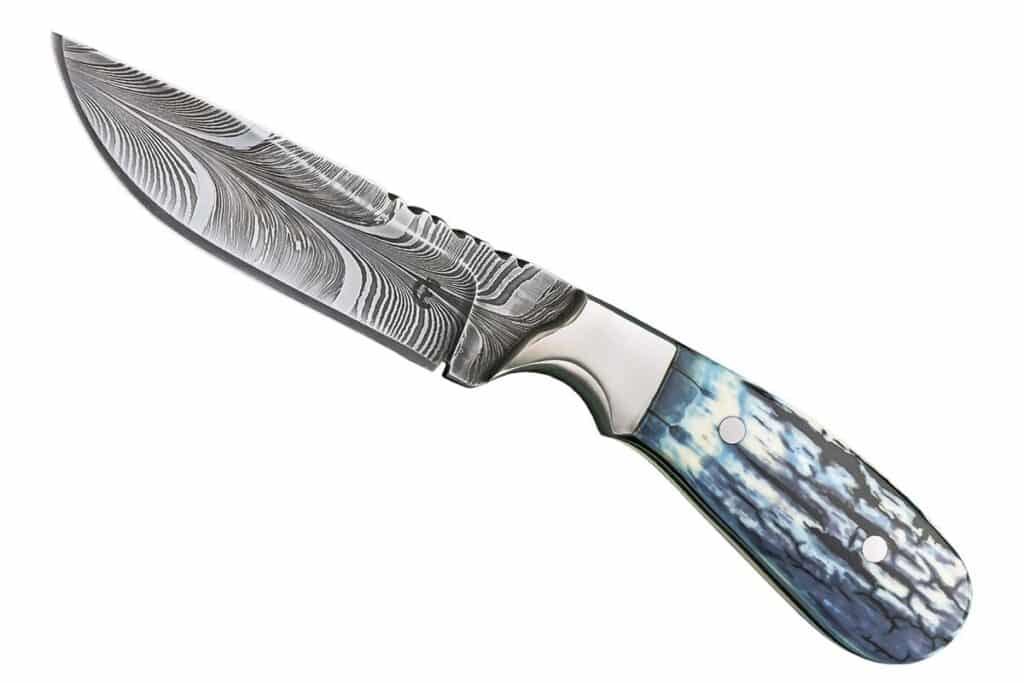
Knife pattern: Fixed-blade hunter Blade length: 4” Blade material: Damascus of 5160 carbon and 15N20 nickel-alloy steels Blade grind: Hollow Handle: Mammoth ivory Bolster: Stainless steel Overall length: 7.75” Maker’s price for a similar knife: $1,000 Maker: Triple C Knives (SharpByCoop image)
Bubba Crouch Trapper
Knife type: Slipjoint Blade length: 3 7/8” Blade steel: Damascus forged by ABS master smith Rick Dunkerley Blade grind: Hollow Handle material: African goat horn Handle frame: 416 stainless steel in an integral construction Bolster: 416 stainless Knife to know: The CPM 154 stainless backspring features filework; the arrowhead shield is damascus Closed length: 4” Maker’s price for a similar knife: $2,500 Maker: Bubba Crouch (SharpByCoop image)
Erik Fritz Petty Chef’s Knife
Blade length: 6.5” Blade material: Triple-quenched 52100 carbon steel Blade grind: Flat w/convex edge Handle: Buckeye burl Bolster: 416 stainless steel Overall length: 11” Maker’s price for a similar knife: $400 Knife to know: Erik Fritz is an ABS journeyman smith Maker: Erik Fritz (Jocelyn Frasier image edit)
Ben Akin Bowie
Blade length: 83/8” Blade material: W2 tool steel w/hamon Blade grind: Flat Handle: Box elder burl w/carbon fiber and red G-10 spacers and a mosaic pin Guard: Wrought iron Overall length: 135/8” Knife to know: Ben Akin is an ABS apprentice smith Maker’s price for a similar knife: $800 Maker:Ben Akin (Jocelyn Frasier image edit)
Egginton Presentation George Wostenholm I*XL barlow
Knife type: Slipjoint Blade length: 2.16” Blade steel: 420S45 stainless Blade pattern: Clip point Blade finish: Crocus polished Scales: Stabilized birch burl in Cutlers Company green Bolster: Nickel silver marked w/400-year anniversary emblem Knife to know: Commemorates the 400th year of The Company of Cutlers in Hallamshire, UK; The Company of Cutlers was formed by an act of Parliament in 1624 to “protect and promote the cutler and steel products made” in Sheffield, England; made in a limited edition of 2024 in recognition of the company’s 400th anniversary year; each knife is serial numbered Weight: 2.18 ozs. Closed length: 3.16” Country of origin: United Kingdom MSRP: $185 at press-time exchange rate Company:Egginton
Boker Plus Gust Copper
Knife type: Manual one-hand folder Designer: Serge Panchenko Blade length: 2.87” Blade material: D2 tool steel Blade @ thickest: .14” Blade pattern: Drop point Blade finish: Stonewashed Blade opener: Thumb hole Handle material: Copper w/hole for a lanyard Lock: Framelock Pocket clip: Tip up, right-handed Weight: 4.44 ozs. Closed length: 3.7” Carry: Nylon pouch Country of origin: China MSRP: $119.95 Company:Boker Plus
Valhalla Blades Surtr
Pattern: Bowie Blade length: 11” Blade material: 1084 carbon steel Blade grind: Flat Handle material: Dyed, stabilized maple burl Guard: Brass Overall length: 16” Maker’s price for a similar knife: $250 at press-time exchange rate Maker: Valhalla Blades (Rod Hoare image)
TOPS Knives Shadow Hunter
Knife type: Fixed blade Blade length: 4.5” Blade material: 1095 carbon steel Rockwell hardness: 56-58 HRC Blade @ thickest: .19” Blade finish: Tungsten Cerakote® Handle material: Black canvas and tan canvas Micarta® Weight: 10.1 ozs. Overall length: 9.25” Sheath: Tan Kydex Weight w/sheath: 12.8 ozs. Knife to know: While the original was a favorite of company founder Mike Fuller, the new iteration is fine-tuned for enhanced performance, including a more ergonomic handle, slightly extended blade and modernized finishes Country of origin: USA MSRP: $250 Company: TOPS Knives
Montana Knife Co. MKC Whitetail
Pattern: Hunting knife Blade length: 4” Blade @ thickest: .135” Blade steel: MagnaCut stainless Blade pattern: Drop point Handle material: G-10 Construction: Full tang Overall weight: 4.3 ozs. Overall length: 8 5/8” Sheath: Kydex, open carry, reversible quick-attachment belt clip, vertical handle down or horizontal carry, built-in retention screw to customize blade tension Knife to know: Also available in buck skin, black, green and black, tan and black, and grey handle colors; integral guard; gimping on blade spine Country of origin: USA MSRP: $315 Company:Montana Knife Co.
The Australian Cutlery Fixed-Blade Hunter
Blade length: 4” Blade steel: CPM S35VN stainless Blade grind: Hollow sabre Blade thickness @ ricasso: 1/8” Blade @ widest: 1” Blade finish: Bead blast Handle material: Hunter orange G-10 w/bead blast finish and custom Australian cutler mosaic pin Overall length: 8.5” Sheath: Matching hunter orange Kydex model made by Adam Grosskopf Maker’s price for a similar knife and sheath: $230 at press-time exchange rate Maker: The Australian Cutlery (Rod Hoare image)
Spyderco Manix 2 MagnaCut Lightweight Salt Knife Yellow Polymer
Knife type: Manual one-hand folder Blade length: 3.375” Blade steel: MagnaCut stainless Blade grind: Flat Blade @ thickest: .13” Blade pattern: Drop point Blade finish: Satin Blade opener: Thumb hole Handle material: Yellow polymer over stainless steel liners Lock: Ball-bearing lock Pocket clip: Reversible, tip up Weight: 3 ozs. Closed length: 4.625” Country of origin: USA MSRP: $232.99 Company:Spyderco
Cold Steel Espada XL
Knife type: Folder Blade length: 7.5” Blade steel: AUS-10A stainless Blade @ thickest: .137” Blade grind: Hollow Blade pattern: Clip point Blade finish: Black PVD Handle material: Ruby red G-10 Lock: Tri-Ad Lock Pocket clip: Blade tip up Weight: 14.8 ozs. Closed length: 9.25” Knife to know: The knife is inspired by the classic Spanish navaja folder and is a collaboration between Lynn Thompson and custom knifemaker Andrew Demko Country of origin: Taiwan MSRP: $299.99 Company:Cold Steel
Fixed-blade hunter finds its roots a knife gifted to CRKT’s founder.
CRKT is 30 years old this year, but who’s counting candles? Apparently, the company, because it’s commemorating the milestone with the release of a little something. And what better way for an outdoorsy brand from Oregan to mark an anniversary than with a hunting knife—a dang slick-looking one at that.
Shake hands with the Soldotna.
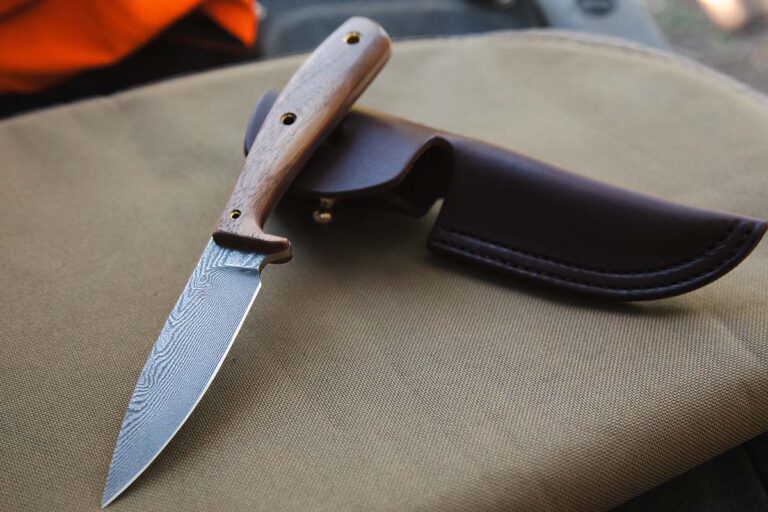
Designed by renowned craftsman, guide and all-around outdoorsman Russ Kommer the knife is a bit of a team effort. With the Soldotna, CRKT partnered with the master blacksmiths at Vegas Forge in Nevada to make the blade’s Damascus steel and worked with TOPS Knives in Idaho to manufacture the knife. It comes with a full-grain leather sheath with a belt loop and stud closer, which is hand-made in Idaho. Yet, the design itself is pure Kommer.
The Soldotna’s roots lie in a custom knife the maker and backwoodsman created for CRKT founder Rod Bremer. As the story goes, it was a gift for Bremer’s grandson who had a particularly special hunt planned. The name of the knife, interestingly, comes from an Alaskan town near the Kenai River where Kommer and Bremer would angle for king salmon together.
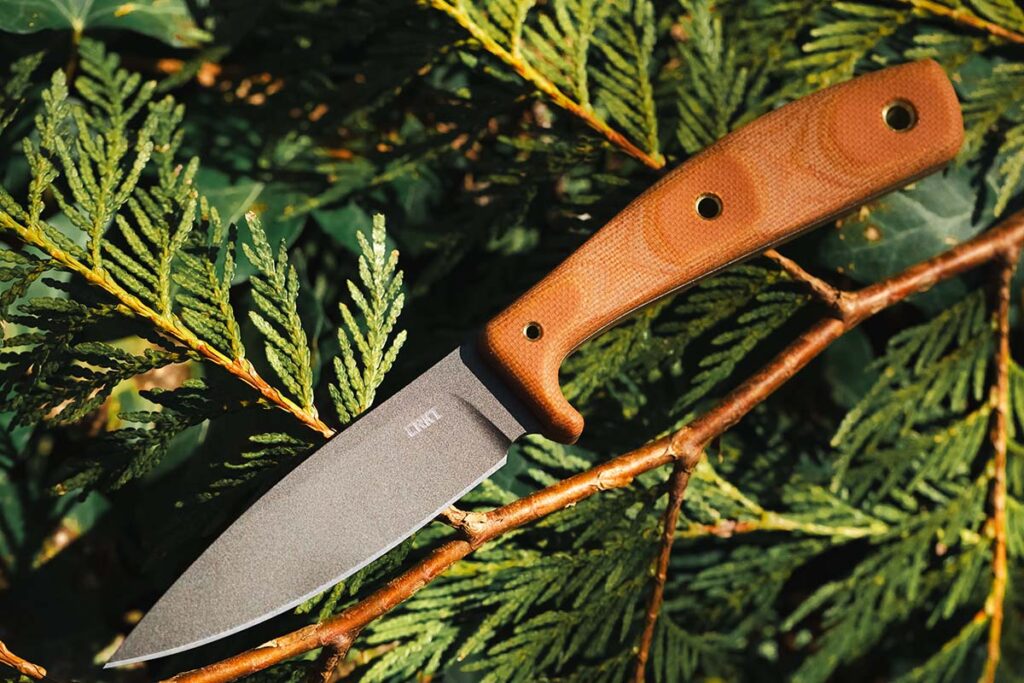
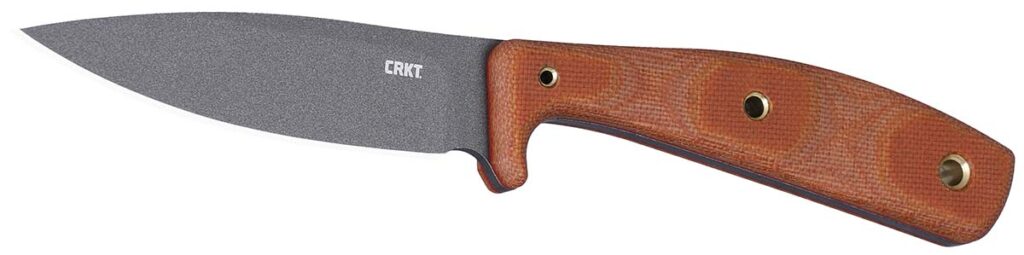
In addition to the limited edition, CRKT is offering a carbon steel version with a tan canvas Micarta handle.
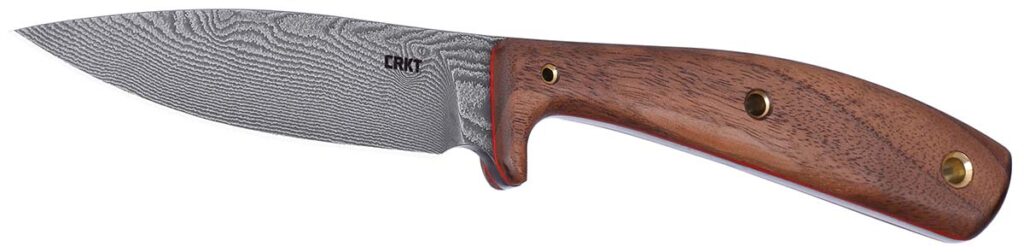
As for the knife itself, it’s designed as a do-all hunting knife boasting a 3.5-inch drop-point blade, with a flat grind. It has enough belly for skinning detail but is svelte enough—particularly at the point—to handle more fine jobs in the field.
Ergonomics take the front seat in this extremely manageable knife, with a slight palm swell in the walnut handle to ensure it fills the hand. Furthermore, there’s a slight curvature near the finger guard, a safety feature that locks the knife in hand and prevents slipping. Well thought out, to say the least.
CRKT is only doing a limited run of the damascus Soldotna, with only 200 pieces up for sale. One of these beauties will set you back $500. However, if you don’t have that sort of change floating around your couch cushions, CRKT is offering a Cerakoted carbon steel Soldotna at a much more affordable $200. Note, the carbon steel model has the same specs as the Damascus, except in steel and handle material, which is tan canvas Micarta.
The EDC fixed blade proves itself more than just a pretty face.
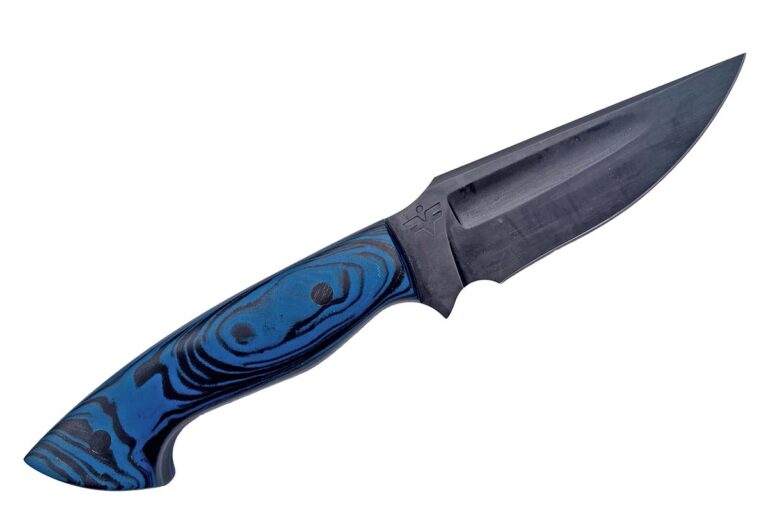
After finding First Degree Forge’s website, I reached out to Joshua Brown about testing one of his knives for “Spec Sheet.” He agreed and sent me his EDC Fighter. The shape really caught my eye, along with the blue-and-black handle. The grinds are symmetrical from side to side. I checked the handle for any epoxy gaps and found none, though I did find a few areas that might cause a hot spot or two while cutting.
Light Cutting Tests
I went straight to the 20-pound bond copy paper for the initial sharpness check. The EDC Fighter zipped through the material quickly and repeatedly. I had to really concentrate on moving my fingers quickly so I didn’t leave any DNA on the paper or the knife. Joshua’s blade is very sharp indeed.
I had an extra box to pull a slicing piece from. The cardboard parted quickly. I could feel some friction as I finished the cuts. It was the medium dragging on the thick blade spine, giving the cardboard a slight curl. However, there was no slowdown in cutting.
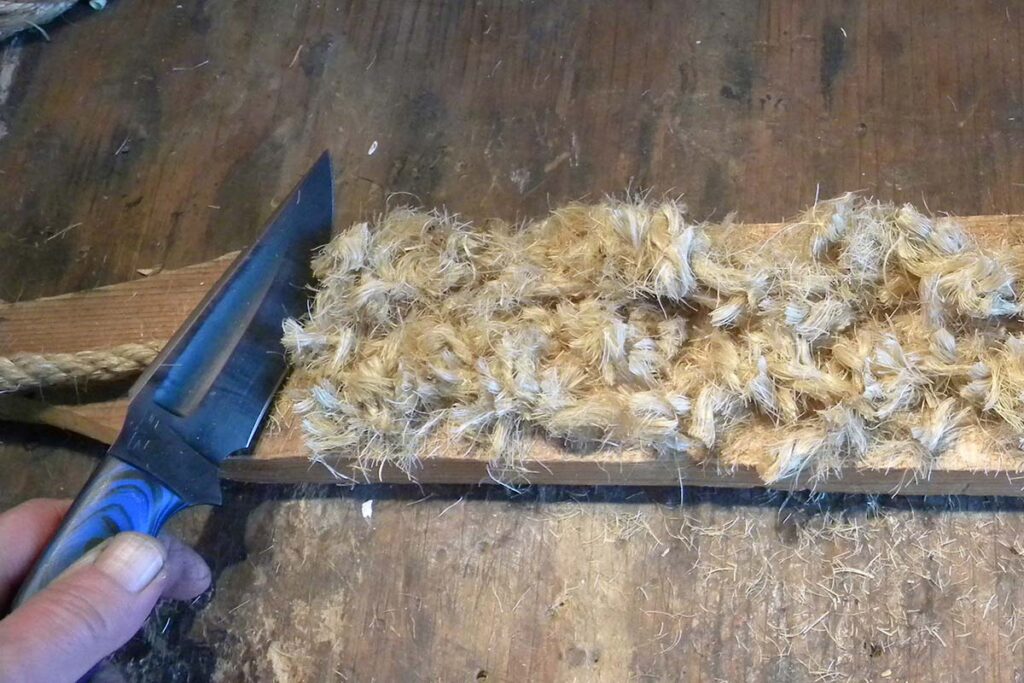
The EDC Fighter crunched its way through 190 cuts in the sisal rope.
A piece of 8-ounce leather was next. The EDC Fighter sliced it smoothly and aggressively. I could hear every crunching slice, a sound that brings a smile to my face. The handle was comfortable but felt a tad thick for my hand.
I rolled right into some skiving with the same leather. The edge crunched into the material cleanly. Overall, the EDC Fighter was quite controllable at keeping the spacing between slices even. The flat-ground blade indexed perfectly off my finger.
Heavy Cutting Tests
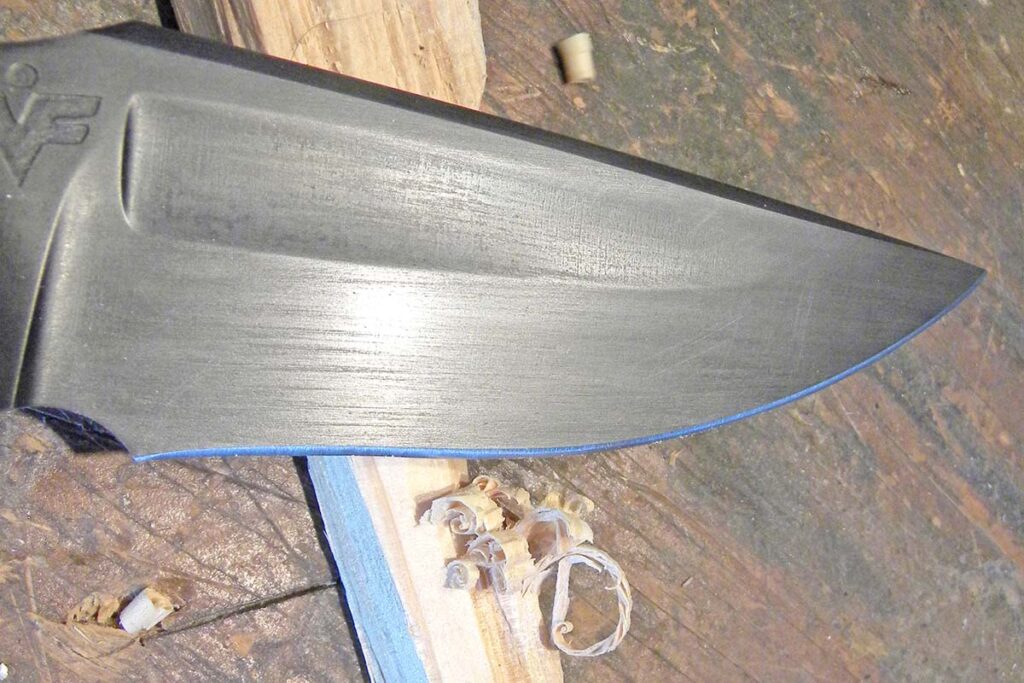
Whittling time! The edge produced some thick curly-cues and wanted to bite deep into the wood (there was some possible wood grain deflection). The handle made for a secure cutting grip but the steel near the choil was sharp on my skin. A little sandpaper would remove the unwanted sharpness.
Next on the menu was some baton work on a knotted pine 2×4. The large handle was comfortable and stopped any shock from transferring to my hand. The blade drove smoothly through the wood with little damage—only a little smear on the finish.
The edge produced some thick curly-cues and wanted to bite deep into the wood. The handle made for a secure cutting grip but the steel area by the choil was unnecessarily sharp on the author’s skin. A little sandpaper would remove the unwanted edge.
The sharpness test on sisal rope awaited. The EDC Fighter crunched its way through 190 cuts. I found that the thumb rest also had a sharp edge to it—again, an easy fix with sandpaper. The handle was comfy and the palm swells worked great.
The final paper slice was barely different from the first. What little problem there was mostly was caused by the paper picking up some dampness in the air. The edge remained very sharp.
Last of all was my regular semi-destructive test—whacking the edge into a whitetail deer antler. I gave the knife 30 good antler chops and didn’t hurt the edge at all. Heat-treatment grade: great!
Botton Line
The EDC Fighter is a very nice knife, comfortable to hold and an outstanding performer.
Changes
Soften the previously mentioned non-blade sharp edges where fingers or thumb meet steel.
We put the Boker Plus Vigtig vs. Wild and Condor Tool & Knife head to head to see which come out on top in the backwoods.
A couple of decades ago, attention started turning to the category of bushcraft knives. As usual, custom knifemakers were the ones filling the demand and leading the way. I was proud to be among them, along with such makers as Scott Gossman and others. There were those* before us but the push back then seemed more on survival knives with a tactical leaning.
After the push started, many smelled the opportunity to make money and the genre was flooded with assorted marketing schemes and people seeking their 15 minutes of fame. In all the confusion of people wanting to become famous and cash in, the true meaning of bushcraft was lost.
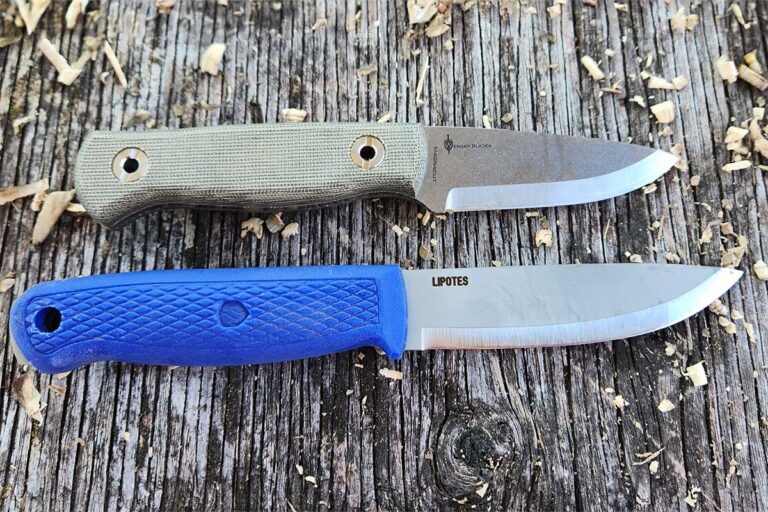
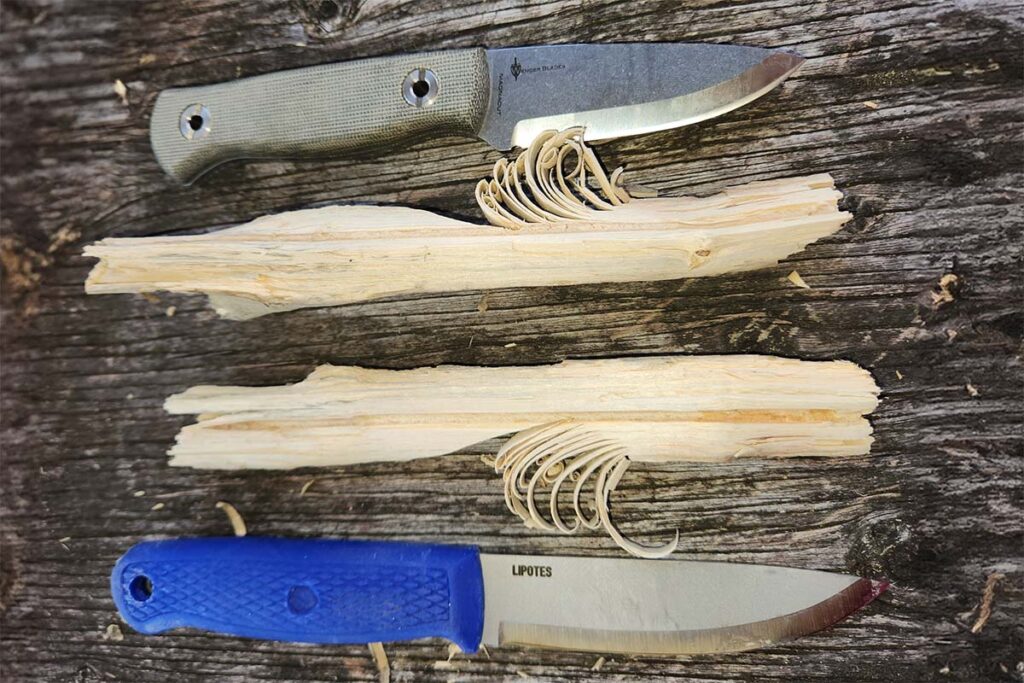
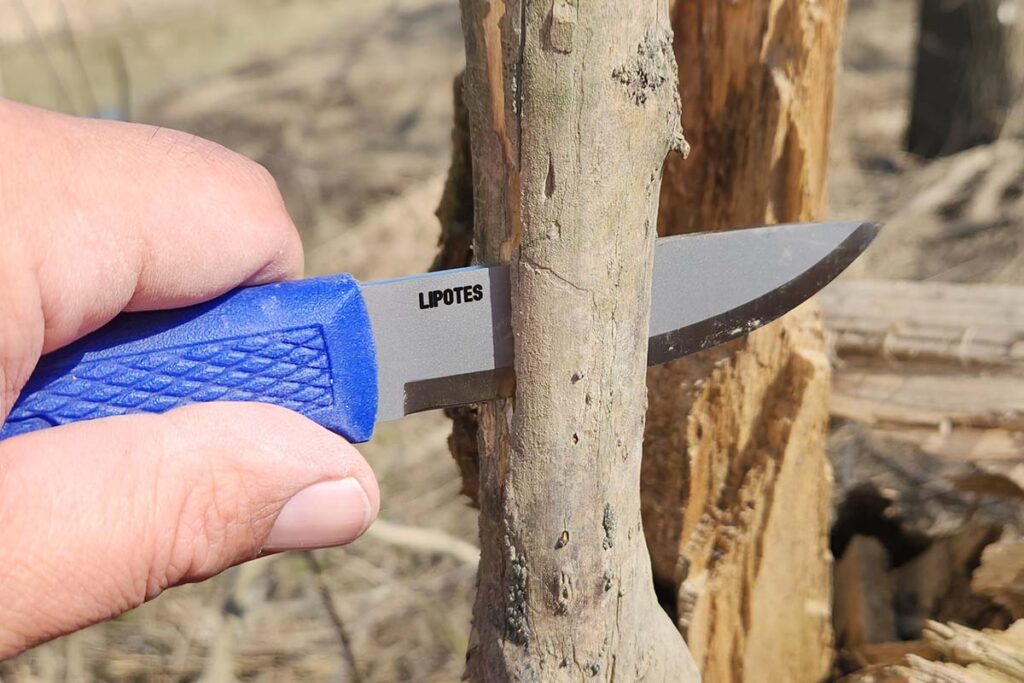
The thinner steel thickness on the Condor Tool & Knife Lipotes enables it to make finer curlicues than the Boker Vigtig vs. Wild. Designed by Dave Wenger and made in Germany, the Boker has an MSRP of $194.95. Joe Flowers designed the Lipotes, which is made in El Salvador. MSRP: $64.98.
A bushcraft knife is not something meant to be indestructible at all costs. It instead has always been a tool of creation. Now I see most marketing or testing related to whether the knife can be pounded through a log, a log that most likely would be unavailable if not for a chainsaw. No, the bushcraft knife started out as a tool, nimble in hand, keen in cutting and used to fabricate things in the bush, things not just to accommodate survival but to help a person thrive. In that reasonable light and practical expectation of the genre, let’s see how the Boker Plus Vigtig vs. Wild and Condor Tool & Knife Lipotes are suited to help you thrive in nature.
Boker Plus Vigtig
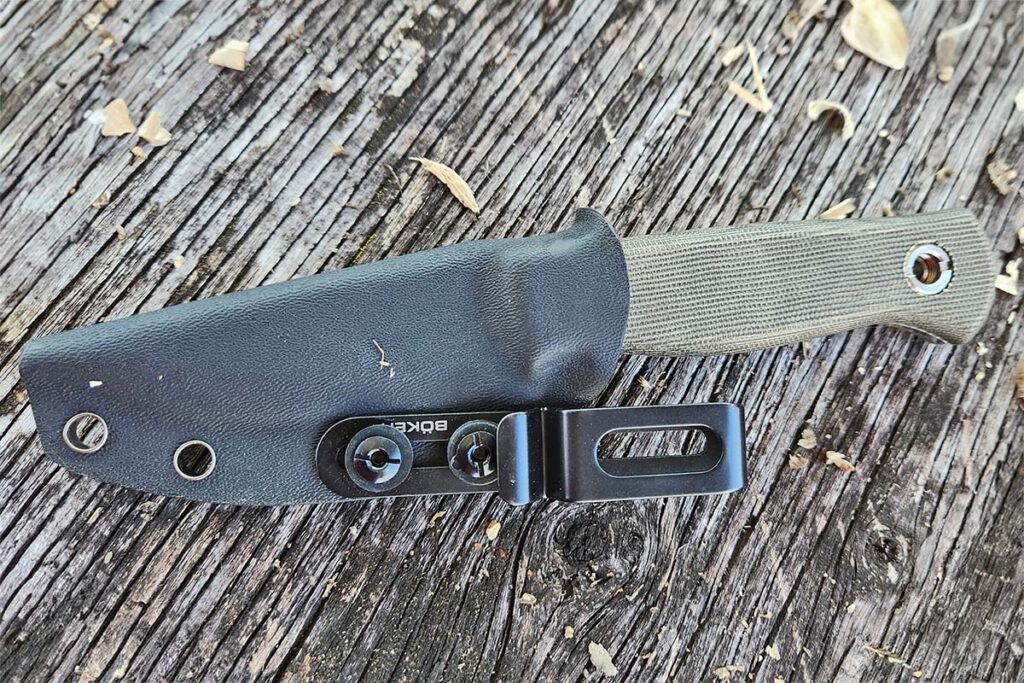
The Boker sports a molded Kydex sheath with an ambidextrous belt clip. The sheath holds the knife secure while still allowing for an easy draw when using a thumb push off.
The Boker’s 3.35-inch blade features a Scandinavian, aka Scandi, grind, a grind in which the major bevel is the only bevel and goes straight to zero. Executed correctly, the grind should take up at least a third of the blade’s width. If the grind is any shallower it will be too steep. Some variation on the height of the grind is due to the thickness of material. Being too steep will decrease the effectiveness of the blade to cut because the angle of the edge will plow into the work material—and when I cut with the Boker, it did just that. It is not that it won’t cut with a steep angle, it just tries to take heavier cuts as it dives. Therefore, you don’t get the thin controlled cuts as easy as a properly executed grind.
Scandi grinds are popular in bushcraft because of their amazing effectiveness carving wood. In the game area they work fine but you will often find that bone wreaks havoc on a Scandi edge. In addition, the cross profile of the blade is not optimized for processing meat. Full flat grinds process soft, malleable materials such as meat best since there is no shoulder on the blade to bind as the meat flows along the cross-section profile. On flat grinds you also have a secondary bevel, or micro bevel as some call it, and it takes hitting bone better. The Boker is a full-tang knife with a blade .16 inch thick at the thickest, somewhat thick for a bushcraft knife. A clever feature is how the spine is finished. To strike a ferro rod off the blade spine you need a crisp edge. Sharp spines are more effective at generating sparks but are not very comfortable if you need to use a pinch grip or a thumb extension on a power grip. To address the issue, the Boker has a sharp spine toward the tip and a crisp spine section near the handle.
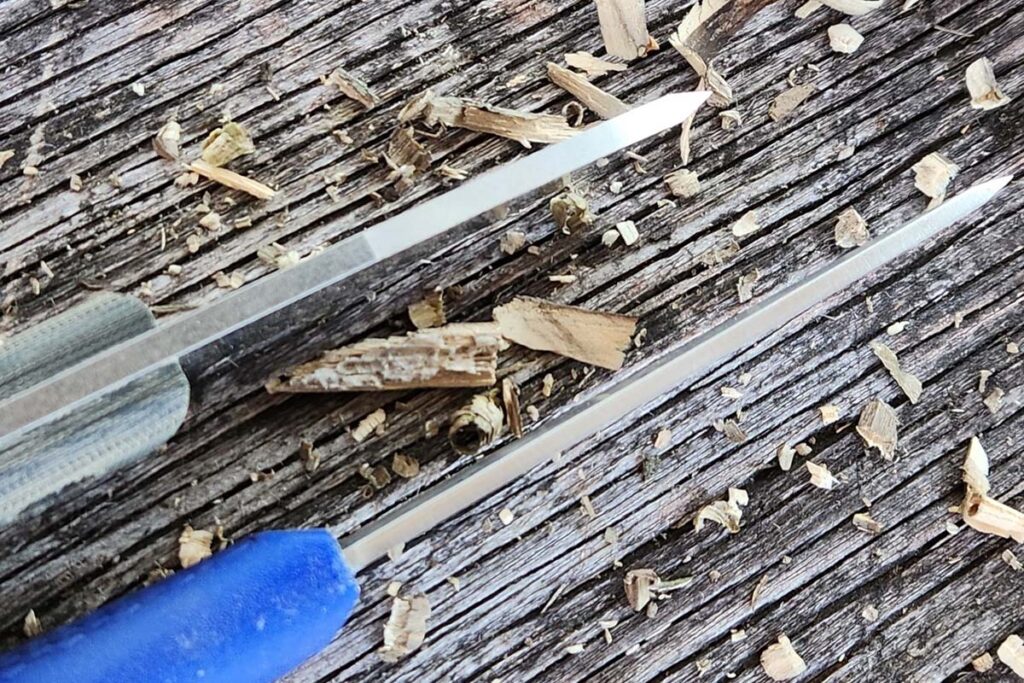
Note how much thicker (.16 inch at the thickest) the Boker blade is than that of the Lipotes (.13 inch at the thickest).
The handle is green linen Micarta® with beefy mechanical fasteners that double as lanyard holes. For those who prefer a full grip it has good profile contouring and leaves a blocky handle from side to side. There are no hot spots while still providing control. The blade is CPM MagnaCut stainless steel and is wide for its size. With its thicker blade it batons well through small branches to make small kindling. You trade some agility for durability with a beefier blade material.
The molded Kydex sheath rides high and boasts a metal belt clip that screws on for right- or left-hand carry. The knife locks securely into the sheath yet not so much you can’t easily withdraw it.
I think the Boker has its good points. I do prefer my bushcraft knife to be more of a nimble cutting tool. Overall, if the edge were ground higher this knife would up its game substantially.
Wild and Condor Tool & Knife Lipotes
For ease of baton work, the general rule is the cutting medium should be no wider than one-third the length of the blade. The Lipotes has a 4.15-inch blade of 14C28N stainless steel.
Let’s start with the handle on the Lipotes (among others, a lipotes is an endangered species of dolphin). It is an extended hidden tang and not a full tang—that’s right, not a full tang. Some time ago a well-known knife company introduced an extended-hidden-tang version of a knife and called it a full tang, and all the marketers and social media influencers decided to rename a feature so everyone could fall in line. If you can’t see the tang all around the knife’s handle, it isn’t a full tang.
Along with rat-tail tangs, hidden tangs have the distinct advantage of being some of the most comfortable knives in use. The steel element is totally encapsulated in the handle, allowing the maker to have full control in contouring the scales. In other words, you basically have a tang that will not interrupt how the material is shaped.
The Lipotes handle is very comfortable and the texture in the molded material provides a secure grip. As for the hidden tang extension, it can be used as a small hammering device or even a scraper.
Except for the grind, I like the overall proportions of the knife. As with the Boker, the grind doesn’t go high enough. It will still cut but the cutting would be greatly optimized if the grind were half its height taller. It performed well in its cutting tasks with power cuts, feathering and the like. However, it still missed the ease of cut and control of a higher grind. If I could, I would love to get my hands on a bunch of these blades and regrind them.
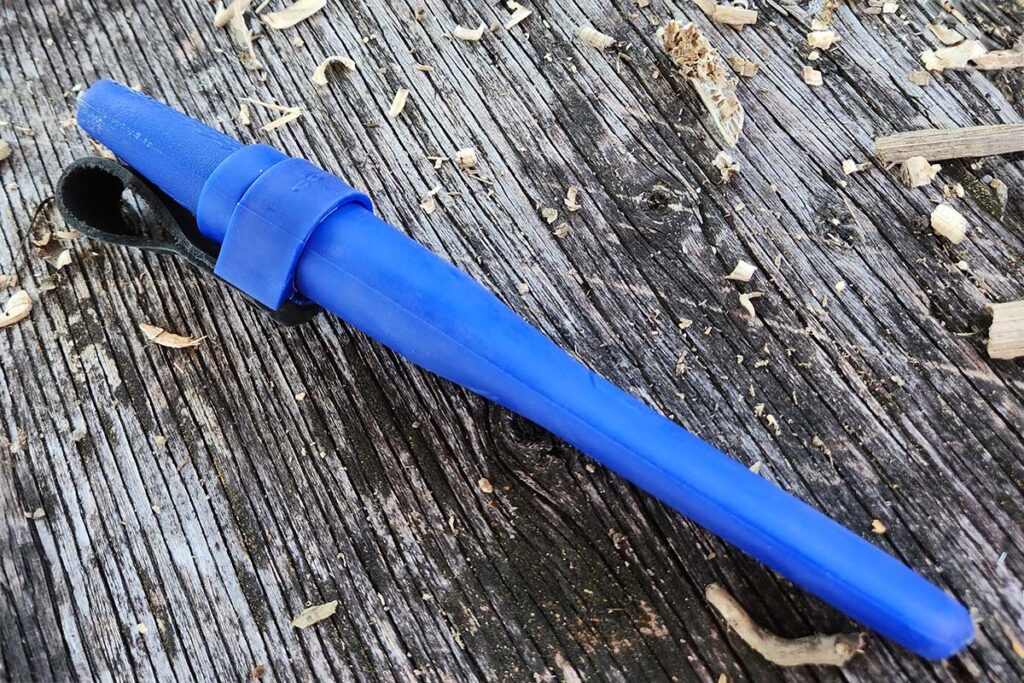
The Lipotes has a quality sheath that holds the knife nice and tight when you ramble through the woods. The leather belt loop riveted to the back won’t accommodate a wide belt.
I really like the sheath. It has a nice, deep carry. It is a molded plastic with a good friction fit. It is a bit mysterious to me as to why the belt loop is so small. Only a dress belt would fit through it. You could still run a cord through it for neck carry or a baldric. The Joe Flowers design checks off so many of the boxes for a good tool. I would have been singing its praises more with a higher grind. Instead, I am pretty much humming.
More Than Survival
To repeat, a bushcraft knife isn’t just for survival, it is a tool of creation. Often the real goal of an issue gets lost in the minutiae that results from personal gain and egos. Over the years, marketing and self-promotion have polluted bushcraft until we have lost it in a sea of books and an ocean of social media. A look at a simple tool such as a knife can really remind us of what bushcraft is about. It is about man’s will to do more than just survive. Man strives to prosper.
I will leave you with one of my favorite quotes about tools by Thomas Carlyle: “Man is a tool-using animal. Without tools he is nothing, with tools he is all.”
*Author’s note: The origins of the discussions of bushcraft can be attributed to such enthusiasts as Mors Kochanski, Larry Dean Olsen, Lofty Wiseman, Ray Mears and others.
Check Out More Outdoor Knives:
NESSMUK KNIFE: OPTIONS IN THE ALL-AMERICAN OUTDOOR KNIFE
BEST TOMAHAWKS: OUR TOP HAWKS FOR BACKWOODS TO BATTLEFIELDS