

Kershaw Leek Review: Not Your Garden-Variety EDC Knife

A Ken Onion design, the Kershaw Leek has cut a commanding profile.

It’s no wonder why the Kershaw Leek is such a phenomenal EDC folding knife. It has all the right elements that knife users crave—style, sturdy construction, premium materials, an impressive selection and is priced right.

The Leek is essentially the bigger brother of Kershaw’s Chive, answering the call from knife fanatics for a larger option of this Ken Onion design. And the petite option doesn’t disappoint.

We’ll examine why it’s been a popular seller for Kershaw, explore some popular variants and find out why this isn’t your garden-variety EDC knife.

Kershaw Leek Blade

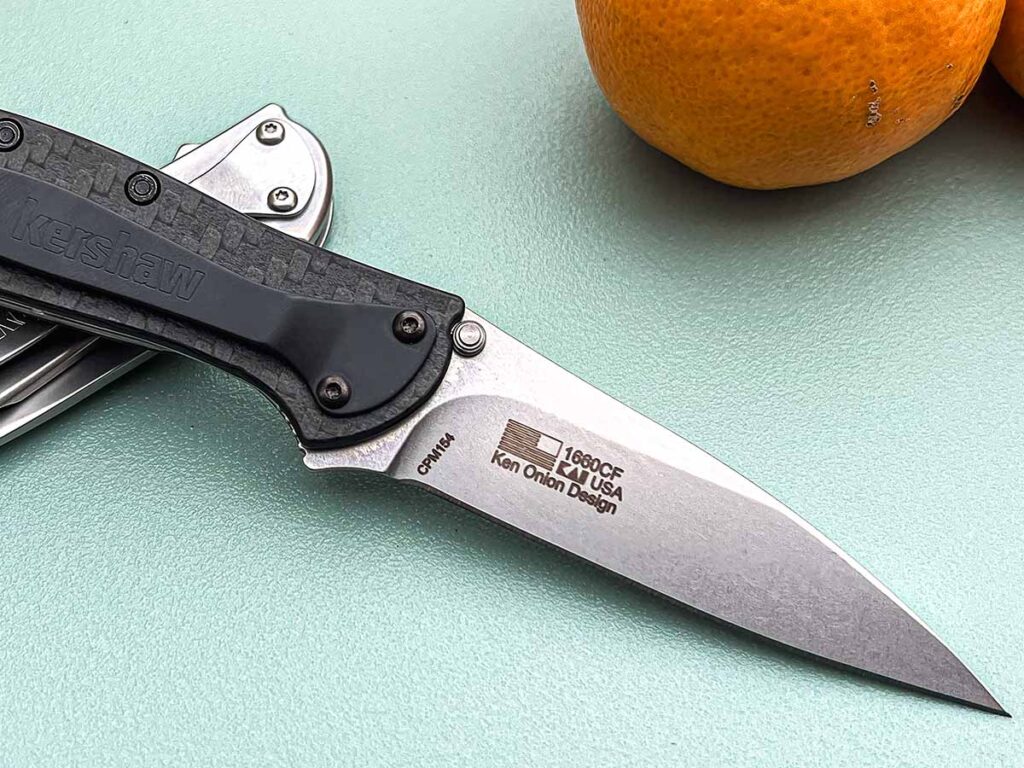
The Leek’s blade measures 3 inches and is made from Sandvik 14C28N stainless steel, making it great at holding an edge. However, it’s the blade’s profile that demands attention. It’s a modified clip point and the profile tapers down to almost a needle tip. This is both a good and bad thing, which I will go into in depth later.

Kershaw Leek cutting
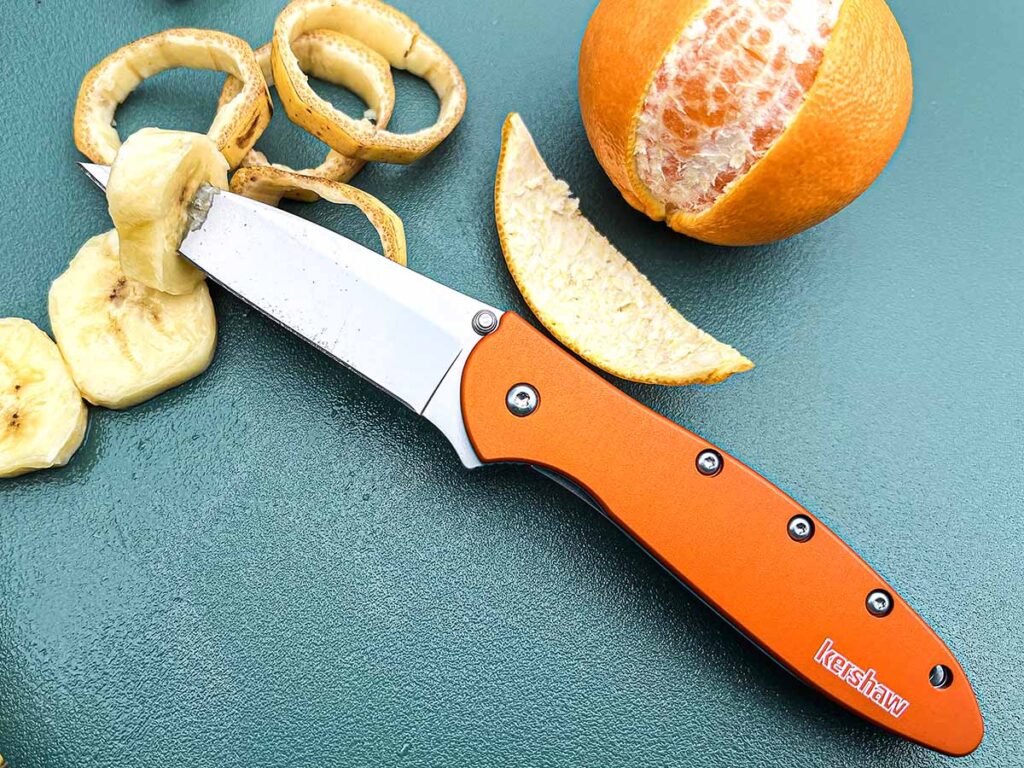
A born cutter, the Leek’s modified clip point blade made quick work of nearly any task set in front of it. Photos by Marty Stanfield, Marty Stanfield Photography

The hollow grind of the blade thins it down nicely to where the blade takes a smart, sharp edge easily. Dual thumb studs are present, but do not function as traditional thumb studs. Instead, they are used only for a positive stop in the open position.

Kershaw Leek Handle

The handle is a slender, elongated shape that favors daily carry due to its thin profile. The handle itself measures 4 inches, bringing the overall length of the Leek to 7 inches when open.

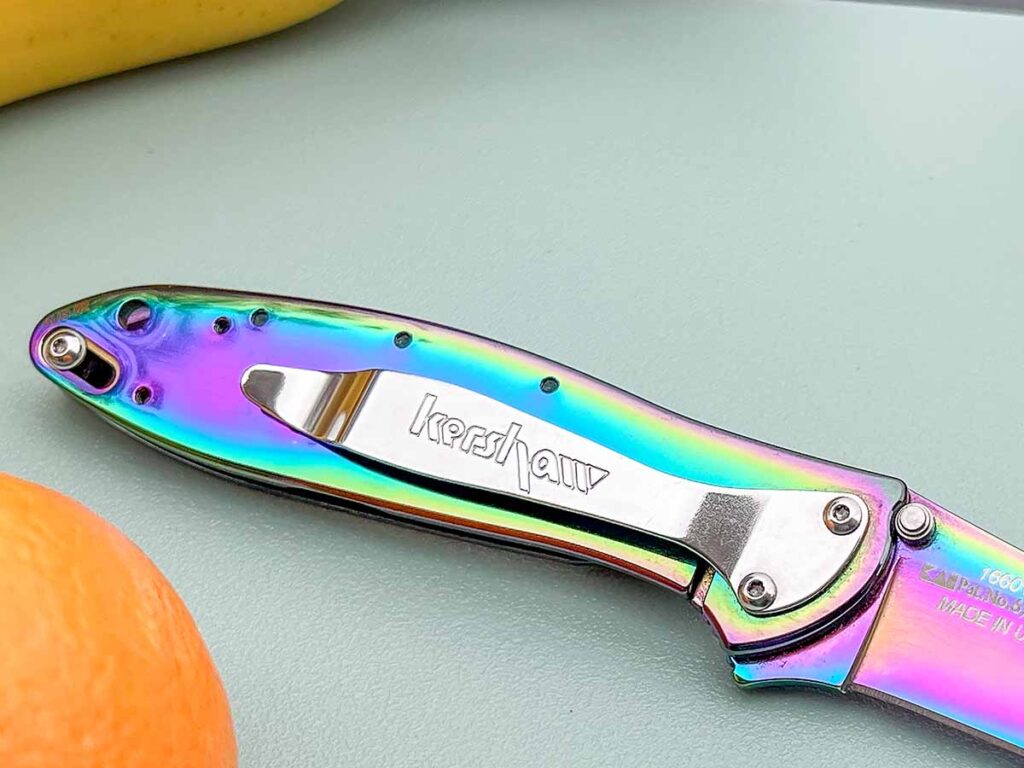
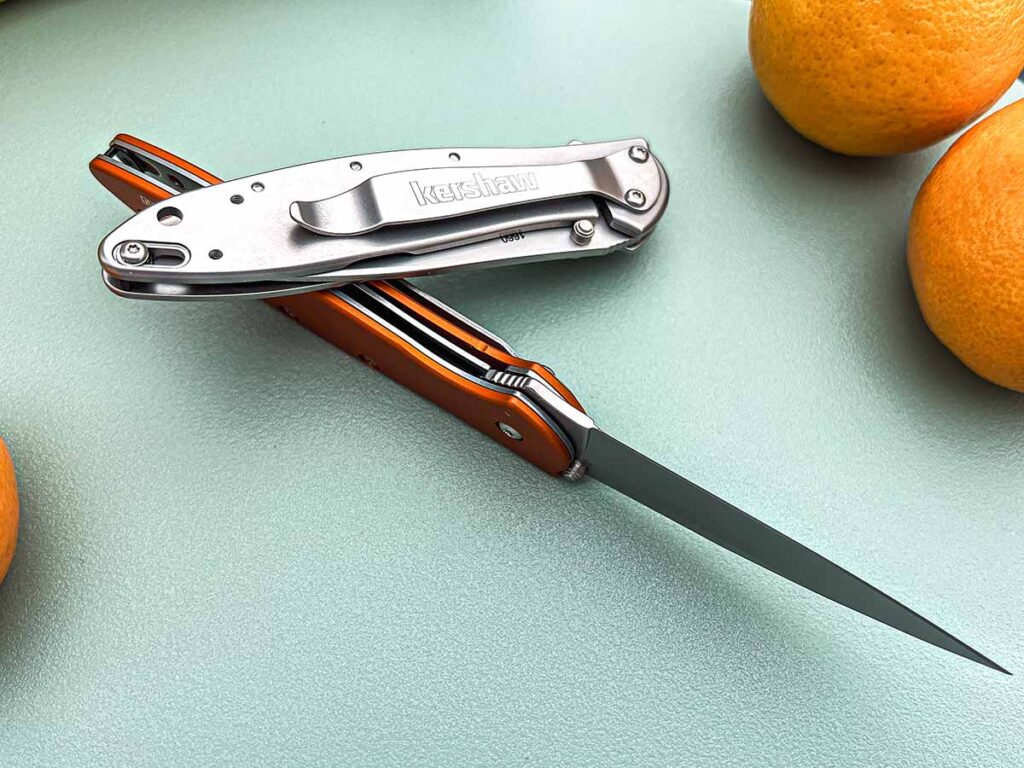
The handle sports a nice, comfortable chamfer all the way around making gripping it easier and presenting fewer hot spots. A large, steel pocket clip can be affixed to the handle to carry the Leek in the tip-up or tip-down position, whatever you wish to do. The clip holds the Leek securely in your pocket, and it can be removed as well should you desire to carry it in the bottom of your pocket.

Leek clip
A movable clip allows the Leek to be carried tip-up or tip-down. Photos by Marty Stanfield, Marty Stanfield Photography

The base Leek (model 1660) has a handle of bead-blasted stainless steel with a matching bead-blasted blade. The Leek is available with a variety of handle finishes, from several colors of anodized aluminum to black PVD-coated, Blackwash and carbon fiber, to name a few.

As for the lock, it’s a frame lock that engages the blade tang positively, securing it in the open position. Very solid and easy to operate when you’re ready to stash the blade.

Testing The Leek

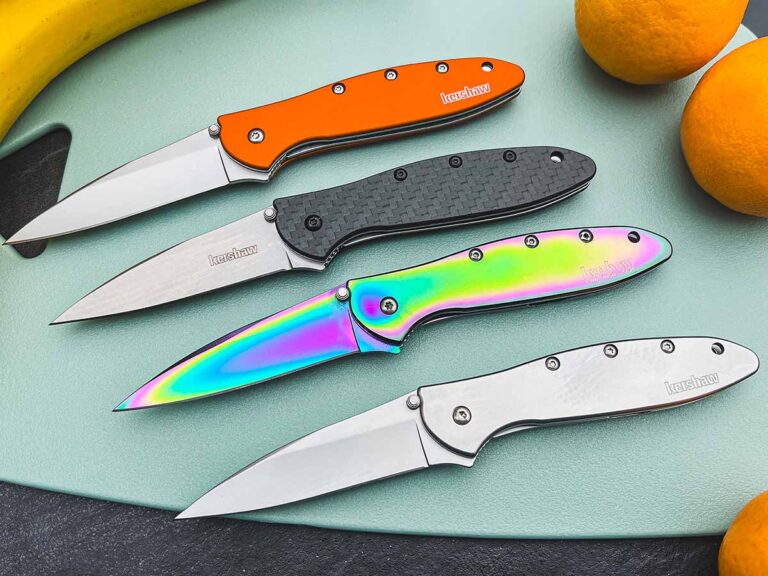
For this review, Kershaw sent me several of their popular selling Leek models for closer examination. I have the 1660 base model Leek with a bead blast finish on the blade and handle. The 1660OR is a liner lock and has orange-anodized aluminum handles. The Leek is available in an array of anodized aluminum colors. Speaking of colors, there’s also the very unique 1660VIB which is a high polish 1660 with the addition of a rainbow titanium coating. And finally, we have the high-tech 1660CF liner lock which features futuristic carbon fiber handles and upgraded blade steel to CPM154 for higher performance cutting and longer edge retention

My pick of this bunch is the 1660CF, given there’s a lot going on with this particular model. You get the benefit of the unique look and the lightweight of the carbon fiber, combined with the high-end blade steel. The 1660CF carries very well due to the reduced mass compared with the regular 1660 Leek framelock.

Kershaw Leek frame lock
The Leek’s frame lock is sturdy and easy to manipulate. Photos by Marty Stanfield, Marty Stanfield Photography

Structurally speaking, the base model 1660 Leek frame lock has a very rock-solid lockup. It’s very hard to defeat and only closes when you deliberately command it to. It actually makes a good work knife as long as you use it as a cutting tool and nothing else that it wasn’t designed for (more on this in a bit).

Performance-wise, the Leek—across the board regardless of the blade steel or handle configuration—is definitely a slicer. The blade stock is very thin and when it is ground, it is attenuated even more.

Right out of the box, the leek has a lot of bite. It goes through thicker stuff like cardboard very easily. The tip being acute, makes for an excellent scoring tool as well. The Leek excels at being an all-around EDC cutter.

The blade opens fast, with the press of the exposed flipper tab on the blade spine, Kershaw’s Speed Safe assisted opening technology takes over and powers the blade to the fully open and locked position. It’s easy to see why the Leek remains a popular Kershaw model after all these years, it simply works well and is a good-looking design.

Leek Sticky Points

Two of the most common failures I have seen in the Leek are where folks misuse the knife as well as the sliding safety breaking.

Leek blade
While the blade is an accomplished cutter, it’s thin enough the tip is easily damaged when used to pry. Photos by Marty Stanfield, Marty Stanfield Photography

Because the tip of the blade is pointy, it’s a weak spot with the knife. Where you get into trouble is when you use the tip to pry, even lightly. This either results in a bend or break off entirely. This is a cutting tool, not a pry tool or screwdriver.

Each Leek also comes with a sliding safety that, when the blade is closed, you slide over the tip of the blade to physically block it from coming out of the handle. There is a hex screw on the backside you use your thumb to move and this moves the safety. Sometimes the safety can slide on its own while the blade is open; when you go to close the blade it comes down on the safety tab. If done hard enough this will cause the safety to break, as it is plastic. The nice part, the tab is replaceable.

Final Cut

Other than these points, the Leek is a proven EDC knife. It’s rather compact, slender, and doesn’t garner unwanted attention. It’s worth a look if you’re in the market for a blade that balances looks and performance.

As for price, the MSRP for the base 1660 Leek is $115. The 1660OR orange handle Leek is $105. And the Carbon Fiber 1660 CF runs $190. In the scheme of things, not bad pricing for USA-made EDC folding knife—particularly with an Onion pedigree!

Read More About Kershaw:

Bear & Son Cutlery Offers Up Two New EDC Folders

Bear & Son’s Mini Rancor IX and 778SR Sideliner come in at the right price for EDC performance.

Look at the calendar and it’s apparent the year is dwindling down to its final days. Yet, there are some knifemakers still as busy as ever, squeezing new models into the final days of 2023. Among these is Bear & Son Cutlery.

Earlier this month, the Jacksonville, Ala., manufacturer unveiled two new folders, each with the trappings of solid EDC options. The OPS Mini Rancor IX and 778SR Sideliner are both designed to provide everyday, at-hand performance. However, the knives go about offering this up in slightly different ways.

OPS Mini Rancor IX

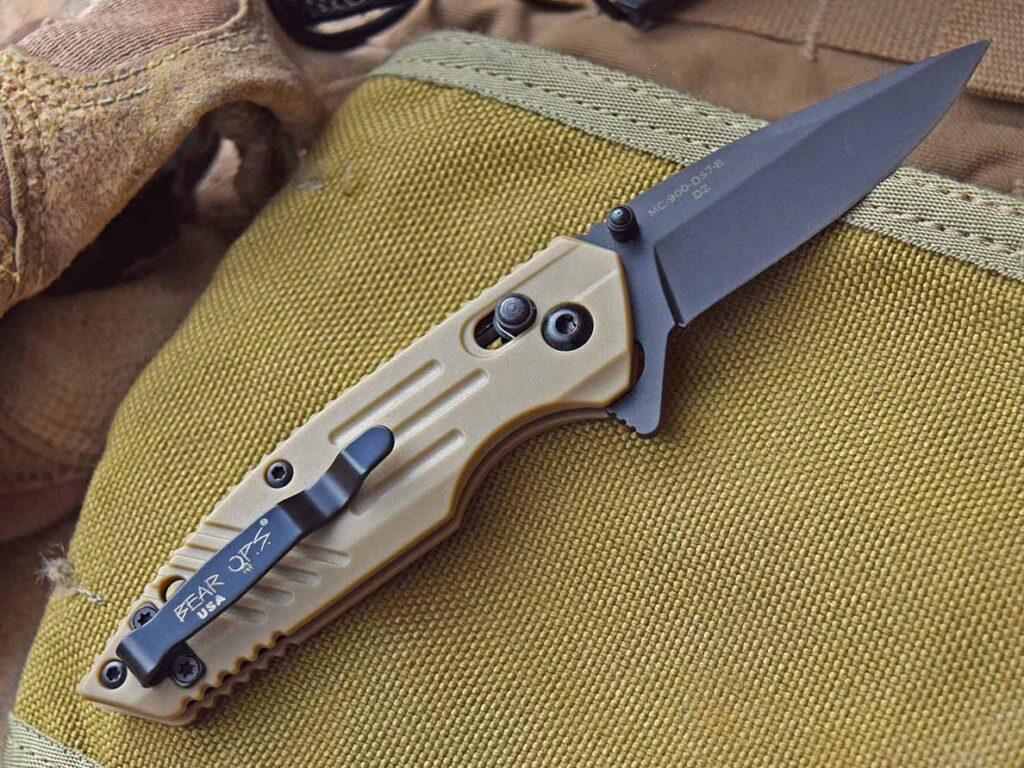
Bear & Son Mini Rancor IX
Mini Rancor IX

No bigger than a minute, the drop point flipper is the smallest option in Bear & Son’s growing Rancor line. While its predecessors weren’t gargantuan by any stretch of the imagination, the Mini Rancor IX is sized much more practically for a day-to-day option and for lighter duty.

Bear outfits the knife with a 2.5-inch blade, for a package that measures in at a very nimble and usable 6 inches in overall length when deployed. The manufacturer opted for D2 stainless steel—a high carbon, high chromium alloy—a common option for higher-end production knives. The steel gives the blade excellent edge retention and wear resistance, plus the ability to easily get touched up when resharpening is required. Giving the stainless steel an extra layer of corrosion and stain resistance, Bear & Son applies a black finish.

The handle of the knife is Zytel—a thermoplastic from the nylon family—with jimping along the spine and along the lower front. Further enhancing the hold of the knife, Bear textures the grip with significant milling, which in the sand-colored handle gives it a dynamic look. The ergonomics appear comfortable and the tapered profile of the handle should give the user a supreme purchase on the knife.

Rounding the knife off is a slide lock—similar to an axis—with offers strong lockup, as well as a fast and safe ability to put the blade away. Also, with familiarity, the lock can also make deployment lightning fast. Adding to getting the blade into action are ambidextrous thumb studs and a kicker. The knife boasts a stainless steel insert to provide backbone and it comes outfitted with a deep carry, tip-up pocket clip.

Bear OPS Mini Rancor IX Specs:
Model Number: MC-900-DS7-B
Blade Material: D2 Tool Steel
Handle Material: Tan Zytel
Rockwell: 58-60
Closed Length: 3.62 inches
Locking Type: Slide Lock
Open Length: 6 inches
Edge Length: 2.30 inches
Weight: 1.60 ounces
Extras: Thumb Studs, pocket clip, stainless steel inserts, Lifetime Warranty
Origin: Jacksonville, Alabama
MSRP: $91

778SR Sideliner

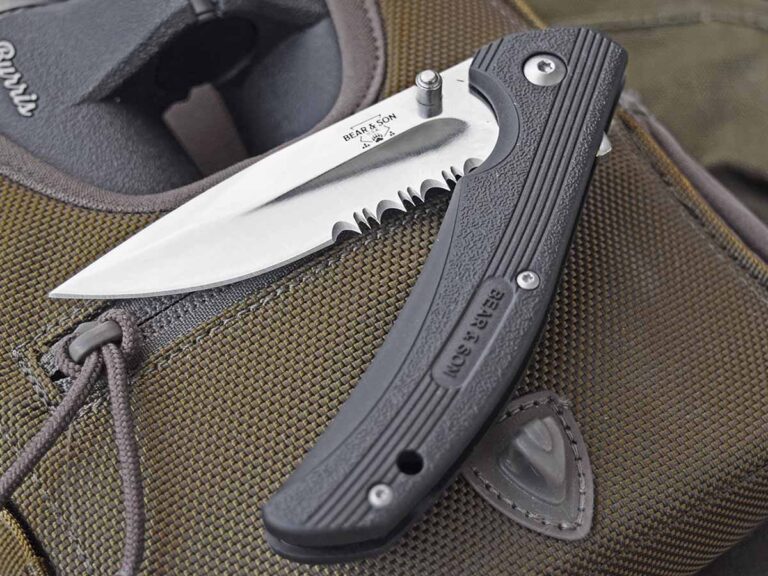
A slightly larger option, the 778SR Sideliner nevertheless offers up a fairly tidy package for those looking for a budget knife. Catching the eye right off is the high-polished 3.25-inch, 440 stainless steel blade with a drop point profile. A quick note on the steel choice, it is softer than many other alloys but does—in general—provide a balanced package of edge retention and corrosion resistance. The tip comes to a very fine point, not only making it dexterous on fine-cutting jobs but also making it great at puncturing. Adding to its cutting prowess are aggressive serrations at the hind of the edge and terminating before the belly.

Again, Bear & Son opts for Zytel for the handle and gives it a pebble finish with some milling down the midline. Given its long and tapered shape, the thermoplastic should provide a comfortable grip and fit most hands fairly well. In its core, the liner lock has a stainless-steel liner, giving the knife a measure of overall ruggedness. Rounding out the package are both thumb studs and a kicker for deployment.

778SR Specs:
Model Number: 778SR
Blade Material: 440 Stainless Steel
Blade Shape: Drop Point
Handle Material: Black Zytel
Lock Type: Linerlock
Overall Length: 7-1/4 in.
Edge Length: 3-1/4 in.
Weight: 2.9 ounces
Extras: Stainless Steel Pocketknife, Thumb Studs, Torx Screws, Lifetime Warranty
Origin: Jacksonville, Alabama
MSRP: $45

Check Out Our Knife Reviews:

Spartan-Nemec Folder: Czech Design Delivers Tactical Sophistication

Collaboration between Spartan Blades and Ondřej Němec is sleek, slender and ready to serve.

Hard-use, tactical tools—Spartan Blades‘ designs are generally as conspicuous as a hand grenade in a sewing circle. That happens when the mucky muck has a Special Operations background.

But simply because the North Carolina concern favors brute superiority over frivolous aesthetics doesn’t mean it’s devoid of a sense of style. The freshly minted Spartan-Nemec Folder is more than proof.

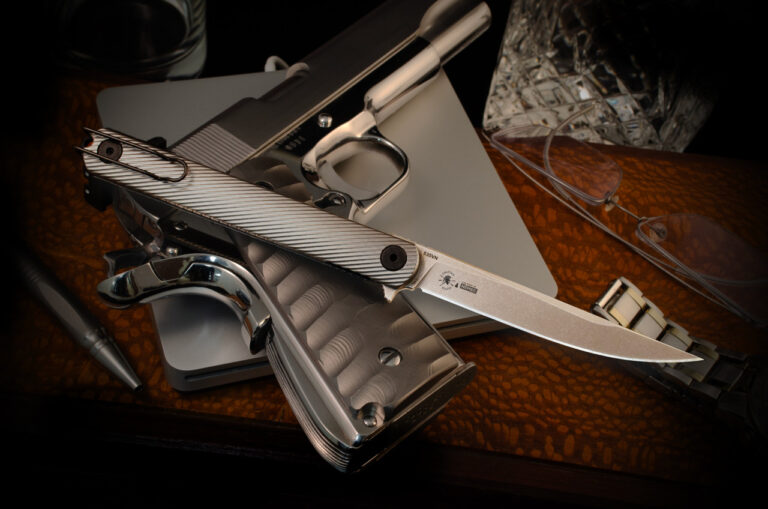
Release in early December, the straight-back folder is a dashing addition to the Spartan Blade’s catalog. And while it appears more James Bond than Rambo, the knife offers up the same exceptional tactical performance for which Spartan is renowned.

Spartan-Nemec Design Background

For those who follow European knifemaking, the moniker of the new blade is a tip-off of its origins. Boasting a slightly Americanized play on Ondřej Němec’s surname, the knife is a collaboration with one of the Czech Republic’s premier designers. His company—Acta Non Verba Knives (ANV)—has become known for knives that have a desirable balance between modern lines and tactical practicality. Overall, his portfolio teams with clean design, with just enough swagger to catch the eye, without crossing over too gaudy. Which, in so many words, sums up the Nemec Folder.

Spartan-Nemec Folder Design Points

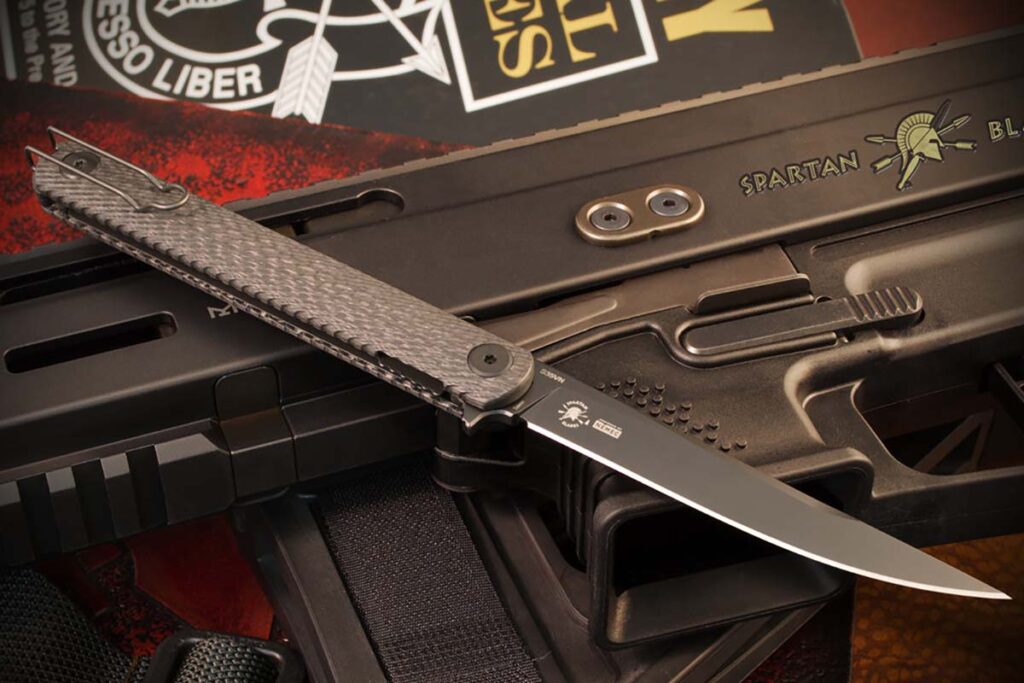
spartan-nemec-carbon-fiber
Spartan-Nemec with carbon-fiber handle.

Right off the tick, the Spartan-Nemec Folder grabs attention with its overall svelte design. Intentional, the 3.5-inch blade knife is meant to nearly disappear on the person and prove as unobtrusive as possible in carry. Along with its thin lines, Spartan and Němec have opted for lightweight scale materials, with the choice of titanium and carbon fiber. The scale is enhanced with attractive diagonal millwork—certain to improve the purchase of the knife.

The blade is S35VN, a well-rounded top-end stainless-steel, with a long drop-point profile and sporting the choice of finishes. Well, at least for the carbon-fiber model, which is offered with a tumbled or Black PVD blade. The titanium iteration is only available with a stone-washed blade.

The Nemec’s blade is deployed via an understated kicker, which blends in well with the rest of the design. Getting it into action is quick and smooth, thanks to a caged-bearing pivot system. Finishing off the package, a deep-carry wire clip (tip up), which makes the knife nearly disappear on person.

As for cost, the Spartan-Nemec folder falls in the toner end of production knives, with the carbon-fiber model boasting a $275 MSPR and the titanium a $295 MSRP.

Spartan-Nemec Folder Specs:
Designers: Ondřej Němec
Blade Length: 3.5”
Blade Thickness: 0.125”
Overall Length: 8”
Blade Steel: Premium CPM S35VN
Blade Hardness: 58-60 HRC
Blade Style: Folding-Straight Back-Flat ground
Blade Finish: Stone Washed (titanium); Tumbled or Black PVD (carbon fiber)
Frame: Liner Lock, Satin Titanium Finish with Black Hardware or Sculpted Carbon Fiber
Weight: 2.624 ounces (titanium); 1.984 ounces (carbon fiber)
MSRP: Titanium $295; Carbon Fiber $275

Check Out Our Knife Reviews:

Spyderco Paramilitary 2 Review: Still A Cut Above The Rest

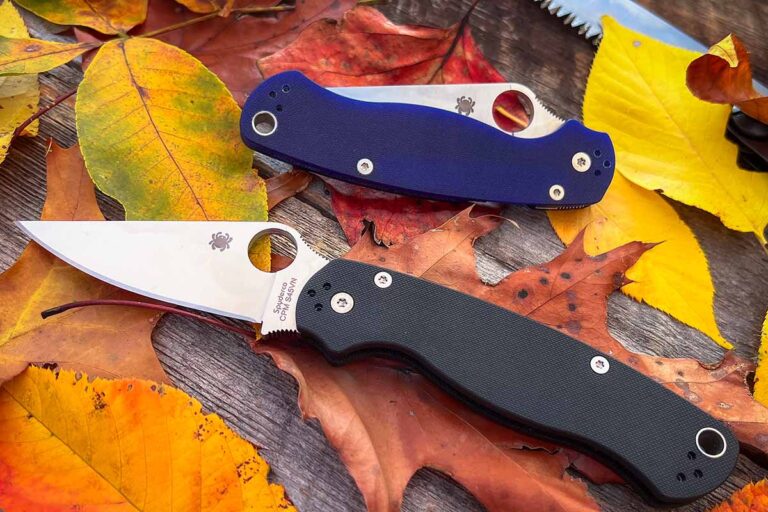
The Spyderco Paramilitary 2, simply known as the Para 2, is a part of the Military family of popular tactical folders in the Spyderco lineup. The Para 2 came about as a downsized version of the full-size Military model, answering the call from customers for a practical EDC option. 

Smaller it might be, but the Para 2 retains the essence of what makes the Military a popular working folder. And because of this, the knife has developed a cult following. However, it’s not simply a shrunken-down facsimile of its larger predecessor, having gone through several design improvements that have dialed in the knife to users’ needs.

In this article, we’ll examine exactly what has made the Spyderco Para 2 such a winner in the company’s lineup. And why, if you need a truly rugged everyday option—or just want a classic in your collection—the legendary knife more than fits the bill.

Para 2 Blade

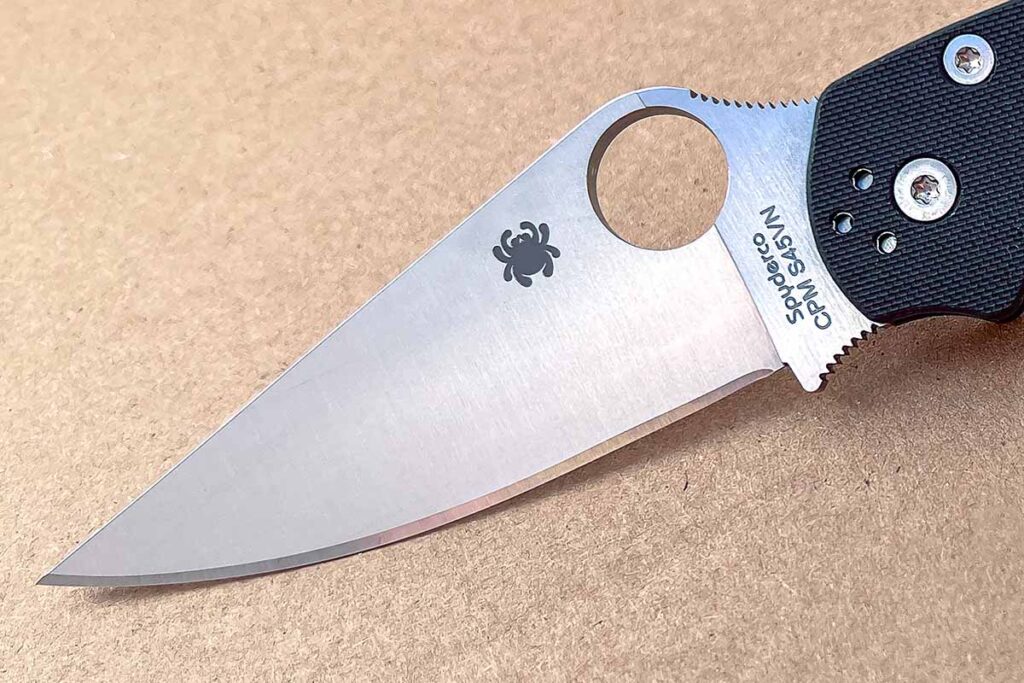
To start things off, the blade of the Para 2 sports a useful clip point shape, enhanced with a full flat grind. Furthermore, the knife has a gradual distal taper from the tang to the tip, evident when viewed from the top. The length of the blade measures 3.4 inches long, enough length to take care of heavy work but short enough for comfortable carry in a pocket. 

Para 2 blade
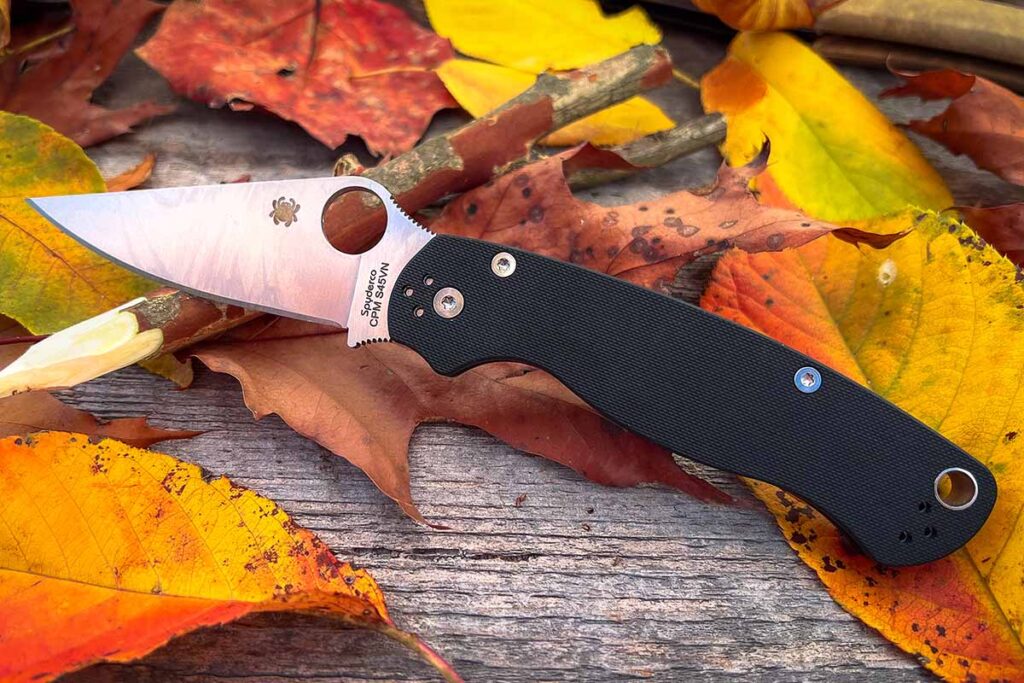
A CPM S45VN stainless-steel blade brings toughness, excellent edge retenion and easy of sharpening to the game.

Constructed of CPM S45VN high-performance stainless steel, Spyderco picked the perfect material for a high-end knife. Compared to the gold standard of this class—S30V—S45VN proves a bit tougher, yet is remains easy to resharpen. That is if you have to. The blade’s toughness means it holds an edge extremely well, suiting it for long-haul work without interruption. A final point, S45VN is fairly renowned for its corrosion resistance, making the Para 2 excel in nearly any environment.

As those familiar with Spyderco can guess, the blade boasts the company’s trademark hole near the spine, at the rear. This has been the go-to deployment method for time immemorial on the firm’s knives. Rounding things out on the blade, there’s integrated chill formed by part of the blade and handle when the blade is opened. A choil permits the user to further choke up on the blade for extra control when needed.  

Para 2 Handle

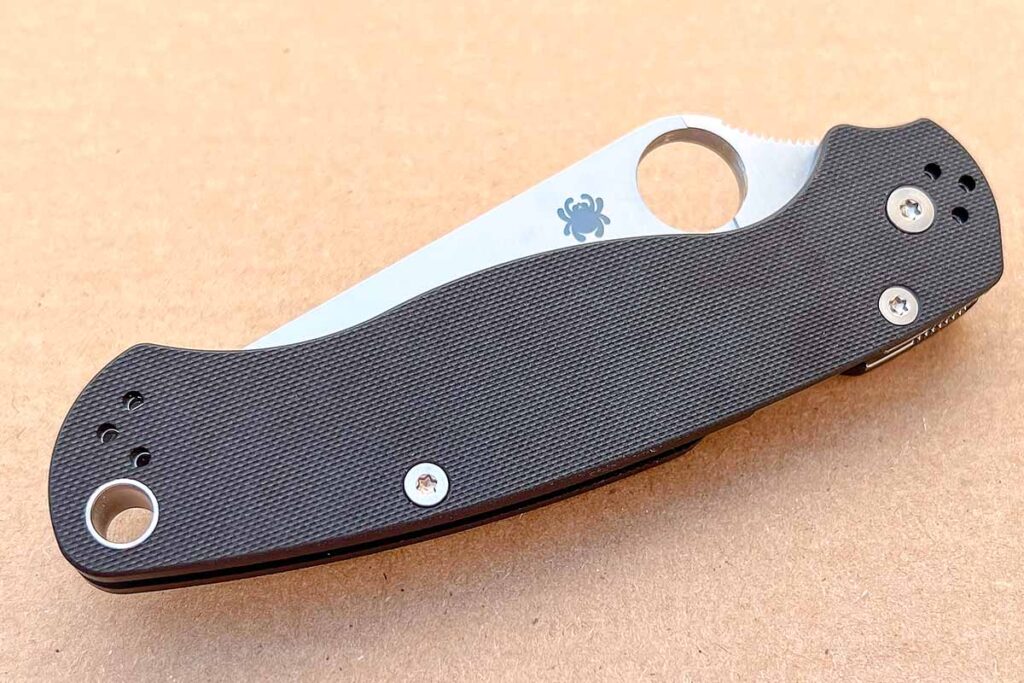
Spyderco opts for a black textured G-10 for the handle, which endows it with a few assets. First, it keeps the knife nimble, cutting down on the Para 2 overall weight. But this isn’t at the expense of strength—G10 is tough as cut nails—and a solid purchase on the knife.

Paramilitary 2 handle
Dark, dashing and useful, the Para 2’s G-10 handled gives users a firm grip on the knife.

The handles are milled out, allowing the slightly undersized stainless steel liners to sit flush with the G-10. Nicely, this reduces the overall width of the handle but doesn’t sacrifice the lateral strength of the liners. Spyderco also turns its eye to weight reduction with the liners, porting them to further lighten the load—while not compromising strength. 

The handle shape itself is very ergonomic, like the full-size Military. There is an expanded, curved section that forms an integral finger guard to prevent your hand from sliding forward. The handle feels very secure in hand, and this inspires user confidence. 

Compression Lock

Compression lock
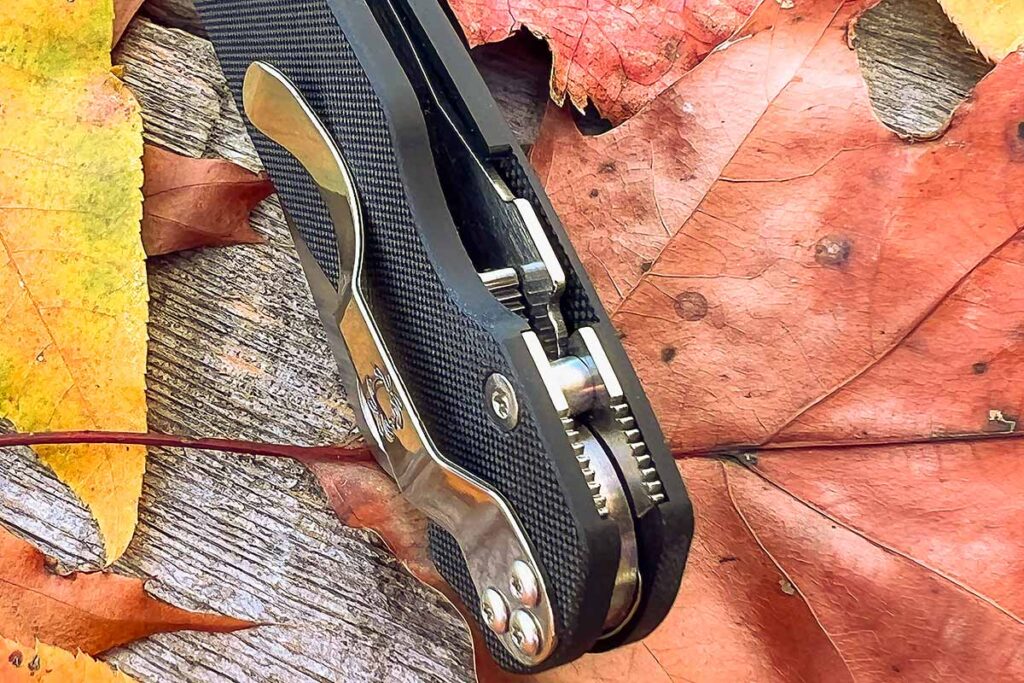
With an extremely strong lockup, the Para 2’s Compression Lock adds confidence to the system.

The Para 2 utilizes Syperco’s Compression Lock to secure the blade, a solid system that has several benefits. For those unfamiliar with the mechanism, it’s an in-house design that provides an extremely strong lockup. It operates by the lock bar wedging itself onto a ramp on the blade’s tang and a hardened steel stop pin. As an added benefit, the release is situated on the handle spine, just behind the blade within reach of the thumb and forefinger. Not only is the design ambidextrous, but it also facilitates fast and intuitive one-hand opening (with a bit of practice) and closing. 

Pocket Clip

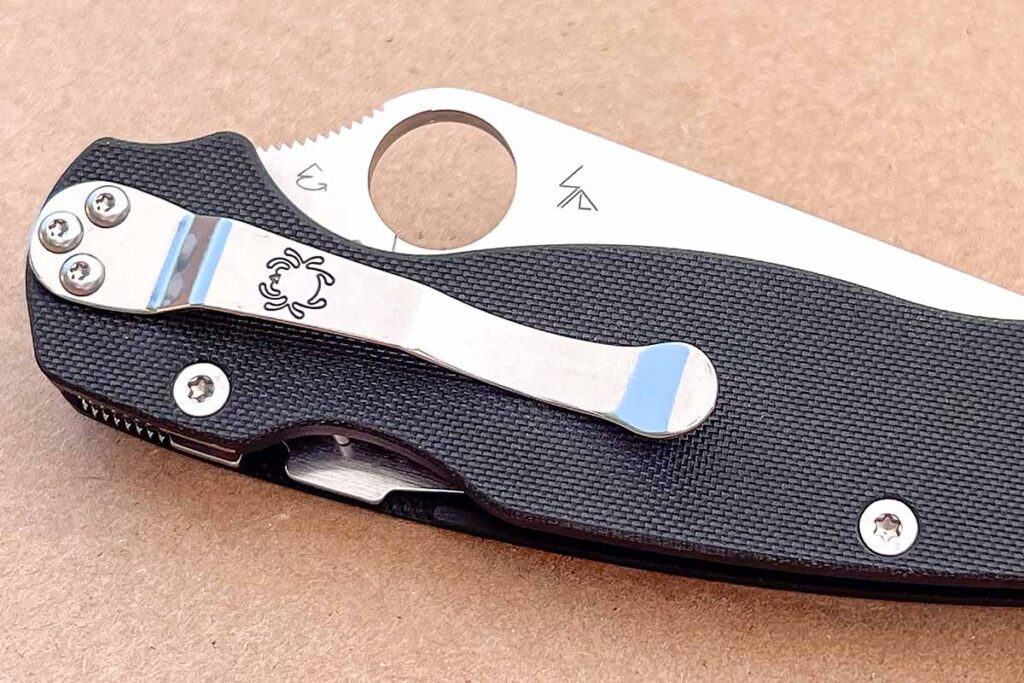
A steel pocket clip is attached to the handle in the right-hand, tip-down configuration. However, Spyderco has what they call 4-way clip mounting with the Para 2. This means the handle is drilled and tapped to modify the clip’s position, thus the carry style. Again, this makes the knife lefty- and righty-friendly, as well as allowing for tip-up or tip-down carry. Understandably, this is another facet of the Para 2 has that a lot of fans. 

Para 2 clip
No matter how you carry or hand you use, you can move the clip to suit your needs.

The handle also has an open build, allowing you to effectively clean lint and other debris out of the inside of the handle by using either compressed air or tap water. The handle length is 4.8 inches, making the overall length of the Para 2 around 8.2 inches. I would consider any folder with an overall length of 9 inches to be large, so to say the Para 2 is a midsize folder is a stretch. It’s safer to say it’s on the upper end of being midsize. Still kind of compact, but large enough to handle some man-sized cutting jobs. 

Para 2 In Action

The flat ground blade with distal taper helps the blade sail through anything with ease. This is exactly the reason why the full-size Military is a favorite among knife users the world over. You’ll notice the blade bites in and does so aggressively and it just takes off. Shoot, I have even used my Para 2 and Military in the kitchen to aid in food prep at times. The Para 2 makes for an effective paring knife. 

Paramilitary 2 open
An all-time classic, the Para 2 offers users an option fit to tackle most jobs.

Outside of the kitchen, the Para 2 slices through cardboard, plastic edging, styrofoam blocks, and even strips wire with ease. Spyderco’s cutting edges out of the box are nothing short of perfect. The Para 2 can be put to work immediately without modifications to the edge. S45VN’s durability is out of this world. You’ll benefit from the enhanced edge-holding capability of this steel by not having to sharpen as often. However, all this depends on your frequency of use and that can vary from person to person. 

The handle ergonomics are very comfortable. The Para 2 didn’t leave any hot spots of any kind and is pleasurable to wield during extended periods of use. 

Final Cut

I think you will find the Para 2 to be an excellent daily carry choice for you, if you are looking for a working folder that is also a super comfortable EDC knife. As for how much the Spyderco Paramilitary 2 will set you back, the MSRP starts at $265.00 for the black G-10 handle/satin-finished blade as tested here. There’s also a camo handle for the same price, and black DLC coated versions for a bit more at $285.

More Spyderco Knives:

Kershaw Blur Review: Focusing On The EDC Classic

A mainstay in the company’s catalog, the Ken Onion-designed, USA-Made Kershaw Blur remains a clear EDC choice.

Kershaw’s Blur has been in the company’s line for several years and it continues to be a good seller for the company. You get it all with the Blur—a handsome look, useful blade shape, and made-in-the-USA toughness.

Devised by custom knifemaker Ken Onion, the Blur exhibits the hallmarks of Onion’s design with its recurve drop point blade and optimized handle shape promoting user comfort, as well as safety. Plus, you get a choice of several variations with the Blur. Each differs by blade steel and handle color, adding some style and flair to your daily carry arsenal.

Kershaw Blur Blade

The Blur’s blade measures 3.4-inches long and is made of Sandvik 14C28N stainless steel. For those seeking a higher-performance steel, Kershaw offers an upgraded S30V version. Though the base-model steel is no slouch, as 14C28N holds an edge well, yet resharpens fairly easily. The Blur’s blade has plenty of bite right out of the box, thanks to its hollow grind.

Kershaw Blur Blade
The Blur’s blade has plenty of bite right out of the box, thanks to its hollow grind. Photos Marty Stanfield

For deployment, the Blur uses ambidextrous thumb studs. These are custom-designed studs, with a unique slanted portion. This rake allows you to bump with your thumb and then back off immediately, so they won’t be in the way of opening.

Speed Safe System

Deployment speed doesn’t disappoint, thanks to Kershaw’s Speed Safe assisted opening technology. The Speed Safe system was developed by Ken Onion and serves as a way to quickly and effectively open a folding knife blade quickly with minimal user effort. Essentially, a torsion bar propels the blade open after the user initiates blade movement by pushing out on the thumb stud.

Kershaw Blur Handle

For those who appreciate a solid and comfortable grip (who doesn’t?) the Blur incorporates some interesting design elements.

Starting with the construction, Kershaw has opted for aluminum alloy, making the handle both lightweight and strong. The shape is also well thought out, offering an intriguing and aesthetically pleasing shape, that doesn’t compromise on comfort. It’s a good example of Onion’s profound understanding of knife ergonomics.

Blur Handle
A fluid shape, the Blur looks nice and fits the palm well. Photos Marty Stanfield

Furthering the usability, the Kershaw chamfers all the edges, ensuring there are no hotspots on the knife and textured rubber inlay inserts are a practical bonus, increasing grip traction tenfold with either wet or dry hands. Kershaw calls this material Trac Tech and it’s very similar to the self-adhesive grip tape you might find indoors in wet locations such as a swimming pool deck.

Interestingly, Trac Tech also helps with holding the knife to the pocket, making it a bit difficult to slide in and out. Depending on who you are and your particular activities, this can be a good thing or an annoyance. It is insurance from the knife falling out of your pocket, but it does slow retrieval time.

I like the use of Trac Tech on the blur simply because it gives the handle a more tactile feel to it.

Trac Tech in a Blur
Looking for more grip, Trac Tech inserts gives the Blur more bite. Photos Marty Stanfield

The general open build of the handle makes cleaning easy, especially when using compressed air or rinsing out under tap water. There is a pocket clip that helps to carry the Blur in the pocket and Kershaw gives you the option of either tip-up or tip-down carry but for right-hand carry only. Sorry lefties!

Final Cut

The Blur is a stylish EDC folding knife that doesn’t back down when there is tough work ahead. The recurve blade cuts very well, and its ample belly makes it an efficient slicer.

The hollow grind really thins the blade out nicely without making it too slender, and therefore it will cut through tougher materials with greater ease. It really excels at cardboard. I like this material for testing as it is a good standard because of its thickness and slight abrasiveness. Both aspects test the edge’s geometry.

Several Kershaw Blurs
Kershaw offers several colors and blade options, helping the Blur fit most folks style. Photos Marty Stanfield

The liner lock of the Blur is dialed in nicely, it hits the tang on the lower third of the width of the blade and allows for some wear as the lock breaks in. Yet, the lockup is very secure. The exposed portion of the lock bar that you contact to release the lock has traction notches on it so you can get a good grip on it. I thought was a nice extra touch on Kershaw’s part.

Overall, the only nit to pick is I wish the clip was designed to carry the Blur deeper in the pocket. Other than this, no real issues to speak of with the knife

When it comes time to purchase a Blue, this might be the hardest decision because of the variety of models. There are a ton of colorways for the handle—black, navy blue, and olive green. Additionally, Kershaw offers several blade options, including plain edge and partly serrated as well as stonewashed, blackwash and Cerakote black finishes. If that weren’t enough, you also have a choice of a tanto blade as well, if that’s more your speed. Heck, there’s even an option with a carbide glass breaker at the end of the handle.

Blur and cardboard
Still a classic after all these years, the Kershaw remains a solid EDC option. Photos Marty Stanfield

The Blur’s MSRP starts at $135 and goes up from there to as much as $185 depending on blade finishes. Overall, the knife presents an overall package—Onion design, high function, nice styling and plenty of options choices. What this adds up to, is an EDC option that should be welcome in anyone’s collection.

Read More About Kershaw:

Spyderco Tenacious Review: The Relentless Workingman’s Knife

Built like a top-shelf Spyderco, but at a fraction of the price the Tenacious more than lives up to its name.

Spyderco’s knives are about as high-performance as you can get in a production knife. They look at things from all angles, from blade grinds to handle ergonomics and how each plays an important role in the other. It’s a symbiosis of sorts. Therefore, most of their knives are on the pricey side but very well worth it.

The use of high-end materials with superior ergonomics and cutting-edge blade steels get everyone drooling, but there is one factor that spoils it for some. The high price.

“No thank you”, some might retort. Then resort to looking at other brands, whose offerings might be a bit cheaper and more within their budget range. Still, they crave Spyderco.

Fear not my penny-pinching friends.

Spyderco Tenacious neutral open copy
Affordable and capable, the Tenacious proves a capable workingman’s knife. Photo: Marty Stanfield

Spyderco had exactly you in mind when it unleashed the C122GP Tenacious. An excellent value folder from incorporating all the hallmarks of a Spyderco design and execution but without the scary high price tag. Essentially, it’s an everyman’s knife, with the elite performance the company has built its name on. 

How’s that for value?  

Spyderco Tenacious Blade

Starting with the modified clip point blade of the Tenacious, 8Cr13MoV stainless steel was chosen because of its great balance between edge retention, ease of sharpening and low cost. For those not familiar, 8Cr13MoV is the Chinese equivalent of the Japanese-made AUS-8. A lot of entry-level to mid-range knives have this steel. It makes a great choice for a working folder as 8Cr13MoV is relatively easy to resharpen and takes a good edge in minimal time.

The blade length is 3 ⅜ inches, long enough to for serious work but short enough to carry easily in the pocket. Jimping on the thumb rest allows you to place your thumb there to apply downward pressure on the blade. The rest sample we were sent has a satin-finished blade, though, Spyderco offer the Tenacious with a black coated blade for low visibility, as well. 

Spyderco Tenacious Blade
A 8Cr13MoV drop-point blade offers respectable steel in a useful profile.Photo: Marty Stanfield

Additionally, partially serrated edge formats are available for enhanced cutting power. This blade design is a workhorse, with its flat grind and distal taper, which allows the blade to become a voraciously efficient slicing tool. Honestly, Tenacious in hand, you’ll be able to slice through your biggest and toughest cutting tasks with ease.  

Spyderco Tenacious Handle

Look at some other budget folding knives on the market and you can tell where corners were cut. One evident area is handle design. No so with the Tenacious.

Spyderco has some of the best handle designs on the market, the company has an intimate understanding of how to design a comfortable interface comfortable for extended hard usage. In this case, the knife uses a black textured G-10 phenolic resin handle for both reduced weight and an excellent grip. As a side note, the handle length is 4 7/16-inces long and overall, well thought out. In the hand, it proves comfortable, important with any knife. There are no hot spots to speak of and it seem designed for long periods of use without fatigue.

Spyderco Tenacious lock vertical copy
In addition to G10 scale, the Tenacious has a study double stainless-steel liner to provide the handle plenty of backbone. Photo: Marty Stanfield

Double stainless-steel liners provide a solid backbone for the handle, and a sturdy liner lock secures the blade in the open position for ultimate user safety. A radiused gripping area accommodates the fingers well and the perimeter of the G-10 is chamfered to reduce sharp corners for a comfortable grip. 

Four sets of clip screw holes are drilled into the handle, offering a have-it-your-way approach to pocket clip mounting. You can mount the clip for left-hand use or right-hand use and within these two, you can have either a tip-up or a tip-down configuration. The clip comes from the factory set up for right-handed, tip-down configuration.

Practicality Of The Spyderco Tenacious

If you are in any of the trades and use tools in your job—a knife being one of them—it’s very important to select your work knife carefully not just from a budget/financial standpoint but feature-wise as well. Just because it is a budget knife doesn’t mean it’s stripped down and basic. 

Budget knives can include some creature comforts that make work easier. The Tenacious packs in one hand ambidextrous opening, a secure blade lock, open handle construction with dual steel liners and textured G-10 handles. Furthermore it boasts a pocket clip with user-selectable modes of carry, and a properly designed blade that will cut efficiently. All this, in one knife.

Spyderco Tenacious clip_ copy
Righty, lefty, doesn’t matter. Spyderco enginereed a clip that caters to either hand and nearly any style of carry. Photo: Marty Stanfield

With this being said, the Tenacious lives up to its name as it is eager to tackle any cutting task that awaits. The MSRP for the Chinese made Tenacious is $86, which means it probably can be purchased online for around $60. This makes it a great bargain for a sturdy, well-designed work knife. And if you lose it, you are not out a lot of money.

If you have more expensive knives in your collection and are hesitant to beat on as a work knife, then the Tenacious fills that role well. What you have here is a midsize folding knife that feels good in the hand and cuts exceptionally well.

Final Cut

As an owner of quite a few high-end Spyderco models such as the Military, Paramilitary 2, Manix 2, Shaman, and a few others, I can honestly say the Tenacious performance-wise is almost identical. Bold statement, I know. But all Spyderco knives just have that feel to them—no matter the price. If you are a fellow Spyderco owner, you know exactly what I am talking about.

Spyderco Tenacious action 2 copy
Spyderco created an affordable gem in the Tenacious. Photo: Marty Stanfield

The 8Cr13MoV steel holds an edge well but don’t expect it to be like S30V and hold an edge for a long time. Maintenance in the field is possible with the right sharpener and the steel responds well to routine touch-ups.

Just do yourself a favor and purchase a Tenacious and put it to work. You won’t be disappointed. Spyderco did their homework with this budget-conscious folder that’s packed with features that also are found on their more expensive knives.  

More Spyderco Knives:

Benchmade Bugout Review: Getting A Handle On The EDC Icon

Is there a perfect EDC knife? If not, the Benchmade Bugout will do until perfect shows up.

When it comes to EDC folders, without a doubt the Benchmade Bugout is the king of the hill.

Its compact profile and just-right length make this model a popular hit with knife guys. It is all made in the USA with excellent fit, finish, and—perhaps key to EDC—Benchmade has cut its weight to the bone. Furthermore, the blade steel is premium level. In short, the Bugout is geared to go the distance.

So, if you haven’t yet checked out this icon, it’s high time you did. Because, if you take your everyday carry seriously, you owe it to yourself. We’ll lay a foundation for the knife in this article.

Bugout Blade

The Bugout is offered in two sizes—the Model 535, the company’s standard-sized version boasting a 3.2-inch blade, and 533 Mini, which pars the blade down to a very manageable 2.8 inches.

Benchmade Bugout Open
Standard-model Bugouts sport CPM S30V steel blades, however, S90V and M390 are available on higher-grade models. Photo: Marty Stanfield

The base models Bugouts use premium CPM S30V steel, a steel that is used widely for high-end factory knives. This is mainly due to its ability to hold an edge for an extended period, longer than most blade steels. Additionally, it is highly resistant to stains and corrosion.

As for the blade profile, the Bugout is a modified drop point and is highly adaptable to many tasks. Nicely, Benchmade outfits the knives with thumbstuds on either side of the blade, permitting ease of opening with either hand.  

Getting A Handle On The Bugout

The handle of the base Bugout is made from molded Grivory, making the Bugout a very lightweight folder. The standard size tips the scales at 1.85 ounces and the Mini at 1.5 ounces. Benchmade offers other handle material options, including anodized aluminum, carbon fiber, and CF Elite (a glass-reinforced nylon synthetic material that is lightweight and stiff).

Benchmade Bugout Spines
Given there is a thriving aftermarket for Bugout scales, the sky is the limit on the knife’s handle. Photo: Marty Stanfield

And if you have to have custom, there are aftermarket scales for the knife in a host of materials—titanium, copper, brass, bronze, G-10, and Micarta. In turn, you can truly have a one-of-a-kind feel and look to your Bugout.

Bugout Action

The Bugout uses Benchmade’s critically acclaimed Axis Lock crossbar lock, hailed by many as ultra-strong yet extremely safe because you don’t put any fingers in the path of blade travel. Add on to this, it’s easy to unlock with either hand, and you have a naturally ambidextrous across the board. The lock is simple, just pull back on one of the exposed lock bar ends at the back of the handle and then rotate your blade closed. Internally, two Omega-shaped springs provide constant tension for the lock bar on the blade tang to ensure positive lock engagement.

Benchmade Bugout Axis Lock
The Bugout is outfitted with Benchmade’s rock-solid Axis Lock crossbar lock, which has the added benefit of being ambidextrous. Photo: Marty Stanfield

As for other odds and ends, the handle’s checkering does a great job of preventing your hand from slipping. A deep carry, fold-over pocket clip carries the Bugout deep in your pocket and can also be switched to provide easy carry for left-handers. Integrated lanyard hole permits the use of Paracord for a lanyard if you are into that sort of thing.  

Using The Bugout

In use, the Bugout hits hard in spite of its ultra-lightweight stature. The flat ground blade bites in and is very effective. Opening mail, opening packages, peeling an apple, cutting up hose, cutting cardboard, or stripping wire—the Bugout won’t break a sweat. Perhaps the best way of thinking about the knife is as a minimalist working folder.

The higher grades of the Bugout have carbon fiber handles and milled aluminum handles, paired with S90V and M390 blades respectively. These upgraded blade steels offer high-performance cutting with excellent edge holding. The higher-grade handle materials give a bit more heft to the Bugout as well as an enhanced, high-tech appearance. It only makes sense to have upgraded blade steel with upgraded handle material. 

Benchmade Bugout Closed
Overall, the knife is lightweight, rugged and more than capable of tackling most task. In short, it’s dang near the perfect EDC option. Photo: Marty Stanfield

Even with the base model’s S30V, you still pack plenty of muscle for those long-cutting jobs. I like how thin the Bugout’s blade stock is combined with the flat ground blade bevel giving it plenty of bite to it. 

Some knife folks favor not a high performance without the bulk. I get it, it all makes for a comfortable everyday carry folder. For those of you who favor these kinds of knives, the Benchmade Bugout is for you. You have a high-end blade steel with a proven and popular blade lock, with a no-frills handle design. 

MSRP for the full-size Bugout starts at $180 and varies up from there depending on handle material and blade steel. There is also a Mini Bugout which scales the size down some to an even more pocket-friendly size.

Go here for more information on the Benchmade Bugout.

Bugout Model 535 Specs
Blade length: 3.2″
Blade thickness: 0.090″
Overall length: 7.4″
Weight: 1.85oz
Blade material: S30V
Handle material: Grivory

Mini Bugout Model 533 Specs
Blade length: 2.8″
Blade thickness: 0.090″
Overall length: 6.5″
Weight: 1.5oz
Blade material: S30V
Handle material: Grivory

More Knife Reviews:

Advertisement

Must Read Articles

Read this before you make a knife

Knifemaking 101 – Read This Before You Make a Knife

  by Wayne Goddard My experience has taught me that there's nothing like digging in and getting started. I've often said the hardest part of the...
how to forge damascus steel

How to Forge Damascus

Advertisement
Advertisement