
New Knives: Must-Have Production And Custom Blades

From kitchen to camp and beyond, these puppies will perform.

Christmas may have passed and all your presents have been unwrapped, but that doesn’t mean you can’t start building out your wish list for the coming year. We’re here to help with a slew of new knives—and non-knives—that are certain to tantalize and tempt. From production options full of pomp and customs cutting one-of-a-kind profiles, there’s something for knife lover.

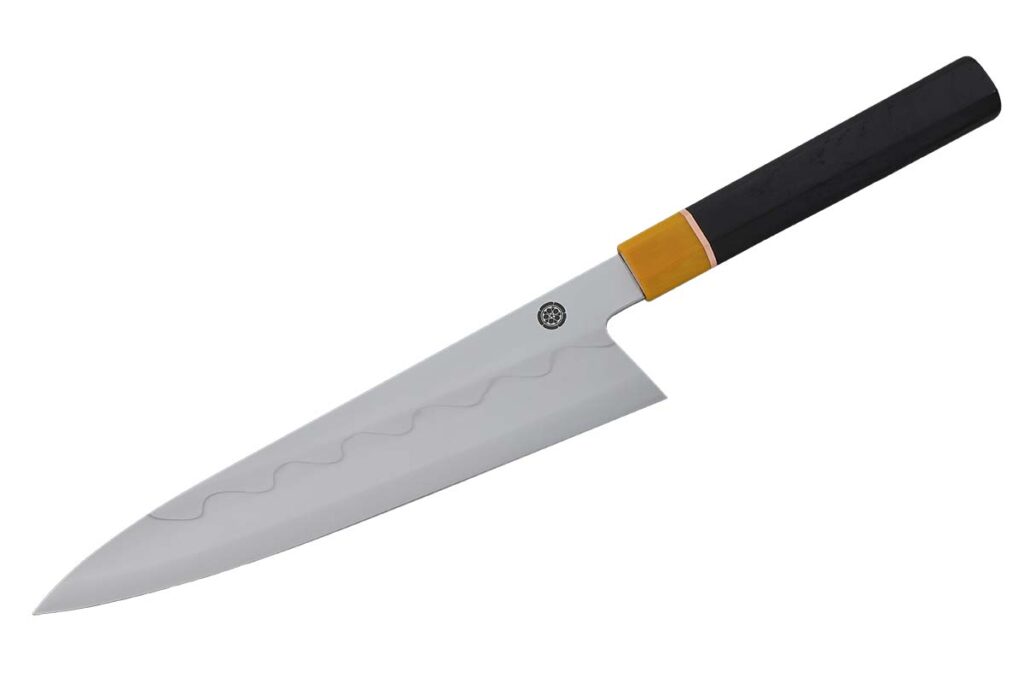
Greiner Chef’s Knife
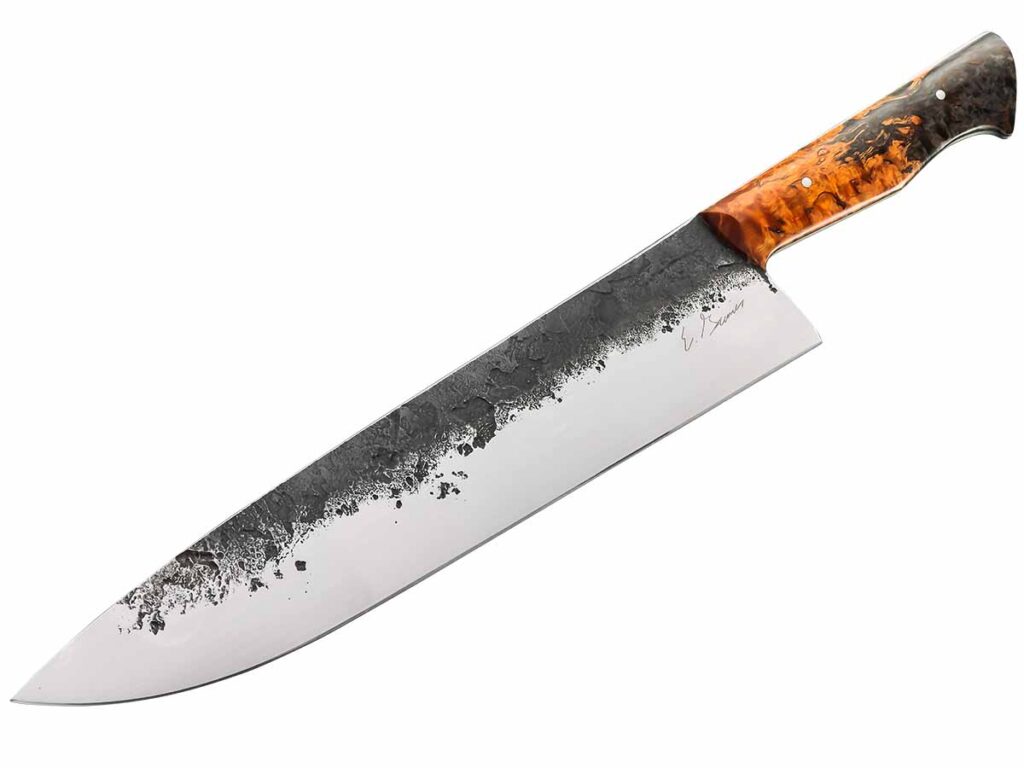
Greiner Chef's Knife

Blade length: 10”
Blade material: 80CrV2 carbon steel w/forged finish
Blade grind: Flat
Handle material: Double-stabilized karelian birch
Overall length: 14.5”
Maker’s price for a similar knife: $600
Maker: Erik Greiner, greinerblades.com (SharpByCoop image)


Franklin Bread Knife
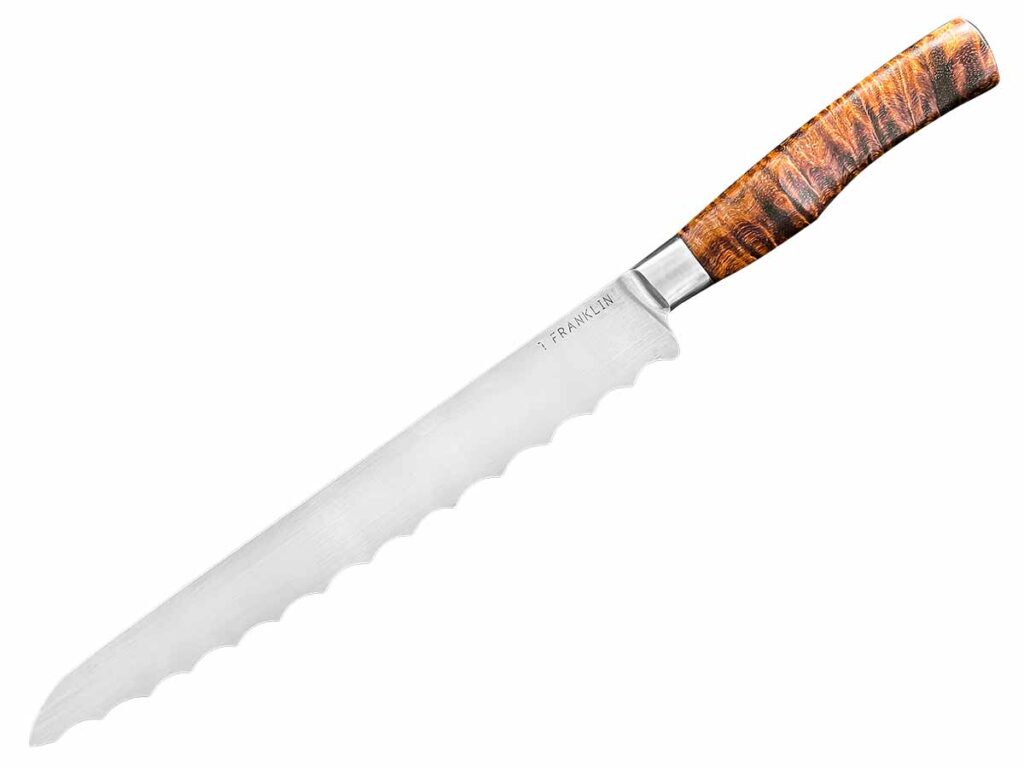
Franklin Bread Knife

Blade length: 9.25”
Blade material: 52100 carbon steel
Handle material: Hawaiian koa
Overall length: 14”
Maker’s price for a similar knife: $575
Knife to know: Also comes in a set of three that includes chef’s and paring knives w/a price of $1,750 for the entire set; Thomas Franklin is an ABS apprentice smith
Maker: Thomas Franklin (Jfrasierphotography.com)


Spyderco Petty
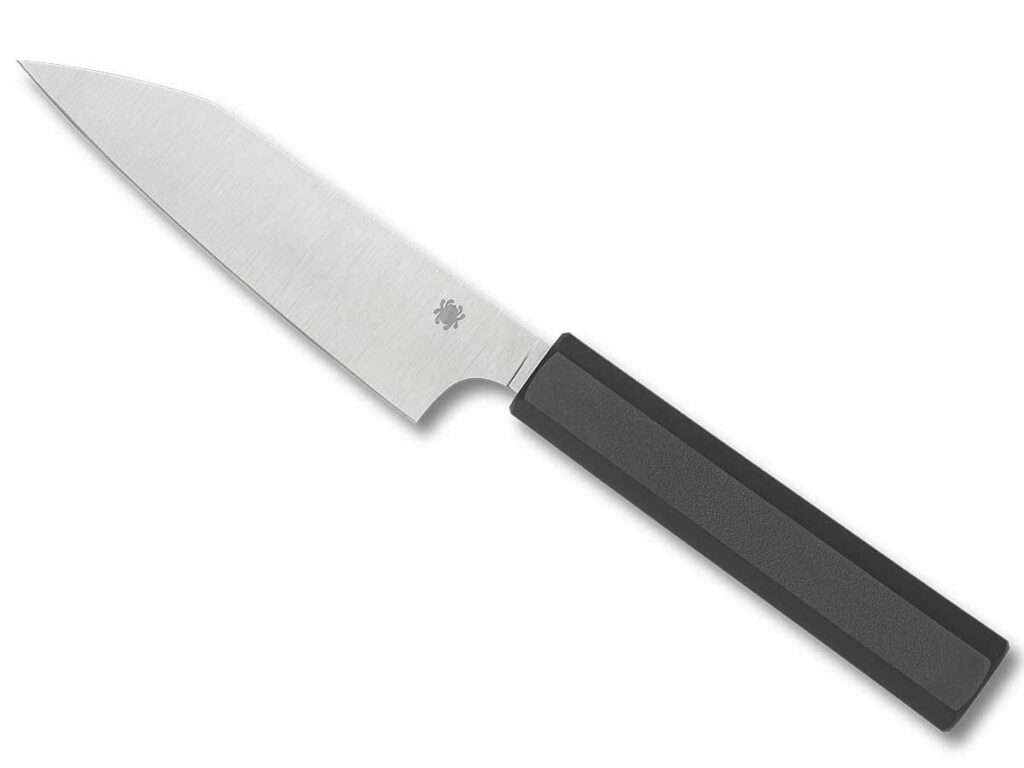
Spyderco Petty

Designer: ABS master smith Murray Carter
Blade length: 4.64”
Blade steel: CTS BD1N stainless
Blade grind: Full-flat
Blade @ thickest: .068”
Handle design: Wa style (octagonal)
Handle material: Black polypropylene
Weight: 1.8 ozs.
Overall length: 8.87”
Knife to know: The Petty is part of Spyderco’s Minarai Series; meaning “to look and learn,” minarai is the Japanese way of describing the role of an apprentice
Country of origin: Japan
Company: Spyderco, spyderco.com


Morakniv Rombo
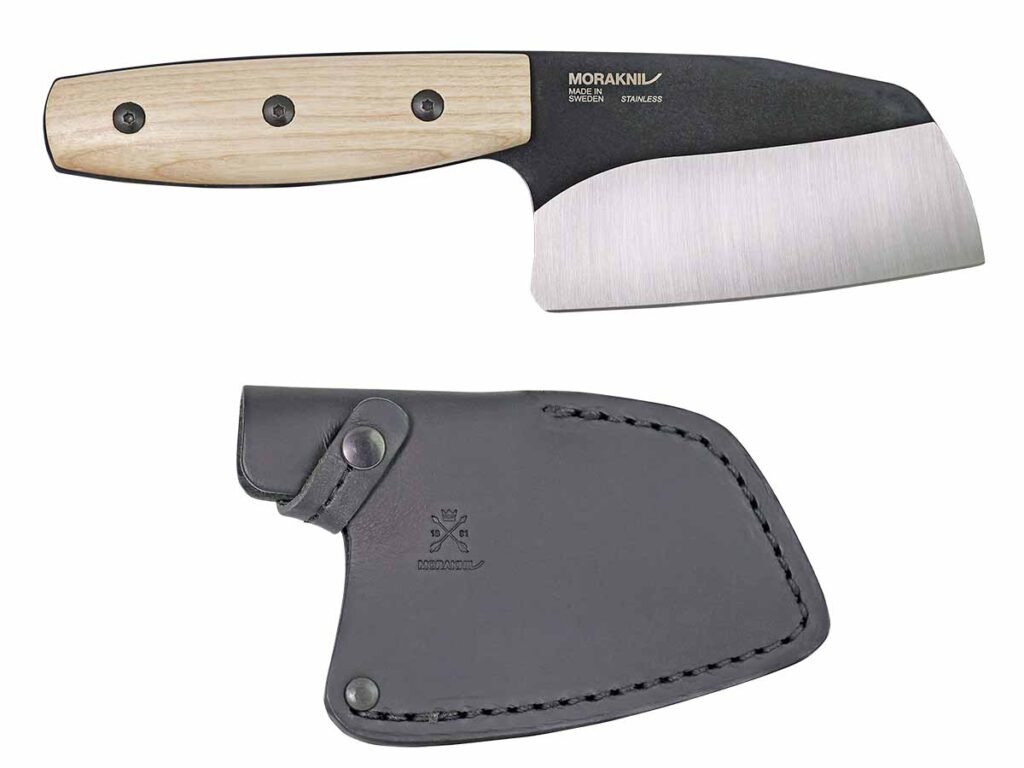
Morakniv Rombo

Model: Camp chef’s knife
Blade length: 3.86”
Blade steel: Swedish stainless
Blade grind: Flat
Blade @ thickest: .09”
Blade finish: Two-tone
Handle material: Wood
Weight: 5.5 ozs.
Overall length: 8”
Country of origin: Sweden
Knife to know: Designed for right-hand use
MSRP: $230 (at press time rate of exchange)
Company: Morakniv, industrialrev.com


Spartan Blades Poros
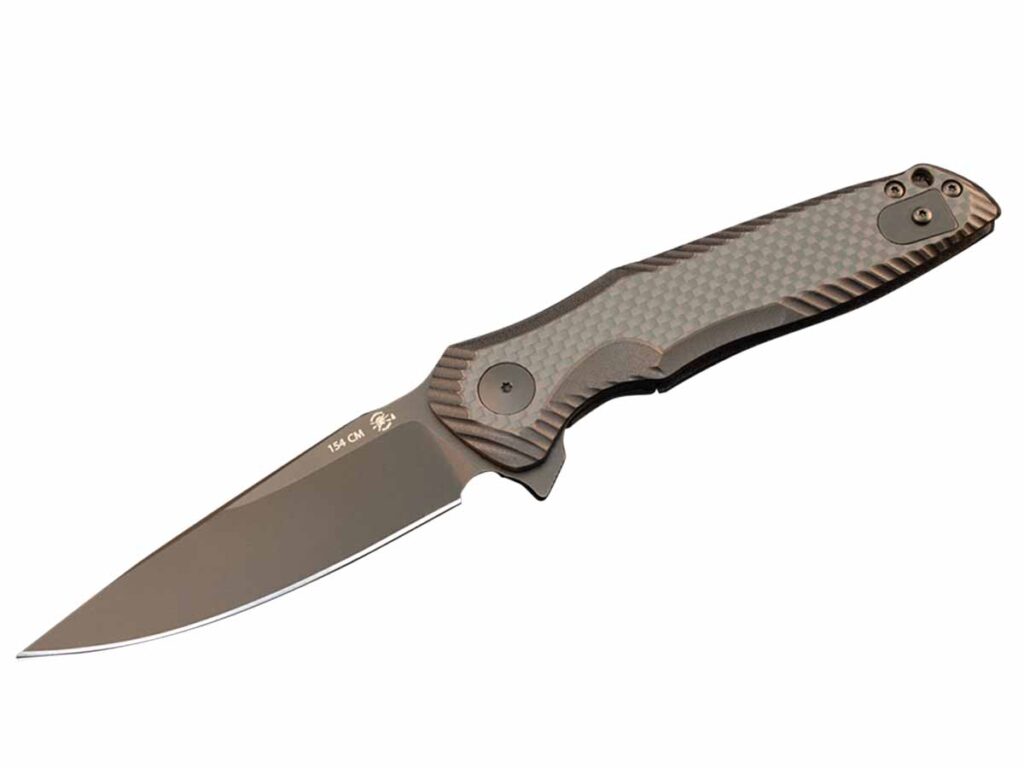
Spartan Blades Poros

Designer: Curtis Iovito
Knife type: Flipper folder
Blade length: 3.75”
Blade steel: 154CM stainless
Rockwell hardness: 58-60 HRC
Blade grind: Flat
Blade @ thickest: .125”
Blade finish: Black titanium nitride coating
Blade pattern: Drop point
Pivot action: Ikoma Korth Bearing System (IKBS)
Handle material: Carbon fiber/G-10 composite
Lock: Linerlock
Pocket clip: Deep carry
Hardware & liner: Stainless steel w/black electro-deposit powder coating
Weight: 5.3 ozs.
Closed length: 4.25”
Country of origin: USA
MSRP: $190
Company: Spartan Blades, spartanbladesusa.com


Cold Steel The Republic
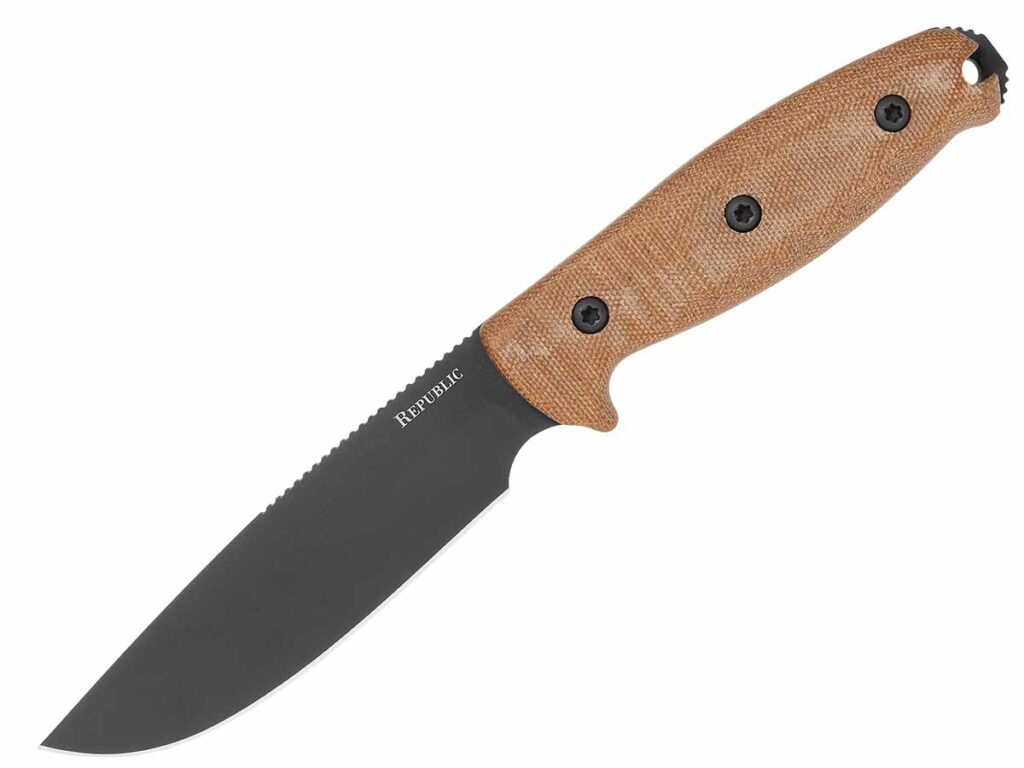
Cold Steel The Republic

Knife type: Bushcraft fixed blade
Blade length: 5”
Blade steel: CPM S35VN stainless
Rockwell hardness: 58-60 HRC
Blade @ thickest: .1535”
Blade finish: Corrosion resistant/no-glare Ionbond
Blade pattern: Drop point
Handle material: Micarta® w/single integral guard and lanyard hole
Knife to know: Handle is removable for customization based on situation/undertaking; spine gimping for extra control
Weight: 8.4 ozs.
Overall length: 10”
Sheath: Leather pouch
MSRP: $269.99
Country of origin: USA
Company: Cold Steel, coldsteel.com


WE Knife Zonda
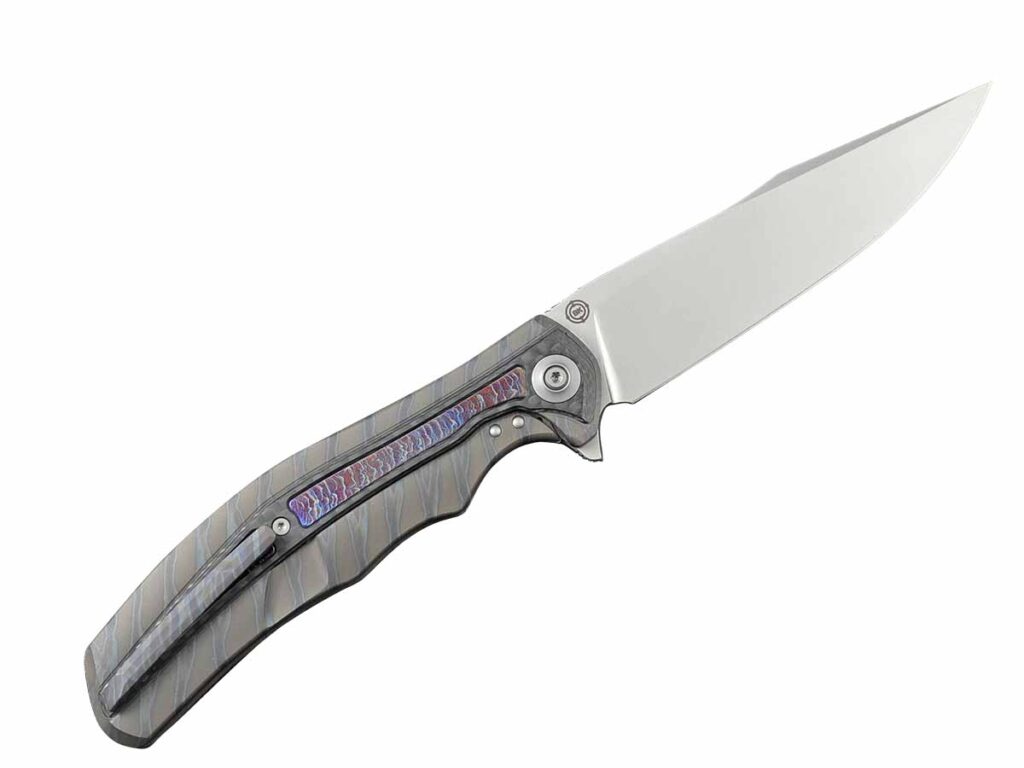
WE Knife Zonda

Pattern: Flipper folder
Blade length: 4.04”
Blade steel: CPM 20CV stainless
Blade finish: Stonewashed
Blade @ thickest: .13”
Handle material: Black titanium w/flamed titanium inlay
Pocket clip: Right-hand, blade-tip-up carry
Lock: Framelock
Closed length: 4.85”
Country of origin: China
MSRP: $480
Company: WE Knife, weknife.com


Halfbreed Blades MILF-03PS
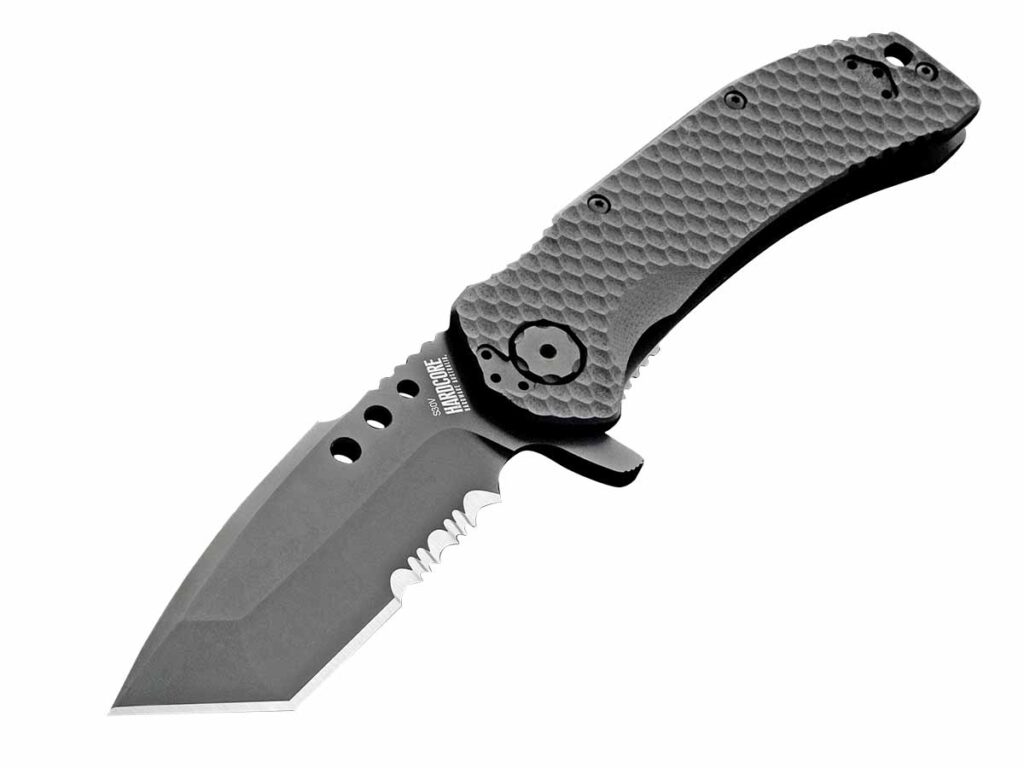
HHA MILF

Blade length: 3.54”
Blade steel: CPM S30V stainless
Rockwell hardness: 59-60 HRC
Blade grind: Hollow
Blade @ thickest: .19”
Blade finish: PVD coat
Blade pattern: Tanto
Handle material: G-10
Washers: Phosphor bronze
Weight: 7.34 ozs.
Closed length: 5.51”
Handle @ thickest: .59”
Country of origin: Australian and Taiwanese make
MSRP: $280
Company: Halfbreed Blades, halfbreedblades.com.au


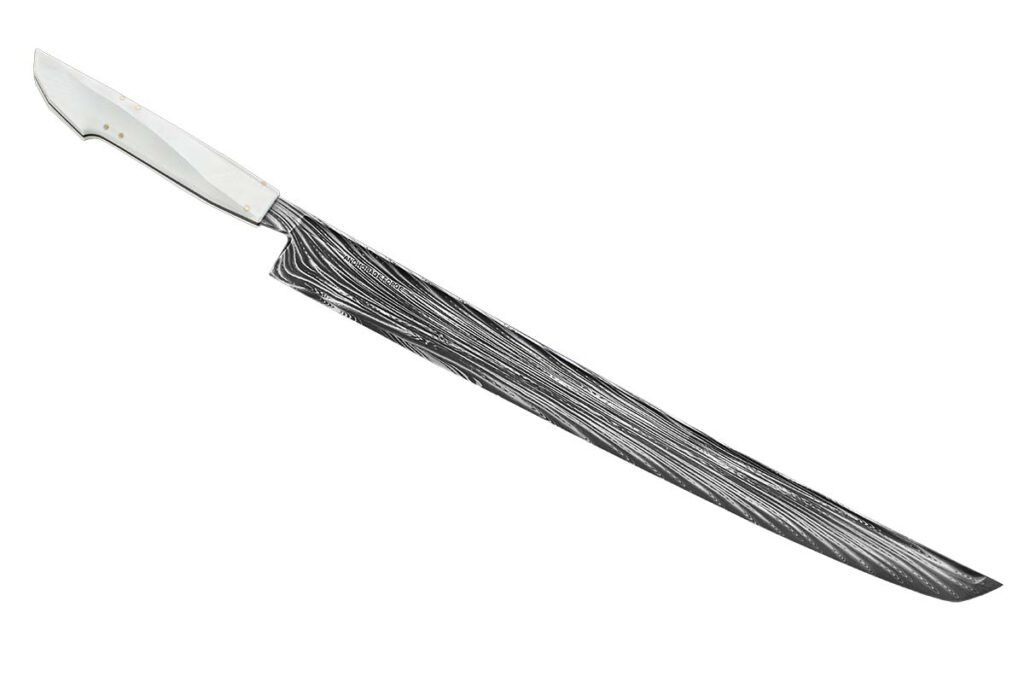
Schubert Knives Large Damascus Slicer
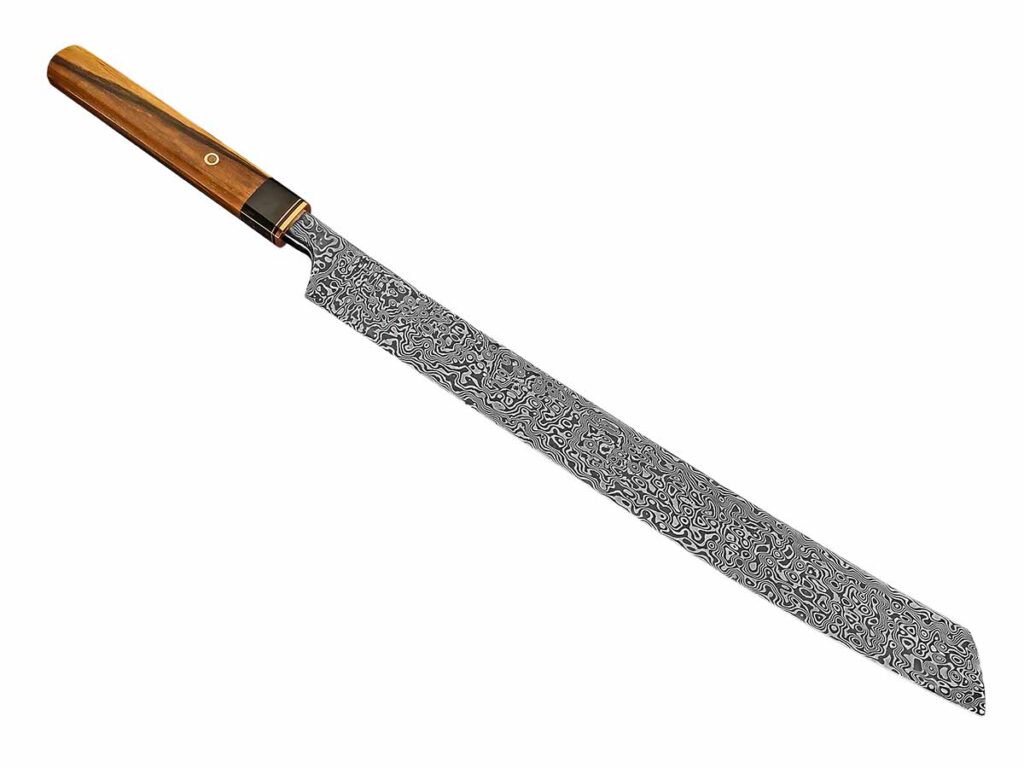
Schubert Knives Large Damascus Slicer

Blade length: 19.3”
Blade material: 90-layer raindrop-pattern damascus of 1084 carbon and 15N20 nickel-alloy steels
Blade grind: Flat
Blade @ widest: 1.77”
Bolster/guard material: Copper and buffalo horn w/soldered joint
Handle material: Stabilized blackheart sassafras
Handle pins: Turned whale tooth and bamboo
Overall length: 26.4”
Scabbard (not shown): Glass lacquered wood inlaid w/black heart sassafras, buffalo horn, copper and whale tooth
Maker: Bruce Schubert (Rod Hoare image)


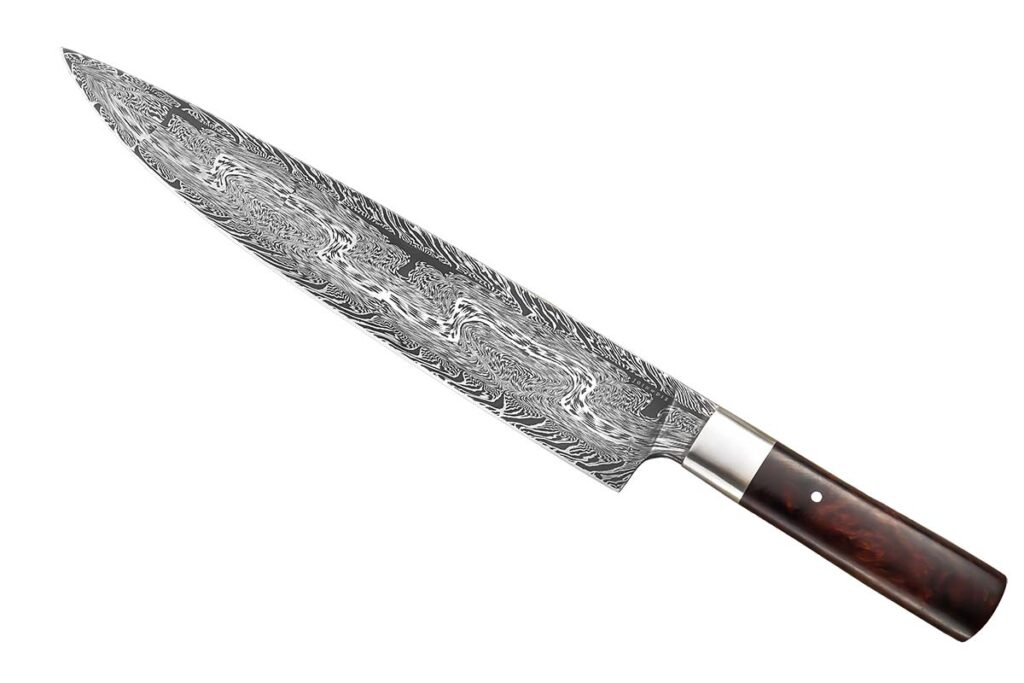
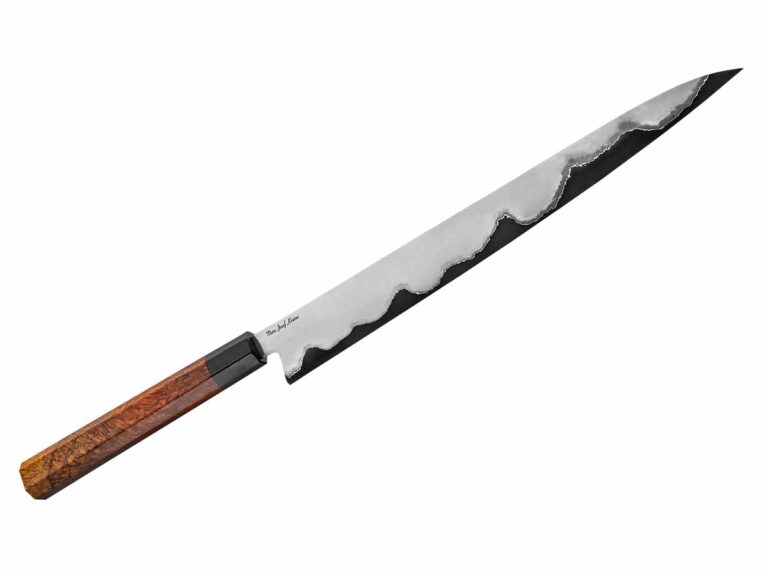
Mark Josef Knives Sujihiki
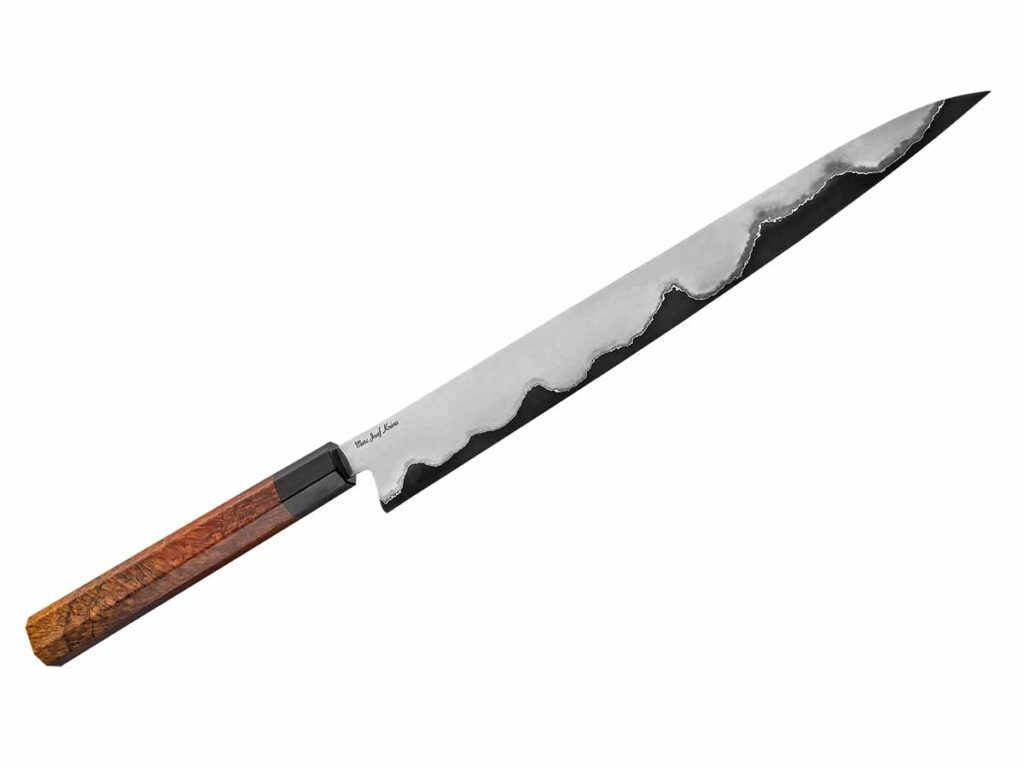
Mark Josef Knives Sujihiki

Pattern: Slicer
Blade length: 11.8”
Blade material: San-mai construction of 410 stainless steel, nickel and 52100 carbon steel forged by Brook Turner
Rockwell hardness: 62 HRC
Blade grind: Flat/convex
Blade thickness @ ricasso: .118”
Blade @ widest: 1.496”
Handle material: Coolabah burl
Bolster/guard: African blackwood
Overall length: 18.5”
Maker: Marc Stewart, Mark Josef Knives, marcjosefknives.com.au (Rod Hoare image)


TOPS Knives El Pionero
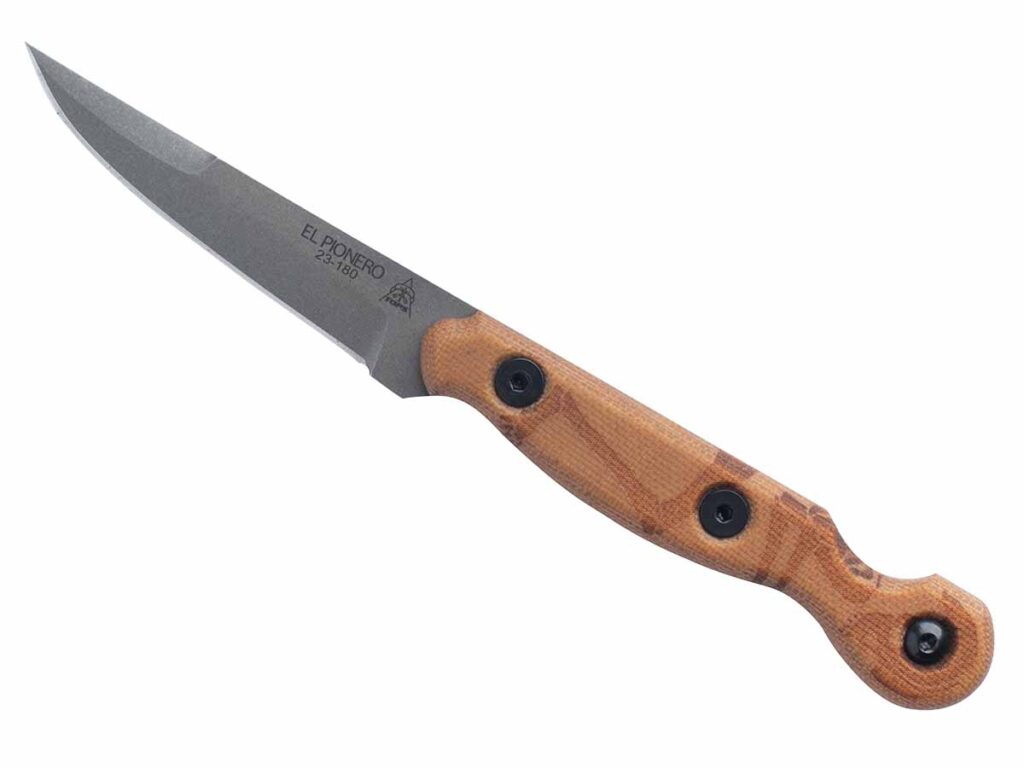
TOPS Knives El Pionero

Designer: Ed Calderon
Blade length: 3.38”
Blade material: 1095 carbon steel
Blade @ thickest: .09”
Blade finish: Tumble
Handle material: Tan canvas Micarta® w/finger divot that aids in blade orientation, etc.
Weight: 2.9 ozs.
Overall length: 7.63”
Sheath: Black Kydex
Weight w/sheath: 4.1 ozs.
Knife to know: The El Pionero is a “paring knife-esque design”; Ed Calderon (edsmanifesto.com) worked as a counter-narcotics officer in Mexico and more recently as a trainer and “guru in the tactical space”
Country of origin: USA
MSRP: $220
Company: TOPS Knives, topsknives.com


Dr. Jim Lucie: A Bladesmith’s Life & Legacy
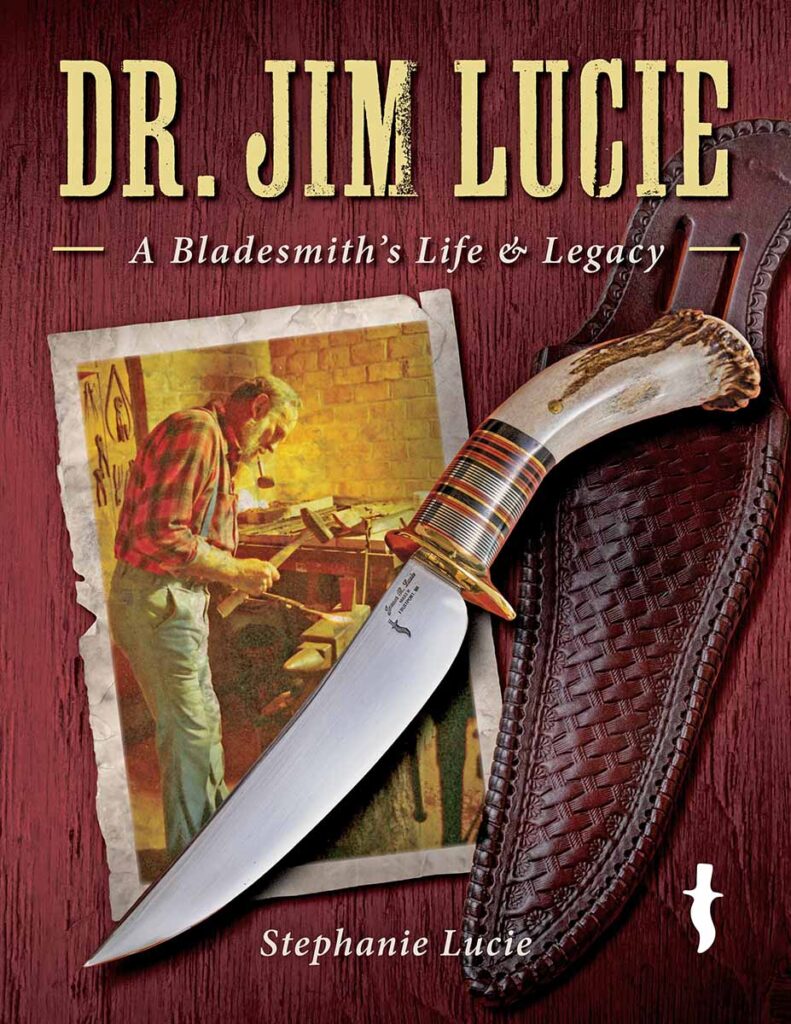
Dr. Jim Lucie: A Bladesmith’s Life & Legacy

What it’s about: ABS journeyman smith Dr. Jim Lucie had a unique background: he served as the personal physician for, and learned about knifemaking from, the man recognized as the grandfather of custom knives—BLADE Magazine Cutlery Hall-Of-Fame® member William Scagel. The author, Stephanie Lucie, is Lucie’s youngest of four daughters. She paints a picture of her father like no other, from childhood to adulthood, his bladesmithing mentors and friends, the many stories written about him and much more.
Format: 9.25 x 12.5-inch hardback, limited to 1,500 copies in the first edition, over 300 color photos, including more than 200 knives Lucie made, and over 100 pictures of his life and accomplishments.
MSRP: $120
Contact: jimluciebook.com

Check Out More Knife Drops:

First Look: Gerber Devour – Titanium

The New Titanium Devour From Gerber Gear Is Far More Than Just An Eating Utensil. This Multi-Tool Really Is Unlike Any Other On The Market.

Not every multi-tool needs to feature a knife or have a set of pliers built into it. The new Devour, made from Titanium, from Gerber Gear flips the idea of a multi-tool on its head.

At first glance, it looks like nothing more than a rugged eating utensil, great for eating by the campfire. And it is that, but it is so much more. This multi-tool has nine functions and weighs just an ounce. The star of the show is the tool that mounts to the back of the fork.

gerber devour tool
The tool that snaps onto the back of the eating utensil

This tool features a package opener, a can opener, a pry bar, both a phillips and a flathead screwdriver, and a flat cut/scrape edge. When connected to the back of spork it keeps it propped up and off the table, which is great for keeping your utensil clean and free from dirt and debris when eating outside.

Since everything is made from corrosion-resistant T4A titanium, the tool won’t rust and will remain strong under pretty much any circumstance. The Devour can save you so much time packing, and space in your pack, you’ll wonder why you didn’t get it sooner.

And the cherry on top of it all: it’s an inexpensive piece of kit that will more than pay for itself quickly.

MSRP: $25

Read More

American Knife Boom: Roundtable With Top Knifemakers

Four U.S. knife manufacturers talk making knives in the USA

Editor’s note: Last time, BLADE® featured four of today’s U.S.-based knife manufacturers ranging from long-time companies to the latest factory operations: Emerson Knives, Inc., White River Knife & Tool, Tactile Knife Co. and Montana Knife Co. (MKC). This time the author asks the respective principals of each company—Ernest Emerson, John Cammenga Sr., Will Hodges and Josh Smith—about their success, the high cost of making knives in America, and the future of the U.S. factory knife industry.

BLADE: What are some of the most difficult things about making knives and staying profitable in today’s market?
CAMMENGA: I’m sure most companies in our industry feel the same. Most challenges are from heavy taxation, excessive regulation, and now, expensive capital.
SMITH: The taxes and regulations we deal with make it difficult to have margins that China-made-knife companies have.
HODGES: Our price points are pretty reasonable compared to other made-in-USA companies, which has been hard.

BLADE: John, you’ve mentioned that finding reliable help is also an issue. Would any of the rest of you like to comment?
HODGES: We’ve been very fortunate to find great employees that are dedicated to the mission.

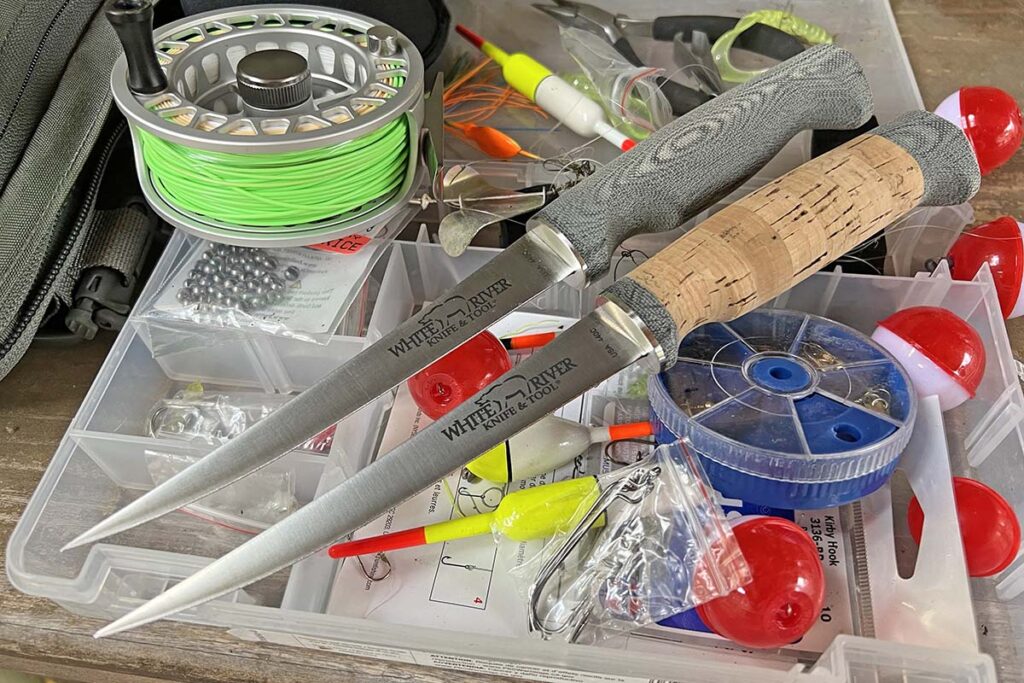
White River Fillet Knife
White River’s John Cammenga indicated he remains excited about making outdoor knives. Fillet knives are among the company’s specialties, including the Traditional Fillet model, here in a choice of Micarta® and Micarta-with-cork grips. The 6-inch blades are 440C stainless. MSRPs: $140 to $150. (Josh Wayner image)

BLADE: Ernest, you’ve said that the main competition to all USA knife companies is competition from overseas. Please elaborate.
EMERSON: [We are] competing against companies that manufacture or buy their knives for under $20 apiece and then sell them for the same price as we do. As China made considerable inroads in the knife industry, one of their major advantages was labor force, thus being able to produce quality products at reduced prices. This kept the entire industry on its toes and the American companies no doubt started feeling the pinch in a big way.

BLADE: Why is it so much more expensive to make knives in America than overseas?
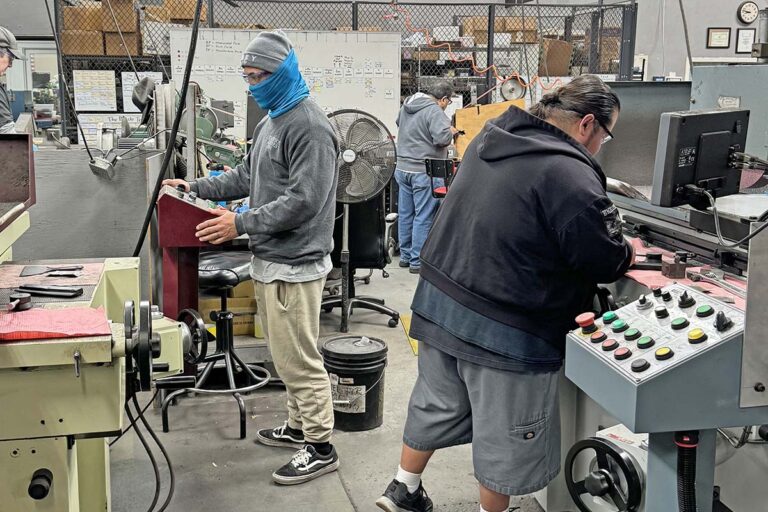
HODGES: The biggest factor is labor. I’m dedicated to paying my employees well and providing health insurance, paid time off, a 401K and a great working environment. If you want to have good employees, you want to treat them well in hopes that you will retain such help.  Investing in your employees in this way is a bit costly but it’s the price of doing business.
CAMMENGA: It is simply not a level playing field. We are committed to making it work here [in the USA]. We are committed to our employees and customers alike by making our knives in the USA and using USA-sourced materials as well.
SMITH: Employee wages factor into this as well. Our dollar per hour paid is what [Chinese] workers get paid per day. 
EMERSON: [There’s also the] usual regulations and taxes and the cost of setting up shop here in the USA. American wages, American raw materials, American taxes, American restrictions, all of those good things go into it.

Archer framelock
At Tactile Knife Co., Will Hodges said good help is key. “I’m dedicated to paying my employees well and providing health insurance, paid time off, a 401K and a great working environment,” he noted. Tactile’s most recent launch is the Archer framelock folder designed by knifemaker TJ Schwarz.

BLADE: There are some advantages to making knives in the USA that you hold over those who make them overseas.  What are those and how do you try to capitalize on them?
EMERSON: Through the generations my entire family spent time in service to this country, and I never will forget that. I never wanted to do anything but put Americans to work.  I never wanted to be anything except an American-made manufacturer, American-made company.
SMITH: Making knives in the USA has allowed companies like Montana Knife to be more agile as a company. Our knives and materials do not sit in container ships for months. We can ramp up and slow down production in real time, thus allowing us to respond to customer demand.
CAMMENGA: This means not having to be at the mercy of the almighty supply chain. It is very nice not to have supply chain issues, increasingly expensive overseas shipping, and concerns over the geopolitical landscape.

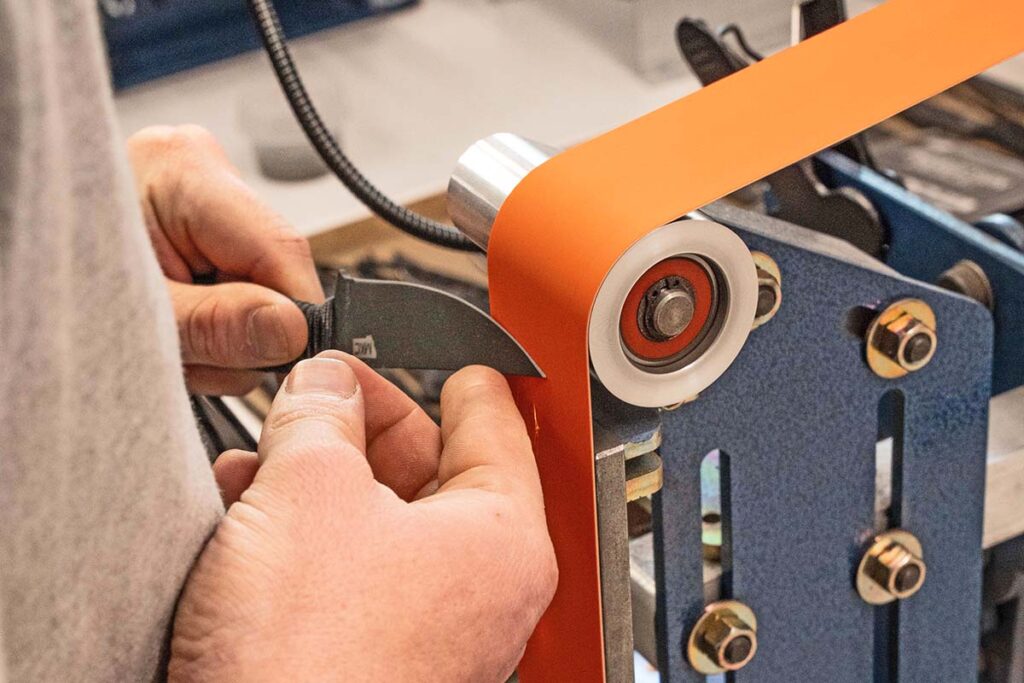
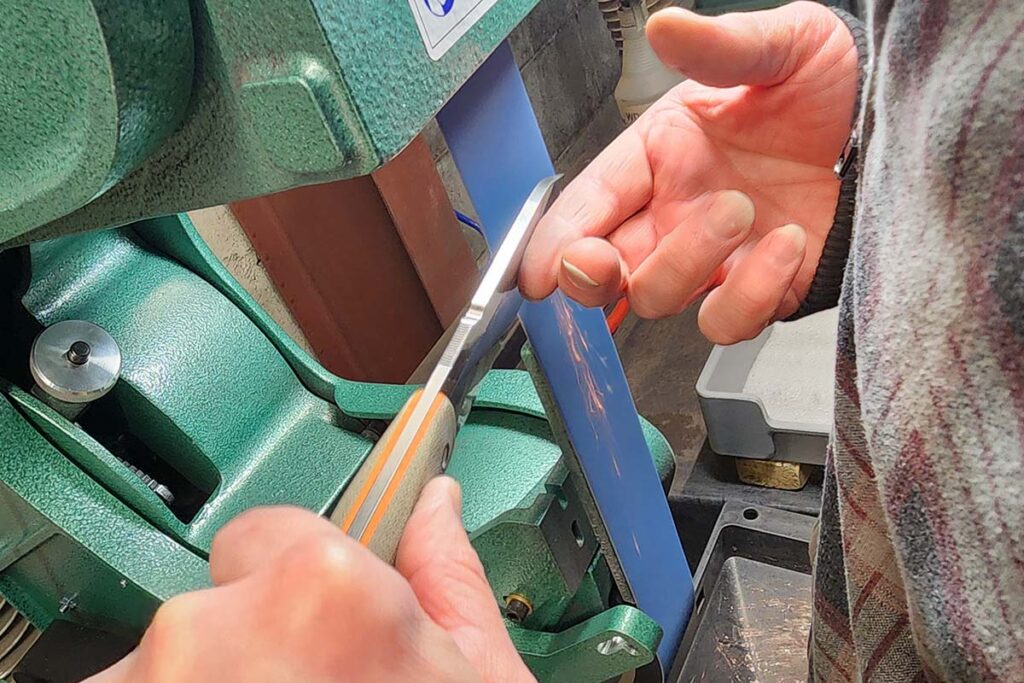
Knife Grinding
Josh Smith said one of the reasons American knives are so expensive to make is differences in employee wages. “Our dollar per hour paid is what [Chinese] workers get paid per day,” he observed. A Montana Knife Co. fixed blade gets an edge touchup.

BLADE: Will, you said that there are advantages to making friends in the knife industry. How so?
HODGES: When we run into an issue, we have plenty of friends to go to for advice. As much as the companies in this industry are in competition with each other, they are also there to help each other out as well.
CAMMENGA: We have benefitted from the current re-shoring trends in our OEM work. [Author’s note: As mentioned last time, White River Knife & Tool also does OEM manufacturing work, making knives for other companies as well as knives under its own brand. So, you may or may not own a White River knife without knowing it!] 

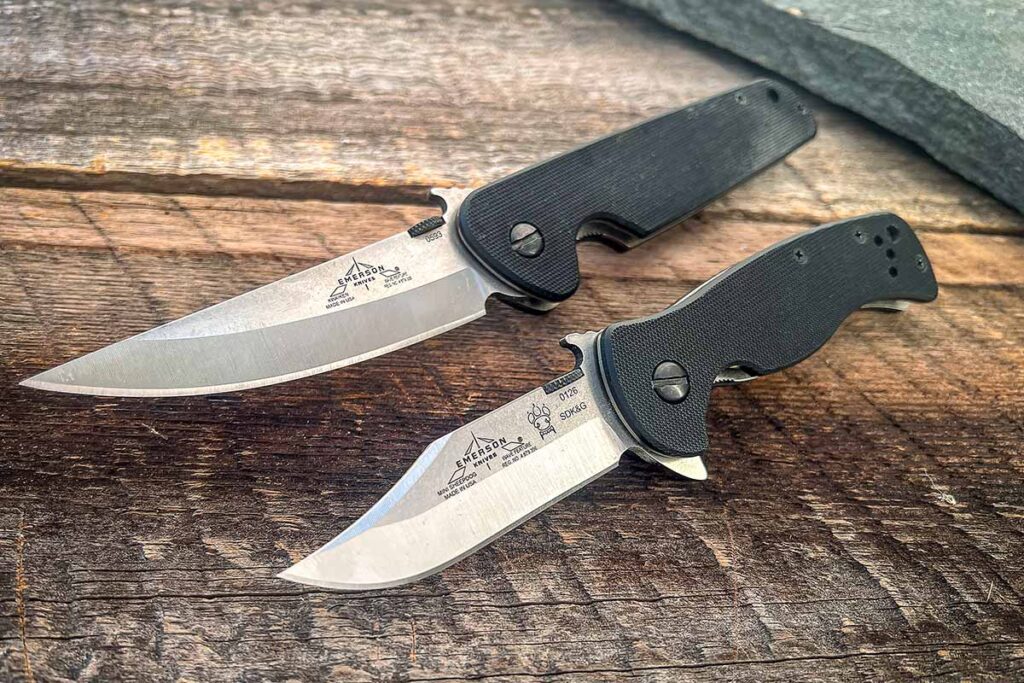
Emerson Knives Kwaiken and Mini Sheepdog
As you might guess and as Ernest Emerson indicated, U.S. regulations and taxes are another cost additive to making knives domestically. Two of the most popular knives in the Emerson line are the Kwaiken (top) and the Mini Sheepdog (bottom), each equipped with the Wave Shaped Feature for fast and easy opening. (Knives from the author’s collection; Marty Stanfield knife image)
BLADE: What can BLADE readers expect in your next big knifemaking project, and when do you expect it to be available for public consumption?
CAMMENGA: We are excited about producing some of the finest outdoor fixed blades and have some folding knives in the works. We hope to have at least one folding model out in 2024 and several more in 2025.

HODGES: We are excited about our most recent launch, the Archer framelock folder designed by knifemaker TJ Schwarz. It’s a heavy-duty design that is a different direction than our current Maverick folder. We do have another fun launch that should happen by the time BLADE readers read this. 
SMITH: Twenty-twenty-four will be the year that Montana Knife Co. will experience more product line diversity. We will shift into the culinary end heavily. Additionally, we are going into the tactical knife space. We estimated that by the mid-third quarter, MKC’s tactical knives will be out on the market. We also have some really cool collaborations coming with well-known people. 

CQC-7 Is25

Sharpening A knife
As John Cammenga observed, another advantage to making knives stateside is not being at the mercy of the supply chain, increasingly expensive overseas shipping, and concerns over the geopolitical landscape. A White River fixed blade gets an edge tune-up.

For Emerson Knives, Inc., 2024 will be the silver anniversary of the CQC-7, so expect some exciting surprises to commemorate the iconic tactical folder. Lucas Emerson, Ernest’s son, has become an accomplished knifemaker and designer in his own right, and the company will debut the first folder designed by the younger Emerson, the MX200. Emerson-made automatic openers will be a reality as Emerson is tooling up to produce the knives in a satellite facility in Colorado. Ernest said he hopes to introduce the prototypes at this year’s BLADE Show. And, finally, a kitchen cutlery line will augment the Emerson tactical knife line, too.


Emerson Knives, Inc., Montana Knife Co., Tactile Knife Co. and White River Knife & Tool—look for these and other outstanding U.S.-based knife companies to expand their knife lines and enlist you in what shapes up to be the Great American Knife Boom.

Check Out More Of Tools Of The Pros:

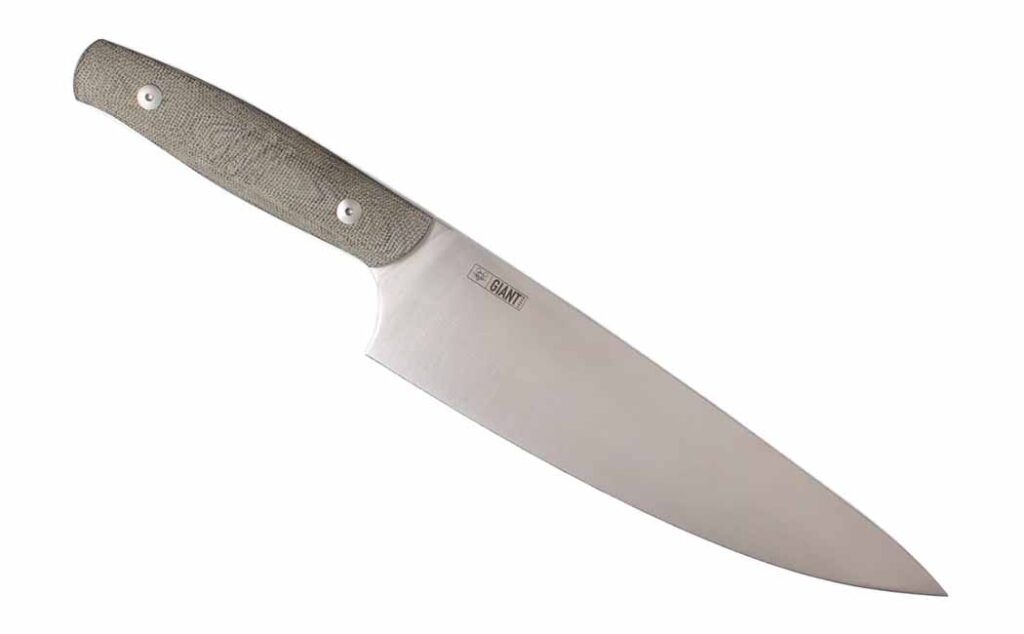
GiantMouse Kitchen Knives: Cooking Up Something New

GiantMouse takes a stab at the culinary world with a kitchen knife line.

EDC knives of a variety of stripes have been GiantMouse’s bread and butter, helping the Danish-design concern kick a solid toehold into the knife industry. This success somewhat culminated earlier this month in Atlanta, with the company’s GMX earning Knife-Of-The-Year® accolades at the 2023 BLADE Show. This trophy in hand is a pretty good indicator you’re doing things right. But, GiantMouse is far from living off past achievements.

In fact, it has a new vista in sight—kitchen knives.

Following a well-trod recent trend in knife manufacturing, GiantMouse is dipping its toe into the culinary end of the pool with the introduction of four kitchen knives. While this drop might prove unexpected to some, the expansion is something the company said has been in the works for nearly two years now. At least, that’s been the personal testing period of designers Jens Ansø and Jesper Voxnaes (Vox), refining the minutia of the knives. So, how did it shake out?

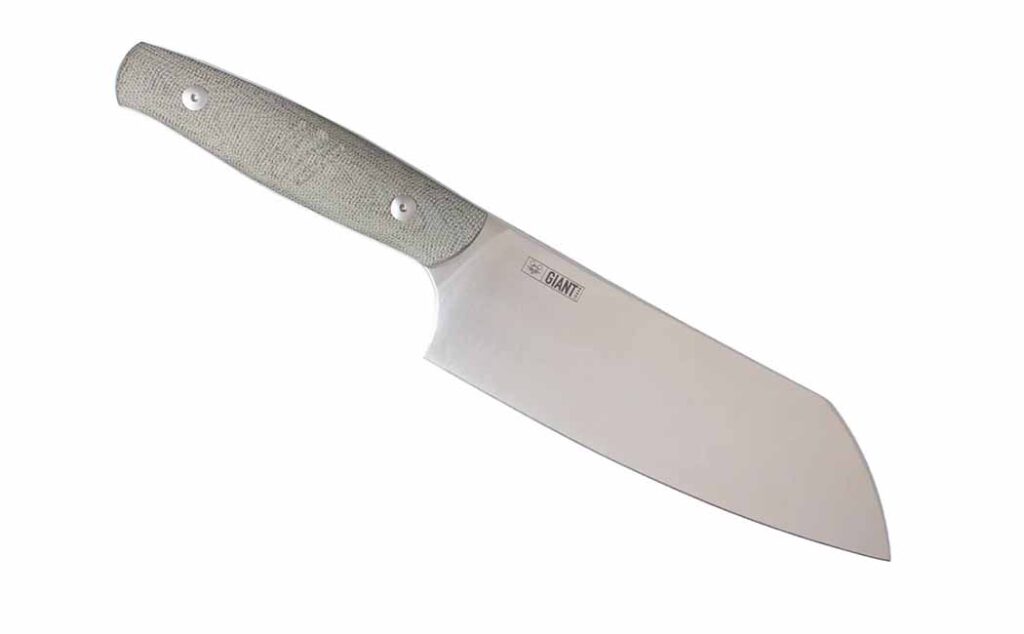
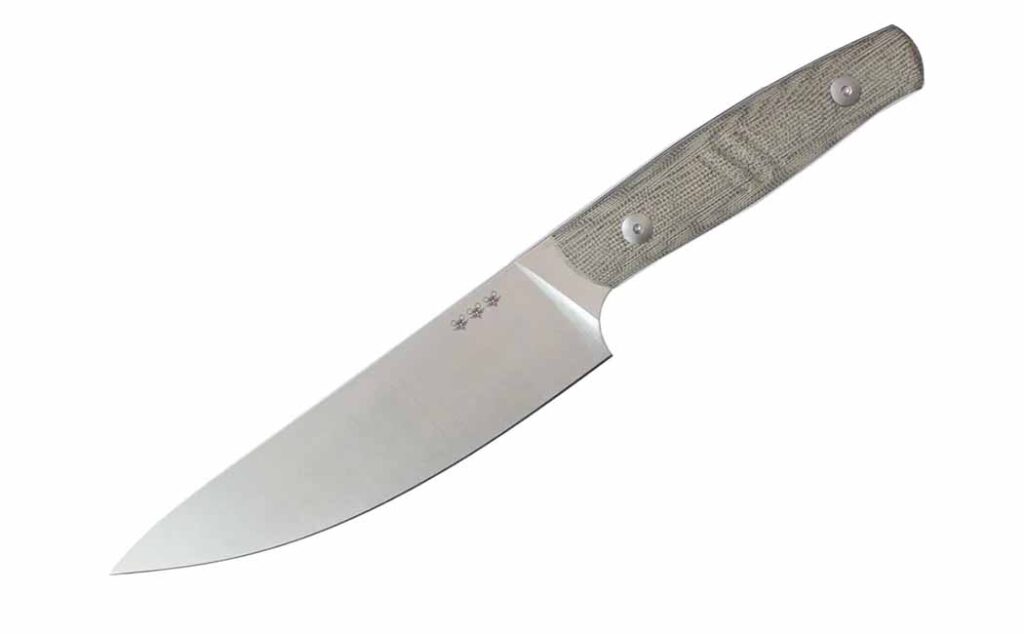
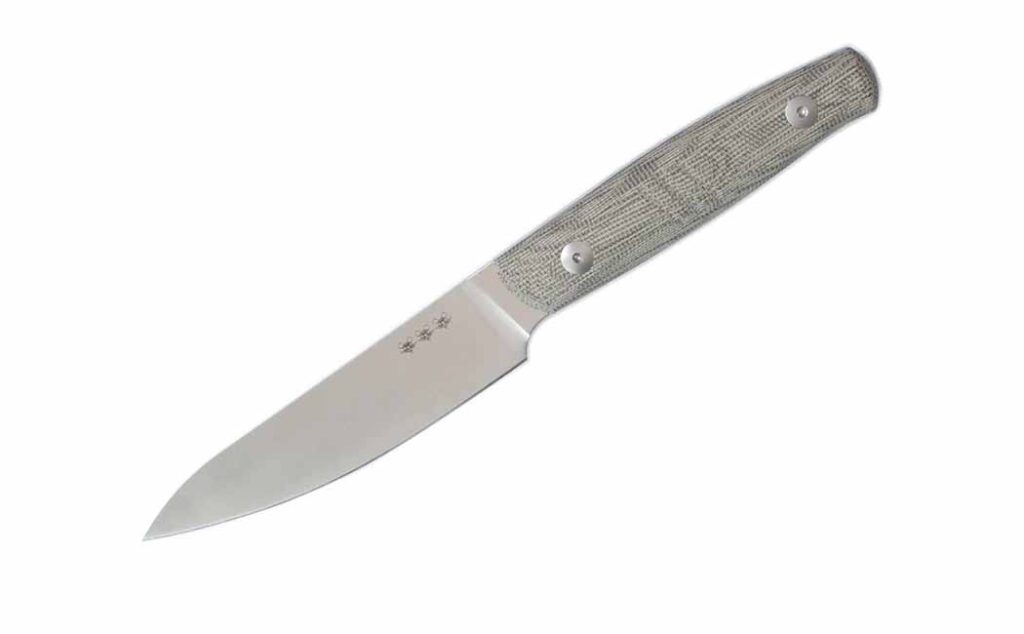
At first blush—and without a knife-in-hand, tomato-dicing torture test—not too shabby. The four-knife line appears attractively utilitarian, nice enough to show off along with your next dinner party. But the knives aren’t so pretty as to scare you off from actually using them in your day-to-day culinary adventures. At arm’s length, it’s difficult to discuss ergonomics, balance and performance. However, GiantMouse doesn’t appear to have to broken any of the major kitchen-knife rules, attempting to displace function for novel form. Though, the slightly hooking heel on the larger knives might prove a sore point—pun intended—for some.

The line, at present, includes:

  • Santoku
  • Chef
  • Carving
  • Paring
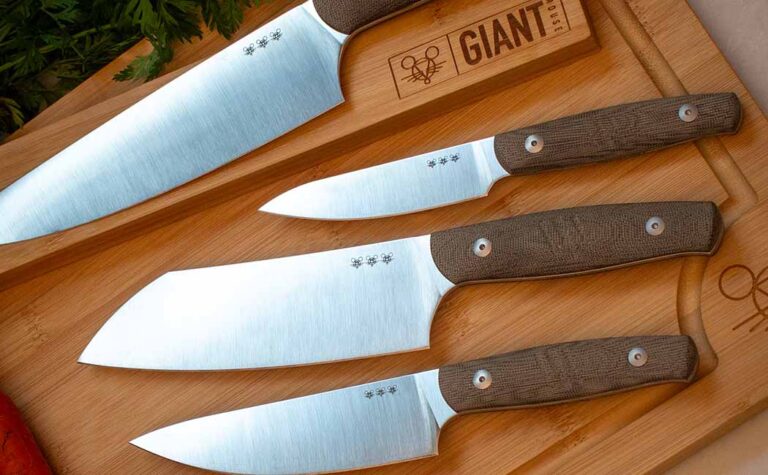
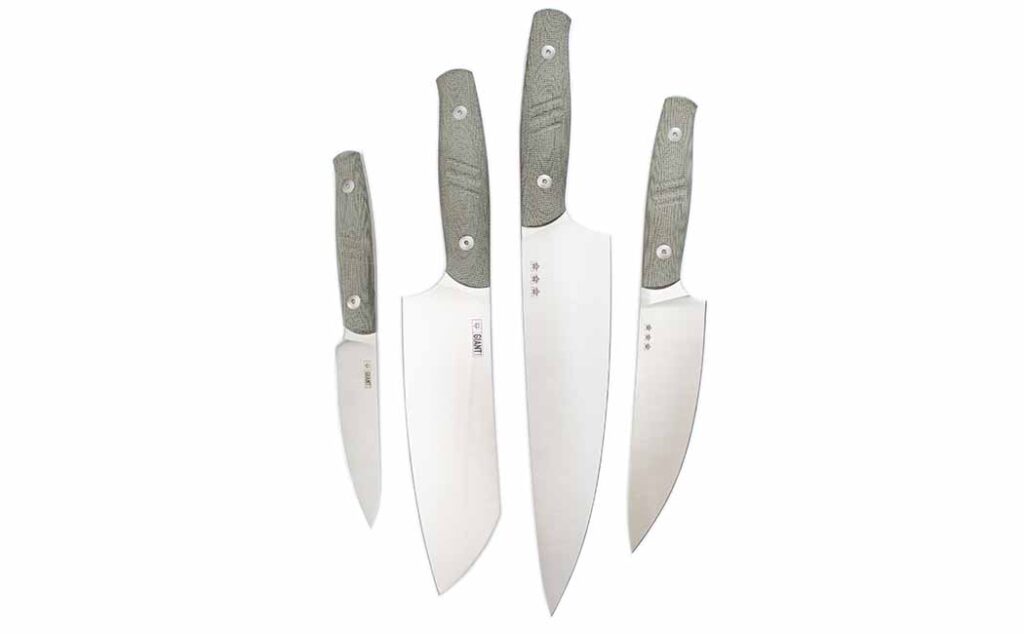
GiantMouse Kitchen Knives in a line

Essentially, GiantMouse has homed in on the basic food prep tools every kitchen requires. The knives are sold individually and as a set; there’s a branded bamboo magnetic knife bar available, as well. And, in the company’s announcement, it certainly sounds as if it has designs to continue expanding into more corners of the culinary arts. No hint on what that might include.

As to the Italian-made knives themselves, GiantMouse has opted for Nitro-B for the blade steel and given them an unstated satin finish. Having grown in popularity in recent years, high-nitrogen steel (.21% in the case of Nitro-B) has spurred its share of debates as well. Sufficed to say, it should thrive in a kitchen environment if for no other reason than its corrosion resistance. To top it off, the blades are stamped with a tirade of the company’s murine logo—jaunty, to say the least.

To this, the company has outfitted the knives with green micarta handles, which should prove popular. Generally providing an excellent gripping surface, even when wet, GiantMouse has further enhanced it with a run of three serrations at the midpoint to provide a bit more purchase.

As for price, expect to drop $95 to get into GiantMouse’s paring knife at the low end and $175 for the chef or santoku at the high end.

GiantMouse Kitchen Knives Specs:

GiantMouse Chef Knife


Chef Knife
Blade Length: 8.375″ (212.725mm)
Weight: 6.9oz (195.612g)
Overall Length: 13.125″ (333.4mm)
Steel: Nitro B
Blade Thickness: .1125″ (2.875mm)
Finish: Satin
Handle: Green Micarta
MSRP: $175

GiantMouse Santoku

Santoku
Blade Length: 6.75″ (171.45mm)
Weight: 6.8oz (192.777g)
Overall Length: 11.4″ (289.56mm)
Steel: Nitro B
Blade Thickness: .1125″ (2.875mm)
Finish: Satin
Handle: Green Micarta
MSRP: $175

GiantMouse Carving Knife

Carving Knife
Blade Length: 5.58″ (141.732mm)
Weight: 4.6oz (130.408g)
Overall Length: 9.75″ (247.65mm)
Steel: Nitro B
Blade Thickness: .116″ (2.87mm)
Finish: Satin
Handle: Green Micarta
MSRP: $125

GiantMouse Paring Knife

Paring Knife
Blade Length: 4.2″ (106.68mm)
Weight: 2.6oz (73.708g)
Overall Length: 8.250″ (209.55mm)
Steel: Nitro B
Blade Thickness: 0.0675″ (1.71mm)
Finish: Satin
Handle: Green Micarta
MSRP: $95

Read More

3 Sporty Kitchen Knives To Use In The Field

Knives Are Becoming More Multidimensional Every Year. These Sporty Kitchen Knives Are Ready For The Cutting Board Or The Campsite

When many of us blade enthusiasts think kitchen knives, we don’t necessarily associate them with outdoor or sport use. Likewise, many of us would not consider bringing our hard-use blades into the kitchen for prep work. Nonetheless, there are a few knives that have a broad range of uses in both the kitchen and camp. 

I tend to see a knife not just by the edge but by its blade thickness. While there is a utility to extremely thin-edged knives with thin spines, such blades are almost always designed for secondary or finishing uses. In my opinion, the thicker the spine the more utility a knife has for crossover work between kitchen and field. 

On the other hand, the thicker the spine gets, the harder it is to use for fine work—it can even be dangerous. Thinner blades are much better in the kitchen. As far as field use goes, they are pretty much only for light work and very small amounts of game processing. I’ve seen many thin blades break while working on deer. Some of these have resulted in injuries to the user.

Best 3 Sporting Kitchen Knives

There is a sweet spot for crossover, though, and the test knives fit the mold. None would be my preference for dressing a whitetail, but all certainly would be at home in camp or the kitchen after the heavy lifting has been accomplished. 

The TOPS Frog Market Special test knives could be used as skinning knives, as could the White River, but the main enemy of any thin blade is going to be breaking and edge chipping. Of the test group, the White River is the only one thick enough to be a primary use hunting knife, but it is a rather small knife with a slender handle. On small game it will work, if it’s not a bit obtuse in spine thickness, though when moving large amounts of muscle and skin, the hand would fatigue.

So, if we tend to think of a kitchen sporty as a secondary tool, a wide number of its features become handy that would not be so great on a primary field knife or even a primary kitchen knife. The first is the ease of cleaning and the ability to hold an edge. 

I put the review knives to work quite extensively in the kitchen, doing everything short of fully deboning large game. All were used on cuts of meat, to cut vegetables, peel apples, cook over an open flame, and as eating knives at the table or camp. In the process, I learned a few things about each one.

White River Exodus 4

Exodus 4

Of the test group, the White River Exodus 4 is probably the most well-rounded for field and table use. A relatively small knife, it is very slender in overall profile, both grip and blade. For general use, it is extremely functional. I found it suitable for virtually all small game, able to process a whole chicken and an excellent skinner.

It could be used for slicing vegetables, chopping onions, and cutting many other types of fruit and produce as well. The edge profile does not lend itself to fine cuts. For presentation or fancy plates, it tends to split rather than give clean cuts, especially in apples and things like cucumbers. This is not a major concern, just something to note.

The Micarta® handle is contoured superbly and cleans easily. It isn’t slippery when wet. Notably, it’s a full-tang blade that’s extremely strong. Despite its size, it has a blade profile thick enough for baton work on small pieces of wood, though it would not be my first choice for such a job. The blade spine has a sharp 90-degree profile excellent for use with a ferro rod.

There aren’t many if any, downsides to this knife. It can be used in just about any setting and will not look out of place if you take it to town for dinner. You also will not look like “that guy” if you use it to cut a sandwich in half or an apple for your kids in public. Note: The sheath is a bit stiff when you first get it but it breaks in fairly quickly. The knife was very easy to keep clean and sharp.

MSRP: $175

TOPS Knives Frog Market Special

frog market special

I’ve used the Frog Market Special (FMS) models by TOPS Knives for a couple of years. They’ve given me a long time of service in the kitchen as well as around the campfire. They’re available as individual pieces or a set. If you get the set, it comes with a piggyback sheath. The sheath is very nice and has a belt clip.

Steven Dick, U.S. Army ranger veteran and editor of the old Tactical Knives magazine, based his design for the FMS on knives he saw on a trip to Hanoi, Vietnam. He watched butchers and fishmongers using knives of a pattern he’d never seen before. They prepared meats and fish of many varieties easily using the blades.

I’ve done just about everything you can imagine with my FMS knives in the kitchen, and also processed dozens of deer with them. They maintain their edges very well and required only occasional resharpening. Because of the unusual blade shape, the knife can cut just about any type of meat and vegetable, including slicing, chopping, and in a rocking motion. They’ve replaced several other knives in my kitchen and serve as my go-to set.

While they have a large, deep-bellied profile, the FMS knives aren’t especially durable for field use. I have not used them to break down large game for the same reason I would be afraid of breaking any thin-spined knife. They excel for chicken and duck, as well as other small game. The Micarta handle is very comfortable and slip-resistant.

I’ve had an extremely good time with these knives but they have a downside—the blade finish. I’ve had excellent luck with all my TOPS knives, though I’ve never been a fan of the finish. I prefer knives that are bare metal. I don’t like it when the coatings begin to chip away. In a couple years of use, the finish has begun to flake and the metal underneath has become discolored, even with oiling and care. While it is a minor gripe, for knives used to process food I don’t like the idea I may also be eating blade coating. I would like to see this profile in some sort of stainless, or perhaps a slightly thicker spine in a tougher steel.

MSRP: $375 for the set

Spyderco Utility Knives

spyderco utility knives

Spyderco offers some very affordable and high-performance knives that are at home in the kitchen and easy to clean and maintain in the field. The company sent me its 4.5-inch Utility Knife with a serrated edge and red handle, as well as a plain edge 6.5-inch model in black.

The first thing about these knives is they are extremely slender and likely would not be suitable for hard field use. However, if you are already at camp, these are exceptional for end processing and cooking. I used them for weeks straight for all my cooking and they never dulled or chipped. They were both so sharp at the end of the review that they could still cut paper-thin slices of tomato, a hard feat for most knives.

One of the most important parts of these knives is they are essentially foolproof. Even after cooking with them for several meals a day for a long time, I cleaned them without issue and returned them to the knife block. The fact they are so easy to clean and stay sharp for so long really makes them worth the already low price. You don’t really have to worry about oiling them or keeping them in a special container.

In a pinch, the knives can be used for striking on a rod, though I would not recommend it long term. Their utility in the field is very limited, though when it comes to fishing or pursuits that don’t involve moving large animals, they’re just fine. I would not replace my fillet knives with either of these, though they certainly work for the task.

MSRP: $50 or $60

Read More

Kitchen Utility Knives: Cutters Fit For All Culinary Endeavors

Utility knives are among the most essential of kitchen cutters.

Food is life, and cooking is a vital part of your daily routine. Having the right tools can transform your kitchen experience, and kitchen utility knives are among the most essential. With the right one, even the toughest tasks can become a breeze.

Kitchen Utility Knives Defined

A kitchen utility knife is a versatile tool designed for a variety of food preparation tasks. Typically, it features a blade ranging from 4 to 7 inches, making it larger than a paring knife but smaller than a chef’s knife. It’s ideal for slicing, dicing and chopping a wide range of foods, such as vegetables, fruits and meats. The utility strikes a balance between precision and strength, allowing it to handle chores that require both detail and some heft. It’s a great all-around option for anyone looking to tackle everyday kitchen jobs efficiently.

Vero Engineering Utility 5

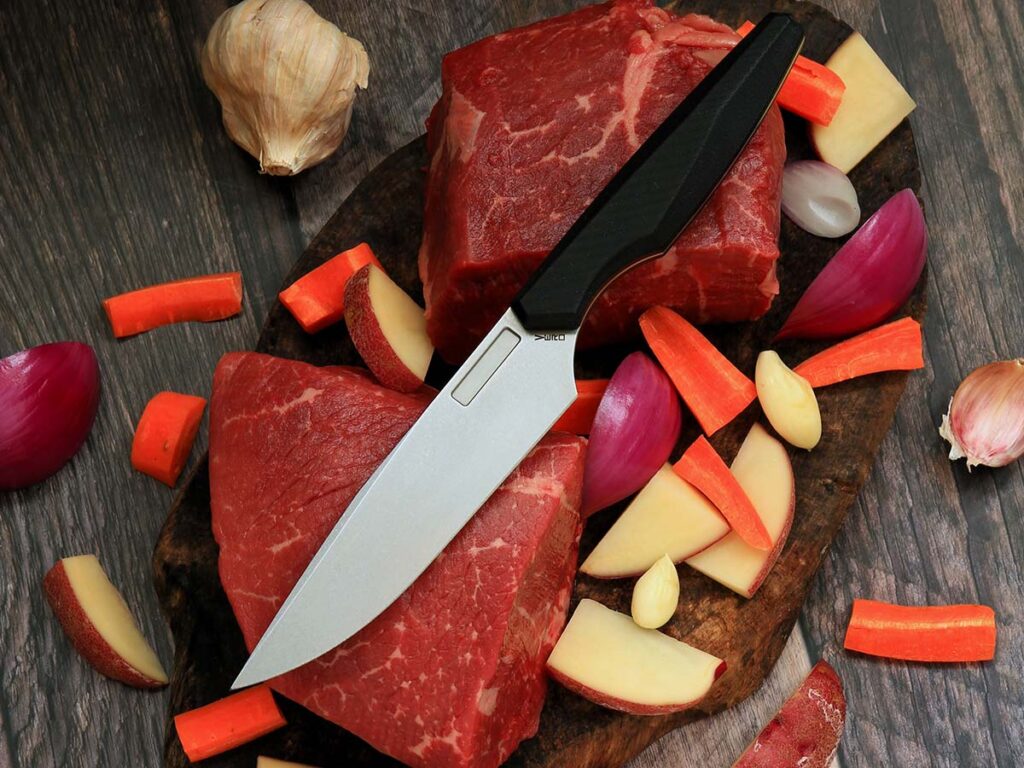
The author prepped a hearty meal of beef pot roast and veggies using the Vero Utility 5. The knife was equally effective cutting meat, root vegetables and herbs, all with finesse.

Utility 5 Specs
Blade Length: 5.27”
Blade Steel: Nitro-V stainless
Blade Grind: Full flat
Blade @ Thickest: .138”
Blade Finish: Stonewashed
Handle Material: G-10 black
Overall Length: 10.08”
Knife to know: Multiple options in blade finishes and handle materials
Country of Origin: China
MSRP: $174

The Vero Engineering Utility 5 doesn’t just show up—it sharpens your kitchen game with precision and style. The fixed-blade slicer offers excellent corrosion resistance and edge retention, making it a reliable workhorse for a wide range of tasks, from citrus to sirloin. The drop-point pattern and full flat grind give it slicing versatility, while a milled pocket on the blade adds grip and control for those who favor the pinch-grip life. At just 4.75 ounces it’s light in the hand but heavy on performance.

The handle options—black G-10, ebony or marbled carbon fiber—aren’t just aesthetic choices, they are also ergonomic, moisture resistant and designed for comfort across various grip styles. Blade finishes include stonewashed, belt satin and hand satin, allowing you to match your knife to your mood or your cutting board. Whether for preppers or perfectionists, the Utility 5 slices with purpose and looks good doing it.

At first, the Vero resembles a combat knife. And if you call slicing roast beef, potatoes, onions, garlic and carrots combat, then this blade is your trusty weapon of choice. It is designed to transform simple ingredients into a champion-worthy feast with accuracy and panache.

I sliced a hefty cut of beef roast and all the fixings. Root veggies are hard, so sharpness is key. The test knife had an excellent grind and an ultra-sharp blade, which puts less stress on the hand when cutting. It truly was a meat-and-potatoes meal, with carrots, onions and garlic. The handle remained slip-proof despite exposure to blood and vegetable juices. The steel never stained and at press time I had yet needed to sharpen this culinary champion.

Bradford 6-inch Utility Knife

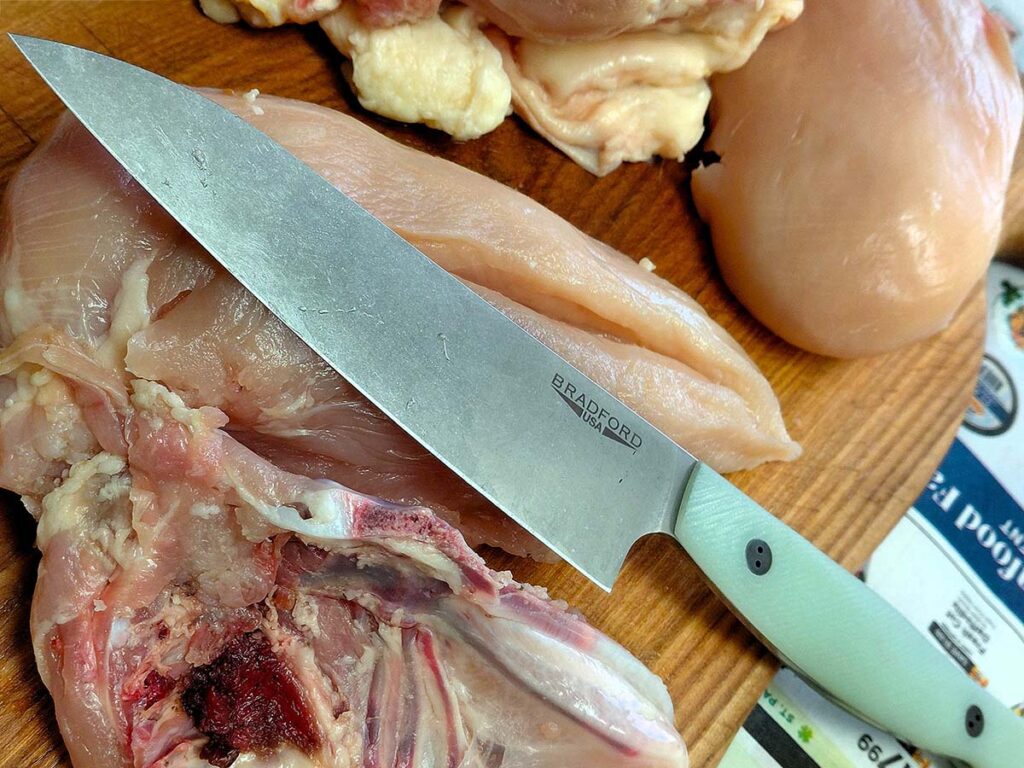
The Bradford deboned chicken and cut a variety of veggies with ease.

6” Utility Knife Specs
Blade Length: 6”
Blade Steel: MagnaCut stainless
Blade Grind: Full flat
Blade @ Thickest: .10”; distal tapered
Blade Finish: Satin stonewash
Handle Material: 3D microtextured
Overall Length: 11”
Country of Origin: USA
MSRP: $209

Bradford’s 6-inch Utility Knife slices through kitchen monotony with surgical precision and unapologetic style. Its CPM MagnaCut stainless steel blade has a Rockwell hardness of 61-to-63 HRC and delivers top-tier edge retention, corrosion resistance and toughness—ideal for everything from delicate herbs to dense proteins. The blade features a stonewash finish that hides scuffs like a pro, keeping your knife looking fresh even after a week of hard prep. Weighing just 5 ounces, it strikes the perfect balance between nimble and substantial and will fit in most kitchen blocks.

The ghost (light blue) handle is ergonomic, moisture-resistant and built to withstand heat, wear and long prep sessions without losing grip or comfort. Thin, full-tang construction keeps the profile sleek and strength solid. Meanwhile, the design makes it a welcome tool for lefties and righties alike.

This fixed-blade kitchen essential is proudly made in the USA and designed to feel like an extension of your hand—whether you’re dicing vegetables or breaking down wild game. It’s not just a knife, it’s a daily driver for the serious slicer.

I spend a lot of time in the kitchen, a big part of it prepping and freezing foodstuffs for later dates. Chicken and veggies get the most attention. I received the Bradford 6-inch Utility Knife at the right time. I had a large quantity of split bone-in chicken breasts that needed deboning and freezing. The idea of a utility knife is to be versatile. I stick to the rule of whatever’s on the cutting board gets used for everything. Hence, the Bradford was now a deboning knife.

The blade was nimble and the low 5-ounce weight glided through the protein with ease. I felt what the handle was all about and liked it. I trimmed the fat and extra unsavory bits using a variety of grips, mostly modified chef’s pinch grips. The wharncliffe-style blade was a huge help when drawing back for pinpoint slices.

The Bradford definitely fits the bill for a kitchen utility knife. From handle comfort, grind and overall design, this is your utility cutter for several occasions.

White River Knife & Tool Liong Mah

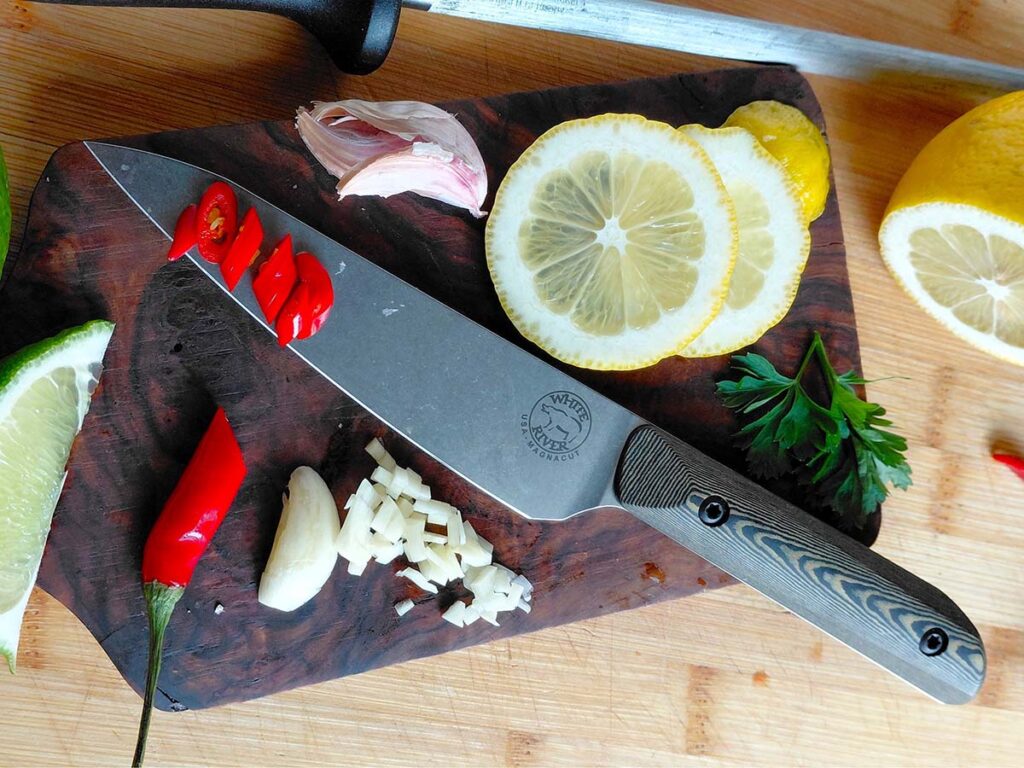
Garnish requires precision, and the White River/Liong Mah Utility Knife excelled at it.

Liong Mah Utility Specs
Designer: Liong Mah
Blade Length: 4.75”
Blade Steel: MagnaCut stainless
Blade Grind: Full flat
Blade @ Thickest: .095”
Blade Finish: Satin
Handle Material: Maple Richlite
Overall Length: 9.12”
Country of Origin: USA
MSRP: $200 ($475 for it and the Liong Mah Chef Knife in a set)

The White River Knife & Tool Liong Mah series isn’t just household cutlery—it’s a chef’s dream set in MagnaCut. Designed by Liong Mah, a former New York City chef turned knife architect, these blades blend culinary intuition with precision engineering.

The smaller 3.8-ounce Utility Knife offers nimble control while the larger 6.2-ounce Chef Knife addresses the bigger stuff. Both blades feature MagnaCut at a Rockwell hardness of 62-to-63 HRC, delivering elite edge retention, corrosion resistance and toughness that scoffs at daily abuse. The modern handle tapers toward the blade for a natural, comfortable grip—ideal for vertical chopping and pivoting like a pro. Whether dicing shallots or tackling a brisket, these USA-made tools feel like an extension of your hand, packed in a custom wooden box that says, “Yes, I take prep seriously.” No sheath, no nonsense—just pure slicing satisfaction.

For small tasks like slicing cheese, limes and herbs, it doesn’t get any better than the Liong Mah Utility Knife. Brie cheese is soft, while garlic mincing takes precision and sharpness. However, fret not using the White River entry. For small kitchen tasks and the ability to share a cutting board with other food and garnish, it’s excellent. Hors d’oeuvres, anyone?

The Liong Mah Chef Knife was my pick for long sweeping slices for butterflying chicken breasts. I wanted the full length of a chef’s knife and was delighted with my pick for the task. It sliced with authority and made clean cuts.

CRKT Onion Utility Kitchen Knife

Root vegetables such as potatoes and carrots were no match for the CRKT Onion Utility Knife.

Onion Utility Kitchen Knife Specs
Designer: BLADE Magazine Cutlery Hall-of-Fame® member Ken Onion
Blade Length: 5.5”
Blade Steel: Damasteel damascus
Blade Grind: Full flat
Blade @ Thickest: .10”
Blade Finish: Acid etch
Handle Material: FatCarbon Dark Matter carbon fiber
Bolster: Titanium
Overall Length: 10.19”
Country of Origin: Italy
MSRP: $850

The CRKT Onion Utility Kitchen Knife in Damasteel® damascus isn’t just a kitchen tool, it’s a precision instrument dressed for a gala. Built in Italy, the fixed-blade beauty features a Damacore® Hugin-pattern blade with a finish that highlights the layered steel like a fingerprint of craftsmanship. It’s slim enough for finesse work but long enough to handle serious slicing. The synthetic handle and bolster help keep the weight featherlight at 3.3 ounces so it won’t tire your hand during marathon prep sessions. The construction resists thermal stress, meaning it won’t warp when the kitchen heats up.

Packaged in a laser-engraved walnut box because even your kitchen drawer deserves a little class, it’s a limited-edition blend of performance and polish that says, “Yes, I julienne with style.” The knife isn’t just a pretty face, it’s a high-performance hybrid that bridges the gap between a chef’s knife and a paring knife, ideal for tasks that demand both precision and power.

I make a lot of soups and braised meat dishes, especially when it’s cold outside. Carrots are a no-brainer for such meals. Beef roasts and chicken soup all require onions, celery and carrots. The Onion Utility looks too classy to use. However, it’s purpose-built for hard kitchen work. BLADE Magazine Cutlery Hall-of-Fame® member Ken Onion designed the handle to be stable in the hand when the kitchen heats up, and the grip withstood the heat and then some.

Slicing carrots was a breeze with the super thin blade, and not one piece split or wedged apart as can happen with thick-beveled knives. I sectioned long carrots for freezing and julienned them for stir fry and noodle dishes. The handle comfort and edge retention are stellar. There’s a lot going on in Ken’s design. The best thing I can say is, pick one up and try it.

More Kitchen Knives:

New Knives October 2024

What’s on the menu this month? A bevy of new kitchen knives–both factory and custom.

With the big holidays ahead, we’re heading into the thick of eating season. In turn, it might be time to up the game of your kitchen tools. We have selected a bevy of new custom and factory kitchen knives to show off this month, which only leaves the question—what’s on your menu?


Gabe Fletcher and Don Nguyen Slicer

Gabe Fletcher and Don Nguyen Slicer

KNIFE TYPE: Slicer
BLADE LENGTH: 17.25”
BLADE MATERIAL: Damascus of 1080 carbon and 15N20 nickel-alloy steels
BLADE GRIND: Convex w/a fuller
HANDLE MATERIAL: Carbon fiber and G-10
OVERALL LENGTH: 23.25”
MAKERS’ PRICE FOR A SIMILAR KNIFE: $8,000
KNIFE TO KNOW: The knife is a collaboration between Gabe Fletcher and Don Nguyen; Gabe forged the damascus and the blade, and Don finish ground it and made the handle; Gabe also made a special beer called Nguyen for the collaboration through his Anchorage Brewing Co.; Gabe is an ABS apprentice smith
MAKERS: Gabe Fletcher and Don Nguyen, (Jocelyn Frasier image)


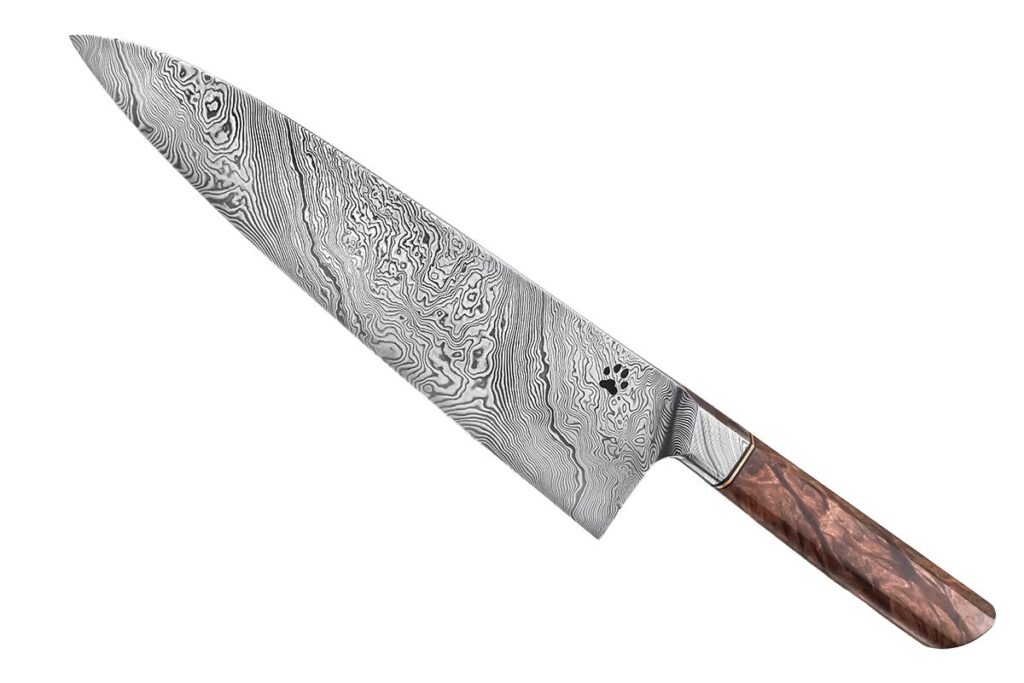
DP Custom Knives Chef’s Knife

DP Custom Knives Chef's Knife

PATTERN: Chef’s knife
MODEL NAME: Honyaki gyuto
BLADE LENGTH: 9.45”
BLADE MATERIAL: W2 tool steel
BLADE GRIND: “S” type
BLADE FINISH: Hand-sanded satin
HANDLE MATERIAL: Ukrainian bog oak
BOLSTER MATERIAL: Antique Westinghouse Micarta® and copper
OVERALL LENGTH: 15.95”
KNIFE TO KNOW: The maker’s Honyaki Gyuto won Best Chef’s Knife at the 2024 Sydney Knife Show
MAKER’S PRICE FOR A SIMILAR KNIFE: $1,546 at press-time exchange rate
MAKER: Dmitriy Popov, DP Custom Knives, dpcustomknives.com.au, (Rod Hoare image)


Jonas Blade & Metalworks Senshi

Jonas Blade & Metalworks Senshi

KNIFE NAME: Senshi
PATTERN: Chef’s knife
BLADE LENGTH: 9.25”
BLADE MATERIAL: Damascus of 1084 carbon and 15N20 nickel-alloy steels
DAMASCUS PATTERN: River of Fire + twist
BLADE GRIND: Flat w/a convex edge
HANDLE MATERIAL: Black stabilized amboyna
BOLSTER: Micarta® and brass
OVERALL LENGTH: 14”
KNIFE TO KNOW: The maker is an ABS master smith
MAKER’S PRICE FOR A SIMILAR KNIFE: $4,600
MAKER: Zack Jonas, Jonas Blade & Metalworks, (SharpByCoop image)


Brent Stubblefield Chef’s Knife

Brent Stubblefield Chef's Knife

PATTERN: Chef’s knife
BLADE LENGTH: 12”
BLADE MATERIAL: Mosaic damascus
BLADE GRIND: “S” type
HANDLE MATERIAL: Desert ironwood
BOLSTER: Fine silver
OVERALL LENGTH: 17.5”
MAKER’S PRICE FOR A SIMILAR KNIFE: $2,400
MAKER: Brent Stubblefield, joinordieknives.com, (SharpByCoop image)


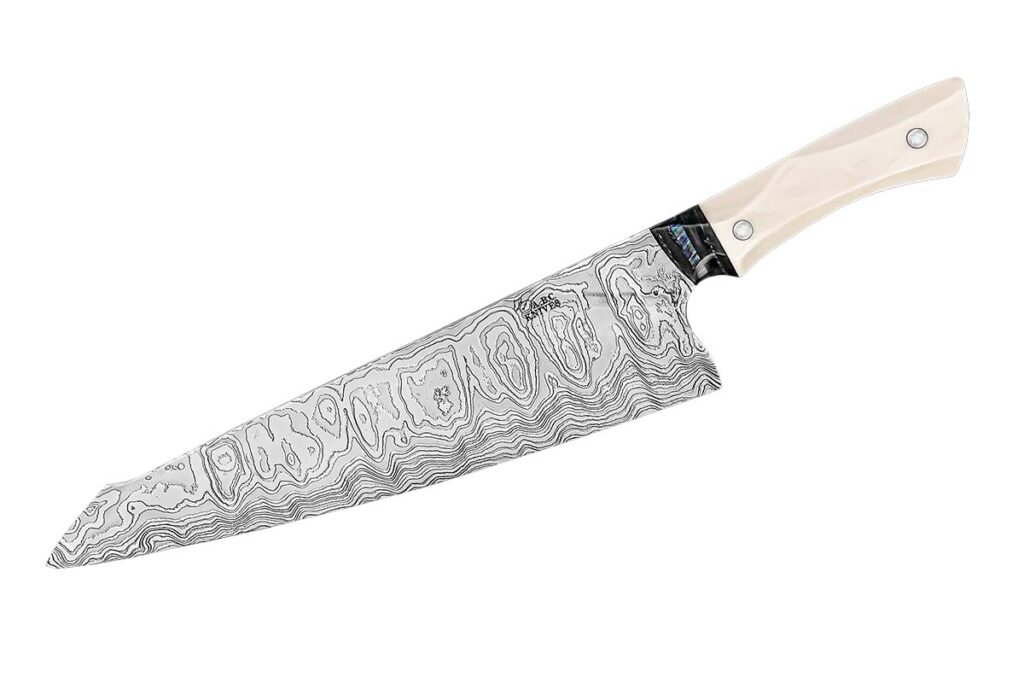
Alexandre Chaves Chef’s Knife

Alexandre Chaves Chef's Knife

PATTERN: Chef’s knife
BLADE LENGTH: 9.75”
BLADE MATERIAL: A damascus of 1084 carbon and 15N20 nickel-alloy steels
ROCKWELL HARDNESS: 60 HRC
BLADE GRIND: Convex
BLADE FINISH: Contrast etched w/Gator Piss etching solution
HANDLE MATERIAL: Elforyn synthetic ivory; filework inlaid w/crushed natural Shattuckite and contrasted w/gold resin
BOLSTER MATERIAL: 9,000-year-old bog oak w/purple maple spacer
OVERALL LENGTH: 14”
MAKER’S PRICE FOR A SIMILAR KNIFE: $3,000
KNIFE TO KNOW: The blade features a K-tip, aka kiritsuke tip, designed for precision and versatility in fine slicing, dicing and scoring, as well as more delicate work such as preparing fish and fine cuts of meat; the knife is a wedding present for the maker’s little sister
MAKER: Alexandre Chaves, (Jocelyn Frasier image)


Modern Cooking UG Chef’s Knife

Modern Cooking UG Chef's Knife

PATTERN: Chef’s knife
BLADE LENGTH: 9.25”
BLADE MATERIAL: Damasteel DS93x dense twist pattern stainless steel
BLADE GRIND: Convex
BOLSTER: Integral forged
HANDLE MATERIAL: Redwood lace burl and copper
OVERALL LENGTH: 10.4”
SHEATH: Redwood lace burl and copper
MAKERS’ PRICE FOR A SIMILAR KNIFE: $2,775 at press-time exchange rate
KNIFE TO KNOW: The knife is a collaboration between Naohito Myojin of Japan and European Jonas Johnsson; Johnsson did the forging, profiling, handle and saya (scabbard), and Myojin ground the blade; Modern Cooking organized the collaboration in partnership with Bonsai Boys Trading
MAKERS: Naohito Myojin and Jonas Johnsson, Modern Cooking UG, moderncooking.com, (SharpByCoop image)


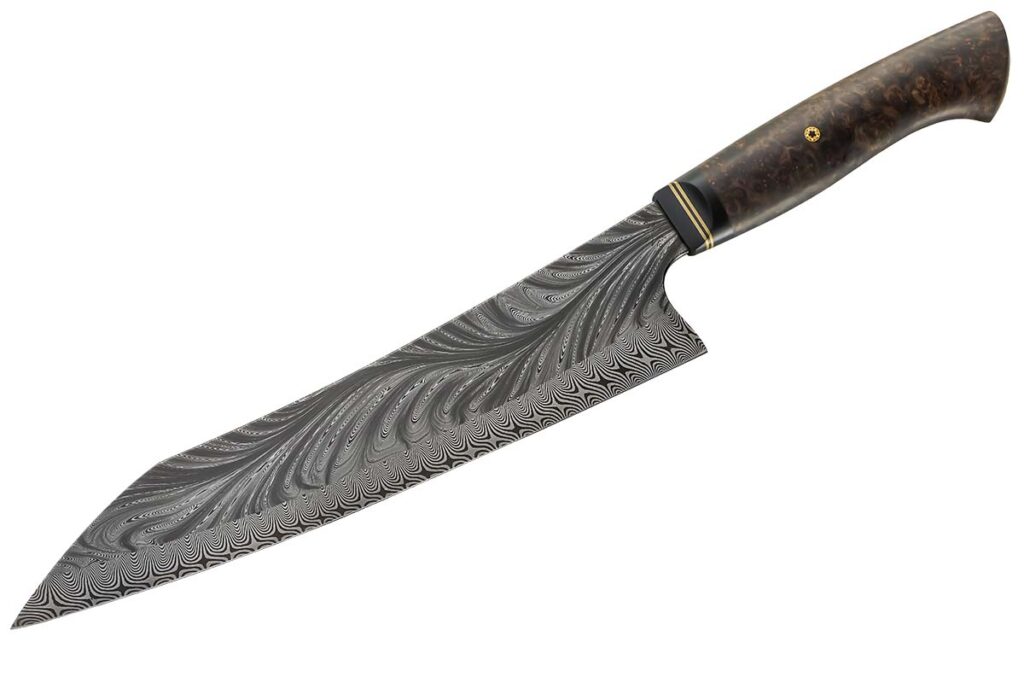
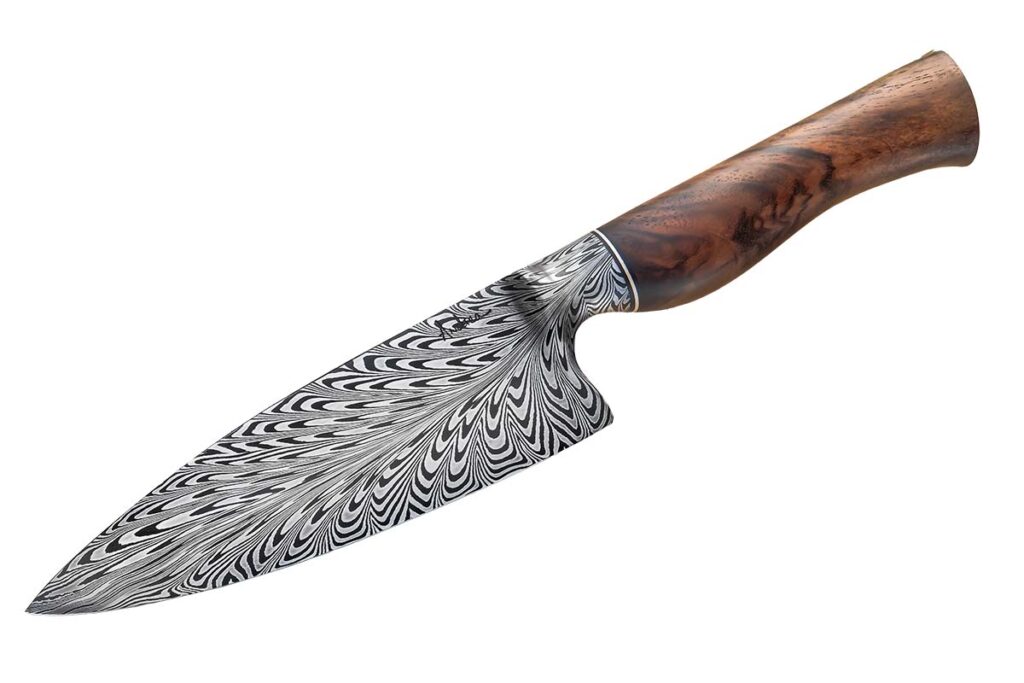
Andrea Lisch Chef’s Knife

Andrea Lisch Chef's Knife

PATTERN: Chef’s knife
BLADE LENGTH: 6.5”
BLADE MATERIAL: Feather pattern damascus
BLADE GRIND: Custom convex
BOLSTER: Damascus
HANDLE MATERIAL: Black walnut
CONSTRUCTION: Forged integral
OVERALL LENGTH: 11.25”
MAKER’S PRICE FOR A SIMILAR KNIFE: $1,300
KNIFE TO KNOW: The maker is a journeyman smith in the American Bladesmith Society
MAKER: Andrea Lisch, (SharpByCoop image)


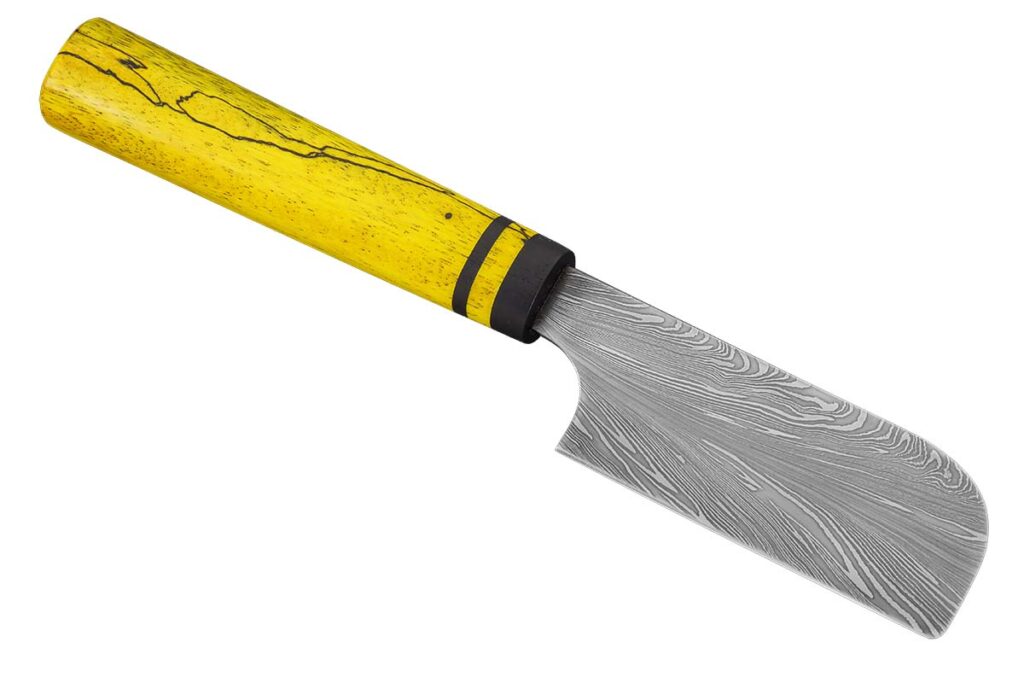
Ceilidh Dalton Veggie Chopper

New Dalton Feather Veggie Chopper

KNIFE NAME: Yellowjacket
KNIFE TYPE: Veggie Chopper
BLADE LENGTH: 3.94”
BLADE MATERIAL: Damascus of 1075 carbon and 15N20 nickel-alloy steels
BLADE GRIND: Flat
DAMASCUS PATTERN: Feather forged by Mathew McVicker
HANDLE MATERIAL: Spalted tamarind
BOLSTER: Ebony
OVERALL LENGTH: 8.27”
KNIFE TO KNOW: The maker is a probationary member of the Australian Knifemakers Guild
MAKER: Ceilidh Dalton, (Rod Hoare image)


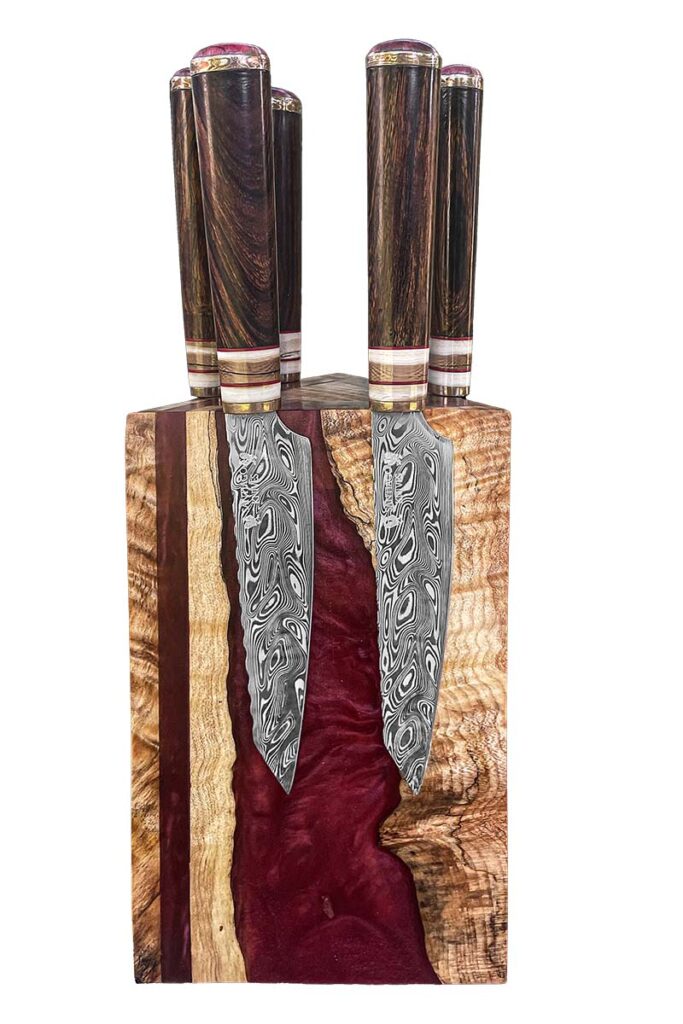
Jose Santiago-Cummings Steak Knife Set

Jose Santiago-Cummings Steak Knife Set

PATTERN: Steak knife set
BLADE LENGTHS: 5”
BLADE STEEL: Damasteel stainless damascus in a Thor pattern
BLADE GRIND: Full flat
HANDLE: Mastodon ivory, red spacer, ironwood
BUTTCAPS: Mokume gane and red-dyed coral
OVERALL LENGTHS: 9”
MAKER’S PRICE: $1,500 for the set, including stand; $300 per knife
MAKER: Jose Santiago-Cummings, santiagoknives.com, (Jocelyn Frasier image)


Geoffrey Baze Chef’s Knife

Geoffrey Baze Chef's Knife

PATTERN: Chef’s knife
BLADE LENGTH: 9”
BLADE MATERIAL: W2 tool steel
BLADE GRIND: Flat
HANDLE: Tasmanian blackwood w/bird’s-beak butt
HANDLE PINS: Black Micarta®
OVERALL LENGTH: 14”
KNIFE TO KNOW: The maker is an ABS apprentice smith
MAKER: Geoffrey Baze, (Jocelyn Frasier image)


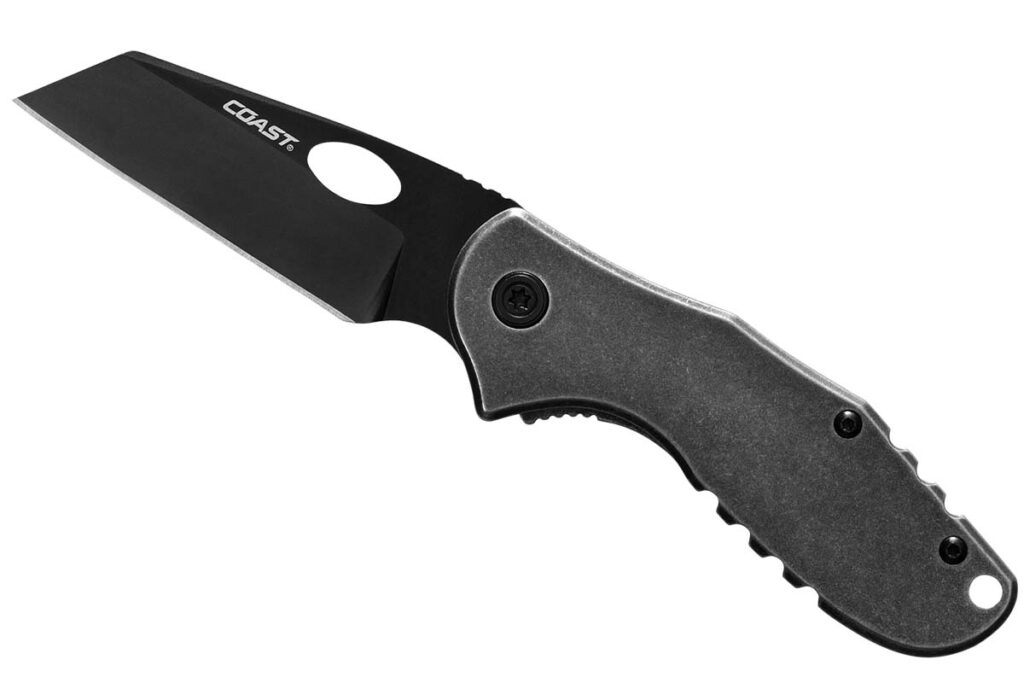
Coast Contra

Coast Contra

KNIFE NAME: Contra
MODEL TYPE: EDC pocketknife
BLADE LENGTH: 2.5”
BLADE STEEL: 7Cr17 stainless
BLADE PATTERN: Wharncliffe
BLADE FINISH: Flat black titanium nitride coating
BLADE OPENER: Blade hole
HANDLE MATERIAL: stainless steel w/hole for a lanyard
POCKET CLIP: One position
LOCK: Framelock
CLOSED LENGTH: 3.75”
CONTINENT OF ORIGIN: Asia
MSRP: $29.99
COMPANY: Coast, coastportland.com


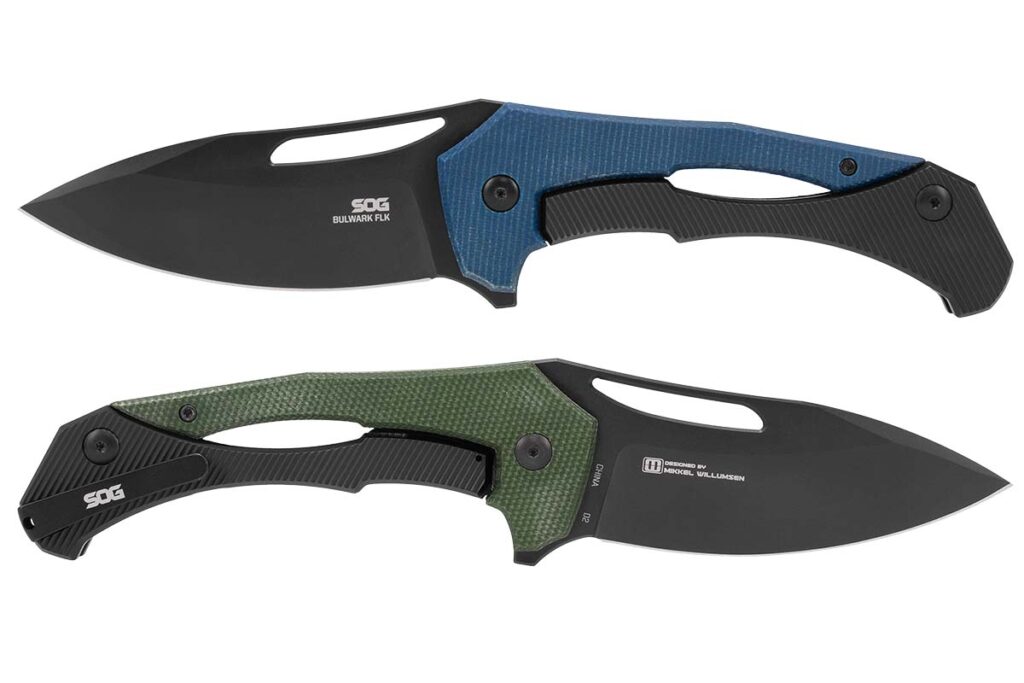
SOG Knives Bulwark

SOG Knives Bulwark

KNIFE NAME: Bulwark
DESIGNER: Mikkel Willumsen
KNIFE TYPE: Flipper folder
BLADE LENGTH: 3”
BLADE MATERIAL: D2 tool steel
BLADE PATTERN: Drop point
BLADE @THICKEST: .14”
BLADE FINISH: Black PVD coating
BLADE OPENERS: Blade hole and flipper tab
HANDLE MATERIAL: Micarta® in green (shown) or blue color options
POCKET CLIP: Reversible, low carry
LOCK: Framelock
WEIGHT: 3 ozs.
CLOSED LENGTH: 4”
CONTINENT OF ORIGIN: Asia
MSRP: $124.95
COMPANY: SOG Knives, sogknives.com


Check Out More Knife Drops:

Advertisement

Must Read Articles

Read this before you make a knife

Knifemaking 101 – Read This Before You Make a Knife

  by Wayne Goddard My experience has taught me that there's nothing like digging in and getting started. I've often said the hardest part of the...
how to forge damascus steel

How to Forge Damascus

Advertisement
Advertisement