Knife collecting is an extremely rewarding experience for knife enthusiasts. There truly is a knife for everyone. Many increase or hold their value throughout the years, making collecting knives something to pass on to the next generation of knife collectors.
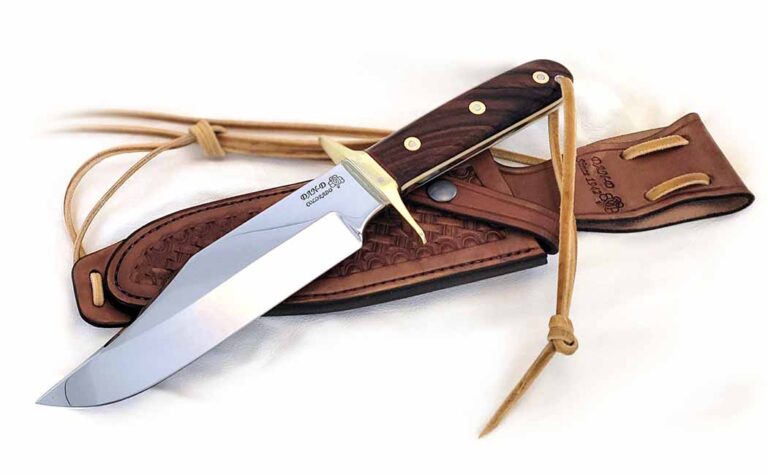
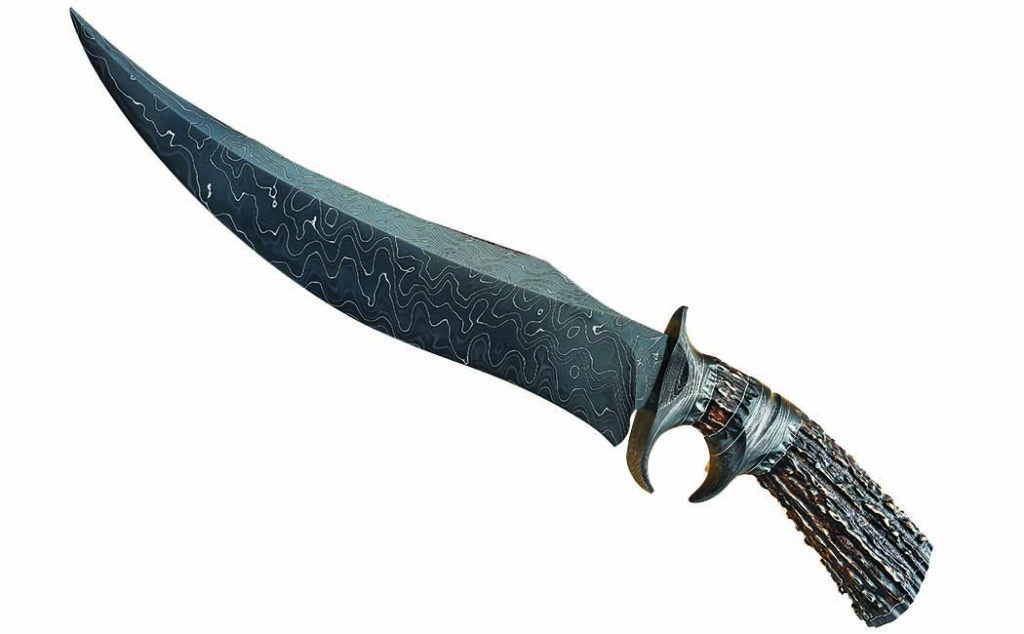
The men behind the Huber Foxworth Bowie are as captivating as the knife itself.
This is the story of a knife named in honor of an incredibly special man. In this highly populated world not many people get their name attached to anything. I do, however, know for a fact that Craig Fox Huber was very proud of the idea that people would be wanting the knife that bore his name for decades to come. He told me so in person. He lived a life that so many would aspire to but very few would have the moxie to follow through on. He was the real deal.
So, how did Craig impact a knifemaker to the point of naming a knife the Huber Foxworth Bowie? Here’s what my father, BLADE Magazine Cutlery Hall-Of-Fame® member Dan Dennehy, wrote about Craig in his 1970 Dan-D Knives Brochure:
Many self-styled “experts” have stopped by my shop from time to time to suggest to me how I should design the “perfect” knife … Not long ago a trim bearded crewcut type found his way to my shop, and we started talking knives. [Circa the late 1960s] I took an immediate liking to this handsome, rather cocky gent and was pleasantly surprised to learn that he spoke about knives with a rather rare understanding of design and more than just a rudimentary knowledge of metallurgy that I found uncommon even among some men whose names would be familiar to you as supposed “experts.” He not only talked good theory and design, but he spoke with considerable authority on how a fighting knife should be used.
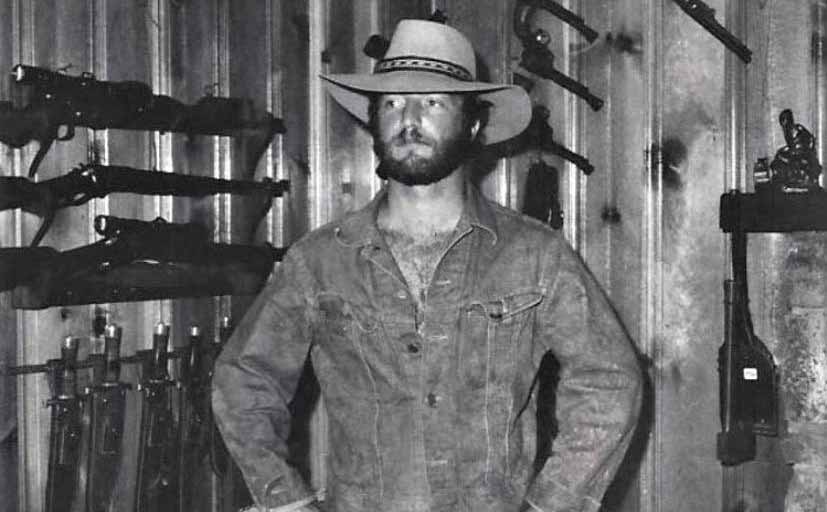
That’s Craig Fox Huber inset circa 1970 at the Fox Den’s second location in Mountain Home, Arkansas.
During our conversation I learned that he had earned three Purple Hearts while serving with a Marine Recon Unit in Viet Nam, and enough other “breast hardware” that when he spoke, I listened with both ears, and rather attentively.
Those who knew Dan might realize that these comments mean he really respected the “cocky gent.” And Craig respected Dan. Their long friendship stayed the course until the end. I also had a lot of respect for Craig and his vast knowledge of knives and other things.
I met him in the early ’70s at The Fox’s Den, his gun shop located in the small ranch community of Kirkland, Arizona. Dan took me there to meet Craig when I was about 13. I shook hands with a man wearing a drop-loop gun belt with rounds in every loop and a .45 Long Colt pistol in the holster. I was in awe. I also got to see some of the knives he carried and to learn why he carried them.
About a year later my family bought a small ranch in the area. I visited the gun shop at every chance. Dan would take me to Craig’s home occasionally. I was equally impressed at his collections. The next summer I worked for Craig, helping with his horses and other stuff around his place. They were good times and I must say that it was from his influence that I went to see the United States Marine Corps recruiter a few years later.
Craig Huber: Christian Patriot
Craig’s son Hunter can tell you better than anyone about his father. Of Craig he wrote:
Dad was a lot of things. He was a soldier, a gunfighter, inventor, storyteller, adventurer, hunter, fisherman, survivalist, outfitter, collector, gunsmith, writer, and the list goes on. He was a patriot and a Christian. He lived his life to the absolute fullest and would fight for everything he believed in and loved.
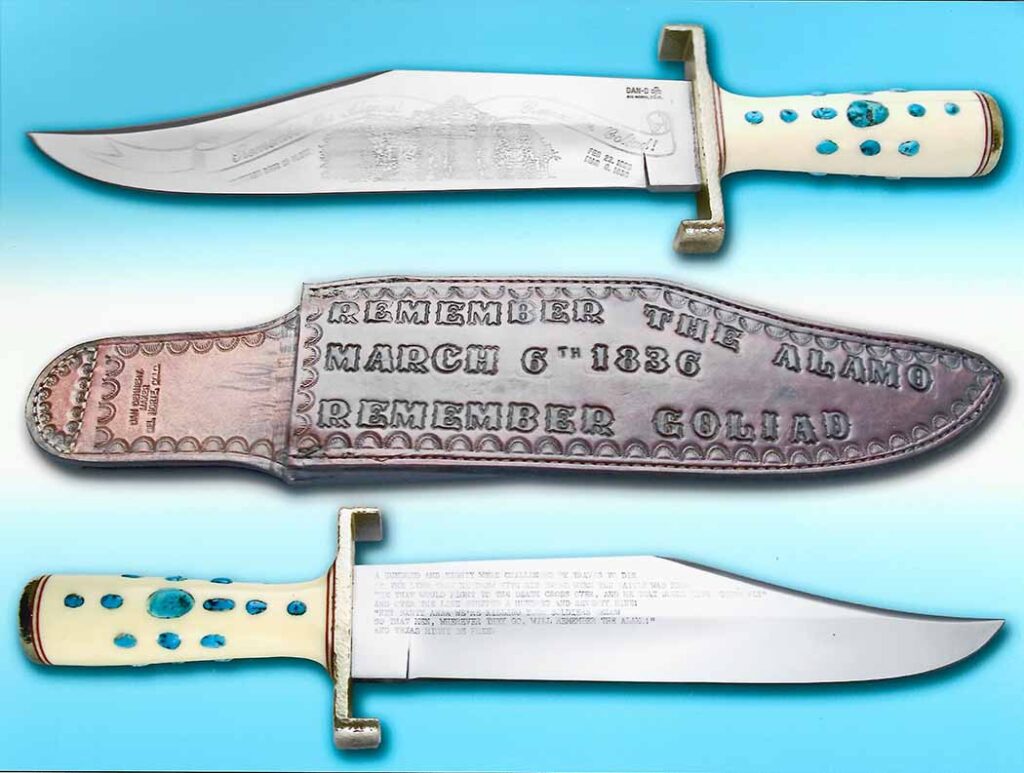
In his vast collection of Dan Dennehy knives, Craig’s favorites were the Dan-D Alamo Bowie and the Huber Foxworth Bowie. The Alamo Bowie has a 12-inch hollow-ground blade a quarter-inch thick and 2 inches wide. The blade’s non-mark side is etched with an eight-line poem that commemorates Col. Travis’s call for “defenders to step forward.” The handle is walrus ivory inlaid with 18 turquoise cabs. Overall length: 16.5 inches. The custom sheath is cowhide. (Bob Glassman image)
Despite having the option to go work for his father’s rapidly growing company in York, Pennsylvania, that was obviously of no interest to Dad so he went into the military. Even though he had trouble with authority and rules, he thrived in the Marines.
After the military his life got really interesting. His resume speaks for itself but here is a summary: police officer; sheriff; private investigator; horse wrangler; hunting guide, Ozark Mountains; fishing guide, French River, Canada; gun shop owner, Fox’s Den (Kirkland, Arizona, and Mountain Home, Arkansas); salesman, Camillus Knives and Levis; personal protection, bodyguard for Saudi Royal Family; professional hunter, South Africa; writer, Whitetail Times magazine and several personal protection books; gunsmith; gun dealer; private security, consulting and training; fugitive recovery; and much more. This is a very general overview and it took him to some very interesting places and dangerous spots, and he met some really interesting people along the way.
So here is what Dad loved. He loved his country and God. He loved our mom. He loved me and my sister. He loved adventure. And he loved guns and knives. Dad was an encyclopedia of firearms, handloading and ballistics. He had a real passion for Rugers, Ruger M77s in any and every caliber they make, but especially 7×57 and Ruger single action pistols. He was also a 1911 fanatic. I don’t remember a single occasion in my life where I ever saw Dad without a 1911 on his side or in a shoulder holster.
And he loved knives. Man did he love knives. I don’t know exactly where in his life this interest started, but he was as passionate about knives as guns, and maybe more. And this is coming from a guy whose gun collection is over 500. He loved all knives and always carried at least two at a time. He had a real appreciation for a good blade and considered knives the most valuable tool an outdoorsman or soldier could have.
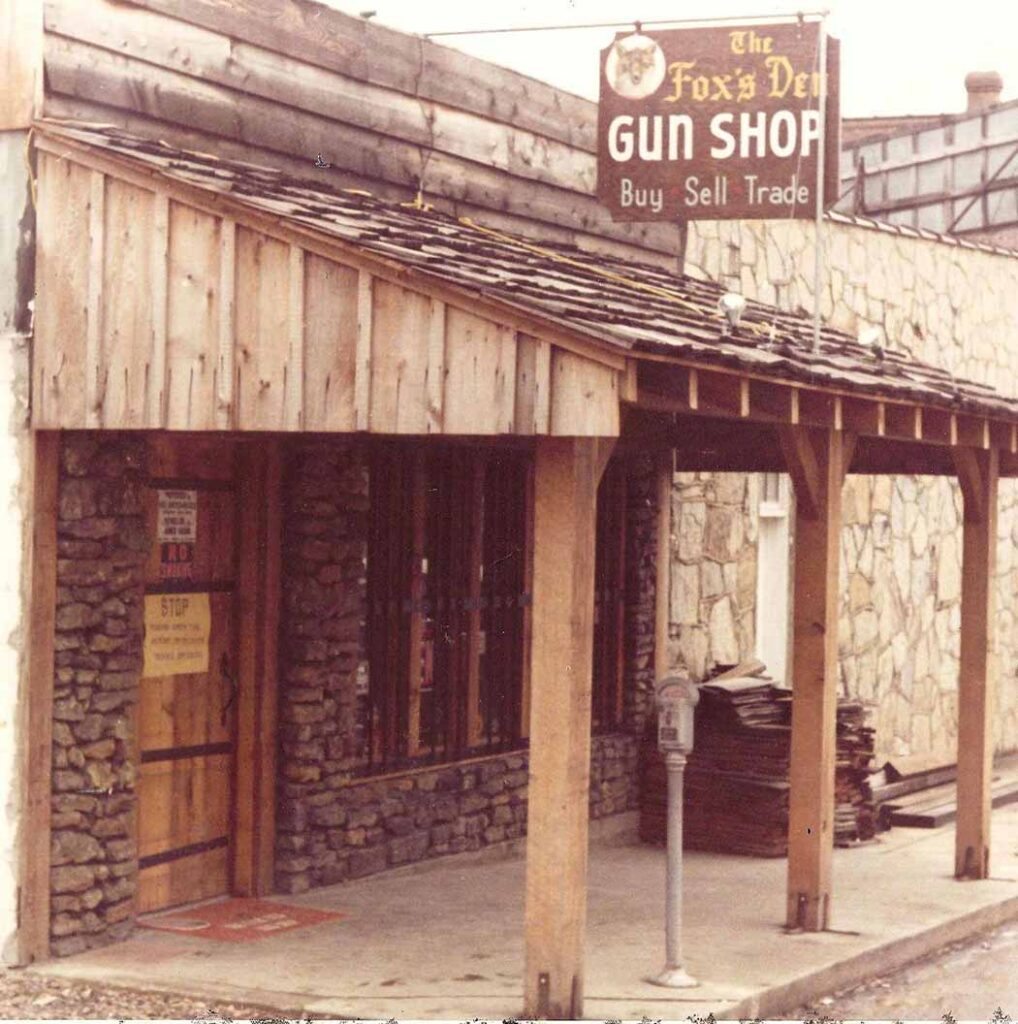
Here’s the second iteration of The Fox’s Den Gun Shop as it appeared in Mountain Home, Arkansas. Note the sidewalk parking meter.
As you would expect, just like factory rifles with factory ammo were not suitable for Dad’s standards, neither were factory knives. As a result he started reaching out to custom knifemakers and collaborating. He formed relationships with Bo Randall, Jimmy Lile, Art Wiman, Clyde Fischer, Blackie Collins, Harold Corby and George Herron, and most notably Dan D. Dad spoke of Dan D. with a manner of respect and admiration that he did not offer up lightly to many. A shared respect and appreciation for the art and skill behind making the ultimate tool, something that was practical and efficient, beautiful and deadly. Dad’s collection of Dan D. knives is vast but his two most prized are the Alamo Bowie and the Huber Foxworth Bowie.
Dad was the toughest man I’ve ever known. A real fighter, rock solid, set in his ways and unshakeable. No matter, if you had a problem, my Dad would be your first call and the man you wanted in your corner. Dad had a lot of fans and a lot of enemies. He had many acquaintances and peers and only a small handful of good friends. He always said if you get through life and only have a few good friends, real true friends, then consider yourself lucky. Dan D. was a true friend of Dad’s.
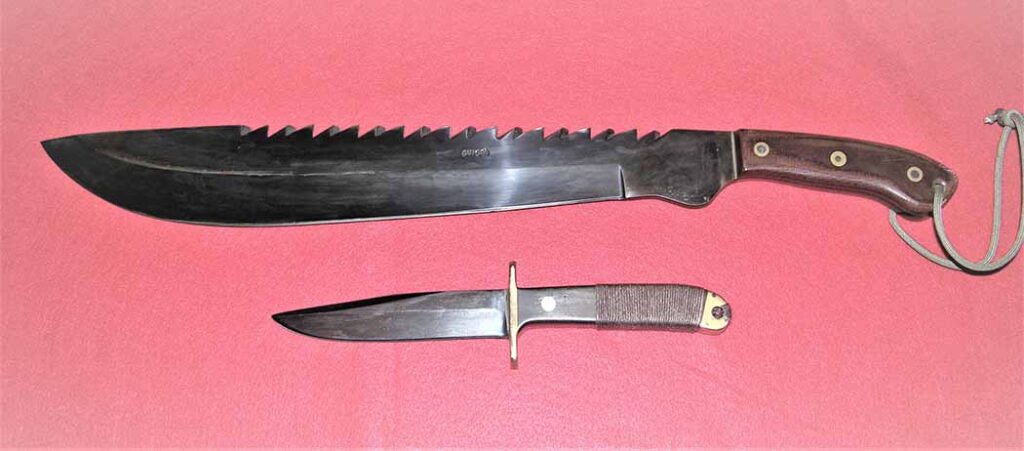
Two of Craig’s favorite Dan-D users included a survival machete and a Woodsman model. Craig designed both, with Dan-D making the former and helping Craig make the latter in the Dan-D shop. Craig carried the Woodsman more than any other knife for over 40 years.
Craig was one of those rare characters you meet along the road of life and always remember. Later he told me stories of discussions with Cutlery Hall-Of-Famer Bo Randall and knife designs for different purposes. Another story was how he talked to Cutlery Hall-Of-Famer Bob Loveless about the simplicity of balancing a knife using his personal theory of the tapered tang. He visited with his friend Cutlery Hall-Of-Famer Jimmy Lile long before the Rambo knife was created. John Horrigan told me about their hunting trip in Africa. Since Craig was a licensed guide the trip was arranged in exchange for a knife identical to the one John presented to President George W. Bush.
Huber Foxworth Bowie
But back to the Huber Foxworth Bowie. The brochure description continues:
This knife is a pure and simple Bowie style but with the handle dropped slightly which seems to give it a much better “pointing” ability and maneuverability not found in most common Bowie styles. [Craig] had a prototype of this knife made for him by a Philippine Negrito instructor while he was attending the armed forces Jungle Survival School in the Philippines. Pound for pound these little Negritos are about as slick and fierce a knife fighter as will be found anywhere.
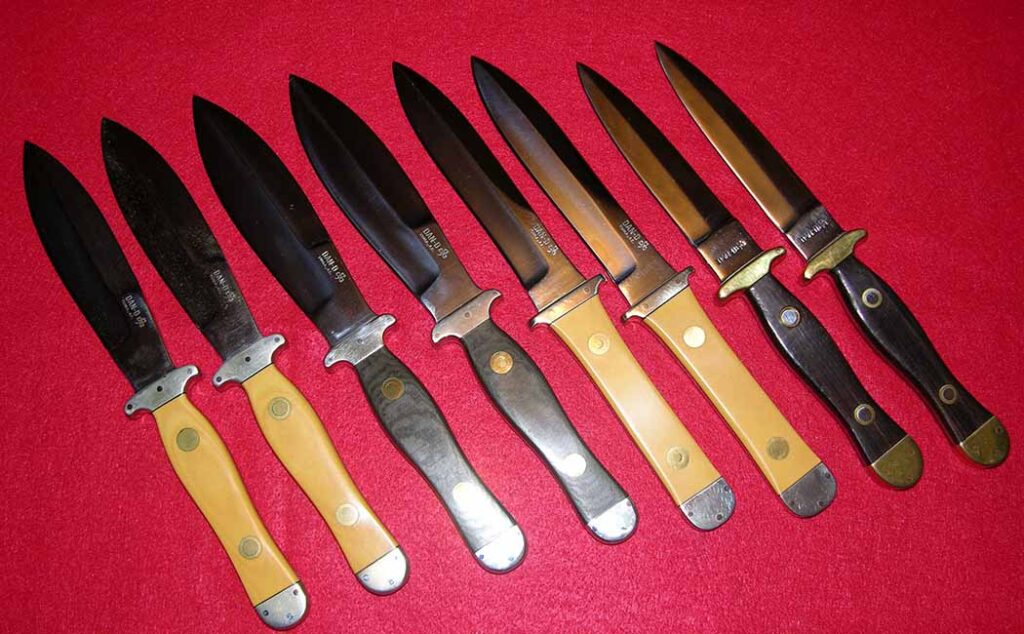
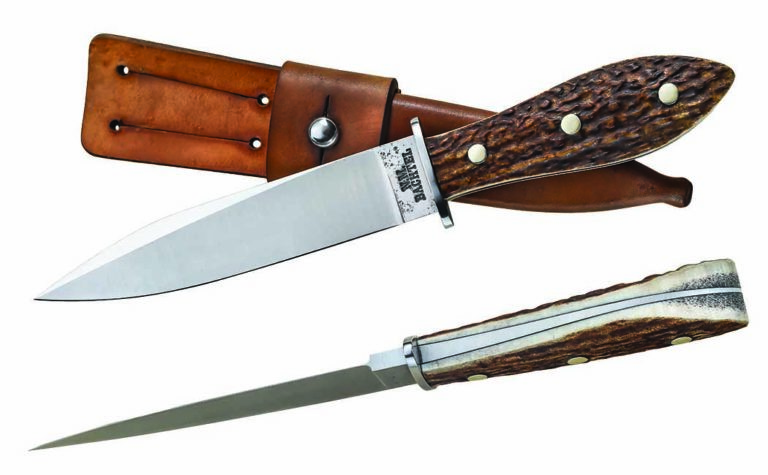
In a 2011 email to the author Craig wrote, “This [image] shows all four pair of boot knives your Dad did for me, including two pairs of my Model III. All have been carried extensively over the past 40 years, and two of the knives have saved my life.”The blade is 8 inches long, 1.75 inches wide and in quarter-inch stock of 154 CPM stainless steel heat treated by Cutlery Hall-Of-Famer Paul Bos. It has a double guard and a 4.75-inch handle. According to the brochure, “This is a knife you could bet your life on.”
A couple of years ago, Hunter contacted me and told me of his father’s passing. Craig lived 76 years his way and made his mark in the world. His passion for God, his country and living life to the fullest extent had been accomplished. Hunter went on to explain that out of all the knives they cannot find the one that meant more to Craig than the Huber Foxworth Bowie.
Today’s gent’s knives are what they are instead of what they used to be.
In years past, there was a genre of knife small, fancy and unobtrusive. It went by gent’s knife or Sunday-go-to-meeting knife, the latter where the hard-working sodbuster was laid down on the day of rest for something to better match the formal Sunday duds. Loosely defined, that knife consisted of fancier materials and a blade less than 3 inches long
However, the argument can be made that today’s gent’s knives are exclusively gent’s knives no more. According to officials of the knife companies that make them, all kinds of people spring for the knives popularly known as gent’s knives. There are sub genres, and their popularity is growing.
Take, for instance, A.G. Russell Knives, whose customers tend to gravitate not toward EDCs or tactical knives but smaller gent’s-type knives.
“In the past year or so, we are seeing an increase in interest in these smaller knives that can be carried unobtrusively, both with pocket clips and without,” the team at A.G. Russell wrote in an e-mail. The knives worn with the Sunday best tend to be more traditional, according to the company’s spokespeople. It’s a subcategory of small knives that sport a sharp appearance that includes premium handle materials. Added the Russell team, “A great gent’s knife is not too large, has an elegance about it, but still performs well.”
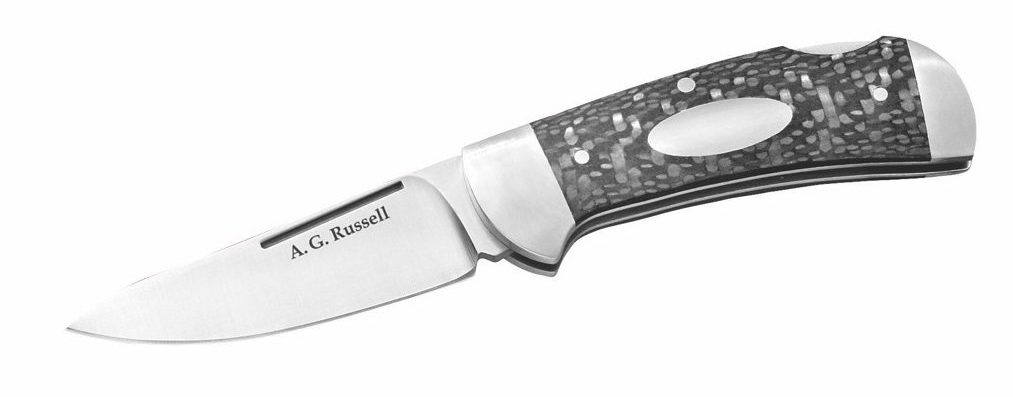
A.G. Russell Knives Vest Pocket Semi-Skinner
Bob Loveless introduced A.G. Russell to the semi-skinner blade shape and Russell fell in love with it, pairing it with a sparkling carbon-fiber handle in the Vest Pocket Semi-Skinner.
For an example of a piece that represents the new generation of gent’s knife, look no further than the A.G. Russell Vest PocketSemi-Skinner. Designed by the late company founder and BLADE Magazine Cutlery Hall-Of-Fame member® A.G. Russell, the knife is a mix between classic design and contemporary materials—the latter being a carbon-fiber handle and premium CPM S35VN stainless blade steel.
The heart of the knife is the bigger-than-it-should-be semi-skinner blade. As the company website noted, A.G. loved the semi-skinner blade, a pattern he credited Cutlery Hall-Of-Famer Bob Loveless for introducing to him. “A.G. saw the need for a small, lightweight pocket knife that would sit comfortable in any pocket, especially vest pockets, and the opportunity to create one with the blade he liked so much,” the site explains.
It is a blade shape that excels with work done at the tip, which is critical for a smaller knife.
“A good gent’s knife is really good at detail work,” the site notes,“in which blade and tip control are very important.” As a result, the Vest Pocket’s blade is at ground and boasts a thin edge geometry ideal for slicing cuts.
The stainless steel bolster is also critical to the design, as it covers the squared-off heel of the blade that connects with the lockbar. Unprotected, the heel could wear away at the fine fabrics of a vest pocket, for instance.
A.G.’s sketch of the knife (pictured below) was scanned into a CAD program in March 2018. Un-fortunately, he didn’t get to see the knife in production, as the iconic knife entrepreneur passed away in October of the same year before the design could be fully realized.
A.G. Russell Knives Vest Pocket Semi-Skinner Specs: Designer: A.G. Russell Blade Length: 2.53” Blade Steel: CPM S35VN stainless Blade Grind: Flat Handle Material: Carbon fiber Pocket Clip: None Bolsters: Stainless steel Lock: Lockback Weight: 2.5 ozs. Closed Length: 3.125” Country Of Origin: China MSRP: $100
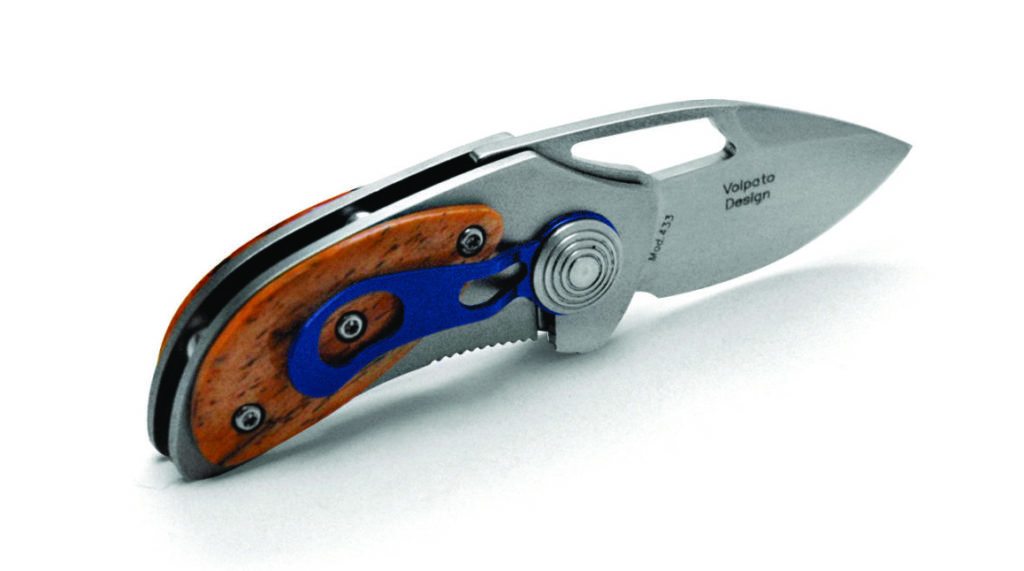
Maserin Knives Turtle
Some of the more notable features of the Turtle by Maserin Knives are the pivot pin with its concentric lines and the skeletonized titanium clip anodized blue.
No discussion of gent’s knives would be complete without mentioning the classic designs that hail from all over the globe. Take for example the Turtle, a timeless design Maserin injected with traditional materials and refinement throughout.
In 2006, Italian knifemaker Claudio Volpato designed a small knife with a blade under 2 inches and sent the prototype to Maserin. “We industrialized it,” recalled Claudia Maserin, along with her two brothers owner of Maserin, and the Turtle was born. “ The knife is still popular considering we first showed it long ago. The best handles are ebony and briarwood, and the damascus blade version is still very appreciated.”
Some of the small knife’s more notable features are the pivot pin with its concentric lines, and the skeletonized titanium clip anodized blue. Part of the goal was to take classic materials and transform them “We looked for elegant and traditional materials,” Claudia explained, “wooden handles like ebony and olive.”
Realizing that some women were gravitating to the Turtle because of its small size, Maserin officials handled the knife in pink giraffe bone several years ago. “We don’t design a knife thinking of final users in terms of gender but in projecting elegant knives,” Claudia stated. “We know they can be perfect both for women and men.”
Early versions of the blade were at ground of 440C stainless steel. Now, they are N690 stainless. The result is a knifes mall enough to slip into the small pocket of a pair of jeans and that opens easily one-handed.
“Our gent’s knife is good for everyday carry,” Claudia maintained. “You can open an envelope, a parcel, cut a fruit. It is the knife you need when you find yourself saying ‘If I had a knife …’
Maserin Knives Turtle Specs: Designer: Claudio Volpato Blade Length: 1.56” Blade Steel: N690 stainless or stainless damascus Blade Grind: Flat Handle Material: Woods of bocote, briar, ebony, olive or walnut Pocket Clip: Skeletonized titanium anodized blue Lock: Linerlock Weight: 2.05 ozs. Closed Length: 2.5” Country Of Origin: Italy MSRP: Depending on options, from about $77 to $19
Spyderco Pochi
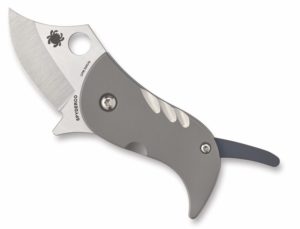
Like many small Spyderco knives, the Pochi is designed to offer large cutting power in a small package. “The dog tail rotates out to create a pinky shelf,” Joyce Laituri noted of the extension on the butt, “adding length to the handle for a better grip.”
Rigid definitions of a gent’s knife don’t quite cut it in Joyce Laituri’s book. The Spyderco spokesperson met a knife enthusiast at a knife show out to acquire some knives. The man towered well over 6 feet and was “built like an NFL linebacker, with paws like a bear,” she recounted. Though he appeared gentle-manly, a blade under 3 inches would be too small for him.
“In today’s industry,” Laituri began,“there is a broader view of what constitutes a dress knife. Is it its size, cost, function, materials, appearance? That definition is unique to each knife carrier.”
For some, a gent’s knife may be a small, elegant knife. Others, Laituri points out, decide that the most gentlemanly knife they can carry on their wedding day is a 5-inch folder or even a Spyderco Military model. The company eschews the term gent’s knives for prestige knives, Laituri said, in order to better describe the breadth of people who carry such edged tools. Meanwhile, a Spyderco knife that has attracted knife carriers for a whole slew of reasons is the Pochi, a flipper-folder collaboration with Japanese custom knifemaker Kazuyuki Sakurai.
“There is a market for anyone look-ing for the non-traditional,” Laituri said,“and the Pochi has been well received—surprisingly so—because it is so different from traditional pocketknives.
Some Pochi users, she added, like the design because they find it both charming and functional. Others are attracted to its upswept blade hollow ground from high-end CPM S45VN stainless steel. Some, attracted to the zoomorphism of the design, carry it because they like dogs, Laituri said.
Pochi, which roughly translates to the most common name for a dog in Japanese, has all the essential canine elements, resembling something like a pug on the go. Like many small Spyderco knives, Laituri said the Pochi is designed to bring large cutting power in a small package. “ The dog tail rotates out to create a pinky shelf,” Laituri noted, “adding length to the handle for a better grip.”
Spyderco Pochi Specs: Designer: Kazuyuki Sakurai Blade Length: 1.58” Blade Steel: CPM S45VN stainless Blade Grind: Hollow Handle Material: Titanium Pocket Clip: Titanium anodized blue;closed knife carries blade tip up Lock: R.I.L. (Reeve Integral Lock)WEIGHT:1.7 ozs. Closed Length: 2.6” Country Of Origin: Taiwan MSRP: $270
Bear & Son’s Bold Action
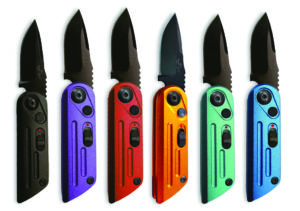
The Bear OPS Bold Action 14 comes in a wealth of different colors thanks to the anodization of its aluminum handle.
According to Matt Griffey of Bear &Son Cutlery, the world of gent’s knives has been changing and part of that has been due to the evolving nature of the workplace.
“We see less manufacturing professionals and more office setting careers,” he said. “Gentleman’s knives t the workforce movement and the lifestyles that come with it—accounting, computer techs, engineers and so on—with the knife having a small or slim physique and constructed from higher quality materials.”
At the same time, Griffey notes some of the slim knives are growing in size, and in the forefront of that change has been the increase in autos.
“Automatic knives have always intrigued both the traditional and modern knife enthusiast,” Griffey wrote, “and to-day more states are approving the daily carry and ownership of these types of knives.”
Trying to comply with many of the new auto laws, Bear & Son introduced the BearOPS Bold Action 14. The result is a knife available in a selection of color choices with its anodized aluminum handles and also the Sandvik 14C28N stainless steel blade, all made at Bear’s plant in Alabama.
Aluminum is a lightweight, low-maintenance material and 14C28 has a reputation of being corrosion resistant, durable and “an awesome performance steel”—essential features on a knife with a smaller blade and plenty of tasks to do.
“The Bold Action 14’s typical use would be common cutting chores around the office/home like opening small packages, cutting cordage and opening envelopes,”Griffey said, noting the knife can handle bigger tasks, too.
Meanwhile, expect more gent’s knives—or whatever you want to call the small fancy folders—in the future
“There is a market space for gentleman’s knives,” Griffey said. “Today, there are a lot of different choices and we’re lucky to and so many knife designers pushing the limits with materials, sizes and overall de-sign in the category.
Bear & Son’s Bold Action Specs: Designer: N/A Blade Length: 1.75″ Blade Steel: 14C28N Sandvik Blade Grind: Hollow Handle Material: Stainless Steel Pocket Clip: Reversable Bolsters: N/A Lock: Auto Weight: .14 oz Closed Length: 2.50″ Country Of Origin: USA MSRP: $140
CRKT Pilar
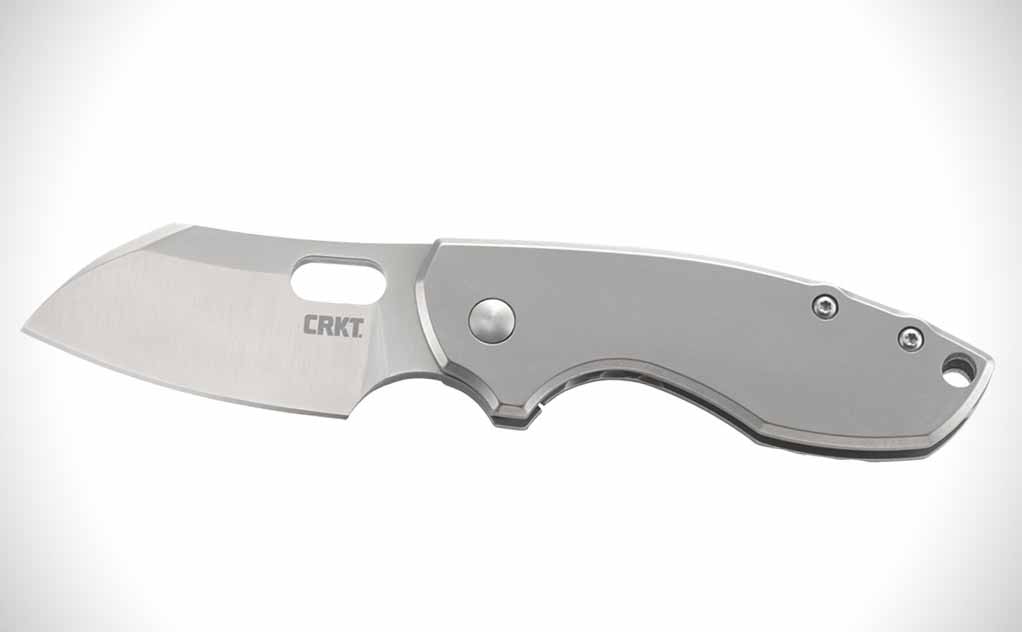
Designed by Danish knifemaker Jesper Voxnaes of Vox Knives, the size and blade shape of the CRKT Pilar are well matched for heavy cutting jobs. The handle is very comfortable and secure in the hand.
How could CRKT and Voxnaes make the knife even better? The answer is to offer a new larger version for 2019. The Pilar II offers the same performance and ergonomic advantages as the original, including robust framelock construction with an all-steel handle. The 2.6-inch blade is 8Cr13MoV stainless steel and offers a great balance of edge holding and maintenance ease. It is the Chinese equivalent of the Japanese-made AUS- 8. Due to the increase in size and blade mass, the Pilar II features a flipper, something the Pilar lacks.
Voxnaes is known internationally for his straightforward designs with a nod to utility and outdoor applications. Originally he made prototypes of the Pilar in two versions: one with a flipper tab and one without. “With lots of people asking for a flipper version, it was an easy fix,” Jesper notes. The blade rides on Teflon washers and flips open nicely without the use of pivot bearings. It also sports an oblong hole for ambidextrous opening.
The stainless steel handle supplies heft and a solid backbone. The grip’s edges are chamfered, offering comfort and eliminating hot spots or general discomfort. A solid steel spacer adds handle strength. A steel pocket clip carries the knife tip up or down for right-hand carry only. If you prefer half-and-half-type handle construction with your framelock folder—that is, each handle side comes in a different material, in this case stainless steel and lightweight G-10—the Pilar II is so equipped. The G-10 offers a bit more weight savings plus a nice grippy texture. The all-steel-handle version has weight-saving pocket reliefs milled into the inside of the scale.
“At first it may seem we simply upscaled the original Pilar design, but the knife was actually redesigned from scratch to make the ergonomics feel perfect,” Jesper concludes.
Don’t let the gent’s knife label for the large Pilar fool you. It’s a knife that isn’t afraid to get down and dirty with its rugged build and utility-friendly blade shape. Like its little brother, the large Pilar is easy to carry and rides securely in a pocket. The choil indexes your grip and the rest of your fingers fall naturally around the handle. Due to the handle shape and size, those with larger hands may find the knife too small.
However, for those whose hands are filled nicely by the grip, the large Pilar is very comfortable to hold.
CRKT Pilar Specs: Designer: Jesper Voxnaes Blade Length: 2.40″ Blade Steel: 8Cr13MoV Blade Grind: Plain Handle Material: Stainless Steel Pocket Clip: Stainless Steel Bolsters: N/A Lock: Frame Lock Weight: 4.20 oz. Closed Length: 3.53″ Country Of Origin: China MSRP: $39
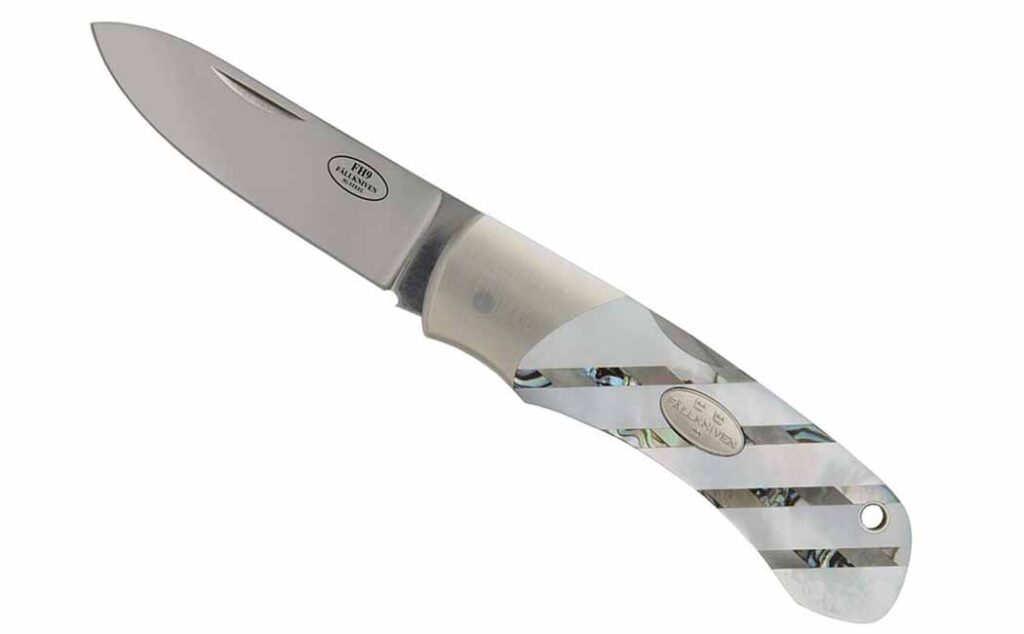
Fallkniven FH9 MOP
The Fallkniven FH9MOP is dressed to the nines with a mother-of-pearl handle accented by abalone and a mirror-polished blade. This is the knife you want to carry to dressy social functions, as the handle treatment sets the tone for an upscale outing or maybe even church on Sundays. According to Peter Hjortberger, Fallkniven president, the design is based on a folding hunter and a traditional lockback system.
Employing Fallkniven’s best blade material, a laminated 3G powder steel with a Super Gold steel core with a Rockwell hardness of 62 HRC, the FH9MOP is built for use. The 2.5-inch drop-point blade is neither too small nor too large. The knife is by far the best looking of the test bunch. The pearl handle and abalone accents create a stunning visual effect.
Structurally, the FH9MOP is built quite solid with dual stainless steel liners, steel bolsters and a steel handle spacer. Inlaid Fallkniven logo shields in the handle cap things off, and the blade sports a nail nick on each side for easy ambidextrous opening. A nice suede slip sheath protects the knife from rubbing up against keys, coins, etc., in your pocket.
The blade came out of the box razor sharp. I had no problem using it to open mail, cut stray threads, or any other similar gent’s knife duty. It is too beautiful a knife for the same jobs as a tactical folder, so use would be limited.
It sure is an eye-catcher, though. For a model more suited for general utility needs, step down to the standard FH9, which gives you the same blade steel but with the more work-friendly Micarta® handle material. Either way, the knives are sharpened pocket jewelry at its best.
Fallkniven FH9 MOP Specs: Designer: N/A Blade Length: 2.6″ Blade Steel: 3G Blade Grind: Plain Handle Material: Mother Of Pearl Pocket Clip: None Bolsters: Steel Lock: Lockback Weight: 3.35 oz. Closed Length: 3.625″ Country Of Origin: Sweden MSRP: $540
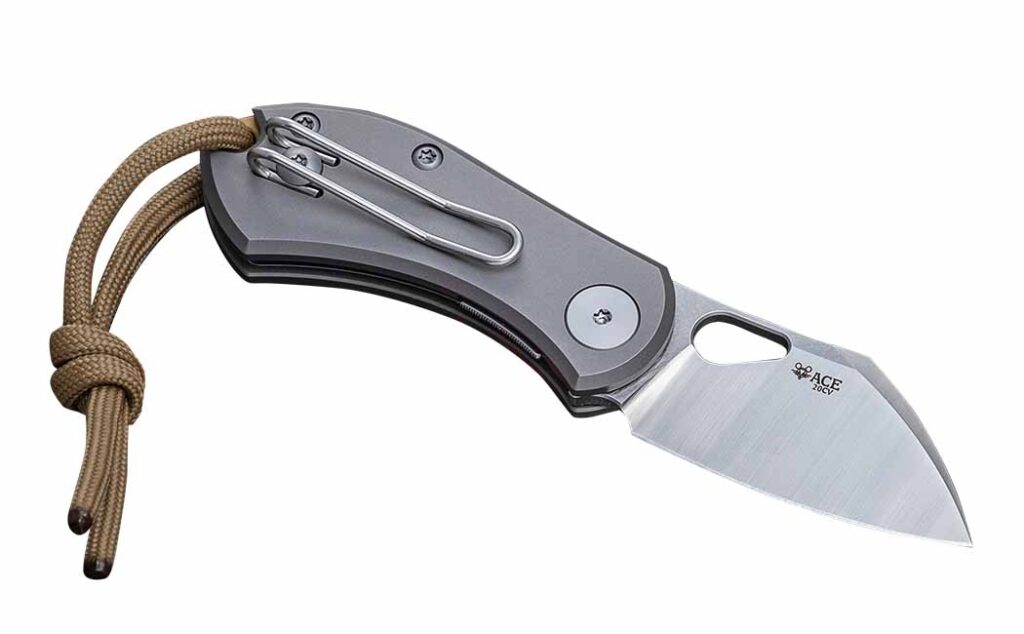
GiantMouse ACE Nibbler
Designed by custom knifemakers Jesper Vox and Jens Anso, the Nibbler holds fast via a reversible wire clip.
“A great gent’s knife is a fully functioning tool that stands strong in the ‘looks and class’ department,” explained Jim Wirth of GiantMouse. “It’s a knife that is capable of cutting tasks but also for social events, Sunday church or a Thursday evening cocktail.”
GiantMouse makes a bold statement among gent’s knives with the Nibbler, a compact, efficient folder that Wirth says works as a great EDC in areas and situations where size matters. “Although the Nibbler is small, it packs a serious punch,” he pointed out. “Our definition of a gentleman’s knife is a knife that you can EDC in almost any environment, from the church to the office so to speak, a knife that does not raise eyebrows but will be welcomed when put to use. This could very well be the modern definition of this type of knife.”
The Nibbler is bound to fill the bill for that light-cutting job and to exude a positive image. “It’s inspired by the fictional character Nibbles ‘Tuffy’ Mouse from the hit cartoon series Tom and Jerry,” Jim explained. “Nibbles may be small but he sure is mighty, just like our new ACE Nibbler, a petite folder that packs a serious punch and doesn’t lack in the fun department, either.”
Wirth concludes that both men and women will find the Nibbler a great choice for EDC. “We don’t think that making a pink handle on a knife will make it more suitable for women,” he reasoned. “We don’t believe in designing specifically for a gender; all our knives are equally suited for men or women.”
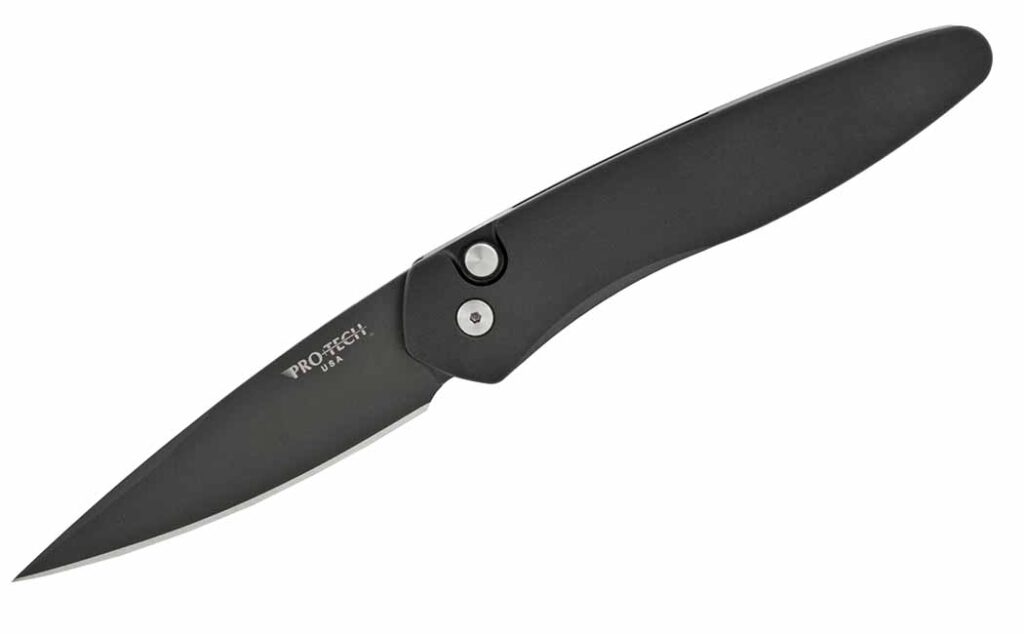
The thoughtfully designed deep carry clip and the thin, lightweight nature of the Pro-Tech Newport 3405 make it a good choice for wearing dress slacks, as it won’t tear up the pocket or be heavy enough to make it sag.
At Pro-Tech, Dave Wattenberg takes pride in the Newport, a gent’s knife that exudes personality. “It’s our thinnest and lightest full-size auto,” he commented. “It packs three inches of S35VN steel for all your EDC tasks into a precision-machined aircraft-aluminum frame that is only .38 inch thick.
The thoughtfully designed deep carry clip and the thin, light carry of the Newport make it a great choice for someone wearing a nice trouser or dress slacks, as it won’t tear up the pocket or be heavy enough to make it sag.”
Dave is excited about the versatility of the Newport, its swift deployment, unobtrusive profile, and variety when it comes to materials while running the gamut from EDC to investor/collector-grade presentations.
“From solid aluminum handle/stonewash base models all the way to investor customs, there’s a Newport model to suit just about any taste and budget,” he remarked. “Pro-Tech is well known, of course, for superior coil-spring-action auto knives, and while the Newport is no exception to this, users will find the action controlled, smooth and satisfying—not the huge snap of one of the tactical response series, but a more gentlemanly switchblade action.”
Pro-Tech Newport Specs: Designer: N/A Blade Length: 3″ Blade Steel: S35-VN Blade Grind: Plain Handle Material: Aluminum Pocket Clip: Tip-Up Bolsters: N/A Lock: Auto Weight: 2 oz. Closed Length: 4.125″ Country Of Origin: USA MSRP: $240
Sandrin Torino
The polyhedral tungsten carbide blade of the Sandrin Torino is designed to retain its razor-sharp edge far beyond that of steel blades in Sandrin’s “StaySharp Technology.”
The Sandrin Torino exemplifies the ideals of the gent’s knife, and Sandrin’s Rob Bianchin says he knows why. “The Torino is exceptionally lightweight at only 2.29 ounces,” he remarked. “It’s pretty easy to forget that you have it in your pocket. The lightweight characteristics are deceiving as the blade performance exceeds that of a steel knife for edge retention. For anyone who can appreciate metallurgy, the polyhedral tungsten carbide blade is a state-of-the-art super metal and was not thought possible just a few years ago.”
According to Rob, the entire Sandrin knife experience is centered around the blade material. Polyhedral tungsten carbide is not steel. Instead, according to Sandrin, it is an engineered “super metal” invented and patented for blades by Sandrin director Alessandro Colombatto. “Tungsten carbide can be used for cutting steel or for wear parts that undergo extraordinary stress and corrosion,” Bianchin added. “Polyhedral tungsten carbide has advantages over steel, such as consistent molecular structure. It cannot rust and typically is in the 71 [HRC] Rockwell hardness range* or higher.”
The polyhedral tungsten carbide blade lends itself nicely to the Torino gent’s knife presentation, and Rob sees a natural fit. “In my view, the definition of a gent’s knife has evolved with the times and includes knives of quality that are also effective cutting instruments and not just for show. The Torino can be carried and used daily but is also a point of conversation as it is still exceedingly rare to own a knife made from new metal.”
The appeal of the Torino once again embraces the spectrum of potential users—both men and women, factory or office workers. “Gender is not a design consideration,” Rob said. “The Torino is suited for men or women. Men are the predominant consumers of pocketknives, but I suppose in today’s world the industry should call such knives a ladies’ or gentlemen’s folder.”
Sandrin Torino Specs: Designer: N/A Blade Length: 2.95″ Blade Steel: HRC71 Blade Grind: Plain Handle Material: G-10 Pocket Clip: Titanium Bolsters: N/A Lock: Recoil Weight: 2.29 oz Closed Length: 4″ Country Of Origin: Italy MSRP: $260
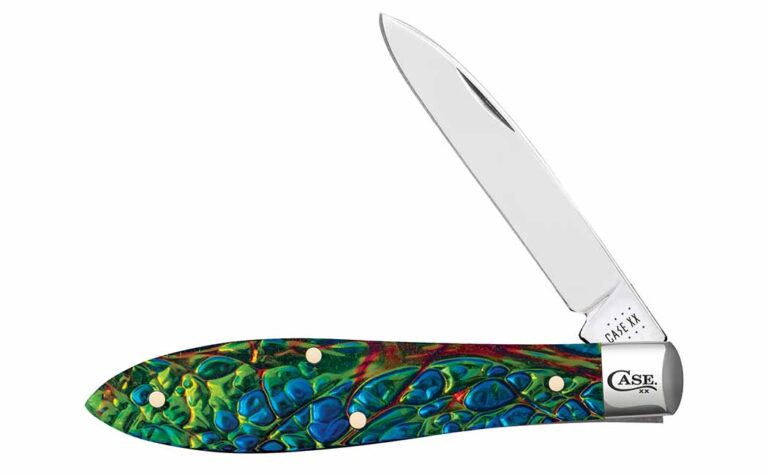
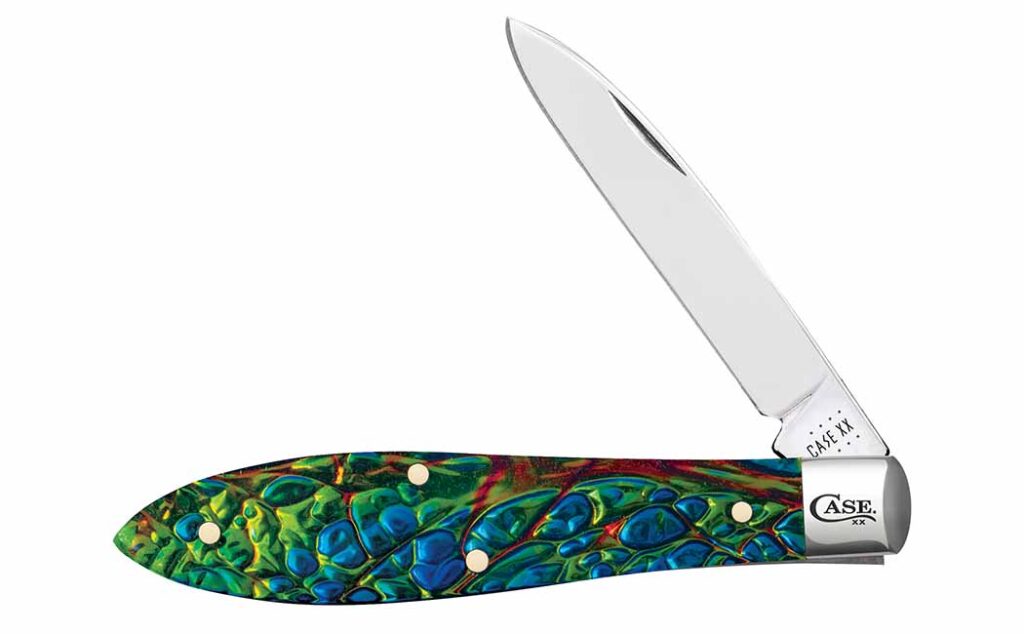
Case Black Sea Dichrolam Tear Drop
The Case Tear Drop Black Sea Dichrolam spear-point blade is designed with a strong tip for piercing, which comes in handy for such gent’s knife jobs as opening mail, packages and the like.
Case has long been a star performer in the manufacture and presentation of gent’s knives, and the company continues the tradition with the Black Sea Dichrolam Tear Drop, a beauty with a composite handle material that mimics the luster of an opal gemstone. Fitting nicely within the spectrum of gent’s knives, the Black Sea Dichrolam Tear Drop brings excitement to the Case fan base.
“Based on our interactions with knife enthusiasts at consumer events, our Classic Case folding patterns like the tear drop are considered by many as a ‘Sunday-go-to-meeting knife,’” commented Fred Feightner, Case director of marketing communications. “But more modern knives are more and more often carried and considered to be a ‘gentleman’s knife.’ The definition lies in the eye of the beholder.”
With the new tear drop entry, Case has bridged any perceived gap between men and women as far as carrying a dressy, functional knife. “We’ve definitely seen an uptick in people carrying Case pocketknives over recent years,” Fred continued, “and they realize that a good, sharp knife is handy to have on your person for all kinds of reasons, from hiking and camping to doing detail work that’s done by hand. Whether kept in a pocket, purse or hanging on a carabiner, a pocketknife is a must have for most any person.”
For occasions when an unobtrusive EDC knife is in the mix, Case fashioned the Black Sea Dichrolam Tear Drop. “Our tear drop pattern has a single spear-shaped blade,” Fred related. “The long, sharp edge can cover everything from cutting threads on clothing to gathering fruit or nuts outdoors. The tip adds functionality for tasks like piercing through a clam shell package or scoring leather to fashion a sheath.”
Case’s tear drops, particularly the Black Sea Dichrolam, perform as excellent light-duty tools, according to Fred. The slim design and small “form factor” make them great for close-up and close-in work, handy little EDC knives that are not only up to the tasks a gent’s knife is meant to perform, but easy on the eyes as well.
Case Black Sea Dichrolam Tear Drop Specs: Designer: John Blazy Blade Length: 2.44″ Blade Steel: Trusharp Surgical Steel Blade Grind: Plain Handle Material: Dichrolam Composite Laminate Pocket Clip: None Bolsters: N/A Lock: Slip Joint Weight: 1.4 oz. Closed Length: 3.63″ Country Of Origin: USA MSRP: $106
Editor’s Note: Dainel Jackson, Dexture and Mike Haskew contributed to this post.
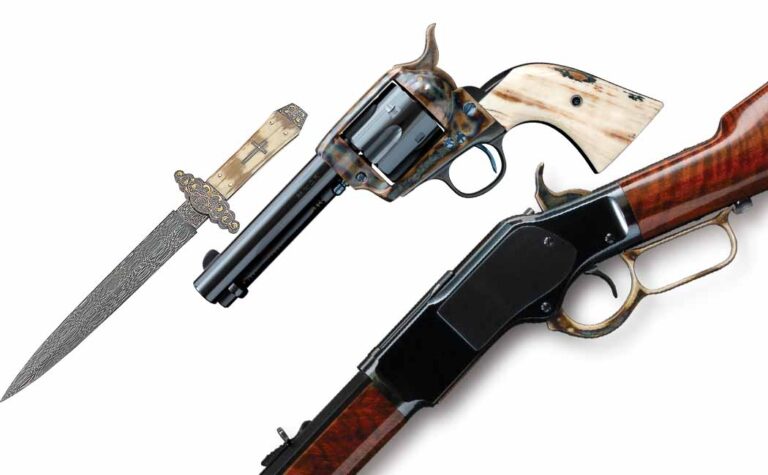
Master smith Harvey Dean teams up with Turnbull Restoration Company to produce a throwback set made to droll over.
An 1873 knife/restored-pistol-and-rifle set collaboration from ABS master smith Harvey Dean and Turnbull Restoration Co. is sure to set the knife-and-gun collector world on fire.
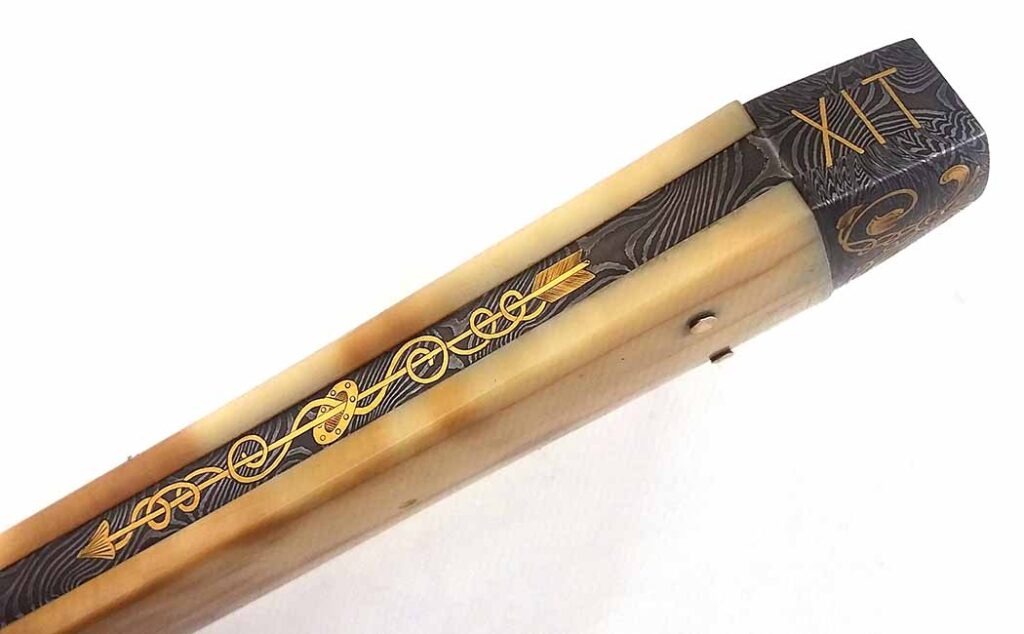
The 24k-gold arrow inlay on the spine of the damascus handle frame is in the style of famed 19th-century pistol engraver L.D. Nimschke. The XIT is a repro of an old cattle brand.
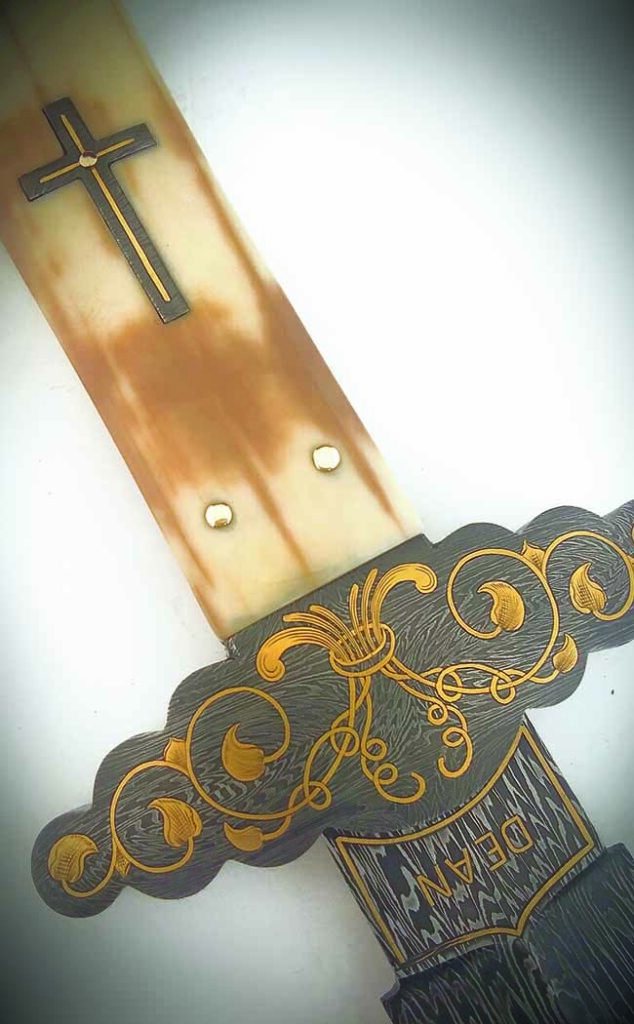
In a spinoff of Harvey’s Olympus dagger design, the 9-inch blade is his thunderstorm damascus. It’s complemented by a guard based on an antique one Harvey modified a bit to resemble a cloud that ties in with the thunderstorm theme. He picked the coffin handle because it was a design popular circa 1873. The damascus cross features a 14k-gold pin, as does the balance of the walrus ivory handle, and 24k-gold inlay. The handle frame is 42 layers of twist damascus to tie in with the fact that Harvey is the 42nd U.S. ABS master smith.
The guard is based on a modification of an antique one. The 24k-gold inlay is by Harvey Dean, as is all the knife engraving. Fittingly, Harvey inlaid the damascus cross with 24k-gold inlay on Good Friday last. The pins are 14k gold.
The restored pistol and rifle pair are part of a 150th anniversary set by Turnbull Restoration Co. The pistol is a Colt M1873 Peacemaker 1907Model P Single Action Army. Some of the most famous outlaws and lawmen of the Old West carried original examples of the handgun, including Billy The Kid, Jesse James, Butch Cassidy, Doc Holliday and Wyatt Earp. The rifle is a Winchester Model 1873 lever action from 1904. Originals of which also were extremely popular in the Old West, it was the go-to for market hunters, cowboys and stagecoach drivers through the remainder of the 19th century and into the 20th.
Harking back to American military glory and post-war prosperity, antique switchblades from the 1940s and 1950 have enduring appeal.
From its first patent in 1884, the switchblade was an important addition to most early U.S. cutlery companies.
According to Mark Erickson, author of Antique American Switchblades, between 35-to-40 companies made and/or sold switchblades, including almost all of whose names long-time collectors recognize: Aerial, Camillus, Case, Challenge, Colonial, George Schrade, KA-BAR, L.L. Bean, Novel Shapleigh Hardware, Queen, Remington, Schrade Cutlery Co., Utica, Wade and Butcher, and Shapleigh Hardware, to list a few.
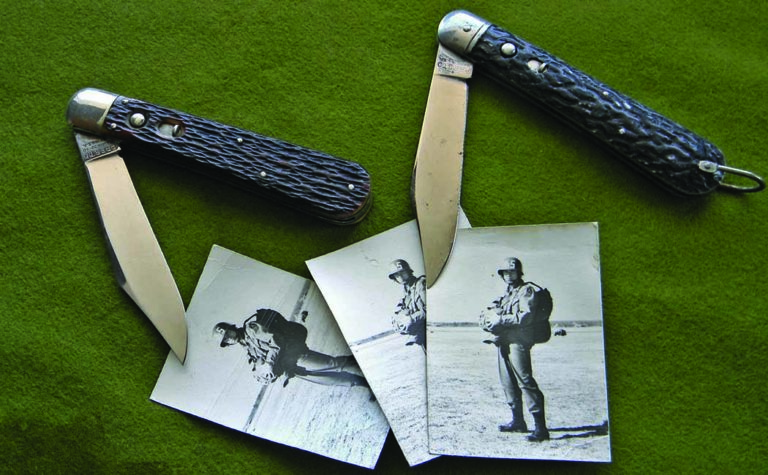
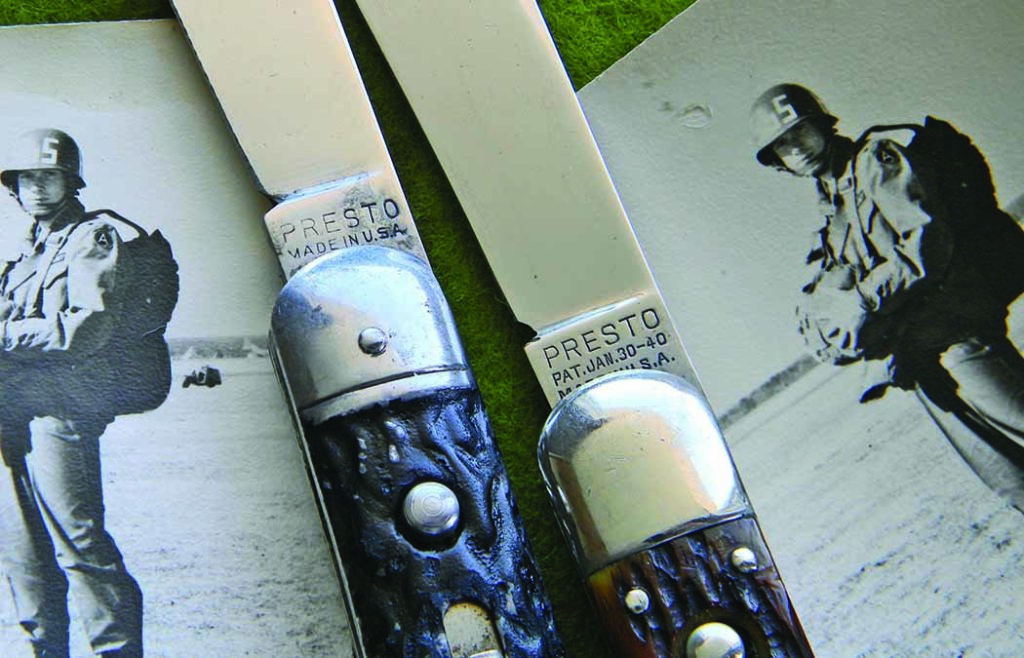
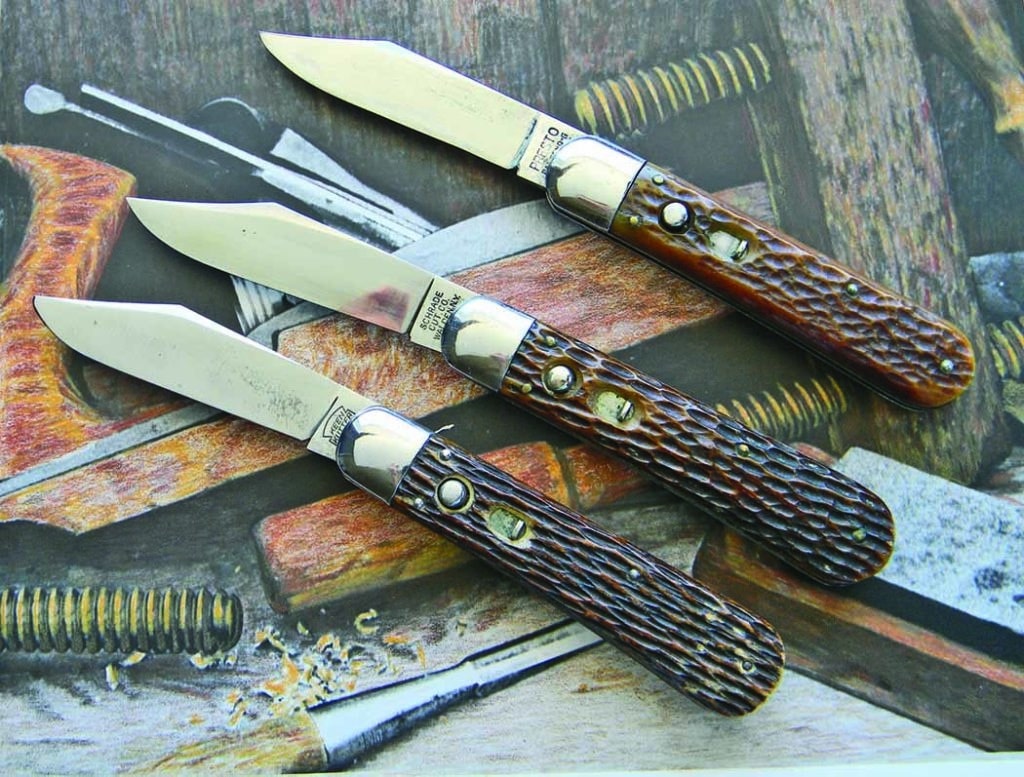
These two switchblades with the Presto stamping by George Schrade Knife Co., are among those that played an important part in the success of American paratroopers during World War II.
Because of the collectibility of the named companies and the significant variety of styles, sizes and handle materials associated with them, switchblades have become a serious endeavor for many collectors of antique knives.
Invention Of The Switchblade
As a serious cutlery collector, my downfall has been fingernails that bend backward with even the smoothest opening blades. The switchblade innovators had fingernails in mind when they produced a knife that could be opened without using a nail. In fact, some of the best switchblades are found in women’s old sewing baskets.
In fact, early switchblade ads tout the folder’s ability to be used by people with weak fingernails. “These knives will be a wonder for those who have difficulty opening a traditional knife” stated one such ad.
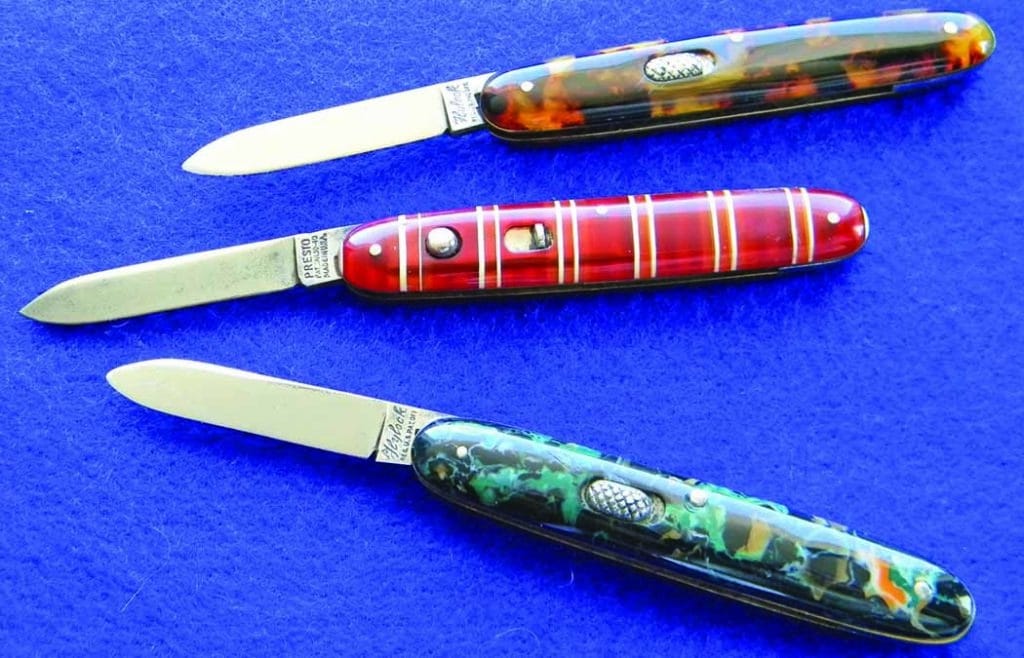
Celluloid was a very popular handle material on antique switchblades. Celluloid types, from top: a George Schrade in imitation tortoise, another George Schrade model in candy stripe, and one from Flylock Knife Co., in blue, pink and black swirl.
For many other occupations, the switchblade and its ability to be opened with one hand has proven immensely important. Mechanics, fishermen, ranchers, soldiers, veterinarians and even Boy Scouts were frequent users of the pocketknives. With a wiggling fish in one hand, it is easy to see how a switchblade could be a valuable asset to most fishermen when cutting a line.
Moreover, most switchblades have a lock/safety that keeps the blade from opening accidentally and the open blade from closing on the hand. An early Flylock Knife Co. ad touted, “The ideal knife for all outdoors and sports use. One hand only required to open or close, leaving the other hand free to grip a rod or gun.”
World War II Switchblades
World War II brought with it the necessity of supporting soldiers who parachuted behind enemy lines. Switchblades procured for the U.S. military were designed to cut the parachute suspension lines that became entangled during landing. The knives were carried in what has been described as “neck pockets’ in jump uniforms.
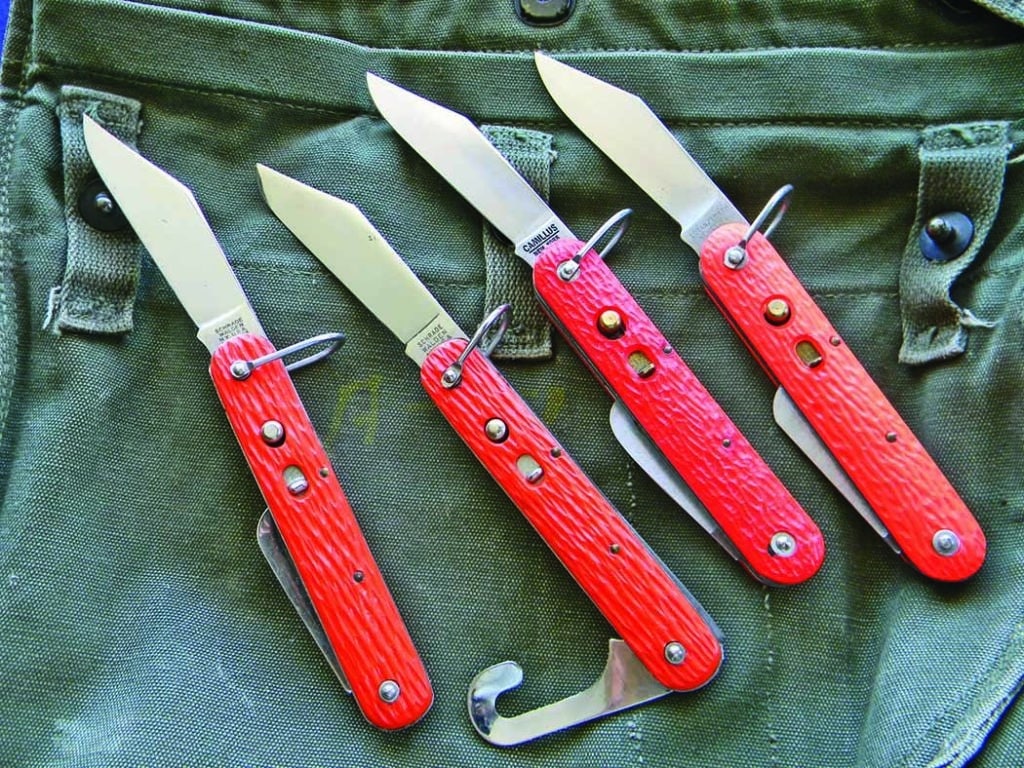
Military switchblades designated “MC1” included models in orange handles for heightened visibility. They were made by Schrade until 1960, when Camillus took over the contract. The knives have a master blade opened by a push button and a manual shroud cutter.
There are continuing discussions about the knives specifically made for and used by the U.S. military during the war. The discussions center around whether switchblades issued to troops all had jigged bone handles or jigged metal sides. Another discussion is whether all switchblades used by paratroopers had a bail—known in the military as a “lanyard staple”—or whether knives without bails also were used.
Units that used the knives included paratroopers in the 82nd Airborne and 101st Airborne Divisions, which included the 505th, 507th and 508th parachute infantry regiments. The 505th Infantry Regiment website shows switchblades made by Schrade Cutlery Co. stamped “Presto” with jigged bone handles and metal handles made to look like jigged bone painted black. Knives both with and without bails are included in the photographs. Switchblades made for World War II paratroopers also include those stamped Schrade-Walden and Schrade Cut. Co.
The book, 4 Stars of Valor: The History of the 505th Parachute Infantry, describes the equipment carried by paratroopers. In addition to main and reserve chutes, full uniform and helmet, the paratroopers carried over 70 pounds of equipment, including an M-1 carbine with ammo, Mae West life jacket, switchblade, water-filled canteen, trench knife, fragmentation and smoke grenades, mess kits, three days of K rations, escape map and compass, gas masks, toiletry items, 30 feet of rope, blanket, half a shelter and first-aid kit.
Post-War Military Switchblades
After World War II, several companies made switchblades for military personnel. According to one website, the first such knife was produced for the armed forces by Schrade Cutlery Co., designated as MC-1, an airman’s paratrooper knife, in 1957. Sometimes the knives are referred to as aircrew survival knives.
Three jigged bone switchblades, from top: Schrade Cutlery Co., George Schrade Knife Co. and one of the rarest of antique models, one stamped “Keen Kutter,” a trademark of Shapleigh Hardware. Schrade made the knife.
The first contract was awarded to Schrade Cutlery followed by a second contract to Camillus, and a third to Logan-Smyth. The orange-handle switchblades had two blades: one a master spear pattern opened by depressing the button, and a second blade shaped like a hook to cut parachute suspension lines. In my estimation, the hooked blade is not sharp enough to easily cut parachute lines and must be resharpened.
Civilian Switchblades
The early 1950s brought a renewed interest in cheap, colorful switchblades, with thousands of knives made by Imperial in its Jack-O-Matic Texas toothpick model, and Colonial, which used the Shur-Sharp stamp on its colorful models. The fishtail jackknives and the Texas toothpick styles were by far the favorite examples produced by the two companies.
The George Schrade Knife Co. continued to produce popular switchblades with celluloid handles stamped Presto. The knives were made with a single blade, double blades (the latter with a push button for each blade) and even a letter opener with a push button in one end.
Celluloid Handles On Antique Switchblades: Why?
The handle material for most of the inexpensive switchblades was celluloid. Thin sheets of the versatile plastic-like substance were molded around the knife’s metal sides. The most popular celluloid style was candy stripe. The knives also can be found in a wide variety of swirled celluloid handles in a myriad of different color combos, some with such recognizable celluloids as cracked ice and imitation tortoise.
Because the knives were inexpensively priced, they were extremely popular with boys in the 1950s. Because of the knives’ widespread use, some advertisers saw an opportunity to emboss various ads on them, giving them away as a novel company promotion gimmick.
Allure Of Antique Switchblades
Because of their connection with the heroic actions of airborne troops during World War II, antique switchblades have continued to be a popular cutlery collecting niche. Moreover, since almost three dozen companies, each producing a vast array of sizes and handle materials, made the knives, the collecting field is wide open.
Even in the 1950s cheap construction, made more evident by the continuous opening and closing of the blades, the knives remain popular collectibles. No doubt one reason for the popularity is that antique switchblades remind many of the Golden Age of the 1950s and ’60s when kids played outside all day, shot their BB guns, and hit the corner gas station for a cold soda and a candy bar.
Forget the traditional 10-inch blade, the new sweet spot for a custom bowie knife is now a 9- to 9.5-inch blade!
In July 1990 I was in the Army, home on leave from South Korea and attending The Knifemakers’ Guild Show in Orlando, Florida. While there, I was introduced to the forged blade.
I stopped by the table of ABS Master Smith Jim Crowell. He explained to me what it took to gain the prestigious rating of ABS master smith. It wasn’t just the quality of the knife that impressed me. I was amazed at how a 15-inch knife with a 10-inch blade could be so lightweight. While I was not new to fixed blades, my experience to that point had been with stock-removal knives.
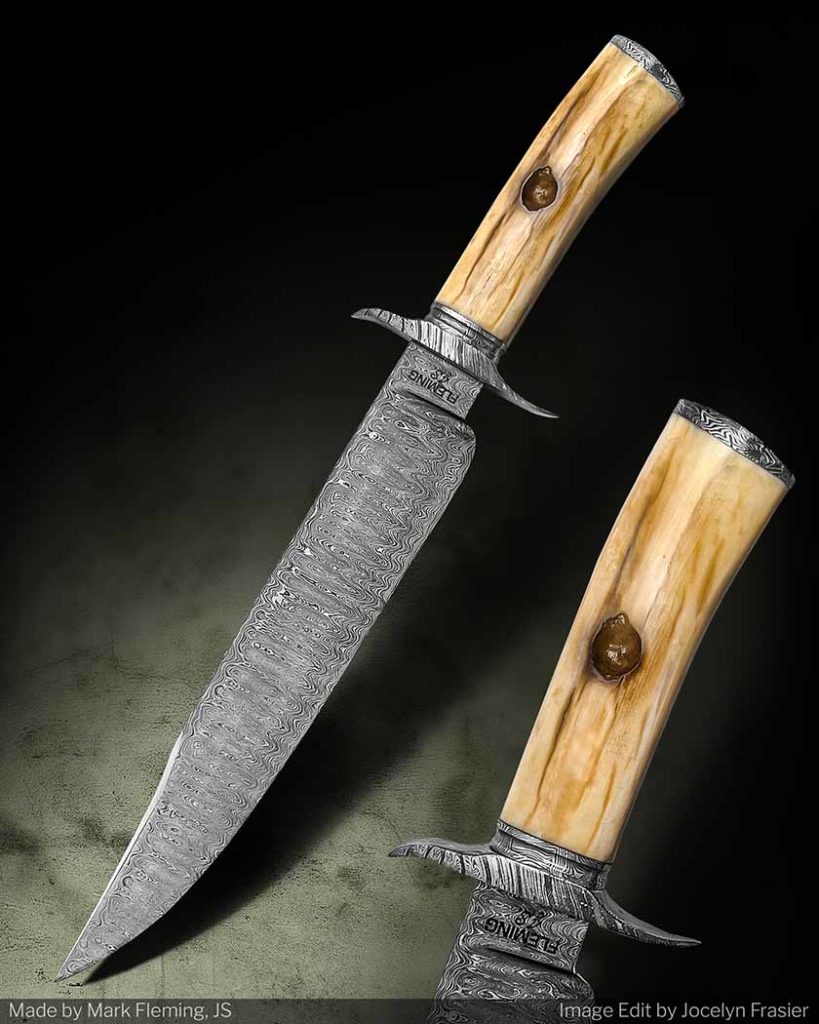
Bad to the bone, Mark Fleming’s forged Southwest Trail Bowie has a 9.5-inch blade made of 1084 carbon and 15N20 nickel-alloy steels in a ladder pattern. The handle is ancient walrus tusk, capped with a damascus pommel, ferrule and guard. Almost a steal, with Fleming marking the price at $1,900 for a similar knife.
Jim explained that distal tapering is a procedure to thin the blade from guard to tip and spine to edge. The amount of tapering depends on the purpose of the knife. As I moved through the show, I started paying more attention to the forged blades on the exhibitors’ tables. What I discovered was what was called the ABS Bowie. The dimensions of the knife were a blade of 10 inches in length, 1.5 inches wide and a quarter inch thick, generally with a 5-inch handle.
Development Of The Shorter Custom Bowie Knife
Those who have been involved with custom knives for some years know that the knives tend to move in cycles. Innovation leads to demand from collectors. There’s a lot of “following the leader” in the custom knife business. This could have helped explain why so many knives were dimensionally identical at the ’90 Guild Show. While some had damascus blades and hardware, most were carbon steel.
In 1992 the custom knife market cycled to a new entry into the custom knife world: the tactical folder. Toward the end of the decade, tactical folders started to wane, and forged blades once again established their prominence in the custom knife world. This time around the cycle began with hunters—basically, those with forged carbon steel blades, stainless guards, and wood or stag handles. The price point was predominantly in the $150-to-$210 range. By 2002, collectors buying hunters were ready to move to the hunter’s “big brother.” Meanwhile, the decade was populated with damascus patterns such as ladder, raindrop and twist, all of which began to show up more regularly.
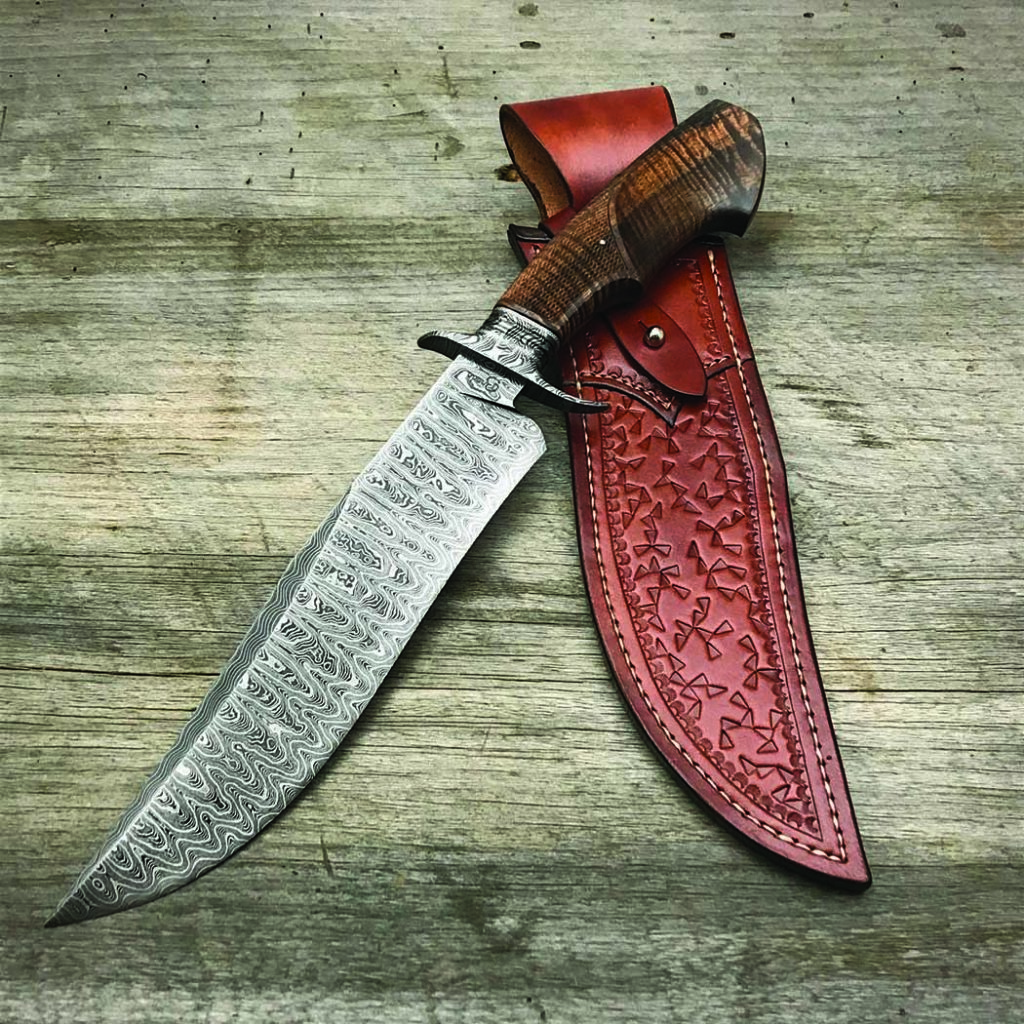
Another nine-and-a-halfer, Ben Brea’s Forged Stag Bowie has a ladder-pattern damascus blade and a checkered koa handle. The superlatively executed custom bowie knife comes with a custom leather sheath. Breda set the price of a similar knife at $2,000.
While damascus was in demand by the higher-end collectors, it was W2 tool steel blades with hamons that took center stage for about five years. No two hamons were exactly alike. They looked cool and, for most collectors, were affordable. While antique designs from the mid-1800s were showing up more regularly, the one thing that hadn’t changed was the ABS Bowie, the majority of which continued to have 10-inch blades or longer.
BLADE Magazine Cutlery Hall-Of-Fame® member Jim Bowie was at least 6 feet tall. Depending on your source, the knife he carried had a blade with a length anywhere from 9.25 inches (on the one his brother Rezin stated was made for Jim), to 121/8 inches (the knife known as the Edwin Forrest Bowie), and a handle length of up to 6 inches. For size comparison, the Japanese ko-wakizashi, a short sword that was carried by samurai, started with a 12-inch blade. The ko-wakizashi was worn outside the clothes in a belt at the waist. Current knife laws aside, a knife that long would be difficult to carry and use openly. After all, have you ever tried carrying around a knife with a 12-inch blade? My only experience was a two-week field exercise while I was in the Army. The knife I took with me had only a 10-inch blade. Granted, I am at least 1 inch shorter than Jim Bowie was. But the 10-inch blade was cumbersome to carry and, quite frankly, just too long for what a soldier needed. Also, it would be challenging to deploy the knife without having it in a cross-draw setup similar to what the samurai employed.
Dimensional Changes To Cutom Bowie Knives
While it isn’t much different from the ABS Bowie, the current hot custom bowie features a 9-to-9.5-inch blade. The other difference on many of the blades is that the width has expanded from 1.5 to 1.75 inches. The additional blade width allows makers who so desire to use some curves along the primary edge.
A big boy of the bunch, Brian Sellers’ 9.5-inch custom bowie knife boast a twist-pattern damascus blade (double-edged) with stainless steel liners. The handle is ironwood and features a sub-hilt design, which Sellers would ask $2,400 for a similar creation.
I think that the shorter, wider blade is more aesthetically appealing. It no longer looks long and thin like its lengthier, narrower cousin. Moreover, the additional width results in a more substantial blade. Finally, extending the blade width allows bladesmiths to tweak the accompanying damascus patterns. Mosaic damascus patterns have gained favor among makers and collectors over the past two years. The extended blade width may give rise to new mosaic patterns. At the same time, the extra width may add a fresh take on standard damascus patterns such as ladder and twist.
The Constant Change Of The Bowie Knife
Today, most of us don’t use large bowies to defend our honor or protect our loved ones. Whether antiques or current models, many bowies have been relegated to collections. Given the amount of 10-inch custom bowies made over the past 30+ years, hundreds of them are for sale in the primary market and thousands are available in the aftermarket. Should you want a 10-inch bowie, your choices of materials and combinations are almost limitless. Given the number of 10-inch bowies available in both the primary market and aftermarket, it should be no wonder collectors are looking for something different.
As many of you may know, as a purveyor I keep pretty close tabs on several custom knife market sectors. Damascus bowies is one such sector. Over the past 18 months, I’ve seen both collectors and makers move away from the standard 10-inch bowie. This is not to say such bowies are not being made but that the demand has slowed. Makers are creating new types and patterns of damascus. Is it any wonder then that what were considered standard dimensions over the past 30 years are being revisited? The new sweet spot of the 9-to-9.5-inch blade is appearing more on today’s custom bowies. Eventually, bowie collectors will once again look for something new and different for their collections. As the Greek philosopher Heraclitus said, “The only constant in life is change.” The same is true in custom knives.
A study of Michael Price’s work, Nick Bachtel’s reproduction gentleman bowie has the looks to wow.
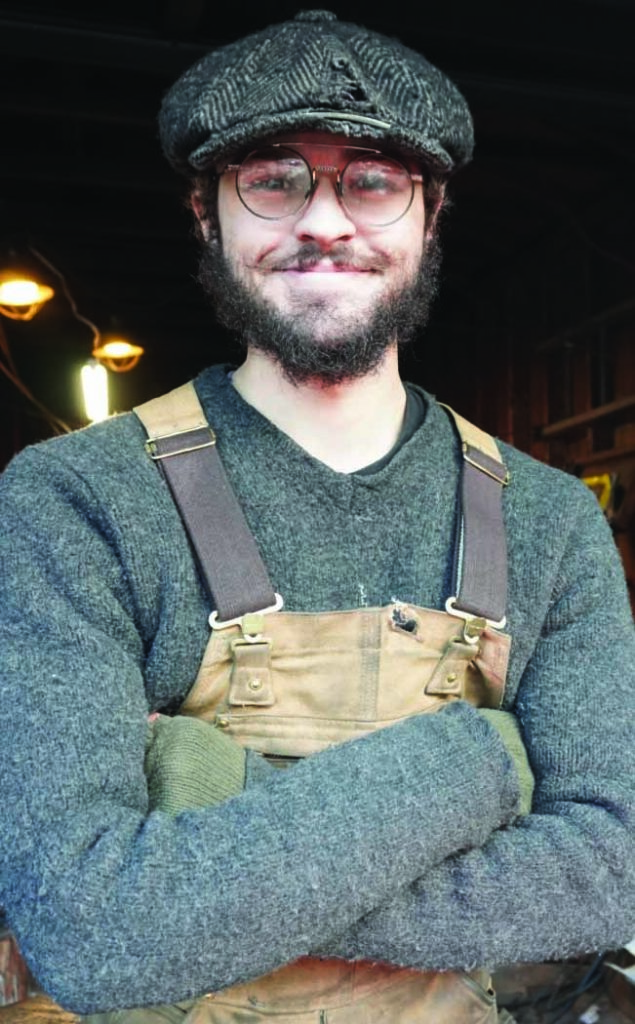
Bladesmith Nick Bachtel has parlayed his fascination with the knives of 19th-century great Michael Price into a faithful reproduction of a Price-style gentleman’s bowie.
Nick studied every Price knife and other like ones of the genre he could find online and elsewhere to help arrive at the way the 19th-century cutler constructed the gentleman’s bowie. However, it was when he saw a picture of a Price knife in BLADE Magazine Cutlery Hall-Of-Fame® member Bernard Levine’s book, Knifemakers Of Old San Francisco, that “a light went off.”
Nick noticed that the handle had three pins so the knife had to have a full tang, not a hidden tang as he had previously thought, so he forged the knife, heat treated it, fit up the guard and forged the tang wider.
“I call it a captured-guard full tang,” the 24-year-old said of the method that apparently originated among bladesmiths in Ireland, Price’s native country. “It’s such a weird, unique, almost comical way of making a knife—and difficult to do as well,” Nick observed, “but boy, did Price make it!”
Nick Bachtel (inset) calls the construction he used to make his reproduction of a Michael Price Gentleman’s Bowie “captured-guard full tang.” For the style to work, it must be forged, Nick stressed. He said another way to do it would be in a frame handle construction and a tapered tang, though a Price aficionado would be able to tell the difference. (SharpByCoop knife images)
The icing on the cake for Nick was ABS journeyman smith Jordan LaMothe’s story, “How to Make the Price Guard” in the December 2019 BLADE®. As Nick noted, “The Price style is the pinnacle of the traditional forged blade.” What better style is there for a young, up-and-coming bladesmith to explore?
Gentleman Bowie Spec Check Knife name: Michael Price Style: Gentleman’s Bowie Maker: Nick Bachtel Blade length: 5 7/8 inch Blade material: 52100 carbon steel Handle: Elk antler and nickel silver Overall length: 10¾ inch Sheath: Traditional center-seam vegetable-tanned cowhide w/frog stud Maker’s List Price For A Similar Knife: $1,100(includes sheath)
The Author Got To Spend A Weekend Making A Custom Knife With Legendary Maker Bob Terzuola
Over 30 years ago when I was just getting into the knife collecting hobby, I was at a gun shop on Long Island. I noticed the knife in the salesperson’s pocket and asked if I could see it. It was a custom Bob Terzuola.
I had my own Spyderco Terzuola factory/custom reproduction that recently had been introduced and I was amazed to see and handle a custom Terzuola for the first time. I thought to myself that someday I would own a custom Terzuola. Little did I know that one day I’d have a chance to make my own custom knife with Bob as well.
In the course of my “collecting career” I managed to get one Terzuola—to say the least. Now I have around 75 Terzuola knives! During this journey, I’ve met Bob many times and we’ve become friends. He’s a truly remarkable person who’s been making knives for over 40 years. More than just a knifemaker, he is an artisan, inventor, and craftsman, too. In addition, he has plenty of interesting stories to tell.
This past fall, Bob and his wife, Susan, were in Chicago and we met for dinner. It was around my 50th birthday (which, coincidentally, I share with Susan). As a gift, Bob invited me to come to his shop near San Diego to make my own knife.
So in March I flew to San Diego to spend a few days with Bob at his storied “Knife Camp.” I was a bit nervous. I don’t really have any knifemaking or even machinery type experience. My family came along with me—my daughter loves Bob’s dogs, while my wife enjoyed the local botanical gardens with Susan, who is an artist and a master gardener.
Who Is Bob Terzuola?
Bob’s knifemaking journey began in Central America. In the late 1960s, he served in the Peace Corps in Panama. After completing his service, Bob settled in Guatemala, where he managed a jade company. It was there, in the late 1970s, when Bob began to first make knives, mostly for military operatives in Central America. In 1984 he returned to the USA and set up shop in Santa Fe, where things really took off.
Bob is often referred to as the “father of the tactical folder” and is best known for his ATCF (Advanced Technology Combat Folder) model, which was released in 1985. Wanting to create a discrete yet robust, functional, and easily deployable knife, Bob was one of the first custom knifemakers to use titanium, pocket clips, and G-10.
He was among the first makers to use a thumb disc and have parts laser cut. Bob is also credited with being the first custom maker to do a knife collaboration with Spyderco. Made in 1989, the knife was the Spyderco C15, which held patents for being the first U.S.-made factory knife using premium steel and G-10, along with a linerlock.
Bob Terzuola’s Shop
Bob shows the author how to grind.
When you first walk into Bob’s shop, you’re immediately struck by how neat and organized it is. As far as equipment, he has all that’s required with over a dozen machines including a band saw, milling machine, grinders, drill presses, and blasting cabinets.
More than the equipment, though, Bob’s shop is like a history of his knifemaking. The shop is dotted with mementos of his career, gifts from customers, letters of praise, awards, and trinkets from over the years. There’s also a collection of police patches from all over the world, along with hats and photos. On one bench he even has an artillery shell. Of course, the C15 Spyderco knife patent is on display as well.
Knifemaking With Bob
Using the lathe, Bob helps the author trim the pivot barrel to the proper length.
Time to make a knife! We decided to go with a 3-inch tanto folder, which is one of my favorite overall configurations. Bob suggested basing it on his Mini Athena model. He already had two handle liners cut out that we could use. I had to do the rest.
He explained the basics of operating the machines and got me to work right away. Within 45 minutes of pulling into his driveway, I was using a bandsaw to cut a blade profile drawn on a sheet of MagnaCut steel. Then I was drilling the pivot and screw holes in liners, countersinking holes, and smoothing out edges.
Things got quite serious when Bob had me “practice” taking the blades out of the heat treat oven. It’s pretty crucial to not drop the blades, which are heated to 1900° each when removed from the oven. Oh, and you read right, I did say “blades” as Bob had me cut two in case I screwed one up at some point. Fortunately I didn’t drop the blades after the heat treat, so that was a relief.
Next, I picked out my scale material. I like Micarta® so green canvas Micarta was an easy choice for me. Bob gave me a sheet of the material and off to the bandsaw I went. Same for the backspacer, for which I used some yellow/white Micarta for a bit of contrast.
The next day a lot of time was spent cutting the lockbar—Bob set up the milling machine for me—smoothing out the scales, adjusting stop pin placement, and putting the handles together many times to make sure everything fit just right.
Of course, all the work was made a bit easier and more efficient by using the tools that Bob has made, often even invented, over the years. His shop is filled with a plethora of tools, devices, holders, clamps, and more, many of which he’s designed and made himself to make his knifemaking process more reliable and efficient.
Next came the grinding, probably what many think of as the hardest and scariest part of making a knife. One of the first things Bob said to me when I arrived at Knife Camp was, “We can always take more away but we can’t put things back.” I think that nowhere is this truer in the knifemaking process than in grinding a blade. If you make a big mistake here, there’s no fixing it. Obviously, there is a practiced art to this. I seemed to do OK on the grinding part—until I wasn’t.
Overall, I ground the blade well but got sloppy on one of my final passes. I started a bit too soon and ground some of the area near the detent hole. When we put the knife together, it was pretty clear that the mistake had implications. Basically, there was no detent. It was pretty disappointing, but then we remembered the second blade I cut in the beginning. Clearly, Bob had been thinking ahead.
Finishing My Blade
The finished knife is based on one of Bob’s Mini Athena models sporting a 3-inch tanto blade of MagnaCut stainless steel and a green canvas Micarta® handle with pocket clip.
On day three I got to work grinding the second blade and managed to not repeat my mistake of the day previous. Then I sandblasted the blade. After that, I began the process of putting the knife together, taking it apart, tweaking it a bit, putting it back together, all over and over again until it worked just right. Finally, the action, lockup, and centering were good. Bob sharpened the knife for me and it was done.
I don’t know that I’ll ever be a knifemaker but I made a knife, and I love it!
Over the years, I’ve gained a lot of knowledge about knives but to actually make one was something else entirely. The amount of planning and work, especially detail work, that goes into a handmade knife is truly remarkable. Being guided by and watching a master like Bob made my experience even more remarkable. He knows what works well functionally and artistically. He thinks several steps ahead and takes the time with each detail. That’s why his knives are highly desirable.
Thank you again Bob—and Susan—for your hospitality and for making this opportunity happen.