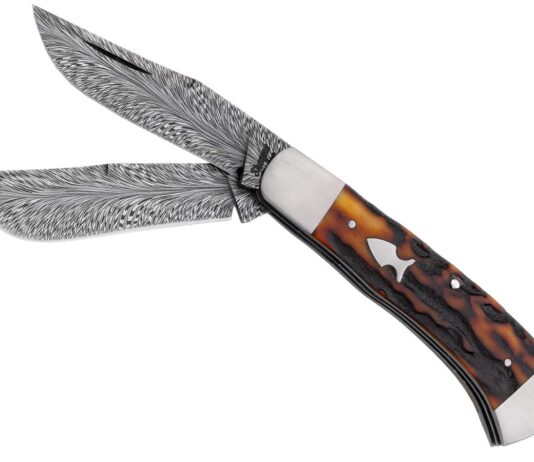
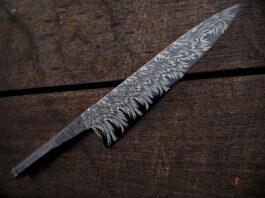
Knife collecting is an extremely rewarding experience for knife enthusiasts. There truly is a knife for everyone. Many increase or hold their value throughout the years, making collecting knives something to pass on to the next generation of knife collectors.
Deeply Rooted In Scandinavian History, The Seax, AKA “Scramasax” Or “Sax,” Was The Blade Shape Of Choice For The Much-Feared And Revered Vikings.
Typically the Norsemen were associated with their famous axes, but, truth be known, they also carried a knife that saw more general use: the seax.
The Scandinavians usually lived in villages, farmed the land and raised animals. In such an agrarian society, they also needed tools to help them work the land and harvest the fruits of their labor. This is also where a knife came into play.
“Their personal knife was called the seax and it never left their side because it was their version of an EDC,” begins Ernest Emerson of Emerson Knives, Inc. “The knife was tasked with a myriad of chores, from skinning a freshly taken deer to cutting up the turnips they grubbed out of the ground with the same knife.”
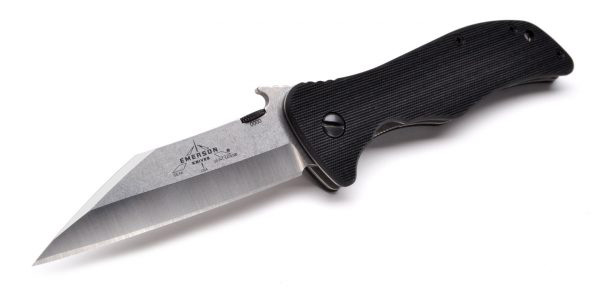
The folding Emerson Knives Seax puts a modern twist on this age-old blade design. (Image via Emerson Knives)
Emerson said the seax also could be employed as a self-defense weapon if needed. It was truly a blade for all seasons: Harvest produce in the morning, fend off the enemy after lunch, and then prepare supper in the evening—all with the same blade.
Seax Designs
All joking aside, the seax was a handy blade.
“It is a bowie-style blade, a spear-point type of blade, a Loveless drop-point hunter-style of blade, and, of course, the well-known ‘broken-back’ style featuring a severe clip close to the front, finishing in a point well below the center line,” Emerson said.
He said the broken-back seax style is the most common and appears in TV shows and movies depicting Vikings.
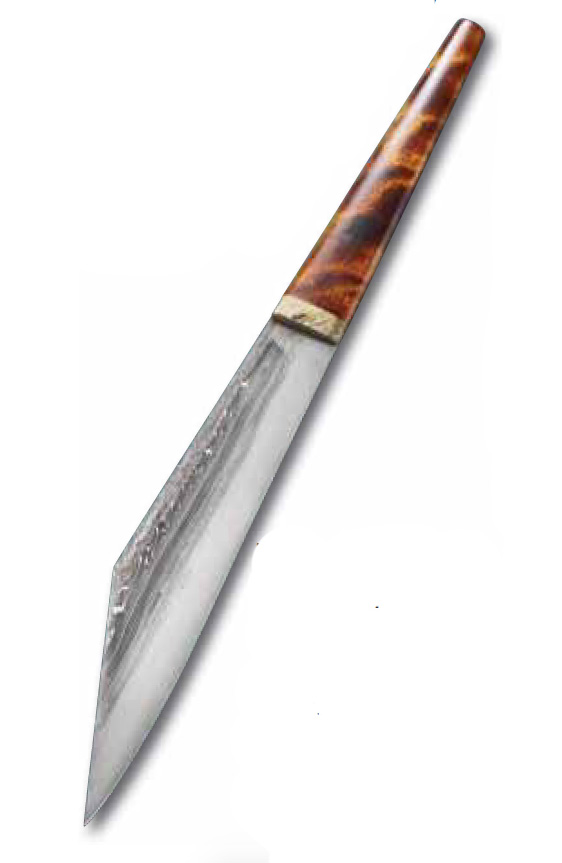
The Broken Back Seax by Aidan Garrity of Iron Lion Blades features a 10-inch damascus blade of 1095 carbon and 15N20 nickel alloy steels, and wrought iron. The handle is maple and the bolster is moose antler. Overall length: 18 inches. (SharpByCoop image)
Blade lengths varied wildly from seven inches on the short end and topping out at 30 inches, the latter Emerson called a short sword, basically.
“The seax needed to be an all-around utility tool that could chop, cut, slice, and sometimes stab, all with equal ease of application,” he said. “A Viking’s livelihood depended on self-sufficiency, resourcefulness, and the quality of his toolkit.”
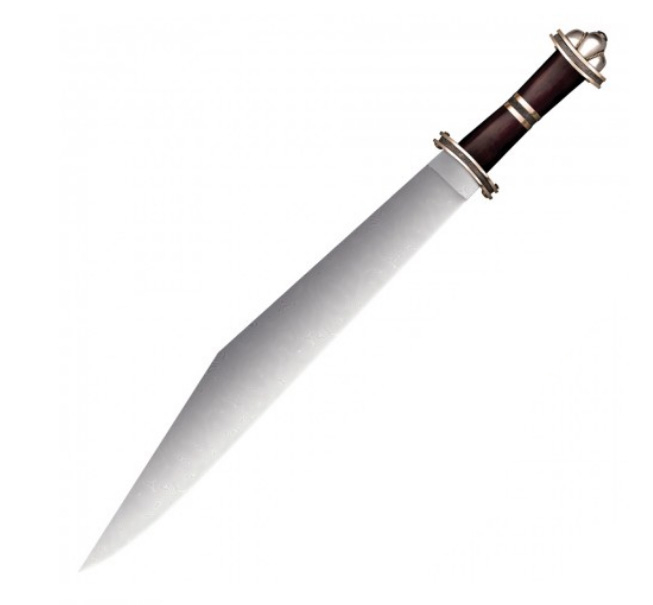
The Cold Steel Damascus Long Sax features a 17.25-inch blade with an edge that curves up toward the tip. MSRP: $635.99. (Cold Steel image)
At first glance, the seax may not seem as exciting as a recurve blade, but looks are not always everything. The beauty of such a blade lies within its ability to tackle cutting chores.
The straight-line cutting edge tackles a variety of tasks easily, and the point of the blade is both precise and powerful, with the ability to score as well as penetrate.
5 Best Seax Knives
The long history of the seax is still going strong today as companies young and old are making new versions of the historic blade.
These five are some of the more unique and exciting seax knives available today.
Terävä Skrama 240
Terävä Skrama 240
Direct from the Finnish brand Terävä, the Skrama is a rugged bush knife great for chopping, slicing, and building shelters in the outdoors. The 9.4-inch blade is made from 80CrV2 steel with a 59 HRC. It comes married to a textured rubber handle for easy grip in any weather conditions.
The blade has a full tang and a flat edge but with a twist. It’s sharpened to a 34-degree edge except for the two inches closest to the hilt. That small section is sharpened to a finer 25-degree edge for more meticulous, precise knifework.
The Skrama comes with either a leather sheath or a plastic cover and has an MSRP of $69.99-109.99.
SZCO Supplies Brass-Studded Seax
SZCO Supplies has made a fun, durable knife with its Brass-Studded Seax. The piece features a 10-inch blade married to a wooden handle. The knife is adorned with brass studs on the handle as well as a brass guard and pommel.
For a budge knife, it does have some weak points. The two main ones are that the leather sheath may need some working in to be at its best, and the knife may need a sharpen out of the box to have a pristine edge. Other than that, this is a good knife for the money.
Strong enough for a log, sharp enough for a piece of chicken, SZCO Supplies has made a seax that is well priced at an MSRP of just $27.63.
Medieval Collectibles Viking Seax Knife
This seax from Medieval Collectibles has the look and feel of a knife from the Viking era. It’s made from 5160 tempered carbon steel with a full tang, which is peened over the end of the handle’s metal end cap.
Just over 17 inches in length, and a blade length of 12.1 inches, the Viking Seax comes with a handle that has a wood grain finish and a hand-stitched leather scabbard with a belt hanger.
At just 14.4 ounces in weight this is a utility knife great for everything from chopping through wood and brush to defense and protection. The Viking Seax comes with an MSRP of $169.
Grimfrost Broken Back Seax, Type IV
Grimfrost Broken Back Seax, Type IV with scabbard
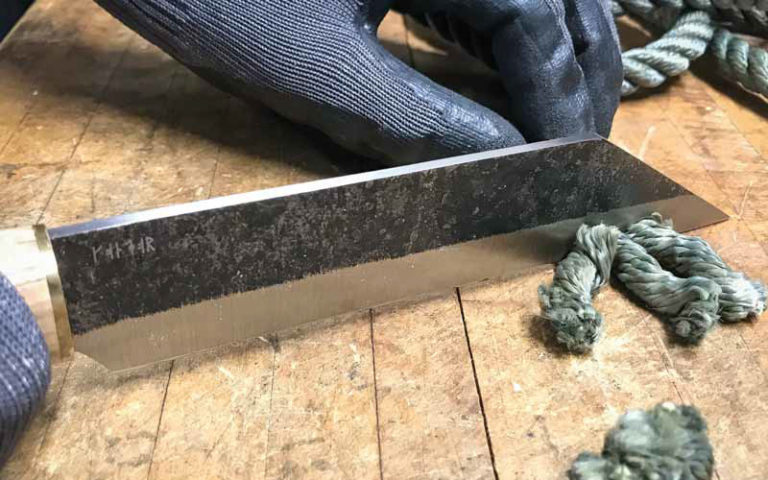
From Grimfrost comes a full-tang seax made of 1045 carbon steel. A reproduction of a 1,000-year-old seax found in London, the Broken Back Seax is 16 inches in length with an 11-inch blade.
The handle is handmade ash and the included leather scabbard is hand-stitched. It also features “Grimfrost” stamped in runes on the side of the blade.
Lots of time and care went into making this knife as authentic as it could be and it shows. So whether you want to feel like Leif Eriksson exploring new lands or just want a strong knife while chopping, Grimfrost has you covered.
The Broken Back Seax has an MSRP of $132.
Lunar Light Forge Damascus Sanmai Seax
This amazing seax is from the husband & wife duo of Nathaniel and Megan Everett at Lunar Light Forge in Akron, Ohio.
The damascus blade is made from 42 layers of 1095 and 15n20 steel around a 5160 core. It is paired with a handle made of Buffalo horn and Cocobolo wood, and it comes with a hand-tooled & hand-stitched leather sheath.
It’s just as much an art piece as it is an excellent utility knife. The 7-inch blade can process an animal, hack off tree limbs, and chop in the kitchen. It does have an MSRP of $722.50, but for the amount of craftsmanship and care that went into the piece, you’ll know you’re getting a knife of the highest quality.
Editor’s Note: Mike Abelson contributed to this piece
Puukko Knives Are A Traditional Knife Of The Nordic Countries. It Is Used For Everything From Hunting To Chopping Vegetables
Puukko is Finnish for “knife.” It is deeply rooted in Scandinavian countries where the knife is both tool and art form. In fact, the puukko plays an important part in Nordic culture. Often included as part of the traditional cultural dress, the puukko is a historical symbol, especially in Finland and Northern Scandinavia.
The Finns treat the knife with deep respect. Many men in the country take great pride in how they carve their knife’s handle. It’s so ingrained in the culture that the Finnish Defense Forces don’t issue a standard knife to its soldiers. Instead, most men simply bring their own puukko with them into service.
What Is A Puukko Knife?
Rich history aside, puukkos are first and foremost solid work knives. They are of basic construction, consisting of a high carbon steel blade mated with a handle that is usually of a natural material, though some modern versions are synthetic.
The steel is traditionally crucible steel made from limonite iron, which was almost exclusively the type of steel made in Finland before more modern manufacturing methods were invented in the 19th century.
Primary uses are woodcarving and food prep as well as most anything requiring a cutting tool. Outside the Nordic culture, puukkos have earned a solid reputation as stout knives built for serious labor. It’s easy to see why these knives are favored among outdoor folks.
If you spend time camping or hiking or are simply in need of a good, solid fixed blade that withstands hard use and requires low maintenance, consider the sleek, slender puukko.
What Is A Puukko Handle Made Of?
One of the more common puukko handle materials is Masur (curly birch, though you’ll also find antler, bone, leather, and other hardwoods. Modern factory-made knives can come with a plastic handle instead of using traditional materials. The handle has no guard, and the blade boasts a gentle upsweep to the edge to facilitate easy cutting.
Puukko Sheaths
Puukko sheaths are usually leather and may or may not have fancy tooling. A belt loop is separate and affixed via a metal ring. Also known as a dangler, the sheath is free to move separately from the belt loop and you. This comes in handy if you’re seated, as the knife can move freely and adjust itself into position yet remain easy to withdraw.
Best Puukko Knives
Today, puukkos have become a popular knife beyond just Scandinavia. In places ranging from El Salvador to Russia and the USA, puukkos are prized for their durability and ruggedness. Below are five of the best puukkos that are available today.
TOPS Tanimboca Puukko
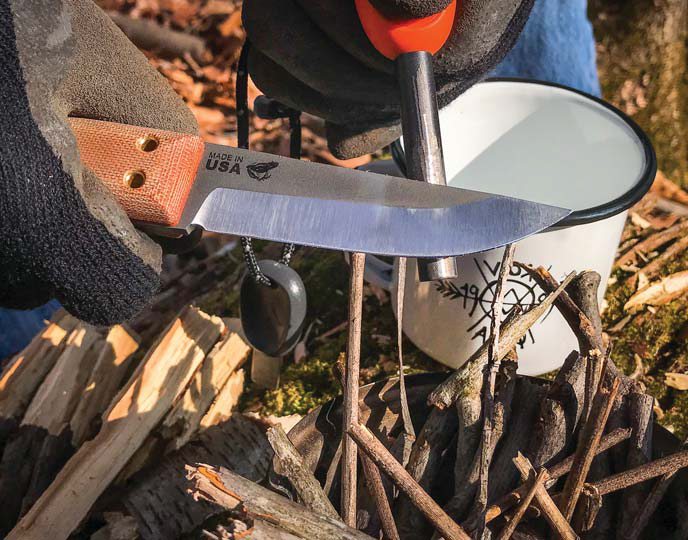
The 90-degree blade spine on the TOPS Tanimboca Puukko is for use with a fire restarter. Scrape the corner of the blade spine down the ferro rod to create a shower of sparks. (Marty Stanfield Photography)
From TOPS Knives, there is the Tanimboca Puukko. Designed in conjunction with Serbian knifemaker Goran Mihajlovic, who has spent the last two decades living in Colombia, the Tanimboca combines the best of a puukko knife with the toughness of the Amazon.
The blade has a slight clip point at the end and a flat spine is great for fire starting and scraping tasks. The knife is made from 1095 steel with a 56-58 Rockwell hardness and a length of 3.63 inches and a tumbled finish. The Tan Canvas Micarta handle honors the traditional puukko and looks great.
The knife comes with a brown leather sheath and has a belt loop so it’s easy to take with you. A cool, contemporary take on a historic knife makes the Tanimboca work the $170 MSRP.
Benchmade 200 Puukko
You know Benchmade is going to put out a good product, and their 200 Puukko is no exception. The drop point is made of CPM-3V steel, the 200 is super hard and super durable even by puukko standards. The rubberized Santoprene handle provides excellent grip, and the lanyard hold in the handle makes the 200 easy to bring with you outdoors or on the job site.
Add in a leather sheath and you have a top-tier knife that can handle any situation you throw at it. With an MSRP of $160 it’s fairly priced and worth every penny.
Ahti Vaara Finnish Puukko Knife
Direct from Finland comes a budget puukko from Ahti. The Vaara is made from carbon-vanadium alloy steel with a traditional Masur birch handle and brass fittings. The is sharpened with a Scandi grind and is 3.74 inches in length. Overall, the knife is 8.31 inches long and well-weighted.
A neat design element is a black spine made of carbon steel. The flat edge, like with other puuukkos on this list, is great for starting fires and scraping away at material.
With a reasonable MSRP of just $51.45, the Vaara is a well-priced knife, and even with the shipping cost from Europe, it should still be under $100.
Marttini Tundra Kelo
Another puukko made in Finland, the Marttini Tundra Kelo is not just a beautiful knife but also a quality one. Unlike most puukkos, which have a narrow tang within a solid wood handle, the Tundra Kelo is a full-tang blade surrounded on either side by a wax-coated gnarl birch handle.
The 4.33-inch blade is longer than most other choices on this list and is made from stainless chromium steel with an HRC 58 in terms of hardness. The black leather sheather contrasts nicely with the look of the knife itself.
The MSRP is € 139, which converts to $146.87 before shipping. One of the pricier knives on our list but worth it if you’re looking for a high-quality authentic Finnish puukko.
Condor Indigenous Puukko Knife
The last knife on our list is from Condor and is one of the most visually striking. The Indigenous Puukko Knife has a 3.9-inch blade made of 1095 high carbon steel with a Scandi grind.
The walnut handle features an inlaid golden wire wrap to help with grip, and it looks great. the handle is meant to combine elements from Polynesian and Sami cultures to celebrate indigenous cultures from around the world. The Sami are an indigenous group that lives in northern Norway, Sweden, Finland, and a small portion of Northwest Russia.
The knife comes with a welted leather sheath and is incredibly light at just 4.6 ounces. At an MSRP of just $95.45 this is a well-priced, nimble, and beautiful knife.
GiantMouse Ace Nimbus V2
This folder is inspired by the puukko and other Nordic knives and is built to be a mix of EDC and tool for the jobsite. The 3-inch blade is made from satin-finished Elmax steel meted to a green micarta handle for a secure grip. The blade has a full flat grind and thin edge. This allows for longer, more precise slicing strokes, and since the blade comes to an extremely fine tip the knife is also great for puncturing as well.
The nuts and bolts of this knife are great. The liners are made from AISI 420 hardened steel, and the liner lock keeps everything rigid. At 3.8 ounces it’s both light yet heavy enough to feel good in the hand.
The blade is .138 inches thick. That’s more than fine for many standard tasks around a jobsite but you might not want to start using it as a pry bar if you don’t have to.
MSRP: $185
Kellam Knives Ranger Puukko
This knife is a puukko to its core. It’s designed and built to stand up to not only combat but also the ferocious winters of Northern Europe. The 6-inch blade is made from forged 80CrV2 carbon steel with a teflon coating for added wear resistance and a Scandi grind.
At two-tenths of an inch thick, the blade is a beast and can stand up to almost anything life can throw at it. Use is aided by a 5-inch tempered rubber handle that won’t crack or deform even in hostile conditions.
Th Ranger Puukko is standard issue for troops from both the Finnish and Estonian militaries, and it’s easy to see why.
MSRP: $186.45
Helle Temagami CA
Designed by Les Stroud, the Temagami is a full-tang puukko that was precisely built to be among the best of its type on the market. It starts with a half-full tang design. That means the blade can be seen along the spine of the handle except near the fingers; this is done to better weight the knife and to better withstand harsh conditions.
The curly birch handle looks great and is ergonomically designed for hard, intense work. At 4.34 inches long, the triple laminated carbon steel blade is long enough to be used for slicing, puncturing, and even chopping for food-related tasks. The leather sheath allows for easy transport and storage.
MSRP: $209
Editor’s Note: Mike Abelson contributed to this piece
Keychain Knives Provide Utility And Protection In A Compact Package. There Are Many Quality Keychain Knives At An Affordable Price.
From a conversation piece to the handiest blade available, nothing adds to the everyday carry equation better than the right keychain knife. With little notice until needed, a keychain cutter is ready for action but doesn’t weigh down the pocket or take up too much space in a purse.
Coming in different sizes and blade types, keychain knives are as varied as any other type of everyday carry knife but is smaller and more nimble.
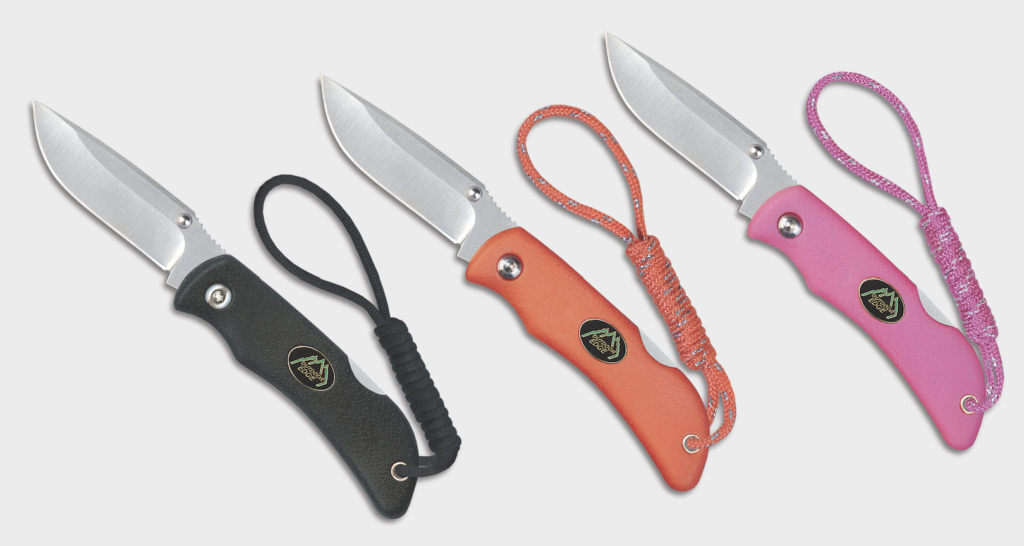
At Outdoor Edge, the MiniGrip, MiniBlaze, and MiniBabe are the same knife differentiated only by color in black, blaze—an orange shade—and pink, respectively. “They’re designed to meet the needs of anyone who needs a small lightweight blade that is always within reach,” Outdoor Edge marketing director William Morgan said. “We designed these knives in three colors to cater to all knife enthusiasts. When we developed this series of knives, we noticed a gap in the market for an affordable and mostly practical small knife that can be easily attached to a keychain or carried in one’s pocket.
The Outdoor Edge MiniGrip, MiniBlaze, and MiniBabe are the same keychain knife differentiated only by color in black, blaze—an orange shade—and pink, respectively. “They’re designed to meet the needs of anyone who needs a small lightweight blade that is always within reach,” related Outdoor Edge marketing director William Morgan.
“We opted to make three colors to accommodate a larger audience,” William continued. “Obviously, the orange is great for high visibility, reducing the chance of losing the knife, while the black is a little more inconspicuous, and the pink seems to be a hit with the female audience.”
Designed in Colorado and sporting a low MSRP, each knife in the Outdoor Edge series includes a 2.2-inch 8Cr13MoV stainless steel blade, rubber TPR handle, 1.4-ounce weight, and 2.9-inch closed length. Each model comes complete with a lanyard that makes attaching it to a keychain easy. Each has an ambidextrous thumb stud for easy one-hand opening as well.
“The razor-sharp blade is up to any task, from opening the latest round of Amazon Prime boxes to cutting rope or even performing field-dressing tasks,” Morgan said. “The rubberized TPR handle serves a few functions. First, this is a small knife, and we were concerned about creating a secure, non-slip grip to avoid accidents. Second, the handle does not jingle against the keys on your keychain, making it a perfect silent addition to anyone’s keys.”
MSRP: $23.95
The Bear Edge 71523
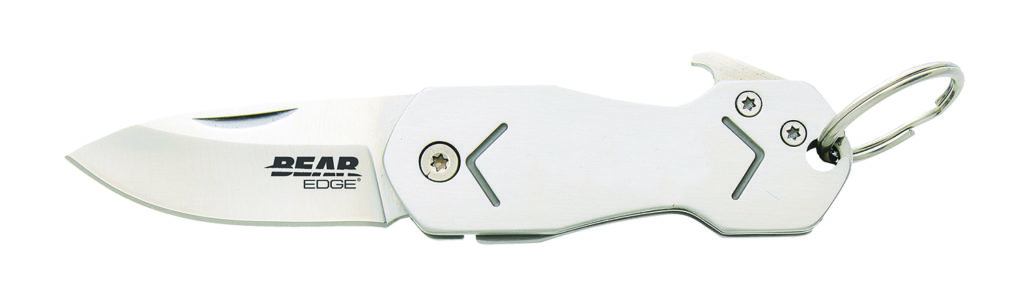
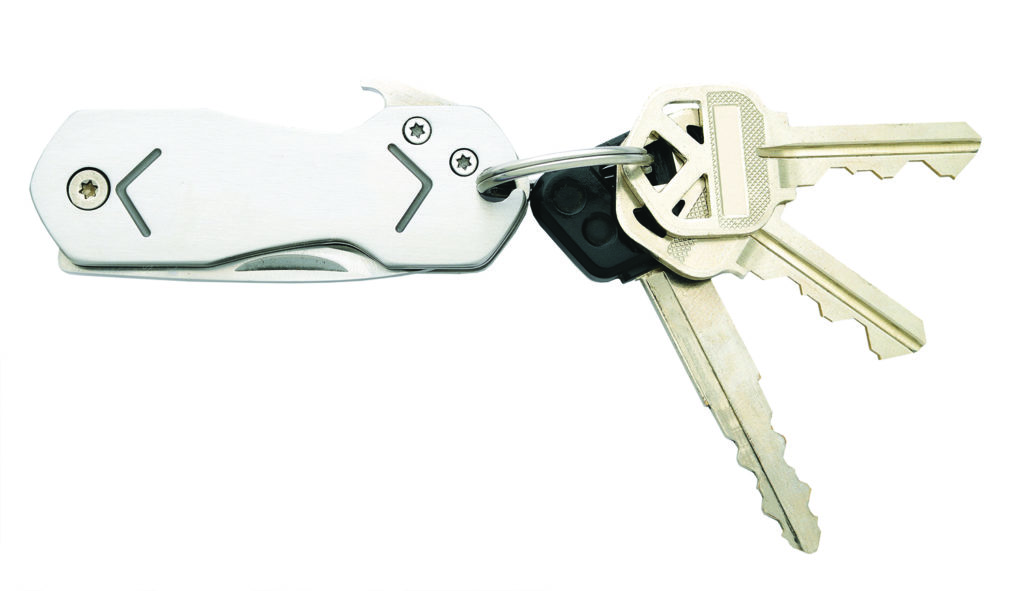
The Bear Edge 71523 from Bear & Son Cutlery complements a substantial line of knives, and company spokesperson Jacob Eaton says it’s a hit. “It’s affordable, compact and a functional tool,” he said. “Customers really like it because it’s lightweight, sharp and just the right size. Plus, you will always know where a knife is when it’s attached to your keys. We find both genders purchasing the Bear Edge 71523, and it fits everyone’s lifestyle.”
The Bear Edge 71523 is a framelock-folding keychain knife with a 2-inch blade of 440 stainless steel and a stainless handle. Weight: 2.3 ounces. Closed length:2.875 inches. The imported knife has an MSRP of $17.99.
The imported 71523 is complete with a two-inch blade of 440 stainless steel, stainless handle, and closed length of 2.875 inches. It’s almost lighter than air at just 2.3 ounces. According to Eaton, the blade length is ideal for typical cutting tasks encountered on a daily basis. “Cutting boxes open, adjusting cordage length and other similar chores are easy with the sturdy framelock design,” he said. “And one can cut confidently.” Another utilitarian feature is the built-in bottle opener.
The company chose the stainless components for durability, and the knife is sized for maximum versatility. “Stainless steel is a timeless design element and proven to stand against wear and tear,” Eaton said. “The finish looks natural on a keychain and doesn’t call attention. The frame pattern was developed to fit comfortably into both large and small hands. The blade is a drop point shape, allowing it to complete most tasks, and the 71523 attaches with a standard split key ring.”
MSRP: $21.49
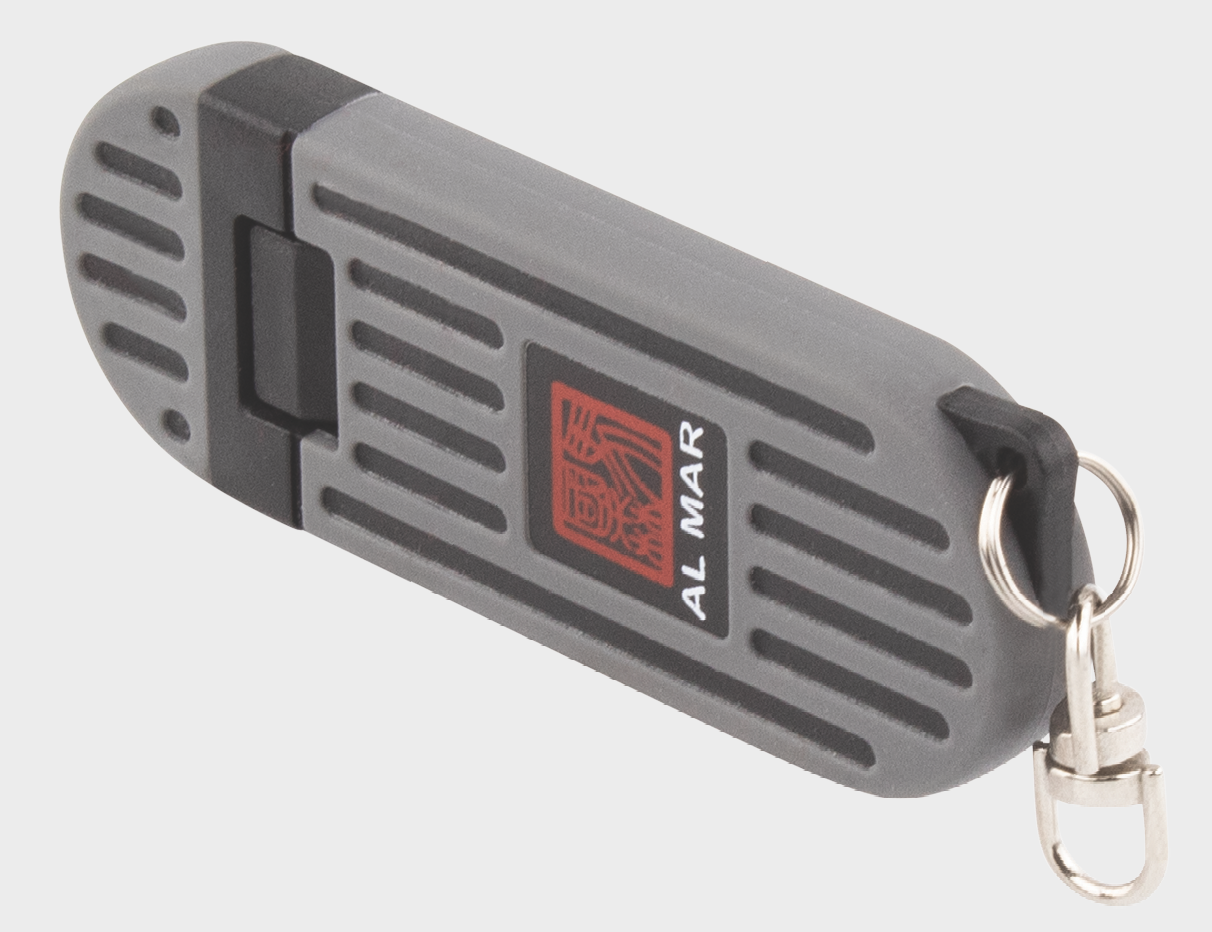
Al Mar Knives Stinger
The Al Mar Knives (AMK) approach to keychain knives involves easy access and long-term performance, and the Stinger was developed to deliver classic AMK design and function.
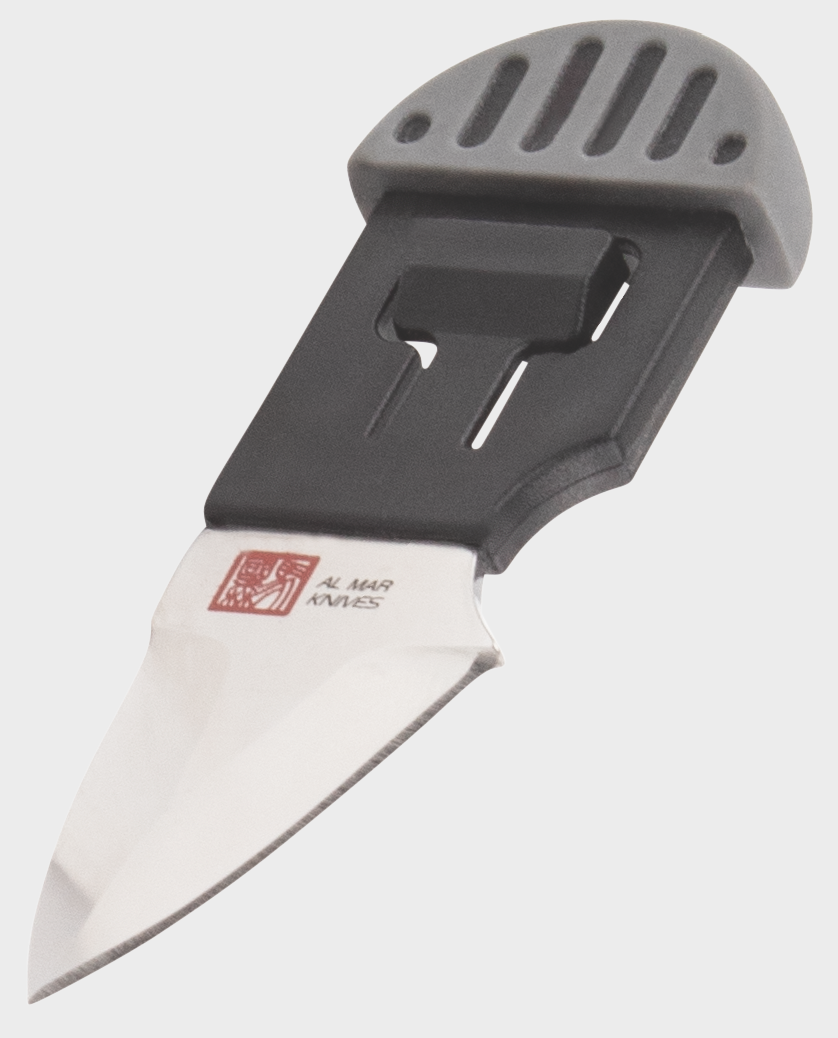
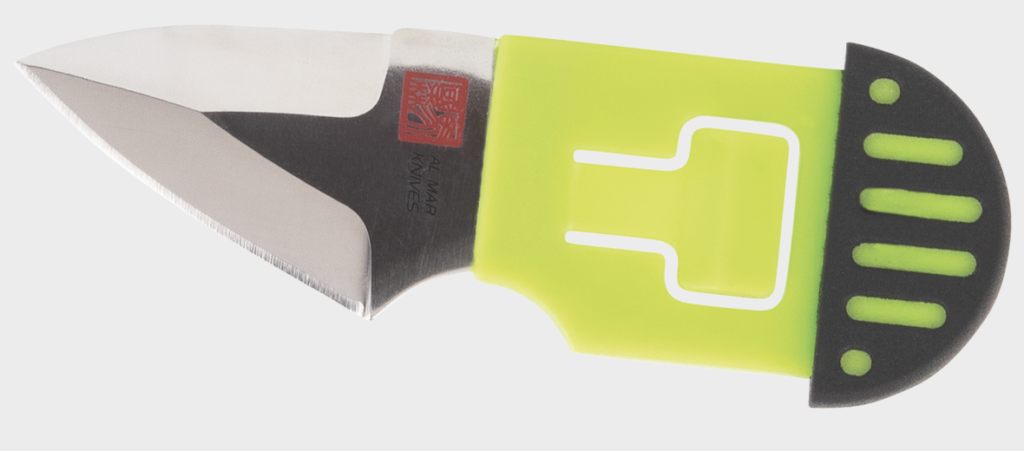
Above: The Stinger fixed-blade keychain knife from Al Mar Knives features a 1.3-inch D-2 tool steel blade in a flat grind, a synthetic PP+TPR rubber handle, and dual-injected sheath of the same material. It weighs just .7 of an ounce. Overall length: 3.1 inches.
“This knife is designed to be great at slicing and fast cuts.” — Justin Rabon
“Our Stinger keychain knife is designed for anyone looking for a durable blade they can keep concealed and on hand, with or without pockets,” AMK representative Justin Rabon said. “Our users find creative ways to incorporate these on their bags, gear and keys. We feel this versatility can help reach a wide range of users across many different lifestyles. We want our keychain knives to be practical for the majority of our users. We want to find the needs in the industry and have our knives be the solution to those needs.”
The fixed-blade Stinger comes complete with a snug-fitting sheath and deploys with a push of a button. It features a 1.3-inch D-2 tool steel blade in a flat grind, a PP+TPR rubber handle, and dual-injected sheath of the same material. It weighs just .7 of an ounce. Overall length: 3.1 inches.
“This knife is designed to be great at slicing and fast cuts,” Rabon said. “It can be used for anything where a short, sharp knife is needed. To accomplish these tasks easily and repeatedly, we gave the knife a D-2 blade. D-2 is known for retaining a sharp edge after repeated use. We also designed the Stinger to have Al Mar’s Wedge-style blade. This provides a superior dagger point where needed.”
The AMK Stinger comes complete with a snug-fitting sheath and deploys with an easy push of a button. It comes in red, blue, black and green—and the green really stands out in a crowd.
The Stinger’s finer points add flair and good looks as well. “The four colors that were chosen for the four Stinger knives—red, blue, black and green—were picked to provide variety while staying true to the traditional red and black of Al Mar Knives. The plastics in the handle were chosen to add extra grip and durability.”
Integral to the Stinger design is an eyelet built into the sheath, and sturdy construction prevents failures. “This makes sure the sheath doesn’t detach from the eyelet,” Rabon said, “and also allows you to replace the smaller key loop with a smaller diameter cord if desired. The Al Mar Wedge provides a superior point if needed, and the finger groove at the base of the blade allows the Stinger to sit comfortably in most hands. This improves the fit, feel, and functionality of the knife.”
MSRP: $12-23
Gerber Key Note
Gerber spokesperson Josh Headley said the focus on the company’s Key Note keychain knife is compactness. “We also wanted to add some chisel/scraping capabilities for additional functionality,” he said. “Gender wasn’t a big consideration. We just wanted to make a tool that was worthy of a place in your pocket or purse.”
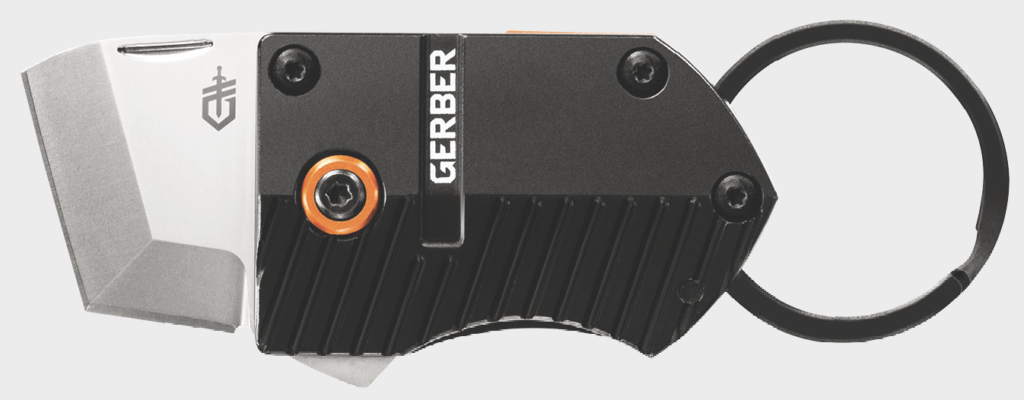
Also available in black as shown, the Gerber Key Note linerlock keychain knife has a 1-inch blade of satin-finished 5Cr stainless steel that is designed to scrape as well as cut. Handle: aluminum. Weight: 3.98 ounces. Closed length: 2 inches.
Features inherent in the Key Note design brought that idea from the drawing board to reality. “We added the wide clip so that you can also hang keys on your belt,” Headley said. “The knife was designed to not draw too much attention when worn on the clip, but still have a pleasing and almost symmetrical shape. We took a lot of inspiration from the history of Gerber. The overall profile is inspired by the shield logo, as well as Gerber’s past logos and heraldic-naming conventions with a modern twist.”
The Key Note combines function with a tip of the cap to Gerber tradition. With a 1-inch blade of satin-finished 5Cr stainless steel, the knife weighs just 3.98 ounces, and its aluminum handle scales are built to last.
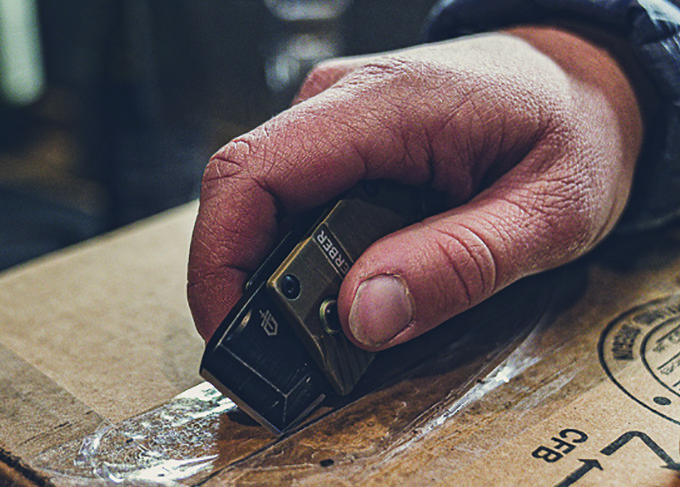
“The primary function of the Key Note is to open packages,” Headley said. “The thought was you get home, grab a package off your porch and open your door. You have the tool set to open your door and open your package in hand.”
The Key Note’s tanto-style blade allows for scraping & chiseling along with cutting.
Available colors add to the Key Note’s appeal for those who look for discretion or want a bit of flash. “We set out to have a modern option and an old-school option for the EDC community,” Headley commented. “The matte-black anodize with the bright contrast from the orange is meant to look at home next to your key fob. The coyote and sage is designed to camouflage among a set of brass keys. We made the scales out of aluminum to increase the strength of the lockup, and so that the weight of the keys won’t knock the blade off balance. To improve longevity, the blade runs on brass washers and operates on a classic linerlock.”
The blade is in a compact tanto style to provide two flat edges that are easy to sharpen. A flat key ring gives an appropriate amount of flexibility between the ring and scales. Several different diameters of rings were tested to determine the best component. A kick-out tab is incorporated to assist in deploying the blade and allow easier opening rather than solely depending on the nail nick.
“The Key Note should be suited to light and medium opening and cutting tasks,” Josh said. “The flat edge on the front can be used to scrape everything from a label to that last bit of errant head gasket. In addition, the front of the scale can be leveraged so that the midpoint of the blade will puncture tape without damaging the contents of a box.”
MSRP: $21.60
Kershaw Cinder
Kershaw Cinder keychain knife.
If there was a knife out there that could be called adorable it’s the Kershaw Cinder, but don’t judge a book by its cover. This knife comes with a blade of 3Cr13 blade steel, and you know with the Kershaw name that it will be a quality knife from blade to handle. An excellent box cutter and utility knife or a protection piece for your keychain or purse, the Cinder plays far bigger than its size. Also, it has an integrated bottle opener and we could always use another of those.
Sypderco has made a nimble keychain knife that feels like it should cost more than it does. At less than three inches in total length, the Bug easily slides onto a keychain and works as an excellent low-profile EDC for protection and whatever else life throws at you.
A flat-ground blade made of 3Cr13MoV stainless steel, the Bug also features a flat, stainless steel handle great for engraving or personalizing for yourself or a friend as a gift. The smallest folding knife made by Spyderco, the Bug delivers in nearly every way.
MSRP: $24.50
SOG Centi II Knife
SOG Centi II Knife
Featuring a lockback design, and a blade coming in at 2.1 inches, the Centi II is a versatile knife fit for your pocket, keychain, or even on a necklace. Strong yet thin, it’s even thinner than your car key, the Centi II is robust enough to tackle any day-to-day tasks you’d expect from any other EDC. The hardcased black finish is gorgeous and adds a sleek design touch to the knife.
Victorinox Classic Swiss Army Knife
When it comes to keychain knives it’s impossible to make a list without the famous Swiss Army Knife. With seven tools and functions built into a body just 2.3 inches in length, the Swiss Army Knife is famous for its versatility and is still one of the gold standards of keychain knives.
With tools made of stainless steel that include a small blade, scissors, and a nail file with a screwdriver, the Swiss Army Knife can handle pretty much any situation life can throw at you where you’d need a quick tool. The classics become classics for a reason, and you can’t go wrong with a Swiss Army Knife on your keychain or in your pocket.
Drawknives Are A Woodworker’s Best Friend And One Of Many Unique Knives Craftsmen Use Regularly
Knives take on many shapes and sizes. As tools, their designs sometimes focus on specific tasks. In the case of the drawknife, it is designed for woodworking. Drawknives have been found to date back to the Viking era more than a millennium ago.
The design itself takes many different shapes for a variety of purposes. At times, it is not referred to as a drawknife but, at first glance, you can see the relationship and how a number of tools can be considered part of the same family. As with any tool, different cultures have different interpretations of how the tool should be designed.
What Is A Drawknife?
A drawknife is a single-beveled blade placed between two handles. The tool gets its name from how it is used. You simply grab both handles and draw the knife towards you bevel up. Controlling the angle that the blade enters the wood will control the depth of cut. A steep angle will get you a deeper, more aggressive cut but will also require more effort.
Lowering the angle makes for a shallower cut and also gives you a finer finish as the material is removed less aggressively. Some designs have long handles on plane with the blade. Other designs have the handle tight in and below the plane of the blade. No matter where the handles are, the action is the same but the point of control changes.
Top row, from left: a German-style drawknife made in Western Germany, Mora push knife, English-style drawknife, Flexcut 5-inch drawknife and a cooper’s knife. Bottom row, same order: Round drawknife and a chair maker’s scorp.
How To Use A Drawknife
When working with a narrow stock up to two inches wide, it’s easy enough to draw the knife straight back toward you. On wider stock, it is better to skew the knife. Skewing the knife provides a leading edge and causes less resistance during the cut. When working with hardwoods you want to keep the cut light, as the dense grain provides more resistance and bogs the knife down.
If you skew the knife and work the corners it is easy to remove long curls.
Even when working a flat when skewing the drawknife blade you can get some beautiful shavings.
Learning to use a drawknife properly is a bit like working a puzzle. The easiest way to make a cut is to work the facets of the material. For instance, say we are working on a piece that is square. To shape the piece to the required size it is easier to work the corners down, creating more corners until you get to your desired shape. By working the flats, you must use more energy and struggle to make a cut.
When first using a drawknife, the tendency is to use your arms to power the tool. Instead, use your back muscles, which are larger and less likely to fatigue quickly. Draw the knife back as if you were using the same muscle for rowing. If done right, it should feel like your shoulder blades are trying to meet in the middle of your back. For safety’s sake, keep your elbows in tight. As you draw the knife back your elbows will hit your core acting as a safety stop, preventing you from slipping and cutting yourself.
Types Of Drawknifes
A debarking knife is usually a larger style of drawknife used for extracting bark from logs. They are larger and heavier than their woodworking counterparts so that you can blast through the bark.
It has been my experience that when working green wood, the knife doesn’t need to be kept as sharp. In fact, it is somewhat more helpful to keep the knife a bit dull when cutting green wood so as to avoid diving too deep into the wood itself. On seasoned logs, because of the lack of sap between the bark and sapwood, I find it better to have the knife a bit sharper.
Woodworking drawknives come in a variety of shapes and sizes. The two main types I have used: English and German. The English style has a blade that bares a slight arch and the handles are on the same plane as the blade. German-style knives have handles that sit lower than the blade and the blade tends to be straight. The knives’ handles can vary. Most of mine have a pear-like shape. There are other styles like a round knob style, which is a ball shape.
The English style drawknife has a small but thin bevel that makes for some beautiful curls.
The German knife has a steep angle to the bevel. If used straight across a narrow piece wood, it can remove large amounts of material. At the time of the photo, the author had not finished cleaning up the blade, ergo the hammer marks in it.
Specialty styles of knives include any drawknife that is shaped to obtain a specific result. A cooper’s knife is shaped to accommodate the making of barrel staves. I also have a handle-making knife. The handle-making knife is a tight arch designed to make handles for things like brooms or garden implements. The basic shape is a half circle, so instead of trying to round a piece off by angling a number of cuts, you get a piece of wood close to size and simply let the knife shape it.
The cooper’s shave is designed to hollow out the staves of a barrel.
Push Knife
The model uses the Mora push knife to clean up curls left at the bottom of a curve. With the push knife, you can work the wood in an opposite direction without repositioning the piece.
A Scandinavian invention, the push knife is similar to a drawknife in that it has a blade attached by two handles on either side. Using a push knife is different in the way that you are expected to force the edge away from your body instead of pulling it toward you. Unlike a drawknife, the handles come straight out from the sides, which allows you to either push or pull the knife. I normally use the knife in the manner that gets the job done—meaning on occasion I will draw the knife toward me rather than push.
What Is A Scorp?
Technically, scorps are not drawknives. However, in terms of looks and use you can’t help but lump them in the same family. I have a chair maker’s scorp that is designed to hollow out the seats of chairs. On older chairs is a slight depression where the person sits. A chair maker’s scorp was used to produce the shape. The tool operates just like a drawknife except it has a shorter blade with a more pronounced arch.
How To Sharpen A Drawknife
Like any other cutting tool, a drawknife must be sharpened. Perhaps the trickiest part of sharpening a drawknife is finding a way to brace it. I find dynamic sharpening the easiest way to sharpen a drawknife. I brace the knife and move the sharpening medium instead of the other way around. One way to brace the knife for sharpening is to put one handle in your armpit and hold the other handle in your off hand. Once the knife is braced this way, take a stone to it. Another way is to brace one handle on the bench, lean your chest on the other handle, and then begin sharpening. Keep in mind a drawknife must be sharp (except where noted previously) but since it is not necessarily a fine woodworking tool, don’t get carried away.
YouTuber James Wright shows you how to sharpen a drawknife using a set of sharpening stones in his shop.
Lastly, keep it oiled. Even the newer ones are not made from new high-tech steels. Most are from simple carbon stock and a light coat of oil goes a long way. Among others, Flexcut offers a contemporary drawknife.
Other Wood Carving Tools
Beyond drawknives and planes, there are many other types of wood carving knives out there that can help with some of the finer points of woodworker. Small, nimble wood carving knives like a sloyd knife or a spoon knife.
A sloyd knife is a short, sturdy blade good for small, finite carving tasks. A spoon knife, as the name suggests, is meant to carve out the concave scoop of a spoon but can be used for any other situation where you are trying to create a concave dip in the material.
There are certainly more than just these few tools to being a successful woodworker, but knowing how to use wood carving tools big or small can get you on the path to success.
Why To Use A Drawknife
Long before there was solar power, fossil fuel power, steam power, etc., there was muscle power. Humans developed the world using tools with muscle and sweat. There is something satisfying about making something by hand. The feel of a good day’s work is sometimes what the soul needs. A drawknife not only gets the job done but also gives you an accomplishment to savor.
A fine example of a tool and weapon of war, the chute knife more than rose to fulfill the roles for which it was intended.
Harry Archer was a somewhat shadowy figure. At the height of the Vietnam War, he was engaged in nasty business—fighting a stealthy enemy in a steaming jungle, sometimes up close and all too personal.
Those who knew Archer acknowledged that some of his exploits were “larger than life.” They considered him an early non-movie version of author David Morrell’s fictional character of John Rambo*. Still, Archer was real, flesh and blood. And it seems altogether fitting that responding to his need for knives that “deliver” in a tight spot—survival, seconds along the fine line between life and death—he would come to know and rely on another legend.
According to John Denton, perhaps the world’s foremost authority on the knives of BLADE Magazine Cutlery Hall-Of-Fame® member Bob Loveless, Loveless and the man he came to describe as the “head of CIA operations in Vietnam” were introduced to one another by knife writer/Cutlery Hall-Of-Famer Ken Warner. It followed that Loveless made several knives for Archer’s use in the field, among them a fine sub-hilt and stag-handle example of his well-known Big Bear, along with several other Big Bears. Loveless’s close friend and fellow maker Steve Johnson was working in Bob’s shop at the time and participated in crafting these. A fighter in a tulip wood handle is another cold beauty.
Johnson worked with Loveless from June 1971-October 1974 in the Lawndale and Riverside, California, shops. Steve had a hand in the production of the prototype chute knife in the earliest days, and 23 years later signed a photograph for John Denton attesting to his work on that piece of history. Steve’s inscription reads in part: “This is to certify that I, Steven R. Johnson, worked on the Archer ’chute that is numbered ‘AP-003’ while in Lawndale, CA, approximately 1971-72.” (images courtesy of John Denton)
Then there is the well-known Harry Archer chute knife, a versatile fixed blade with good looks and the ability to travel light but cut paracord for a quick exit from a tangled parachute shroud, and with a stout spine for prying loose from the wreckage of a helicopter. The chute knife was made for the jungle. It was made for Harry Archer.
“It seems that Loveless had been left out of a book by Warner, and Loveless sent Ken some knives to review,” Denton recalled. “It just so happened that Archer was there with Warner. Harry saw the knives and bought them all.”
Johnson worked with Loveless from June 1971 to October 1974 in both the Lawndale and Riverside, California, shops. He had a hand in the production of the prototype chute knife in the earliest days and 23 years later signed a photograph for Denton attesting to his work on that piece of history. Steve’s inscription reads in part: “This is to certify that I, Steven R. Johnson, worked on the Archer ’chute that is numbered ‘AP-003’ while in Lawndale, CA, approximately 1971-72.”
Johnson explains that the chute knife is a fairly small, compact fighter and survival knife, short, light, double-edged and strong, but not made in stock thicker than 3/16 inch. Holes for thongs are placed in the rear of the handle and the guard for lashing the knife to a pole or limb to make an improvised spear. It rides into action atop a chest pack or secondary parachute for quick, easy access. Claims that Warner had a hand in the design are unconfirmed, but “the chute” simply looks the part of the warrior’s dependable asset.
“You’re able to cut both ways with the knife via the swipe of an arm or hand,” Johnson related. “Specifically, it’s for cutting parachute cord should it be tangled or caught in a tree. It’s a knife that a pilot, paratrooper or soldier should carry, and it would not be a burden but useful and available in every situation.”
HARRY ARCHER LORE
Stories of Archer’s combat prowess have been told and retold, but to raise awareness of the immediacy of a close-in fight, nothing is better than the harrowing tale that Denton remembers Loveless repeating. John points to a photo of a vintage Big Bear, identifies it as a knife that Archer took into combat, and says, “Harry and his men got into a hand-to-hand fight, and the tip of the blade was broken off inside the enemy. Harry took the knife back to Bob to fix, and Loveless said, ‘Where’s the tip?’ Harry replied, ‘It’s still in the rib cage of the Viet Cong soldier.’ So, Loveless fixed the blade.’”
Made in Bob Loveless’s Lawndale, California, shop about 1973-74, this chute knife in ivory Micarta® is stamped BR-003. It was made for the Brass Rail, a famous gun shop in Hollywood, California, where all the celebrity types hung out to see guns and knives. Note the holes in the guard for lashing the knife to a pole to make a spear. (images courtesy of John Denton)
Like the Big Bear and other Loveless creations, the chute knife has its place in the lore of Harry Archer. After he collaborated to produce the prototype, Johnson continued to work with Loveless on more of the chute knives. He remembers meeting Archer in the California shops.
“Loveless really admired Archer and his adventures in the Vietnam War era, working with USAID**, the CIA and different assignments in various parts of the world,” Steve commented. “[Harry and I] discussed life in camp in Vietnam, interactions with Vietnamese soldiers and personnel with whom he was serving. That was quite interesting.”
Steve calls the chute “one great knife” and remembers conversations in Lawndale when the veteran operative praised it as light and small enough to carry so that it could always come along on a mission. Johnson also made a chute knife for Archer and continues to produce his own model today.
“We worked together on Archer’s order for a ‘Johnson’ version of a chute knife on a bench in the rear of Bob Loveless’s shop, in his garage in the back of his house in Lawndale,” Steve smiled. “Archer asked me to make my version, which we—mostly he—designed in the early 1970s. He did a drawing for me. The 154CM blade was about 4.5 inches long, the handle slim and a bit longer than normal, and it had a large thong tube, three handle screws, a stag handle, and checkering on the top and bottom of the tang just behind the guard.”
Bob Loveless (left) and John Denton (right)
For Johnson, working with Archer was a pleasure and a defining moment in his illustrious knifemaking career, which, after recovery from a serious accident, took him from Loveless’s shop to his own space in Manti, Utah, more than 40 years ago. “Harry Archer was a great guy who appreciated my work, as well as Bob’s,” Steve added, “and I made him a few knives after California. He was very easy to talk to, respected others, and he really was a man of intrigue and adventure. And Bob Loveless treated me like a son.
“I’m making a chute knife for Atlanta [Steve was interviewed prior to BLADE Show 2021] as we speak, with the blade polished so far, instead of the top grind being just the length of the clip,” Johnson concluded. “I use the pattern that Loveless gave me when I left his shop in Riverside in 1974 or 1975. This particular knife is going to have a stag handle and stainless steel fittings. I’ll make more when asked, and I still have a few on order in my books.”
Long-time maker and designer Bob Dozier was a friend of Loveless and went on to design a chute knife for Cutlery Hall-Of-Famer A.G. Russell. Though his only acquaintance with Harry Archer is through the recollections of A.G., who knew him, Bob says his version of the chute knife remains in demand for one simple reason: “It sells.”
Dozier turns out his chute knife with a 4.75-inch D2 tool steel blade and overall length of 9.75 inches. The handle is green canvas Micarta® “because Goldie [Russell] won’t let me put anything else on them. I’ve got some blades hanging right now, getting ready.”
The “RR” on the guard of this Loveless chute indicates it was for the Ram Rod gun store in New Castle, Indiana. Early on Ram Rod sold knives by Loveless, Bill Moran, Ron Lake, W.W. Cronk and others. It appears here with a Smith & Wesson Model 41 modified by Loveless.
Dozier is familiar with the Loveless chute knife configuration but never had the Loveless pattern. He looked at the earlier chute knife profile and made some tweaks. “My handles are like the Loveless, but I don’t cut the butt off as square as he did. I leave more of a point on it than he did. Mine is still mostly like Bob’s, and he was one of the first to make a really good slab-handled knife. That’s one reason why most of us have copied him.” Dozier’s chute knife, designed and built for A.G. Russell Knives, has a manufacturer’s suggested retail price of $895.
SAGA of The CHUTE
The saga of the chute knife certainly has a human side. While Denton estimates that early Lawndale chute knives might fetch as much as $14,000 if found for sale today, and chute knives made in Riverside command up to $12,000 each, they are desirable on the collector market. Nonetheless, the greatest value of the chute knife lies in its lifesaving and protective capability in the hands of a dedicated professional such as Harry Archer.
Through those years of association, Loveless and Archer became friends, sharing a common bond of respect and admiration for the best in fighting and utilitarian knives.
“Loveless said that Harry would come by his shop after periods of being in the jungle for months at a time,” Denton remembered. “He used Bob’s place to unwind and try to become civilized again before heading home to Virginia. But Loveless also said, ‘Harry was like a wild animal when he came to the shop, trying to keep his head straight before he saw his family.’”
Whenever Harry Archer ordered several Big Bear fighters from Bob Loveless, Loveless said Archer told him to “send the bill to the Pentagon.” From top: the Big Bear Harry broke the tip off inside a Viet Cong soldier during the Vietnam War; tulipwood fighter with skull cracker; Loveless/Johnson sub-hilt with the initials HJA for Harry J. Archer; boot knife with skull cracker; and one Loveless called the Pig Sticker. (image courtesy of John Denton)
The chute knife is indeed a fine example of a tool and weapon of war rising to fulfill the roles for which it was intended. It remains a popular pattern because of its looks, quality and versatility. And for one other reason in particular: It helped men like Harry Archer survive the most desperate of situations and make it home.
*In actuality, Morrell based the Rambo character on Medal-Of-Honor recipient Audie Murphy.
**USAID is the acronym for United States Agency for International Development, with the inference here being that in this instance it functioned as a cover for the CIA.
The atrocity that shocked the world continues to transform it, and knives, too. Here is a look at some of the memorials 9-11 spawned from that fateful day.
It began as an ordinary Tuesday. It ended with the world changed forever.
The atrocity of the terrorist attacks at 8:45 a.m. EDT on Sept. 11, 2001, will never be forgotten. Now, 20 years after planes crashed into the World Trade Center in New York, the Pentagon in Washington, D.C., and a field in Shanksville, Pennsylvania, retrospect brings not only memories of sadness and profound loss, but also an acknowledgment of the heroism of 9-11 and the humanity that emerged.
A measure of that humanity took the form of custom knives made from the twisted and scarred steel of the World Trade Center (WTC) buildings—forged once in the conflagration of that terrible day and then again in tribute to lives lost, and for the benefit of those who miss them and live on.
Keith Kaiser (right) was in Ladder Company 131 of the New York City Fire Department that reported to the World Trade Center on 9/11. In 2003 he enlisted several leading makers to produce knives with blades made from WTC steel. Those makers, with the exception of Mel Pardue, from left are: Bob Terzuola, Bob Dozier, Allen Elishewitz, Gil Hibben, and Pat and Wes Crawford. (Eric Eggly/PointSeven image)
Ladder Company 131 (L131) and Engine Company 279 (E279) of the New York City Fire Department (FDNY) were housed in the Red Hook section of Brooklyn on 9-11. Keith Kaiser was a member of L131. Moved later to enlist the support of several custom makers to produce knives with blades made from WTC steel, Keith remembers the horrific day vividly.
“Because of the proximity to lower Manhattan, both companies started to gear up,” he recalled. “As we were approaching the tunnel into lower Manhattan, we saw the second plane hit the south tower. The engine company went into the buildings first, and the ladder company soon followed. L131 was in the lobby of the hotel on the ground floor of the south tower when it fell. We breached a wall and got out a group of civilians before we realized what was going on. The engine company was never found.”
Five members of E279 were killed, and the FDNY lost 343 firefighters in all. Since then, according to Kaiser, nearly as many have died from 9-11-related cancer and other illnesses. His older brother, Wayne Kaiser, an electrician who worked to restore communications in the wake of the terrorist attack, recently died of illness due to extended exposure to toxic dust and debris.
Keith was seriously injured on 9-11. “Oddly enough, my getting injured probably saved my life because I was not able to dig in the pile subsequently,” he said. “I was looking for something to occupy my mind and time, and one of the men lost from my company, Christian Regenhard, was a knife collector. I thought I would try to get my hands on some steel and get knives made out of it for charity and to keep me involved.”
Early efforts to get the project started were difficult, but Kaiser persisted. Eventually, he contacted several of the biggest names in custom knives and secured their commitment to contribute to a benefit for the New York Firefighters Burn Center Foundation. Bob Terzuola, Bob Dozier, Jerry Fisk, Pat and Wes Crawford, Allen Elishewitz, and BLADE Magazine Cutlery Hall-Of-Fame® members Gil Hibben and Mel Pardue made one knife each with blades incorporating steel from the fallen twin towers (page 90, August 2003 BLADE®).
Murray Carter holds the last two knives he made of WTC steel as part of a special fundraising project that included FDNY343 (fdny343.org) and Building Homes For Heroes (buildinghomesforheroes.org). (Murray Carter image)
“It was planned with the help of Christian’s father, who was a New York City police detective,” Terzuola said. “Seven knifemakers, including myself, volunteered their time and materials. Keith presented the idea to us and offered to supply a piece of steel from the wreckage of the fallen towers to each knifemaker, from which they could make a knife of their choosing.”
The knives included signature works: a Dozier damascus folder; an Elishewitz folder; a CQB from Terzuola; a Hibben dagger with scrimshaw handle; a skeletonized folder from the Crawfords; a damascus folder from Pardue; and a damascus stag Sendero hunter from Fisk.
The task brought the added challenge of making the Trade Center steel usable for knife blades. “It was low carbon structural steel,” Dozier related, “and I asked Daryl Meier to make damascus for me. At the first show after 9-11, Keith brought some steel to me and wanted me to make a knife with it. I wouldn’t take it. A friend of mine who was a state police investigator here in Arkansas said to leave it alone because it was evidence. Then about a month later, a big cardboard box came in the mail and there was the steel. I cut it into pieces and Daryl made some ladder-pattern damascus.”
Once the knives were gathered, they became tangible remembrances. “They were placed in a beautiful cocobolo box with a beveled glass top that was etched with the World Trade Center,” Terzuola commented. “The idea then was to put them up for auction for the benefit of the burn center. Keith sent them around to various museums prior to the auction, and after several years they almost became permanent exhibits in some places.”
Keith reached out again to Terzuola, who helped arrange an auction, and the set sold in June 2020 with the proceeds benefiting the hospital. “Keith sent me the knives, and I cleaned them up and got hold of Rock Island Auction in Illinois, one of the top auction houses for knives and firearms,” Bob states. “They did a beautiful two-page spread in their catalog and after the auction sent a check directly to the burn center.”
Murry Carter Knives 9-11 Custom
Like so many others, the atrocity of 9-11 touched custom knifemaker Murray Carter significantly. He was asked to partner with FDNY343, an organization of retired New York firefighters dedicated to keeping the memory of those lost on 9-11 alive, and Building Homes for Heroes, a charitable enterprise that provides homes for those injured while serving their country and in the 9-11 attacks.
Ryan Johnson was just starting up his RMJ Tactical when 9-11 shook the world. The U.S. military was looking for something that would punch through body armor and the RMJ Eagle Talon hawk, featured on the cover of the March 2002 BLADE®, filled the bill. RMJ Tactical took off and is one of today’s leading hawk makers with such models as the Shrike.
Carter has produced several kitchen and outdoor knives, each incorporating a laminate of Trade Center steel with a 1084 carbon steel core. The motivation to produce the knives was strong, and Murray notes that the components of fire, water and stone were present both in the 9-11 incidents and the making of the knives. He reasons that fire enabled the forge, water quenched the blades and stone honed them into tools. Conversely, fire brought the towers down, water hampered rescue efforts, and lives were lost in the crush of stone.
“So, the same elements are here in the knives, and they bless people daily,” Murray explained. “When iron is red hot, that’s how we get steel, and some of the victims were burned, the elements fused in a chemical trade. The depth of the fusion was dependent on time and it was brief. So, I didn’t want to do much grinding in order to leave these elements in the surface of the steel.”
One of Carter’s kitchen knives was auctioned for $10,500 and the proceeds were given directly to Homes for Heroes. He calls the effort, concluded in the spring and autumn of 2017, an honor and one of the most humbling tasks of his long knifemaking career.
RMJ Tactical 9-11 Spike Hawk
Ryan Johnson was just starting up his Chattanooga, Tennessee-based RMJ Tactical when 9-11 shook the world. He had always been interested in tomahawks, and was making pipe and spike hawks before that desperate day. Then, things changed quickly.
“I had made a spike hawk and a gentleman saw one of them on my website,” Ryan remembered. “He was with Air Force security forces and said, ‘We’ve got some guys securing air strips, and we’re looking for something that will punch through body armor.’ He said my French-and-Indian-War-style hawk looked perfect for the job.”
The seven knives from Keith Kaiser’s 9/11 memorial project were placed in a beautiful cocobolo box with a beveled glass top etched with the World Trade Center. (Eric Eggly/PointSeven images)
The first shipment of five spike hawks had just gone out before 9-11. “The same guy called me up and he was already in the Gulf,” Ryan said. “He said to get busy making these things because they would be big.”
Like lightning, the demand for hawks soared—not only with the catalyst of 9-11, but also with the wars in Iraq and Afghanistan that followed. “I received a call from a gentleman working as an attaché to Donald Rumsfeld [Secretary of Defense] and made him a hawk. He sent me a picture back of him in his office at the Pentagon with a letter that said when the planes hit the towers, all the brass in the Pentagon were out in the hallway in front of his office passing that hawk around. A few moments later, a plane hit the Pentagon. Just before that happened, an admiral had walked by and said, ‘This war will be fought by hawks at the ends of the hands of soldiers.’”
A short time later, a story on Ryan’s hawks appeared in the Chattanooga newspaper and was picked up by the Associated Press, ultimately appearing in countless media outlets. “The article was on making hawks for the military,” Johnson recalled, “and before long Green Beret units were getting in touch with me and asking why they weren’t getting hawks. When you look back at the early days of the wars, Task Force Dagger included the first 300 special forces and others into Afghanistan. We had hawks going in with them.”
Orders kept coming, and civilian deliveries were postponed to fill the demand from the military as RMJ Tactical got started. Twenty-five Eagle Talon hawks went to Marines in the town of Najaf, Iraq, just before the battle for control of the city of Fallujah.
“I got a phone call concerning those 25 hawks,” commented Ryan, “and it was from the wife of a Marine officer. She said there was a plane leaving that night with room aboard for the shipment if we could get it ready. I called my friend Richard Carmack and knew his kids might have the time to help wrap the handles if I could provide the pizza and a movie. Now, Richard makes sure things run right here, his son Jonathan is our production manager and I’m still working in design.”
Conclusion
The atrocity of 9-11 and the lengthy conflicts that emanated from it continue to echo through the lives of every American. Remembrance is tinged with vigilance and the pledge to never forget the sacrifices of those lost.
Here are the beginning (bottom level), middle (mid-level bar of steel) and end products (top level) Murray Carter used to forge weld World Trade Center iron into a usable blade with a 1084 core. The blade is water-quenched for maximum sharpness and edge retention, and the blade surface still retains the soul-infused character of the WTC steel. (Murray Carter image)
Though nothing is for sure at this time, there may yet be other knives produced with the venerated World Trade Center steel. Terzuola still has a small amount of the steel but probably not enough for another knife blade. He is considering a knife with Trade Center steel bolsters and G.L. Hansen Micarta® that includes a thin blue line in its composition. Proceeds from the sale of such a knife would go to benefit a law enforcement officers relief fund.
Looking for a tough and ready option for EDC? Here are 4 factory high-carbon steel knife options that wear and use the reliable 1095 steel well.
Knives in tried-and-true carbon blade steels such as 1095 often are left out of the conversation. Do they still have relevance in the modern world of knives? The short answer is yes—and they remain relevant for the same advantages that made them popular in the first place.
“There are a number of reasons why 1095 is popular with consumers and manufacturers,” states Joe Bradley, sales and marketing manager for KA-BAR Knives. “It’s a great steel to work with and maintain, which is the primary reason we have used 1095 Cro-Van for decades.” Says Shane Adams, marketing director for ESEE Knives, “It takes a beating and is field-serviceable. We know it, use it and trust it with our lives.” Adds Jeremiah Heffelfinger of TOPS Knives, “1095 is also easier to sharpen, especially in the field, than some stainless steels.”
You can work 1095 to death, then take your favorite sharpener and put an edge right back on it. Try doing that with CPM S30V stainless! Because of 1095’s tendency to rust, you must maintain it more than stainless. Many 1095 blades sport a coating that protects most of the surface except the edge. If you’re not careful, corrosion can begin at the edge then travel up underneath the coating. Consequently, in a wet environment keep a light coat of oil on the blade. If you wash the knife, towel dry it carefully and let it air dry, too. As for some of today’s top models in 1095, check these out.
Condor Tool & Knife Bush Slicer Sidekick
The Bush Slicer Sidekick from Condor Tool & Knife is a small, lightweight fixed blade high-carbon steel knife designed to handle intricate food prep tasks similar to those paring knives address. It also functions as a stand-alone tool for bushcraft, as well as day hikes and such.
The Bush Slicer Sidekick from Condor Tool & Knife is a small, lightweight fixed blade designed to handle intricate food prep tasks similar to those paring knives address. It also functions as a stand-alone tool for bushcraft, as well as day hikes and such.
The 6.4-inch modified wharncliffe blade on this high-carbon steel knife has a defined tip for intricate cutting tasks, but also enough sharpened real estate to get work done. Close to 9 inches overall, the knife carries well and is neither too big nor too small for many food prep and camp chores. The black Micarta® handle is ergonomically shaped for maximum user comfort. The sheath is well designed, too. One of the few hybrid-constructed models employing Kydex and leather, it is quite user friendly. You get the rigid protection of Kydex along with the carry versatility a leather loop offers, allowing the sheath to move somewhat while on the belt. The gray Kydex complements the handle’s appearance.
The Bush Slicer Sidekick is built extremely well, with high quality fit and finish. The edge is razor sharp out of the box. The standard Condor blade finish is two tone, with the darkened heat-treat scale finish on the flats and machine satin on the bevels. The cutting edge is tilted up a bit in relation to the handle, giving more hand clearance on a flat surface. The way the blade profile tapers toward the tip is smart as well, giving the knife the ability to tackle finer cutting tasks. Another nice feature is the 90-degree blade spine for use in conjunction with a fire-starting ferrocerium rod.
Condor’s knives are not flashy but work like pack mules. The Bush Slicer Sidekick slices cardboard like a champ. The flat grind tapers the edge to a thickness that is both durable and sharp.
The flat-ground blade thins the edge well so it sails through a variety of materials, yet is thick enough for durability. The tip is controllable for fine and precise cutting. Integral front and rear guards prevent unwanted hand movement in either direction. However, those with larger hands may find the grip a bit small. It also lacks a lanyard hole. At a manufacturer’s suggested retail price (MSRP) of $119, the Bush Slicer Sidekick represents excellent value in an expertly crafted using fixed blade. County of origin: El Salvador.
TOPS Knives 3 Pointer
The TOPS Knives 3 Pointer is a great multi-carry high-carbon steel knife, a fixed blade, with the option of being a neck knife. The drop-point blade is great for cutting food as well as utility tasks that require a sharp blade and precise control, such as wire stripping.
The TOPS Knives 3 Pointer might be the smallest of the test bunch, sporting a 3.1-inch blade and 6.6-inch overall length, but also has the most options. It comes in three handle choices—black Micarta, tan Micarta and skeletonized. In addition, each model comes with two modes of carry. Straps screwed to the sheath permit horizontal belt carry, and a chain provides neck carry (just remove the belt loops). The options might make you consider the 3 Pointer to replace a folder for EDC.
The high-carbon steel knife’s heart and soul lies in its deep-bellied drop-point blade capable of field dressing game, doing chores in camp, etc. Black Traction Coating helps ward off rust. It is a very durable coat that withstands frequent heavy use.
The handle is particularly interesting. The pronounced finger groove can lock into your grip, with the rest of your fingers falling into place on the tapered handle. Unlike other fixed blades of this size, the handle isn’t blocky or bulky, which allows it to be carried as a belt or neck knife. We tested the tan handle version, which has a nice contrast in appearance to the black blade. Three large traction notches accept a thumb comfortably on the spine to exert control and pressure. The red liners provide a subtle pop of color contrast.
The 3 Pointer’s handle is particularly interesting. The pronounced finger groove can lock into your grip, with the rest of your fingers falling into place on the tapered handle.
The Kydex sheath is well made and designed with an integrated thumb rest that lets you grip the knife handle and push out, easily popping it free of the sheath. The feature is very well thought out and not found on many knives.
I carried the 3 Pointer mainly as a neck knife for the evaluation. Neck knives are a love ’em/hate ’em proposition. If you want to carry a smaller fixed blade in a discreet manner this is the most viable option, as neckers conceal easily, even under a plain T-shirt*. They also work well with polo-style and button-down dress shirts. And when you start layering as the temperatures drop, neck knives carry well under a hoodie and other cold weather wear. The flat handle profile enhances discreet carry without printing underneath the aforementioned T-shirt. I like how the shape and contours help you obtain a very secure grip.
The drop point blade is usually my favorite when it comes to straight knives due to its versatility. The belly allows the blade to tackle sizeable cutting tasks while remaining easy to carry. If you prefer taking a small fixed blade into a restaurant to substitute for the knives provided, the 3 Pointer is low profile enough to cut food without attracting unwanted attention. The TOPS 3 Pointer in tan Micarta has an MSRP of $125—an excellent deal for a USA-made sheath knife.
ESEE 4HM
The ESEE 4HM comes in some of the most utilitarian packaging anywhere with information that every outdoor survivalist needs, including how to determine distance traveled, GPS and topographical map tips, and much more.
The ESEE 4HM blends toughness and cutting efficiency in one package that carries easily and is built for extended use. The 4.3-inch blade has a generous belly for field dressing, food prep and some bushcraft. Overall length is just short of 9 inches. Blade thickness is .1875 inch and the flat grind is robust for long-term durability, though thin enough for slicing. The blade has a black powder coat to protect it from the elements.
The ESEE Knives 4HM is designed to be a more modern variation of a bushcraft/utility high-carbon steel knife. With its straight-forward design, it offers high performance with a more user-friendly blade.
The Micarta handle is beefy but rounded in the right places, and fills your hand without generating hot spots. The Micarta is fastened to the tang using three sets of flat-head Torx screws. A lanyard hole comes with a length of paracord, making the 4HM easy to extract from the well-made, sewn pouch sheath of brown leather. The knife sits down in it securely but loose enough so it comes free smartly when needed.
It is a great all-around fixed-blade high-carbon steel knife. The blade and handle shapes are universal and work well in most scenarios. The drop point shape is also a great scraper, if needed. The fat handle cross section gives a reassuring grip, as opposed to shapes that might be comfortable but, due to being too thick, are not as secure in the hand. If you enjoy hunting, camping and hiking and use a fixed blade a lot, this is the knife you need. Country of origin: USA. MSRP: $178.
KA-BAR BK18 Harpoon
The BK18 Harpoon’s tall, flat grind engages whittling and carving jobs with gusto. The swedge provides a bit of visual attitude, too.
The BK18 Harpoon is Ethan Becker’s latest design for KA-BAR. The 4.5-inch drop-point blade offers plenty of length for food prep and outdoor tasks. The prominent harpoon-style swedge projects attitude. The ergonomic handle features multiple swells for comfort and a non-slip grip. A palm swell fills your hand and provides excellent stability and control. The harpoon blade forms an integral forward guard, and the slightly dropped handle butt helps capture your hand. There’s an oblong hole for a lanyard.
At 9.3 inches overall, it’s a great mid-sized sheath knife. The blade belly slices easily, while the handle provides the ultimate in control. Traction notches on the spine allow you to choke up. The sheath is a molded Celcon® polymer with a heavy duty nylon webbing belt loop. The knife fits/clicks in to avoid inadvertent loss. A nifty feature is the two molded-in vent channels that reduce moisture by allowing inside air flow. A secondary webbing button snap secures the handle in place, though the way the knife clicks tightly into the sheath, I cannot imagine it popping loose accidentally. The belt loop also can be re-mounted to set the knife up for left-hand carry.
The KA-BAR Becker BK18 Harpoon is equally at home with food prep or work tasks. The high-carbon steel knife’s blade’s sweeping belly tackles a host of chores inside and out.
One thing many remember about seeing their first Becker design is the chunky handle design. As awkward as it may look, it works. No matter the model, basically the same handle shape is used, a hallmark of Becker designs. The BK18 Harpoon has the same configuration but it’s slimmed down considerably. It’s comfortable for extended use and helps keep your hand in place with no awkward sliding in either direction. It also helps prevent the handle from rotating in your grip.
Speaking of handles, there is an optional upgrade. The tan Micarta kit, which replaces the stock molded grip, is $35. It’s worth it. The Micarta has a nice grab-you-back feel that holds well even with wet hands—a feature the stock handle somewhat lacks. MSRP is $120, also not bad for a USA-made fixed blade.