Knife Collecting

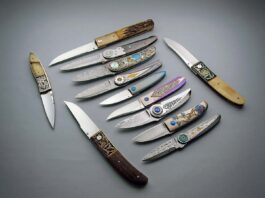
Knife collecting is an extremely rewarding experience for knife enthusiasts. There truly is a knife for everyone. Many increase or hold their value throughout the years, making collecting knives something to pass on to the next generation of knife collectors.

Fit and Finish 101: How to know it when you see it on a knife

By Pat Covert

Fit and finish is bandied about so often in cutlery circles it’s almost become one word, pronounced something like fittenfinnish. A newbie collector who hangs around seasoned custom knifemakers, purveyors and collectors soon learns the “fit-and-finish thing” is a mighty nice trait for the knives in his or her stable to have.

All that being said, is fit and finish the key to a knife being all it can be, or does a knife exhibiting it simply look nicer and cost more? Or does the answer lie somewhere in between? We recruited a panel of authorities to help sort through it all, including purveyors Neil Ostroff of True North Knives, Dave Ellis of Exquisite Knives, Dan Delavan of Plaza Cutlery, and seasoned custom maker Tim Britton.

We started by asking our authorities how they define fit and finish. Britton, who makes highly finished customs, said, “There should be no adhesive or solder showing anywhere. No gaps in inappropriate places. Metal-to-metal joints should be indiscernible. And no visible scratches or grind marks, period. One thing custom knifemakers should be able to do well,” he observes “is finish metal.”
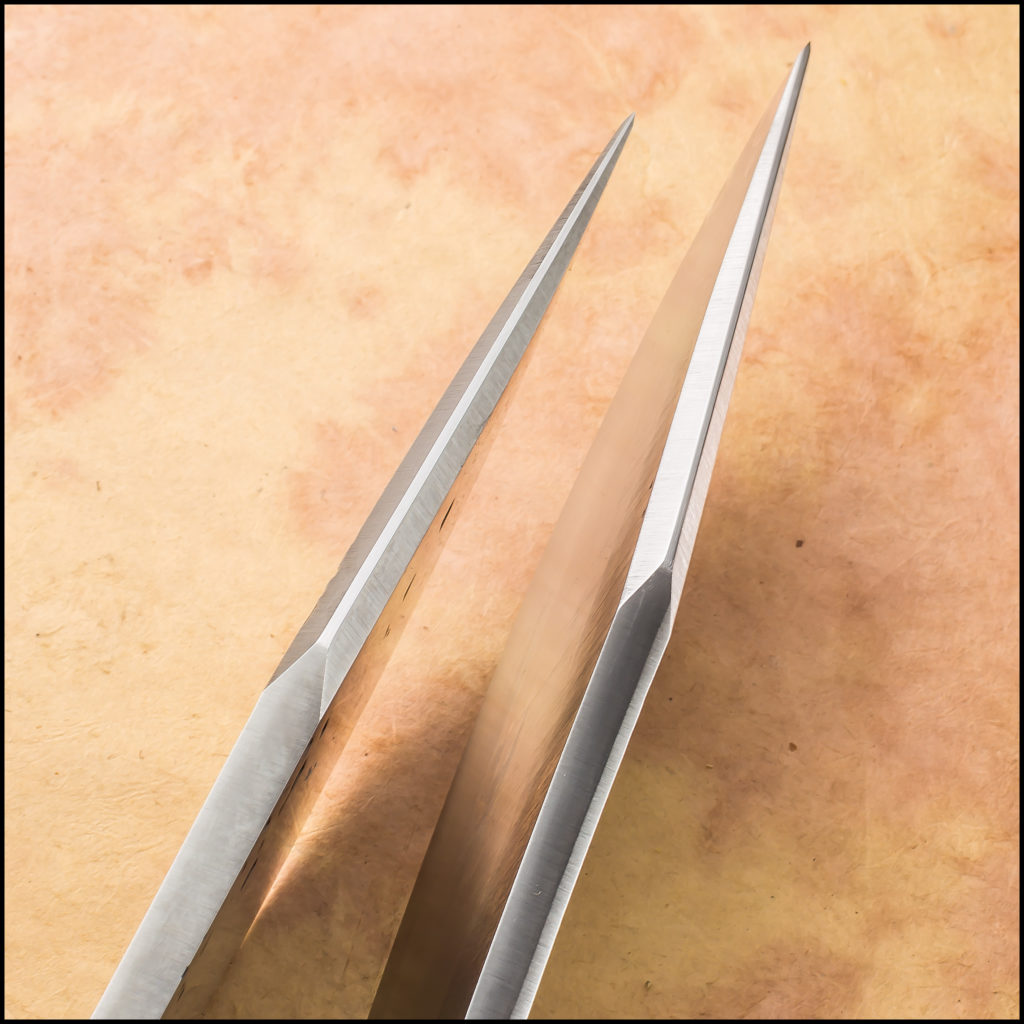
Having the grinds match on each side of the blade as on Marcus Lin’s Andalusian bowie is an indication of fine fit and finish.

In addition to being a purveyor, Ellis also is a retired ABS master smith and knows fit and finish from the maker’s point of view as well. “I define fit and finish of a custom knife to mean is it overall appealing to the eye,” he begins, “are there any obvious gaps in guard or handle fitting, is it a design that will truly work?” Ellis stressed that good, sound design is a factor. “The first thing I look for is the overall appearance. Is the design clean? Is there an organic flow? How does it feel in the hand in different grips? Then I look at the finer details such as guard fit, blade finish, handle design and comfort,” he explains. “As an ABS master smith I also look at things like edge geometry, tapered tangs and plunge cuts. All of these should be [executed properly] in a piece with excellent fit and finish.”
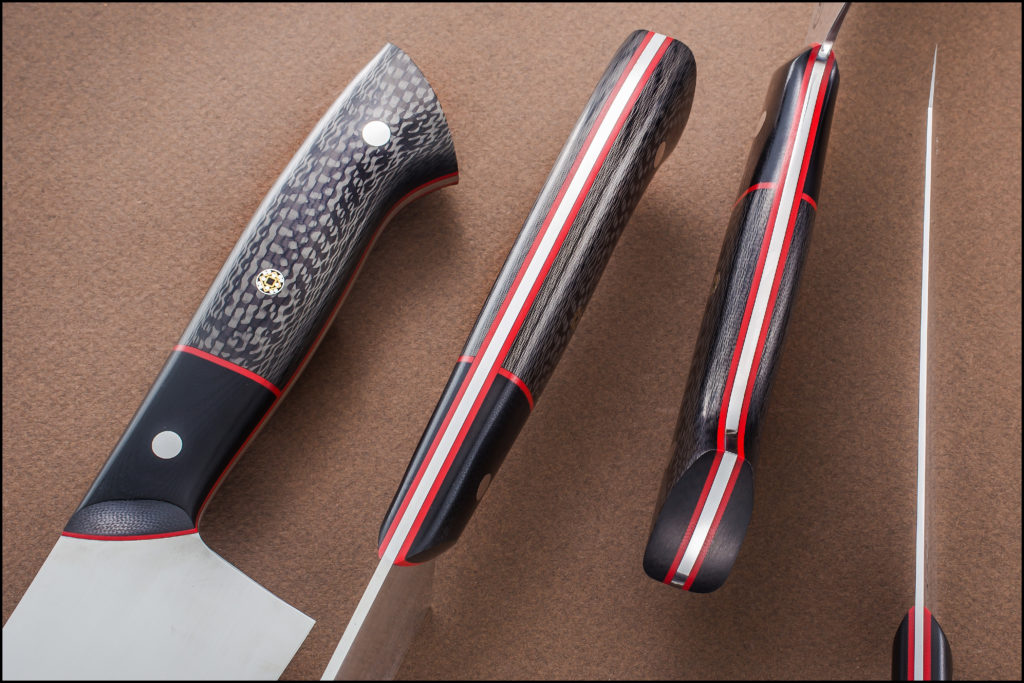
Equality of all aspects on both sides of the knife is one sign of top fit and finish. Greg Cimms achieves it on his kitchen knives.

“Fit and finish is a standard required for all knives,” Ostroff says. “It used to be almost exclusively for custom knives—which are at a higher price level—but more and more the buyers are demanding the same standard for a factory or mid-tech knife which will sell for a remarkably lower price. Fit and finish is generally a well-centered blade—in the case of a folder—no blade play in either direction, flush-fitting bolsters, and a blade finish as the maker intended. By this I mean one cannot expect a stonewashed blade, or handle, not to have scratches. Recently the matter of the strength of the detent has become an issue—again, another subjective item.”
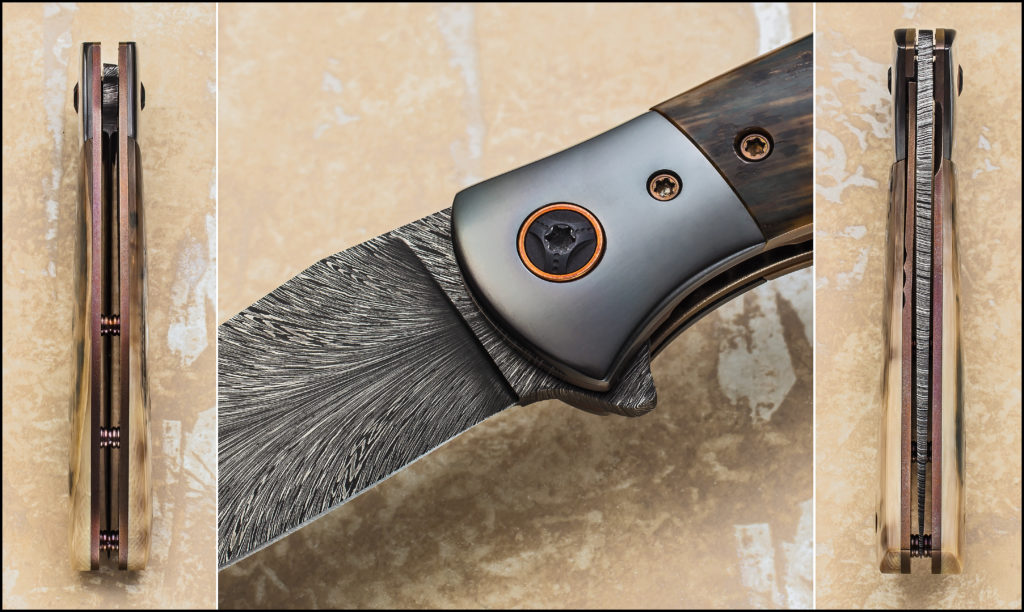
The late Bruce Bingenheimer centered the blade of his folder in the closed position (right), splitting the gold anodized standoffs right down the middle. Note the symmetry between each side of the knife (left) and the slick fit between bolster and handle material (center).

“The criteria for fit and finish depend on the expectations of the buyer,” Delavan qualifies. “Plaza Cutlery also believes design as well as craftsmanship is important. Most important is the design. It has to make sense to me. Any guards should be clean with no gaps, bevels should be the same and no 2-inch glitches. Also, handles have to be clean to the tang or guard with no gaps.”
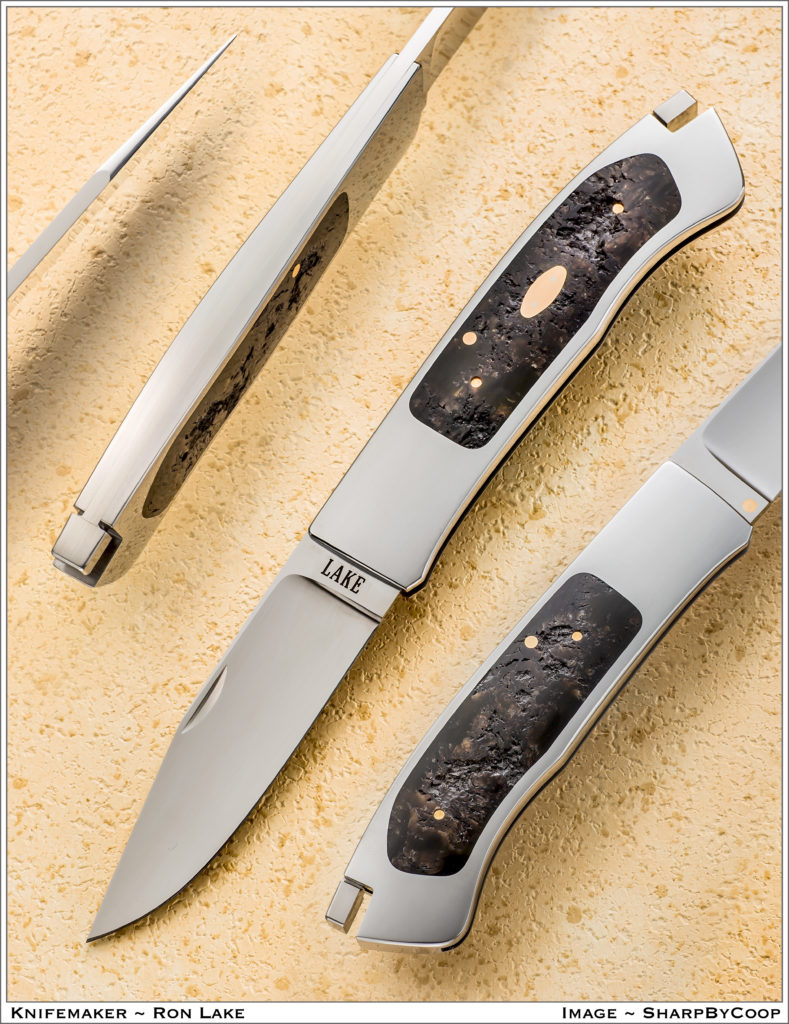
According to Tim Britton, metal-to-metal joints should be indiscernible. Note the partial knife image second from left. The seam between the blade and backspring of BLADE Magazine Cutlery Hall-Of-Fame® member Ron Lake’s tail-lock interframe is invisible.


PERFORMANCE

Does fit and finish affect a knife’s performance? “Poor fit and finish will really show when a knife is put to hard use,” Ellis advises, pointing out potential problems such as hot spots from badly designed and finished handles, guards or buttcaps with sharp edges, bad edge geometry that might cause the blade to dull quicker and be difficult to remove from the sheath, and so on.
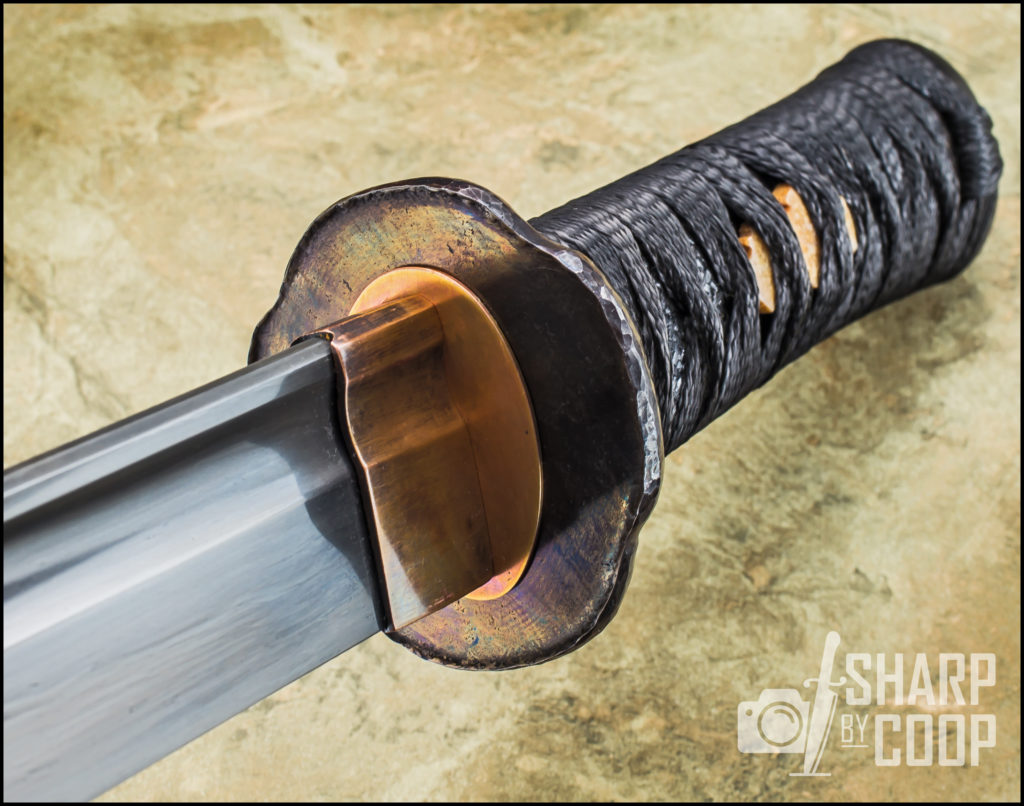
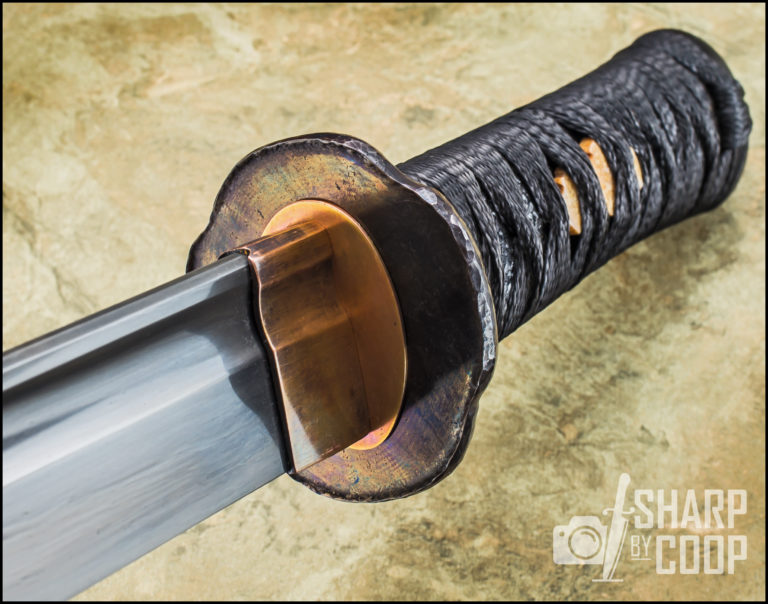
David Mirabile achieves a nice, tight fit between the habaki (collar) and tsuba (guard) of his Asian-style piece.

Britton’s take was interesting, to say the least.

“One of my first knives was made in 1972. It was ugly and poorly finished,” he recalls. “[BLADE Magazine Cutlery Hall-Of-Fame® member] Frank Centofante helped me sell the knife to a hunting guide from Montana. The guide later wrote to me wanting four more just like it. The knife skinned and dressed three elk before needing sharpening. Steel was Latrobe D2 and Paul Bos did the heat treat. Fit and finish had little or nothing to do with function. Quality of steel, heat treat, grind and sharpening angle were much more relevant.”
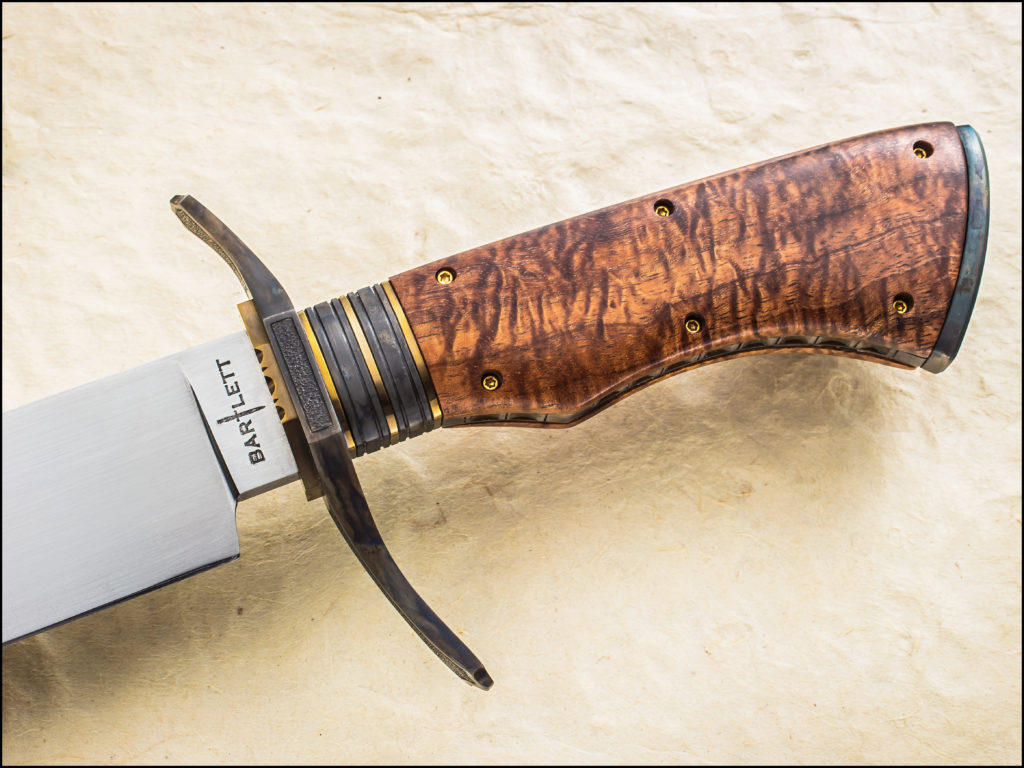
Mark Bartlett gets the bolster of case-hardened mild steel and gold-anodized titanium spacers to meld seamlessly with the curly koa handle of his fixed fighter.

“A good finished knife just has a better feel, but a lot of people will not use it,” Delavan notes. “A knife with a lot of cosmetic issues can still be a good tool, and there are makers that don’t worry about those details. Most makers say a knife is meant to be used, not to sit in a safe.” Ostroff tends to agree. “Performance is not typically an issue [with fit and finish]. For example, a knife with an off-centered blade will still function as well as one that is centered—but the customer has the right to get what he or she wants, so we do whatever it takes to make them happy.”
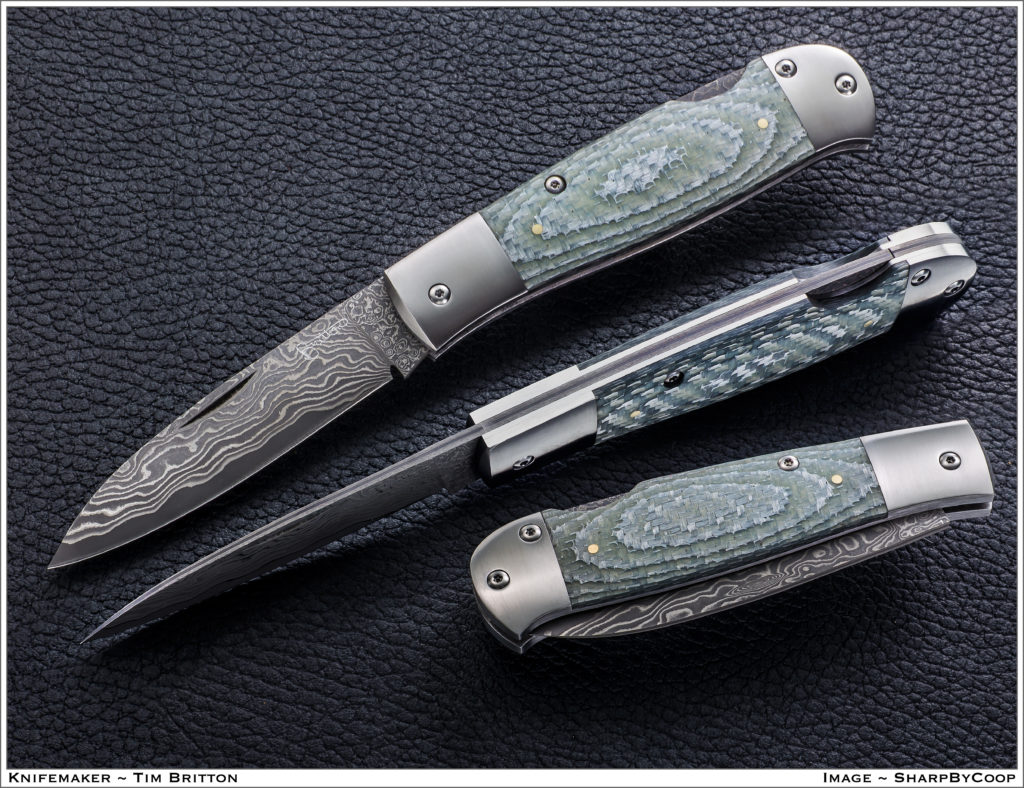
Top fit and finish includes the knife exhibiting no visible scratches or grind marks. Tim Britton’s lockback follows this dictate. As Tim noted, “One thing custom knifemakers should be able to do well is finish metal.”


F&F: OVERRATED?

Are there cases where fit and finish is overrated? In other words, are there knives that perform very well even though they may not have the polish of an expensive model but have excellent heat treat, blade geometry, comfort and a more affordable price?”

“Fit and finish is not overrated when trying to satisfy the buyer,” Ostroff opines, “but taking out the collector/safe-queen members of our community, all knives are meant to cut, and all will do so if built to industry standards.”

“I have seen a few knives that performed well with poor fit and finish,” Ellis says. “Usually if a maker takes the time to finish their piece to tight tolerances, they also have taken the time to be sure that the piece has a credible heat treat, edge geometry and an overall good feeling in the hand.” Adds Delevan, “Many of the small production companies do a good job. Fit and finish is good, not perfect, but you have an excellent tool at a more affordable price.”
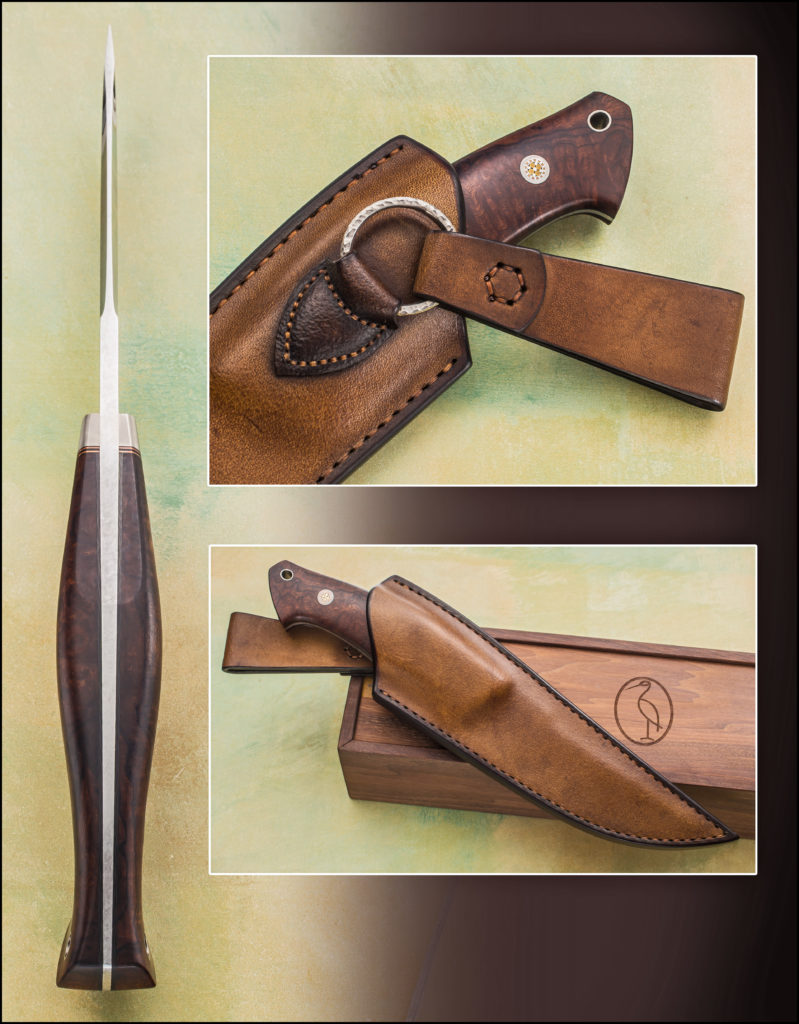
Note how each grind, bolster and slab mirrors its opposite on the Fenix fixed-blade hunter by Evgeny Khokhlov.


WHAT do YOU WANT?

Our authorities made excellent points for and against performance being a factor in fit and finish. Though there were several substantive points about design, in this writer’s opinion it isn’t really a fit-and-finish issue. Design is, of course, very important because no matter how well a knife is made, if the design is poor so will be the performance. From an aesthetic standpoint fit and finish is everything, but, as Delavan points out, many collector-grade knives become safe queens, never seeing action in the field.

A good analogy here would be comparing a Bark River Knives fixed blade to a comparably sized one made by ESEE Knives. Both companies have a huge, extremely dedicated following. Bark River’s fare is finely finished while the ESEE knives are more roughly done, but the latter are half the price or more of the former, depending on materials. Will both knives perform well? You better believe it. Both have stellar performance records. It really depends on whether you want to pay extra for a nicely finished knife or a rough finished one. Beauty is in the eye of the beholder and both do their job in spades.

Bottom line is you have some very good options available—and choices make the world of knives go around!
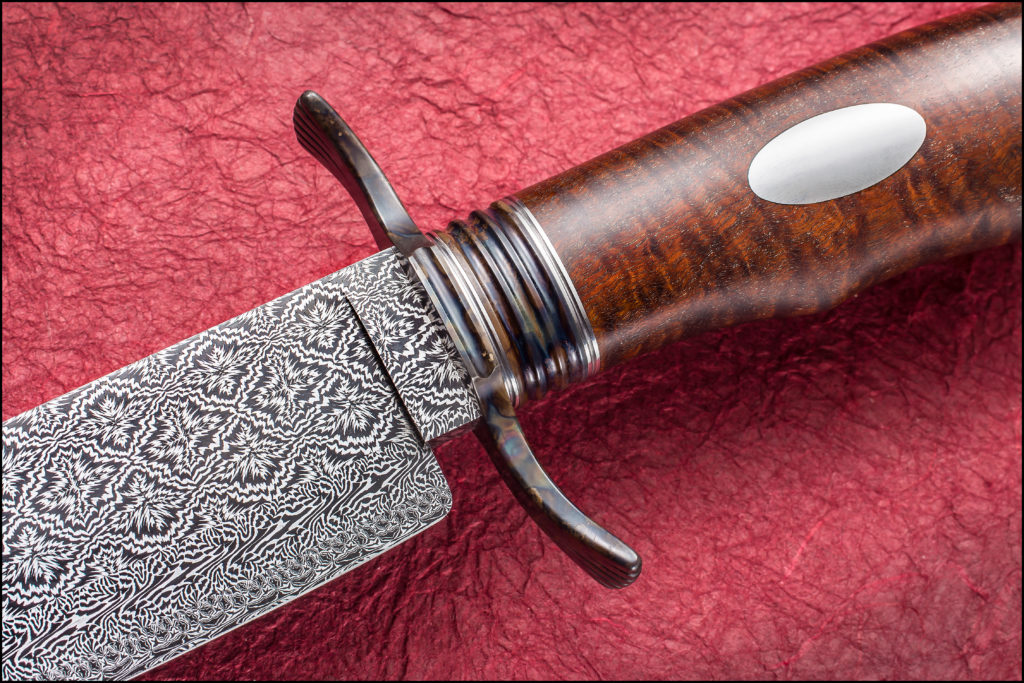
Note the tight fit with no gaps between the color-case-hardened bolster, stainless steel spacers and stabilized ringed gidgee handle of Steve Filicietti’s bowie.

Best Big Knives: Four Behemoths That Are A Cut Above The Rest

Looking for a blade that can handle jobs and and small? These four giants are some of the best big knives out there.

What Are The Big Knives:

Little knives are convenient to carry but, if you have a lot of work to do, big knives are it. I’ve lived and worked with indigenous peoples in Latin America and Southeast Asia and found that wherever folks live close to the earth, they use big knives—machetes, parangs, goloks, bolos and the like. They use them for everything from rough work such as cutting poles and opening coconuts, to dressing out pigs and game, to delicate work such as slicing mangoes.

The advantage of the big blade was illustrated to me one day when I was working alongside a villager who, with his bolo and its 14-inch blade, cut wood for a fire, bamboo poles for a cooking rack, and lopped off a banana leaf on which he filleted two large fish and sliced them thin as a sushi chef—all in the time it took me to bring down a few stalks of bamboo with my hair-shaving-sharp Randall Model 1.

We reviewed the test knives with that standard in mind. We chopped and split wood and sliced meat and tomatoes. We also, just because, cut hanging rubber hose and slashed through water-filled plastic bottles.

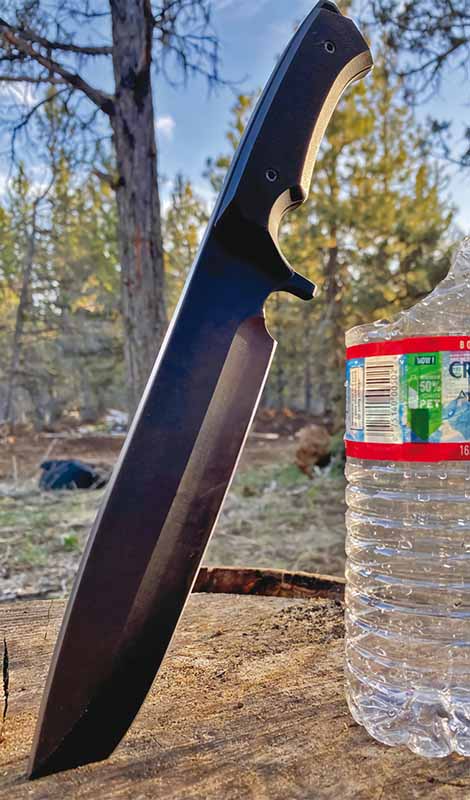
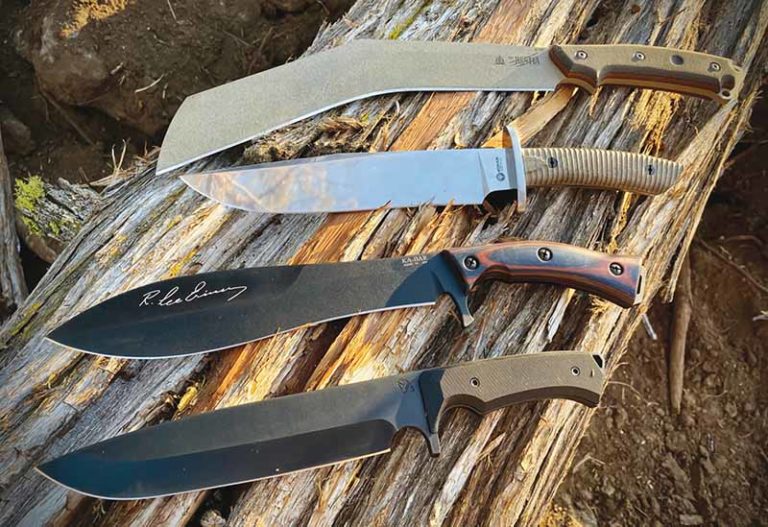
A tree branch succumbs to the reflective blade of the Boker Arbolito El Gigante. It cleaved 2-inch pine saplings in one stroke

Boker Arbolito El Gigante

The Boker Arbolito El Gigante is a handsome classic bowie with a stonewashed blade, comfortable handle and nice leather sheath. Balance is excellent, all very much in the bowie tradition. Construction is top quality; so is performance. It cleaved 2-inch pine saplings with one stroke. The quarter-inch-thick spine was brought down to a well-supported edge fine enough to slice tomatoes thin enough to see light through the slices. We slashed rubber hose and the water bottles with ease.

Like all well-designed and crafted bowies, this is a versatile all-around knife.

BOKER ARBOLITO EL GIGANTE
BLADE LENGTH: 9.25”
BLADE STEEL: Bohler N695 stainless
BLADE THICKNESS: .24”
BLADE GRIND: Flat
BLADE FINISH: Stonewash
HANDLE THICKNESS: .94”
HANDLE MATERIAL: Green Micarta®
WEIGHT: 15.75 ozs.
OVERALL LENGTH: 14.75”
SHEATH: Leather
COUNTRY OF ORIGIN: Argentina
MSRP: $229


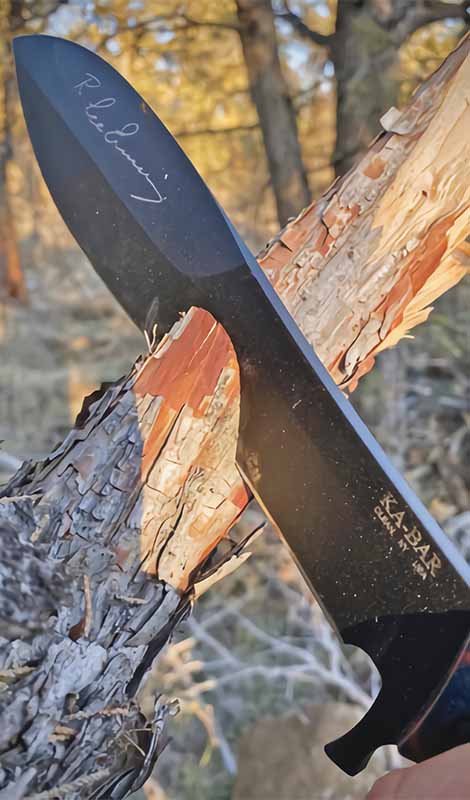
The KA-BAR Gunny chomps into dry pine. Its forward weight and blade design promote effi cient chopping

KA-BAR Gunny

The KA-BAR Gunny is a hybrid design that resembles a bolo. I suspect R. Lee Ermey, the unforgettable Gunny who serves as the knife’s namesake, spent some time in jungles because this combination chopper/slicer’s performance is on par with village-forged bolos I’ve used in Southeast Asia, and that’s a high compliment. Its forward weight and terrific blade design promote efficient chopping. We cut through 3-to-4-inch-thick saplings with two strokes. We took down a tree with a 6-inch-thick truck just because we could. After the chopping, the blade was still sharp enough for camp kitchen work. The belly, good balance and fine edge combined to make slicing meat and vegetables a pleasure. Slashing hanging rubber hose and the water bottle were a piece of cake. The comfortable handle lends itself both to heavy chopping and fine meat cutting, which is unusual.

The Gunny is an excellent all-around bush knife. The sheath has a pocket for a sharpening stone, which was not included with the review model.

KA-BAR GUNNY
DESIGNER: R. Lee “Gunny” Ermey
BLADE LENGTH: 9.75”
BLADE MATERIAL: 1095 Cro-Van carbon steel
BLADE WIDTH: 2”
BLADE THICKNESS: .2”
BLADE GRIND: Flat
HANDLE WIDTH: 1.5”
HANDLE THICKNESS: .94”
HANDLE MATERIAL: Wood
WEIGHT: 15.29 ozs.
OVERALL LENGTH: 15.5”
SHEATH: Leather
COUNTRY OF ORIGIN: USA
MSRP: $292


The Medford Knife & Tool Bonfire slashed through water-filled plastic bottles with more consistency than the other review blades

Medford Knife & Tool Bonfire

The Medford Knife & Tool Bonfire came from the maker absolutely razor sharp! The blade design is interesting in that we do not often see a contemporary styled drop point and hollow grind on such a big blade. I don’t know its Rockwell hardness, but the steel is hard and tough.

It was just as razor sharp after we put it through its paces as when we started. The fine edge made for a very good slicer and slasher and lopped off thin branches with one cut. The hollow grind tended to bind when chopping wood, though that’s to be expected—hollow grinds aren’t chopping designs. It’s better to think of this knife as a well-designed and crafted big knife rather than a bush tool such as a panga or kukri. It sliced rubber hose with a snap of the wrist and slashed through water bottles with more consistency than the other review blades, and cut meat just fine. You probably could dress out a bear with it. Use it as a big knife on soft materials and you won’t be disappointed. It comes

MEDFORD KNIFE & TOOL BONFIRE
BLADE LENGTH: 8.25”
BLADE MATERIAL: CPM 3V carbon steel
BLADE THICKNESS: .24”
BLADE GRIND: Hollow
HANDLE THICKNESS: .64”
HANDLE MATERIAL: G-10
WEIGHT: 19.16 ozs.
OVERALL LENGTH: 13”
SHEATH: Nylon
COUNTRY OF ORIGIN: USA
MSRP: $450


TOPS Bestia

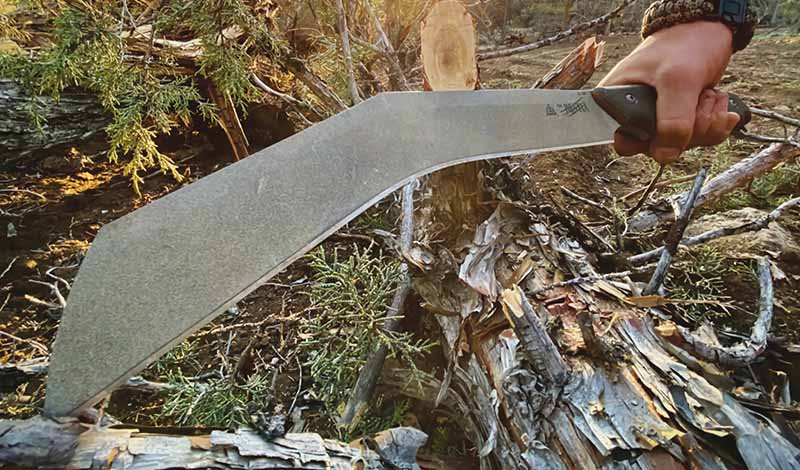
The TOPS Knives Bestia’s kukri-styled 13-inch blade and hefty weight made it the blade of choice for serious chopping or, as the author puts it, “zombie cleaving.”

The TOPS Bestia is just a beast. A kukri-styled 13-inch blade and hefty weight make it the blade of choice for serious chopping or zombie cleaving. We hacked through a 3-inch sapling with one stroke, and used it to clear a stand of saplings and brush. The handle remained comfortable during an hour or so of work. Heavy as a small hatchet, it is more versatile and safer in use, especially in thick brush.

During many survival classes, I’ve seen more injuries from hatchets than from big blades with their longer cutting edges. Given its heft, blade design and chopping ability, the Bestia is surprisingly usable in the camp kitchen. We found it could slice meat quite well, allowing for adjustments in maneuverability due to its blade length.

TOPS KNIVES BESTIA
DESIGNER: Leo Espinoza
BLADE LENGTH: 13”
BLADE MATERIAL: 1095 carbon steel
ROCKWELL HARDNESS: 56-58 HRC
BLADE WIDTH: 2.25”
BLADE THICKNESS: .25”
BLADE GRIND: Flat
HANDLE WIDTH: 2.125”
HANDLE THICKNESS: .97”
HANDLE MATERIAL: Green Micarta®
FRAME/LINER: Micarta
WEIGHT: 1 lb., 13.18 ozs.
OVERALL LENGTH: 19.5”
SHEATH: Kydex
COUNTRY OF ORIGIN: USA
MSRP: $300

VERSATILE BUSH TOOLS

If you haven’t spent much time with a big blade, try one. Work with it for a while. Direct close attention to your work and you’ll find a good big blade to be a terrific, versatile bush tool.

Also Read:

TOPS Little Bugger: Svelte-Bladed Straight-Edge

1

Ultra-thin and razor-sharp, the TOPS Little Bugger makes for a nimble and practical EDC fixed blade.

What The Little Bugger Has To Offer:

  • Thin blade makes for a light and nimble knife.
  • Straight edge with a saber grind makes quick work of most jobs.
  • Sturdy Micarta handle is ample enough for a solid purchase.

I have reviewed more TOPS Knives models than I can remember. Some have been hit-and-miss and others have been pretty good with just an issue or two. My biggest complaint with TOPS knives over the years has been their blade geometry. Blade profiles, handles, and sheaths have all worked out in some of the designs. As for the blade geometry, I have always thought, But only if they went a little thinner!

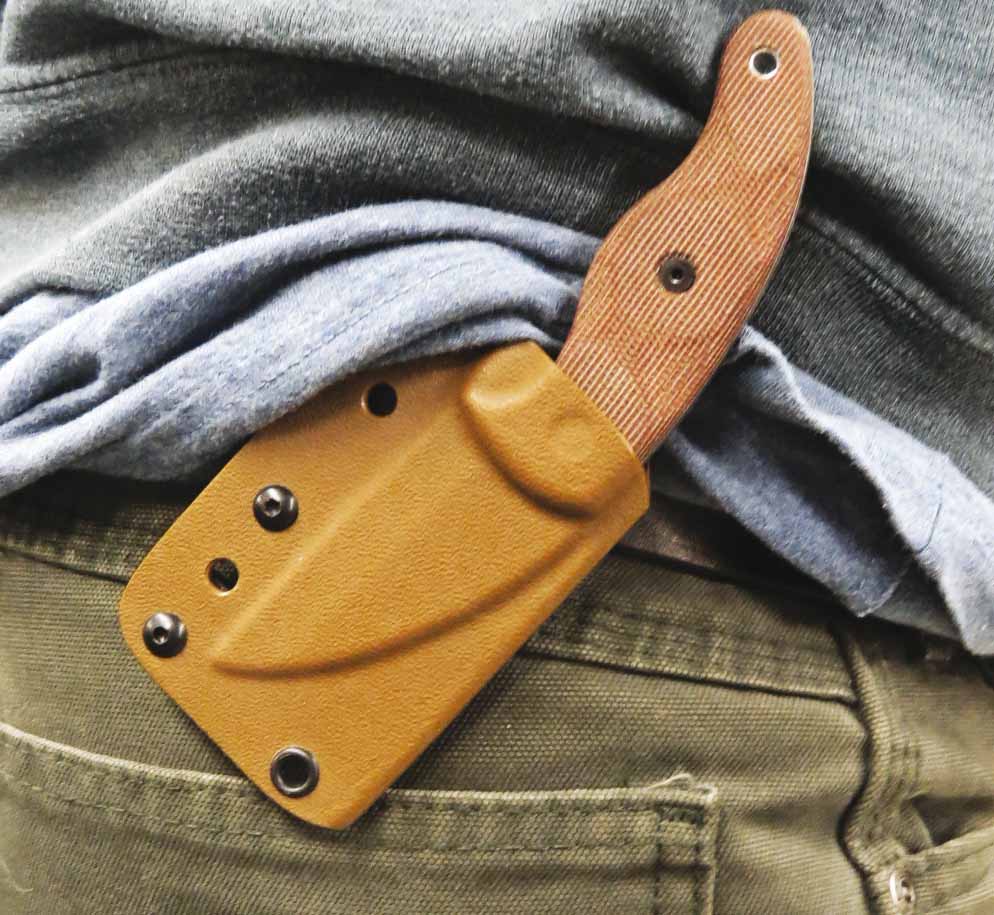
The Little Bugger’s sheath makes for a great little belt carry that provides quick, easy access to the blade.

Thin isn’t the issue with the company’s Little Bugger fixed blade. The blade is thin and cuts like a razor. I couldn’t be more ecstatic with it—seriously. As a knife reviewer, sometimes I find it hard to share what I think about a knife—if I hate it, someone will say I don’t know what I’m talking about, and if I really like it, someone will call me a paid shill.

Well, let the haters hate.

The Skinny

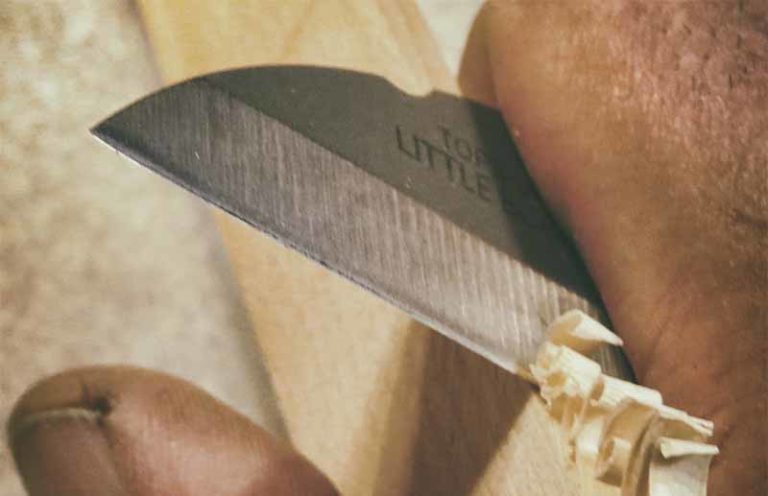
The Little Bugger has a nice wharncliff e-style blade that gives a good articulated tip very similar to a utility knife. TOPS uses a saber grind to form the geometry—oh, and did I mention it was thin? TOPS not only puts a nice, high grind on the blade but starts out with thin stock. To begin with, the blade measures only .9-inch thick. The Little Bugger cuts like a razor. It was a sheer pleasure to use right out of the box. For once, I’m not even going to complain about the choil, though when I first started cutting with it I couldn’t resist the what-if urge and strapped the blade.

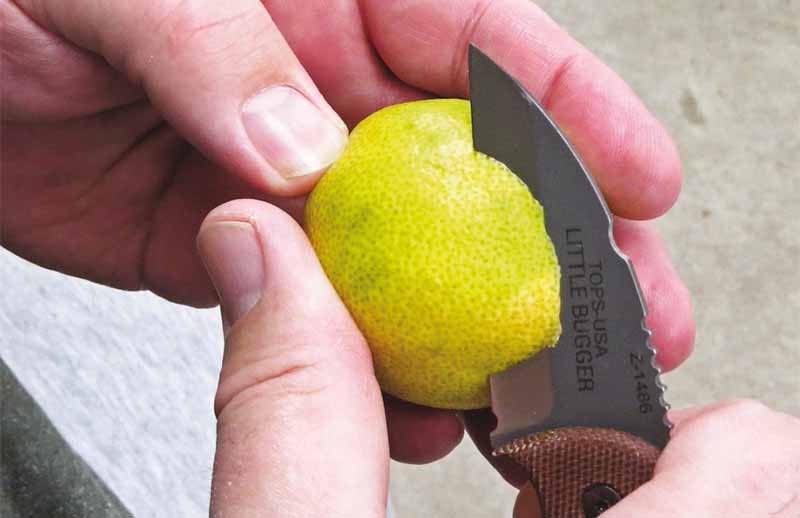
You can peel a lime with many knives, but the straight edge of the Little Bugger excels at the task. A little  knife with a fi ne edge can do a range of chores, from semi-heavy to delicate
You can peel a lime with many knives, but the straight edge of the Little Bugger excels at the task. A little
knife with a fi ne edge can do a range of chores, from semi-heavy to delicate

Accessories

The sheath is spot on. It is not big and clunky but snug fitting with a crisp lock. Best of all, the fit is so good there was no notorious plastic rattle during carry—it is quiet as a church mouse. (Though oddly enough, I can’t really tell you how quiet a church mouse is because I’ve never heard one.)

I know many like the Little Bugger style as a neck knife but TOPS includes a belt clip with this knife, and I see why. Between belt-carry clip and a tether carry system, you can EDC this little fixed blade with no problem. I won’t summarize what I think of the Little Bugger. If you haven’t got that by now, I haven’t written well enough. I will say, however, that now that TOPS has found this level of thin, I am excited and filled with anticipation as to see what other small fixed EDCs the company releases in the future.

Little Bugger Specs:
Overall Length: 5.75 inches
Blade Length: 2.38 inches
Blade Grind: Saber
Blade Material: 1095 Spring Steel
Handle Material: Tan Canvas Micarta
Carry: Injection-Molded Sheath
Weight: 37 ounces W/Sheath
Style: Fixed Blade
MSRP: $129
topsknives.com

Also Read:

First-Rate Fliers: Best Throwing Knives Tested

5

Fun to fling, today’s throwing knives fly like the wind.

The Throwing Knives Tested:

We used a variety of throws to fully test the knives: handhold, blade hold, overhand, underhand, no-spin from three-to-five paces, half-spin from five to seven paces, and full-spin from seven to ten paces. Throwing at longer distances than this is, for me, frivolous and fruitless. Our targets were the sawn end of a pine stump on its side and a pine tree we are planning to take down. The stump was from a cut last year when we were clearing an area. It had seasoned somewhat and was a tougher target than the standing tree, so penetration was deeper in the standing tree.

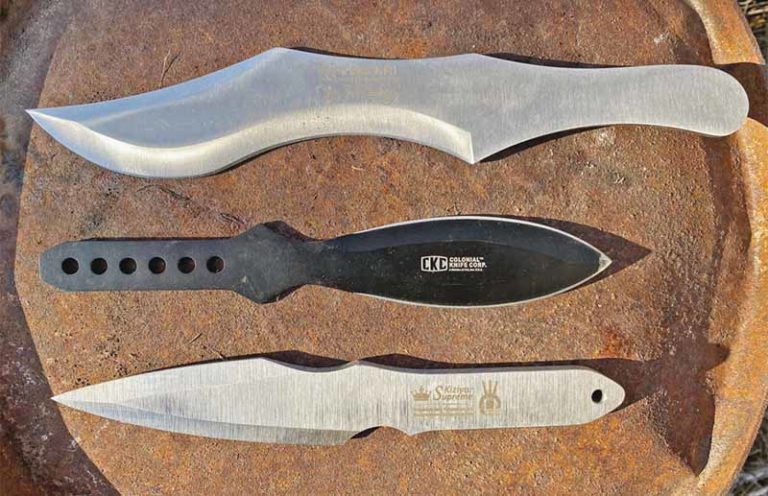
Boker Magnum Mini Bo-Kri

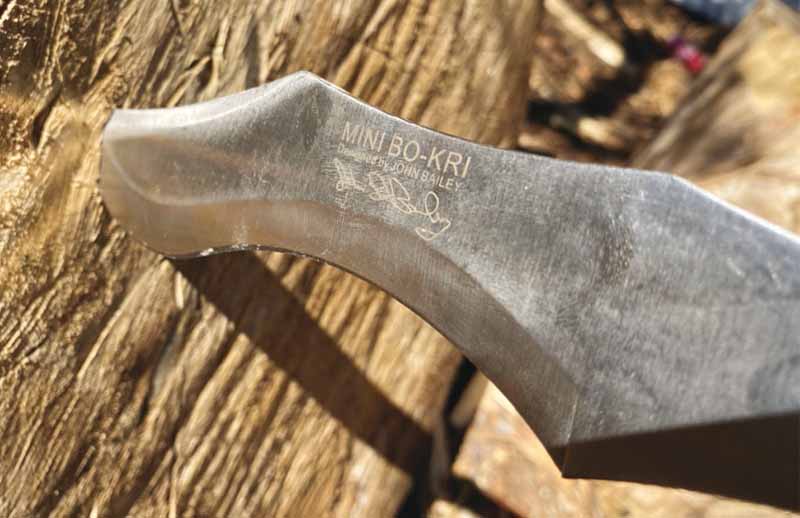
Designed by veteran knife thrower John Bailey, the Boker Magnum Mini Bo-Kri is the kind of throwing knife a performer would choose to use on stage.

It has a flashy, fierce-looking recurve blade and you know at first glance it’s a throwing knife. The largest and heftiest of the three review knives, the Bo-Kri is well balanced and flew true with each throw, handle hold or blade hold. Its weight aided penetration in both stump and standing tree. Its design is best for handle throws—it just feels better that way.

CAUTION: A thing to keep in mind is that with the Bo-Kri’s recurve blade there’s a good deal of spinning edge, which means that not only the point is sharp. You should ensure your target area is clear of people when throwing any knife, but in this case a deflection would send a long edge spinning wildly. A nice leather sheath is included.

Boker Magnum Mini Bo-Kri Specs
Blade Length: 5.71”
Blade Steel: 420J2 stainless
Blade Thicknes: .25”
Blade Pattern: Drop point
Blade Grind: Sabre, recurve
Blade Finish: Brushed
Edge Type: Plain
Weight: 8.1 ozs.
Overall Length: 10.71”
Continent Of Origin: Asia
MSRP: $34.95


Kizlyar Supreme Strij

I have the strong impression that Russians are serious about throwing knives and actually use them in the field. The Strij by Kizlyar Supreme would be my choice if I were going to hunt rabbits with a throwing knife like that 10-year-old kid—which I would not. Now I know enough to use the knife to make a throwing stick, spear, bow, etc. Nonetheless, the Strij appears to have been designed with field use in mind. Kizlyar’s information says the knife was designed by Russian “Throwing Knife Instructor Grandmaster” V.S. Kovrov. I think it’s amazing there is such a thing as a Throwing Knife Grandmaster, and it illustrates just how serious Russians are about this skill.

The Strij is balanced precisely in the middle, which facilitates both handle and blade throws, as well as spin and no-spin throws. Kizlyar’s promotional material also says that “the Strij definitely requires a master’s touch to be accurate.” I disagree. My son, Justin, stuck it deep in the center of the target with his first throw. This one is a keeper.

Kizlyar Supreme Strij
Blade Length: 5.25”
Blade Steel: Stainless
Rockwell Hardness: 42 (spine) and 45 (edge) HRC
Blade Style: Modified dagger
Blade Grind: Sabre
Blade Finish: Brushed
Edge Type: Plain
Weight: 6.7 ozs.
Overall Length: 8.5”
Country Of Origin: Russia
MSRP: $42


Colonial Throwing Knife

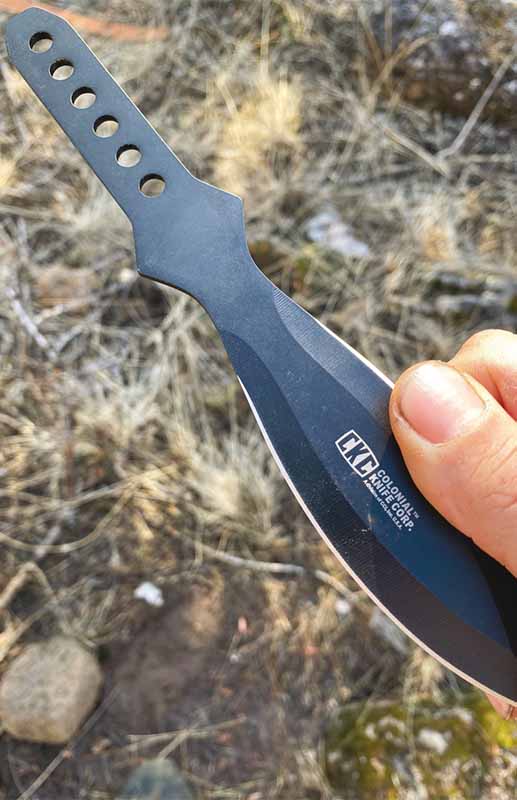
My impression of Colonial’s throwing entries? They look like ninja knives—black, radically curved, lightweight, perfect for a ninja. Colonial promotes these as “sport” or “pastime” knives to be used like darts. I get that. They’re balanced like darts, weight forward, which makes accurate handle-hold, no-spin throws easy. Even so, we also threw them with a blade hold and a spin, which worked fine. I can see a group of folks with a handful of these knives and a dartboard-like target. I can also imagine a ninja slinging a handful of these at pursuing samurai. (I have an active imagination.)

If you’re going for penetration with these knives, velocity is the thing. With little mass and weight, velocity is what will give them the power to penetrate. Whipping your arm—not your wrist—adds velocity. These little guys are fun to throw. Well-made nylon sheaths house each of the two Colonial throwers (they come in a set) until needed.

Colonial Throwing Knife
Blade Length: 4.5”
Blade Steel: 440A stainless
Blade Thickness: .08”
Rockwell Hardness: 57 HRC
Blade Style: Dagger
Blade Grind: Sabre
Blade Finish: Brushed
Edge Type: Plain
Weight: 3.2 ozs.
Overall Length: 8.5”
Country Of Origin: China
MSRP: $29.99 (set of two; includes a nylon carry case and sheaths)


Tips On Throwing Knives

The Bo-Kri and the Colonial knives are clearly designed as dedicated throwing knives, not all-around tools. The Kizlyar Strij, though also designed as a throwing knife, is quite usable as a general-purpose knife. None of the test knives came with paper-cutting sharp edges, as is proper for throwing knives. They can, however, be sharpened. They are also tempered fairly soft, as is proper so they won’t break if a powerful throw misses the target and the knife hits something hard. This means they won’t hold an edge long if used much. That’s OK. Edge holding is much overrated. If you want these knives to have a sharp edge, a few strokes on a good stone will do it. So, too, when they go dull—a few strokes will re-sharpen them.

If you want to throw knives, here’s a couple of tips: keep your wrist stiff when releasing the knife. Do not snap your wrist. Let the power come from your body, as when throwing a football, baseball, or javelin. Throw at a big, soft target and make sure there’s a large, safe backstop for when you miss—as you will at first if you’re new to the game. Even veterans miss on occasion. As you progress you can move on to smaller targets and moving targets. Have patience and, most of all, have fun.

Also Read:

Katz Knives Stockman Executive: Complete Review

Katz three-blade Stockman Executive Drop Point stacks up against the knives of old school.

Most in my age group were raised with a slip joint knife. It’s the knife Dad always carried in his pocket. Being raised with a dad who was a commercial fisherman, I used knives as tools every day—everything from cleaning fish to making fishing nets.

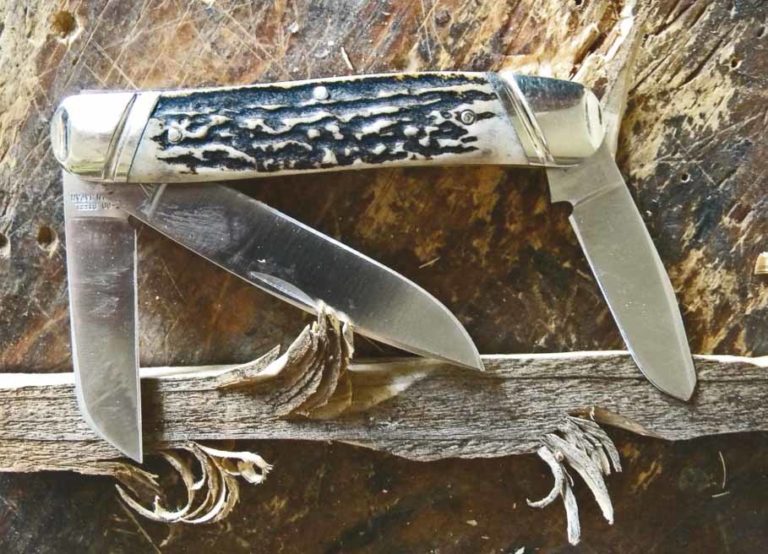
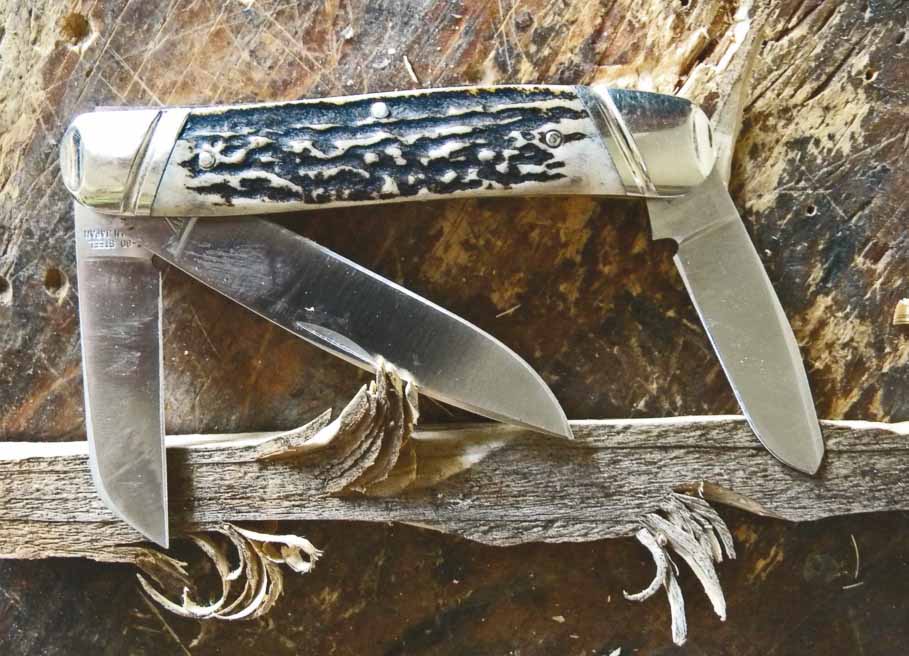
The main blade carved nice curly-cues with great control. The sheepsfoot had a tendency to dig deeper into the pine for thicker curly-cues. The spey was about midway on the curly-cues and depth of cut.

My father, Jacob, always used a three-bladed stockman for working with twine while making or repairing 90-foot trawl nets. It would take him 30 days or more to hand-tie every square in the massive nets. He would always work with the knife’s smallest blade. When it was sharpened down to a nub, he would go to the next blade. The knife would last him five years of heavy work. Then he would put it in his junk drawer and start using a new one. Only carbon steel blades knives were allowed—stainless steel had not evolved to the performance levels of today.

Katz Knives has taken old-school looks and added blades of high-performance XT-80 stainless steel on its Stockman Executive Drop Point. Let’s see if Dad would have approved.

TEST ’EM UP
In a quick sharpness test on 20-pound bond copy paper, all three blades sliced cleanly and smoothly. The shorter blades can be a bit challenging till you get used to them. The sharpening notch/choil caught on the paper during testing.

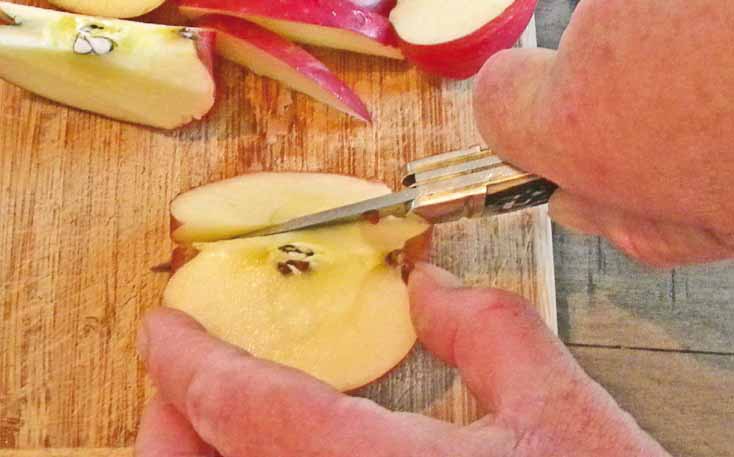
My wife, Melissa, wanted to play with the knife so I got an apple from the fridge for her to slice. The drop-point main/master blade worked great for sectioning the apple into wedges. Next was the sheepsfoot blade for seed removal and skinning the wedges. (The wedges were yummy.)

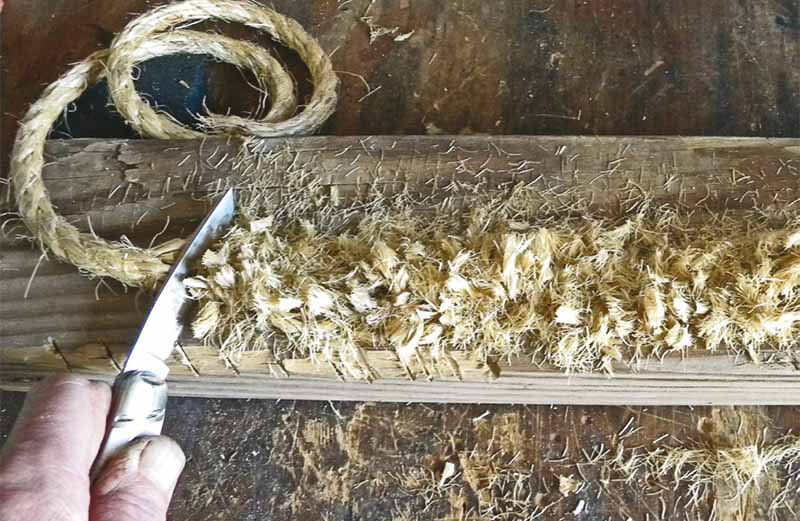
The main blade crunched to 74 clean cuts on the half-inch sisal rope before the edge started to slide.

Single-walled cardboard was next. All blades bit into it aggressively. The cardboard got hung up on the sharpening notches of the two smaller blades while slicing. As a result, I had to slow down the slicing and control the edge placement. The master blade made short work of the cardboard.

It was time to make some firesticks as camping season was in full swing and I needed a fire to roast marshmallows. The master blade gave me nice curly-cues with great control. The sheepsfoot blade had a tendency to dig deeper into the pine for thicker curly-cues. The spey blade was about midway on the curly-cues and depth of cut. SAFETY NOTE: Care must be taken while doing heavy cutting with a slip joint. It does not take much pressure to accidentally close a blade on a finger.

To make kindling from end cuts of a fence, I softly batonned the main blade into the slabs. This worked very well and smoothly with no damage to the blade. Again, care was taken to avoid a blade closing on a finger.

The final test was cutting half-inch sisal rope. Only the main blade was consistent during cutting due to its ample enough length giving me the stand-off needed to make crunching cuts. The XT-80 stainless crunched to 74 clean cuts before the edge started to slide.

Melissa uses the drop-point main blade to cut the apple into nice bite-sized sections.

This knife is well-executed in design and manufacture.

REPORT
Using the stockman was a very nice experience and provided good memories. You have three blades to work with, so you should always have a sharp edge on hand. The Katz is a very welcome addition to your pocket.

CHANGES
I love the straight edge of a sheepsfoot blade. I would add a midsize wharncliffe blade instead of the smaller spey.

Stockman Executive Drop Point Specs
Company: Katz Knives
Blade Lengths/Patterns: 23∕4” drop point, 23∕16” sheepsfoot & 2” spey
Blade Steel: XT-80 stainless
Handel: Stag bone
Bolsters: Nickel silver
Liners: Brass
Weight: 2 ozs.
Closed Length: 3.75”
Country Of Origin: Japan
MSRP: $181.90

To learn more about the Stockman Executive, please visit katzknives.com


Also Read:

Ballistic Knife: The Most Illegal Knife in America

Editor’s note: This article is an excerpt from the KNIVES 2004 book, but the information is still relevant.

Switchblades, or automatic knives, might attract the most attention, but reforms in recent years have relaxed restrictions in most U.S. states. The most banned knife in the country remains the ballistic knife.

Here’s a look at what ballistic knives are, how they became banned and why those bans should be repealed.

What Is a Ballistic Knife?

Federal law defines a ballistic knife as follows:

United States Code, Title 15 Section 1245
(d) “Ballistic knife” defined. As used in this section, the term “ballistic knife” means a knife with a detachable blade that is propelled by a spring-operated mechanism.
Pub. L. 85-623, Sec. 7, Oct. 27, 1986. Amended Nov. 18, 1988.

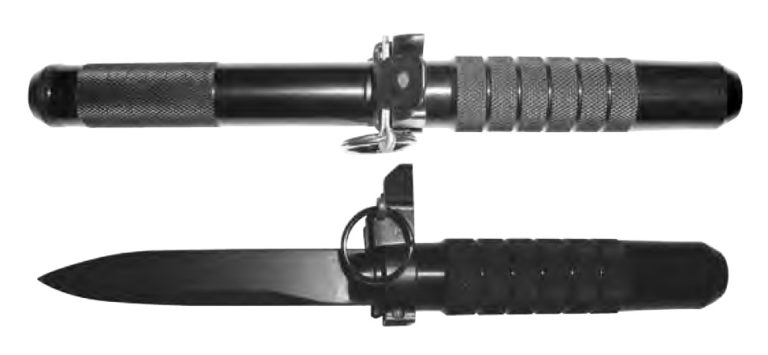
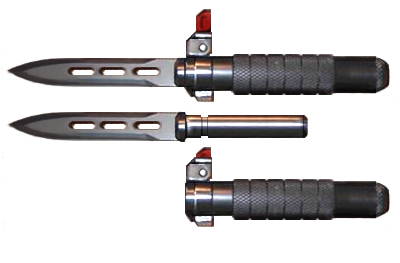
In plain English, a ballistic knife is essentially a blade attached to a hollow handle that fits inside of another outer hollow handle, which contains a coil spring. The coil spring compresses inside the handle, and a latch holds the knife blade down against the spring pressure. When the latch is released, the knife and attached inner handle launch and “go ballistic.”

The federal law on ballistic knives is very similar to federal law on switchblades, except that the switchblade law exception for “the possession, and transportation upon his person, of any switchblade knife with a blade three inches or less in length by any individual who has only one arm” does not apply to ballistic knives.

That means one-armed individuals are forced by federal law to have to throw their knives by hand just like everyone else!

Hollywood and Ballistic Knives

“¿Como esta?” asks Arnold Schwarzenegger in the 1985 movie Commando, as he fires a ballistic knife into the chest of a bad guy, which amazingly causes immediate death. Hollywood never misses a chance to help fuel a misguided weapons ban, and the ballistic knife was no exception.

In May of 1986, Francis Ford Coppola’s son and Ryan O’Neal’s son were in an automobile accident in which Coppola’s son died. O’Neal’s son was charged with reckless driving and possession of a ballistic knife.

Hollywood elitism and hypocrisy is nothing new. What made the ballistic knife so frightening to career politicians, media talking heads and assorted hoplophobes (those who irrationally fear weapons) is that it’s a knife that shoots!

Why are Ballistic Knives Illegal? Hype and Politicians

Politically, the ballistic knife helped fill the gap between guns and knives. It enabled knife haters to join ranks with gun haters and both had a common, new, inanimate object to wail and screech about.

Sure enough, one year after Commando was released, the Ballistic Knife Prohibition Act of 1986 was signed into federal law by then-Republican President Ronald Reagan, as part of the Anti-Drug Abuse Act of 1986.

In addition to the ballistic knife being slandered and falsely linked to drug abuse, this was the newest national attack on knives since the 1958 Federal Switchblade Law.

Republican Sen. Alfonse M. D’Amato held a news conference pushing for and spinning the proposed ban. He announced that a ballistic knife “is a favored weapon used by drug dealers.” He further proclaimed, “Ballistic knives are at least as dangerous as switchblade knives that have been banned since 1958.”

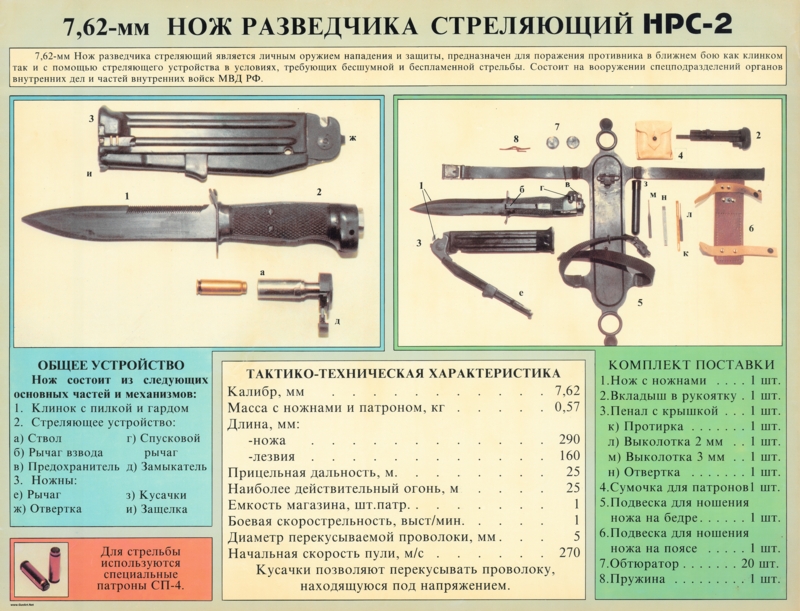
Ballistic Knife Poster
A vintage poster from the USSR showing parts of a ballistic knife. Note the firearm cartridge used to propel the blade. (image via RussianLegacy.com)

The hype surrounding ballistic knives did not help matters. The knives were advertised for sale in tactical magazines with the pitch “The Commies Had It. We Stole It. Now You Can Buy It!!!!” Ballistic knives were advertised as being able to “kill swiftly and silently.”

Sen. D’Amato claimed a ballistic knife to be a “dangerous weapon, a terrorist weapon.” He further declared, “Ballistic knives have no legitimate sporting purpose. They are sought by professional criminals because they are easily concealed and capable of penetrating a policeman’s bulletproof vest.”

Democratic Rep. Mario Biaggi (a well known anti-gun politician and a sponsor of the so called “Cop-Killer Bullet Ban”) appeared at a news conference and asserted that ballistic knives were the “latest in cop-killer technology,” and that the ballistic knife can “…fire its blade like a bullet” and “penetrate police bullet-resistant vests.”

He stated he had bought his ballistic knife via mail order from the Florida Knife Corp. by putting the $79.95 on his credit card. Biaggi stated, “…there were no questions asked. I could have been anybody. The ballistic knife is totally accessible to anyone who wants it.”

What is a ballistic knife
A button or switch in the handle, seen here in red, is usually used to release the blade. (By Jerryk50 at English Wikipedia)

At the news conference, the typical “dog and pony show” was conducted by a New York police officer who fired a ballistic knife from 30 feet at a silhouette target of a person. Of course, there were no known cases at that time of anybody ever being killed by a ballistic knife, no less any reported cases of a police officer being shot at by a “drug dealer or terrorist” (or anyone else for that matter) with a ballistic knife.

Furthermore, I could not find any official poll taken of drug dealers inquiring as to whether a ballistic knife was their “preferred weapon” of the 1980s, but somehow I doubt it considering the ready availability of cheaper and more effective black market firearms.

The Florida Knife Corp. issued a statement that their ballistic knives do NOT penetrate bulletproof vests, but noted that any ice pick could penetrate a bulletproof vest. Bulletproof vests are NOT ice pick-proof, however banning ice picks is not as politically correct or headline grabbing. A ballistic knife has as much “sporting purpose” as any throwing knife.

Since when is the “sporting purpose test” applied to knives, anyway? What sporting purpose does an 8-inch chef’s knife have? Then again, why should facts get in the way of a feel-good knife ban?

The Final Cut to the Ban: Throwing Knives

There are many books that deal with the subject of knife throwing for both fun and combat. A knife can be thrown with substantially more power and accuracy than can be achieved by firing a ballistic knife. This fact alone makes the ballistic knife ban patently absurd and useless.

Any decent fixed blade knife can be thrown (although throwing your handmade, damascus, ivory-handled bowie is not recommended). But why should facts and logic stand in the way of any headline-grabbing politician pushing a weapons ban and holding news conferences?

So What? Who Needs a Ballistic Knife Anyway?

Okay, the law is ridiculous, so what’s the problem? Who needs to own a ballistic knife anyway, right?

Well, here is the problem: the ballistic knife ban is a KNIFE BAN, and just because it isn’t your ox being gored does not mean you should ignore it. This ban paves the way for more knife bans. The politicians see our knife rights as “easy pickin’s.” They can look like they are doing something about crime, terrorism or drug dealing, when in reality it’s just another hit on our knife rights.

Ballistic knife bans lay the groundwork for further knife bans and for activist courts to be judicially dishonest and to prohibit other lawful knives and weapons that are not ballistic knives. Don’t believe it? Then you have obviously not read State of Florida, Appellant, v. Pariya Darynani, Appellee, 4th District, Case No. 4D99-4172.

In this case, the Florida Court banned formerly lawful automatic/switchblade knives under the guise of Florida’s ballistic knife ban. The case is a classic example of anti-knife bias and the abuse of our knife rights that a wrongful knife ban can cause.

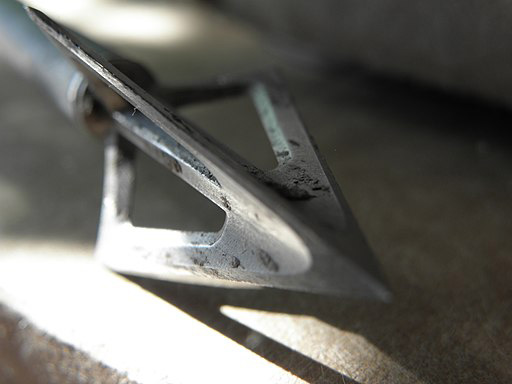
Broadhead
Modern broadheads used for archery remain legal, even though they function similarly to ballistic knives. (Wikimedia image)

New Jersey’s ballistic knife ban has even more potential for abuse. The New Jersey ballistic knife ban was signed into law by then Republican Gov. Thomas Kean, who stated, “We have to restrict the flow of knives that serve no useful or lawful purpose.” I

f the “bunny huggers” wanted to push it, New Jersey’s ballistic knife law is so overbroad that archery and bow hunting are threatened and could be banned.

Chapter 39 Of New Jersey Criminal Code Firearms And Weapons 2C: 39-1.
   u. “Ballistic knife” means any weapon or other device capable of lethal use and which can propel a knife blade.

Bows and crossbows can all shoot broadhead arrows. Broadheads are and/or contain razor-sharp knife blades. Is a compound bow with a broadhead arrow a “weapon or other device capable of lethal use and which can propel a knife blade?” Of course it is!

Sure, it was not the intent of the New Jersey Legislature to ban archery and bow hunting, but it was not the intent of the Florida Legislature to ban switchblades/automatics, either, and yet the Darynani court did just that!

Stay Vigilant

Unfortunately, knife aficionados were not organized, prepared or ready for the ballistic knife fight in the mid-1980s. We were never warned about the future effect and ramifications of ballistic knife bans on our knife rights. We dramatically lost on the ballistic knife issue and are now paying a price.

Awesome Automatics:

Knife Collecting: The History of the Camillus M3

Camillus Cutlery History

To understand the Camillus M3, you need to know a bit about the history of the company that originally designed it.

It all ended for the original Camillus on February 2007. The old Camillus went gone out of business due to poor sales, a workers’ strike and a lockout—and then the long-time knife manufacturer filed for bankruptcy. Acme United Corporation bought the company’s brand name and intellectual property rights, relaunching the Camillus brand in 2009.

Camillus hadn’t always had business problems. The company was founded by Charles Sherwood in 1876 and became a good candidate for buying when the Dingley Tariff Act, which greatly raised the import duty on knives, was enacted in 1897. The company then had 20 employees.

Camillus M3 knives
This issue’s cover knife, here’s the one of six “Salesman’s Sample” M3s Camillus made in the early 1990s that Bill Adams found in a bucketful of leftovers he bought at the auction of the old company in 2007. According to Phil Gibbs, who worked at Camillus when the one of six M3 was produced, it was “truly handmade” in the Camillus Model Shop. (Terry Moss image)

The War Years

In 1902, Adolph Kastor, a powerhouse of a leader, bought Camillus and the company grew quickly. Camillus had grown to over 200 employees by 1910 and produced over 900,000 knives that year alone. During World War I, the manufacturer cranked out over 470,000 knives for the U.S., British, Canadian and Dutch governments.

The company continued to do well during the ’20s and ’30s. It had knife contracts with Sears Roebuck & Co., Shapleigh Hardware, Simmons Hardware and Woolworth. In fact, in the ’30s Camillus had the reputation of being the highest quality maker of knives in the United States.

During World War II, the company made over 15 million knives for the U.S. Armed Forces. Throughout the Vietnam War, Camillus produced the GI four-blade utility knife, the pilot survival knife andthe U.S. Marine Corps 7-inch Mark II.

(Author’s note: Camillus had developed the Mark II during World War II, and made more Mark II’s than anyone else, though the Marines stillcalled the Camillus-designed Mark II knife “the Ka-Bar.”)

The New-and-Improved Camillus M3

In the 1980s, the U.S. Armed Forces discussed improving the M3. Then in issue to troops, the M3 having been first produced and issued in 1943.

Of course, that was very interesting to Camillus—the company had designed the M3 in 1942—and military contracts, with additional sales in the commercial market to users and collectors, would be very welcome.

The Camillus prototype shop started work on improving the new M3 design. Most everyone thought the blade was OK as it was—6.5 inches long, .85 inch wide and made of carbon steel.

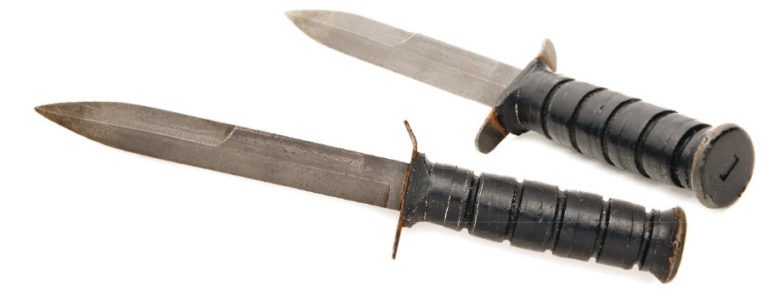
Camillus Mark III Mark 3 knives
(Top) Most everyone thought the blade of the original M3 was OK as it was—6.5 inches long, .85 inch wide and made of carbon steel. As a result, the blade of the newer M3 maintained the same specs. (Bottom) The stacked leather handle of the “newer and improved” M3 has five grooves and is longer (4.7 inches) than the World War II original. (Terry Moss images)

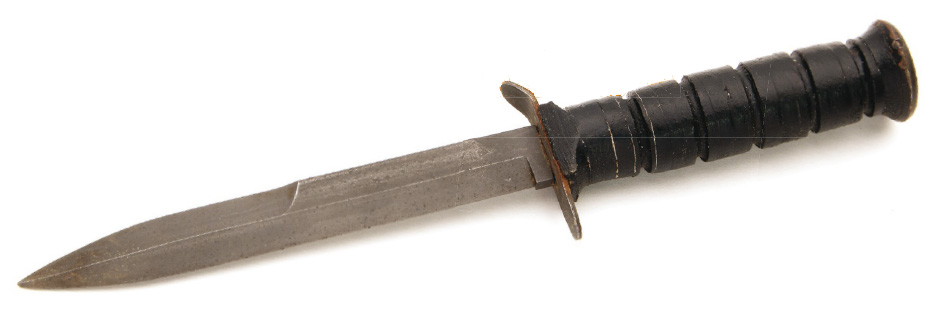
The stacked leather handle had five grooves and was longer (4.7 inches) than the World War II version of the knife. The handle diameter was larger (1.2 inches wide) and had a pinned-on stepped pommel 1.35 inches wide.

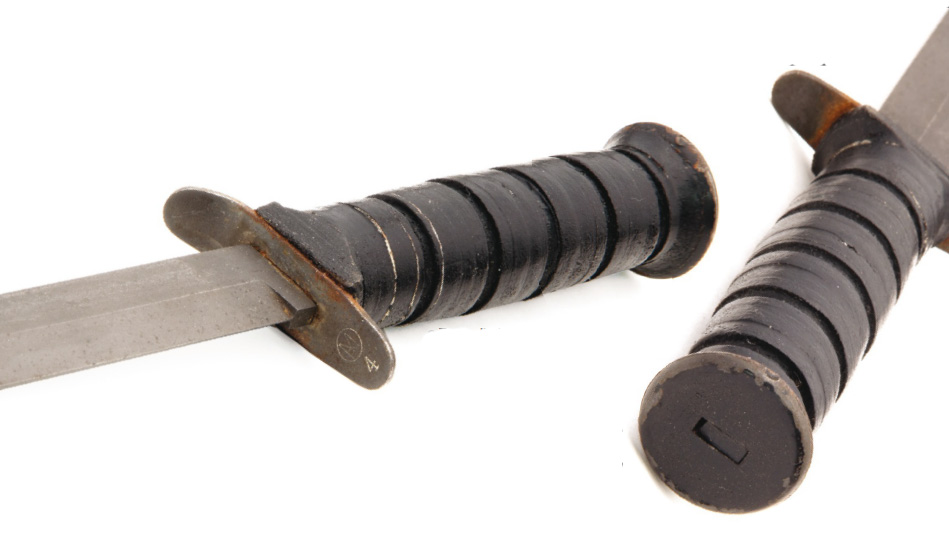
The guard was a little wider than the one on the World War II knife. The lower leg/quillon was marked on the front with a capital “M” in a circle over the number “4.” The new design M3 weighed 9 ounces finished.

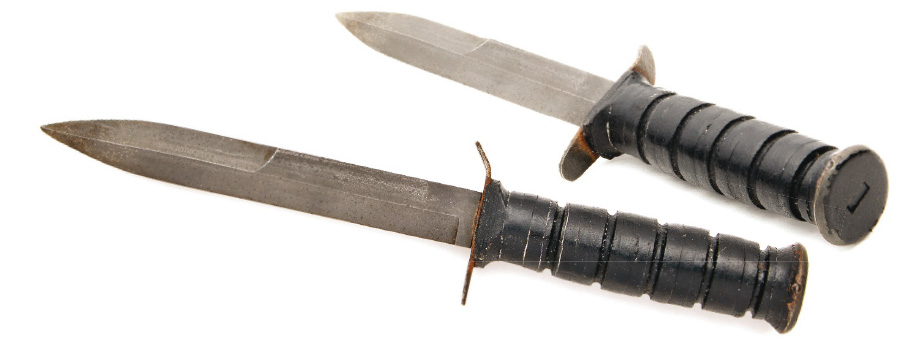
Camillus M3 knife
(Left) The guard of the newer M3 design is a little wider than the World War II knife. The lower leg/quillon is marked on the front with a capital “M” in a circle over the number “4.” (Right) The handle diameter of the newer M3 is larger (1.2 inches wide) than the original and has a pinned-on stepped pommel 1.35 inches wide. (Terry Moss images)

One of the things the U.S. Armed Forces learned in Vietnam was the importance of guarding against mold and insects—leather handles had deteriorated quickly in the jungle.

As a result, the new knife’s handle was saturated with deterrent. It would use the current fiberglass M8A1 sheath, the same sheath in issue for the M7 bayonet.

The M3 was born again.

Advertisement

Must Read Articles

Read this before you make a knife

Knifemaking 101 – Read This Before You Make a Knife

  by Wayne Goddard My experience has taught me that there's nothing like digging in and getting started. I've often said the hardest part of the...
how to forge damascus steel

How to Forge Damascus

Advertisement
Advertisement