Knife Collecting

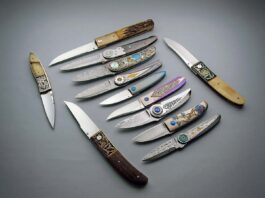
Knife collecting is an extremely rewarding experience for knife enthusiasts. There truly is a knife for everyone. Many increase or hold their value throughout the years, making collecting knives something to pass on to the next generation of knife collectors.

4 Very Different Versions of the EDC Folder

Once upon a time a long time ago, my idea of the perfect everyday carry knife was a Randall Model 1. Most of the guys I worked with back then carried 16- to 18-inch pangas every day.

Times change. People change. I no longer carry a Randall in an inside waistband clip sheath every day, or at all, really. No doubt there are many folks today who strap on a 10-inch bowie or a USMC fighting/utility knife every morning before breakfast. To that you can add the legions who EDC a tactical folder.

There are, however, many folks who prefer to carry simple pocketknives. Almost every cowboy I know carries an old school Schrade or Case stockman in the watchpocket of his Wranglers. Many other folks, some constrained by knife laws, EDC more contemporary versions of the traditional pocketknife, the knife that at one time was in every schoolboy’s and every man’s pocket—for some, a gentleman’s folder.

My team and I recently did a field review of four very different contemporary versions of the EDC folder. If we were cowboys I reckon we could have trimmed hoofs, done minor surgery on cows and other cowboy things. But we’re not cowboys. So, we used them for the stuff we tend to do. We opened boxes and cut up cardboard. We did cut rope, which felt kind of cowboyish. We went for a hike and picked and sliced fresh rose hips for tea, peeled and sliced oranges for a trailside picnic, cut pine limbs and whittled fuzz sticks to start a lunchtime fire. Not exactly gentleman stuff either, but hey, everyone has his own EDC needs.

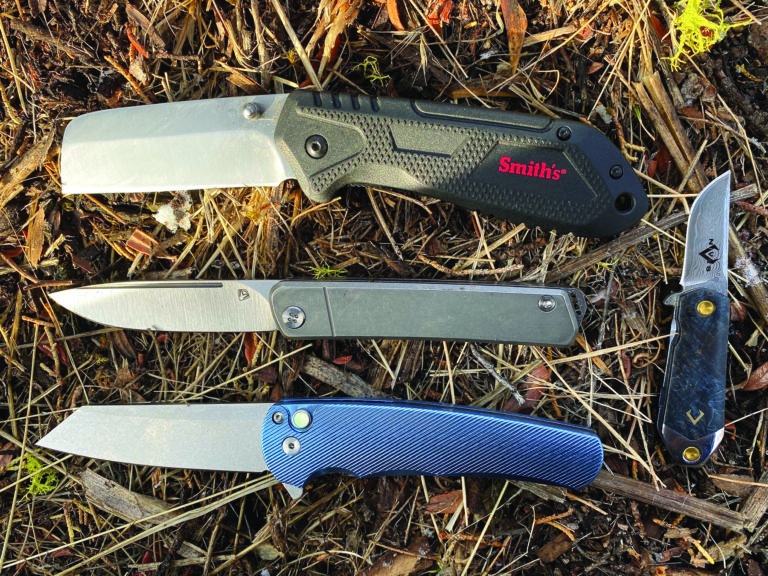
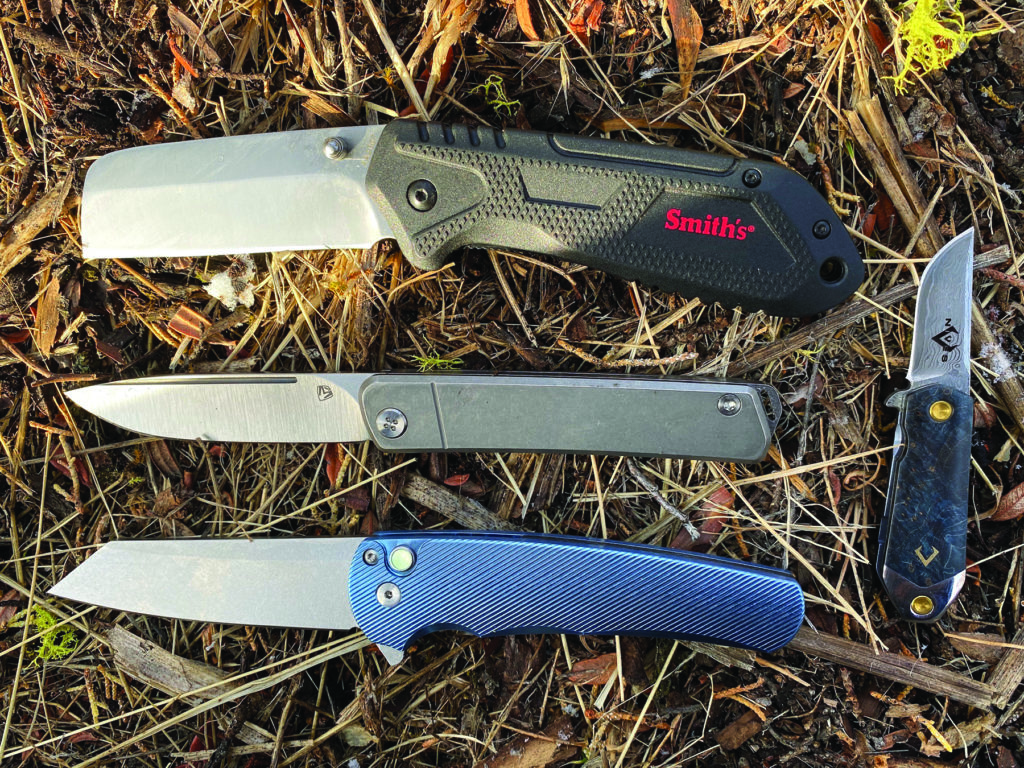
Four of the latest in EDC knives, counterclockwise from right: V Nives Killabite, Pro-Tech Knives Malibu Wharncliffe, Medford Knife & Tool Gentleman Jack and Smith’s Edgework-Site Wharncliffe Knife.

SLIM JACK: Medford Knife & Tool Gentleman Jack

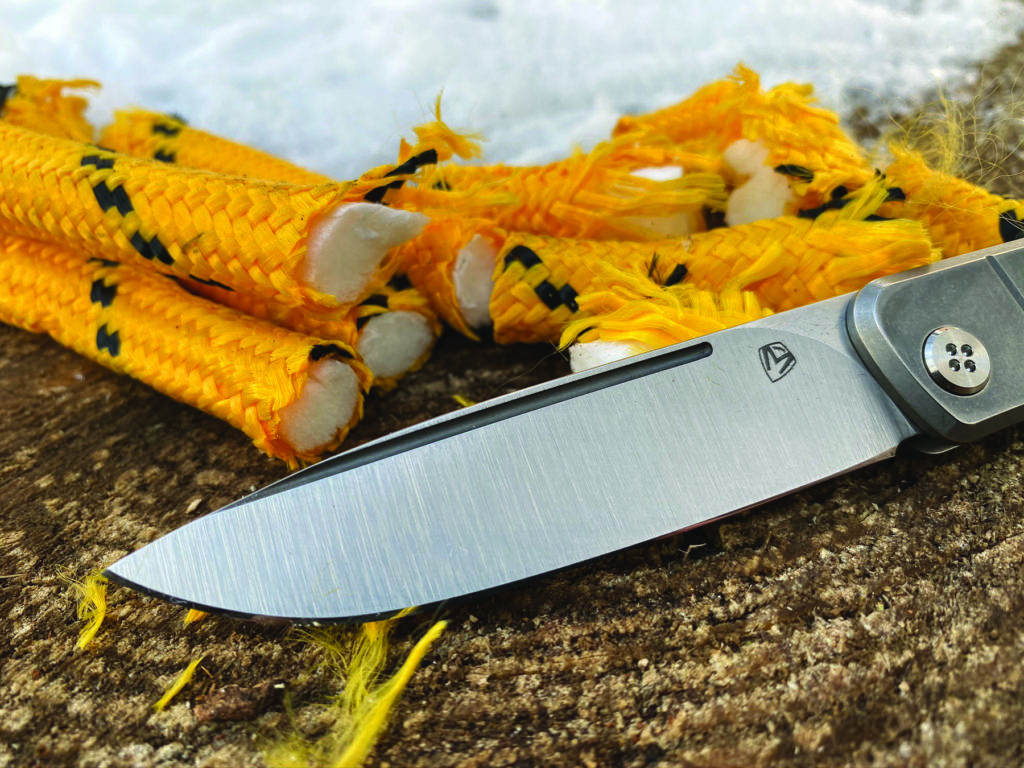
Sleek, slim and lightweight, with a blade long enough to slice a watermelon without getting your hand wet, the Medford Knife & Tool Gentleman Jack is a gentleman’s folder in appearance, in feel and in fact. With little effort, its slim blade excelled at cutting nylon kernmantle rope, and at food preparation and slicing thin peels of bark for tinder. The slender handle looks as if it would be uncomfortable, but the edge was so sharp and the grind so slim that little force was required to cut stuff. Hence, the thin handle was not uncomfortable. The slenderness made it easy to carry—we all hardly knew we had a knife in our pocket when carrying it.

With little effort, the slim blade of the Medford Knife & Tool Gentleman Jack excelled at cutting nylon kernmantle rope.

Most folders in this size range tend to be tactical, with black blades and other features the uninformed consider fearsome. This folder, however, is so nice looking, so polished a piece of pocket jewelry, that it’s unlikely to alarm the clueless, which means you could use it in mixed company without getting weird looks.

SPECS: Medford Knife & Tool Gentleman Jack
Blade Length: 3.1”
Blade Steel: CPM S35V stainless
Blade Width: ¾”
Blade Thickness: .125”
Handle Material: Anodized titanium
Action: Slip joint
Closed Length: 4”
Country of Origin: USA
MSRP: $375


WORKADAY FOLDER: Smith’s Edgework-Site Wharncliffe Knife

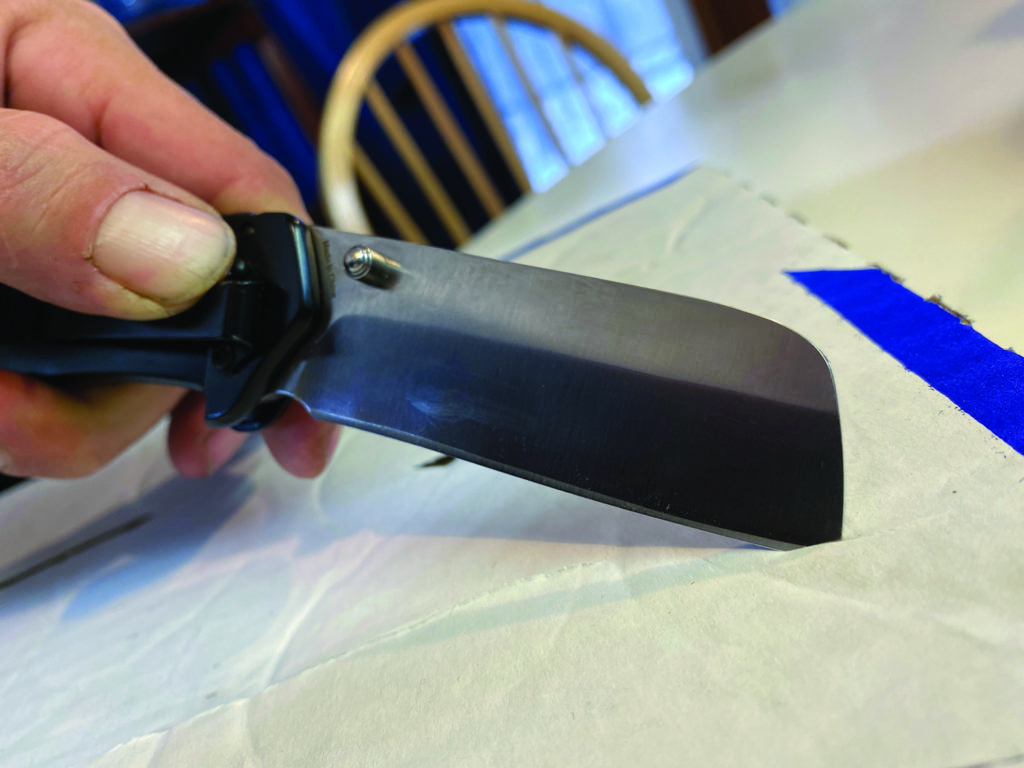
The Smith’s Edgework-Site Wharncliffe Knife is a workaday folder that equals many high-priced limited-production knives in durability and function. Robust, with a very comfortable handle and a good edge grind, it was our preferred blade for getting up some wood for a fire. Press cuts with modest effort cut deep into, and through, wrist-thick pine branches. In fact, it was the most effective of all the review knives at cutting wood for the fire. Shaving bark and curls for tinder was a piece of cake.

According to the author, the Smith’s Wharncliffe is a workaday folder that equals many high-priced limited production knives in durability and function.
 

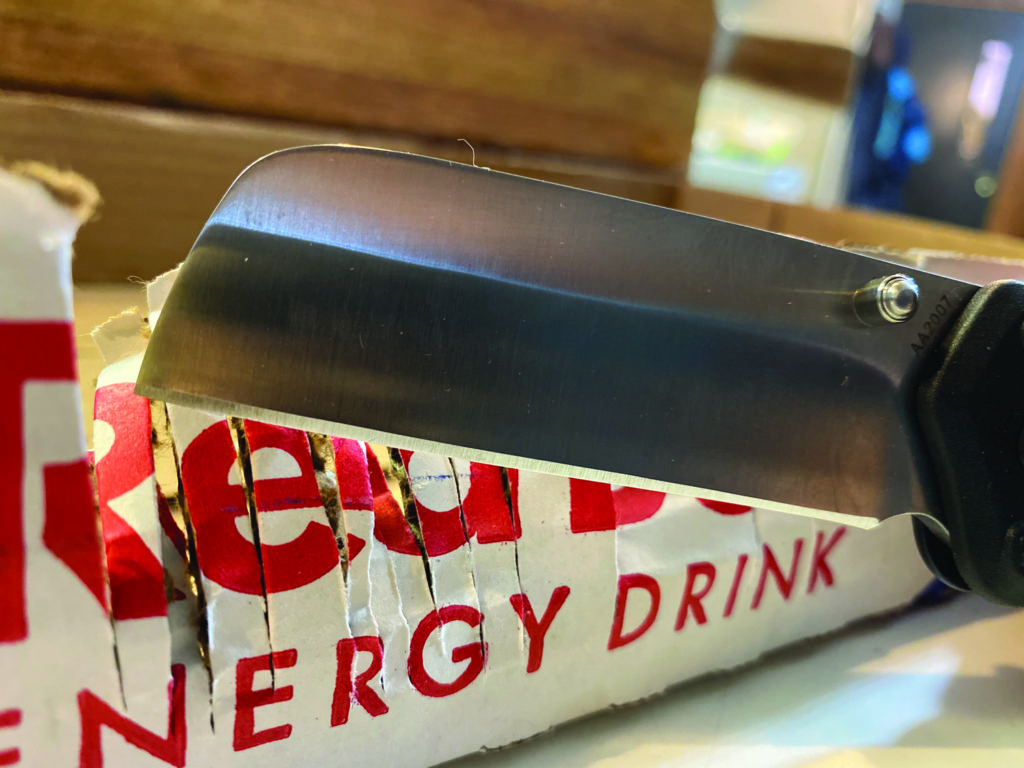
I am not a fan of wharncliffe blades, but the long straight edge and overall cutting efficiency might make me a convert. The edge was very welcome when cutting nylon rope laid across a tree stump, and cutting cardboard boxes into strips. Did I mention the handle? Clearly it is designed by someone who understands hard work, and for someone who must do a day’s work. This is a very good tool and, for the price, a great value.

The edge of the Smith’s Wharncliffe was very welcome when cutting nylon rope laid across a tree stump, and cutting cardboard boxes into strips.


SPECS: Smith’s Edgework-Site Wharncliffe Knife
Blade Length: 2.95”
Blade Steel: 400 series stainless
Blade Pattern: Wharncliffe
BLADE OPENER: Thumb stud
Handle: Glass-filled textured synthetic w/pocket clip
Lock: Framelock
Closed length: 4”
MSRP: $24.99


ROCKETKNIFE: Pro-Tech Malibu Wharncliffe

The Pro-Tech Knives Malibu Wharncliffe is handsome, modern in appearance and detail, and resembles a 21st-century knife designed to be carried by an astronaut. In fact, the knife looks a little like a rocket—and has a high-tech lock to boot.

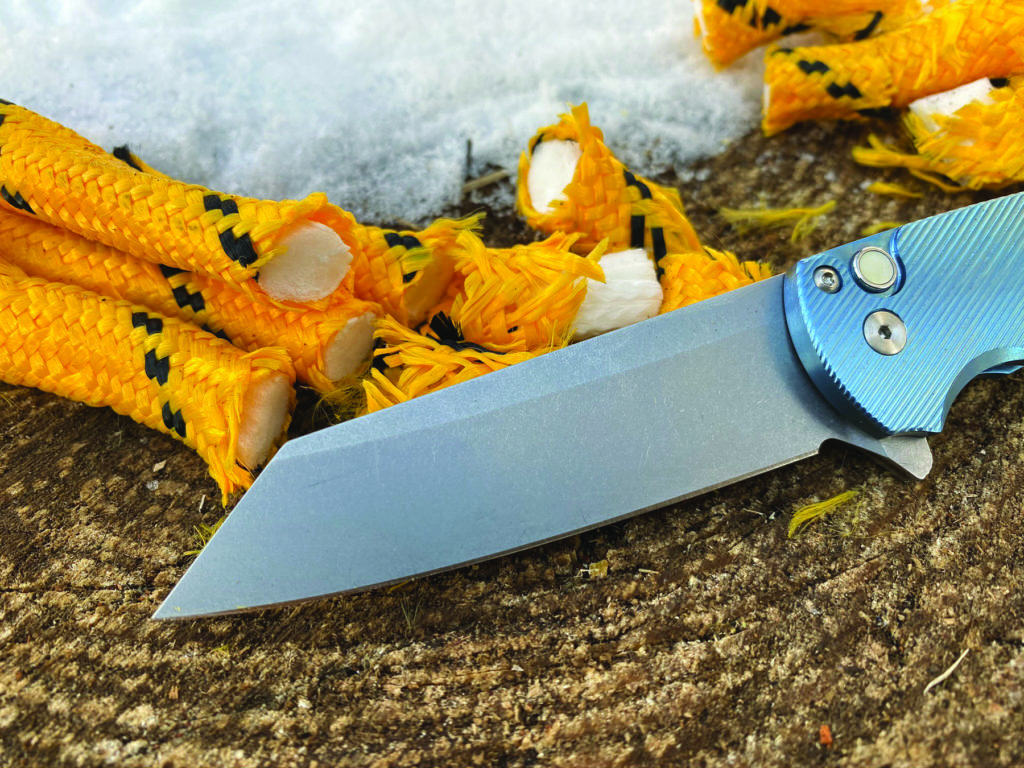
The Pro-Tech Malibu Wharncliffe easily and cleanly crunched through nylon rope and kept its edge cutting cardboard.

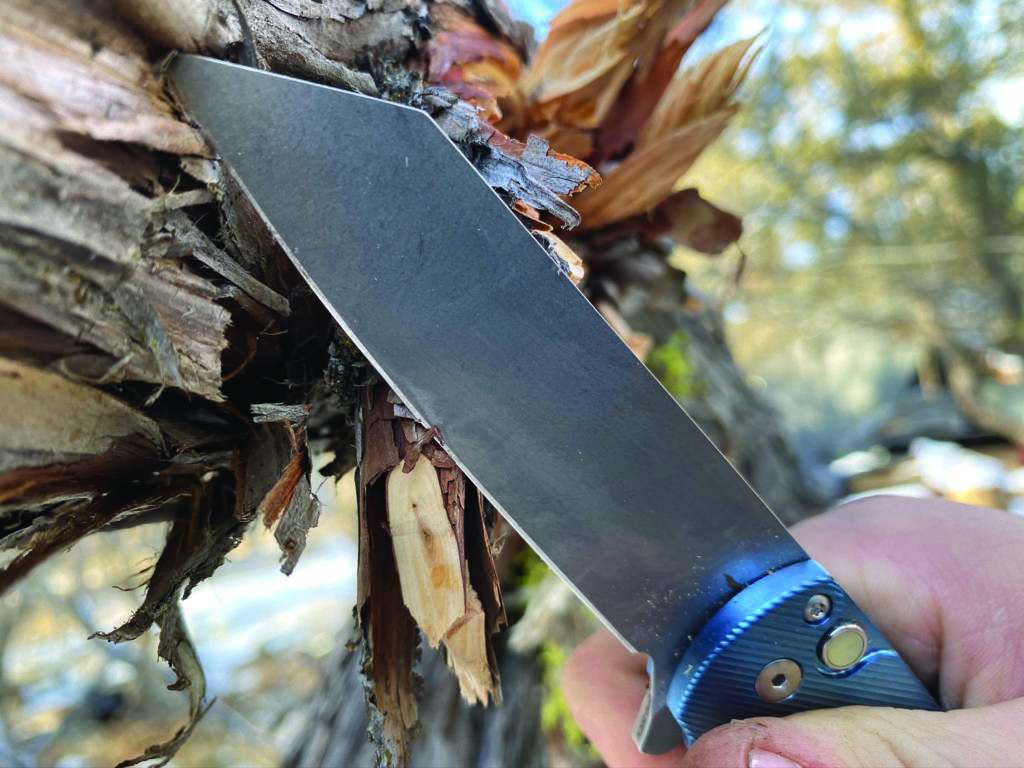
It also performs well. The overall blade design with its flat grind, fine edge and up-tipped point was terrifically efficient at all slicing tasks. At first glance I thought the point design might inhibit penetration, and it did. But something in the geometry that eludes me made it very efficient at all cutting and slicing tasks. It easily and cleanly crunched through nylon rope, kept its edge cutting cardboard, and was just the thing for slicing rose hips for tea. It did very delicate cuts cleanly and with precision. With its modestly sized blade, brilliant blue handle and overall polished appearance, it qualifies as a large gentleman’s folder, albeit one with more function than the usual run of that type of knife.

Something in the geometry that eluded the author made the Pro-Tech Malibu Wharncliffe very efficient at all cutting and slicing tasks. He uses it here to collect pine sap to help start a fire.

SPECS: Pro-Tech Knives Malibu Wharncliffe
Blade Length: 3.25”
Blade Steel: CPM 20CV stainless
Blade Thickness: .125”
Blade Style: Modified wharncliffe
Blade Finish: Stonewash
Blade Grind: Flat
Blade Opener: Flipper
Lock: Plunge lock
Closed length: 4.25”
Country of Origin: USA
MSRP: $270


MUST-WORK MINI: V Knives Killabite

Can we say the V Nives Killabite is cute?

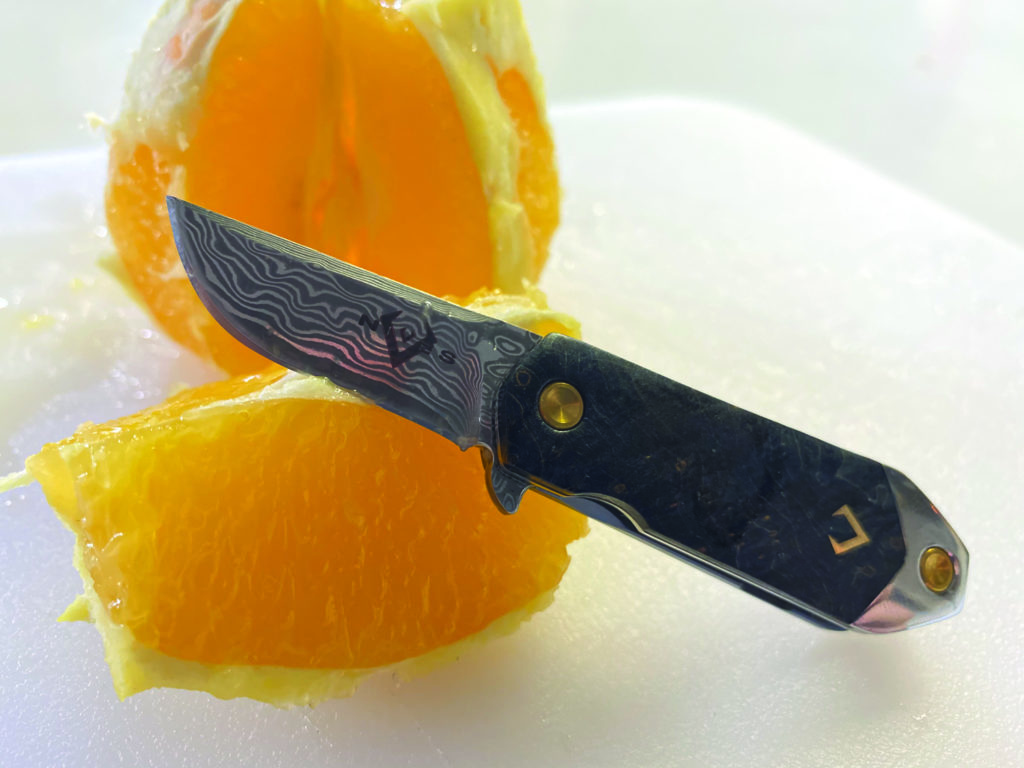
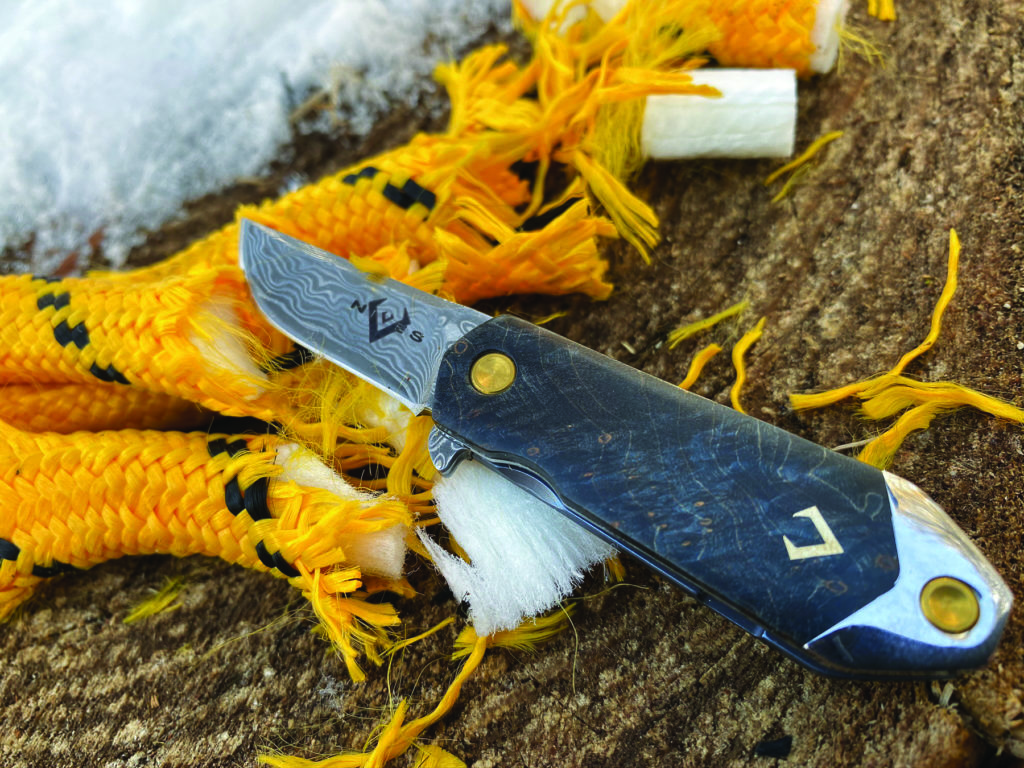
I don’t usually use that word when discussing knives, but, truth be told, this little puppy is cute. High-tech, too. The damascus blade, carbon fiber handle and framelock all say dress tactical folder. Miniature, yeah, but still pretty tactical.

Don’t let little knives fool you, though—they are useful. I’ve been beating the drum for tiny blades for years ever since I learned a little bit about flintknapping and worked with some experimental archaeologists. (One of the latter was the lithic expert who consulted on Otzi the Iceman, the 5,000-year-old mummy discovered in the Alps who had a complete tool kit with him, including his flint knife with a 1.5-inch blade.) I’ve taught survival classes during which I use a folder with a 2-inch blade to make a tool kit consisting of a spear, bow and arrows, haft for a stone axe, and more. I wouldn’t hesitate to do the same with the Killabite.

The V Nives Killabite peeled and sectioned an orange with aplomb. The handle has a nice curved profile and is comfortable as such a small handle can be, comfortable enough for the kind of work that you would do with the knife.

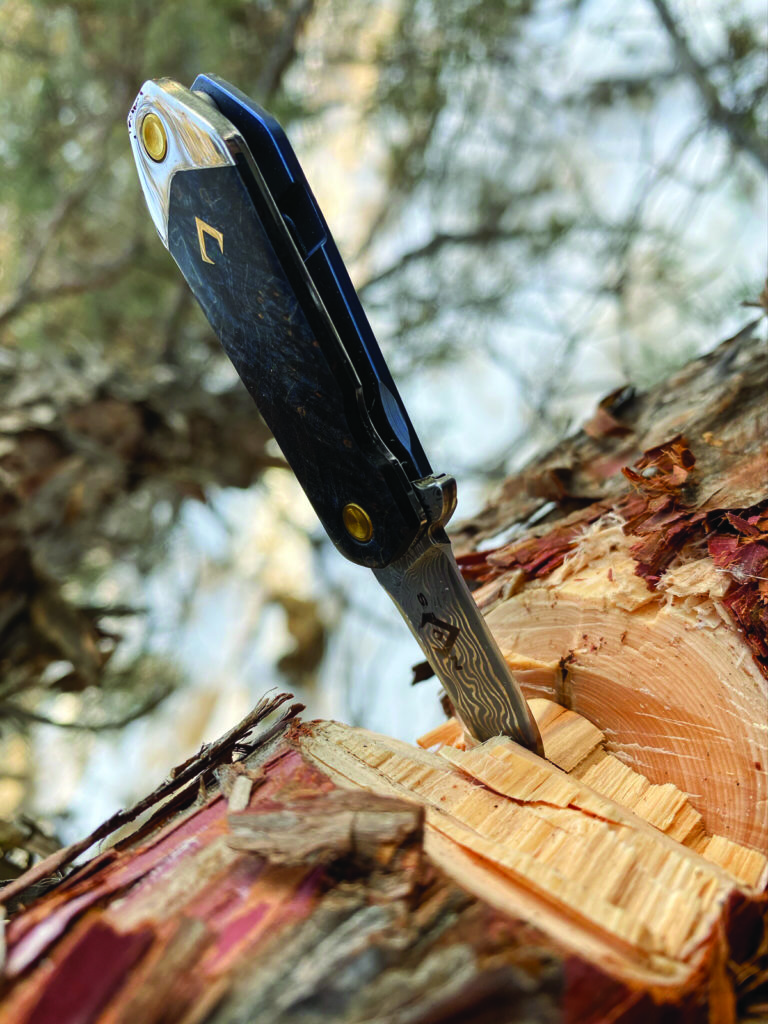
The trailing point design and smooth edge with no ricasso or other fripperies makes the most of the short blade. The edge is just a tad thicker than I prefer, which makes it strong at the cost of a little slicing ability, but allowed it to bite deep into wrist-thick pine with no trouble. For long term use I might reprofile the edge—or maybe not. I like the notion of such a small blade being so strong.

The V Nives Killabite vanquished pine pieces for firewood. It bit deep into wrist-thick pine with no trouble.

The handle has a nice curved profile and is comfortable as such a small handle can be, comfortable enough for the kind of work that you would do with the knife. Keep in mind, too, a surgeon’s scalpel is only 1.5 inches long. Must work gets done with small blades. A keeper this one is.

The trailing point design and smooth edge with no ricasso or other fripperies makes the most of the Killabite’s short blade.

SPECS: V Nives Killabite
Blade Length: 1.4”
Blade Steel: Stainless damascus
Blade Thickness: .097”
Blade Style: Trailing Point
Blade Opener: Flipper
Blade Grind: Flat
Handle Material: Carbon fiber
Handle Thickness: .35”
Pocket Clip: Tip-up
Lock: Framelock
Weight: 1 oz.
Closed Length: 2.25”
Countries of Origin: USA and offshore
MSRP: $95.95

ONLY YOU KNOW

Which would be the best EDC? There’s no such thing, really. The right question is, which is the best EDC for you?

Only you will know the answer.


Knife Performance: Is Steel Type Really the Most Important?

It’s easy to use steel type as shorthand for quality, but that’s only one factor when it comes to the performance of a knife. Heat treating, Rockwell hardness and geometry also matter.


Sure, it’s all about the steel. Blade steel makes the knife world go ’round, right? Well, further analysis just might reveal a few additional elements that weigh in on the sharpness of a knife blade, and custom knifemakers already account for these factors when they complete their stock in trade.

In Search of “True Sharpness”

Considering heat treat, edge geometry, handle ergonomics, Rockwell hardness and other contributors, the comprehensive analysis of “true sharpness” is an eye-opening experience.

“Assume that all knives are sharp when you get them,” said maker Jerry Hossom. “The question is more about what you want to cut, and is the edge geometry and ­finish one that will do the work you want done. For example, a sharp but coarse edge will not hold up well with hard blade materials.”

Frankly, the ingredients are intertwined, and the path to true sharpness makes frequent stops along the way.

Experience in making and cutting with various materials and knife designs brings knowledge of the process and the expected results.

Physical Features

Best knife steels
ABS master smith Jim Crowell has won a number of cutting competitions through the years, including the first ABS/BLADE Show World Championship Cutting Competition in 2003. Here is the knife he used and his championship belt buckle. (Jim Crowell images)

“I can and will only speak from personal experience,” commented ABS master smith Jim Crowell, winner of numerous cutting competitions through the years, including the fi­rst ABS/BLADE Show World Championship Cutting Competition in 2003. “Since it would be difficult if not impossible to tell by looking, I would consider the reputation of the maker and his or her history.

“Not knowing who made the knife, I would consider the following: Visualize the geometry and edge treatment. The intangible here is the heat treat. If I’m looking at a knife I know nothing about, the physical features that herald sharpness and performance are blade grind/geometry and the edge. If the blade is ground from the spine to the cutting edge, it achieves the smoothest transition from ‘zero’ at the cutting edge to the full thickness of the spine.

“In my opinion, a flat-ground blade with a convex edge is the best geometry. This is the smoothest transition from cutting edge to spine irrespective of spine thickness or width.”

Steel Type & Blade Performance

Best knife blade steels
“Buying a knife from a reputable maker should be simple,” Tim Britton noted. “My questions would be steel type, Rockwell hardness, and what kinds of tools the maker has in their shop.” Tim’s gentleman’s slippy boasts a 2.5-inch blade of BG-42 stainless steel. Closed length: 3.25 inches. (Eric Eggly/PointSeven image)

Of course, a quick nod to the steel has to ­figure in. Without the steel itself, nothing else matters.

“How often have I heard that a knife holds an edge very well but is too difficult to sharpen?” Hossom offered. “They are opposite sides of the same coin. Wear resistance in cutting is the same attribute as wear resistance in sharpening, and again, it depends on the intended use.”

Discussion also surrounds standard versus premium steels, given that either is properly prepared.

“So-called standard steels have their place, but I’m not sure where,” explained maker Tim Britton. “I started with O1 in 1972 and Blackie Collins talked me into using 440C. Peer pressure… Ted Dowell, Frank Centofante, Jimmy Lile and Bob Dozier had settled on D2. New stuff like S35VN leaves them all in the dust. It takes twice as many belts to grind the blade and is max stain resistant. I’ve had great field reports from guides who dress a lot of deer, and one who is a pest control hunter and kills a lot of hogs and nutria.”

According to Crowell, everyone probably agrees that quality steel is a must.

“Some steels lend themselves to cutlery more so than others,” he reasoned. “There are some ‘exotic’ steels that truly outperform, but they are usually more expensive and harder to work with. Then, there are inexpensive steels used in cheap manufactured knives sold in bargain stores.”

Crowell looks at the long-time rub between carbon and stainless steels and likes the “10” series spring steels, 5160, O1, W2 and L6, among others. He prefers steels with 75 percentage points of carbon or more, though 5160 with 60 points of carbon is workable as well.

Rockwell Hardness

For some makers, Rockwell hardness sets the bar in potential sharpness for knife blades. Other factors are important but the scale tells the tale.

“Rockwell hardness has a huge influence on how sharp you can get a knife and how it will hold an edge,” asserted maker Murray Carter. “There may be a rebuttal out there, but I believe it is a universal truth. If hardness is related to how sharp you can get the blade and how it will hold an edge, the element of carbon is responsible for the hardness you can achieve.”

Hardness is forever linked to heat treating. Blades that are not heat treated properly just won’t stay sharp—and they are likely to fail in other performance metrics as well. Game over!

Heat Treating

Best blade steel for knives
“Unless it is heat treated properly, a steel is an undefined mass of metal with uncertain performance qualities,” custom knifemaker Jerry Hossom pointed out. “In fairness, it should not even be labeled as a specific type of steel because such a label implies proper heat treatment.” The blade material on Jerry’s fighter is the
high-performance CPM 3V carbon steel. (Eric Eggly/PointSeven image)

Proclaimed Britton, “Heat treating is critically important for any steel.”

Added Hossom, “Unless it is heat treated properly, a steel is an undefined mass of metal with uncertain performance qualities. In fairness, it should not even be labeled as a specific type of steel because such a label implies proper heat treatment. I have my blades professionally heat treated by Paul Bos Heat Treating because I simply can’t do it as well as he can, especially with high alloy, high performance grades of steel.”

Carter echoed that sentiment.

“Heat treating is so important,” he emphasized. “All our blades are quenched in water, while some quench theirs in oil. Others are just air hardened. Water quenching is severe, an extreme form, and the only one harder is brine quenching.”

Geometry

Crowell ups the ante with the bold statement, “My strong opinion is that heat treat and geometry are more important to the performance of a knife than the specific type of steel. ­The best steel in the world would not fare well if the heat treat was bad and the geometry poor.”

Stressing edge geometry, Crowell further advises, “Edge geometry is particularly important. If a maker tests his work and is confident about the heat treat but the knife is not cutting well, the edge can be adjusted or ‘rolled’ to a different shape.”

What Factor is the Most Important?

So perhaps the most important takeaway from a discussion on sharpness is the advice the pros give to prospective buyers. Assessing the sharpness and relative quality of the future cutting experience involves a discerning eye and some attention to detail. What advice do custom knifemakers over the buying public?

“I would start by looking at the knife and seeing if the geometry looked good and how well made the knife appeared to be,” Crowell advised. “­That would show the maker was paying attention to detail and would be a positive sign to me. I would ask what kind of steel was used and how it was heat treated, and by whom. ­There are several very good heat treaters out there. If the maker did the heat treat, I would ask how—oven, forge, kiln, torch? I would want to know if the maker tests his work and if he has chopped, whittled, and cut stuff.”

The inquiry is basic, Britton says, and the maker should be forthcoming with reasonable responses.

“Buying a knife from a reputable maker should be simple,” he noted. “My questions would be steel type, Rockwell hardness, and what kinds of tools the maker has in his shop. I’m a dinosaur. I won’t buy a production knife that was made by machines in batches of 20 or 30. I’m a proud member of the ABS and don’t know any steel beaters who mass produce any design.”

The sharpness of a knife blade goes well beyond the steel. The combination of steel, hardness, heat treat, edge geometry and handle ergonomics feeds the finished product. However, these are only as supportive of the knife’s function as the skill set of the maker’s hand in action.

3 Tips for Introducing Kids to Knives

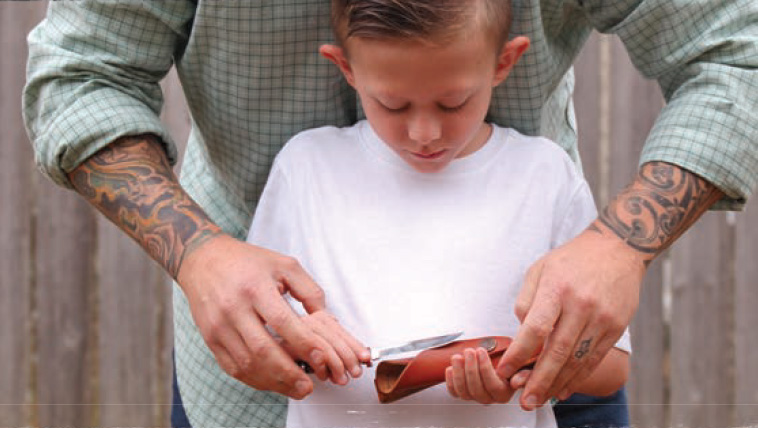
Introducing kids to knives is a good way to teach safety and start a lifelong interest in blades. Here are three rules to instill in youth right off the bat.

RULE 1: “My knife is a tool, not a toy.”

Removing the curiosity through knowledge and experience is incredibly effective for creating a safe environment for a kid.

Just because the knife is a Buck fixed blade does not make it any more dangerous than a steak knife in a kitchen drawer. Though innocent, a curious boy who has acquired a steak knife to play with is far more dangerous than a boy who has earned the privilege of owning a Buck knife as a tool, in my opinion.

Has anyone ever heard the phrase “curiosity killed the cat?”

RULE 2: “Look around me.”

Granted, this is a vague rule but it stems from so many important aspects of sharing the world with other people.

My goal is to teach him not only about his personal safety but the safety of others as the highest priority. Hurting yourself is one thing but hurting someone else in ignorance is unacceptable.

Therefore, before he uses his knife, he must reflect on his surroundings and ask himself if it is safe through a form of risk mitigation. Risk mitigation fundamentally implies safety and will aid his ability to foresee unsafe situations as he grows.

RULE 3: “Put it away before moving.”

Have you ever misplaced your car keys and wound up driving somewhere in a rush because of the time wasted searching for them? I am guilty of it. Driving in a rush increases your risk of injury and, more importantly, the risk of injuring others. Roughly 37,000 deaths are attributed to vehicle accidents each year. I wonder how many of those deaths were because of people in a rush to get somewhere?

Practicing a consistent pattern of safe behavior has a butterfly effect. Getting in a car accident because you were in a rush is no excuse. The same concept applies to my son, and if he is taught that he is accountable for his pattern of behavior at this age, he will likely grow into an adult unwilling to sacrifice the safety of others because of a personal breach in consistent safe behavior.

Rebooting Collections Works Wonders

Rebooting collections works wonders. OK, so not everyone does it, but many who have done it one or more times seem to enjoy their collecting more.

Chris Nolen has successfully rebooted his knife collection several times since he started collecting. He began in his pre-teens, fueling his cutlery appetite by mowing lawns, and he even wrote a term paper on hunting knives.

Rebooting collections and Chris Nolan
Rebooting collections has paid dividends for Chris Nolen, here with wife Linda and their bowie knife collection.

“I was married at 24 and started collecting handmade hunting knives. Most were stag drop points or skinners,” Chris recalls. “I met a great local maker named Jerry Berry of Natchitoches, Louisiana, who got me interested in not just the handles, but the steel in the blades. Of course, I would buy BLADE® and other knife magazines, and I would always find myself looking for big bowies.

“One day I was sitting at my desk and drew out a large, sort of re-curved, stag-handled bowie. I mailed it to Jerry and realized it was time to reboot my collection of maybe 40 knives. And reboot I did! I sold most of the old hunters to make money for my new passion for large bowies.” Nolen is an avid collector of fine bowies to this day and is as enthusiastic as ever.

J.T. Oldham is a long-time folder collector of the modern tactical type and has rebooted his collection on occasion.

“I was a regular customer of the House of Blades in Fort Worth, Texas, where I found many great knives, and also bought up all of the back issues of BLADE I could lay my hands on,” Oldham states. “Production knives were just a way to whet my appetite, as I soon realized that what I wanted to collect was custom knives—and those knives had to have damascus steel.”

As a result, J.T. rebooted and started collecting upscale custom folders—and does to this day.

“At the ICCE [International Custom Cutlery Exposition] show in Kansas City last year, I bought a knife from my No. 1 knife hero, Ralph Turnbull. He was the knifemaker who really started it all for me. I remember looking on his website and in the pages of BLADE Magazine and thinking, ‘If I could only someday own one of Ralph’s knives I would really be a true collector.’”

Since retiring, however, Oldham has tempered his budget a bit. “I no longer have the disposable liquid capital I once enjoyed, so my purchases are now somewhat limited,” he lamented. “However, I follow the custom knife industry with the same interest that I focus on my retirement investments.”

Conversely, rebooting collections is something Kevin Jones has never tried.

“My preference for knives hasn’t changed over the 15 years I’ve been collecting,” Kevin relates. “I started out collecting American Bladesmith Society hunting knives and bowies, and that’s still what interests me. I consider myself a custom knife collector and investor. I’ve found to be successful on the investor side it helps to limit your area of interest so as to become very knowledgeable on both the knives—and the particular knife market—for the knives you collect.”

To REBOOT or NOT to REBOOT?

Why should you consider the concept of rebooting collections?

“Many collectors end up rebooting collections early on as a result of buying their first knives on impulse prior to them acquiring the knowledge and exposure to determine what type and style of knives are going to hold their interest long term,” Jones observes.

Before rebooting, you need to answer questions concerning not only your preferences and current status, but outside realities as well.

Rebooting collections and Kevin Jones.
Rebooting collections is not for everyone. Kevin Jones has collected ABS hunting knives and bowies and nothing but for 15 years, and has no plans to reboot anytime soon.

“I guess one of the first things to consider is, are you really ready and willing to reboot your collection and take it in an entirely new direction? Has your perspective or your interest changed? Is this an artistic response or a reaction to market trends? For me, a complete reboot means to liquidate your current collection and re-invest in another direction,” Oldham notes. “Are you no longer happy with your knives? Has there been a downturn which has you concerned your collection has lost value? Are you eager to participate in the latest trend?”

Rebooting collections also raises questions as to whether you should sell your current knife collection to finance a new one.

“I feel that’s up to the individual collector,” Jones opines. “However, many need to sell knives in their current collection to help finance them rebooting. I always recommend that while selling an entire collection through a purveyor or auction may be quicker, selling or liquidating piecemeal via a variety of methods will result in a better return.”

Nolen offers a word of caution he discovered after selling off his first collection to reboot.

“Back then I put ads on internet boards and in the newspaper,” he recalls. “I see some knives on eBay that go for hundreds of dollars now that I only paid six to 12 dollars for back in the ’60s and ’70s. I wish now I had most of those back!”

BEST WAYS to LIQUIDATE

What is the best way to liquidate knives if you do decide to sell off your current collection to finance your new one?

“I feel it’s best to use a variety of methods in selling custom knives,” Jones advises, “including contacting other collectors who are interested in the type knives you are selling, selling some on the better knife purveyor sites, and I’ve been very successful selling knives on my ‘collector website.’ It’s very important to have good photos of your knives listed on the internet. You are basically putting your knives out there for the world to see.”

Rebooting collections and J.T. Hill.
Rebooting collections began for J.T. Oldham when he bought a folder from his hero, custom knifemaker Ralph Turnbull, maker of this damascus linerlock.

“I, for one, would never consider using eBay. Not for my collection,” Oldham states. “And there are just too many trolls on the knife forums! I know that there are decent knife forums, but I simply would not regard that as the right place to offer my knives. I would work one-on-one with certain interested parties—and those individuals may be found on forums. This is all said from my perspective and the knowledge I have of certain individuals with whom I have dealt with in the past. I have a rather large and reliable network of purveyors and collectors whom I trust. A good resource for purveyors is BLADE and the KNIVES annual for a comprehensive listing of those who are associated with the knife community.”

Studying and researching the professionals who deal in knife sales, and then determining who among them are the most knowledgeable and reliable for advice is a must.

“Your purveyor of choice is your best ally in determining what would be in your best interest,” Oldham continues. “If this reboot is purely for financial or investment purposes, no one knows the value of knives better than those who actually determine the value of knives on a day-to-day basis. While they may be able to provide a rough ballpark estimate for your collection, values are subject to change. Be prepared to be presented with values which may be far less than you expected or you’re willing to accept. Be willing to make compromises in order to achieve your goal and obtain what you are truly after, as in any business deal.”

Also keep in mind that when selling to purveyors it is important to remember they are in the business to make money, so they must have a profit margin built into the knives they buy.

IS IT TIME?

As you can see from the comments of our seasoned aficionados, collectors are a distinctly different lot—but that’s what makes the whole avocation of cutlery collecting interesting. As human beings we all have a level of curiosity to see what’s on the other side of the door. Once we have opened it we can either leave or explore. Keep in mind a reboot does not have to be an overnight decision. You can always wade into another genre or style without a full commitment. Whether you wish to upgrade your collection, totally switch gears or seek an investment, there are fresh new knives out there to satisfy any desire.

4 AWESOME LINERLOCK EDC KNIVES

When it comes to EDC folder locks, the linerlock is hard to beat

Few folding knife locks perform as well for everyday carry (EDC) as the linerlock. Constructed properly, the linerlock is easy to open and, especially on a knife that includes a blade opener and a pocket clip, is a snap to carry, deploy, open and close, all with one hand—an EDC hallmark.

CRKT Knives CEO

Designed by award-winning knifemaker Richard Rogers, the CEO Bamboo linerlock folder is one of the more slender knives from CRKT. It’s an unobtrusive folder that won’t weigh you down and is ideal for dress suit carry. In fact, it can carry attached to a shirt pocket a la a ballpoint pen. It blends well with the office crowd, as it is a low profile design that will not raise eyebrows.

Just over 3 inches long, the blade is 8Cr13MoV stainless steel for a good balance of edge holding and resharpening ease. The trailing-point blade opens quickly and efficiently via a thumb stud. The pivot’s Ikoma Korth Bearing System (IKBS) enhances smooth blade action. A saber-style primary grind combined with a full-length swedge grind gives the blade a bit of attitude.

Award-winning knifemaker Richard Rogers designed the CEO Bamboo from CRKT to be the quintessential office carry folder. It is tailored for such daily uses as trimming stray threads from clothing.

The handle consists of two stainless steel liners and glass-reinforced nylon scales. The scales are molded in a color and shape/texture to mimic bamboo. The handle’s squared off butt resembles the classic doctor’s knife/pillbuster pocketknife pattern. A deep carry, fold-over clip allows the knife to ride low in a pants or shirt pocket, or inside a sport coat breast pocket.

The linerlock engages firmly and secures the blade open with no play. Simply hit the thumb stud and the blade pops open fast to the locked position thanks to the IKBS. Firmly push the edge of the exposed portion of the lock spring, and the blade unlocks and rotates closed as easily as it opens. I like how simple it is to open and close the blade, especially for such a slender folder. Many such folders do not manipulate easily due to their size.

Opening mail is one of the many tasks the slender blade of the CRKT CEO Bamboo does well.

And for a slender folder, the CEO has plenty of bite. The slim blade slits open envelopes and packages effortlessly. I like how it blends in and does its thing with no unnecessary fanfare. The only negative about the CEO is also a positive—the deep carry clip. The fold-over design creates a hot spot when you grip the handle but carries the closed folder deep in the pocket, which is nice. Given that the knife isn’t made for prolonged, heavy duty use, I find the clip to be a good thing. Made in China, the CEO has a manufacturer’s suggested retail price (MSRP) of $54.99. It is a great value.

EXCELLENT SLICER: Citadel Kampot

The Citadel Kampot linerlock folder sports a 3-inch drop point blade of Bohler N690 stainless steel. N690 is a mid-grade stainless with great edge holding properties but also is rather easy to resharpen. It is a fine alternative to today’s “super steels.” The ergonomic handle has double stainless steel liners and stabilized blue beech scales. Red liners add a subtle pop of color. The scales are nicely rounded and contoured so the folder rests in your grip comfortably with no hot spots. An integrated guard prevents your hand from sliding onto the blade edge and, together with a bird’s beak butt, keeps your hand on the handle.

The linerlock secures tightly with zero blade play. Five large notches in the end of the liner aid thumb traction in unlocking the blade. The Kampot has a nail nick opener instead of a thumb stud, hole, disc or flipper, so it is the only knife of the test bunch that requires two hands to open, though it does close with one hand like the others. Neither does it have a clip.

The Citadel Kampot (left) easily rivals most any working folder with its drop point blade. The high polish of the steel makes it easy to clean as well.

At 4.5 inches closed the Kampot is rather large, which might make it a bit uncomfortable for pocket carry. A braided leather lanyard attached to the handle permits you to fish the folder easily from a pocket. The knife is good looking, with the blade, liners and handle screws exhibiting a high polish.

The flat-ground blade is an excellent slicer. However, out of the box it was not as sharp as I prefer. I gave it a few light strokes on a ceramic rod followed by stropping and that enhanced its bite. The grip is very comfortable and a great alternative to folders with flat handle profiles. It is really nice looking. The beech scales differ slightly in color. The test model has streaks of tan and blue-green as well. It reminds me of how brass and copper patina when exposed to the elements over time and get a blueish green hue. The Kampot is a great alternative if you’re not into the all black and edgy tactical folder look. The blade pivot is not exposed, so the pivot tension is not adjustable. This cleans up the look, though I know some knife guys like to adjust the pivot tension to their own liking.

Citadel’s Kampot folder is a bit rough around the edges but remains a very efficient cutting tool. The flat-ground blade slices through a variety of materials with gusto.

A negative is the knife’s size, though for some that is a good thing. The lack of a clip is compounded by the lack of a belt sheath. The Kampot needs one. For me, the knife is too big to carry in the pocket, so belt carry would be the best option. On the other hand, ready-made belt sheaths are rather easy to find (a good source is Smoky Mountain Knife Works at smkw.com/knife-accessories/sheaths). Made in Cambodia, the Kampot has an MSRP of $205. 

CHECKS ’EM ALL: Puma SGB

The Mach 1, along with the Sonic, are linerlock flipper folders Puma SGB introduced in 2020. They are identical, sharing the same handle materials/design and blade material. The only difference is the Sonic features a clip point blade and the Mach 1 has a modified drop point. With its hollow ground main bevel and generous, sweeping belly, the 3.6-inch blade in the latter pattern accomplishes a wide variety of cutting tasks. It is a large folder ideal for the ample knife jobs you have, indoors or out.

The German 1.4116 stainless steel holds an edge well and is fairly easy to resharpen. It is a steel found mainly in kitchen knives and is highly stain resistant. It isn’t commonly used in the knife industry, and expect performance to be equivalent to 440A or even 420HC stainless. Its lower overall production costs are passed on to you in the form of a great value.

A flipper tab offers quick and effortless one-hand deployment. The swift, smooth action is aided by a pair of ceramic caged ball bearings in the pivot. The handle features nice carbon fiber scales, giving the Mach 1 a modern, futuristic appearance—it is eye catching the way the light reflects off the strands in the weave pattern. The chamfered edges of the carbon fiber are textured to aid grip retention. A deep carry, fold-over pocket clip totes the closed folder blade tip down in the pocket, deep enough to conceal the knife yet hold it within easy reach.

The Puma SGB Mach 1 matches 1.4116 stainless steel with a sturdy handle sporting carbon fiber scales and stainless steel liners. The blade rides on ceramic bearings for smooth opening and closing.

The Mach 1 checks all the boxes: great fit and finish, silky smooth blade action, and super sharp and ready to work right out of the box. The drop point blade adapts to most any task. The edge has a nice bite and easily sinks into the material being cut. As wide as the handle is, you can get a really good grip that instills confidence. The open-frame handle promotes ease of cleaning. Country of  origin: China. MSRP: $149.99. For the money, it’s a solid value in features and performance.

The hollow grind of the Puma SGB Mach 1’s drop point blade (middle left) helps provide plenty of bite for tough tasks such as cutting thick rubber hose.

NEW LEVEL of CHIC: F24 Nutcracker from Steel Will Knives

Taking EDC folders to a new level of chic, the F24 Nutcracker from Steel Will Knives features bold styling with a sheepsfoot blade and an ergonomic handle. The 3.4-inch blade is Bohler N690 stainless steel. The flat grind is tailored for both stout utility applications and lateral strength. A flipper is integrated for fast opening and is assisted by ceramic bearings, which promote super-smooth action and rapid deployment.

A large finger recess at the pivot allows you to index the G-10 grip, while the “bird’s beak” butt captures your hand. The G-10 has a light 3-D machining pattern that aids purchase. Traction notches at the thumb rest on the spine supply grip to bear down for power cuts. Dual nested stainless steel liners provide a rigid backbone and the nesting feature reduces overall handle thickness. Two large standoffs add style. A smaller standoff at the rear acts as a tie-off point for a lanyard (not included).

Even the pocket clip is nicely done. It’s sculpted, styled titanium that carries the closed folder blade tip up and is secured via one large screw. The clip’s shape mimics the handle’s curvature, and the overlay adds to aesthetics. It’s great to see a company put extra effort and thought into the clip, which looks better than standard stamped clips. It definitely holds the knife securely in the pocket.

The F24-33 Nutcracker has a black stonewashed blade, black liners, standoffs and clip, and a green G-10 handle. At 4.5 inches closed, the  knife is sized just right to handle just about any cutting task. The linerlock secures quite tightly at the lower third of the tang with no blade play. A series of traction notches at the exposed portion of the liner permits the thumb to easily seat and secure itself to unlock the blade. 


HOW LINERLOCKS SHOULD LOCK

Many knife nuts in-the-know have certain preferences to where a brand new linerlock knife’s lock spring should hit on the tang when the blade is locked open. Some prefer it to hit in the lower third of the tang, from the linerlock side. Some prefer it to hit in the middle.

One thing to remember about linerlocks is there is a break-in period for the lock. In other words, as the metal on the end of the lock spring wears to conform with the tang, it is likely that the spring will travel more toward the center of the tang—not a whole lot, just a little. Hence, it is probably best to select a linerlock knife where the spring hits on the lower third so it can compensate some following the break-in period.

— by Dexter Ewing

Above: The test linerlocks exhibit how they wedge the blades open at the tangs, from left: Steel Will Nutcracker, Puma SGB Mach I, Citadel Kampot and CRT CEO Bamboo. On the tang of the blade where the linerlock spring directly hits, the face is machined at an angle so that when the spring moves into place, there is a wedging effect that stops the spring from moving any farther. Titanium is an ideal material for the spring as titanium tends to gall, or stick, to steel, and, of course, the tang is steel.

The Hamon: What, Where, Why and How

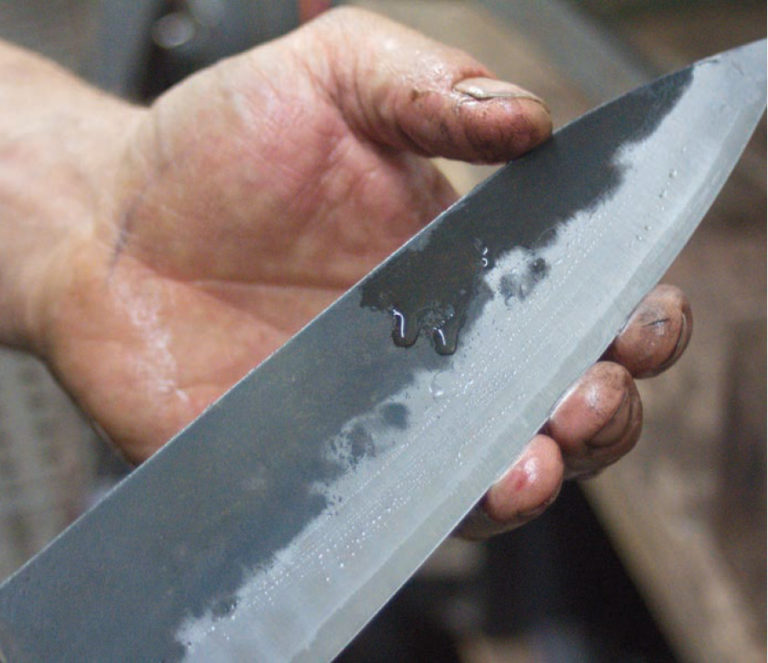
To those who appreciate the tempered steel of a Japanese sword, the hamon is visual evidence of the maker’s effort to produce the finest blade work. In the West, the hamon appears in much the same fashion on Western knives, a blending of culture and craft. Where East meets West on the steel blade, there is the hamon, the graceful temper line.

“From a practical point of view, the hamon is a visible indication of a differentially heat-treated blade,” explained knifemaker Stuart Branson. “In many cases, it’s advantageous to have a harder edge supported by a softer spine in a knife. In this way, you gain the benefits of the good edge retention afforded by the harder edge with the durability of the softer spine region of the blade. In the long and graceful form of the Japanese sword this might seem obvious, but the same is true for Western blades, particularly those hard-use knives or the very popular larger chopping knives.”

According to veteran maker Gary House, the aesthetic effect of the hamon is behind its surge in demand among Western collectors, clearly defining the transition zone between hard edge and soft back.

“The popularity of the hamon on non-Japanese blades today, I believe, is the visual effect of the temper line,” he commented. “The movement and variations of the hamon are very attractive and visually appealing compared to a straight temper line.”

More and more, discriminating knife customers are looking for the hamon on the blades of some of the best-known, iconic Western-style knives.

“‘You will put a little something in the blade, won’t you?’ is a common request these days,” commented Mike Craddock, who started making knives in the 1970s, took a 40-year hiatus, and has come back strong recently. “It doesn’t necessarily make the knife better, but it does look good. I consider it the spirit of the steel.”

Certainly, the hammered and heat-treated steel is expected to be sturdy. However, the quest for the hamon is a classic case of discovering what lies beneath.

“For me, it is the mystery of the hamon,” related bladesmith Erik Fritz. “What shape is it going to take? How much work is it going to entail to bring it out so it can be seen? I think what makes it so special is that each hamon is so different and unique.”


PRODUCING THE HAMON

The hamon is there, lying within the reach of the knifemaker who is willing to take the time to thoroughly rub the steel to enhance the elusive line. For some makers, that effort is standard procedure. To them, a blade without this unmistakable flair of the Orient just comes up short. A hamon on Western knives bridges cultures and demonstrates a willingness on the maker’s part to invest the time and energy required.

“Like many, I have always been enamored of the Japanese sword,” Branson said. “The hamon is integral to its design and construction, and although it isn’t necessary that it be brought out to that degree, polishing these swords has been elevated to an art.”

Branson says he attempts to achieve several goals in the production of the hamon. First, he wants to emulate the beauty of the Japanese blade. In the attempt, he learns to see the intricacies of the pattern, theory of design, and the dedication of the artists that have gone before him.

“Producing a hamon is not just adding clay to a blade and hoping for the best,” he reasoned. “It is understanding the steel being used, the temperatures and times needed to achieve your aim, and the amount and pattern of the clay to produce the hamon you are after, the delicate process of heating the blade properly before the quench and, in the case of water quenching Japanese-style blades, the terror and elation of a successful water quench—the violent transformation of the steel into two forms above and below the hamon line, and the resulting curvature induced. One can understand how the swordsmiths approached their craft with a religious reverence.”


WATER VS. OIL QUENCH

Producing the hamon involves a process of coating the blade with clay and then quenching it in either oil or water. The water quench is more rapid and therefore potentially more catastrophic should a crack or complete break occur.

“I use clay and white crushed stone,” House noted. “A paste of satanite also works well. The clay insulates the blade from heat and will be a thin layer as it comes down toward the edge of the blade.”

Most makers who frequently produce a hamon opt for such tool steels as W1 and W2, and carbon steels such as 1050, 1075, 1084 and 1095. “Simple carbon steels are conducive to the very fast quenching requirements of a clay-coated quench,” Fritz remarked. “This allows the insulating clay to retard the hardening of the coated areas of the blade. High-alloy steels that allow thorough hardening of the blade are not conducive to the creation of a very active hamon. What you get with the high-alloy steels is more of a straight line.

“With W2 I prefer the water quench,” Erik continued. “With 1084 and 1095 I use Parks 50 quenching oil. Any hamon requires an insulating layer of clay to be applied to the spine. The biggest difference in hamon activity is in the quenching medium, such as water or oil. In my experience and opinion, greater hamon activity is achieved through a water quench. If you are going the safe route and using oil, there is less chance of a catastrophic blade failure.”

Branson said he sees fundamental differences in the hamons produced and the effects of the water or oil quench on the steel itself. On Japanese-style blades, the water quench introduces sori, or curvature to the blade. As the water quenches the steel, the uncoated steel cools quickly while the coated spine retains heat, staying expanded longer and causing the blade to curve downward. As the spine cools, the hardened edge begins to curve upward.  Quenching oils are typically made for industrial use and to prevent deformation of the steel as much as possible. Consequently, the blade tends to curve downward and remain so.

When quenching a blade in water, Stuart added, “The hamon tends to be more cloudlike, more diffuse, and to my mind a little more mysterious and poetic. The oil hamon, however, is more literal, more willing to follow the clay pattern and is more defined on its boundaries. However, the ashi, the wispy lines that come off the main patterns, can be very delicate and defined. Control of this can make for a very exciting hamon.”

The investment of both materials and a significant amount of time impact the cost of a blade complete with a hamon. However, for the maker willing to commit the time and the potential buyer, a genuine value is readily apparent.

“You do have extra work in claying the blade,” Craddock said, “and then there are literally hours of hand rubbing to get the aesthetics right. The steel does what it wants to, but there is a process that you go through. The steel offers it if you are willing to go out and get it. To me, the time involved in the hamon, and about 90 percent of the steel blades I make have them, adds about 10 percent to the cost of the knife—but from the standpoint of hours it should probably be double.”


LANGUAGE OF THE BLADE

The hamon brings beauty and satisfaction to the maker and the buyer. Further, it is taking its place among the desired aesthetic effects of Western knives, proving that the world is indeed much smaller when the same language is spoken—in this case, the language of the blade.—BY MIKE HASKEW

What To Look For in a Hamon


Discriminating knife buyers looking for a quality hamon should bear a few things in mind. A hamon can be wavy, undulating or any number of shapes. Whatever the shape, it must be well formed, clear and unbroken. What’s more, according to Don Fogg, it must be possible to describe in an understandable manner using a traditional vocabulary.

Erik Fritz advises that a professionally done hamon will exhibit a sharp demarcation between the hard and soft areas. Watch out for a hamon line that dips too close to the cutting edge. Stuart Branson agrees that if the hamon comes close to or reaches the edge of the blade, then a section of the edge is not hardened properly. Levels of refinement in the hamon involve subjective preferences as they relate to clarity and detail.—BY MIKE HASKEW


How To Obtain a Hamon


For more on producing a hamon, see “How To Clay Temper and Obtain a Beautiful Hamon” by ABS master smith Don Fogg in the book, Spirit of the Sword. To order a copy call 1-855-278-0406 or visit www.shopblade.com and click on “Books & References.”

CAPTION FOR PICTURE AT TOP

For his stag “Ferncliff” model, Lin Rhea employs a wavy, cloud-like hamon on the 9-inch W2 tool steel blade. Overall length: 14 inches. (Chuck Ward photo)


For the latest knives, knife trends, knifemakers, what knives to buy and where, knife legislation, knifemaking instruction, and much more, subscribe to BLADE® Magazine, the World’s No. 1 Knife Publication.

5 Myths About Knife Sharpening

4

Knife sharpening is, on its surface, a simple thing. That hasn’t prevented a few myths from popping up, though. Here are five knife sharpening myths, busted.

Myth: You Need Expensive Knife Sharpening Tools

Fact: Quality knife sharpening stones, sticks, oils, and other gizmos can help quite a bit. However, you can’t buy your way to sharpening success. Technique is 90 percent of it. Humans have been sharpening knives without manufactured products for centuries. How did they do it? They knew how to work an edge.

Here are knife sharpening tips for the uninitiated. All you need are some junky practice knives, a sharpening stone, a Sharpie and some patience to get started.


Myth: Diamond-Infused Knife Sharpening Stones Last Forever

DMT knife sharpener
A DMT Diafold in action. 

Fact: Diamonds might be forever, but knife sharpeners are a different story. Here’s DMT with the answer:

For those that use stones on a daily basis and maintain them properly, the diamond will likely last for a few years. For those that use them less frequently, it’s likely the stone will last from ten to twenty years.

Still, you can’t beat the value of a $40 knife sharpener that gets the job done over several years.


Myth: Using a Sharpening Stone Dry Works Faster Than Using It Wet Because It Removes More Metal

Fact: Don’t confuse friction with progress. Adding a little water or oil to maximizes your effort with every stroke on a knife sharpening stone. Remember, knife sharpening isn’t necessarily about scraping metal away; it’s about refining or creating an edge. 

SharpeningSupplies.com ran a test exploring this exact knife sharpening myth. The results?

The results were clear. Use your stones wet. The stones used wet worked far better than the ones used dry.

That isn’t to say that every knife sharpening stone needs to be used wet. It’s more that this is not an either-or proposition. Some can be used dry, too, as Cutlery-Hall-of-Fame Member Dan Delavan demonstrates in this video. 

On that note, if you use water on a stone, always use water. If you use oil, always use oil. Oil and water don’t mix, and that goes for knife sharpening, too.


Myth: Electric Knife Sharpeners Can Sharpen Almost Any Knife

Portable electric knife sharpener
The Cordless Knife & Tool Sharpener from Smith’s Products features easily adjustable angle guides that hold the knife at the proper set angle for a consistent edge. (DMS Captures image)

Fact: Electric knife sharpeners can sharpen most knives, but that doesn’t mean that they should

Electric knife sharpeners have fixed angle positions. If your favorite knife’s edge is set at 20 degrees, and the electric knife sharpener is set at 15 or 30 degrees, you might need a new favorite knife. 

The type of grind is also left unconsidered with electric knife sharpeners. For example, a blade’s convex edge will be reset by a sharpener tuned to a flat grind.

Edges aren’t set by accident. They are tied to the purpose and performance of a knife.

Matching the knives you intend to sharpen to the features of an electric knife sharpener is important. So is learning how to use manual knife sharpeners!


Myth: Diamond Knife Sharpeners Aren’t Really Made Out Of Diamonds — That’s Just Marketing

Diamond knife sharpener tips

Fact: Diamond knife sharpeners use real diamonds.

On first glance, this knife sharpening myth seems to make sense. Walk into a jewelry store and you’ll see diamonds with four-figure price tags. A sporting goods store, on the other hand, offers diamond knife sharpeners for less than 100 bucks. Maybe you should’ve reconsidered financing that engagement ring.

Knife sharpening companies often use monocrystalline diamonds, which are not the same as jewelry-grade diamonds. Here’s DMT again with the explanation:

Monocrystalline diamonds are diamonds of high quality that are not fractured. These diamonds are uniformly sized. DMT® bonds these to a nickel backing to provide a long lasting very flat surface. The alternative is to use polycrystalline diamonds. These diamonds are fractured and will not wear as long as the higher quality monocrystalline.


Half Myth: When Sharpening, Use an Equal Number of Strokes on Each Side 

Fact: This one could cut either way. It’s right on the line of myth versus reality.

It’s generally accepted that an equal number of strokes on each side of the blade will result in an even edge. However, hands don’t work exactly the same way in both directions. As Delavan states in the video above, most people’s backhand stroke isn’t as sturdy, and that could result in an uneven edge.

The trick is to compensate with a few more strokes on that backhand. 


Advertisement

Must Read Articles

Read this before you make a knife

Knifemaking 101 – Read This Before You Make a Knife

  by Wayne Goddard My experience has taught me that there's nothing like digging in and getting started. I've often said the hardest part of the...
how to forge damascus steel

How to Forge Damascus

Advertisement
Advertisement