
Knife Collecting

Knife collecting is an extremely rewarding experience for knife enthusiasts. There truly is a knife for everyone. Many increase or hold their value throughout the years, making collecting knives something to pass on to the next generation of knife collectors.

Antique Switchblades: World War II And Beyond

Harking back to American military glory and post-war prosperity, antique switchblades from the 1940s and 1950 have enduring appeal.

From its first patent in 1884, the switchblade was an important addition to most early U.S. cutlery companies.

According to Mark Erickson, author of Antique American Switchblades, between 35-to-40 companies made and/or sold switchblades, including almost all of whose names long-time collectors recognize: Aerial, Camillus, Case, Challenge, Colonial, George Schrade, KA-BAR, L.L. Bean, Novel Shapleigh Hardware, Queen, Remington, Schrade Cutlery Co., Utica, Wade and Butcher, and Shapleigh Hardware, to list a few.
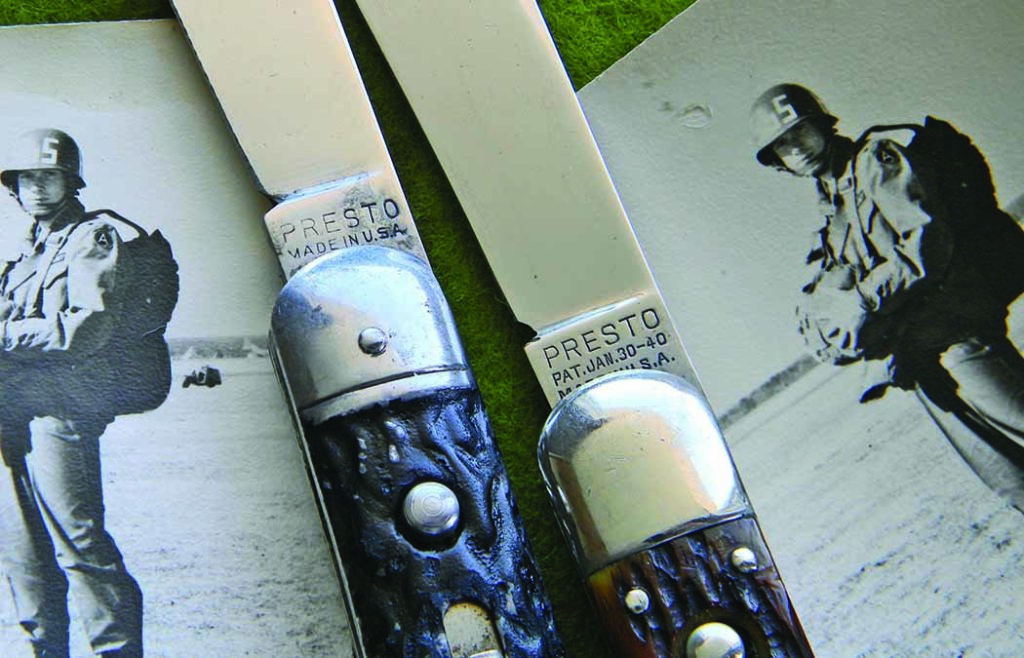
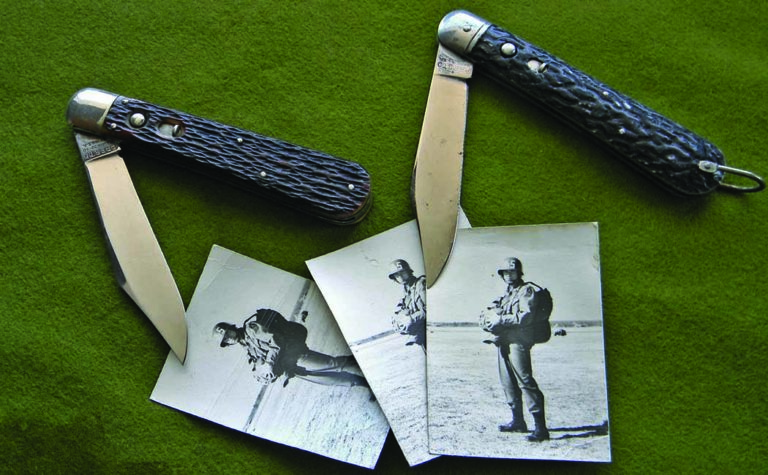
 These two switchblades with the Presto stamping by George Schrade Knife Co., are among those that played an important part in the success of American paratroopers during World War II. On the facing page, the one at left has “jigged iron” scales and the one at right has jigged bone.
These two switchblades with the Presto stamping by George Schrade Knife Co., are among those that played an important part in the success of American paratroopers during World War II.

Because of the collectibility of the named companies and the significant variety of styles, sizes and handle materials associated with them, switchblades have become a serious endeavor for many collectors of antique knives.

Invention Of The Switchblade

As a serious cutlery collector, my downfall has been fingernails that bend backward with even the smoothest opening blades. The switchblade innovators had fingernails in mind when they produced a knife that could be opened without using a nail. In fact, some of the best switchblades are found in women’s old sewing baskets.

In fact, early switchblade ads tout the folder’s ability to be used by people with weak fingernails. “These knives will be a wonder for those who have difficulty opening a traditional knife” stated one such ad.
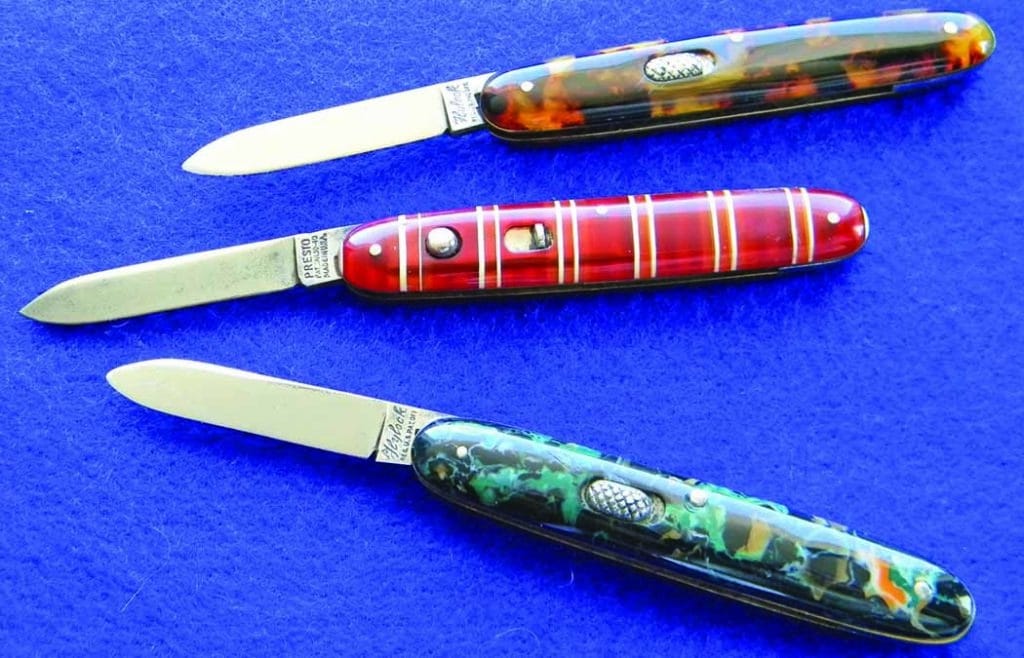
Celluloid was a very popular handle material on antique switchblades. Celluloid types, from top: a George Schrade in imitation tortoise, another George Schrade model in candy stripe, and one from Flylock Knife Co., in blue, pink and black swirl.

For many other occupations, the switchblade and its ability to be opened with one hand has proven immensely important. Mechanics, fishermen, ranchers, soldiers, veterinarians and even Boy Scouts were frequent users of the pocketknives. With a wiggling fish in one hand, it is easy to see how a switchblade could be a valuable asset to most fishermen when cutting a line.

Moreover, most switchblades have a lock/safety that keeps the blade from opening accidentally and the open blade from closing on the hand. An early Flylock Knife Co. ad touted, “The ideal knife for all outdoors and sports use. One hand only required to open or close, leaving the other hand free to grip a rod or gun.”

World War II Switchblades

World War II brought with it the necessity of supporting soldiers who parachuted behind enemy lines. Switchblades procured for the U.S. military were designed to cut the parachute suspension lines that became entangled during landing. The knives were carried in what has been described as “neck pockets’ in jump uniforms.
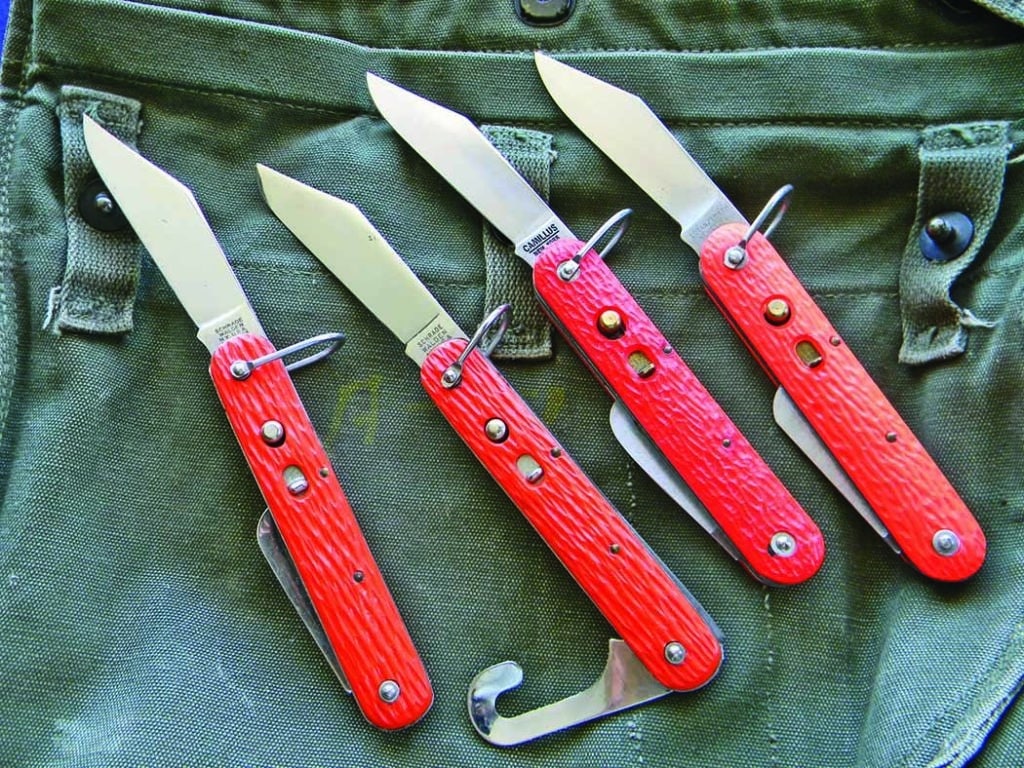
Military switchblades designated “MC1” included models in orange handles for heightened visibility. They were made by Schrade until 1960, when Camillus took over the contract. The knives have a master blade opened by a push button and a manual shroud cutter.

There are continuing discussions about the knives specifically made for and used by the U.S. military during the war. The discussions center around whether switchblades issued to troops all had jigged bone handles or jigged metal sides. Another discussion is whether all switchblades used by paratroopers had a bail—known in the military as a “lanyard staple”—or whether knives without bails also were used.

Units that used the knives included paratroopers in the 82nd Airborne and 101st Airborne Divisions, which included the 505th, 507th and 508th parachute infantry regiments. The 505th Infantry Regiment website shows switchblades made by Schrade Cutlery Co. stamped “Presto” with jigged bone handles and metal handles made to look like jigged bone painted black. Knives both with and without bails are included in the photographs. Switchblades made for World War II paratroopers also include those stamped Schrade-Walden and Schrade Cut. Co.

The book, 4 Stars of Valor: The History of the 505th Parachute Infantry, describes the equipment carried by paratroopers. In addition to main and reserve chutes, full uniform and helmet, the paratroopers carried over 70 pounds of equipment, including an M-1 carbine with ammo, Mae West life jacket, switchblade, water-filled canteen, trench knife, fragmentation and smoke grenades, mess kits, three days of K rations, escape map and compass, gas masks, toiletry items, 30 feet of rope, blanket, half a shelter and first-aid kit.

Post-War Military Switchblades

After World War II, several companies made switchblades for military personnel. According to one website, the first such knife was produced for the armed forces by Schrade Cutlery Co., designated as MC-1, an airman’s paratrooper knife, in 1957. Sometimes the knives are referred to as aircrew survival knives.
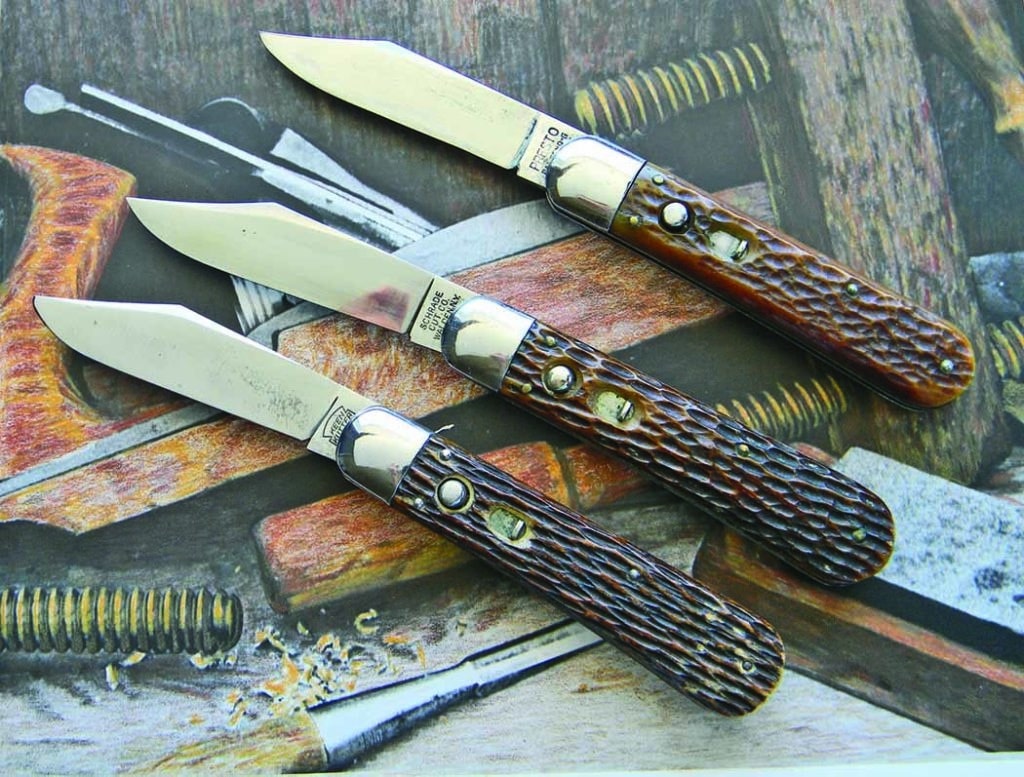
Three jigged bone switchblades, from top: Schrade Cutlery Co., George Schrade Knife Co. and one of the rarest of antique models, one stamped “Keen Kutter,” a trademark of Shapleigh Hardware. Schrade made the knife.

The first contract was awarded to Schrade Cutlery followed by a second contract to Camillus, and a third to Logan-Smyth. The orange-handle switchblades had two blades: one a master spear pattern opened by depressing the button, and a second blade shaped like a hook to cut parachute suspension lines. In my estimation, the hooked blade is not sharp enough to easily cut parachute lines and must be resharpened.

Civilian Switchblades

The early 1950s brought a renewed interest in cheap, colorful switchblades, with thousands of knives made by Imperial in its Jack-O-Matic Texas toothpick model, and Colonial, which used the Shur-Sharp stamp on its colorful models. The fishtail jackknives and the Texas toothpick styles were by far the favorite examples produced by the two companies.

The George Schrade Knife Co. continued to produce popular switchblades with celluloid handles stamped Presto. The knives were made with a single blade, double blades (the latter with a push button for each blade) and even a letter opener with a push button in one end.

Celluloid Handles On Antique Switchblades: Why?

The handle material for most of the inexpensive switchblades was celluloid. Thin sheets of the versatile plastic-like substance were molded around the knife’s metal sides. The most popular celluloid style was candy stripe. The knives also can be found in a wide variety of swirled celluloid handles in a myriad of different color combos, some with such recognizable celluloids as cracked ice and imitation tortoise.

Because the knives were inexpensively priced, they were extremely popular with boys in the 1950s. Because of the knives’ widespread use, some advertisers saw an opportunity to emboss various ads on them, giving them away as a novel company promotion gimmick.

Allure Of Antique Switchblades

Because of their connection with the heroic actions of airborne troops during World War II, antique switchblades have continued to be a popular cutlery collecting niche. Moreover, since almost three dozen companies, each producing a vast array of sizes and handle materials, made the knives, the collecting field is wide open.

Even in the 1950s cheap construction, made more evident by the continuous opening and closing of the blades, the knives remain popular collectibles. No doubt one reason for the popularity is that antique switchblades remind many of the Golden Age of the 1950s and ’60s when kids played outside all day, shot their BB guns, and hit the corner gas station for a cold soda and a candy bar.

Ah, those were the days!

More On Switchblades:

Bachtel’s Bowie With A Pedigreed Background

A study of Michael Price’s work, Nick Bachtel’s reproduction gentleman bowie has the looks to wow.

Bladesmith Nick Bachtel has parlayed his fascination with the knives of 19th-century great Michael Price into a faithful reproduction of a Price-style gentleman’s bowie.

Nick studied every Price knife and other like ones of the genre he could find online and elsewhere to help arrive at the way the 19th-century cutler constructed the gentleman’s bowie. However, it was when he saw a picture of a Price knife in BLADE Magazine Cutlery Hall-Of-Fame® member Bernard Levine’s book, Knifemakers Of Old San Francisco, that “a light went off.”

Nick noticed that the handle had three pins so the knife had to have a full tang, not a hidden tang as he had previously thought, so he forged the knife, heat treated it, fit up the guard and forged the tang wider.

“I call it a captured-guard full tang,” the 24-year-old said of the method that apparently originated among bladesmiths in Ireland, Price’s native country. “It’s such a weird, unique, almost comical way of making a knife—and difficult to do as well,” Nick observed, “but boy, did Price make it!”

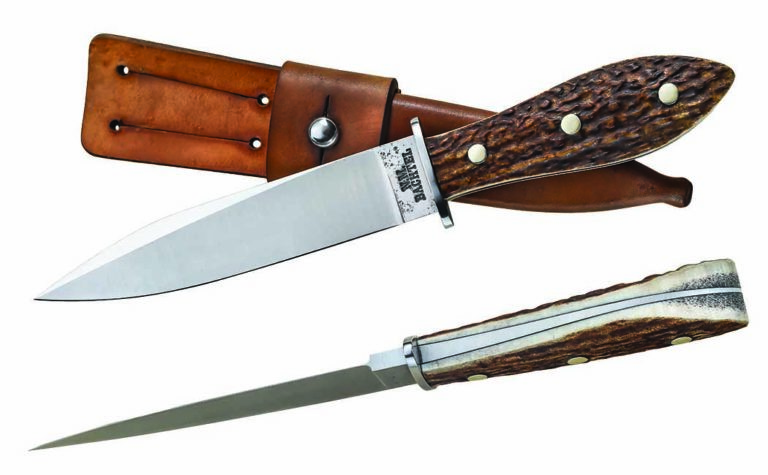
Nick Bachtel calls the construction he used to make his reproduction of a Michael Price Gentleman’s Bowie “captured-guard full tang.” For the style to work, it must be forged, Nick stressed. He said another way to do it would be in a frame handle construction and a tapered tang, though a Price aficionado would be able to tell the difference. (SharpByCoop knife images)
Nick Bachtel (inset) calls the construction he used to make his reproduction of a Michael Price Gentleman’s Bowie “captured-guard full tang.” For the style to work, it must be forged, Nick stressed. He said another way to do it would be in a frame handle construction and a tapered tang, though a Price aficionado would be able to tell the difference. (SharpByCoop knife images)

The icing on the cake for Nick was ABS journeyman smith Jordan LaMothe’s story, “How to Make the Price Guard” in the December 2019 BLADE®. As Nick noted, “The Price style is the pinnacle of the traditional forged blade.” What better style is there for a young, up-and-coming bladesmith to explore?

For more information contact N.M. Bachtel Forging Co., attn: Bachtelforgingcompany.com.

Gentleman Bowie Spec Check
Knife name: Michael Price
Style: Gentleman’s Bowie
Maker: Nick Bachtel
Blade length: 5 7/8 inch
Blade material: 52100 carbon steel
Handle: Elk antler and nickel silver
Overall length: 10¾ inch
Sheath: Traditional center-seam vegetable-tanned cowhide w/frog stud
Maker’s List Price For A Similar Knife: $1,100(includes sheath)

More Knife Collecting And Custom Knives
Chute Knife: Full-Spectrum Warrior

A fine example of a tool and weapon of war, the chute knife more than rose to fulfill the roles for which it was intended.

Harry Archer was a somewhat shadowy figure. At the height of the Vietnam War, he was engaged in nasty business—fighting a stealthy enemy in a steaming jungle, sometimes up close and all too personal.

Those who knew Archer acknowledged that some of his exploits were “larger than life.” They considered him an early non-movie version of author David Morrell’s fictional character of John Rambo*. Still, Archer was real, flesh and blood. And it seems altogether fitting that responding to his need for knives that “deliver” in a tight spot—survival, seconds along the fine line between life and death—he would come to know and rely on another legend.

According to John Denton, perhaps the world’s foremost authority on the knives of BLADE Magazine Cutlery Hall-Of-Fame® member Bob Loveless, Loveless and the man he came to describe as the “head of CIA operations in Vietnam” were introduced to one another by knife writer/Cutlery Hall-Of-Famer Ken Warner. It followed that Loveless made several knives for Archer’s use in the field, among them a fine sub-hilt and stag-handle example of his well-known Big Bear, along with several other  Big Bears. Loveless’s close friend and fellow maker Steve Johnson was working in Bob’s shop at the time and participated in crafting these. A fighter in a tulip wood handle is another cold beauty.

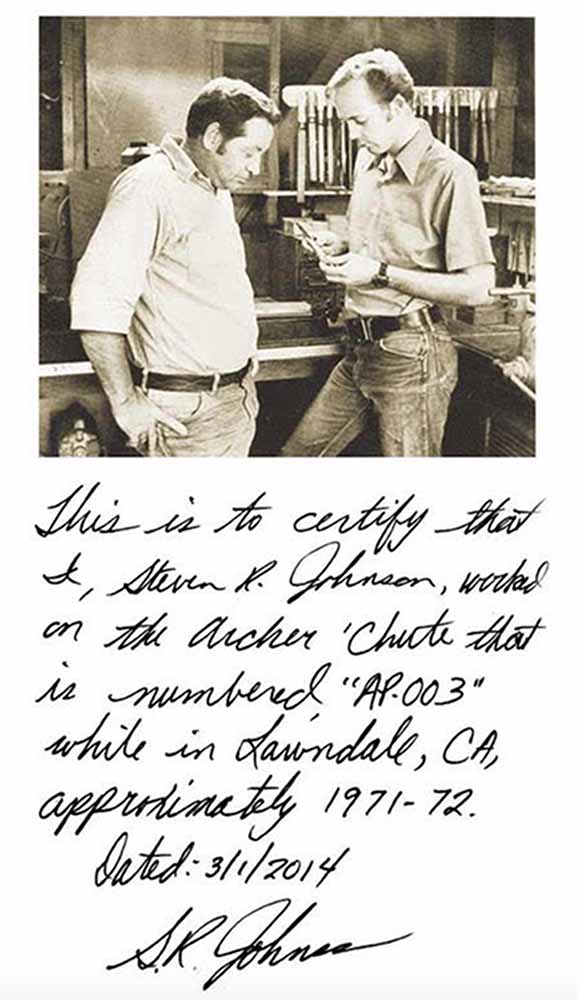
Johnson worked with Loveless from June 1971-October 1974 in the Lawndale and Riverside, California, shops. Steve had a hand in the production of the prototype chute knife in the earliest days, and 23 years later signed a photograph for John Denton attesting to his work on that piece of history. Steve’s inscription reads in part: “This is to certify that I, Steven R. Johnson, worked on the Archer ’chute that is numbered ‘AP-003’ while in Lawndale, CA, approximately 1971-72.”
Johnson worked with Loveless from June 1971-October 1974 in the Lawndale and Riverside, California, shops. Steve had a hand in the production of the prototype chute knife in the earliest days, and 23 years later signed a photograph for John Denton attesting to his work on that piece of history. Steve’s inscription reads in part: “This is to certify that I, Steven R. Johnson, worked on the Archer ’chute that is numbered ‘AP-003’ while in Lawndale, CA, approximately 1971-72.” (images courtesy of John Denton)

Then there is the well-known Harry Archer chute knife, a versatile fixed blade with good looks and the ability to travel light but cut paracord for a quick exit from a tangled parachute shroud, and with a stout spine for prying loose from the wreckage of a helicopter. The chute knife was made for the jungle. It was made for Harry Archer.

“It seems that Loveless had been left out of a book by Warner, and Loveless sent Ken some knives to review,” Denton recalled. “It just so happened that Archer was there with Warner. Harry saw the knives and bought them all.”

Johnson worked with Loveless from June 1971 to October 1974 in both the Lawndale and Riverside, California, shops. He had a hand in the production of the prototype chute knife in the earliest days and 23 years later signed a photograph for Denton attesting to his work on that piece of history. Steve’s inscription reads in part: “This is to certify that I, Steven R. Johnson, worked on the Archer ’chute that is numbered ‘AP-003’ while in Lawndale, CA, approximately 1971-72.”

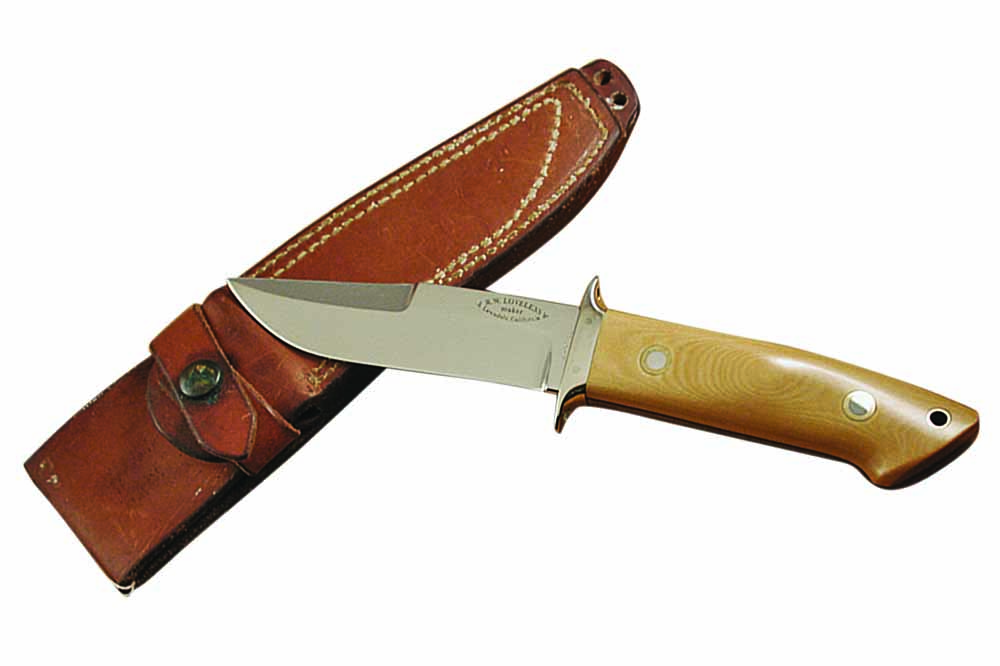
Johnson explains that the chute knife is a fairly small, compact fighter and survival knife, short, light, double-edged and strong, but not made in stock thicker than 3/16 inch. Holes for thongs are placed in the rear of the handle and the guard for lashing the knife to a pole or limb to make an improvised spear. It rides into action atop a chest pack or secondary parachute for quick, easy access. Claims that Warner had a hand in the design are unconfirmed, but “the chute” simply looks the part of the warrior’s dependable asset.

“You’re able to cut both ways with the knife via the swipe of an arm or hand,” Johnson related. “Specifically, it’s for cutting parachute cord should it be tangled or caught in a tree. It’s a knife that a pilot, paratrooper or soldier should carry, and it would not be a burden but useful and available in every situation.”

HARRY ARCHER LORE
Stories of Archer’s combat prowess have been told and retold, but to raise awareness of the immediacy of a close-in fight, nothing is better than the harrowing tale that Denton remembers Loveless repeating. John points to a photo of a vintage Big Bear, identifies it as a knife that Archer took into combat, and says, “Harry and his men got into a hand-to-hand fight, and the tip of the blade was broken off inside the enemy. Harry took the knife back to Bob to fix, and Loveless said, ‘Where’s the tip?’ Harry replied, ‘It’s still in the rib cage of the Viet Cong soldier.’ So, Loveless fixed the blade.’”

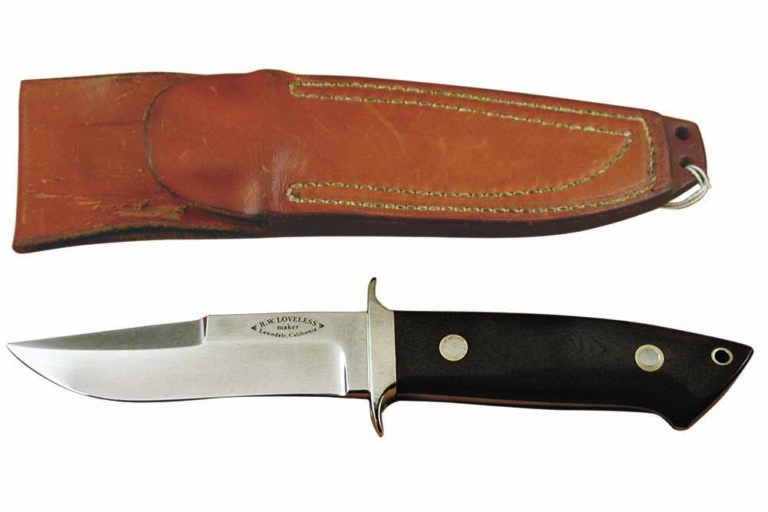
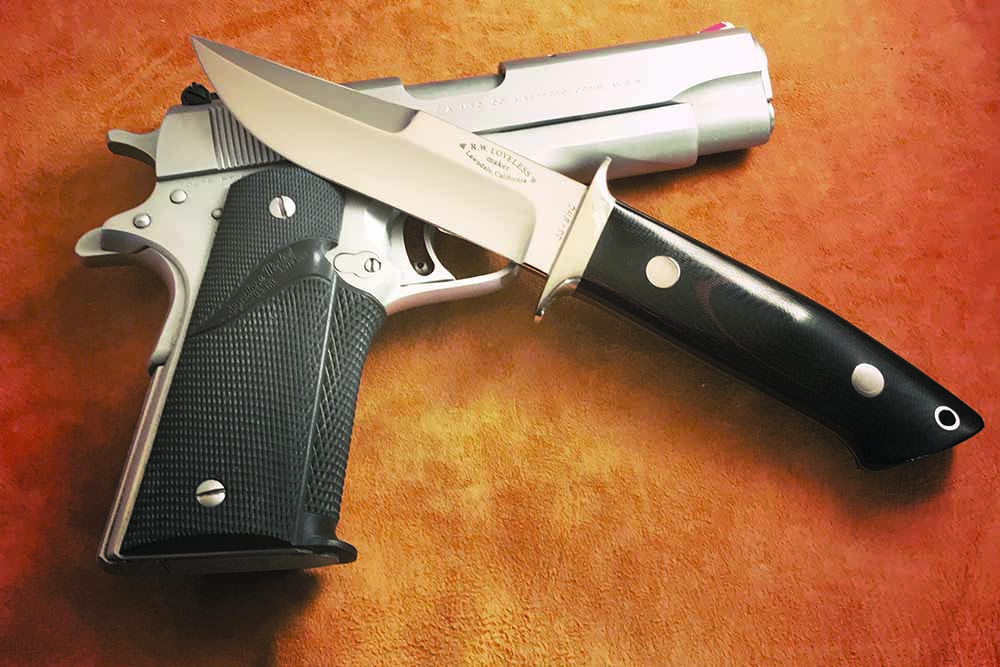
Made in Bob Loveless’s Lawndale, California, shop about 1973-74, this chute knife in ivory Micarta® is stamped BR-003. It was made for the Brass Rail, a famous gun shop in Hollywood, California, where all the celebrity types hung out to see guns and knives. Note the holes in the guard for lashing the knife to a pole to make a spear.
Made in Bob Loveless’s Lawndale, California, shop about 1973-74, this chute knife in ivory Micarta® is stamped BR-003. It was made for the Brass Rail, a famous gun shop in Hollywood, California, where all the celebrity types hung out to see guns and knives. Note the holes in the guard for lashing the knife to a pole to make a spear. (images courtesy of John Denton)

Like the Big Bear and other Loveless creations, the chute knife has its place in the lore of Harry Archer. After he collaborated to produce the prototype, Johnson continued to work with Loveless on more of the chute knives. He remembers meeting Archer in the California shops.

“Loveless really admired Archer and his adventures in the Vietnam War era, working with USAID**, the CIA and different assignments in various parts of the world,” Steve commented. “[Harry and I] discussed life in camp in Vietnam, interactions with Vietnamese soldiers and personnel with whom he was serving. That was quite interesting.”

Steve calls the chute “one great knife” and remembers conversations in Lawndale when the veteran operative praised it as light and small enough to carry so that it could always come along on a mission. Johnson also made a chute knife for Archer and continues to produce his own model today.

“We worked together on Archer’s order for a ‘Johnson’ version of a chute knife on a bench in the rear of Bob Loveless’s shop, in his garage in the back of his house in Lawndale,” Steve smiled. “Archer asked me to make my version, which we—mostly he—designed in the early 1970s. He did a drawing for me. The 154CM blade was about 4.5 inches long, the handle slim and a bit longer than normal, and it had a large thong tube, three handle screws, a stag handle, and checkering on the top and bottom of the tang just behind the guard.”

Bob Loveless (left) and John Denton (right)

For Johnson, working with Archer was a pleasure and a defining moment in his illustrious knifemaking career, which, after recovery from a serious accident, took him from Loveless’s shop to his own space in Manti, Utah, more than 40 years ago. “Harry Archer was a great guy who appreciated my work, as well as Bob’s,” Steve added, “and I made him a few knives after California. He was very easy to talk to, respected others, and he really was a man of intrigue and adventure. And Bob Loveless treated me like a son.

“I’m making a chute knife for Atlanta [Steve was interviewed prior to BLADE Show 2021] as we speak, with the blade polished so far, instead of the top grind being just the length of the clip,” Johnson concluded. “I use the pattern that Loveless gave me when I left his shop in Riverside in 1974 or 1975. This particular knife is going to have a stag handle and stainless steel fittings. I’ll make more when asked, and I still have a few on order in my books.”

Long-time maker and designer Bob Dozier was a friend of Loveless and went on to design a chute knife for Cutlery Hall-Of-Famer A.G. Russell. Though his only acquaintance with Harry Archer is through the recollections of A.G., who knew him, Bob says his version of the chute knife remains in demand for one simple reason: “It sells.”

Dozier turns out his chute knife with a 4.75-inch D2 tool steel blade and overall length of 9.75 inches. The handle is green canvas Micarta® “because Goldie [Russell] won’t let me put anything else on them. I’ve got some blades hanging right now, getting ready.”

The “RR” on the guard of this Loveless chute indicates it was for the Ram Rod gun store in New Castle, Indiana. Early on Ram Rod sold knives by Loveless, Bill Moran, Ron Lake, W.W. Cronk and others. It appears here with a Smith & Wesson Model 41 modified by Loveless.

Dozier is familiar with the Loveless chute knife configuration but never had the Loveless pattern. He looked at the earlier chute knife profile and made some tweaks. “My handles are like the Loveless, but I don’t cut the butt off as square as he did. I leave more of a point on it than he did. Mine is still mostly like Bob’s, and he was one of the first to make a really good slab-handled knife. That’s one reason why most of us have copied him.” Dozier’s chute knife, designed and built for A.G. Russell Knives, has a manufacturer’s suggested retail price of $895.

SAGA of The CHUTE
The saga of the chute knife certainly has a human side. While Denton estimates that early Lawndale chute knives might fetch as much as $14,000 if found for sale today, and chute knives made in Riverside command up to $12,000 each, they are desirable on the collector market. Nonetheless, the greatest value of the chute knife lies in its lifesaving and protective capability in the hands of a dedicated professional such as Harry Archer.

Through those years of association, Loveless and Archer became friends, sharing a common bond of respect and admiration for the best in fighting and utilitarian knives.

“Loveless said that Harry would come by his shop after periods of being in the jungle for months at a time,” Denton remembered. “He used Bob’s place to unwind and try to become civilized again before heading home to Virginia. But Loveless also said, ‘Harry was like a wild animal when he came to the shop, trying to keep his head straight before he saw his family.’”

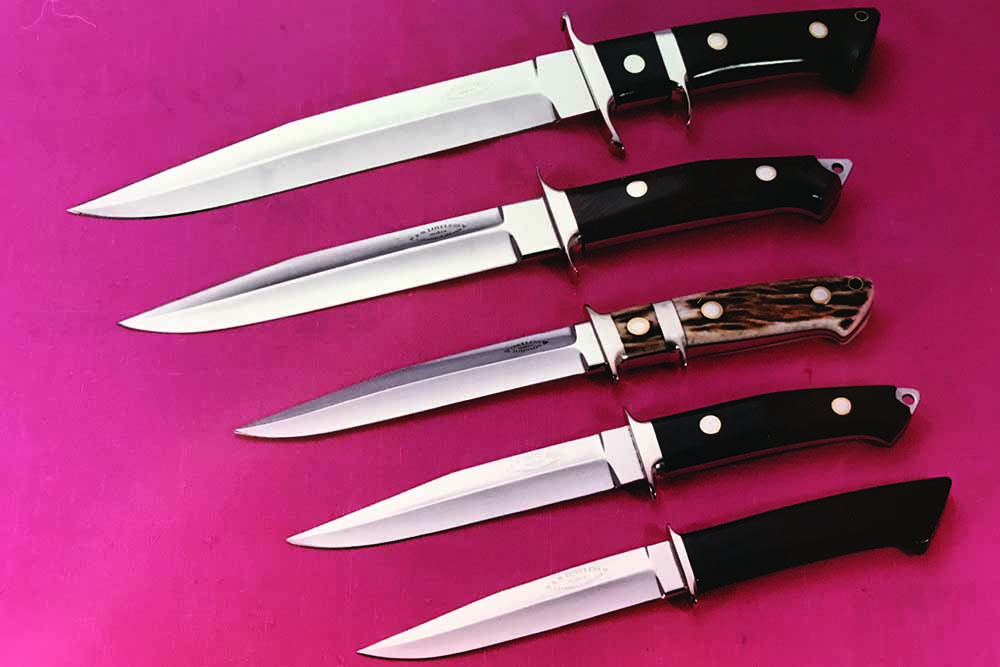
Whenever Harry Archer ordered several Big Bear fighters from Bob Loveless, Loveless said Archer told him to “send the bill to the Pentagon.” From top: the Big Bear Harry broke the tip off inside a Viet Cong soldier during the Vietnam War; tulipwood fighter with skull cracker; Loveless/Johnson sub-hilt with the initials HJA for Harry J. Archer; boot knife with skull cracker; and one Loveless called the Pig Sticker.
Whenever Harry Archer ordered several Big Bear fighters from Bob Loveless, Loveless said Archer told him to “send the bill to the Pentagon.” From top: the Big Bear Harry broke the tip off inside a Viet Cong soldier during the Vietnam War; tulipwood fighter with skull cracker; Loveless/Johnson sub-hilt with the initials HJA for Harry J. Archer; boot knife with skull cracker; and one Loveless called the Pig Sticker. (image courtesy of John Denton)

The chute knife is indeed a fine example of a tool and weapon of war rising to fulfill the roles for which it was intended. It remains a popular pattern because of its looks, quality and versatility. And for one other reason in particular: It helped men like Harry Archer survive the most desperate of situations and make it home.

*In actuality, Morrell based the Rambo character on Medal-Of-Honor recipient Audie Murphy.

**USAID is the acronym for United States Agency for International Development, with the inference here being that in this instance it functioned as a cover for the CIA.


More On Bob Loveless Knives:

  • 15 Best Bob Loveless Knives of All-Time
  • The Legacy of the Bob Loveless Dropped Hunter
  • Merritt-Loveless Knives Do Indeed Hold Merit
  • Fourth In Greatest Loveless Knife Designs Series
  • Best Big Knives: Four Behemoths That Are A Cut Above The Rest

    Looking for a blade that can handle jobs and and small? These four giants are some of the best big knives out there.
    What Are The Big Knives:

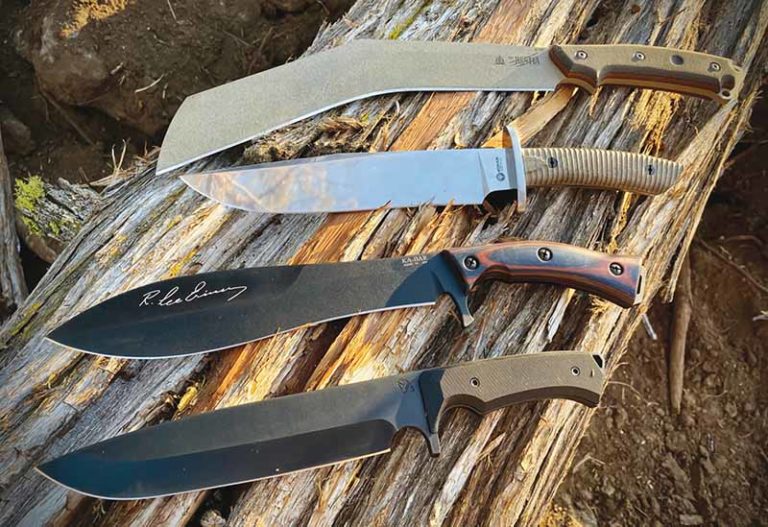
    Little knives are convenient to carry but, if you have a lot of work to do, big knives are it. I’ve lived and worked with indigenous peoples in Latin America and Southeast Asia and found that wherever folks live close to the earth, they use big knives—machetes, parangs, goloks, bolos and the like. They use them for everything from rough work such as cutting poles and opening coconuts, to dressing out pigs and game, to delicate work such as slicing mangoes.


    The advantage of the big blade was illustrated to me one day when I was working alongside a villager who, with his bolo and its 14-inch blade, cut wood for a fire, bamboo poles for a cooking rack, and lopped off a banana leaf on which he filleted two large fish and sliced them thin as a sushi chef—all in the time it took me to bring down a few stalks of bamboo with my hair-shaving-sharp Randall Model 1.

    We reviewed the test knives with that standard in mind. We chopped and split wood and sliced meat and tomatoes. We also, just because, cut hanging rubber hose and slashed through water-filled plastic bottles.

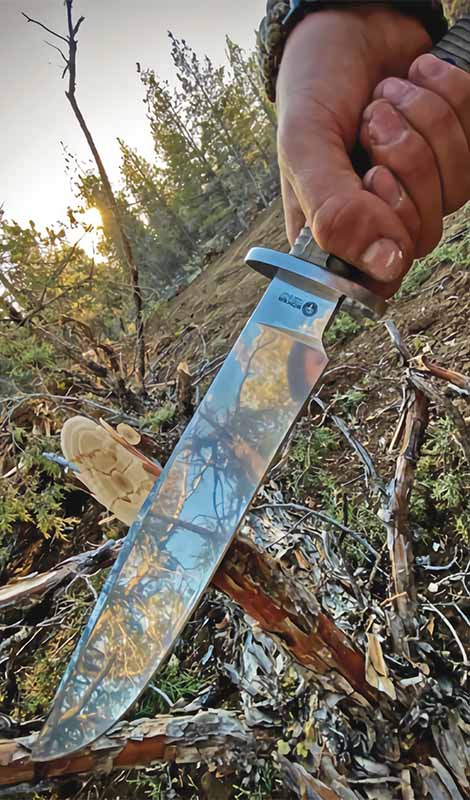
    A tree branch succumbs to the reflective blade of the Boker Arbolito El Gigante. It cleaved 2-inch pine saplings in one stroke
    A tree branch succumbs to the reflective blade of the Boker Arbolito El Gigante. It cleaved 2-inch pine saplings in one stroke

    Boker Arbolito El Gigante

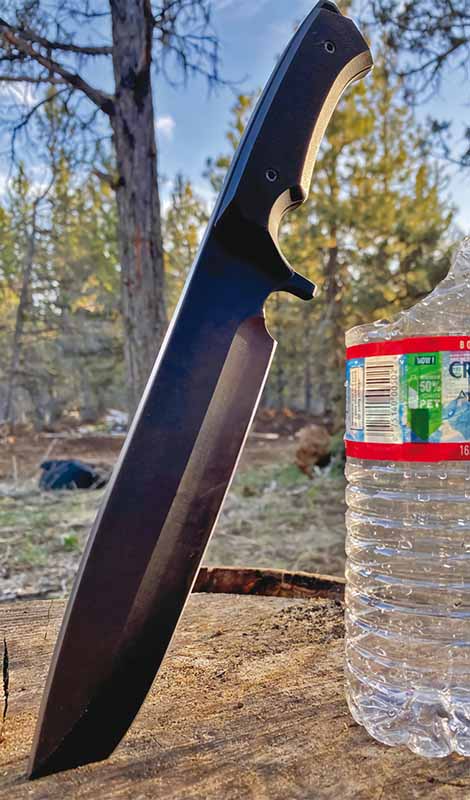
    The Boker Arbolito El Gigante is a handsome classic bowie with a stonewashed blade, comfortable handle and nice leather sheath. Balance is excellent, all very much in the bowie tradition. Construction is top quality; so is performance. It cleaved 2-inch pine saplings with one stroke. The quarter-inch-thick spine was brought down to a well-supported edge fine enough to slice tomatoes thin enough to see light through the slices. We slashed rubber hose and the water bottles with ease.

    Like all well-designed and crafted bowies, this is a versatile all-around knife.

    BOKER ARBOLITO EL GIGANTE
    BLADE LENGTH: 9.25”
    BLADE STEEL: Bohler N695 stainless
    BLADE THICKNESS: .24”
    BLADE GRIND: Flat
    BLADE FINISH: Stonewash
    HANDLE THICKNESS: .94”
    HANDLE MATERIAL: Green Micarta®
    WEIGHT: 15.75 ozs.
    OVERALL LENGTH: 14.75”
    SHEATH: Leather
    COUNTRY OF ORIGIN: Argentina
    MSRP: $229


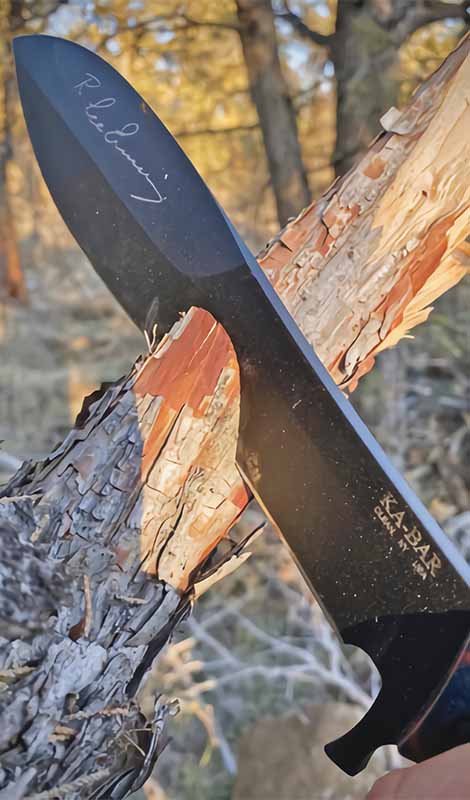
    The KA-BAR Gunny chomps into dry pine. Its forward weight and blade design promote effi cient chopping
    The KA-BAR Gunny chomps into dry pine. Its forward weight and blade design promote effi cient chopping

    KA-BAR Gunny

    The KA-BAR Gunny is a hybrid design that resembles a bolo. I suspect R. Lee Ermey, the unforgettable Gunny who serves as the knife’s namesake, spent some time in jungles because this combination chopper/slicer’s performance is on par with village-forged bolos I’ve used in Southeast Asia, and that’s a high compliment. Its forward weight and terrific blade design promote efficient chopping. We cut through 3-to-4-inch-thick saplings with two strokes. We took down a tree with a 6-inch-thick truck just because we could. After the chopping, the blade was still sharp enough for camp kitchen work. The belly, good balance and fine edge combined to make slicing meat and vegetables a pleasure. Slashing hanging rubber hose and the water bottle were a piece of cake. The comfortable handle lends itself both to heavy chopping and fine meat cutting, which is unusual.

    The Gunny is an excellent all-around bush knife. The sheath has a pocket for a sharpening stone, which was not included with the review model.

    KA-BAR GUNNY
    DESIGNER: R. Lee “Gunny” Ermey
    BLADE LENGTH: 9.75”
    BLADE MATERIAL: 1095 Cro-Van carbon steel
    BLADE WIDTH: 2”
    BLADE THICKNESS: .2”
    BLADE GRIND: Flat
    HANDLE WIDTH: 1.5”
    HANDLE THICKNESS: .94”
    HANDLE MATERIAL: Wood
    WEIGHT: 15.29 ozs.
    OVERALL LENGTH: 15.5”
    SHEATH: Leather
    COUNTRY OF ORIGIN: USA
    MSRP: $292


    The Medford Knife & Tool Bonfire slashed through water-filled plastic bottles with more consistency than the other review blades
    The Medford Knife & Tool Bonfire slashed through water-filled plastic bottles with more consistency than the other review blades

    Medford Knife & Tool Bonfire

    The Medford Knife & Tool Bonfire came from the maker absolutely razor sharp! The blade design is interesting in that we do not often see a contemporary styled drop point and hollow grind on such a big blade. I don’t know its Rockwell hardness, but the steel is hard and tough.

    It was just as razor sharp after we put it through its paces as when we started. The fine edge made for a very good slicer and slasher and lopped off thin branches with one cut. The hollow grind tended to bind when chopping wood, though that’s to be expected—hollow grinds aren’t chopping designs. It’s better to think of this knife as a well-designed and crafted big knife rather than a bush tool such as a panga or kukri. It sliced rubber hose with a snap of the wrist and slashed through water bottles with more consistency than the other review blades, and cut meat just fine. You probably could dress out a bear with it. Use it as a big knife on soft materials and you won’t be disappointed. It comes

    MEDFORD KNIFE & TOOL BONFIRE
    BLADE LENGTH: 8.25”
    BLADE MATERIAL: CPM 3V carbon steel
    BLADE THICKNESS: .24”
    BLADE GRIND: Hollow
    HANDLE THICKNESS: .64”
    HANDLE MATERIAL: G-10
    WEIGHT: 19.16 ozs.
    OVERALL LENGTH: 13”
    SHEATH: Nylon
    COUNTRY OF ORIGIN: USA
    MSRP: $450


    TOPS Bestia

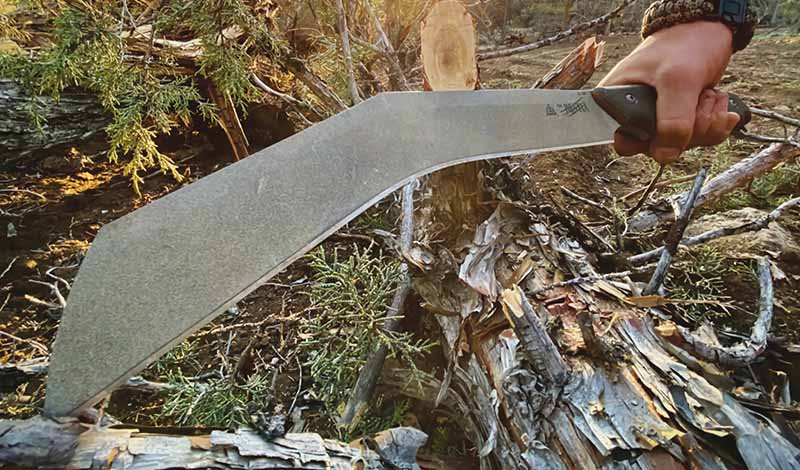
    The TOPS Knives Bestia’s kukri-styled 13-inch blade and hefty weight made it the blade of choice for serious chopping or, as the author puts it, “zombie cleaving.”
    The TOPS Knives Bestia’s kukri-styled 13-inch blade and hefty weight made it the blade of choice for serious chopping or, as the author puts it, “zombie cleaving.”

    The TOPS Bestia is just a beast. A kukri-styled 13-inch blade and hefty weight make it the blade of choice for serious chopping or zombie cleaving. We hacked through a 3-inch sapling with one stroke, and used it to clear a stand of saplings and brush. The handle remained comfortable during an hour or so of work. Heavy as a small hatchet, it is more versatile and safer in use, especially in thick brush.

    During many survival classes, I’ve seen more injuries from hatchets than from big blades with their longer cutting edges. Given its heft, blade design and chopping ability, the Bestia is surprisingly usable in the camp kitchen. We found it could slice meat quite well, allowing for adjustments in maneuverability due to its blade length.

    TOPS KNIVES BESTIA
    DESIGNER: Leo Espinoza
    BLADE LENGTH: 13”
    BLADE MATERIAL: 1095 carbon steel
    ROCKWELL HARDNESS: 56-58 HRC
    BLADE WIDTH: 2.25”
    BLADE THICKNESS: .25”
    BLADE GRIND: Flat
    HANDLE WIDTH: 2.125”
    HANDLE THICKNESS: .97”
    HANDLE MATERIAL: Green Micarta®
    FRAME/LINER: Micarta
    WEIGHT: 1 lb., 13.18 ozs.
    OVERALL LENGTH: 19.5”
    SHEATH: Kydex
    COUNTRY OF ORIGIN: USA
    MSRP: $300

    VERSATILE BUSH TOOLS

    If you haven’t spent much time with a big blade, try one. Work with it for a while. Direct close attention to your work and you’ll find a good big blade to be a terrific, versatile bush tool.

    Also Read:

    African Blackwood is on the Rise as a Custom Handle Material

    Maybe it’s a bit of a contradiction, but both elegance and simplicity are elements of African blackwood, a handle material with a rapidly rising profile in the custom knife industry.

    The color of the material combined with properties that make it a pleasure to work with has resulted in an explosion of interest. Ranging in luster from a reddish to a deep black hue, the wood is the product of a flowering tree also known as granadilla or mpingo. A relatively small tree, it grows primarily in the forests of Senegal east to the horn of Africa and in some parts of South Africa. Long used in musical instruments and high-end furniture, African blackwood is protected in order to prevent overharvesting.

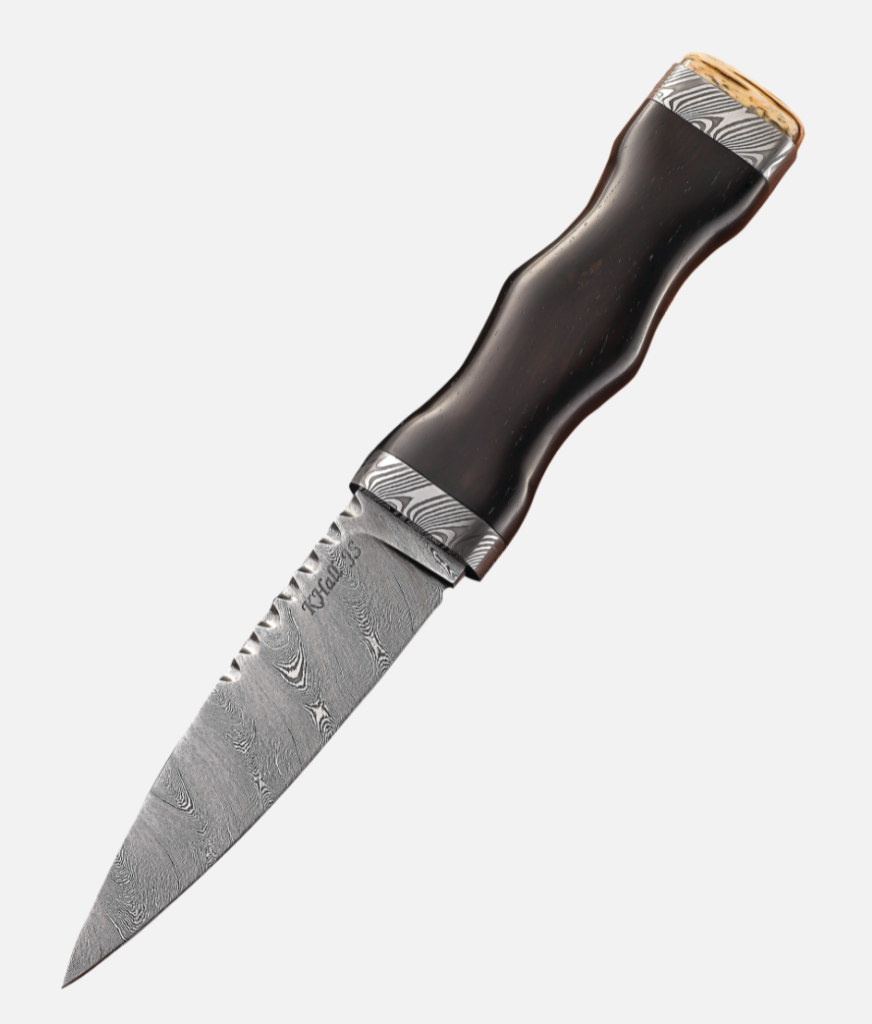
    Ken Hall’s sgian dubh features a 4.25-inch blade of twist damascus in a blend of 1075 spring and 15N20 nickel alloy steels. The pommel is formed from stone and giraffe bone. The African blackwood handle not only is ideal for its carvability but also in keeping with the sgian dubh’s name, which is Scottish for black knife.

    When the material finds its way to a knife handle, something dazzling happens, and the makers who use it sing its praises. “I’ve always loved black-handled knives, especially with brass,” related Abel Price of Fayetteville, Arkansas, a part-time maker who is completely self-taught. “The black and gold combo just pops and gives it a beautifully elegant Art Deco feel.”

    In the mountains of western North Carolina, ABS master smith Andrew Meers finds African blackwood a pleasure to work with. “It’s a dense and stable wood with a consistent grain structure that is excellent for handle material. It is workable and carves well,” he noted. “It has a rich, dark color and finishes out beautifully when sanded, and I haven’t noticed any cracking, shrinking or expanding, especially compared to the cracking I’ve noticed at times in similar looking wood such as ebony. I think these qualities contribute to its growing popularity among makers.”

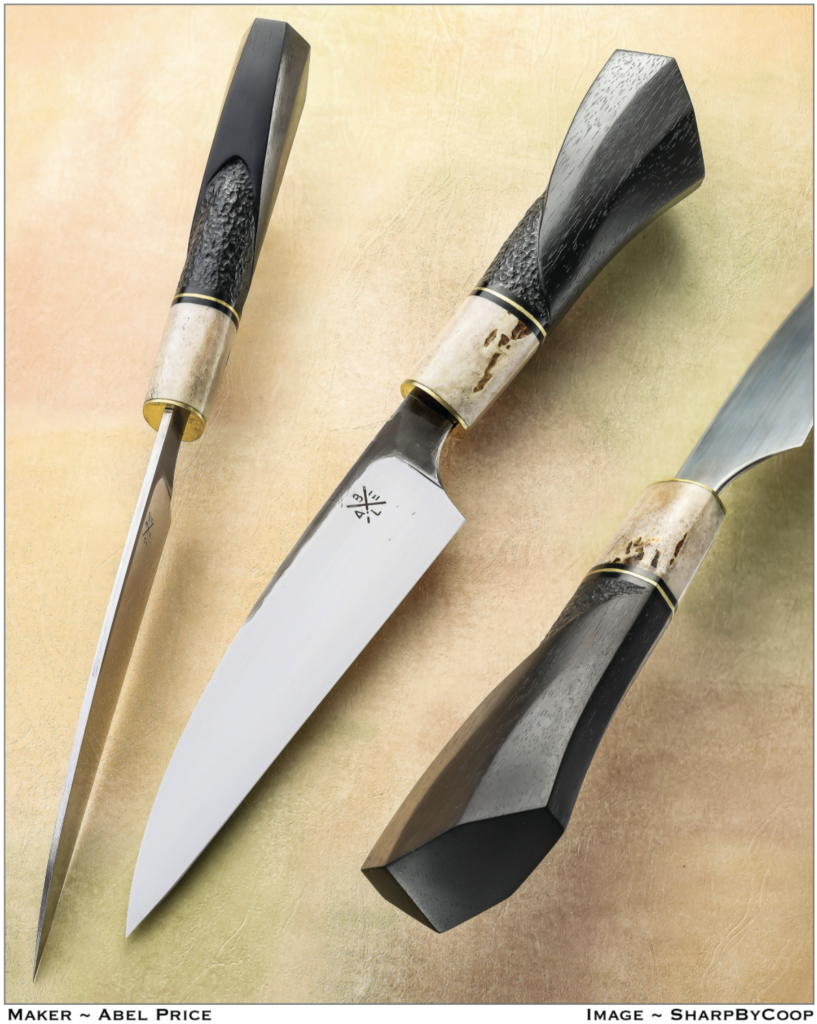
    Abel Price used African blackwood for the handle of his Deco Petty kitchen knife. He said the handle “was sculpted to contain design elements of the Art Deco era while hitting several notes of contrast: smooth and stippled, round and flat, black and white, and straight and sweeping lines.”

    Andrew uses rasps and files for shaping, a flex shaft for carving, and prefers to sand and buff to finish his handles of the material. Last of all, he applies a coat of Danish oil. So, the finished product is just what the maker wants, and getting there is most often a pleasurable journey rather than an arduous trek. African blackwood exhibits excellent stability and takes a shine quite well. Custom makers agree that the material is ideal for carving, though whether it carves easily or not is open to the interpretation of the individual maker.

    “I think the main reason for its carving ability is that it is hard,” commented Pekka Tuominen, a 17-year maker from Keitele, Finland. “Wood has to be hard if you wish to carve it with sharp and tight curves, and also polish those curves. Let’s say it’s not easy to carve, but when wood is hard you can get a good finish. Of course, it’s popular, too,” he observed. “Everybody knows that if some famous knifemaker uses a material, then the rest of the makers at least want to test it.”

    MORE ATTRIBUTES

    Waynesville, North Carolina-based ABS journeyman smith Ken Hall appreciates additional attributes of African blackwood. “I like using it because it’s a very dense wood, doesn’t require stabilizing, is hard and does not crack easily,” he stated. “It has a tight grain structure, so you don’t have to fill voids, and it can be carved or shaped without difficulty and provides a dark contrast to a steel blade.”

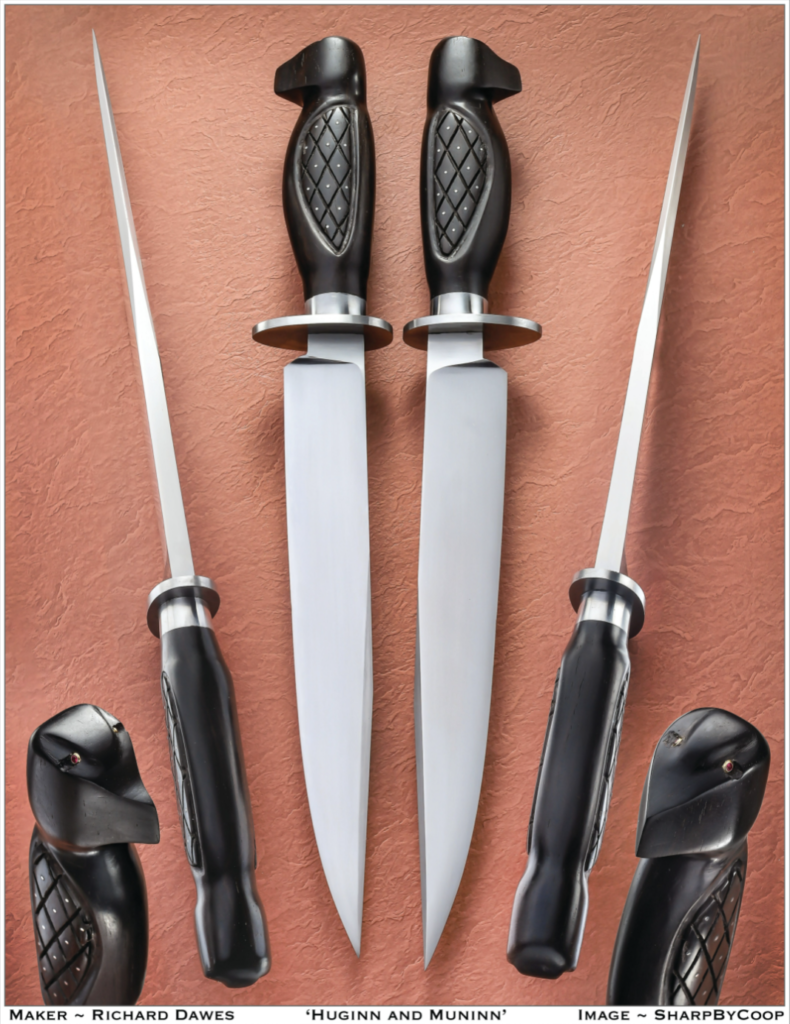
    Huginn and Muninn are the names for two bowies by Richard Dawes. Huginn and Muninn are two mythical ravens that attend Odin. Dawes carved the African blackwood handles in a bird’s-head motif based on the style of bladesmith Bill Bagwell, one of the founders of the American Bladesmith Society.

    Securing the handle to the blade most often involves a quality epoxy and a combination of pins, depending on the type of knife under construction. “I use rivets, pins and epoxy,” Pekka said, “but I don’t use African blackwood for full tangs. With hidden tangs sometimes just epoxy will keep the tang solid inside the handle.”

    When Price went to work on his Deco Petty, a kitchen knife creation with a 6.5-inch blade of AEB-L stainless steel, overall length of 12 inches, and a handle of African blackwood, deer antler and a copper spacer, he knew just what he wanted to achieve. “The goal was to hit form and function,” he commented. “The ultra-thin cutting edge flexes with lateral pressure, and a Rockwell hardness of 61 [HRC] makes for a laser sharp tool in the kitchen. The handle was sculpted to contain design elements of the Art Deco era while hitting several notes of contrast: smooth and stippled, round and flat, black and white, and straight and sweeping lines. African blackwood does everything you want it to do with a perfect finish.”

    Hall fashioned his sgian dubh as an interpretation of a historical Scottish knife. “African blackwood is the ideal wood for the sgian dubh because it can be carved and shaped to the hourglass design of the traditional sgian dubh handle,” he noted, “and provide an eye-catching contrast to the stainless steel bolster and pommel.” He added that blackwood is his preferred wood for a handle with a keyhole design because it can take the force applied to pressing the wood into the keyhole.

    AESTHETICS & FUNCTION

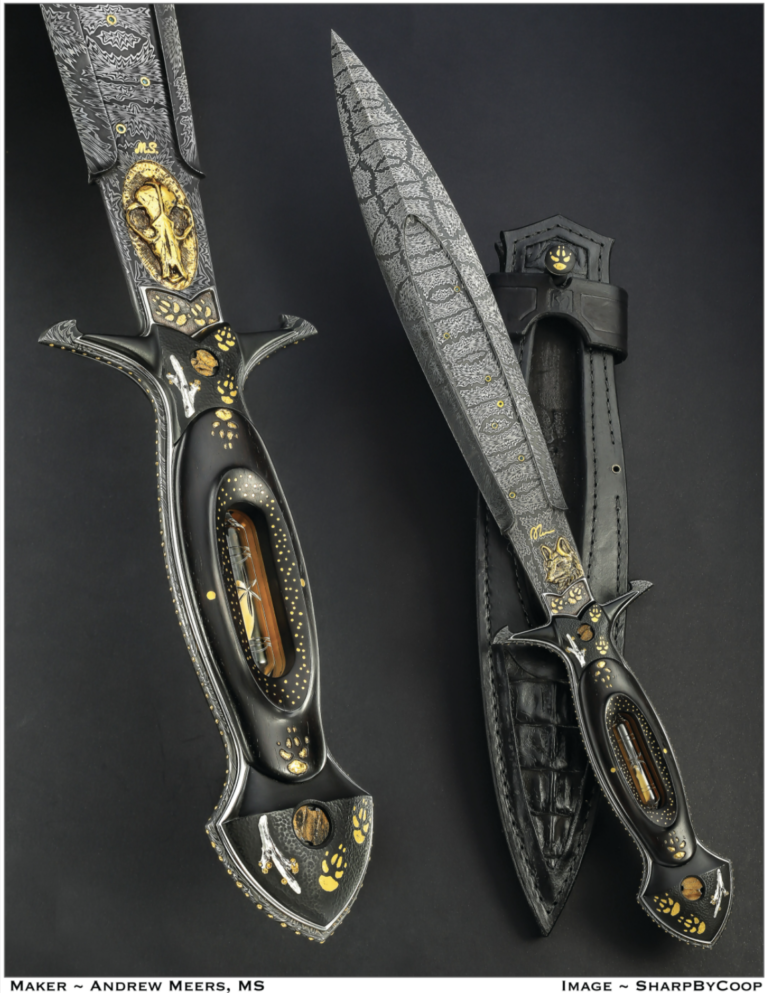
    Meers made the striking Vulpecula with a 12-inch damascus blade of 1084 carbon and 15N20 nickel alloy steels. Meanwhile, something of a surprise is embedded in the African blackwood handle.

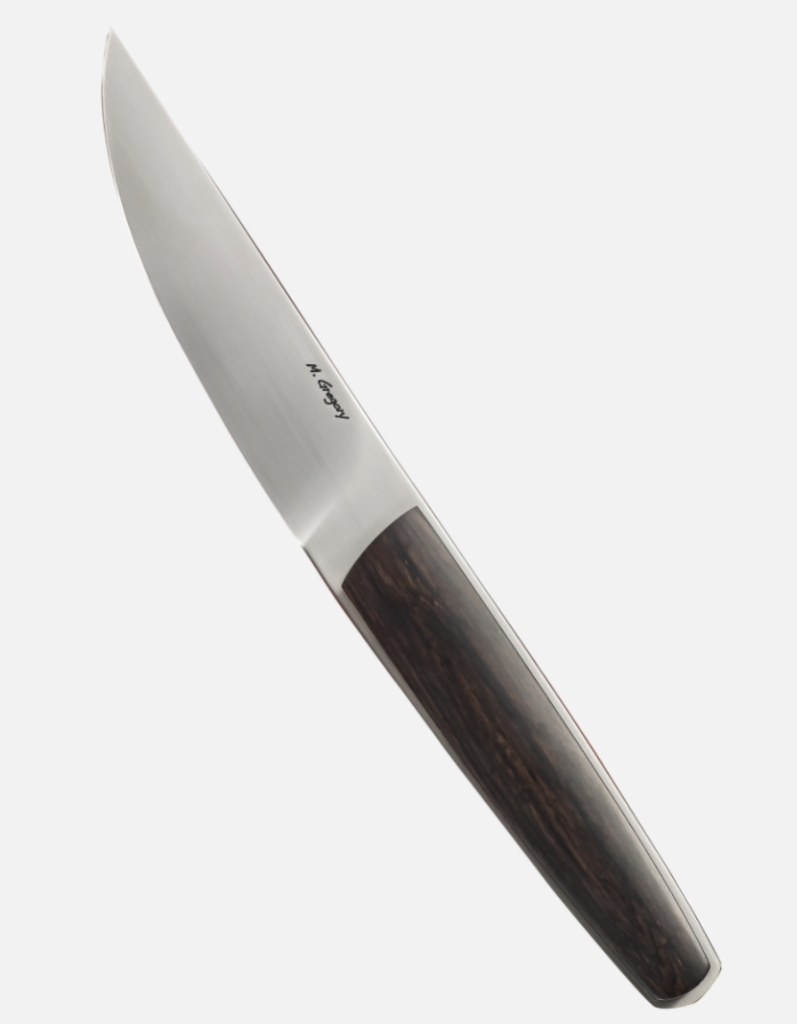
    Matt Gregory’s LWT (Lum-Walton Tanto) is based on a design by Mike Walton inspired by the late Bob Lum. The African blackwood handle is polished to a mirror shine and tapers slightly in reverse of the tang, and has a delicate bulge in the center to provide for a subtle yet improved grip. The sheath (not shown) is by Jill Gregory.

    “Vulpecula is a reliquary dagger,” Andrew explained. “It is inspired by the tradition of keeping objects, often hair or remains, in an embellished vessel. I found a fox tooth and had it sealed in a glass vial by a friend. I then built this dagger to house the vial as a reliquary.

    “The blade fittings and handle are adorned with 24-karat gold inlay depicting a large fox, its skull and paw prints. The hardware is torch-cut steel plated with gold that is brushed back. Vulpecula, the ‘Little Fox’ constellation, is set into the blade with blue diamonds.

    “It was a combination of aesthetic and functional choices that made me choose blackwood for this piece,” he concluded. “The wood machines and carves well, so for this handle it was the ideal choice. The blackwood’s depth serves as a rich contrast to the bright gold used in small inlays to represent a starry sky and the fox prints as well.”

    Tuominen built his Protector, or Suojaleijee, dagger with a 5-inch welded damascus blade of 1080 and 80CrV2 carbon and 15N20 nickel-alloy steels, a guard of Nicorros (a copper/nickel alloy), African blackwood handle, and a handmade leather sheath with stainless clip. The blade is 7 inches and overall length is 12 inches. “It’s a custom order for an American collector,” he noted. “I used African blackwood because it’s black and more stable than other black-colored woods.”

    SOURCES

    While African blackwood remains protected, it can be found through various sources. However, Abel has a warning.

    “I stocked up at a Rockler store a few years ago,” he remarked. “I’m not looking forward to finding another supplier. I believe the demand is outpacing the supply, and as conservation efforts increase, as they should, so will the price.”

    Kelly Vermeer Vella em-
    ploys African blackwood
    and sterling silver for the
    handle of her dagger. The
    blade is a damascus of
    1075 spring and 15N20
    nickel-alloy steel.

    Hall searches eBay for African blackwood and makes his selection based on what is available. Pricing, he says, runs $20 to $30 for a handle block or set of scales. While Pekka often sources his African blackwood from European knife shows, he also checks the internet for block-size pieces. Meers has had success with retail suppliers and finds a broad range of dimensions.

    The custom knifemaker and the consumer alike have taken a new interest in African blackwood, and that fascination is not likely to fade in the near future.

    What is a Drawknife? Three Examples

    Whether for bushcraft, carving, or just straight woodworking, drawknives are handy tools that range quite a bit in size, function, and style. There are large drawknives to peel bark or hew small logs, as well as models for specialty purposes such as coopering or making chair seats. There even used to be specialty drawknives for shaping round handles small in diameter for brooms, rakes, and other implements.

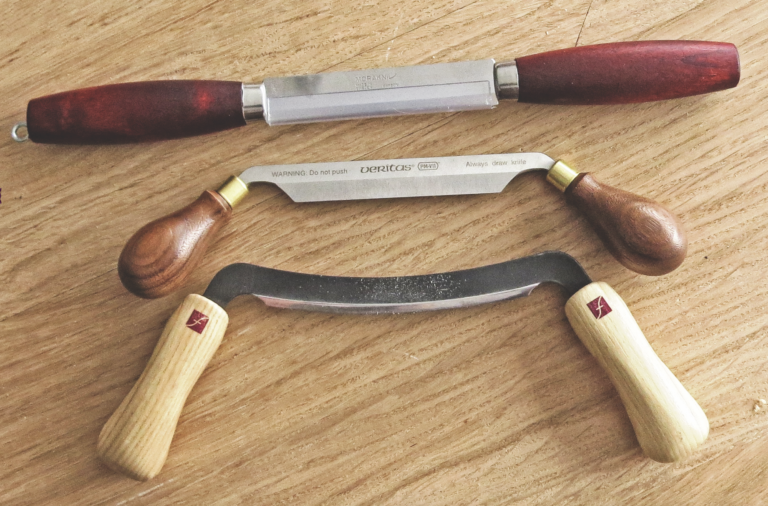
    Three small drawknives for carving and crafting are the focus this time: the MoraKniv Classic wood splitting knife, Flexcut Drawknife, and Veritas Drawknife. They are great because they are relatively compact and portable, and help comprise part of what you could call a portable rustic tool kit.

    DUAL BEVEL

    I know, right off the bat the MoraKniv Classic is called a wood splitting knife and not a drawknife. I thought this model would be interesting to test because it departs from the regular one-bevel blade geometry. The handle positioning is straight, giving the tool a compact configuration for transporting. It also comes with a sheath.

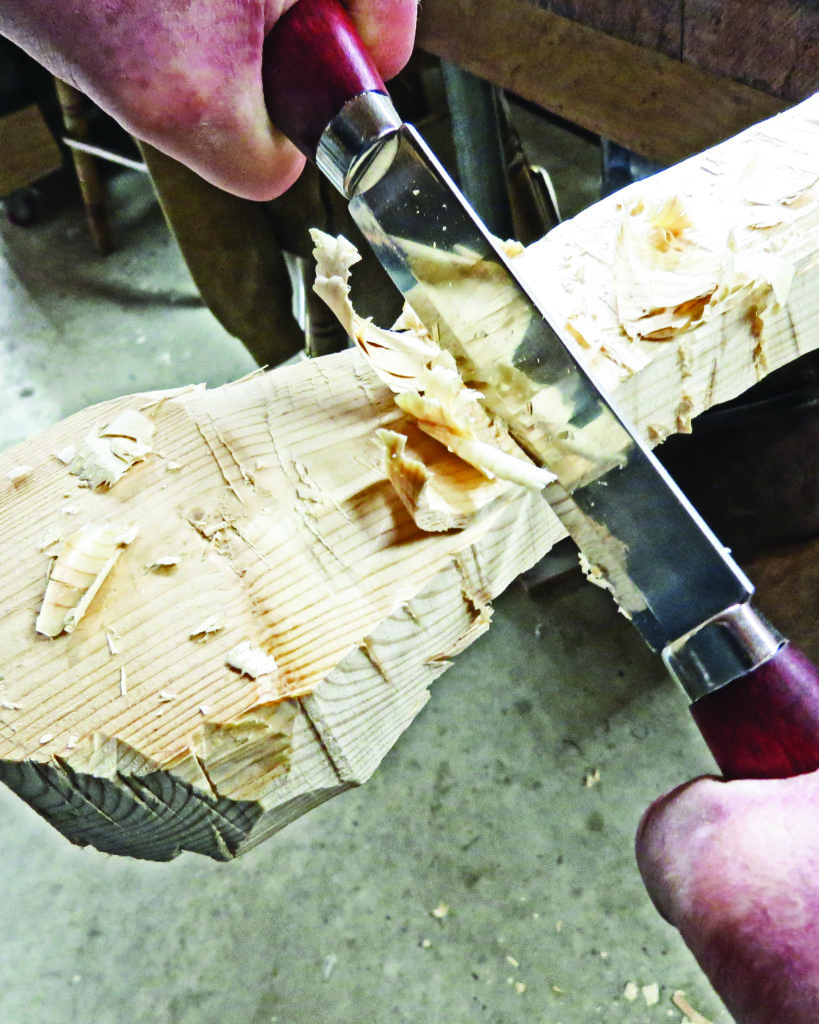
    The author uses the MoraKniv Classic wood splitting knife in a push-cut motion to perform a stop cut while contouring the grip on a paddle.

    Over the years, I’ve seen many a bushcrafter try and find a way for a standard knife to act as a drawknife. You can do many bushcraft chores with the MoraKniv Classic, from spoon work to shaping a tenon on a stool leg. You can do some of the same things with a regular knife, but with a drawknife it can be easier.

    The 4.5-inch carbon steel blade has a dual bevel. An advantage of such a bevel is it makes the knife more versatile. A disadvantage is you don’t have depth control on a cut like you do with a single bevel. Single-bevel blades provide control similar to using a woodworking plane or a chisel. You shear through the levels you need to and, once you establish your depth of cut, you can remove material without bogging down by using a bit of depth control. Given that the dual bevel is a Scandi grind, it makes control easier than, say, a grind with a micro and major bevels on both sides. Control is most certainly easier than, for instance, with a convex grind. In the end, it is no big deal. Having to control a blade only becomes a problem when its design is not conducive to the job at hand.

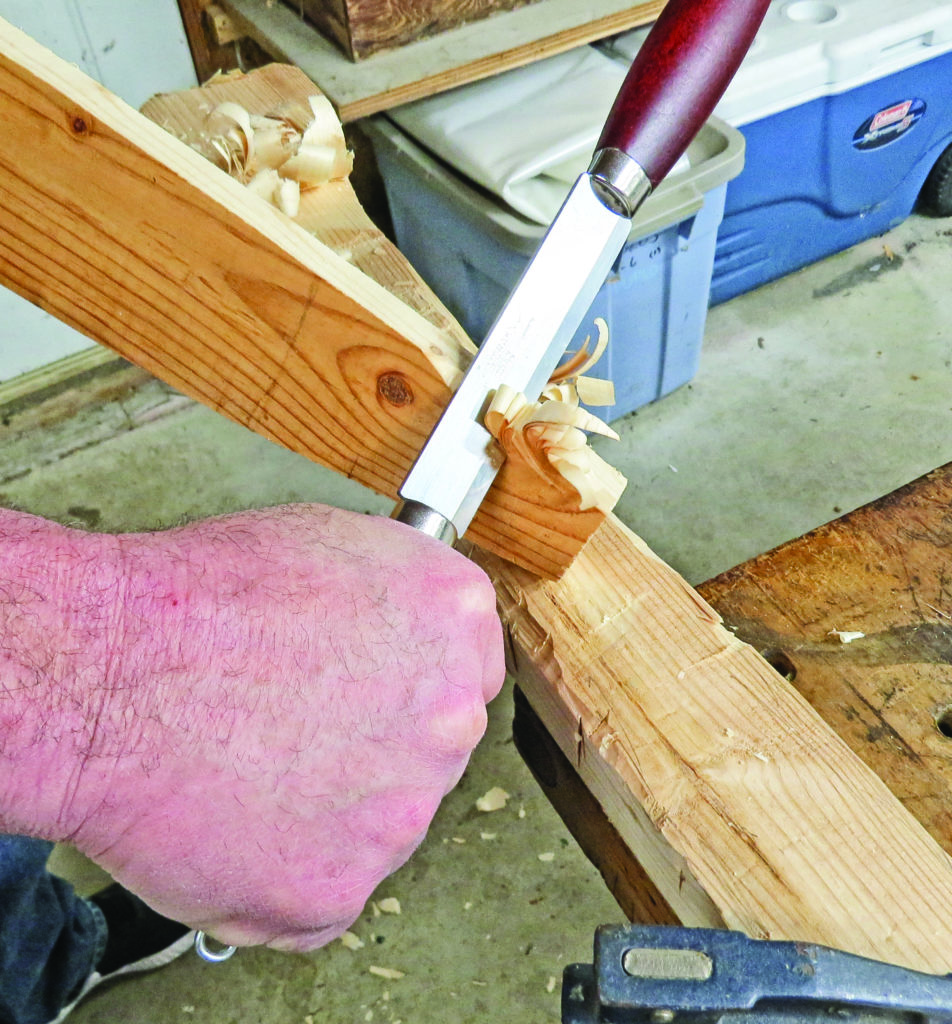
    Having in-line handles and a dual bevel, the Mora allows use like a sheath knife. It adds to the tool’s versatility and saves time, as you don’t have to put one knife down and pick up the other.

    For the most part, control affects how much energy you put into making the blade do exactly what you want. In the case of a convex-ground blade, if you want to make a long, straight cut at the same depth, you will expend more energy than you should trying to keep the blade from “porpoising” (that is, front to rear bouncing of the blade). The alternative is simply getting used to making shorter controlled cuts more frequently.

    The Classic cuts extremely well. Due to the straight handles and dual-bevel blade, you can switch and use it like a sheath knife in a split second.


    WESTERN TRADITIONAL

    Flexcut has a variety of tools covering chip, relief, and decoy carving, just to name three. The company also has a couple of drawknife styles. The Flexcut Drawknife is more of a traditional Western version. The 5-inch blade is 1095 carbon steel with the bevel brought to a mirror shine.

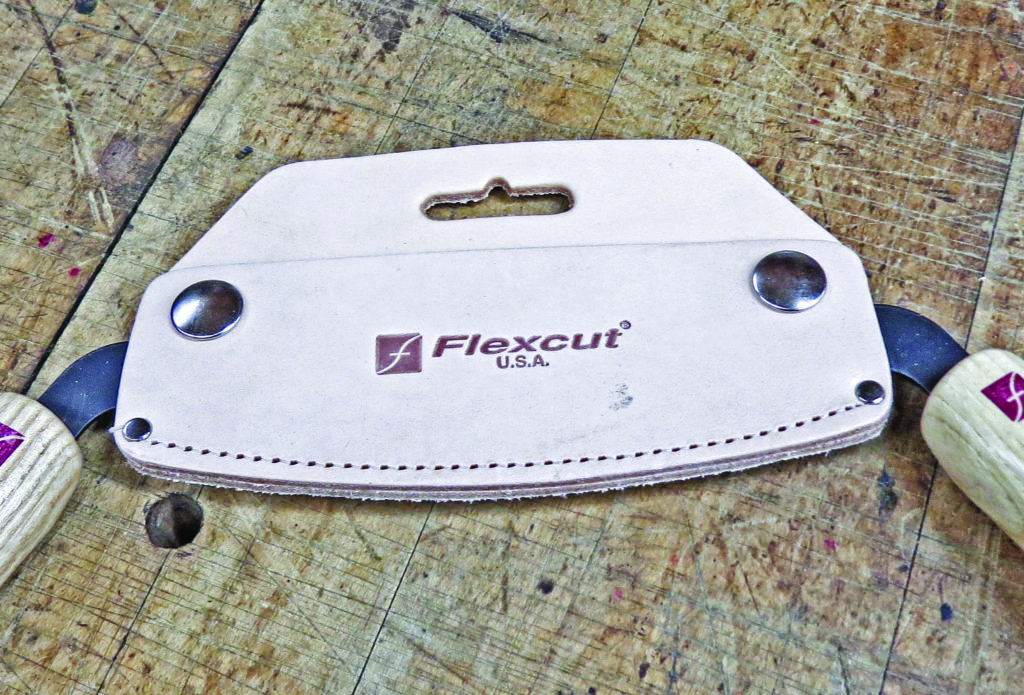
    The Flexcut comes with a well-made sheath. It is always nice to have something protecting the edge—if not for safety’s sake, for that of preserving the edge from accidental harm.

    Right out of the box, this thing is wicked sharp. It comes in a leather case with a peg-hole loop. It has a curved blade, which gives it a natural tendency to skew in a leading edge cut. If you haul the spine up a bit on your cuts, it will make more of a scraping action for a hollowing effect. It is a thin blade and not suited for hogging off large amounts of wood at one time. It is great for detailed jobs like the subtle contours you might find in a canoe yoke.

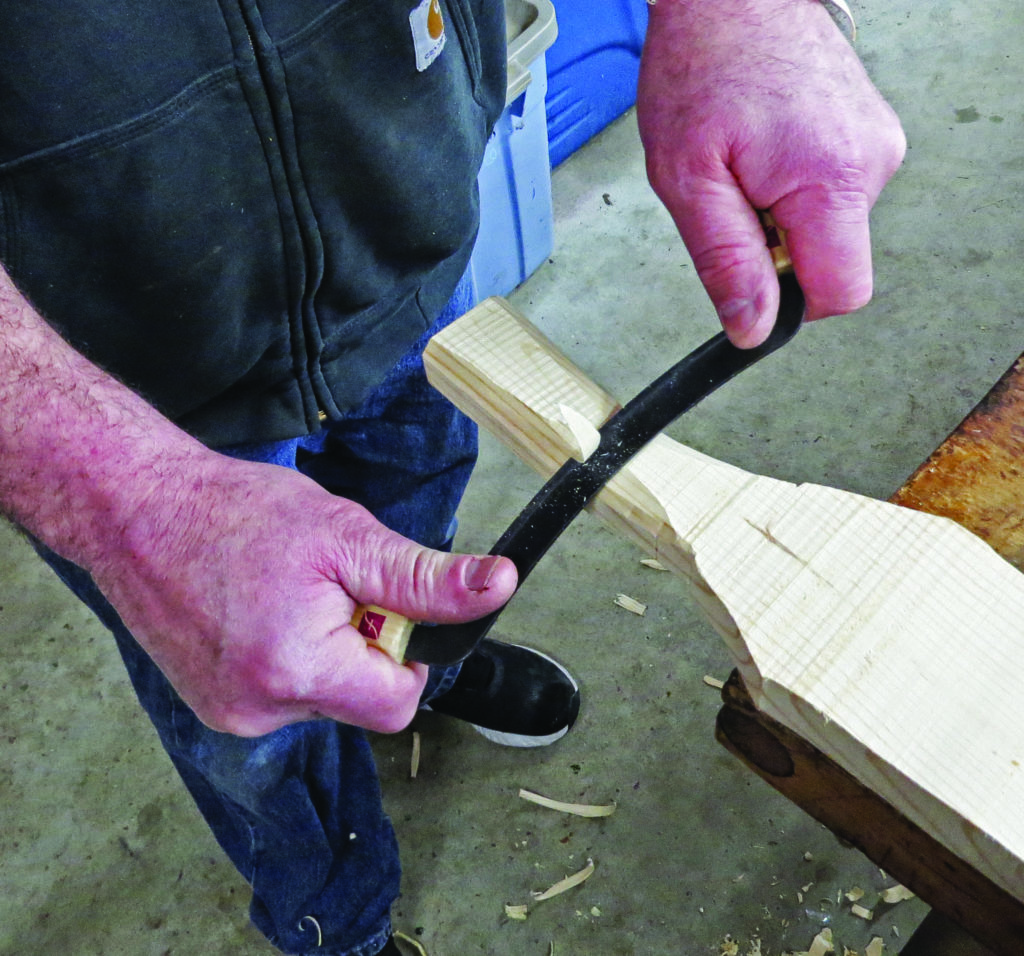
    Using the Flexcut Drawknife, the author shapes the handle for a flat-board atlatl. The efficiency you gain using a drawknife is hard to beat for control and energy.

    Such a small drawknife is a good tool not only to create art but to make utilitarian items. Given its Western-style handles, it doesn’t make a streamlined package for carrying in a pack like the Mora does, but it still has very little bulk and weight. The arched blade can be sharpened with a flat stone, though I find sharpening it with a small handheld stone and using a dynamic sharpening method easier. The Flexcut Drawknife is the kind of tool that suits the creative mind.

    HOB-KNOBBER

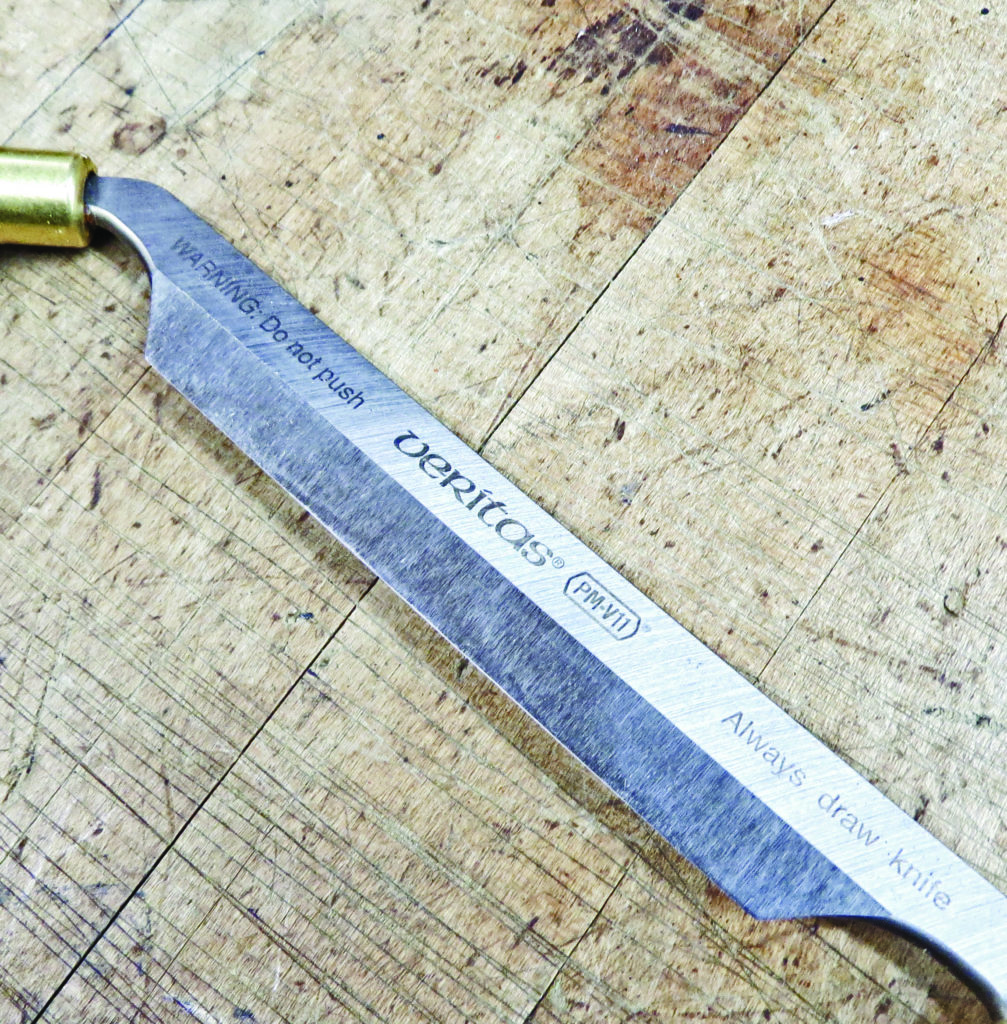
    The Veritas tool company manufactures the last of the test drawknives in Ottawa, Canada. Sporting a 4-inch blade, it is a small carving-style model. Steel is PMV-11, a stainless with a Rockwell hardness of 61-63 HRC. Veritas made the switch from traditional tool steels like O1 and A2 to up cutting performance and edge retention. A case for the knife sells separately.

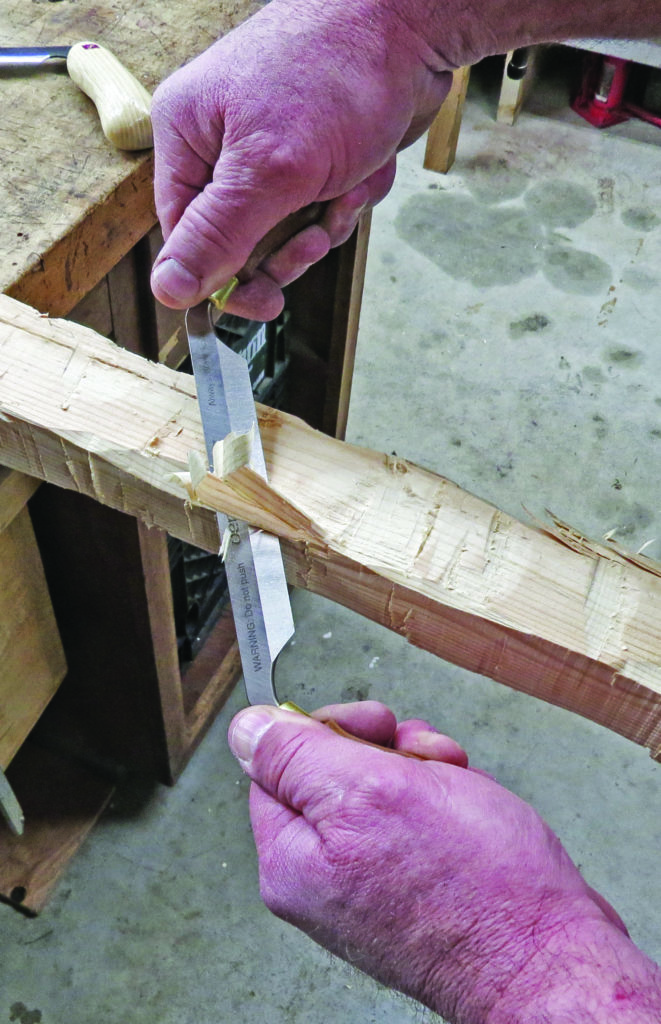
    The Veritas Drawknife’s 20-degree angle cuts aggressively and you have complete control with the well-shaped handles. Here the knife is skewed compared to its cutting path. Skewing the knife provides a leading edge to the cut, reducing resistance

    The company’s technical information says the bevel is ground at 20 degrees. To sharpen the Veritas, be sure the sharpener is of a flat design. Given the knife’s size, you can sharpen it in either a dynamic or a static style*. To cover/sharpen the entire bevel, you will need a flat surface. There is no micro bevel on the Veritas, though that’s not to say you can’t apply one. However, if you want to keep it original, you will need to cover the bevel.

    The angling of the handles is a traditional Western style, though they have more of an elongated knob shape to them. The shape helps reduce fatigue. Because of the handle angling the Veritas does not offer as compact of a carry as the Mora, but the .125-inch-thick blade makes it a bit sturdier user than the
    Flexcut. Handle material is torrefied maple. Due to the kilning process, the material has a greater stability to it without the use of chemicals. At the top of each handle is a brass ferrule.

    The author stated he has been known to push a drawknife to make a quick cut. The Veritas Drawknife clearly warns not to do that. At a 20-degree bevel, you take a chance of damaging the edge if you were to catch and roll it.

    It is a good-looking product and out of the box is ready to work. It is the most expensive of the review knives, yet is not so much more that you wind up scratching your head. A drawknife like this can be put to work doing a number of things limited only by your imagination. Veritas promotes it more as a carving tool and actually shows it making a decoy in the company’s marketing media.

    Staying within the bounds of this tool, I can’t think why you couldn’t get chores done or entertain yourself by making pieces of art with it. Keeping you busy in the woods and not necessarily only during a survival situation promotes better mental health. It is a great little package and a good tool—I just think the company could include the sheath. When you hold the knife you see where the extra cost is as the precision work shows in the fit and finish.

    EXPLORING OPTIONS

    Once you leave the big city behind, in order to thrive you must know how to make what you need. Many of the tools you carry will depend on what you plan on doing. If you’re building up a getaway spot, you might need to build items for the camp. When planning to build a more substantial base, you will need more tools. Again, it all depends on what you plan on doing. A good drawknife can greatly increase your cutting and carving options—not to mention that being able to use two hands greatly reduces fatigue. If you haven’t tried a drawknife yet, I highly recommend doing so.

    *Static sharpening is when the stone is stationary, and dynamic is when the stone is moving.

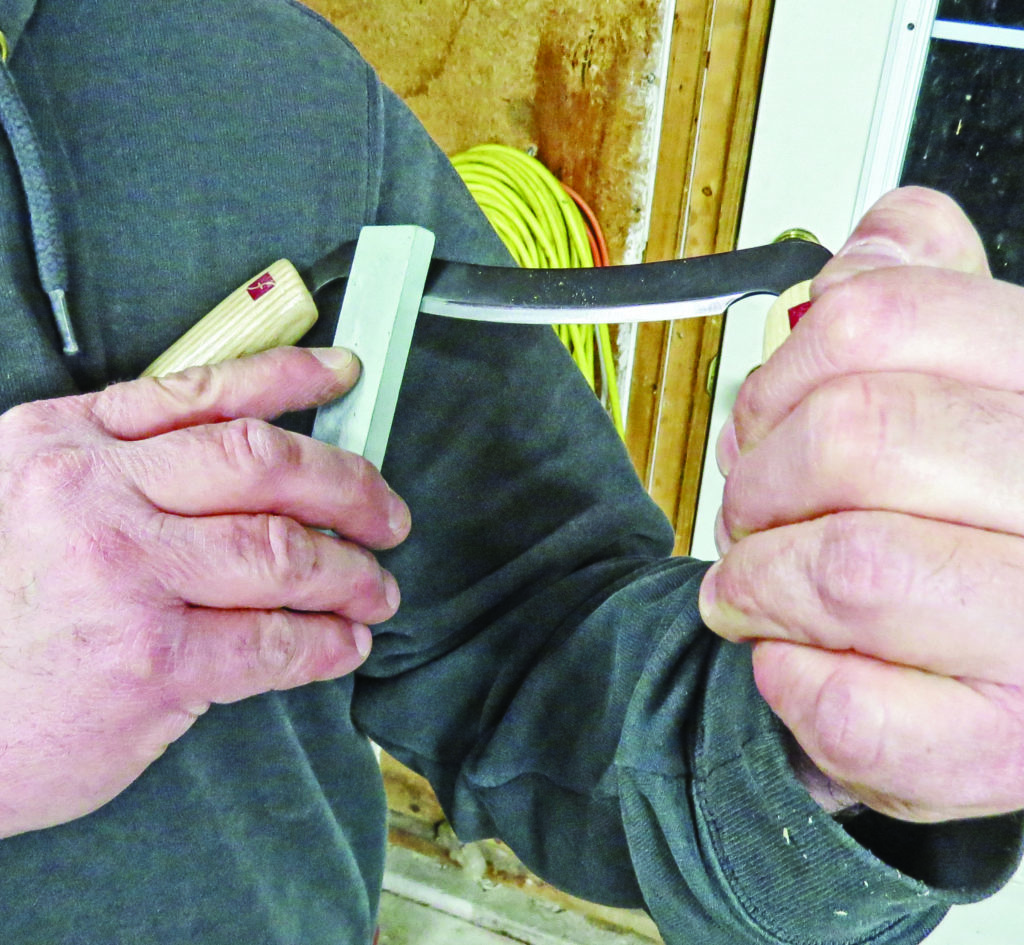
    A trick to sharpening drawknives both in the shop and field is to brace one handle against your armpit or chest. After bracing the knife, simply use a dynamic sharpening method with a small stone running parallel to the edge.

    The Latest EDC Multitools

    People Who Like to be Prepared Will Love the latest EDC Tools

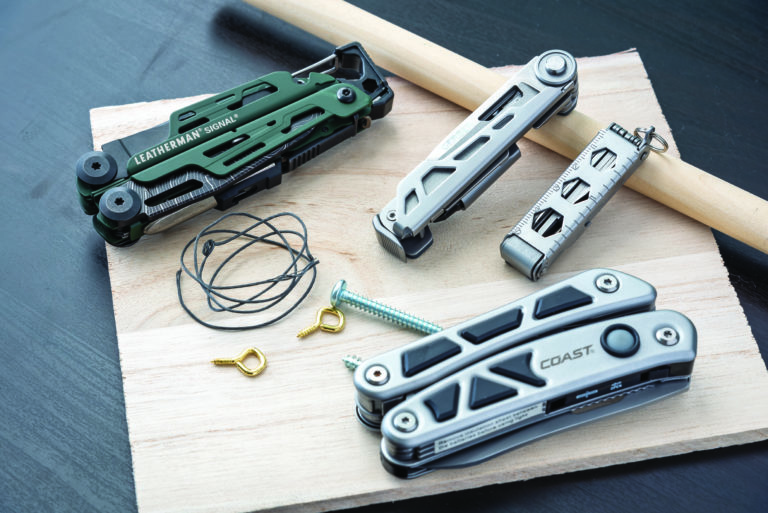
    Knife guys love gadgets, fix-it people love gadgets and DIY-ers love gadgets, so it’s easy to see why multi-tools do so well in the knife market. Though not knives per se, they off er more versatility than just cutting ability by offering on-board tools. With broader appeal than knives, multi-tools have a further reach and encompass more markets, too. They appeal to folks who like to be prepared.In addition to DIY-ers, campers, hunters, fishermen, hikers, mountain bikers and anyone who enjoys outdoor activities benefits from owning and using a multi-tool. It performs in-fi eld repairs on equipment when you do not have access to regular tools.  It can mean the difference between bowing out of a camping trip because of equipment failure, or performing an expedient in-field repair or adjustment and carrying on with your adventure. As with knives, advances in multi-tools have made them stronger and more user friendly and versatile.


    FLASH in the HAND: Coast’s LED150 multi-tool 

    When you think of multi-tools, what immediately comes to mind is a pliers-based tool with little fold-out implements nestled inside the handle. Truth is, multi-tools can take on any form as long as they incorporate the implements necessary for field-expedient repairs and adjustments.

    At first glance, Coast’s LED150 multi-tool might appear like any other pliers-based multi-tool, except for one thing: it incorporates not one but two LED lights. One LED is on the pliers jaw end and the other is on the partially serrated end of the knife blade. This way, you can confidently work in tight and dark spaces with confidence thanks to the illumination. The lights are activated by a recessed push button located on one side of the handle. Press once to activate the light by the main blade. Press again and the light turns off and, at the same time, the light on the pliers jaws end turns on. Press again and the jaws light turns off. With the multi-tool closed, you can use either light as a stand-alone flashlight, further expanding the multi-tool’s versatility. The lights are powered by two CR1616 lithium button batteries. The batteries replace easily.

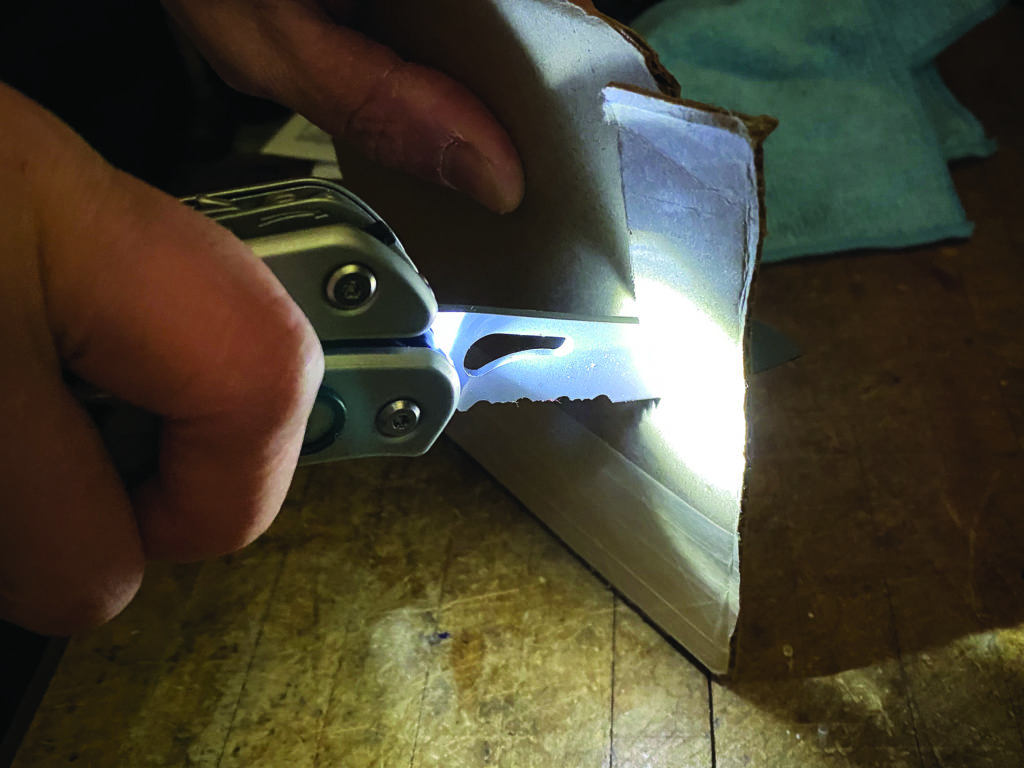
    The light on the end of the Coast LED150’s handle illuminates what you’re cutting.

    The pliers jaws have different gripping surfaces for smaller objects and larger nuts/round objects. The jaws themselves are spring loaded, which helps to open them by spring tension, reducing hand fatigue. When closed, all the fold-out tools are easily accessible: a partially serrated main blade that works on a linerlock, spring-loaded scissors, large and small flat-head screwdrivers, can opener, Phillips head screwdriver and the pliers jaws—most all the common implements necessary for field repairs and adjustments.

    The handles are aluminum and feature raised hard rubber for a non-slip grip. The LED150 has a good heft and the heavy-duty build will withstand normal use. The sturdy ballistic nylon belt pouch has a fabric-fastener flap closure. Manufacturer’s suggested retail price (MSRP): $49.  

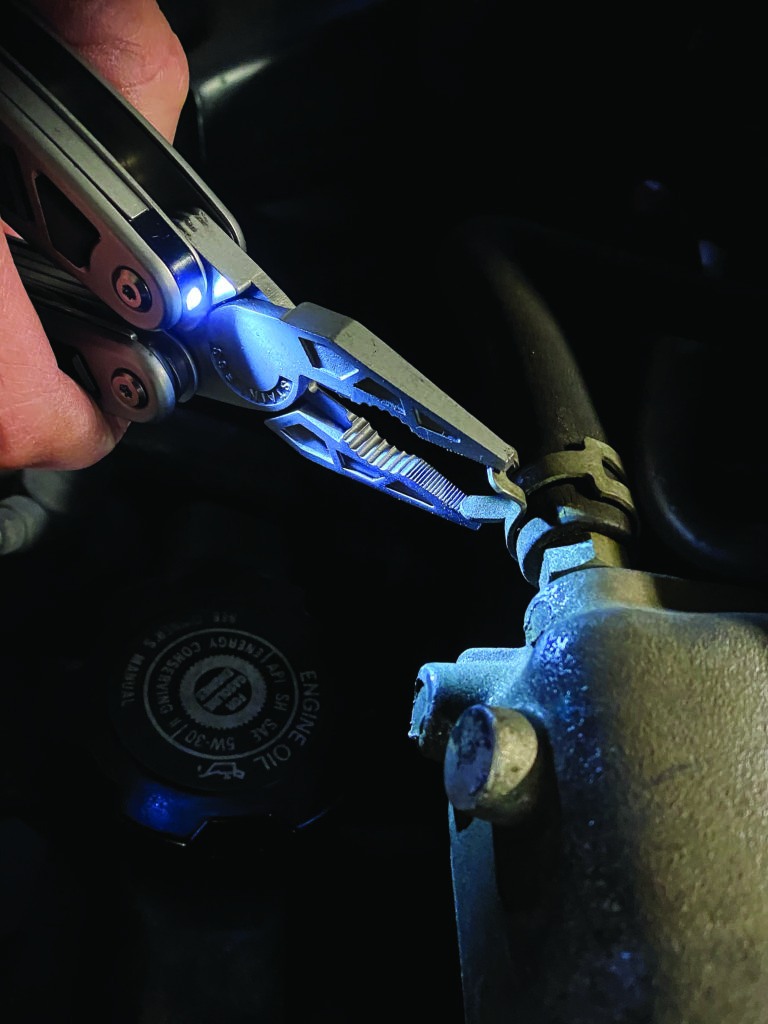
    One of the LED lights on Coast’s LED150 multi-tool shines on the pliers jaws end so you can effectively work in dark areas easily without the need for a separate flashlight.


    AFFORDABLE SOLUTION: Gerber’s Armbar

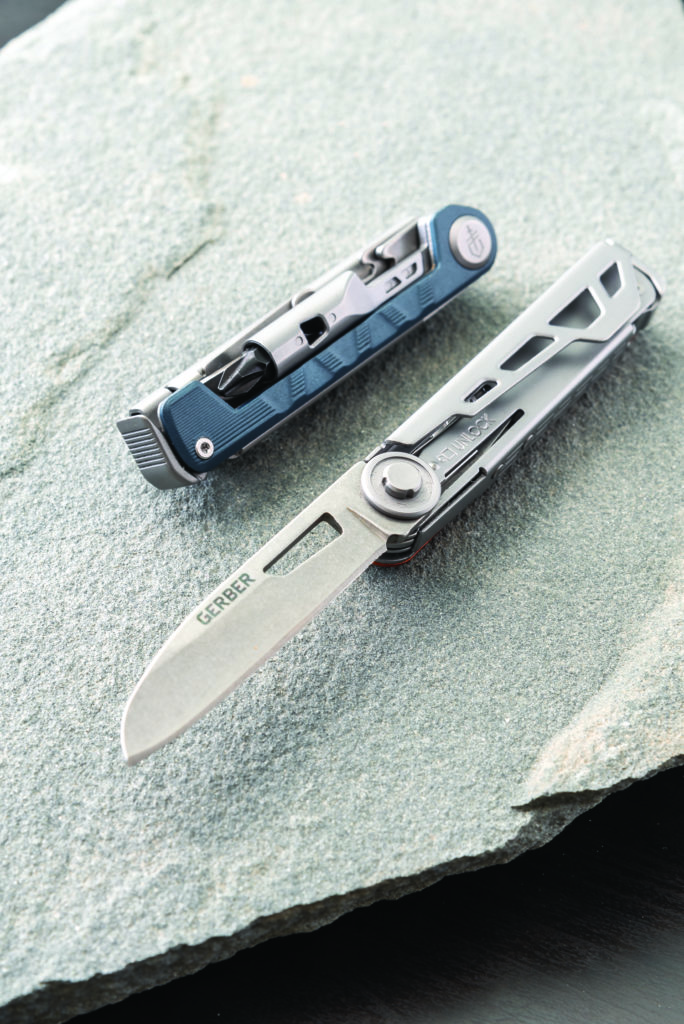
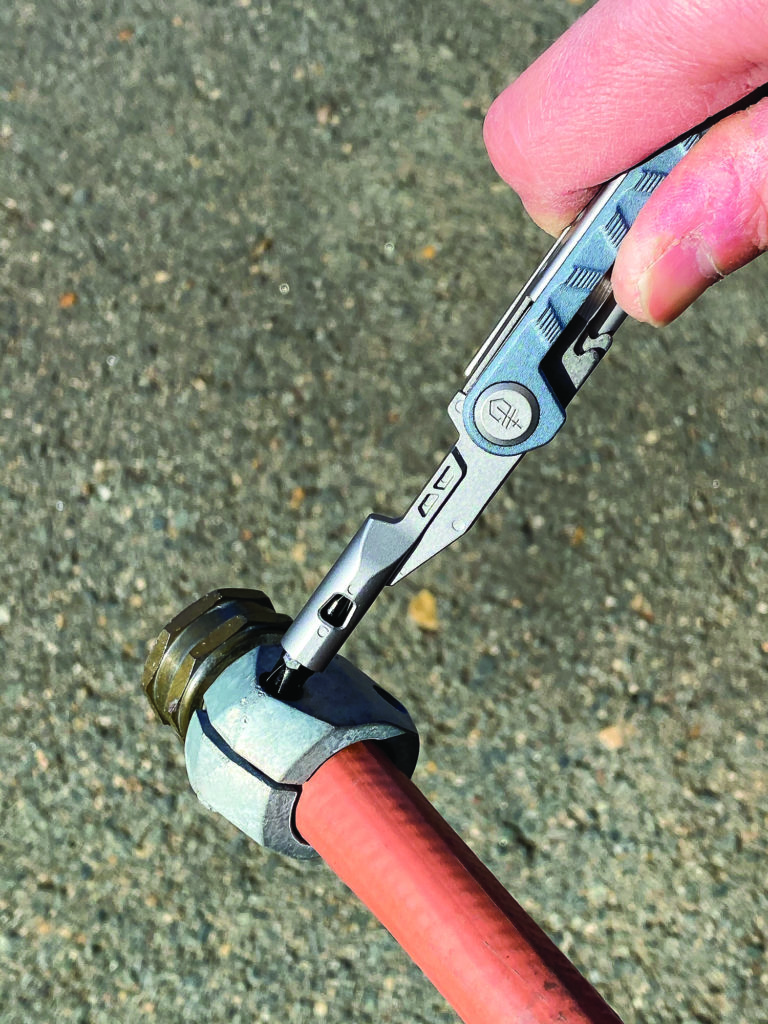
    Gerber’s Armbar series incorporates the fold-out implements of pliers-based multi-tools like the Coast LED150—minus the pliers. Sometimes, you just need the versatility of screwdrivers, a knife blade and scissors. About the same size as a large multi-blade pocketknife, the Armbar Drive features seven on-board fold-out tools: 2.5-inch plain edge sheepsfoot blade with opening hole and framelock, 2.5-inch extension driver with a double-sided bit of Phillips and flat-head screwdrivers, a prybar, bottle opener, hammer, scissors and awl.

    The Gerber Armbar Drive features a sturdy main blade. The entire package has about the same dimensions as a medium-sized traditional pocketknife.

    The extension driver has a magnet that holds the double-sided bit and allows for fast flip-over when transitioning to different screws. The driver socket can accept aftermarket quarter-inch drive bits, too. Hence, you can customize your Armbar Drive just about any way to fit your tasks. The spring-loaded scissors provide enough blade length for cutting coupons, stray threads and duct tape. The plain edge sheepsfoot blade thumbs open easily like any lock blade. The blade is mostly exposed even when closed, but the metal channel protects it from damage and you from accidental cuts.

    Perhaps the neatest implement is the combination hammer/prybar/bottle open-

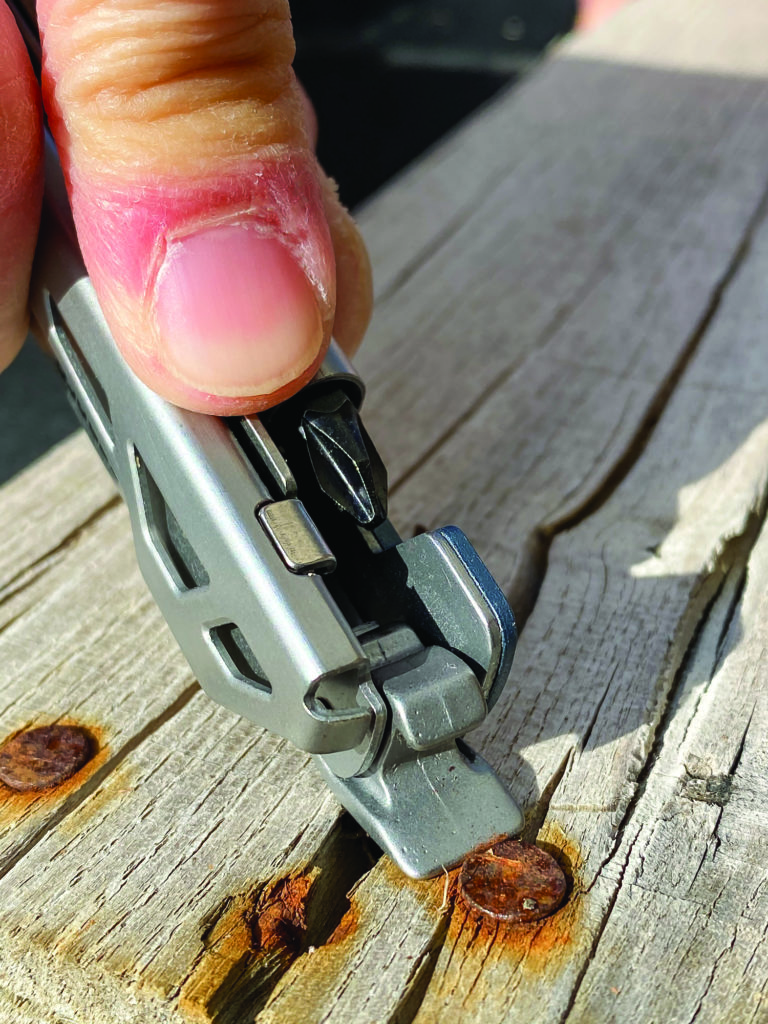
    er, which in the closed position is in the hammer mode by default. The squared-off back end takes care of light hammering. The prybar function is rather limited as you’re not going to get a ton of leverage. However, if you need staples removed or to pry open a casing and such, it does the job. 

    A fold-out prybar/bottle opener on the Gerber Armbar Drive performs light-duty prying when needed, saving the blade tips on your standard knives.

    One thing I wish Gerber would have included is the ability to lock the screwdriver in the fully open as well as the 90-degree position. When you torque down with the driver, your hand may move and this will cause the screwdriver to fold a bit. Also, when you use the tool in the 90-degree position, you apply more torque. Having it lock in the 90-degree position would make it easier to use—if not lock in both positions, then a strong detent and a half stop, like a slip joint, would be better than nothing. The form factor permits easy carry in your pocket, toolbox, glove box or a backpack.

    At 3.1 ounces the smallest multi-tool in the Armbar line, it comes in an aluminum handle anodized in a choice of urban blue, orange or onyx. With an MSRP of $39, it presents an affordable solution to a typical pliers-based multi-tool by reducing bulk and weight—that is, if you don’t need pliers.

    The screwdriver tool on the Gerber Armbar Drive is easy to manipulate. The magnetic socket allows you to flip the double-end bit over, as well as use most any aftermarket quarter-inch driver bit.


    TINY TOOLBOX: Utica Minimaster

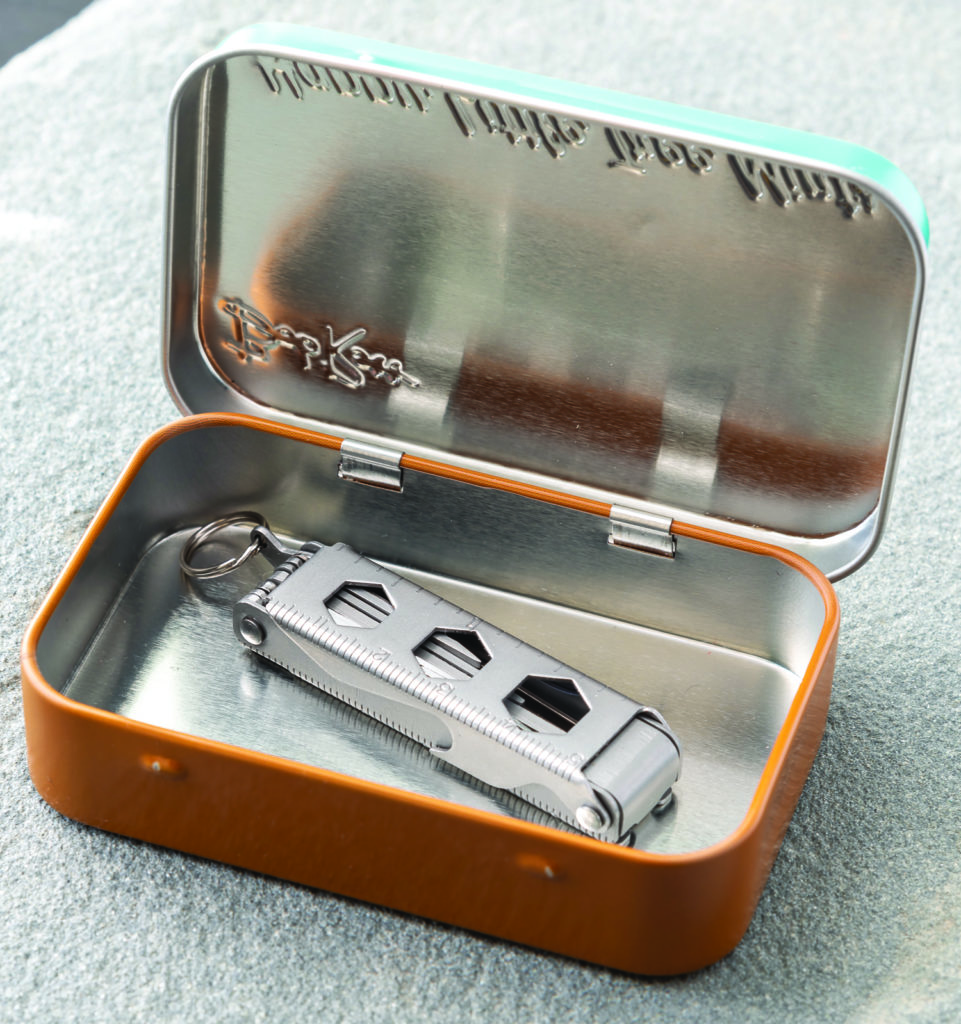
    Utica primarily manufactures knives for hunting and tactical but also makes multi-tools. The Minimaster is the smallest multi-tool of the test bunch. It’s loaded with many small fold-out implements: a pair of tweezers, large and small flat-head screwdrivers, a Phillips screwdriver, scissors, fingernail file/cleaner, knife blade, bottle opener, and -, 11/32- and -inch wrenches integrated into the folding cover. Made in the USA, it’s roughly the size of a Victorinox Classic, so it fits well on a keyring, its preferred method of carry.

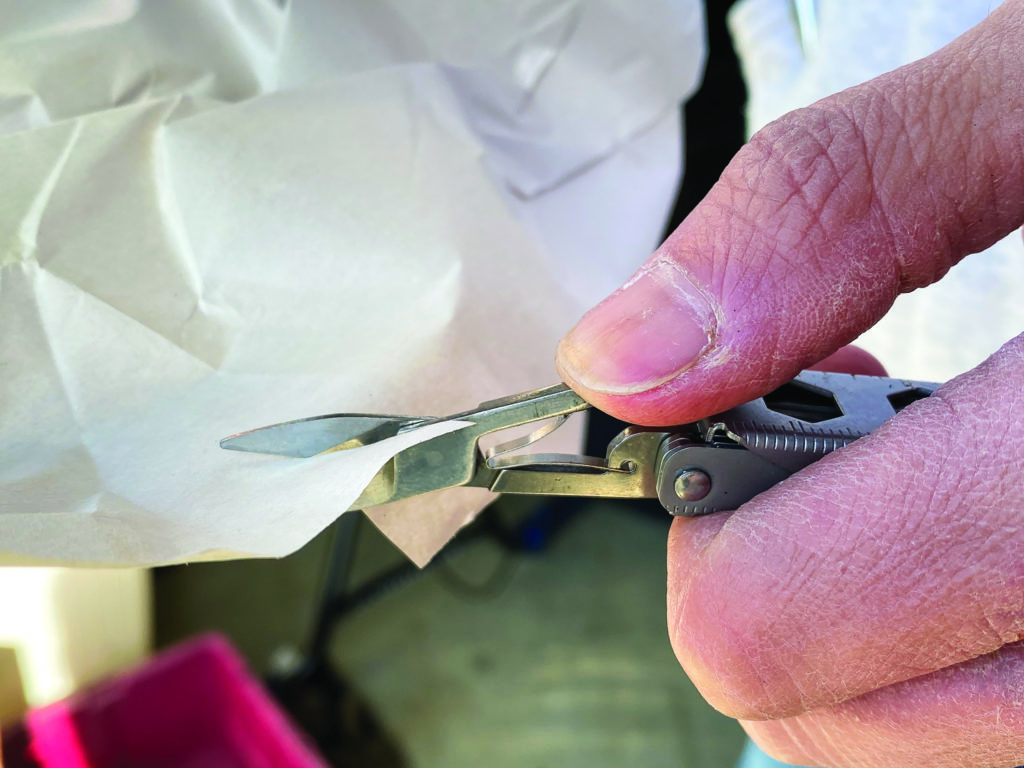
    The scissors may be tiny on the Utica Minimaster but it is effective.

    None of the tools lock in the open position. You pull one out and then close the cover; the cover held closed by your grip acts as the lock so the tools won’t fold on you. The tweezers are pretty neat—this is the only compact multi-tool I know of that integrates one. The tips are not textured or ground precise like regular tweezers, so grasping some things with it can be a bit difficult, though having one is better than not. As for the rest of the tools, they are handy to have and definitely will work in a pinch when you need them.

    The ultra-compact size of the Utica Minimaster makes it a great candidate for improvised tin-based survival kits.

    The only down side to the Minimaster is the hinged cover. It needs to detent tighter in the closed position, as the sample sent to us for review had a tendency to open partway easily. This could present a safety issue, especially if the tools open inadvertently. MSRP: $60. There’s also an imported version that retails for $9.95. Same construction and implement selection, except the multi-tool is made overseas.

    MAPPED MULTI-TOOL: Leatherman Signal

    When it comes to an article about multi-tools, I would be remiss to not include Leatherman Tool Group, the brand that pioneered the concept. It is the originator of the pliers-based format, and still among the best of them after all these years.

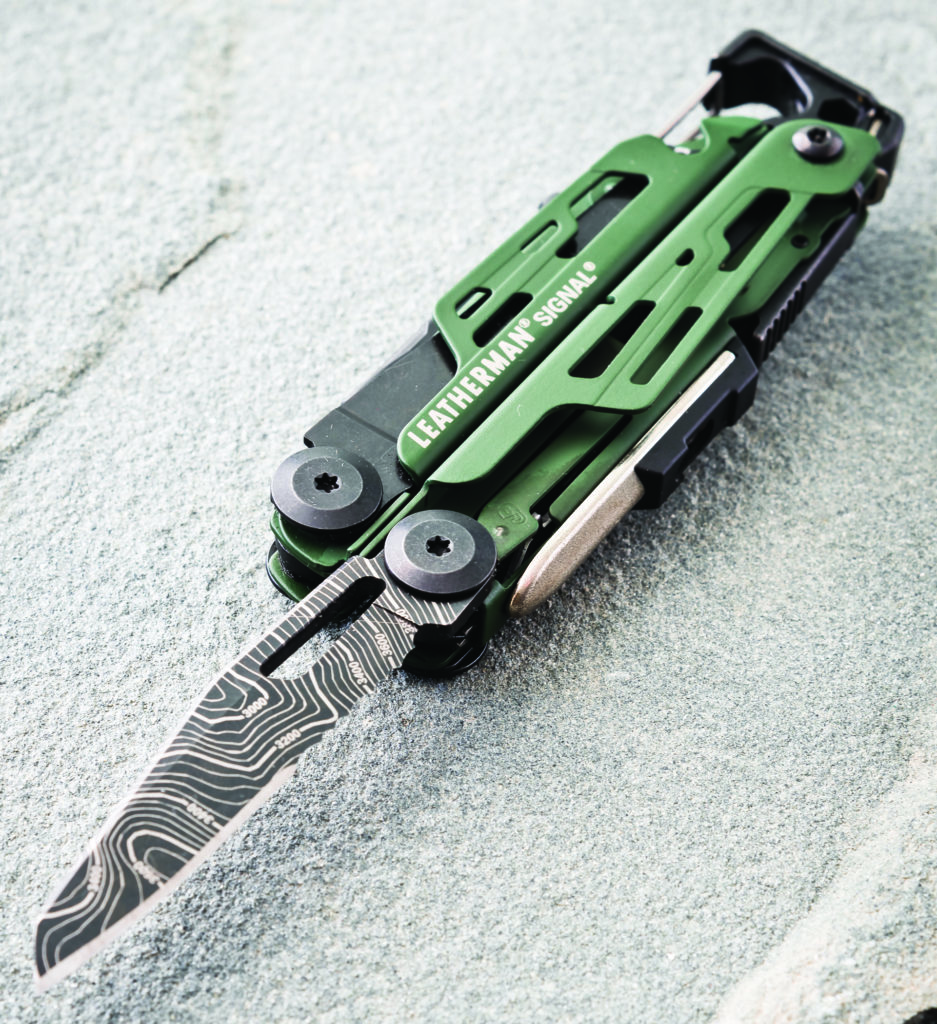
    The main blade of the Leatherman Topo Signal features a map-topography laser etching, hence the multi-tool’s name.

    The limited-edition Topo Signal is a variant of Leatherman’s Signal multi-tool. The Signal was developed specifically for the outdoor enthusiast, integrating features like a ferrocerium fire starter rod, saw, survival whistle, diamond sharpener and hammer, along with standard Leatherman features such as pliers jaws with replaceable cutting inserts, fold-out driver with reversible bit, awl and can opener. There’s also an integrated quarter-inch-bit socket built into the hammer portion of the handle, which will accept any standard quarter-inch bit driver.

    The main blade is a partially serrated 420HC stainless sheepsfoot pattern that locks open via a linerlock. The blade features an oblong opening hole, while the partial serrations eat through tough and fibrous materials with ease. The blade has a map-topography-style laser etch, hence the name. The distinctive appearance is pretty neat and fits in perfectly with the outdoor theme. Speaking of outdoor theme, the Topo Signal comes in a nice dark green Cerakote coating for the aluminum handles and pliers jaws, fold-out implements, and all-black hardware.

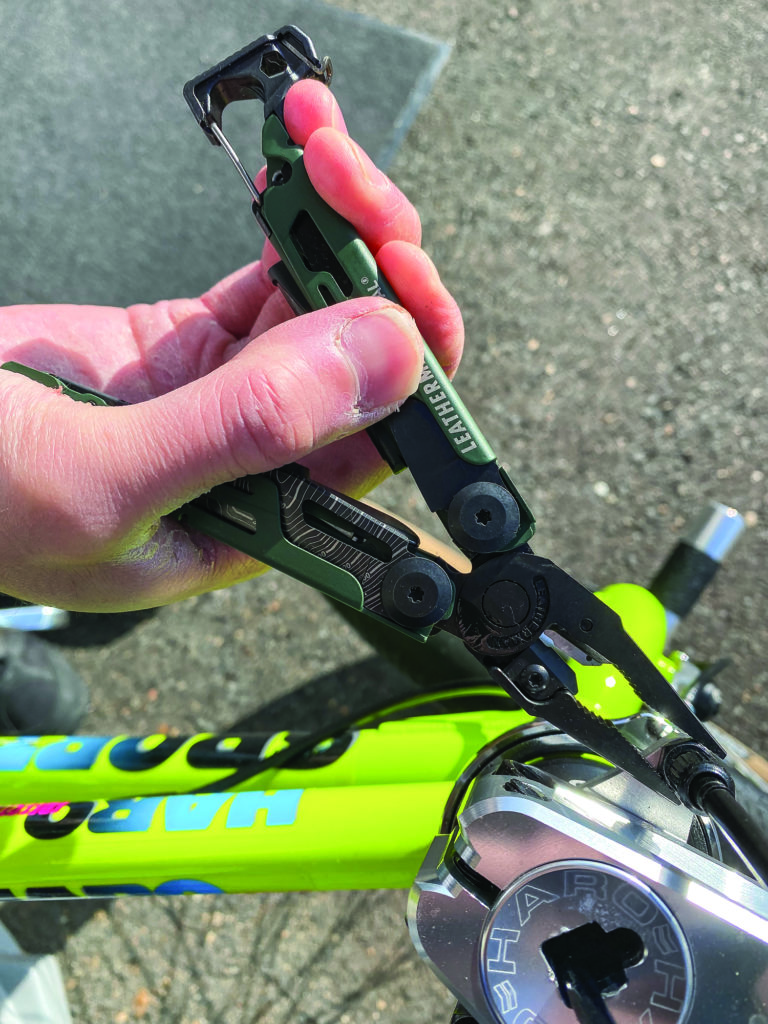
    Making on-the-spot repairs and adjustments are a multi-tool specialty. The needle-nose pliers of the Leatherman Topo Signal works great at accessing small nuts in cramped places.

    Each one comes with a nice ballistic nylon belt sheath with  button snap closure. It has a steel pocket clip. There’s also an integrated carabiner in the hammer portion so the tool can be clipped on a D-ring, etc.

    Comparatively speaking, a Leatherman multi-tool is engineered better than most on the market. MSRP: $119.95. Country of origin: USA. It is the most expensive of the test group, but the quality of the manufacture and fit and finish justifies the price.

    Advertisement

    Must Read Articles

    Read this before you make a knife

    Knifemaking 101 – Read This Before You Make a Knife

      by Wayne Goddard My experience has taught me that there's nothing like digging in and getting started. I've often said the hardest part of the...
    how to forge damascus steel

    How to Forge Damascus

    Advertisement
    Advertisement