Knife collecting is an extremely rewarding experience for knife enthusiasts. There truly is a knife for everyone. Many increase or hold their value throughout the years, making collecting knives something to pass on to the next generation of knife collectors.
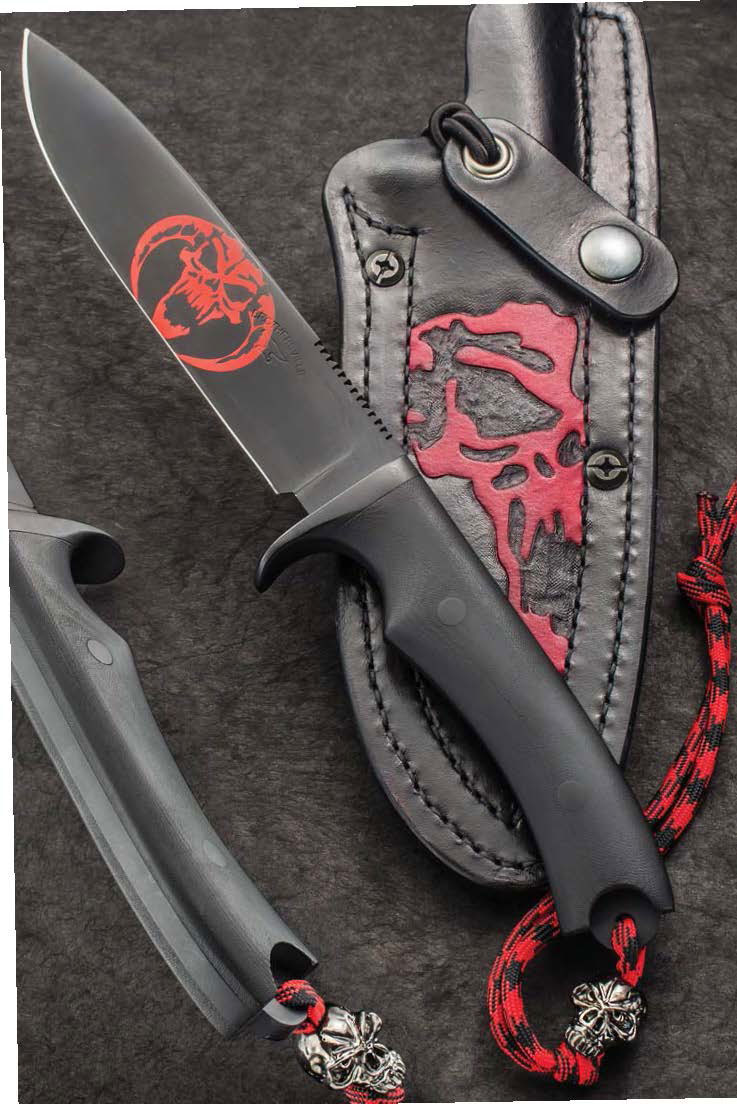
Peter Pruyn reproduced John Horrigan’s Bob Horrigan Fighter as a present for his son Jack who is considering going into the military after he graduates high school. The knife is named in honor of John’s brother, Bob Horrigan, 1st Special Forces Group, who was killed in action in Iraq in 2005. (SharpByCoop image)
With his son Jack expressing an interest in joining the military once he graduates high school, Peter Pruyn figured a reproduction of the Bob Horrigan Fighter by one of his mentors, ABS master smith John Horrigan, would be just the ticket as a gift form his military son in waiting.
“ABS master smith Red St. Cyr, another one of my mentors, said when you feel you’re good enough to make a knife in the style of one or more of your mentors, do it,” said Pruyn (Pruyn rhymes with pine).
Horrigan, a U.S. Army Ranger veteran, law enforcement officer and firefighter, is one of Peter’s mentors, ergo Pruyn’s version of the Bob Horrigan Fighter. Peter’s version has a few differences—among them a 5.5-inch blade, 154CM stainless steel, flat grind, embellished red skulls and a Cerakote® finish by Jesse Ruiz of Legendary Coatings instead of John’s 6.5-inch blade, 440C stainless steel, hollow grind and sand-blast finish.
Peter’s daughter Sophia fashioned the lanyard and attached the Emerson skull bead.
For more information contact Brothersville Custom Knives, c/o Peter Pruyn, Dept. BL3, 110 Reel Ln., Grants Pass, OR 97527 631-793-9052 [email protected], Facebook/Instagram: Peter Pruyn.
SPECS
KNIFE: Reproduction of John Horrigan’s Bob Horrigan Fighter
MAKER: Peter Pruyn
BLADE LENGTH: 5.5”
BLADE STEEL: 154CM stainless
BLADE GRIND: Flat
BLADE COAT: Emerson skull embellishment w/Cerakote® finish by Jesse Ruiz of Legendary Coatings
HANDLE: Micarta SHEATH: Kydex under leather w/red skull embellishment, felt inside Kydex, snaps, MOLLE compatible, multiple carry options, by Will Elmore
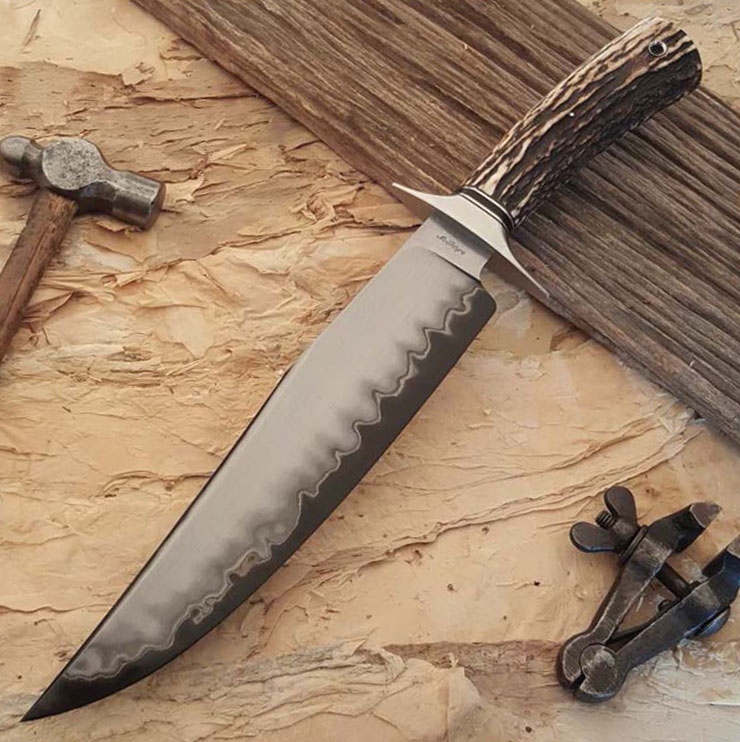
The author stated that Australian ABS master smith Shawn McIntyre “has created his following by offering exceptional quality at a value price.” McIntyre’s “San Mai Bowie” features a 10-inch blade in a san-mai construction, a sambar stag handle and a leather sheath. The author’s price: $1,575. (Shawn McIntyre image)
Editor’s note: This article is from the knifemaker’s point of view, but it could also be used by collectors to better understand price.
Make the Equation
Most manufactured products, whether factory or custom made, have similarities. For those of you unfamiliar with cost accounting, one of the similarities is basically what the costs for building a particular item are.
In the case of custom knives, such costs include those for the machines, belts, drill bits, saw blades, propane, tongs, hammers, etc.—in other words, anything in the shop used to produce the knife.
Other items not necessarily taken into account are those such as the cost of electricity, machine wear and tear, etc. Obviously, materials are easy to account for.
Then there is the amount of money you want—want being the operative word—to make selling your knives, followed by the amount of profit you want to make. The resulting equation is:
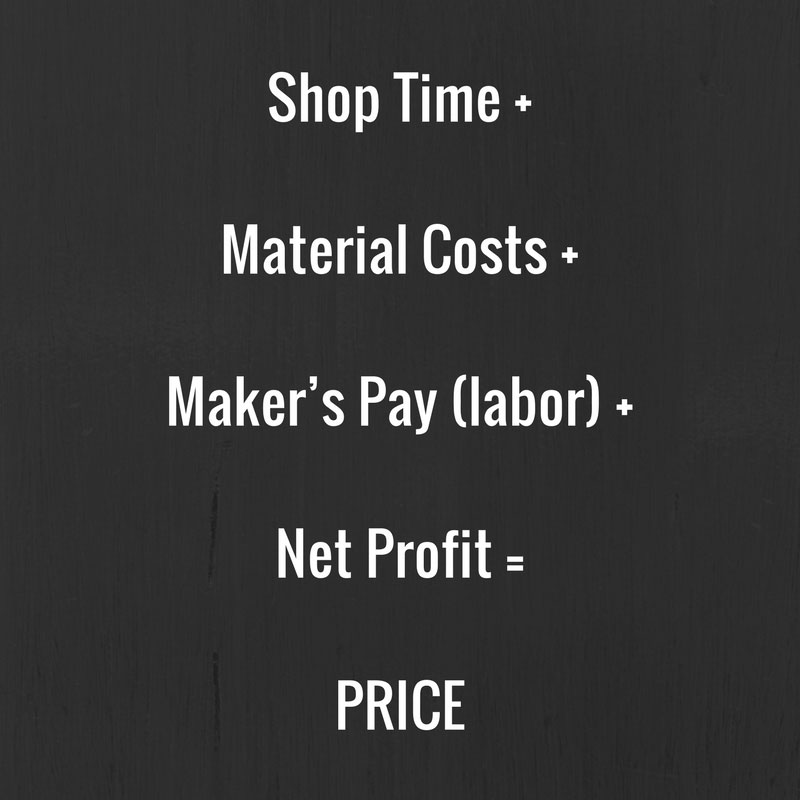
Shop time + material costs + maker’s pay (labor) + net profit = the actual cost (or price) of the knife
(Editor’s note: for collectors, the wiggle room on negotiation could be found in the net profit part of that equation.)
When the Price is Too High
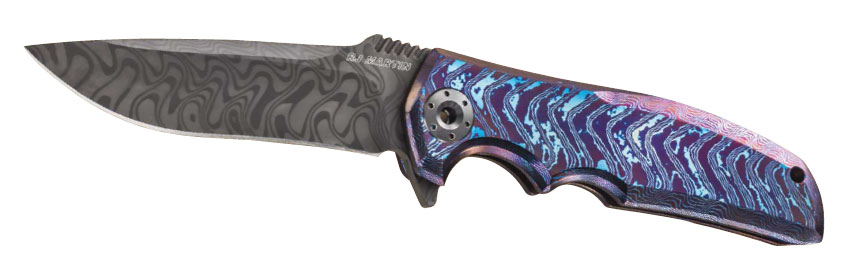
Of RJ Martin the author noted, he “has secured his position as one of the best and most sought after tactical folder makers in the world, due in part to the value pricing he has utilized over the last 30 years.” Martin’s Illudium boasts a 4-inch blade of Chad Nichols Boomerang stainless damascus and a handle of Nichols’ Moku-Ti. The tip-up clip is zirconium. Approximate closed length: 5 inches. The author’s price: $6,000. (Sharp By Coop image)
Again, you’re a knifemaker. Are your knives too expensive? The short answer is “probably.” Over the past 32 years of asking knifemakers the question, the two most prevalent answers I get are:
1) My knives are priced on the advice of another knifemaker;
2) My knives are priced based on what others are asking for similar knives.
While makers who incorporate such pricing strategies can justify them, both approaches incorporate what I call lazy pricing. While you may not realize it, other knifemakers are your competitors.
While they may mean well, their advice for your knives is misplaced. First and foremost they are knifemakers, not knife buyers. What they know are their knives, their market and their clients. This may or may not have any impact on your knives, or, more importantly, the selling of your knives.
In some cases other makers may understand that you are a competitor and suggest you raise your prices, giving their knives more perceived value.
While attending the 1989 Knifemakers’ Guild Show, I was standing at the table of a very well-known knifemaker and checking out his knives. A new maker approached the veteran maker and asked him to critique his knives. The veteran maker asked him how long he had been making knives and for his price for one of them.
The new maker replied, “I have been making knives for two years and this knife is $250.”
The veteran maker said, “You are doing good work. I would raise the price of this knife to $325!”
As you can imagine the new maker thanked the veteran maker, smiled and returned to his table.
In the next few minutes a potential buyer was questioning the veteran maker about the $375 price tag on a particular knife. The veteran maker was quick to point down the aisle, saying, “See that maker right there? He has only been making knives for two years and is asking $325 for one of his knives. Quite frankly, my price is a bargain.”
Whose interest did the veteran maker have in mind while recommending pricing to a fellow maker who sought his advice? To date I have never had a maker using this strategy tell me the veteran maker suggested that the maker lower his or her prices. I found this to be a real eye opener, and it changed the way I looked at custom knife pricing.
When the Price is Too Low
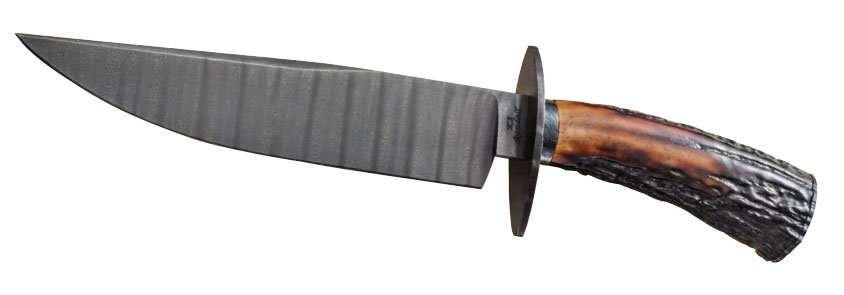
ABS master smith Steve Randall outfits his straight knife in a 7.5-inch blade of ladder-pattern damascus and an amber stag handle. The author’s list price: $1,650. “Steve’s work continues to impress,” the author observed. “Since the inception of his making custom knives, he has always incorporated value pricing into them.” (Sharp By Coop image)
If you are a knifemaker, remember that, early on, people are paying for you to learn your knifemaking skills—a sort of scholarship program, if you will. The object of the exercise is to get as many of your knives into the hands of buyers as possible. You can do this by utilizing value pricing. Your market position will indicate to you what the price should be.
As your knifemaking skills and following develop, your pricing, because of your rising position in the market, will continue to increase. At this point your pricing will be determined not by a friend or another maker’s similar work, but through your understanding of your position in the market and how you got there.
Ask the Author More About Pricing at BLADE Show 2018
Conducted the day before and the Friday and Saturday of the BLADE Show June 1-3 at the Cobb Galleria Centre in Atlanta, BLADE University is the most comprehensive array of classes on the subject of knives and knifemaking of any knife show.
From 9:45 to 10:45 a.m. on Saturday, June 2, Robertson will conduct the class “Knife Collecting for Beginners” and discuss what you need to know before you start buying custom knives.
For more information on these classes and others in BLADE U., visit bladeshow.com.
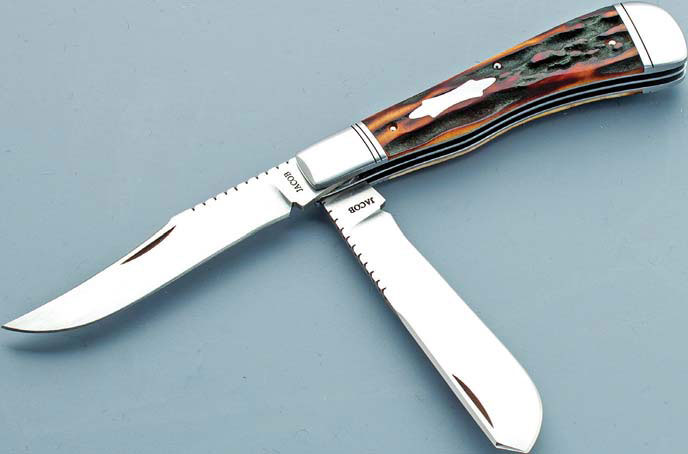
Phil Jacob took home the Best New Maker award from BLADE Show 2017, which is as good as it gets for someone getting started in knifemaking. The achievement is also good news for knife collectors looking for a guiding light for their collections. “Best New Maker” translates to “best new opportunity” for ROIs on investment.
Jacob, who calls Kansas home, specializes in slip joint folders. The addition of exotic handle materials and attention to detail offset any cliches about this traditional style. Just take a look at the double-bladed trapper that made waves at BLADE Show.
Specs:
Blade lengths: 3.125”
Blade steel: CPM 154 stainless
Handle: Stag dyed amber
Folding mechanism: Slip joint
Weight: 5.1 oz
Closed length: 4.5”
Maker’s list price for a similar knife: $875 to $1,100
Jacob maintains a healthy social media presence, which is another benefit to collectors interested in a commission or a resale. His Facebook page is full of status updates and photos.
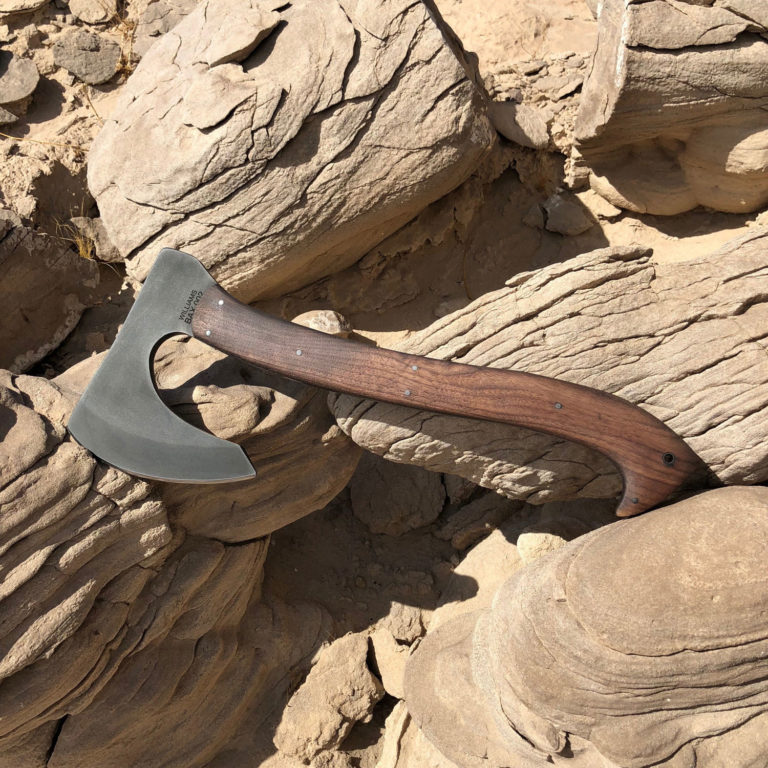
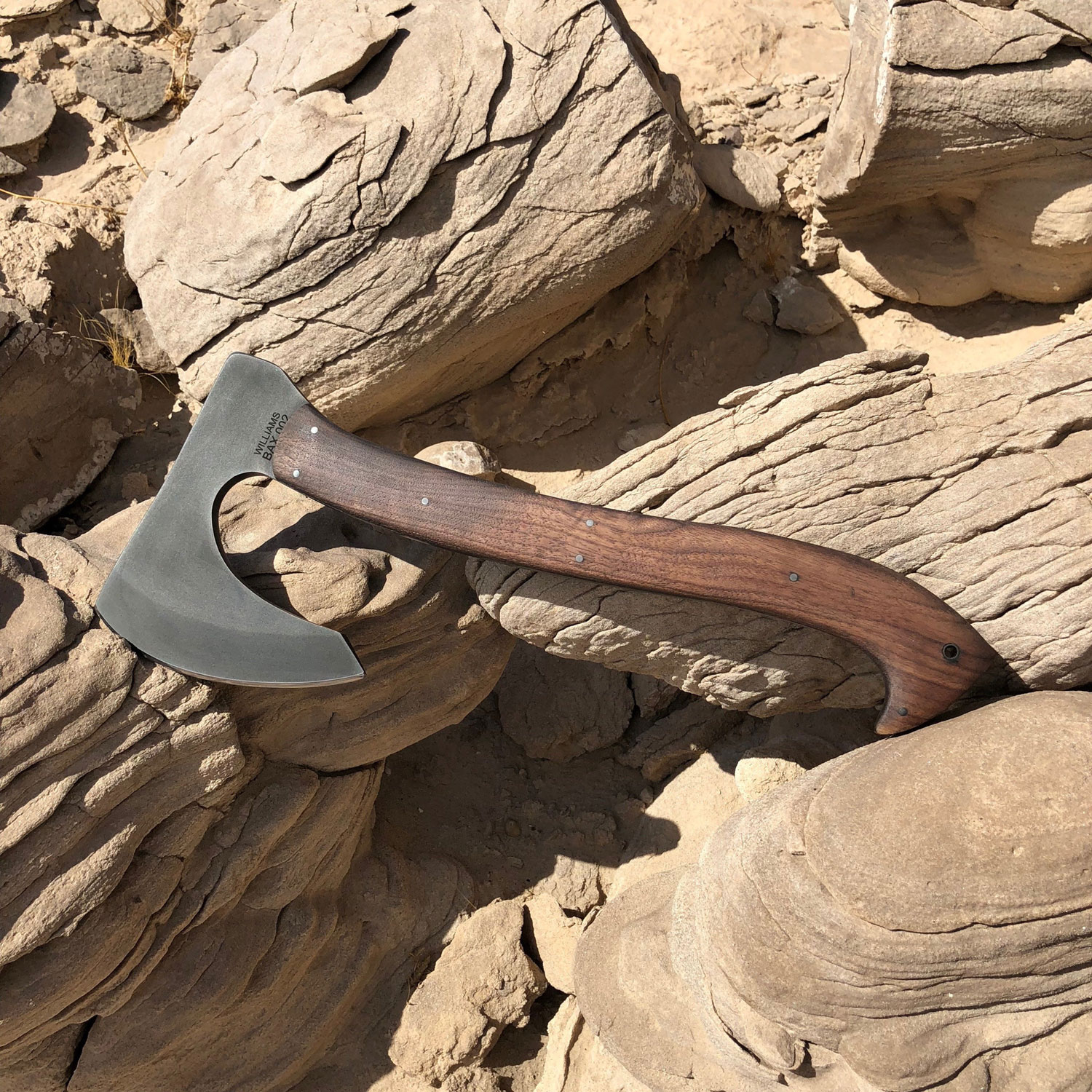
Beards and blades never went out of style, so it’s only appropriate that an axe continue the tradition with a “beard” of its own. The BAX 002 Bearded Axe, offered via Williams Blade Design, draws from Viking lore with a formidable design hatched by ABS master smith Daniel Winkler, someone with plenty of beardly street cred himself.
While the follicles on the BAX 002 are noticeably absent, it should be noted that the “beard” refers to the shape of the axe head. The extra gap this allows between the head and the handle allows the user to “choke up behind the edge for detailed work,” according to a media release. The result offers enough heft to satisfy raiding parties of yesteryear or today.
From Williams Blade Design:
Inspired by the axes of the Vikings, this bearded axe is equally at home in the wild or on the battlefield. The full tang 80CrV2 steel construction makes for an impressively tough tool that excels in the roughest environments. The walnut handle scales provide excellent feel for delicate tasks, and solid grip when the need arises.
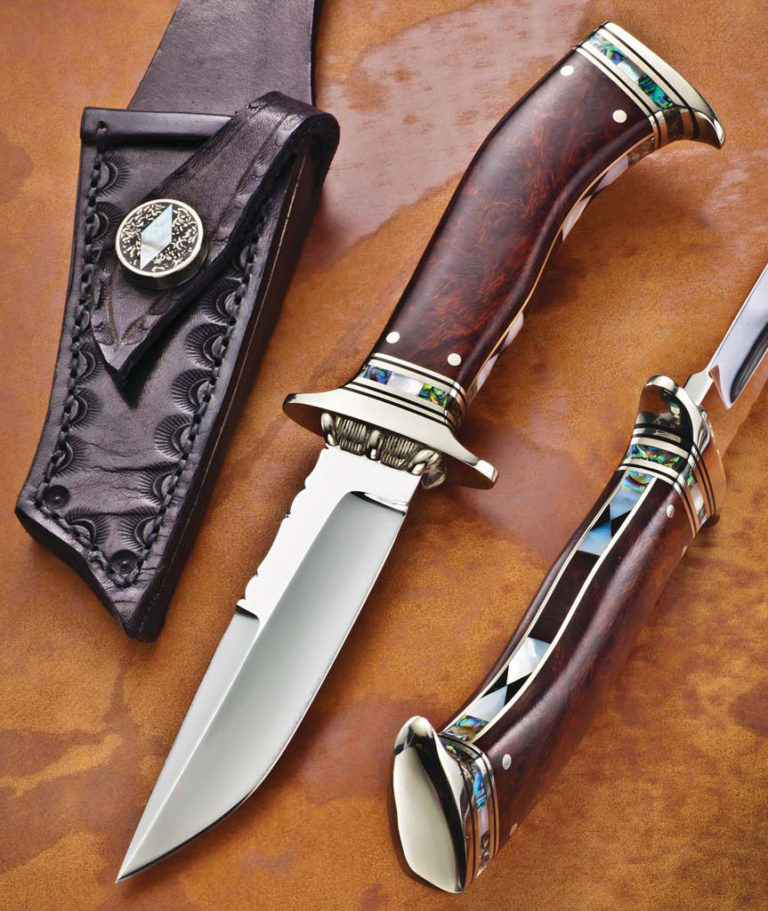
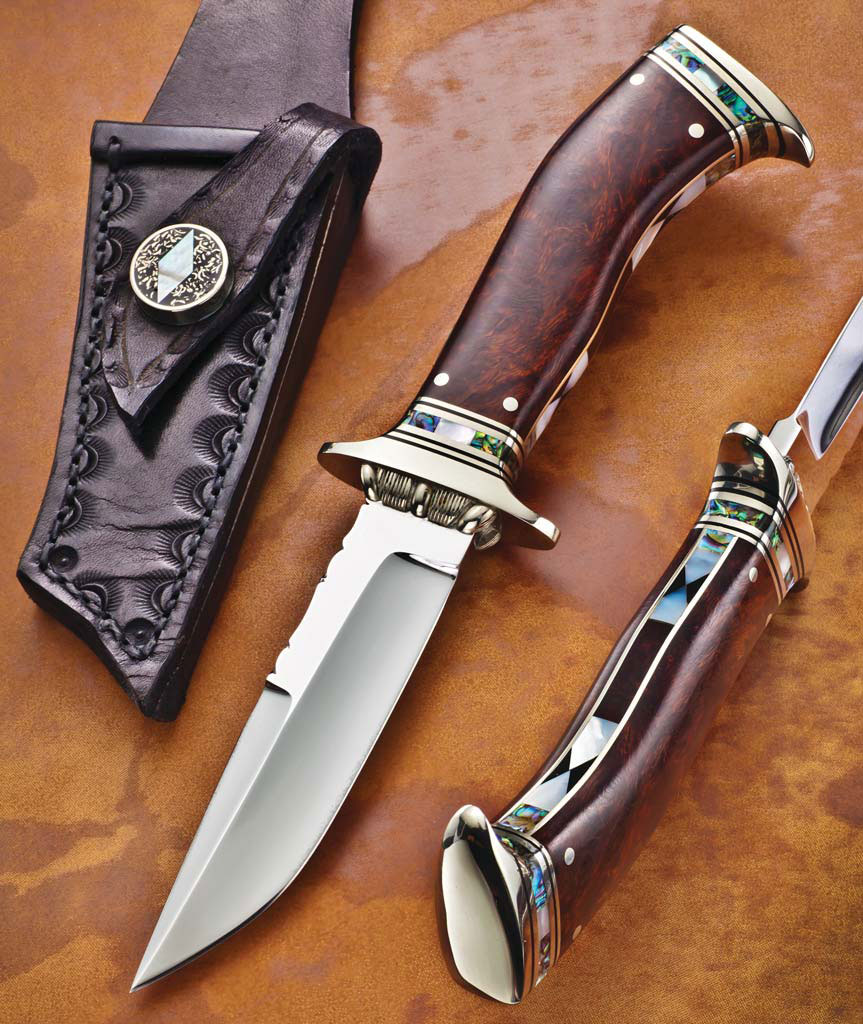
Well-made vintage knives by legendary makers can be very attractive to collect. Lloyd Hale does the honors here in a chute knife sporting an ironwood handle with pearl and abalone inlay. (SharpByCoop.com photo)
Eventually, All Knife Collectors Hit Crossroads
You may face a crossroads, a time of decision involving the realization that interests, tastes and possibly buying power change. In such situations, you may decide to begin collecting a different genre of knives, departing from what you have collected. If and when that time comes, evaluating your situation and making informed decisions is crucial.
Some basic questions loom large, from deciding what to collect to getting the best education on what is available, selling or retaining an existing collection, and, if the choice is to sell, then maximizing the revenue generated.
Should You Reboot? Ask Yourself These Questions
Do you have a very good reason for starting over?
Do you sell or keep your existing collection?
If you sell it, how do you get the most out of it?
Are you trying to recover your initial investment or trying to make as much money as possible to assemble your new collection?
Are you comfortable with the effort and costs it will take to build a new collection?
Do you want to make money or collect, carry or use the knives?
What knives should you collect, and how do you best research them?
How available are they and are they of recent vintage?
Are they still in production or limited in distribution, both of which influence collectibility?
If antiques, where can they be found and can they be found without undue cost?
What are the prices typically asked for the knives in collectible condition?
Are you going to collect only mint or near-mint examples, and can you afford to pay premium prices for them?
Guidelines for Going Forward with a New Collection
If, after answering those questions, you decide to liquidate and start over, keep these guidelines in mind.
Collect what you like or even use.
Chasing trends is a fool’s errand. Collecting knives that are hot now means paying top dollar now as well.
Know which knives are collectible in specific geographic locations of the country.
Inexpensive, low-end knives will never appreciate to any degree.
Well-made, fine-condition knives should not lose you any money.
Don’t buy damaged/poor condition knives unless they are very old and collectible, such as antique bowies and rare military knives.
Butterfly knives (aka “balisongs”) have evolved into meticulously crafted pieces of cutlery. Many of the best capitalize on state-of-the-art blade and handle materials coupled with progressive and modern designs that advance the genre toward the close of the century’s second decade.
Brous Blades B3
(All images by David Stanfield unless otherwise noted)
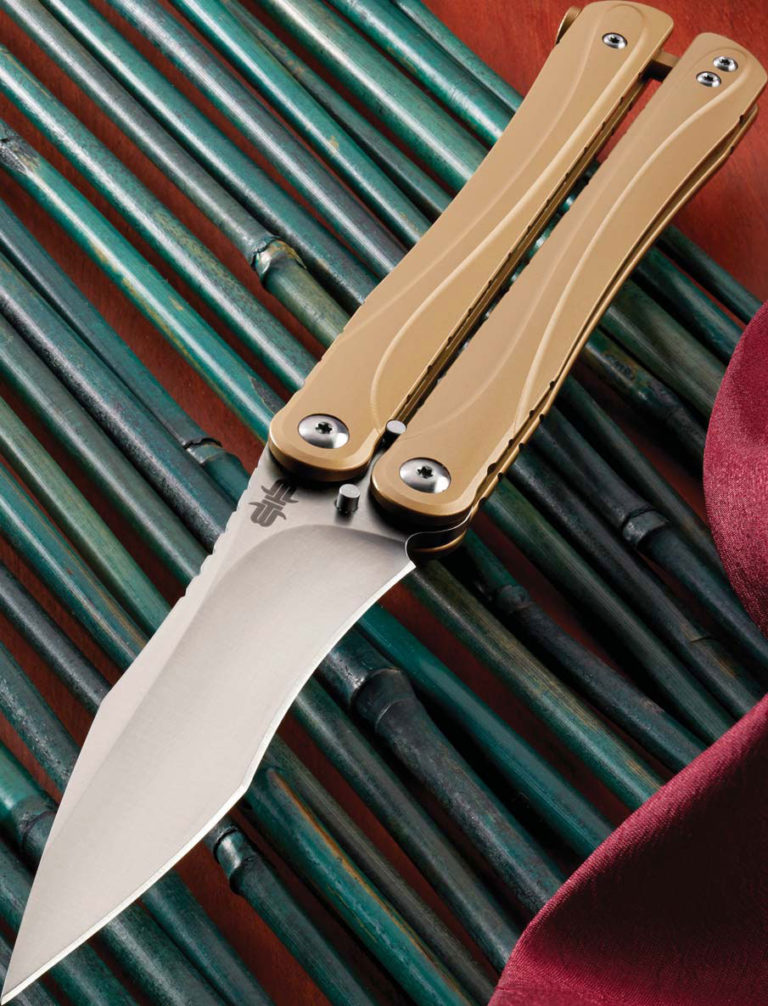
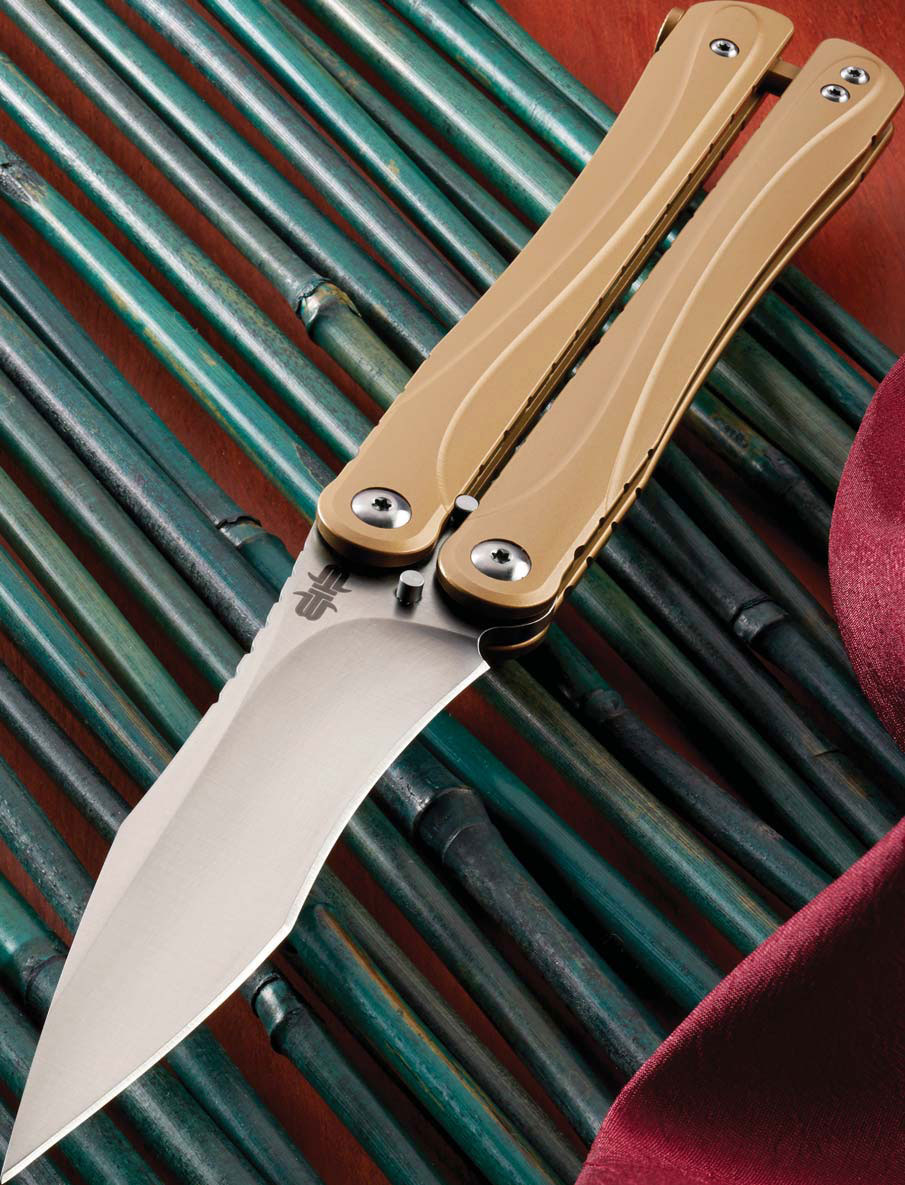
The B3 from Brous Blades is a modern butterfly knife with its stainless steel handles and D2 recurve tanto blade style. The handle interiors have cavities milled out to reduce weight. The knife has great action as a result, without the need to use bearings in the pivots. MSRP will vary depending on the finish, though this one is $320.
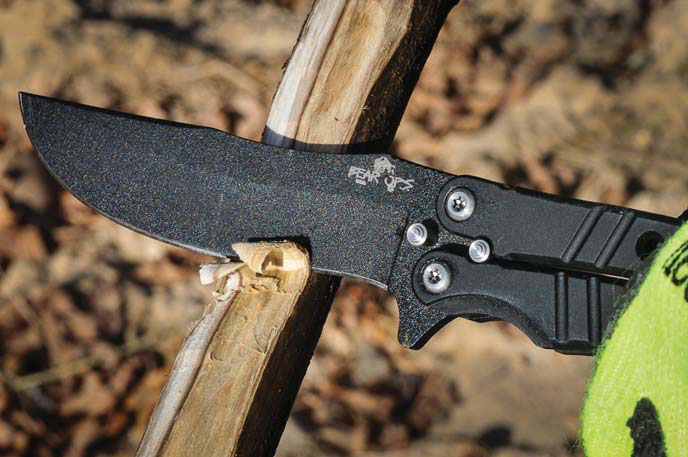
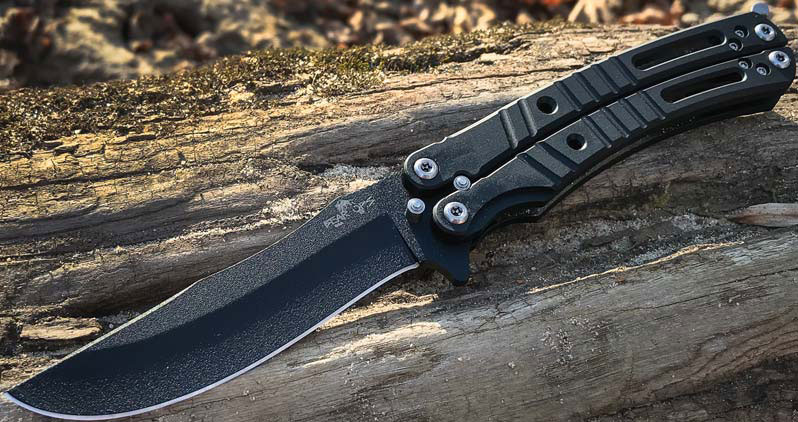
Bear Ops Bear Song VI
The hollow-ground 1095 carbon steel blade of the Bear Ops Bear Song VI has great edge geometry for all your cutting chores. A textured black epoxy coating guards against corrosion. MSRP: $174.99.
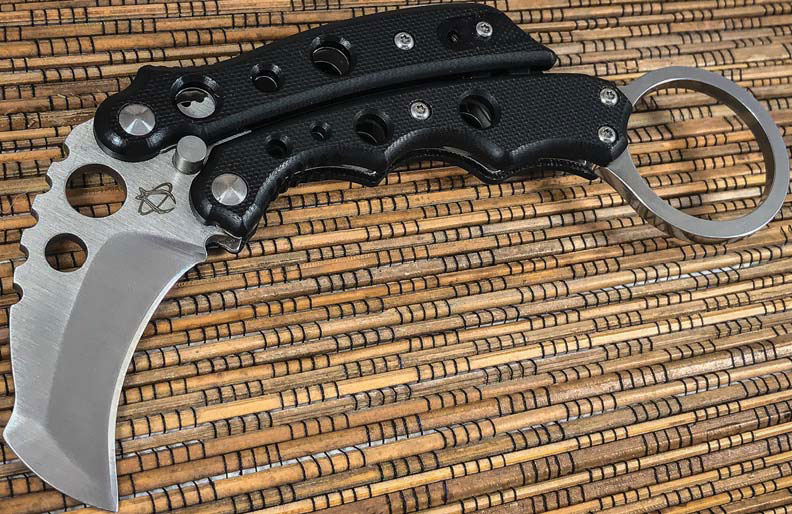
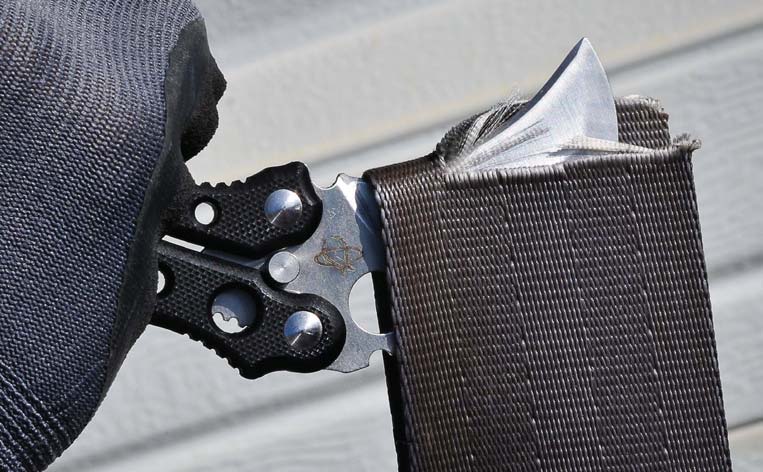
Mantis Knives Vuja De
The Vuja De from Mantis Knives marries the karambit’s large finger ring and hook-shaped blade with the free-swinging individual handles of a butterfly knife. The scales are textured black G-10 for both durability and grip quality. The blade is Mantis’ proprietary MV-1 stainless steel.
Emerson Knives Bali Commander & CQC7
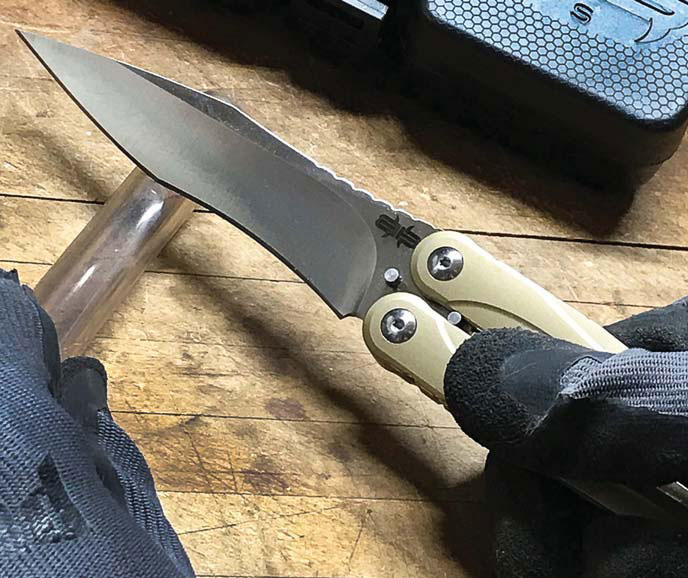
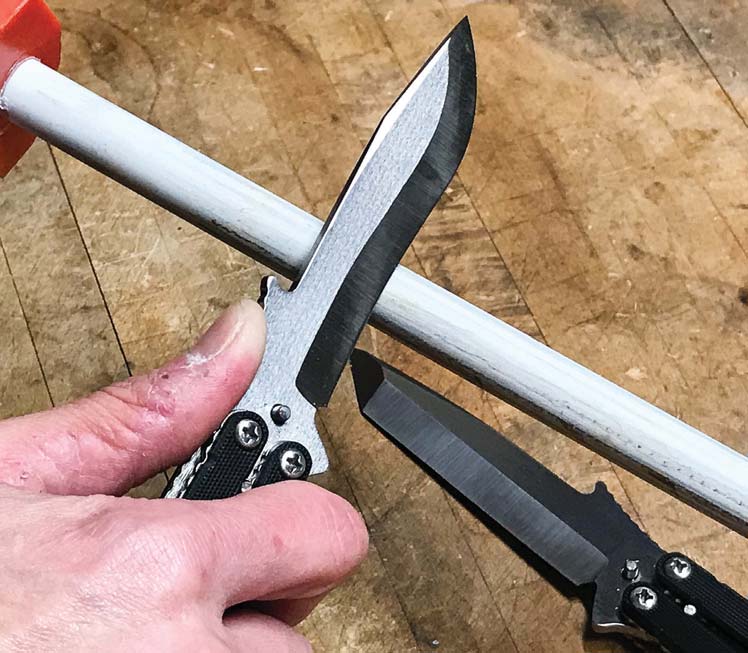
The recurve clip-point blade of the Bali Commander (left) from Emerson Knives, Inc., is easily sharpened using a round profile sharpener to effectively capture the blade’s gentle sweeping curve.
The Emerson Bali CQC7 (right) in the background sports the chisel-ground blade like that of the iconic Emerson CQC7 tactical folder.
Attend a Flipping Competition at BLADE Show
Butterfly knives were a-fluttering during the balisong competition conducted by Blade HQ at last year’s BLADE Show.