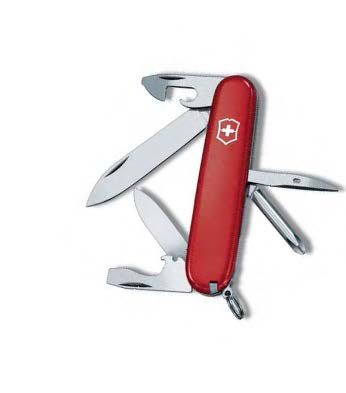
Knife collecting is an extremely rewarding experience for knife enthusiasts. There truly is a knife for everyone. Many increase or hold their value throughout the years, making collecting knives something to pass on to the next generation of knife collectors.
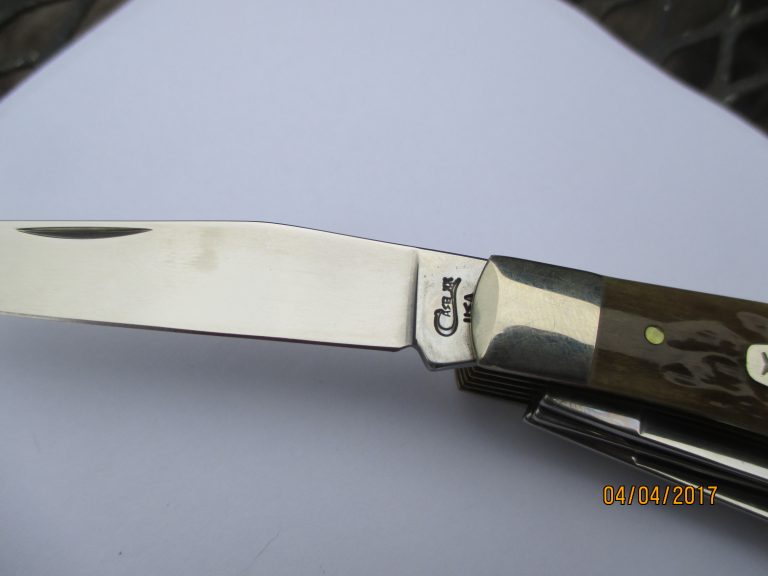
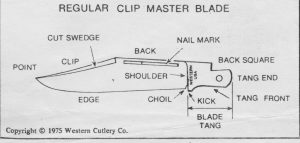
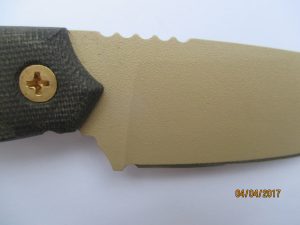
On a pocketknife blade, the knife choil is the notch between the cutting edge and the blade tang and serves to notify you where to stop sharpening the blade.When you think knife choil and pocketknives, Case immediately comes to mind.A classic example of a knife choil on a fixed blade is the notch here between the cutting edge and the ricasso or the blade tang of the Baja 3.0 by TOPS Knives.
Is a knife choil a nick, a notch, a finger groove or something else? And besides, what’s the difference between a nick and a notch?
What it is is one of those knife-specific terms that seems to evade proper definition by many, everyone from knife newbies to knife aficionados.
To expand on the definitions of both A.G. Russell Knives and Mr. Collins, while a knife choil may have enough space to accept a finger for certain types of cutting operations, such a capability is not the choil’s stated purpose. In some instances you may hear the term for such a feature called a finger choil. According to Russell’s definition above, such a reference is “improper.” In fact, sometimes what is incorrectly referred to as a finger choil is really more of a finger groove that spans the undersides of both the handle and the ricasso or the blade tang. Meanwhile, some new factory knives seem to be downplaying the knife choil if not eliminating it entirely.
Be that as it may, the chief purpose of the knife choil, as noted by the definitions of both Russell and Collins, is to allow the full length of the cutting edge to be properly sharpened. In other words, it is simply a small notch between where the cutting edge ends and the ricasso or the blade tang begins that indicates where you should stop when sharpening the blade with a stone, diamond-coated abrasive or what have you.
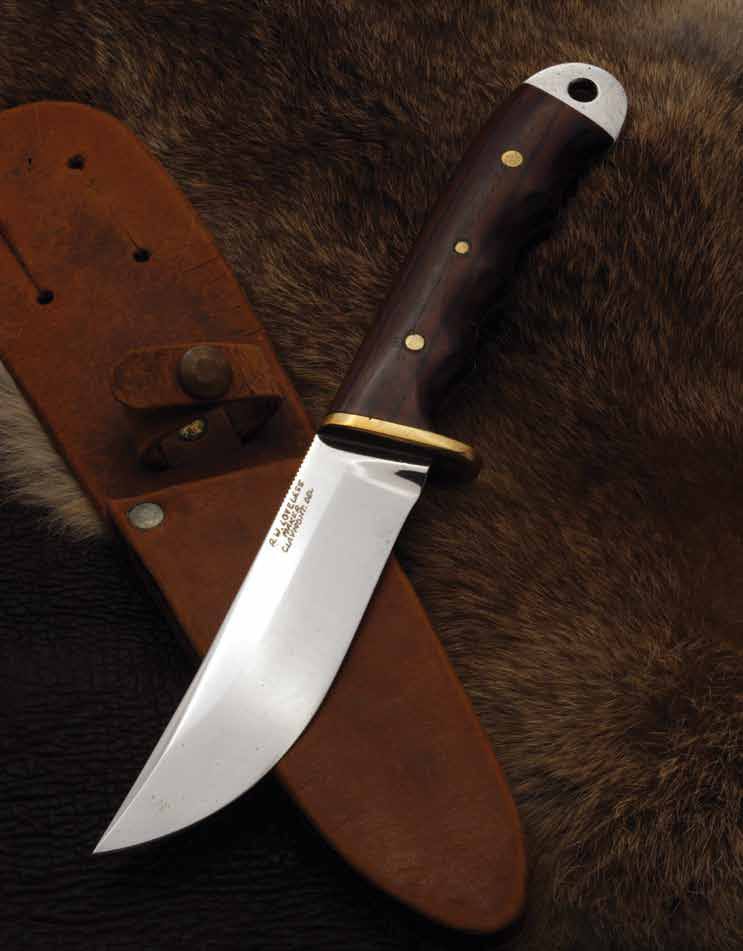
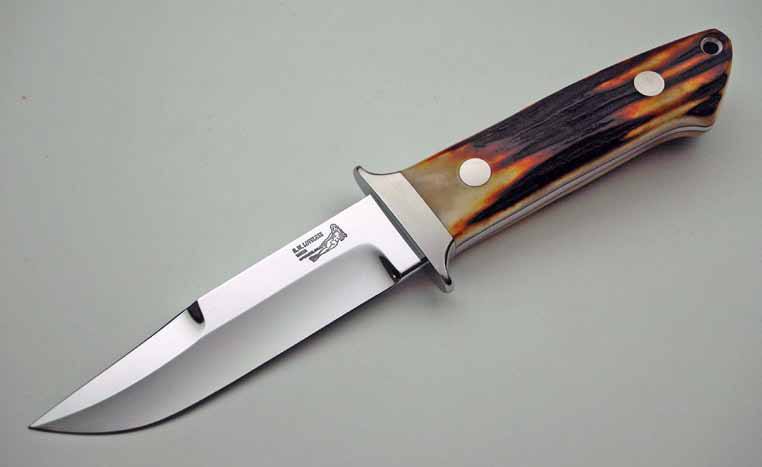
Robert “Bob” Loveless is regarded as one of the most influential custom knifemakers of the modern era. Here are the 15 knives that show why.
1) R.W. Loveless and Abercrombie & Fitch: A Match Made In Heaven
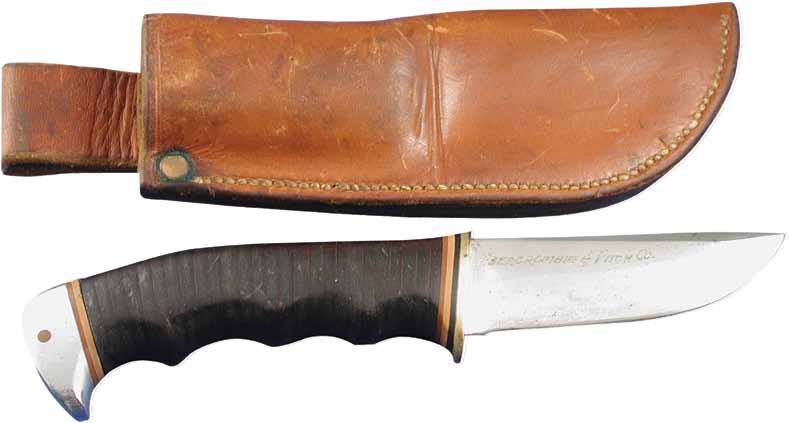
This is one of Loveless’ first knives made for Abercrombie & Fitch during the early 1950s. The photo is courtesy of John Denton.
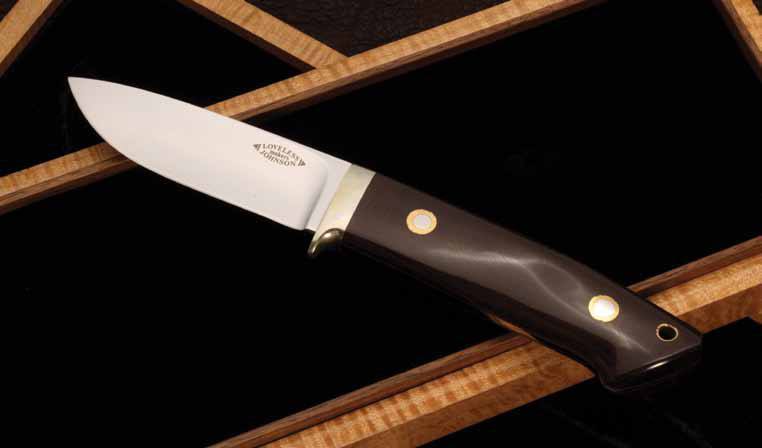
2) Loveless-Johnson Collab
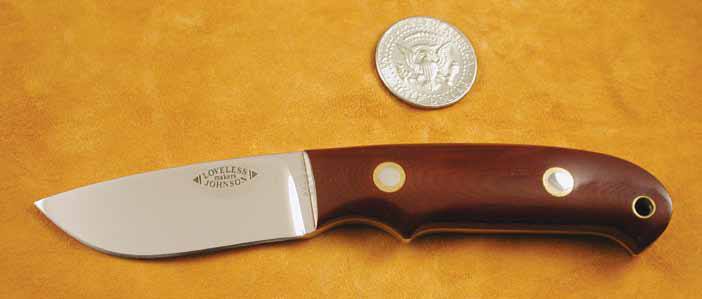
Steve Johnson, who worked as a junior partner with Loveless, says Bob made a huge difference in his life. Pictured is one of the few knives marked “Loveless Johnson” reportedly still in existence. The image is courtesy of John Denton and the John Denton collection.
3) The Most Beautiful Knife Bob Ever Made?
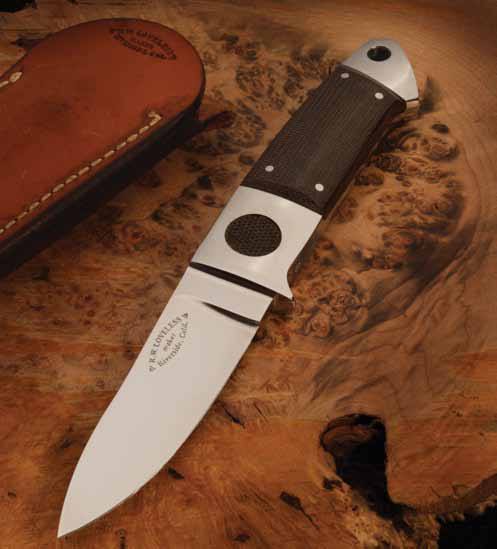
If Bob Loveless reportedly said that this integral semi-skinner, with its dark-green canvas-Micarta handle, is “the most beautiful knife I ever made,” then who can argue? The knife was crafted about 1987 and features a drop-point blade. It is from the John Denton collection, and the photo is by Hiro Soga.
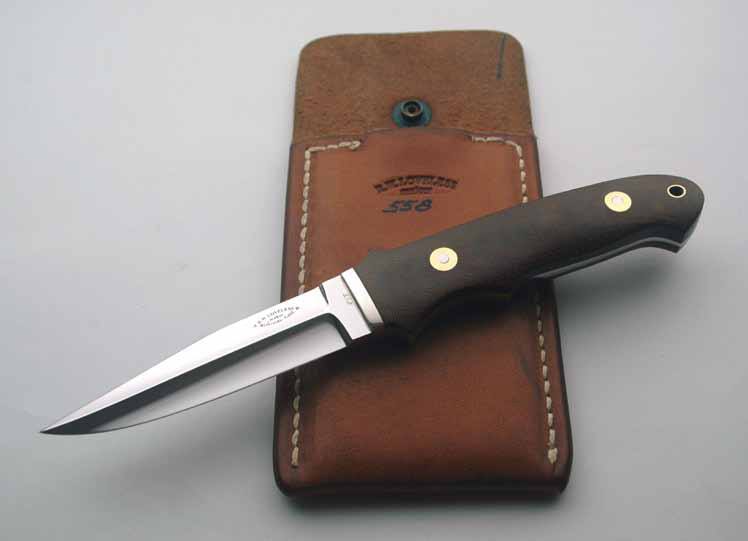
4) The Loveless Dagger
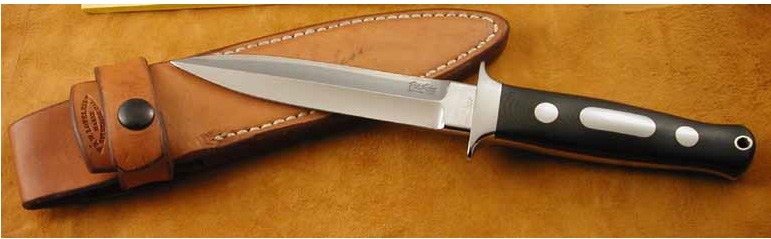
The dagger looks so good, you want to pick it up, and feels so good you don’t want to put it down. The dagger in a full, tapered tang, Micarta handle and double guard looks and feels good. It is from the John Denton Collection.
5) Loveless-Merritt Collab
The combined skills of Jim Merritt and Bob Loveless are simply without peer. This pair is a prime example of the combined efforts of Bob Loveless and Jim Merritt. The knife photo is by Durwood Hollis.
6) The Crooked Skinner
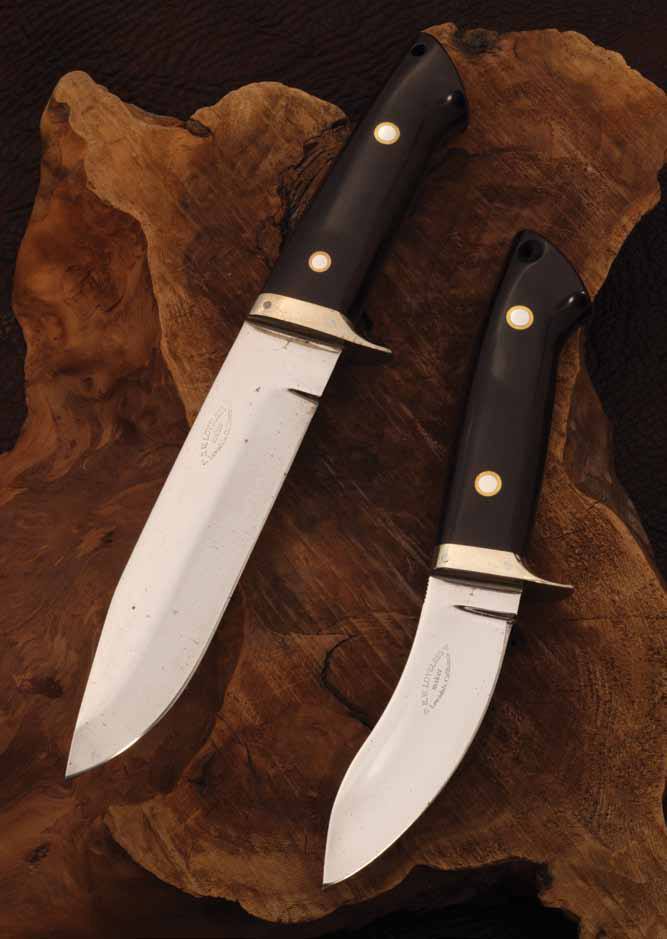
The Bob Loveless Lawndale-made crooked skinner at right in the Hiro Soga photo features a 4.5-inch skinner blade, a nickel-silver guard and ebony handle. The camp knife is wrought from 1/4-inch stainless steel stock with a 6.5-inch clip-point blade, full tang and ebony handle. The knives are in the John Denton collection.
7) Big Bear Classic
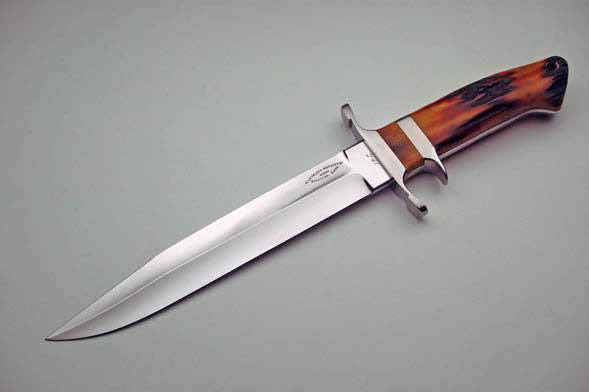
This particular Loveless Big Bear Classic fighter boasts an amber-stag handle, which makes it one of the few made, and no Loveless bolts. Its approximate value? $35,000. That’s a lot of bear bones. Image and information via Dave Ellis.
8) New York Special
This is perhaps the rarest and hardest-to-find of Loveless pieces—the original New York Special with a snap in the sheath. According to Dave Ellis of Exquisite Knives, originally told, there were seven. This is the long-lost 8th! Image via Ellis.
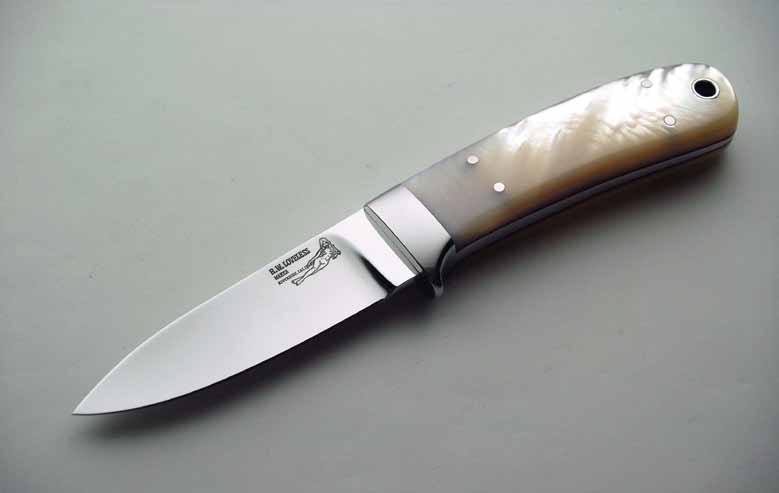
9) The Pearl Gent
Loveless preferred Micarta handles. This “gent’s” model is one of the very few knives made with pearl. Image via Dave Ellis.
10) The Iconic Drop-Point Hunter
A prime example of a drop-point hunter, made in 1973 when Steve Johnson worked with Bob Loveless, it features hidden-tang construction, a single guard and a maroon-Micarta handle. How sweet it is! From the John Denton collection, this piece was photographed by Hiro Soga.
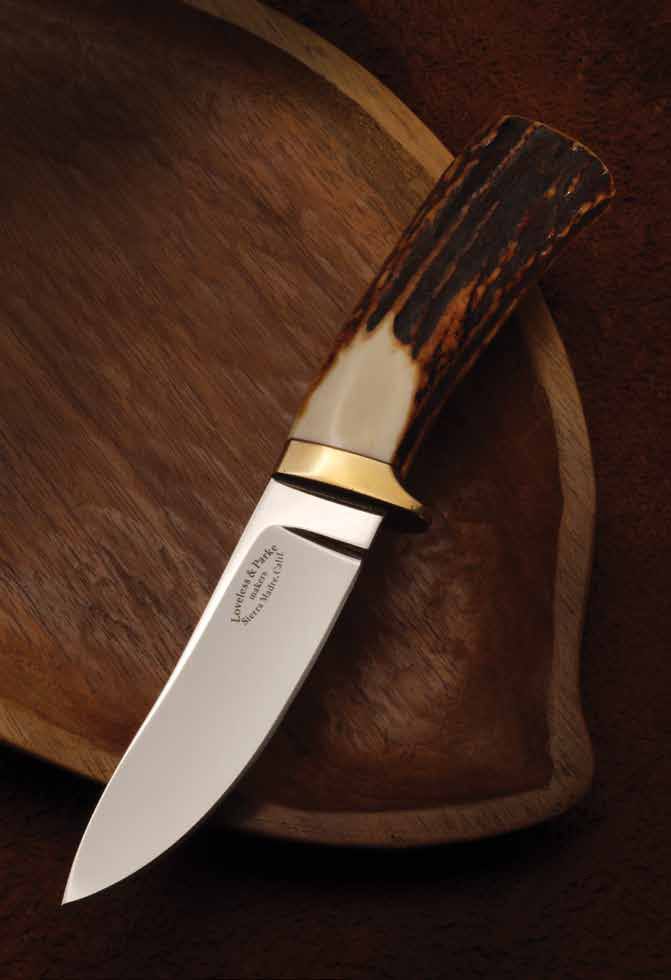
11) Loveless-Parke: Part Drop Point/Part Skinner
Only 36 knives bearing the Loveless-Parke logo were ever produced (Parke was an investor in Loveless’s knifemaking business for a short period of time.) This knife, made in 1967, is an example of that effort. The image is courtesy of John Denton and the John Denton collection.
12) The Delaware Knife
This is an early (1950s) hunter made by R.W. “Bob” Loveless when he lived in Claymont, Delaware. Interestingly, there are thumb notches on the back of the blade, just ahead of the guard. This is an extremely uncommon feature on a Loveless knife. Photo via Hiro Soga.
13) The Delaware Maid
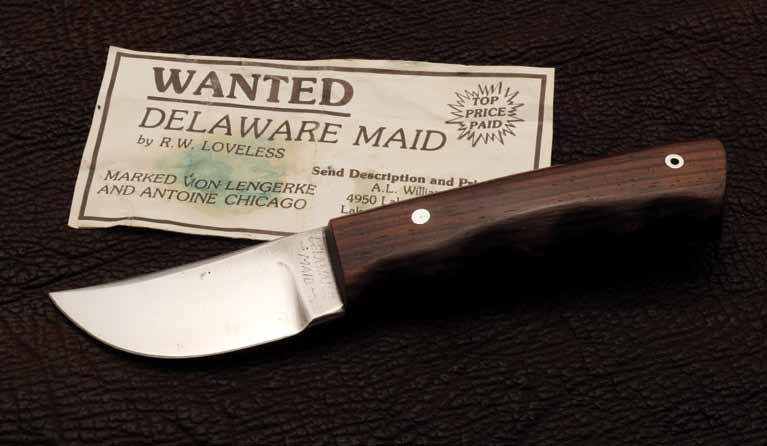
An ultra-rare (only three of seven survive) Loveless “Delaware Maid” hunter with the VL&A (Von Lengerke and Antoine) logo, this knife has a trailing-point blade and a slender double-pinned hardwood handle. The photo is by Hiro Soga.
14) $13,000 Chute Knife
Originally designed for a Spec Ops parachutist working in jungle climates, the “chute” knife was fashioned to cut the lines of a parachute should the operative become entangled in them, a tree or other obstruction. This amber-stag handle model is valued at $13,000. Photo via Dave Ellis.
15) The Iconic Schrade Semi-Skinner
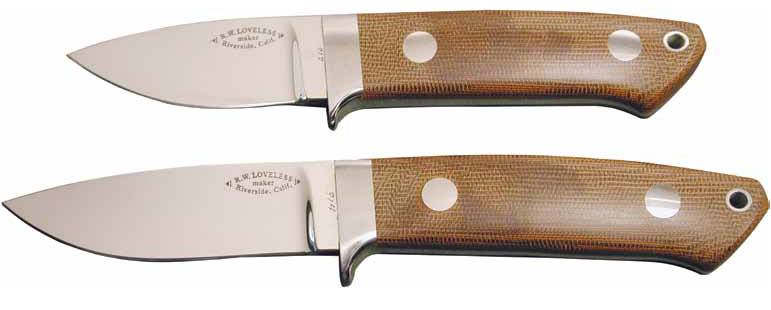
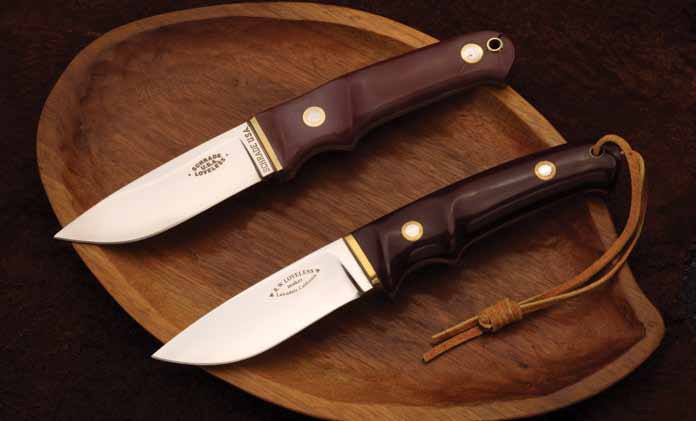
The knife Bob Loveless built for Schrade features a stainless steel blade and synthetic molded handle with no guard. The top piece is the Schrade knife, and the bottom is the Loveless semi-skinner prototype from which the Schrade knife was developed. Note the finger-grooved handle, a feature seldom seen on a Loveless knife. The photo is by Hiro Soga.
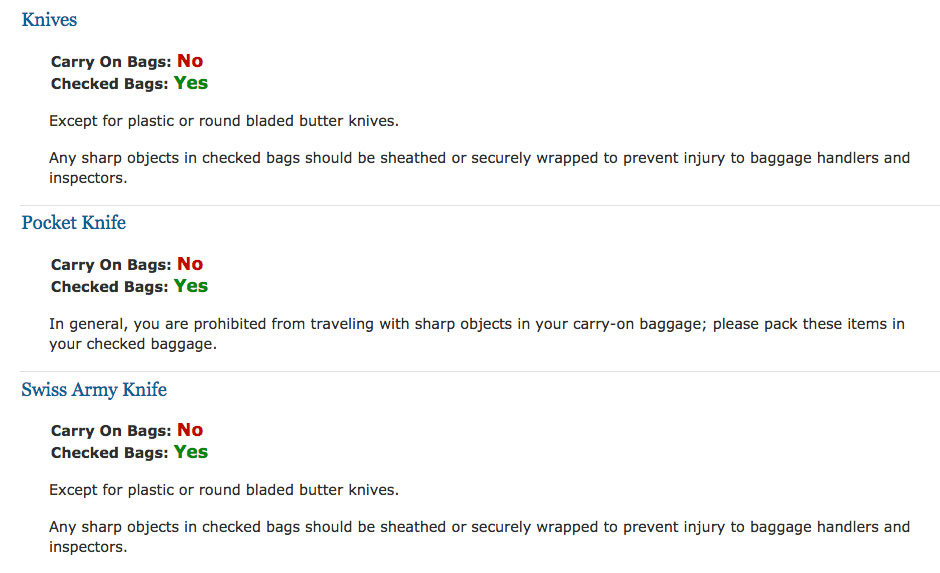
What knives does the TSA allow on airplanes? Here’s the list. Keep in mind that checked luggage is still subject to search, so don’t pack anything you’d miss if you lost it.
That said, there are still other considerations even if you decide to bring knives in your luggage.
Put Inexpensive Knives in Your Checked Baggage
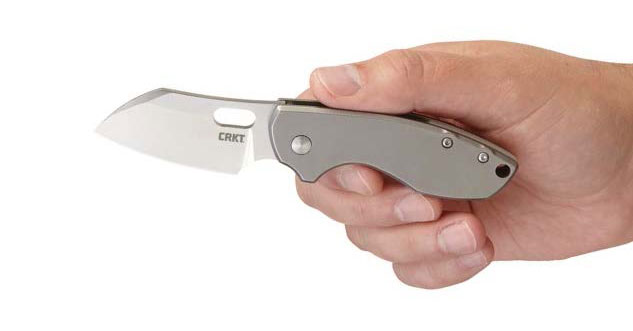
For vacationing knife enthusiasts, Plaza Cutlery’s Dan Delavan suggests a Spyderco, Kershaw or CRKT knife in the $30 to $70 range. An example of the latter is the CRKT Pilar with a 2.4-inch blade of 8Cr13MoV stainless and a closed length of 3.5 inches. MSRP: $39.99.
The kinds of people who walk into Dan and Pam Delavan’s Plaza Cutlery retail knife store in Costa Mesa, California, go for all kinds of knives, from classic folders to KA-BARs. But when they walk through Plaza Cutlery’s doors to buy a knife for vacation, most buy inexpensive models to slip into their checked baggage—inexpensive in case the knives get lost, stolen or confiscated.
“When they fly, that’s when the knife changes,” Delavan said.
He shows them budget models by Spyderco, CRKT and Kershaw, knives ranging from about $30 to $75. If customers are into Spyderco knives they might buy one from the Byrd line, folders from Spyderco with cost-friendly materials. If the customers like higher-end models, they might buy a Benchmade.
“It’s all relative to what you can afford,” Delavan said.
Plaza Cutlery is in South Coast Plaza, a mall that bills itself as “a luxury shopping experience”—a vacation destination in and of itself. Nearby Disneyland is an international draw. Hollywood and its attractions are close, too.
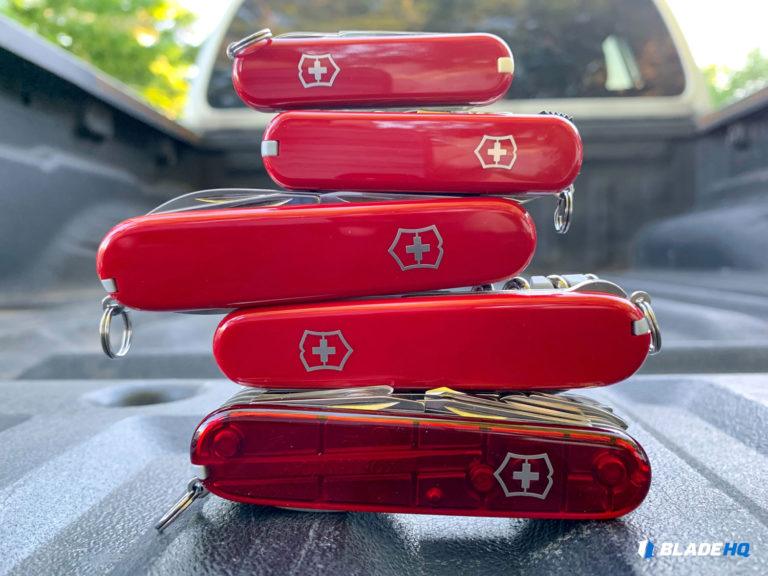
When Delavan heads to Disneyland with Pam and the grandchildren, he often carries the Victorinox Swiss Army Classic, which can slip on a keychain. He said it’s small enough that the park allows him to carry it. Of course, always research the knife laws of the areas you will be visiting. For most places in the USA, a small, non-locking knife should be OK, “but you’ve got to check” to be sure, Delavan noted.
What Knife is Legal Everywhere? Best Bet: Small, Non-Locking Knife that Opens with Two Hands
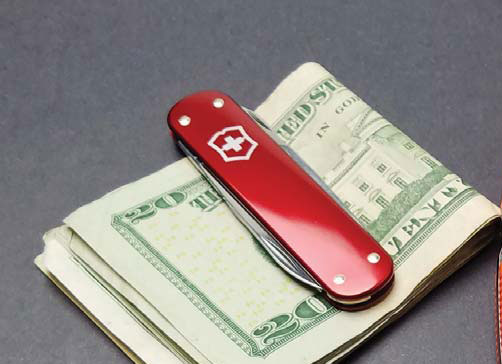
While there are no guarantees that a knife will be legal everywhere, your best bet is with a small, non-locking knife that opens with two hands. This Victorinox Money Clip is a great example.
Joe Tarbell’s retail store, JT’s Knife Shop, sits in a small building in Port Jervis, New York. The family-owned business began as an army surplus store near the Delaware River, which, during the summer, fills with kayakers and rafters.
“People ask me about knife laws quite often and it’s a pretty complicated subject,” he said. “Knife laws can be very vague and misunderstood. I have even had police tell me a lot of it is up to the discretion of the officer. I tell people to research the best they can and check out AKTI [American Knife & Tool Institute]. I can’t tell you how many people think that the law states that a blade can’t be larger than the palm of your hand, which is ridiculous.”
If a customer is traveling overseas, he suggests a small, non-locking knife such as a multi-tool or an Opinel.
What Happens If TSA Confiscates Your Knife?
You’ll likely have to buy it back, if you can find it. Start with GovDeals.com, where government-seized property is often sold.
Puukko Knives Are A Traditional Knife Of The Nordic Countries. It Is Used For Everything From Hunting To Chopping Vegetables
Puukko is Finnish for “knife.” It is deeply rooted in Scandinavian countries where the knife is both tool and art form. In fact, the puukko plays an important part in Nordic culture. Often included as part of the traditional cultural dress, the puukko is a historical symbol, especially in Finland and Northern Scandinavia.
The Finns treat the knife with deep respect. Many men in the country take great pride in how they carve their knife’s handle. It’s so ingrained in the culture that the Finnish Defense Forces don’t issue a standard knife to its soldiers. Instead, most men simply bring their own puukko with them into service.
What Is A Puukko Knife?
Rich history aside, puukkos are first and foremost solid work knives. They are of basic construction, consisting of a high carbon steel blade mated with a handle that is usually of a natural material, though some modern versions are synthetic.
The steel is traditionally crucible steel made from limonite iron, which was almost exclusively the type of steel made in Finland before more modern manufacturing methods were invented in the 19th century.
Primary uses are woodcarving and food prep as well as most anything requiring a cutting tool. Outside the Nordic culture, puukkos have earned a solid reputation as stout knives built for serious labor. It’s easy to see why these knives are favored among outdoor folks.
If you spend time camping or hiking or are simply in need of a good, solid fixed blade that withstands hard use and requires low maintenance, consider the sleek, slender puukko.
What Is A Puukko Handle Made Of?
One of the more common puukko handle materials is Masur (curly birch, though you’ll also find antler, bone, leather, and other hardwoods. Modern factory-made knives can come with a plastic handle instead of using traditional materials. The handle has no guard, and the blade boasts a gentle upsweep to the edge to facilitate easy cutting.
Puukko Sheaths
Puukko sheaths are usually leather and may or may not have fancy tooling. A belt loop is separate and affixed via a metal ring. Also known as a dangler, the sheath is free to move separately from the belt loop and you. This comes in handy if you’re seated, as the knife can move freely and adjust itself into position yet remain easy to withdraw.
Best Puukko Knives
Today, puukkos have become a popular knife beyond just Scandinavia. In places ranging from El Salvador to Russia and the USA, puukkos are prized for their durability and ruggedness. Below are five of the best puukkos that are available today.
TOPS Tanimboca Puukko
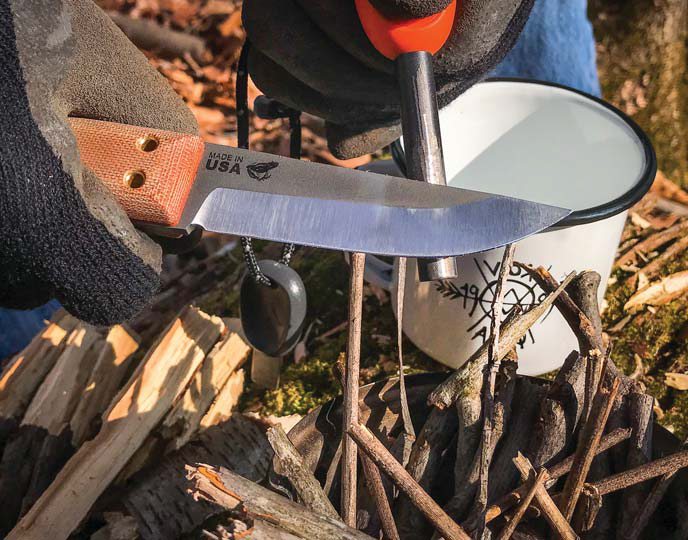
The 90-degree blade spine on the TOPS Tanimboca Puukko is for use with a fire restarter. Scrape the corner of the blade spine down the ferro rod to create a shower of sparks. (Marty Stanfield Photography)
From TOPS Knives, there is the Tanimboca Puukko. Designed in conjunction with Serbian knifemaker Goran Mihajlovic, who has spent the last two decades living in Colombia, the Tanimboca combines the best of a puukko knife with the toughness of the Amazon.
The blade has a slight clip point at the end and a flat spine is great for fire starting and scraping tasks. The knife is made from 1095 steel with a 56-58 Rockwell hardness and a length of 3.63 inches and a tumbled finish. The Tan Canvas Micarta handle honors the traditional puukko and looks great.
The knife comes with a brown leather sheath and has a belt loop so it’s easy to take with you. A cool, contemporary take on a historic knife makes the Tanimboca work the $170 MSRP.
Benchmade 200 Puukko
Benchmade 200 Puukko
You know Benchmade is going to put out a good product, and their 200 Puukko is no exception. The drop point is made of CPM-3V steel, the 200 is super hard and super durable even by puukko standards. The rubberized Santoprene handle provides excellent grip, and the lanyard hold in the handle makes the 200 easy to bring with you outdoors or on the job site.
Add in a leather sheath and you have a top-tier knife that can handle any situation you throw at it. With an MSRP of $160 it’s fairly priced and worth every penny.
Ahti Vaara Finnish Puukko Knife
Ahti Vaara Finnish Puukko Knife
Direct from Finland comes a budget puukko from Ahti. The Vaara is made from carbon-vanadium alloy steel with a traditional Masur birch handle and brass fittings. The is sharpened with a Scandi grind and is 3.74 inches in length. Overall, the knife is 8.31 inches long and well-weighted.
A neat design element is a black spine made of carbon steel. The flat edge, like with other puuukkos on this list, is great for starting fires and scraping away at material.
With a reasonable MSRP of just $51.45, the Vaara is a well-priced knife, and even with the shipping cost from Europe, it should still be under $100.
Marttini Tundra Kelo
Marttini Tundra Kelo
Another puukko made in Finland, the Marttini Tundra Kelo is not just a beautiful knife but also a quality one. Unlike most puukkos, which have a narrow tang within a solid wood handle, the Tundra Kelo is a full-tang blade surrounded on either side by a wax-coated gnarl birch handle.
The 4.33-inch blade is longer than most other choices on this list and is made from stainless chromium steel with an HRC 58 in terms of hardness. The black leather sheather contrasts nicely with the look of the knife itself.
The MSRP is € 139, which converts to $146.87 before shipping. One of the pricier knives on our list but worth it if you’re looking for a high-quality authentic Finnish puukko.
Condor Indigenous Puukko Knife
Condor Indigenous Puukko Knife
The last knife on our list is from Condor and is one of the most visually striking. The Indigenous Puukko Knife has a 3.9-inch blade made of 1095 high carbon steel with a Scandi grind.
The walnut handle features an inlaid golden wire wrap to help with grip, and it looks great. the handle is meant to combine elements from Polynesian and Sami cultures to celebrate indigenous cultures from around the world. The Sami are an indigenous group that lives in northern Norway, Sweden, Finland, and a small portion of Northwest Russia.
The knife comes with a welted leather sheath and is incredibly light at just 4.6 ounces. At an MSRP of just $95.45 this is a well-priced, nimble, and beautiful knife.
GiantMouse Ace Nimbus V2
This folder is inspired by the puukko and other Nordic knives and is built to be a mix of EDC and tool for the jobsite. The 3-inch blade is made from satin-finished Elmax steel meted to a green micarta handle for a secure grip. The blade has a full flat grind and thin edge. This allows for longer, more precise slicing strokes, and since the blade comes to an extremely fine tip the knife is also great for puncturing as well.
The nuts and bolts of this knife are great. The liners are made from AISI 420 hardened steel, and the liner lock keeps everything rigid. At 3.8 ounces it’s both light yet heavy enough to feel good in the hand.
The blade is .138 inches thick. That’s more than fine for many standard tasks around a jobsite but you might not want to start using it as a pry bar if you don’t have to.
MSRP: $185
Kellam Knives Ranger Puukko
This knife is a puukko to its core. It’s designed and built to stand up to not only combat but also the ferocious winters of Northern Europe. The 6-inch blade is made from forged 80CrV2 carbon steel with a teflon coating for added wear resistance and a Scandi grind.
At two-tenths of an inch thick, the blade is a beast and can stand up to almost anything life can throw at it. Use is aided by a 5-inch tempered rubber handle that won’t crack or deform even in hostile conditions.
Th Ranger Puukko is standard issue for troops from both the Finnish and Estonian militaries, and it’s easy to see why.
MSRP: $186.45
Helle Temagami CA
Designed by Les Stroud, the Temagami is a full-tang puukko that was precisely built to be among the best of its type on the market. It starts with a half-full tang design. That means the blade can be seen along the spine of the handle except near the fingers; this is done to better weight the knife and to better withstand harsh conditions.
The curly birch handle looks great and is ergonomically designed for hard, intense work. At 4.34 inches long, the triple laminated carbon steel blade is long enough to be used for slicing, puncturing, and even chopping for food-related tasks. The leather sheath allows for easy transport and storage.
MSRP: $209
Editor’s Note: Mike Abelson contributed to this piece
Some Swiss Army knife tools are handy, while some are pocket weights. Here are 10 that are actually worth the purchase (other than the blade itself). How many do you have?
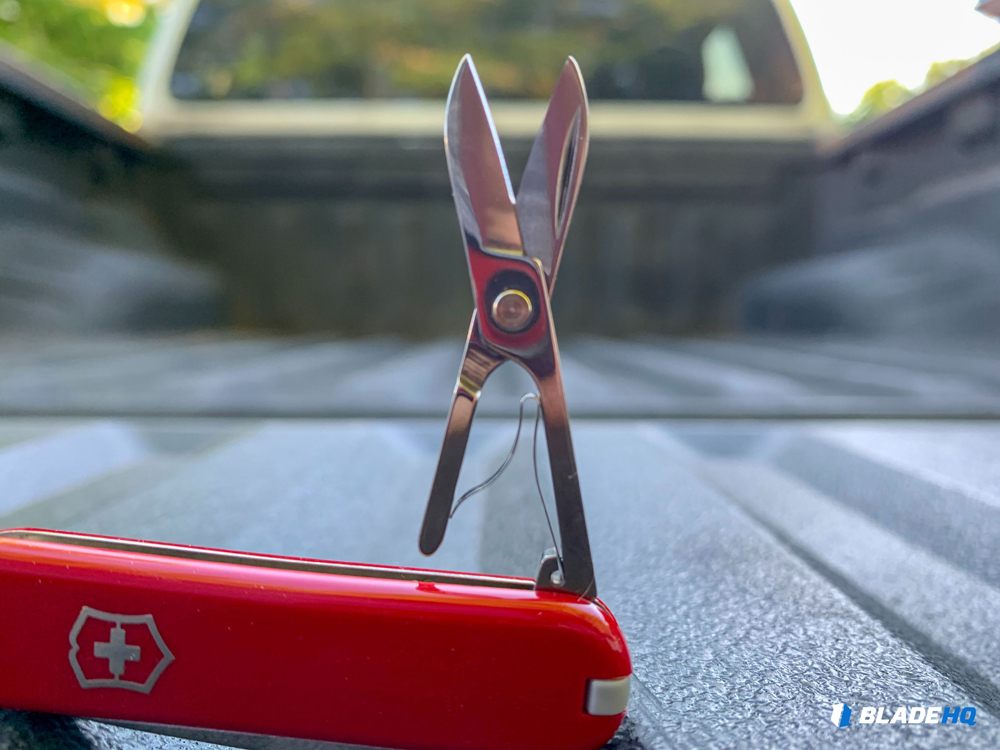
Scissors
I carried a Swiss Army Classic SD on my keys for the better part of three of my teenage years, and that’s when I realized how handy scissors can be. Small things like cutting string, stray hairs, and other items that need a precise cut are much easier done with scissors.
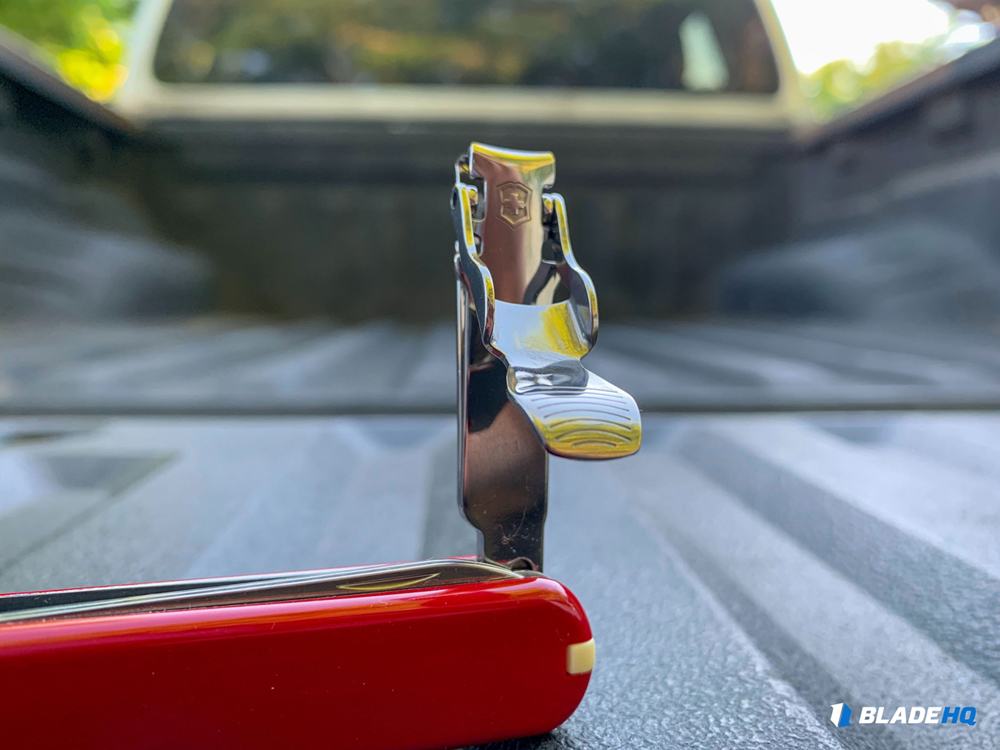
Nail Clippers
Gimmicky? Maybe, but hear me out. You’re out in the wilderness exploring when the sun starts to set into that gorgeous golden hour. You pull out your pocket knife and decide to snap some photos when you realize you’ve neglected your overgrown, dirt-encrusted fingernails. Nobody wants to see a knife-in-hand shot like that.
If the terrifying story above doesn’t ring true, maybe you can think of a time you wish you had nail clippers with you. For a compact tool with a blade, tweezers, toothpick, file, etc., you could do much worse than to have some nail clippers tagging along.
Screwdriver
The handiness of a good screwdriver can’t be overstated. My favorite screwdriver I have is one where the bits flip around and can be swapped between Phillips and flathead.
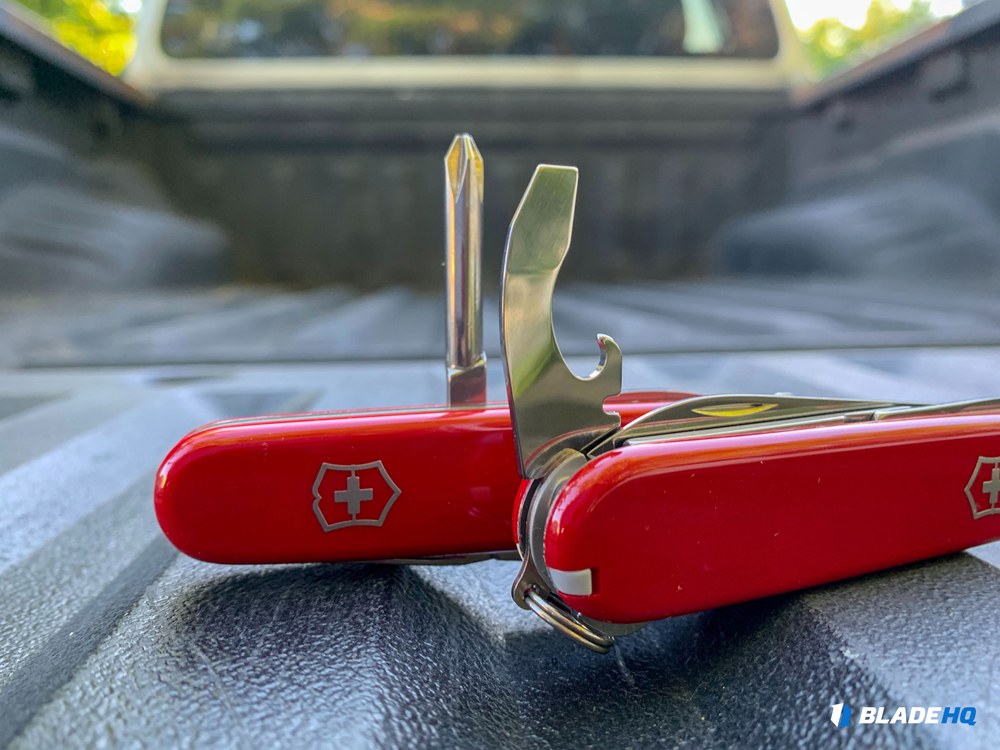
Victorinox has created a new take on this with models like the Tinker (pictured). It features the Phillips on one side and the flathead on the other.
Corkscrew
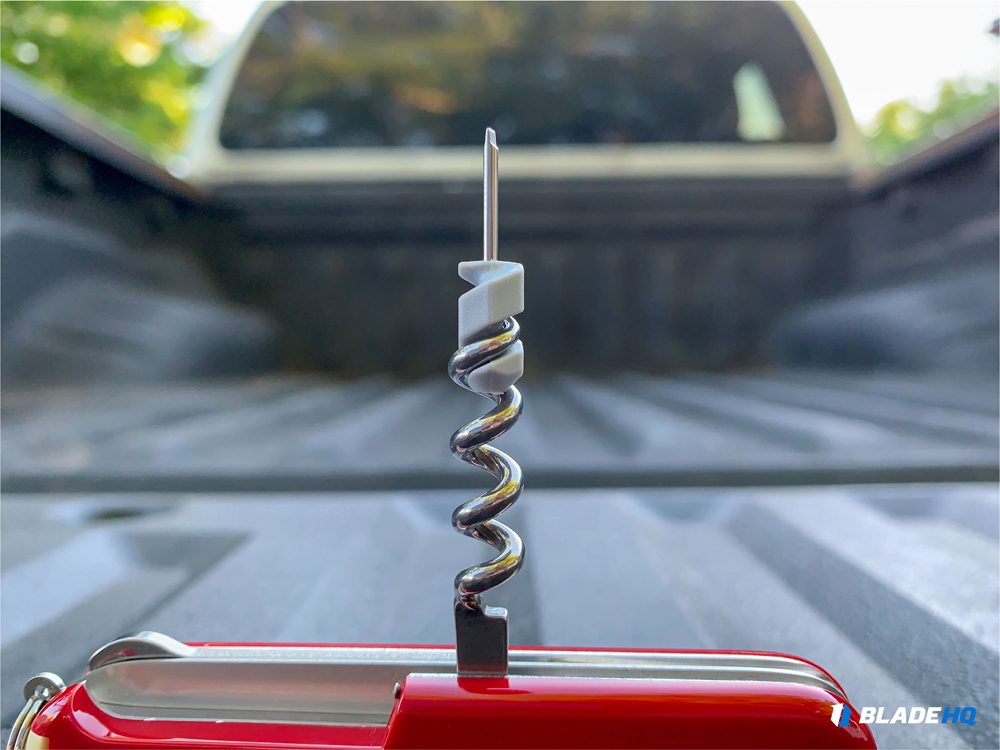
The Swiss Army knife corkscrew is a hot button topic these days. Many collectors say it’s useless, and that they’d rather have a Phillips screwdriver in its place. Others have found good use for the corkscrew with things like untying knots.
Some models come with a mini flathead that attaches to the corkscrew, giving a slight sense of the best of both worlds. If you’re a glasses wearer, this can be a great option.
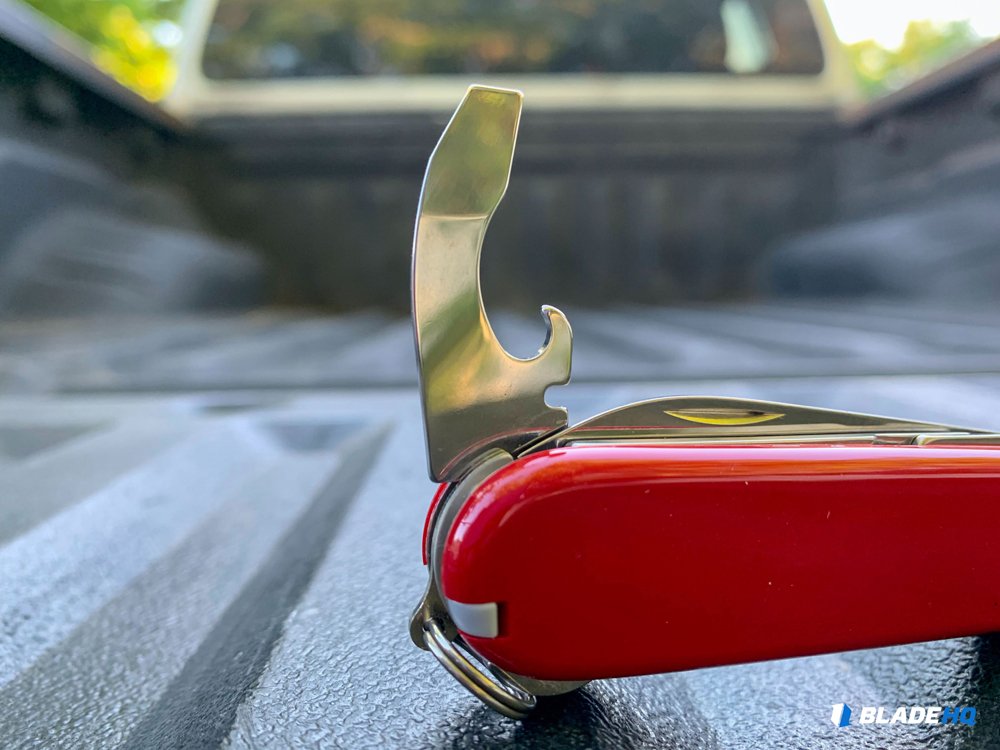
Flat Head/Prybar/Wire Stripper
A big no-no in the knife world is using the tip of a knife as a pry bar. Many a blade has been broken doing this exact thing.
The prybars on these tools are stainless, strong, and come in clutch when you need them most. The small wire stripper cutout is also a nice feature that you’ll love to have around eventually.
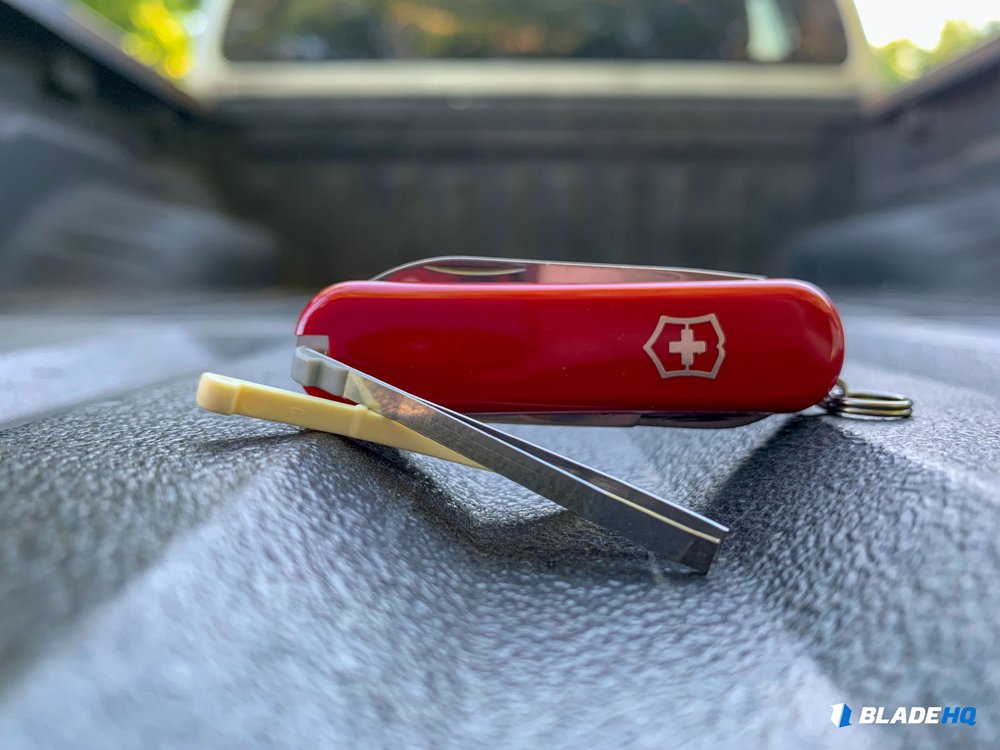
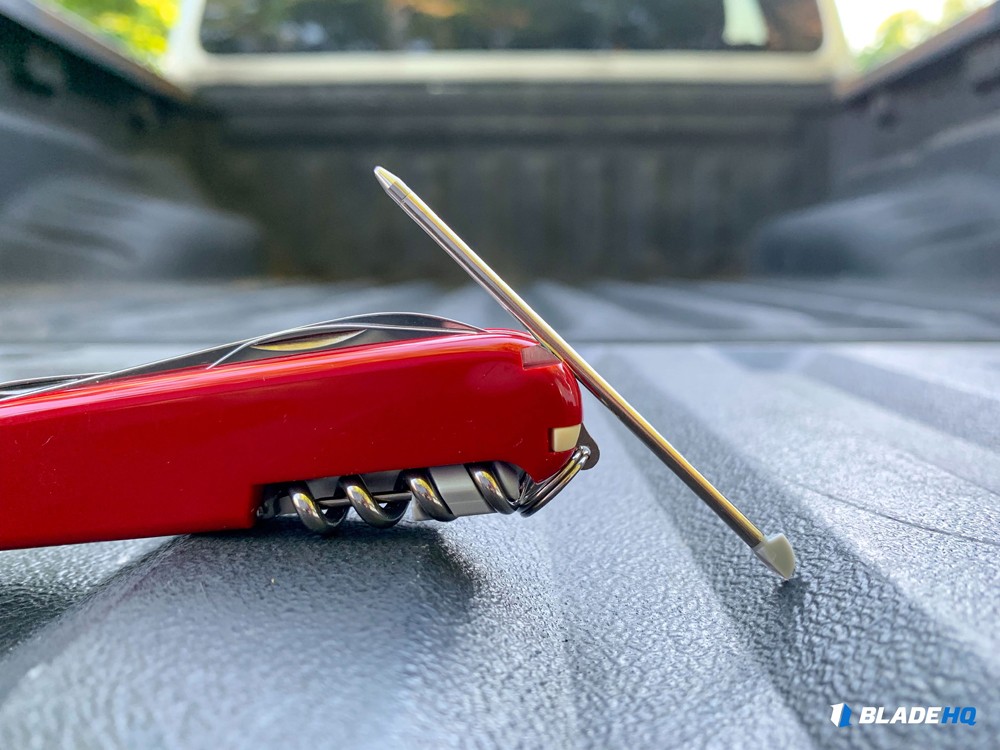
Toothpick/Tweezers
These two things are pretty self-explanatory and come in handy in the most random of times. The toothpick is invaluable for post-lunch debriefing. For that annoying sliver, tweezers can be a lifesaver.
They both fit nicely in the handle slots and don’t take up any extra room. Replacement toothpicks can also be had for only a couple of bucks.
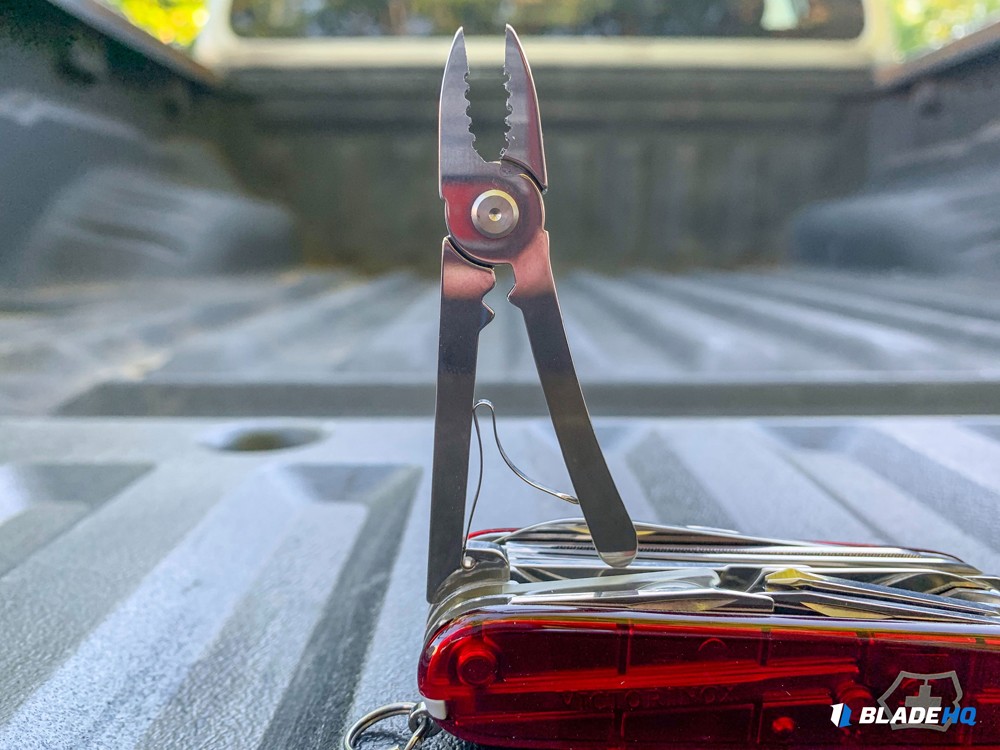
Pliers
No matter your occupation or background, you’ll be able to find uses for pliers at some point. Pliers are available on many of the larger Swiss Army models.
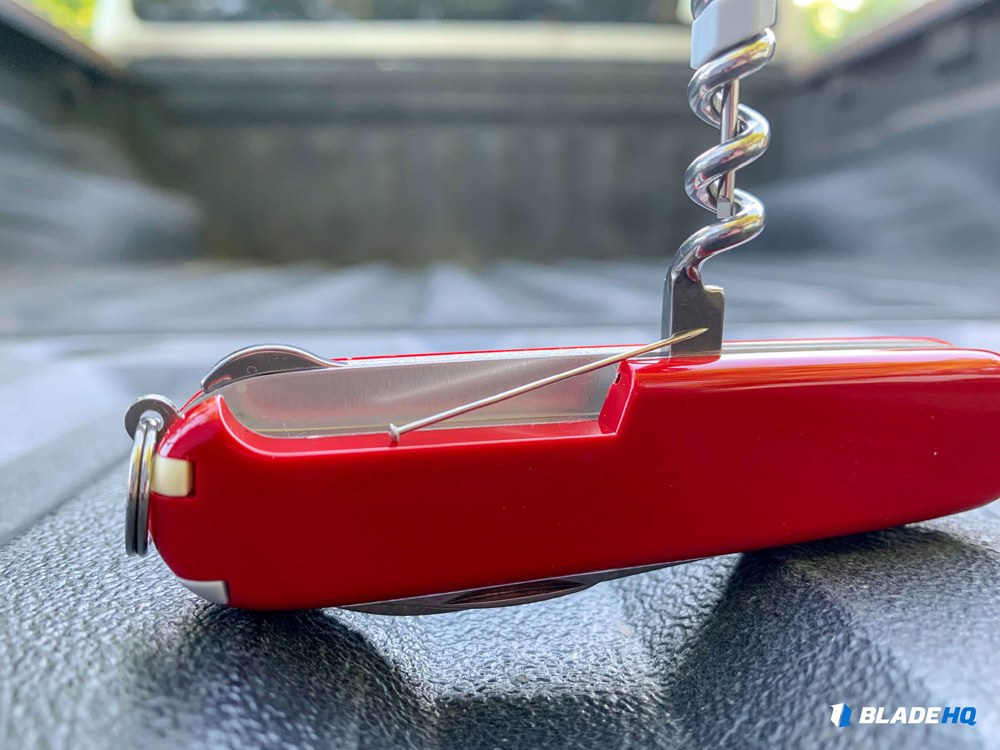
Stainless Pin
Not many SAKs come with this pin, but with those that do, it’s a welcome addition. This Compact stashes the pin in a hole of the cutout for the corkscrew.
Whether you’re pushing tiny reset buttons or getting slivers out of your hand, this sharp pin will definitely come in handy. The slot on this knife makes it almost unnoticeable as well.
Pen
Pens are a hot EDC item these days, but I haven’t bought into the hype. I just don’t find myself needing one that often and don’t want to give up my valuable pocket real estate to carry one. That is, until I saw Victorinox has them in some Swiss Army knives.
The pen looks like another gray tweezer slot but comes out as a thin pen that is easily concealed. I wouldn’t plan on using the pen consistently, but it is great for a pinch when you need to jot some things down.
Editor’s note: “Micarta” has become the Kleenex of knife handles. It’s used so generically that it’s easy to lose sight of the fact that the word refers to something specific.
That’s why BLADE is bringing you this quick rundown of Micarta® from Kevin Brainard, a business development manager and 45-year veteran of Norplex, the company that owns Micarta® (the real deal). You may have caught the company at BLADE Show, where it runs the UltreX booth.
The goal of this piece is for knifemakers and knife collectors to become more aware of what is and isn’t actually Micarta®.
Hint: If it didn’t come from Norplex, it’s not genuine Micarta®!
by Kevin Brainard
1 – Micarta® is a Registered Trademark of Norplex/Micarta
We own several registrations for our Micarta® mark around the world, including U.S. Trademark Registration Nos. 0096374 (issued in 1914), 0320374 (issued in 1934), and 0324365 (issued in 1935), covering our high-quality industrial laminates.
These laminates have been offered by Norplex-Micarta and our predecessors since at least as early as 1912. As a result of the significant sales, promotion, and widespread use of Micarta® brand laminates, our mark is widely recognized around the world as a designation of the source of our products, which are used in a variety of applications ranging from electrical insulation to gun and knife handles.
In addition to our common law rights in the Micarta® mark, our incontestable federal trademark registrations constitute conclusive evidence of the validity of the mark, the registration thereof, and of our ownership and exclusive right to use Micarta® in connection with these products.
2 – Micarta® is Made in the USA
Available in several different colors, combinations, and surface treatments, UltreX™
paper and cotton phenolic materials use the original production methods of Westinghouse,
updated with today’s process and environmental controls.
And unlike some of the other “micarta” available in the market, UltreX™ Micarta® is produced in the USA in Postville, Iowa.
3 – G-10 is Not Micarta®
The Spyderco Persistence sports G-10 handles.
Micarta® is made with a cloth or paper substrate and coated with phenolic or melamine resin. G-10 is woven fiberglass and coated with epoxy resin.
The processes to make both materials are very similar in the fact that both are consolidated under heat and pressure to make the final laminate. There is a chemical reaction that is called polymerization that bonds the layers together into a high-pressure thermoset laminate.
According to the trademarks, G-10 is not Micarta®.
4 – “Micarta” Refers to a Specific Product
Like so many other trade names, Micarta® name is used like Kleenex is for facial tissue. Instead of calling it a “thermoset laminate” it is easier to call it Micarta®. This is true in the knife scales, handles and gun grip markets. We have similar issues with the Micarta® name in our other markets.
5 – Micarta® Goes Back to 1912
It was originally designed to be used as electrical insulation back in 1912 by George Westinghouse using a phenolic resin developed by Leo Baekeland called Bakelite.
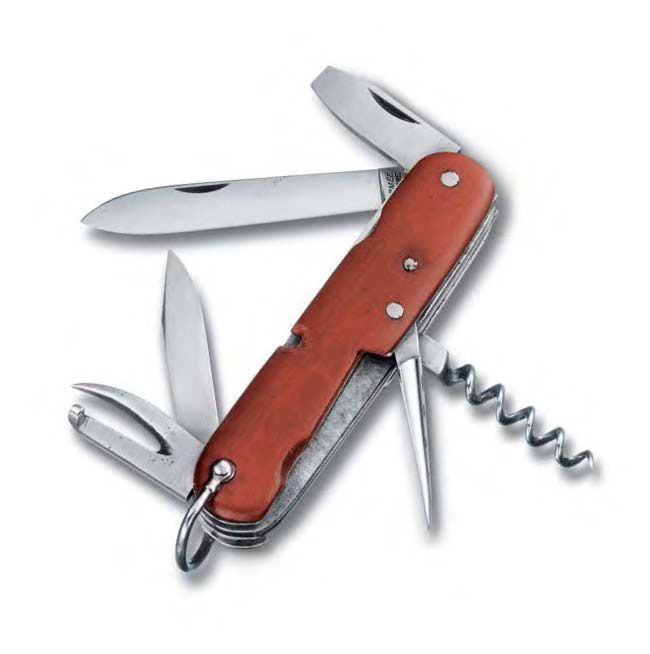
In 1897, Victorinox founder Karl Elsener created the Officer’s and Sports Knife (above). It evolved into the model known today as the Spartan, the most popular Swiss Army knife.
Rarely does a single brand, style or look set the standard for an entire genre in the knife industry, let alone hold its place for decades with no sign of a loosening grip. Just say the words “Swiss Army knife” and the image is clear and constant.
The classic red handle emblazoned with the shield and cross of its land of origin render the Swiss Army knife (SAK) instantly recognizable, while its multifunction versatility makes it indispensable for those who carry it and rely on it in a variety of situations.
Cut, slice, tighten/loosen a flat- or Phillips-head screw, punch, file, open a can or bottle and even sign your name, the pride of Victorinox and the trademark of the Swiss Army is the versatility that is found nowhere else.
Origins in the American Market
The consensus is that the Swiss Army knife gained widespread appeal during and after World War II as Allied soldiers brought them home, and those who saw them clamored for one of their own.
Like every icon in any field, the SAK is surrounded in legend and lore. The consensus is that the knife gained widespread appeal during and after World War II as Allied soldiers brought them home, and those who saw the knives clamored for one of their own.
American military personnel came to further love the SAK when it became available at the nearest base PX (post exchange), and sales are said to have exploded.
The History of Swiss Army Knives
Carl Elsener III
Of course, there was a tinge of controversy related to the “first” Swiss Army knives. In 2005, Victorinox went a long way in closing the book on that discussion with the acquisition of rival Wenger, followed by the consolidation of the two brands into the single Victorinox label in 2013.
Victorinox Global Chief Executive Officer Charles Elsener likes to tell the story of his family’s development of the early SAK.
“In 1897, founder Karl Elsener created his ‘Officer’s and Sports Knife,’” Charles explained, “and registered it legally June 12 of that year. He also was responsible for the iconic design, which has not changed to this day. From 1897 to 1937, the handles were made of red fiber. Functions of the knife included big blade, small blade, can opener, corkscrew and reamer. The name of this model today is the ‘Spartan.’”
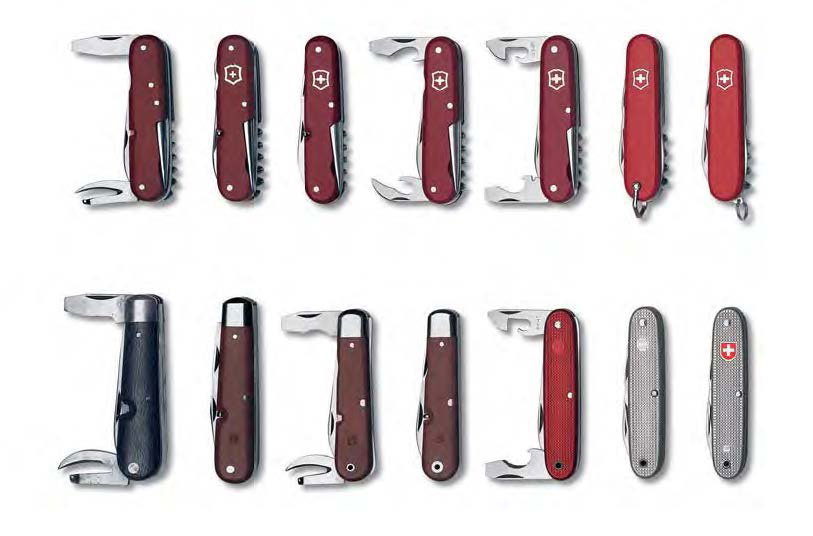
An evolution of the Officer’s and Sports Knife by year and feature, top row from left: 1897 (fiber grip); 1909 (fiber grip/cross and shield); 1937 (celluloid grip); 1946 (new can opener); 1951 (new can opener and Alox dividing layer); 1961 (new awl and invisible rivet); and 1968 (ring instead of bow bail). The same for the Soldier’s knife, bottom row from left: 1891 (wood grip); 1908 (fiber grip); 1951 (fiber grip, stainless steel); 1954 (fiber w/rosettes); 1961 (red Alox); 1965 (silver Alox); and 1980 (silver Alox w/Swiss flag).
In 1937 the knife handles changed to celluloid, and since 1971 the material used is Cellidor. The red color was probably chosen for the red in the Swiss flag and also for the Swiss canton [district] of Schwyz—and probably to help the owner find his treasured possession when it falls on the ground!
Popular Swiss Army Knife Models
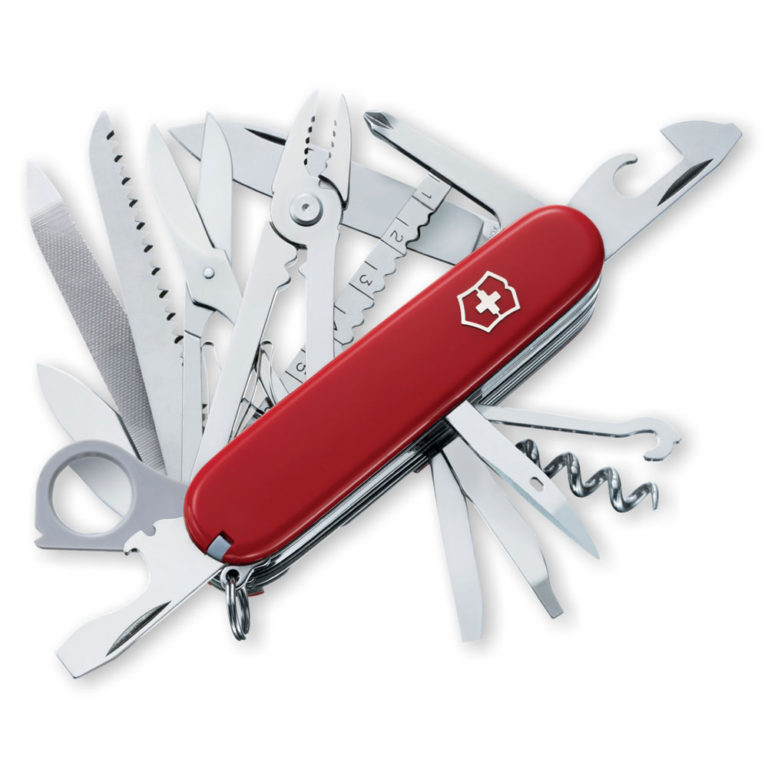
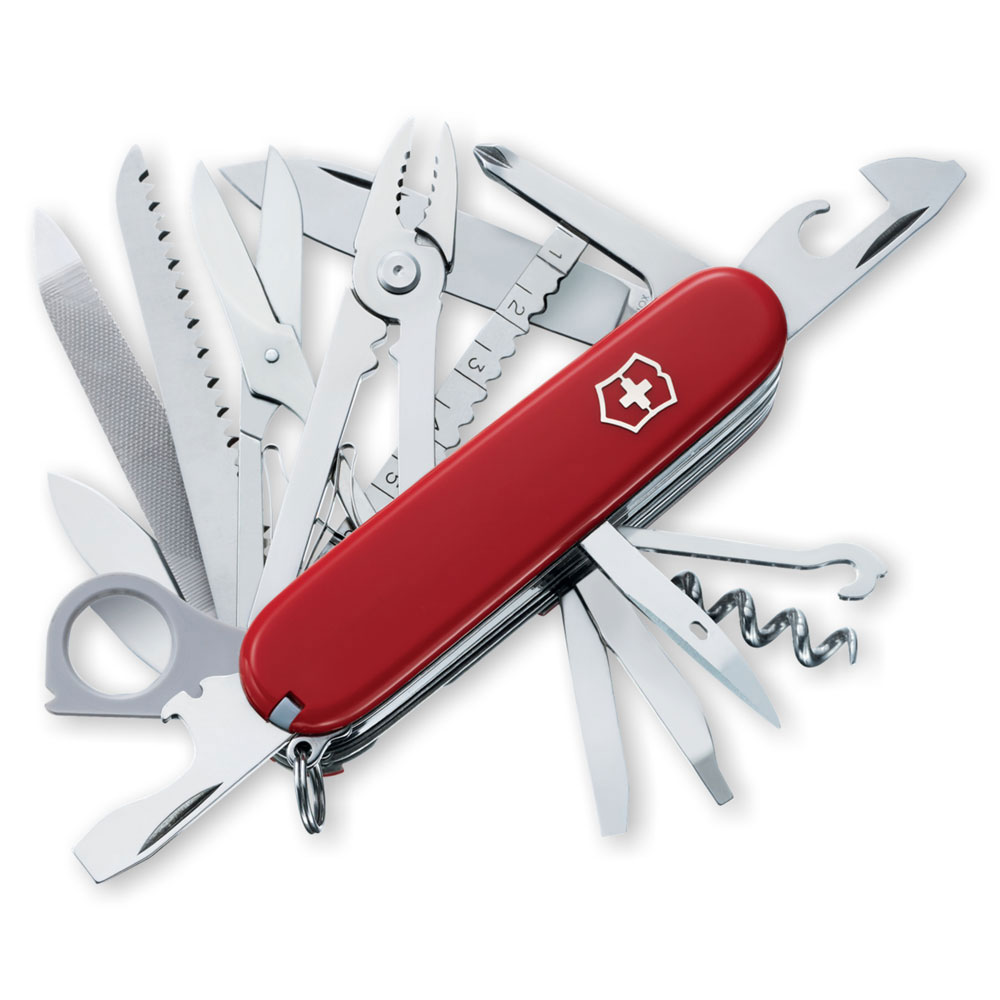
The flagship SAK is the SwissChamp, introduced in 1986 with a grand total of 33 functions.
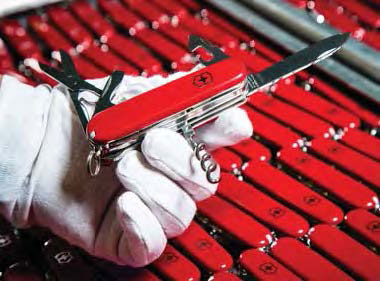
Today, Victorinox produces 60,000 SAKs per day and a staggering 13 million pieces annually.
According to Elsener, the most popular SAK in the company’s early days was the Spartan. In 1902, a wood saw and scissors were added. The new model with scissors was christened the Climber, and the Huntsman included both the wood saw and scissors.
As more and more tools were added, the flagship knife became the SwissChamp, introduced in 1986 with a grand total of 33 functions.
“The fourth bestseller is our smaller Classic keyring model,” Elsener added, “and these five bestsellers have been the same since their introduction.”
Charles confirms that American soldiers popularized the SAK during World War II and are responsible for its name today since they had difficulty pronouncing it in German as the “Schweizer Offiziers-und Sportsmesser.”
Today, Victorinox produces 60,000 SAKs per day and a staggering 13 million pieces annually, achieving these numbers consistently.
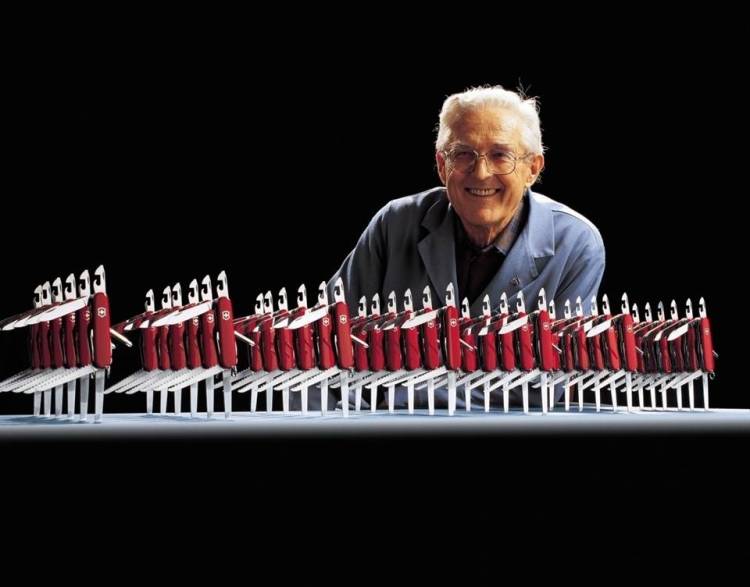
Charles told of a modest, unassuming man who wore a workman’s smock while at the company.
“One day Carl happened to be at the loading dock when a truck pulled in and everyone else was at lunch,” Tim smiled. “The driver saw Carl and said, ‘Hey you! Help me unload this truck.’ Without saying a word, Carl did. Only when another worker returned from lunch and saw what was happening did the mortified driver realize what he had done. But Carl took no offense at all. He was still his humble self.”
An Unassailable Knife
The humble knife the Elsener family put together also has risen without unnecessary fanfare to the height of fame and cutlery glory. Leatherman sees an unassailable place in knife history for the SAK.
“Victorinox with the Swiss Army knife anchors the knife industry,” he asserted. “One category of products within the cutlery industry is ‘pocket-carried knives,’ which has three subcategories—common pocketknives, tactical knives and multipurpose pocketknives. And deservedly so. The design deserves every bit of recognition it has received. I know firsthand how hard it is to make a knife or tool without a cosmetic defect. And I have never seen a cosmetic defect in a Swiss Army knife. The Swiss Army knife is recognized and coveted worldwide.
“I was very much aware of the Swiss Army knife as I was designing the Leatherman Tool,” Tim continued. “So much so that in one of my prototypes I cannibalized a pair of scissors from a Swiss Army knife to put in my tool. However, my design diverged away from the Swiss Army knife because in a Swiss Army knife the blade is the central feature, and I wanted a pair of pliers to be the central feature of my Leatherman Tool.”
The Swiss Army Knife Collectors Society
While satisfying the needs of the businessman, blue-collar worker and outdoorsman, the SAK also has cultivated a devoted group of collectors. Doug Dillman, owner of Freeport Knife Co. in Freeport, Maine, leads the Swiss Army Knife Collectors Society, which was founded in 2000 by avid collector Dan Jacquart.
“The club currently has about 150 members,” Dillman commented. “Our objective since the beginning has been to encourage and support collectors who share a passion for both collecting Swiss Army knives and educating members about the many changes to the product and the factory’s history since its creation in 1884. We largely accomplish this through the publication of a biannual newsletter. We try to offer articles about changes to the many models over the years, new product introductions, and special-edition models. Our last issue included a tang stamp chart to help members determine the age of a knife.”
Insights for Swiss Army Knife Collectors
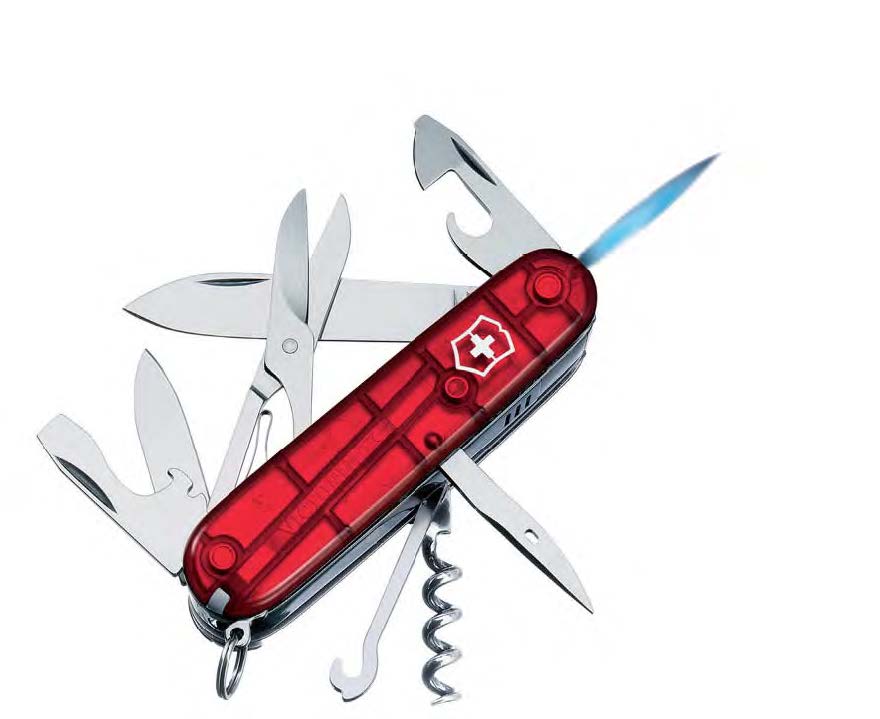
SAKs highly desirable for collectors are often models made for only a short time, such as the Swissflame series from the late 1990s and early 2000s. The model included a butane lighter.
A collector for 30 years, Dillman has seen a number of SAKs appreciate in value.
“Old-style Soldier’s knives prior to 1954 can be found anywhere from $100 to more than $1,000, depending of course on condition,” he commented. “Very early ones from the 1890s with black-stained oak handles are certainly the most valuable. Many people also try to collect specific Soldier’s knives with specific-year date stamps. Knives that are highly desirable for collectors are often models made for only a short time, such as the Swissflame series from the late 1990s and early 2000s. These were unique in that they included a butane lighter.”
Other highly prized collectibles include the Scientist, produced in the 1980s and ’90s, and the Motorist with its metal inlay of St. Christopher. Knives made first as presentation gifts for four American presidents sell for $50 to more than $100.
Chris Lubkemann wrote The Victorinox Swiss Army Whittling Book, published in 2015, which already has been translated into Swiss, German, Dutch and Spanish. His use of the Swiss Army Tinker for carving led to the research and the publication of the book.
Actually Lubkemann carved for many years with an assortment of other knives.
The Tinker SAK led Chris Lubkemann to write “The Victorinox Swiss Army Whittling Book,” published in 2015, which already has been translated into Swiss, German, Dutch and Spanish.
The Tinker had been given to him as a gift and stayed put on a shelf. As he recalled, “My [previous knife] developed a lot of play between the handle and the blade, to the point where it was no longer a viable carving tool. I’m sure I could have gone out and bought another, but conservative spender that I am, I decided to pull out my Swiss Army Tinker and see how it worked.
“The rest is history. Not having any personal previous experience with Swiss Army knives, I was immediately impressed with the tool. While the blades were stainless they took an edge well, and for my special purposes maintained the edge well.”
Chris met Brian Huegel of Country Knives in Lancaster, Pennsylvania, and Brian in turn knew Carl Elsener. At Brian’s suggestion, Chris contacted Carl, who demonstrated an interest in the whittling book, which became a reality with the support of both Victorinox and Fox Chapel Publishing.
“I was a fan of the knife long before I had any contact with Victorinox,” Chris concluded. “The more I used my Swiss Army knife the more I liked it and recommended it, especially the Tinker model, which is widely available, reasonably priced and incredibly useful—for much more than carving!”
“The Value Given is Much, Much Higher than the Price Charged”
Tim Leatherman remembers a trip to Europe that he made about 30 years ago.
“I had occasion to be near Ibach, Switzerland, so, uninvited, I parked well away and walked up to the entrance of Victorinox’s headquarters and factory. I was totally in awe,” he said. “I felt like I had found the Holy Grail. I remember they had a display on the outside wall of a Swiss Army knife broken down into its components. I must have studied it for an hour. I was too awestruck to knock on their door. The key to the success of any knife is that the value given be more than the price charged. With the Swiss Army knife the value given is much, much higher than the price charged, and the price is very reasonable.”
All images courtesy of Victorinox.
Find Swiss Army Knives at BLADE Show 2018
The world’s largest and foremost knife show, BLADE Show, is taking place June 1-3 in Atlanta. You’ll find the planet’s most innovative knifemakers in one spot. Learn more about how to attend BLADE Show 2018 here.