Knife collecting is an extremely rewarding experience for knife enthusiasts. There truly is a knife for everyone. Many increase or hold their value throughout the years, making collecting knives something to pass on to the next generation of knife collectors.
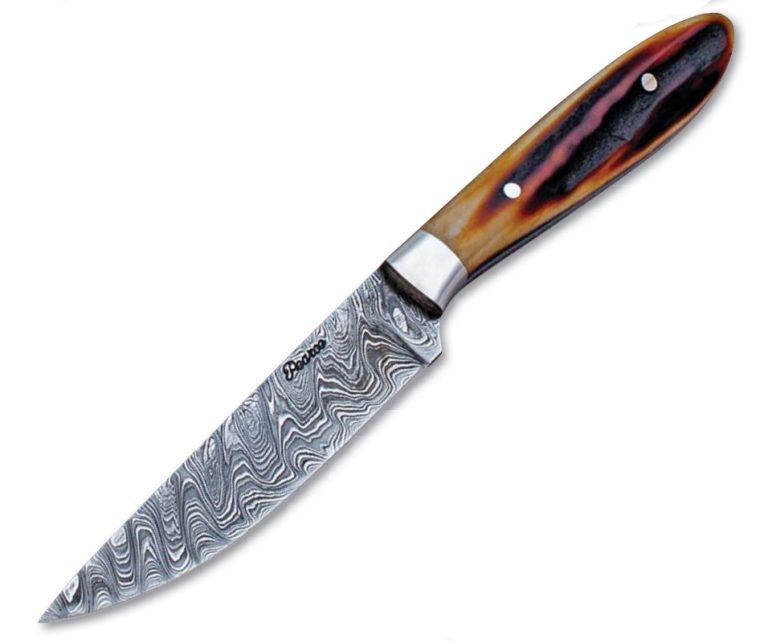
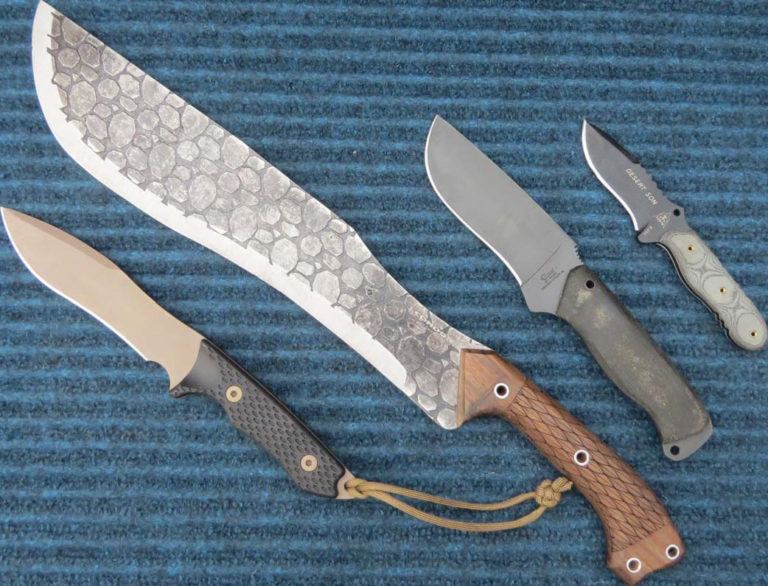
Small game can be even more challenging to dress out than large game. Consequently, makers build what are called bird and trout knives, which generally feature thin, slender blades 3 to 3.5 inches long. You can find such knives with both drop-point and skinner-style blades.
The blade is primarily designed for the tasks of dressing out birds and fish, hence the name. Birds are generally dressed out to harvest the breast meat. Fish are dressed to get the fillets. (Most hunters and fishermen discard the remainder of the bird and fish.)
While a fillet knife may be the better choice for dressing out fish, you then must carry two knives.
The other choice is a folder with a 2.5-to-3-inch blade. Some feature a blade and a gut hook. As this implies, the idea is to insert the hook into the bird or other small game to pull out the intestines and the rest of the intestinal tract.
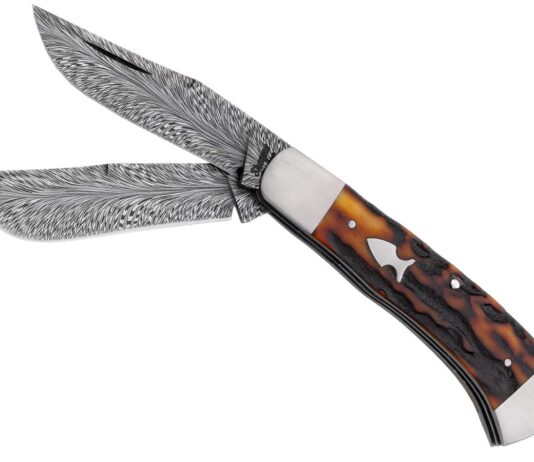
Generally, the ideal bird-and-trout folder has either a 2.75-inch drop-point blade or is a multi-blade with 2.25- or 2.75-inch blades featuring a combination of a skinner and a drop point.
While most don’t think of a folding knife when it comes to dressing out game, there is a place for such a knife in your hunting gear.
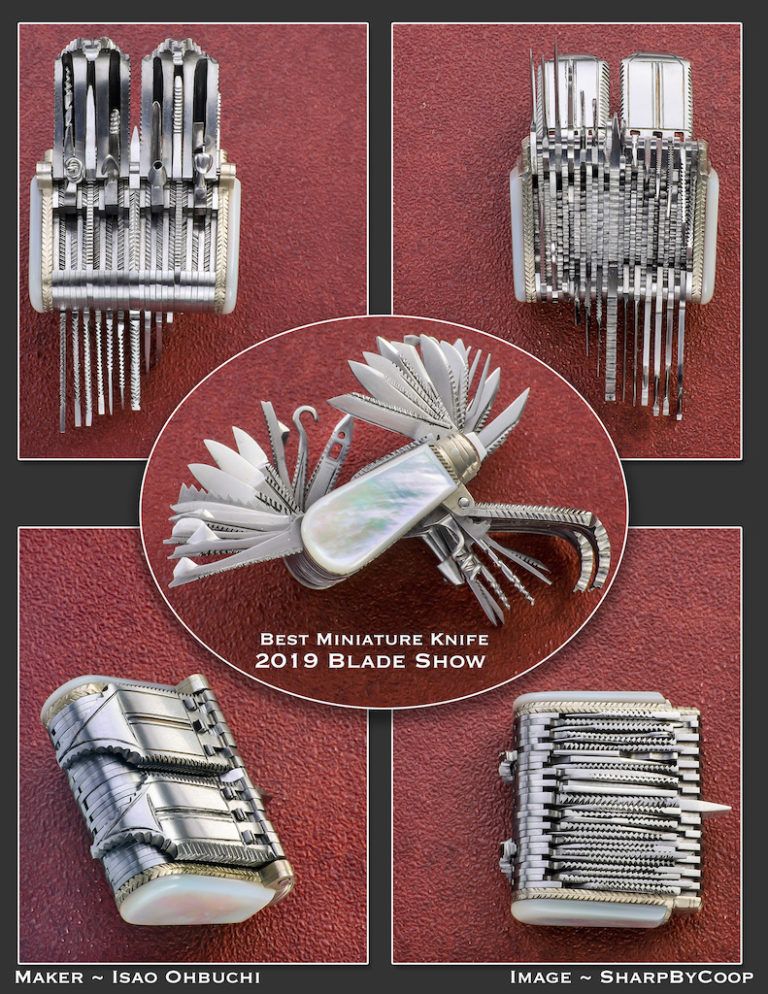
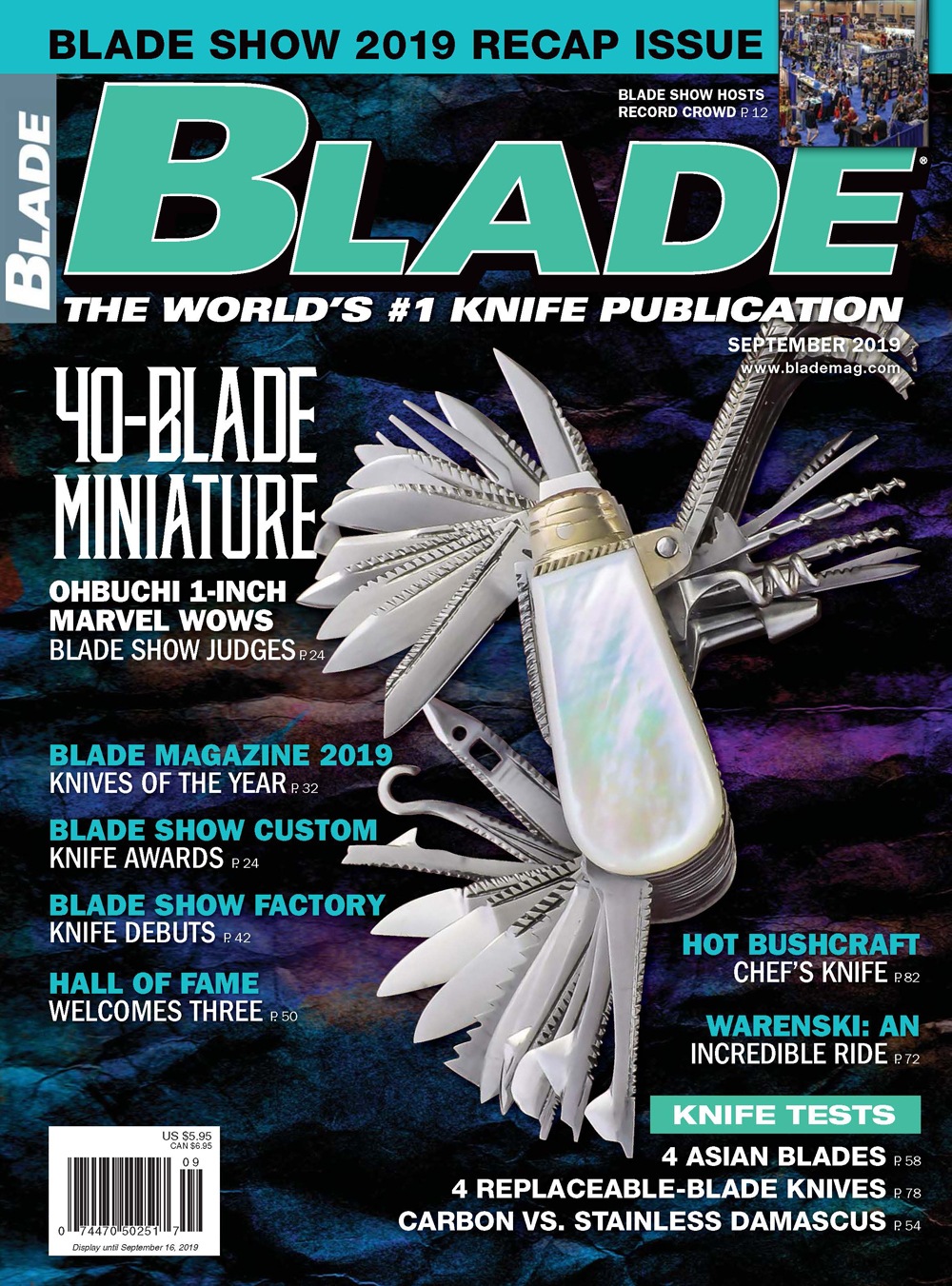
At an inch-long closed, the spectacular 40-blade miniature knife by Japan’s Isao Ohbuchi won the Yvon Vachon Best Miniature Knife Award in the custom knife judging competition of BLADE Show 2019.
Along with all the other knives in the competition except Gabe Mabry’s winner of the Best Kitchen Knife Award judged by Ethan Becker, a select panel of three custom knife authorities judged Ohbuchi’s award winner. Including Becker, all three judges were chosen by the BLADE® staff. Ohbuchi calls his tiny folder a “sportsman’s knife” and stated it is inspired by the legendary Joseph Rodgers & Sons of Sheffield, England, which made fantastic folders and fixed blades in the 19th century. The maker also listed the multi-blade mini as a “horseman’s knife.”
Blade lengths: all in the .8-inch range.
Blade steel: 440C stainless
Blade grinds: flat
Handle material: mother-of-pearl Weight: 1.4 ounces.
The maker’s list price for a similar knife: $15,000.
The image of the cover knife is by SharpByCoop. The inset image of the BLADE Show is by Justin King.
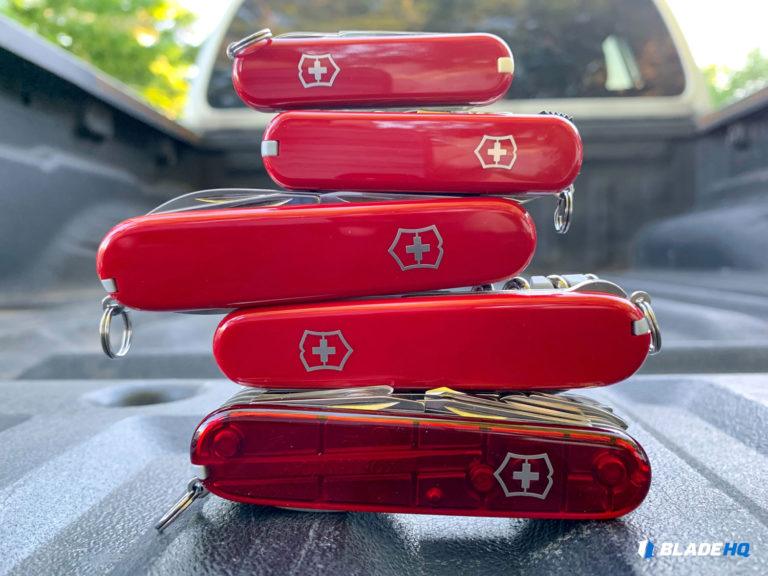
Some Swiss Army knife tools are handy, while some are pocket weights. Here are 10 that are actually worth the purchase (other than the blade itself). How many do you have?
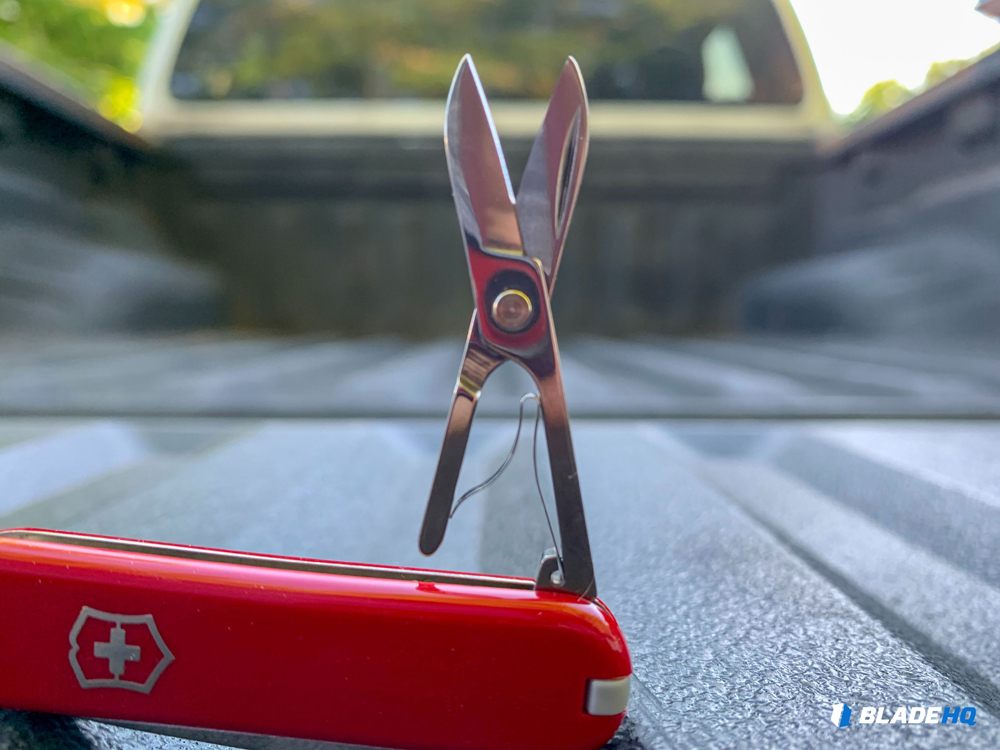
Scissors
I carried a Swiss Army Classic SD on my keys for the better part of three of my teenage years, and that’s when I realized how handy scissors can be. Small things like cutting string, stray hairs, and other items that need a precise cut are much easier done with scissors.
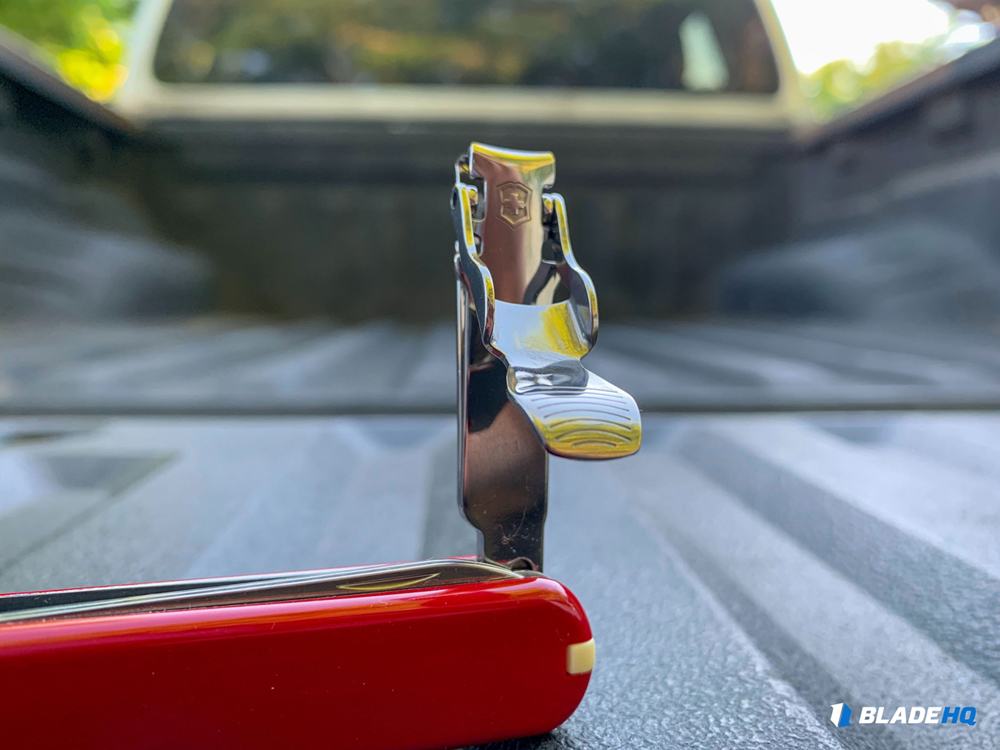
Nail Clippers
Gimmicky? Maybe, but hear me out. You’re out in the wilderness exploring when the sun starts to set into that gorgeous golden hour. You pull out your pocket knife and decide to snap some photos when you realize you’ve neglected your overgrown, dirt-encrusted fingernails. Nobody wants to see a knife-in-hand shot like that.
If the terrifying story above doesn’t ring true, maybe you can think of a time you wish you had nail clippers with you. For a compact tool with a blade, tweezers, toothpick, file, etc., you could do much worse than to have some nail clippers tagging along.
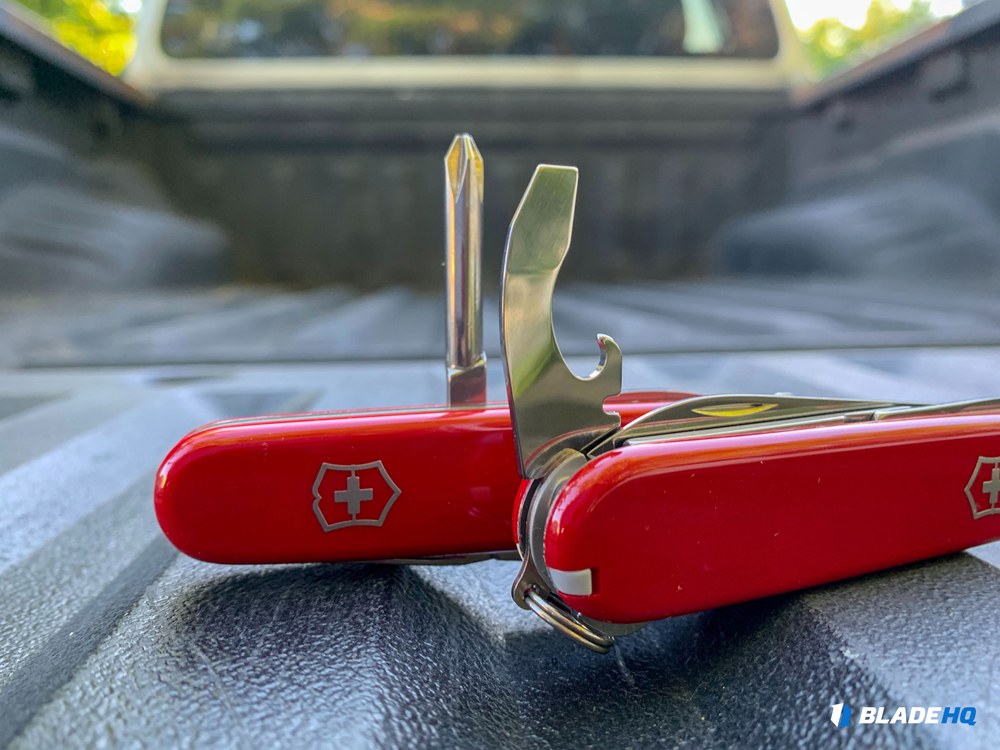
Screwdriver
The handiness of a good screwdriver can’t be overstated. My favorite screwdriver I have is one where the bits flip around and can be swapped between Phillips and flathead.
Victorinox has created a new take on this with models like the Tinker (pictured). It features the Phillips on one side and the flathead on the other.
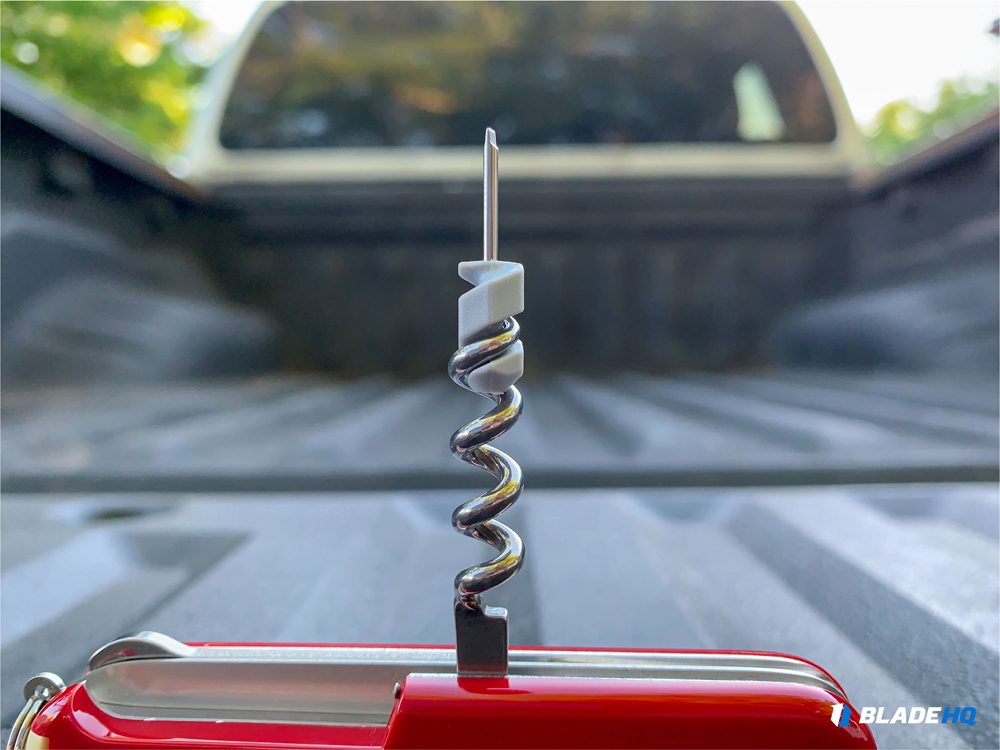
Corkscrew
The Swiss Army knife corkscrew is a hot button topic these days. Many collectors say it’s useless, and that they’d rather have a Phillips screwdriver in its place. Others have found good use for the corkscrew with things like untying knots.
Some models come with a mini flathead that attaches to the corkscrew, giving a slight sense of the best of both worlds. If you’re a glasses wearer, this can be a great option.
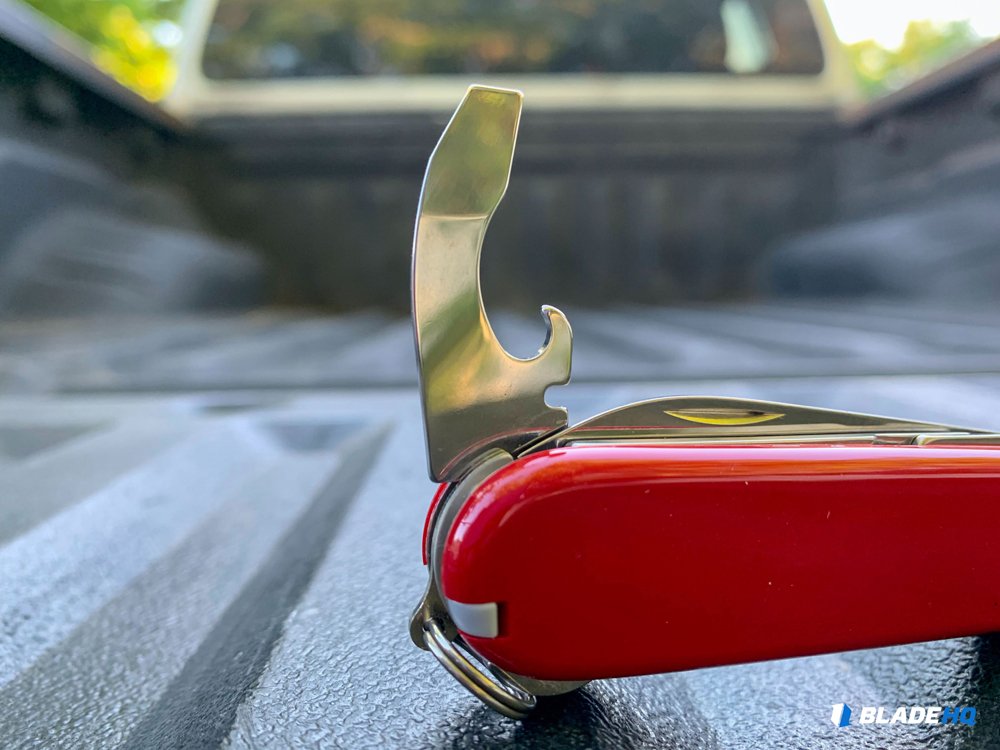
Flat Head/Prybar/Wire Stripper
A big no-no in the knife world is using the tip of a knife as a pry bar. Many a blade has been broken doing this exact thing.
The prybars on these tools are stainless, strong, and come in clutch when you need them most. The small wire stripper cutout is also a nice feature that you’ll love to have around eventually.
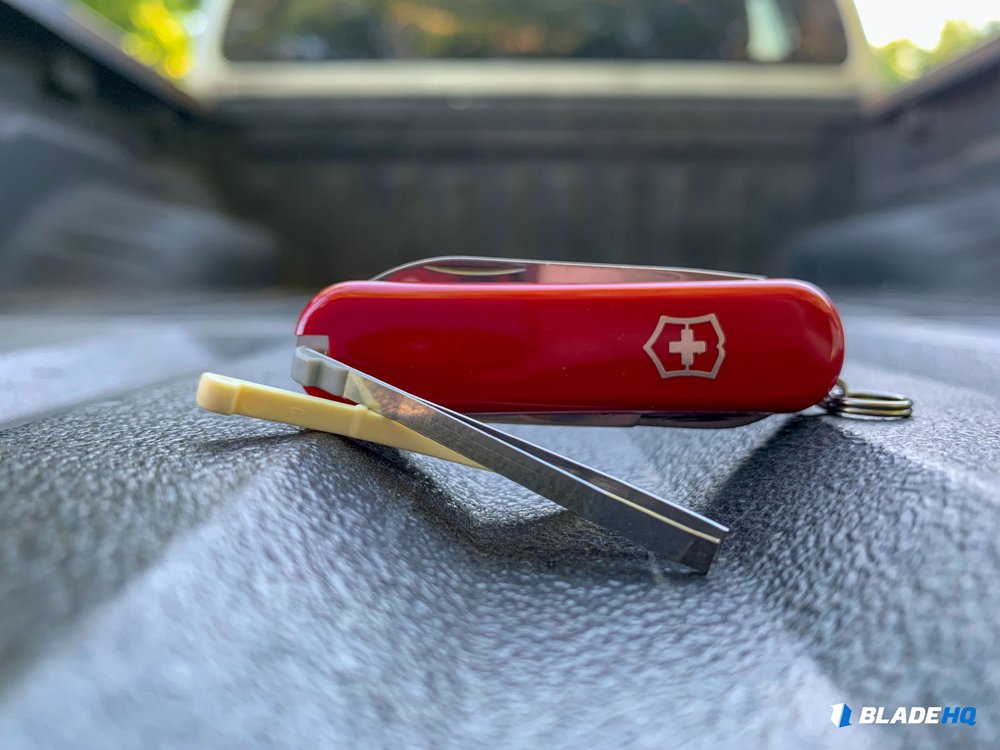
Toothpick/Tweezers
These two things are pretty self-explanatory and come in handy in the most random of times. The toothpick is invaluable for post-lunch debriefing. For that annoying sliver, tweezers can be a lifesaver.
They both fit nicely in the handle slots and don’t take up any extra room. Replacement toothpicks can also be had for only a couple of bucks.
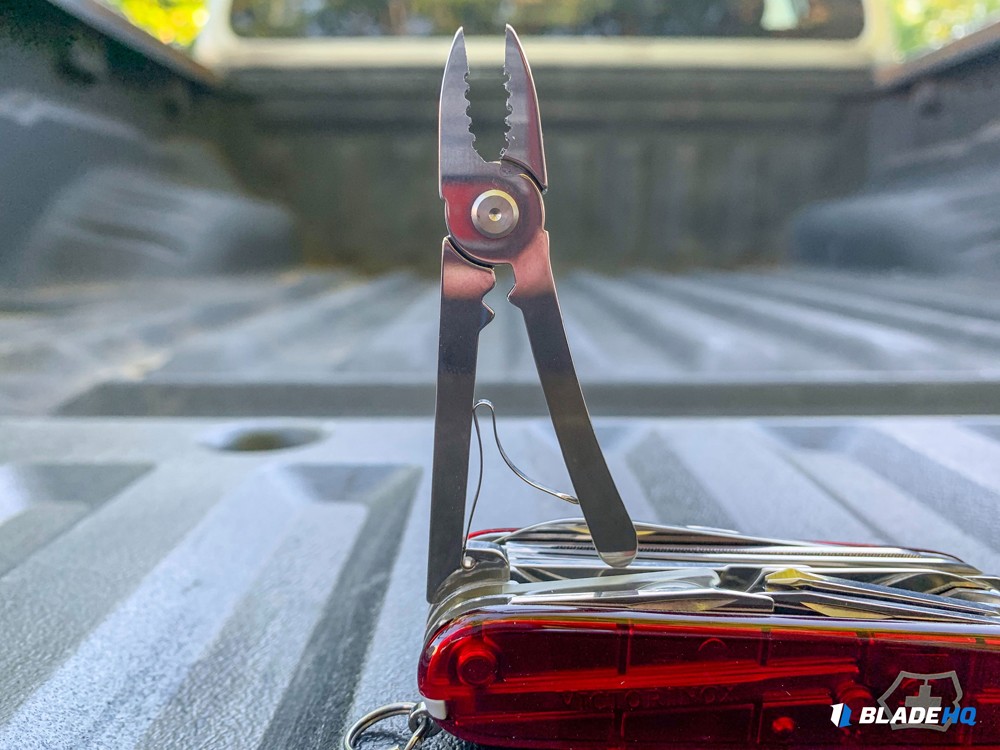
Pliers
No matter your occupation or background, you’ll be able to find uses for pliers at some point. Pliers are available on many of the larger Swiss Army models.
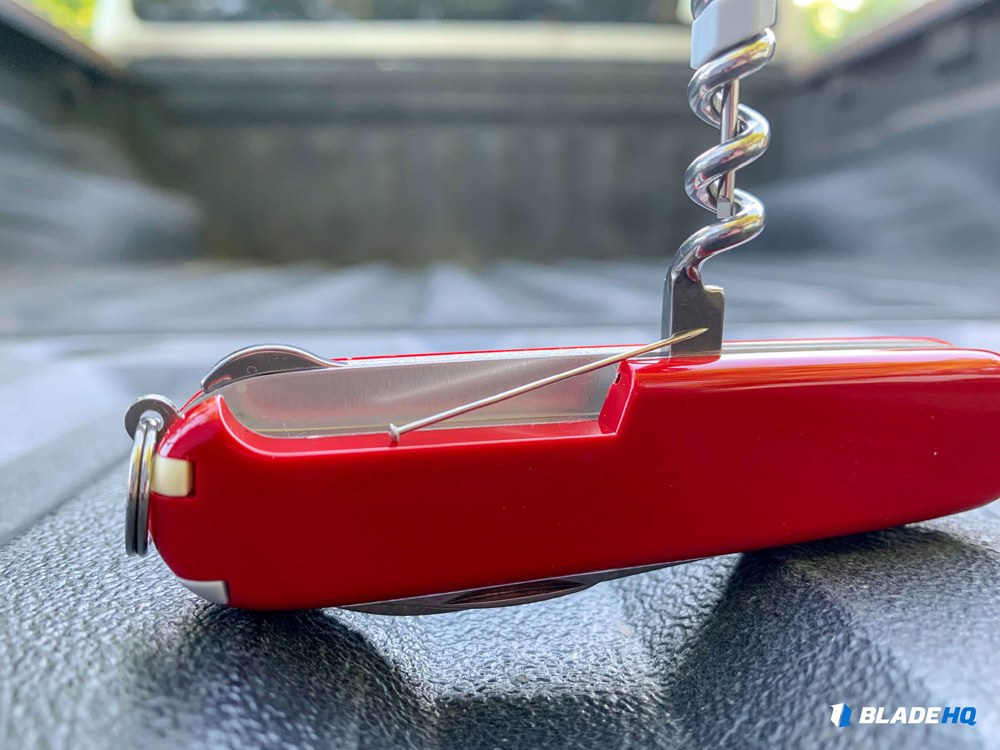
Stainless Pin
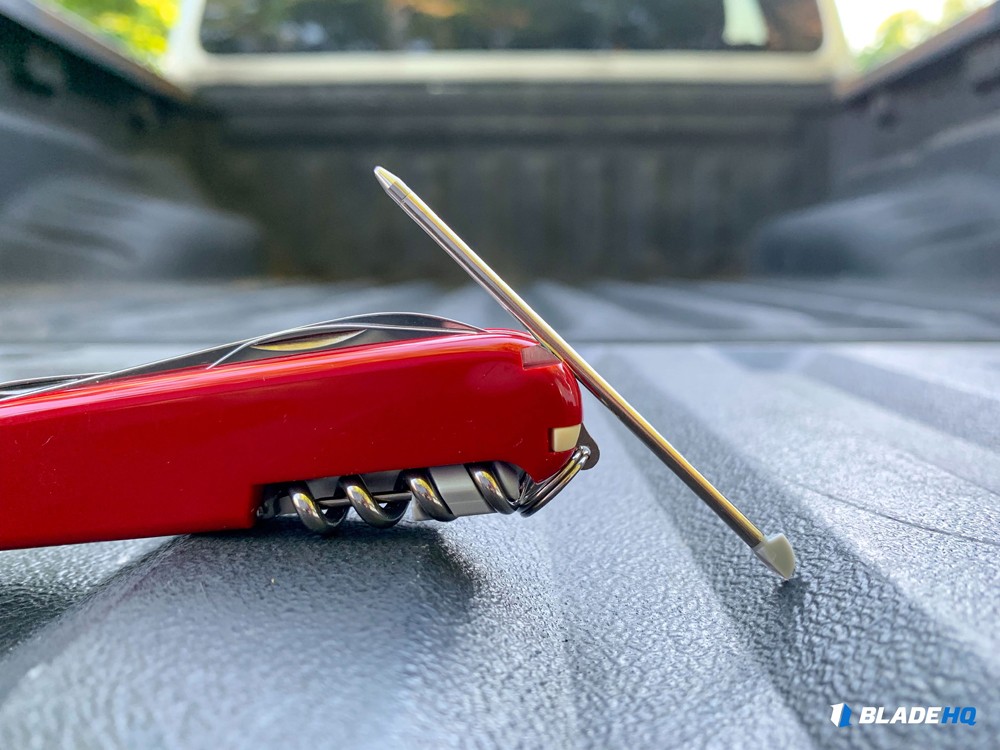
Not many SAKs come with this pin, but with those that do, it’s a welcome addition. This Compact stashes the pin in a hole of the cutout for the corkscrew.
Whether you’re pushing tiny reset buttons or getting slivers out of your hand, this sharp pin will definitely come in handy. The slot on this knife makes it almost unnoticeable as well.
Pen
Pens are a hot EDC item these days, but I haven’t bought into the hype. I just don’t find myself needing one that often and don’t want to give up my valuable pocket real estate to carry one. That is, until I saw Victorinox has them in some Swiss Army knives.
The pen looks like another gray tweezer slot but comes out as a thin pen that is easily concealed. I wouldn’t plan on using the pen consistently, but it is great for a pinch when you need to jot some things down.
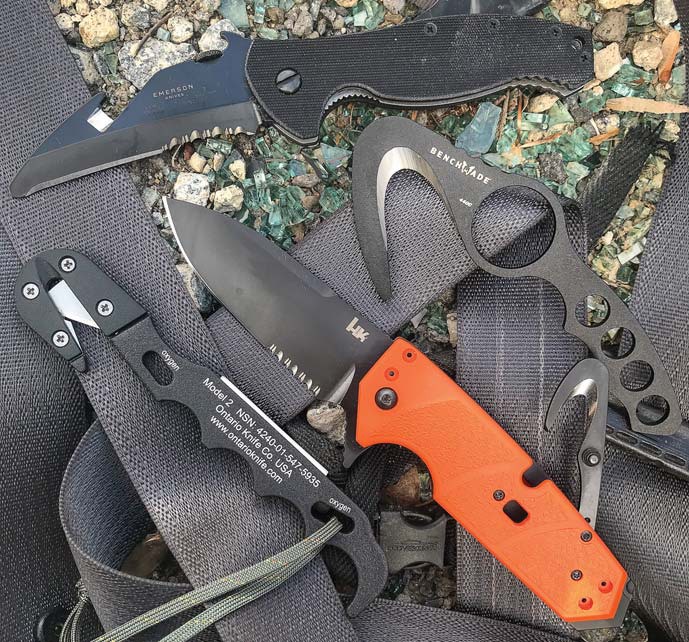
A question often asked is, “How in the world do I sharpen seat belt cutters?” It’s not really as difficult as you might think. All you need is the correct sharpener.
The Best Sharpener for Seat Belt Cutters
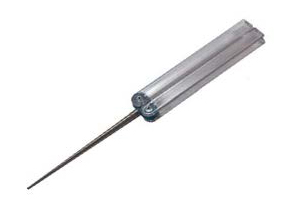
The DMT FSKC serrated sharpener is a great choice for tuning up seat belt cutters. (DMT image)
Because you’re sharpening a cutting tool that has limited access to the actual cutting edge, I recommend something like the DMT FSKC serrated sharpener. It is a coarse-grit, diamond-coated, tapered rod commonly known as a rattail file.
Sharpening Seat Belt Cutters
Working the cutting edge from the ground side only, carefully work the file with light pressure, ensuring you run it over all of the exposed cutting edge.
On the reverse side of the blade, which is flat, feel very carefully for the burr that will form. Once you feel the burr, you know you have done it right. On the flat side, take the rattail file and, holding it as flat to the blade as you can, lightly “wipe off ” the burr. You might have to return to the ground side to wipe it back to the flat side.
Stropping Seat Belt Cutters
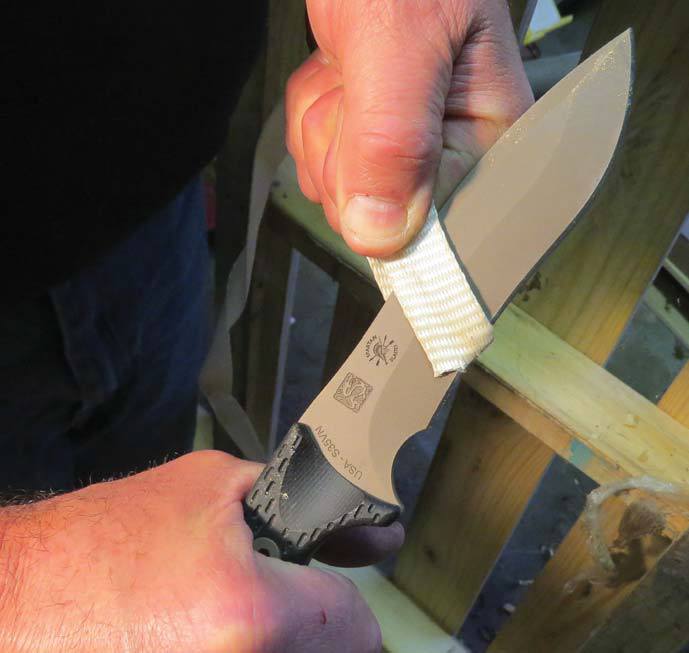
Another thing that helps is stropping the inside of the hook with a leather shoelace. Have someone hold the unsheathed/opened blade by the handle for you, then firmly grasp both ends of the shoelace and lightly “floss” the inside of the cutting hook. Move the leather string only in one direction—down the cutting edge. If you move into the edge, it will cut the shoelace in two.
Repeat the correct motion a few times to strop the ground side. It is basically the same principle as stropping a straight razor.
Sharpening Tips
Provided you don’t use the cutting hook for anything outrageous, such as cardboard, and you use it sparingly, you won’t need to sharpen or strop often. However, in the event you do need to restore the edge, this is how it’s done.
Nitinol, also referred to as “Ni-Ti-Nol,” was first discovered back in 1959 by scientists William Buehler and Frederic Wang at the Naval Ordnance Laboratory. The Ni-Ti-Nol acronym stands for “Nickel-Titanium-Naval Ordnance Laboratory.”
Beuhler and Wang were searching for a super-elastic alloy for missile nose cones that would be pliable at extreme heat, yet return to its original shape after cooling. Their efforts were a success, but because the incredibly tough alloy was so difficult to process and machine, it wasn’t used until much later.
Knifemaking Discovers Nitinol a Half-Century Later
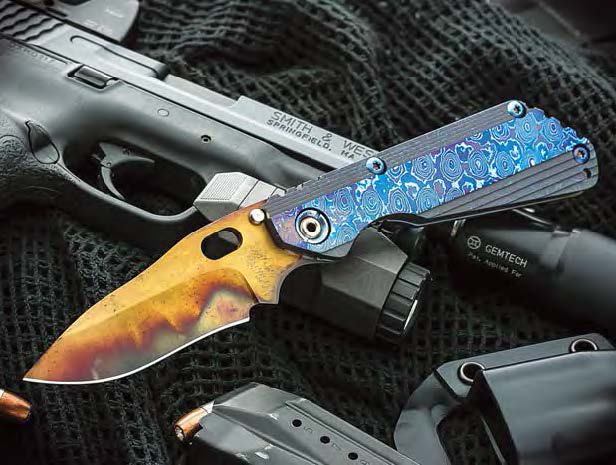
Duane Dwyer of Strider Knives was the main force behind SM-100 (HIPTiNite), and his signed custom Strider MT2 showcases a brilliantly heat-treated SM-100 blade mated to machined carbon fiber handle scales. (Brady Miller image)
Custom knifemaker Duane Dwyer of Strider Knives became interested in Nitinol back in 2005 while searching for a super hard metal alloy that would not rust. He approached metallurgist and friend Scott Devanna, vice president of technology at SB Specialty Metals, and inquired about the possibility of producing Nitinol using the particle metallurgy process, which had never been done.
Shortly afterwards Devanna introduced Dwyer to Eric Bono, a metallurgist and knifemaker who also had an interest in the alloy, and the three men began to explore the possibilities of incorporating the alloy into knives.
Nitinol Becomes SM-100 (HIPTiNite)
Duane Dwyer of Strider Knives was the main force behind SM-100 (HIPTiNite), and his signed custom Strider MT2 showcases a brilliantly heat-treated SM-100 blade mated to machined carbon fiber handle scales. (Brady Miller image)
With his metallurgical knowledge and experience, Bono developed a working, powdered metal version of the alloy in 2006, which the partners dubbed “SM-100.” It took several more years to refine the alloy and processes, and in 2009, Bono and business partner Fred Yolton formed a company, Summit Metals LLC, to produce SM-100.
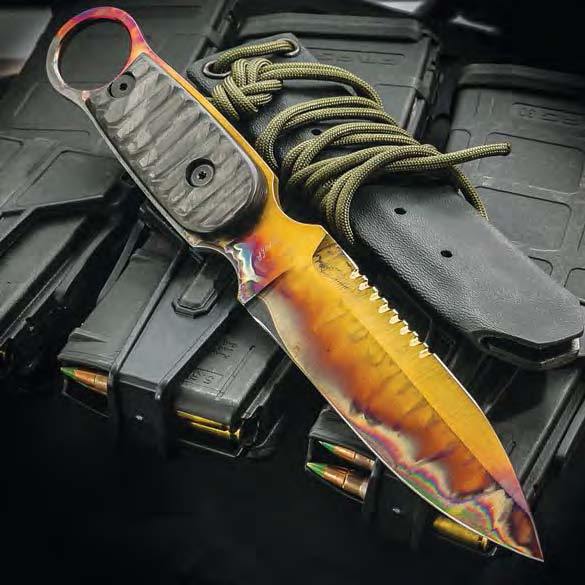
Since that time, SM-100 (60 percent nickel and 40 percent titanium), which the company markets under the name “HIPTiNite,” has garnered interest not only in the knife industry, but also by NASA and the Formula 1 racing industry.
Properties of SM-100
The SM-100 brand of Nitinol, like its forerunner, is extremely tough. While a typical sanding belt can be used to grind several typical, mono-steel knife blades, it requires several belts, in many cases six or more, for the same process using the SM-100 alloy.
Made and sold in small quantities, the cost of SM-100 isn’t cheap. Add to that the cost of belts and additional time to shape and grind the material, and the cost per knife skyrockets.
On the positive side, SM-100 is noncorrosive, and while stainless steel will rust, Devanna says you can throw an SM-100 knife into saltwater for 50 years without the material corroding.
An Explosion of Coloring
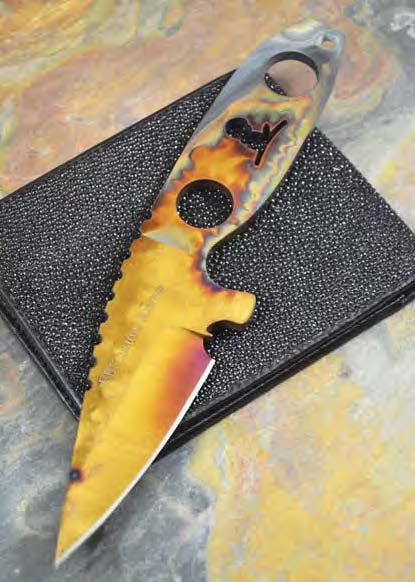
Bono discovered during his development of SM-100 that it can be heat colored into an exquisite rainbow of colors. Due to the titanium content, SM-100 oxidizes into a blaze of bright hues just like other alloys incorporating titanium, but the process of achieving the color effects is quite different.
Bono confides that the magic happens during the heat-treating process, in which he allows small pockets of air to leak onto the surface of the knife. Prior to heat treating, the blades are wrapped in foil and small holes are punched into the wrapping.
When heat treated, different colors occur depending on the oxygen content of certain areas of the blade material as the surface oxidizes. The end result is the explosion of color on the SM-100 blades.
The price for bright, eye-popping colors doesn’t come cheap, but then new innovations rarely do.
Editor’s note: The below is an excerpt from an article originally published in the KNIVES 2018 book, but it still rings true today. Hardly anyone is talking about dive knives, but they come with the kind of history and innovation that is ripe for collectors. They truly are the sleepers of knife collecting.
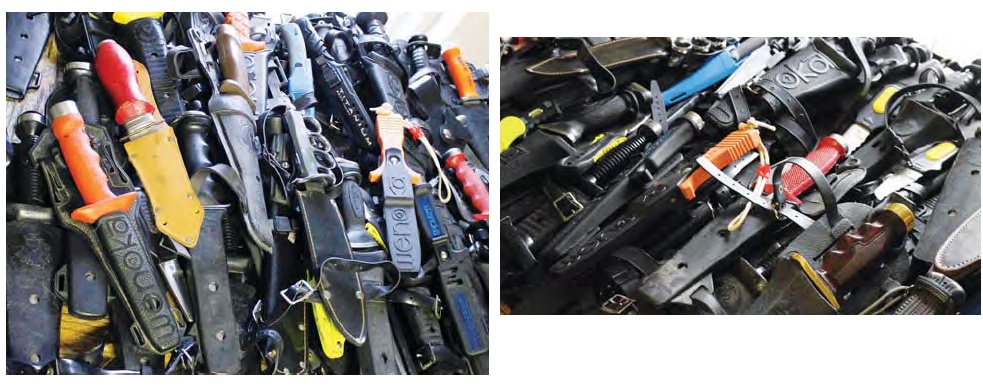
Shown here are the author’s piles of dive knives purchased for bargain prices at gun shows and flea markets.
Dive knives present an opportunity for collectors to get in on the “ocean floor” of an industry segment. Other than modern, imported low-end knives, vintage dive knives are often the lowest priced blades at a gun show or flea market. The overwhelming majority of dive knives are easily acquired for between $5 and $40 apiece, similar to how U.S. military knives and theater-made knives were priced years ago, before folks woke up and recognized their true value.
They say the sea, not space, is the last true final frontier. Dive knives have been the personal tools of undersea explorers for as long as there have been divers. What the bowie knife was to the West, the dive knife is to the sea.
Before You Buy, Know the Pricing Ceiling
Dive knives are currently the “sleepers” of the knife world, and investment opportunities abound for the collector who has an interest in such pieces. Before we look at inexpensive dive knives, one should be aware of the pricey ones available today.
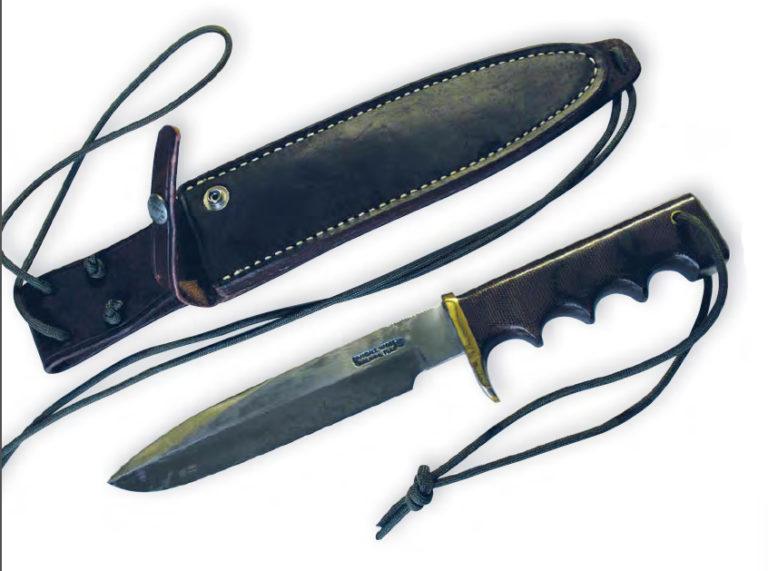
There are some expensive, desirable dive knives out there now, many coming from high-end makers. The expensive pieces are often associated with military and sporting uses, and include, but aren’t limited to, Randall, Gerber, Puma, Benchmade and Mission Knives & Tools, or those made specifically for the military.
Becoming familiar with expensive dive knives may help one find a bargain and to recognize certain qualities that make a dive knife valuable. Additionally, the expensive dive knives lay the foundation for price appreciation of the vintage sleepers waiting out there for savvy collectors to scoop them up.
Bargain Buys
When it comes to bargain dive knives, one sees names such as U.S. Divers, Healthways, Wenoka, AMF Swim Master, AMF Voit, Sportways, Dacor, Scubapro, Scubaskin, P.I.C., Eternal, etc.
The general pattern of the knife is a stainless steel blade with a plastic or rubber handle and sheath. There are models that can be picked up for incredibly low prices, and for what one is paying, “it’s worth it just as a knife.” It’s those kinds of investments that seem to be can’t-lose propositions, although nothing is ever guaranteed in life.
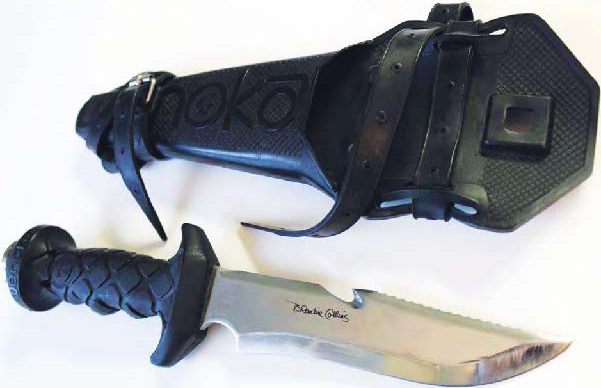
The sturdy Wenoka dive knife was designed by Blackie Collins.
Wenoka knives are some of my favorites. They were very well made in Japan. There is a wide variety of models. The larger Wenoka dive knives have a great, sturdy feel and are nicely designed for the task at hand.
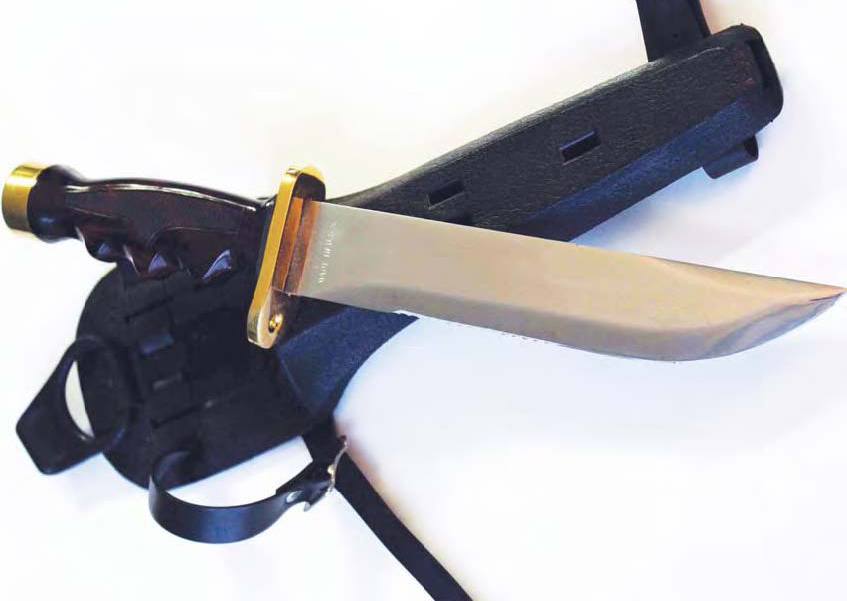
Note the heavy brass guard and butt of the high-quality, U.S.-made AMF Swimaster dive knife.
The AMF Swimaster is a beautiful, well-made knife, very high quality, serial numbered, with a heavy brass butt and guard, and made in the U.S.A.
Healthways offered the “Skin Diver,” a double-edged blade made in Solingen, Germany, with a large, red cork handle.
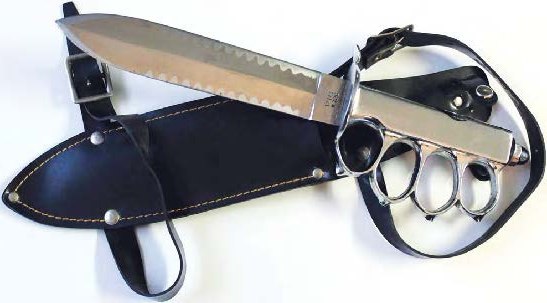
The nickel-plated P.I.C. dive knife boasts a 1918 trench knife-style handle that protects the user’s knuckles underwater.
The P.I.C. Model 728 “Sea Hunter,” made in Japan, is also of high quality. It is easily recognized by its handle, which is a nickel-plated replica of the 1918 World War I trench knuckle knife. Many such dive knives were made in Japan, and even a dive hatchet, which was a hatchet, pry bar and hammer combination set that came in a vinyl sheath was available.
Buy Low Now, Sell High Later
There are so many variations of dive knives, and they appear to be limited only by the imaginations of various makers. The collector now has a chance to reasonably acquire these fascinating knives that were once strapped to divers exploring the underworld of the earth.
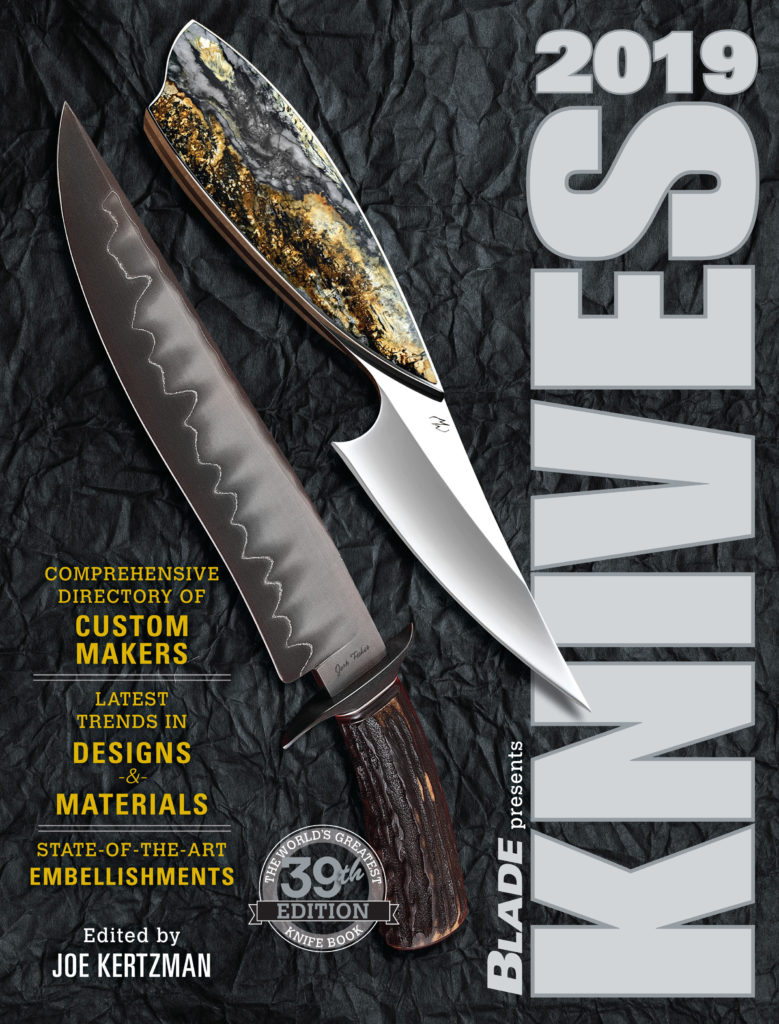
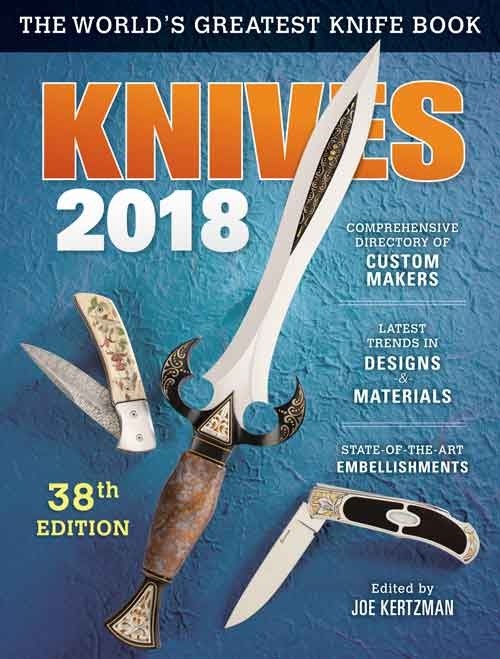
This article was excerpted from KNIVES 2018. Click the cover to order the book directly from the publisher at a great price.
A blade’s profile geometry has a considerable effect on how well the knife works for an intended use. A blade with a substantial curve facilitates slicing cuts along the length of the edge, as on skinners and some butcher knives, such as steak scimitars. Straighter blades work well for tip control and power cutting.
A recurve combines features of a couple of blade styles. Depending on the size of the knife and its intended use, the recurve provides certain benefits. The edge line is “S”-like in shape. The overall form leaves the front part of the blade with a sweeping curve. Such a curve provides the edge with belly for slicing and plow/furrow-like cuts, along with the ability to do detailed cuts using a reverse pinch grip.
Are Recurve Blades Better?
You can see how material being cut can get locked in the pocket of a recurve blade, here with the Ronin Shinto.
As to which cuts work best with which knife, it depends on the other characteristics mentioned in the story. On large knives such as choppers, the use of a recurve gives the blade a weight-forward advantage.
Simply adding length to a blade does make it heavier by default, but, to actually have a weight-forward design, the front half of the blade needs to have more weight than the back. The idea is to look at the weight of the blade and not the whole knife to classify it as “weight-forward.”
Near the handle the recurve forms a pocket, which tends to lock material in. The subsequent curve formed by the pocket provides a leading edge to a cut, depending on the curve’s circumference. A leading edge is an edge angle that leads into the work, as opposed to approaching the cut at 90 degrees to the material. You can also generate a leading edge by angling a straight blade while cutting. On a recurve, the arch formed by the pocket provides a leading edge.