Knife collecting is an extremely rewarding experience for knife enthusiasts. There truly is a knife for everyone. Many increase or hold their value throughout the years, making collecting knives something to pass on to the next generation of knife collectors.
Knives come in all types and sizes. The knives in Brittany Gambee’s collection, for instance, are miniatures, all of which, with the exception of one, are made by ABS journeyman smith Dale Huckabee. And the genesis for them all started with a hug—or the lack thereof.
“Give Me A Hug For A Knife”
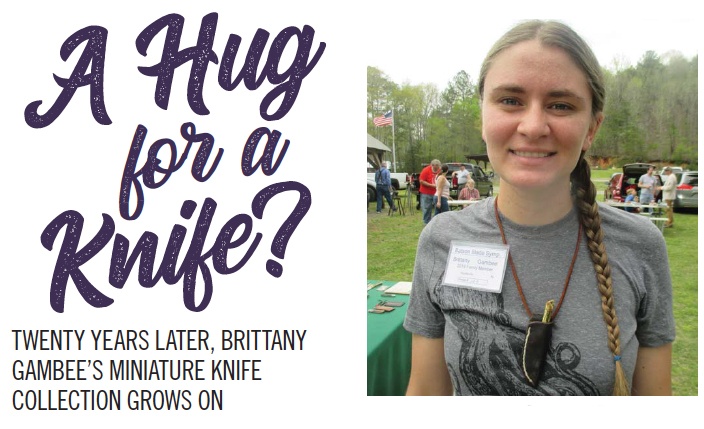
It started almost two decades ago when Brittany was 6. She and her mom, Dianna, were visiting their first Batson’s Bladesmithing Symposium, a three-day celebration of bladesmithing seminars and knives at the Tannehill Ironworks and park in McCalla, Alabama. Then a fledgling bladesmith, Huckabee was displaying his knives at his second or third Batson event, when up walked Brittany.
“This little girl about 2 or 3 feet high came up and said she’d give me a hug for a knife,” Dale recalled. Huckabee was feeling pretty chipper back then because he had just won a scholarship to the Bill Moran School of Bladesmithing.
Brittany holds the knife at 6 (left) and wears it at 16 (right). In the background of the latter image is Brittany’s mom, Dianna.
“I had this miniature knife and sheath and reached over and hung it around her neck and said, ‘Where’s my hug?’—and she ran,” he grinned.
Dianna remembers the incident almost like it was yesterday.
“Dale told me when he gave the knife to her that it was sharp and to be careful, but he wanted her to have it,” she said, adding that Brittany wore the knife and neck sheath for many years. “Well, in our silliness we didn’t get his name, we just took the knife and sheath and figured ‘no big deal.’”
The DH Mystery
Fast-forward 10 years to when Brittany was 16. “The dog chewed the edge of the sheath and Brittany was very upset and wanted to replace it,” Dianna remembered. “Well, the knife had a ‘DH’ on it, but we didn’t know who DH was.”
Enter “Uncle Bill.”
“We’d been coming to Batson’s every year and there was this wonderful man who used to come here, ‘Uncle Bill’ Richardson—he’s passed away now—and he told us, ‘You bring the knife to the symposium and have Brittany wear it and somebody will recognize you.’”
Richardson—who Dale said didn’t make knives but was “a heck of a blacksmith”—was at least half right. Dale recognized Dianna but he didn’t recognize Brittany because at 16 she was 10 years older than the young lady he originally had met.
“This lady and this girl walk up and the lady said you don’t recognize her [Brittany], do you?’” Dale recalled. “I said no but I recognize the knife.”
Collecting Miniature Knives
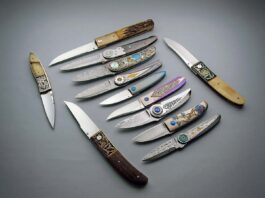
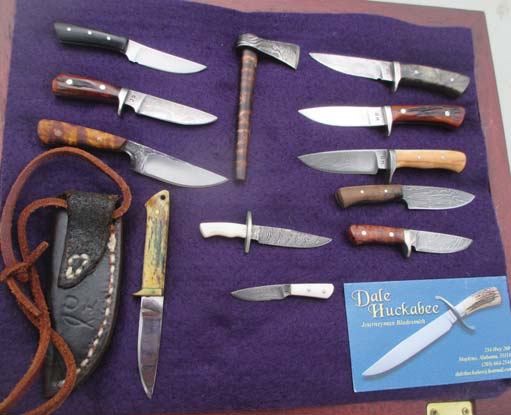
Gambee’s collection includes 12 miniatures. The neck knife and sheath are at lower left.
The Gambees have been coming to Batson’s Symposium—including this year’s rendition April 7-9—ever since and each year Brittany, now 25, buys a Huckabee miniature knife. This year’s addition: a miniature chef’s knife. The only piece in her collection that Dale did not make is one miniature damascus tomahawk by ABS master smith Ken Durham.
“Ken made the hawk for me because Dale always makes knives,” Brittany noted. “He saw Dale’s knives and said he could make a small hawk for me, and then Dale saw Ken’s hawk and said he could make a small one of those and made one for me, too.”
A Lasting Friendship
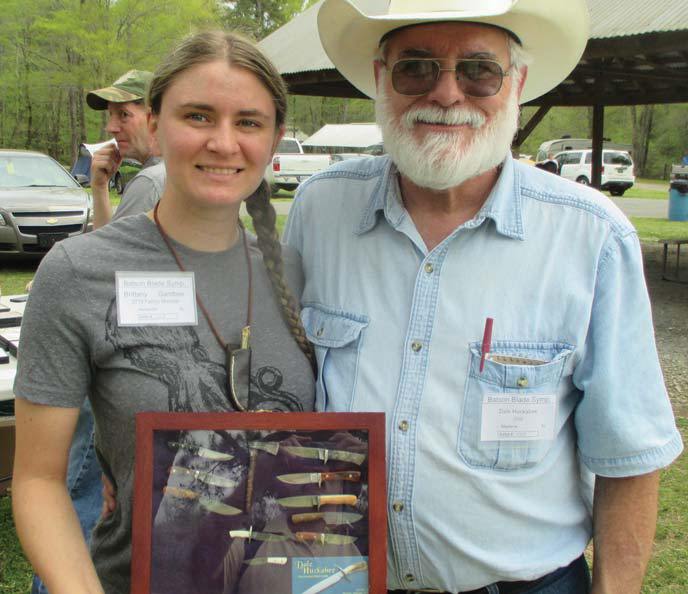
Dale Huckabee, Brittany and her collection at the 2019 Batson’s Bladesmithing Symposium.
The lasting relationship between Dale and the Gambees is something all concerned seem to relish.
“It’s been a good journey. She’s grown up with me now,” Huckabee reflected. “When I get to the BLADE Show I see her over there some and she’s like family. I try to make something different for her every year. Last year I made the miniature damascus tomahawk, but I have to keep my head working to try to make something new and different each year. I don’t know what it will be next year. I’ll have to try and come up with something new.”
Oh, and in case you’re wondering, Dale replaced the sheath for Brittany’s knife, too.
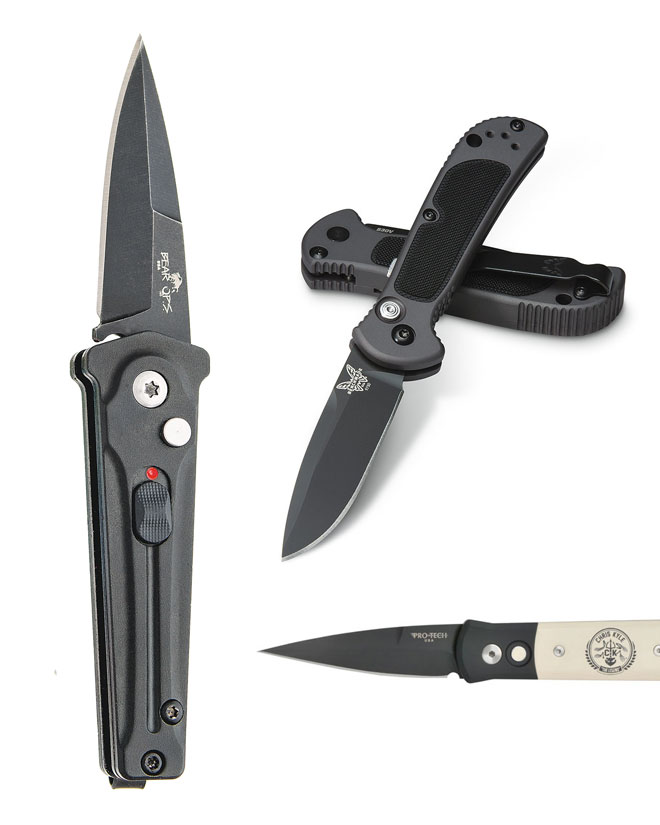
With more and more states decriminalizing automatic knives (aka “switchblades”), knife enthusiasts are more interested than ever before in purchasing one of these knives. They often turn to online retailers, but that presents a sticky situation: federal law prohibits interstate commerce of autos (see a full explainer here).
This leaves many scratching their heads. For instance, if a buyer in Montana places an online order with a seller in New Hampshire, does federal law prohibit the otherwise-legal transaction?
BLADE addressed the issue with an expert team of panelists who have dealt extensively with knife laws. They include Jan Billeb of the American Knife & Tool Institute (AKTI), Doug Ritter of Knife Rights and Evan Nappen, an attorney and author who specializes in knife and gun rights cases.
Question: Doesn’t the Federal Switchblade Act ban the transport of an automatic knife across state lines?
BILLEB: The Federal Switchblade Act is widely misunderstood, as it only applies to interstate commerce—commercially selling automatic knives across state lines. It does not prohibit crossing state lines with an automatic knife. It also does not prohibit traveling by air with an automatic knife in your checked baggage. State law applies to those traveling by surface or air based on your location, which state you depart from, where you might pass through, and you need to be concerned that your knife is legal in any of those locations.
Question: Is legal to ship automatic knives through the mail?
RITTER: Shipping autos, balisongs, gravity knives and ballistic knives via the U.S. Post Office is generally illegal, with some very narrow exceptions—which an individual is unlikely able to take advantage of. You would be subject to fines and up to a year in jail, or both, for breaking this law. Any criminal intent involved ratchets up the penalties. We strongly suggest that individuals use only FedEx or UPS to ship these types of knives.
BILLEB: Never ship an automatic knife using the U.S. Postal Service. Federal law prohibits the shipment of ‘injurious articles’—which includes automatic knives. The penalty for breaking this law is a fine or imprisonment for not more than one year. However, there is no federal restriction on shipment of automatic knives by common/contract carriers, such as FedEx and UPS. When shipping an automatic knife, always use a private carrier such as FedEx and UPS. In fact, the American Knife & Tool Institute recommends that you do not ship knives by the U.S. Postal Service to avoid a possible issue over confusion of whether it is an automatic knife.
NAPPEN: If the law-abiding collector does not give up his or her constitutional rights and has taken the above measures, that person and their knives will have significant added protection from an unjust prosecution and property confiscation. The best way to avoid becoming a victim of anti-knife laws is to avoid being arrested in the first place and being prepared if you are arrested.
Question: Can a city, county or other municipality ban automatic knives even if they are legal at the state level?
BILLEB: There are states where automatics are legal, but city or political sub-division ordinances may provide otherwise and ban or limit autos or other types of knives. That situation can be possible unless the state’s constitution provides otherwise or there is a statewide preemption law. Accordingly, knife owners/users should [know] the laws where they live, work or travel.
RITTER: The better question—with a much shorter list—is: Which states preempt local jurisdictions from regulating knives? If there is no state preemption, then jurisdictions are free to make up their own restrictions. Preemption prevents enforcement of existing local knife ordinances and prohibits new ordinances more restrictive than state laws, which only serve to confuse or entrap law-abiding citizens traveling within or through the state. Preemption ensures residents and travelers can expect consistent enforcement of state knife laws everywhere in a state. In total, 10 states have now enacted preemption bills: Alaska, Arizona, Georgia, Kansas, New Hampshire, Oklahoma, Tennessee, Texas, Utah and Wisconsin. Existing constitutional weapons preemption law covers knives in New Mexico and Wyoming. Elsewhere, there is no preemption covering knives, and owners should be wary of local regulations more restrictive than state law.
For answers to more questions about automatic knives, visit Knife Rights or AKTI.
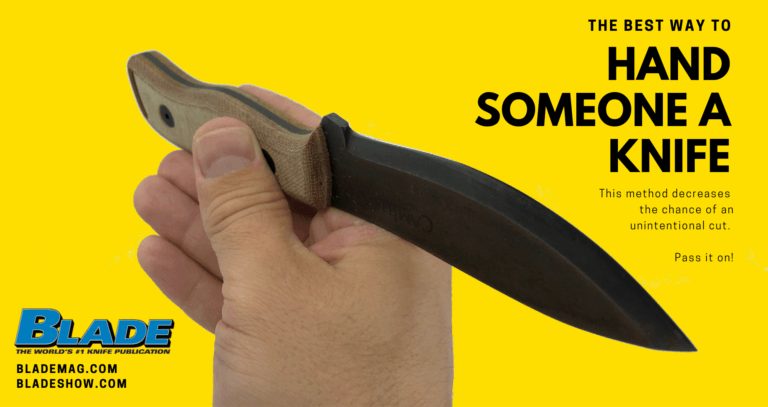
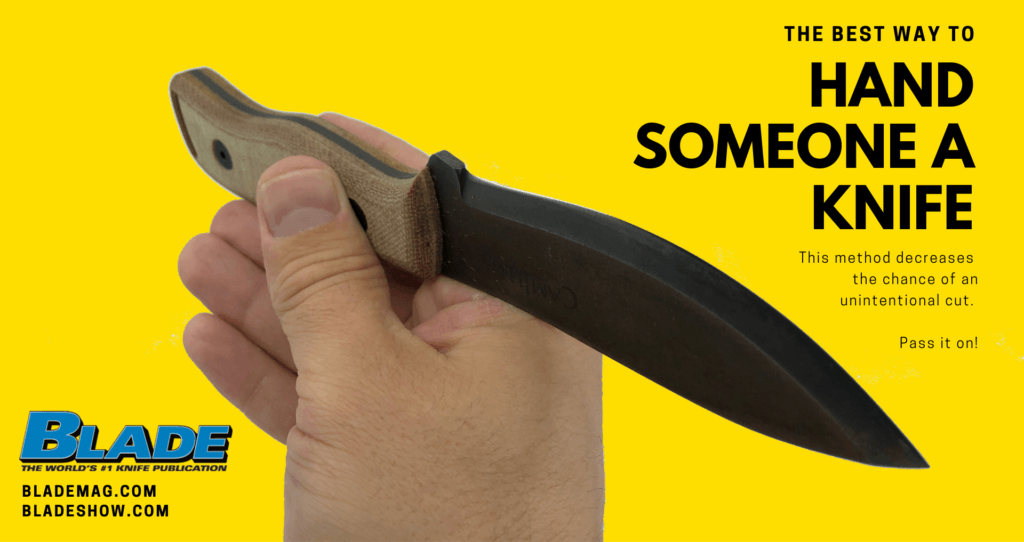
Feel free to to download and share this image. It could prevent an unintended cut. (Please keep the BLADE logo and URLs, though, OK?)
Knife etiquette often overlaps with knife safety, and this is a prime example. The best way to hand someone a knife is also the politest, as nothing is quite as rude as unintentionally cutting open a person’s skin.
The Technique: Make It Muscle Memory
It’s simple: while holding the handle with your fingers, cradle the spine of the blade in the web of your hand between the thumb and index finger.
This allows the recipient to safely grasp the handle. If the blade slides across the giver’s hand, the skin will come in contact with the spine, not the edge. It also forces the recipient into choosing the safest method to release the knife from the giver’s hand, avoiding any meandering edges.
None other than Ray Mears demonstrates what a successful hand off looks like using this technique here:
The dance of two people using any other technique is as awkward as it is unsafe. Committing this technique to muscle memory so it’s second nature will save time and stitches. Plus, you’ll look like a pro.
The Second Best Technique: Setting the Knife Down
The only other technique that’s as safe is setting the knife down for the recipient to then pick up. That’s not always possible, but it’s still better than someone unintentionally shaking hands with an edge.
Placing fingers on the blade to pass or grab a knife is not only not recommended, it’s not how the knife was designed in the first place. The handle is there for a reason.
The Only Exception: Securing the Blade Inside the Handle
If the knife design allows for the blade to be secured inside the handle (folders, autos, etc.), it’s obviously acceptable to secure the blade first before handing the knife off.
In the quick back-and-forths at knife shows, like the BLADE Show, that’s not always convenient. That’s why it’s worth committing the technique in the above picture to muscle memory.
Pass It On!
Don’t keep this information to yourself. Share the image at the top of the page on your social media, blog, website and with anyone who might need it. Feel free to link to this article, too.
BLADE wants you to be safe! Enjoy your knives. Treat them right, and they’ll treat you right, too.
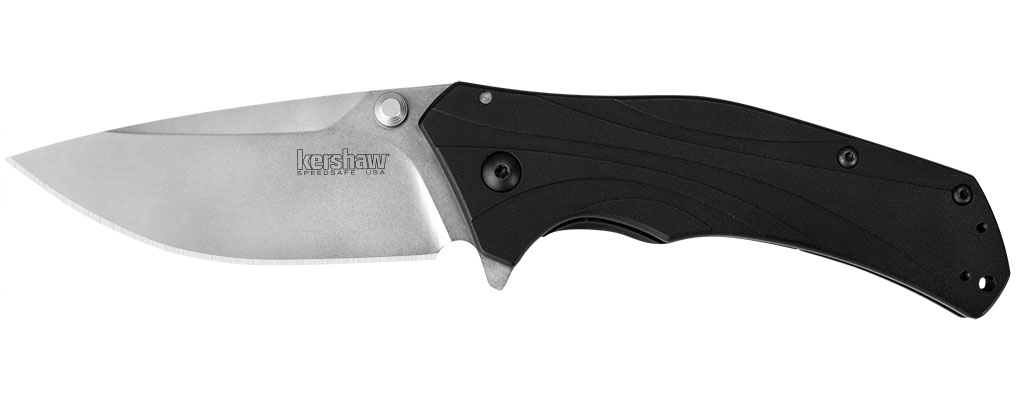
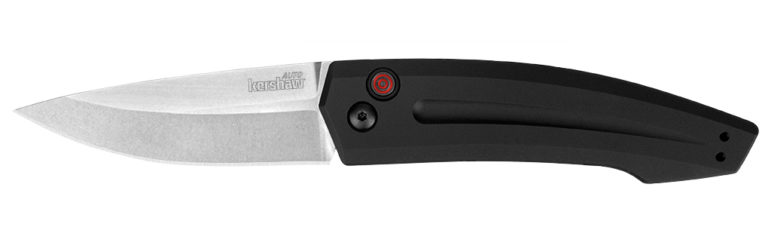
The Kershaw Knockout offers a bigger design than most EDC, but it’s still lightweight enough to stick in a pocket. (Kershaw photo)
Quick Tips
Choose a knife that isn’t too small for anticipated tasks, but not too large to carry comfortably
Buy inexpensive ($25 or less) knives if you don’t care that they get lost or broken
Pay at least $75 for an average quality EDC
Better performing knives start at $100
Handle the knife before buying if possible
Avoid gimmicks
If you can’t figure out how to open it by looking at it, it’s not the right fit
Top 10 Things to Consider in Buying an EDC Knife
Quality materials
Top blade steel
Maker/manufacturer and customer service
Application or cutting tasks it will perform
Price point
Type of lock or mechanism
Design
Ergonomics
Size and weight
Ease of carry
The Best Everyday Carry Knives for the Money
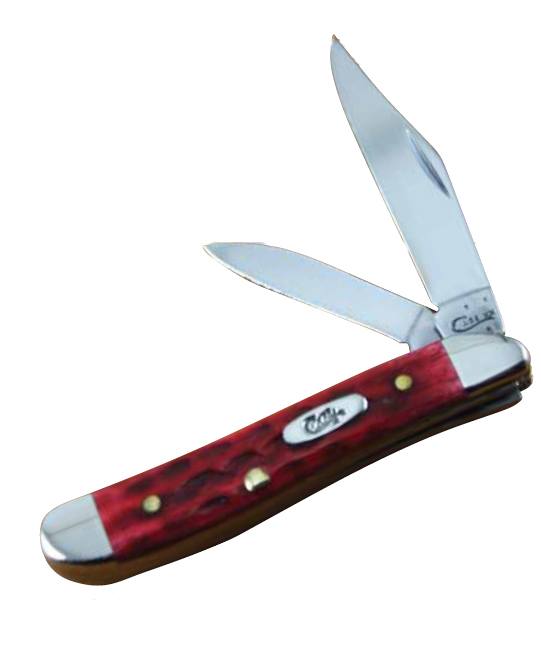
With Old Red Bone handle scales, the W.R. Case & Sons “Peanut” is a handsome EDC knife, a two-blade folder weighing in at a light, easy-to- carry 1.2 ounces.
How do you get the best everyday carry (EDC) knife for your money? Will a $25 knife from a big-box store suffice? Is there such a thing as a quality $25 knife, or will it be necessary to spend $100, $500 or $1,000 for a blade? BLADE went looking for answers.
Buying EDC Knives Is Like Buying Cars
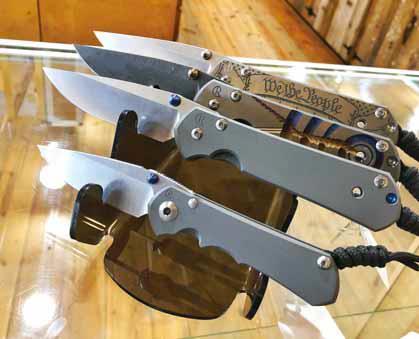
Chris Reeve folders are considered quality knives, with ergonomic designs, thick frames, solid locks and easy-opening, high-end steel blades.
“Directing a customer to an EDC knife is somewhat like pointing them toward an everyday car. Some think a base economy model suits them well, whereas others want a high-end luxury model,” says Mike Dye of New Graham Knives in Bluefield, Virginia.
“Obviously, a good mid- or high-end blade steel is paramount. And the feel of the knife in the hand—it must ‘fit’ the user,” Dye explains. “Different handle materials can make a world of difference in the feel of the knife. Micarta, G-10, smooth or worked titanium, stainless steel, bone and stag—these choices are of a personal nature.”
Not Too Small, Not Too Large
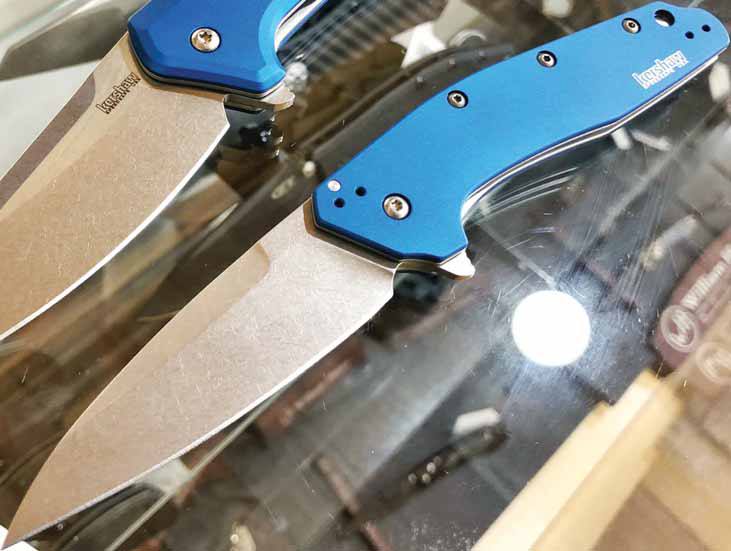
Mike Dye of New Graham Knives says Kershaw makes great knives in every price point. The full lengths of the flipper folders are ergonomic and flowing, including the blue anodized handles.
Though Dye says everyone likes something different, there are keys to finding the right everyday carry knife. One tip, he notes, is to choose a knife that is neither too small for the tasks it might encounter on an average day, nor one too large to carry daily.
Matt Salazar, store manager for House of Blades, agrees and even has a suggestion as to blade length, saying a 3- to 3¾-inch blade is ideal for an EDC knife. He mentions modern blade steels such as CPM S35VN or M390, as those that are more than adequate for everyday cutting tasks.
“Stick with a good, quality brand that has a track record of great customer service,” Salazar recommends. “G-10 and aluminum are great options, as far as handle material goes, although titanium and carbon fiber are widely available if you want something a little more high-end.”
When Does $25 Cut It?
Dye says a $25 knife might be the perfect choice for a farmer, miner or auto mechanic who uses the knife for any task that comes up.
“If broken or lost,” he states, “it’s easier to repurchase a $25 knife than it is a more expensive piece. For others who are less likely to overwork or ask a knife to do chores it’s not designed to do, a higher-end model with ‘prestige’ might be in order.
“As for a quality $25 knife,” Dye continues, “yeah, they’re out there. Over 40 years ago, when I started selling pocketknives, the China-made knives were a joke. That is not the case today. Some factories in China are producing amazingly high-quality knives at popular prices.”
Dye says such companies as Kershaw and Spyderco (the latter specifically in its byrd line) market knives manufactured in China with great success.
“Ontario and ESEE have great EDCs at a reasonable price,” he notes, “and they offer support for warranty issues.”
Disadvantages of Budget Knives
Salazar poses the question, “How long do you want the knife to last?”
“In my opinion,” he says, “you are going to be really hard-pressed to find a quality knife for $25. I will say that Kershaw makes great knives in every price point, but I’d also say that $75 to $100 would get you an excellent EDC knife that should last you many years with proper use. You can certainly spend more, if your budget will allow.”
Many steels in lower-end knives will not retain a sharpened edge for as long as high-quality blade steels, which means more frequent sharpening and a shorter life expectancy for a knife.
“Steel quality, in general, would be the biggest drop-off in opting for a lower-end knife,” Salazar explains. “Inferior edge retention is likely the most significant downfall, when purchasing a budget knife. After all, it’s a cutting tool.”
Higher Quality Equals Better Performance
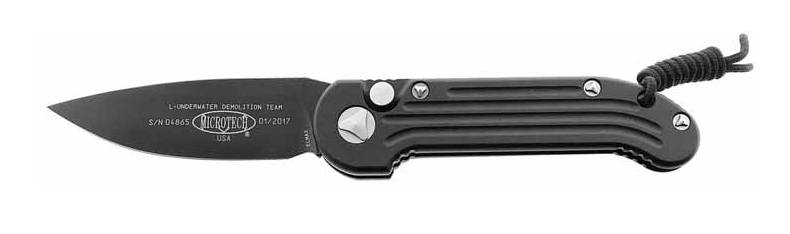
The Microtech LUDT Auto 135-1 has a premium ELMAX or M390 stainless steel blade (depending on the date of manufacture) with a 6061-T6 aircraft aluminum handle. Featuring top-notch automatic action, it measures 4 5/8 inches closed and weighs 3.5 ounces. Its size, blade geometry and design lend themselves well to a comfortable and capable EDC knife for $235.
High-dollar production knives, such as those available from Chris Reeve Knives, Hinderer Knives and Zero Tolerance, exhibit quality craftsmanship, better steel options and stricter quality control.
“Look for solid lockup, if it’s a locking folder, smooth action and overall quality construction,” Salazar remarks.
“Generally, when the customer has tired of the off brands and low-end offerings at the big-box stores, they come to me asking for a quality knife,” Dye relates. “That said, most of our walk-in folks have a ceiling of around $50 to $100, and there are dozens of excellent choices in that range.”
Tangible advantages to higher-end knives include titanium versus pot-metal knife frames, and handle materials such as Micarta, carbon fiber and natural bone versus plastic grips.
“Fit and finish on higher-end knives are rightly expected to be superior,” Dye states. “A customer will have a good experience with a knife that sharpens easily, cuts well and retains an edge. With high-end EDCs, you start to get into quality frame materials, better steels with superior heat treating and locking mechanisms that hold greater tolerances.”
Handle the Knife Before You Purchase It
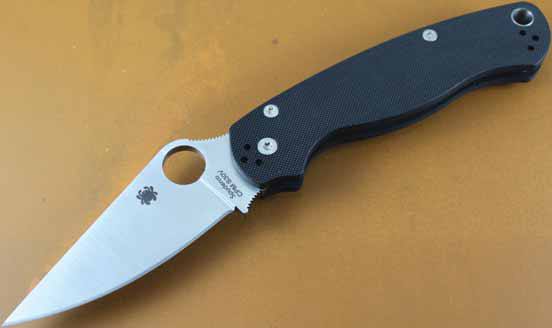
The Spyderco Para Military 2 folder has G-10 handle scales and a 3.43-inch CPM S30V blade. It weighs 3.9 ounces.
“If possible, handle the knife before purchasing it,” he suggests. “Look for lack of blade play on folders, both horizontally and vertically, and examine lockup. Look at fit and finish. Well-made knives at any price will show well in those areas.”
Dye says, “I tend to steer customers away from fancy opening mechanisms, unorthodox locking mechanisms and knives that have obvious marketing gimmicks associated with them.”
Materials to Consider
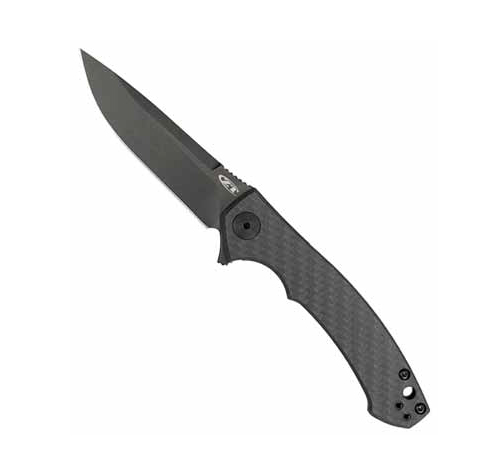
The Zero Tolerance 0450CF Sinkevich Frame Lock Flipper boasts a carbon-fiber front handle scale with a titanium rear scale and a 3¼-inch CPM S35-VN blade that opens smoothly on a KVT ballbearing system. The knife weighs 2.7 ounces.
Stainless as opposed to high-carbon blade steel is a consideration for Julie Maguire and Ryan Thompson of Arizona Custom Knives.
“In order to be an EDC candidate, a knife should have a high-quality stainless blade. There are more stainless steels to choose from today than ever before. Do your research and choose the one that fits your cutting needs,” Maguire says.
“Finding a knife with durable handle materials is also important,” Thompson imparts. “Titanium, G-10, Micarta and carbon fiber are all great options that hold up well in various conditions.”
Conclusion
One thing is for certain. As knife designs, blade steels, materials and mechanisms improve, the perfect EDC will always be a moving target.
Stan Buzek based his slip joint on a Bill Ruple two-blade trapper. The hollow-ground blades are Damasteel damascus and 3.5 inches each. The fileworked liners are 416 stainless steel. Closed length: 4 3/8 inches. Buzek’s list price to make a similar piece: $1,950. (SharpByCoop photo)
Blade Counts Count
Custom slip joints are hot again and have been for a while. Why are they so hot and how long will their popularity run this time?
“I have seen a bit of an uptick in pocketknife sales in the last couple of years,” notes custom knifemaker Stan Buzek, whose turnaround time on orders is three to four months. “I think this is due to the fact you can have both multiple- and single-blade slip joints,” as opposed to the single blades of tactical and other locking folders (though lockbacks are experiencing somewhat of a surge in sales, too).
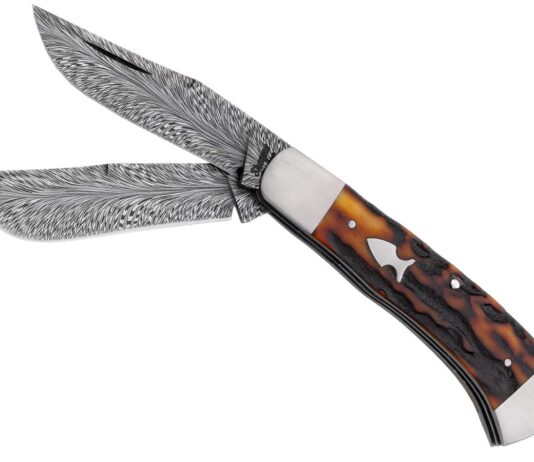
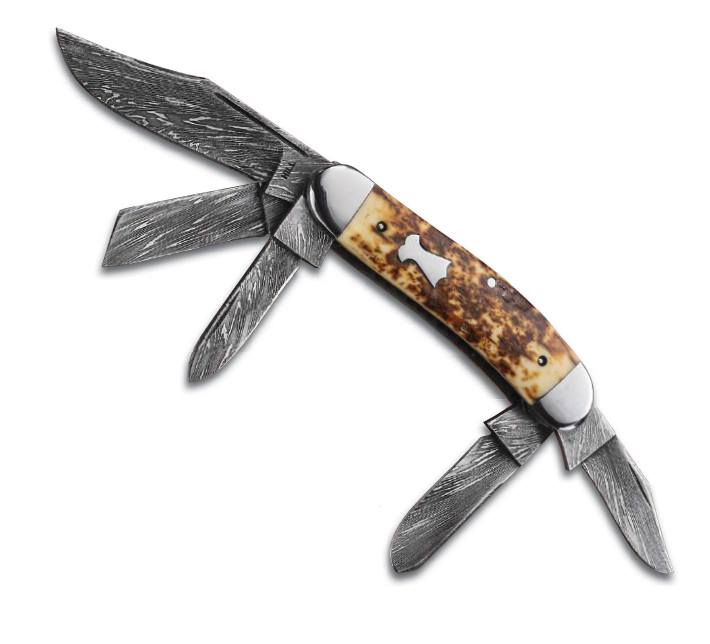
Tobin Hill’s five-blade sowbelly sports feather-pattern damascus blade steel in hollow grinds and a mammoth ivory handle. The maker’s list price for a similar piece: $1,200.
A Bright Future Ahead For Slip Joints
Adds Johnny Stout, who has a backlog of six to eight months, “From what I’m seeing at the shows and online in the past few years, pocketknives are alive and well. I see a bright future for slip joints.”
“I have seen slip-joint groups on Facebook grow by 300 percent in the last three years,” Tracy LaRock states. “I also have a group called ‘Making Slip Joints and Lockbacks’ that has grown a lot recently, with many new slip-joint makers.”
As for his sales, Tracy says, “My books are closed but I intend to open them in early 2020 when I retire from the military. In the meantime I list available pieces in my Facebook group and on Instagram.”
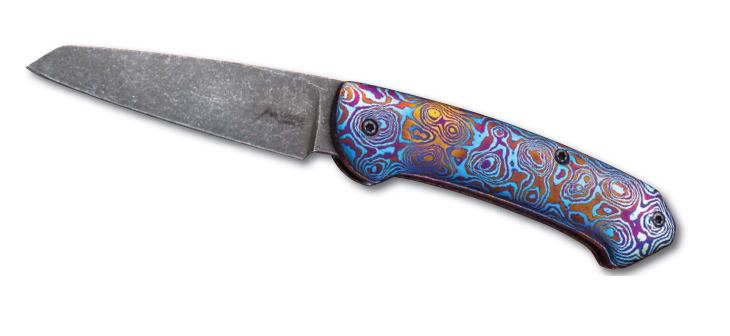
Tracy LaRock pushes the envelope of traditional slip-joint design with his Ethan Jack. The 3-inch blade is D2 tool steel and the handle and frame are Timascus™. Closed length: 4 inches. His list price to make a similar knife: $900. (SharpByCoop photo)
Pocketknife Sales Are Up In General
“I think there’s an upswing in pocketknife sales,” Tom Ploppert agrees. “Plus, a strong economy hasn’t hurt anything.”
Tom says he continues to take orders and has no idea how far behind he is.
“I will write an order down. I do not take deposits. I will call when it’s your turn. If you commit, then we will discuss price and I will start on building it,” he says matter-of-factly.
Turnaround time notwithstanding, the exquisite slip joints by Stout, Buzek, LaRock and Ploppert are well worth the wait—though you might want to get a leg up now. The more demand increases, the longer you’ll have to bide your time until you can get your hands on one of these gems.
What’s the right style of automatic knife for you: OTS or OTF? There are several important considerations when it comes to choosing.
Definitions: What Is An OTS Knife? What Is An OTF Knife?
First, for the newcomers, here are some quick definitions.
OTF Knife: A type of automatic knife where the blade deploys “out the front” of the handle.
OTS Knife: A type of automatic knife where the blade deploys “out the side” of the handle.
While this may seem like a small difference, it’s not to be overlooked. The right knife is the one that fits best with your tasks and preferences, and all knife features are worth considering, no matter how insignificant they may appear at first glance.
1) Ignore The Price Tag
Interestingly, budget is not one of them, because there is a range of $50 on up to hundreds of dollars for each. There are more OTS models available on the market now simply because manufacturers choose to produce more, so selection is greater. This may also be because they are much more familiar with side-opening designs.
2) Consider Use: OTS Is Better For Utility & OTF Is Better For Defense
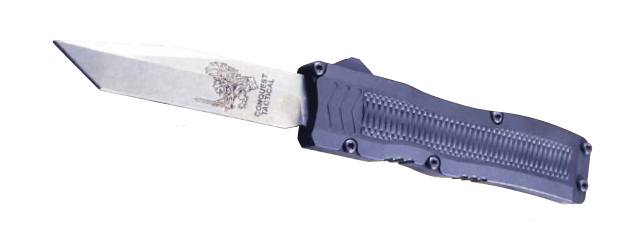
At 8.75 inches fully extended, the Conquest Tactical Fury OTF is a juggernaut. The Fury’s stonewashed 3.75-inch 154CM stainless steel blade is of a hybrid tanto/clip-point design, and its 5.25-inch black anodized machined aluminum handle can accommodate the largest of mitts. (Conquest Tactical photo)
Most important is how you plan to use your automatic. If you need utility, an OTS is the way to go. For pure self-defense, an OTF can engage the blade quicker, because there is no maneuvering required to clear the fingers from the blade opening and readjust your grip as required by an OTS.
3) Does It Have A Safety?
Some automatics have safeties to prevent the blade from opening in the pocket or while drawing from the carry position to engaging the blade. Ouch! Yes, a safety takes a second or two more to switch an auto blade into the live position, but many feel it’s worth it.
4) How Does It Feel?
Last but not least, the tactile feel you look for in any knife, regardless whether it’s a fixed blade or folder, is always a prime factor in your selection. You won’t get this over the internet. Rather, check out auto models at your local retail store or at gun and knife shows.
There Is No Right Answer
Despite what some may tell you, there is right answer. OTF and OTS aren’t inherently good or bad choices. The right answer is, as with all things knives, the knife that does what you need it to do and that you enjoy using.
Editor’s Note: This article is by both Abe Elias (arguing for the Scandi) and James Morgan Ayres (taking the opposite view). It is excerpted from the April 2019 issue of BLADE.
What Is A Scandi Grind?
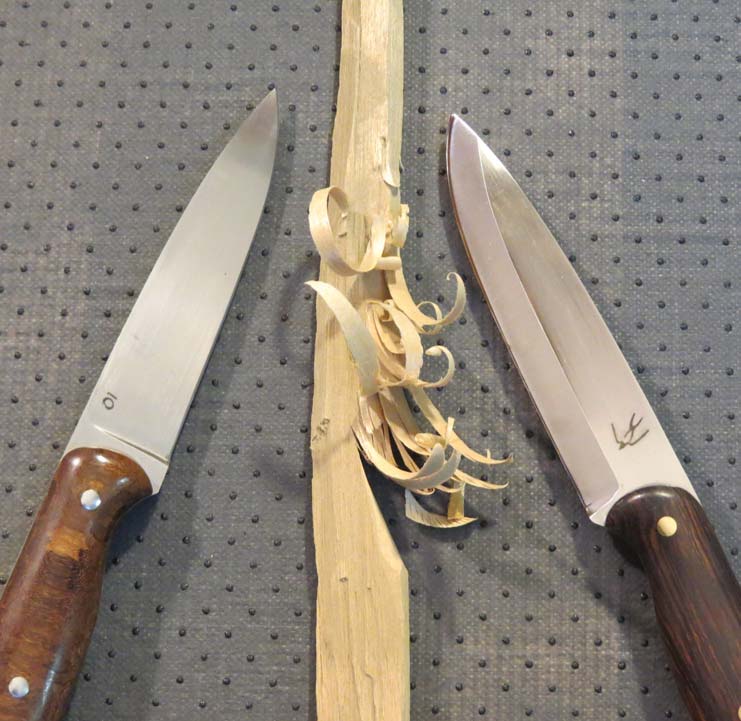
Abe Elias made these two Diving Sparrow Sakers—one with a full flat grind (left) and the other in a high Scandi grind (right). (Abe Elias image)
A Scandi grind carries a single bevel that runs to zero degrees. In other words, it is a single grind only.
Unlike many other grinds, the Scandi runs to the edge with no angle change in what is also known as a zero grind. Scandi grinds have a flat section of the blade that starts at the top of the bevel and runs to the spine.
Anything else is simply not a Scandi. People have tried to create a variety of variations with names like modified Scandi or Scandi vex. In actuality, there are no variations of the Scandi because such “variations” usually are other grinds that already exist.
Why The Scandi Is The Best Grind For Bushcraft Knives
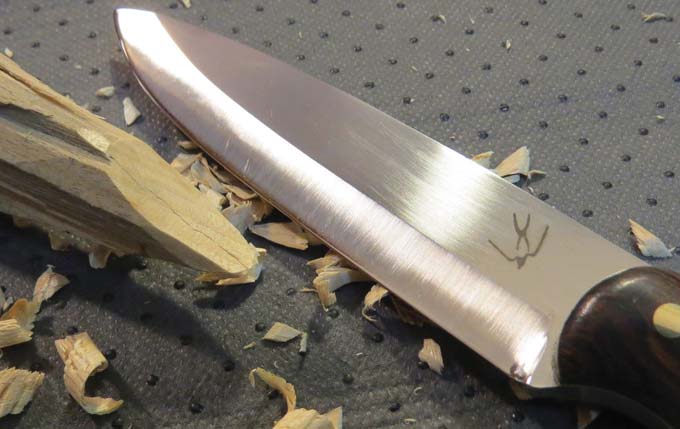
A Scandi grind is a particularly aggressive cutter on soft and hard woods. Look closely at these hardy shavings. The finish on the exposed cut end of the stick looks as if it has been sanded and had a finish applied to it. (Abe Elias image)
Perfect wood geometry: The Scandi excels at bushcraft chores because its geometry is perfect for working with wood.
Zero grind: The fact the Scandi is ground to zero allows the edge to be as thin as possible with no change in angle. Changes in angle create extra friction. Hence, the Scandi grind meets with the least resistance possible when it enters the cutting medium.
Inertia is your friend: Another benefit of a Scandi grind is that you can achieve a thin edge and, unlike with a full flat grind, you maintain the blade weight of a saber grind. Having that bit of extra spine weight increases your ability to drive the edge forward.
Parting is such sweet sorrow: As the blade enters the cutting medium, it meets the transition point where the bevel changes to the flat. This benefit is one of the reasons why the knife can dive deep into a cut and take off huge potato-chip-like shavings.
Why The Scandi Is NOT The Best Grind For Bushcraft Knives
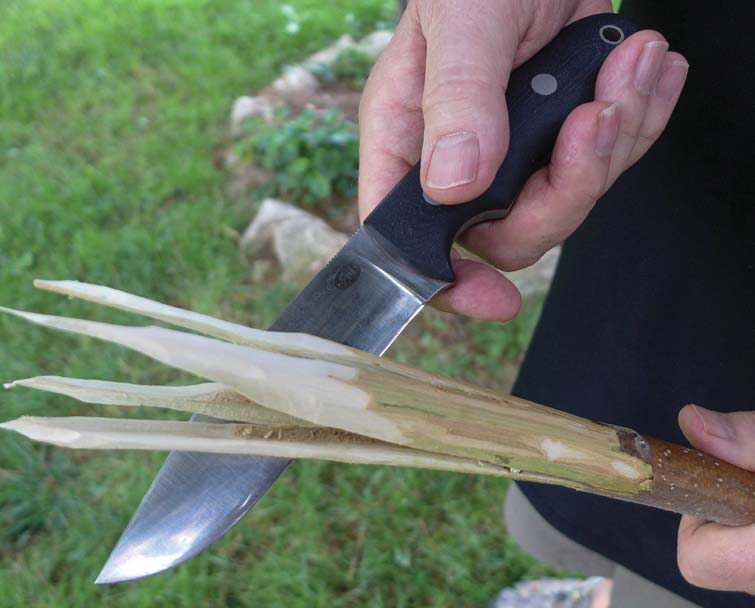
James Morgan Ayres uses a Nikov knife with a convex-ground blade to make a fish spear. (ML and AE Ayres image)
Geometry: The intersecting planes of the Scandi grind create a wedge. A wedge is useful for shallow woodcraft on soft woods, such as making fuzz sticks or carving spoons, and for batoning soft woods. However, the wedge creates too much resistance and drags and hangs up in deep cuts, especially in hard woods.
Not ideal for food prep: That wedge also struggles with any dense or tough material, including root vegetables, which crack rather than split, and, importantly, on meat. Try butchering any large game with a Scandi grind and you’ll quickly learn why butchers and hunting guides do not use Scandi-ground blades.
Goodbye, steel: The Scandi grind is also said to be easier to sharpen because the blade provides a guide. But, if the user follows the instructions of the advocates of Scandi, he must remove a great deal of steel, which requires hundreds of strokes on the stone. With a modicum of skill other grinds are faster and easier to sharpen.
There is a better alternative: The smooth, slim, oval profile of the convex grind offers less resistance to materials, is superior to the Scandi on all points and will do everything better.
Verdict
If your bushcraft knife needs are limited to working with wood, you’ll find a Scandi grind will help you work fast and effectively.
For tasks beyond that, you’ll likely find a convex grind is the better match.