Knife Collecting

Knife collecting is an extremely rewarding experience for knife enthusiasts. There truly is a knife for everyone. Many increase or hold their value throughout the years, making collecting knives something to pass on to the next generation of knife collectors.

Greatest Custom Knifemakers Of All-Time: George Herron

George Herron South Carolina knifemaker
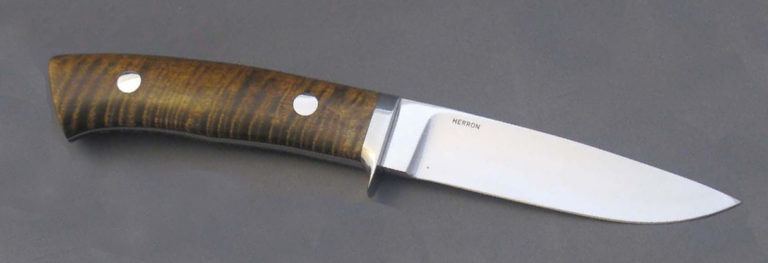
The tapered-tang Model 6 was one of George Herron’s best-known knives and was named in a poll as one of the 20 best knives ever made. The 4-inch blade is ATS-34 stainless steel and the handle is curly maple. Overall length: 9 inches. Herron made this one in his Aiken, South Carolina, shop. (Jay Mealing image)

Without a doubt, he was one of the best custom knifemakers to ever pursue the art. He gave information, expertise and precious time freely to those who wanted to learn. He was a crack shot, spitting in death’s eye during the Korean War and walking out of literal hell to fight another day.

BLADE Magazine Cutlery Hall-Of-Fame® member George Herron was many things to many people, and they will never forget the positive impact he had on their lives. The South Carolina resident was a fixture among the finest in the custom knife business for years, a winner of many awards, president of the Knifemakers’ Guild, founder of the South Carolina Association of Knifemakers and genuine friend to those he held close.

‘A Great Human Being’
George Herron custom bladesmith
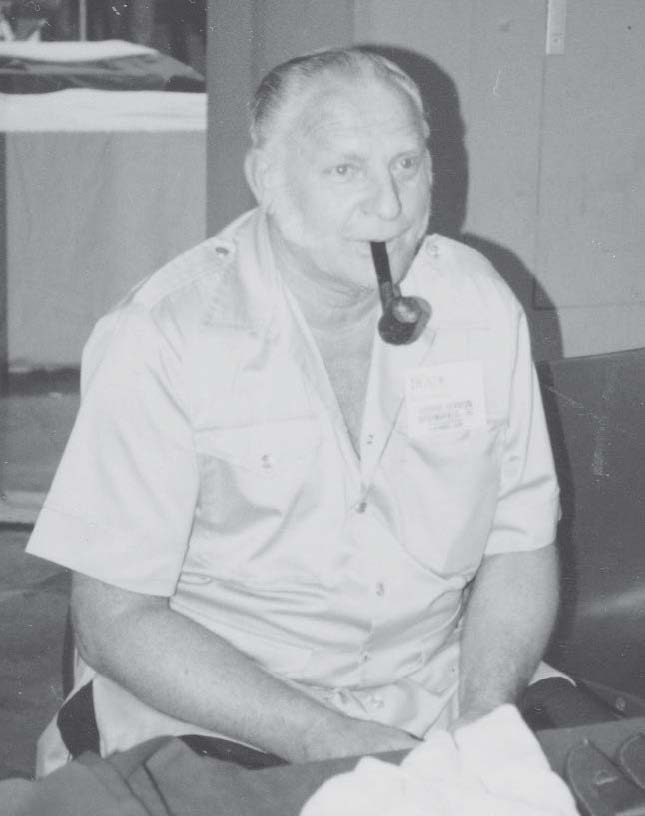
Mr. Herron hardly went anywhere without his trusty pipe.

“George Herron wasn’t just a great custom knifemaker,” began Bobby Branton, a custom maker who knew Herron and collected his knives for many years, “he was a great human being and a great person. You didn’t have to make knives for him to have an interest in you.”

Branton met George and his wonderful wife, affectionately known by the many who know her as “Miss Barbara,” when he was “bitten by the knife bug” and wanted to buy a few of the great maker’s knives.

“I started out as a collector and wanted to buy some John Nelson Cooper knives from a lady in a shop and found out from her that there were a number of South Carolina makers out there,” he recalled.

In his early days as a knifemaker, Branton bought the leading books on the topic by Sid Latham and David Boye. He noticed photos of some of Herron’s knives in Latham’s book and traveled to Herron’s home in Aiken and later Springfield, South Carolina.

“I called ahead of time and asked if I could stop by,” Bobby said. “I bought two knives with all the money I had. We looked around the shop and he was getting ready to go to a show. We went inside and he pulled a big deerskin off the table like a matador, and his inventory was sitting there.”

After Bobby made his first knife, he returned to Herron’s home to get a review of the effort.

“He said, ‘That’s nice, but if you’re going to make a knife, make a knife,’” Branton smiled. “He gave me tips and mentored me.”

A Custom Knifemaker Who Gave Back
George Herron knife collection
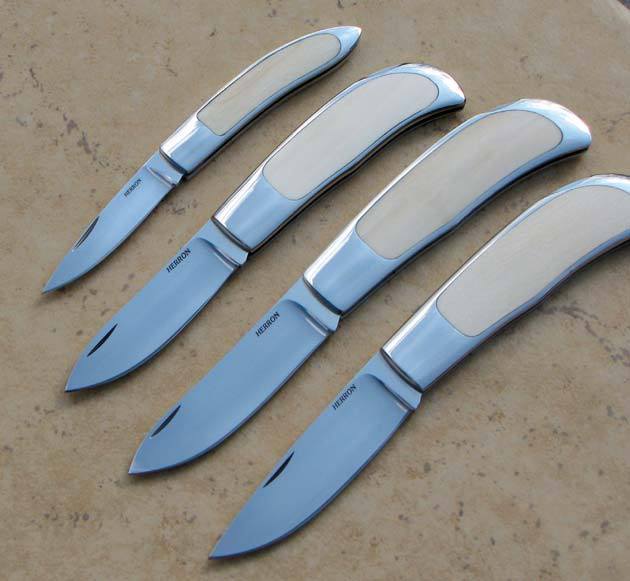
George Herron made many folders and varied his styles quite a bit over the years, including bolstered lockbacks, interframe lockbacks, slip-joint gent’s knives and others. The top knife is a slip-joint gent’s knife and the bottom three are interframe lockbacks. The scales are ivory. (Jay Mealing image)

George did the same for many would be custom makers who came calling. Custom maker Wayne Hendrix worked for him in the 1980s and learned to make custom knives from the master.

“He was a heck of a teacher,” Wayne said. “I tell you right now, if I went out there and picked a maker to work for, I couldn’t have picked a better one in terms of making working knives. His designs were simple and his knives were functional. He was a very intelligent man and he had common sense to go along with it. You don’t necessarily see someone with both that often.”

At the time he started working in the shop, Wayne indicated George was considered one of the world’s top five custom makers. Herron built a reputation of outstanding quality for a fair price, and part of his legacy is that his knives were affordably priced. He sold them by the thousands.

Wayne grew close to George, not just in the knife shop but in other aspects of life as well.

“I hunted with him and painted the inside of his house after they moved to Springfield,” he smiled. “It was super cold that winter, and he had an enclosed two-car garage where we set up his shop. We were a lot alike but he was a lot smarter than I am, and I consider him to be my second daddy. I couldn’t have picked a better maker to apprentice under, and I’m still riding George Herron’s coattails.”

The Secret To The Legacy
Custom knife George Herron
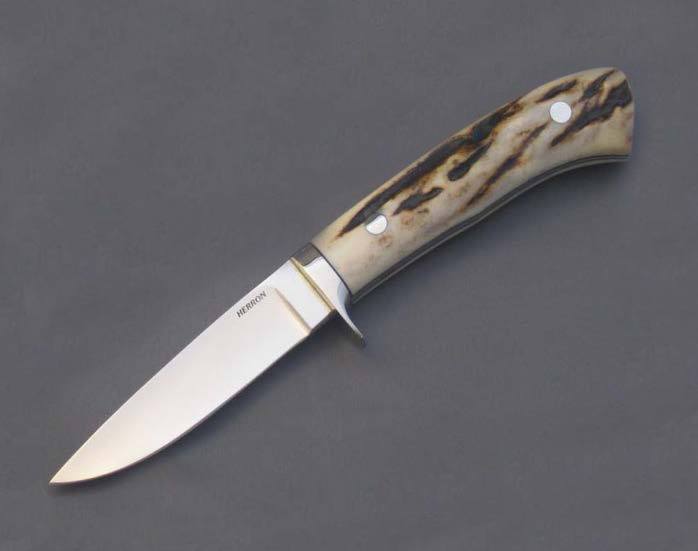
Named after Col. John Bigbie, the Bigbie skinner was another George Herron favorite. The 3.5-inch blade of ATS-34 stainless had a tapered tang and a stag handle. Overall length: 8 inches. This one was made in Herron’s Springfield, South Carolina, shop. (Jay Mealing image)

In an era when knifemakers looked to pricing of individual units as a barometer of their profitability, George was different. He never forgot that working people needed affordable knives.

“One time a committee of Guild members came to his table,” Cutlery Hall-Of-Famer and past BLADE publisher and editor Bruce Voyles remembered, “and they told him that he was selling his knives too cheap. He said, with a few words that I can’t repeat, that he would make and sell knives the way he wanted and they could do the same. Now, George sold most of his knives for $150 to $300, and most of those have doubled or tripled in value. None of the guys on that committee could say that their knives have done that.”

Voyles lighted up describing Herron as “a man’s man, gracious, courteous, or mean as he needed to be in a given situation.”

Perhaps the best tribute anyone could provide to the life and legacy of the great George Herron was Voyles’ effort to be at the only place on Earth he wanted to be when his friend passed away.

“We were in New Orleans at Mardi Gras,” Bruce commented. “On Fat Tuesday morning the telephone rang, and it was Bobby Branton telling me that Mr. George was gone. We loaded up and went home right then so we could attend the funeral in South Carolina. There are very few people I would have done that for.”

Such an effort proves one thing for sure. George Herron, larger than life, remains with those who knew him in undiminished spirit.


Meet Your Knifemaking Heroes At BLADE Show 2019

The world’s largest knife show takes place this June in Atlanta. Learn more here.
Trend Watch: 3 Knives with Pistol Grips

0
Pistol grip knife handles
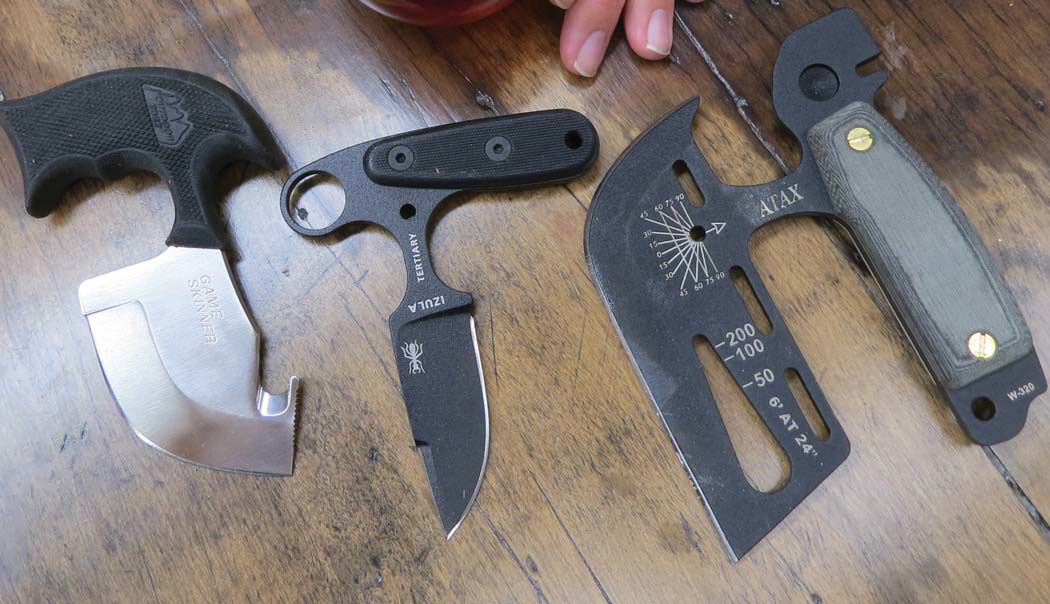
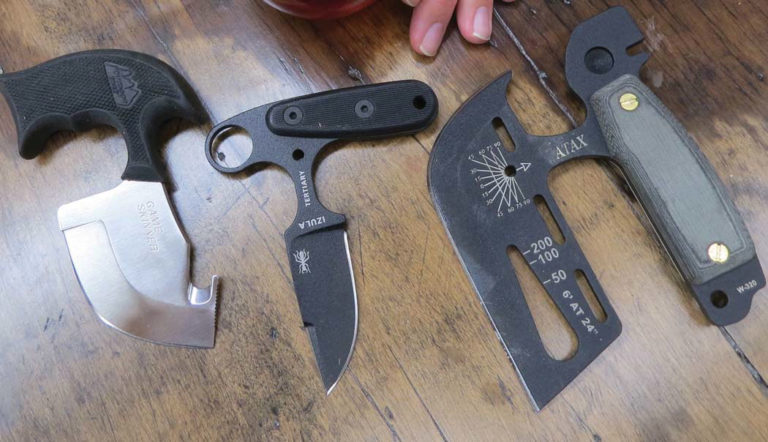
Pistol-grip knives from left, with manufacturer’s suggested retail prices in parentheses: Outdoor Edge Game Skinner ($88.95), ESEE Tertiary ($103.99) and TOPS Knives ATAX ($225).

Pistol grips aren’t only for firearms; they’re functional designs for knives, too. Here is a review of three examples.

Solid Build: ESEE Tertiary

ESEE Tertiary Push Dagger
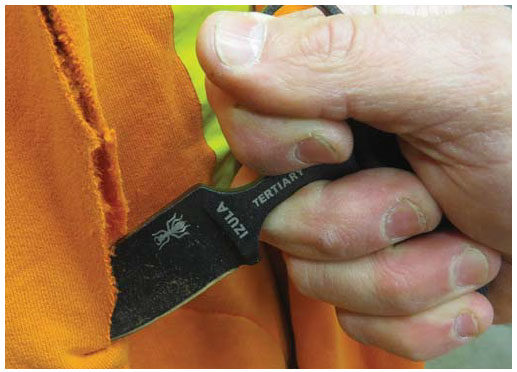
The ESEE Tertiary was super sharp out of the box. The author used the knife to make aggressive slashes on a work jersey suspended from a hanger. A good test for an edge is not necessarily cutting something hard but something loose that could easily recoil from the edge when cutting. If the edge is sharp enough not to push the material but sever it, then the edge is truly sharp.

The ESEE Tertiary is a standard push dagger design. According to ESEE, SWAT officer Lee Smith designed the knife and named it “Tertiary” because of its place in a person’s weapons system. That is, first there’s your primary firearm, then your back up and then the Tertiary, which is for hand-to-hand.

It is a double-edged knife with top blade grinds. The top grind extends a third of the blade length only. The blade profile is that of a drop point. It is important to remember that a double-edged knife is illegal in some states (one such state is Michigan). Check your local knife laws whenever you choose a knife for everyday carry (EDC).

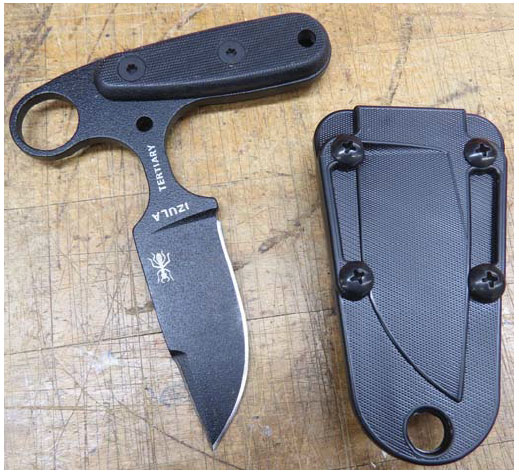
ESEE Tertiary push dagger review
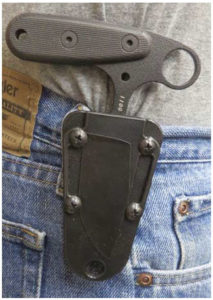
The Tertiary sheath’s clip can be changed to accommodate right- or left-handed carries and vertical or horizontal positioning. The large hole in the tip of the sheath allows you to rig the Tertiary as a neck knife as well.
ESEE Sheath push dagger edc
The Tertiary comes with a molded sheath that sports a steel belt clip for you to attach the knife on a waistband, boot or assorted gear.

The Tertiary is a full-tang design with the blade positioned between the index and middle fingers. It has a flat-ground blade of 1095 carbon steel with a textured powder coat and textured G-10 scales.

The knife works as expected as a push dagger. For an edge to get the job done it takes getting used to the grip, but you can do minor chores like the type you normally encounter.

After a while, though, the pressure of the post between the two fingers really starts a hot spot. For the most part, given the nature of ESEE’s push dagger, I would carry a folder to do my EDC work and leave the Tertiary concealed and out of sight.

Comfy Classic: Outdoor Edge Game Skinner

Outdoor Edge Game Skinner Knife Review
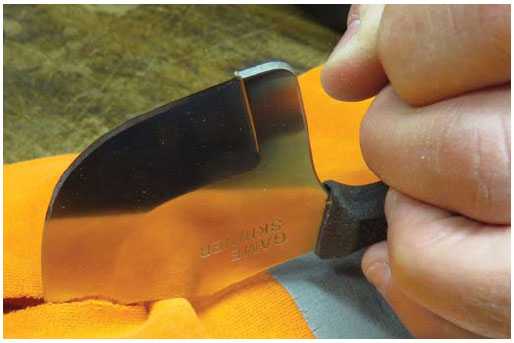
The author tested the Game Skinner gut hook on a number of materials, including pulling it through a jersey with only the weight of the shirt holding it in place. How razor sharp does an edge have to be to slice a loose material instead of dragging it?

When it won the BLADE Magazine 1988 Imported Design Of-The-Year Award, the Outdoor Edge Game Skinner took the world of hunting knives by storm. It remained an Outdoor Edge mainstay ever since, and appears to have been ahead of its time.

As the name implies, the knife is for skinning game. It combines a blade edge with a gut hook. It is a beefy specimen with a 3.25-inch blade that is 2 inches wide. A hollow grind forms the main edge. The blade is AUS-8 stainless steel. I have had plenty of good knives made of AUS-8. It all depends on the heat treat and grind.

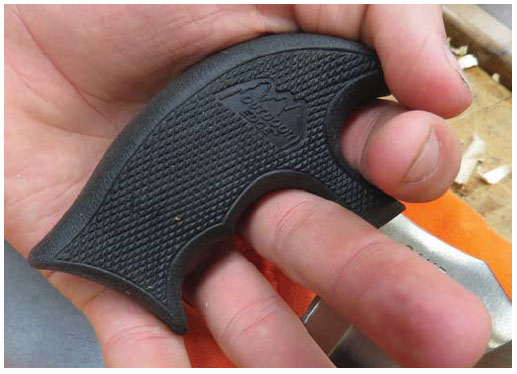
The handle is a textured, molded Kraton. I was impressed with it. It is brawny yet still comfortable, and the textured grip along with the slight give of the rubber kept the knife steadfast in my hand no matter how slimy things got.

Outdoor Edge Pistol Grip Push Dagger
The molded grip of the Outdoor Edge Game Skinner is designed for a three-finger hold. The rounded spine makes it easier to use a pinch grip and enables you to put forward pressure on draw cuts while maintaining a comfortable position.

During testing on leather, meat and hair on hide pieces, the edge held up well. The blade belly makes slicing cuts easy to perform, helping you get in there and skin. As for the gut hook, you might as well have a zipper on the animal.

It comes with a well-built leather sheath with snap closure. Though I personally wouldn’t have much use for this knife on my belt, I would keep it with my gear until it was time to field dress game. If you see yourself using this style of knife for hunting, it is a good quality edged tool. Over the years, I have learned that many hunters have their own style of cutlery they like to use and their own way of handling it.



Multi-Functional Tool: TOPS Knives ATAX

TOPS Knife Reviews
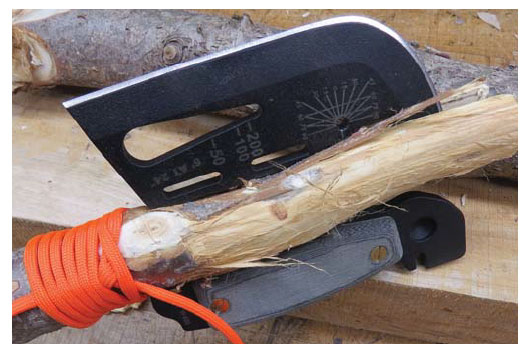
The author extended the ATAX handle using a piece of dry wood to make an axe for light chopping. For heavier use he would have used green wood and lashed the top. The addition of a long handle creates an obvious physical advantage.

From the get-go the TOPS Knives ATAX is one of those knives that catches your eye and maybe inspires a little pupil dilation.

The knife is designed as a multifunction tool. I have to say, though, sometimes you end up with something that does many things but never any one of them exceptionally well. Looking at the overall design, I would be more apt to see the ATAX as an ulu variant over a push dagger.

TOPS has been selling the knife for years. It is the design of the late Ron Hood. There are so many different tools involved in it that it would take a while to review each one. I will try to hit the main functions for now. The blade is quarter-inch-thick 1095 carbon steel with a powder coating. The handle is a black Micarta® affixed with screws. A saber grind forms the cutting edge, which I found too chunky for doing standard chores easily. The edge runs parallel to the grip just like on an ulu, but the grind is so thick that manipulations of the edge are difficult—not impossible but difficult. The design could be a great meat processor with a higher grind.

TOPS Knives ATAX push dagger knife review
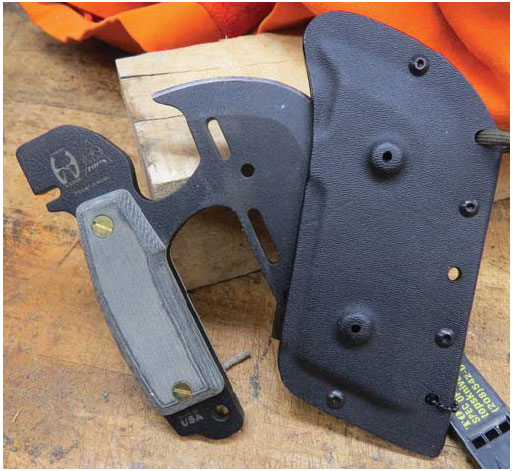
Use a rocking motion to remove the ATAX from the sheath. As the knife emerges the sharp tip presents itself, which the author stated he found a bit dangerous.

There are a number of ways to complete a cut with the knife, as the platform allows you a variety of holds. For instance, holding it upside down enabled me to better do things like whittling or shaving. The ATAX requires getting familiar with, and even then some using methods are more practical than others.

Taking a long period to set up your handholds and the material for cuts should be balanced with the practicality of effort toward the job being done. One of the design purposes for the knife is to attach it to a stick and use it as an axe. The thick edge serves the chopper feature well and allows the ATAX to take a beating. Still, as noted, the grind does many things but none exceptionally well.

Other tools designed into the ATAX are a range finder, clinometer, compass, bowl drill socket and wire cutter. A molded Kydex sheath with double steel clips provides Scout carry. The way the sheath operates gives me cause for concern as the method of drawing the knife from the sheath can easily result in injury if you are not paying close attention.

Unsheathing requires a rocking motion that leads with the pointed part of the curved edge. You will want to make sure everything is clear of the blade tip as it rocks free.

The design shows ingenuity and in a pinch serves as a backup tool. Would I want it as my primary knife? I would have to do some major changes to the edge geometry, as the ulu-style use is very serviceable.

See More Innovative Knives in This Book

Best books about knives
Order direct from the publisher and save.

From BLADE‘s Sister Brand, Gun Digest

What is the best concealed carry holster? Click here to get more ideas at gundigest.com.

New Knives from SHOT Show 2019

0

SHOT Show knives 2019

BLADE was on the ground for the 2019 SHOT Show. Here’s a look at what’s new.

Be sure to follow BLADE on Instagram for the most up-to-date coverage and more content from the event. More videos will be posted here as they become available.

SOG

CRKT

Spyderco


KA-BAR


Boker

Buck

Al Mar


View this post on Instagram


A nifty knife from @almarknives I discovered at #ShotShow. $35 and an ultralight carry. It seems that mini knives are making quite the appearance in 2019.

A post shared by BLADE Magazine (@blade_magazine) on

Turner Knife & Tool

Benchmade

Just For Fun

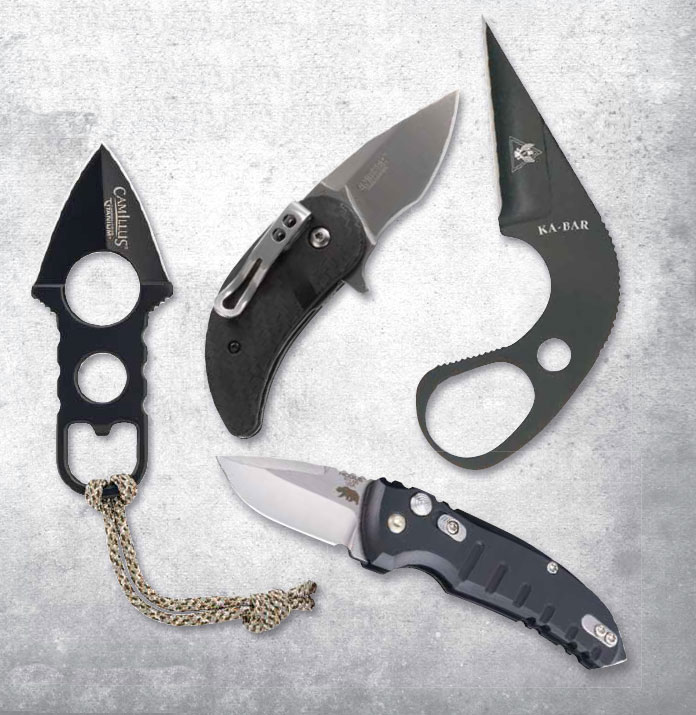
Popular Knives with Blades Less Than 2 Inches

0

Whether it’s because of knife restrictions, portability or preference, these little blades aren’t too cute to cut.

  • CRKT Snicker
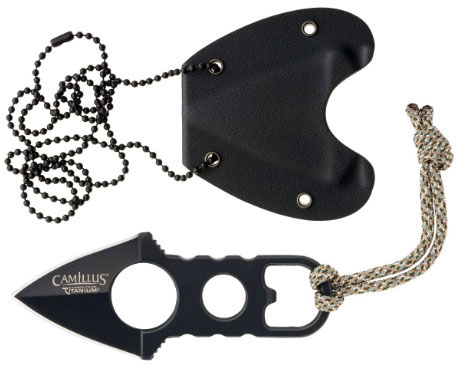
  • Camillus Heater
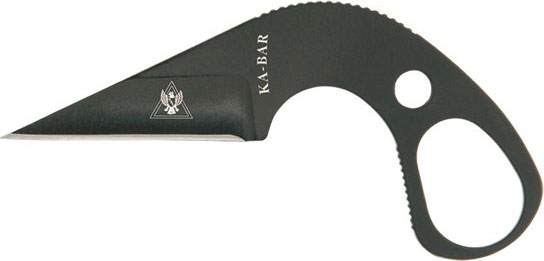
  • KA-BAR Last Ditch
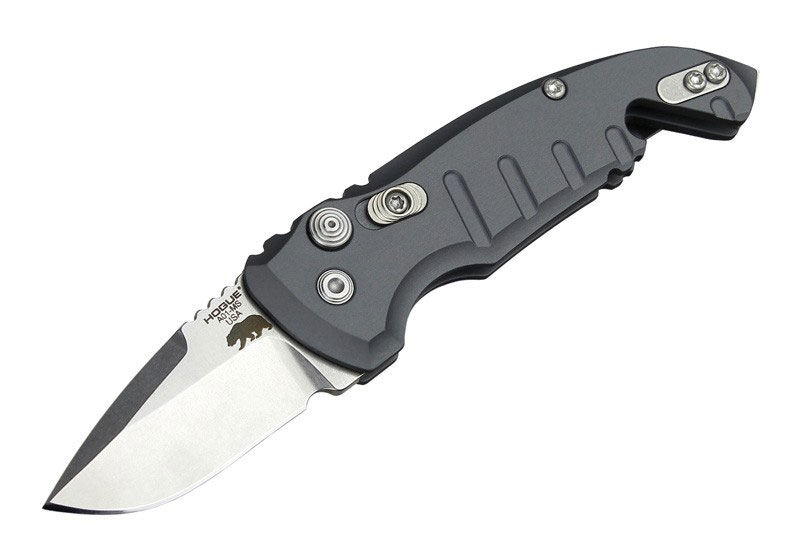
  • Hogue A01 MicroSwitch

CRKT Snicker

Best knives with blades less than 2 inches
(CRKT image)

The CRKT Snicker debuted at BLADE Show 2017 and exemplifies the growing trend of blades measuring less than 2 inches.

“It serves a niche for those looking for a small blade that will tackle a variety of tasks and is a solid performer for CRKT,” explained company spokesperson Mike May. “Ease of use and ‘approachability’ are two key factors that make blades of this size popular. In areas with strict knife laws, the sub-2-inch blade can also help alleviate any concerns. In the case of the Snicker, its style and ergonomics make it an attractive small knife for consumer pockets as well.”

  • Blade Length: 1.846″ (46.89 mm)
  • Blade Edge: Plain
  • Blade Steel: 420J2, HRC 50-52
  • Blade Finish: Stonewash
  • Blade Thickness: 0.106″ (2.69 mm)
  • Closed Length: 2.938″ (74.63 mm)
  • Weight: 2.3 oz
  • Handle: Injection Molded Glass Reinforced Nylon
  • Style: Folding Knife w/Locking Liner
  • Overall Length: 4.688″ (119.08 mm)

Camillus Heater

Best two-inch blade knives
(Camillus image)

When Camillus launched the Heater in 2015, the idea was much the same.

“It has and continues to be an extremely popular model since it debuted,” noted Sam Dodge, Camillus senior brand manager. “We can attribute this to two factors: function and convenience. We find that people are purchasing a knife for different jobs or tasks. The fact that the knife comes in a slightly smaller package makes it more convenient to [store].

“There are still purists that will have ‘one knife to rule them all,’ but more and more we see that people want a knife for each activity.”

  • Blade Treatment: Carbonitride Titanium
  • Blade Color: Black
  • Blade Edge: Smooth
  • Blade Grind: Hollow
  • Blade Style: Spear
  • Fixed Blade
  • Handle Color: Black
  • Hand Orientation: Left and Right
  • Includes: Chain, Molded Sheath, Clip
  • Handle material: Stainless Steel + Paracord
  • Main Blade Material: 440
  • Rockwell Hardness: HRC54
  • Lifetime Warranty

KA-BAR Last Ditch

Backup knife
(KA-BAR image)

The KA-BAR Last Ditch, commonly worn as a neck knife or laced into a boot, hit the shelves in 2008 and has been a top seller ever since.

“I think two of the biggest reasons why knives with blades under 2 inches are popular is due to concealability and ease of carry,” said Joe Bradley, KA-BAR sales and digital content manager. “Many folks don’t like to draw attention, and sometimes even an exposed pocket clips will do that. Small blades offer a tremendous blend of being lightweight with a small footprint.”

  • Overall Length: 3.625″
  • Blade Length: 1.625″
  • Blade Material: 9Cr18MoV
  • Hardness: 58-59 RC
  • Blade Style: Wharncliffe
  • Blade Grind: Flat
  • Finish: Black
  • Edge Type: Plain
  • Handle Length: 2.00″
  • Handle Material: Stainless Steel
  • Color: Black
  • Weight: 2.40 oz.
  • Sheath: Molded Polymer
  • Knife Type: Fixed Blade

Hogue A01 MicroSwitch

Automatic knives with blades less than 2 inches
(Hogue Knives image)

The A01 MicroSwitch has been a hit since it was widely distributed in autumn 2017.

“It has been difficult to keep it in stock since its release,” he said. “It is the smallest knife in the Hogue Knives line, and there has been tremendous interest in it. It moves briskly at trade shows, through dealers and over our retail website.”

Crook considers many factors that weigh in on the wave of popularity in small knives. Among these is the company’s location in California, where he says anything larger in an automatic is illegal.

  • Blade Length: 1.95″
  • Overall Length: 5.8”
  • Closed Length: 3.85”
  • Weight: 2.7oz
  • Mechanism: Automatic Button Deployment with Manual Safety
  • Handle Material (Frame): 6061-T6 Anodized Aluminum
  • Pocket Clip: Stainless Steel Ambidextrous Tip Up Carry
  • Blade Style: Drop Point
  • Blade Thickness: 0.12”
  • Blade Material: CPM154 Stainless Steel
  • Blade Hardness: RC 57-59
  • Blade Treatment: Cryogenically Treated
  • Blade Finish: Tumbled Finish

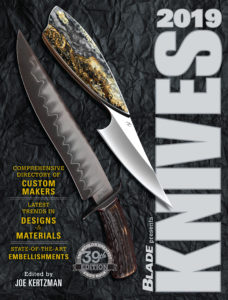
The World’s Greatest Knife Book

Best books about knivesThe KNIVES annual book is back and better than ever. Here’s what you can expect:

  • 320 pages
  • Beautiful, full-color photos of knives and accessories
  • Comprehensive directory of custom knifemakers
  • In-depth features about knife collecting and making knives
  • Examples of the latest trends in knife designs and knifemaking materials
  • Edited by Joe Kertzman

ORDER HERE


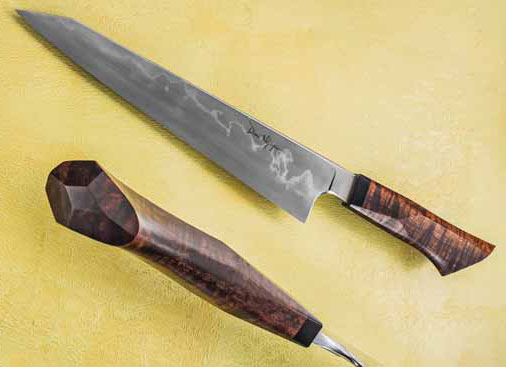
What Knives Do Professional Chefs Use?

What do professional chefs look for in a chef’s knife? We asked two pro chefs, both fans of knifemaker Don Nguyen. Their answers are instructive not only on Nguyen’s work but chef’s knives in general.

“Thin Behind the Edge to Win”

Kolter Livengood is a chef at Brightwok Kitchen, “a veggie-focused, Asian inspired restaurant” in Chicago. Detail and aesthetics, with an equal emphasis on testing, are some of Livengood’s requirements in a chef ’s knife.

“A great deal of consideration is given to the ‘knife life’ or how the blade will be sharpened away over time,” he observed. “How the knife tapers both from handle to tip and spine to edge give the ability to maintain that geometry for 20 to 30 years depending on use and original blade size, making the appropriately high-priced tool seem very affordable over time.

“Don’s knives tend to be thicker at the spine, yet taper to being extremely thin behind the edge. This seems simple but it’s the subtle convexity from spine to edge that gives the knife its incredible feel when cutting. The thick spine gives the knife weight, a weight that by no means makes the knife heavy, and assists with downward momentum, which makes a huge impact on how the knife feels when cutting. The spine is also perfectly rounded, which, when combined with its thickness, makes it extremely comfortable and less damaging to the hand. The convexity aids in separating the food that’s being cut from the bulk, and since the blade is not flat, foods like potatoes and cucumbers don’t annoyingly suction or stick to the side of the knife when chopping.

“‘Thin to win’ should be amended to ‘thin behind the edge to win,’ as I much prefer a knife with heft and zero spine flex to the chef’s knives with 1-to-2-millimeter spine thicknesses popular from 2009 to 2012.”

Single-Beveled Knives for the Win

Taro Kobayashi, a chef at Mame, a sushi restaurant in Eugene, Oregon, uses Nguyen chef’s knives.

“The short gyuto I have at home for everyday tasks from poultry and fish butchering to dicing vegetables,” Kobayashi noted. “It is just a good, all-around bruiser. It is a bit thicker for a Don knife but I really enjoy it since I can just ‘go ham’ with it. Ha-ha! That almost sounded like a kitchen pun. Sorry.”

Kitchen standup comedy notwithstanding, Kobayashi’s favorite Nguyen chef’s knife is a 240-millimeter model of W2 tool steel and a lightning-strike carbon fiber handle.

“I use it to slice fish and other proteins while making sushi,” the chef noted. “Even though I am a bit old school when it comes to knife use and love single-beveled knives for fish slicing and sushi preparation, I can’t help but use this one sometimes. It’s easy on the hands, easy to sharpen and takes a keen edge. I was a bit worried about the handle shape until I used it. It’s one of the best designs aesthetically, but you would not know how good it feels until you get it in hand and abuse it.”

Learn More About Popular Knives

Best books about knives

You’ll find the latest custom chef’s knives and more in KNIVES 2019, the world’s greatest knife book.

Preview: New 2019 Knives & Knife Sharpeners

0

Next year’s crop of new knives will be here soon, but BLADE is offering you a sneak peek before anyone else.

Bear OPS AC-500ROB4-B Automatic

New Knife Releases 2019

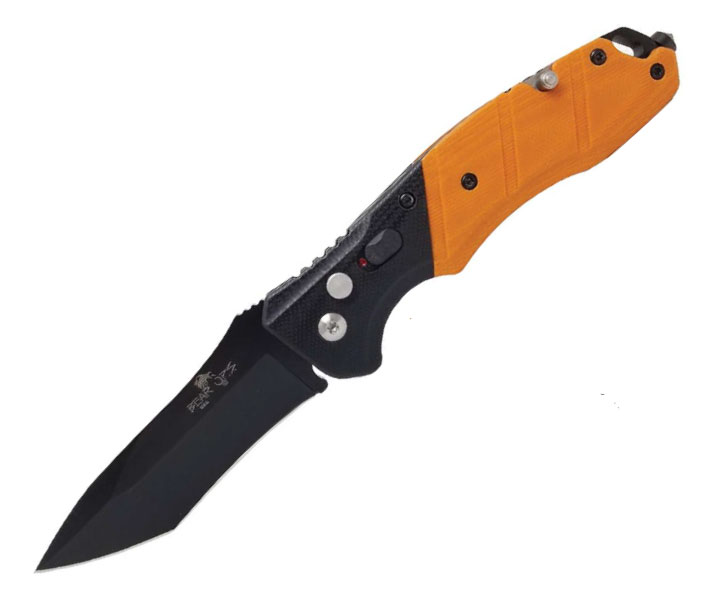
Orange stands out on the Bear OPS AC-500ROB4-B automatic from Bear & Son Cutlery. The 3-inch modified tanto blade is Sandvik 14C28N stainless steel and operates via a button-lock system. The handle is orange and black G-10 and comes equipped with a window breaker, seatbelt cutter and reversible pocket clip. Weight: 4.4 ounces. Closed length: 4 7/8 inches. MSRP: $175.

Boker Plus Toro

New Knives 2019

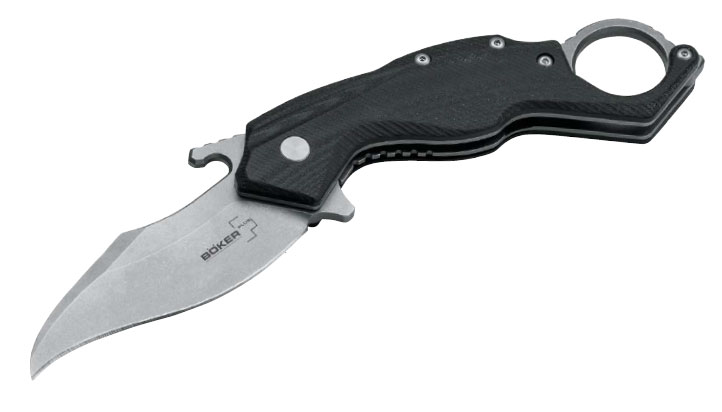
A plethora of lines and curves engulf the Boker Plus Toro linerlock folder. The 3.38-inch blade is D2 tool steel and the handle is G-10 with a reversible pocket clip. Closed length: 4.5 inches. MSRP: $119.95. Available: Now.

DMT Diamond-Vee

New knife sharpeners 2019

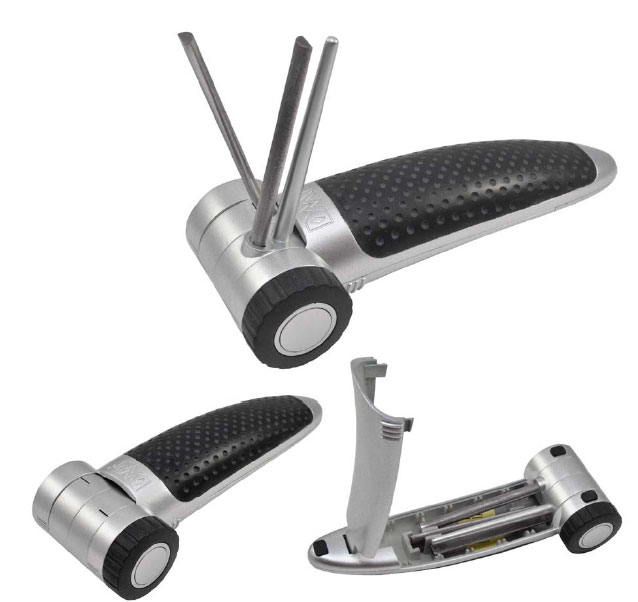
The DMT Diamond-Vee sharpens knives with serrated, plain and curved edges, and does so at angles of 10, 15 and 20 degrees. To store the sharpening rods, open the handle and fold them inside it. Abrasive: Diamond coated. Width: 2.34 inches. Length: 6.25 inches. MSRP: $32.99. Available: Now.

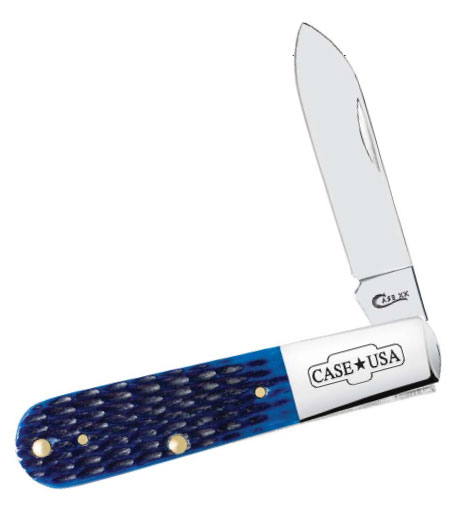
Case Blue Bone Barlow

New knives releasing in 2019

Rogers corn cob jigged blue bone highlights the Case Blue Bone Barlow. The 2.2-inch blade is Tru-Sharp Surgical Stainless—Case’s version of 420HC—and the shield design is laser engraved into the pocket-end bolster. Closed length: 3.375 inches. MSRP: $74.99. Available: January 2019.

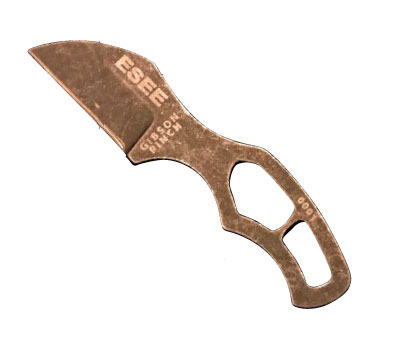
ESEE Gibson Pinch

New knives in 2019

Designed by knifemaker James Gibson, the ESEE Gibson Pinch has a 1.3-inch blade of 1095 carbon steel in a stonewashed black oxide finish. Rockwell hardness: 55-57 HRC. The knife carries in an injection-molded sheath with an earth magnet and fits inside a survival tin. Maximum thickness: .13 inch. Weight: 1 ounce. Overall length: 3.4 inches. MSRP: $49.99. Available: Now.

Grand Prairie HME (Hunting Made Easy)

New knife 2019

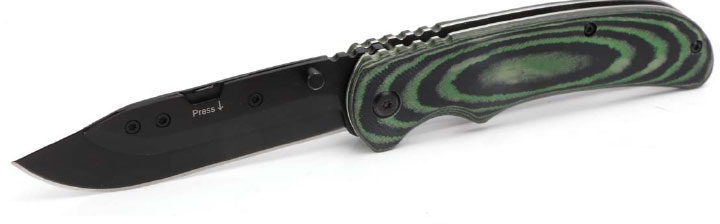
The HME (Hunting Made Easy) Razor Blade Folding Knife includes a clip-point and five replaceable gut-hook blades, all 3.5 inches long and of 420HC stainless in a black oxide coat. The linerlock folder has a Micarta® handle. Weight: 6.88 ounces. Closed length: 4.5 inches. MSRP: $29.99. Available: Now.

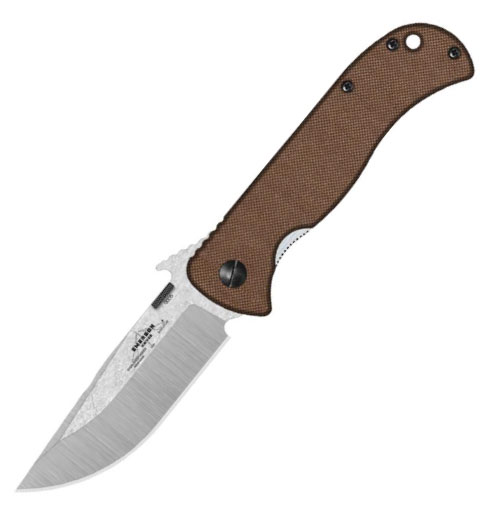
Emerson Wave Renegade

New Emerson Knives 2019

Part of the Overlander Series from Emerson Knives, Inc., the Renegade boasts a 3.6-inch blade of 154CM stainless with the Emerson Wave Shaped Feature and secures open via a titanium linerlock. Handle material: G-10. Closed length: 4.8 inches. MSRP: $254.95. Available: First quarter of 2019.

Kershaw Bareknuckle

New Kershaw knives 2019

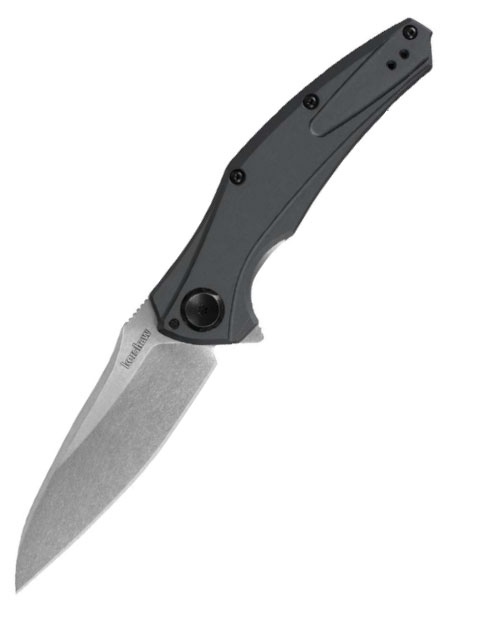
The Bareknuckle offers a slimmed-down profile and upgraded material of an original Kershaw award-winning design. The 3.5-inch blade is Sandvik 14C28N stainless steel in a stonewashed finish, and the 6061-T6 aluminum handle is anodized and has an oversized pivot and reversible pocket clip. Closed length: 4.7 inches. MSRP: $109.99. Available: Now.

Hogue/Ritter RSK Mk1-G2 (Generation 2)

New Hogue Knives 2019

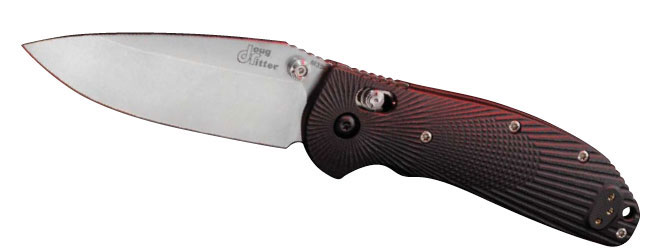
The RSK Mk1-G2 (Generation 2) is an upgraded version of the original RKS Mk1 introduced by Doug Ritter in 2004. Manufactured by Hogue Knives, it features a 3.4-inch flat-ground blade of M390 stainless steel that operates on an ambidextrous ABLE™ Lock, an “improved version of the patent-expired AXIS Lock.” The handle is a black G-10 composite.


Puma SGV Coyote

New Puma Knives 2019

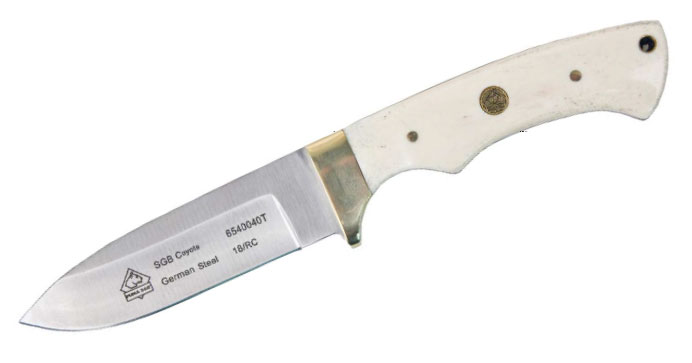
A 3.8-inch blade of 1.4116 German stainless steel in a Rockwell hardness of 55-57 HRC and a white smooth bone handle featuring a G-10 liner complete the Puma SGB Coyote. Weight: 4.5 ounces. Overall length: 8 inches. MSRP: $89.99. Available: Mid-December 2018.

Smith’s Campaign Tactical Knife

New tactical knives 2019

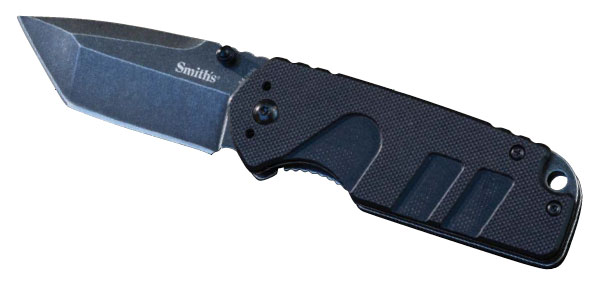
Known for its sharpeners, Smith’s joins the tactical folder parade with the Campaign Tactical Knife. The 2.78-inch modified tanto blade with ambidextrous thumb studs is 420 stainless in a black coat, and secures open via a linerlock. The G-10 handle comes in black, desert tan or OD green, and has a reversible pocket clip and a hole for a lanyard. Approximate closed length: 3.8 inches. MSRP: $24.99. Available: Now.

Smith’s PP1 Tactical Sharpener

New knife sharpeners 2019

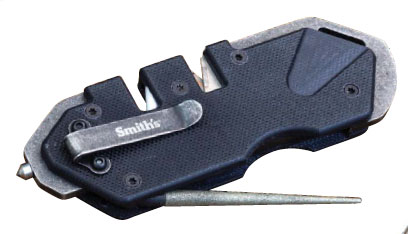
The PP1 Tactical sharpener from Smith’s sports ceramic (fine) and carbide (coarse) sharpening slots, and a 320-grit diamond-coated sharpening rod for serrated blades. Available in black, desert tan and OD green, the G-10 handle covers a 420 stainless steel frame and includes a pocket clip, tungsten carbide glass breaker and lanyard hole. Weight: 3.7 ounces. Length: 4.15 inches. MSRP: $24.99. Available: now.

Krudo Karsino10 BA

New Krudo knives 2019

A 3.4-inch blade of CPM S35VN stainless steel and a handle of titanium and carbon fiber distinguish the Karsino10 BA flipper from Krudo Knives. The framelock folder includes a thumb wedge on the blade spine for pocket deployment and a closed length of 4.75 inches. MSRP: $297. Available: January 2019.

WE Knife Arrakis

New WE Knife Releases 2019

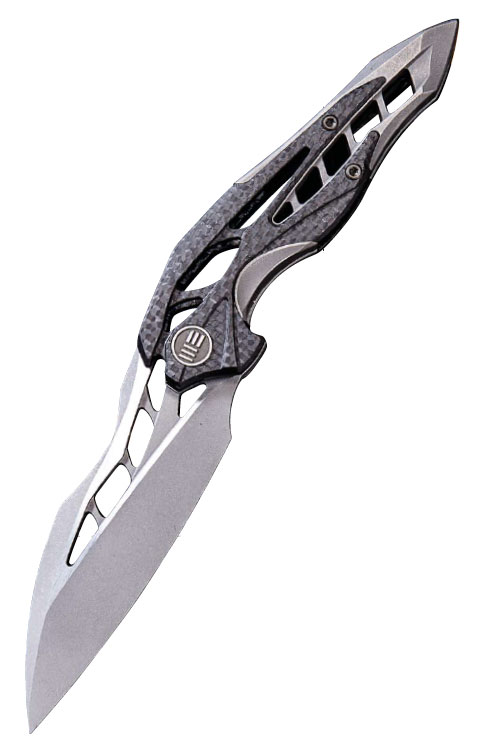
Designed by Elijah Isham, the Arrakis from WE Knife has a 3.45-inch blade of Bohler M390 stainless steel in a fl at grind and a Rockwell hardness of 59-61 HRC. Sporting skeletal construction throughout for lightweight (3 ounces), the framelock folder includes a 6Al4V titanium frame with carbon fiber inlay. Closed length: 4.55 inches. Available: January 2019.

TOPS Camp Creek

New TOPS Knives 2019

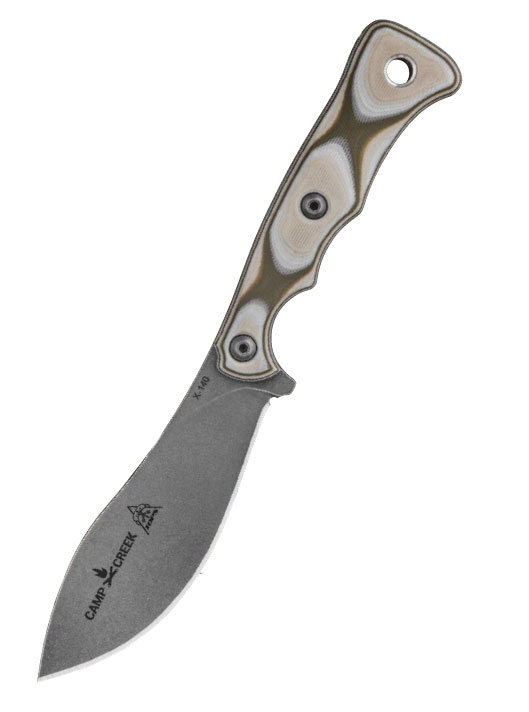
Each year TOPS President Leo Espinoza makes a knife for himself for hunting season, and the Camp Creek is it this time—and it’s TOPS’ first knife in CPM S35VN stainless blade steel to boot. Handle material: Camo G-10. Weight: 6.2 ounces. Blade and overall lengths: 4.38 and 9 inches. Sheath: Tan Kydex. MSRP: $220. Available: Now.

Zero Tolerance Model 0470

New Folding Knives 2019

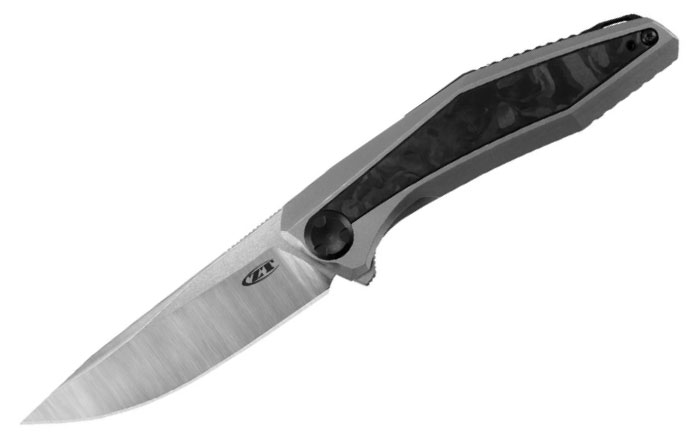
A marbled carbon fiber insert and a 3.4-inch blade of CPM 20CV stainless steel in a stonewashed and machine satin finish highlight the Zero Tolerance Model 0470. The titanium framelock includes a hardened steel lockbar insert and the company’s KVT opening system. Closed length: 4.4 inches. MSRP: $300. Available: Now.

The American Flag Damascus Knife Made for President George H.W. Bush

0
American Flag Knife
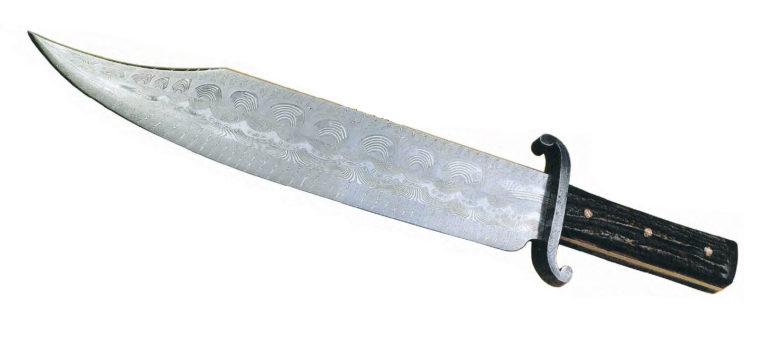
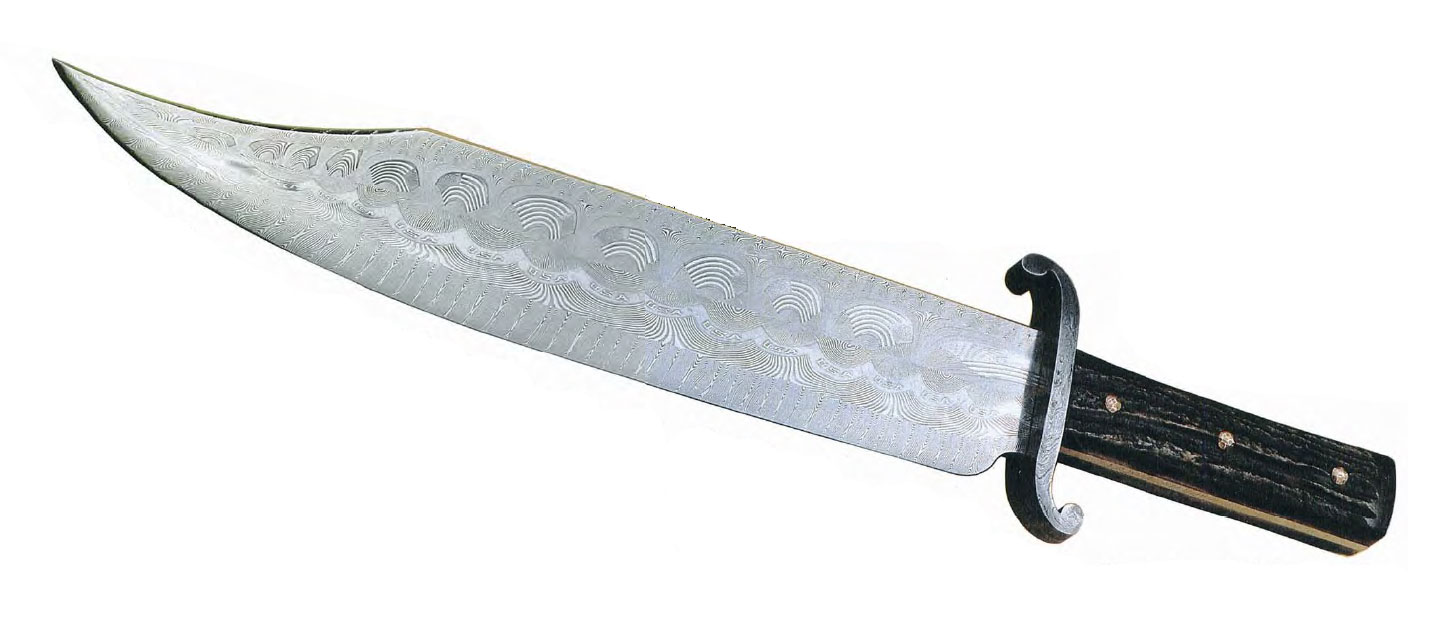
The American Flag blade consists of 13 flags, each of which is underscored with the letters “USA.” The flags are so true to the original that you can make out the details of all 50 stars in each one under a microscope. Meier says he forged the flags to appear as they might look to someone in a crowd as he/she watched a parade of flags go by. (Weyer)

Editor’s note: This article originally ran in the May/June 1991 issue of BLADE magazine. With the death of President George H.W. Bush on Nov. 30, 2018, it seemed appropriate to look back at an impressive custom knife presented to the 41st president in the early ’90s.

by Nathan Burdette

Daryl Meier wasn’t in the best of moods on a gloomy January day. His knife forge/shop had recently been burglarized and his son was about to begin Army boot camp at the outset of Operation Desert Storm.

“Maybe this interview will cheer me up,” one of the standard bearers of pattern-welded (or damascus) steel sighed. “Nothing else has gone well lately.”

He had to be kidding. Barely a month before he’d presented his revolutionary American Flag blade, a blade with American flags on it so true to the original that each will stand up to microscopic inspection, to President George Bush at the White House.

But then Meier is not your typical 9-to-5 working stiff. A case in point: He said the more meaningful part of the White House trip wasn’t so much meeting the president as was the two-hour plane trip sitting next to and conversing with Illinois Gov. Jim Thompson, who had arranged the knife presentation after seeing Meier’s work featured in a local newspaper.

The fact that Meier rejects the American dream of two cars in every garage and a boat in every driveway is not news to those who follow the knife scene. He’ll be the first to tell you that his mother raised him to be independent, and that independence is reflected in a lifestyle lacking in creature comforts. He resides in a log house of his own construction and makes a living selling his pattern-welded steel to knifemakers and manufacturers. He also teaches workshops and gives symposiums on the fine art of pattern welding. “I teach workshops from time to time, but I don’t do it for the money, though even that doesn’t amount to much,” he notes.

Mosaic damascus knives
At the White House are, from left: Illinois Gov. Jim Thompson, President Bush and Daryl Meier. Bush admires the American Flag blade and listens as Meier explains how the flags were forged into the blade. Thompson arranged the knife presentation after reading about Meier and his pattern-welded steel in a local newspaper.
(White House photo)

Instead of acquiring money, Meier is more interested in amassing knowledge, specifically, knowledge of how the ancients made pattern-welded steel and how he can improve on their time-tested methods. He traces the earliest pattern welds to as early as the 4th or 5th centuries B.C., and by the 4th or 5th centuries A.D. he says blacksmiths were able to control the patterns in the steel to a certain degree.

Meier says letters or words first began to appear on pattern welds between the 5th and 8th centuries, though the letters or words were forge welded on the surface of the finished blades. It wasn’t until the 18th century when a French smith named Coluet devised a method to make the word “Liberty” appear on a sword blade that letters or words were forged throughout the steel rather that on it, Meier notes. Between 1875-1925, he continues, gunsmiths refined the technique of words in the steel of pattern comforts. welded gun barrels.

Able to figure out how to forge words into the steel simply by looking at pictures of such works, Meier forged his name in a blade in 1978. But it wasn’t until the American Flag blade that he was sufficiently inspired to make what he calls “to date the most intricate thing done” in the genre.

“The tolerances (in the American Flag blade) are much tighter than in my name blade,” he begins. “The flag (there are actually 13 flags in all on the blade) that appears on the blade has 50 stars in it, each of which has five points, and which are arranged in five rows of six and four rows of five stars like on the standard flag.”

Talking about the work that went into the American Flag blade got Meier started and he wasn’t about to stop.

“I sweated blood to make that blade right. I could’ve made something that looked suggestive of what I made but then it all has to do with the philosophy of how you do a thing. That’s what’s prevalent in our society. We’re too cost conscious and few of us are willing to pay the full price for a good product,” he exclaims. “You’ve either got to say, ‘I’m going to make something I’m proud of or you’ve got to get out of the business.”

With that kind of attitude, let’s hope Daryl Meier stays in the blademaking business for a long time.

Advertisement

Must Read Articles

Read this before you make a knife

Knifemaking 101 – Read This Before You Make a Knife

  by Wayne Goddard My experience has taught me that there's nothing like digging in and getting started. I've often said the hardest part of the...
how to forge damascus steel

How to Forge Damascus

Advertisement
Advertisement