Knife Collecting

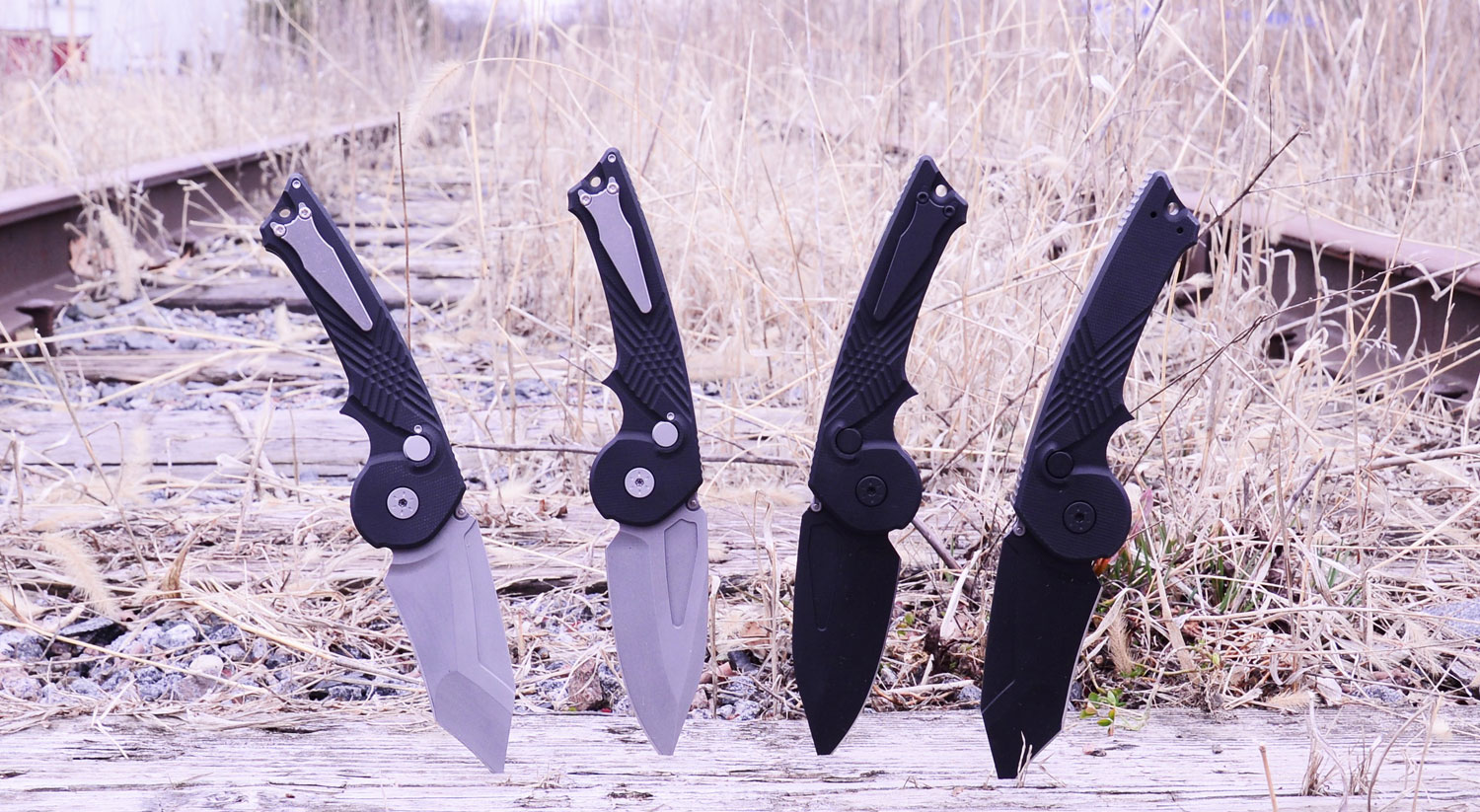
Knife collecting is an extremely rewarding experience for knife enthusiasts. There truly is a knife for everyone. Many increase or hold their value throughout the years, making collecting knives something to pass on to the next generation of knife collectors.

4 Paring Knives for Mom

Editor’s note: All images courtesy of the participating companies.

Go-To Knives

Look up paring—as in paring knife—in the Merriam-Webster dictionary and ol’ Mr. Webster says it’s “the act of cutting away an edge or surface.”

This raises a question.

If the paring knife was originally designed as a peeling knife, does it still matter? Or is it relegated to the back of the flatware drawer, consigned to a future of rust and dust?

Chef Timothy Hollingsworth, who wears the double hat of chef and owner at the California restaurants with the respective names of Otium and Barrel and Ashes, said the scrappy paring knife—with a blade less than 4 inches designed for food prep—still holds its own against $5 peelers and glinting chef’s knives. Not only is a paring knife designed to peel, it can be called on to prepare pearl onions, scrape mushrooms and cut intricate designs to give food extra pizzazz.

“For the home cook,” Hollingsworth said, “paring knives are great because you’re able to hold the vegetables or fruit in your hand while cutting, whether that’s cutting potatoes into smaller chunks, or peeling an apple and cutting it into bite-sized pieces.”

Mother’s Day is around the corner, a time that seeks to honor the women whose varied accomplishment include making many a home-cooked meal, often with paring knife in hand. From contemporary to traditional, here are four designs that represent the latest in one of Mom’s go-to tools.

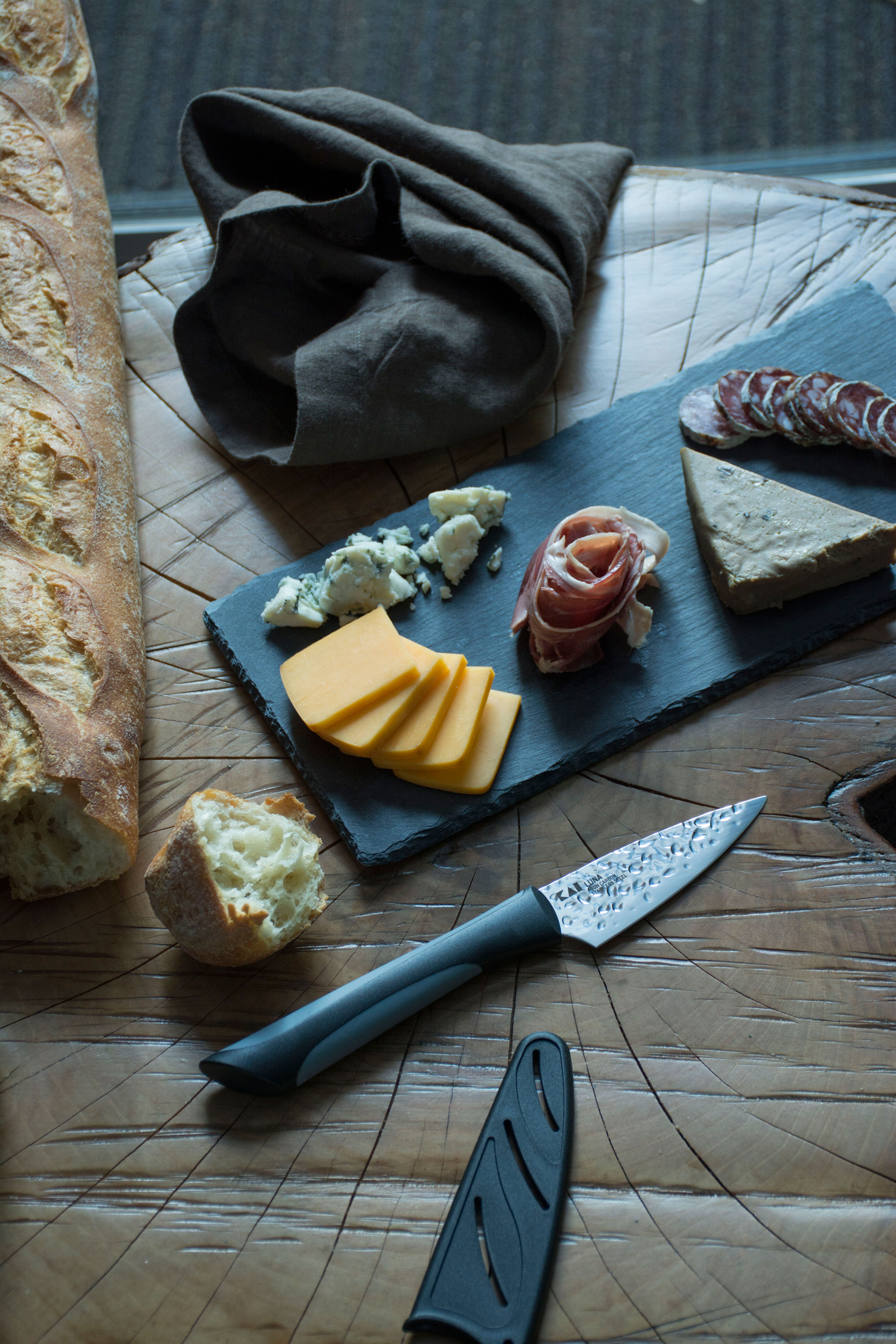
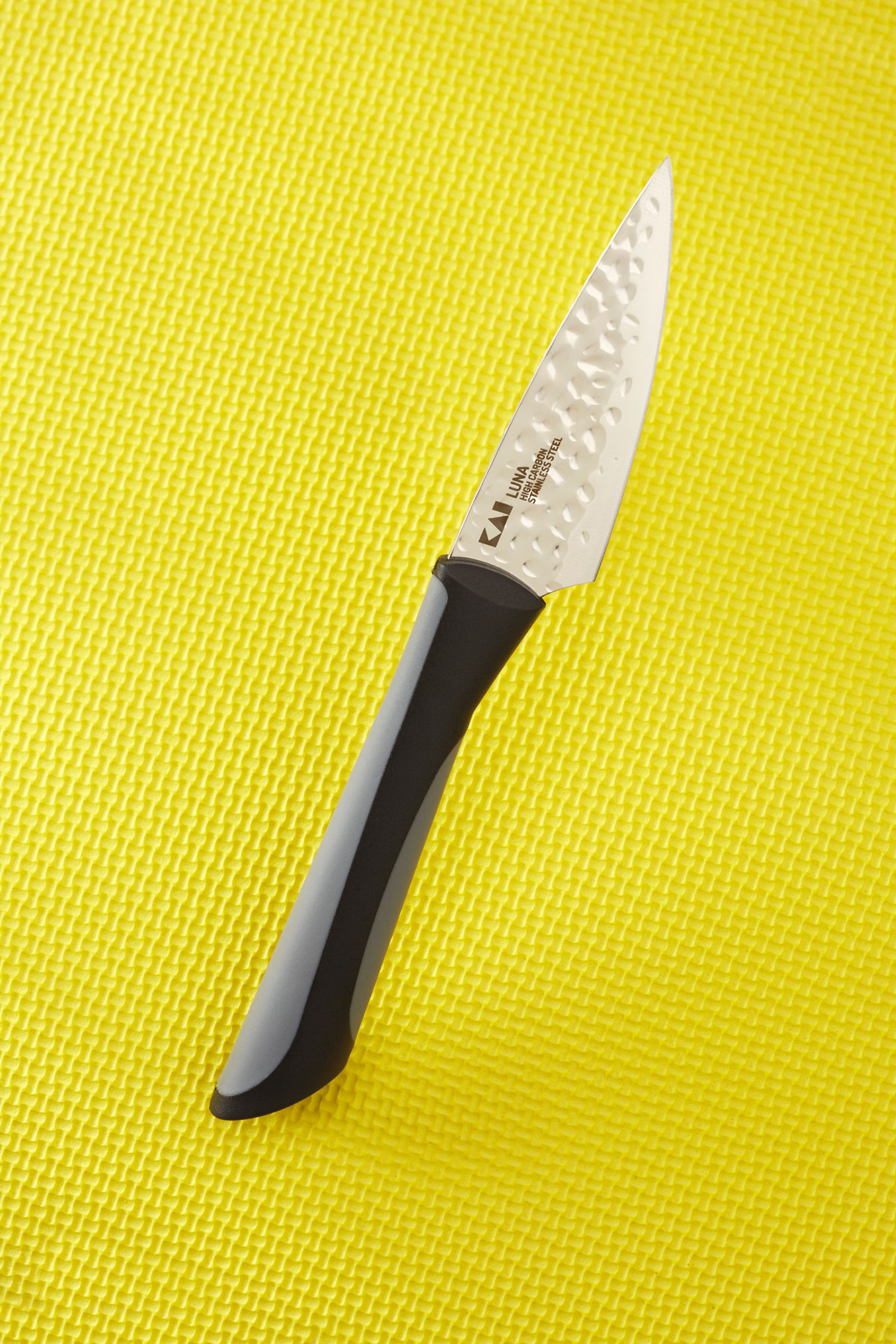
Kai Luna Paring Knife

Kai Luna paring knife

Kai Luna paring knife

It was about 10 years ago that Scott Zahm, director of sales for the housewares division of Kai USA Ltd., and other of his compatriots at Kai noticed people used paring knives as small utility blades, chopping a handful of parsley on a cutting board, for example.

“Many home cooks prefer a smaller knife that’s less intimidating and easier to control,” he said. Kai took to the drawing board with its Pure Komachi 2 and the resulting blade shape was wider than a traditional paring knife, with a deeper belly. The shape helped users navigate a cutting board with more agility.

This issue’s cover knife (page 7), the newer Luna Paring Knife, features the same profile. “We made the Kai Luna series for the adventurous cook on a budget,” Zahm said. The knife features a tsuchime, or hammered finish, and the edge is honed to a 16-degree angle on each side.

“All of the knives in the Luna series offer the performance good cooks demand at a price that even aspiring cooks can afford,” Zahm said. “With Luna’s tsuchime finish and contemporary styling, it’s an exciting and eye-catching addition to any kitchen.”

With a modified blade shape, does the paring knife usurp a chef’s knife in utility? Not really, Zahm said. Chef’s and paring knives work with each other, handling different-sized cutting jobs. Both are essential in the cook’s workspace.

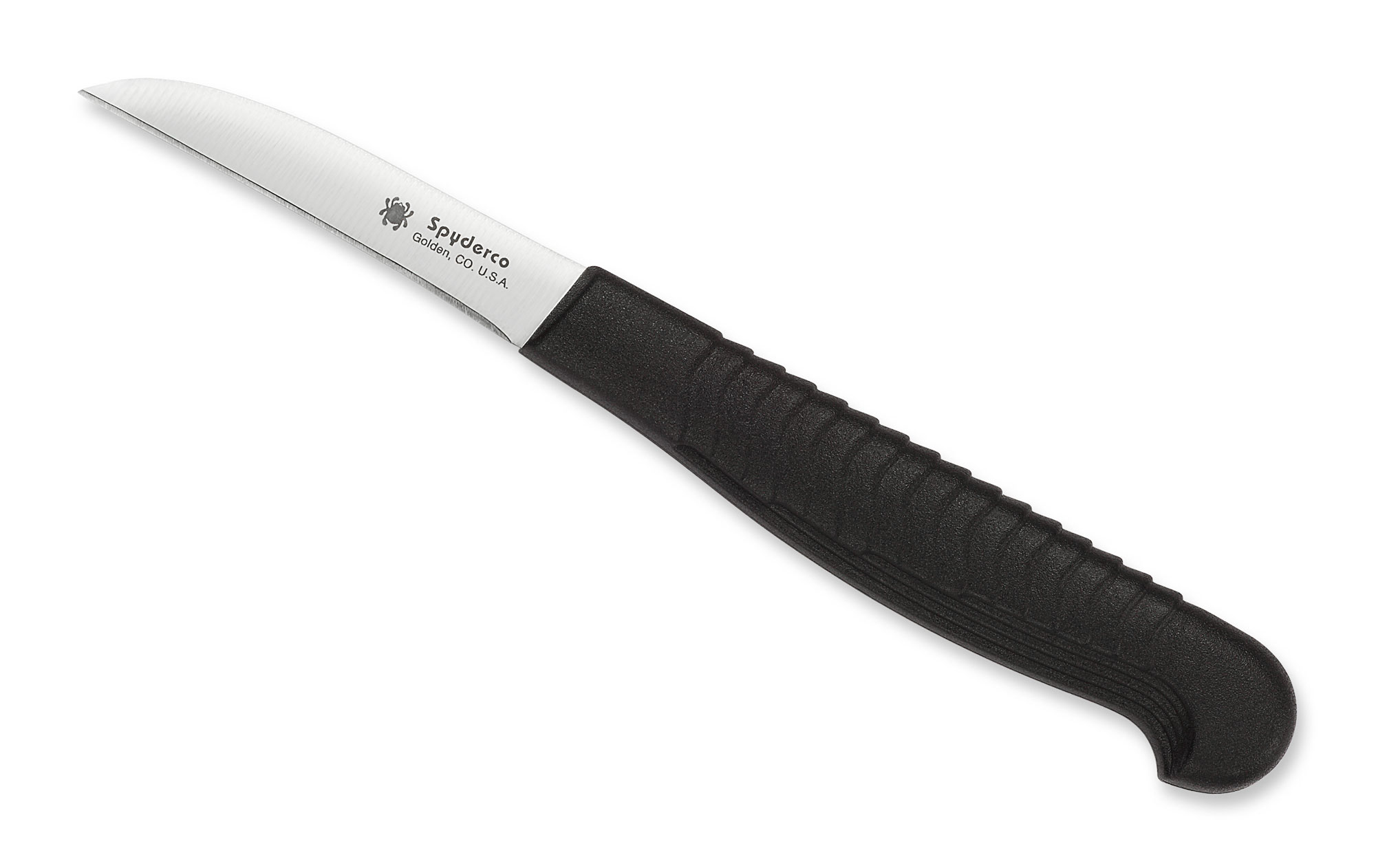
Spyderco K09 Mini Paring Knife

Spyderco paring knife

Spyderco “thought small” when it redesigned the K09 Mini Paring Knife. The company still offers utility knives 4 and 6 inches long. However, Spyderco’s Joyce Laituri compared the K09 to a scalpel, giving users options from peeling fruit to removing small bones from meat.

“I use mine every year at Halloween to start the pumpkin carving process,” Laituri said. “We draw the face on a pumpkin and the K09 goes through gourd like a laser. It is easily controlled letting you create intricate and even lacy designs.”

Three years ago, Spyderco reintroduced the K09 with a new handle material. The Japanese-made knife features a polypropylene grip with ridges to enhance purchase with wet hands.

The K09’s 2.25-inch blade of MBS-26 stainless steel is thinly ground. The result is a blade that keeps its edge and has a slight spring to it, Laituri observed. When it comes to how often people should reach for a paring knife, Laituri said it depends on the cook. She often uses Spyderco’s 6-inch serrated utility knife. Her husband, on the other hand, barbecues and rarely uses a paring knife.

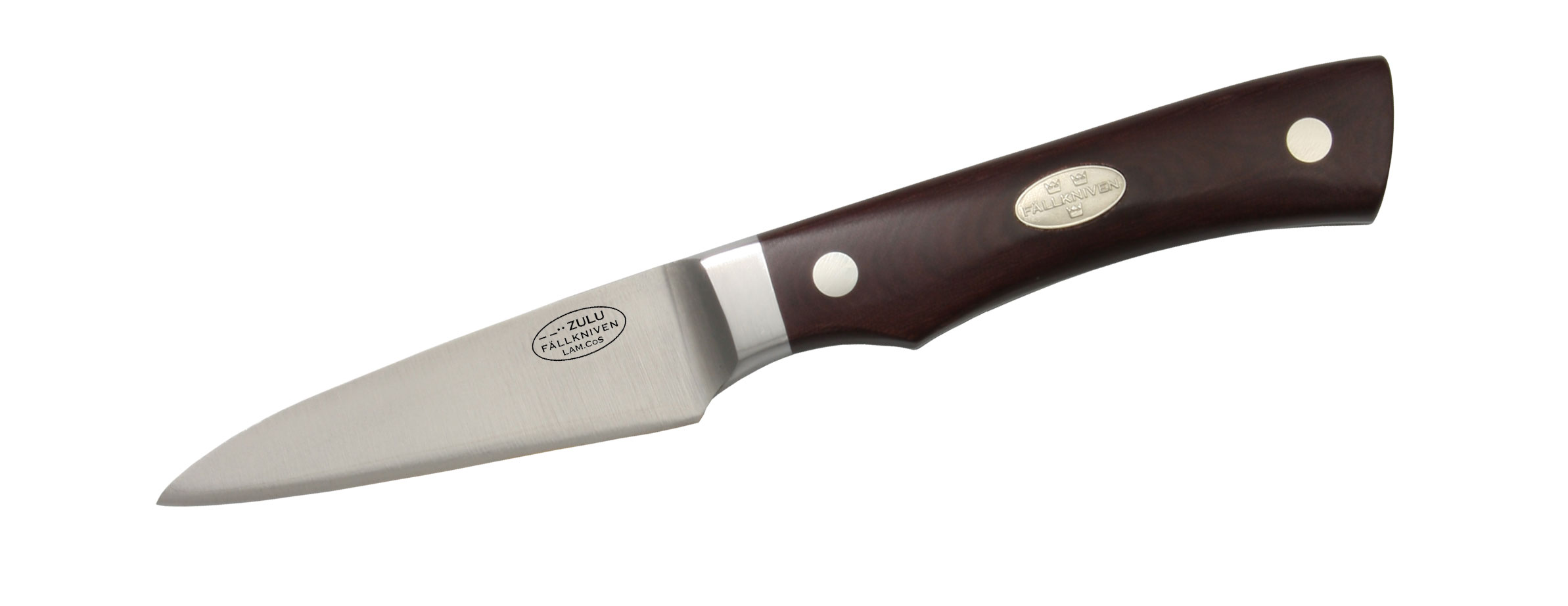
Fällkniven CMT Zulu

Fällkniven paring knife

“I believe the paring knife is one of the most used knives in the kitchen and also the knife with the lowest reputation,” said Peter Hjortberger, founder of Fällkniven AB. “Usually a paring knife is made for being cheap, a knife you don’t need to care much about, just a [semi] sharp edge for daily tasks.”

Fällkniven went in the opposite direction, making the 3-inch blade of the CMT Zulu of laminated COS steel, the core consisting of a stainless steel that contains a high percentage of cobalt. Hjortberger called it “technically, a very advanced steel.”

“So, instead of searching for the cheapest steel, we go for the best steel, understanding that this knife will last a hundred years or more,” Hjortberger said. “To me, this is climate smart to make high-quality knives which will last during several generations instead of uttering out crap.”

The knife is full tang and handled with Micarta. The CMT Zulu features an old-world design ground with a convex edge common on knives before the Industrial Revolution. It is made in Japan with Swedish materials and quality control.

Often, the paring knife is the most-reached-for kitchen tool, not just for cooking but also for common household chores. Paring knives are non-frightening, Hjortberger said, and women might like the more manageable design.

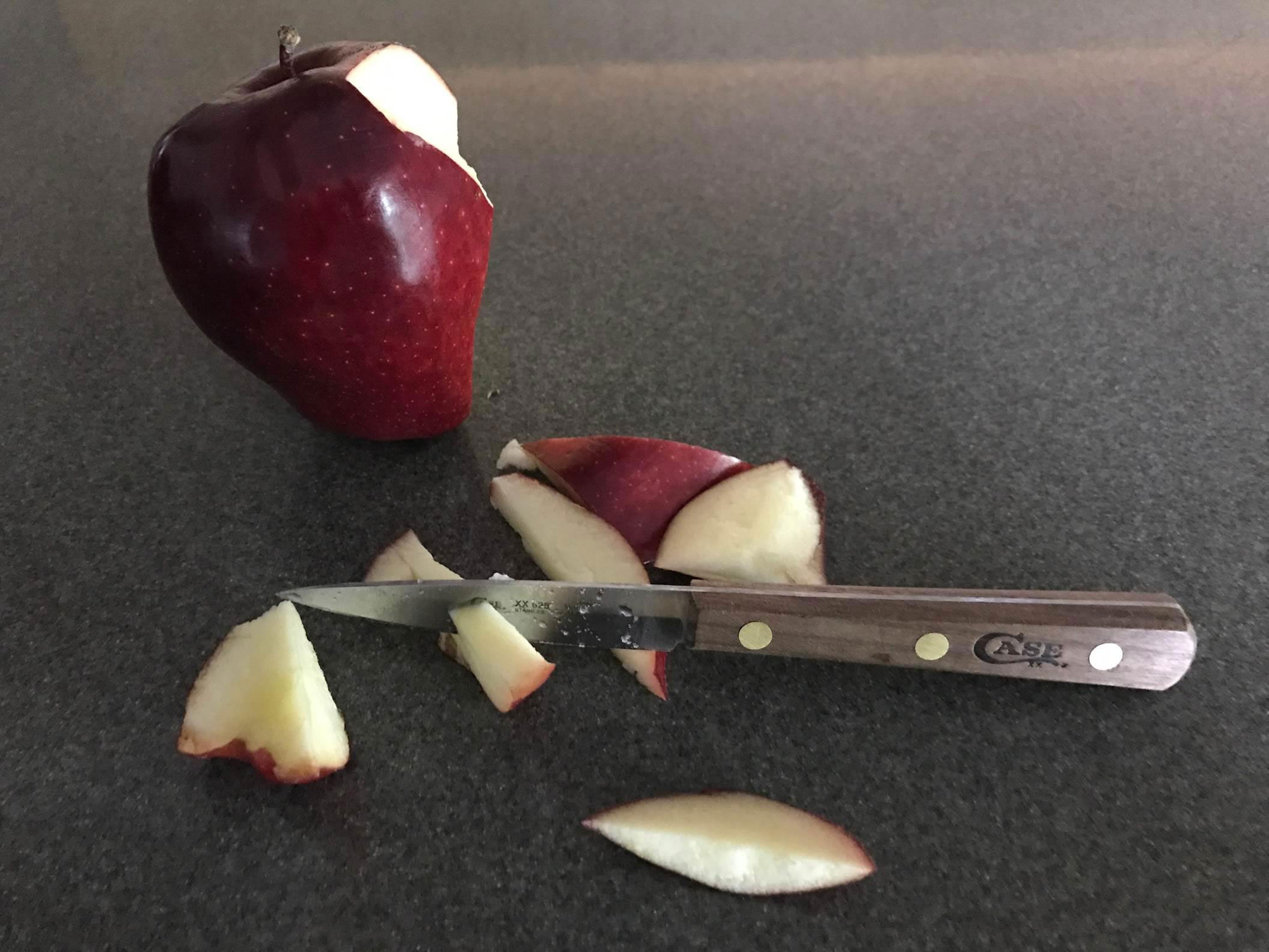
Case Paring Knife

Case paring knife

According to Case’s Fred Feightner, paring knives have homes in restaurants offering nearly every type of cuisine. In 2012, Case resurrected its paring knife offering, giving home cooks the option of a handle of black synthetic or walnut. With the walnut handles, brass rivets gleam from the wood. Case offers four paring knives in its Household Cutlery collection.

“We knew people would want their household set to be complemented by a paring knife or two,” Feightner opined. “Case paring knives have been a part of the American kitchen’s tool set for many years.”

Case manufactures paring knives with either a clip-point blade, where the clip drops to the gently curving edge, and the spear-point, where the spine and edge meet in an acute tip. Both are made from Case Tru-Sharp™ surgical steel, the company’s equivalent of 420HC stainless.

Paring Knife Maintenance Tips

After use, a few moments of care can extend the life of a paring knife. While convenient for pots and pans, etc., the dishwasher is notorious for destroying knives.

“Dishwashers are never kind to household knives,” Feightner said, “because the blade edges can be dulled by the movement of the knives during cleaning, and the detergents made for automatic dishwashers will tend to stain and pit the blades. Our wooden-handled knives have natural oils and pigments within them that can be compromised by the high temperatures employed by the dishwasher. As a result, fading and splitting of the wooden handles can occur.

“We recommend hand washing, using a mild-strength detergent, followed by a prompt water rinsing and hand drying with a clean towel. Cleaning products that include chlorine and/or bleach in them can cause the stainless-steel blades to discolor and pit.”

Knives stored loosely in a drawer can rattle against each other, chipping edges and posing cutting hazards to anyone rummaging for a blade. Once their knives are clean, professional chefs store them in a knife bag, roll or case. At home, a knife block, a magnetic strip or in a drawer as long as they are in sheaths, work equally as well to preserve the life of kitchen knives. After all, from feats of culinary artistry to cutting string, the paring knife will rest in kitchens for decades to come.

Mom, or Anyone, Will Like This, too

The official knife of BLADE Show 2018 is this special edition CRKT Caligo.

  • Only 150 made
  • Serialized number
  • BLADE Show logo on blade
  • Designer TJ Schwarz’s signature on the blade

Get this instant collectible now for only $49.99 at ShopBlade.com.

New Knives: Hogue & SIG SAUER Partner Up, RAT Worx Debuts X-Factor

Hogue Knives to Launch SIG SAUER-Branded Automatics

SIG SAUER knives

New Hogue Knives

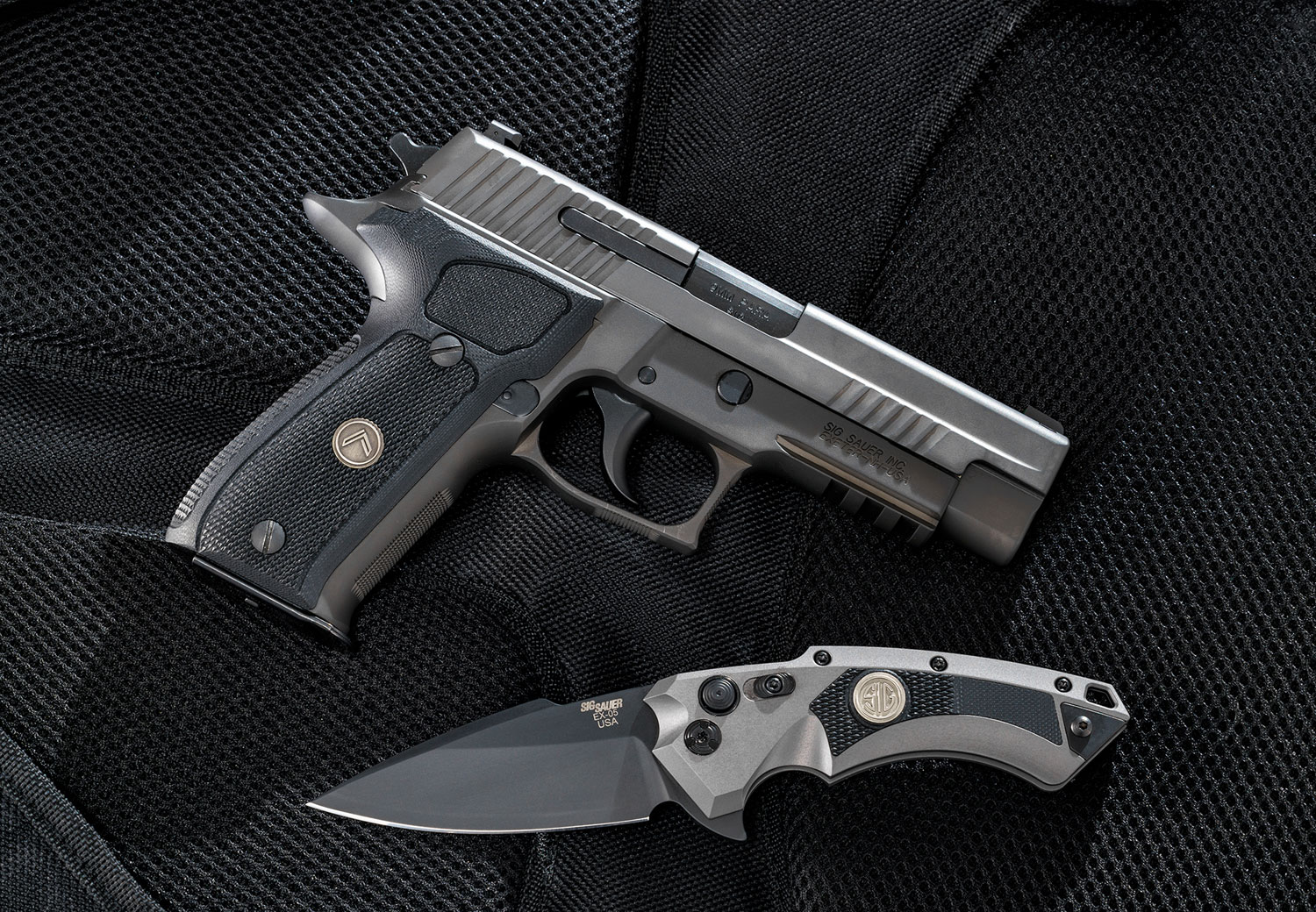
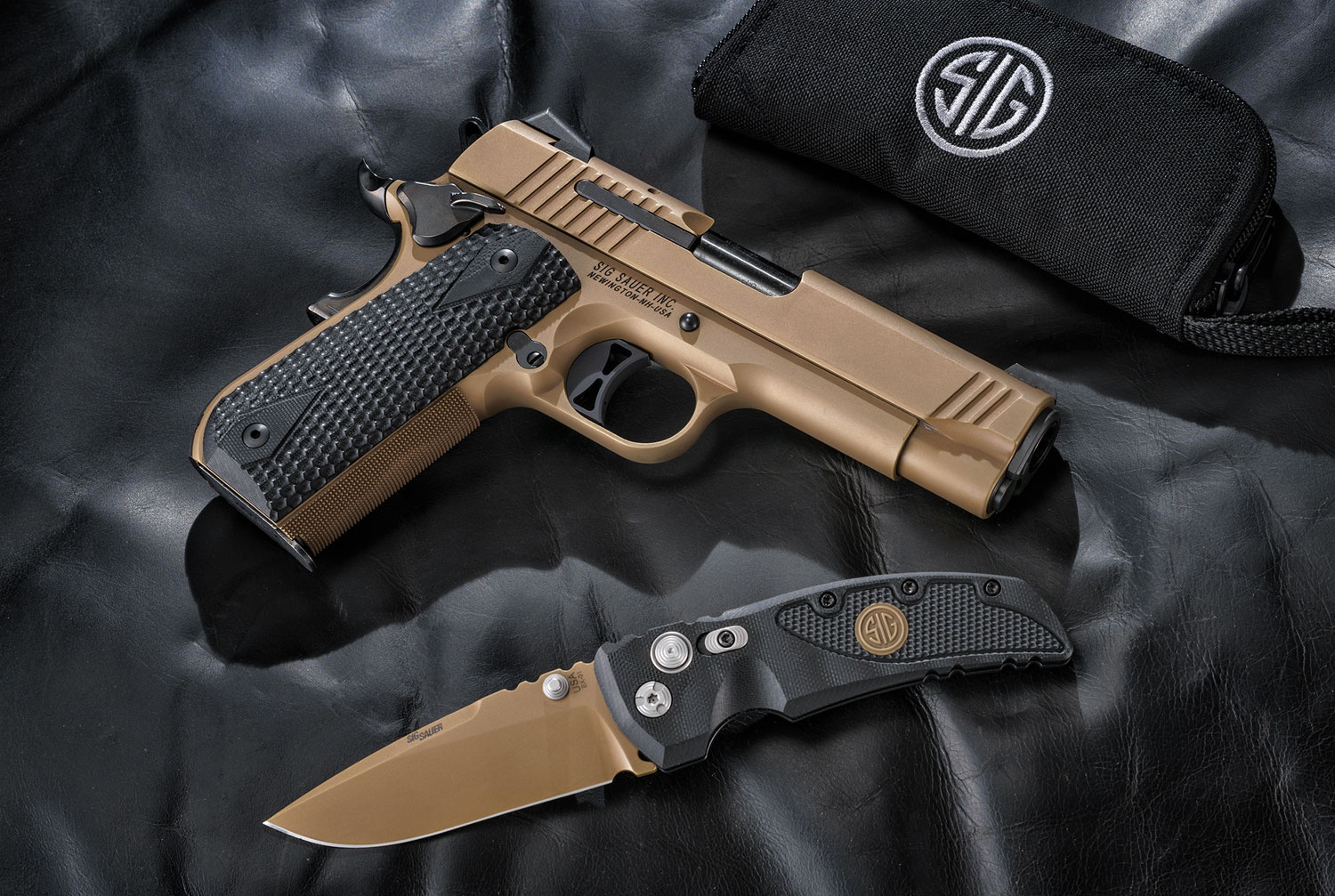
SIG SAUER, best known for its firearms, is once again teaming up to produce a line of knives, this time with Hogue Knives. It’s a natural partnership, since Hogue already produces G10 grips for SIG’s pistols. 

From Hogue:

All of HOGUE’s “SIG” marked knives pair with the popular styles of the SIG SAUER firearms Hogue produces grips for. Each have the familiar “SIG” mark either machined in G10 or inlayed with a circular medallion. Hogue’s popular X5, EX-04, and EX-01 knives (both manual folding and automatic variations) are available to match SIG SAUER’s Emperor Scorpion and Exclusive Series Firearms including the Legion Series. Hogue’s EX-02 flippers are available to match ASE, Extreme, Scorpion, and Emperor Scorpion firearms. Finally, the Hogue EX-F01 has matches to SIG SAUER’s Stainless Elite and Exclusive Series firearms.

Hogue knives are made in the USA. MSRP ranges between $199.95 and $279.95.

Sweetening the deal is Hogue’s exclusive stake to all SIG automatic knives.

SIG previously partnered with Ernest Emerson and Rick Hinderer.

SPECS


RAT Worx Debuts X-Factor

New Rat Worx automatic knives

RAT Worx‘s new X-Factor knives don’t mind if you’re right- or left-handed. This new line of ambidextrous automatics uses a roller chain that pivots on a ceramic ball bearing for fast action. Buttons on either side of the handle will deploy the blade, although only one can be pressed at a time.

From RAT Worx:

The blade is opened with the help of a roller chain and 2 dual nested counter wound springs, down the spine of the handle. The knife can easily be swapped to right or left handed use. The pocket clip is fully ambidextrous for right- or left-hand use as well (You have to modify the knife to switch it to left hand use by removing a couple of screws.)

Also notable is that the identifying information is hidden in the handle design.

SPECS

Photos: 6 Slim Custom Knives

There’s something about things that are slim and pointy that bespeak of sharp. Think your grandma’s hatpin, ice picks, that nasty hypodermic needle at the doctor’s office when you were a kid, etc. Lean knives can be keen, too. Here are a few. (Click on an image for a larger view.)


Edmund Davidson custom knife
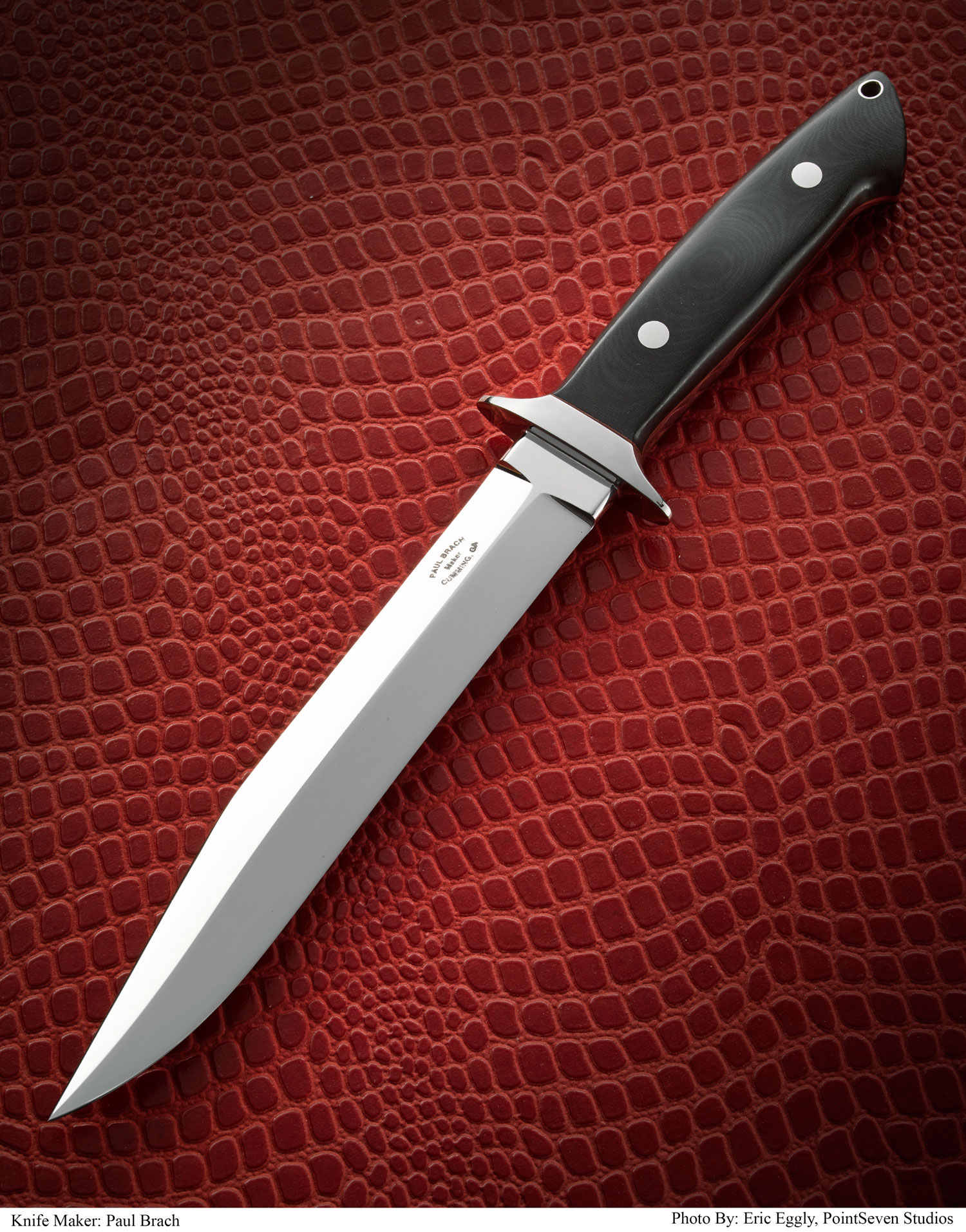
Paul Brach’s reproduction of a Bob-Loveless-style fighter looks leaner than most in a black Micarta® grip and 8.5-inch blade of CPM 154 stainless. Overall length: 14.5 inches.
Cliff parker custom knife
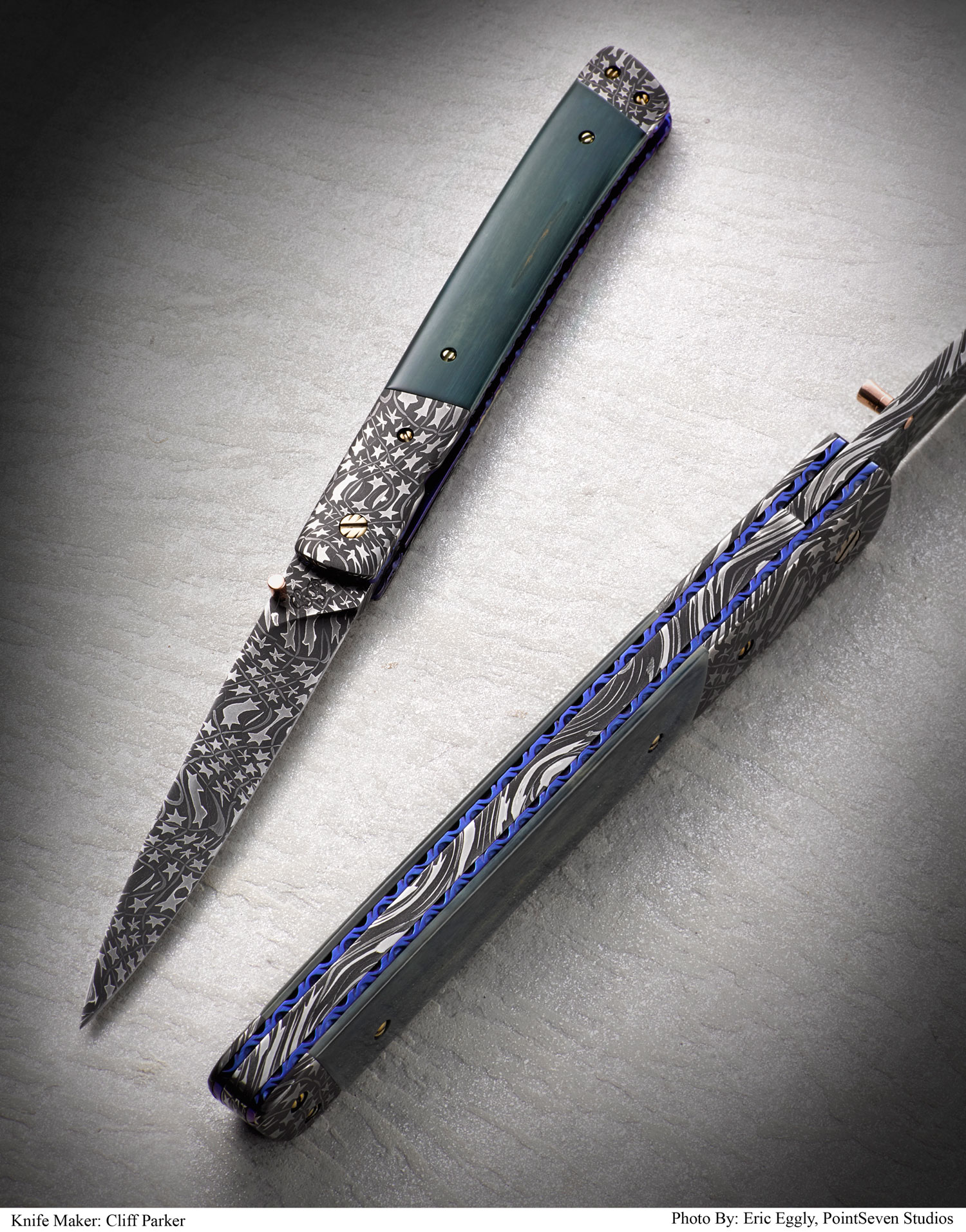
Cliff Parker gets a whole bunch of his mosaic damascus of 4600E, 1084 and nickel in the 3-inch blade and bolsters on either side of a svelte mammoth ivory handle. The thumb stud is 18k gold. Approximate closed length: 3.75 inches.
Bill Tuch custom knife
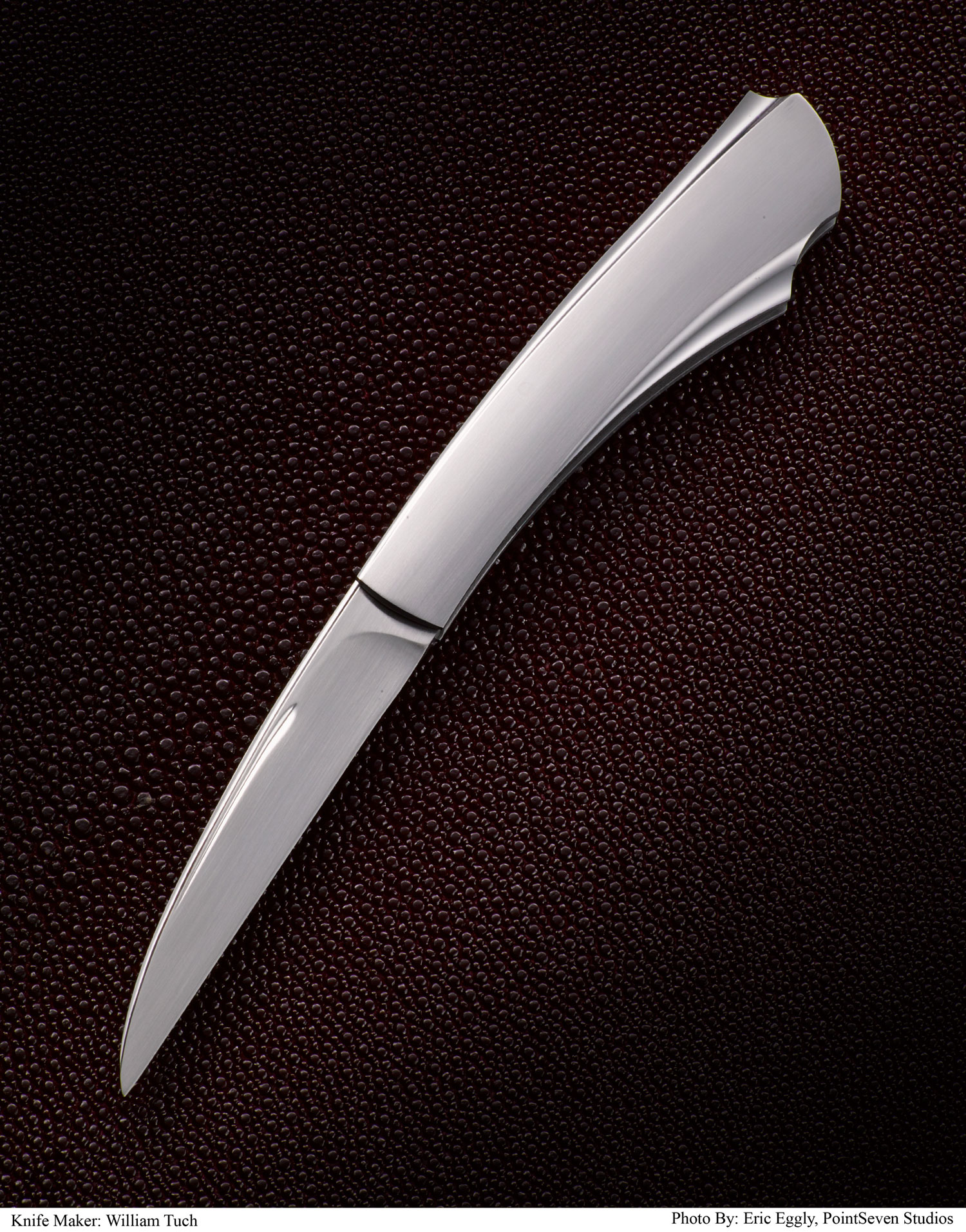
Bill Tuch offers up one of his sculpted-handle folders in a thinner-than-usual version. The 3.5-inch blade is ATS-34 stainless and the handle is 416 stainless. Approximate closed length: 4 1/8 inches.
Grace Horne custom knife
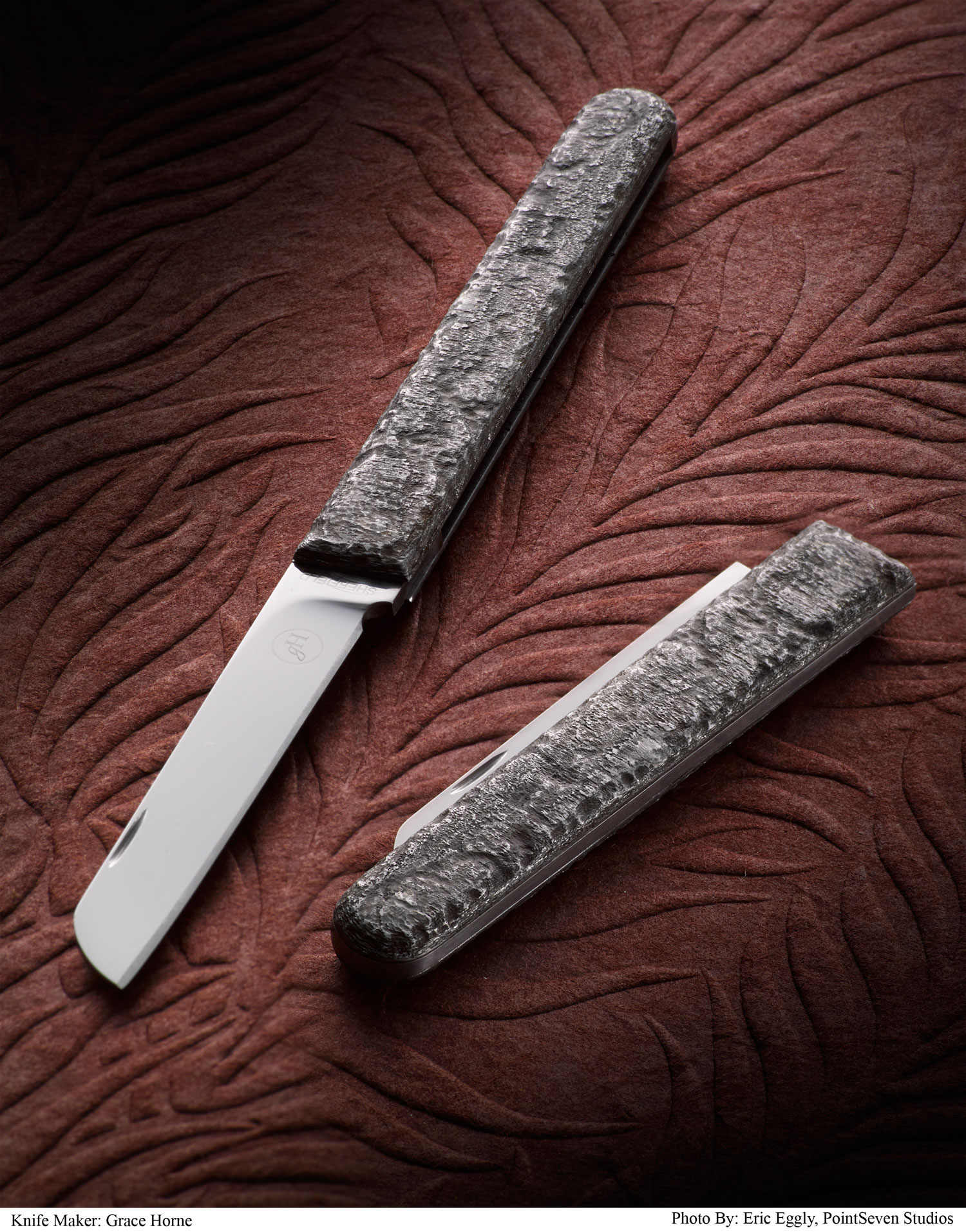
Grace Horne revisits one of her favorite folder designs in a handle of wrought iron. The 2.5-inch modified sheepfoot blade is RWL-34 stainless steel. Approximate closed length: 4 1/16 inches.
Daniel Winkler custom knife
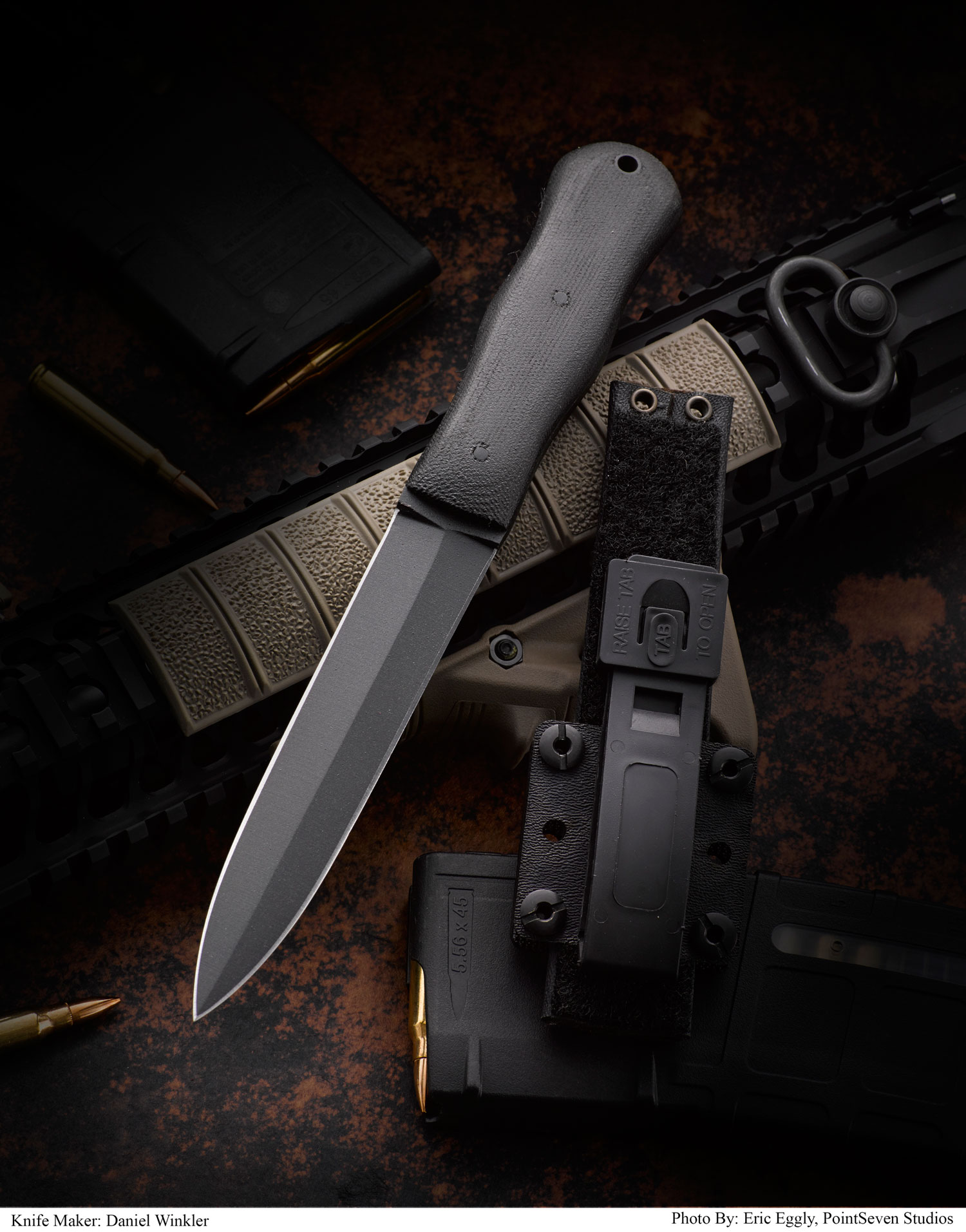
A dagger from the Winkler Knives II line by Daniel Winkler would appear to draw inspiration from any number of classic combat dagger designs. It comes with a conventional synthetic sheath (not pictured).
Edmund Davidson custom knife
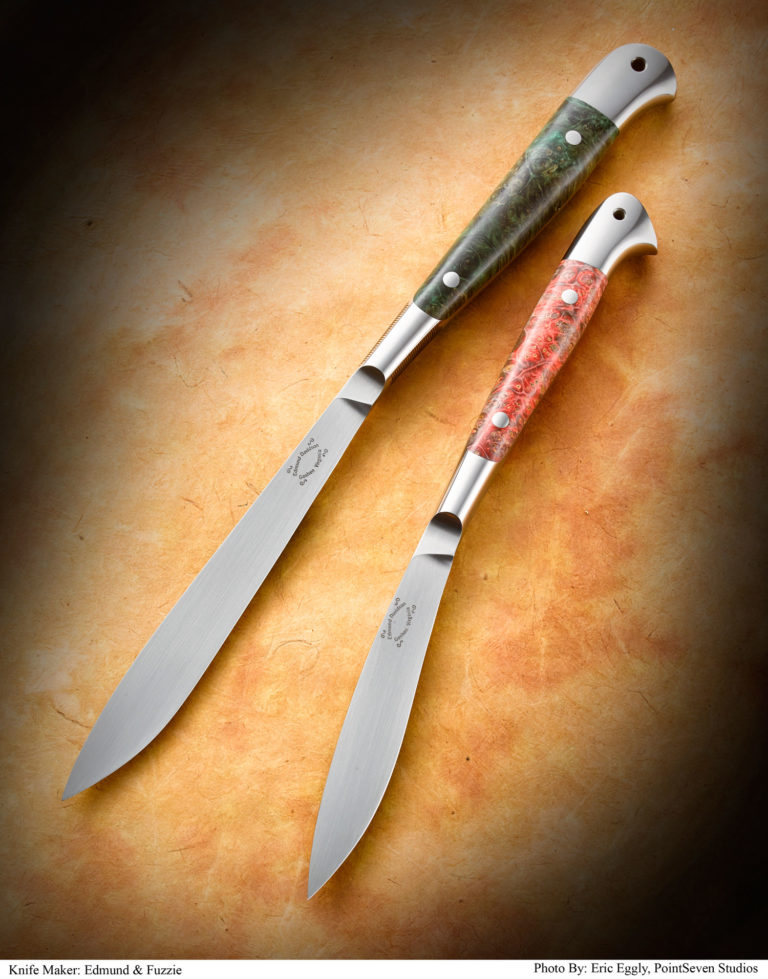
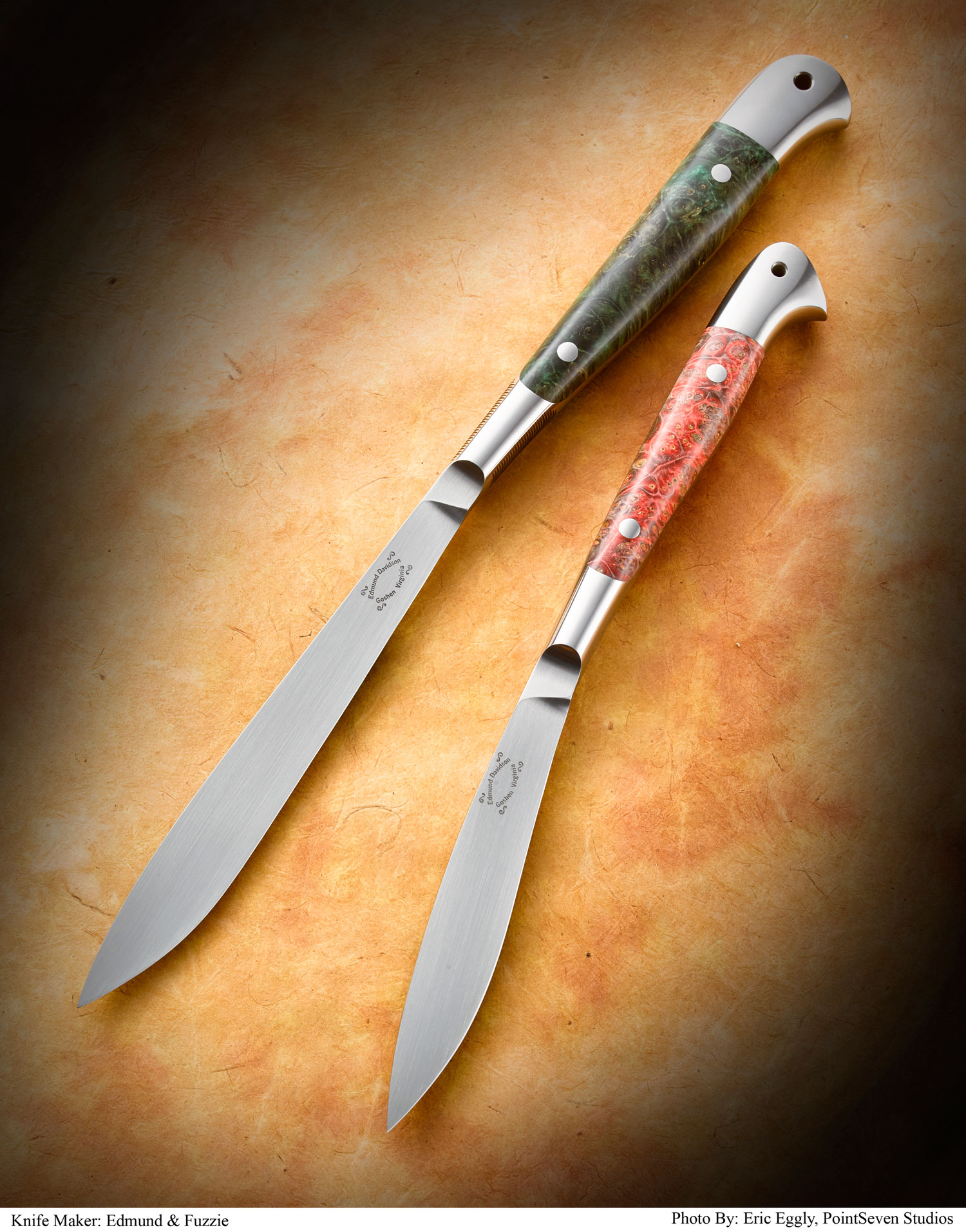
Edmund Davidson’s long integral features a 6-inch blade of CPM 154 stainless in a hand-rubbed finish and a black-ash-burl handle. Overall length: 11.5 inches.

See More Incredible Custom Knives

best custom knives


5 New Knives (and 1 Survival Ax) for Rugged Use

CRKT Snap-On® RAVE® XL

CRKT Snap On
CRKT image

From CRKT:

As rugged as the mechanics who use it, this overbuilt pocket knife features a modified drop point blade that’s built from stainless steel. It’s tough enough to cut hose but still precise enough to strip wiring. Meanwhile a black corrosion resistant coating keeps the blade intact no matter what you put it through in the shop.

  • Blade Steel: 1.4116
  • Blade hardness: 55-57 HRC
  • Blade Thickness: 0.120” (3.0 mm)
  • Blade Finish: EDP
  • Blade Length: 2.75” (69.85 mm)
  • Closed: 4.125” (104.76 mm)
  • Open: 6.875” (174.63 mm)
  • Weight: 6.2 oz. (175 g)
  • Handle: Glass-Reinforced Polypropylene with TPR Insert
  • Style: Folding Knife w/Locking Liner
  • Designer: Ken Onion
  • Available in three colors (red, black, red/black)

More information here


CRKT HVAS

Editor’s note: CRKT tell us that the H is silent in “HVAS.” It’s pronounced like “vase” with a long “a.”

From CRKT:

For a minimalist with an appetite for big adventure. Jesper Voxnaes’ Scandinavian backyard is filled with fjords, punctuated by mountains, and sliced by surging rivers. So when he sets out to design an outdoor knife, it’s crafted to perform. Everywhere.

  • Blade Length: 3.339″ (84.81 mm)
  • Blade Edge: Plain Edge
  • Blade Steel: 1.4116 SS
  • Blade Finish: Satin Finish
  • Blade Thickness: 0.126″ (3.2 mm)
  • Closed Length: 4.525″ (114.94 mm)
  • Open Length: 7.875″ (200.03 mm)
  • Weight: 3.7 oz
  • Handle: Glass Filled Nylon
  • Style: Folding Knife w/Locking Liner
  • Field Strip Technology
  • Designer: Jesper Voxnaes

More information here


Benchmade 407 Vallation

Benchmade 407 assisted opening axis knife
Benchmade images

From Benchmade:

A duty knife that can be carried every day, this tactical AXIS® Assist takes its styling cues from our legacy line of automatic knives.

  • Designer: Benchmade
  • Mechanism: AXIS® Assist
  • Action: Assisted-opening
  • Blade Steel: CPM-S30V (58-60HRC)
  • Blade Length: 3.70″ (9.40cm)
  • Blade Thickness: 0.124″ (3.15mm)
  • Open Length: 8.76″ (22.25cm)
  • Closed Length: 5.09″ (12.93cm)
  • Handle Thickness: 0.70″ (17.70mm)
  • Weight: 6.38oz. (180.87g)
  • Blade Edge: Plain
  • Blade Finish/Color: Satin
  • Blade Style/Shape: Drop-point
  • Clip Type: Deep-Carry
  • Clip Position: Reversible Tip-Up
  • Glass Breaker: Yes
  • Handle Material: 6061-T6 Aluminum
  • MOLLE Compatible: Yes
  • Sheath Type: No Sheath

More information here


Benchmade Bugout®

Benchmade new Bugout
Benchmade images

From Benchmade:

Subtle, yet capable, the latest version of the Bugout® was developed to be easily carried anywhere without drawing attention to itself.

  • Designer: Benchmade
  • Mechanism: AXIS®
  • Action: Manual-opening
  • Blade Steel: CPMS30V (58-60 HRC)
  • Blade Length: 3.24″ (8.23cm)
  • Blade Thickness: 0.090″ (2.29mm)
  • Open Length: 7.46″ (18.95cm)
  • Closed Length: 4.22″ (10.72cm)
  • Handle Thickness: 0.42″ (10.54mm)
  • Weight: 1.85oz. (52.45g)
  • Blade Edge: Plain
  • Blade Finish/Color: Gray Coated
  • Blade Style/Shape: Drop-point
  • Clip Type: Mini Deep-Carry
  • Clip Position: Reversible
  • Handle Material: Grivory
  • Lanyard Hole: Yes
  • MOLLE Compatible: No

More information here


L.T. Wright (No Name) Knife

LT Wright Handcrafted Knives
LT Wright image

Part of the Vault series. From L.T. Wright Handcrafted Knives:

It is still made with 100% American steel and handcrafted here in Ohio.

  • Overall Length: 8″
  • Sharpened Edge: 3 3/4″
  • Steel: A2 Steel
  • Grind: Saber
  • Handle: Polished red G10 with coyote G10 Liners
  • Other Features: Sharpened spine, Brown leather dangler sheath with matching red thread and a fire steel loop

More information here


Off Grid Tools Survival Axe

OGT survival ax
Off Grid Tools image – click for larger view

From Off Grid Tools:

With 31 features, the tool will fully equip you for any situation you might come across.

  • Dimensions: 11.5 x 5.5 x 1.2 inches
  • Weight: 1.7 pounds
Steel: 420 stainless steel full tang
Hatchet blade
  • Hammer head, nail claw and pry bar
  • Replaceable 6 inch thin kerf reciprocal saw blade
  • Hex sockets 3/8, 7/16, 1/2, 9/16, 10mm, 11mm, 13mm, 15mm
  • Hardened steel glass breaker
  • Seat belt cutter
  • Gas valve wrench and bottle opener
  • Rubberized coated glass filled nylon handle

More information here

Editor’s note: In addition to a good blade, one of the best survival tools you can carry is a .22 pistol. Check out our sister site GunDigest.com for the Top list of best .22 pistol options.


Keep Up on New Knives with a BLADE Magazine Subscription

Never miss a beat with a great deal on a print subscription.


All About Collecting William Scagel Knives

Bill Scagel knife
According to Dr. Jim Lucie, Scagel made sheaths for most of his knives and axes, though there were exceptions, such as when he supplied knives to some retailers. His sheaths ranged from simple but functional to ornately embossed. (Mike Carter image)
The Roots of Modern Custom Knives

The branches of the modern custom knifemaking family tree spread far and wide. Its sturdy roots, though, are found in the little town of Fruitport, Michigan. There BLADE Magazine Cutlery Hall Of Fame© member William Wales Scagel applied his steady hand and artisan’s eye to the first knives of the modern era that were truly exemplary examples of those classified today as “custom.”
William Scagel maker's mark
Scagel stamped many of his blades “W. SCAGEL” over “HANDMADE” and with the image of a kris knife. (Mike Carter image)

Scagel’s influence resonates across the decades as knives and knifemakers have taken their cue from his mastery of the curve and the spacer, his interpretation of the lines, fit and finish of a knife that stands the test of time, setting a standard for others to follow. Born in 1873, Scagel lived to the age of 90, and during his lifetime proved himself a master metalworker. His wrought iron adorned the windows of banks and other buildings in the city of Grand Rapids, and he participated in bridge building as well. His first knives were made in lumber camps in the Great Lakes area of the USA and Canada, with the earliest examples dating to around 1910.

Th rough the years Scagel made his imprint as a custom knifemaker, selling his wares through Abercrombie & Fitch during the 1920s, raising the profile of the custom knife with his recognizable style of stag and spacer handles. His friends at Brunswick Corp. kept him supplied with scrap pieces of Bakelite (the first manmade plastic and first true synthetic), wood, ivory and fiber from the manufacture of pool tables and bowling balls for use as spacers. He made bowies, hunters, fighters, folders and hatchets that have become coveted collectibles fetching high prices at auctions and private sales. His kitchen knives were second to none, and his paired carving sets were expensive masterpieces.

Meanwhile, those who appreciated a tough working knife that had a distinctive look gravitated toward custom knifemaking. Among them was legendary Cutlery Hall-Of-Famer Bo Randall, who became a protégé of Scagel. In turn, Randall influenced the likes of Cutlery Hall-Of-Famer Bob Loveless and so many others—and the legacy continues to grow.

William Scagel hunter
William Wales Scagel’s personal hunting knife features a silver-mounted guard and a silver cap at the end of the stag. His signature is on the obverse side of the blade. (image from the 1996 Pictorial Calendar of William W. Scagel Knives; knife from the Dr. James Lucie Collection)

Scagel, the Man

Dr. Jim Lucie, Scagel’s longtime friend and personal physician, remembers a matter-of-fact kind of guy.

“He was sometimes quite opinionated,” recalled Dr. Lucie, who achieved status as an ABS journeyman smith in his own right. “He shunned publicity and did not like the public eye, and he was critical of some types of people. He was an atheist by choice and didn’t mind stirring the pot about something. If he liked you, and I spent many delightful hours with him, he would go to hell and back for you. If he didn’t, you only got one chance to take advantage of him.”

William Scagel Handmade book
Published in 2010, Scagel Handmade by James R. Lucie is the quintessential book on Scagel. Famous for being reclusive, Scagel had few pictures taken of himself. The fuzzy one on the cover of Lucie’s book is one
of the only known pictures of the famous knifemaker.
Scagel signature knife handle
As Lora Schwarzer noted, alternating brass and leather spacers with deer antler at the other end comprised
Scagel’s signature stacked handle. (Mike Carter image)

The author of the quintessential book on the subject, Scagel Handmade, published in 2010, Dr. Lucie calls Scagel a “genius with metal work. He was a pioneer. He got Bo Randall started, and the first knives Bo made were around 1937-38, I believe. Scagel’s knives have been copied more than anybody else, more than even the Bob Loveless drop point.”

Now 90, Dr. Lucie sold his extensive Scagel collection in 2011, and he confirms that the great custom maker once said, “There are no straight lines in nature, and neither should there be on any knife.”

Scagel’s work has often been imitated, sometimes with dubious results. At other times, however, the style has been replicated with precision. ABS journeyman smith Lora Schwarzer worked in a hospital with Dr. Lucie, who introduced her to Scagel knives.

“Dr. Lucie helped me get started, and I wanted to do Scagel-style knives,” Lora remarked. “They are pretty and easy to hold. They feel good in your hand, and none of them are the same, basically. He might have done a few sets that match, but that was not the norm. The spacers are different and the antlers are different, and they are pretty with their curves and colors.”

Schwarzer started forging in 1996 and has made many Scagel repros since then. Her current work includes a couple with 1084 tool steel blades, brass guards, and leather, fiber, brass, copper and bronze spacers. Her favorite Scagel knife is an unmarked piece.

“If someone brought him a piece of steel,” she explained, “and asked him to make a knife for them, he would do it but not mark it because he didn’t know what kind of steel it was or where it came from. I got this one from Dr. Lucie, who got it from the person Bill originally made it for. Its handle is alternating brass and leather spacers with deer antler at the other end. That was his signature stacked handle.”

One of the great stories Lora likes to tell about Scagel involves a lady who regularly visited the local grocery store. In those days it was common to wrap purchases in brown paper and tie them with string. The lady struggled to break the string, so Scagel made her a miniature knife, which Lora has seen and is pictured in Dr. Lucie’s book, to cut the strings.

“Another thing I know is that Bill Scagel had a kind heart,” she added. “During the polio epidemic in the 1950s, he built braces for people without charging them.”

William Scagel reproduction
ABS journeyman smith Lora Schwarzer’s Scagel repro is a work in progress and includes a blade of 1084 carbon steel, brass guard, and brass and leather spacers. She stated she needs to “drill and put in the pin and final finish the handle.” Overall length: 12 inches. (Schwarzer image)

Scagel Knives

Gordon White of Cuthbert, Georgia, has been collecting Scagel knives for about 30 years. Gordon sees the historic significance of Scagel’s body of work as a big reason for his lasting interest.

“Well, the knives are just so unusual and different,” he said, “and he is the father of handmade knives and the first person in the 20th century to start making a custom handmade knife. He forged everything he made, and the unique fact that he made his own machinery and equipment and did everything by hand tells me that there has really been nothing like Scagel before or since.”

According to White, one of Scagel’s most innovative tools was used to place the spacers on the knife handle and then press them together, followed by the stag or brass butt that was then pinned in place. Scagel hatchets in mint condition are difficult to find because they were meant for use, and those who bought them put them to work steadily.

William Scagel World War II dagger
Louis Chow owns three World War II Scagel daggers. Two are forged carbon steel with full-tang handles slabbed in wood. The construction of the guards is unusual with a wrap-around opening to fit onto the tang. “It’s just another aspect of Scagel’s work,” Chow said, “something different.” (Louis Chow image)

Unlike other custom makers who can point to a mentor or individual who helped launch their careers, collector Louis Chow says Scagel stands alone.

“He was unique, you could say, because in my opinion I don’t think Scagel was too much influenced by anyone else in the beginning. Still, there were great knives being made before Scagel. For some reason, he was somewhat of a hermit and didn’t research what other guys were starting to do. Of course, those famous makers had the power tools necessary to make precision knives. Scagel used whatever he had on hand, a small generator and grinder. He didn’t have anything to go by as a sample, no publications to refer to. So, he basically did what he thought a hunter or bowie knife would look like.”

Bill Scagel blade stamp
In addition to making knives beginning circa 1920 for retail giant Abercrombie & Fitch of New York, Scagel also made knives for retailers Von Lengerke & Detmold of New York and Von Lengerke & Antoine of Chicago. The blade stamp above is on a knife he made for the latter. (Mike Carter image)

Chow is primarily a Loveless collector, and he acknowledges that the reasons for collecting a particular custom maker are varied. He agrees with White that the history of Scagel is a big factor.

“If I look back at how Loveless got started, as far back as you can go, Scagel is the granddaddy of the industry and influenced everyone else,” Chow explained. “For me, he is the source of what influenced Loveless. My preference is Scagel’s simple daggers that he made during World War II, his contribution to the war effort and the foundation of the current custom knife industry.”

Chow owns three Scagel daggers from the World War II era and a small pocket hatchet that was popularized in the 1950s. The daggers are forged carbon steel with full tang handles slabbed in wood. The construction of the guards is unusual with a wrap-around opening to fit onto the tang.

“Two of the three daggers are made like that,” Chow said. “It’s just another aspect of Scagel’s work, something different.”

William Scagel axe
As Dr. Lucie notes in his book, Scagel’s axes are interesting and considered rare. There are two varieties: 1) general camp axes medium to large in size and quite hefty and 2) the hiking or military backpack axe, which is smaller and more petite. The one above is an example of the former. (image from the 1996 Pictorial Calendar of William W. Scagel Knives; axe from the Dr. James Lucie Collection)

Values of Scagel Knives

American Bladesmith Society award
The American Bladesmith Society presents the annual William Wales Scagel Award to an ABS smith for longtime service in promotion of the forged blade. ABS master smith Red St. Cyr (left) received the award from BLADE Magazine Cutlery Hall-Of-Fame member B.R. Hughes (right) in 2006. The portrait in the background is of Cutlery Hall-Of-Famer Bill Moran.

Scagel knives remain popular among collectors, and White considers the prices paid at the 2011 auction of Dr. Lucie’s collection as evidence of the demand.

“That auction is a good meter to go by,” he remarked. “The hunters were averaging from $12,000 to the mid-$20,000 range depending on appearance, and condition has a lot to do with it. Some of them look better than others, and a high-quality sheath with good looks adds to the value. Dr. Lucie had some fighters in his collection, and they probably averaged $28,000 apiece. One fighter brought $41,400.”

Schwarzer sees continuing appeal in Scagel knives simply because there is nothing else quite like them.

“They are different, and I have been at shows and seen people really get excited about them,” she commented. “Some people like them and some don’t, maybe like pizza with thick crust or thin. It is a matter of personal preference, but Scagel knives certainly have staying power.”

Staying power, pioneer power, legendary power: They are each part of the Scagel legacy, one that is like no other in the history of custom knives.


Learn More About Classic Knives

guide to designs of knives

Photos: 5 New Knives for Tough Spots and Sticky Situations

Brous Blades The Specter

Brous Blade specter

  • KNIFE NAME: The Specter
  • PATTERN: Flipper folder
  • BLADE LENGTH: 3”
  • BLADE MATERIAL: D2 tool steel
  • BLADE FINISH: Blackout
  • BLADE LOCK: Framelock
  • HANDLE: G-10 and stainless steel
  • WEIGHT: 3 oz.
  • CLOSED LENGTH: 4”
  • MSRP: $169
  • COMPANY: Brous Blades, brousblades.com

KA-BAR Skeleton

ka bar skeleton

  • KNIFE NAME: Skeleton
  • PATTERN: Utility fixed blade
  • BLADE LENGTH: 2.5”
  • BLADE STEEL: 5Cr15 stainless
  • ROCKWELL HARDNESS: 57-59 HRC
  • BLADE GRIND: Hollow
  • WEIGHT: 1.6 ozs.
  • OVERALL LENGTH: 6.125”
  • SHEATH: Hard plastic
  • MSRP: $11.59
  • COMPANY: KA-BAR, www.ka-bar.com

Darrel Ralph Designs Hacker

Darrel Ralph Designs Hacker 

  • KNIFE NAME: Hacker
  • PATTERN: Flipper folder
  • BLADE LENGTH: 3.5”
  • BLADE STEEL: CPM 154 stainless
  • BLADE PATTERN: Wharncliffe
  • FRAME: Titanium w/satin finish
  • LOCK: Framelock
  • POCKET CLIP: Titanium
  • PIVOT: Maxx Glide caged pivot bearing system w/aggressive detent
  • WEIGHT: 6 ozs.
  • CLOSED LENGTH: 4.5”
  • MSRP: $780
  • COMPANY: DDR-Darrel Ralph Designs, Darrelralph.com

FirstEdge Tactical Skinner

FIRSTEDGE® 6050-6055 TACTICAL SKINNER HUNTING & SURVIVAL KNIFE

  • KNIFE NAME: Tactical Skinner
  • BLADE LENGTH: 4.375”
  • BLADE STEEL: ELMAX Swedish stainless
  • ROCKWELL HARDNESS: 60-61 HRC
  • BLADE PATTERN: Drop point
  • HANDLE: G-10
  • KNIFE CONSTRUCTION: Full tang
  • OVERALL LENGTH: 9.375”
  • SHEATH: Tri-Composite System Kydex w/3” nylon webbing, Box X stitching, stainless hex fasteners and liners; locks blade in; MOLLE system sheath also available
  • MSRP: $199.99
  • COMPANY: FirstEdge, firstedgeusa.com

Kershaw Barricade

Kershaw Barricade survival rescue knife

  • KNIFE NAME: Barricade
  • PATTERN: Rescue knife
  • BLADE LENGTH: 3.5”
  • BLADE STEEL: 8Cr13MoV stainless
  • BLADE FINISH: Black-oxide coating
  • BLADE PATTERN: Clip point
  • ACTION: SpeedSafe assisted opening w/flipper
  • HANDLE: Orange glass-filled nylon w/built-in cord cutter and carbide glassbreaker
  • POCKET CLIP: Deep-carry design
  • LOCK: Linerlock
  • WEIGHT: 4.5 oz.
  • CLOSED LENGTH: 5”
  • MSRP: $39.99
  • COMPANY: Kershaw, kershawknives.com

Folding Knives: 4 Unusual Opening Mechanisms

weird knives
Here are four folding knives that employ unusual opening mechanisms.

“Cool Factor”

Some knives have a “cool factor” that makes your eyes pop out. Whether sporting creative designs, spine-tingling handles and blade shapes or—in this case—ingenious mechanisms, such knives always have that special something which sets them apart.

odd knives
Cool can be anything from a notable mechanism to a standout design. From left: Boker Tucan, AIK Buck 112 Ranger Double-Action Auto, CRKT Daktyl and Olamic Busker Semper.

Boker Tucan


boker tucan knife review
The Boker Tucan is a stately looking folder, but its 3-inch blade of Bohler N690 stainless
steel is all business.

Boker’s sleek Tucan would be cool on its design alone, but designer Wilfried Gorski’s innovative blade-release mechanism puts the folder over the edge. A slide release just below the oversized pivot pops the blade out of the frame so it can be opened manually, and the release also serves to deploy the blade. Simply thumb it down and the blade is ready to fold into the frame.

Everything about the Tucan is upscale, from its stealthy 3-inch Bohler N690 stainless steel clip-point blade to its beautifully sculpted 3.875-inch titanium frame with carbon-fiber inlays.

There is no pocket clip but no matter—the Tucan is meant for loose pocket carry. At a weight of 2.82 ounces that is not a problem.

MSRP: $339.


CRKT Daktyl

CRKT Daktyl folding knife
(CRKT image)

The CRKT Daktyl is a revised version of the Tom Hitchcock “Hole In One” design.

Every bit as enigmatic as the original, if not more, the Daktyl has a 3.05-inch 420J2 stainless steel blade that rotates out of a 4.42-inch wire-frame handle.

The fun begins trying to figure out how to release the blade via Hitchcock’s Slide Lock mechanism, which requires sliding and tipping back the thumb lever.

Once you get the hang of it the Daktyl is pure fun and will amaze your friends. The modified wharncliffe blade has cutouts for lightening and a round carabiner at the base allows you to clip it to a belt loop, keychain or pack and—get this—pop a beer cap.

The Daktyl has a pleasant beadblast finish overall and weighs in at 2.4 ounces.

MSRP: $59.99.


Buck 112 Ranger DA Auto (Adams International Knifeworks conversion)

Buck 112 double action auto
Adams International Knifeworks Buck Ranger 112 DA Auto has all the traits of the original. The 3-inch 420HC stainless steel blade whipped and sliced through paracord, 3/8-inch rappelling rope and tough waxed lasso rope with ease.

Adams International Knifeworks (AIK) has been specializing in automatics and distinctive knives since 1987, and conversions have been one of its fortes. The Buck 112 Ranger DA Auto is one such conversion and it’s a little beast.

Unlike the new Buck 110 Auto, the AIK version of the smaller 112 Ranger differs in that it is a double action—opens both manually and automatically—and uses a leaf spring on the spine as opposed to a coil. The blade is employed via a flush brass button on the front, which matches the bolsters nicely.
Blade deployment is via the standard lockback on the rear base.

Everything else is Buck 112 Ranger, from the Dymondwood lockback grip to the 3-inch 420HC stainless steel clip-point blade and black leather belt sheath.

MSRP: $160.


Olamic Cutlery Busker Semper

Olamic Cutlery is known for making fashionable knives and the Busker Semper model, designed in-house, exudes coolness on every level. The folder sports curvaceous lines from stem to stern, including its ability to open 10 different ways (see above video), including a top-mounted flipper.

It is a small knife—6 inches open—featuring a 2.375-inch Bohler M390 modified wharncliffe blade and a 6Al4V titanium framelock handle. Other features include a machined pocket clip, caged bearing pivot system, stainless steel lockbar insert with an over-travel stop, ceramic detent ball, and ceramic pocket clip retention ball. In a nutshell, this is the good stuff!

The test model was delivered with a deep-brushed surface texture and gold anodized accents.

MSRP: starts at $365.


See More Innovations at BLADE Show

Advertisement

Must Read Articles

Read this before you make a knife

Knifemaking 101 – Read This Before You Make a Knife

  by Wayne Goddard My experience has taught me that there's nothing like digging in and getting started. I've often said the hardest part of the...
how to forge damascus steel

How to Forge Damascus

Advertisement
Advertisement